語彙集

英単語辞書 | 単語の意味、定義、例文

⚰️

succumb

verb C1
/səˈkʌm/

To give in to pressure, temptation, or illness; to yield or fail to resist.

"He finally succumbed to his illness after a long struggle."

verb C1
/ˈsʌkɪŋ/
吸う (suu)

Drawing in a liquid, air, or other substance through the mouth or a tube by creating a vacuum; also used figuratively for something unpleasant or ineffective

"The baby is sucking on a pacifier."
"赤ちゃんが乳首を吸っています。" (Akachan ga chibusa o sutteimasu.)
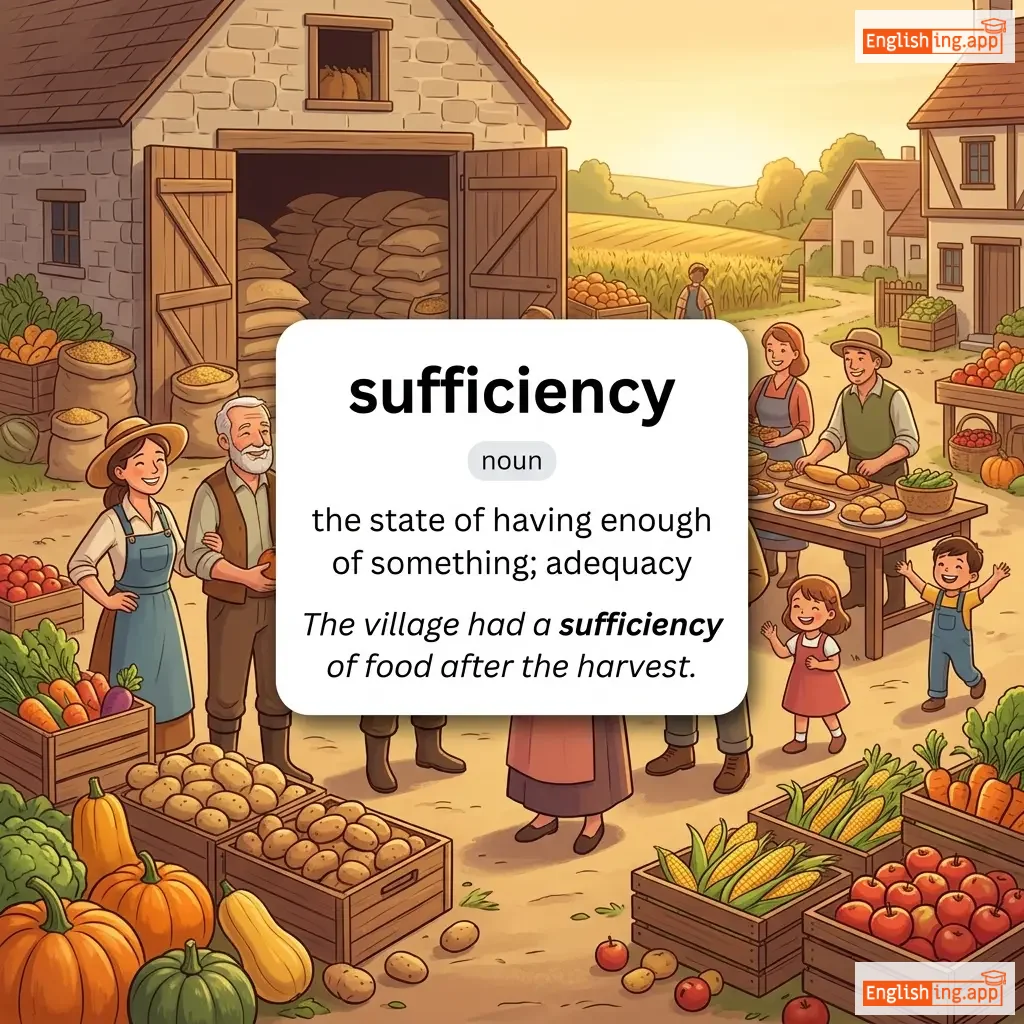
sufficiency definition card — visual illustration of the meaning
noun C1
/səˈfɪʃənsi/
十分 (juubun)

the state of having enough of something; adequacy

"The village had a sufficiency of food after the harvest."
"収穫後、村には十分な食料がありました。" (Shuukaku go, mura ni wa juubun na shokuryou ga arimashita.)
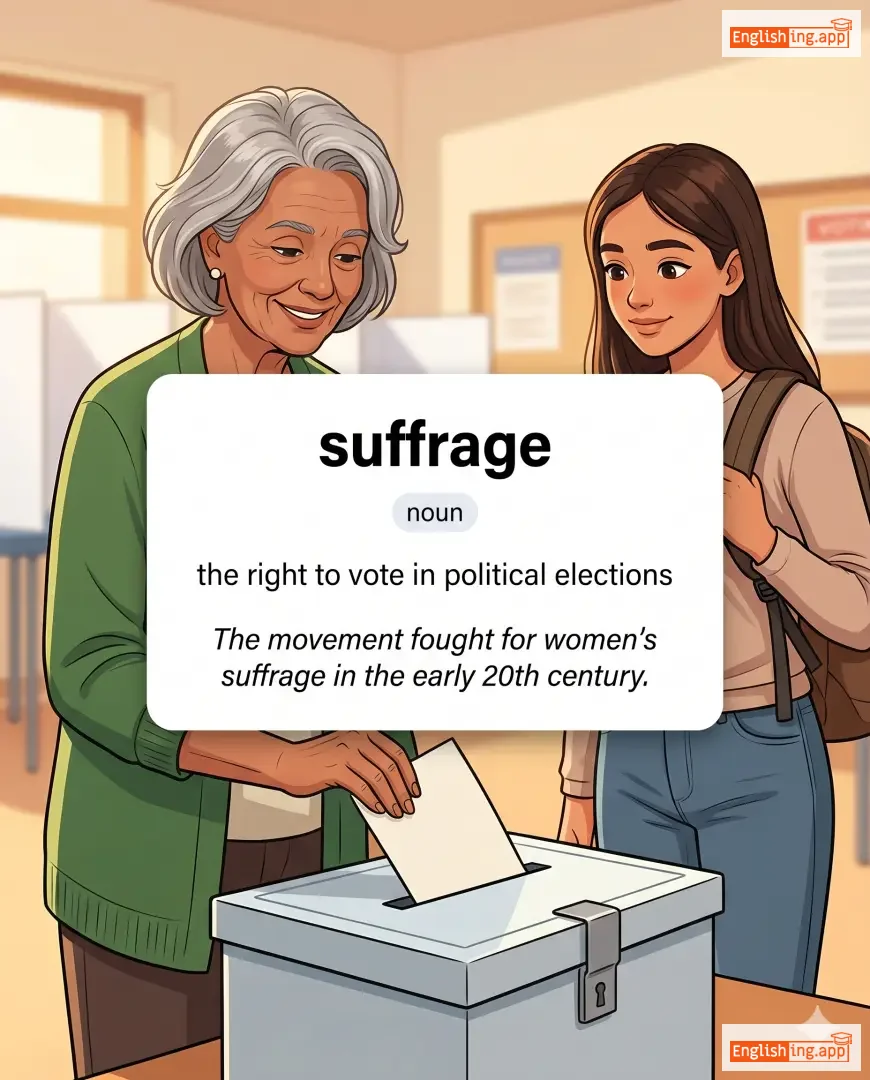
suffrage definition card — visual illustration of the meaning
noun C1
/ˈsʌfrɪdʒ/
参政権 (sanseiken)

the right to vote in political elections

"The movement fought for women’s suffrage in the early 20th century."
"その運動は20世紀初頭に女性の参政権のために戦った。" (sono undou wa nijusseiki shotou ni josei no sanseiken no tame ni tatakatta.)
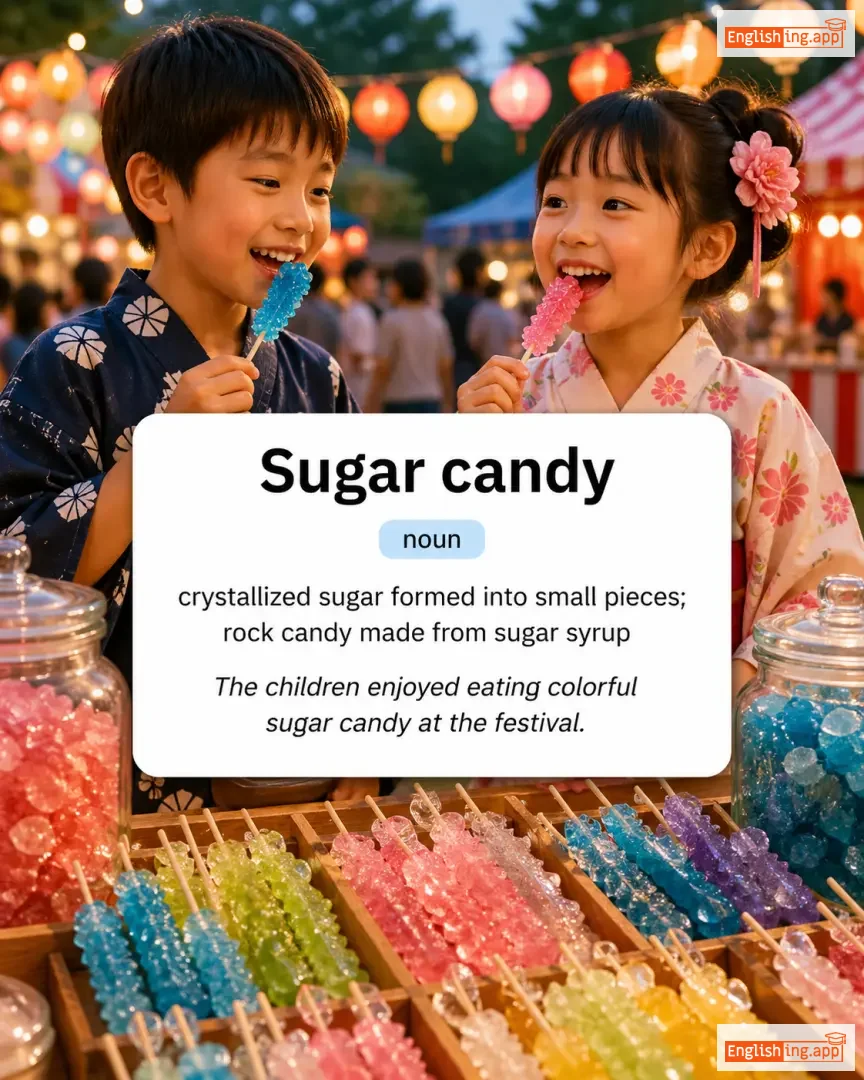
Sugar candy definition card — visual illustration of the meaning
noun C1
/ˈʃʊɡ.ər ˈkæn.di/
シュガーキャンディ (shugā kyandi)

crystallized sugar formed into small pieces; rock candy made from sugar syrup

"The children enjoyed eating colorful sugar candy at the festival."

"子供たちは祭りでカラフルなシュガーキャンディを食べて楽しみました。" (Kodomo-tachi wa matsuri de karafuru na shugā kyandi o tabete tanoshimimashita)
adjective C1
/səˈdʒɛstɪv/
示唆的 (shisa-teki)

tending to suggest ideas or images; sometimes implies something sexual or provocative

"The painting was highly suggestive and sparked much debate."

"その絵画は非常に示唆的で、たくさんの議論を引き起こしました。" (Sono kaiga wa hijou ni shisateki de, takusan no giron wo hikiokoshimashita.)
adjective C1
/ˌsuːɪˈsaɪdəl/
自殺的 (jisatsuteki)

relating to or having thoughts of killing oneself; extremely dangerous or harmful

"The reckless driving was suicidal behavior."

"無謀な運転は自殺的な行動でした。" (Mubō na unten wa jisatsuteki na kōdō deshita.)
noun C1
/ˈsuːtər/
求婚者 (kyuukonsha)

a man who pursues a relationship with a woman, often with the intent to marry

"She had many suitors vying for her attention."

"彼女には彼女の注意を争う求婚者がたくさんいた。" (kanojo ni wa kanojo no chuui o arasou kyuukonsha ga takusan ita)
sulk definition card — visual illustration of the meaning
verb C1
/sʌlk/
すねる (suneru)

to be silently resentful or moody

"He went to his room to sulk after the argument."

"彼は議論の後、部屋に行ってすねました。" (Kare wa giron no ato, heya ni itte sunemashita.)
adjective C1
/ˈsʌl.ki/
不機嫌で無口; 気分屋 (fukigen de mukuchi; kibunya)

bad-tempered and sullen; moody

"The child became sulky when he couldn't get his favorite toy."

"その子供はお気に入りのおもちゃが手に入らなかったとき、不機嫌になった。" (Sono kodomo wa okiniiri no omocha ga te ni hairanakatta toki, fukigen ni natta.)
adjective C1
/ˈsʌlən/
むっつりした (muttsuri shita)

bad-tempered and gloomy; silently resentful

"She gave him a sullen look and walked away."

"彼女はむっつりした表情を見せて、立ち去った。" (Kanojo wa muttsuri shita hyōjō o misete, tachisatta.)
adjective C1
/ˈsʌltri/
蒸し暑く湿った、魅力的な (mushi atsuku shimetta, miryokuteki na)

Uncomfortably hot and humid; also describes someone attractive in a passionate or sensual way.

"The sultry weather made it hard to focus on work."

"蒸し暑い天気は仕事に集中するのを難しくしました。" (Mushi atsui tenki wa shigoto ni shūchū suru no o muzukashiku shimashita.)
noun C1
/sʌˈmeɪʃən/
合計, 要約 (goukei, youyaku)

The process of adding things together; a summary of points.

"The lawyer gave a powerful summation of the case."

"弁護士は事件の強力な要約を行った。" (Bengoshi wa jiken no kyouryoku na youyaku wo okonatta.)
Summit of the Future definition card — visual illustration of the meaning
noun C1
/ˈsʌm.ɪt əv ðə ˈfjuː.tʃər/
未来のサミット (Mirai no samitto)

A high-level conference focused on addressing future challenges and opportunities.

"The Summit of the Future addressed global challenges."

"未来のサミットは世界的な課題を取り上げました。" (Mirai no samitto wa sekaiteki na kadai o toriagemashita.)
adjective C1
/ˈsʌmp.tʃu.əs/
豪華な (gōka na)

Splendid and expensive-looking; luxurious.

"The guests were treated to a sumptuous banquet."

"ゲストは豪華な晩餐にもてなされました。" (Gesuto wa gōka na bansan ni motenasaremashita.)
noun C1
/ˈsʌnˌdaʊn/
日没 (nichibotsu)

the time in the evening when the sun goes below the horizon

"We planned to reach the village before sundown."
"私たちは日没前に村に到着する予定でした。" (Watashitachi wa nichibotsu mae ni mura ni tōchaku suru yotei deshita.)
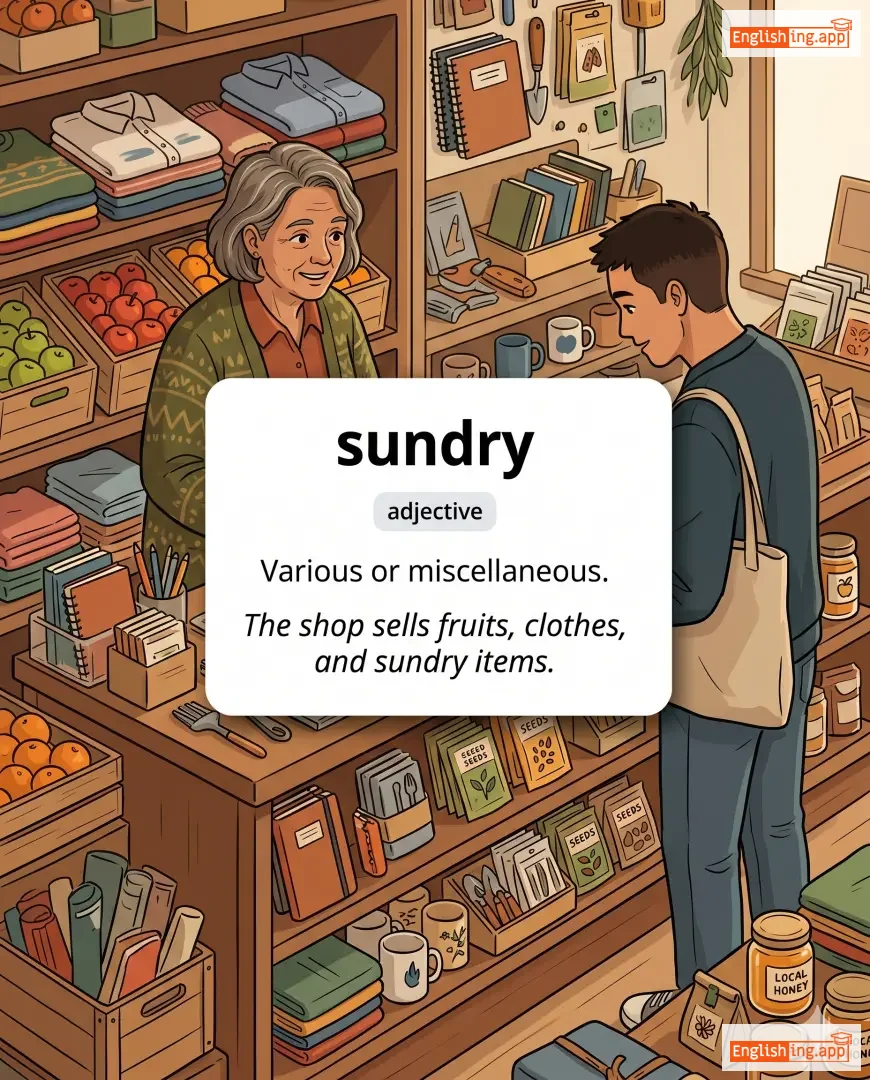
sundry definition card — visual illustration of the meaning
adjective C1
/ˈsʌn.dri/
雑多な (zattana)

Various or miscellaneous.

"The shop sells fruits, clothes, and sundry items."
"その店は果物、衣類、そして雑多な商品を販売しています。" (Sono mise wa kudamono, irui, soshite zattana shōhin o hanbai shiteimasu.)
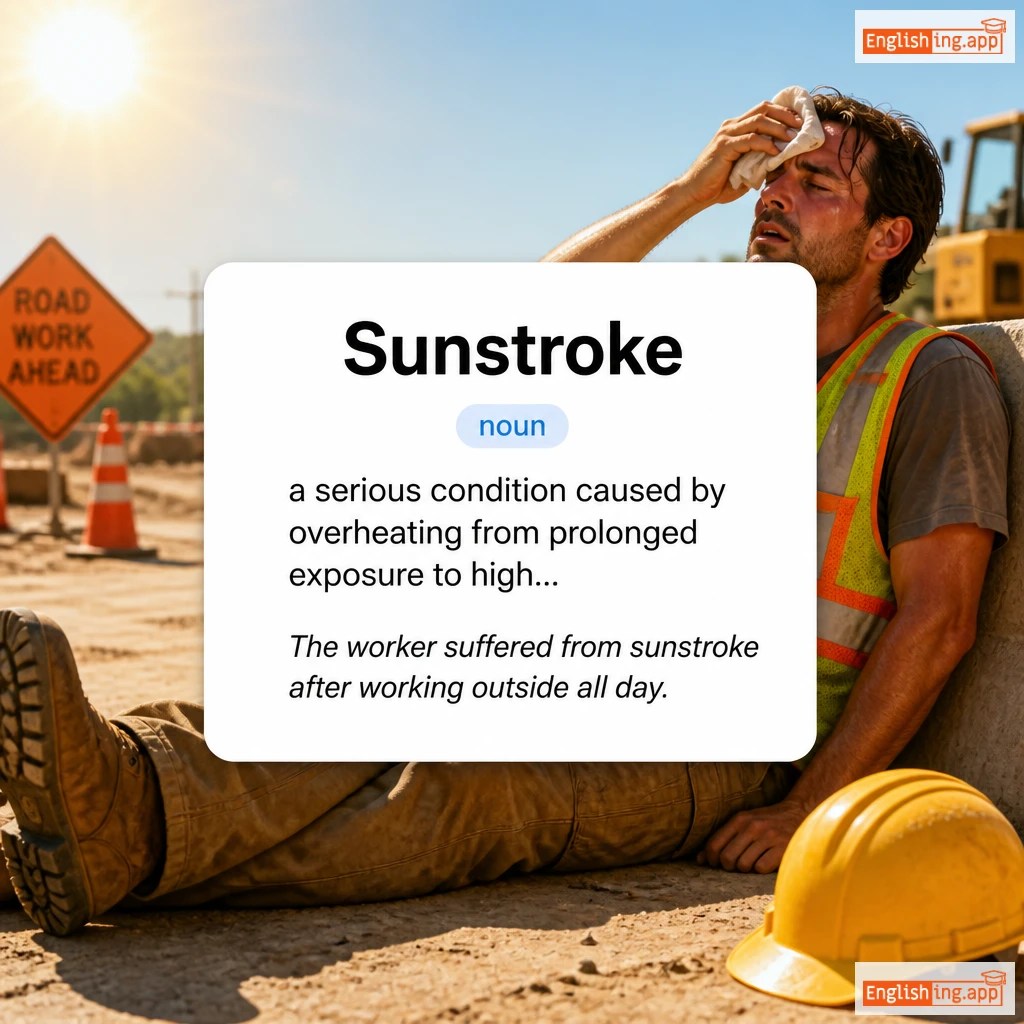
Sunstroke definition card — visual illustration of the meaning
noun C1
/ˈsʌn.stroʊk/
熱中症 (nechusho)

a serious condition caused by overheating from prolonged exposure to high temperatures

"The worker suffered from sunstroke after working outside all day."

"その労働者は一日中外で働いた後、日射病にかかりました。" (Sono roudousha wa ichinichijuu soto de hataraita ato, nisshobyō ni kakarimashita.)
adverb C1
/suːˈpɜːrbli/
見事に (migotoni)

in an excellent or impressive manner

"She performed superbly in the final match."
"彼女は最後の試合で見事にパフォーマンスをした。" (Kanojo wa saigo no shiai de migotoni pafōmansu o shita.)
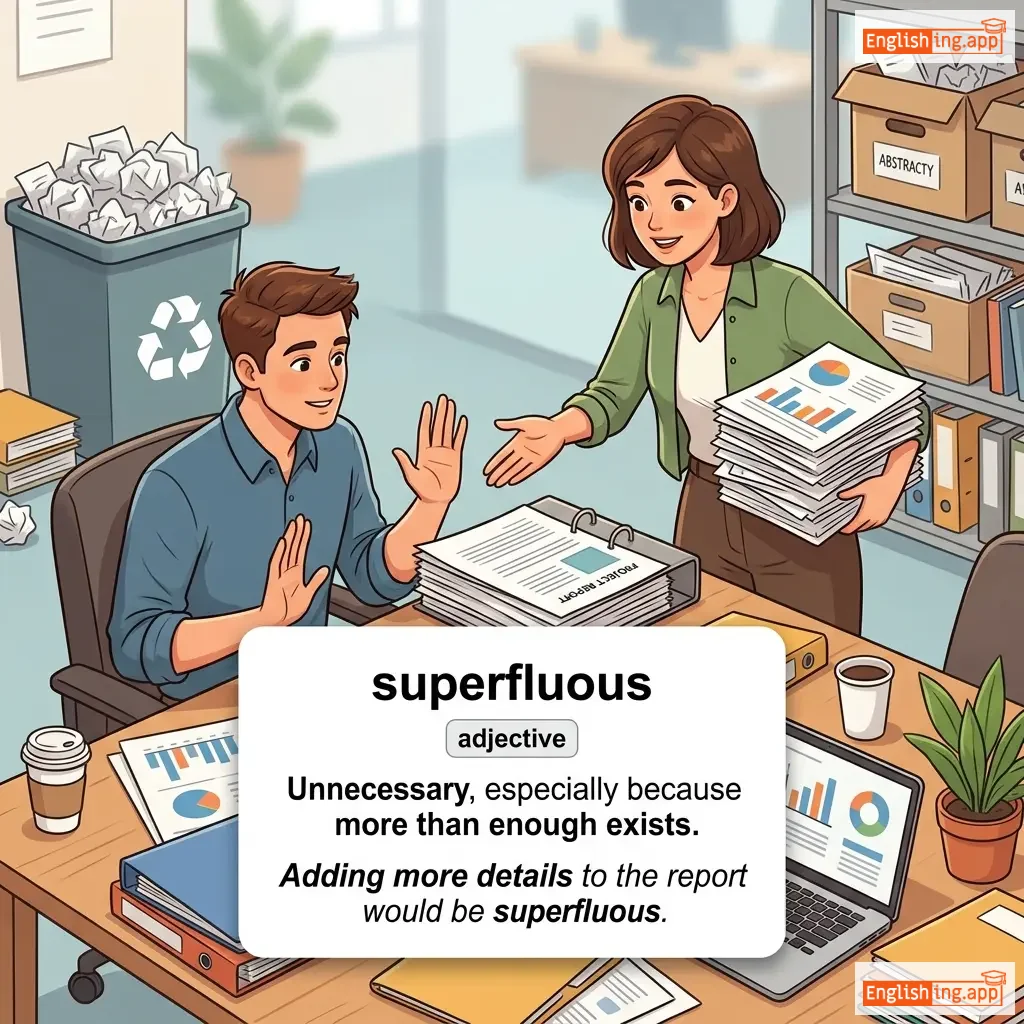
superfluous definition card — visual illustration of the meaning
adjective C1
/suːˈpɝː.fluː.əs/
余分な (yobun na)

Unnecessary, especially because more than enough exists.

"Adding more details to the report would be superfluous."

"レポートにさらに詳細を加えるのは余分です。" (Repōto ni sara ni shōsai o kuwaeru no wa yobun desu.)
verb C1
/ˌsuːpərɪmˈpoʊz/
重ね合わせる (kasanawaseru)

to place one thing on top of another so that both can be seen

"The editor superimposed text over the image."

"編集者は画像にテキストを重ね合わせました。" (Henshūsha wa gazō ni tekisuto o kasanawasemashita.)
adjective C1
/suːˈpɜːrlətɪv/
最上級 (saijoukyuu)

Of the highest quality or degree; expressing the extreme form of an adjective or adverb.

"Her performance was superlative, earning her a standing ovation."
"彼女のパフォーマンスは最上級で、スタンディングオベーションを受けました。" (Kanojo no pafōmansu wa saijoukyuu de, sutandingu obēshon o ukemashita.)
supersede definition card — visual illustration of the meaning
verb C1
/ˌsuːpərˈsiːd/
置き換える (okikaeru)

To replace or take the place of something because it is more modern or effective.

"This new law will supersede the old regulations."

"この新しい法律は古い規則を置き換えます。" (Kono atarashī hōritsu wa furui kisoku o okikaemasu.)
adjective C1
/ˌsuː.pəˈsɒn.ɪk/
音速より速い; 音速を超える速度に関連する (onsoku yori hayai; onsoku o koeru sokudo ni kanren suru)

faster than the speed of sound; relating to speeds greater than the speed of sound

"The supersonic jet broke the sound barrier."
"超音速ジェットは音の壁を破った。" (Chōonsoku jetto wa oto no kabe o yabutta)
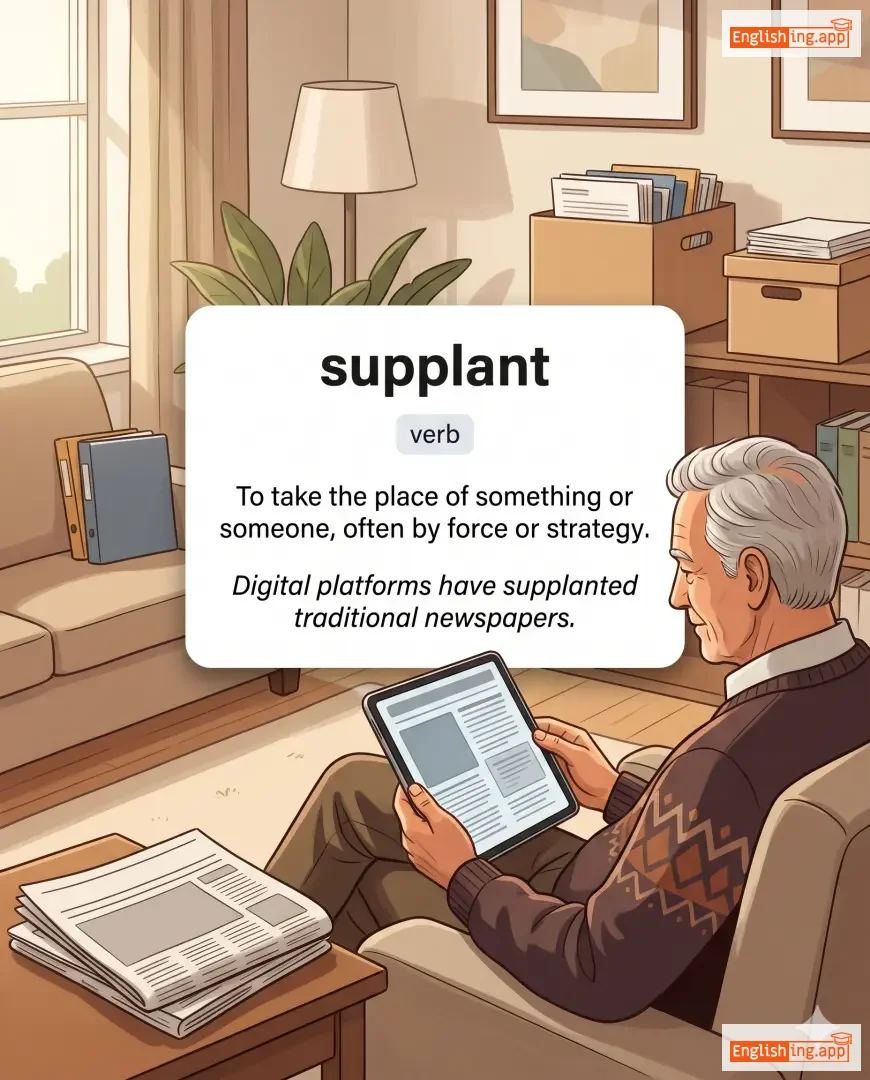
supplant definition card — visual illustration of the meaning
verb C1
/səˈplænt/
取って代わる (totte kawaru)

To take the place of something or someone, often by force or strategy.

"Digital platforms have supplanted traditional newspapers."

"デジタルプラットフォームは伝統的な新聞を取って代わった。" (Dejitaru purattofōmu wa dentō-teki na shinbun o totte kawatta.)
adjective C1
/ˈsʌpl/
柔軟な (jūnan na)

Easily bending or moving without breaking; flexible and adaptable.

"The gymnast’s body was remarkably supple."
"その体操選手の体は驚くほど柔軟だった。" (Sono taisō senshu no karada wa odoroku hodo jūnan datta.)
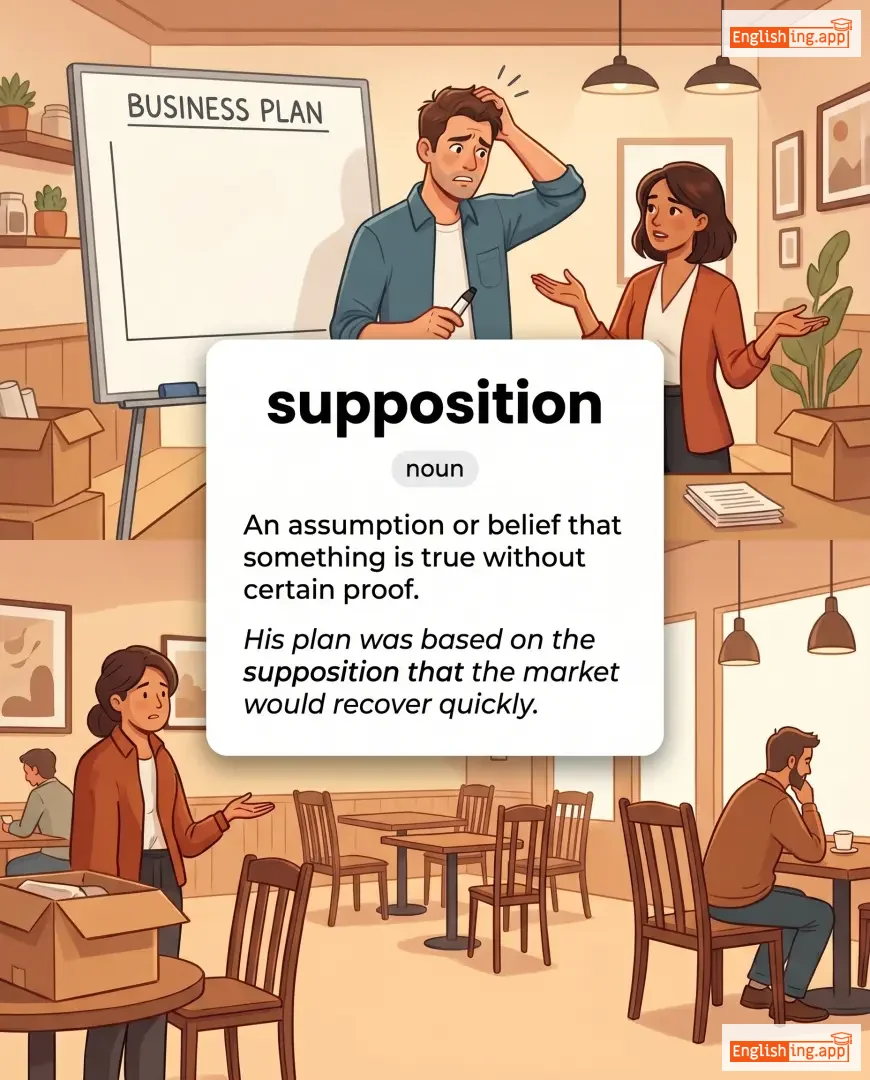
supposition definition card — visual illustration of the meaning
noun C1
/ˌsʌpəˈzɪʃən/
仮定 (katei)

An assumption or belief that something is true without certain proof.

"His plan was based on the supposition that the market would recover quickly."

"彼の計画は、市場がすぐに回復するという仮定に基づいていました。" (Kare no keikaku wa, shijō ga sugu ni kaifuku suru to iu katei ni motozuite imashita.)
noun C1
/səˈprɛʃən/
抑制 (yokusei)

the act of forcibly stopping something or holding back feelings or actions

"The suppression of free speech led to protests."
"言論の自由の抑制は抗議を引き起こした。" (Genron no jiyū no yokusei wa kōgi o hikiokoshita.)
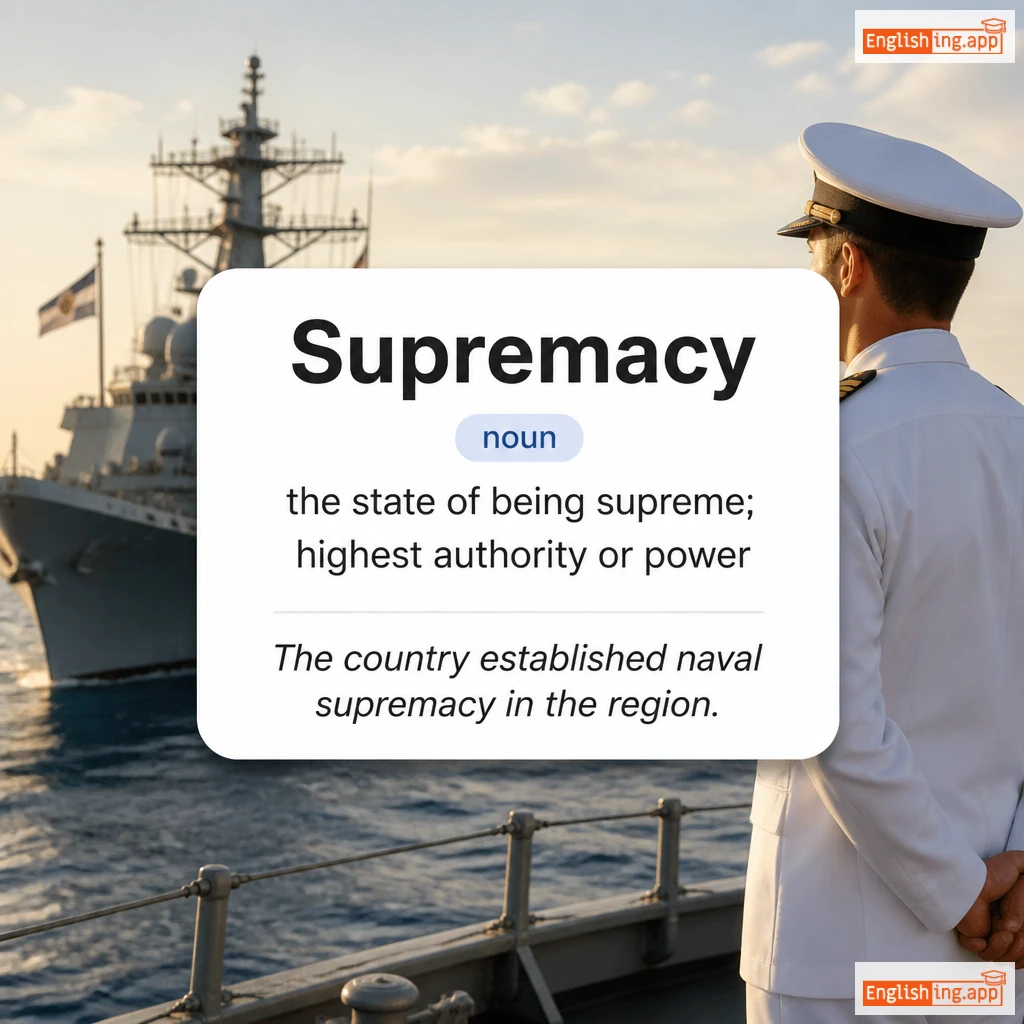
Supremacy definition card — visual illustration of the meaning
noun C1
/suˈpriː.mə.si/
至高性; 最高の権威または力 (shikōsei)

the state of being supreme; highest authority or power

"The country established naval supremacy in the region."

"その国は地域で海軍の至高性を確立しました。" (Sono kuni wa chiiki de kaigun no shikōsei o kakuritsu shimashita.)
noun C1
/ˈsɜːrtʃɑːrdʒ/
追加料金 (tsuika ryōkin)

an additional charge or payment added to the usual cost

"The airline ticket had a fuel surcharge added to it."

"航空券に燃料サーチャージが追加されていました。" (Kōkūken ni nenryō sāchāji ga tsuika sarete imashita.)
adjective C1
/ˈsɜːrli/
不機嫌な (fukigen na)

bad-tempered and unfriendly

"The waiter gave us a surly look when we asked for more water."

"水をもっと頼んだとき、ウェイターは不機嫌な顔をしました。" (Mizu o motto tanonda toki, weitaa wa fukigen na kao o shimashita.)
verb C1
/sərˈmaɪz/
推測する (suikoku suru)

to suppose something is true without having evidence

"She surmised that he was not coming to the meeting."

"彼女は彼が会議に来ないだろうと推測した。" (Kanojo wa kare ga kaigi ni konai darou to suisoku shita.)
verb C1
/sərˈmaʊnt/
克服する (kokufuku suru)

to overcome a difficulty or obstacle

"He surmounted all the challenges to achieve his dream."

"彼はすべての挑戦を乗り越えて夢を実現しました。" (Kare wa subete no chousen wo norikoete yume wo jitsugen shimashita.)
verb C1
/sərˈpæs/
超える (koeru)

to exceed or go beyond

"Her performance surpassed all expectations."

"彼女のパフォーマンスはすべての期待を上回った。" (Kanojo no pafōmansu wa subete no kitai o uwamatta.)
adjective C1
/sər'pæs.ɪŋ/
卓越; 優れた; 非常に優れた (takuwetsu, sugureta, hijō ni sugureta)

exceeding; going beyond; outstanding

"Her surpassing beauty made everyone stop and stare."
"彼女の卓越した美しさは、誰もが立ち止まり、見入ってしまった。" (Kanojo no takuwetsu shita utsukushisa wa, dare mo ga tachidomari, miitte shimatta.)
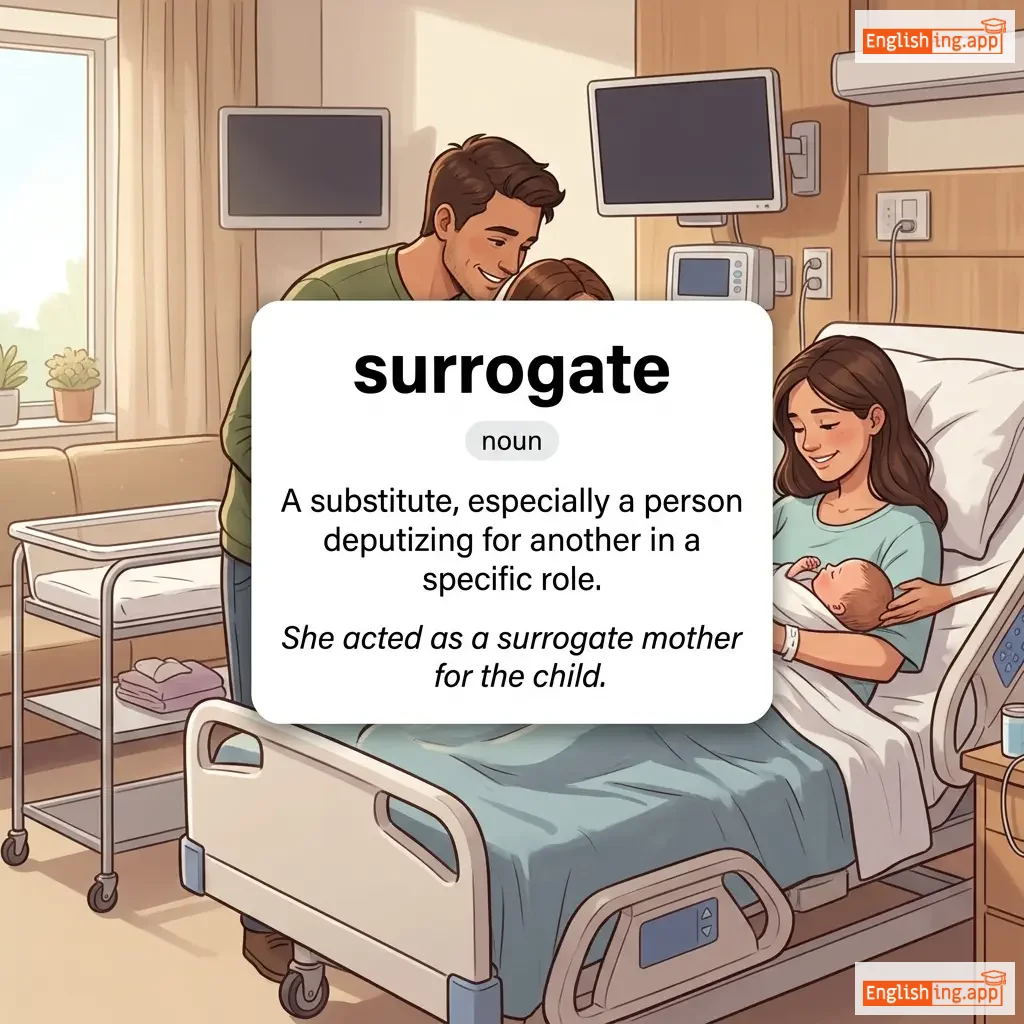
surrogate definition card — visual illustration of the meaning
noun C1
/ˈsʌrəɡət/
代理 (dairi)

A substitute, especially a person deputizing for another in a specific role.

"She acted as a surrogate mother for the child."

"彼女はその子供の代理母親として働きました。" (Kanojo wa sono kodomo no dairi hahaoya toshite hatarakimashita.)
noun C1
/sərˈveɪər/
測量士 (sokuryō-shi)

A person who measures and maps land, buildings, or other features.

"The surveyor measured the land for construction."
"測量士は建設のために土地を測定した。" (Sokuryō-shi wa kensetsu no tame ni tochi o sokutei shita.)
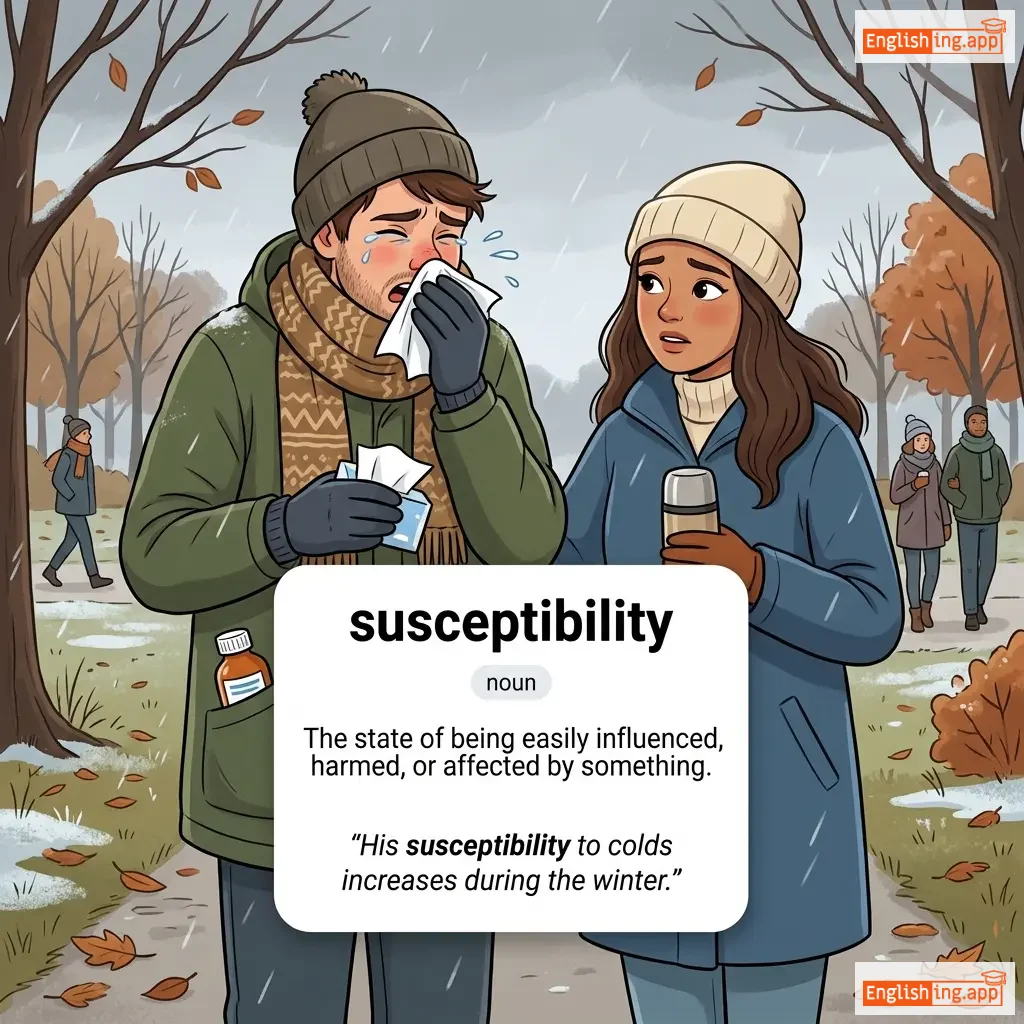
susceptibility definition card — visual illustration of the meaning
noun C1
/səˌsɛptəˈbɪləti/
感受性 (kanjusei)

The state of being easily influenced, harmed, or affected by something.

"His susceptibility to colds increases during the winter."
"彼の風邪をひきやすい感受性は冬に増します。" (Kare no kaze wo hiki yasui kanjusei wa fuyu ni mashimasu.)
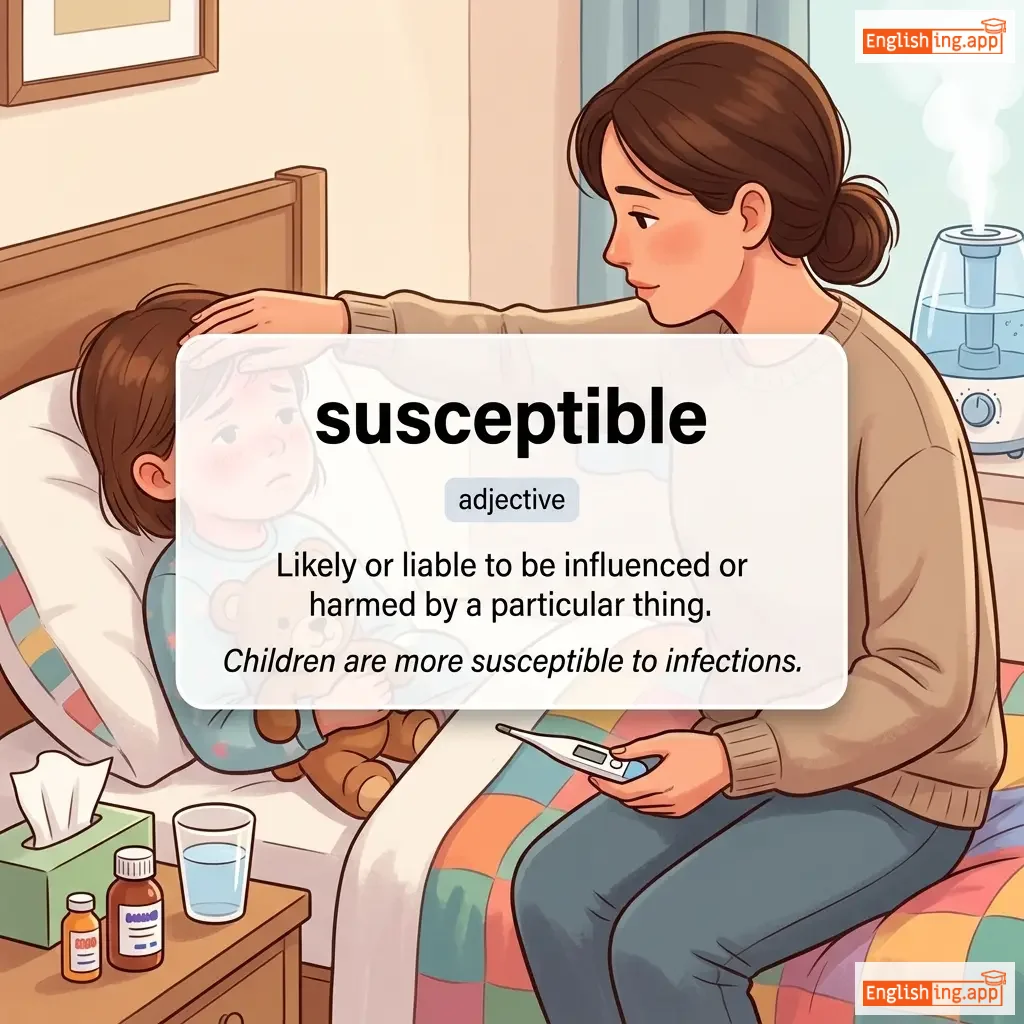
susceptible definition card — visual illustration of the meaning
adjective C1
/səˈsɛptəbl/
感受性が高い (kanjusei ga takai)

Likely or liable to be influenced or harmed by a particular thing.

"Children are more susceptible to infections."
"子供たちは感染症に対してより感受性があります。" (Kodomotachi wa kansen shou ni taishite yori kanjusei ga arimasu.)
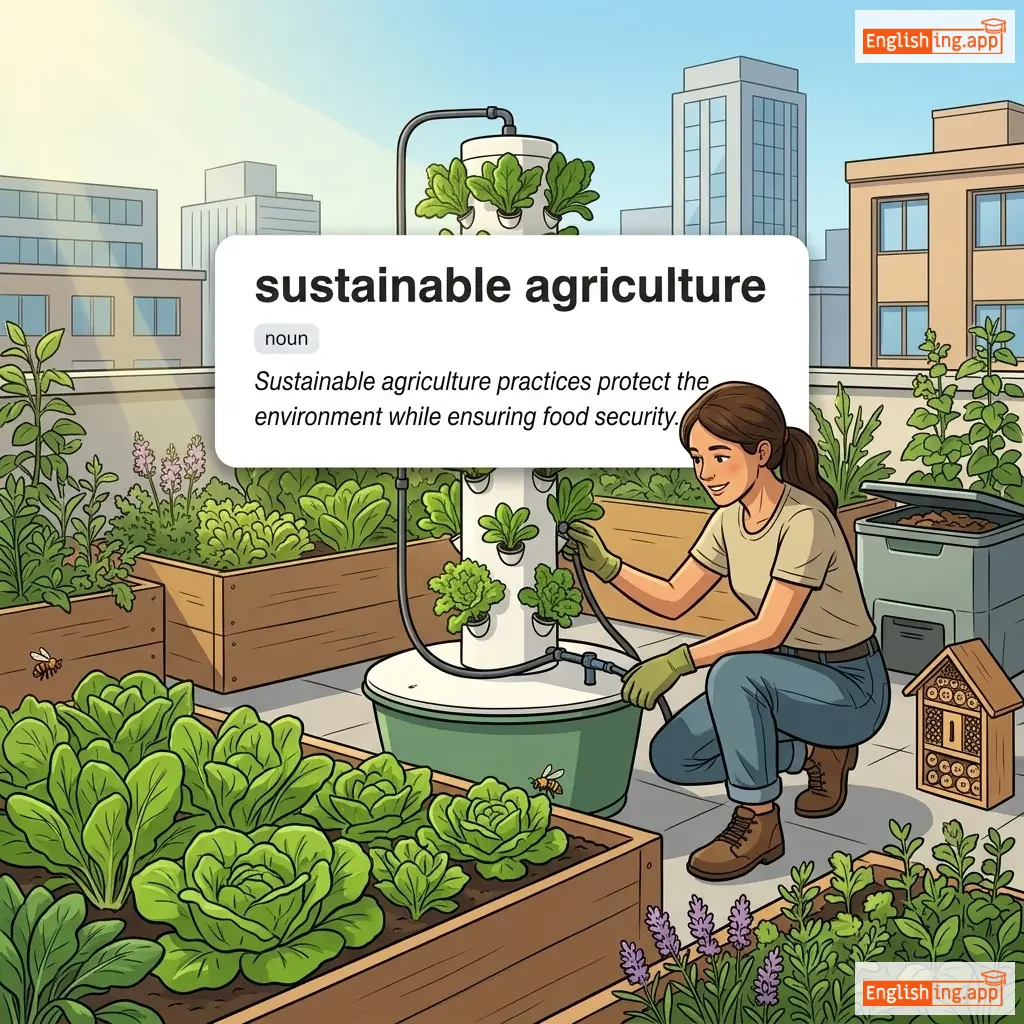
sustainable agriculture definition card — visual illustration of the meaning
noun C1
/səˈsteɪnəbl ˈæɡrɪkʌltʃər/
持続可能な農業 (jizoku kanō na nōgyō)

Farming practices that meet current food needs while preserving environmental resources and maintaining the ability to produce food for future generations through ecologically sound methods.

"Sustainable agriculture practices protect the environment while ensuring food security."
"持続可能な農業の実践は、環境を保護しながら食料安全保障を確保します。" (Jizoku kanō na nōgyō no jissen wa, kankyō o hogo shinagara shokuryō anzen hoshō o kakuho shimasu.)
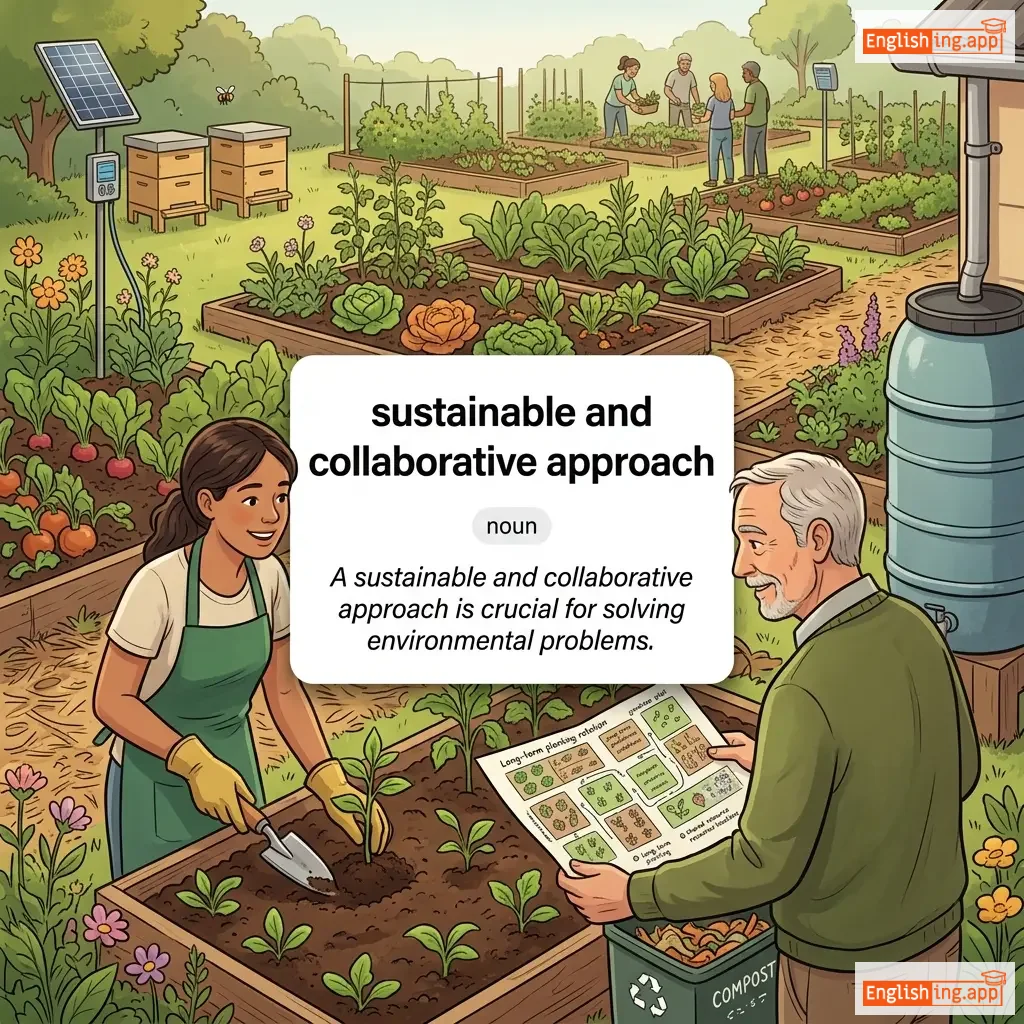
sustainable and collaborative approach definition card — visual illustration of the meaning
noun C1
səˈsteɪnəbəl ænd kəˈlæbərətɪv əˈproʊtʃ
持続可能で協力的なアプローチ (jizoku kanou de kyouryokuteki na apurouchi)

A method of working together that can be maintained over time without depleting resources or causing harm.

"A sustainable and collaborative approach is crucial for solving environmental problems."
"環境問題を解決するためには、持続可能で協力的なアプローチが不可欠です。" (Kankyō mondai o kaiketsu suru tame ni wa, jizoku kanou de kyōryokuteki na apurouchi ga fukaketsu desu.)
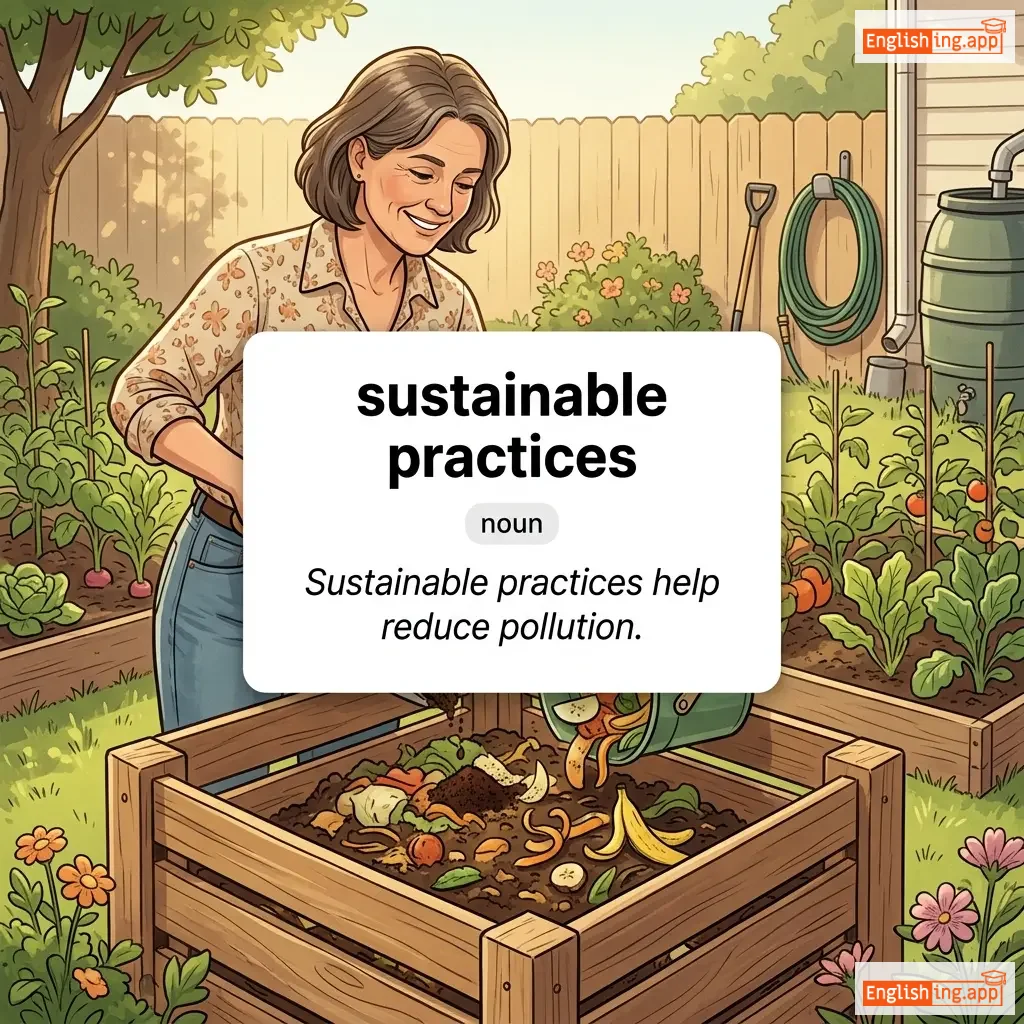
sustainable practices definition card — visual illustration of the meaning
noun C1
səˈsteɪnəbl ˈpræktɪsɪz
持続可能な実践 (jizoku kanou na jissen)

Methods or actions that can be maintained long-term without depleting resources or causing environmental harm

"Sustainable practices help reduce pollution."
"持続可能な実践は汚染を減らすのに役立つ。" (jizoku kanou na jissen wa osen o herasu no ni yakudatsu)
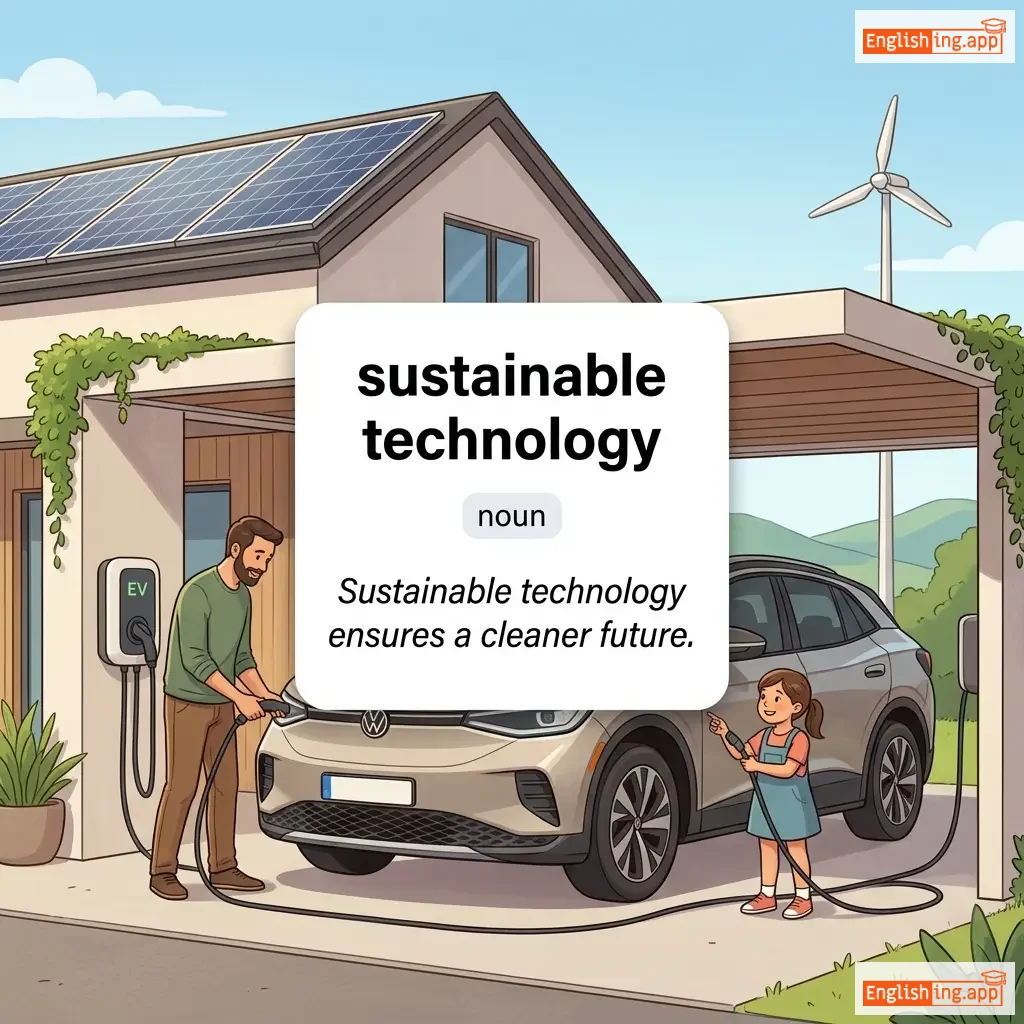
sustainable technology definition card — visual illustration of the meaning
noun C1
səˈsteɪ.nə.bəl tekˈnɒl.ə.dʒi
持続可能な技術 (jizoku kanou na gijutsu)

Technology designed to meet present needs without compromising future generations' ability to meet their needs.

"Sustainable technology ensures a cleaner future."
"持続可能な技術は、よりクリーンな未来を保証します。" (Jizoku kanou na gijutsu wa, yori kurīn na mirai o hoshō shimasu.)
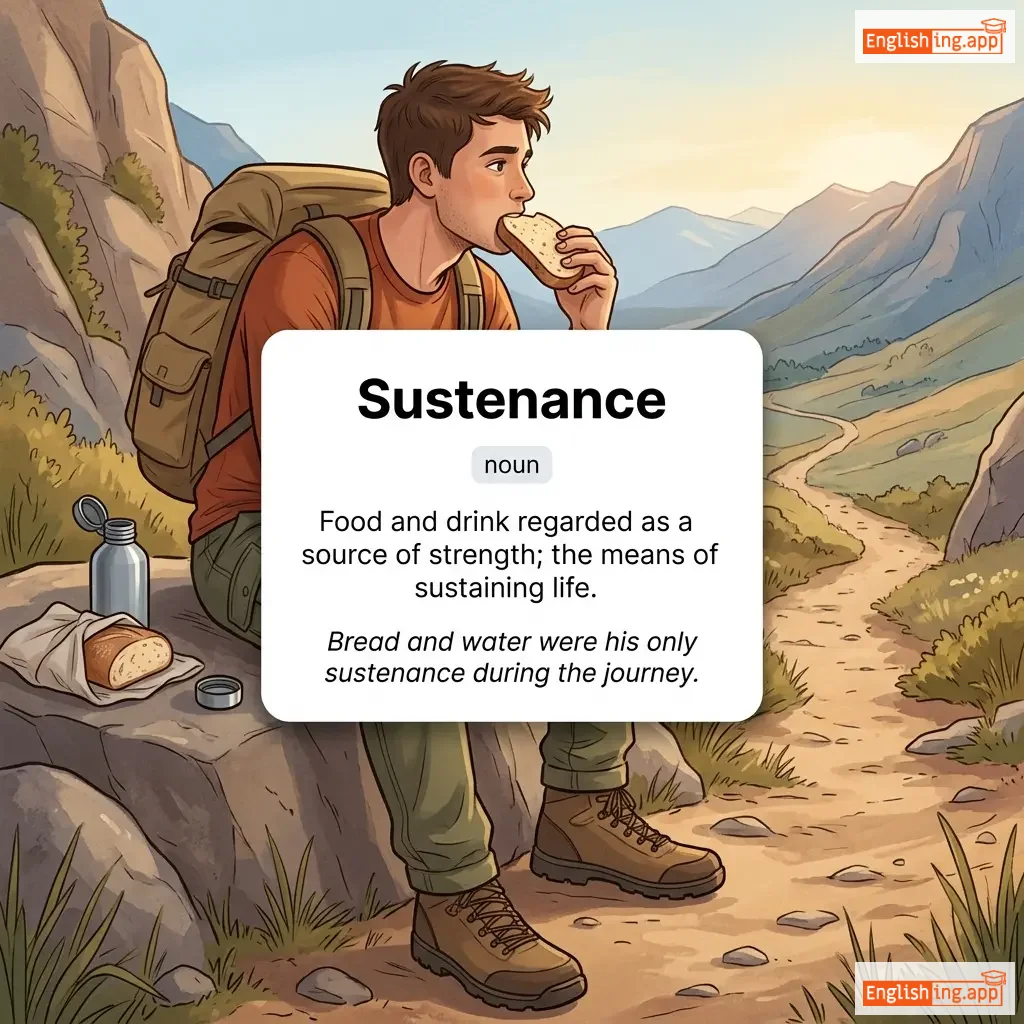
Sustenance definition card — visual illustration of the meaning
noun C1
/ˈsʌstənəns/
生存手段 (seizon shudan)

Food and drink regarded as a source of strength; the means of sustaining life.

"Bread and water were his only sustenance during the journey."

"パンと水は彼の旅の唯一の生存手段でした。" (Pan to mizu wa kare no tabi no yuiitsu no seizon shudan deshita.)
noun/verb C1
/ˈsuː.tʃər/
縫合 (hōgō)

A stitch or row of stitches holding together the edges of a wound or surgical incision.

"The doctor used a suture to close the wound."

"医者は傷を閉じるために縫合糸を使いました。" (Isha wa kizu o toji ru tame ni hōgō ito o tsukaimashita.)
verb/noun C1
/ˈswæɡ.ər/
自信過剰 (jishin kajou)

To walk or behave in a very confident and arrogant way.

"He swaggered into the room as if he owned the place."
"彼はまるでその場所のオーナーであるかのように部屋に入ってきました。" (Kare wa marude sono basho no ōnā de aru ka no yō ni heya ni haittekimashita.)
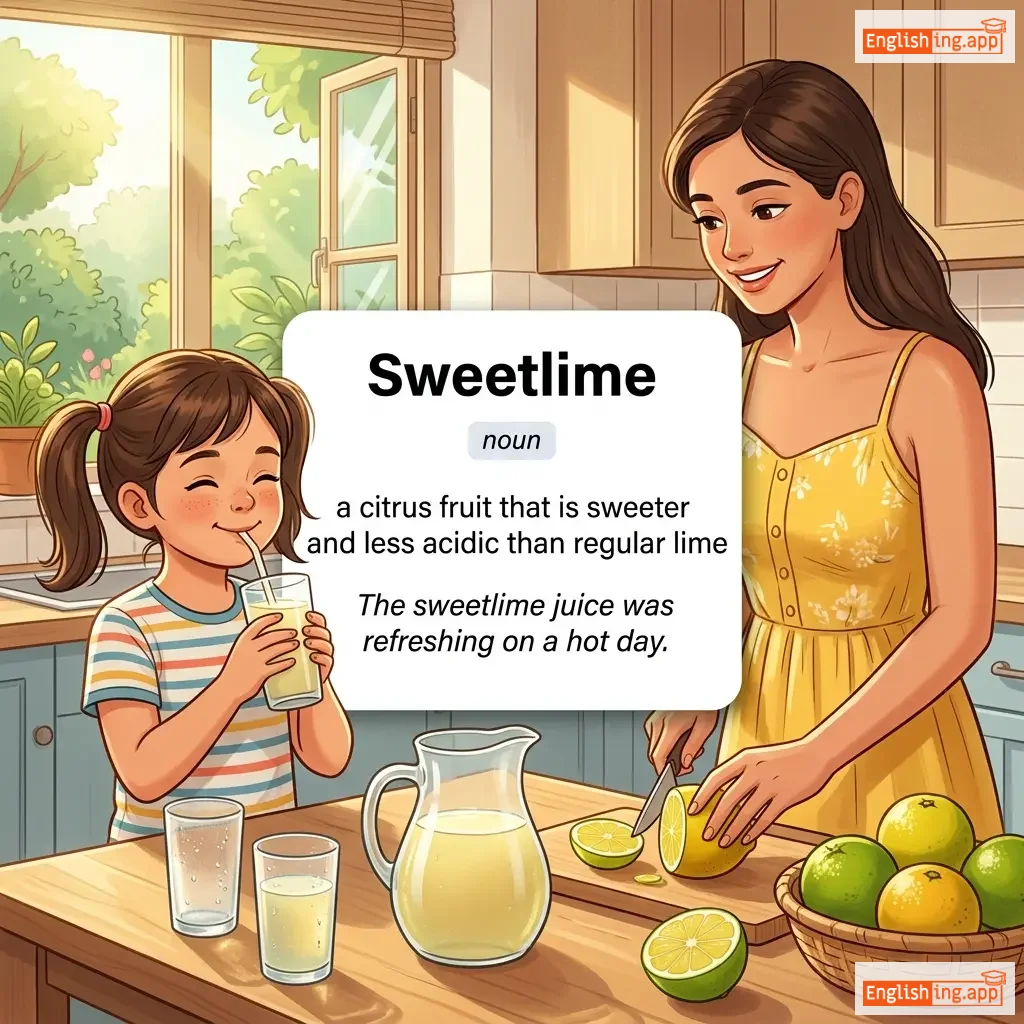
Sweetlime definition card — visual illustration of the meaning
noun C1
/swiːt.laɪm/
スイートライム (suīto raimu)

a citrus fruit that is sweeter and less acidic than regular lime

"The sweetlime juice was refreshing on a hot day."
"スイートライムジュースは暑い日にさわやかでした。" (Suīto raimu jūsu wa atsui hi ni sawayaka deshita.)
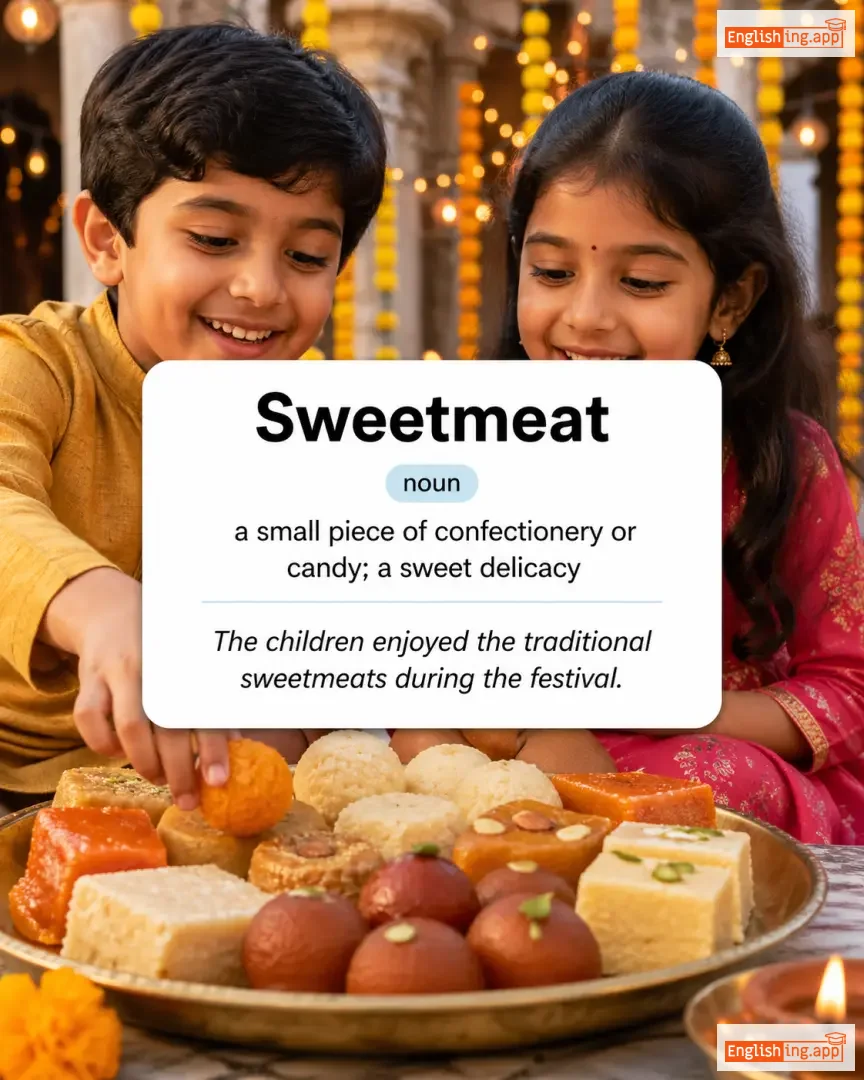
Sweetmeat definition card — visual illustration of the meaning
noun C1
/ˈswiːt.miːt/
お菓子 (okashi)

a small piece of confectionery or candy; a sweet delicacy

"The children enjoyed the traditional sweetmeats during the festival."

"子供たちは祭りの間に伝統的なスイートミートを楽しみました。" (Kodomotachi wa matsuri no aida ni dentouteki na suītomīto o tanoshimimashita.)
verb C1
/ˈswɛltər/
強烈な暑さで苦しむ (kyōretsu na atsusa de kurushimu)

to suffer from intense heat

"We began to swelter in the midday sun."

"私たちは真昼の太陽の下で汗だくになり始めました。" (Watashitachi wa mahiru no taiyō no shita de ase-daku ni nari hajimemashita.)
adjective C1
/ˈswɛltərɪŋ/
うだるような暑さ (udaru you na atsusa)

uncomfortably hot

"The sweltering heat made it hard to work."

"うだるような暑さで仕事が難しくなった。" (Udaru you na atsusa de shigoto ga muzukashiku natta.)