語彙集

英単語辞書 | 単語の意味、定義、例文

noun C1
/ˈrʌbəl/
瓦礫 (gareki)

Broken stone, bricks, or debris from a collapsed building or structure.

"The rescue team searched through the rubble after the earthquake."
"地震後、救助隊は瓦礫の中を探しました。" (Jishin go, kyūjotai wa gareki no naka o sagashimashita.)
rubric definition card — visual illustration of the meaning
noun C1
/ˈruːbrɪk/
評価基準 / 指針 (rubrik)

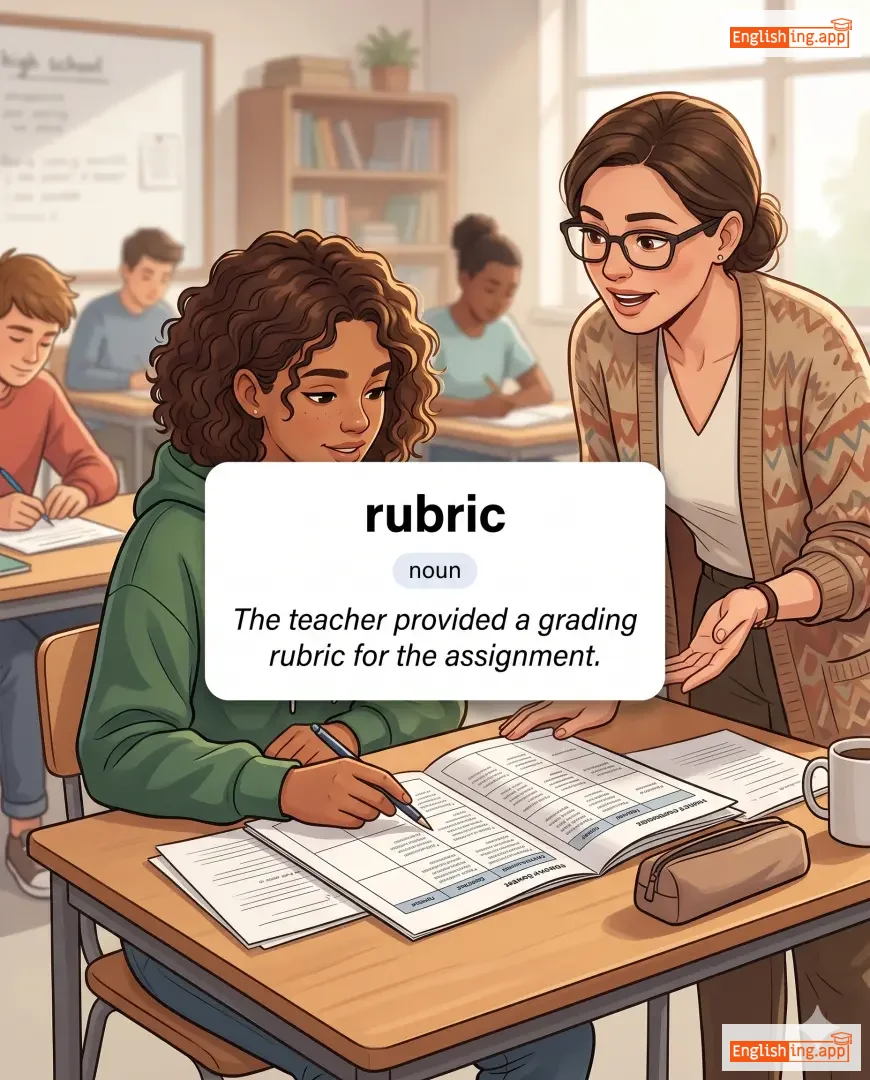
A set of instructions, rules, or a heading in a document, often used for grading criteria.

"The teacher provided a grading rubric for the assignment."
"教師は課題のための評価基準を提供しました。" (Kyōshi wa kadai no tame no hyōka kijun o teikyō shimashita.)
Ruby definition card — visual illustration of the meaning
noun C1
/ˈruː.bi/
ルビー (rubii)

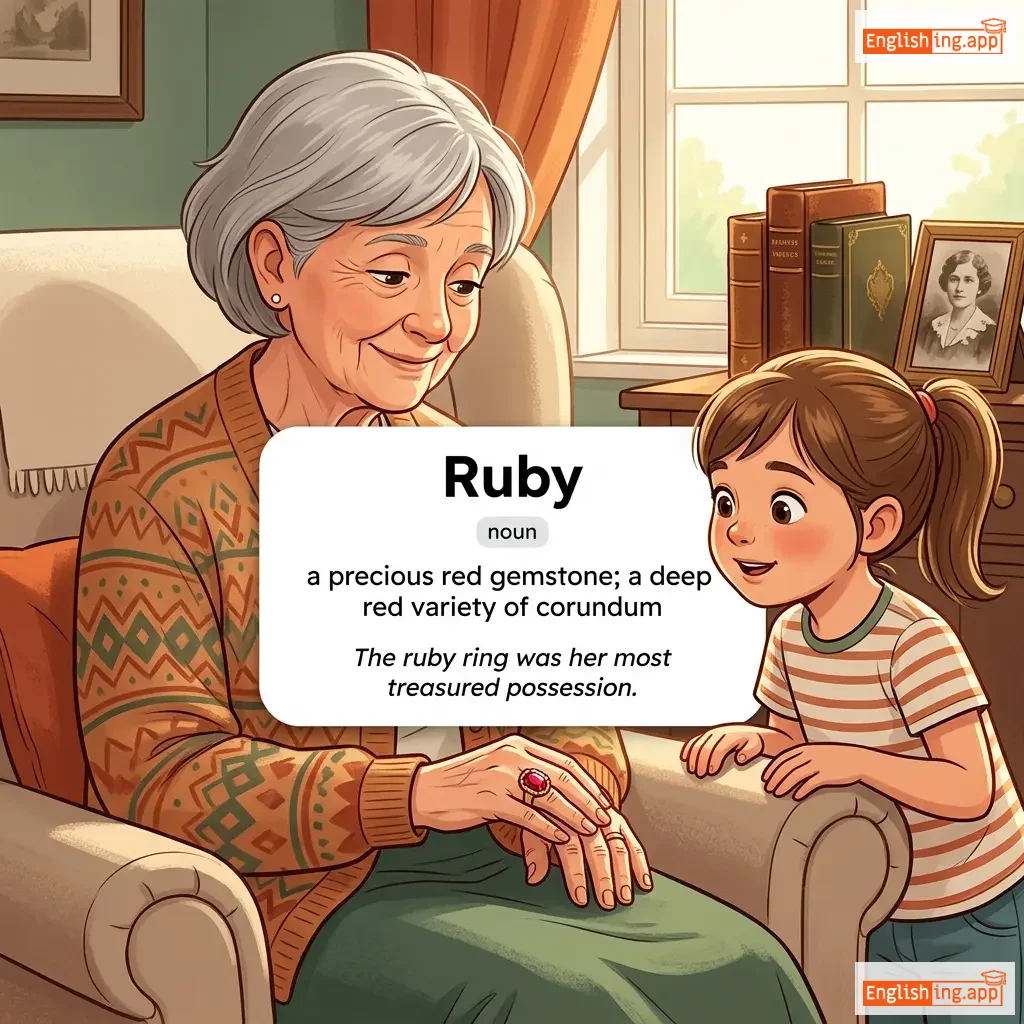
a precious red gemstone; a deep red variety of corundum

"The ruby ring was her most treasured possession."
"そのルビーの指輪は彼女にとって最も大切な宝物でした。" (Sono rubii no yubiwa wa kanojo ni totte mottomo taisetsu na takaramono deshita.)
Ruck definition card — visual illustration of the meaning
noun C1
/rʌk/
押し合い; 混雑した人々 (oshi ai; konzatsu shita hitobito)

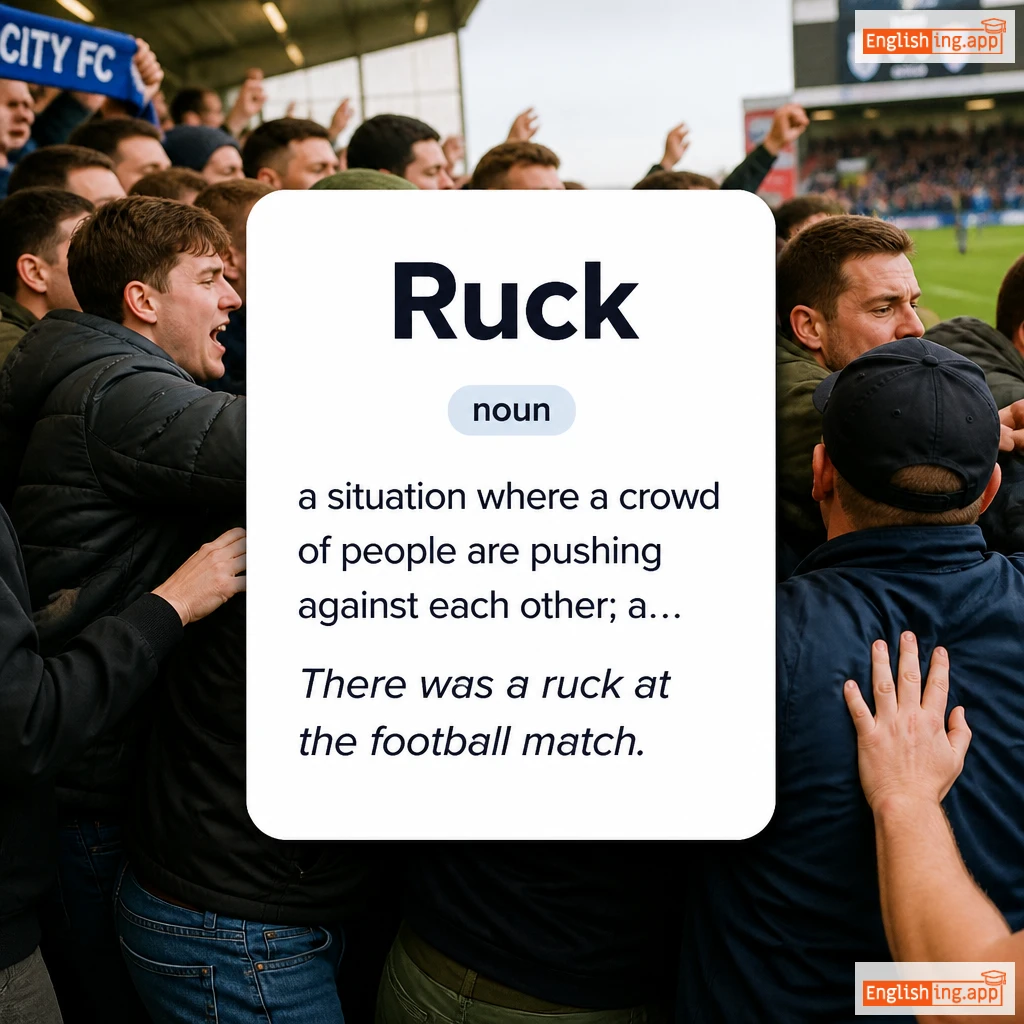
a situation where a crowd of people are pushing against each other; a disorderly crowd

"There was a ruck at the football match."

"サッカーの試合で押し合いがありました。" (sakkaa no shiai de oshi ai ga arimashita)
noun C1
/ˈruːdɪmənt/
基本 (kihon)

A basic principle, element, or fundamental part of something.

"He learned the rudiments of music before joining the band."

"彼はバンドに参加する前に音楽の基礎を学びました。" (Kare wa bando ni sanka suru mae ni ongaku no kihon o manabimashita.)
adjective C1
/ˌruːdɪˈmɛntəri/
初歩的な (shohoteki na)

Involving or limited to basic principles; elementary or simple.

"The village school provided only a rudimentary education."

"その村の学校は初歩的な教育しか提供していませんでした。" (Sono mura no gakkou wa shohoteki na kyouiku shika teikyō shiteimasen deshita.)
adjective C1
/ˈruːfəl/
後悔した (kōkai shita)

Expressing sorrow, regret, or pity.

"He gave a rueful smile after losing the match."
"試合に負けた後、彼は後悔の笑顔を見せた。" (Shiai ni maketa ato, kare wa kōkai no egao o miseta.)
Ruffian definition card — visual illustration of the meaning
noun C1
/ˈrʌfiən/
ごろつき (gorotsuki)

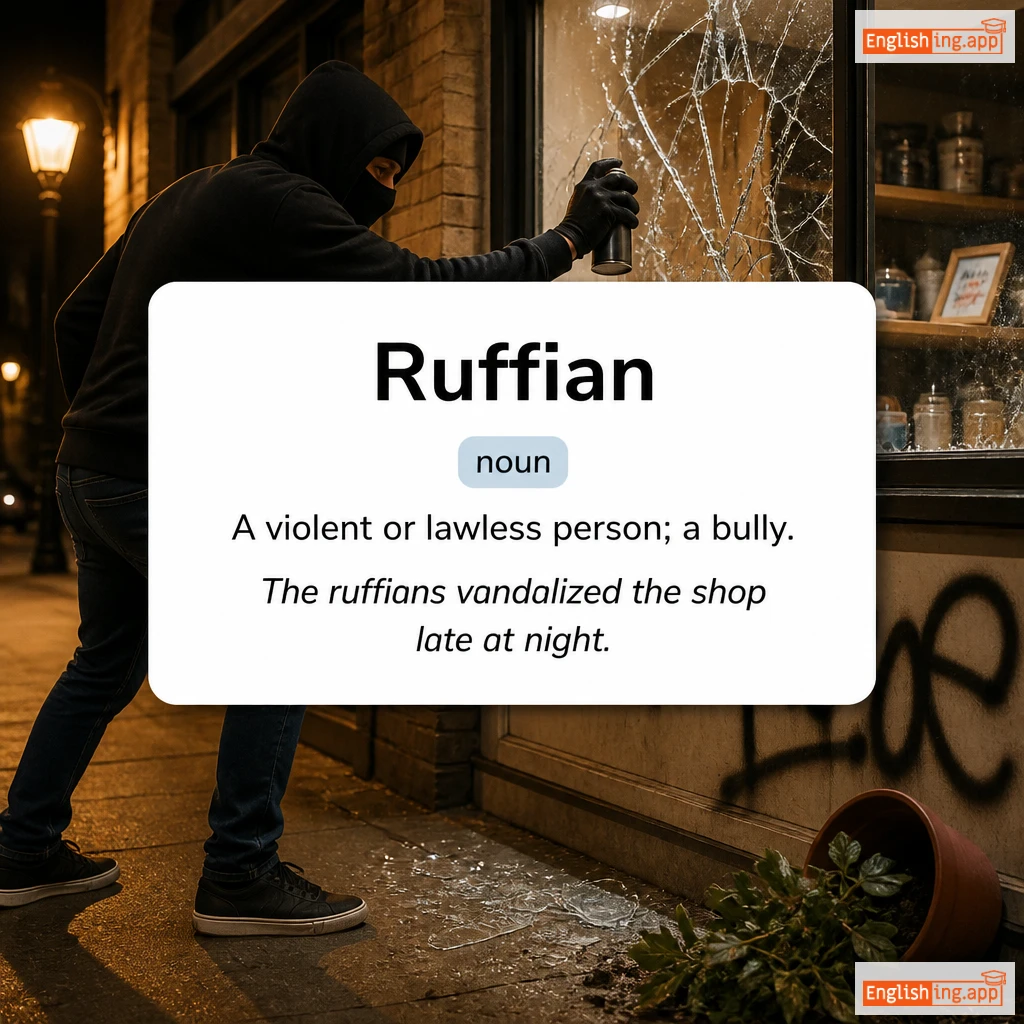
A violent or lawless person; a bully.

"The ruffians vandalized the shop late at night."

"ごろつきたちは夜遅くに店を破壊した。" (Gorotsukitachi wa yoru osoku ni mise o hakai shita.)
verb C1
/ˈrʌf.l̩/

to disturb the smoothness of something; to annoy or upset someone

"The wind ruffled her hair."

adjective C1
/ˈrʌɡ.ɪd/
でこぼこで不規則な; 不規則な表面を持つ; 強くて丈夫な (dekoboko de fukisokuna; fukisokuna hyōmen o motsu; tsuyokute jōbuna)

rough and uneven; having a rough irregular surface; tough and strong

"The hikers crossed the rugged mountain terrain."

"ハイカーたちは荒れた山岳地帯を越えた。" (Haikā-tachi wa areta sangaku chitai o koeta.)
verb C1
/ˈruː.mɪ.neɪt/
思索する, 反芻する (shisaku suru, hansuu suru)

to think deeply about something; to chew cud (for animals)

"She sat alone to ruminate on her decision."

"彼女は自分の決断について一人で思索していた。" (Kanojo wa jibun no ketsudan ni tsuite hitori de shisaku shite ita.)
verb C1
/ˈrʌm.ɪdʒ/
乱雑に探す (ranzatsu ni sagasu)

to search through something in a disorderly way

"He rummaged through the drawer for his keys."
"彼は引き出しの中を漁って鍵を探していた。" (Kare wa hikidashi no naka o asatte kagi o sagashite ita.)
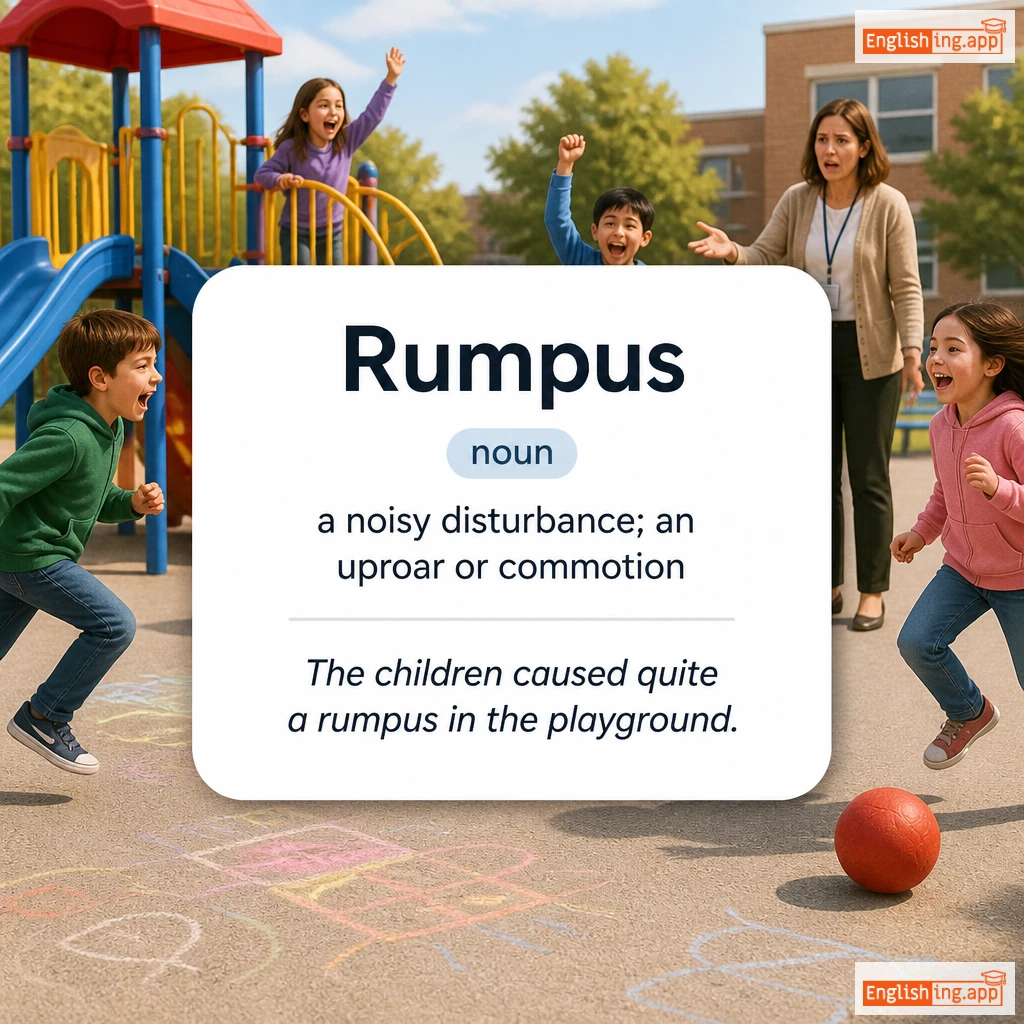
Rumpus definition card — visual illustration of the meaning
noun C1
/ˈrʌmpəs/
騒動; 混乱; 騒音 (soudou; konran; souon)

a noisy disturbance; an uproar or commotion

"The children caused quite a rumpus in the playground."
"子供たちは遊び場でかなりの騒動を引き起こしました。" (Kodomotachi wa asobiba de kanari no soudou o hikiokoshimashita.)
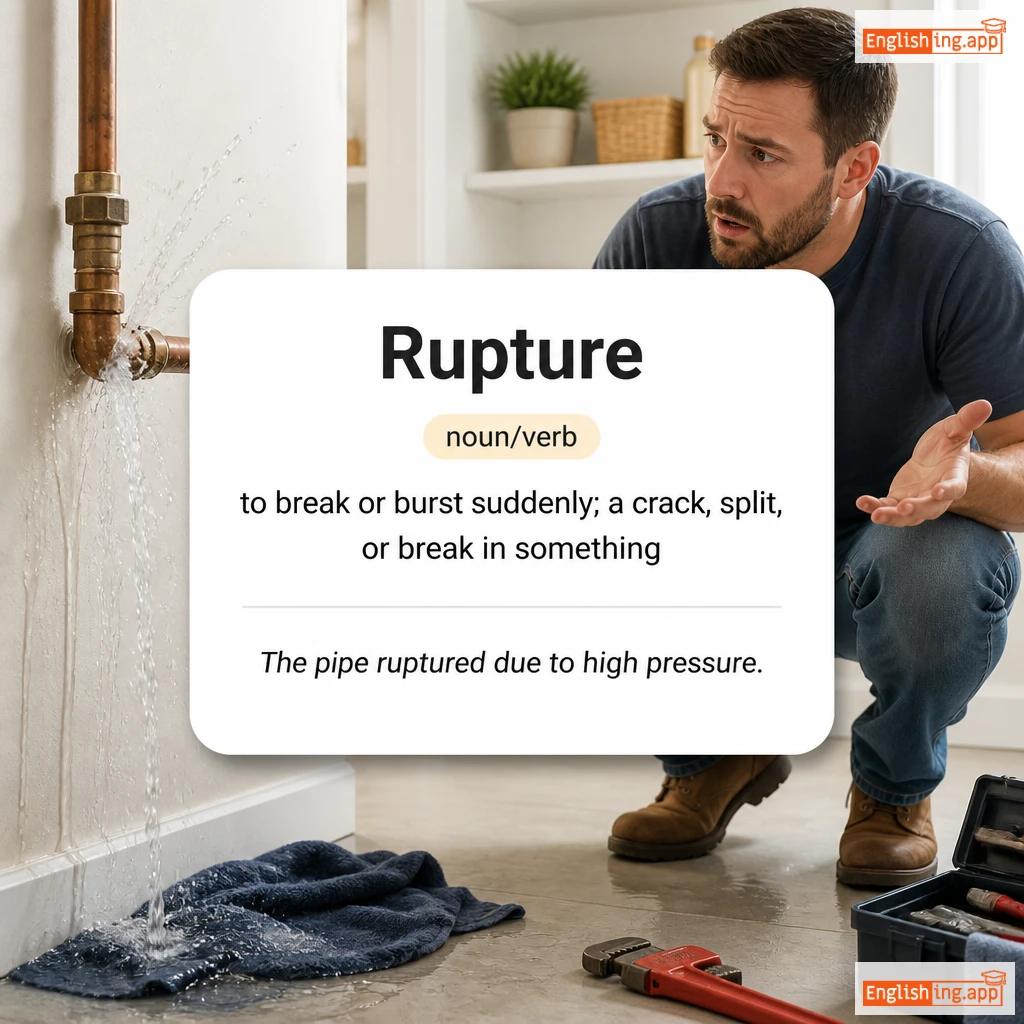
Rupture definition card — visual illustration of the meaning
noun/verb C1
/ˈrʌptʃər/
破裂 (haretsu)

to break or burst suddenly; a crack, split, or break in something

"The pipe ruptured due to high pressure."
"パイプは高圧で破裂しました。" (Paipu wa kōatsu de haretsu shimashita.)
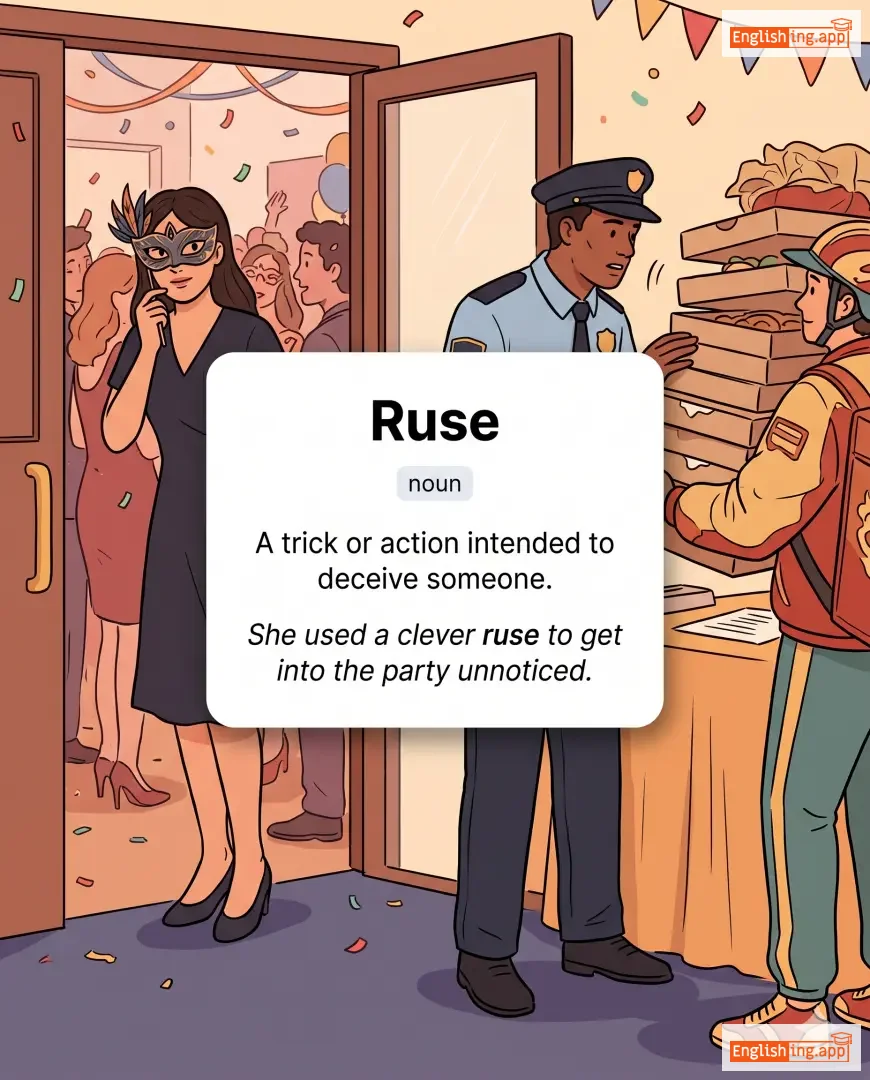
Ruse definition card — visual illustration of the meaning
noun C1
/ruːz/
策略 (senryaku)

A trick or action intended to deceive someone.

"She used a clever ruse to get into the party unnoticed."
"彼女はパーティーに気づかれずに入るために巧妙な策略を使った。" (Kanojo wa pātii ni kizukarezuni hairu tame ni kōmyōna senryaku o tsukatta.)
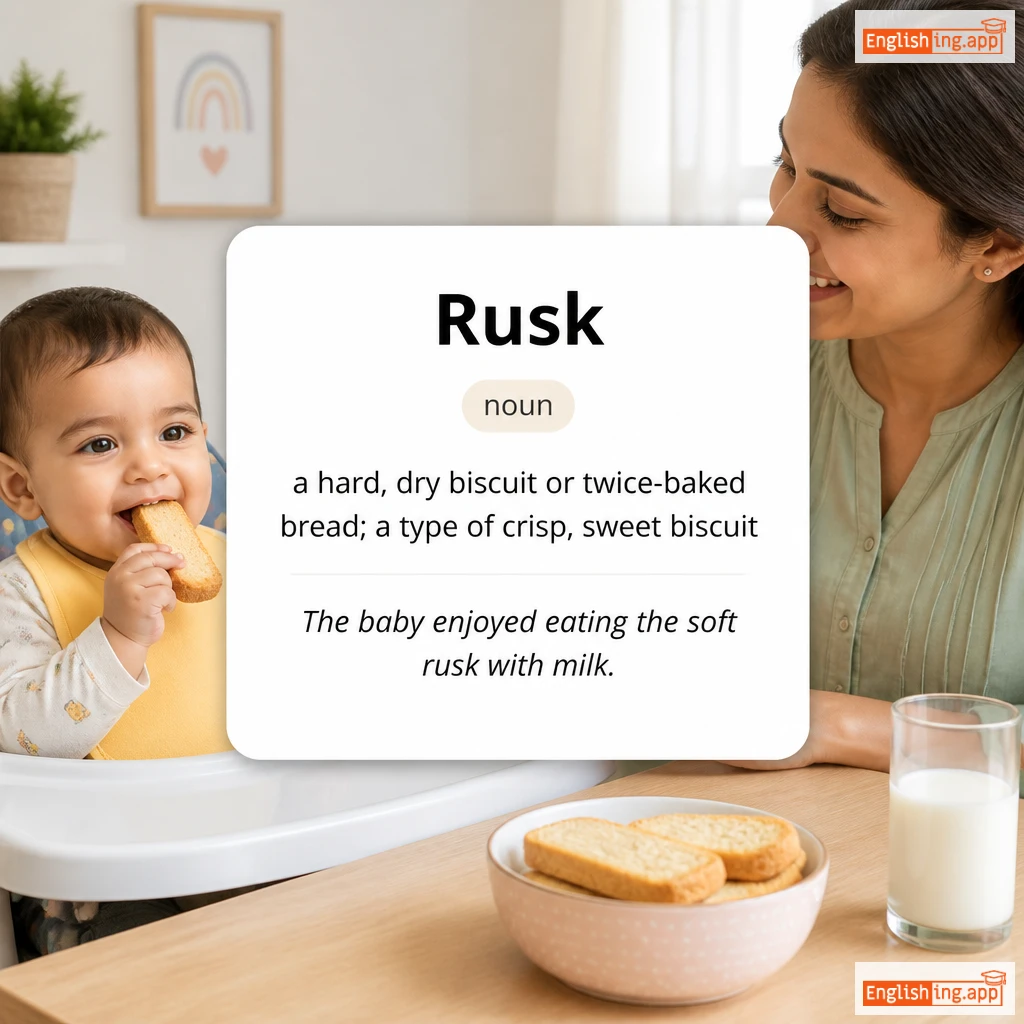
Rusk definition card — visual illustration of the meaning
noun C1
/rʌsk/
乾燥ビスケット; トーストパン (rasku)

a hard, dry biscuit or twice-baked bread; a type of crisp, sweet biscuit

"The baby enjoyed eating the soft rusk with milk."

"赤ちゃんはミルクと一緒に柔らかいラスクを食べるのが好きでした。" (Akachan wa miruku to issho ni yawarakai rāsuku o taberu no ga suki deshita.)
adjective C1
/ˈrʌstɪk/
田舎風の (inaka fū no)

Relating to the countryside; simple and unsophisticated.

"The cottage had a rustic charm with its wooden beams and stone fireplace."

"その小屋は木の梁と石の暖炉で田舎風の魅力を持っていました。" (Sono koya wa ki no hari to ishi no danro de inaka fū no miryoku o motte imashita.)
verb C1
/ˈrʌsl/
ささやく (sasayaku)

To make a soft, light sound like leaves or paper moving.

"The leaves rustled gently in the evening breeze."

"葉っぱが夕方のそよ風でそっとささやいていました。" (Happa ga yuugata no soyokaze de sotto sasayaitemashita.)
noun C1
/səˈbætɪkəl/
学習や旅行のための休暇 (gakushuu ya ryokou no tame no kyuuka)

A period of paid leave granted to a teacher or worker for study or travel, traditionally every seventh year.

"She took a sabbatical to research her new book."

"彼女は新しい本を研究するためにサバティカルを取った。" (Kanojo wa atarashī hon o kenkyū suru tame ni sabatikaru o totta.)
noun C1
/ˌsæbəˈtɜːr/
破壊工作員 (hakai kōsakuin)

A person who engages in sabotage.

"The saboteur was arrested before he could plant the bomb."

"破壊工作員は爆弾を設置する前に逮捕されました。" (Hakai kōsakuin wa bakudan o secchi suru mae ni taiho saremashita.)
adjective C1
/ˌsækrɪˈfɪʃəl/
犠牲的な (giseiteki na)

Relating to or involving sacrifice.

"The lamb was used as a sacrificial offering in the ritual."

"その羊は儀式で犠牲的な捧げ物として使われました。" (Sono hitsuji wa gishiki de giseiteki na sasagemono toshite tsukawaremashita.)
noun C1
/ˈsækrɪlɪdʒ/
冒涜 (bōtoku)

Violation or misuse of what is regarded as sacred.

"Stealing from the temple was considered an act of sacrilege."

"寺院から盗むことは冒涜と見なされていました。" (jiin kara nusumu koto wa bōtoku to minasarete imashita.)
adjective C1
/ˌsækrəˈlɪdʒəs/
冒涜的 (bōtoku teki)

Showing disrespect or irreverence toward something sacred.

"The painting was criticized as being sacrilegious."

"その絵画は冒涜的だと批判されました。" (sono kaiga wa bōtoku teki da to hihan saremashita.)
adjective C1
/ˈsæk.rəˌsæŋkt/
神聖不可侵 (shinsei fukashin)

Regarded as too important or valuable to be interfered with; sacred.

"Freedom of speech is considered sacrosanct in democratic societies."

"言論の自由は民主主義社会では神聖不可侵と見なされています。" (Genron no jiyuu wa minshushugi shakai dewa shinsei fukashin to minasareteimasu.)
adjective C1
/səˈdɪs.tɪk/
サディスティック (sadesutikku)

Deriving pleasure from inflicting pain or suffering on others.

"The villain had a sadistic smile while hurting his enemies."

"悪党は敵に痛みを与えている間、サディスティックな笑顔を浮かべていた。" (Akutō wa teki ni itami o ataete iru aida, sadesutikku na egao o ukabete ita.)
noun C1
/ˈsæf.rən/
サフラン (safuran)

A spice derived from the flower of Crocus sativus, used for flavoring and coloring food.

"She added saffron to the rice for flavor and color."
"彼女は味と色のためにご飯にサフランを加えました。" (Kanojo wa aji to iro no tame ni gohan ni safuran o kuwaemashita.)
noun C1
/ˈsɑːɡə/
長い物語 (nagai monogatari)

A long story of heroic achievement, or a long, complex series of events.

"The company's rise and fall became a corporate saga."

"会社の興隆と衰退は企業のサガとなった。" (Kaisha no kōryū to suitai wa kigyō no saga to natta.)
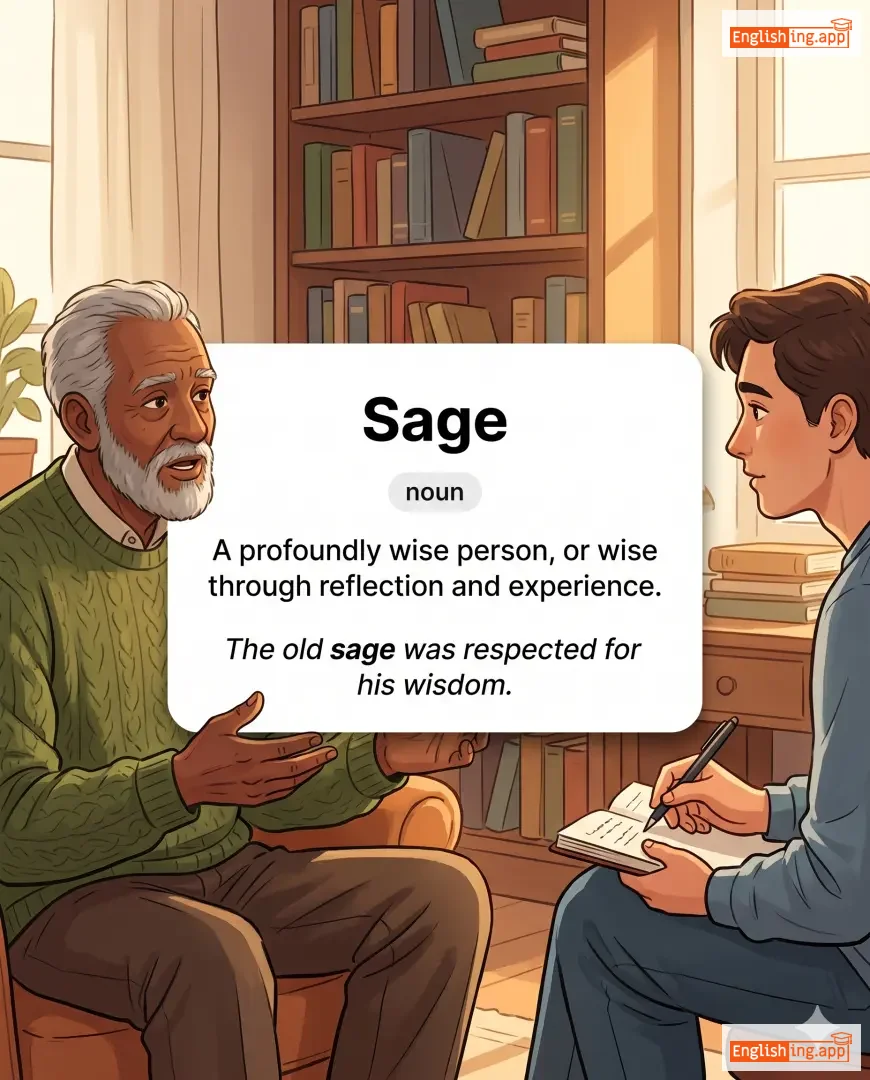
Sage definition card — visual illustration of the meaning
noun C1
/seɪdʒ/
賢者 (kenja)

A profoundly wise person, or wise through reflection and experience.

"The old sage was respected for his wisdom."
"その古い賢者はその知恵で尊敬されていました。" (Sono furui kenja wa sono chie de sonkei sarete imashita.)
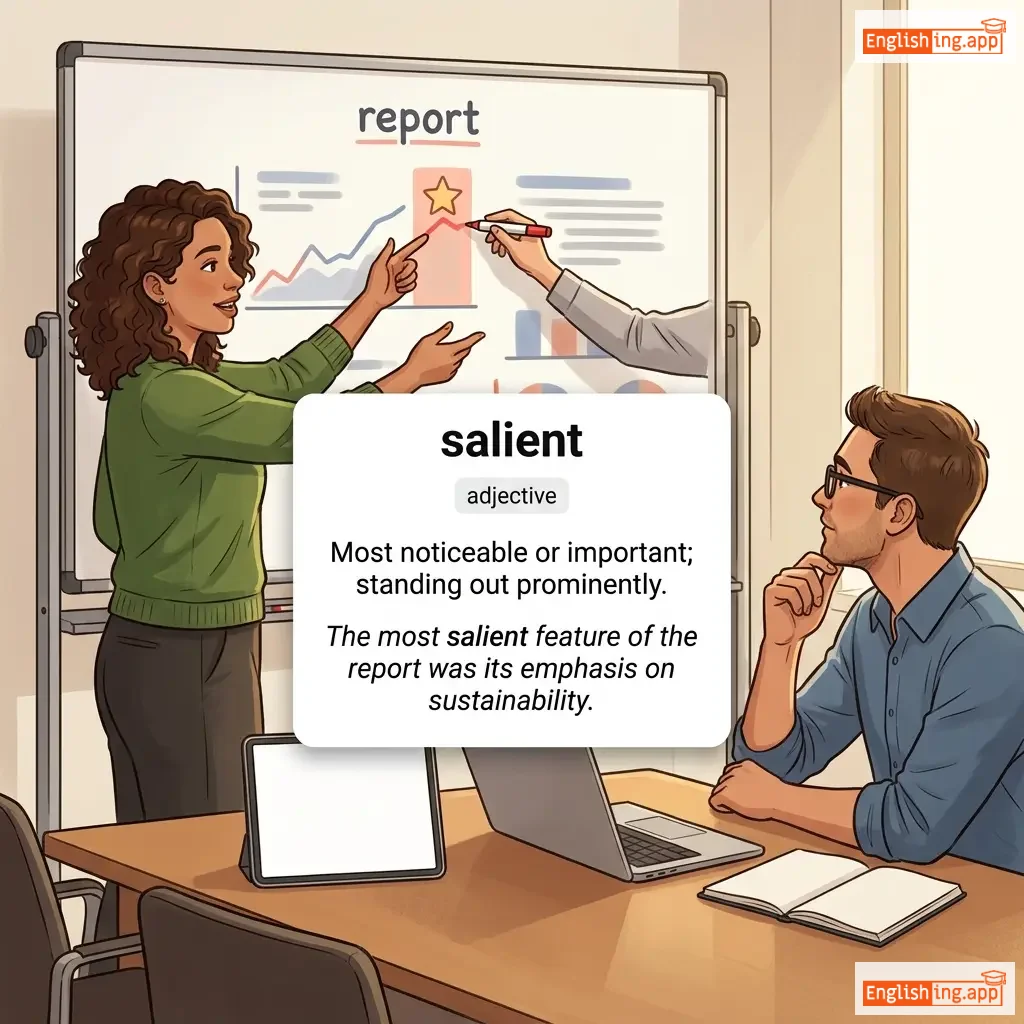
salient definition card — visual illustration of the meaning
adjective C1
/ˈseɪ.li.ənt/
顕著な特徴 (kenchona tokuchou)

Most noticeable or important; standing out prominently.

"The most salient feature of the report was its emphasis on sustainability."

"報告書で最も顕著な特徴は、持続可能性に重点を置いたことでした。" (Houkokusho de mottomo kenchona tokuchou wa, jizoku kanousei ni juuten wo oita koto deshita.)
adjective C1
/ˈseɪ.liːn/
生理食塩水 (seirishien-sui)

Containing or resembling salt; salty.

"Doctors often use saline solution to clean wounds."
"医師は傷をきれいにするために生理食塩水をよく使用します。" (Ishi wa kizu o kirei ni suru tame ni seirishien-sui o yoku shiyou shimasu.)
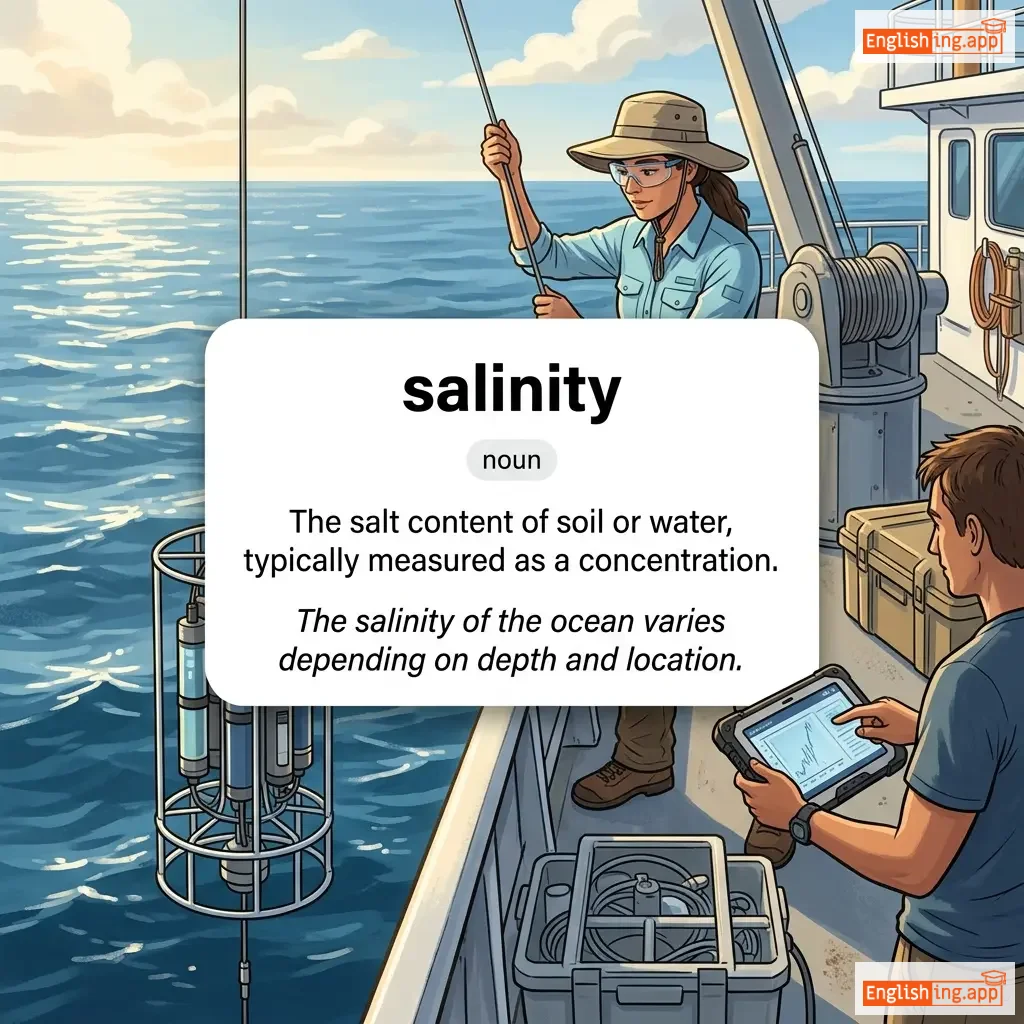
salinity definition card — visual illustration of the meaning
noun C1
/səˈlɪn.ə.t̬i/
塩分, 塩濃度 (enbun, en nōdo)

The salt content of soil or water, typically measured as a concentration.

"The salinity of the ocean varies depending on depth and location."
"海洋の塩分は深さと場所によって異なります。" (Kaiyō no enbun wa fukasa to basho ni yotte kotonarimasu.)
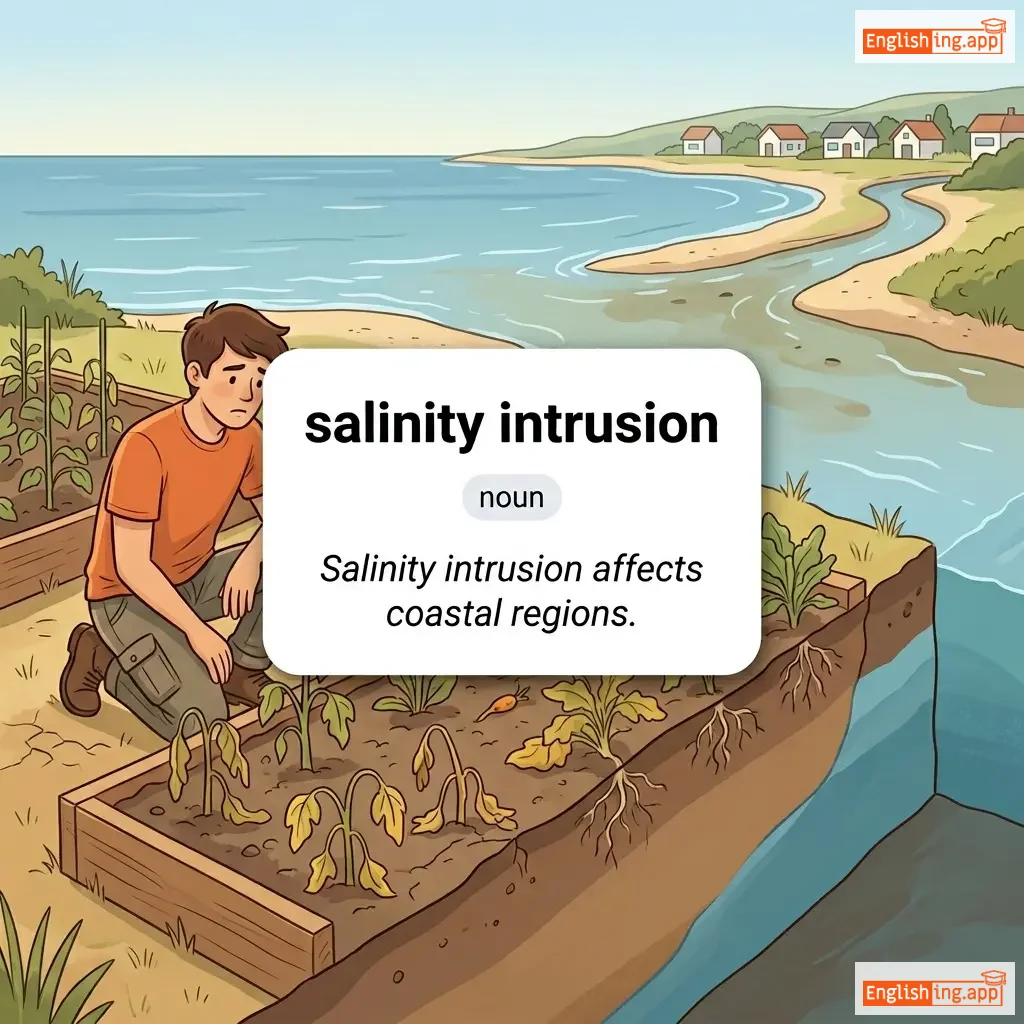
salinity intrusion definition card — visual illustration of the meaning
noun C1
səˈlɪnɪti ɪnˈtruːʒən
塩分侵入 (enbun shin'nyū)

The movement of salt water into freshwater areas, typically affecting coastal regions.

"Salinity intrusion affects coastal regions."
"塩分侵入は沿岸地域に影響を与える。" (Enbun shin'nyū wa engan chiiki ni eikyō o ataeru.)
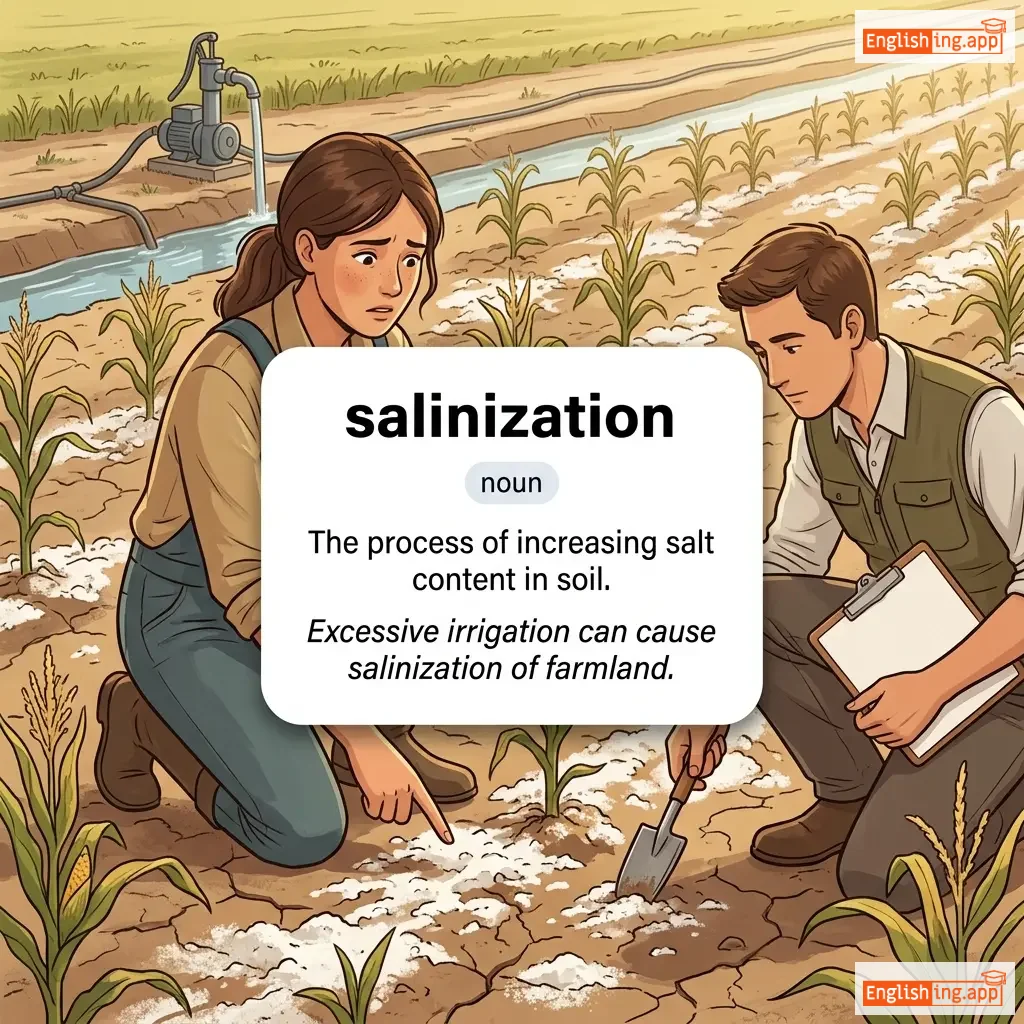
salinization definition card — visual illustration of the meaning
noun C1
/ˌsæl.ɪ.naɪˈzeɪ.ʃən/
塩分増加 (enbun zouka)

The process of increasing salt content in soil.

"Excessive irrigation can cause salinization of farmland."
"過剰な灌漑は農地の塩分増加を引き起こす可能性があります。" (Kajou na kangai wa nouchi no enbun zouka wo hikiokosu kanousei ga arimasu.)
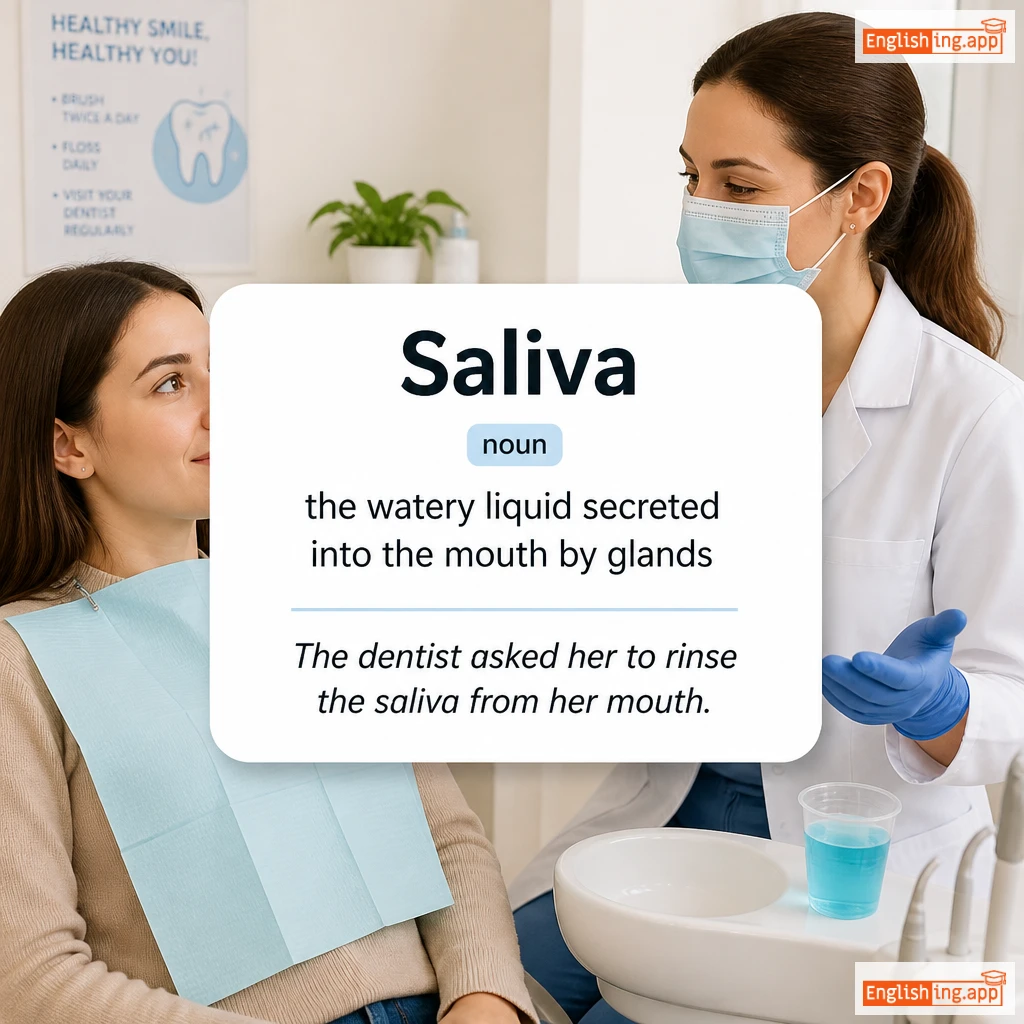
Saliva definition card — visual illustration of the meaning
noun C1
/səˈlaɪ.və/
唾液 (sariva)

the watery liquid secreted into the mouth by glands

"The dentist asked her to rinse the saliva from her mouth."
"歯科医は彼女に口の中の唾液をすすぐように言った。" (shikai wa kanojo ni kuchi no naka no daeki o susugu you ni itta)
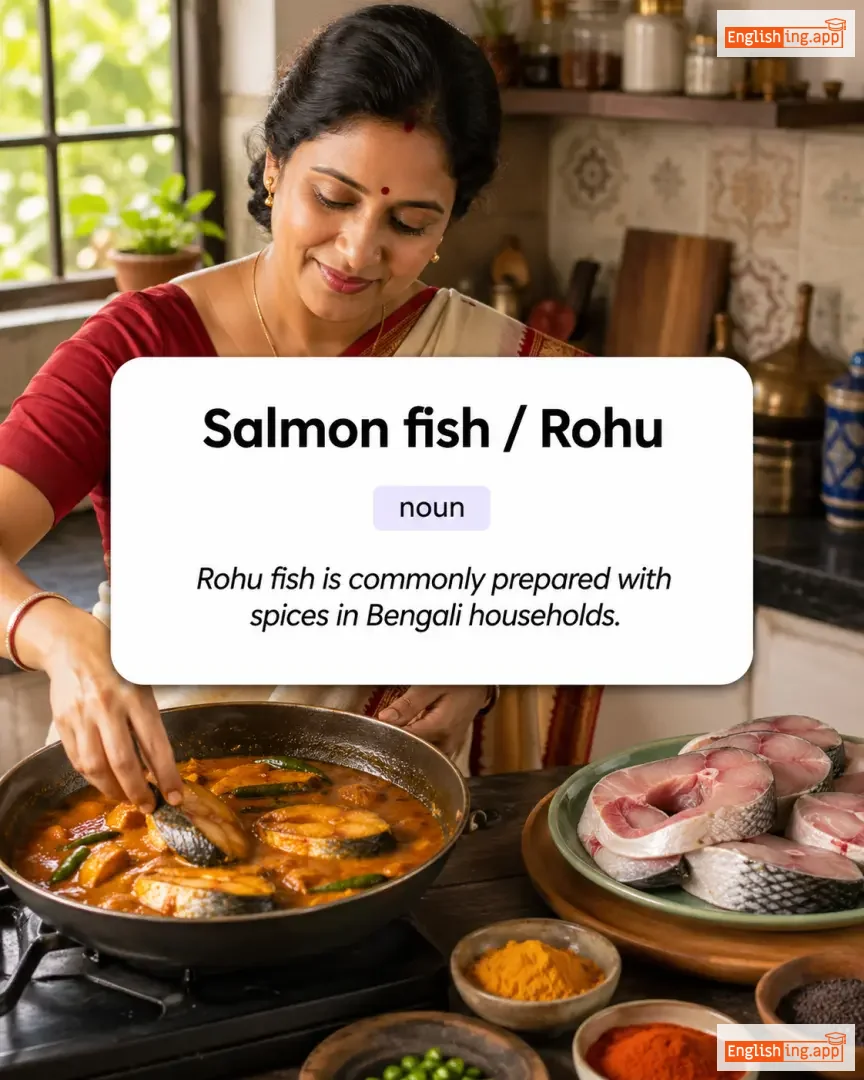
Salmon fish / Rohu definition card — visual illustration of the meaning
noun C1
/ˈsæl.mən fɪʃ / ˈroʊ.huː/
ロフ魚 (Rofu uo)

a freshwater fish popular in South Asian cuisine; also refers to salmon which is a different species

"Rohu fish is commonly prepared with spices in Bengali households."
"ロフ魚はベンガルの家庭でよく香辛料と一緒に調理されます。" (Rofu uo wa Bengaru no katei de yoku koshinryo to issho ni chori saremasu.)
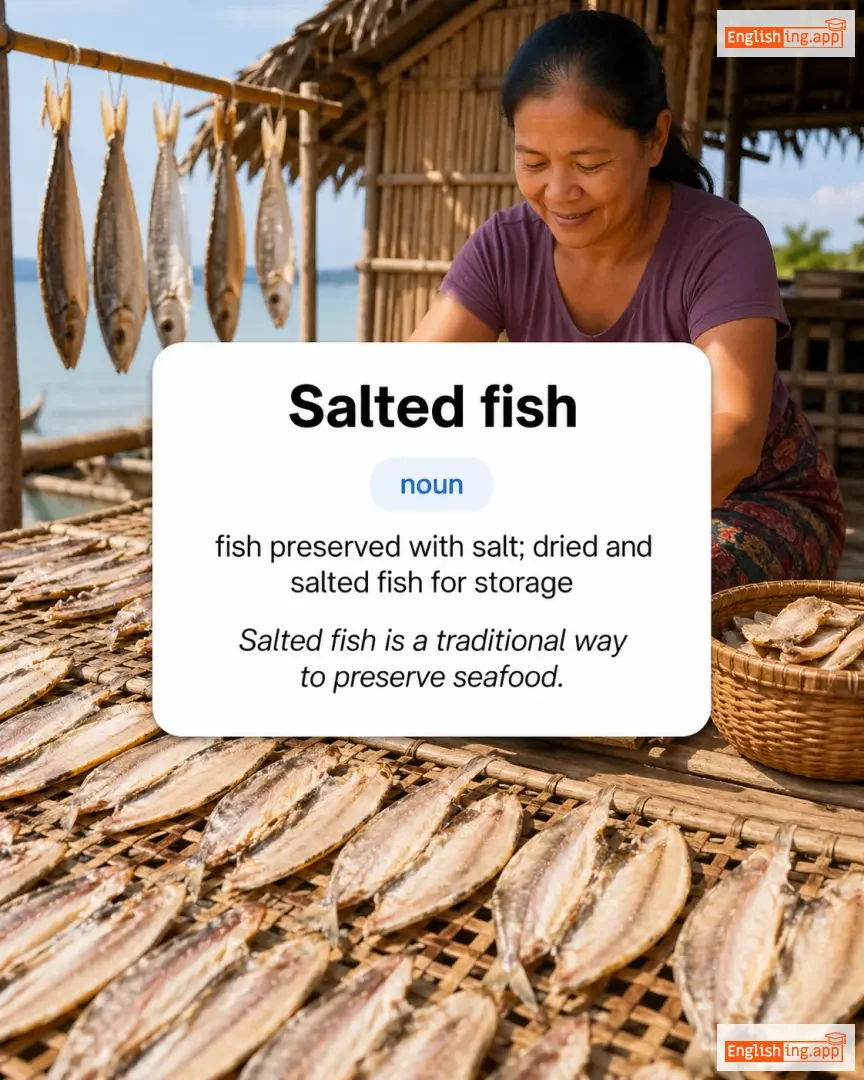
Salted fish definition card — visual illustration of the meaning
noun C1
/ˈsɔːl.tɪd fɪʃ/
塩漬けの魚 (shiozuke no sakana)

fish preserved with salt; dried and salted fish for storage

"Salted fish is a traditional way to preserve seafood."
"塩漬けの魚はシーフードを保存する伝統的な方法です。" (shiozuke no sakana wa shiifudo o hozon suru dentoteki na hoho desu)
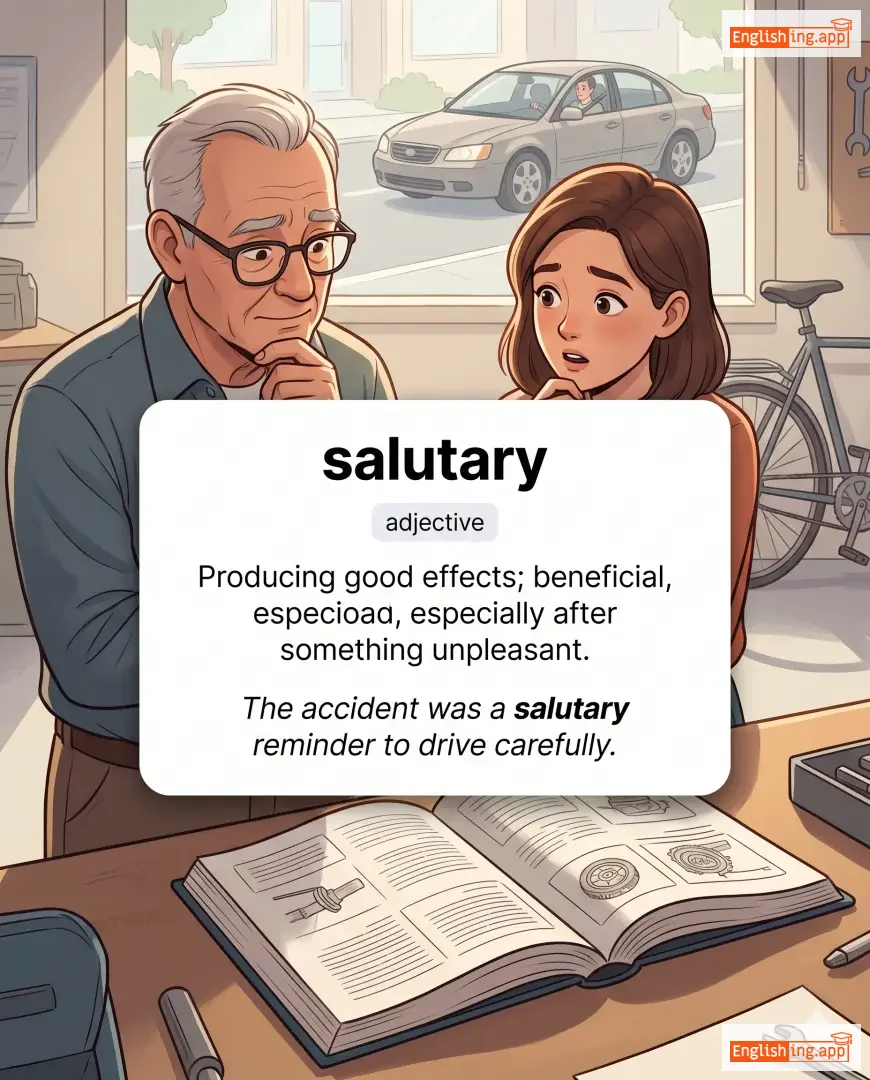
salutary definition card — visual illustration of the meaning
adjective C1
/ˈsæljʊˌtɛri/
有益な (yūeki na)

Producing good effects; beneficial, especially after something unpleasant.

"The accident was a salutary reminder to drive carefully."
"その事故は、慎重に運転することを思い出させる有益な教訓でした。" (Sono jiko wa, shinchou ni unten suru koto o omoidasa seru yūeki na kyōkun deshita.)
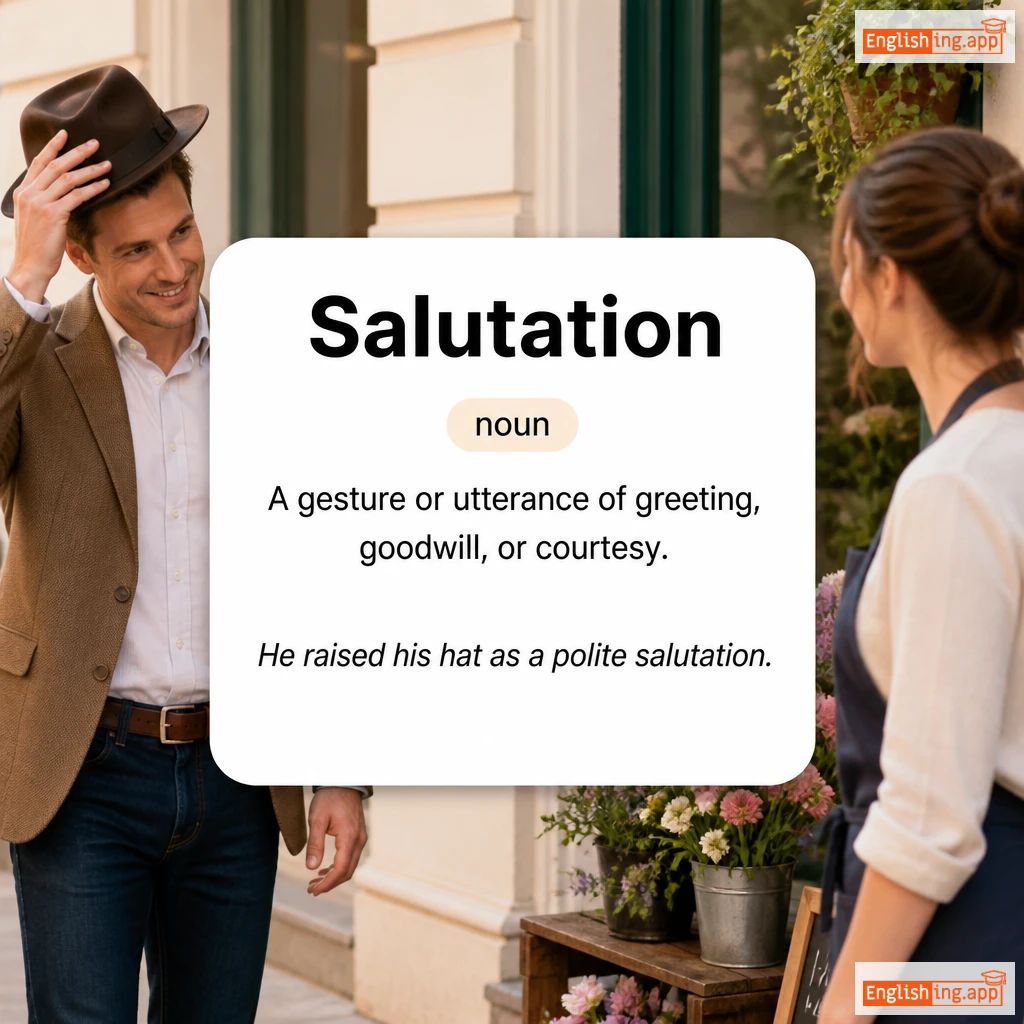
Salutation definition card — visual illustration of the meaning
noun C1
/ˌsæljʊˈteɪʃən/
挨拶 (aisatsu)

A gesture or utterance of greeting, goodwill, or courtesy.

"He raised his hat as a polite salutation."

"彼は礼儀正しい挨拶として帽子を上げた。" (Kare wa reigi tadashī aisatsu toshite bōshi o ageta.)
verb C1
/ˈsælvɪdʒ/
救助 (kyūjo)

To save something from loss, damage, or destruction.

"They managed to salvage some goods from the fire."
"彼らは火事からいくつかの物を救出することに成功した。" (Karera wa kaji kara ikutsuka no mono o kyūshutsu suru koto ni seikō shita.)
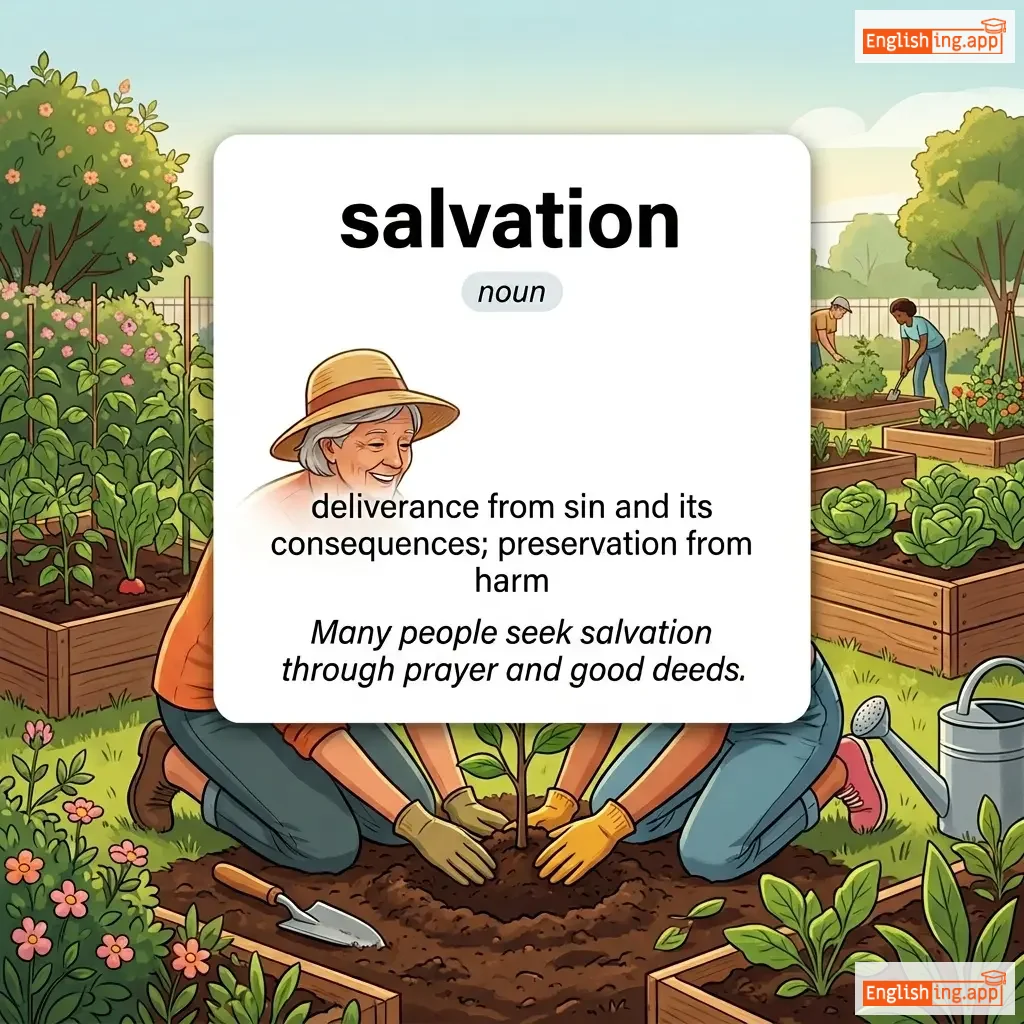
salvation definition card — visual illustration of the meaning
noun C1
/sælˈveɪ.ʃən/
救済 (kyūsai)

deliverance from sin and its consequences; preservation from harm

"Many people seek salvation through prayer and good deeds."

"多くの人々は祈りと善行を通じて救済を求めます。" (ōku no hitobito wa inori to zen kō o tsūjite kyūsai o motomemasu.)
adjective C1
/ˌsæŋktɪˈmoʊniəs/
偽善的な敬虔 (gizen-teki na keiken)

Making a show of being morally superior to others; hypocritically pious.

"He gave a sanctimonious speech about honesty while he himself was corrupt."
"彼は自分が腐敗していたにもかかわらず、正直について偽善的なスピーチをしました。" (Kare wa jibun ga fuhai shite ita nimo kakawarazu, shoujiki ni tsuite gizen-teki na supīchi o shimashita.)
Sanction definition card — visual illustration of the meaning
⚖️

Sanction

noun/verb C1
/ˈsæŋkʃən/

An official permission or approval; also a penalty imposed to enforce rules.

"The government imposed sanctions on the company for violating trade laws."

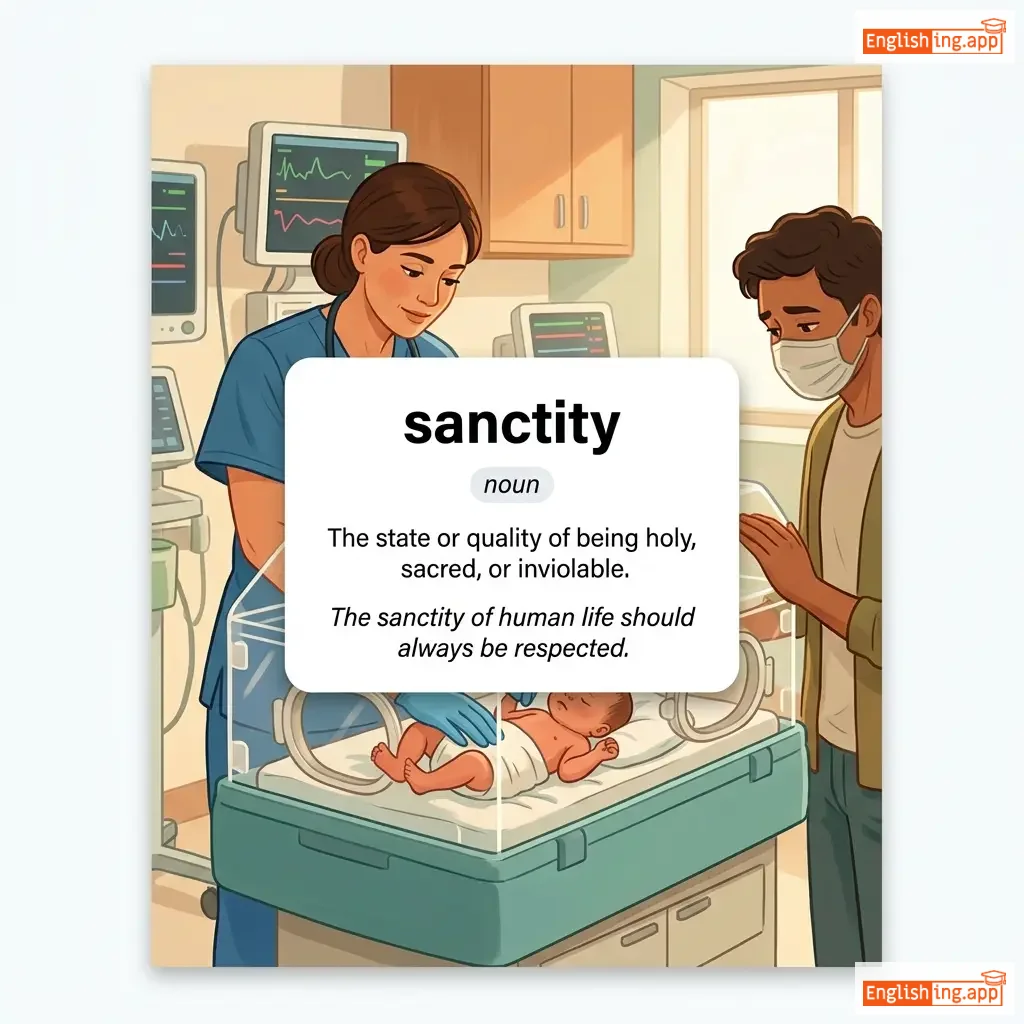
sanctity definition card — visual illustration of the meaning
noun C1
/ˈsæŋk.tə.ti/
神聖さ (shinseisa)

The state or quality of being holy, sacred, or inviolable.

"The sanctity of human life should always be respected."

"人間の命の神聖さは常に尊重されるべきです。" (Ningen no inochi no shinseisa wa tsuneni sonchou sareru beki desu.)
adjective C1
/ˈsæŋɡwɪn/
楽観的 (rakkanteki)

Optimistic or positive, especially in a difficult situation.

"Despite the challenges, she remained sanguine about the future."

"困難にもかかわらず、彼女は未来に対して楽観的な姿勢を保ち続けた。" (Konnan ni mo kakawarazu, kanojo wa mirai ni taishite rakkanteki na shisei o tamotsu tsudzuketa.)
sanitization definition card — visual illustration of the meaning
noun C1
ˌsæn.ɪ.taɪˈzeɪ.ʃən
衛生管理 (eisei kanri)

The process of cleaning and disinfecting to eliminate germs and bacteria.

"Regular sanitization keeps appliances germ-free."
"定期的な衛生管理により、機器が無菌状態に保たれます。" (Teikiteki na eisei kanri ni yori, kiki ga mukin joutai ni tamarimasu.)
verb, noun C1
/sæp/
樹液 / 弱める (jueki / yowameru)

As a noun: the vital fluid in plants; As a verb: to gradually weaken or drain strength.

"The long journey began to sap his energy."

"長い旅が彼のエネルギーを弱め始めた。" (Nagai tabi ga kare no enerugi- o yowame hajimeta.)
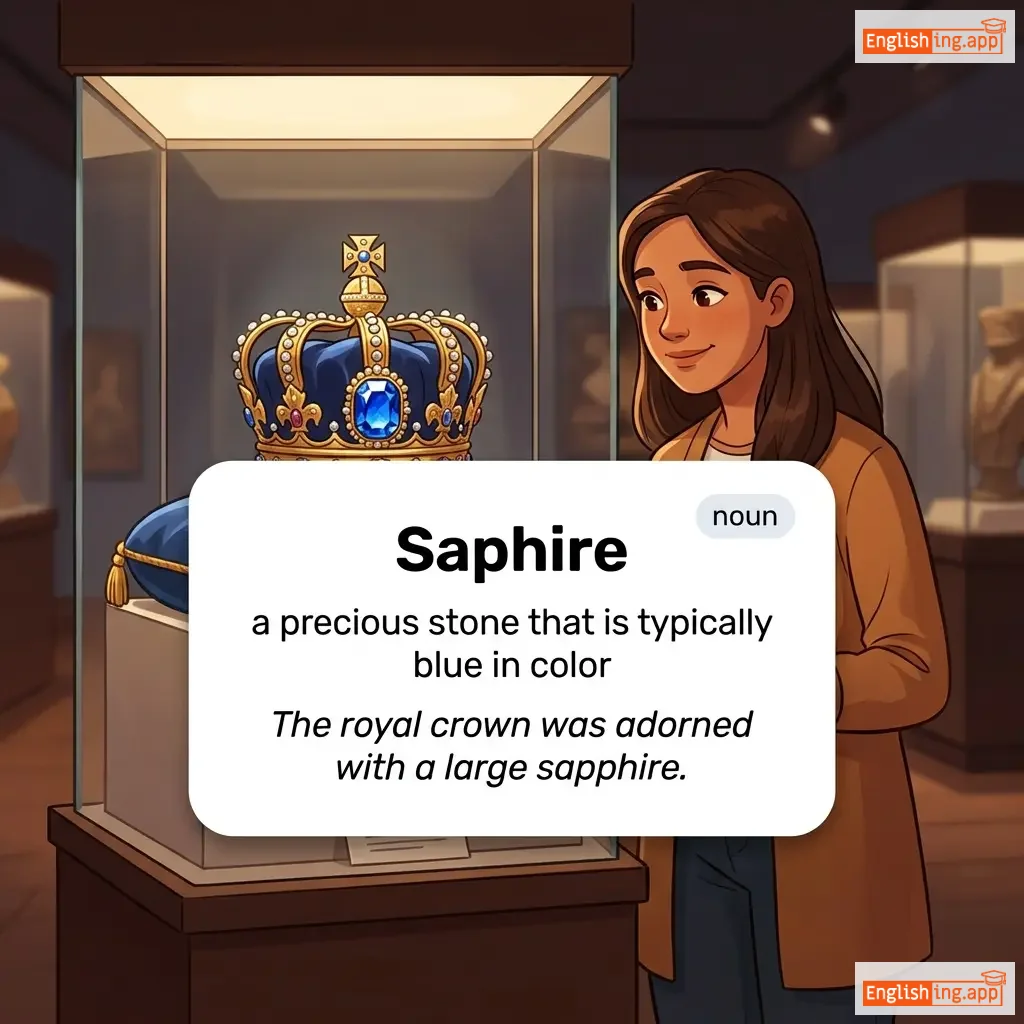
Saphire definition card — visual illustration of the meaning
noun C1
/ˈsæf.aɪər/
サファイア (safaia)

a precious stone that is typically blue in color

"The royal crown was adorned with a large sapphire."
"ロイヤルクラウンは大きなサファイアで飾られていました。" (Roiyaru kuraun wa ookina safaia de kazararete imashita.)
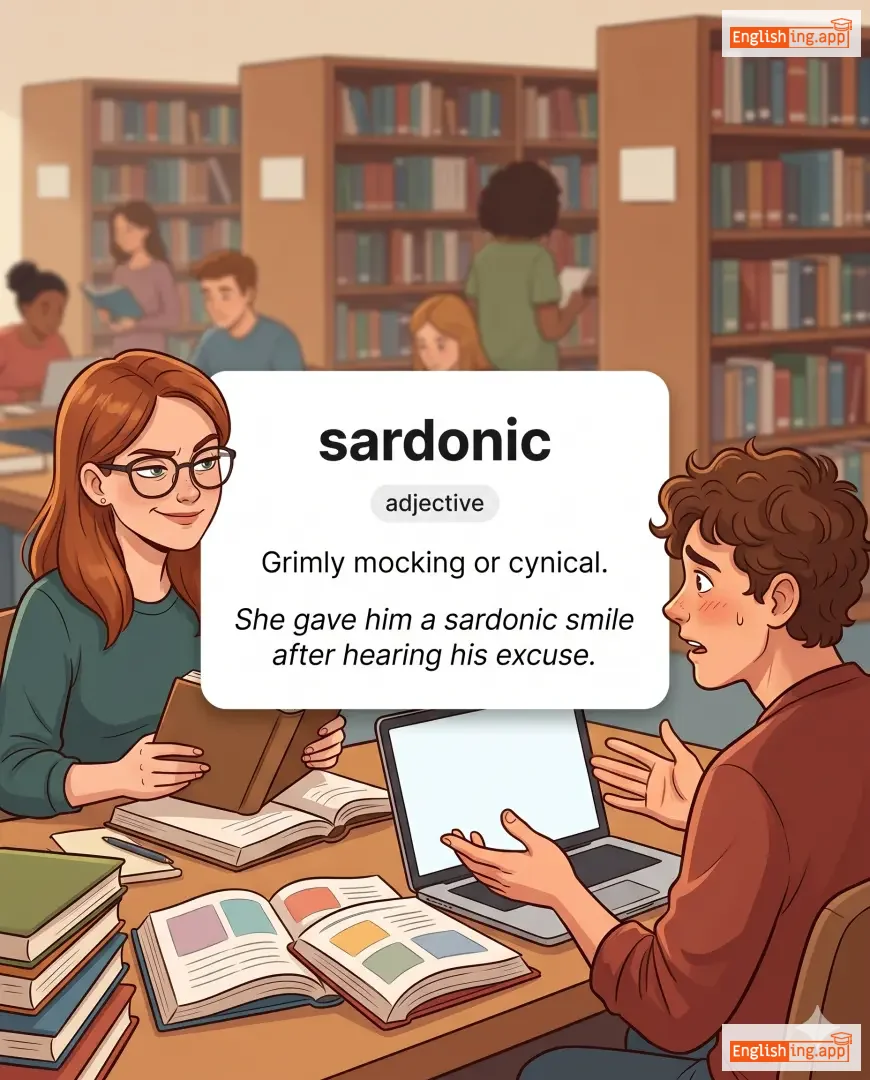
sardonic definition card — visual illustration of the meaning
adjective C1
/sɑːrˈdɒnɪk/
幸福 (koufuku)

Grimly mocking or cynical.

"She gave him a sardonic smile after hearing his excuse."

"彼女は賞を受け取ったとき、自分の幸福を隠すことができませんでした。" (Kanojo wa shō o uketotta toki, jibun no kōfuku o kakusu koto ga dekimasen deshita.)
noun C1
/ˈsɑːri/
サリー (sari)

a garment consisting of a length of cotton or silk elaborately draped around the body, traditionally worn by women from South Asia

"She looked elegant in her red silk saree at the festival."
"彼女は祭りで赤い絹のサリーを着てとてもエレガントに見えました。" (Kanojo wa matsuri de akai kinu no sari o kite totemo ereganto ni miemashita.)
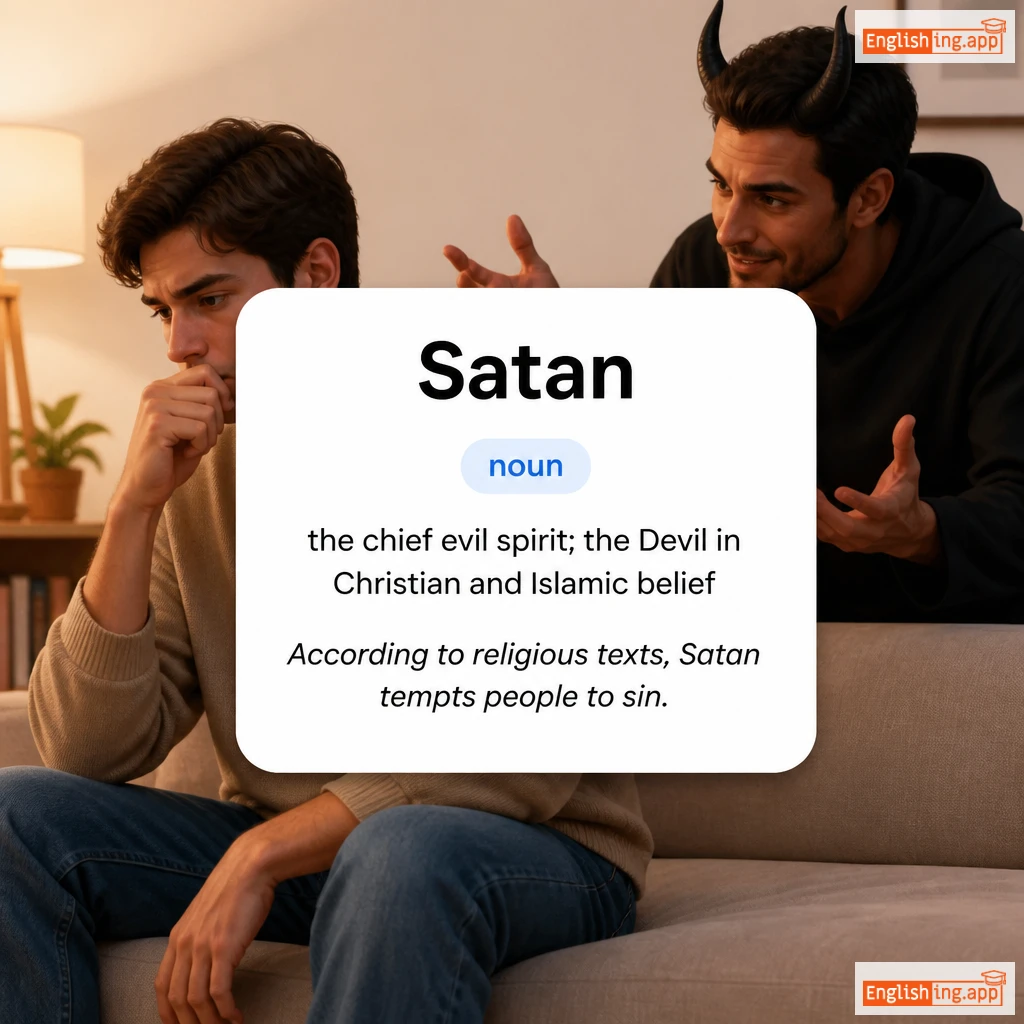
Satan definition card — visual illustration of the meaning
noun C1
/ˈseɪ.tən/
サタン (Satan)

the chief evil spirit; the Devil in Christian and Islamic belief

"According to religious texts, Satan tempts people to sin."

"宗教的な文献によると、サタンは人々を罪に導く。" (Shūkyō-teki na bunken ni yoru to, Satan wa hitobito o tsumi ni michibiku.)