語彙集

英単語辞書 | 単語の意味、定義、例文

noun C1
/ˈpraɪməsi/
primauté (primauté)

the state of being first in importance or authority

"The primacy of education cannot be denied."

"La primauté de l'éducation ne peut être niée." (La primauté de l'éducation ne peut être niée.)
adjective C1
/ˈpraɪ.məl/
primitif, fondamental (primitif, fondamental)

Relating to the earliest stage of development; essential or fundamental.

"Fear is one of the most primal emotions humans experience."

"La peur est l'une des émotions les plus primales que les humains ressentent." (La peur est l'une des émotions les plus primales que les humains ressentent.)
noun C1
/ˈpraɪ.meɪt/
primate, animal de la famille des singes (primate, animal de la famille des singes)

A member of the group of animals including humans, apes, and monkeys.

"Humans are classified as primates."

"Les humains sont classés parmi les primates." (Les humains sont classés parmi les primates.)
noun C1
/ˈpraɪ.mər/ (US), /ˈprɪm.ər/ (UK)
manuel introductif, apprêt (manuel introductif, apret)

A basic introductory book or a substance used to prepare a surface for painting.

"He read a primer on programming before starting his course."

"Il a lu un manuel d'introduction à la programmation avant de commencer son cours." (Il a lu un manuel d'introduction a la programmation avant de commencer son cours.)
adjective C1
/praɪˈmiːvəl/
primitif (primitif)

Relating to the earliest ages in history; ancient and primitive.

"The explorers ventured into the primeval forest untouched by humans."

"Les explorateurs se sont aventurés dans la forêt primitive, inchangée par les humains." (Les explorateurs se sont aventurés dans la forêt primitive, inchangée par les humains.)
adjective C1
/praɪˈmɔːrdiəl/
primaire (primaire)

Existing at or from the beginning of time; fundamental and original.

"Scientists study the primordial soup from which life emerged."

"Les scientifiques étudient la soupe primordiale dont la vie a émergé." (Les scientifiques étudient la soupe primordiale dont la vie a émergé.)
adjective C1
/ˈprɪnsəpəld/
intègre (intègre)

acting in accordance with moral or ethical standards

"He is a principled leader who always puts honesty first."
"C'est un leader intègre qui met toujours l'honnêteté en premier." (C'est un leader intègre qui met toujours l'honnêteté en premier.)
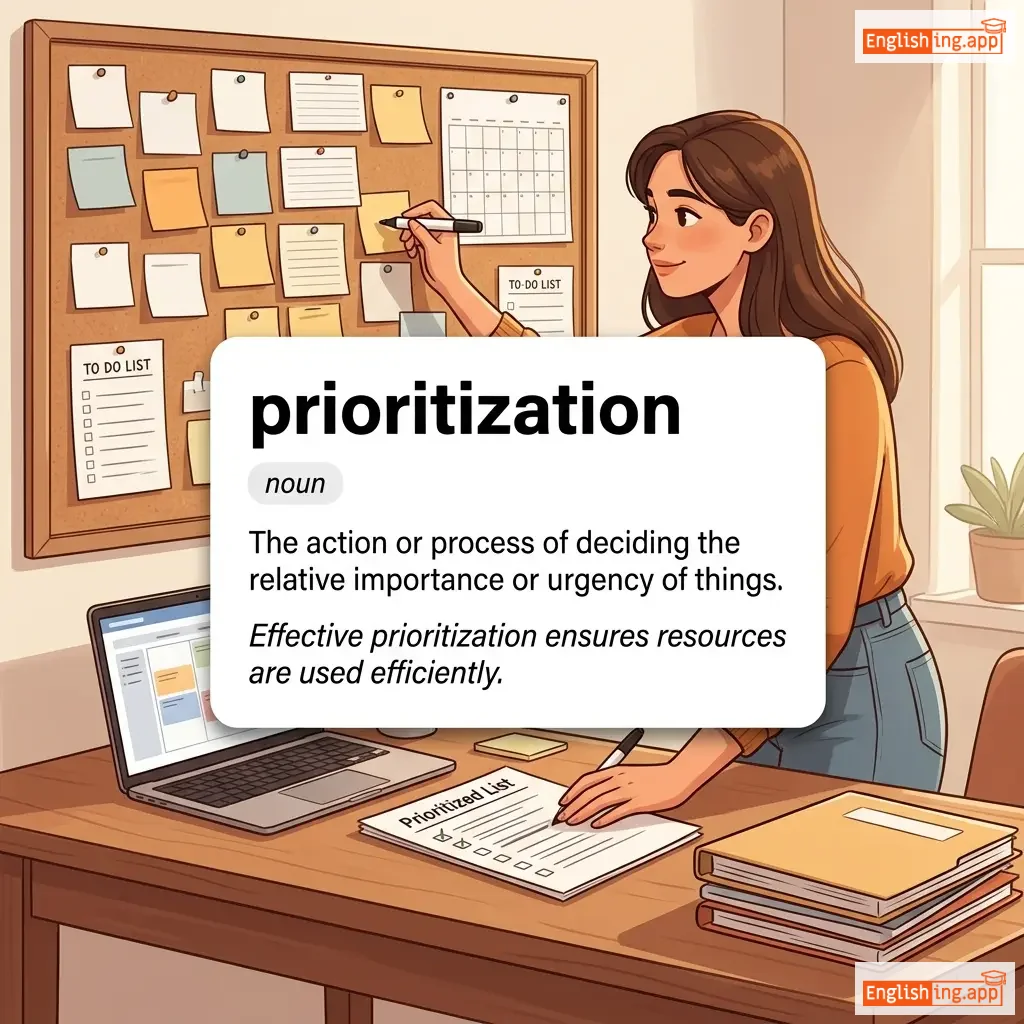
prioritization definition card — visual illustration of the meaning
noun C1
ˌpraɪɔːrɪtaɪˈzeɪʃən
priorisation (priorisation)

The action or process of deciding the relative importance or urgency of things.

"Effective prioritization ensures resources are used efficiently."
"Une priorisation efficace garantit que les ressources sont utilisées efficacement." (Une priorisation efficace garantit que les ressources sont utilisées efficacement.)
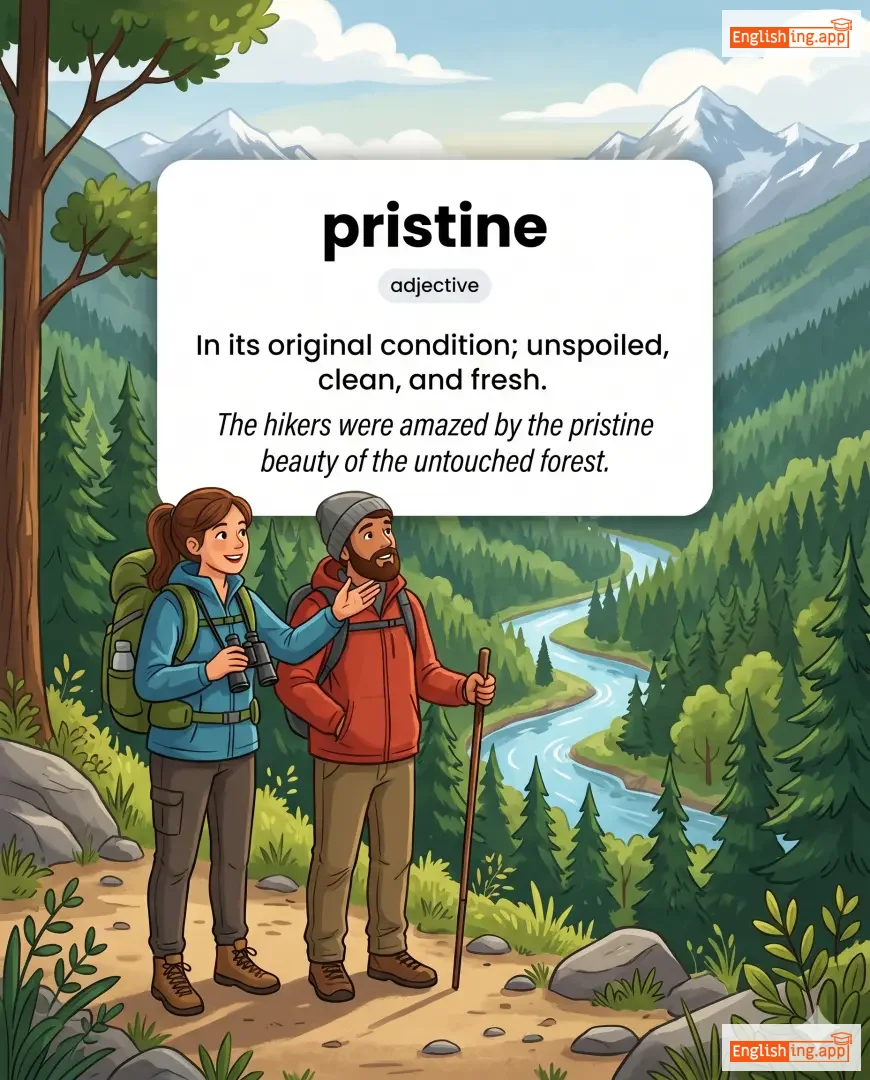
pristine definition card — visual illustration of the meaning
adjective C1
/ˈprɪstiːn/
intact, pur (intact, pur)

In its original condition; unspoiled, clean, and fresh.

"The hikers were amazed by the pristine beauty of the untouched forest."
"Les randonneurs étaient émerveillés par la beauté pristine de la forêt intacte." (Les randonneurs étaient émerveillés par la beauté pristine de la forêt intacte.)
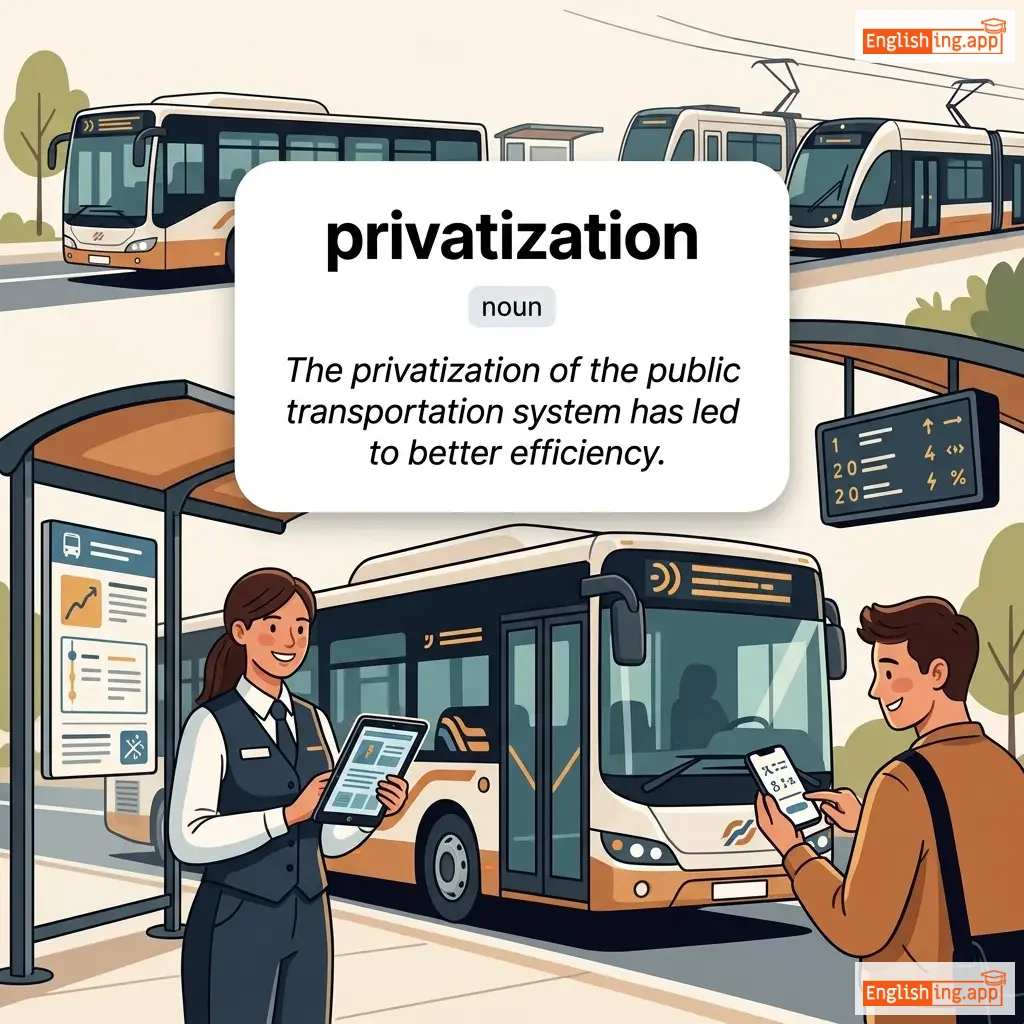
privatization definition card — visual illustration of the meaning
noun C1
/ˌpraɪvətəˈzeɪʃən/
privatisation (privatisation)

the process of transferring ownership of a business, industry, or service from the public sector to the private sector

"The privatization of the public transportation system has led to better efficiency."

"La privatisation du système de transport public a conduit à une meilleure efficacité." (La privatisation du systeme de transport public a conduit a une meilleure efficacite.)
adjective C1
/ˈprɪvi/
connaissance secrète (connaissance secrète)

having access to secret or private knowledge

"She was privy to the confidential discussions."
"Elle était au courant des discussions confidentielles." (Elle etait au courant des discussions confidentielles.)
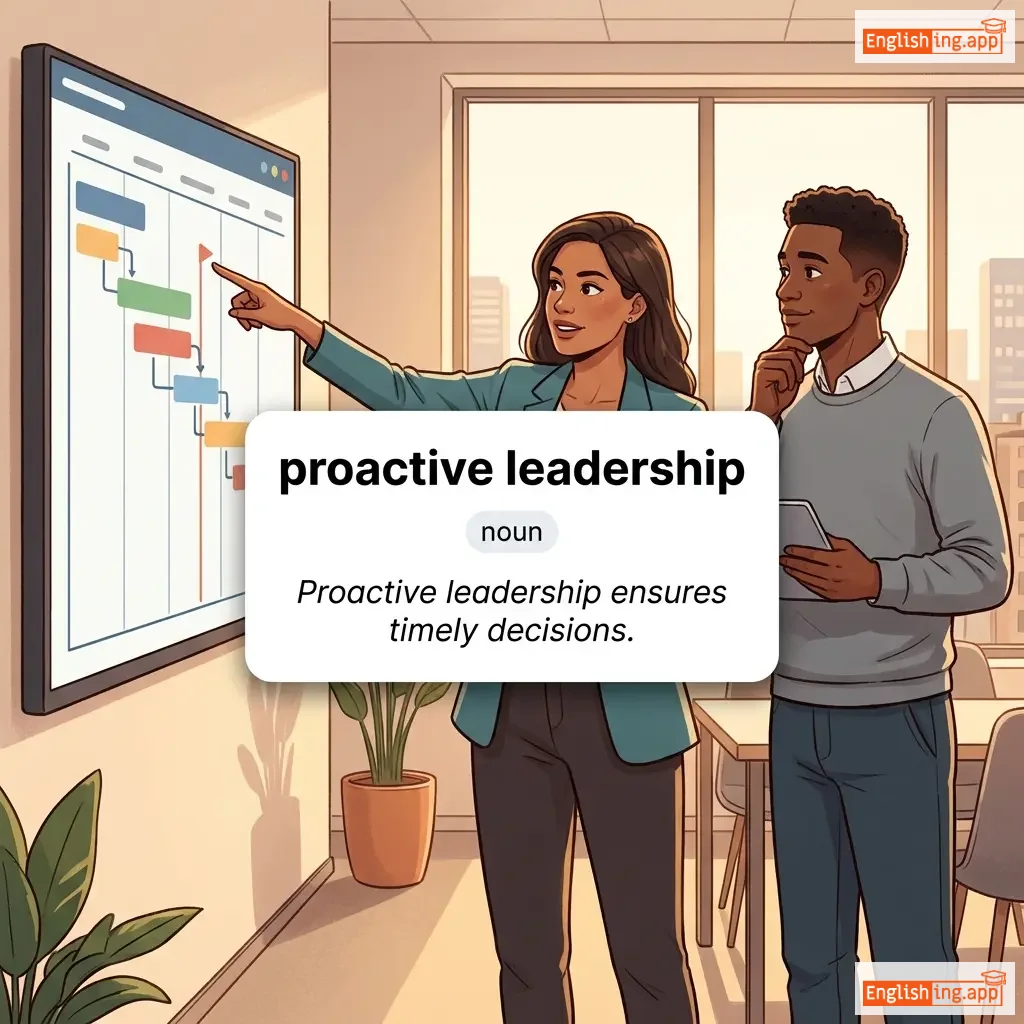
proactive leadership definition card — visual illustration of the meaning
noun C1
/ˌprəʊˈæk.tɪv ˈliː.də.ʃɪp/
leadership proactif (leadership proactif)

Leadership that takes initiative and anticipates problems before they occur, rather than reacting to events.

"Proactive leadership ensures timely decisions."
"Le leadership proactif garantit des décisions opportunes." (Le leadership proactif garantit des décisions opportunes.)
proactive saving definition card — visual illustration of the meaning
noun C1
proʊˈæktɪv ˈseɪvɪŋ
épargne proactive (epargne proactive)

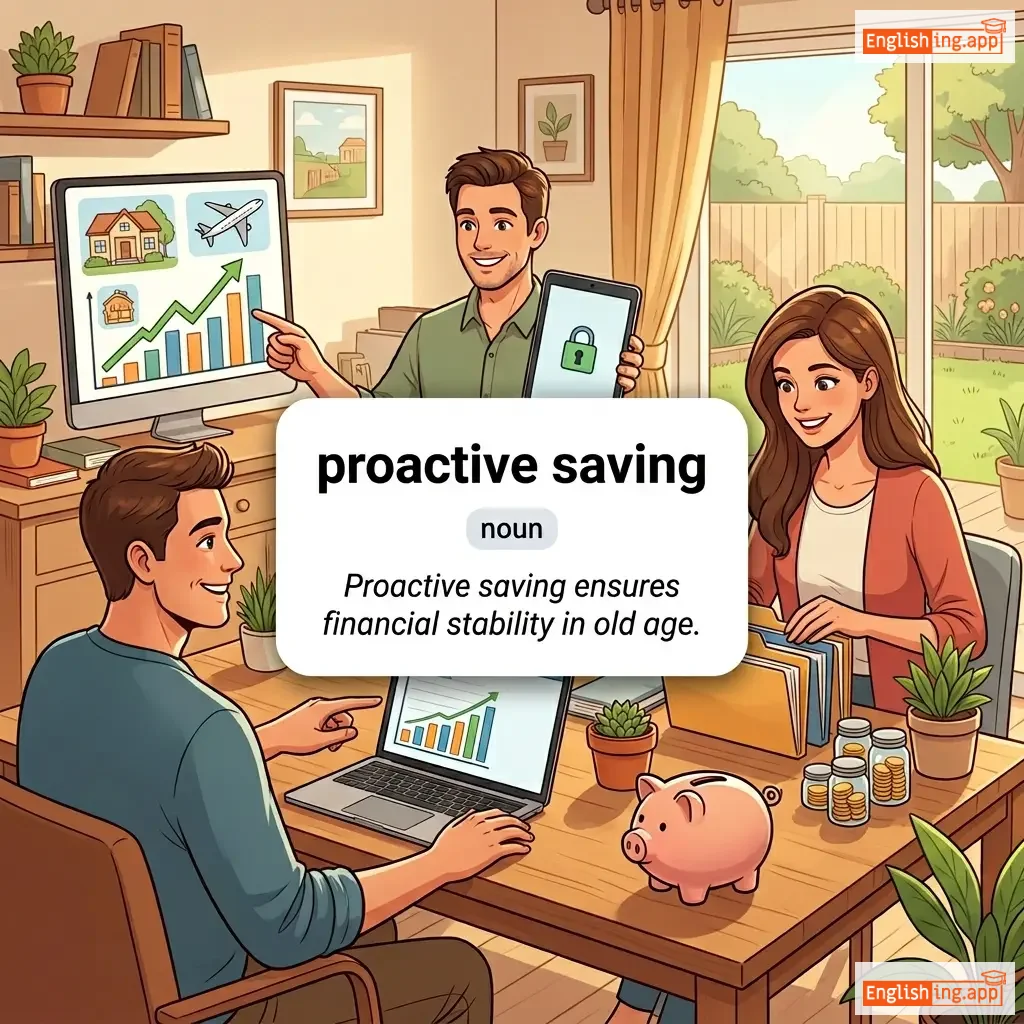
Actively planning and setting aside money in advance to prepare for future financial needs

"Proactive saving ensures financial stability in old age."
"L'épargne proactive garantit la stabilité financière à un âge avancé." (L'epargne proactive garantit la stabilite financiere a un age avance.)
probabilistic definition card — visual illustration of the meaning
adjective C1
ˌprɒb.ə.bɪˈlɪs.tɪk
basé sur la probabilité (probabilistique)

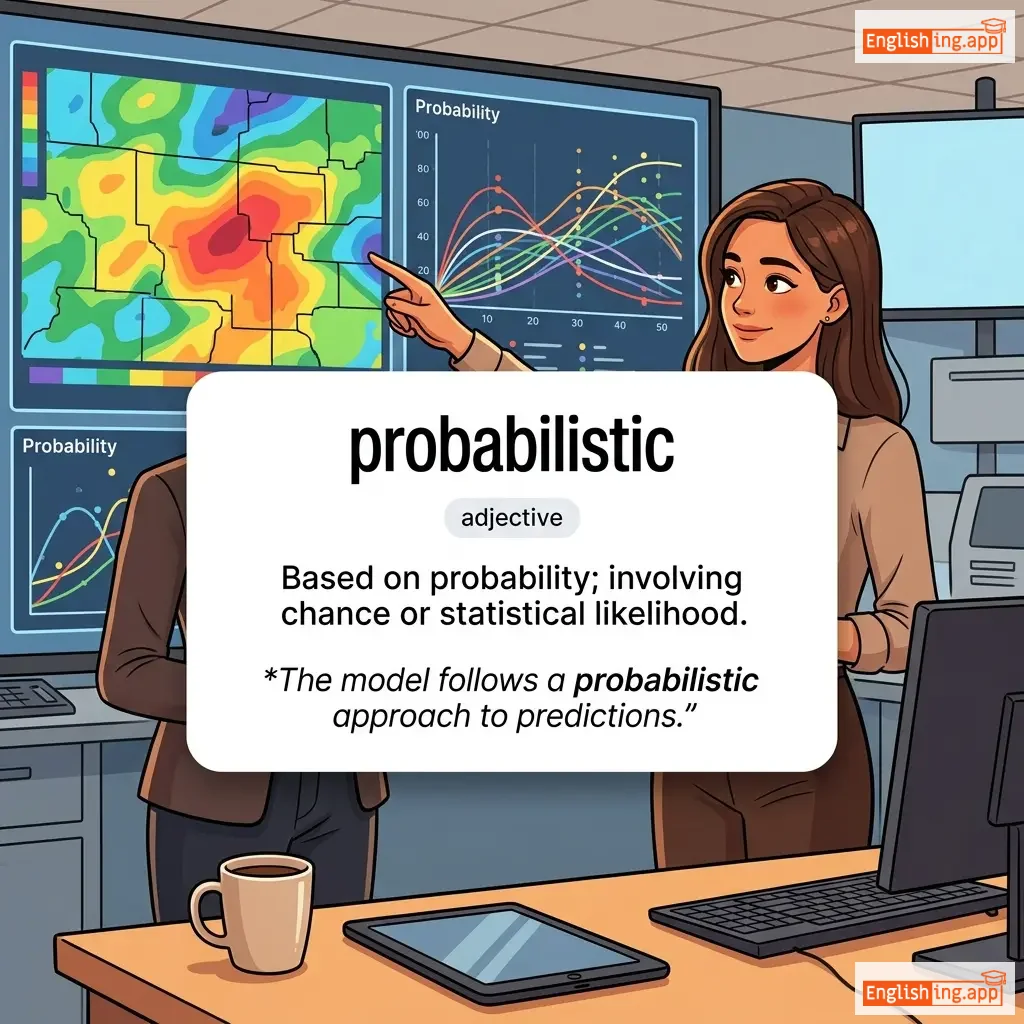
Based on probability; involving chance or statistical likelihood.

"The model follows a probabilistic approach to predictions."

"Le modèle suit une approche probabilistique pour les prédictions." (Le modele suit une approche probabilistique pour les predictions.)
noun C1
/ˈproʊbeɪt/
preuve testamentaire (preuve testamentaire)

the official proving of a will in a court of law

"The family had to go through probate after his death."
"La famille a dû passer par la procédure de preuve testamentaire après son décès." (La famille a dû passer par la procédure de preuve testamentaire après son décès.)
probiotic definition card — visual illustration of the meaning
noun C1
ˌprəʊ.baɪˈɒt.ɪk
bactéries bénéfiques (bacteries benefiques)

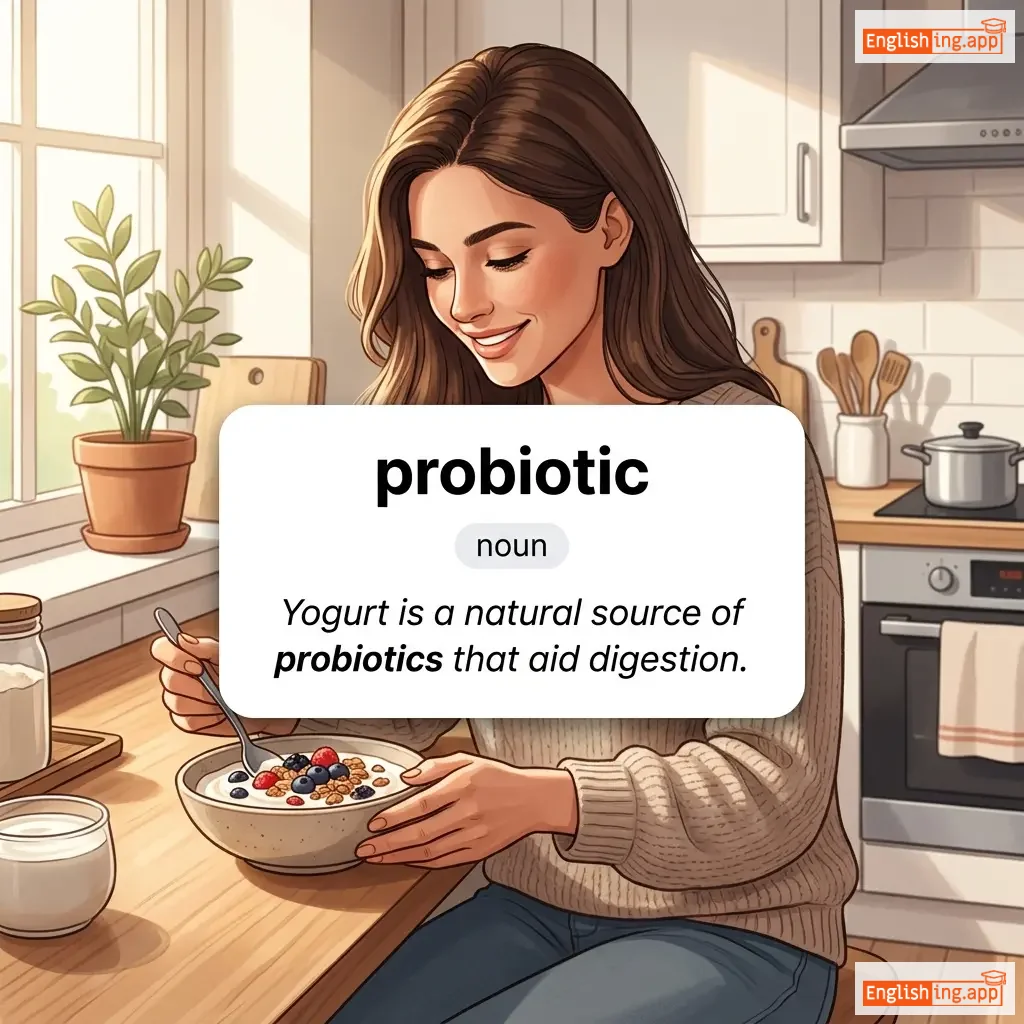
Live microorganisms that provide health benefits when consumed in adequate amounts.

"Yogurt is a natural source of probiotics that aid digestion."
"Le yaourt est une source naturelle de probiotiques qui aide à la digestion." (Le yaourt est une source naturelle de probiotiques qui aide à la digestion.)
probiotics definition card — visual illustration of the meaning
noun C1
/ˌprəʊ.baɪˈɒt.ɪks/
probiotiques (probiotiques)

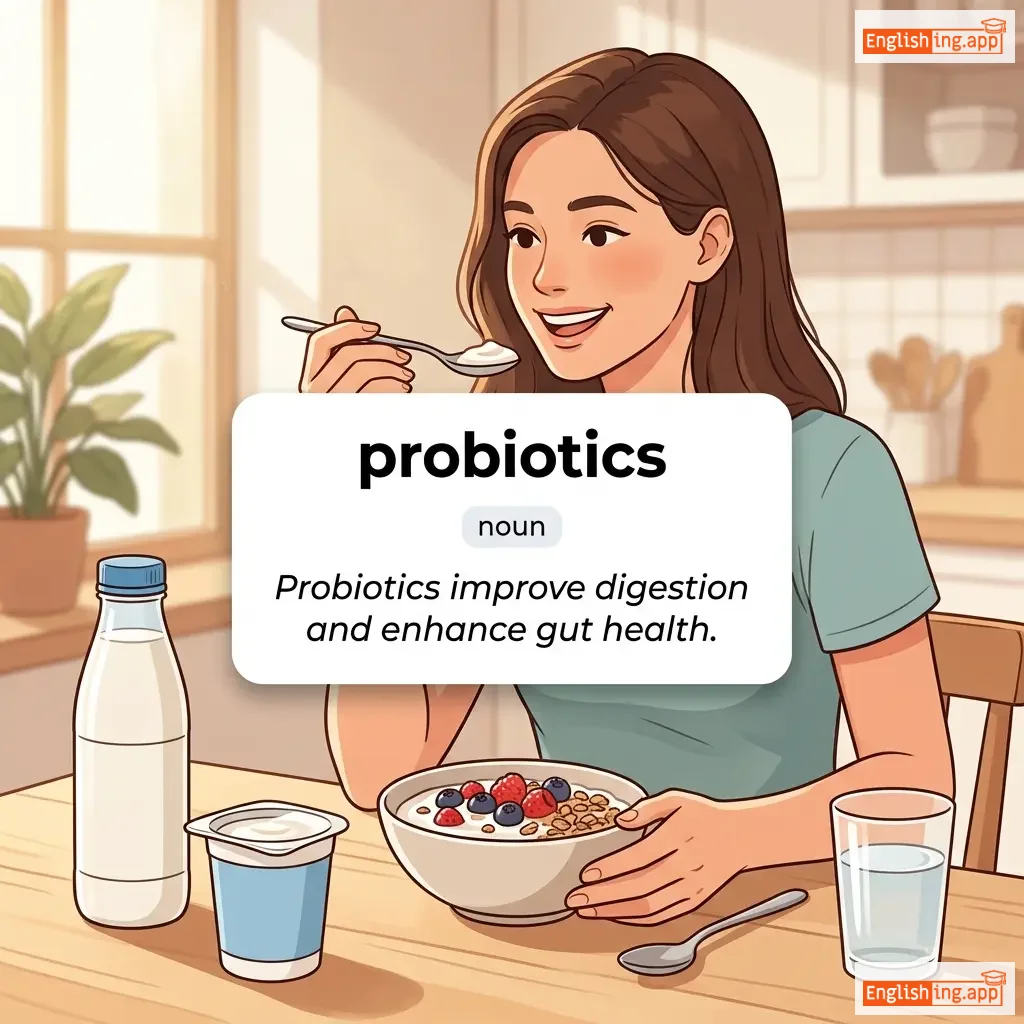
Live microorganisms that, when administered in adequate amounts, confer health benefits to the host, especially for digestive health.

"Probiotics improve digestion and enhance gut health."

"Les probiotiques améliorent la digestion et favorisent la santé intestinale." (Les probiotiques ameliorent la digestion et favorisent la sante intestinale.)
adjective C1
/prəˈsiːdʒərəl/
procédural (procedural)

Relating to an established or official way of doing something; concerned with procedure.

"The committee followed the procedural rules strictly."
"Le comité a suivi strictement les règles procédurales." (Le comité a suivi strictement les règles procédurales.)
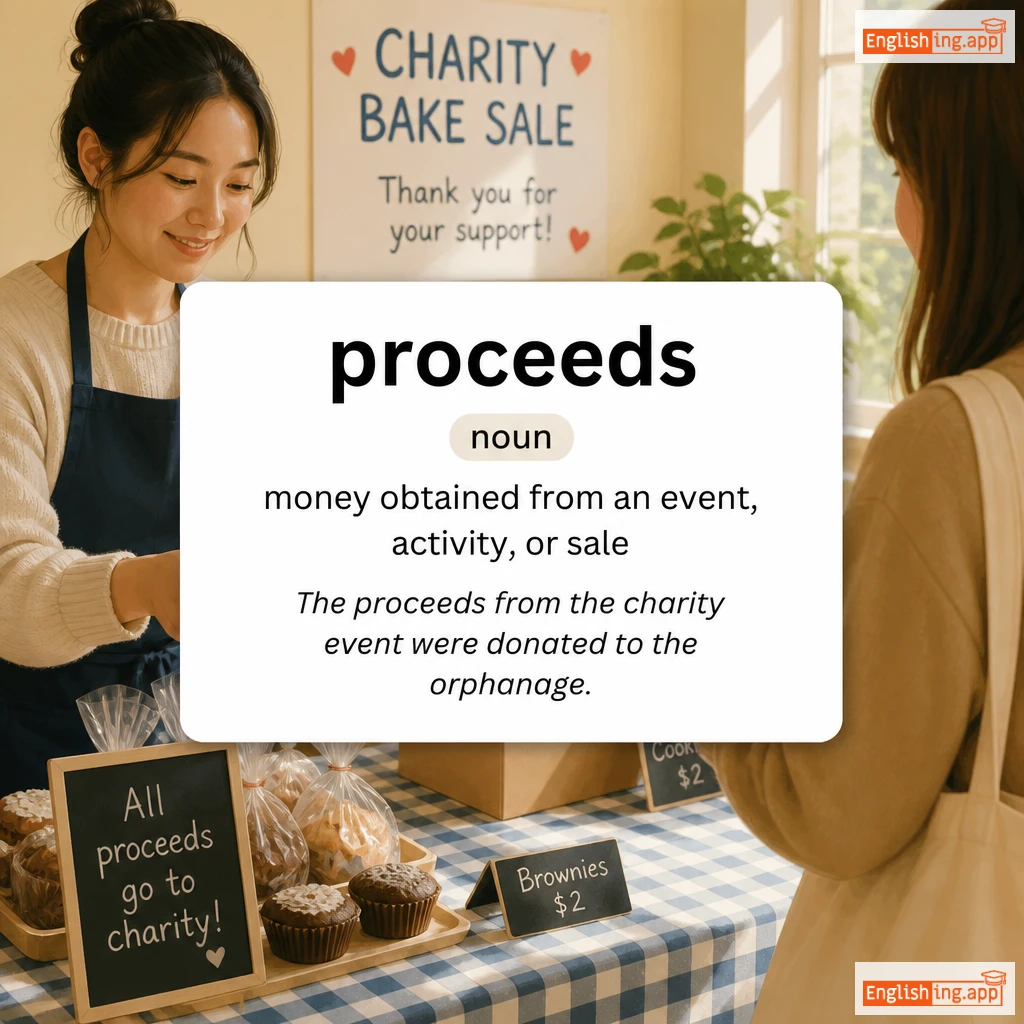
proceeds definition card — visual illustration of the meaning
noun C1
/ˈprəʊsiːdz/
recettes (recettes)

money obtained from an event, activity, or sale

"The proceeds from the charity event were donated to the orphanage."
"Les recettes de l'événement caritatif ont été données à l'orphelinat." (Les recettes de l'evenement caritatif ont ete donnees a l'orphelinat.)
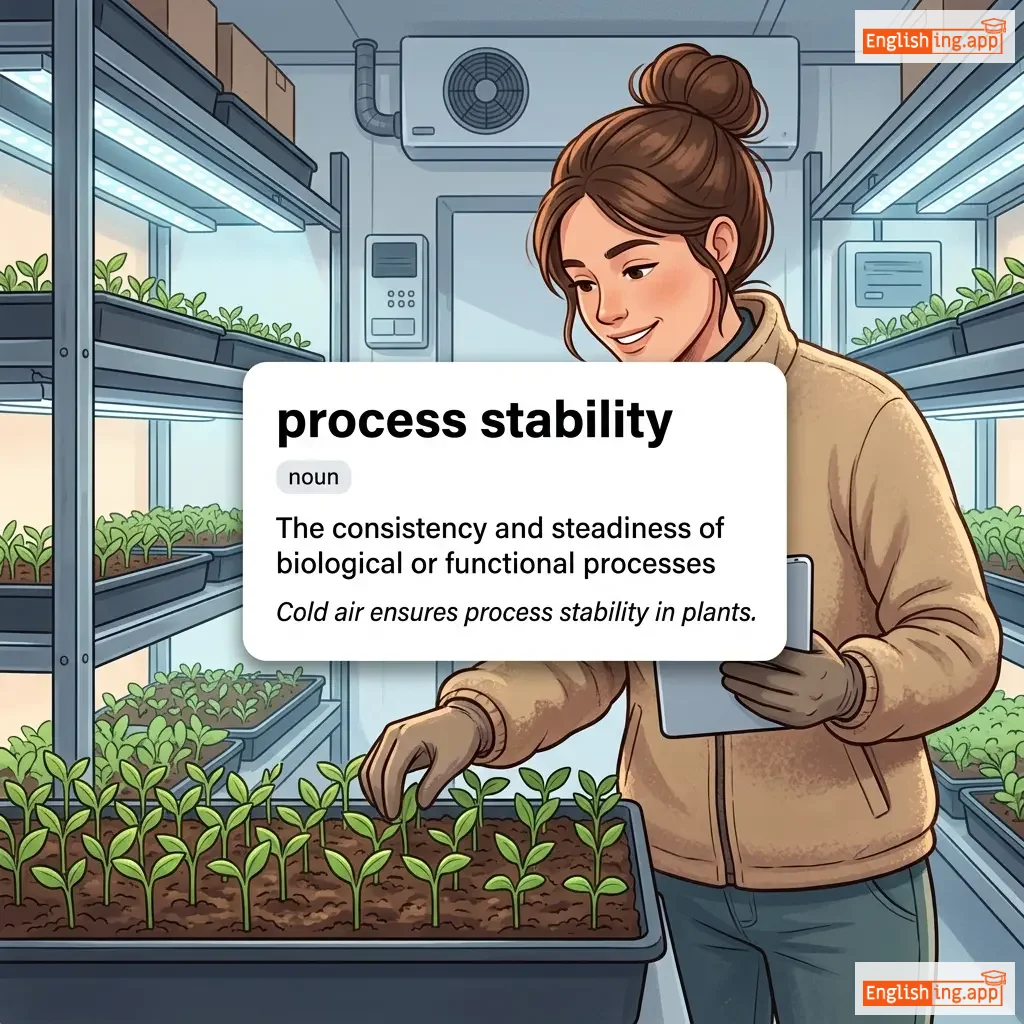
process stability definition card — visual illustration of the meaning
noun C1
ˈprəʊses stəˈbɪlɪti
stabilité du processus (stabilité du processus)

The consistency and steadiness of biological or functional processes

"Cold air ensures process stability in plants."
"L'air froid assure la stabilité du processus dans les plantes." (L'air froid assure la stabilité du processus dans les plantes.)
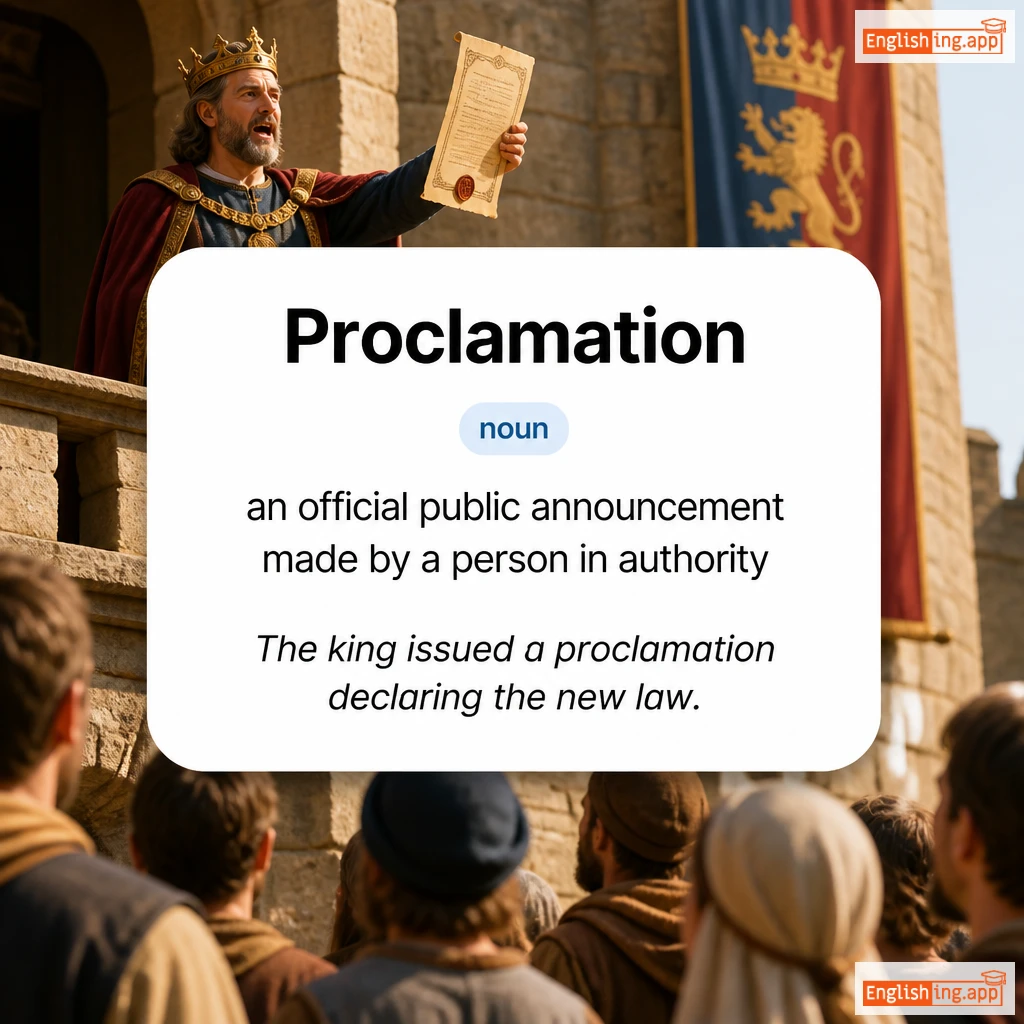
Proclamation definition card — visual illustration of the meaning
noun C1
/ˌprɒkləˈmeɪʃən/
proclamation (proclamation)

an official public announcement made by a person in authority

"The king issued a proclamation declaring the new law."

"Le roi a émis une proclamation déclarant la nouvelle loi." (Le roi a emis une proclamation declarant la nouvelle loi.)
procrastinate definition card — visual illustration of the meaning
verb C1
/prəˈkræs.tɪ.neɪt/
procrastiner (procrastiner)

to delay doing something, often unnecessarily or habitually

"He tends to procrastinate instead of finishing his assignments on time."
"Il a tendance à procrastiner au lieu de finir ses devoirs à temps." (Il a tendance à procrastiner au lieu de finir ses devoirs à temps.)
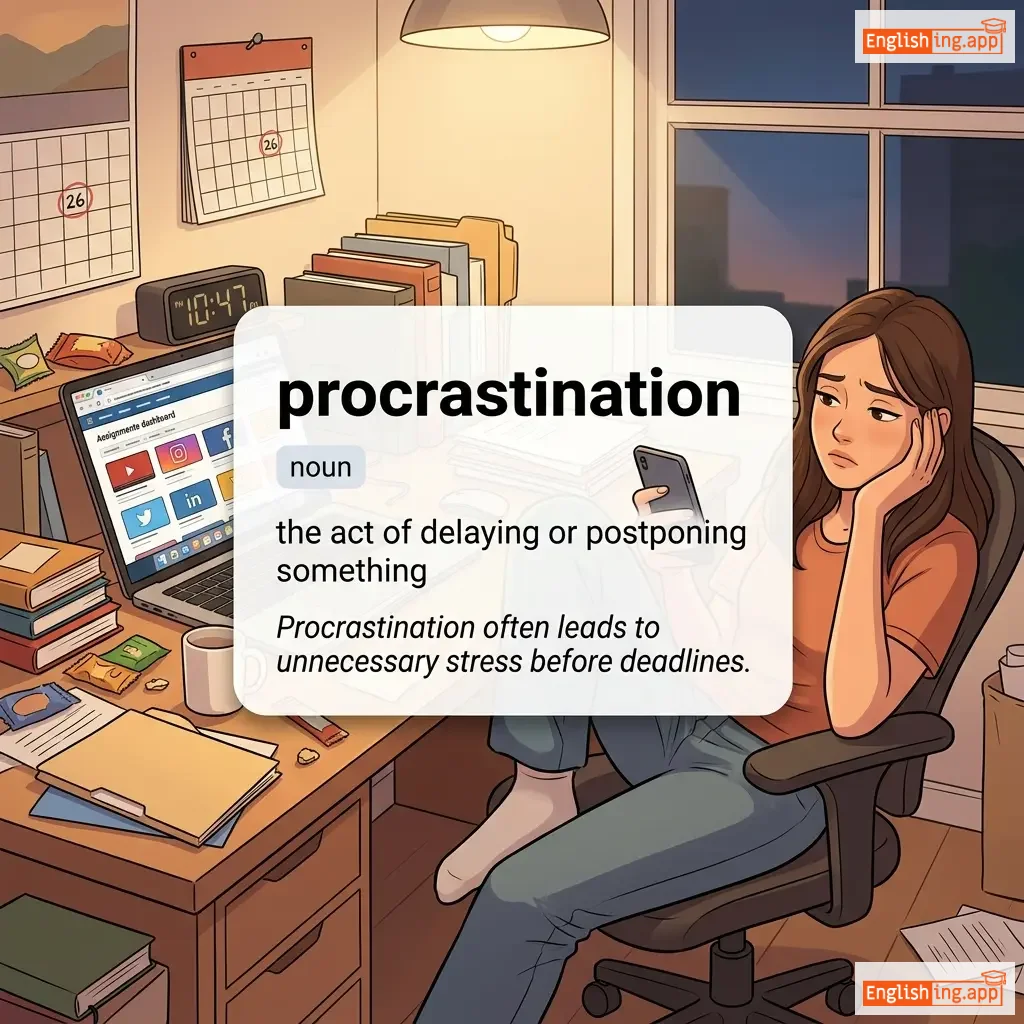
procrastination definition card — visual illustration of the meaning
noun C1
/prəˌkræs.tɪˈneɪ.ʃən/
procrastination (procrastination)

the act of delaying or postponing something

"Procrastination often leads to unnecessary stress before deadlines."

"La procrastination conduit souvent à un stress inutile avant les délais." (La procrastination conduit souvent à un stress inutile avant les délais.)
noun C1
/ˈprɒk.tər/
surveillant d'examen (surveillant d'examen)

a person who supervises students during an examination

"The proctor reminded students to keep their phones switched off."

"Le surveillant a rappelé aux étudiants d'éteindre leurs téléphones." (Le surveillant a rappelé aux étudiants d'éteindre leurs téléphones.)
verb C1
/prəˈkjʊər/
acquérir (acquerir)

to obtain something, especially with effort or difficulty

"They managed to procure enough supplies for the expedition."

"Ils ont réussi à se procurer suffisamment de fournitures pour l'expédition." (Ils ont réussi à se procurer suffisamment de fournitures pour l'expédition.)
procurement definition card — visual illustration of the meaning
noun C1
/prəˈkjʊə.mənt/
approvisionnement (approvisionnement)

the process of obtaining goods or services, often for business or government

"The company focuses on the efficient procurement of raw materials."

"L'entreprise se concentre sur l'approvisionnement efficace en matières premières." (L'entreprise se concentre sur l'approvisionnement efficace en matières premières.)
verb C1
/prɒd/
pousser (pousser)

to poke or push someone or something with a finger, foot, or pointed object

"She prodded him in the arm to get his attention."
"Elle lui a donné un coup dans le bras pour attirer son attention." (Elle lui a donné un coup dans le bras pour attirer son attention.)
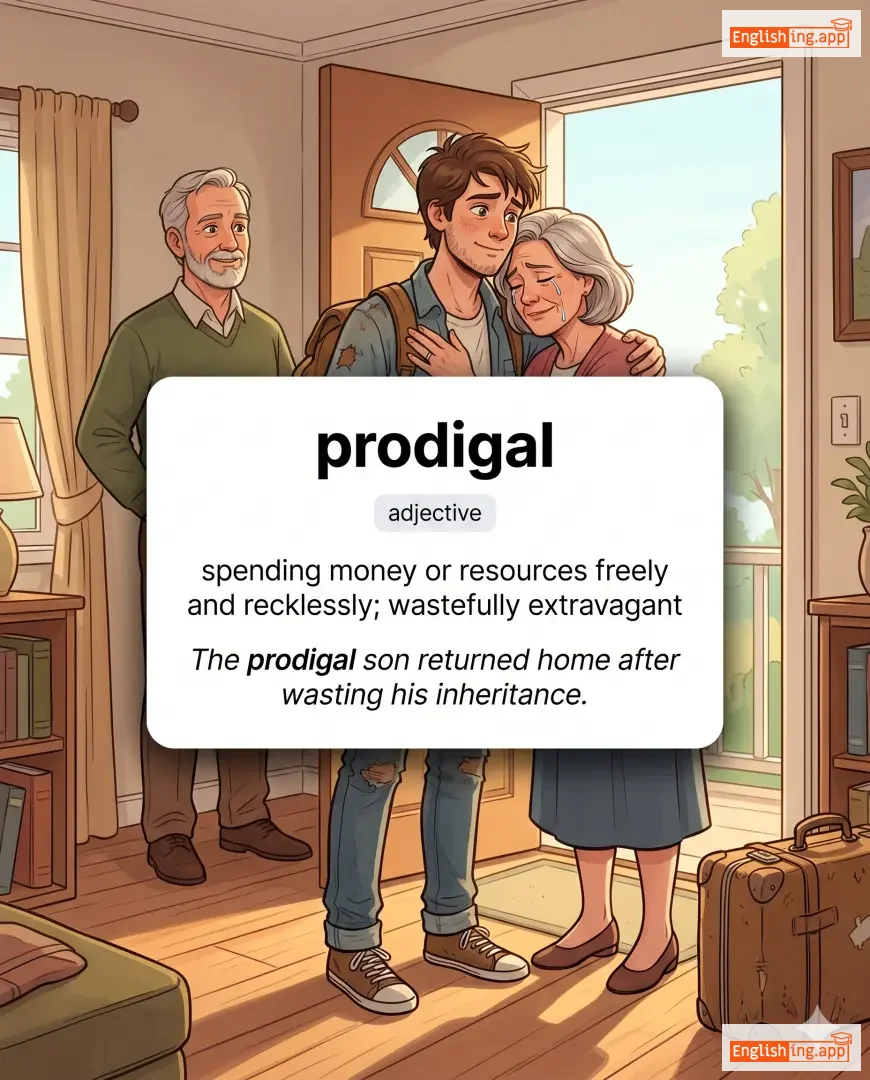
prodigal definition card — visual illustration of the meaning
adjective C1
/ˈprɒdɪɡəl/
dissipateur (dissipateur)

spending money or resources freely and recklessly; wastefully extravagant

"The prodigal son returned home after wasting his inheritance."

"Le fils prodigue est revenu à la maison après avoir gaspillé son héritage." (Le fils prodigue est revenu à la maison après avoir gaspillé son héritage.)
adjective C1
/prəˈdɪdʒəs/
prodigieux (prodigieux)

remarkably or impressively great in extent, size, or degree

"The team made a prodigious effort to complete the project on time."

"L'équipe a fait un effort prodigieux pour terminer le projet à temps." (L'equipe a fait un effort prodigieux pour terminer le projet a temps.)
noun C1
/ˈprɒdɪdʒi/
prodige (prodige)

a person, especially a young one, with exceptional talents or abilities

"Mozart was a child prodigy in music."

"Mozart était un prodige enfant en musique." (Mozart était un prodige enfant en musique.)
adjective C1
/prəˈfeɪn/
profane, irrévérent (profane, irreverent)

showing disrespect or contempt for sacred things; irreverent or vulgar

"His jokes were considered too profane for the ceremony."

"Ses blagues ont été considérées comme trop profanes pour la cérémonie." (Ses blagues ont été considérées comme trop profanes pour la cérémonie.)
profess definition card — visual illustration of the meaning
verb C1
/prəˈfes/
professer (professer)

to declare or claim openly; to state one's belief

"He professes his love for classical music."

"Il professe son amour pour la musique classique." (Il professe son amour pour la musique classique)
verb C1
/ˈprɒfər/
offrir, présenter (offrir, présenter)

to offer something for acceptance; to present

"She proffered her hand as a sign of friendship."
"Elle tendit sa main comme un signe d'amitié." (Elle tendit sa main comme un signe d'amitié.)
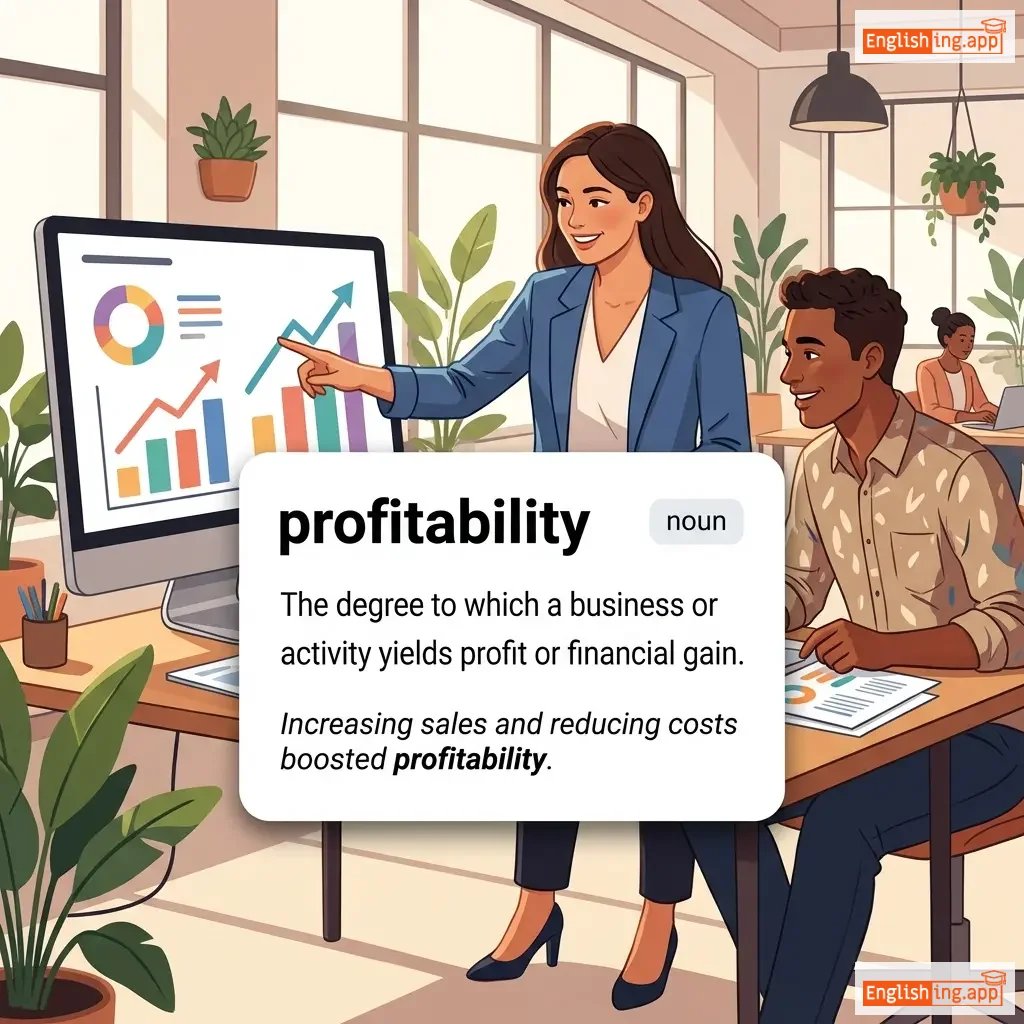
profitability definition card — visual illustration of the meaning
noun C1
ˌprɒf.ɪ.təˈbɪl.ɪ.ti
rentabilité (rentabilite)

The degree to which a business or activity yields profit or financial gain.

"Increasing sales and reducing costs boosted profitability."

"L'augmentation des ventes et la réduction des coûts ont amélioré la rentabilité." (L'augmentation des ventes et la réduction des coûts ont amélioré la rentabilité.)
noun C1
/ˌprɑːfɪˈtɪr/
profiteur (profiteur)

a person who makes excessive profits, especially unfairly or illegally

"The government punished war profiteers."
"Le gouvernement a puni les profiteurs de guerre." (Le gouvernement a puni les profiteurs de guerre.)
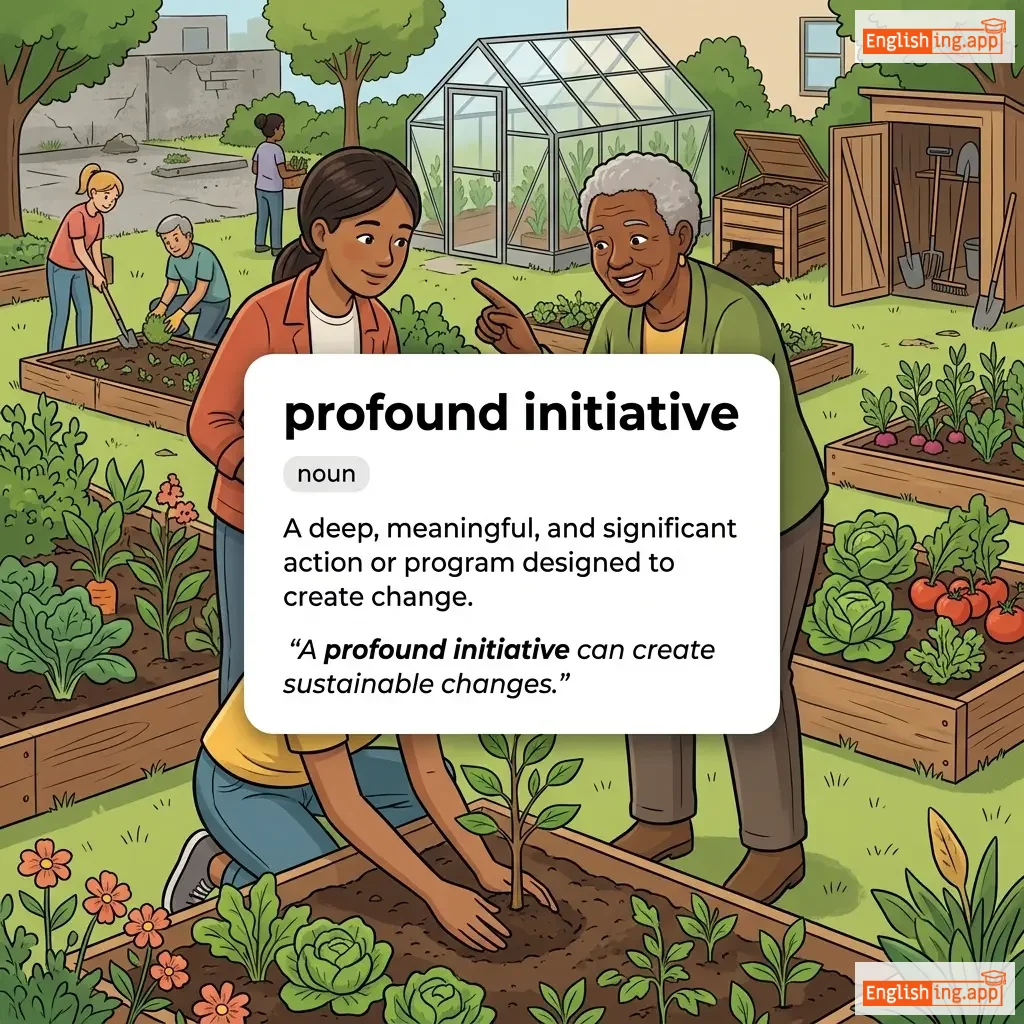
profound initiative definition card — visual illustration of the meaning
noun C1
prəˈfaʊnd ɪˈnɪʃətɪv
initiative profonde (initiative profonde)

A deep, meaningful, and significant action or program designed to create change.

"A profound initiative can create sustainable changes."

"Une initiative profonde peut créer des changements durables." (Une initiative profonde peut créer des changements durables.)
adjective C1
/prəˈfjuːs/
profus (profus)

existing or given in large amounts; abundant

"He offered profuse thanks for their timely help."
"Il a offert de profonds remerciements pour leur aide opportune." (Il a offert de profonds remerciements pour leur aide opportune.)
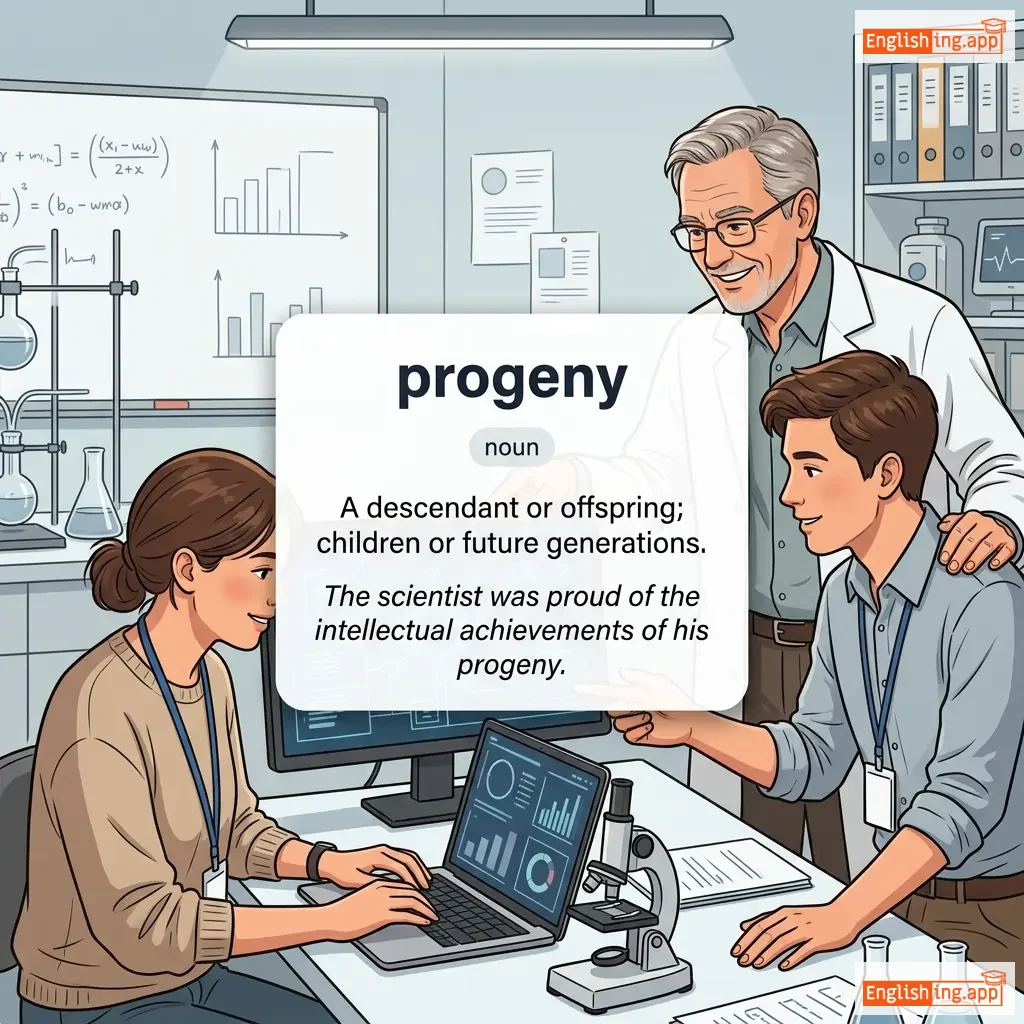
progeny definition card — visual illustration of the meaning
noun C1
/ˈprɒdʒəni/
progéniture (progeniture)

A descendant or offspring; children or future generations.

"The scientist was proud of the intellectual achievements of his progeny."

"Le scientifique était fier des réalisations intellectuelles de sa progéniture." (Le scientifique etait fier des realisations intellectuelles de sa progeniture.)
noun C1
/prɒɡˈnoʊsɪs/
pronostic (pronostic)

A forecast of the likely outcome of a disease or situation.

"The doctor gave a positive prognosis for the patient's recovery."
"Le médecin a donné un pronostic positif pour la récupération du patient." (Le medecin a donne un pronostic positif pour la recuperation du patient.)
prohibitive definition card — visual illustration of the meaning
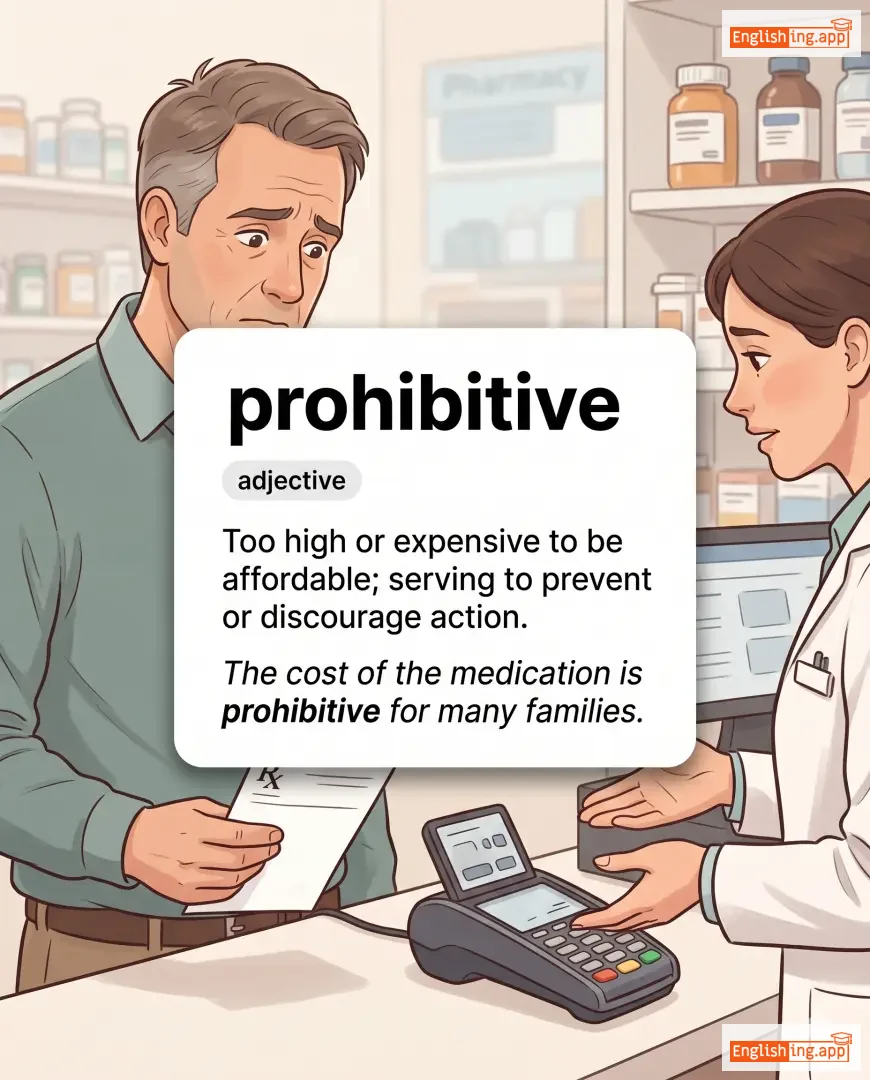
adjective C1
/prəˈhɪbɪtɪv/
interdit (interdit)

Too high or expensive to be affordable; serving to prevent or discourage action.

"The cost of the medication is prohibitive for many families."

"Le coût du médicament est trop élevé pour de nombreuses familles." (Le coût du médicament est trop élevé pour de nombreuses familles.)
noun C1
/prəˈdʒɛktaɪl/
projectile (projectile)

An object fired, thrown, or propelled, especially from a weapon.

"The soldier dodged the incoming projectile."

"Le soldat a esquivé le projectile entrant." (Le soldat a esquivé le projectile entrant.)
noun, adjective C1
/ˌproʊlɪˈtɛəriən/
prolétaire (proletaire)

Relating to the working class, especially those who do not own property.

"The movement was rooted in proletarian struggles."
"Le mouvement était enraciné dans les luttes prolétaires." (Le mouvement était enraciné dans les luttes prolétaires.)
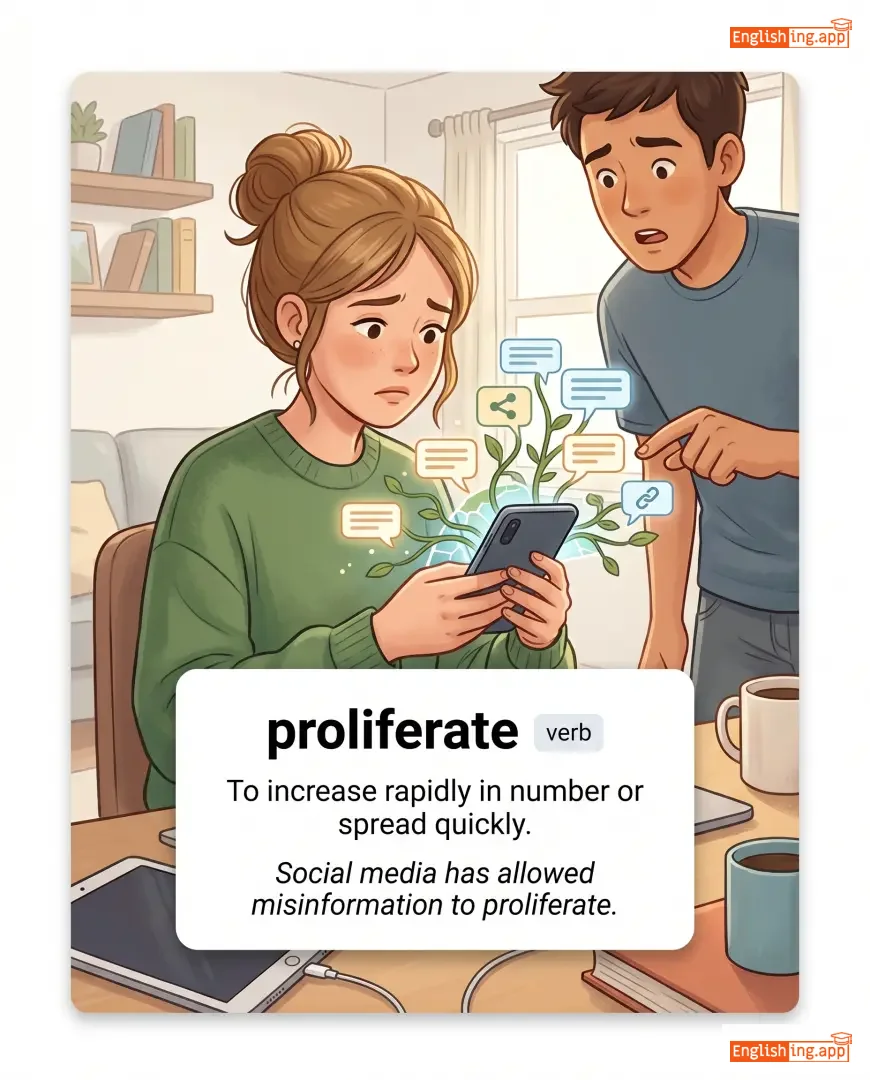
proliferate definition card — visual illustration of the meaning
verb C1
/prəˈlɪfəreɪt/
proliférer (proliférer)

To increase rapidly in number or spread quickly.

"Social media has allowed misinformation to proliferate."
"Les réseaux sociaux ont permis à la désinformation de proliférer." (Les réseaux sociaux ont permis à la désinformation de proliférer.)
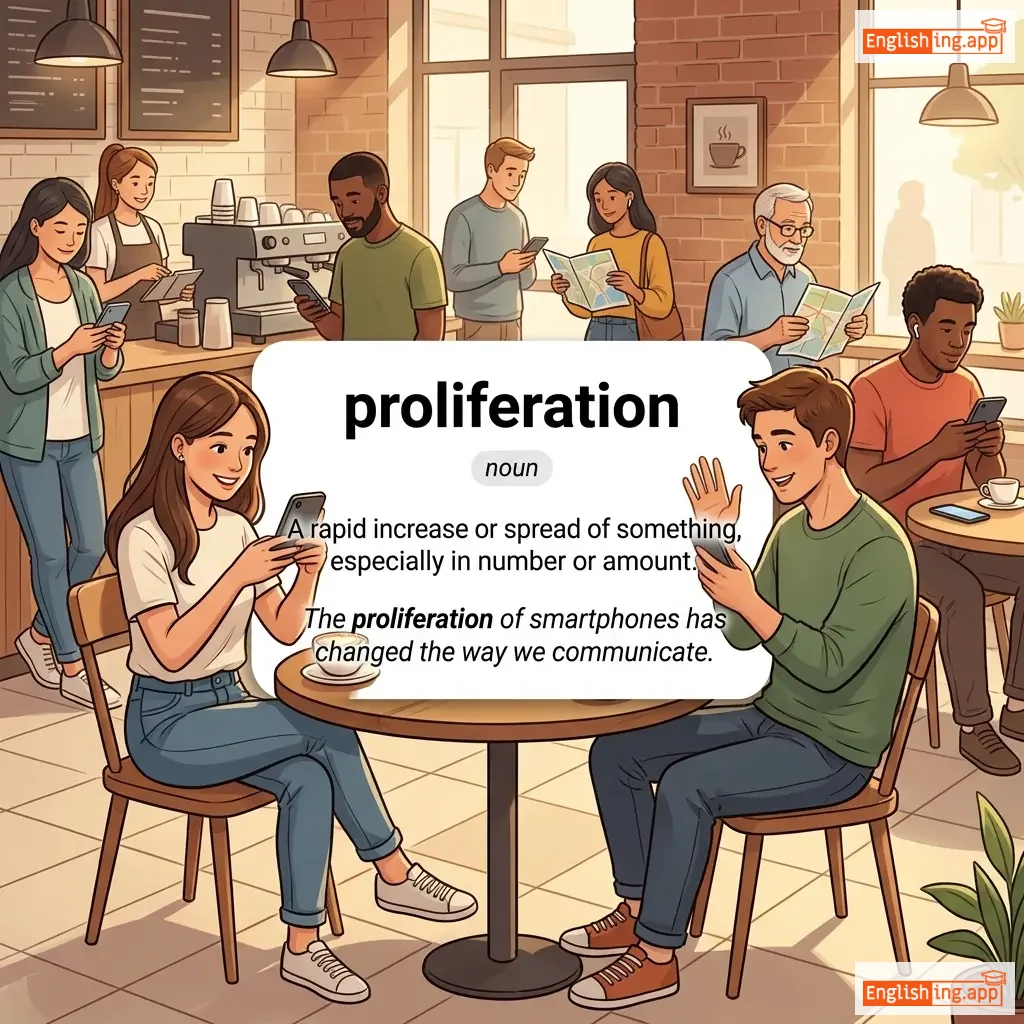
proliferation definition card — visual illustration of the meaning
noun C1
/prəˌlɪfəˈreɪʃən/
prolifération, expansion (proliferation, expansion)

A rapid increase or spread of something, especially in number or amount.

"The proliferation of smartphones has changed the way we communicate."
"La prolifération des smartphones a changé notre manière de communiquer." (La proliferation des smartphones a change notre maniere de communiquer.)
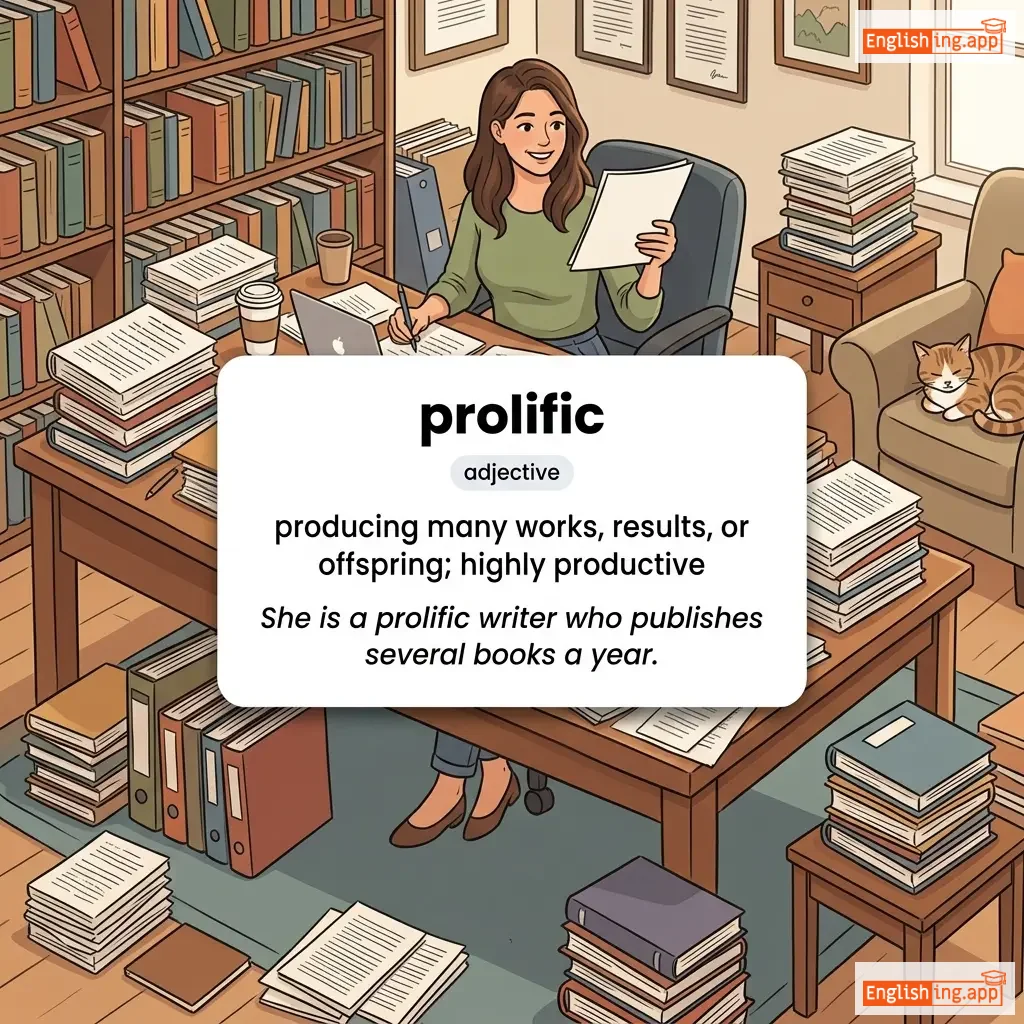
prolific definition card — visual illustration of the meaning
adjective C1
/prəˈlɪfɪk/
prolifique (prolifique)

producing many works, results, or offspring; highly productive

"She is a prolific writer who publishes several books a year."

"Elle est une écrivaine prolifique qui publie plusieurs livres chaque année." (Elle est une écrivaine prolifique qui publie plusieurs livres chaque année.)
noun C1
/ˈprəʊ.lɒɡ/
prologue (prologue)

an introduction to a book, play, or event

"The novel begins with a short prologue set in the past."

"Le roman commence par un court prologue situé dans le passé." (Le roman commence par un court prologue situé dans le passé.)
noun, verb C1
/ˌprɒməˈneɪd/
promenade (promenade)

A leisurely walk or stroll, especially in a public place for pleasure or display.

"They went for a promenade along the seaside."

"Ils sont allés faire une promenade le long de la mer." (Ils sont allés faire une promenade le long de la mer.)
noun C1
/ˈprɒmɪnəns/
notoriété (notoriete)

The state of being important, famous, or easily noticed.

"Her work gained prominence after the award."

"Son travail a gagné en notoriété après le prix." (Son travail a gagne en notoriete apres le prix.)
adjective C1
/prəˈmɪskjuəs/
promiscueux (promiskwe)

Having or showing a casual and unselective approach, often used to describe indiscriminate sexual relationships.

"The novel depicts a character with a promiscuous lifestyle."

"Le roman dépeint un personnage avec un mode de vie promiscu." (Le roman depeint un personnage avec un mode de vie promiscu.)
verb C1
/ˈpruːfˌriːd/
corriger (corriger)

to read written material and mark any errors

"She proofread the report before submission."

"Elle a corrigé le rapport avant la soumission." (Elle a corrigé le rapport avant la soumission.)