語彙集

英単語辞書 | 単語の意味、定義、例文

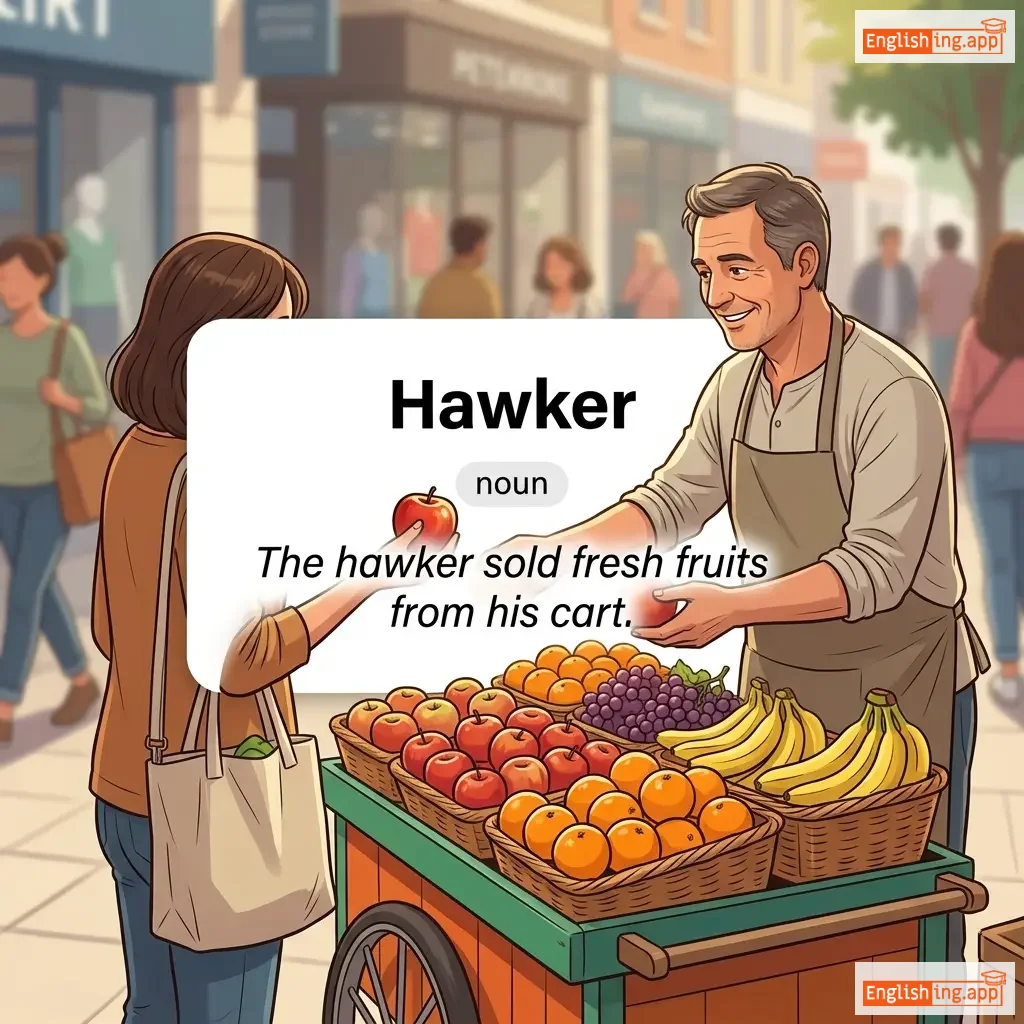
Hawker definition card — visual illustration of the meaning
noun C1
/ˈhɔː.kər/
vendedor ambulante (vendedor ambulante)

a person who travels about selling goods, typically from door to door or on the street

"The hawker sold fresh fruits from his cart."

"El vendedor ambulante vendió frutas frescas desde su carrito." (El vendedor ambulante vendió frutas frescas desde su carrito.)
🌫️

Haze (hej)

noun C1
/heɪz/
neblina (neblina)

a slight obscuration of the lower atmosphere, typically caused by fine suspended particles; confusion

"The morning haze lifted gradually as the sun rose higher in the sky."

"La neblina matutina se levantó gradualmente a medida que el sol se elevaba más alto en el cielo." (La neblina matutina se levanto gradualmente a medida que el sol se elevaba más alto en el cielo.)
adjective C1
/ˈheɪzi/
brumoso (brumoso)

Unclear, misty, or not easy to see; also vague or uncertain.

"The mountains looked hazy in the morning light."

"Las montañas se veían brumosas con la luz de la mañana." (Las montañas se veían brumosas con la luz de la mañana.)
🚗🔄🚗

Head-on (hed-ón)

adverb C1
/ˈhed ɑn/
de frente (de frente)

directly facing; in direct confrontation or collision

"The two cars collided head-on at the intersection."

"Los dos autos colisionaron de frente en la intersección." (Los dos autos colisionaron de frente en la intersección.)
adverb C1
/ˌhɛdˈfɜrst/
cabeza adelante (cabeza adelante)

With the head leading; in a reckless or hasty manner.

"He dived headfirst into the pool."

"Se zambulló cabeza primero en la piscina." (Se zambulló cabeza primero en la piscina.)
adverb C1
/ˈhɛdˌlɔŋ/
a la carrera (a la carrera)

With the head leading; in a rush or without thinking.

"She rushed headlong into the new project."

"Ella se lanzó a la carrera al nuevo proyecto." (Ella se lanzó a la carrera al nuevo proyecto.)
adjective C1
/ˈhɛdˌstrɔŋ/
terco (terko)

Determined to do what one wants, even if it is not sensible.

"The headstrong child refused to listen to anyone."

"El niño terco se negó a escuchar a nadie." (El niño terco se negó a escuchar a nadie.)
noun C1
/ˈhed.weɪ/
progreso; avance; adelanto (progreso, avance, adelanto)

forward movement or progress, especially when this is slow or difficult

"Despite the challenges, the research team made significant headway in developing the new vaccine."

"A pesar de los desafíos, el equipo de investigación logró un progreso significativo en el desarrollo de la nueva vacuna." (A pesar de los desafios, el equipo de investigacion logro un progreso significativo en el desarrollo de la nueva vacuna.)
adjective C1
/ˈhɛlθfəl/
saludable (saludable)

Promoting good health; beneficial to health.

"A healthful diet includes fresh fruits and vegetables."

"Una dieta saludable incluye frutas y verduras frescas." (Una dieta saludable incluye frutas y verduras frescas.)
noun C1
/ˈhɪərseɪ/
rumor (rumor)

Information received from other people that cannot be substantiated; rumor.

"The decision was based on hearsay, not evidence."

"La decisión se basó en rumores, no en evidencia." (La decision se baso en rumores, no en evidencia.)
adverb C1
/ˈhɑr.tɪ.li/
cordialmente; de todo corazón (cordialmen-te; de to-do co-ra-zón)

in a sincere and enthusiastic manner; wholeheartedly

"She heartily welcomed her guests to the party."

"Ella dio una cordial bienvenida a sus invitados a la fiesta." (E-ya dio u-na cor-dial bien-ve-ni-da a sus in-vi-ta-dos a la fies-ta.)
adjective C1
/ˈhɑːrtˌrɛndɪŋ/
desgarrador (desgarrador)

Causing great sadness or distress; very moving emotionally.

"The documentary showed heartrending scenes of war victims."

"El documental mostró escenas desgarradoras de las víctimas de la guerra." (El documental mostró escenas desgarradoras de las víctimas de la guerra.)
noun C1
/ˈhiːdəˌnɪzəm/
hedonismo (hedonismo)

The pursuit of pleasure and self-indulgence as the highest goal.

"The lifestyle of the rich is often criticized as pure hedonism."

"El estilo de vida de los ricos a menudo se critica como puro hedonismo." (El estilo de vida de los ricos a menudo se critica como puro hedonismo.)
noun C1
/ˈhiːdənɪst/
hedonista (hedonista)

A person who believes that the pursuit of pleasure is the most important thing in life.

"She was called a hedonist because she always prioritized enjoyment over duty."

"La llamaron hedonista porque siempre priorizaba el disfrute sobre el deber." (La llamaron hedonista porque siempre priorizaba el disfrute sobre el deber.)
verb C1
/hiːd/
prestar atención (prestar atencion)

to pay attention to; to take notice of

"You should heed the teacher's advice."

"Debes hacer caso al consejo del maestro." (Debes hacer caso al consejo del maestro.)
adjective C1
/ˈhiːdləs/
despreocupado (despreocupado)

showing a reckless lack of care or attention

"He drove with heedless disregard for the rules."
"Condujo con desprecio por las reglas." (Condujo con desprecio por las reglas.)
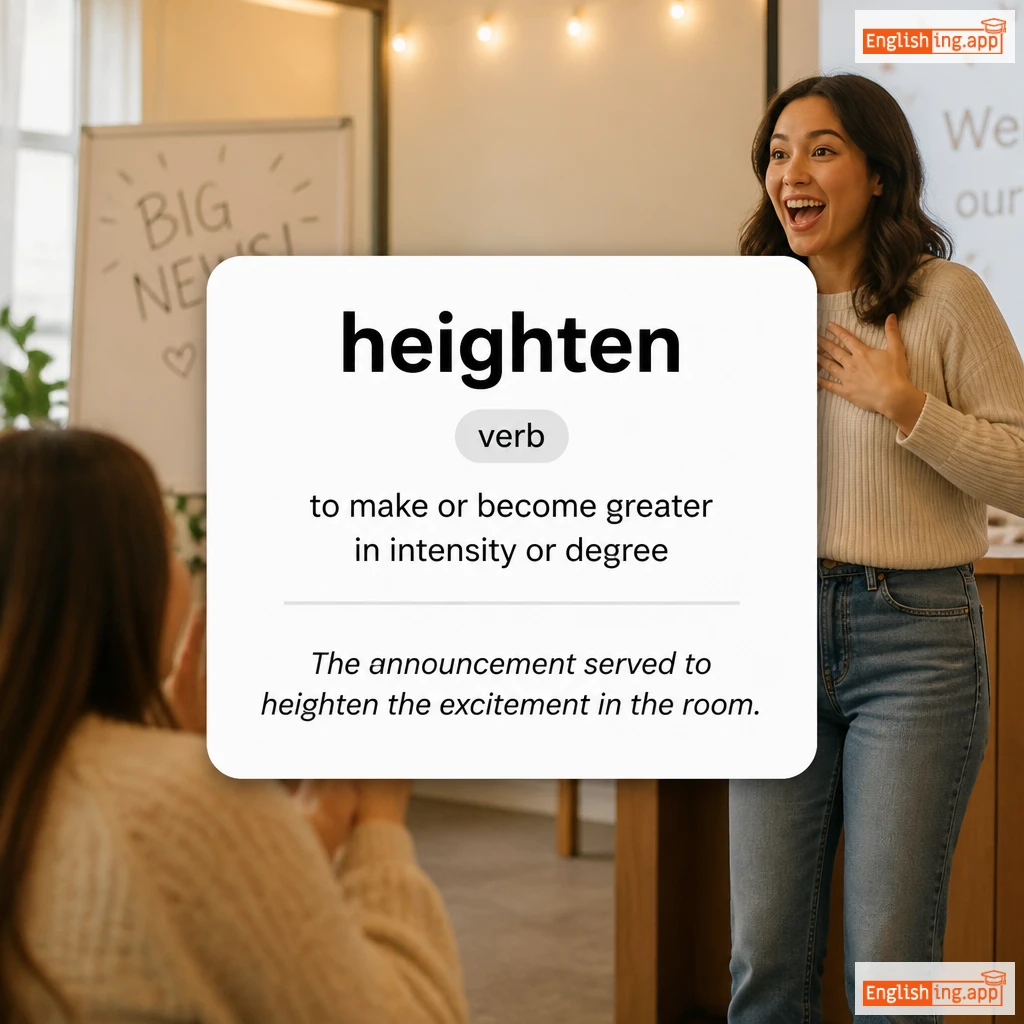
heighten definition card — visual illustration of the meaning
verb C1
/ˈhaɪtən/
aumentar (aumentar)

to make or become greater in intensity or degree

"The announcement served to heighten the excitement in the room."

"El anuncio sirvió para aumentar la emoción en la habitación." (El anuncio sirvió para aumentar la emoción en la habitación.)
adjective C1
/ˈheɪ.nəs/
horrible (horrible)

extremely wicked, deeply offensive, or shockingly evil

"The dictator was condemned for his heinous crimes against humanity."

"El dictador fue condenado por sus horribles crímenes contra la humanidad." (El dictador fue condenado por sus horribles crímenes contra la humanidad.)
noun C1
/ˈɛər.luːm/
herencia (herencia)

a valuable object that has belonged to a family for several generations

"The ring is a family heirloom passed down from her grandmother."

"El anillo es una herencia familiar que ha sido transmitida por su abuela." (El anillo es una herencia familiar que ha sido transmitida por su abuela.)
Helm definition card — visual illustration of the meaning
noun C1
/hɛlm/
liderazgo, timón (liderazgo, timon)

a position of leadership or the steering apparatus of a ship

"After years of service, she finally took the helm of the company."

"Después de años de servicio, finalmente asumió el liderazgo de la empresa." (Despues de anos de servicio, finalmente asumió el liderazgo de la empresa.)
noun/verb C1
/hɛm/
dobladillo de tela (dobladillo de tela)

the edge of a piece of cloth that is folded and sewn; to fold and sew the edge of cloth

"She hemmed the dress to make it shorter."

"Ella jemó el vestido para hacerlo más corto." (Ella jemó el vestido para hacerlo más corto.)
noun/verb C1
/ˈhɛmərɪdʒ/
hemorragia (hemorragia)

A significant loss of blood from a ruptured blood vessel, or to lose blood heavily.

"The patient suffered a severe brain hemorrhage."

"El paciente sufrió una grave hemorragia cerebral." (El paciente sufrió una grave hemorragia cerebral.)
noun/verb C1
/ˈhɛrəld/
heraldo (heraldo)

A person or thing that announces or signals the approach of something; to announce or signal.

"The blooming flowers herald the arrival of spring."

"Las flores que florecen anuncian la llegada de la primavera." (Las flores que florecen anuncian la llegada de la primavera.)
noun C1
/ˈhɜːrbɪsaɪd/
herbicida (herbicida)

A chemical substance used to kill unwanted plants, especially weeds.

"Farmers used herbicide to protect their crops from invasive weeds."
"Los agricultores usaron herbicidas para proteger sus cultivos de las malezas invasoras." (Los agricultores usaron herbicidas para proteger sus cultivos de las malezas invasoras.)
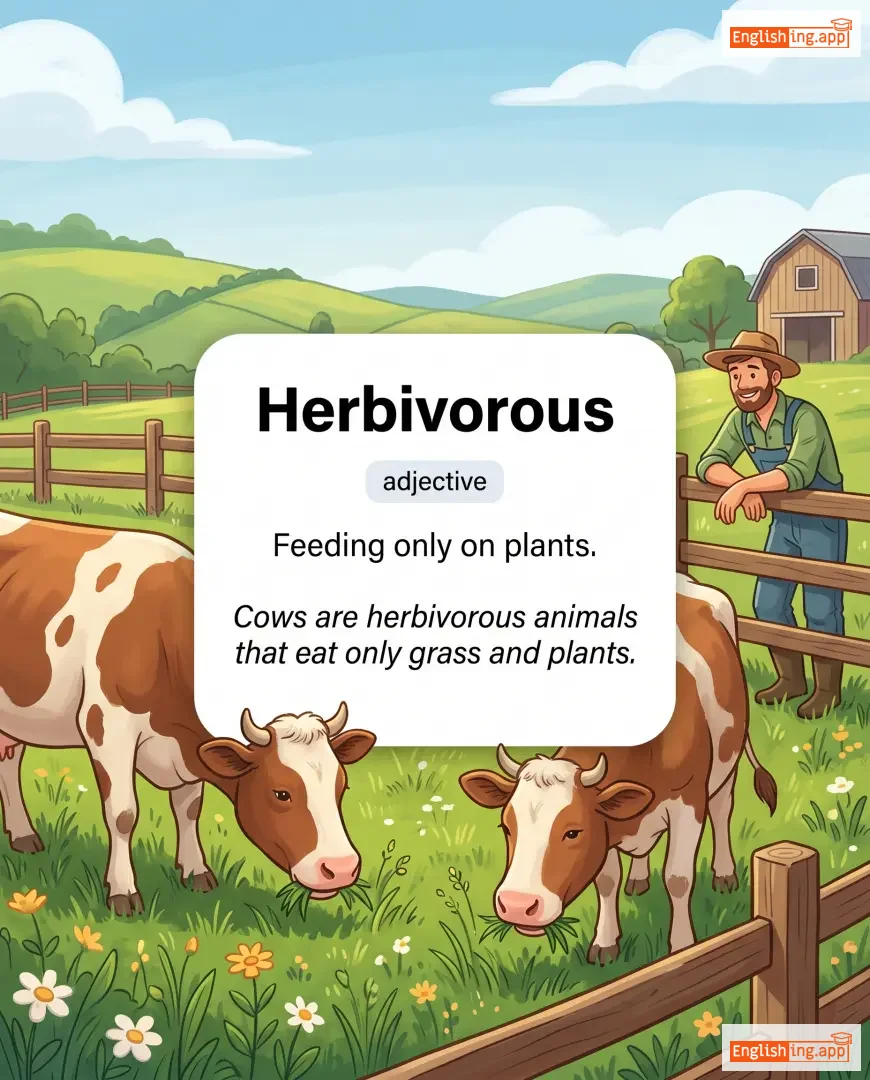
Herbivorous definition card — visual illustration of the meaning
adjective C1
/hɜːrˈbɪvərəs/
herbívoro (herbivoro)

Feeding only on plants.

"Cows are herbivorous animals that eat only grass and plants."

"Las vacas son animales herbívoros que comen solo pasto y plantas." (Las vacas son animales herbívoros que comen solo pasto y plantas.)
adverb/noun C1
/ˌhɪərˈæftər/
a partir de ahora / más allá (a partir de ahora / mas alla)

from now on; in the future; also refers to life after death.

"Hereafter, all reports must be submitted electronically."

"A partir de ahora, todos los informes deben enviarse electrónicamente." (A partir de ahora, todos los informes deben enviarse electronicamente.)
adjective C1
/həˈrɛdəˌtɛri/
hereditario (hereditario)

passed from parents to their children through genes or by inheritance.

"Diabetes can be a hereditary condition."

"La diabetes puede ser una condición hereditaria." (La diabetes puede ser una condición hereditaria.)
noun C1
/ˈhɛrəsi/
herejía (herejia)

belief or opinion that goes against established religious doctrine or accepted beliefs.

"In medieval times, heresy was often punished severely."

"En la Edad Media, la herejía a menudo se castigaba severamente." (En la Edad Media, la herejia a menudo se castigaba severamente.)
noun C1
/ˈhɛrətɪk/
hereje (hereje)

a person who holds beliefs that go against established religious teachings or accepted beliefs.

"The church declared him a heretic for his radical ideas."

"La iglesia lo declaró hereje por sus ideas radicales." (La iglesia lo declaró hereje por sus ideas radicales.)
noun C1
/ˈhɜːrmɪt/
ermitaño (ermitanio)

A person who lives alone and apart from society, often for religious or spiritual reasons.

"The old hermit lived in a cave for decades."

"El viejo ermitaño vivió en una cueva durante décadas." (el viejo ermitanio vivio en una cueva durante decadas.)
noun C1
/ˈhɜːrniə/
hernia (hernia)

A medical condition where an organ pushes through the muscle or tissue holding it in place.

"The doctor diagnosed him with an inguinal hernia."
"El doctor le diagnosticó una hernia inguinal." (El doctor le diagnostico una hernia inguinal.)
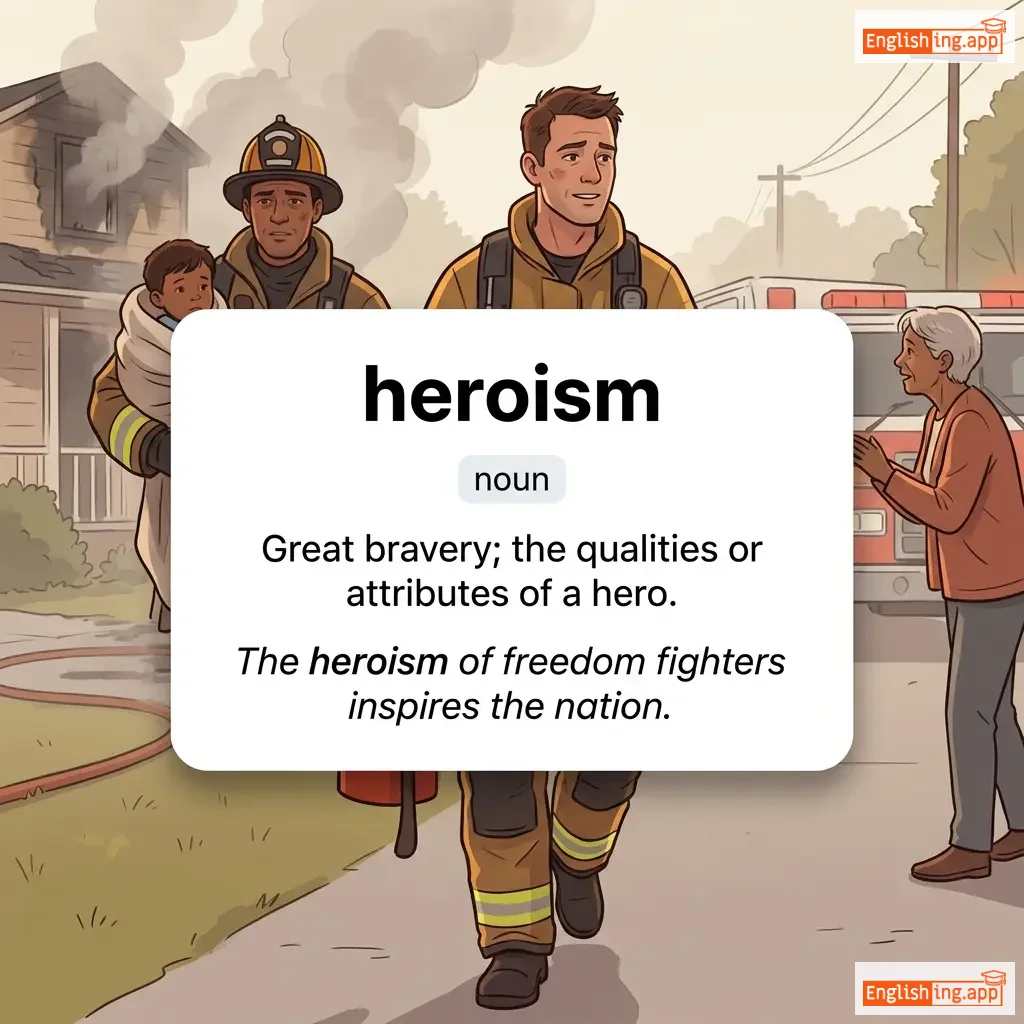
heroism definition card — visual illustration of the meaning
noun C1
ˈhɛroʊˌɪzəm
heroísmo (heroismo)

Great bravery; the qualities or attributes of a hero.

"The heroism of freedom fighters inspires the nation."
"El heroísmo de los luchadores por la libertad inspira a la nación." (El heroismo de los luchadores por la libertad inspira a la nacion.)
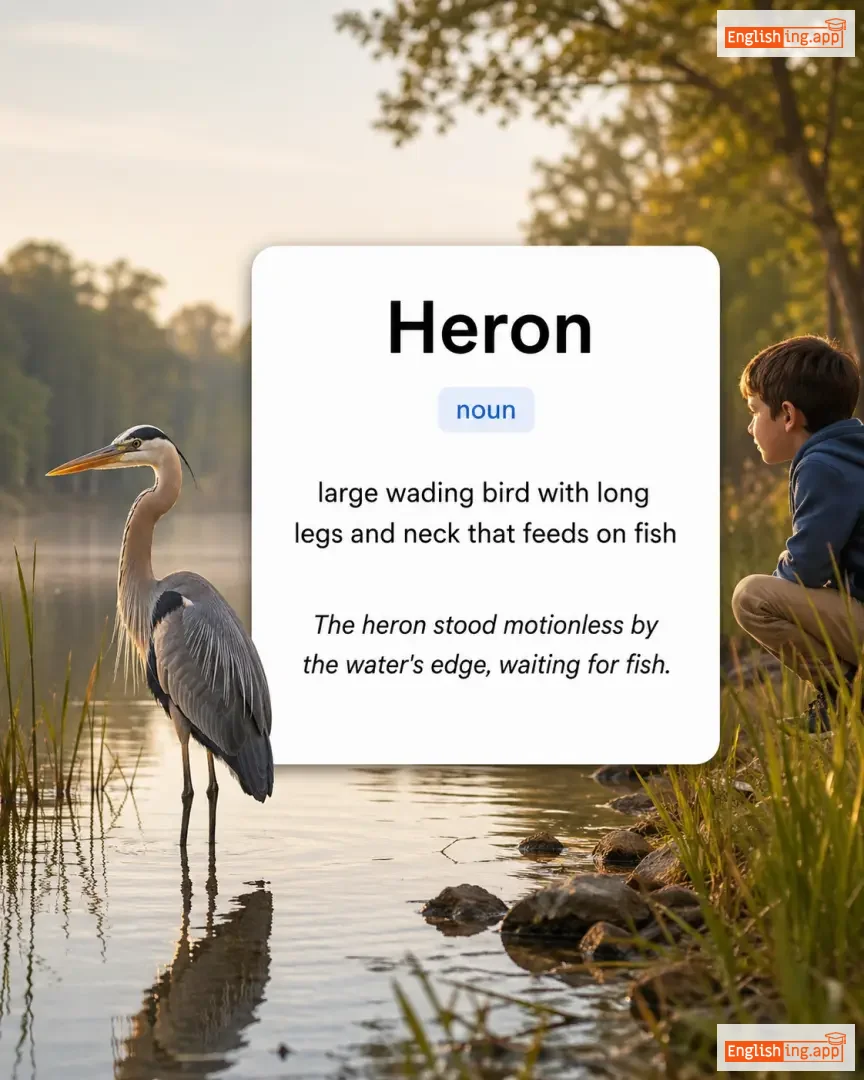
Heron definition card — visual illustration of the meaning
noun C1
/ˈherən/
garza (garza)

large wading bird with long legs and neck that feeds on fish

"The heron stood motionless by the water's edge, waiting for fish."

"La garza estaba inmóvil junto a la orilla del agua, esperando a los peces." (La garza estaba inmóvil junto a la orilla del agua, esperando a los peces.)
noun C1
/ˈhɛzɪtəns/
vacilación (vacilacion)

The quality or state of being reluctant or uncertain.

"Her hesitance to speak up delayed the decision."

"Su vacilación para hablar retrasó la decisión." (Su vacilacion para hablar retraso la decision.)
noun C1
/ˈhɛzɪtənsi/
vacilación (vacilacion)

The tendency to pause or delay due to uncertainty or fear.

"His hesitancy in answering made everyone doubt his confidence."

"Su vacilación al responder hizo que todos dudaran de su confianza." (Su vacilacion al responder hizo que todos dudaran de su confianza.)
adjective C1
/ˌhɛtərəˈʤiːniəs/
heterogéneo (heterogeneo)

consisting of different kinds or diverse elements

"The classroom was filled with a heterogeneous group of students."

"El aula estaba llena de un grupo heterogéneo de estudiantes." (El aula estaba llena de un grupo heterogéneo de estudiantes.)
noun C1
/ˈhɛksəˌɡɒn/
hexágono (hexagono)

A six-sided polygon.

"A honeycomb cell is shaped like a hexagon."

"Una célula de panal tiene forma de hexágono." (Una célula de panal tiene forma de hexágono.)
noun C1
/ˈheɪˌdeɪ/
apogeo (apogeo)

The period of greatest success, popularity, or power.

"In its heyday, the company dominated the market."

"En su apogeo, la empresa dominaba el mercado." (En su apogeo, la empresa dominaba el mercado.)
noun C1
/haɪˈeɪtəs/
hiato (hiato)

A pause or break in continuity of a process or activity.

"The show returned after a long hiatus."

"El show regresó después de un largo hiato." (El show regreso despues de un largo hiato.)
verb C1
/ˈhaɪbərˌneɪt/
hibernar (hibernar)

To spend the winter in a dormant state, as some animals do.

"Bears hibernate in caves during the winter."

"Los osos hibernan en cuevas durante el invierno." (Los osos hibernan en cuevas durante el invierno.)
noun C1
/ˈhaɪdəweɪ/
escondite (escondite)

A place used as a retreat or a place to hide.

"The cabin in the woods was their secret hideaway."

"La cabaña en el bosque era su escondite secreto." (La cabaña en el bosque era su escondite secreto.)
adjective C1
/ˈhɪd.i.əs/
horrible (horrible)

extremely ugly or unpleasant

"The crime was so hideous that it shocked the whole town."

"El crimen fue tan horrible que sorprendió a toda la ciudad." (El crimen fue tan horrible que sorprendió a toda la ciudad.)
adjective C1
/ˌhaɪəˈrɑː.kɪ.kəl/
jerárquico (jerarquico)

arranged in order of rank or authority

"The company has a strict hierarchical structure."
"La empresa tiene una estructura jerárquica estricta." (La empresa tiene una estructura jerárquica estricta.)
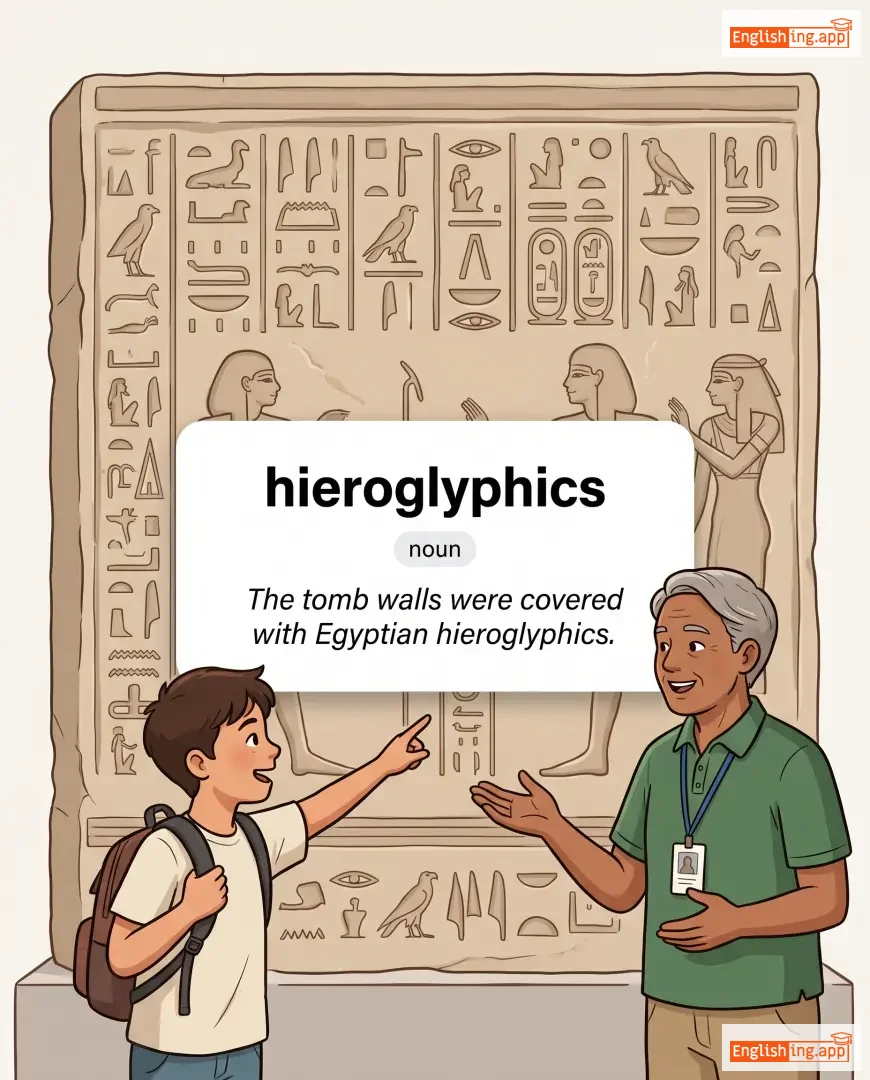
hieroglyphics definition card — visual illustration of the meaning
noun C1
/ˌhaɪ.roʊˈɡlɪf.ɪks/
jeroglíficos (jeroglifos)

a system of writing using pictures or symbols, used especially by ancient Egyptians

"The tomb walls were covered with Egyptian hieroglyphics."

"Las paredes de la tumba estaban cubiertas con jeroglíficos egipcios." (Las paredes de la tumba estaban cubiertas con jeroglificos egipcios.)
noun C1
/ˈhaɪ.nəs/
Grandeza; título real (grandeza, titulo real)

a title given to a person of royal rank; the quality or state of being high or elevated

"Your Highness, the royal carriage is ready to take you to the state banquet this evening."

"Su Grandeza, el carruaje real está listo para llevarlo al banquete estatal esta noche." (Su Grandeza, el carruaje real esta listo para llevarlo al banquete estatal esta noche.)
hijack definition card — visual illustration of the meaning
verb C1
/ˈhaɪdʒæk/
secuestro de aeronave (secuestro de aeronave)

to take control of a vehicle or situation illegally or by force

"The criminals attempted to hijack the airplane."
"Los criminales intentaron secuestrar el avión." (Los criminales intentaron secuestrar el avión.)
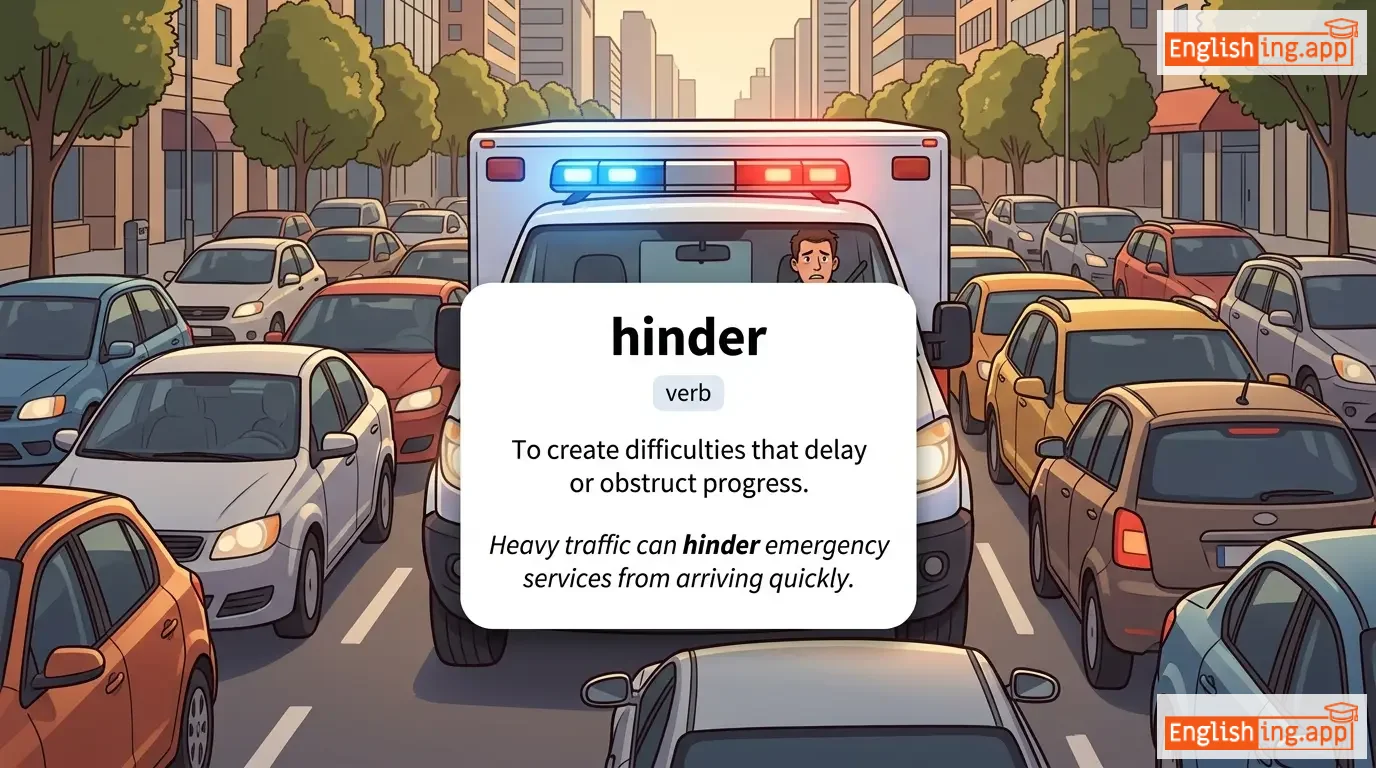
hinder definition card — visual illustration of the meaning
verb C1
/ˈhɪndər/
dificultar (dificultar)

To create difficulties that delay or obstruct progress.

"Heavy traffic can hinder emergency services from arriving quickly."
"El tráfico pesado puede dificultar que los servicios de emergencia lleguen rápidamente." (El trafico pesado puede dificultar que los servicios de emergencia lleguen rapidamente.)
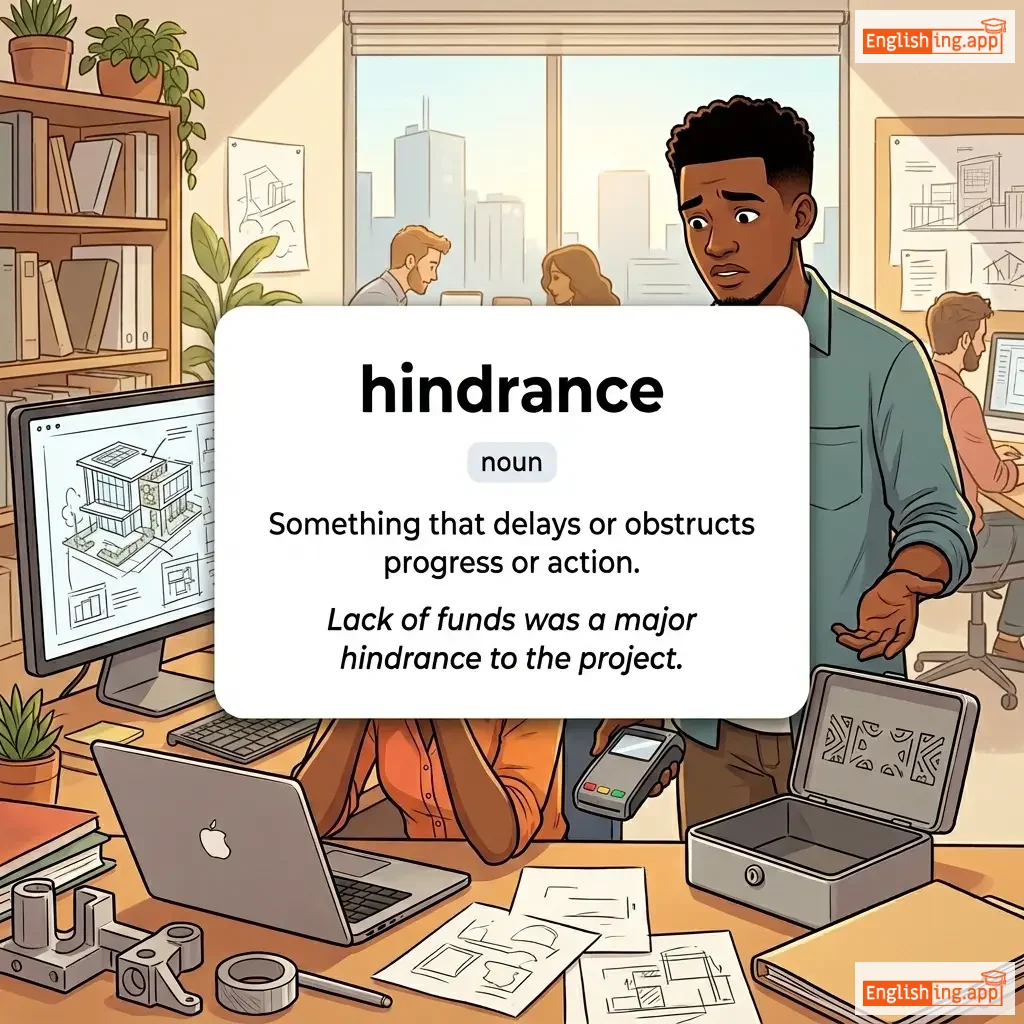
hindrance definition card — visual illustration of the meaning
noun C1
/ˈhɪndrəns/
obstáculo (hindrance)

Something that delays or obstructs progress or action.

"Lack of funds was a major hindrance to the project."

"La falta de fondos fue un obstáculo importante para el proyecto." (La falta de fondos fue un obstaculo importante para el proyecto)
noun C1
/ˈhaɪndsaɪt/
perspectiva retroactiva (perspectiva retroactiva)

Understanding of a situation only after it has happened.

"With the benefit of hindsight, we realized the decision was a mistake."

"Con la ventaja de la perspectiva retroactiva, nos dimos cuenta de que la decisión fue un error." (Con la ventaja de la perspectiva retroactiva, nos dimos cuenta de que la decision fue un error.)
noun C1
/ˈhɪntərlænd/
tierras interiores (tierras interiores)

The remote or less developed areas away from the coast or a city.

"The farmers came from the rural hinterland to sell their produce in the city."

"Los agricultores vinieron de las tierras interiores rurales para vender sus productos en la ciudad." (Los agricultores vinieron de las tierras interiores rurales para vender sus productos en la ciudad.)