語彙集

英単語辞書 | 単語の意味、定義、例文

noun C1
/stɛntʃ/
悪臭 (akushu)

A very strong and unpleasant smell.

"The stench of garbage filled the alley."

"ゴミの臭いが路地を満たした。" (Gomi no nioi ga roji o mitashita.)
noun C1
/ˈstɛnsəl/
型抜き (katenuki)

A thin sheet of material with a design cut out, used to produce the design on the surface below by applying paint or ink through the cut-out holes.

"The artist used a stencil to paint identical stars on the wall."
"アーティストは壁に同じ星を描くために型抜きを使用しました。" (Ātisuto wa kabe ni onaji hoshi o kaku tame ni katenuki o shiyō shimashita.)
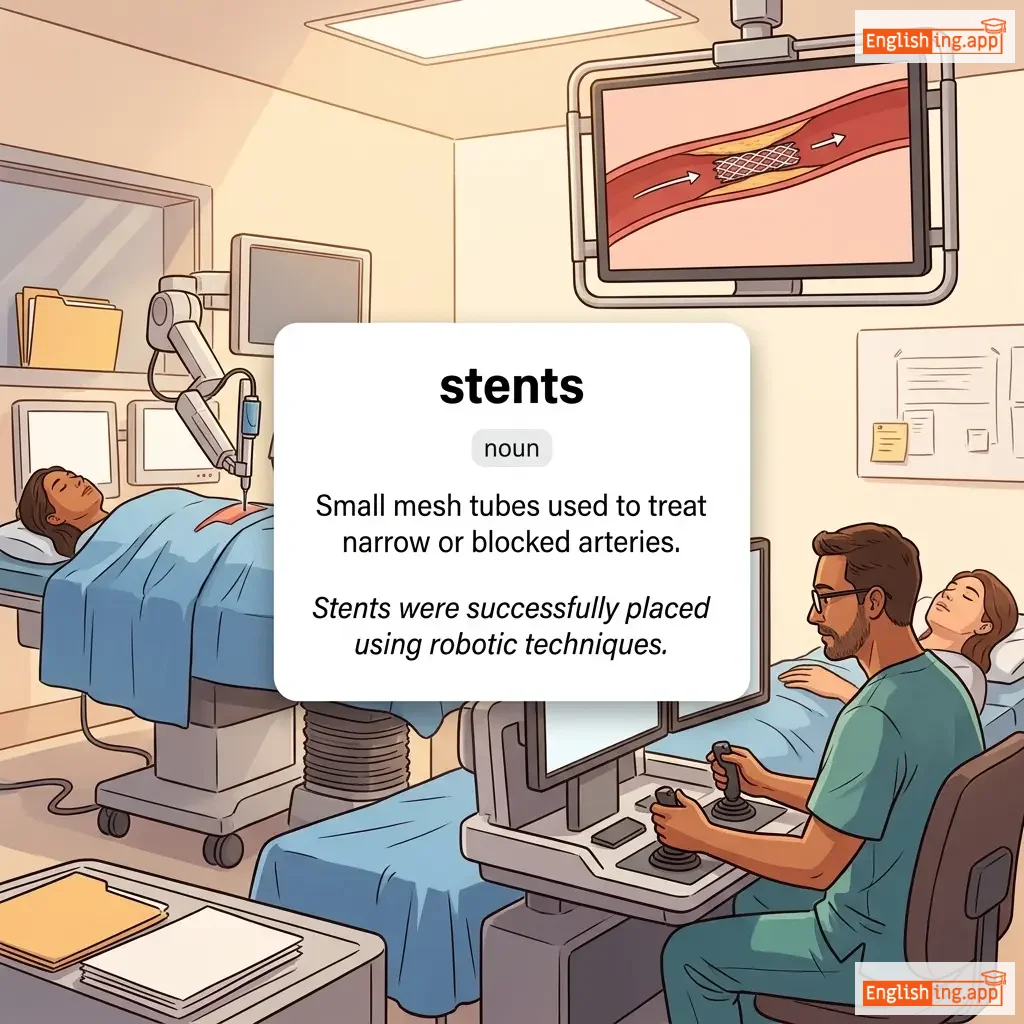
stents definition card — visual illustration of the meaning
noun C1
/stents/
ステント (sutento)

Small mesh tubes used to treat narrow or blocked arteries.

"Stents were successfully placed using robotic techniques."

"ステントはロボット技術を使って成功裏に配置されました。" (Sutento wa robotto gijutsu o tsukatte seikōri ni haichi saremashita.)
adjective C1
/ˈstɛriəˌtaɪpt/
固定観念的な (kotei kannen teki na)

Conforming to a fixed or oversimplified idea of what someone or something is like.

"His stereotyped jokes failed to impress the audience."
"彼の固定観念的なジョークは観客を感動させられなかった。" (kare no kotei kannen teki na jooku wa kankyaku o kandou saserarenakatta.)
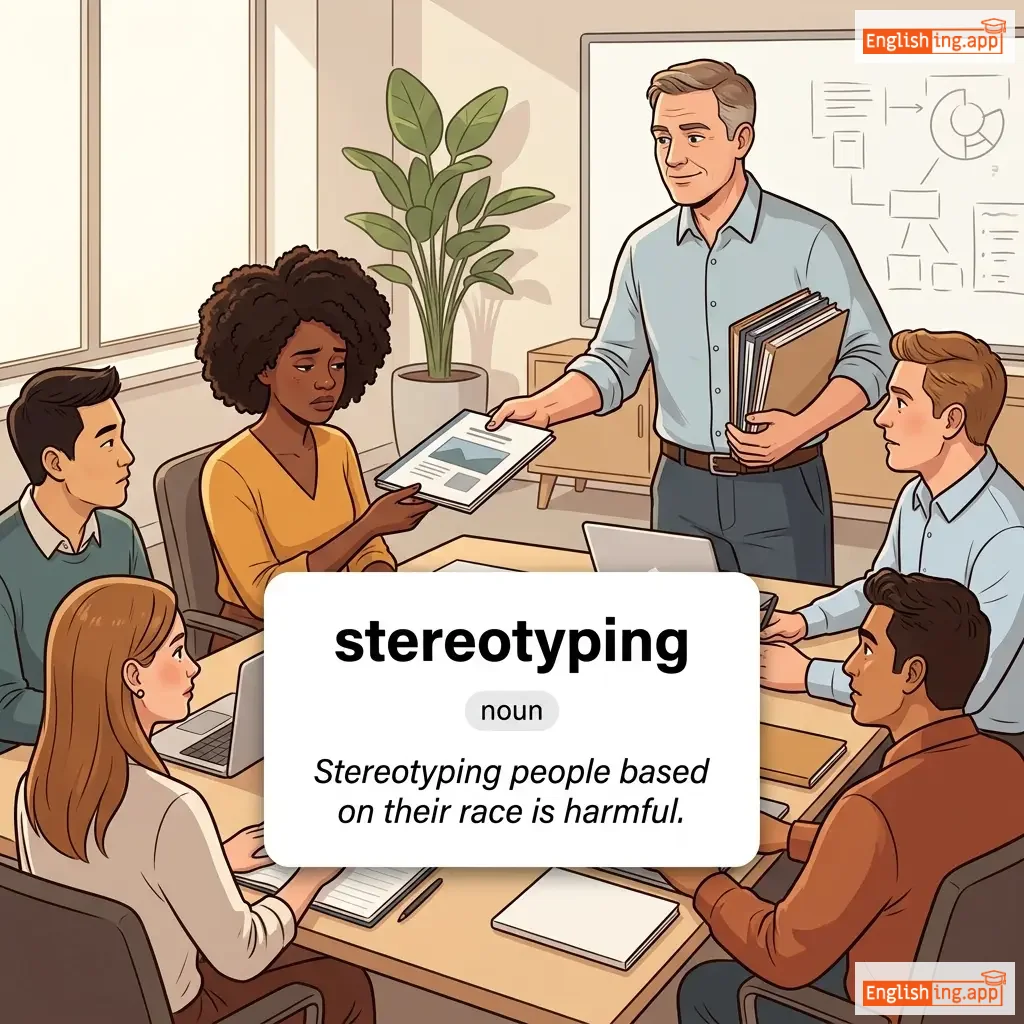
stereotyping definition card — visual illustration of the meaning
noun C1
/ˈstɛə.rɪ.əʊˌtaɪ.pɪŋ/
ステレオタイプ (sutereotaipu)

A widely held but fixed and oversimplified image or idea of a particular type of person or thing.

"Stereotyping people based on their race is harmful."

"人種に基づいたステレオタイプは有害です。" (Jinshu ni motozuita sutereotaipu wa yūgai desu.)
adjective C1
/ˈstɛr.aɪl/
無菌 (mukin)

Free from bacteria or other living microorganisms; incapable of producing offspring.

"The surgeon worked in a sterile environment to avoid infection."

"外科医は感染を防ぐために無菌環境で働いた。" (Ge-kai wa kansen wo fusegu tame ni mukin kankyō de hataraita.)
noun/adjective C1
/ˈstɜː.lɪŋ/
英国通貨 / 優れた (eikoku tōka / sugureta)

British money, especially pounds; of excellent quality.

"She was praised for her sterling work on the project."

"プロジェクトでの優れた仕事が称賛されました。" (Purojekuto de no sugureta shigoto ga shōsan saremashita.)
noun C1
/ˈstɪklər/
規則にうるさい人 (kisoku ni urusai hito)

a person who insists on a certain quality or standard of behavior

"He is a stickler for punctuality and never tolerates delays."

"彼は時間にうるさく、遅れを許しません。" (Kare wa jikan ni urusaku, okure o yurushimasen.)
verb C1
/ˈstaɪfl/
抑える (osaeru)

to prevent or restrain an action, idea, or emotion; to suffocate

"She tried to stifle a laugh during the serious meeting."

"彼女は真剣な会議中に笑いを抑えようとしました。" (Kanojo wa shinken na kaigi-chū ni warai o osaeyō to shimashita.)
verb C1
/ˈstaɪfəld/
抑える (osaeru)

to suppress, hold back, or prevent something from happening

"He stifled a laugh during the serious meeting."

"彼は真面目な会議中に笑いを抑えた。" (Kare wa majimena kaigichuu ni warai o osaeta.)
stigma definition card — visual illustration of the meaning
noun C1
/ˈstɪɡmə/
汚名 (omei)

a mark of shame or disgrace associated with a particular circumstance or quality

"There is still a stigma around mental health issues in many societies."

"多くの社会では、精神的な健康問題に関して未だに汚名がついています。" (Ōku no shakai de wa, seishinteki na kenkō mondai ni kanshite imada ni omei ga tsuiteimasu.)
verb C1
/ˈstɪɡmətaɪz/
スティグマタイズする (sutigumataizu suru)

to describe or regard someone as worthy of disgrace or disapproval

"People with certain illnesses are often unfairly stigmatized."

"特定の病気の人々はしばしば不当な方法でスティグマタイズされる。" (Tokutei no byōki no hitobito wa shibashiba futō na hōhō de sutigumataizu sareru.)
noun C1
/stɪˈlɛtoʊ/
細いヒールの靴 / ダガー (hosoi hīru no kutsu / dagā)

A small, thin, high-heeled shoe or a dagger with a slender blade.

"She wore elegant stiletto heels to the party."

"彼女はパーティーにエレガントなスティレットヒールを履いて行きました。" (Kanojo wa pātii ni ereganto na sutiretto hīru o haite ikimashita.)
adjective C1
/ˈstɪltɪd/
不自然な、堅苦しい (fushizen na, katakurushii)

Speech or writing that is stiff, unnatural, or overly formal.

"His speech sounded stilted and rehearsed."

"彼のスピーチは不自然で練習されたように聞こえた。" (Kare no supīchi wa fushizen de renshū sareta yō ni kikoeta.)
noun C1
/ˈstɪmjʊlənt/
興奮剤 (koufun zai)

A substance that raises levels of physiological or nervous activity in the body.

"Coffee is a common stimulant that helps people stay awake."
"コーヒーは一般的な興奮剤で、人々が目を覚ますのを助けます" (Kōhī wa ippantekina kōfunzai de, hitobito ga me wo samasu no wo tasukemasu)
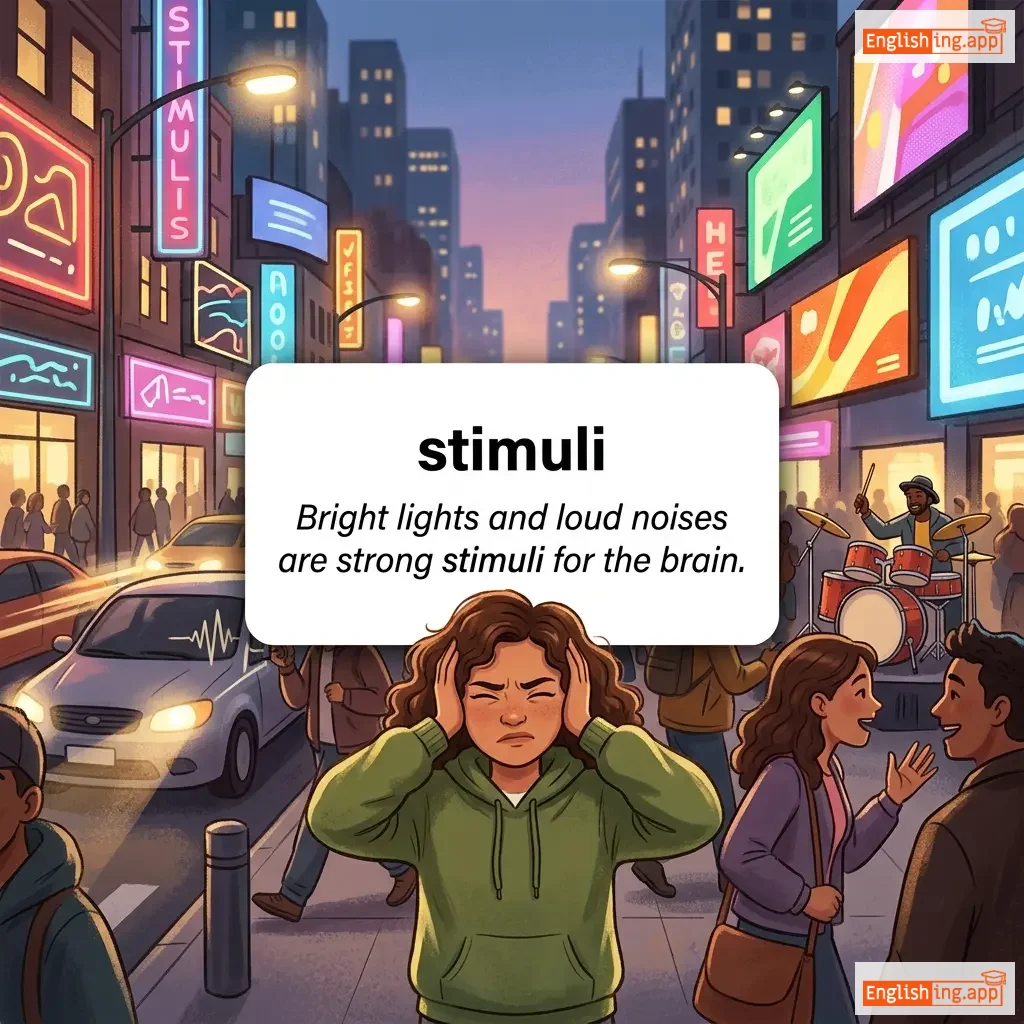
stimuli definition card — visual illustration of the meaning
noun (plural of stimulus) C1
/ˈstɪm.jʊ.laɪ/
刺激 (shigeki)

Things or events that evoke a specific functional reaction in an organ or tissue.

"Bright lights and loud noises are strong stimuli for the brain."

"明るい光と大きな音は、脳にとって強力な刺激です。" (Akarui hikari to ōkina oto wa, nō ni totte kyōryoku na shigeki desu.)
adjective C1
/ˈstɪndʒi/
けち (kechi)

unwilling to spend or give; miserly

"He is too stingy to buy a gift for his friend."
"彼は友達へのプレゼントを買うにはあまりにけちだ。" (Kare wa tomodachi e no purezento o kau ni wa amari ni kechi da.)
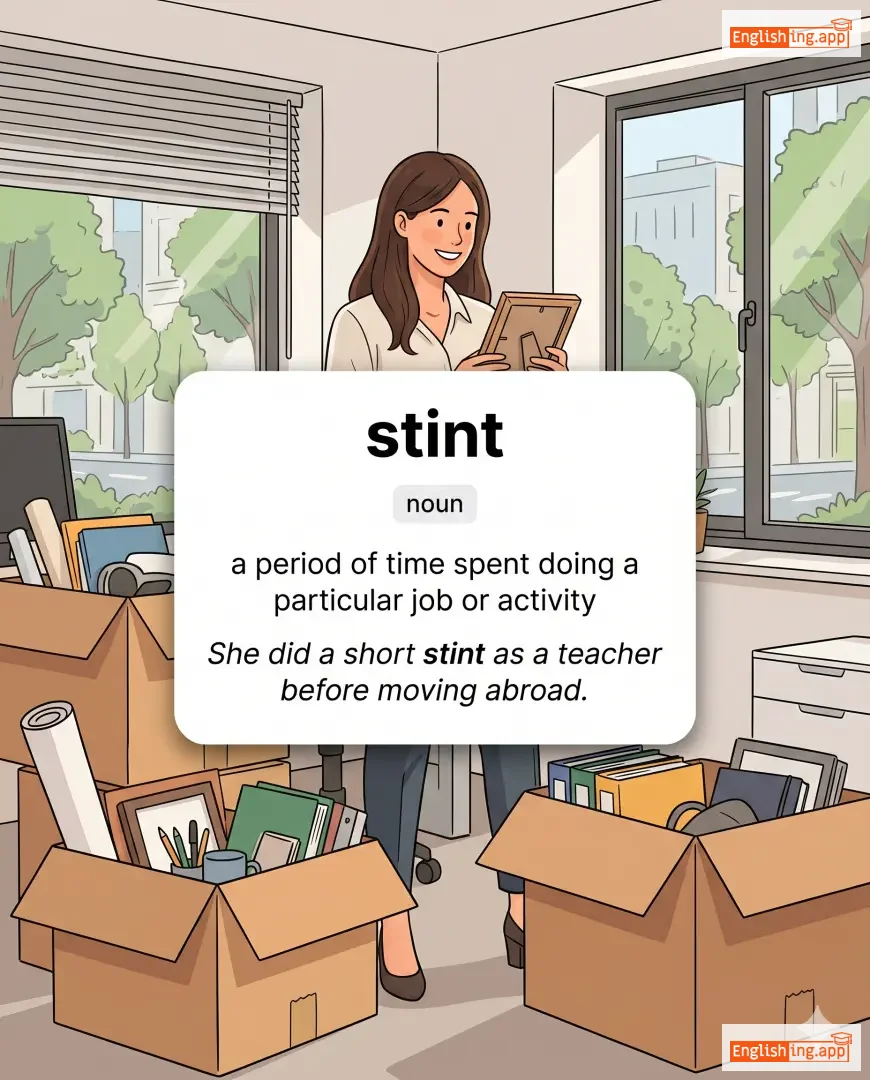
stint definition card — visual illustration of the meaning
noun C1
/stɪnt/
短期の仕事 (tanki no shigoto)

a period of time spent doing a particular job or activity

"She did a short stint as a teacher before moving abroad."

"彼女は海外に移住する前に短期間の教師として働きました。" (Kanojo wa kaigai ni ijū suru mae ni tanki no kyōshi toshite hatarakimashita.)
verb C1
/ˈstɪntɪŋ/
けちけちと与える (kechiketo ataeru)

to supply sparingly or with restrictions

"He never stinting his efforts to help the poor."
"彼は貧しい人々を助けるために決して手を抜きません。" (Kare wa mazushī hitobito o tasukeru tame ni kesshite te o nukimasen.)
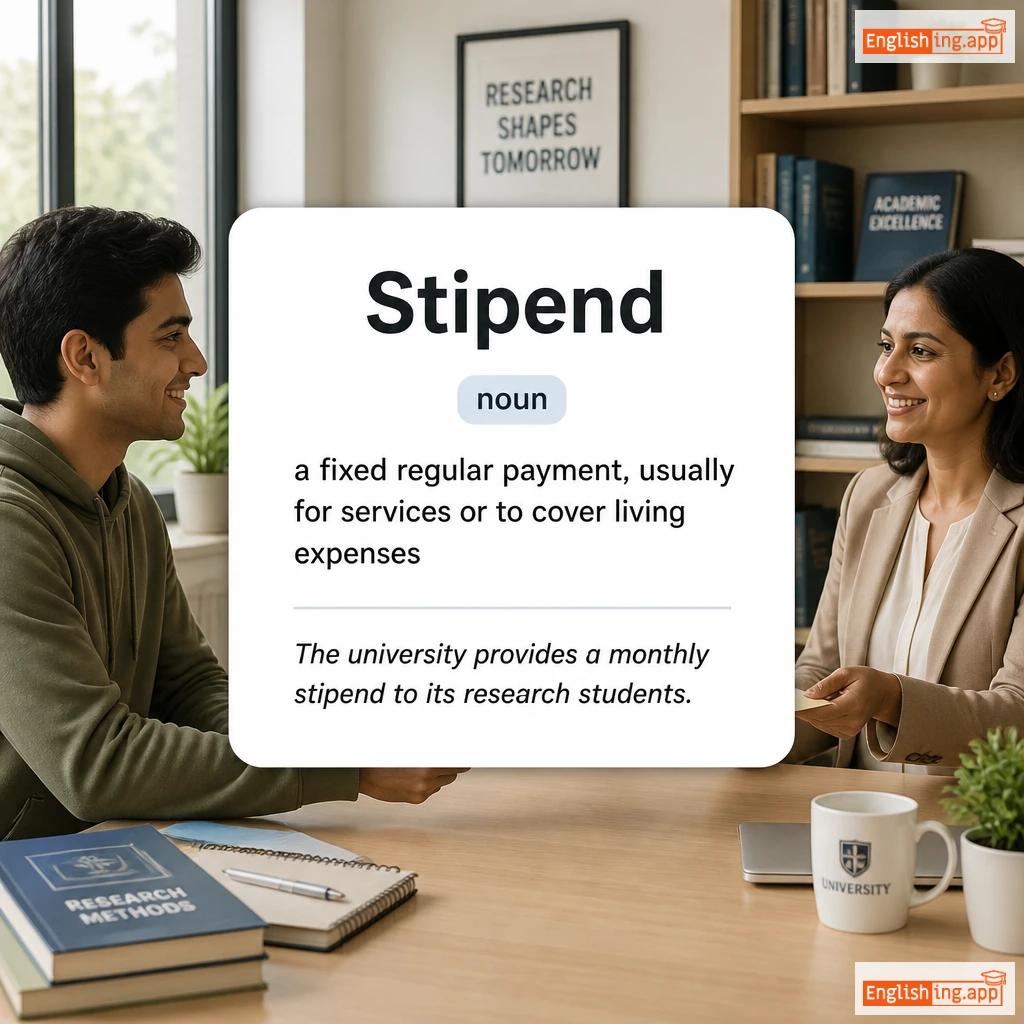
Stipend definition card — visual illustration of the meaning
noun C1
/ˈstaɪpɛnd/
奨学金 (shougakukin)

a fixed regular payment, usually for services or to cover living expenses

"The university provides a monthly stipend to its research students."

"大学は研究学生に毎月のスタイペンドを提供しています。" (Daigaku wa kenkyu gakusei ni maitsuki no suteipendo o teikyō shiteimasu.)
stipulate definition card — visual illustration of the meaning
verb C1
/ˈstɪp.jʊ.leɪt/
規定する (kitei suru)

to demand or specify a condition in an agreement or contract

"The contract stipulates that payment must be made within 30 days."

"契約書には、支払いは30日以内に行われるべきであると明記されています。" (Keiyakusho ni wa, shiharai wa 30 nichi inai ni okonawareru beki de aru to meiki sareteimasu.)
adjective C1
/ˈstɒdʒi/
退屈な、時代遅れな (taikutsu na, jidaiokure na)

Dull, uninspired, or old-fashioned; also heavy and hard to digest when referring to food.

"The lecture was so stodgy that many students struggled to stay awake."

"その講義はあまりにも退屈で、多くの学生が目を覚ますのに苦労しました。" (Sono kōgi wa amari ni mo taikutsu de, ōku no gakusei ga me o samasu no ni kurō shimashita.)
adjective C1
/ˈstoʊɪk/
冷静な, 無感情な (reiseina, mugannōna)

Showing little or no emotion, even in difficult situations.

"She remained stoic during the crisis, never showing fear or panic."
"彼女は危機の間、冷静で恐怖やパニックを示さなかった。" (Kanojo wa kiki no aida, reisei de kyōfu ya panikku o shimesanakatta.)
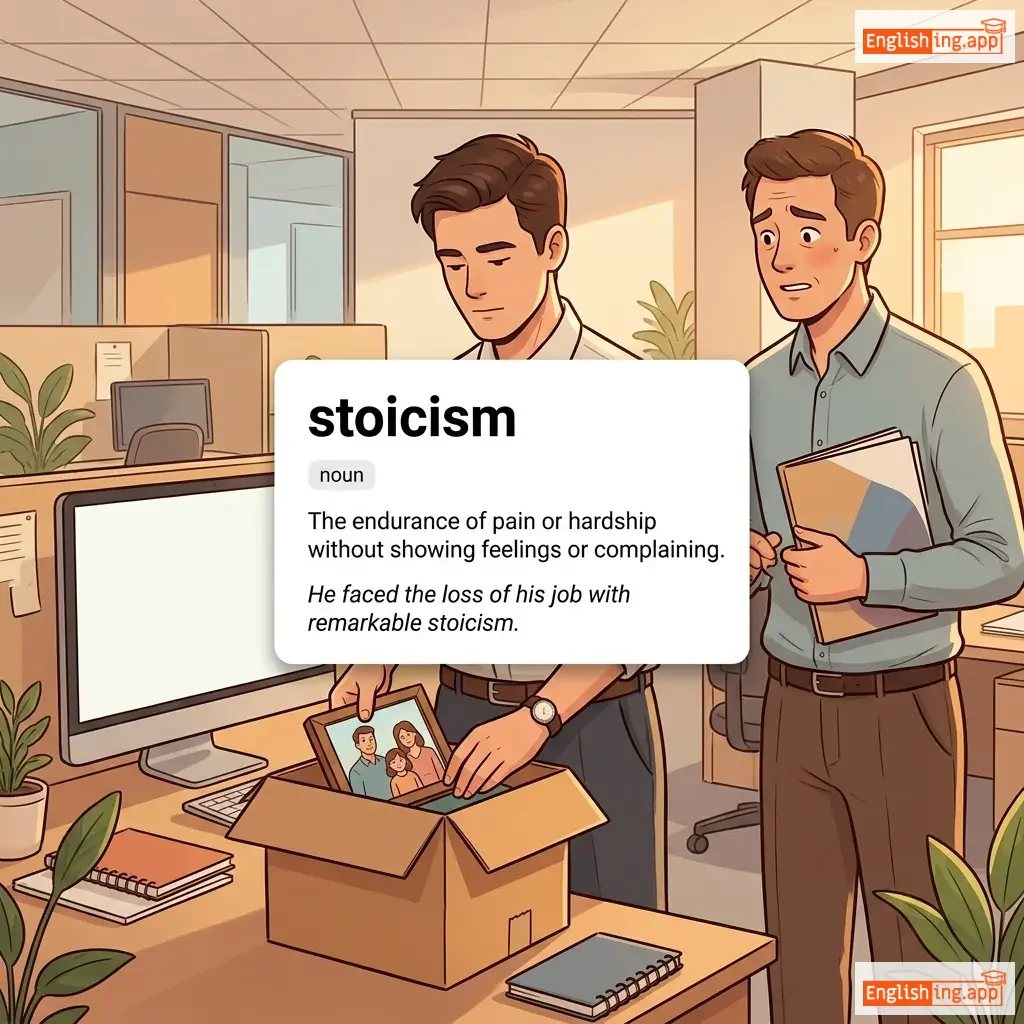
stoicism definition card — visual illustration of the meaning
noun C1
/ˈstoʊɪˌsɪzəm/
ストイック主義 (sutoikku shugi)

The endurance of pain or hardship without showing feelings or complaining.

"He faced the loss of his job with remarkable stoicism."

"彼は仕事を失ったことを並外れたストイック主義で乗り越えた。" (Kare wa shigoto o ushinatta koto o namihazureta sutoikku shugi de norikoeta.)
🔥

stoke

verb C1
/stoʊk/

To add fuel to a fire; to encourage or increase a strong feeling or activity.

"The politician’s speech stoked anger among the crowd."

verb C1
/ˈstoʊnwɔːl/
妨害する (bōgai suru)

To delay or block progress by refusing to cooperate or answer

"The witness tried to stonewall during the investigation."

"証人は調査中にストーンウォールしようとしました。" (Shōnin wa chōsa-chū ni sutōn wōru shiyō to shimashita.)
verb/noun C1
/stuːp/
幸福 (kōfuku)

To bend one's body forward and downward; also a small porch or staircase at the entrance of a house

"He had to stoop to pick up the coin."
"彼女は賞を受け取ったとき、自分の幸福を隠すことができませんでした。" (Kanojo wa shō o uketotta toki, jibun no kōfuku o kakusu koto ga dekimasen deshita.)
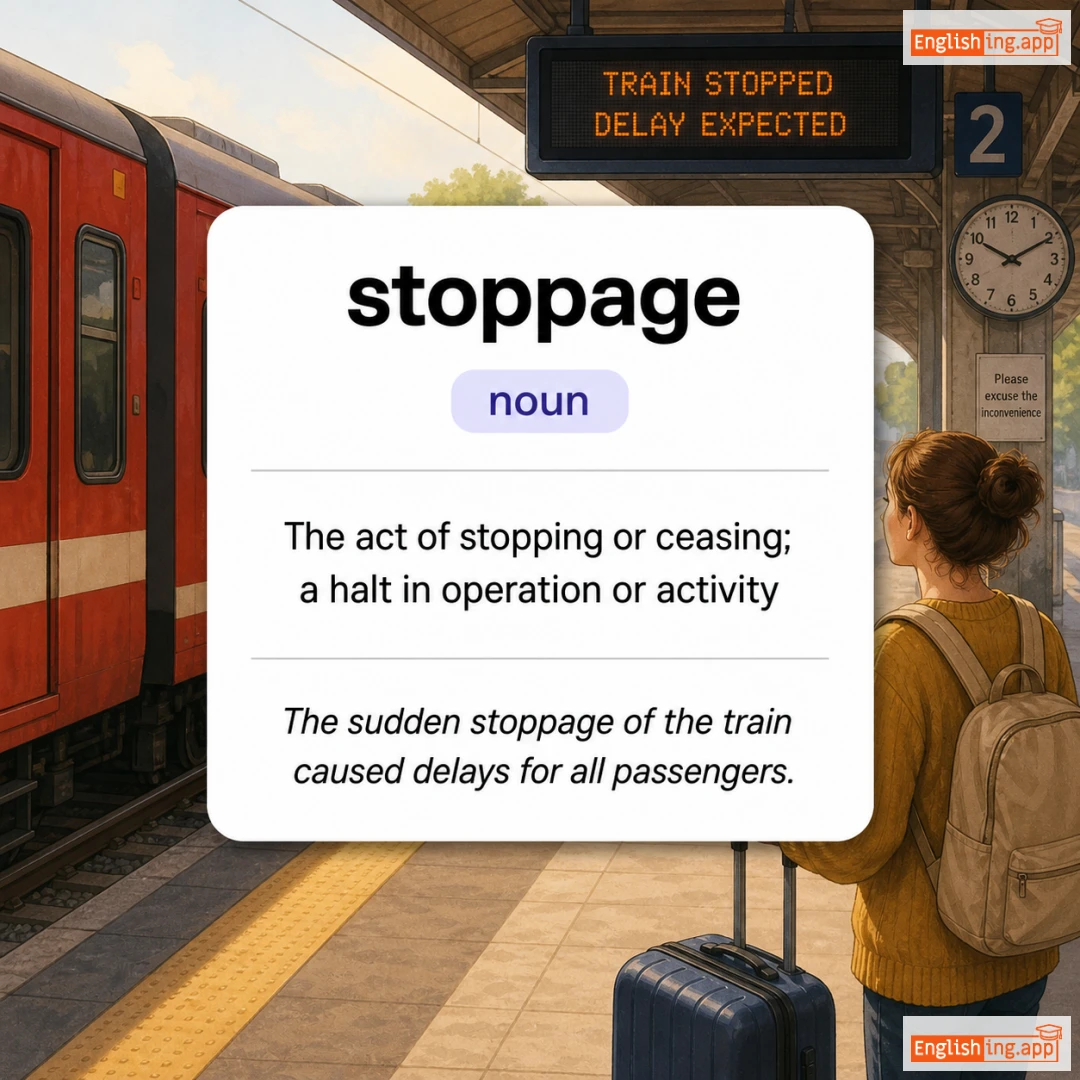
stoppage definition card — visual illustration of the meaning
noun C1
/ˈstɒpɪdʒ/
停止; 中断 (teishi; chudan)

The act of stopping or ceasing; a halt in operation or activity

"The sudden stoppage of the train caused delays for all passengers."

"電車の突然の停止で、すべての乗客に遅れが生じた。" (Densha no totsuzen no teishi de, subete no jokyaku ni okure ga shojita.)
noun C1
/ˈstɔːrhaʊs/
倉庫 (soko)

A place where goods, supplies, or valuables are stored; a repository

"The warehouse acted as a storehouse for all the imported goods."
"その倉庫はすべての輸入品のストアハウスとして機能していた。" (Sono soko wa subete no yunyuhin no storehouse to shite kinou shiteita.)
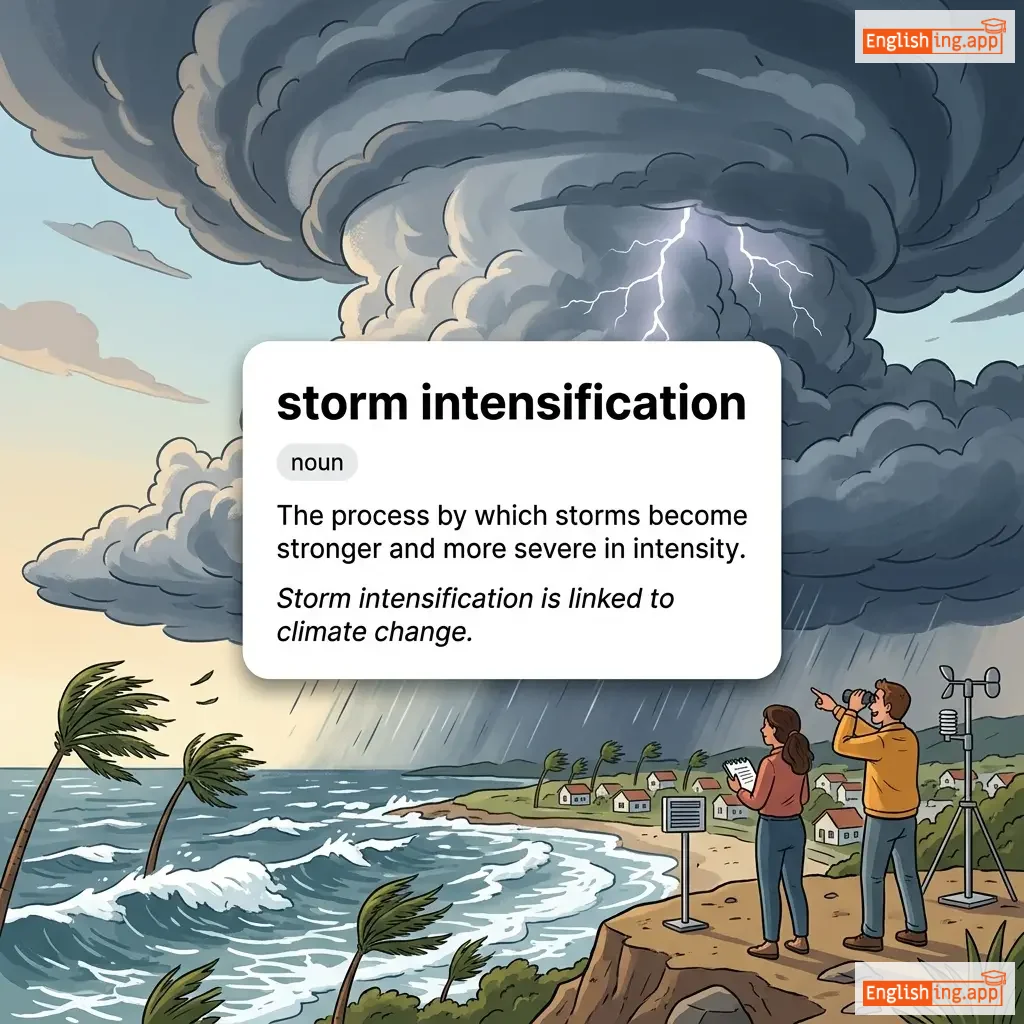
storm intensification definition card — visual illustration of the meaning
noun C1
stɔːrm ɪnˌtensɪfɪˈkeɪʃən
嵐の強化 (arashi no kyōka)

The process by which storms become stronger and more severe in intensity.

"Storm intensification is linked to climate change."

"嵐の強化は気候変動に関連しています。" (Arashi no kyōka wa kikō hendō ni kanren shiteimasu.)
noun C1
/ˈstoʊəˌweɪ/
密航者 (mikkōsha)

A person who hides on a ship, plane, or other vehicle in order to travel secretly without paying.

"The crew discovered a stowaway hiding in the cargo hold."
"乗組員は貨物室に隠れている密航者を発見しました。" (Nōkumiin wa kamotsushitsu ni kakurete iru mikkōsha o hakken shimashita.)
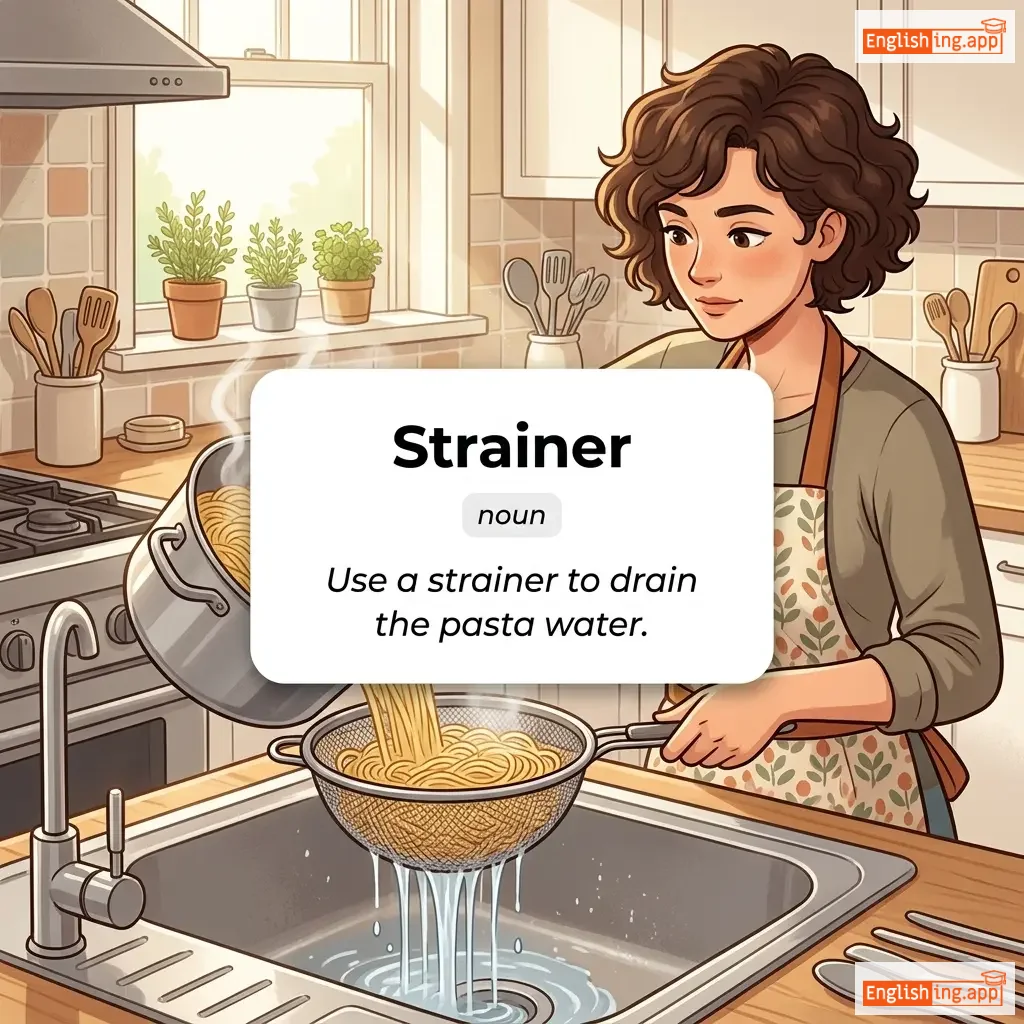
Strainer definition card — visual illustration of the meaning
noun C1
/ˈstreɪnər/
こし器 (koshiki)

a device having holes punched in it or made of crossed wires for separating solid matter from a liquid

"Use a strainer to drain the pasta water."

"パスタの水を切るためにこし器を使ってください。" (Pasuta no mizu o kiru tame ni koshiki o tsukatte kudasai.)
noun C1
/streɪt/
海峡 (kaikyō)

A narrow passage of water connecting two seas or two large areas of water.

"The Strait of Gibraltar connects the Atlantic Ocean and the Mediterranean Sea."
"ジブラルタル海峡は大西洋と地中海を繋いでいます。" (Jiburataru kaikyou wa Taiseiyou to Chichuukai o tsunaideimasu.)
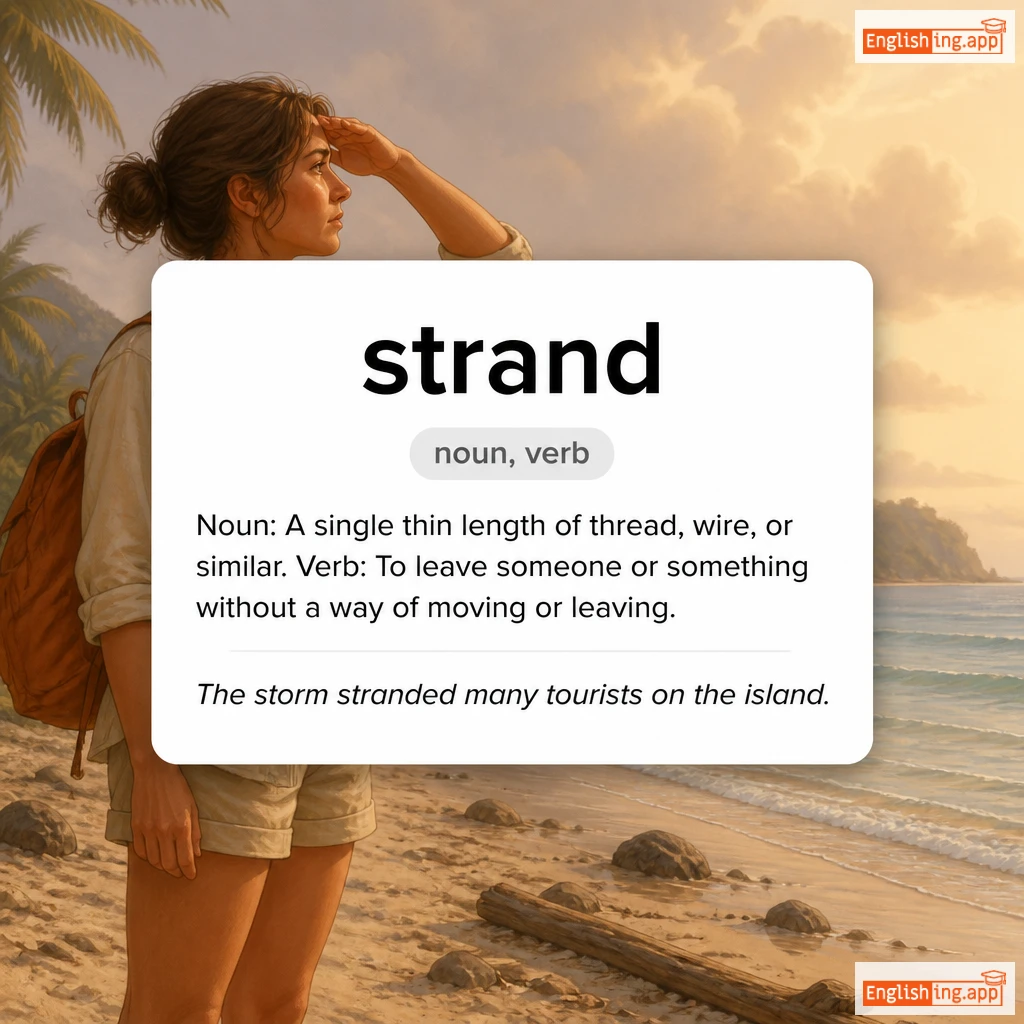
strand definition card — visual illustration of the meaning
noun, verb C1
/strænd/
糸 / 取り残された (ito / torinosokareta)

Noun: A single thin length of thread, wire, or similar. Verb: To leave someone or something without a way of moving or leaving.

"The storm stranded many tourists on the island."

"嵐は多くの観光客を島に取り残しました。" (Arashi wa ooku no kankōkyaku o shima ni torinoshimashita.)
strategic insights definition card — visual illustration of the meaning
noun C1
/strəˈtiː.dʒɪk ˈɪn.saɪts/
戦略的洞察 (senryakuteki dōsatsu)

Deep understanding and wisdom gained through careful analysis for planning purposes.

"Strategic insights guide policymaking."
"戦略的洞察は政策立案を導く。" (Senryakuteki dōsatsu wa seisaku ritsuan o michibiku.)
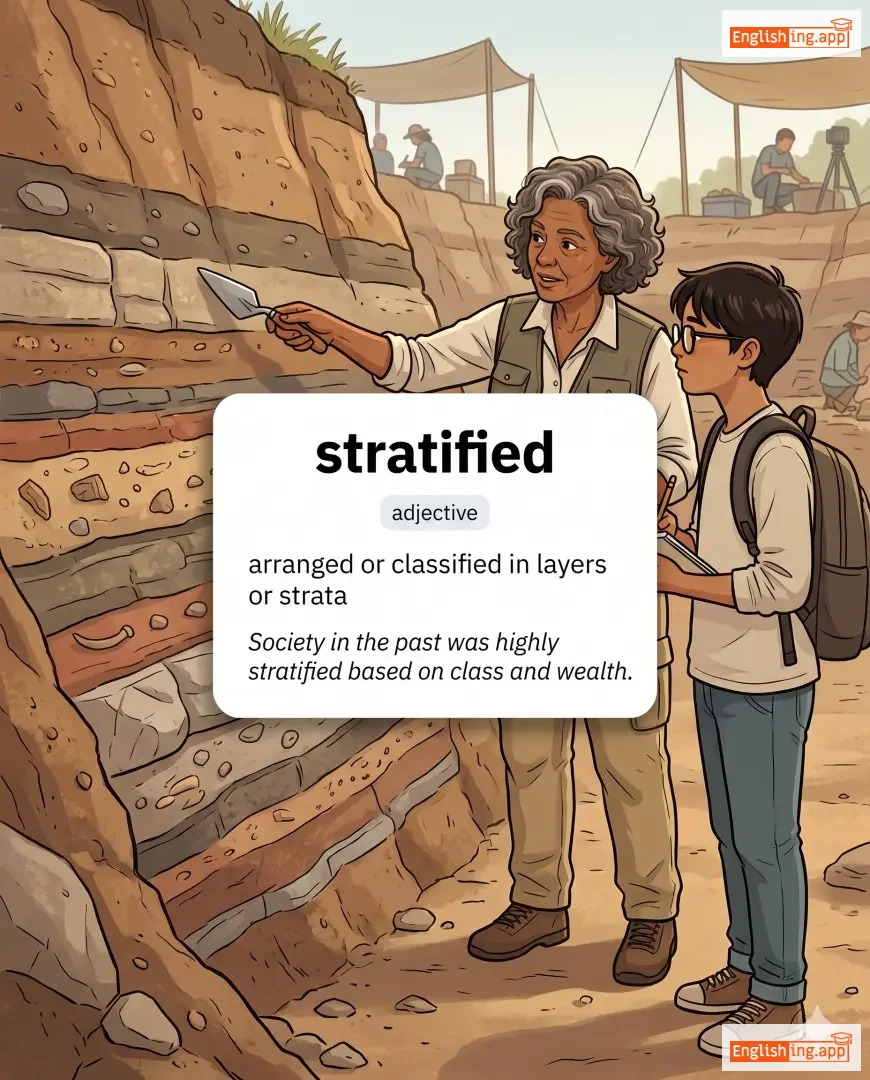
stratified definition card — visual illustration of the meaning
adjective C1
/ˈstrætɪfaɪd/

arranged or classified in layers or strata

"Society in the past was highly stratified based on class and wealth."

verb C1
/ˈstrætɪfaɪ/
階層化する (kaisōka suru)

to arrange or divide into layers, classes, or categories

"The researchers plan to stratify the data based on age groups."
"研究者たちは年齢層に基づいてデータを階層化する予定です。" (Kenkyūsha-tachi wa nenreisō ni motozuite dēta o kaisōka suru yotei desu.)
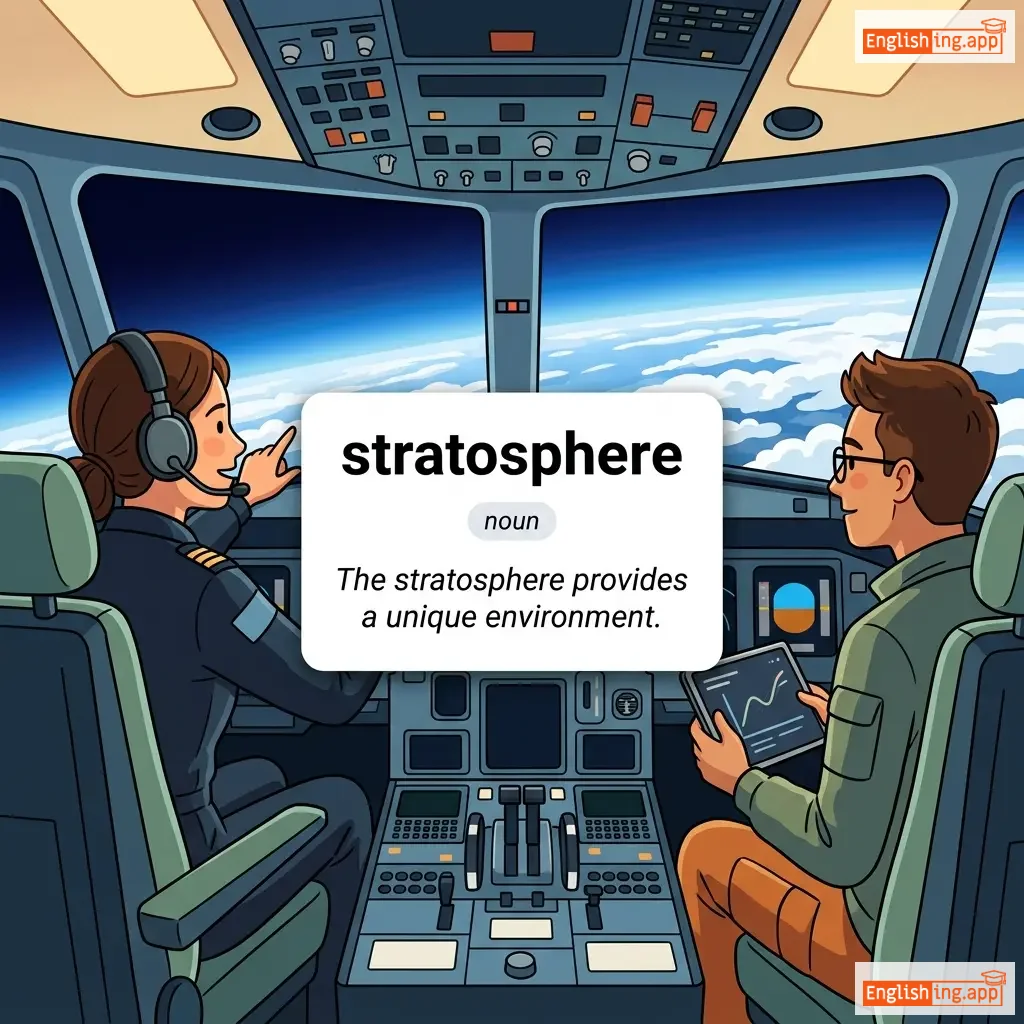
stratosphere definition card — visual illustration of the meaning
noun C1
ˈstræt.ə.sfɪər
成層圏 (seisouken)

The layer of the earth's atmosphere above the troposphere, extending to about 50 km above the earth's surface.

"The stratosphere provides a unique environment."

"成層圏は特別な環境を提供します。" (seisouken wa tokubetsu na kankyou o teikyou shimasu.)
noun C1
/ˈstrɑːtəm/
(sō)

a layer or level of material, or a social class in society

"The upper stratum of society enjoyed privileges not available to others."

"社会の上層部は他の人々が手に入れられない特権を享受していました。" (Shakai no jōsōbu wa hoka no hitobito ga te ni irarenai tokken o kyōju shite imashita.)
streamline definition card — visual illustration of the meaning
verb C1
/ˈstriːm.laɪn/
簡素化 (kansoka)

To make something more efficient by simplifying or eliminating unnecessary steps.

"The company is streamlining its processes."

"会社はプロセスを簡素化しています。" (Kaisha wa purosesu o kansoka shiteimasu.)
streamlining definition card — visual illustration of the meaning
verb C1
/ˈstriːmlaɪnɪŋ/
簡素化 (kansokuka)

The process of making an organization or system more efficient by simplifying or eliminating unnecessary steps

"Streamlining processes can significantly reduce operational costs."

"プロセスの簡素化は、運用コストを大幅に削減することができます。" (Purosesu no kansoka wa, un'yō kosuto o ōhaba ni sakugen suru koto ga dekimasu.)
adjective C1
/ˈstrɛnjuəs/
厳しい (kibishii)

Requiring or using great effort and energy.

"Climbing the mountain was a strenuous task."

"山登りは厳しい仕事だった。" (Yamanobori wa kibishī shigoto datta.)
verb C1
/struː/
まき散らす (makichirasu)

to scatter or spread things untidily over a surface or area

"Clothes were strewn across the floor."

"服が床に散らばっていた。" (Fuku ga yuka ni chirabatte ita.)
adjective C1
/ˈstraɪ.dənt/
耳障りな, うるさい (mimi-zawari na, urusai)

loud and harsh; presenting a point of view in a forceful way

"His strident voice made the debate uncomfortable."

"彼の耳障りな声は議論を不快にした。" (Kare no mimi-zawari na koe wa giron o fukai ni shita.)
noun C1
/straɪf/
争い、闘争 (arasoi, toso)

angry or violent conflict; struggle or discord

"The region has been torn apart by political strife."

"その地域は政治的な争いで引き裂かれました。" (Sono chiiki wa seijiteki na arasoi de hikisakaremashita.)
adjective C1
/ˈstrɪndʒənt/
厳格 (genkaku)

strict, precise, and exacting

"The government imposed stringent measures during the crisis."

"政府は危機の間に厳しい措置を課しました。" (Seifu wa kiki no aida ni genkaku na sochi o kashimashita.)
strut definition card — visual illustration of the meaning
verb C1
/strʌt/
堂々と歩く (dōdō to aruku)

to walk with a stiff, proud, and confident gait, often to show off

"He strutted across the stage after winning the award."

"彼は賞を受賞後、誇らしげにステージを歩いた。" (Kare wa shō o jushōgo, hokorashige ni sutēji o aruita.)
adjective C1
/ˈstʌm.pi/
短くて太い (mijikakute futoi)

short and thick; having a short, thick appearance

"The stumpy little dog wagged its tail enthusiastically."

"その短くて太い小さな犬は、興奮して尾を振っていました。" (Sono mijikakute futoi chiisana inu wa, kōfun shite o o futte imashita.)
adjective C1
/stjuːˈpɛndəs/
素晴らしい (subarashii)

extremely impressive; amazing in size, degree, or excellence

"The magician’s performance was simply stupendous."

"マジシャンのパフォーマンスはまさに素晴らしいものでした。" (Majishan no pafōmansu wa masani subarashī mono deshita.)
noun C1
/ˈstjuːpər/
昏迷 (konmi)

a state of near-unconsciousness or insensibility

"He remained in a stupor after hearing the shocking news."

"彼は衝撃的なニュースを聞いた後、昏迷状態に陥った。" (Kare wa shougeki-tekina nyuusu o kiita ato, konmi joutai ni ochiitta.)