語彙集

英単語辞書 | 単語の意味、定義、例文

noun C1
/naɪˈiːvteɪ/

The quality of being naive; lack of experience, wisdom, or judgment.

"His naivete made him an easy target for manipulation."

noun C1
/naɪˈiːvɪti/
天真 (tianzhen)

The quality of being innocent, simple, and lacking experience or sophistication.

"Her naivety made her trust people too easily."

"她的天真使她太容易相信别人。" (Ta de tianzhen shi ta tai rongyi xiangxin bieren.)
adjective C1
/ˈneɪmləs/
无名 (wu ming)

Without a name or not known by name.

"A nameless fear crept over him in the dark room."
"一个无名的恐惧在黑暗的房间里袭击了他。" (Yi ge wu ming de kong ju zai hei'an de fang jian li xi ji le ta.)
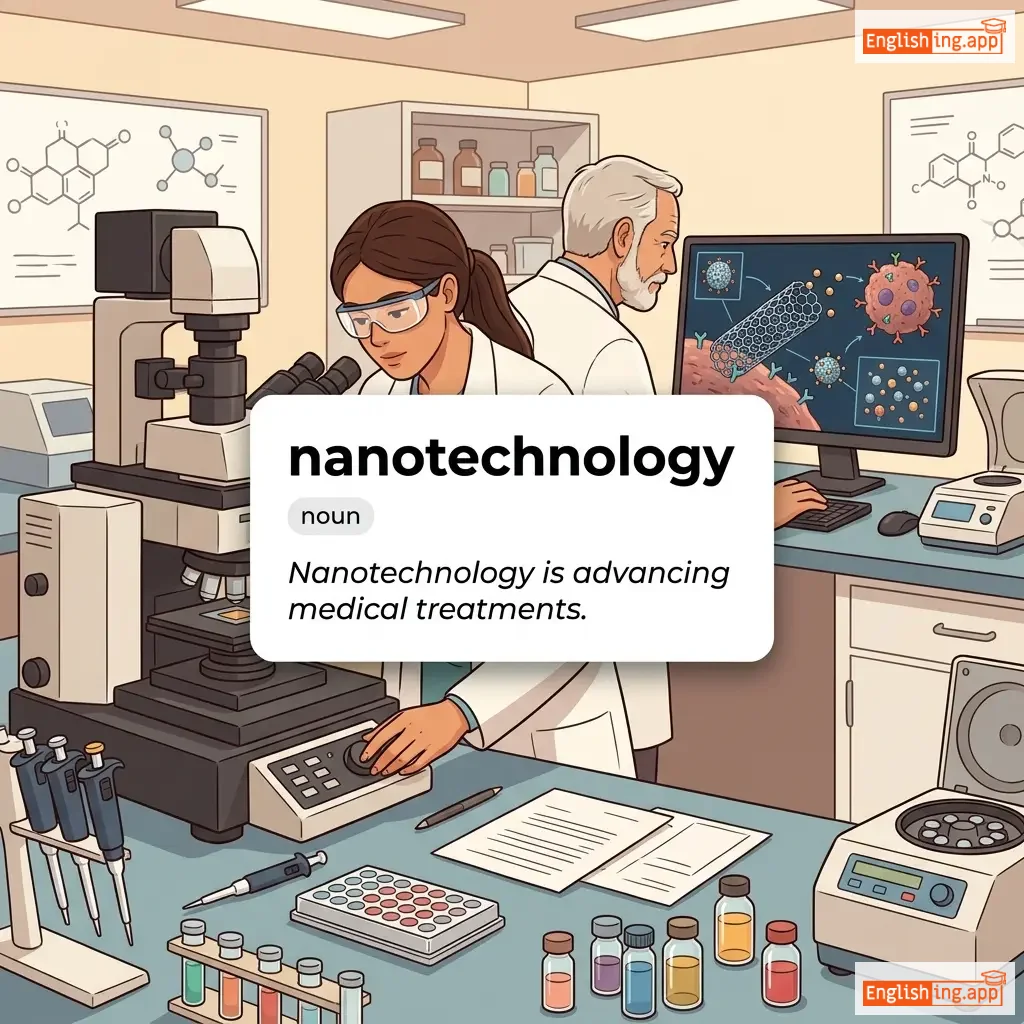
nanotechnology definition card — visual illustration of the meaning
noun C1
ˌnæn.oʊ.tekˈnɒl.ə.dʒi
纳米技术 (nà mǐ jì shù)

The branch of technology that deals with dimensions and tolerances of less than 100 nanometers.

"Nanotechnology is advancing medical treatments."

"纳米技术正在推动医疗治疗的发展。" (Nà mǐ jì shù zhèng zài tuī dòng yī liáo zhì liáo de fā zhǎn.)
narcissism definition card — visual illustration of the meaning
noun C1
/ˈnɑːrsɪsɪzəm/
自恋 (zì liàn)

Excessive interest in or admiration of oneself.

"His constant selfies were a sign of his narcissism."

"他不断自拍是他自恋的表现。" (tā bù duàn zì pāi shì tā zì liàn de biǎo xiàn.)
noun C1
/ˈnɑːrsɪsɪst/
自恋者 (zìliàn zhě)

A person who has an excessive interest in or admiration of themselves.

"Everyone avoided him because he was a narcissist."

"每个人都避开他,因为他是一个自恋者。" (měi gè rén dōu bì kāi tā, yīnwèi tā shì yīgè zìliàn zhě.)
noun C1
/nɑːrˈkɒtɪk/
麻醉品 (mázuìpǐn)

A drug that dulls the senses and relieves pain, often causing sleep and sometimes addiction.

"The police seized a large amount of narcotic substances."

"警察查获了一大批麻醉品。" (Jǐngchá cháhuòle yī dà pī mázuìpǐn.)
narrative style definition card — visual illustration of the meaning
noun C1
ˈnærətɪv staɪl
叙事风格 (xushi fengge)

The way in which a story is told, including the point of view and the voice of the narrator.

"Dickens' narrative style is engaging and emotional."

"狄更斯的叙事风格引人入胜且富有情感。" (Dí gèngsī de xùshì fēnggé yǐn rén rù shèng qiě fùyǒu qínggǎn.)
adjective C1
/ˌnæroʊˈmaɪndɪd/

Having a limited outlook or unwillingness to accept different opinions or ideas.

"She was too narrow-minded to consider other perspectives."

adverb C1
/ˈnæroʊli/
勉强地; 刚好 (miǎnqiǎng de; gānghǎo)

by a small margin; barely; in a limited way

"She narrowly escaped the accident."

"她差点逃脱了事故。" (Tā chàdiǎn táotuōle shìgù.)
adjective C1
/ˈneɪzl/
鼻音的 (bīyīn de)

Relating to the nose; a sound produced through the nose.

"He spoke with a nasal voice due to his cold."
"他因感冒说话带有鼻音。" (Tā yīn gǎnmào shuōhuà dàiyǒu bíyīn.)
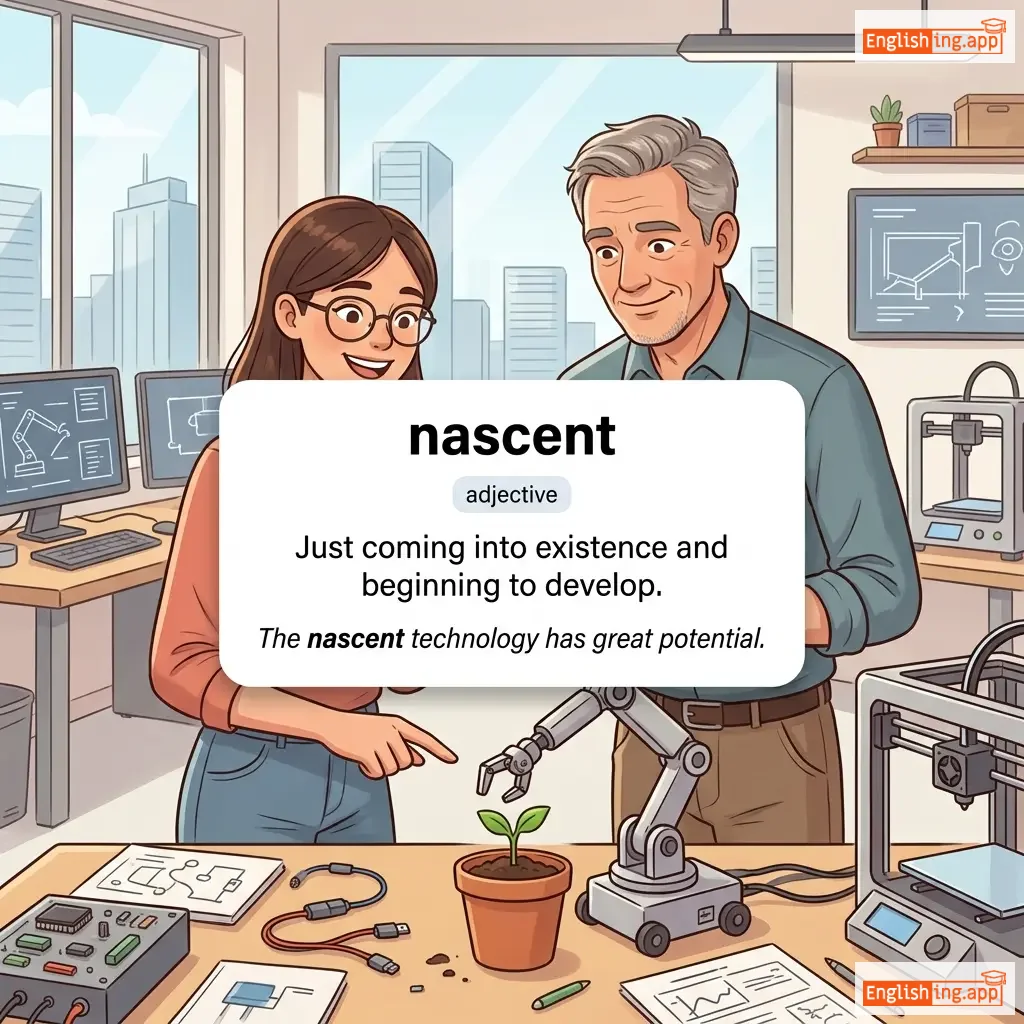
nascent definition card — visual illustration of the meaning
adjective C1
/ˈneɪsnt/
萌芽 (méngyá)

Just coming into existence and beginning to develop.

"The nascent technology has great potential."
"萌芽中的技术具有巨大的潜力。" (Méngyá zhōng de jìshù jùyǒu jùdà de qiánlì.)
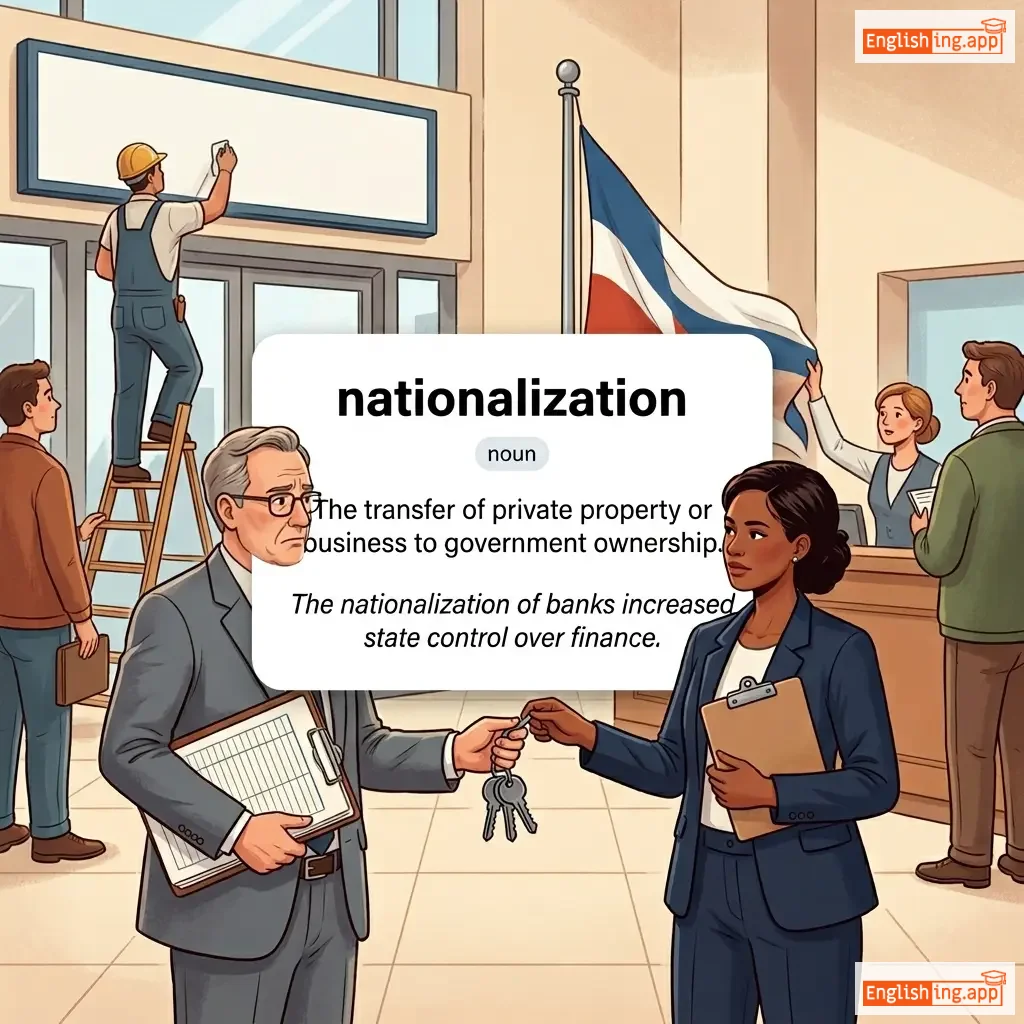
nationalization definition card — visual illustration of the meaning
noun C1
/ˌnæʃ.ən.ə.laɪˈzeɪ.ʃən/
国家化 (guojiahua)

The transfer of private property or business to government ownership.

"The nationalization of banks increased state control over finance."
"银行的国家化增加了国家对金融的控制。" (Yinhang de guojiahua zengjia le guo jia dui jinrong de kongzhi.)
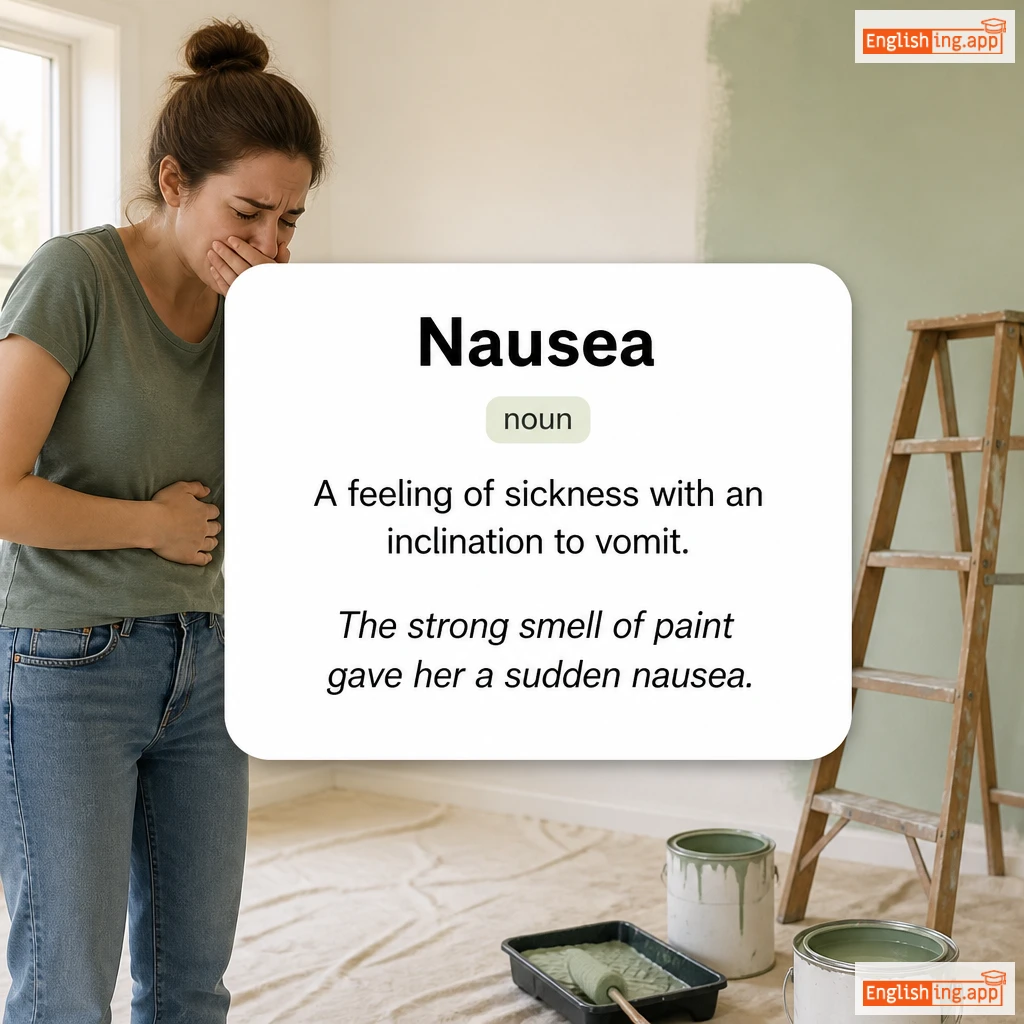
Nausea definition card — visual illustration of the meaning
noun C1
/ˈnɔːziə/
恶心 (èxīn)

A feeling of sickness with an inclination to vomit.

"The strong smell of paint gave her a sudden nausea."

"油漆的刺鼻气味让她突然感到恶心。" (Yóuqī de cìbí qìwèi ràng tā túrán gǎndào èxīn.)
adjective C1
/ˈnɔːʃəs/
感觉恶心 (gǎn jué ě xīn)

feeling like you are about to vomit; causing a feeling of sickness

"The smell of rotten food made her feel nauseous."

"腐烂食物的气味让她感到恶心。" (fǔ làn shí wù de qì wèi ràng tā gǎn dào ě xīn.)
adjective C1
/ˈnɔːtɪkəl/
航海 (hanghai)

relating to ships, sailors, or navigation on water

"He studied nautical charts before setting sail."
"他在起航前研究了航海图。" (Ta zai qihang qian yanjiu le hanghai tu.)
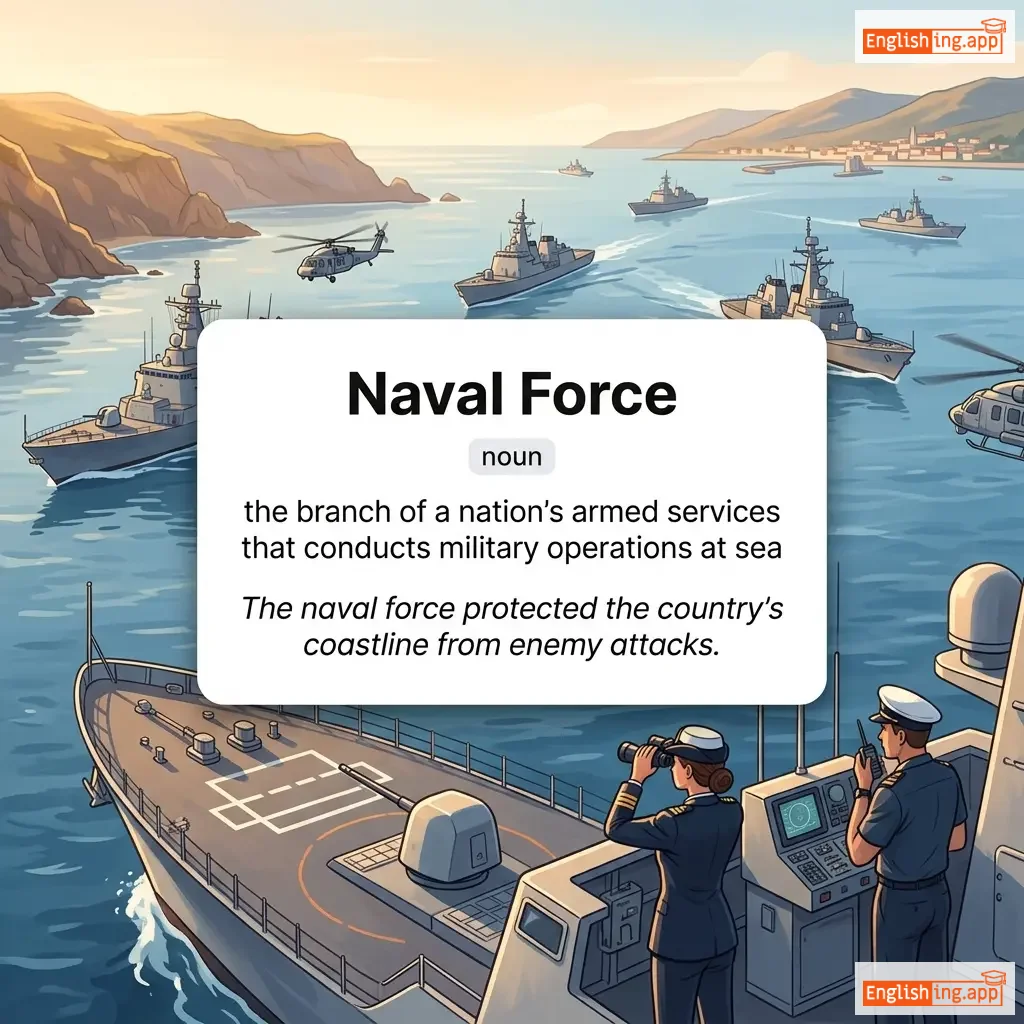
Naval Force definition card — visual illustration of the meaning
noun C1
/ˈneɪ.vəl fɔːrs/
海军 (hǎijūn)

the branch of a nation's armed services that conducts military operations at sea

"The naval force protected the country's coastline from enemy attacks."

"海军保护了国家的海岸线免受敌人攻击" (hǎijūn bǎohùle guójiā de hǎi'àn xiàn miǎn shòu dírén gōngjī)
👶

Navel

noun C1
/ˈneɪvəl/

the small hollow or raised area in the middle of the stomach, also called the belly button

"The baby’s navel was carefully cleaned after birth."

adjective C1
/ˈnæv.ɪ.ɡə.bəl/
可通航的 (ke tong hang de)

Able to be sailed on or through by ships or boats.

"The river is navigable for large cargo ships."

"这条河流适合大型货船通行。" (Zhe tiao he liu shi he da xing huo chuan tong xing.)
noun C1
/ˈneb.jʊ.lə/
星云 (xingyun)

A cloud of gas and dust in outer space, sometimes visible in the night sky.

"The Orion Nebula is one of the brightest in the sky."

"猎户座星云是天空中最明亮的之一。" (Liè hù zuò xīng yún shì tiānkōng zhōng zuì míngliàng de zhī yī.)
verb C1
/nəˈsɛsɪteɪt/
使成为必要 (shǐ chéngwéi bìyào)

To make something necessary or unavoidable.

"The heavy rains necessitated the cancellation of the event."

"大雨使得活动的取消成为必然。" (Dàyǔ shǐdé huódòng de qǔxiāo chéngwéi bìrán.)
noun C1
/ˈnɛkˌlaɪn/
领口 (lǐngkǒu)

the edge of a garment around the neck, especially as cut to form a particular shape

"The dress has a beautiful V-shaped neckline."
"这件裙子有一个漂亮的V形领口。" (Zhè jiàn qúnzi yǒu yīgè piàoliang de V xíng lǐngkǒu.)
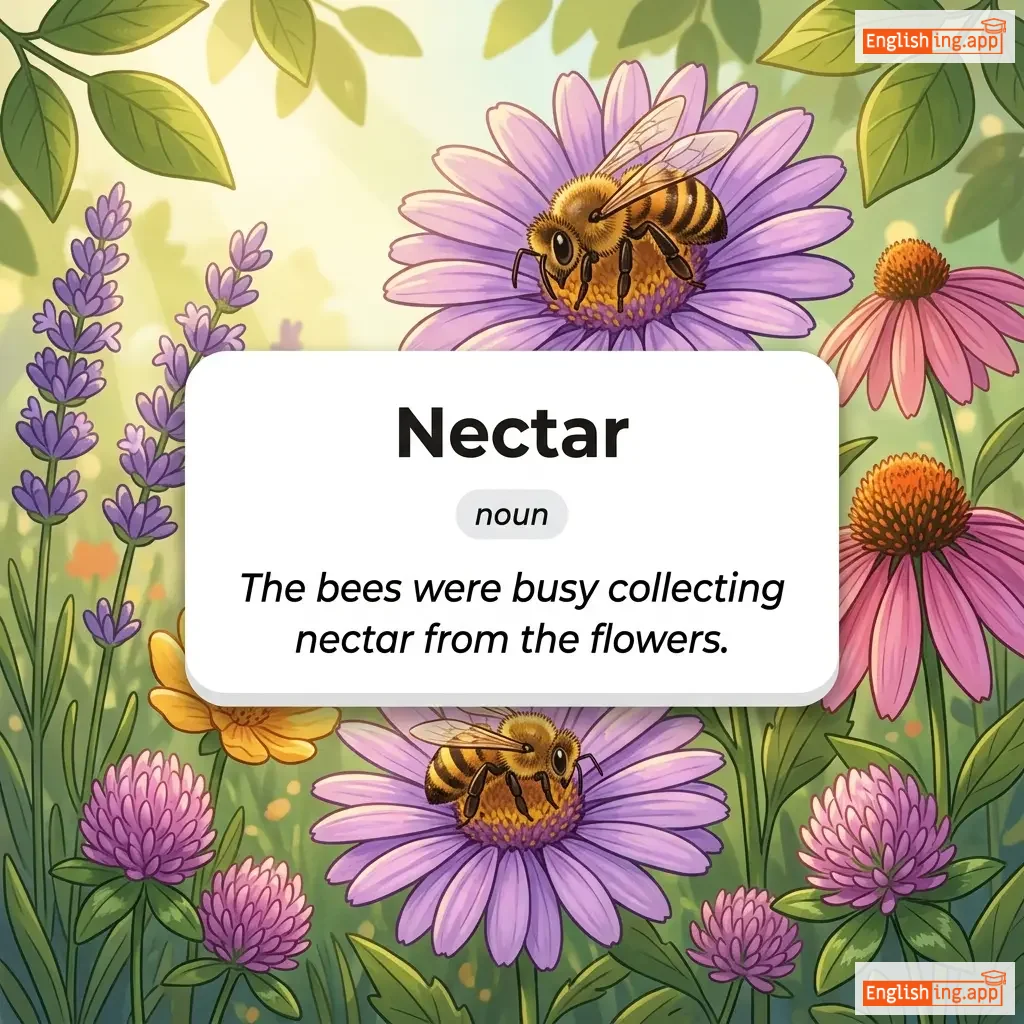
Nectar definition card — visual illustration of the meaning
noun C1
/ˈnɛktər/
甘露 (ganlu)

a sweet liquid produced by flowers and collected by bees; in mythology, the drink of the gods

"The bees were busy collecting nectar from the flowers."

"蜜蜂忙于从花朵中采集甘露。" (Mifeng mangyu cong huaduo zhong caiji ganlu.)
noun C1
/ˈnɛktəriːn/
油桃 (一种光滑皮肤的桃子品种) (youtao)

A smooth-skinned variety of peach.

"She bought a basket of fresh nectarines from the market."

"她从市场上买了一篮子新鲜的油桃。" (Ta cong shichang shang mai le yi lanzi xinxian de youtao.)
adjective C1
/ˈniːd.ləs/
不必要的 (needluhs)

unnecessary; not required; without purpose

"The argument was needless and could have been avoided."

"这场争论是多余的,本来可以避免。" (zhe chang zhenglun shi duoyu de, benlai keyi bimian)
noun C1
/ˈniːdəlwɜːrk/
针线活, 刺绣 (zhēn xiàn huó, cìxiù)

The craft of sewing, embroidery, or knitting done with a needle.

"Her grandmother taught her the art of needlework."

"她的祖母教她针线活的艺术。" (Tā de zǔmǔ jiāo tā zhēn xiàn huó de yìshù.)
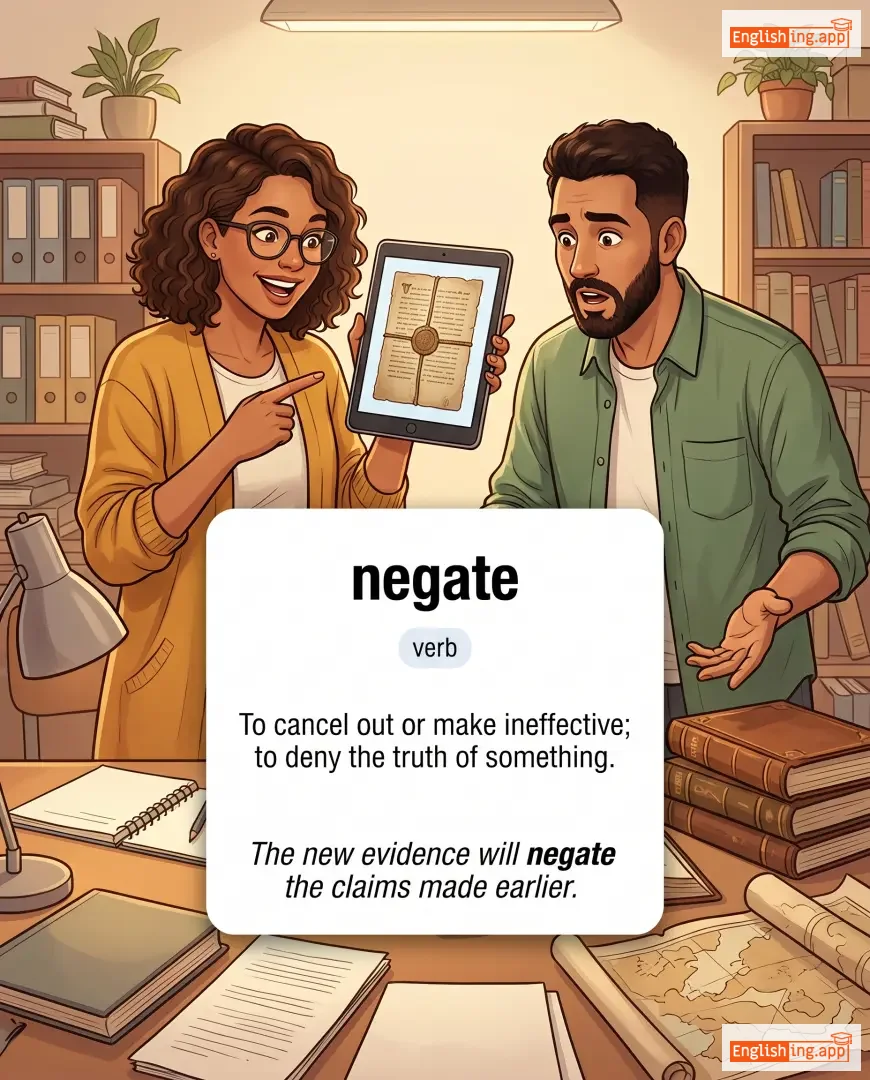
negate definition card — visual illustration of the meaning
verb C1
/nɪˈɡeɪt/

To cancel out or make ineffective; to deny the truth of something.

"The new evidence will negate the claims made earlier."

noun C1
/nɪˈɡeɪʃən/
否定 (fǒudìng)

The act of denying something; the contradiction or absence of something.

"The theory is built on the negation of traditional beliefs."

"理论建立在对传统信仰的否定之上。" (Lǐlùn jiànlì zài duì chuántǒng xìnyǎng de fǒudìng zhī shàng.)
adjective C1
/nɪˈɡlɛktfʊl/
疏忽的 (shūhū de)

Failing to give proper care or attention.

"The neglectful parent left the child alone for hours."
"疏忽的父母把孩子独自留下几个小时。" (Shūhū de fùmǔ bǎ háizi dúzì liú xià jǐ gè xiǎoshí.)
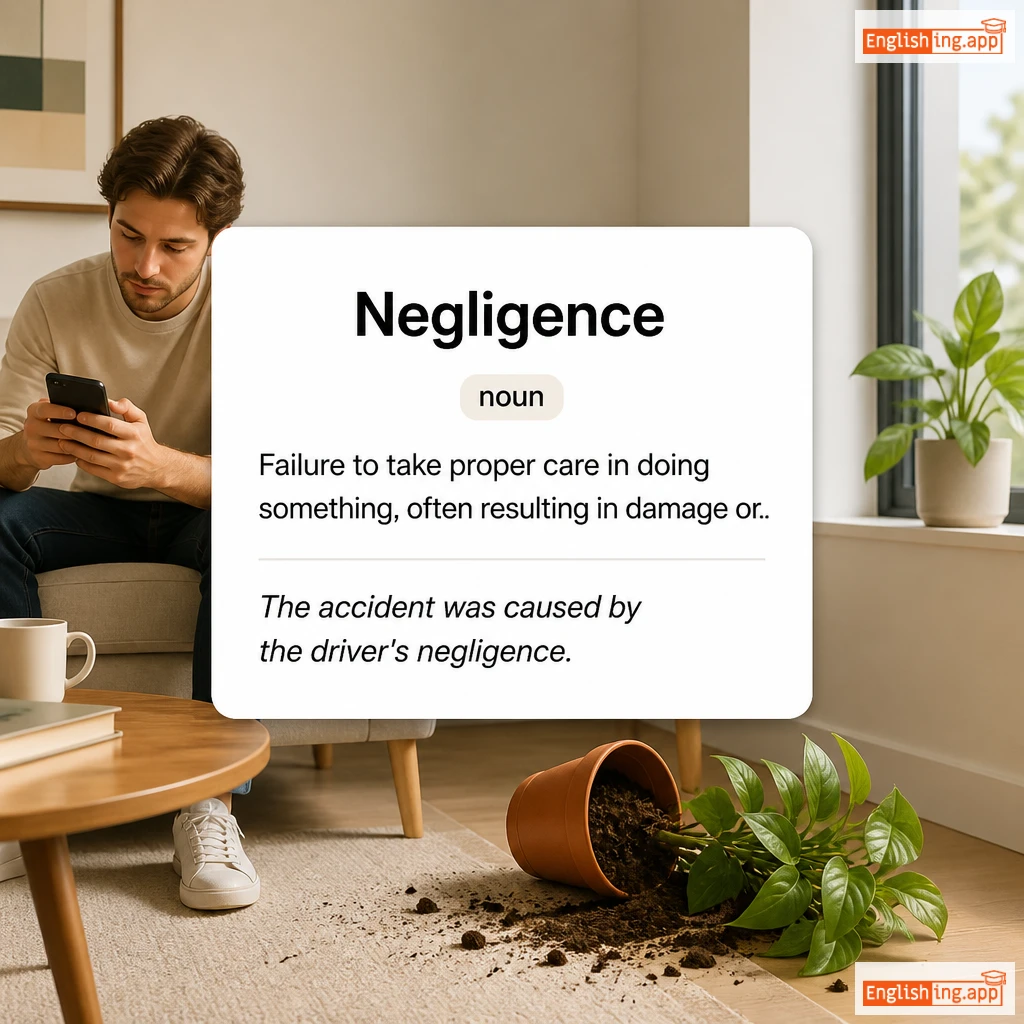
Negligence definition card — visual illustration of the meaning
noun C1
/ˈnɛɡlɪdʒəns/
疏忽 (shuhu)

Failure to take proper care in doing something, often resulting in damage or harm.

"The accident was caused by the driver's negligence."

"事故是由驾驶员的疏忽造成的。" (Shigu shi you jiashiyuan de shuhu zaocheng de.)
adjective C1
/ˈnɛɡ.lɪ.dʒənt/
疏忽的 (shū hū de)

Failing to take proper care in doing something; careless.

"The company was found negligent in providing workplace safety."

"该公司在提供工作场所安全方面被认为是疏忽的。" (Gāi gōngsī zài tígōng gōngzuò chǎngsuǒ ānquán fāngmiàn bèi rènwéi shì shū hū de.)
adjective C1
/ˈnɛɡ.lɪ.dʒə.bəl/
微不足道 (wēi bù zú dào)

So small or unimportant as to be not worth considering; insignificant.

"The cost of the error was negligible."

"错误的成本微不足道。" (Cuòwù de chéngběn wēi bù zú dào.)
adjective C1
/nɪˈɡoʊ.ʃi.ə.bəl/
可商议的 (ke shangyi de)

Open to discussion or modification; capable of being bargained for.

"The salary offered is negotiable."

"提供的薪水是可商议的。" (Tigong de xinshui shi ke shangyi de.)
noun C1
/ˈnɛm.ə.sɪs/
敌人 / 对手 (dí rén / duì shǒu)

A long-standing rival or an inescapable agent of downfall.

"For years, he considered his colleague to be his nemesis."

"多年来,他把同事当作自己的敌人。" (duō nián lái, tā bǎ tóngshì dàng zuò zìjǐ de dí rén.)
adjective C1
/ˌniːoʊˈlɪθɪk/
新石器时代的 (xīn shíqì shídài de)

Relating to the later part of the Stone Age, when ground or polished stone weapons and tools prevailed.

"Neolithic communities began practicing agriculture and domesticating animals."
"新石器时代的社区开始从事农业和驯化动物。" (Xīn shíqì shídài de shèqū kāishǐ cóngshì nóngyè hé xùnhuà dòngwù.)
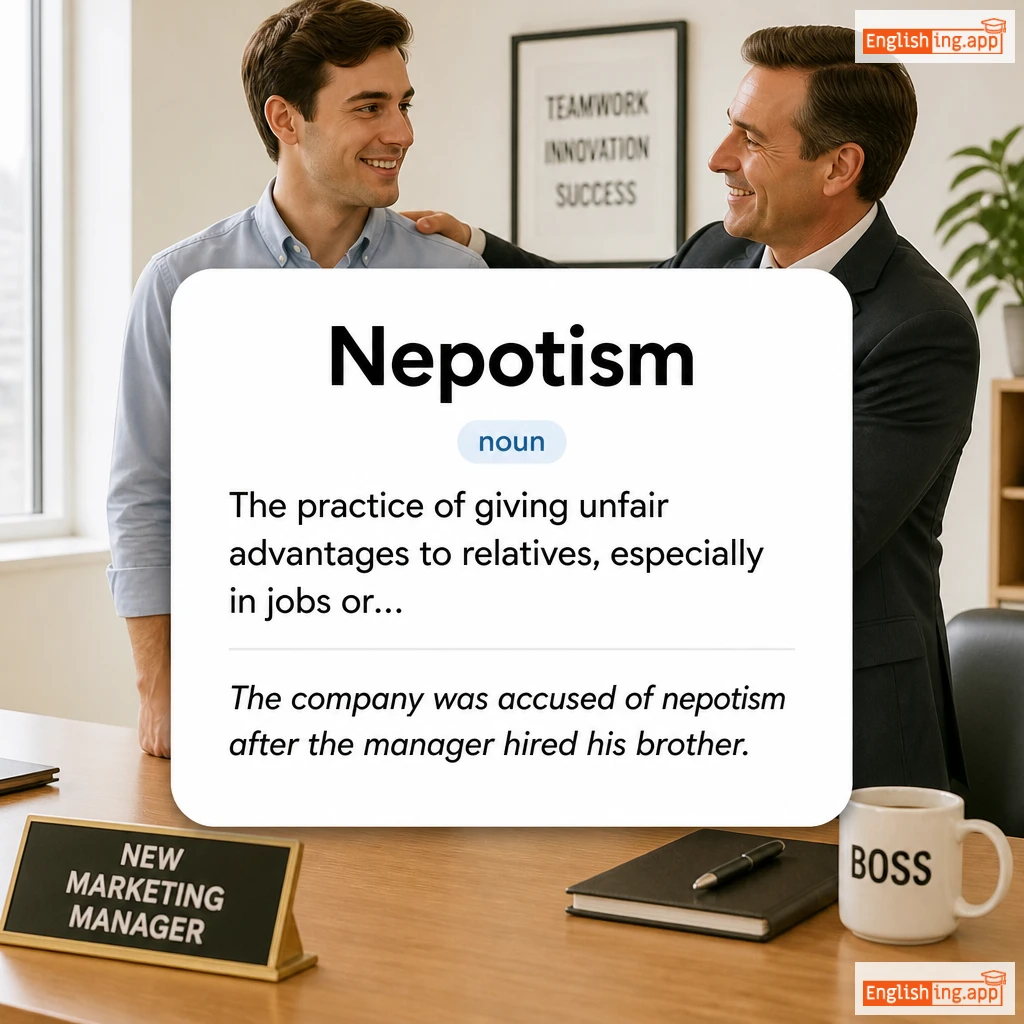
Nepotism definition card — visual illustration of the meaning
noun C1
/ˈnɛpətɪzəm/
裙带关系 (qundai guanxi)

The practice of giving unfair advantages to relatives, especially in jobs or positions of power.

"The company was accused of nepotism after the manager hired his brother."

"公司因经理雇佣了他的兄弟而被指控裙带关系。" (Gōngsī yīn jīnglǐ gùyōngle tā de xiōngdì ér bèi zhǐkòng qundai guanxi.)
verb C1
/ˈnɛsəl/
依偎 (yī wēi)

to settle or lie comfortably within or against something

"The child nestled into her mother's arms."
"孩子依偎在她母亲的怀里。" (Háizi yīwēi zài tā mǔqīn de huáilǐ.)
adjective C1
/ˈnjʊrəl/

Relating to nerves or the nervous system.

"Scientists study neural connections in the brain."

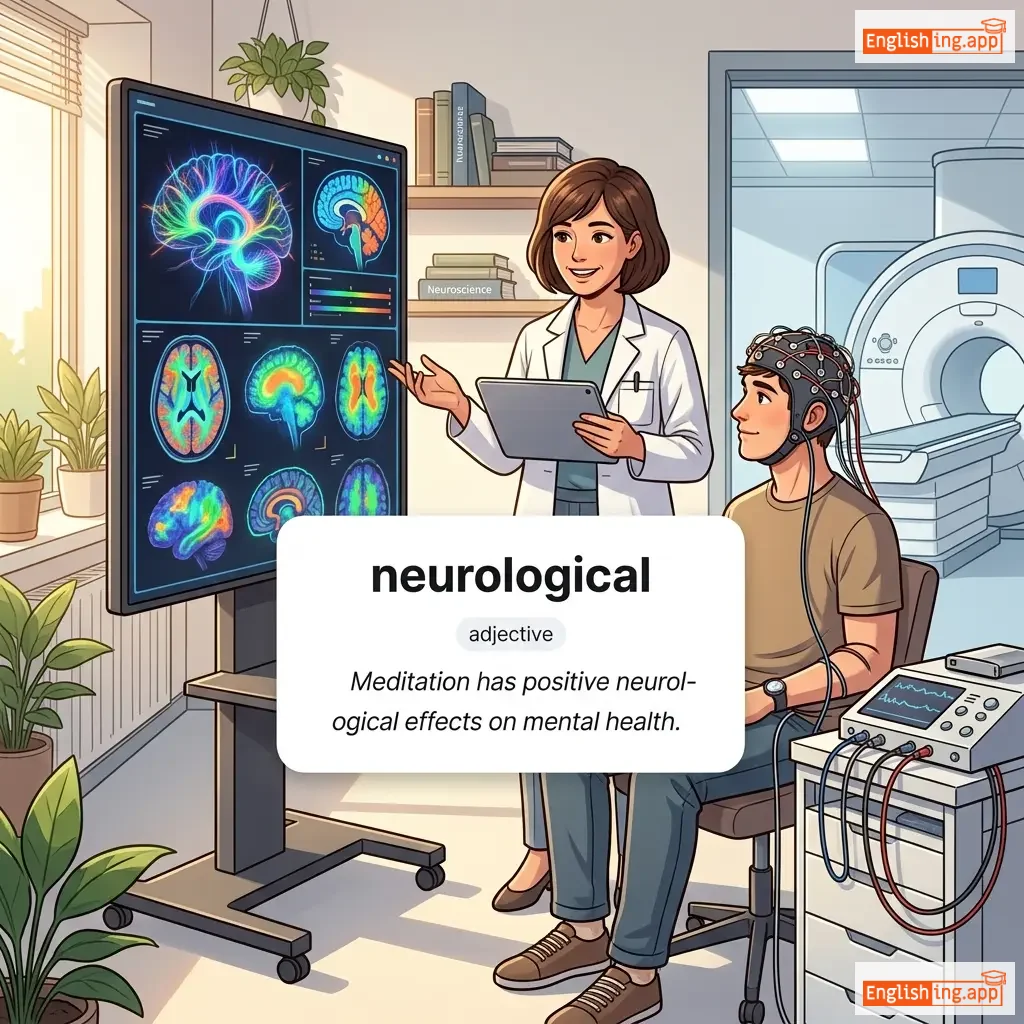
neurological definition card — visual illustration of the meaning
adjective C1
/ˌnjʊə.rəˈlɒdʒ.ɪ.kəl/
神经学的 (shenjīngxué de)

Relating to the anatomy, functions, and organic disorders of nerves and the nervous system.

"Meditation has positive neurological effects on mental health."

"冥想对心理健康有积极的神经学影响。" (Míngxiǎng duì xīnlǐ jiànkāng yǒu jījí de shénjīngxué yǐngxiǎng.)
noun C1
/njʊˈrɑːlədʒi/

The branch of medicine that deals with disorders of the nervous system.

"She specializes in neurology and treats patients with brain diseases."

neuroplasticity definition card — visual illustration of the meaning
noun C1
ˌnjʊə.rəʊ.plæsˈtɪ.sɪ.ti
神经可塑性 (shenjing kesuxing)

The ability of the brain to reorganize itself by forming new neural connections throughout life.

"Meditation enhances neuroplasticity, improving memory and focus."
"冥想提高了神经可塑性,改善了记忆和专注力。" (Mingxiang tigao le shenjing kesuxing, gaishan le jiyi he zhuanzhu li.)
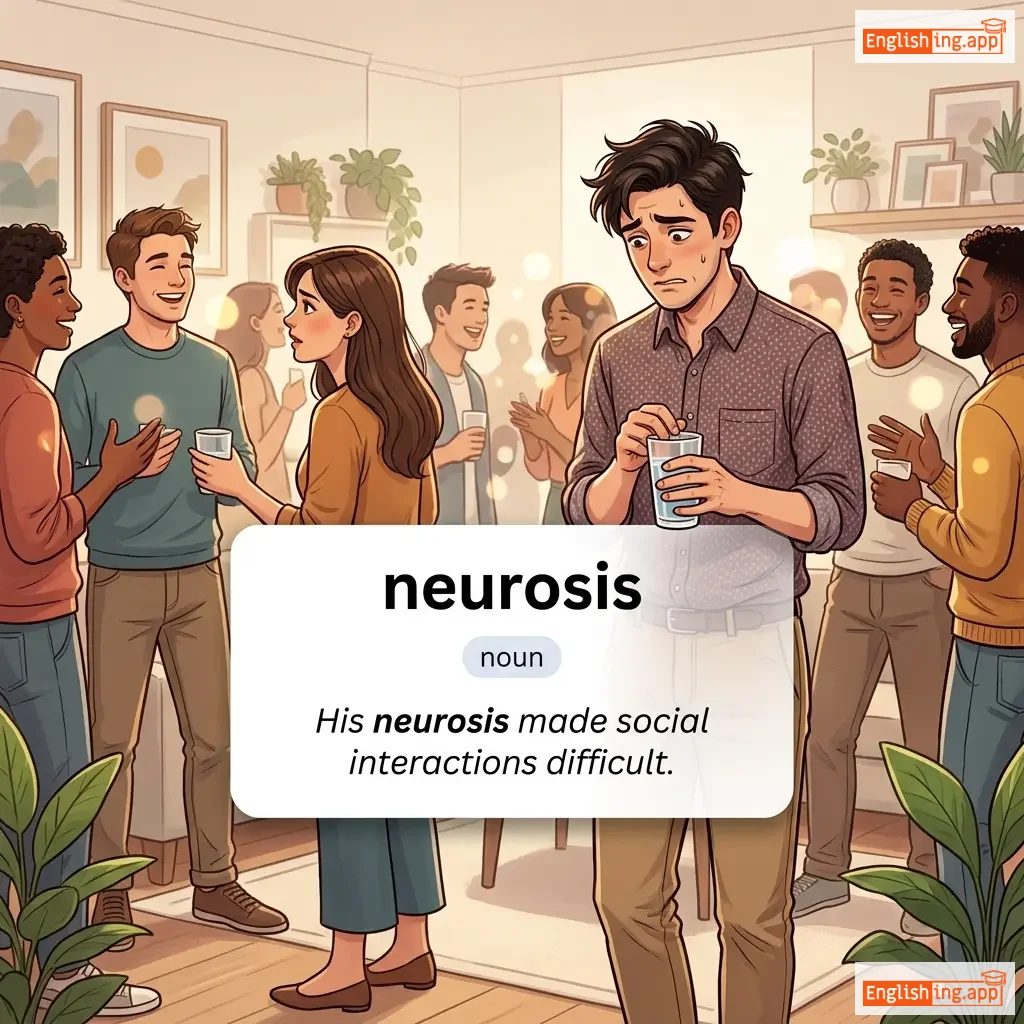
neurosis definition card — visual illustration of the meaning
noun C1
/njʊəˈrəʊ.sɪs/
神经症 (shenjingzheng)

A relatively mild mental illness that is not caused by organic disease, involving symptoms of stress.

"His neurosis made social interactions difficult."
"他的神经症使得社交互动变得困难。" (Tā de shénjīng zhèng shǐdé shèjiāo hùdòng biàndé kùnnán.)
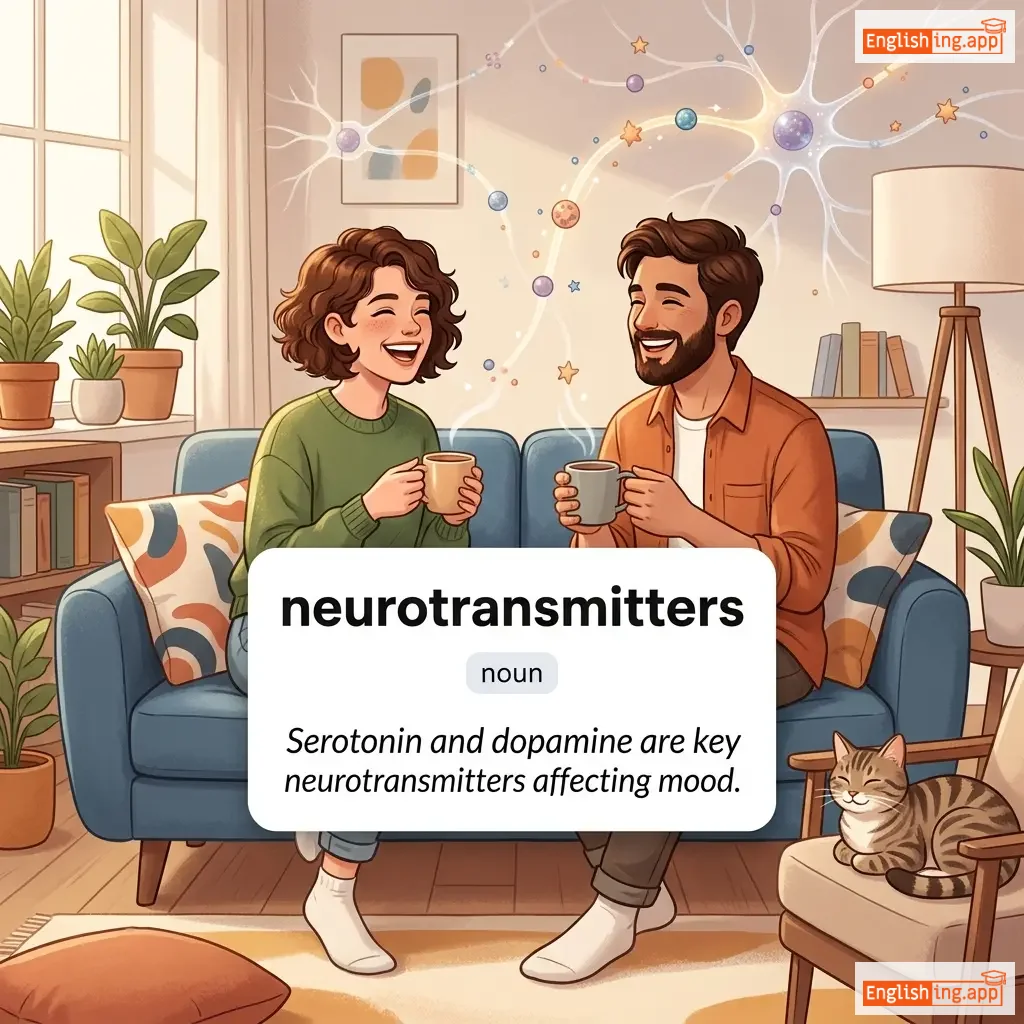
neurotransmitters definition card — visual illustration of the meaning
noun C1
/ˈnjʊə.rəʊ.trænsˌmɪt.ərs/
神经传导物质 (shen jing chuan dao wu zhi)

Chemical messengers that transmit signals across nerve synapses, affecting mood, behavior, and cognitive functions.

"Serotonin and dopamine are key neurotransmitters affecting mood."

"血清素和多巴胺是影响情绪的关键神经传导物质。" (Xue qing su he duo ba an shi ying xiang qing xu de guan jian shen jing chuan dao wu zhi.)
verb C1
/ˈnuːtər/
去势 (qushi)

To remove the reproductive organs of an animal; or having no gender.

"They decided to neuter their cat to prevent more kittens."
"他们决定给猫去势,以防止更多小猫的出生。" (Tamen jueding gei mao qushi, yi fangzhi gengduo xiaomao de chusheng.)
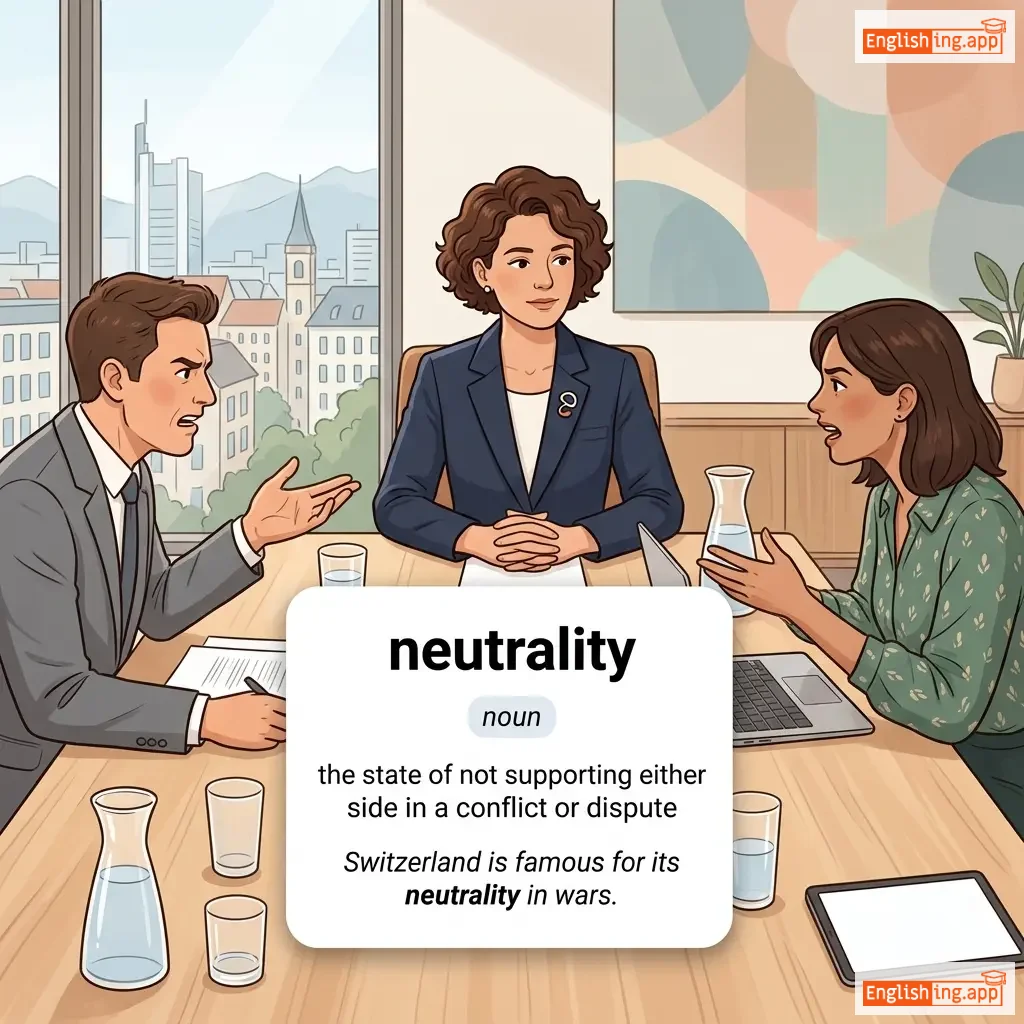
neutrality definition card — visual illustration of the meaning
noun C1
/nuːˈtræl.ə.ti/
中立 (zhongli)

the state of not supporting either side in a conflict or dispute

"Switzerland is famous for its neutrality in wars."

"瑞士因其在战争中的中立而闻名。" (Ruìshì yīn qí zài zhànzhēng zhōng de zhōnglì ér wénmíng.)
verb C1
/ˈnjuːtrəlaɪz/
中和 (zhōnghé)

to make something ineffective or harmless

"The medicine helped neutralize the poison in his system."
"药物帮助中和了他体内的毒素。" (Yàowù bāngzhù zhōnghé le tā tǐnèi de dú sù.)
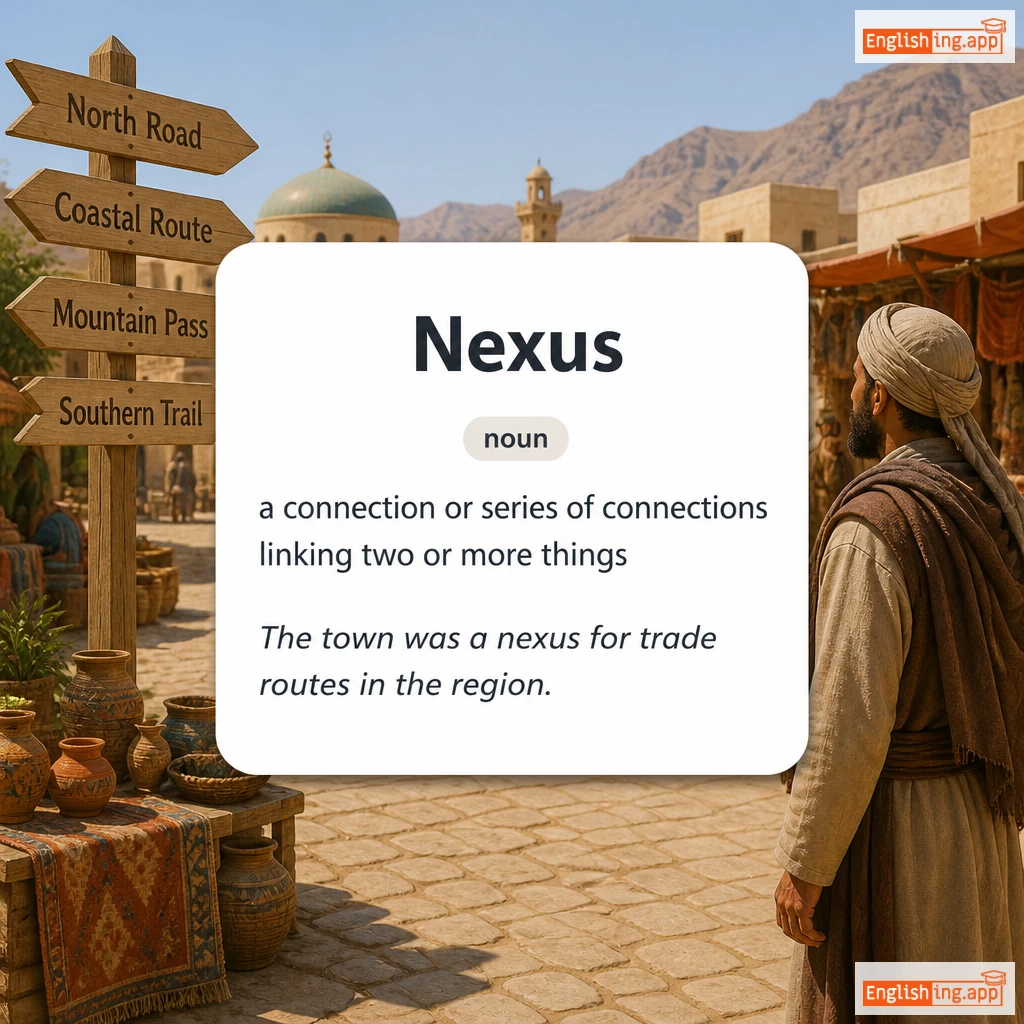
Nexus definition card — visual illustration of the meaning
noun C1
/ˈnɛksəs/
联系 (liánxì)

a connection or series of connections linking two or more things

"The town was a nexus for trade routes in the region."

"这个城市是该地区贸易路线的一个联系点。" (Zhege chengshi shi gai diqu maoyi luxian de yige lianxidian.)
verb C1
/ˈnɪbəl/
(ken)

to take small bites of food

"The rabbit nibbled on a carrot."

"兔子咬着胡萝卜。" (Tùzi yǎo zhe húluóbo.)
Niche definition card — visual illustration of the meaning
noun C1
/niːʃ/
合适的位置 (heshi de weizhi)

a comfortable or suitable position in life or employment

"He has found his niche in the marketing industry."
"他在营销行业找到了自己的合适位置。" (Tā zài yíngxiāo hángyè zhǎodàole zìjǐ de héshì wèizhì.)
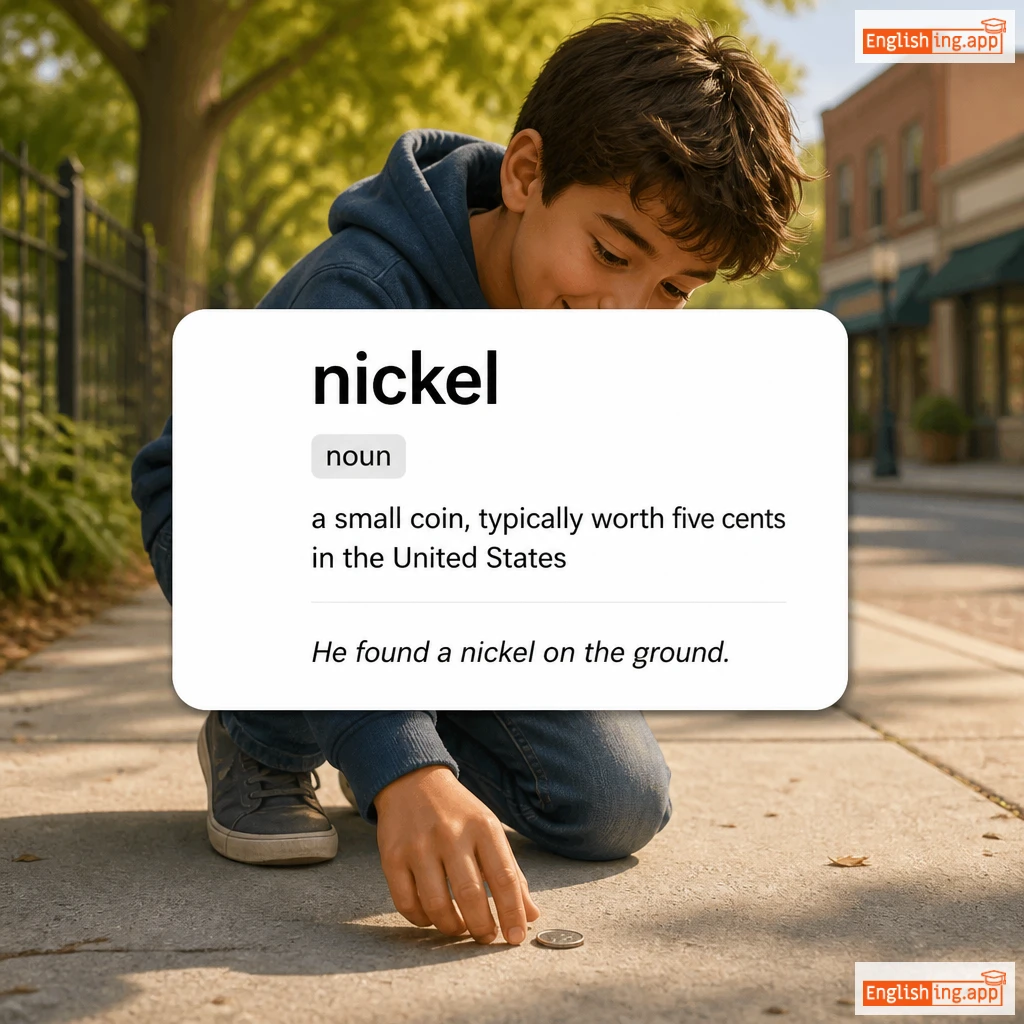
nickel definition card — visual illustration of the meaning
noun C1
/ˈnɪkəl/
镍币 (niè bì)

a small coin, typically worth five cents in the United States

"He found a nickel on the ground."

"他在地上找到了一个镍币。" (Tā zài dì shàng zhǎodàole yīgè nièbì.)