語彙集

英単語辞書 | 単語の意味、定義、例文

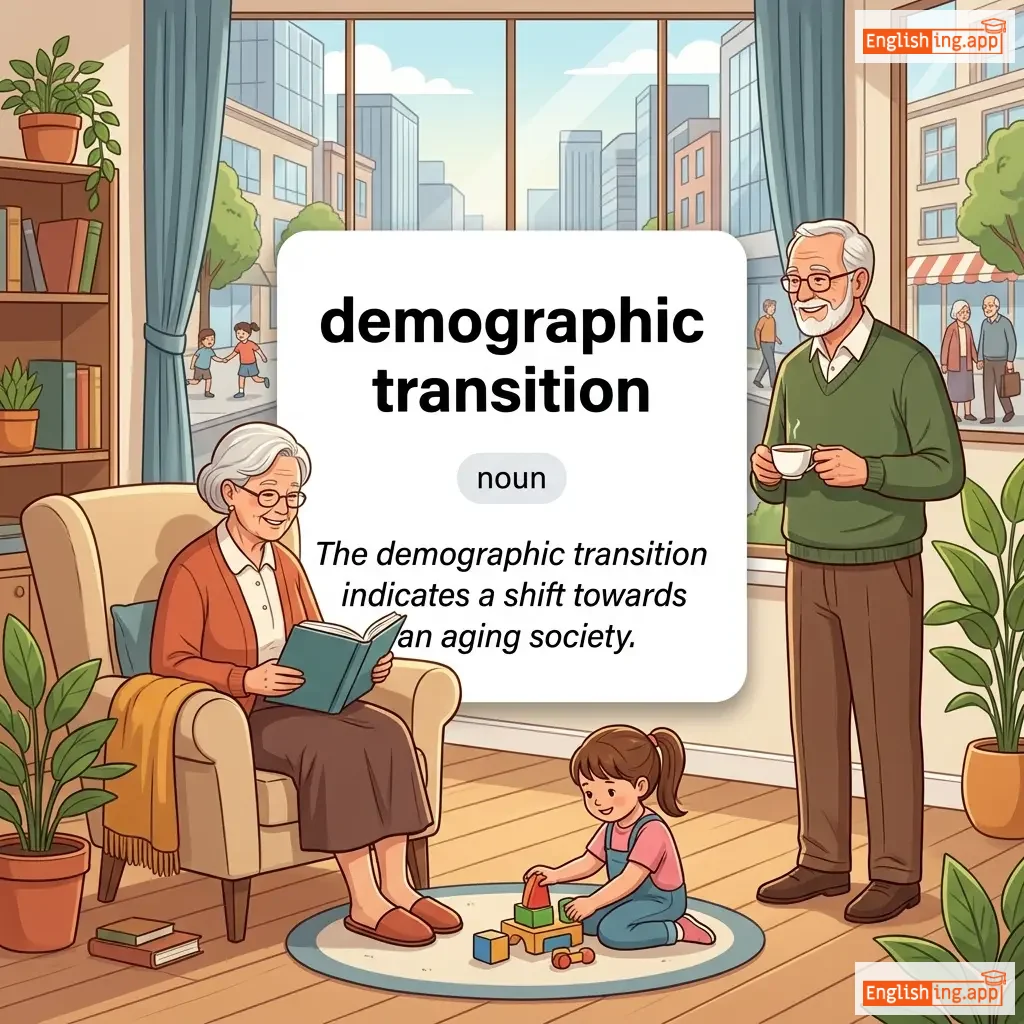
demographic transition definition card — visual illustration of the meaning
noun C1
ˌdɛməˈɡræfɪk trænˈzɪʃən
人口転換 (jinkou tenkan)

A shift in population patterns from high birth and death rates to low birth and death rates as a country develops economically

"The demographic transition indicates a shift towards an aging society."
"人口転換は高齢化社会への移行を示しています。" (Jinkō tenkan wa kōreika shakai e no ikō o shimeshiteimasu.)
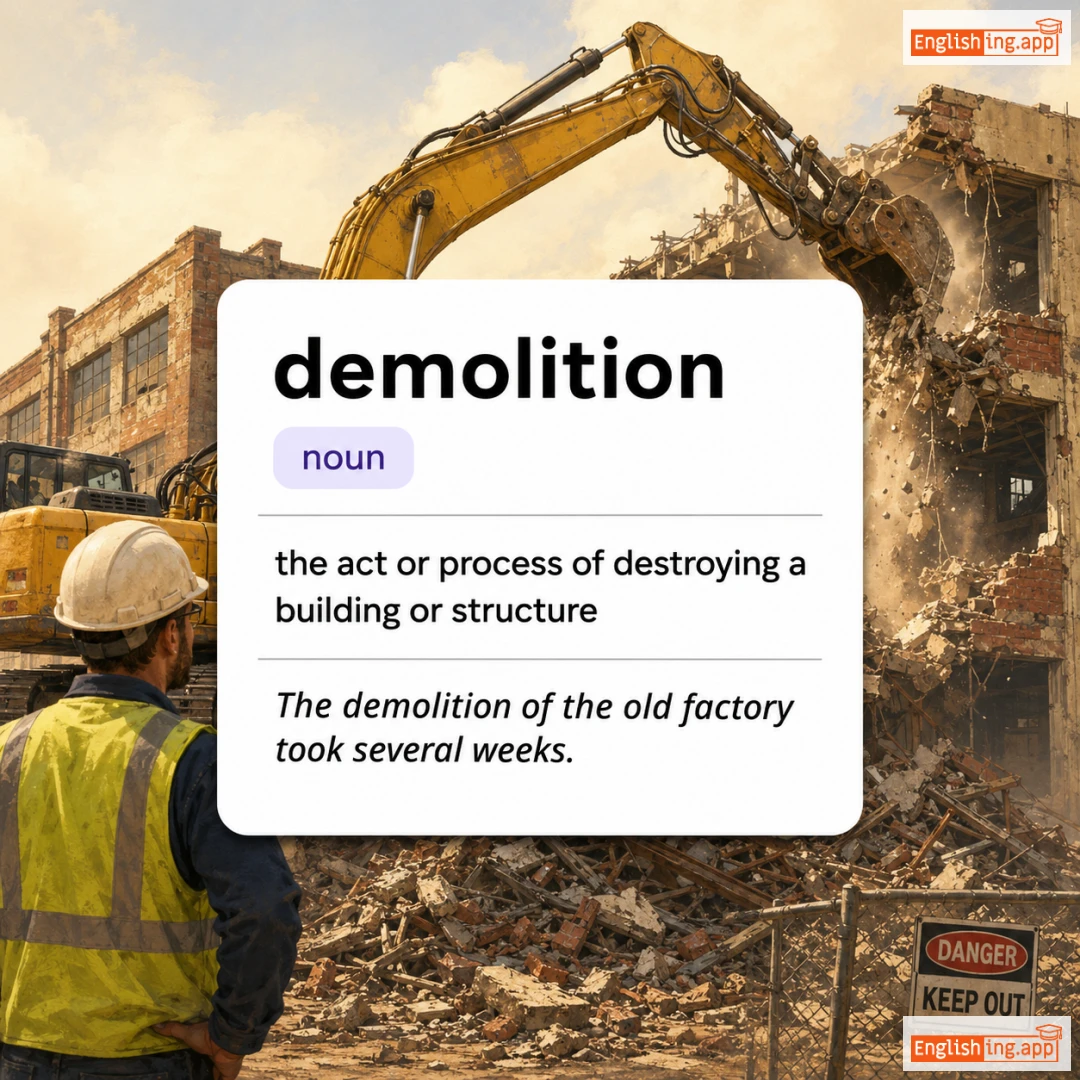
demolition definition card — visual illustration of the meaning
noun C1
/ˌdɛməˈlɪʃən/
解体 (kaitai)

the act or process of destroying a building or structure

"The demolition of the old factory took several weeks."
"古い工場の解体には数週間かかりました。" (Furui kōjō no kaitai ni wa sū shūkan kakarimashita.)
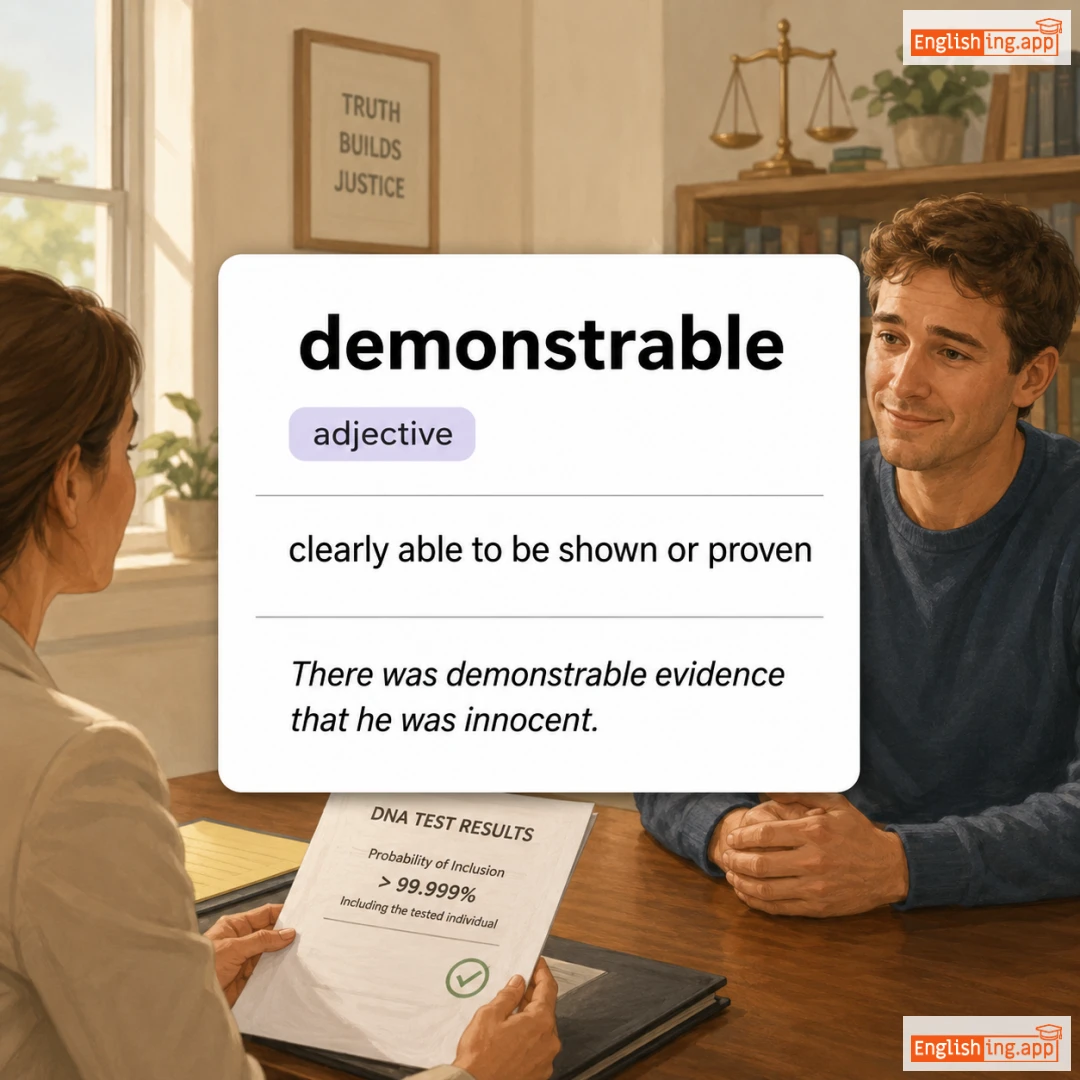
demonstrable definition card — visual illustration of the meaning
adjective C1
/dɪˈmɒnstrəbl/
証明可能 (shōmei kanō)

clearly able to be shown or proven

"There was demonstrable evidence that he was innocent."
"彼が無罪であることを示す証明可能な証拠がありました。" (Kare ga muzai de aru koto o shimesu shōmei kanō na shōko ga arimashita.)
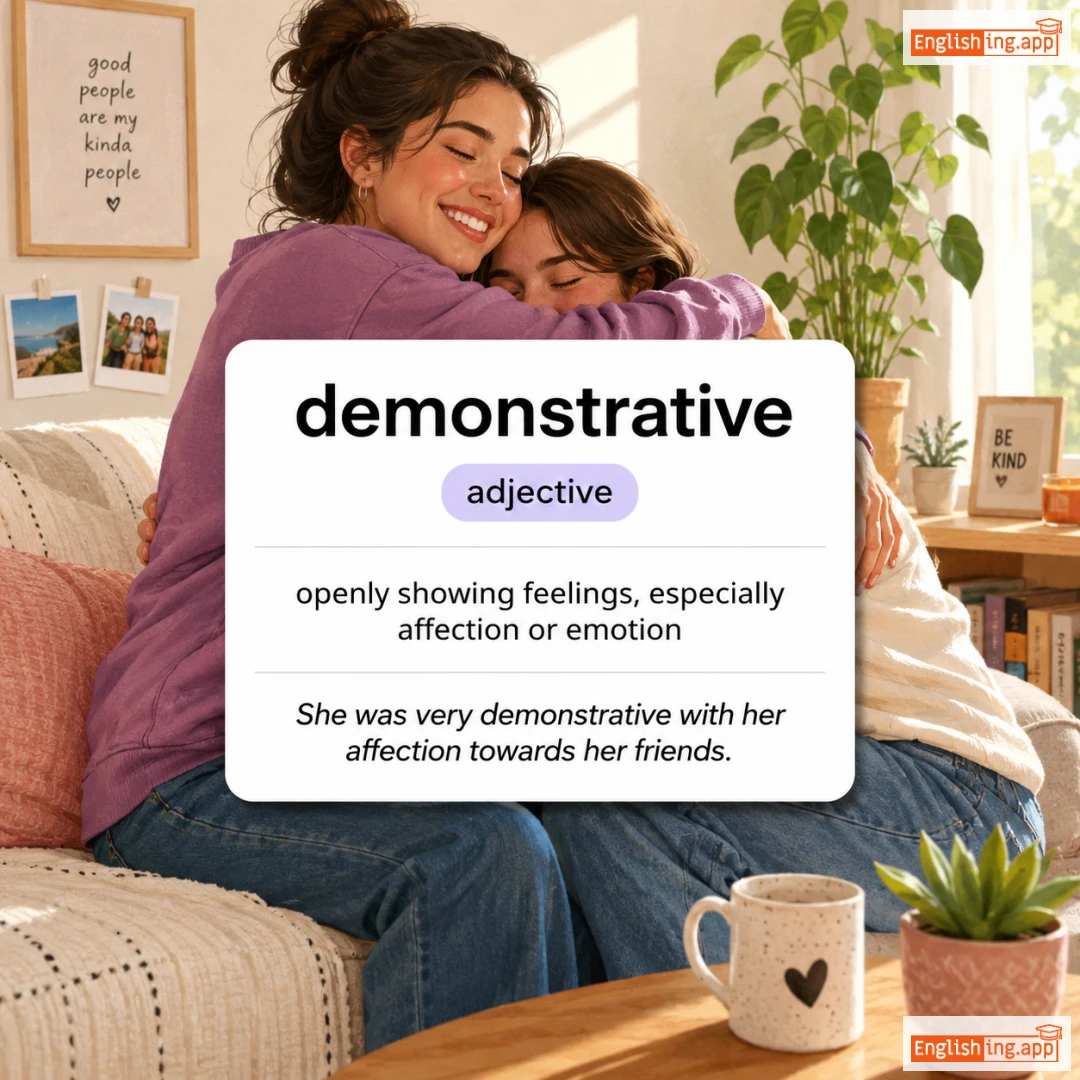
demonstrative definition card — visual illustration of the meaning
adjective C1
/dɪˈmɒnstrətɪv/
表現的な (hyogen-tekina)

openly showing feelings, especially affection or emotion

"She was very demonstrative with her affection towards her friends."
"彼女は友達に対してとても表現的だった。" (Kanojo wa tomodachi ni taishite totemo hyogen-tekidatta.)
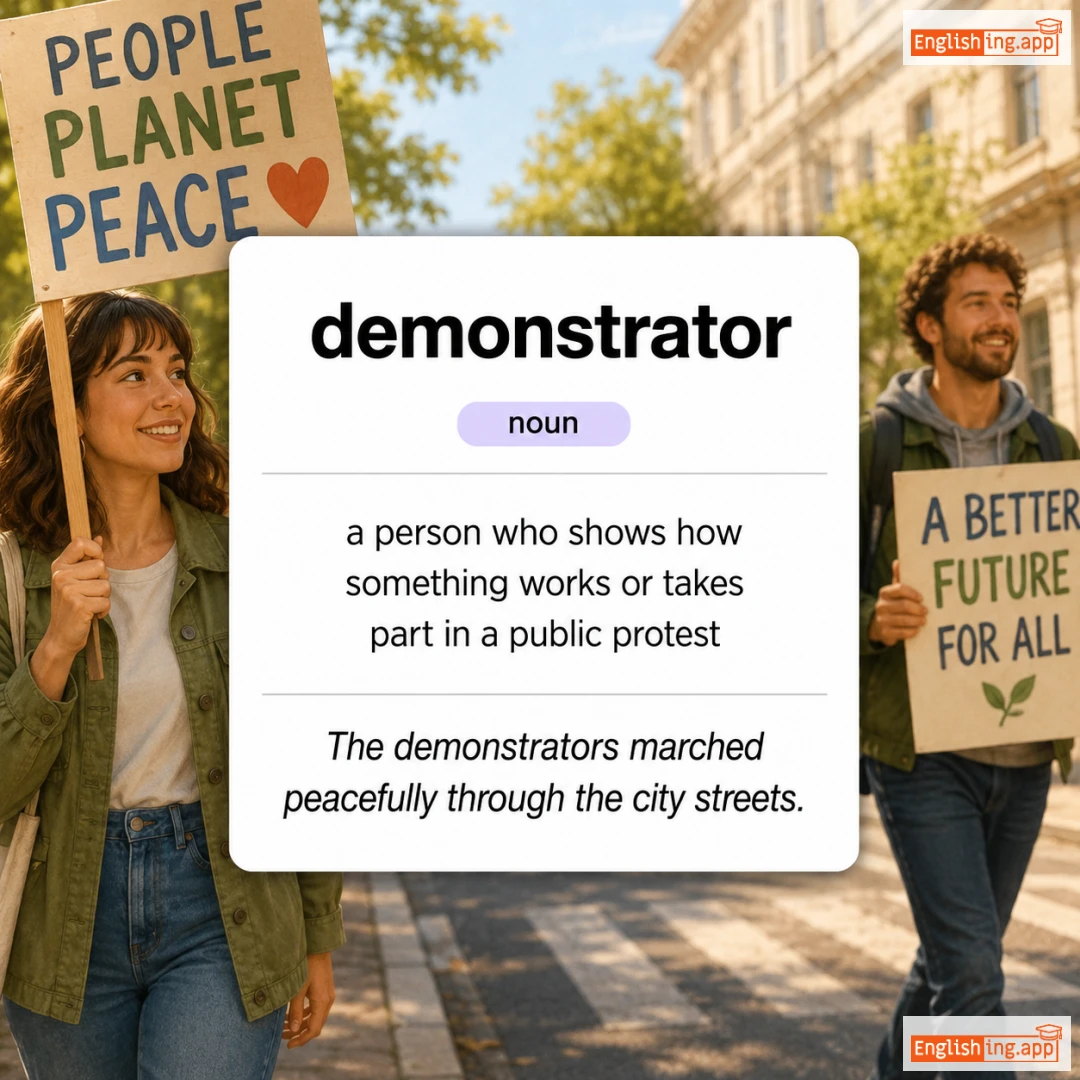
demonstrator definition card — visual illustration of the meaning
noun C1
/ˈdɛmənˌstreɪtər/
デモンストレーター, 抗議者 (demonsutoreetaa, kougisha)

a person who shows how something works or takes part in a public protest

"The demonstrators marched peacefully through the city streets."
"デモ参加者は平和的に街の通りを行進しました。" (Demo sanka-sha wa heiwateki ni machi no toori o koushin shimashita.)
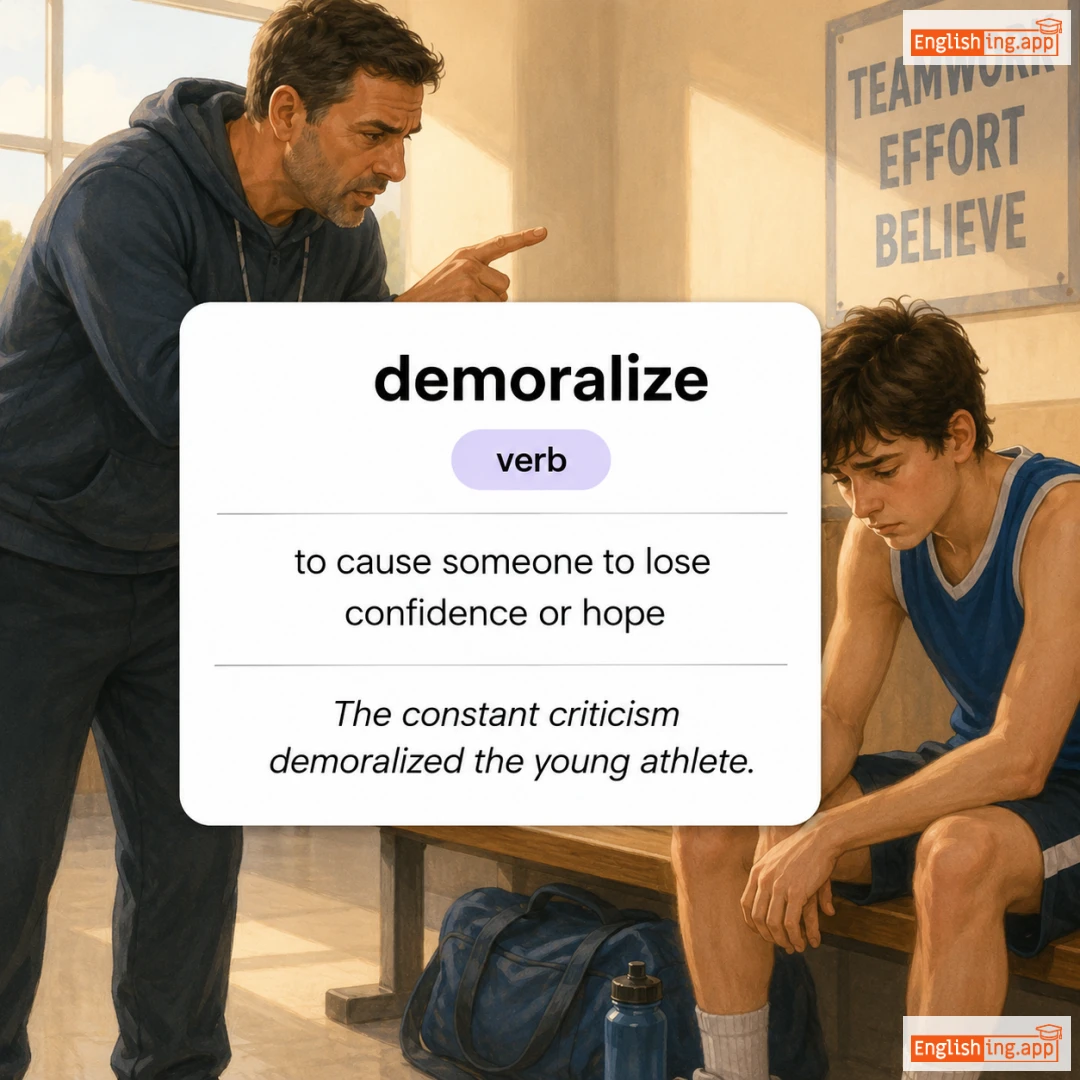
demoralize definition card — visual illustration of the meaning
verb C1
/dɪˈmɔrəˌlaɪz/

to cause someone to lose confidence or hope

"The constant criticism demoralized the young athlete."

verb C1
/dɪˈmoʊt/
降格 (koukaku)

to reduce to a lower rank or position

"The manager decided to demote the employee for poor performance."
"マネージャーはパフォーマンスが悪いため、従業員を降格させることに決めました。" (Manejā wa pafōmansu ga warui tame, jūgyōin o kōkaku saseru koto ni kimemashita.)
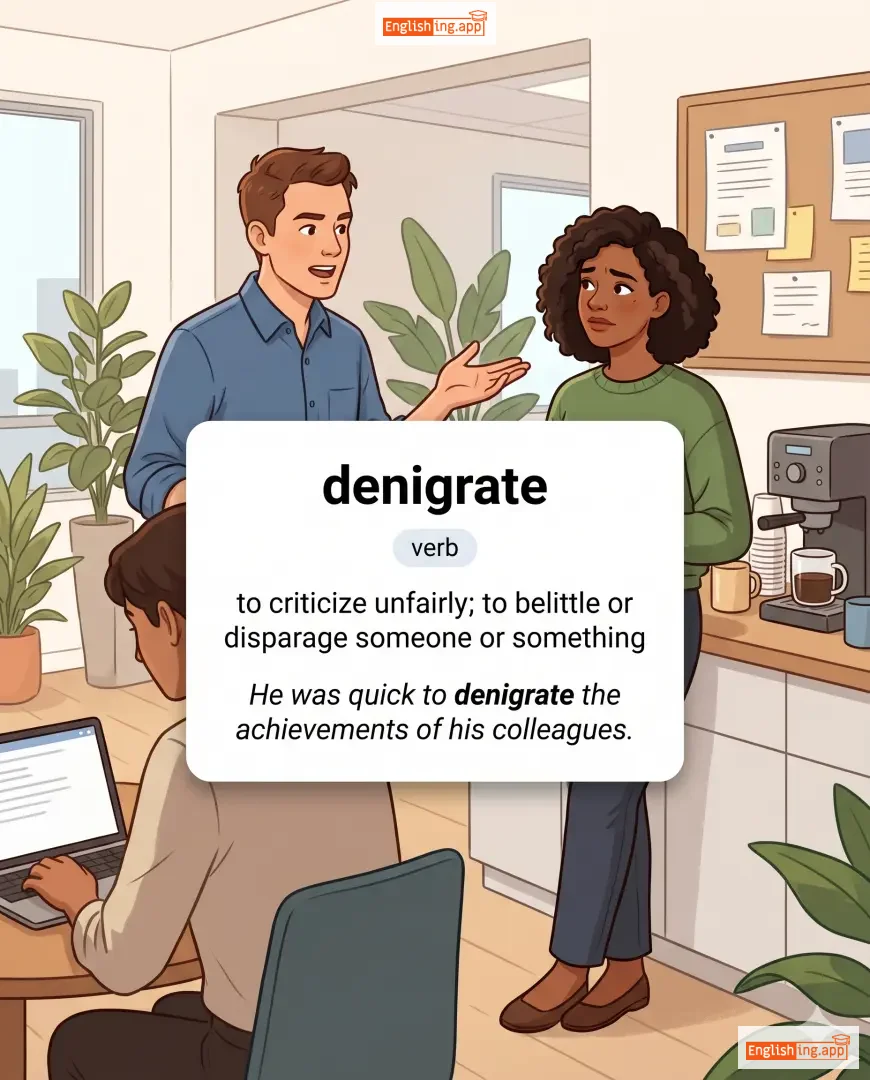
denigrate definition card — visual illustration of the meaning
verb C1
/ˈdɛnɪˌɡreɪt/
貶める (otoshimeru)

to criticize unfairly; to belittle or disparage someone or something

"He was quick to denigrate the achievements of his colleagues."

"彼は同僚の業績をすぐに貶めました。" (Kare wa dōryō no gyōseki o sugu ni otoshimemashita.)
noun C1
/dɪˌnɒmɪˈneɪʃən/
宗派, 価値 (shūha, kachi)

a recognized autonomous branch of the Christian Church; a unit of value or currency

"The church belongs to a Protestant denomination."
"その教会はプロテスタントの宗派に属しています。" (Sono kyōkai wa Purotesutanto no shūha ni zoku shiteimasu.)
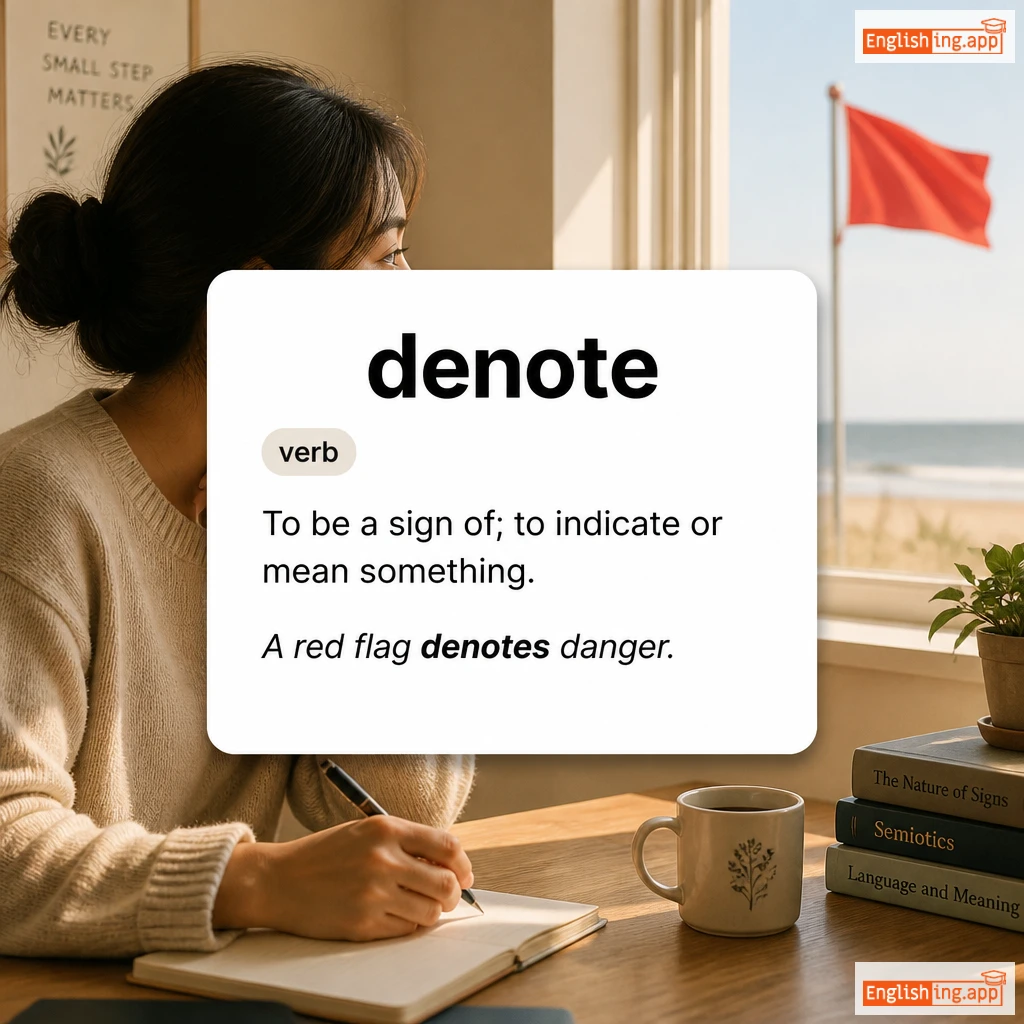
denote definition card — visual illustration of the meaning
verb C1
/dɪˈnəʊt/
示す (shimesu)

To be a sign of; to indicate or mean something.

"A red flag denotes danger."
"赤い旗は危険を示しています。" (Akai hata wa kiken o shimeshiteimasu.)
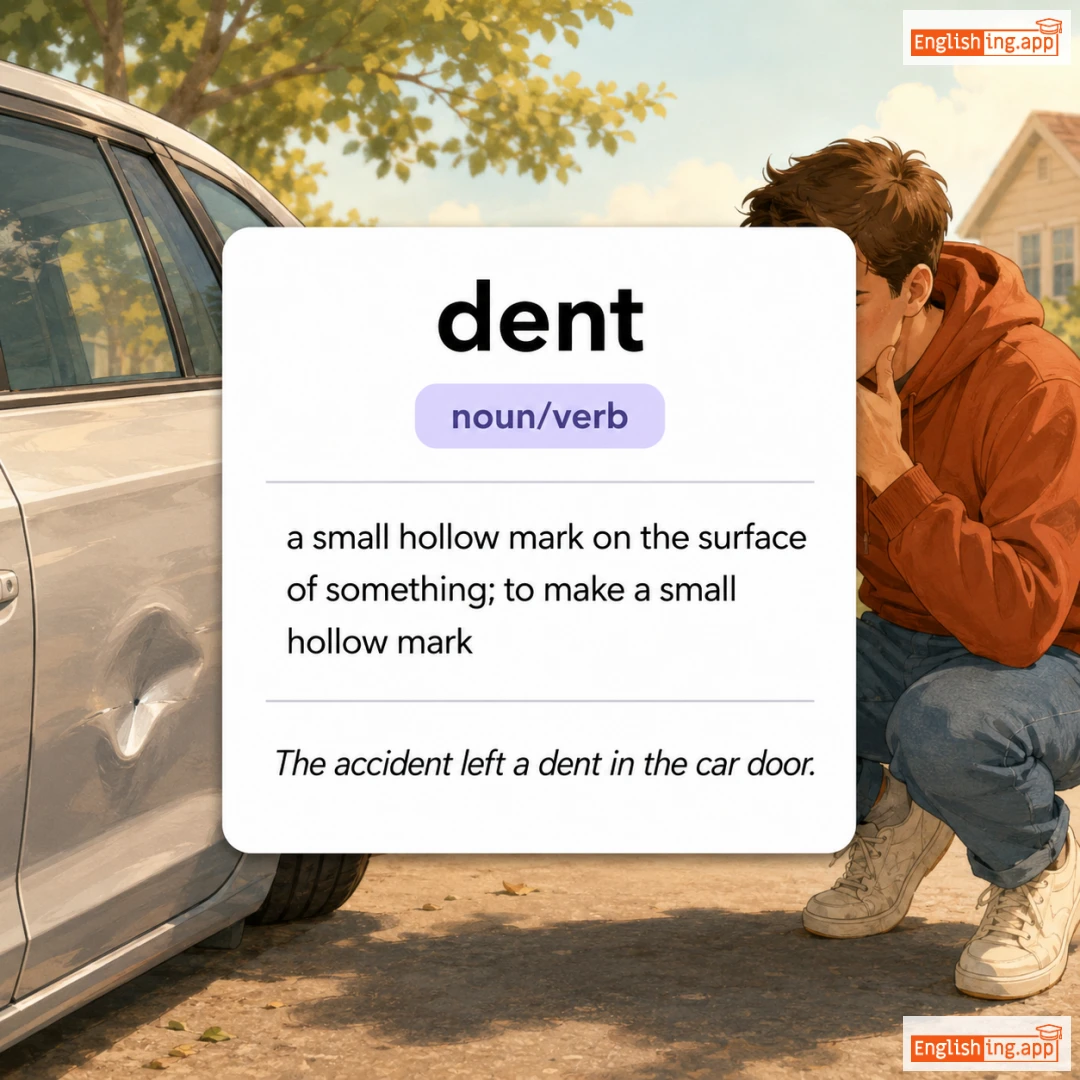
dent definition card — visual illustration of the meaning
noun/verb C1
/dɛnt/
へこみ (hekomi)

a small hollow mark on the surface of something; to make a small hollow mark

"The accident left a dent in the car door."

"事故で車のドアにへこみが残りました。" (Jiko de kuruma no doa ni hekomi ga nokorimashita.)
noun C1
/dɪˌnʌnsiˈeɪʃən/
非難 / 公共の告発 (hinan / koukyou no kokuhatsu)

the public condemnation or accusation of someone or something

"The journalist's article was a strong denunciation of corruption."

"ジャーナリストの記事は腐敗に対する強い非難でした。" (Jaanarisuto no kiji wa fuhai ni taisuru tsuyoi hinan deshita.)
verb C1
/dɪˈpliːt/
使い果たす (tsukaihatasu)

to reduce the quantity or supply of something

"The long war has depleted the country's resources."
"長引く戦争で国の資源は枯渇した。" (Nagabiku sensou de kuni no shigen wa kokatsu shita.)
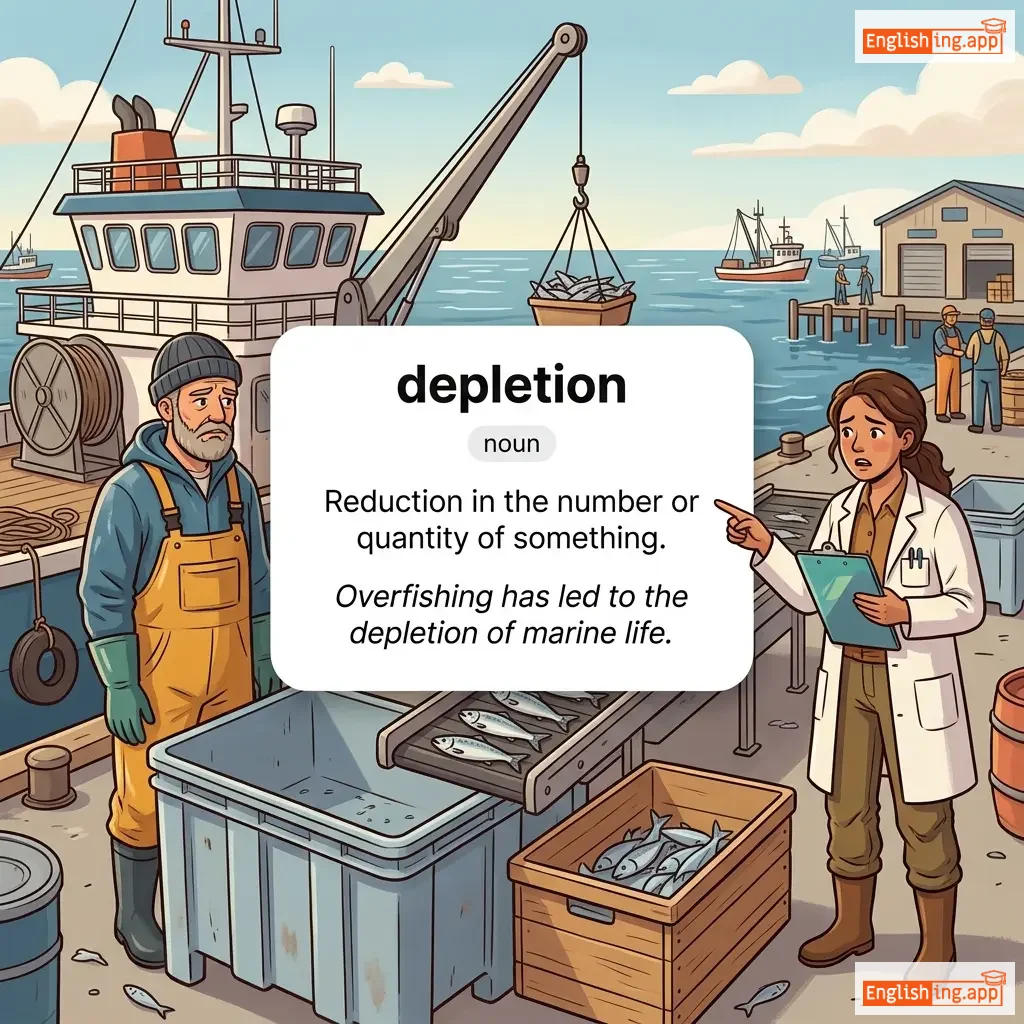
depletion definition card — visual illustration of the meaning
noun C1
dɪˈpliː.ʃən
枯渇 (kokatsu)

Reduction in the number or quantity of something.

"Overfishing has led to the depletion of marine life."
"過剰漁獲が海洋生物の枯渇を引き起こしました。" (Kajou gyokaku ga kaiyō seibutsu no kokatsu o hikiokoshimashita.)
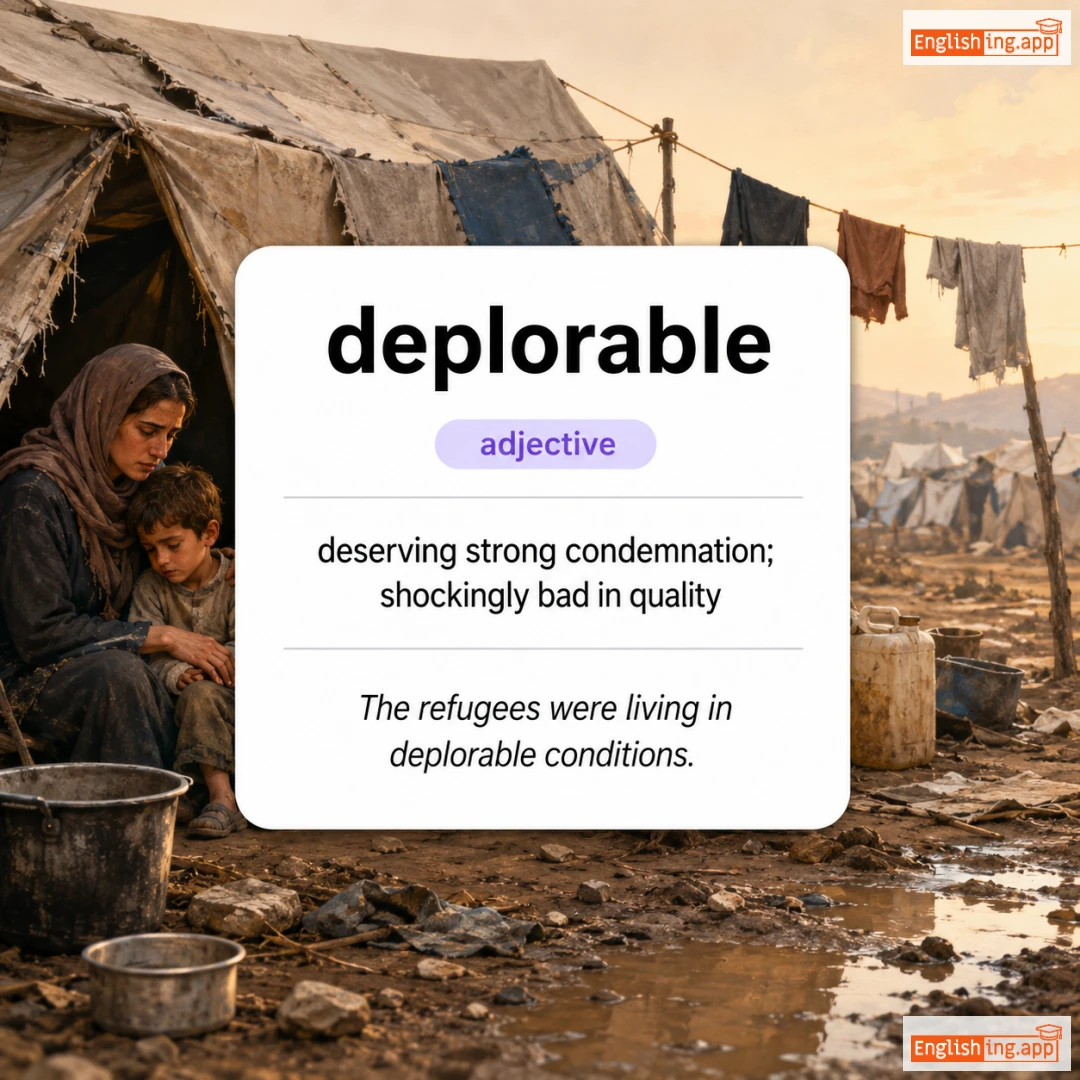
deplorable definition card — visual illustration of the meaning
adjective C1
/dɪˈplɔːrəbl/
ひどい (hidoi)

deserving strong condemnation; shockingly bad in quality

"The refugees were living in deplorable conditions."
"難民はひどい状況で生活していた。" (Nanmin wa hidoi jōkyō de seikatsu shite ita.)
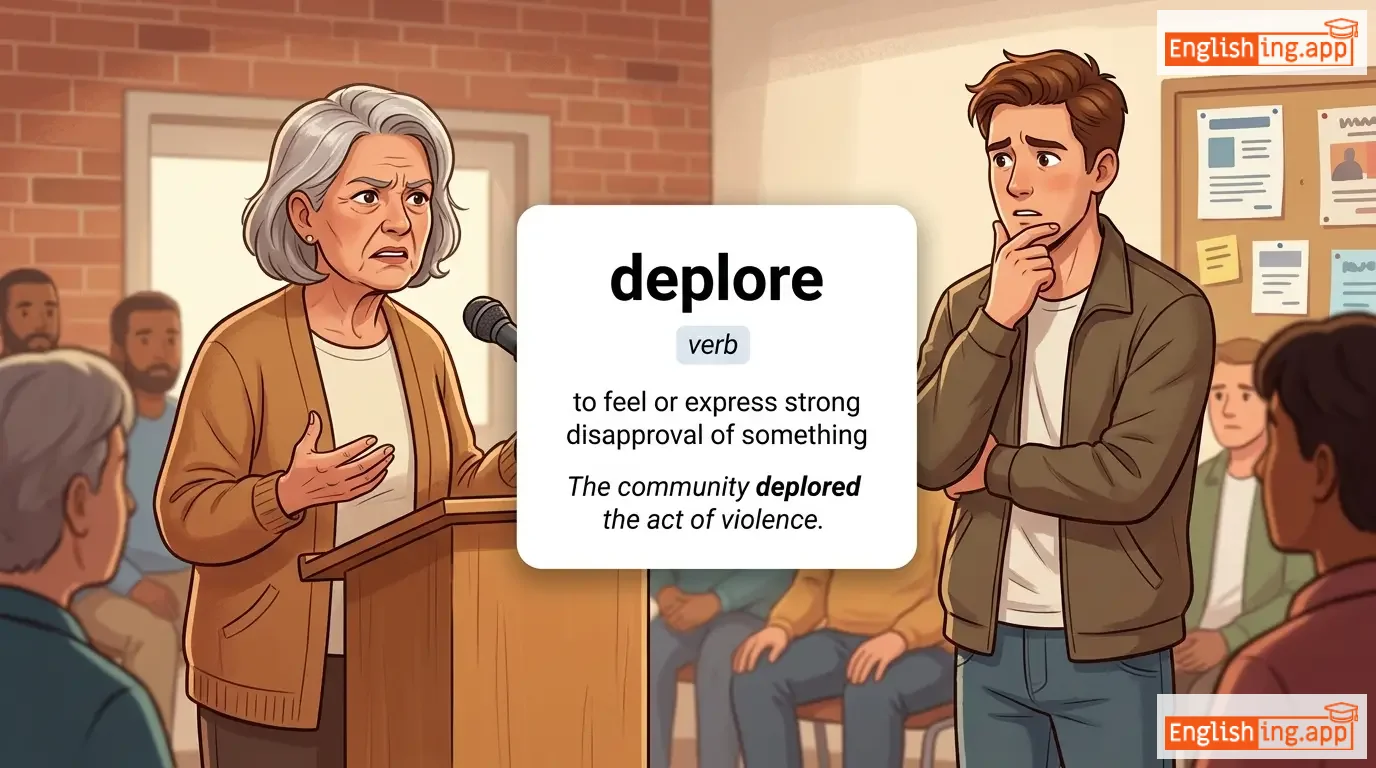
deplore definition card — visual illustration of the meaning
verb C1
/dɪˈplɔːr/
非難する (hinansuru)

to feel or express strong disapproval of something

"The community deplored the act of violence."

"コミュニティは暴力行為を非難しました。" (Komyuniti wa bouryoku koui o hinan shimashita.)
verb C1
/dɪˈpɔːrt/
国外追放 (kokugai tsuihō)

To expel a foreigner from a country, usually for legal or political reasons.

"The government decided to deport the illegal immigrants."

"政府は不法移民をデポートすることを決定した。" (Seifu wa fuhō imin o depōto suru koto o kettei shita.)
noun C1
/ˌdiːpɔːrˈteɪʃən/

The act of expelling a foreigner from a country.

"The deportation of hundreds of workers sparked international criticism."
⚖️

depose

verb C1
/dɪˈpoʊz/

to remove someone from office or power, especially suddenly and forcefully

"The rebels managed to depose the dictator after years of unrest."

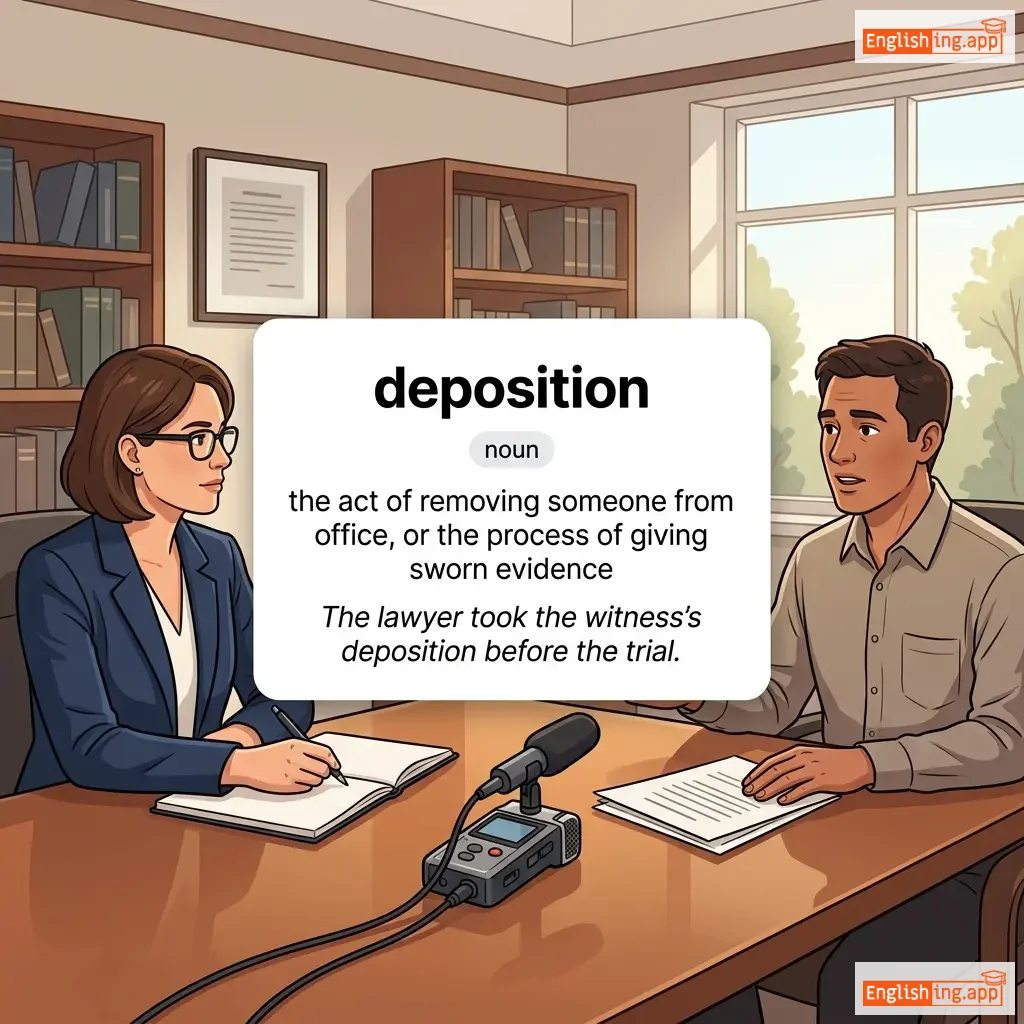
deposition definition card — visual illustration of the meaning
noun C1
/ˌdepəˈzɪʃən/
職務解除、証言 (shokumu kaijo, shōgen)

the act of removing someone from office, or the process of giving sworn evidence

"The lawyer took the witness’s deposition before the trial."
"弁護士は裁判の前に証人の証言を取りました。" (Bengoshi wa saiban no mae ni shōnin no shōgen o torimashita.)
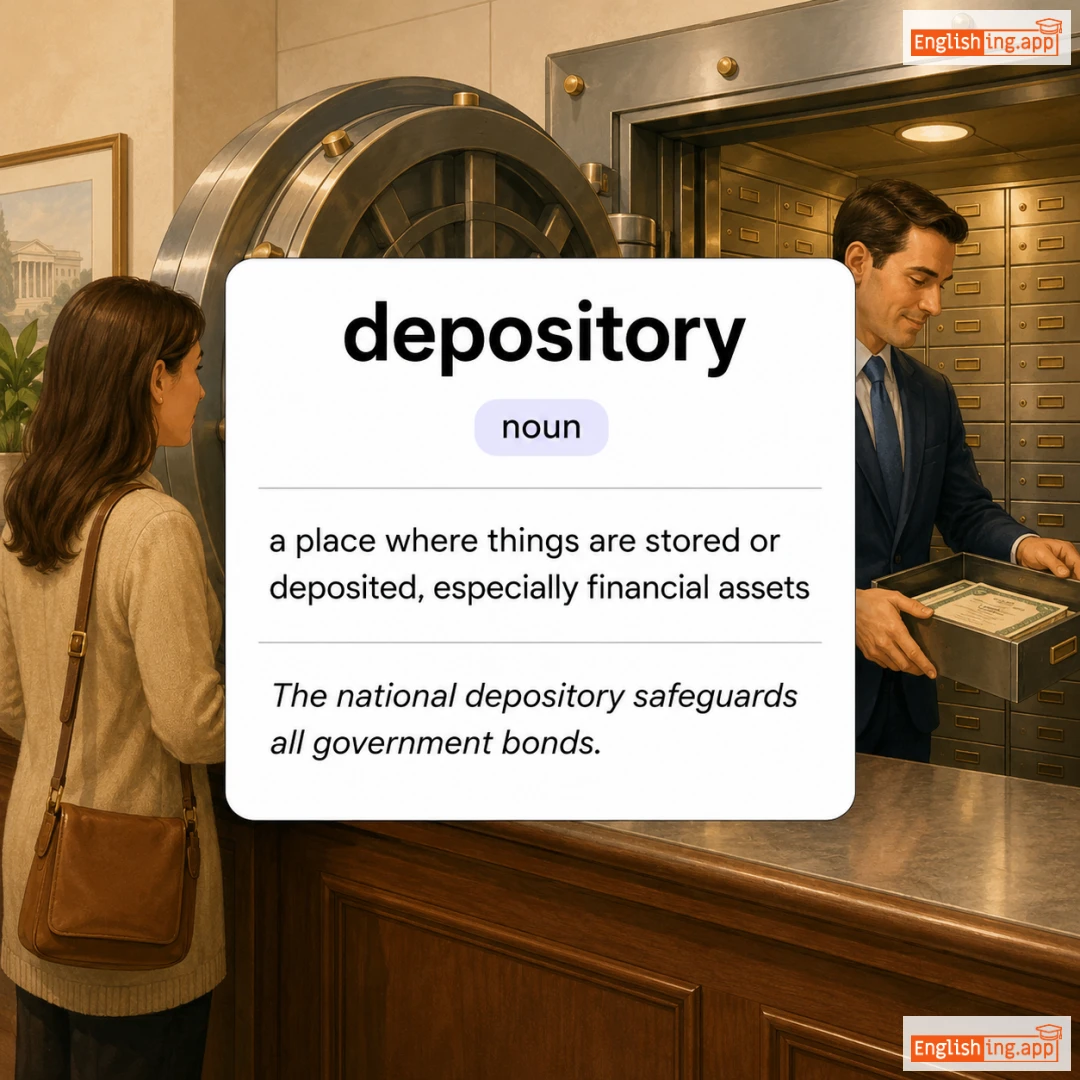
depository definition card — visual illustration of the meaning
noun C1
/dɪˈpɑːzətɔːri/
預け場所, 保管所 (azukebasho, hokanjo)

a place where things are stored or deposited, especially financial assets

"The national depository safeguards all government bonds."

"国家のデポジトリはすべての政府債券を保護しています。" (Kokka no depojitari wa subete no seifu saiken wo hogo shiteimasu.)
adjective C1
/dɪˈpreɪvd/
堕落した (darakushita)

morally corrupt or wicked

"The film depicts the life of a depraved criminal."
"その映画は堕落した犯罪者の人生を描いています。" (Sono eiga wa darakushita hanzai-sha no jinsei o egaiteimasu.)
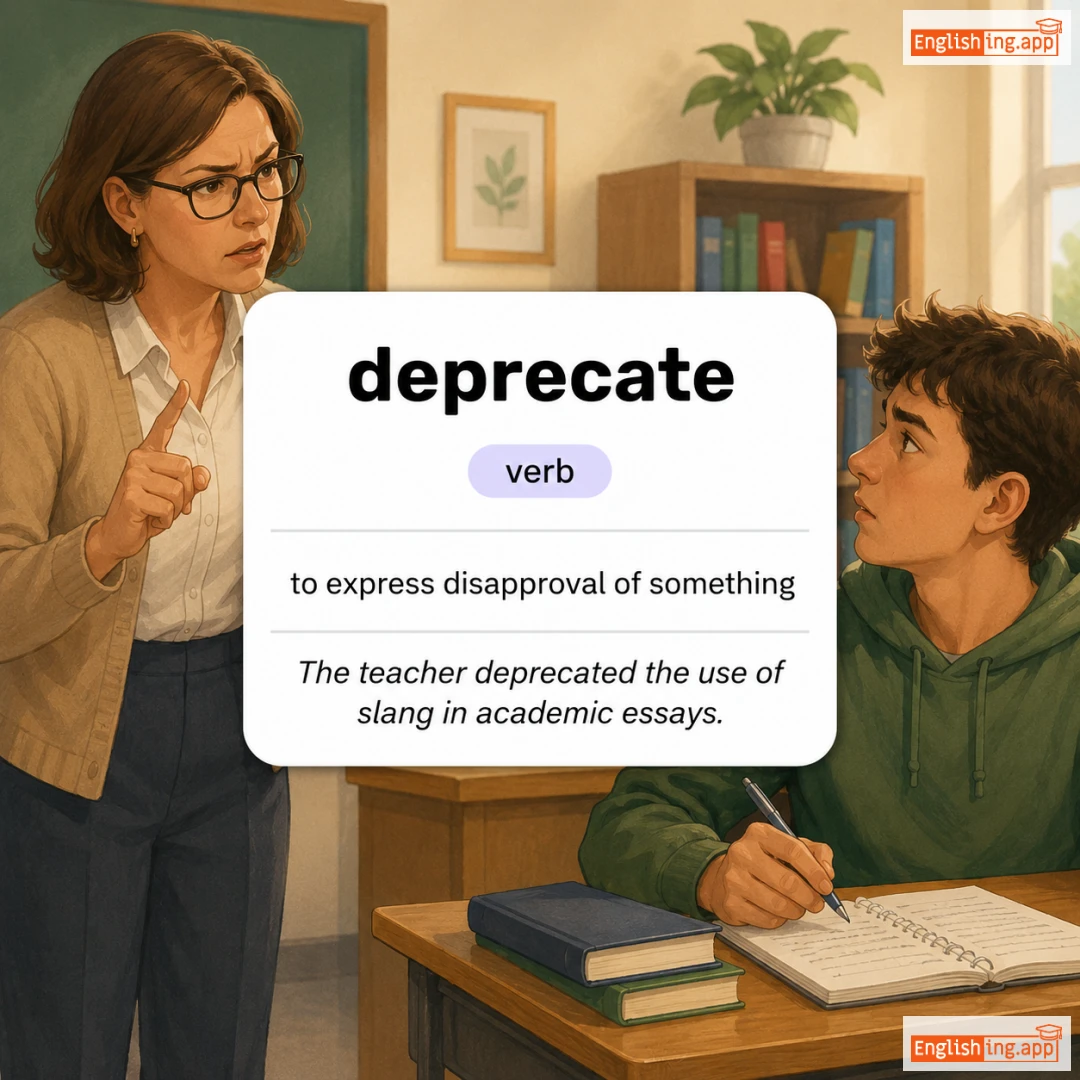
deprecate definition card — visual illustration of the meaning
verb C1
/ˈdɛprɪˌkeɪt/
非難する (hinansuru)

to express disapproval of something

"The teacher deprecated the use of slang in academic essays."

"教師は学術論文でのスラングの使用を非難しました。" (Kyōshi wa gakujutsu ronbun de no surangu no shiyō o hinan shimashita.)
verb C1
/dɪˈpriːʃieɪt/
価値が下がる (kachiga sagaru)

to reduce in value over time

"Cars tend to depreciate quickly in their first few years."
"車は最初の数年間で急速に価値が下がる傾向があります。" (Kuruma wa saisho no suunenkan de kyūsoku ni kachi ga sagaru keikō ga arimasu.)
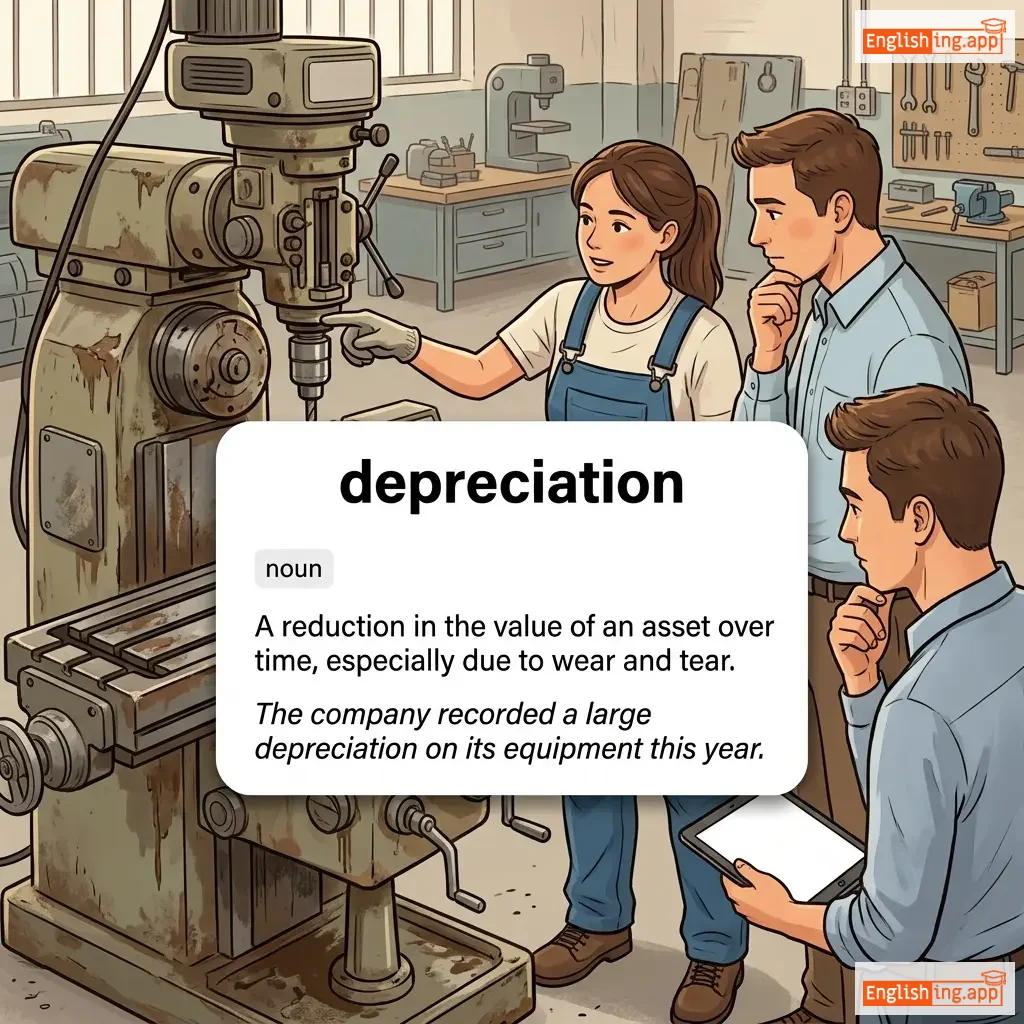
depreciation definition card — visual illustration of the meaning
noun C1
/dɪˌpriːʃiˈeɪʃən/
減価償却 (genka shoukyaku)

A reduction in the value of an asset over time, especially due to wear and tear.

"The company recorded a large depreciation on its equipment this year."

"会社は今年、機器の大きな減価償却を記録しました。" (Kaisha wa kotoshi, kiki no ookina genka shoukyaku o kiroku shimashita.)
noun C1
/dɪˈprɛsənt/
抑制剤 (yokuseizai)

A drug that reduces functional or nervous activity in the body.

"Alcohol acts as a depressant on the central nervous system."
"アルコールは中枢神経系に抑制剤として作用します。" (Arukōru wa chūsū shinkei-kei ni yokuseizai to shite sayō shimasu.)
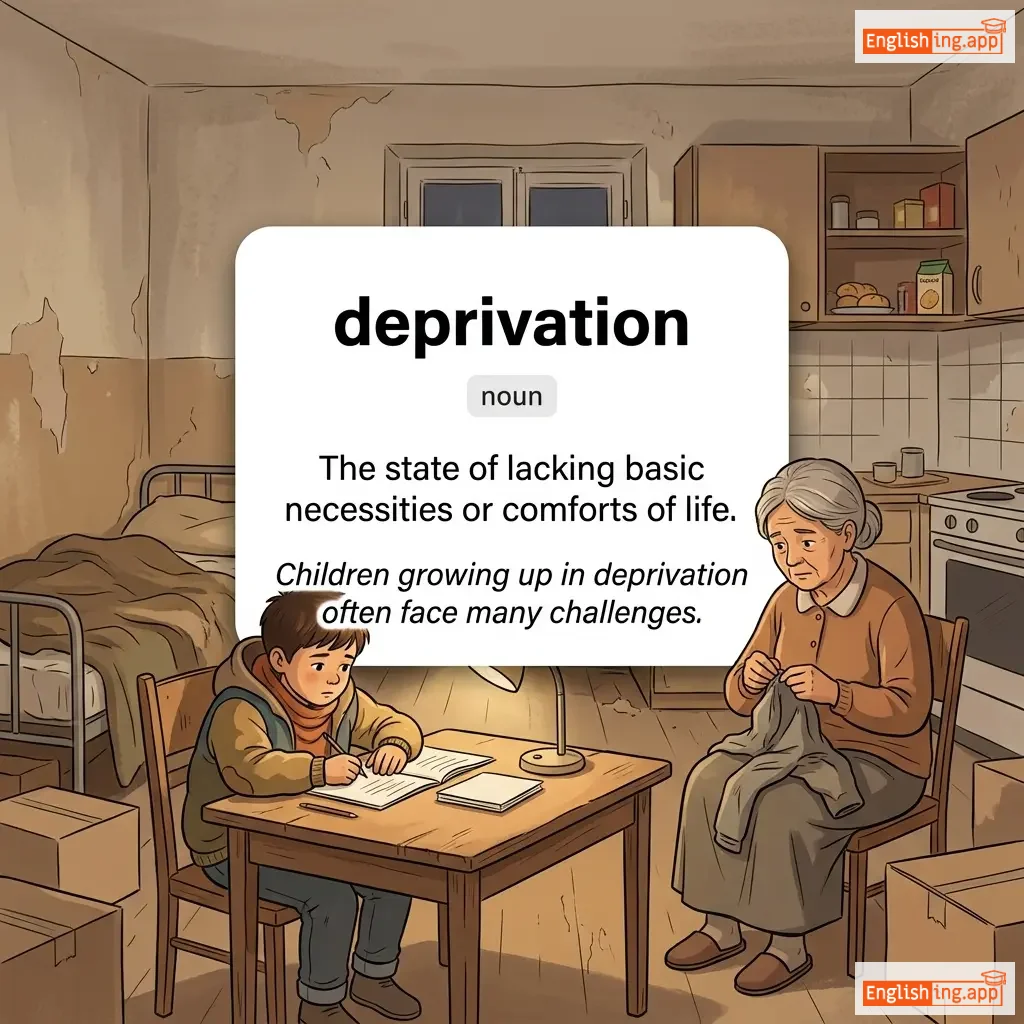
deprivation definition card — visual illustration of the meaning
noun C1
/ˌdɛprɪˈveɪʃən/
欠乏 (ketsubou)

The state of lacking basic necessities or comforts of life.

"Children growing up in deprivation often face many challenges."
"欠乏状態で育った子供たちは、多くの課題に直面することがよくあります。" (Ketsubou joutai de sodatta kodomotachi wa, ooku no kadai ni chokumen suru koto ga yoku arimasu.)
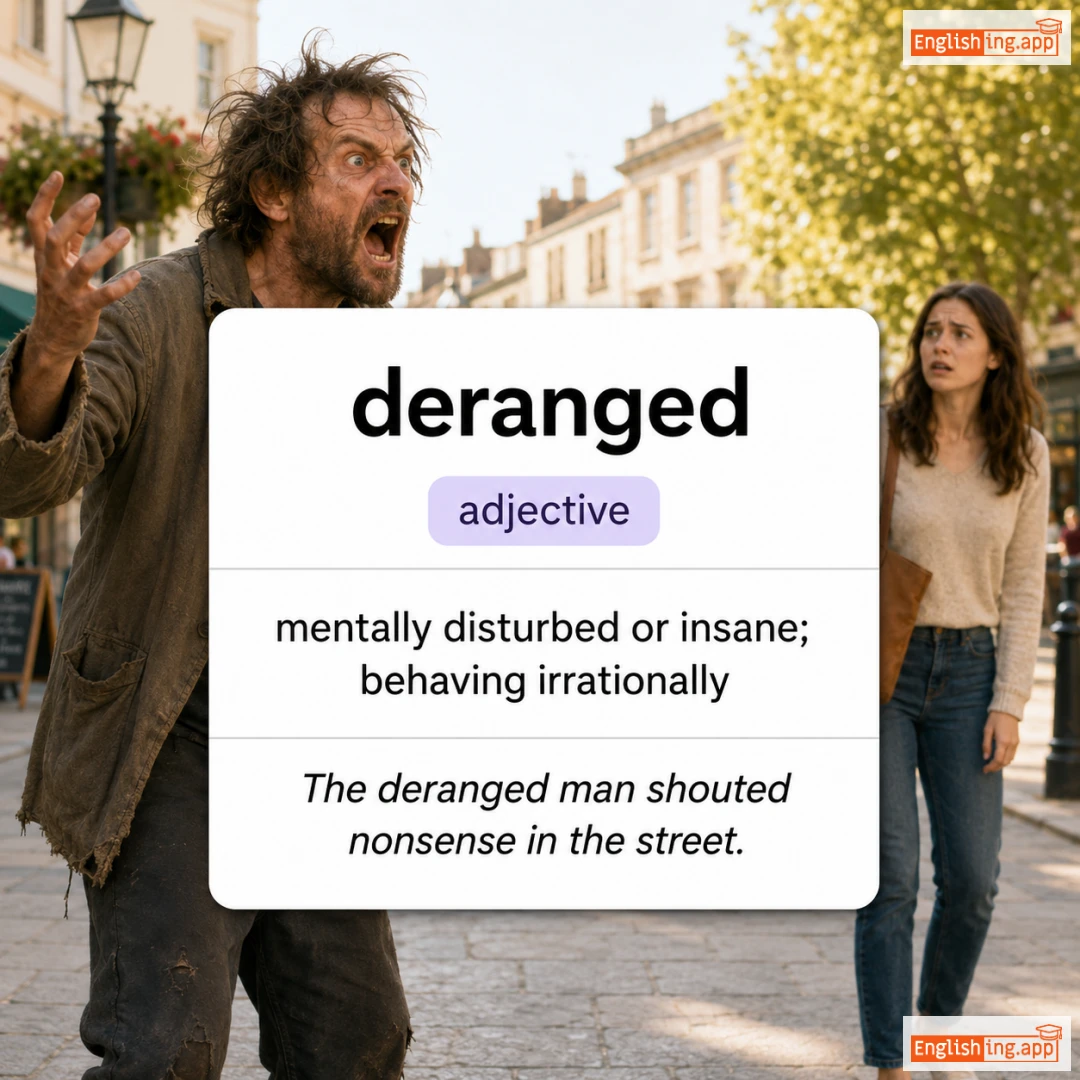
deranged definition card — visual illustration of the meaning
adjective C1
/dɪˈreɪndʒd/
狂気 (kyouki)

mentally disturbed or insane; behaving irrationally

"The deranged man shouted nonsense in the street."
"狂った男が街で無意味なことを叫んでいた。" (Kurutta otoko ga machi de muimi na koto o sakendete ita.)
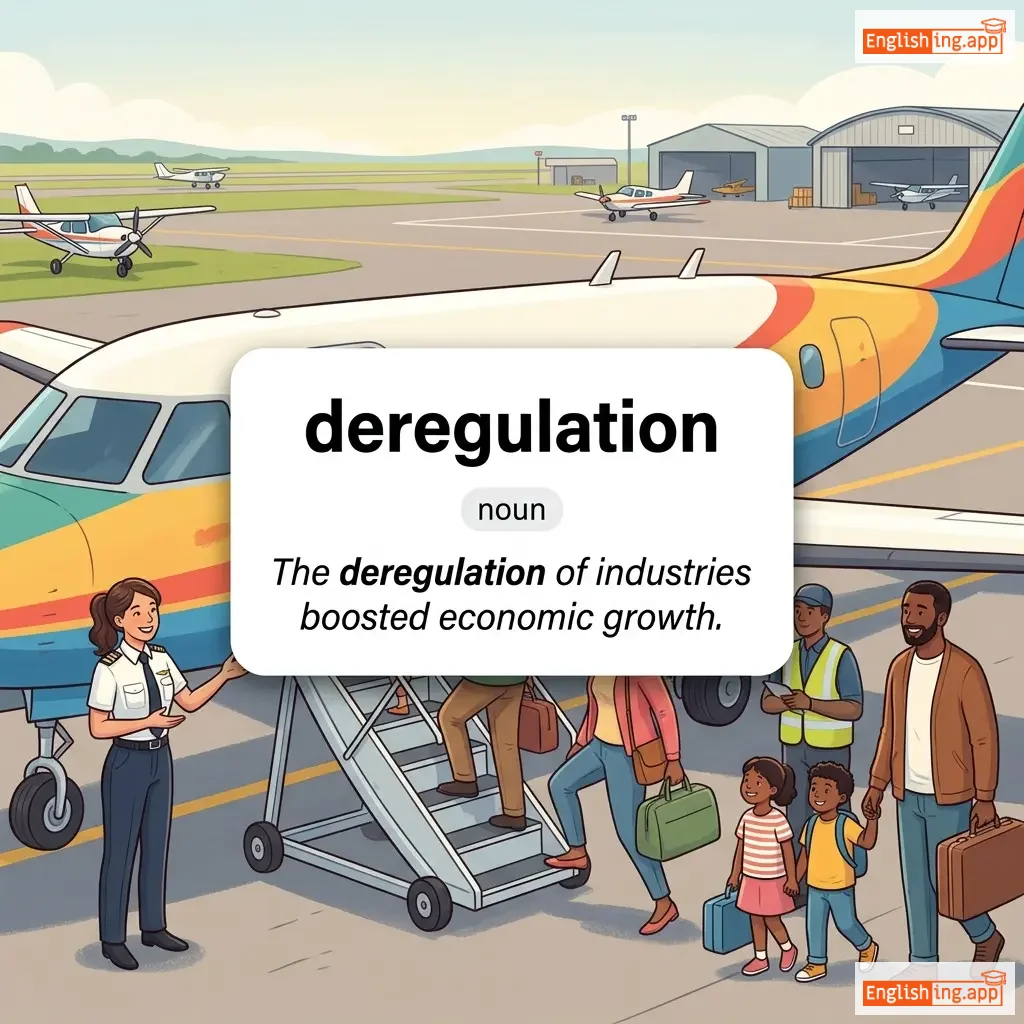
deregulation definition card — visual illustration of the meaning
noun C1
/ˌdiː.rɛɡ.jʊˈleɪ.ʃən/
規制緩和 (kisei kanwa)

The removal or reduction of government regulations and controls, often involving liberalization, free market policies, or privatization.

"The deregulation of industries boosted economic growth."
"産業の規制緩和は経済成長を促進した。" (Sangyō no kisei kanwa wa keizai seichō o sokushin shita.)
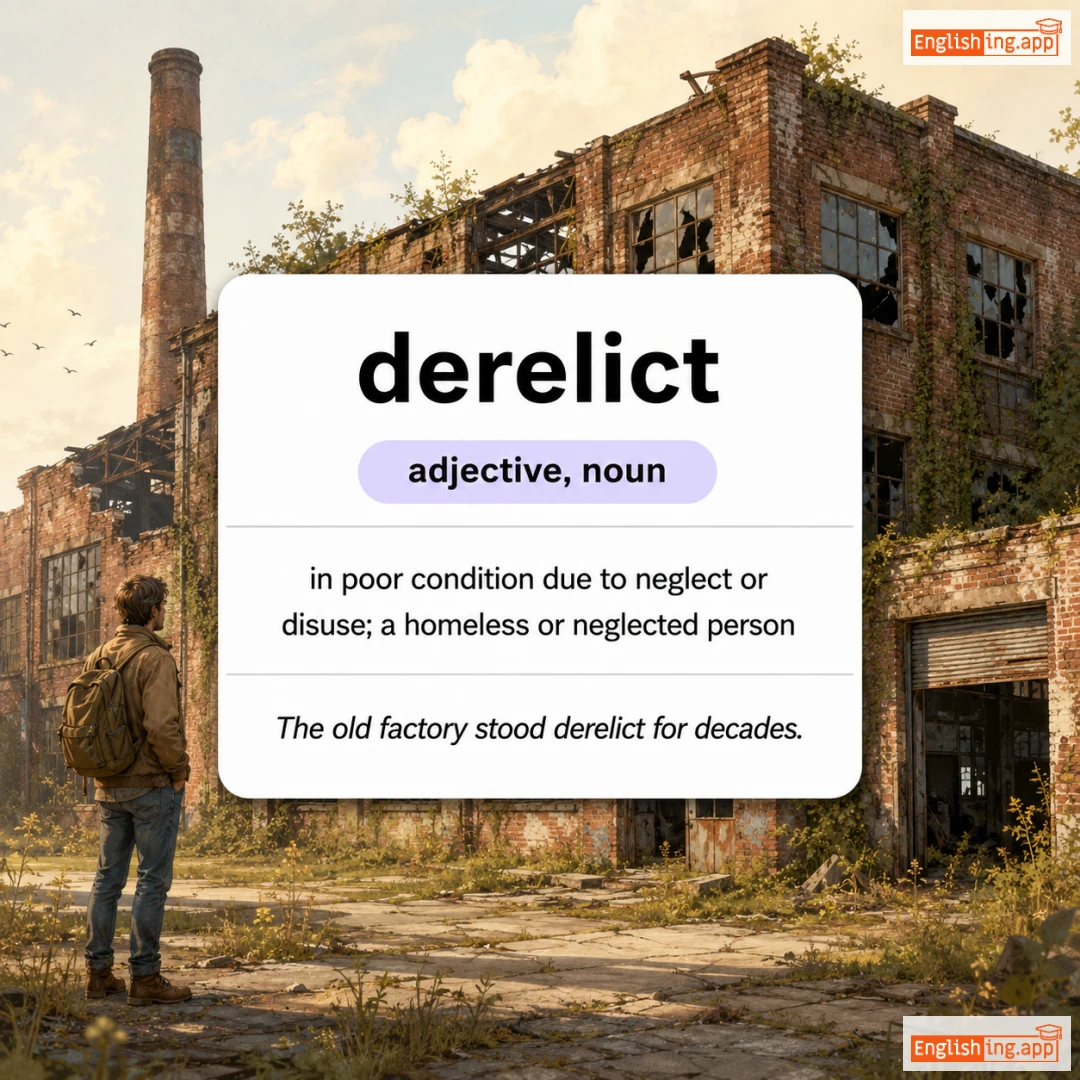
derelict definition card — visual illustration of the meaning
adjective, noun C1
/ˈdɛrəlɪkt/
放棄された (houkisareta)

in poor condition due to neglect or disuse; a homeless or neglected person

"The old factory stood derelict for decades."
"古い工場は何十年も放置されていました。" (Furui koujou wa nanshūnen mo houchi sarete imashita.)
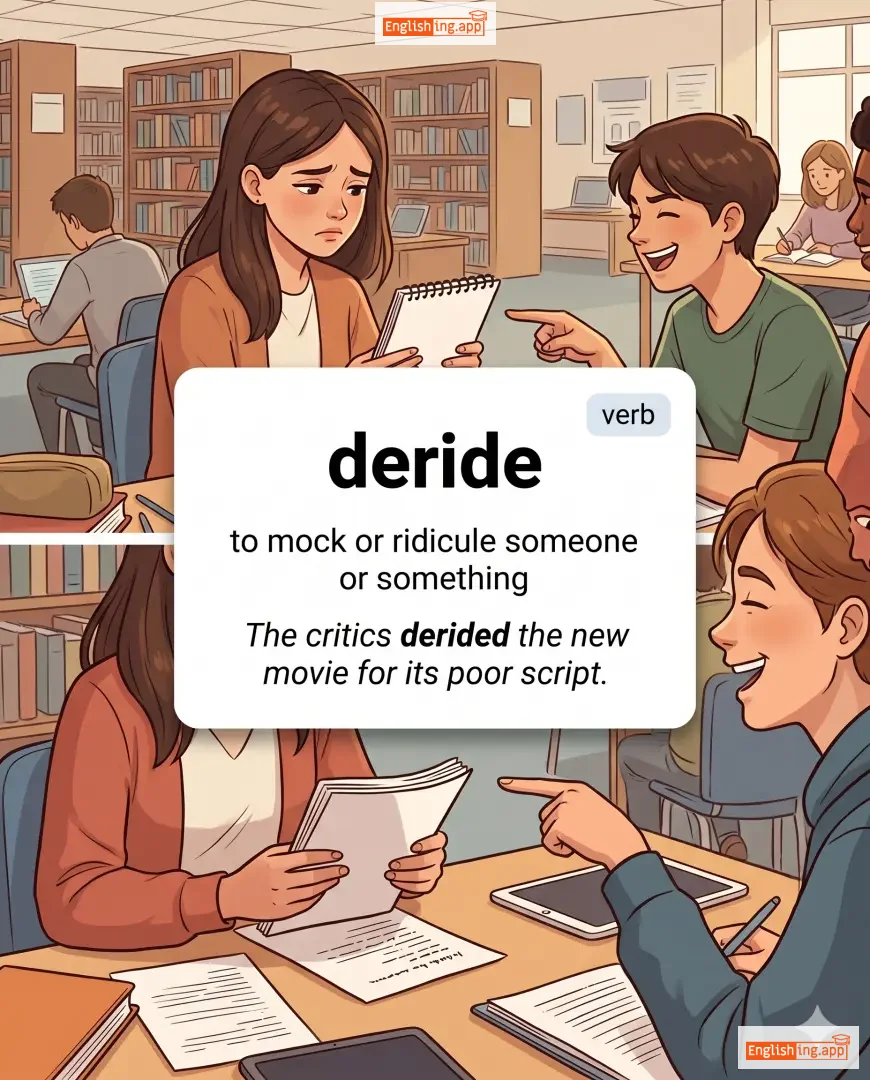
deride definition card — visual illustration of the meaning
verb C1
/dɪˈraɪd/
嘲笑する (choushou suru)

to mock or ridicule someone or something

"The critics derided the new movie for its poor script."
"批評家たちはその新しい映画を悪い脚本のせいで嘲笑した。" (Hihyōka-tachi wa sono atarashī eiga wo warui kyakuhon no sei de chōshō shita.)
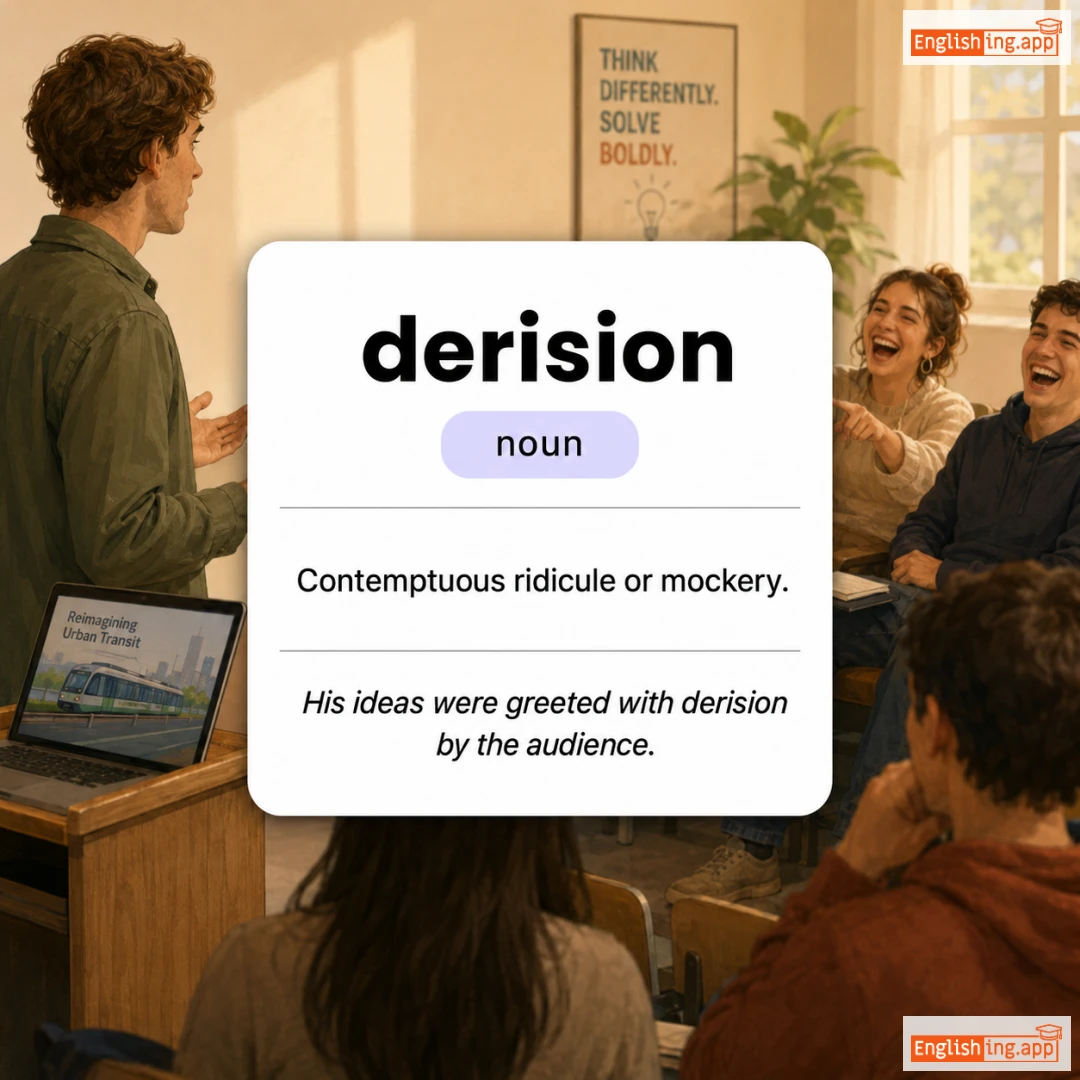
derision definition card — visual illustration of the meaning
noun C1
/dɪˈrɪʒən/
嘲笑 (choushou)

Contemptuous ridicule or mockery.

"His ideas were greeted with derision by the audience."
"彼のアイデアは観客によって嘲笑された。" (Kare no aidea wa kankyaku ni yotte choushou sareta.)
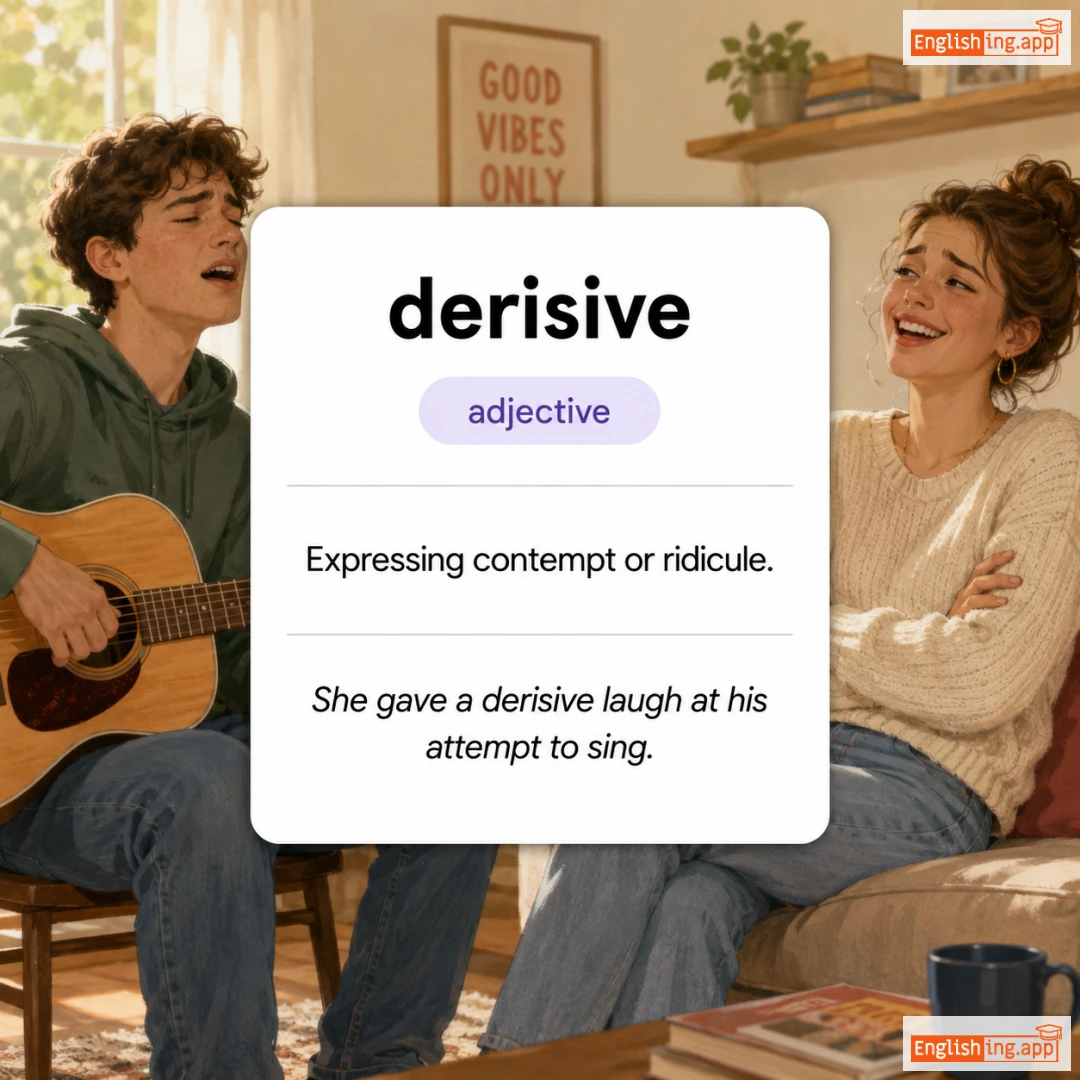
derisive definition card — visual illustration of the meaning
adjective C1
/dɪˈraɪsɪv/
軽蔑的な (keibetsuteki na)

Expressing contempt or ridicule.

"She gave a derisive laugh at his attempt to sing."

"彼女は彼の歌おうとする試みに対して軽蔑的な笑い声を上げた。" (Kanojo wa kare no utaou to suru kokoromi ni taishite keibetsuteki na waraigoe wo ageta.)
noun C1
/ˌdɛrɪˈveɪʃən/
派生 (hasei)

The origin or development of something from a source.

"The derivation of the word comes from Latin."

"その単語の起源はラテン語から来ている。" (Sono tango no kigen wa raten-go kara kite iru.)
derivative definition card — visual illustration of the meaning
noun, adjective C1
/dɪˈrɪvətɪv/
派生物 (haseibutsu)

Something that is based on another source; in math, a measure of how a function changes.

"The film was criticized for being too derivative of earlier works."

"その映画は、前の作品を模倣しすぎて批判されました。" (Sono eiga wa, mae no sakuhin o mohō shisugite hihan saremashita.)
dermatologist definition card — visual illustration of the meaning
noun C1
/ˌdɜːrməˈtɑːlədʒɪst/
皮膚科医 (hifuka-i)

A doctor who specializes in the treatment of skin diseases.

"She consulted a dermatologist for her skin allergy."

"彼女は皮膚のアレルギーのために皮膚科医に相談した。" (Kanojo wa hifu no arerugī no tame ni hifuka-i ni soudan shita.)
dermatology definition card — visual illustration of the meaning
noun C1
/ˌdɜːrməˈtɑːlədʒi/
皮膚科学 (hifu kagaku)

The branch of medicine concerned with the skin and its diseases.

"He studied dermatology at medical school."
"彼は医学部で皮膚科学を学んだ。" (Kare wa igakubu de hifukagaku o mananda.)
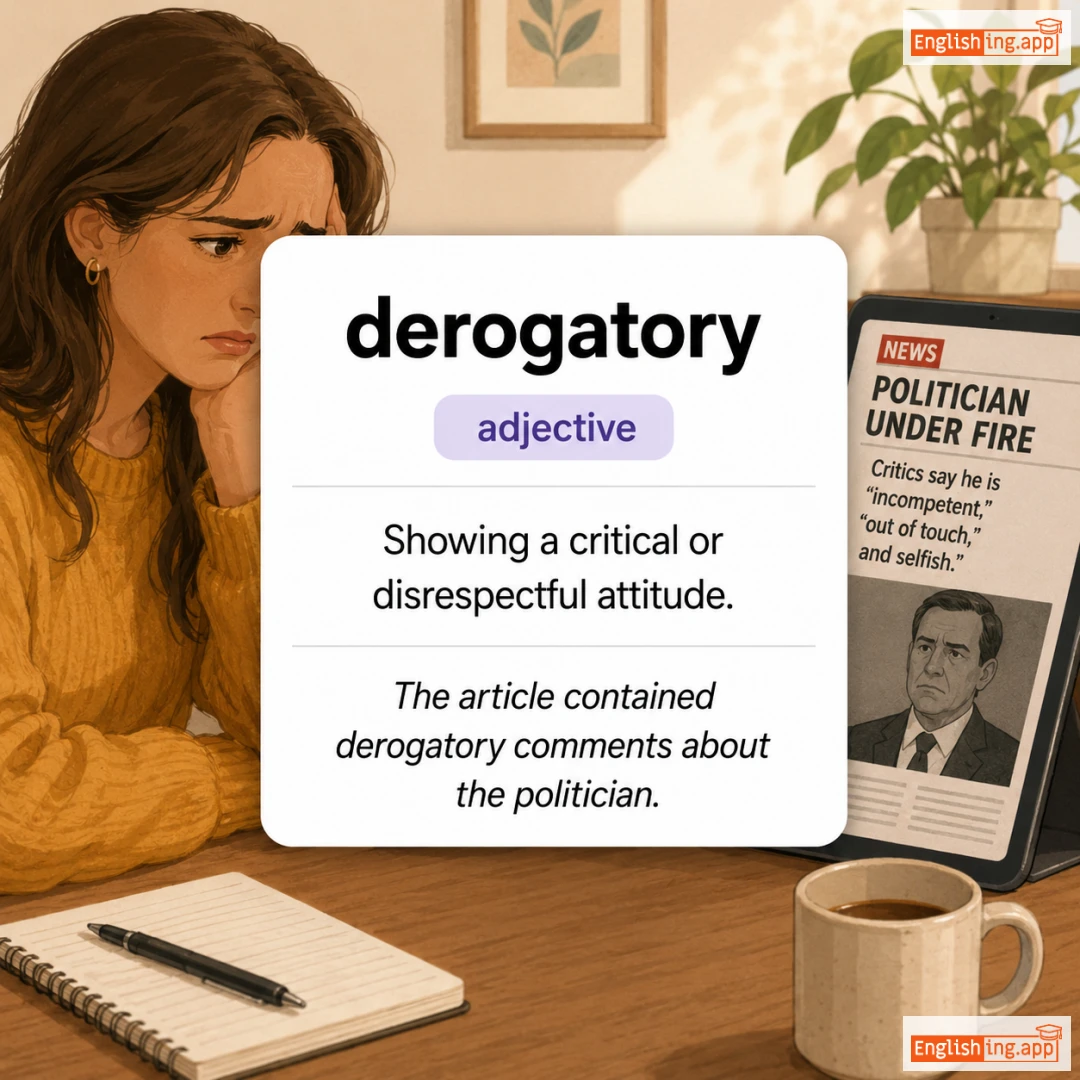
derogatory definition card — visual illustration of the meaning
adjective C1
/dɪˈrɒɡətɔːri/
侮辱的 (bujokuteki)

Showing a critical or disrespectful attitude.

"The article contained derogatory comments about the politician."
"その記事には政治家について侮辱的なコメントが含まれていました。" (Sono kiji ni wa seijika ni tsuite bujokuteki na komento ga fukumarete imashita.)
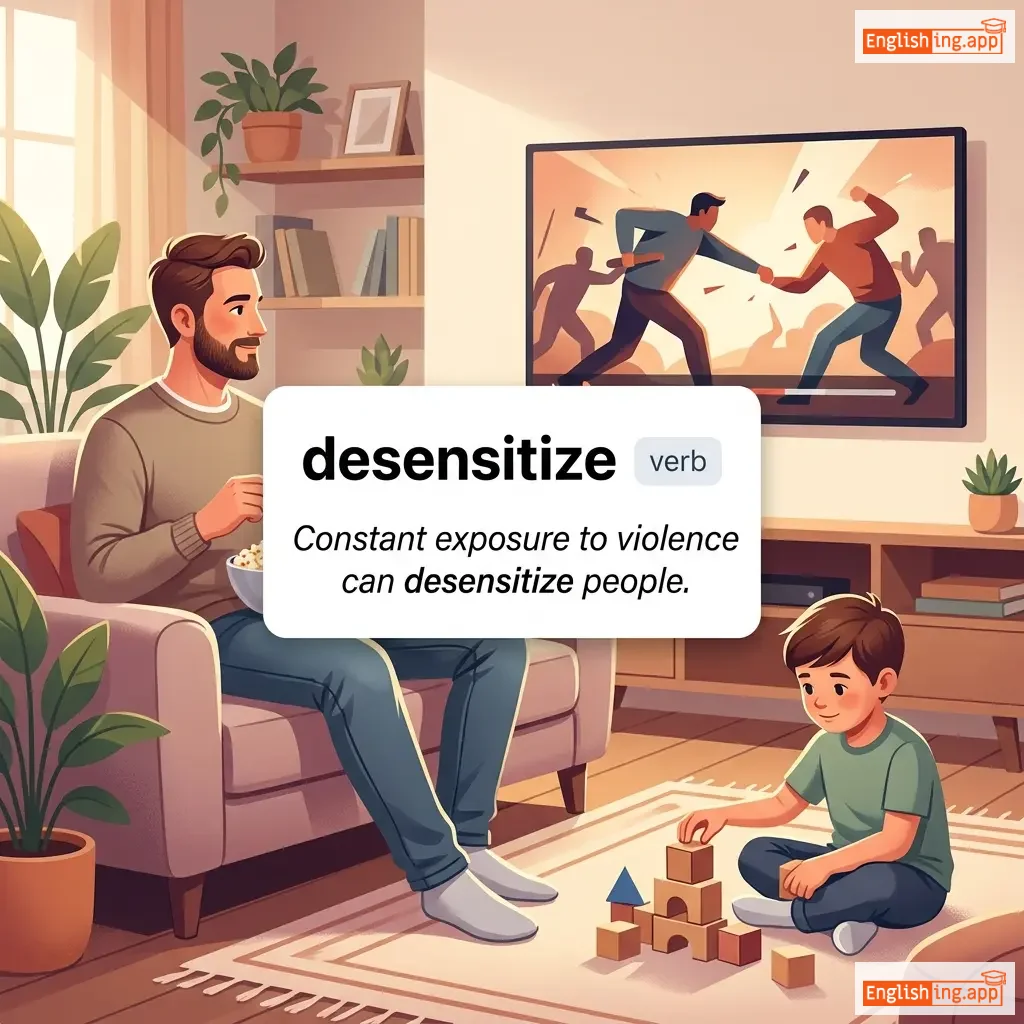
desensitize definition card — visual illustration of the meaning
verb C1
diːˈsɛn.sɪ.taɪz
脱感作 (datsukansaku)

To make someone less sensitive or reactive to something through repeated exposure.

"Constant exposure to violence can desensitize people."
"継続的な暴力の露出は人々を鈍感にする可能性があります。" (Keizokuteki na bouryoku no rokutsu wa hitobito o donkan ni suru kanousei ga arimasu.)
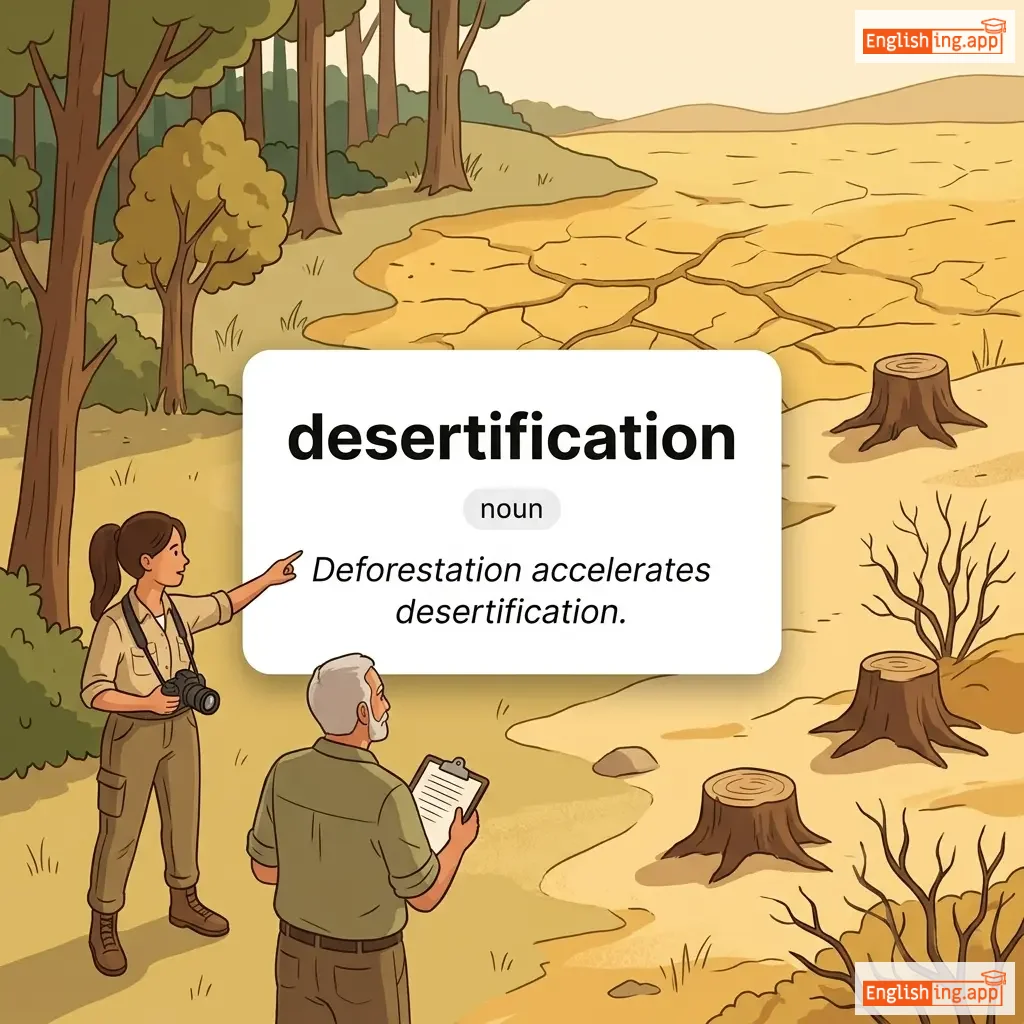
desertification definition card — visual illustration of the meaning
noun C1
dɪˌzɝː.t̬ə.fɪˈkeɪ.ʃən
砂漠化 (sabaku ka)

The process by which fertile land becomes desert, typically as a result of drought, deforestation, or inappropriate agriculture.

"Deforestation accelerates desertification."

"森林伐採は砂漠化を加速させます。" (Shinrin bassai wa sabaku ka wo kasoku sasemasu.)
Designation definition card — visual illustration of the meaning
noun C1
/ˌdez.ɪɡˈneɪ.ʃən/
任命; 役職; 職位; ステータス (ninmei, yakushoku, shokui, suteetasu)

the action of choosing someone for a position; a name, title, or official status

"His designation as team leader came with additional responsibilities and authority."
"チームリーダーとしての彼の任命は、追加の責任と権限を伴っていました。" (chiimu riidaa toshite no kare no ninmei wa, tsuika no sekinin to kenri o tomonatte imashita.)
verb C1
/dɪˈzɪst/

to stop doing something, especially an action considered wrong or undesirable

"The judge ordered the company to desist from unfair practices."

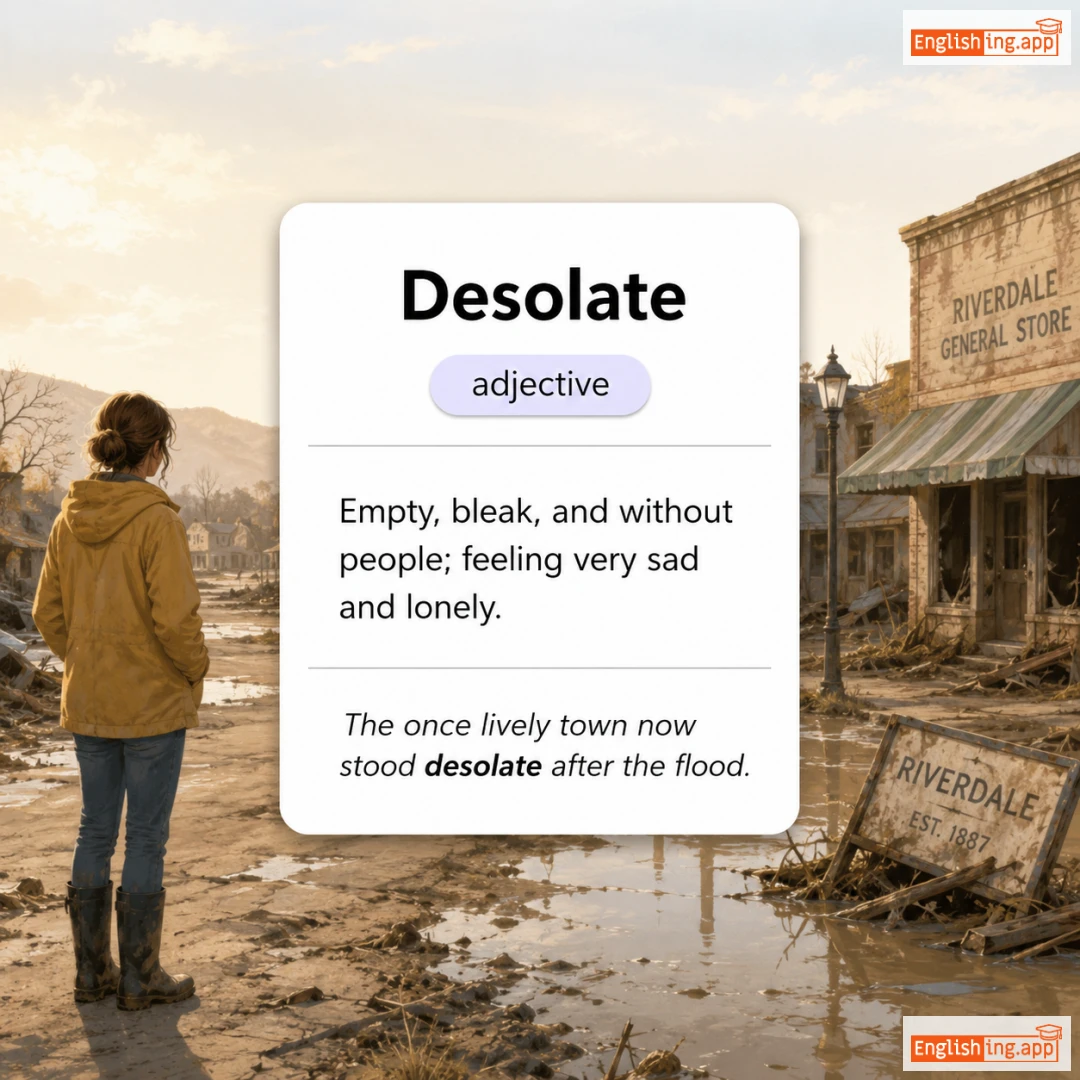
Desolate definition card — visual illustration of the meaning
adjective C1
/ˈdɛsələt/
荒廃した (kouhai shita)

Empty, bleak, and without people; feeling very sad and lonely.

"The once lively town now stood desolate after the flood."

"かつて賑やかだった町は洪水の後、荒廃して立っていた。" (Katsute nigiyaka datta machi wa kouzui no ato, kouhai shite tatte ita.)
adjective C1
/dɪˈsperɪŋ/
絶望的な (zetsubō-teki na)

feeling hopeless; in despair

"She felt despairing after losing her job."

"彼女は仕事を失った後、絶望的な気持ちだった。" (Kanojo wa shigoto o ushinatta ato, zetsubō-teki na kimochi datta.)
adjective C1
/dɪˈspɪkəbl/
卑劣な (hiretsuna)

Deserving hatred and contempt; vile or shameful.

"His despicable actions shocked the entire community."

"彼の卑劣な行動はコミュニティ全体を驚かせました。" (Kare no hiretsuna kōdō wa komyuniti zentai o odorokasemashita.)
adjective C1
/dɪˈspɒndənt/

feeling or showing deep hopelessness or discouragement

"She felt despondent after losing her job."

noun C1
/ˈdɛspɒt/
暴君 (bōkun)

a ruler with absolute power, often ruling in a cruel or oppressive way

"The despot ruled the nation with fear and violence."

"暴君は恐怖と暴力で国を支配した。" (Bōkun wa kyōfu to bōryoku de kuni o shihai shita.)
noun C1
/ˈdɛspətɪzəm/
専制政治 (sensei seiji)

absolute power exercised in a cruel and oppressive way

"The people revolted against the era of despotism."

"人々は専制政治の時代に反乱を起こしました。" (Hitobito wa sensei seiji no jidai ni hanran o okoshimashita.)
adjective C1
/ˈdɛstɪˌtuːt/
困窮した (konkyū shita)

extremely poor and lacking the means to provide for oneself

"The earthquake left many families destitute."
"地震は多くの家族を困窮させた。" (Jishin wa ōku no kazoku o konkyū saseta.)
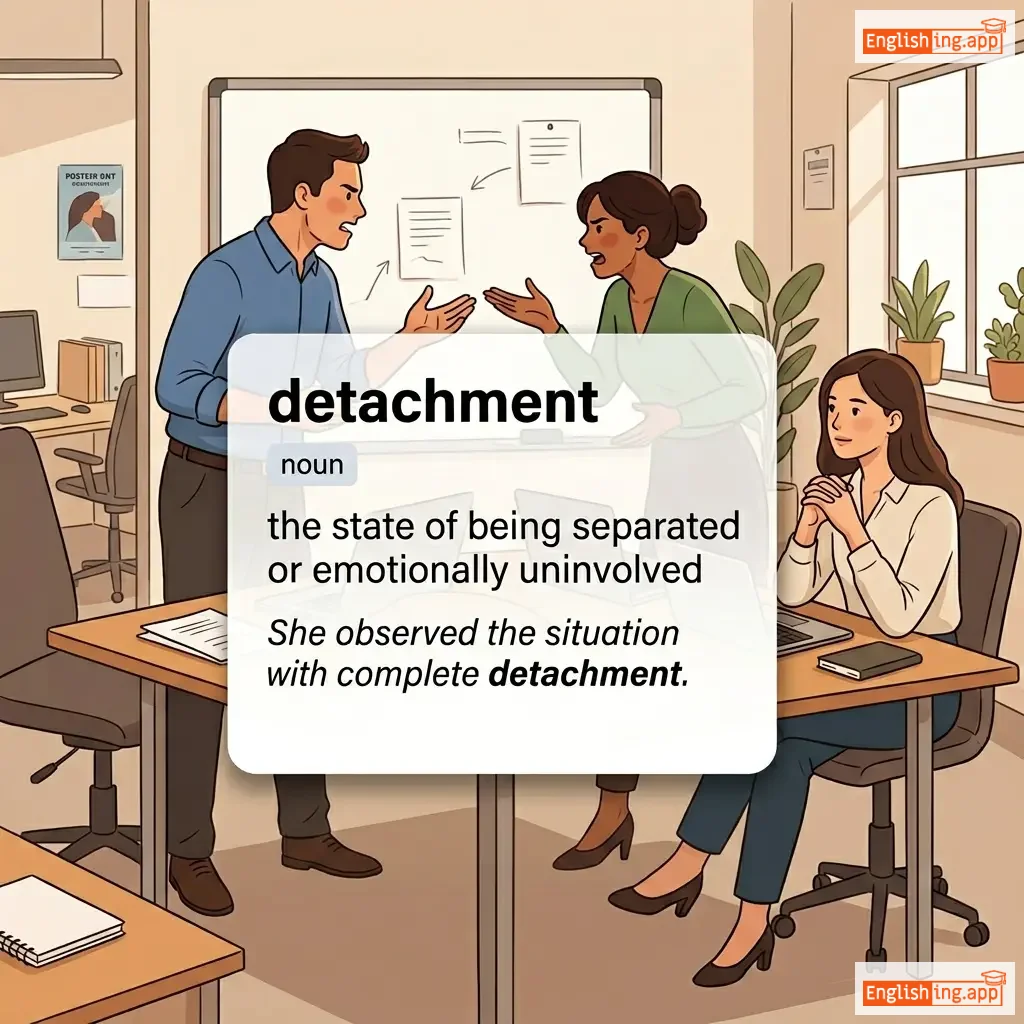
detachment definition card — visual illustration of the meaning
noun C1
/dɪˈtætʃmənt/
切り離し (kirihashi)

the state of being separated or emotionally uninvolved

"She observed the situation with complete detachment."

"彼女は完全なデタッチメントで状況を観察していた。" (Kanojo wa kanzen na detatchimento de joukyou o kansatsu shiteita.)