|
絵文字
|
単語 | Images | 翻訳 | 過去 | 過去分詞 | 三人称単数 | 動名詞 | 意味 | 例文 | 例文の翻訳 | 表現例 | 表現例の意味 | 表現例の翻訳 | 同義語 | 対義語 | コロケーション | ニーモニック |
|---|---|---|---|---|---|---|---|---|---|---|---|---|---|---|---|---|---|
|
💰
••••••
|
/pluːˈtɒkrəsi/
noun
(プルトクラシー)
••••••
|
- •••••• |
富裕層による支配
fuyūsō ni yoru shihai
••••••
|
- •••••• | - •••••• | - •••••• | - •••••• |
a system of government where the wealthy hold power
••••••
|
The country was ruled as a plutocracy. |
その国はプルトクラシーとして支配されていた。
Sono kuni wa purutokurashī toshite shihai sarete ita.
••••••
|
- •••••• | - •••••• | - •••••• |
oligarchy, aristocracy, elitism, wealth-rule
••••••
|
democracy, egalitarianism
••••••
|
ruling plutocracy, economic plutocracy, powerful plutocracy
••••••
|
PLU to CROCY, 富裕層が国を支配する
••••••
|
|
🧽
••••••
|
/ˈpɔːrəs/
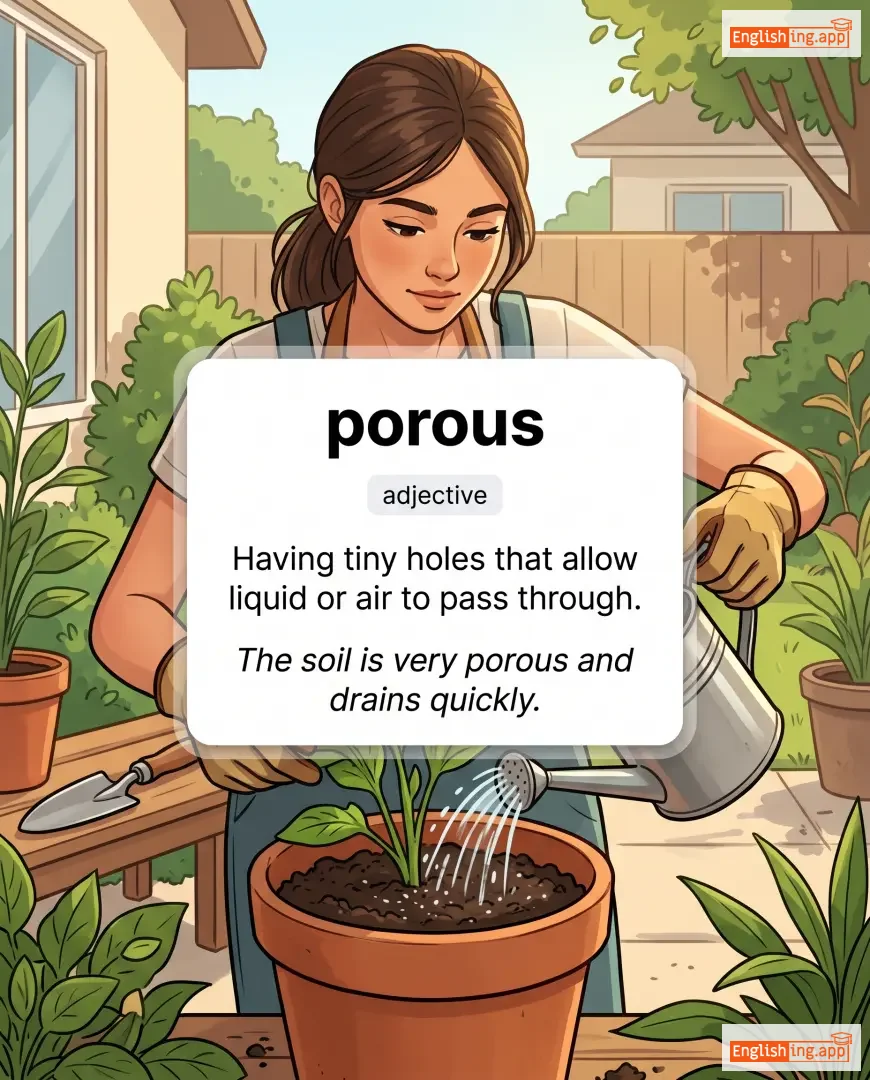
adjective
(ポーロス)
••••••
|
|
多孔性の
takōsei no
••••••
|
- •••••• | - •••••• | - •••••• | - •••••• |
Having tiny holes that allow liquid or air to pass through.
••••••
|
The soil is very porous and drains quickly. |
土壌は非常に多孔性で、すぐに水を排出します。
Dojō wa hijō ni takōsei de, sugu ni mizu o haishutsu shimasu.
••••••
|
- •••••• | - •••••• | - •••••• |
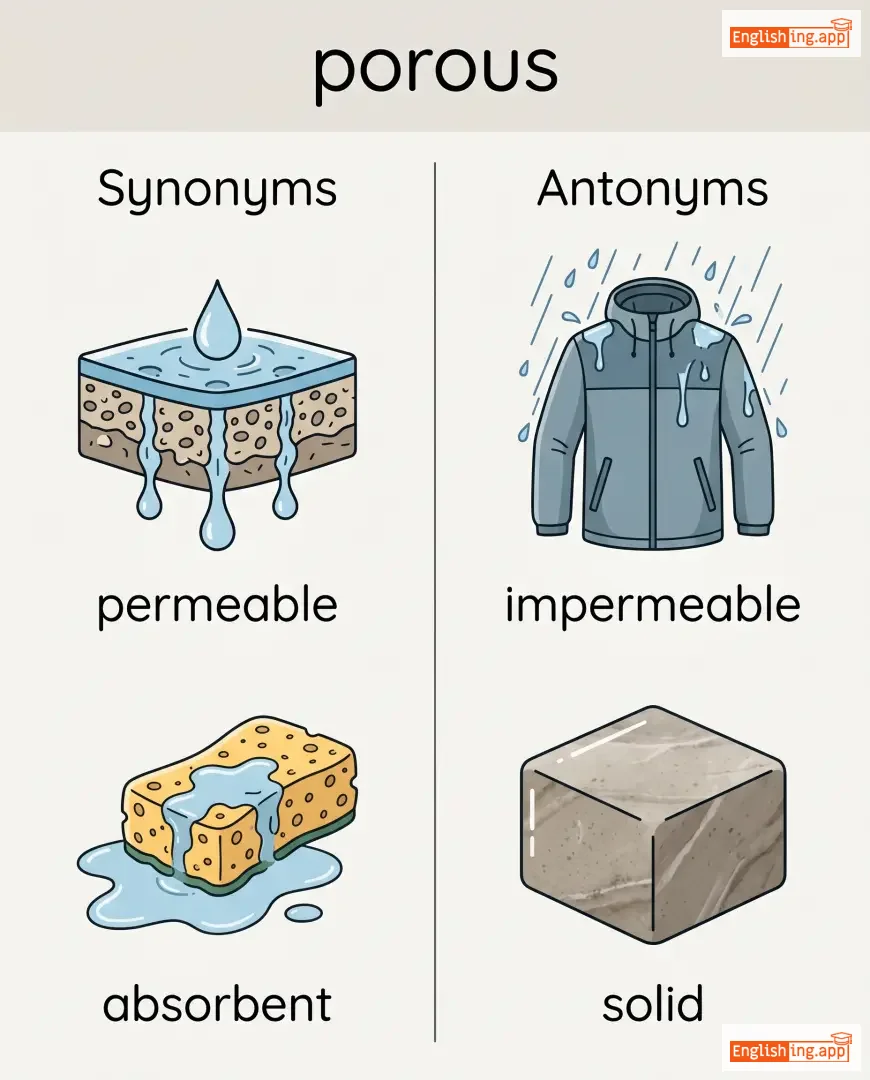
permeable, absorbent, spongy, leaky, penetrable
••••••
|
impermeable, solid, sealed
••••••
|
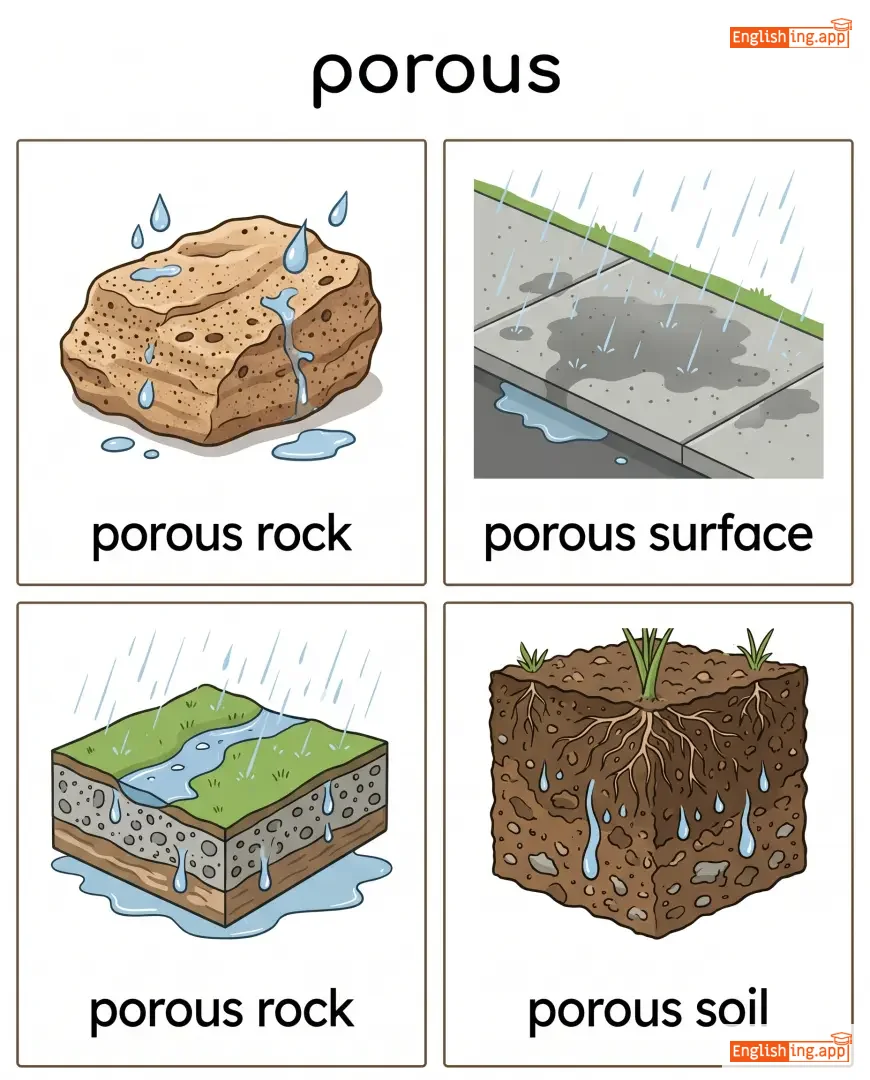
porous rock, porous surface, porous soil, porous structure
••••••
|
多孔性のようなスポンジ、水が簡単に通過する。
••••••
|
|
🎭
••••••
|
/poʊˈzɜːr/
noun
••••••
|
- •••••• | - •••••• | - •••••• | - •••••• | - •••••• | - •••••• |
A person who pretends to be something they are not, often to impress others.
••••••
|
Many considered him a poseur because he exaggerated his accomplishments. |
- •••••• | - •••••• | - •••••• | - •••••• |
pretender, impostor, fraud, phony
••••••
|
genuine, authentic
••••••
|
artistic poseur, social poseur, literary poseur
••••••
|
No •••••• |
|
🛠️
••••••
|
/præɡˈmætɪk/
adjective
••••••
|
|
- •••••• | - •••••• | - •••••• | - •••••• | - •••••• |
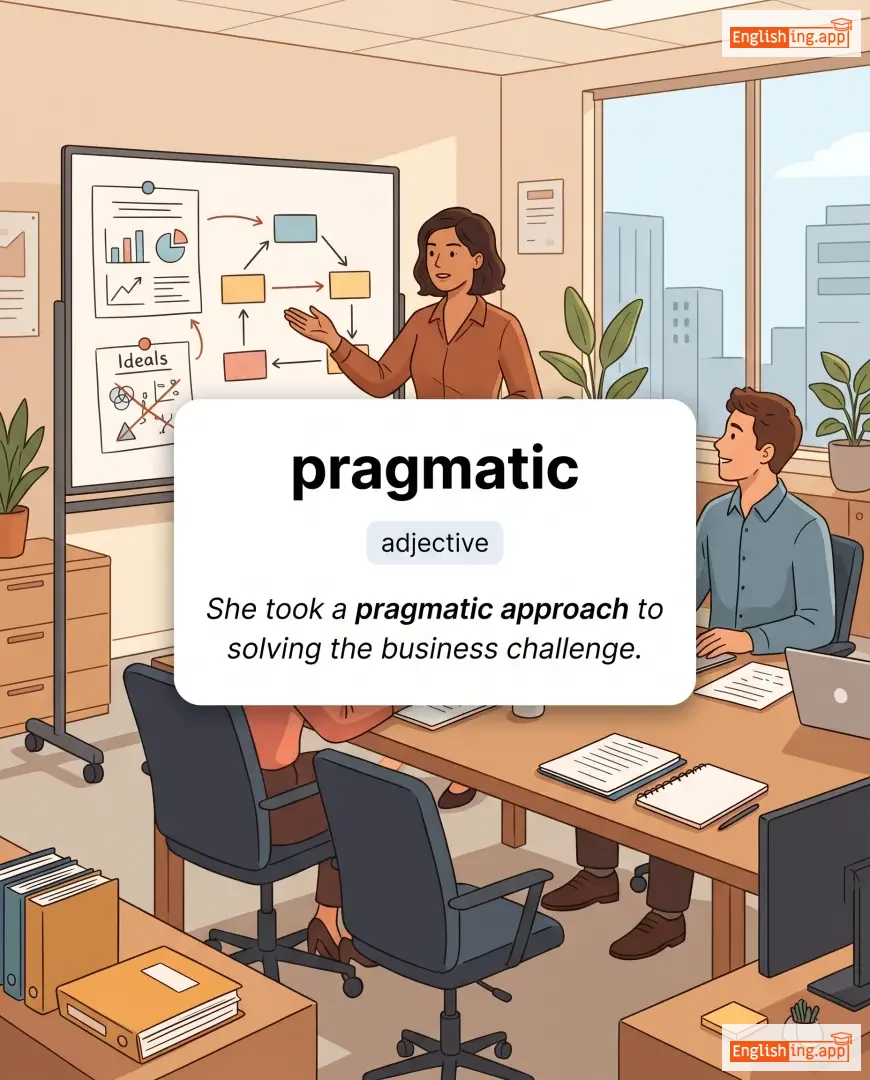
Dealing with problems in a practical and sensible way rather than depending on theories or ideals.
••••••
|
She took a pragmatic approach to solving the business challenge. |
- •••••• |
pragmatic approach |
A practical and realistic way of handling a situation.
••••••
|
- •••••• |
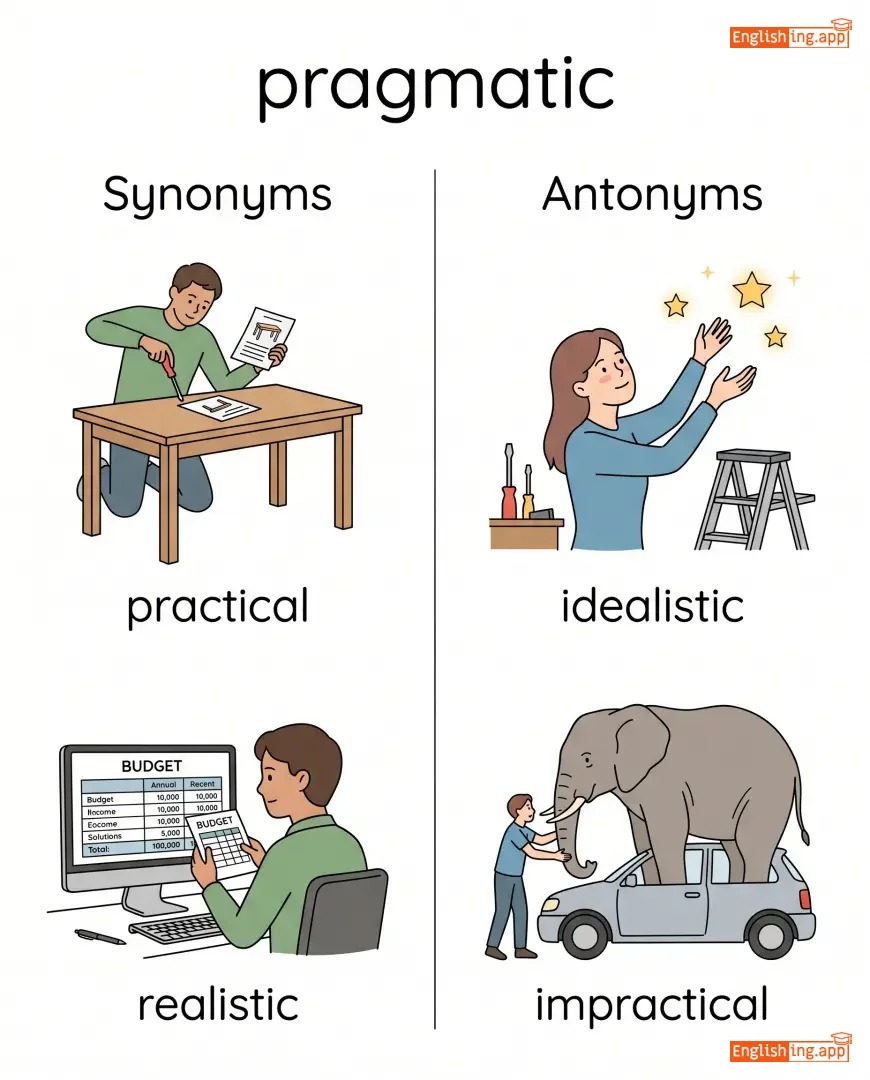
practical, realistic, sensible, rational, logical
••••••
|
idealistic, impractical, theoretical
••••••
|
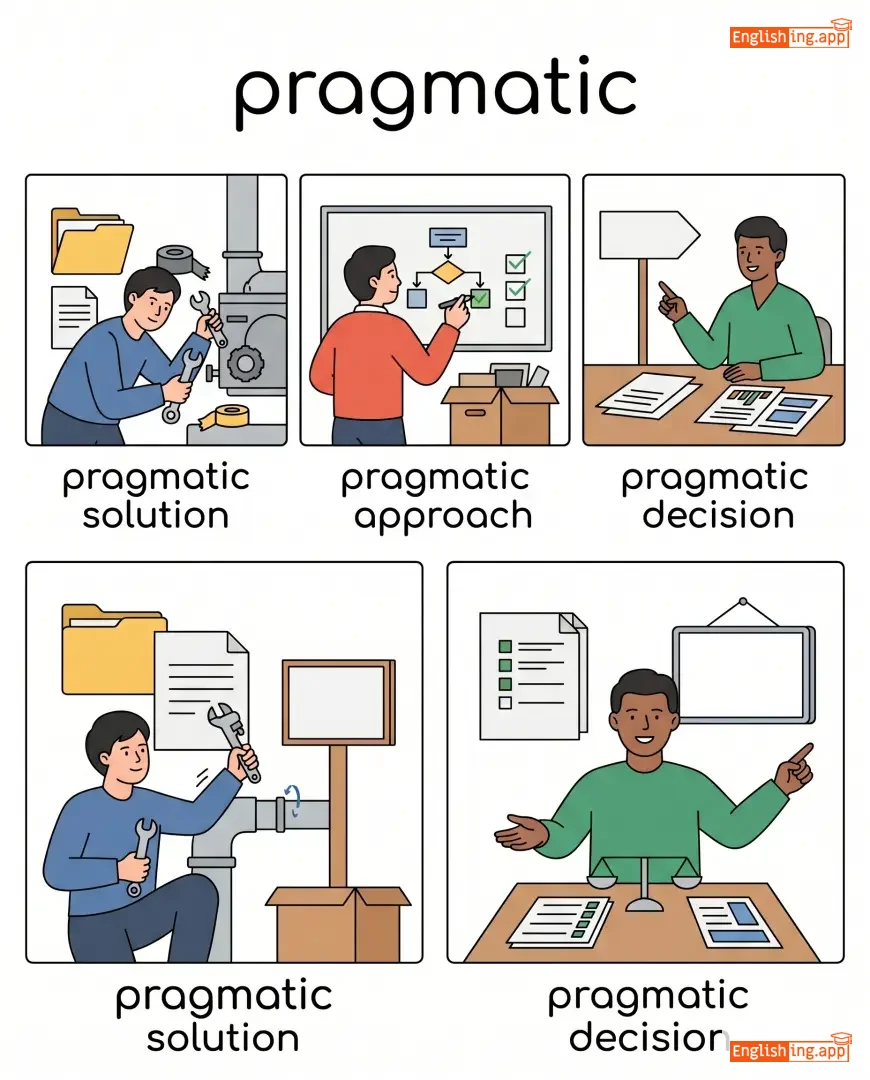
pragmatic solution, pragmatic approach, pragmatic decision, pragmatic attitude
••••••
|
No •••••• |
|
🗣️
••••••
|
/preɪt/
verb
(preito)
••••••
|
- •••••• |
無駄話をする
mudabanashi o suru
••••••
|
prated
preitoed
••••••
|
prated
preitoed
••••••
|
prates
preitos
••••••
|
prating
preiting
••••••
|
to talk foolishly or at tedious length about something
••••••
|
He would prate endlessly about his minor achievements.
彼は彼の小さな達成について無駄に長く話すことを終わらせなかった。
••••••
|
彼は彼の小さな達成について無駄に長く話すことを終わらせなかった。
Kare wa kare no chiisana tassei ni tsuite mudani nagaku hanasu koto o owarasenakatta.
••••••
|
- •••••• | - •••••• | - •••••• |
babble, chatter, ramble, blabber, gab
••••••
|
be silent, quiet, hush
••••••
|
prate about, prate on, prate endlessly, prate foolishly
••••••
|
Prateは無駄話、'prat' はまさに '無駄話' だと言えます。
••••••
|
|
👶🗣️
••••••
|
/ˈprætəl/
verb
(プラトル)
••••••
|
- •••••• |
おしゃべり
oshaberi
••••••
|
prattled
プラトルド
••••••
|
prattled
プラトルド
••••••
|
prattles
プラトルス
••••••
|
prattling
プラトリング
••••••
|
to talk at length in a foolish or inconsequential way
••••••
|
The children would prattle on about their games.
子供たちは自分たちのゲームについておしゃべりをしていた。
••••••
|
子供たちは自分たちのゲームについておしゃべりをしていた。
Kodomotachi wa jibuntachi no gēmu ni tsuite oshaberi o shite ita.
••••••
|
- •••••• | - •••••• | - •••••• |
chatter, babble, gabble, blather, jabber
••••••
|
remain silent, quiet, hush
••••••
|
prattle on, prattle about, childish prattle, meaningless prattle
••••••
|
おしゃべりのように、子供たちは話し続ける。
••••••
|
|
📜
••••••
|
/ˈpriːˌæmbəl/
noun
(priˈæmbəl)
••••••
|
|
前文
zenbun
••••••
|
- •••••• | - •••••• | - •••••• | - •••••• |
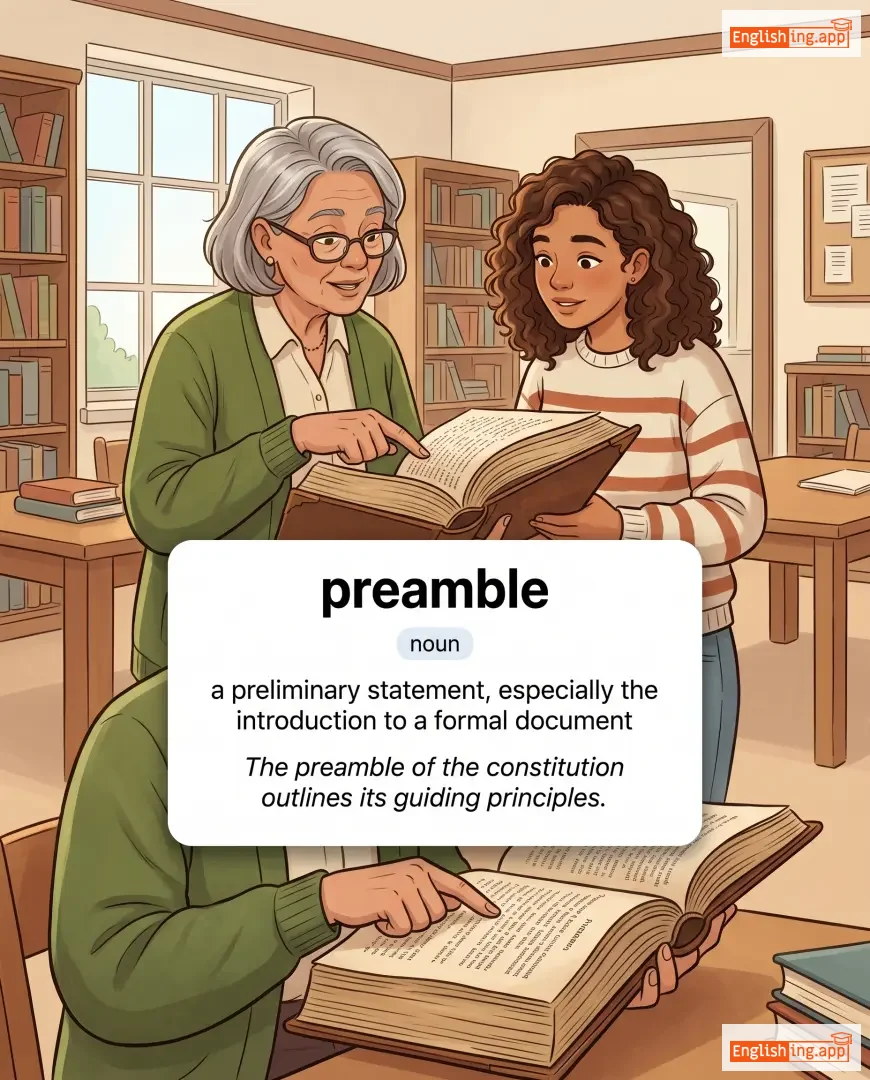
a preliminary statement, especially the introduction to a formal document
••••••
|
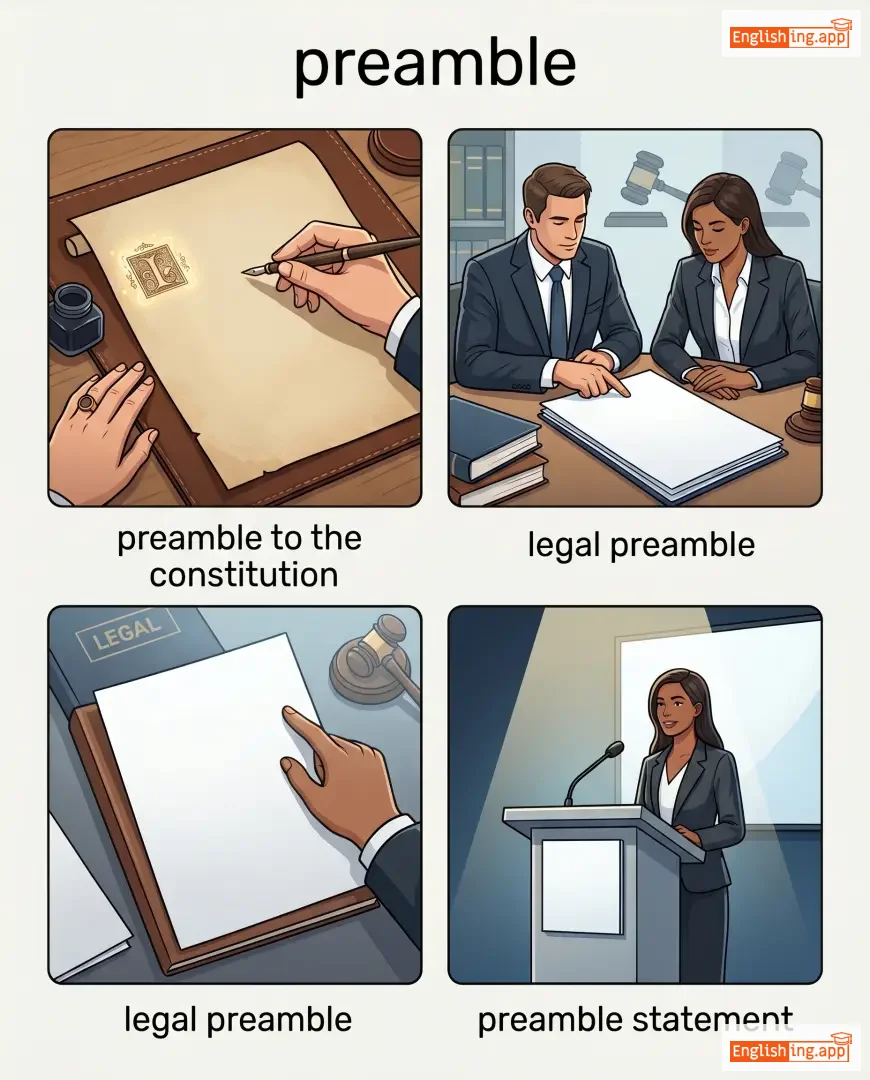
The preamble of the constitution outlines its guiding principles.
憲法の前文はその基本的な原則を説明しています。
••••••
|
憲法の前文はその基本的な原則を説明しています。
Kenpo no zenbun wa sono kihonteki na gensoku o setsumei shiteimasu.
••••••
|
- •••••• | - •••••• | - •••••• |
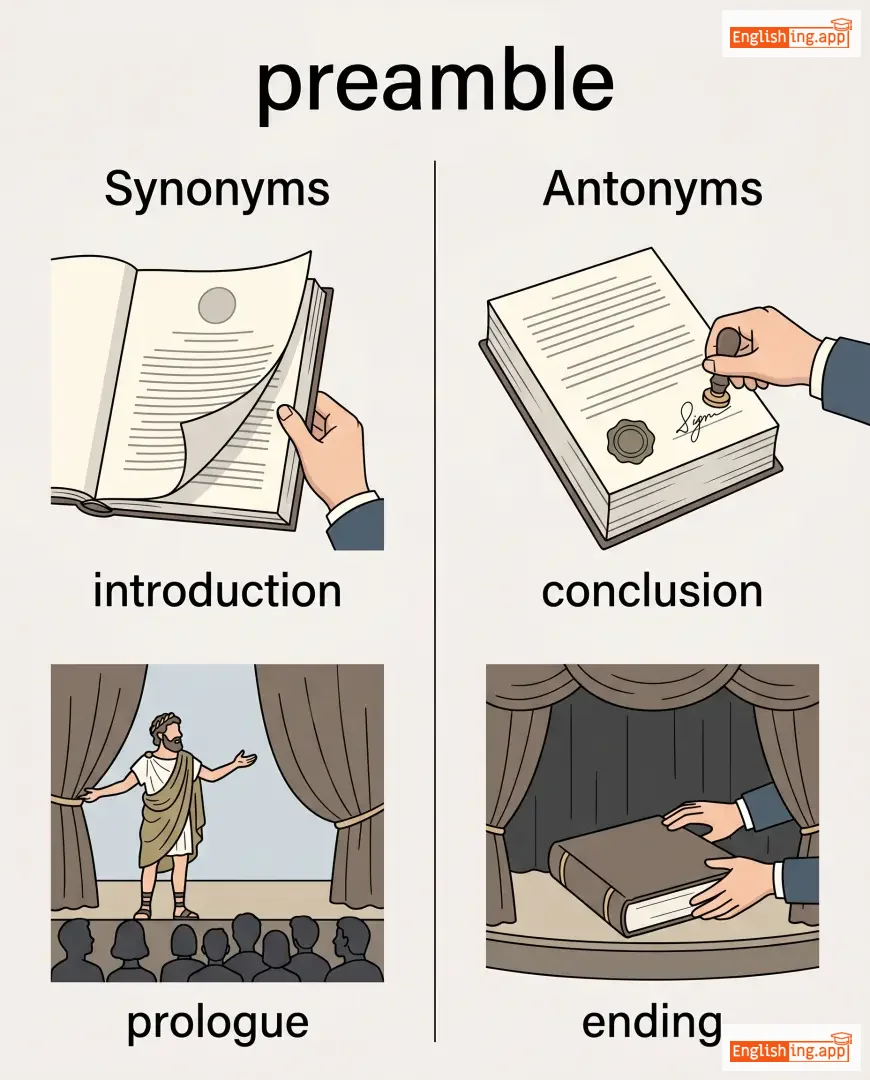
introduction, prologue, foreword, preface, opening
••••••
|
conclusion, ending, epilogue
••••••
|
preamble to the constitution, legal preamble, preamble statement, preamble section
••••••
|
Preamble の日本語訳は'前文'、文書の最初に書かれる部分です。
••••••
|
|
⚠️
••••••
|
/prɪˈkɛəriəs/
adjective
(プレカリオス)
••••••
|
|
不安定 / 危険
fuantei / kiken
••••••
|
- •••••• | - •••••• | - •••••• | - •••••• |
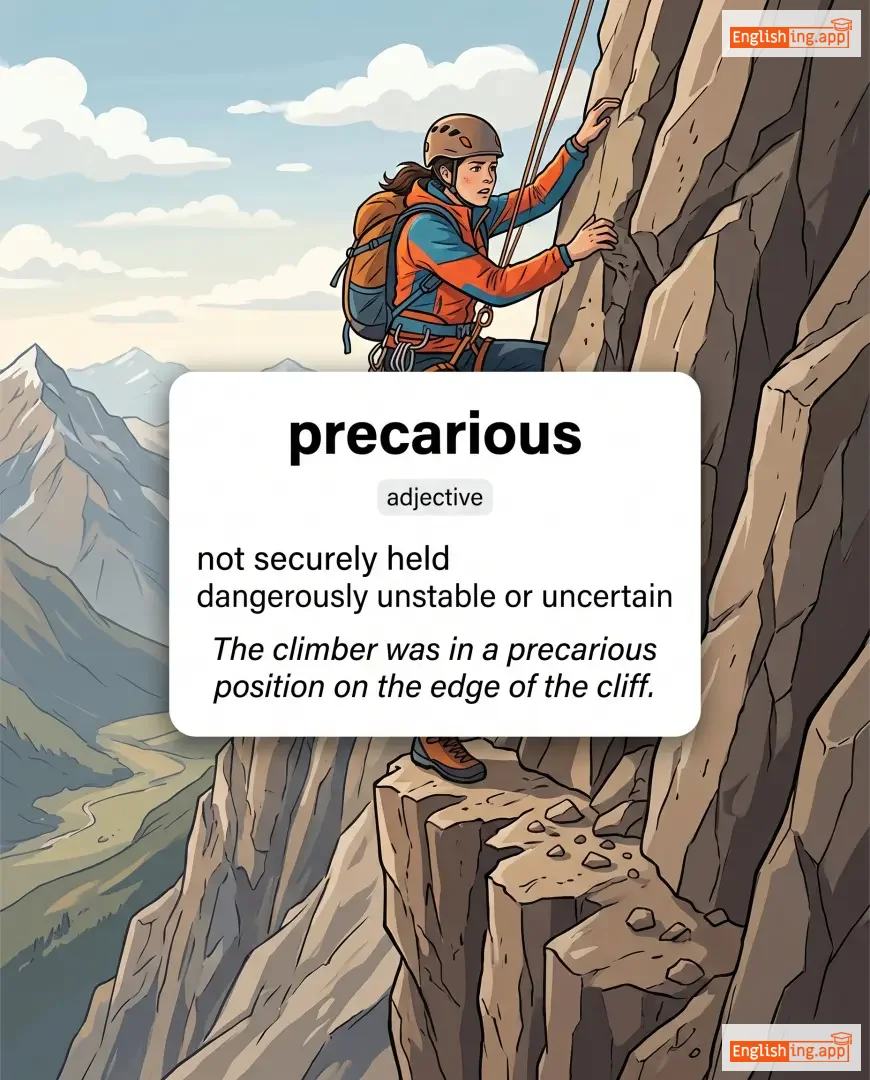
not securely held; dangerously unstable or uncertain
••••••
|
The climber was in a precarious position on the edge of the cliff. |
登山者は崖の端にある危険な位置にいました。
Tōzansha wa gake no hashi ni aru kiken na ichi ni imashita.
••••••
|
precarious situation |
a risky or dangerous circumstance
••••••
|
危険な状況
kiken na jōkyō
••••••
|
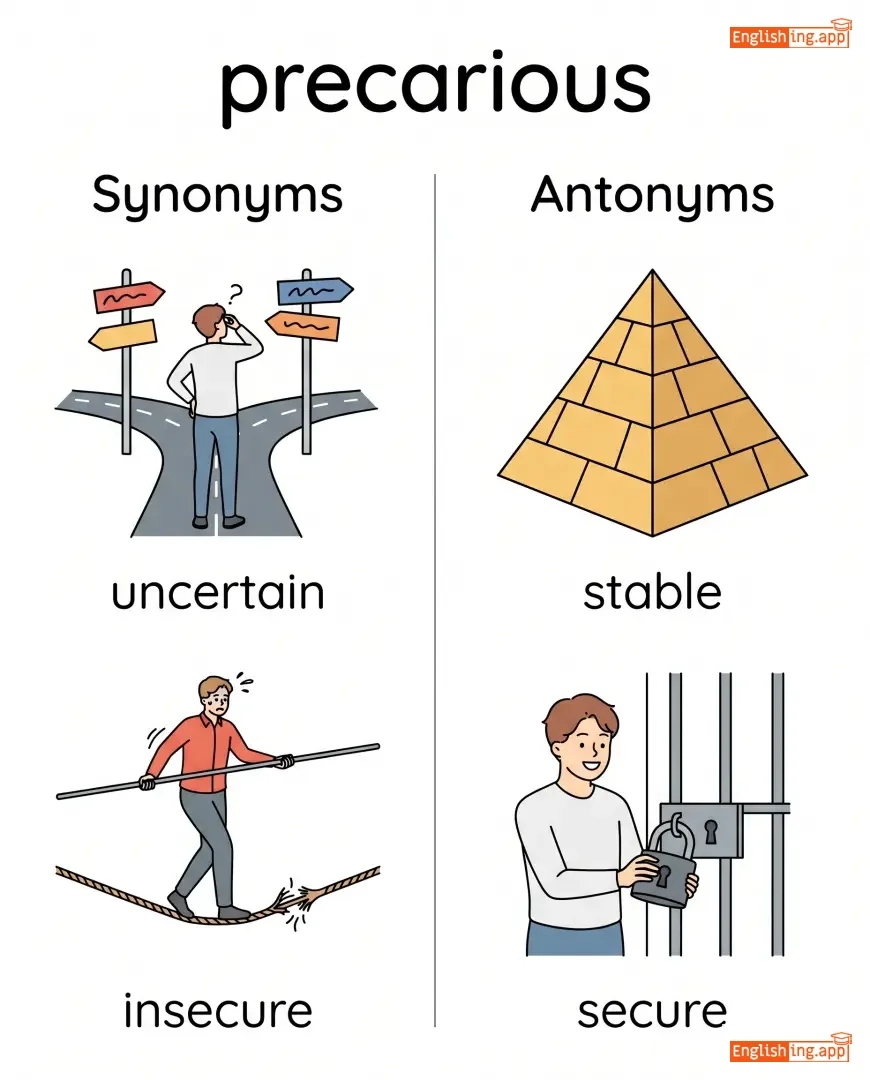
uncertain, insecure, unstable, shaky, risky
••••••
|
stable, secure, safe
••••••
|
precarious balance, precarious position, precarious condition, precarious situation
••••••
|
Pre-carious = Pre 車 (kuruma) それが危険なら、それは不安定です
••••••
|
|
📖
••••••
|
/ˈpriːsɛpt/
noun
(プリセプト)
••••••
|
- •••••• |
教義
kyougi
••••••
|
- •••••• | - •••••• | - •••••• | - •••••• |
A general rule intended to regulate behavior or thought.
••••••
|
Honesty is a fundamental precept in all religions.
正直はすべての宗教における基本的なプリセプトです。
••••••
|
正直はすべての宗教における基本的な教義です。
Shoujiki wa subete no shuukyou ni okeru kihonteki na kyougi desu.
••••••
|
moral precepts
道徳的なプリセプト
••••••
|
basic rules or principles guiding moral behavior
••••••
|
道徳的な原則
Doutokuteki na gensoku
••••••
|
principle, rule, law, tenet, doctrine
••••••
|
anarchy, chaos
••••••
|
basic precept, moral precept, religious precept, fundamental precept
••••••
|
教義とはルールです — Kyou + accept = 事前に受け入れるルール。
••••••
|
|
💨
••••••
|
/prɪˈsɪpɪteɪt/
verb/noun/adjective
••••••
|
|
- •••••• |
precipitated
••••••
|
precipitated
••••••
|
precipitates
••••••
|
precipitating
••••••
|
As a verb: to cause an event or situation, often suddenly or prematurely; as a noun: a solid formed in a chemical solution; as an adjective: done hastily.
••••••
|
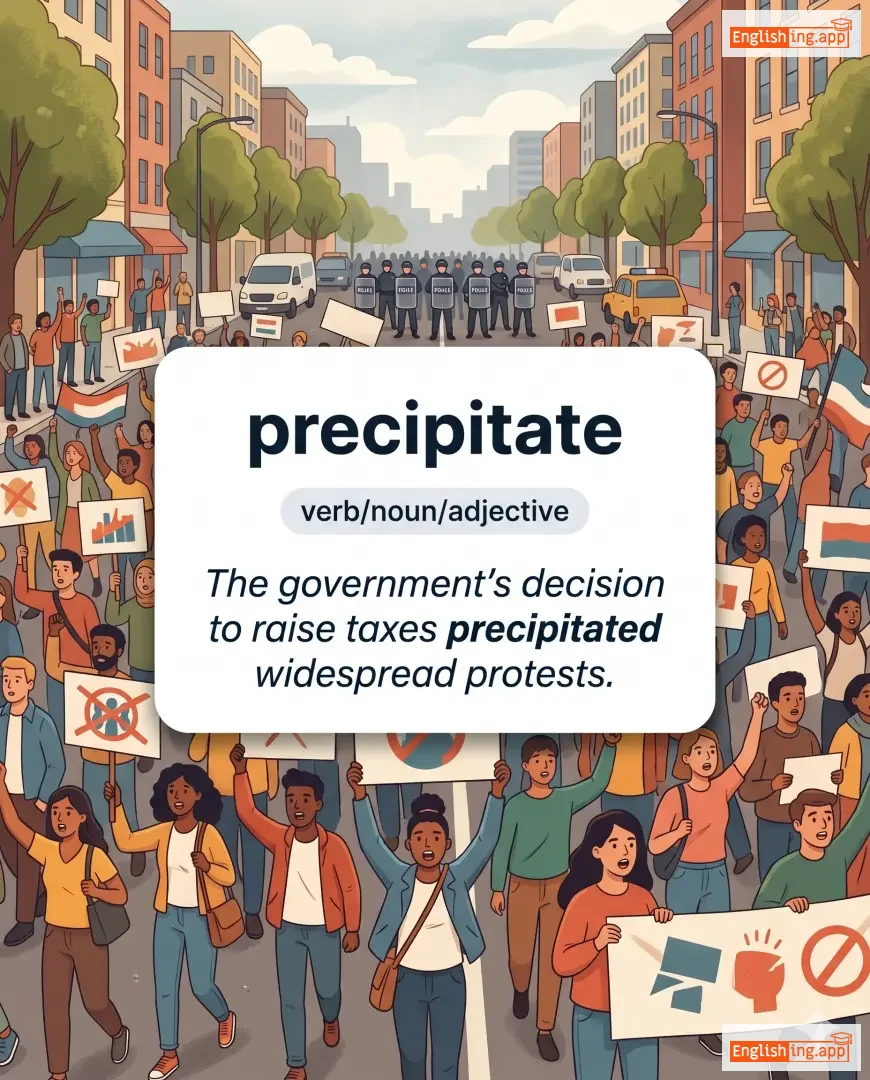
The government's decision to raise taxes precipitated widespread protests. |
- •••••• |
precipitate into |
to cause something to suddenly fall into or result in a situation
••••••
|
- •••••• |
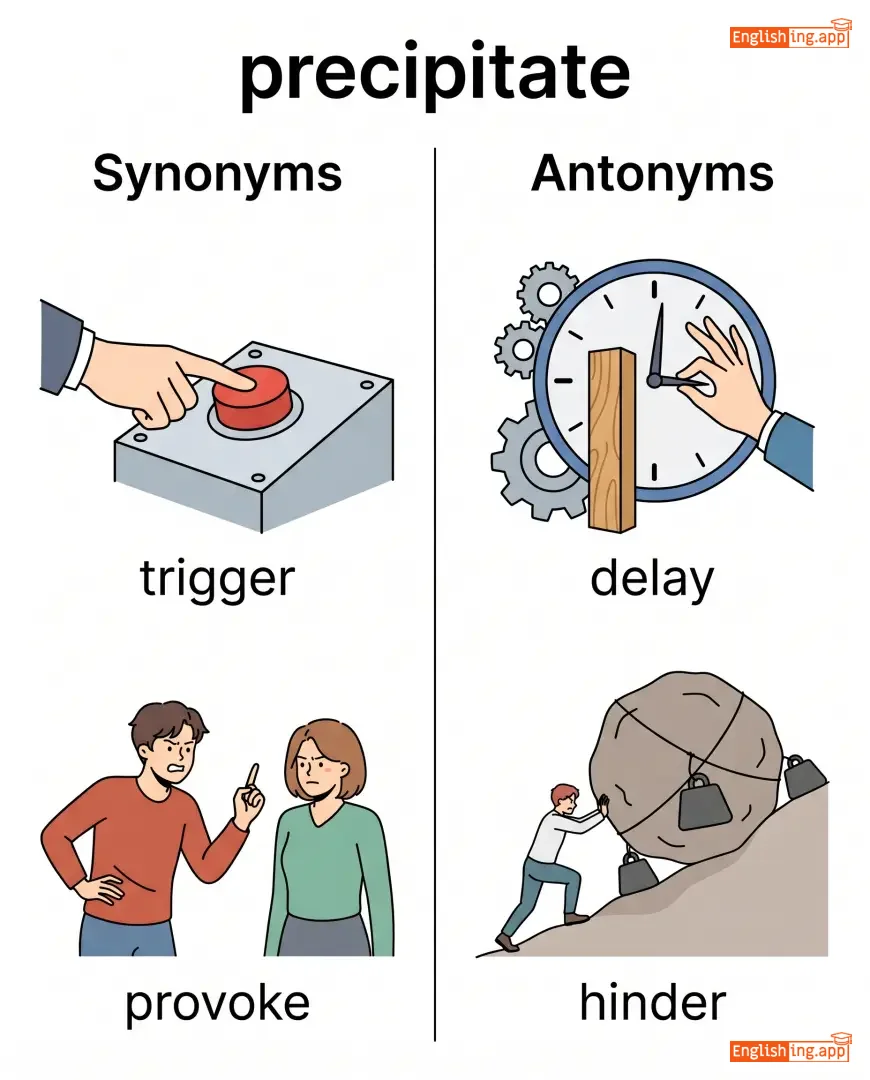
trigger, provoke, accelerate, hasten, instigate
••••••
|
delay, hinder, prevent
••••••
|
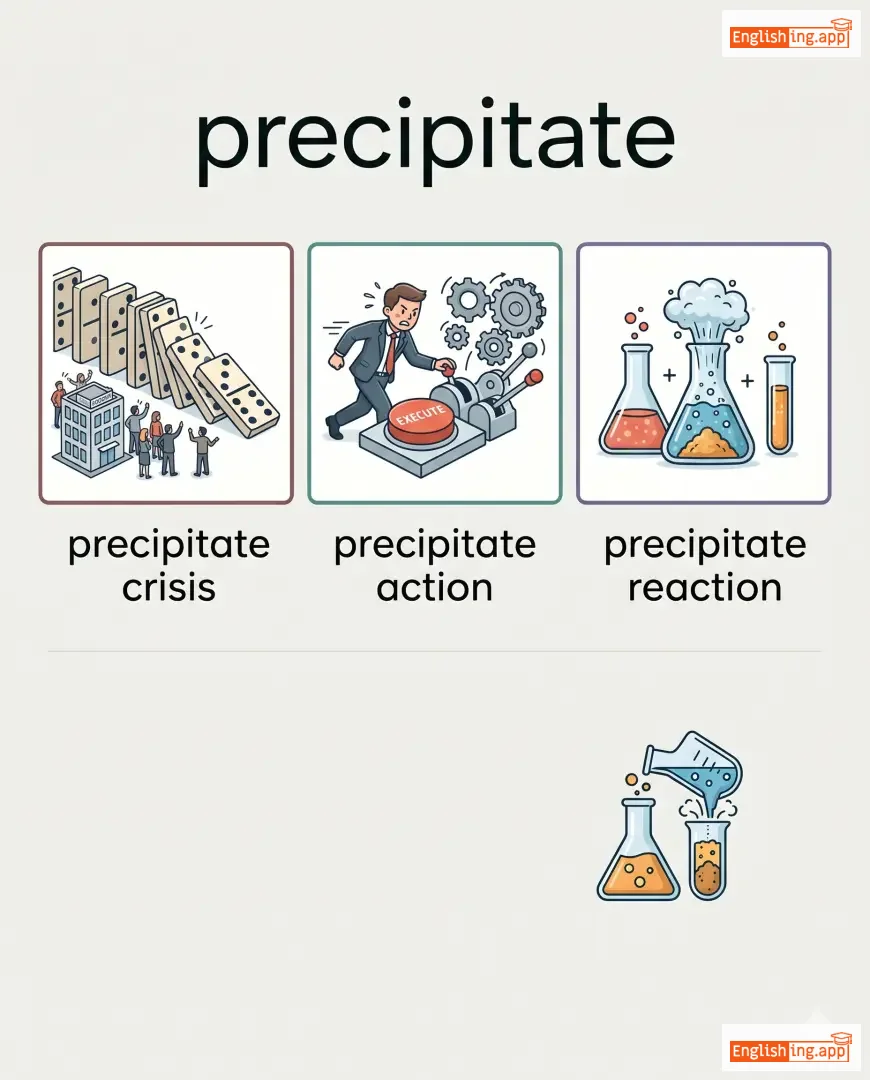
precipitate crisis, precipitate action, precipitate reaction
••••••
|
No •••••• |
|
⏳
••••••
|
/ˈpriːˌkɜrsər/
noun
(purīkāsā)
••••••
|
|
前兆
zenchou
••••••
|
- •••••• | - •••••• | - •••••• | - •••••• |
Something or someone that comes before another and indicates the approach of something else.
••••••
|
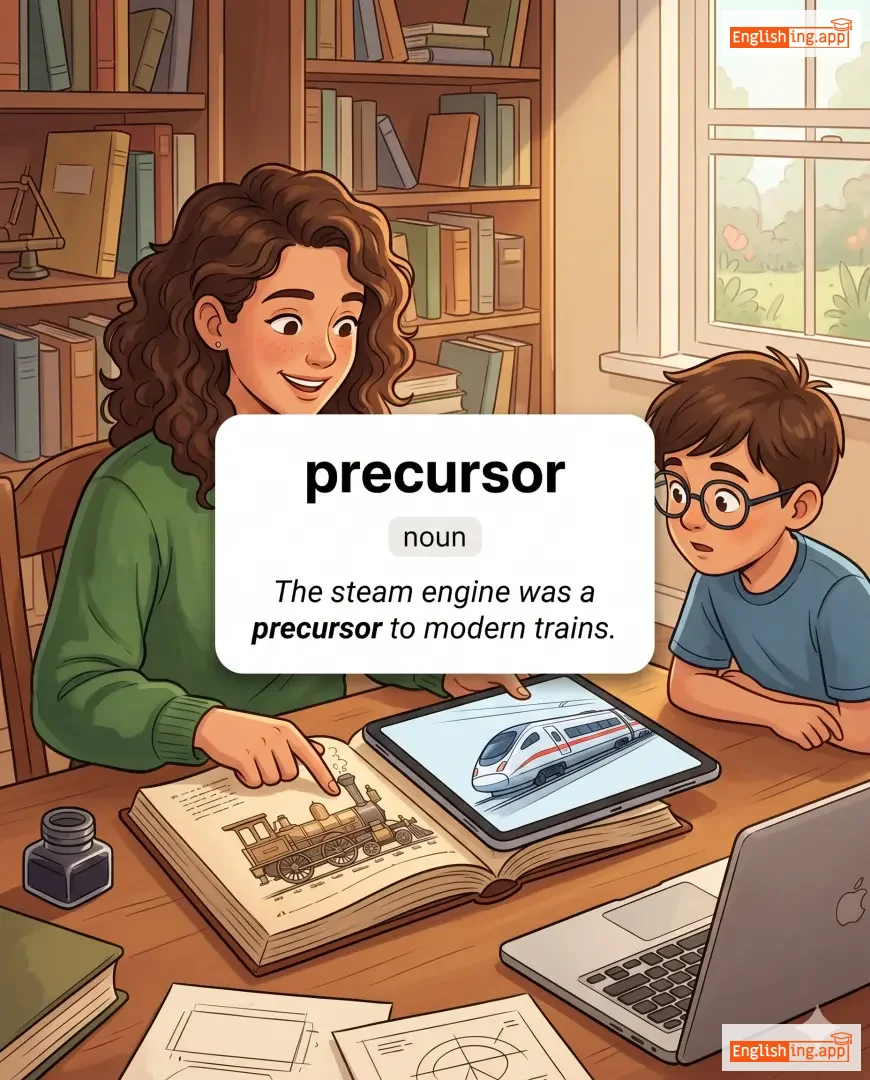
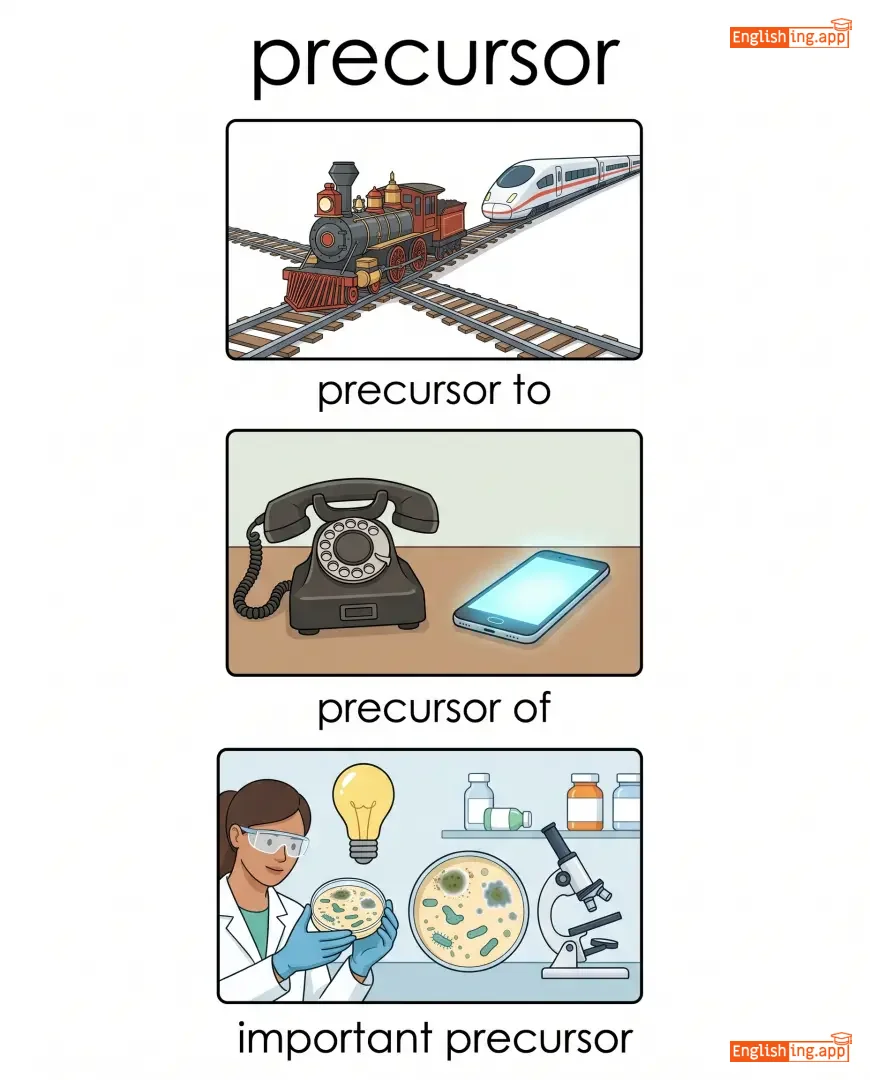
The steam engine was a precursor to modern trains.
蒸気機関車は現代の列車の前身でした。
••••••
|
蒸気機関車は現代の列車の前兆でした。
Jouki kikansha wa gendai no ressha no zenchou deshita.
••••••
|
- •••••• | - •••••• | - •••••• |
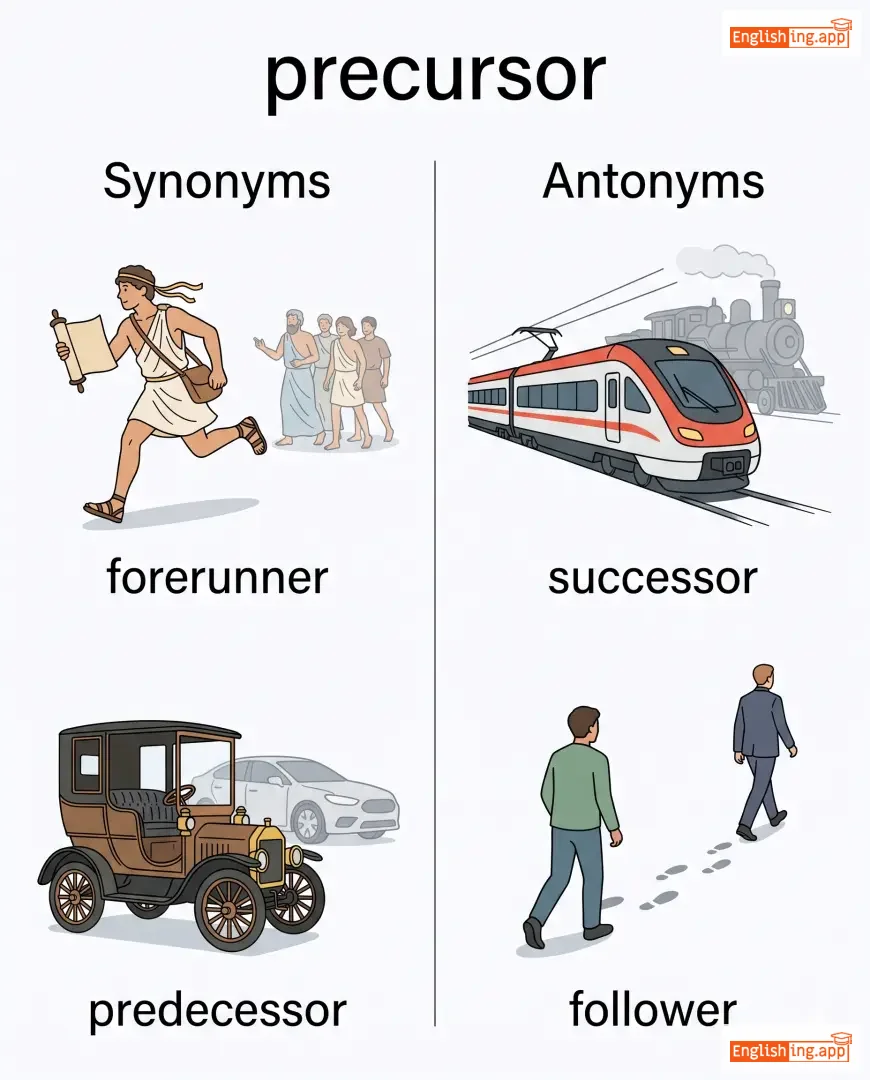
forerunner, predecessor, harbinger, pioneer, antecedent
••••••
|
successor, follower, outcome
••••••
|
precursor to, precursor of, important precursor
••••••
|
前兆 = 前 (zen) と 兆 (chou) - 来るものの兆し。
••••••
|
|
🛡️
••••••
|
/priːˈɛmpt/
verb
(プリエンプト)
••••••
|
- •••••• |
予防する
yobou suru
••••••
|
preempted
プリエンプテッド
••••••
|
preempted
プリエンプテッド
••••••
|
preempts
プリエンプツ
••••••
|
preempting
プリエンプティング
••••••
|
To take action in order to prevent something from happening; to take the place of something.
••••••
|
The government acted quickly to preempt a financial crisis.
政府は迅速に行動し、金融危機を防ぎました。
••••••
|
政府は迅速に行動し、金融危機を防ぎました。
Seifu wa jinsoku ni koudou shi, kin'yuu kiki wo fusegimashita.
••••••
|
preemptive strike
先制攻撃
••••••
|
A first attack intended to prevent an enemy from doing something similar.
••••••
|
先制攻撃
sensē kōgeki
••••••
|
prevent, forestall, avert, anticipate
••••••
|
allow, permit, enable
••••••
|
preempt a crisis, preempt an attack, preempt action, preempt decision
••••••
|
Preemptは危機を避けるための行動です — 予防することが鍵です。
••••••
|
|
🐒
••••••
|
/prɪˈhɛnsaɪl/
adjective
(プリヘンシル)
••••••
|
- •••••• |
把握するための適応
haaku suru tame no tekiou
••••••
|
- •••••• | - •••••• | - •••••• | - •••••• |
adapted for seizing or grasping, especially by wrapping around an object
••••••
|
The monkey used its prehensile tail to hang from the branch.
サルはそのプリヘンシル尾を使って枝からぶら下がっていた。
••••••
|
サルはそのプリヘンシル尾を使って枝からぶら下がっていた。
Saru wa sono purihenshiru o wo tsukatte eda kara burasagatte ita.
••••••
|
- •••••• | - •••••• | - •••••• |
grasping, gripping, clinging, adaptive, seizing
••••••
|
nonprehensile, rigid, nongripping
••••••
|
prehensile tail, prehensile trunk, prehensile feet, prehensile ability
••••••
|
Prehensile tail 見たら覚えて—‘Pre hand style’ 尾も手のように物を掴める!
••••••
|
|
🔮
••••••
|
/ˌpriːməˈnɪʃən/ or /ˌprɛm-/
noun
(プレモニション)
••••••
|
- •••••• |
予感
yokan
••••••
|
- •••••• | - •••••• | - •••••• | - •••••• |
a strong feeling that something is about to happen, often something negative
••••••
|
She had a premonition of danger before the trip. |
旅行前に危険の予感があった。
Ryokou mae ni kiken no yokan ga atta.
••••••
|
- •••••• | - •••••• | - •••••• |
forewarning, intuition, hunch, omen, presentiment
••••••
|
surprise, doubt, disbelief
••••••
|
dark premonition, sudden premonition, premonition of disaster
••••••
|
予 + 感、事前に感じる、通常は良くないこと。
••••••
|
|
🌩️
••••••
|
/ˈprɛsɪdʒ/
verb
(プリセージ)
••••••
|
- •••••• |
予兆
yochou
••••••
|
presaged
プリセージド
••••••
|
presaged
プリセージド
••••••
|
presages
プリセージズ
••••••
|
presaging
プリセージング
••••••
|
to be a sign or warning that something will happen; to foreshadow
••••••
|
Dark clouds presage a storm.
暗い雲が嵐を予告する。
••••••
|
暗い雲が嵐を予告する。
Kurai kumo ga arashi o yokoku suru.
••••••
|
- •••••• | - •••••• | - •••••• |
foreshadow, predict, foretell, portend, indicate
••••••
|
prove, confirm, demonstrate
••••••
|
presage trouble, presage disaster, presage the future, presage change
••••••
|
Presage = 予兆、未来の出来事を示すサイン
••••••
|
|
😏
••••••
|
/prɪˈzʌmp.tʃu.əs/
adjective
(purizampushuasu)
••••••
|
|
生意気な
namaiki na
••••••
|
- •••••• | - •••••• | - •••••• | - •••••• |
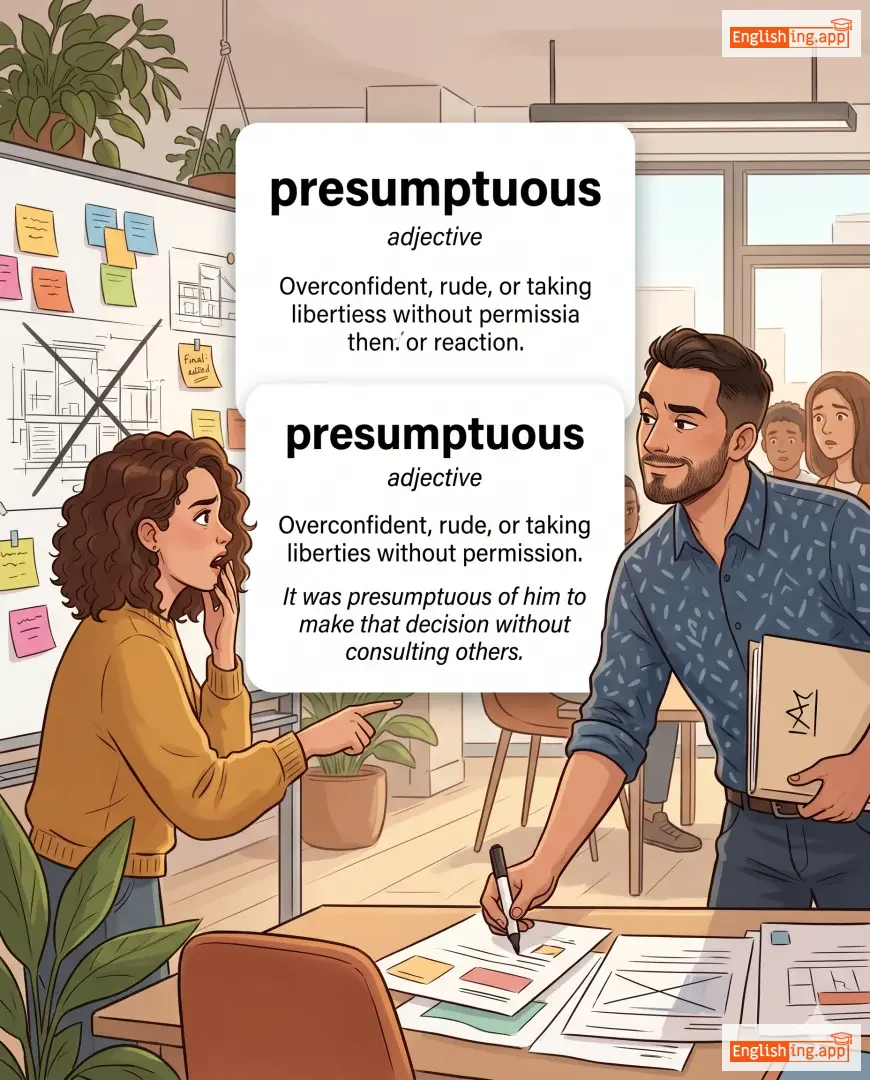
Overconfident, rude, or taking liberties without permission.
••••••
|
It was presumptuous of him to make that decision without consulting others. |
他が他の人と相談せずにその決定を下したのは生意気だった。
Kare ga hoka no hito to sōdan sezu ni sono kettei o kudashita no wa namaiki datta.
••••••
|
- •••••• | - •••••• | - •••••• |
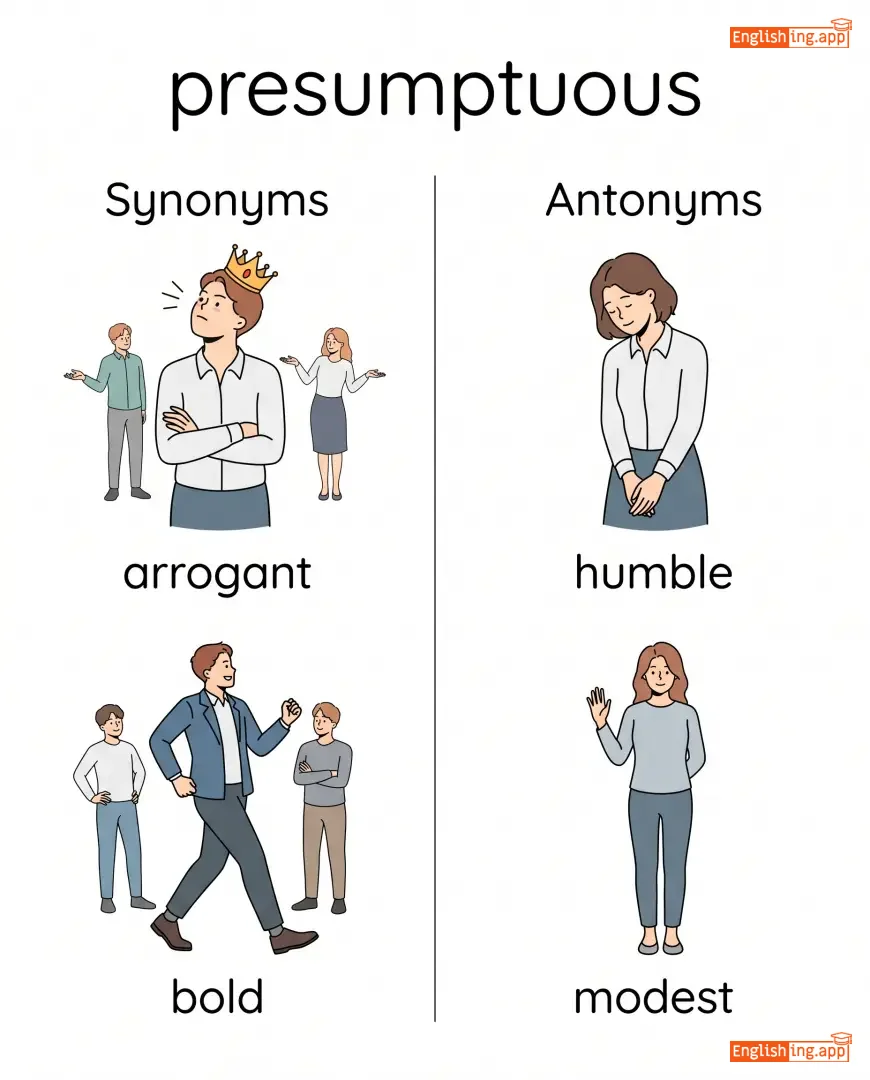
arrogant, bold, forward, overconfident
••••••
|
humble, modest
••••••
|
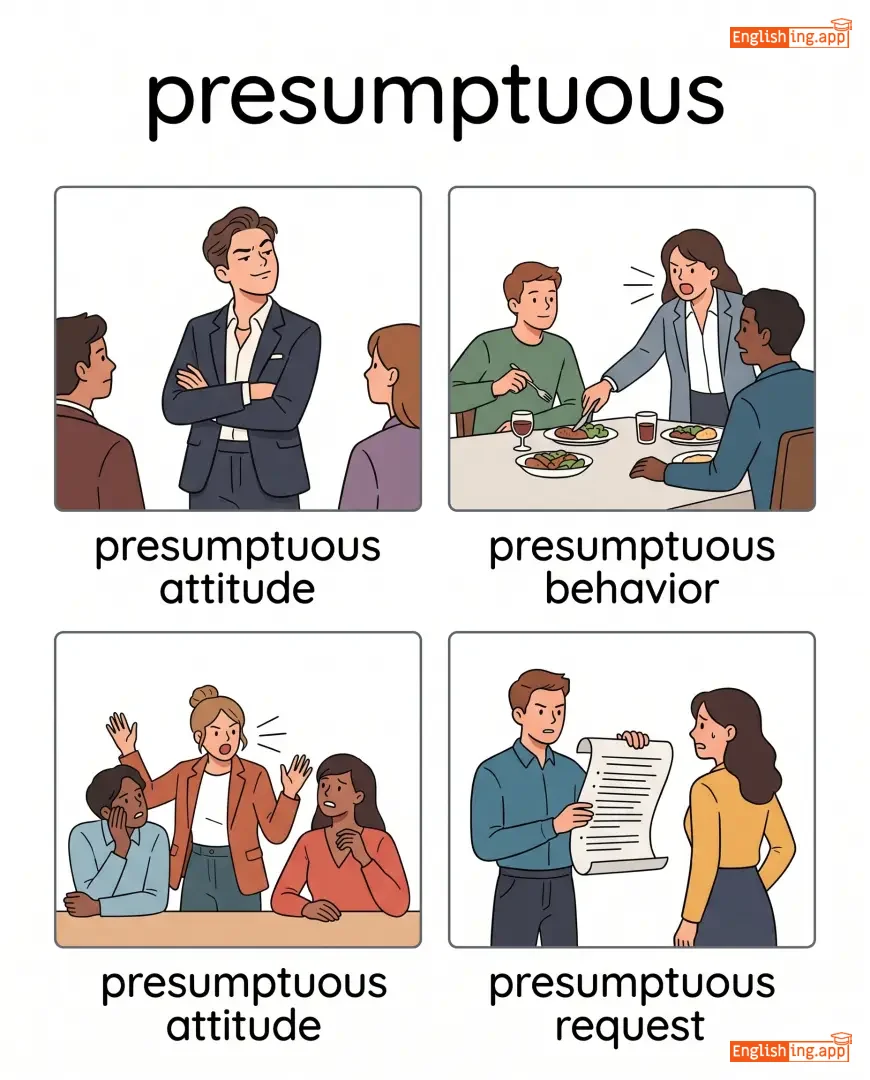
presumptuous attitude, presumptuous behavior, presumptuous request
••••••
|
生意気なは、許可なく何でもやってみようとする態度を示す。
••••••
|
|
✨
••••••
|
/ˌpriːtərˈnætʃərəl/
adjective
(プレターナチュラル)
••••••
|
- •••••• |
超自然的
chōshizenteki
••••••
|
- •••••• | - •••••• | - •••••• | - •••••• |
Beyond what is normal or natural; extraordinary or supernatural.
••••••
|
She had a preternatural ability to remain calm in any crisis.
彼女はどんな危機にも冷静に保つ超自然的な能力を持っていた。
••••••
|
彼女はどんな危機にも冷静に保つ超自然的な能力を持っていた。
Kanojo wa donna kiki ni mo reisei ni tamotsu chōshizenteki na nōryoku o motte ita.
••••••
|
- •••••• | - •••••• | - •••••• |
extraordinary, supernatural, exceptional, uncanny, abnormal
••••••
|
ordinary, natural, normal
••••••
|
preternatural calm, preternatural power, preternatural ability, preternatural silence
••••••
|
Preternatural とは、通常を超えた- 非常識的または超自然的なことです。
••••••
|
|
🤥
••••••
|
/prɪˈværɪkeɪt/
verb
••••••
|
|
- •••••• |
prevaricated
••••••
|
prevaricated
••••••
|
prevaricates
••••••
|
prevaricating
••••••
|
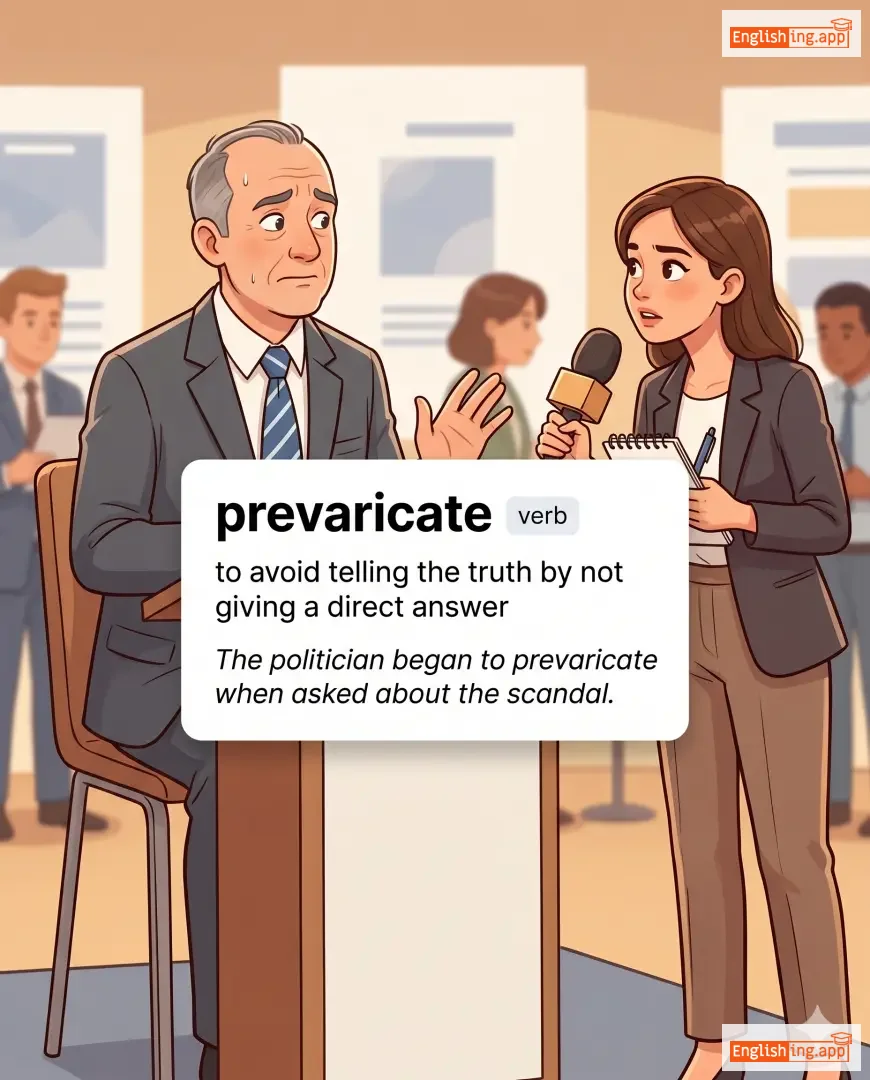
to avoid telling the truth by not giving a direct answer
••••••
|
The politician began to prevaricate when asked about the scandal. |
- •••••• |
beat around the bush |
to avoid talking about something directly
••••••
|
- •••••• |
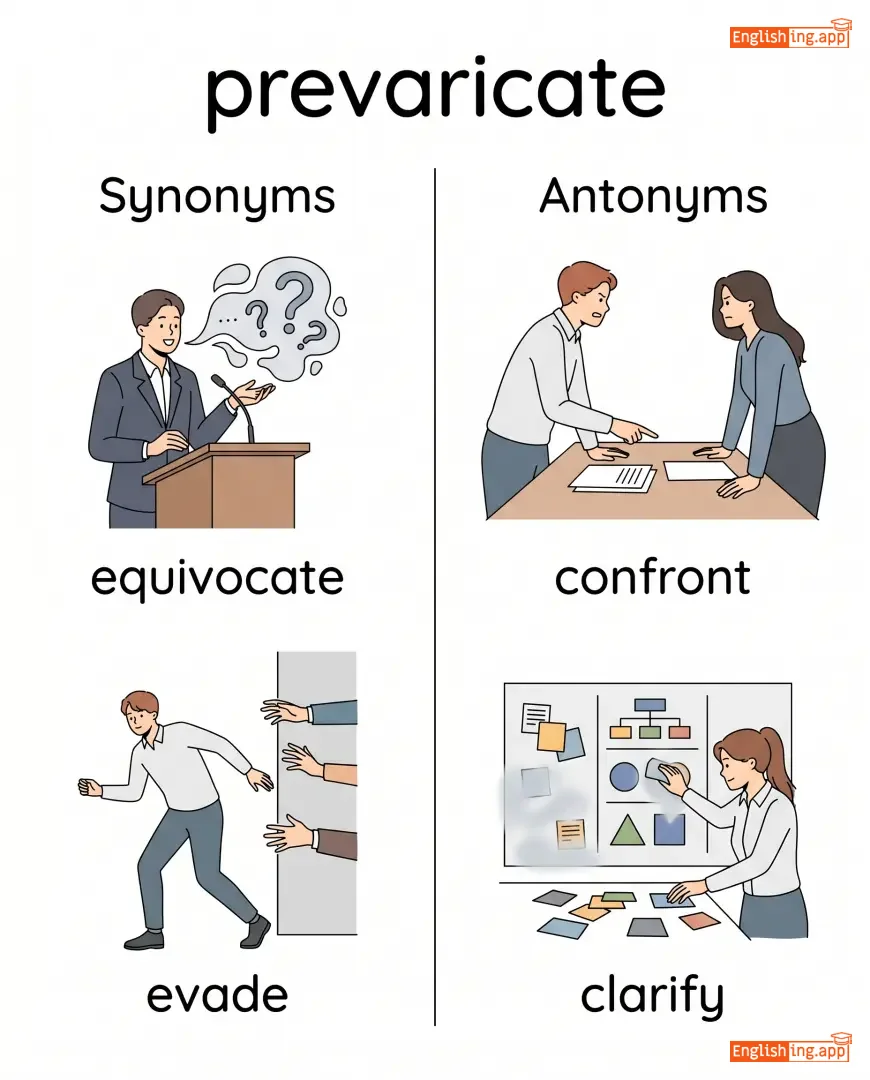
equivocate, evade, mislead, hedge, waffle
••••••
|
confront, clarify, admit
••••••
|
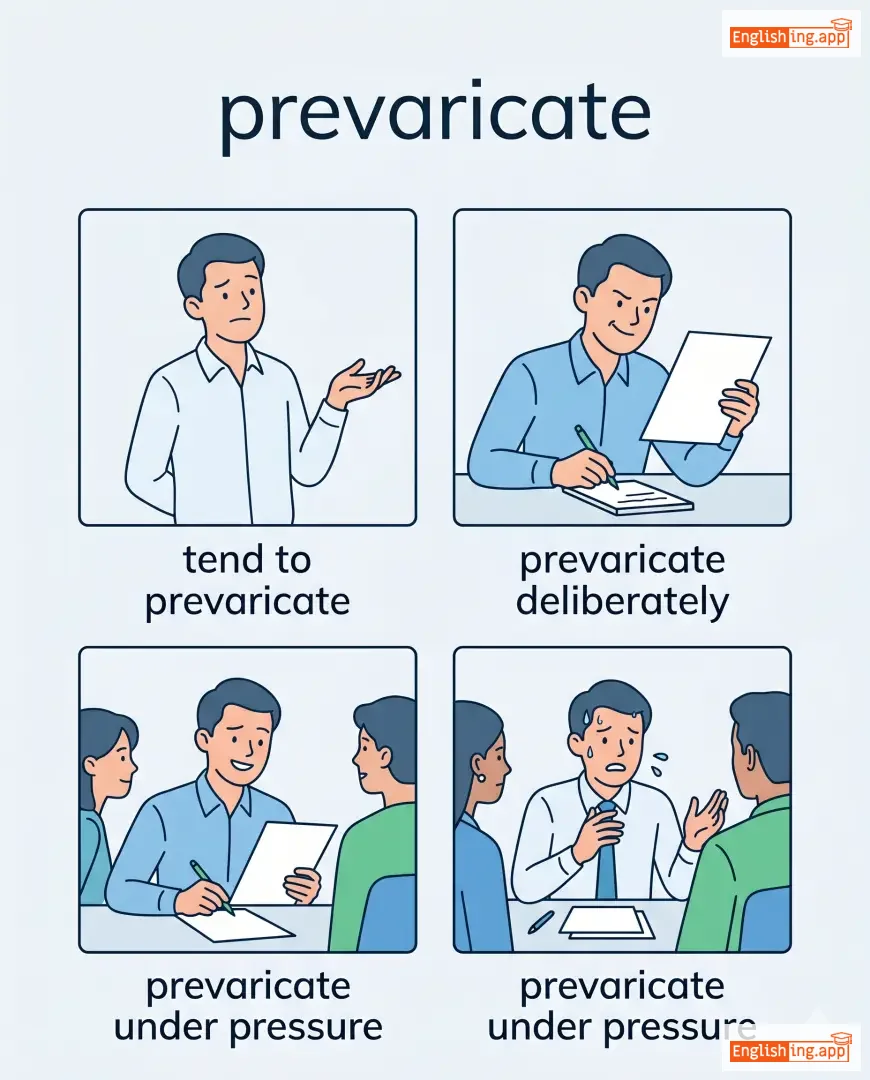
tend to prevaricate, prevaricate deliberately, prevaricate under pressure
••••••
|
No •••••• |
|
🌌
••••••
|
/praɪˈmɔːrdiəl/
adjective
(プライモーディアル)
••••••
|
- •••••• |
原始的な
genshiteki na
••••••
|
- •••••• | - •••••• | - •••••• | - •••••• |
Existing at or from the beginning of time; fundamental and original.
••••••
|
Scientists study the primordial soup from which life emerged. |
科学者たちは生命が出現した原始的なスープを研究しています。
Kagakusha-tachi wa seimei ga shutsugen shita genshiteki na suupu o kenkyū shiteimasu.
••••••
|
primordial soup |
The hypothetical mixture of organic molecules from which life originated.
••••••
|
原始的なスープ
genshiteki na suupu
••••••
|
ancient, original, primal, early, fundamental
••••••
|
modern, recent, secondary
••••••
|
primordial soup, primordial chaos, primordial matter, primordial universe
••••••
|
原始的なとは始まりから — まるで原始的なスープから生命が誕生したようなものです。
••••••
|
|
🌿
••••••
|
/ˈprɪstiːn/
adjective
••••••
|

|
- •••••• | - •••••• | - •••••• | - •••••• | - •••••• |
In its original condition; unspoiled, clean, and fresh.
••••••
|
The hikers were amazed by the pristine beauty of the untouched forest. |
- •••••• |
pristine condition |
Something that is perfectly clean, undamaged, or in its original state.
••••••
|
- •••••• |
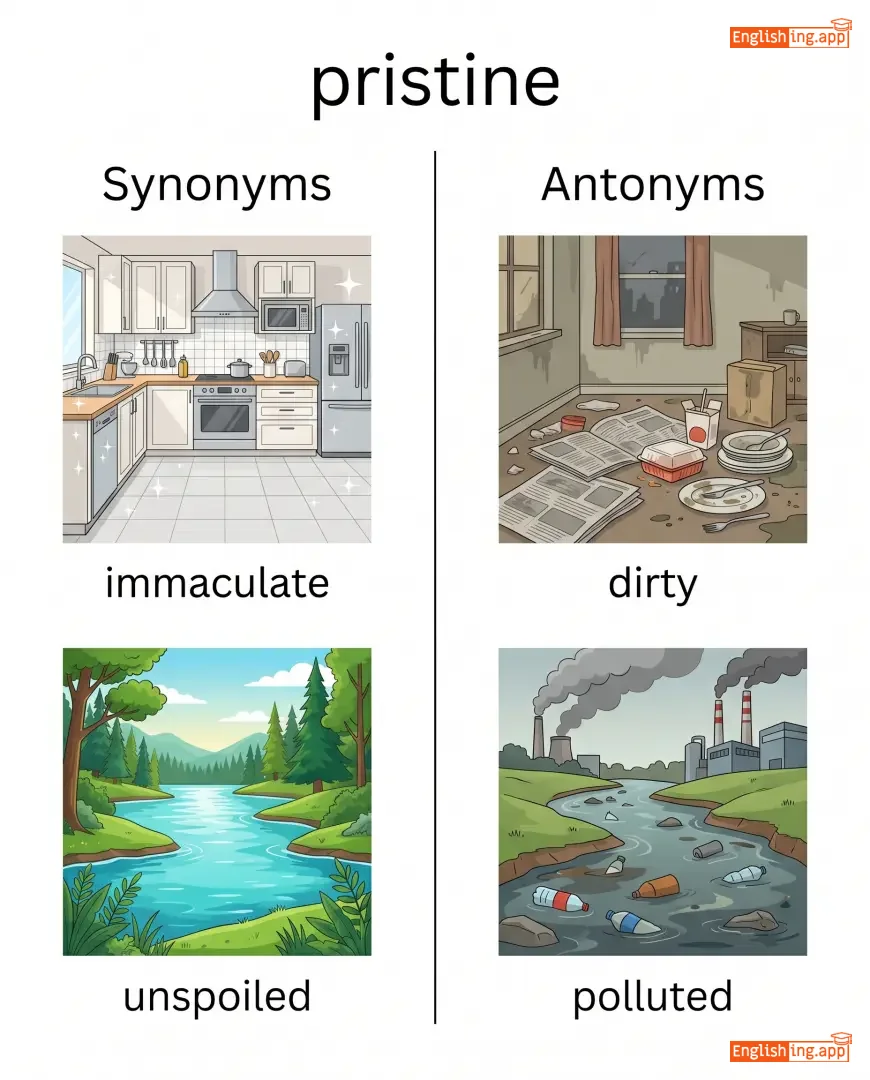
immaculate, unspoiled, untouched, pure, fresh
••••••
|
dirty, polluted, spoiled
••••••
|
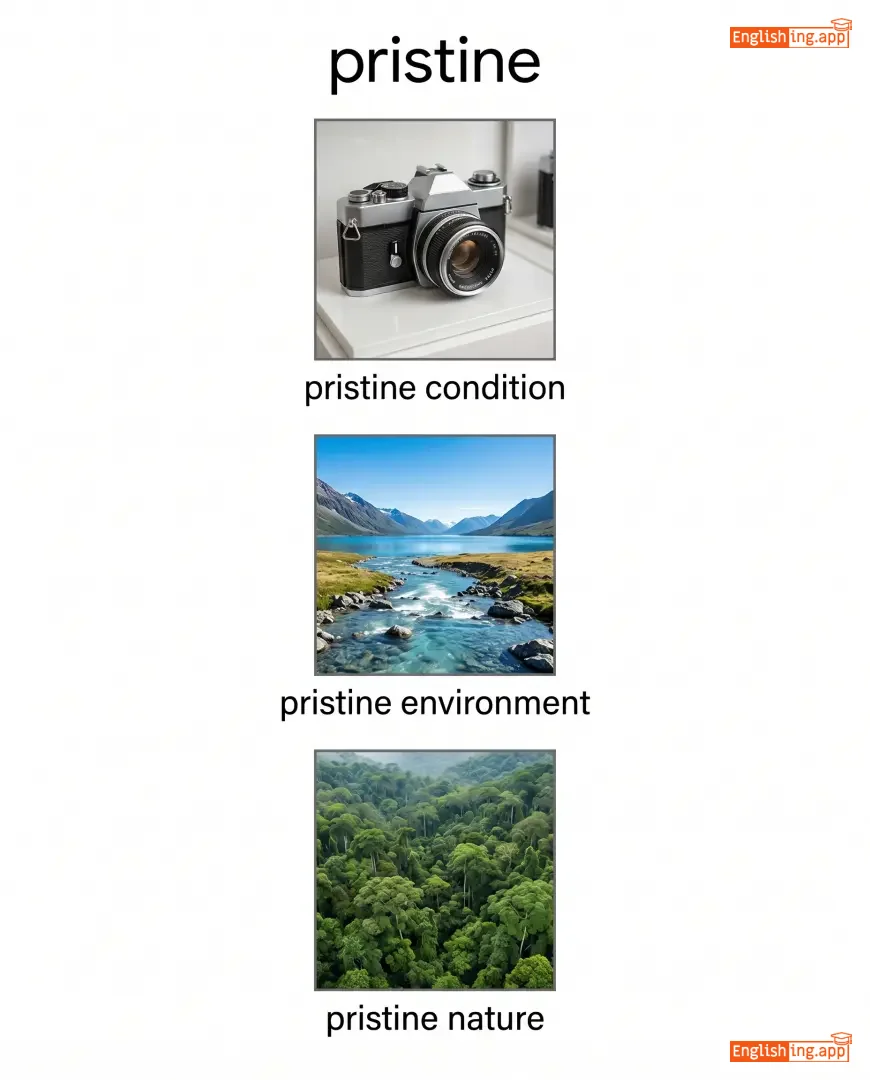
pristine condition, pristine environment, pristine nature, pristine forest
••••••
|
No •••••• |
|
⚖️
••••••
|
/ˈproʊbɪti/
noun
(purobitī)
••••••
|

|
誠実
seijitsu
••••••
|
- •••••• | - •••••• | - •••••• | - •••••• |
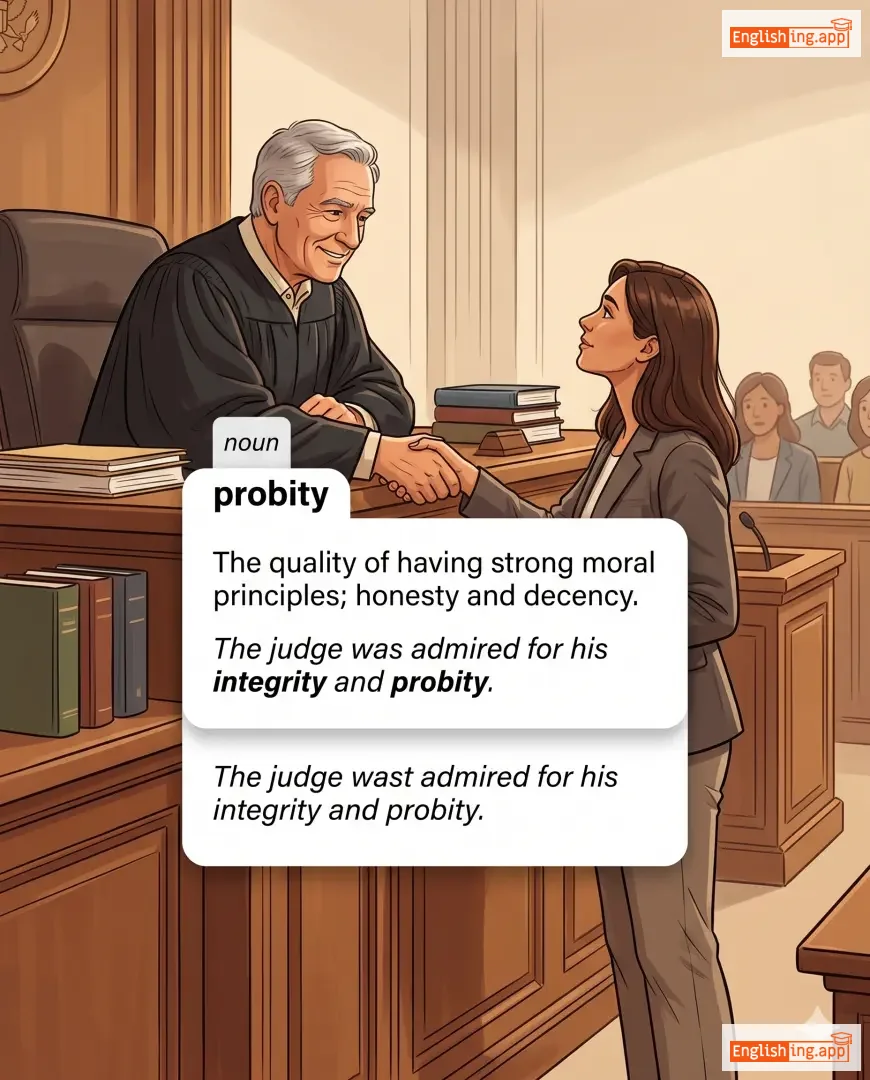
The quality of having strong moral principles; honesty and decency.
••••••
|
The judge was admired for his integrity and probity.
その裁判官は、誠実さと正直さで賞賛されました。
••••••
|
その裁判官は、誠実さと正直さで賞賛されました。
Sono saiban-kan wa, seijitsusa to shōjitsusa de shōsan saremashita.
••••••
|
- •••••• | - •••••• | - •••••• |
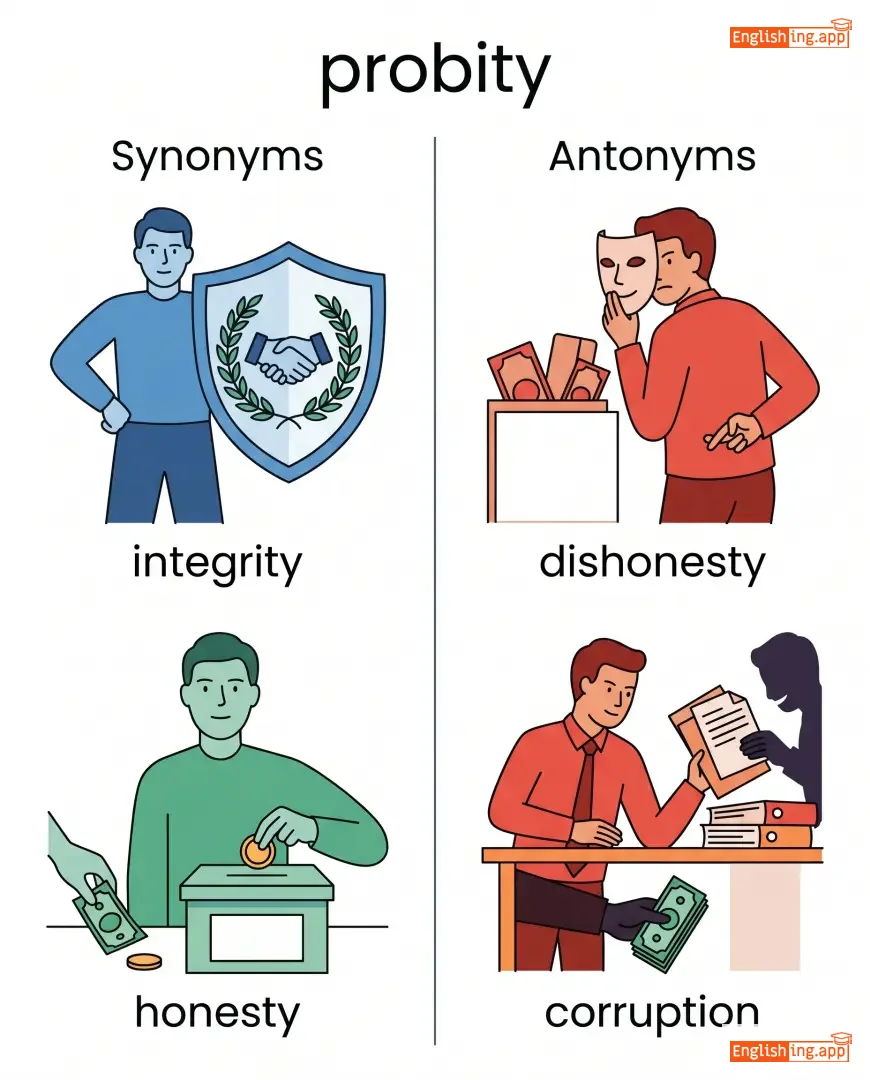
integrity, honesty, uprightness, morality, rectitude
••••••
|
dishonesty, corruption, immorality
••••••
|
probity in public life, professional probity, integrity and probity, probity standards
••••••
|
Probity = PROper + 誠実 - プロパー誠実とは誠実な人を意味します。
••••••
|
|
⚠️
••••••
|
/ˌprɒb.ləˈmæt.ɪk/
adjective
(プロブレマティック)
••••••
|
|
問題のある; 問題を引き起こす
mondai no aru; mondai o hikiokosu
••••••
|
- •••••• | - •••••• | - •••••• | - •••••• |
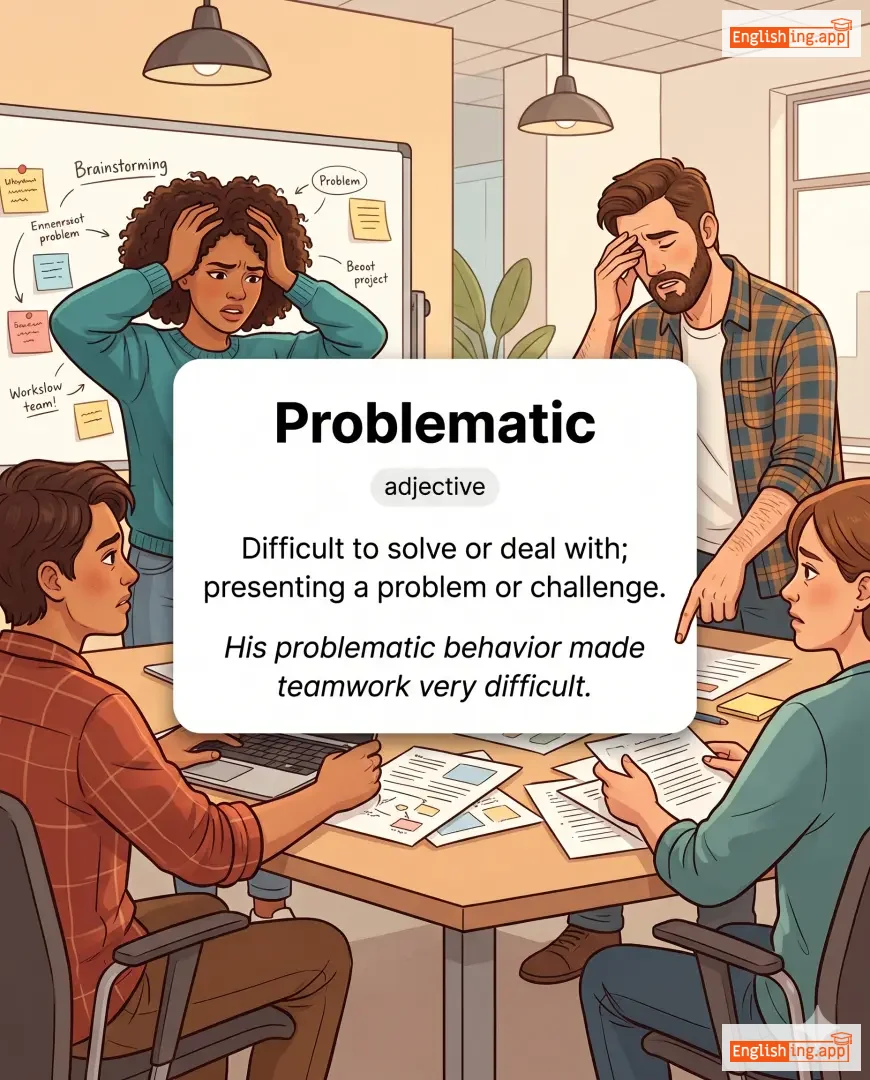
causing problems; troublesome; difficult to deal with
••••••
|
The new policy changes are problematic and need to be reviewed.
新しい政策変更は問題があり、再評価する必要があります。
••••••
|
新しい政策変更は問題があり、再評価する必要があります。
Atarashii seisaku henkou wa mondai ga ari, saihyouka suru hitsuyou ga arimasu.
••••••
|
- •••••• | - •••••• | - •••••• |
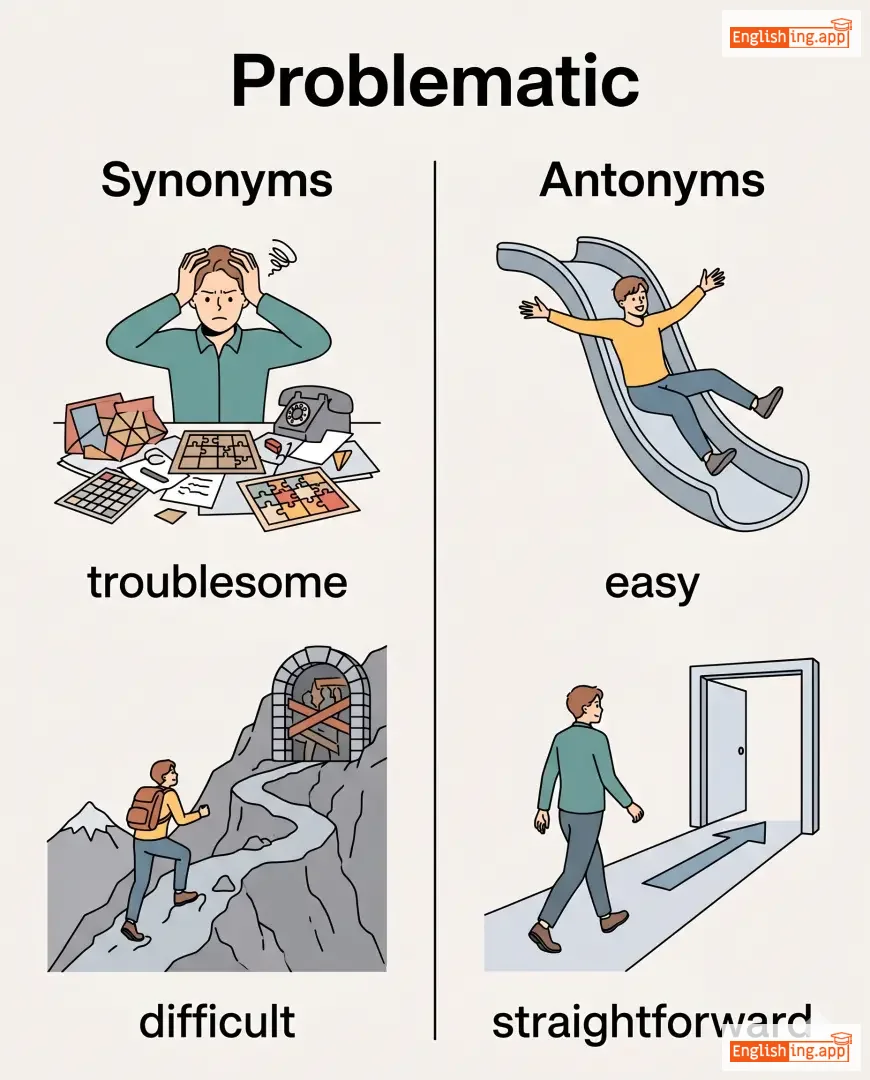
troublesome, difficult, challenging, questionable
••••••
|
unproblematic, easy, simple, straightforward
••••••
|
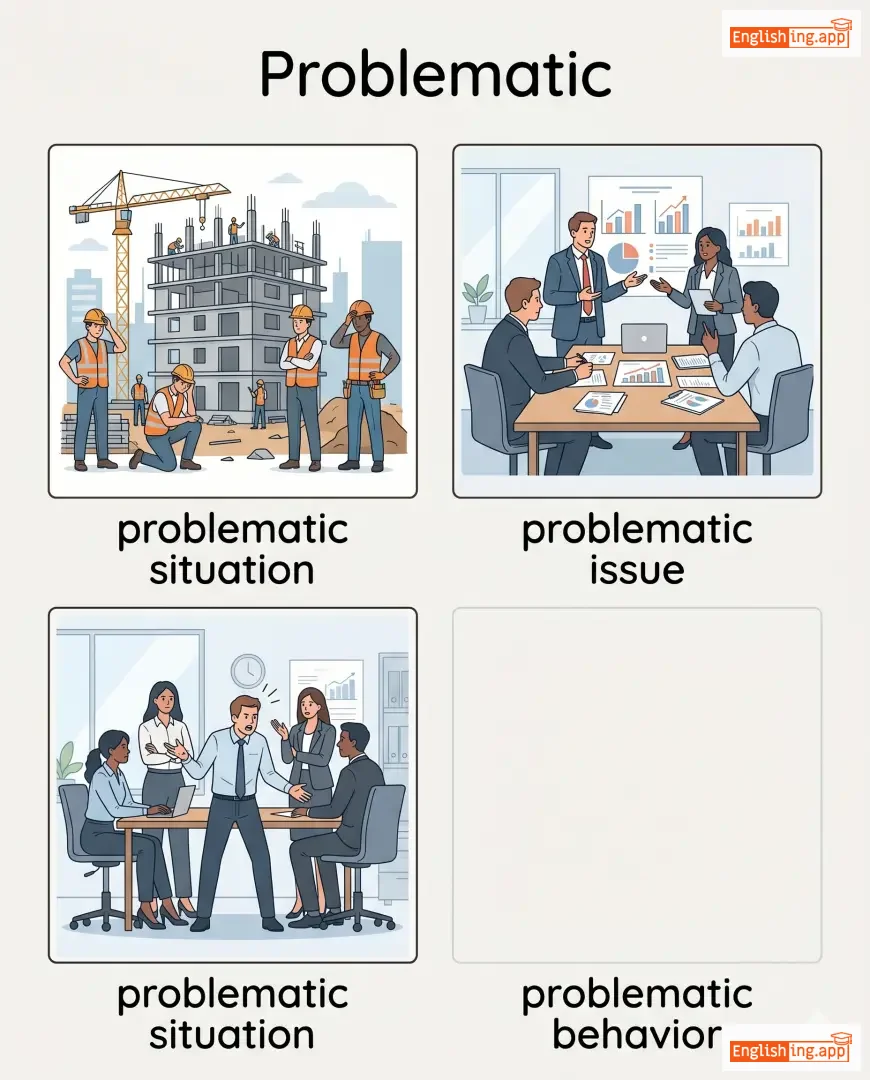
problematic situation, problematic behavior, highly problematic, potentially problematic
••••••
|
問題 (mondai) + の (no) = 問題のある (mondai no aru)
••••••
|
|
💸
••••••
|
/ˈprɒdɪɡəl/
adjective
(プロディガル)
••••••
|
|
浪費家
rōhika
••••••
|
- •••••• | - •••••• | - •••••• | - •••••• |
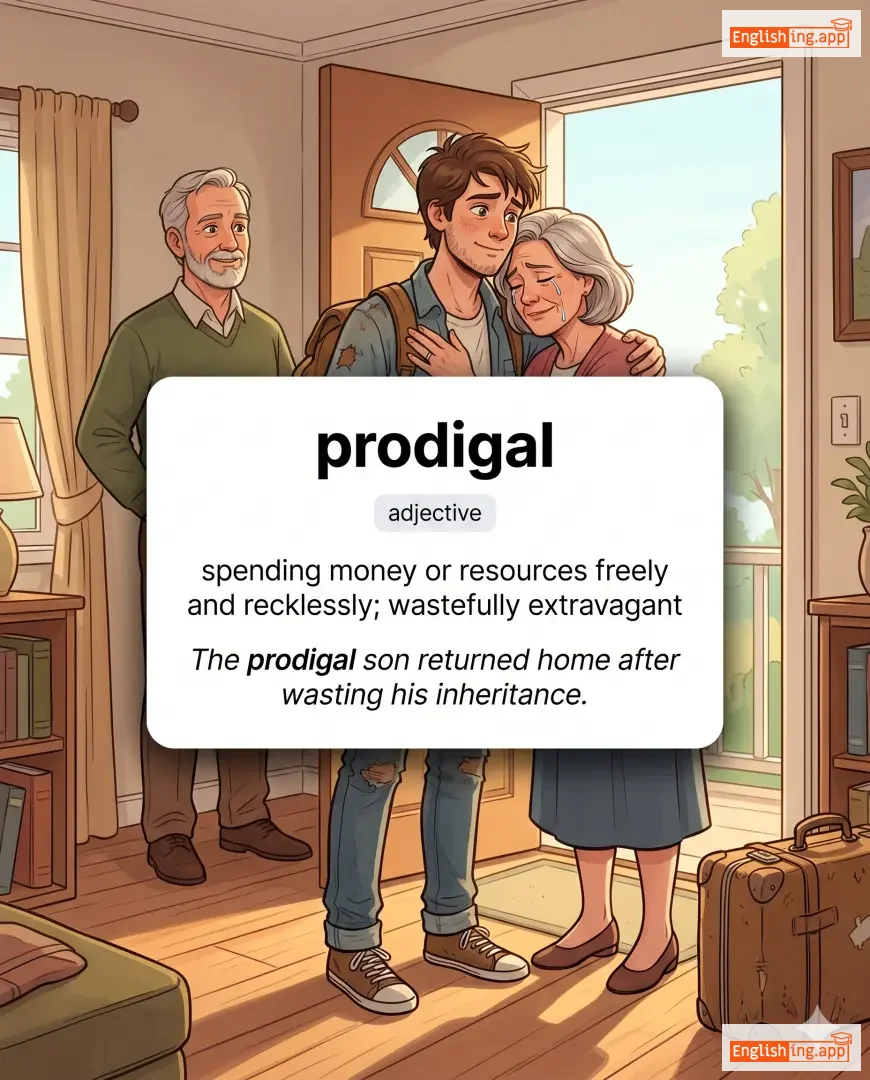
spending money or resources freely and recklessly; wastefully extravagant
••••••
|
The prodigal son returned home after wasting his inheritance. |
浪費家の息子は、遺産を浪費した後、家に帰りました。
Rōhika no musuko wa, isan o rōhi shita ato, ie ni kaerimashita.
••••••
|
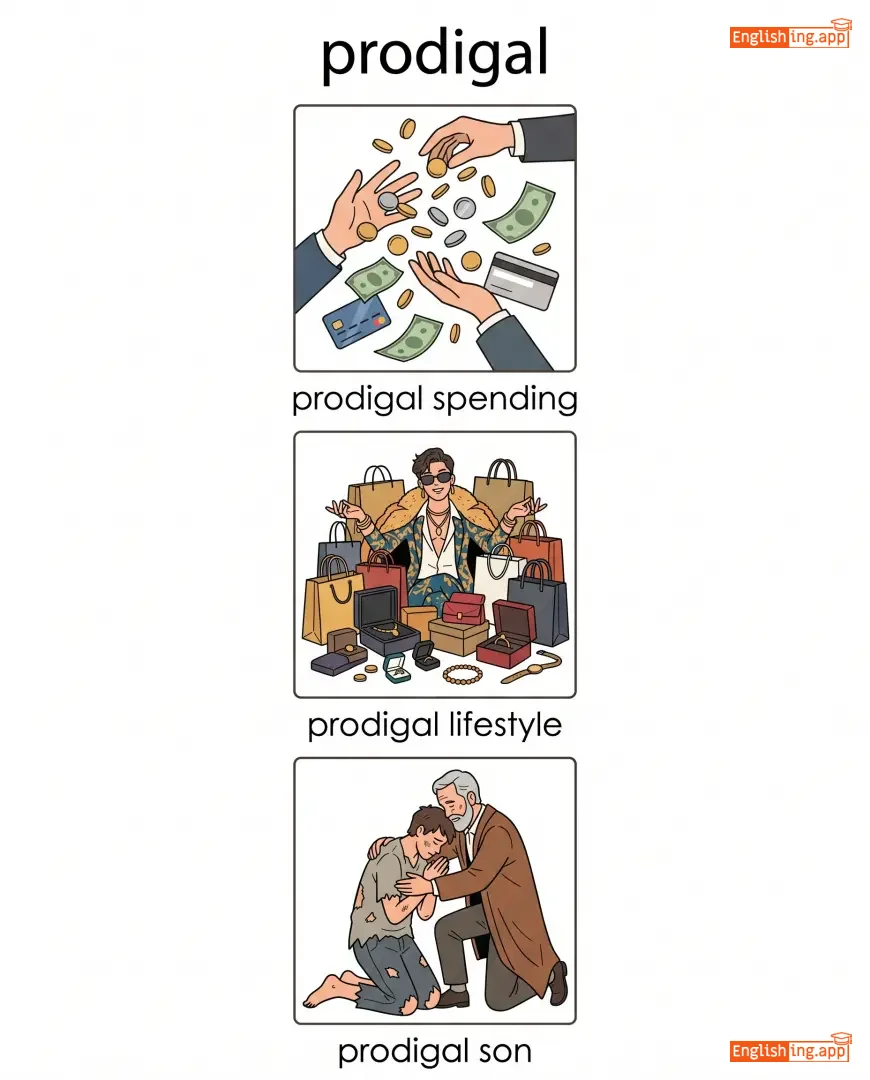
prodigal son |
a person who leaves home and behaves recklessly but later returns, repentant
••••••
|
浪費家の息子
rōhika no musuko
••••••
|
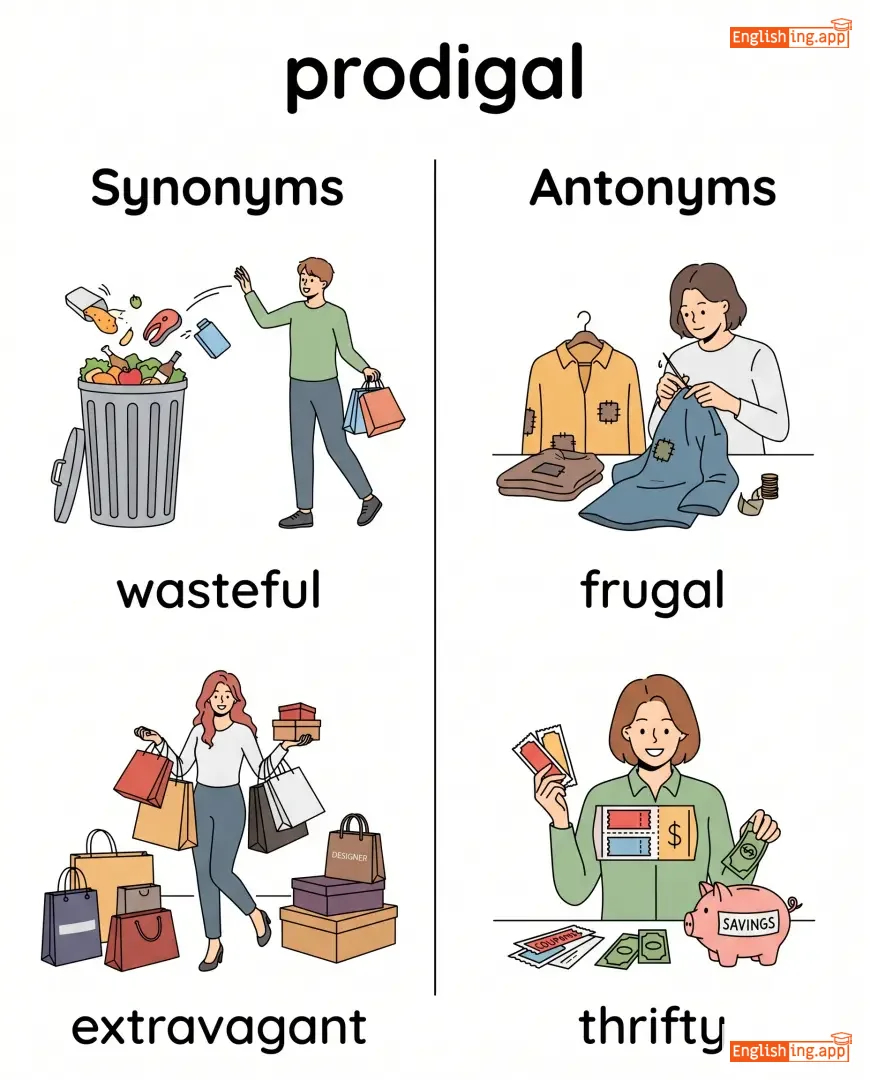
wasteful, extravagant, lavish, reckless
••••••
|
frugal, thrifty, economical
••••••
|
prodigal spending, prodigal lifestyle, prodigal son
••••••
|
浪費家、すべてを使い果たして悔い改めて帰る。
••••••
|
|
🧠
••••••
|
/prəˈfaʊnd/
adjective
(プロファウンド)
••••••
|
|
深遠
shinen
••••••
|
- •••••• | - •••••• | - •••••• | - •••••• |
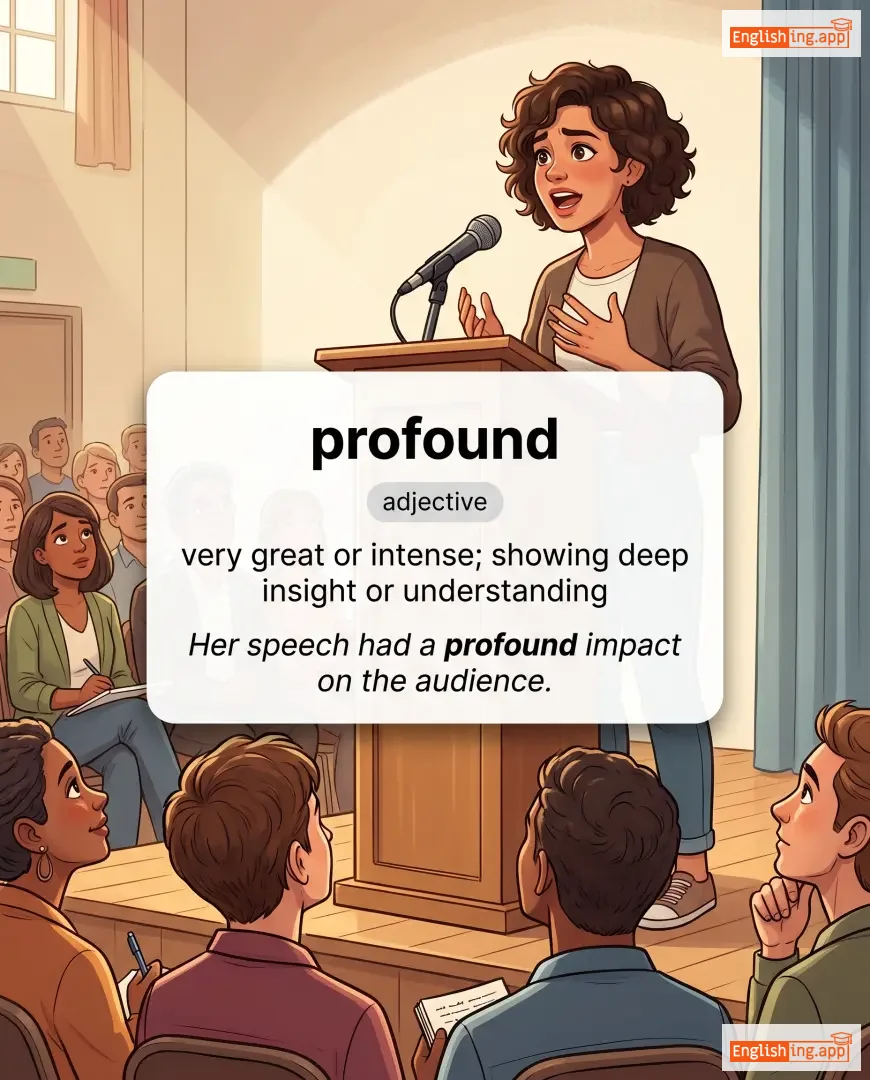
very great or intense; showing deep insight or understanding
••••••
|
Her speech had a profound impact on the audience. |
彼女のスピーチは観客に深い影響を与えました。
Kanojo no supīchi wa kankyaku ni fukai eikyō o ataemashita.
••••••
|
- •••••• | - •••••• | - •••••• |
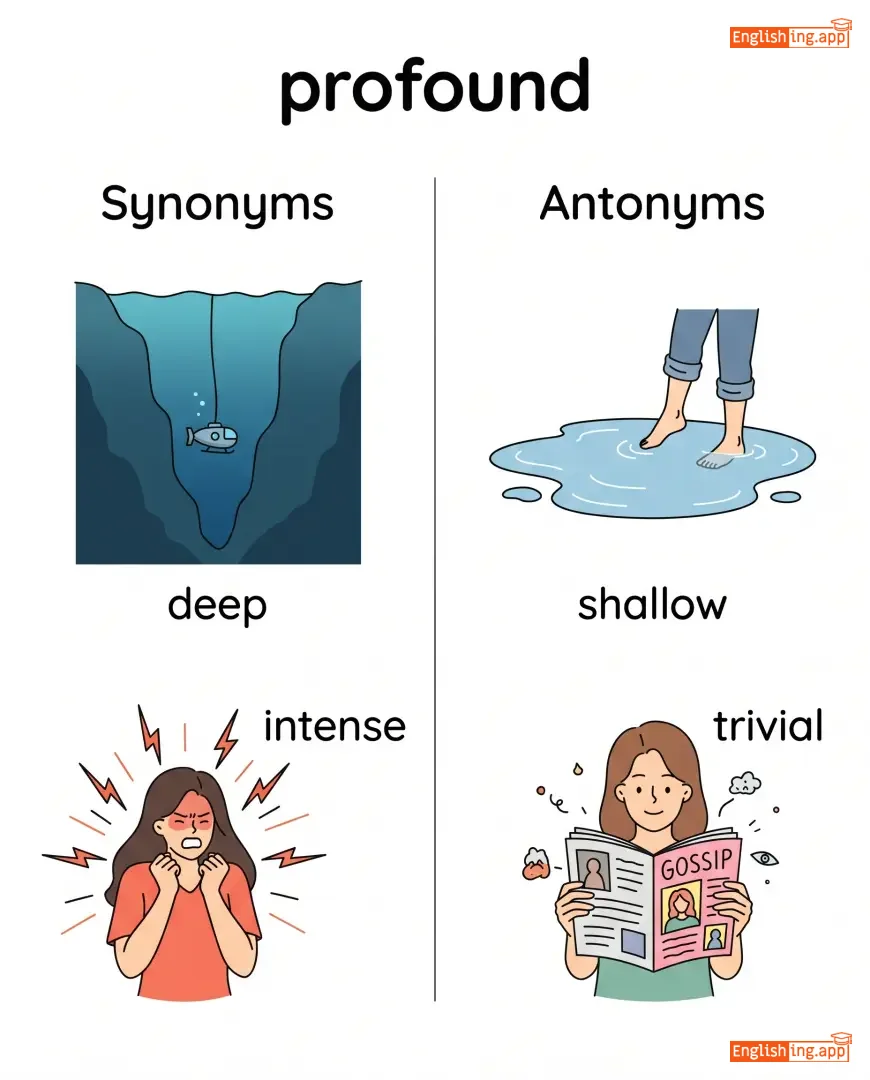
deep, intense, thoughtful, insightful, weighty
••••••
|
shallow, trivial, superficial
••••••
|
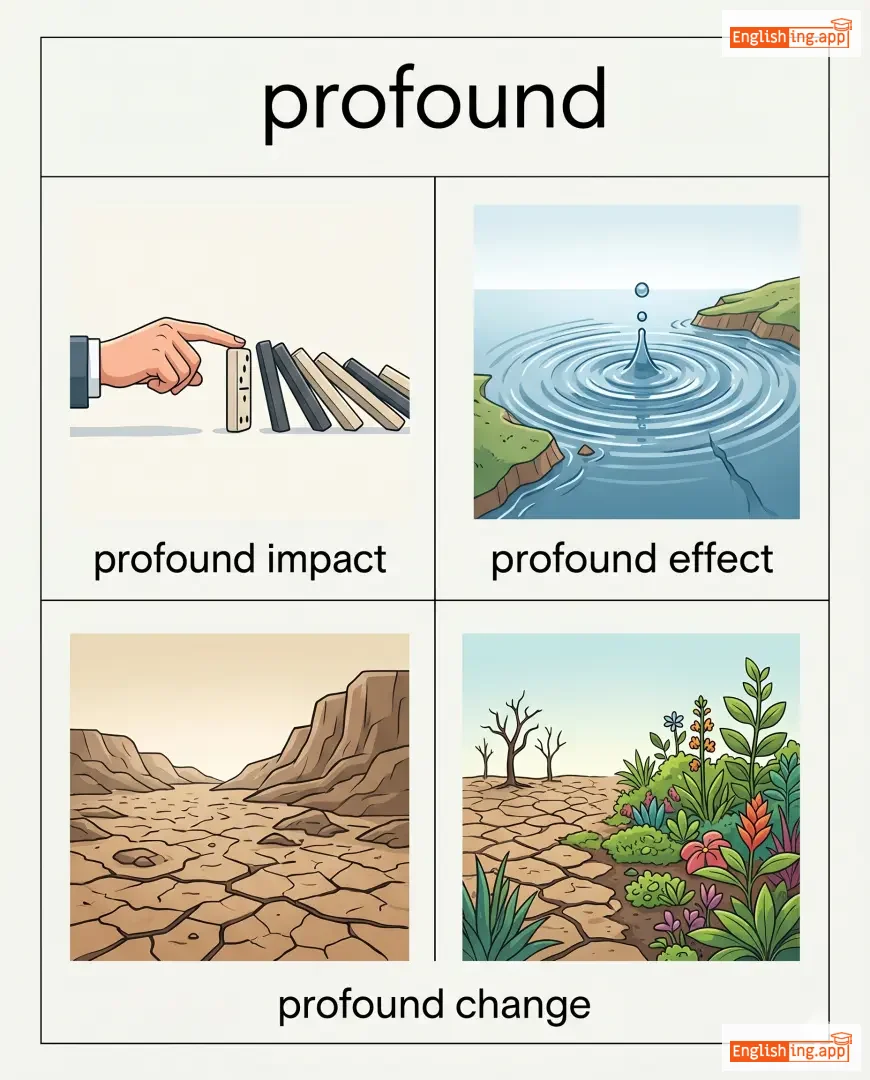
profound impact, profound effect, profound change, profound insight, profound silence
••••••
|
深遠、海のように深く、いつまでも続く。
••••••
|
|
💸
••••••
|
/prəˈhɪbɪtɪv/
adjective
(プロヒビティブ)
••••••
|
|
禁止するような高い
kinshi suru yō na takai
••••••
|
- •••••• | - •••••• | - •••••• | - •••••• |
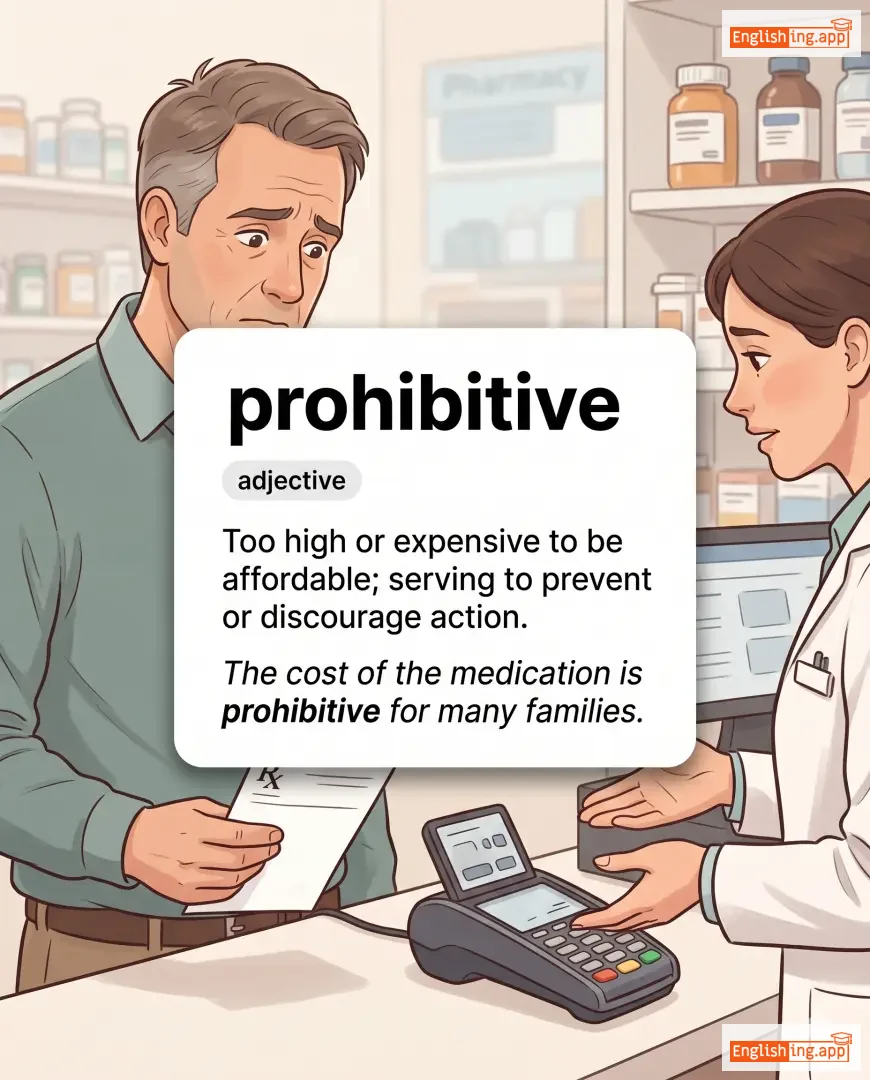
Too high or expensive to be affordable; serving to prevent or discourage action.
••••••
|
The cost of the medication is prohibitive for many families. |
その薬の費用は多くの家族にとって高すぎる。
Sono kusuri no hiyō wa ōku no kazoku ni totte takasugiru.
••••••
|
- •••••• | - •••••• | - •••••• |
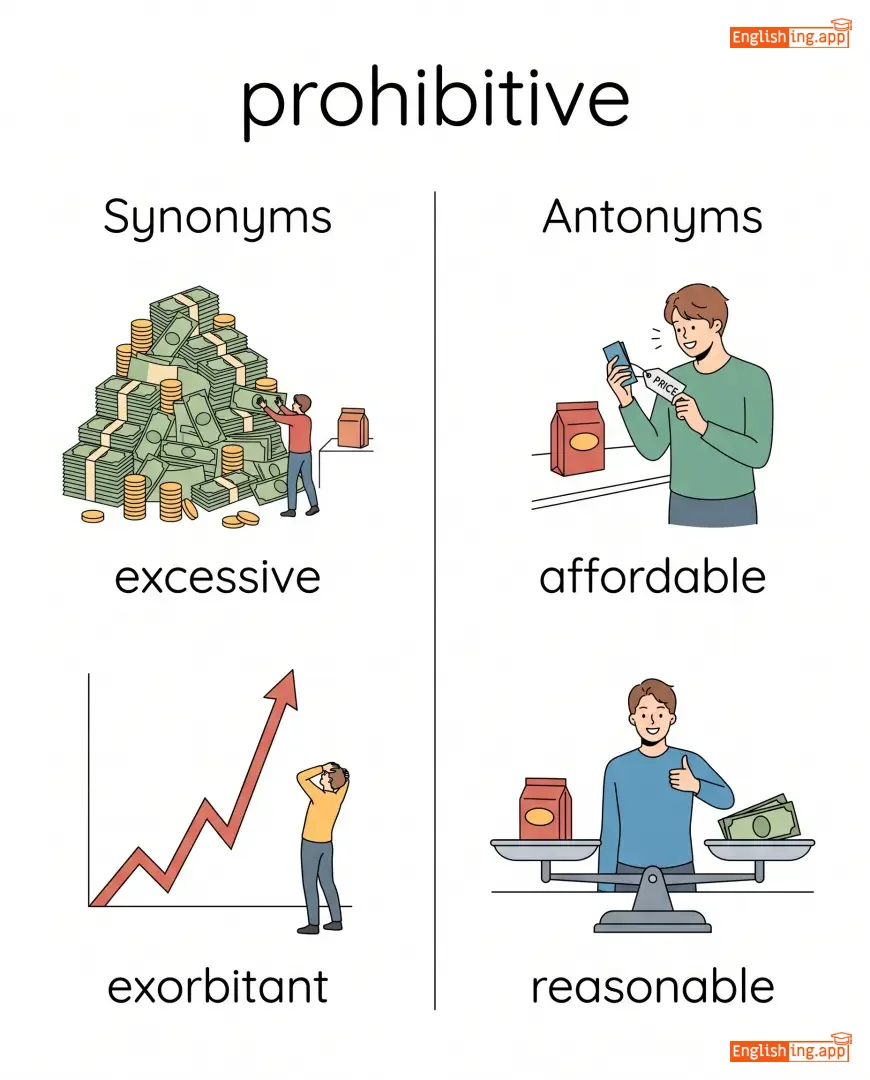
excessive, exorbitant, restrictive, expensive
••••••
|
affordable, reasonable, cheap
••••••
|
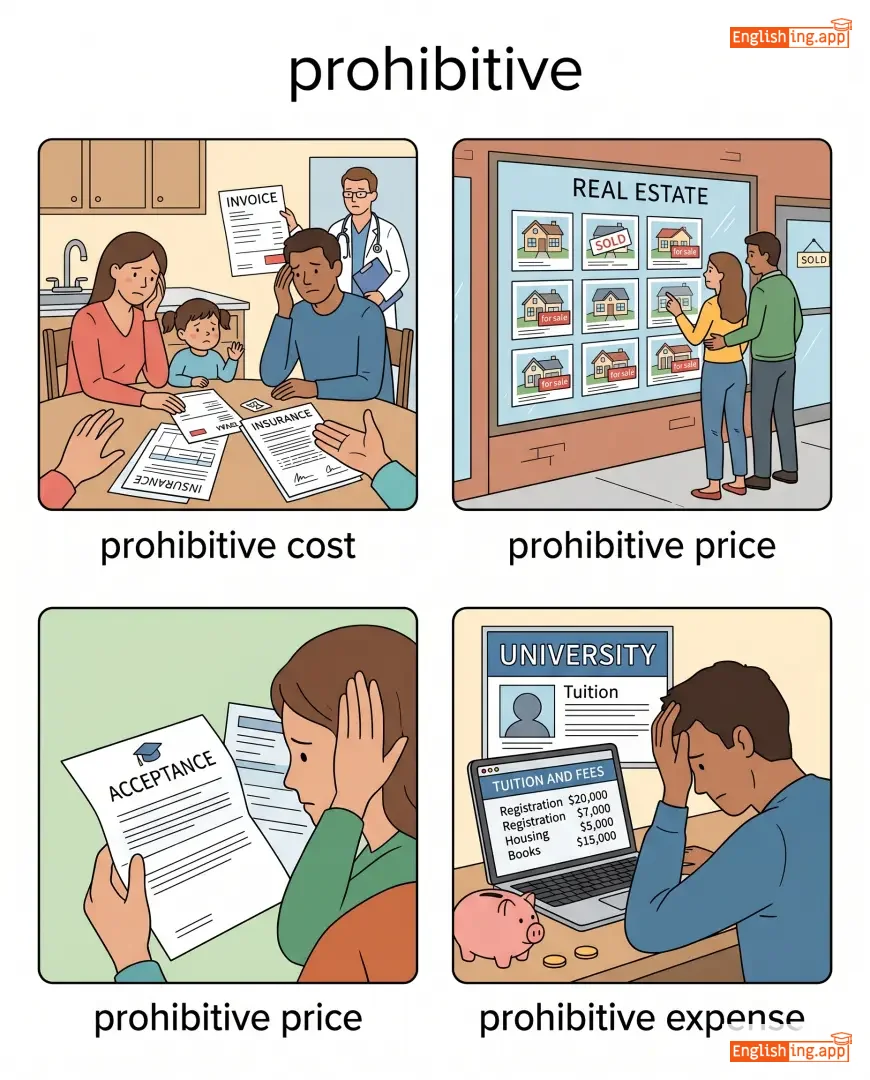
prohibitive cost, prohibitive price, prohibitive expense
••••••
|
Prohibitiveは、買えないほど高いことを意味します。
••••••
|

