|
絵文字
|
単語 | Images | 翻訳 | 過去 | 過去分詞 | 三人称単数 | 動名詞 | 意味 | 例文 | 例文の翻訳 | 表現例 | 表現例の意味 | 表現例の翻訳 | 同義語 | 対義語 | コロケーション | ニーモニック |
|---|---|---|---|---|---|---|---|---|---|---|---|---|---|---|---|---|---|
|
🕳️
••••••
|
/ˈfɪʃ.ər/
noun
(フィッシャー)
••••••
|
|
ひび割れ
hibiware
••••••
|
- •••••• | - •••••• | - •••••• | - •••••• |
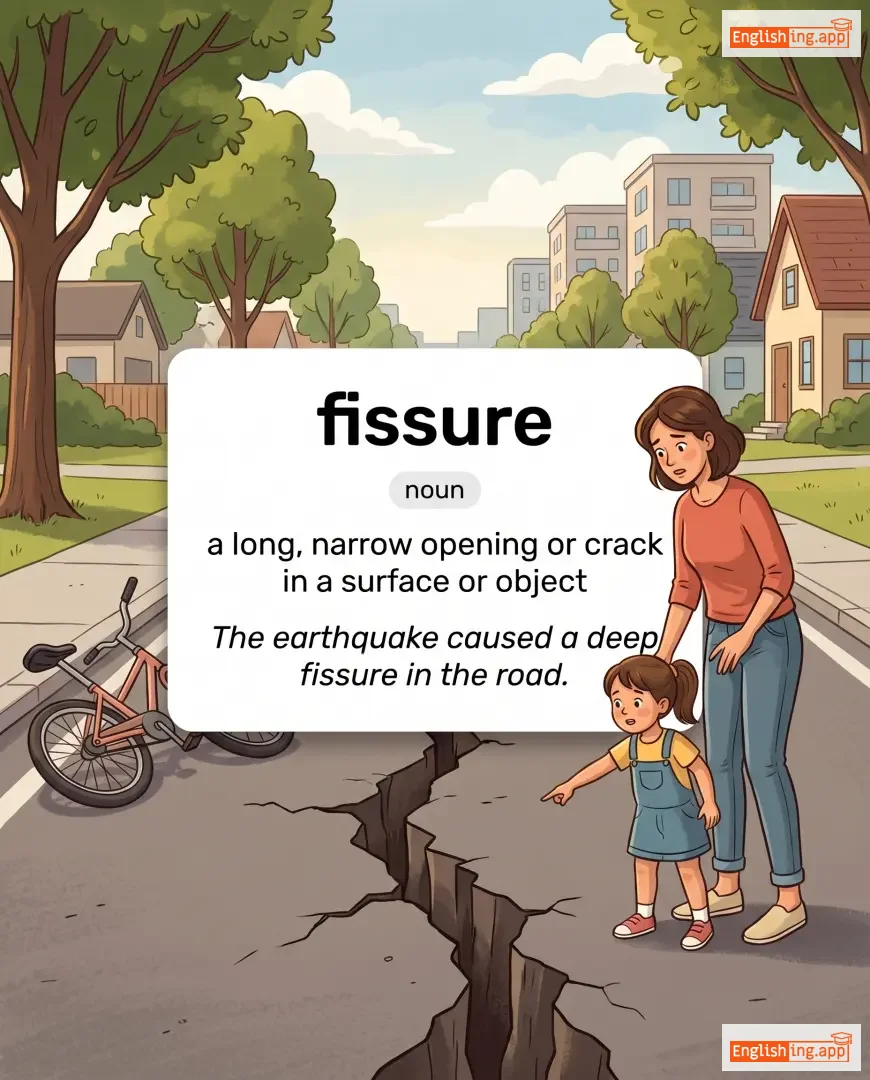
a long, narrow opening or crack in a surface or object
••••••
|
The earthquake caused a deep fissure in the road. |
地震によって道路に深いひび割れができました。
Jishin ni yotte doro ni fukai hibiware ga dekimashita.
••••••
|
- •••••• | - •••••• | - •••••• |
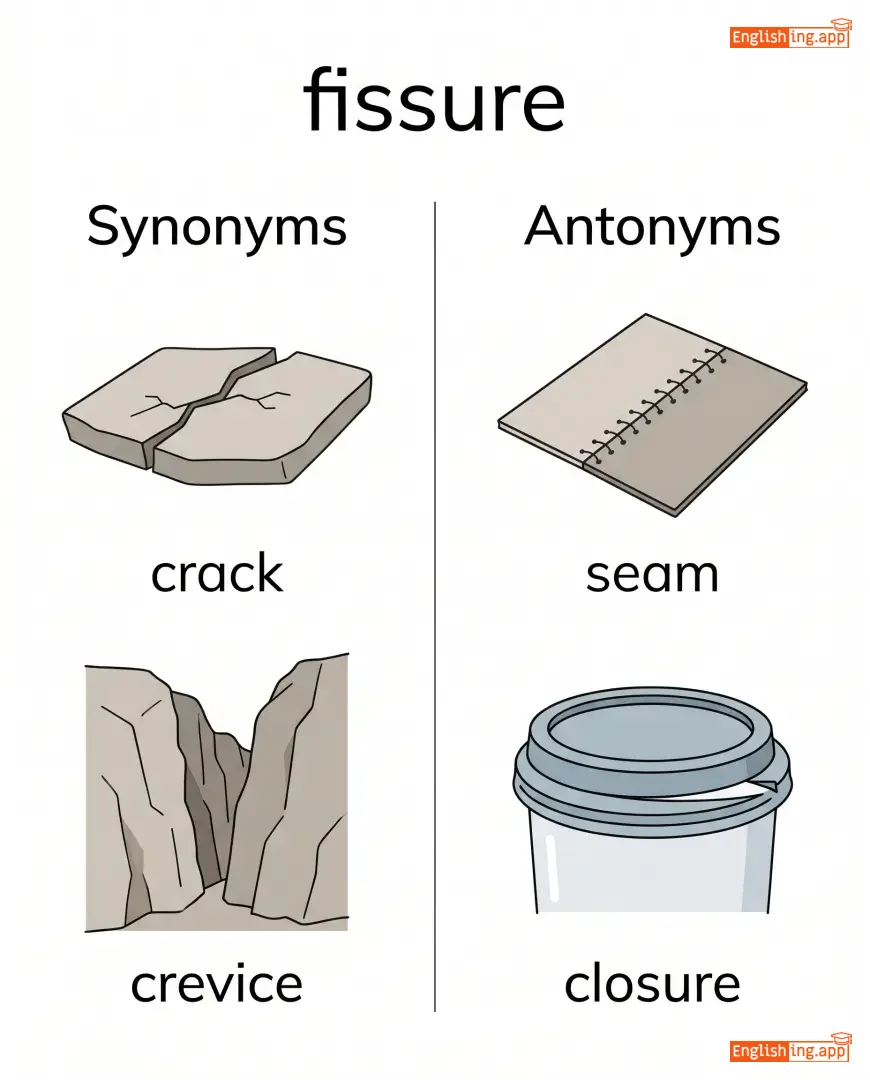
crack, crevice, split, gap
••••••
|
seam, closure
••••••
|
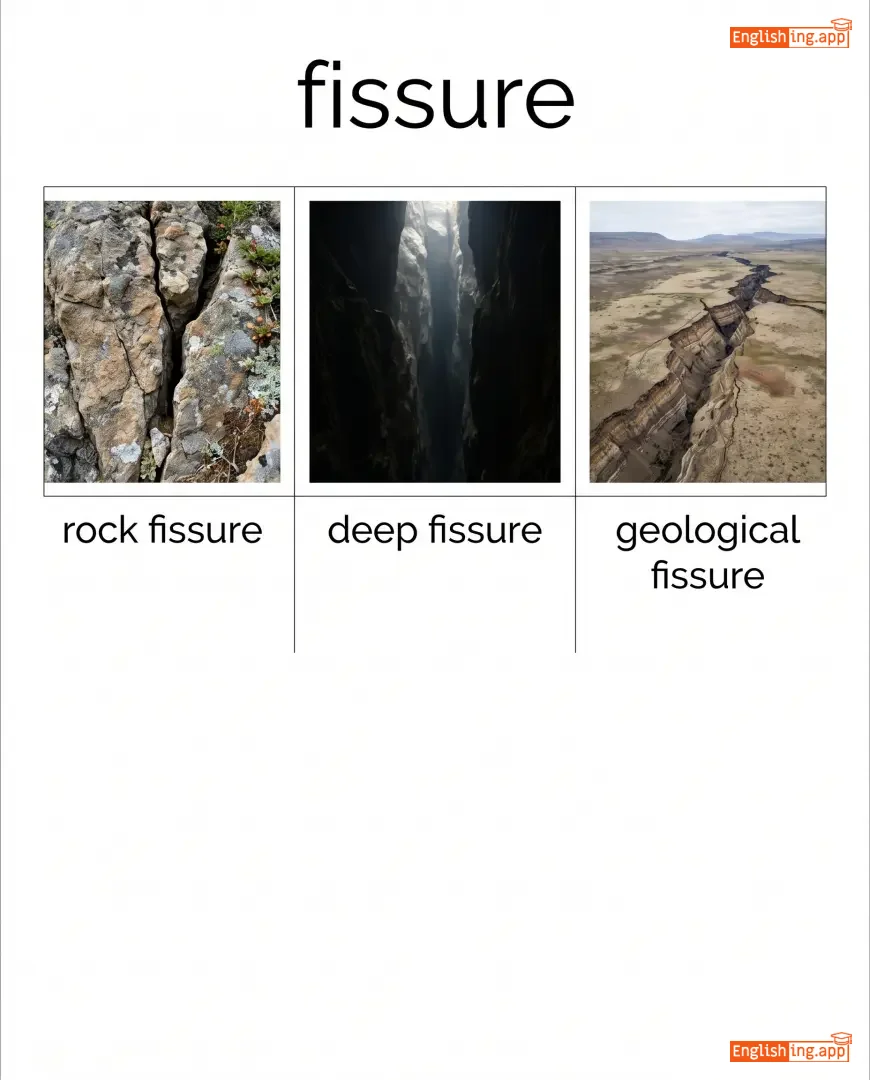
rock fissure, deep fissure, geological fissure, fissure formation
••••••
|
FISSUREはひび割れ - fissureはcrackまたはgapを意味する
••••••
|
|
🚩
••••••
|
/flæɡ/
noun, verb
••••••
|
|
- •••••• |
flagged
••••••
|
flagged
••••••
|
flags
••••••
|
flagging
••••••
|
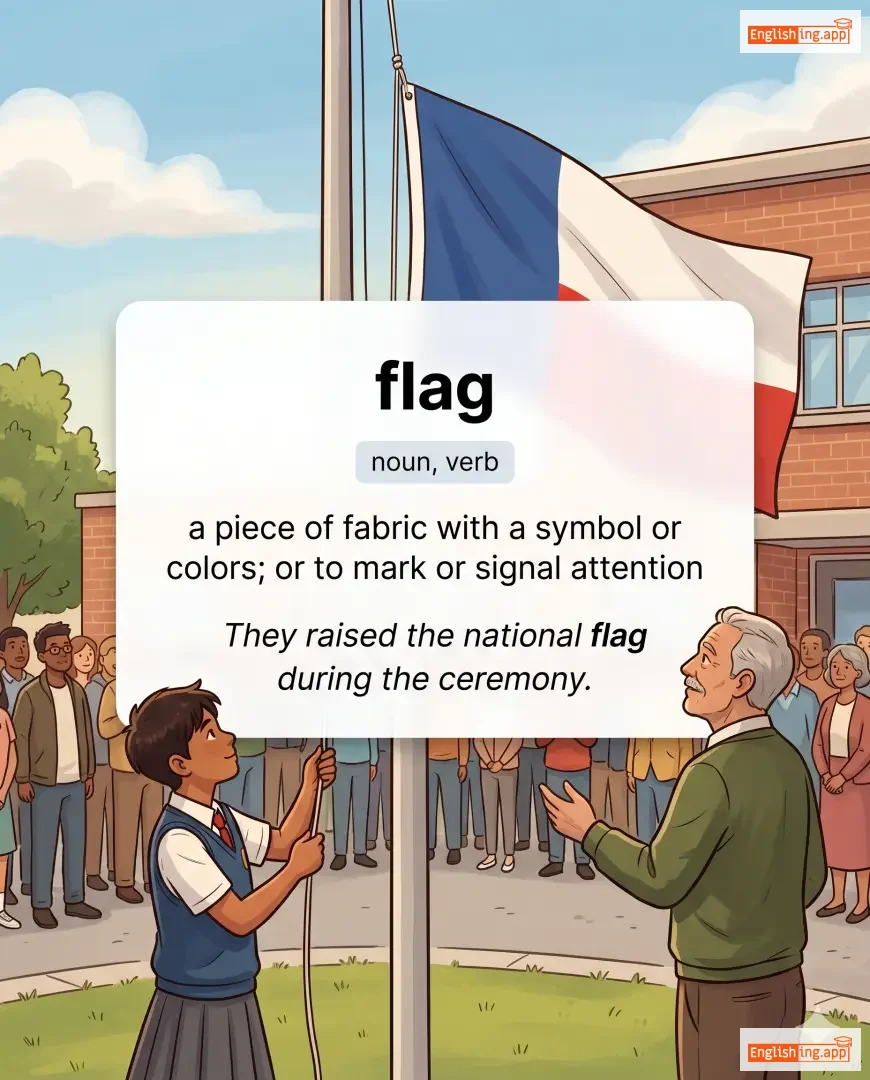
a piece of fabric with a symbol or colors; or to mark or signal attention
••••••
|
They raised the national flag during the ceremony. |
- •••••• |
red flag |
a warning sign or indication of danger
••••••
|
- •••••• |
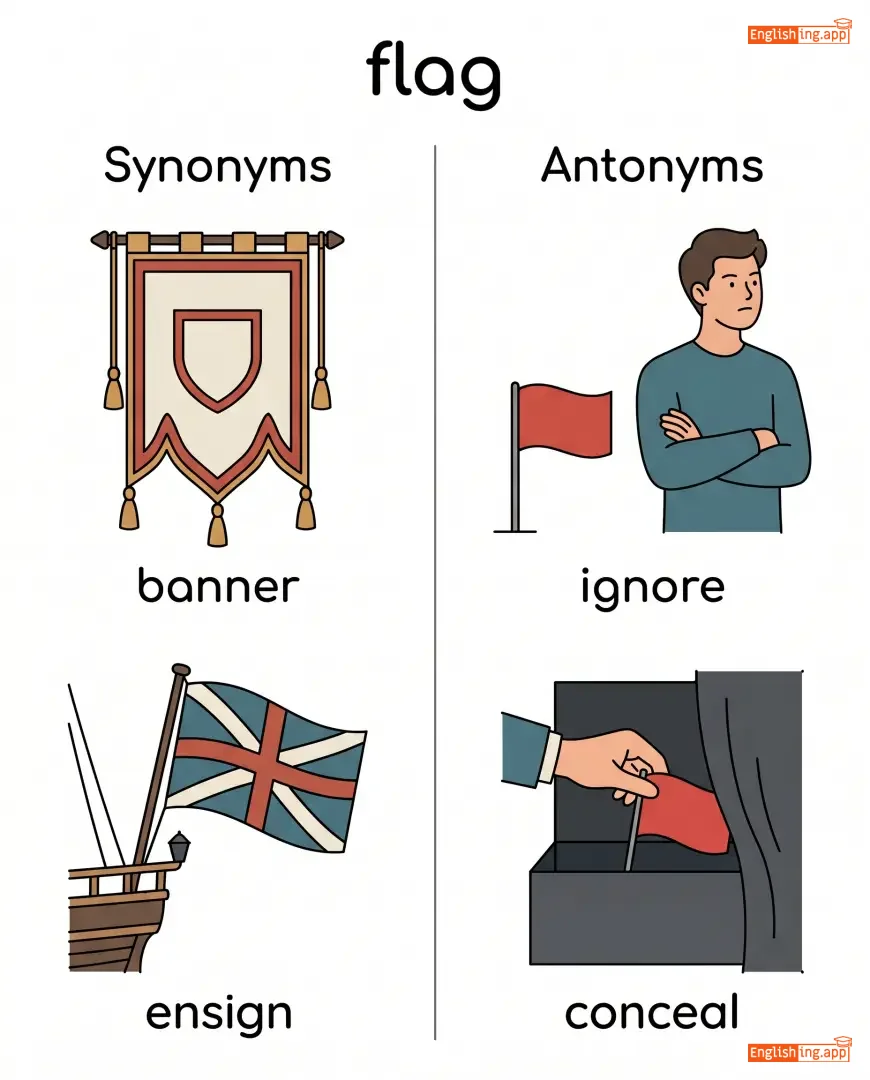
banner, ensign, signal, mark
••••••
|
ignore, conceal
••••••
|
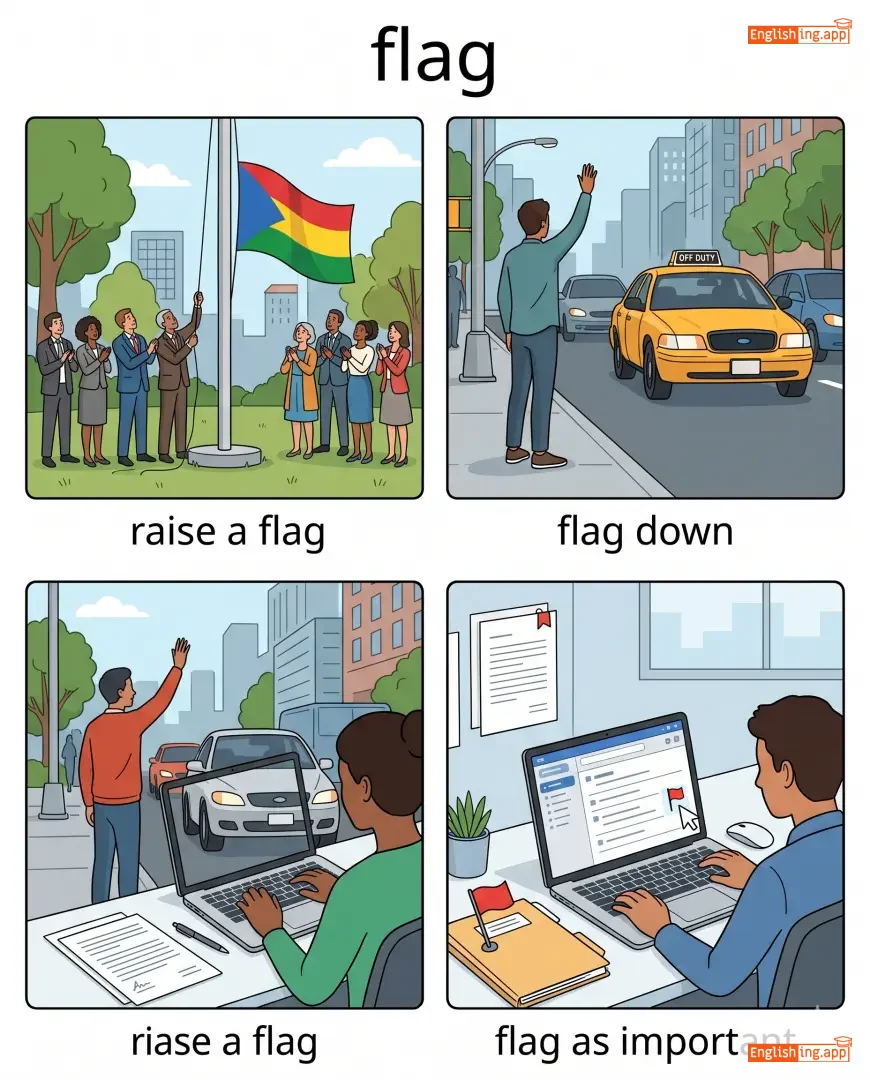
raise a flag, flag down, flag as important, flag a message
••••••
|
No •••••• |
|
🐦
••••••
|
/flɛdʒ/
verb
(furej)
••••••
|
|
飛べるようになる
toberu you ni naru
••••••
|
fledged
furejido
••••••
|
fledged
furejido
••••••
|
fledges
furejesu
••••••
|
fledging
furejingu
••••••
|
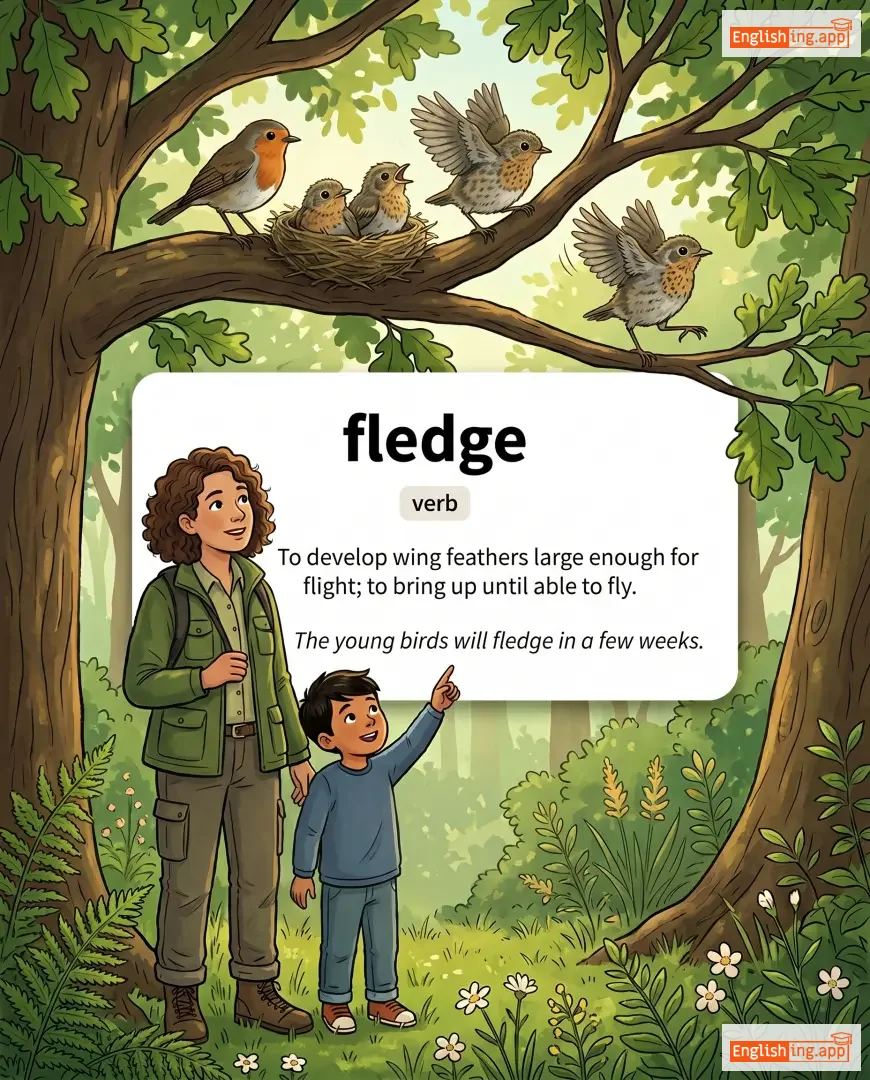
To develop wing feathers large enough for flight; to bring up until able to fly.
••••••
|
The young birds will fledge in a few weeks.
若い鳥たちは数週間以内に飛べるようになる。
••••••
|
若い鳥たちは数週間以内に飛べるようになる。
Wakai toritachi wa suushukan inai ni toberu you ni naru.
••••••
|
- •••••• | - •••••• | - •••••• |
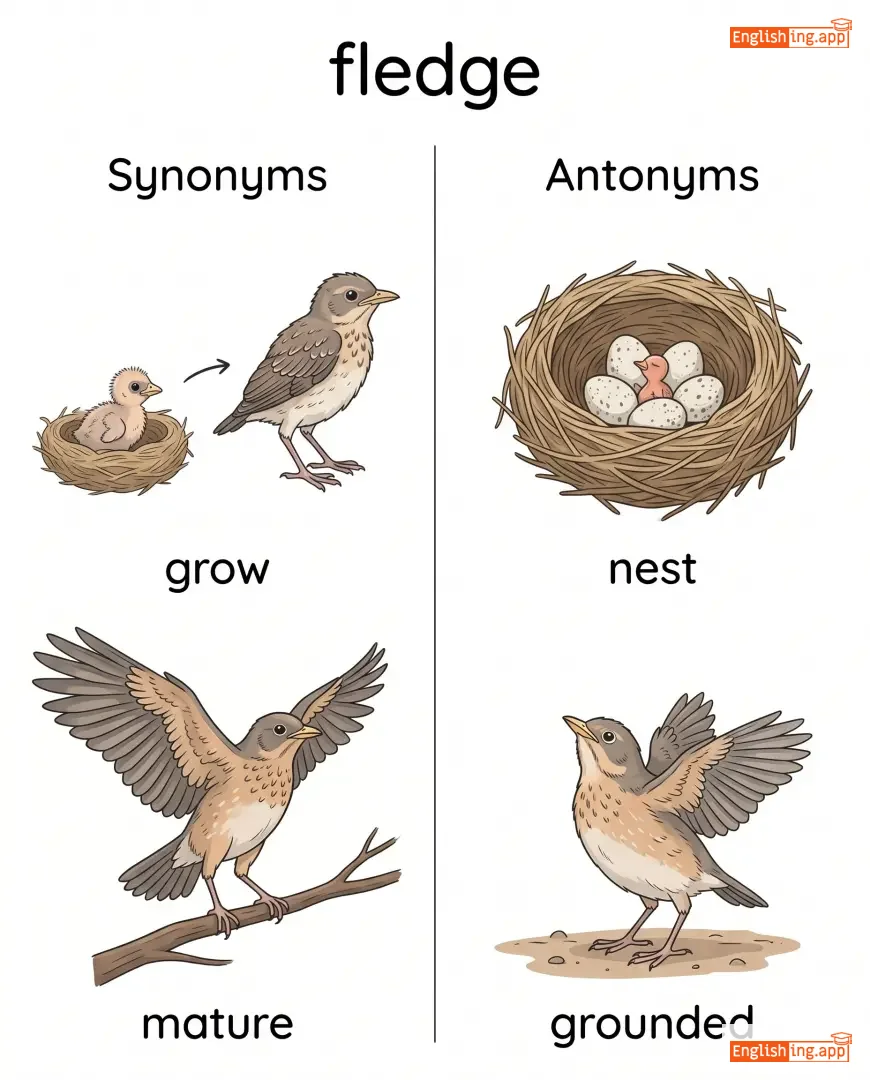
grow, mature, develop, fly
••••••
|
nest, grounded
••••••
|
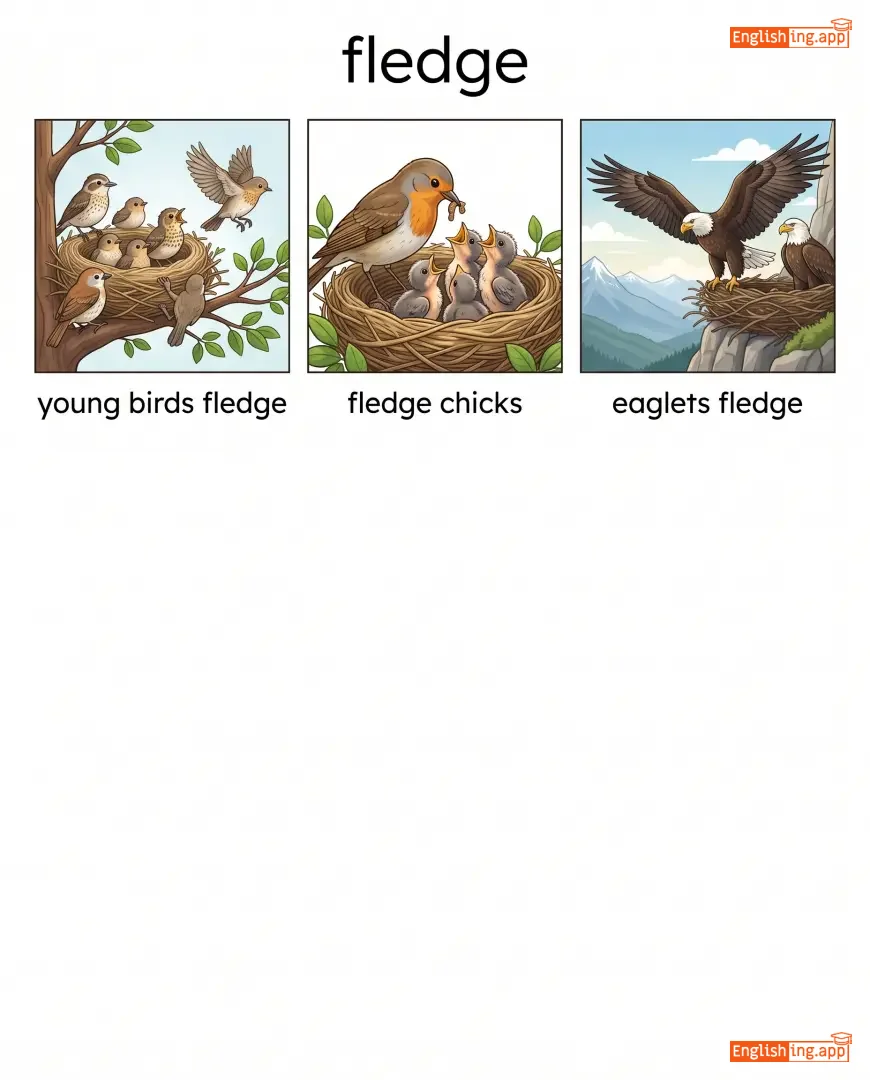
young birds fledge, fledge chicks, eaglets fledge
••••••
|
飛べるように羽毛を育てていく。
••••••
|
|
🌱
••••••
|
/ˈflɔːrə/
noun
(フローラ)
••••••
|
|
植物相
shokubutsusou
••••••
|
- •••••• | - •••••• | - •••••• | - •••••• |
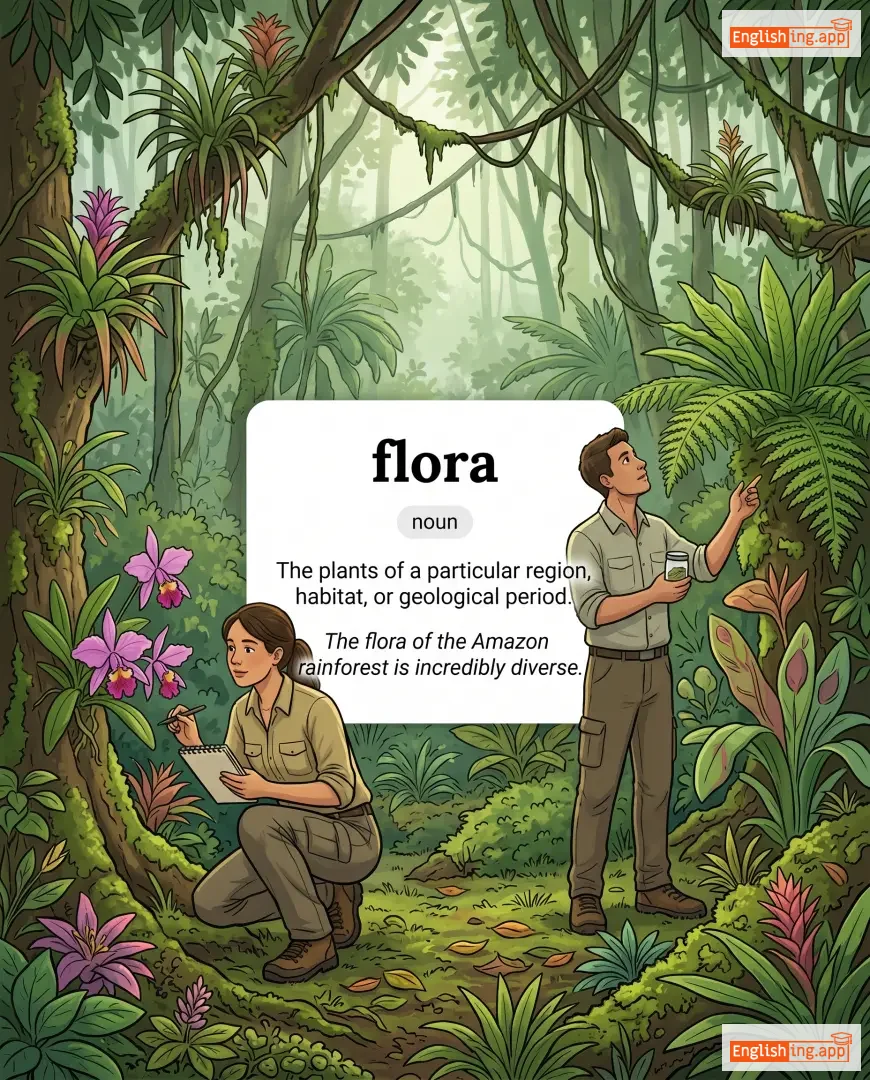
The plants of a particular region, habitat, or geological period.
••••••
|
The flora of the Amazon rainforest is incredibly diverse. |
アマゾン熱帯雨林の植物相は非常に多様です。
Amazon nettai urin no shokubutsusou wa hijou ni tayou desu.
••••••
|
- •••••• | - •••••• | - •••••• |
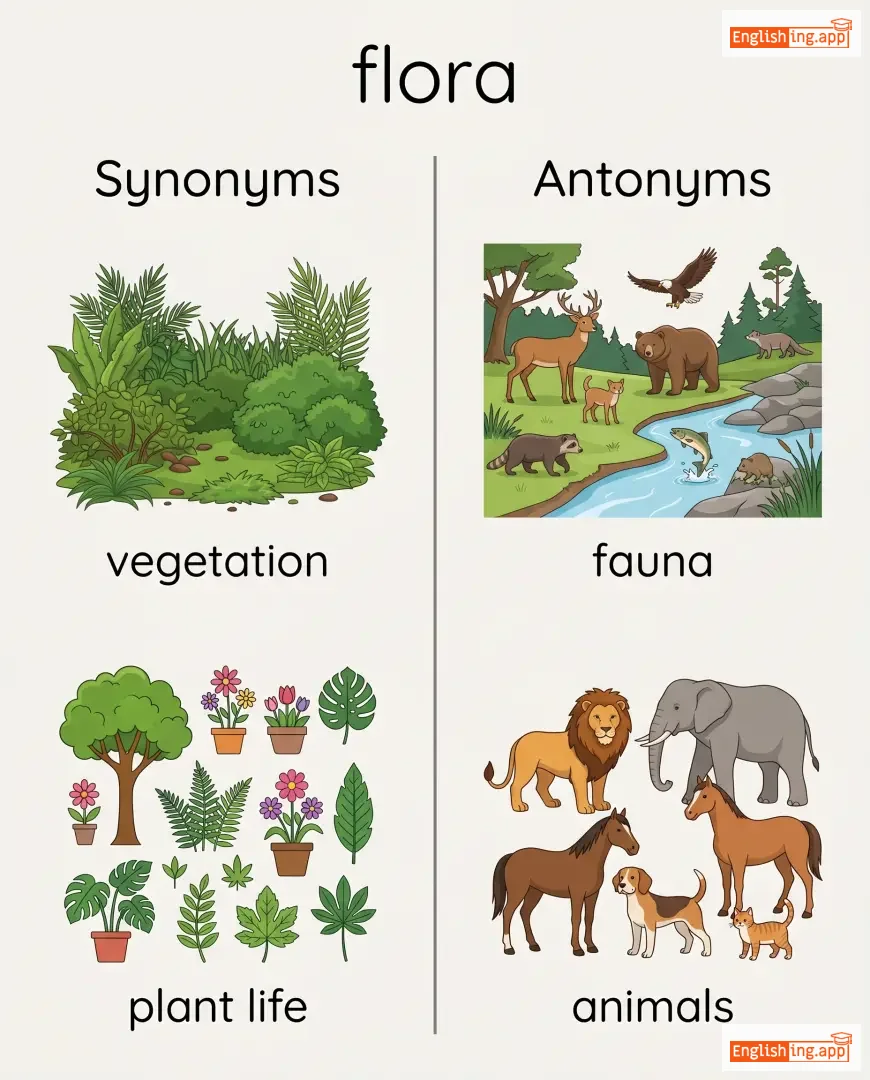
vegetation, plant life, greenery, botany
••••••
|
fauna, animals
••••••
|
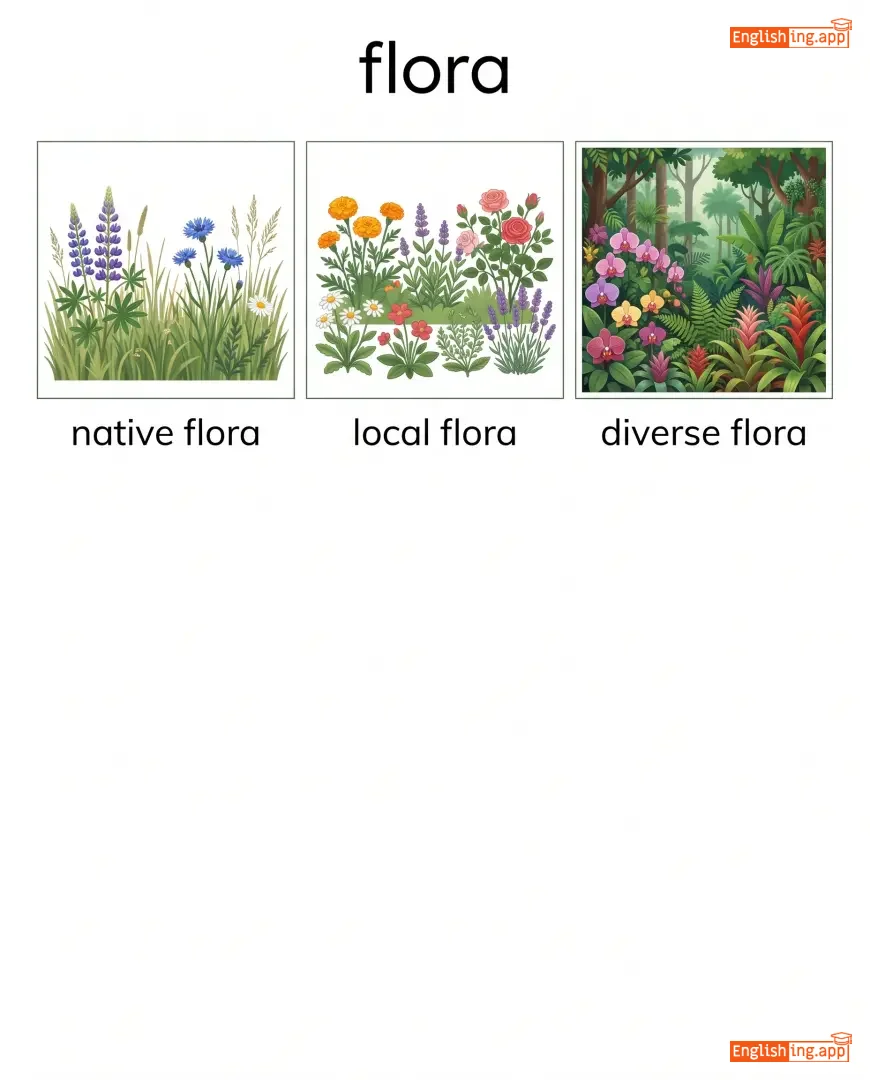
native flora, local flora, diverse flora, tropical flora
••••••
|
Flora = 植物 🌿 - 覚えておいて、flora = 地域の植物相。
••••••
|
|
🌺
••••••
|
/ˈflɒrɪd/
adjective
(フロリッド)
••••••
|

|
過度に装飾された / 赤みがかった
kado ni sōshoku sareta / akami ga katta
••••••
|
- •••••• | - •••••• | - •••••• | - •••••• |
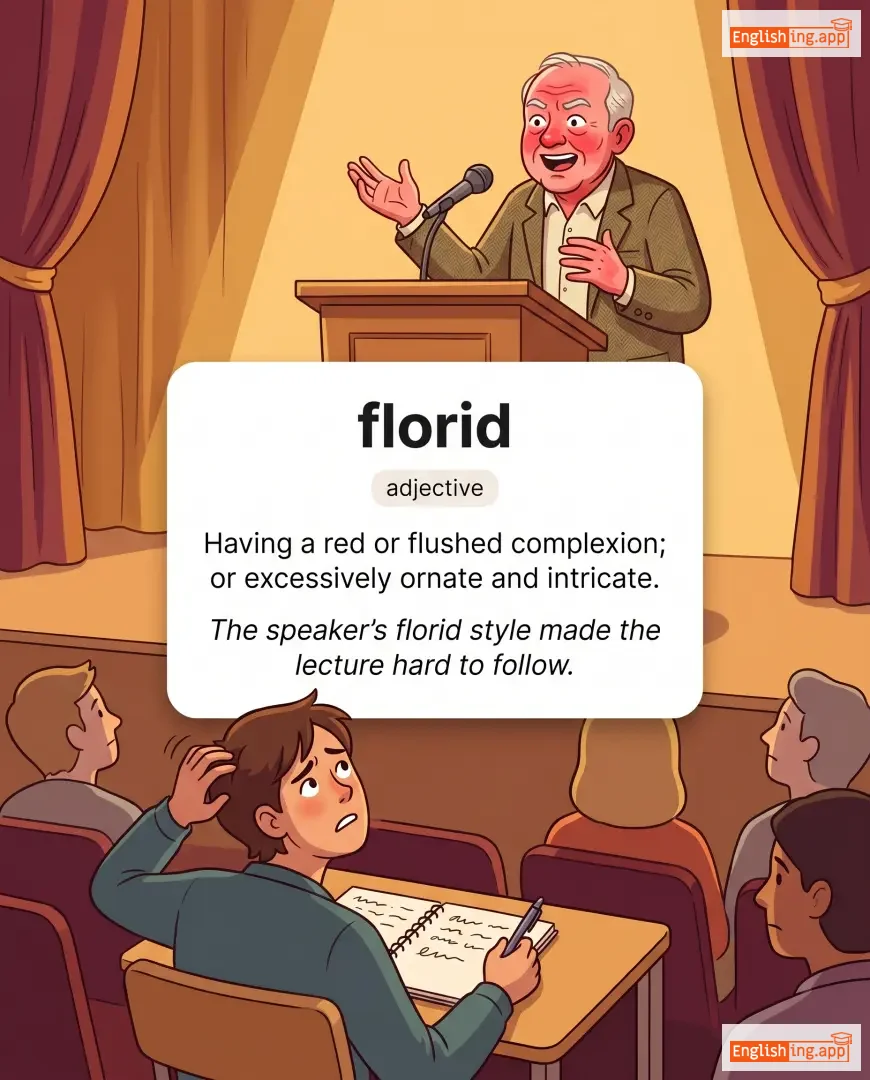
Having a red or flushed complexion; or excessively ornate and intricate.
••••••
|
The speaker’s florid style made the lecture hard to follow. |
講演者の過度に装飾されたスタイルは、講義を理解するのを難しくした。
Kōensha no kado ni sōshoku sareta sutairu wa, kōgi o rikai suru no o muzukashiku shita.
••••••
|
- •••••• | - •••••• | - •••••• |
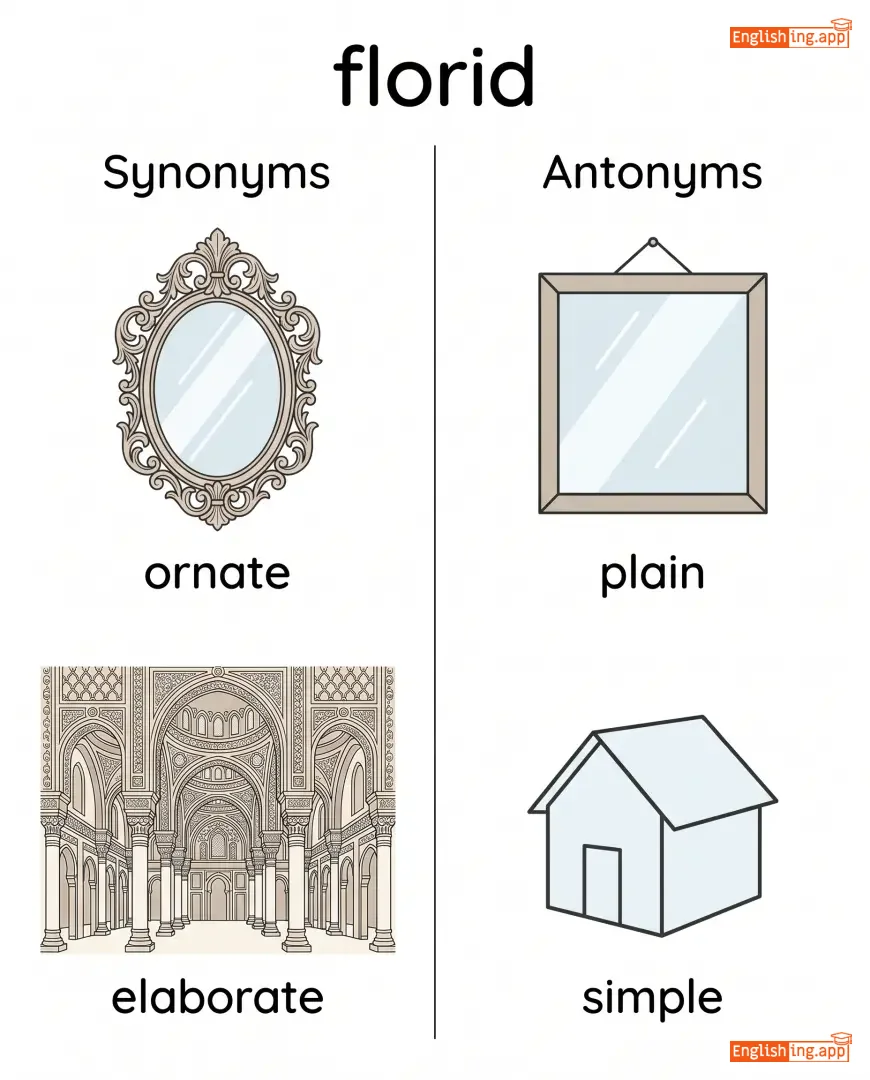
ornate, elaborate, rosy, decorative
••••••
|
plain, simple, pale
••••••
|
florid face, florid style, florid prose, florid complexion
••••••
|
Floridは顔が赤くなるか、過度に飾り立てられることを意味します。
••••••
|
|
🌱
••••••
|
/ˈflʌrɪʃ/
verb
••••••
|

|
- •••••• |
flourished
••••••
|
flourished
••••••
|
flourishes
••••••
|
flourishing
••••••
|
To grow or develop in a healthy or successful way.
••••••
|
Her business began to flourish after she introduced online sales. |
- •••••• |
in full flourish |
At the peak of success or growth.
••••••
|
- •••••• |
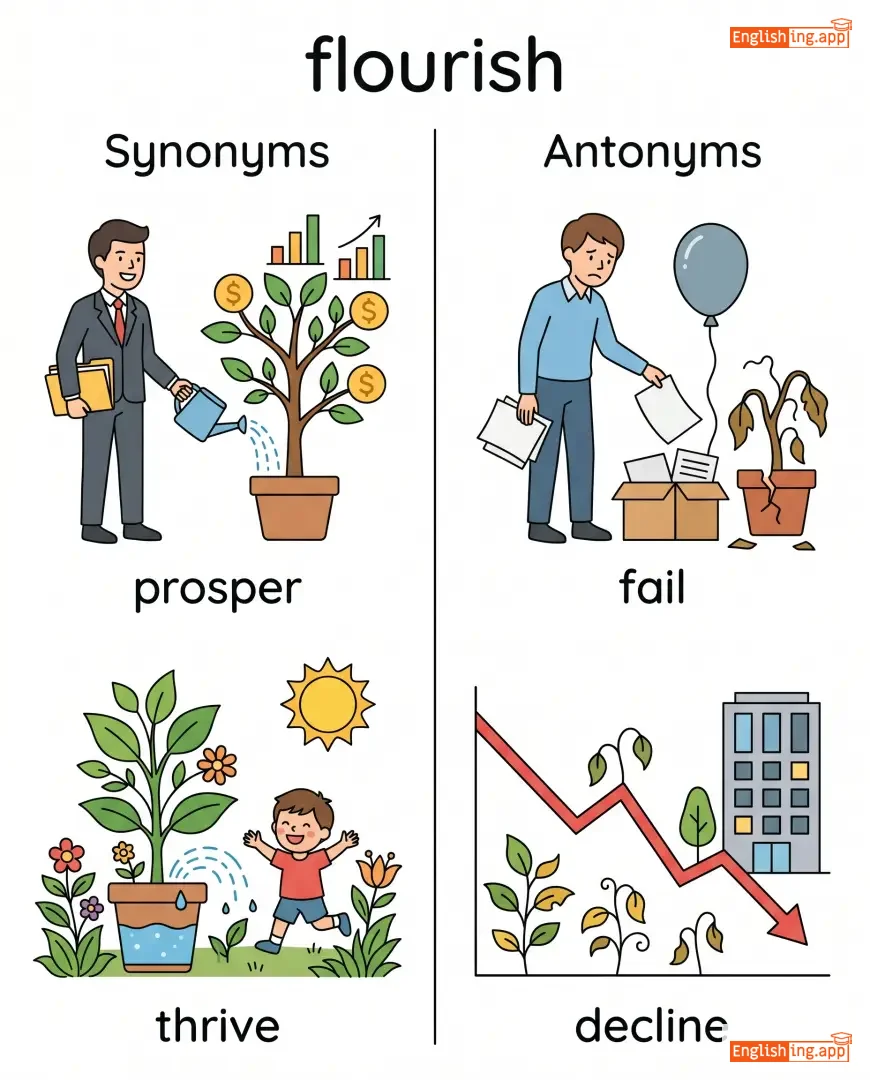
prosper, thrive, bloom, succeed, grow
••••••
|
fail, decline, wither
••••••
|
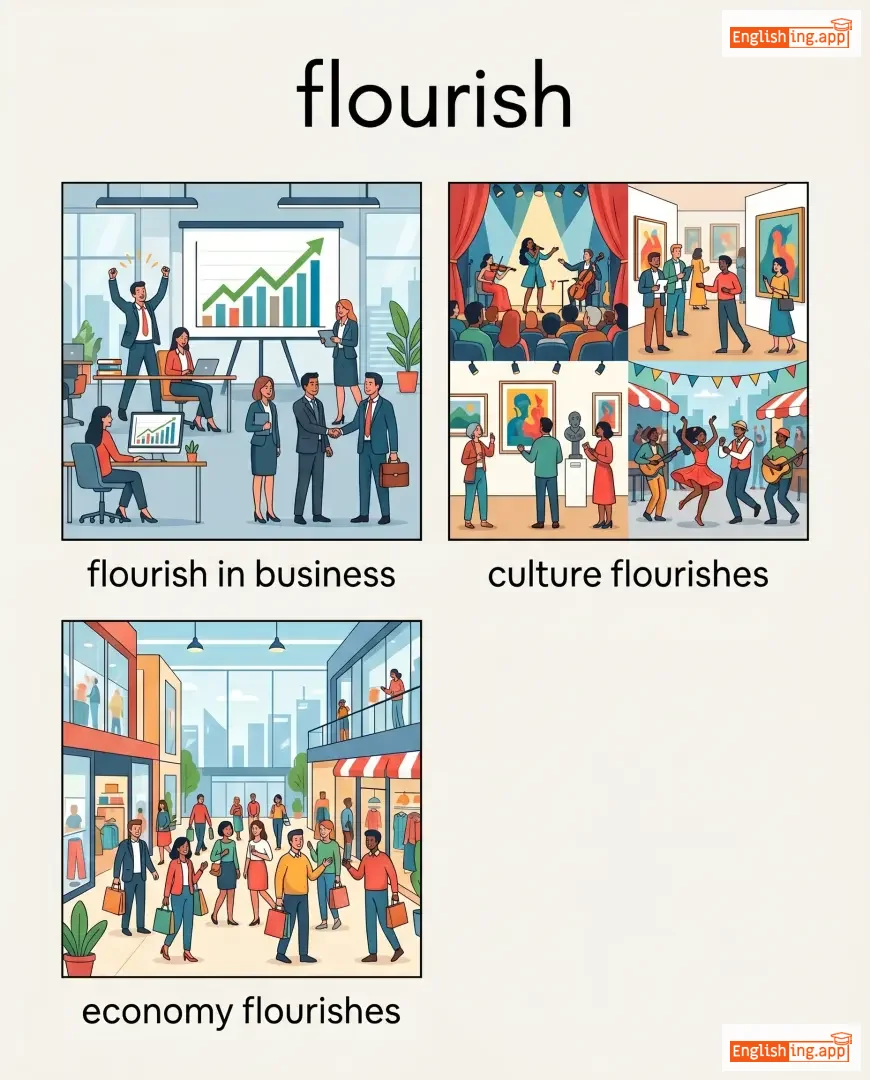
flourish in business, culture flourishes, economy flourishes
••••••
|
No •••••• |
|
🚫
••••••
|
/flaʊt/
verb
(フラウト)
••••••
|
|
無視する
mushi suru
••••••
|
flouted
フラウテッド
••••••
|
flouted
フラウテッド
••••••
|
flouts
フラウツ
••••••
|
flouting
フラウティング
••••••
|
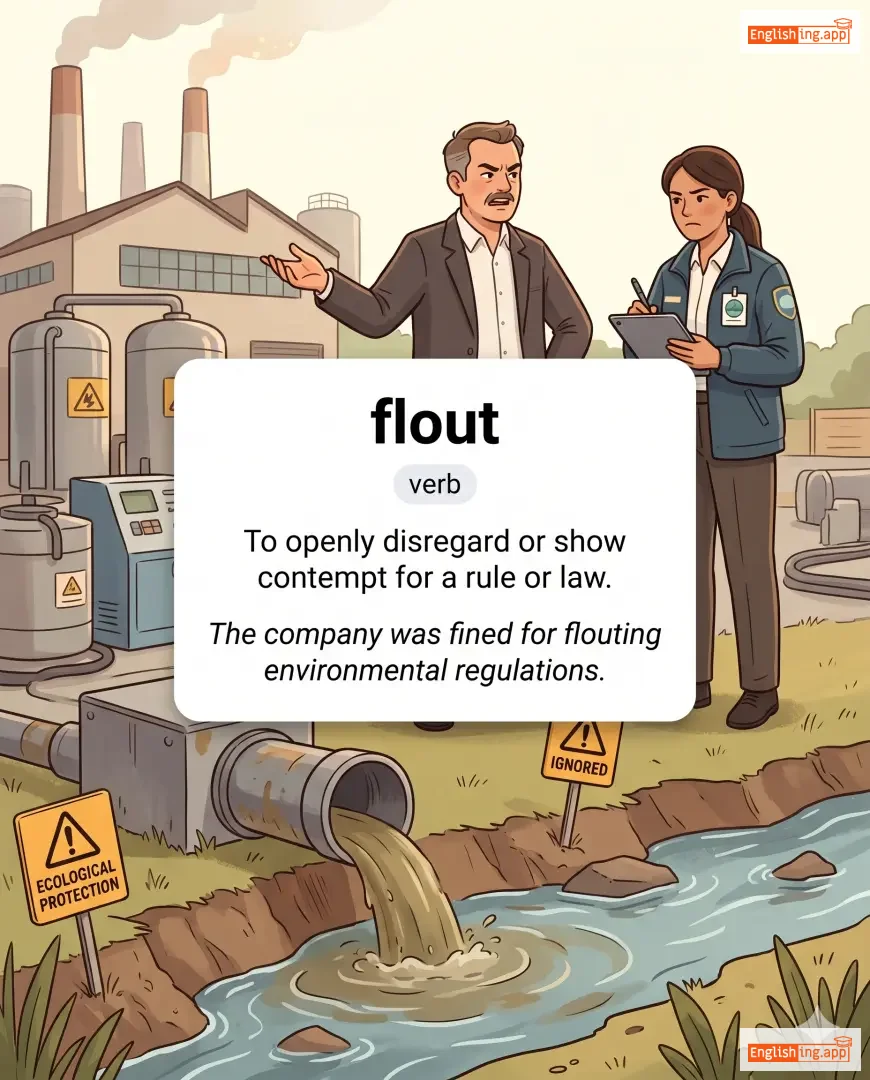
To openly disregard or show contempt for a rule or law.
••••••
|
The company was fined for flouting environmental regulations.
その会社は環境規制を無視したため罰金を科せられました。
••••••
|
その会社は環境規制を無視したため罰金を科せられました。
Sono kaisha wa kankyō kisei o mushi shita tame bakkin o kase raremashita.
••••••
|
- •••••• | - •••••• | - •••••• |
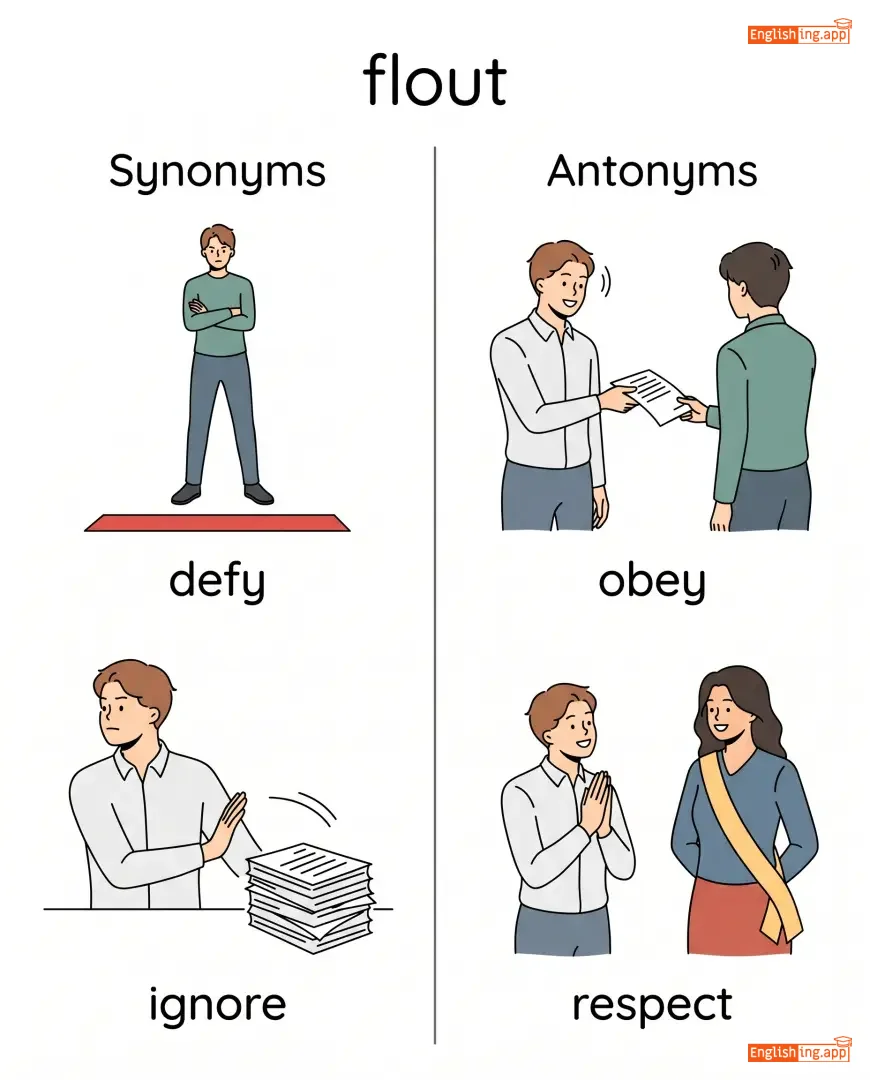
defy, ignore, disregard, mock, violate
••••••
|
obey, respect, follow
••••••
|
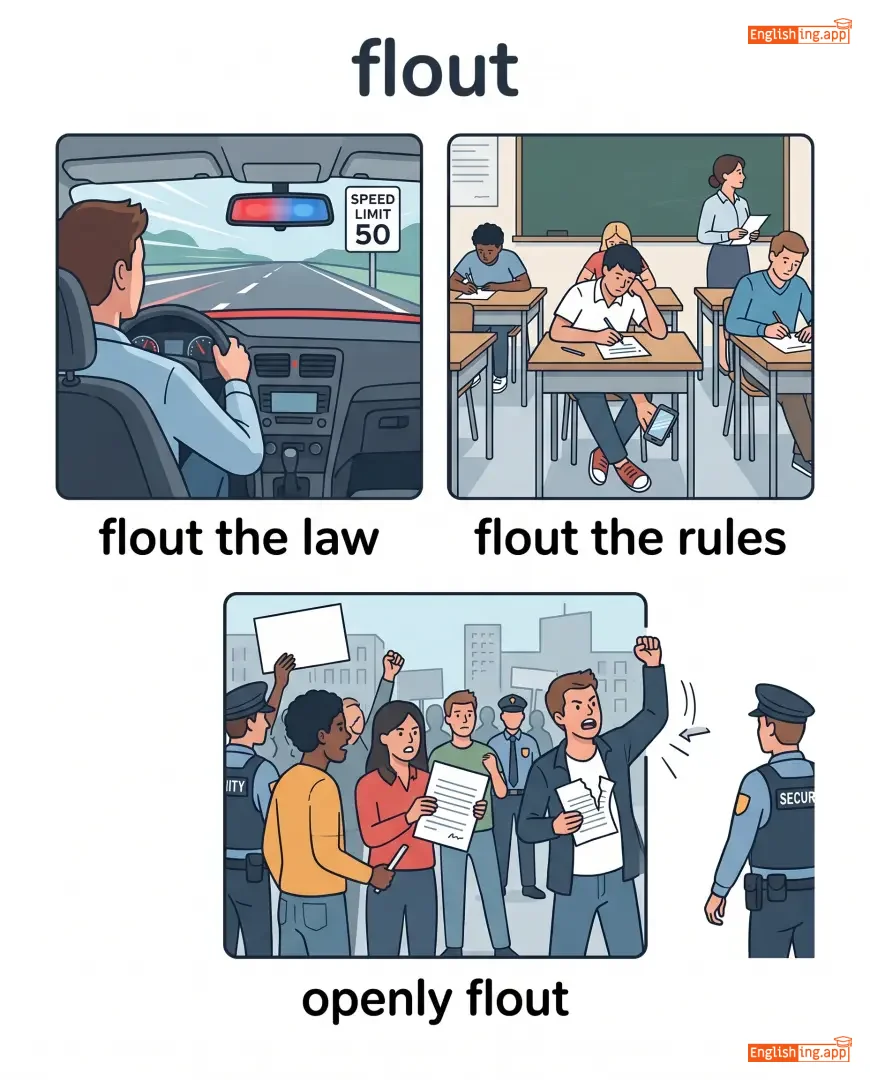
flout the law, flout the rules, openly flout
••••••
|
Flout というのは無視すること、フラウト(フルート)ではない!
••••••
|
|
🔄
••••••
|
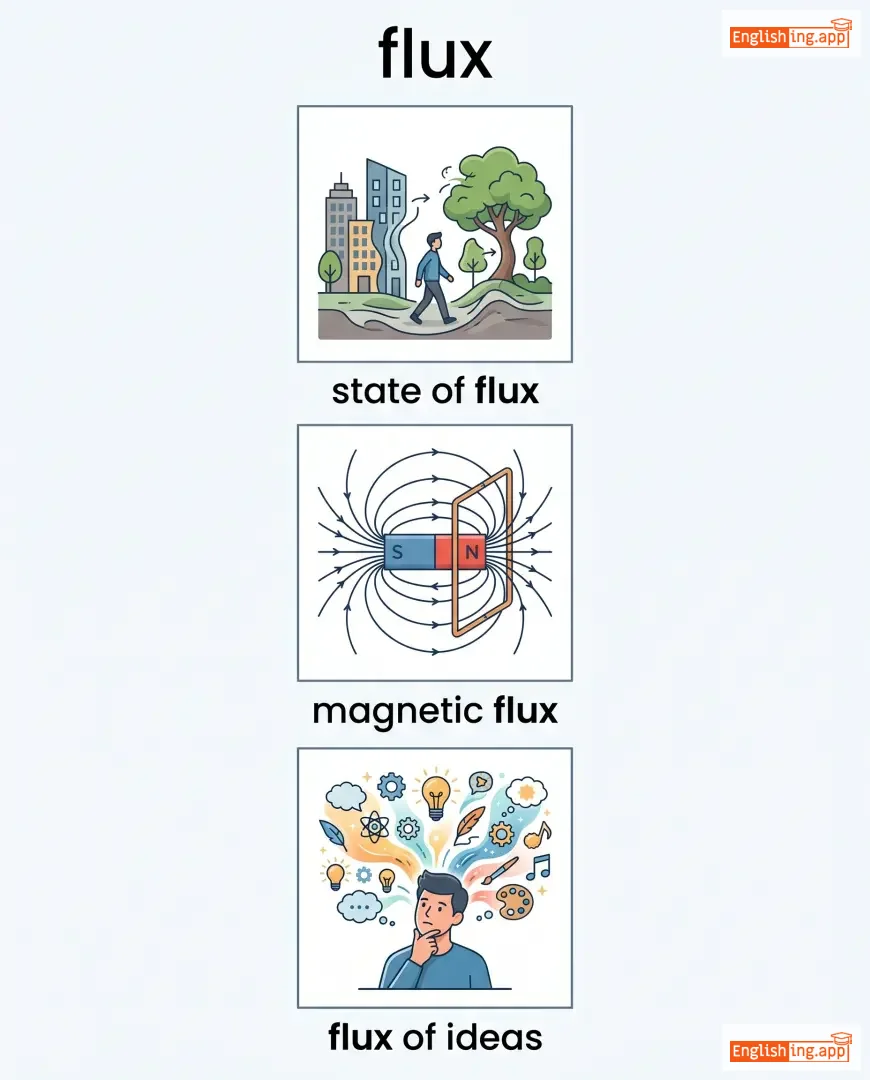
/flʌks/
noun
(フラックス)
••••••
|

|
フロー
furō
••••••
|
- •••••• | - •••••• | - •••••• | - •••••• |
continuous change or movement; the rate of flow of something
••••••
|
The company was in a state of constant flux during the reorganization. |
会社は再編成の間、絶え間ない変化の中にありました。
Kaisha wa sai hensei no aida, tae manai henka no naka ni arimashita.
••••••
|
in flux |
in a state of change or uncertainty
••••••
|
流動的な状態で
ryūdōteki na jōtai de
••••••
|
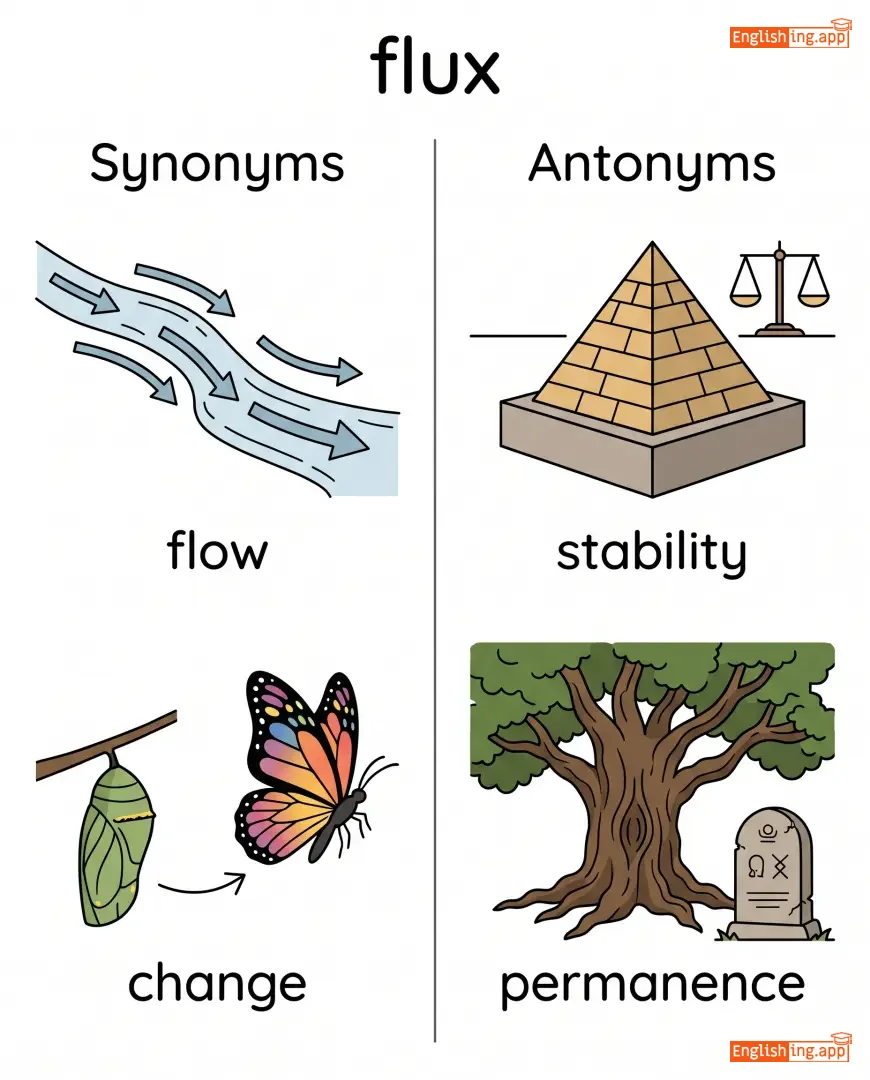
flow, change, fluctuation, instability, motion
••••••
|
stability, permanence, constancy
••••••
|
state of flux, magnetic flux, flux of ideas, flux of people
••••••
|
Flux は流れ + 変化を意味する — すべてが流れの中で動いている
••••••
|
|
🔥
••••••
|
/foʊˈmɛnt/
verb
(フォーメント)
••••••
|
|
扇動する
sendou suru
••••••
|
fomented
フォーメンテッド
••••••
|
fomented
フォーメンテッド
••••••
|
foments
フォーメンツ
••••••
|
fomenting
フォーメンティング
••••••
|
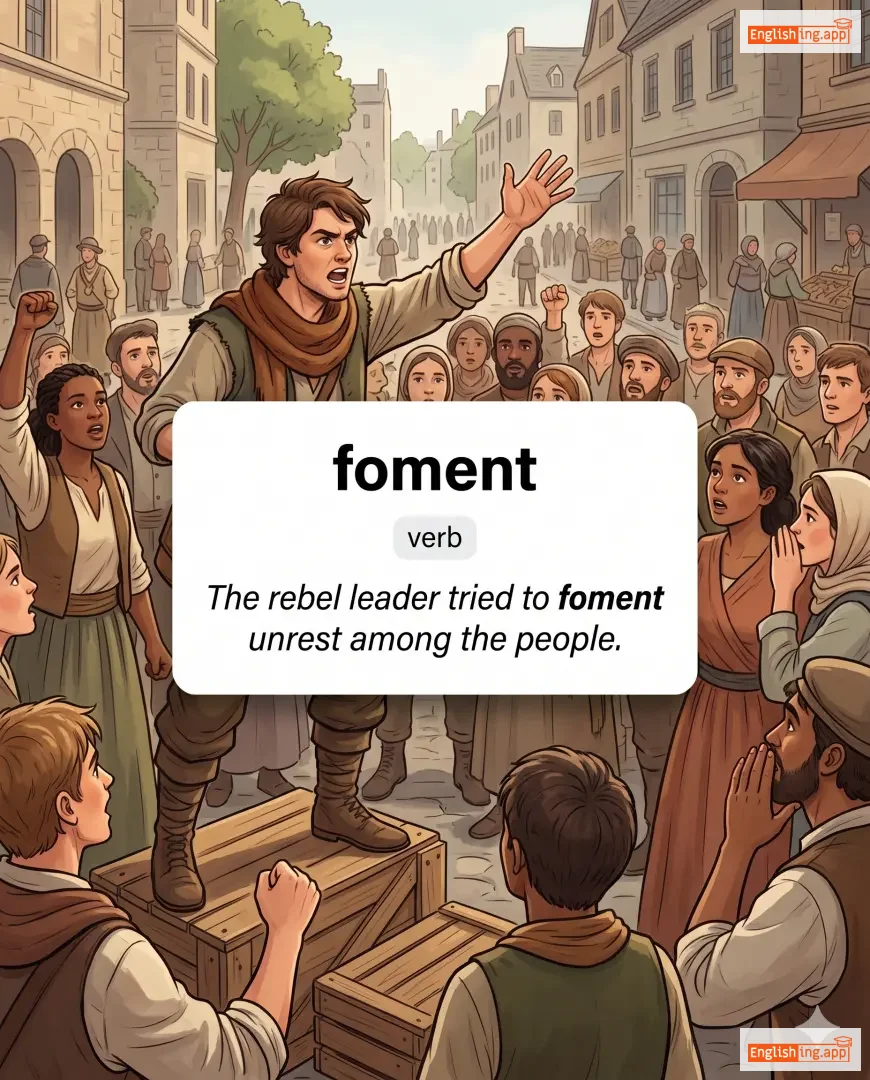
To instigate or stir up (an undesirable or violent sentiment or course of action).
••••••
|
The rebel leader tried to foment unrest among the people.
反乱の指導者は、人々の間で騒動を煽ろうとした。
••••••
|
反乱の指導者は、人々の間で騒動を煽ろうとした。
Hanran no shidōsha wa, hitobito no aida de sōdō o aorō to shita.
••••••
|
- •••••• | - •••••• | - •••••• |
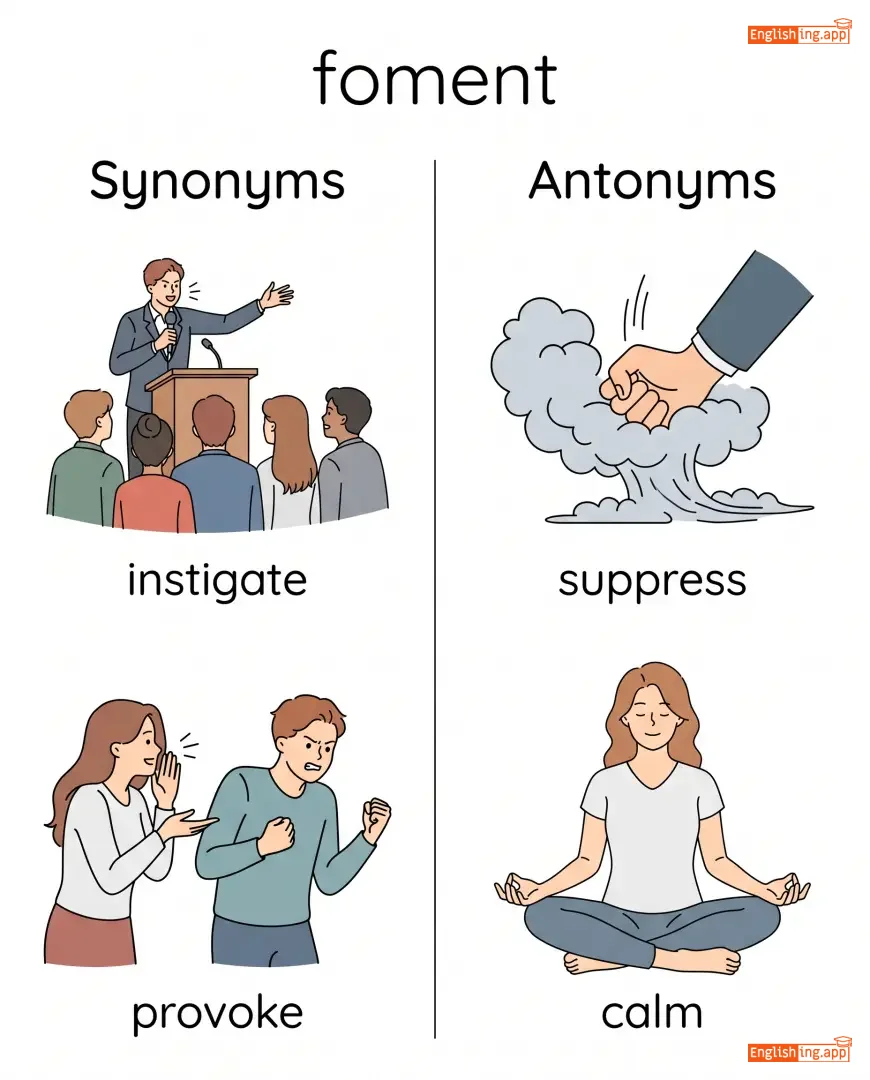
instigate, provoke, incite, agitate, encourage
••••••
|
suppress, calm, pacify
••••••
|
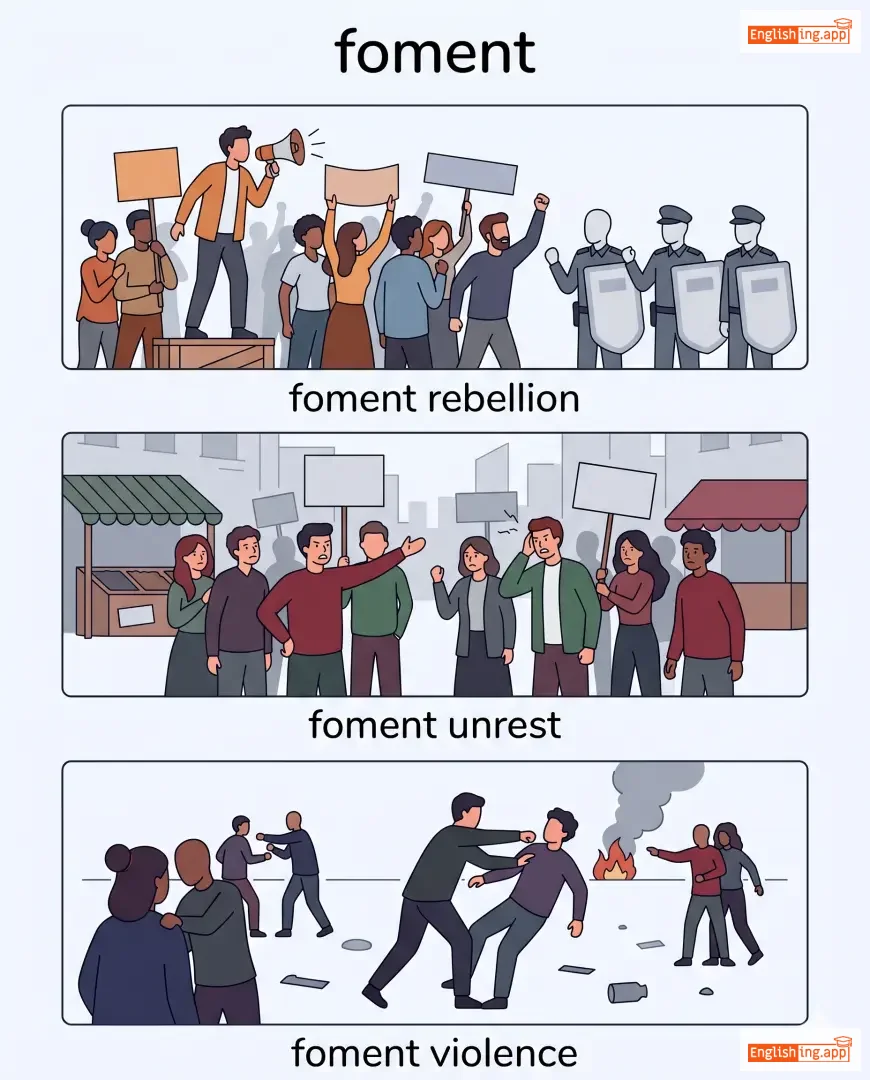
foment rebellion, foment unrest, foment violence, foment discontent
••••••
|
扇動する - 火をつけるように - 騒動を引き起こす 🔥
••••••
|
|
🙏
••••••
|
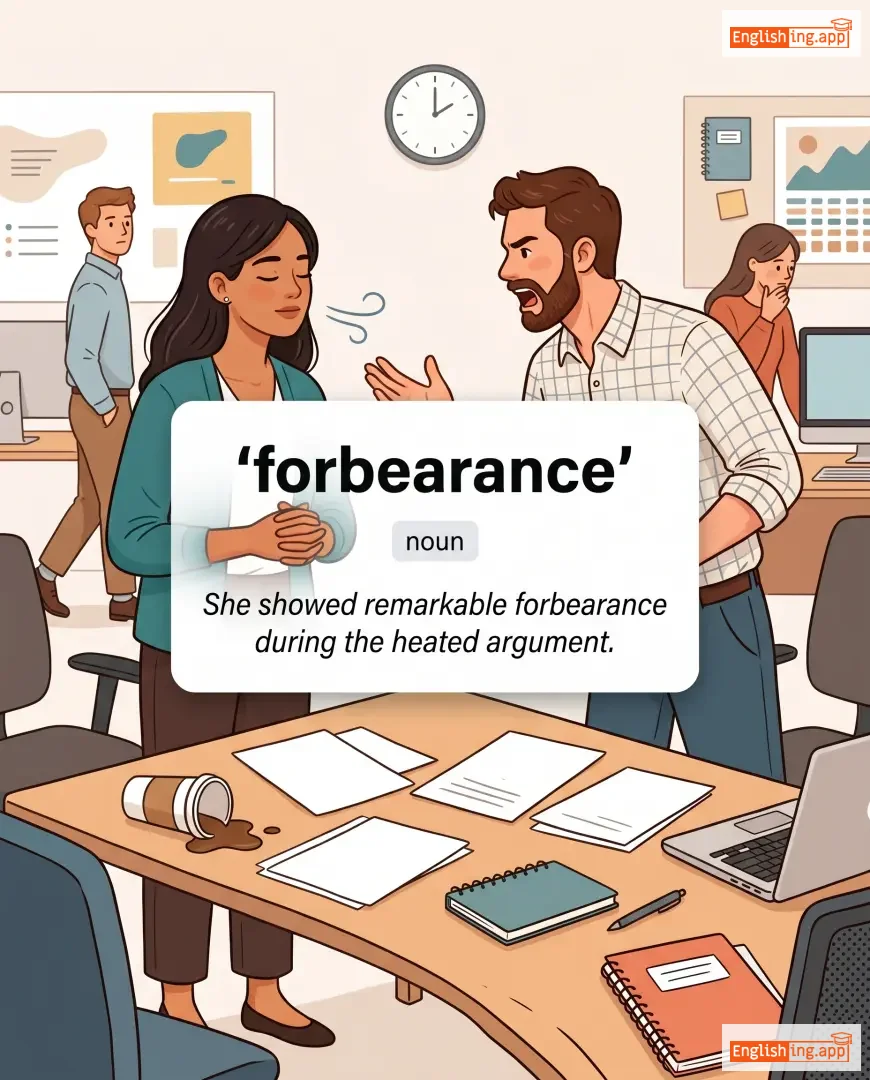
/fɔːrˈbɛrəns/
noun
(フォービアランス)
••••••
|
|
寛容
kanyou
••••••
|
- •••••• | - •••••• | - •••••• | - •••••• |
Patient self-control; restraint and tolerance, especially in difficult situations.
••••••
|
She showed remarkable forbearance during the heated argument. |
彼女は激しい議論の中で驚くべき寛容さを示しました。
Kanojo wa hageshii giron no naka de odorokubeki kanyousa o shimeshimaashita.
••••••
|
- •••••• | - •••••• | - •••••• |
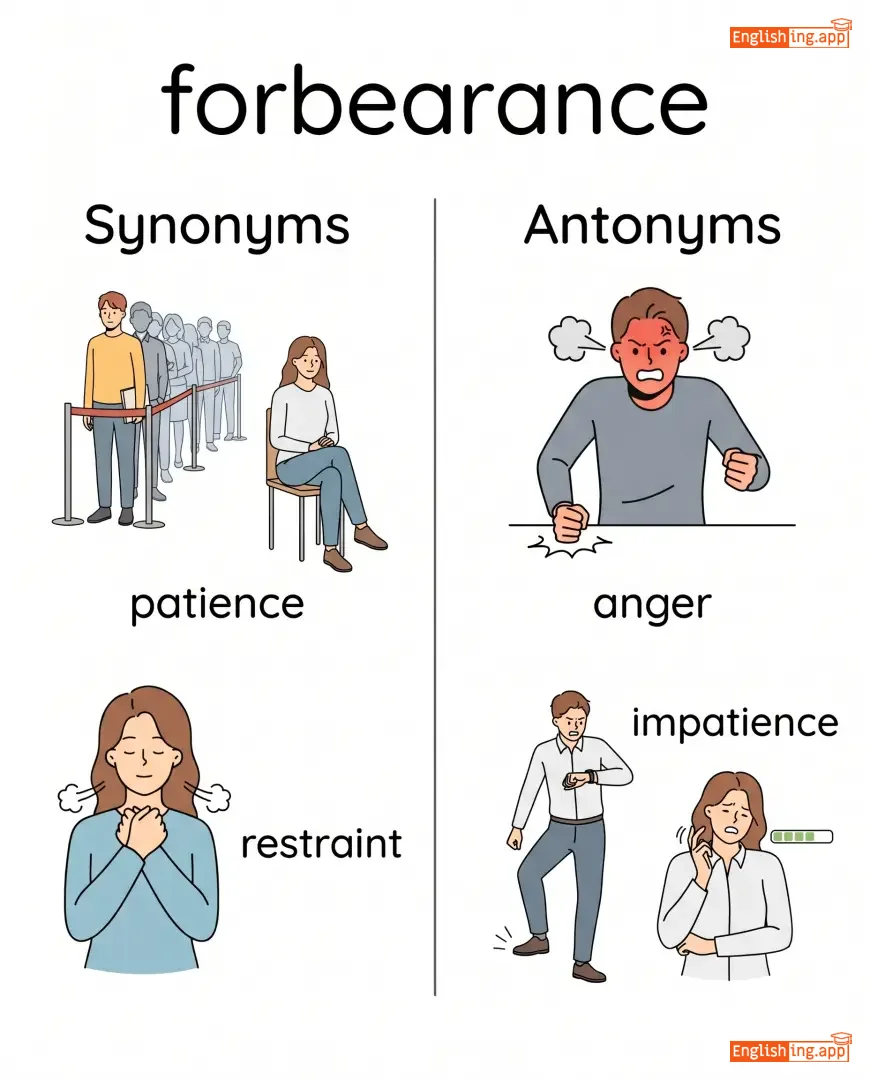
patience, restraint, tolerance, self-control, endurance
••••••
|
anger, impatience, intolerance
••••••
|
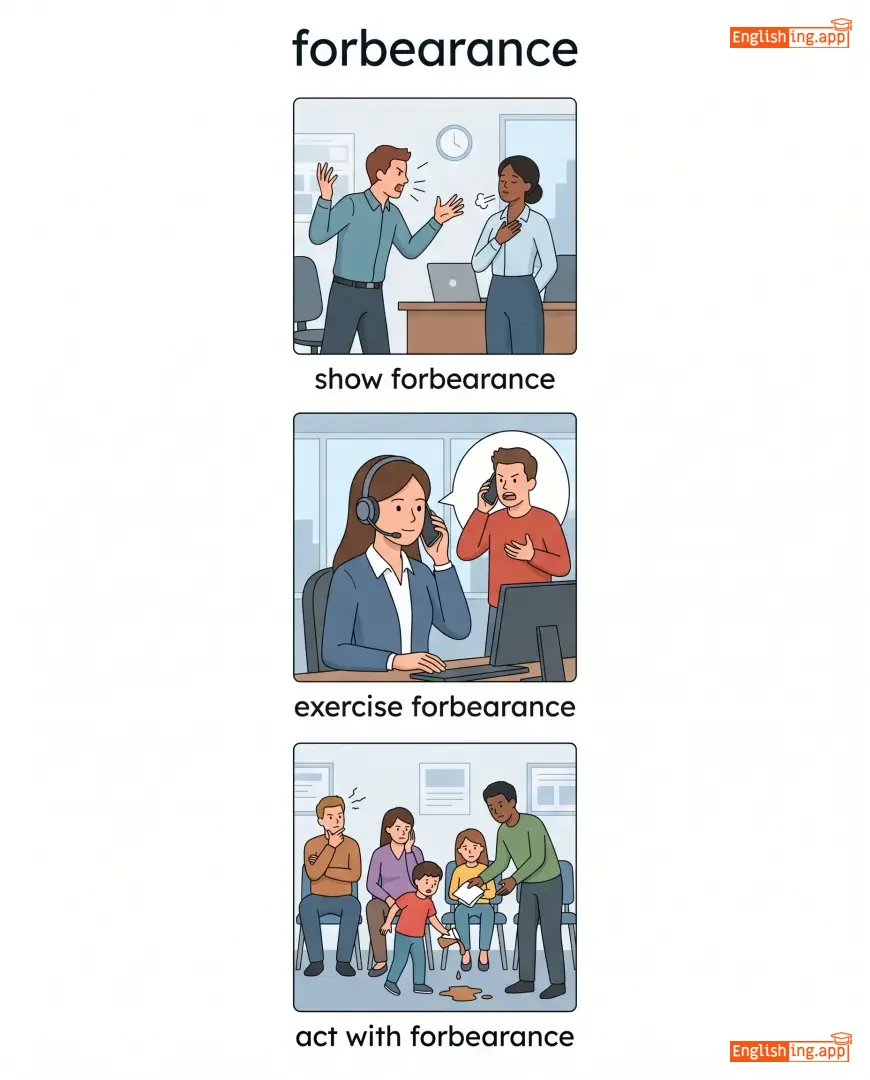
show forbearance, exercise forbearance, act with forbearance
••••••
|
Forbearance は 'bear' のように困難な時でも忍耐することです。
••••••
|
|
🛡️
••••••
|
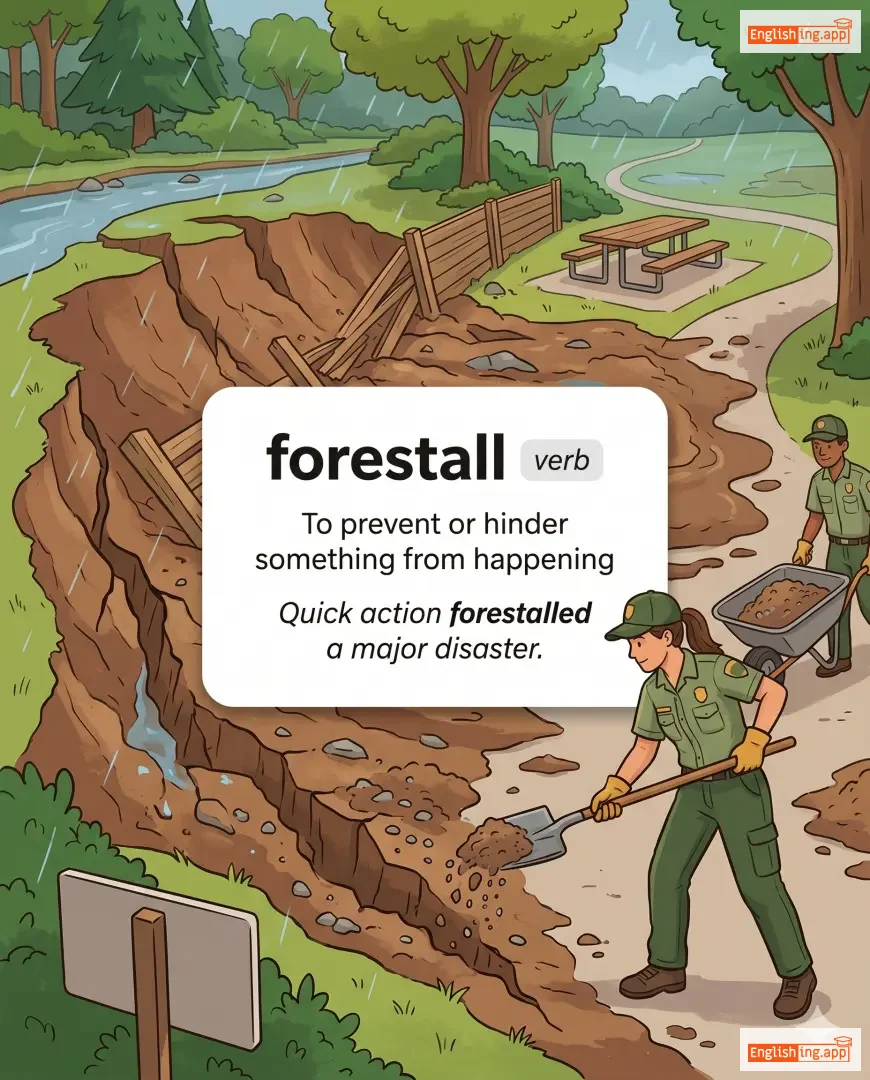
/fɔrˈstɔl/
verb
(フォレストール)
••••••
|
|
事前に防ぐ
jizen ni fuseru
••••••
|
forestalled
フォレストールド
••••••
|
forestalled
フォレストールド
••••••
|
forestalls
フォレストールス
••••••
|
forestalling
フォレストーリング
••••••
|
to prevent by acting in advance; to anticipate and counter
••••••
|
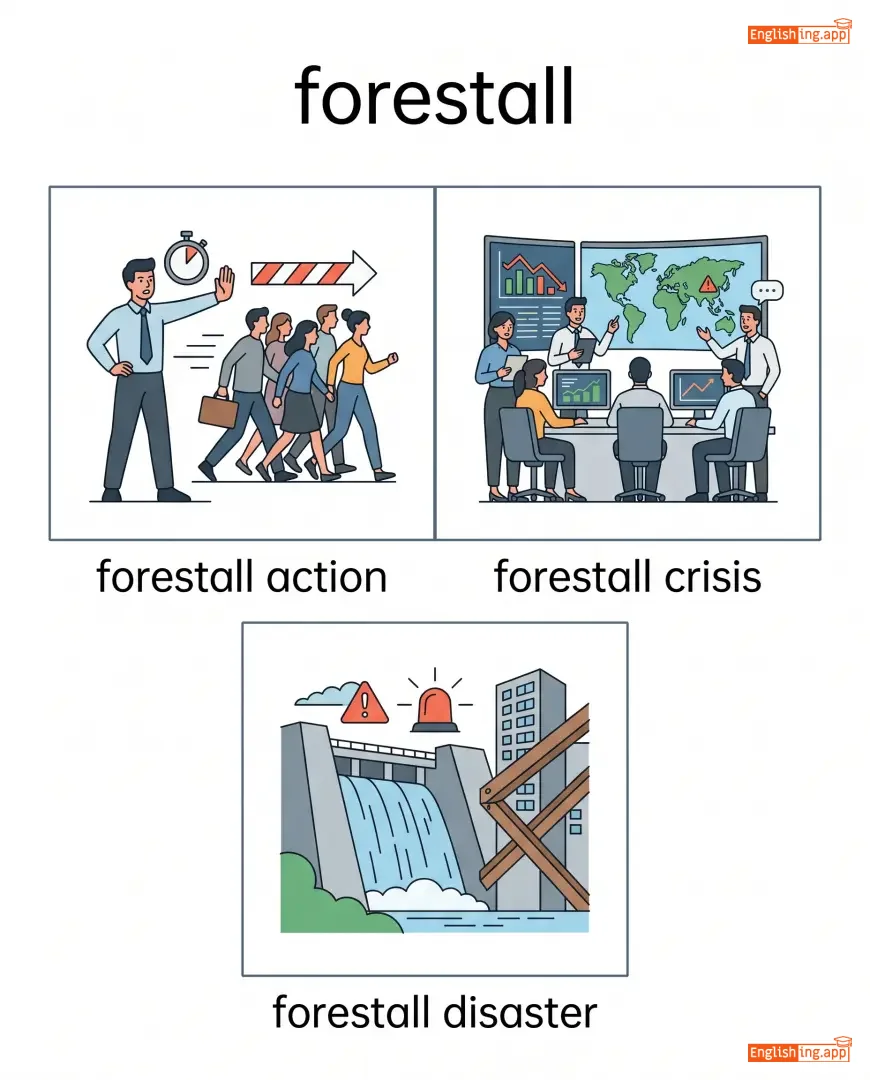
They forestalled the crisis by taking immediate action.
彼らは即座に行動することで危機を回避した。
••••••
|
彼らは即座に行動することで危機を回避した。
Karera wa sokuzani kōdō suru koto de kiki o kaishi shita.
••••••
|
- •••••• | - •••••• | - •••••• |
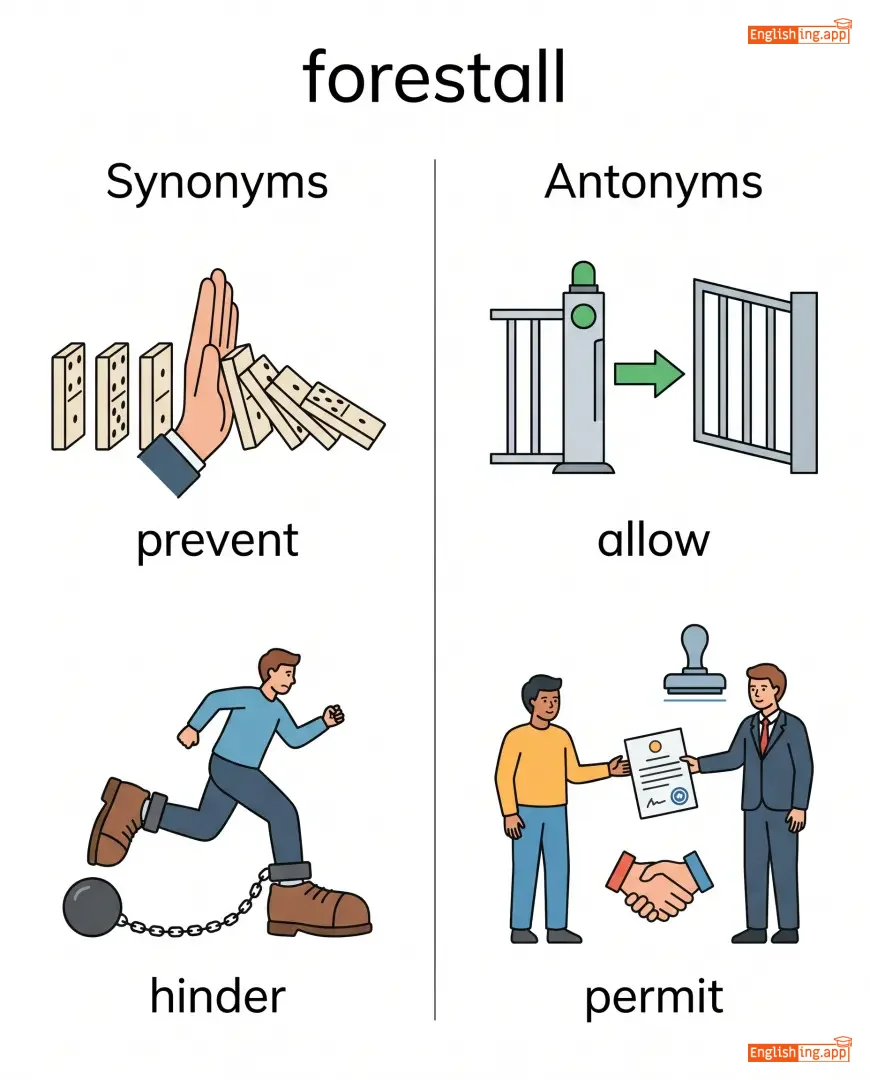
prevent, anticipate, preclude, avert
••••••
|
allow, permit, enable
••••••
|
forestall problems, forestall disaster, forestall criticism, forestall action
••••••
|
Forestall = 先に行動して問題を避ける。
••••••
|
|
💪
••••••
|
/ˈfɔːrmɪdəbl/
adjective
••••••
|
|
- •••••• | - •••••• | - •••••• | - •••••• | - •••••• |
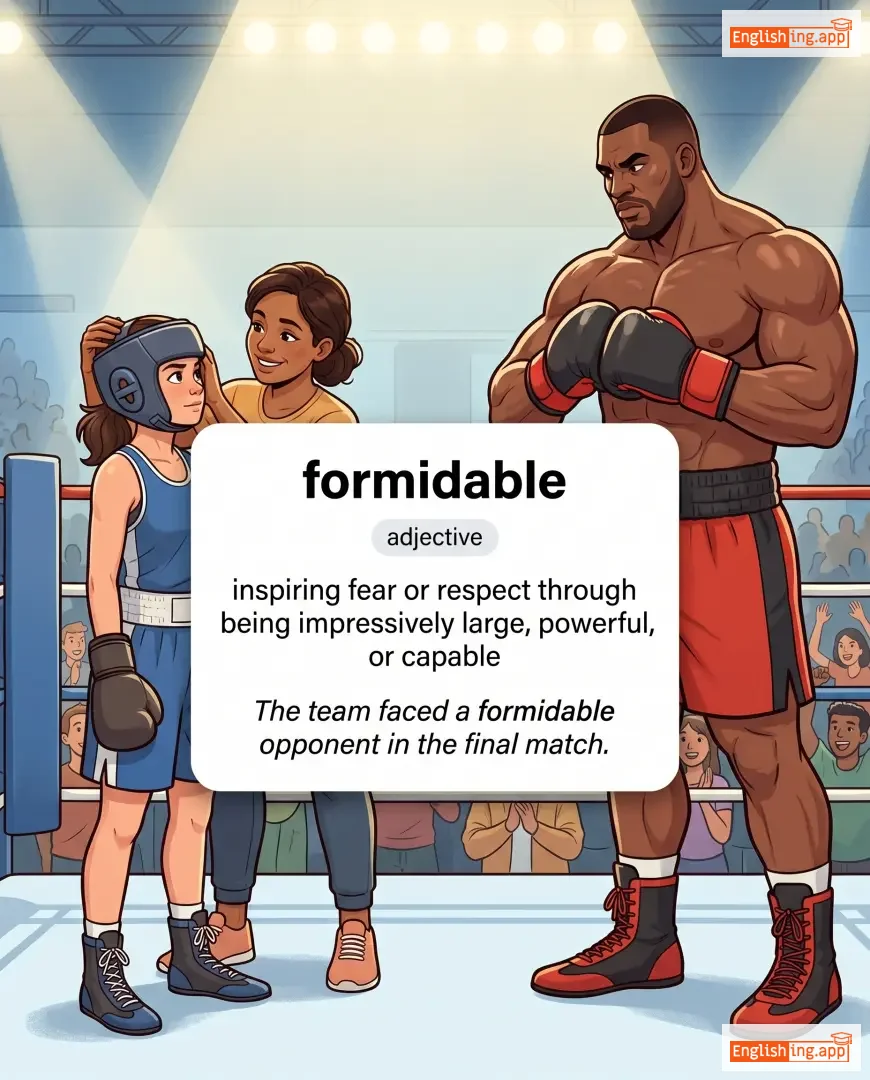
inspiring fear or respect through being impressively large, powerful, or capable
••••••
|
The team faced a formidable opponent in the final match. |
- •••••• |
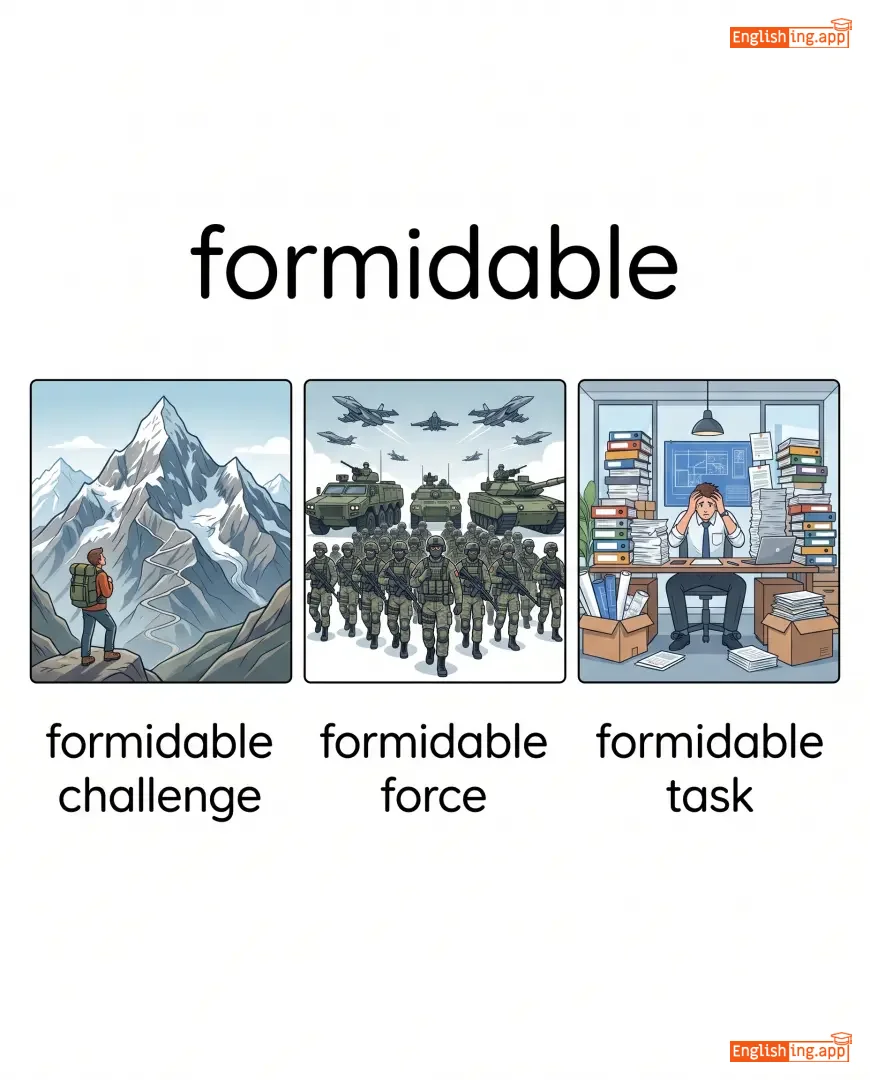
formidable challenge |
a very difficult and intimidating task
••••••
|
- •••••• |
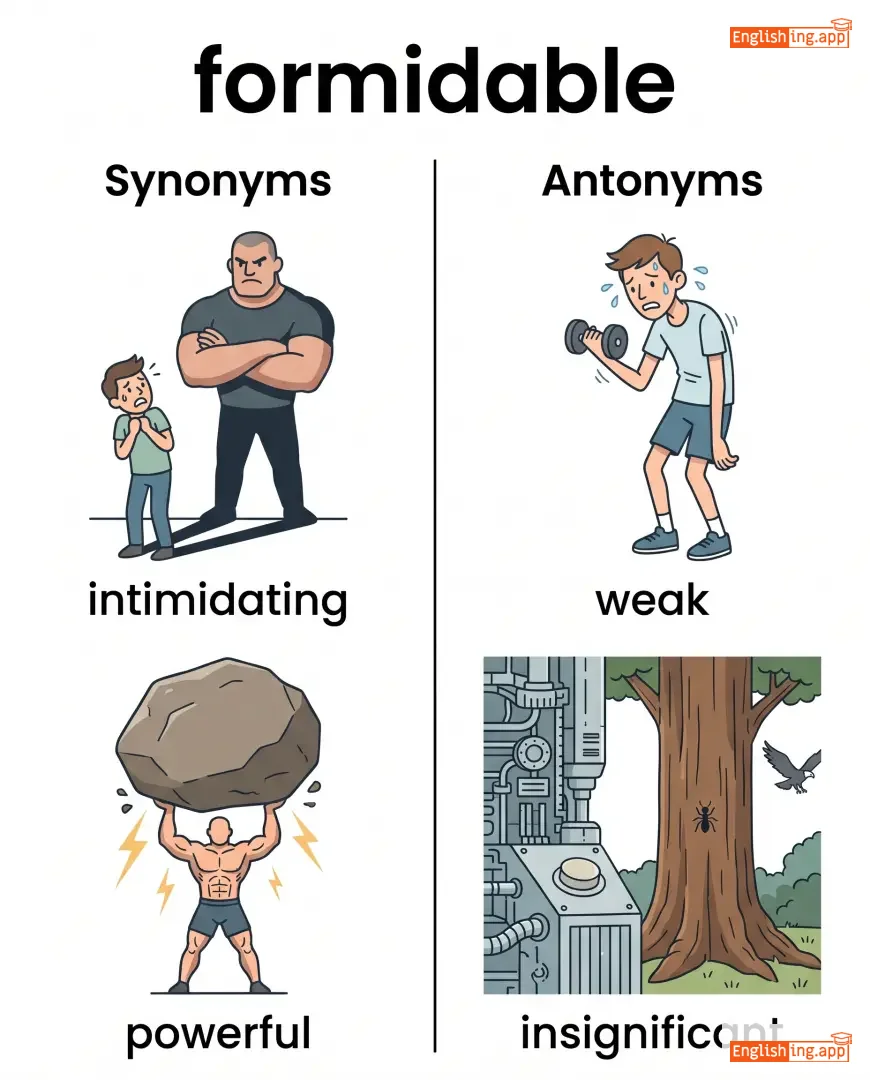
intimidating, powerful, daunting, mighty, fearsome
••••••
|
weak, insignificant, trivial
••••••
|
formidable challenge, formidable force, formidable task, formidable opponent
••••••
|
No •••••• |
|
🚫
••••••
|
/fɔrˈswɛr/
verb
(フォースウェア)
••••••
|

|
放棄する
hōkisuru
••••••
|
forswore
フォースウォー
••••••
|
forsworn
フォースウォーン
••••••
|
forswears
フォースウェアズ
••••••
|
forswearing
フォースウェアリング
••••••
|
to renounce or reject; to give up completely
••••••
|
He forswore his old habits and started a new life.
彼は古い習慣を捨て、新しい人生を始めました。
••••••
|
彼は古い習慣を捨て、新しい人生を始めました。
Kare wa furui shūkan o sute, atarashī jinsei o hajimemashita.
••••••
|
- •••••• | - •••••• | - •••••• |
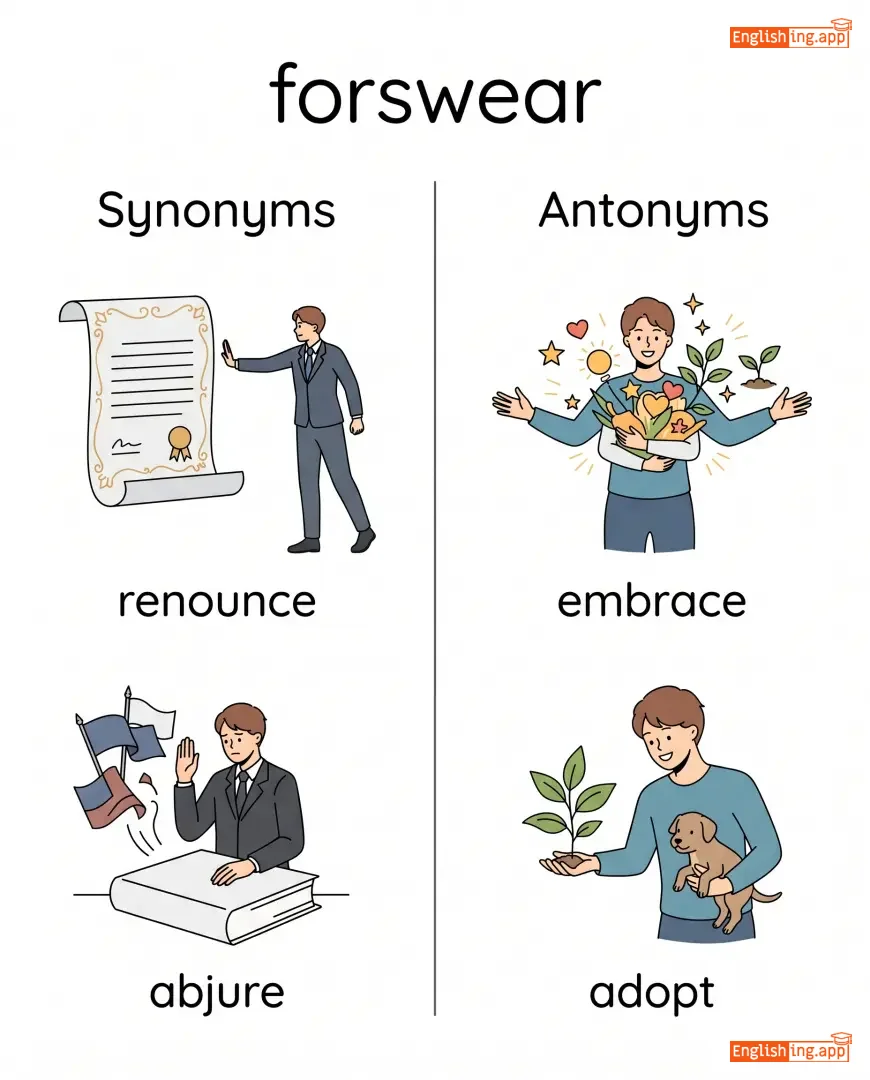
renounce, abandon, reject, disavow
••••••
|
embrace, accept, adopt
••••••
|
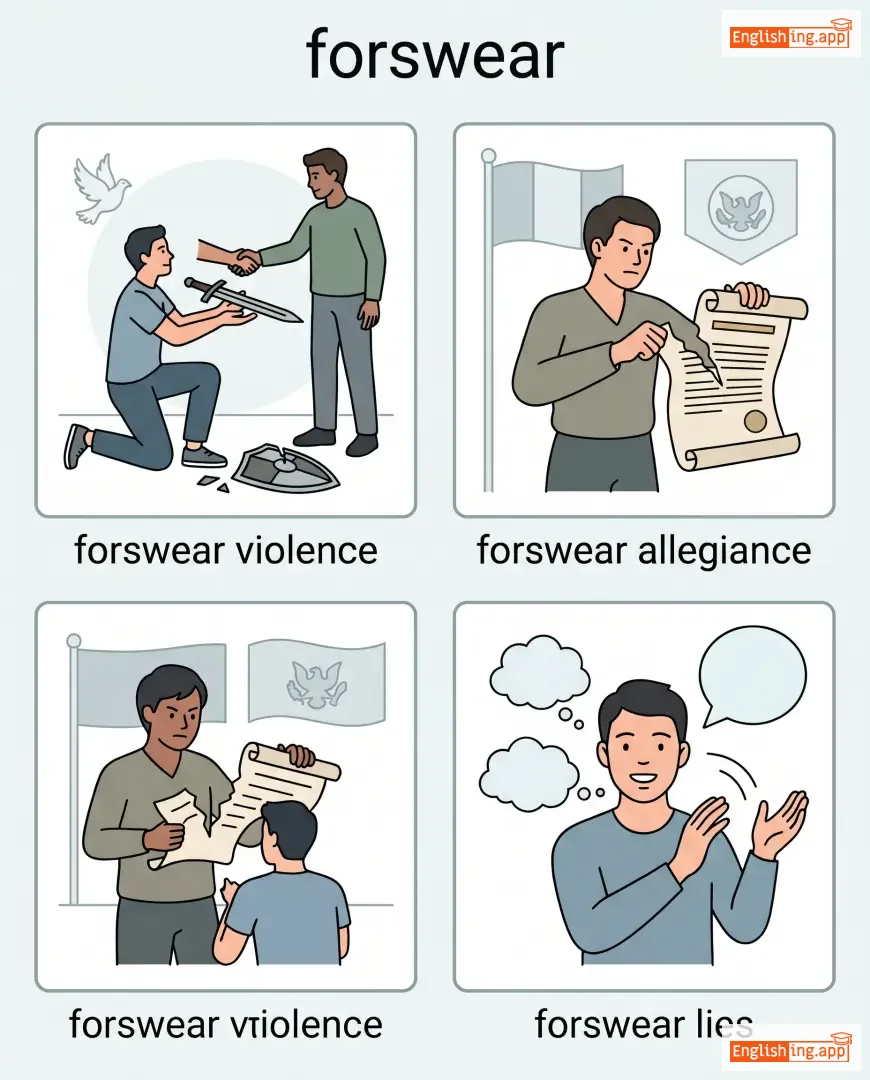
forswear violence, forswear completely, forswear forever, formally forswear, solemnly forswear
••••••
|
Forswear means to let go, like releasing an old habit forever!
••••••
|
|
🏗️
••••••
|
/ˈfaʊndər/
noun, verb
(ファウンダー)
••••••
|


|
創設者
sōsetsusha
••••••
|
founded
ファウンデッド
••••••
|
founded
ファウンデッド
••••••
|
founds
ファウンズ
••••••
|
founding
ファウンディング
••••••
|
a person who establishes an institution or company; as a verb, to fail or sink
••••••
|
She is the founder of a successful startup.
彼女は成功したスタートアップの創設者です。
••••••
|
彼女は成功したスタートアップの創設者です。
Kanojo wa seikō shita sātopu no sōsetsusha desu.
••••••
|
- •••••• | - •••••• | - •••••• |
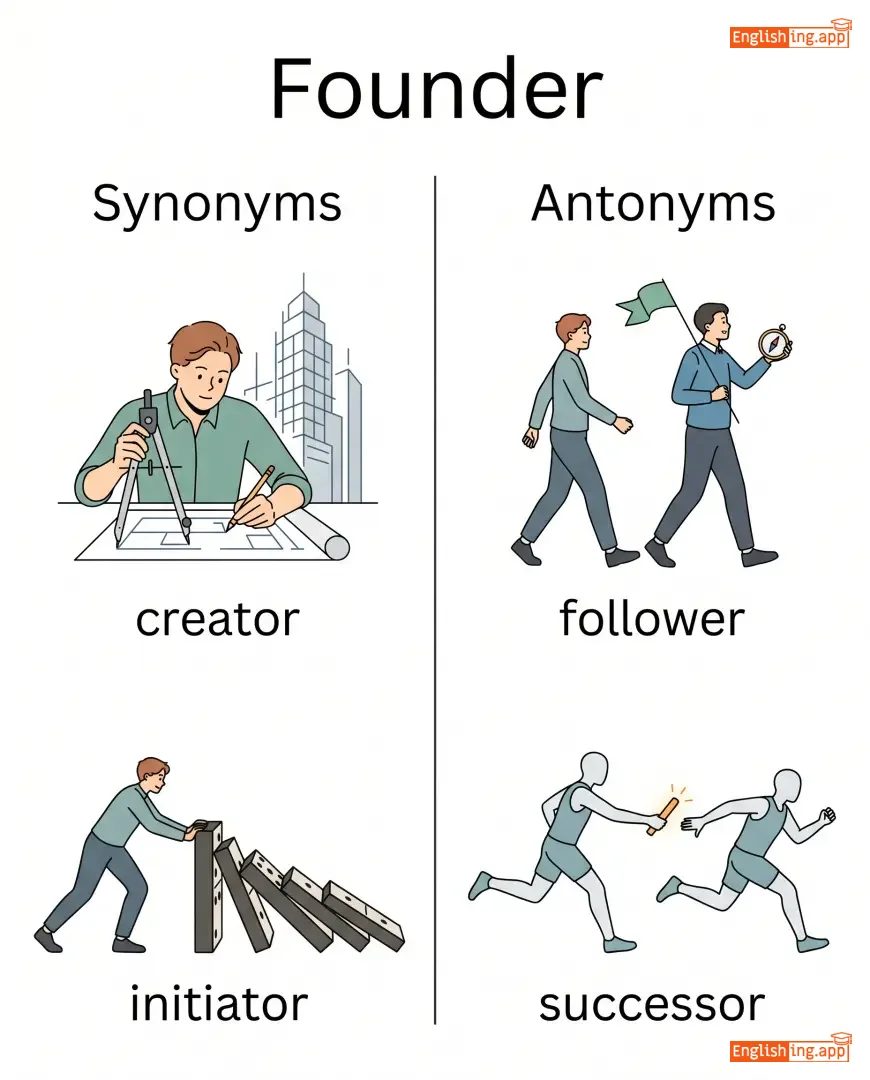
creator, initiator, establisher, originator
••••••
|
follower, successor
••••••
|
company founder, startup founder, founding member, founder of
••••••
|
Founderは創設者、Foundationと関連があります。
••••••
|
|
🥊
••••••
|
/ˈfrækɑː/
noun
(フラカス)
••••••
|
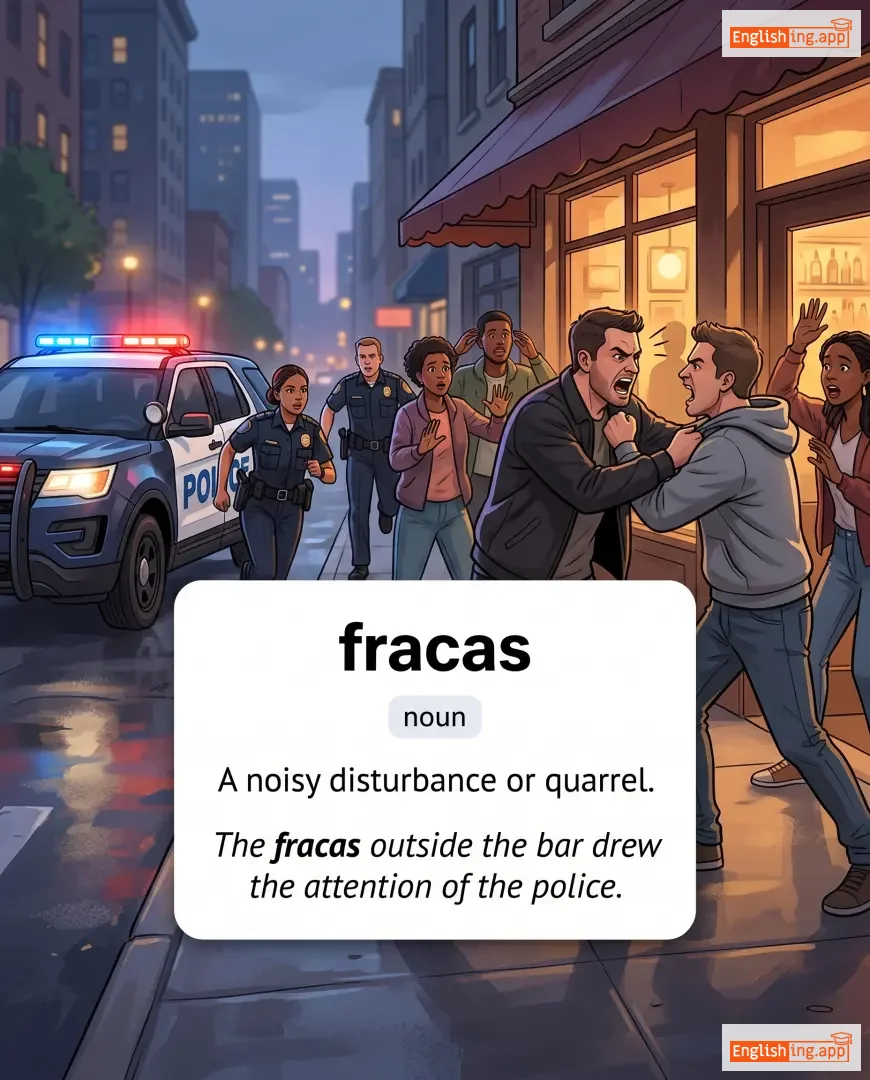
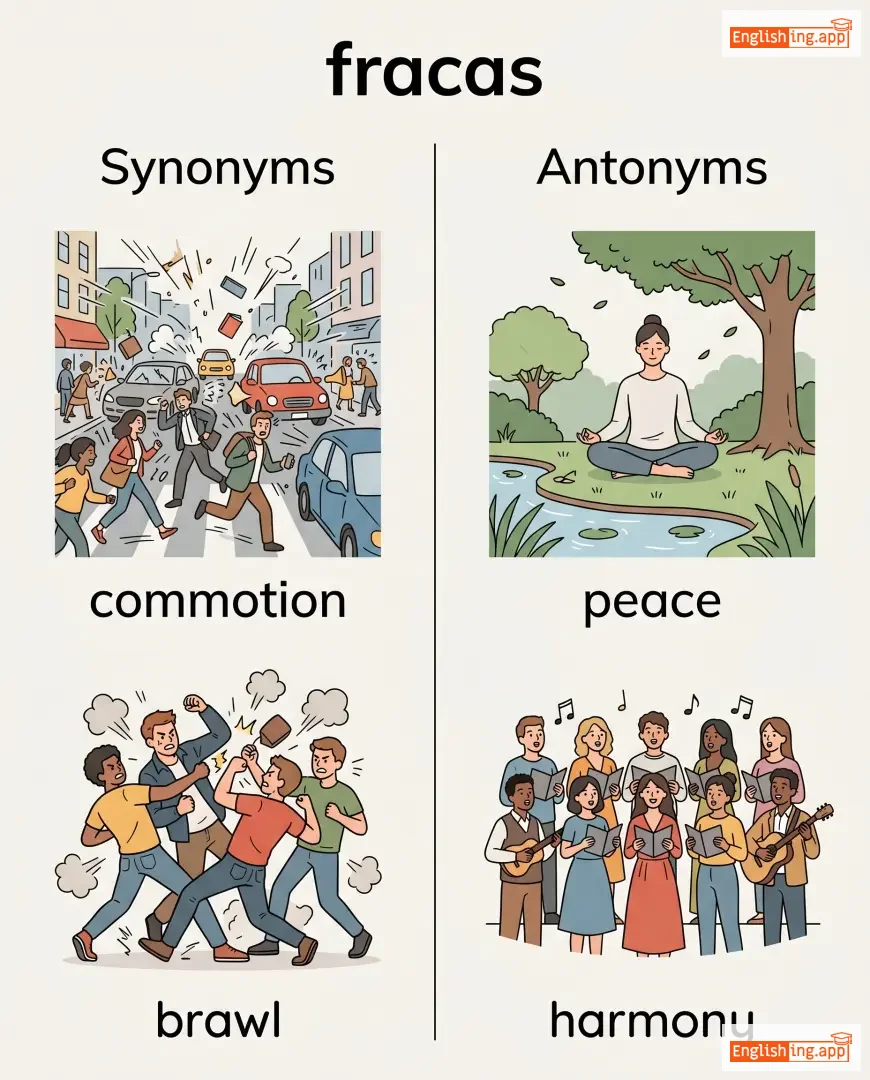
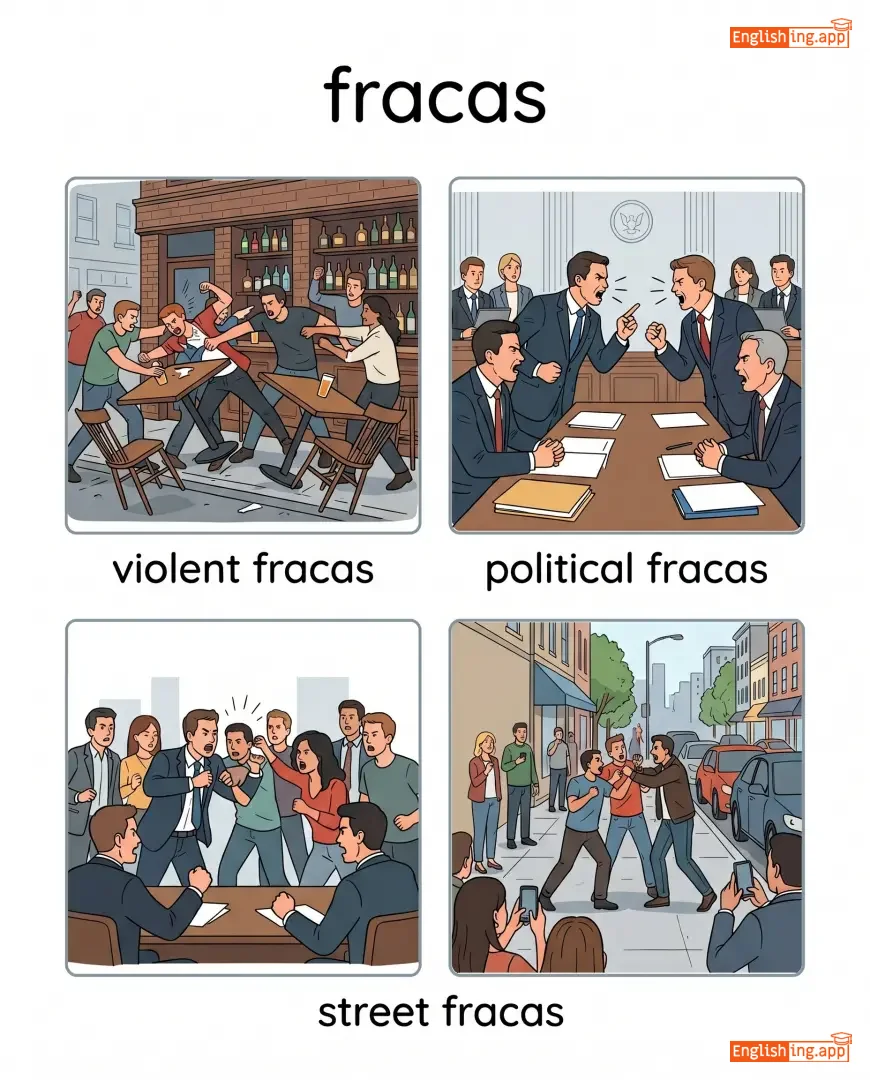
|
騒動
soudou
••••••
|
- •••••• | - •••••• | - •••••• | - •••••• |
A noisy disturbance or quarrel.
••••••
|
The fracas outside the bar drew the attention of the police.
バーの外での騒動が警察の注意を引きました。
••••••
|
バーの外での騒動が警察の注意を引きました。
Bā no soto de no soudou ga keisatsu no chūi o hikimashita.
••••••
|
- •••••• | - •••••• | - •••••• |
commotion, brawl, fight, uproar, altercation
••••••
|
peace, harmony, calm
••••••
|
violent fracas, political fracas, street fracas, cause a fracas
••••••
|
Fracas は騒動、うるさい争いのこと。
••••••
|
|
😤
••••••
|
/ˈfræk.ʃəs/
adjective
(furekushasu)
••••••
|
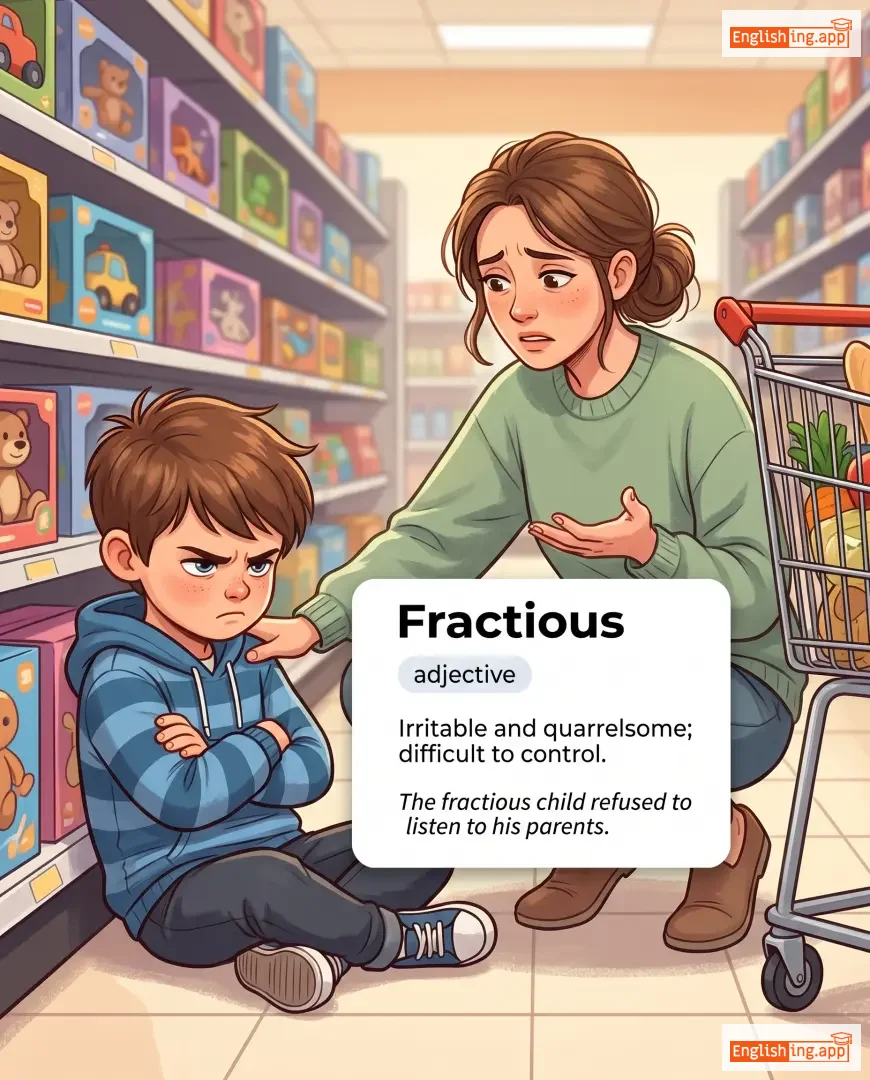
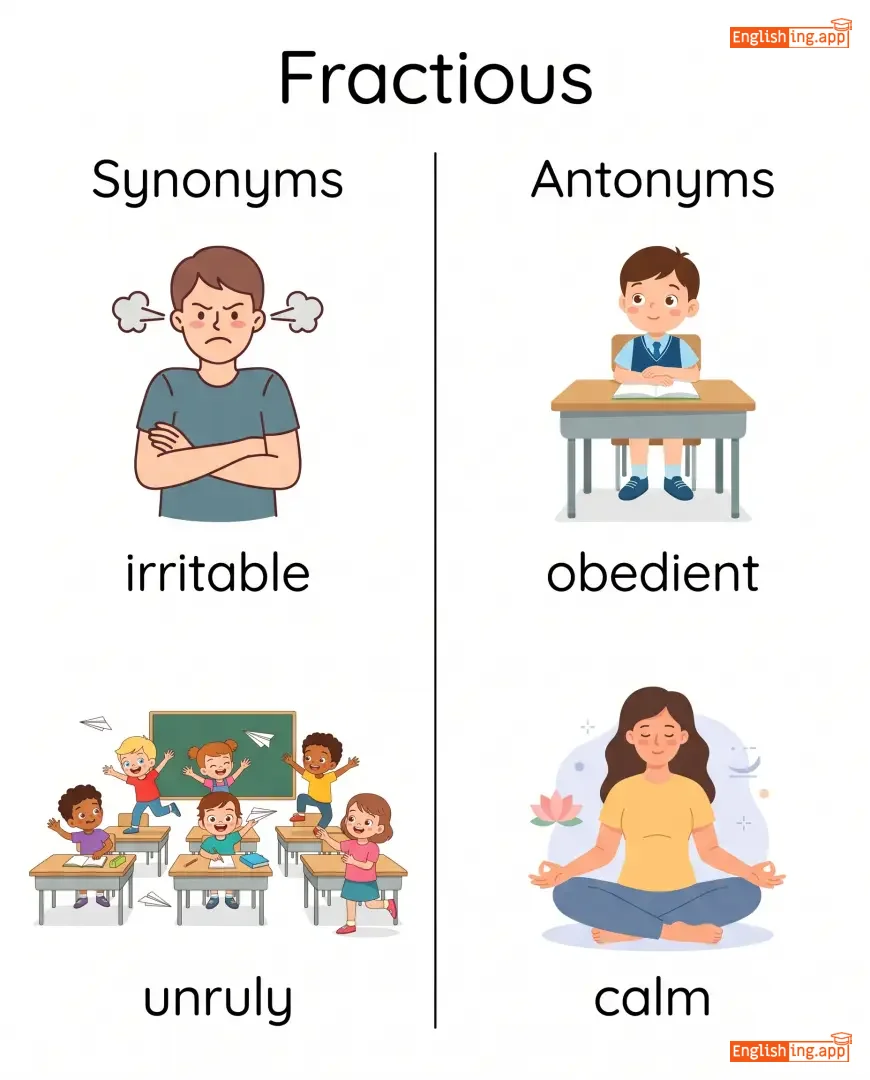
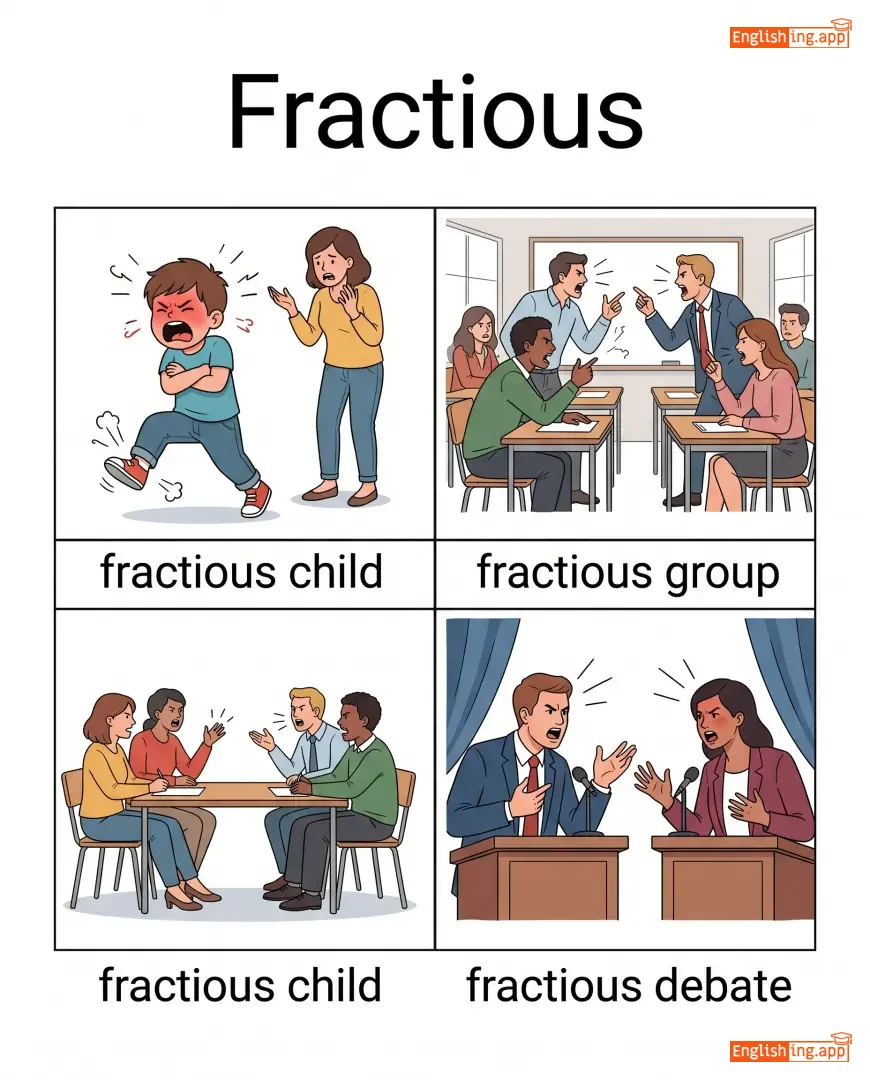
|
わがままな; けんか腰の; 手に負えない
wagama mana; kenka-goshi no; te ni oenai
••••••
|
- •••••• | - •••••• | - •••••• | - •••••• |
irritable and quarrelsome; difficult to control; bad-tempered
••••••
|
The fractious child refused to follow any of the teacher's instructions.
その気難しい子供は教師の指示に従うことを拒否しました。
••••••
|
その気難しい子供は教師の指示に従うことを拒否しました。
Sono kimuzukashī kodomo wa kyōshi no shiji ni shitagau koto o kyohi shimashita.
••••••
|
- •••••• | - •••••• | - •••••• |
quarrelsome, irritable, unruly, rebellious
••••••
|
obedient, cooperative, agreeable, compliant
••••••
|
fractious behavior, fractious child, fractious mood
••••••
|
Fractious in Japanese is like a '気難しい' child who refuses to follow instructions.
••••••
|
|
🎨
••••••
|
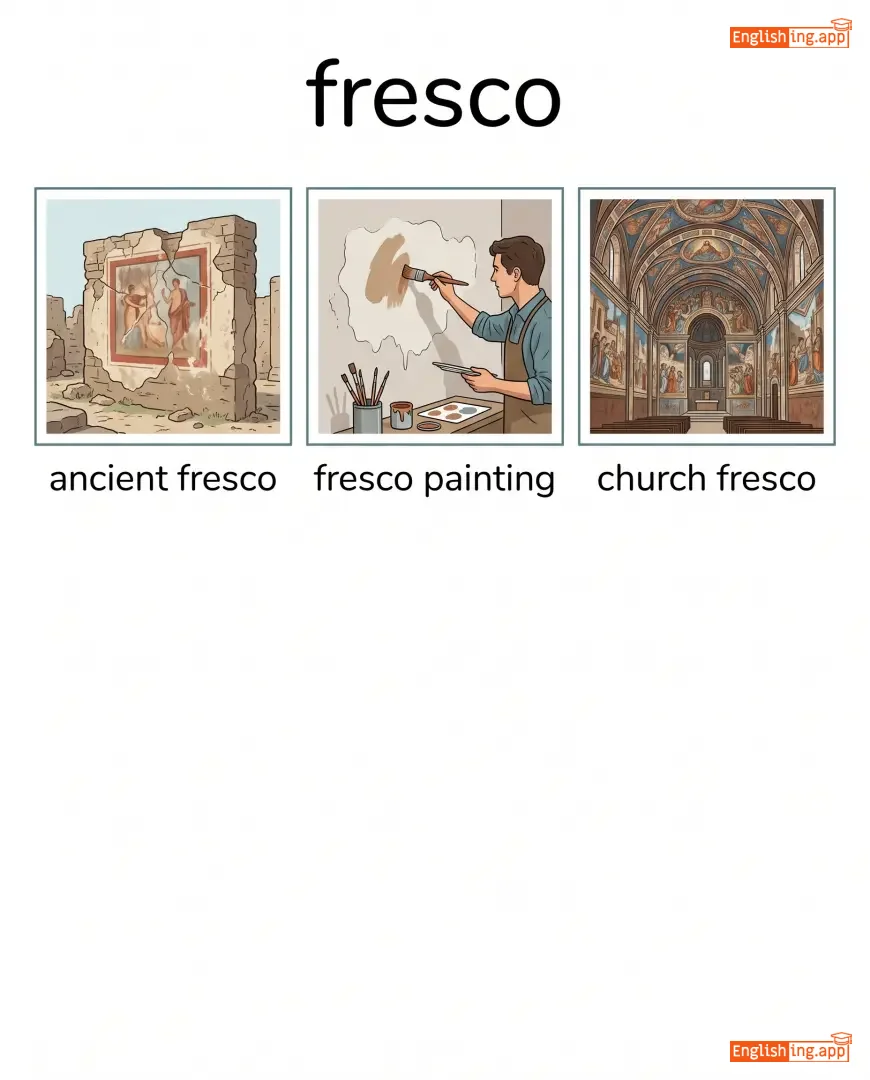
/ˈfrɛs.koʊ/
noun
(furesuko)
••••••
|
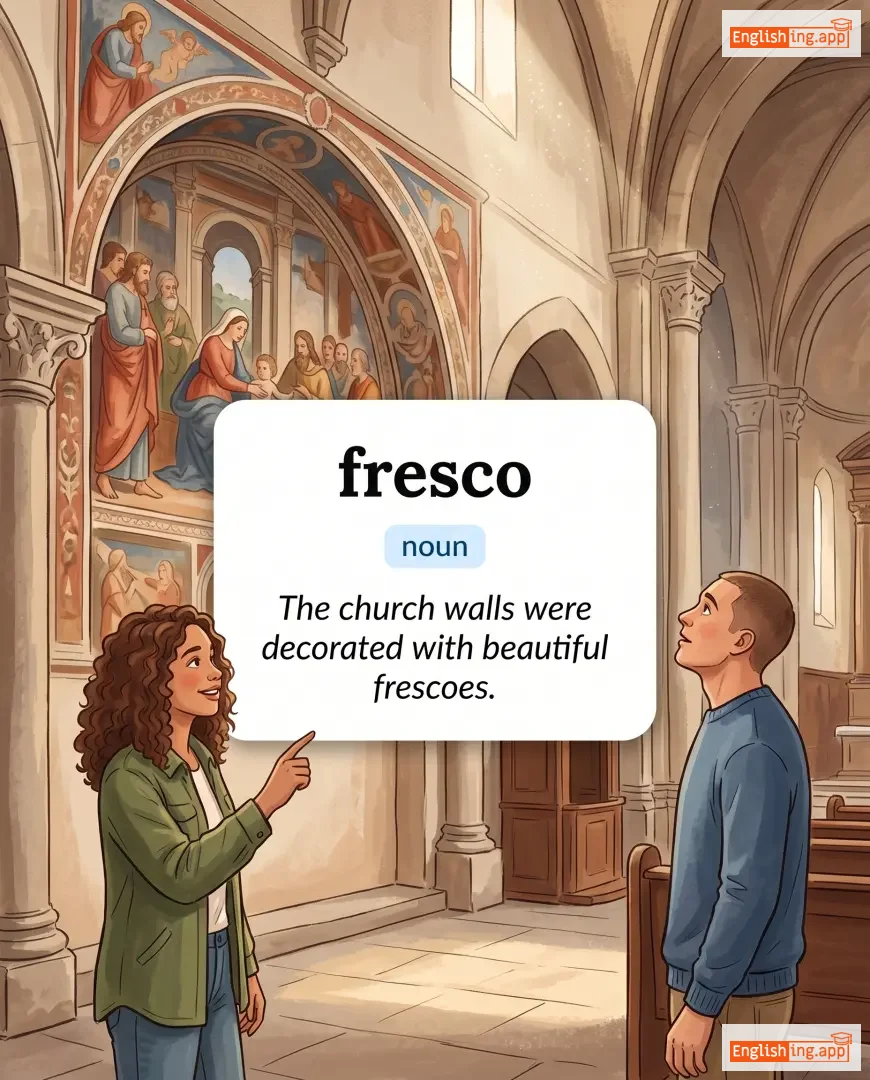
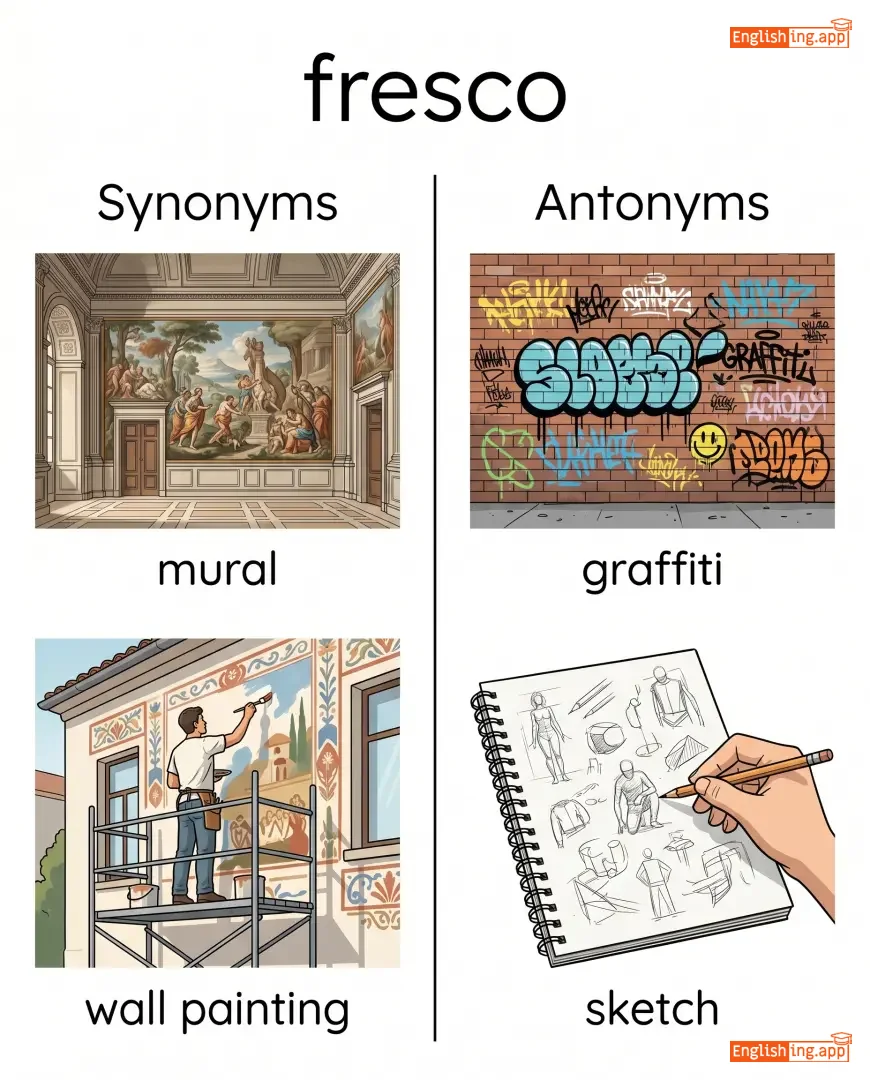
|
フレスコ画
furesukoga
••••••
|
- •••••• | - •••••• | - •••••• | - •••••• |
A painting done rapidly in watercolor on wet plaster so that the colors penetrate the surface
••••••
|
The church walls were decorated with beautiful frescoes. |
教会の壁は美しいフレスコ画で飾られていました。
Kyoukai no kabe wa utsukushii furesukoga de kazararete imashita.
••••••
|
- •••••• | - •••••• | - •••••• |
mural, wall painting, artwork, decoration
••••••
|
graffiti, sketch
••••••
|
ancient fresco, fresco painting, church fresco, renaissance fresco
••••••
|
フレスコ画は湿った漆喰の上に描かれた絵画です。
••••••
|
|
🏛️
••••••
|
/friːz/
noun
(フリーズ)
••••••
|
|
フリーズ
furiizu
••••••
|
- •••••• | - •••••• | - •••••• | - •••••• |
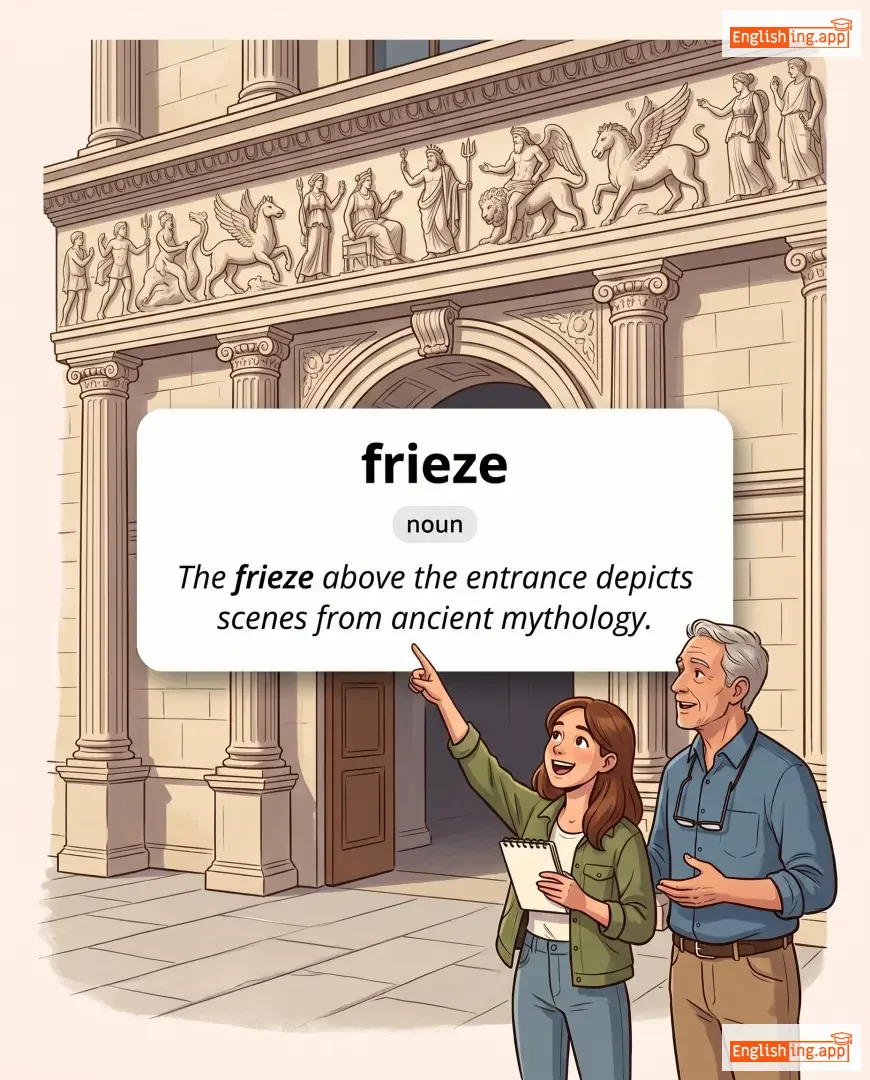
a decorative horizontal band, often sculpted or painted, usually on a wall near the ceiling
••••••
|
The frieze above the entrance depicts scenes from ancient mythology. |
入口上のフリーズは古代神話のシーンを描いています。
iriguchi ue no furiizu wa kodai shinwa no shīn o egaiteimasu
••••••
|
- •••••• | - •••••• | - •••••• |
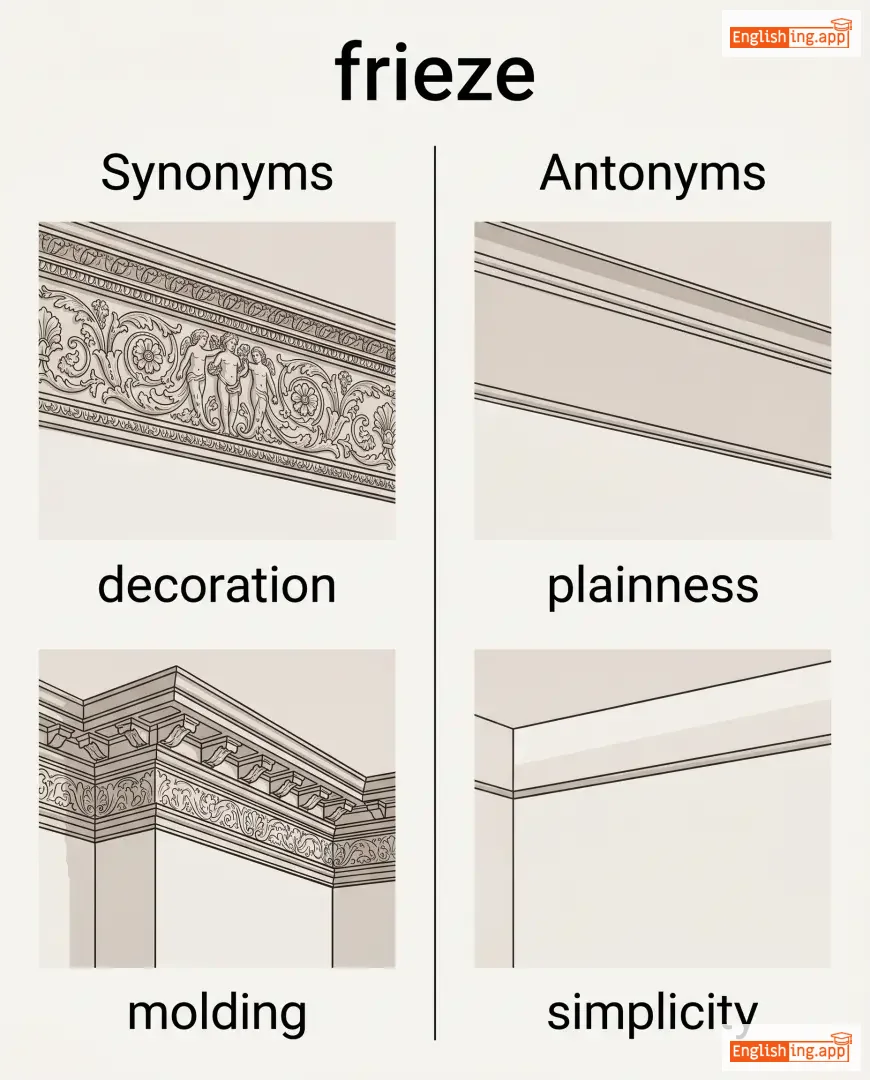
decoration, molding, relief, ornament
••••••
|
plainness, simplicity
••••••
|
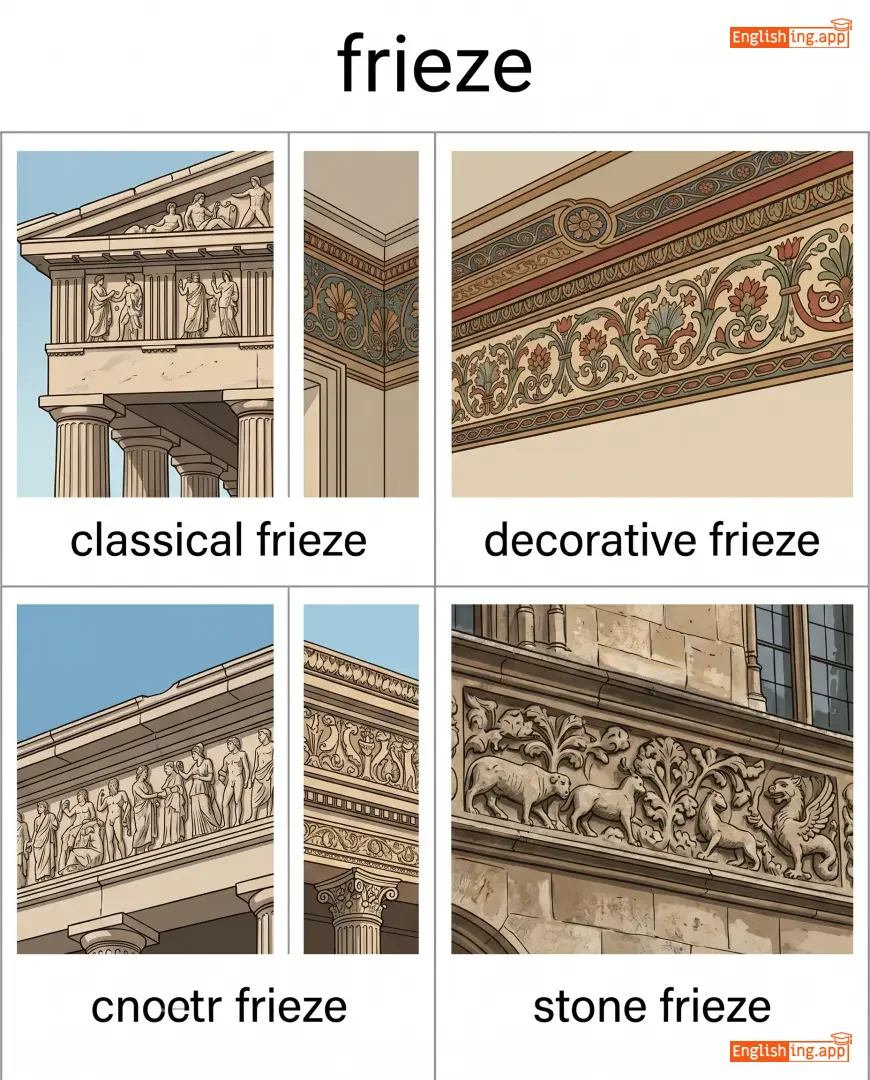
classical frieze, decorative frieze, stone frieze, wall frieze
••••••
|
フリーズはただの帯ではなく、壁に描かれた芸術です。
••••••
|
|
😒
••••••
|
/ˈfrəʊərd/
adjective
(フロワード)
••••••
|
|
頑固な
ganko na
••••••
|
- •••••• | - •••••• | - •••••• | - •••••• |
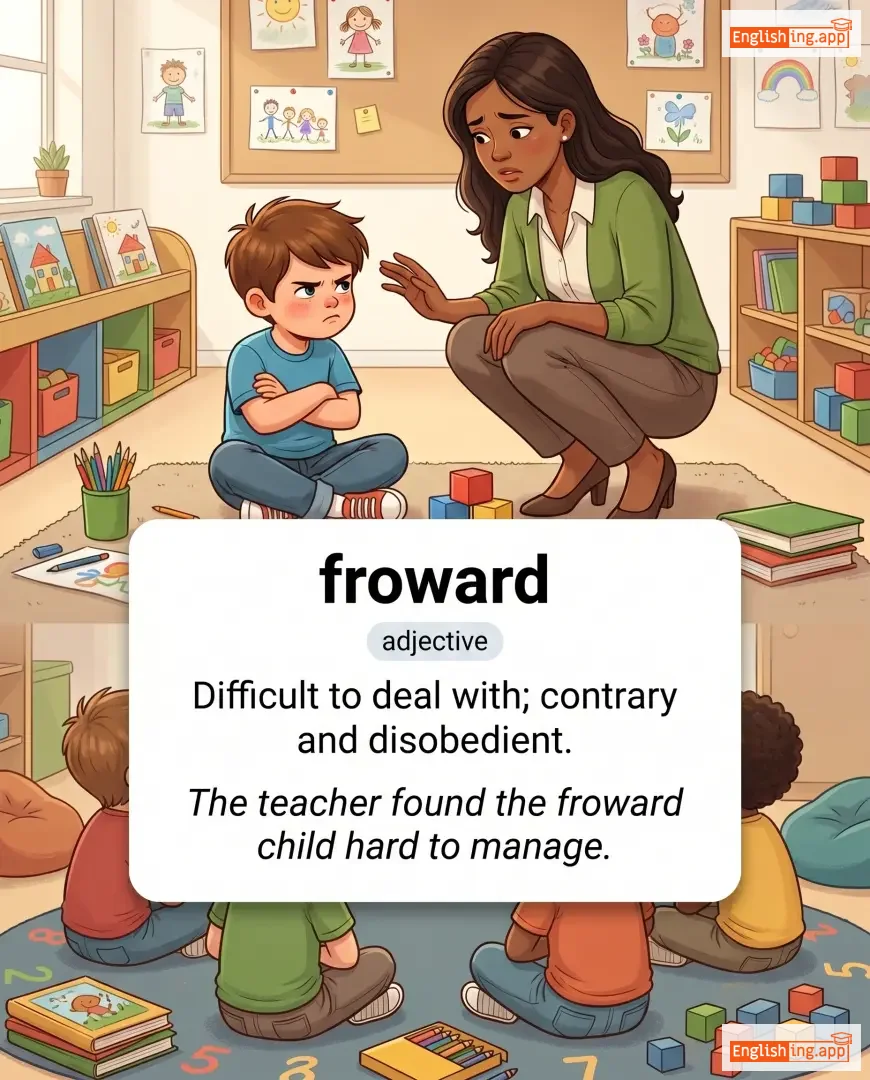
Difficult to deal with; contrary and disobedient.
••••••
|
The teacher found the froward child hard to manage. |
教師は頑固な子供を扱うのが難しいと感じた。
Kyoushi wa ganko na kodomo o atsukau no ga muzukashii to kanjita.
••••••
|
- •••••• | - •••••• | - •••••• |
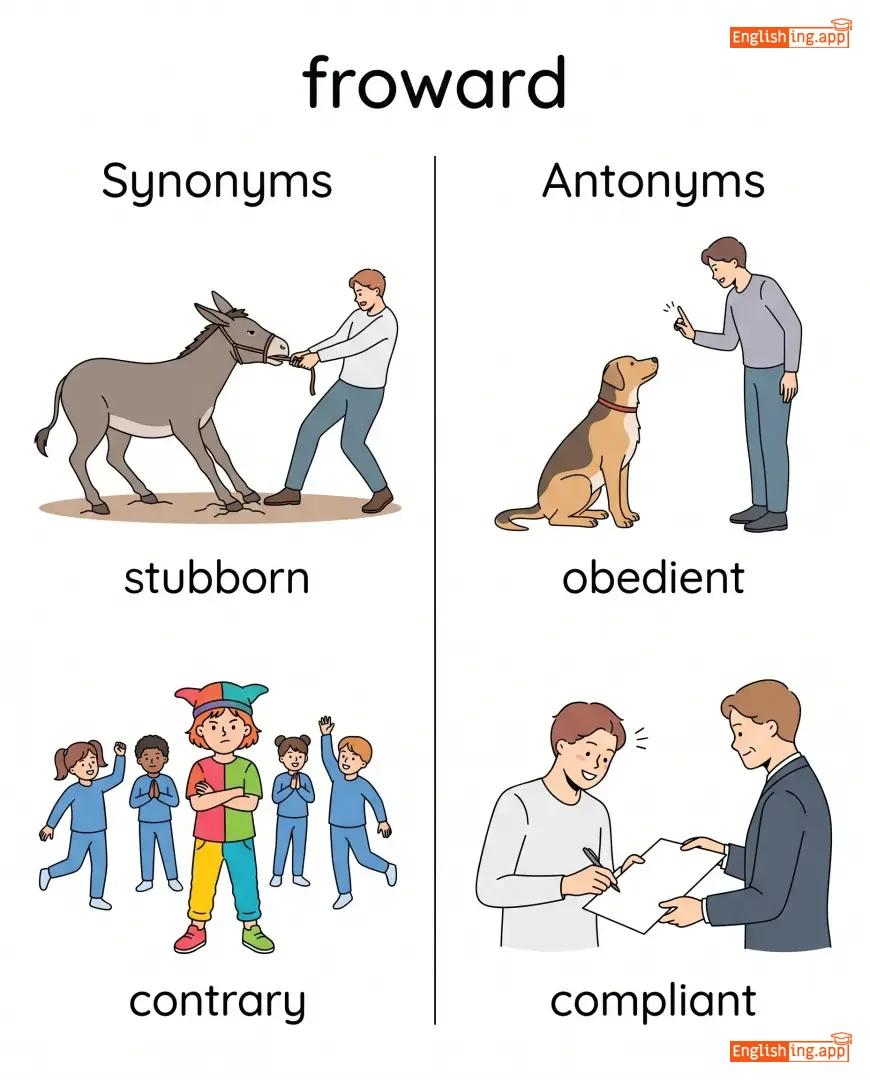
stubborn, contrary, headstrong, disobedient, unmanageable
••••••
|
obedient, compliant, agreeable
••••••
|
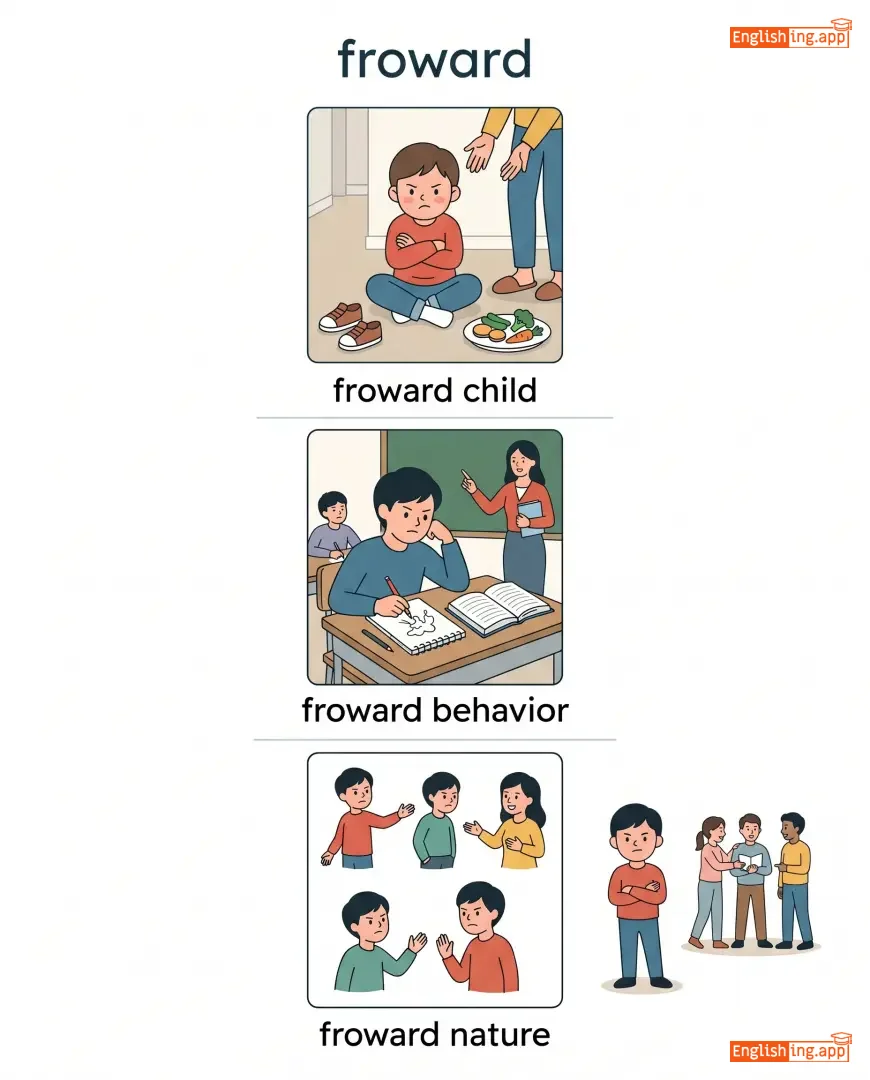
froward child, froward behavior, froward nature
••••••
|
Forward ではなく、頑固な = froward は頑固な意味 😒
••••••
|
|
💰
••••••
|
/fruːˈɡæl.ə.ti/
noun
(フルガリティ)
••••••
|
|
倹約
ken'yaku
••••••
|
- •••••• | - •••••• | - •••••• | - •••••• |
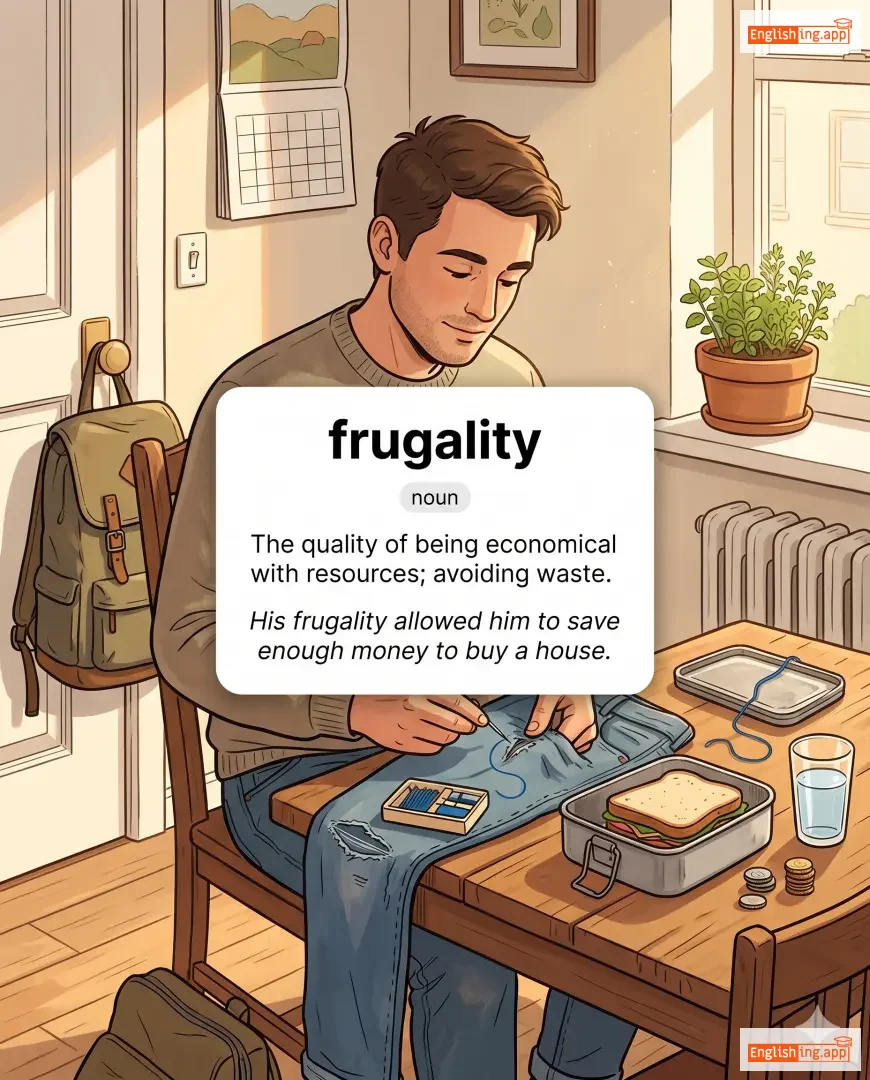
the quality of being economical in use or expenditure; not wasteful
••••••
|
His frugality during his youth allowed him to save enough money for retirement. |
若い頃の倹約のおかげで、退職後に十分なお金を貯めることができました。
Wakai koro no ken'yaku no okage de, taishoku go ni juubun'na okane wo tameru koto ga dekimashita.
••••••
|
- •••••• | - •••••• | - •••••• |
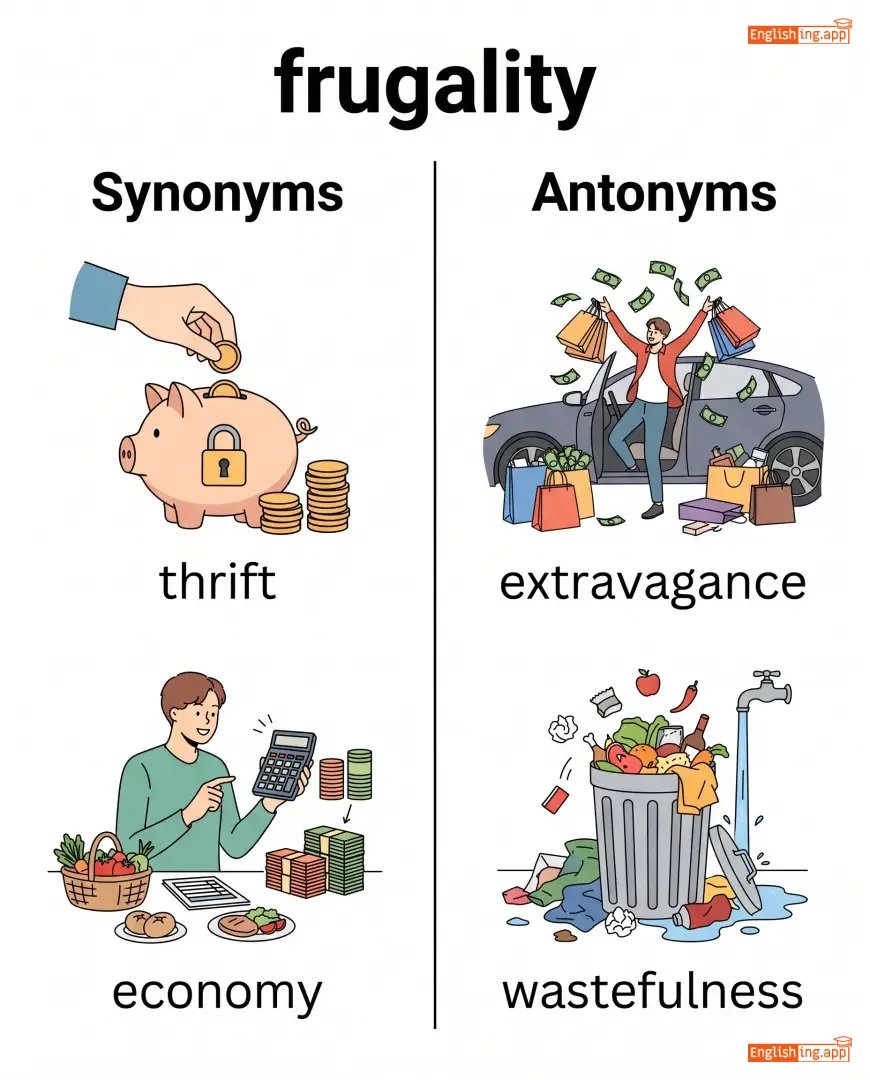
thrift, economy, prudence, saving
••••••
|
extravagance, waste, lavishness, profligacy
••••••
|
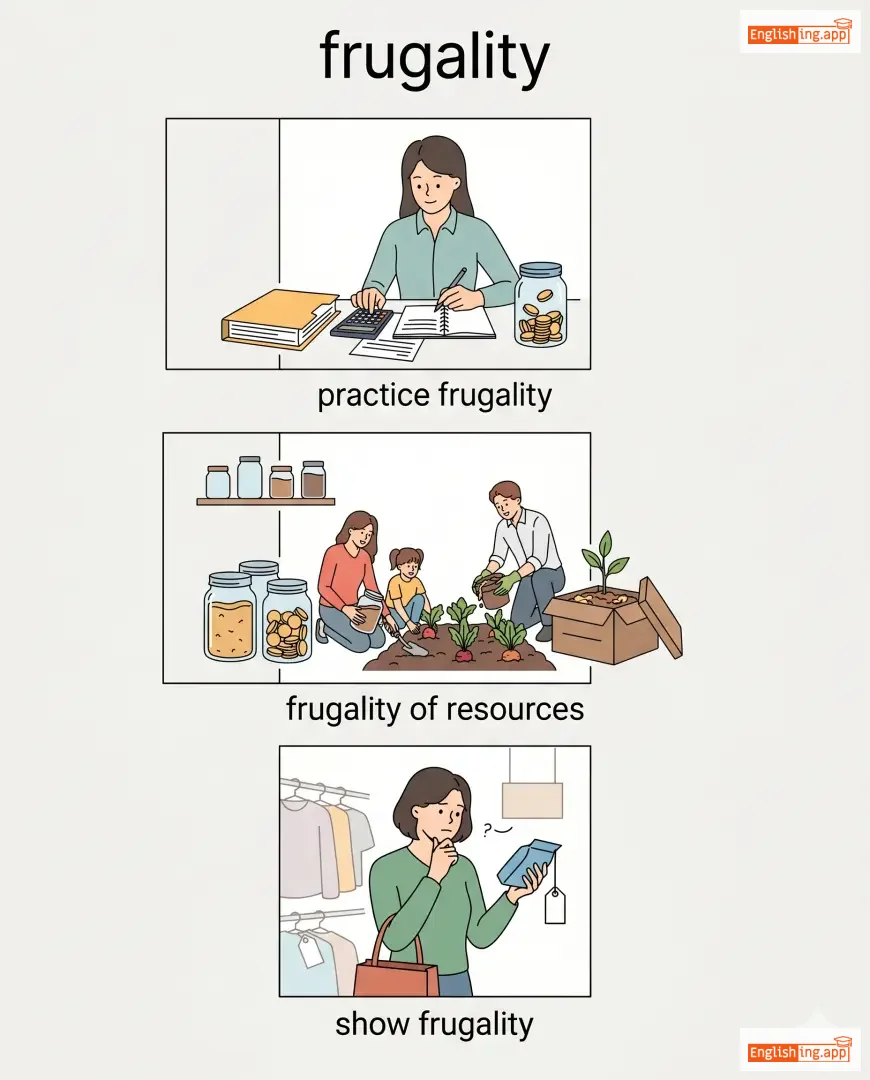
practice frugality, strict frugality, admirable frugality
••••••
|
倹約を実践して未来の安心を手に入れよう。
••••••
|
|
⚡
••••••
|
/ˈfʊl.mɪ.neɪt/
verb
(フルミネート)
••••••
|
|
強く抗議する
tsuyoku kōgi suru
••••••
|
fulminated
フルミネーテッド
••••••
|
fulminated
フルミネーテッド
••••••
|
fulminates
フルミネーツ
••••••
|
fulminating
フルミネーティング
••••••
|
To express strong protest or criticism loudly and forcefully; to explode violently.
••••••
|
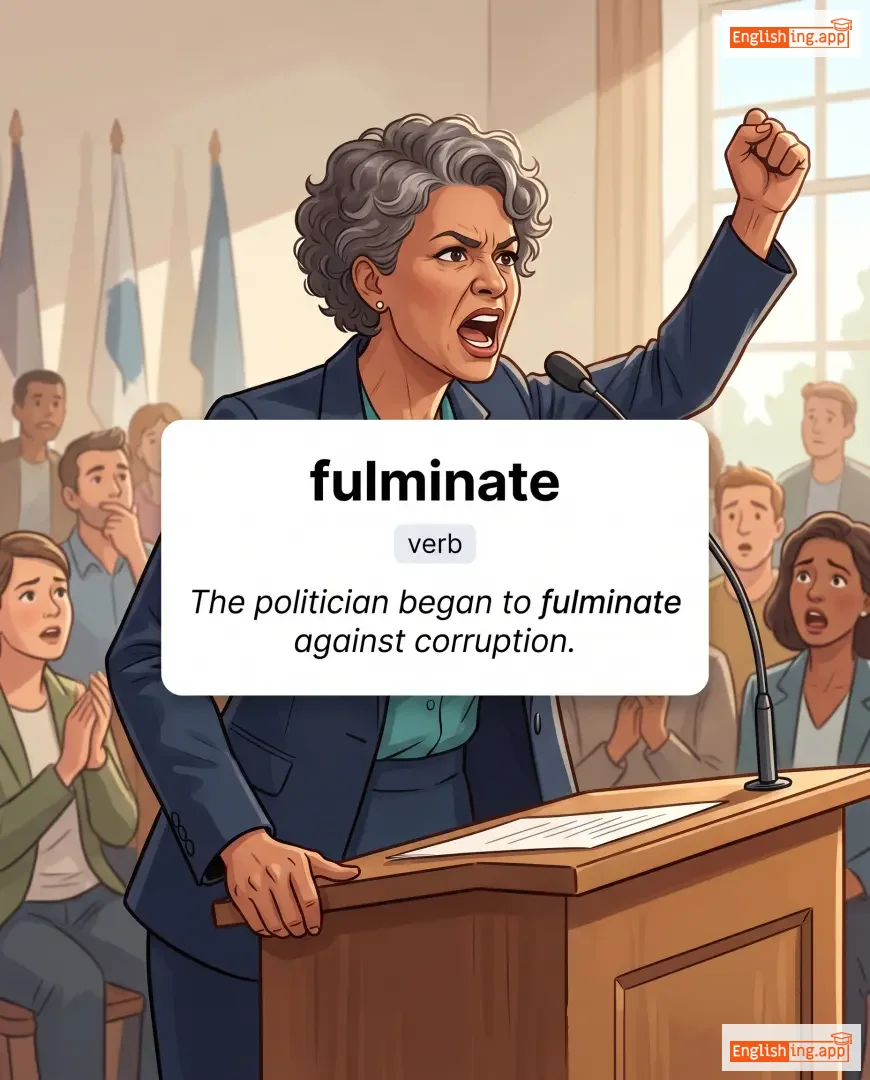
The politician began to fulminate against corruption.
政治家は腐敗に反対してフルミネートを始めた。
••••••
|
政治家は腐敗に強く抗議し始めた。
Seijika wa fuhai ni tsuyoku kōgi shi hajimeta.
••••••
|
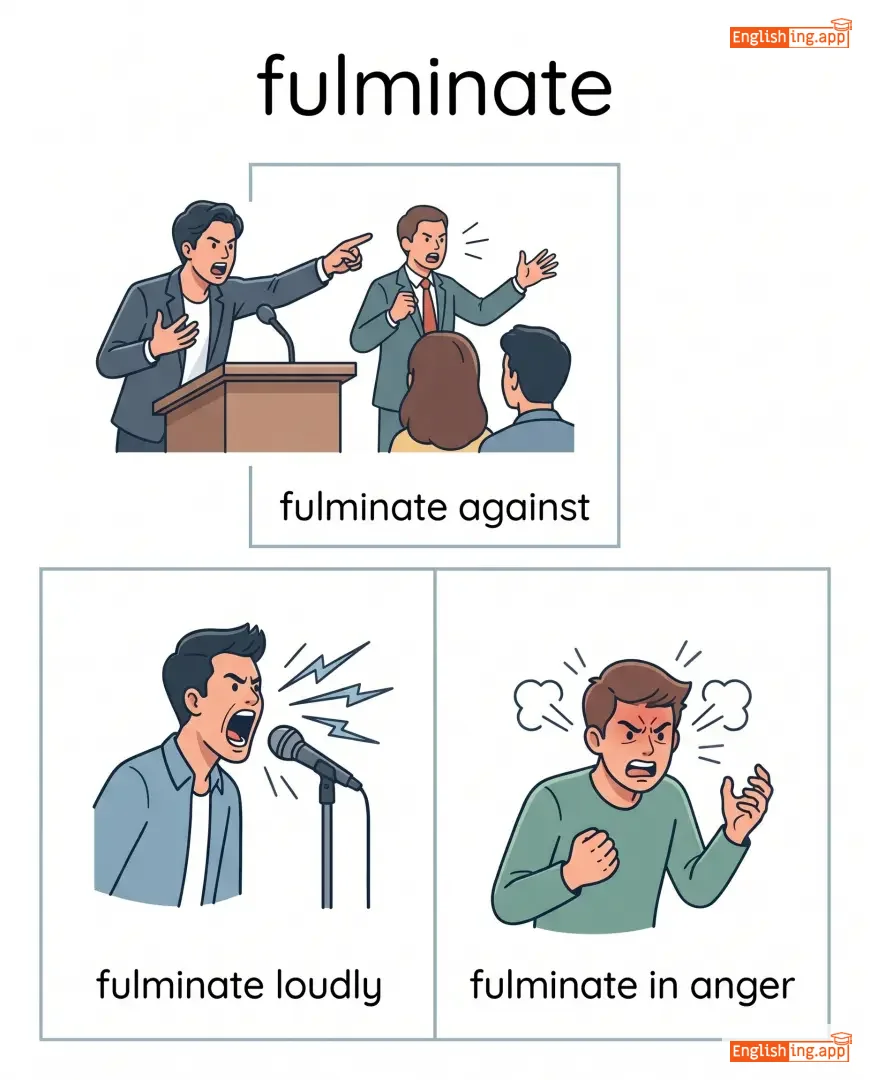
fulminate against
フルミネート・アゲインスト
••••••
|
to strongly protest or denounce
••••••
|
抗議する
kōgi suru
••••••
|
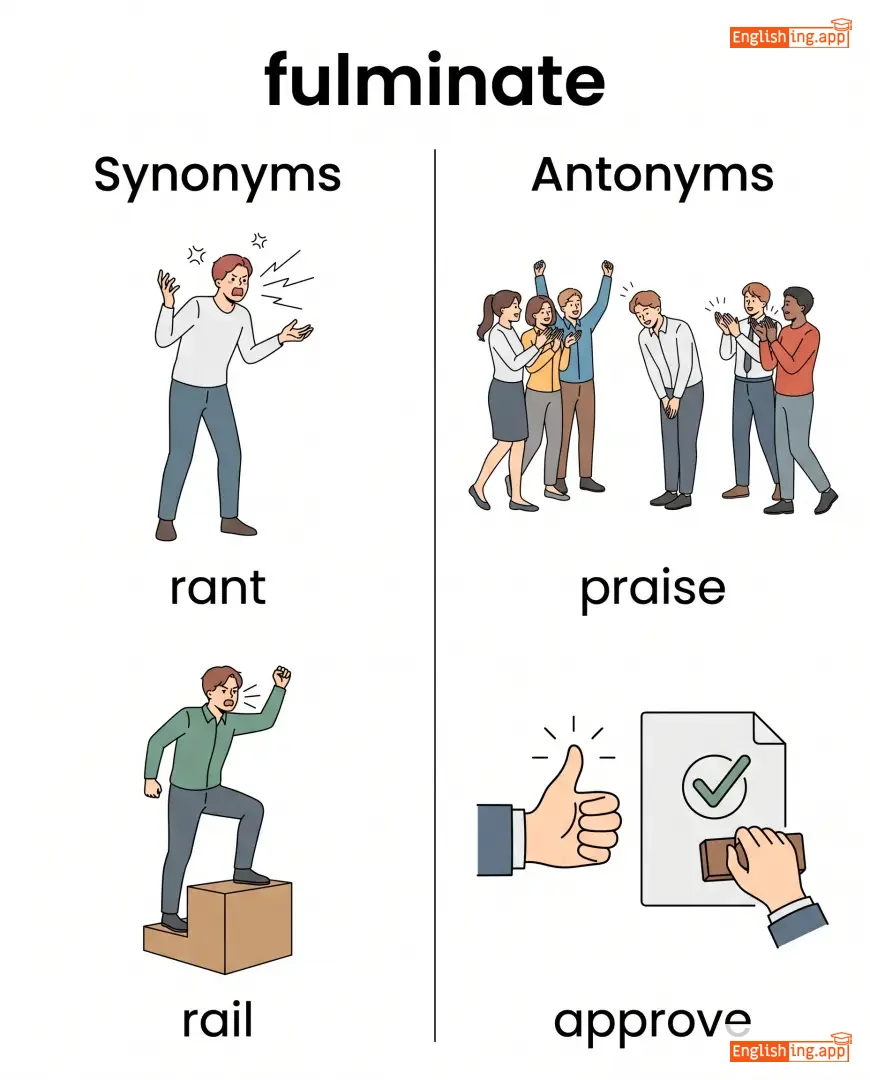
rant, rail, protest, explode, condemn
••••••
|
praise, approve, support
••••••
|
fulminate against, fulminate loudly, fulminate in anger
••••••
|
Fulminateは、full + minute → 1分で激しく抗議する。
••••••
|
|
🙌
••••••
|
/ˈfʊl.səm/
adjective
(フルソム)
••••••
|

|
過剰な賞賛
kajou na shousan
••••••
|
- •••••• | - •••••• | - •••••• | - •••••• |
Excessively flattering or insincere; abundant or generous in amount.
••••••
|
He offered fulsome praise to his boss.
彼は上司に過剰な賞賛を提供しました。
••••••
|
彼は上司に過剰な賞賛を提供しました。
Kare wa joushi ni kajou na shousan o teikyoushimashita.
••••••
|
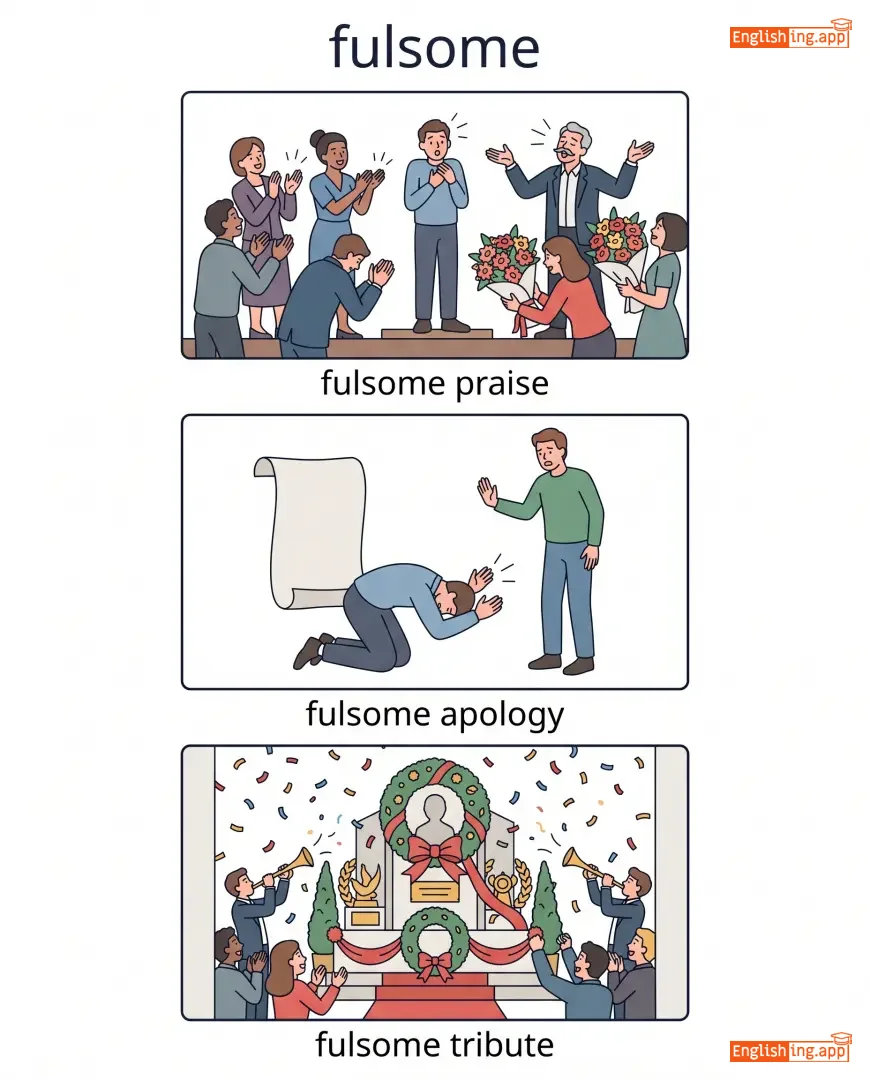
fulsome praise
過剰な賞賛
••••••
|
excessive or insincere compliments
••••••
|
過剰な賞賛
kajou na shousan
••••••
|
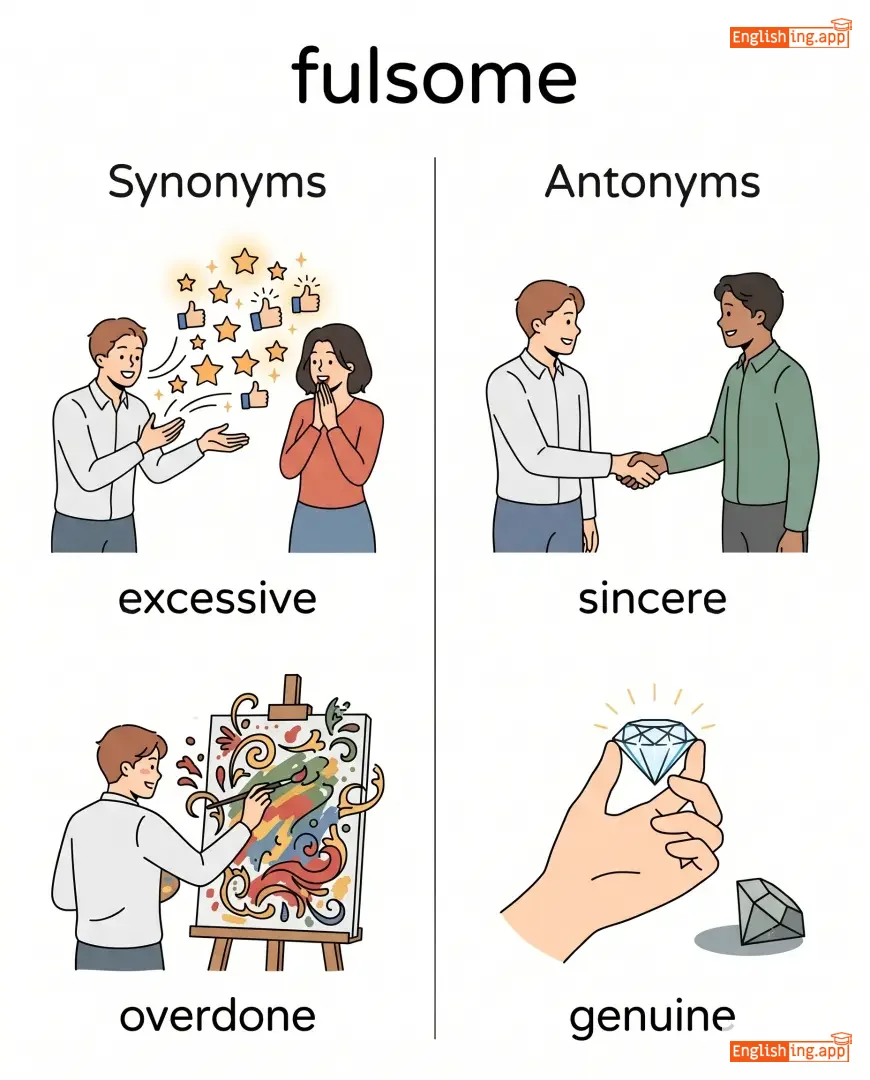
excessive, overdone, insincere, lavish, abundant
••••••
|
sincere, genuine, modest
••••••
|
fulsome praise, fulsome apology, fulsome tribute, fulsome detail
••••••
|
Fulsome は full + some → 多すぎて不自然に見える。
••••••
|
|
⚛️
••••••
|
/ˈfjuːʒən/
noun
(fyūjon)
••••••
|

|
融合
yūgō
••••••
|
- •••••• | - •••••• | - •••••• | - •••••• |
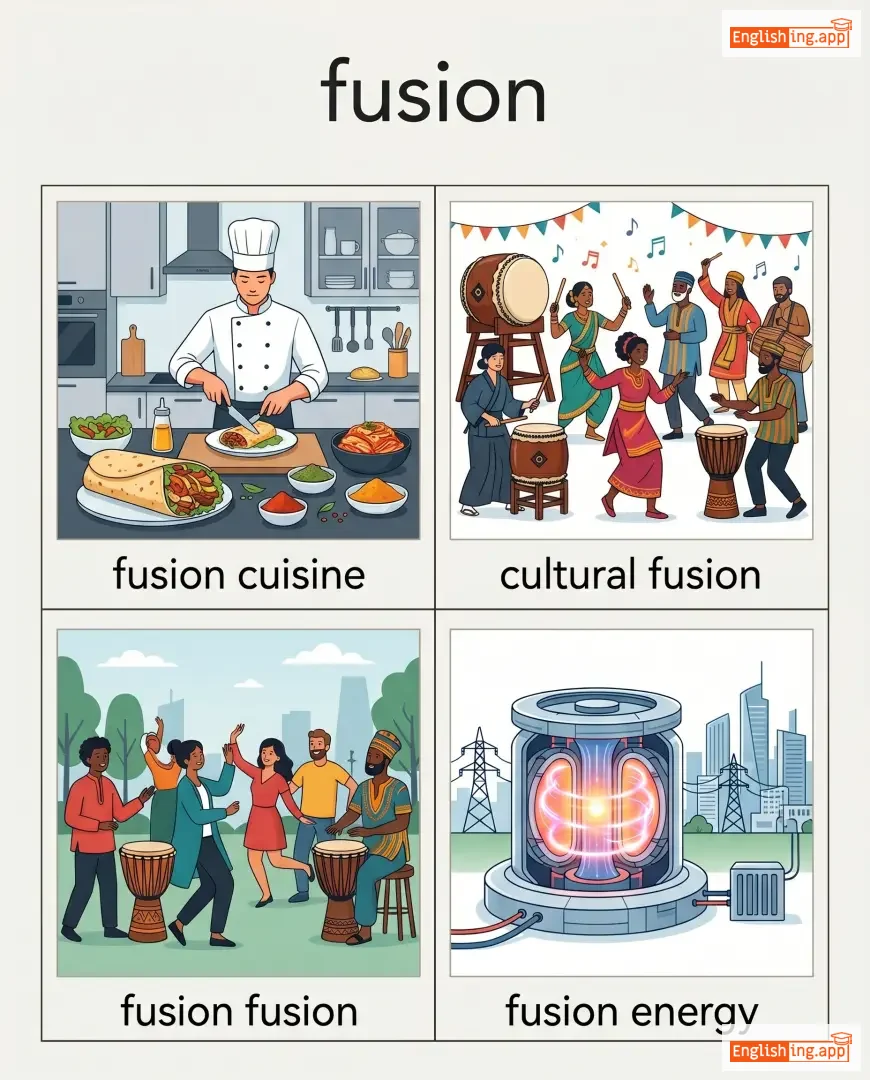
the process or result of joining two or more things together to form a single entity
••••••
|
The restaurant offers a unique fusion of Asian and European cuisines. |
レストランはアジアとヨーロッパの料理を融合させたユニークな料理を提供します。
Resutoran wa Ajia to Yōroppa no ryōri o yūgō saseta yunīku na ryōri o teikyō shimasu.
••••••
|
nuclear fusion |
a reaction in which two light atomic nuclei combine to form a heavier nucleus, releasing energy
••••••
|
核融合
kaku yūgō
••••••
|
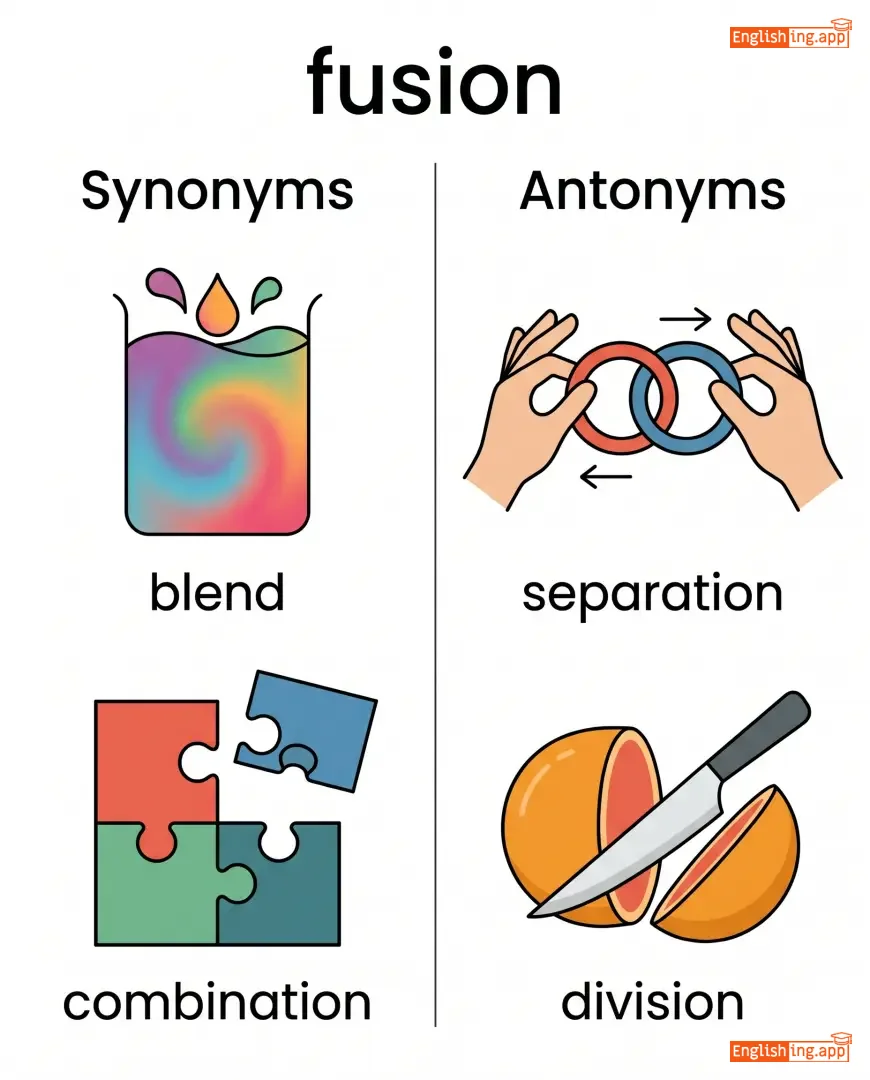
blend, combination, union, amalgamation, integration
••••••
|
separation, division, split
••••••
|
fusion cuisine, cultural fusion, fusion energy, fusion reaction
••••••
|
Fusionは二つの異なる文化を組み合わせて、新しいものを作ること。例えば、ラーメンとピザの融合。
••••••
|
|
🚫
••••••
|
/ˈfjuː.taɪl/
adjective
(fyūtairu)
••••••
|
|
無駄
mudā
••••••
|
- •••••• | - •••••• | - •••••• | - •••••• |
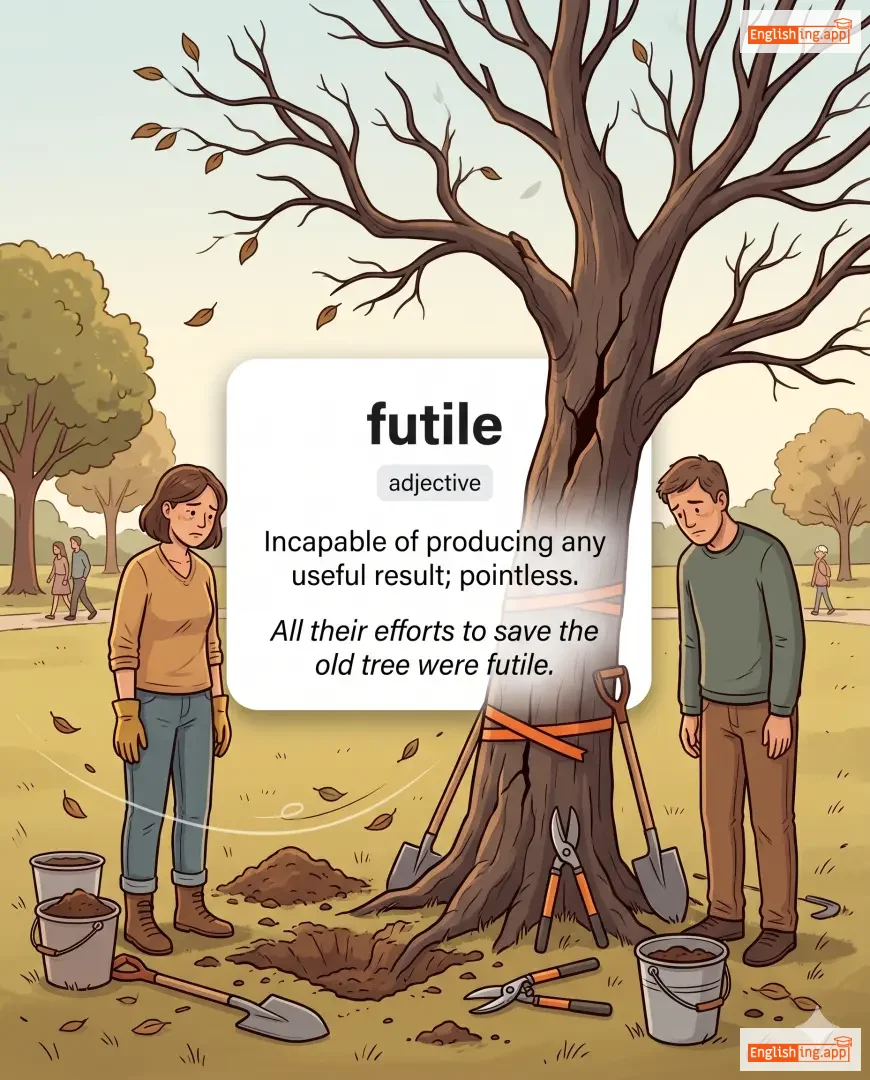
Incapable of producing any useful result; pointless.
••••••
|
All their efforts to save the old tree were futile.
古い木を救うための彼らのすべての努力は無駄でした。
••••••
|
古い木を救うための彼らのすべての努力は無駄でした。
Furui ki o sukuu tame no karera no subete no doryoku wa muda deshita.
••••••
|
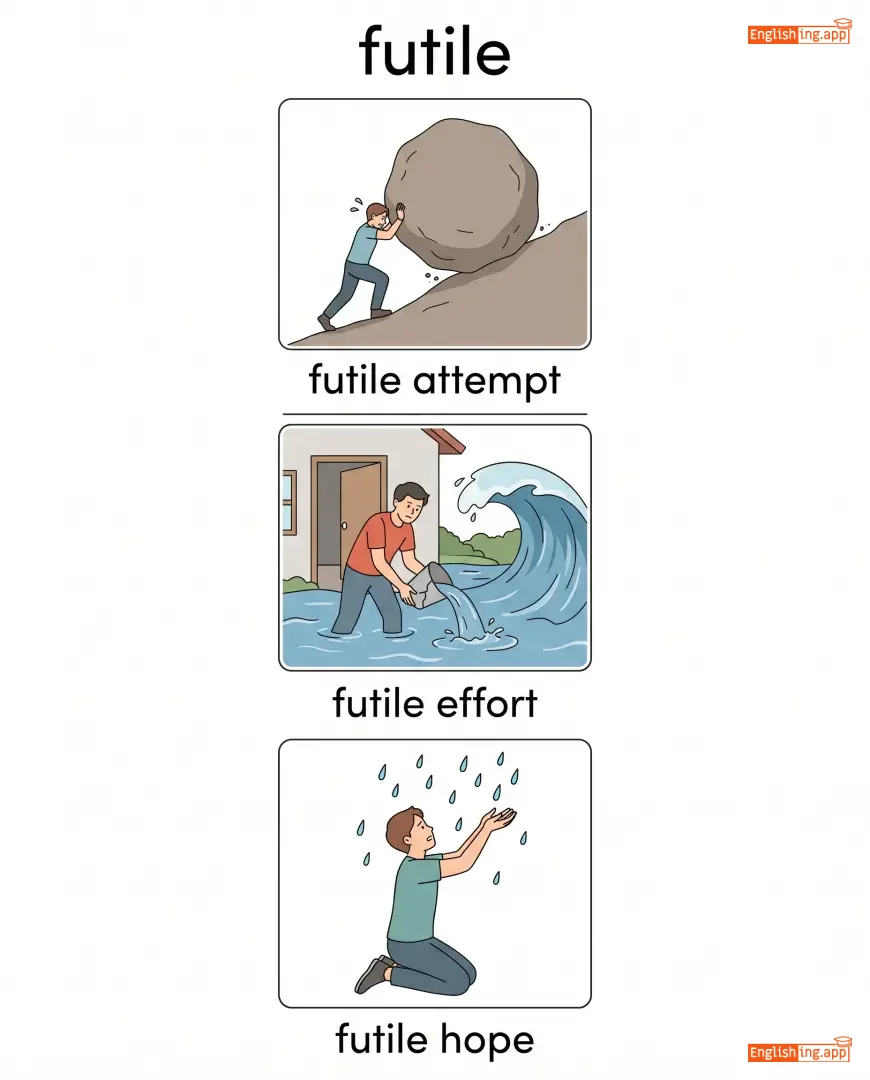
futile attempt
無駄な試み
••••••
|
An attempt that has no chance of success.
••••••
|
無駄な試み
mudā na kokoromi
••••••
|
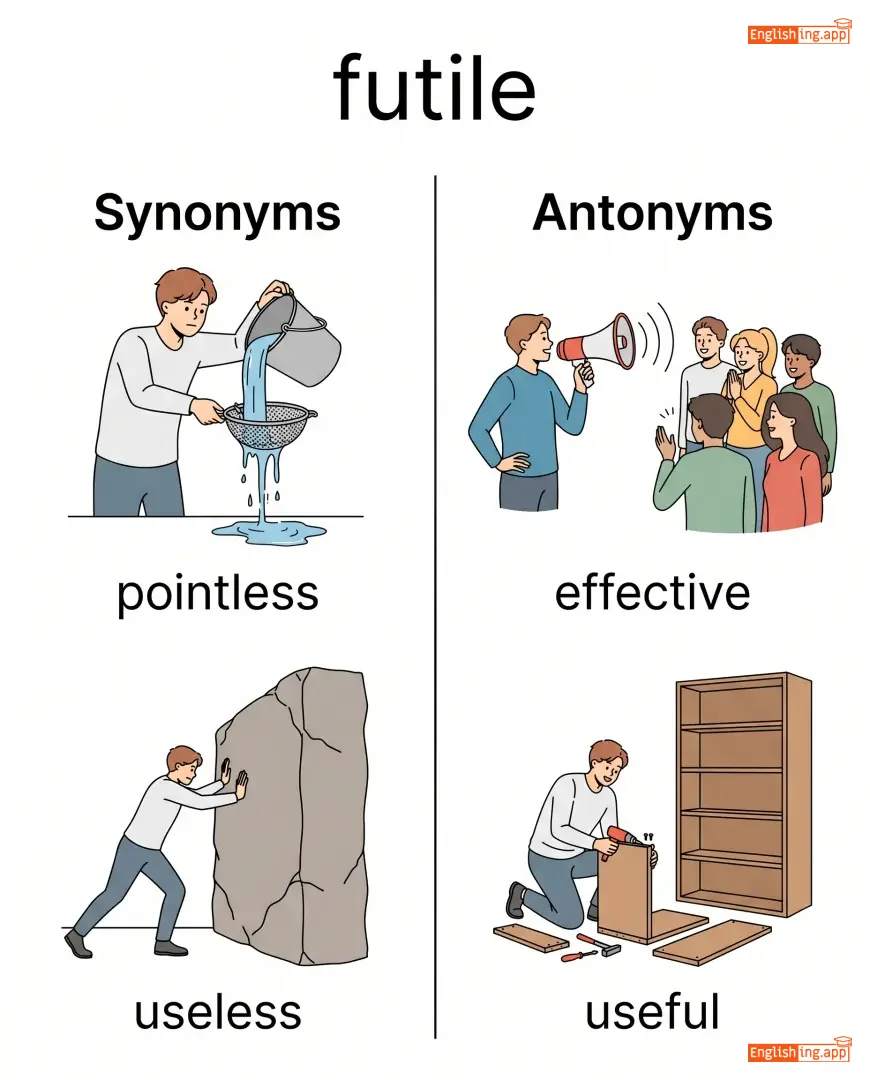
pointless, useless, ineffective, vain, fruitless
••••••
|
effective, useful, successful
••••••
|
futile attempt, futile effort, futile hope, seem futile
••••••
|
Futileは日本語で無駄: 無駄な試みは意味がない。
••••••
|
|
🙅
••••••
|
/ˌɡeɪnˈseɪ/
verb
(ゲインセイ)
••••••
|

|
反論する
hanron suru
••••••
|
gainsaid
ゲインセイド
••••••
|
gainsaid
ゲインセイド
••••••
|
gainsays
ゲインセイズ
••••••
|
gainsaying
ゲインセイング
••••••
|
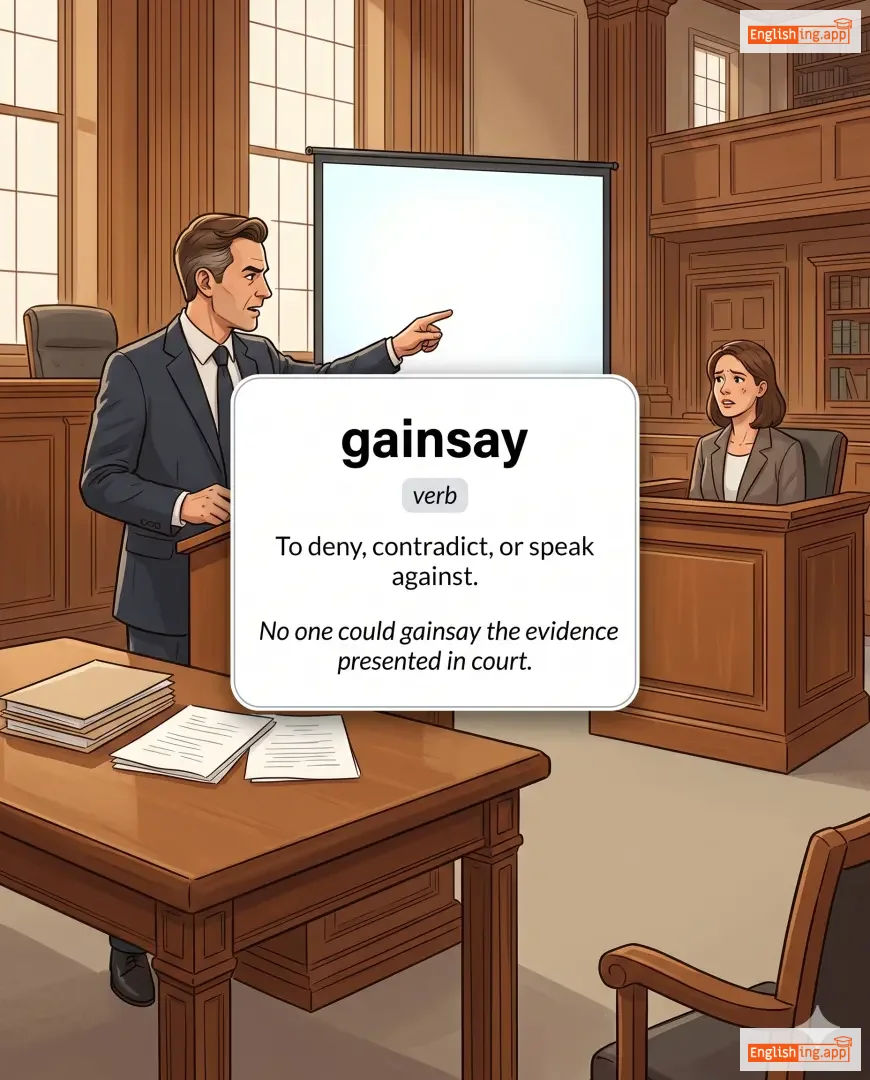
To deny, contradict, or speak against.
••••••
|
No one could gainsay the evidence presented in court.
裁判所で提出された証拠を誰も反論できなかった。
••••••
|
裁判所で提出された証拠を誰も反論できなかった。
Saibansho de teishutsu sareta shōko o dare mo hanron dekinakatta.
••••••
|
- •••••• | - •••••• | - •••••• |
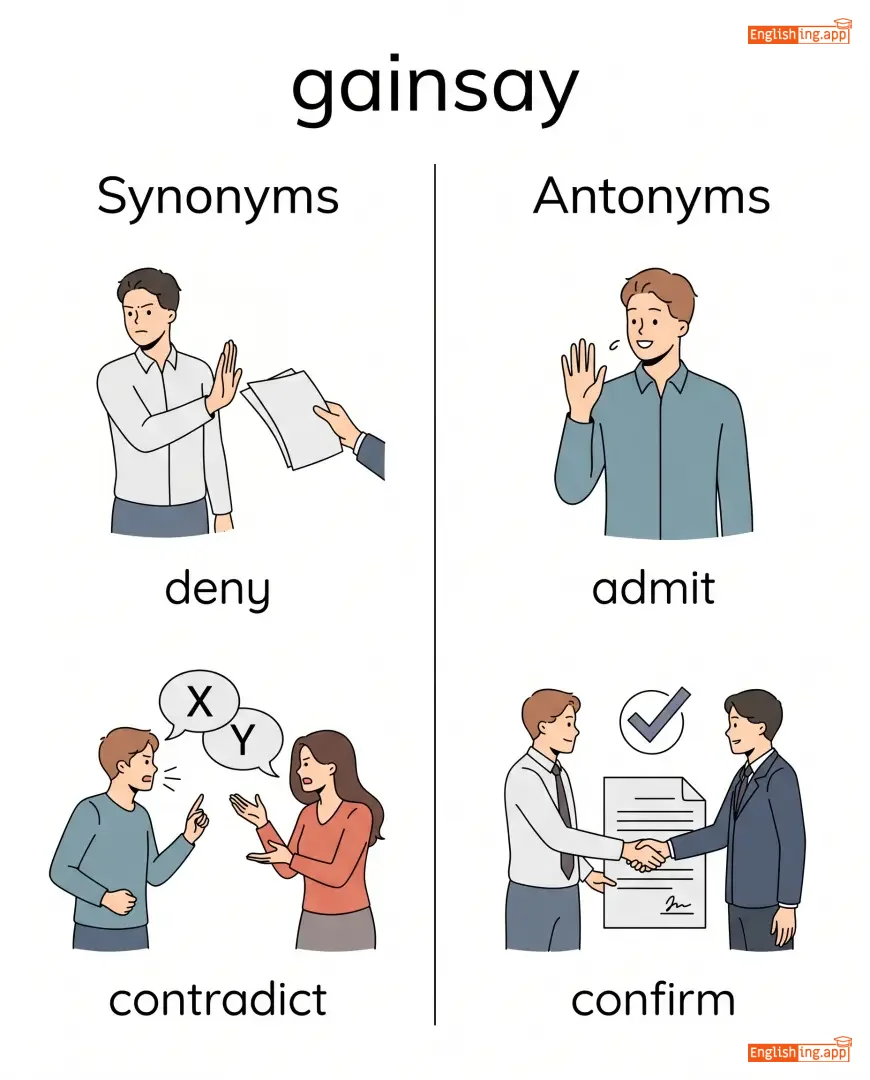
deny, contradict, oppose, refute
••••••
|
admit, confirm, accept
••••••
|
cannot gainsay, hard to gainsay, evidence gainsay
••••••
|
Gainsay = Gain (得る) と Say (言う) – 言ったことを否定する意味。
••••••
|

