Types of Forests Around the World
世界には、気候と生態的な特徴に基づくさまざまな樹木環境があります。主に、森林は3つの主要なカテゴリに分けられます— 針葉樹、広葉樹、および熱帯です。
針葉樹の森は、主に寒冷地域にあり、常緑樹は年々生き続けます。これらのキャノピーは密で、土壌の動物群にとって重要な生息地を提供します。一方、広葉樹の森は季節の変化に合わせて葉を落とします。ここには豊富な生物多様性があり、この森の植物群は毎年遷移プロセスを通じて変化します。温暖で湿潤な地域にある熱帯の森、例えばアマゾンは、豊富な降水量を受け、数多くの固有の植物や動物の種が生息しています。さらに、山地の森林は山岳地帯に、河川の森林は河川近くにあります。しかし、過度の森林伐採と分断が森林の存在を脅かし、自然の微気候と下層植生を破壊しています。森林保護なしでは、環境のバランスを維持することはできません。
|
絵文字
|
単語 | Images | 意味 | 例文 | 同義語 | 対義語 |
|---|---|---|---|---|---|---|
|
#3853
🌳
|
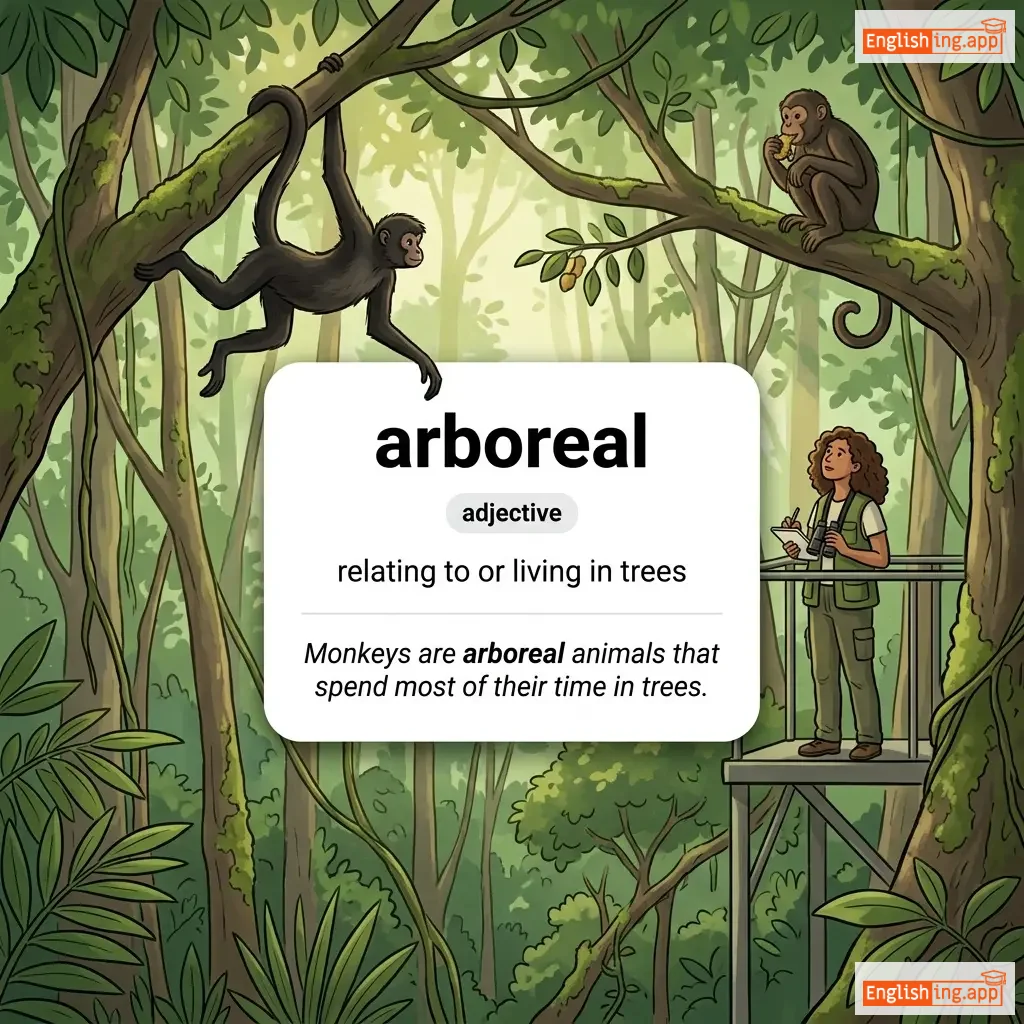
/ɑːrˈbɔːr.i.əl/
adjective
••••••
|
|
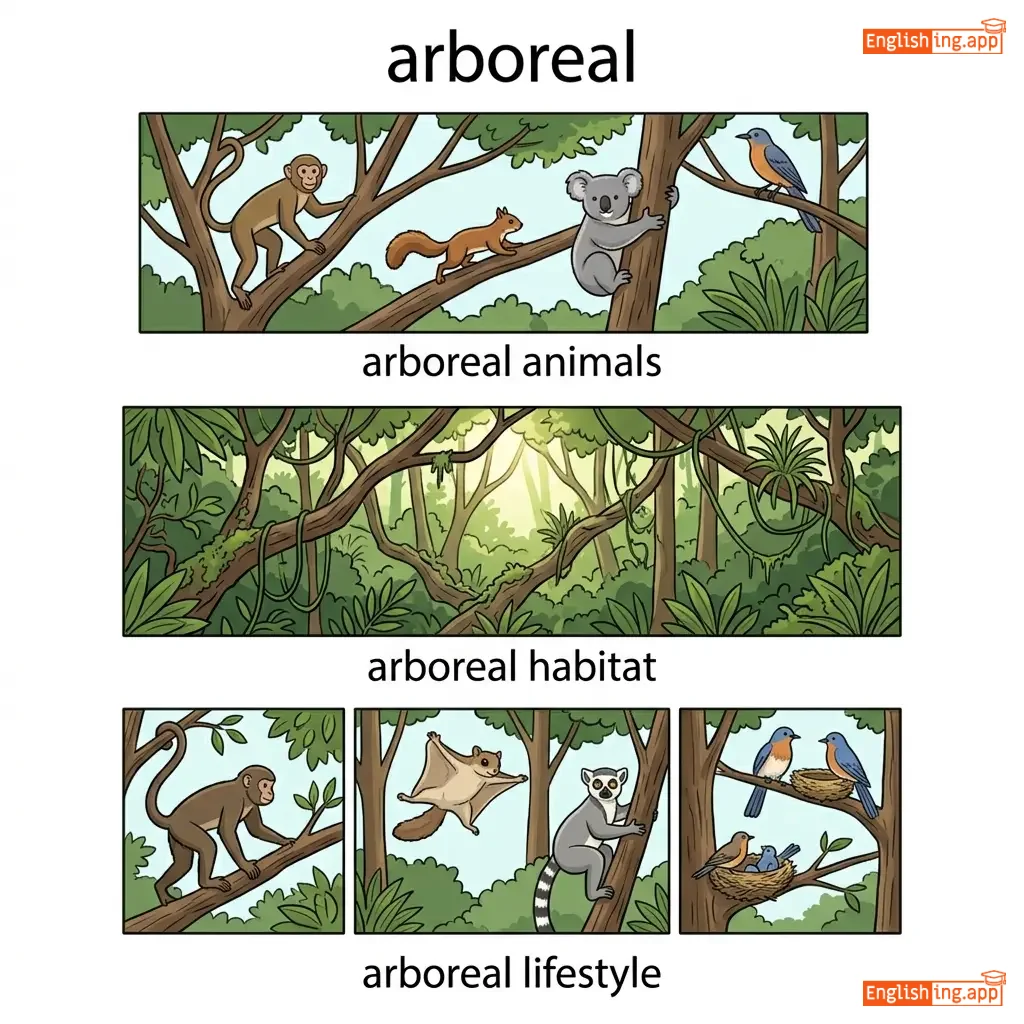
Relating to trees or living in trees; tree-dwelling.
••••••
|
Monkeys are arboreal animals that spend most of their time in trees. |
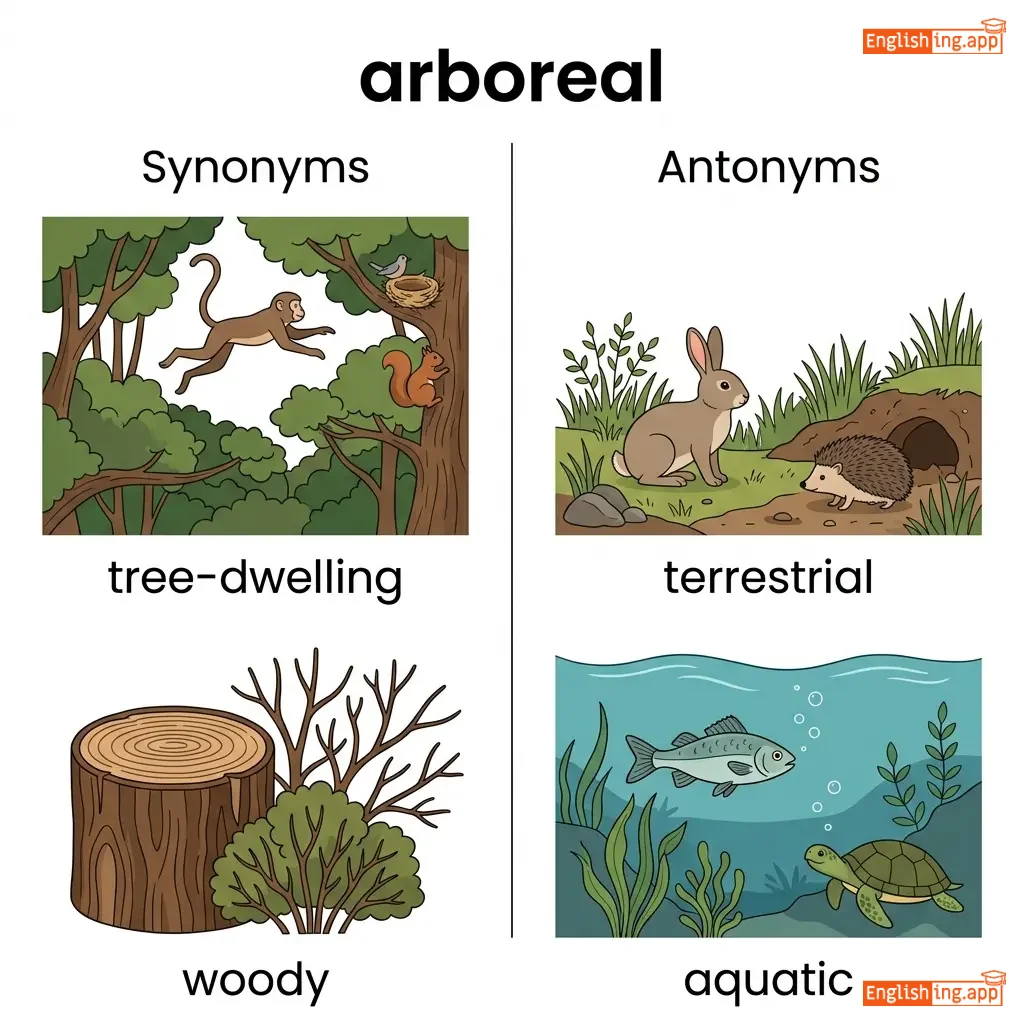
tree-dwelling, forest-related, woody
••••••
|
terrestrial, ground-dwelling, non-forest
••••••
|
|
#3854
🌿
|
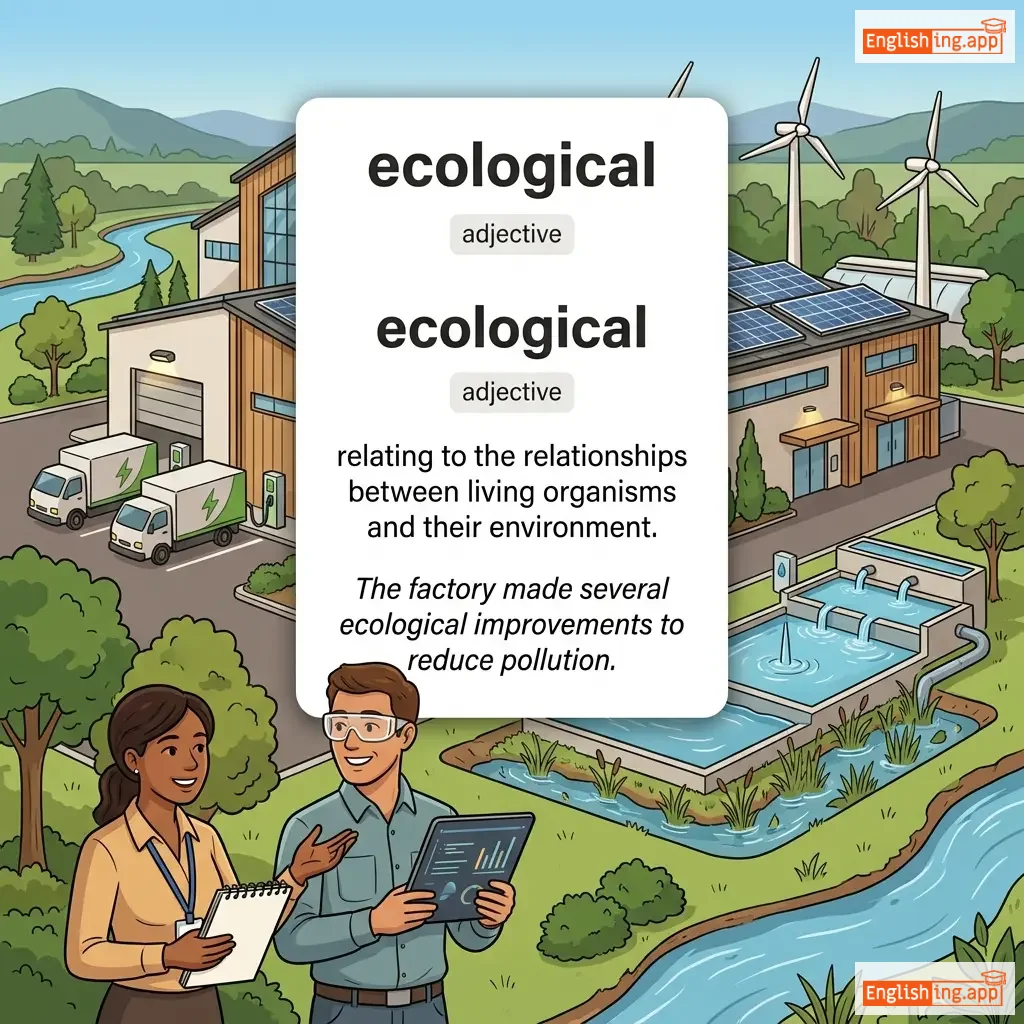
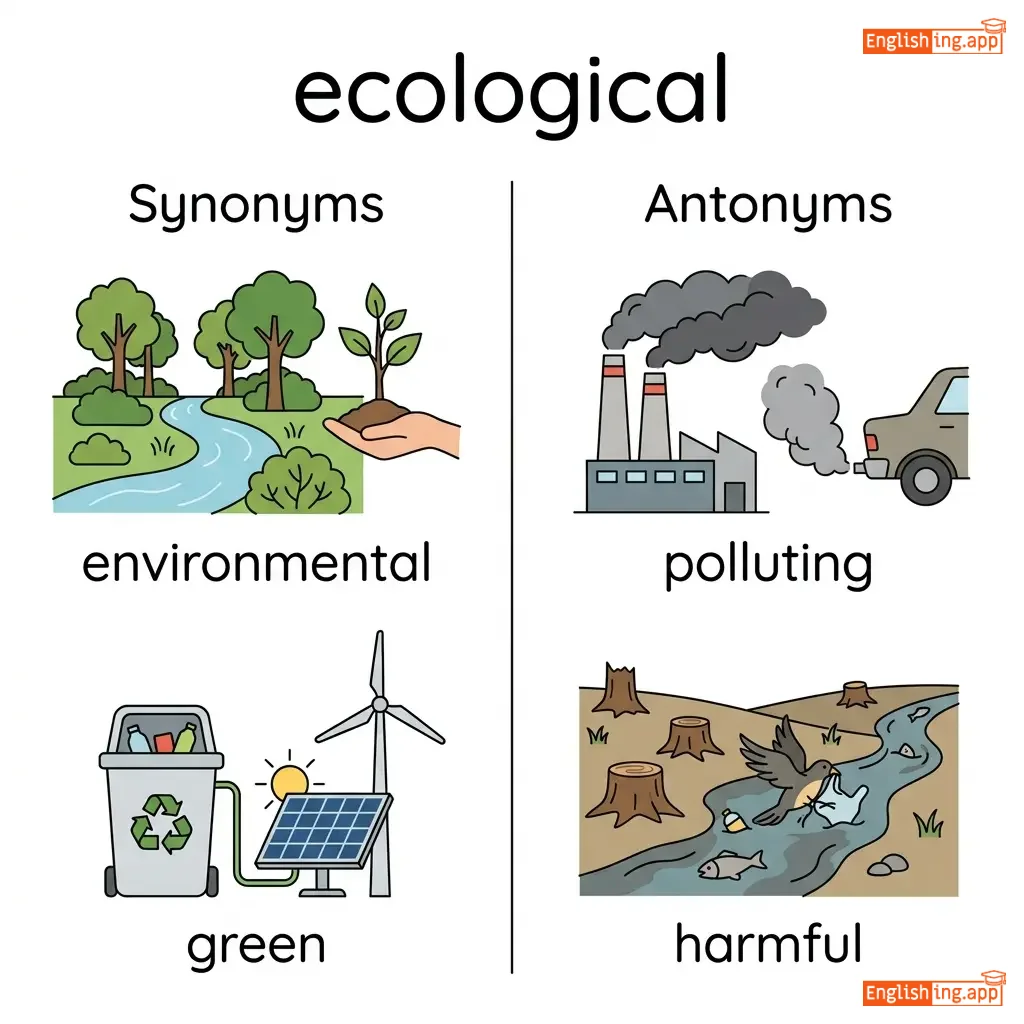
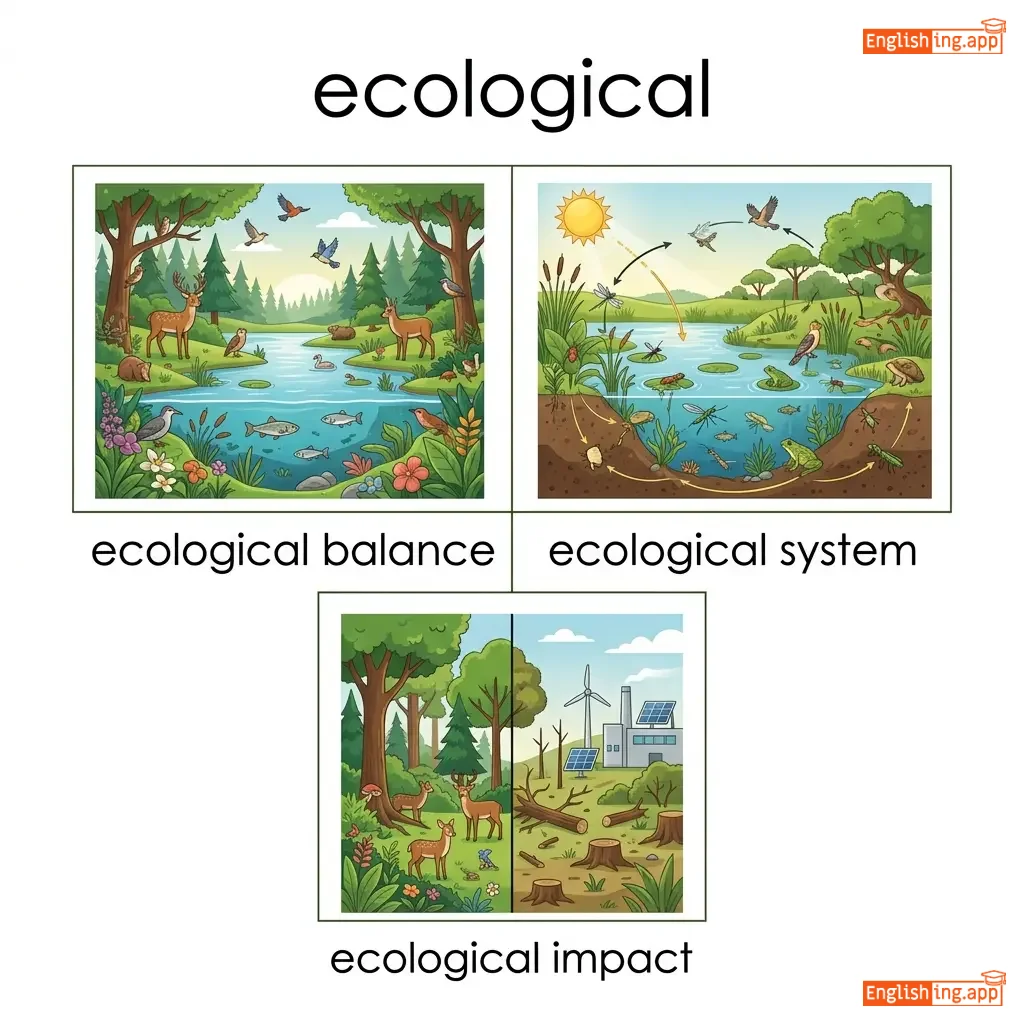
/ˌiː.kəˈlɒdʒ.ɪ.kəl/
adjective
••••••
|
|
Relating to ecology or the relationships between living organisms and their environment.
••••••
|
The factory adopted ecological practices to reduce pollution. |
environmental, green, sustainable
••••••
|
artificial, non-biological, man-made
••••••
|
|
#3855
🌲
|
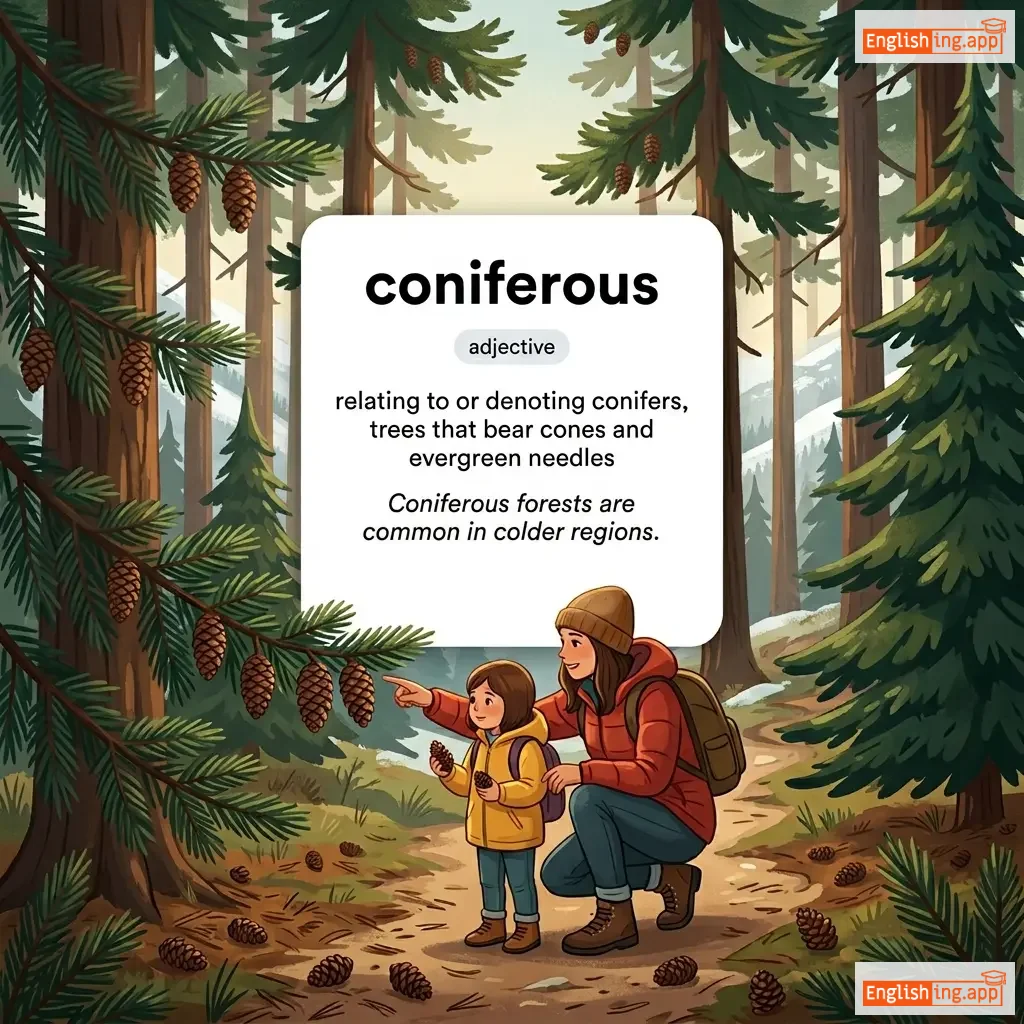
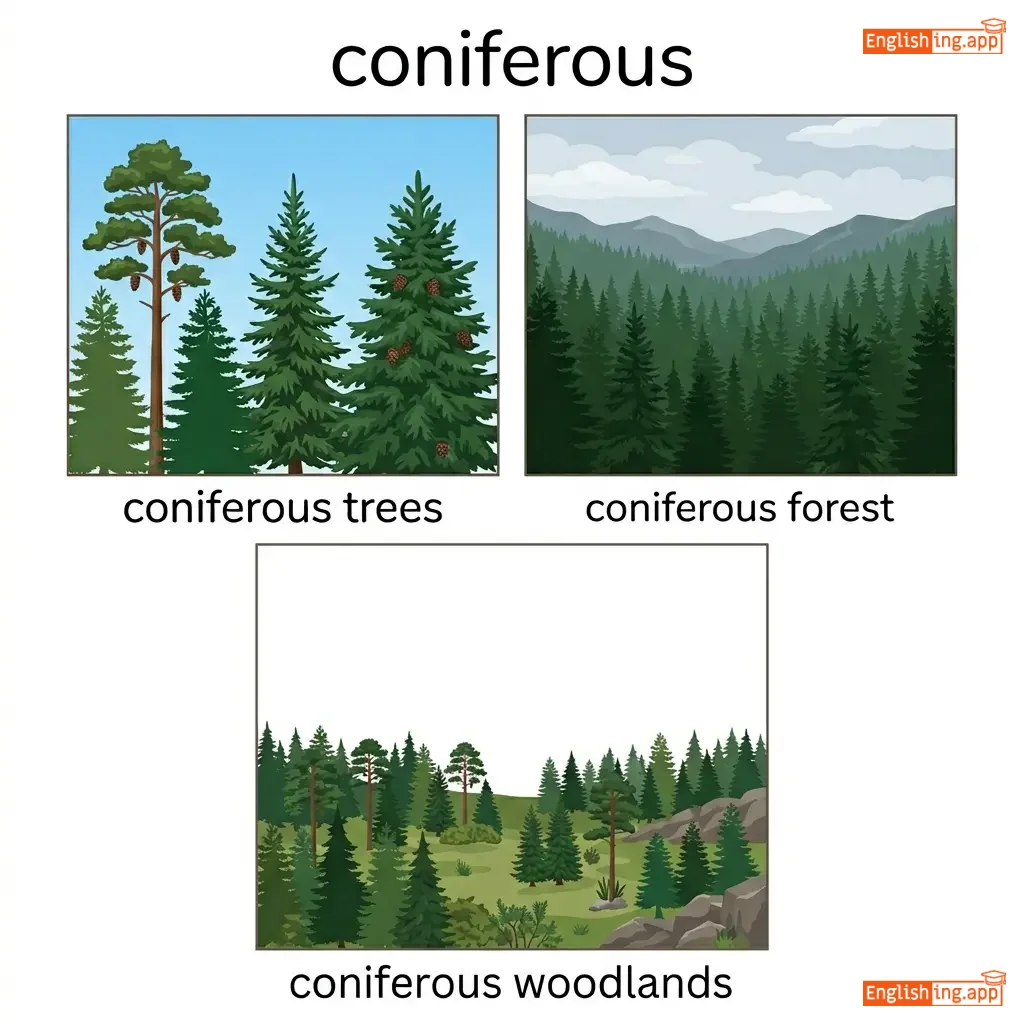
/ˈkɒn.ɪ.fər.əs/
adjective
••••••
|
|
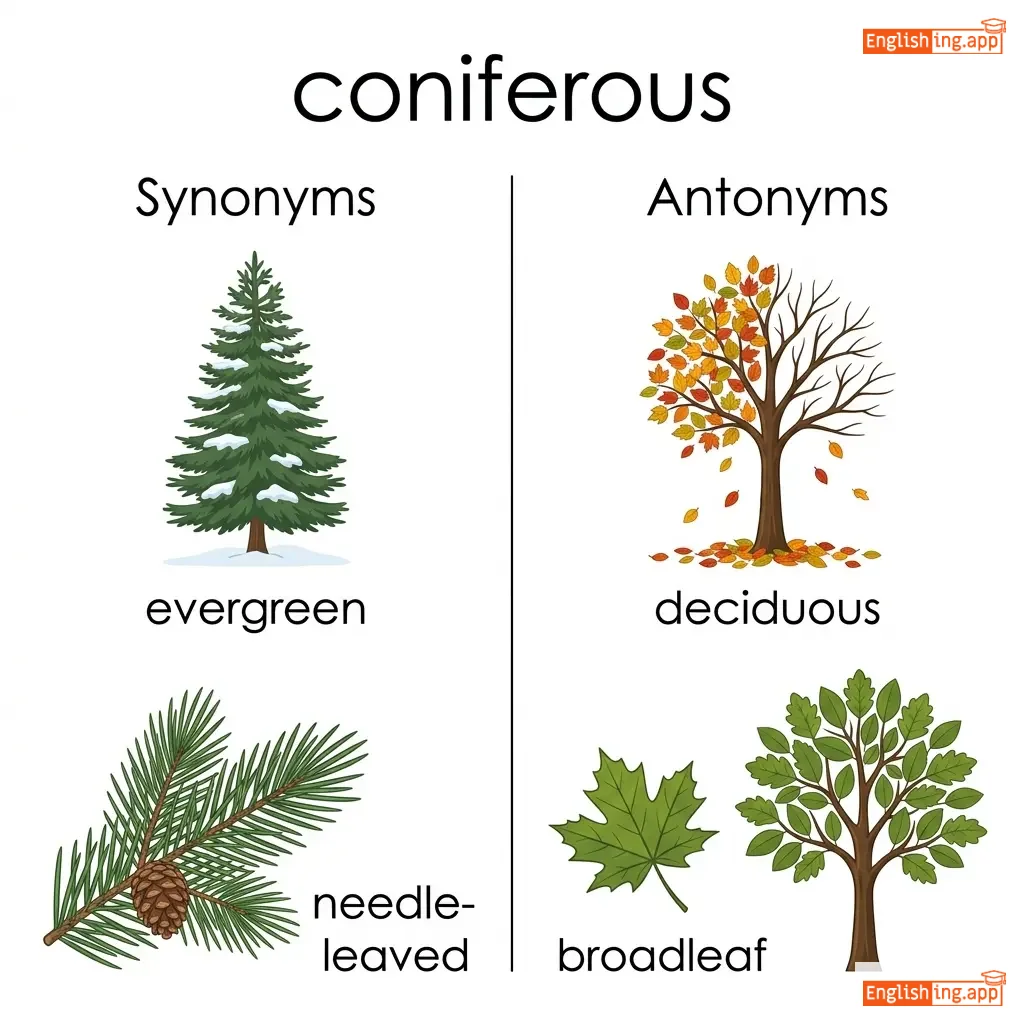
Relating to cone-bearing trees that usually have needle-like leaves and remain green year-round.
••••••
|
Pine trees are coniferous and grow in colder climates. |
needle-leaved, pine-bearing, evergreen
••••••
|
deciduous, leaf-shedding, non-coniferous
••••••
|
|
#3856
🍂
|
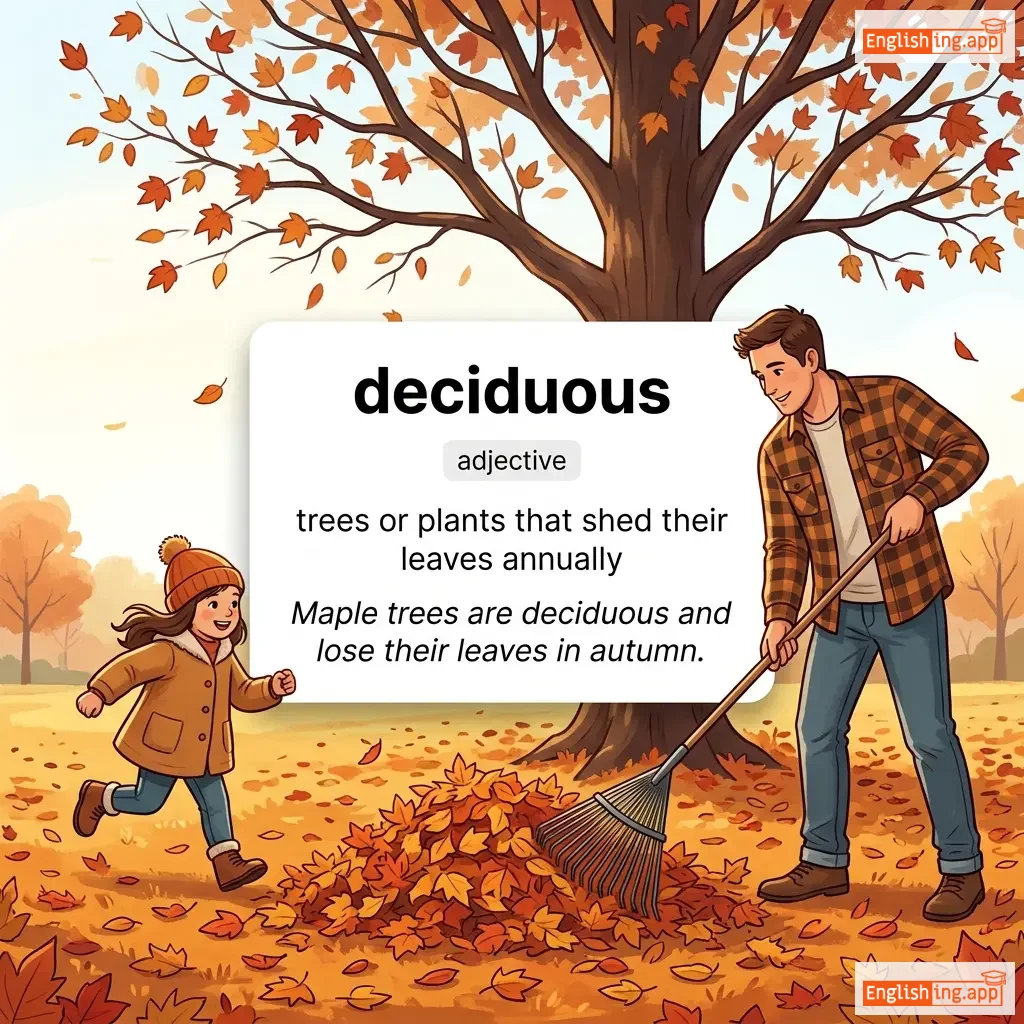
/dɪˈsɪd.ju.əs/
adjective
••••••
|
|
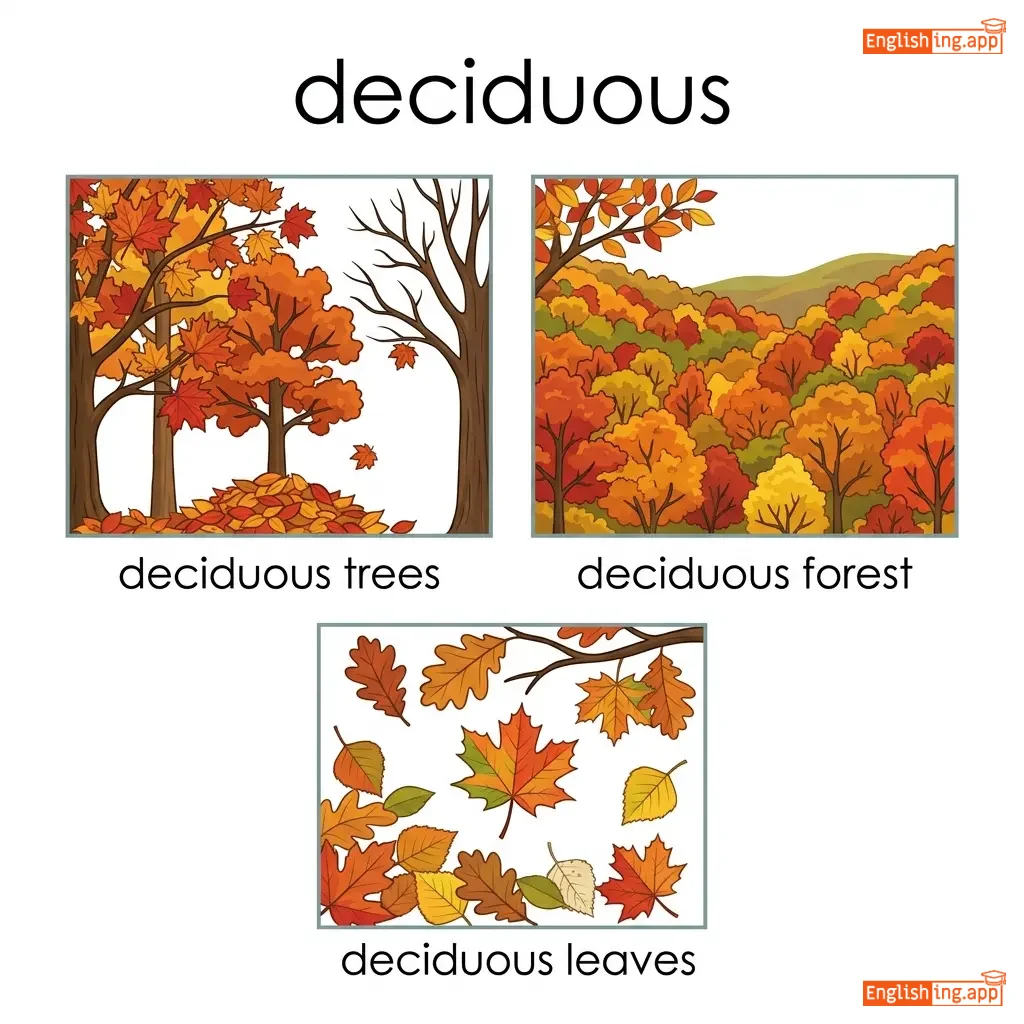
Referring to trees that shed their leaves seasonally, typically in autumn.
••••••
|
Oak and maple trees are deciduous, shedding leaves in autumn. |
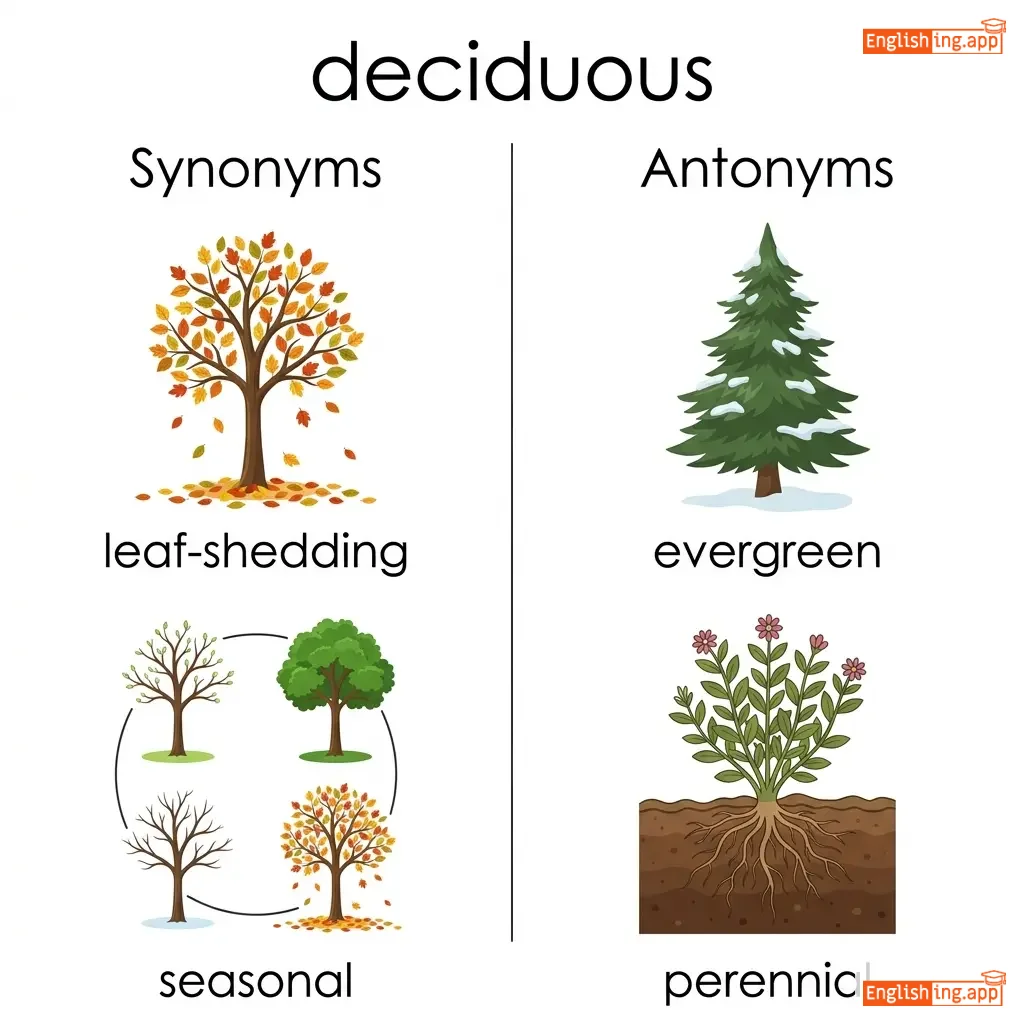
leaf-shedding, seasonal, broad-leaved
••••••
|
evergreen, perennial, coniferous
••••••
|
|
#3857
🌴
|
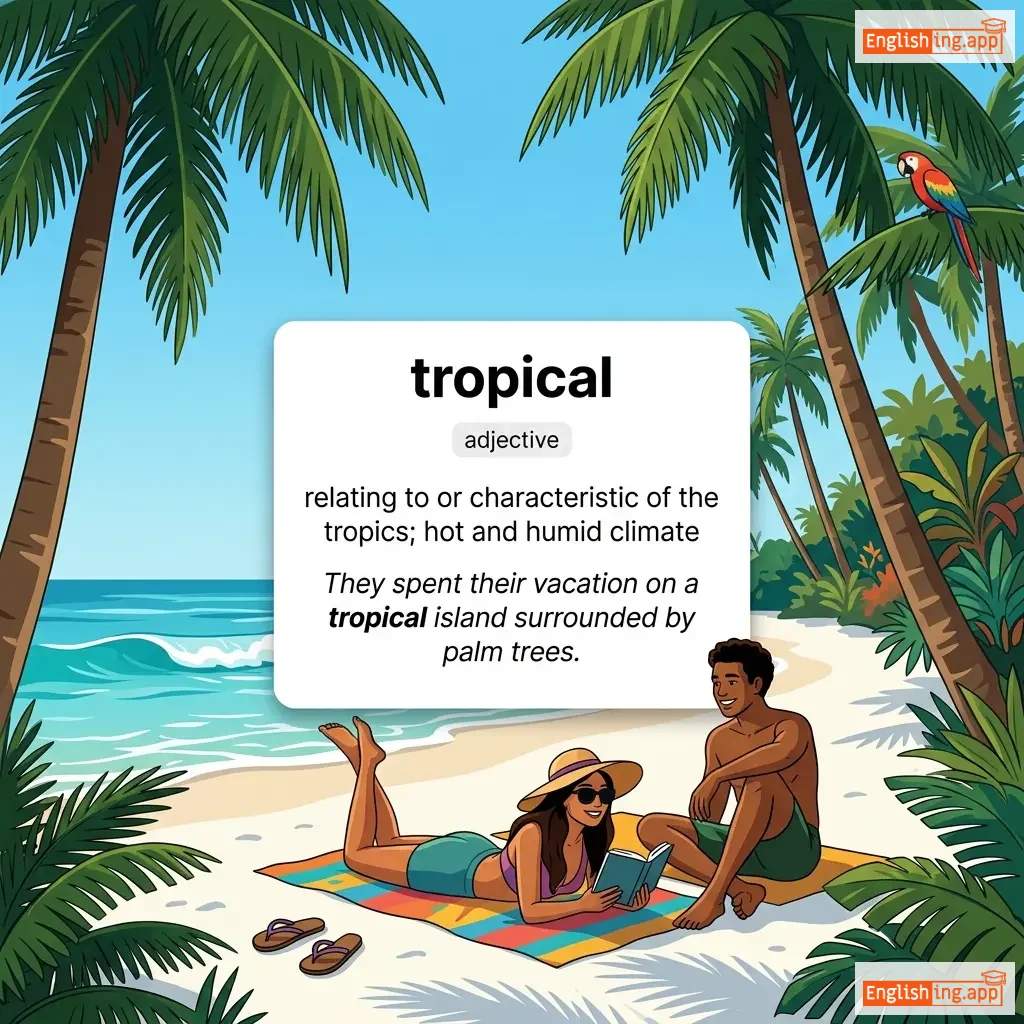
/ˈtrɒp.ɪ.kəl/
adjective
••••••
|
|
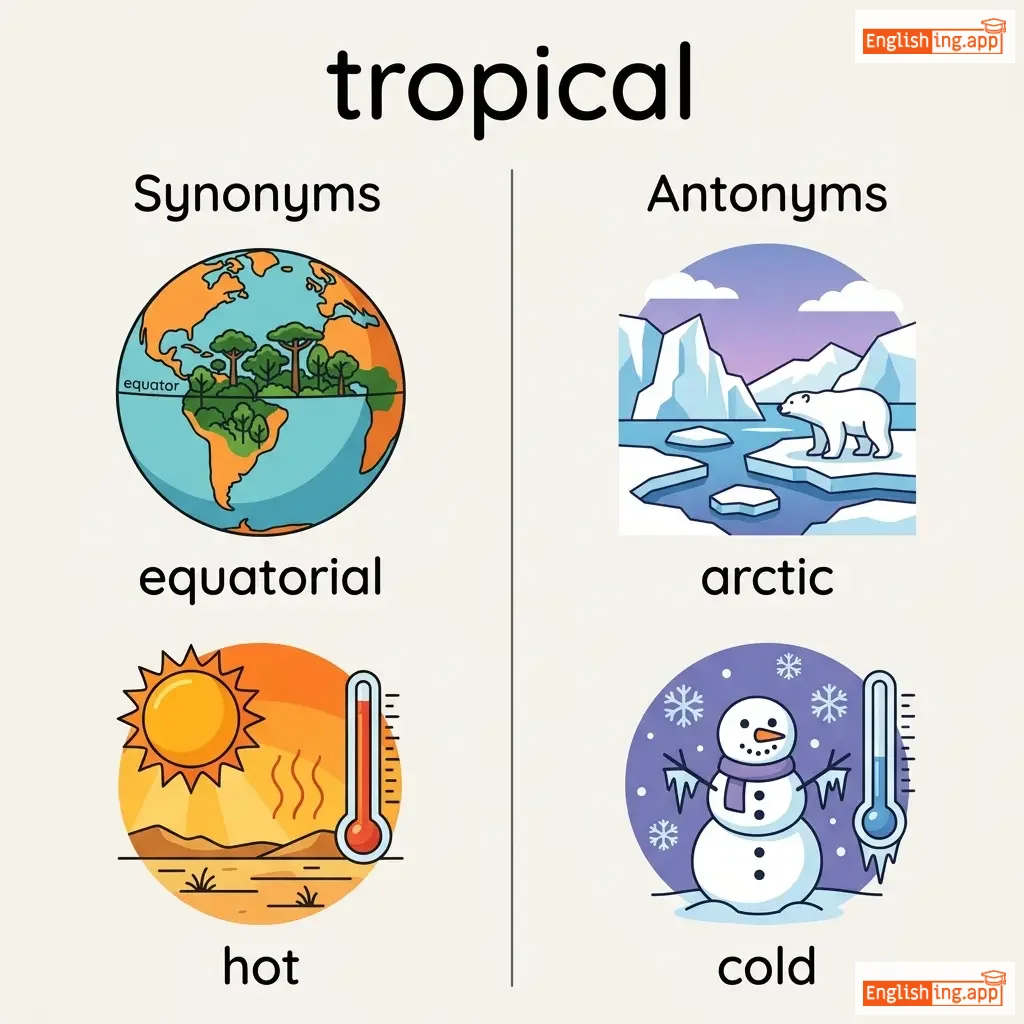
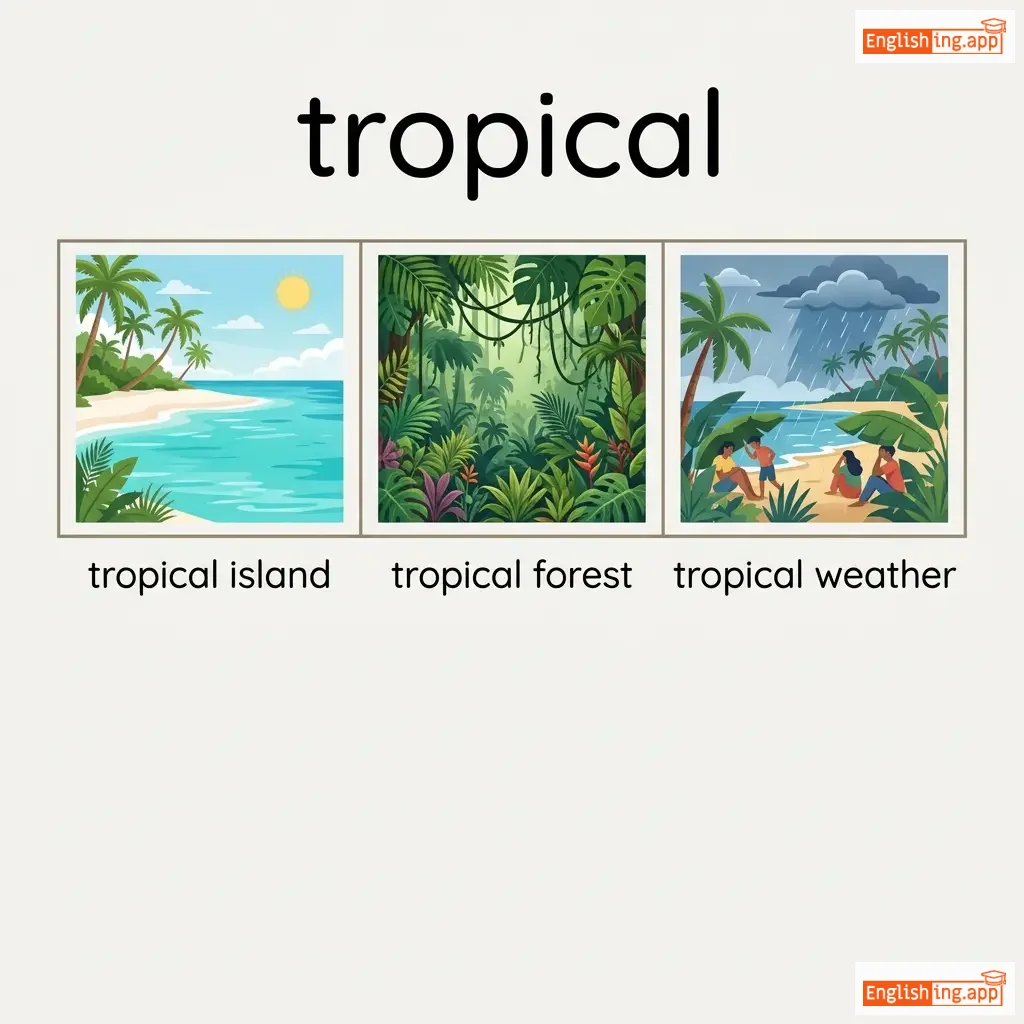
Relating to the tropics; characterized by hot and humid climate.
••••••
|
The Amazon rainforest is home to many tropical species. |
equatorial, hot-climate, humid
••••••
|
temperate, arctic, cold-climate
••••••
|
|
#3858
🌲
|
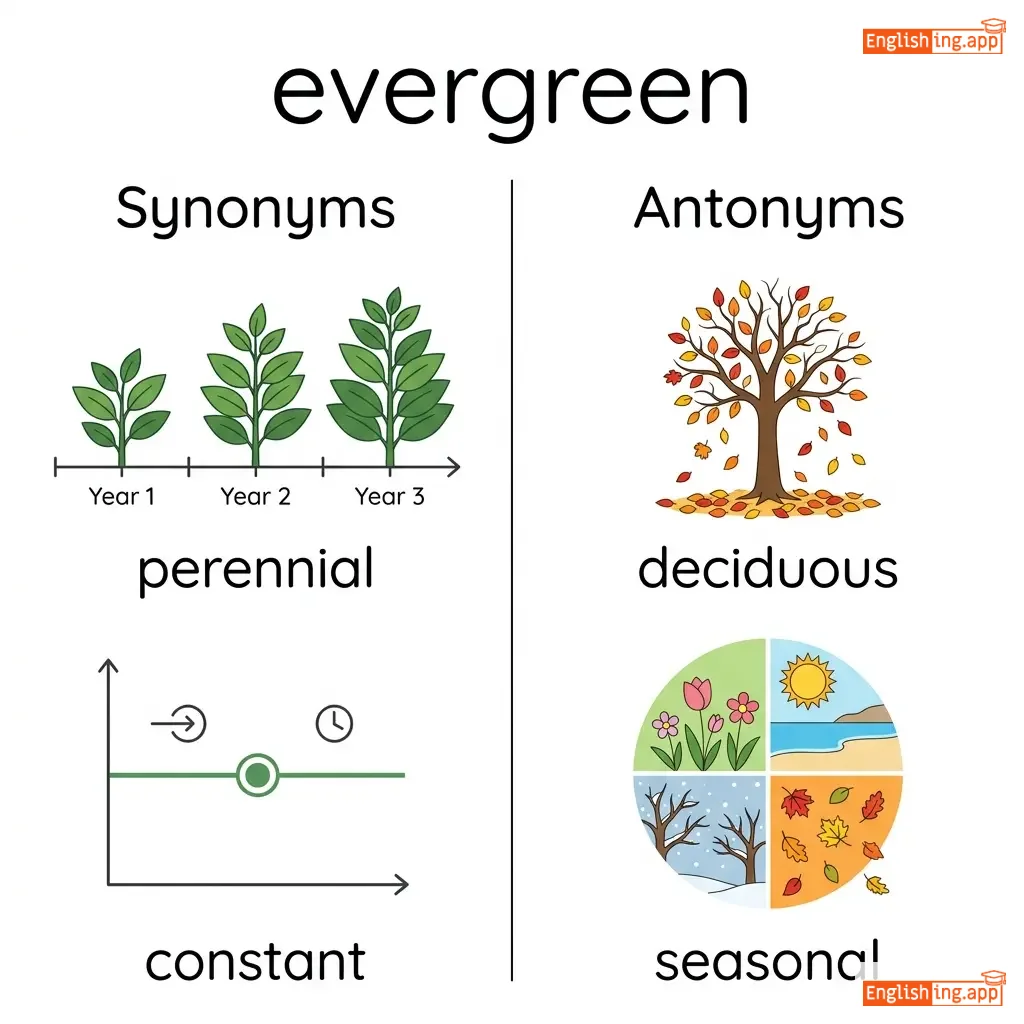
/ˈɛv.ə.ɡriːn/
adjective
••••••
|
|
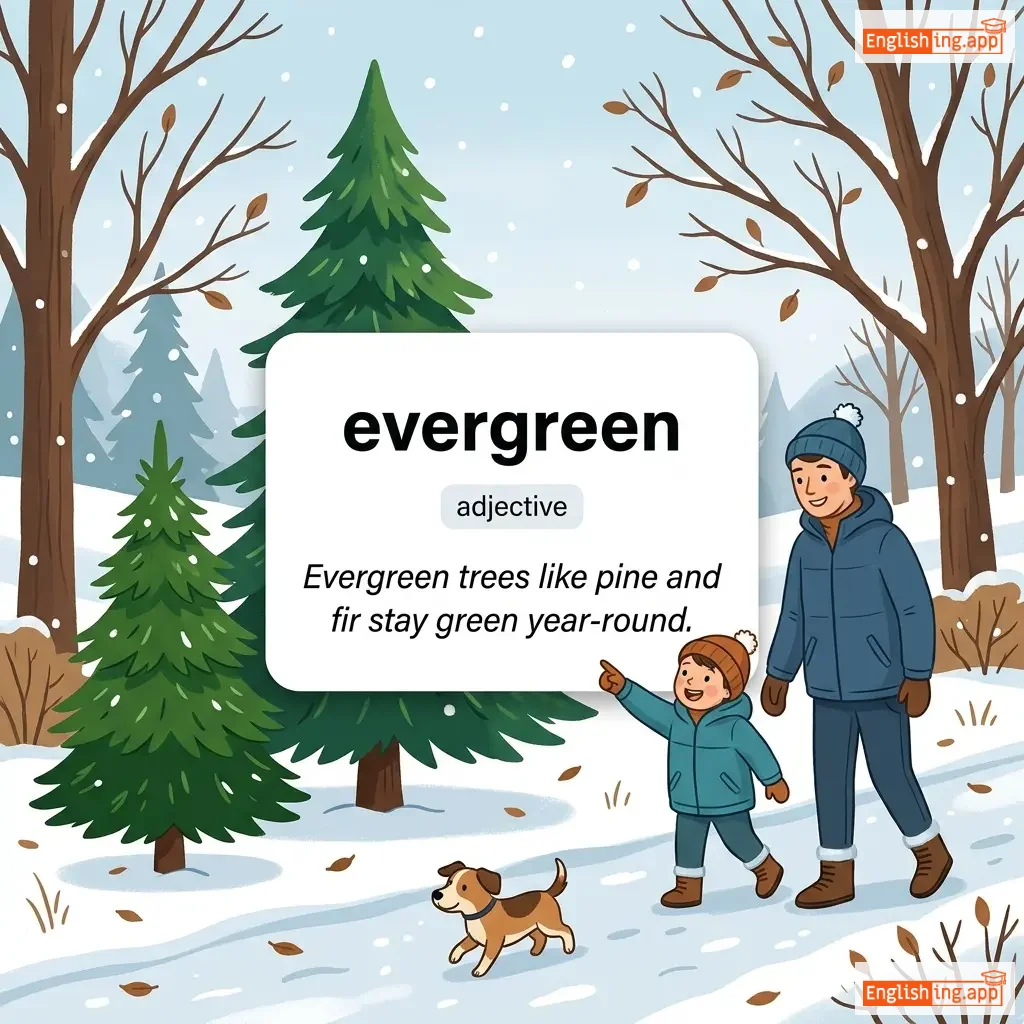
Remaining green and functional throughout the year; not shedding leaves seasonally.
••••••
|
Evergreen trees like pine and fir stay green year-round. |
perennial, constant, always-green
••••••
|
deciduous, seasonal, leaf-shedding
••••••
|
|
#3859
🌳
|
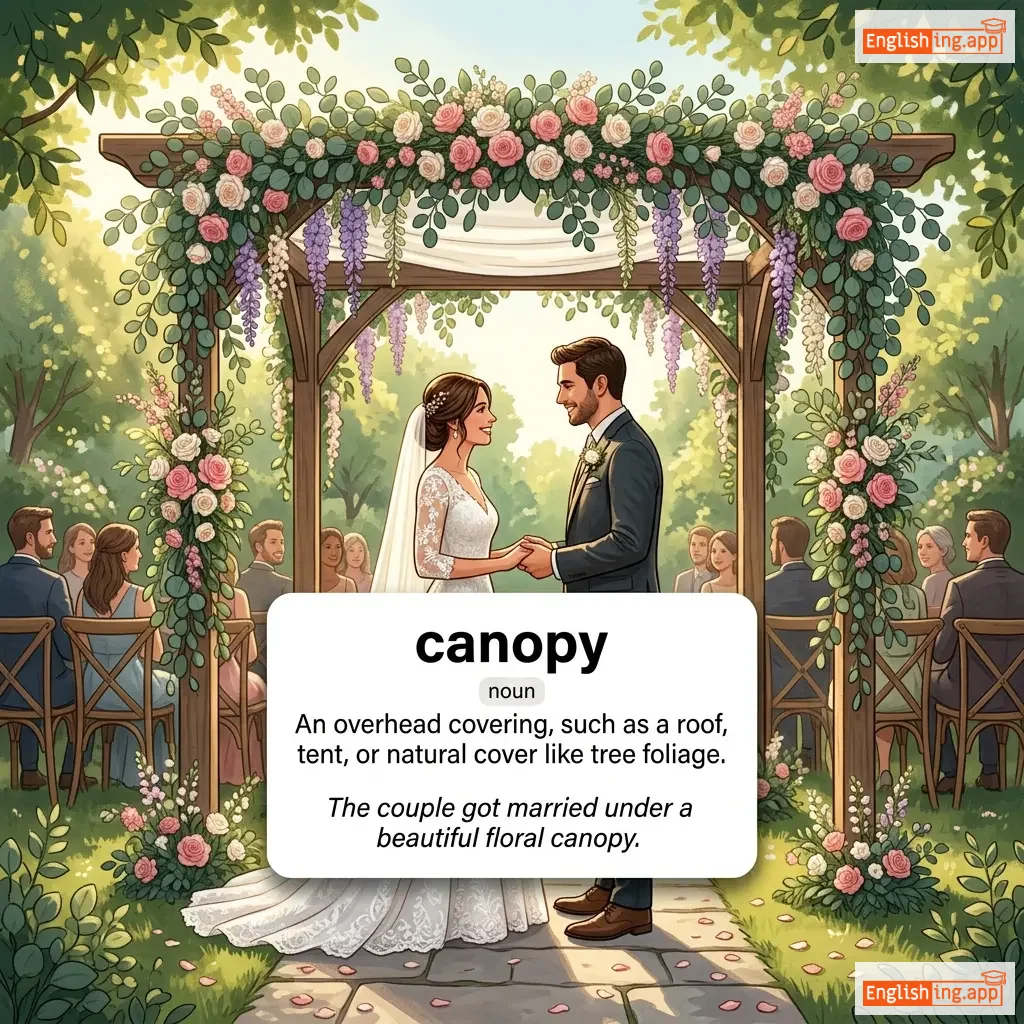
/ˈkæn.ə.pi/
noun
••••••
|
|
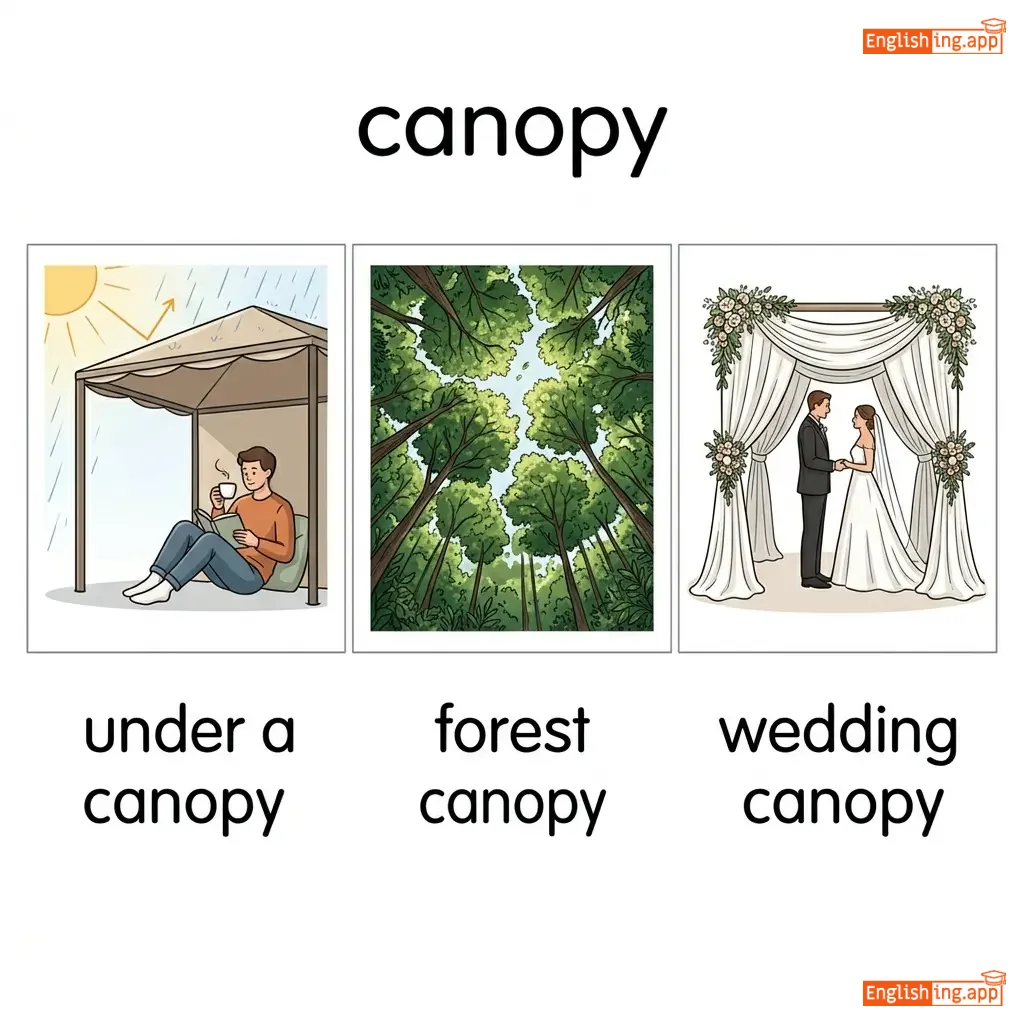
The upper layer of a forest formed by the crowns of trees; overhead cover.
••••••
|
The rainforest canopy provides shelter to many birds and insects. |
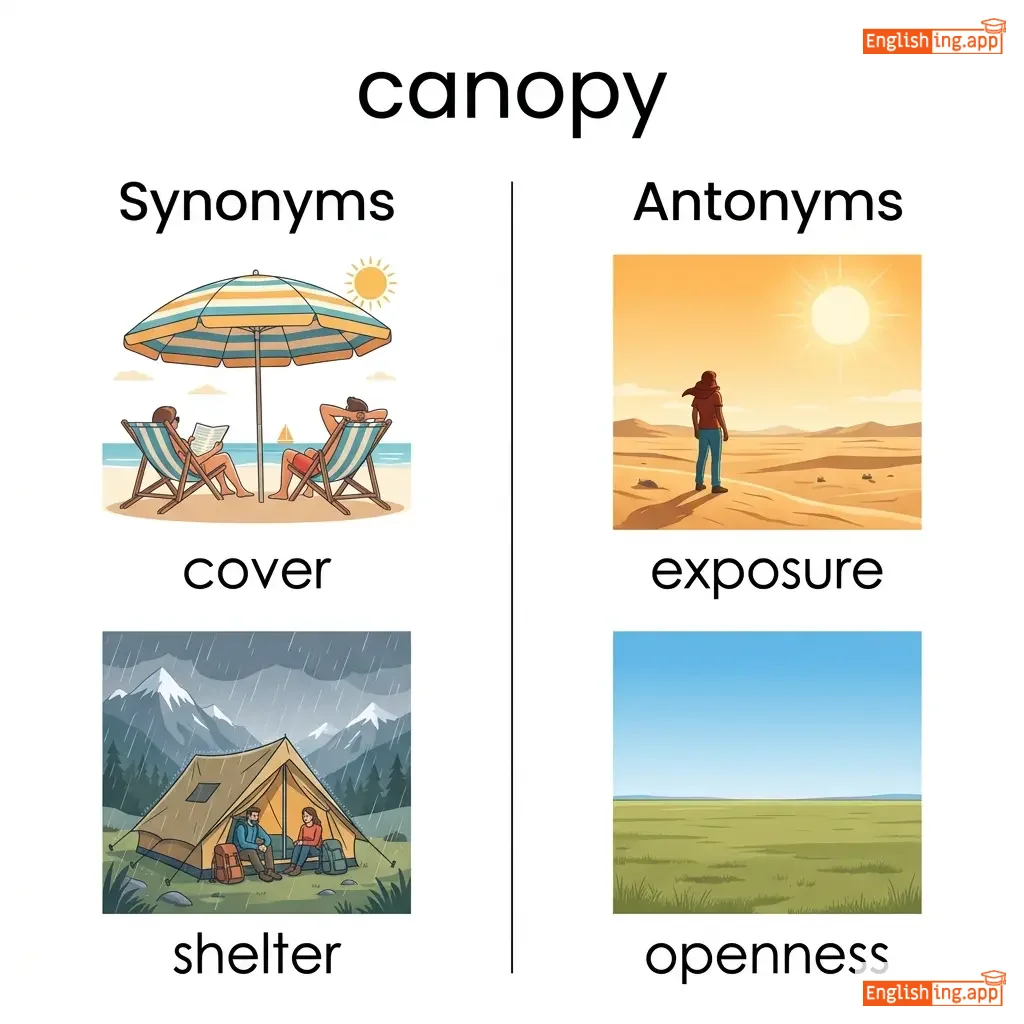
overhead cover, tree cover, forest roof
••••••
|
understory, ground layer, open space
••••••
|
|
#3860
🦌
|
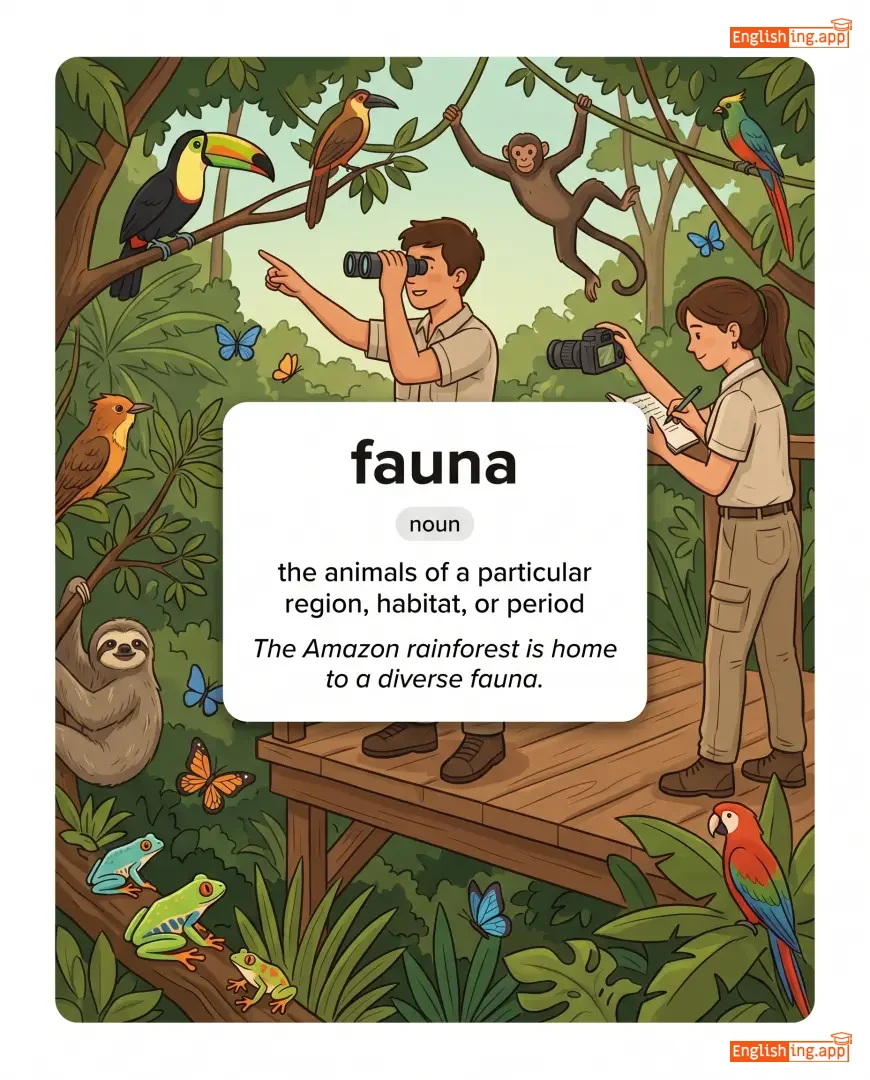
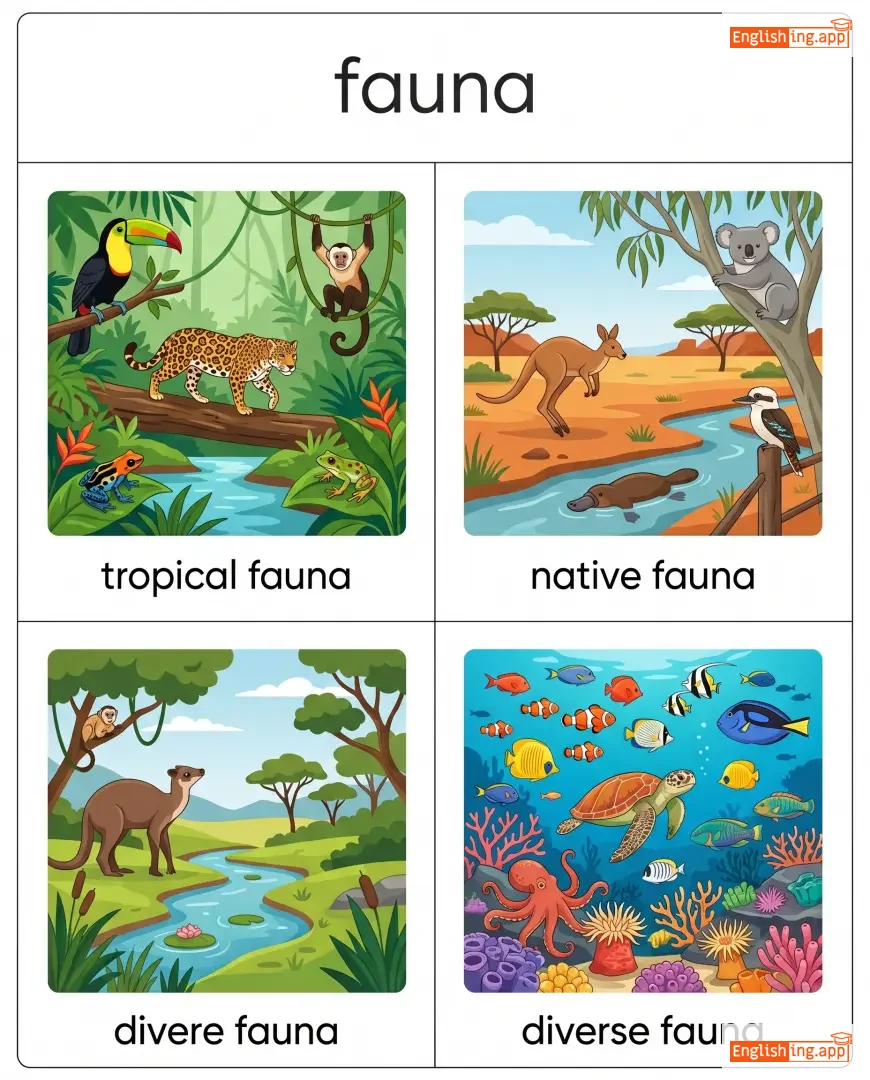
/ˈfɔː.nə/
noun
••••••
|
|
The animal life of a particular region, habitat, or geological period.
••••••
|
The fauna of the African savannah includes lions and elephants. |
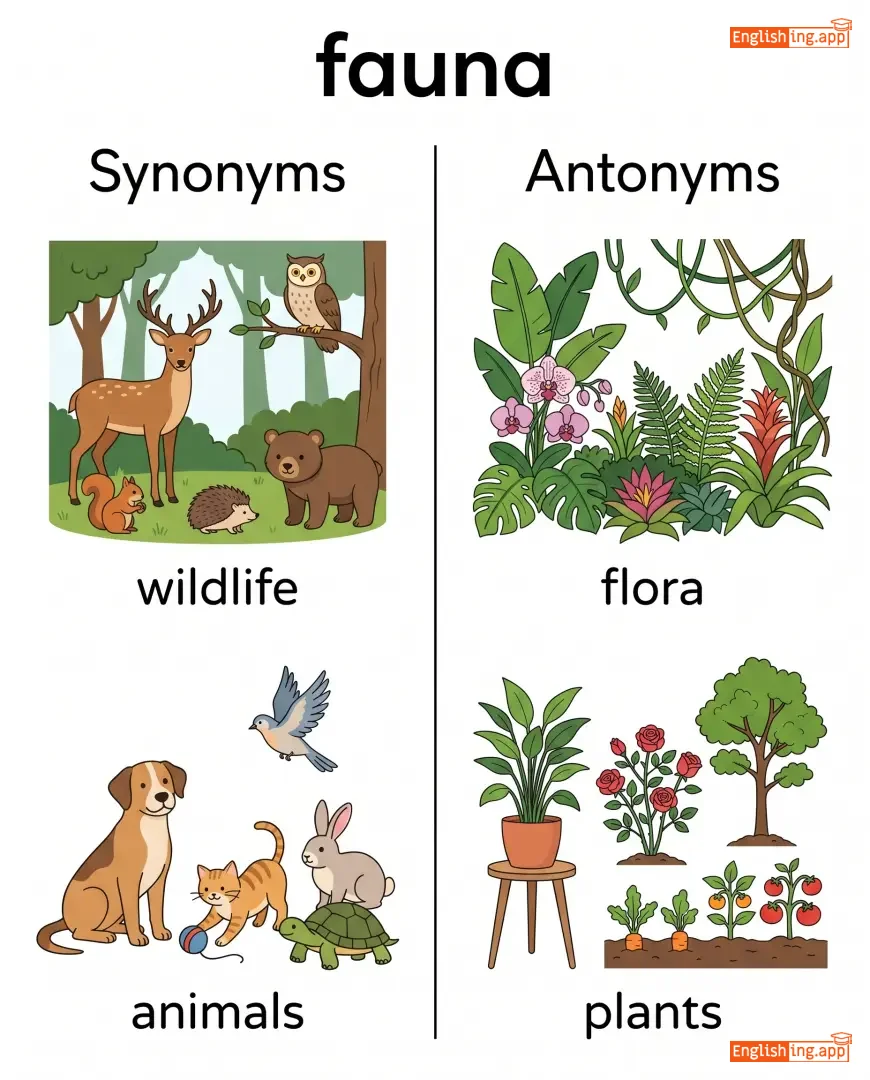
wildlife, animals, zoological life
••••••
|
flora, plants, vegetation
••••••
|
|
#3861
🏠
|
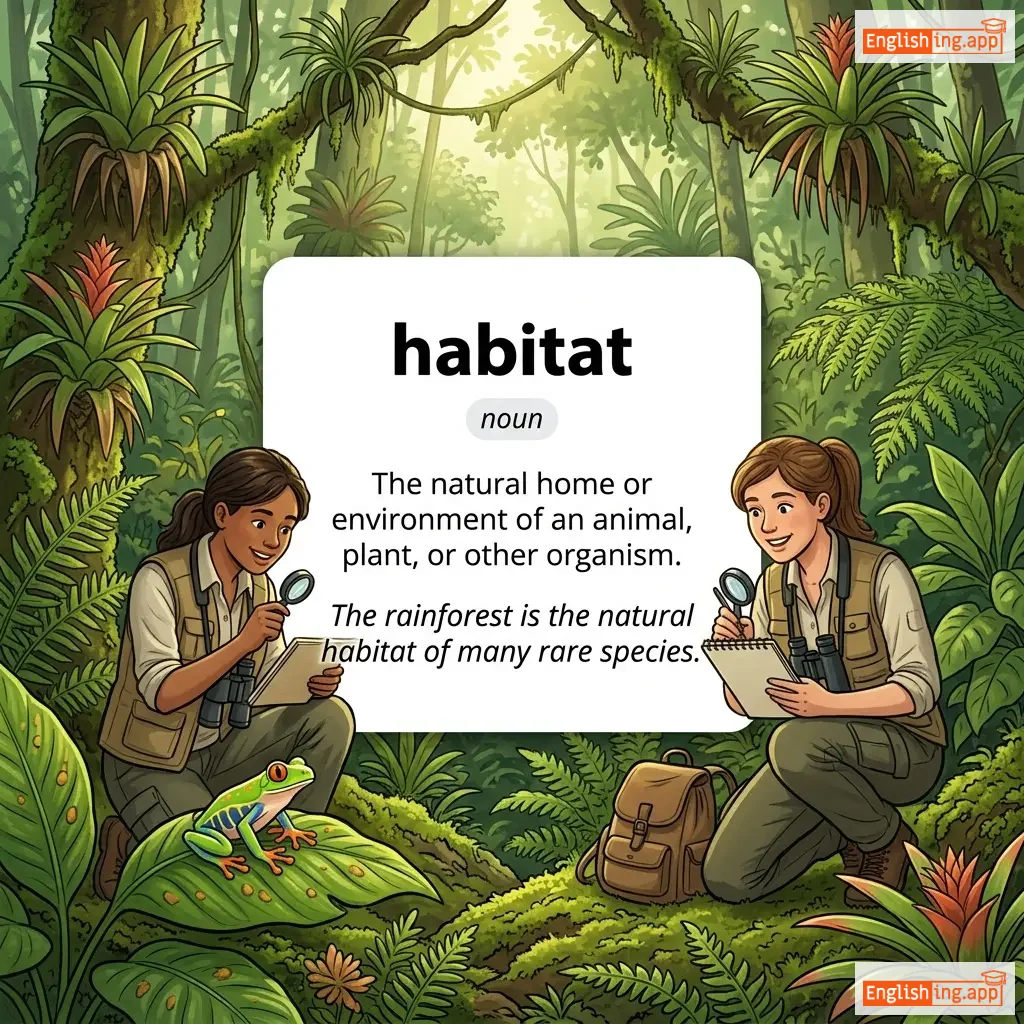
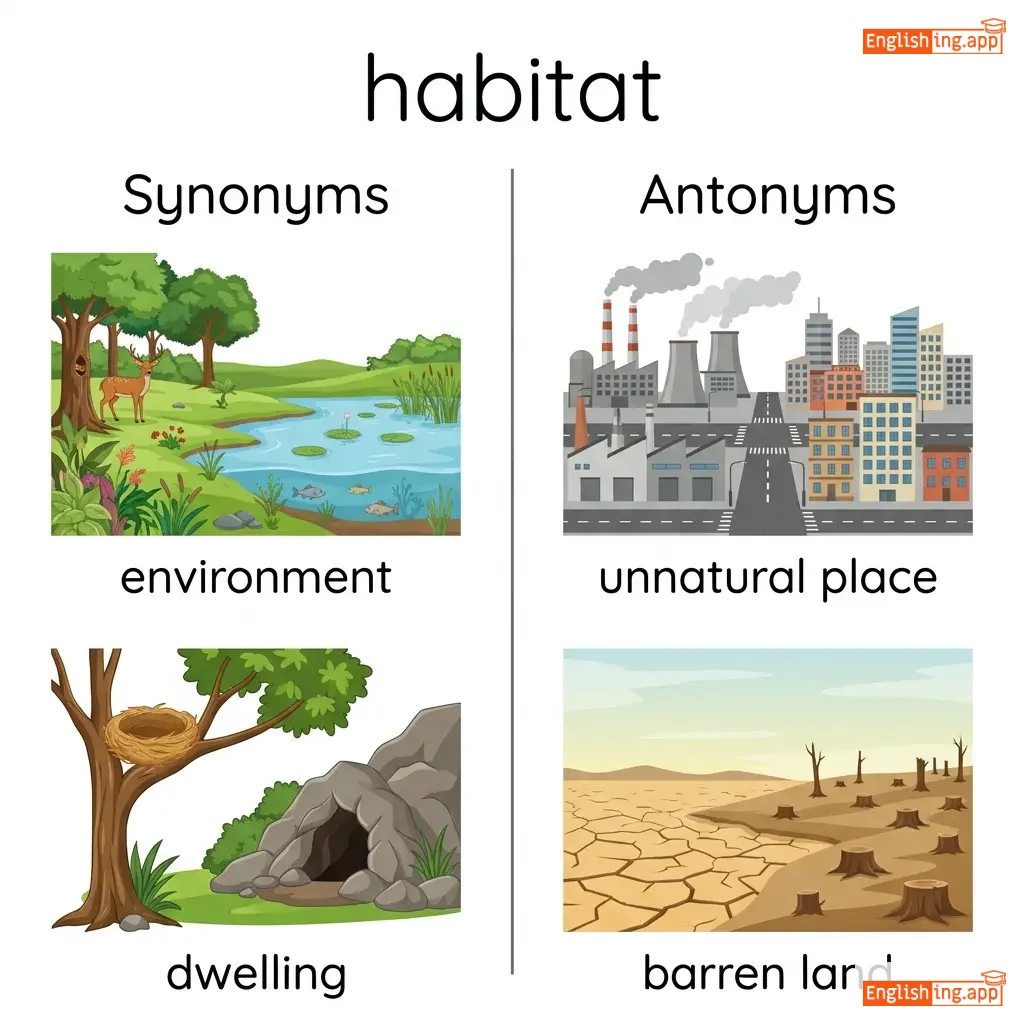
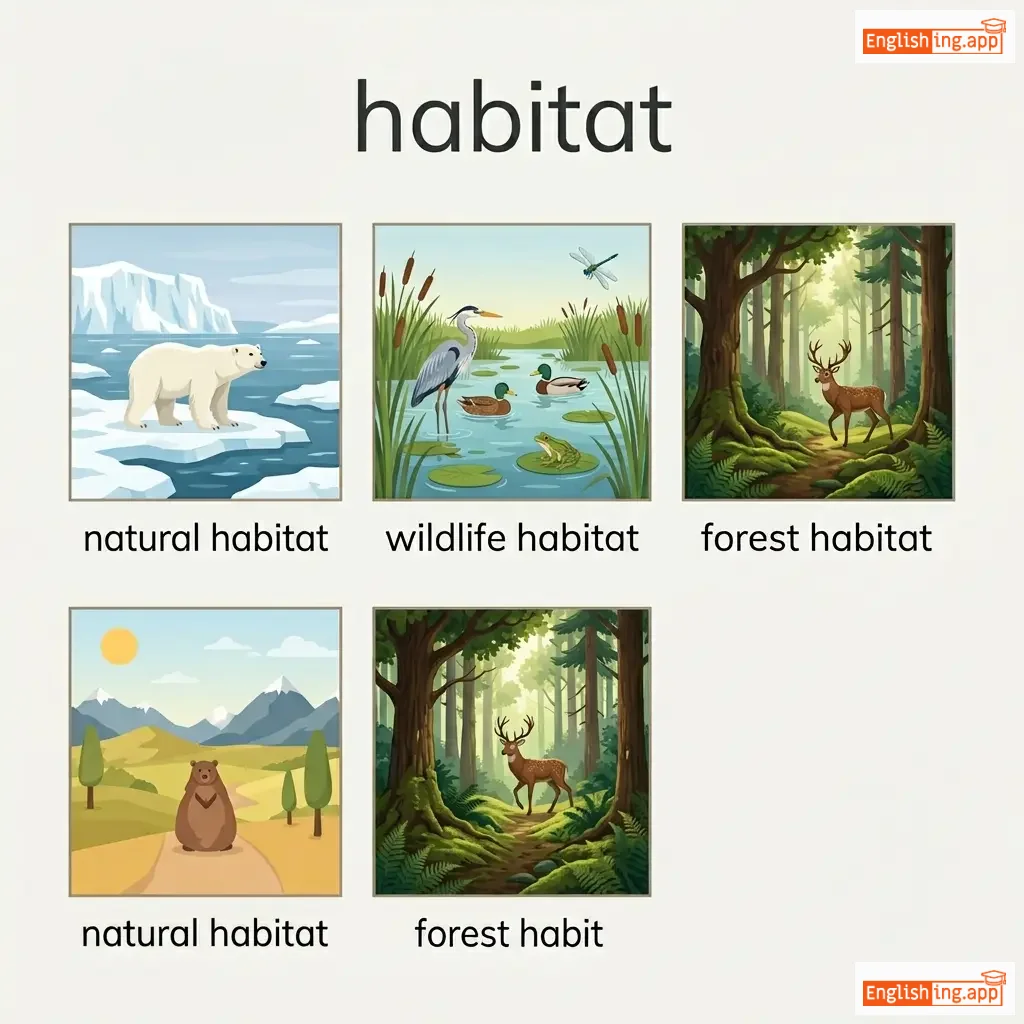
/ˈhæb.ɪ.tæt/
noun
••••••
|
|
The natural environment where an organism lives and meets its needs.
••••••
|
The polar bear's natural habitat is the Arctic region. |
natural environment, ecosystem, living area
••••••
|
uninhabitable, artificial setting, displacement
••••••
|
|
#3862
🌺
|
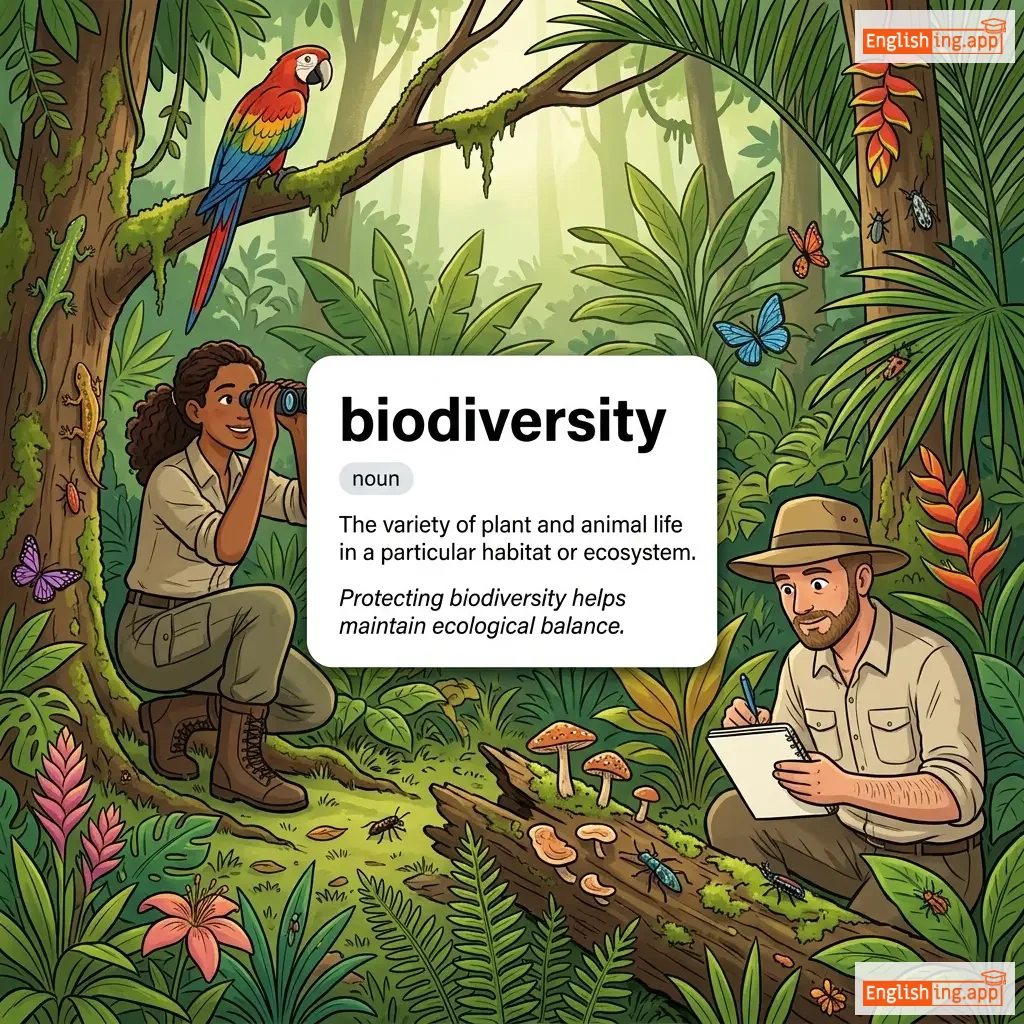
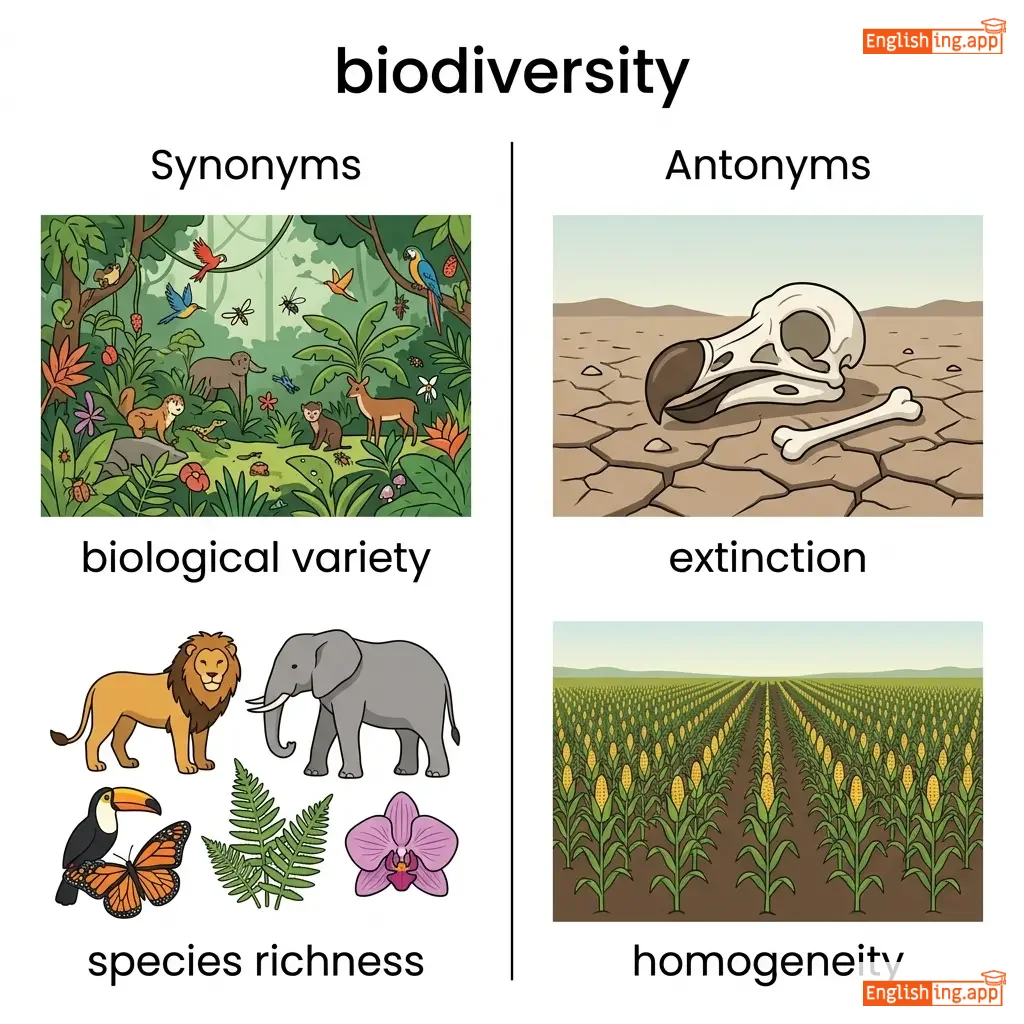
/ˌbaɪ.əʊ.daɪˈvɜː.sɪ.ti/
noun
••••••
|
|
The variety of plant and animal life in a particular habitat or ecosystem.
••••••
|
Protecting biodiversity helps maintain ecological balance. |
biological variety, species richness, ecological diversity
••••••
|
extinction, homogeneity, monoculture
••••••
|
|
#3863
🌸
|
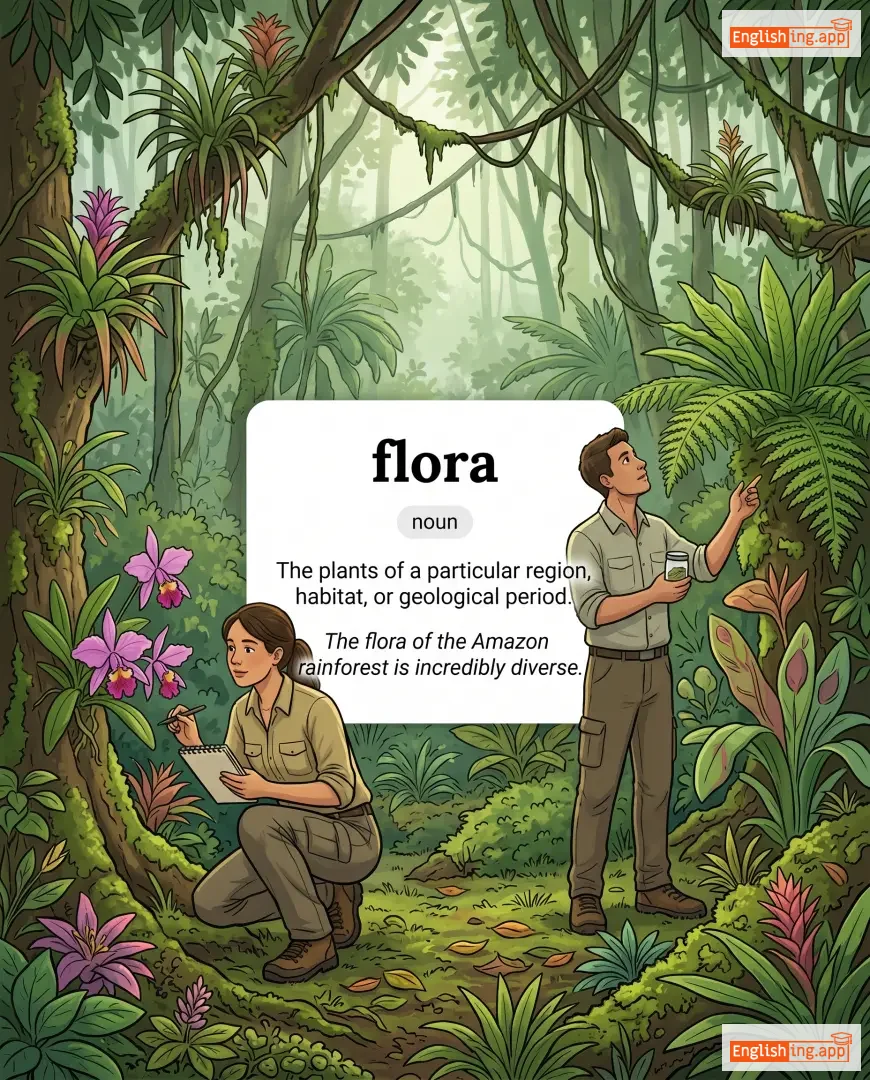
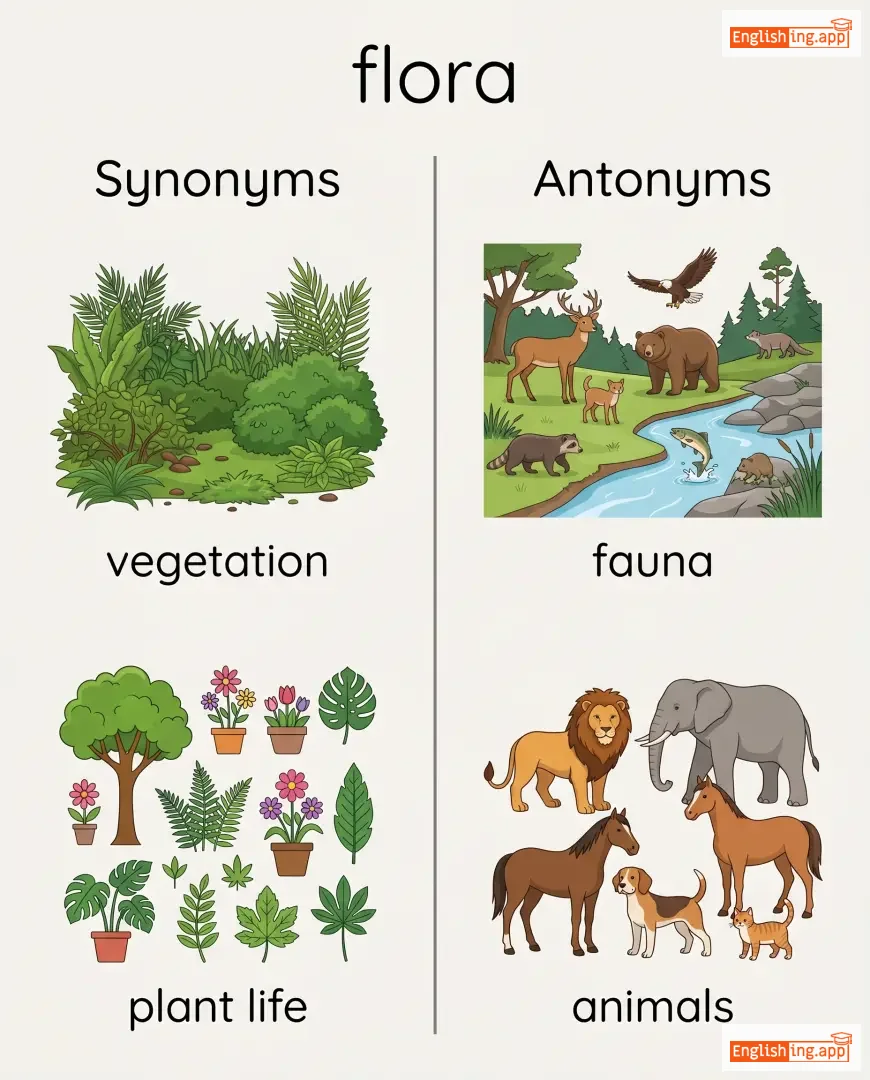
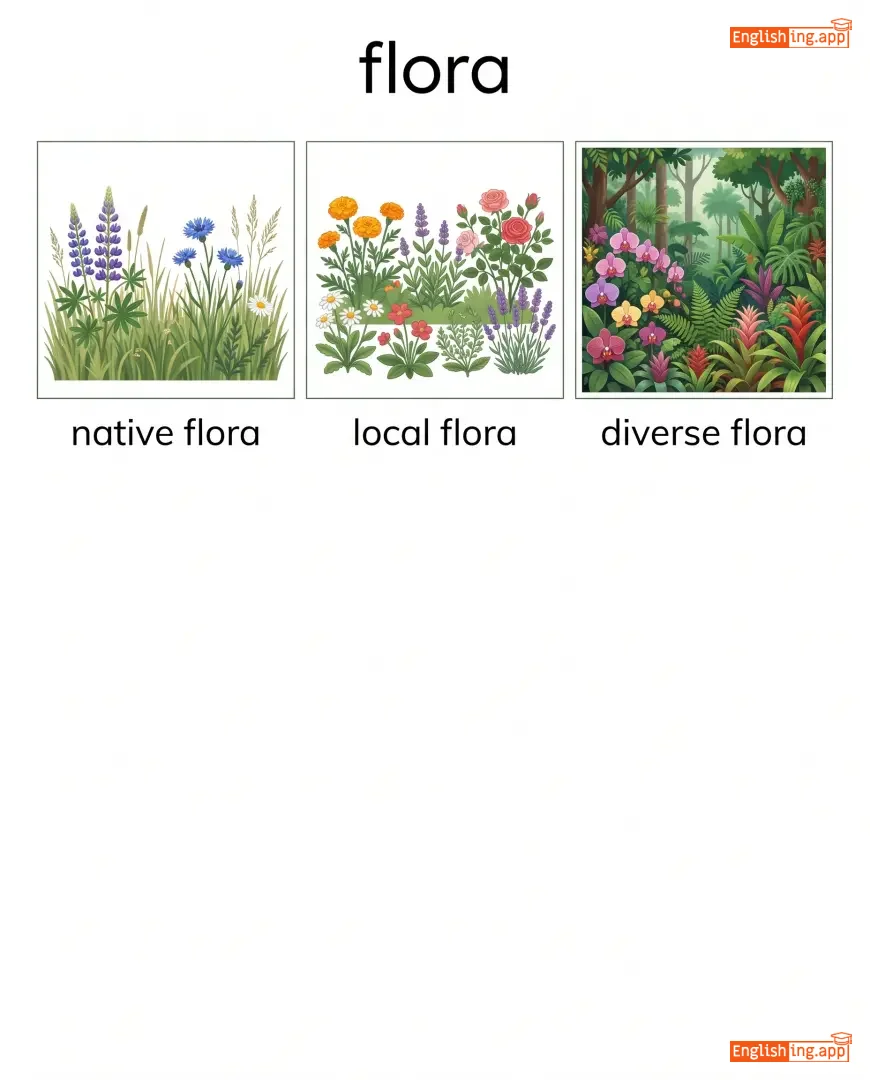
/ˈflɔː.rə/
noun
••••••
|
|
The plant life found in a particular region or habitat.
••••••
|
The Amazon rainforest is home to a vast flora diversity. |
plant life, vegetation, botany
••••••
|
fauna, wildlife, animals
••••••
|
|
#3864
🔄
|
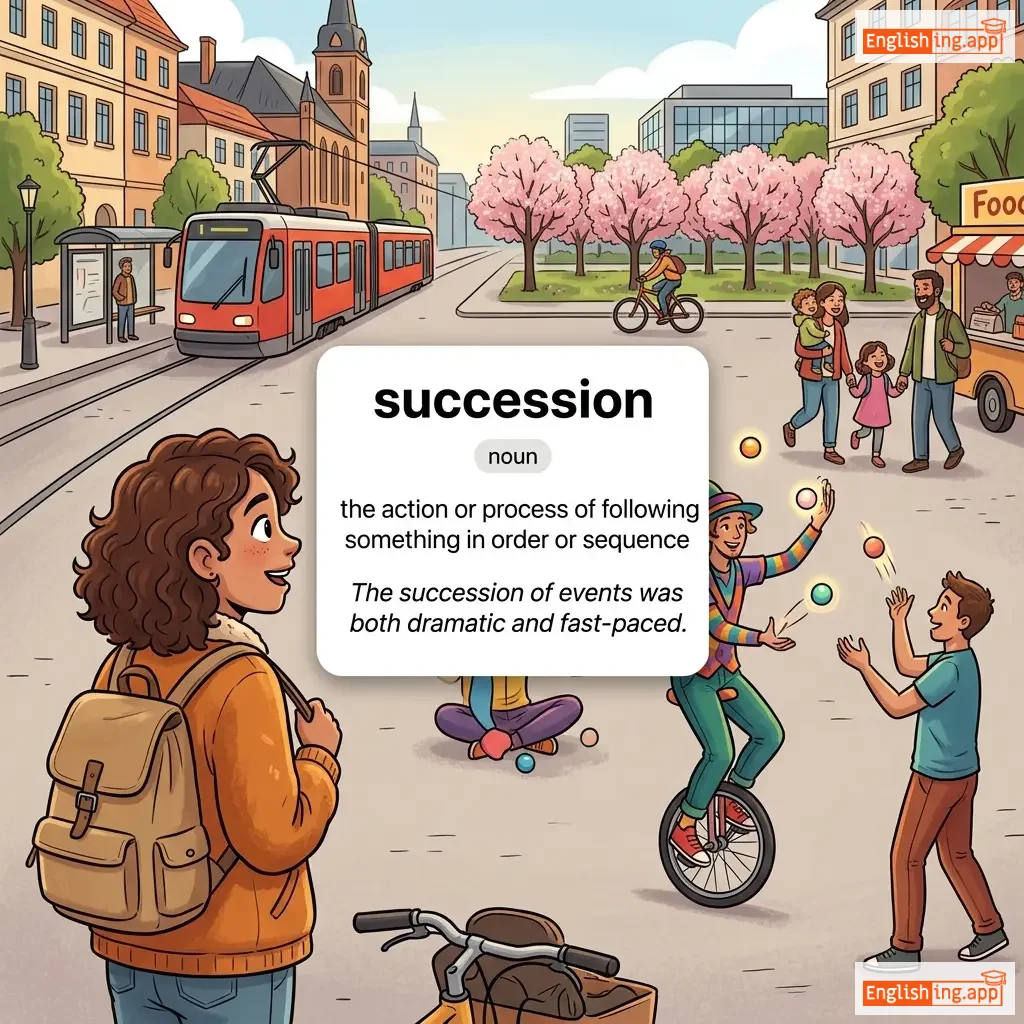
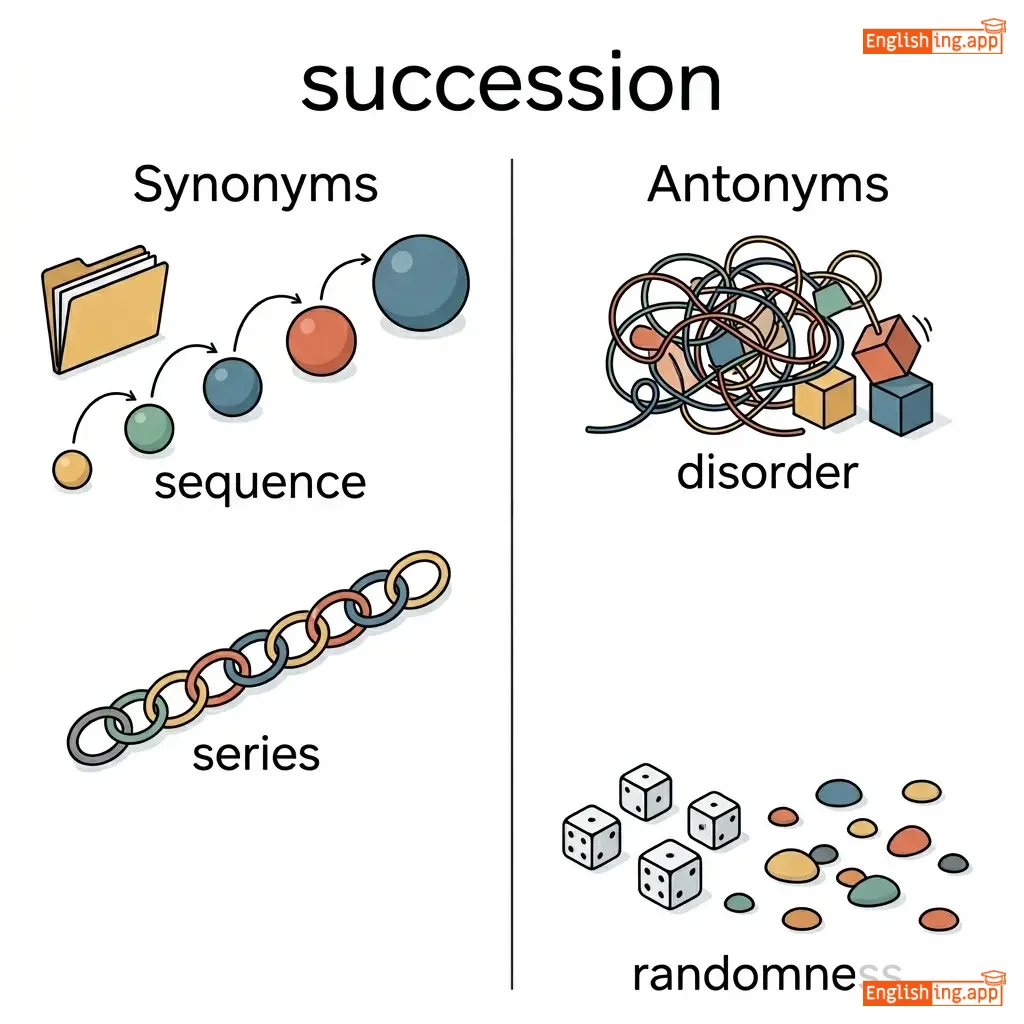
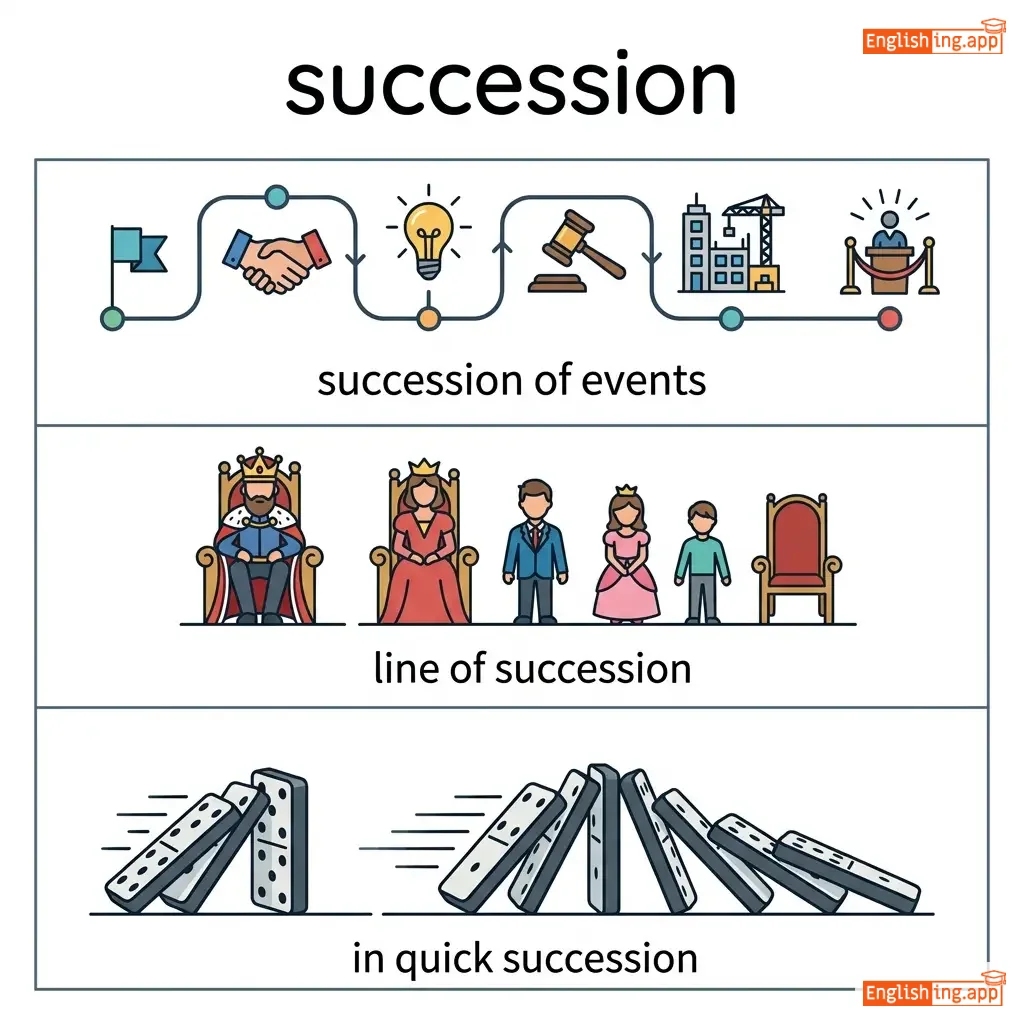
/səkˈsɛʃ.ən/
noun
••••••
|
|
The process of ecological change in which one community of organisms is gradually replaced by another.
••••••
|
Forest succession occurs when old ecosystems are replaced by new ones. |
ecological progression, natural development, evolution
••••••
|
stagnation, unchangeability, constancy
••••••
|
|
#3865
🌧️
|
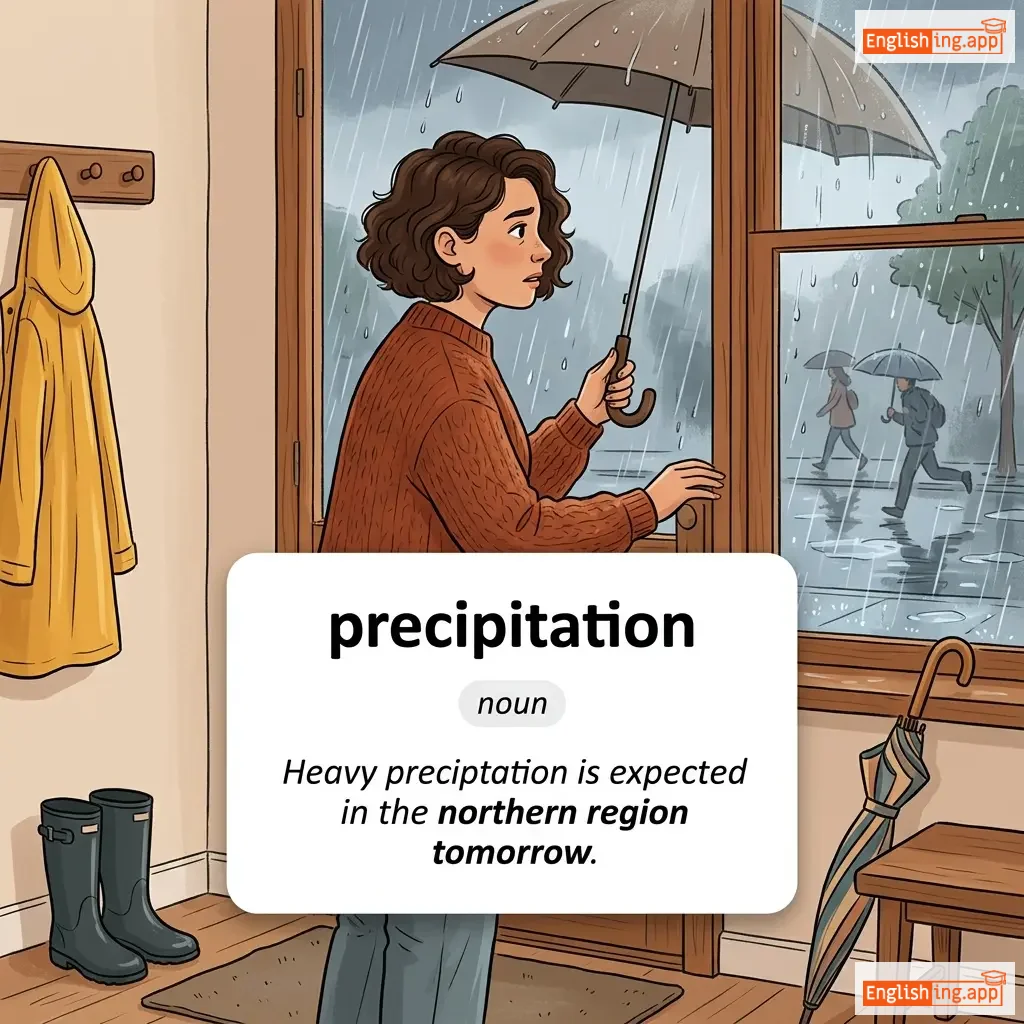
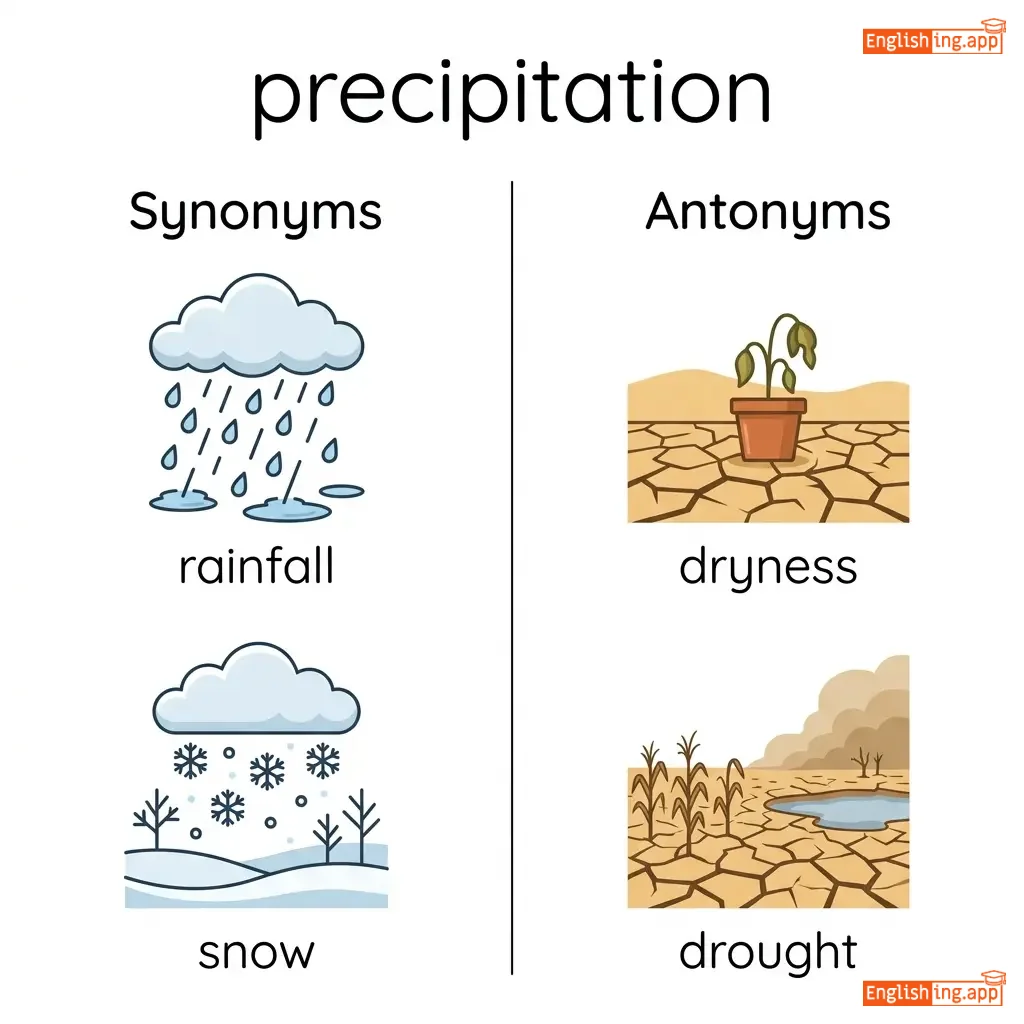
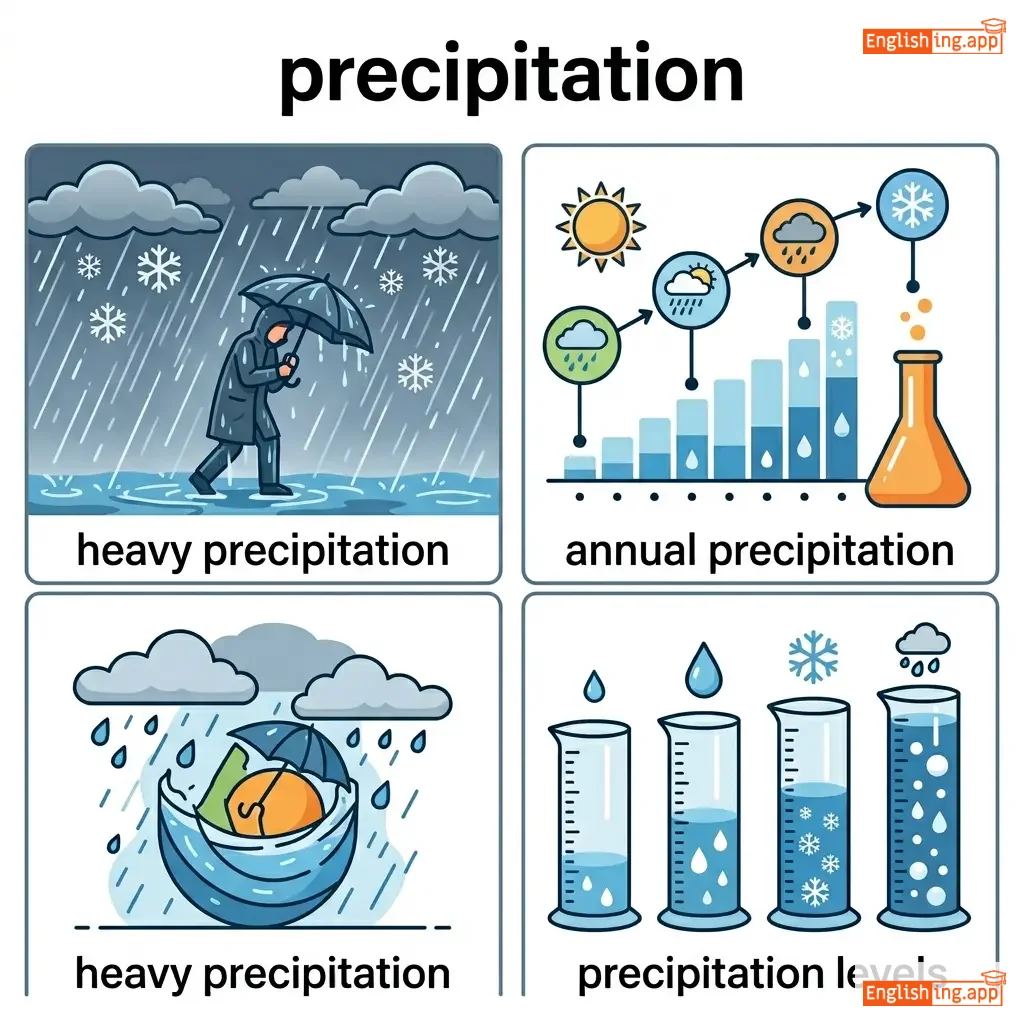
/prɪˌsɪp.ɪˈteɪ.ʃən/
noun
••••••
|
|
Water that falls from the atmosphere to the Earth's surface, including rain, snow, sleet, and hail.
••••••
|
Heavy precipitation can cause flooding in low-lying areas. |
rainfall, snowfall, moisture
••••••
|
aridity, dryness, drought
••••••
|
|
#3866
🦘
|
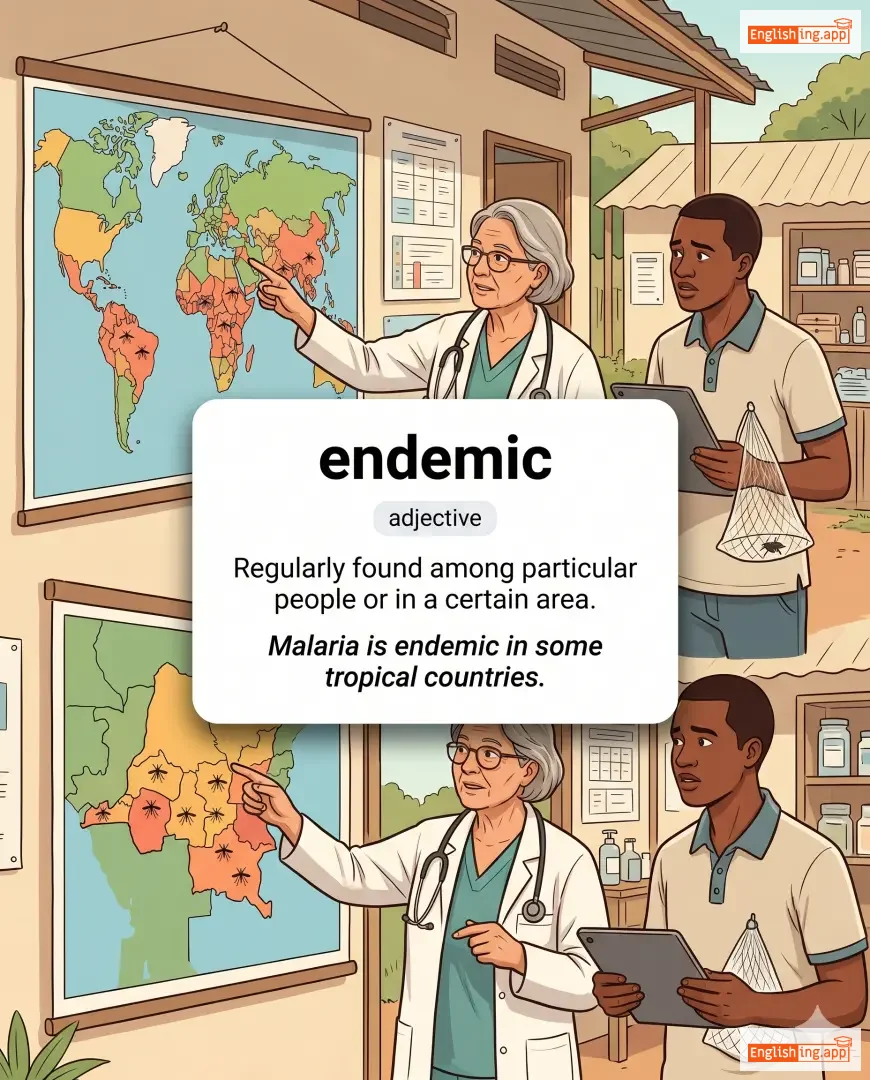
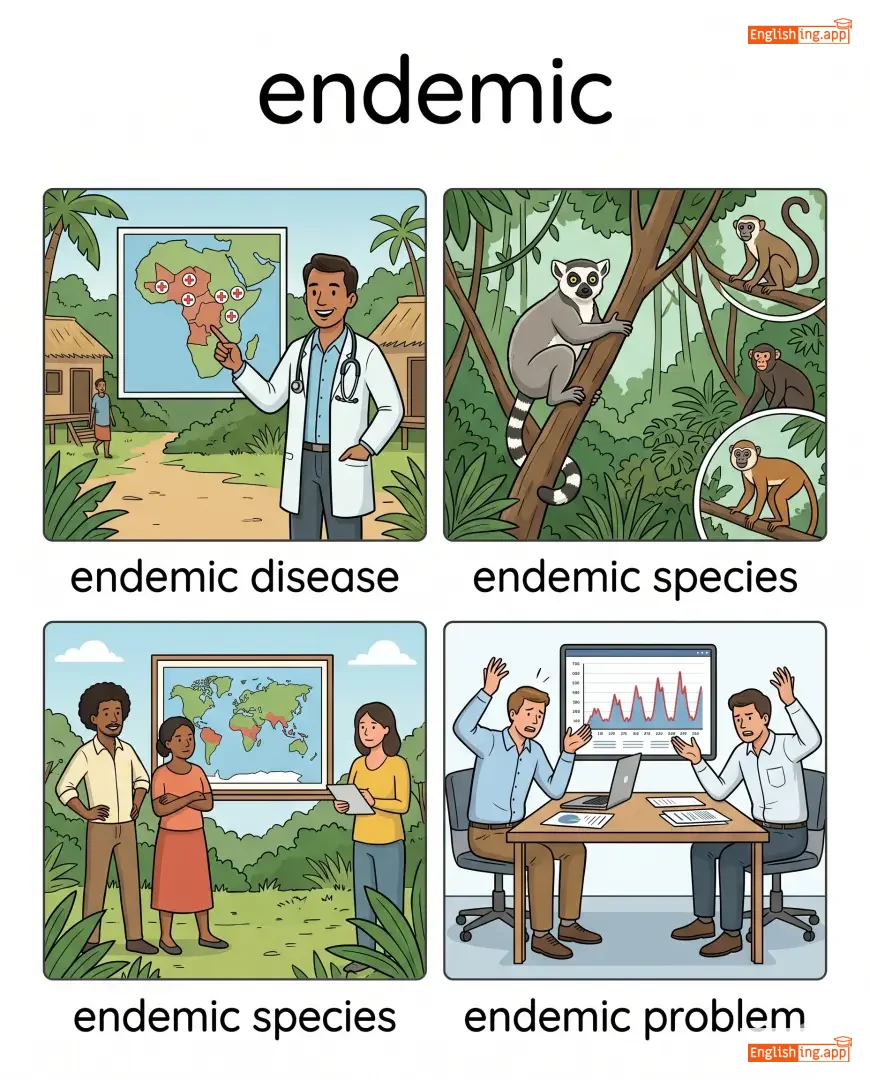
/ɛnˈdɛm.ɪk/
adjective
••••••
|
|
Native to and found only in a particular region; not occurring naturally elsewhere.
••••••
|
The Bengal tiger is endemic to the Indian subcontinent. |
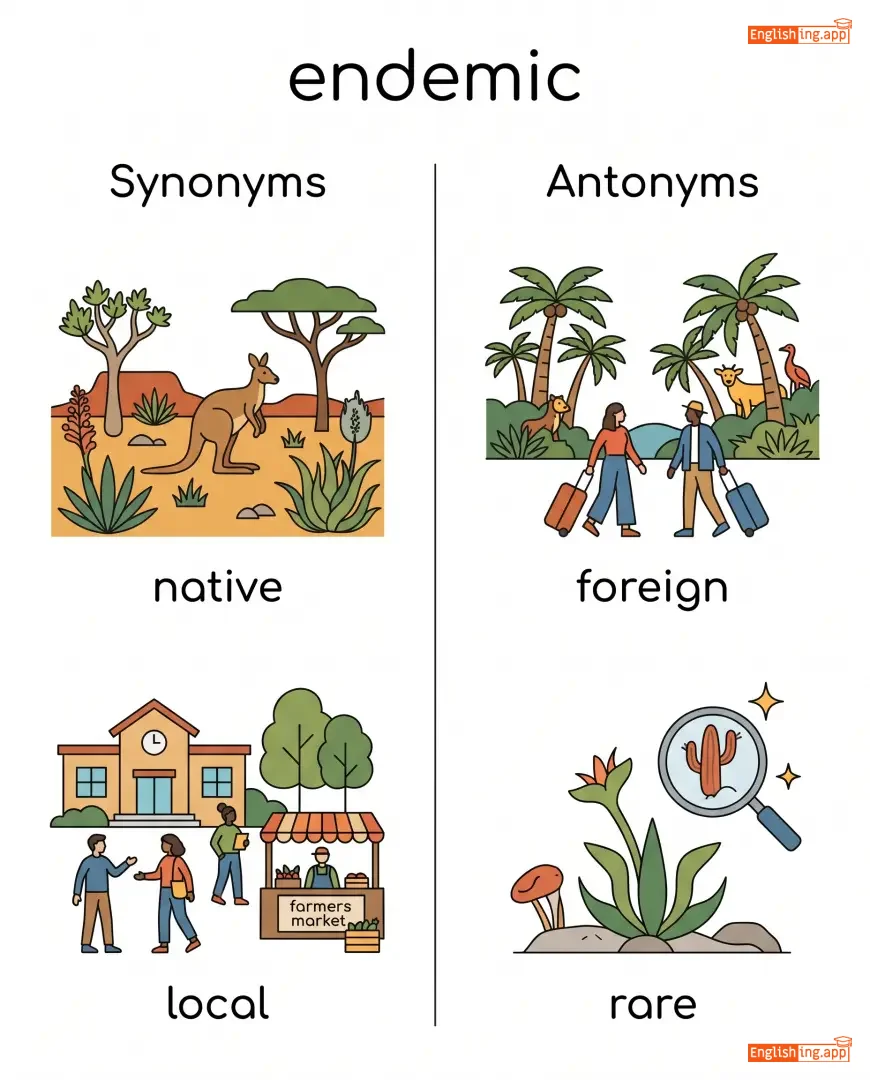
native, localized, indigenous
••••••
|
foreign, non-native, exotic
••••••
|
|
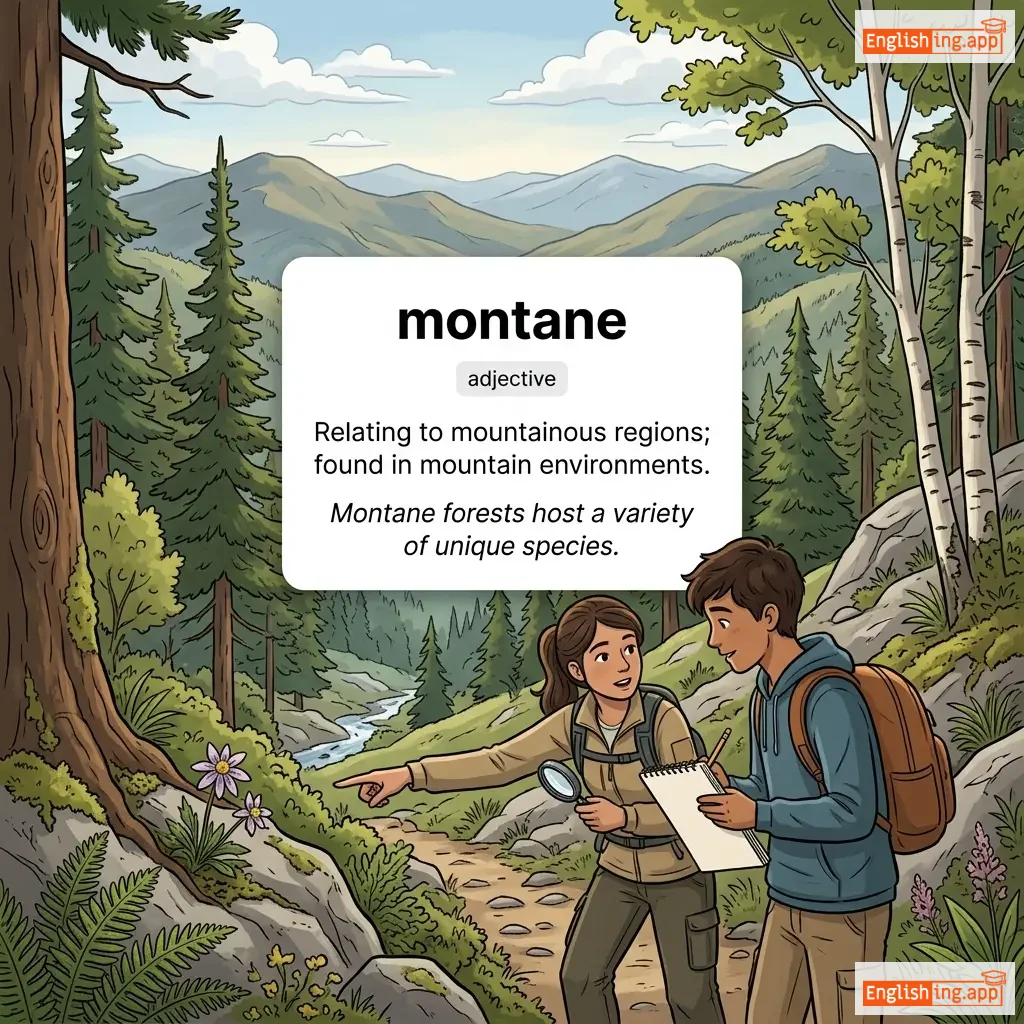
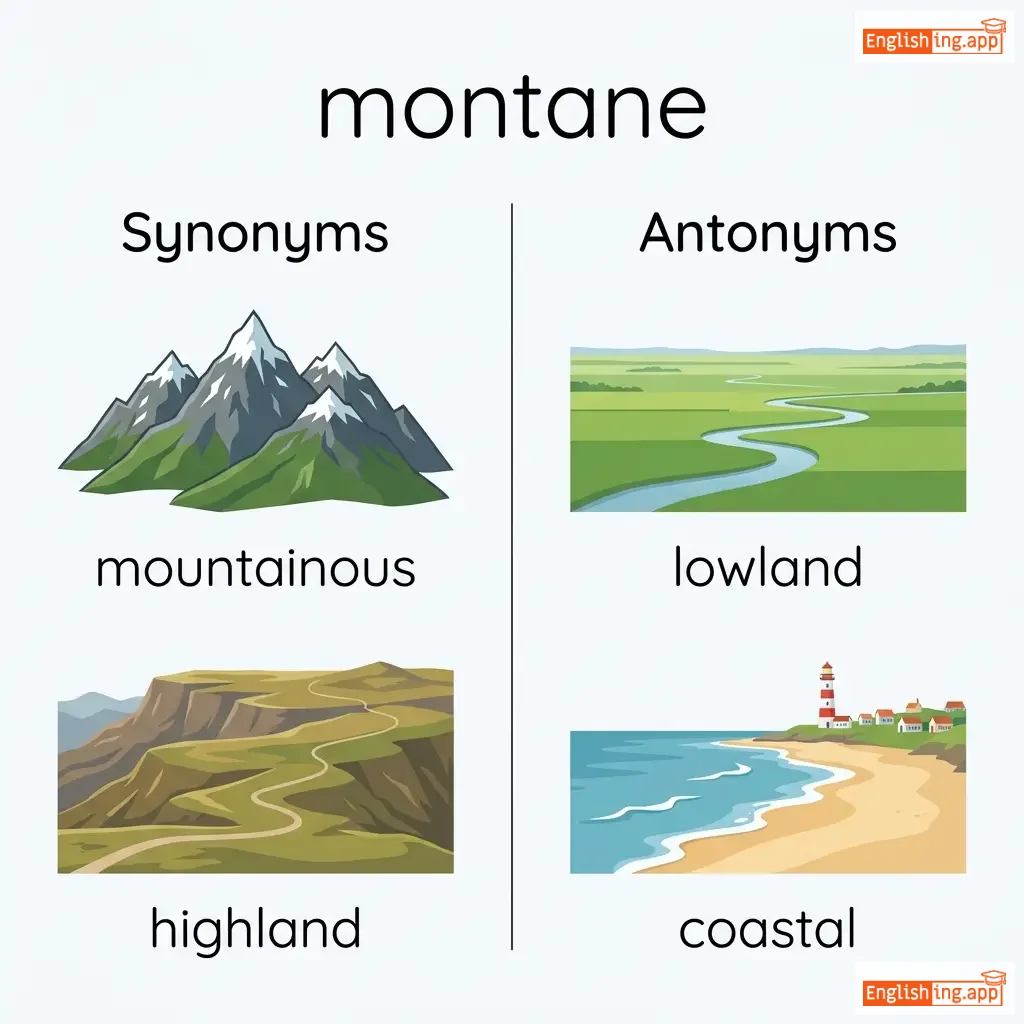
#3867
⛰️
|
/ˈmɒn.teɪn/
adjective
••••••
|
|
Relating to mountainous regions; found in mountain environments.
••••••
|
Montane forests host a variety of unique species. |
mountainous, highland, alpine
••••••
|
lowland, coastal, plains
••••••
|
|
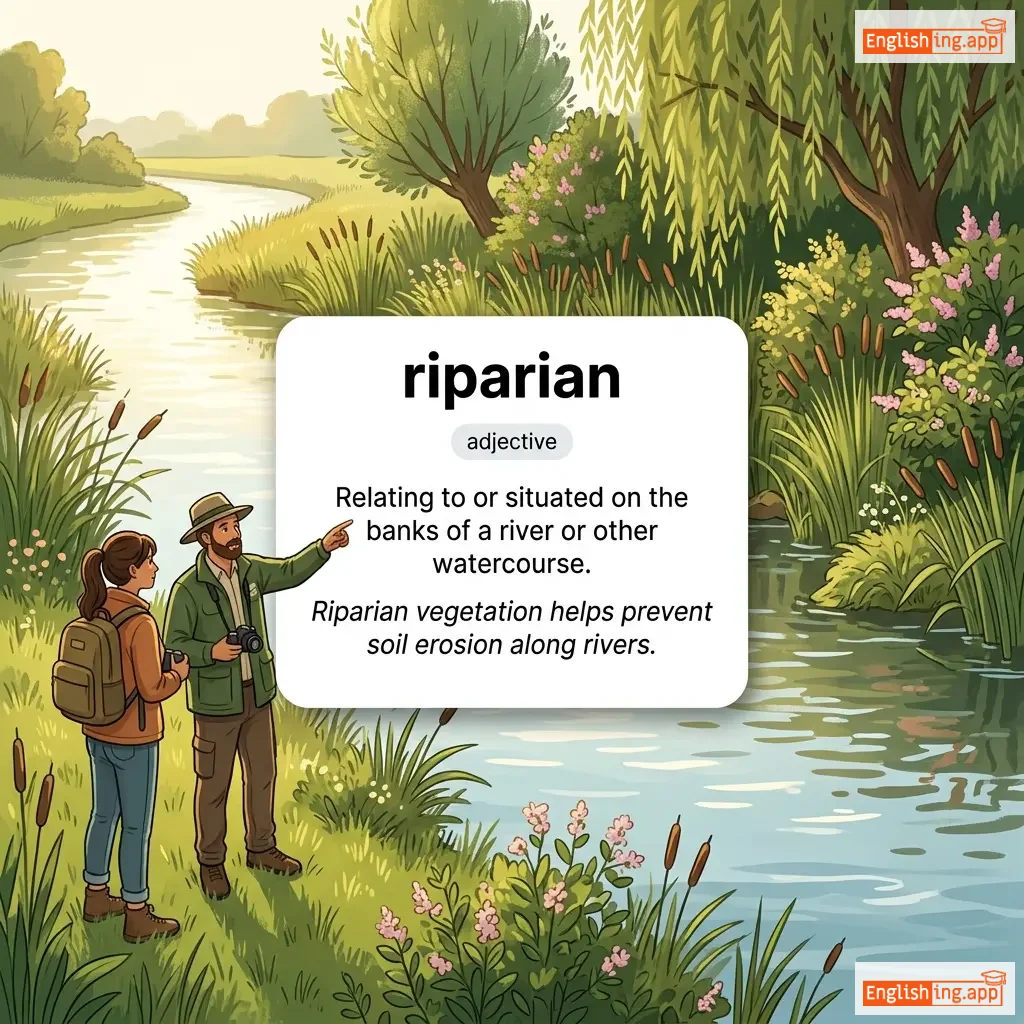
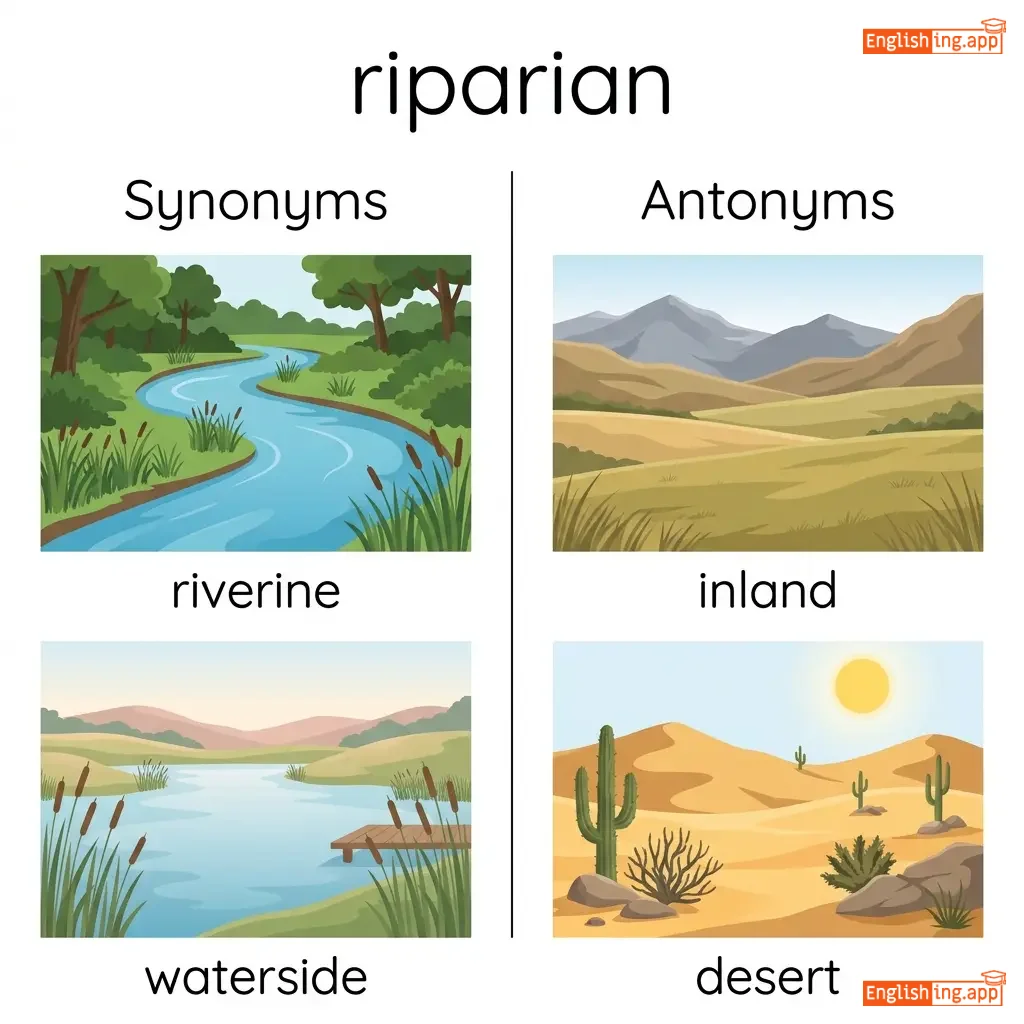
#3868
🏞️
|
/raɪˈpɛə.ri.ən/
adjective
••••••
|
|
Relating to or situated on the banks of a river or other watercourse.
••••••
|
Riparian vegetation helps prevent soil erosion along rivers. |
riverine, waterside, bank-related
••••••
|
inland, desert, dryland
••••••
|
|
#3869
🪓
|
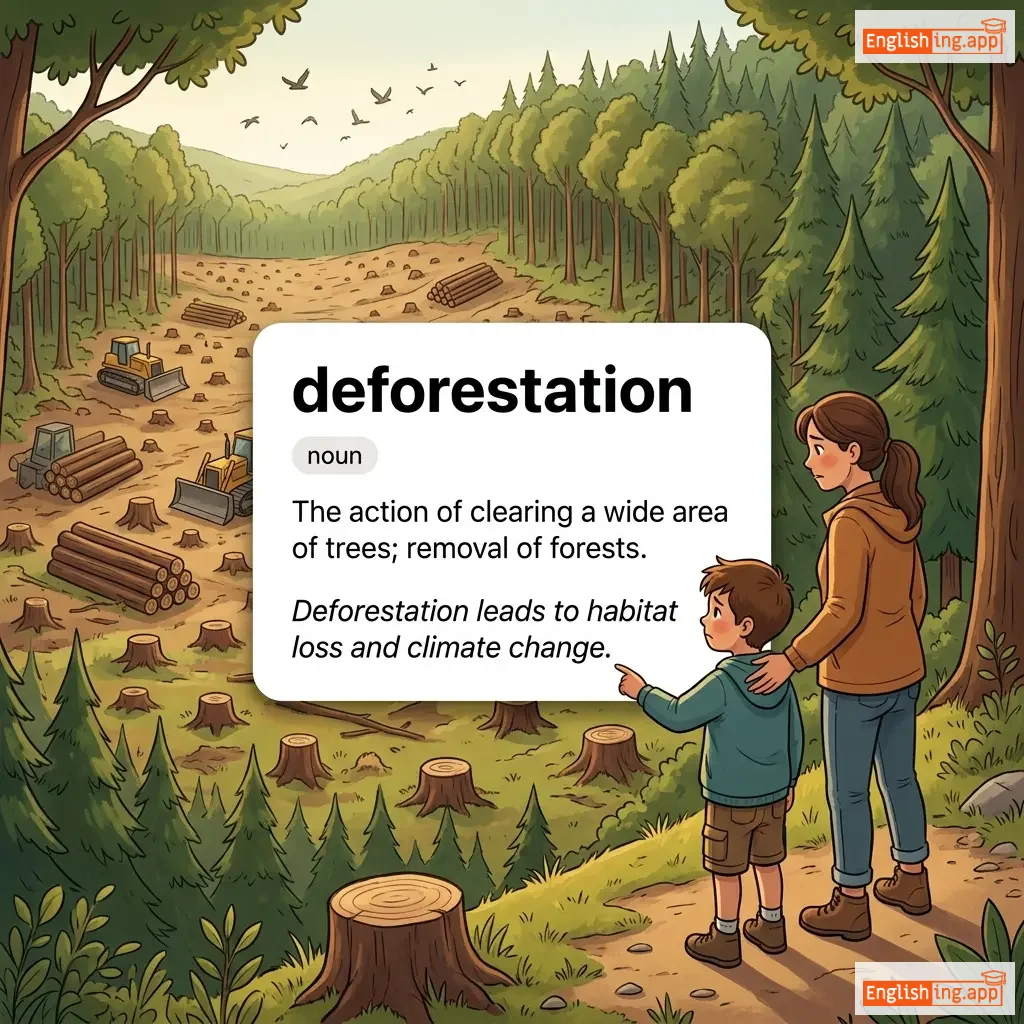
/ˌdiː.fɒr.ɪˈsteɪ.ʃən/
noun
••••••
|
|
The action of clearing a wide area of trees; removal of forests.
••••••
|
Deforestation leads to habitat loss and climate change. |
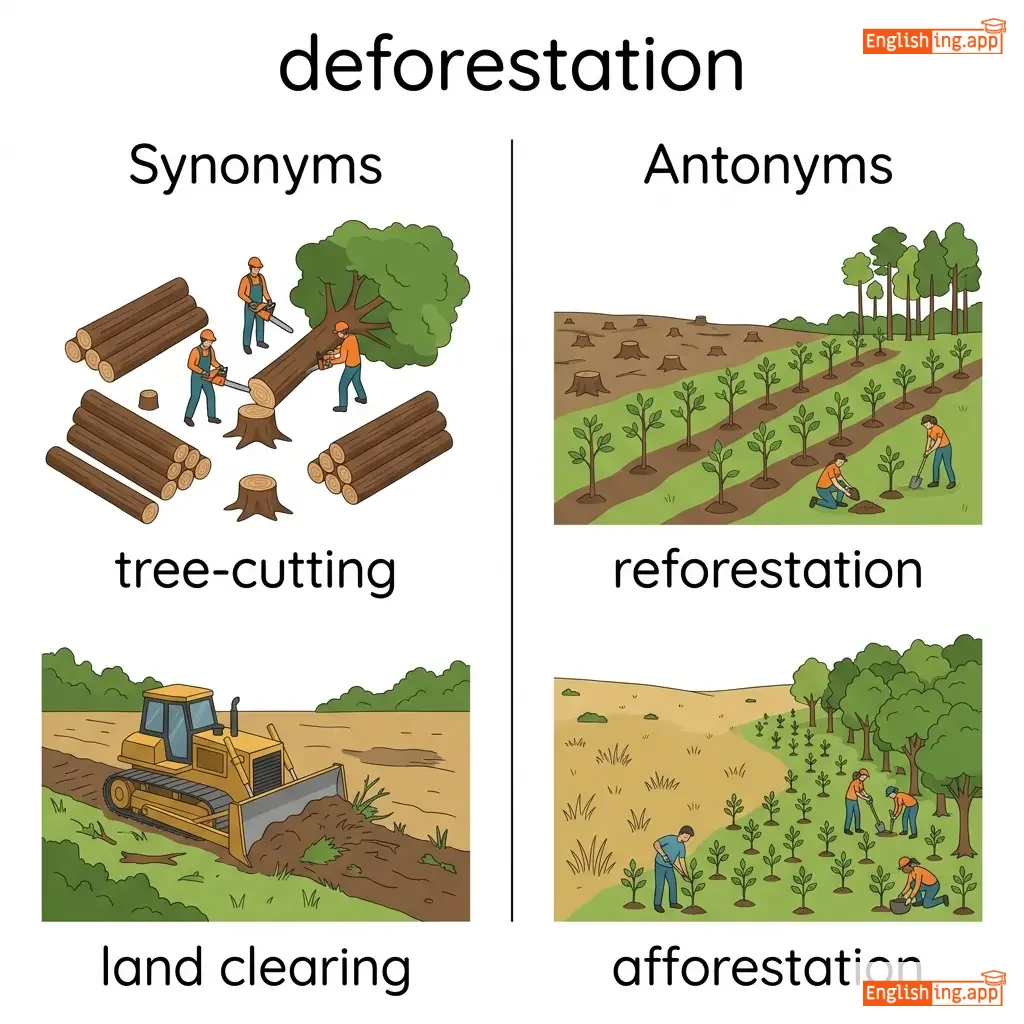
tree-cutting, land clearing, deforesting
••••••
|
reforestation, afforestation, forest preservation
••••••
|
|
#3870
🧩
|
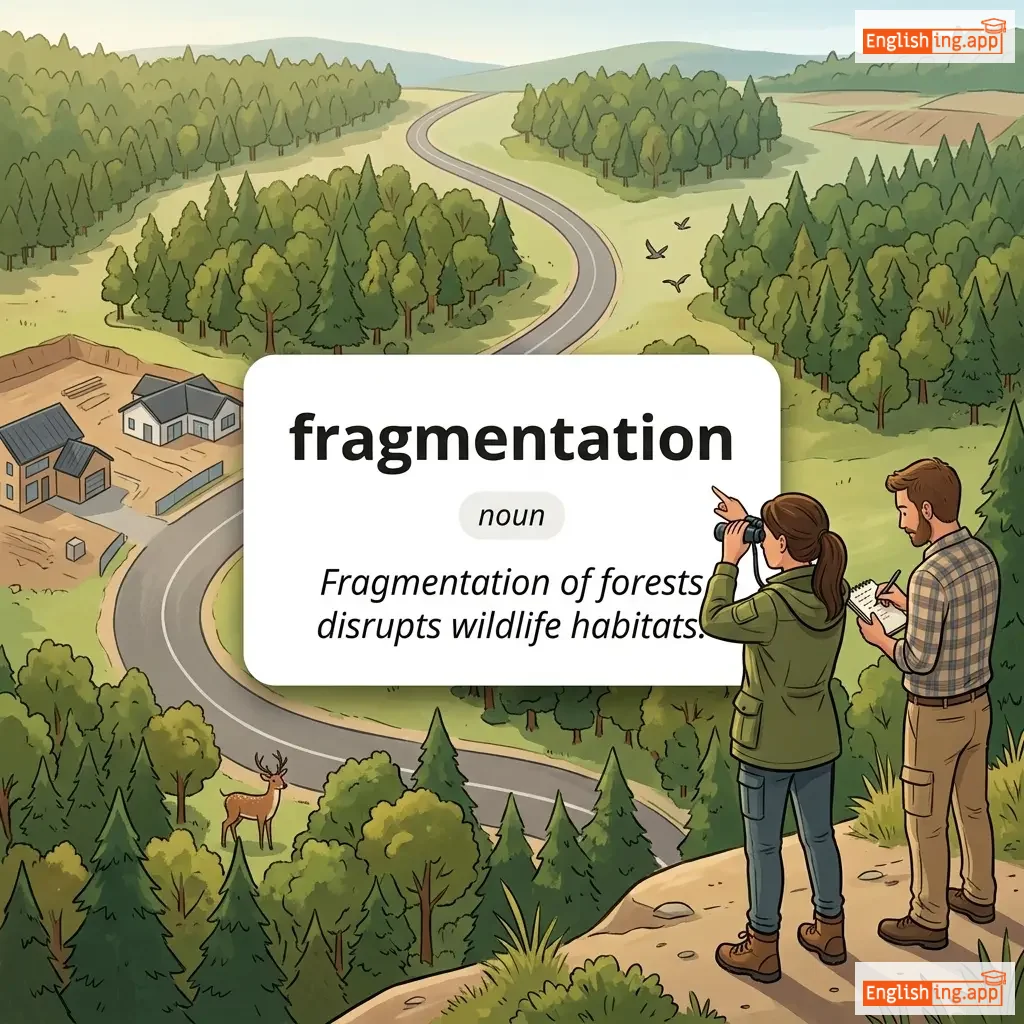
/ˌfræɡ.mənˈteɪ.ʃən/
noun
••••••
|
|
The process of breaking into fragments; division of habitat into isolated patches.
••••••
|
Fragmentation of forests disrupts wildlife habitats. |
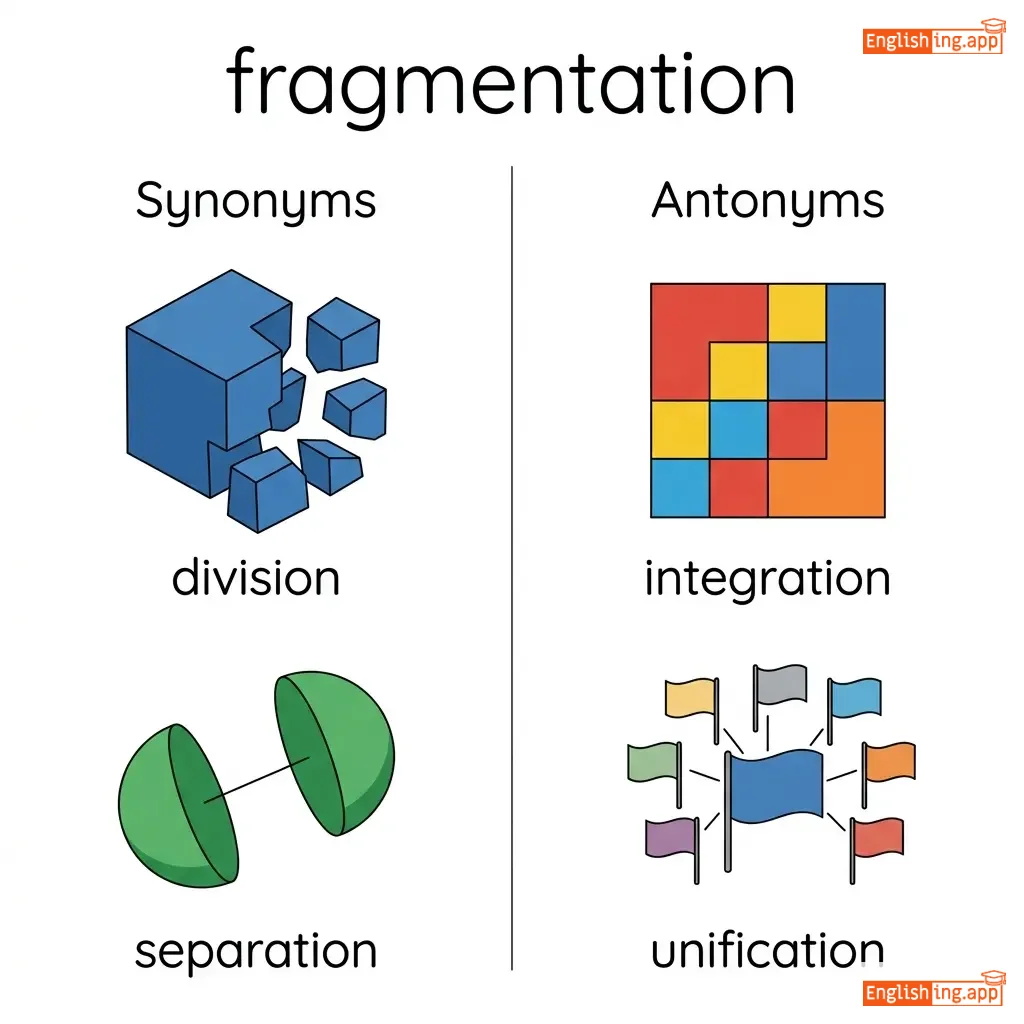
division, separation, disintegration
••••••
|
integration, unification, continuity
••••••
|
|
#3871
🌡️
|
/ˈmaɪ.krəʊˌklaɪ.mət/
noun
••••••
|
|
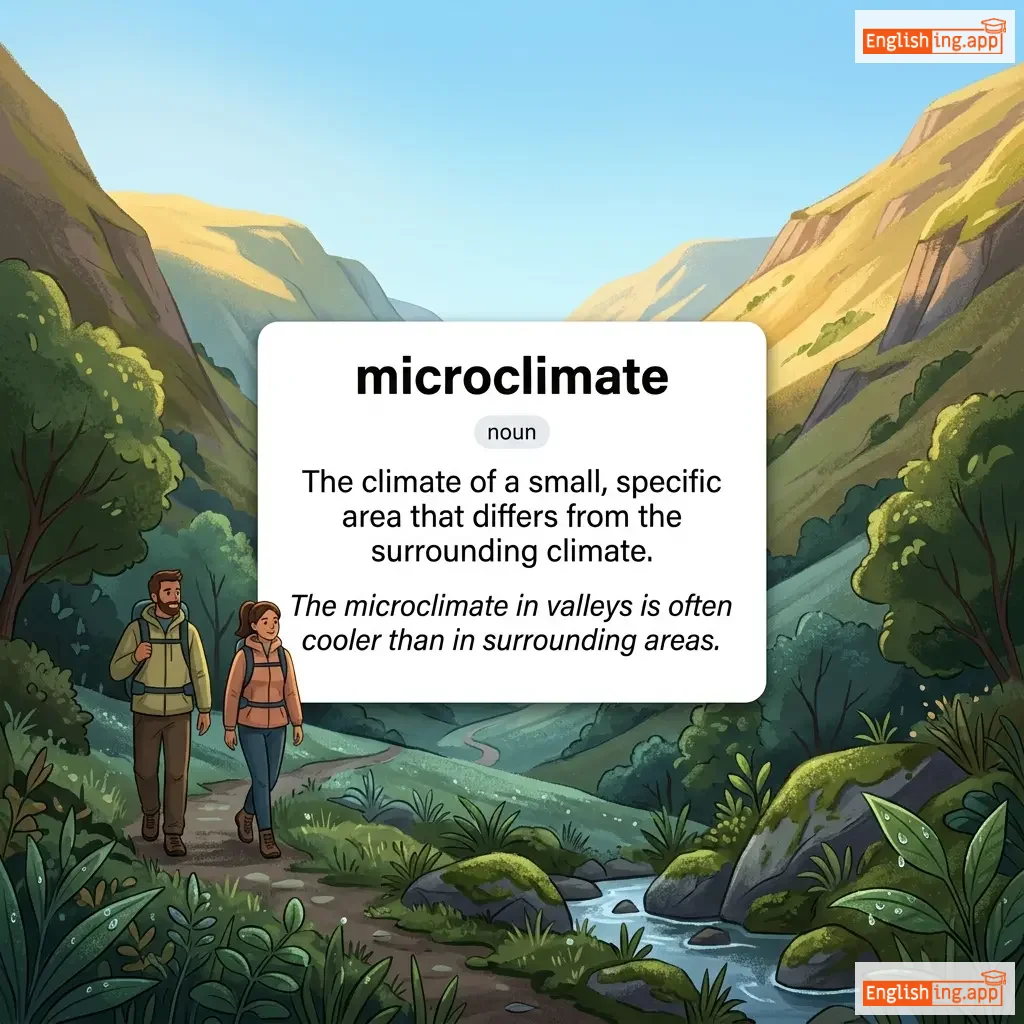
The climate of a small, specific area that differs from the surrounding climate.
••••••
|
The microclimate in valleys is often cooler than in surrounding areas. |
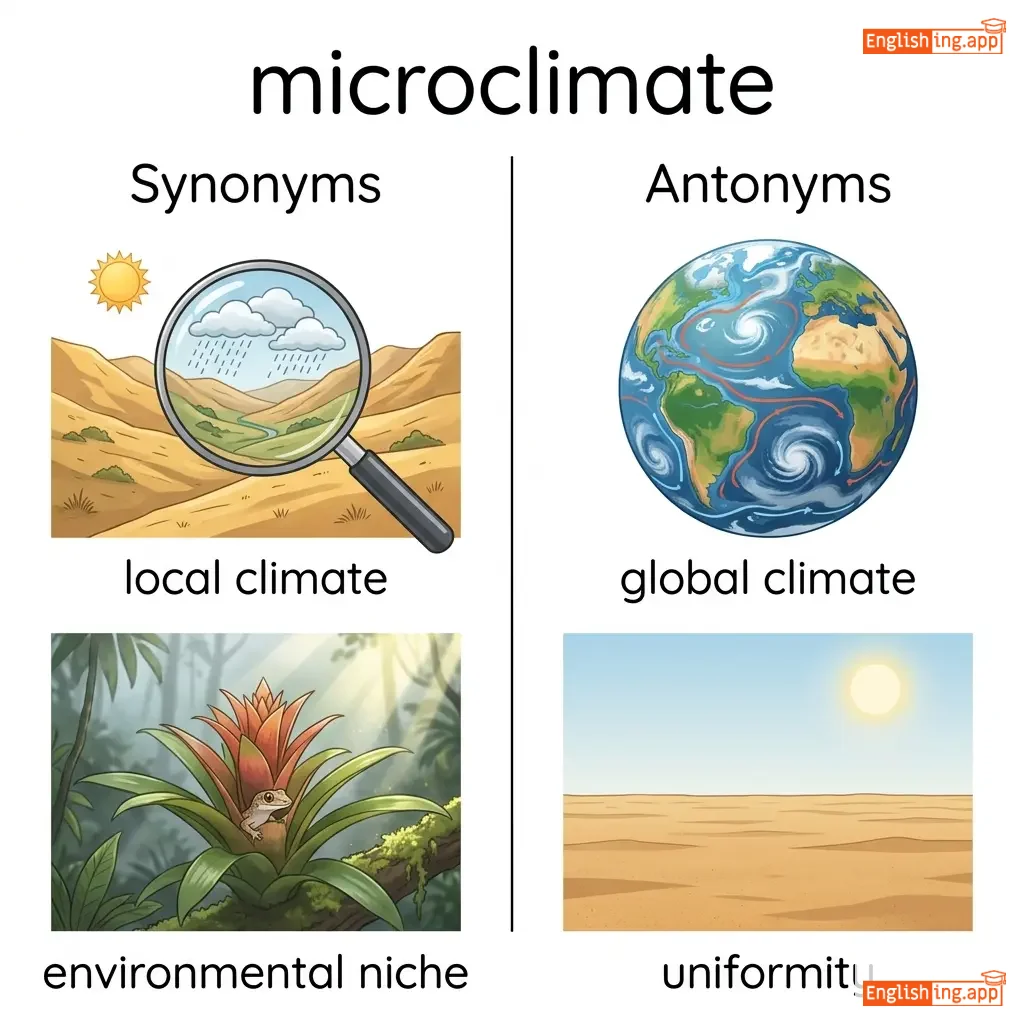
local climate, environmental niche, weather condition
••••••
|
global climate, uniformity, general weather
••••••
|
|
#3872
🌿
|
/ˈʌn.dɚˌstɔː.ri/
noun
••••••
|
|
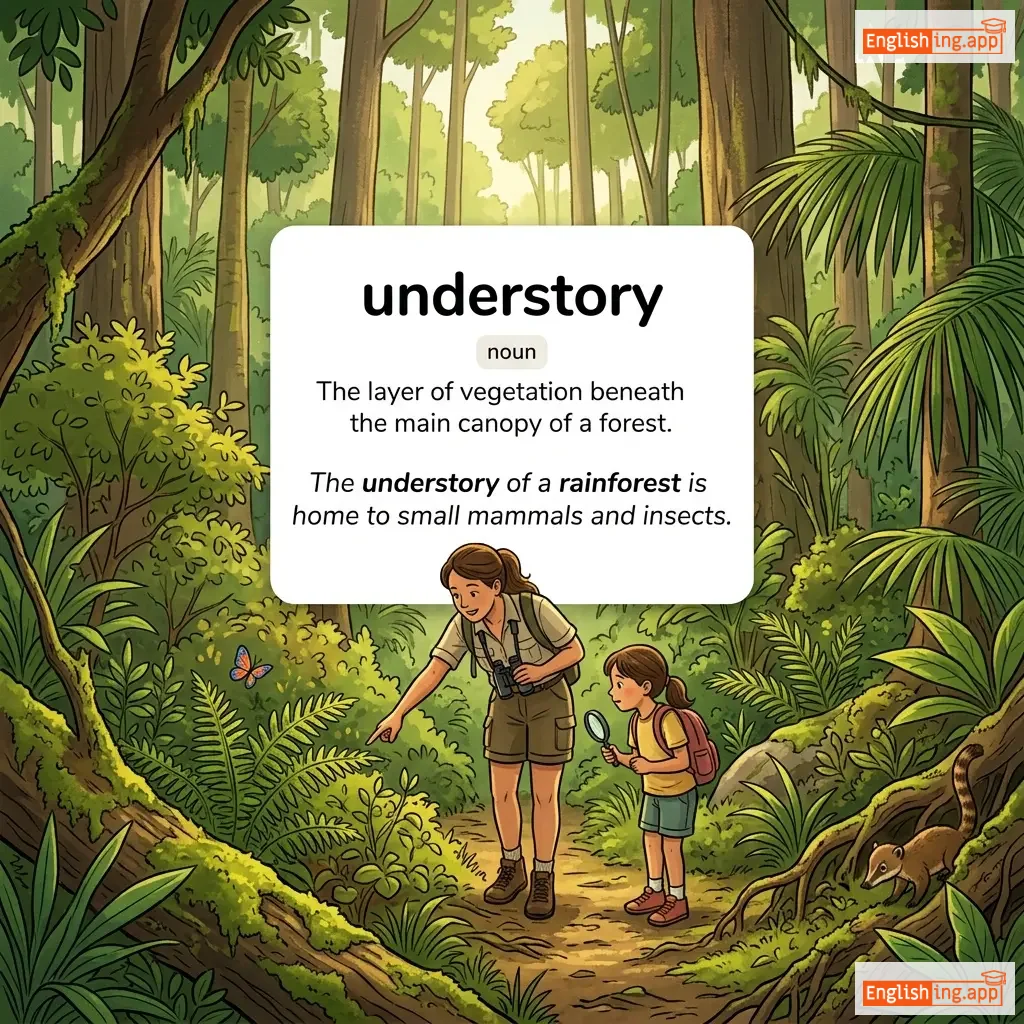
The layer of vegetation beneath the main canopy of a forest.
••••••
|
The understory of a rainforest is home to small mammals and insects. |
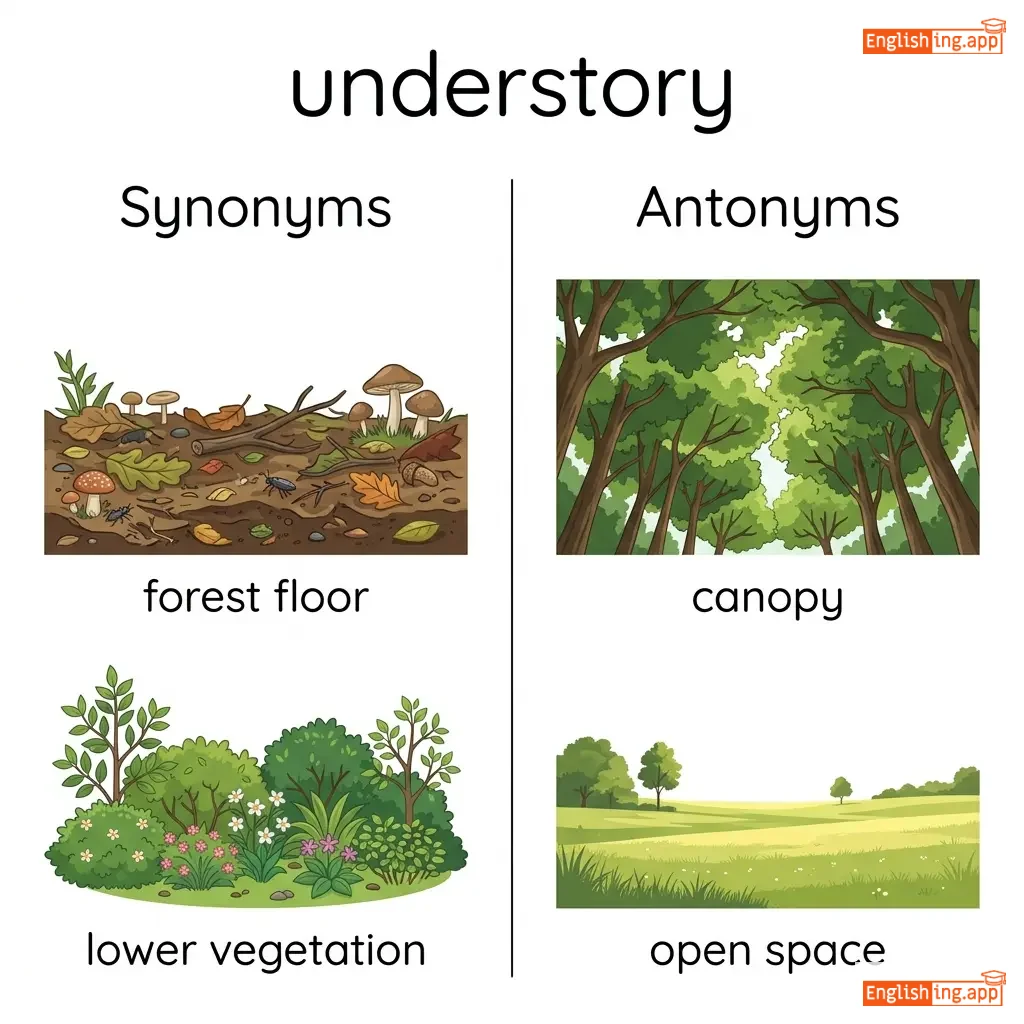
forest floor, lower vegetation, shrub layer
••••••
|
canopy, open space, upper layer
••••••
|

