••••••
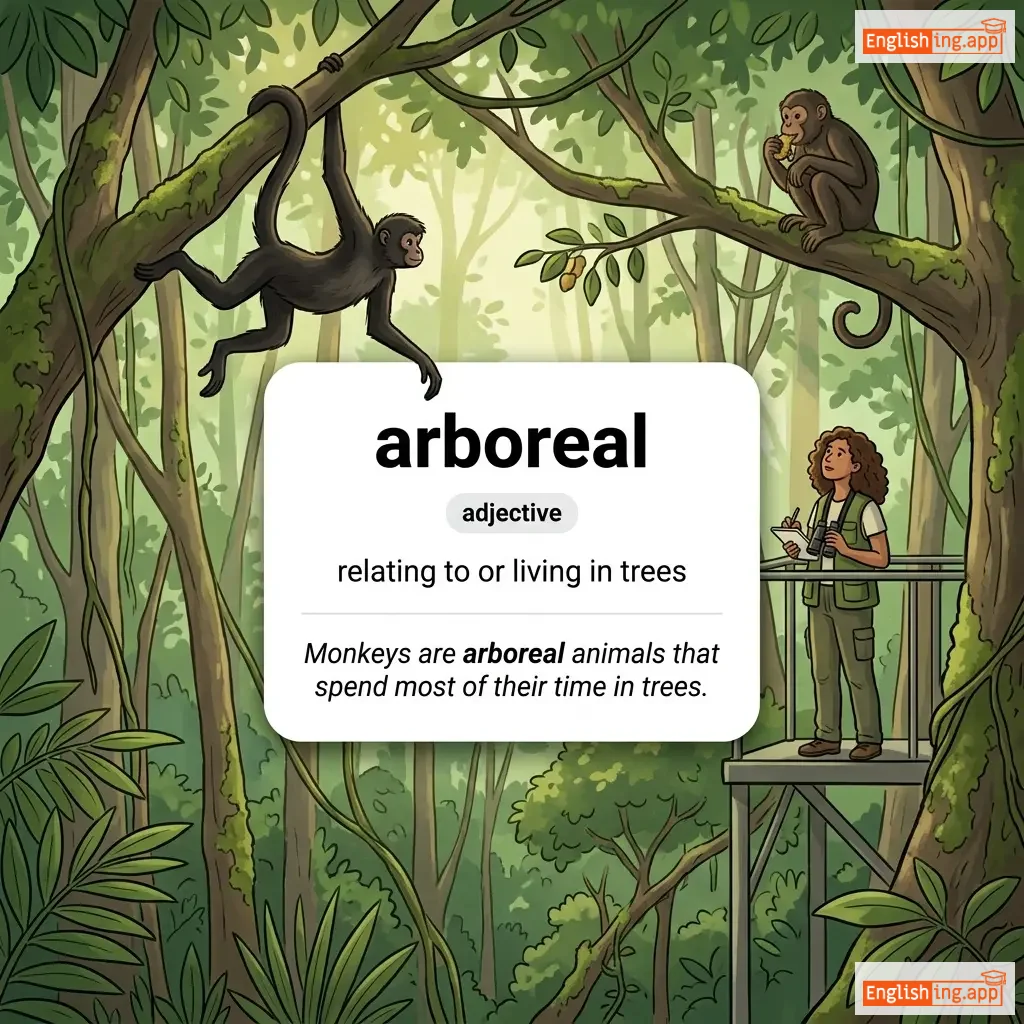
/ɑːrˈbɔːr.i.əl/
adjective
••••••
••••••
Relating to trees or living in trees; tree-dwelling.
••••••
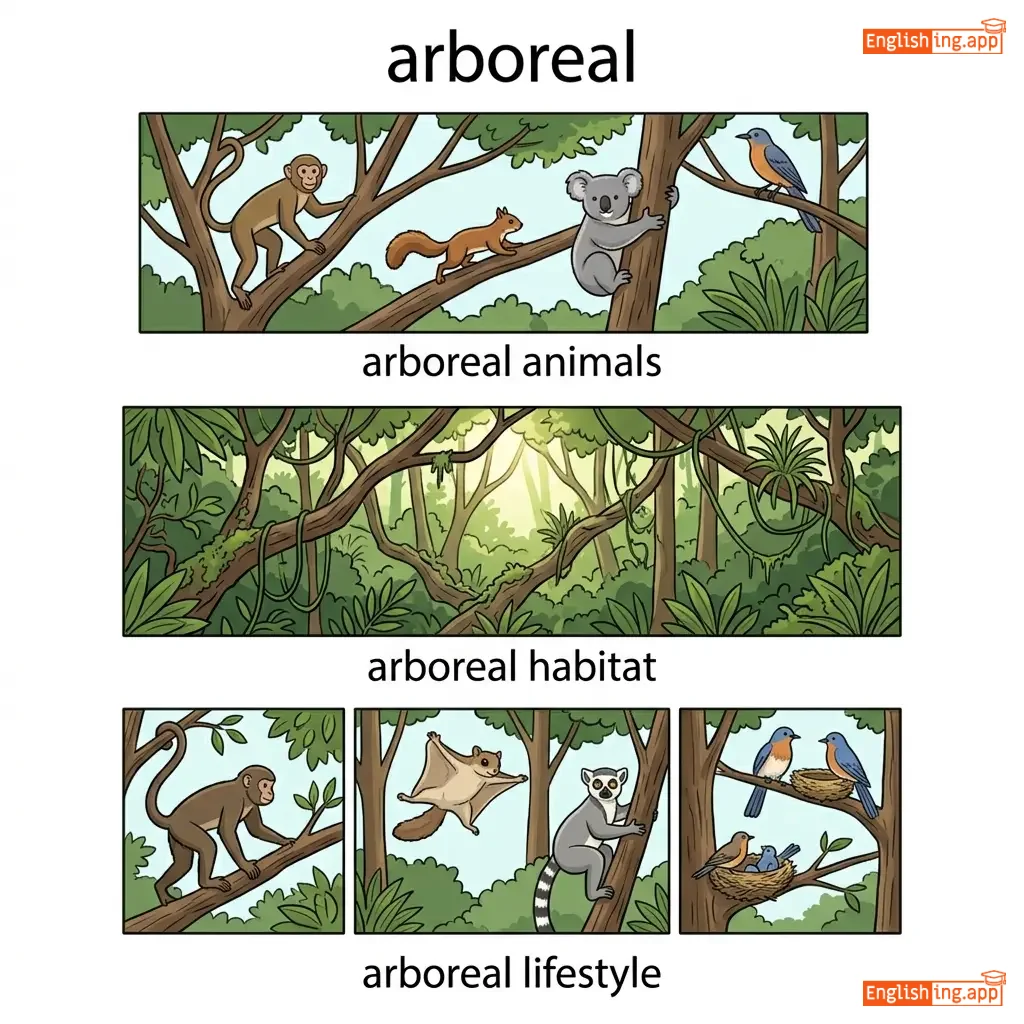
Monkeys are arboreal animals that spend most of their time in trees.
••••••
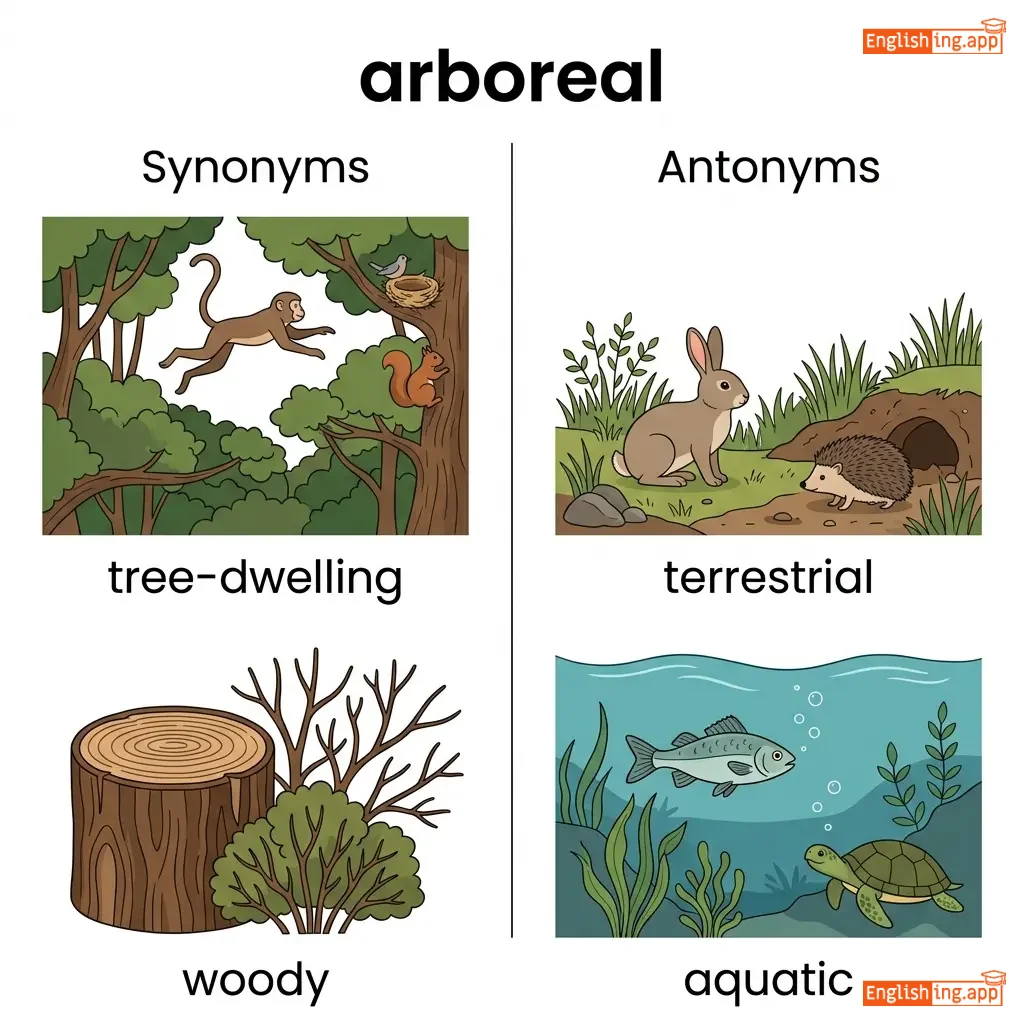
tree-dwelling, forest-related, woody
••••••
terrestrial, ground-dwelling, non-forest
••••••
••••••
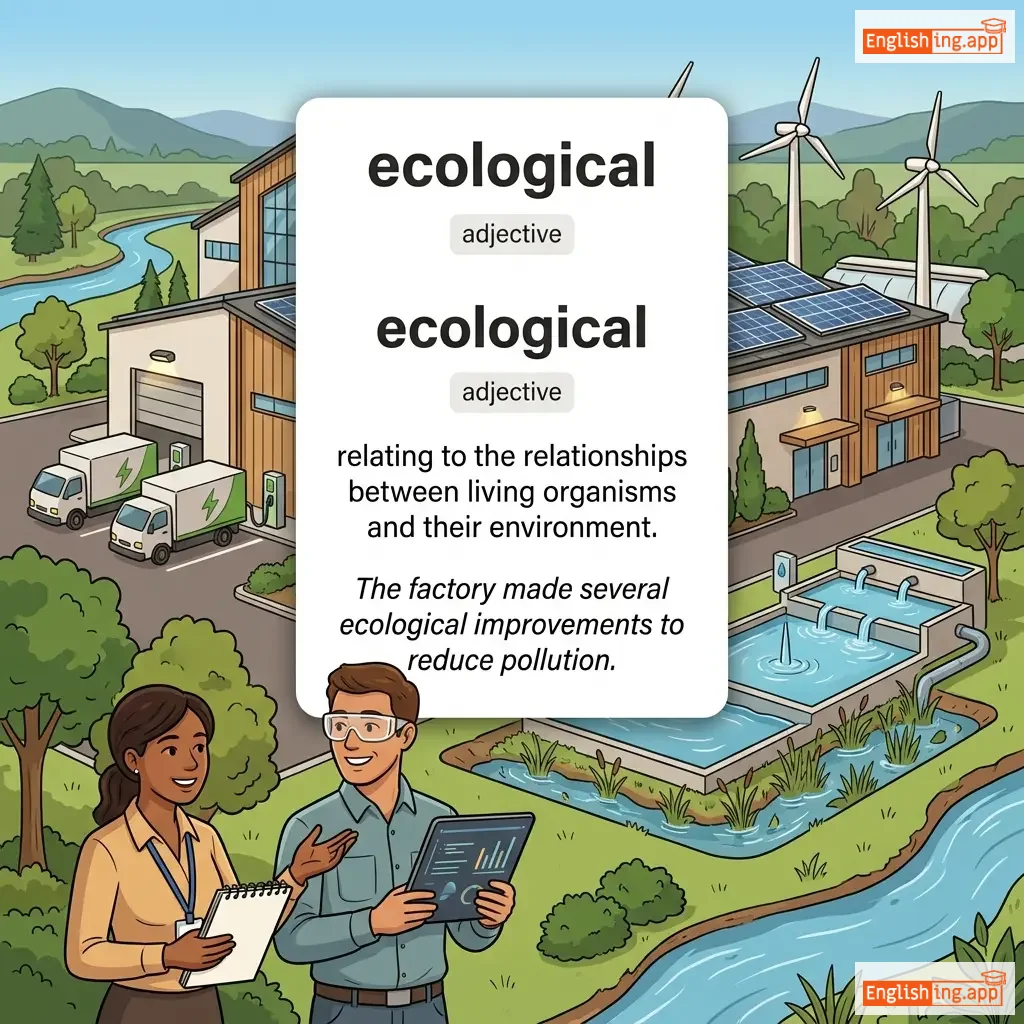
/ˌiː.kəˈlɒdʒ.ɪ.kəl/
adjective
••••••
••••••
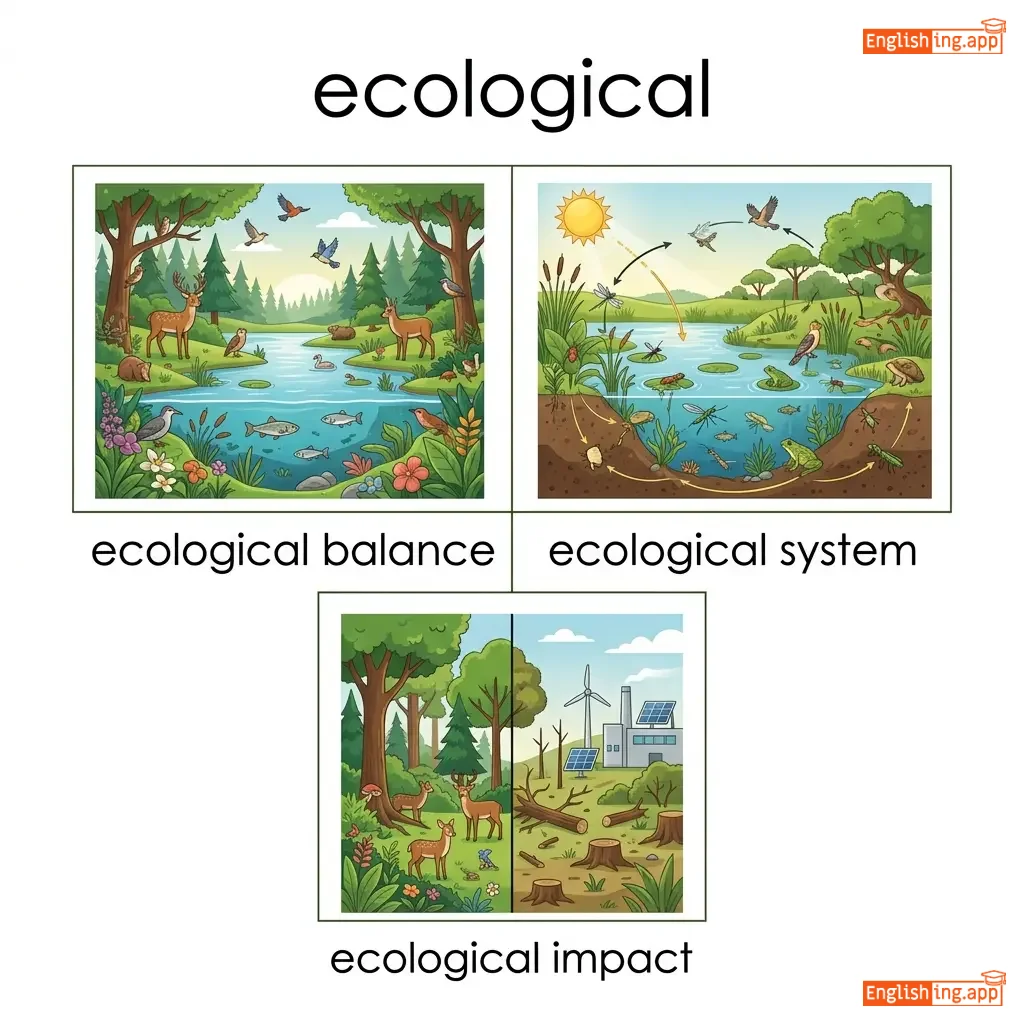
Relating to ecology or the relationships between living organisms and their environment.
••••••
The factory adopted ecological practices to reduce pollution.
••••••
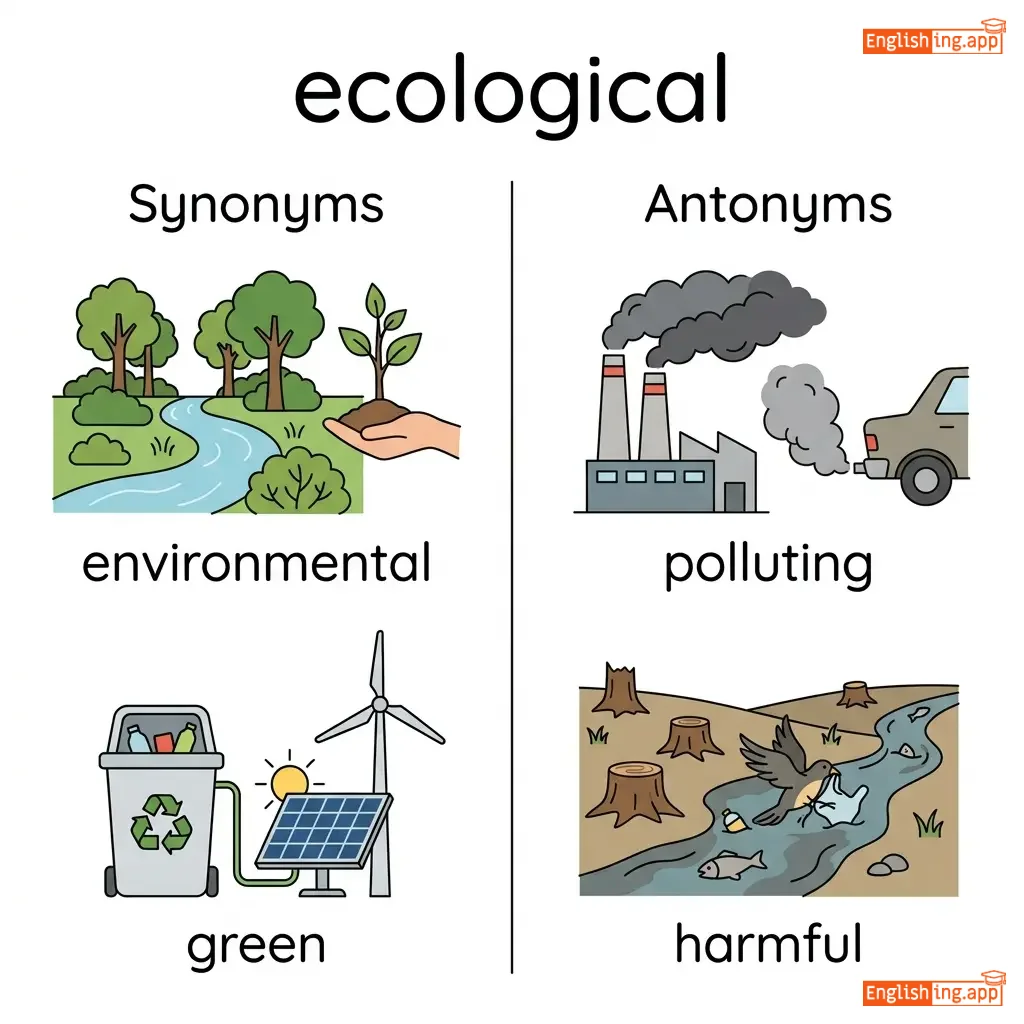
environmental, green, sustainable
••••••
artificial, non-biological, man-made
••••••
••••••
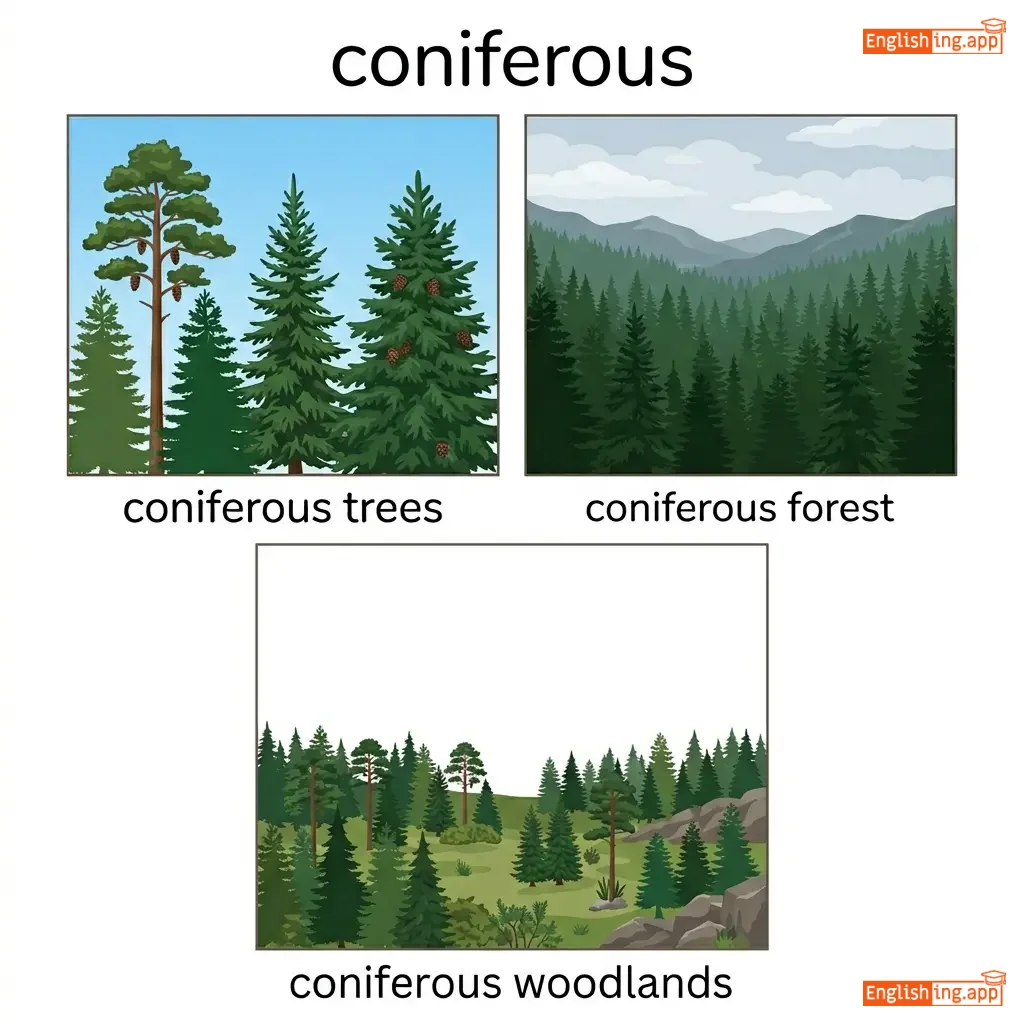
/ˈkɒn.ɪ.fər.əs/
adjective
••••••
••••••
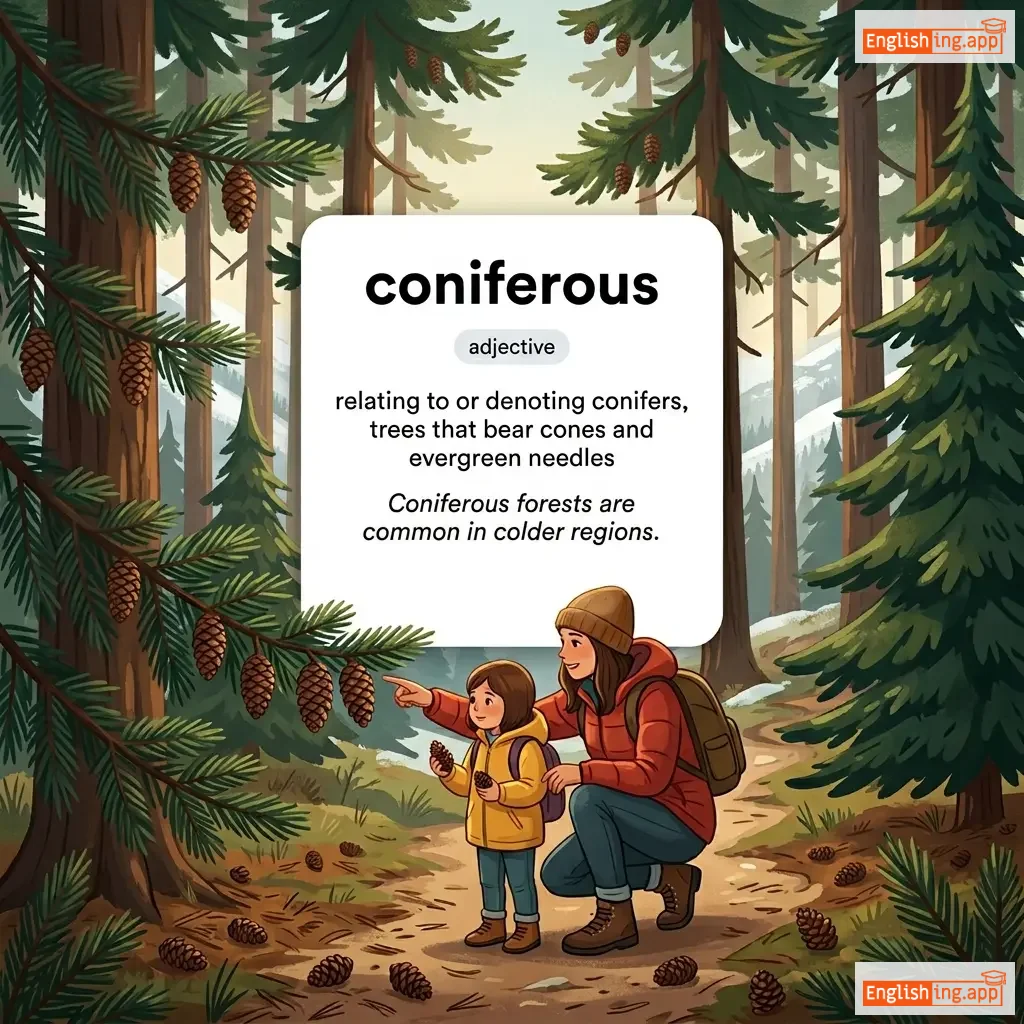
Relating to cone-bearing trees that usually have needle-like leaves and remain green year-round.
••••••
Pine trees are coniferous and grow in colder climates.
••••••
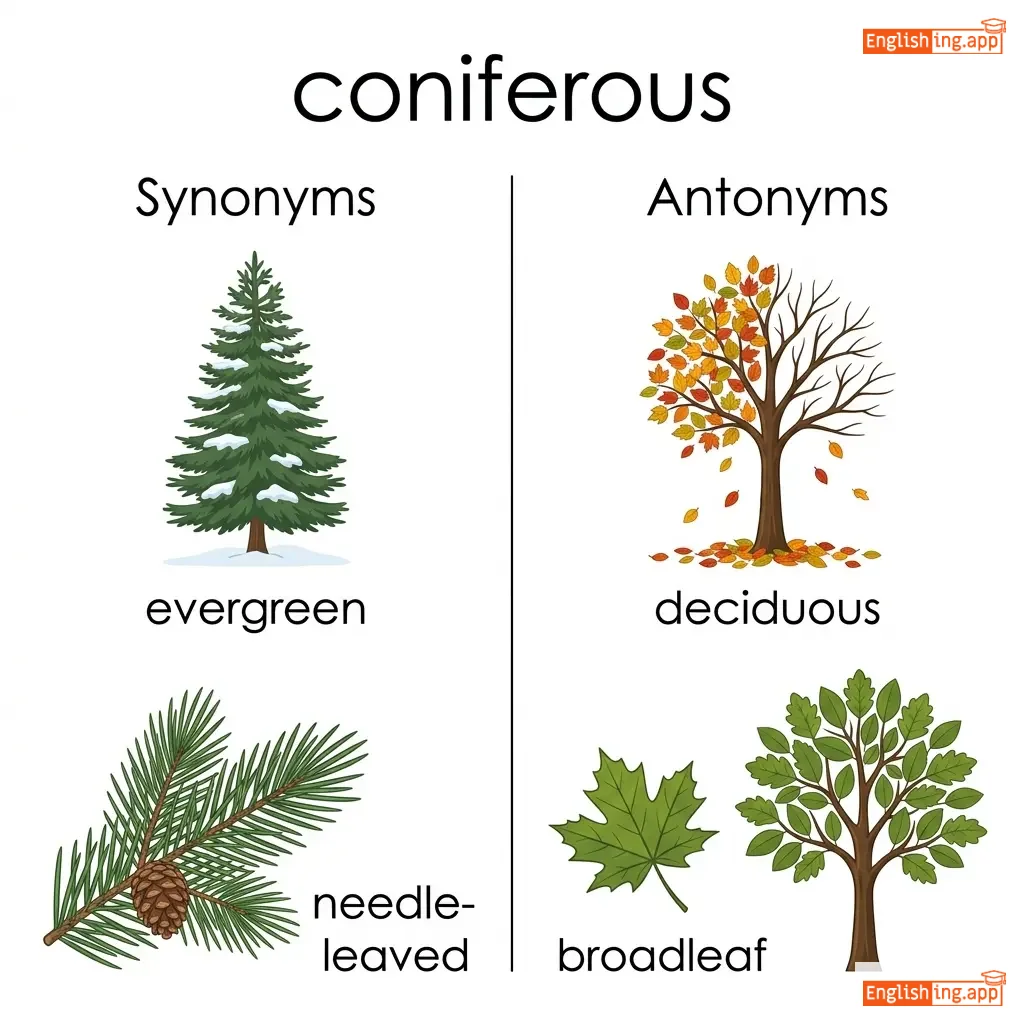
needle-leaved, pine-bearing, evergreen
••••••
deciduous, leaf-shedding, non-coniferous
••••••
••••••
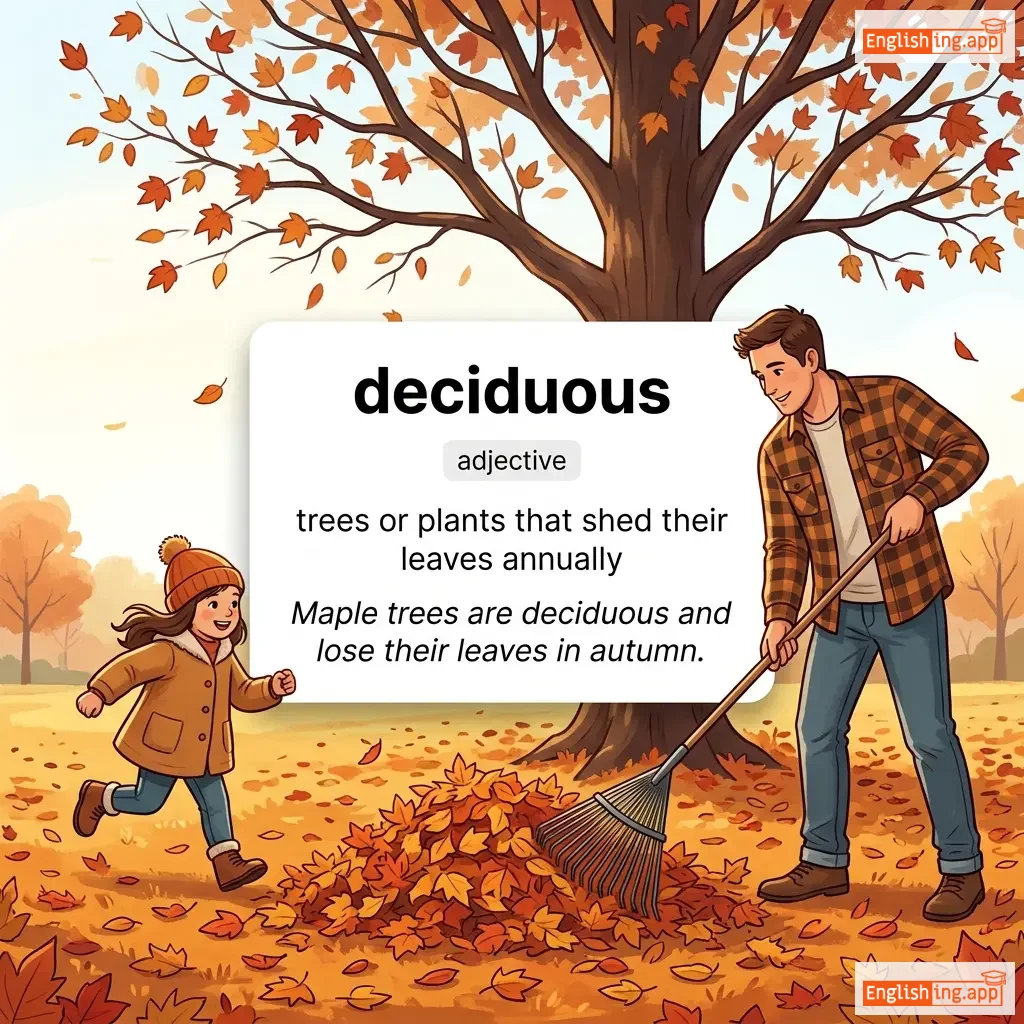
/dɪˈsɪd.ju.əs/
adjective
••••••
••••••
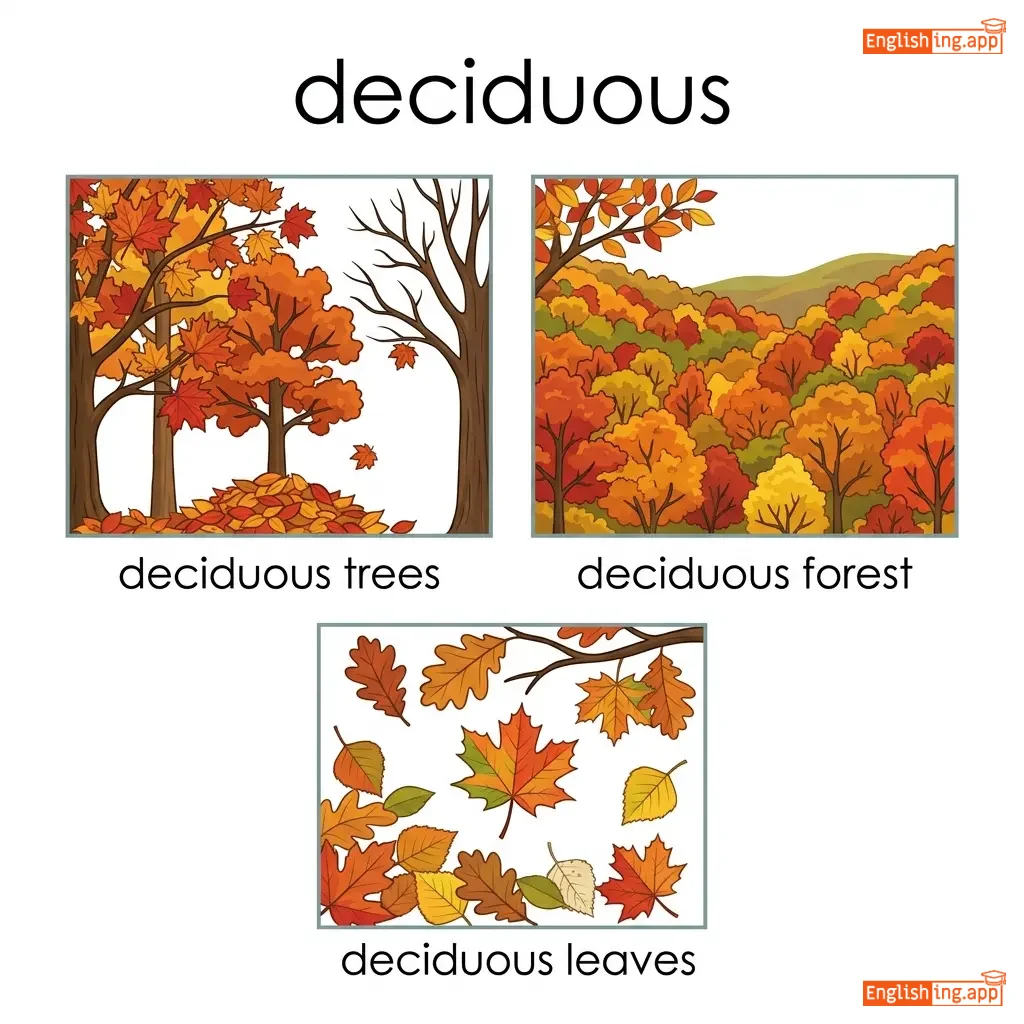
Referring to trees that shed their leaves seasonally, typically in autumn.
••••••
Oak and maple trees are deciduous , shedding leaves in autumn.
••••••
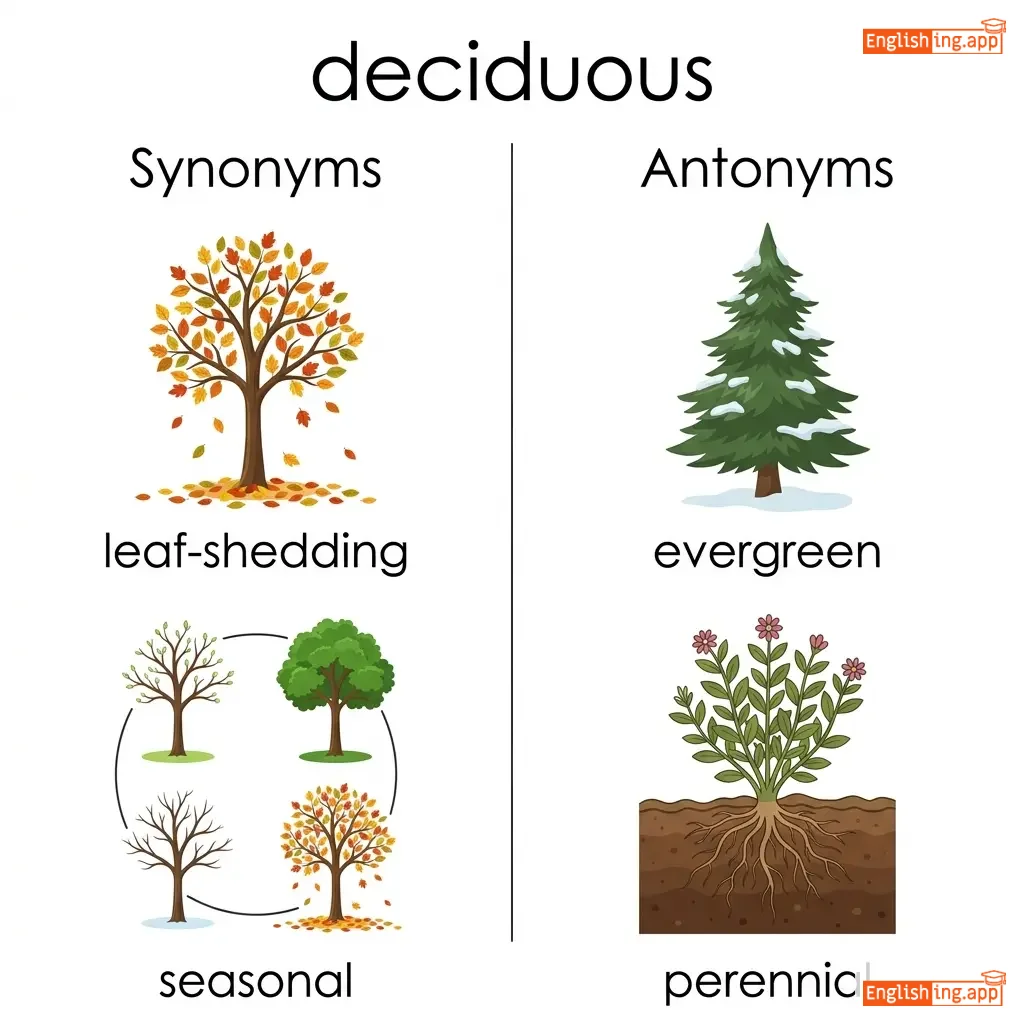
leaf-shedding, seasonal, broad-leaved
••••••
evergreen, perennial, coniferous
••••••
••••••
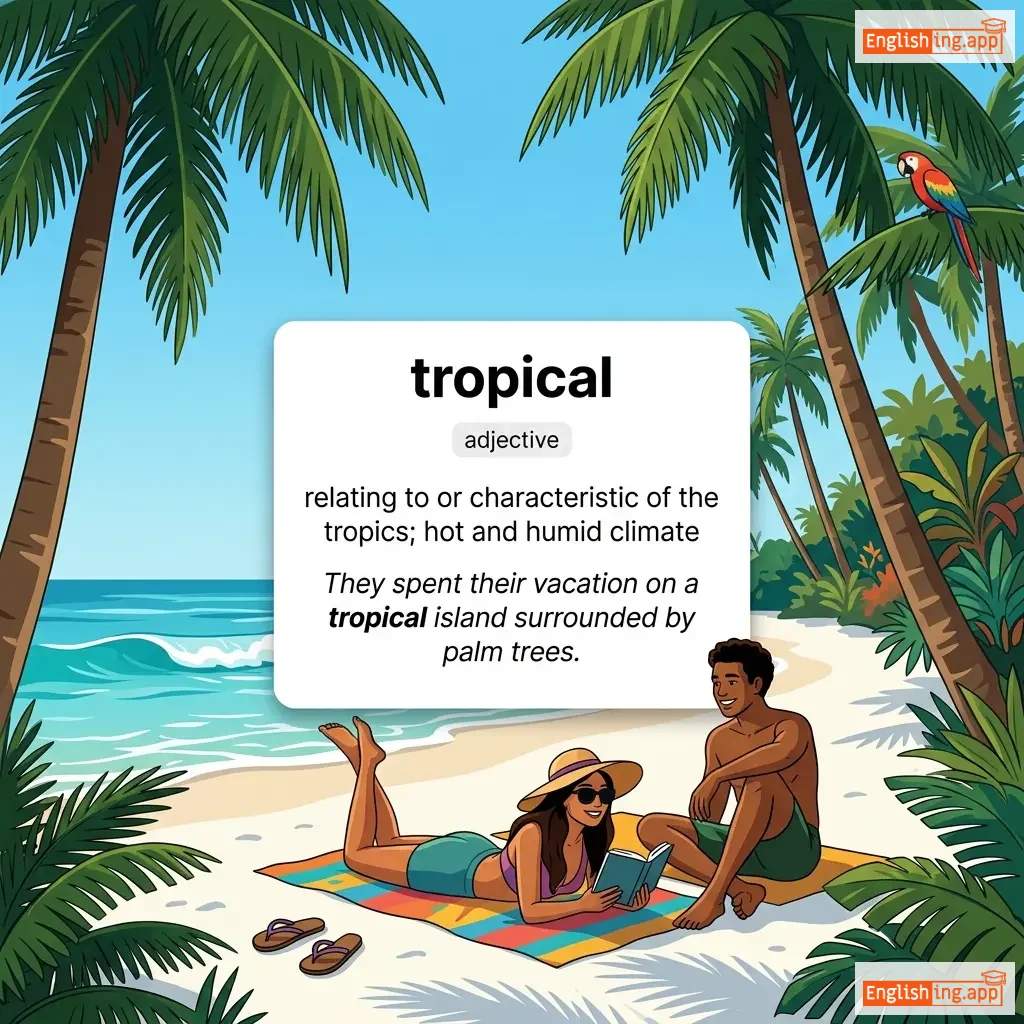
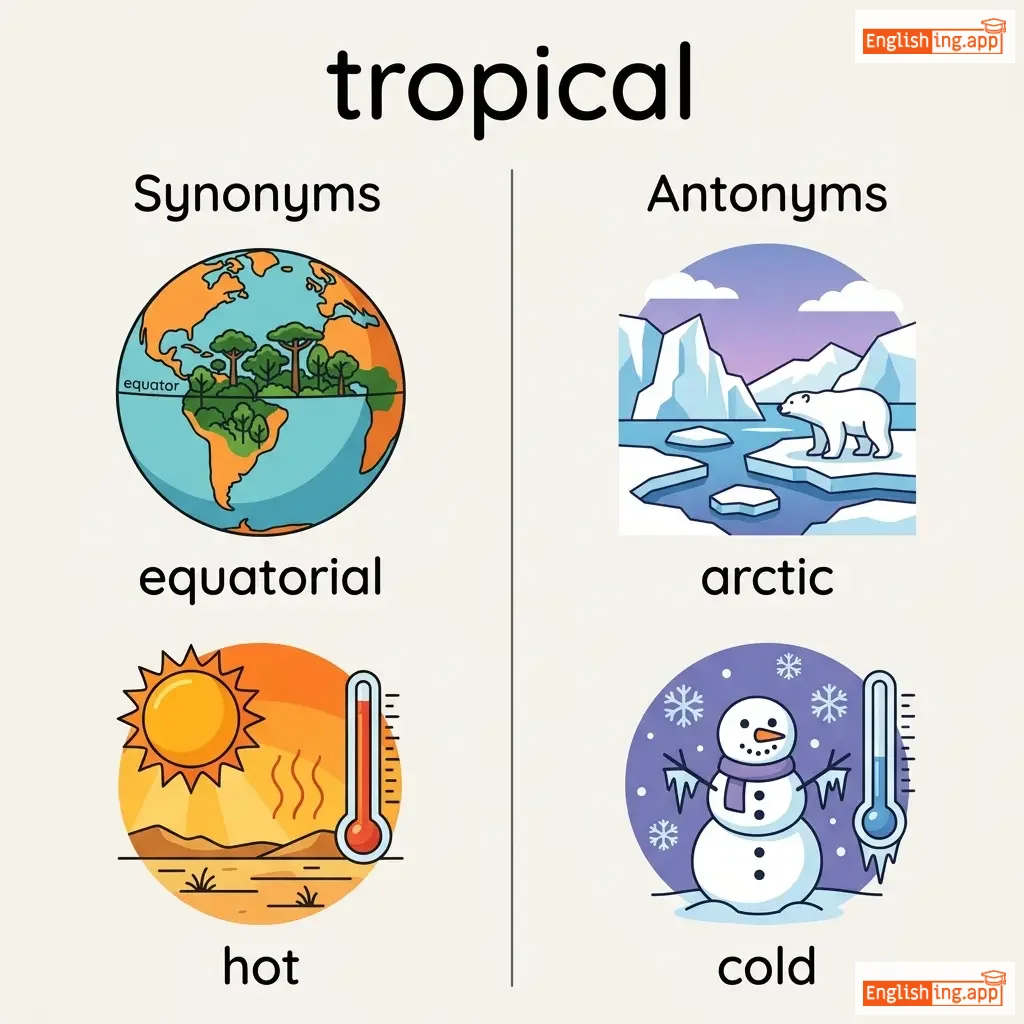
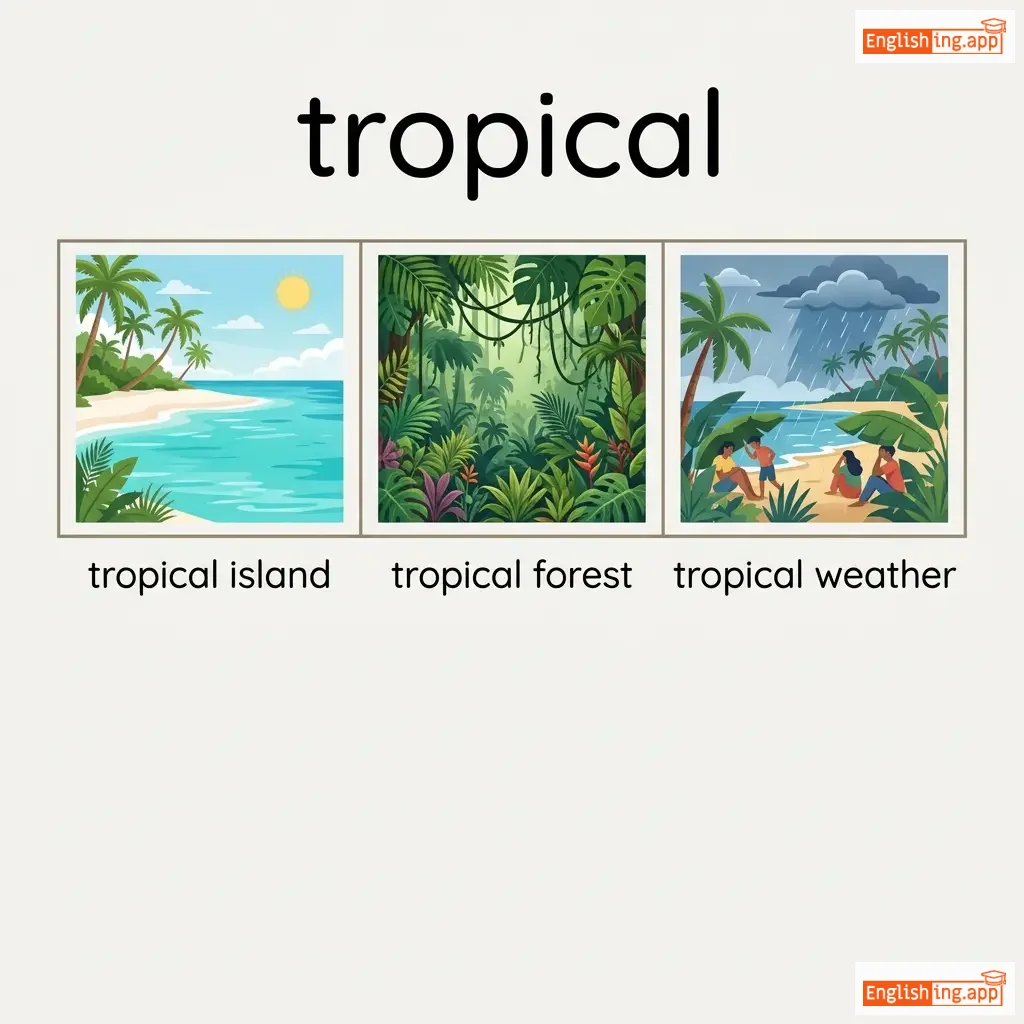
/ˈtrɒp.ɪ.kəl/
adjective
••••••
••••••
Relating to the tropics; characterized by hot and humid climate.
••••••
The Amazon rainforest is home to many tropical species.
••••••
equatorial, hot-climate, humid
••••••
temperate, arctic, cold-climate
••••••
••••••
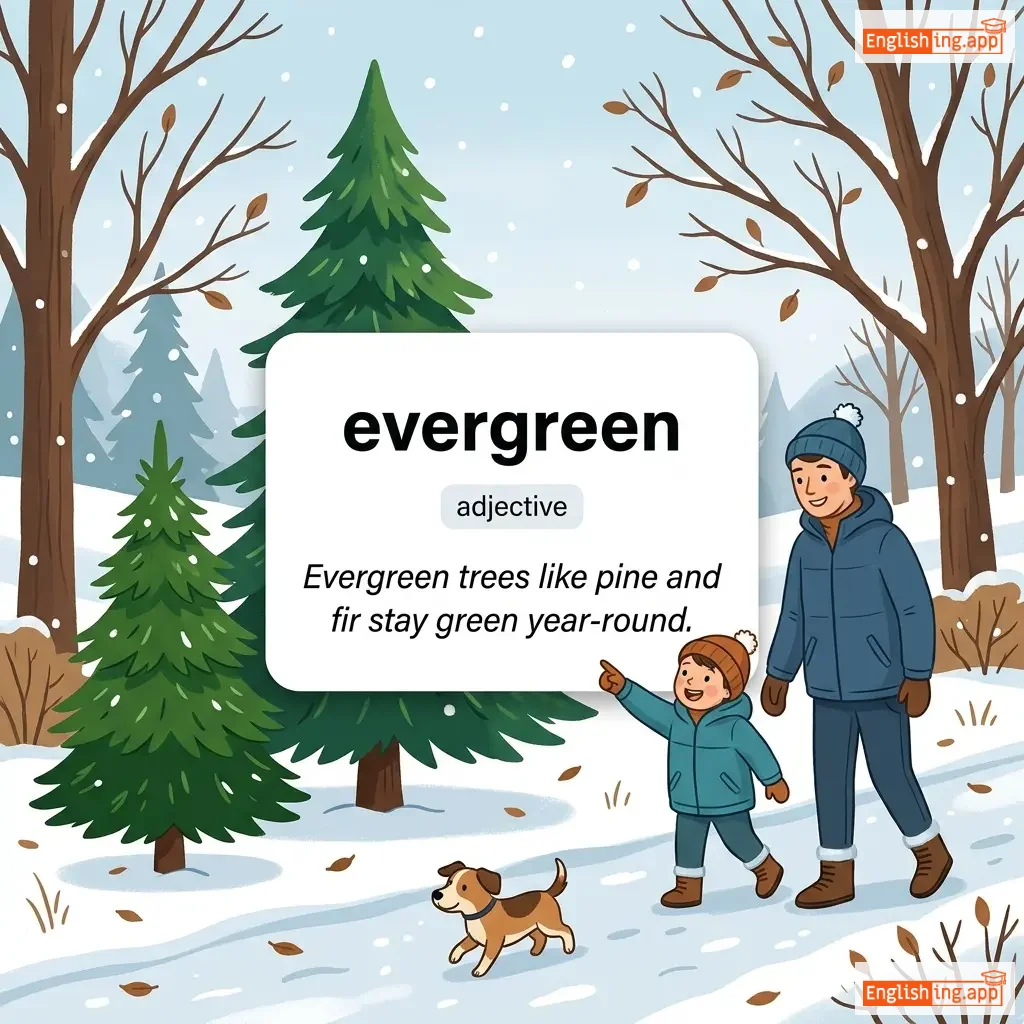
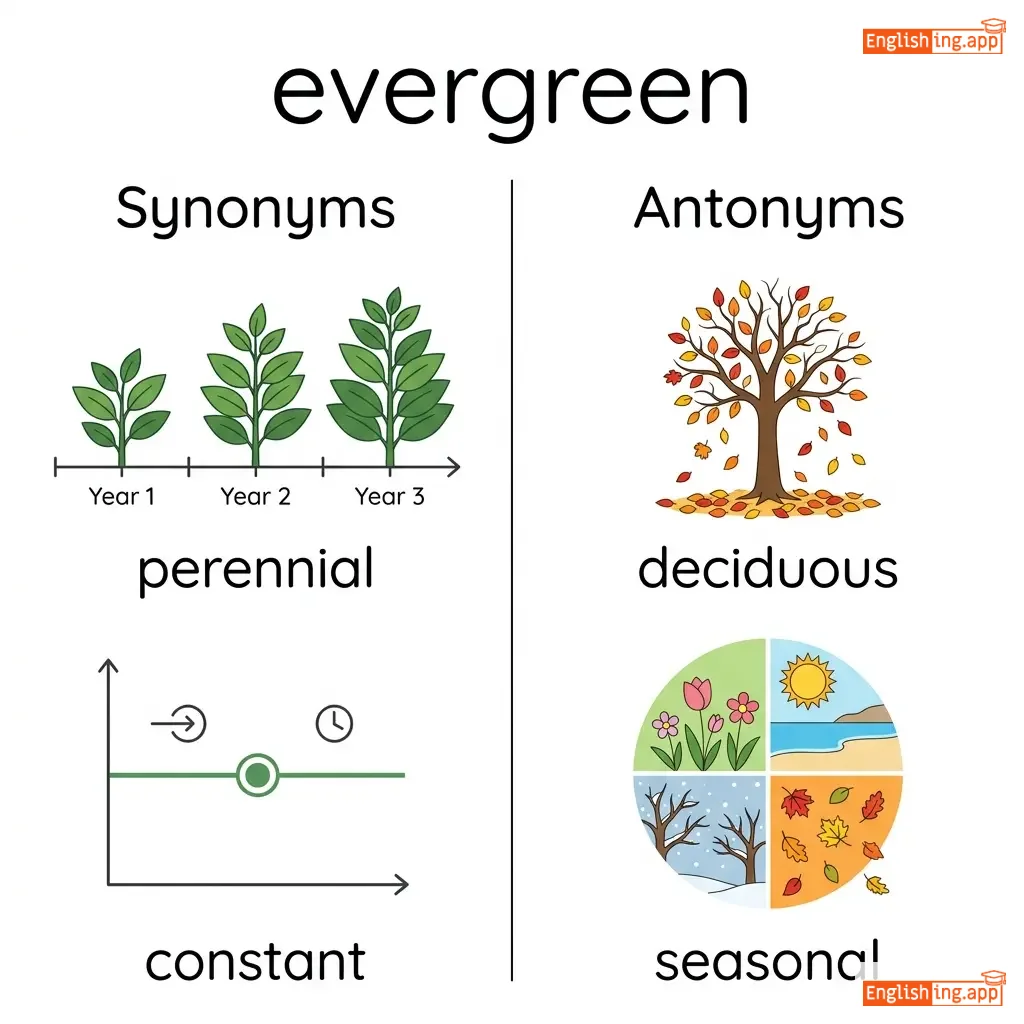
/ˈɛv.ə.ɡriːn/
adjective
••••••
••••••
Remaining green and functional throughout the year; not shedding leaves seasonally.
••••••
Evergreen trees like pine and fir stay green year-round.
••••••
perennial, constant, always-green
••••••
deciduous, seasonal, leaf-shedding
••••••
••••••
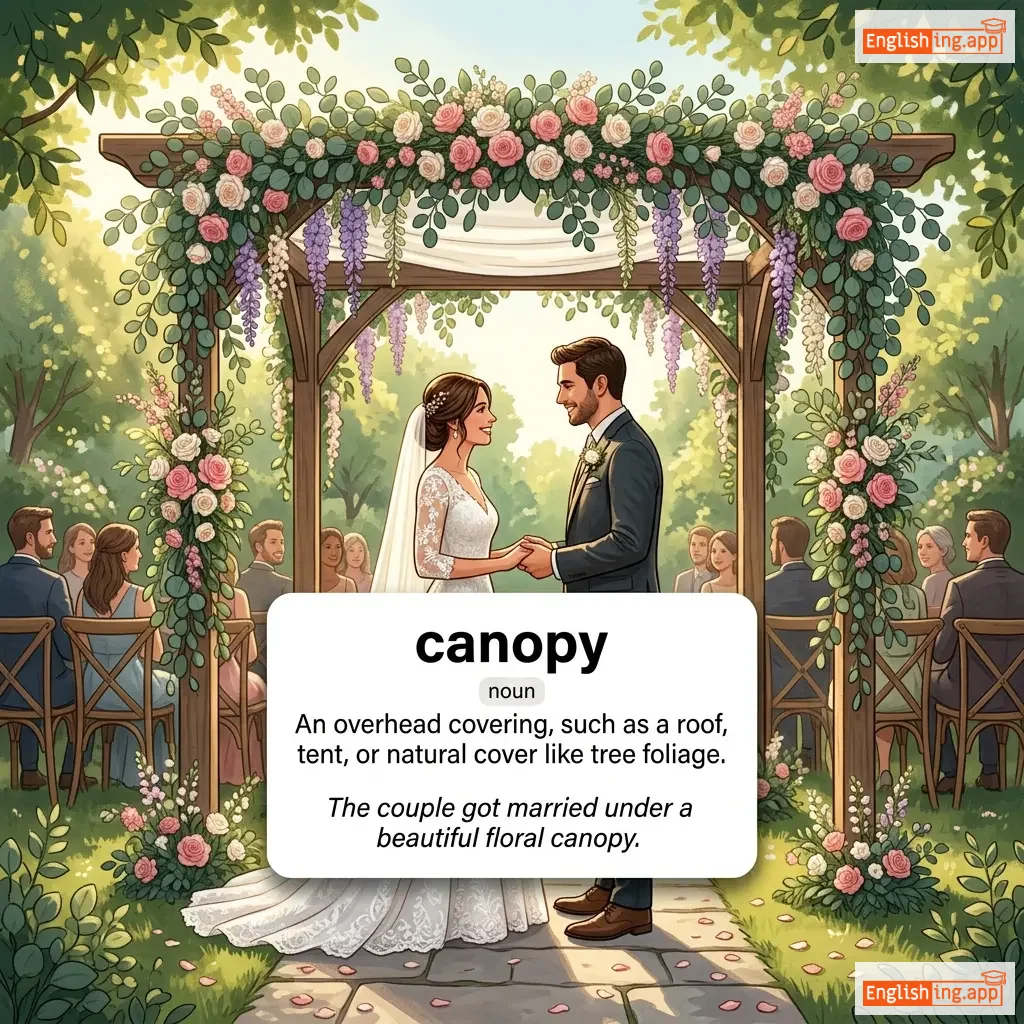
/ˈkæn.ə.pi/
noun
••••••
••••••
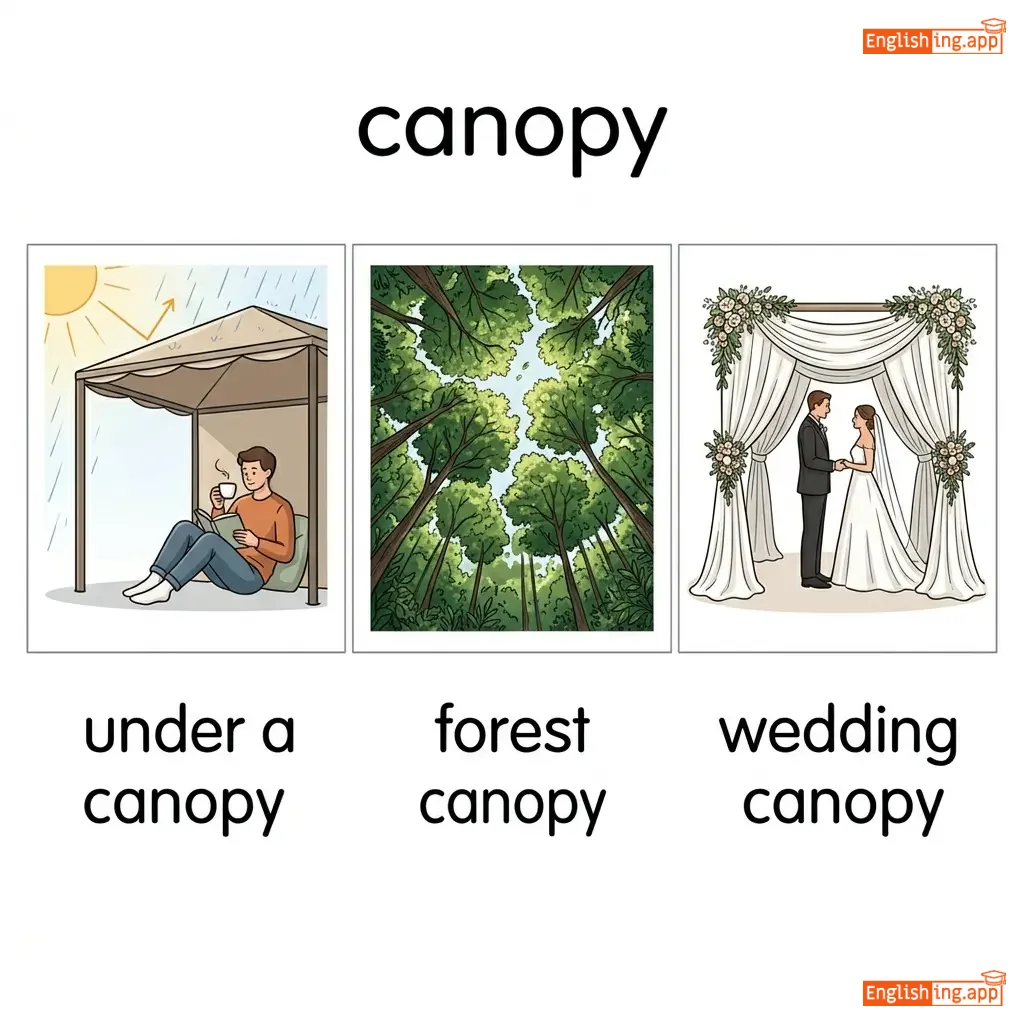
The upper layer of a forest formed by the crowns of trees; overhead cover.
••••••
The rainforest canopy provides shelter to many birds and insects.
••••••
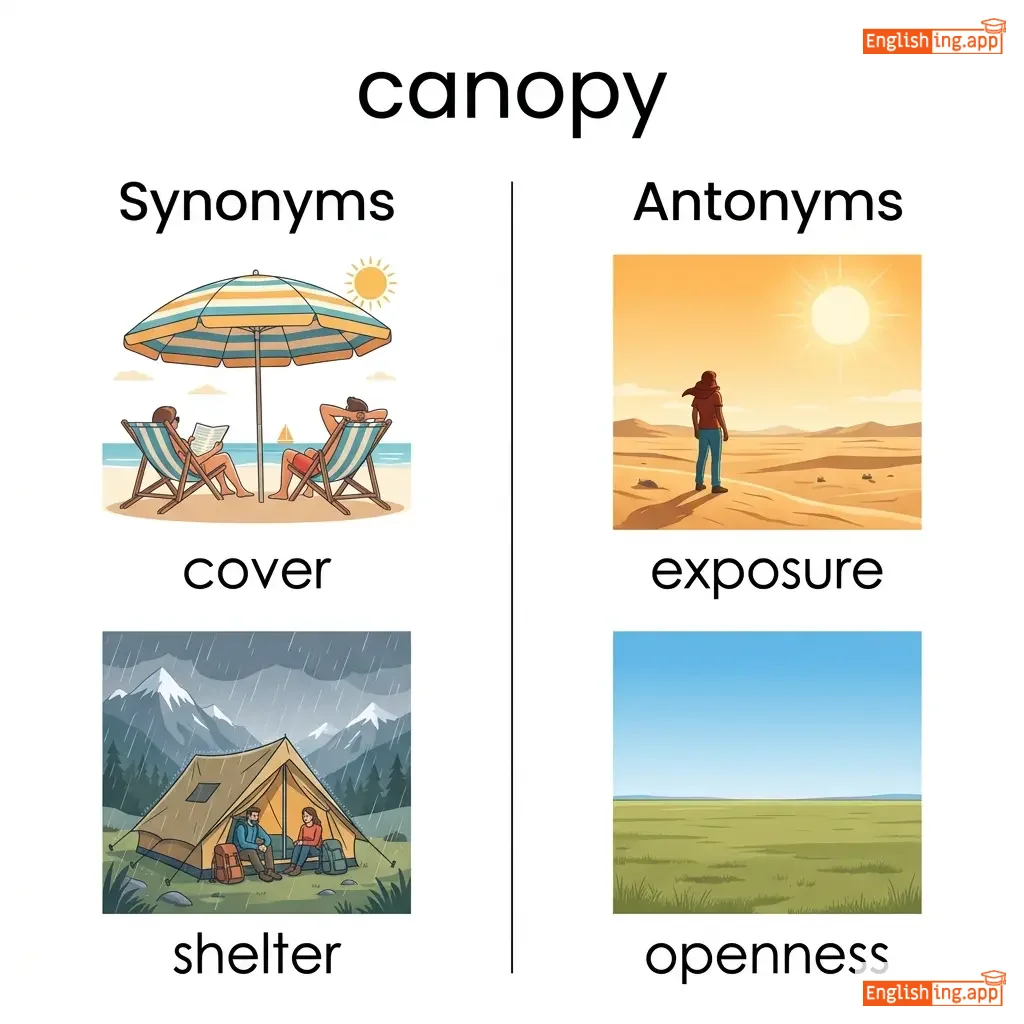
overhead cover, tree cover, forest roof
••••••
understory, ground layer, open space
••••••
••••••
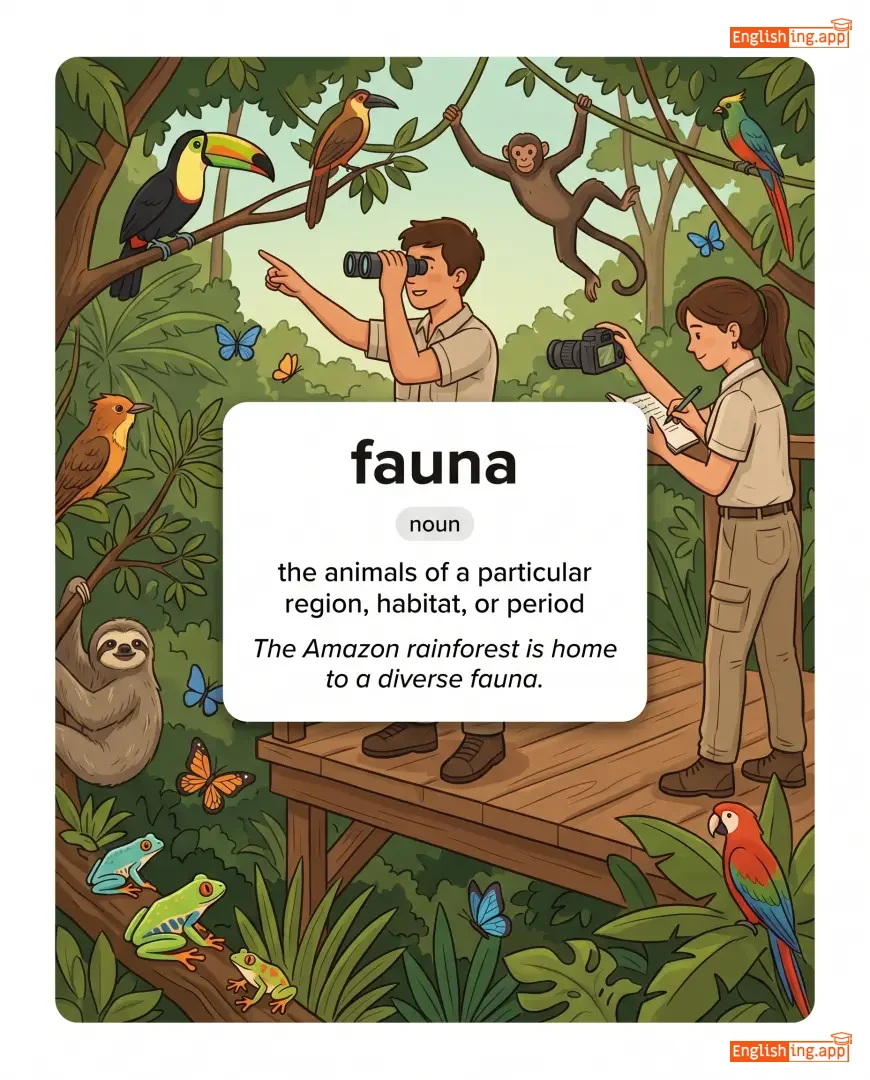
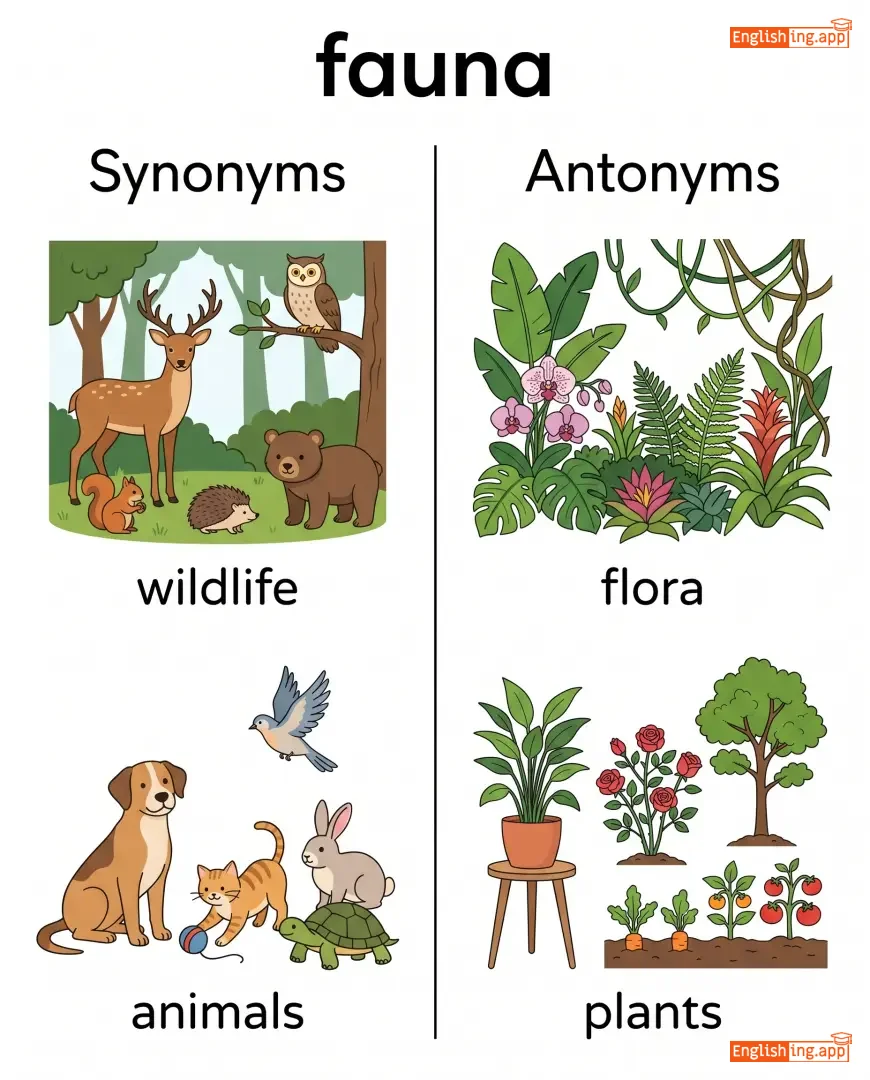
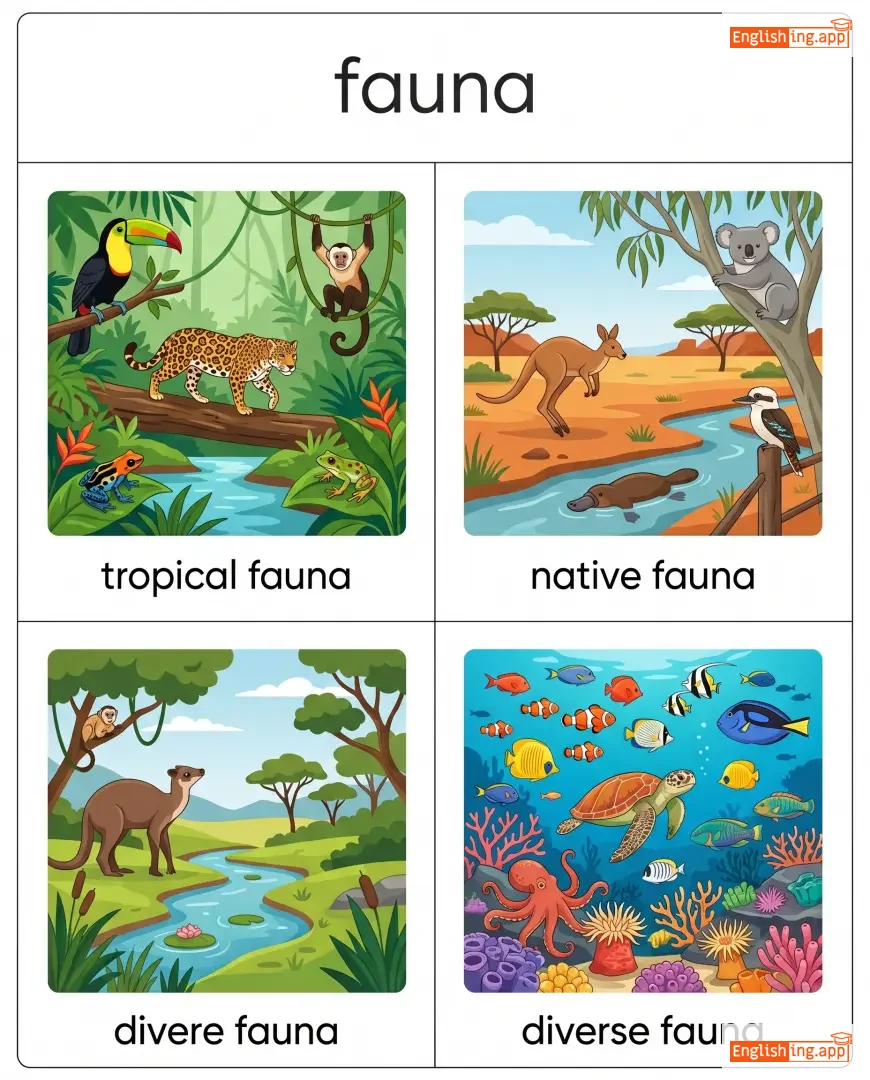
/ˈfɔː.nə/
noun
••••••
••••••
The animal life of a particular region, habitat, or geological period.
••••••
The fauna of the African savannah includes lions and elephants.
••••••
wildlife, animals, zoological life
••••••
flora, plants, vegetation
••••••
••••••
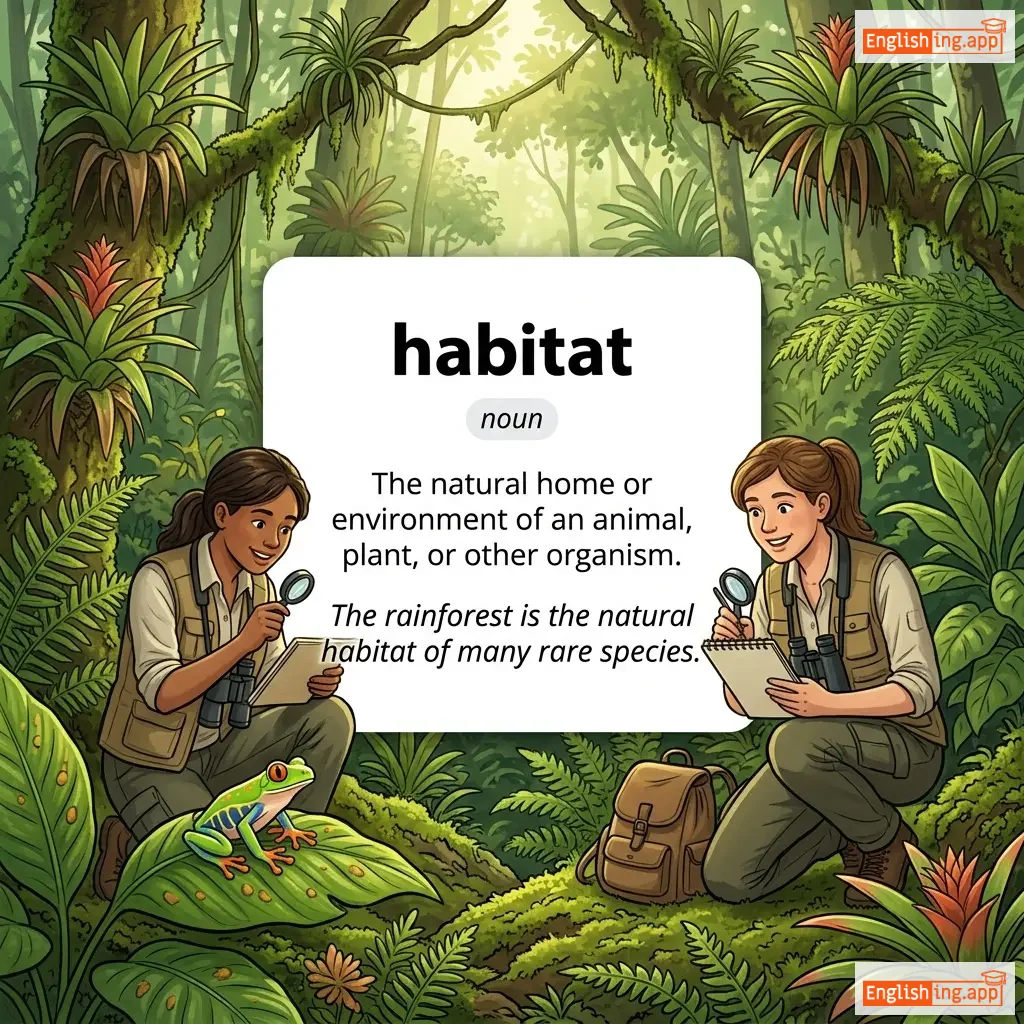
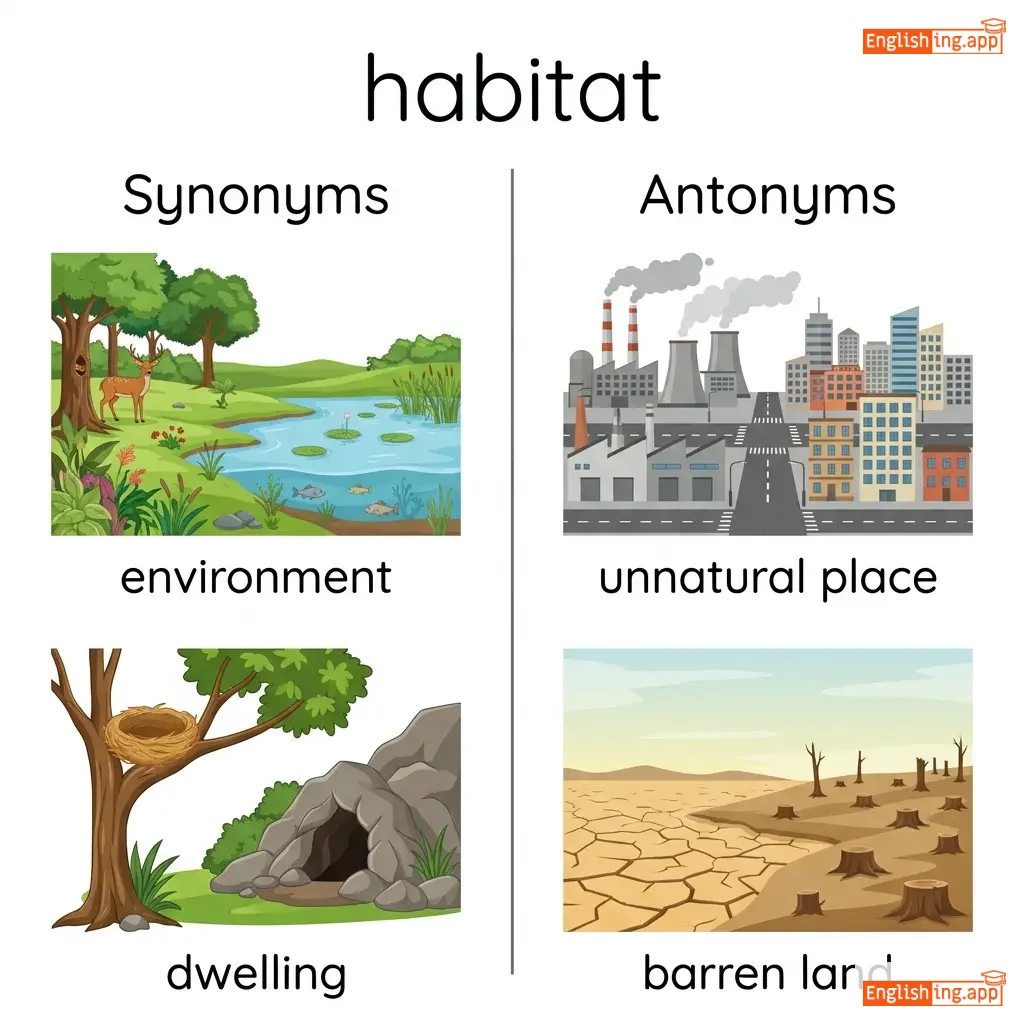
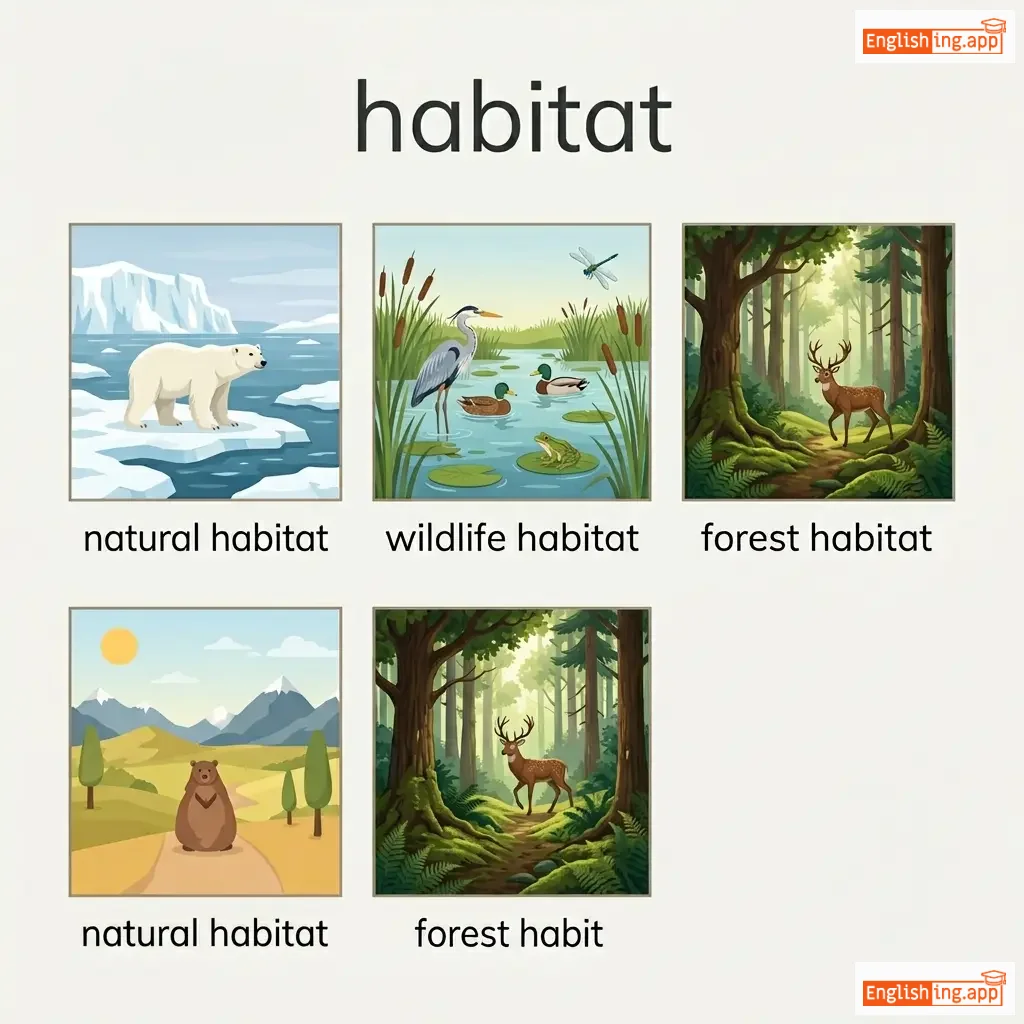
/ˈhæb.ɪ.tæt/
noun
••••••
••••••
The natural environment where an organism lives and meets its needs.
••••••
The polar bear's natural habitat is the Arctic region.
••••••
natural environment, ecosystem, living area
••••••
uninhabitable, artificial setting, displacement
••••••
••••••
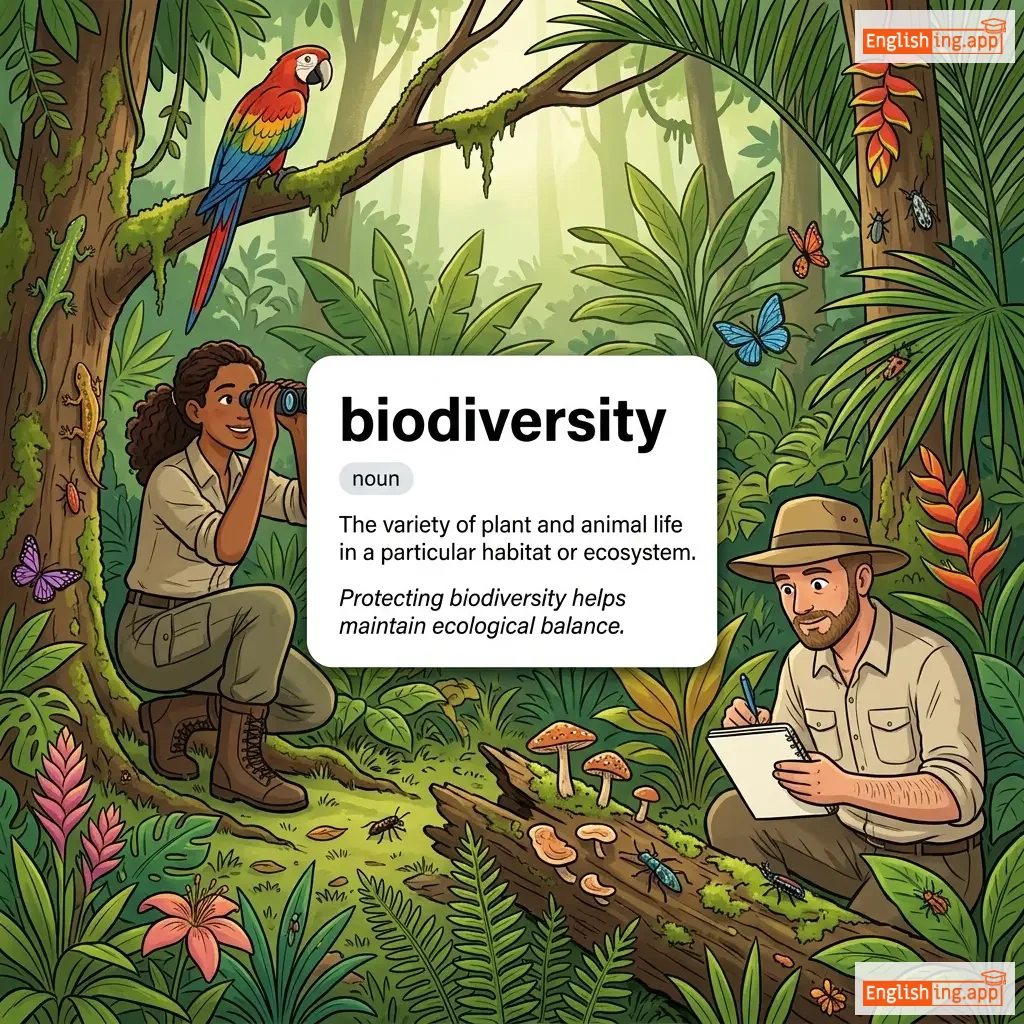
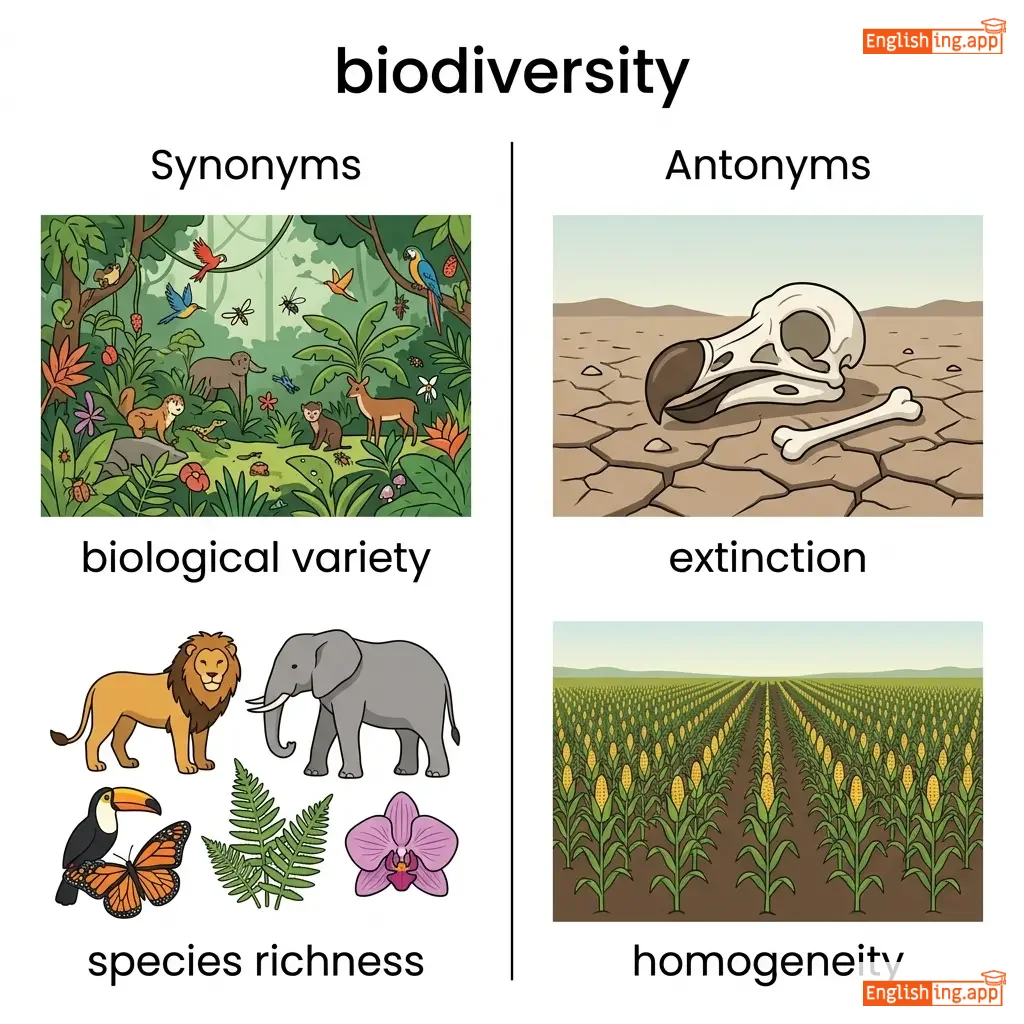
/ˌbaɪ.əʊ.daɪˈvɜː.sɪ.ti/
noun
••••••
••••••
The variety of plant and animal life in a particular habitat or ecosystem.
••••••
Protecting biodiversity helps maintain ecological balance.
••••••
biological variety, species richness, ecological diversity
••••••
extinction, homogeneity, monoculture
••••••
••••••
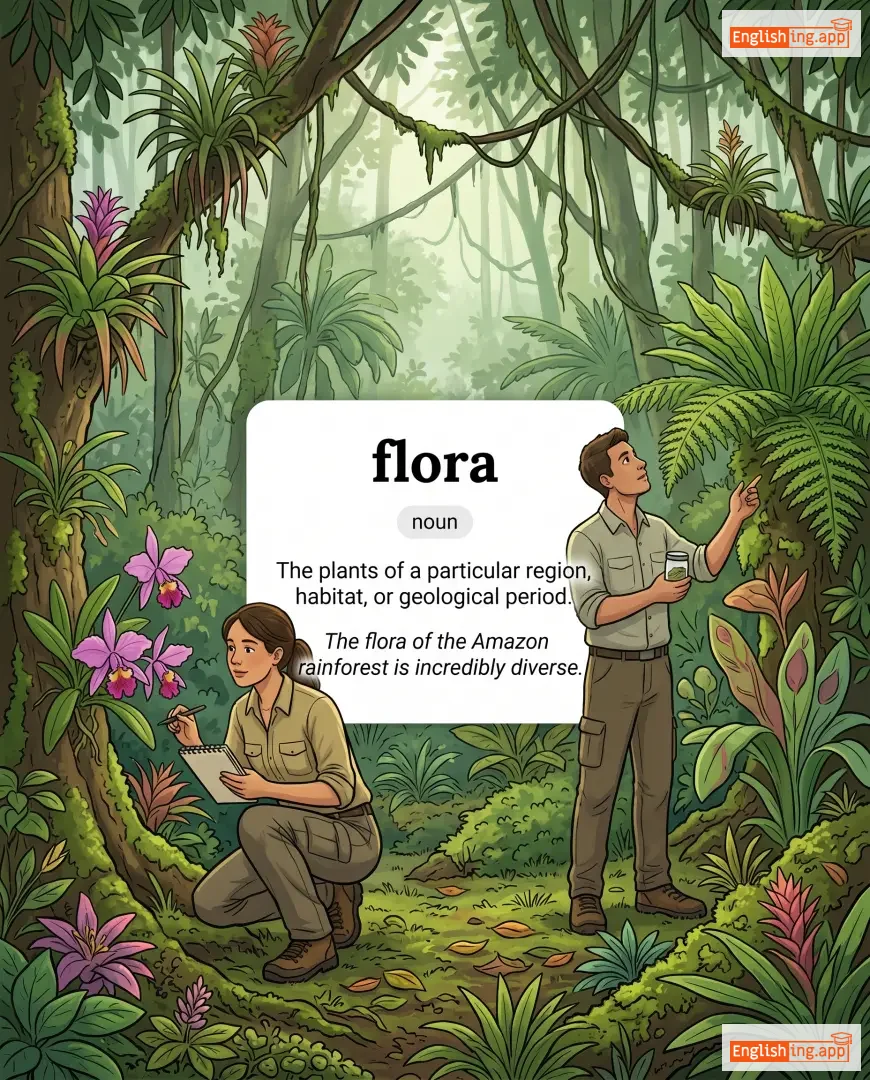
/ˈflɔː.rə/
noun
••••••
••••••
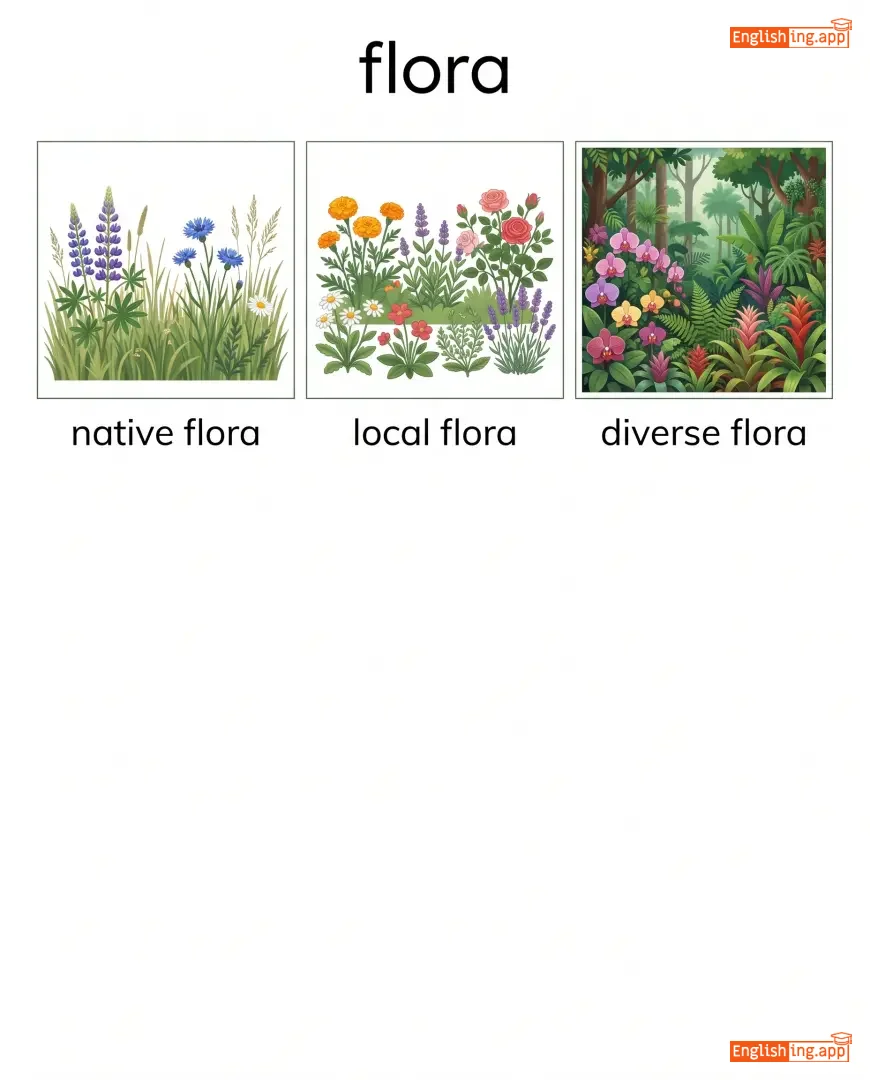
The plant life found in a particular region or habitat.
••••••
The Amazon rainforest is home to a vast flora diversity.
••••••
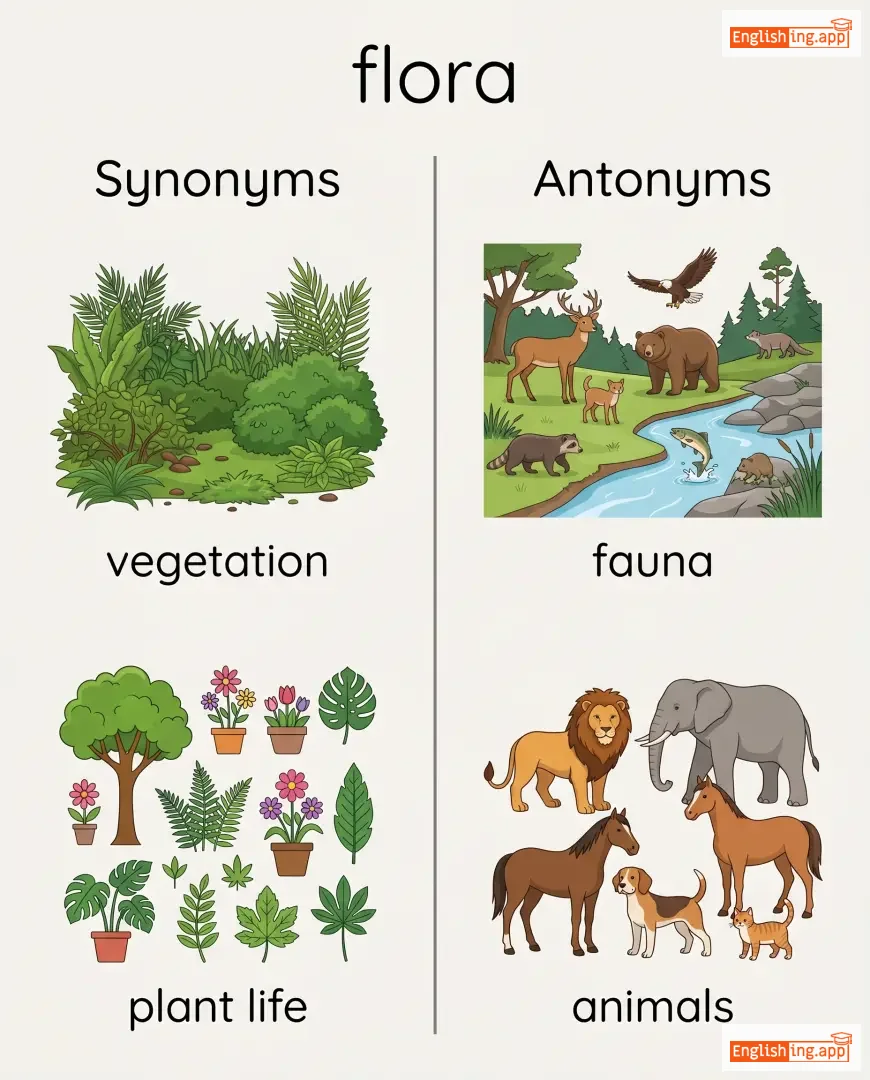
plant life, vegetation, botany
••••••
••••••
••••••
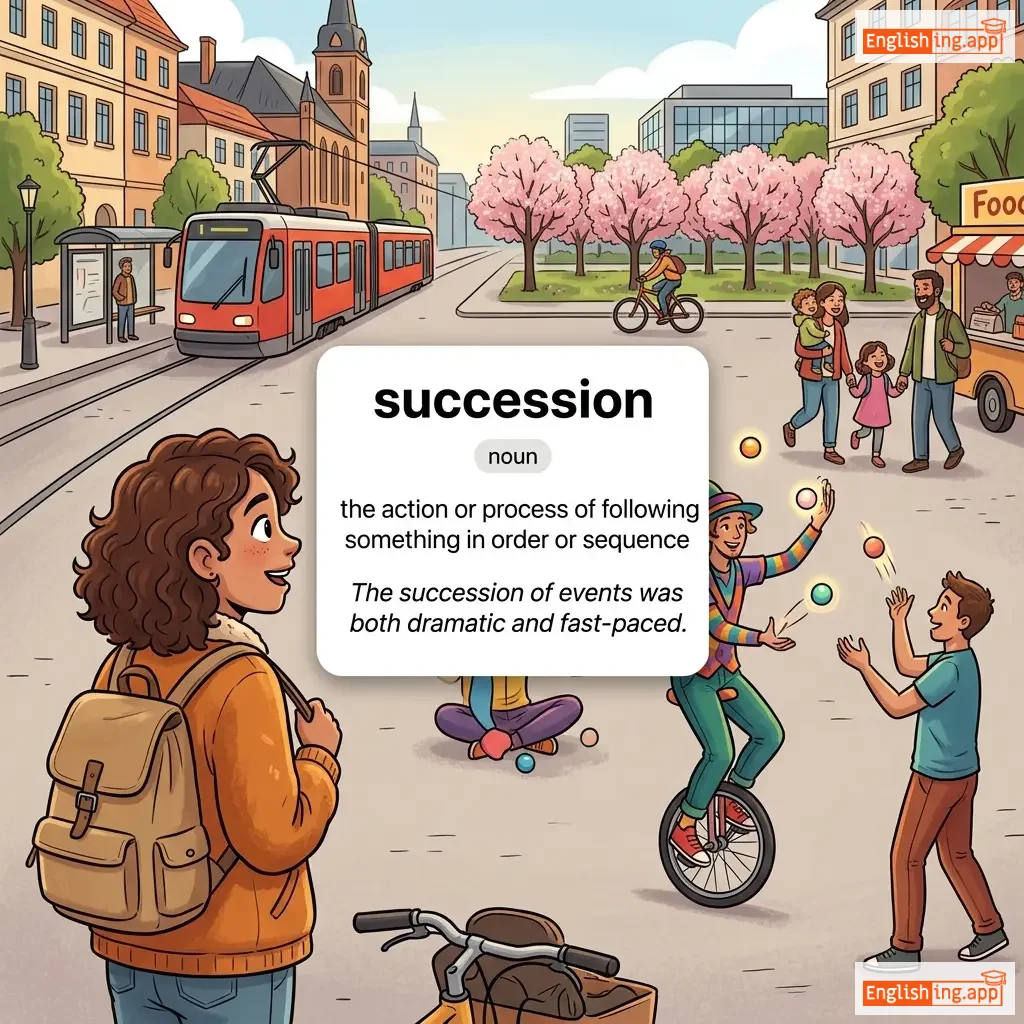
/səkˈsɛʃ.ən/
noun
••••••
••••••
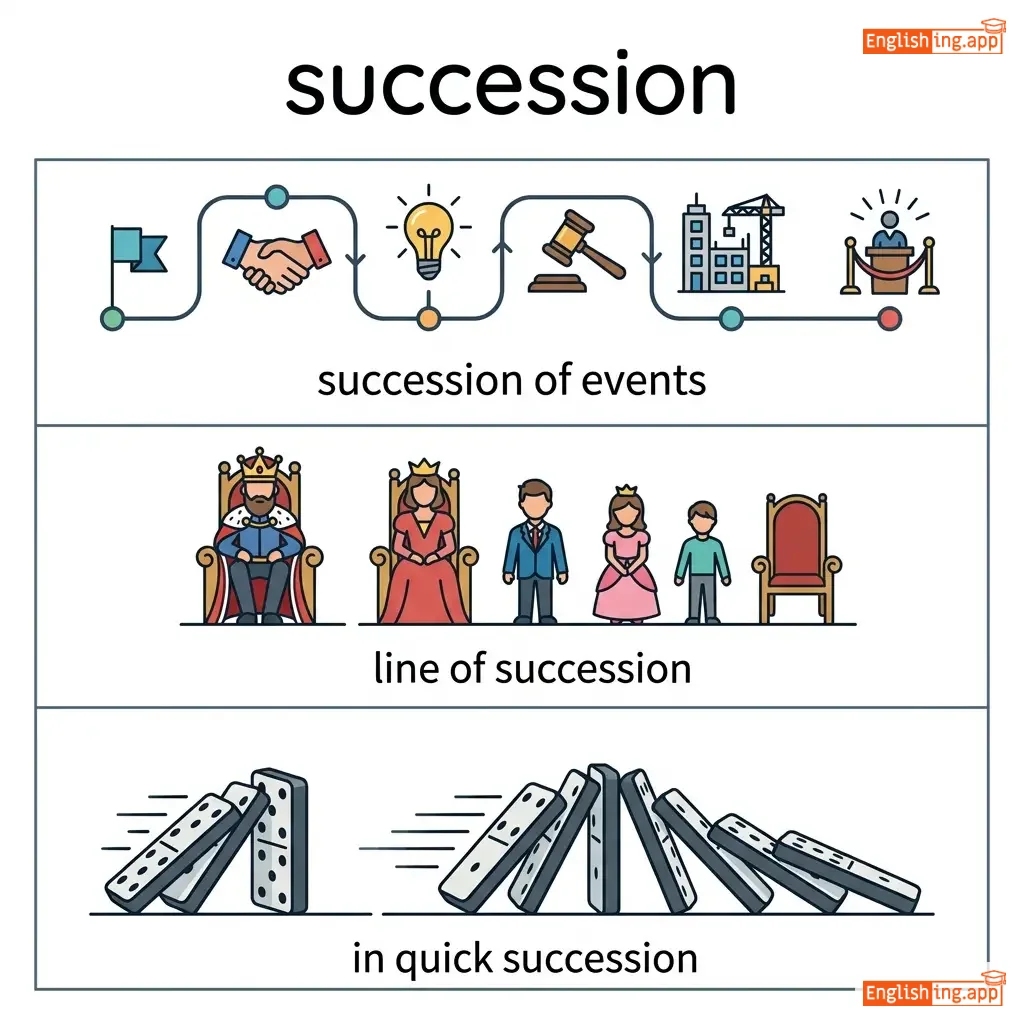
The process of ecological change in which one community of organisms is gradually replaced by another.
••••••
Forest succession occurs when old ecosystems are replaced by new ones.
••••••
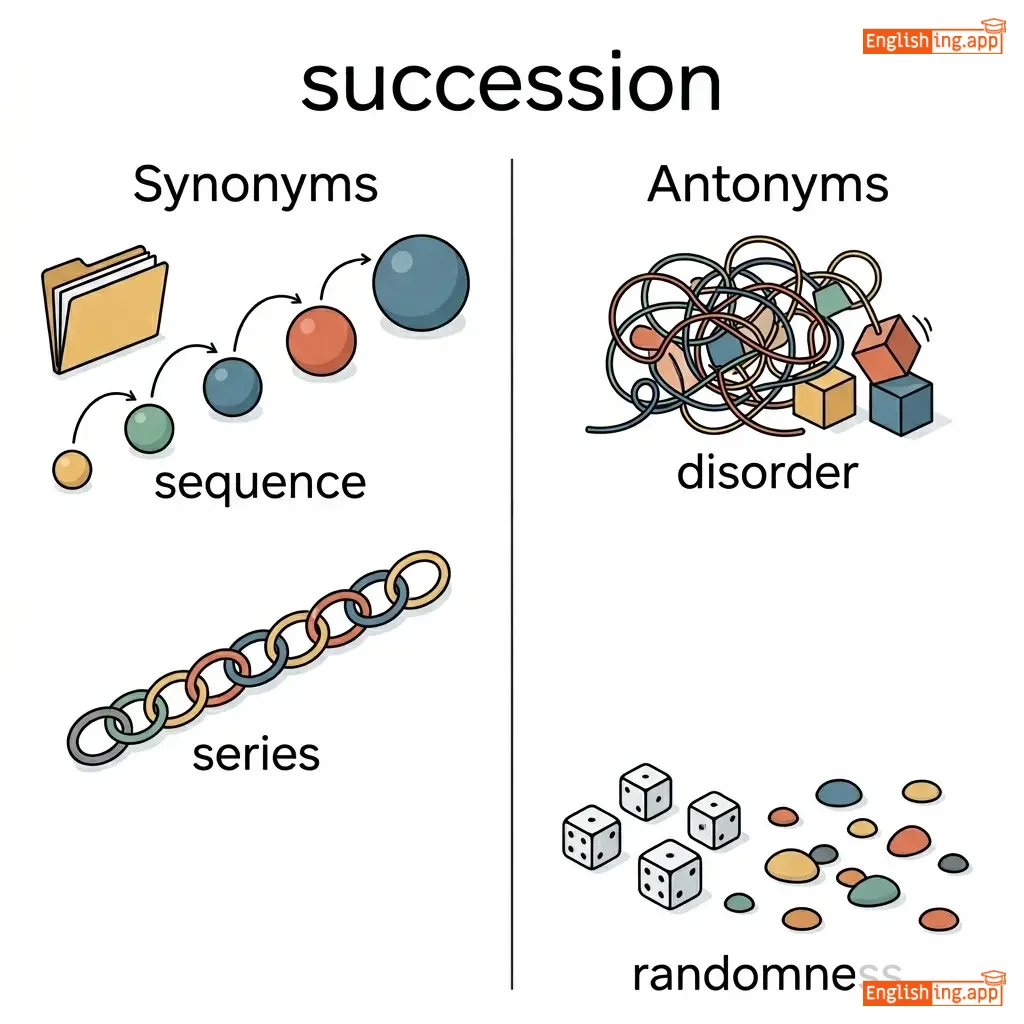
ecological progression, natural development, evolution
••••••
stagnation, unchangeability, constancy
••••••
••••••
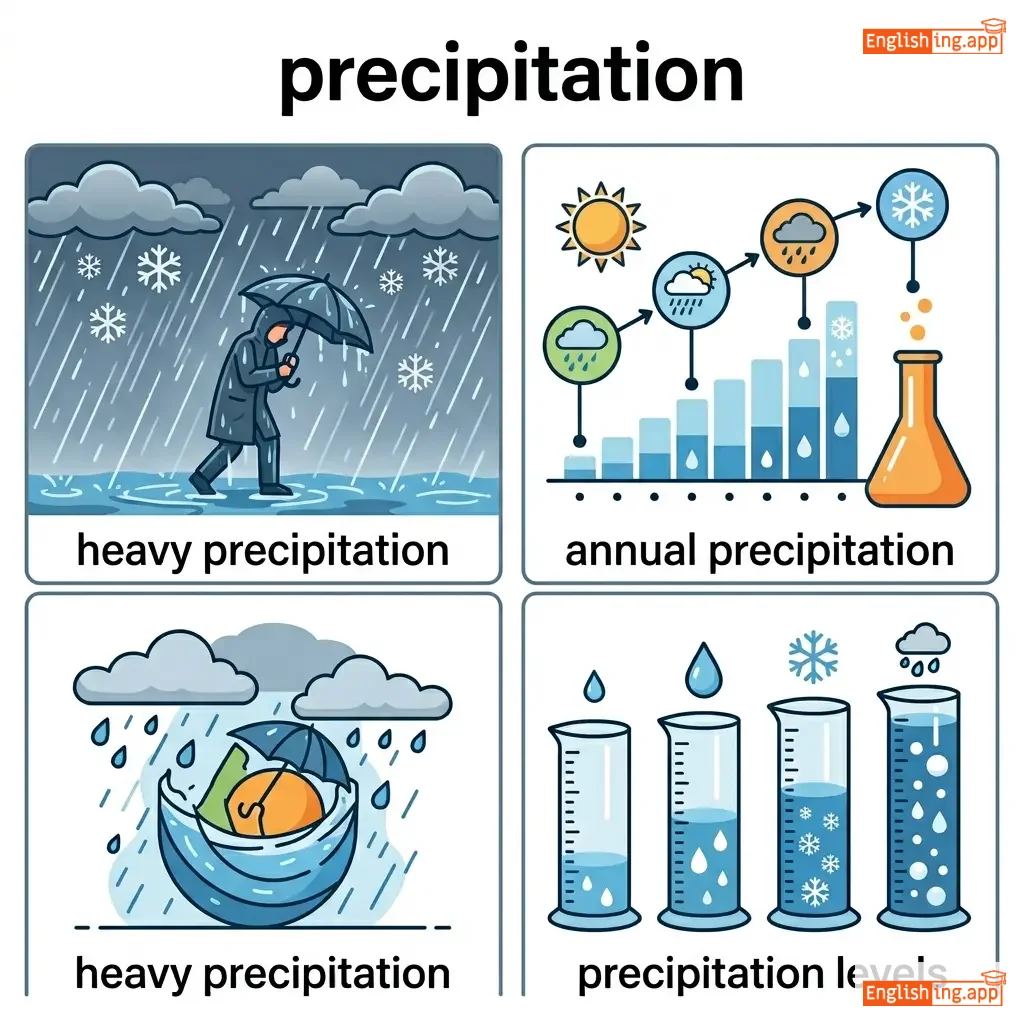
/prɪˌsɪp.ɪˈteɪ.ʃən/
noun
••••••
••••••
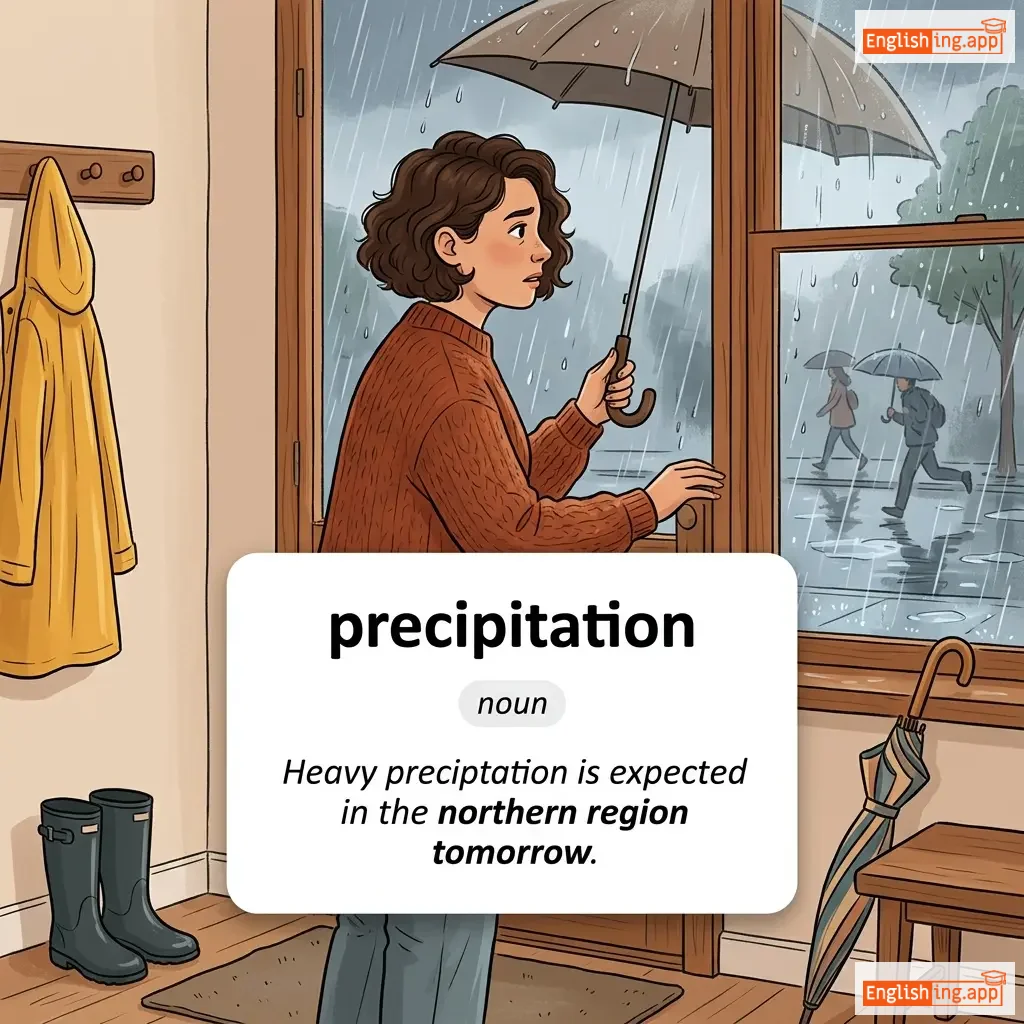
Water that falls from the atmosphere to the Earth's surface, including rain, snow, sleet, and hail.
••••••
Heavy precipitation can cause flooding in low-lying areas.
••••••
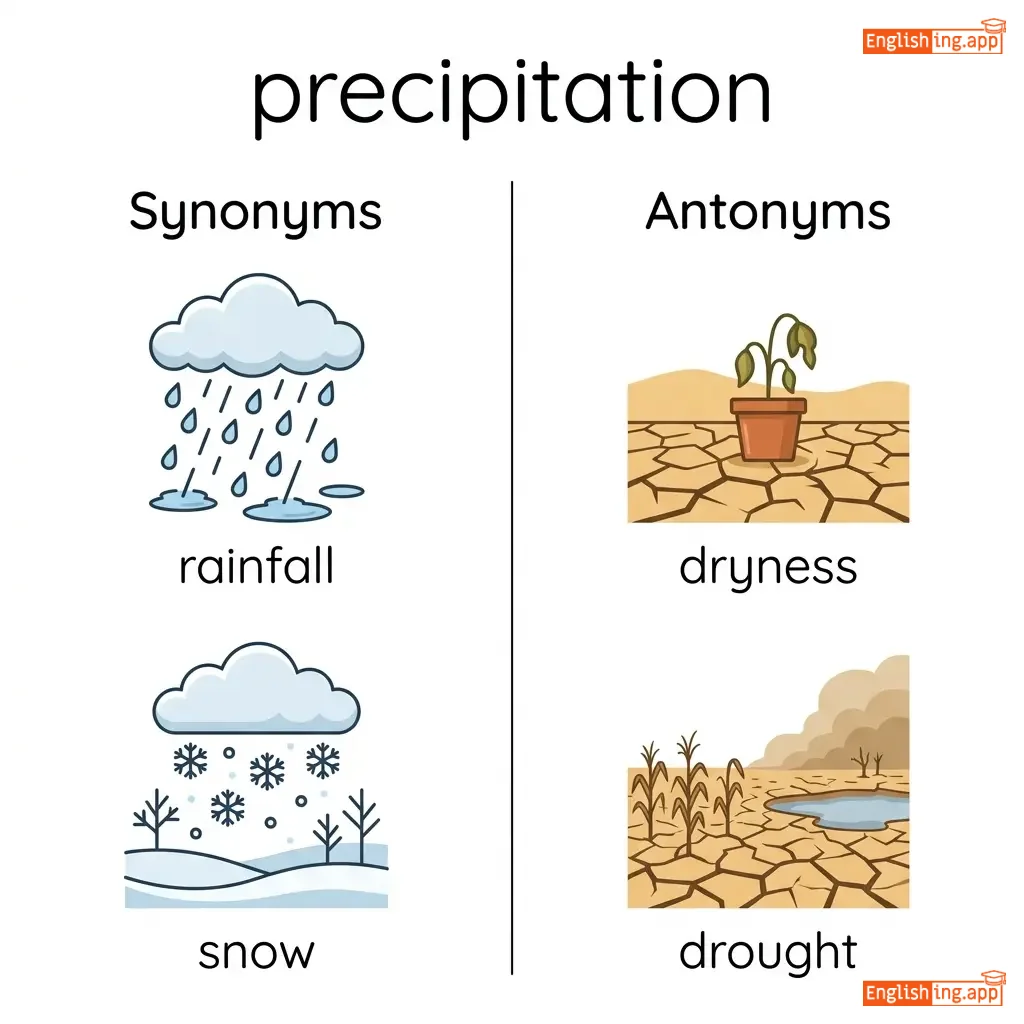
rainfall, snowfall, moisture
••••••
aridity, dryness, drought
••••••
••••••
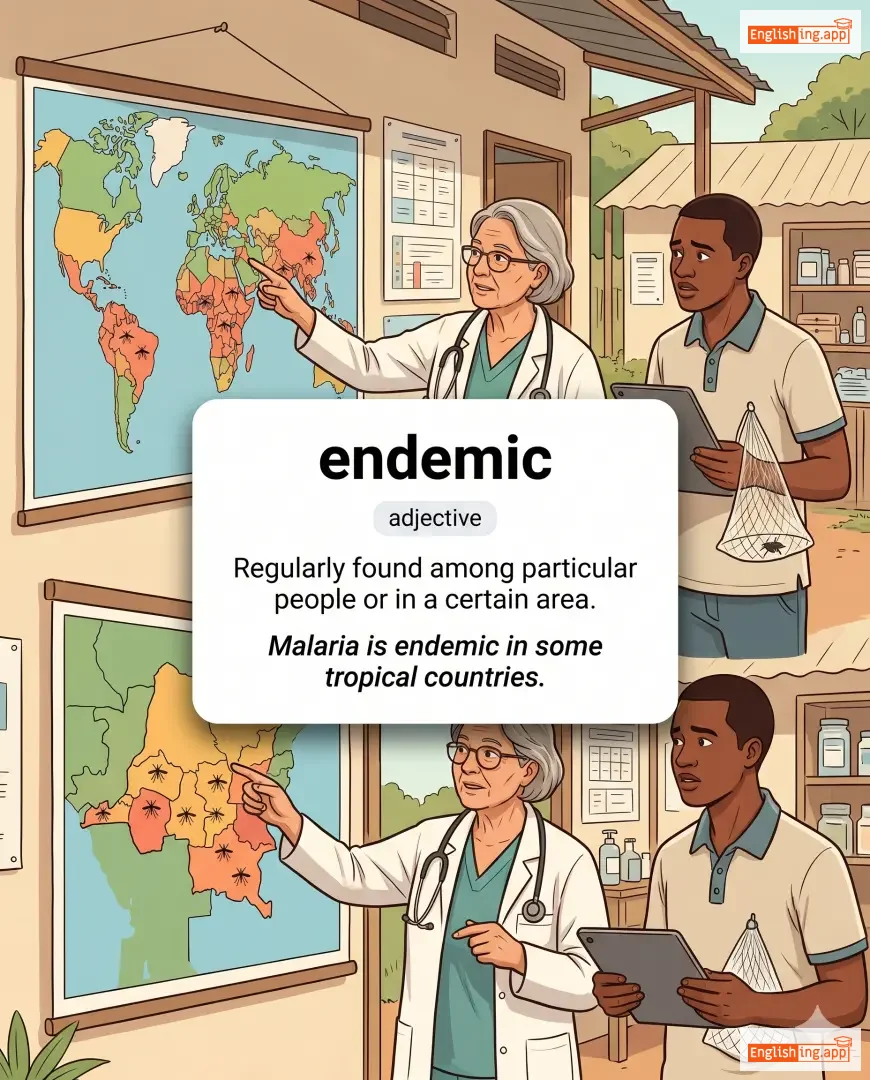
/ɛnˈdɛm.ɪk/
adjective
••••••
••••••
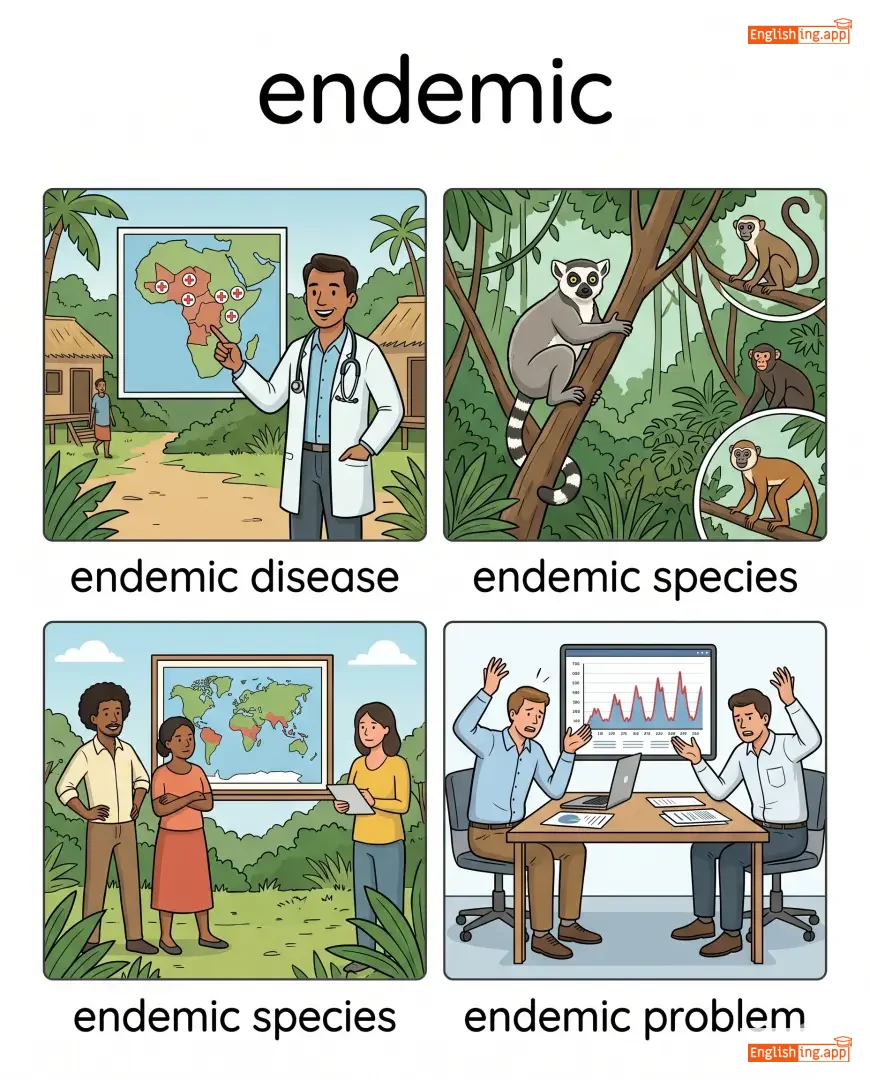
Native to and found only in a particular region; not occurring naturally elsewhere.
••••••
The Bengal tiger is endemic to the Indian subcontinent.
••••••
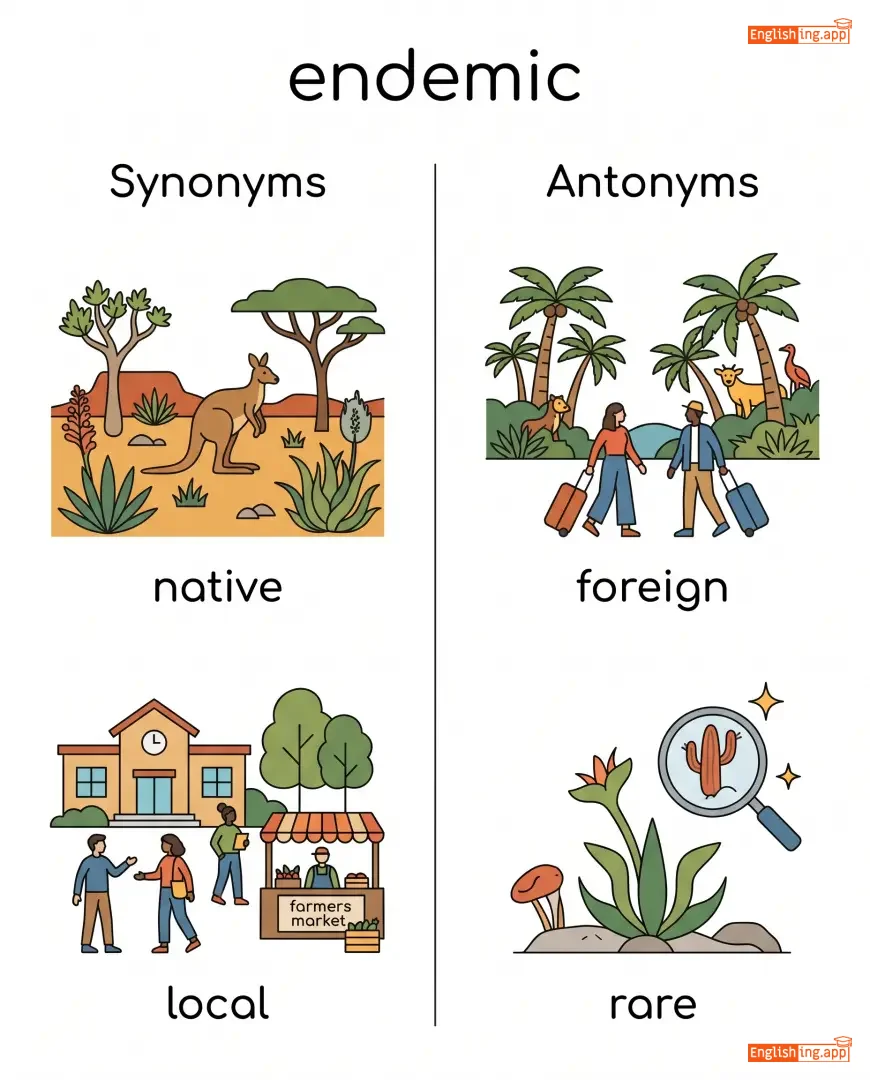
native, localized, indigenous
••••••
foreign, non-native, exotic
••••••
••••••
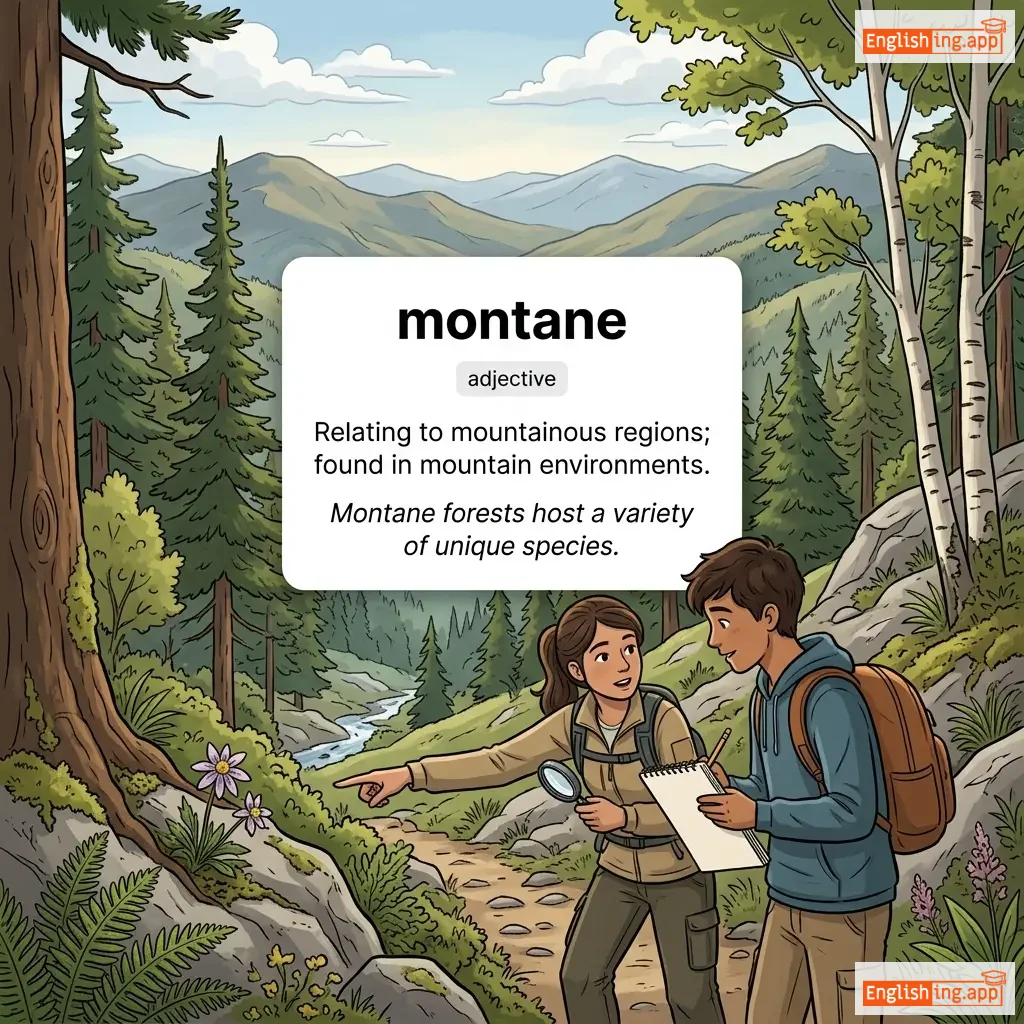
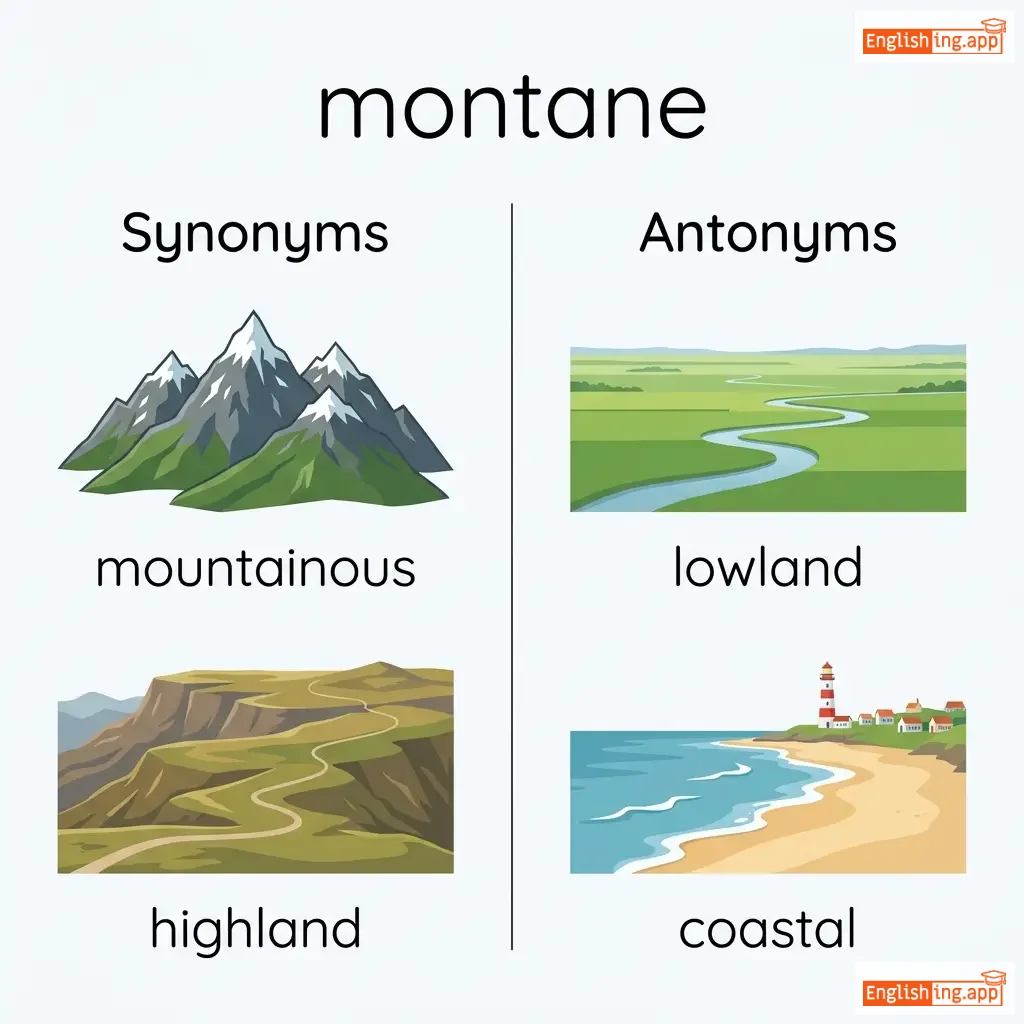
/ˈmɒn.teɪn/
adjective
••••••
••••••
Relating to mountainous regions; found in mountain environments.
••••••
Montane forests host a variety of unique species.
••••••
mountainous, highland, alpine
••••••
••••••
••••••
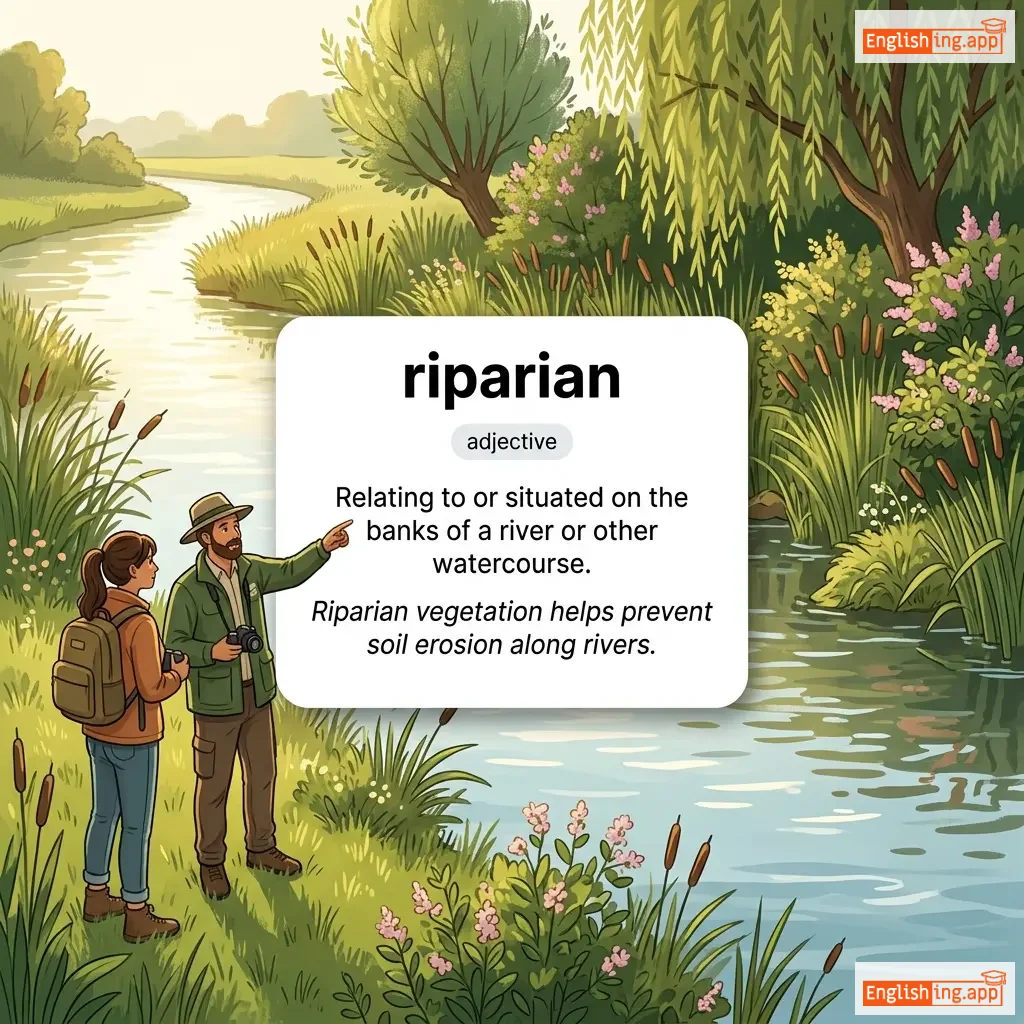
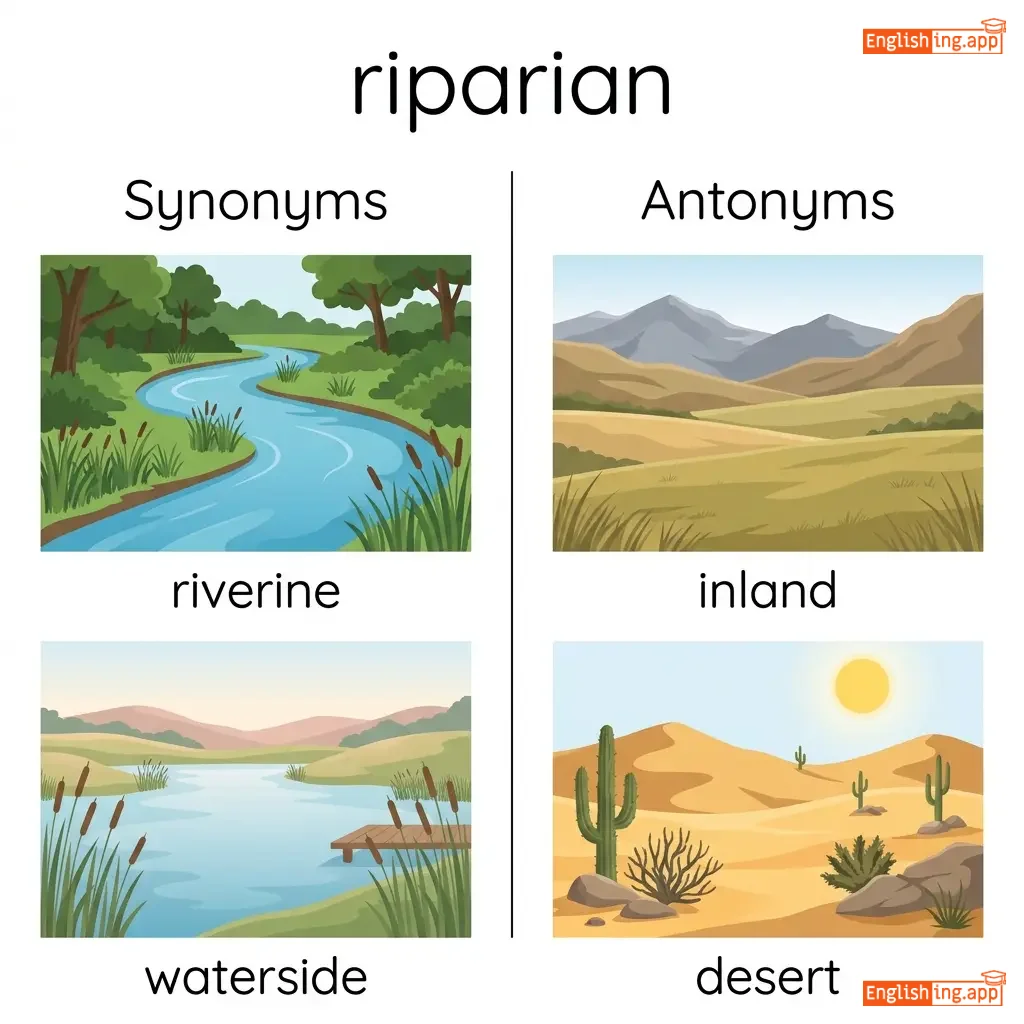
/raɪˈpɛə.ri.ən/
adjective
••••••
••••••
Relating to or situated on the banks of a river or other watercourse.
••••••
Riparian vegetation helps prevent soil erosion along rivers.
••••••
riverine, waterside, bank-related
••••••
••••••
••••••
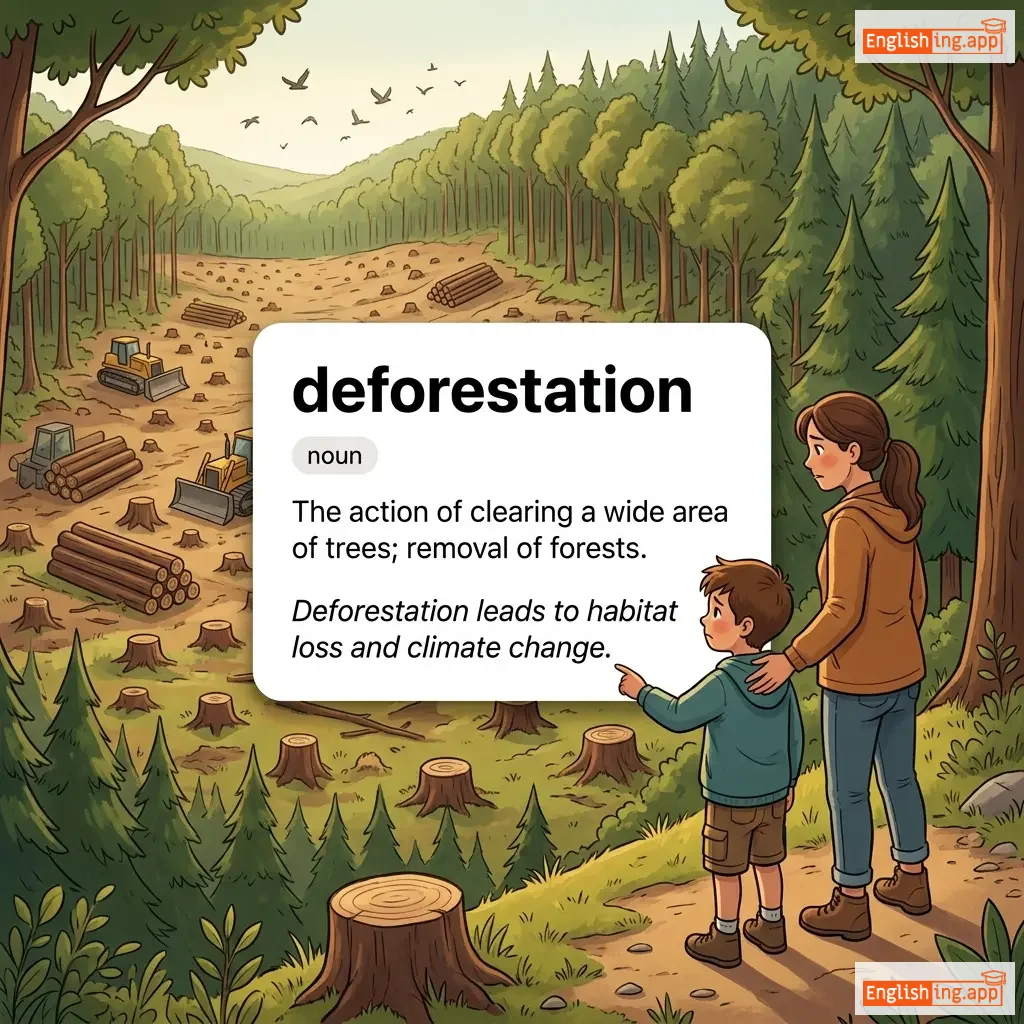
/ˌdiː.fɒr.ɪˈsteɪ.ʃən/
noun
••••••
••••••
The action of clearing a wide area of trees; removal of forests.
••••••
Deforestation leads to habitat loss and climate change.
••••••
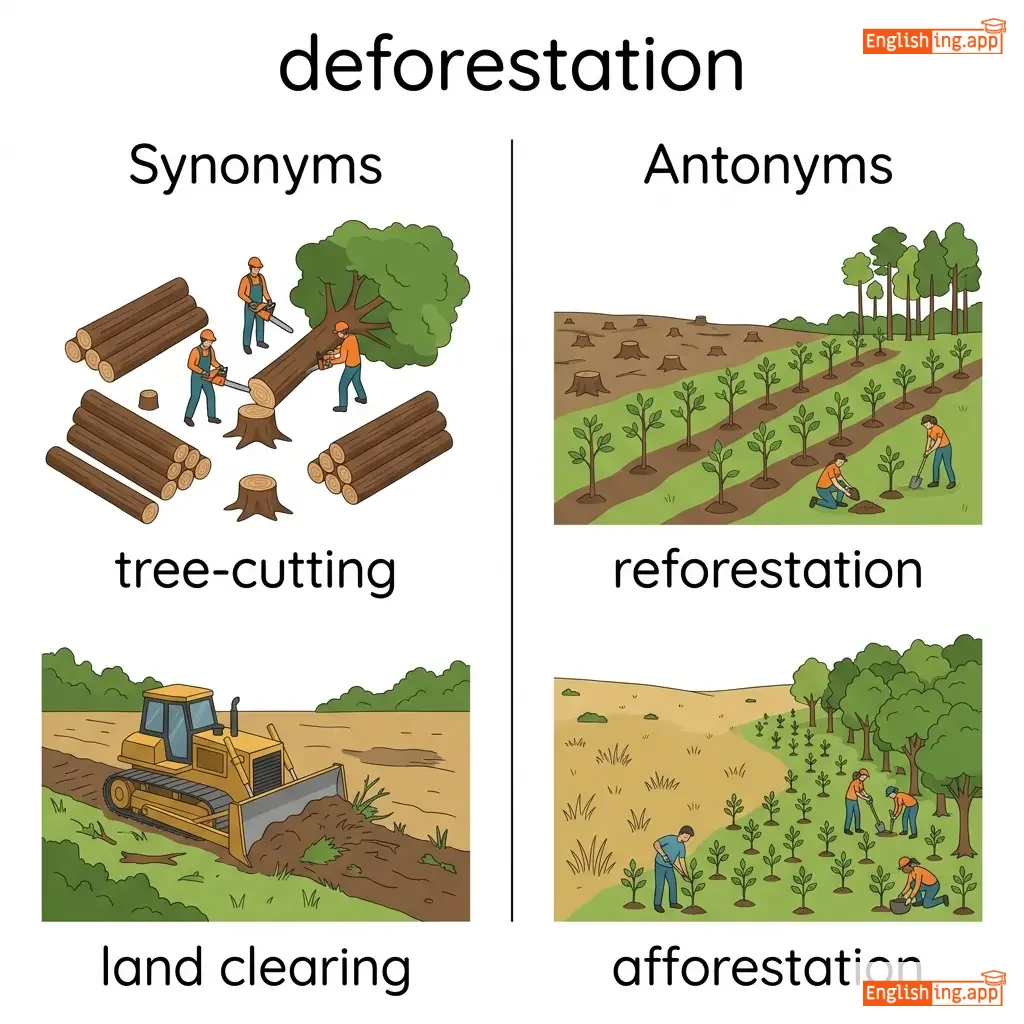
tree-cutting, land clearing, deforesting
••••••
reforestation, afforestation, forest preservation
••••••
••••••
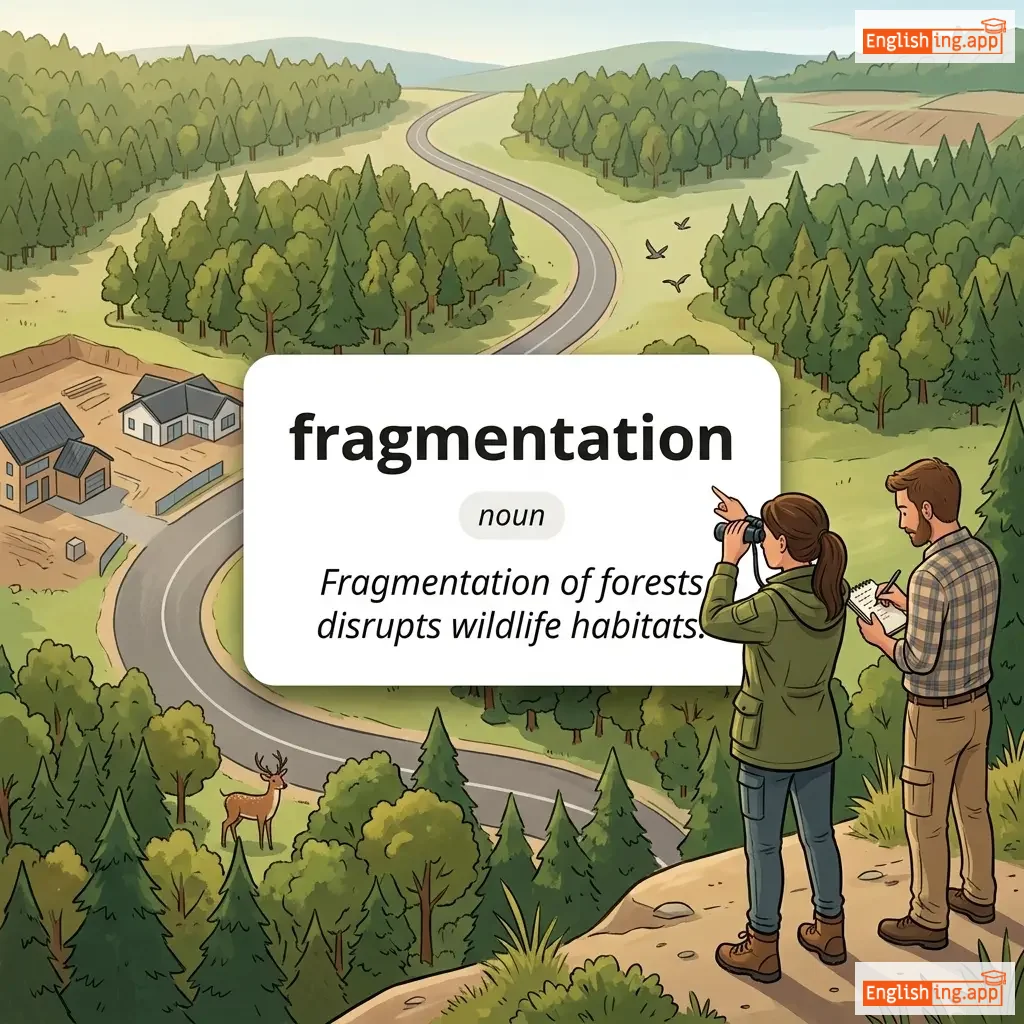
/ˌfræɡ.mənˈteɪ.ʃən/
noun
••••••
••••••
The process of breaking into fragments; division of habitat into isolated patches.
••••••
Fragmentation of forests disrupts wildlife habitats.
••••••
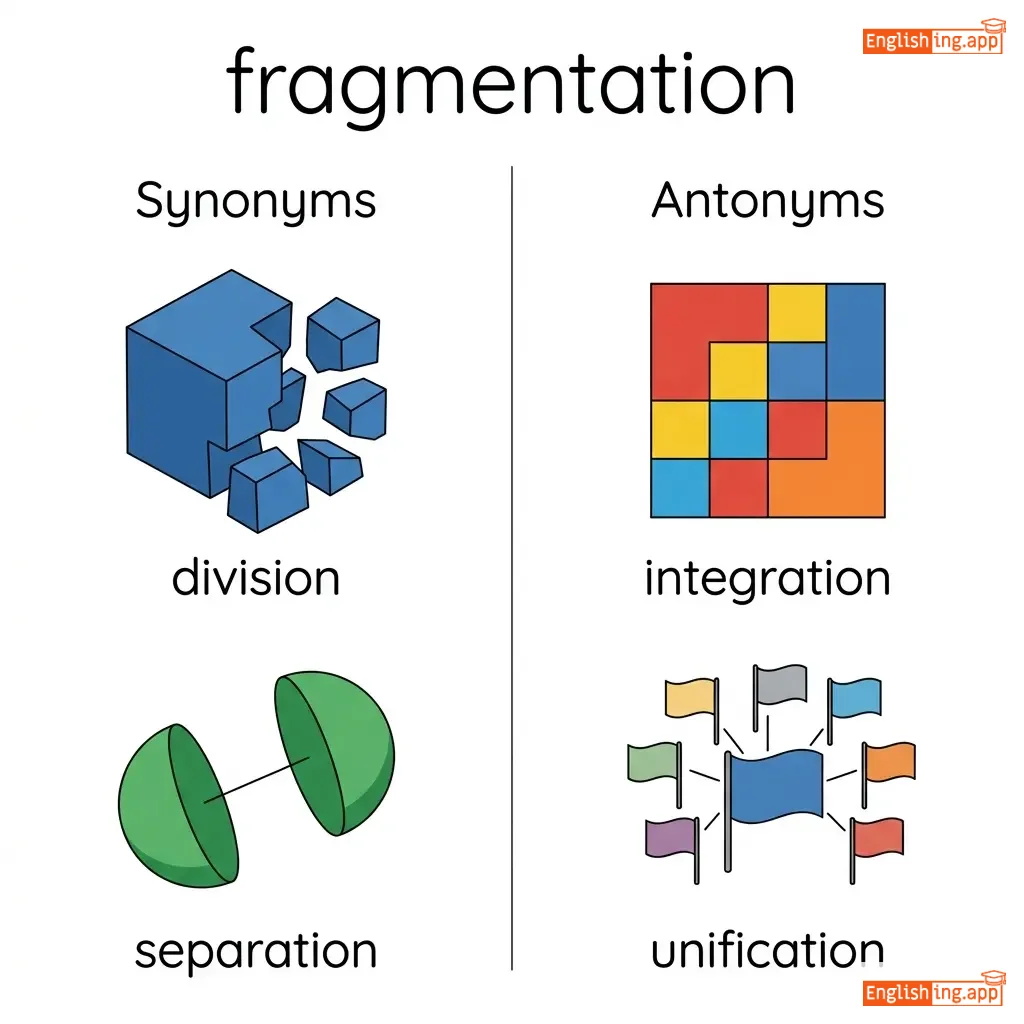
division, separation, disintegration
••••••
integration, unification, continuity
••••••
••••••
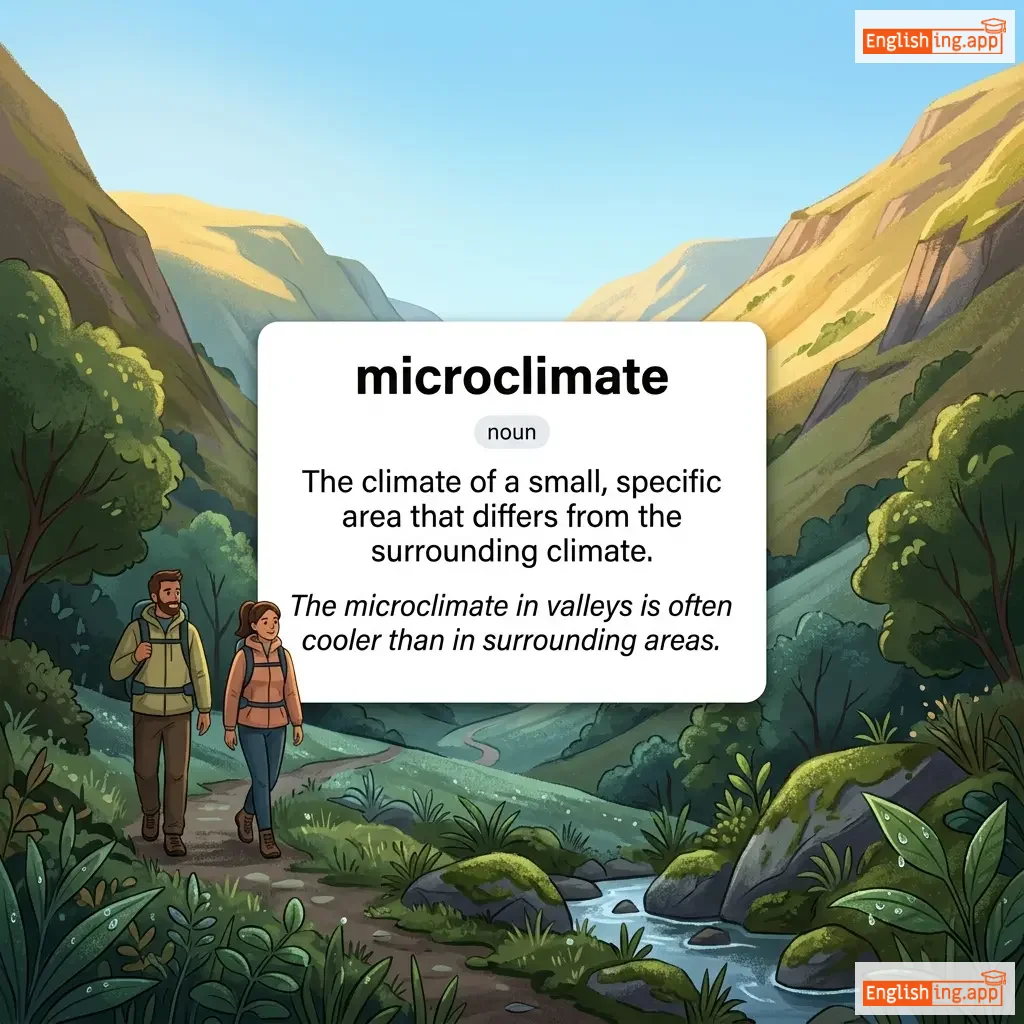
/ˈmaɪ.krəʊˌklaɪ.mət/
noun
••••••
••••••
The climate of a small, specific area that differs from the surrounding climate.
••••••
The microclimate in valleys is often cooler than in surrounding areas.
••••••
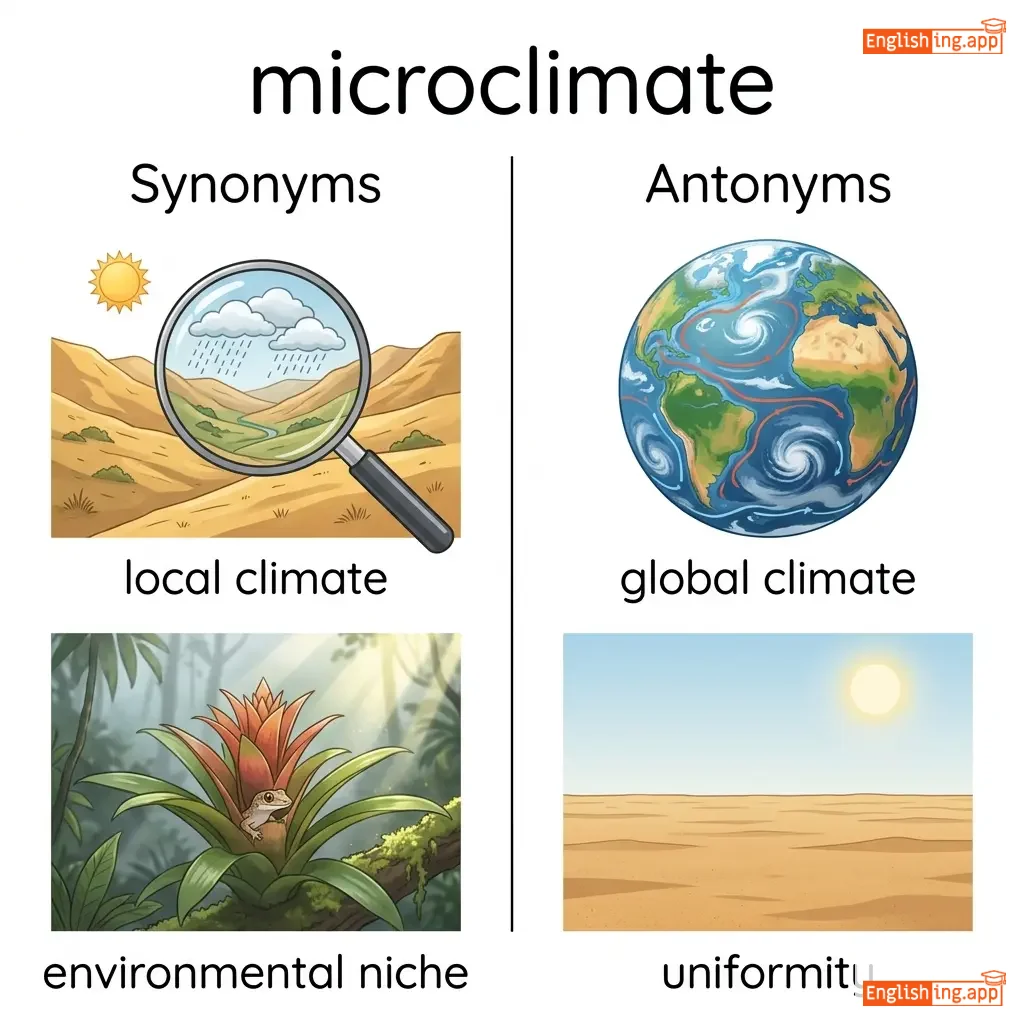
local climate, environmental niche, weather condition
••••••
global climate, uniformity, general weather
••••••
••••••
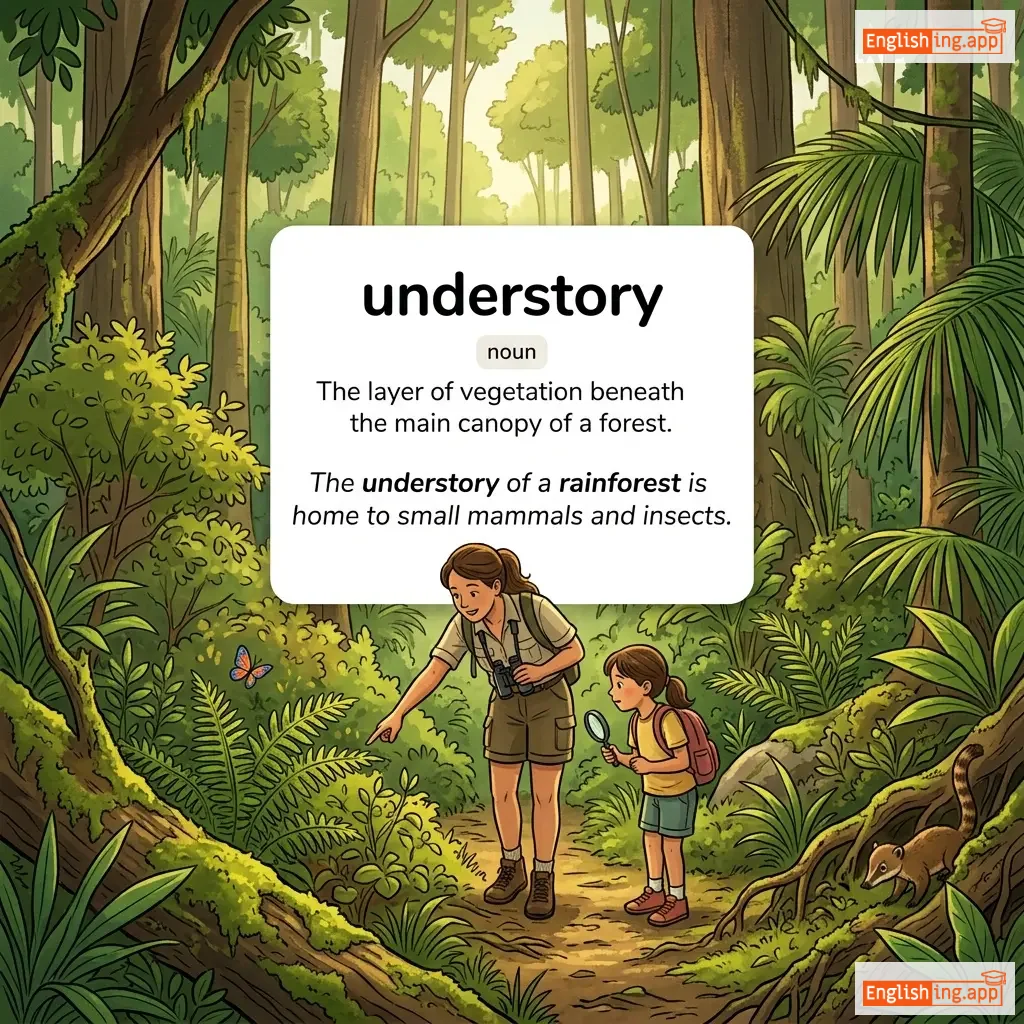
/ˈʌn.dɚˌstɔː.ri/
noun
••••••
••••••
The layer of vegetation beneath the main canopy of a forest.
••••••
The understory of a rainforest is home to small mammals and insects.
••••••
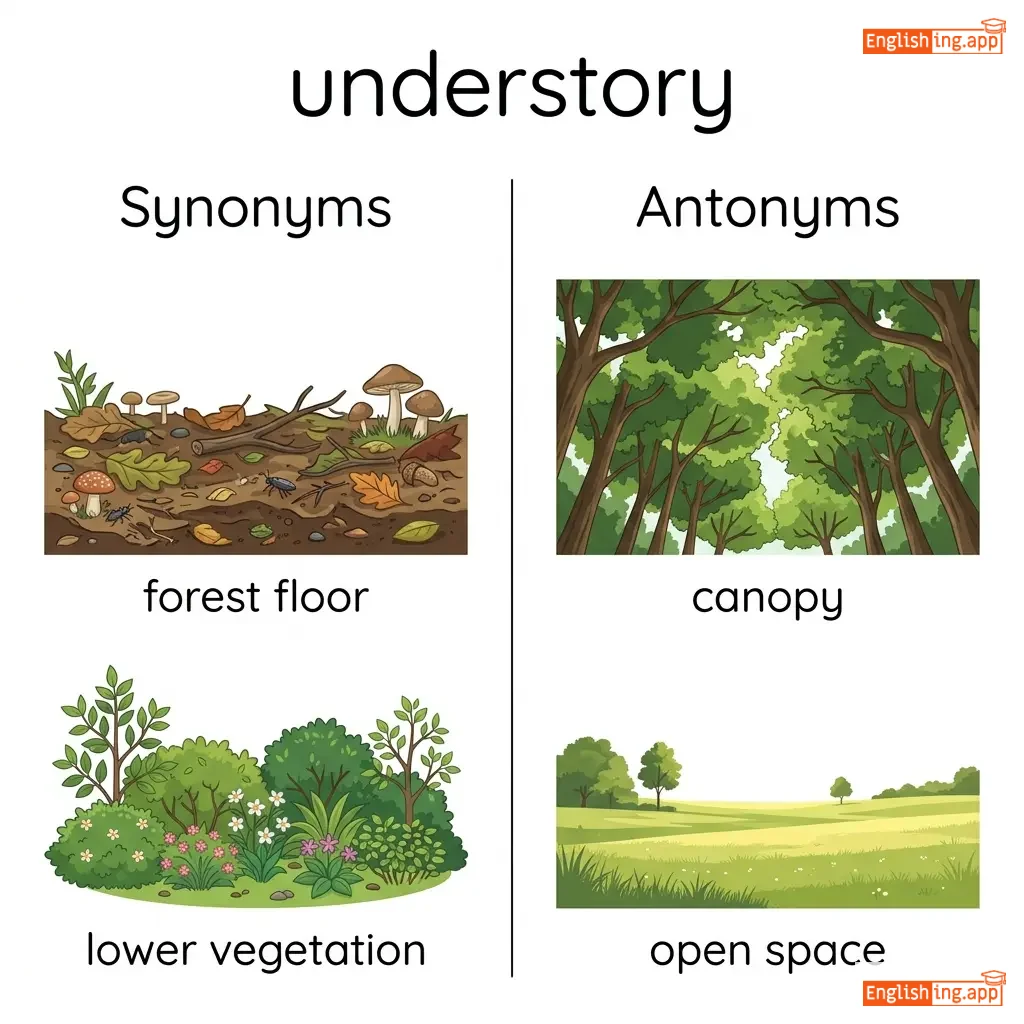
forest floor, lower vegetation, shrub layer
••••••
canopy, open space, upper layer
••••••