|
絵文字
|
単語 | Images | 翻訳 | 過去 | 過去分詞 | 三人称単数 | 動名詞 | 意味 | 例文 | 例文の翻訳 | 表現例 | 表現例の意味 | 表現例の翻訳 | 同義語 | 対義語 | コロケーション | ニーモニック |
|---|---|---|---|---|---|---|---|---|---|---|---|---|---|---|---|---|---|
|
😞
••••••
|
/ʌnˈhæp.i.nəs/
noun
(アンハピネス)
••••••
|
- •••••• |
不幸
fukou
••••••
|
- •••••• | - •••••• | - •••••• | - •••••• |
the state of being unhappy; sadness or dissatisfaction
••••••
|
Her constant unhappiness affected everyone around her.
彼女の絶え間ないアンハピネスは周囲の人々に影響を与えた。
••••••
|
彼女の絶え間ない不幸は周囲の人々に影響を与えた。
Kanojo no taemanai fukou wa shuui no hitobito ni eikyou wo ataeta.
••••••
|
- •••••• | - •••••• | - •••••• |
sadness, misery, gloom, sorrow, distress
••••••
|
happiness, joy, contentment
••••••
|
deep unhappiness, emotional unhappiness, chronic unhappiness
••••••
|
fukou = 'not happiness', easy way to remember unhappiness in Japanese
••••••
|
|
😔
••••••
|
/ʌnˈhæpi/
adjective
(アンハピ)
••••••
|
- •••••• |
不満または悲しい
fuman matawa kanashii
••••••
|
- •••••• | - •••••• | - •••••• | - •••••• |
not happy; sad, disappointed, or dissatisfied
••••••
|
He was unhappy with the final decision.
彼は最終決定に不満を抱いていた。
••••••
|
彼は最終決定に不満を抱いていた。
kare wa saishuu kettei ni fuman o daite ita.
••••••
|
an unhappy ending
不幸な結末
••••••
|
a sad or tragic conclusion to a story or event
••••••
|
悲しい結末
kanashii ketsumatsu
••••••
|
sad, miserable, gloomy, depressed, dissatisfied
••••••
|
happy, cheerful, content
••••••
|
unhappy with, feel unhappy, unhappy marriage, unhappy ending
••••••
|
happy の前に un を加えると悲しい — だから unhappy は悲しいこと 😔
••••••
|
|
🙄
••••••
|
/ʌnˈhɛlpfəl/
adjective
(アンヘルプフル)
••••••
|
- •••••• |
役に立たない
yaku ni tatanai
••••••
|
- •••••• | - •••••• | - •••••• | - •••••• |
not providing help or support; making a situation harder rather than easier
••••••
|
His unhelpful attitude slowed down the entire project.
ヒズ アンヘルプフル アティテュード スロード ダウン ジ エンタイア プロジェクト。
••••••
|
彼の役に立たない態度はプロジェクト全体を遅らせた。
kare no yaku ni tatanai taido wa purojekuto zentai o okuraseta
••••••
|
- •••••• | - •••••• | - •••••• |
uncooperative, useless, obstructive, unsupportive, ineffective
••••••
|
helpful, supportive, cooperative
••••••
|
unhelpful attitude, unhelpful comment, unhelpful response, unhelpful advice
••••••
|
unhelpful = 役に立たない, help しない
••••••
|
|
😔
••••••
|
/ʌnˈɒnəd/
adjective
(アンオナード)
••••••
|
- •••••• |
敬われない
uyamawarenai
••••••
|
- •••••• | - •••••• | - •••••• | - •••••• |
not respected or given the recognition that is deserved; treated without honor
••••••
|
He felt unhonoured after his years of service were ignored.
ヒー フェルト アンオナード アフター ヒズ イヤーズ オブ サービス ワー イグノアド。
••••••
|
長年の奉仕が無視され、彼は敬われないと感じた。
naganen no houshi ga mushi sare kare wa uyamawarenai to kanjita
••••••
|
- •••••• | - •••••• | - •••••• |
disrespected, disregarded, slighted, unacknowledged, ignored
••••••
|
honoured, respected, celebrated
••••••
|
unhonoured service, unhonoured promise, feel unhonoured, remain unhonoured
••••••
|
Honorがない状態=unhonoured=敬われない。
••••••
|
|
⚪
••••••
|
/ʌnɪmˈpɔːrtəns/
noun
(アンインポータンス)
••••••
|
- •••••• |
重要でなさ
juuyou de nasa
••••••
|
- •••••• | - •••••• | - •••••• | - •••••• |
the state or quality of being insignificant or not important
••••••
|
He dismissed the issue with a sense of unimportance.
彼はその問題を重要でないものとして無視した。
••••••
|
彼はその問題を重要でないものとして無視した。
Kare wa sono mondai wo juuyou de nai mono to shite mushi shita
••••••
|
- •••••• | - •••••• | - •••••• |
insignificance, triviality, inconsequence, negligibility
••••••
|
importance, significance, consequence
••••••
|
sense of unimportance, feelings of unimportance, perceived unimportance
••••••
|
Think 'unimportance' as '重要でなさ', a small ⚪ in life
••••••
|
|
🤷
••••••
|
/ˌʌnɪmˈpɔːrtənt/
adjective
(アンインポータント)
••••••
|
- •••••• |
重要でない
juuyou de nai
••••••
|
- •••••• | - •••••• | - •••••• | - •••••• |
not having much value, significance, or influence
••••••
|
The detail seemed unimportant compared to the main issue.
ザ ディテール シームド アンインポータント コンペアド トゥ ザ メイン イシュー。
••••••
|
その詳細は主要な問題と比べて重要でないように思えた。
sono shousai wa shuyou na mondai to kurabete juuyou de nai you ni omoeta
••••••
|
of unimportant matter
オブ アンインポータント マター
••••••
|
something that does not deserve much attention
••••••
|
重要でない事柄
juuyou de nai kotogara
••••••
|
insignificant, trivial, minor, negligible, petty
••••••
|
important, significant, crucial
••••••
|
unimportant detail, unimportant issue, seem unimportant, relatively unimportant
••••••
|
Unimportant = 重要でない — ‘重要’ নেই
••••••
|
|
🤷
••••••
|
/ˌʌnɪnˈfɔːrmd/
adjective
(アンインフォームド)
••••••
|
- •••••• |
情報に疎い
joho ni utoi
••••••
|
- •••••• | - •••••• | - •••••• | - •••••• |
lacking knowledge or awareness about a particular subject; not educated or informed
••••••
|
The decision was made by an uninformed committee.
ザ ディシジョン ワズ メイド バイ アン アンインフォームド コミティー。
••••••
|
その決定は情報に疎い委員会によって下された。
sono kettei wa joho ni utoi iinkai ni yotte kudasareta
••••••
|
- •••••• | - •••••• | - •••••• |
ignorant, unaware, uneducated, clueless, ill-informed
••••••
|
informed, knowledgeable, aware
••••••
|
uninformed opinion, uninformed decision, uninformed voter, uninformed public
••••••
|
Uninformed = 情報(information)がない
••••••
|
|
😴
••••••
|
/ˌʌnˈɪntrəstɪŋ/
adjective
(アンインタレスティング)
••••••
|
- •••••• |
つまらない
tsumaranai
••••••
|
- •••••• | - •••••• | - •••••• | - •••••• |
not holding attention or curiosity; boring
••••••
|
The lecture was uninteresting and difficult to stay focused on.
ザ レクチャー ワズ アンインタレスティング アンド ディフィカルト トゥ ステイ フォーカスト オン。
••••••
|
その講義はつまらなく、集中するのが難しかった。
Sono kougi wa tsumaranaku, shuuchuu suru no ga muzukashikatta
••••••
|
- •••••• | - •••••• | - •••••• |
boring, dull, tedious, monotonous, unstimulating
••••••
|
interesting, engaging, fascinating
••••••
|
uninteresting topic, uninteresting story, uninteresting job, uninteresting details
••••••
|
Uninteresting = インタレストがない → つまらない。
••••••
|
|
😠
••••••
|
/ʌnˈkaɪnd/
adjective
(アンカインド)
••••••
|
- •••••• |
無愛想; 不親切
buaisou; fushinsetsu
••••••
|
- •••••• | - •••••• | - •••••• | - •••••• |
cruel; not nice or caring toward others
••••••
|
It was unkind of him to make fun of her appearance.
彼が彼女の外見をからかうのは不親切だった。
••••••
|
彼が彼女の外見をからかうのは不親切だった。
Kare ga kanojo no gaiken o karakau no wa fushinsetsu datta.
••••••
|
- •••••• | - •••••• | - •••••• |
cruel, mean, harsh, nasty
••••••
|
kind, nice, gentle, caring
••••••
|
unkind words, unkind behavior, unkind comment
••••••
|
Unkind は他の人を傷つけたり、気を使わない行動を示します。
••••••
|
|
😠
••••••
|
/ʌnˈkaɪndli/
adverb
(アンカインドリー)
••••••
|
- •••••• |
意地悪に
ijiwaruni
••••••
|
- •••••• | - •••••• | - •••••• | - •••••• |
in a cruel, harsh, or unsympathetic manner
••••••
|
She spoke unkindly about her colleague during the meeting.
シー スポーク アンカインドリー アバウト ハー コリーグ デューリング ザ ミーティング
••••••
|
彼女は会議中に同僚のことを意地悪に話した。
kanojo wa kaigichuu ni douryou no koto o ijiwaruni hanashita
••••••
|
- •••••• | - •••••• | - •••••• |
cruelly, harshly, rudely, coldly, meanly
••••••
|
kindly, gently, compassionately
••••••
|
speak unkindly, treat unkindly, judge unkindly, respond unkindly
••••••
|
Unkindly = kind じゃない → 意地悪に
••••••
|
|
😔
••••••
|
/ʌnˈkaɪndnəs/
noun
(アンカインドネス)
••••••
|
- •••••• |
不親切
fushinsetsu
••••••
|
- •••••• | - •••••• | - •••••• | - •••••• |
lack of kindness; cruel or inconsiderate behavior
••••••
|
His unkindness hurt her feelings deeply.
ヒズ・アンカインドネス・ハート・ハー・フィーリングス・ディープリー。
••••••
|
彼の不親切は彼女の気持ちを深く傷つけた。
Kare no fushinsetsu wa kanojo no kimochi o fukaku kizutsuketa
••••••
|
- •••••• | - •••••• | - •••••• |
cruelty, harshness, meanness, coldness, unfriendliness
••••••
|
kindness, compassion, benevolence
••••••
|
act of unkindness, deliberate unkindness, show unkindness, emotional unkindness
••••••
|
Unkindness=親切じゃない→不親切
••••••
|
|
🔓
••••••
|
/ʌnˈlɒk/
verb
(アンロック)
••••••
|
- •••••• |
解錠する
kaijo suru
••••••
|
unlocked
アンロックド
••••••
|
unlocked
アンロックド
••••••
|
unlocks
アンロックス
••••••
|
unlocking
アンロッキング
••••••
|
to open something that is locked; to make something accessible or available
••••••
|
She used the key to unlock the door.
シー ユーズド ザ キー トゥ アンロック ザ ドア
••••••
|
彼女は鍵を使ってドアを解錠した。
kanojo wa kagi o tsukatte doa o kaijo shita
••••••
|
unlock potential
アンロック ポテンシャル
••••••
|
to make hidden abilities or possibilities available
••••••
|
可能性を引き出す
kanosei o hikidasu
••••••
|
open, release, unfasten, free, disengage
••••••
|
lock, secure, fasten
••••••
|
unlock the door, unlock a phone, unlock access, unlock potential
••••••
|
アンロック=鍵を外すイメージ
••••••
|
|
😞
••••••
|
/ʌnˈlʌki/
adjective
(アンラッキー)
••••••
|
- •••••• |
不運; ラッキーでない
fuun; rakkī denai
••••••
|
- •••••• | - •••••• | - •••••• | - •••••• |
having bad luck; unfortunate
••••••
|
He was unlucky to miss the winning shot. |
彼は勝つシュートを外して不運だった。
Kare wa katsu shūto o hazushite fuun datta.
••••••
|
- •••••• | - •••••• | - •••••• |
unfortunate, hapless, cursed
••••••
|
lucky, fortunate, blessed
••••••
|
unlucky day, unlucky number, unlucky person
••••••
|
不運の時は、'アンラッキー'という言葉がぴったりです。
••••••
|
|
🎭
••••••
|
/ʌnˈmɑːsk/
verb
(アンマスク)
••••••
|
- •••••• |
正体を暴く
shotai o abaku
••••••
|
unmasked
アンマスクド
••••••
|
unmasked
アンマスクド
••••••
|
unmasks
アンマスクス
••••••
|
unmasking
アンマスキング
••••••
|
to remove a mask or covering; to reveal the true identity, nature, or intentions of someone or something
••••••
|
The investigation helped unmask the real culprit behind the crime.
ジ インベスティゲーション ヘルプド アンマスク ザ リアル カルプリット ビハインド ザ クライム
••••••
|
その捜査は犯罪の背後にいる本当の犯人を暴いた。
Sono sousa wa hanzai no haigo ni iru hontou no hannin o abaita
••••••
|
unmask the truth
アンマスク ザ トゥルース
••••••
|
to reveal what is really happening or what has been hidden
••••••
|
真実を暴く
shinjitsu o abaku
••••••
|
reveal, expose, disclose, uncover, unveil
••••••
|
conceal, hide, cover
••••••
|
unmask the truth, unmask a fraud, unmask the villain, unmask intentions
••••••
|
UNMASK = マスクを外して正体を知る
••••••
|
|
🔒
••••••
|
/ʌnˈmɒdɪfaɪd/
adjective
(アンモディファイド)
••••••
|
- •••••• |
未変更の
mihenkou no
••••••
|
- •••••• | - •••••• | - •••••• | - •••••• |
not changed from its original form or state
••••••
|
The data was used in its unmodified form for analysis.
データはアンモディファイドの形で分析に使われた。
••••••
|
データは未変更の形で分析に使用された。
deeta wa mihenkou no katachi de bunseki ni shiyou sareta
••••••
|
- •••••• | - •••••• | - •••••• |
unchanged, original, intact, raw, plain
••••••
|
modified, altered, changed
••••••
|
unmodified data, unmodified version, remain unmodified, left unmodified
••••••
|
Unmodified = 未変更の、un は 否定 と覚える
••••••
|
|
🤖
••••••
|
/ʌnˈnætʃərəl/
adjective
(アンナチュラル)
••••••
|
- •••••• |
不自然な
fushizen na
••••••
|
- •••••• | - •••••• | - •••••• | - •••••• |
not existing in nature; artificial; forced
••••••
|
The actor's smile looked unnatural and forced.
俳優の笑顔はアンナチュラルで、無理をしているように見えた。
••••••
|
俳優の笑顔は不自然で、無理をしているように見えた。
haiyuu no egao wa fushizen de muri o shiteiru you ni mieta
••••••
|
- •••••• | - •••••• | - •••••• |
artificial, fake, forced
••••••
|
natural, genuine, authentic
••••••
|
unnatural behavior, unnatural smile, unnatural pose
••••••
|
‘Fushizen’ means not natural — also the title of a famous Japanese drama!
••••••
|
|
🤨
••••••
|
/ʌnˈnætʃrəli/
adverb
(アンナチュラリー)
••••••
|
- •••••• |
不自然に
fushizen ni
••••••
|
- •••••• | - •••••• | - •••••• | - •••••• |
in a way that is not natural or normal; excessively or strangely
••••••
|
He smiled unnaturally, making everyone feel uncomfortable.
ヒー スマイルド アンナチュラリー、メイキング エブリワン フィール アンコンフォータブル。
••••••
|
彼は不自然に笑い、皆を居心地悪くさせた。
Kare wa fushizen ni warai, mina o igokochi waruku saseta
••••••
|
- •••••• | - •••••• | - •••••• |
artificially, strangely, oddly, abnormally, excessively
••••••
|
naturally, normally, genuinely
••••••
|
unnaturally quiet, unnaturally calm, unnaturally bright, unnaturally pale
••••••
|
不自然 = unnatural, だから unnaturally
••••••
|
|
🚫
••••••
|
/ʌnˈnesəserəli/
adverb
(アンネセサリリ)
••••••
|
- •••••• |
不必要に
fuhitsuyou ni
••••••
|
- •••••• | - •••••• | - •••••• | - •••••• |
to a greater extent than is needed; without necessity
••••••
|
Don't worry unnecessarily about the exam. |
試験について不必要に心配しないでください。
shiken ni tsuite fuhitsuyou ni shinpai shinaide kudasai.
••••••
|
- •••••• | - •••••• | - •••••• |
needlessly, pointlessly, excessively, superfluously
••••••
|
necessarily, essentially, importantly
••••••
|
unnecessarily complicated, unnecessarily harsh, unnecessarily worried
••••••
|
必要以上に心配しないように、何もないところで過剰に心配していることを思い出す。
••••••
|
|
🚫
••••••
|
/ʌnˈnɛsəsɛri/
adjective
(アンネセサリー)
••••••
|
- •••••• |
不必要
fuhitsuyou
••••••
|
- •••••• | - •••••• | - •••••• | - •••••• |
not needed or required
••••••
|
The manager cut all unnecessary expenses to save costs. |
マネージャーはコストを節約するためにすべての不必要な支出を削減しました。
Manējā wa kosuto o setsuyaku suru tame ni subete no fuhitsuyou na shishutsu o sakugen shimashita.
••••••
|
unnecessary evil |
something bad that must be accepted for practical reasons
••••••
|
不必要な悪
fuhitsuyou na aku
••••••
|
needless, redundant, avoidable, unneeded
••••••
|
necessary, essential, required
••••••
|
unnecessary expense, unnecessary risk, unnecessary delay
••••••
|
Fuhitsuyou → Hitsuyou no nai → 不必要
••••••
|
|
📦
••••••
|
/ʌnˈpæk/
verb
(アンパック)
••••••
|
- •••••• |
荷解きする
nidoki suru
••••••
|
unpacked
アンパックト
••••••
|
unpacked
アンパックト
••••••
|
unpacks
アンパックス
••••••
|
unpacking
アンパッキング
••••••
|
to remove items from a container; to explain or analyze something in detail
••••••
|
After arriving home, she began to unpack her suitcase.
アフター アライビング ホーム、シー ビギャン トゥ アンパック ハー スーツケース
••••••
|
家に着いた後、彼女はスーツケースの荷解きを始めた。
ie ni tsuita ato, kanojo wa sutsukeesu no nidoki o hajimeta
••••••
|
unpack the truth
アンパック ザ トゥルース
••••••
|
to reveal or explain the real facts in detail
••••••
|
真実を解き明かす
shinjitsu o tokiakasu
••••••
|
empty, unload, unbox, remove, open
••••••
|
pack, load, fill
••••••
|
unpack luggage, unpack boxes, unpack a suitcase, unpack ideas, unpack details
••••••
|
UNPACK = 荷解き — スーツケースを開けるイメージ
••••••
|
|
💸
••••••
|
/ˌʌnˈpeɪd/
adjective
(アンペイド)
••••••
|
- •••••• |
無給の; 支払いなし
mukyuu no; shiharai nashi
••••••
|
- •••••• | - •••••• | - •••••• | - •••••• |
not paid for; without payment or salary
••••••
|
She worked as an unpaid intern for six months. |
彼女は無給のインターンとして6ヶ月間働きました。
Kanojo wa mukyuu no intaan toshite rokkagetsu kan hatarakimashita
••••••
|
- •••••• | - •••••• | - •••••• |
outstanding, unsettled, voluntary, free
••••••
|
paid, settled, compensated, salaried
••••••
|
unpaid bills, unpaid work, unpaid leave, unpaid volunteer
••••••
|
Unpaid in Japanese means '無給の'; 支払いがない、ただの仕事.
••••••
|
|
😣
••••••
|
/ʌnˈplɛz.ənt/
adjective
(アンプレザント)
••••••
|
- •••••• |
不快な
fukai na
••••••
|
- •••••• | - •••••• | - •••••• | - •••••• |
not giving or causing pleasure; disagreeable
••••••
|
The medicine had an unpleasant taste. |
その薬は不快な味がしました。
Sono kusuri wa fukai na aji ga shimashita.
••••••
|
- •••••• | - •••••• | - •••••• |
disagreeable, distasteful, horrible, nasty
••••••
|
pleasant, agreeable, nice, enjoyable
••••••
|
unpleasant experience, unpleasant smell, unpleasant surprise
••••••
|
不快なという意味は 'unpleasant' と同じです。
••••••
|
|
😣
••••••
|
/ʌnˈplɛzəntli/
adverb
(アンプレザントリー)
••••••
|
- •••••• |
不快に
fukai ni
••••••
|
- •••••• | - •••••• | - •••••• | - •••••• |
in a way that causes discomfort, annoyance, or displeasure; in an unfriendly or disagreeable manner
••••••
|
The room was unpleasantly hot during the afternoon.
ザ ルーム ワズ アンプレザントリー ホット デューリング ジ アフタヌーン。
••••••
|
午後、その部屋は不快に暑かった。
gogo sono heya wa fukai ni atsukatta
••••••
|
- •••••• | - •••••• | - •••••• |
awkwardly, disagreeably, annoyingly, uncomfortably, harshly
••••••
|
pleasantly, agreeably, comfortably
••••••
|
unpleasantly hot, unpleasantly surprised, unpleasantly loud, unpleasantly cold
••••••
|
Unpleasantly = 不快に, 暑い午後を思い出そう
••••••
|
|
👎
••••••
|
/ʌnˈpɒpjʊlə/
adjective
(アンポピュラー)
••••••
|
- •••••• |
不人気な
funinki na
••••••
|
- •••••• | - •••••• | - •••••• | - •••••• |
not liked or supported by many people
••••••
|
The decision was unpopular with the public.
ザ ディシジョン ワズ アンポピュラー ウィズ ザ パブリック
••••••
|
その決定は世間で不人気だった。
sono kettei wa seken de funinki datta
••••••
|
- •••••• | - •••••• | - •••••• |
disliked, unpopularized, unfavored, rejected, unpopularized
••••••
|
popular, favored, well-liked
••••••
|
unpopular opinion, unpopular decision, deeply unpopular, become unpopular
••••••
|
Unpopular = 不 + 人気
••••••
|
|
🚀
••••••
|
/ʌnˈprɛsɪˌdɛntɪd/
adjective
(anpresidentted)
••••••
|
|
前例のない
zenrei no nai
••••••
|
- •••••• | - •••••• | - •••••• | - •••••• |
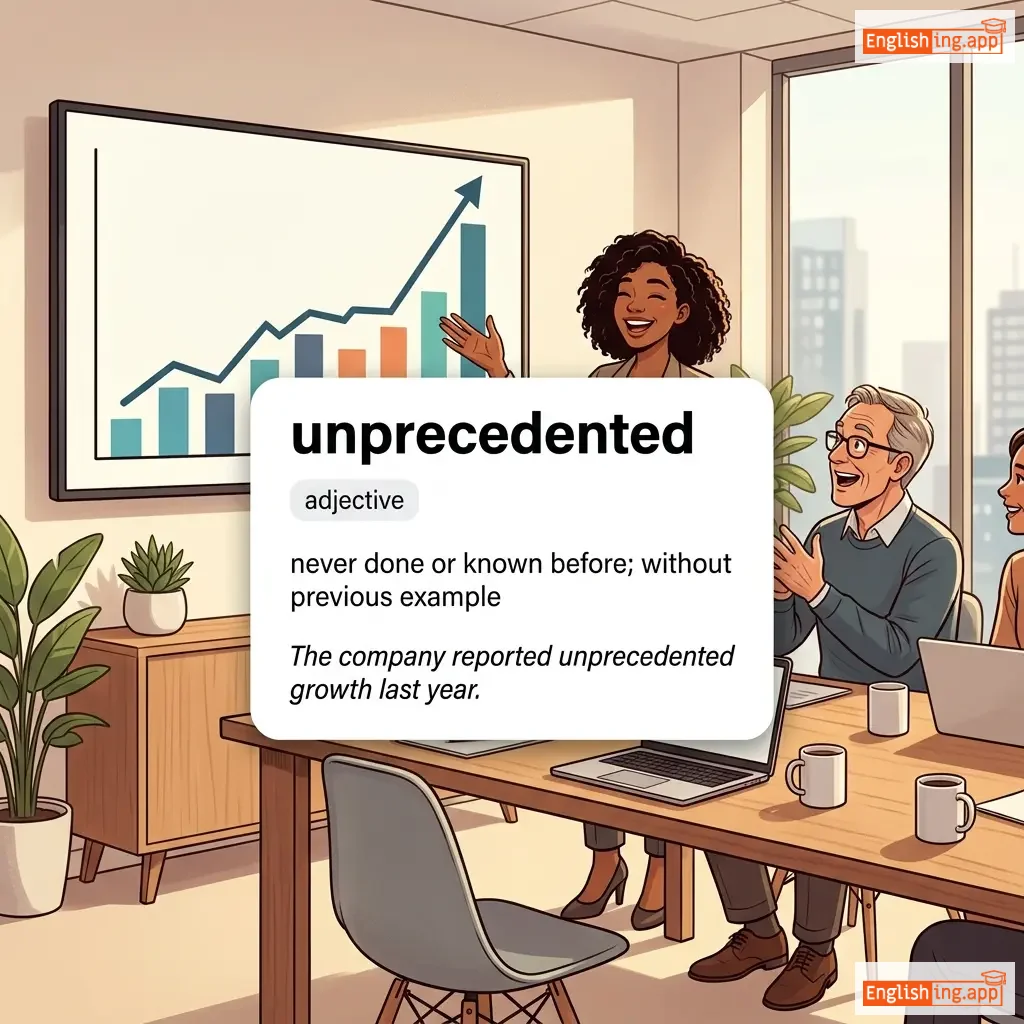
never done or known before; without previous example
••••••
|
The company reported unprecedented growth last year. |
会社は昨年、前例のない成長を報告しました。
Kaisha wa sakunen, zenrei no nai seichou o houkoku shimashita.
••••••
|
of unprecedented scale |
something happening in a size or degree never seen before
••••••
|
前例のない規模
zenrei no nai kibo
••••••
|
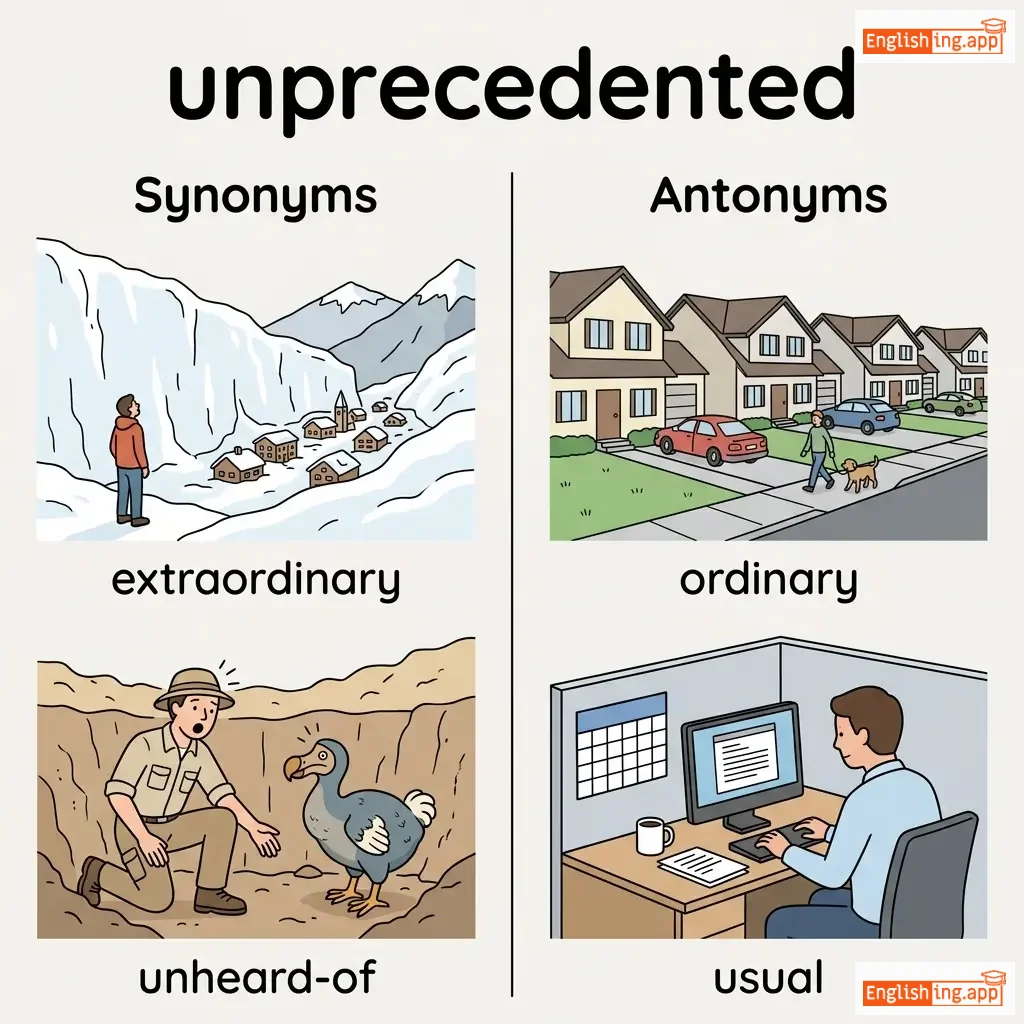
extraordinary, unheard-of, unique, exceptional
••••••
|
ordinary, usual, common
••••••
|
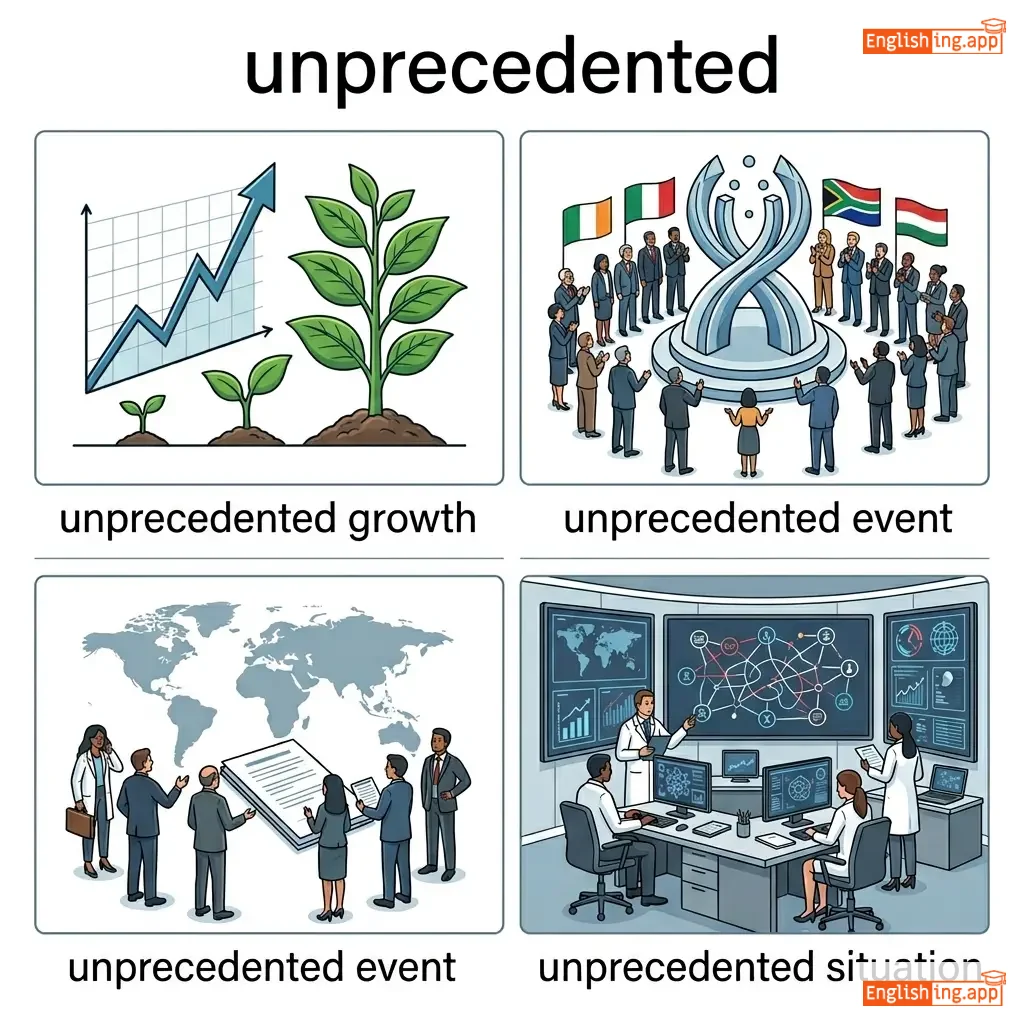
unprecedented growth, unprecedented event, unprecedented situation
••••••
|
前例のない
••••••
|
|
🎲
••••••
|
/ˌʌnprɪˈdɪktəbəl/
adjective
(アンプリディクタブル)
••••••
|
- •••••• |
予測できない
yosoku dekinai
••••••
|
- •••••• | - •••••• | - •••••• | - •••••• |
not able to be predicted; changing suddenly and unexpectedly
••••••
|
The weather in this region is highly unpredictable.
ザ ウェザー イン ディス リージョン イズ ハイリー アンプリディクタブル。
••••••
|
この地域の天気はとても予測できない。
kono chiiki no tenki wa totemo yosoku dekinai
••••••
|
- •••••• | - •••••• | - •••••• |
uncertain, erratic, volatile, unforeseeable, irregular
••••••
|
predictable, consistent, stable
••••••
|
unpredictable behavior, unpredictable weather, unpredictable results, highly unpredictable
••••••
|
予測できない = unpredictable
••••••
|
|
🚫
••••••
|
/ʌnprəˈfɛʃ.ən.əl/
adjective
(アンプロフェッショナル)
••••••
|
- •••••• |
不专业
fujōzu
••••••
|
- •••••• | - •••••• | - •••••• | - •••••• |
not conforming to the standards expected in a particular profession
••••••
|
His unprofessional behavior led to his dismissal from the company. |
彼の不専門的な行動は、会社からの解雇を引き起こしました。
Kare no fujōzu na kōdō wa, kaisha kara no kaiko o hikiokoshimashita.
••••••
|
- •••••• | - •••••• | - •••••• |
inappropriate, improper, unethical, incompetent
••••••
|
professional, appropriate, ethical, competent
••••••
|
unprofessional conduct, unprofessional behavior, unprofessional appearance
••••••
|
不専門的 - それは専門職の基準に合わない行動です。
••••••
|
|
📄
••••••
|
/ʌnˈriːdəbl/
adjective
(アンリーダブル)
••••••
|
- •••••• |
読めない
yomenai
••••••
|
- •••••• | - •••••• | - •••••• | - •••••• |
not able to be read or understood clearly; illegible
••••••
|
The doctor’s handwriting was completely unreadable.
ザ ドクターズ ハンドライティング ワズ コンプリートリー アンリーダブル
••••••
|
医者の字は完全に読めなかった。
Isha no ji wa kanzen ni yomenakatta
••••••
|
- •••••• | - •••••• | - •••••• |
illegible, indecipherable, unintelligible, unclear, cryptic
••••••
|
readable, legible, clear
••••••
|
unreadable text, unreadable handwriting, unreadable font, unreadable document
••••••
|
UNREADABLE = 読めない (read できない)
••••••
|
|
🌫️
••••••
|
/ʌnˈrɪəl/
adjective
(アンリアル)
••••••
|
- •••••• |
非現実的な
higenjitsuteki na
••••••
|
- •••••• | - •••••• | - •••••• | - •••••• |
not real or not based on reality; exaggerated or imaginary
••••••
|
The experience felt unreal after the sudden news.
ジ エクスペリエンス フェルト アンリアル アフター ザ サドゥン ニュース
••••••
|
突然の知らせの後、その体験は非現実的に感じられた。
Totsuzen no shirasé no ato, sono taiken wa higenjitsuteki ni kanjirareta
••••••
|
- •••••• | - •••••• | - •••••• |
imaginary, unbelievable, fantastic, illusory, surreal
••••••
|
real, realistic, genuine
••••••
|
unreal experience, unreal feeling, unreal expectations, unreal beauty
••••••
|
アンリアル = unreal、現実じゃないと覚える
••••••
|
|
🌫️
••••••
|
/ˌʌnriˈælɪti/
noun
(アンリアリティ)
••••••
|
- •••••• |
非現実感
hi genjitsukan
••••••
|
- •••••• | - •••••• | - •••••• | - •••••• |
the state or quality of being unreal; lack of reality or truth
••••••
|
The dreamlike setting gave the story a sense of unreality.
夢のような舞台は物語にアンリアリティを与えた。
••••••
|
夢のような舞台は物語に非現実感を与えた。
Yume no you na butai wa monogatari ni hi genjitsukan o ataeta
••••••
|
- •••••• | - •••••• | - •••••• |
illusion, fantasy, falseness, dreaminess
••••••
|
reality, truth, actuality
••••••
|
sense of unreality, feeling of unreality, atmosphere of unreality
••••••
|
アン(real)じゃない → 非現実
••••••
|
|
🤯
••••••
|
/ʌnˈriːzənəbəl/
adjective
(アンリーズナブル)
••••••
|
- •••••• |
理不尽な
rifujin na
••••••
|
- •••••• | - •••••• | - •••••• | - •••••• |
not guided by reason or fairness; excessive or extreme beyond what is acceptable
••••••
|
The manager made an unreasonable demand that no one could realistically meet.
マネージャーはアンリーズナブルな要求をした。
••••••
|
マネージャーは理不尽な要求をした。
manejaa wa rifujin na youkyuu o shita
••••••
|
unreasonable demands
アンリーズナブルな要求
••••••
|
requests that are excessive or unfair
••••••
|
理不尽な要求
rifujin na youkyuu
••••••
|
irrational, unfair, excessive, illogical, extreme
••••••
|
reasonable, fair, rational
••••••
|
unreasonable demand, unreasonable behavior, unreasonable expectation, unreasonable request
••••••
|
Reasonが無い=理不尽
••••••
|
|
🪵
••••••
|
/ˌʌnrɪˈfaɪnd/
adjective
(アンリファインド)
••••••
|
- •••••• |
未精製の
miseisei no
••••••
|
- •••••• | - •••••• | - •••••• | - •••••• |
not processed or purified; lacking polish or sophistication
••••••
|
The unrefined oil must be processed before it can be used as fuel.
ジ アンリファインド オイル マスト ビー プロセスト ビフォア イット キャン ビー ユーズド アズ フューエル。
••••••
|
未精製の石油は燃料として使う前に処理する必要がある。
miseisei no sekiyu wa nenryo toshite tsukau mae ni shori suru hitsuyo ga aru
••••••
|
- •••••• | - •••••• | - •••••• |
raw, crude, rough, coarse, natural
••••••
|
refined, polished, processed
••••••
|
unrefined oil, unrefined sugar, unrefined manners, unrefined taste
••••••
|
Unrefined = 未精製の、精製されていないと覚える。
••••••
|
|
❓
••••••
|
/ˌʌnrɪˈzɒlvd/
adjective
(アンリゾルヴド)
••••••
|
- •••••• |
未解決の
mikaiketsu no
••••••
|
- •••••• | - •••••• | - •••••• | - •••••• |
not solved or settled; remaining undecided or unclear
••••••
|
The dispute remains unresolved despite several meetings.
ザ ディスピュート リメインズ アンリゾルヴド ディスパイト セヴァラル ミーティングズ。
••••••
|
その問題は何度も会議をしたにもかかわらず未解決のままだ。
sono mondai wa nando mo kaigi o shita ni mo kakawarazu mikaiketsu no mama da
••••••
|
- •••••• | - •••••• | - •••••• |
unsolved, unsettled, pending, open, undecided
••••••
|
resolved, settled, decided
••••••
|
unresolved issue, unresolved conflict, unresolved problem, unresolved matter
••••••
|
Unresolved = 未解決、まだ解決していない
••••••
|
|
🗺️
••••••
|
/ʌnˈroʊl/
verb
(アンロール)
••••••
|
- •••••• |
広げる
hirogeru
••••••
|
unrolled
アンロールド
••••••
|
unrolled
アンロールド
••••••
|
unrolls
アンロールズ
••••••
|
unrolling
アンローリング
••••••
|
to open something that is rolled up; to spread out gradually
••••••
|
She unrolled the map on the table to find the route.
シー アンロールド ザ マップ オン ザ テーブル トゥ ファインド ザ ルート。
••••••
|
彼女は道を探すためにテーブルの上で地図を広げた。
kanojo wa michi o sagasu tame ni teeburu no ue de chizu o hirogeta
••••••
|
- •••••• | - •••••• | - •••••• |
unfold, open, spread, flatten, unwrap
••••••
|
roll up, fold, coil
••••••
|
unroll a map, unroll a carpet, unroll a scroll, unroll paper
••••••
|
Unroll = アン + ロール → ロールをほどいて広げる。
••••••
|
|
👁️🗨️
••••••
|
/ʌnˈsiːn/
adjective
(アンシーン)
••••••
|
- •••••• |
見えない; 前に見たり気づいたりしたことがない
mienai; mae ni mitari kidzuitari shita koto ga nai
••••••
|
- •••••• | - •••••• | - •••••• | - •••••• |
not previously seen or noticed; invisible; hidden
••••••
|
The unseen forces of nature can be very powerful. |
自然界の見えない力は非常に強力である可能性があります。
shizenkai no mienai chikara wa hijou ni kyouryoku dearu kanousei ga arimasu.
••••••
|
- •••••• | - •••••• | - •••••• |
invisible, hidden, unnoticed, concealed
••••••
|
visible, seen, noticed, apparent
••••••
|
unseen forces, unseen dangers, unseen world
••••••
|
In Japanese, '見えない' (mienai) refers to something unseen.
••••••
|
|
😶
••••••
|
/ʌnˈsəʊʃəbl/
adjective
(アンソーシャブル)
••••••
|
- •••••• |
非社交的な
hi shakaiteki na
••••••
|
- •••••• | - •••••• | - •••••• | - •••••• |
not enjoying the company of others; avoiding social interaction
••••••
|
He became unsociable after moving to a new city.
ヒー ビケイム アンソーシャブル アフター ムービング トゥ ア ニュー シティ。
••••••
|
新しい街に引っ越してから、彼は非社交的になった。
atarashii machi ni hikkoshite kara kare wa hi shakaiteki ni natta
••••••
|
- •••••• | - •••••• | - •••••• |
antisocial, withdrawn, introverted, reclusive, aloof
••••••
|
sociable, friendly, outgoing
••••••
|
unsociable behavior, unsociable hours, unsociable person
••••••
|
Un + sociable = 社交(shakou)しない
••••••
|
|
🙅♂️
••••••
|
/ʌnˈsəʊʃəl/
adjective
(アンソーシャル)
••••••
|
- •••••• |
非社交的な
hi shakouteki na
••••••
|
- •••••• | - •••••• | - •••••• | - •••••• |
not enjoying the company of others; avoiding social interaction; contrary to social norms
••••••
|
He prefers unsocial hours so he can work alone without interruptions.
ヒー プリファーズ アンソーシャル アワーズ。
••••••
|
彼は一人で働くために非社交的な時間を好む。
kare wa hitori de hataraku tame ni hi shakouteki na jikan o konomu
••••••
|
- •••••• | - •••••• | - •••••• |
asocial, unsociable, withdrawn, solitary, aloof
••••••
|
sociable, outgoing, friendly
••••••
|
unsocial behavior, unsocial hours, unsocial lifestyle, unsocial tendencies
••••••
|
アンソーシャル=社会(シャカイ)と反対。
••••••
|
|
📦
••••••
|
/ʌnˈsoʊld/
adjective
(アンソールド)
••••••
|
- •••••• |
未販売の
mihambai no
••••••
|
- •••••• | - •••••• | - •••••• | - •••••• |
not sold; remaining without a buyer
••••••
|
The unsold goods were returned to the warehouse.
ジ アンソールド グッズ ワー リターンド トゥ ザ ウェアハウス。
••••••
|
未販売の商品は倉庫に戻されました。
mihambai no shouhin wa souko ni modosaremashita
••••••
|
- •••••• | - •••••• | - •••••• |
unbought, leftover, unsold-out, remaining, idle
••••••
|
sold, purchased, bought
••••••
|
unsold items, unsold goods, unsold stock, unsold inventory
••••••
|
UNSOLD = 未 + SOLD → 未販売
••••••
|
|
⚖️
••••••
|
/ʌnˈsteɪbəl/
adjective
(ansutēburu)
••••••
|
- •••••• |
不安定
fu antei
••••••
|
- •••••• | - •••••• | - •••••• | - •••••• |
likely to change; not steady or secure; unsteady
••••••
|
The unstable economy made people worried about their jobs.
不安定な経済は、人々を自分たちの仕事について心配させました。
••••••
|
不安定な経済は、人々を自分たちの仕事について心配させました。
Fuan tei na keizai wa, hitobito o jibuntachi no shigoto ni tsuite shinpai sasemashita.
••••••
|
- •••••• | - •••••• | - •••••• |
unsteady, volatile, changeable, fluctuating
••••••
|
stable, steady, secure, firm
••••••
|
unstable economy, unstable relationship, unstable condition
••••••
|
不安定 = 不 + 安定 (安定していない)
••••••
|
|
😵💫
••••••
|
/ʌnˈstɛdi/
adjective
(アンステディ)
••••••
|
- •••••• |
不安定な
fuantei na
••••••
|
- •••••• | - •••••• | - •••••• | - •••••• |
not firm or stable; likely to change or fail
••••••
|
She felt unsteady on her feet after the long journey.
シー フェルト アンステディ オン ハー フィート アフター ザ ロング ジャーニー。
••••••
|
長旅の後、彼女は足元が不安定だった。
Nagata bi no ato, kanojo wa ashimoto ga fuantei datta
••••••
|
on unsteady ground
オン アンステディ グラウンド
••••••
|
in a risky or uncertain situation
••••••
|
不安定な立場で
fuantei na tachiba de
••••••
|
unstable, shaky, wobbly, insecure, unreliable
••••••
|
steady, stable, firm
••••••
|
unsteady footing, unsteady hands, unsteady pace, unsteady economy
••••••
|
Unsteady = 不安定な、意味がそのまま。
••••••
|
|
❌
••••••
|
/ˌʌnsəkˈsesfl/
adjective
(アンセクセスフル)
••••••
|
- •••••• |
失敗した; 成功しなかった;
shippai shita; seikou shinakatta
••••••
|
- •••••• | - •••••• | - •••••• | - •••••• |
not achieving desired aims or results; failing to accomplish a purpose
••••••
|
His unsuccessful attempt to climb the mountain left him disappointed.
His unsuccessful attempt to climb the mountain left him disappointed.
••••••
|
彼の失敗した山登りの試みは彼を失望させた。
Kare no shippai shita yamanobori no kokoromi wa kare o shitsubou saseta.
••••••
|
- •••••• | - •••••• | - •••••• |
failed, defeated, futile, fruitless
••••••
|
successful, victorious, triumphant, effective
••••••
|
unsuccessful attempt, unsuccessful candidate, unsuccessful business
••••••
|
日本語で'失敗した'は目標を達成できなかった意味です。
••••••
|
|
🚫
••••••
|
/ʌnˈsuːtəbl/
adjective
(アンスイータブル)
••••••
|
- •••••• |
不適切; 不適当
futekisetsu; futekitou
••••••
|
- •••••• | - •••••• | - •••••• | - •••••• |
not fitting or appropriate for a particular purpose or situation
••••••
|
This formal dress is unsuitable for a casual beach party.
このフォーマルなドレスはカジュアルなビーチパーティには不適切です。
••••••
|
このフォーマルなドレスはカジュアルなビーチパーティには不適切です。
Kono fōmaru na doresu wa kajuaru na bīchi pātī ni wa futekisetsu desu.
••••••
|
- •••••• | - •••••• | - •••••• |
inappropriate, unfit, improper, inadequate
••••••
|
suitable, appropriate, fitting, proper
••••••
|
unsuitable behavior, unsuitable candidate, unsuitable conditions
••••••
|
Japanese word 'futekisetsu' is similar to 'unsuitable'.
••••••
|
|
🤔
••••••
|
/ʌnˈʃʊr/
adjective
(アンシュア)
••••••
|
- •••••• |
不確かな
futashikana
••••••
|
- •••••• | - •••••• | - •••••• | - •••••• |
not certain or confident; feeling doubt
••••••
|
She felt unsure about the decision.
シー フェルト アンシュア アバウト ザ ディシジョン
••••••
|
彼女はその決定について不確かだった。
kanojo wa sono kettei ni tsuite futashika datta
••••••
|
not sure
ノット シュア
••••••
|
expressing uncertainty or lack of confidence
••••••
|
確かではない
tashika dewa nai
••••••
|
uncertain, doubtful, hesitant, insecure, undecided
••••••
|
sure, confident, certain
••••••
|
feel unsure, unsure about, unsure whether, remain unsure
••••••
|
Unsure = 不確か
••••••
|
|
🚫
••••••
|
/ʌnˈtiːtʃəbəl/
adjective
(アンティーチャブル)
••••••
|
- •••••• |
教えられない
oshierarenai
••••••
|
- •••••• | - •••••• | - •••••• | - •••••• |
not able or willing to learn; resistant to instruction or guidance
••••••
|
He was so stubborn that he became almost unteachable.
ヒー ワズ ソー スタボーン ザット ヒー ビケイム オールモースト アンティーチャブル。
••••••
|
彼はとても頑固で、ほとんど教えられない状態だった。
kare wa totemo ganko de hotondo oshierarenai jotai datta
••••••
|
- •••••• | - •••••• | - •••••• |
uneducable, stubborn, inflexible, unreceptive, obstinate
••••••
|
teachable, receptive, flexible
••••••
|
unteachable attitude, unteachable student, become unteachable
••••••
|
Un + teachable = 教えられない。
••••••
|
|
🤯
••••••
|
/ʌnˈθɪŋkəbl/
adjective
(アンシンクアブル)
••••••
|
- •••••• |
想像を絶する
souzou o zessuru
••••••
|
- •••••• | - •••••• | - •••••• | - •••••• |
impossible to conceive or imagine; beyond belief or consideration
••••••
|
It was unthinkable that such a tragedy could happen in our peaceful town. |
私たちの平和な街でそのような悲劇が起こるなんて、想像を絶していました。
Watashitachi no heiwa na machi de sono youna higeki ga okoru nante, souzou o zesshite imashita.
••••••
|
- •••••• | - •••••• | - •••••• |
inconceivable, unimaginable, impossible, incredible
••••••
|
thinkable, conceivable, imaginable, possible
••••••
|
unthinkable tragedy, unthinkable consequences, unthinkable act
••••••
|
想像を絶する – 予想できない、または理解できないほどのもの。
••••••
|
|
🤖
••••••
|
/ʌnˈθɪŋkɪŋ/
adjective
(アンシンキング)
••••••
|
- •••••• |
軽率な
keisotsu na
••••••
|
- •••••• | - •••••• | - •••••• | - •••••• |
done without careful thought; automatic or thoughtless
••••••
|
His unthinking remark hurt her feelings.
ヒズ アンシンキング リマーク ハート ハー フィーリングズ
••••••
|
彼の軽率な発言は彼女の気持ちを傷つけた。
kare no keisotsu na hatsugen wa kanojo no kimochi o kizutsuketa
••••••
|
- •••••• | - •••••• | - •••••• |
thoughtless, automatic, mindless, impulsive, careless
••••••
|
thoughtful, deliberate, mindful
••••••
|
unthinking reaction, unthinking behavior, unthinking obedience, unthinking response
••••••
|
Unthinking = 考えない → 軽率な
••••••
|
|
🗑️
••••••
|
/ʌnˈtaɪdi/
adjective
(アンタイディ)
••••••
|
- •••••• |
散らかった; 無秩序な;
chirakatta
••••••
|
- •••••• | - •••••• | - •••••• | - •••••• |
not neat or orderly; messy and disorganized
••••••
|
Her untidy room was filled with clothes scattered everywhere. |
彼女の散らかった部屋は、どこにでも散らばった服でいっぱいでした。
kanojo no chirakatta heya wa, doko ni demo chirabatta fuku de ippai deshita.
••••••
|
- •••••• | - •••••• | - •••••• |
messy, disorganized, cluttered, unkempt
••••••
|
tidy, neat, organized, orderly
••••••
|
untidy room, untidy appearance, untidy desk
••••••
|
散らかった - 物がすべてバラバラ
••••••
|
|
🪢
••••••
|
/ʌnˈtaɪ/
verb
(アンタイ)
••••••
|
- •••••• |
解く
toku
••••••
|
untied
アンタイド
••••••
|
untied
アンタイド
••••••
|
unties
アンタイズ
••••••
|
untying
アンタイイング
••••••
|
to loosen or remove a knot or binding; to release something that is tied
••••••
|
She untied the rope to free the boat.
シー アンタイド ザ ロープ トゥ フリー ザ ボート。
••••••
|
彼女は船を自由にするためにロープを解いた。
kanojo wa fune o jiyuu ni suru tame ni roopu o toita
••••••
|
untie the knot
アンタイ ザ ノット
••••••
|
to solve a difficult problem
••••••
|
結び目を解く
musubime o toku
••••••
|
loosen, unfasten, release, undo, free
••••••
|
tie, bind, fasten
••••••
|
untie a knot, untie shoelaces, untie hands, untie rope
••••••
|
untie = 解く tie
••••••
|
|
❌
••••••
|
/ʌnˈtru/
adjective
(アン・トゥルー)
••••••
|
- •••••• |
嘘の; 間違った
uso no; machigatta
••••••
|
- •••••• | - •••••• | - •••••• | - •••••• |
not true; false; incorrect
••••••
|
His statement about the incident was completely untrue. |
彼の事件に関する声明は完全に嘘でした。
Kare no jiken ni kansuru seimei wa kanzen ni uso deshita.
••••••
|
- •••••• | - •••••• | - •••••• |
false, incorrect, wrong, inaccurate
••••••
|
true, correct, accurate, right
••••••
|
untrue statement, completely untrue, prove untrue
••••••
|
嘘 = Untrue
••••••
|
|
🔮
••••••
|
/ʌnˈjuː.ʒu.əl/
adjective
(an-yu-zu-aru)
••••••
|
- •••••• |
異常な; 奇妙な;
ijou na; kimyou na
••••••
|
- •••••• | - •••••• | - •••••• | - •••••• |
not typical; strange; different from what is normal
••••••
|
She wore an unusual dress to the party.
彼女はパーティーに珍しいドレスを着ていた。
••••••
|
彼女はパーティーに異常なドレスを着ていた。
Kanojo wa paatii ni ijou na doresu wo kiteita.
••••••
|
- •••••• | - •••••• | - •••••• |
strange, odd, peculiar, rare, uncommon
••••••
|
usual, normal, typical, common, ordinary
••••••
|
unusual behavior, unusual circumstances, quite unusual
••••••
|
Unusual sounds like '異常な', think of '異' (strange) and '常' (ordinary)
••••••
|

