|
表情符号
|
单词 | Images | 翻译 | 过去时 | 过去分词 | 第三人称单数 | 动名词 | 含义 | 例句 | 例句翻译 | 示例表达 | 示例表达含义 | 示例表达翻译 | 同义词 | 反义词 | 搭配词 | 助记符 |
|---|---|---|---|---|---|---|---|---|---|---|---|---|---|---|---|---|---|
|
😞
••••••
|
/ʌnˈhæp.i.nəs/
noun
(安哈皮内斯)
••••••
|
- •••••• |
不快乐
bukuaile
••••••
|
- •••••• | - •••••• | - •••••• | - •••••• |
the state of being unhappy; sadness or dissatisfaction
••••••
|
Her constant unhappiness affected everyone around her.
她持续的 unhappiness 影响了周围的每一个人。
••••••
|
她持续的不快乐影响了周围的每一个人。
Ta chixu de bukuaile yingxiang le zhouwei de mei yi ge ren.
••••••
|
- •••••• | - •••••• | - •••••• |
sadness, misery, gloom, sorrow, distress
••••••
|
happiness, joy, contentment
••••••
|
deep unhappiness, emotional unhappiness, chronic unhappiness
••••••
|
bukuaile = literally 'not happy', remember as unhappiness
••••••
|
|
😔
••••••
|
/ʌnˈhæpi/
adjective
(àn hāi pī)
••••••
|
- •••••• |
不开心或悲伤
bù kāixīn huò bēishāng
••••••
|
- •••••• | - •••••• | - •••••• | - •••••• |
not happy; sad, disappointed, or dissatisfied
••••••
|
He was unhappy with the final decision.
他对最终决定感到不开心。
••••••
|
他对最终决定感到不开心。
tā duì zuìzhōng juédìng gǎndào bù kāixīn.
••••••
|
an unhappy ending
一个不开心的结局
••••••
|
a sad or tragic conclusion to a story or event
••••••
|
一个悲伤的结局
yí gè bēishāng de jiéjú
••••••
|
sad, miserable, gloomy, depressed, dissatisfied
••••••
|
happy, cheerful, content
••••••
|
unhappy with, feel unhappy, unhappy marriage, unhappy ending
••••••
|
在 happy 前加上 un,就会变得不开心 — 所以 unhappy 就是感到悲伤 😔
••••••
|
|
🙄
••••••
|
/ʌnˈhɛlpfəl/
adjective
(安赫普佛)
••••••
|
- •••••• |
没有帮助的
meiyou bangzhu de
••••••
|
- •••••• | - •••••• | - •••••• | - •••••• |
not providing help or support; making a situation harder rather than easier
••••••
|
His unhelpful attitude slowed down the entire project.
希斯 安赫普佛 阿提丘德 斯楼德 当 德 恩泰尔 普罗杰克特。
••••••
|
他没有帮助的态度拖慢了整个项目。
ta meiyou bangzhu de taidu tuo man le zhengge xiangmu
••••••
|
- •••••• | - •••••• | - •••••• |
uncooperative, useless, obstructive, unsupportive, ineffective
••••••
|
helpful, supportive, cooperative
••••••
|
unhelpful attitude, unhelpful comment, unhelpful response, unhelpful advice
••••••
|
unhelpful = 没有帮助的, 就是帮不上忙
••••••
|
|
😔
••••••
|
/ʌnˈɒnəd/
adjective
(安哈纳德)
••••••
|
- •••••• |
未受尊敬的
wei shou zun jing de
••••••
|
- •••••• | - •••••• | - •••••• | - •••••• |
not respected or given the recognition that is deserved; treated without honor
••••••
|
He felt unhonoured after his years of service were ignored.
希 费尔特 安哈纳德 阿夫特 赫兹 伊尔兹 奥夫 瑟维斯 沃尔 伊格诺德。
••••••
|
他的多年服务被忽视后,他感到自己未受尊敬。
Tade duonian fuwu bei hushi hou ta gandao ziji wei shou zun jing
••••••
|
- •••••• | - •••••• | - •••••• |
disrespected, disregarded, slighted, unacknowledged, ignored
••••••
|
honoured, respected, celebrated
••••••
|
unhonoured service, unhonoured promise, feel unhonoured, remain unhonoured
••••••
|
No honor means unhonoured—中文未受尊敬的。
••••••
|
|
⚪
••••••
|
/ʌnɪmˈpɔːrtəns/
noun
(安恩波爾坦斯)
••••••
|
- •••••• |
不重要
bu zhongyao
••••••
|
- •••••• | - •••••• | - •••••• | - •••••• |
the state or quality of being insignificant or not important
••••••
|
He dismissed the issue with a sense of unimportance.
他以無關緊要的態度忽略了這個問題。
••••••
|
他以無關緊要的態度忽略了這個問題。
Ta yi wu guan jinyao de taidu hule zhe ge wenti
••••••
|
- •••••• | - •••••• | - •••••• |
insignificance, triviality, inconsequence, negligibility
••••••
|
importance, significance, consequence
••••••
|
sense of unimportance, feelings of unimportance, perceived unimportance
••••••
|
Imagine 'unimportance' as '不重要', a tiny dot ⚪ in a huge page
••••••
|
|
🤷
••••••
|
/ˌʌnɪmˈpɔːrtənt/
adjective
(安因波坦特)
••••••
|
- •••••• |
不重要的
bu zhongyao de
••••••
|
- •••••• | - •••••• | - •••••• | - •••••• |
not having much value, significance, or influence
••••••
|
The detail seemed unimportant compared to the main issue.
泽 迪泰尔 西姆德 安因波坦特 康佩尔德 图 泽 缅 因休。
••••••
|
与主要问题相比,这个细节显得不重要。
Yu zhuyao wenti xiangbi zhege xijie xiande bu zhongyao
••••••
|
of unimportant matter
奥夫 安因波坦特 马特
••••••
|
something that does not deserve much attention
••••••
|
不重要的事情
bu zhongyao de shiqing
••••••
|
insignificant, trivial, minor, negligible, petty
••••••
|
important, significant, crucial
••••••
|
unimportant detail, unimportant issue, seem unimportant, relatively unimportant
••••••
|
Unimportant = 不重要的 — 英文和中文意思一致
••••••
|
|
🤷
••••••
|
/ˌʌnɪnˈfɔːrmd/
adjective
(安因福姆德)
••••••
|
- •••••• |
不了解情况的
bu liaojie qingkuang de
••••••
|
- •••••• | - •••••• | - •••••• | - •••••• |
lacking knowledge or awareness about a particular subject; not educated or informed
••••••
|
The decision was made by an uninformed committee.
泽 迪西申 沃兹 梅德 拜 安 安因福姆德 科米提。
••••••
|
这个决定是由一个不了解情况的委员会做出的。
zhege jueding shi you yi ge bu liaojie qingkuang de weiyuanhui zuochu de
••••••
|
- •••••• | - •••••• | - •••••• |
ignorant, unaware, uneducated, clueless, ill-informed
••••••
|
informed, knowledgeable, aware
••••••
|
uninformed opinion, uninformed decision, uninformed voter, uninformed public
••••••
|
Uninformed = 不了解 (不了解信息)
••••••
|
|
😴
••••••
|
/ˌʌnˈɪntrəstɪŋ/
adjective
(安英吹瑞斯汀)
••••••
|
- •••••• |
无趣的
wuqu de
••••••
|
- •••••• | - •••••• | - •••••• | - •••••• |
not holding attention or curiosity; boring
••••••
|
The lecture was uninteresting and difficult to stay focused on.
泽 莱克彻 沃兹 安英吹瑞斯汀 安德 迪菲考特 图 斯泰 佛卡斯特 昂。
••••••
|
这次讲座很无趣,很难集中注意力。
Zhe ci jiangzuo hen wuqu, hen nan jizhong zhuyi li
••••••
|
- •••••• | - •••••• | - •••••• |
boring, dull, tedious, monotonous, unstimulating
••••••
|
interesting, engaging, fascinating
••••••
|
uninteresting topic, uninteresting story, uninteresting job, uninteresting details
••••••
|
Uninteresting 就是没有 interest,中文就是 无趣的。
••••••
|
|
😠
••••••
|
/ʌnˈkaɪnd/
adjective
(ánkāińd)
••••••
|
- •••••• |
残忍; 不友好
cánrěn; bù yǒuhǎo
••••••
|
- •••••• | - •••••• | - •••••• | - •••••• |
cruel; not nice or caring toward others
••••••
|
It was unkind of him to make fun of her appearance.
他取笑她的外貌,真是太不友善了。
••••••
|
他取笑她的外貌,真是太不友善了。
Tā qǔxiào tā de wàimào, zhēn shì tài bù yǒushàn le.
••••••
|
- •••••• | - •••••• | - •••••• |
cruel, mean, harsh, nasty
••••••
|
kind, nice, gentle, caring
••••••
|
unkind words, unkind behavior, unkind comment
••••••
|
Unkind 在中文中意味着不友好,伤害别人感情的行为。
••••••
|
|
😠
••••••
|
/ʌnˈkaɪndli/
adverb
(安开恩德利)
••••••
|
- •••••• |
残忍地
canrendi
••••••
|
- •••••• | - •••••• | - •••••• | - •••••• |
in a cruel, harsh, or unsympathetic manner
••••••
|
She spoke unkindly about her colleague during the meeting.
希 斯波克 安开恩德利 阿包特 赫尔 科利格 迪尤林 德 米廷
••••••
|
她在会议期间残忍地谈论了她的同事。
ta zai huiyi qijian canrendi tanlun le ta de tongshi
••••••
|
- •••••• | - •••••• | - •••••• |
cruelly, harshly, rudely, coldly, meanly
••••••
|
kindly, gently, compassionately
••••••
|
speak unkindly, treat unkindly, judge unkindly, respond unkindly
••••••
|
Unkindly = 不 kindness → 残忍地
••••••
|
|
😔
••••••
|
/ʌnˈkaɪndnəs/
noun
(安开德尼斯)
••••••
|
- •••••• |
不友善
bu youshan
••••••
|
- •••••• | - •••••• | - •••••• | - •••••• |
lack of kindness; cruel or inconsiderate behavior
••••••
|
His unkindness hurt her feelings deeply.
His unkindness hurt her feelings deeply.
••••••
|
他的不友善深深伤害了她的感情。
Ta de bu youshan shenshen shanghai le ta de ganqing
••••••
|
- •••••• | - •••••• | - •••••• |
cruelty, harshness, meanness, coldness, unfriendliness
••••••
|
kindness, compassion, benevolence
••••••
|
act of unkindness, deliberate unkindness, show unkindness, emotional unkindness
••••••
|
Unkindness 就是 不友善
••••••
|
|
🔓
••••••
|
/ʌnˈlɒk/
verb
(安洛克)
••••••
|
- •••••• |
解锁
jiesuo
••••••
|
unlocked
安洛克德
••••••
|
unlocked
安洛克德
••••••
|
unlocks
安洛克斯
••••••
|
unlocking
安洛克英
••••••
|
to open something that is locked; to make something accessible or available
••••••
|
She used the key to unlock the door.
她 用 钥匙 解锁 门
••••••
|
她用钥匙解锁了门。
ta yong yaoshi jiesuo le men
••••••
|
unlock potential
安洛克 潜力
••••••
|
to make hidden abilities or possibilities available
••••••
|
释放潜力
shifang qianli
••••••
|
open, release, unfasten, free, disengage
••••••
|
lock, secure, fasten
••••••
|
unlock the door, unlock a phone, unlock access, unlock potential
••••••
|
Unlock 就是 解锁,门开了
••••••
|
|
😞
••••••
|
/ʌnˈlʌki/
adjective
(ān lā kè)
••••••
|
- •••••• |
倒霉; 不幸运
dàoméi; bù xìngyùn
••••••
|
- •••••• | - •••••• | - •••••• | - •••••• |
having bad luck; unfortunate
••••••
|
He was unlucky to miss the winning shot. |
他很倒霉错过了获胜的投篮。
Tā hěn dàoméi cuòguòle huòshèng de tóulán.
••••••
|
- •••••• | - •••••• | - •••••• |
unfortunate, hapless, cursed
••••••
|
lucky, fortunate, blessed
••••••
|
unlucky day, unlucky number, unlucky person
••••••
|
当你不幸时,记住中文的'倒霉',它描述了运气不好的状态。
••••••
|
|
🎭
••••••
|
/ʌnˈmɑːsk/
verb
(安马斯克)
••••••
|
- •••••• |
揭露;暴露真相
jielu; baolu zhenxiang
••••••
|
unmasked
安马斯克德
••••••
|
unmasked
安马斯克德
••••••
|
unmasks
安马斯克斯
••••••
|
unmasking
安马斯克英
••••••
|
to remove a mask or covering; to reveal the true identity, nature, or intentions of someone or something
••••••
|
The investigation helped unmask the real culprit behind the crime.
调查帮助揭露了犯罪背后的真正罪犯
••••••
|
调查帮助揭露了犯罪背后的真正罪犯。
Diaocha bangzhu jielu le fanzui beihou de zhenzheng zuifan
••••••
|
unmask the truth
unmask the truth
••••••
|
to reveal what is really happening or what has been hidden
••••••
|
揭露真相
jielu zhenxiang
••••••
|
reveal, expose, disclose, uncover, unveil
••••••
|
conceal, hide, cover
••••••
|
unmask the truth, unmask a fraud, unmask the villain, unmask intentions
••••••
|
UNMASK = 揭露面具后的真相
••••••
|
|
🔒
••••••
|
/ʌnˈmɒdɪfaɪd/
adjective
(安莫迪法艾德)
••••••
|
- •••••• |
未修改的
wei xiugai de
••••••
|
- •••••• | - •••••• | - •••••• | - •••••• |
not changed from its original form or state
••••••
|
The data was used in its unmodified form for analysis.
数据以安莫迪法艾德的形式用于分析。
••••••
|
这些数据以未修改的形式用于分析。
zhexie shuju yi wei xiugai de xingshi yongyu fenxi
••••••
|
- •••••• | - •••••• | - •••••• |
unchanged, original, intact, raw, plain
••••••
|
modified, altered, changed
••••••
|
unmodified data, unmodified version, remain unmodified, left unmodified
••••••
|
Unmodified 就是 未修改的,记住 un = 不
••••••
|
|
🤖
••••••
|
/ʌnˈnætʃərəl/
adjective
(安那秋若)
••••••
|
- •••••• |
不自然的
bu ziran de
••••••
|
- •••••• | - •••••• | - •••••• | - •••••• |
not existing in nature; artificial; forced
••••••
|
The actor's smile looked unnatural and forced.
演员的笑容看起来很安那秋若,很勉强。
••••••
|
演员的笑容看起来很不自然,很勉强。
yanyuan de xiaorong kan qilai hen bu ziran hen mianqiang
••••••
|
- •••••• | - •••••• | - •••••• |
artificial, fake, forced
••••••
|
natural, genuine, authentic
••••••
|
unnatural behavior, unnatural smile, unnatural pose
••••••
|
‘Bu ziran’ means ‘not natural’ — exactly ‘unnatural’ in Chinese!
••••••
|
|
🤨
••••••
|
/ʌnˈnætʃrəli/
adverb
(安纳丘热利)
••••••
|
- •••••• |
不自然地
bu ziran de
••••••
|
- •••••• | - •••••• | - •••••• | - •••••• |
in a way that is not natural or normal; excessively or strangely
••••••
|
He smiled unnaturally, making everyone feel uncomfortable.
他 安纳丘热利 地 微笑,让 每个人 都 不舒服。
••••••
|
他不自然地笑了,让每个人都感到不舒服。
Ta bu ziran de xiao le, rang mei ge ren dou gan dao bu shufu
••••••
|
- •••••• | - •••••• | - •••••• |
artificially, strangely, oddly, abnormally, excessively
••••••
|
naturally, normally, genuinely
••••••
|
unnaturally quiet, unnaturally calm, unnaturally bright, unnaturally pale
••••••
|
不自然 = not natural → unnaturally
••••••
|
|
🚫
••••••
|
/ʌnˈnesəserəli/
adverb
(ʌnˈnɛsɛsɛrəli)
••••••
|
- •••••• |
不必要地
bù bì yào de
••••••
|
- •••••• | - •••••• | - •••••• | - •••••• |
to a greater extent than is needed; without necessity
••••••
|
Don't worry unnecessarily about the exam. |
不要为考试不必要地担心。
bù yào wèi kǎo shì bù bì yào de dān xīn.
••••••
|
- •••••• | - •••••• | - •••••• |
needlessly, pointlessly, excessively, superfluously
••••••
|
necessarily, essentially, importantly
••••••
|
unnecessarily complicated, unnecessarily harsh, unnecessarily worried
••••••
|
想象在你完全不需要时仍然担心,这就像是自找麻烦。
••••••
|
|
🚫
••••••
|
/ʌnˈnɛsəsɛri/
adjective
(ān-né-sè-sà-lí)
••••••
|
- •••••• |
不必要
bù bì yào
••••••
|
- •••••• | - •••••• | - •••••• | - •••••• |
not needed or required
••••••
|
The manager cut all unnecessary expenses to save costs. |
经理削减了所有不必要的开支以节省成本。
Jīnglǐ xuējiǎnle suǒyǒu bù bì yào de kāizhī yǐ jiéshěng chéngběn.
••••••
|
unnecessary evil |
something bad that must be accepted for practical reasons
••••••
|
不必要的恶
bù bì yào de è
••••••
|
needless, redundant, avoidable, unneeded
••••••
|
necessary, essential, required
••••••
|
unnecessary expense, unnecessary risk, unnecessary delay
••••••
|
Bù bì yào → 必要不 → 不必要
••••••
|
|
📦
••••••
|
/ʌnˈpæk/
verb
(安帕克)
••••••
|
- •••••• |
拆开
chai kai
••••••
|
unpacked
安帕克特
••••••
|
unpacked
安帕克特
••••••
|
unpacks
安帕克斯
••••••
|
unpacking
安帕克英
••••••
|
to remove items from a container; to explain or analyze something in detail
••••••
|
After arriving home, she began to unpack her suitcase.
阿夫特 阿赖文 侯姆,她 比甘 图 安帕克 她的 苏特凯斯
••••••
|
到家后,她开始拆开自己的行李箱。
Dao jia hou, ta kaishi chai kai ziji de xinglixiang
••••••
|
unpack the truth
安帕克 真相
••••••
|
to reveal or explain the real facts in detail
••••••
|
揭开真相
jie kai zhenxiang
••••••
|
empty, unload, unbox, remove, open
••••••
|
pack, load, fill
••••••
|
unpack luggage, unpack boxes, unpack a suitcase, unpack ideas, unpack details
••••••
|
UNPACK 听起来像 拆开 — 箱子一拆就记住
••••••
|
|
💸
••••••
|
/ˌʌnˈpeɪd/
adjective
(ānpéi dé)
••••••
|
- •••••• |
未支付的; 无薪的
wei zhi fu de; wu xin de
••••••
|
- •••••• | - •••••• | - •••••• | - •••••• |
not paid for; without payment or salary
••••••
|
She worked as an unpaid intern for six months. |
她作为一名无薪实习生工作了六个月。
ta zuo wei yi ming wu xin shi xi sheng gong zuo le liu ge yue
••••••
|
- •••••• | - •••••• | - •••••• |
outstanding, unsettled, voluntary, free
••••••
|
paid, settled, compensated, salaried
••••••
|
unpaid bills, unpaid work, unpaid leave, unpaid volunteer
••••••
|
Unpaid in Chinese means '未支付的'; 没有薪水, 就是没有报酬.
••••••
|
|
😣
••••••
|
/ʌnˈplɛz.ənt/
adjective
(ānpūléizènt)
••••••
|
- •••••• |
令人不悦的
lìng rén bù yuè de
••••••
|
- •••••• | - •••••• | - •••••• | - •••••• |
not giving or causing pleasure; disagreeable
••••••
|
The medicine had an unpleasant taste. |
药物有一种令人不悦的味道。
Yàowù yǒu yī zhǒng lìng rén bù yuè de wèi dào.
••••••
|
- •••••• | - •••••• | - •••••• |
disagreeable, distasteful, horrible, nasty
••••••
|
pleasant, agreeable, nice, enjoyable
••••••
|
unpleasant experience, unpleasant smell, unpleasant surprise
••••••
|
令人不悦的和 'unpleasant' 是相似的词。
••••••
|
|
😣
••••••
|
/ʌnˈplɛzəntli/
adverb
(安普莱森特利)
••••••
|
- •••••• |
令人不快地
ling ren bu kuai de
••••••
|
- •••••• | - •••••• | - •••••• | - •••••• |
in a way that causes discomfort, annoyance, or displeasure; in an unfriendly or disagreeable manner
••••••
|
The room was unpleasantly hot during the afternoon.
The room was unpleasantly hot during the afternoon.
••••••
|
下午房间里热得令人不快。
xiawu fangjian li re de ling ren bu kuai
••••••
|
- •••••• | - •••••• | - •••••• |
awkwardly, disagreeably, annoyingly, uncomfortably, harshly
••••••
|
pleasantly, agreeably, comfortably
••••••
|
unpleasantly hot, unpleasantly surprised, unpleasantly loud, unpleasantly cold
••••••
|
Unpleasantly 想到 不快 = 令人不快地
••••••
|
|
👎
••••••
|
/ʌnˈpɒpjʊlə/
adjective
(安帕普尤勒)
••••••
|
- •••••• |
不受欢迎的
bu shou huanying de
••••••
|
- •••••• | - •••••• | - •••••• | - •••••• |
not liked or supported by many people
••••••
|
The decision was unpopular with the public.
泽 迪西申 沃兹 安帕普尤勒 威斯 泽 帕布利克
••••••
|
这个决定在公众中不受欢迎。
zhege jueding zai gongzhong zhong bu shou huanying
••••••
|
- •••••• | - •••••• | - •••••• |
disliked, unpopularized, unfavored, rejected, unpopularized
••••••
|
popular, favored, well-liked
••••••
|
unpopular opinion, unpopular decision, deeply unpopular, become unpopular
••••••
|
Unpopular = 不 + 受欢迎
••••••
|
|
🚀
••••••
|
/ʌnˈprɛsɪˌdɛntɪd/
adjective
(anpresident)
••••••
|
|
前所未有
qián suǒ wèi yǒu
••••••
|
- •••••• | - •••••• | - •••••• | - •••••• |
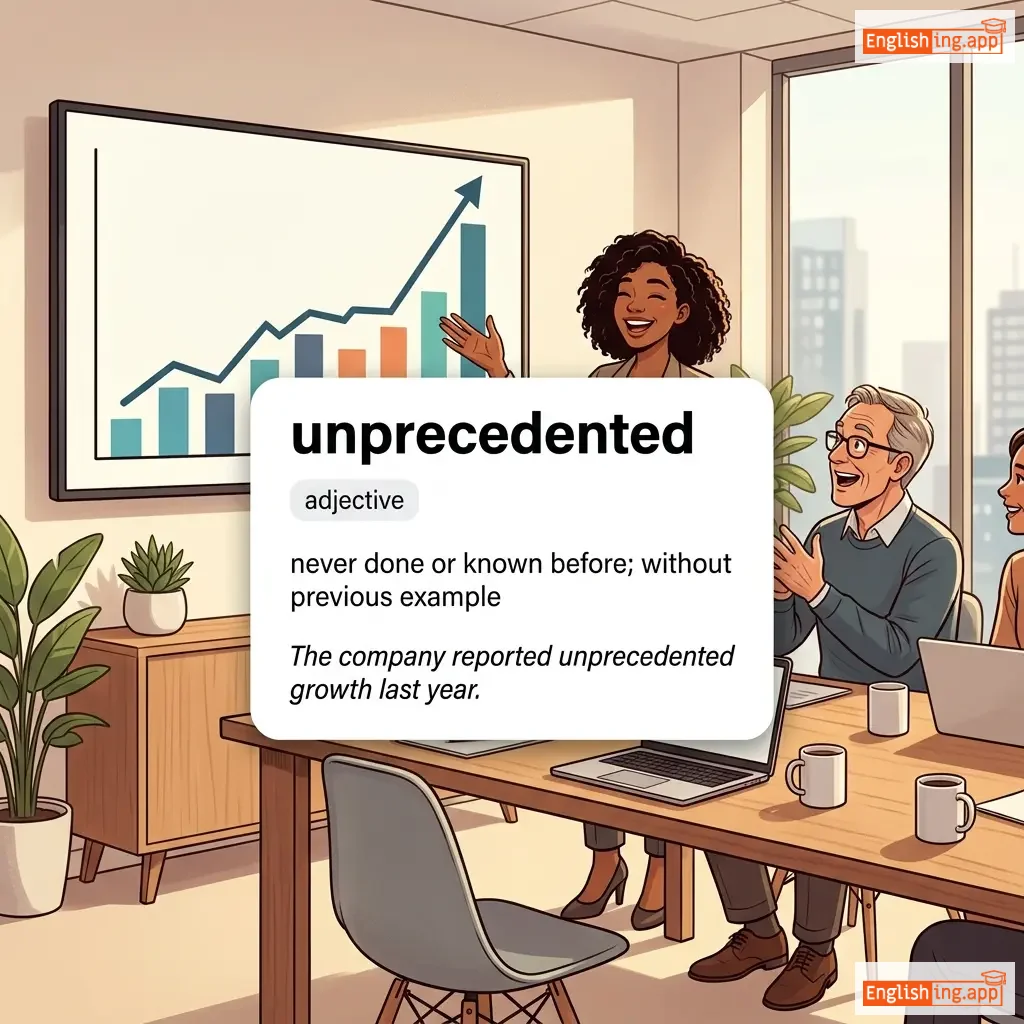
never done or known before; without previous example
••••••
|
The company reported unprecedented growth last year. |
公司报告了去年前所未有的增长。
gōngsī bàogào le qùnián qián suǒ wèi yǒu de zēngzhǎng.
••••••
|
of unprecedented scale |
something happening in a size or degree never seen before
••••••
|
前所未有的规模
qián suǒ wèi yǒu de guīmó
••••••
|
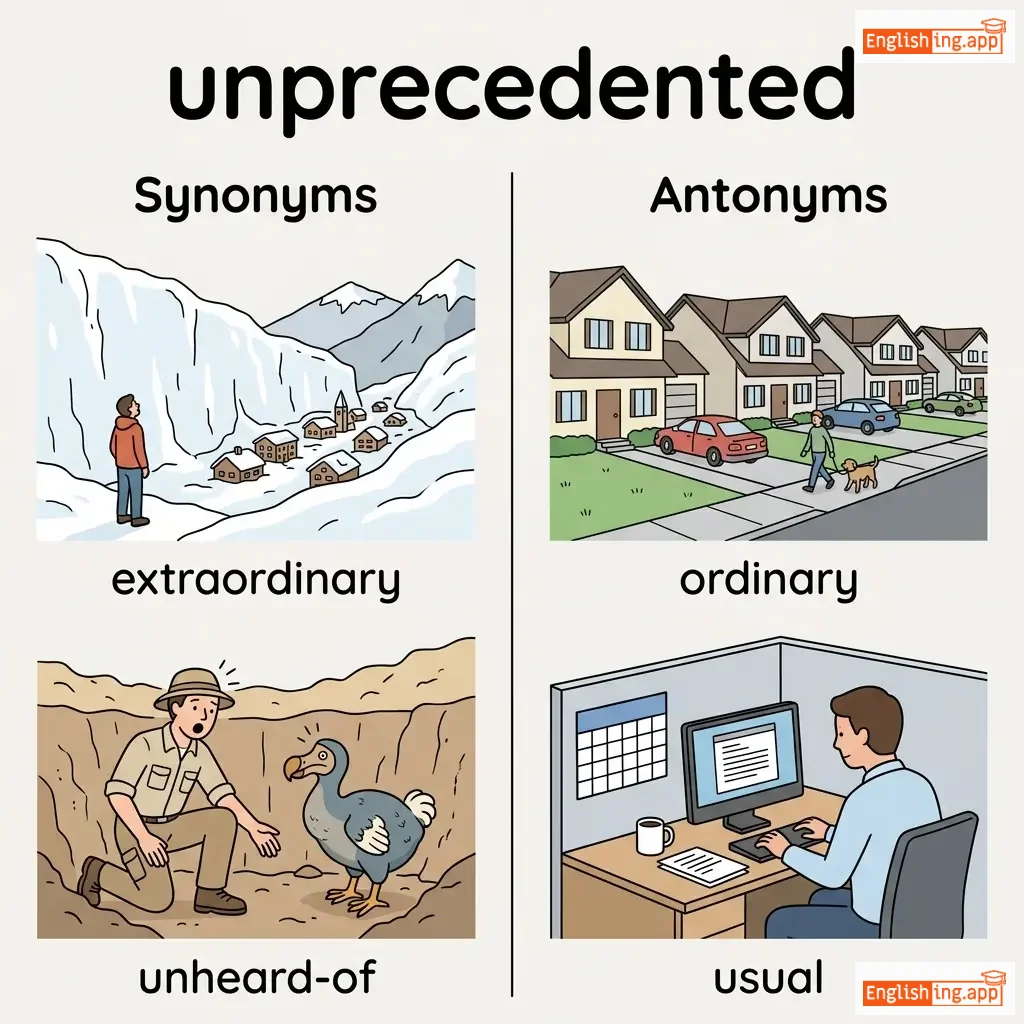
extraordinary, unheard-of, unique, exceptional
••••••
|
ordinary, usual, common
••••••
|
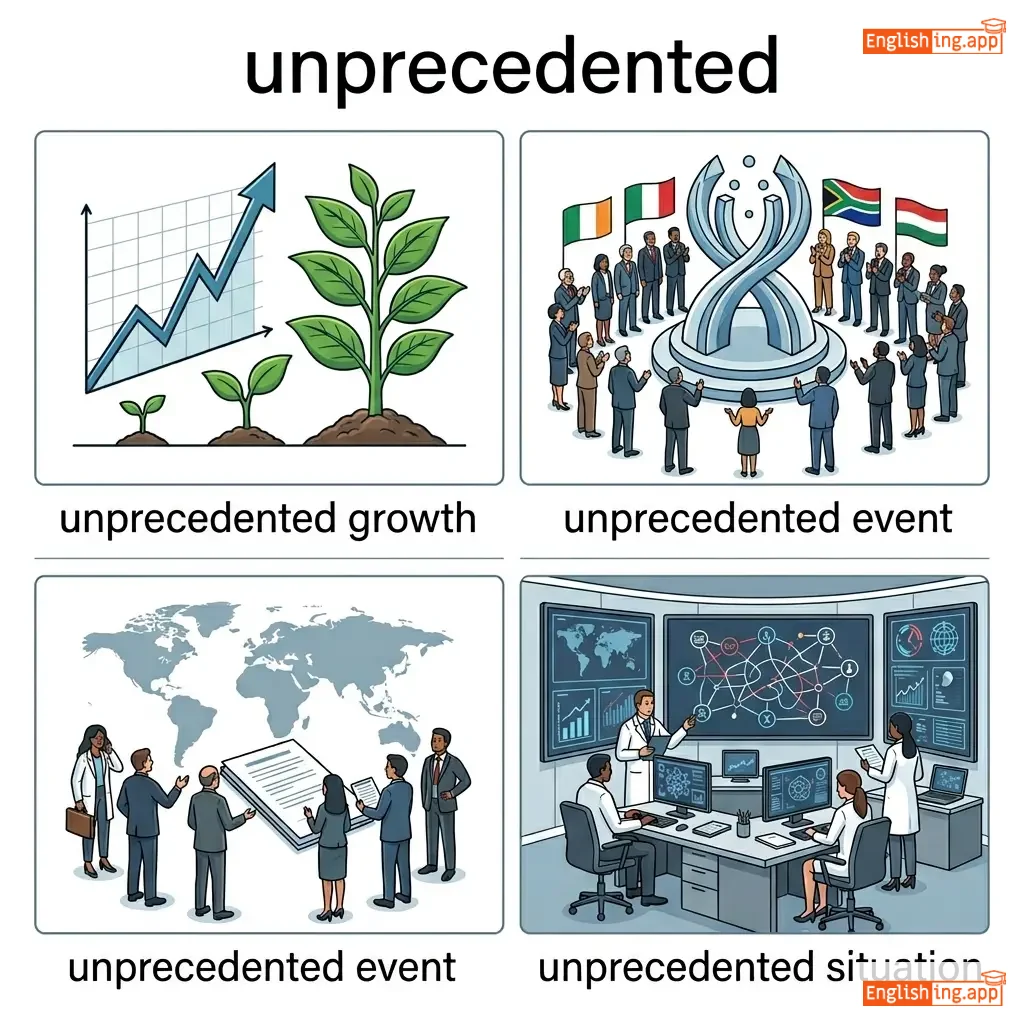
unprecedented growth, unprecedented event, unprecedented situation
••••••
|
前所未有
••••••
|
|
🎲
••••••
|
/ˌʌnprɪˈdɪktəbəl/
adjective
(安普瑞迪克特波)
••••••
|
- •••••• |
不可预测的
buke yuce de
••••••
|
- •••••• | - •••••• | - •••••• | - •••••• |
not able to be predicted; changing suddenly and unexpectedly
••••••
|
The weather in this region is highly unpredictable.
泽 威泽 因 迪斯 瑞真 伊兹 海利 安普瑞迪克特波。
••••••
|
这个地区的天气非常不可预测。
zhege diqu de tianqi feichang buke yuce de
••••••
|
- •••••• | - •••••• | - •••••• |
uncertain, erratic, volatile, unforeseeable, irregular
••••••
|
predictable, consistent, stable
••••••
|
unpredictable behavior, unpredictable weather, unpredictable results, highly unpredictable
••••••
|
不可 + 预测 = unpredictable
••••••
|
|
🚫
••••••
|
/ʌnprəˈfɛʃ.ən.əl/
adjective
(anpofeixianer)
••••••
|
- •••••• |
不专业
bù zhuānyè
••••••
|
- •••••• | - •••••• | - •••••• | - •••••• |
not conforming to the standards expected in a particular profession
••••••
|
His unprofessional behavior led to his dismissal from the company. |
他的不专业行为导致他被公司解雇。
Tā de bù zhuānyè xíngwéi dǎozhì tā bèi gōngsī jiěgù.
••••••
|
- •••••• | - •••••• | - •••••• |
inappropriate, improper, unethical, incompetent
••••••
|
professional, appropriate, ethical, competent
••••••
|
unprofessional conduct, unprofessional behavior, unprofessional appearance
••••••
|
不专业 - 不符合职业标准,行为不符合专业要求。
••••••
|
|
📄
••••••
|
/ʌnˈriːdəbl/
adjective
(安瑞德布)
••••••
|
- •••••• |
难以辨认的
nanyi bianren de
••••••
|
- •••••• | - •••••• | - •••••• | - •••••• |
not able to be read or understood clearly; illegible
••••••
|
The doctor’s handwriting was completely unreadable.
泽 多克特斯 汉德赖廷 沃兹 康普利特利 安瑞德布
••••••
|
医生的字迹完全难以辨认。
Yisheng de ziji wanquan nanyi bianren
••••••
|
- •••••• | - •••••• | - •••••• |
illegible, indecipherable, unintelligible, unclear, cryptic
••••••
|
readable, legible, clear
••••••
|
unreadable text, unreadable handwriting, unreadable font, unreadable document
••••••
|
UNREADABLE = 难以辨认,读不出来
••••••
|
|
🌫️
••••••
|
/ʌnˈrɪəl/
adjective
(安瑞欧)
••••••
|
- •••••• |
不真实的
bu zhenshi de
••••••
|
- •••••• | - •••••• | - •••••• | - •••••• |
not real or not based on reality; exaggerated or imaginary
••••••
|
The experience felt unreal after the sudden news.
泽 伊克斯皮瑞恩斯 费尔特 安瑞欧 阿夫特 泽 萨登 纽兹
••••••
|
突如其来的消息后,这种经历感觉不真实。
Tu ru qi lai de xiaoxi hou, zhe zhong jingli ganjue bu zhenshi
••••••
|
- •••••• | - •••••• | - •••••• |
imaginary, unbelievable, fantastic, illusory, surreal
••••••
|
real, realistic, genuine
••••••
|
unreal experience, unreal feeling, unreal expectations, unreal beauty
••••••
|
unreal 听起来像 unreal,意思就是 不真实的
••••••
|
|
🌫️
••••••
|
/ˌʌnriˈælɪti/
noun
(安瑞阿里提)
••••••
|
- •••••• |
非现实
fei xianshi
••••••
|
- •••••• | - •••••• | - •••••• | - •••••• |
the state or quality of being unreal; lack of reality or truth
••••••
|
The dreamlike setting gave the story a sense of unreality.
这种梦幻的场景带来了一种安瑞阿里提的感觉。
••••••
|
这种梦幻的场景让故事充满了非现实感。
Zhe zhong menghuan de changjing rang gushi chongman le fei xianshi gan
••••••
|
- •••••• | - •••••• | - •••••• |
illusion, fantasy, falseness, dreaminess
••••••
|
reality, truth, actuality
••••••
|
sense of unreality, feeling of unreality, atmosphere of unreality
••••••
|
Unreal = 非现实
••••••
|
|
🤯
••••••
|
/ʌnˈriːzənəbəl/
adjective
(安瑞兹那布)
••••••
|
- •••••• |
不合理的
bu heli de
••••••
|
- •••••• | - •••••• | - •••••• | - •••••• |
not guided by reason or fairness; excessive or extreme beyond what is acceptable
••••••
|
The manager made an unreasonable demand that no one could realistically meet.
经理提出了一个unreasonable的要求。
••••••
|
经理提出了一个不合理的要求。
jingli tichu le yige bu heli de yaoqiu
••••••
|
unreasonable demands
unreasonable demands
••••••
|
requests that are excessive or unfair
••••••
|
不合理的要求
bu heli de yaoqiu
••••••
|
irrational, unfair, excessive, illogical, extreme
••••••
|
reasonable, fair, rational
••••••
|
unreasonable demand, unreasonable behavior, unreasonable expectation, unreasonable request
••••••
|
不合理 = unreasonable
••••••
|
|
🪵
••••••
|
/ˌʌnrɪˈfaɪnd/
adjective
(安瑞法因德)
••••••
|
- •••••• |
未精炼的
wei jinglian de
••••••
|
- •••••• | - •••••• | - •••••• | - •••••• |
not processed or purified; lacking polish or sophistication
••••••
|
The unrefined oil must be processed before it can be used as fuel.
德 安瑞法因德 欧伊尔 马斯特 比 普罗斯艾斯特 比福 尔 伊特 肯 比 优兹德 阿兹 福优。
••••••
|
未精炼的石油在用作燃料之前必须进行加工。
wei jinglian de shiyou zai yongzuo ranliao zhiqian bixu jinxing jiagong
••••••
|
- •••••• | - •••••• | - •••••• |
raw, crude, rough, coarse, natural
••••••
|
refined, polished, processed
••••••
|
unrefined oil, unrefined sugar, unrefined manners, unrefined taste
••••••
|
Unrefined 就是 未精炼的,记住 jinglian。
••••••
|
|
❓
••••••
|
/ˌʌnrɪˈzɒlvd/
adjective
(安瑞佐尔夫德)
••••••
|
- •••••• |
未解决的
wei jiejue de
••••••
|
- •••••• | - •••••• | - •••••• | - •••••• |
not solved or settled; remaining undecided or unclear
••••••
|
The dispute remains unresolved despite several meetings.
德 迪斯普特 瑞梅因兹 安瑞佐尔夫德 迪斯派特 塞夫若 米廷兹。
••••••
|
尽管开了几次会议,这个争议仍未解决。
jinguan kailiao jici huiyi zhege zhengyi reng wei jiejue
••••••
|
- •••••• | - •••••• | - •••••• |
unsolved, unsettled, pending, open, undecided
••••••
|
resolved, settled, decided
••••••
|
unresolved issue, unresolved conflict, unresolved problem, unresolved matter
••••••
|
Unresolved 就是 未解决的,问题还在
••••••
|
|
🗺️
••••••
|
/ʌnˈroʊl/
verb
(安罗尔)
••••••
|
- •••••• |
展开
zhankai
••••••
|
unrolled
安罗尔德
••••••
|
unrolled
安罗尔德
••••••
|
unrolls
安罗尔兹
••••••
|
unrolling
安罗尔英
••••••
|
to open something that is rolled up; to spread out gradually
••••••
|
She unrolled the map on the table to find the route.
希 安罗尔德 德 马普 昂 德 泰波 图 凡德 德 路特。
••••••
|
她把地图在桌子上展开来寻找路线。
ta ba ditu zai zhuozi shang zhankai lai xunzhao luxian
••••••
|
- •••••• | - •••••• | - •••••• |
unfold, open, spread, flatten, unwrap
••••••
|
roll up, fold, coil
••••••
|
unroll a map, unroll a carpet, unroll a scroll, unroll paper
••••••
|
Unroll 就是把卷的东西 展开。
••••••
|
|
👁️🗨️
••••••
|
/ʌnˈsiːn/
adjective
(ʌnˈsiːn)
••••••
|
- •••••• |
看不见的;未曾看到或注意到的
kan bu jian de; wei ceng kan dao huo zhu yi dao de
••••••
|
- •••••• | - •••••• | - •••••• | - •••••• |
not previously seen or noticed; invisible; hidden
••••••
|
The unseen forces of nature can be very powerful. |
自然界的看不见的力量可能非常强大。
ziran jie de kan bu jian de li liang ke neng fei chang qiang da.
••••••
|
- •••••• | - •••••• | - •••••• |
invisible, hidden, unnoticed, concealed
••••••
|
visible, seen, noticed, apparent
••••••
|
unseen forces, unseen dangers, unseen world
••••••
|
In Chinese, '看不见的' refers to something that is unseen or invisible.
••••••
|
|
😶
••••••
|
/ʌnˈsəʊʃəbl/
adjective
(安索舍布尔)
••••••
|
- •••••• |
不合群的
bu he qun de
••••••
|
- •••••• | - •••••• | - •••••• | - •••••• |
not enjoying the company of others; avoiding social interaction
••••••
|
He became unsociable after moving to a new city.
希 比凯姆 安索舍布尔 阿夫特 穆文 图 阿 纽 西提。
••••••
|
搬到新城市后,他变得不合群。
ban dao xin chengshi hou ta bian de bu he qun
••••••
|
- •••••• | - •••••• | - •••••• |
antisocial, withdrawn, introverted, reclusive, aloof
••••••
|
sociable, friendly, outgoing
••••••
|
unsociable behavior, unsociable hours, unsociable person
••••••
|
Un + social = 不合群
••••••
|
|
🙅♂️
••••••
|
/ʌnˈsəʊʃəl/
adjective
(安索社尔)
••••••
|
- •••••• |
不合群的
bu he qun de
••••••
|
- •••••• | - •••••• | - •••••• | - •••••• |
not enjoying the company of others; avoiding social interaction; contrary to social norms
••••••
|
He prefers unsocial hours so he can work alone without interruptions.
他 更 喜欢 安索社尔 的 工作 时间。
••••••
|
他更喜欢不合群的工作时间来独自工作。
ta geng xihuan bu he qun de gongzuo shijian lai duzi gongzuo
••••••
|
- •••••• | - •••••• | - •••••• |
asocial, unsociable, withdrawn, solitary, aloof
••••••
|
sociable, outgoing, friendly
••••••
|
unsocial behavior, unsocial hours, unsocial lifestyle, unsocial tendencies
••••••
|
Unsocial = 不合群,不爱社交。
••••••
|
|
📦
••••••
|
/ʌnˈsoʊld/
adjective
(安索尔德)
••••••
|
- •••••• |
未售出的
wei shou chu de
••••••
|
- •••••• | - •••••• | - •••••• | - •••••• |
not sold; remaining without a buyer
••••••
|
The unsold goods were returned to the warehouse.
德 安索尔德 古兹 沃 里特恩 德 仓库。
••••••
|
未售出的商品被退回仓库。
wei shou chu de shangpin bei tui hui cangku
••••••
|
- •••••• | - •••••• | - •••••• |
unbought, leftover, unsold-out, remaining, idle
••••••
|
sold, purchased, bought
••••••
|
unsold items, unsold goods, unsold stock, unsold inventory
••••••
|
UNSOLD 听起来像 未售的 → 未售出的
••••••
|
|
⚖️
••••••
|
/ʌnˈsteɪbəl/
adjective
(ān sī tè bù ěr)
••••••
|
- •••••• |
不稳定
bù wěn dìng
••••••
|
- •••••• | - •••••• | - •••••• | - •••••• |
likely to change; not steady or secure; unsteady
••••••
|
The unstable economy made people worried about their jobs.
不稳定的经济让人们担心他们的工作。
••••••
|
不稳定的经济让人们担心他们的工作。
Bù wěn dìng de jīng jì ràng rén men dān xīn tā men de gōng zuò.
••••••
|
- •••••• | - •••••• | - •••••• |
unsteady, volatile, changeable, fluctuating
••••••
|
stable, steady, secure, firm
••••••
|
unstable economy, unstable relationship, unstable condition
••••••
|
不稳定 = 不 + 稳定 (没有稳定)
••••••
|
|
😵💫
••••••
|
/ʌnˈstɛdi/
adjective
(安斯特迪)
••••••
|
- •••••• |
不稳定的
bu wending de
••••••
|
- •••••• | - •••••• | - •••••• | - •••••• |
not firm or stable; likely to change or fail
••••••
|
She felt unsteady on her feet after the long journey.
Shi felt anstedi on her fits after the long journey.
••••••
|
长途旅行后,她感到站立不稳。
Changtu lüxing hou, ta gandao zhanli bu wen
••••••
|
on unsteady ground
on anstedi ground
••••••
|
in a risky or uncertain situation
••••••
|
处于不稳定的处境
chuyu bu wending de chujing
••••••
|
unstable, shaky, wobbly, insecure, unreliable
••••••
|
steady, stable, firm
••••••
|
unsteady footing, unsteady hands, unsteady pace, unsteady economy
••••••
|
Unsteady 就是 不稳定的,很直观。
••••••
|
|
❌
••••••
|
/ˌʌnsəkˈsesfl/
adjective
(ān sē kè sī fú ěr)
••••••
|
- •••••• |
失败的; 没有成功的;
shībài de; méiyǒu chénggōng de
••••••
|
- •••••• | - •••••• | - •••••• | - •••••• |
not achieving desired aims or results; failing to accomplish a purpose
••••••
|
His unsuccessful attempt to climb the mountain left him disappointed.
His unsuccessful attempt to climb the mountain left him disappointed.
••••••
|
他未能成功登上山顶,感到失望。
Tā wèinéng chénggōng dēng shàng shāndǐng, gǎndào shīwàng.
••••••
|
- •••••• | - •••••• | - •••••• |
failed, defeated, futile, fruitless
••••••
|
successful, victorious, triumphant, effective
••••••
|
unsuccessful attempt, unsuccessful candidate, unsuccessful business
••••••
|
记住'失败的'表示目标未达成。
••••••
|
|
🚫
••••••
|
/ʌnˈsuːtəbl/
adjective
(ānsùtèbù)
••••••
|
- •••••• |
不适合; 不合适
bù shìhé; bù héshì
••••••
|
- •••••• | - •••••• | - •••••• | - •••••• |
not fitting or appropriate for a particular purpose or situation
••••••
|
This formal dress is unsuitable for a casual beach party.
这件正式的衣服不适合参加随意的海滩派对。
••••••
|
这件正式的衣服不适合参加随意的海滩派对。
Zhè jiàn zhèngshì de yīfú bù shìhé cānjiā suíyì de hǎitān pàiduì.
••••••
|
- •••••• | - •••••• | - •••••• |
inappropriate, unfit, improper, inadequate
••••••
|
suitable, appropriate, fitting, proper
••••••
|
unsuitable behavior, unsuitable candidate, unsuitable conditions
••••••
|
Chinese word '不适合' sounds like 'unsuitable'.
••••••
|
|
🤔
••••••
|
/ʌnˈʃʊr/
adjective
(安休尔)
••••••
|
- •••••• |
不确定的
bu queding de
••••••
|
- •••••• | - •••••• | - •••••• | - •••••• |
not certain or confident; feeling doubt
••••••
|
She felt unsure about the decision.
她 感到 安休尔 关于 这个 决定
••••••
|
她对这个决定感到不确定。
ta dui zhege jueding gandao bu queding
••••••
|
not sure
not sure
••••••
|
expressing uncertainty or lack of confidence
••••••
|
不确定
bu queding
••••••
|
uncertain, doubtful, hesitant, insecure, undecided
••••••
|
sure, confident, certain
••••••
|
feel unsure, unsure about, unsure whether, remain unsure
••••••
|
Unsure = 不确定
••••••
|
|
🚫
••••••
|
/ʌnˈtiːtʃəbəl/
adjective
(安提切博)
••••••
|
- •••••• |
不可教的
bu ke jiao de
••••••
|
- •••••• | - •••••• | - •••••• | - •••••• |
not able or willing to learn; resistant to instruction or guidance
••••••
|
He was so stubborn that he became almost unteachable.
希 沃兹 搜 斯塔本 贼特 希 比凯姆 奥莫斯特 安提切博。
••••••
|
他非常固执,几乎变得不可教。
ta fei chang gu zhi ji hu bian de bu ke jiao
••••••
|
- •••••• | - •••••• | - •••••• |
uneducable, stubborn, inflexible, unreceptive, obstinate
••••••
|
teachable, receptive, flexible
••••••
|
unteachable attitude, unteachable student, become unteachable
••••••
|
Unteachable = 不可教的。
••••••
|
|
🤯
••••••
|
/ʌnˈθɪŋkəbl/
adjective
(安思克贝尔)
••••••
|
- •••••• |
难以想象的
nán yǐ xiǎng xiàng de
••••••
|
- •••••• | - •••••• | - •••••• | - •••••• |
impossible to conceive or imagine; beyond belief or consideration
••••••
|
It was unthinkable that such a tragedy could happen in our peaceful town. |
在我们和平的小镇上发生这样一场悲剧,简直是难以想象的。
Zài wǒmen hépíng de xiǎo zhèn shàng fāshēng zhèyàng yī chǎng bēijù, jiǎnzhí shì nán yǐ xiǎngxiàng de.
••••••
|
- •••••• | - •••••• | - •••••• |
inconceivable, unimaginable, impossible, incredible
••••••
|
thinkable, conceivable, imaginable, possible
••••••
|
unthinkable tragedy, unthinkable consequences, unthinkable act
••••••
|
难以想象的 – 无法想象的事物,难以思考和接受的事。
••••••
|
|
🤖
••••••
|
/ʌnˈθɪŋkɪŋ/
adjective
(安辛king)
••••••
|
- •••••• |
欠考虑的
qian kaolv de
••••••
|
- •••••• | - •••••• | - •••••• | - •••••• |
done without careful thought; automatic or thoughtless
••••••
|
His unthinking remark hurt her feelings.
his 安辛king remark hurt her feelings
••••••
|
他欠考虑的评论伤害了她的感情。
ta qian kaolv de pinglun shanghai le ta de ganqing
••••••
|
- •••••• | - •••••• | - •••••• |
thoughtless, automatic, mindless, impulsive, careless
••••••
|
thoughtful, deliberate, mindful
••••••
|
unthinking reaction, unthinking behavior, unthinking obedience, unthinking response
••••••
|
Unthinking = 不 thinking → 欠考虑的
••••••
|
|
🗑️
••••••
|
/ʌnˈtaɪdi/
adjective
(ʌnˈtaɪdi)
••••••
|
- •••••• |
凌乱的; 无序的;
língluàn de
••••••
|
- •••••• | - •••••• | - •••••• | - •••••• |
not neat or orderly; messy and disorganized
••••••
|
Her untidy room was filled with clothes scattered everywhere. |
她凌乱的房间充满了四处散落的衣服。
tā língluàn de fángjiān chōngmǎn le sìchù sànluò de yīfú.
••••••
|
- •••••• | - •••••• | - •••••• |
messy, disorganized, cluttered, unkempt
••••••
|
tidy, neat, organized, orderly
••••••
|
untidy room, untidy appearance, untidy desk
••••••
|
凌乱的 - 就像一堆混乱的物品
••••••
|
|
🪢
••••••
|
/ʌnˈtaɪ/
verb
(安泰)
••••••
|
- •••••• |
解开
jie kai
••••••
|
untied
安泰德
••••••
|
untied
安泰德
••••••
|
unties
安泰兹
••••••
|
untying
安泰英
••••••
|
to loosen or remove a knot or binding; to release something that is tied
••••••
|
She untied the rope to free the boat.
西 安泰德 罗普 图 弗里 博特。
••••••
|
她解开绳子来释放船只。
ta jie kai shengzi lai shifang chuan zhi
••••••
|
untie the knot
安泰 泽 诺特
••••••
|
to solve a difficult problem
••••••
|
解开难题
jie kai nan ti
••••••
|
loosen, unfasten, release, undo, free
••••••
|
tie, bind, fasten
••••••
|
untie a knot, untie shoelaces, untie hands, untie rope
••••••
|
untie = 解开 tie
••••••
|
|
❌
••••••
|
/ʌnˈtru/
adjective
(ān-trū)
••••••
|
- •••••• |
错误的; 不正确的
cuòwù de; bù zhèngquè de
••••••
|
- •••••• | - •••••• | - •••••• | - •••••• |
not true; false; incorrect
••••••
|
His statement about the incident was completely untrue. |
他关于事件的陈述完全是错误的。
Tā guānyú shìjiàn de chénshù wánquán shì cuòwù de.
••••••
|
- •••••• | - •••••• | - •••••• |
false, incorrect, wrong, inaccurate
••••••
|
true, correct, accurate, right
••••••
|
untrue statement, completely untrue, prove untrue
••••••
|
错误的 = 不真实的
••••••
|
|
🔮
••••••
|
/ʌnˈjuː.ʒu.əl/
adjective
(an-yu-zhu-äl)
••••••
|
- •••••• |
不寻常; 奇怪;
bù xúncháng; qíguài
••••••
|
- •••••• | - •••••• | - •••••• | - •••••• |
not typical; strange; different from what is normal
••••••
|
She wore an unusual dress to the party.
她穿了一件不寻常的衣服去参加派对。
••••••
|
她穿了一件不寻常的衣服去参加派对。
Tā chuānle yī jiàn bù xúncháng de yīfu qù cānjiā pàiduì.
••••••
|
- •••••• | - •••••• | - •••••• |
strange, odd, peculiar, rare, uncommon
••••••
|
usual, normal, typical, common, ordinary
••••••
|
unusual behavior, unusual circumstances, quite unusual
••••••
|
Unusual sounds like '不寻常', think of '不' (not) and '寻常' (ordinary)
••••••
|

