|
絵文字
|
単語 | Images | 翻訳 | 過去 | 過去分詞 | 三人称単数 | 動名詞 | 意味 | 例文 | 例文の翻訳 | 表現例 | 表現例の意味 | 表現例の翻訳 | 同義語 | 対義語 | コロケーション | ニーモニック |
|---|---|---|---|---|---|---|---|---|---|---|---|---|---|---|---|---|---|
|
😲
••••••
|
/əˈbæk/
adverb
(アバック)
••••••
|
- •••••• |
驚いた
odoroita
••••••
|
- •••••• | - •••••• | - •••••• | - •••••• |
by surprise; unexpectedly
••••••
|
I was taken aback by his sudden announcement. |
私は彼の突然の発表に驚きました。
Watashi wa kare no totsuzen no happyou ni odoroimashita.
••••••
|
- •••••• | - •••••• | - •••••• |
surprised, startled, shocked
••••••
|
prepared, expected, unsurprised
••••••
|
taken aback, caught aback, put aback
••••••
|
‘Aback’ という言葉は、予期せぬ驚きに似ています。
••••••
|
|
🏃
••••••
|
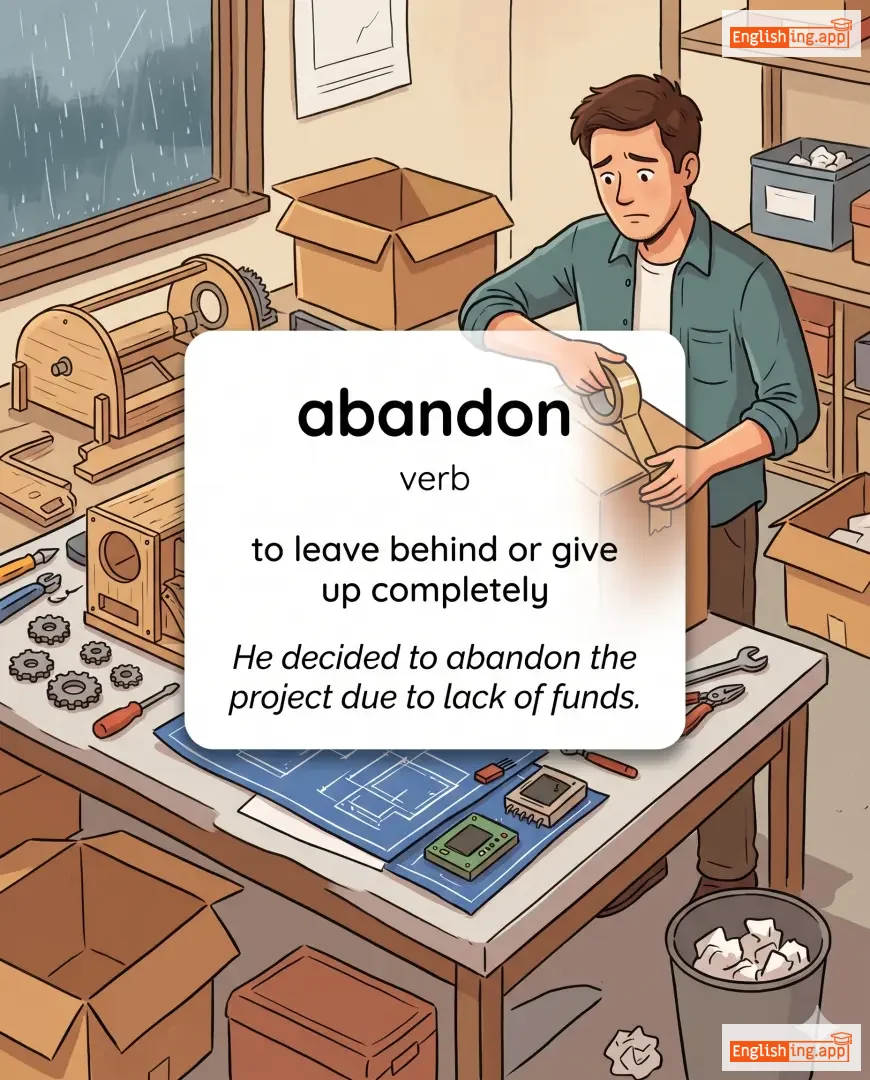
/əˈbændən/
verb
(アバンドン)
••••••
|
|
放棄する
hōki suru
••••••
|
abandoned
アバンドンド
••••••
|
abandoned
アバンドンド
••••••
|
abandons
アバンドンズ
••••••
|
abandoning
アバンドニング
••••••
|
to leave behind or give up completely
••••••
|
He decided to abandon the project due to lack of funds.
彼は資金不足のため、プロジェクトをアバンドンすることに決めました。
••••••
|
彼は資金不足のため、プロジェクトを放棄することに決めました。
Kare wa shikin fusoku no tame, purojekuto o hōki suru koto ni kimemashita.
••••••
|
abandon ship
船を放棄する
••••••
|
to leave a failing situation quickly
••••••
|
船を放棄する
fune o hōki suru
••••••
|
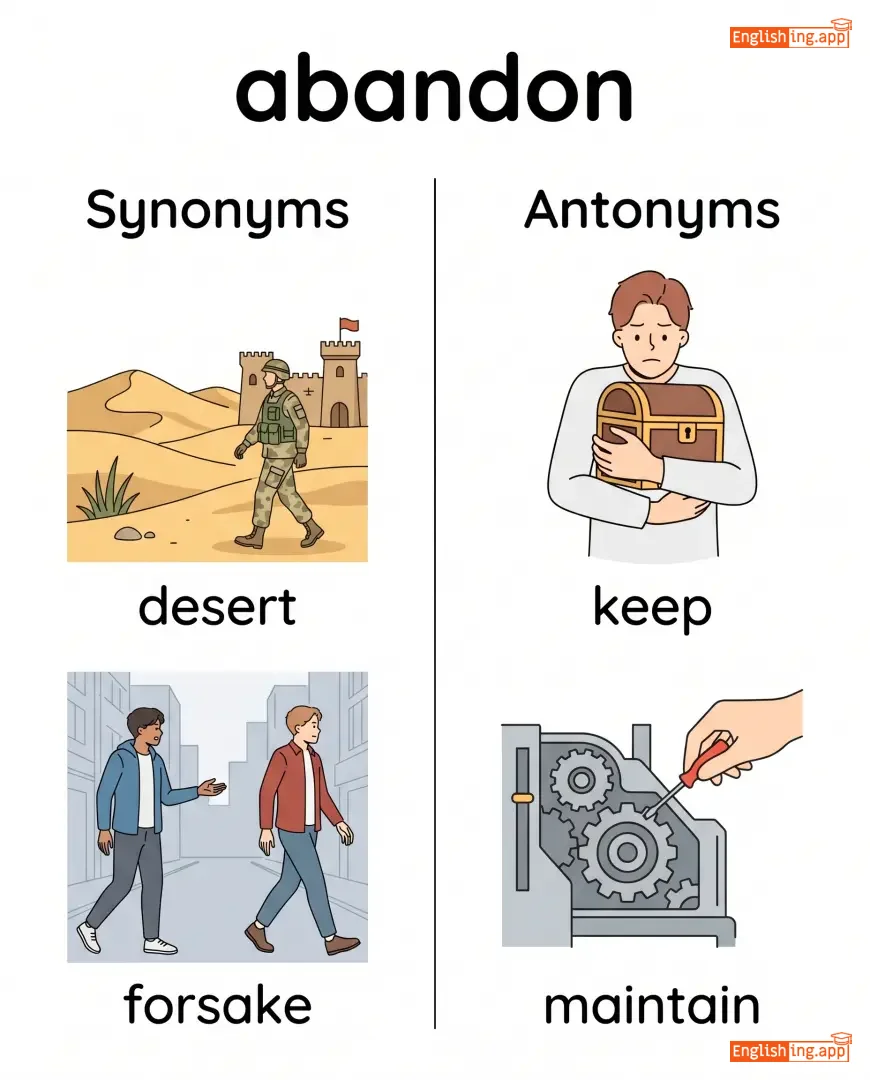
desert, forsake, leave, quit, relinquish
••••••
|
keep, maintain, continue
••••••
|
abandon hope, abandon plan, abandon effort, abandon project
••••••
|
放棄するは、BandOn(バンドン)を放って行くようなものです。
••••••
|
|
🚪
••••••
|
/əˈbændənmənt/
noun
(アバンドンメント)
••••••
|
- •••••• |
見捨て
misute
••••••
|
- •••••• | - •••••• | - •••••• | - •••••• |
the act of leaving someone or something behind completely; the state of being deserted
••••••
|
The child suffered deep emotional pain because of abandonment.
ザ チャイルド サファード ディープ エモーショナル ペイン ビコーズ オブ アバンドンメント。
••••••
|
その子供は見捨てられたことで深い感情的な痛みを受けた。
sono kodomo wa misuterareta koto de fukai kanjoteki na itami o uketa
••••••
|
- •••••• | - •••••• | - •••••• |
desertion, neglect, forsaking, withdrawal, rejection
••••••
|
care, protection, support
••••••
|
fear of abandonment, emotional abandonment, abandonment issues, child abandonment
••••••
|
abandonment = abandon されて misute(見捨て)
••••••
|
|
🌧️
••••••
|
/əˈbeɪt/
verb
(アベイト)
••••••
|
|
減少する
genshō suru
••••••
|
abated
アベイテッド
••••••
|
abated
アベイテッド
••••••
|
abates
アベイツ
••••••
|
abating
アベイティング
••••••
|
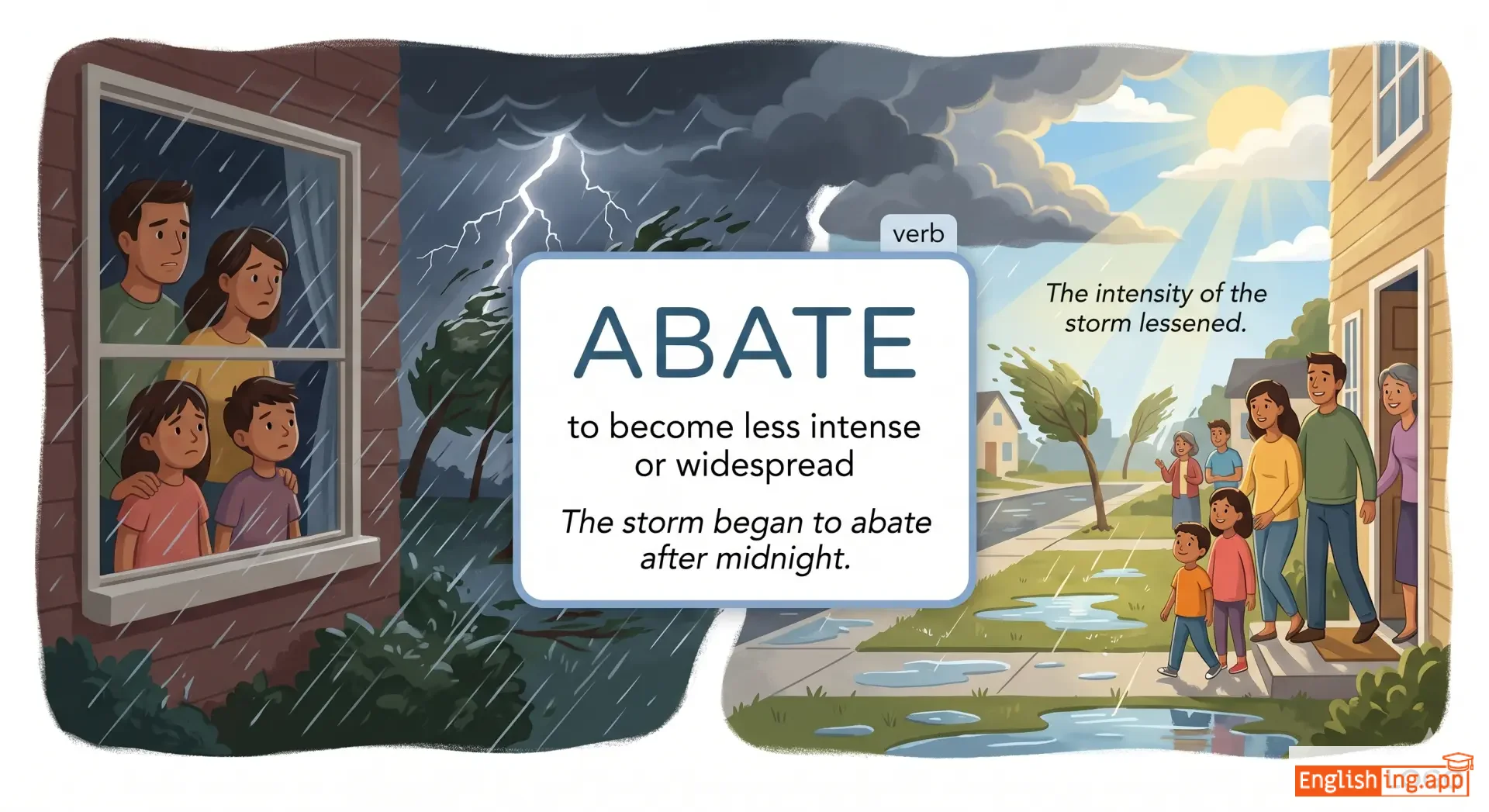
to become less intense or widespread
••••••
|
The storm began to abate after midnight.
嵐は真夜中に弱まり始めました。
••••••
|
嵐は真夜中に弱まり始めました。
Arashi wa mayonaka ni yowamari hajimemashita.
••••••
|
- •••••• | - •••••• | - •••••• |
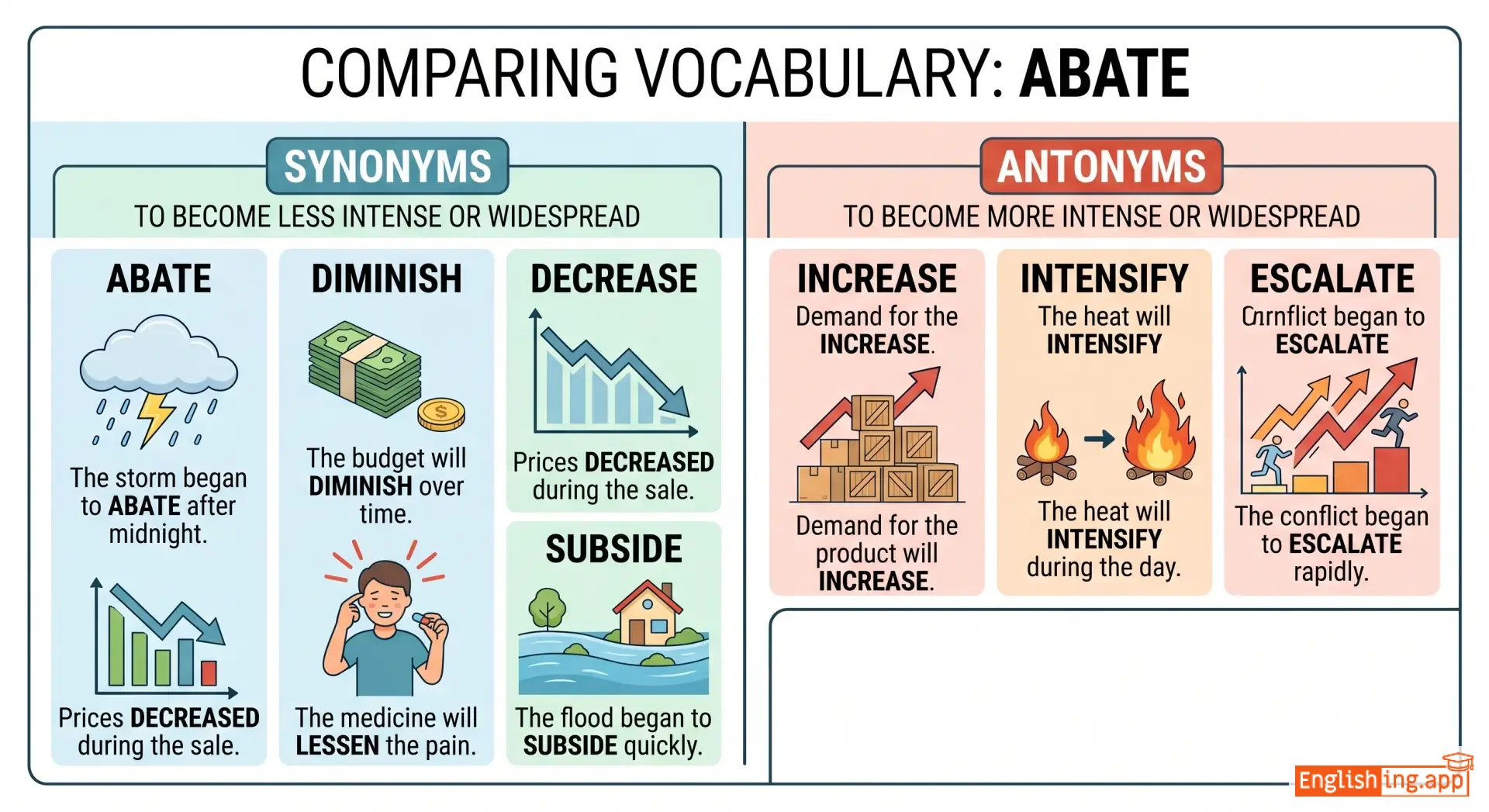
diminish, decrease, lessen, subside
••••••
|
increase, intensify, escalate
••••••
|
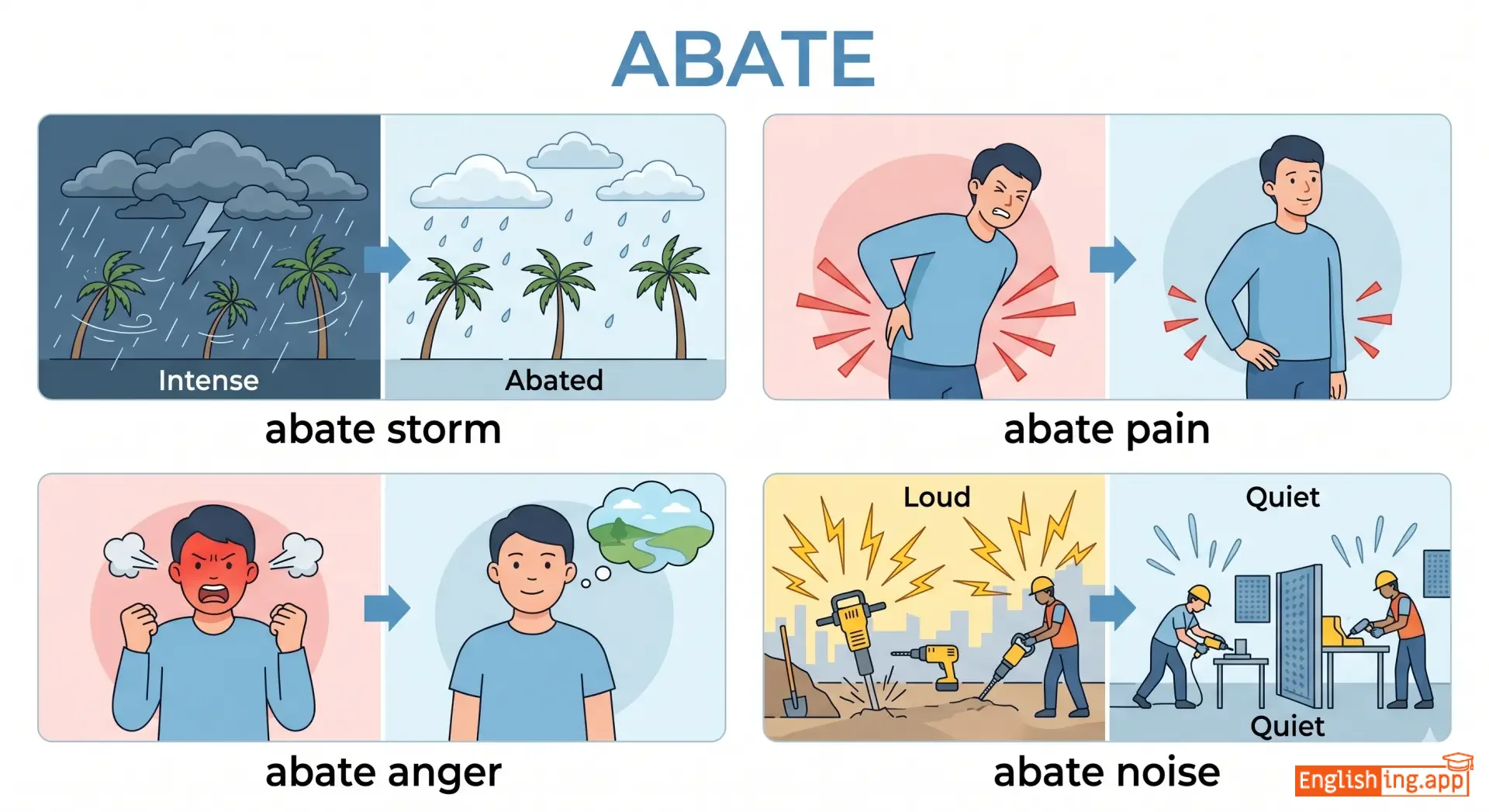
abate storm, abate pain, abate anger, abate noise
••••••
|
No •••••• |
|
✂️
••••••
|
/əˈbriːvieɪt/
verb
(アブリビエイト)
••••••
|
- •••••• |
省略する
shōryaku suru
••••••
|
abbreviated
アブリビエイテッド
••••••
|
abbreviated
アブリビエイテッド
••••••
|
abbreviates
アブリビエイツ
••••••
|
abbreviating
アブリビエイティング
••••••
|
To shorten a word, phrase, or text by leaving out letters or parts.
••••••
|
We often abbreviate 'Doctor' to 'Dr'.
私たちはよく 'Doctor' を 'Dr.' に省略します。
••••••
|
私たちはよく 'Doctor' を 'Dr.' に省略します。
Watashitachi wa yoku 'Doctor' o 'Dr.' ni shōryaku shimasu.
••••••
|
- •••••• | - •••••• | - •••••• |
shorten, condense, contract, reduce, cut
••••••
|
expand, lengthen, extend
••••••
|
abbreviate words, abbreviate term, abbreviate name, commonly abbreviated
••••••
|
Abbreviate は省略する ✂️ — 日本語で A+B+リビエイト = 省略する。
••••••
|
|
✂️
••••••
|
/əˌbriːviˈeɪʃən/
noun
(アブリビエーション)
••••••
|
- •••••• |
略語
ryakugo
••••••
|
- •••••• | - •••••• | - •••••• | - •••••• |
a shortened form of a word or phrase
••••••
|
NASA is an abbreviation for National Aeronautics and Space Administration.
ナサ は アブリビエーション です
••••••
|
NASA は National Aeronautics and Space Administration の略語です。
NASA wa National Aeronautics and Space Administration no ryakugo desu.
••••••
|
- •••••• | - •••••• | - •••••• |
shortening, contraction, acronym, initialism
••••••
|
expansion, elaboration
••••••
|
common abbreviation, standard abbreviation, written abbreviation, abbreviation for
••••••
|
Abbreviation=略語、長い言葉を短く。
••••••
|
|
🫃
••••••
|
/ˈæbdəmən/
noun
(アブドメン)
••••••
|
- •••••• |
腹部
fukubu
••••••
|
- •••••• | - •••••• | - •••••• | - •••••• |
The part of the body below the chest and above the hips that contains the stomach and other organs.
••••••
|
He complained of pain in his abdomen. |
彼は腹部の痛みを訴えました。
Kare wa fukubu no itami o uttaemashita.
••••••
|
- •••••• | - •••••• | - •••••• |
belly, stomach, tummy, midsection
••••••
|
back, spine
••••••
|
lower abdomen, abdomen pain, abdomen muscles, abdomen cavity
••••••
|
Abdomenは腹部を意味します 🫃 – 覚えておいて、Ab-do-men = Ab (腹筋) + men、腹部にあります。
••••••
|
|
🚓
••••••
|
/əbˈdʌkt/
verb
(アブダクト)
••••••
|
- •••••• |
誘拐する
yuukai suru
••••••
|
abducted
アブダクテッド
••••••
|
abducted
アブダクテッド
••••••
|
abducts
アブダクツ
••••••
|
abducting
アブダクティング
••••••
|
to take someone away illegally by force or deception
••••••
|
The criminal tried to abduct the child in broad daylight.
ザ クリミナル トライド トゥ アブダクト ザ チャイルド イン ブロード デイライト。
••••••
|
犯人は白昼にその子供を誘拐しようとした。
Hannin wa hakuchuu ni sono kodomo o yuukai shiyou to shita
••••••
|
alien abduction
エイリアン・アブダクション
••••••
|
the alleged kidnapping of humans by extraterrestrials
••••••
|
エイリアン誘拐
eirian yuukai
••••••
|
kidnap, seize, snatch, carry off, capture
••••••
|
release, free, liberate
••••••
|
abduct a child, abduct a victim, attempted abduction, mass abduction
••••••
|
誘拐(ゆうかい)= abduct、と覚えよう
••••••
|
|
🕵️
••••••
|
/æbˈdʌk.ʃən/
noun
(abdakushon)
••••••
|
- •••••• |
誘拐
yūkai
••••••
|
- •••••• | - •••••• | - •••••• | - •••••• |
the act of taking someone away illegally by force; kidnapping
••••••
|
The police are investigating the abduction of the child. |
警察は子供の誘拐事件を調査している。
Keisatsu wa kodomo no yūkai jiken o chōsa shiteiru.
••••••
|
- •••••• | - •••••• | - •••••• |
kidnapping, capture, seizure, snatching, hijacking
••••••
|
release, liberation
••••••
|
child abduction, abduction case, abduction victim, abduction report
••••••
|
Abduction = abba + duction, 覚えておいて - 父親は子供を誘拐から守るために走っている
••••••
|
|
🚨
••••••
|
/əbˈdʌktər/
noun
(アブダクター)
••••••
|
- •••••• |
誘拐犯
yuukaihann
••••••
|
- •••••• | - •••••• | - •••••• | - •••••• |
a person who kidnaps or forcibly takes someone away
••••••
|
The police arrested the abductor after a nationwide search.
警察は捜索の後でアブダクターを逮捕した。
••••••
|
警察は長い捜索の後で誘拐犯を逮捕した。
Keisatsu wa nagai sousaku no ato de yuukaihann o taiho shita
••••••
|
- •••••• | - •••••• | - •••••• |
kidnapper, captor, hijacker, snatcher
••••••
|
rescuer, protector
••••••
|
child abductor, suspected abductor, serial abductor
••••••
|
abductor は 誘拐犯—音も意味も覚えやすい
••••••
|
|
🕵️
••••••
|
/əˈbɛt/
verb
••••••
|
- •••••• | - •••••• |
abetted
••••••
|
abetted
••••••
|
abets
••••••
|
abetting
••••••
|
to encourage or assist someone to commit a crime or wrongdoing
••••••
|
He was accused of abetting the criminals in their escape. |
- •••••• |
aid and abet |
to assist someone in committing a crime
••••••
|
- •••••• |
assist, encourage, support, provoke, incite
••••••
|
deter, hinder, prevent
••••••
|
abet a crime, aid and abet, abet wrongdoing
••••••
|
No •••••• |
|
🤮
••••••
|
/əbˈhɔːr/
verb
(アブホア)
••••••
|
- •••••• |
嫌悪する
ken'o suru
••••••
|
abhorred
アブホアード
••••••
|
abhorred
アブホアード
••••••
|
abhors
アブホアーズ
••••••
|
abhorring
アブホアリング
••••••
|
to regard with disgust and hatred
••••••
|
She abhors cruelty to animals.
彼女は動物への残酷さを嫌悪しています。
••••••
|
彼女は動物への残酷さを嫌悪しています。
Kanojo wa dōbutsu e no zankokusa o ken'o shiteimasu.
••••••
|
- •••••• | - •••••• | - •••••• |
detest, hate, loathe, despise, dislike
••••••
|
admire, love, cherish
••••••
|
abhor violence, abhor injustice, abhor cruelty
••••••
|
ABHOR = 残酷を嫌う
••••••
|
|
😡
••••••
|
/əbˈhɒrəns/
noun
(アボーレンス)
••••••
|
- •••••• |
嫌悪
ken'o
••••••
|
- •••••• | - •••••• | - •••••• | - •••••• |
a feeling of strong disgust or hatred
••••••
|
He expressed his abhorrence of racial discrimination. |
彼は人種差別に対する嫌悪を表明した。
Kare wa jinshu sabetsu ni taisuru ken'o o hyometsu shita.
••••••
|
- •••••• | - •••••• | - •••••• |
hatred, disgust, loathing, detestation
••••••
|
affection, admiration
••••••
|
abhorrence of violence, express abhorrence, deep abhorrence
••••••
|
嫌悪は恐ろしさや深い憎しみの感情です。
••••••
|
|
🤮
••••••
|
/æbˈhɔːr.ənt/
adjective
(アボレント)
••••••
|
- •••••• |
忌まわしい; 嫌悪すべき
imawashii; ken'o subeki
••••••
|
- •••••• | - •••••• | - •••••• | - •••••• |
extremely unpleasant and causing disgust; detestable
••••••
|
The idea of animal cruelty is abhorrent to most people.
動物虐待の考えはほとんどの人々にとって嫌悪感を抱かせます。
••••••
|
動物虐待の考えはほとんどの人々にとって嫌悪感を抱かせます。
Dōbutsu gyaku dai no kangae wa hotondo no hitobito ni totte ken'okanshō o idakase masu.
••••••
|
- •••••• | - •••••• | - •••••• |
detestable, loathsome, repugnant, revolting, disgusting
••••••
|
agreeable, pleasant, delightful, appealing
••••••
|
abhorrent behavior, abhorrent practice, find abhorrent
••••••
|
忌まわしい (imawashii) という言葉は、嫌悪感を呼び起こすものを指します。
••••••
|
|
⚖️
••••••
|
/əˈbaɪd/
verb
(アバイド)
••••••
|
- •••••• |
守る
mamoru
••••••
|
abode
アボード
••••••
|
abode
アボード
••••••
|
abides
アバイドス
••••••
|
abiding
アバイディング
••••••
|
to accept, tolerate, or remain faithful to something
••••••
|
Citizens must abide by the laws of their country.
市民は自国の法律を守らなければならない。
••••••
|
市民は自国の法律を守らなければならない。
Shimin wa jikoku no hōritsu o mamoranakereba naranai.
••••••
|
abide by the rules
ルールを守る
••••••
|
to follow or obey the rules
••••••
|
ルールを守る
Rūru o mamoru
••••••
|
obey, comply, accept, follow, tolerate
••••••
|
disobey, defy
••••••
|
abide by law, abide by contract, cannot abide
••••••
|
Abide = ルールを守る。Abideは守ることを意味します。
••••••
|
|
💡
••••••
|
/əˈbɪləti/
noun
(アビリティ)
••••••
|
- •••••• |
能力
nouryoku
••••••
|
- •••••• | - •••••• | - •••••• | - •••••• |
the power, skill, or capacity to do something
••••••
|
Her ability to solve problems quickly impressed everyone.
問題を迅速に解決する能力は、みんなを感心させました。
••••••
|
問題を迅速に解決する能力は、みんなを感心させました。
Mondai wo jinsoku ni kaiketsu suru nouryoku wa, minna wo kanshin sasemashita.
••••••
|
to the best of one's ability
最大限の能力で
••••••
|
to do something as well as one possibly can
••••••
|
最大限の能力で
saidaigen no nouryoku de
••••••
|
skill, talent, capacity, competence, capability
••••••
|
inability, incapacity, weakness
••••••
|
natural ability, mental ability, physical ability, ability to learn
••••••
|
Abilityは能力を意味します — 試験に合格するには、良い能力が必要です。
••••••
|
|
🙅
••••••
|
/æbˈdʒʊər/
verb
(アブジュア)
••••••
|

|
放棄する
hōki suru
••••••
|
abjured
アブジュアード
••••••
|
abjured
アブジュアード
••••••
|
abjures
アブジュアーズ
••••••
|
abjuring
アブジュアリング
••••••
|
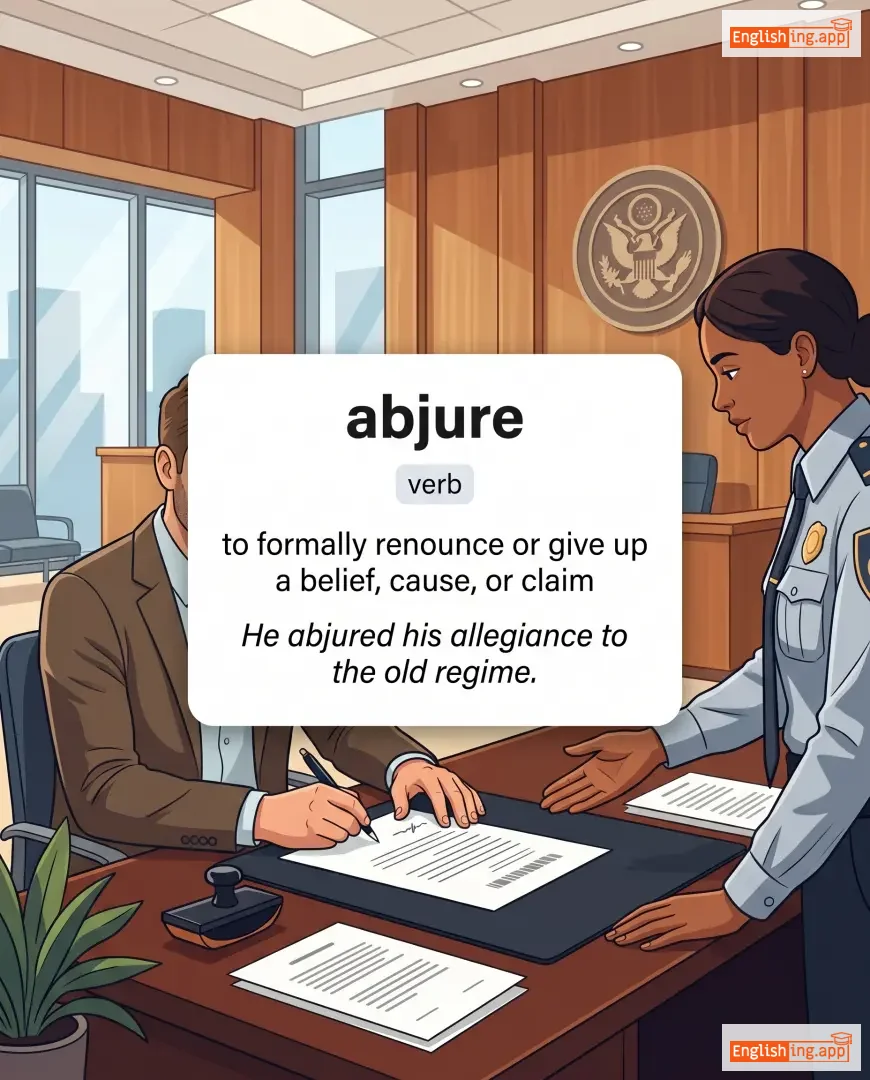
to formally renounce or give up a belief, cause, or claim
••••••
|
He abjured his allegiance to the old regime.
彼は古い政権への忠誠を放棄した。
••••••
|
彼は古い政権への忠誠を放棄した。
Kare wa furui seiken e no chūsei o hōki shita.
••••••
|
- •••••• | - •••••• | - •••••• |
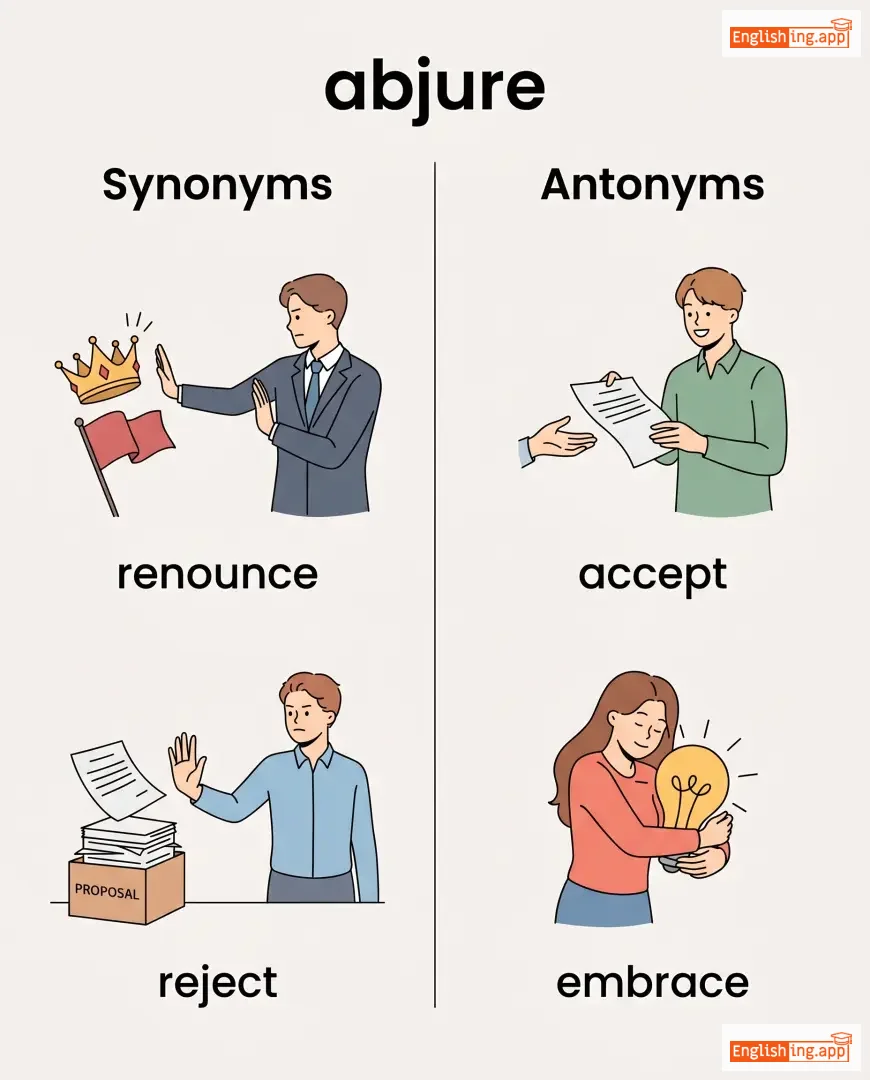
renounce, reject, repudiate, forswear
••••••
|
accept, embrace
••••••
|
abjure violence, abjure faith, abjure allegiance
••••••
|
Abjure = ABandon + JURy = 公式に何かを放棄する。
••••••
|
|
✅
••••••
|
/ˈeɪbl/
adjective
(エイブル)
••••••
|
- •••••• |
できる
dekiru
••••••
|
- •••••• | - •••••• | - •••••• | - •••••• |
having the power, skill, or means to do something
••••••
|
She is able to speak three languages fluently. |
彼女は三言語を流暢に話すことができます。
Kanojo wa san gengo o ryūchō ni hanasu koto ga dekimasu.
••••••
|
be able to |
to have the ability to do something
••••••
|
できるようになる
dekiru yō ni naru
••••••
|
capable, competent, skilled, talented
••••••
|
unable, incapable, weak
••••••
|
able to work, able to help, able leader, highly able
••••••
|
Able = できる, できることをする力を持っている
••••••
|
|
✂️
••••••
|
/əˈbɑː.lɪʃ/
verb
(アボリッシュ)
••••••
|
- •••••• |
廃止する
haishi suru
••••••
|
abolished
アボリッシュド
••••••
|
abolished
アボリッシュド
••••••
|
abolishes
アボリッシュズ
••••••
|
abolishing
アボリッシング
••••••
|
to formally put an end to a system, practice, or institution
••••••
|
The government decided to abolish the old tax system.
政府は古い税制を廃止することを決定しました。
••••••
|
政府は古い税制を廃止することを決定しました。
Seifu wa furui zeisei o haishi suru koto o kettei shimashita.
••••••
|
abolish slavery
奴隷制度を廃止する
••••••
|
to officially end the system of slavery
••••••
|
奴隷制度を廃止する
Dorei seido o haishi suru
••••••
|
end, eliminate, terminate, annul, eradicate
••••••
|
establish, maintain
••••••
|
abolish slavery, abolish law, abolish practice
••••••
|
ABOLISHはABOL (abol) すべて終了する (shūryō suru)
••••••
|
|
✊
••••••
|
/ˌæbəˈlɪʃən/
noun
(アボリション)
••••••
|
- •••••• |
廃止
haishi
••••••
|
- •••••• | - •••••• | - •••••• | - •••••• |
the act of formally ending or eliminating a system, practice, or institution
••••••
|
The abolition of slavery was a major milestone in human rights history.
ザ アボリション オブ スレイヴァリー ワズ ア メジャー マイルストーン イン ヒューマン ライツ ヒストリー。
••••••
|
奴隷制度の廃止は人権の歴史における重要な節目でした。
doreiseido no haishi wa jinken no rekishi ni okeru juuyou na fushime deshita
••••••
|
- •••••• | - •••••• | - •••••• |
elimination, eradication, repeal, termination, annulment
••••••
|
establishment, continuation, preservation
••••••
|
abolition of slavery, abolition movement, abolition act, call for abolition
••••••
|
アボリション=廃止、悪い制度を終わらせる言葉
••••••
|
|
😡
••••••
|
/əˈbɑː.mə.neɪt/
verb
(アボミネート)
••••••
|
- •••••• |
嫌悪する
ken'o suru
••••••
|
abominated
アボミネイテッド
••••••
|
abominated
アボミネイテッド
••••••
|
abominates
アボミネーツ
••••••
|
abominating
アボミネイティング
••••••
|
to feel hatred or loathing for something
••••••
|
She abominates cruelty to animals.
彼女は動物への残虐行為を憎んでいます。
••••••
|
彼女は動物への残虐行為を憎んでいます。
Kanojo wa dōbutsu e no zangyaku kōi o nikundeimasu.
••••••
|
- •••••• | - •••••• | - •••••• |
loathe, hate, detest, despise, dislike
••••••
|
like, love, admire
••••••
|
abominate violence, abominate cruelty, abominate injustice
••••••
|
ABOMINATE は嫌悪するという意味です。'KEN'O' → 嫌悪
••••••
|
|
🛑
••••••
|
/əˈbɔːrt/
verb
(アボート)
••••••
|
- •••••• |
中止する;中絶する
chuushi suru; chuuzetsu suru
••••••
|
aborted
アボーテッド
••••••
|
aborted
アボーテッド
••••••
|
aborts
アボーツ
••••••
|
aborting
アボーティング
••••••
|
to stop a process or action before it is completed; to end a pregnancy deliberately
••••••
|
The pilot decided to abort the mission due to bad weather.
ザ パイロット ディサイディッド トゥ アボート ザ ミッション デュー トゥ バッド ウェザー。
••••••
|
悪天候のため、パイロットは任務を中止した。
Akutenkou no tame pairotto wa ninmu o chuushi shita
••••••
|
abort mission
アボート・ミッション
••••••
|
to stop a planned operation or activity
••••••
|
ミッションを中止する
misshon o chuushi suru
••••••
|
cancel, terminate, discontinue, halt, abandon
••••••
|
continue, proceed, complete
••••••
|
abort mission, abort operation, abort procedure, abort launch
••••••
|
アボート=中止、音も意味も覚えやすい
••••••
|
|
⚖️
••••••
|
/əˈbɔːrʃən/
noun
••••••
|
- •••••• | - •••••• | - •••••• | - •••••• | - •••••• | - •••••• |
The deliberate termination of a human pregnancy, usually performed during the first 28 weeks.
••••••
|
The debate about abortion continues to divide public opinion. |
- •••••• |
abortion rights |
The legal rights of women to have access to abortion procedures.
••••••
|
- •••••• |
termination, miscarriage, ending, interruption
••••••
|
birth, delivery
••••••
|
legal abortion, safe abortion, abortion clinic, abortion law
••••••
|
No •••••• |
|
ℹ️
••••••
|
/əˈbaʊt/
preposition, adverb
(アバウト)
••••••
|
- •••••• |
について
ni tsuite
••••••
|
- •••••• | - •••••• | - •••••• | - •••••• |
concerning; on the subject of; approximately
••••••
|
We talked about the new project yesterday. |
昨日、私たちは新しいプロジェクトについて話しました。
Kinou, watashitachi wa atarashī purojekuto ni tsuite hanashimashita.
••••••
|
out and about |
active and going to different places
••••••
|
活動的にいろいろな場所に行く
katsudōteki ni iroirona basho ni iku
••••••
|
regarding, concerning, around, nearly
••••••
|
exactly, unrelated
••••••
|
talk about, think about, about time, about 10 o'clock
••••••
|
Aboutは'について'を意味します — 'Tell me about yourself'のように。
••••••
|
|
⬆️
••••••
|
/əˈbʌv/
preposition, adverb
(abafu)
••••••
|
- •••••• |
上
ue
••••••
|
- •••••• | - •••••• | - •••••• | - •••••• |
at a higher place or position than something
••••••
|
The picture hangs above the fireplace.
絵は暖炉の上に掛かっている。
••••••
|
絵は暖炉の上に掛かっている。
E wa danro no ue ni kakatte iru.
••••••
|
above all
すべての上
••••••
|
most importantly
••••••
|
すべての上
subete no ue
••••••
|
over, higher than, beyond, atop
••••••
|
below, under, beneath
••••••
|
rise above, above average, above mentioned, above sea level
••••••
|
Above は上を意味します - '空の上'を思い出してください。
••••••
|
|
🪓
••••••
|
/əˈbreɪd/
verb
(abureido)
••••••
|
- •••••• |
摩擦で擦り減らす
masatsu de suriherasu
••••••
|
abraded
abureidod
••••••
|
abraded
abureidod
••••••
|
abrades
abureidosu
••••••
|
abrading
abureidingu
••••••
|
to scrape or wear away the surface by friction or erosion
••••••
|
The rough cloth can easily abrade the skin.
ザ・ラフクロスは皮膚を簡単に擦ります。
••••••
|
ザ・ラフクロスは皮膚を簡単に擦ります。
Za rafu kurosu wa hifu o kantan ni surimasu.
••••••
|
- •••••• | - •••••• | - •••••• |
scrape, rub, wear, chafe, erode
••••••
|
smooth, polish
••••••
|
abrade the skin, abrade surface, easily abrade
••••••
|
刃 (abrade) を使って表面を摩擦で擦る
••••••
|
|
🌍
••••••
|
/əˈbrɔːd/
adverb
(アブロード)
••••••
|
- •••••• |
海外
kaigai
••••••
|
- •••••• | - •••••• | - •••••• | - •••••• |
In or to a foreign country or countries.
••••••
|
She studied abroad for two years in Germany. |
彼女はドイツで2年間海外で勉強した。
Kanojo wa Doitsu de 2 nenkan kaigai de benkyou shita.
••••••
|
go abroad |
To travel to another country.
••••••
|
海外に行く
kaigai ni iku
••••••
|
overseas, internationally, foreign, away
••••••
|
domestic, local
••••••
|
study abroad, travel abroad, live abroad, go abroad
••••••
|
Abroadは海外に行くこと。日本から出て行く感覚。
••••••
|
|
🚫
••••••
|
/ˈæbrəɡeɪt/
verb
(アブローゲート)
••••••
|
- •••••• |
廃止する
haishi suru
••••••
|
abrogated
アブローゲイテッド
••••••
|
abrogated
アブローゲイテッド
••••••
|
abrogates
アブローゲイツ
••••••
|
abrogating
アブローゲイティング
••••••
|
To formally repeal, cancel, or abolish a law, agreement, or custom.
••••••
|
The government decided to abrogate the outdated treaty.
政府は古い条約を廃止することを決定しました。
••••••
|
政府は古い条約を廃止することを決定しました。
Seifu wa furui jōyaku o haishi suru koto o kettei shimashita.
••••••
|
- •••••• | - •••••• | - •••••• |
repeal, revoke, annul, cancel, abolish
••••••
|
enforce, uphold, establish
••••••
|
abrogate a law, abrogate a treaty, abrogate an agreement
••••••
|
A BROKEN gate → 廃止するという意味で、壊れた門のように法律を取り消す。
••••••
|
|
🏃♂️
••••••
|
/əbˈskɒnd/
verb
(アブスコンド)
••••••
|
|
密かに逃げる
hisokani nigeru
••••••
|
absconded
アブスコンドッド
••••••
|
absconded
アブスコンドッド
••••••
|
absconds
アブスコンズ
••••••
|
absconding
アブスコンドイング
••••••
|
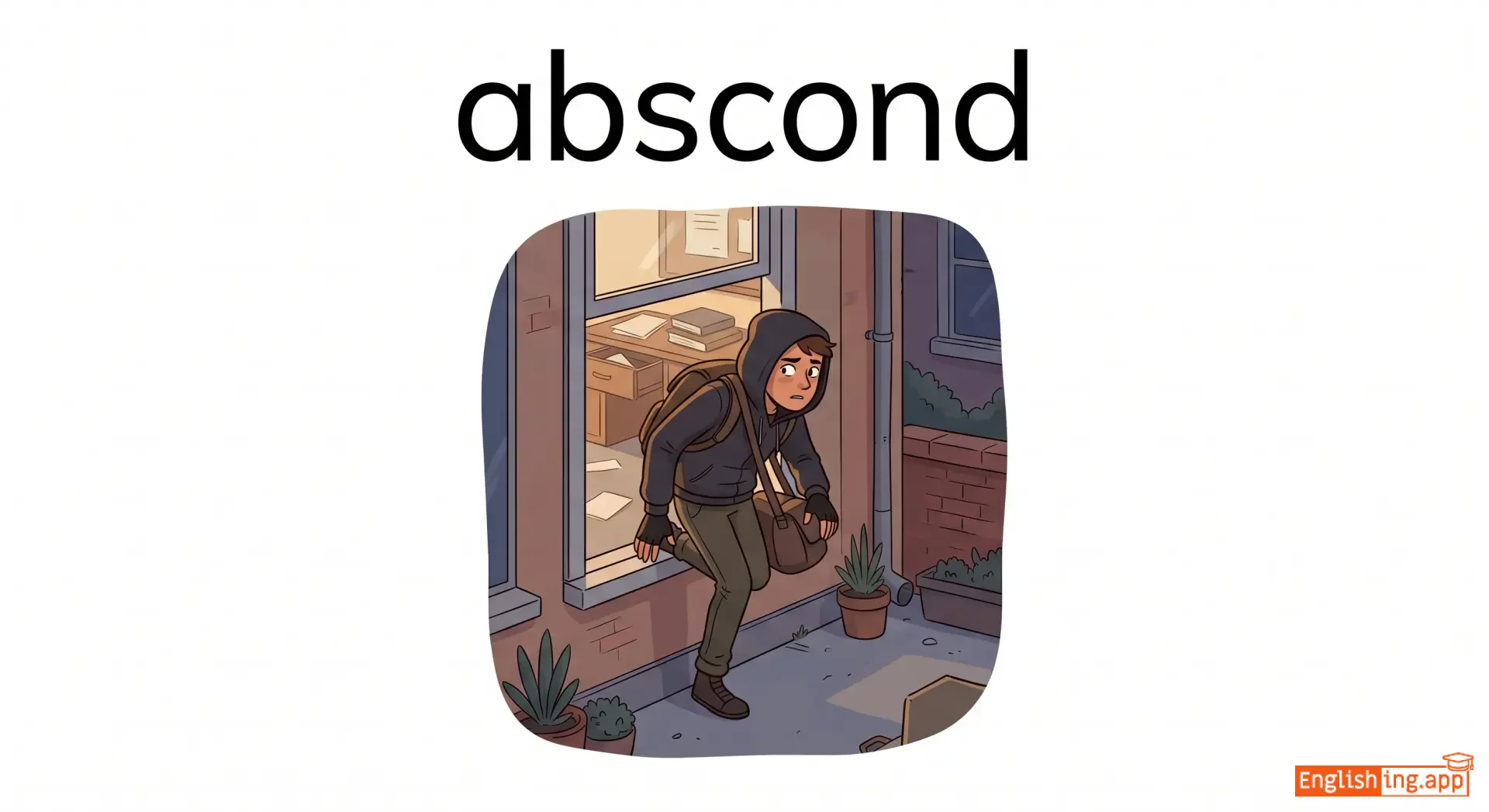
to leave secretly and quickly, often to avoid arrest or punishment
••••••
|
The thief tried to abscond with the stolen jewelry.
泥棒は盗まれた宝石を持って逃げようとした。
••••••
|
泥棒は盗まれた宝石を持って逃げようとした。
Dorobo wa nusumareta houseki wo motte nigeyou to shita.
••••••
|
abscond with
アブスコンド ウィズ
••••••
|
to take something secretly and escape
••••••
|
何かを持って逃げる
nanika wo motte nigeru
••••••
|
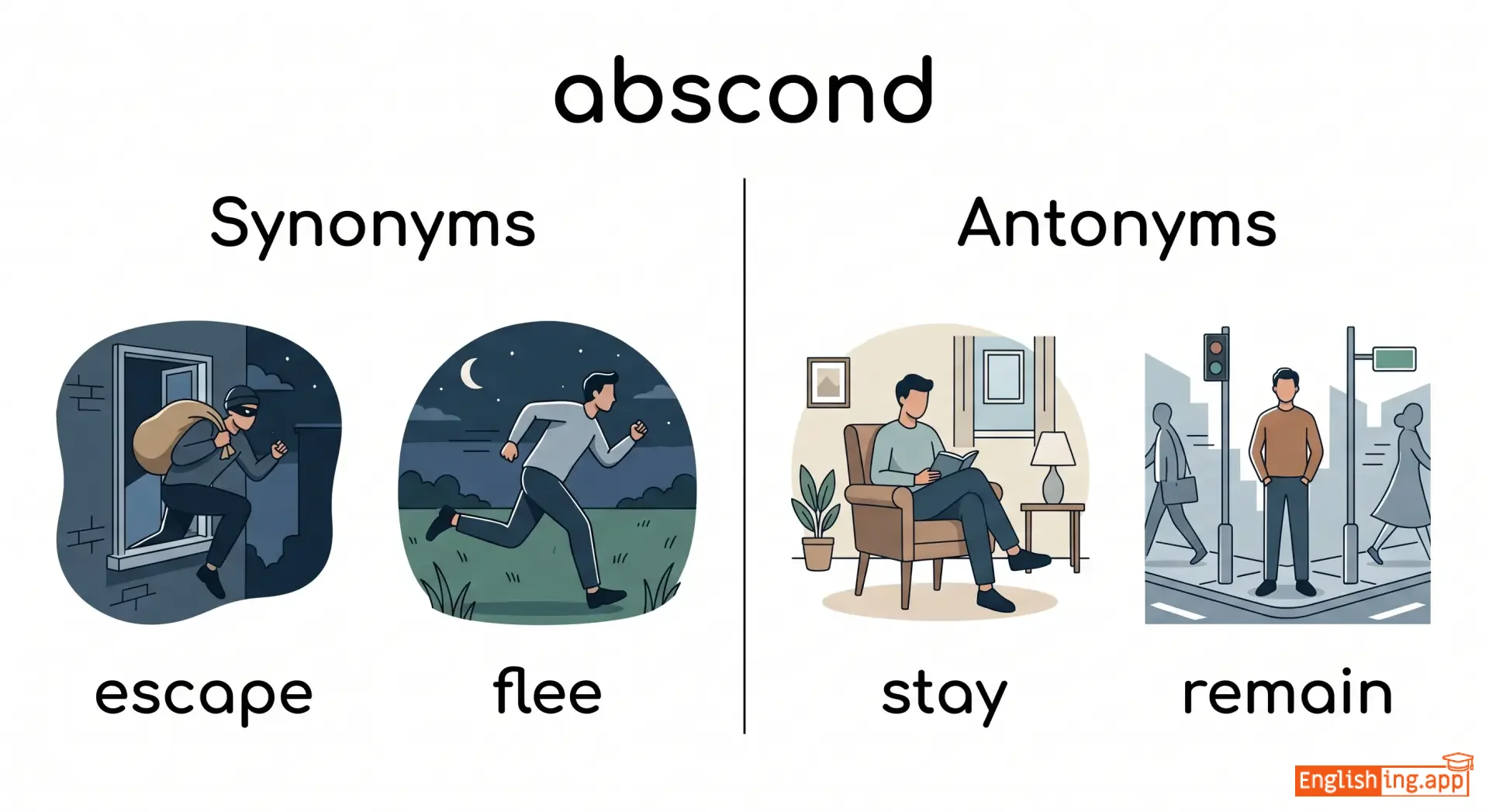
escape, flee, run away, vanish, bolt
••••••
|
stay, remain, appear
••••••
|
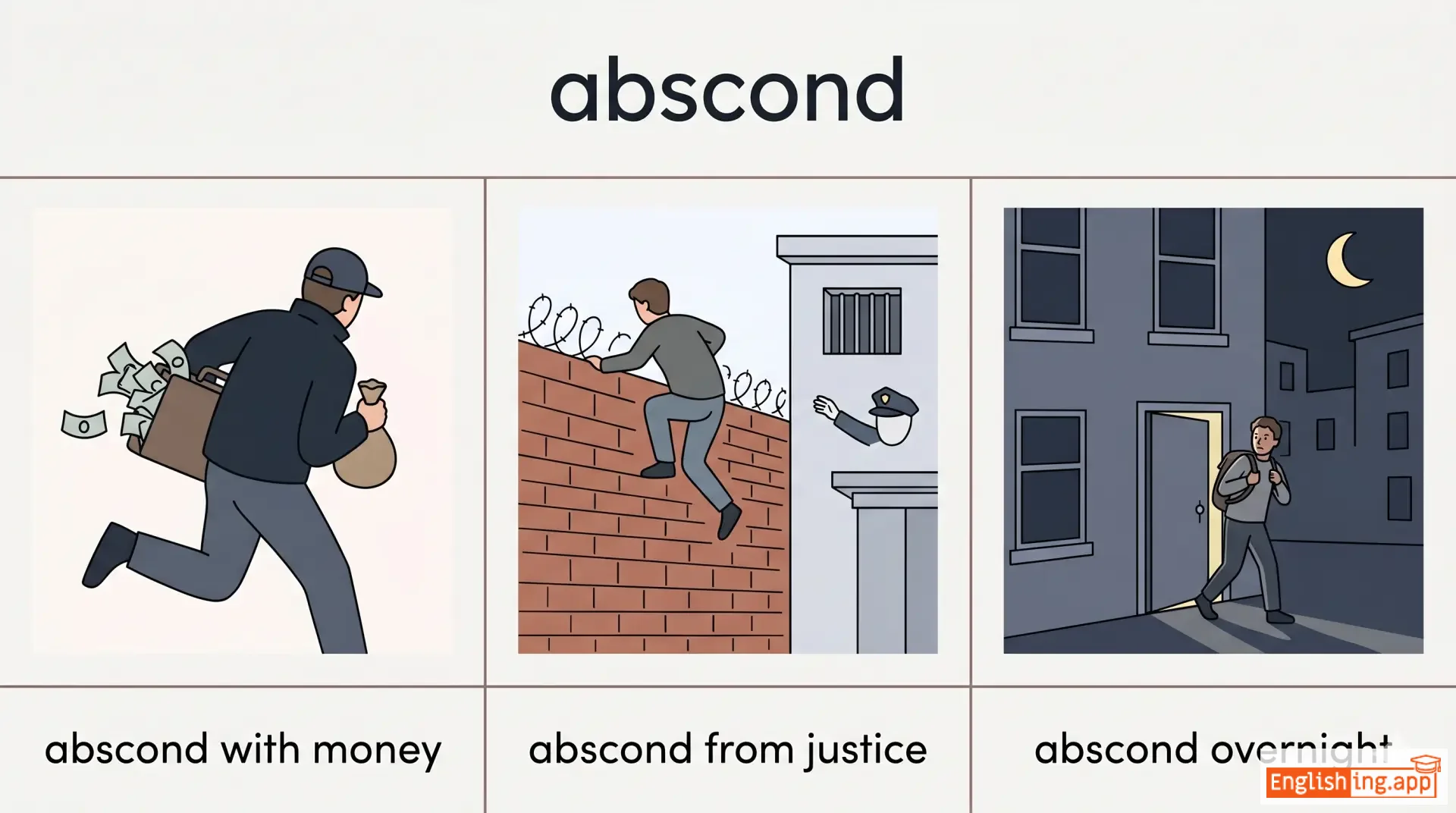
abscond with money, abscond from justice, abscond overnight
••••••
|
Abscond = ABsent + sCOND = 急いで密かに逃げる
••••••
|
|
🚪
••••••
|
/ˈæbsəns/
noun
(æbsens)
••••••
|
- •••••• |
不在
fuzai
••••••
|
- •••••• | - •••••• | - •••••• | - •••••• |
the state of being away from a place or person
••••••
|
His absence from the meeting was noticed by everyone. |
会議における彼の不在は誰にも気づかれました。
Kaigi ni okeru kare no fuzai wa dare ni mo kizukaremashita.
••••••
|
absence makes the heart grow fonder |
being away from someone makes you appreciate them more
••••••
|
不在が心をより温かくする
Fuzai ga kokoro o yori atatakaku suru
••••••
|
nonappearance, lack, nonexistence, vacancy
••••••
|
presence, attendance, appearance
••••••
|
long absence, unexplained absence, absence from work
••••••
|
Absenceを日本語で表すと'不在'。発音が似ている!
••••••
|
|
🚫
••••••
|
/ˈæbsənt/
adjective
(アブセント)
••••••
|
- •••••• |
欠席
kesseki
••••••
|
- •••••• | - •••••• | - •••••• | - •••••• |
not present at a place or event
••••••
|
She was absent from the meeting yesterday.
彼女は昨日会議を欠席していた。
••••••
|
彼女は昨日会議を欠席していた。
Kanojo wa kinou kaigi o kesseki shite ita.
••••••
|
- •••••• | - •••••• | - •••••• |
missing, away, unavailable, absent-minded
••••••
|
present, available
••••••
|
absent from class, absent from work, absent due to illness
••••••
|
欠席 = 授業を欠席している学生を想像して、遅れを取り戻す必要がある!
••••••
|
|
💯
••••••
|
/ˈæbsəluːt/
adjective
(アブソリュート)
••••••
|
- •••••• |
絶対
zettai
••••••
|
- •••••• | - •••••• | - •••••• | - •••••• |
total, complete, or without restriction
••••••
|
The dictator had absolute power over the nation. |
独裁者は国に対して絶対的な権力を持っていた。
Dokusai-sha wa kuni ni taishite zettaiteki na kenryoku o motte ita.
••••••
|
absolute power |
unlimited authority without any checks
••••••
|
絶対的な権力
zettai-teki na kenryoku
••••••
|
complete, total, perfect, unconditional, unlimited
••••••
|
partial, limited, restricted
••••••
|
absolute truth, absolute majority, absolute necessity
••••••
|
Absolute = ABsolut kanzen
••••••
|
|
✅
••••••
|
/ˈæbsəluːtli/
adverb
(アブソリュートリー)
••••••
|
- •••••• |
完全に
kanzen ni
••••••
|
- •••••• | - •••••• | - •••••• | - •••••• |
Completely; without qualification or restriction.
••••••
|
I absolutely agree with your decision. |
私はあなたの決定に完全に同意します。
Watashi wa anata no kettei ni kanzen ni dōi shimasu.
••••••
|
absolutely not |
A strong way of saying no.
••••••
|
絶対に違う
zettai ni chigau
••••••
|
completely, totally, entirely, fully
••••••
|
partially, somewhat
••••••
|
absolutely sure, absolutely necessary, absolutely amazing
••••••
|
Absolutelyは完全にという意味です — '絶対に確信している'を思い出してください。
••••••
|
|
🧽
••••••
|
/əbˈzɔːrb/
verb
(アブゾーブ)
••••••
|
- •••••• |
吸収する
きゅうしゅうする
••••••
|
absorbed
アブゾーブド
••••••
|
absorbed
アブゾーブド
••••••
|
absorbs
アブゾーブス
••••••
|
absorbing
アブゾービング
••••••
|
to take in or soak up a liquid, energy, or information
••••••
|
The sponge absorbed all the water.
スポンジは水をすべて吸収しました。
••••••
|
スポンジは水をすべて吸収しました。
Suponji wa mizu o subete kyūshū shimashita.
••••••
|
absorbed in thought
考えにふける
••••••
|
deeply engaged or preoccupied with one's thoughts
••••••
|
考えにふける
Kangae ni fukeru
••••••
|
soak, consume, engross, assimilate, take in
••••••
|
release, emit, repel
••••••
|
absorb energy, absorb impact, absorb information
••••••
|
吸収する + orb = orb(ボール)はすべてを吸収します。
••••••
|
|
🧽
••••••
|
/əbˈzɔːrbənt/
adjective, noun
(アブソーベント)
••••••
|
- •••••• |
吸収性のある
kyuushuusei no aru
••••••
|
- •••••• | - •••••• | - •••••• | - •••••• |
able to soak up liquid, moisture, or energy easily; a material or substance that absorbs
••••••
|
This towel is highly absorbent and dries quickly.
ディス タオル イズ ハイリー アブソーベント アンド ドライズ クイックリー
••••••
|
このタオルはとても吸収性が高く、すぐ乾きます。
kono taoru wa totemo kyuushuusei ga takaku sugu kawakimasu
••••••
|
- •••••• | - •••••• | - •••••• |
absorbing, spongy, porous, soakable, permeable
••••••
|
waterproof, nonabsorbent, repellent
••••••
|
absorbent material, highly absorbent, absorbent cloth, absorbent pad
••••••
|
吸収=きゅうしゅう—absorbent は何でも吸収
••••••
|
|
🌞
••••••
|
/əbˈzɔːrpʃən/
noun
(abzorpʃion)
••••••
|
|
吸収
kyuushuu
••••••
|
- •••••• | - •••••• | - •••••• | - •••••• |
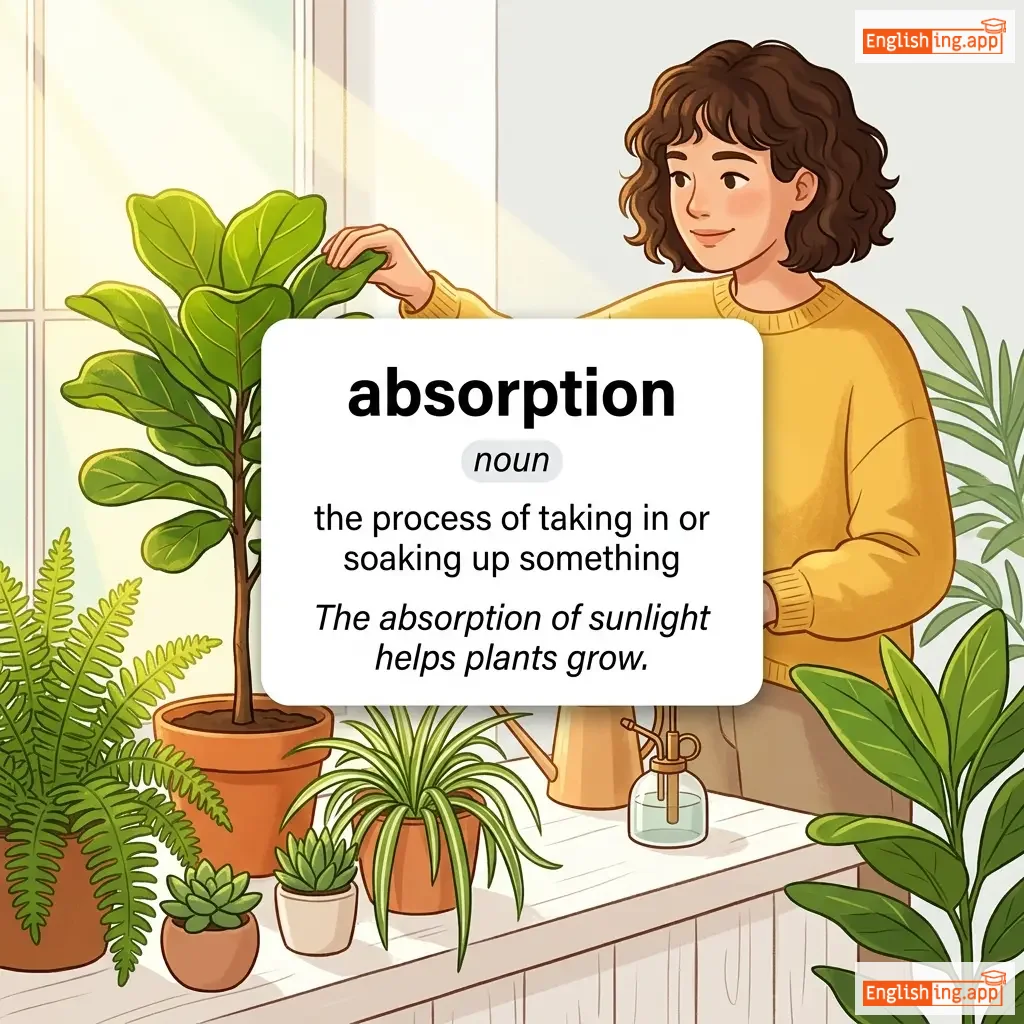
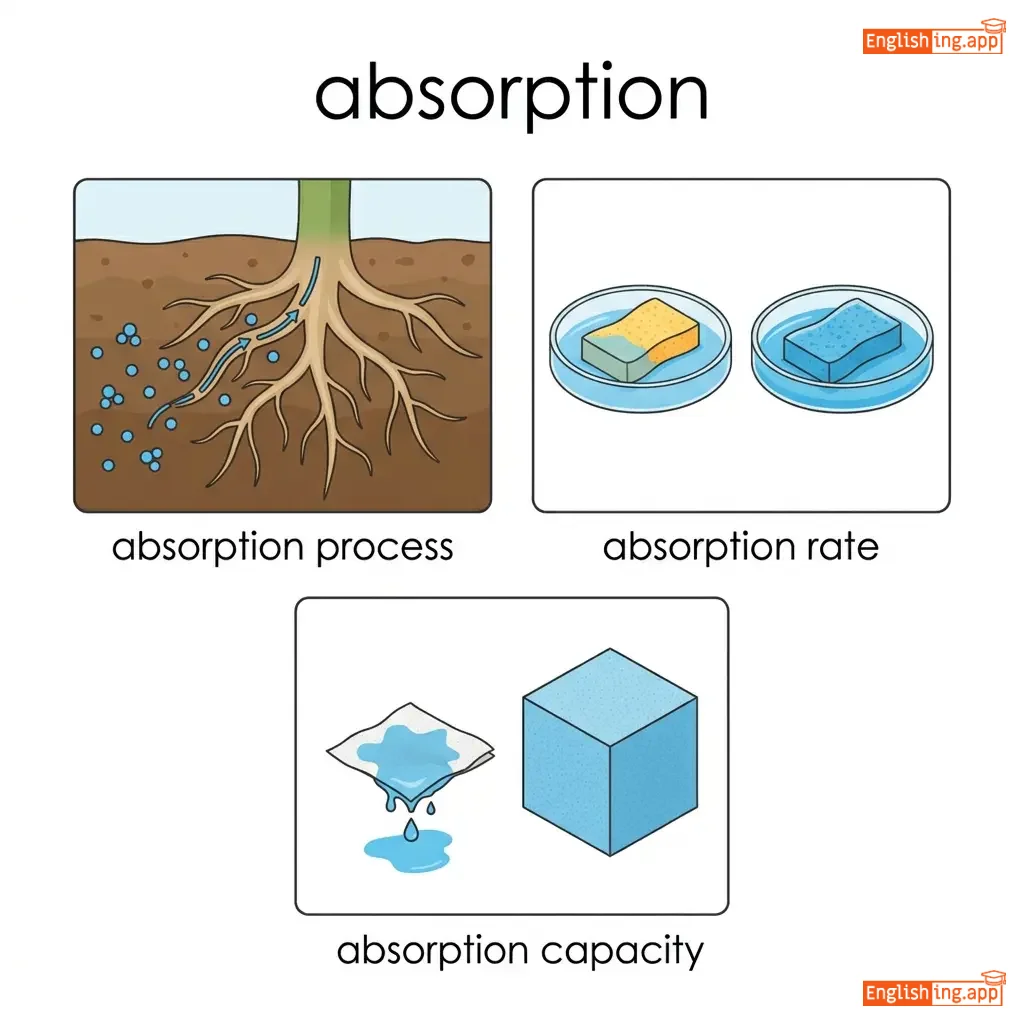
the process of taking in or soaking up something
••••••
|
The absorption of sunlight helps plants grow.
太陽光の吸収は植物の成長を助けます。
••••••
|
太陽光の吸収は植物の成長を助けます。
Taiyoukou no kyuushuu wa shokubutsu no seichou wo tasukemasu.
••••••
|
- •••••• | - •••••• | - •••••• |
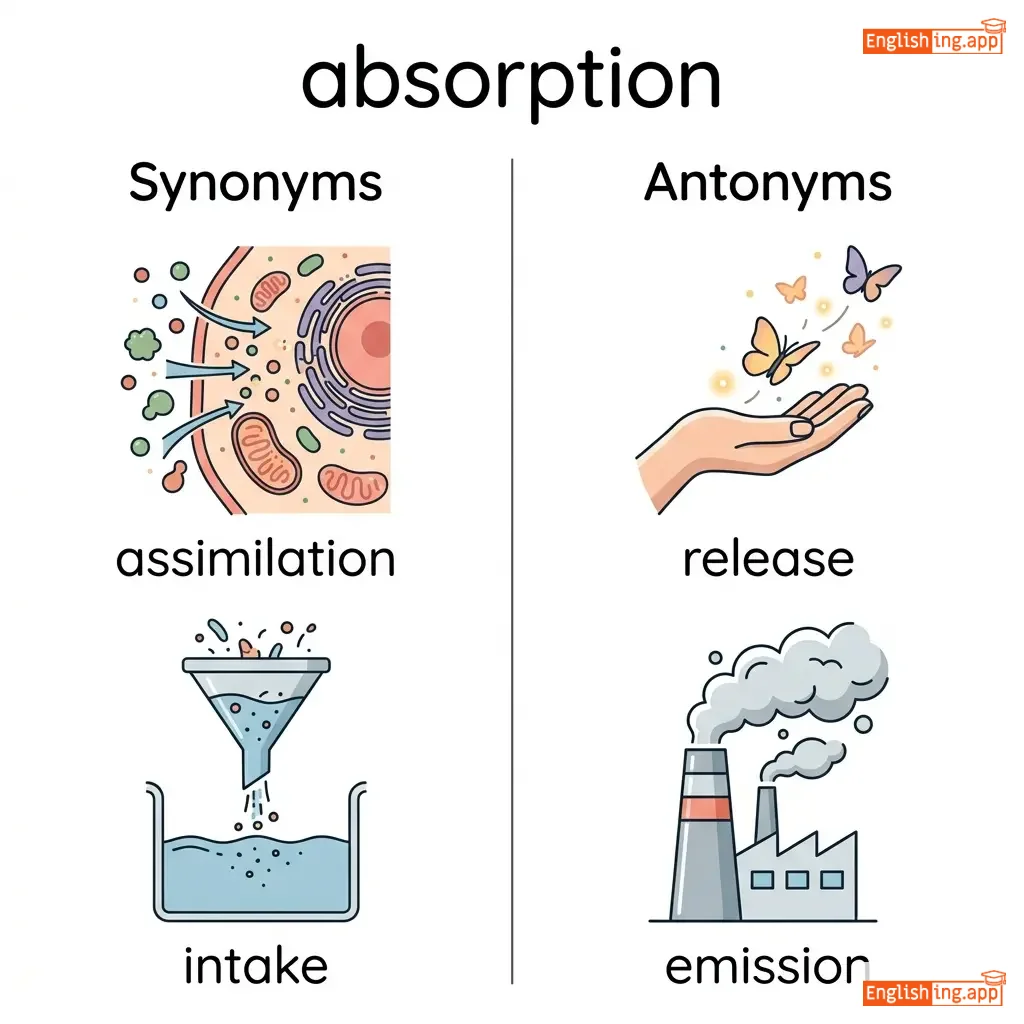
assimilation, intake, immersion, incorporation
••••••
|
release, emission, expulsion
••••••
|
absorption process, absorption rate, absorption capacity
••••••
|
吸収は植物が太陽光を吸収するようなものです。
••••••
|
|
🚫
••••••
|
/əbˈsteɪn/
verb
(アブステイン)
••••••
|
|
控える
hikaeru
••••••
|
abstained
アブステインド
••••••
|
abstained
アブステインド
••••••
|
abstains
アブステインズ
••••••
|
abstaining
アブステイニング
••••••
|
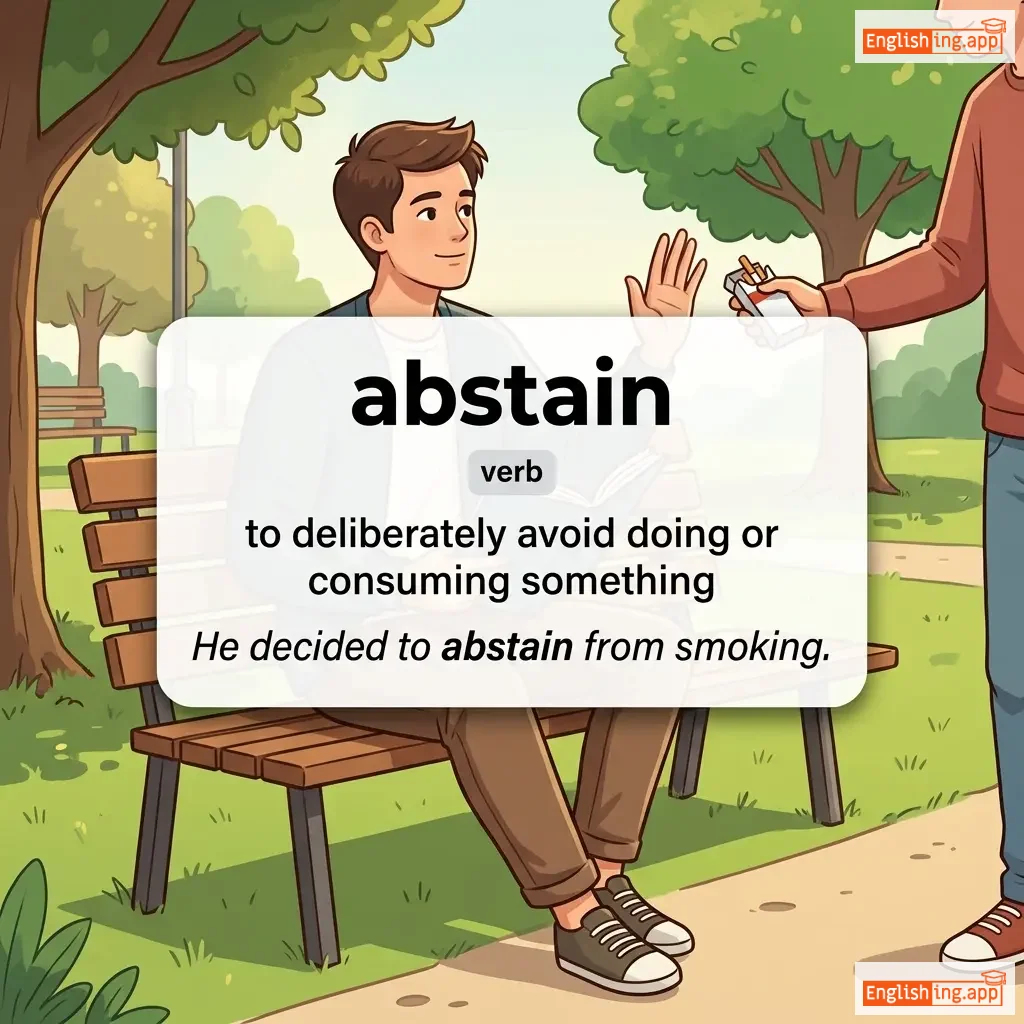
to deliberately avoid doing or consuming something
••••••
|
He decided to abstain from smoking.
彼は喫煙を控えることに決めました。
••••••
|
彼は喫煙を控えることに決めました。
Kare wa kitsuen o hikaeru koto ni kimemashita.
••••••
|
abstain from voting
投票を控える
••••••
|
to refuse to cast a vote
••••••
|
投票を控える
Tōhyō o hikaeru
••••••
|
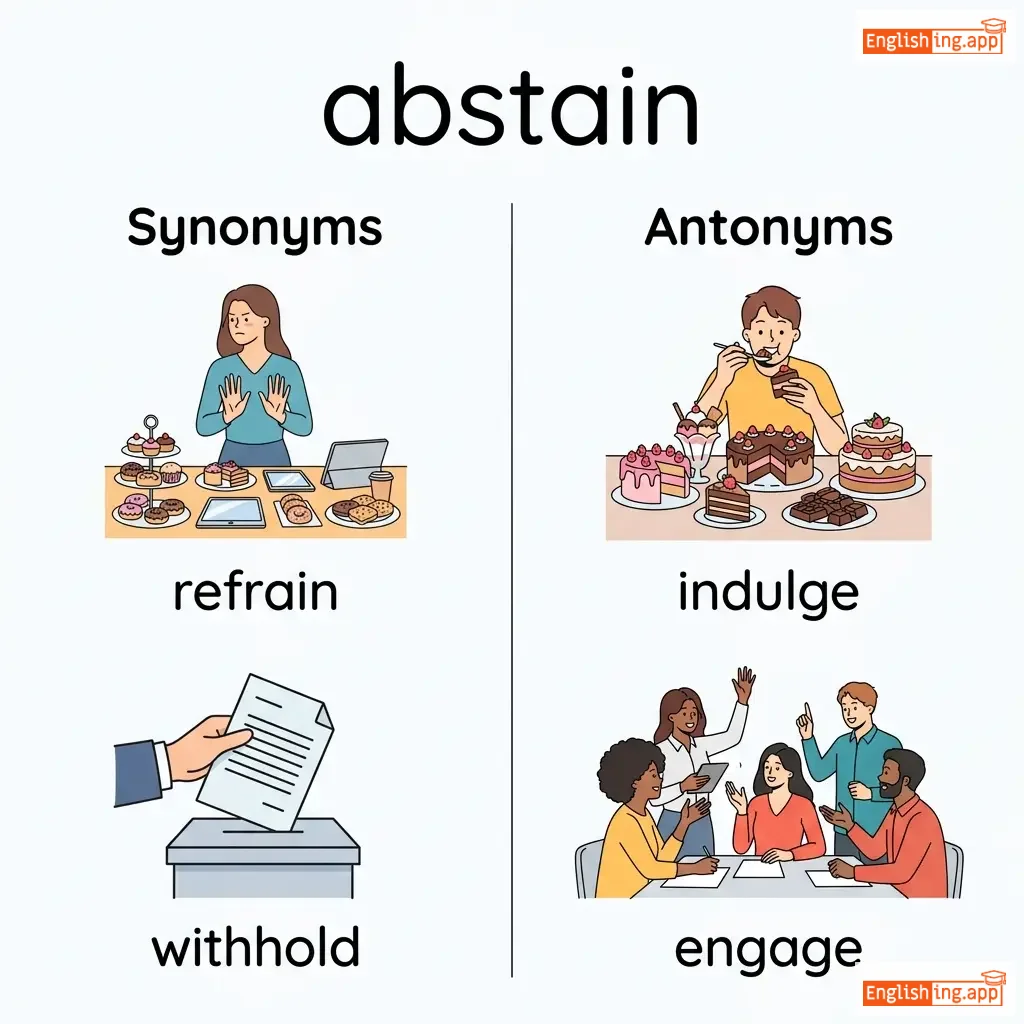
refrain, withhold, avoid, eschew
••••••
|
indulge, engage
••••••
|
abstain from alcohol, abstain from food, abstain from voting
••••••
|
Abstain = 'あ' から始まる = 控える
••••••
|
|
🎨
••••••
|
/ˈæb.strækt/
adjective, noun, verb
(アブストラクト)
••••••
|
- •••••• |
抽象的, 要約
chūshōteki, yōyaku
••••••
|
abstracted
アブストラクトされた
••••••
|
abstracted
アブストラクトされた
••••••
|
abstracts
アブストラクトする
••••••
|
abstracting
アブストラクトしている
••••••
|
existing in thought or as an idea but not having physical or concrete existence; a summary of a text
••••••
|
The artist is known for her abstract paintings.
そのアーティストはアブストラクトな絵画で知られています。
••••••
|
そのアーティストはアブストラクトな絵画で知られています。
Sono ātisuto wa abusutokuruto na kaiga de shirareteimasu.
••••••
|
in the abstract
抽象的に
••••••
|
considered generally, without reference to specific examples
••••••
|
抽象的に
chūshōteki ni
••••••
|
conceptual, theoretical, summary, extract
••••••
|
concrete, real, practical
••••••
|
abstract idea, abstract art, abstract concept
••••••
|
抽象的なものは具体的なものではなく、考えや芸術に現れるものです。
••••••
|
|
🧠
••••••
|
/æbˈstrækʃən/
noun
(アブストラクション)
••••••
|
- •••••• |
抽象
chuusho
••••••
|
- •••••• | - •••••• | - •••••• | - •••••• |
the process of forming general ideas by removing specific details; an abstract concept or idea
••••••
|
Abstraction allows complex ideas to be represented in a simplified form.
アブストラクション ハ コンプレックス ナ アイディア オ シンプル ナ カタチ デ アラワス。
••••••
|
抽象は複雑な考えを簡単な形で表現することを可能にします。
chuusho wa fukuzatsuna kangae o kantanna katachi de hyougen suru koto o kanou ni shimasu
••••••
|
- •••••• | - •••••• | - •••••• |
conceptualization, generalization, simplification, idea, theory
••••••
|
concreteness, reality, specificity
••••••
|
level of abstraction, abstraction process, abstract thinking, degree of abstraction
••••••
|
抽象=abstract、アートや考えを思い出そう。
••••••
|
|
🤡
••••••
|
/əbˈsɜːrd/
adjective
(アブサード)
••••••
|
- •••••• |
不合理な, ばかげた
fugouri na, bakageta
••••••
|
- •••••• | - •••••• | - •••••• | - •••••• |
wildly unreasonable, illogical, or inappropriate
••••••
|
It is absurd to think that the earth is flat. |
地球が平らだと思うのは不合理です。
Chikyuu ga tairada to omou no wa fugouri desu.
••••••
|
theater of the absurd |
a style of drama emphasizing the absurdity of human existence
••••••
|
不条理劇
fujouri geki
••••••
|
ridiculous, foolish, nonsensical, ludicrous
••••••
|
reasonable, rational, logical
••••••
|
absurd idea, utterly absurd, completely absurd
••••••
|
Absurdは‘アブサード’のように聞こえる - 完全にばかげている!
••••••
|
|
🌾
••••••
|
/əˈbʌndəns/
noun
(アバンダンス)
••••••
|
|
豊富; 大量
houfu; tairyou
••••••
|
- •••••• | - •••••• | - •••••• | - •••••• |
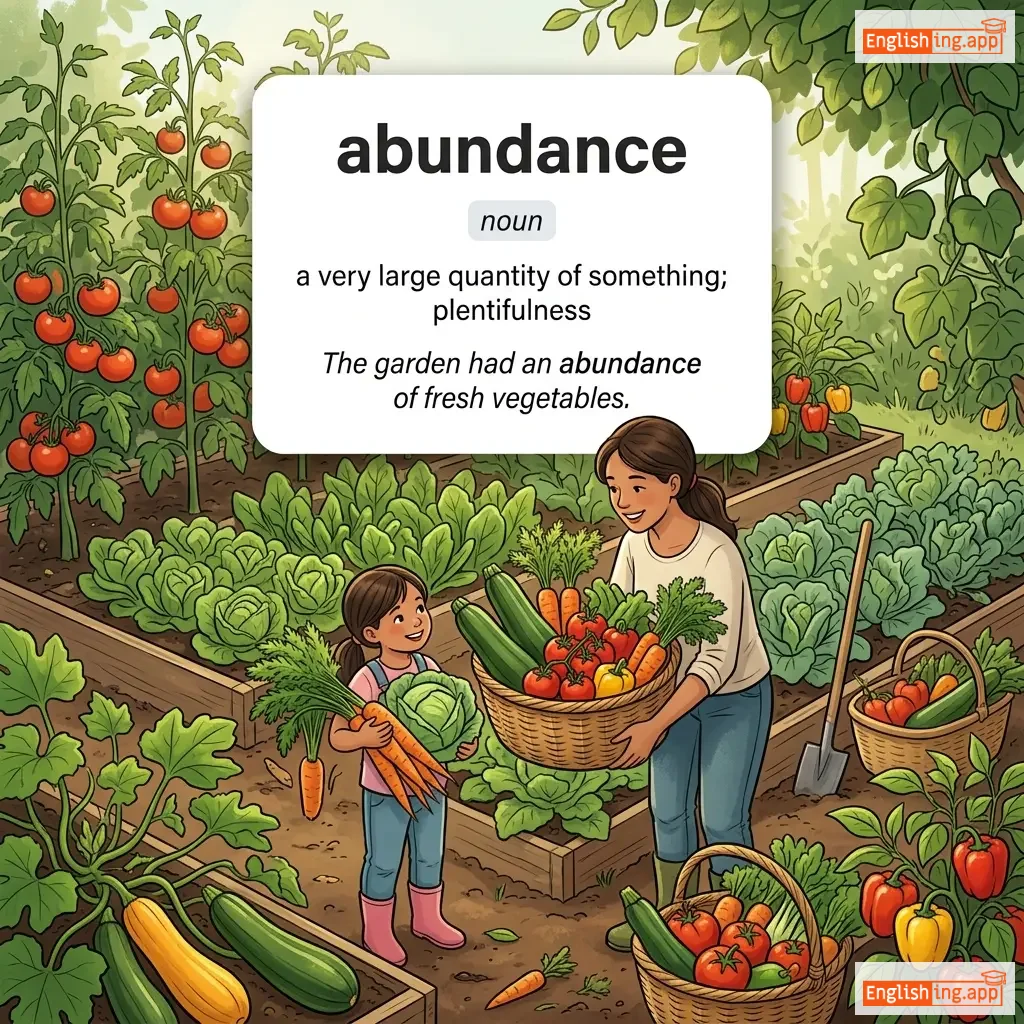
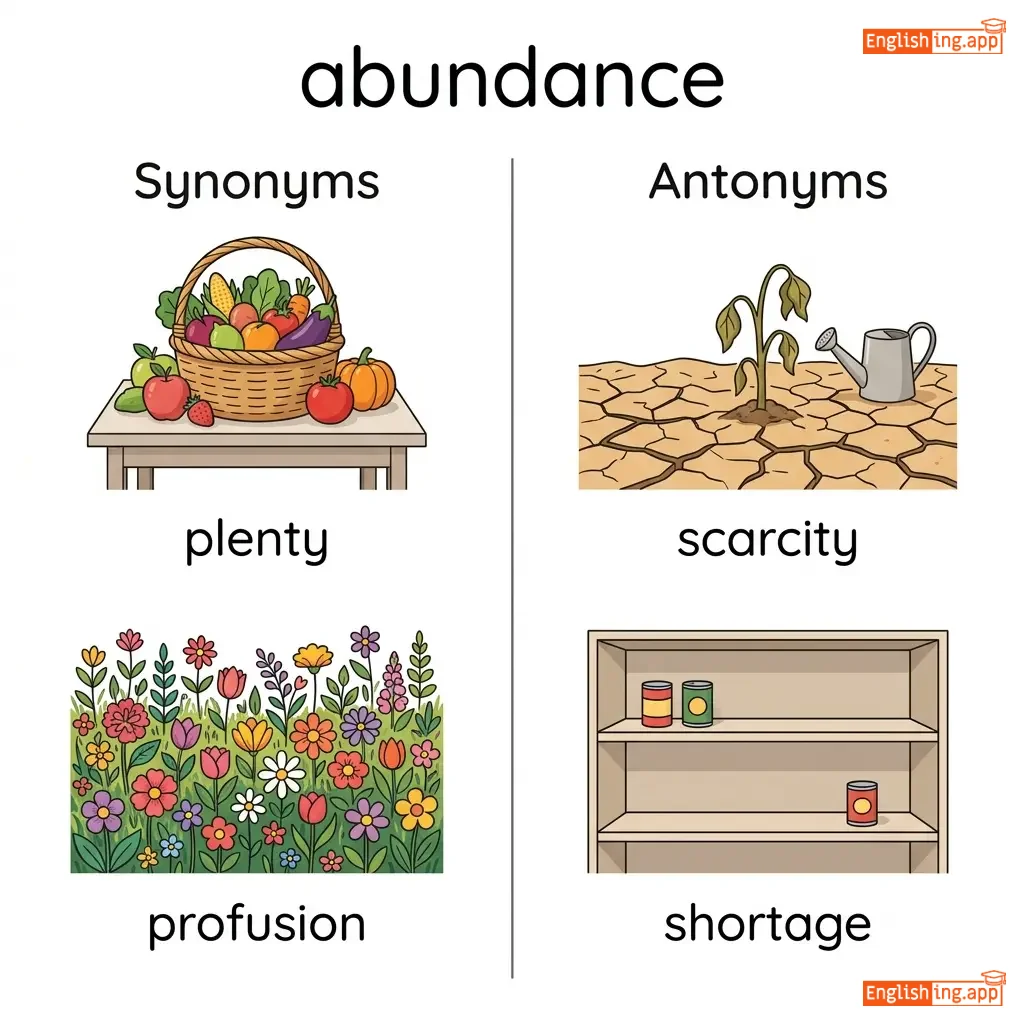
a very large quantity of something; plentifulness
••••••
|
The garden had an abundance of fresh vegetables.
庭には新鮮な野菜が豊富にありました。
••••••
|
庭には新鮮な野菜が豊富にありました。
Niwa ni wa shinsen na yasai ga houfu ni arimashita.
••••••
|
- •••••• | - •••••• | - •••••• |
plenty, profusion, wealth, richness
••••••
|
scarcity, shortage, lack, dearth
••••••
|
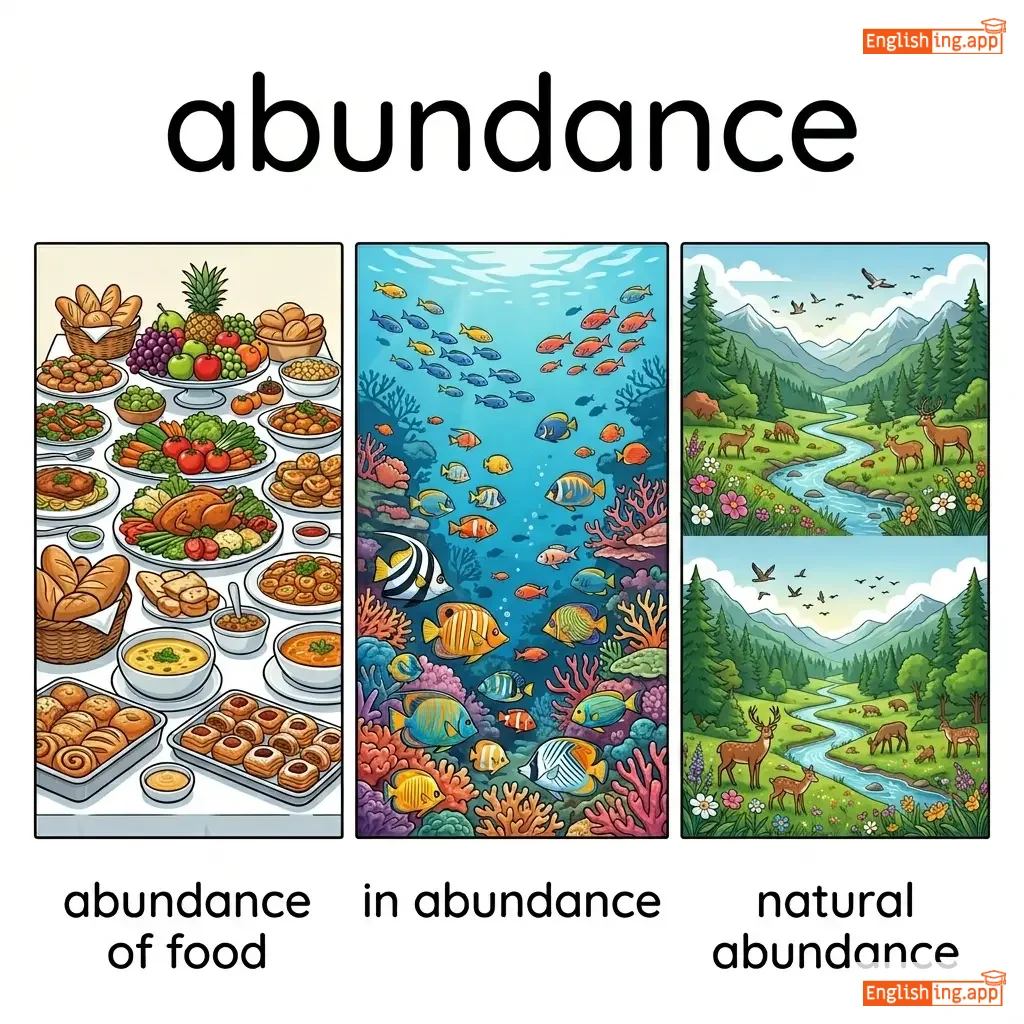
abundance of food, in abundance, natural abundance
••••••
|
Abundance: Imagine a garden filled with fresh vegetables.
••••••
|
|
🌸
••••••
|
/əˈbʌndənt/
adjective
(アバンダント)
••••••
|
- •••••• |
豊富
hōfu
••••••
|
- •••••• | - •••••• | - •••••• | - •••••• |
existing or available in large quantities; plentiful
••••••
|
The garden was abundant with colorful flowers.
庭は色とりどりの花であふれていました。
••••••
|
庭は色とりどりの花であふれていました。
Niwa wa iro toridori no hana de afurete imashita.
••••••
|
abundant in
アバンダント イン
••••••
|
having plenty of something
••••••
|
豊富に
hōfu ni
••••••
|
plentiful, ample, bountiful, copious, overflowing
••••••
|
scarce, rare, insufficient
••••••
|
abundant supply, abundant resources, abundant opportunities, abundant evidence
••••••
|
Abundant は '豊富' を意味します — 花が豊富に咲いている庭を想像してみてください 🌸
••••••
|
|
🚫
••••••
|
/əˈbjuːs/ (verb), /əˈbjuːs/ (noun)
verb, noun
••••••
|
- •••••• |
虐待
gyakudai
••••••
|
abused
••••••
|
abused
••••••
|
abuses
••••••
|
abusing
••••••
|
to use something in a harmful way; to treat someone badly or cruelly
••••••
|
He was accused of abusing his power. |
彼は自分の権力を虐待したとして告発されました。
Kare wa jibun no kenryoku o gyakudai shita to shite kokuhatsu saremashita.
••••••
|
substance abuse |
the harmful or excessive use of drugs or alcohol
••••••
|
薬物乱用
yakubutsu ranyō
••••••
|
mistreat, misuse, exploit, harm, oppress
••••••
|
respect, protect, cherish
••••••
|
child abuse, drug abuse, verbal abuse, abuse of power
••••••
|
虐待は虐待を意味します — バスの運転手が不正にブレーキをかけるのを想像してください 🚫
••••••
|
|
🎓
••••••
|
/ˌækəˈdɛmɪk/
adjective
(アカデミック)
••••••
|
- •••••• |
学問的
gakumon-teki
••••••
|
- •••••• | - •••••• | - •••••• | - •••••• |
related to education, learning, or scholarly activities
••••••
|
She has an outstanding academic record. |
彼女は優れた学問的記録を持っています。
Kanojo wa sugureta gakumon-teki kiroku o motteimasu.
••••••
|
purely academic |
something theoretical without practical relevance
••••••
|
純粋な学問的
junsuina gakumon-teki
••••••
|
educational, scholarly, intellectual, theoretical
••••••
|
practical, vocational
••••••
|
academic achievement, academic career, academic institution, academic record
••••••
|
Academicは学問に関連している🎓。覚えておいて: 'Academy'では学問的な仕事をする。
••••••
|
|
🏫
••••••
|
/əˈkædəmi/
noun
(アカデミー)
••••••
|
- •••••• |
アカデミー
akademī
••••••
|
- •••••• | - •••••• | - •••••• | - •••••• |
an institution of learning or training
••••••
|
He enrolled in a military academy. |
彼は軍事アカデミーに入学しました。
Kare wa gunji akademī ni nyūgaku shimashita.
••••••
|
- •••••• | - •••••• | - •••••• |
school, institute, college, university
••••••
|
none,
••••••
|
military academy, sports academy, music academy, national academy
••••••
|
アカデミーは学びの場所です 🎓。覚えておいてください: アカデミー = 学校に 'cademy' を追加したもの。
••••••
|
|
👑
••••••
|
/əkˈsiːd/
verb
(aksīd)
••••••
|
- •••••• |
同意する
dōi suru
••••••
|
acceded
aksīdedo
••••••
|
acceded
aksīdedo
••••••
|
accedes
aksīdesu
••••••
|
acceding
aksīding
••••••
|
to agree to a request, proposal, or demand; to assume an office or position
••••••
|
The government finally acceded to the demands of the protesters.
政府はついに抗議者の要求に応じた。
••••••
|
政府はついに抗議者の要求に応じた。
seifu wa tsuini kōgisha no yōkyū ni ōjita.
••••••
|
accede to the throne
王位を継ぐ
••••••
|
to take up the position of king or queen
••••••
|
王位を継ぐ
ōi o tsugu
••••••
|
agree, consent, accept, comply, yield
••••••
|
refuse, deny, reject
••••••
|
accede to demands, accede to requests, accede to the throne
••••••
|
同意するは承認を意味します。覚えておいて:'一席'で王位に登るために要求に応じる。
••••••
|
|
⚡
••••••
|
/əkˈsɛləreɪt/
verb
(アクセレレート)
••••••
|
- •••••• |
加速する
kasoku suru
••••••
|
accelerated
アクセレレート
••••••
|
accelerated
アクセレレート
••••••
|
accelerates
アクセレレート
••••••
|
accelerating
アクセレレート
••••••
|
to increase speed or make something happen sooner
••••••
|
The driver accelerated to overtake the truck.
運転手はトラックを追い越すために加速しました。
••••••
|
運転手はトラックを追い越すために加速しました。
Unten-shu wa torakku o oikosu tame ni kasoku shimashita.
••••••
|
accelerate growth
成長を加速する
••••••
|
to make progress or development happen faster
••••••
|
成長を加速する
Seichō o kasoku suru
••••••
|
hasten, quicken, speed up, advance, expedite
••••••
|
slow down, delay, decelerate
••••••
|
accelerate development, accelerate progress, accelerate change, accelerate pace
••••••
|
車を加速すると、⚡もっと早く進みます!
••••••
|
|
🚀
••••••
|
/əkˌseləˈreɪʃən/
noun
(アクセラレーション)
••••••
|
- •••••• |
加速度
kasokudo
••••••
|
- •••••• | - •••••• | - •••••• | - •••••• |
the rate at which velocity changes over time; the act of speeding up
••••••
|
The car showed rapid acceleration as it entered the highway.
ザ・カー・ショウド・ラピッド・アクセラレーション・アズ・イット・エンタード・ザ・ハイウェイ。
••••••
|
車は高速道路に入るときに急な加速度を示した。
kuruma wa kosoku doro ni hairu toki ni kyuna kasokudo o shimeshita
••••••
|
acceleration due to gravity
アクセラレーション・デュー・トゥ・グラビティ
••••••
|
the increase in velocity of an object caused by gravitational force
••••••
|
重力加速度
juryoku kasokudo
••••••
|
speeding up, increase, quickening, propulsion, boost
••••••
|
deceleration, slowdown, retardation
••••••
|
rapid acceleration, constant acceleration, linear acceleration, angular acceleration
••••••
|
加速度=加速+度、スピードの変化
••••••
|
|
🗣️
••••••
|
/ˈæksɛnt/
noun
(アクサント)
••••••
|
- •••••• |
アクセント
akushento
••••••
|
- •••••• | - •••••• | - •••••• | - •••••• |
a distinctive way of pronouncing a language, especially one associated with a particular country or region
••••••
|
She spoke English with a strong French accent.
彼女は強いフランス語のアクセントで英語を話しました。
••••••
|
彼女は強いフランス語のアクセントで英語を話しました。
Kanojo wa tsuyoi furansugo no akushento de eigo o hanashimashita.
••••••
|
foreign accent
外国のアクセント
••••••
|
a way of speaking that shows the influence of another language
••••••
|
外国のアクセント
gaikoku no akushento
••••••
|
intonation, pronunciation, tone, inflection
••••••
|
monotone, uniformity
••••••
|
strong accent, foreign accent, regional accent, British accent
••••••
|
Accent は‘アクセント’です — 特別な発音方法です。
••••••
|
|
✅
••••••
|
/əkˈsɛpt/
verb
(アクセプト)
••••••
|
|
受け入れる
ukeireru
••••••
|
accepted
アクセプテッド
••••••
|
accepted
アクセプテッド
••••••
|
accepts
アクセプツ
••••••
|
accepting
アクセプティング
••••••
|
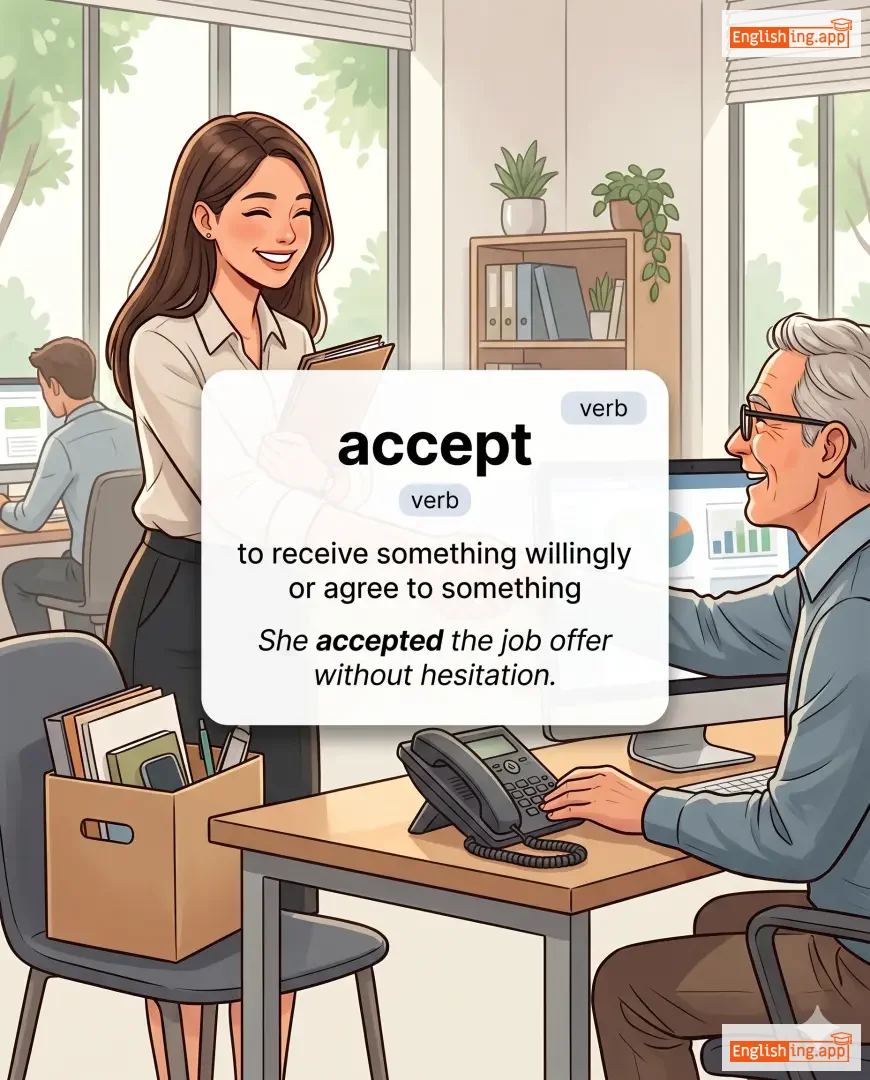
to receive something willingly or agree to something
••••••
|
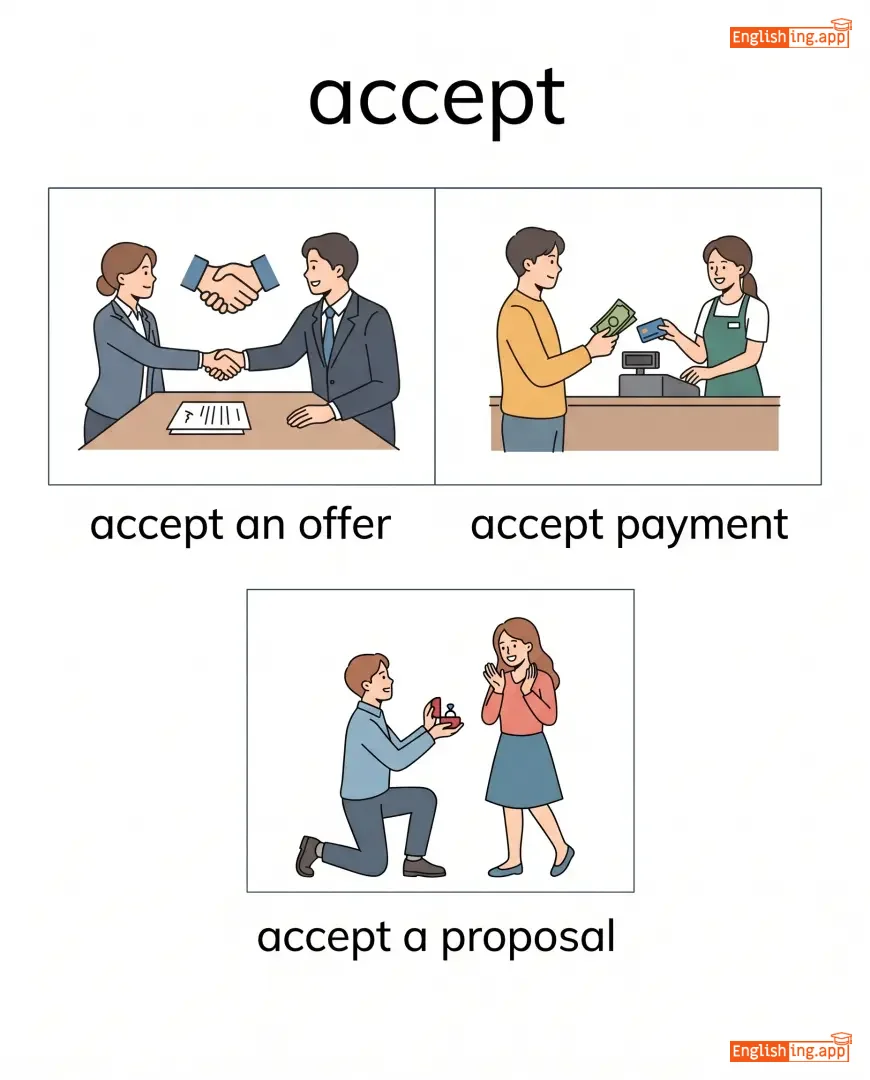
She accepted the job offer without hesitation.
彼女はためらうことなく仕事のオファーを受け入れた。
••••••
|
彼女はためらうことなく仕事のオファーを受け入れた。
Kanojo wa tamerau koto naku shigoto no ofā o ukeireta.
••••••
|
accept responsibility
責任を受け入れる
••••••
|
to acknowledge and take responsibility for something
••••••
|
責任を受け入れる
sekinin o ukeireru
••••••
|
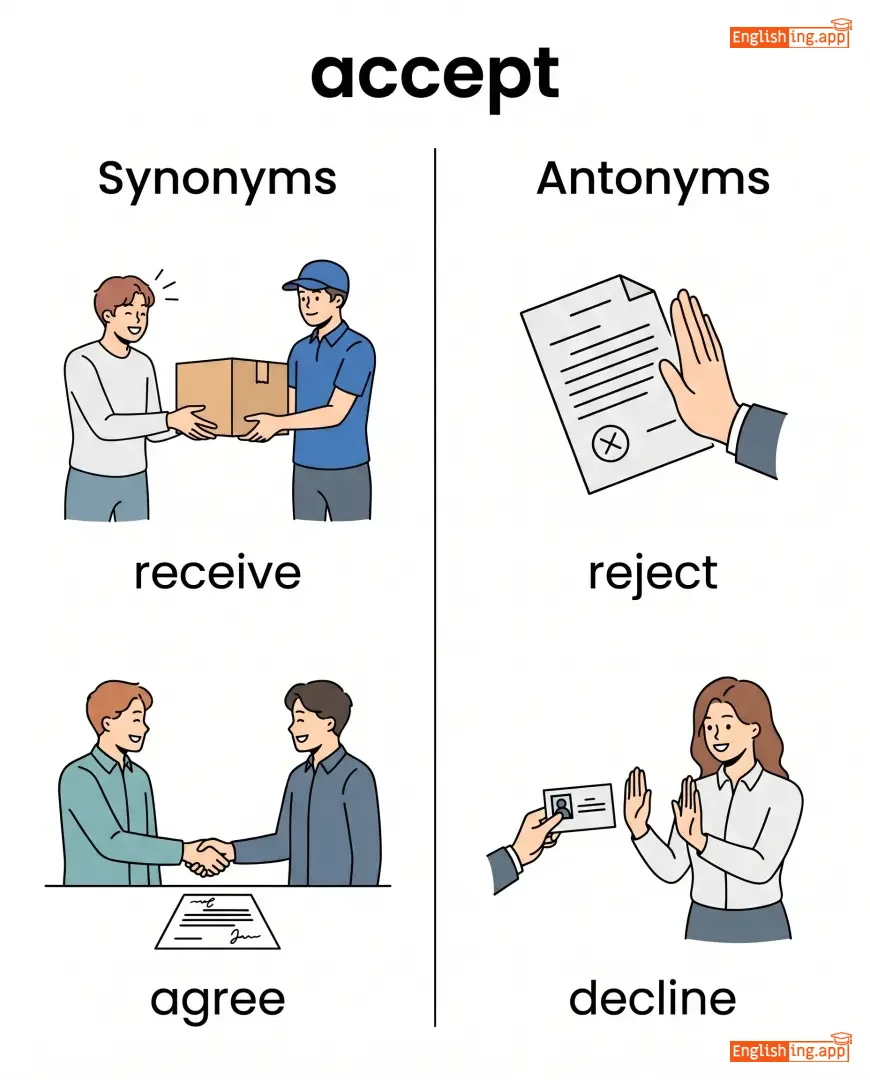
receive, agree, approve, consent
••••••
|
reject, decline, refuse
••••••
|
accept an offer, accept payment, accept a proposal, accept responsibility
••••••
|
新しい仕事のオファーを受け入れるのは、次のステップを踏み出すこと
••••••
|

