Midnight Stage Rehearsal
スタジオの外で、子供たちは'hey'と叫んでアーティストを歓迎しました。 リハーサル中、ライトのブームが偶然hitしてステージのポストに当たりました。 監督のナヒッドはキャストにグループでhugをするように頼みました。 プロデューサーのナージスは笑って言いました、'huh、こんなエネルギーを見たことがない。' セットの空気は冷たかったので、彼らは霧を作るためにiceマシンを回しました。 女優リアは昨日illでしたが、今は元気です。 作家は言いました、'its heartは友情です。' 彼らはカメラマンのサムの強いjawラインについて冗談を言いました。 ドローンが上空でjetスタイルで旋回していました。 サウンドエンジニアのヤーヤは、彼の友人であり尊敬されているJew作曲家からのミキシングのコツを共有しました。 赤いkeyライトがシーン全体を明るく照らしました。 ダンサーたちは床にlayサークルを描くためにチョークを使いました。 戦闘シーンの前に、皆がleg筋肉をストレッチしました。 彼らはセットのlidを閉じ、道具を片付けました。 メイクアップアーティストは大胆なlipの色調を調整しました。 大工は木のlogを切って、素早く背景を作りました。 観客のために新しいlotのコメディ瞬間が追加されました。 夜遅くても、誰もエネルギーがlowだと感じませんでした。 劇の監督は言いました、'私は感情的になると少しmadになりますが、それでも続けます。' 彼は言いました、'次のMayに、このショーをツアーに持って行きます。'
|
絵文字
|
単語 | Images | 翻訳 | 過去 | 過去分詞 | 三人称単数 | 動名詞 | 意味 | 例文 | 例文の翻訳 | 表現例 | 表現例の意味 | 表現例の翻訳 | 同義語 | 対義語 | コロケーション | ニーモニック |
|---|---|---|---|---|---|---|---|---|---|---|---|---|---|---|---|---|---|
|
👋
••••••
|
/heɪ/
interjection
(ヘイ)
••••••
|
- •••••• |
ヘイ
hei
••••••
|
- •••••• | - •••••• | - •••••• | - •••••• |
used to attract attention, express surprise, or greet someone
••••••
|
Hey, how are you doing today? |
ヘイ、今日はどうしてる?
Hei, kyō wa dō shiteru?
••••••
|
- •••••• | - •••••• | - •••••• |
hello, hi, yo, hiya, greetings
••••••
|
goodbye, farewell
••••••
|
hey there, hey you, hey guys, hey man
••••••
|
ヘイは、注意を引いたり挨拶したりするために使う言葉です。
••••••
|
|
💥
••••••
|
/hɪt/
verb
(ヒット)
••••••
|
- •••••• |
打つ
utsu
••••••
|
hit
ヒット
••••••
|
hit
ヒット
••••••
|
hits
ヒットス
••••••
|
hitting
ヒッティング
••••••
|
to strike someone or something with force
••••••
|
He accidentally hit the ball into the window.
彼は偶然ボールを窓に打ちました。
••••••
|
彼は偶然ボールを窓に打ちました。
Kare wa guuzen booru wo mado ni uchimashita.
••••••
|
hit the nail on the head
的を射る
••••••
|
to describe a situation or problem exactly
••••••
|
的を射る
Mato wo iru
••••••
|
strike, smack, beat, punch, knock
••••••
|
miss, avoid, dodge
••••••
|
hit hard, hit the target, hit the road, hit record
••••••
|
Hitは打つという意味です。ゴルフでボールを打ってホールインワンを目指しましょう!
••••••
|
|
🤗
••••••
|
/hʌɡ/
verb
(ハグ)
••••••
|
- •••••• |
抱きしめる
dakishimeru
••••••
|
hugged
ハグド
••••••
|
hugged
ハグド
••••••
|
hugs
ハグス
••••••
|
hugging
ハギング
••••••
|
to hold someone tightly in your arms to show affection or comfort
••••••
|
She hugged her friend before leaving for the airport.
シー ハグド ハー フレンド ビフォー リービング フォー ザ エアポート。
••••••
|
彼女は空港に向かう前に友達を抱きしめた。
Kanojo wa kuukou ni mukau mae ni tomodachi wo dakishimeta.
••••••
|
a bear hug
ア ベア ハグ
••••••
|
a very tight and affectionate hug
••••••
|
強い抱擁
tsuyoi houyou
••••••
|
embrace, cuddle, hold, squeeze, clasp
••••••
|
ignore, release, separate
••••••
|
give a hug, warm hug, tight hug, hug someone, big hug
••••••
|
Hug は心で抱きしめること。
••••••
|
|
🤔
••••••
|
/hʌ/
interjection
(は?)
••••••
|
- •••••• |
なんて言ったの?
nante itta no?
••••••
|
- •••••• | - •••••• | - •••••• | - •••••• |
used to express confusion, surprise, or that you did not hear something
••••••
|
Huh? What did you say? |
は?なんて言ったの?
Ha? Nante itta no?
••••••
|
- •••••• | - •••••• | - •••••• |
what, pardon, eh, really, oh
••••••
|
none, silence
••••••
|
say huh, huh expression, confused huh, huh reaction
••••••
|
何かを聞き逃したときは 'Huh?' と言おう — それは 'なんて言ったの?' の意味
••••••
|
|
🧊
••••••
|
/aɪs/
noun
(aisu)
••••••
|
- •••••• |
氷
kōri
••••••
|
- •••••• | - •••••• | - •••••• | - •••••• |
frozen water, a solid form of water
••••••
|
The lake was covered with thick ice in winter. |
湖は冬に厚い氷で覆われていた。
Mizuumi wa fuyu ni atsui kōri de ōwarete ita.
••••••
|
break the ice |
to start a conversation in a social situation
••••••
|
氷を破る
kōri o yaburu
••••••
|
frost, snow, glacier, icicle
••••••
|
heat, fire
••••••
|
ice cubes, ice cream, ice skating, thin ice
••••••
|
Ice = 氷、アイスクリームのようなもの 🍦
••••••
|
|
🤒
••••••
|
/ɪl/
adjective
(イル)
••••••
|
- •••••• |
病気
byouki
••••••
|
- •••••• | - •••••• | - •••••• | - •••••• |
Not in good health; sick or unwell.
••••••
|
He has been feeling ill since yesterday. |
彼は昨日から体調が悪いです。
Kare wa kinou kara taichou ga warui desu.
••••••
|
ill at ease |
feeling uncomfortable or uneasy
••••••
|
不快
fukai
••••••
|
sick, unwell, unhealthy, ailing
••••••
|
healthy, well, fine
••••••
|
feel ill, fall ill, ill health, ill effects
••••••
|
Ill は病気を意味します。覚えておいて、 'ill' は病気です 🤒.
••••••
|
|
🔗
••••••
|
/ɪts/
pronoun
(イッツ)
••••••
|
- •••••• |
それの
sore no
••••••
|
- •••••• | - •••••• | - •••••• | - •••••• |
Belonging to or associated with a thing previously mentioned.
••••••
|
The company changed its logo last year.
会社は昨年そのロゴを変更しました。
••••••
|
会社は昨年そのロゴを変更しました。
Kaisha wa sakunen sono rogo o henkō shimashita.
••••••
|
- •••••• | - •••••• | - •••••• |
belonging, owned by, related to
••••••
|
others, theirs
••••••
|
its value, its name, its purpose, its role
••••••
|
Itsはそれのを意味します — 例えば 'dog its tail' は犬の尾を意味します。
••••••
|
|
🦷
••••••
|
/dʒɔː/
noun
••••••
|
- •••••• | - •••••• | - •••••• | - •••••• | - •••••• | - •••••• |
the lower movable bone of the face that holds the teeth; the mouth area used for chewing and talking
••••••
|
The dentist examined my jaw for any signs of pain. |
- •••••• |
drop one's jaw |
to be extremely surprised or shocked
••••••
|
- •••••• |
chin, mouth, mandible, muzzle, jowl
••••••
|
skull, cranium
••••••
|
strong jaw, clenched jaw, jaw pain, square jaw, lower jaw
••••••
|
No •••••• |
|
✈️
••••••
|
/dʒɛt/
noun, verb
(ハピネス)
••••••
|
- •••••• |
幸せ
shiawase
••••••
|
jetted
••••••
|
jetted
••••••
|
jets
••••••
|
jetting
••••••
|
A fast aircraft powered by jet engines; to travel by jet plane.
••••••
|
They jetted off to Paris for the weekend.
彼女は賞を受け取ったとき、自分の幸せを隠せなかった。
••••••
|
彼女は賞を受け取ったとき、自分の幸せを隠せなかった。
Kanojo wa shō o uketotta toki, jibun no shiawase o kakusenakatta.
••••••
|
jet set
幸せの追求
••••••
|
wealthy people who travel frequently for pleasure
••••••
|
幸せの追求
shiawase no tsuikyū
••••••
|
airplane, aircraft, plane, flyer
••••••
|
propeller plane, subsonic flight
••••••
|
jet engine, private jet, jet plane, jet lag
••••••
|
幸せはすぐそばにある、手を伸ばしてみよう!
••••••
|
|
✡️
••••••
|
/dʒuː/
noun
(ジュー)
••••••
|
- •••••• |
ユダヤ人
yudayajin
••••••
|
- •••••• | - •••••• | - •••••• | - •••••• |
a person whose religion is Judaism or who is of Jewish descent
••••••
|
He is a Jew by heritage and follows Jewish customs. |
彼はユダヤ人で、ユダヤの習慣を守っています。
Kare wa yudayajin de, yudaya no shuukan o mamotte imasu.
••••••
|
- •••••• | - •••••• | - •••••• |
Hebrew, Israelite, Semite, Jewish person
••••••
|
gentile, non-Jew
••••••
|
Jewish community, practicing Jew, observant Jew
••••••
|
ユダヤ人はJew、ユダヤ教に由来
••••••
|
|
🔑
••••••
|
/kiː/
noun
(ki)
••••••
|
- •••••• |
鍵
ken
••••••
|
- •••••• | - •••••• | - •••••• | - •••••• |
A small piece of shaped metal used to open or close locks, or something crucial and essential.
••••••
|
She lost the key to her apartment. |
彼女は自分のアパートの鍵をなくした。
Kanojo wa jibun no apāto no kagi o nakushita.
••••••
|
key to success |
the essential factor in achieving success
••••••
|
成功への鍵
Seikou e no kagi
••••••
|
essential, crucial, vital, main, important
••••••
|
unimportant, trivial, minor
••••••
|
house key, car key, key role, key point, key factor
••••••
|
鍵は成功への扉を開けるもの。
••••••
|
|
📖
••••••
|
/leɪ/
verb
(レイ)
••••••
|

|
置く
oku
••••••
|
laid
レイド
••••••
|
laid
レイド
••••••
|
lays
レイズ
••••••
|
laying
レイイング
••••••
|
To put something down carefully in a flat position.
••••••
|
She laid the book on the table.
彼女は本をテーブルに置いた。
••••••
|
彼女は本をテーブルに置いた。
Kanojo wa hon o teeburu ni oita.
••••••
|
lay the foundation
基礎を築く
••••••
|
to establish the base or groundwork
••••••
|
基礎を築く
kiso o kizuku
••••••
|
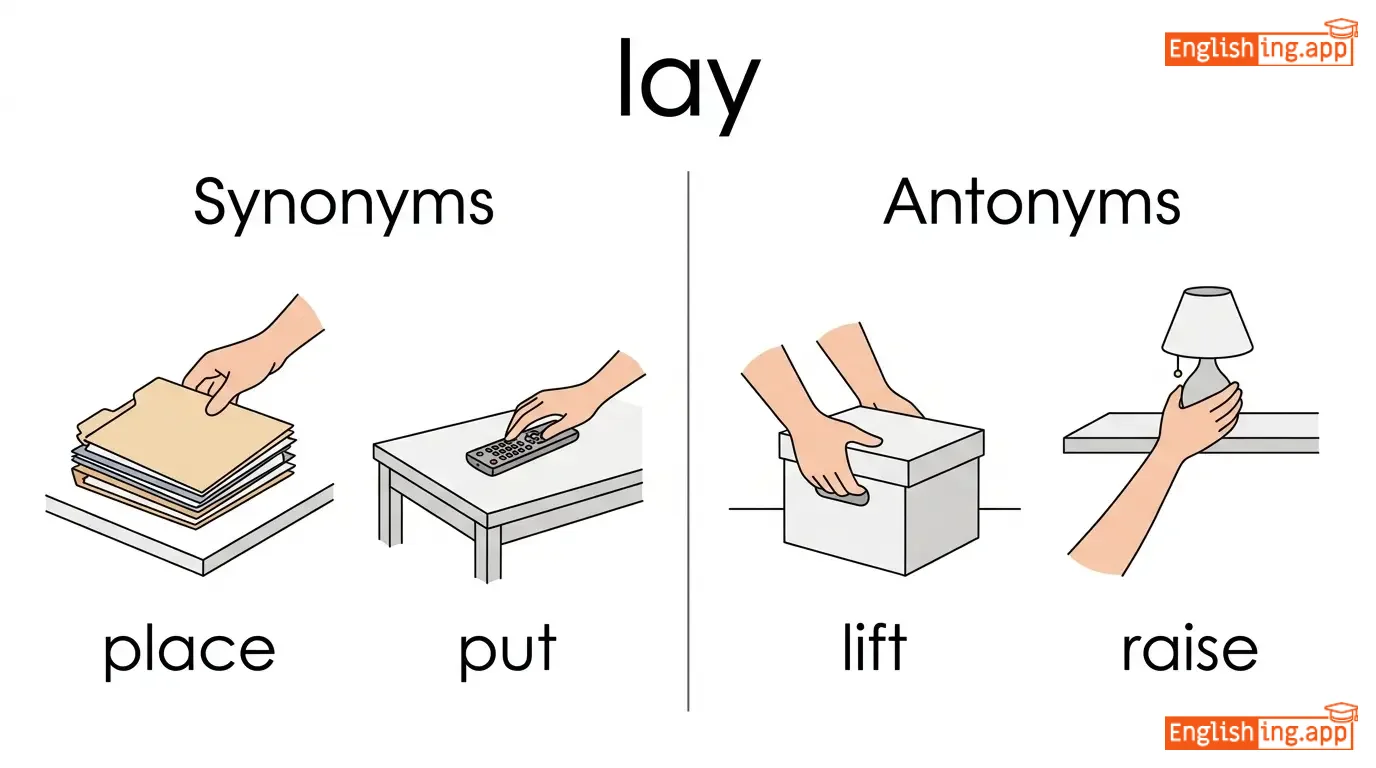
place, put, set, position, deposit
••••••
|
lift, raise
••••••
|
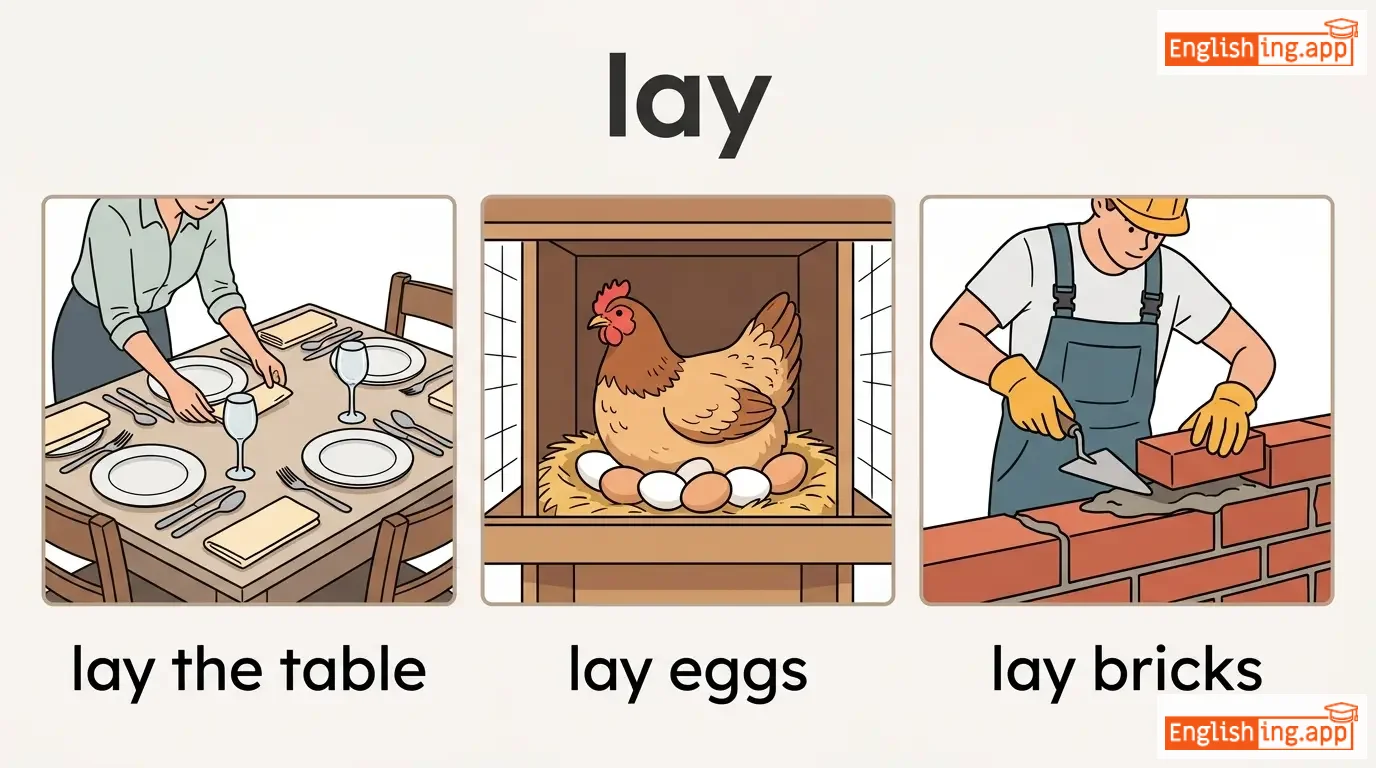
lay the table, lay eggs, lay bricks, lay emphasis
••••••
|
Layは置くという意味、例えば「彼女は本をLAYしたテーブルに」
••••••
|
|
🦵
••••••
|
/lɛɡ/
noun
(レッグ)
••••••
|
- •••••• |
足
ashi
••••••
|
- •••••• | - •••••• | - •••••• | - •••••• |
one of the limbs on which a person or animal walks and stands
••••••
|
He injured his leg while playing football.
サッカーをしているとき、彼は足を怪我しました。
••••••
|
サッカーをしているとき、彼は足を怪我しました。
Sakkaa o shite iru toki, kare wa ashi o kega shimashita.
••••••
|
stretch your legs
足を伸ばす
••••••
|
to walk around after sitting for a long time
••••••
|
長時間座った後に歩く
chou jikan suwatta ato ni aruku
••••••
|
limb, shank, appendage, extremity
••••••
|
arm, wing
••••••
|
leg injury, leg pain, leg muscles, broken leg
••••••
|
Legは足を意味し、サッカーで'足技'はとても重要です。
••••••
|
|
🥫
••••••
|
/lɪd/
noun
(リッド)
••••••
|
- •••••• |
ふた
futa
••••••
|
- •••••• | - •••••• | - •••••• | - •••••• |
a cover for the top of a container
••••••
|
She closed the lid tightly on the jar. |
彼女は瓶のふたをしっかりと閉めました。
Kanojo wa bin no futa o shikkari to shimemashita.
••••••
|
keep a lid on |
to control or limit something
••••••
|
制御する
seigyo suru
••••••
|
cover, cap, top, seal, closure
••••••
|
opening, uncover
••••••
|
jar lid, pot lid, plastic lid, lift the lid
••••••
|
ふたがすべてを制御します、まるでlidのように!
••••••
|
|
👄
••••••
|
/lɪp/
noun
(リップ)
••••••
|
- •••••• |
唇
kuchin
••••••
|
- •••••• | - •••••• | - •••••• | - •••••• |
either of the two soft edges of the mouth
••••••
|
She smiled and bit her lower lip nervously. |
彼女は笑い、緊張して下唇をかんだ。
Kanojo wa warai, kinchou shite shita kuchin wo kanda.
••••••
|
bite your lip |
to keep from saying something or showing emotion
••••••
|
唇をかむ
kuchin wo kamu
••••••
|
mouth edge, rim, border, edge
••••••
|
interior, inside
••••••
|
lower lip, upper lip, lip balm, lip movement
••••••
|
👄 Lipは唇です – リップクリームで唇をケア!
••••••
|
|
🌲
••••••
|
/lɒɡ/
noun, verb
(ログ)
••••••
|
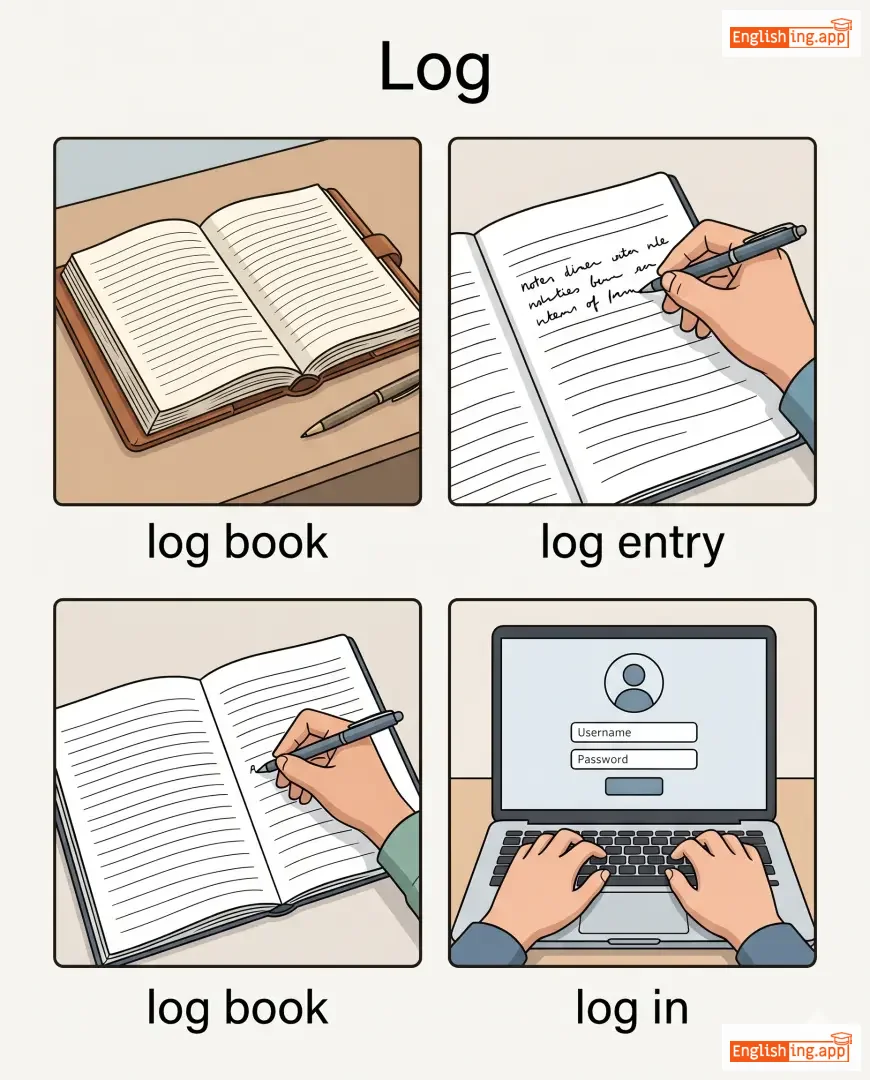
|
丸太, 記録
maruta, kiroku
••••••
|
logged
ログイン
••••••
|
logged
ログイン
••••••
|
logs
ログス
••••••
|
logging
ログギング
••••••
|
A part of the trunk or a large branch of a tree that has fallen or been cut off; also to record information systematically.
••••••
|
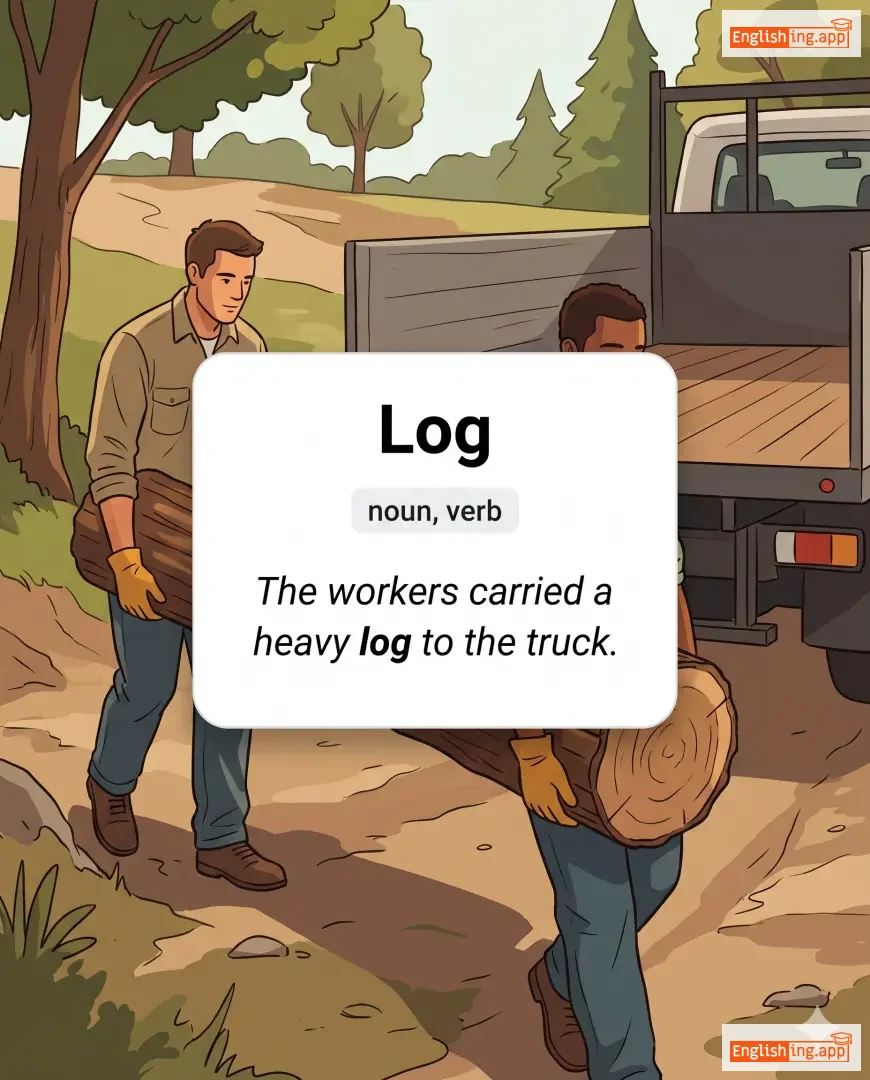
The workers carried a heavy log to the truck.
作業員は重い丸太をトラックに運びました。
••••••
|
作業員は重い丸太をトラックに運びました。
Sagyouin wa omoi maruta o torakku ni hakobimashita.
••••••
|
sleep like a log
丸太のように寝る
••••••
|
to sleep very deeply and soundly
••••••
|
丸太のように寝る
maruta no you ni neru
••••••
|
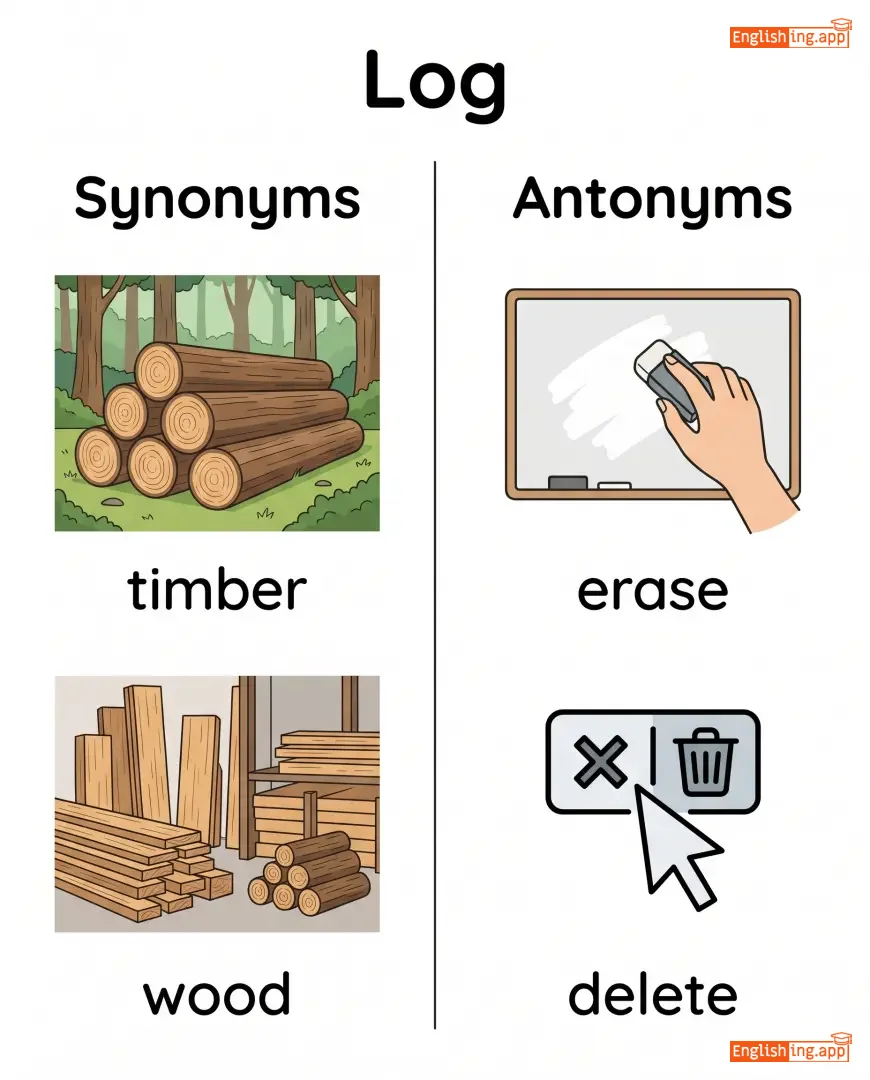
timber, wood, record, register, journal
••••••
|
erase, delete
••••••
|
log book, log entry, log in, log data
••••••
|
Log (log) は丸太を意味し、ログイン (login) は記録を残すことです。
••••••
|
|
📦
••••••
|
/lɒt/
noun
(ロット)
••••••
|
- •••••• |
たくさん
takusan
••••••
|
- •••••• | - •••••• | - •••••• | - •••••• |
A large number or amount; a group or portion.
••••••
|
She bought a lot of books at the fair.
彼女はフェアでたくさんの本を買いました。
••••••
|
彼女はフェアでたくさんの本を買いました。
Kanojo wa fea de takusan no hon o kaimashita.
••••••
|
cast one's lot with
自分の運命を誰かに託す
••••••
|
to join or support a person or group
••••••
|
自分の運命を誰かに託す
Jibun no unmei o dareka ni takusu
••••••
|
batch, group, quantity, portion, set
••••••
|
few, little, scarcity
••••••
|
a lot of, whole lot, parking lot, building lot
••••••
|
Lot はたくさん、例えば宝くじでたくさんの番号があります。
••••••
|
|
⬇️
••••••
|
/loʊ/
adjective
(ロー)
••••••
|
- •••••• |
低い
hikui
••••••
|
- •••••• | - •••••• | - •••••• | - •••••• |
Small in amount, degree, or position; not high.
••••••
|
The river is at its lowest level in years. |
その川は何年も最も低いレベルにあります。
Sono kawa wa nannen mo mottomo hikui reberu ni arimasu.
••••••
|
low profile |
avoiding public attention or staying unnoticed
••••••
|
低いプロフィール
hikui purofairu
••••••
|
small, slight, short, minimal, weak
••••••
|
high, tall, strong
••••••
|
low price, low level, low energy, low profile
••••••
|
Lowは低いという意味です — 矢印 ⬇️ は下に向かっています。
••••••
|
|
😡
••••••
|
/mæd/
adjective
(マッド)
••••••
|
- •••••• |
怒っている / 狂っている
okotteiru / kurutteiru
••••••
|
- •••••• | - •••••• | - •••••• | - •••••• |
Very angry, insane, or foolish.
••••••
|
She was mad at her brother for breaking the vase. |
彼女は兄が花瓶を壊したことで怒っていた。
Kanojo wa ani ga kabin o kowashita koto de okotteita.
••••••
|
mad as a hatter |
completely crazy
••••••
|
帽子屋のように狂っている
Bōshiya no yō ni kurutteiru
••••••
|
angry, furious, insane, crazy, irate
••••••
|
calm, sane
••••••
|
mad at, go mad, mad idea, mad world
••••••
|
Mad は怒りや狂気を意味し、誰かが怒りで制御を失うときの状態です。
••••••
|
|
🌸
••••••
|
/meɪ/
modal verb, noun
(メイ)
••••••
|
- •••••• |
かもしれない / 五月
kamoshirenai / gogatsu
••••••
|
- •••••• | - •••••• | - •••••• | - •••••• |
Used to express possibility, permission, or uncertainty; also the name of the fifth month of the year.
••••••
|
You may leave early if you finish your work. |
もし仕事が終わったら、早く帰ってもいいですよ。
Moshi shigoto ga owattara, hayaku kaette mo ii desu yo.
••••••
|
come what may |
No matter what happens.
••••••
|
どうなっても
dounattemo
••••••
|
might, perhaps, can, possibility
••••••
|
cannot, must not
••••••
|
may occur, may happen, may I, month of May
••••••
|
五月、何でも起こりうる!
••••••
|

