The Championship Run
ザヒッドは才能のあるクォーターバックで、大学のチームでプレイしていました。彼は有名な選手で、パフォーマンスは卓越していました。今シーズン、チームはチャンピオンシップに勝つ準備をしていました。ザヒッドは継続的にスキルを向上させ、すべての試合で自分を際立たせました。彼の連続的な勝利はばかげていました - 5試合で9回のタッチダウンを達成していました。観客は彼を観るためにスタジアムに集まり、皆が彼の次の動きについて推測していました。しかし、予期しない偶然が起こりました - ザヒッドのチームメイトが出場停止になり、チームの戦略を根本的に変更しなければならなくなりました。チームの広報担当が記者会見で発表しました。ザヒッドは今、さらに多くの責任を負わなければならないことを悟りました。対戦チームにとって、ザヒッドのプレースタイルは壊滅的で、彼は決して予測できないものでした。準決勝では、彼のパフォーマンスが素晴らしく、解説者は彼を伝説的な選手の未来の後継者と呼びました。コーチは彼に他の選手と差別化する方法を教えてくれました。チャンピオンシップの試合では、ザヒッドはベストを尽くし、最後の瞬間にゲームを決定づけるタッチダウンを決めました。観客は狂ったように祝いました、そしてザヒッドはヒーローになりました。この勝利は単なるゲームの勝利ではなく、努力と献身の結果でした。ザヒッドの旅は、才能があっても継続的に練習することが重要だと証明しました。彼の卓越したシーズンは大学スポーツの歴史の一部となりました。
|
絵文字
|
単語 | Images | 翻訳 | 過去 | 過去分詞 | 三人称単数 | 動名詞 | 意味 | 例文 | 例文の翻訳 | 表現例 | 表現例の意味 | 表現例の翻訳 | 同義語 | 対義語 | コロケーション | ニーモニック |
|---|---|---|---|---|---|---|---|---|---|---|---|---|---|---|---|---|---|
|
📢
••••••
|
/əˈnaʊnsmənt/
noun
(アナウンスメント)
••••••
|
- •••••• |
発表
happyo
••••••
|
- •••••• | - •••••• | - •••••• | - •••••• |
a public or formal statement giving information
••••••
|
The principal made an important announcement about the new schedule. |
校長は新しいスケジュールについて重要な発表をしました。
Kouchou wa atarashii sukeju-ru ni tsuite juuyou na happyou wo shimashita.
••••••
|
public announcement |
a formal declaration made to the general public
••••••
|
公的発表
kouteki happyou
••••••
|
declaration, statement, proclamation, notice, notification
••••••
|
secret, silence, concealment
••••••
|
official announcement, public announcement, make an announcement, important announcement
••••••
|
発表は、マイクを使って大切な情報を伝えることです!
••••••
|
|
🏆
••••••
|
/ˈtʃæmpiənʃɪp/
noun
(チャンピオンシップ)
••••••
|
- •••••• |
選手権
senshuken
••••••
|
- •••••• | - •••••• | - •••••• | - •••••• |
a competition to decide who is the best in a particular sport or activity.
••••••
|
The championship will be held next month. |
選手権は来月行われます。
senshuken wa raigetsu okonawaremasu.
••••••
|
win the championship |
to become the victor of a major competition
••••••
|
選手権を勝ち取る
senshuken o kachitoru
••••••
|
tournament, contest, league, competition, cup
••••••
|
friendly match, practice
••••••
|
world championship, national championship, championship game, win championship
••••••
|
選手権は、選手が競い合う大会で、最後に勝つとチャンピオンとなる。
••••••
|
|
🎲
••••••
|
/koʊˈɪnsɪdəns/
noun
(コインシデンス)
••••••
|
- •••••• |
偶然
guuzen
••••••
|
- •••••• | - •••••• | - •••••• | - •••••• |
A remarkable or surprising occurrence of events at the same time by chance.
••••••
|
It was pure coincidence that we met at the airport.
空港で会ったのは完全に偶然でした。
••••••
|
空港で会ったのは完全に偶然でした。
Kuukou de atta no wa kanzen ni guuzen deshita.
••••••
|
by coincidence
偶然に
••••••
|
happening by chance, not by planning
••••••
|
偶然に
guuzen ni
••••••
|
chance, accident, serendipity, fluke, happenstance
••••••
|
intention, design, plan
••••••
|
strange coincidence, mere coincidence, pure coincidence, by coincidence
••••••
|
Coin で偶然を想起
••••••
|
|
🔢
••••••
|
/kənˈsɛkjʊtɪv/
adjective
(コンセクティブ)
••••••
|
- •••••• |
連続的
renzokuteki
••••••
|
- •••••• | - •••••• | - •••••• | - •••••• |
following one after another without interruption
••••••
|
She won three consecutive matches. |
彼女は三連続の試合に勝った。
Kanojo wa san renzoku no shiai ni katta.
••••••
|
consecutive days |
days that come one after another in sequence
••••••
|
連続した日々
renzoku shita hibi
••••••
|
successive, sequential, continuous, uninterrupted, serial
••••••
|
sporadic, intermittent, irregular
••••••
|
consecutive days, consecutive years, consecutive matches, consecutive numbers
••••••
|
連続的なものは途切れなく続く。日々がそれであるように。
••••••
|
|
🔄
••••••
|
/kənˈtɪnjuəli/
adverb
(コンティニュアリー)
••••••
|
- •••••• |
絶えず; 繰り返し
taezu; kurikaeshi
••••••
|
- •••••• | - •••••• | - •••••• | - •••••• |
without stopping; repeatedly
••••••
|
She continually checked her phone for messages.
彼女はメッセージのために絶えず電話を確認しました。
••••••
|
彼女はメッセージのために絶えず電話を確認しました。
Kanojo wa messeeji no tame ni taezu denwa o kakunin shimashita.
••••••
|
- •••••• | - •••••• | - •••••• |
constantly, repeatedly, persistently, incessantly
••••••
|
occasionally, rarely, intermittently, sporadically
••••••
|
continually improving, continually evolving, continually changing
••••••
|
In Japanese, '絶えず' means continually, just like you keep checking your phone for messages!
••••••
|
|
💥
••••••
|
/ˈdevəsteɪtɪŋ/
adjective
••••••
|
- •••••• | - •••••• | - •••••• | - •••••• | - •••••• | - •••••• |
causing severe shock, distress, or destruction; extremely damaging or upsetting
••••••
|
The earthquake had a devastating effect on the city. |
- •••••• |
devastating blow |
a sudden event that causes great damage or distress
••••••
|
- •••••• |
destructive, ruinous, catastrophic, disastrous, crushing
••••••
|
beneficial, constructive, harmless
••••••
|
devastating effect, devastating impact, devastating news, devastating loss
••••••
|
No •••••• |
|
🧩
••••••
|
/ˌdɪfəˈrɛnʃieɪt/
verb
(ディファレンシエイト)
••••••
|
- •••••• |
区別する
kubetsu suru
••••••
|
differentiated
ディファレンシエイテッド
••••••
|
differentiated
ディファレンシエイテッド
••••••
|
differentiates
ディファレンシエイツ
••••••
|
differentiating
ディファレンシエイティング
••••••
|
To recognize or make a distinction between things.
••••••
|
It is important to differentiate between fact and opinion.
事実と意見を区別することは重要です。
••••••
|
事実と意見を区別することは重要です。
Jijitsu to iken wo kubetsu suru koto wa juuyou desu.
••••••
|
differentiate yourself
自分を差別化する
••••••
|
To make oneself stand out as unique or distinct.
••••••
|
自分を差別化する
Jibun wo sabetsuka suru
••••••
|
distinguish, discern, separate, identify, contrast
••••••
|
confuse, equate, mix
••••••
|
differentiate clearly, differentiate products, differentiate features
••••••
|
ディファレンシエイトは区別すること - 事実と意見の違いを覚えておいてください。
••••••
|
|
🔍
••••••
|
/dɪˈstɪŋɡwɪʃ/
verb
(ディスティングウィッシュ)
••••••
|
- •••••• |
区別する
kubetsu suru
••••••
|
distinguished
ディスティングウィッシュド
••••••
|
distinguished
ディスティングウィッシュド
••••••
|
distinguishes
ディスティングウィッシュズ
••••••
|
distinguishing
ディスティングウィッシング
••••••
|
to recognize or show the differences between two or more things; to set apart as different
••••••
|
It can be difficult to distinguish between truth and rumor.
真実と噂を区別するのは難しいかもしれません。
••••••
|
真実と噂を区別するのは難しいかもしれません。
Shinjitsu to uwasa o kubetsu suru no wa muzukashī kamoshiremasen.
••••••
|
distinguish oneself
自分を際立たせる
••••••
|
to do something that makes one notable or worthy of recognition
••••••
|
自分を際立たせる
Jibun o kiwadatase ru
••••••
|
differentiate, discern, identify, separate, recognize
••••••
|
confuse, mix, combine
••••••
|
distinguish between, distinguish clearly, distinguish features, distinguish easily
••••••
|
Distinguish = 区別する
••••••
|
|
🌟
••••••
|
/ɪkˈsɛpʃənl/
adjective
(ikˈsɛpʃənl)
••••••
|
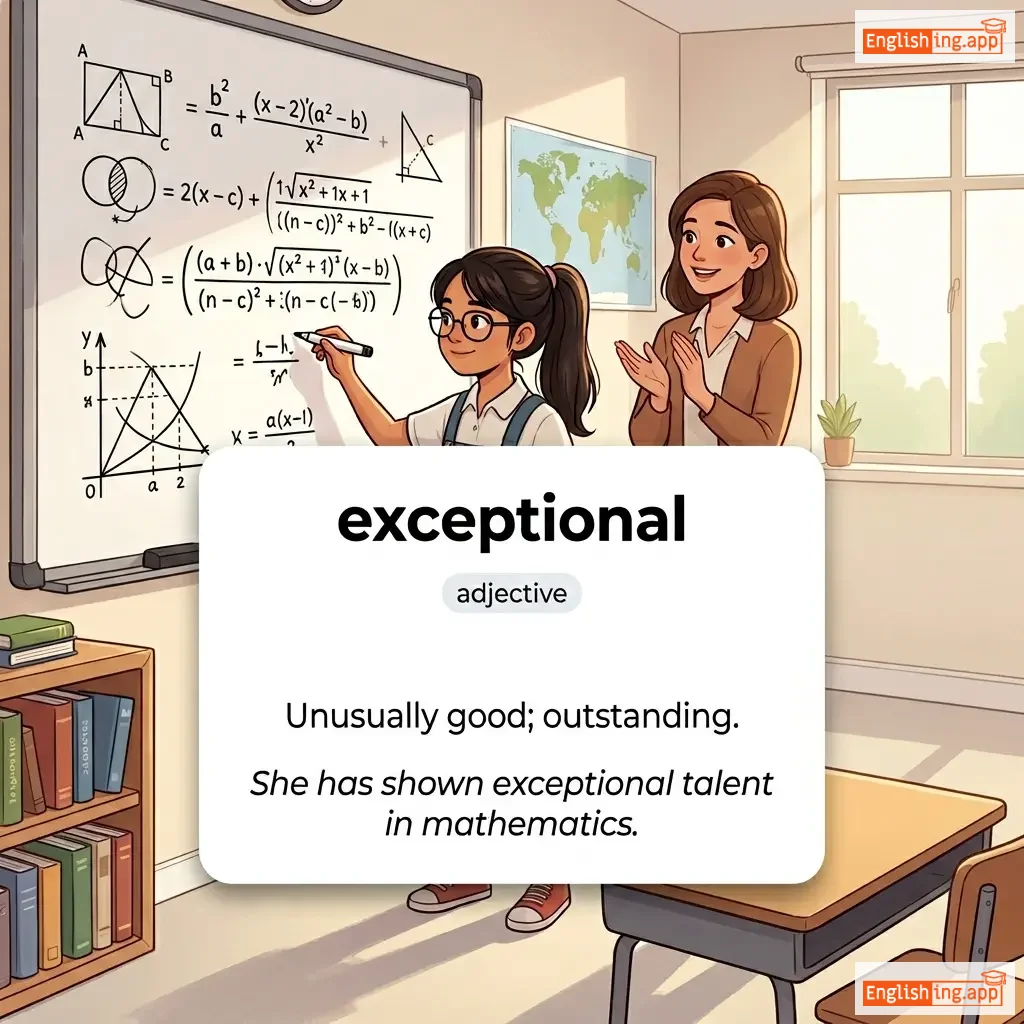
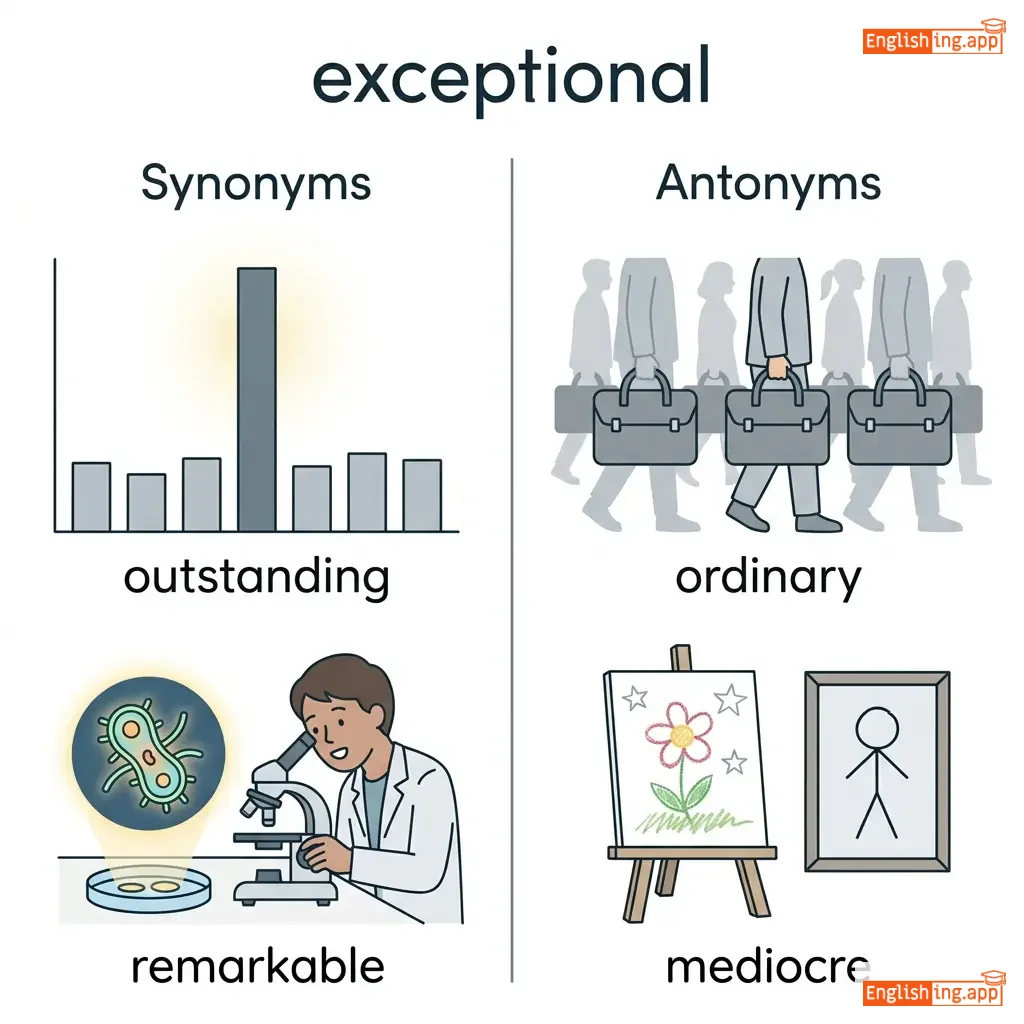
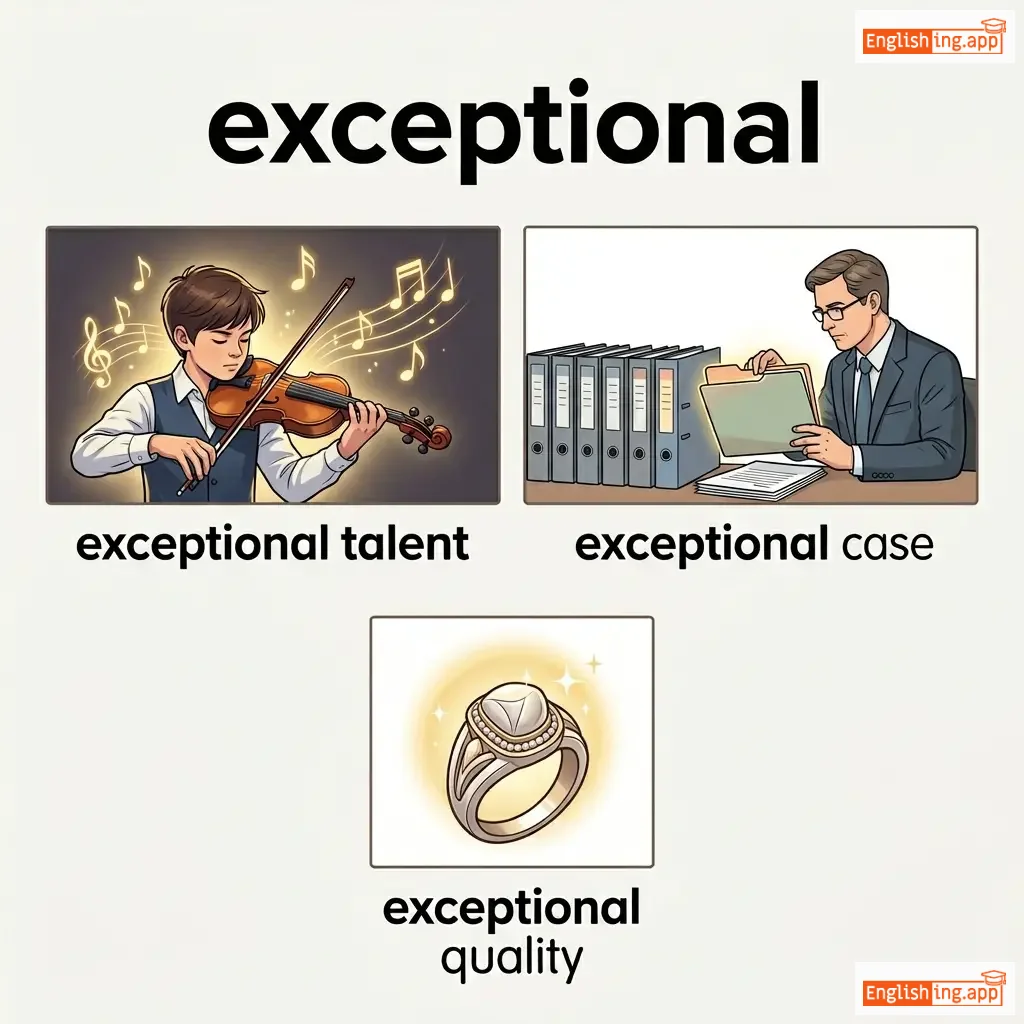
|
並外れた
hamorareta
••••••
|
- •••••• | - •••••• | - •••••• | - •••••• |
Unusually good; outstanding.
••••••
|
She has shown exceptional talent in mathematics. |
彼女は数学において並外れた才能を示しました。
Kanojo wa suugaku ni oite hamorareta sainou o shimeshimashita.
••••••
|
of exceptional quality |
something of very high or outstanding quality
••••••
|
並外れた品質
hamorareta hinshitsu
••••••
|
outstanding, remarkable, extraordinary, superb
••••••
|
ordinary, mediocre, common
••••••
|
exceptional talent, exceptional case, exceptional quality, exceptional opportunity
••••••
|
Exceptional = Extra Special → 並外れた
••••••
|
|
🔑
••••••
|
/ˌfʌndəˈmɛntəli/
adverb
(ファンダメンタリー)
••••••
|
- •••••• |
基本的に
kihonteki ni
••••••
|
- •••••• | - •••••• | - •••••• | - •••••• |
in a basic and important way; at the core
••••••
|
The two theories are fundamentally different.
この二つの理論は基本的に異なります。
••••••
|
この二つの理論は基本的に異なります。
Kono futatsu no riron wa kihonteki ni kotonari masu.
••••••
|
- •••••• | - •••••• | - •••••• |
basically, essentially, primarily, principally
••••••
|
superficially, peripherally
••••••
|
fundamentally different, fundamentally important
••••••
|
Fundamentally = 基本的に = すべての基礎として!
••••••
|
|
🔮
••••••
|
/prɪˈdɪktəbəl/
adjective
(プリディクタブル)
••••••
|
- •••••• |
予測可能
yosoku kanou
••••••
|
- •••••• | - •••••• | - •••••• | - •••••• |
able to be predicted or foreseen
••••••
|
His reactions were predictable based on his past behavior.
彼の反応は過去の行動に基づいて予測可能でした。
••••••
|
彼の反応は過去の行動に基づいて予測可能でした。
Kare no hannou wa kako no koudou ni motozuite yosoku kanou deshita.
••••••
|
- •••••• | - •••••• | - •••••• |
foreseeable, expected, certain, inevitable
••••••
|
unpredictable, uncertain, surprising
••••••
|
predictable behavior, predictable outcome, predictable pattern
••••••
|
Predict + able = 未来の結果のように予測可能です!
••••••
|
|
🏈
••••••
|
/ˈkwɔːtərˌbæk/
noun
(クォーターバック)
••••••
|
- •••••• |
クォーターバック
kuōtābakku
••••••
|
- •••••• | - •••••• | - •••••• | - •••••• |
the player who directs a team’s offense in American football
••••••
|
The quarterback threw a perfect pass.
クォーターバックは完璧なパスを投げました。
••••••
|
クォーターバックは完璧なパスを投げました。
Kuōtābakku wa kanpeki na pasu o nagemashita.
••••••
|
- •••••• | - •••••• | - •••••• |
playmaker, leader, captain
••••••
|
follower, subordinates
••••••
|
quarterback role, quarterback pass, quarterback player
••••••
|
優れたクォーターバックになるためには、正確なパスを投げる必要があります。
••••••
|
|
🤣
••••••
|
/rɪˈdɪkjʊləs/
adjective
(リディキュラス)
••••••
|
- •••••• |
馬鹿げた
bakageta
••••••
|
- •••••• | - •••••• | - •••••• | - •••••• |
Deserving mockery; absurd or unreasonable.
••••••
|
The idea of flying pigs is ridiculous. |
飛ぶ豚のアイデアは馬鹿げている。
Tobu buta no aidea wa bakageteiru.
••••••
|
look ridiculous |
Appear very silly or absurd.
••••••
|
馬鹿げて見える
bakagete mieru
••••••
|
absurd, laughable, ludicrous, silly, preposterous
••••••
|
reasonable, sensible, serious
••••••
|
utterly ridiculous, seem ridiculous, look ridiculous
••••••
|
馬鹿げたは笑いの対象、意味不明なことです。
••••••
|
|
👀
••••••
|
/ˈspɛkteɪtər/
noun
(スペクテーター)
••••••
|
- •••••• |
観客
kankyaku
••••••
|
- •••••• | - •••••• | - •••••• | - •••••• |
A person who watches an event, show, or game without taking part.
••••••
|
Thousands of spectators gathered to watch the football match. |
何千人もの観客がサッカーの試合を観るために集まりました。
Nansen-nin mono kankyaku ga sakkā no shiai o miru tame ni atsumarimashita.
••••••
|
mere spectator |
someone who is only watching without involvement
••••••
|
単なる観客
tannaru kankyaku
••••••
|
viewer, observer, onlooker, audience
••••••
|
participant, player
••••••
|
sports spectator, theater spectator, excited spectator
••••••
|
Spectatorは、'spectacle'を観るだけで、ゲームに参加しない。
••••••
|
|
💭
••••••
|
/ˌspɛkjʊˈleɪʃən/
noun
(スペキュレーション)
••••••
|
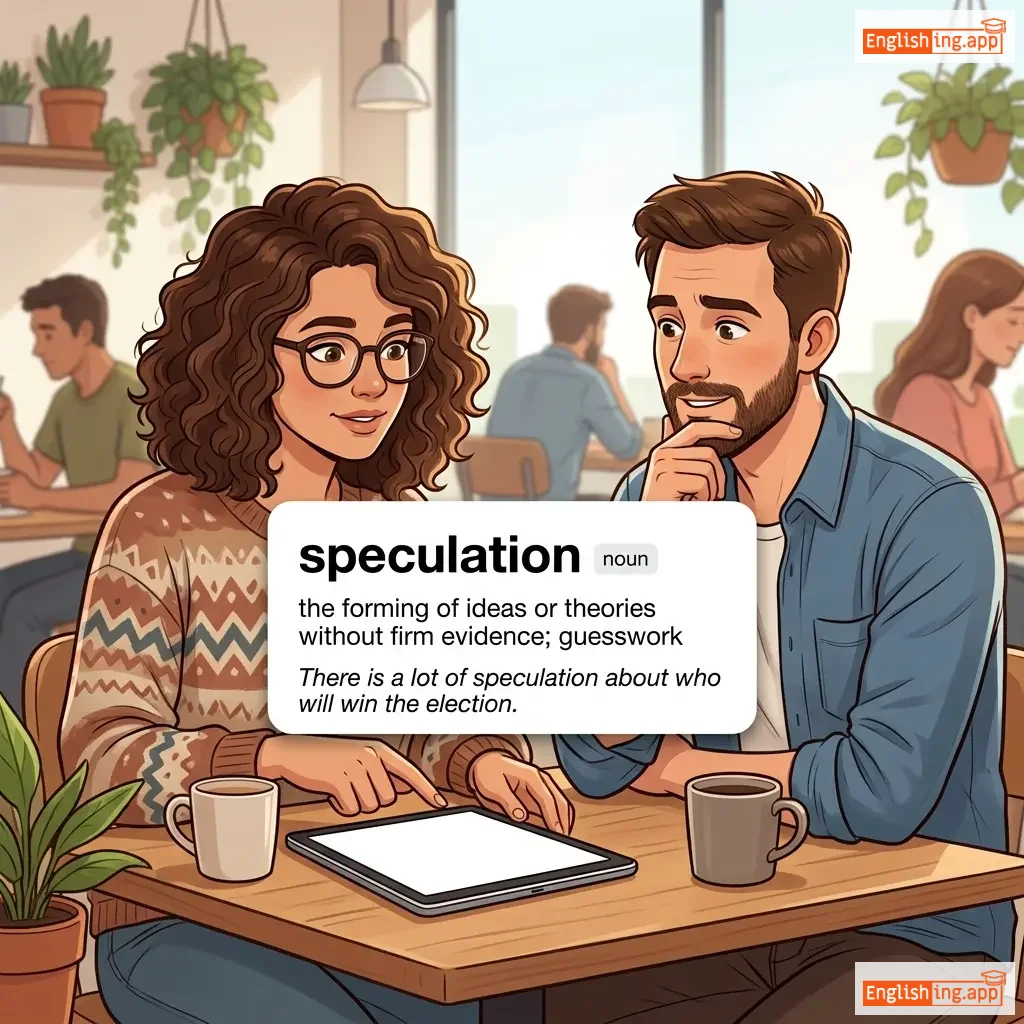
|
推測
suisoku
••••••
|
- •••••• | - •••••• | - •••••• | - •••••• |
the forming of ideas or theories without firm evidence; guesswork
••••••
|
There is a lot of speculation about who will win the election. |
誰が選挙に勝つかについて多くの推測があります。
Dare ga senkyo ni katsu ka ni tsuite ooku no suisoku ga arimasu.
••••••
|
wild speculation |
an unproven or exaggerated theory or guess
••••••
|
野生の推測
yasei no suisoku
••••••
|
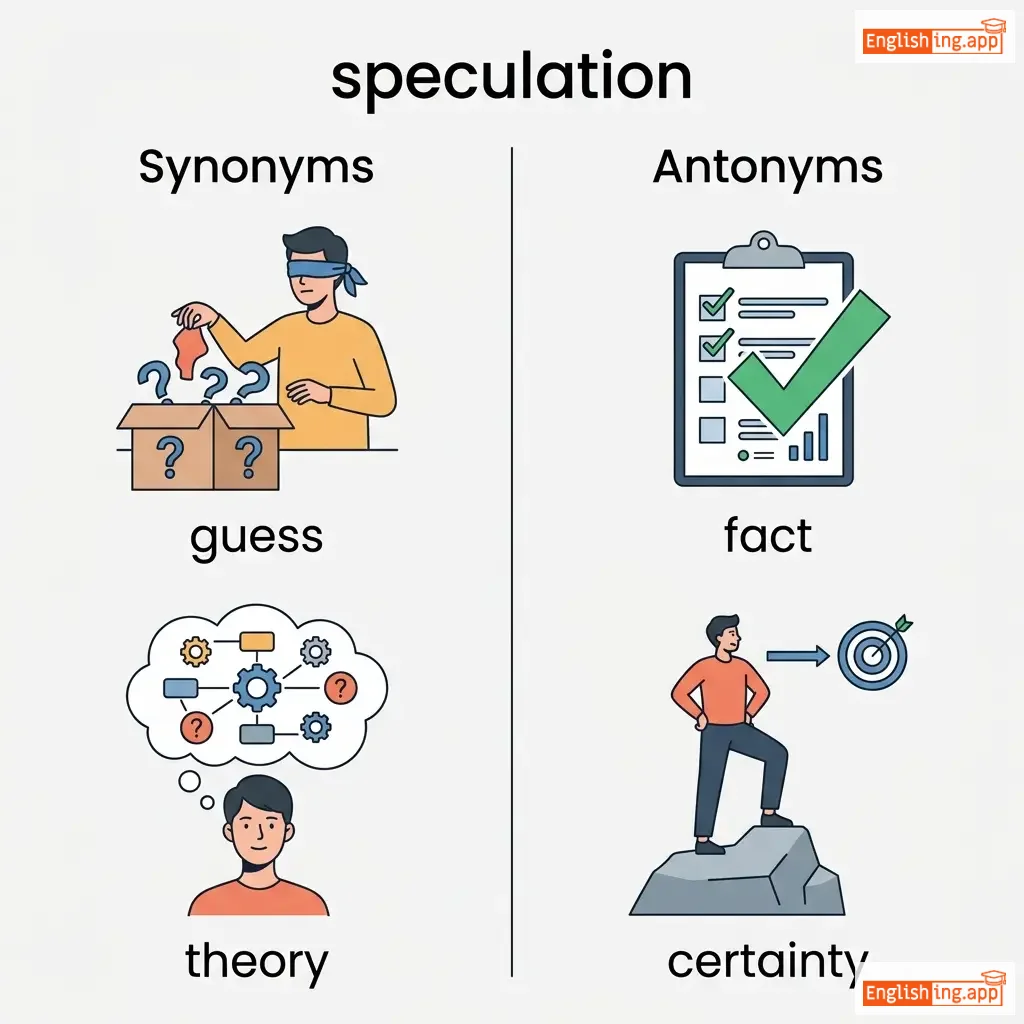
guess, theory, assumption, hypothesis, conjecture
••••••
|
fact, certainty
••••••
|
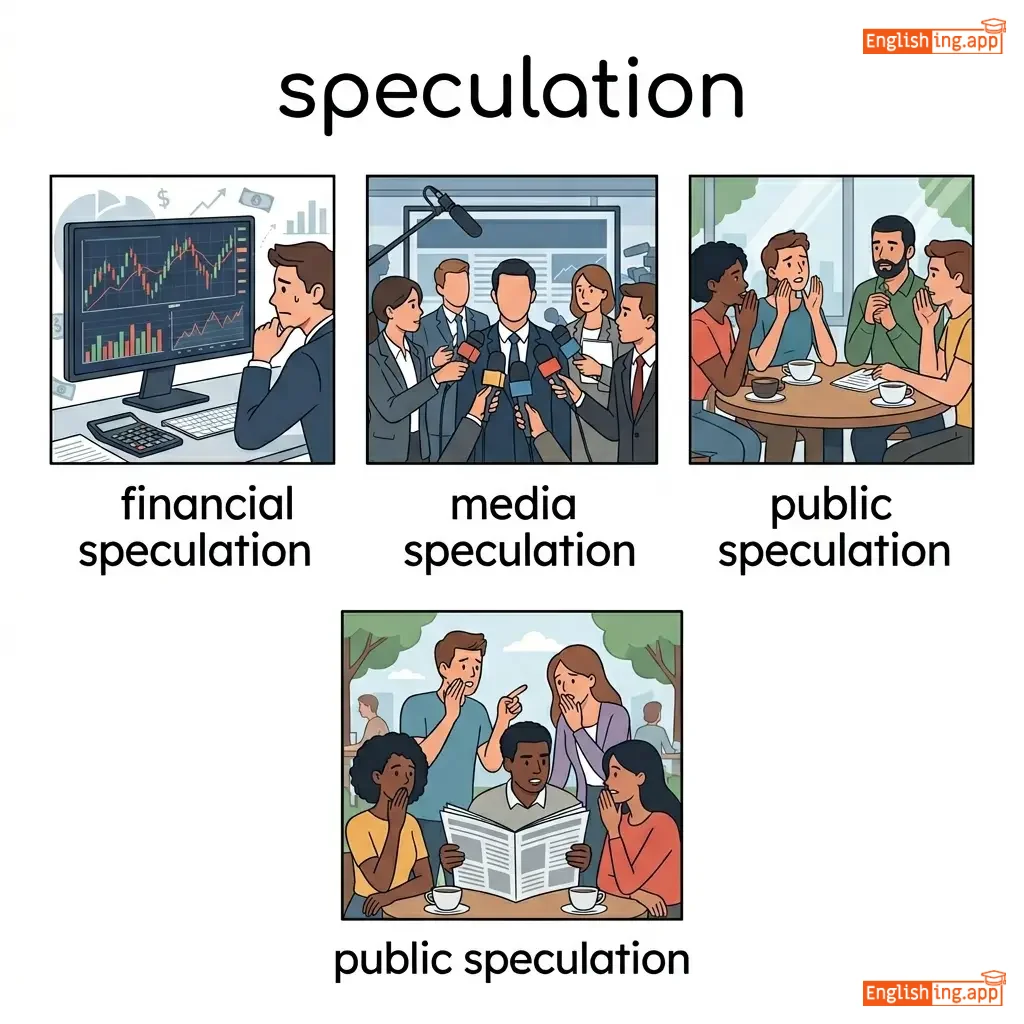
financial speculation, media speculation, public speculation, wild speculation
••••••
|
推測は証拠なしで考えること — ただの予測 💭
••••••
|
|
👩💼
••••••
|
/ˈspəʊkswɪmən/
noun
(spōkusuwiman)
••••••
|
- •••••• |
広報女性
kōhō josei
••••••
|
- •••••• | - •••••• | - •••••• | - •••••• |
a woman who speaks on behalf of a group or organization
••••••
|
The spokeswoman for the company announced the new product. |
その会社の広報女性は新製品を発表した。
Sono kaisha no kōhō josei wa shin seihin wo happyō shita.
••••••
|
- •••••• | - •••••• | - •••••• |
representative, spokesperson, delegate, mouthpiece
••••••
|
opponent, adversary
••••••
|
spokeswoman for, female spokesperson, appointed spokeswoman
••••••
|
広報女性、団体を代表して話す!
••••••
|
|
👑
••••••
|
/səkˈsɛsər/
noun
(saksesā)
••••••
|
- •••••• |
後継者
kōkeisha
••••••
|
- •••••• | - •••••• | - •••••• | - •••••• |
A person or thing that follows another in a position, office, or role.
••••••
|
The company appointed a successor after the CEO retired. |
CEOが退職した後、会社は後継者を任命した。
CEO ga taishoku shita ato, kaisha wa kōkeisha o ninmei shita.
••••••
|
successor in title |
a person who legally takes over rights or property from another
••••••
|
役職後継者
yakushoku kōkeisha
••••••
|
heir, inheritor, descendant, replacement, follower
••••••
|
predecessor, ancestor
••••••
|
successor to the throne, immediate successor, political successor, rightful successor
••••••
|
Success の後に来るのは後継者 — 後継者.
••••••
|
|
⏸️
••••••
|
/səˈspɛnʃən/
noun
(サスペンション)
••••••
|
- •••••• |
停止
teishi
••••••
|
- •••••• | - •••••• | - •••••• | - •••••• |
The act of temporarily stopping something; also refers to a system in vehicles that absorbs shock.
••••••
|
The player received a three-game suspension for misconduct. |
その選手は不正行為のために3試合の停止処分を受けました。
Sono senshu wa fusei koui no tame ni san shiai no teishi shobun o ukemashita.
••••••
|
- •••••• | - •••••• | - •••••• |
pause, stoppage, interruption, postponement, delay
••••••
|
continuation, resumption, progress
••••••
|
suspension bridge, school suspension, temporary suspension, suspension system
••••••
|
停止—学校で悪いことをすると停止されるよ。
••••••
|
|
🏈
••••••
|
/ˈtʌtʃ.daʊn/
noun
(タッチダウン)
••••••
|
- •••••• |
タッチダウン
tacchidaun
••••••
|
- •••••• | - •••••• | - •••••• | - •••••• |
the moment when an aircraft lands, or a score in American football
••••••
|
The plane made a smooth touchdown. |
飛行機は滑らかにタッチダウンしました。
Hikōki wa nameraka ni tacchidaun shimashita.
••••••
|
- •••••• | - •••••• | - •••••• |
landing, arrival, score, goal
••••••
|
takeoff, departure
••••••
|
smooth touchdown, successful touchdown, touchdown celebration, touchdown pass
••••••
|
タッチ(触る)+ダウン(下がる)=タッチダウン、着地する。
••••••
|
|
🌟
••••••
|
/ˌwelˈnoʊn/
adjective
(ウェルノウン)
••••••
|
- •••••• |
有名
yūmei
••••••
|
- •••••• | - •••••• | - •••••• | - •••••• |
known by many people; famous or recognized
••••••
|
He is a well-known actor in his country. |
彼は自国で有名な俳優です。
Kare wa jikoku de yūmei na haiyū desu.
••••••
|
- •••••• | - •••••• | - •••••• |
famous, renowned, popular, prominent, recognized
••••••
|
unknown, obscure, unfamiliar
••••••
|
well-known fact, well-known person, well-known brand, well-known story
••••••
|
Well-known は '有名' という意味です — みんな彼を知っています!
••••••
|

