Greenhouse Dreams Made Practical
ルバイヤと彼女の兄ミラージはコミュニティのgreenhouseを改装することを決定しました。彼らは言いました、'私たちの計画は村のために完全にapplicableでなければなりません。' ルバイヤはミラージのcapabilityを称賛しました、なぜなら彼はセンサーをセットアップできるからです。ミラージはfunctional気候モニターを示し、温度がどのように制御されるかを示しました。彼らのデザインは非常にcompellingで、みんなで一緒に拍手を送りました。ロビーナおばさんは、このプロジェクトが有機市場にとって素晴らしいcomplementになるだろうと言いました。しかし、予算のcomplexityを見て、ソヘルは言いました、'私たちはゆっくり進む必要があります。' ルバイヤは認めました、'私たちは問題を見つけるために構造をfrequentlyチェックしなければなりません。' 彼らは農家が情報をfacilitate共有できるアプリを作成しました。ミラージは電話の画像を使って、センサーを取り付ける方法をillustrateしました。ルバイヤはレシピクラスのための新鮮なingredientのリストを準備しました。夜には、彼らは村全体に温かいinvitationを送りました。新しいアプリは皆にnavigationマップを開きました。副地区役人が来て、プロジェクトをofficially祝いました。彼は、このアイデアがoriginally学生たちの夢から来たことを思い出させました。ルバイヤは言いました、'私たちがphysically各ユニットをテストするまで、私たちは信頼を得ることはありません。' 子供たちはソーシャルメディアでアイデアのpopularityを高めました。ミラージはダッシュボードで天気のpredictionを表示し、雨がいつ降るかを示しました。農家たちは自分のpreferenceに応じてカスタムアラートを設定しました。最後に、スライドのprojectionを見て、村の評議会はプロジェクトが成功するだろうと同意しました。
|
絵文字
|
単語 | Images | 翻訳 | 過去 | 過去分詞 | 三人称単数 | 動名詞 | 意味 | 例文 | 例文の翻訳 | 表現例 | 表現例の意味 | 表現例の翻訳 | 同義語 | 対義語 | コロケーション | ニーモニック |
|---|---|---|---|---|---|---|---|---|---|---|---|---|---|---|---|---|---|
|
📌
••••••
|
/ˈæplɪkəbl/
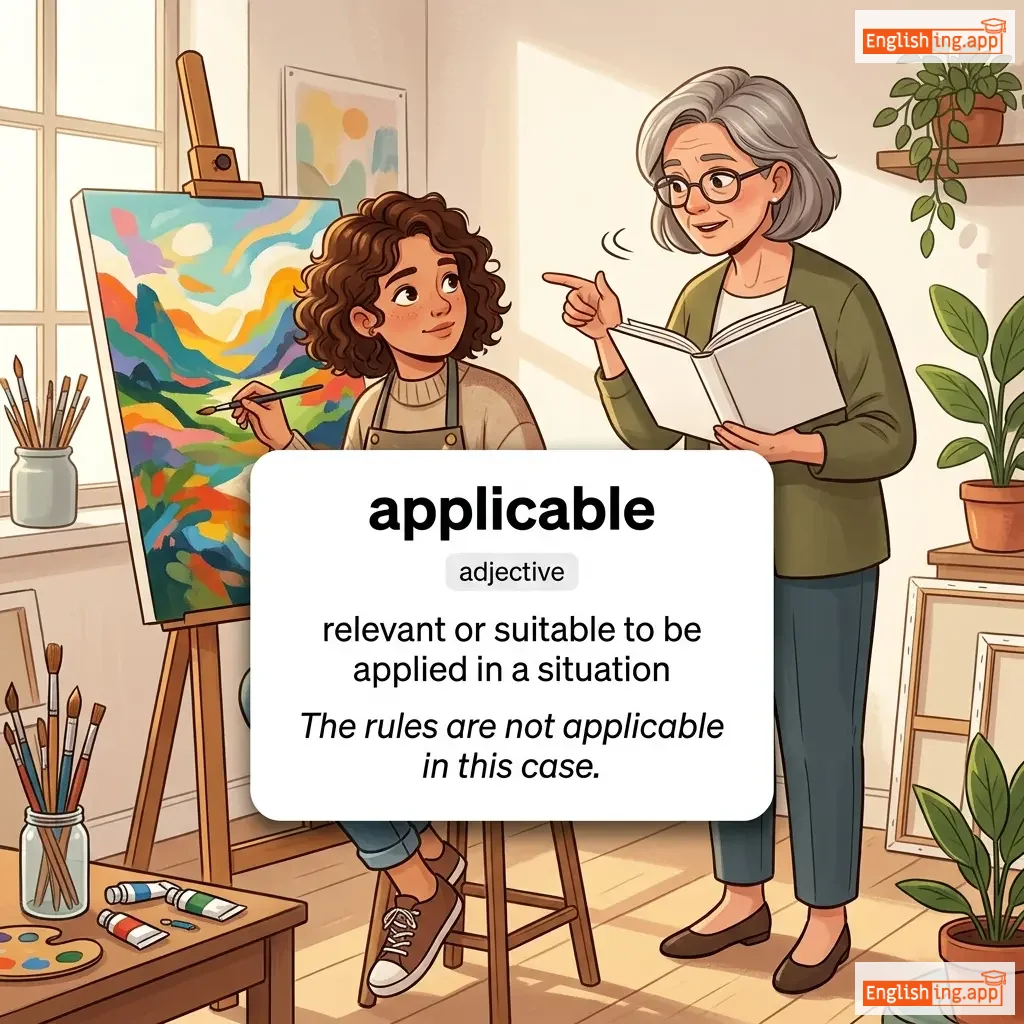
adjective
(apurikaburu)
••••••
|
|
適用可能な
tekiyou kanou na
••••••
|
- •••••• | - •••••• | - •••••• | - •••••• |
relevant or suitable to be applied in a situation
••••••
|
The rules are not applicable in this case. |
この場合、規則は適用されません。
Kono baai, kisoku wa tekiyou saremasen.
••••••
|
- •••••• | - •••••• | - •••••• |
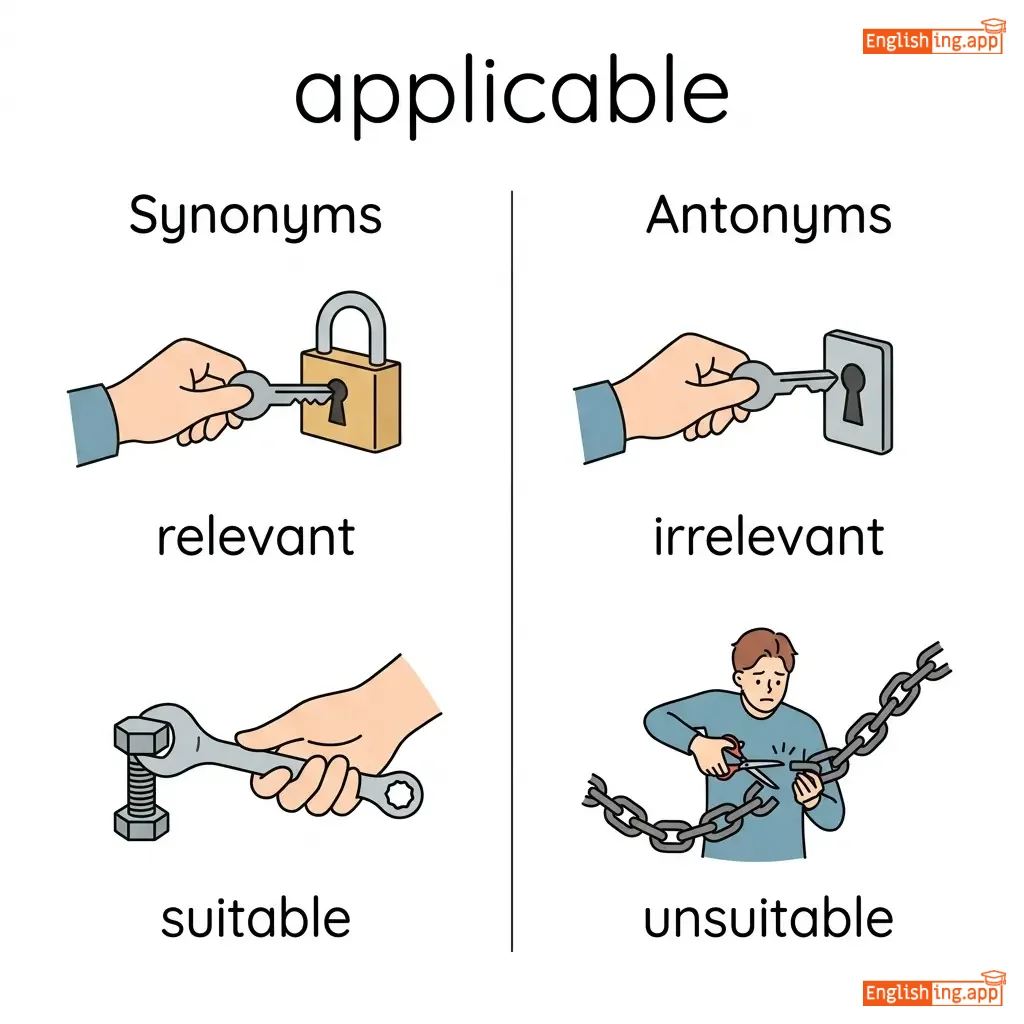
relevant, suitable, appropriate, pertinent, fitting
••••••
|
irrelevant, unsuitable, inappropriate
••••••
|
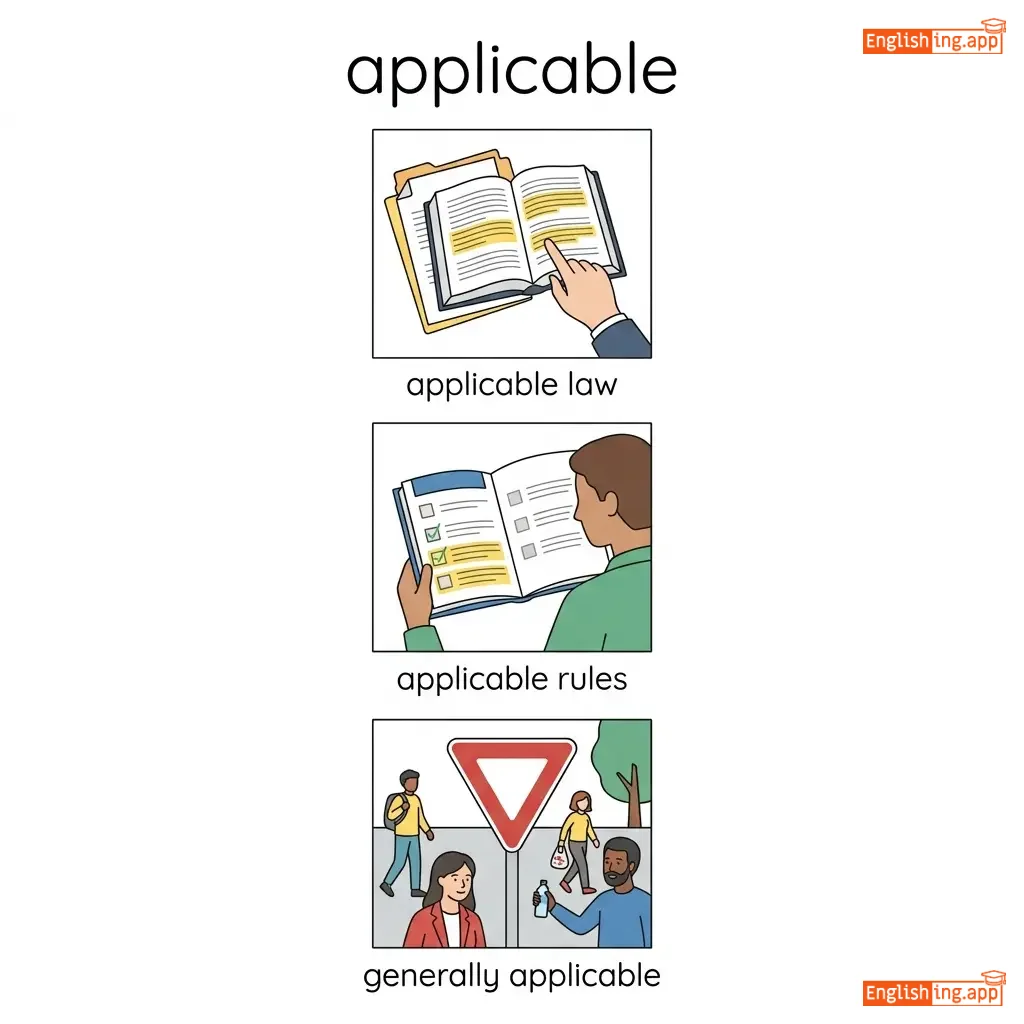
applicable law, applicable rules, generally applicable
••••••
|
Applicableは、適用可能なことを意味します – 適用可能な
••••••
|
|
💪
••••••
|
/ˌkeɪpəˈbɪləti/
noun
••••••
|
|
- •••••• | - •••••• | - •••••• | - •••••• | - •••••• |
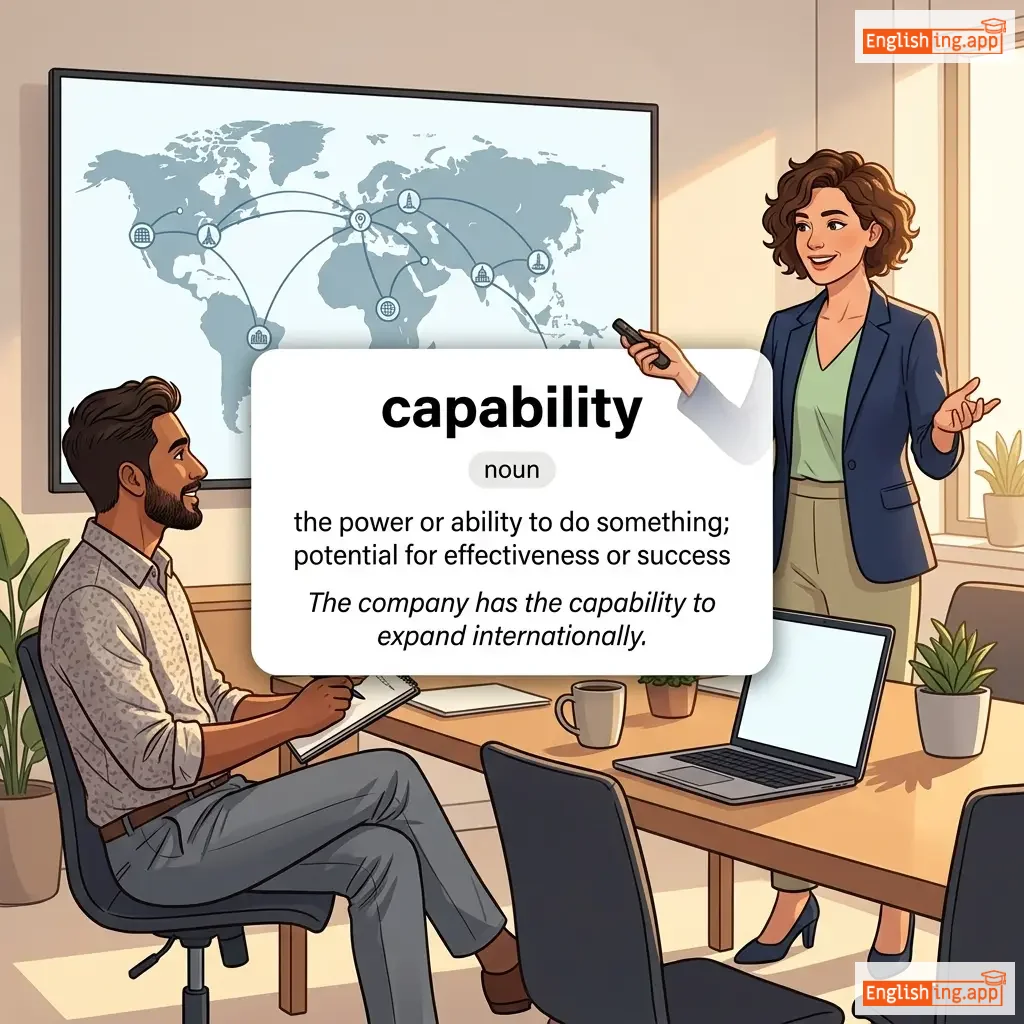
the power or ability to do something; potential for effectiveness or success
••••••
|
The company has the capability to expand internationally. |
- •••••• |
beyond one's capability |
something that is too difficult or impossible for someone to do
••••••
|
- •••••• |
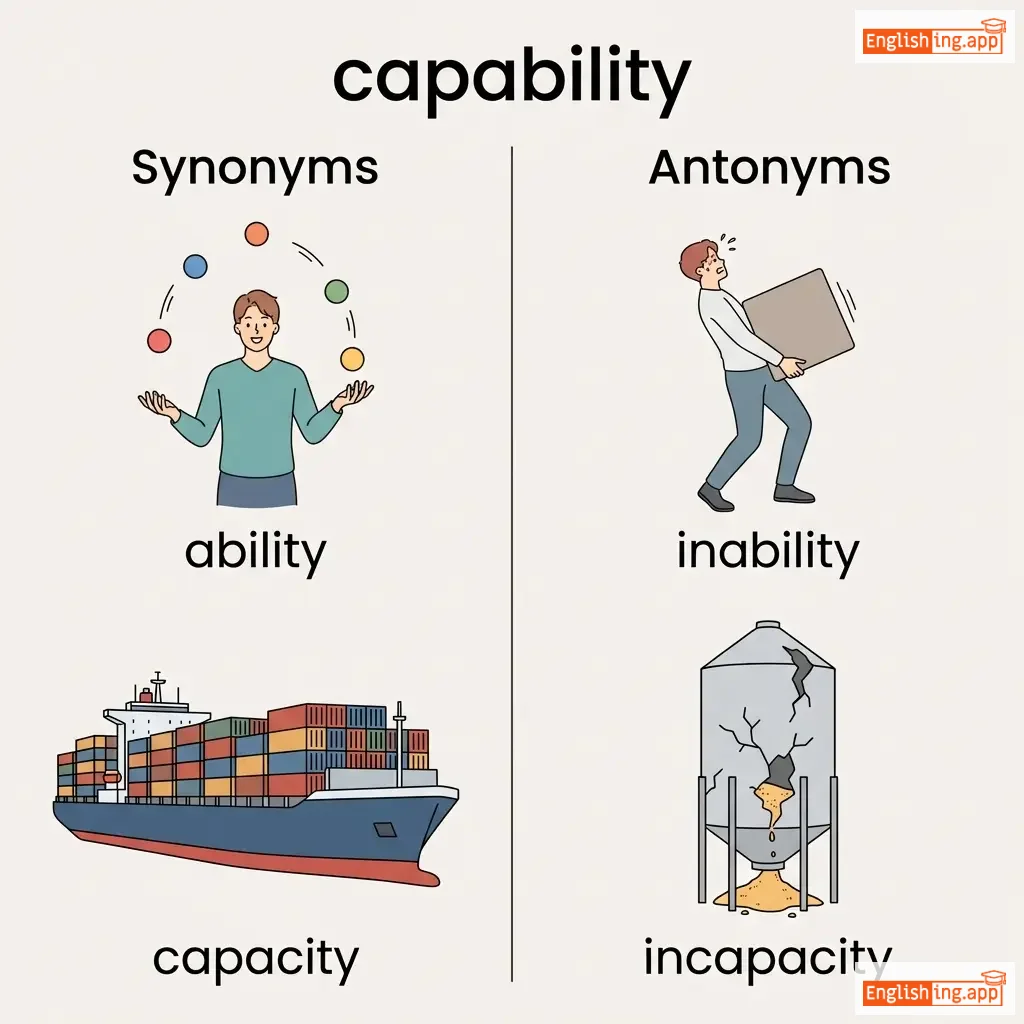
ability, capacity, potential, competence, skill
••••••
|
inability, incapacity
••••••
|
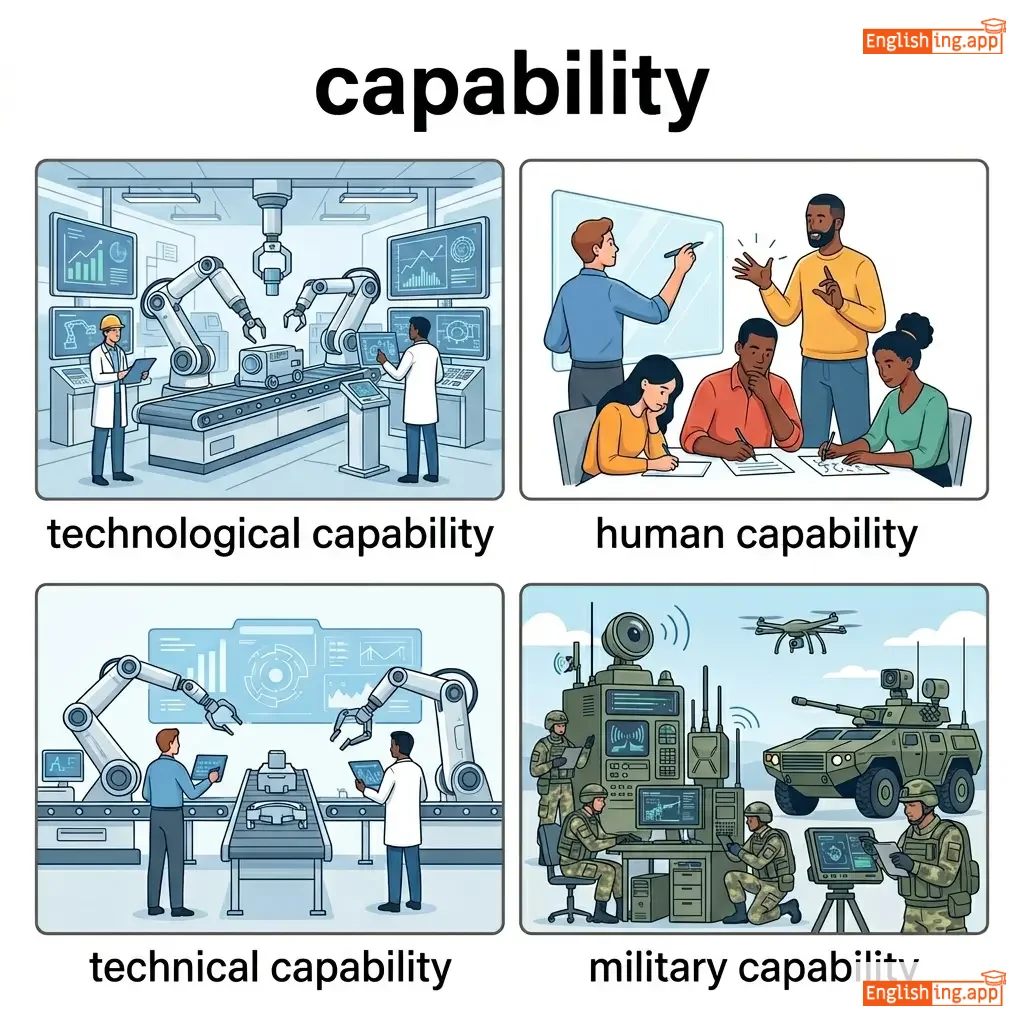
technological capability, human capability, military capability, full capability
••••••
|
No •••••• |
|
🌟
••••••
|
/kəmˈpɛlɪŋ/
adjective
(ケムˈペリング)
••••••
|
- •••••• |
魅力的な
miryokuteki na
••••••
|
- •••••• | - •••••• | - •••••• | - •••••• |
Evoking interest, attention, or admiration in a powerful way.
••••••
|
She gave a compelling speech about climate change. |
彼女は気候変動について魅力的なスピーチをしました。
Kanojo wa kikō hendō ni tsuite miryokuteki na supīchi o shimashita.
••••••
|
compelling evidence |
Evidence that is convincing and hard to refute.
••••••
|
説得力のある証拠
settokuryoku no aru shōko
••••••
|
convincing, powerful, persuasive, gripping, fascinating
••••••
|
unconvincing, weak, boring
••••••
|
compelling argument, compelling reason, compelling story, compelling evidence
••••••
|
魅力的, あなたを魅了するスピーチのようなもの!
••••••
|
|
➕
••••••
|
/ˈkɒmplɪmənt/
noun/verb
(コンプリメント)
••••••
|

|
補完
hokan
••••••
|
complemented
コンプリメントした
••••••
|
complemented
コンプリメントした
••••••
|
complements
コンプリメントする
••••••
|
complementing
コンプリメントしている
••••••
|
something that completes or goes well with something; to add something that enhances or improves
••••••
|
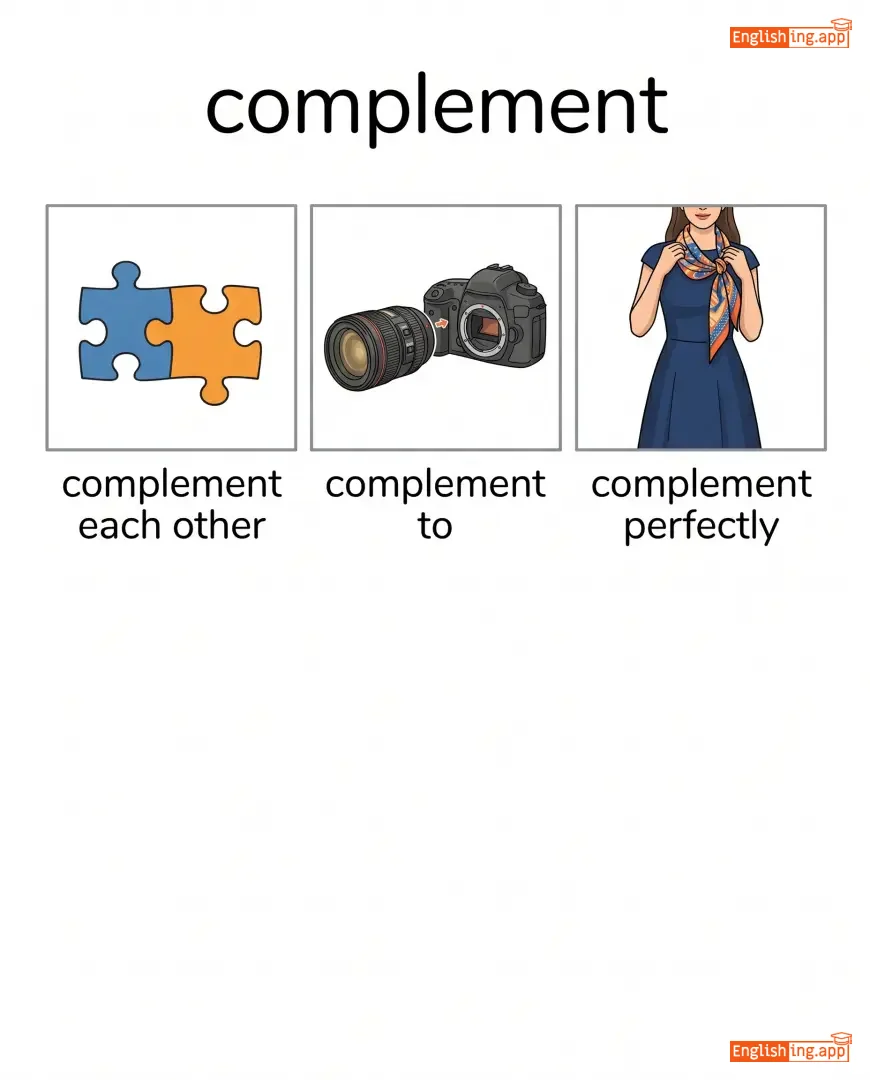
The scarf complements her outfit perfectly.
スカーフは彼女の服装を完璧に補完します。
••••••
|
スカーフは彼女の服装を完璧に補完します。
Sukafu wa kanojo no fukusou o kanpeki ni hokan shimasu.
••••••
|
perfect complement
完璧な補完
••••••
|
something that completes another thing in the best possible way
••••••
|
完璧な補完
kanpeki na hokan
••••••
|
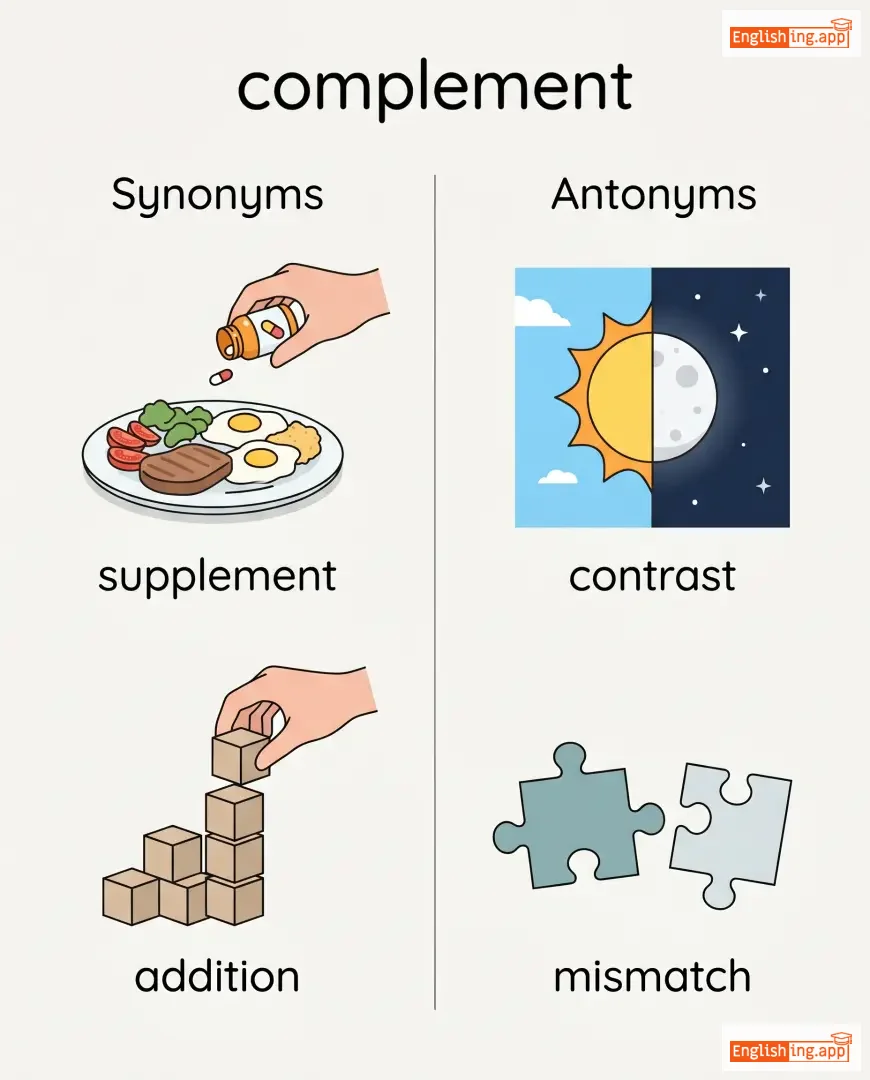
supplement, addition, counterpart, companion, match
••••••
|
contrast, mismatch
••••••
|
complement each other, complement to, complement perfectly, complement system
••••••
|
補完 = 完成 + 追加、他のものをさらに良くするもの
••••••
|
|
🧩
••••••
|
/kəmˈplɛksɪti/
noun
(コンプレキシティ)
••••••
|
|
複雑さ
fukuzatsusa
••••••
|
- •••••• | - •••••• | - •••••• | - •••••• |
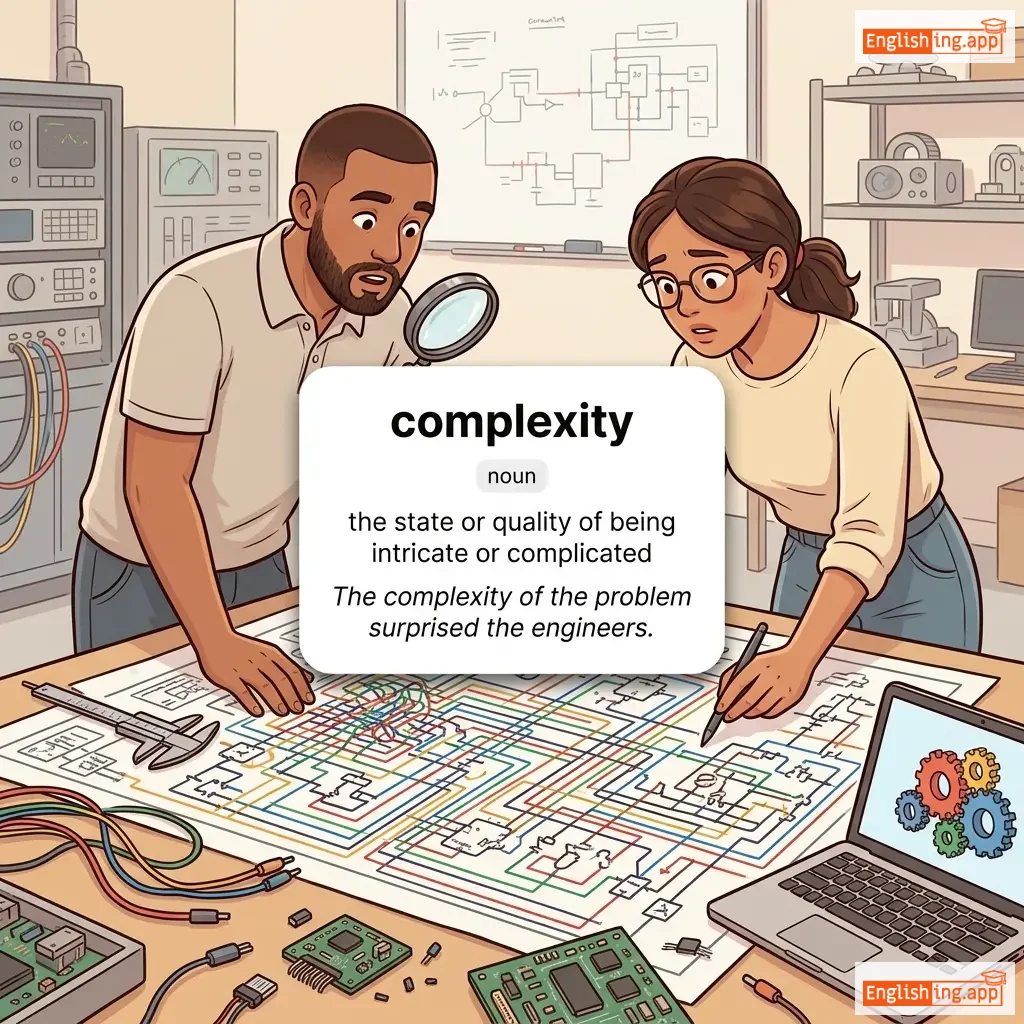
the state or quality of being intricate or complicated
••••••
|
The complexity of the problem surprised the engineers. |
問題の複雑さはエンジニアたちを驚かせました。
Mondai no fukuzatsusa wa enjinia-tachi o odorokasemashita.
••••••
|
reduce complexity |
to make something simpler or easier to understand
••••••
|
複雑さを減らす
fukuzatsusa o herasu
••••••
|
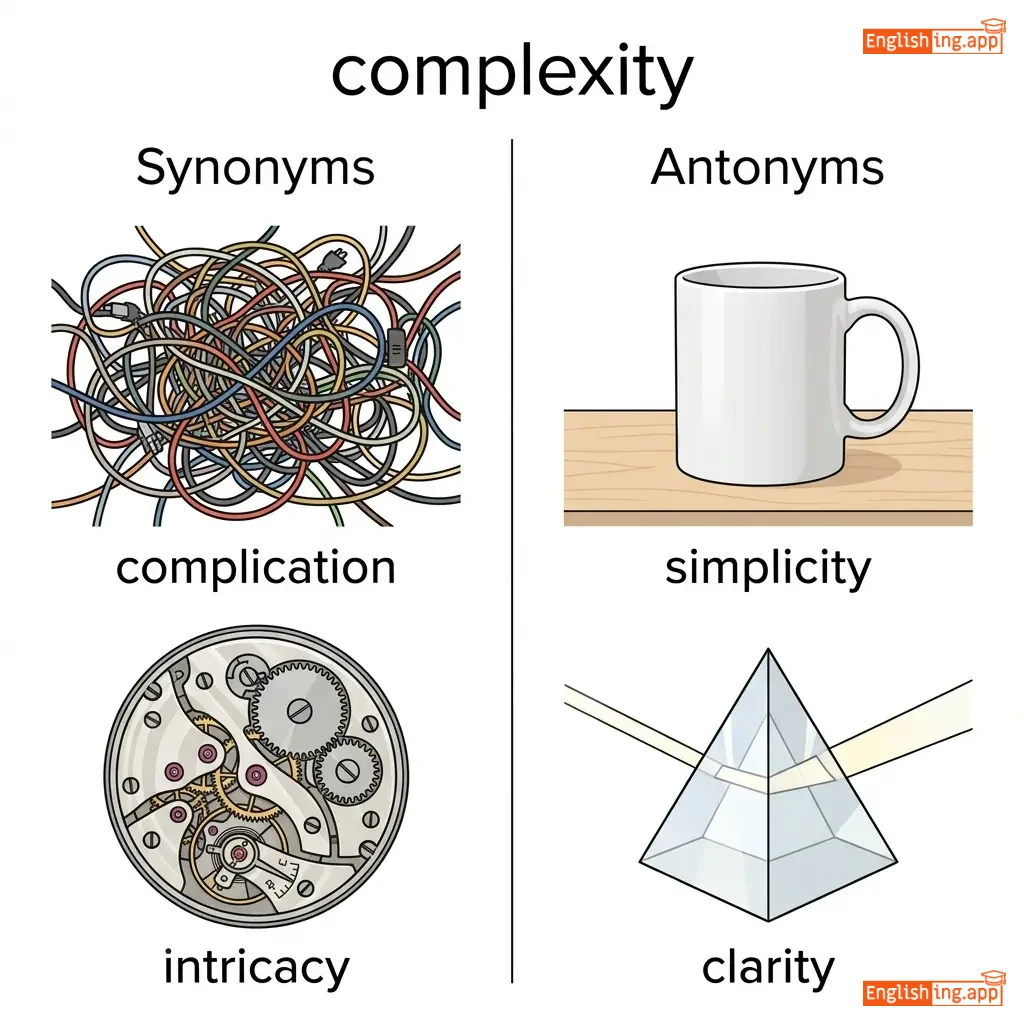
complication, intricacy, difficulty, sophistication, depth
••••••
|
simplicity, clarity, ease
••••••
|
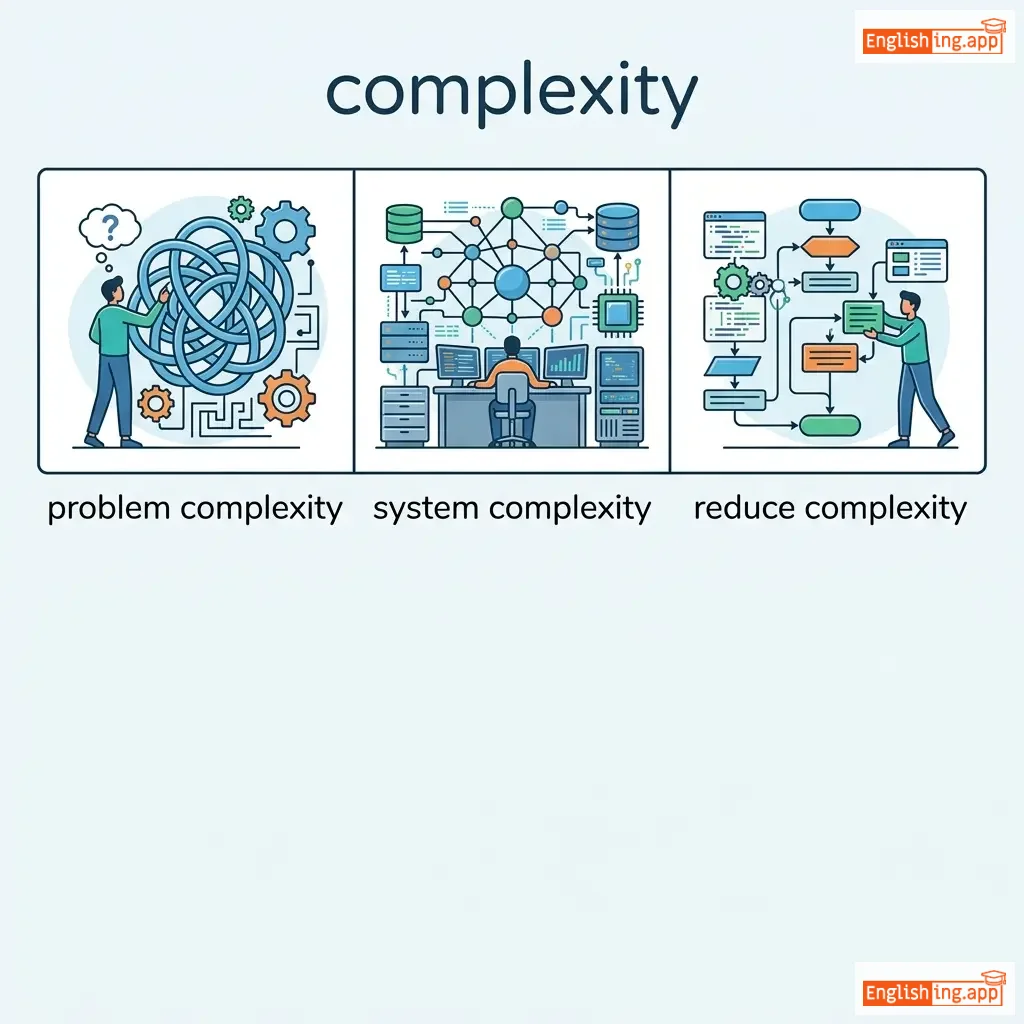
problem complexity, system complexity, reduce complexity, increasing complexity
••••••
|
複雑さは難しさを意味し、複雑なことを簡単にするのが目的です。
••••••
|
|
⚙️
••••••
|
/fəˈsɪlɪteɪt/
verb
(ファシリテート)
••••••
|

|
促進する、容易にする
sokushin suru, yōi ni suru
••••••
|
facilitated
ファシリテーテッド
••••••
|
facilitated
ファシリテーテッド
••••••
|
facilitates
ファシリテーツ
••••••
|
facilitating
ファシリテーティング
••••••
|
to make an action or process easier or smoother
••••••
|
The new software will facilitate communication between departments.
新しいソフトウェアは部門間のコミュニケーションを促進します。
••••••
|
新しいソフトウェアは部門間のコミュニケーションを促進します。
Atarashī sofutowea wa bumonkan no komyunikēshon o sokushin shimasu.
••••••
|
- •••••• | - •••••• | - •••••• |
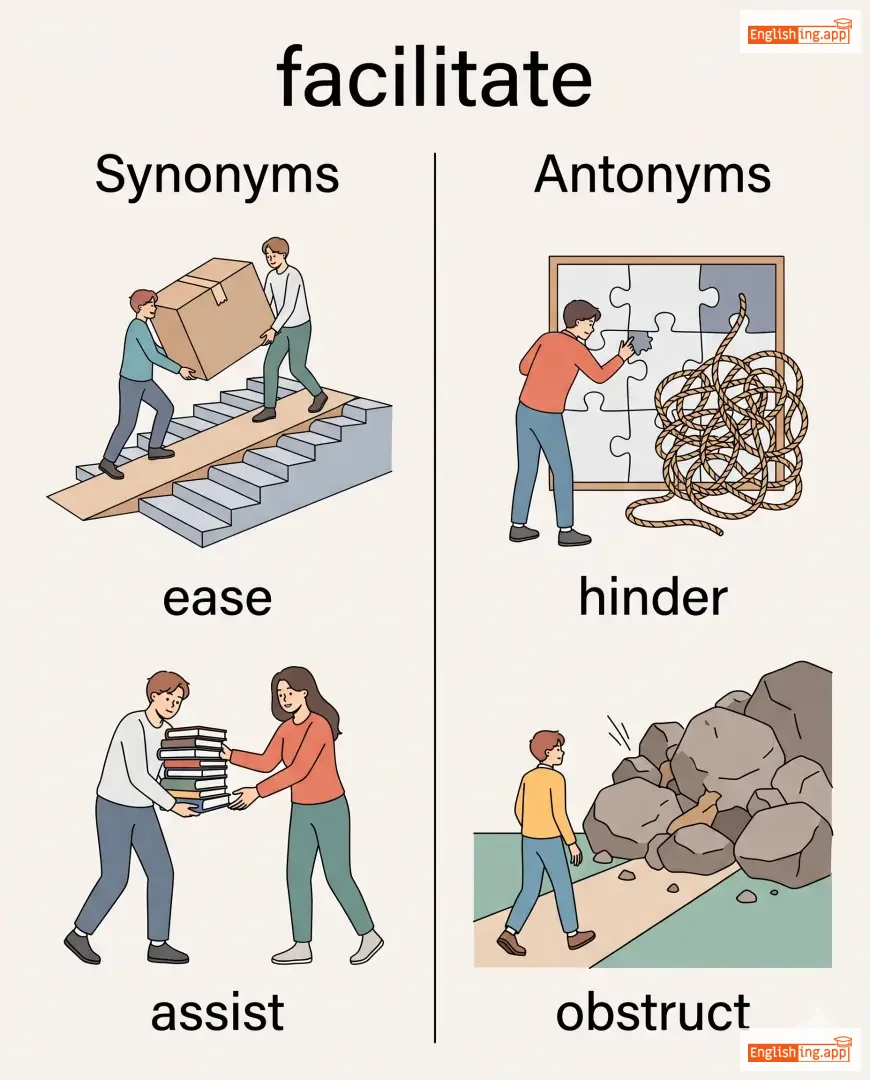
ease, assist, simplify, aid
••••••
|
hinder, obstruct, complicate
••••••
|
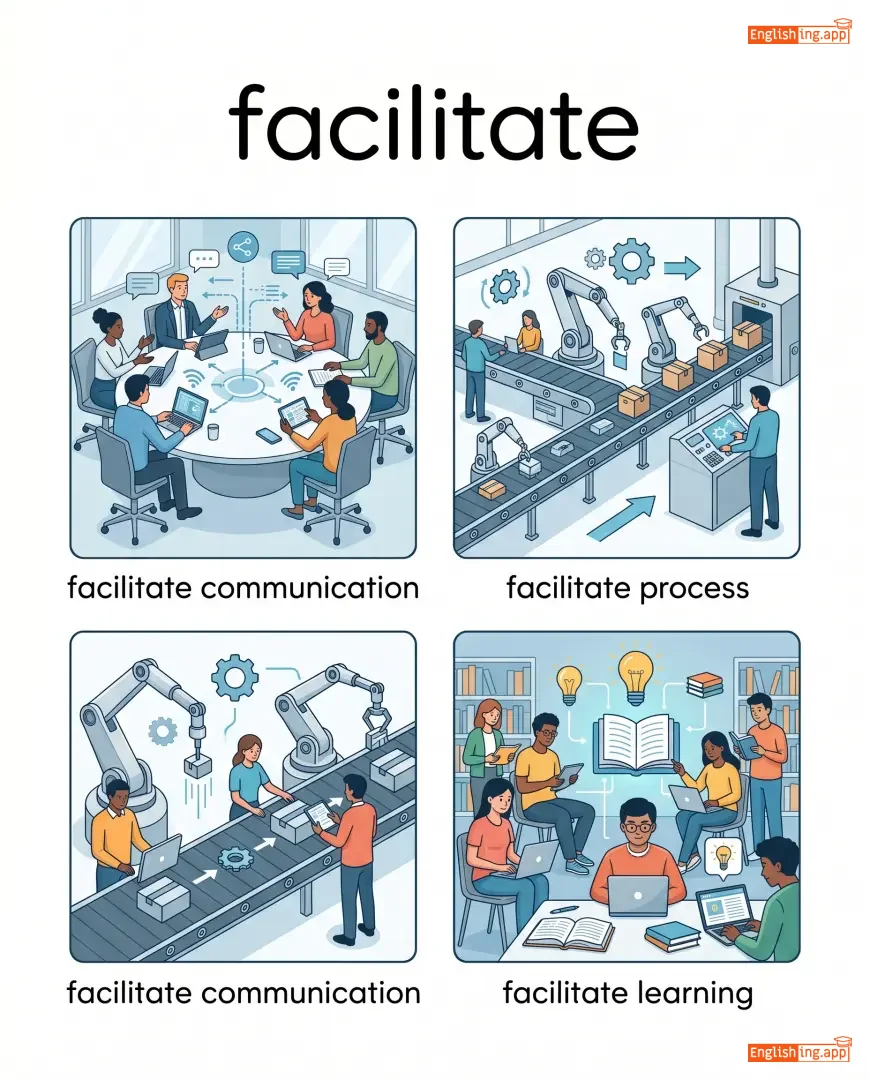
facilitate communication, facilitate process, facilitate learning, facilitate discussion
••••••
|
Facilitate - Face ill を楽にする
••••••
|
|
🔄
••••••
|
/ˈfriːkwəntli/
adverb
(フリークエントリー)
••••••
|
- •••••• |
頻繁に; 定期的に; 多くの回数
hinpan ni, teikiteki ni, ooku no kaisuu
••••••
|
- •••••• | - •••••• | - •••••• | - •••••• |
often; regularly; many times
••••••
|
She frequently visits her grandmother on weekends. |
彼女は週末に頻繁に祖母を訪れます。
Kanojo wa shūmatsu ni hinpan ni sobo o otozuremasu.
••••••
|
- •••••• | - •••••• | - •••••• |
often, regularly, repeatedly, commonly, habitually
••••••
|
rarely, seldom, infrequently, occasionally, never
••••••
|
frequently asked questions, frequently used, frequently visited
••••••
|
何度も繰り返して訪れること、それが頻繁にです。
••••••
|
|
⚙️
••••••
|
/ˈfʌŋkʃənl/
adjective
(ファンクショナル)
••••••
|
- •••••• |
機能的
kinōteki
••••••
|
- •••••• | - •••••• | - •••••• | - •••••• |
designed to be practical and useful, rather than just decorative
••••••
|
The design of the chair is simple but highly functional. |
椅子のデザインはシンプルですが、非常に機能的です。
Isu no dezain wa shinpuru desu ga, hijō ni kinōteki desu.
••••••
|
- •••••• | - •••••• | - •••••• |
practical, useful, efficient, operative
••••••
|
useless, impractical
••••••
|
functional design, functional purpose, fully functional, functional system
••••••
|
機能的は機能に関連して、実用的で有用。
••••••
|
|
🌱
••••••
|
/ˈɡriːnhaʊs/
noun
(グリーンハウス)
••••••
|
- •••••• |
温室
onshitsu
••••••
|
- •••••• | - •••••• | - •••••• | - •••••• |
a glass building used for growing plants, especially in cold climates
••••••
|
The farmers built a large greenhouse to grow tomatoes in the winter. |
農家は冬にトマトを育てるために大きな温室を建てました。
Nōka wa fuyu ni tomato o sodateru tame ni ōkina onshitsu o tatemashita.
••••••
|
- •••••• | - •••••• | - •••••• |
hothouse, conservatory, plant house
••••••
|
open field, outdoors
••••••
|
greenhouse effect, greenhouse gas, greenhouse plants, greenhouse cultivation
••••••
|
温室は植物を温かく保つ場所として有名です。
••••••
|
|
🖼️
••••••
|
/ˈɪl.ə.streɪt/
verb
(イラストレート)
••••••
|
- •••••• |
説明する
setsumei suru
••••••
|
illustrated
イラストレイテッド
••••••
|
illustrated
イラストレイテッド
••••••
|
illustrates
イラストレーツ
••••••
|
illustrating
イラストレイティング
••••••
|
to explain or make something clear by using examples, pictures, or comparisons
••••••
|
The teacher used diagrams to illustrate the concept.
先生はその概念を説明するために図を使いました。
••••••
|
先生はその概念を説明するために図を使いました。
Sensei wa sono gainen o setsumei suru tame ni zu o tsukaimashita.
••••••
|
to illustrate the point
ポイントを説明する
••••••
|
to make an idea clearer with an example
••••••
|
ポイントを説明する
Pointo o setsumei suru
••••••
|
explain, demonstrate, clarify, depict, exemplify
••••••
|
confuse, obscure
••••••
|
illustrate clearly, illustrate example, illustrate concept
••••••
|
イラストレートは図で説明すること—'Illustrate = イラストで説明'
••••••
|
|
🥘
••••••
|
/ɪnˈɡriːdiənt/
noun
(イングリディエント)
••••••
|
- •••••• |
材料
zairyō
••••••
|
- •••••• | - •••••• | - •••••• | - •••••• |
A component part or element of something, especially in a recipe.
••••••
|
Flour is a key ingredient in baking bread. |
小麦粉はパン作りにおける重要な材料です。
Komugiko wa pan tsukuri ni okeru jūyō na zairyō desu.
••••••
|
secret ingredient |
a special or unique element that makes something successful
••••••
|
秘密の材料
himitsu no zairyō
••••••
|
component, element, part, material, constituent
••••••
|
whole, entirety
••••••
|
key ingredient, main ingredient, essential ingredient, secret ingredient
••••••
|
材料: 料理に欠かせない要素!
••••••
|
|
💌
••••••
|
/ˌɪnvɪˈteɪʃən/
noun
(ハピネス)
••••••
|
- •••••• |
幸せ
shiawase
••••••
|
- •••••• | - •••••• | - •••••• | - •••••• |
a written or spoken request to attend an event or to participate in something
••••••
|
She sent me an invitation to her wedding. |
彼女は賞を受け取ったとき、自分の幸せを隠すことができませんでした。
Kanojo wa shō o uketotta toki, jibun no shiawase o kakusu koto ga dekimasen deshita.
••••••
|
extend an invitation |
to formally invite someone
••••••
|
幸せの追求
shiawase no tsuikyū
••••••
|
request, call, summon, appeal, proposal
••••••
|
rejection, refusal
••••••
|
send invitation, wedding invitation, formal invitation, accept invitation
••••••
|
幸せ = 心が喜びで満たされる時。
••••••
|
|
🧭
••••••
|
/ˌnævɪˈɡeɪʃən/
noun
(ネヴィゲーション)
••••••
|
|
ナビゲーション
navigēshon
••••••
|
- •••••• | - •••••• | - •••••• | - •••••• |
the process or activity of accurately determining one's position and planning and following a route
••••••
|
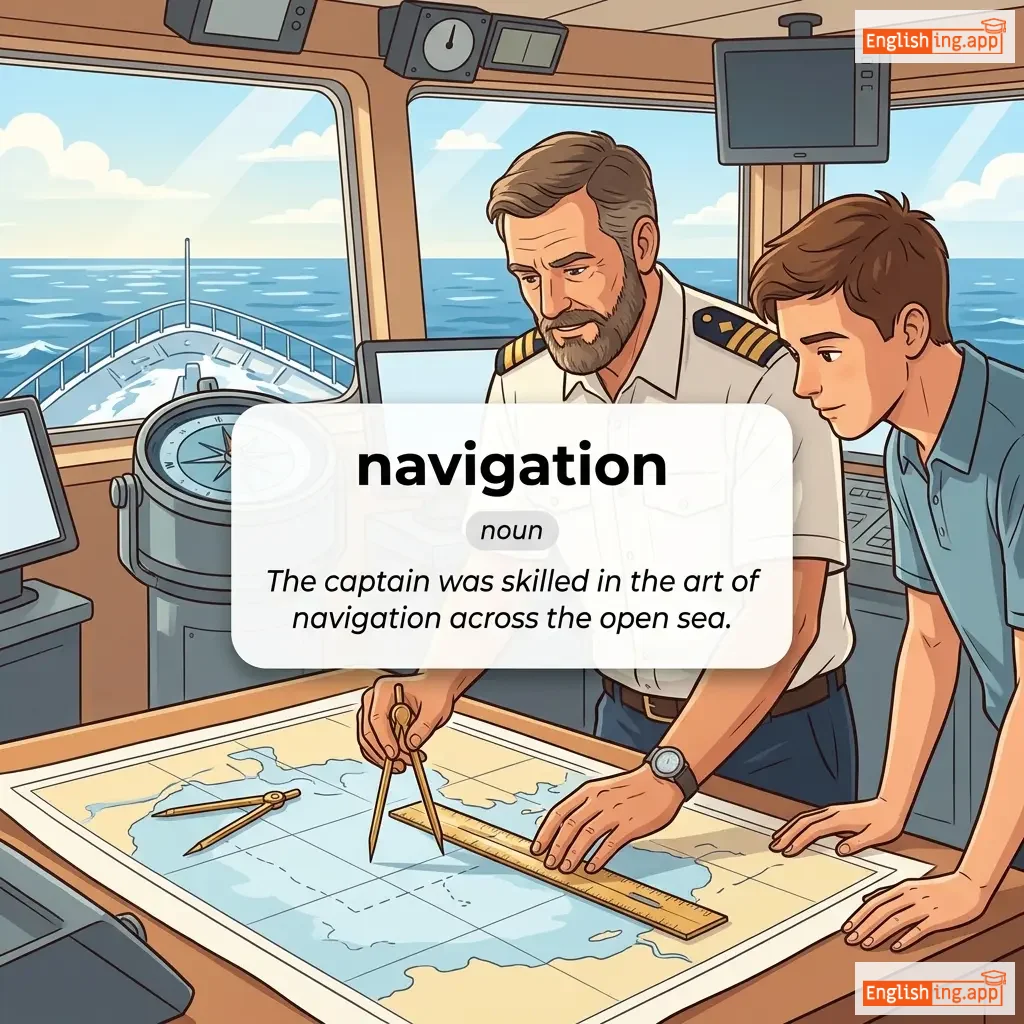
The captain was skilled in the art of navigation across the open sea.
キャプテンは開けた海での航海術に熟練していました。
••••••
|
キャプテンは開けた海での航海術に熟練していました。
kyaputen wa aketa umi de no kōkaijutsu ni jukuren shiteimashita.
••••••
|
- •••••• | - •••••• | - •••••• |
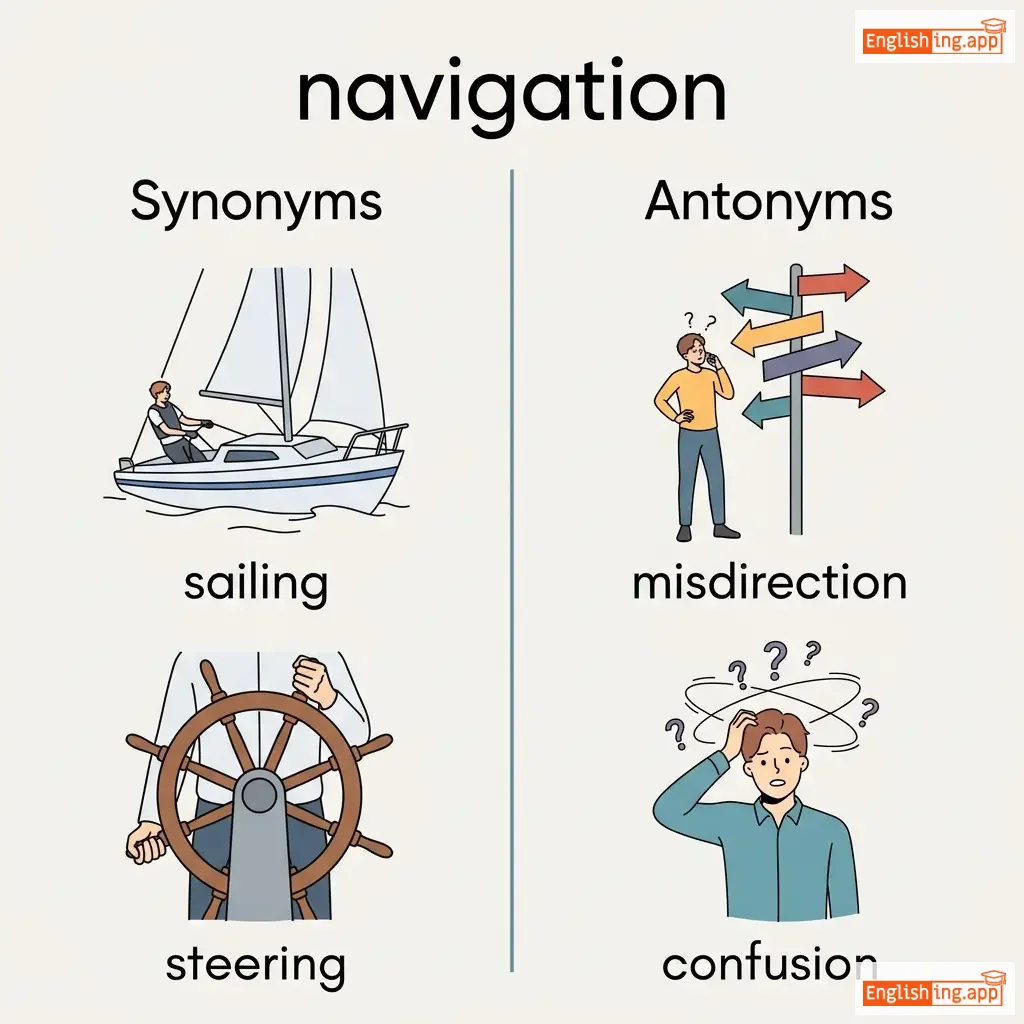
sailing, steering, route planning, charting
••••••
|
misdirection, confusion
••••••
|
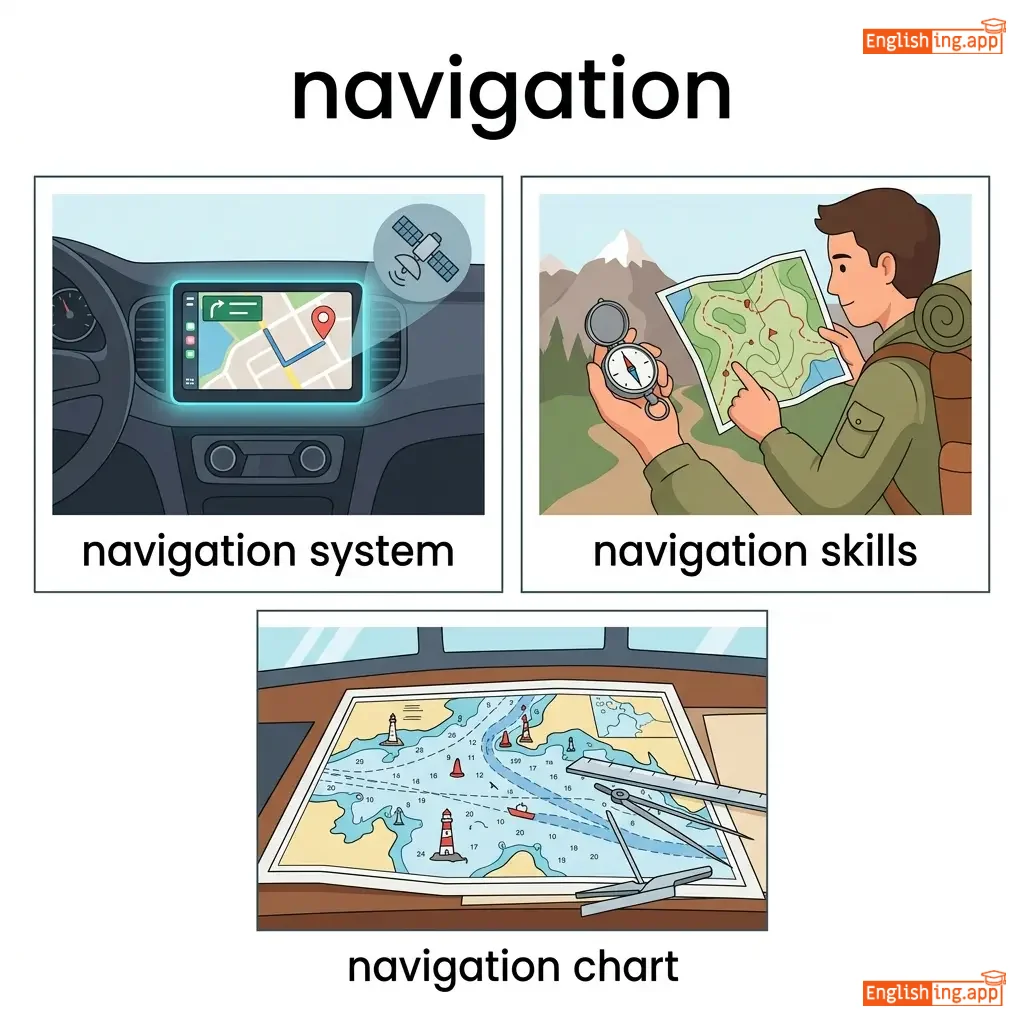
navigation system, navigation skills, navigation chart
••••••
|
ナビゲーションは目的地への道を示す
••••••
|
|
📜
••••••
|
/əˈfɪʃəli/
adverb
(オフィシャリー)
••••••
|
- •••••• |
公式に
kōshiki ni
••••••
|
- •••••• | - •••••• | - •••••• | - •••••• |
in a formal or authorized way
••••••
|
The building was officially opened by the mayor.
その建物は市長によって公式に開かれました。
••••••
|
その建物は市長によって公式に開かれました。
Sono tatemono wa shichō ni yotte kōshiki ni hirakaremashita.
••••••
|
officially recognized
公式に認められた
••••••
|
formally accepted or approved by authority
••••••
|
公式に認められた
kōshiki ni mitomerareta
••••••
|
formally, legally, publicly, ceremonially
••••••
|
informally, unofficially
••••••
|
officially declared, officially opened, officially announced, officially recognized
••••••
|
Officially: 公的に認められること
••••••
|
|
⏳
••••••
|
/əˈrɪdʒɪnəli/
adverb
(オリジナリー)
••••••
|
- •••••• |
元々
motomoto
••••••
|
- •••••• | - •••••• | - •••••• | - •••••• |
in the beginning, at first
••••••
|
Originally, she wanted to be a doctor. |
元々、彼女は医者になりたかった。
Motomoto, kanojo wa isha ni naritakatta.
••••••
|
- •••••• | - •••••• | - •••••• |
initially, at first, at the outset, in the beginning
••••••
|
finally, ultimately
••••••
|
originally from, originally intended, originally planned
••••••
|
オリジナリー、すべては最初から始まる。
••••••
|
|
🏋️♀️
••••••
|
/ˈfɪzɪkəli/
adverb
(フィジカリー)
••••••
|
- •••••• |
フィジカルに
fijikaru ni
••••••
|
- •••••• | - •••••• | - •••••• | - •••••• |
in a physical manner; relating to the body
••••••
|
She is physically strong and healthy.
彼女はフィジカリーに強くて健康です。
••••••
|
彼女はフィジカリーに強くて健康です。
Kanojo wa fijikaru ni tsuyokute kenkou desu.
••••••
|
- •••••• | - •••••• | - •••••• |
bodily, actively, tangibly
••••••
|
mentally, abstractly
••••••
|
physically fit, physically demanding, physically active
••••••
|
フィジカルに (physically) 強い体を作ることが大切!
••••••
|
|
⭐
••••••
|
/ˌpɒp.jəˈlær.ə.ti/
noun
(ポピュラリティ)
••••••
|
- •••••• |
人気
ninki
••••••
|
- •••••• | - •••••• | - •••••• | - •••••• |
the state of being liked, admired, or supported by many people
••••••
|
The singer's popularity has grown rapidly this year.
歌手の人気は今年急速に増加しました。
••••••
|
歌手の人気は今年急速に増加しました。
Kashu no ninki wa kotoshi kyūsoku ni zōka shimashita.
••••••
|
- •••••• | - •••••• | - •••••• |
fame, recognition, acclaim, acceptance
••••••
|
unpopularity, obscurity, rejection, dislike
••••••
|
growing popularity, widespread popularity, peak popularity
••••••
|
スターのように人気が急上昇
••••••
|
|
🔮
••••••
|
/prɪˈdɪkʃən/
noun
(プレディクション)
••••••
|
- •••••• |
予測
yosoku
••••••
|
- •••••• | - •••••• | - •••••• | - •••••• |
A statement about what will happen in the future based on knowledge or evidence.
••••••
|
Her prediction about the weather turned out to be accurate.
彼女の天気予報は正確だと証明されました。
••••••
|
彼女の天気予報は正確だと証明されました。
Kanojo no tenki yohō wa seikaku da to shōmei saremashita.
••••••
|
make a prediction
予測をする
••••••
|
to state what you think will happen in the future
••••••
|
予測をする
yosoku o suru
••••••
|
forecast, prophecy, prognosis, projection, guess
••••••
|
retrospection, hindsight
••••••
|
accurate prediction, weather prediction, make a prediction, prediction model
••••••
|
Predictionは未来を予測する – 何が起こるかを予想する。
••••••
|
|
☕
••••••
|
/ˈprɛf(ə)rəns/
noun
(プリファレンス)
••••••
|
- •••••• |
好み
konomi
••••••
|
- •••••• | - •••••• | - •••••• | - •••••• |
a greater liking for one alternative over another
••••••
|
She has a preference for tea over coffee. |
彼女はコーヒーよりもお茶を好む。
Kanojo wa kōhī yori mo ocha o konomu.
••••••
|
personal preference |
an individual's own choice or taste
••••••
|
個人的な好み
kodoteki na konomi
••••••
|
choice, liking, taste, inclination, option
••••••
|
dislike, aversion, indifference
••••••
|
show preference, strong preference, personal preference, preference order
••••••
|
好みは「好み」を意味します – お茶かコーヒーを選んでください。
••••••
|
|
📈
••••••
|
/prəˈdʒɛkʃən/
noun
(プロジェクション)
••••••
|

|
予測
yosoku
••••••
|
- •••••• | - •••••• | - •••••• | - •••••• |
An estimate or forecast of a future situation based on current trends.
••••••
|
The sales projection shows a steady increase in revenue. |
売上予測は収益の安定した増加を示しています。
Uriage yosoku wa shūeki no antei shita zōka o shimeshiteimasu.
••••••
|
make a projection |
To create an estimate or forecast of future results.
••••••
|
予測を立てる
Yosoku o tateru
••••••
|
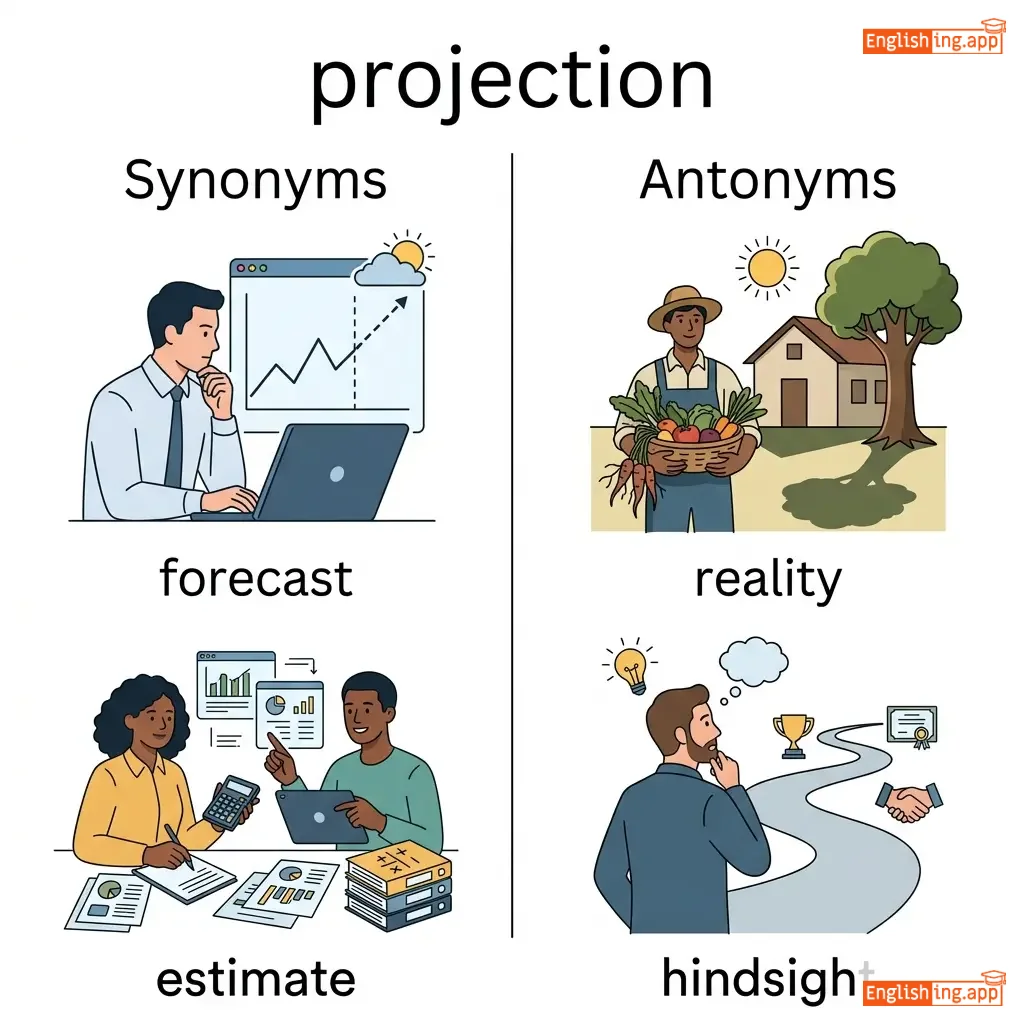
forecast, estimate, prediction, outlook, expectation
••••••
|
reality, hindsight
••••••
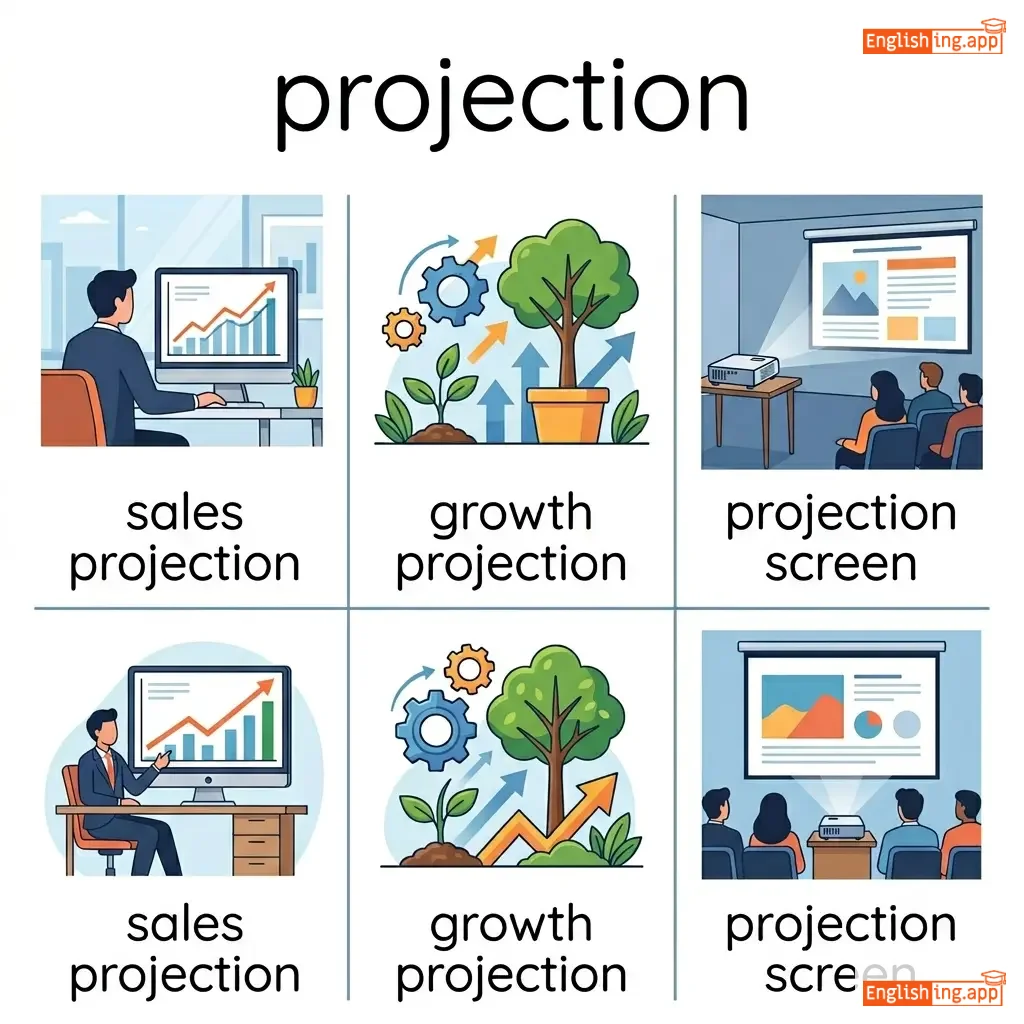
|
sales projection, growth projection, projection screen, projection map
••••••
|
予測:未来の絵を投影するようなもの。
••••••
|

