Civic Pledges for the River
村の図書館にはcommunist時代の河川管理に関する古い本が展示されていました。 私たちの分析者はセンサーの読み取りに非常にcompetentでした。 もし誰かが計画についてcomplaintを持っていた場合、フォーラムではそれを歓迎しました。 人々は、川を救うことがdemocracyの力を示していると言いました。 何年もの汚染で、川はかなりdepressedな状態になっていました。 今日のセッションでは、各業務のためにdesignateされたリーダーが決まりました。 新しい川沿いの公園のデザインは非常にdesirableに見えました。 環境detectiveが隠れた汚染者を特定しました。 いくつかの工場は、廃棄物の不法投棄でdetention罰金を受けました。 私たちは静かな斜面に木を植えることをdetermineしました。 昨年の洪水は地域をdevastateしました。 保健当局は水のdiagnosis報告書を発表しました。 ボランティアリーダーは業務のdirectionを提供しました。 主要なスタンドからプラスチック袋がdisappearしました。 当局は河川への有害なdischargeを停止しました。 午後には問題を解決するためにオープンなdiscourseが行われました。 段階的なdismissal措置が汚染企業に対して取られています。 地域住民はゴミのdominanceを打破するために団結しました。 市民フォーラムは河川に関する新しいelectoralコミットメントを発表しました。 河川沿いのプラスチック使用は迅速にeliminateされるでしょう。
|
絵文字
|
単語 | Images | 翻訳 | 過去 | 過去分詞 | 三人称単数 | 動名詞 | 意味 | 例文 | 例文の翻訳 | 表現例 | 表現例の意味 | 表現例の翻訳 | 同義語 | 対義語 | コロケーション | ニーモニック |
|---|---|---|---|---|---|---|---|---|---|---|---|---|---|---|---|---|---|
|
✊
••••••
|
/ˈkɒmjʊnɪst/
noun
••••••
|
- •••••• | - •••••• | - •••••• | - •••••• | - •••••• | - •••••• |
a person who supports or believes in the principles of communism
••••••
|
The communist ideology aims for a classless society. |
- •••••• | - •••••• | - •••••• | - •••••• |
socialist, Marxist, leftist, revolutionary
••••••
|
capitalist, bourgeois
••••••
|
communist party, communist government, communist manifesto
••••••
|
No •••••• |
|
✅
••••••
|
/ˈkɒmpɪtənt/
adjective
(kom-pi-tent)
••••••
|
- •••••• |
有能
yūnō
••••••
|
- •••••• | - •••••• | - •••••• | - •••••• |
having the necessary ability, knowledge, or skill to do something successfully
••••••
|
He is a competent driver who rarely makes mistakes.
彼はミスをほとんど犯さない有能なドライバーです。
••••••
|
彼はミスをほとんど犯さない有能なドライバーです。
Kare wa misu o hotondo okasanai yūnōna doraibā desu.
••••••
|
competent authority
有能な権限
••••••
|
a person or body with the legal power to decide or enforce something
••••••
|
有能な権限
yūnōna kenri
••••••
|
capable, skilled, qualified, proficient
••••••
|
incompetent, unskilled
••••••
|
competent staff, competent professional, competent enough
••••••
|
有能は有能なドライバーのように、能力が高く、間違いが少ないことを意味します。
••••••
|
|
📄
••••••
|
/kəmˈpleɪnt/
noun
(コンプレイント)
••••••
|
- •••••• |
苦情
kuchou
••••••
|
- •••••• | - •••••• | - •••••• | - •••••• |
a statement that something is wrong or not satisfactory
••••••
|
The manager received a complaint from a customer about poor service.
マネージャーは、顧客からのサービスが悪いという苦情を受け取りました。
••••••
|
マネージャーは、顧客からのサービスが悪いという苦情を受け取りました。
Manejā wa, kokyaku kara no sābisu ga warui to iu kuchō o uketorimashita.
••••••
|
file a complaint
苦情を申し立てる
••••••
|
to officially report dissatisfaction
••••••
|
苦情を申し立てる
Kuchō o mōshitateiru
••••••
|
objection, grievance, criticism, protest, allegation
••••••
|
praise, compliment
••••••
|
make a complaint, file a complaint, customer complaint, formal complaint
••••••
|
COMPLAINT - 苦情は正式に申し立てるものです。
••••••
|
|
🗳️
••••••
|
/dɪˈmɑːkrəsi/
noun
(デモクラシー)
••••••
|
|
民主主義
minshu shugi
••••••
|
- •••••• | - •••••• | - •••••• | - •••••• |
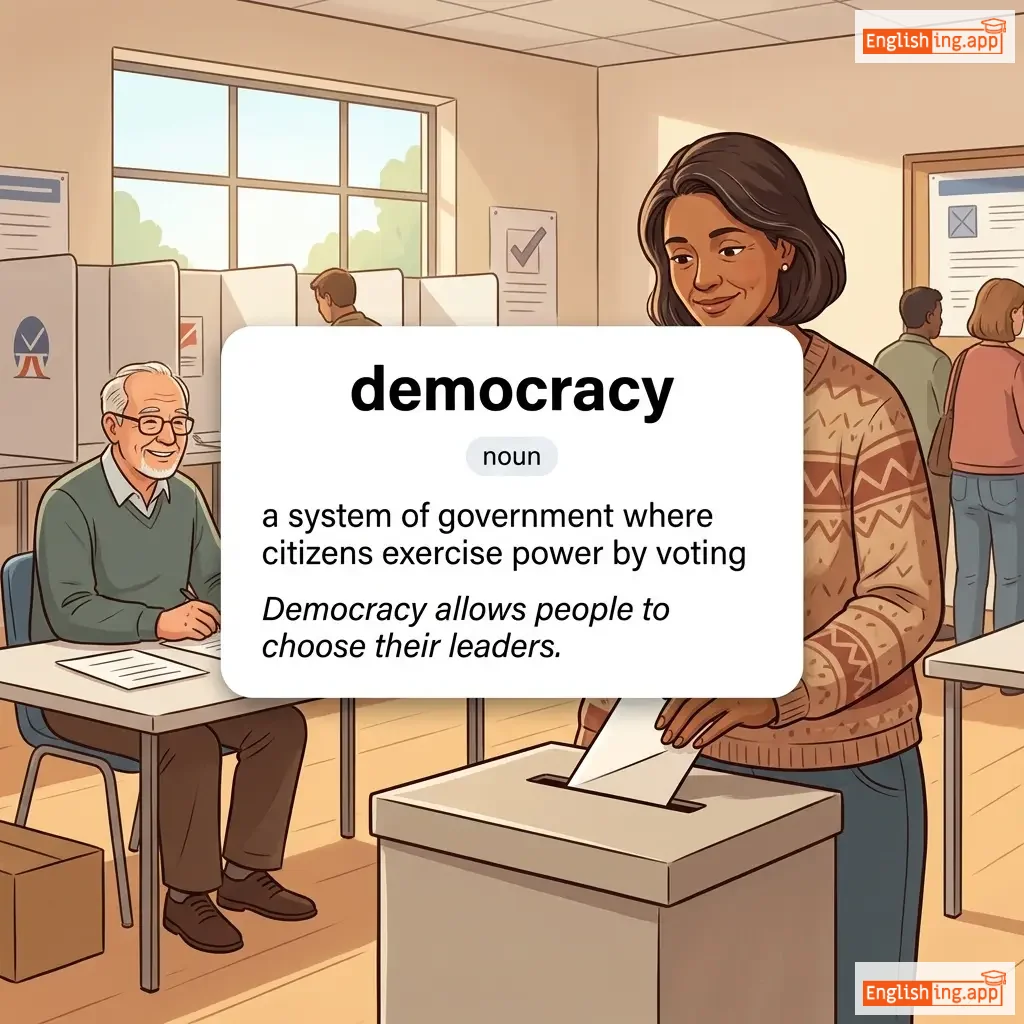
a system of government where citizens exercise power by voting
••••••
|
Democracy allows people to choose their leaders. |
民主主義は人々にリーダーを選ぶ権利を与えます。
Minshu shugi wa hitobito ni rīdā o erabu kenri o ataemasu.
••••••
|
true democracy |
a genuine practice of democratic values
••••••
|
真の民主主義
shin no minshu shugi
••••••
|
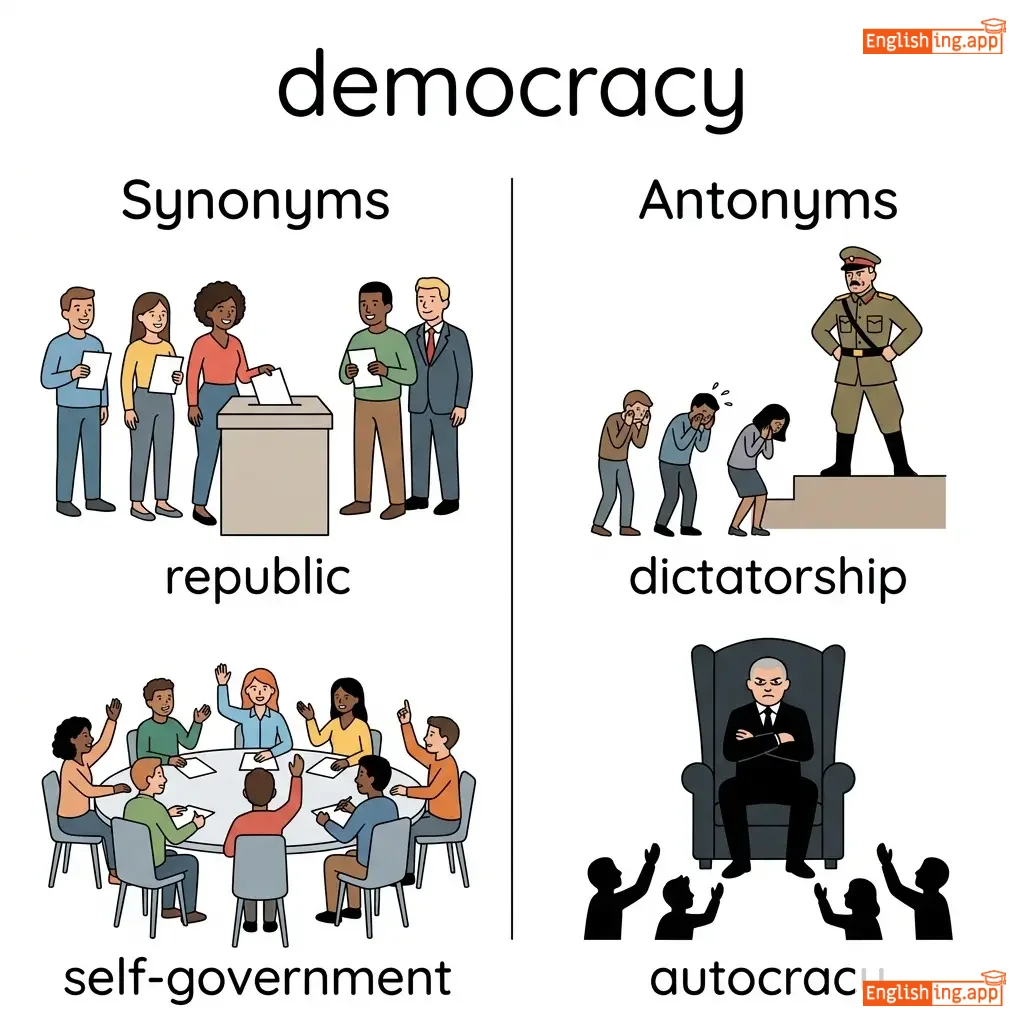
republic, self-government, representative government, popular government
••••••
|
dictatorship, autocracy, monarchy
••••••
|
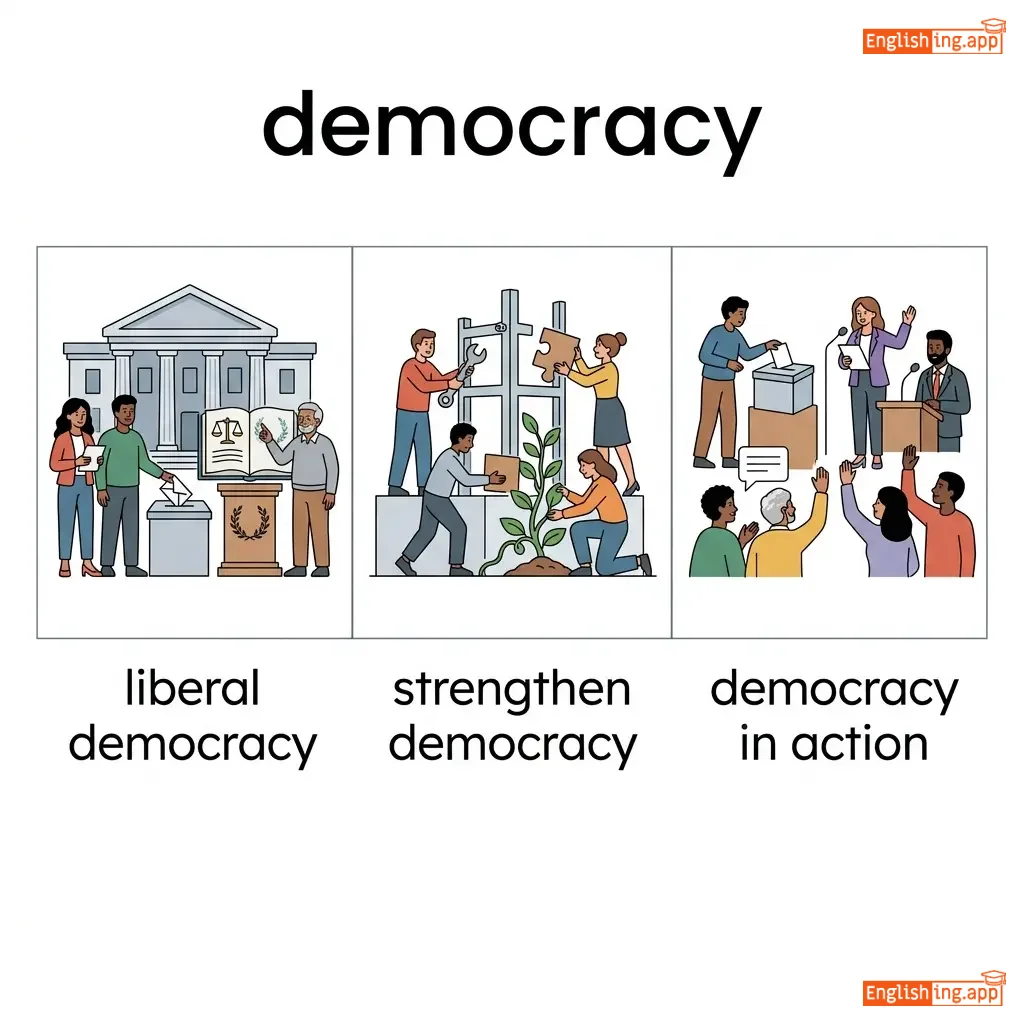
liberal democracy, strengthen democracy, democracy in action, democracy movement
••••••
|
Demoは人々、cracyは支配 - 民主主義 = 人々の支配
••••••
|
|
😔
••••••
|
/dɪˈprɛst/
adjective
(ディプレスド)
••••••
|
- •••••• |
落ち込んでいる
ochikondeiru
••••••
|
- •••••• | - •••••• | - •••••• | - •••••• |
Feeling very sad and without hope; in a state of unhappiness.
••••••
|
She felt depressed after losing her job. |
彼女は仕事を失った後、落ち込んでいました。
Kanojo wa shigoto o ushinatta ato, ochikondeimashita.
••••••
|
feeling blue |
Feeling sad or unhappy.
••••••
|
ブルーな気分
burū na kibun
••••••
|
sad, downcast, gloomy, unhappy, melancholic
••••••
|
happy, cheerful, joyful
••••••
|
deeply depressed, clinically depressed, depressed mood
••••••
|
落ち込んでいるのは仕事を失った後、ブルーな気分になるからです。
••••••
|
|
📝
••••••
|
/ˈdɛzɪɡneɪt/
verb
(デザインネイト)
••••••
|
- •••••• |
指名する
shimei suru
••••••
|
designated
デザインネイテッド
••••••
|
designated
デザインネイテッド
••••••
|
designates
デザインネイツ
••••••
|
designating
デザインネイティング
••••••
|
to officially assign, appoint, or indicate something or someone
••••••
|
The committee will designate a new chairperson next week.
委員会は来週、新しい会長を指名する予定です。
••••••
|
委員会は来週、新しい会長を指名する予定です。
Iinkai wa raishū, atarashī kaichō o shimei suru yotei desu.
••••••
|
- •••••• | - •••••• | - •••••• |
appoint, assign, nominate, allocate, specify
••••••
|
remove, dismiss
••••••
|
designate a person, designate a role, designate as
••••••
|
Design + gate = 指名する会長を委員会で
••••••
|
|
🏡
••••••
|
/dɪˈzaɪərəbl/
adjective
(ディザイアラブル)
••••••
|
- •••••• |
望ましい
nozomashii
••••••
|
- •••••• | - •••••• | - •••••• | - •••••• |
worth having or wanting; attractive
••••••
|
The location of the house was highly desirable, with great views.
その家の場所は非常に望ましく、素晴らしい景色がありました。
••••••
|
その家の場所は非常に望ましく、素晴らしい景色がありました。
Sono ie no basho wa hijō ni nozomashiku, subarashī keshiki ga arimashita.
••••••
|
- •••••• | - •••••• | - •••••• |
attractive, appealing, wanted, sought-after
••••••
|
undesirable, unappealing, unattractive
••••••
|
desirable features, desirable location, highly desirable
••••••
|
望ましい家 - a desirable house
••••••
|
|
🕵️♂️
••••••
|
/dɪˈtɛktɪv/
noun
(ディテクティブ)
••••••
|
- •••••• |
探偵
tantei
••••••
|
- •••••• | - •••••• | - •••••• | - •••••• |
a person whose job is to investigate and solve crimes
••••••
|
The detective solved the mystery in just two days. |
探偵はわずか2日で謎を解決しました。
Tantei wa wazuka futsuka de nazo o kaiketsu shimashita.
••••••
|
private detective |
a person hired privately to investigate cases
••••••
|
私立探偵
shiritsu tantei
••••••
|
investigator, sleuth, inspector, agent, examiner
••••••
|
criminal, suspect
••••••
|
detective story, police detective, private detective, chief detective
••••••
|
探偵は謎を解き明かし、犯罪を解決する職業です。
••••••
|
|
🔒
••••••
|
/dɪˈten.ʃən/
noun
(デテンション)
••••••
|
- •••••• |
停学; 拘留
teigaku; koryu
••••••
|
- •••••• | - •••••• | - •••••• | - •••••• |
the action of detaining someone or being detained in official custody
••••••
|
The student received detention for repeatedly disrupting the class.
生徒は繰り返しクラスを乱したため、停学を受けました。
••••••
|
生徒は繰り返しクラスを乱したため、停学を受けました。
Seito wa kurikaeshi kurasu o midashita tame, teigaku o ukemashita.
••••••
|
- •••••• | - •••••• | - •••••• |
custody, confinement, imprisonment, holding
••••••
|
freedom, release, liberation, discharge
••••••
|
police detention, school detention, detention center
••••••
|
停学はクラスで問題を起こした結果としての罰。
••••••
|
|
⚖️
••••••
|
/dɪˈtɜː.mɪn/
verb
(デターミン)
••••••
|
- •••••• |
決定する
kettei suru
••••••
|
determined
デターミンド
••••••
|
determined
デターミンド
••••••
|
determines
デターミンズ
••••••
|
determining
デターミニング
••••••
|
To decide or establish something after consideration.
••••••
|
The jury will determine the outcome of the case.
陪審員は事件の結果を決定します。
••••••
|
陪審員は事件の結果を決定します。
Bishinin wa jiken no kekka o kettei shimasu.
••••••
|
determine the course of action
行動方針を決定する
••••••
|
To decide what should be done.
••••••
|
行動方針を決定する
kōdō hōshin o kettei suru
••••••
|
decide, establish, conclude, define, settle
••••••
|
hesitate, doubt
••••••
|
determine the cause, determine the result, determine the effect, determine value
••••••
|
決定するは決めること、先生が誰が通るか決定するようなものです。
••••••
|
|
🌪️
••••••
|
/ˈdɛvəˌsteɪt/
verb
(デヴァステート)
••••••
|
- •••••• |
荒廃させる
kouhai saseru
••••••
|
devastated
デヴァステイテッド
••••••
|
devastated
デヴァステイテッド
••••••
|
devastates
デヴァステイツ
••••••
|
devastating
デヴァステイティング
••••••
|
to cause severe and overwhelming destruction or damage
••••••
|
The hurricane devastated the coastal town.
ハリケーンは沿岸の町を荒廃させた。
••••••
|
ハリケーンは沿岸の町を荒廃させた。
Harikēn wa engan no machi o kōhai saseta.
••••••
|
- •••••• | - •••••• | - •••••• |
destroy, ruin, demolish, wreck
••••••
|
build, create, restore
••••••
|
devastate a city, devastate a region, devastating effects
••••••
|
荒廃させる=devastateの意味
••••••
|
|
📋
••••••
|
/ˌdaɪəɡˈnoʊsɪs/
noun
••••••
|
- •••••• | - •••••• | - •••••• | - •••••• | - •••••• | - •••••• |
The identification of a disease, condition, or problem through examination of symptoms.
••••••
|
The diagnosis confirmed that she had diabetes. |
- •••••• | - •••••• | - •••••• | - •••••• |
identification, detection, finding, determination
••••••
|
misdiagnosis, guess
••••••
|
medical diagnosis, accurate diagnosis, early diagnosis
••••••
|
No •••••• |
|
🧭
••••••
|
/dəˈrɛkʃən/ or /daɪˈrɛkʃən/
noun
(ディレクション)
••••••
|
- •••••• |
方向, 指示
houkou, shiji
••••••
|
- •••••• | - •••••• | - •••••• | - •••••• |
the course or path on which someone or something is moving; instructions on what to do
••••••
|
He asked for directions to the train station. |
彼は駅への行き方を尋ねました。
Kare wa eki e no ikikata o tazunemashita.
••••••
|
change direction |
to alter the course or plan
••••••
|
方向を変える
houkou o kaeru
••••••
|
instruction, guidance, route, path, orientation
••••••
|
confusion, aimlessness
••••••
|
clear direction, right direction, new direction, opposite direction
••••••
|
方向はコンパスのように、常に正しい方向を指し示します。
••••••
|
|
🪄
••••••
|
/ˌdɪsəˈpɪər/
verb
(ディスアピア)
••••••
|
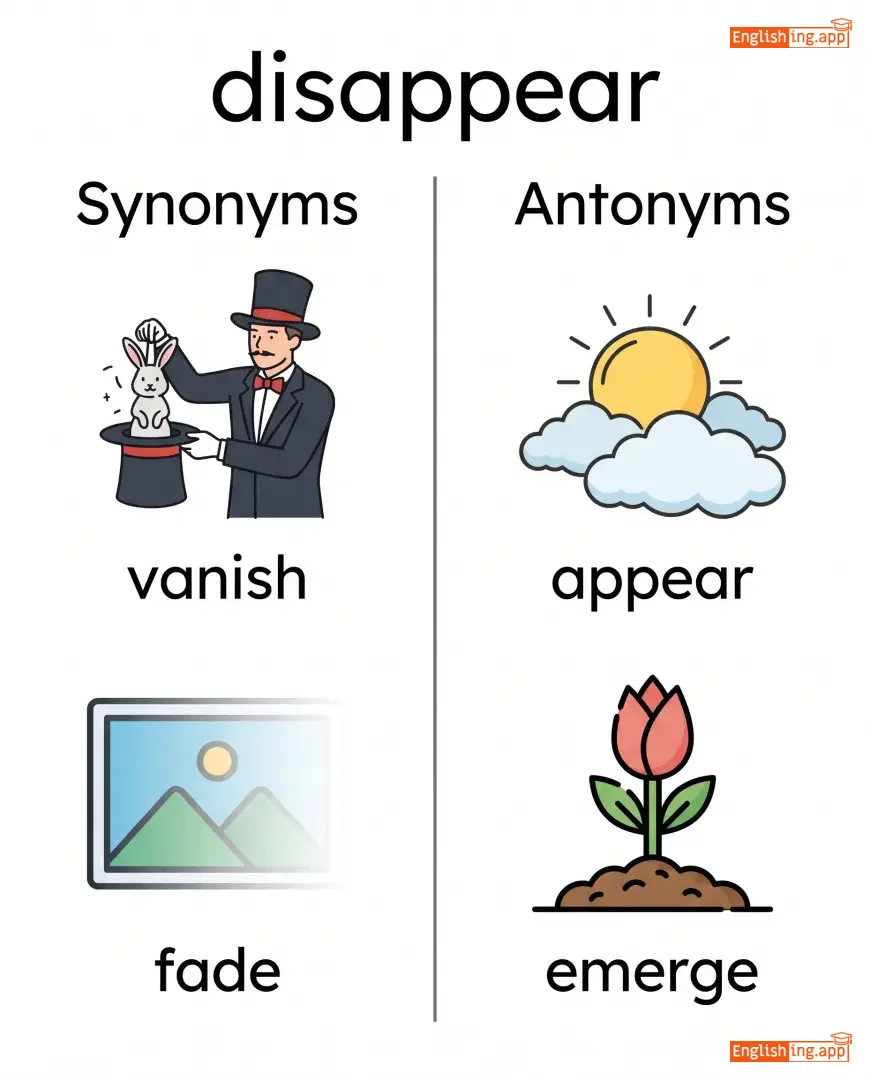
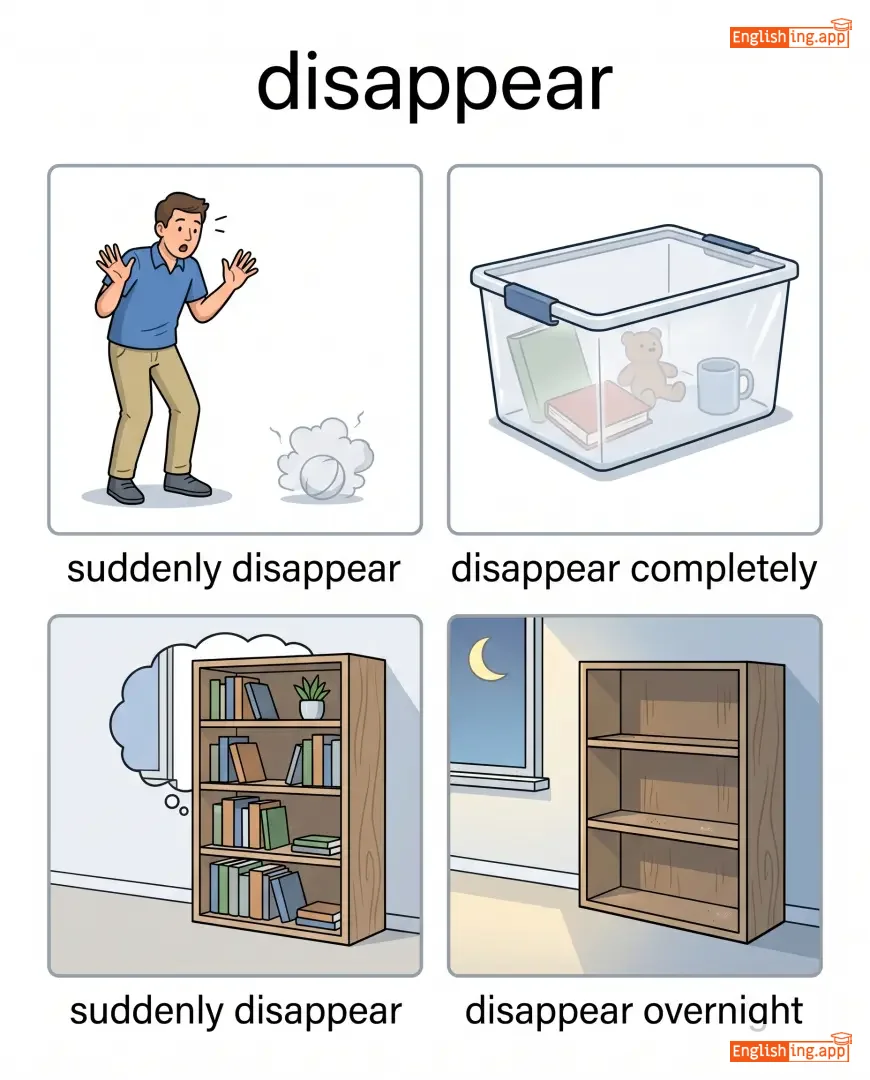
|
消える
kieru
••••••
|
disappeared
消えた
••••••
|
disappeared
消えた
••••••
|
disappears
消える
••••••
|
disappearing
消えている
••••••
|
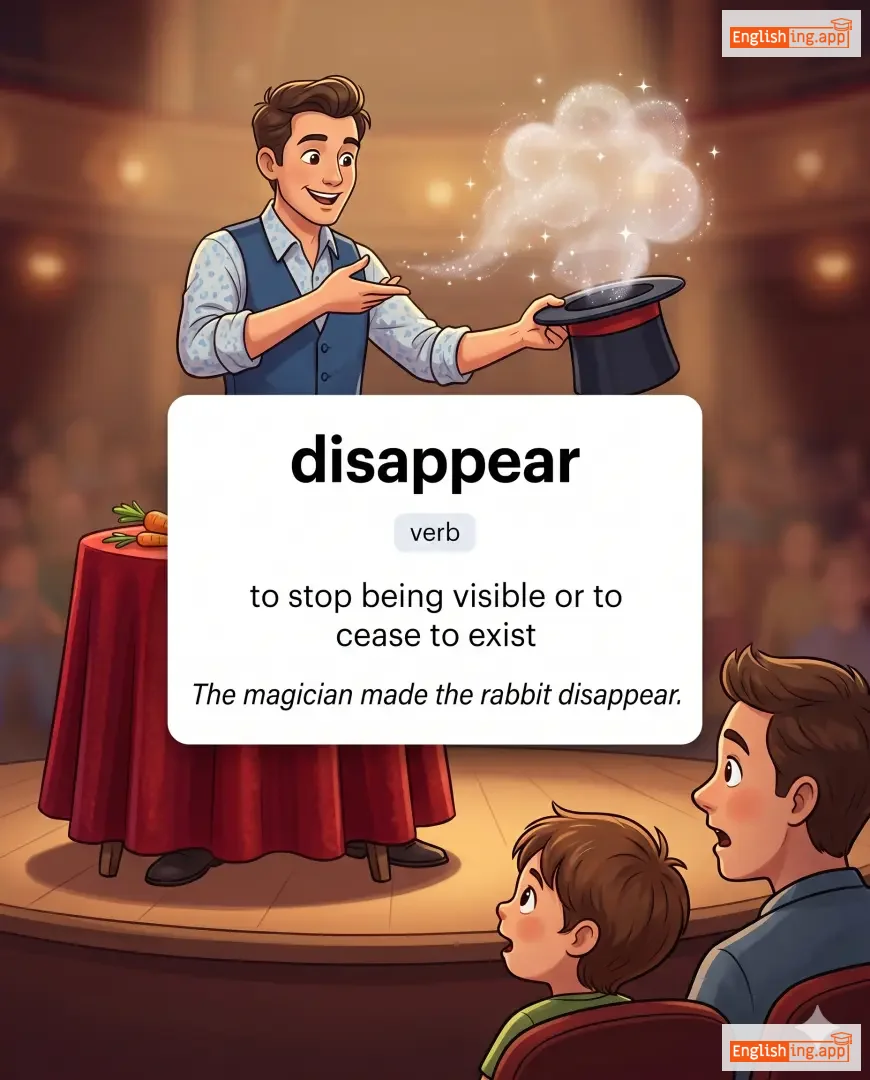
to stop being visible or to cease to exist
••••••
|
The magician made the rabbit disappear.
マジシャンはウサギを消しました。
••••••
|
マジシャンはウサギを消しました。
Majishan wa usagi o keshimashita.
••••••
|
disappear into thin air
空気中に消える
••••••
|
to vanish suddenly and completely
••••••
|
空気中に消える
kūchū ni kieru
••••••
|
vanish, fade, evaporate, dissolve, recede
••••••
|
appear, emerge, show
••••••
|
suddenly disappear, disappear completely, disappear overnight
••••••
|
Disappear は'消える'—前にいない、だから消える。
••••••
|
|
💨
••••••
|
/dɪsˈtʃɑːrdʒ/
verb
(ディスチャージ)
••••••
|
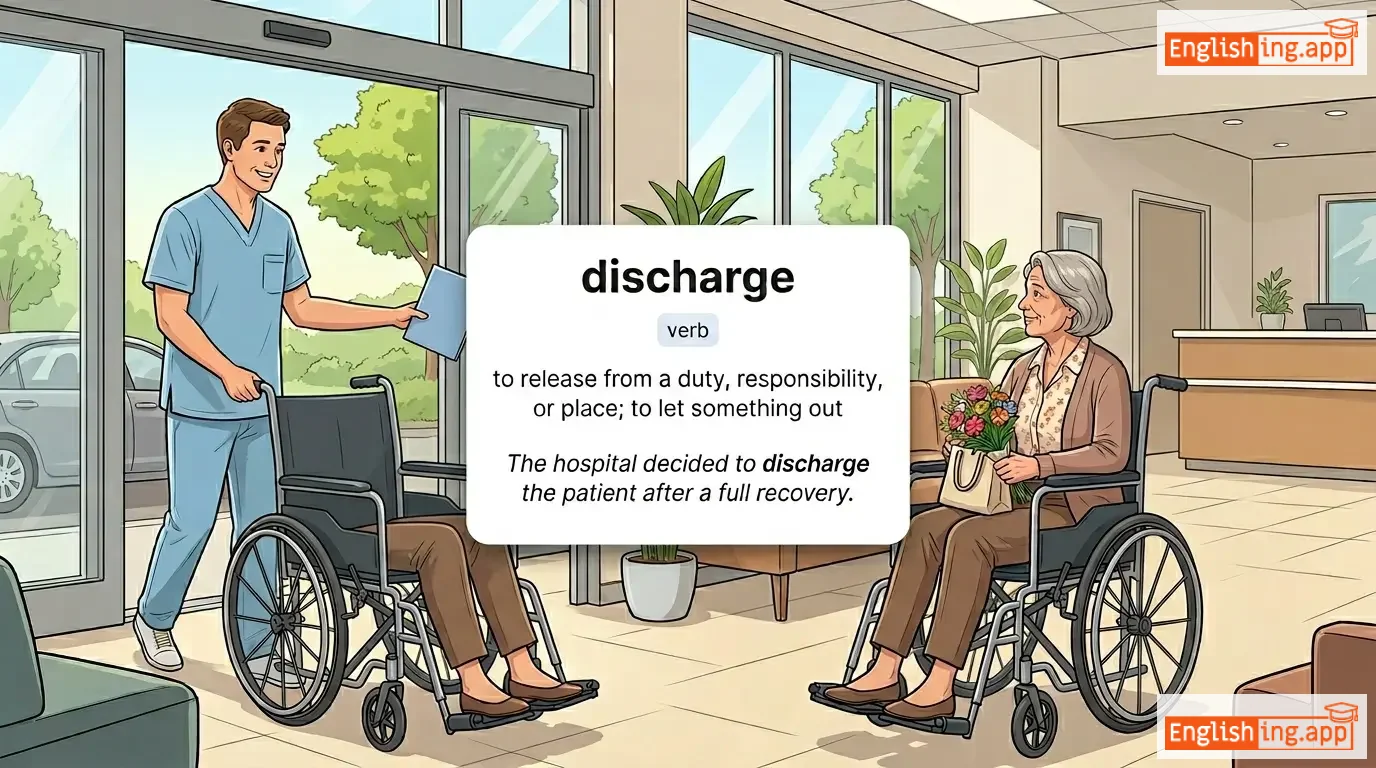
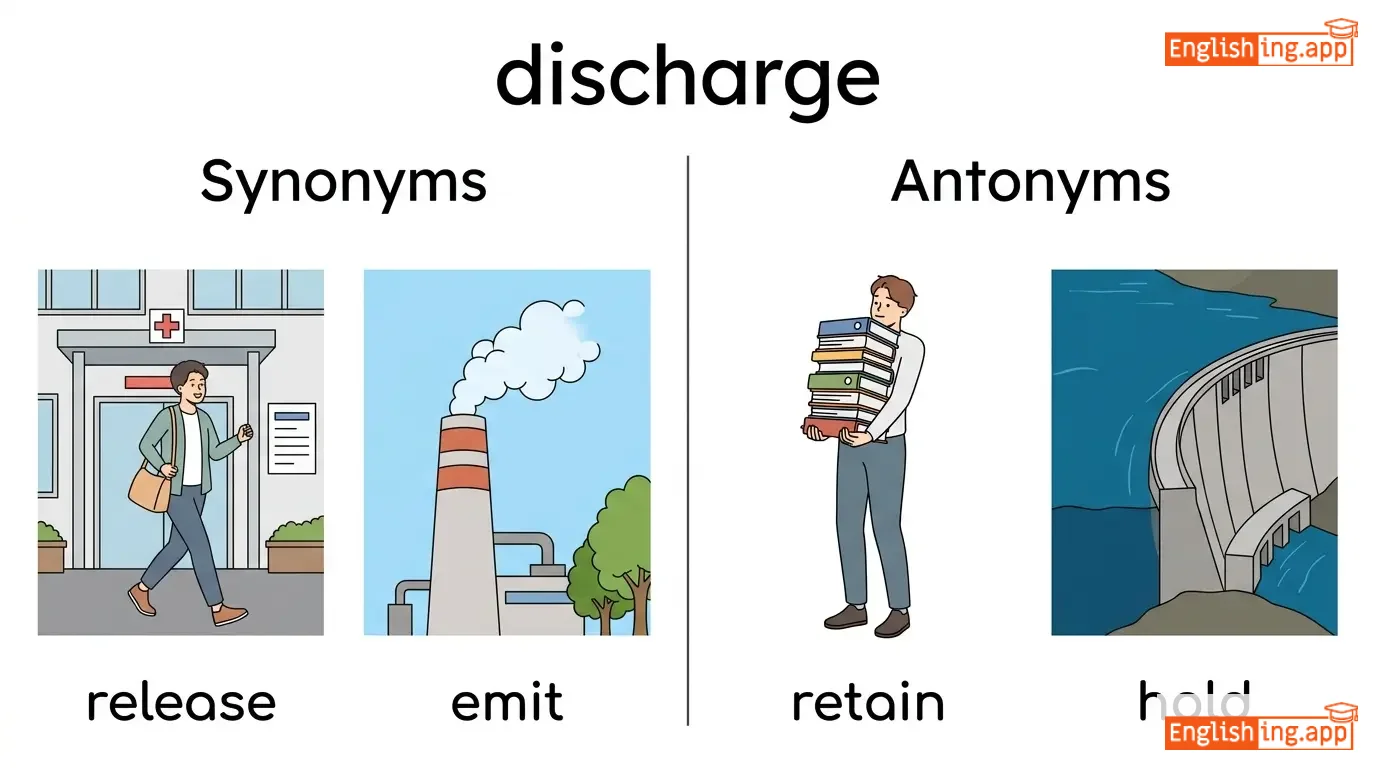
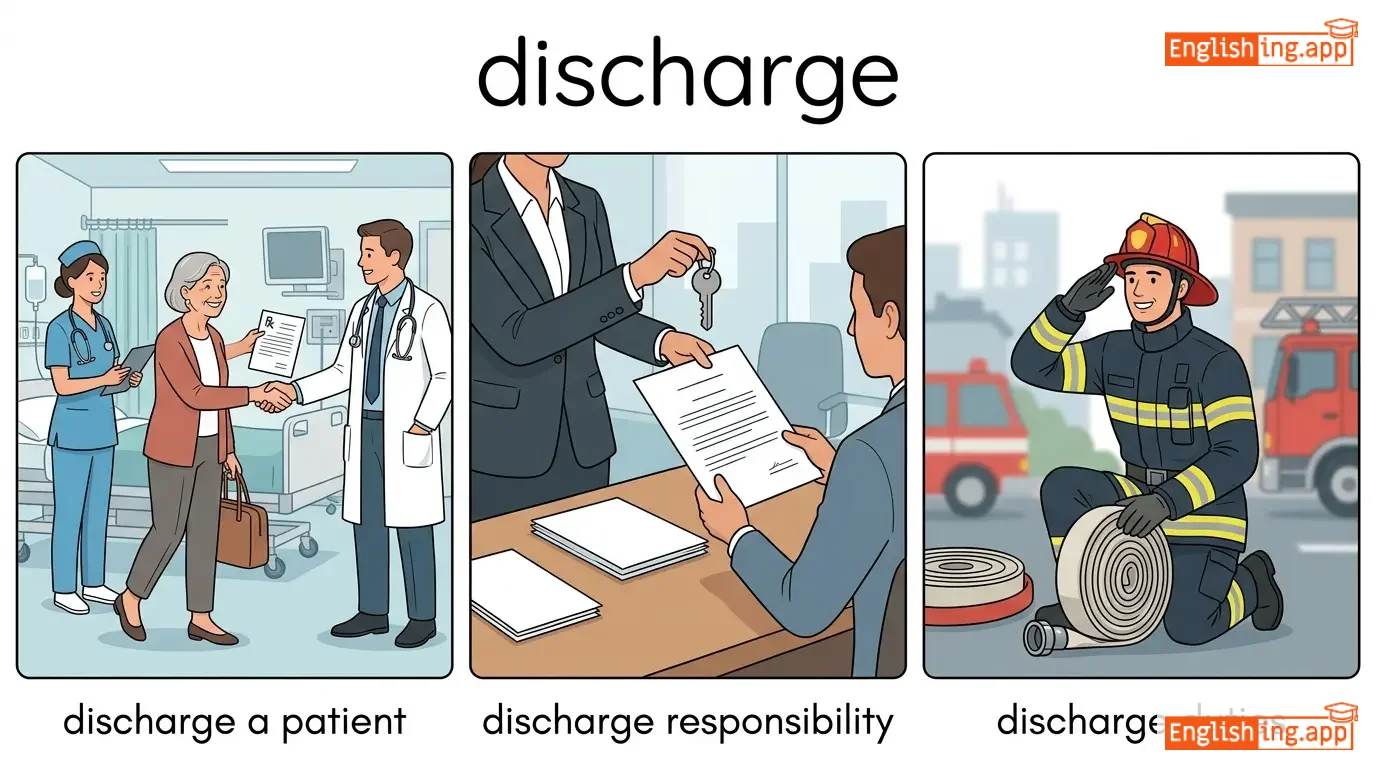
|
解放する
kaihō suru
••••••
|
discharged
ディスチャージド
••••••
|
discharged
ディスチャージド
••••••
|
discharges
ディスチャージズ
••••••
|
discharging
ディスチャージング
••••••
|
to release from a duty, responsibility, or place; to let something out
••••••
|
The hospital decided to discharge the patient after a full recovery.
病院は完全回復後に患者を退院させることを決定した。
••••••
|
病院は完全回復後に患者を退院させることを決定した。
Byōin wa kanzen kaifuku go ni kanja o taiin saseru koto o kettei shita.
••••••
|
discharge one's duty
義務を果たす
••••••
|
to fulfill one's responsibility
••••••
|
義務を果たす
gimu o hatasu
••••••
|
release, emit, expel, dismiss, free
••••••
|
retain, hold, keep
••••••
|
discharge a patient, discharge responsibility, discharge duties, discharge cargo
••••••
|
Discharge = 解放する、義務から解放される感じ。
••••••
|
|
💬
••••••
|
/ˈdɪskɔːrs/
noun, verb
(ディスコース)
••••••
|
- •••••• |
談話, 講義
danwa, kougi
••••••
|
discoursed
ディスコースド
••••••
|
discoursed
ディスコースド
••••••
|
discourses
ディスコースズ
••••••
|
discoursing
ディスコーシング
••••••
|
Written or spoken communication or debate.
••••••
|
The professor gave a discourse on ancient philosophy.
教授は古代哲学についての講義を行った。
••••••
|
教授は古代哲学についての講義を行った。
Kyouju wa kodai tetsugaku ni tsuite no kougi o okonatta.
••••••
|
political discourse
政治的談話
••••••
|
The ways of discussing or debating political matters.
••••••
|
政治的談話
seijiteki danwa
••••••
|
dialogue, discussion, conversation, debate, talk
••••••
|
silence, quiet, muteness
••••••
|
academic discourse, public discourse, discourse analysis, discourse on
••••••
|
Discourseとは、議論や講義 (kougi) のことです。
••••••
|
|
📄
••••••
|
/dɪsˈmɪsl̩/
noun
(ディスミッサル)
••••••
|
- •••••• |
解雇, 拒否
kaiko, kyohi
••••••
|
- •••••• | - •••••• | - •••••• | - •••••• |
the act of removing someone from their job; the act of treating something as unimportant
••••••
|
His unfair dismissal led to a lawsuit against the company. |
彼の不当な解雇は、会社に対する訴訟を引き起こしました。
Kare no futōna kaiko wa, kaisha ni taisuru soshō o hikiokoshimashita.
••••••
|
- •••••• | - •••••• | - •••••• |
termination, firing, discharge, expulsion, rejection
••••••
|
employment, acceptance, retention
••••••
|
wrongful dismissal, unfair dismissal, dismissal from work, dismissal of charges
••••••
|
Dismiss + AL = 解雇の結果 (解雇)
••••••
|
|
👑
••••••
|
/ˈdɑː.mə.nəns/
noun
(ドミナンス)
••••••
|
|
支配力
shihairyoku
••••••
|
- •••••• | - •••••• | - •••••• | - •••••• |
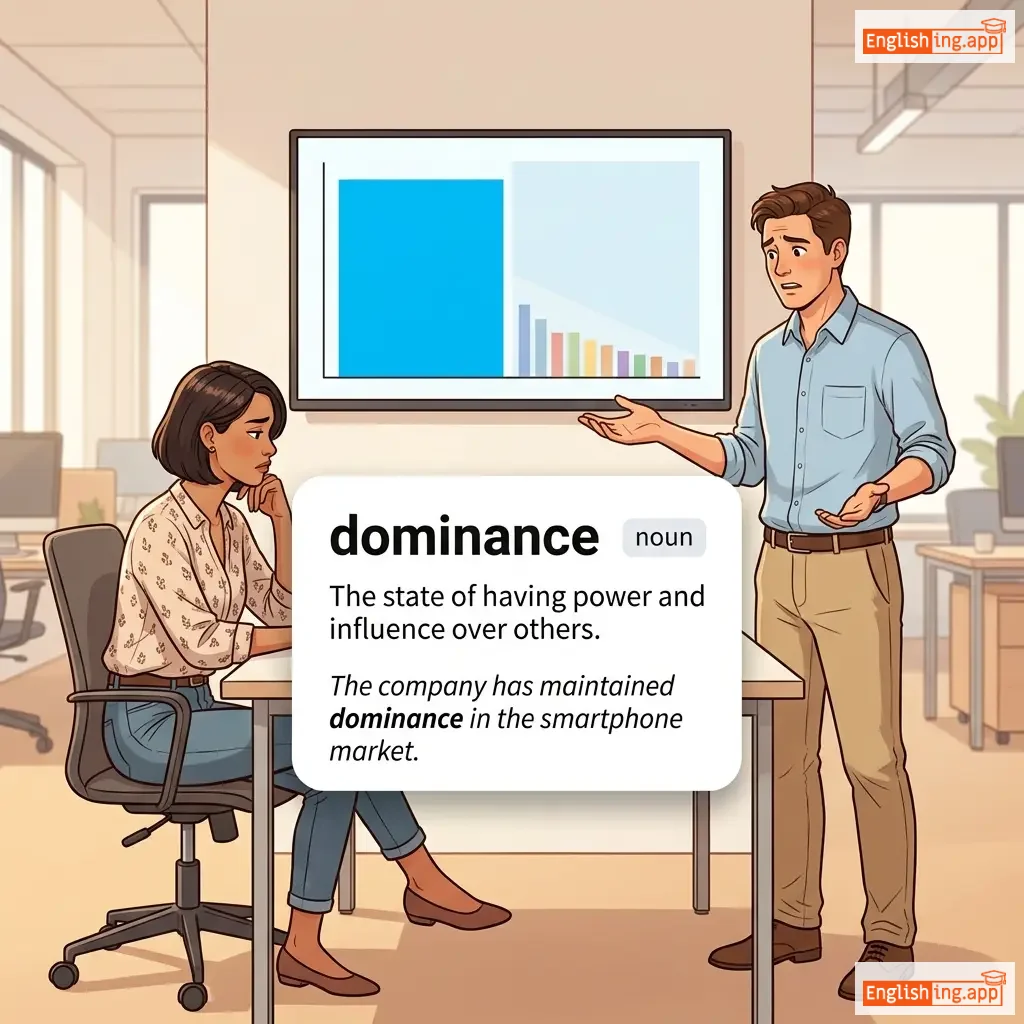
The state of having power and influence over others.
••••••
|
The company has maintained dominance in the smartphone market. |
その会社はスマートフォン市場で支配力を維持しています。
Sono kaisha wa sumātofon shijō de shihairyoku o iji shiteimasu.
••••••
|
alpha dominance |
The behavior of asserting leadership or control, often seen in social or animal groups.
••••••
|
アルファ支配力
Arufa shihairyoku
••••••
|
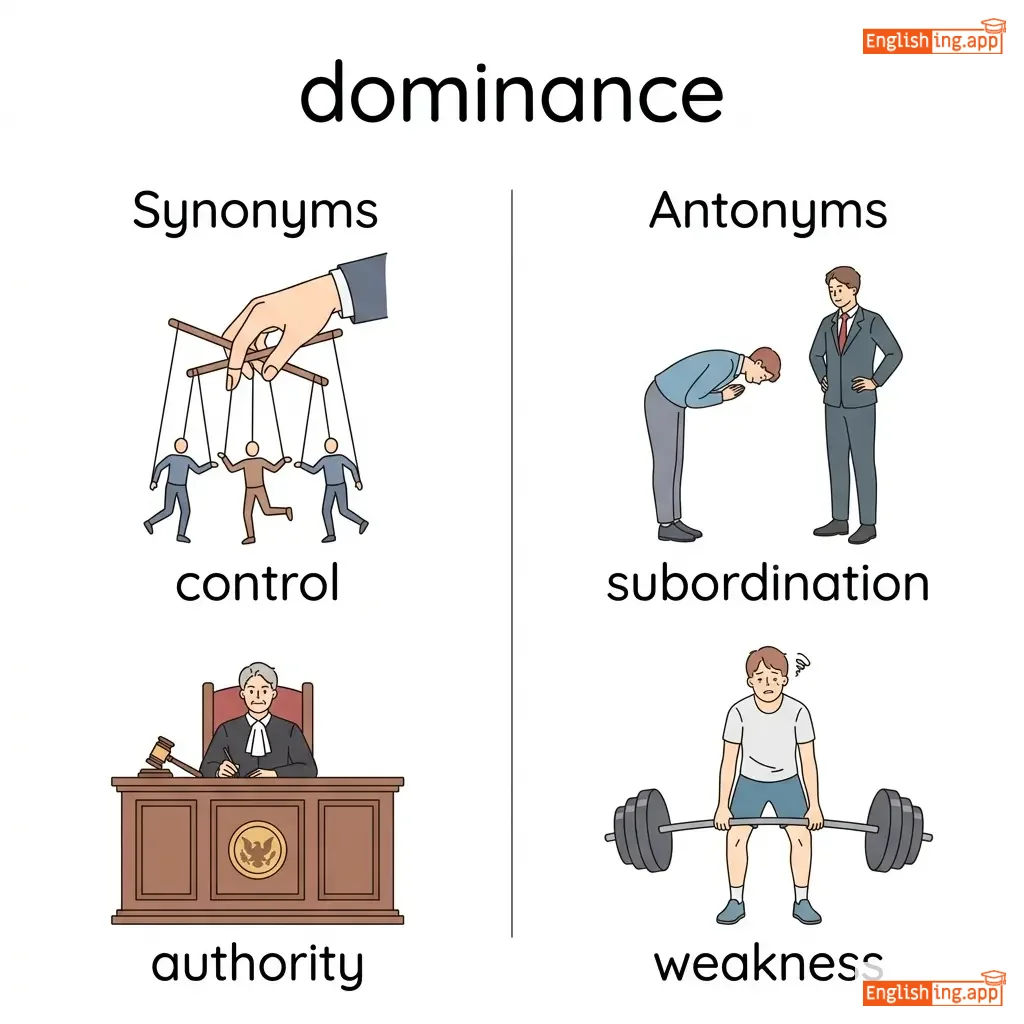
control, authority, supremacy, power, command
••••••
|
subordination, weakness
••••••
|
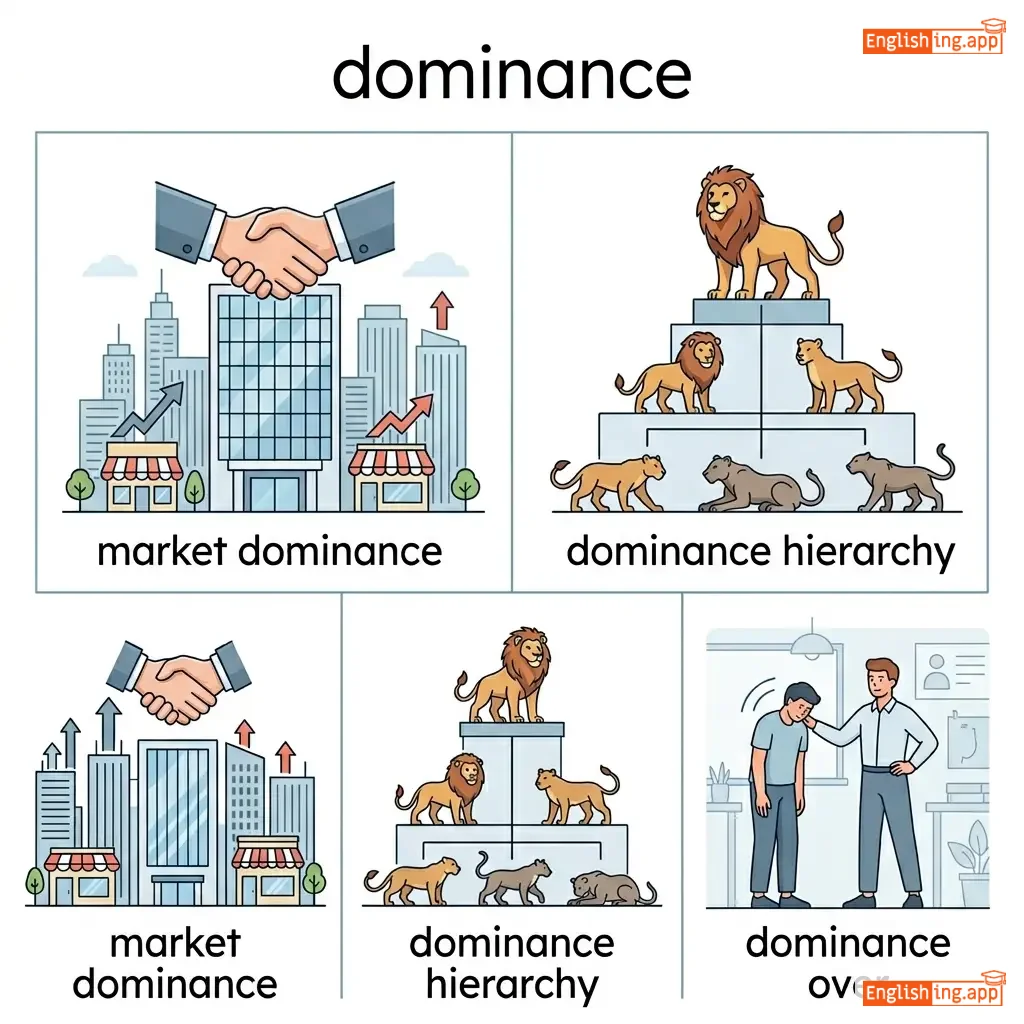
market dominance, dominance hierarchy, dominance over
••••••
|
Dominance(支配力)は 'Dominate' と同じ—力と影響を持つこと。
••••••
|
|
🗳️
••••••
|
/ɪˈlɛktərəl/
adjective
(エレクターラル)
••••••
|
- •••••• |
選挙の
senkyo no
••••••
|
- •••••• | - •••••• | - •••••• | - •••••• |
related to elections or voting
••••••
|
The electoral process in the country has been reformed in recent years. |
その国の選挙プロセスは近年改革されました。
Sono kuni no senkyo purosesu wa kin'nen kaikaku saremashita.
••••••
|
- •••••• | - •••••• | - •••••• |
voting, electoral system, election-related
••••••
|
non-electoral, non-voting
••••••
|
electoral process, electoral system, electoral reform
••••••
|
Electoral relates to elections—imagine voting at the booth!
••••••
|
|
❌
••••••
|
/ɪˈlɪməˌneɪt/
verb
(イリミネイト)
••••••
|
|
排除する
haijo suru
••••••
|
eliminated
イリミネイテッド
••••••
|
eliminated
イリミネイテッド
••••••
|
eliminates
イリミネイツ
••••••
|
eliminating
イリミネイティング
••••••
|
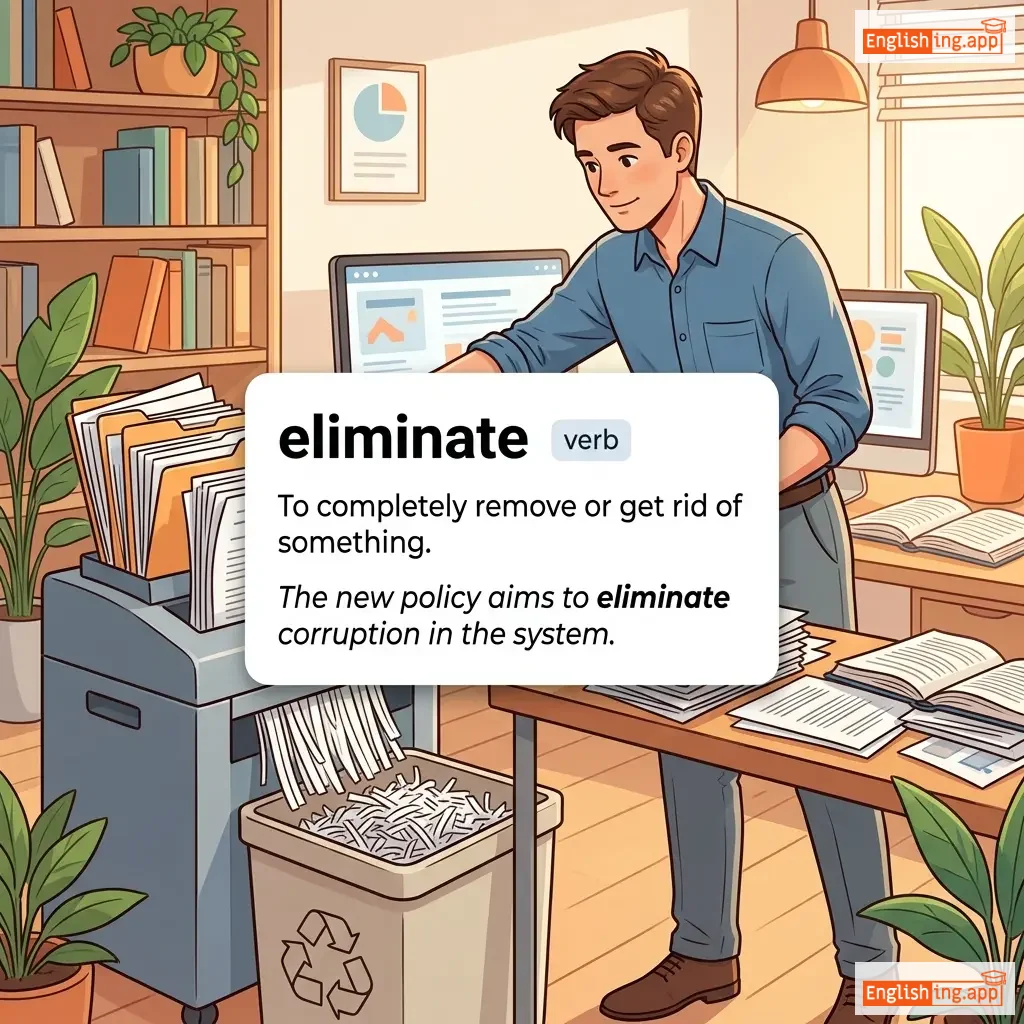
To completely remove or get rid of something.
••••••
|
The new policy aims to eliminate corruption in the system.
新しい政策はシステム内の汚職を排除することを目的としています。
••••••
|
新しい政策はシステム内の汚職を排除することを目的としています。
Atarashī seisaku wa shisutemu-nai no oshoku o haijo suru koto o mokuteki to shiteimasu.
••••••
|
eliminate the competition
競争を排除する
••••••
|
to defeat or remove rivals
••••••
|
競争を排除する
kyousou o haijo suru
••••••
|
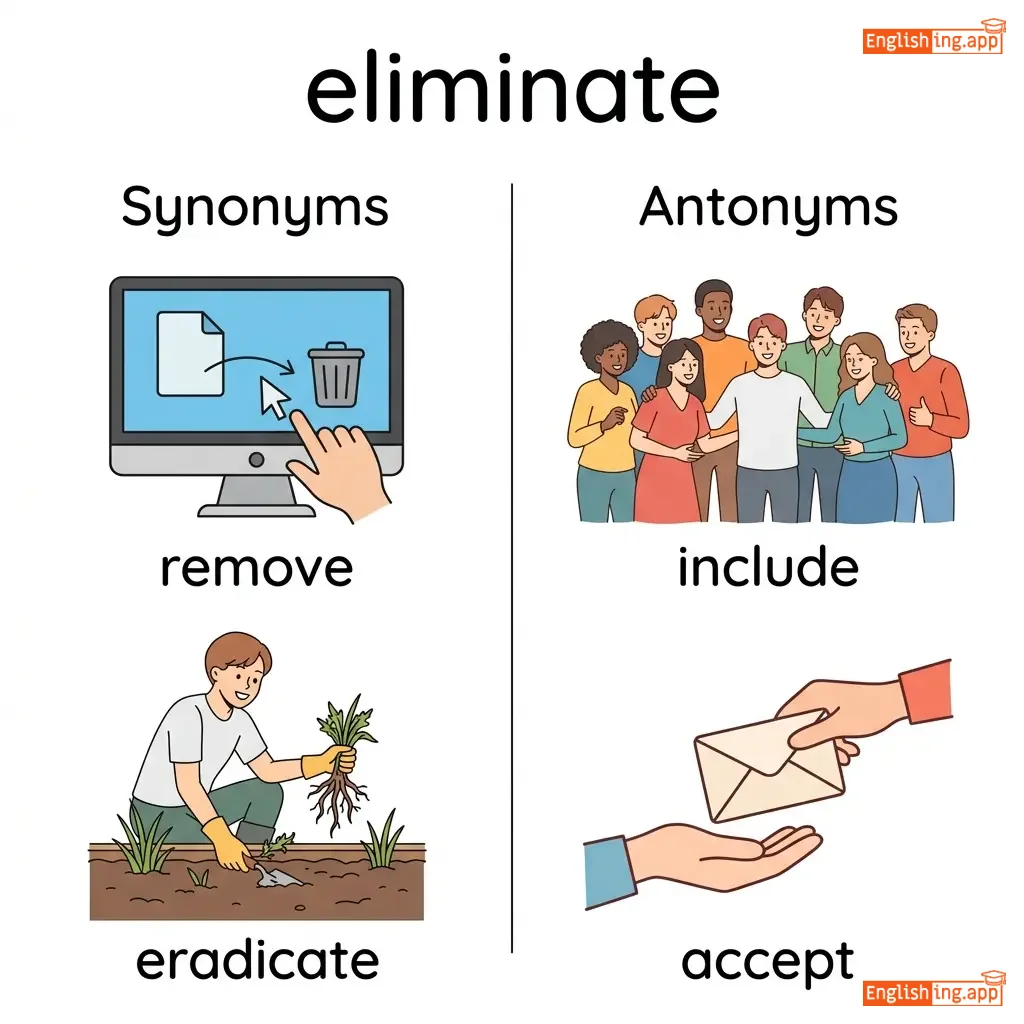
remove, eradicate, abolish, exterminate, wipe out
••••••
|
include, accept, retain
••••••
|
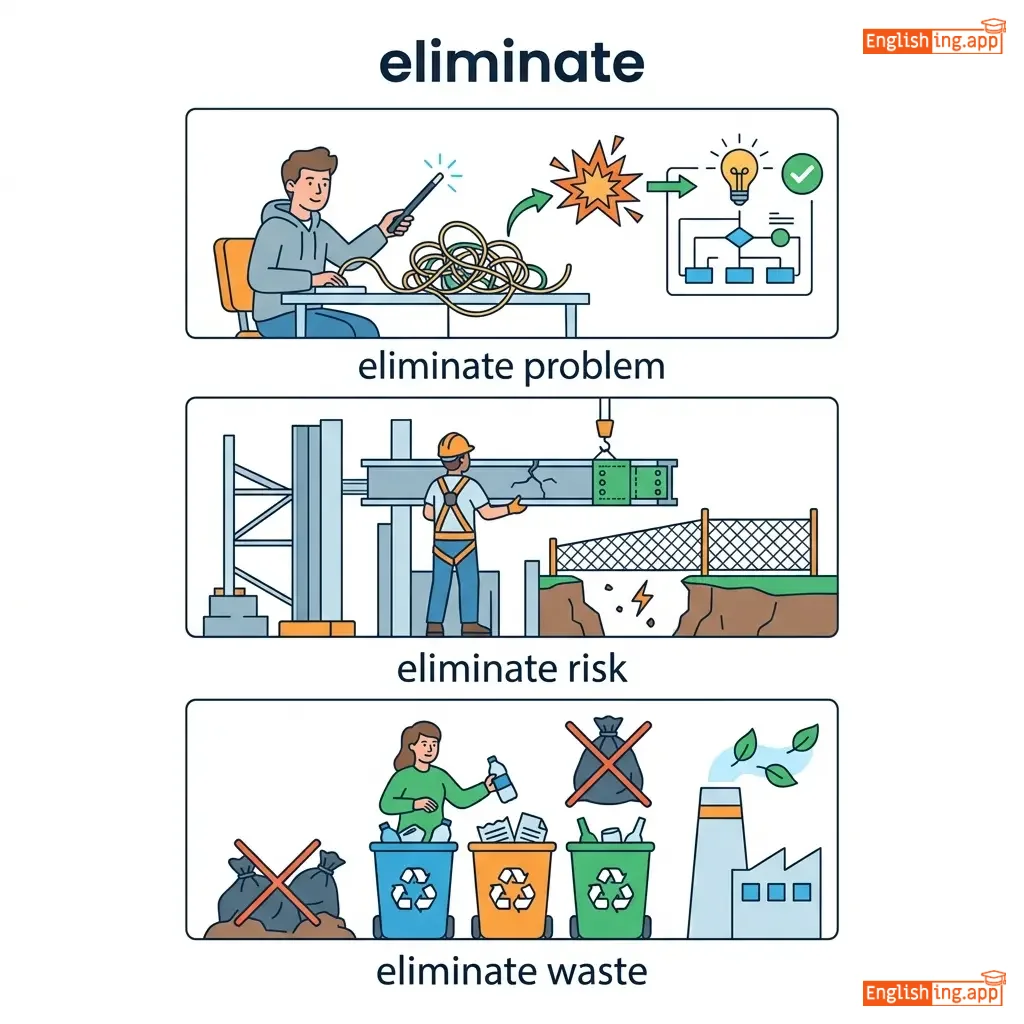
eliminate problem, eliminate risk, eliminate waste, eliminate need
••••••
|
テストで間違いを排除すれば、正しい答えが得られます。
••••••
|

