Civic Pledges for the River
村庄图书馆展示了来自communist时代的有关河流管理的旧书籍。 我们的分析员在传感器读数方面非常competent。 如果有人对计划有complaint,论坛欢迎他们提出意见。 人们说,拯救河流展示了democracy的力量。 多年的污染使河流变得相当depressed。 今天的会议为每个任务designate了负责人。 新的河滨公园设计看起来非常desirable。 一名环境detective发现了隐藏的污染者。 一些工厂曾因倾倒废物而面临detention罚款。 我们决定在安静的坡地上种植树木,determine了这一点。 去年季节的洪水devastate了该地区。 卫生官员发布了水的diagnosis报告。 志愿者领导者为任务提供了明确的direction。 主摊位上的塑料袋disappear了。 当局暂停了对河流的任何有毒discharge。 下午举行了开放的discourse,以解决问题。 阶段性dismissal措施正在针对污染公司。 当地居民团结起来打破垃圾的dominance。 市民论坛宣布了新的electoral承诺。 沿河的塑料使用将迅速eliminate。
|
表情符号
|
单词 | Images | 翻译 | 过去时 | 过去分词 | 第三人称单数 | 动名词 | 含义 | 例句 | 例句翻译 | 示例表达 | 示例表达含义 | 示例表达翻译 | 同义词 | 反义词 | 搭配词 | 助记符 |
|---|---|---|---|---|---|---|---|---|---|---|---|---|---|---|---|---|---|
|
✊
••••••
|
/ˈkɒmjʊnɪst/
noun
••••••
|
- •••••• | - •••••• | - •••••• | - •••••• | - •••••• | - •••••• |
a person who supports or believes in the principles of communism
••••••
|
The communist ideology aims for a classless society. |
- •••••• | - •••••• | - •••••• | - •••••• |
socialist, Marxist, leftist, revolutionary
••••••
|
capitalist, bourgeois
••••••
|
communist party, communist government, communist manifesto
••••••
|
No •••••• |
|
✅
••••••
|
/ˈkɒmpɪtənt/
adjective
(kom-pi-tent)
••••••
|
- •••••• |
称职
chengzhi
••••••
|
- •••••• | - •••••• | - •••••• | - •••••• |
having the necessary ability, knowledge, or skill to do something successfully
••••••
|
He is a competent driver who rarely makes mistakes.
他是一个称职的司机,几乎不犯错误。
••••••
|
他是一个称职的司机,几乎不犯错误。
Tā shì yīgè chēngzhí de sījī, jīhū bù fàn cuòwù.
••••••
|
competent authority
称职的权威
••••••
|
a person or body with the legal power to decide or enforce something
••••••
|
称职的权威
chēngzhí de quánwēi
••••••
|
capable, skilled, qualified, proficient
••••••
|
incompetent, unskilled
••••••
|
competent staff, competent professional, competent enough
••••••
|
称职的就像称职的司机,驾驭能力强,工作不出错。
••••••
|
|
📄
••••••
|
/kəmˈpleɪnt/
noun
(kompleint)
••••••
|
- •••••• |
投诉
tousu
••••••
|
- •••••• | - •••••• | - •••••• | - •••••• |
a statement that something is wrong or not satisfactory
••••••
|
The manager received a complaint from a customer about poor service.
经理收到了一名客户关于糟糕服务的投诉。
••••••
|
经理收到了一名客户关于糟糕服务的投诉。
Jingli shoudao le yi ming kehu guanyu zaogao fuwu de tousu.
••••••
|
file a complaint
提交投诉
••••••
|
to officially report dissatisfaction
••••••
|
提交投诉
Tijiao tousu
••••••
|
objection, grievance, criticism, protest, allegation
••••••
|
praise, compliment
••••••
|
make a complaint, file a complaint, customer complaint, formal complaint
••••••
|
COMPLAINT - 需要提交的正式的投诉。
••••••
|
|
🗳️
••••••
|
/dɪˈmɑːkrəsi/
noun
(民主)
••••••
|
|
民主
minzhu
••••••
|
- •••••• | - •••••• | - •••••• | - •••••• |
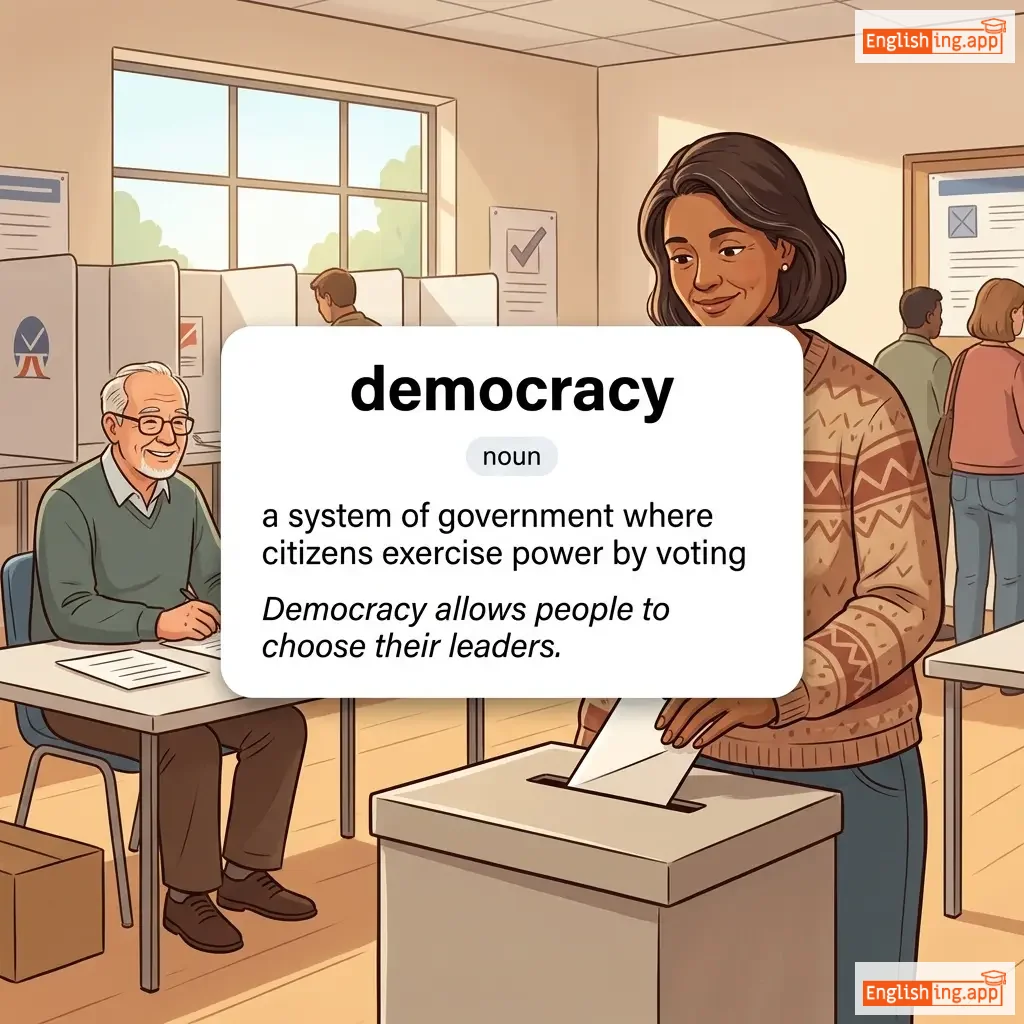
a system of government where citizens exercise power by voting
••••••
|
Democracy allows people to choose their leaders. |
民主允许人民选择他们的领导人。
mínzhǔ yǔnxǔ rénmín xuǎnzé tāmen de lǐngdǎo rén.
••••••
|
true democracy |
a genuine practice of democratic values
••••••
|
真正的民主
zhēnzhèng de mínzhǔ
••••••
|
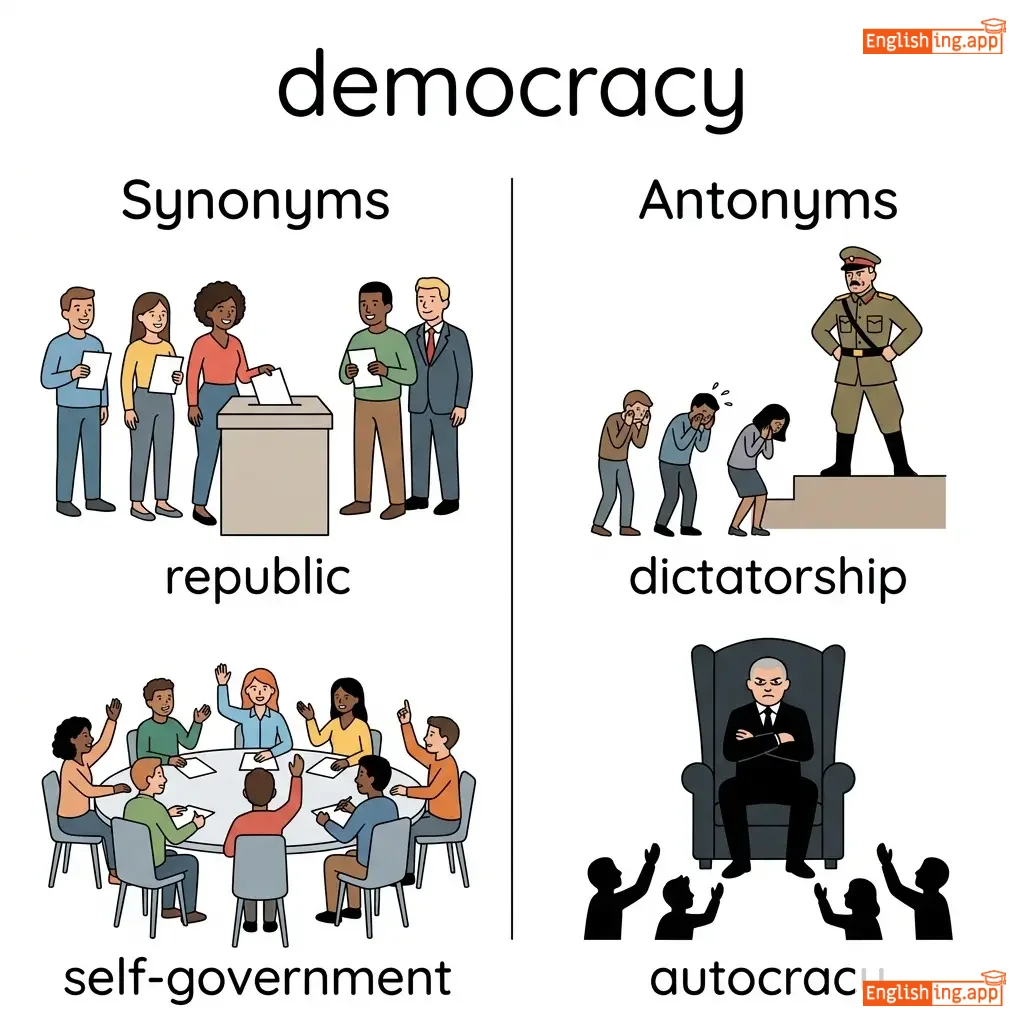
republic, self-government, representative government, popular government
••••••
|
dictatorship, autocracy, monarchy
••••••
|
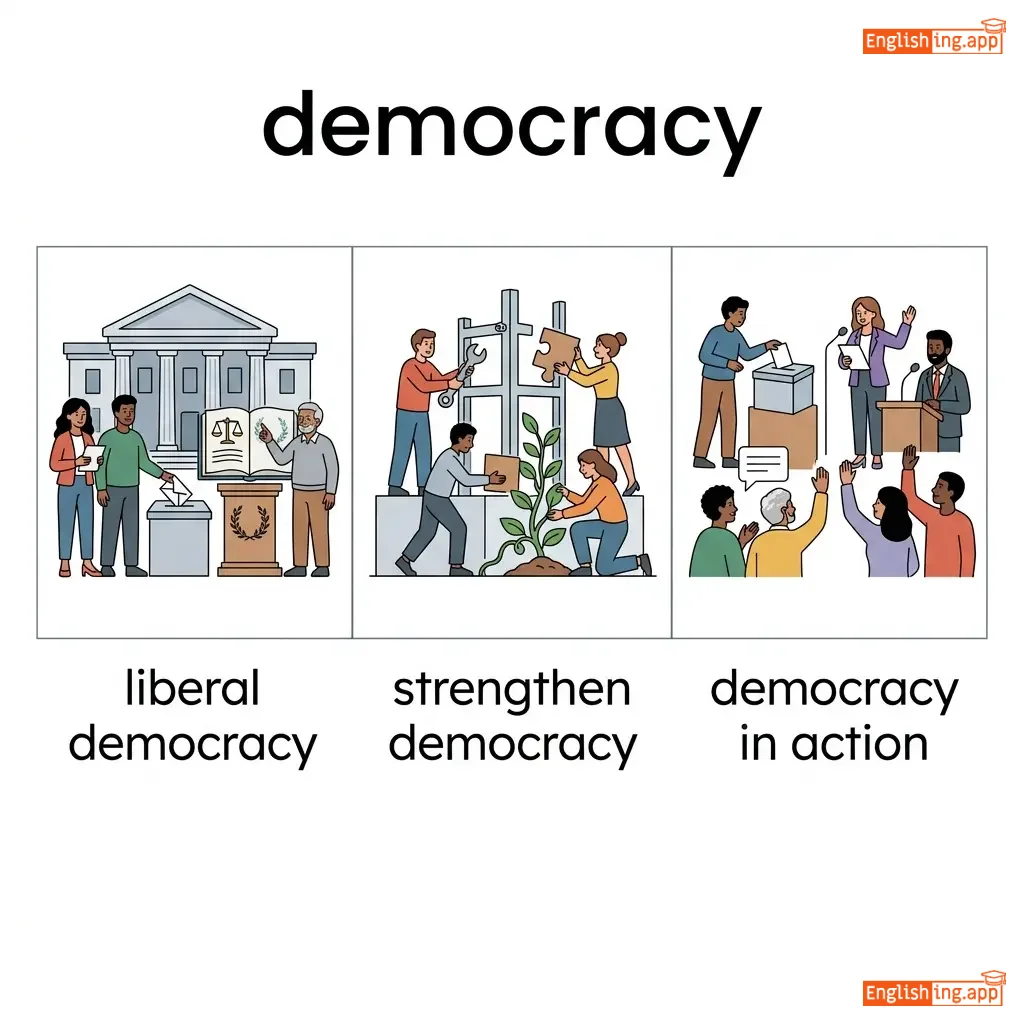
liberal democracy, strengthen democracy, democracy in action, democracy movement
••••••
|
Demo 意味着人民,cracy 意味着统治 - 民主 = 人民的统治
••••••
|
|
😔
••••••
|
/dɪˈprɛst/
adjective
(dɪˈprɛst)
••••••
|
- •••••• |
沮喪
jǔsàng
••••••
|
- •••••• | - •••••• | - •••••• | - •••••• |
Feeling very sad and without hope; in a state of unhappiness.
••••••
|
She felt depressed after losing her job. |
失去工作後,她感到沮喪。
Shīqù gōngzuò hòu, tā gǎndào jǔsàng.
••••••
|
feeling blue |
Feeling sad or unhappy.
••••••
|
感到憂鬱
gǎndào yōuyù
••••••
|
sad, downcast, gloomy, unhappy, melancholic
••••••
|
happy, cheerful, joyful
••••••
|
deeply depressed, clinically depressed, depressed mood
••••••
|
沮喪是失去工作後的感覺,就像感到憂鬱一樣。
••••••
|
|
📝
••••••
|
/ˈdɛzɪɡneɪt/
verb
(设计)
••••••
|
- •••••• |
指定
zhǐdìng
••••••
|
designated
指定
••••••
|
designated
指定
••••••
|
designates
指定
••••••
|
designating
设计
••••••
|
to officially assign, appoint, or indicate something or someone
••••••
|
The committee will designate a new chairperson next week.
委员会下周将指定一位新主席。
••••••
|
委员会下周将指定一位新主席。
Wěiyuánhuì xià zhōu jiāng zhǐdìng yī wèi xīn zhǔxí.
••••••
|
- •••••• | - •••••• | - •••••• |
appoint, assign, nominate, allocate, specify
••••••
|
remove, dismiss
••••••
|
designate a person, designate a role, designate as
••••••
|
Design + gate = 指定新的主席在委员会
••••••
|
|
🏡
••••••
|
/dɪˈzaɪərəbl/
adjective
(dɪˈzaɪərəbl)
••••••
|
- •••••• |
理想的
lǐxiǎng de
••••••
|
- •••••• | - •••••• | - •••••• | - •••••• |
worth having or wanting; attractive
••••••
|
The location of the house was highly desirable, with great views.
房子的地理位置非常理想,视野极好。
••••••
|
房子的地理位置非常理想,视野极好。
Fángzi de dìlǐ wèi zhì fēicháng lǐxiǎng de, shìyě jí hǎo.
••••••
|
- •••••• | - •••••• | - •••••• |
attractive, appealing, wanted, sought-after
••••••
|
undesirable, unappealing, unattractive
••••••
|
desirable features, desirable location, highly desirable
••••••
|
理想的家 - a desirable house
••••••
|
|
🕵️♂️
••••••
|
/dɪˈtɛktɪv/
noun
(dɪˈtɛktɪv)
••••••
|
- •••••• |
侦探
zhēntàn
••••••
|
- •••••• | - •••••• | - •••••• | - •••••• |
a person whose job is to investigate and solve crimes
••••••
|
The detective solved the mystery in just two days. |
侦探在两天内解开了谜团。
Zhēntàn zài liǎng tiān nèi jiěkāi le mítuán.
••••••
|
private detective |
a person hired privately to investigate cases
••••••
|
私人侦探
sīrén zhēntàn
••••••
|
investigator, sleuth, inspector, agent, examiner
••••••
|
criminal, suspect
••••••
|
detective story, police detective, private detective, chief detective
••••••
|
侦探是解开谜团并调查犯罪的人。
••••••
|
|
🔒
••••••
|
/dɪˈten.ʃən/
noun
(dɪˈtɛnʃən)
••••••
|
- •••••• |
拘留; 暂时关押
juliu; zan shi guanya
••••••
|
- •••••• | - •••••• | - •••••• | - •••••• |
the action of detaining someone or being detained in official custody
••••••
|
The student received detention for repeatedly disrupting the class.
学生因反复打扰课堂而被拘留。
••••••
|
学生因反复打扰课堂而被拘留。
xuesheng yin fanfu darao kètáng ér bèi jūliú.
••••••
|
- •••••• | - •••••• | - •••••• |
custody, confinement, imprisonment, holding
••••••
|
freedom, release, liberation, discharge
••••••
|
police detention, school detention, detention center
••••••
|
拘留就是因为捣乱被扣留,像学生在课堂上。
••••••
|
|
⚖️
••••••
|
/dɪˈtɜː.mɪn/
verb
(dɪˈtɜː.mɪn)
••••••
|
- •••••• |
决定
jueding
••••••
|
determined
dɪˈtɜː.mɪnd
••••••
|
determined
dɪˈtɜː.mɪnd
••••••
|
determines
dɪˈtɜː.mɪnz
••••••
|
determining
dɪˈtɜː.mɪnɪŋ
••••••
|
To decide or establish something after consideration.
••••••
|
The jury will determine the outcome of the case.
陪审团将决定案件的结果。
••••••
|
陪审团将决定案件的结果。
Péishěn tuán jiāng juédìng ànjiàn de jiéguǒ.
••••••
|
determine the course of action
确定行动方针
••••••
|
To decide what should be done.
••••••
|
确定行动方针
quèdìng xíngdòng fāngzhēn
••••••
|
decide, establish, conclude, define, settle
••••••
|
hesitate, doubt
••••••
|
determine the cause, determine the result, determine the effect, determine value
••••••
|
决定意味着做出决定,就像老师决定谁会通过一样。
••••••
|
|
🌪️
••••••
|
/ˈdɛvəˌsteɪt/
verb
(德瓦斯特)
••••••
|
- •••••• |
摧毁
cuīhuǐ
••••••
|
devastated
德瓦斯特德
••••••
|
devastated
德瓦斯特德
••••••
|
devastates
德瓦斯特斯
••••••
|
devastating
德瓦斯特英
••••••
|
to cause severe and overwhelming destruction or damage
••••••
|
The hurricane devastated the coastal town.
飓风摧毁了海岸城镇。
••••••
|
飓风摧毁了海岸城镇。
Jùfēng cuīhuǐ le hǎi'àn chéngzhèn.
••••••
|
- •••••• | - •••••• | - •••••• |
destroy, ruin, demolish, wreck
••••••
|
build, create, restore
••••••
|
devastate a city, devastate a region, devastating effects
••••••
|
摧毁像 Devastate,一样意思
••••••
|
|
📋
••••••
|
/ˌdaɪəɡˈnoʊsɪs/
noun
••••••
|
- •••••• | - •••••• | - •••••• | - •••••• | - •••••• | - •••••• |
The identification of a disease, condition, or problem through examination of symptoms.
••••••
|
The diagnosis confirmed that she had diabetes. |
- •••••• | - •••••• | - •••••• | - •••••• |
identification, detection, finding, determination
••••••
|
misdiagnosis, guess
••••••
|
medical diagnosis, accurate diagnosis, early diagnosis
••••••
|
No •••••• |
|
🧭
••••••
|
/dəˈrɛkʃən/ or /daɪˈrɛkʃən/
noun
(方向)
••••••
|
- •••••• |
方向, 指令
fangxiang, zhiling
••••••
|
- •••••• | - •••••• | - •••••• | - •••••• |
the course or path on which someone or something is moving; instructions on what to do
••••••
|
He asked for directions to the train station. |
他询问了去火车站的方向。
Ta xunwen le qu huochezhan de fangxiang.
••••••
|
change direction |
to alter the course or plan
••••••
|
改变方向
gaibian fangxiang
••••••
|
instruction, guidance, route, path, orientation
••••••
|
confusion, aimlessness
••••••
|
clear direction, right direction, new direction, opposite direction
••••••
|
方向就像指南针,总是指引正确的方向。
••••••
|
|
🪄
••••••
|
/ˌdɪsəˈpɪər/
verb
(迪萨皮尔)
••••••
|
|
消失
xiaoshi
••••••
|
disappeared
消失
••••••
|
disappeared
消失
••••••
|
disappears
消失
••••••
|
disappearing
消失
••••••
|
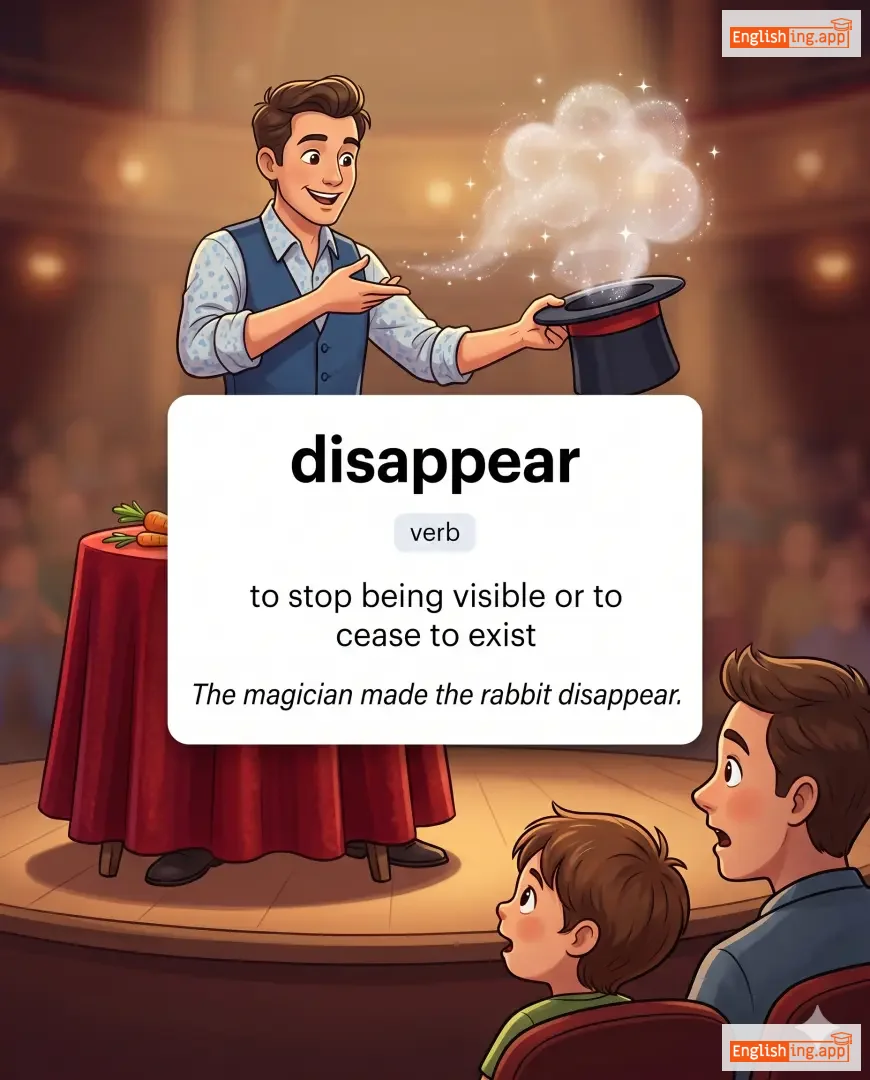
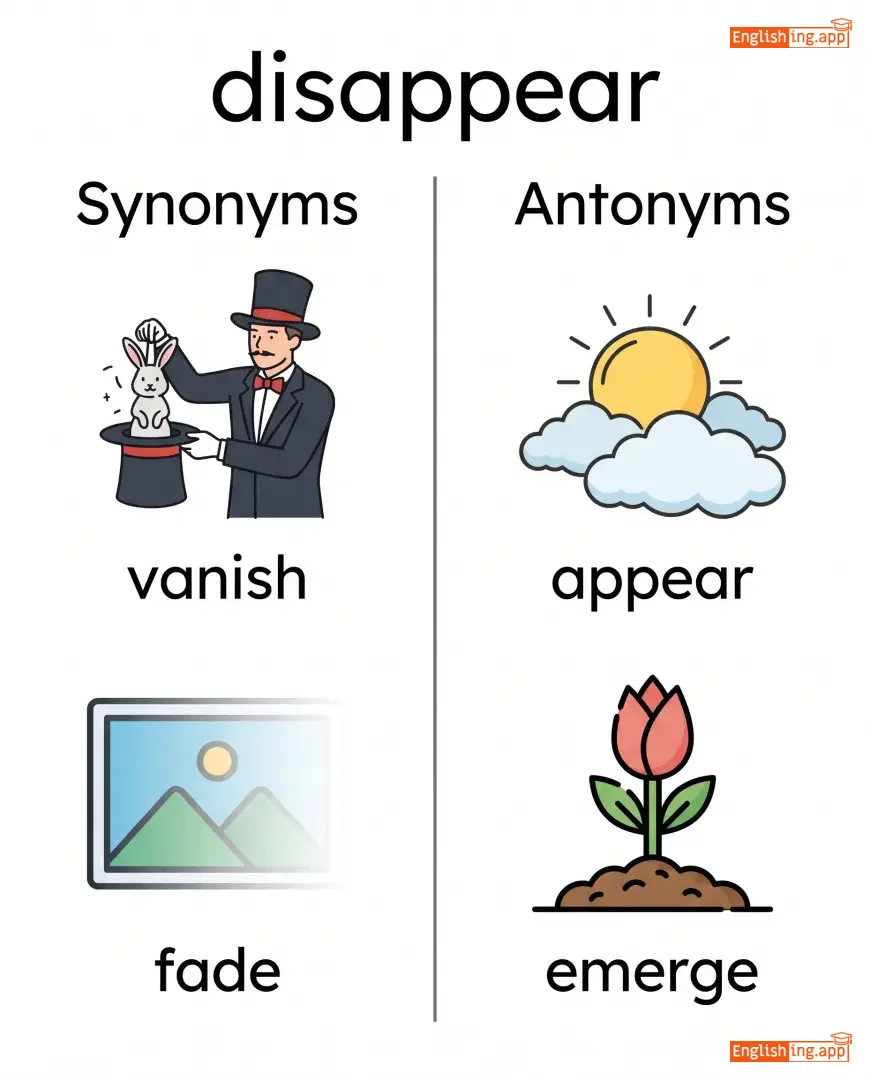
to stop being visible or to cease to exist
••••••
|
The magician made the rabbit disappear.
魔术师让兔子消失。
••••••
|
魔术师让兔子消失。
Móshù shī ràng tùzǐ xiāoshī.
••••••
|
disappear into thin air
消失在空气中
••••••
|
to vanish suddenly and completely
••••••
|
消失在空气中
xiāoshī zài kōngqì zhōng
••••••
|
vanish, fade, evaporate, dissolve, recede
••••••
|
appear, emerge, show
••••••
|
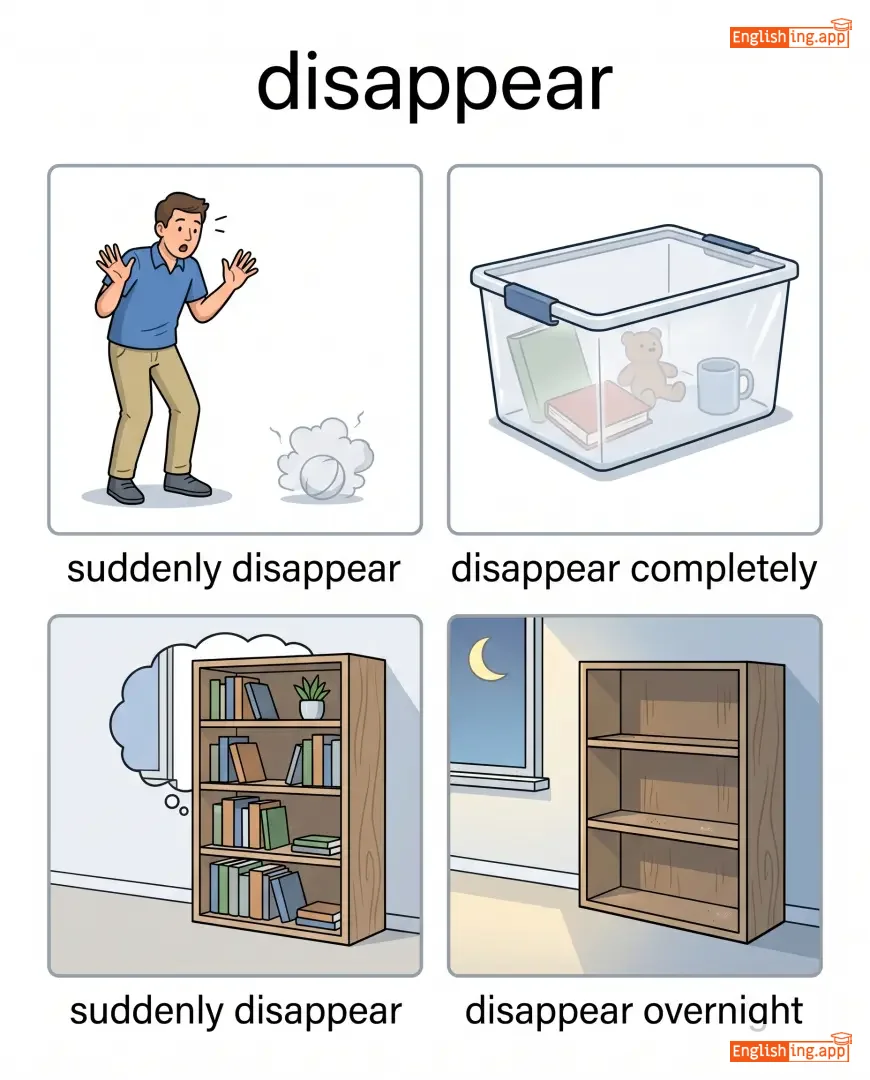
suddenly disappear, disappear completely, disappear overnight
••••••
|
Disappear 就是'消失'——不在眼前,消失。
••••••
|
|
💨
••••••
|
/dɪsˈtʃɑːrdʒ/
verb
(迪斯查奇)
••••••
|
|
释放
shifang
••••••
|
discharged
迪斯查奇德
••••••
|
discharged
迪斯查奇德
••••••
|
discharges
迪斯查奇斯
••••••
|
discharging
迪斯查奇英
••••••
|
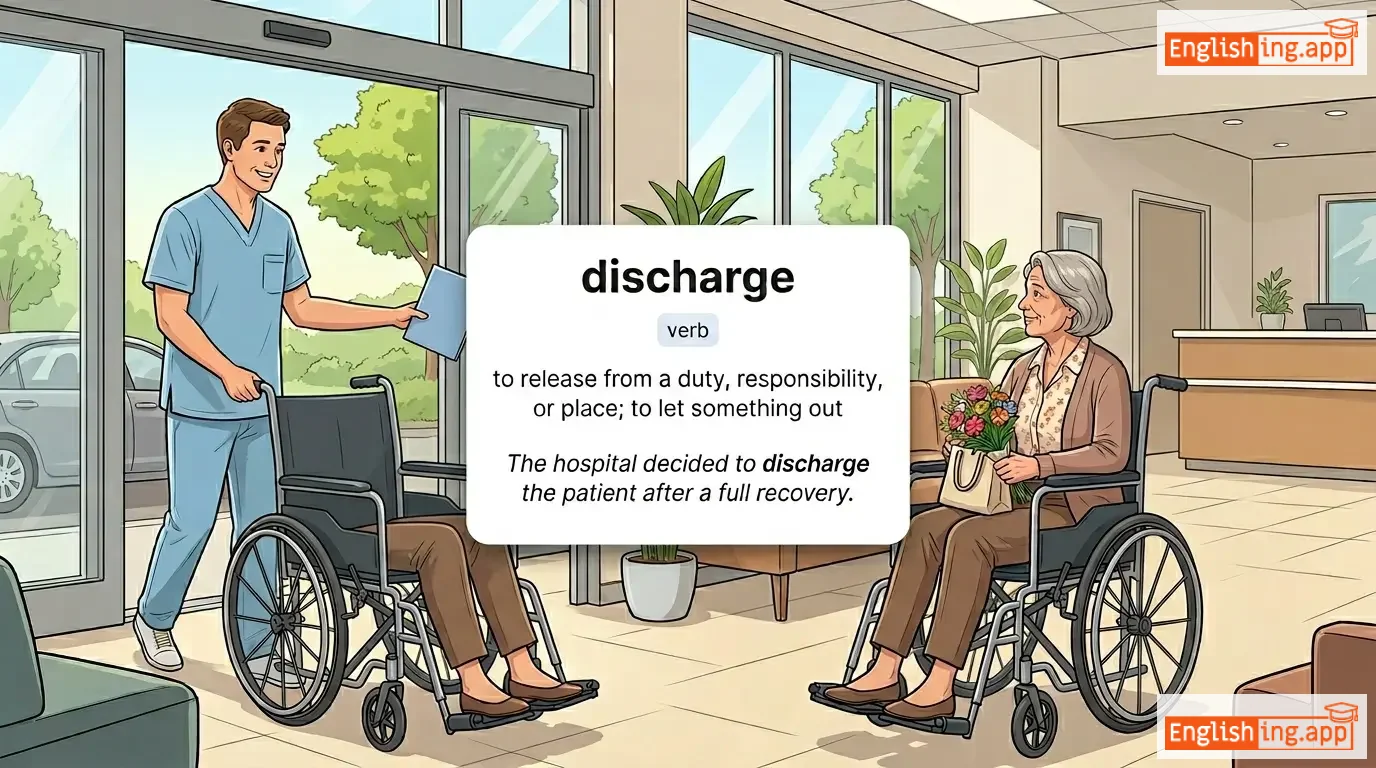
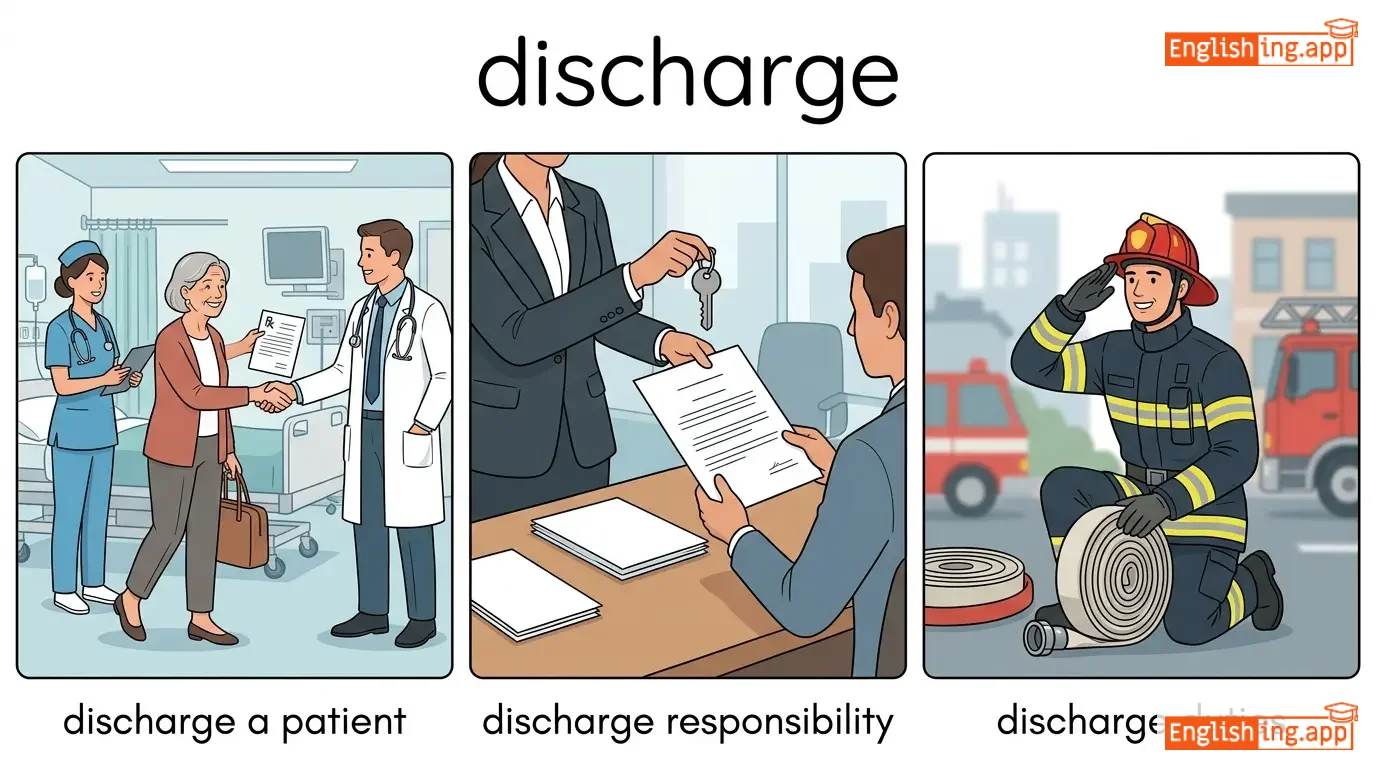
to release from a duty, responsibility, or place; to let something out
••••••
|
The hospital decided to discharge the patient after a full recovery.
医院决定在完全恢复后将病人出院。
••••••
|
医院决定在完全恢复后将病人出院。
Yiyuan jueding zai wanquan huifu hou jiang bingren chuyuan.
••••••
|
discharge one's duty
履行责任
••••••
|
to fulfill one's responsibility
••••••
|
履行责任
lixing zeren
••••••
|
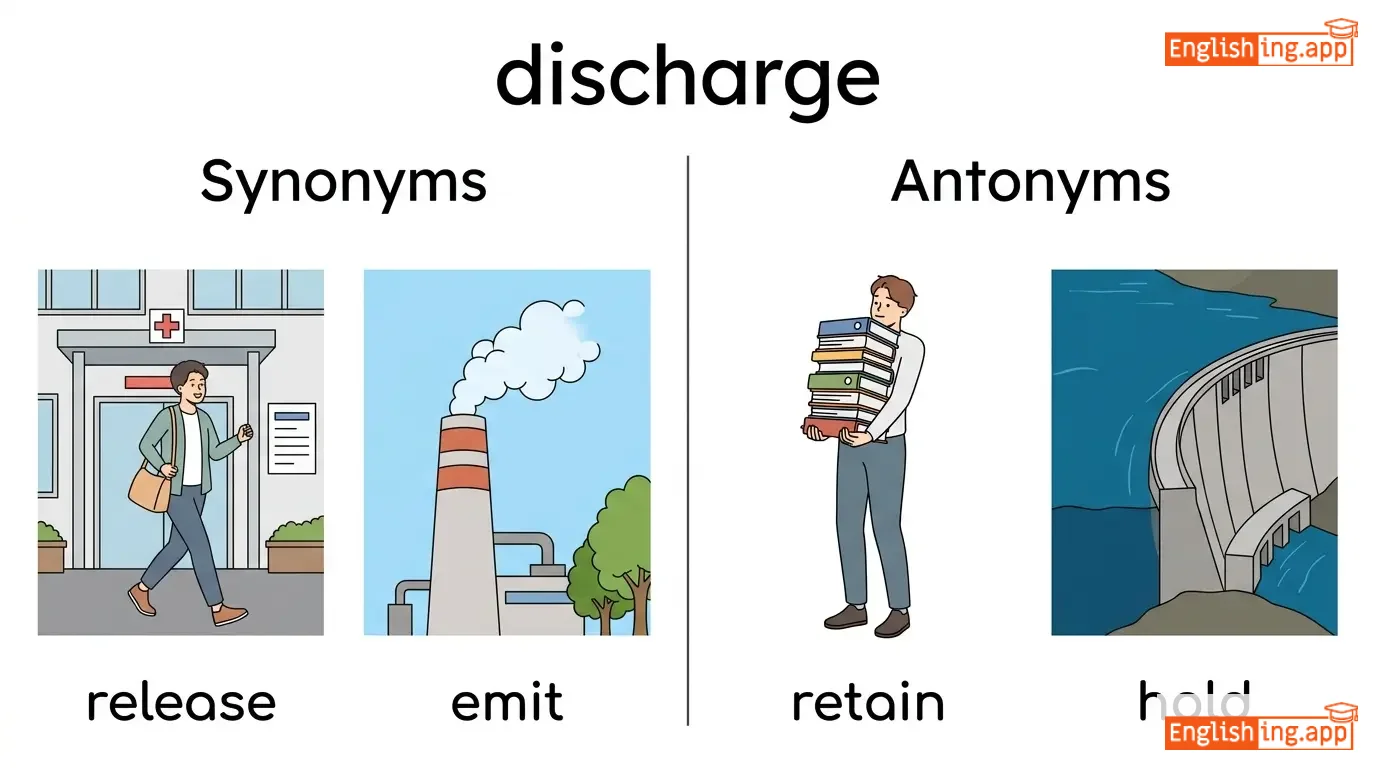
release, emit, expel, dismiss, free
••••••
|
retain, hold, keep
••••••
|
discharge a patient, discharge responsibility, discharge duties, discharge cargo
••••••
|
Discharge = 释放, 就是让责任放开。
••••••
|
|
💬
••••••
|
/ˈdɪskɔːrs/
noun, verb
(迪斯科尔斯)
••••••
|
- •••••• |
讲座, 辩论
jiangzuo, bianlun
••••••
|
discoursed
迪斯科尔斯德
••••••
|
discoursed
迪斯科尔斯德
••••••
|
discourses
迪斯科尔斯斯
••••••
|
discoursing
迪斯科尔辛
••••••
|
Written or spoken communication or debate.
••••••
|
The professor gave a discourse on ancient philosophy.
教授进行了关于古代哲学的讲座。
••••••
|
教授进行了关于古代哲学的讲座。
Jiaoshou jin xing le guanyu gudai zhexue de jiangzuo.
••••••
|
political discourse
政治话语
••••••
|
The ways of discussing or debating political matters.
••••••
|
政治话语
zhengzhi huayu
••••••
|
dialogue, discussion, conversation, debate, talk
••••••
|
silence, quiet, muteness
••••••
|
academic discourse, public discourse, discourse analysis, discourse on
••••••
|
Discourse表示讲座或辩论 (jiangzuo, bianlun) 主题。
••••••
|
|
📄
••••••
|
/dɪsˈmɪsl̩/
noun
(解雇)
••••••
|
- •••••• |
解雇, 拒绝
jiěgù, jùjué
••••••
|
- •••••• | - •••••• | - •••••• | - •••••• |
the act of removing someone from their job; the act of treating something as unimportant
••••••
|
His unfair dismissal led to a lawsuit against the company. |
他的不公正解雇导致了对公司的诉讼。
Tā de bù gōngzhèng jiěgù dǎozhì le duì gōngsī de sùsòng.
••••••
|
- •••••• | - •••••• | - •••••• |
termination, firing, discharge, expulsion, rejection
••••••
|
employment, acceptance, retention
••••••
|
wrongful dismissal, unfair dismissal, dismissal from work, dismissal of charges
••••••
|
Dismiss + AL = 被解雇的结果 (解雇)
••••••
|
|
👑
••••••
|
/ˈdɑː.mə.nəns/
noun
(dómínánzì)
••••••
|

|
支配
zhīpèi
••••••
|
- •••••• | - •••••• | - •••••• | - •••••• |
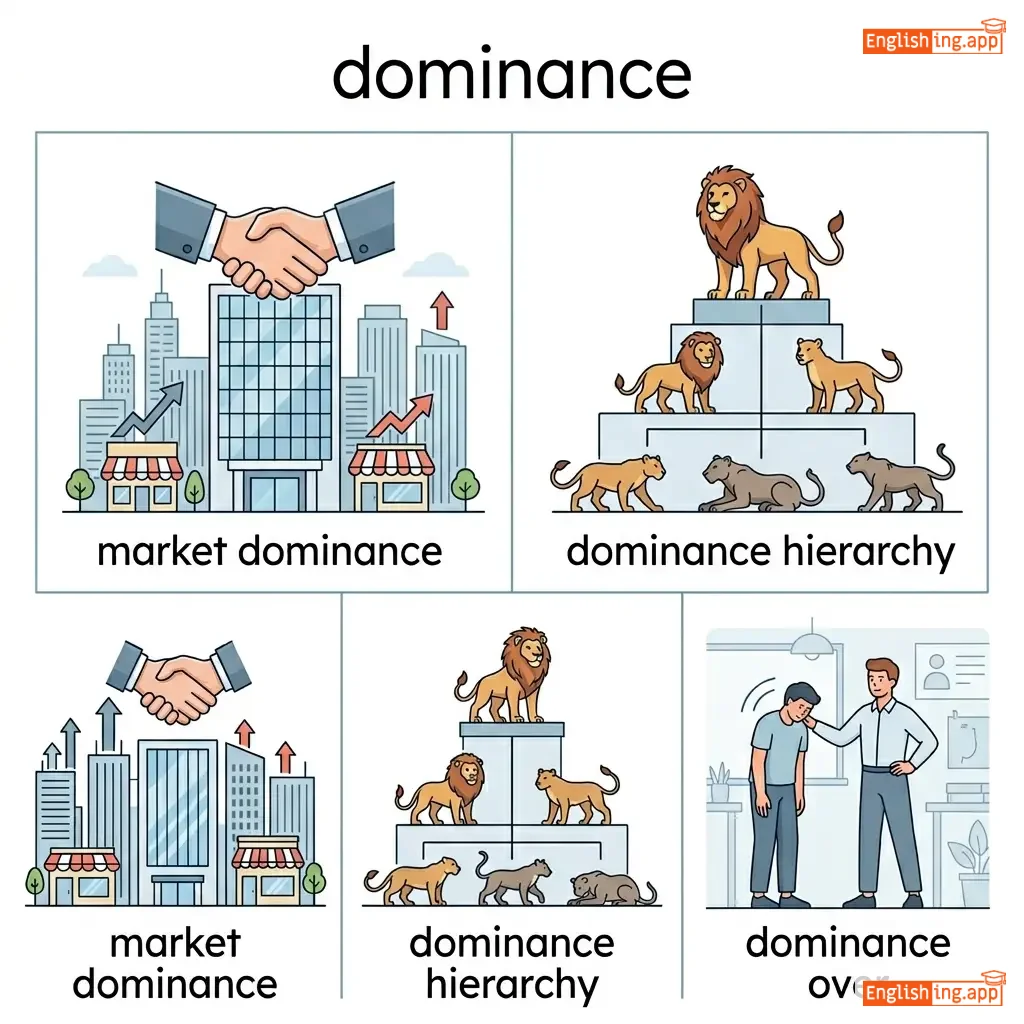
The state of having power and influence over others.
••••••
|
The company has maintained dominance in the smartphone market. |
公司在智能手机市场上保持了支配地位。
Gōngsī zài zhìnéng shǒujī shìchǎng shàng bǎochíle zhīpèi dìwèi.
••••••
|
alpha dominance |
The behavior of asserting leadership or control, often seen in social or animal groups.
••••••
|
阿尔法支配
Ā'ěrfǎ zhīpèi
••••••
|
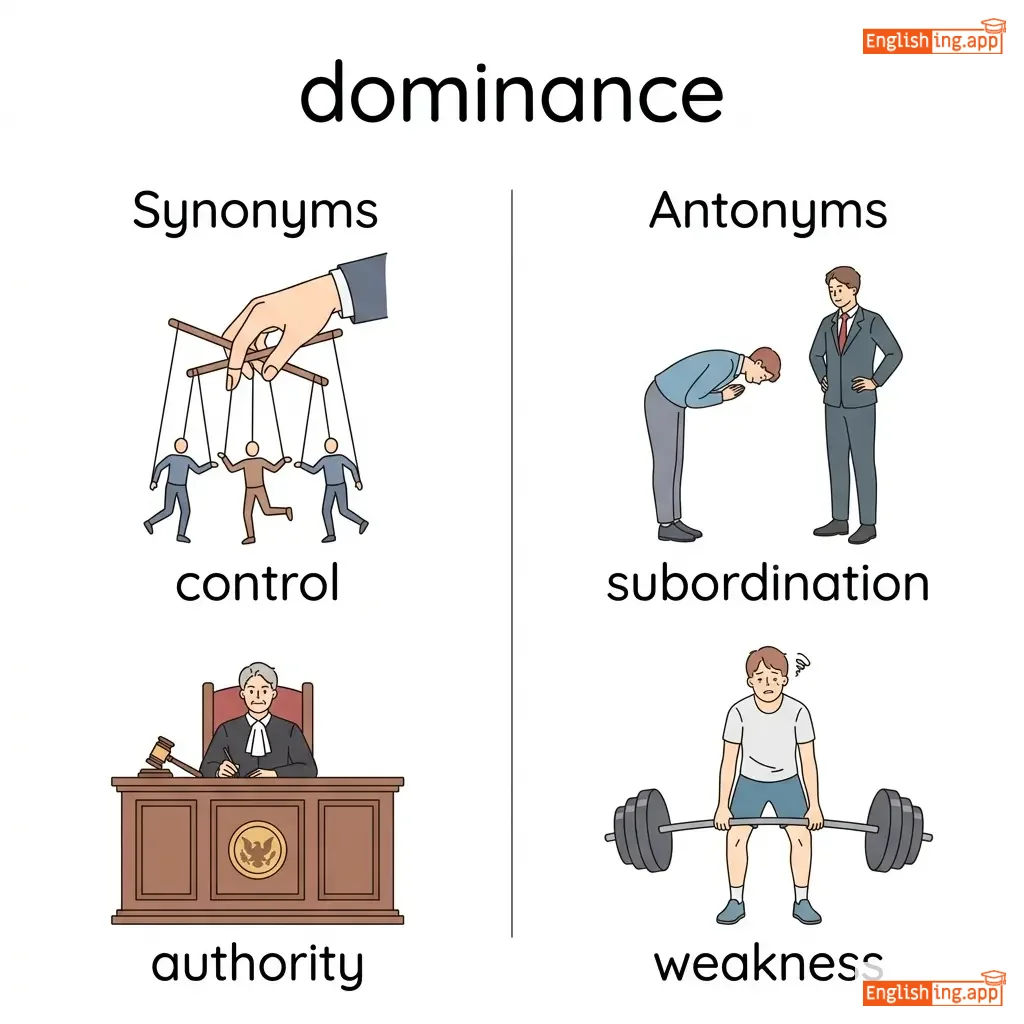
control, authority, supremacy, power, command
••••••
|
subordination, weakness
••••••
|
market dominance, dominance hierarchy, dominance over
••••••
|
Dominance 可以联想到 '主导'——扩展自己的影响力与控制力。
••••••
|
|
🗳️
••••••
|
/ɪˈlɛktərəl/
adjective
(选举的)
••••••
|
- •••••• |
选举的
xuǎnjǔ de
••••••
|
- •••••• | - •••••• | - •••••• | - •••••• |
related to elections or voting
••••••
|
The electoral process in the country has been reformed in recent years. |
该国的选举程序在近年来进行了改革。
Gāi guó de xuǎnjǔ chéngxù zài jìnnián lái jìnxíngle gǎigé.
••••••
|
- •••••• | - •••••• | - •••••• |
voting, electoral system, election-related
••••••
|
non-electoral, non-voting
••••••
|
electoral process, electoral system, electoral reform
••••••
|
Electoral relates to voting—think of ballots and voting booths!
••••••
|
|
❌
••••••
|
/ɪˈlɪməˌneɪt/
verb
(伊利米内特)
••••••
|
|
消除
xiaochu
••••••
|
eliminated
伊利米内特德
••••••
|
eliminated
伊利米内特德
••••••
|
eliminates
伊利米内特斯
••••••
|
eliminating
伊利米内廷
••••••
|
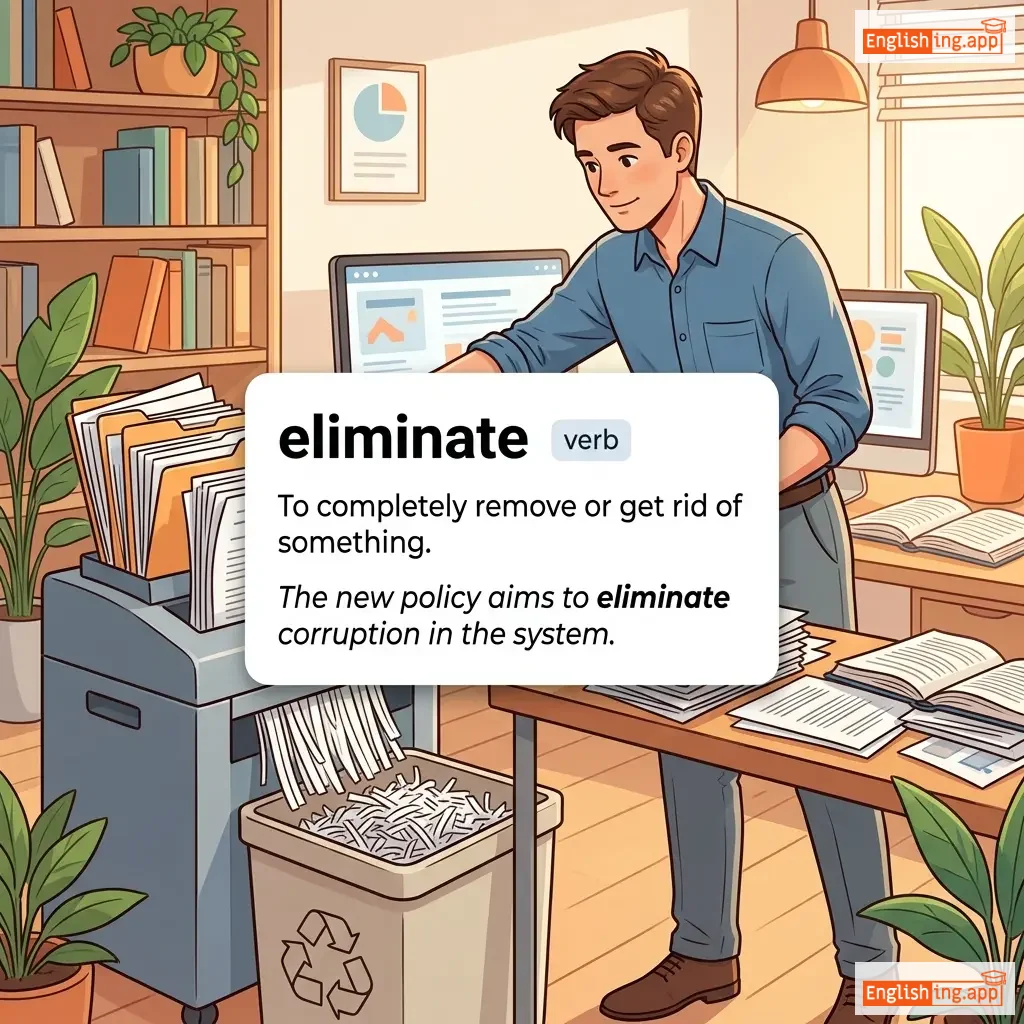
To completely remove or get rid of something.
••••••
|
The new policy aims to eliminate corruption in the system.
新政策旨在消除系统中的腐败。
••••••
|
新政策旨在消除系统中的腐败。
xin zhengce zhi zai xiaochu xitong zhong de fubai.
••••••
|
eliminate the competition
消除竞争
••••••
|
to defeat or remove rivals
••••••
|
消除竞争
xiaochu jingzheng
••••••
|
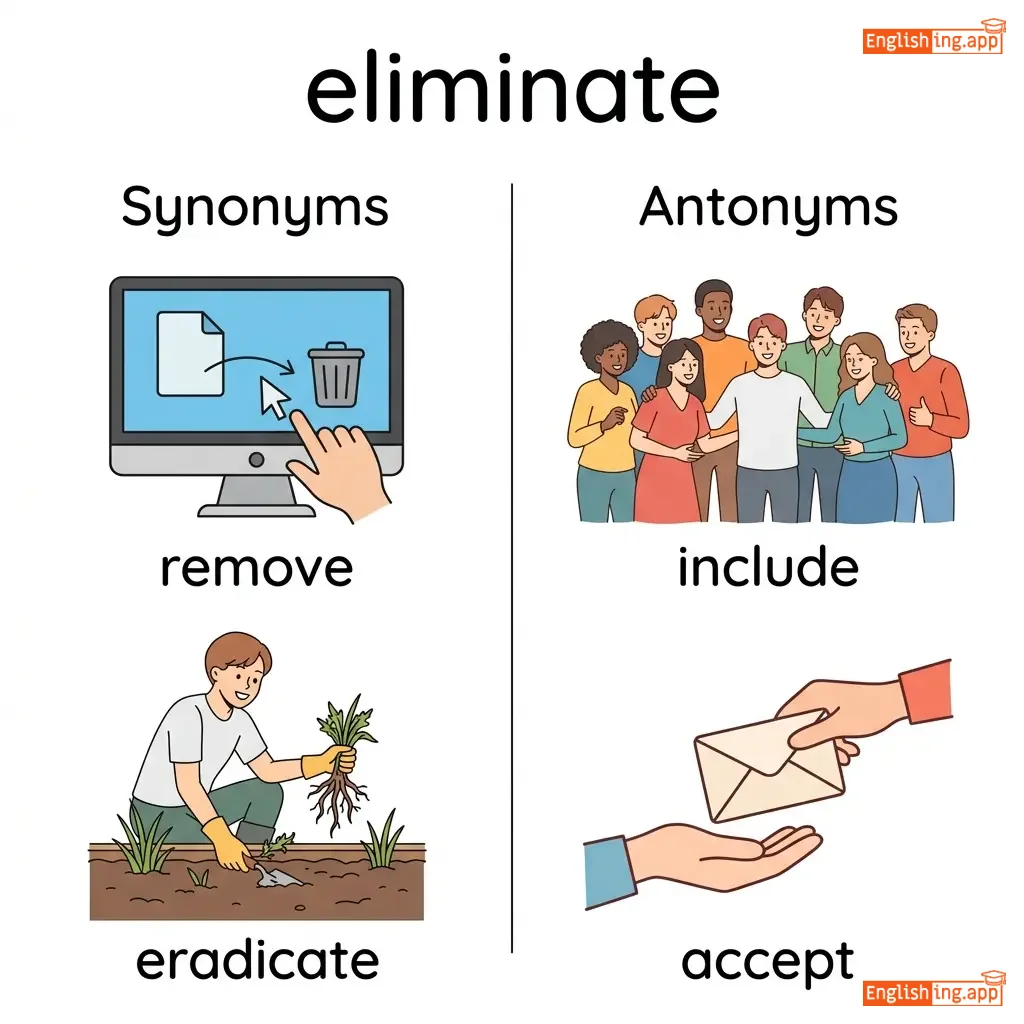
remove, eradicate, abolish, exterminate, wipe out
••••••
|
include, accept, retain
••••••
|
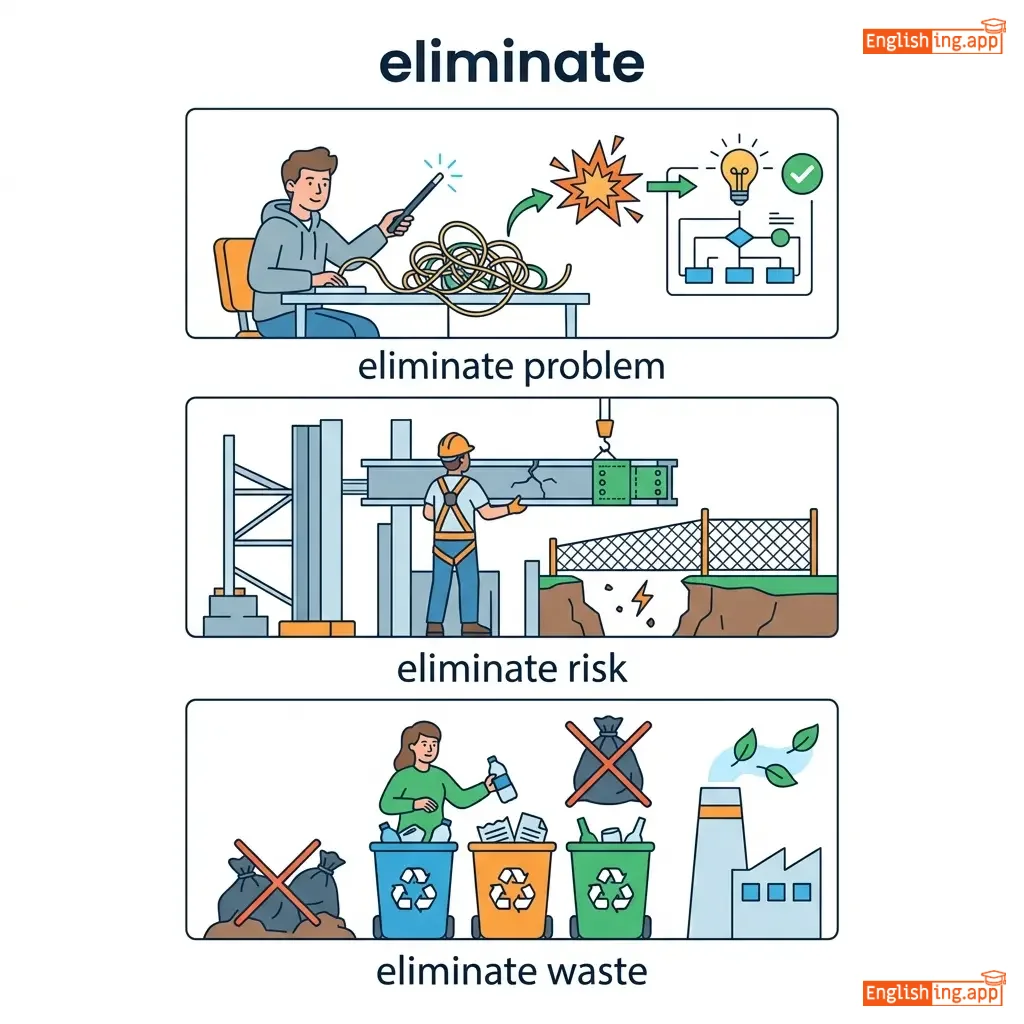
eliminate problem, eliminate risk, eliminate waste, eliminate need
••••••
|
如果你消除错误,你可以得到正确的答案。
••••••
|

