Festival of Gradual Guardians
あるforeigner研究者が国際協力を築くために出席しました。 河川保護委員会は新しいformationを発表しました。 専門家たちはformulateセンサーがどのように機能するかを決めました。 私たちはfortunateに感じています、川はまだ息をしている。 地元のfranchiseがエコ製品で屋台を飾りました。 雨はfrustrateアジェンダを阻止できませんでした。 何人かのボランティアはfull-timeで日々を費やしました。 再利用されたfurnitureが会場に並べられました。 Generally、人々は川に対する尊敬が高まっていると言いました。 礼儀正しいgentlemanが古い川の話を共有しました。 川の保護に関するメッセージはgenuinely群衆に感動を与えました。 汚染削減の結果はgradually目に見えてきています。 委員会は川の未来をguaranteeすることを誓いました。 退役軍人は川をguerrillaの避難所として回想しました。 彼らは組織のhierarchyを明確にすることを約束しました。 新しいhigh-techデバイスが川のデータを収集しました。 子供たちは川についてのhilarious劇を演じました。 皆はhopefully川を前進させていると言いました。 ここでのhostilityは容認されません。 各householdはプラスチック使用を減らすことを誓いました。
|
絵文字
|
単語 | Images | 翻訳 | 過去 | 過去分詞 | 三人称単数 | 動名詞 | 意味 | 例文 | 例文の翻訳 | 表現例 | 表現例の意味 | 表現例の翻訳 | 同義語 | 対義語 | コロケーション | ニーモニック |
|---|---|---|---|---|---|---|---|---|---|---|---|---|---|---|---|---|---|
|
🧳
••••••
|
/ˈfɔːrənər/ or /ˈfɑːrənər/
noun
(フォレイナー)
••••••
|
- •••••• |
外国人
gaikokujin
••••••
|
- •••••• | - •••••• | - •••••• | - •••••• |
A person from another country.
••••••
|
The city welcomes every foreigner with kindness. |
その都市はすべての外国人を親切に迎えます。
Sono toshi wa subete no gaikokujin o shinsetsu ni mukaemasu.
••••••
|
- •••••• | - •••••• | - •••••• |
outsider, alien, immigrant, stranger, visitor
••••••
|
citizen, native, local
••••••
|
foreign tourist, foreigner community, foreigner rights, foreigner registration
••••••
|
Foreigner は外国人—他の国から来た人!
••••••
|
|
🧩
••••••
|
/fɔːrˈmeɪʃən/
noun
(フォーメーション)
••••••
|
- •••••• |
形成
keisei
••••••
|
- •••••• | - •••••• | - •••••• | - •••••• |
the action of forming or process of being formed
••••••
|
The formation of the new company took several months. |
新しい会社の形成には数ヶ月かかりました。
Atarashī kaisha no keisei ni wa sū-kagetsu kakarimashita.
••••••
|
in formation |
organized in a particular way, often used for groups like soldiers or birds
••••••
|
形成中
keisei-chū
••••••
|
creation, development, establishment, structure, arrangement
••••••
|
destruction, disintegration
••••••
|
rock formation, team formation, formation process, military formation
••••••
|
Formationは何かを作ること、例えば兵士の隊形のようなものです。
••••••
|
|
🧪
••••••
|
/ˈfɔːrmjʊleɪt/
verb
(フォームレート)
••••••
|
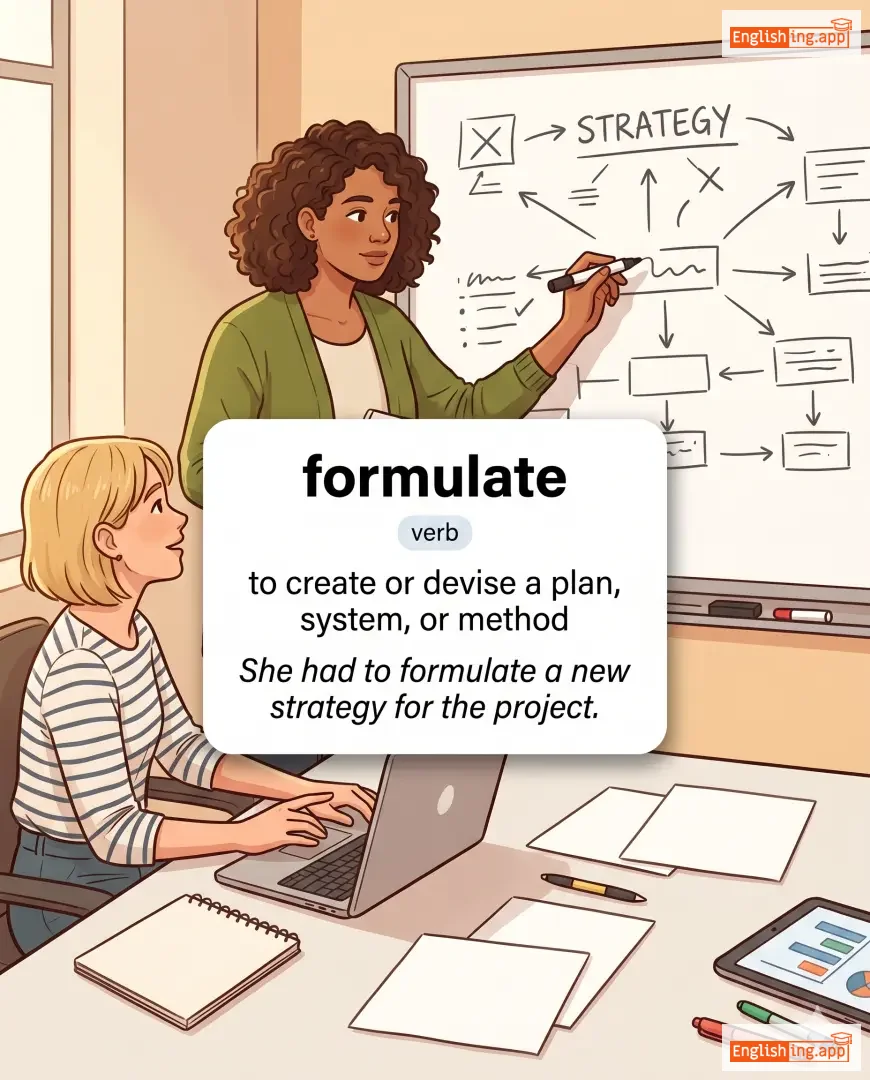
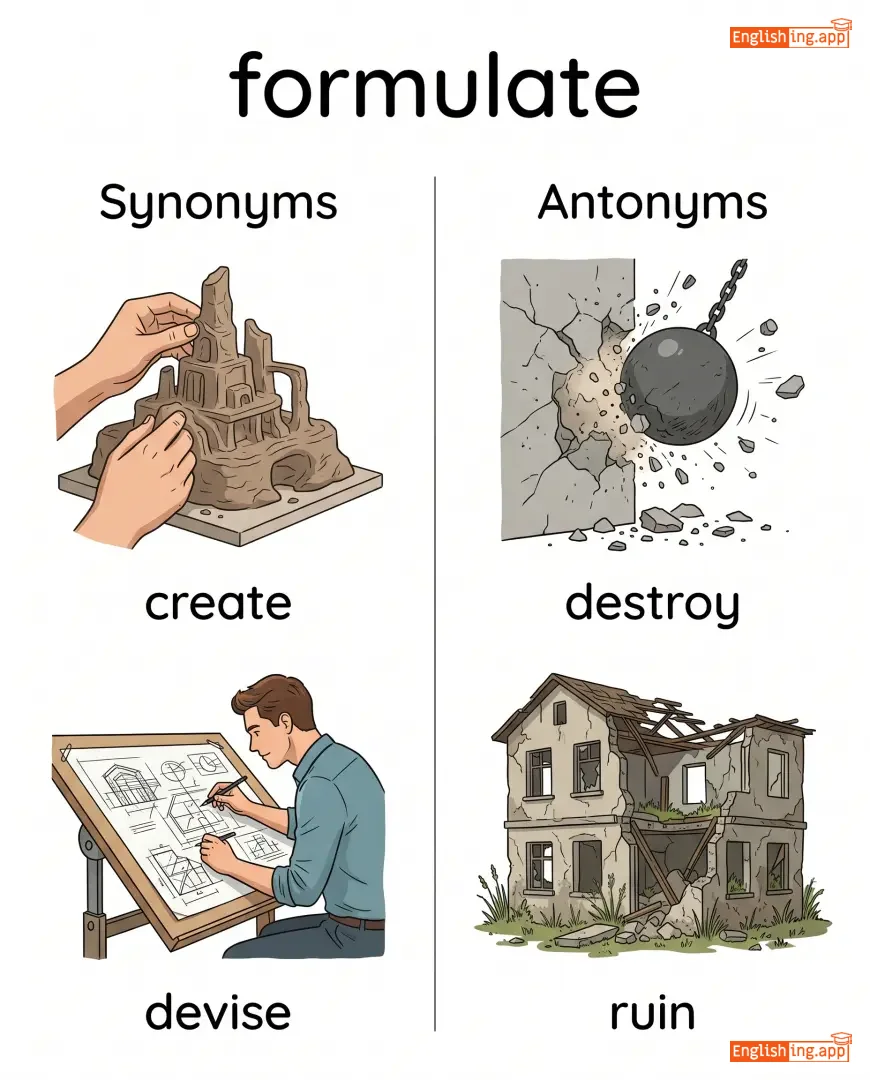
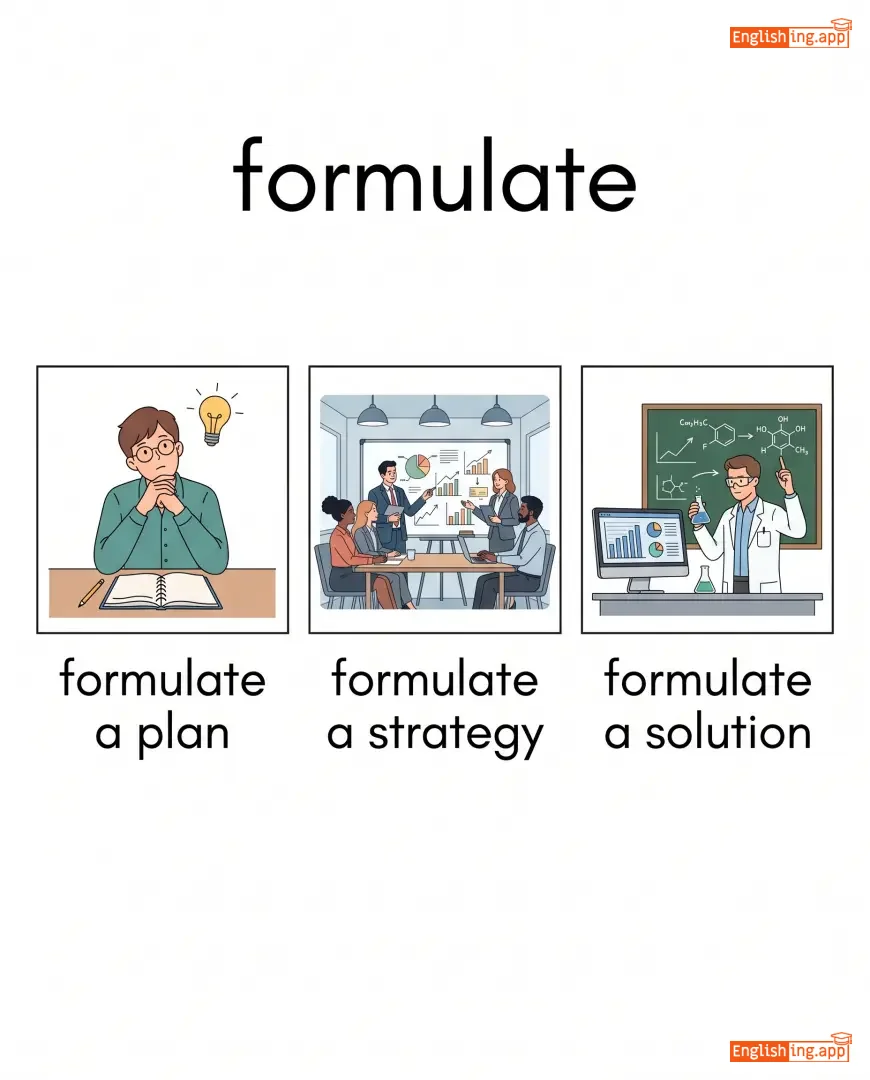
|
体系的に作成する、作り出す
taikeiteki ni sakusei suru, tsukuridashimasu
••••••
|
formulated
フォームレートされた
••••••
|
formulated
フォームレートされた
••••••
|
formulates
フォームレートする
••••••
|
formulating
フォームレートしている
••••••
|
to create or devise methodically; to express in a formula
••••••
|
Scientists formulated a new theory about climate change.
科学者たちは気候変動に関する新しい理論を構築しました。
••••••
|
科学者たちは気候変動に関する新しい理論を構築しました。
Kagakusha-tachi wa kikō hendō ni kansuru atarashī riron o kōchiku shimashita.
••••••
|
- •••••• | - •••••• | - •••••• |
devise, create, develop, design
••••••
|
destroy, dismantle, dissolve, abandon
••••••
|
formulate plan, formulate strategy, formulate theory, formulate policy
••••••
|
Formulate = 方法論
••••••
|
|
🍀
••••••
|
/ˈfɔːrtʃənət/
adjective
(フォーチュネット)
••••••
|
- •••••• |
幸運な
kouunna
••••••
|
- •••••• | - •••••• | - •••••• | - •••••• |
Having good luck or receiving something desirable by chance.
••••••
|
She was fortunate to escape the accident without injuries.
彼女は事故で怪我をすることなく逃げることができて幸運だった。
••••••
|
彼女は事故で怪我をすることなく逃げることができて幸運だった。
Kanojo wa jiko de kega o suru koto naku nigeru koto ga dekite kōun datta.
••••••
|
fortunate enough
十分に幸運
••••••
|
Lucky to have something or experience something
••••••
|
十分に幸運
jūbun ni kōun
••••••
|
lucky, blessed, favored, prosperous, successful
••••••
|
unfortunate, unlucky, cursed
••••••
|
fortunate enough, fortunate circumstances, feel fortunate, fortunate opportunity
••••••
|
Fortuneは運を意味しますので、fortunateは幸運を意味します🍀
••••••
|
|
🏢
••••••
|
/ˈfrænʧaɪz/
noun, verb
(furanchaizu)
••••••
|
- •••••• |
フランチャイズ
furanchaizu
••••••
|
franchised
furanchaizu-d
••••••
|
franchised
furanchaizu-d
••••••
|
franchises
furanchaizu-su
••••••
|
franchising
furanchaizu-ing
••••••
|
A legal right to sell or distribute goods or services in a specific area; to grant such a right.
••••••
|
He opened a new fast-food franchise in the city.
彼は都市で新しいファーストフードのフランチャイズを開設しました。
••••••
|
彼は都市で新しいファーストフードのフランチャイズを開設しました。
Kare wa toshi de atarashī fāsuto fūdo no furanchaizu o kaisetsu shimashita.
••••••
|
buy a franchise
フランチャイズを買う
••••••
|
To purchase the right to operate a business under a company's brand.
••••••
|
フランチャイズを買う
furanchaizu o kau
••••••
|
license, authorization, dealership, permit
••••••
|
restriction, prohibition
••••••
|
franchise agreement, franchise owner, franchise business, buy a franchise
••••••
|
フランチャイズは自由 + 選択 - ブランドの下で運営するチャンス。
••••••
|
|
😤
••••••
|
/ˈfrʌstreɪt/
verb
••••••
|
- •••••• | - •••••• |
frustrated
••••••
|
frustrated
••••••
|
frustrates
••••••
|
frustrating
••••••
|
To prevent someone from accomplishing something; to cause feelings of annoyance or disappointment.
••••••
|
The constant delays frustrated the team. |
- •••••• |
frustrate the purpose |
To hinder the intended result.
••••••
|
- •••••• |
annoy, thwart, hinder, disappoint, obstruct
••••••
|
encourage, assist, satisfy
••••••
|
frustrate the efforts, feel frustrated, frustrating situation, frustrate attempts
••••••
|
No •••••• |
|
🕒
••••••
|
/ˈfʊl taɪm/
adjective, adverb
(フルタイム)
••••••
|
- •••••• |
フルタイム
furu taimu
••••••
|
- •••••• | - •••••• | - •••••• | - •••••• |
working or studying for the whole standard period of time
••••••
|
She works full-time as a teacher. |
彼女は教師としてフルタイムで働いています。
Kanojo wa kyōshi toshite furu taimu de hataraiteimasu.
••••••
|
- •••••• | - •••••• | - •••••• |
permanent, regular, continual, steady
••••••
|
part-time, temporary
••••••
|
full-time job, full-time employee, full-time student
••••••
|
フルタイムはパートタイムではなく、フルに働くことです。
••••••
|
|
🪑
••••••
|
/ˈfɜːrnɪtʃər/
noun
(fāničā)
••••••
|
- •••••• |
家具
kagu
••••••
|
- •••••• | - •••••• | - •••••• | - •••••• |
Objects such as chairs, tables, beds, or cupboards used to make a room suitable for living or working.
••••••
|
The living room was filled with beautiful wooden furniture. |
リビングルームは美しい木製の家具でいっぱいでした。
Ribingurūmu wa utsukushī mokusei no kagu de ippai deshita.
••••••
|
move the furniture |
to rearrange or shift the position of furniture in a room
••••••
|
家具を動かす
Kagu o ugokasu
••••••
|
fixtures, fittings, furnishings, decor, equipment
••••••
|
emptiness, vacancy
••••••
|
antique furniture, wooden furniture, office furniture, move furniture, buy furniture
••••••
|
家具は家具 🪑 — 日本語で'家具屋'を思い出すことで覚えやすくなります。
••••••
|
|
🌍
••••••
|
/ˈdʒɛnərəli/
adverb
(ジェネラリー)
••••••
|
- •••••• |
一般的に
ippanteki ni
••••••
|
- •••••• | - •••••• | - •••••• | - •••••• |
in most cases; usually; as a rule
••••••
|
He generally arrives at work before 9 a.m. |
彼は一般的に午前9時前に仕事に到着します。
Kare wa ippanteki ni gozen 9 ji mae ni shigoto ni touchakushimasu.
••••••
|
as a general rule |
something that is true in most situations
••••••
|
一般的なルールとして
ippanteki na ruuru to shite
••••••
|
usually, typically, commonly, ordinarily, mostly
••••••
|
rarely, seldom, never
••••••
|
generally accepted, generally speaking, generally known, generally considered
••••••
|
一般的なルールの中で通常のことであり、だから‘generally’は‘一般的に’を意味します。
••••••
|
|
🤵
••••••
|
/ˈdʒɛntəlmən/
noun
(ジェントルマン)
••••••
|
- •••••• |
紳士
shin-shi
••••••
|
- •••••• | - •••••• | - •••••• | - •••••• |
a man who is polite, courteous, and honorable
••••••
|
He opened the door for her like a true gentleman. |
彼は本物の紳士のように彼女のためにドアを開けた。
Kare wa honmono no shin-shi no yō ni kanojo no tame ni doa o aketa.
••••••
|
perfect gentleman |
a man who behaves very politely and respectfully
••••••
|
完璧な紳士
kanpeki na shin-shi
••••••
|
man, sir, nobleman, gallant, gent
••••••
|
boor, rude man
••••••
|
true gentleman, perfect gentleman, young gentleman, gentleman's club
••••••
|
紳士 (shin-shi) は Gentle (ジェントル) な男性で、尊敬を集めます
••••••
|
|
❤️
••••••
|
/ˈdʒɛnjʊɪnli/
adverb
(ジェニュインリー)
••••••
|
- •••••• |
本当に
hontōni
••••••
|
- •••••• | - •••••• | - •••••• | - •••••• |
in a truthful and sincere way
••••••
|
She genuinely cares about the environment.
彼女は本当に環境のことを気にかけています。
••••••
|
彼女は本当に環境のことを気にかけています。
Kanojo wa hontōni kankyō no koto o ki ni kaketeimasu.
••••••
|
- •••••• | - •••••• | - •••••• |
sincerely, honestly, truly, authentically
••••••
|
falsely, insincerely, dishonestly
••••••
|
genuinely concerned, genuinely interested, genuinely believe
••••••
|
本当に何かを言うとき、それはあなたの'本当の'感情を示しています、まるで'ホント'のように誠実に言っているかのように。
••••••
|
|
⏳
••••••
|
/ˈɡrædʒ.u.ə.li/
adverb
(グラジュアリー)
••••••
|
- •••••• |
徐々に; だんだん
jyojyo ni; dandann
••••••
|
- •••••• | - •••••• | - •••••• | - •••••• |
slowly and steadily over a period of time
••••••
|
The weather gradually became warmer in spring.
ðə wɛðər ɡrædʒuəli bɪˈkeɪm wɑːrmɚ ɪn sprɪŋ.
••••••
|
春になると、天気は徐々に暖かくなった。
Haru ni naru to, tenki wa jyojyo ni atatakai kunatta.
••••••
|
- •••••• | - •••••• | - •••••• |
slowly, progressively, steadily, step by step
••••••
|
suddenly, abruptly, immediately, instantly
••••••
|
gradually increase, gradually improve, gradually decline, gradually change
••••••
|
春が来ると、気温が徐々に上がるように感じます。
••••••
|
|
✅
••••••
|
/ˌɡærənˈtiː/
noun/verb
••••••
|
- •••••• | - •••••• |
guaranteed
••••••
|
guaranteed
••••••
|
guarantees
••••••
|
guaranteeing
••••••
|
a formal promise or assurance, especially about the quality or durability of a product
••••••
|
The company guarantees a refund if the product is faulty. |
- •••••• |
money-back guarantee |
a promise that money will be refunded if the product is unsatisfactory
••••••
|
- •••••• |
assure, promise, warrant, pledge
••••••
|
break, deny, disclaim
••••••
|
lifetime guarantee, product guarantee, guarantee success, guarantee satisfaction
••••••
|
No •••••• |
|
💥
••••••
|
/ɡəˈrɪlə/
noun
••••••
|
- •••••• | - •••••• | - •••••• | - •••••• | - •••••• | - •••••• |
a member of a small independent group taking part in irregular fighting, typically against larger forces
••••••
|
The guerrilla fighters used ambushes to attack enemy positions. |
- •••••• |
guerrilla warfare |
a form of irregular warfare in which small groups of combatants use tactics such as ambushes and sabotage
••••••
|
- •••••• |
fighter, rebel, insurgent, freedom fighter
••••••
|
soldier, patriot
••••••
|
guerrilla warfare, guerrilla tactics, guerrilla fighters, guerrilla movement
••••••
|
No •••••• |
|
🏛️
••••••
|
/ˈhaɪəˌrɑːrki/
noun
(ハイアラーキー)
••••••
|
- •••••• |
階層
kaisou
••••••
|
- •••••• | - •••••• | - •••••• | - •••••• |
A system in which people or things are arranged in levels of importance or authority.
••••••
|
The corporate hierarchy determines who makes the final decision. |
企業の階層は、最終決定を誰が行うかを決定します。
Kigyou no kaisou wa, saishuu kettei wo dare ga okonau ka wo kettei shimasu.
••••••
|
social hierarchy |
The ranking of individuals in society based on status, power, or wealth.
••••••
|
社会階層
shakai kaisou
••••••
|
ranking, order, system, structure, chain of command
••••••
|
equality, parity
••••••
|
corporate hierarchy, political hierarchy, social hierarchy, strict hierarchy
••••••
|
階層は、上へ行くほど重要性が増すピラミッドのようなものです。
••••••
|
|
🤖
••••••
|
/ˌhaɪ ˈtɛk/
adjective
(ハイテク)
••••••
|
- •••••• |
ハイテク
haiteku
••••••
|
- •••••• | - •••••• | - •••••• | - •••••• |
using or involving advanced technology.
••••••
|
The company produces high-tech medical devices. |
その会社はハイテク医療機器を生産しています。
Sono kaisha wa haiteku iryou kiki wo seisan shiteimasu.
••••••
|
- •••••• | - •••••• | - •••••• |
advanced, modern, cutting-edge, innovative, futuristic
••••••
|
low-tech, outdated, old-fashioned
••••••
|
high-tech industry, high-tech equipment, high-tech company, high-tech solution
••••••
|
High-techはハイテクの意味です — 高い技術があるからハイテク!
••••••
|
|
😂
••••••
|
/hɪˈlɛəriəs/
adjective
(ヒラリアス)
••••••
|
- •••••• |
非常に面白い
hijou ni omoshiroi
••••••
|
- •••••• | - •••••• | - •••••• | - •••••• |
Extremely funny or amusing.
••••••
|
The comedian told a hilarious story that had everyone laughing. |
コメディアンは、みんなが笑ってしまうような非常に面白い話をしました。
Komedian wa, minna ga waratte shimau you na hijou ni omoshiroi hanashi wo shimashita.
••••••
|
- •••••• | - •••••• | - •••••• |
funny, amusing, comical, entertaining, laughable
••••••
|
serious, sad, boring
••••••
|
hilarious joke, hilarious story, hilarious moment, absolutely hilarious
••••••
|
Hilarious = 非常に (hijou ni) + 面白い (omoshiroi) → 非常に面白い
••••••
|
|
🤞
••••••
|
/ˈhoʊpfəli/
adverb
(ホープフリー)
••••••
|
- •••••• |
希望的に
kibou-teki ni
••••••
|
- •••••• | - •••••• | - •••••• | - •••••• |
in a hopeful manner; expressing hope or optimism
••••••
|
Hopefully, the weather will be nice tomorrow.
明日、天気が良いことを願っています。
••••••
|
明日、天気が良いことを願っています。
Ashita, tenki ga yoi koto o negatteimasu.
••••••
|
- •••••• | - •••••• | - •••••• |
optimistically, confidently, expectantly, positively
••••••
|
hopelessly, pessimistically
••••••
|
say hopefully, look hopefully, hopefully waiting
••••••
|
Hopefullyは ‘希望的に’ — 🤞 覚えておいて、希望を持っていればすべてうまくいく!
••••••
|
|
😠
••••••
|
/hɒˈstɪləti/
noun
(ホスティリティ)
••••••
|
- •••••• |
敵意
teki i
••••••
|
- •••••• | - •••••• | - •••••• | - •••••• |
hostile behavior; unfriendliness or opposition
••••••
|
The negotiations ended in an atmosphere of hostility. |
交渉は敵意の雰囲気で終わった。
Koushou wa teki no fun'iki de owatta.
••••••
|
open hostility |
a clear and obvious display of unfriendly feelings
••••••
|
公然の敵意
kouzen no teki i
••••••
|
animosity, antagonism, enmity, resentment, bitterness
••••••
|
friendliness, goodwill, harmony
••••••
|
open hostility, mutual hostility, hostility towards, hostility between
••••••
|
Hostility means unfriendly feelings, in Japanese 敵意 = hostility.
••••••
|
|
👨👩👧👦
••••••
|
/ˈhaʊshoʊld/
noun
(ハウスホールド)
••••••
|
- •••••• |
家庭
katei
••••••
|
- •••••• | - •••••• | - •••••• | - •••••• |
All the people living together in one house, considered as a unit.
••••••
|
There are five people in our household. |
私たちの家庭には五人います。
Watashitachi no katei ni wa gonin imasu.
••••••
|
household name |
a person or brand that is very well known
••••••
|
有名な名前
yūmei na namae
••••••
|
family, home, residents, occupants, domestic unit
••••••
|
outsiders, strangers
••••••
|
household chores, household income, household goods, household members
••••••
|
家庭は家を意味します、覚えておいて 'House + All → 家にみんな'
••••••
|

