The Planner Who Transformed Downtown
サジドは downtown 開発に携わる都市計画者でした。彼の役割は都市政策の形成において dominant でした。適切な計画は交通の混乱を diminish できると彼は信じていました。彼は毎朝健康を保つために workout を行っていました。彼のオフィスは elevator によって disabled 市民が利用できました。サジドの emphasis は包摂的な空間の創出にありました。彼は directly 地域社会と関わっていました。タウンホールの会議では政治家たちが優先事項で disagree することがありました。しかしサジドは共通の基盤を見つけようと努めました。車両からの環境 emissions は大きな懸念事項でした。彼は electric バスシステムを提案しました。予算の制約により、完全な実施は without 十分な資金では困難でした。Whoever が計画に参加したければ提案を提出することができました。開発プロジェクトは環境影響を disclose するべきです。新たに emerging する地域には適切なインフラが必要でした。都市の dynamics は急速に変化していました。サジドの earnings は控えめでしたが、彼は献身的でした。彼の written 報告は包括的でした。election シーズンの前には多くの公約がなされました。政治家たちは議論を dominate しようとしました。しかしサジドは計画と政治の間に専門的な distinction を保ちました。economic 危機が資金を脅かしました。廃棄物の disposal システムは更新が必要でした。解体が必要な古い建物は家族を displace する可能性がありました。サジドは利害関係者間の緊張を dissolve したいと考えていました。交通渋滞は生活の質を distract します。住民の一部は経済的な distress に直面していました。ショッピングの discount プログラムは低所得世帯を助けました。汚染に関連する disorders は公衆衛生に影響を与えました。都市は利用可能な各 driveway スペースにもっと住宅を建てる必要がありました。緑地の不足は社会問題を引き起こしていました。Drinking 水の質を確保する必要がありました。サジドは、考え抜かれた都市計画が人々の生活を改善できることを証明しました。彼の doctrine は:都市はすべての住民に平等にサービスを提供するべきだ、というものでした。
|
絵文字
|
単語 | Images | 翻訳 | 過去 | 過去分詞 | 三人称単数 | 動名詞 | 意味 | 例文 | 例文の翻訳 | 表現例 | 表現例の意味 | 表現例の翻訳 | 同義語 | 対義語 | コロケーション | ニーモニック |
|---|---|---|---|---|---|---|---|---|---|---|---|---|---|---|---|---|---|
|
⬇️
••••••
|
/dɪˈmɪnɪʃ/
verb
••••••
|
- •••••• | - •••••• |
diminished
••••••
|
diminished
••••••
|
diminishes
••••••
|
diminishing
••••••
|
to make or become less; to reduce in size, importance, or value
••••••
|
Over time, his influence in the company began to diminish. |
- •••••• |
diminish returns |
a situation where the benefit gained is less compared to the effort or investment put in
••••••
|
- •••••• |
reduce, decrease, lessen, weaken, dwindle
••••••
|
increase, enlarge, expand
••••••
|
diminish value, diminish importance, diminish role, diminish returns
••••••
|
No •••••• |
|
📢
••••••
|
/dəˈrɛktli/ or /daɪˈrɛktli/
adverb
(ダイレクトリー)
••••••
|
- •••••• |
直接的に
chokusetsuteki ni
••••••
|
- •••••• | - •••••• | - •••••• | - •••••• |
in a straight line or manner; without anything in between
••••••
|
She spoke directly to the manager about her concerns. |
彼女は自分の懸念について、マネージャーに直接話しました。
Kanojo wa jibun no shinen ni tsuite, manējā ni chokusetsu hanashimashita.
••••••
|
directly involved |
personally connected or participating
••••••
|
直接関与
chokusetsu kan'yo
••••••
|
immediately, personally, straightforwardly, openly
••••••
|
indirectly, vaguely
••••••
|
directly responsible, directly affected, speak directly, directly proportional
••••••
|
Directly =そのまま、直接 — ダイレクトに進むこと。
••••••
|
|
♿
••••••
|
/dɪsˈeɪbld/
adjective
(ディセイブルド)
••••••
|
- •••••• |
障害者
shougaisya
••••••
|
- •••••• | - •••••• | - •••••• | - •••••• |
having a physical or mental condition that limits movements, senses, or activities
••••••
|
The park has special facilities for disabled people. |
公園には障害者用の特別な施設があります。
Kouen ni wa shougaisya-you no tokubetsuna shisetsu ga arimasu.
••••••
|
- •••••• | - •••••• | - •••••• |
handicapped, impaired, incapacitated, challenged
••••••
|
able-bodied, healthy, fit
••••••
|
disabled person, disabled access, physically disabled, disabled community
••••••
|
Dis + able = not able → 体が不自由な人は‘障害者’です。
••••••
|
|
🙅
••••••
|
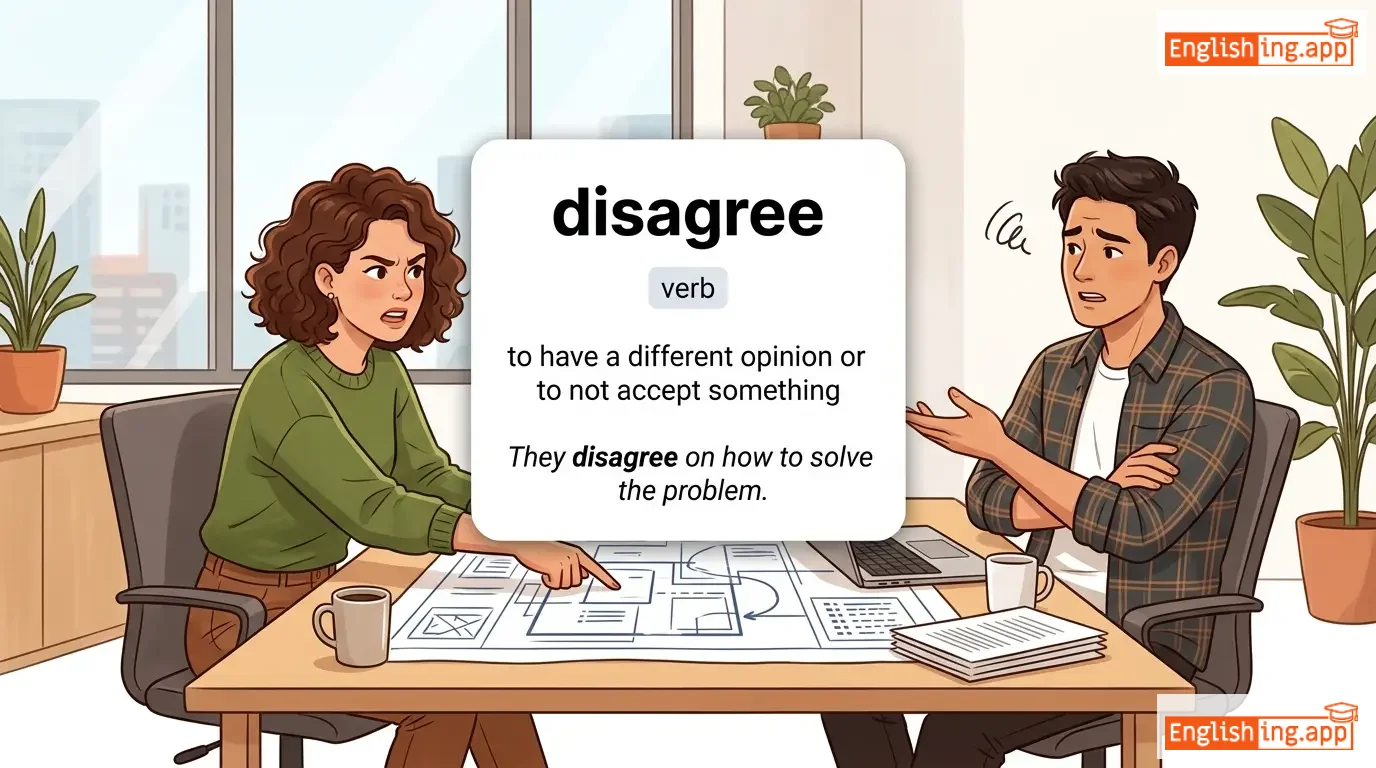
/ˌdɪsəˈɡriː/
verb
••••••
|
|
- •••••• |
disagreed
••••••
|
disagreed
••••••
|
disagrees
••••••
|
disagreeing
••••••
|
to have a different opinion or to not accept something
••••••
|
They disagree on how to solve the problem. |
- •••••• |
agree to disagree |
accept that two people will not reach the same opinion
••••••
|
- •••••• |
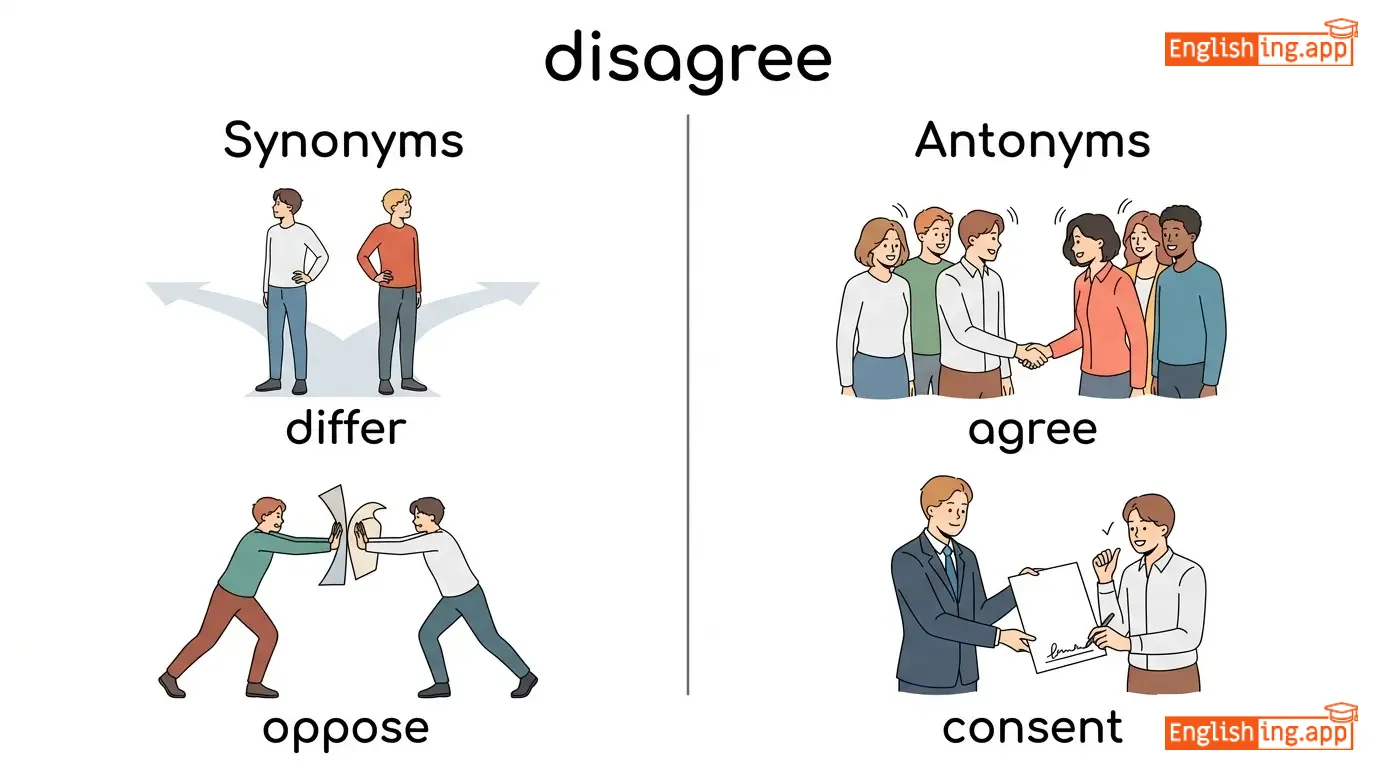
differ, oppose, contradict, dispute, object
••••••
|
agree, consent, approve
••••••
|
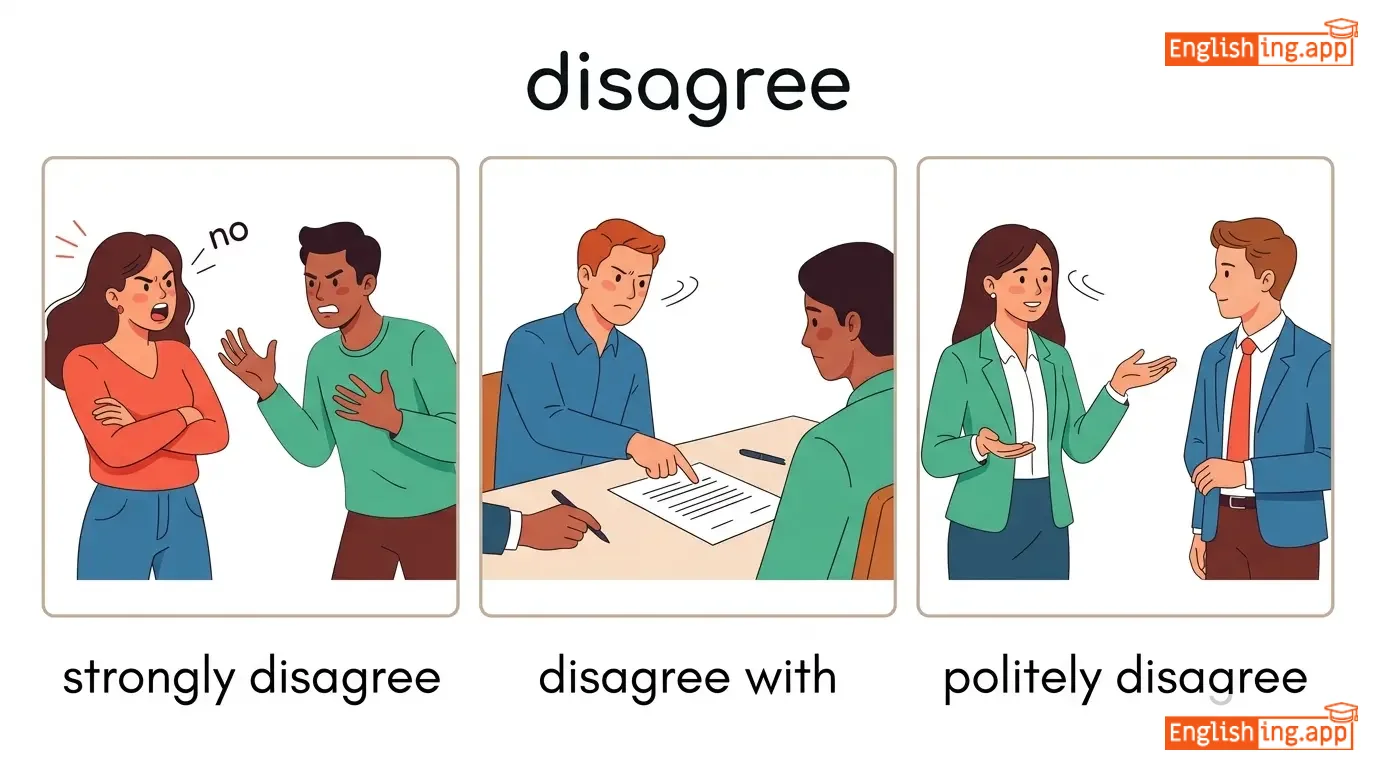
strongly disagree, disagree with, politely disagree
••••••
|
No •••••• |
|
📢
••••••
|
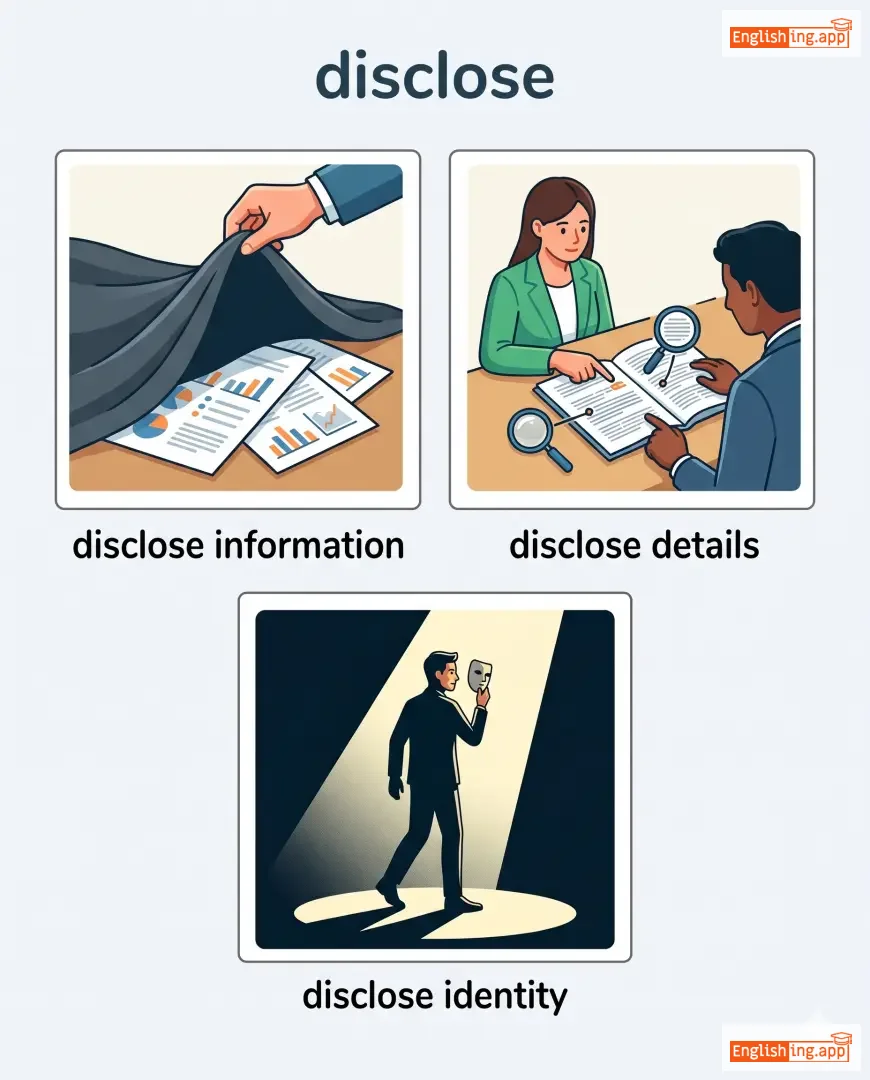
/dɪsˈkloʊz/
verb
••••••
|

|
- •••••• |
disclosed
••••••
|
disclosed
••••••
|
discloses
••••••
|
disclosing
••••••
|
to make something known; to reveal information that was previously secret or hidden
••••••
|
The company refused to disclose details of the agreement. |
- •••••• |
full disclosure |
being completely open and honest about all relevant information
••••••
|
- •••••• |
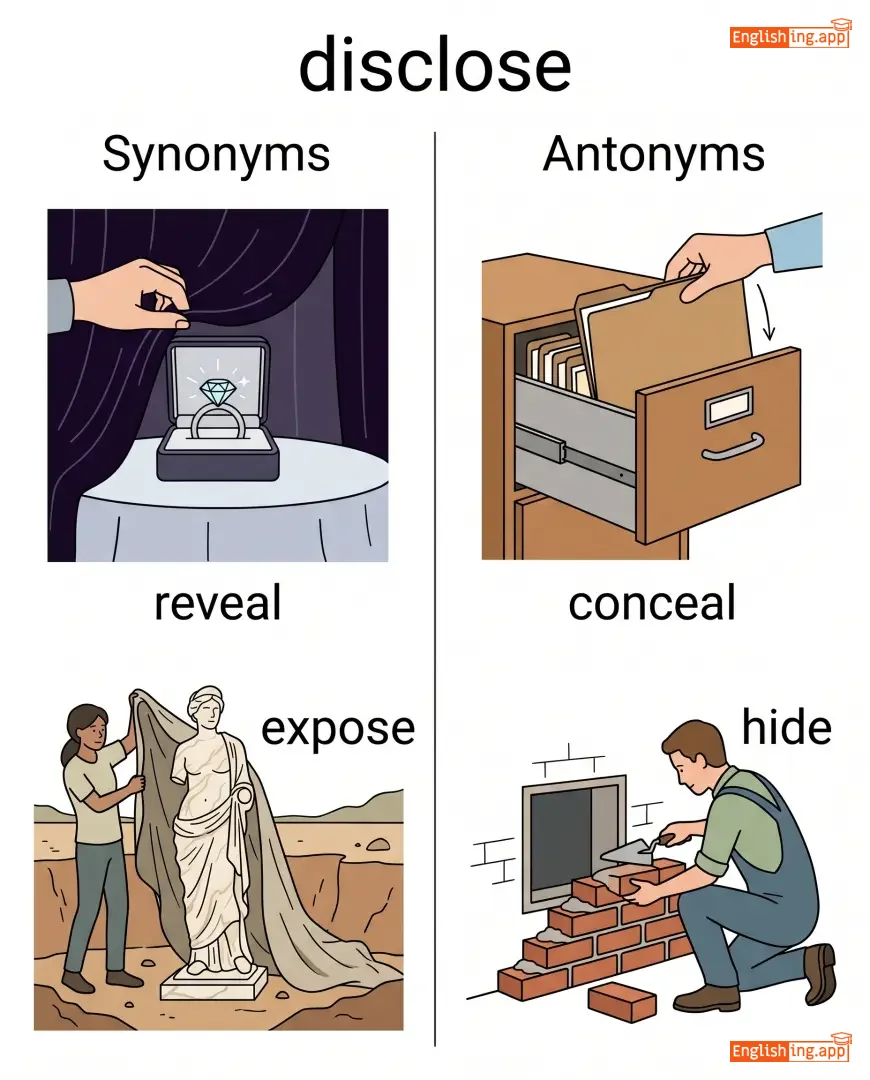
reveal, expose, uncover, divulge, announce
••••••
|
conceal, hide, suppress
••••••
|
disclose information, disclose details, disclose identity, disclose agreement
••••••
|
No •••••• |
|
🦁
••••••
|
/ˈdɑː.mə.nənt/
adjective
(ドミナント)
••••••
|
- •••••• |
支配的な
shihaiten na
••••••
|
- •••••• | - •••••• | - •••••• | - •••••• |
Having power, authority, or influence over others; most important.
••••••
|
English has become the dominant language in international business.
英語は国際ビジネスにおいて支配的な言語となった。
••••••
|
英語は国際ビジネスにおいて支配的な言語となった。
Eigo wa kokusai bijinesu ni oite shihaiten na gengo to natta.
••••••
|
dominant hand
支配的な手
••••••
|
The hand that a person uses most skillfully and frequently.
••••••
|
支配的な手
shihaiten na te
••••••
|
powerful, controlling, leading, influential
••••••
|
submissive, minor, weak
••••••
|
dominant role, dominant culture, dominant force
••••••
|
Dominant はライオン 🦁のように、力強く支配的!
••••••
|
|
👑
••••••
|
/ˈdɒmɪneɪt/
verb
(ドミネイト)
••••••
|
- •••••• |
支配する
shihai suru
••••••
|
dominated
ドミネイテッド
••••••
|
dominated
ドミネイテッド
••••••
|
dominates
ドミネイツ
••••••
|
dominating
ドミネイティング
••••••
|
to have power or control over something or someone
••••••
|
The company dominates the smartphone market.
その会社はスマートフォン市場を支配しています。
••••••
|
その会社はスマートフォン市場を支配しています。
Sono kaisha wa sumātōfon shijō o shihai shiteimasu.
••••••
|
dominate the field
分野を支配する
••••••
|
to be the most successful or influential in a particular area
••••••
|
分野を支配する
bun'ya o shihai suru
••••••
|
control, rule, command, govern, lead
••••••
|
submit, follow, yield
••••••
|
dominate the market, dominate the conversation, dominate politics, dominate completely
••••••
|
Dominate : 王のように支配する!
••••••
|
|
🏙️
••••••
|
/ˈdaʊnˌtaʊn/
noun
(ダウンタウン)
••••••
|
- •••••• |
ダウンタウン
dauntaun
••••••
|
- •••••• | - •••••• | - •••••• | - •••••• |
the central part of a city
••••••
|
They spent the afternoon shopping downtown. |
彼らは午後、市の中心部で買い物をしました。
Karera wa gogo, shi no chūshinbu de kaimono o shimashita.
••••••
|
- •••••• | - •••••• | - •••••• |
city center, metropolis, central district, urban area
••••••
|
suburb, countryside
••••••
|
downtown area, downtown district, downtown core, downtown business
••••••
|
Downtownは都市の中心部、活気に満ちた場所です!
••••••
|
|
⚙️
••••••
|
/daɪˈnæmɪks/
noun
(ダイナミクス)
••••••
|
- •••••• |
ダイナミクス
dainamikusu
••••••
|
- •••••• | - •••••• | - •••••• | - •••••• |
the forces or properties that stimulate growth, development, or change within a system or process
••••••
|
The dynamics of the team changed after the new manager joined.
新しいマネージャーが参加した後、チームのダイナミクスは変化しました。
••••••
|
新しいマネージャーが参加した後、チームのダイナミクスは変化しました。
Atarashii maneejaa ga sanka shita ato, chiimu no dainamikusu wa henka shimashita.
••••••
|
- •••••• | - •••••• | - •••••• |
forces, interactions, relationships, motion
••••••
|
stability, stagnation
••••••
|
team dynamics, market dynamics, group dynamics, power dynamics
••••••
|
ダイナミクスは変化 – チームの変化がダイナミクスを変える!
••••••
|
|
💰
••••••
|
/ˈɜːnɪŋz/
noun
(アーニングス)
••••••
|
- •••••• |
収入
shunyu
••••••
|
- •••••• | - •••••• | - •••••• | - •••••• |
money obtained in return for labor or services
••••••
|
Her monthly earnings are enough to support her family. |
彼女の月収は家族を養うのに十分です。
Kanojo no gesshū wa kazoku o yashinau no ni jūbun desu.
••••••
|
net earnings |
the total profit after deducting expenses
••••••
|
純収入
jun shunyu
••••••
|
income, wages, salary, profit, revenue
••••••
|
loss, debt
••••••
|
monthly earnings, total earnings, net earnings, gross earnings
••••••
|
Earningsは収入を意味します — 収入は働いて得るものです。
••••••
|
|
🗳️
••••••
|
/ɪˈlɛkʃən/
noun
(エレクション)
••••••
|
- •••••• |
選挙
senkyo
••••••
|
- •••••• | - •••••• | - •••••• | - •••••• |
The process of choosing someone for public office by voting.
••••••
|
The election will be held next month. |
選挙は来月行われます。
Senkyo wa raigetsu okonawaremasu.
••••••
|
election fever |
Excitement and activity surrounding an upcoming election.
••••••
|
選挙フィーバー
Senkyo fivā
••••••
|
vote, poll, ballot, selection, referendum
••••••
|
appointment, selection without voting
••••••
|
general election, presidential election, election campaign, election results
••••••
|
Election は選挙 - 投票して選挙に参加しよう。
••••••
|
|
⚡
••••••
|
/ɪˈlɛktrɪk/
adjective
(エレクトリック)
••••••
|
- •••••• |
電気的
denki-teki
••••••
|
- •••••• | - •••••• | - •••••• | - •••••• |
Relating to or operated by electricity.
••••••
|
The room was lit by an electric lamp. |
部屋は電気ランプで照らされていました。
Heya wa denki ranpu de terasarete imashita.
••••••
|
electric atmosphere |
A highly charged or exciting environment.
••••••
|
電気的雰囲気
denki-teki fun'iki
••••••
|
powered, charged, energized, electronic
••••••
|
manual, mechanical
••••••
|
electric car, electric power, electric shock, electric current
••••••
|
Electricは電気 ⚡を意味します。ライトやファンは電気で動作します。
••••••
|
|
🛗
••••••
|
/ˈɛləˌveɪtər/
noun
(エレベーター)
••••••
|
- •••••• |
エレベーター
erebētā
••••••
|
- •••••• | - •••••• | - •••••• | - •••••• |
a machine that carries people or goods up and down between floors in a building
••••••
|
We took the elevator to the tenth floor. |
私たちはエレベーターで10階に行きました。
Watashitachi wa erebētā de jukkai ni ikimashita.
••••••
|
elevator pitch |
a brief, persuasive speech to spark interest in an idea or project
••••••
|
エレベーターピッチ
erebētā picchi
••••••
|
lift, hoist, escalator, platform
••••••
|
stairs, descent
••••••
|
take the elevator, elevator door, elevator button, elevator ride
••••••
|
エレベーターは、上に下に動くことから、エレベーターピッチで興味を引き起こす!
••••••
|
|
🌱
••••••
|
/ɪˈmɜːrdʒɪŋ/
adjective
(エマージング)
••••••
|
- •••••• |
新興
shinko
••••••
|
- •••••• | - •••••• | - •••••• | - •••••• |
becoming known, developing, or starting to exist
••••••
|
Bangladesh is one of the fastest emerging economies in the world. |
バングラデシュは世界で最も急速に成長している新興経済の一つです。
Banguradeshu wa sekai de mottomo kyūsoku ni seichō shite iru shinkō keizai no hitotsu desu.
••••••
|
emerging markets |
developing countries with growing economies
••••••
|
新興市場
shinko shijou
••••••
|
developing, growing, rising, evolving
••••••
|
declining, fading, disappearing
••••••
|
emerging trend, emerging talent, emerging market, emerging technology
••••••
|
Emerging = 新興、まるで芽が出るようなもの。
••••••
|
|
💨
••••••
|
/ɪˈmɪʃən/
noun
(エミッション)
••••••
|
|
排出
haishutsu
••••••
|
- •••••• | - •••••• | - •••••• | - •••••• |
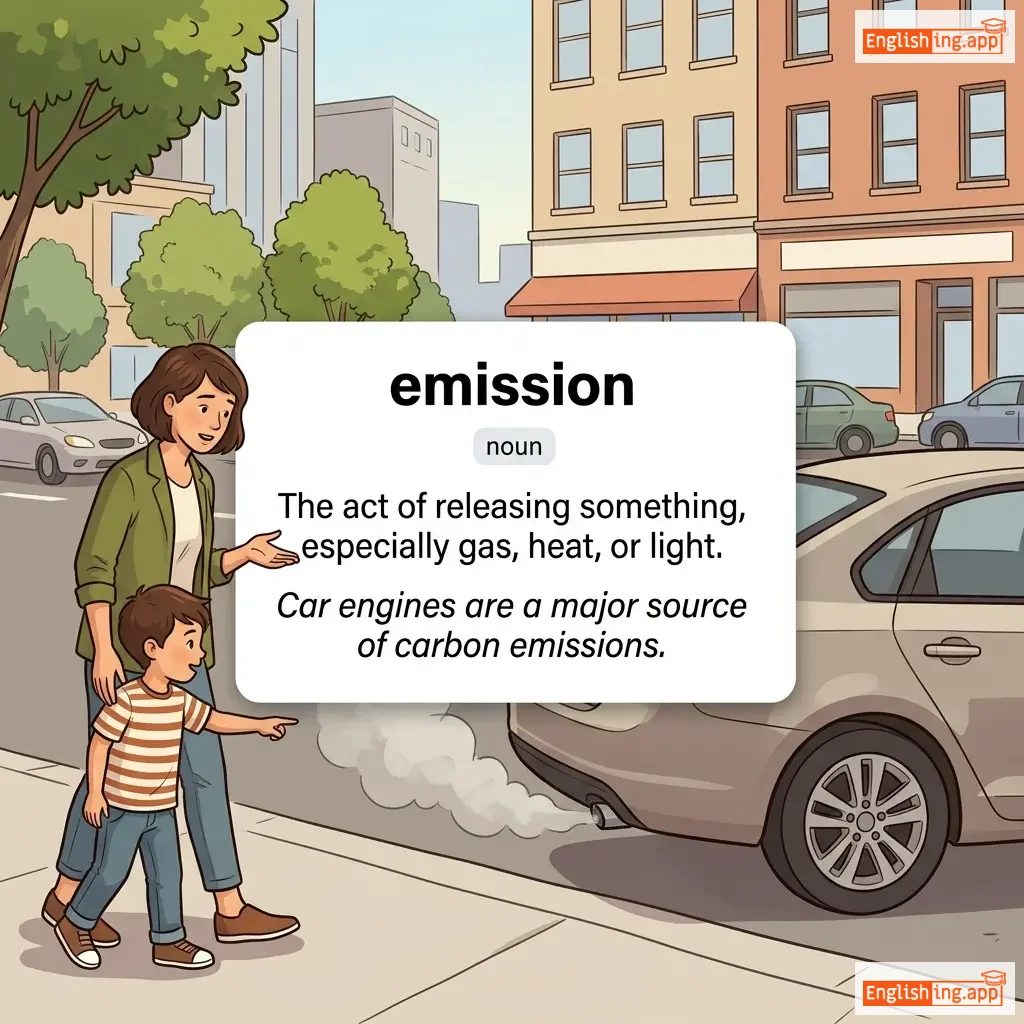
The act of releasing something, especially gas, heat, or light.
••••••
|
Car engines are a major source of carbon emissions. |
自動車のエンジンは主な二酸化炭素排出源です。
Jidousha no enjin wa omona nisankatanso haishutsu gen desu.
••••••
|
greenhouse gas emissions |
Gases released into the atmosphere that contribute to climate change.
••••••
|
温室効果ガス排出
Onshitsu kouka gasu haishutsu
••••••
|
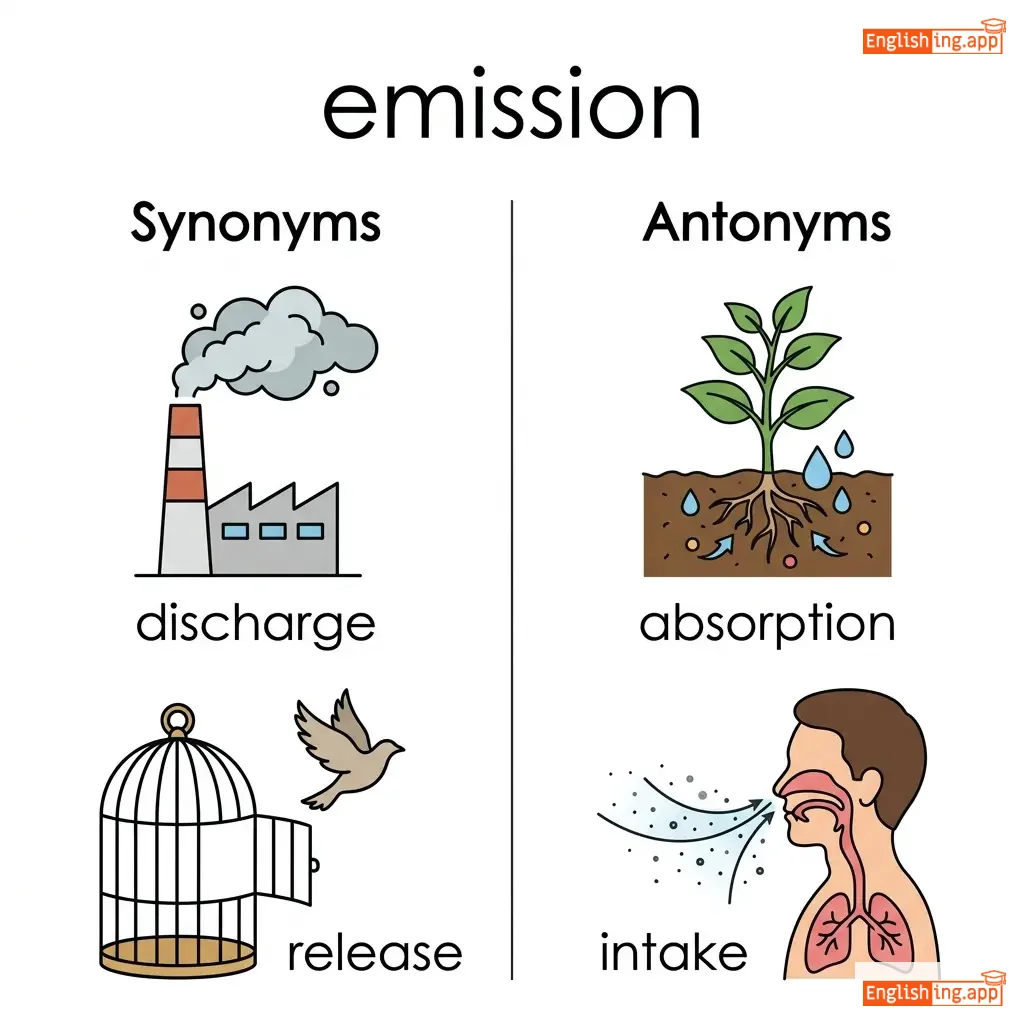
discharge, release, output, radiation
••••••
|
absorption, intake
••••••
|
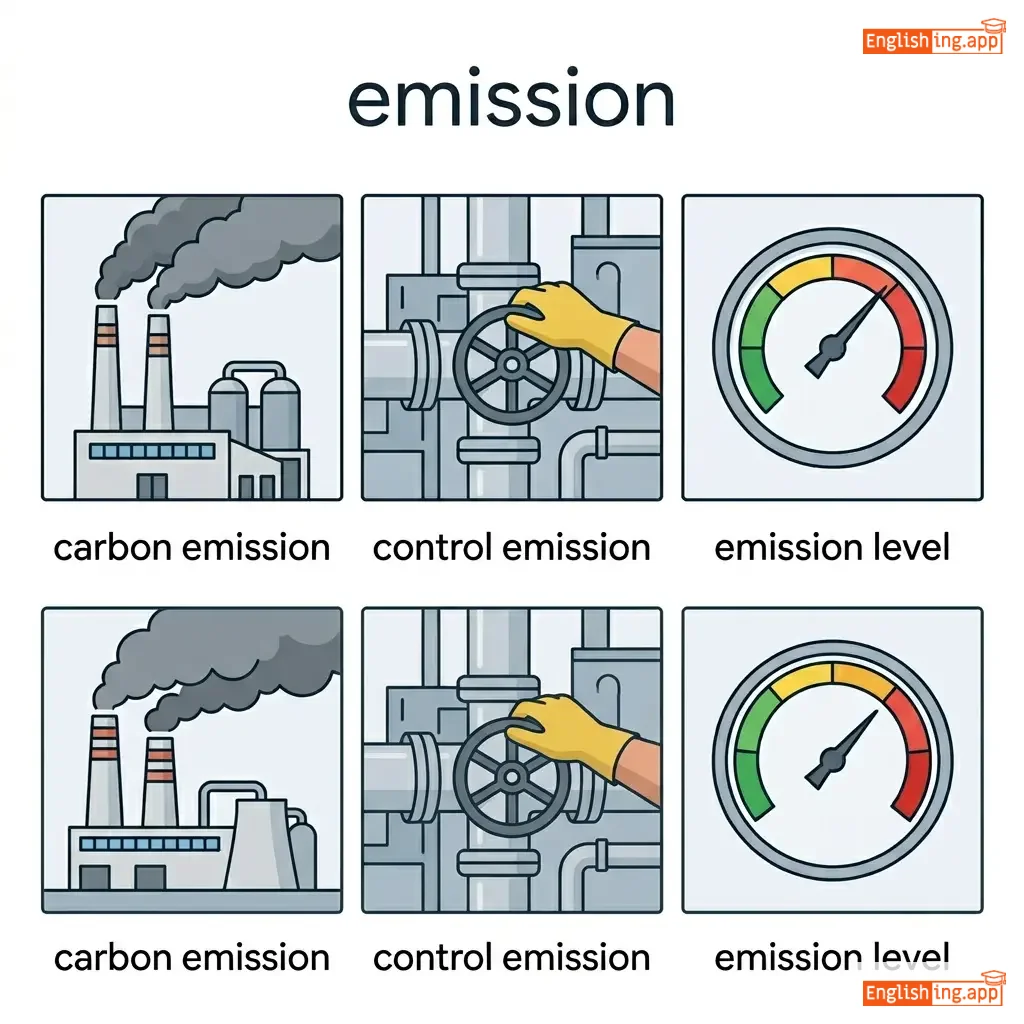
carbon emission, control emission, emission level, reduce emissions
••••••
|
Emission = Emit + shutsu → Emit は放出を意味し、Emission は排出を意味します。
••••••
|
|
🔍
••••••
|
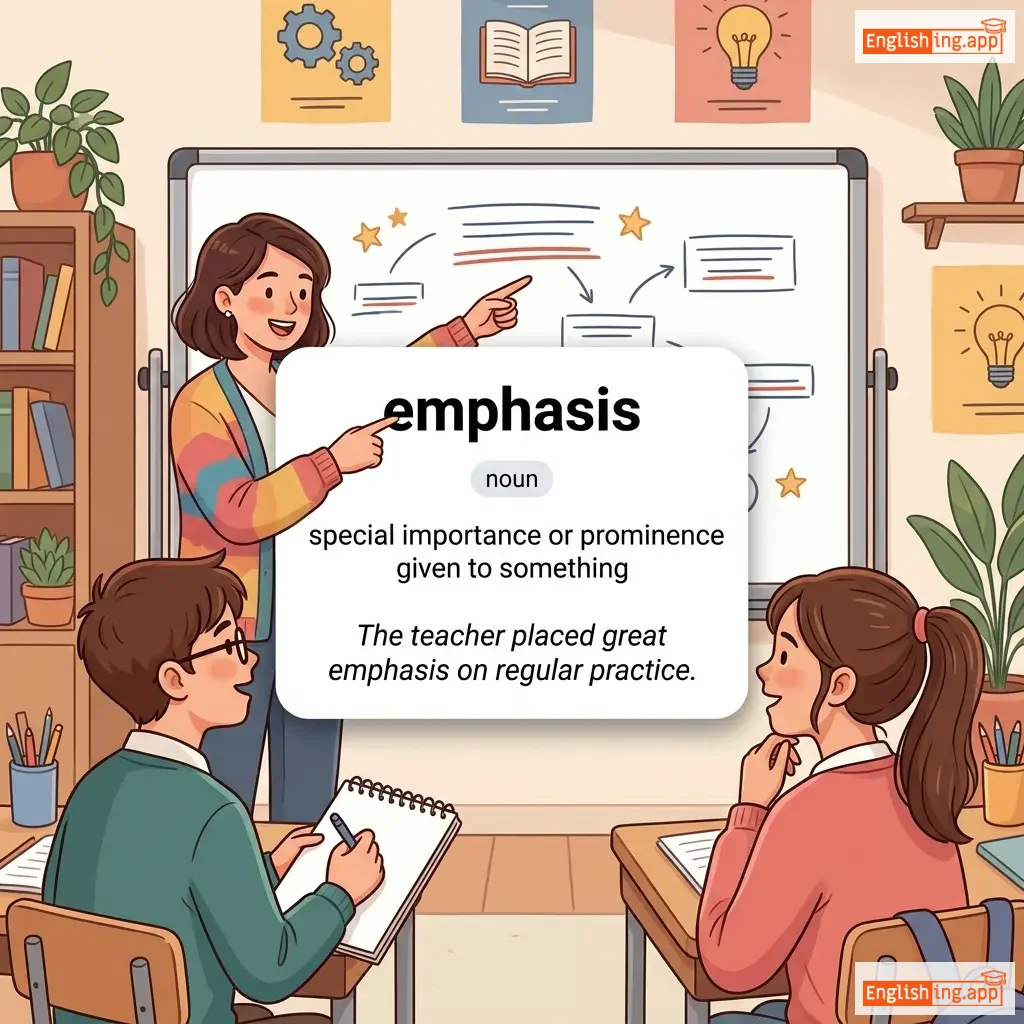
/ˈɛmfəsɪs/
noun
(エンファシス)
••••••
|
|
強調
kyōchō
••••••
|
- •••••• | - •••••• | - •••••• | - •••••• |
special importance or prominence given to something
••••••
|
The teacher placed great emphasis on regular practice. |
先生は定期的な練習の重要性を強調しました。
Sensei wa teikiteki na renshū no jūyō-sei o kyōchō shimashita.
••••••
|
place emphasis on |
to give special importance to something
••••••
|
強調する
kyōchō suru
••••••
|
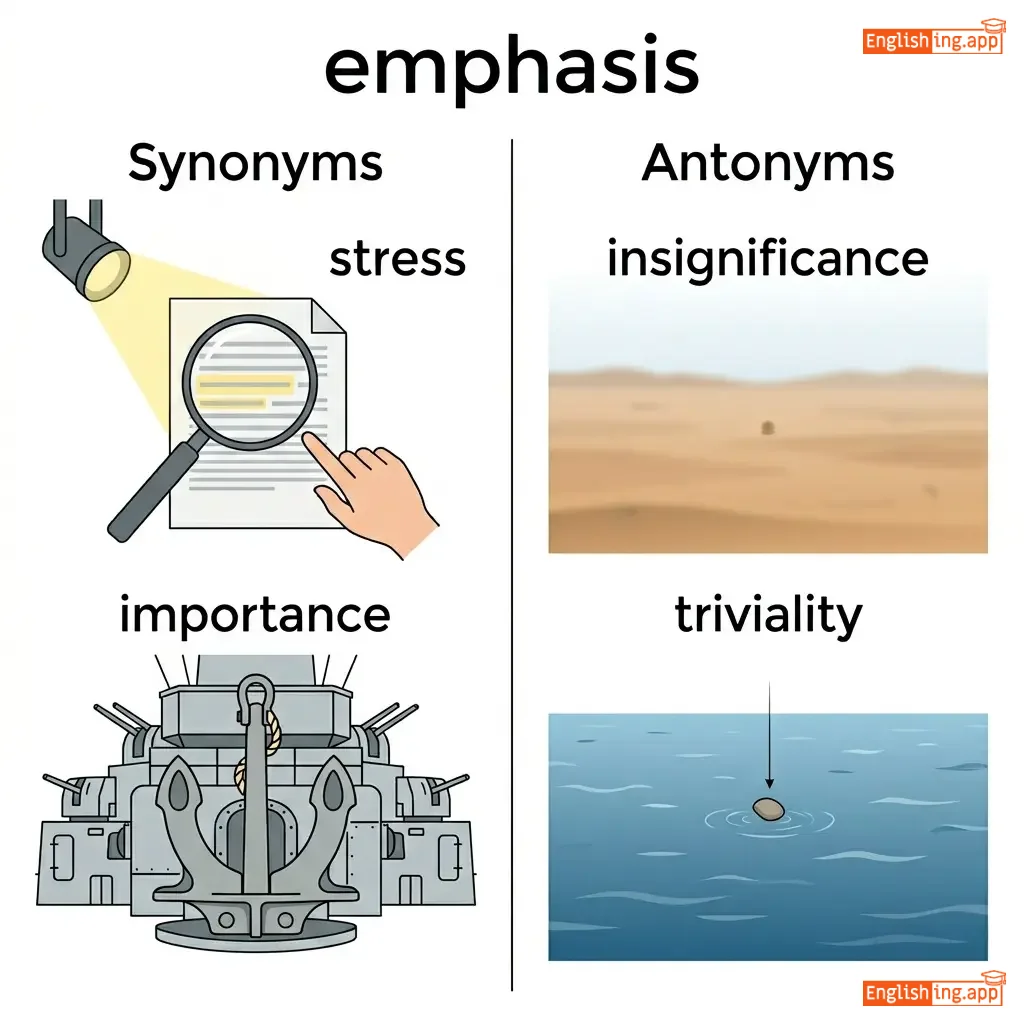
stress, importance, weight, significance, priority
••••••
|
insignificance, triviality
••••••
|
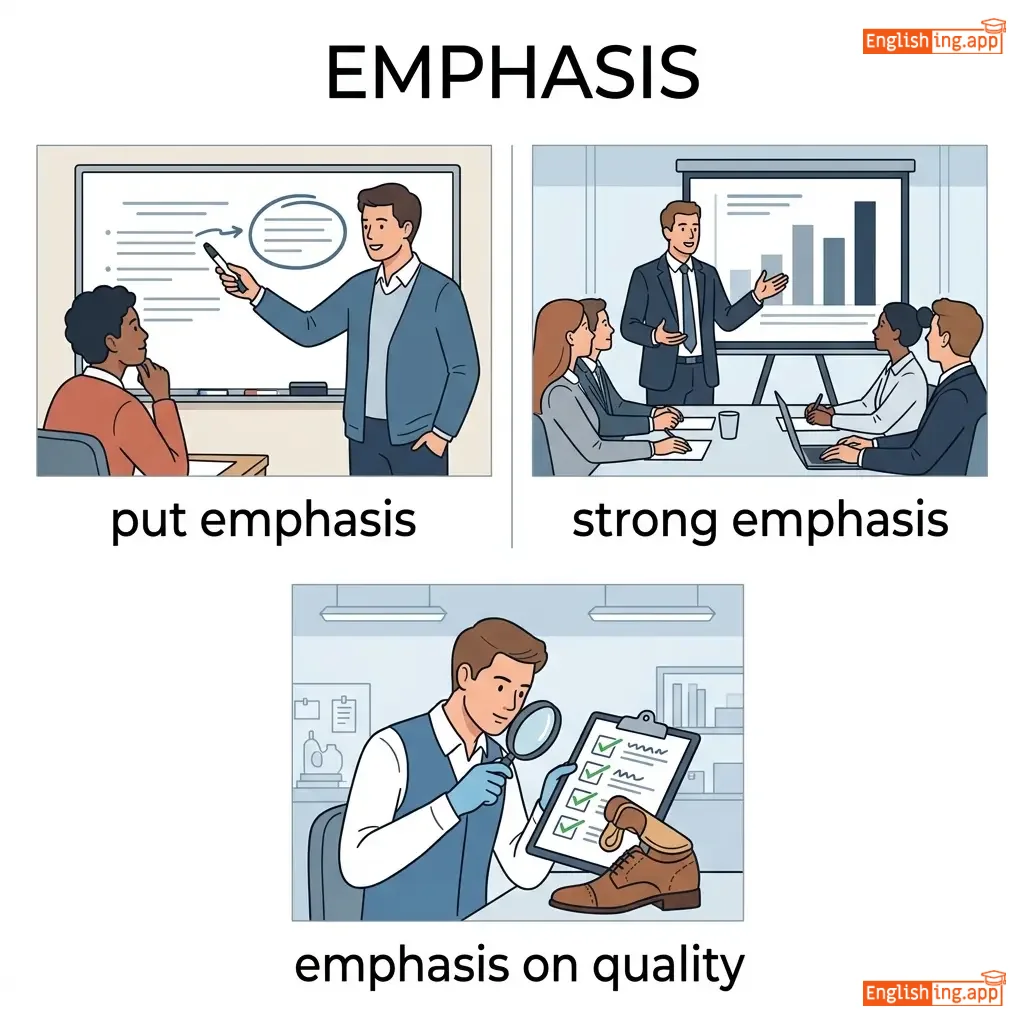
put emphasis, strong emphasis, emphasis on quality, emphasis added
••••••
|
強調(きょうちょう)という言葉は、何かを強く言うことから意味を取っています。
••••••
|
|
🙋♂️
••••••
|
/huːˈɛvər/
pronoun
(フーエヴァ)
••••••
|
- •••••• |
誰でも
dare demo
••••••
|
- •••••• | - •••••• | - •••••• | - •••••• |
any person who; no matter who
••••••
|
Whoever wants to join the trip must register today. |
誰でもこの旅行に参加したい場合は、今日中に登録する必要があります。
Dare demo kono ryokō ni sanka shitai baai wa, kyōjū ni tōroku suru hitsuyō ga arimasu.
••••••
|
- •••••• | - •••••• | - •••••• |
anyone, anybody, whosoever
••••••
|
none, nobody
••••••
|
whoever comes, whoever wants, whoever said, whoever did
••••••
|
Who + ever = 誰でも — whoever means 誰でも
••••••
|
|
🚫
••••••
|
/wɪðˈaʊt/
preposition
(ウィズアウト)
••••••
|
- •••••• |
なし
nashi
••••••
|
- •••••• | - •••••• | - •••••• | - •••••• |
in the absence of, or not having something
••••••
|
He left without saying goodbye.
彼はさよならを言わずに出て行った。
••••••
|
彼はさよならを言わずに出て行った。
Kare wa sayonara o iwazu ni dete itta.
••••••
|
- •••••• | - •••••• | - •••••• |
lacking, absent, minus, excluding
••••••
|
with, having
••••••
|
without a doubt, without hesitation, without warning
••••••
|
なし (without) はすべてを失う、何も残らない
••••••
|
|
🏋️♀️
••••••
|
/ˈwɜːrkaʊt/
noun
(ワークアウト)
••••••
|
- •••••• |
運動
undou
••••••
|
- •••••• | - •••••• | - •••••• | - •••••• |
a session of physical exercise or training to improve fitness or health
••••••
|
She does a full-body workout every morning before work. |
彼女は毎朝仕事の前に全身の運動をします。
Kanojo wa mai asa shigoto no mae ni zenshin no undou o shimasu.
••••••
|
intense workout |
a very demanding or vigorous exercise session
••••••
|
激しい運動
hageshii undou
••••••
|
exercise, training, session, fitness routine, practice
••••••
|
rest, inactivity, relaxation
••••••
|
daily workout, intense workout, gym workout, home workout
••••••
|
ジムでの ‘workout’ は体をフィットにするための運動 — 仕事前に運動する!
••••••
|
|
✍️
••••••
|
/ˈrɪtən/
adjective
(リテン)
••••••
|
- •••••• |
書かれた
kakareta
••••••
|
- •••••• | - •••••• | - •••••• | - •••••• |
expressed in writing rather than spoken; composed or recorded in written form
••••••
|
The agreement must be in written form to be valid.
その契約は有効であるために書面でなければならない。
••••••
|
その契約は有効であるために書面でなければならない。
Sono keiyaku wa yūkō de aru tame ni shomen de nakereba naranai.
••••••
|
in black and white
白黒はっきり
••••••
|
clearly written or printed, leaving no doubt
••••••
|
白黒はっきり
shirokuro hakkiri
••••••
|
documented, recorded, drafted, inscribed, composed
••••••
|
spoken, oral, verbal
••••••
|
written form, written statement, written communication, written agreement
••••••
|
Written は日本語で書かれた、記録されたものを意味します ✍️
••••••
|

