The Fisherman Who Protected the Ocean
ラマジャンは十五年間働いてきた伝統的な漁師でした。彼は海洋が商業トロールによって搾取されていることに気付きました。彼の感情は、これが間違っているというものでした。環境的な派閥は彼を支持しました。ラマジャンの主な発見は、違法な漁法が魚の個体群を枯渇させているということでした。一部の批評家は、彼が発言したときに眉をひそめました。しかし、科学はフィクションではなく、データは彼の主張を支持しました。広く使用される化学物質、特に廃棄物中の高いナトリウム含量がサンゴ礁を傷つけていました。あるグループは、コカインのパッケージを投棄し、海洋生物に害を与えていました。ラマジャンは重大な環境被害の可能性を除外することができませんでした。彼の使命は適切な漁業慣行を実行することでした。汚染との戦いはファンタジーではなく、現実でした。身体的な疲労は時々彼を圧倒しましたが、彼は粘り強く続けました。彼は海洋の健康を羽根のように繊細で保護する必要があるものに例えました。いくつかの工業漁師の戦士のような態度は抵抗しようとしました。しかし、ラマジャンの議論は怒りで爆発することはなく、冷静を保ちました。彼のアプローチは何も性的でも不適切でもなく、完全にプロフェッショナルなものでした。面白い瞬間は、ソビエト時代の漁業マニュアルが偶然にも彼の保護方法が伝統的であることを証明したときでした。ラマジャンは個々の漁師が海洋保護において違いを生むことができることを証明しました。
|
絵文字
|
単語 | Images | 翻訳 | 過去 | 過去分詞 | 三人称単数 | 動名詞 | 意味 | 例文 | 例文の翻訳 | 表現例 | 表現例の意味 | 表現例の翻訳 | 同義語 | 対義語 | コロケーション | ニーモニック |
|---|---|---|---|---|---|---|---|---|---|---|---|---|---|---|---|---|---|
|
💉
••••••
|
/kəˈkeɪn/
noun
(コカイン)
••••••
|
- •••••• |
コカイン (麻薬)
kokain
••••••
|
- •••••• | - •••••• | - •••••• | - •••••• |
a powerful and addictive illegal drug made from coca leaves
••••••
|
He was arrested for possessing cocaine.
彼はコカイン所持で逮捕されました。
••••••
|
彼はコカイン所持で逮捕されました。
Kare wa kokain shoji de taiho saremashita.
••••••
|
- •••••• | - •••••• | - •••••• |
drug, narcotic, stimulant, substance, powder
••••••
|
medicine, antidote
••••••
|
cocaine addiction, cocaine use, cocaine trafficking, cocaine abuse
••••••
|
Cocaine - コカの葉から作られる薬物、でも非常に危険です!
••••••
|
|
🚫
••••••
|
/ɪkˈskluːd/
verb
(エクスクルード)
••••••
|
- •••••• |
除外する
jogai suru
••••••
|
excluded
エクスクルーデッド
••••••
|
excluded
エクスクルーデッド
••••••
|
excludes
エクスクルーズ
••••••
|
excluding
エクスクルーディング
••••••
|
To deliberately leave out or prevent someone or something from being included.
••••••
|
The list excludes temporary workers.
リストは臨時労働者を除外しています。
••••••
|
リストは臨時労働者を除外しています。
Risutowa rinji rōdōsha o jogai shiteimasu.
••••••
|
exclude from consideration
考慮から除外する
••••••
|
To not take something into account.
••••••
|
考慮から除外する
Kōryo kara jogai suru
••••••
|
omit, ban, reject, prevent, bar
••••••
|
include, admit, accept
••••••
|
exclude someone, exclude possibility, exclude group
••••••
|
Excludeの意味はEXit + includeなし-外に除外すること。
••••••
|
|
✅
••••••
|
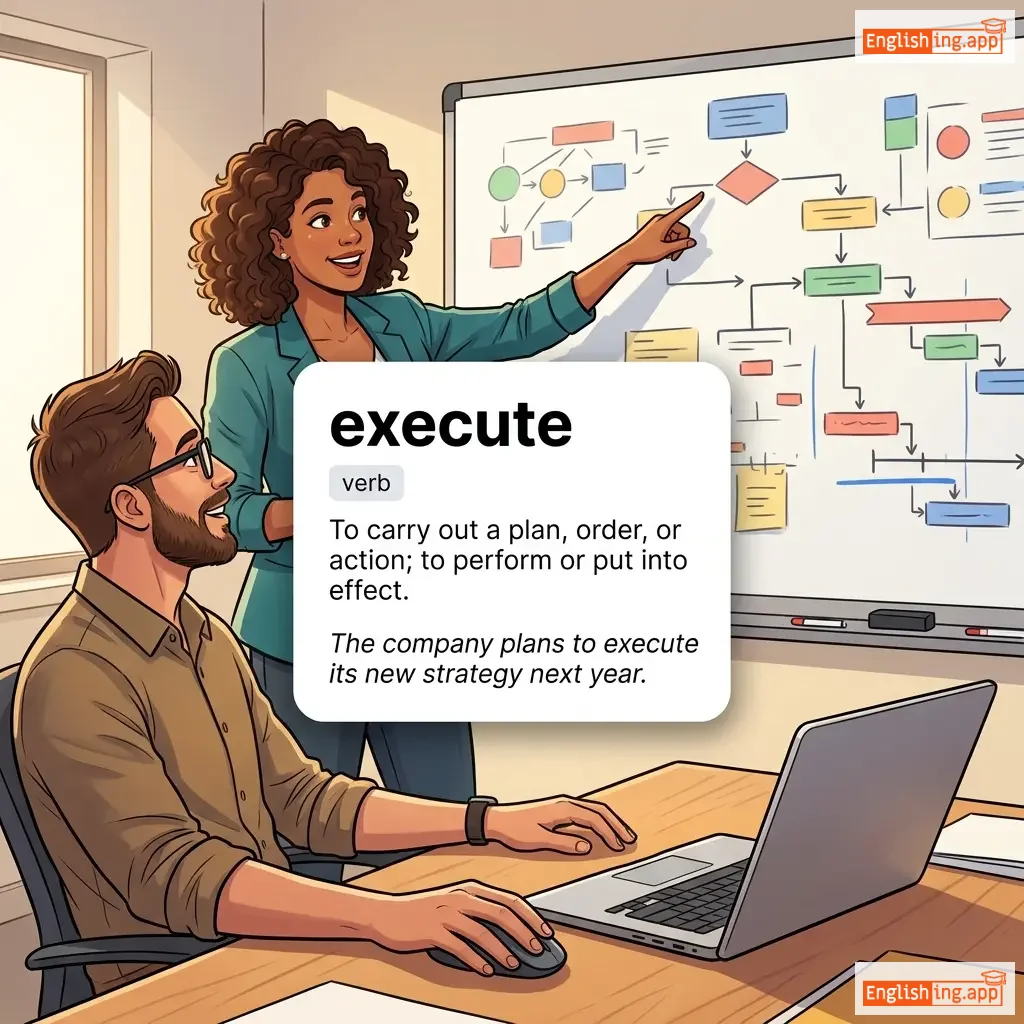
/ˈɛksɪkjuːt/
verb
(エクスキュート)
••••••
|
|
実行する
jikkou suru
••••••
|
executed
エクスキューテッド
••••••
|
executed
エクスキューテッド
••••••
|
executes
エクスキューツ
••••••
|
executing
エクスキューティング
••••••
|
To carry out a plan, order, or action; to perform or put into effect.
••••••
|
The company plans to execute its new strategy next year.
その会社は来年、新しい戦略を実行する予定です。
••••••
|
その会社は来年、新しい戦略を実行する予定です。
Sono kaisha wa rainen, atarashī senryaku wo jikkou suru yotei desu.
••••••
|
execute a plan
計画を実行する
••••••
|
to put a plan into action
••••••
|
計画を実行する
keikaku wo jikkou suru
••••••
|
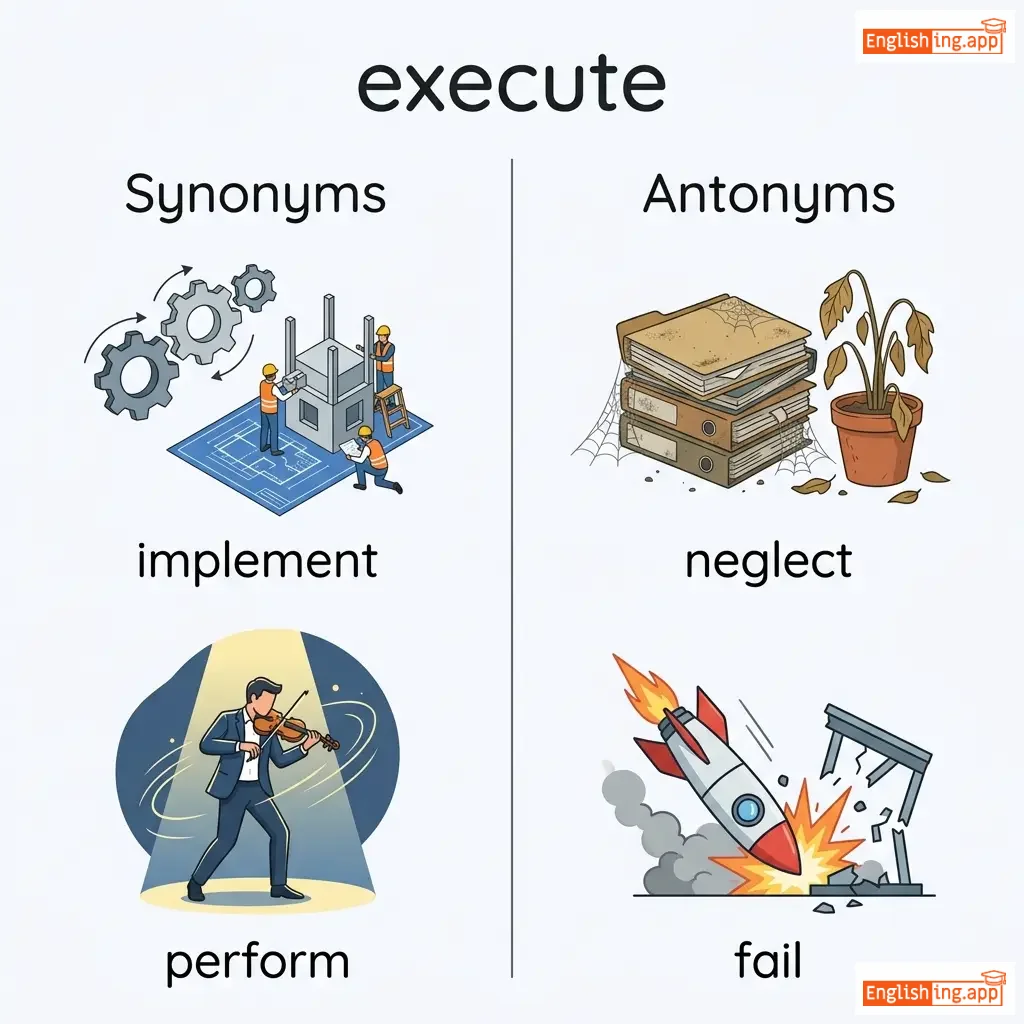
implement, perform, accomplish, enforce, carry out
••••••
|
neglect, fail, ignore
••••••
|
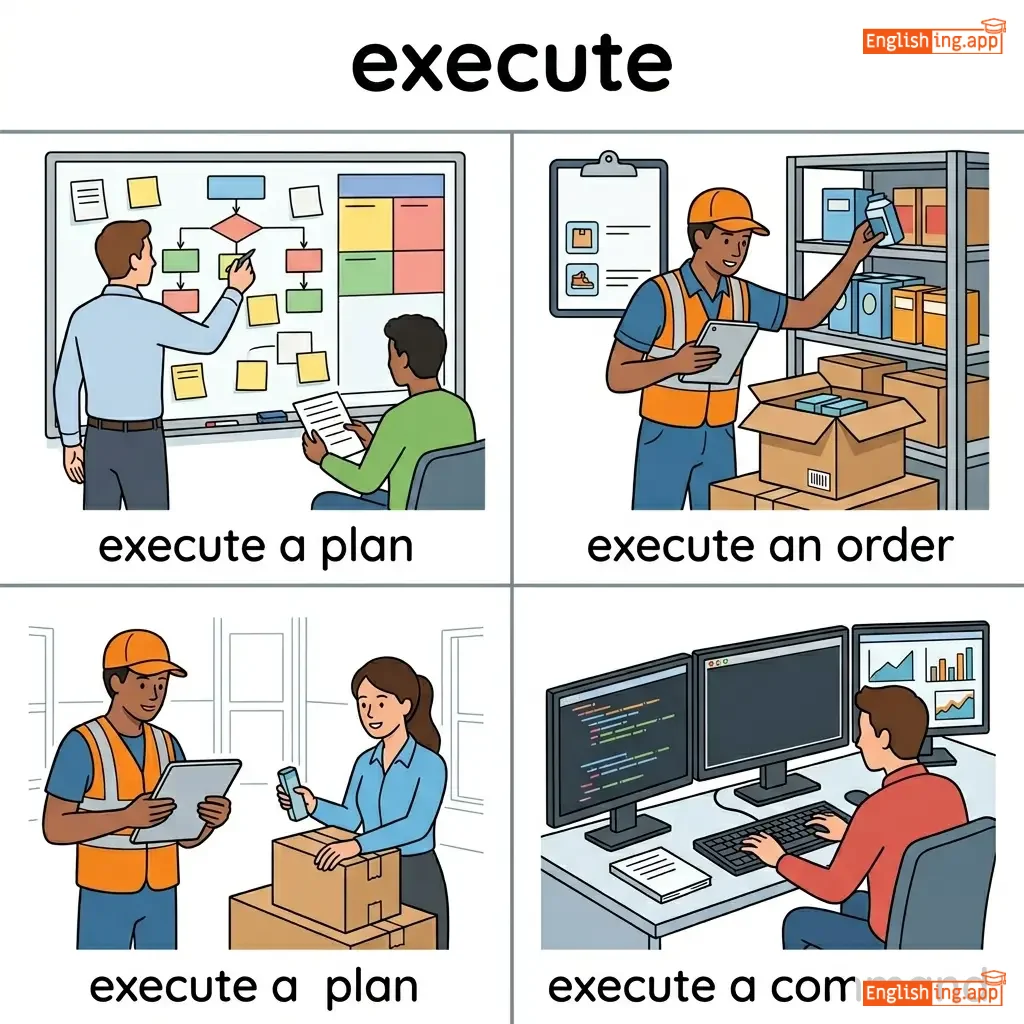
execute a plan, execute an order, execute a command, execute perfectly
••••••
|
Executeは計画を実行に移すことです。
••••••
|
|
😩
••••••
|
/ɪɡˈzɔːst/
verb
(イグゾースト)
••••••
|
- •••••• |
疲れさせる
tsukaresaseru
••••••
|
exhausted
イグゾーストエッド
••••••
|
exhausted
イグゾーストエッド
••••••
|
exhausts
イグゾーストス
••••••
|
exhausting
イグゾースティング
••••••
|
to tire out completely; to use up resources
••••••
|
The long journey exhausted the children.
長い旅が子供たちを疲れさせた。
••••••
|
長い旅が子供たちを疲れさせた。
Nagai tabi ga kodomotachi o tsukaresaseta.
••••••
|
run out of steam
エネルギーを失う
••••••
|
to lose energy or enthusiasm
••••••
|
エネルギーを失う
enerugī o ushinau
••••••
|
drain, fatigue, deplete, tire, weaken
••••••
|
energize, refresh, restore
••••••
|
exhaust energy, exhaust resources, exhaust possibilities
••••••
|
Exhaustが排気管のように、長い間の努力の後に疲れ果てる。
••••••
|
|
💥
••••••
|
/ɪkˈsploʊd/
verb
(エクスプロード)
••••••
|
- •••••• |
爆発する
bakuhatsu suru
••••••
|
exploded
エクスプローデッド
••••••
|
exploded
エクスプローデッド
••••••
|
explodes
エクスプローズ
••••••
|
exploding
エクスプローディング
••••••
|
to burst or shatter violently and noisily as a result of rapid combustion or pressure
••••••
|
The bomb exploded in the middle of the street.
爆弾は通りの真ん中で爆発しました。
••••••
|
爆弾は通りの真ん中で爆発しました。
Bakudan wa toori no mannaka de bakuhatsu shimashita.
••••••
|
explode with laughter
笑いで爆発する
••••••
|
to suddenly start laughing very loudly
••••••
|
笑いで爆発する
warai de bakuhatsu suru
••••••
|
burst, blow up, detonate, erupt, shatter
••••••
|
implode, collapse, defuse
••••••
|
explode suddenly, explode violently, explode with laughter, explode a bomb
••••••
|
Explode という意味は爆発する — 難しい質問を見て頭が爆発する
••••••
|
|
⚒️
••••••
|
/ɪkˈsplɔɪt/
verb, noun
••••••
|
- •••••• | - •••••• |
exploited
••••••
|
exploited
••••••
|
exploits
••••••
|
exploiting
••••••
|
to make full use of and derive benefit from (a resource); to use someone unfairly for one’s own advantage
••••••
|
The company was accused of exploiting child labor. |
- •••••• |
exploit opportunities |
to make the best use of chances or favorable situations
••••••
|
- •••••• |
utilize, take advantage, abuse, capitalize, manipulate
••••••
|
neglect, ignore, support
••••••
|
exploit resources, exploit workers, exploit opportunities, exploit system
••••••
|
No •••••• |
|
👁️
••••••
|
/ˈaɪbraʊ/
noun
(アイブラウ)
••••••
|
- •••••• |
眉毛
mayuge
••••••
|
- •••••• | - •••••• | - •••••• | - •••••• |
the strip of hair growing on the ridge above a person's eye
••••••
|
She raised her eyebrow in surprise. |
彼女は驚いて眉毛を上げた。
Kanojo wa odoroite mayuge o ageta.
••••••
|
raise an eyebrow |
to show surprise or mild disapproval
••••••
|
眉をひそめる
mayuge o hisomeru
••••••
|
brow, ridge, arch, eye ridge
••••••
|
none, bare skin
••••••
|
raise an eyebrow, thick eyebrows, arched eyebrow, pluck eyebrows
••••••
|
‘Eyebrow’ と ‘眉毛’ は目の上にある髪。驚くとき、眉をひそめることを覚えておこう!
••••••
|
|
👥
••••••
|
/ˈfæk.ʃən/
noun
(fakushon)
••••••
|
- •••••• |
派閥
habatsu
••••••
|
- •••••• | - •••••• | - •••••• | - •••••• |
a small organized dissenting group within a larger one
••••••
|
Different factions within the party disagreed about the new policy. |
党内の異なる派閥は新しい政策に対して意見が一致しませんでした。
Tōnai no kotonaru habatsu wa atarashī seisaku ni taishite iken ga icchi shimasen deshita.
••••••
|
- •••••• | - •••••• | - •••••• |
group, sect, clique, wing
••••••
|
unity, whole, entirety, consensus
••••••
|
political faction, rival faction, faction within party
••••••
|
派閥 (habatsu) - 政治団体で意見の対立から分かれるグループ。
••••••
|
|
🪐
••••••
|
/ˈfæntəsi/
noun
(ファンタジー)
••••••
|
- •••••• |
ファンタジー
fantajī
••••••
|
- •••••• | - •••••• | - •••••• | - •••••• |
a creation of the imagination, especially something improbable or impossible
••••••
|
She has a vivid fantasy about traveling to space. |
彼女は宇宙旅行に関する生き生きとしたファンタジーを持っています。
Kanojo wa uchū ryokō ni kansuru ikikito shita fantajī o motteimasu.
••••••
|
- •••••• | - •••••• | - •••••• |
imagination, dream, vision, fancy
••••••
|
reality, fact
••••••
|
wild fantasy, vivid fantasy, escape into fantasy
••••••
|
Fantasy = ファンタジー、夢の中で不可能なことを思い描く
••••••
|
|
😴
••••••
|
/fəˈtiːɡ/
noun
(ファティーグ)
••••••
|
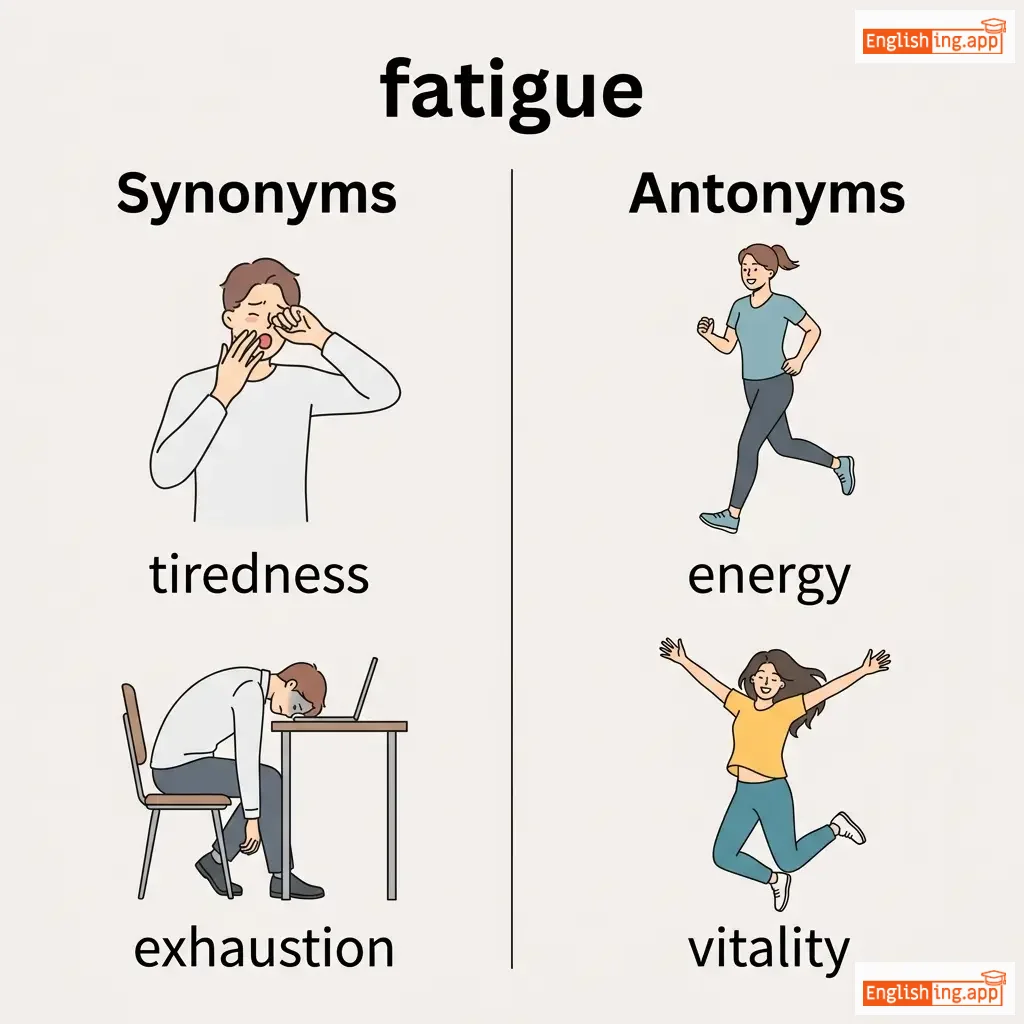
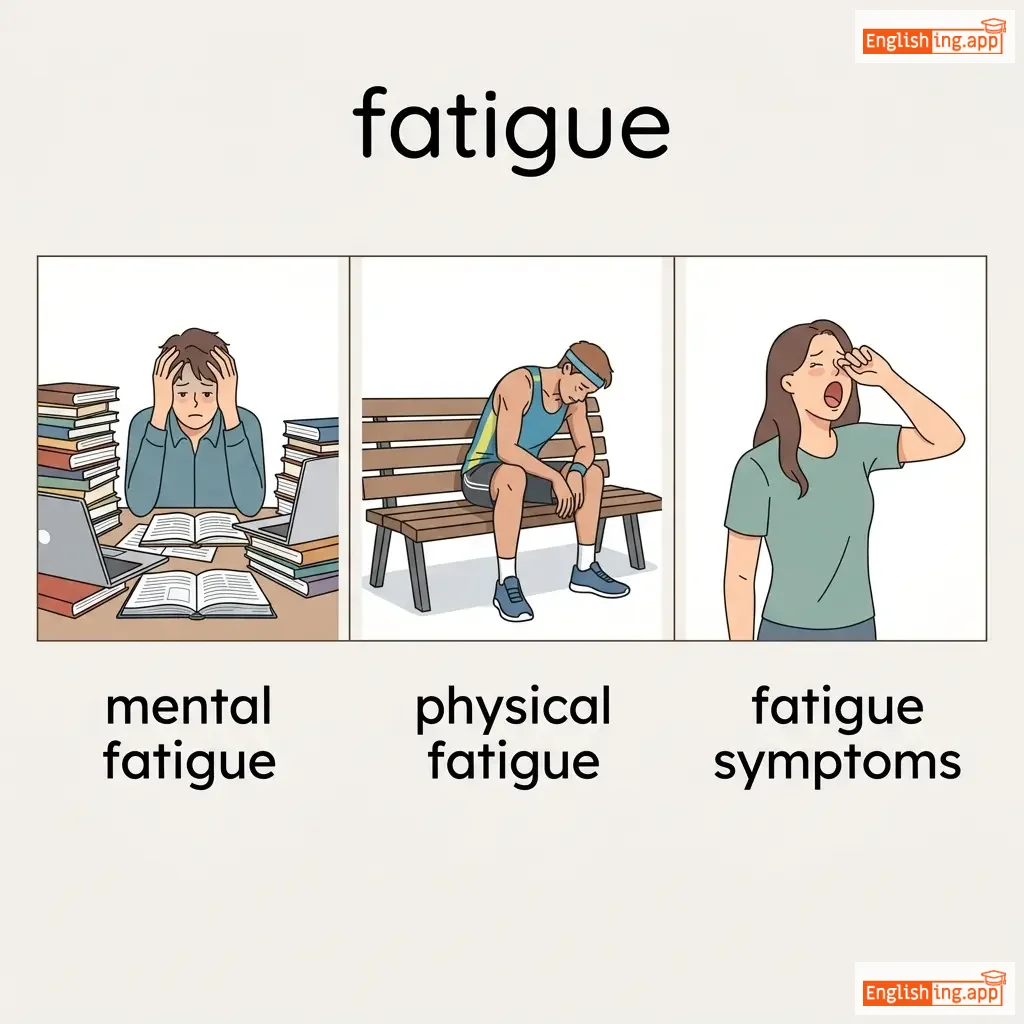
|
疲労
hirou
••••••
|
- •••••• | - •••••• | - •••••• | - •••••• |
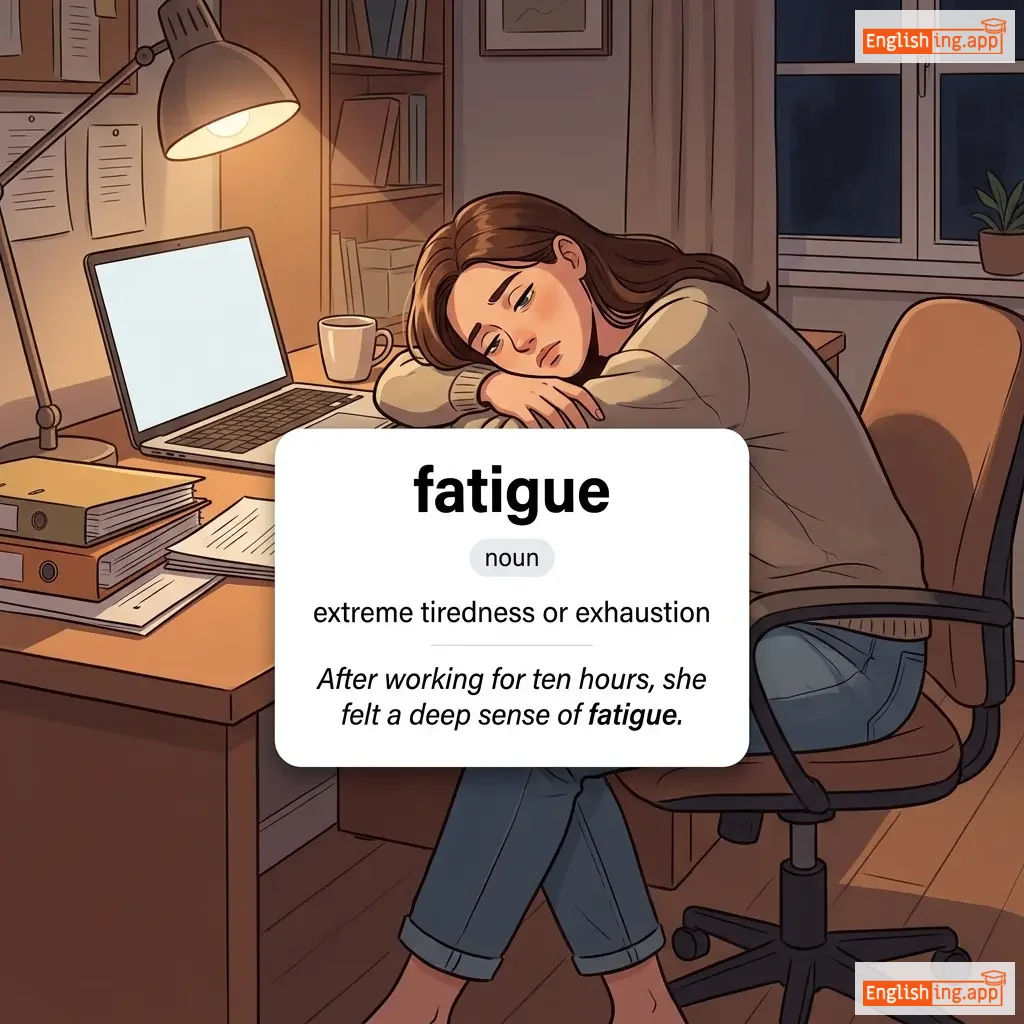
extreme tiredness resulting from mental or physical exertion or illness
••••••
|
After working for twelve hours straight, he was overcome by fatigue.
12時間連続で働いた後、彼は疲労に圧倒されました。
••••••
|
12時間連続で働いた後、彼は疲労に圧倒されました。
12 jikan renzoku de hataraita ato, kare wa hirou ni attō sare mashita.
••••••
|
- •••••• | - •••••• | - •••••• |
exhaustion, weariness, tiredness, burnout
••••••
|
energy, vitality, freshness, vigor
••••••
|
muscle fatigue, mental fatigue, chronic fatigue
••••••
|
Fatigue = 疲労, similar in Japanese.
••••••
|
|
🪶
••••••
|
/ˈfɛðər/
noun
(フェザー)
••••••
|
- •••••• |
羽
hane
••••••
|
- •••••• | - •••••• | - •••••• | - •••••• |
a light, soft structure that covers a bird’s body and enables it to fly
••••••
|
The bird lost a small feather while flying through the trees. |
その鳥は木々の間を飛ぶとき、小さな羽を失いました。
Sono tori wa kigi no aida o tobu toki, chiisana hane o ushinai mashita.
••••••
|
birds of a feather |
people who have similar interests or characteristics
••••••
|
似たような興味や特徴を持つ人々
Nita yōna kyōmi ya tokuchō o motsu hitobito
••••••
|
plume, quill, down, tuft, pinion
••••••
|
scale, skin
••••••
|
feather pillow, feather pen, light as a feather, peacock feather
••••••
|
Featherは羽の意味です — 枕の中に羽がある柔らかさを想像してください。
••••••
|
|
💓
••••••
|
/ˈfiːlɪŋ/
noun
(フィーリング)
••••••
|
- •••••• |
感情
kanjou
••••••
|
- •••••• | - •••••• | - •••••• | - •••••• |
An emotional state or physical sensation.
••••••
|
She had a strange feeling about the place. |
彼女はその場所について奇妙な感情を抱いていた。
Kanojo wa sono basho ni tsuite kimyō na kanjō o daite ita.
••••••
|
mixed feelings |
Having both positive and negative emotions about something
••••••
|
複雑な感情
fukuzatsu na kanjō
••••••
|
emotion, sensation, sentiment, mood
••••••
|
numbness, indifference
••••••
|
strong feeling, bad feeling, good feeling, mixed feelings
••••••
|
Feelingは感情です、あなたの心の中にあるもの
••••••
|
|
📚
••••••
|
/ˈfɪkʃən/
noun
(フィクション)
••••••
|
- •••••• |
フィクション
fikushon
••••••
|
- •••••• | - •••••• | - •••••• | - •••••• |
Literature created from the imagination, not presented as fact.
••••••
|
She enjoys reading science fiction novels.
彼女はサイエンスフィクション小説を読むのが好きです。
••••••
|
彼女はサイエンスフィクション小説を読むのが好きです。
Kanojo wa saiensu fikushon shousetsu wo yomu no ga suki desu.
••••••
|
stranger than fiction
フィクションよりも奇妙
••••••
|
Something unbelievable but true.
••••••
|
フィクションよりも奇妙
Fikushon yori mo kimyou
••••••
|
story, novel, tale, narrative, myth
••••••
|
fact, reality, truth
••••••
|
science fiction, historical fiction, fiction writer, work of fiction
••••••
|
フィクションは英語の'fiction'と同じ - 'フィクションで非現実的な世界を冒険しよう!'
••••••
|
|
1️⃣5️⃣
••••••
|
/ˌfɪfˈtiːn/
number
(フィフティーン)
••••••
|
- •••••• |
十五
juugo
••••••
|
- •••••• | - •••••• | - •••••• | - •••••• |
the number 15
••••••
|
There are fifteen students in the class. |
クラスには十五人の生徒がいます。
Kurasu ni wa juugo nin no seito ga imasu.
••••••
|
- •••••• | - •••••• | - •••••• |
15
••••••
|
fourteen, sixteen
••••••
|
fifteen minutes, fifteen years, group of fifteen
••••••
|
フィフティーン = 十五 (15) - 10 と 5 が足し算されて 15 になります。
••••••
|
|
🥊
••••••
|
/ˈfaɪtər/
noun
(ファイター)
••••••
|
- •••••• |
戦士
senshi
••••••
|
- •••••• | - •••••• | - •••••• | - •••••• |
a person who fights, especially in combat or sports like boxing
••••••
|
The fighter won the championship after a tough battle. |
その戦士は厳しい戦いの後でチャンピオンになった。
Sono senshi wa kibishī tatakai no ato de chanpion ni natta.
••••••
|
freedom fighter |
a person who takes part in a resistance movement against an oppressive regime
••••••
|
自由の戦士
jiyū no senshi
••••••
|
warrior, combatant, soldier, boxer, contender
••••••
|
peacemaker, pacifist, civilian
••••••
|
brave fighter, freedom fighter, skilled fighter, fighter plane
••••••
|
Fighter は戦士 - 自由の戦士を覚えておいて、自由の戦士は freedom fighter です
••••••
|
|
📑
••••••
|
/ˈfaɪn.dɪŋ/
noun
(ファインディング)
••••••
|
- •••••• |
発見、調査後に得られた結論または結果
hakken, chousa go ni erareta ketsuron matawa kekka
••••••
|
- •••••• | - •••••• | - •••••• | - •••••• |
a discovery, conclusion, or result reached after investigation
••••••
|
The scientist published her findings in a leading journal. |
科学者は彼女の発見を主要なジャーナルに発表しました。
Kagakusha wa kanojo no hakken wo shuyou na jaanaru ni happyou shimashita.
••••••
|
- •••••• | - •••••• | - •••••• |
discovery, result, conclusion, outcome, observation
••••••
|
ignorance, loss
••••••
|
research finding, important finding, surprising finding
••••••
|
Finding とは調査後に得られる発見や結果です!
••••••
|
|
❤️
••••••
|
/ˈsɛkʃʊəl/
adjective
(セクシャル)
••••••
|
- •••••• |
セクシャル
sekusharu
••••••
|
- •••••• | - •••••• | - •••••• | - •••••• |
relating to the instincts, physiological processes, and activities connected with physical attraction or intimate physical contact between individuals
••••••
|
The sexual health of individuals is an important topic in modern medicine. |
個々の性の健康は現代医学において重要なトピックです。
Koko no sei no kenko wa gendai igaku ni oite juuyou na topikku desu.
••••••
|
- •••••• | - •••••• | - •••••• |
erotic, intimate, amorous, sensual
••••••
|
asexual, nonsexual
••••••
|
sexual attraction, sexual health, sexual orientation, sexual behavior
••••••
|
Sexual health is about intimacy and attraction.
••••••
|
|
🧪
••••••
|
/ˈsəʊdiəm/
noun
(ナトリウム)
••••••
|
- •••••• |
ナトリウム
natoriumu
••••••
|
- •••••• | - •••••• | - •••••• | - •••••• |
a soft, silver-white chemical element that is highly reactive and found in salt.
••••••
|
Sodium is an essential element for maintaining fluid balance in the body.
ナトリウムは体内の液体バランスを維持するために不可欠な元素です。
••••••
|
ナトリウムは体内の液体バランスを維持するために不可欠な元素です。
Natoriumu wa tainai no ekitai baransu o iji suru tame ni fukaketsu na gensu desu.
••••••
|
- •••••• | - •••••• | - •••••• |
Na, element, salt component, chemical
••••••
|
none, deficiency
••••••
|
sodium chloride, low sodium, sodium intake, sodium level
••••••
|
ナトリウムは塩の重要な成分です - 覚えておいてください、‘So Dear Salt’はナトリウム!
••••••
|
|
🌍
••••••
|
/ˈsoʊ.vi.ət/
adjective
(ソビエト)
••••••
|
- •••••• |
ソビエト
sovieto
••••••
|
- •••••• | - •••••• | - •••••• | - •••••• |
relating to the Soviet Union or its government
••••••
|
The Soviet era saw significant changes in Eastern Europe.
ソビエト時代には東ヨーロッパで重要な変化がありました。
••••••
|
ソビエト時代には東ヨーロッパで重要な変化がありました。
Sobieto jidai niwa higashi yōroppa de jūyō na henka ga arimashita.
••••••
|
- •••••• | - •••••• | - •••••• |
communist, socialist, USSR-related
••••••
|
capitalist, democratic
••••••
|
Soviet government, Soviet Union, Soviet ideology
••••••
|
Soviet sounds like 'SOVE' - Soviets 'SOVE' changes the world!
••••••
|
|
🌍
••••••
|
/ˈwaɪdli/
adverb
(wáidori)
••••••
|
- •••••• |
広く
hiroku
••••••
|
- •••••• | - •••••• | - •••••• | - •••••• |
to a great extent or degree
••••••
|
The news of his promotion spread widely across the company. |
彼の昇進のニュースは会社全体に広がりました。
Kare no shōshin no nyūsu wa kaisha zentai ni hirogarimashita.
••••••
|
- •••••• | - •••••• | - •••••• |
extensively, broadly, widely, far
••••••
|
narrowly, limitedly
••••••
|
widely known, widely accepted, widely spread
••••••
|
Wide world 🌍 means a wide spread across everywhere!
••••••
|

