The Diplomat Who Brought Peace
アミナはeastern地域で働く外交官でした。彼女のstanceは明確でした - 彼女は平和交渉を信じていました。二国間で対立があり、メディアは事実をdistortしようとしていました。アミナはpersonで、unlike他の人々とは異なり、両方の側の話を聞く方法を知っていました。彼女の役割はpartlyコミットしていませんでしたが、wholly平和に捧げていました。彼女のembassyでは、すべての関係者がequally代表される会議が開催されました。彼女のdriving forceは、戦争がdisturbs無実の命を傷つけるという信念でした。彼女は攻撃的なstanceをendorseすることを拒否しました。最新の平和条約editionでは、一部の条項がevidently不公平でした。アミナは、そういった条項をenforceすることがethicalではないと主張しました。彼女の目標は、対話のレベルをelevateし、共通の土台を見つけることでした。ある日、交渉のテーブルで、面白い瞬間がありました。代表者のmakeupがぼやけているのに気づき、彼らをpleaseするために、静かにティッシュを渡しました。こうした小さなジェスチャーが、リラックスした雰囲気を作り出しました。特に緊張した会議で、髪の毛のstrandが彼女の顔に落ちましたが、彼女は冷静を保ちました。数ヶ月の努力の後、両側は公平で公正な平和合意に達しました。アミナは、外交とethicalなアプローチが、最も深刻な対立でさえ解決できることを証明しました。
|
絵文字
|
単語 | Images | 翻訳 | 過去 | 過去分詞 | 三人称単数 | 動名詞 | 意味 | 例文 | 例文の翻訳 | 表現例 | 表現例の意味 | 表現例の翻訳 | 同義語 | 対義語 | コロケーション | ニーモニック |
|---|---|---|---|---|---|---|---|---|---|---|---|---|---|---|---|---|---|
|
🔄
••••••
|
/dɪˈstɔːrt/
verb
••••••
|
- •••••• | - •••••• |
distorted
••••••
|
distorted
••••••
|
distorts
••••••
|
distorting
••••••
|
to twist or change the shape, appearance, or meaning of something so it is not true or accurate
••••••
|
The mirror distorted her reflection. |
- •••••• |
distort the truth |
to misrepresent or alter facts dishonestly
••••••
|
- •••••• |
twist, deform, misrepresent, warp, bend
••••••
|
straighten, clarify, preserve
••••••
|
distort reality, distort facts, distort image, distort sound
••••••
|
No •••••• |
|
🚫
••••••
|
/dɪsˈtɜːb/
verb
(ディスターブ)
••••••
|
- •••••• |
邪魔する
jama suru
••••••
|
disturbed
ディスターブド
••••••
|
disturbed
ディスターブド
••••••
|
disturbs
ディスターブス
••••••
|
disturbing
ディスタービング
••••••
|
to interrupt or cause someone to stop what they are doing
••••••
|
Please don’t disturb me while I’m studying.
勉強している間に私を邪魔しないでください。
••••••
|
勉強している間に私を邪魔しないでください。
Benkyō shite iru aida ni watashi o jama shinai de kudasai.
••••••
|
do not disturb
邪魔しないで
••••••
|
used to tell people not to interrupt or bother someone
••••••
|
邪魔しないで
jama shinai de
••••••
|
interrupt, bother, annoy, upset, distract
••••••
|
calm, soothe, comfort
••••••
|
disturb peace, disturb sleep, disturb someone, disturb balance
••••••
|
'Do Not Disturb' は日本語で「邪魔しないで」— 勉強に集中!🚫
••••••
|
|
🚗
••••••
|
/ˈdraɪvɪŋ/
verb
(ドライビング)
••••••
|
- •••••• |
運転
unten
••••••
|
drove
ドローブ
••••••
|
driven
ドリヴン
••••••
|
drives
ドライヴス
••••••
|
driving
ドライビング
••••••
|
the act of controlling and operating a vehicle; guiding or motivating something forward
••••••
|
She loves driving along the coast on weekends.
彼女は週末に沿岸をドライブするのが大好きです。
••••••
|
彼女は週末に沿岸をドライブするのが大好きです。
Kanojo wa shūmatsu ni engan o doraibu suru no ga daisuki desu.
••••••
|
driving force
駆動力
••••••
|
a person or thing that motivates or pushes progress
••••••
|
駆動力
kudōryoku
••••••
|
operating, steering, motivating, propelling, guiding
••••••
|
stopping, halting, blocking
••••••
|
driving license, driving test, driving skills, driving force, driving school
••••••
|
運転 = 運転で夢の場所に到達する。
••••••
|
|
🌅
••••••
|
/ˈiː.stərn/
adjective
(īsutān)
••••••
|
- •••••• |
東洋の
tōyō no
••••••
|
- •••••• | - •••••• | - •••••• | - •••••• |
relating to or situated in the east; from or characteristic of the eastern part of the world
••••••
|
She studied Eastern philosophy at the university.
彼女は大学で東洋哲学を学びました。
••••••
|
彼女は大学で東洋哲学を学びました。
Kanojo wa daigaku de tōyō tetsugaku o manabimashita.
••••••
|
- •••••• | - •••••• | - •••••• |
oriental, Asian, eastward, dawn-side
••••••
|
western, occidental, westward, sunset-side
••••••
|
Eastern culture, Eastern medicine, Eastern philosophy
••••••
|
‘東洋の’ (tōyō no) は‘東’ (higashi) から来ている。
••••••
|
|
📚
••••••
|
/ɪˈdɪʃən/
noun
(エディション)
••••••
|
- •••••• |
版
ban
••••••
|
- •••••• | - •••••• | - •••••• | - •••••• |
a particular version or printing of a book, newspaper, or other publication
••••••
|
The latest edition of the magazine sold out quickly. |
雑誌の最新の版はすぐに売り切れました。
Zasshi no saishin no han wa sugu ni urikiremashita.
••••••
|
- •••••• | - •••••• | - •••••• |
version, issue, release, publication
••••••
|
original, draft
••••••
|
latest edition, special edition, first edition, new edition
••••••
|
Editionは日本語で版 - 新しい版は新しいバージョンです。
••••••
|
|
⬆️
••••••
|
/ˈɛlɪveɪt/
verb
(エレベート)
••••••
|

|
高める
takameru
••••••
|
elevated
エレベーテッド
••••••
|
elevated
エレベーテッド
••••••
|
elevates
エレベーツ
••••••
|
elevating
エレベーティング
••••••
|
To raise or lift something to a higher position; to improve in status, mood, or quality.
••••••
|
Good music can elevate your mood instantly.
良い音楽は瞬時に気分を高めることができます。
••••••
|
良い音楽は瞬時に気分を高めることができます。
Yoi ongaku wa shunji ni kibun o takameru koto ga dekimasu.
••••••
|
elevate the discussion
議論を高める
••••••
|
To raise the level of a conversation to a more serious or intelligent one.
••••••
|
議論を高める
Giron o takameru
••••••
|
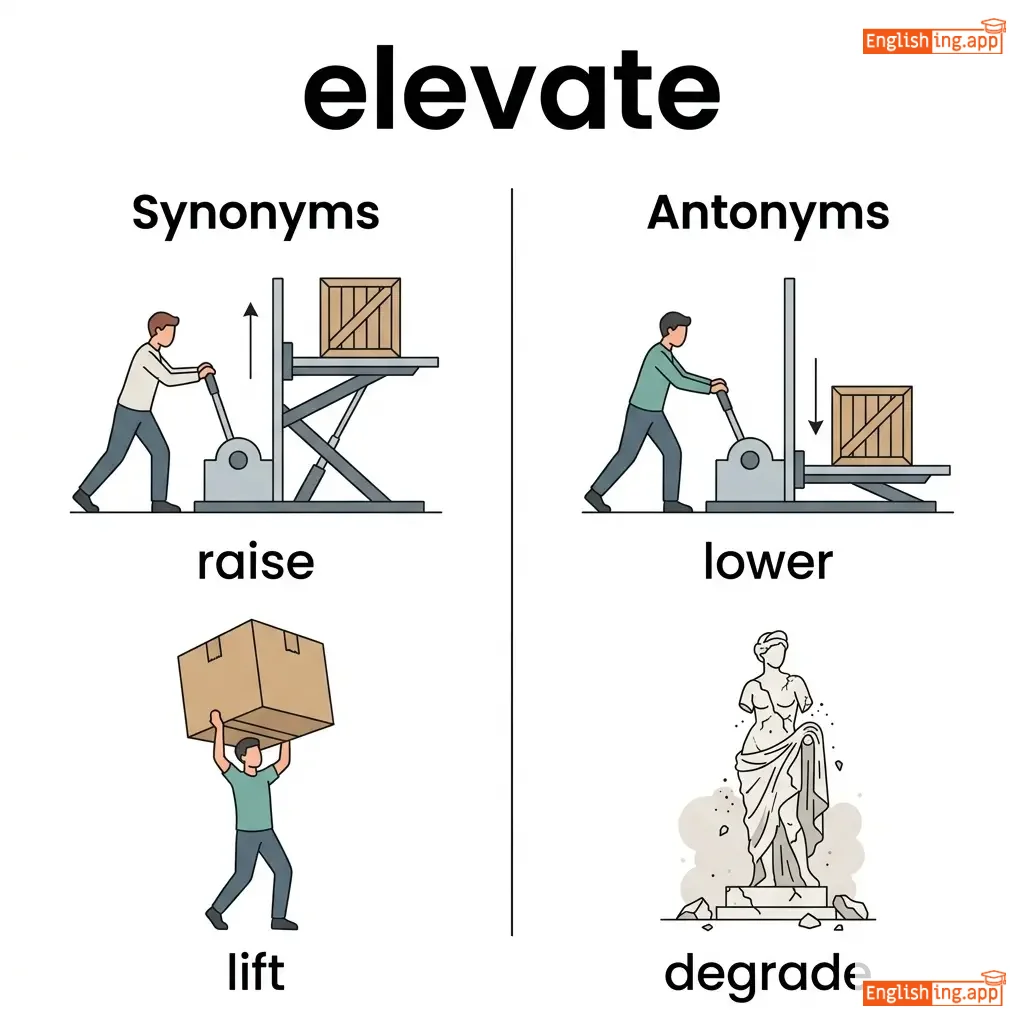
raise, lift, promote, heighten, uplift
••••••
|
lower, degrade, depress
••••••
|
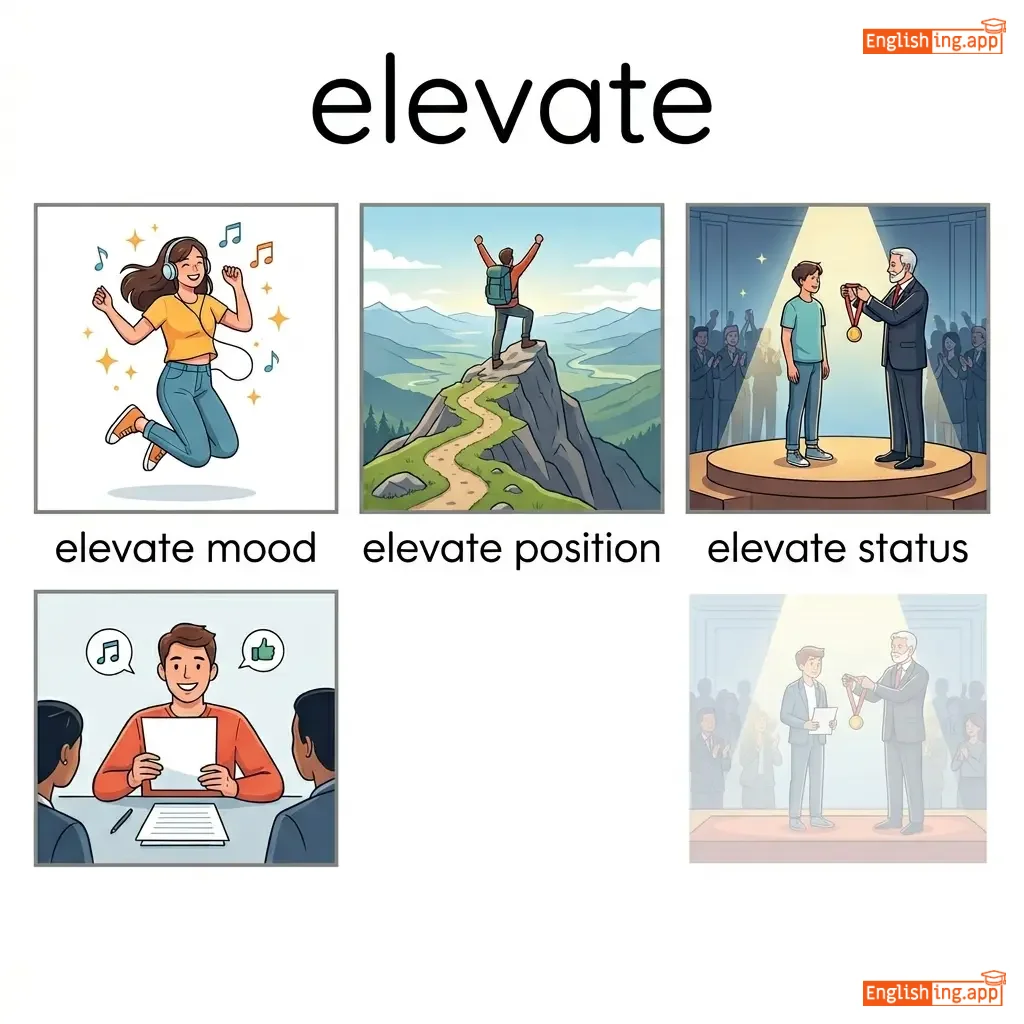
elevate mood, elevate position, elevate status, elevate to
••••••
|
高めるはまるでエレベーターで上に行くようなものです。
••••••
|
|
🏛️
••••••
|
/ˈɛmbəsi/
noun
(エンバシー)
••••••
|
- •••••• |
大使館
taishikan
••••••
|
- •••••• | - •••••• | - •••••• | - •••••• |
the official residence or offices of an ambassador
••••••
|
He works at the French embassy in Dhaka.
彼はダッカのフランス大使館で働いています。
••••••
|
彼はダッカのフランス大使館で働いています。
Kare wa Dhaka no Furansu taishikan de hataraiteimasu.
••••••
|
- •••••• | - •••••• | - •••••• |
consulate, diplomatic mission, embassy office
••••••
|
home, private office
••••••
|
foreign embassy, embassy staff, embassy office
••••••
|
大使館 (embassy) 覚えておこう、大使が住んでいる場所!
••••••
|
|
✅
••••••
|
/ɪnˈdɔːrs/
verb
(エンドース)
••••••
|
- •••••• |
支持する
shiji suru
••••••
|
endorsed
エンドースド
••••••
|
endorsed
エンドースド
••••••
|
endorses
エンドースズ
••••••
|
endorsing
エンドーシング
••••••
|
To give approval or support to someone or something; to publicly recommend.
••••••
|
The celebrity endorsed the new skincare product.
セレブリティは新しいスキンケア製品を支持しました。
••••••
|
セレブリティは新しいスキンケア製品を支持しました。
Sereburiti wa atarashī sukinkea seihin o shiji shimashita.
••••••
|
endorse a check
小切手を承認する
••••••
|
To sign the back of a check to make it payable to someone else.
••••••
|
小切手を承認する
kogitte o shōnin suru
••••••
|
support, approve, recommend, back, advocate
••••••
|
oppose, reject, disapprove
••••••
|
endorse product, endorse policy, celebrity endorses, endorse check
••••••
|
Endorseはend + force、すなわち力を込めて支持することを意味します。
••••••
|
|
👮♂️
••••••
|
/ɪnˈfɔːrs/
verb
(enfōsu)
••••••
|
- •••••• |
施行する
shikō suru
••••••
|
enforced
enfōsudo
••••••
|
enforced
enfōsudo
••••••
|
enforces
enfōsu
••••••
|
enforcing
enfōshingu
••••••
|
to make sure that a rule, law, or policy is obeyed
••••••
|
The police are responsible for enforcing the law.
警察は法律を施行する責任があります。
••••••
|
警察は法律を施行する責任があります。
Keisatsu wa hōritsu o shikō suru sekinin ga arimasu.
••••••
|
enforce the law
法律を施行する
••••••
|
to ensure laws are followed and obeyed
••••••
|
法律を施行する
hōritsu o shikō suru
••••••
|
implement, apply, uphold, execute, impose
••••••
|
ignore, neglect, abandon
••••••
|
enforce rules, enforce regulations, enforce discipline, enforce policy
••••••
|
施行 = 法律を強制する
••••••
|
|
➗
••••••
|
/ˈiːkwəli/
adverb
(イコーリー)
••••••
|
- •••••• |
平等に
byoudou ni
••••••
|
- •••••• | - •••••• | - •••••• | - •••••• |
in an equal or fair way; to the same degree
••••••
|
The prize money was equally divided among the winners. |
賞金は受賞者の間で平等に分けられました。
Shoukin wa jushousha no aida de byoudou ni wakeraremashita.
••••••
|
- •••••• | - •••••• | - •••••• |
fairly, evenly, impartially, uniformly
••••••
|
unequally, unfairly, disproportionately
••••••
|
equally important, equally divided, equally responsible
••••••
|
Equally は平等に(平等に)することを意味します
••••••
|
|
⚖️
••••••
|
/ˈɛθɪkəl/
adjective
(エシカル)
••••••
|
|
倫理的
rinriteki
••••••
|
- •••••• | - •••••• | - •••••• | - •••••• |
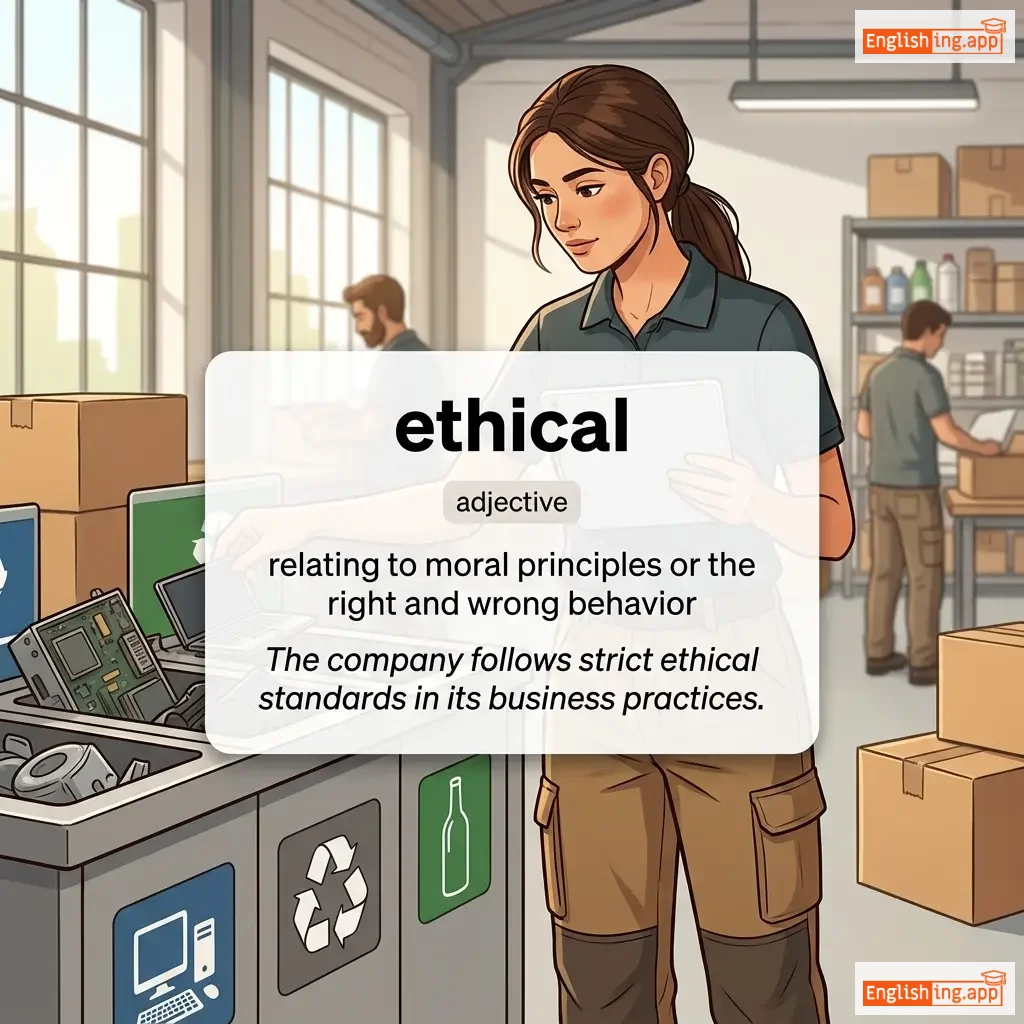
relating to moral principles or the right and wrong behavior
••••••
|
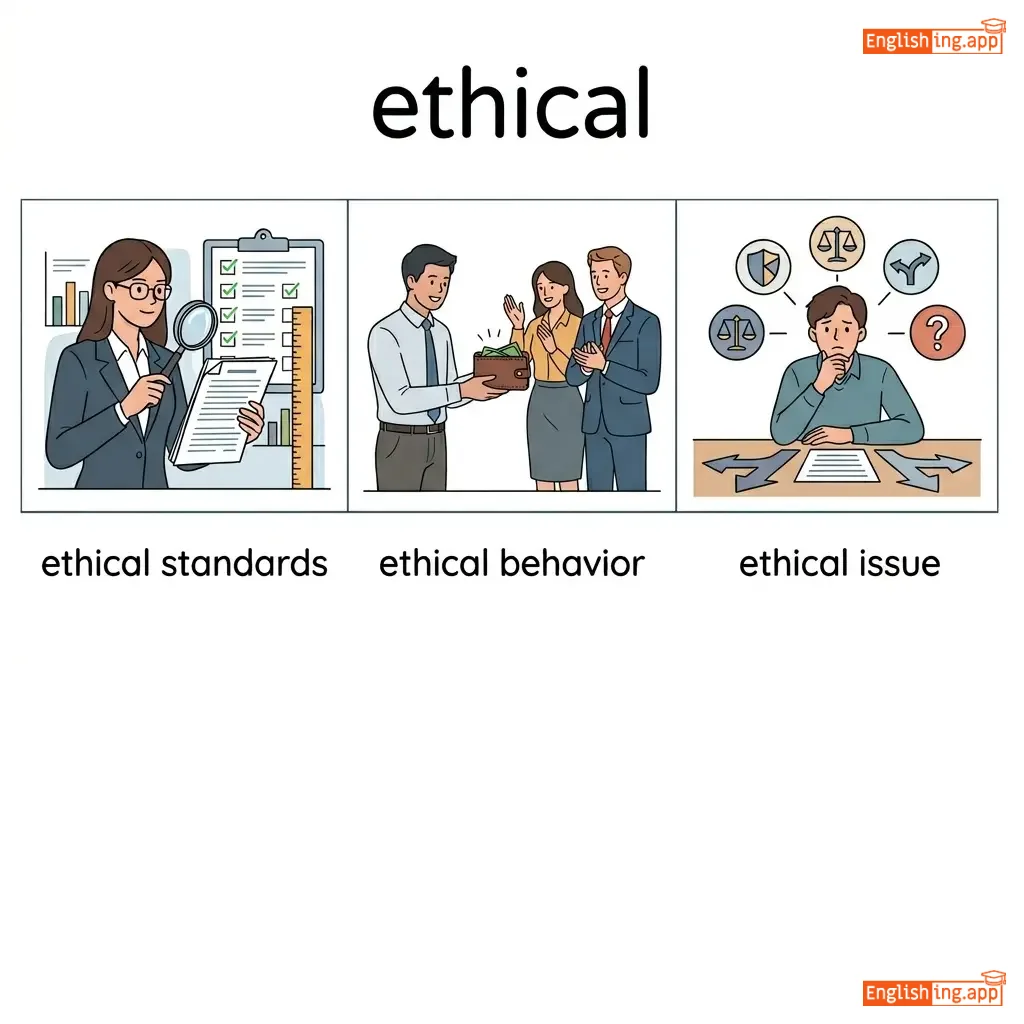
The company follows strict ethical standards in its business practices. |
その会社はビジネス慣行において厳格な倫理基準を守っています。
Sono kaisha wa bijinesu kankou ni oite genkaku na rinri kijun wo mamotteimasu.
••••••
|
ethical dilemma |
a situation in which a difficult choice has to be made between two moral principles
••••••
|
倫理的ジレンマ
rinriteki jirenma
••••••
|
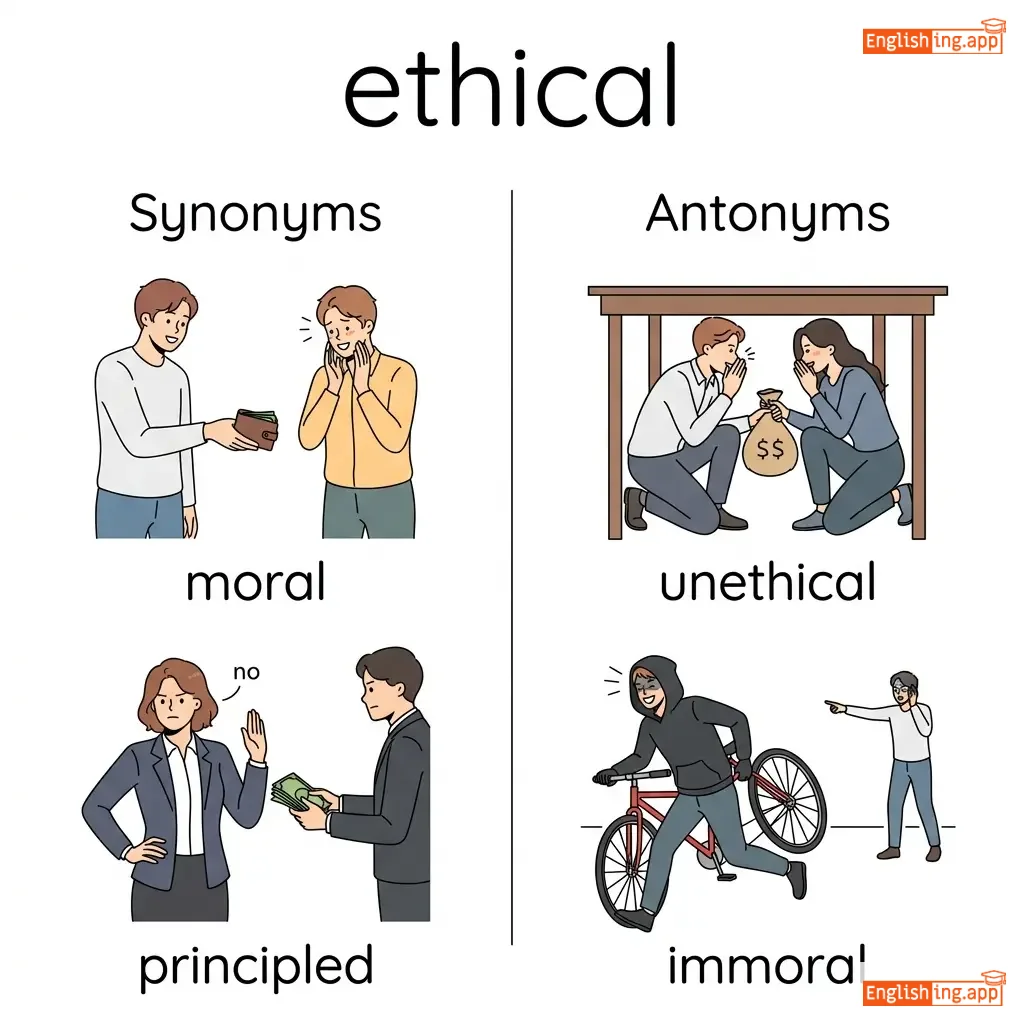
moral, principled, righteous, virtuous, honest
••••••
|
unethical, immoral, dishonest
••••••
|
ethical standards, ethical behavior, ethical issue, ethical dilemma, ethical decision
••••••
|
Ethicalは倫理的を意味します — 'Ethics'という言葉が道徳的原則を示唆しています。
••••••
|
|
👀
••••••
|
/ˈɛvɪdənt/
adjective
(エヴィデント)
••••••
|
|
明白
meihaku
••••••
|
- •••••• | - •••••• | - •••••• | - •••••• |
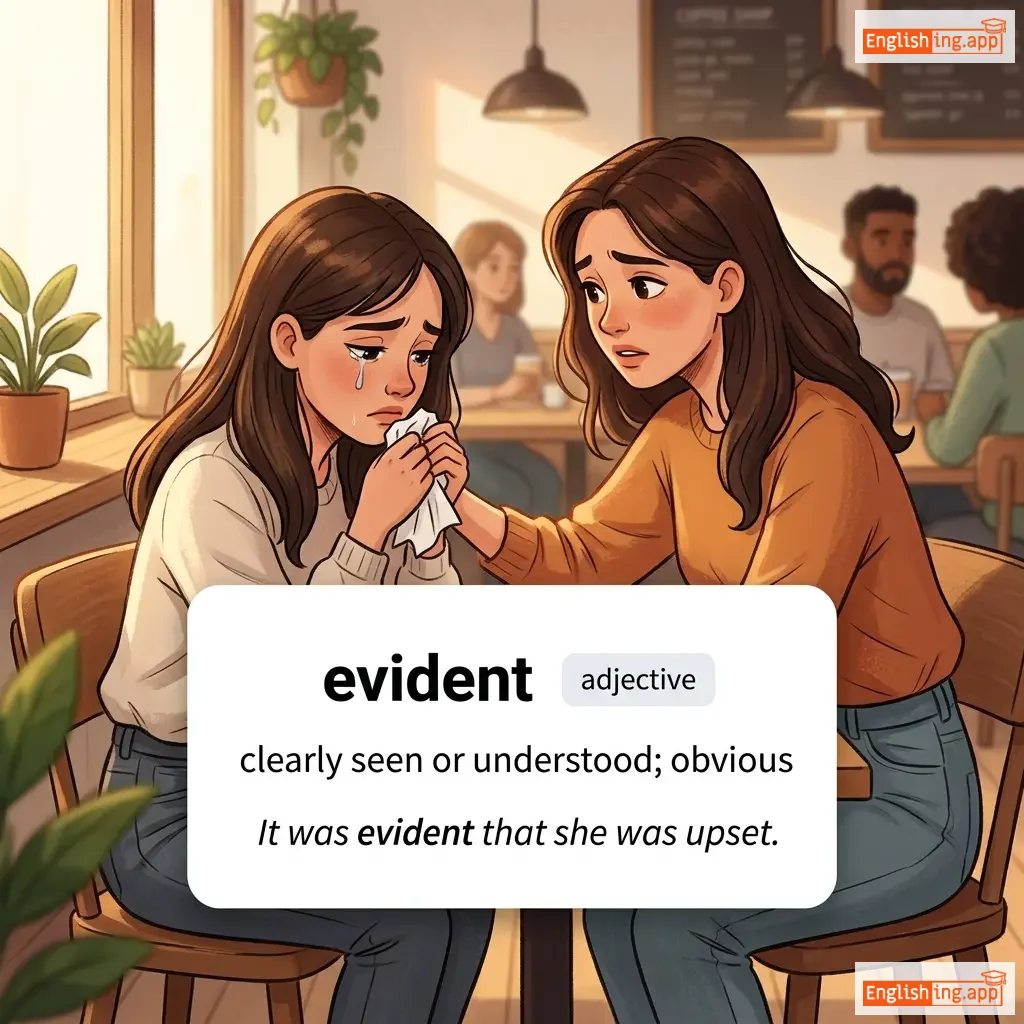
clearly seen or understood; obvious
••••••
|
It was evident that she was upset.
それは彼女が動揺していることが明らかでした。
••••••
|
それは彼女が動揺していることが明らかでした。
Sore wa kanojo ga dōyō shite iru koto ga akiraka deshita.
••••••
|
self-evident
自己明白
••••••
|
obvious without needing explanation
••••••
|
自己明白
jiko-meihaku
••••••
|
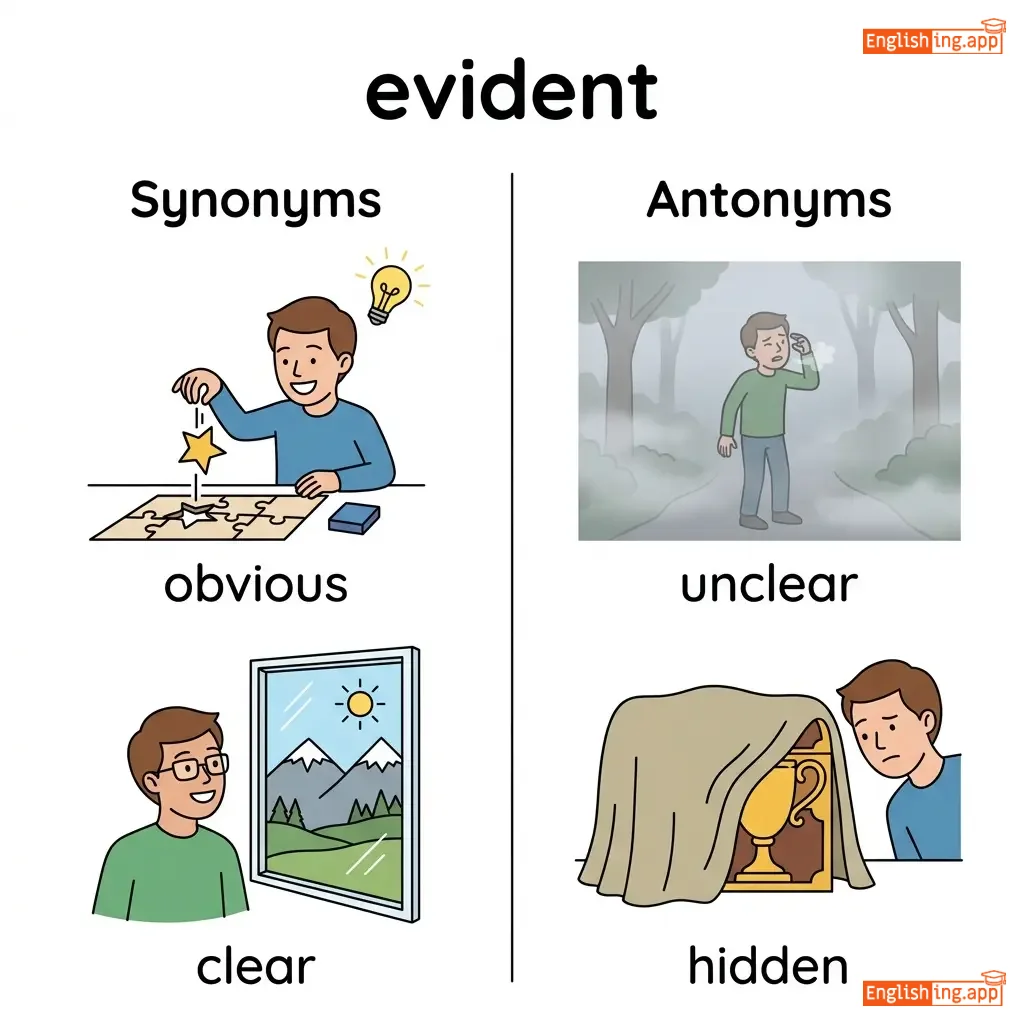
obvious, clear, apparent, manifest, plain
••••••
|
unclear, hidden, obscure
••••••
|
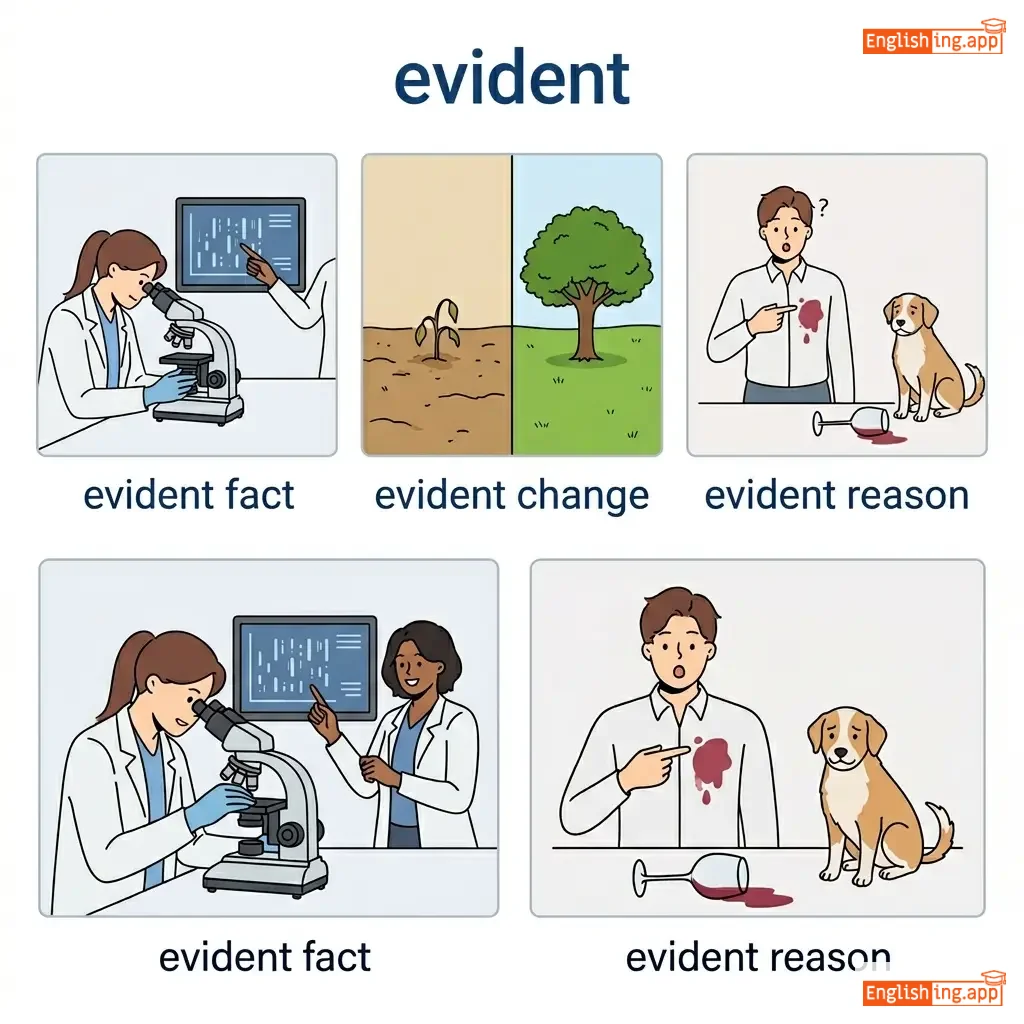
evident fact, evident change, evident reason, evident truth
••••••
|
明白は証拠のように明確に見えることです。
••••••
|
|
💄
••••••
|
/ˈmeɪkʌp/
noun
(メイクアップ)
••••••
|
- •••••• |
化粧
keshou
••••••
|
- •••••• | - •••••• | - •••••• | - •••••• |
cosmetics used to enhance or alter appearance
••••••
|
She applied makeup before the party. |
彼女はパーティーの前に化粧をした。
Kanojo wa pātī no mae ni keshou o shita.
••••••
|
makeup test |
an additional test to make up for one missed earlier
••••••
|
再試験
saishiken
••••••
|
cosmetics, foundation, powder, lipstick, beauty products
••••••
|
bare face, natural
••••••
|
apply makeup, makeup kit, makeup artist, makeup remover
••••••
|
Make + Up = 顔を美しくする化粧 💄
••••••
|
|
⚪
••••••
|
/ˈpɑrtli/
adverb
(パートリー)
••••••
|
- •••••• |
部分的に; 一部;
bubun-teki ni; ichibu;
••••••
|
- •••••• | - •••••• | - •••••• | - •••••• |
to some extent; not completely; in part
••••••
|
The weather was partly cloudy today.
今日の天気は部分的に曇りでした。
••••••
|
今日の天気は部分的に曇りでした。
Kyou no tenki wa bubun-teki ni kumori deshita.
••••••
|
- •••••• | - •••••• | - •••••• |
partially, somewhat, to some extent, incompletely
••••••
|
completely, entirely, totally, fully
••••••
|
partly cloudy, partly responsible, partly true
••••••
|
Japanese remembers '部分的に' as partial actions.
••••••
|
|
👤
••••••
|
/ˈpɜːrsən/
noun
(パーソン)
••••••
|
- •••••• |
人
hito
••••••
|
- •••••• | - •••••• | - •••••• | - •••••• |
an individual human being
••••••
|
She is a kind person who always helps others.
彼女はいつも他の人を助ける優しい人です。
••••••
|
彼女はいつも他の人を助ける優しい人です。
Kanojo wa itsumo hoka no hito o tasukeru yasashii hito desu.
••••••
|
- •••••• | - •••••• | - •••••• |
individual, human, being, soul
••••••
|
animal, machine
••••••
|
good person, kind person, strong person
••••••
|
Person = Per (パー) + Son (息子) - Per son は人だ!
••••••
|
|
😊
••••••
|
/pliːz/
verb
(purīzu)
••••••
|
- •••••• |
喜ばせる
yorokobaseru
••••••
|
pleased
purīzudo
••••••
|
pleased
purīzudo
••••••
|
pleases
purīzesu
••••••
|
pleasing
purīzingu
••••••
|
to make someone happy or satisfied; used as a polite request
••••••
|
His performance pleased the audience.
彼のパフォーマンスは観客を喜ばせました。
••••••
|
彼のパフォーマンスは観客を喜ばせました。
Kare no pafōmansu wa kankyaku o yorokobasemashita.
••••••
|
- •••••• | - •••••• | - •••••• |
satisfy, delight, gratify, content
••••••
|
displease, annoy, upset, offend
••••••
|
please everyone, hard to please, please customers, try to please
••••••
|
あなたが'喜ばせる'と言うとき、それは誰かを幸せにしようとしていることです。
••••••
|
|
🧍
••••••
|
/stæns/
noun
(スタンス)
••••••
|
- •••••• |
立場
tachiba
••••••
|
- •••••• | - •••••• | - •••••• | - •••••• |
a person's attitude, opinion, or position on an issue
••••••
|
The company took a strong stance on environmental protection. |
その会社は環境保護に強い立場を取った。
Sono kaisha wa kankyō hogo ni tsuyoi tachiba o totta.
••••••
|
take a stance |
to adopt a definite position or opinion on a subject
••••••
|
立場を取る
tachiba o toru
••••••
|
position, viewpoint, attitude, perspective, opinion
••••••
|
neutrality, indecision
••••••
|
firm stance, political stance, defensive stance, moral stance
••••••
|
Stance は立場を意味する、今すぐあなたの立場を取ろう!
••••••
|
|
🧵
••••••
|
/strænd/
noun, verb
(ストランド)
••••••
|
- •••••• |
糸 / 取り残された
ito / torinosokareta
••••••
|
stranded
ストランドッド
••••••
|
stranded
ストランドッド
••••••
|
strands
ストランドス
••••••
|
stranding
ストランディング
••••••
|
Noun: A single thin length of thread, wire, or similar. Verb: To leave someone or something without a way of moving or leaving.
••••••
|
The storm stranded many tourists on the island.
嵐は多くの観光客を島に取り残しました。
••••••
|
嵐は多くの観光客を島に取り残しました。
Arashi wa ooku no kankōkyaku o shima ni torinoshimashita.
••••••
|
left stranded
取り残された
••••••
|
left helpless or unable to move
••••••
|
取り残された
torinosokareta
••••••
|
thread, fiber, filament, abandon, maroon
••••••
|
rope, cord, rescue
••••••
|
strand of hair, strand of wire, left stranded, stranded passengers
••••••
|
Strandは糸を意味し、strandedは取り残された状態を意味します。
••••••
|
|
≠
••••••
|
/ʌnˈlaɪk/
adjective
(アンライク)
••••••
|
- •••••• |
異なる; 類似していない
kotonaru; ruiji shite inai
••••••
|
- •••••• | - •••••• | - •••••• | - •••••• |
different from; not similar to
••••••
|
Unlike his brother, he prefers quiet activities.
アンライク彼の兄、彼は静かな活動を好む。
••••••
|
彼の兄とは異なり、彼は静かな活動を好む。
Kare no ani to wa kotonari, kare wa shizuka na katsudou wo konomu.
••••••
|
- •••••• | - •••••• | - •••••• |
different from, dissimilar to, contrary to
••••••
|
like, similar to, same as
••••••
|
unlike others, unlike before, unlike anything
••••••
|
'Unlike' と言うと、違いを表現する時に使います。
••••••
|
|
💯
••••••
|
/ˈhoʊli/
adverb
(hōrī)
••••••
|
- •••••• |
完全に; 完全に
kanzen ni; kanzen ni
••••••
|
- •••••• | - •••••• | - •••••• | - •••••• |
Entirely; completely; to the full extent
••••••
|
I am wholly committed to this project. |
私はこのプロジェクトに完全にコミットしています。
watashi wa kono purojekuto ni kanzen ni komitto shiteimasu.
••••••
|
- •••••• | - •••••• | - •••••• |
completely, entirely, totally, fully
••••••
|
partially, partly, incompletely
••••••
|
wholly owned, wholly responsible, wholly different
••••••
|
完全に、全力で入れ込む感じ
••••••
|

