वोकैबुलरीज

इंग्लिश वोकैबुलरी डिस्कवर, लर्न और मास्टर करें

verb C2
/məˈrɔːd/
грабить (grabit)

to roam in search of things to steal or attack

"The bandits marauded through the village at night."

"Бандиты грабили деревню ночью." (Bandity grabili derevnyu noch'yu.)
noun C2
/məˈrɔː.dər/
мародер (maroder)

a person who roams around in search of things to steal or people to attack

"Villagers feared the marauders who raided their homes."

"Жители деревни боялись мародеров, которые нападали на их дома." (Zhiteli derevni boyalis' maroderov, kotorye napadali na ikh doma.)
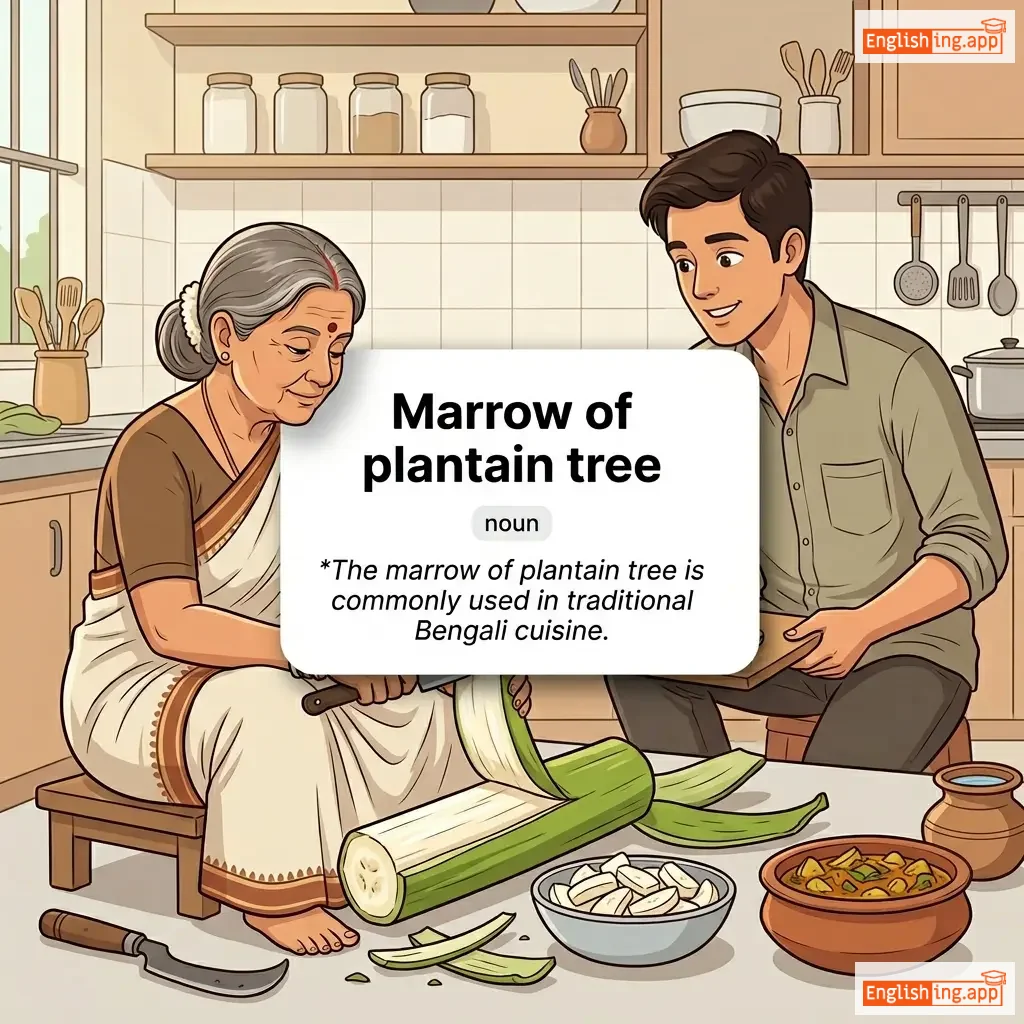
Marrow of plantain tree definition card — visual illustration of the meaning
noun C2
/ˈmær.oʊ ʌv ˈplæn.tɪn triː/
мякоть бананового дерева (myakot' bananovogo dereva)

the soft inner part of the banana plant stem that is used as a vegetable in cooking

"The marrow of plantain tree is commonly used in traditional Bengali cuisine."

"Мякоть бананового дерева используется в традиционной бенгальской кухне." (Myakot' bananovogo dereva ispol'zuyetsya v traditsionnoj bengalskoj kukhne.)
noun C2
/ˌmɑːrtəˈnɛt/
жестокий дисциплинар (zhestokiy disciplinar)

A strict disciplinarian who demands rigid adherence to rules.

"The new manager was such a martinet that even minor infractions were punished."

"Новый менеджер был таким мартинетом, что даже небольшие нарушения наказывались." (Novyy menedzher byl takim martinetom, chto dazhe nebol'shie narusheniya nakazyvalis'.)
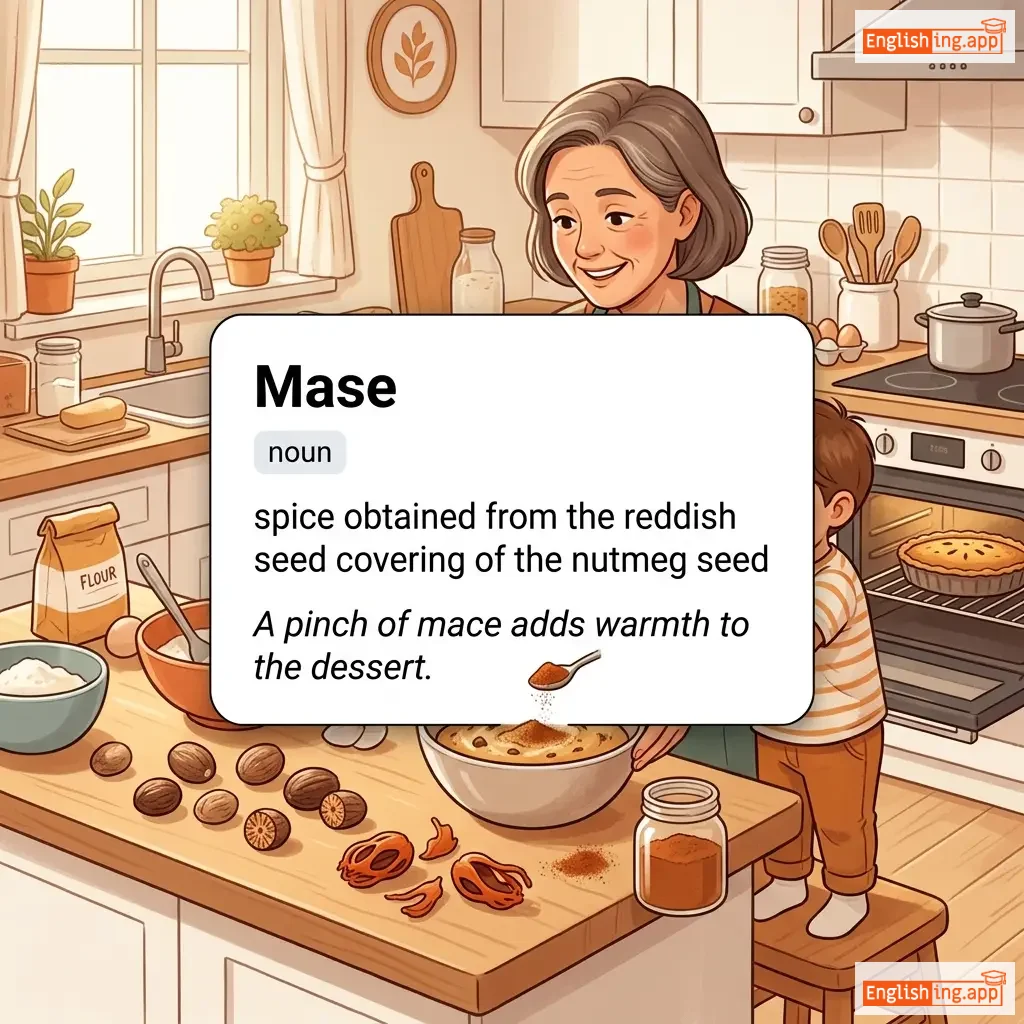
Mase definition card — visual illustration of the meaning
noun C2
/meɪs/
мускатный цветок (muskatnyy tsvetok)

spice obtained from the reddish seed covering of the nutmeg seed

"A pinch of mace adds warmth to the dessert."

"Щепотка мускатного цветка добавляет теплоту десерту." (Shchepotka muskatnogo tsvetka dobavlyaet teplotu desertu.)
noun C2
/ˈmæsəkɪst/
мазохист (mazokhist)

a person who derives pleasure from their own pain or humiliation

"He was called a masochist for enjoying tough challenges."

"Его называли мазохистом за то, что он наслаждался сложными испытаниями." (Yego nazyvali mazochistom za to, chto on naslazhдalsya slozhnymi ispitaniyami.)
noun C2
/ˌmæskəˈreɪd/
вечеринка, на которой люди носят маски и костюмы (vecherinka, na kotoroy lyudi nosyat maski i kostyumy)

a party or gathering where people wear masks and costumes; a false outward show

"The charity event was held as a grand masquerade."

"Благотворительное мероприятие было проведено как большой masquerade." (Blagotvoritel'noe meropriyatie bylo provedeno kak bol'shoy masquerade.)
verb C2
/ˈmæstɪkeɪt/
жевать (zhevat')

to chew food thoroughly before swallowing

"He slowly masticated the bread before swallowing."

"Он медленно пережевывал хлеб перед тем, как проглотить его." (On medlenno perezhyval khleb pered tem, kak proglotit' yego.)
noun C2
/ˈmætrɪˌsaɪd/
матероубийство (materoubijstvo)

The act of killing one's own mother.

"The crime of matricide shocked the entire town."

"Преступление матероубийства потрясло весь город." (Prestuplenie materoubijstva potryaslo ves' gorod.)
verb C2
/məˈtrɪkjʊˌleɪt/

To enroll as a student in a college or university.

"She matriculated at Oxford University last year."

adjective C2
/ˈmɔːdlɪn/
слишком сентиментальный (slishkom sentimentálnyy)

Overly sentimental, often tearfully or weakly emotional.

"He became maudlin after a few drinks."

"Он стал сентиментальным после нескольких рюмок." (On stal sentimentálnym posle nekotorykh rjumok.)
verb C2
/ˈmɔːndər/
бессмысленно говорить (bessmyslenno govorit)

To speak or move aimlessly and incoherently.

"He maundered on about his old memories."

"Он бессмысленно говорил о своих старых воспоминаниях." (On bessmyslenno govoril o svoikh starykh vospominaniyakh.)
noun C2
/ˌmɔːzəˈliːəm/
маузолей (mauzoley)

A large stately building that houses a tomb or several tombs.

"The king was buried in a grand mausoleum."

"Царь был похоронен в большом мавзолее." (Tsar' byl pokhoronen v bol'shom mauzolee.)
noun C2
/ˈmeɪvən/
эксперт (ekspert)

an expert or connoisseur in a particular field

"He is a tech maven who always knows the latest trends."

"Он — эксперт в области технологий, который всегда знает о последних трендах." (On — ekspert v oblasti tekhnologiy, kotoryy vsegda znayet o poslednikh trendakh.)
adjective C2
/ˈmɔːkɪʃ/
слишком сентиментальный (slishkom sentimentálnyy)

excessively sentimental, often to the point of being sickly

"The movie was criticized for its mawkish sentimentality."

"Фильм был раскритикован за свою чрезмерную сентиментальность." (Film byl raskritikovan za svoyu chrezmernuyu sentimentálnost'.)
noun C2
/miːd/
медовуха (medovukha)

An alcoholic drink made from fermented honey and water.

"The Vikings were known to drink large amounts of mead during feasts."

"Викинги были известны тем, что пили большое количество медовухи на пиршествах." (Vikingu byli izvestny tem, chto pili bol'shoye kolichestvo medovukhi na pirshestvakh.)
adjective C2
/ˈmiːli ˌmaʊðd/
лицемерный (litsemernnyy)

Unwilling to speak directly and honestly; insincere or evasive in speech.

"The manager gave a mealy-mouthed excuse instead of admitting the mistake."

"Менеджер дал лицемерное оправдание вместо того, чтобы признать ошибку." (Menedzher dal litsemernoe opravdanie vmesto togo, chtoby priznat' oshibku.)
adjective C2
/ˈmiːliˌmaʊðd/
увиливать от ответа (uvilyvat' ot otveta)

not willing to speak directly and honestly; evasive in speech

"The politician gave a mealymouthed response to the tough question."

"Политик дал уклончивый ответ на сложный вопрос." (Politik dal uklonchivyi otvet na slozhnyi vopros.)
adjective C2
/ˈmiːzli/
ничтожный (nichochny)

contemptibly small or insignificant

"He was paid a measly sum for the hard work."

"Ему заплатили ничтожную сумму за тяжёлую работу." (Yemu zaplatili nichtozhnuyu summu za tyazholuyu rabotu.)
noun C2
/məˈdæliən/
медальон (medalyon)

a large medal or decorative piece, often worn as jewelry or used in architecture

"She wore a gold medallion around her neck."

"Она носила золотой медальон на шее." (Ona nosila zolotoy medalyon na sheye.)
adjective C2
/ˈmɛdəlsəm/
вмешивающийся (vmeshivayushchiesya)

fond of interfering in other people’s affairs

"She found her neighbor to be meddlesome and annoying."

"Она посчитала своего соседа вмешивающимся и раздражающим." (Ona poschitala svoego soseda vmeshivayushchiesya i razdrazhayushchim.)
adjective C2
/ˈmiː.di.əl/
медиальный (medial'nyj)

Situated in or pertaining to the middle; located toward the midline of the body or structure.

"The medial side of the knee is more prone to injury."

"Медиальная сторона колена более подвержена травмам." (Medial'naya storona kolena bolee podverzhena travm.)
mediative definition card — visual illustration of the meaning
adjective C2
/ˈmiː.di.eɪ.tɪv/
связанный с медиацией (svyazannyy s mediatsiey)

Related to mediation, helping to resolve conflicts through diplomatic means.

"His mediative skills helped resolve the conflict."

"Его медиативные навыки помогли разрешить конфликт." (Ego mediativnye navyki pomogli rezreshit' konflikt.)
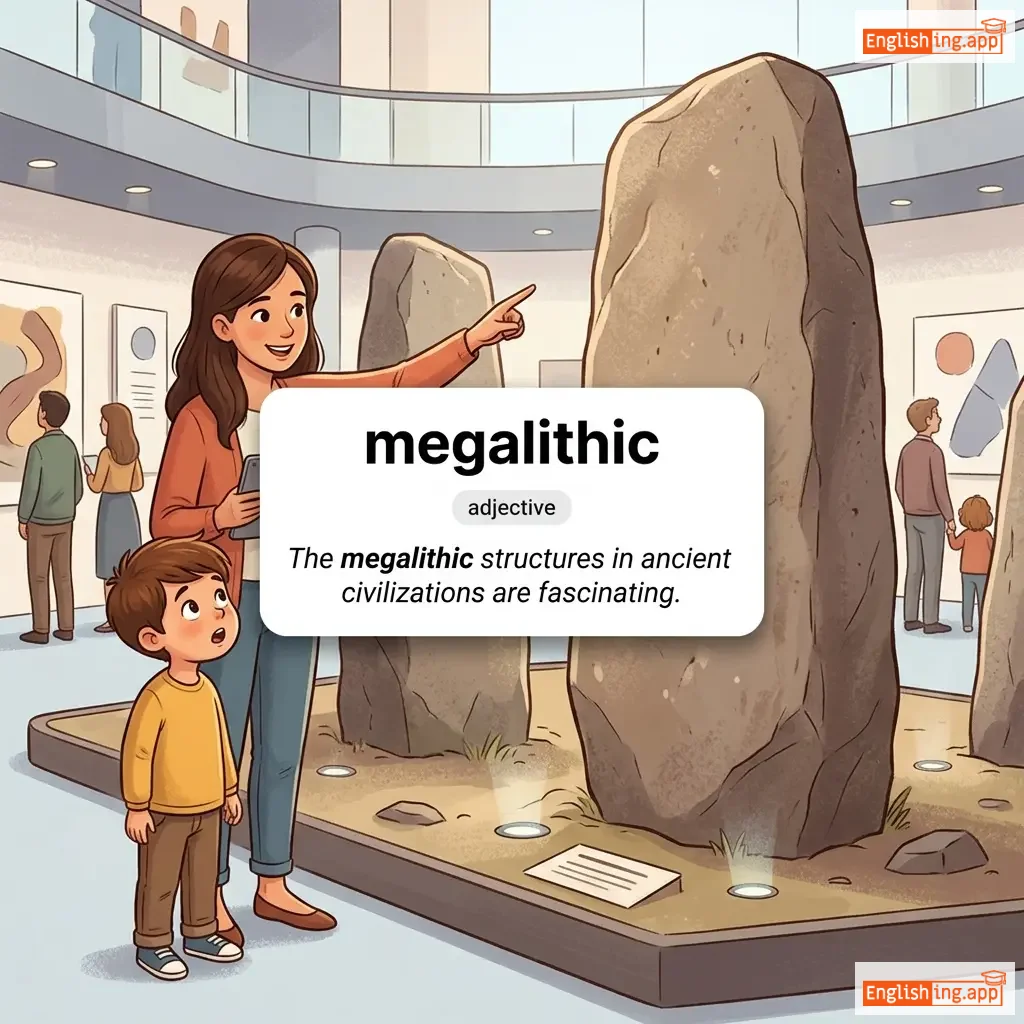
megalithic definition card — visual illustration of the meaning
adjective C2
ˌmɛɡəˈlɪθɪk
мегалитический (megaliticheskiy)

Relating to or denoting prehistoric monuments made of or containing large stones.

"The megalithic structures in ancient civilizations are fascinating."

"Мегалитические сооружения в древних цивилизациях fascinируют." (Megaliticheskiye sooruzheniya v drevnikh tsivilizatsiyakh fasciniruyut.)
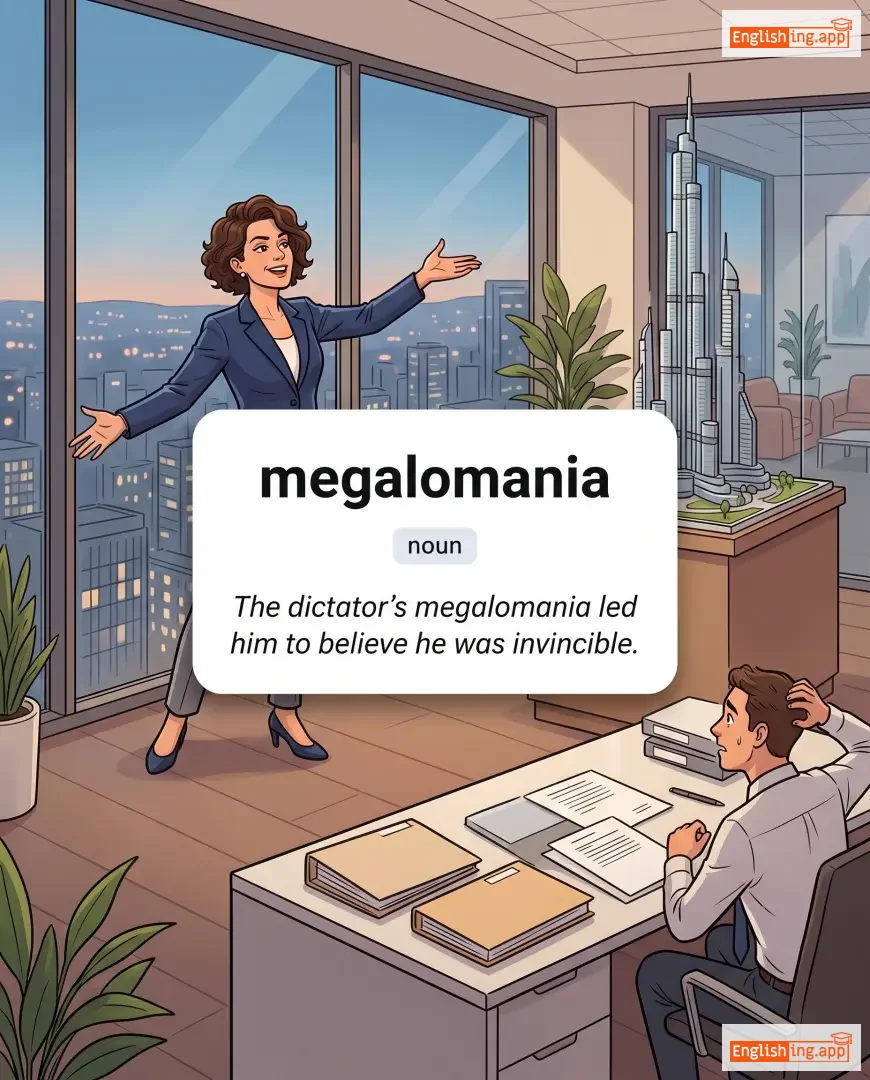
megalomania definition card — visual illustration of the meaning
noun C2
/ˌmɛɡələˈmeɪniə/
бредовые фантазии о власти, богатстве или всевластии (bredovye fantazii o vlasti, bogatstve ili vsevlastii)

A condition characterized by delusional fantasies of power, wealth, or omnipotence.

"The dictator’s megalomania led him to believe he was invincible."

"Мегаломания диктатора заставила его поверить, что он непобедим." (Megalomaniya diktatora zastavila ego poverit, chto on nepobedim.)
noun C2
/meɪˈlɑːnʒ/
смешение (smeshchenie)

A mixture of different things or styles.

"The festival offered a melange of music, food, and art."

"Фестиваль предложил смесь музыки, еды и искусства." (Festival predlozhil smes' muzyki, yedy i iskusstva.)
noun C2
/ˈmeɪleɪ/
хаотичная драка (khaotichnaya draka)

A noisy, confused fight or crowd situation.

"A melee broke out during the football match."

"Во время футбольного матча началась хаотичная драка." (Vo vremya futbol'nogo matcha nachalas' khaotichnaya draka.)
verb C2
/ˈmiːliəˌreɪt/
улучшать (uluchshat)

To make something better or improve a condition.

"The new policies aim to meliorate the living conditions of the poor."

"Новые политики направлены на улучшение условий жизни бедных." (Novye politiki napravleny na uluchshenie usloviy zhizni bednykh.)
noun C2
/ˈmiːliərɪzəm/
мелиоризм (melyorism)

The belief that the world tends to improve and that humans can aid its betterment.

"Her philosophy of meliorism kept her hopeful during difficult times."

"Её философия мелиоризма поддерживала её надежду в трудные времена." (Yeyo filosofiia meliorizma podderzhivala yeyo nadezhdu v trudnye vremena.)
adjective C2
/məˈlɪfluəs/
мелодичный (melodichnyy)

Sweet or musical; pleasant to hear.

"The singer’s mellifluous voice enchanted the audience."

"Мелодичный голос певца очаровал аудиторию." (Melodichnyy golos pevtsa ocharoval auditoriyu.)
verb C2
/məˈmɔːriəlaɪz/
увековечить (uvekovechit)

to preserve the memory of a person or event, often through a ceremony, monument, or record

"The city decided to memorialize the hero with a statue in the central square."

"Город решил увековечить героя статуей на центральной площади." (Gorod reshil uvekovechit' geroia statuiei na tsentral'noi ploshchadi.)
noun C2
/məˈnæʒəri/
коллекция диких животных (kollekciya dikikh zhivotnykh)

a collection of wild animals kept for exhibition; a diverse or strange group of people or things

"The circus had a menagerie of exotic animals."

"В цирке была коллекция экзотических животных." (V tsirke byla kollekciya ekzoticheskikh zhivotnykh.)
mendacious definition card — visual illustration of the meaning
adjective C2
/mɛnˈdeɪʃəs/
лживый (lzhivyy)

not telling the truth; lying

"The politician was known for his mendacious statements."

"Политик был известен своими лживыми заявлениями." (Politik byl izvesten svoimi lzhivymi zayavleniyami.)
noun C2
/mɛnˈdæsəti/
лживость (lzhivost)

the tendency to be untruthful; dishonesty

"The journalist exposed the mendacity of the officials."

"Журналист раскрыл ложь официальных лиц." (Zhurnalist raskryl lozh' ofitsial'nykh lits.)
noun C2
/ˈmɛndɪkənt/
попрошайка (poproshayka)

a beggar; a person who lives by asking for alms

"The mendicant asked for food at the monastery gate."

"Попрошайка попросил еду у ворот монастыря." (Poproshayka poprosil yedu u vorot monastyrya.)
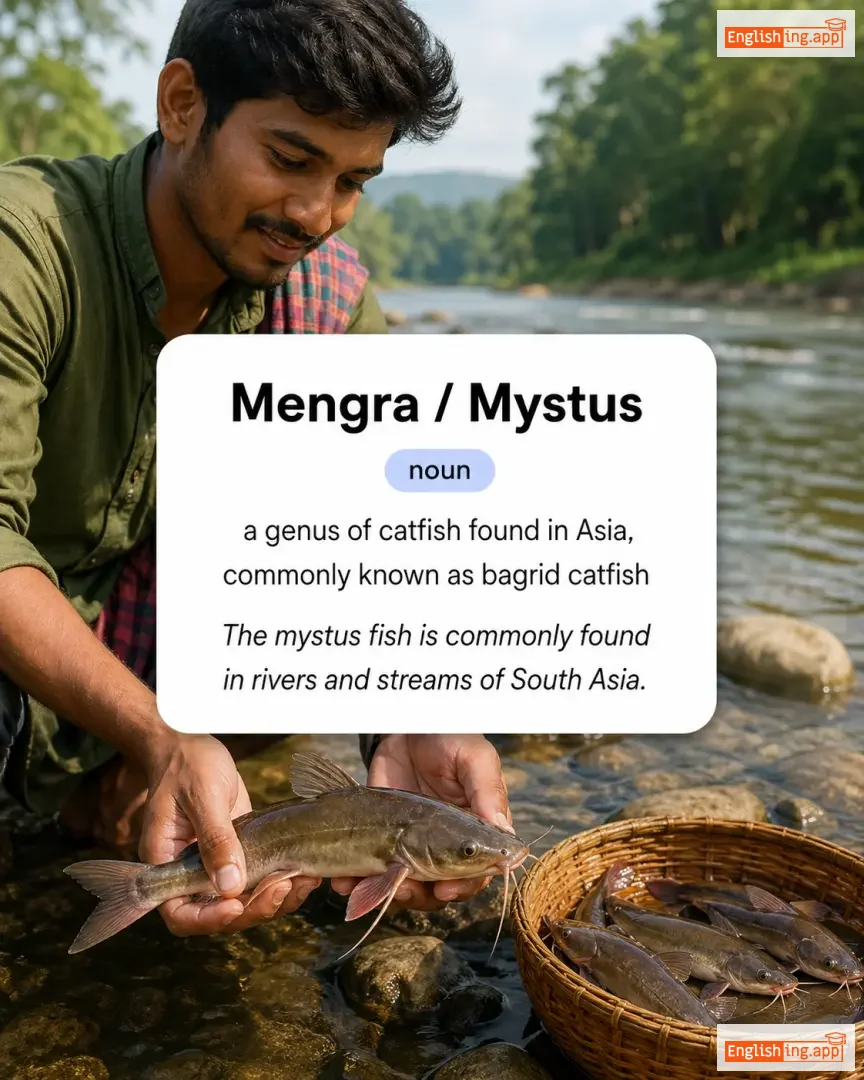
Mengra / Mystus definition card — visual illustration of the meaning
noun C2
/ˈmɪstəs/
багридовый сом (bagridovyy som)

a genus of catfish found in Asia, commonly known as bagrid catfish

"The mystus fish is commonly found in rivers and streams of South Asia."

"Рыба Mystus обычно встречается в реках и ручьях Южной Азии." (Ryba Mystus obychno vstrechayetsya v rekhakh i ruchyakh Yuzhnoy Azii)
menial definition card — visual illustration of the meaning
adjective C2
/ˈmiːniəl/
мелкие задачи (melkie zadachi)

lowly and sometimes degrading; related to unskilled or routine tasks

"He worked long hours doing menial tasks in the factory."

"Он работал долгие часы, выполняя мелкие задачи на фабрике." (On rabotal dolgiy chasy, vypolnyaya melkie zadachi na fabrike.)
adjective C2
/ˈmɜːrkəntaɪl/
торговый (torgovyi)

related to trade or commerce

"The city grew rapidly due to its mercantile activities."

"Город быстро развивался благодаря своим торговым действиям." (Gorod bystro razvivalsya blagodarya svoim torgovym deistviyam.)
adjective C2
/mɜːrˈkjʊriəl/
неустойчивый (neustoychivyy)

subject to sudden or unpredictable changes of mood or mind.

"She is known for her mercurial temperament."

"Она известна своим неустойчивым темпераментом." (Ona izvestna svoim neustoychivym temperamentom.)
meretricious definition card — visual illustration of the meaning
adjective C2
/ˌmɛrəˈtrɪʃəs/
притворный (pritvorny)

apparently attractive but having no real value or integrity.

"The design was flashy but meretricious."

"Дизайн был ярким, но притворным." (Dizayn byl yarkim, no pritvornym.)
noun C2
/ˈmeɪsə/
меса (mesa)

An isolated flat-topped hill with steep sides, found in arid regions.

"The hikers stopped to admire the mesa rising above the desert floor."

"Путешественники остановились, чтобы полюбоваться месой, поднимающейся над песчаным полом пустыни." (Puteshestvenniki ostanovilis, chtoby polyubovatsya mesoy, podnimayushchiesya nad peschanym polom pustyni.)
noun C2
/ˈmɛzməˌrɪzəm/
гипнотизм (gipnotizm)

A state of fascination or hypnotism.

"The magician held the audience in a state of mesmerism."

"Фокусник держал аудиторию в состоянии мезмеризма." (Fokusnik derzhal auditoriyu v sostoyanii mezmerizma.)
metacognition definition card — visual illustration of the meaning
noun C2
ˌmɛt.ə.kɒɡˈnɪʃ.ən
метакогниция (metakognitsiya)

Awareness and understanding of one's own thought processes.

"Metacognition helps students improve their learning strategies."

"Метакогниция помогает студентам улучшить их стратегии обучения." (Metakognitsiya pomogaet studentam uluchshit' ikh strategii obucheniya.)
adjective C2
/ˌmɛtəˈlɜrdʒɪkəl/
металлургический (metallurgicheskiy)

Relating to metallurgy or the branch of science concerned with the properties of metals and their production.

"He studied metallurgical engineering at the university."

"Он изучал металлургическую инженерию в университете." (on izuchal metallurgicheskuyu inzheneriyu v universitete.)
noun C2
/ˈmɛtələ(r)dʒi/
металлургия (metallurgiya)

The science and technology of metals, including their extraction from ores and their processing.

"Metallurgy plays a vital role in industrial development."

"Металлургия играет важную роль в промышленном развитии." (Metallurgiya igraet vazhnuyu rol' v promyshlennom razvitii.)
verb C2
/ˌmɛtəˈmɔrfoʊz/
метаморфозировать (metamorphozirovat')

To change in form, structure, or substance; to transform completely.

"The caterpillar metamorphosed into a butterfly."

"Гусеница метаморфозировала в бабочку." (Gusenitsa metamorfizirovala v babochku.)
noun C2
/ˈmɛtəfɔːrm/
форма метафоры (forma metafory)

A coined or rare term sometimes used to describe a hybrid form of metaphor and form in literature or art.

"The poet introduced a metaphorm to blend imagery with structure."

"Поэт представил метаформу, чтобы соединить образы с конструкцией." (Poet predstavil metaformu, chtoby soedinit' obrazy s konstrukciey.)
adjective C2
/ˌmɛtəˈfɪzɪkəl/
метафизический (metafizicheskiy)

Relating to the branch of philosophy that deals with the fundamental nature of reality and existence.

"He spent years studying metaphysical questions about life and being."

"Он провел годы, изучая метафизические вопросы о жизни и бытии." (On provel gody, izuchaya metafizicheskie voprosy o zhizni i bytiy.)
noun C2
/ˌmɛtəfɪˈzɪʃən/
метафизик (metafizik)

A person who studies or is an expert in metaphysics.

"The metaphysician debated the essence of reality with his peers."

"Метафизик обсуждал сущность реальности с коллегами." (Metafizik obshchuzhdal sushchnost' real'nosti s kollegami.)
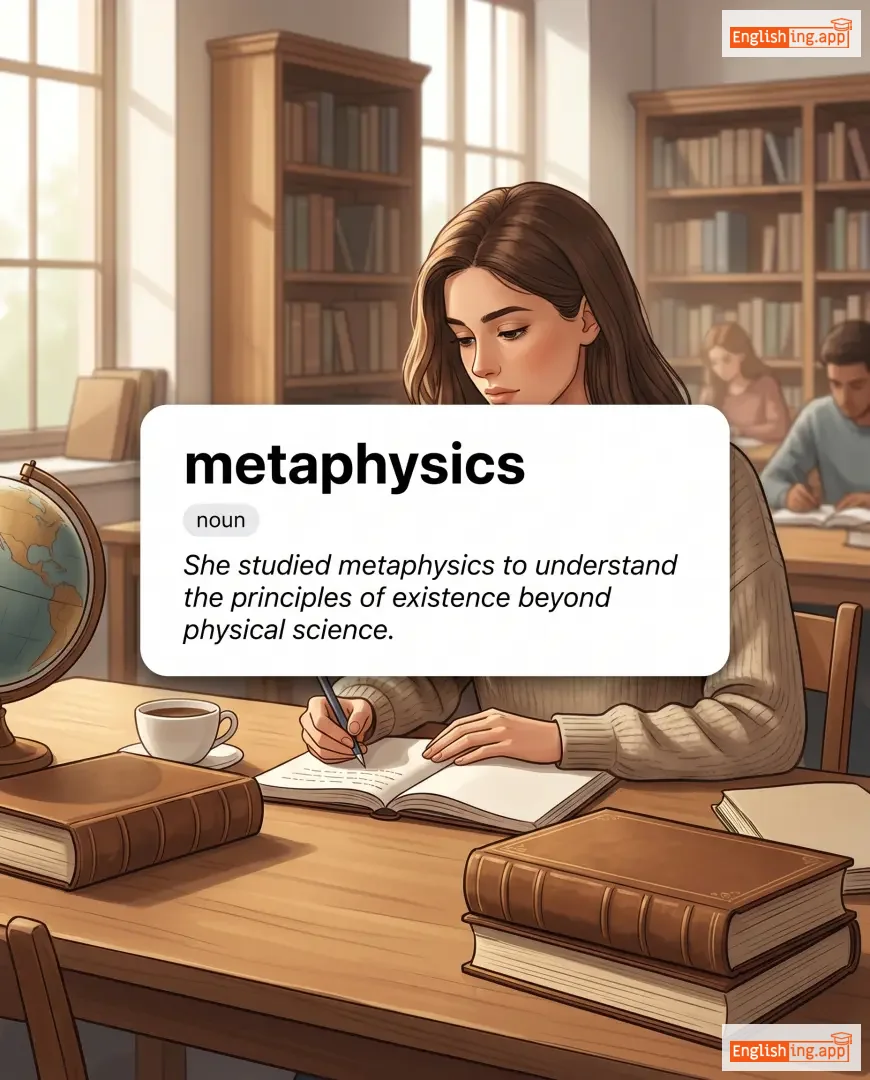
metaphysics definition card — visual illustration of the meaning
noun C2
/ˌmɛtəˈfɪzɪks/
метафизика (metafizika)

The branch of philosophy that deals with the fundamental nature of reality, existence, and the relationship between mind and matter.

"She studied metaphysics to understand the principles of existence beyond physical science."

"Она изучала метафизику, чтобы понять принципы существования, выходящие за пределы физической науки." (Ona izuchala metafiziku, chtoby ponyat' printsipy sushchestvovaniya, vykhodyashchie za predely fizicheskoy nauki.)