वोकैबुलरीज

इंग्लिश वोकैबुलरी डिस्कवर, लर्न और मास्टर करें

adjective C2
/ˈlɪtərəl/
तटीय (tatiya)

Related to or situated on the shore of the sea or a lake.

"The littoral zone is home to many unique marine species."

"तटीय क्षेत्र कई अद्वितीय समुद्री प्रजातियों का घर है।" (Tatiya kshetra kai advitiya samudri prajatiyon ka ghar hai.)
noun C2
/ˈlɪtərdʒi/
धार्मिक पूजा विधि (dharmik pooja vidhi)

A form or formulary according to which public religious worship is conducted.

"The priest followed the liturgy during the Sunday mass."

"पादरी ने रविवार की मास में लिटर्ज़ी का पालन किया।" (Paadri ne ravivaar ki mass mein liturgy ka paalan kiya.)
noun C2
/loʊm/
उर्वर मिट्टी (urvar mitti)

A fertile soil of clay and sand containing humus.

"The farmer used loam to improve the fertility of the field."

"किसान ने खेत की उर्वरता बढ़ाने के लिए लोअम का इस्तेमाल किया।" (Kisan ne khet ki urvarata badhane ke liye loam ka istemal kiya.)
adjective C2
/ˈloʊð.səm/
घिनौना (loathsam)

causing hatred or disgust; repulsive

"The loathsome smell from the garbage made everyone leave the room."

"कचरे से आने वाली घिनौनी बदबू ने सभी को कमरे से बाहर चले जाने के लिए मजबूर कर दिया।" (di loathsam smell phrom di garbej med evarivan liv di rum)
noun C2
/ˈlɒkətɪv/
स्थानसूचक (sthansuchak)

a grammatical case indicating location or place

"In Latin, the locative case is used to indicate location."

"लैटिन में, लोकटिव केस का उपयोग स्थान सूचक के रूप में किया जाता है।" (Latin mein, locative case ka upyog sthaan suchak ke roop mein kiya jata hai.)
noun C2
/lɒx/
झील (jheel)

a lake or sea inlet, especially in Scotland

"Tourists visit Loch Ness to search for the legendary monster."

"पर्यटक लोह नेस पर जाते हैं ताकि वे उस पौराणिक राक्षस की खोज कर सकें।" (Paryatak Loch Ness par jate hain taki ve us pauranik raakshas ki khoj kar saken.)
noun C2
/loʊd/
खनिज शिरा (khonij shira)

A rich source of something, often a vein of valuable metal in the earth.

"The miners discovered a rich lode of silver."

"माइनर्स ने चांदी की एक समृद्ध शिरा खोजी।" (miners ne chandi ki ek samriddh shira khoji.)
noun C2
/ˈlɒdʒ.mənt/
अस्थायी निवास (asthaayi nivaas)

The act of lodging or a place of temporary stay; also a deposit of something.

"The soldiers found lodgment in the abandoned house."

"सैन्य ने परित्यक्त घर में अस्थायी निवास पाया।" (Sainya ne parityakt ghar mein asthaayi nivaas paaya.)
noun C2
/ləˈdʒɪʃən/
तर्कज्ञ (tarkgy)

A person skilled in logic and reasoning.

"Aristotle is considered one of the greatest logicians in history."

"अरिस्टोटल को इतिहास के सबसे महान तर्कज्ञों में माना जाता है।" (Aristotle ko itihas ke sabse mahaan tarkgyon mein maana jaata hai.)
verb C2
/ˈlɔɪtər/
उद्देश्यहीन खड़ा रहना, समय बर्बाद करना (uddeshyheen khada rehna, samay barbaad karna)

To stand or wait around idly without apparent purpose.

"The teenagers were told not to loiter outside the shop."

"किशोरों को दुकान के बाहर उद्देश्यहीन खड़ा होने से मना किया गया था।" (Kishoron ko dukaan ke baahar uddeshyheen khada hone se mana kiya gaya tha.)
noun C2
/ˈlɔɪtərər/
वह व्यक्ति जो बिना उद्देश्य के एक स्थान पर समय बिताता है (vah vyakti jo bina uddeshya ke ek sthan par samay bitata hai)

A person who lingers aimlessly in a place without purpose.

"The police questioned the loiterer outside the store."

"पुलिस ने दुकान के बाहर लॉइटरर से पूछताछ की।" (Police ne dukaan ke baahar loiterer se puchtaach ki.)
verb C2
/lɑːl/
आलसी तरीके से बैठना (aalsi tareeke se baithna)

To sit, lie, or stand in a lazy, relaxed way.

"He lolled on the sofa after a long day at work."

"किसी लंबे दिन के बाद वह सोफे पर आलसी तरीके से बैठ गया।" (Kisi lambe din ke baad woh sofe par aalsi tareeke se baith gaya.)
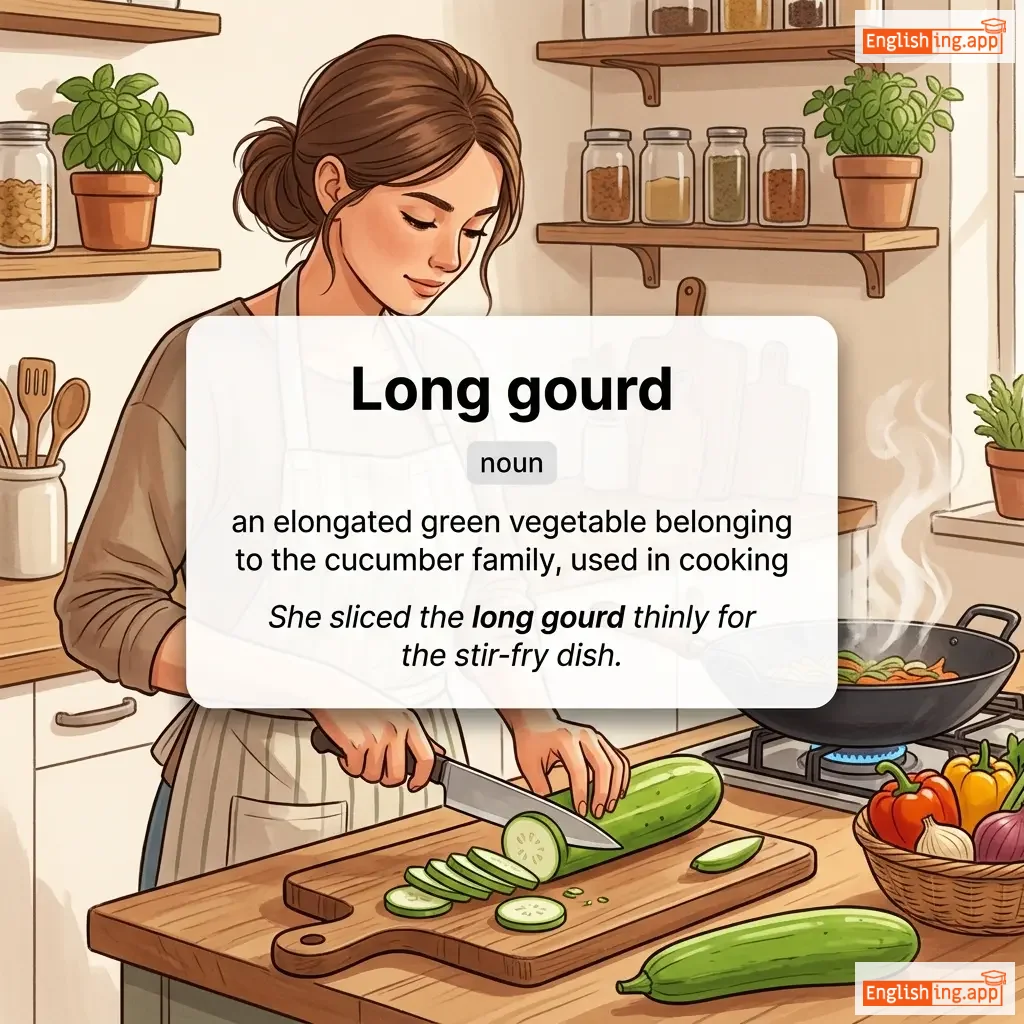
Long gourd definition card — visual illustration of the meaning
noun C2
/lɔːŋ ɡɔːrd/
लंबा लौकी (lamba lauki)

an elongated green vegetable belonging to the cucumber family, used in cooking

"She sliced the long gourd thinly for the stir-fry dish."

"उसने स्टिर-फ्राई डिश के लिए लंबी लौकी को पतला काट लिया।" (usne stir-fry dish ke liye lambi lauki ko patla kaat liya.)
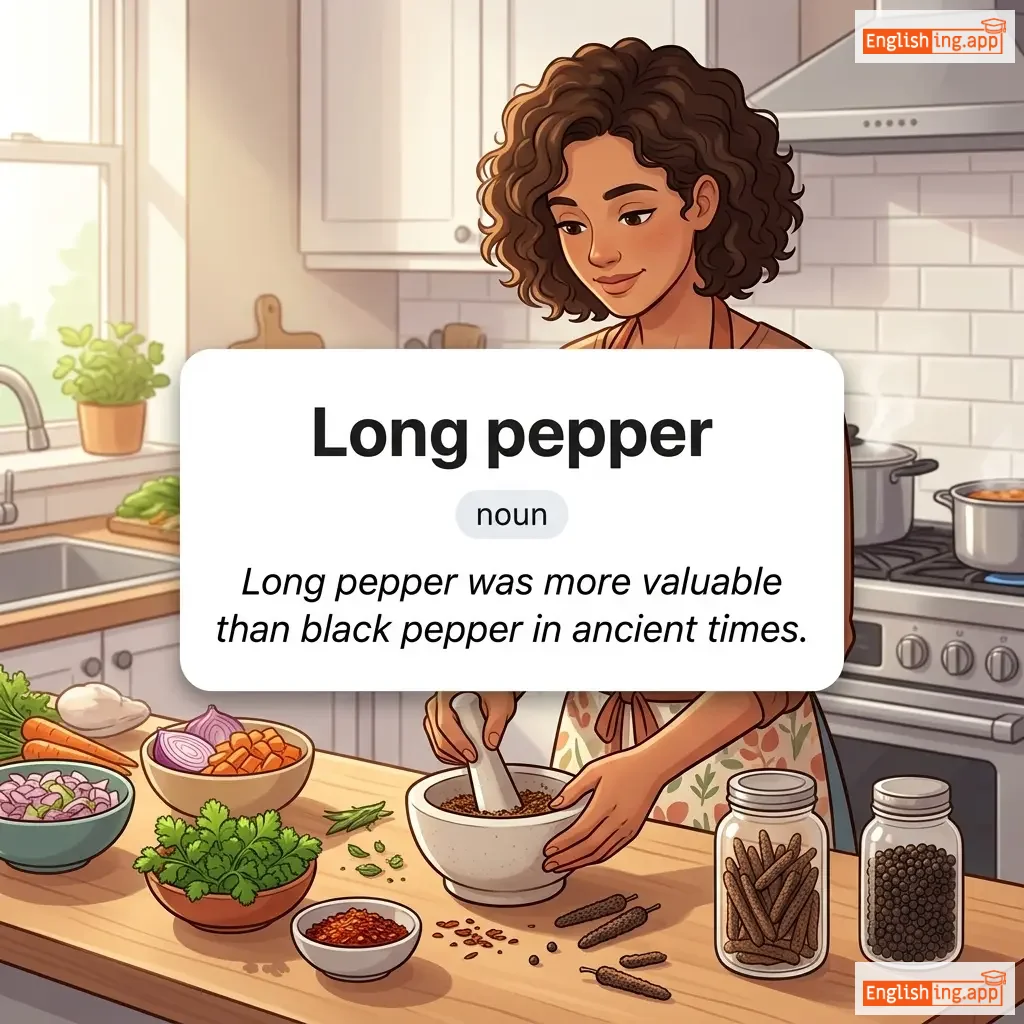
Long pepper definition card — visual illustration of the meaning
noun C2
/lɔːŋ ˈpepər/
लंबी मिर्च (lambi mirch)

a flowering vine in the family Piperaceae, cultivated for its fruit which is used as a spice

"Long pepper was more valuable than black pepper in ancient times."

"प्राचीन काल में लंबी मिर्च काली मिर्च से ज्यादा मूल्यवान थी।" (prachin kaal mein lambi mirch kaali mirch se zyada mulyavaan thi.)
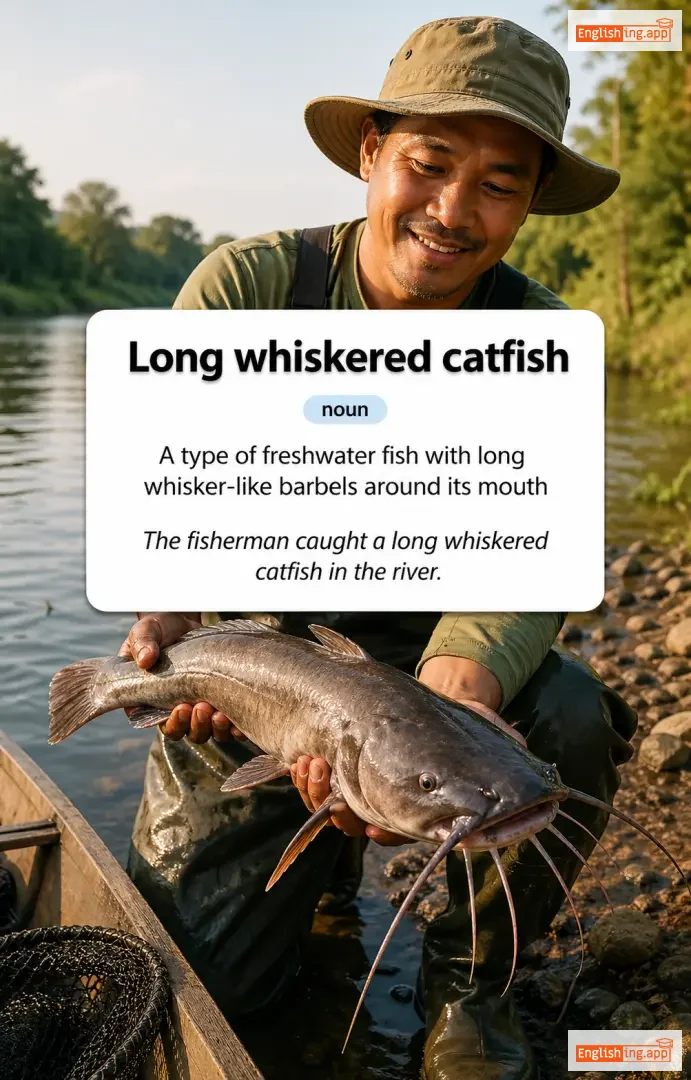
Long whiskered catfish definition card — visual illustration of the meaning
noun C2
/lɒŋ ˈwɪskəd ˈkætfɪʃ/
लंबी मूंछों वाली कैटफ़िश (lambi moonchon wali catfish)

A type of freshwater fish with long whisker-like barbels around its mouth

"The fisherman caught a long whiskered catfish in the river."

"मछुआरे ने नदी में एक लंबी मूंछों वाली कैटफ़िश पकड़ी।" (machhuaare ne nadi mein ek lambi moonchon wali catfish pakdi)
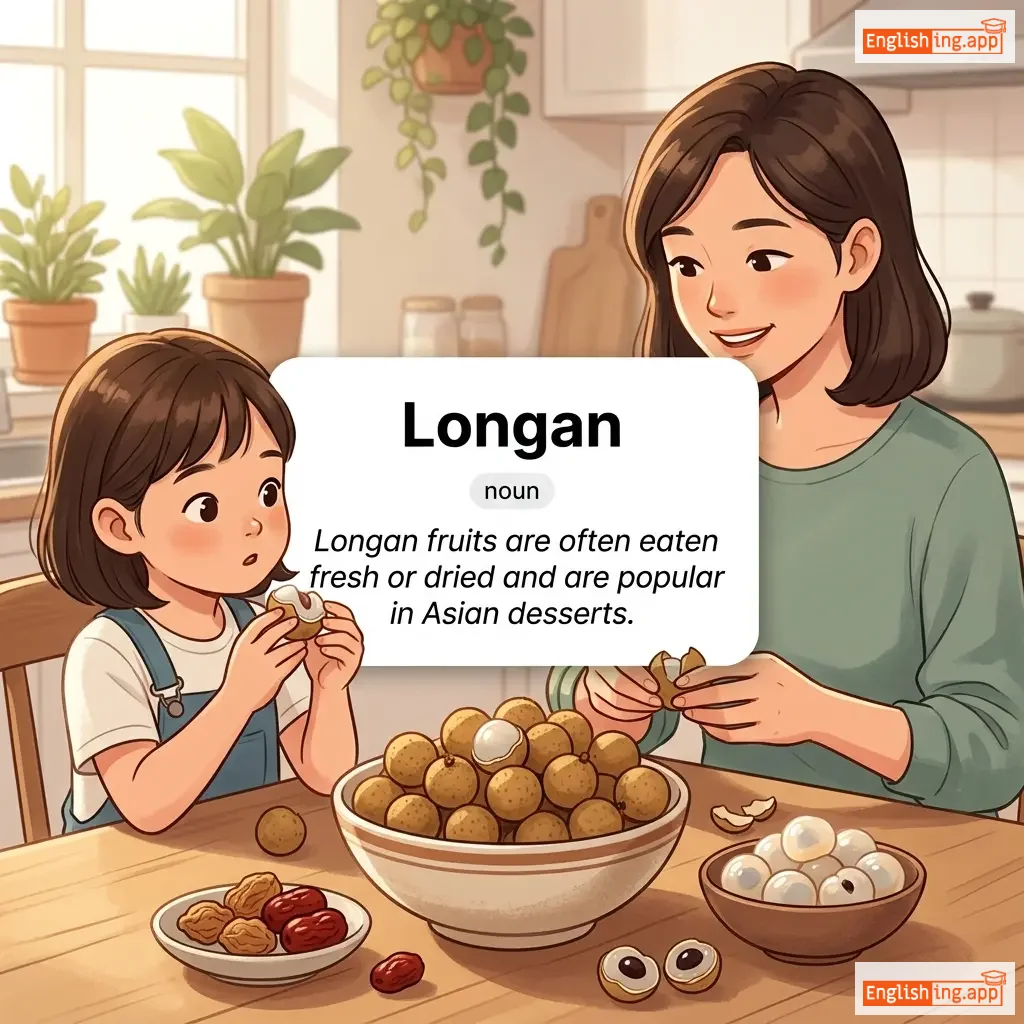
Longan definition card — visual illustration of the meaning
noun C2
/ˈlɔːŋ.ɡən/
लोंगन (longan)

a small round tropical fruit with translucent white flesh and sweet taste, related to lychee

"Longan fruits are often eaten fresh or dried and are popular in Asian desserts."

"लोंगन के फल अक्सर ताजा खाये जाते हैं या सूखे होते हैं और एशियाई डेसर्ट में लोकप्रिय होते हैं." (longan ke phal aksar taaza khaye jaate hain ya sookhe hote hain aur eshiyaai deserts mein lokpriya hote hain.)
adjective C2
/ˈluː.ni/
पागल; मूर्ख; मानसिक अस्थिर (paagal; moorkh; maansik asthir)

crazy; silly; mentally unstable

"His loony behavior made everyone laugh."

"उसका पागल व्यवहार सभी को हंसा दिया।" (uska paagal vyavhaar sabhi ko hansa diya)
adjective C2
/ˈluːpi/
पागल (paagal)

crazy, silly, or eccentric

"After working all night, he felt a little loopy."

"सारी रात काम करने के बाद, वह थोड़ा पागल सा महसूस कर रहा था।" (Saari raat kaam karne ke baad, vah thoda paagal sa mahsus kar raha tha.)
verb C2
/loʊp/
लंबे, उछलते कदमों से दौड़ना (lambe, uchhalte kadmon se daurna)

to run or move with a long, bounding stride

"The horse loped gracefully across the field."

"घोड़ा खेत में gracefully दौड़ रहा था।" (ghoda khet mein gracefully daud raha tha.)
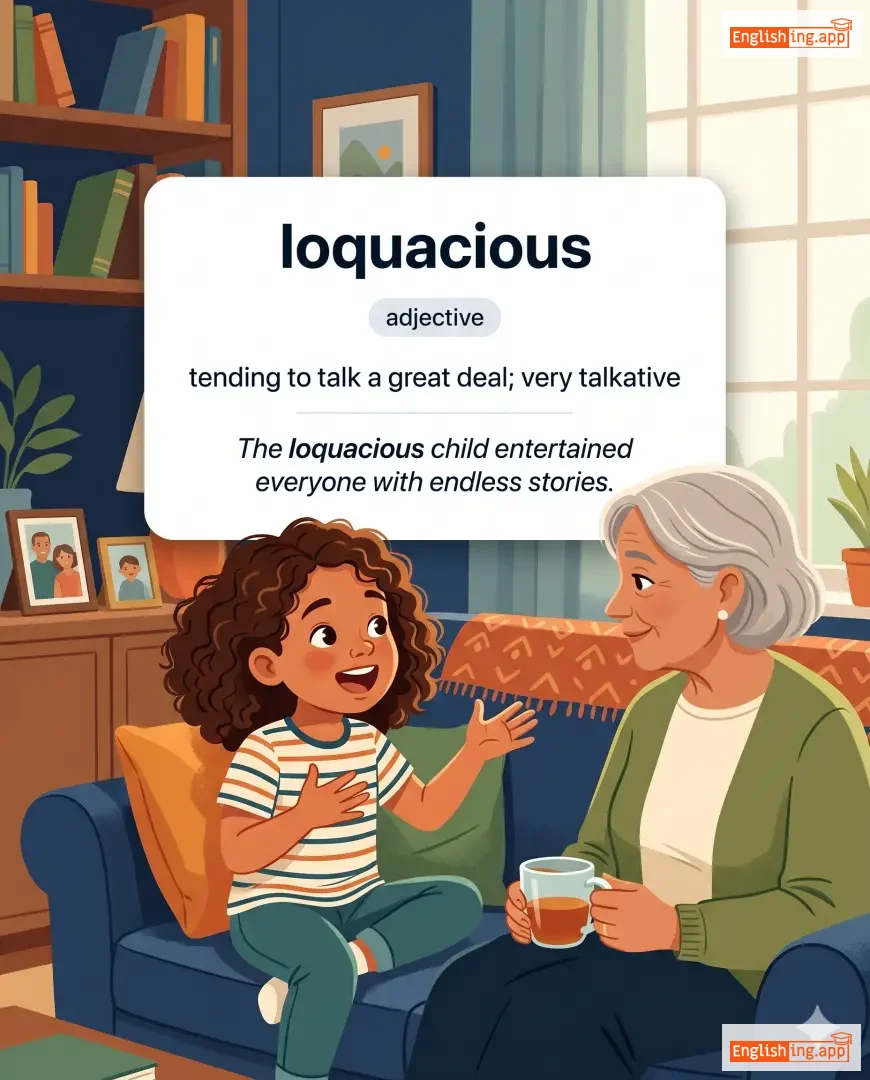
loquacious definition card — visual illustration of the meaning
adjective C2
/loʊˈkweɪʃəs/
बोलचालू, बकवादी (bolchalu, bakvadi)

tending to talk a great deal; very talkative

"The loquacious child entertained everyone with endless stories."

"बोलचालू बच्चा सभी को अंतहीन कहानियों से मनोरंजन कर रहा था।" (Bolchalu bachcha sabhi ko anthihin kahaniyon se manoranjan kar raha tha.)
noun C2
/ˈlɔːrdlɪŋ/
छोटा राजा (chhota raja)

A young or petty lord; someone of minor nobility.

"The arrogant lordling demanded respect despite his lack of experience."

"अहंकारी लॉर्डलिंग ने अनुभव की कमी के बावजूद सम्मान की मांग की।" (Ahankari lordling ne anubhav ki kami ke baavjood samman ki maang ki.)
noun C2
/lɒx/ or /lɒk/
तालाब (taalab)

An Irish or Scottish word for a lake or sea inlet.

"The fishermen lived by the lough for generations."

"मछुआरे कई पीढ़ियों से तालाब के पास रहते थे।" (Machhuare kai pidhiyaan se taalab ke paas rahte the.)
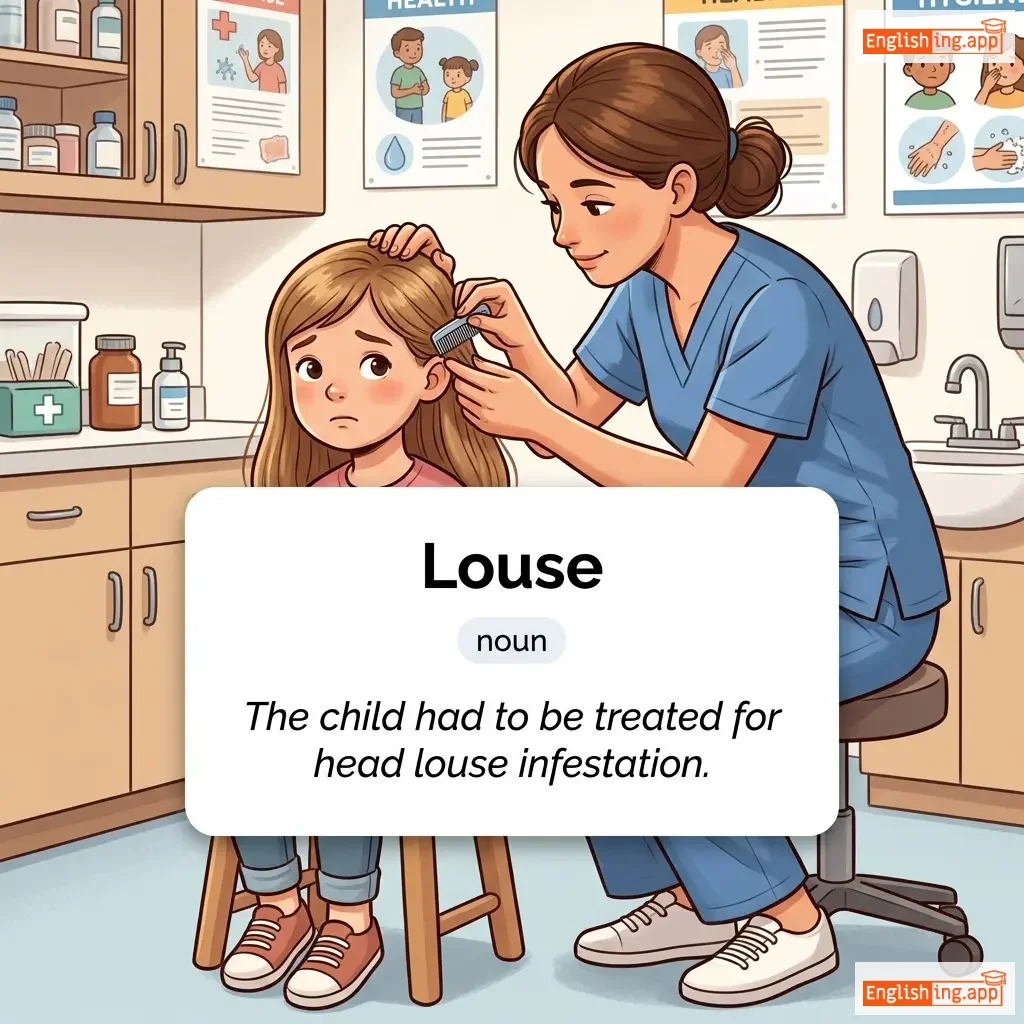
Louse definition card — visual illustration of the meaning
noun C2
/laʊs/
जूँ (joo)

A small parasitic insect that lives on the skin of mammals and birds; also used as an insult for a contemptible person.

"The child had to be treated for head louse infestation."

"बच्चे को सिर में जूँ के संक्रमण के लिए इलाज करना पड़ा।" (bachche ko sir mein joo ke sankraman ke liye ilaaj karna pada.)
noun C2
/laʊt/
अशिष्ट व्यक्ति (ashisht vyakti)

An uncouth or aggressive man or boy.

"The drunken lout caused a scene at the party."

"मदहोश अशिष्ट व्यक्ति ने पार्टी में हंगामा किया।" (Madhosh ashisht vyakti ne party mein hangama kiya.)
adjective C2
/ˈlaʊtɪʃ/
असभ्य (ashabhya)

Clumsy, rude, or aggressive in behavior.

"His loutish remarks offended everyone at the meeting."

"उसके असभ्य टिप्पणी ने मीटिंग में सभी को आहत किया।" (Uske asabhya tippani ne meeting mein sabhi ko aahat kiya.)
noun C2
/luːˈbrɪsɪti/
चिकनापन (chikanapan)

the quality of being slippery or smooth; sometimes also refers to lewdness

"The lubricity of the surface made it difficult to walk on."

"सतह की चिकनापन के कारण उस पर चलना कठिन था।" (Satah ki chikanapan ke karan us par chalna kathin tha.)
adjective C2
/ˈluːsənt/
दीप्तिमान (deeptimaan)

shining or glowing with light

"The lucent stars brightened the night sky."

"दीप्तिमान सितारों ने रात के आकाश को रोशन कर दिया।" (Deeptimaan sitaaron ne raat ke aakaash ko roshan kar diya.)
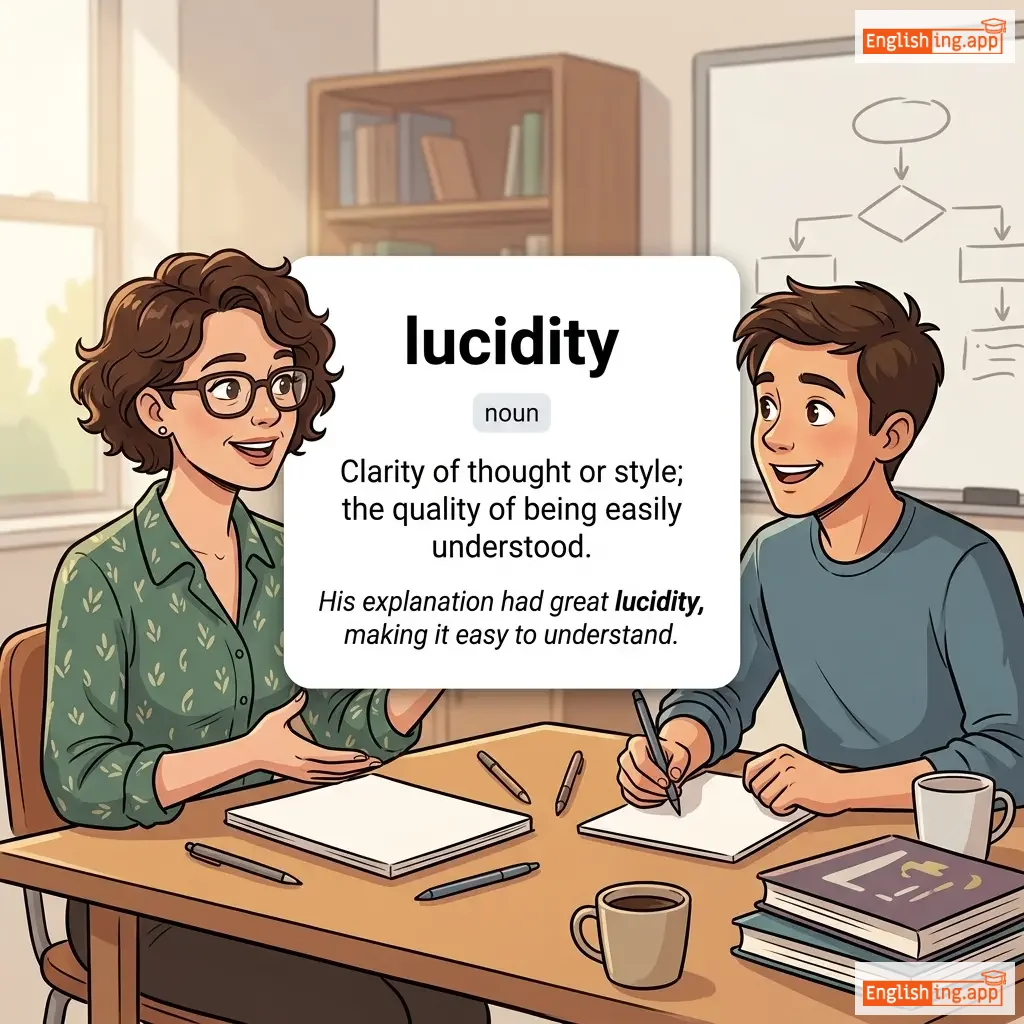
lucidity definition card — visual illustration of the meaning
noun C2
/luːˈsɪd.ə.ti/
स्पष्टता (spashtata)

Clarity of thought or style; the quality of being easily understood.

"His explanation had great lucidity, making it easy to understand."

"उसकी व्याख्या में बहुत स्पष्टता थी, जिससे समझना आसान हो गया।" (Uski vyakhya mein bahut spashtata thi, jisse samajhna aasaan ho gaya.)
lucre definition card — visual illustration of the meaning
noun C2
/ˈluːkər/
लालच (laalach)

money, especially when regarded as sordid or gained dishonorably

"He was motivated more by lucre than by duty."

"वह कर्तव्य से अधिक लालच से प्रेरित था।" (Wah kartavya se adhik laalach se prerit tha.)
noun C2
/ˌluːkjʊˈbreɪʃən/
रात्रि अध्ययन (ratri adhyayan)

study or meditation, especially at night

"His novel was the result of long lucubration."

"उसकी नावेल लंबी रात्रि अध्ययन का परिणाम था।" (Uski novel lambi raatri adhyayan ka parinaam tha.)
verb C2
/lʌɡ/
भारी वस्तु को खींचना या कष्टपूर्वक ले जाना (bhari vastu ko kheenchna ya kashtpoorvak le jana)

to carry or drag something heavy or cumbersome with effort

"He had to lug the suitcase up three flights of stairs."

"उसे तीन मंजिलों तक सूटकेस खींचकर ले जाना पड़ा।" (Use teen manzilon tak suitcase kheenchkar le jana pada.)
adjective C2
/luːˈɡuːbriəs/
दुखीपूर्ण (dukhipoorn)

looking or sounding sad and dismal

"His lugubrious expression made everyone feel uneasy."

"उसकी दुखीपूर्ण अभिव्यक्ति ने सभी को बेचैन कर दिया।" (Uski dukhipoorn abhibyakti ne sabhi ko bechain kar diya.)
noun C2
/ˈluː.mən/
ल्यूमेन (lyumen)

A unit of luminous flux, measuring the amount of visible light emitted by a source.

"The bulb produces 800 lumens of light."

"बल्ब 800 ल्यूमेन लाइट उत्पन्न करता है।" (balb 800 lyumen light utpann karta hai.)
noun C2
/ˈluː.məˌnɛr.i/
प्रकाशस्तंभ (prakashstambh)

A person who inspires or influences others, especially in a particular field.

"He is considered a luminary in the world of science."

"उसे विज्ञान की दुनिया में एक प्रकाशस्तंभ माना जाता है।" (use vigyan ki duniya mein ek prakashstambh maana jaata hai.)
noun C2
/ˌluː.mɪˈnɛs.əns/
प्रकाशोत्सर्जन (prakashotsarjan)

The emission of light by a substance not resulting from heat; a type of cold light.

"The luminescence of the fireflies lit up the forest."

"जोनाकियों की ल्यूमिनेसेंस ने जंगल को रोशन कर दिया।" (jonakiyon ki luminescence ne jangal ko roshan kar diya.)
adjective C2
/ˌluː.mɪˈnɛs.ənt/
प्रकाशमान (prakashmaan)

Emitting light without heat, glowing softly.

"The luminescent watch dial was visible in the dark."

"ल्यूमिनेसेंट घड़ी की डायल अंधेरे में स्पष्ट थी।" (luminescent ghadi ki daiyal andhere mein spasht thi.)
noun C2
/ˈluː.nə.si/
पागलपन (pagalpan)

Extreme foolishness or madness; insanity.

"It was sheer lunacy to go hiking in the storm."

"आंधी में हाइकिंग करना पूरी तरह से पागलपन था।" (Aandhi mein hiking karna puri tarah se pagalpan tha.)
noun C2
/luːn/
अर्धचंद्राकार (ardhachandrakaar)

A crescent-shaped figure formed by two intersecting arcs; also means 'moon' in French.

"The mathematician studied the properties of the lune."

"गणितज्ञ ने लून के गुणों का अध्ययन किया।" (Ganitgy ne lune ke gunon ka adhyayan kiya.)
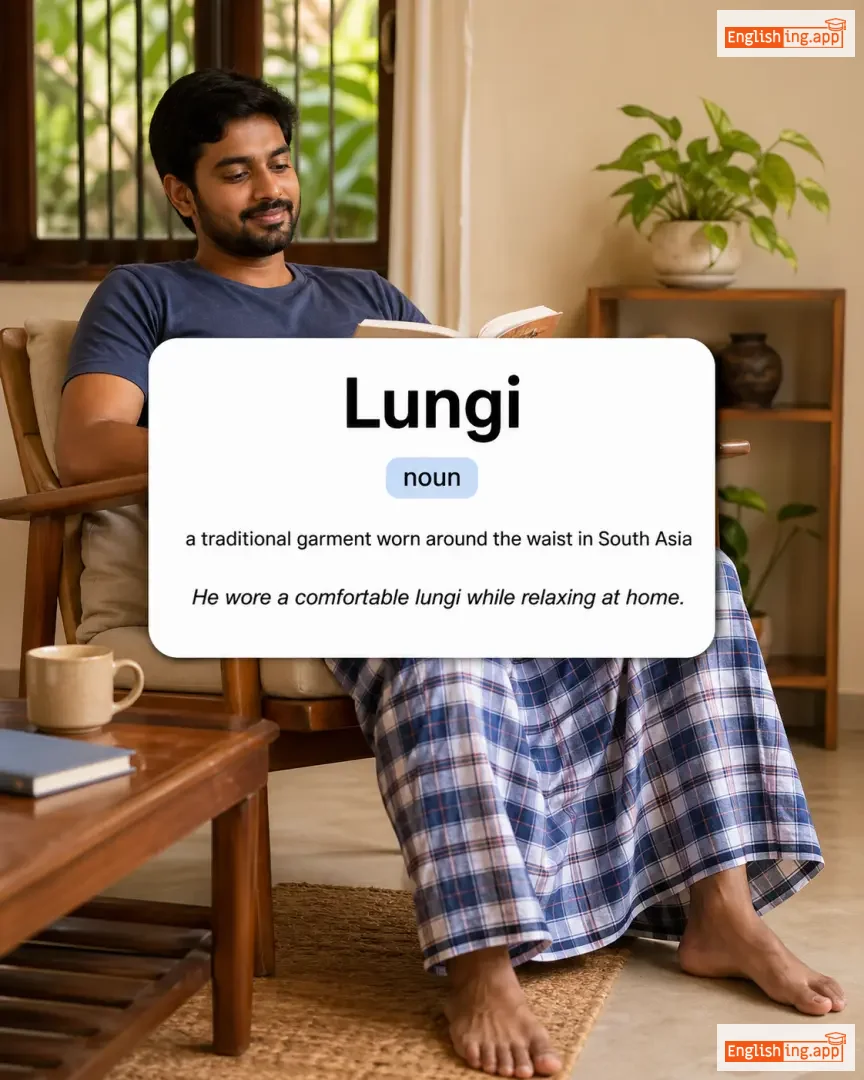
Lungi definition card — visual illustration of the meaning
noun C2
/ˈlʊŋ.gi/
लुंगी (lungi)

a traditional garment worn around the waist in South Asia

"He wore a comfortable lungi while relaxing at home."

"वह घर पर आराम करते हुए एक आरामदायक लुंगी पहने हुए था।" (vah ghar par aaram karte huye ek aaramdayak lungi pehne hue tha.)
lustrous definition card — visual illustration of the meaning
adjective C2
/ˈlʌstrəs/
चमकदार (chamakdaar)

having a gentle sheen or soft glow

"Her hair looked smooth and lustrous."

"उसके बाल चिकने और चमकदार लग रहे थे।" (uske baal chikne aur chamakdaar lag rahe the.)
noun C2
/lʌɡˈʒʊəriəns/
समृद्धि (samriddhi)

abundant growth, richness, or elegance

"The garden was filled with the luxuriance of tropical plants."

"बग़ीचा उष्णकटिबंधीय पौधों की समृद्धि से भरा हुआ था।" (bagicha ushnakatibandhiya paudhon ki samriddhi se bhara hua tha.)
adjective C2
/lʌɡˈʒʊəriənt/
वृद्धिशील (vruddhishil)

abundant in growth or richly abundant

"The luxuriant forest was teeming with life."

"वृद्धिशील जंगल जीवन से भरपूर था।" (vruddhishil jangal jeevan se bharpoor tha.)
verb C2
/lʌɡˈʒʊrieɪt/
विलासिता का आनंद लेना (vilasita ka anand lena)

to enjoy something in a self-indulgent way; to take pleasure in great comfort

"She luxuriated in the warm bubble bath after a long day."

"वह एक लंबे दिन के बाद गर्म बबल स्नान में विलासिता का आनंद ले रही थी।" (Vah ek lambe din ke baad garm bubble snaan mein vilasita ka anand le rahi thi.)
noun C2
/laɪər/
प्राचीन बांसुरी (prachin bamsuri)

a stringed musical instrument of ancient Greece

"The musician played a melody on the lyre."

"संगीतज्ञ ने लायर पर एक धुन बजाई।" (Sangeetgya ne lyre par ek dhun bajayi.)
verb C2
/məˈkadəˌmaɪz/
कच्ची सड़क को पत्थर से ढंकना (kachchi sadak ko pathar se dhanqna)

to construct or cover a road with broken stone

"The government decided to macadamize the old rural roads."

"सरकार ने पुराने ग्रामीण सड़कों को पत्थर से ढंकने का निर्णय लिया।" (Sarkar ne purane gramin sadkon ko pathar se dhanqne ka nirnay liya.)
noun C2
/meɪs/
गदा / राजदंड (gada / rajdand)

a ceremonial staff carried as a symbol of authority or a weapon similar to a club

"The guard carried a mace as a symbol of authority."

"गार्ड ने अधिकार के प्रतीक के रूप में एक गदा उठाई थी।" (Guard ne adhikar ke pratik ke roop mein ek gada uthayi thi.)
verb C2
/ˈmæsəˌreɪt/
नर्म करना (narm karna)

to soften or break up something, especially food, by soaking in liquid

"The chef macerated the fruit in wine before serving."

"शेफ ने फल को परोसने से पहले वाइन में मैसरट किया।" (Shef ne phal ko parosne se pehle wain mein macerate kiya.)
machiavellian definition card — visual illustration of the meaning
adjective C2
/ˌmækɪəˈvɛliən/
चतुर, षड्यंत्रकारी और नीतिहीन, खासकर राजनीति में या किसी के करियर को आगे बढ़ाने में (makiveliyan)

cunning, scheming, and unscrupulous, especially in politics or in advancing one's career

"The politician was known for his Machiavellian tactics."

"राजनेता अपने मैकीवेलियन चालों के लिए प्रसिद्ध थे।" (raajneta apne makiveliyan chalon ke liye prasiddh the.)
verb C2
/ˈmæk.ɪ.neɪt/
षड्यंत्र करना (shadyantr karna)

to engage in plots or schemes, usually for harmful or evil purposes

"The rebels tried to machinate against the king."

"विद्रोहियों ने राजा के खिलाफ षड्यंत्र करने की कोशिश की।" (Vidrohiyon ne raja ke khilaf shadyantr karne ki koshish ki.)
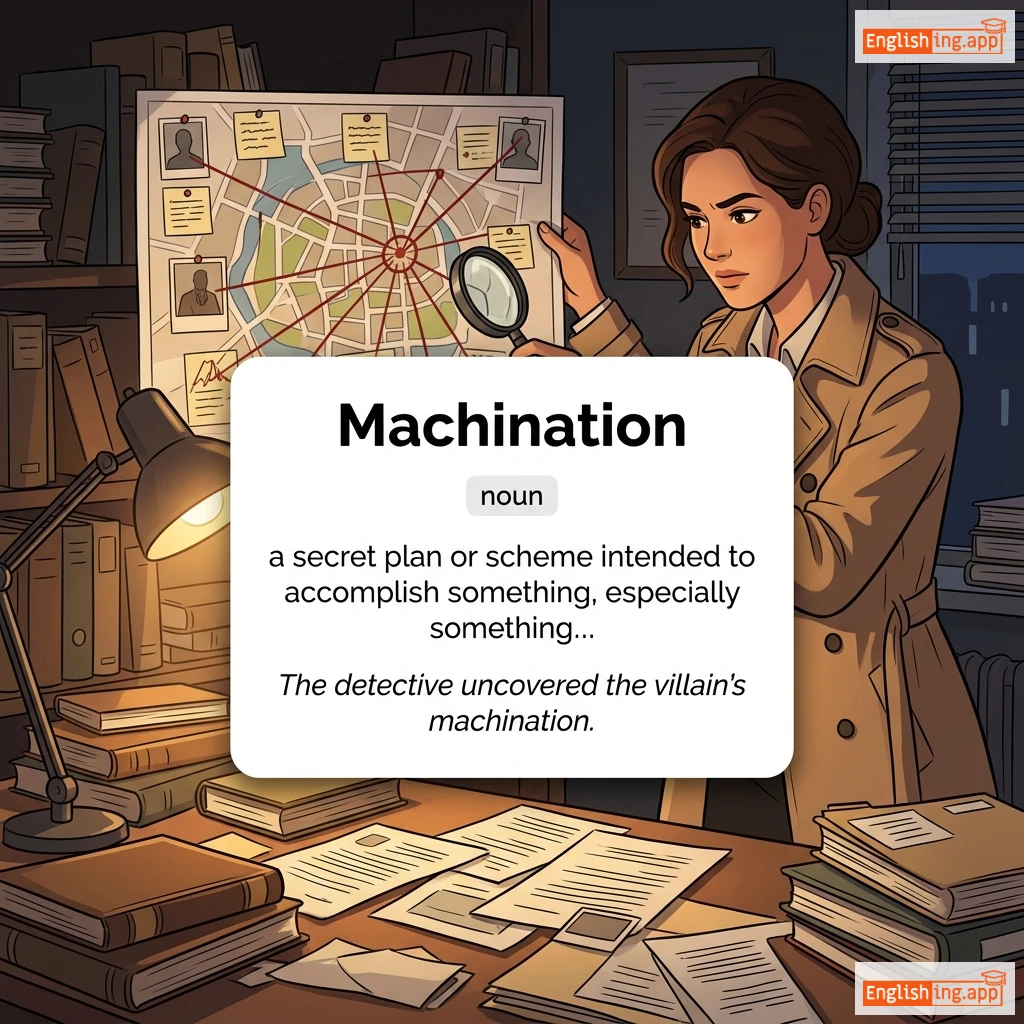
Machination definition card — visual illustration of the meaning
noun C2
/ˌmæk.ɪˈneɪ.ʃən/
षड्यंत्र (shadyantra)

a secret plan or scheme intended to accomplish something, especially something evil

"The detective uncovered the villain's machination."

"जांचकर्ता ने खलनायक के षड्यंत्र का खुलासा किया।" (Jaanch karta ne khalnayak ke shadyantra ka khulasa kiya.)