वोकैबुलरीज

इंग्लिश वोकैबुलरी डिस्कवर, लर्न और मास्टर करें

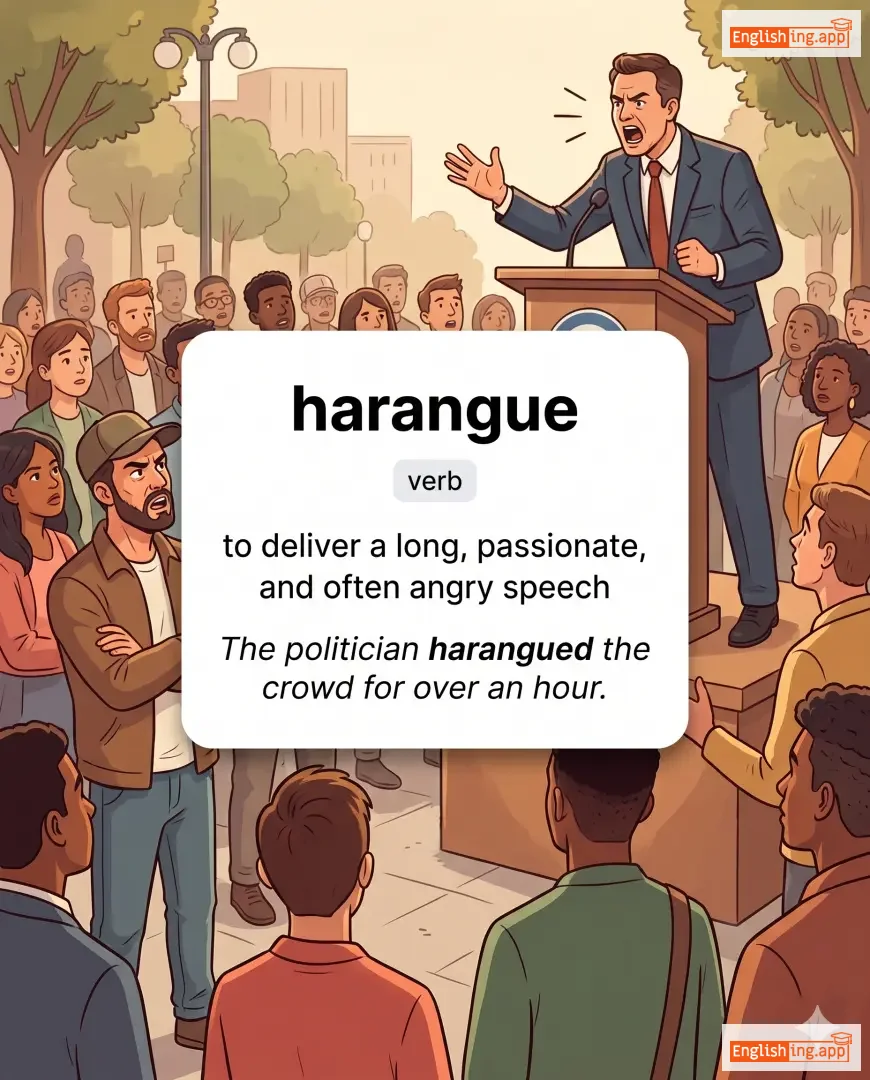
harangue definition card — visual illustration of the meaning
verb C2
/həˈræŋ/
लंबा और गुस्से में भरा भाषण देना (lamba aur gusse mein bhara bhashan dena)

to deliver a long, passionate, and often angry speech

"The politician harangued the crowd for over an hour."

"राजनेता ने भीड़ को एक घंटे से अधिक समय तक भाषण दिया।" (Rajneeta ne bheed ko ek ghante se adhik samay tak bhashan diya.)
noun C2
/ˈhɑːrbɪndʒər/
सूचक (soochak)

a person or thing that announces or signals the approach of another

"The sudden drop in temperature was a harbinger of winter."

"टेम्प्रेचर में अचानक गिरावट सर्दियों के हारबिंजर की तरह थी।" (Temperature mein achanak girawat sardiyon ke harbinger ki tarah thi.)
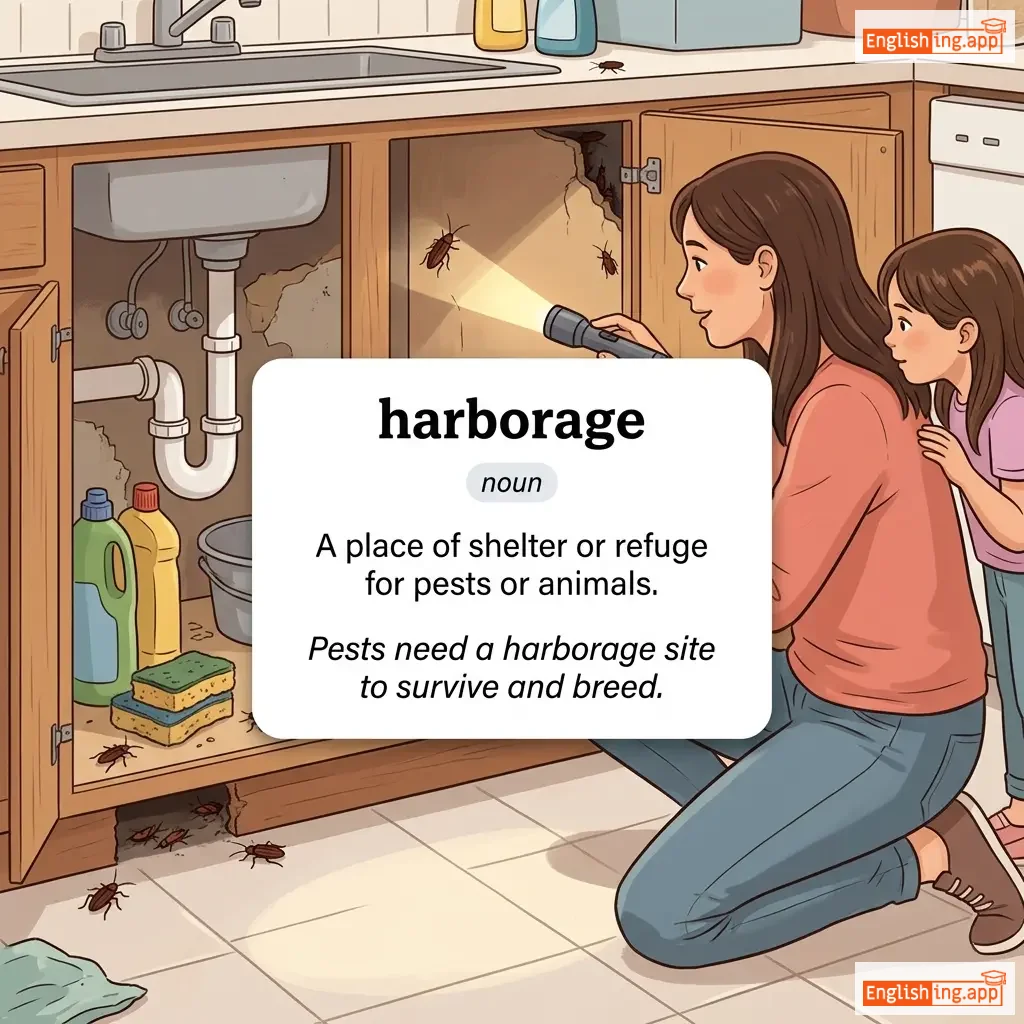
harborage definition card — visual illustration of the meaning
noun C2
ˈhɑːrbərɪdʒ
आश्रय स्थल (aashray sthal)

A place of shelter or refuge for pests or animals.

"Pests need a harborage site to survive and breed."

"कीटों को जीवित रहने और प्रजनन करने के लिए एक आश्रय स्थल की आवश्यकता होती है।" (Keeton ko jeevit rehne aur prajnan karne ke liye ek aashray sthal ki avashyakta hoti hai.)
adjective C2
/ˌhɑːrdˈbɪtn̩/
कठोर और अनुभवी (kathor aur anubhavi)

tough and experienced, not easily affected by emotions or hardship

"The hard-bitten detective showed no sign of surprise at the crime scene."

"कठोर और अनुभवी जासूस ने अपराध स्थल पर कोई हैरानी नहीं दिखाई।" (Kathor aur anubhavi jasoos ne apradh sthal par koi hairani nahi dikhai.)
noun C2
/ˈhɑːdɪhʊd/
साहस, दुस्साहस (sahas, dusahas)

Courage, boldness, or daring behavior; also physical robustness.

"The mountaineer's hardihood impressed the entire team."

"माउंटेनियर का हार्डिहूड पूरे टीम को प्रभावित कर गया।" (Mountaineer ka hardihood pure team ko prabhavit kar gaya.)
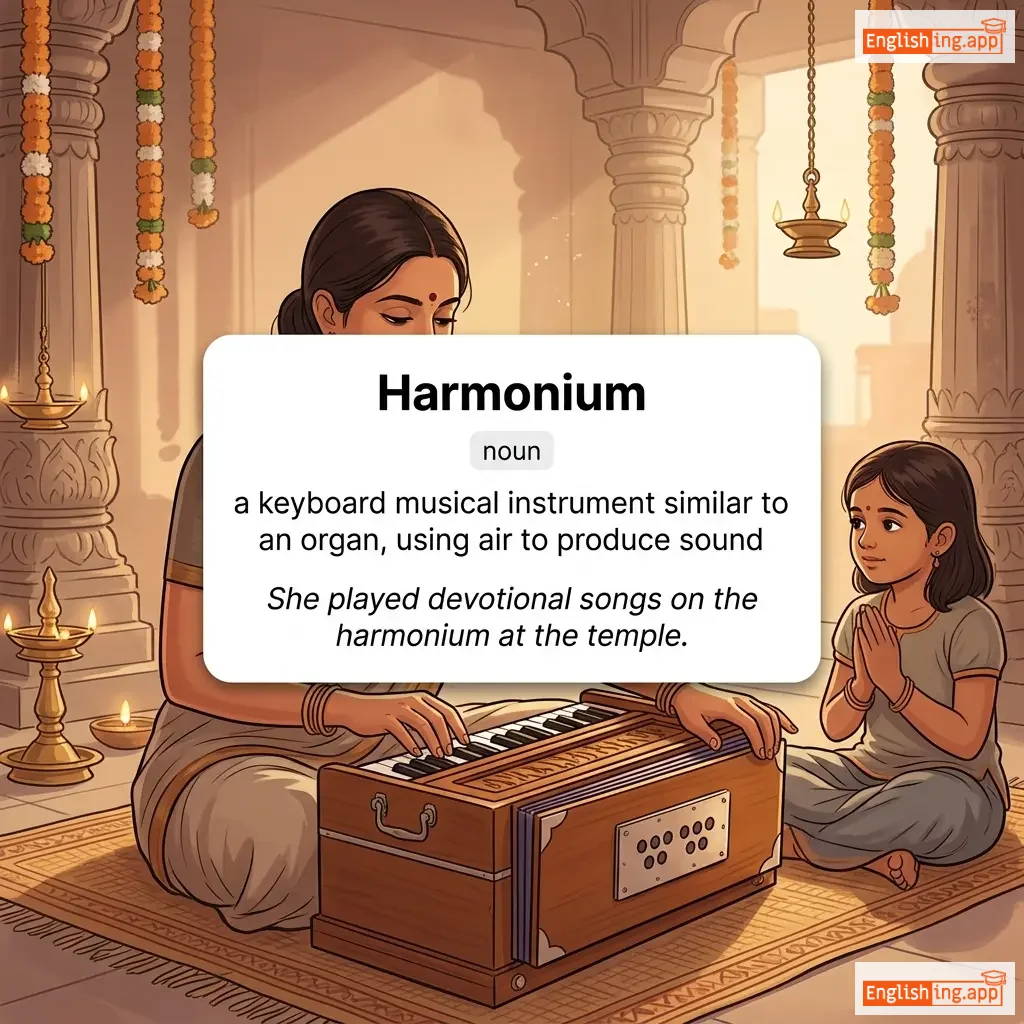
Harmonium definition card — visual illustration of the meaning
noun C2
/hɑrˈmoʊniəm/
हार्मोनियम (harmonium)

a keyboard musical instrument similar to an organ, using air to produce sound

"She played devotional songs on the harmonium at the temple."

"उसने मंदिर में हार्मोनियम पर भक्ति गीत बजाए." (Usne mandir mein harmonium par bhakti geet bajaye.)
verb C2
/ˈhɑːrpɪŋ/
लगातार शिकायत करना (lagatar shikayat karna)

continuously talking or complaining about something in a tiresome way

"She kept harping on about the mistakes I made."

"वह मेरे द्वारा की गई गलतियों के बारे में बार-बार शिकायत करती रही।" (Woh mere dwara ki gayi galtiyon ke baare mein baar-baar shikayat karti rahi.)
adjective C2
/ˈhæriːd/
अत्यधिक व्यस्त या चिंतित (atyadhik vyast ya chintit)

feeling strained or stressed due to being overworked or constantly bothered

"The harried teacher struggled to calm the noisy classroom."

"अत्यधिक व्यस्त शिक्षक ने शोर-शराबे से भरी कक्षा को शांत करने के लिए संघर्ष किया।" (Atyadhik vyast shikshak ne shor-sharabe se bhari kaksha ko shaant karne ke liye sangharsh kiya.)
verb C2
/ˈhæroʊ/
कष्ट देना / ज़मीन हल करना (kasht dena / zameen hal karna)

to cause distress or torment; also to break up and smooth soil with a farm tool

"The tragic news harrowed the entire family."

"दुखद समाचार ने पूरे परिवार को दुखी कर दिया।" (Dukhad samachar ne poore parivar ko dukhi kar diya.)
verb C2
/ˈhæri/
हमला करना, तंग करना (hamla karna, tang karna)

to constantly attack, harass, or annoy

"The army harried the enemy with sudden raids."

"फौज ने अचानक हमले किए और दुश्मन को तंग किया।" (Fauj ne achanak hamle kiye aur dushman ko tang kiya.)
noun C2
/hæˈʃiːʃ/
हशीश (hashish)

a drug made from the resin of the cannabis plant

"The police arrested him for possessing hashish."

"पुलिस ने उसे हशीश रखने के लिए गिरफ्तार किया।" (Police ne use hashish rakhne ke liye giraftaar kiya.)
noun C2
/ˈhɔːtɪnəs/
अहंकार (ahankar)

The appearance or quality of being arrogantly superior and disdainful.

"His haughtiness made him unpopular among his peers."

"उसका अहंकार उसे अपने सहकर्मियों के बीच अप्रिय बना देता था।" (Uska ahankar use apne sahkarmiyon ke beech apriya bana deta tha.)
noun C2
/oʊˈtɜːr/
अहंकार (ahankar)

disdainful pride; arrogance

"His hauteur made it difficult for others to approach him."

"उसका अहंकार दूसरों के लिए उसे नजदीक आने में मुश्किल बना देता था।" (Uska ahankar dusron ke liye use najdeek aane mein mushkil bana deta tha.)
noun C2
/ˈhɔːzər/
नौका बांधने का मोटा रस्सा (nauka baandhne ka mota rassa)

A thick rope or cable used in mooring or towing a ship.

"The sailors secured the ship to the dock with a heavy hawser."

"नाविकों ने जहाज को डॉक से जोड़ने के लिए एक भारी हॉज़ेर का उपयोग किया।" (Navikon ne jahaj ko dock se jodne ke liye ek bhari hawzer ka upyog kiya.)
noun C2
/ˈhɔːθɔːrn/
काँटेदार झाड़ी (kaantedar jhaadi)

A thorny shrub or small tree with white or pink flowers, often used for hedges.

"The garden was lined with blooming hawthorn bushes."

"बग़ीचा खिलते हुए हॉथॉर्न झाड़ियों से घिरा हुआ था।" (Bagicha khilte huye hawthorn jhaadiyon se ghira hua tha.)
adjective C2
/ˈhɛdi/
नशे में डालने वाला (nashe mein dalne wala)

Exciting or intoxicating; having a strong or exhilarating effect.

"The heady aroma of the flowers filled the room."

"फूलों की नशे में डालने वाली खुशबू ने कमरे को भर दिया।" (Phoolon ki nashe mein dalne wali khushboo ne kamre ko bhar diya.)
verb C2
/ˈhɑːrkən/
ध्यान से सुनना (dhyan se sunna)

To listen attentively; to give heed.

"He would hearken to his mentor’s advice before making decisions."

"वह निर्णय लेने से पहले अपने मेंटर की सलाह ध्यान से सुनता।" (Vah nirnay lene se pehle apne mentor ki salah dhyan se sunta.)
noun C2
/hɜːrs/
मृतक वाहन; (mrutak vahan)

a vehicle for conveying the coffin at a funeral; a funeral car

"The black hearse slowly made its way to the cemetery, followed by a procession of mourners."

"काले हर्स ने धीरे-धीरे श्मशान की ओर रुख किया, जिसके पीछे शोक संतप्त लोग थे।" (kaale herse ne dheere-dheere shamshan ki or rukh kiya, jiske peeche shok santapt log the.)
verb C2
/ˈhɑːrtən/
साहस देना (sahas dena)

To give courage, confidence, or hope.

"The teacher’s encouragement heartened the students."

"शिक्षक की प्रेरणा ने छात्रों को साहस दिया।" (Shikshak ki prerna ne chatron ko sahas diya.)
adjective C2
/ˈhiːðənɪʃ/
असभ्य (asabhya)

Lacking culture or religion; barbaric or uncivilized.

"They considered the ancient tribe’s rituals heathenish."

"उन्होंने प्राचीन जनजाति की रीतियों को असंस्कृत माना।" (Unhone prachin janjati ki reetiyon ko asanskrit mana.)
noun C2
/ˈhɛklər/
हंगामा करने वाला (hangama karne wala)

A person who interrupts a speaker with rude or aggressive comments.

"The politician remained calm despite the heckler shouting from the crowd."

"राजनेता हंगामा करने वाले की चिल्लाहट के बावजूद शांत रहे।" (raajnetaa hangama karne waale ki chillahat ke bawajood shaant rahe.)
verb C2
/ˈhɛktər/
धमकी देकर बात करना (dhmki dekar baat karna)

To talk to someone in a bullying or intimidating way.

"The manager hectored the staff into working overtime."

"मैनेजर ने कर्मचारियों को ओवरटाइम करने के लिए हेक्टर किया।" (manager ne karyalayion ko overtime karne ke liye hector kiya.)
noun C2
/hɪˈdʒɛməni/ or /ˈhɛdʒəmoʊni/
हेजमनी (hejmeni)

leadership or dominance, especially by one state or group over others

"The empire maintained its hegemony over neighboring states."

"साम्राज्य ने पड़ोसी राज्यों पर अपनी हेजेमनी बनाए रखी।" (Samrajya ne padosi rajyon par apni hegemony banaye rakhi.)
noun C2
/ˈhɛdʒɪrə/ or /hɪˈdʒaɪrə/
निर्वासन, हिजरत (nirvasan, hijrat)

a journey, especially when undertaken to escape from a dangerous or undesirable situation

"The refugees began their hegira across the desert."

"शरणार्थियों ने रेगिस्तान में अपनी हिजरत शुरू की।" (Sharanarthiyon ne registan mein apni hijrat shuru ki.)
noun C2
/ˈhɛfər/
गाय बछड़ा (gaay bachda)

a young cow that has not borne a calf

"The farmer raised a heifer for dairy production."

"किसान ने डेरी उत्पादन के लिए एक गाय बछड़ा पाला।" (Kisaan ne dairy utpadan ke liye ek gaay bachda paala.)
noun C2
/ˈhelmz.mən/
नाविक; कर्णधार (navik; karndhaar)

a person who steers a ship or boat; the person at the helm of a vessel

"The experienced helmsman skillfully guided the yacht through the narrow channel during the storm."

"अनुभवी नाविक ने तूफान के दौरान संकरी जलमार्ग के माध्यम से नौका को कुशलतापूर्वक मार्गदर्शन किया।" (Anubhavi navik ne toofan ke dauran sankari jalmaarg ke maadhyam se nauka ko kushaltapurvak maargdarshan kiya.)
hemophilia definition card — visual illustration of the meaning
noun C2
ˌhiː.məˈfɪl.i.ə
रक्तस्राव रोग (raktasraav rog)

A medical condition in which the ability of the blood to clot is severely reduced, causing the sufferer to bleed severely from even a slight injury.

"Hemophilia treatment benefits from genetic editing."

"हीमोफीलिया उपचार आनुवंशिक संपादन से लाभान्वित होता है।" (Hemophilia upchaar aanuvanshik sampadan se laabhaanvit hota hai.)
noun C2
/ˈhen.ə/
हिना (hina)

a reddish-brown dye made from the powdered leaves of a tropical shrub, used to color hair and decorate skin

"The bride's hands were beautifully decorated with intricate henna patterns for her wedding ceremony."

"दुल्हन के हाथ उसकी शादी की रस्म के लिए जटिल हिना पैटर्न से सजे हुए थे।" (dulhan ke haath uski shaadi ki rasam ke liye jatil hina pattern se saje hue the.)
verb C2
/ˈhɛnˌpɛk/
पत्नी द्वारा लगातार आलोचना या दबाव डालने की स्थिति (patni dvara lagatar aalochana ya dabav dalne ki sthiti)

To continually criticize, nag, or dominate (especially a husband).

"He felt henpecked by his overly controlling wife."

"वह अपनी अत्यधिक नियंत्रणकारी पत्नी द्वारा बार-बार ताने मारने से परेशान था।" (vah apni atyadhik niyontrankari patni dvara baar-baar taane maarne se pareshan tha.)
noun C2
/ˈhɛptəˌɡɒn/
सप्तभुज (saptbhuj)

A polygon with seven sides and seven angles.

"The math teacher drew a heptagon on the board."

"गणित के शिक्षक ने बोर्ड पर एक सप्तभुज खींचा।" (Ganit ke shikshak ne board par ek saptbhuj kheenchha.)
noun C2
/ˈhɛptɑːrki/
सप्तशासन (saptashasan)

A group of seven rulers or governments, especially the seven Anglo-Saxon kingdoms in early England.

"The history book described the heptarchy of Anglo-Saxon England."

"इतिहास की किताब में एंग्लो-सैक्सन इंग्लैंड के सप्तशासन का विवरण दिया गया था।" (Itihas ki kitaab mein Anglo-Saxon England ke saptashasan ka vivaran diya gaya tha.)
adjective C2
/hɜːrˈbeɪʃəs/
हर्बेसियस (herbesiyas)

Relating to or resembling herbs; plants with soft, non-woody stems.

"The garden was filled with herbaceous plants that thrived in the summer."

"बग़ीचा हर्बेसियस पौधों से भरा हुआ था जो गर्मी में पनपे थे।" (Bagicha herbesiyas paudhon se bhara hua tha jo garmi mein panpe the.)
noun C2
/hɜːrˈbɛəriəm/
पौधों का संग्रहालय (paudhon ka sangrahalay)

A collection of preserved plant specimens and associated data used for scientific study.

"The university maintains a large herbarium for research and education."

"विश्वविद्यालय अनुसंधान और शिक्षा के लिए एक बड़ा पौधों का संग्रहालय बनाए रखता है।" (Vishwavidyalay anusandhan aur shiksha ke liye ek bada paudhon ka sangrahalay banaye rakhta hai.)
adjective C2
/ˌhɜːrkjʊˈliːən/
अत्यधिक कठिन (atyadhik kathin)

Requiring great strength or effort; very difficult to perform.

"It was a herculean task to rebuild the city after the disaster."

"आपदा के बाद शहर को फिर से बनाने का काम एक अत्यधिक कठिन कार्य था।" (Aapda ke baad shahar ko phir se banane ka kaam ek atyadhik kathin kaary tha.)
adjective C2
/həˈrɛtɪkəl/
धर्मविरोधी (dharmavirodhi)

Relating to or characterized by departure from accepted beliefs or standards, especially in religion.

"The priest condemned the book as heretical."

"पादरी ने पुस्तक को धर्मविरोधी के रूप में निंदा की।" (Paadri ne pustak ko dharmavirodhi ke roop mein ninda ki.)
hermetic definition card — visual illustration of the meaning
adjective C2
/hərˈmɛtɪk/
हवा बंद (hawa band)

Completely sealed, especially so that no air can enter or escape.

"The medicine was kept in a hermetic container."

"दवा को एक हवा बंद कंटेनर में रखा गया था।" (Dawa ko ek hawa band container mein rakha gaya tha.)
adverb C2
/hərˈmɛtɪkli/
हवादार तरीके से (havadar tareeke se)

In a way that is completely airtight or sealed off.

"The jars were hermetically sealed to preserve freshness."

"जारों को ताजगी बनाए रखने के लिए हवादार तरीके से सील किया गया था।" (Jaaron ko taazgi banaye rakhne ke liye havadar tareeke se seal kiya gaya tha.)
noun C2
/ˈhɜːrmɪtɪdʒ/
धर्मिक एकान्तवास (dharmik ekaantvaas)

A secluded residence or retreat, often for a hermit or religious recluse.

"The monk spent years in a hermitage deep in the forest."

"संन्यासी ने जंगल में एक हर्मिटेज में कई साल बिताए।" (sannyasi ne jangal mein ek hermitage mein kai saal bitaaye.)
noun C2
/ˌhɜːrpəˈtɒlədʒɪst/
सरीसृप और उभयचर प्राणीविज्ञानी (sarisrip aur ubhaychar praanivigyaani)

A scientist who studies reptiles and amphibians.

"The herpetologist discovered a new species of frog in the rainforest."

"हर्पेटोलॉजिस्ट ने वर्षावन में मेंढक की एक नई प्रजाति की खोज की।" (herpetologist ne varshavan mein mendhak ki ek nayi prajati ki khoj ki.)
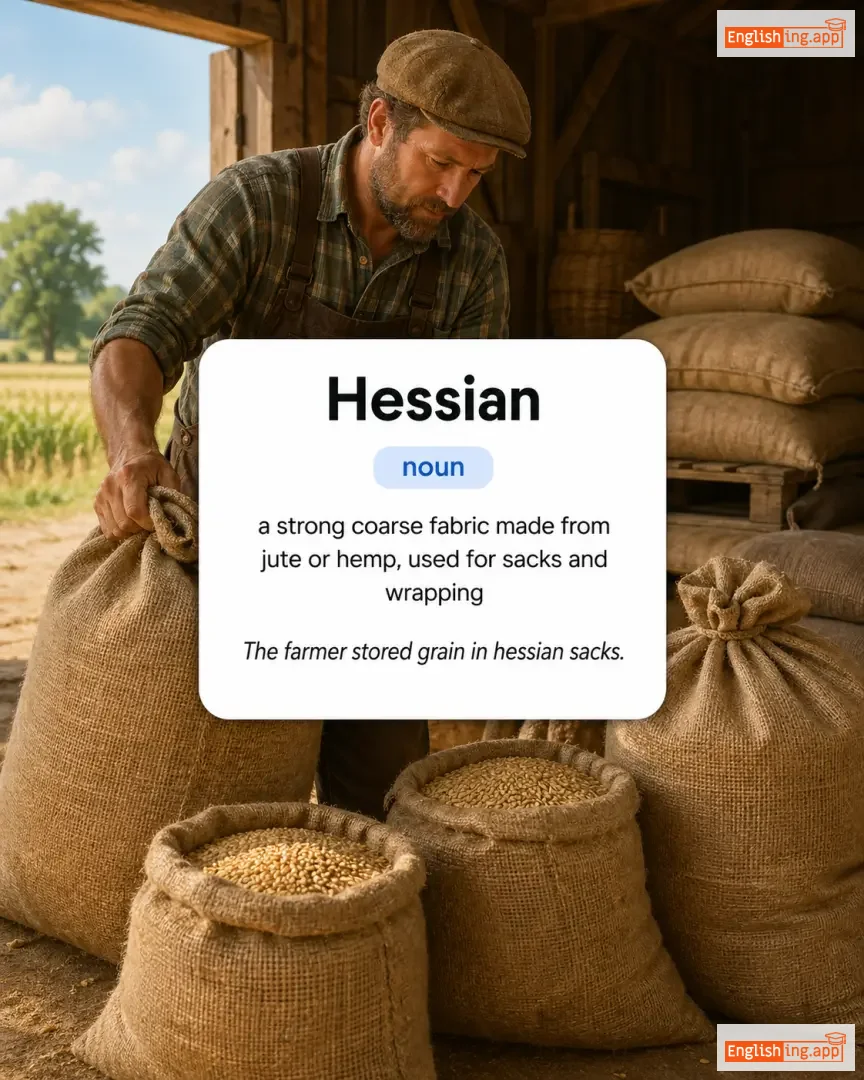
Hessian definition card — visual illustration of the meaning
noun C2
/ˈhɛʃ.ən/
हैसियन कपड़ा (hesian kapda)

a strong coarse fabric made from jute or hemp, used for sacks and wrapping

"The farmer stored grain in hessian sacks."

"किसान ने अनाज को हैसियन बोरियों में रखा।" (kisaan ne anaaj ko hesian boriya mein rakha.)
heterodox definition card — visual illustration of the meaning
adjective C2
/ˈhɛtərəˌdɒks/
विपरीत दृष्टिकोण (vipreet drishtikon)

not conforming with accepted or orthodox standards or beliefs

"The professor was known for his heterodox views on religion."

"प्रोफेसर अपने धर्म पर विपरीत दृष्टिकोण के लिए प्रसिद्ध थे।" (Professor apne dharm par vipreet drishtikon ke liye prasiddh the.)
noun C2
/ˌhɛtərəʤəˈniːɪti/
विविधता (vividhata)

the quality or state of being diverse in character or content

"The cultural heterogeneity of the city makes it vibrant and unique."

"शहर की सांस्कृतिक विविधता इसे जीवंत और अद्वितीय बनाती है।" (Shahar ki sanskritik vividhata ise jeevant aur advitiya banati hai.)
adjective C2
/ˌhɛtərəʊˈmɔːrfɪk/
विभिन्न रूपात्मक (vibhinn roopaatmak)

Having different forms or shapes, especially in the same species or organism.

"Butterflies are heteromorphic during their life cycle, changing forms from larva to adult."

"तितलियाँ अपने जीवन चक्र के दौरान विभिन्न रूपों में बदलती हैं, लार्वा से वयस्क में।" (Titliyaan apne jeevan chakra ke dauran vibhinn roopon mein badalti hain, larva se vayask mein.)
heuristic definition card — visual illustration of the meaning
adjective C2
hjʊəˈrɪs.tɪk
ह्यूरिस्टिक (heuristic)

Enabling a person to discover or learn something for themselves; using practical experience rather than theory.

"The scientist used a heuristic approach to solve the problem."

"वैज्ञानिक ने समस्या को हल करने के लिए एक ह्यूरिस्टिक तरीका अपनाया।" (Vaigyanik ne samasya ko hal karne ke liye ek heuristic tareeka apnaya.)
verb C2
/hjuː/
काटना (kaatna)

To chop or cut something, especially wood or stone, with a tool.

"The workers hewed logs to build the cabin."

"श्रमिकों ने झोपड़ी बनाने के लिए लकड़ी को काटा।" (Shramikon ne jhopdi banane ke liye lakdi ko kaata.)
adjective C2
/hɛkˈsæŋɡjələr/
हेक्सांगी (hexangi)

Having six angles or corners.

"The artist designed a hexangular frame for the mirror."

"कलाकार ने दर्पण के लिए एक हेक्सांगी फ्रेम डिज़ाइन किया।" (Kalakar ne darpan ke liye ek hexangi frame design kiya.)
noun C2
/ˈhɛksəˌpɒd/
हैक्सापोड (hexapod)

An insect or other organism with six legs.

"The scientist observed a hexapod crawling on the leaf."

"द वैज्ञानिक ने एक हेक्सापॉड को पत्ते पर रेंगते हुए देखा।" (Da vaigyanik ne ek hexapod ko patte par rengte hue dekha.)
noun C2
/ˈheɪ.deɪ/
सर्वश्रेष्ठ काल; सुनहरी अवधि; उत्कर्ष समय (sarvashreshth kaal; sunahari avadhi; utkars samay)

the period of a person's or thing's greatest success, popularity, or vigor; prime time

"During her heyday as a singer, she performed in sold-out concerts around the world."

"सिंगर के रूप में अपने सर्वश्रेष्ठ काल में, वह दुनिया भर में बिक चुके कॉन्सर्ट्स में प्रदर्शन करती थीं।" (Singer ke roop mein apne sarvashreshth kaal mein, wah duniya bhar mein bik chuke concerts mein pradarshan karti thin.)
adjective C2
/haɪˈbɜːrnəl/
शीतकालीन (haibernal)

Relating to or occurring in winter.

"The hibernal season is often harsh in the mountains."

"पहाड़ों में शीतकालीन मौसम अक्सर कठोर होता है।" (pahaadon mein sheetkaaleen mausam aksar kathor hota hai)
adjective/noun C2
/haɪˈbɜːrniən/
आयरिश (aayrish)

Relating to Ireland or the Irish.

"He enjoyed reading about Hibernian culture and history."

"उसे हाइबरनियन संस्कृति और इतिहास पढ़ना अच्छा लगता था।" (use hibernian sanskriti aur itihas padhna accha lagta tha.)