वोकैबुलरीज

इंग्लिश वोकैबुलरी डिस्कवर, लर्न और मास्टर करें

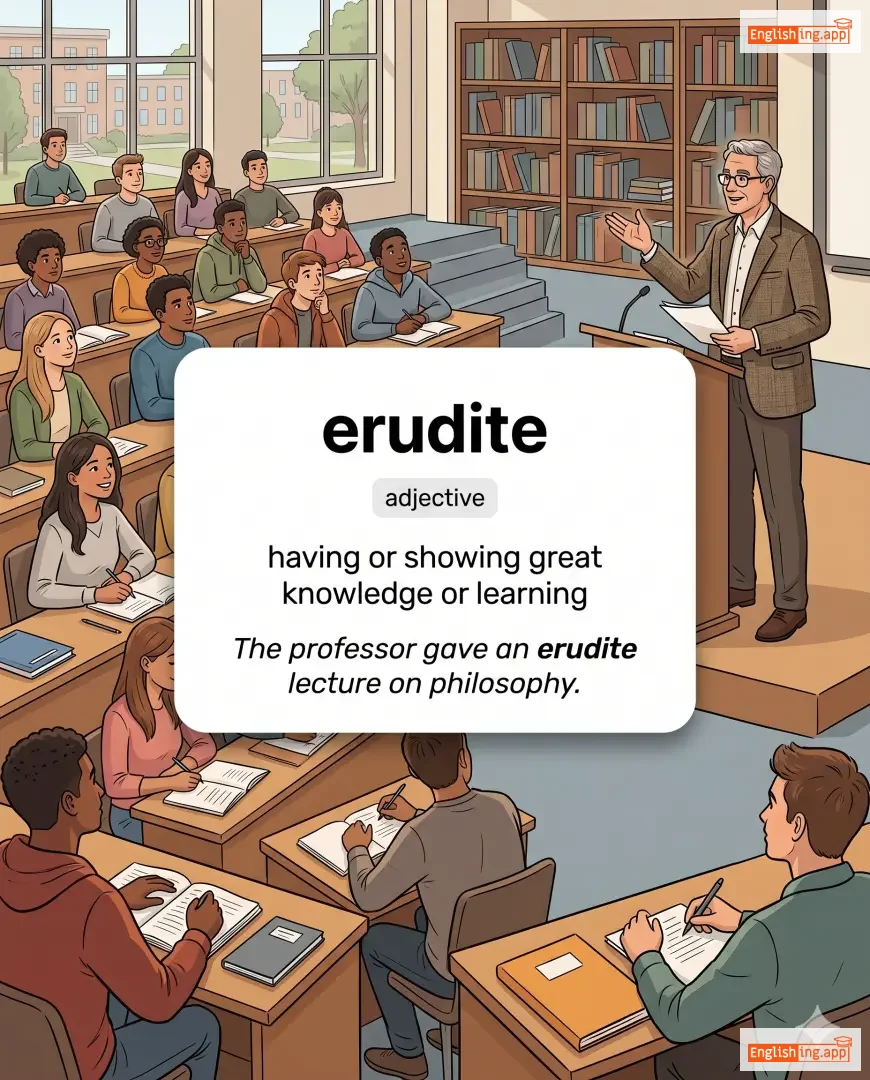
erudite definition card — visual illustration of the meaning
adjective C2
/ˈɛrjʊˌdaɪt/
ज्ञानी (gyani)

having or showing great knowledge or learning

"The professor gave an erudite lecture on philosophy."

"प्रोफेसर ने दर्शनशास्त्र पर एक ज्ञानी व्याख्यान दिया।" (Professor ne darshan shastra par ek gyani vyakhyan diya.)
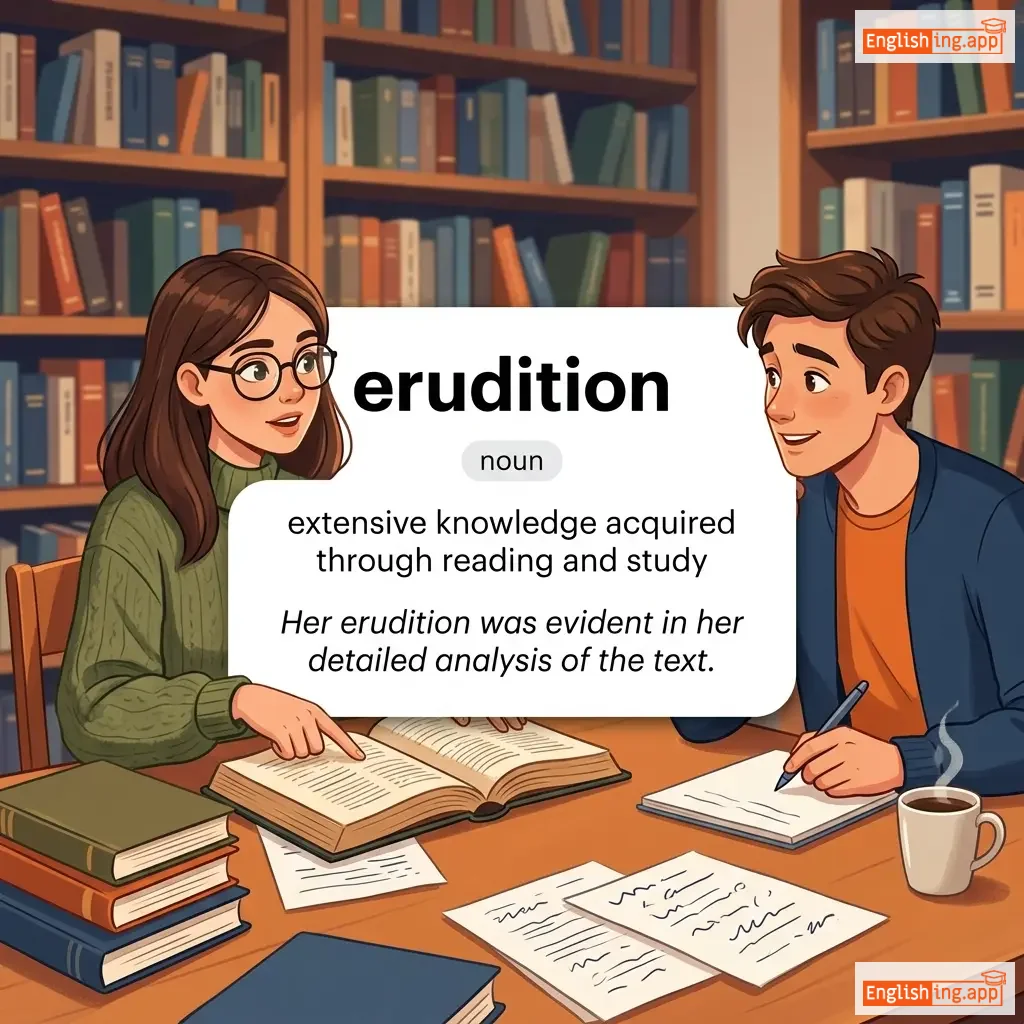
erudition definition card — visual illustration of the meaning
noun C2
/ˌɛrjʊˈdɪʃən/
ज्ञान (gyan)

extensive knowledge acquired through reading and study

"Her erudition was evident in her detailed analysis of the text."

"उसकी ज्ञान का प्रदर्शन उसकी विस्तृत विश्लेषण में स्पष्ट था।" (Uski gyan ka pradarshan uski vistaarit vishleshan mein spasht tha.)
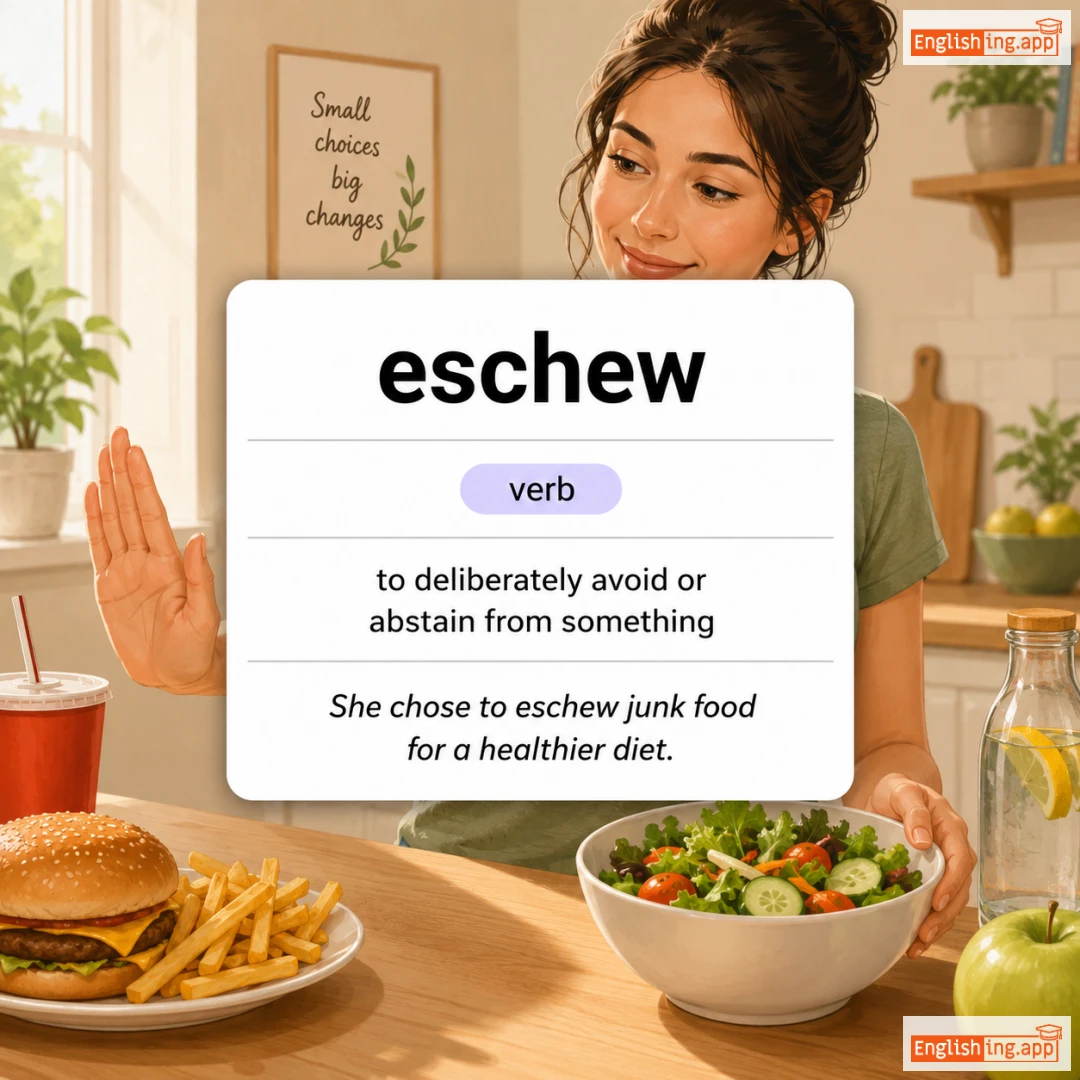
eschew definition card — visual illustration of the meaning
verb C2
/ɪsˈtʃuː/
परहेज़ करना (parhez karna)

to deliberately avoid or abstain from something

"She chose to eschew junk food for a healthier diet."

"उसने एक हेल्थी डाइट के लिए जंक फूड से परहेज़ करने का फैसला किया।" (Usne ek healthy diet ke liye junk food se parhez karne ka faisla kiya.)
escutcheon definition card — visual illustration of the meaning
noun C2
/ɪˈskʌtʃən/
कोट ऑफ़ आर्म्स वाला ढाल (kot of arms wala dhal)

a shield or emblem bearing a coat of arms

"The family crest was displayed on the escutcheon above the fireplace."

"परिवार का प्रतीक चिमनी के ऊपर एस्क्यचियन पर प्रदर्शित था।" (Parivaar ka pratik chimni ke upar escutcheon par pradarshit tha.)
esoteric definition card — visual illustration of the meaning
adjective C2
/ˌɛsəˈtɛrɪk/
गोपनीय (gopniya)

intended for or understood by only a small number of people with special knowledge

"The professor gave an esoteric lecture on ancient philosophy."

"प्रोफेसर ने प्राचीन दर्शन पर एक गोपनीय व्याख्यान दिया।" (Professor ne prachin darshan par ek gopniya vyakhyan diya.)
esprit de corps definition card — visual illustration of the meaning
noun C2
/ɛˌspriː də ˈkɔːr/
समूह भावना (samooh bhavna)

A feeling of pride, fellowship, and loyalty shared by members of a group.

"The team's esprit de corps was evident in their cooperative effort."

"टीम की समूह भावना उनके सहयोगात्मक प्रयास में स्पष्ट थी।" (Team ki samooh bhavna unke sahyogaatmak prayaas mein spashth thi.)
verb C2
/ɪˈspaɪ/
देखना (dekhna)

To catch sight of or notice something, especially from a distance.

"From the hilltop, she espied a small village in the valley."

"हिलटॉप से, उसने घाटी में एक छोटा गांव देखा।" (Hilltop se, usne ghaati mein ek chhota gaon dekha.)
noun C2
/ˈɛskwaɪər/
एस्क्वायर (esqwire)

A title of respect often used after a man's name, especially for lawyers in the United States.

"John Smith, Esquire, will be representing the client in court."

"जॉन स्मिथ, एस्क्वायर, अदालत में क्लाइंट का प्रतिनिधित्व करेंगे।" (Jon Smith, Esquire, adalat mein client ka pratinidhitva karenge.)
estimable definition card — visual illustration of the meaning
adjective C2
/ˈɛstɪməbl/
सम्माननीय (sammaananiy)

Worthy of great respect.

"Her estimable achievements inspired the whole community."

"उसकी सम्मानजनक उपलब्धियाँ पूरी समुदाय को प्रेरित करती हैं।" (Uski sammaanjanik uplabdhiyan poori samudaay ko prerith karti hain.)
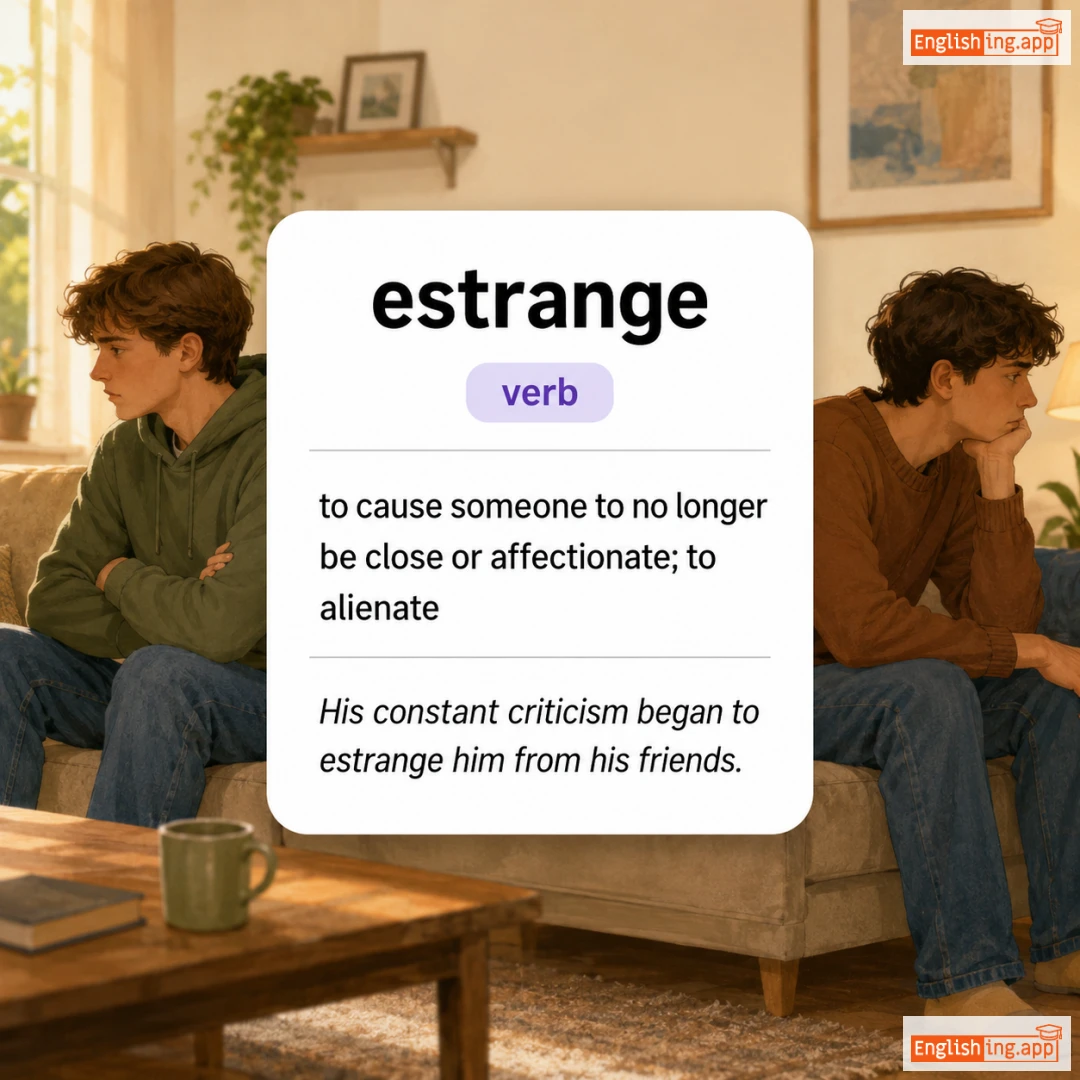
estrange definition card — visual illustration of the meaning
verb C2
/ɪˈstreɪndʒ/
परायापन करना (parayapan karna)

to cause someone to no longer be close or affectionate; to alienate

"His constant criticism began to estrange him from his friends."

"उसकी लगातार आलोचना ने उसे उसके दोस्तों से परायापन कर दिया।" (uski lagatar alochna ne use uske doston se parayapan kar diya.)
ethnocentric definition card — visual illustration of the meaning
adjective C2
/ˌeθ.noʊˈsen.trɪk/
जातिवादी आत्मकेंद्रित (jatavadi atmendrit)

evaluating other cultures according to the standards of one's own culture

"His ethnocentric attitude made it hard for him to appreciate foreign traditions."

"उसका जातिवादी आत्मकेंद्रित दृष्टिकोण उसे विदेशी परंपराओं की सराहना करने में मुश्किल बनाता था।" (Uska jatavadi atmendrit drishtikon use videshi paramparaon ki sarahna karne mein mushkil banata tha.)
noun C2
/ɛθˈnɒlədʒi/
नृविज्ञान (nrivigyan)

the study of the characteristics of different peoples and the differences and relationships between them

"She specialized in ethnology to better understand cultural diversity."

"वह सांस्कृतिक विविधता को बेहतर समझने के लिए नृविज्ञान में विशेषज्ञता प्राप्त करती थीं।" (Wah sanskritik vividhta ko behtar samajhne ke liye nrivigyan mein visheshagyaata praapt karti thin.)
etiology definition card — visual illustration of the meaning
noun C2
/ˌiː.tiˈɒ.lə.dʒi/
कारणशास्त्र (karanshastra)

the cause or origin of a disease or condition

"Doctors are studying the etiology of the new virus."

"डॉक्टर नई वायरस की इटियोलॉजी का अध्ययन कर रहे हैं।" (Doktar nai virus ki itiology ka adhyayan kar rahe hain.)
adjective C2
/juːˈdʒɛnɪk/
युगेनिक (yugenik)

Relating to or aiming at improving the genetic quality of a population.

"In the early 20th century, some scientists supported eugenic policies."

"20वीं सदी की शुरुआत में कुछ वैज्ञानिकों ने युगेनिक नीतियों का समर्थन किया था।" (20vi sadi ki shuruat mein kuch vaigyanikon ne yugenik neetiyon ka samarthan kiya tha.)
eugenics definition card — visual illustration of the meaning
noun C2
/juːˈdʒen.ɪks/
यूजेनिक्स (yugeniks)

the study or practice of improving the genetic quality of the human population

"Eugenics has been criticized for its unethical applications in history."

"यूजेनिक्स को इसके अनैतिक उपयोगों के लिए इतिहास में आलोचना की गई है।" (Yugeniks ko iske anaitik upyogon ke liye itihas mein alochna ki gayi hai.)
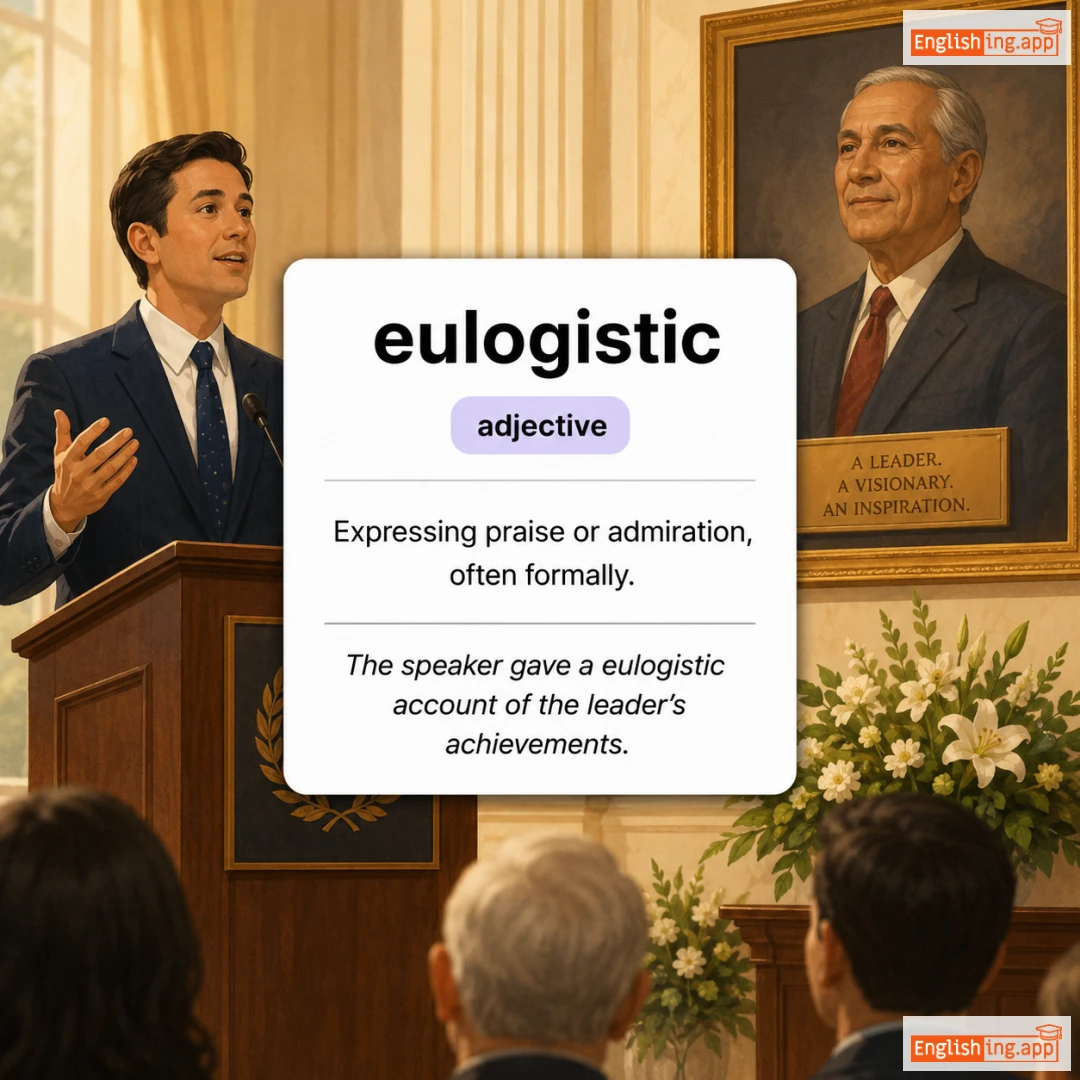
eulogistic definition card — visual illustration of the meaning
adjective C2
/ˌjuːləˈdʒɪstɪk/
प्रशंसा संबंधी (prashansa sambandhi)

Expressing praise or admiration, often formally.

"The speaker gave a eulogistic account of the leader’s achievements."

"वक्ता ने नेता की उपलब्धियों का प्रशंसा संबंधी वर्णन किया।" (Vaktaa ne neta ki uplabdhiyon ka prashansa sambandhi varnan kiya.)
eulogize definition card — visual illustration of the meaning
verb C2
/ˈjuːləˌdʒaɪz/
प्रशंसा करना (prashansa karna)

To praise highly in speech or writing, especially in honor of someone who has died.

"They gathered to eulogize their beloved teacher."

"वे अपने प्रिय शिक्षक की प्रशंसा करने के लिए इकट्ठा हुए।" (Ve apne priy shikshak ki prashansa karne ke liye ikattha hue.)
adjective C2
/juːˈfoʊniəs/
सुमधुर ध्वनि (sumadhur dhvani)

Pleasing to the ear; having a sweet sound.

"The poet's euphonious language made the verse a delight to read."

"कवि की युफ़ोनियस भाषा ने कविता को पढ़ने में आनंददायक बना दिया।" (Kavi ki euphonious bhasha ne kavita ko padhne mein ananddayak bana diya.)
noun C2
/ˈjuːfəni/
सुमधुर ध्वनि (sumadhur dhvani)

The quality of being pleasing to the ear, especially through harmonious combination of words.

"The orator's speech was full of euphony and rhythm."

"वक्ता का भाषण युफ़नी और लय से भरा हुआ था।" (Vakta ka bhashan euphony aur lay se bhara hua tha.)
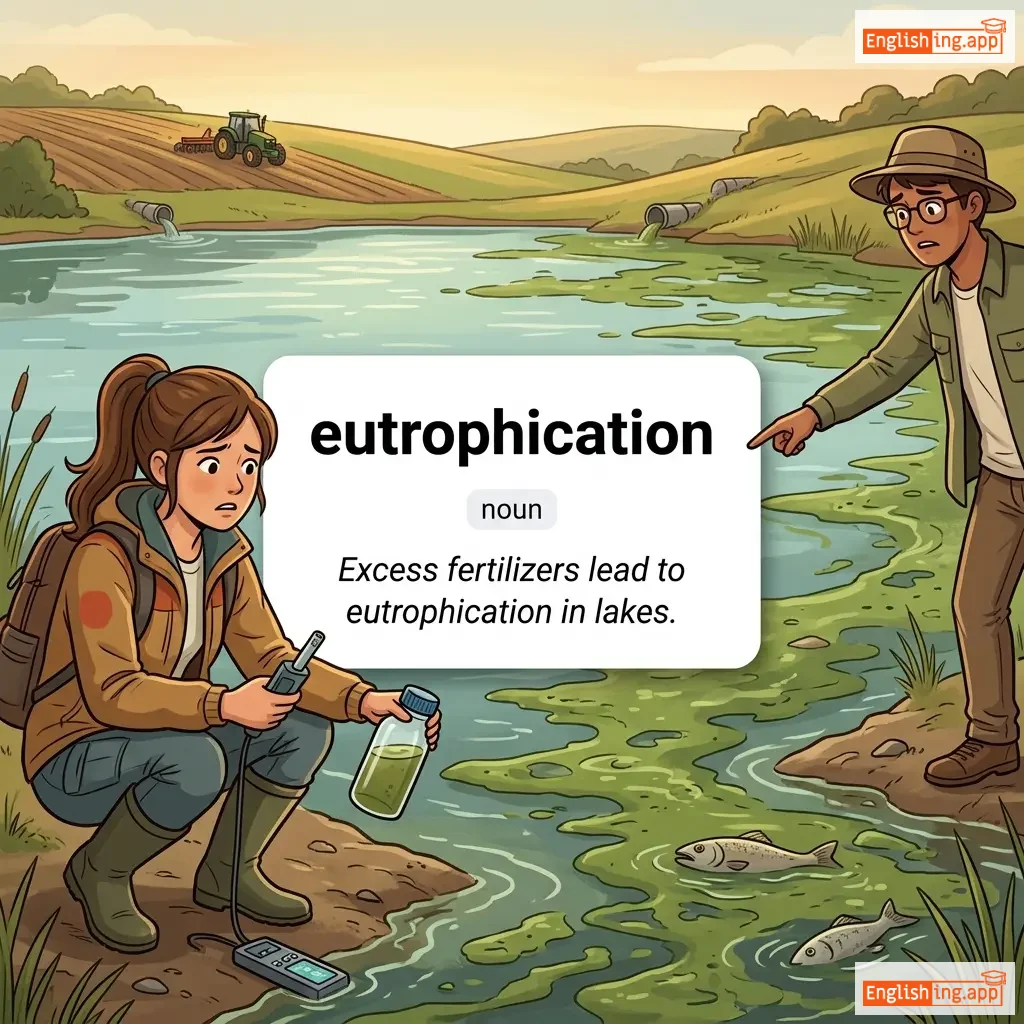
eutrophication definition card — visual illustration of the meaning
noun C2
/juːˌtrɑː.fɪˈkeɪ.ʃən/
जलाशयों में पोषक तत्वों की अत्यधिक समृद्धि (utrophication)

Excessive richness of nutrients in a lake or other body of water, frequently due to runoff from the land, which causes a dense growth of plant life and death of animal life from lack of oxygen.

"Excess fertilizers lead to eutrophication in lakes."

"अतिरिक्त उर्वरक झीलों में यूट्रोफिकेशन का कारण बनते हैं।" (Atirikt urvarak jheelo mein eutrophication ka kaaran bante hain.)
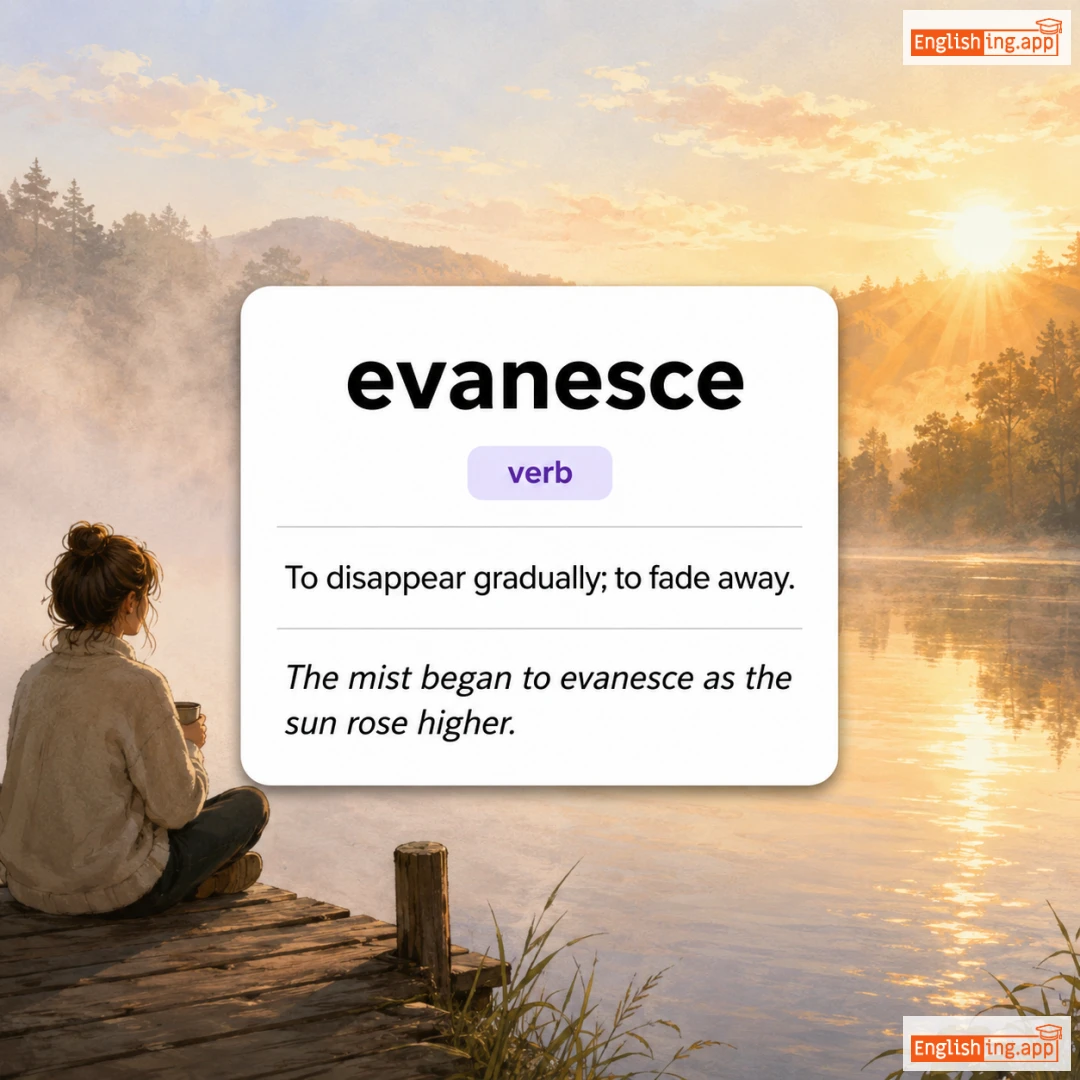
evanesce definition card — visual illustration of the meaning
verb C2
/ˌɛvəˈnɛs/
धुंधला होना (dhundhla hona)

To disappear gradually; to fade away.

"The mist began to evanesce as the sun rose higher."

"सूरज चढ़ने के साथ ही कुहासा धीरे-धीरे विलीन होने लगा।" (Suraj chadhne ke sath hi kuhasa dheere-dheere vileen hone laga.)
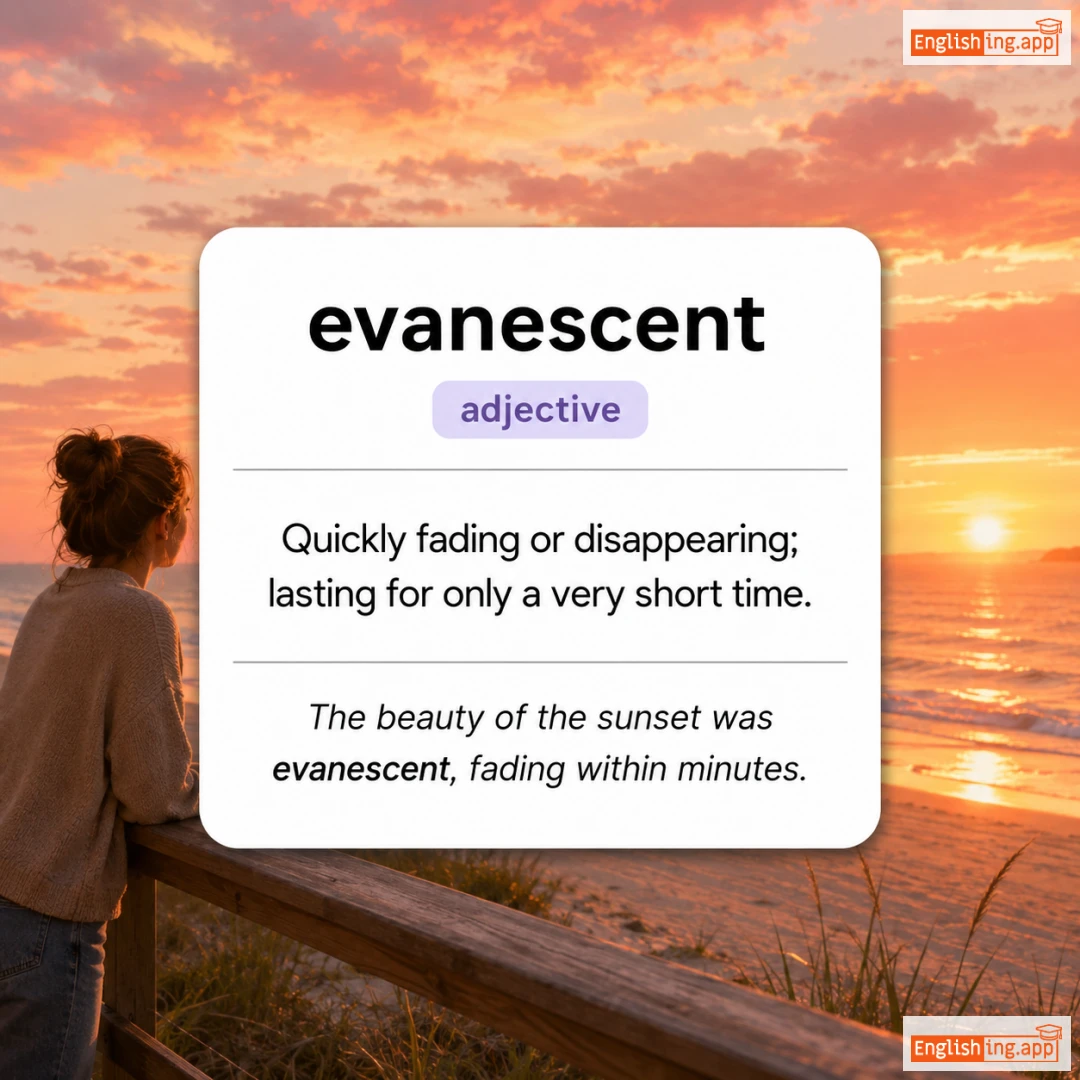
evanescent definition card — visual illustration of the meaning
adjective C2
/ˌɛvəˈnɛsənt/
क्षणिक (kshanik)

Quickly fading or disappearing; lasting for only a very short time.

"The beauty of the sunset was evanescent, fading within minutes."

"सूर्यास्त की सुंदरता क्षणिक थी, कुछ ही मिनटों में गायब हो गई।" (Suryast ki sundarta kshanik thi, kuch hi minaton mein gayab ho gayi.)
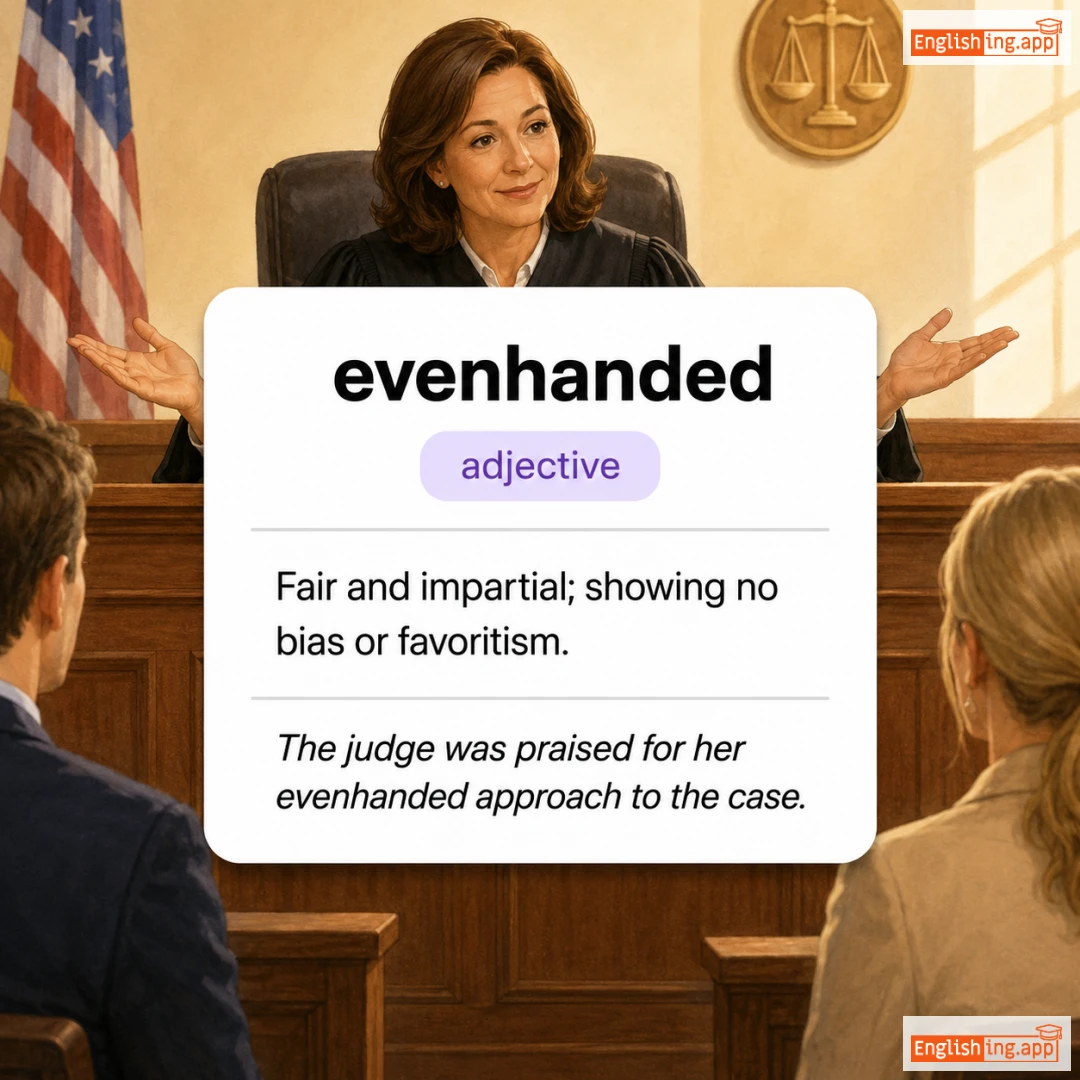
evenhanded definition card — visual illustration of the meaning
adjective C2
/ˌiːvənˈhændɪd/
निष्पक्ष (nishpaksh)

Fair and impartial; showing no bias or favoritism.

"The judge was praised for her evenhanded approach to the case."

"न्यायाधीश को मामले में निष्पक्ष दृष्टिकोण के लिए सराहा गया।" (Nyayadhish ko mamle mein nishpaksh drishtikon ke liye saraha gaya.)
verb C2
/ɪˈvɜːrt/
बाहर की ओर घुमाना (bahar ki or ghoomana)

To turn inside out or outward.

"The surgeon had to evert the eyelid during the procedure."

"सर्जन को ऑपरेशन के दौरान पलक को पलटना पड़ा था।" (Sarjan ko operation ke dauran palk ko palatna pada tha.)
adjective C2
/ˌɛvɪˈdɛnʃəl/
प्रमाणात्मक (pramaatmak)

relating to or providing evidence

"The lawyer presented evidential support for her claims."

"वकील ने अपने दावों के लिए प्रमाणात्मक समर्थन प्रस्तुत किया।" (Vakeel ne apne daavon ke liye pramaatmak samarthan prastut kiya.)
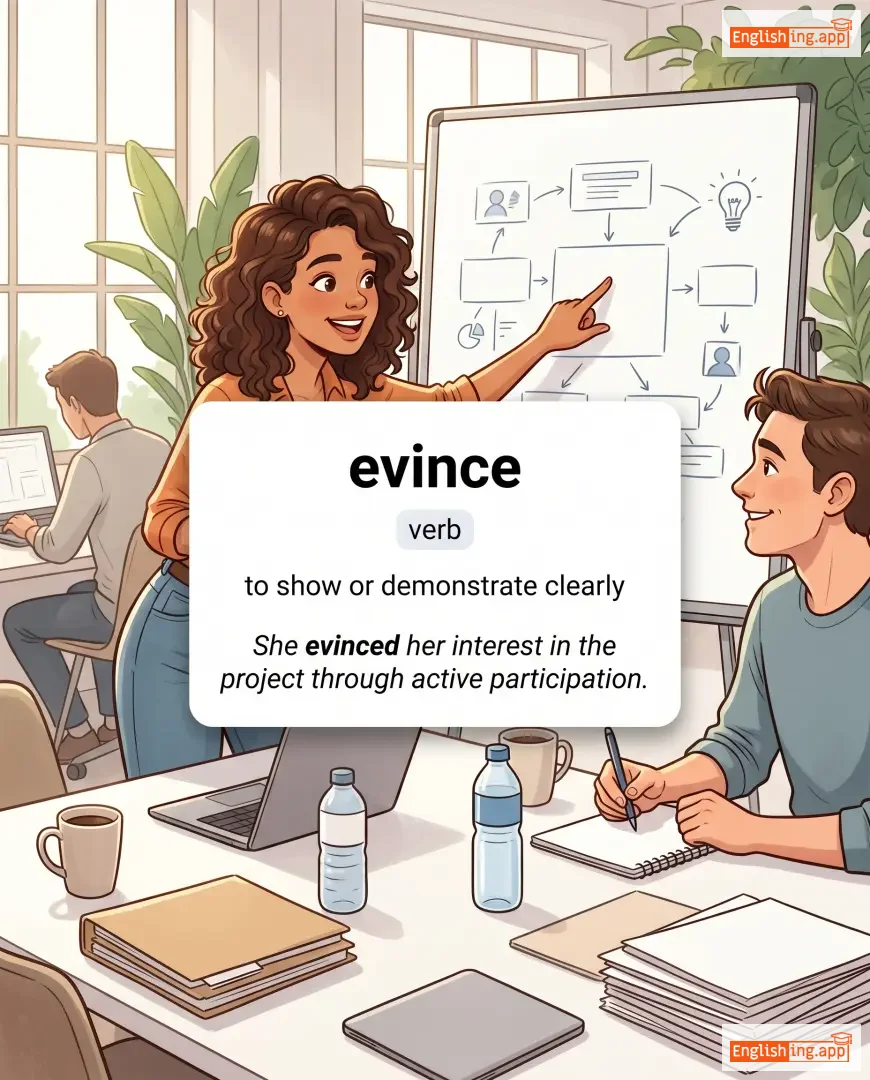
evince definition card — visual illustration of the meaning
verb C2
/ɪˈvɪns/
प्रकट करना (prakat karna)

to show or demonstrate clearly

"She evinced her interest in the project through active participation."

"वह सक्रिय भागीदारी के माध्यम से परियोजना में अपनी रुचि प्रदर्शित कर रही थी।" (Wah sakriya bhagidari ke madhyam se pariyojna mein apni ruchi pradarshit kar rahi thi.)
verb C2
/ɪˈvɪsəˌreɪt/
आंत निकालना, नष्ट करना (aant nikaalna, nasht karna)

to remove the internal organs of; to deprive of essential content

"The critics eviscerated the movie for its weak storyline."

"आलोचकों ने कमजोर कहानी के लिए फिल्म को नष्ट कर दिया।" (Aalochakon ne kamzor kahani ke liye film ko nasht kar diya.)
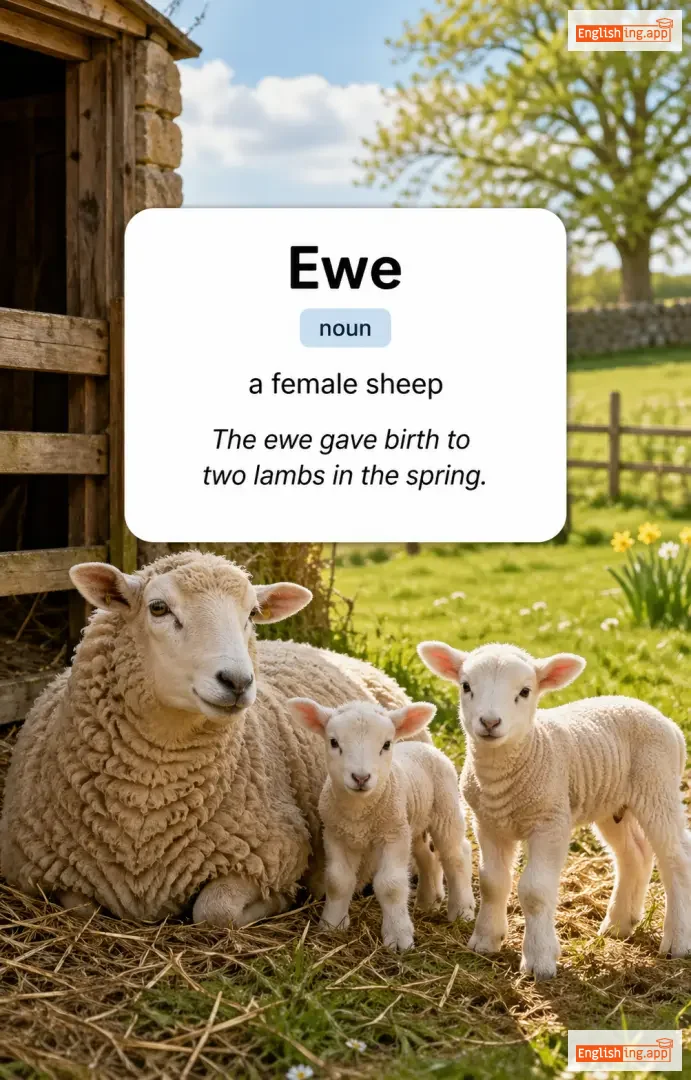
Ewe definition card — visual illustration of the meaning
noun C2
/juː/
मादा भेड़ (maada bhed)

a female sheep

"The ewe gave birth to two lambs in the spring."

"वसंत में मादा भेड़ ने दो मेमनों को जन्म दिया।" (Vasant mein maada bhed ne do memnon ko janm diya.)
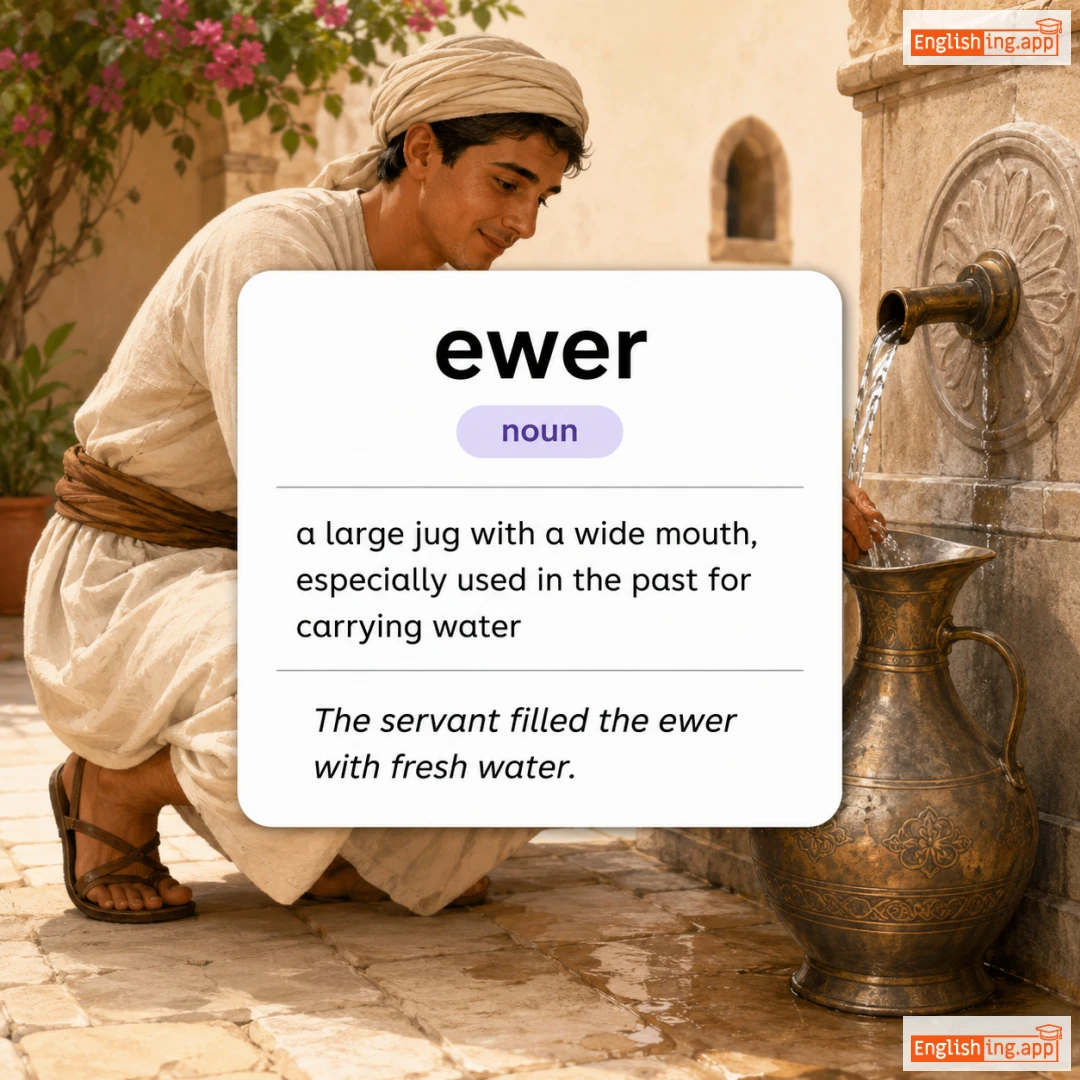
ewer definition card — visual illustration of the meaning
noun C2
/ˈjuːər/
पानी का बर्तन (pani ka bartann)

a large jug with a wide mouth, especially used in the past for carrying water

"The servant filled the ewer with fresh water."

"नौकर ने यूर में ताजा पानी भरा।" (Naukar ne yoor mein taza pani bhara.)
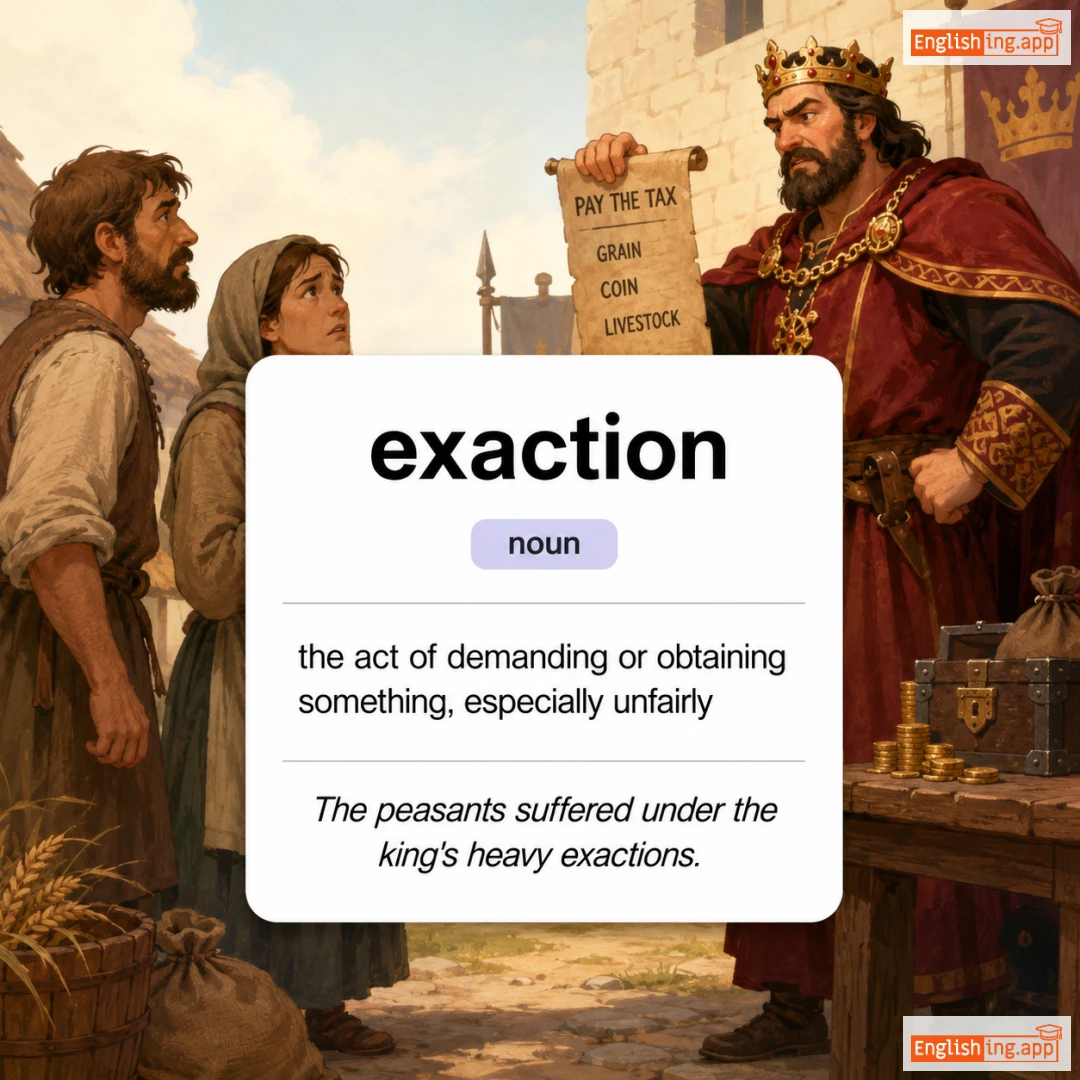
exaction definition card — visual illustration of the meaning
noun C2
/ɪɡˈzækʃən/
जबरदस्ती वसूली (zabardasti vasooli)

the act of demanding or obtaining something, especially unfairly

"The peasants suffered under the king's heavy exactions."

"किसानों ने राजा की भारी जबरदस्ती वसूली के तहत कष्ट उठाया।" (Kisano ne raja ki bhaari zabardasti vasooli ke tahat kasht uthaya.)
adjective C2
/ɪkˈsɛpʃənəbl/
आपत्तिजनक (apattijanak)

Open to objection; causing disapproval.

"His rude remarks were considered exceptionable by everyone present."

"उसके अपशब्दों को सभी ने आपत्तिजनक माना।" (uske apashabdon ko sabhi ne apattijanak mana.)
noun C2
/ɪksˈtʃɛkər/
कोष (kosh)

The treasury of a state or country.

"The government announced new measures to improve the exchequer."

"सरकार ने कोष में सुधार के लिए नए उपायों की घोषणा की।" (sarkar ne kosh mein sudhaar ke liye naye upayon ki ghoshna ki.)
noun C2
/ɪkˈsɪʒən/
उत्क्षेदन (utkshedan)

the act of cutting something out, especially by surgical removal

"The excision of the infected tissue prevented further complications."

"संक्रमित ऊतक की उत्क्षेदन से आगे की जटिलताएँ रोकी गईं।" (Sankramit utak ki utkshedan se aage ki jatiltaayein roki gayi.)
noun C2
/ˌɛksaɪˈteɪʃən/
उत्तेजना (uttejna)

a state of great excitement or the process of stimulating activity

"The news created great excitation among the fans."

"समाचार ने प्रशंसकों के बीच बड़ी उत्तेजना पैदा की।" (Samachar ne prashansako ke beech badi uttejna paida ki.)
verb C2
/ɛkˈskɔːrieɪt/
कड़ी आलोचना करना (kadi alochana karna)

To strongly criticize someone; to denounce severely.

"The critic excoriated the film for its poor script."

"समीक्षक ने फिल्म को उसके खराब पटकथा के लिए कड़ी आलोचना की।" (Sameekshak ne film ko uske kharab pataktha ke liye kadi alochana ki.)
noun C2
/ɪkˈskrɛsəns/
असामान्य वृद्धि (asaamany vruddhi)

An abnormal outgrowth or lump, often considered unattractive.

"The building was considered an excrescence on the landscape."

"इमारत को परिदृश्य पर एक असामान्य वृद्धि माना गया था।" (Imaarat ko paridrishya par ek asaamany vruddhi maana gaya tha.)
verb C2
/ɪkˈskruːʃieɪt/
तीव्र पीड़ा देना (teevra peeda dena)

to cause intense pain or suffering

"The injury excruciated him with unbearable pain."

"चोट ने उसे असहनीय दर्द दिया।" (Chot ne use asahniya dard diya.)
exculpate definition card — visual illustration of the meaning
verb C2
/ˈɛkskʌlpeɪt/
दोषमुक्त करना (doshmukto karna)

to show or declare that someone is not guilty of wrongdoing

"The lawyer worked hard to exculpate his client."

"वकील ने अपने मुवक्किल को दोषमुक्त करने के लिए कड़ी मेहनत की।" (Vakeel ne apne muvakil ko doshmukto karne ke liye kadi mehnat ki.)
adjective C2
/ɪkˈskɜːsɪv/
विचलित (vichalit)

Tending to digress or wander; moving away from the main subject.

"His excursive lecture left the students confused about the main topic."

"उसका विचलित व्याख्यान छात्रों को मुख्य विषय से भ्रमित कर दिया।" (Uska vichalit vyakhyan chhatron ko mukhya vishay se bhramit kar diya.)
execrable definition card — visual illustration of the meaning
adjective C2
/ˈeksɪkrəbl/
अत्यंत घृणित (atyant ghrinit)

Extremely bad or unpleasant.

"The movie was so execrable that many people left the theater early."

"यह फिल्म इतनी घृणित थी कि कई लोग जल्दी ही सिनेमा हॉल से बाहर चले गए।" (Yeh film itni ghrinit thi ki kai log jaldi hi cinema hall se bahar chale gaye.)
verb C2
/ˈeksɪkreɪt/
नफ़रत करना (nafrat karna)

To feel or express great loathing or hatred for something.

"The community execrated the corrupt politician."

"समुदाय ने भ्रष्ट राजनेता की निंदा की।" (Samuday ne bhrasht rajneta ki ninda ki.)
noun C2
/ˌɛksɪˈkreɪʃən/
निंदा (ninda)

An act of cursing or denouncing someone or something with hatred.

"The dictator’s name was spoken with execration after his fall."

"स्वतंत्रता के बाद डिक्टेटर का नाम निंदा के साथ उच्चारित किया गया।" (Svatantrata ke baad dictator ka naam ninda ke saath uccharit kiya gaya.)
noun C2
/ˌɛksəˈdʒiːsɪs/
व्याख्या (vyakhya)

A critical explanation or interpretation of a text, especially a religious scripture.

"The professor gave a detailed exegesis of the biblical passage."

"प्रोफेसर ने बाइबिलिक पाठ का एक विस्तृत व्याख्यान दिया।" (Professor ne baibilik path ka ek vistaarit vyakhyaan diya.)
noun C2
/ɪɡˈzɛmplɑːr/
आदर्श (aadarsh)

A model or pattern to be copied or imitated.

"She is an exemplar of kindness and generosity."

"वह दया और उदारता की एक आदर्श है।" (Woh daya aur udarta ki ek aadarsh hai.)
adjective C2
/ɪɡˈzɔːstɪbəl/
नष्ट होने योग्य (nasht hone yogya)

able to be used up completely; not infinite

"Coal and oil are exhaustible resources."

"कोयला और तेल नष्ट होने योग्य संसाधन हैं।" (Koyla aur tel nasht hone yogya sansadhan hain.)
verb C2
/ɪɡˈzɪləreɪt/
उत्साहित करना (utsahit karna)

To make someone feel very happy, animated, or excited.

"The mountain view exhilarated the travelers."

"पहाड़ का दृश्य यात्रियों को उत्साहित कर रहा था।" (Pahaad ka drishya yatrion ko utsahit kar raha tha.)
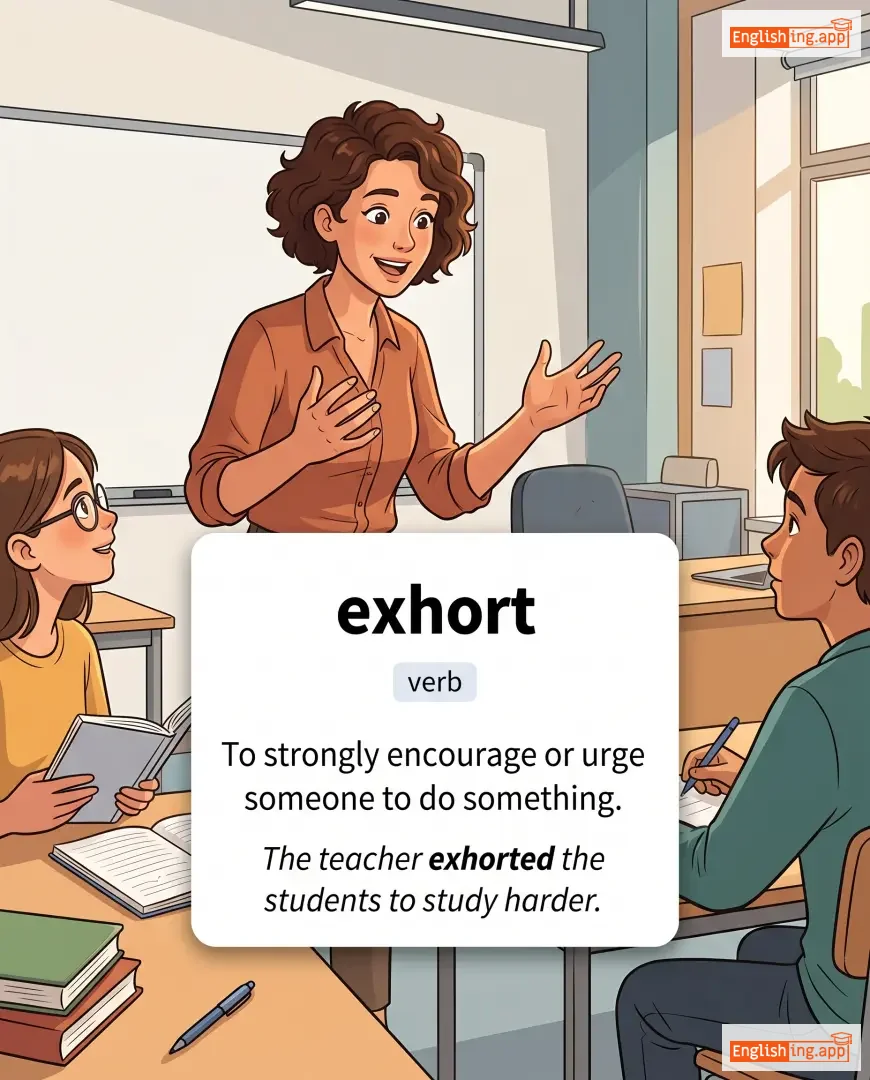
exhort definition card — visual illustration of the meaning
verb C2
/ɪɡˈzɔːrt/
उत्साहित करना (utshaahit karna)

To strongly encourage or urge someone to do something.

"The teacher exhorted the students to study harder."

"शिक्षक ने छात्रों को कठिनाई से अध्ययन करने के लिए उत्साहित किया।" (Shikshak ne chhatron ko kathinai se adhyayan karne ke liye utshaahit kiya.)
verb C2
/ɛksˈhjuːm/
किसी चीज़ को खोदकर निकालना (kisi cheez ko khodkar nikaalna)

to dig out something buried, especially a body from the ground

"The archaeologists decided to exhume the ancient remains."

"पुरातत्वविदों ने प्राचीन अवशेषों को खोदने का निर्णय लिया।" (Puratatvavido ne prachin avasheshon ko khodne ka nirnay liya.)
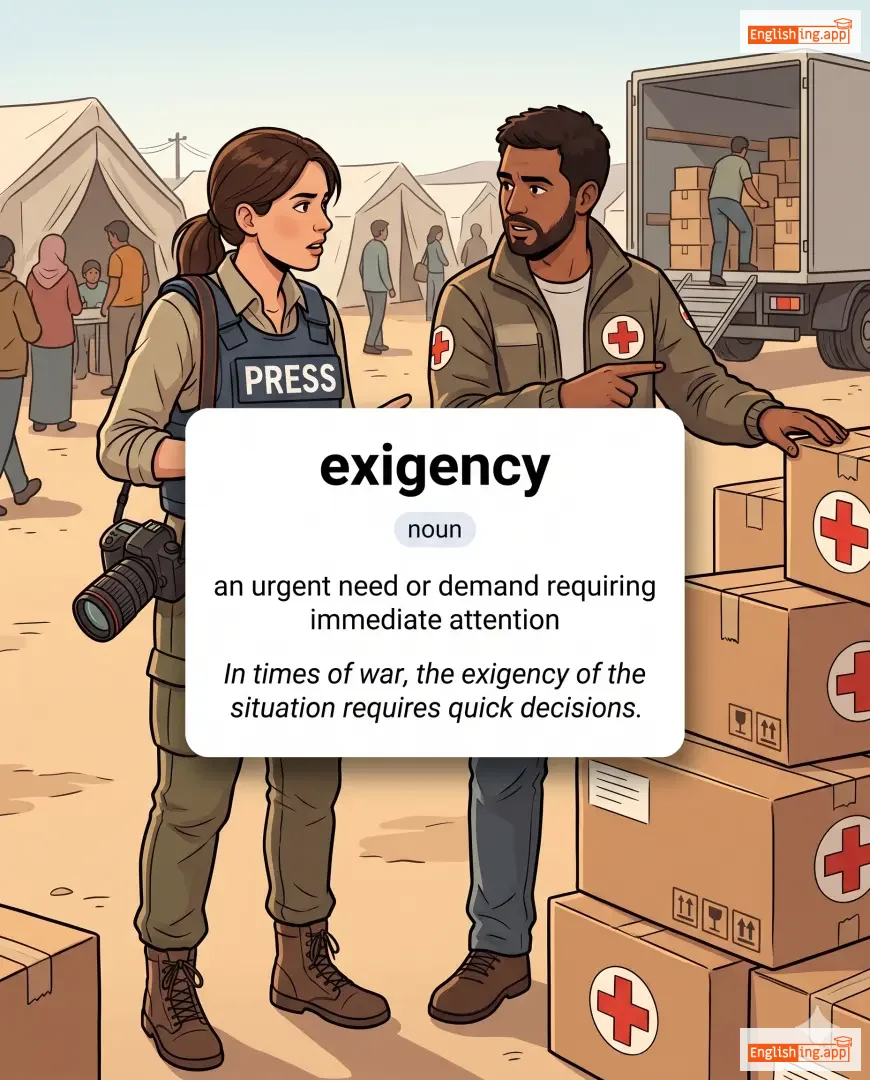
exigency definition card — visual illustration of the meaning
noun C2
/ˈɛksɪdʒənsi/
आपातकालीन आवश्यकता (aapatkaaleen avashyakta)

an urgent need or demand requiring immediate attention

"In times of war, the exigency of the situation requires quick decisions."

"युद्ध के समय, स्थिति की आपातकालीन आवश्यकता त्वरित निर्णय की मांग करती है।" (Yudh ke samay, sthiti ki aapatkaaleen avashyakta tvarit nirnay ki maang karti hai.)
adjective C2
/ˈɛksɪdʒənt/
तत्काल (tatkaal)

demanding immediate action or attention; urgent

"The patient’s exigent condition required immediate surgery."

"मरीज की तत्काल स्थिति ने तत्काल सर्जरी की मांग की।" (Mareez ki tatkaal sthiti ne tatkaal sargari ki maang ki.)