वोकैबुलरीज

इंग्लिश वोकैबुलरी डिस्कवर, लर्न और मास्टर करें

verb C2
/dɪˈspɒnd/
निराश होना (nirash hona)

to lose confidence or hope; to become dejected

"After repeated failures, he began to despond."

"बार-बार असफलताओं के बाद, वह निराश होने लगा।" (Bar-bar asafaltaon ke baad, vah nirash hone laga.)
adjective C2
/dɛˈspɒtɪk/
तानाशाही (tanashahi)

exercising power in a cruel, oppressive, or authoritarian way

"The king’s despotic rule left the people in misery."

"राजा का तानाशाही शासन लोगों को दुःख में डाल गया।" (Raja ka tanashahi shasan logon ko dukh mein daal gaya.)
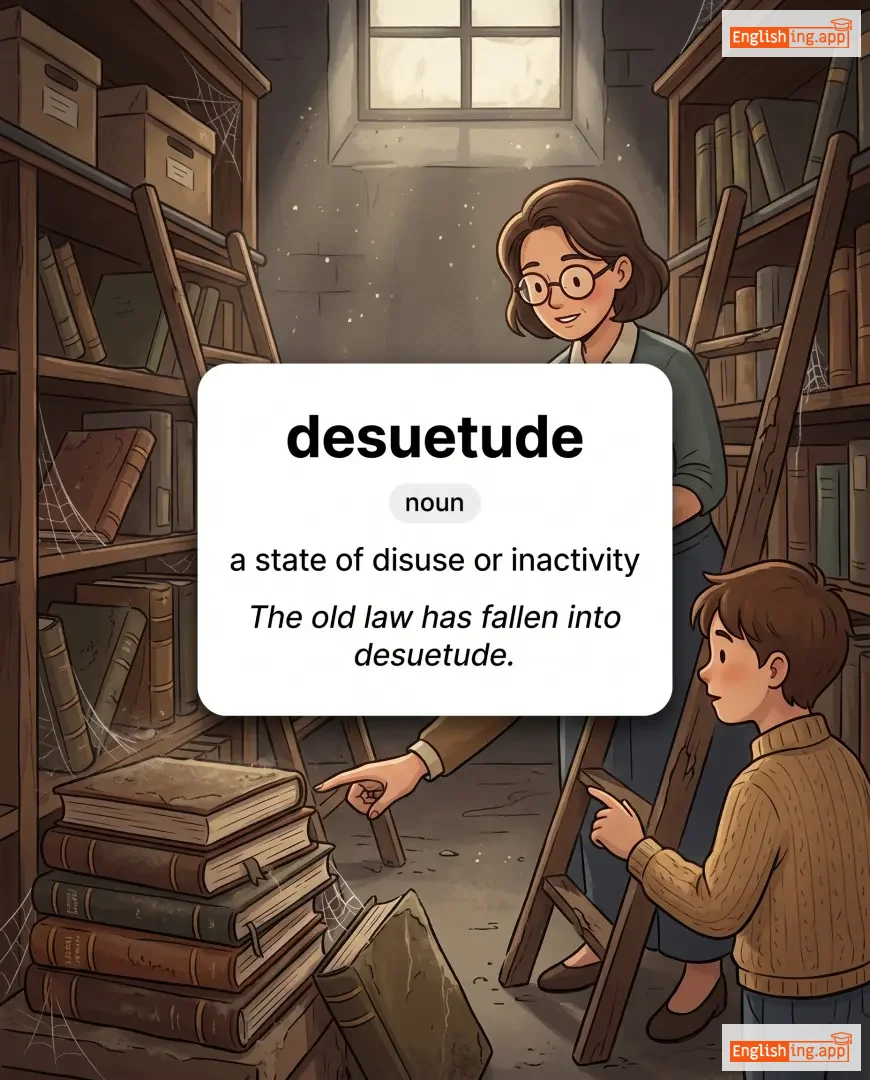
desuetude definition card — visual illustration of the meaning
noun C2
/ˈdɛswɪˌtuːd/
परित्याग (parityag)

a state of disuse or inactivity

"The old law has fallen into desuetude."

"पुराना कानून अब परित्याग में गिर गया है।" (Purana kanoon ab parityag mein gir gaya hai.)
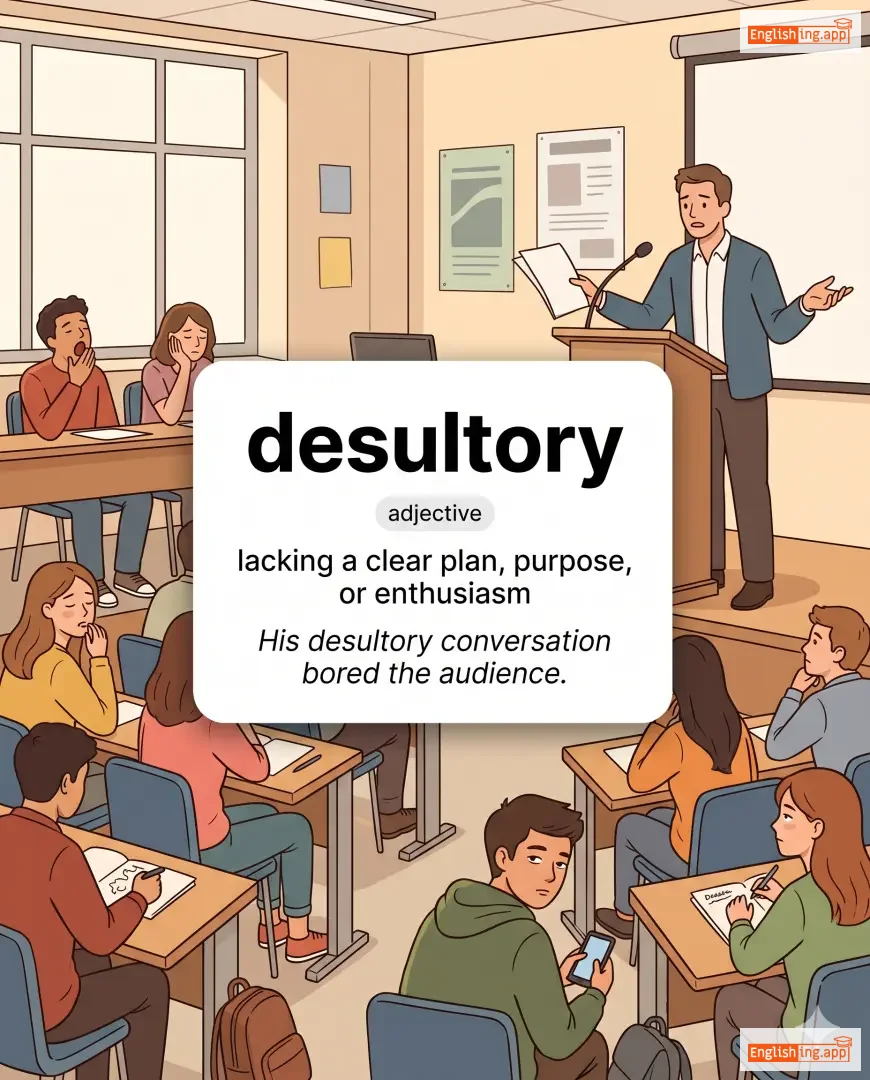
desultory definition card — visual illustration of the meaning
adjective C2
/ˈdɛsəlˌtɔːri/
असंगत (asangat)

lacking a clear plan, purpose, or enthusiasm

"His desultory conversation bored the audience."

"उसकी असंगत बातचीत ने दर्शकों को ऊब दिया।" (Uski asangat baatchit ne darshako ko oob diya.)
determinate definition card — visual illustration of the meaning
adjective C2
/dɪˈtɜːrmɪnət/
निर्धारित (nirdharit)

having exact and definite limits or form

"The contract is for a determinate period of two years."

"संधि दो साल की एक निर्धारित अवधि के लिए है।" (Sandhi do saal ki ek nirdharit avadhi ke liye hai.)
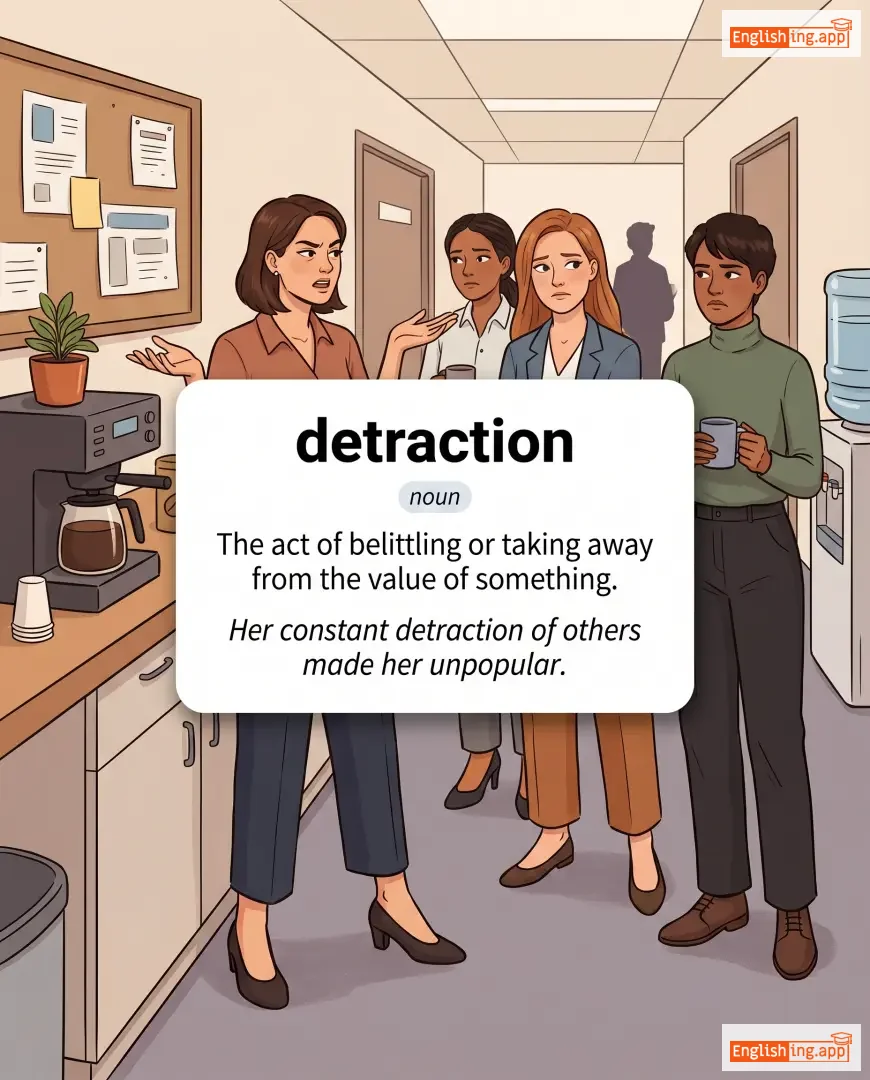
detraction definition card — visual illustration of the meaning
noun C2
/dɪˈtrækʃən/
निंदा (ninda)

The act of belittling or taking away from the value of something.

"Her constant detraction of others made her unpopular."

"उनकी लगातार निंदा ने उन्हें अप्रिय बना दिया।" (unki lagataar ninda ne unhein apriya bana diya.)
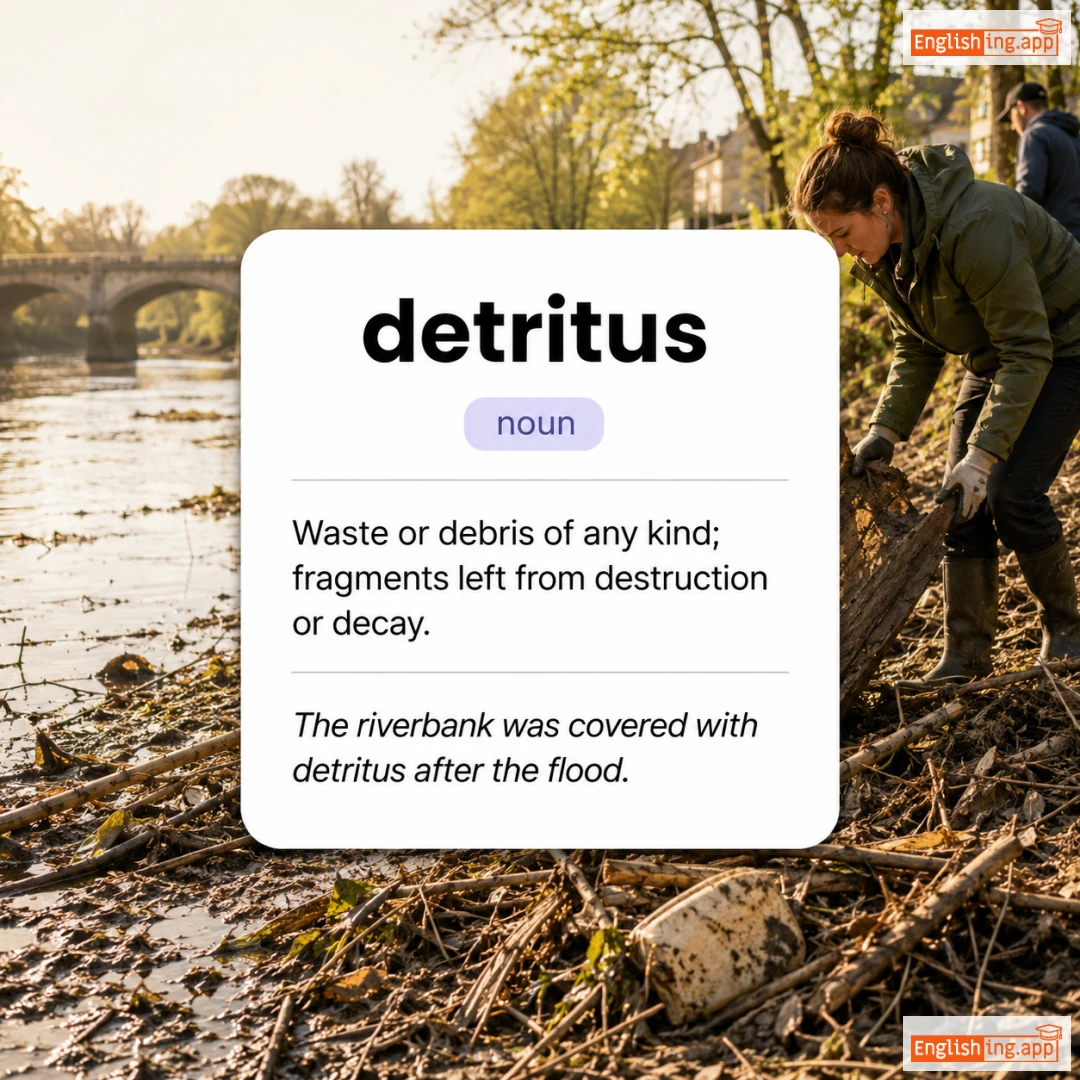
detritus definition card — visual illustration of the meaning
noun C2
/dɪˈtraɪtəs/
कचरा (kachra)

Waste or debris of any kind; fragments left from destruction or decay.

"The riverbank was covered with detritus after the flood."

"बाढ़ के बाद नदी के किनारे कचरे से ढक गए थे।" (Baadh ke baad nadi ke kinare kachre se dhak gaye the.)
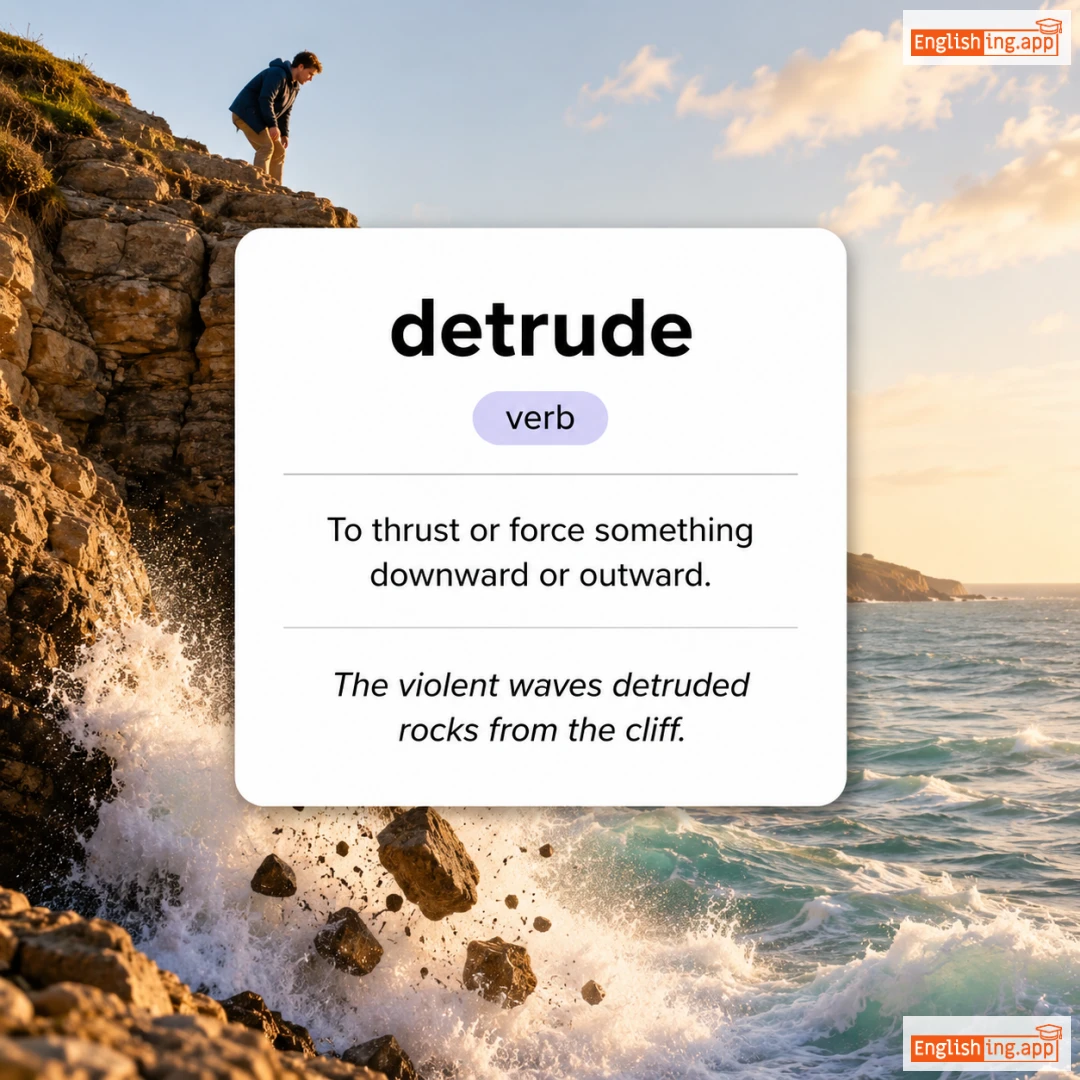
detrude definition card — visual illustration of the meaning
verb C2
/dɪˈtruːd/
धक्का देकर बाहर या नीचे की ओर फेंकना (dhakka dekar baahar ya neeche ki or phenkna)

To thrust or force something downward or outward.

"The violent waves detruded rocks from the cliff."

"हिंसक लहरों ने चट्टानों को खाई से बाहर फेंक दिया।" (Hinsak lahro ne chhatano ko khai se baahar phenk diya.)
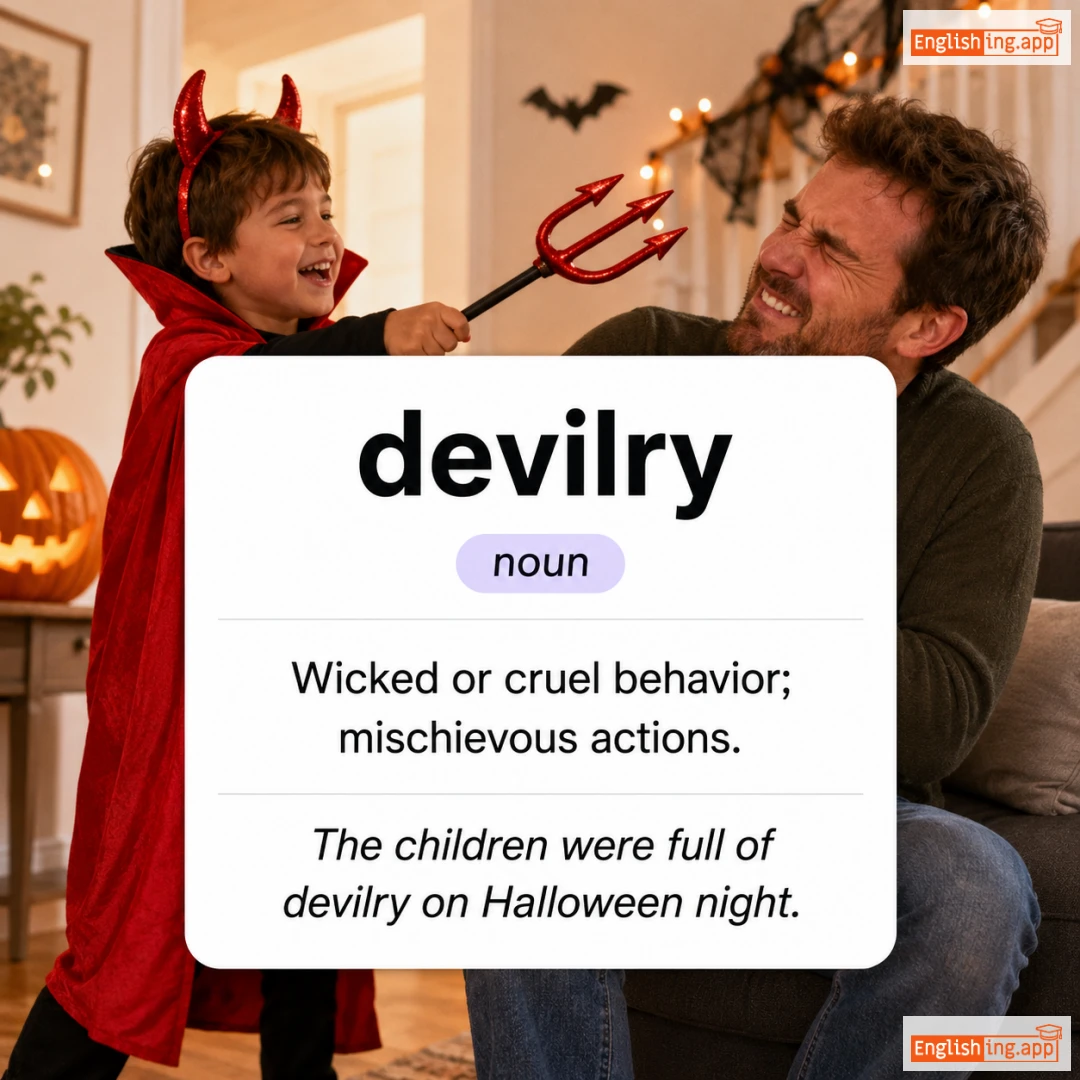
devilry definition card — visual illustration of the meaning
noun C2
/ˈdɛvɪlri/
दैत्यकर्म (daityakarm)

Wicked or cruel behavior; mischievous actions.

"The children were full of devilry on Halloween night."

"हैलोवीन की रात बच्चों में दैत्यकर्म भरा हुआ था।" (Halloween ki raat bachon mein daityakarm bhara hua tha.)
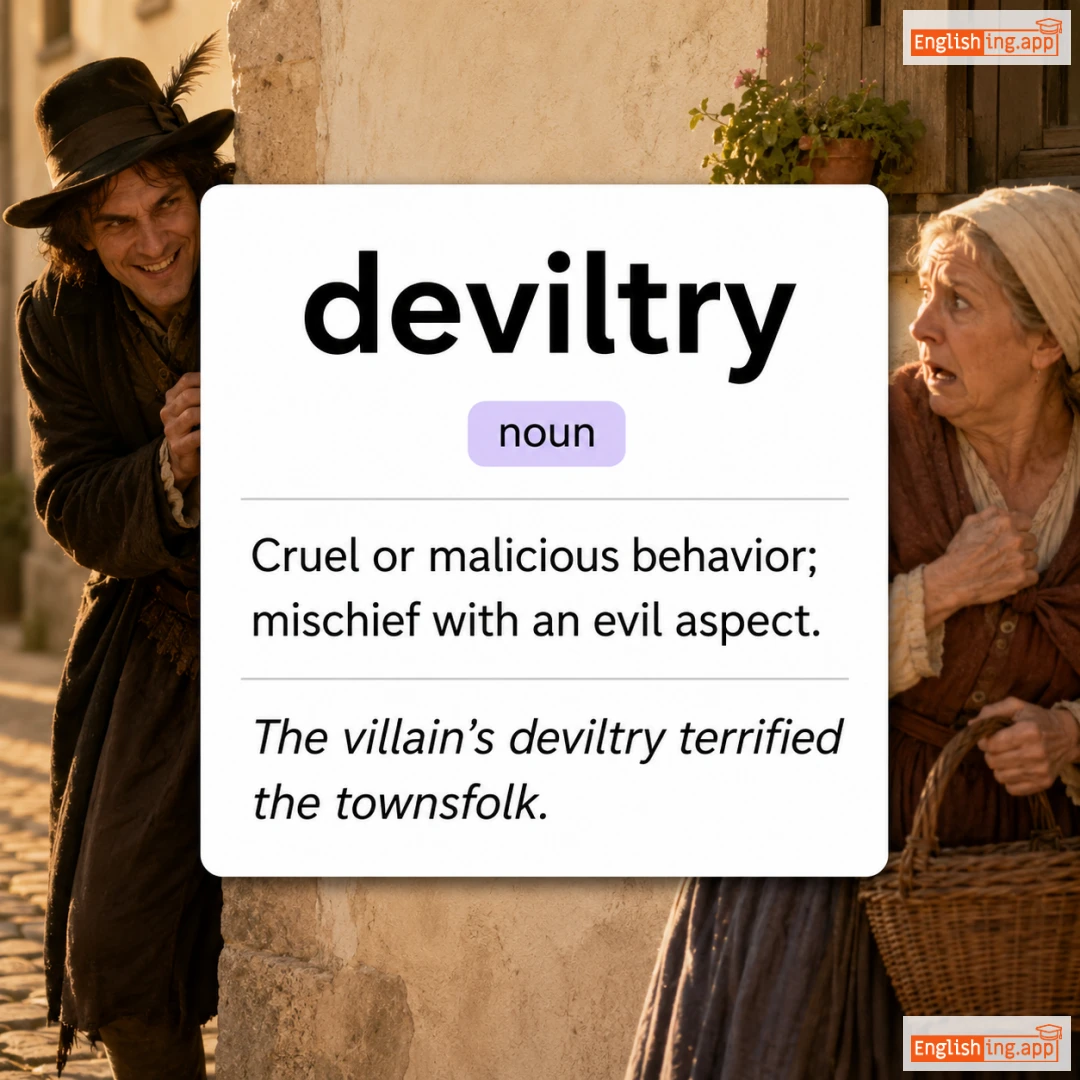
deviltry definition card — visual illustration of the meaning
noun C2
/ˈdɛvɪltrɪ/
शैतानी व्यवहार (shaitani vyavhaar)

Cruel or malicious behavior; mischief with an evil aspect.

"The villain’s deviltry terrified the townsfolk."

"खलनायक का शैतानी व्यवहार शहरवासियों को डराने वाला था।" (Khalnayak ka shaitani vyavhaar shahrawasiyon ko daraane wala tha.)
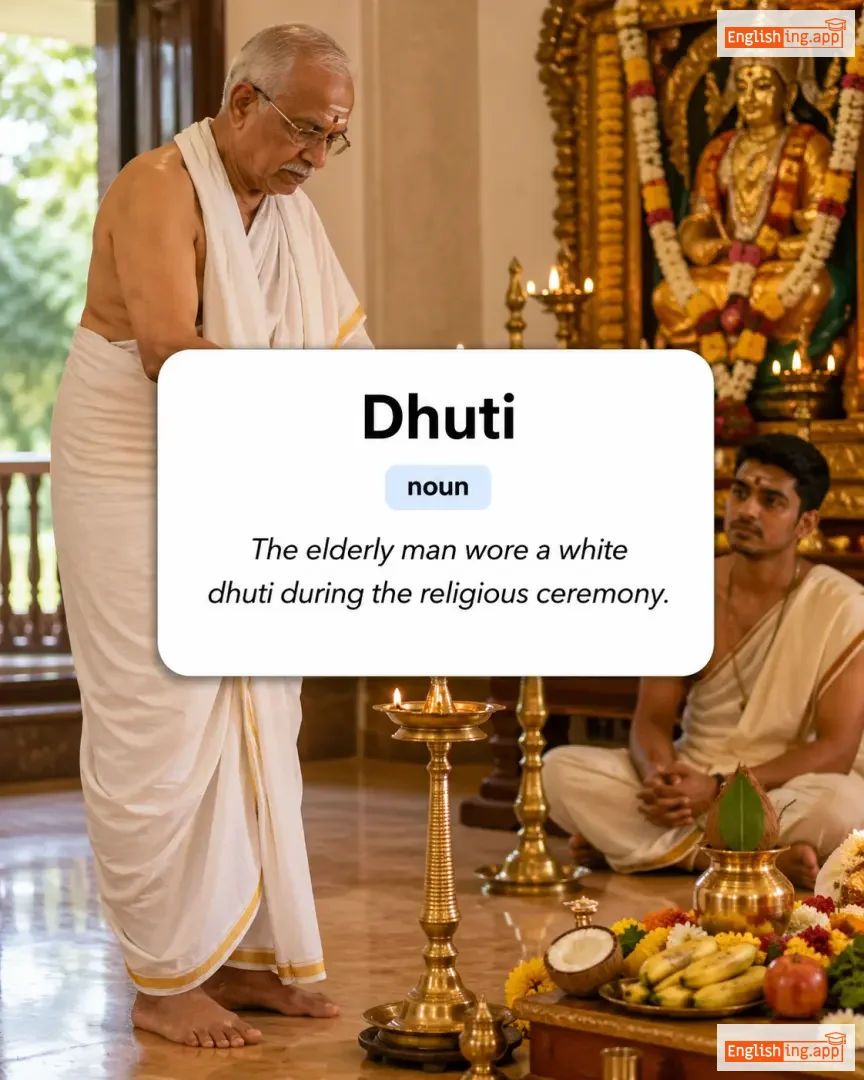
Dhuti definition card — visual illustration of the meaning
noun C2
/ˈduːti/
धुती (dhuti)

a traditional Indian garment for men consisting of a piece of unstitched cloth worn around the waist and legs

"The elderly man wore a white dhuti during the religious ceremony."

"वृद्ध व्यक्ति ने धार्मिक समारोह में एक सफेद धुती पहनी।" (vruddh vyakti ne dharmik samaroha mein ek safed dhuti pehni.)
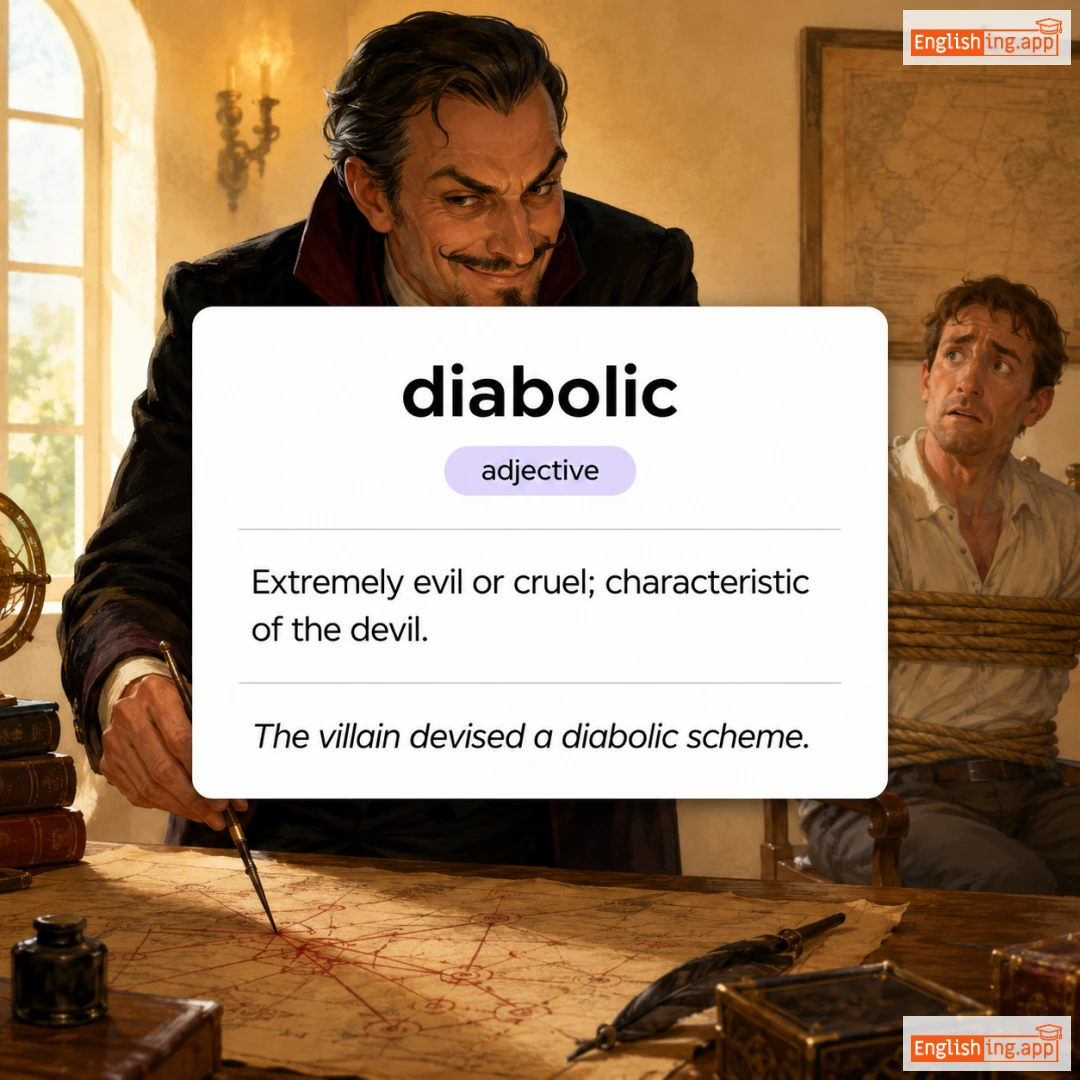
diabolic definition card — visual illustration of the meaning
adjective C2
/ˌdaɪəˈbɒlɪk/
राक्षसी (raakshasi)

Extremely evil or cruel; characteristic of the devil.

"The villain devised a diabolic scheme."

"खलनायक ने एक राक्षसी योजना बनाई।" (Khalnayak ne ek raakshasi yojna banayi.)
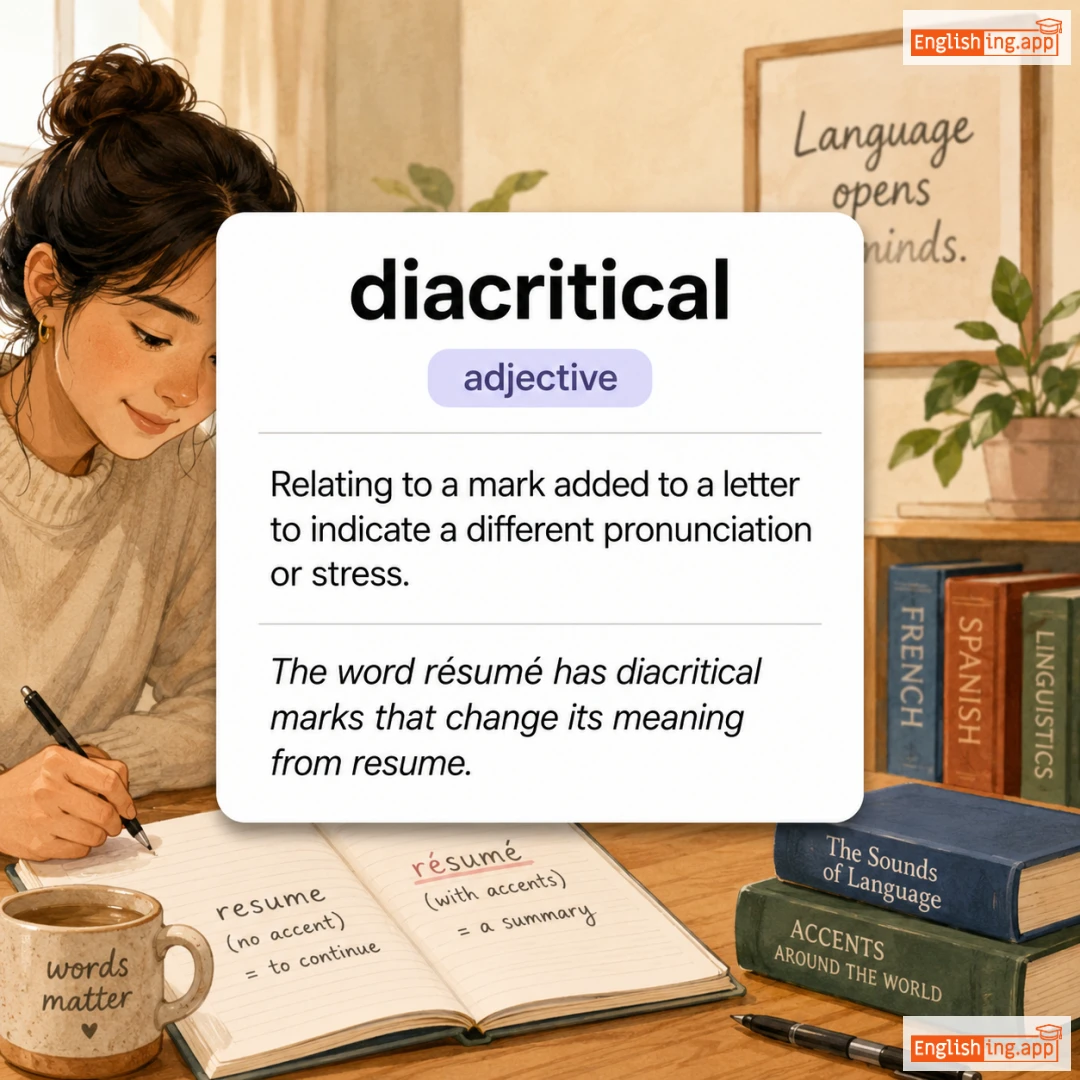
diacritical definition card — visual illustration of the meaning
adjective C2
/ˌdaɪəˈkrɪtɪkəl/
स्वरचिह्नात्मक (swarchihnatik)

Relating to a mark added to a letter to indicate a different pronunciation or stress.

"The word résumé has diacritical marks that change its meaning from resume."

"शब्द 'रेज़्युमे' में डायाक्रिटिकल चिह्न हैं जो इसके अर्थ को बदलते हैं।" ('Rezume' shabd mein diacritical chihn hain jo iske arth ko badalte hain.)
noun C2
/ˈdaɪəˌdɛm/
मुकुट (mukut)

A crown or headband worn as a symbol of royalty or authority.

"The queen wore a glittering diadem at the coronation."

"रानी ने राजतिलक समारोह में एक चमचमाता मुकुट पहना था।" (Rani ne rajtilak samaaroh mein ek chamchmaata mukut pehna tha.)
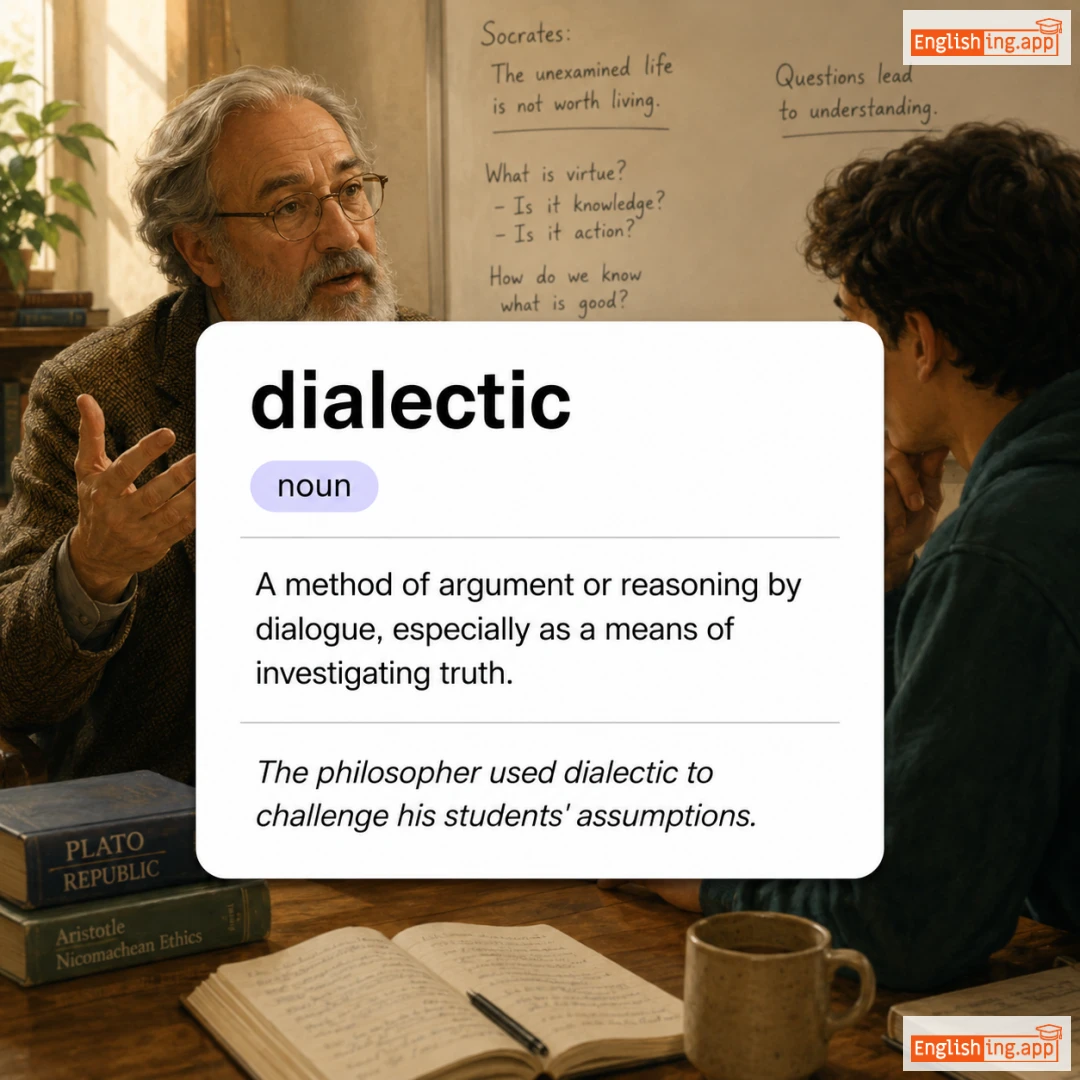
dialectic definition card — visual illustration of the meaning
noun C2
/ˌdaɪəˈlɛktɪk/
तर्कशास्त्र (tarkashastra)

A method of argument or reasoning by dialogue, especially as a means of investigating truth.

"The philosopher used dialectic to challenge his students' assumptions."

"दार्शनिक ने अपने छात्रों के अनुमान को चुनौती देने के लिए डायलेक्टिक का उपयोग किया।" (Darshanik ne apne chatron ke anumaan ko chunauti dene ke liye dialectic ka upyog kiya.)
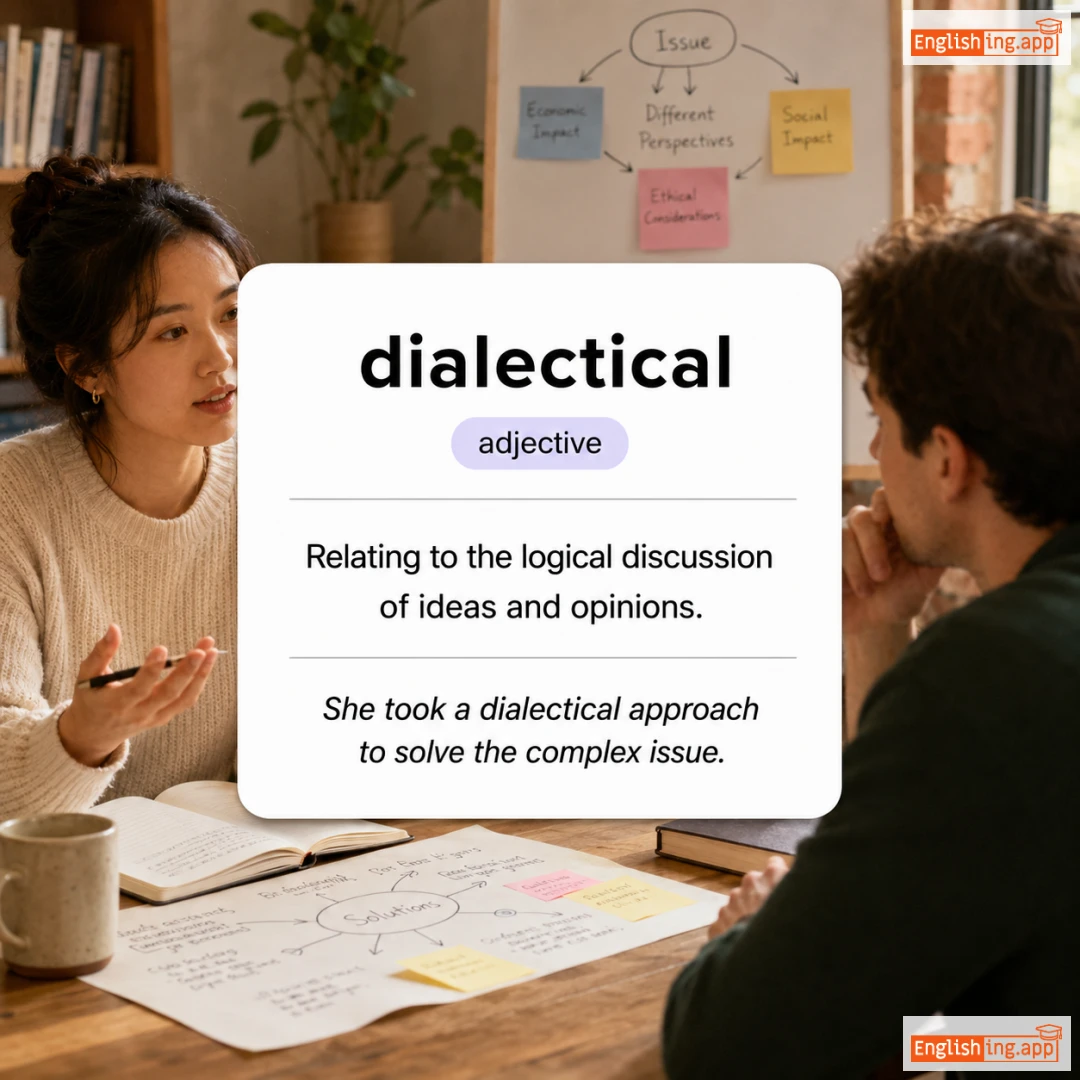
dialectical definition card — visual illustration of the meaning
adjective C2
/ˌdaɪəˈlɛktɪkəl/
वैचारिक (vaicharik)

Relating to the logical discussion of ideas and opinions.

"She took a dialectical approach to solve the complex issue."

"उसने जटिल मुद्दे को हल करने के लिए एक वैचारिक दृष्टिकोण अपनाया।" (Usne jatil mudde ko hal karne ke liye ek vaicharik drishtikon apnaya.)
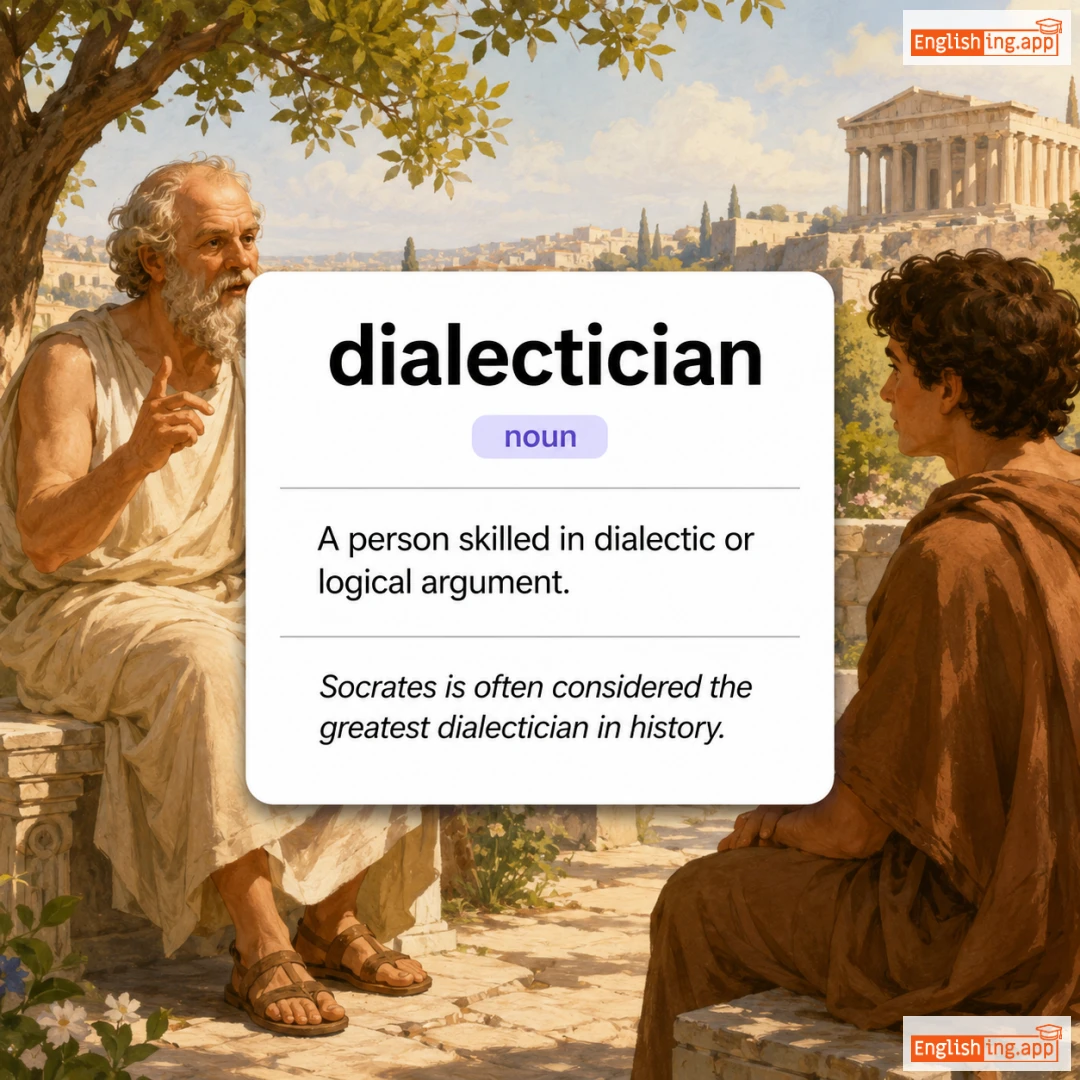
dialectician definition card — visual illustration of the meaning
noun C2
/ˌdaɪələˈtɪʃən/
विवेचनात्मक विशेषज्ञ (vivechanaatmak visheshagya)

A person skilled in dialectic or logical argument.

"Socrates is often considered the greatest dialectician in history."

"सोक्रेट्स को अक्सर इतिहास के सबसे महान विवेचनात्मक विशेषज्ञ के रूप में माना जाता है।" (Socrates ko aksar itihas ke sabse mahaan vivechanaatmak visheshagya ke roop mein maana jaata hai.)
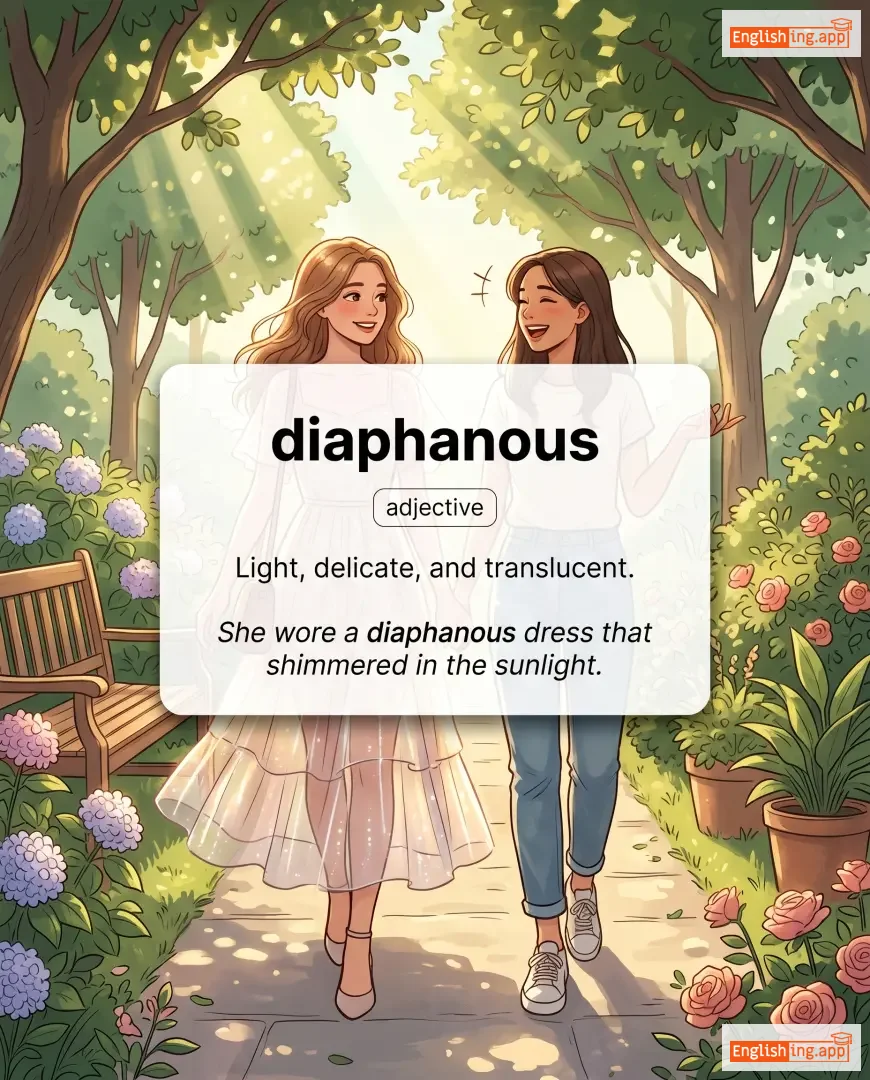
diaphanous definition card — visual illustration of the meaning
adjective C2
/daɪˈæfənəs/
पारदर्शी (paradarshi)

Light, delicate, and translucent.

"She wore a diaphanous dress that shimmered in the sunlight."

"उसने एक पारदर्शी ड्रेस पहनी थी जो सूर्य की रोशनी में चमक रही थी।" (Usne ek paradarshi dress pehni thi jo sury ki roshni mein chamak rahi thi.)
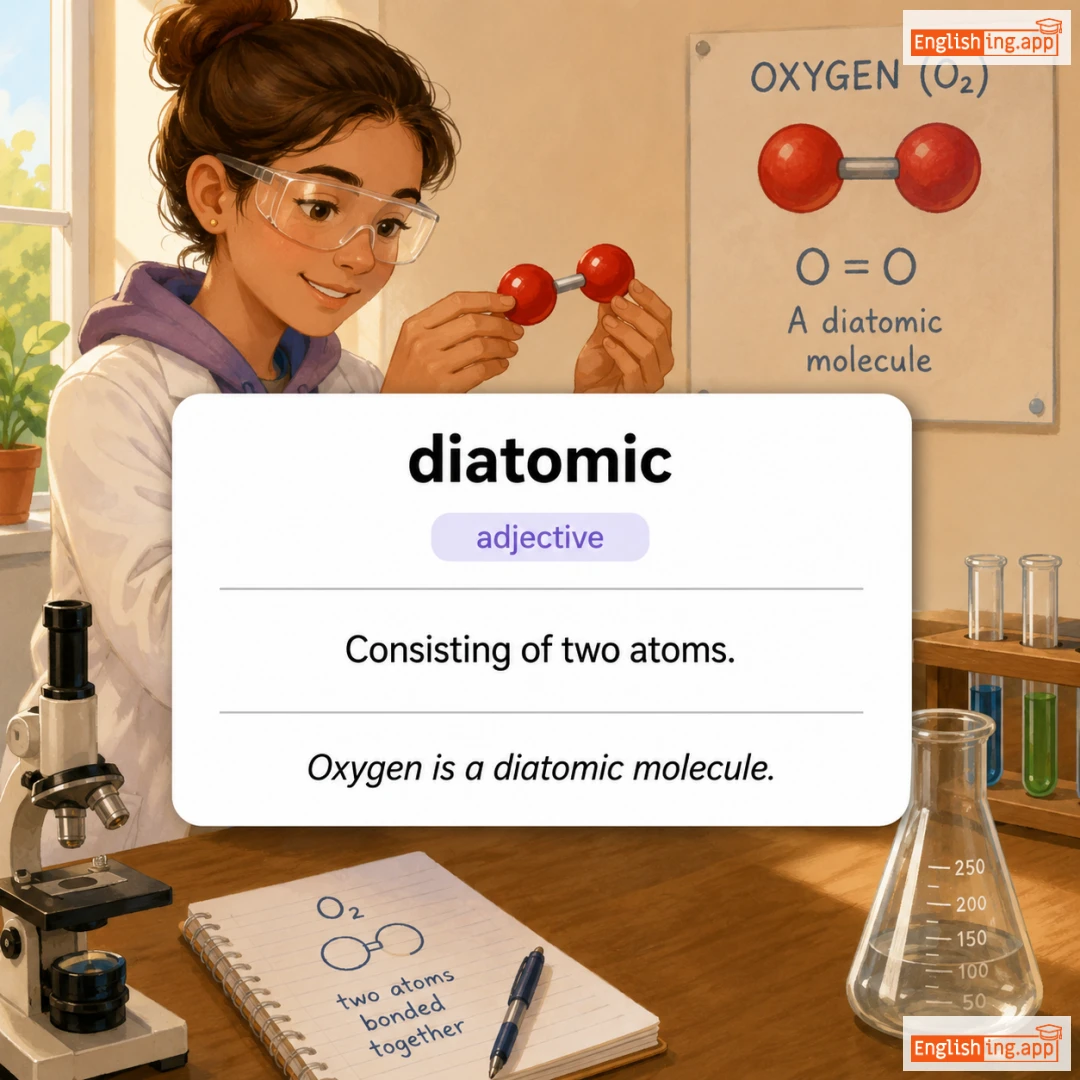
diatomic definition card — visual illustration of the meaning
adjective C2
/ˌdaɪəˈtɒmɪk/
द्वि-परमाणु (dwi-paramanu)

Consisting of two atoms.

"Oxygen is a diatomic molecule."

"ऑक्सीजन एक द्वि-परमाणु अणु है।" (Oksijan ek dwi-paramanu anu hai.)
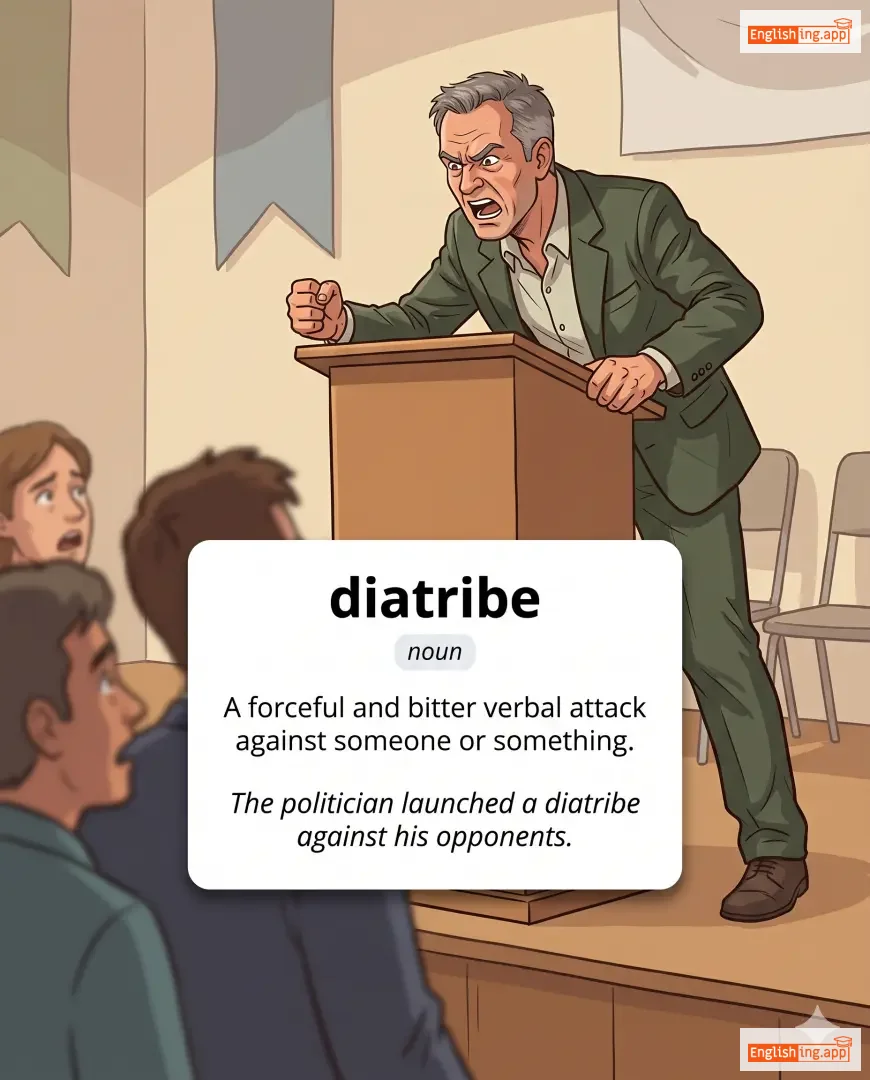
diatribe definition card — visual illustration of the meaning
noun C2
/ˈdaɪətraɪb/
कठोर आलोचना (kathor alochana)

A forceful and bitter verbal attack against someone or something.

"The politician launched a diatribe against his opponents."

"राजनेता ने अपने विरोधियों के खिलाफ एक कठोर आलोचना शुरू की।" (Rajneta ne apne virodhiyon ke khilaf ek kathor alochana shuru ki.)
noun C2
/ˈdɪktəm/
नियम (niyam)

A formal pronouncement, authoritative statement, or maxim.

"The judge’s dictum clarified the principle of equality before the law."

"न्यायधीश का dictum कानून के समक्ष समानता के सिद्धांत को स्पष्ट करता है।" (Nyayadhish ka dictum kanoon ke samakhsh samaanta ke siddhant ko spasht karta hai.)
adjective C2
/daɪˈdæktɪk/
शिक्षात्मक (shikshatmak)

Intended to teach, often with a moral lesson.

"The novel is not just entertaining but also didactic in nature."

"उपन्यास सिर्फ मनोरंजक नहीं, बल्कि शैक्षिक दृष्टिकोण से भी है।" (Upanyaas sirf manoranjak nahi, balki shaikshik drishtikon se bhi hai.)
differentia definition card — visual illustration of the meaning
noun C2
/ˌdɪfəˈrɛnʃə/
विभेदक लक्षण (vibhedak lakshan)

A distinguishing characteristic that sets one thing apart from another.

"The differentia of humans is their ability to reason abstractly."

"मानवों का विभेदक लक्षण उनकी अमूर्त रूप से सोचने की क्षमता है।" (Manavon ka vibhedak lakshan unki amurt roop se sochne ki kshamata hai.)
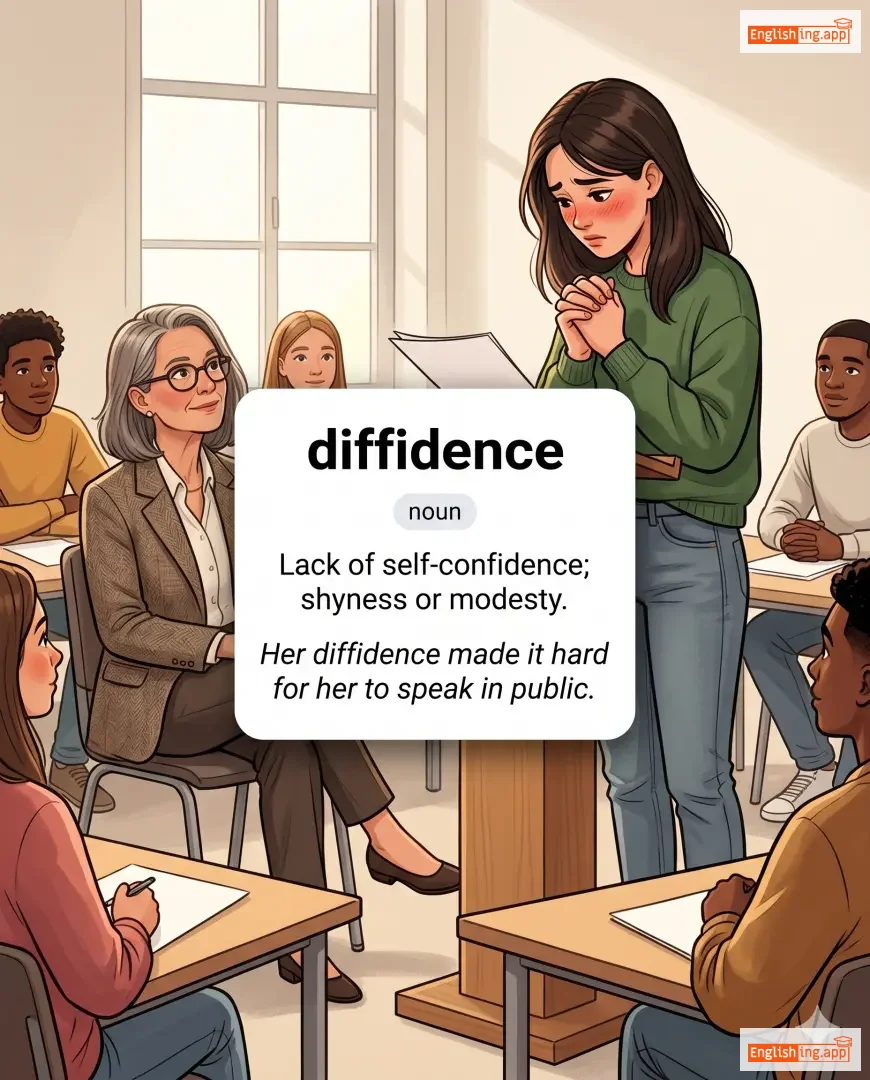
diffidence definition card — visual illustration of the meaning
noun C2
/ˈdɪfɪdəns/
आत्मविश्वास की कमी (atmavishwas ki kami)

Lack of self-confidence; shyness or modesty.

"Her diffidence made it hard for her to speak in public."

"उसकी आत्मविश्वास की कमी ने उसे सार्वजनिक रूप से बोलने में कठिनाई दी।" (Uski atmavishwas ki kami ne use sarvajanik roop se bolne mein kathinai di.)
adjective C2
/ˈdɪfɪdənt/
शर्मीला (difident)

Shy or lacking confidence in one's own abilities.

"He was too diffident to ask a question in class."

"वह कक्षा में एक सवाल पूछने से बहुत शर्मीला था।" (vah kaksha mein ek sawaal poochhne se bahut sharmila tha.)
adjective C2
/dɪˈfjuːzəbl/
विस्तार योग्य (vistaar yogya)

able to spread or be spread through a medium

"Oxygen is diffusible through cell membranes."

"ऑक्सीजन कोशिका झिल्ली के माध्यम से फैल सकता है।" (Oxygen koshika jhilli ke maadhyam se phail sakta hai.)
noun C2
/ˈdaɪɡræf/
डाइग्राफ (daigraf)

A pair of letters representing a single sound, such as 'sh' in 'ship'.

"In the word 'phone', the letters 'ph' form a digraph."

"'फोन' शब्द में 'फ' अक्षर एक डाइग्राफ बनाता है।" ('phone' shabd mein 'ph' akshar ek daigraf banata hai.)
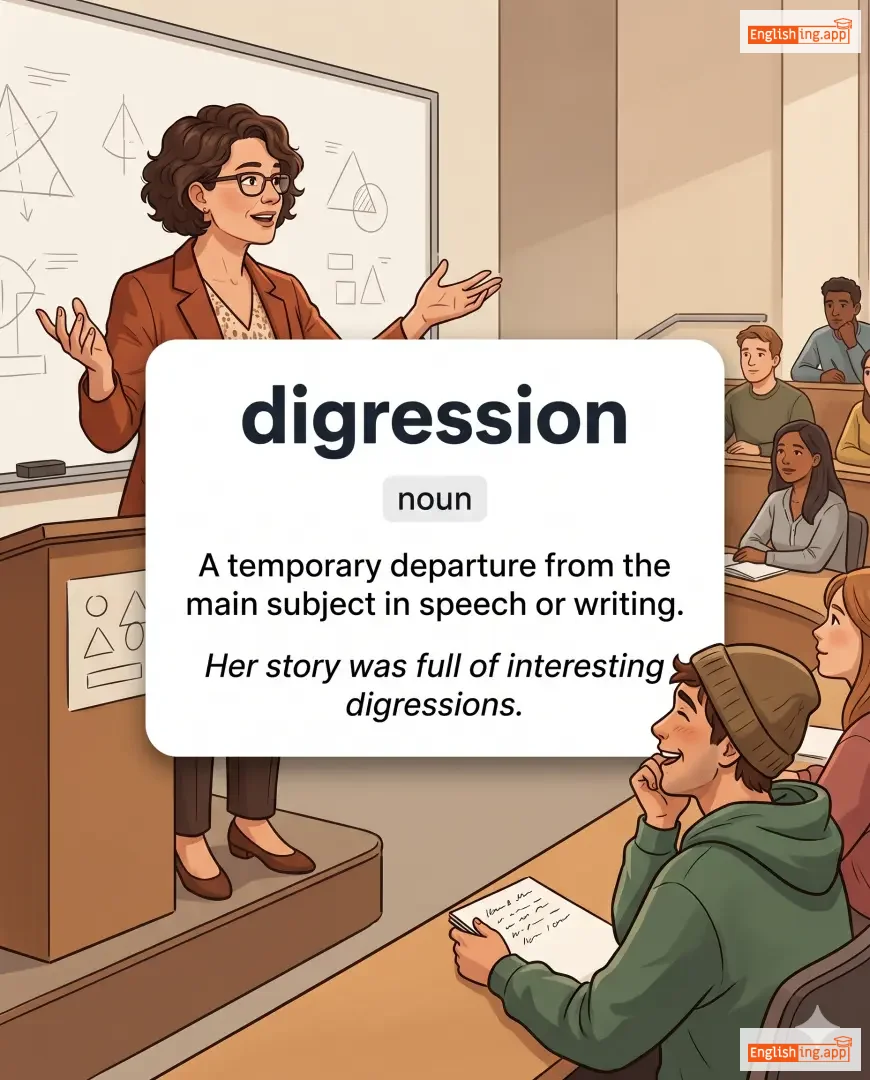
digression definition card — visual illustration of the meaning
noun C2
/daɪˈɡrɛʃən/
विषय से विचलन (vishay se vichalan)

A temporary departure from the main subject in speech or writing.

"Her story was full of interesting digressions."

"उसकी कहानी दिलचस्प विषयों से भरी हुई थी।" (Uski kahani dilchasp vishayon se bhari hui thi.)
adjective C2
/daɪˈɡrɛsɪv/
मुख्य विषय से हटने की प्रवृत्ति (mukhya vishay se hatne ki pravritti)

Tending to depart from the main subject in speech or writing.

"The speaker's digressive style made the lecture difficult to follow."

"वक्ता की डिग्रेसिव शैली ने व्याख्यान को समझना मुश्किल बना दिया।" (Vakta ki digressive shaili ne vyakhyan ko samajhna mushkil bana diya.)
verb C2
/dɪˈlæpɪdeɪt/
ध्वंस करना (dhwans karna)

To cause something, especially a building, to fall into ruin or disrepair.

"The abandoned house began to dilapidate over the years."

"परित्यक्त घर वर्षों के दौरान बर्बाद होने लगा।" (Parityakt ghar varshon ke dauran barbadd hone laga.)
noun C2
/dɪˌlæpɪˈdeɪʃən/
ध्वंसावस्था (dhwansavastha)

The state of disrepair or ruin as a result of neglect.

"The old temple was in a state of dilapidation."

"पुराना मंदिर ध्वंसावस्था में था।" (Purana mandir dhwansavastha mein tha.)
adjective C2
/ˈdɪlətɔːri/
सुस्तीपूर्ण (sustipoorn)

Tending to cause delay; slow to act.

"The committee was criticized for its dilatory response to the crisis."

"समिति को संकट के प्रति उसकी सुस्तीपूर्ण प्रतिक्रिया के लिए आलोचना की गई थी।" (Samiti ko sankat ke prati uski sustipoorn pratikriya ke liye alochana ki gayi thi.)
noun C2
/ˌdɪləˈtænt/
शौकिन (shaukin)

A person who takes up an art, activity, or subject merely for amusement, especially in a superficial way.

"He was dismissed as a dilettante in the art world because he lacked formal training."

"उसे कला की दुनिया में एक शौकिन के रूप में खारिज कर दिया गया क्योंकि उसके पास औपचारिक प्रशिक्षण नहीं था।" (Use kala ki duniya mein ek shaukin ke roop mein kharij kar diya gaya kyonki uske paas aupchaarik prashikshan nahi tha.)
noun C2
/dɪnt/
प्रयास, चोट का निशान (prayas, chot ka nishan)

an impression or hollow made by a blow; force or power

"By dint of hard work, he achieved success."

"कठोर मेहनत के कारण, उसने सफलता प्राप्त की।" (Kathor mehnat ke karan, usne safalta praapt ki.)
adjective C2
/daɪˈɒsɪsən/
डायोसीस से संबंधित (dayosis se sambandhit)

relating to a diocese or the district under the supervision of a bishop in the Christian Church

"The diocesan council met to discuss church affairs."

"डायोसीसन काउंसिल चर्च मामलों पर चर्चा करने के लिए मिली थी।" (dayosishan council church mamlon par charcha karne ke liye mili thi.)
noun C2
/ˈdɪfθɒŋ/
द्विस्वार (dviswar)

A complex vowel sound that begins with one vowel and glides into another within the same syllable.

"The word 'coin' contains a diphthong."

"'कॉइन' शब्द में एक द्विस्वार है।" ('coin' shabd mein ek dviswar hai.)
noun C2
/dɪˈpləʊmətɪst/
राजनयिक (rajanayik)

A person skilled in diplomacy; another word for diplomat.

"The diplomatist handled the negotiations with great tact."

"राजनयिक ने बड़ी समझदारी से बातचीत की।" (rajanayik ne badi samajhdari se baatcheet ki.)
noun C2
/ˌdɪpsəˈmeɪniæk/
मद्यपानप्रेमी (madyapanpremi)

A person with an uncontrollable craving for alcoholic drinks.

"The novel portrayed the tragic downfall of a dipsomaniac who lost everything to alcohol."

"उपन्यास में एक डिप्सोमैनियाक की दुखद गिरावट को दर्शाया गया है, जिसने शराब के कारण सब कुछ खो दिया।" (Upanyas mein ek dipsomaniak ki dukhd ghirawat ko darshaya gaya hai, jisne sharab ke karan sab kuch kho diya.)
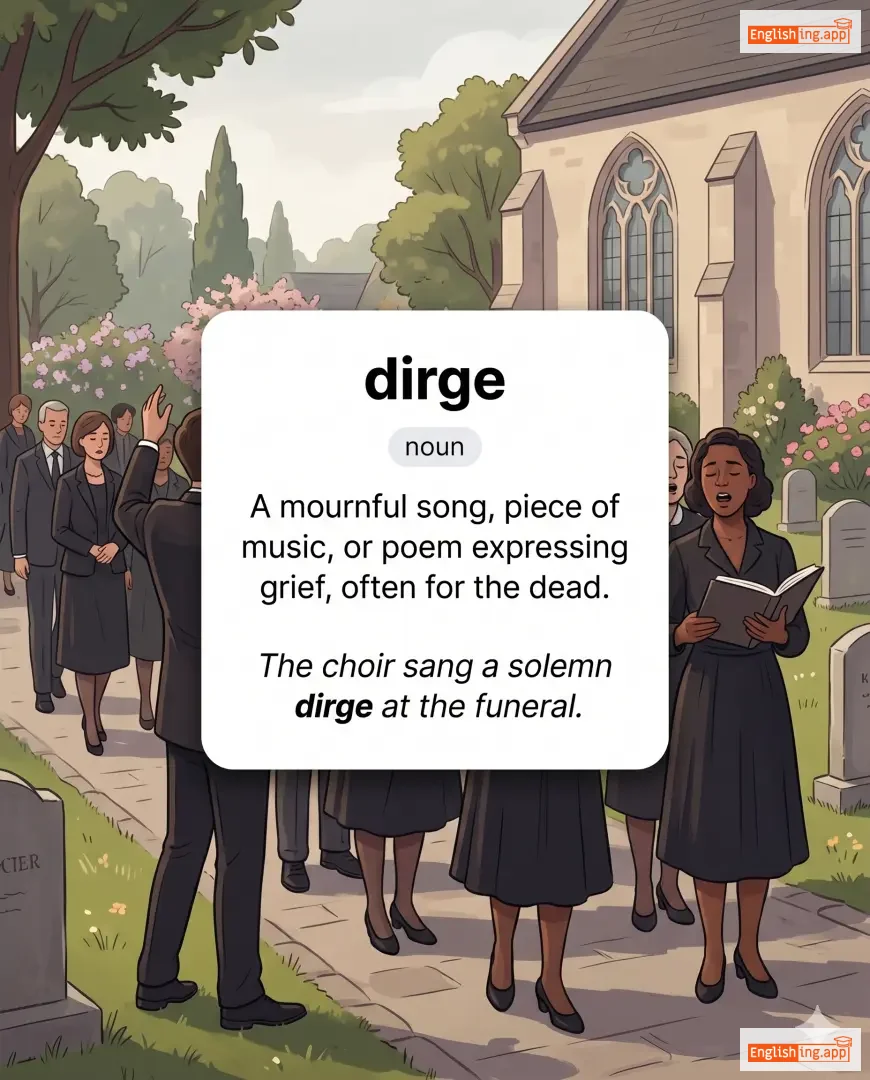
dirge definition card — visual illustration of the meaning
noun C2
/dɜːrdʒ/
शोकगीत (shokgeet)

A mournful song, piece of music, or poem expressing grief, often for the dead.

"The choir sang a solemn dirge at the funeral."

"कोरस ने अंतिम संस्कार में एक गंभीर शोकगीत गाया।" (Koras ne antim sanskar mein ek gambhir shokgeet gaya.)
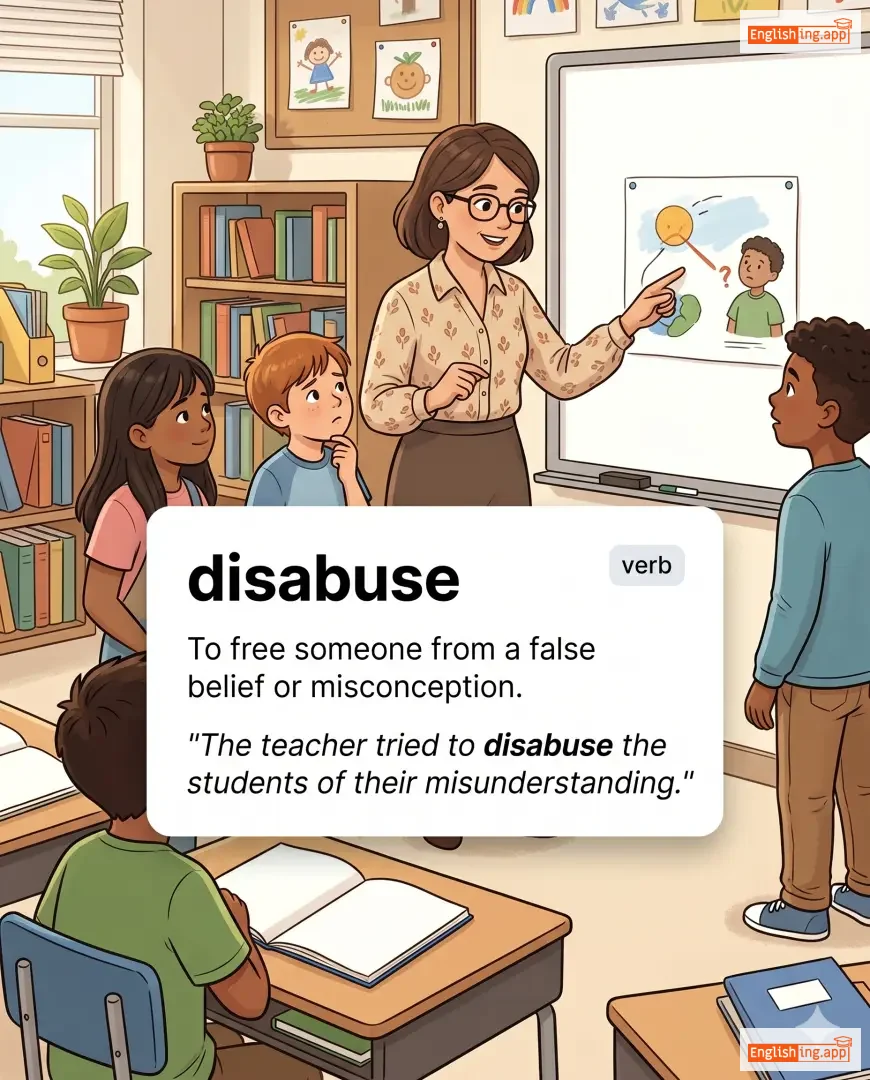
disabuse definition card — visual illustration of the meaning
verb C2
/ˌdɪsəˈbjuːz/
झूठी धारणा से मुक्त करना (jhoothi dharana se mukt karna)

To free someone from a false belief or misconception.

"The teacher tried to disabuse the students of their misunderstanding."

"शिक्षक ने छात्रों को उनकी गलतफहमी से मुक्त करने की कोशिश की।" (Shikshak ne chhatron ko unki galatfahmi se mukt karne ki koshish ki.)
adjective C2
/ˌdɪsəˈfɛktɪd/
असंतुष्ट (asantusht)

Dissatisfied and rebellious, especially against authority or leadership.

"The reforms were introduced to calm the disaffected youth."

"संशोधन उन असंतुष्ट युवाओं को शांत करने के लिए पेश किए गए थे।" (Sanshodhan un asantusht yuvao ko shant karne ke liye pesh kiye gaye the.)
noun C2
/ˌdɪsæprəˈbeɪʃən/
कठोर अस्वीकृति (kathor asweekriti)

strong disapproval, typically on moral grounds

"The policy was met with widespread disapprobation."

"नीति को व्यापक अस्वीकृति का सामना करना पड़ा था।" (Neeti ko vyapak asweekriti ka samna karna pada tha.)
verb C2
/ˌdɪsəˈreɪndʒ/
अगठन करना (agathan karna)

to disturb the order or arrangement of something

"The wind disarranged her hair."

"हवा ने उसके बाल बिगाड़ दिए।" (hawa ne uske baal bigaad diye.)
verb C2
/ˌdɪsəˈvaʊ/
नकारना (nakarna)

to deny responsibility for or connection with something

"He disavowed any involvement in the scandal."

"उसने स्कैंडल में किसी भी संबंध को नकारा।" (usne scandal mein kisi bhi sambandh ko nakara.)
noun C2
/ˌdɪsəˈvaʊəl/
अस्वीकरण (asvikaran)

the denial of any responsibility, connection, or support

"The politician issued a firm disavowal of the controversial remarks."

"राजनीतिक नेता ने विवादास्पद टिप्पणियों का दृढ़ अस्वीकरण जारी किया।" (Raajneetik neta ne vivaadaspad tippaniyon ka drirh asvikaran jari kiya.)
verb C2
/dɪsˈbɑːr/
किसी वकील को कानूनी पेशे से औपचारिक रूप से हटा देना (kisi vakil ko kanooni peshe se aupcharik roop se hata dena)

to officially remove a lawyer from the legal profession

"The corrupt lawyer was disbarred for unethical conduct."

"भ्रष्ट वकील को अनैतिक आचरण के लिए डिसबार किया गया था।" (Bhrasht vakil ko anaitik aacharan ke liye disbar kiya gaya tha.)
verb C2
/dɪsˈbɜːrdən/
बोझ मुक्त करना (bojh mukt karna)

to relieve someone of a burden or load

"She disburdened herself of worries by sharing them with her friend."

"वह अपनी चिंता को दोस्त के साथ बांट कर अपने आप को बोझ से मुक्त कर दी।" (Vah apni chinta ko dost ke saath baant kar apne aap ko bojh se mukt kar di.)
verb C2
/dɪsˈbɜːrs/
धन वितरण करना (dhan vitran karna)

to pay out money, especially from a fund

"The organization will disburse the funds to the affected families."

"संगठन प्रभावित परिवारों को फंड वितरित करेगा।" (Sangathan prabhavit parivaron ko fund vitrit karega.)
disbursement definition card — visual illustration of the meaning
noun C2
dɪsˈbɜːs.mənt
वितरण (vitaran)

The payment of money from a fund.

"The company's disbursement of salaries was delayed."

"कंपनी की वेतन वितरण में देरी हो गई थी।" (Company ki vetan vitran mein deri ho gayi thi.)
verb C2
/ˌdɪskəmˈbɑːbjuleɪt/
भ्रांत करना (bhrant karna)

to confuse or disconcert; to upset the normal order

"The sudden question seemed to discombobulate him."

"अचानक सवाल ने उसे भ्रमित कर दिया।" (Achanak sawal ne use bhramit kar diya.)