वोकैबुलरीज

इंग्लिश वोकैबुलरी डिस्कवर, लर्न और मास्टर करें

noun C2
/rɪˈkwaɪtəl/
rétribution (retribution)

The act of returning something, such as a favor, service, or punishment; repayment or retaliation.

"She offered her time in requital for his kindness."

"Elle a offert son temps en rétribution pour sa gentillesse." (Elle a offert son temps en rétribution pour sa gentillesse.)
verb C2
/rɪˈkwaɪt/
rendre (rendre)

to return or repay a favor, service, or feeling

"She requited his kindness with a thoughtful gift."

"Elle a rendu sa gentillesse avec un cadeau réfléchi." (Elle a rendu sa gentillesse avec un cadeau réfléchi.)
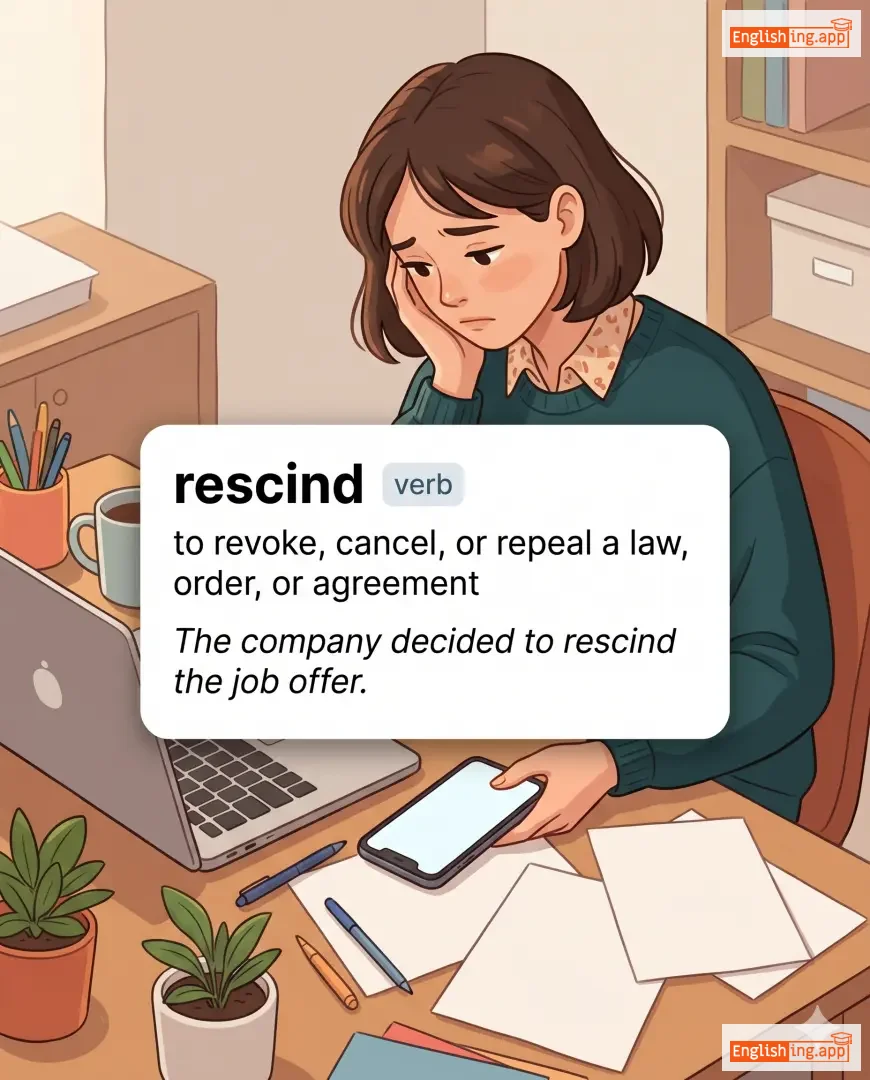
rescind definition card — visual illustration of the meaning
verb C2
/rɪˈsɪnd/
résilier (résilier)

to revoke, cancel, or repeal a law, order, or agreement

"The company decided to rescind the job offer."

"L'entreprise a décidé de résilier l'offre d'emploi." (L'entreprise a décidé de résilier l'offre d'emploi.)
noun C2
/rɪˈsɪʒən/
résiliation (resiliation)

the cancellation or annulment of a law, contract, or agreement

"The rescission of the contract left both parties disappointed."

"La résiliation du contrat a laissé les deux parties déçues." (La resiliation du contrat a laisse les deux parties deçues.)
adjective C2
/rɪˈzɪstləs/
irrésistible (irresistible)

Impossible to resist; having an overpowering effect.

"She felt a resistless urge to laugh at the joke."

"Elle a ressenti une envie irrésistible de rire à la blague." (Elle a ressenti une envie irrésistible de rire à la blague.)
verb C2
/rɪˈspaɪər/
respirer (respirer)

To breathe in and out; to inhale and exhale.

"Plants also respire to release energy."

"Les plantes respirent aussi pour libérer de l'énergie." (Les plantes respirent aussi pour libérer de l'énergie.)
adjective C2
/rɪˈsplɛndənt/
resplendissant (resplendissant)

Shining brilliantly; dazzling in appearance or effect

"The bride looked resplendent in her wedding gown."

"La mariée semblait resplendissante dans sa robe de mariée." (La mariée semblait resplendissante dans sa robe de mariée.)
adjective C2
/ˈrɛstɪv/
agité (agite)

unable to stay still or silent; restless and impatient

"The crowd grew restive as they waited for the concert to begin."

"La foule est devenue agitée en attendant que le concert commence." (La foule est devenue agitee en attendant que le concert commence.)
verb C2
/rɛtʃ/
bonheur (bonheur)

to make the sound and movement of vomiting without bringing anything up

"The smell of spoiled food made him retch violently."

"Elle ne pouvait pas cacher sa joie lorsqu'elle a reçu le prix." (Elle ne pouvait pas cacher sa joie lorsqu'elle a recu le prix.)
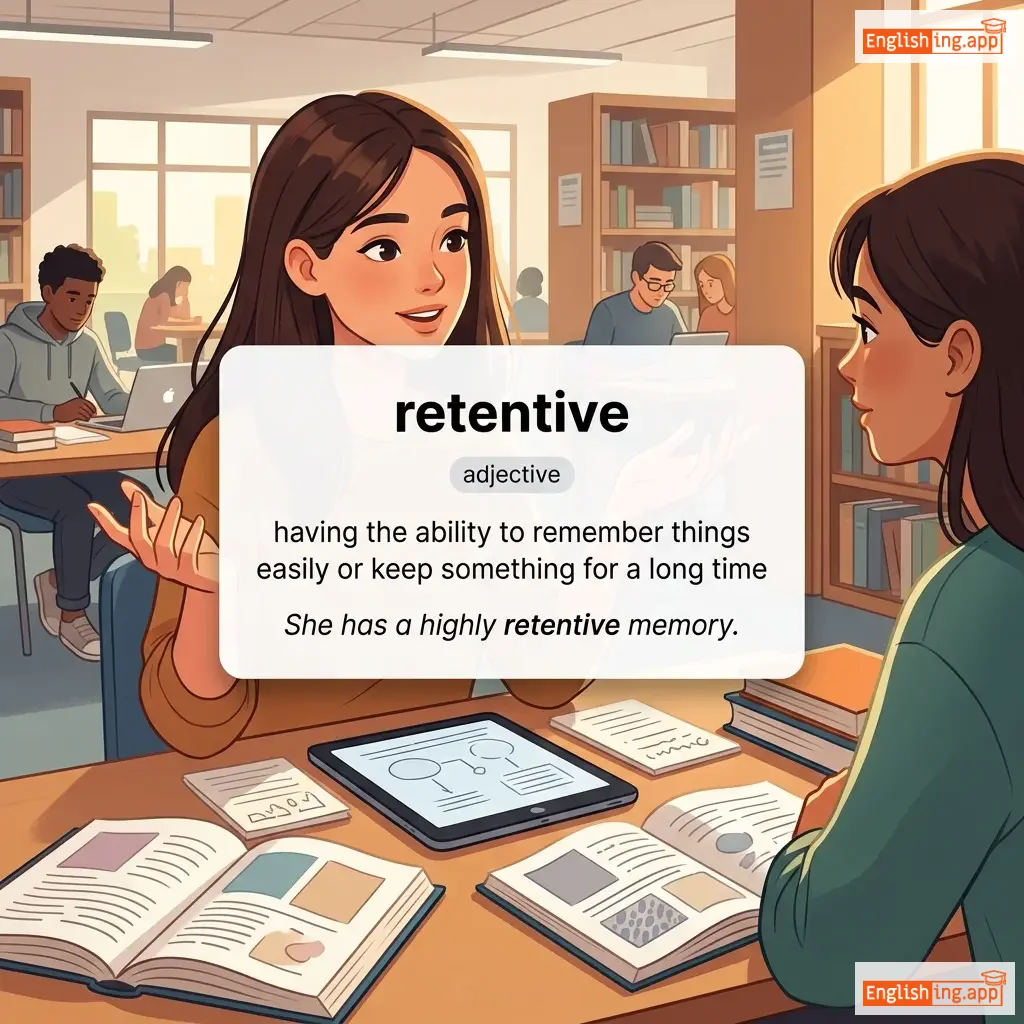
retentive definition card — visual illustration of the meaning
adjective C2
/rɪˈtɛntɪv/
mémoire rétentive (memoire retentive)

having the ability to remember things easily or keep something for a long time

"She has a highly retentive memory."

"Elle a une mémoire très rétentive." (Elle a une mémoire très rétentive.)
adjective C2
/rɪˈtɪkjʊlət/
réticulé (reticule)

Having a net-like pattern or structure.

"The leaf had a reticulate pattern of veins."

"La feuille avait un motif réticulé de veines." (La feuille avait un motif réticulé de veines.)
noun C2
/ˈrɛtɪnjuː/
suite (suite)

A group of attendants or followers accompanying an important person.

"The king entered the hall followed by his retinue."

"Le roi est entré dans la salle suivi de sa suite." (Le roi est entre dans la salle suivi de sa suite.)
verb C2
/rɪˈtrɛntʃ/
réduire les dépenses, licencier des employés (reduire les depenses, licencier des employes)

to reduce costs, spending, or staff to save resources

"The company had to retrench employees due to financial difficulties."

"L'entreprise a dû licencier des employés à cause de difficultés financières." (L'entreprise a dû licencier des employés à cause de difficultés financières.)
noun C2
/ˌrɛtroʊˈɡrɛʃən/
rétrogradation (retrogradation)

a return to a worse or less developed state

"The country experienced economic retrogression after the crisis."

"Le pays a connu une rétrogradation économique après la crise." (Le pays a connu une retrogradation economique apres la crise.)
noun C2
/ˈrɛvəlri/
fête (fete)

Lively and noisy festivities, especially involving drinking and dancing.

"The sound of revelry could be heard throughout the night."

"Le bruit de la fête se faisait entendre toute la nuit." (Le bruit de la fête se faisait entendre toute la nuit.)
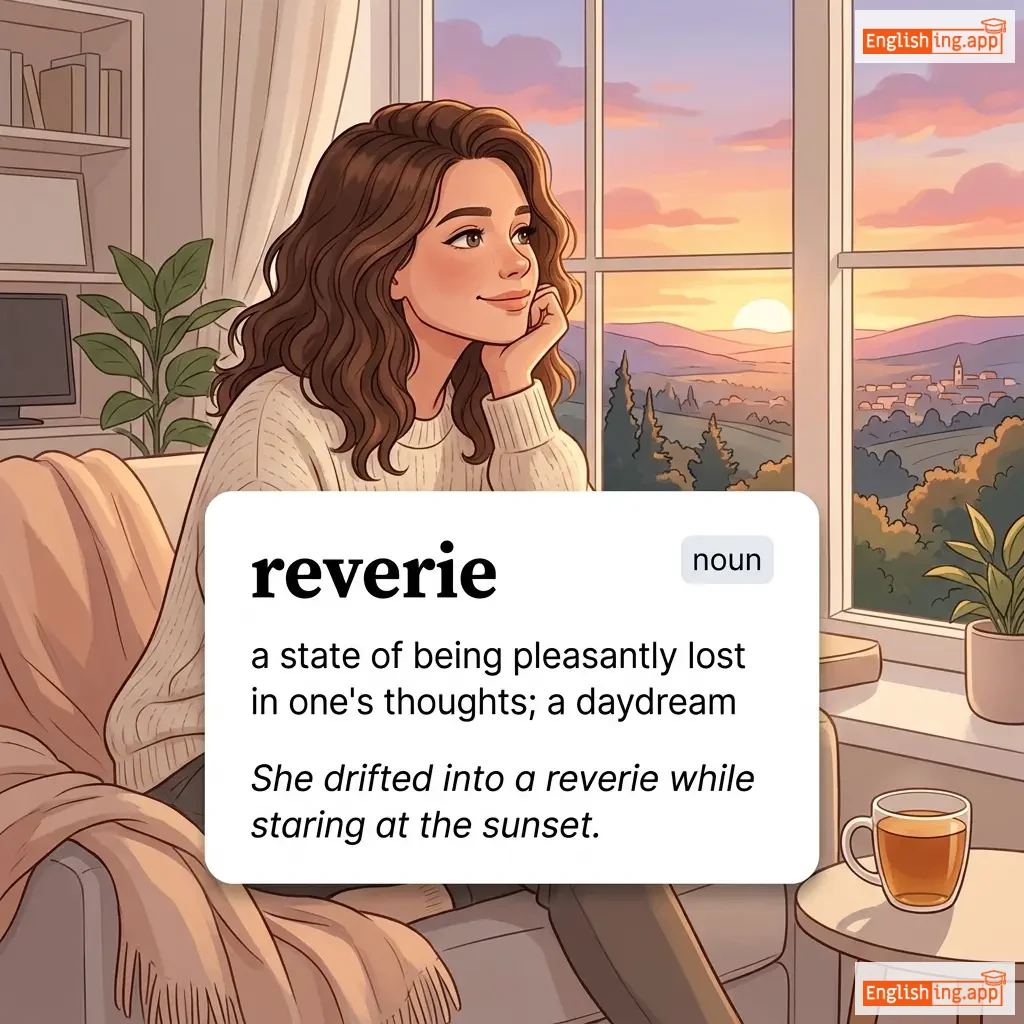
reverie definition card — visual illustration of the meaning
noun C2
/ˈrɛvəri/
rêverie (reverie)

a state of being pleasantly lost in one's thoughts; a daydream

"She drifted into a reverie while staring at the sunset."

"Elle s'est plongée dans une rêverie en regardant le coucher du soleil." (Elle s'est plongee dans une reverie en regardant le coucher du soleil.)
verb C2
/rɪˈvaɪl/
révérer (reverer)

to criticize in an abusive or angrily insulting manner

"The politician was reviled by the public for his corruption."

"Le politicien a été révéré par le public pour sa corruption." (Le politicien a été révéré par le public pour sa corruption.)
noun C2
/rɪˈvaɪlər/
insulteur (insulteur)

a person who criticizes or insults others abusively

"He was known as a reviler of all who opposed him."

"Il était connu comme un insulteur de tous ceux qui s'opposaient à lui." (Il était connu comme un insulteur de tous ceux qui s'opposaient à lui.)
noun C2
/rɪˈvaɪ.zəl/
révision (revision)

The act of revising, reviewing, or making changes to something.

"The revisal of the contract took longer than expected."

"La révision du contrat a pris plus de temps que prévu." (La revision du contrat a pris plus de temps que prevu.)
noun C2
/ˌrɛv.əˈkeɪ.ʃən/
révocation (revocation)

The act of officially canceling or withdrawing something.

"The court ordered the revocation of his license."

"Le tribunal a ordonné la révocation de sa licence." (Le tribunal a ordonné la révocation de sa licence.)
verb C2
/ˈræpsəˌdaɪz/
rhapsodier (rhapsodier)

to speak or write with great enthusiasm and admiration

"He would often rhapsodize about his travels to Europe."

"Il parlait souvent avec enthousiasme de ses voyages en Europe." (Il parlait souvent avec enthousiasme de ses voyages en Europe.)
noun C2
/ˈræpsədi/
chanson exaltée/éloge (chanson exaltee/elog)

an expression of great enthusiasm or an epic musical composition

"The singer’s performance was a rhapsody of emotions."

"La performance du chanteur était une rhapsodie d'émotions." (La performance du chanteur etait une rhapsodie d'emotions.)
noun C2
/ˌrɛtəˈrɪʃən/
rhéteur (rheteur)

A person who is skilled in the art of rhetoric or persuasive speaking/writing.

"The rhetorician captivated the audience with his eloquence."

"Le rhéteur a captivé l'auditoire avec son éloquence." (Le rhetor a captive l'auditoire avec son eloquence.)
adjective C2
/ˈruːmi/
larmoyant (larmoyant)

Watery, especially referring to the eyes.

"His rheumy eyes showed signs of age and fatigue."

"Ses yeux larmoyants montraient des signes de vieillesse et de fatigue." (Ses yeux larmoyants montraient des signes de vieillesse et de fatigue.)
adjective C2
/ˈrɪbɔːld/
blagues vulgaires (blagues vulgaires)

Referring to sexual matters in a humorous or vulgar way.

"The comedian’s ribald jokes made the audience laugh uncomfortably."

"Les blagues vulgaires du comédien ont fait rire le public de manière inconfortable." (Les blagues vulgaires du comédien ont fait rire le public de manière inconfortable.)
noun C2
/ˈrɪɡməˌroʊl/
perte de temps (perte de temps)

a long, complicated, and confusing process or story

"Getting a visa was such a rigmarole of paperwork and interviews."

"Obtenir un visa a été une perte de temps entre papiers et entretiens." (Obtenir un visa a été une perte de temps entre papiers et entretiens.)
noun C2
/raɪm/
givre (givre)

frost formed on cold surfaces by freezing water vapor

"The trees were covered with a white rime after the cold night."

"Les arbres étaient recouverts de givre blanc après la nuit froide." (Les arbres etaient recouverts de givre blanc apres la nuit froide.)
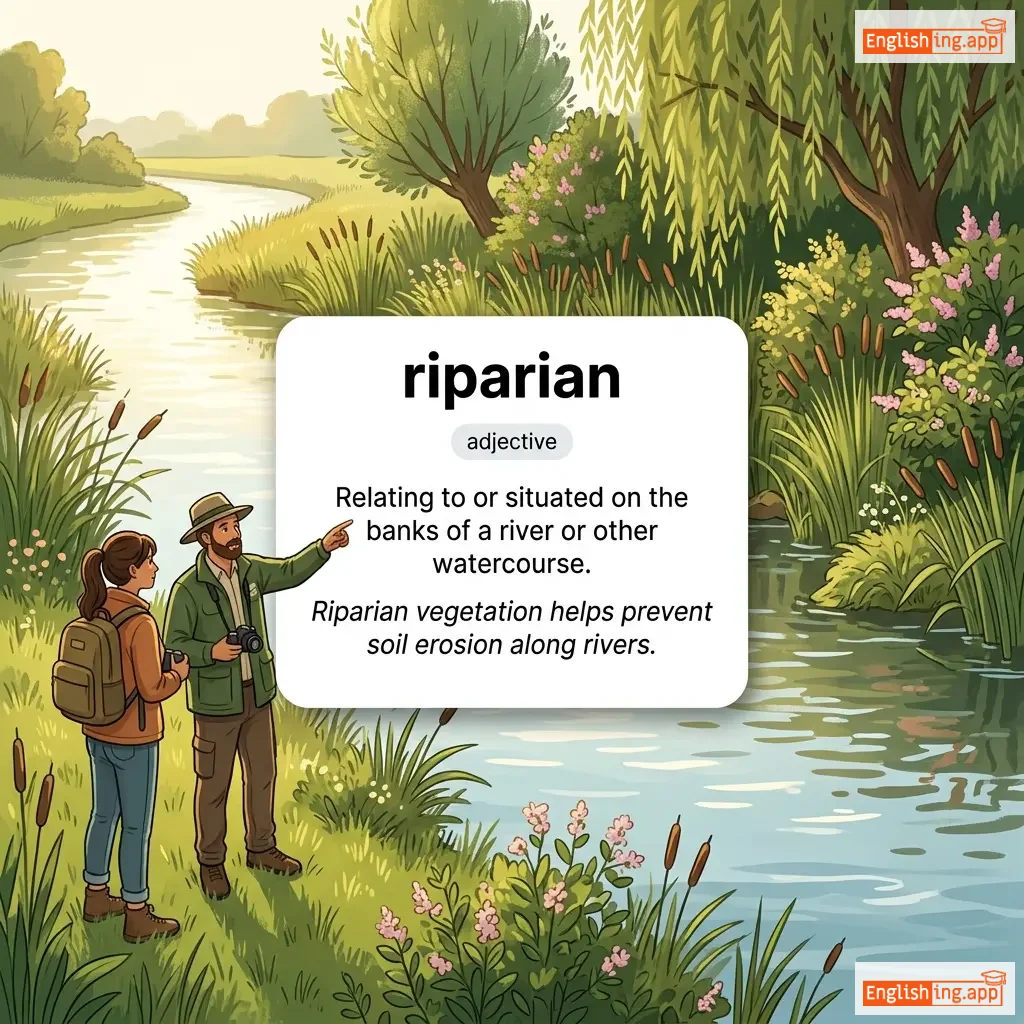
riparian definition card — visual illustration of the meaning
adjective C2
/raɪˈpɛə.ri.ən/
relatif ou situé sur les rives d'un fleuve ou d'un autre cours d'eau (relatif ou situé sur les rives d'un fleuve ou d'un autre cours d'eau)

Relating to or situated on the banks of a river or other watercourse.

"Riparian vegetation helps prevent soil erosion along rivers."

"La végétation riparienne aide à prévenir l'érosion des sols le long des rivières." (La végétation riparienne aide à prévenir l'érosion des sols le long des rivières.)
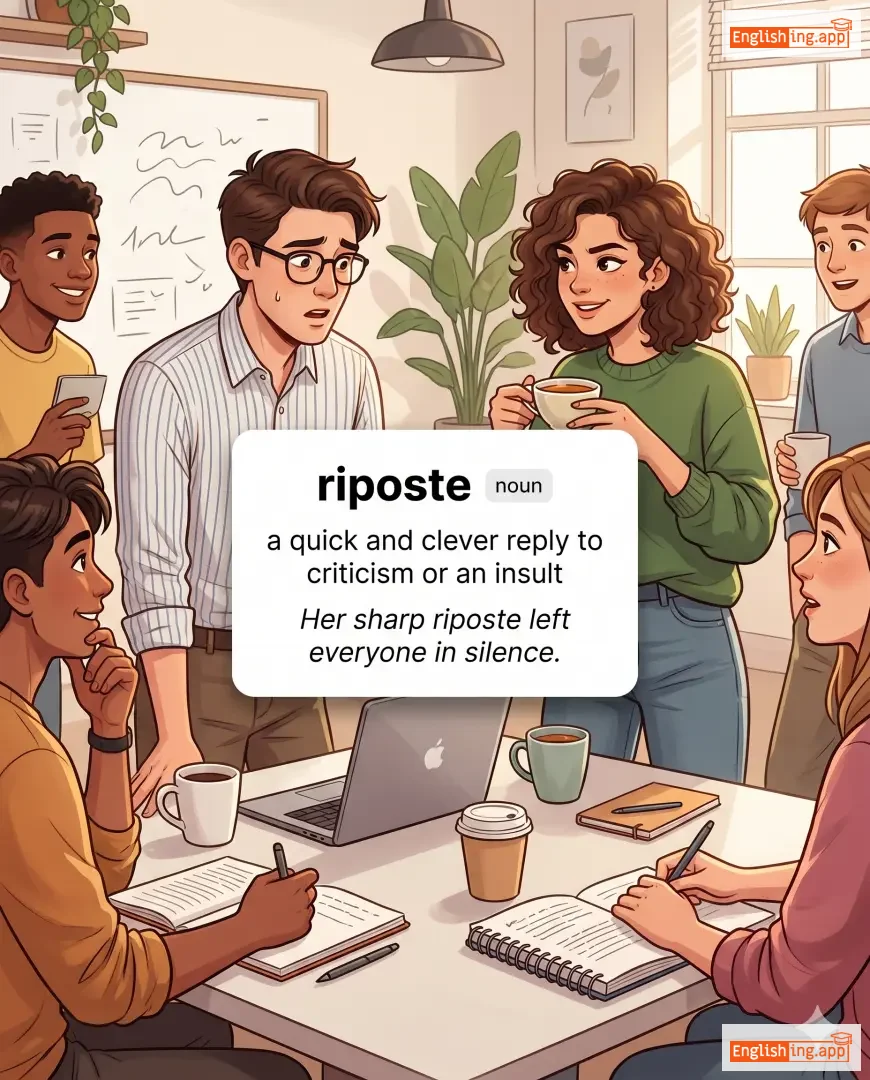
riposte definition card — visual illustration of the meaning
noun C2
/rɪˈpoʊst/
réplique acérée (replique aceree)

a quick and clever reply to criticism or an insult

"Her sharp riposte left everyone in silence."

"Sa réplique acérée laissa tout le monde sans voix." (Sa replique aceree laissa tout le monde sans voix.)
noun C2
/ˈrɪp.lɪt/
petite ondulation (petite ondulation)

a small or tiny ripple

"Tiny ripplets appeared on the lake as the fish moved."

"De petites ondulations sont apparues sur le lac lorsque le poisson a bougé." (De petites ondulations sont apparues sur le lac lorsque le poisson a bougé.)
adjective C2
/ˈrɪz.ə.bəl/
risible (risible)

so absurd or ridiculous that it deserves to be laughed at

"The idea of flying pigs is completely risible."

"L'idée de cochons volants est complètement risible." (L'idée de cochons volants est complètement risible.)
verb C2
/raɪv/
déchirer (dechirer)

to tear apart violently

"The earthquake rived the ground in several places."

"Le tremblement de terre a déchiré le sol en plusieurs endroits." (Le tremblement de terre a déchiré le sol en plusieurs endroits.)
noun C2
/ˈrɪvjʊlət/
ruisseau (ruisseau)

a small stream of water; a tiny brook

"A rivulet ran down the hillside after the rain."

"Un ruisseau a descendu la colline après la pluie." (Un ruisseau a descendu la colline après la pluie.)
adjective C2
/roʊn/
roan (roan)

denoting an animal, especially a horse, having a coat of mixed colors, typically reddish-brown and white

"The rider mounted a roan horse with a speckled coat."

"Le cavalier monta un cheval roan avec un pelage tacheté." (Le cavalier monta un cheval roan avec un pelage tacheté.)
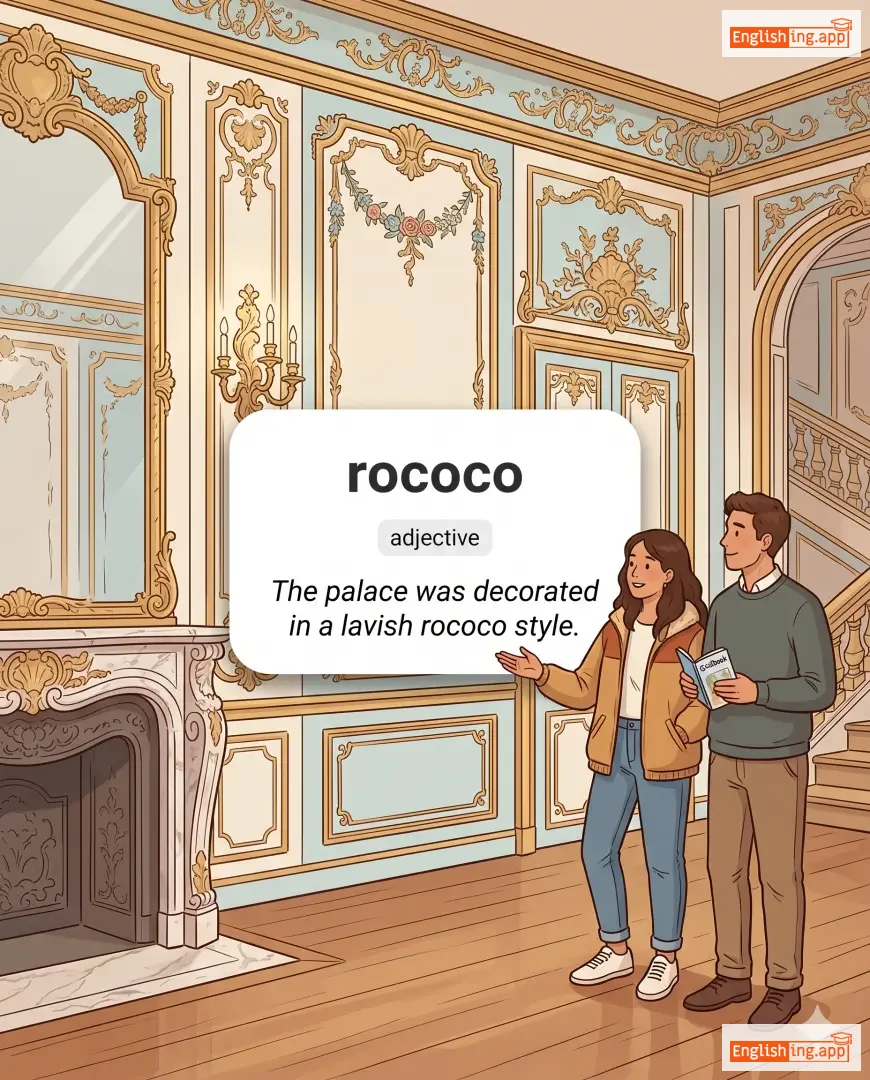
rococo definition card — visual illustration of the meaning
adjective C2
/rəˈkoʊkoʊ/
rococo (rococo)

characterized by ornate detail and elaborate decoration, especially in art, architecture, and design

"The palace was decorated in a lavish rococo style."

"Le palais a été décoré dans un style rococo luxueux." (Le palais a été décoré dans un style rococo luxueux.)
verb C2
/rɔɪl/
agiter (agiter)

to make a liquid muddy or disturbed; to cause agitation or disorder

"The constant protests roiled the city streets."

"Les protestations constantes ont agité les rues de la ville." (Les protestations constantes ont agité les rues de la ville.)
verb C2
/ˈrɔɪstər/
réjouir bruyamment (rejouir bruyamment)

to revel noisily; to engage in loud, boisterous celebration

"The fans roistered in the streets after the victory."

"Les fans ont fait la fête dans les rues après la victoire." (Les fans ont fait la fete dans les rues apres la victoire.)
noun C2
/ˈrɒndoʊ/
composition musicale (avec un thème récurrent) (composition musicale (avec un theme recurrent))

a musical composition with a recurring leading theme

"The pianist ended the recital with a lively rondo."

"Le pianiste a terminé le récital par un rondo animé." (Le pianiste a termine le recital par un rondo anime.)
noun C2
/ruːd/
croix (krwa)

a crucifix, especially one positioned above the entrance to the chancel of a church

"The old church displayed a carved rood above the altar."

"L'ancien église affichait une croix sculptée au-dessus de l'autel." (L'ancien église affichait une croix sculptée au-dessus de l'autel.)
noun C2
/ˈrʊkəri/
nid d'oiseaux (nid d'oiseaux)

a place where rooks or other birds breed and nest in colonies

"We saw a rookery full of noisy birds near the forest."

"Nous avons vu un nid d'oiseaux plein d'oiseaux bruyants près de la forêt." (Nous avons vu un nid d'oiseaux plein d'oiseaux bruyants près de la forêt.)
adjective C2
/ˈroʊziət/
rosé, optimiste (rose, optimiste)

Having a pink color; optimistic or idealistic.

"She looked at the future with roseate optimism."

"Elle regarda l'avenir avec un optimisme rose." (Elle regarda l'avenir avec un optimisme rose.)
adjective C2
/roʊˈtʌnd/
rond (rond)

round or plump in shape; full in sound

"The rotund cat struggled to climb the fence."

"Le chat rond avait du mal à grimper la clôture." (Le chat rond avait du mal à grimper la clôture.)
noun C2
/roʊˈtʌn.də/
bâtiment circulaire (batiment circulaire)

a large circular building or hall, often with a dome

"Tourists gathered inside the grand rotunda of the capitol."

"Les touristes se sont réunis à l'intérieur de la grande rotonde du capitole." (Les touristes se sont reunis a l'interieur de la grande rotonde du capitole.)
noun C2
/roʊˈtʌn.də.ti/
rondeur (rondeur)

the quality of being round or plump

"The rotundity of the balloon made it float gracefully."

"La rondeur du ballon l'a fait flotter gracieusement." (La rondeur du ballon l'a fait flotter gracieusement.)
noun C2
/ruːˈeɪ/
un homme dédié à une vie de plaisirs sensuels (un homme dedié à une vie de plaisirs sensuels)

A man devoted to a life of sensual pleasure; a debauched man.

"The old roue squandered his fortune on gambling and women."

"Le vieux roue a gaspillé sa fortune dans les jeux d'argent et les femmes." (Le vieux roue a gaspillé sa fortune dans les jeux d'argent et les femmes.)
adjective C2
/ˈruːbɪkənd/
visage rubicond (rubikund)

Having a healthy reddish complexion.

"The old man’s rubicund face showed he was in good health."

"Le visage rubicond de l'homme âgé montrait qu'il était en bonne santé." (Le visage rubicond de l'homme âgé montrait qu'il était en bonne santé.)
adjective C2
/ˈrʌdi/
rosé (rozi)

Having a healthy red color in the face.

"She had a ruddy complexion from working outdoors."

"Elle avait un teint rosé à force de travailler dehors." (Elle avait un teint rosé à force de travailler dehors.)
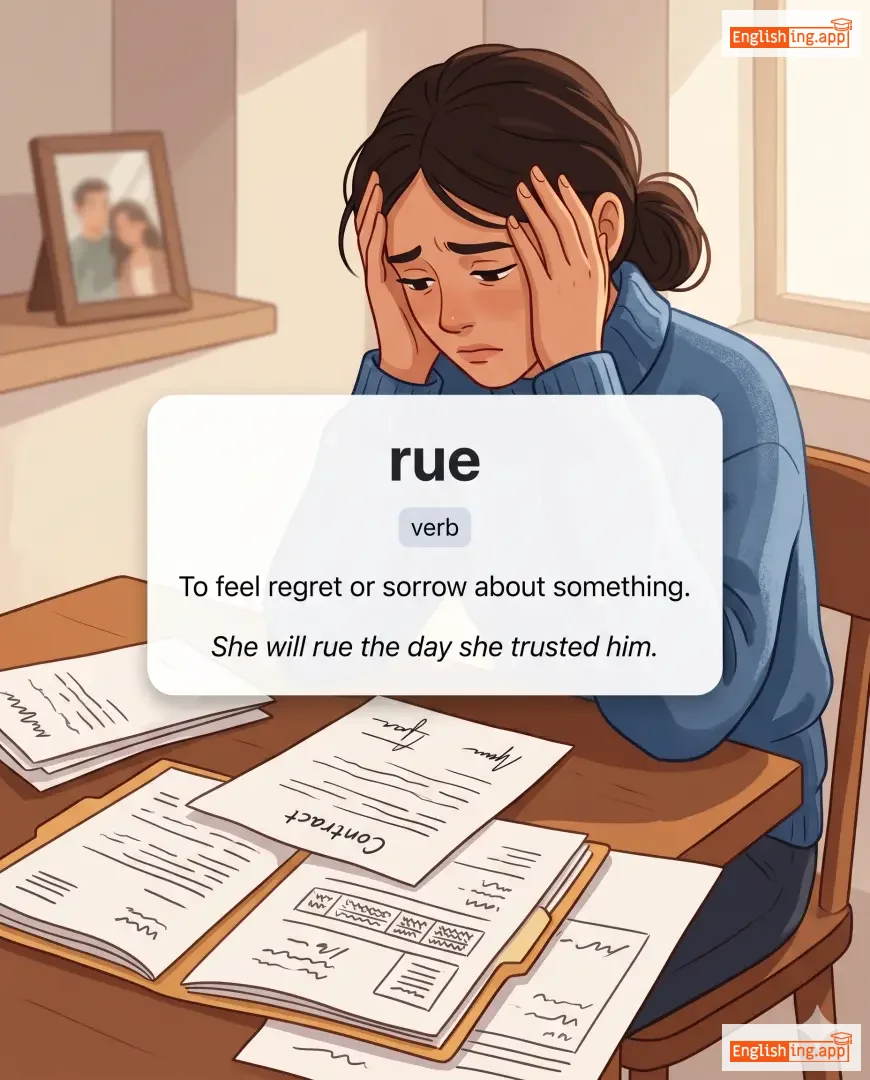
rue definition card — visual illustration of the meaning
verb C2
/ruː/
regretter (regretter)

To feel regret or sorrow about something.

"She will rue the day she trusted him."

"Elle regrettera le jour où elle lui a fait confiance." (Elle regrettera le jour où elle lui a fait confiance.)
noun C2
/ˈruː.mɪ.nənt/
ruminant (ruminant)

a cud-chewing mammal, such as a cow or sheep

"Cows are ruminants that chew cud."

"Les vaches sont des ruminants qui mâchent le bol alimentaire." (Les vaches sont des ruminants qui mâchent le bol alimentaire.)
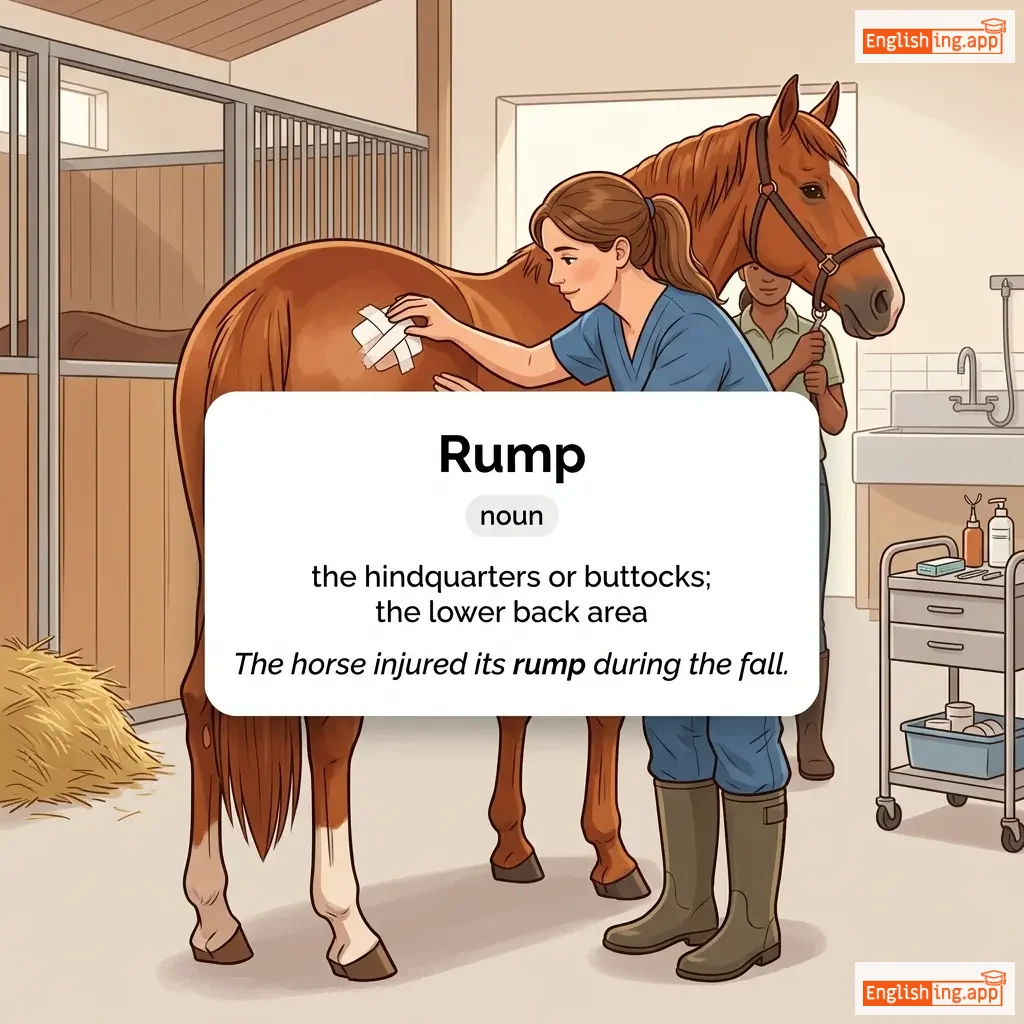
Rump definition card — visual illustration of the meaning
noun C2
/rʌmp/
postérieur; fesses; bas du dos (ramp)

the hindquarters or buttocks; the lower back area

"The horse injured its rump during the fall."

"Le cheval s'est blessé le postérieur pendant la chute." (Le cheval s'est blessé le postérieur pendant la chute.)