वोकैबुलरीज

इंग्लिश वोकैबुलरी डिस्कवर, लर्न और मास्टर करें

noun C2
/ˈpætrɪsaɪd/
父殺し (chichi-goroshi)

The act of killing one's own father.

"The ancient myth describes a son committing patricide to take the throne."

"古代の神話は、王位を取るために父殺しをした息子を描いています。" (Kodai no shinwa wa, oui o toru tame ni chichi-goroshi o shita musuko o egaiteimasu.)
noun C2
/ˈpætrɪˌmoʊni/
遺産 (isan)

Property or inheritance passed down from one's father or ancestors.

"The castle was part of his patrimony from his noble ancestors."

"その城は彼の貴族の先祖から受け継いだ遺産の一部でした。" (Sono shiro wa kare no kizoku no senzo kara uketsuida isan no ichibu deshita.)
noun C2
/ˌpætrəˈnɪmɪk/
父系姓 (chikei sei)

a name derived from the name of a father or ancestor

"In many cultures, surnames are patronymic in origin."

"多くの文化では、姓は父系姓に由来します。" (Ōku no bunka de wa, sei wa chikei sei ni yurai shimasu.)
adjective C2
/ˈpɔːntʃi/
ぽっこりお腹 (pokkori onaka)

Having a large or protruding belly.

"The paunchy man struggled to button his shirt."

"ぽっこりお腹の男はシャツのボタンを留めるのに苦労していた。" (Pokkori onaka no otoko wa shatsu no botton o tomeru no ni kurō shite ita.)
noun C2
/ˈpɔːpərɪzəm/
貧困 (hinkon)

The state of being extremely poor.

"The country struggled with rising pauperism in the 19th century."

"その国は19世紀に増大する貧困と戦っていました。" (Sono kuni wa 19 seiki ni zoudai suru hinkon to tatakatte imashita.)
adjective C2
/ˈpɛkəbl/
過ちを犯しやすい (ayamachi o okashiyasui)

liable to sin or error; capable of doing wrong

"Humans are peccable, but they strive for goodness."

"人間は過ちを犯しやすいが、善を追い求める。" (Ningen wa ayamachi o okashiyasui ga, zen o oimotomeru.)
noun C2
/ˌpɛkəˈdɪloʊ/
小さな過ち (chiisana ayamachi)

a small or minor fault or sin

"Forgetting to call was just a small peccadillo, not a serious mistake."

"電話をかけ忘れるのはただの小さな過ちで、重大なミスではありません。" (Denwa o kake wasureru no wa tada no chiisana ayamachi de, juudaina misu de wa arimasen.)
adjective C2
/ˈpɛkənt/
有罪 (yūzui)

Guilty of a moral offense or wrongdoing; sinful.

"The judge declared the peccant official unfit for office."

"裁判官は有罪の役人を職務に不適格と宣言した。" (Saibankan wa yūzui no yakunin o shokumu ni futekikaku to sengen shita.)
adjective C2
/ˈpɛktərəl/
胸筋 (kyōkin)

Relating to the chest or breast.

"The athlete focused on strengthening his pectoral muscles."

"アスリートは自分の胸筋を強化することに集中していました。" (Asurīto wa jibun no kyōkin o kyōka suru koto ni shūchū shiteimashita.)
verb C2
/ˈpɛkjʊˌleɪt/
横領する (おうりょうする)

To embezzle or steal money, especially public funds.

"The corrupt official was found guilty of peculating government funds."

"汚職の役人は政府の資金を横領したとして有罪となった。" (Oshoku no yakunin wa seifu no shikin wo ouryou shita to shite yuuzai to natta.)
noun C2
/ˌpɛkjʊˈleɪʃən/
横領 (ou ryou)

The act of embezzling or stealing money, especially from public funds.

"The minister resigned after being accused of peculation."

"大臣は横領の罪で辞任しました。" (Daijin wa ou ryou no tsumi de jin-in shimashita.)
noun C2
/ˌpɛdəˈɡɒdʒɪks/
教育学 (kyouikugaku)

the science or art of teaching

"He studied pedagogics to become a better teacher."

"彼はより良い教師になるために教育学を学びました。" (Kare wa yori yoi kyoushi ni naru tame ni kyouikugaku o manabimashita.)
noun C2
/ˈpɛdəˌɡɒɡ/
教師 (kyoushi)

a teacher, especially a strict or formal one

"The old pedagogue insisted on discipline in the classroom."

"その古い教育者は教室で規律を強調しました。" (Sono furui kyouikushya wa kyoushitsu de kiritsu o kyouchou shimashita.)
noun C2
/ˈpɛdənt/
細かいことにこだわる人 (komakai koto ni kodawaru hito)

A person who is excessively concerned with minor details or rules, often in a showy way.

"The professor was criticized as a pedant who focused too much on trivial details."

"その教授は細かいことにこだわりすぎるペダントとして批判された。" (Sono kyōju wa komakai koto ni kodawarisugiru pedanto to shite hihan sareta.)
noun C2
/ˈpɛd.ən.tri/
細かい詳細やルールへの過度なこだわり (komakai shousai ya ruuru e no kado na kodawari)

Excessive concern with minor details or rules.

"His pedantry made the meeting unnecessarily long."

"彼のペダントリーは会議を不必要に長くした。" (Kare no pedantori wa kaigi o fuhitsuyou ni nagaku shita.)
noun C2
/ˈpɛdɪmənt/
三角形のペディメント (sankakkei no pedimento)

a triangular gable found above the horizontal structure of a building, often in classical architecture

"The ancient temple had a pediment decorated with sculptures."

"古代の寺院には彫刻で飾られたペディメントがありました。" (Kodai no jiin ni wa choukoku de kazatta pedimento ga arimashita.)
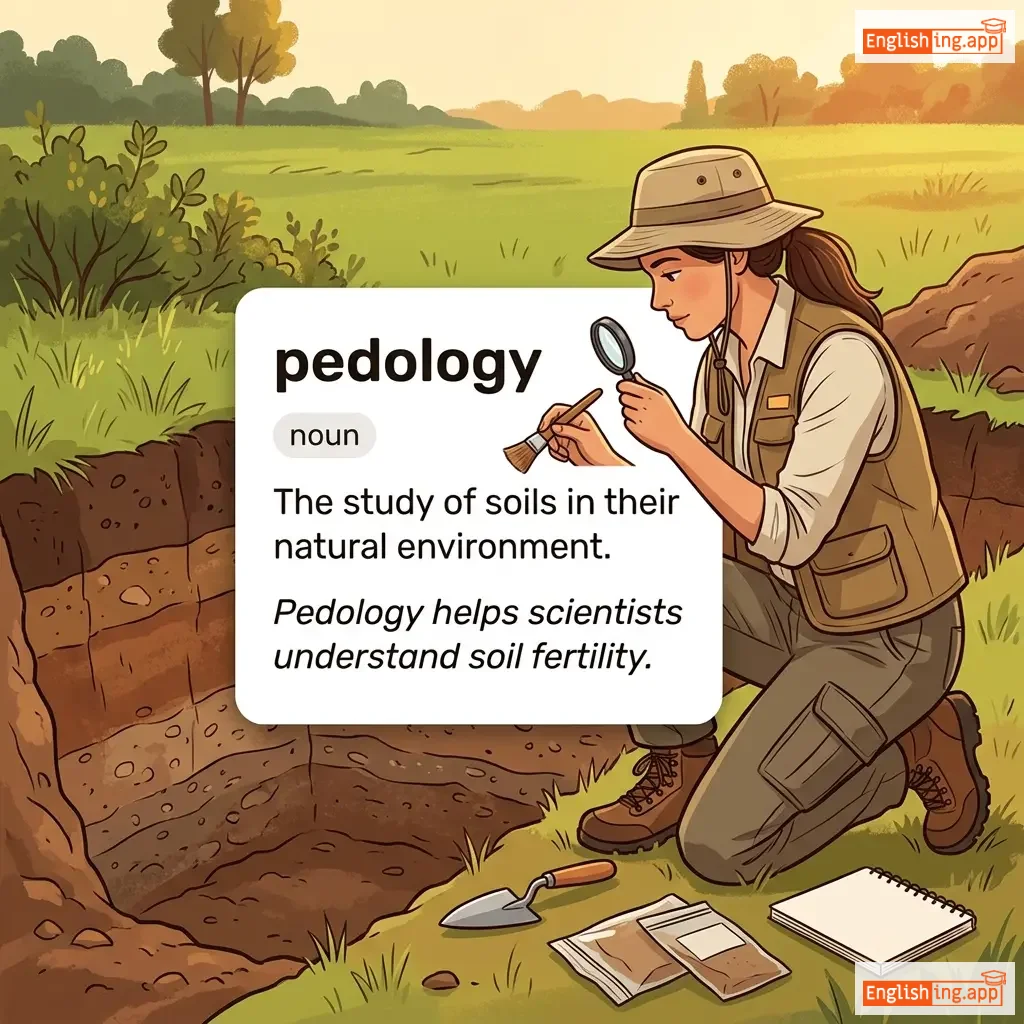
pedology definition card — visual illustration of the meaning
noun C2
/pɪˈdɒl.ə.dʒi/
土壌学 (dojōgaku)

The study of soils in their natural environment.

"Pedology helps scientists understand soil fertility."

"ペドロジーは科学者が土壌の肥沃さを理解するのに役立ちます。" (Pedorojī wa kagakusha ga dojō no hiyokusa o rikai suru no ni yakudachimasu.)
noun C2
/ˈpɪərɪdʒ/
貴族階級 (kizoku kaikyū)

the title or rank of a peer; the nobility as a group

"He was elevated to the peerage by the king."

"彼は王によって貴族階級に昇進しました。" (Kare wa ō ni yotte kizoku kaikyū ni shōshin shimashita.)
adjective C2
/pɪˈdʒɒrətɪv/
侮蔑的 (bometeki)

Expressing contempt or disapproval.

"He used pejorative terms to insult his opponents."

"彼は相手を侮蔑するために侮蔑的な言葉を使った。" (Kare wa aite o bometu suru tame ni bometeki na kotoba o tsukatta.)
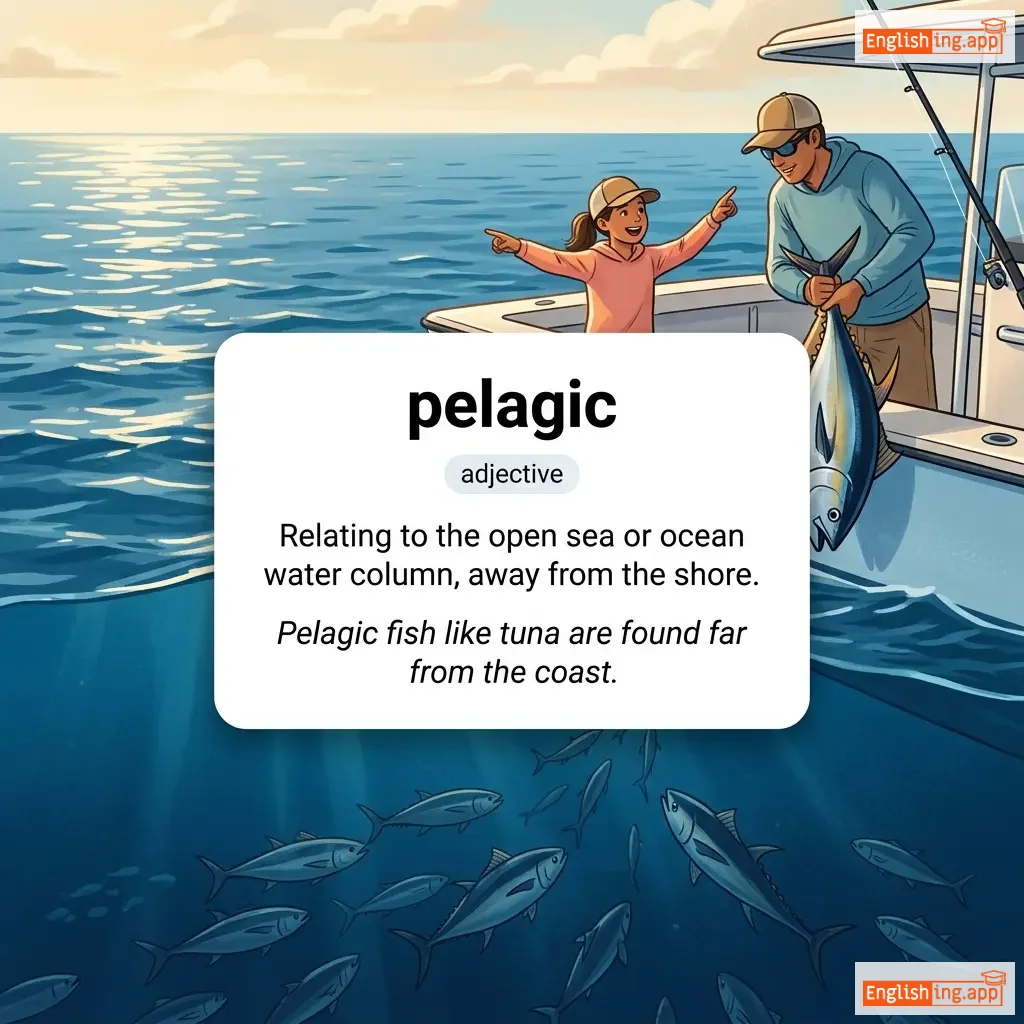
pelagic definition card — visual illustration of the meaning
adjective C2
/pəˈlædʒ.ɪk/
外洋に関連する (gaiyō ni kanren suru)

Relating to the open sea or ocean water column, away from the shore.

"Pelagic fish like tuna are found far from the coast."

"ツナのような外洋性の魚は海岸から遠くで見つかります。" (Tsuna no yōna gaiyōsei no sakana wa kaigan kara tōku de mitsukarimasu.)
noun C2
/pɛlf/
不正な金 (fusei na kane)

Money, especially when gained dishonorably.

"The corrupt official was motivated only by pelf."

"腐敗した公務員は不正な金でしか動機づけられなかった。" (Fuhai shita kōmuin wa fusei na kane de shika dōki dzukerarenakatta.)
adverb C2
/ˌpɛlˈmɛl/
無秩序に (muchitsujoni)

In a confused, rushed, or disorderly manner.

"The children ran pell-mell through the playground."

"子供たちは遊び場を無秩序に走り回った。" (Kodomotachi wa asobiba o muchitsujoni hashirimatta.)
adjective C2
/pəˈluːsɪd/
透明 (tōmei)

Transparently clear; easy to understand.

"The lake water was so pellucid that you could see the stones at the bottom."

"湖の水はとても透明で、底の石まで見えるほどでした。" (Mizu wa totemo tōmei de, soko no ishi made mieru hodo deshita.)
adjective C2
/ˈpɛndjʊləs/
幸せ (shiawase)

hanging down loosely; drooping

"The pendulous fruit weighed down the branch."

"賞を受け取った時、彼女は幸せを隠すことができませんでした。" (Shou o uketotta toki, kanojo wa shiawase o kakusu koto ga dekimasen deshita.)
adjective C2
/ˈpɛnɪtrəbl/
通過可能な (tsūka kanō na)

Capable of being passed through or entered.

"The thin wall was easily penetrable."

"薄い壁は簡単に通過可能でした。" (Usui kabe wa kantan ni tsūka kanō deshita.)
adjective C2
/ˌpɛnɪˈtɛnʃəl/
悔い改めの (kuiaratame no)

Relating to or expressing penitence or penance.

"The priest delivered a penitential sermon on forgiveness."

"司祭は許しに関する悔い改めの説教をしました。" (Shisai wa yurushi ni kansuru kuiaratame no sekkyou o shimashita.)
adjective C2
/ˈpɛneɪt/
羽のような (hane no you na)

Having parts or structures arranged like a feather; feather-shaped.

"The fern has a pennate leaf structure."

"シダ植物の葉の構造は羽のような形状です。" (Shida shokubutsu no ha no kouzou wa hane no you na keijou desu.)
noun C2
/pɪˈnɒlədʒi/
刑務学 (keimugaku)

The study of prison management and criminal rehabilitation.

"He decided to specialize in penology to help improve the prison system."

"彼は刑務学を専門にすることに決め、刑務所制度の改善に役立つことを目指しました。" (Kare wa keimugaku o senmon ni suru koto ni kime, keimusho seido no kaizen ni yakudatsu koto o mezashimashita.)
noun C2
/ˈpɛntæd/
五つ組 (itsutsu-gumi)

A group or set of five things.

"The committee was divided into a pentad of working groups."

"委員会は五つの作業グループに分けられました。" (Iinkai wa itsutsu no sagyō gurūpu ni wakeraremashita.)
noun C2
/ˈpɛntəˌɡræm/
ペンタグラム (pentaguramu)

A five-pointed star often used as a symbol in magic, mysticism, or religion.

"The wizard drew a pentagram on the floor as part of the ritual."

"魔法使いは儀式の一環として床にペンタグラムを描いた。" (Mahōtsukai wa gishiki no ikkan to shite yuka ni pentaguramu o kaita.)
noun C2
/ˌpɛntəˈhiːdrən/
ペンタヘドロン (pentahedron)

A solid geometric figure with five faces.

"In geometry class, the teacher explained the structure of a pentahedron."

"幾何学の授業で、先生はペンタヘドロンの構造を説明しました。" (Kikagaku no jugyō de, sensei wa pentahedron no kōzō o setsumei shimashita.)
noun C2
/pɛnˈtæmɪtər/
ペンタメーター (pentameter)

A line of verse consisting of five metrical feet.

"Shakespeare often wrote his plays in iambic pentameter."

"シェイクスピアはよくアイアンビック・ペンタメーターで劇を書きました。" (Sheikusupia wa yoku aiambikku pentamētā de geki o kakimashita.)
adjective C2
/ˌpɛntəˈveɪlənt/
五価 (goka)

Having a valence of five, especially in chemistry.

"Phosphorus can exist in a pentavalent state."

"リンは五価の状態で存在することができます。" (Rin wa goka no jōtai de sonzai suru koto ga dekimasu.)
noun C2
/pəˈnʌmbrə/
部分的な影 (bubun-teki na kage)

a partially shaded area around the shadow of an object, especially during an eclipse

"The moon’s penumbra created a dim shadow over the Earth."

"月のペヌンブラが地球上に薄暗い影を作り出しました。" (Tsuki no penumbra ga chikyū-jō ni usugurai kage o tsukuri dashimashita.)
adjective C2
/pəˈnjʊəriəs/
極度に貧しい (kyokudo ni mazushii)

extremely poor; poverty-stricken; miserly

"The penurious family struggled to buy food."

"その極度に貧しい家族は食べ物を買うのに苦しんでいました。" (Sono kyokudo ni mazushii kazoku wa tabemono o kau no ni kurushinde imashita.)
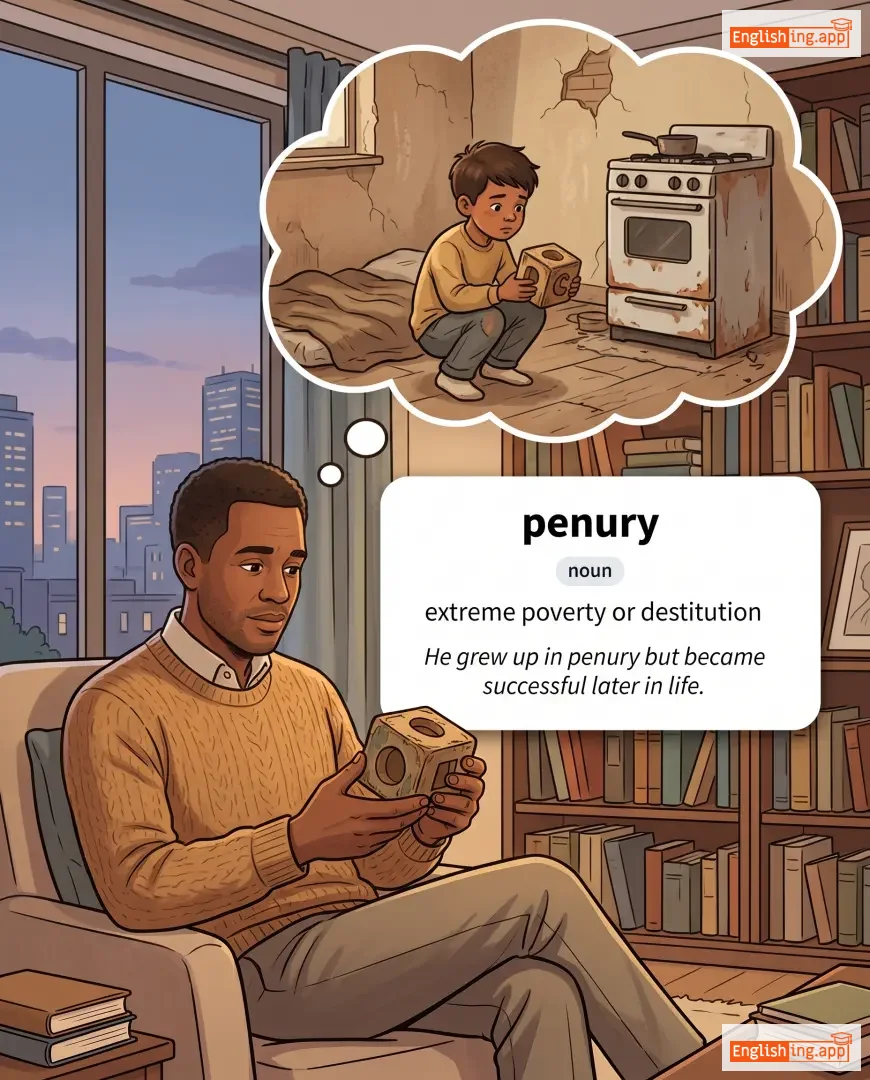
penury definition card — visual illustration of the meaning
noun C2
/ˈpɛnjʊri/
極貧 (kyokuhin)

extreme poverty or destitution

"He grew up in penury but became successful later in life."

"彼は貧困の中で育ちましたが、その後、人生で成功しました。" (Kare wa hinkon no naka de sodachimashita ga, sono ato, jinsei de seikō shimashita.)
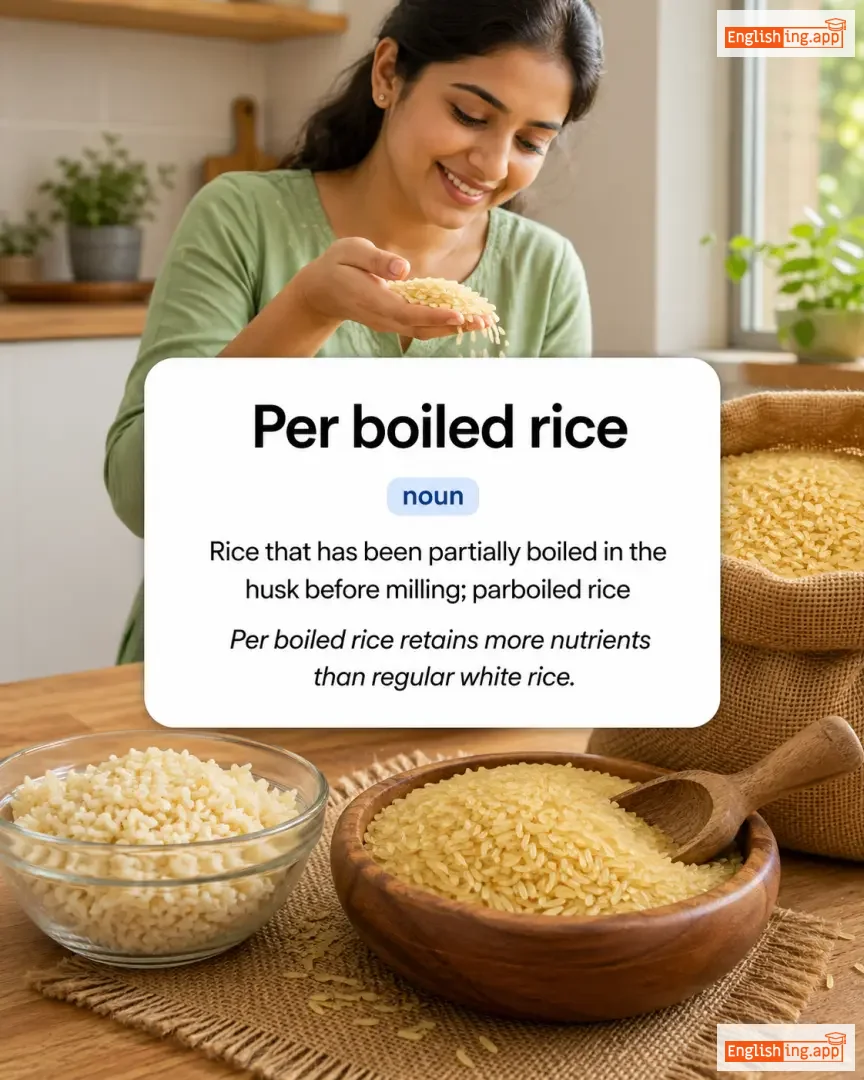
Per boiled rice definition card — visual illustration of the meaning
noun C2
/pɜːr bɔɪld raɪs/
パーボイルドライス (pāboirudo raisu)

Rice that has been partially boiled in the husk before milling; parboiled rice

"Per boiled rice retains more nutrients than regular white rice."

"パーボイルドライスは通常の白い米よりも多くの栄養素を保持します。" (Pāboirudo raisu wa tsūjō no shiroi kome yori mo ōku no eiyōso o hoji shimasu.)
verb C2
/pəˈræmbjʊˌleɪt/
散歩する (sanpo suru)

To walk through or travel around, especially for leisure.

"They perambulated the old town, enjoying the sights."

"彼らは古い町を散歩し、景色を楽しんでいました。" (Karera wa furui machi wo sanpo shi, keshiki wo tanoshinde imashita.)
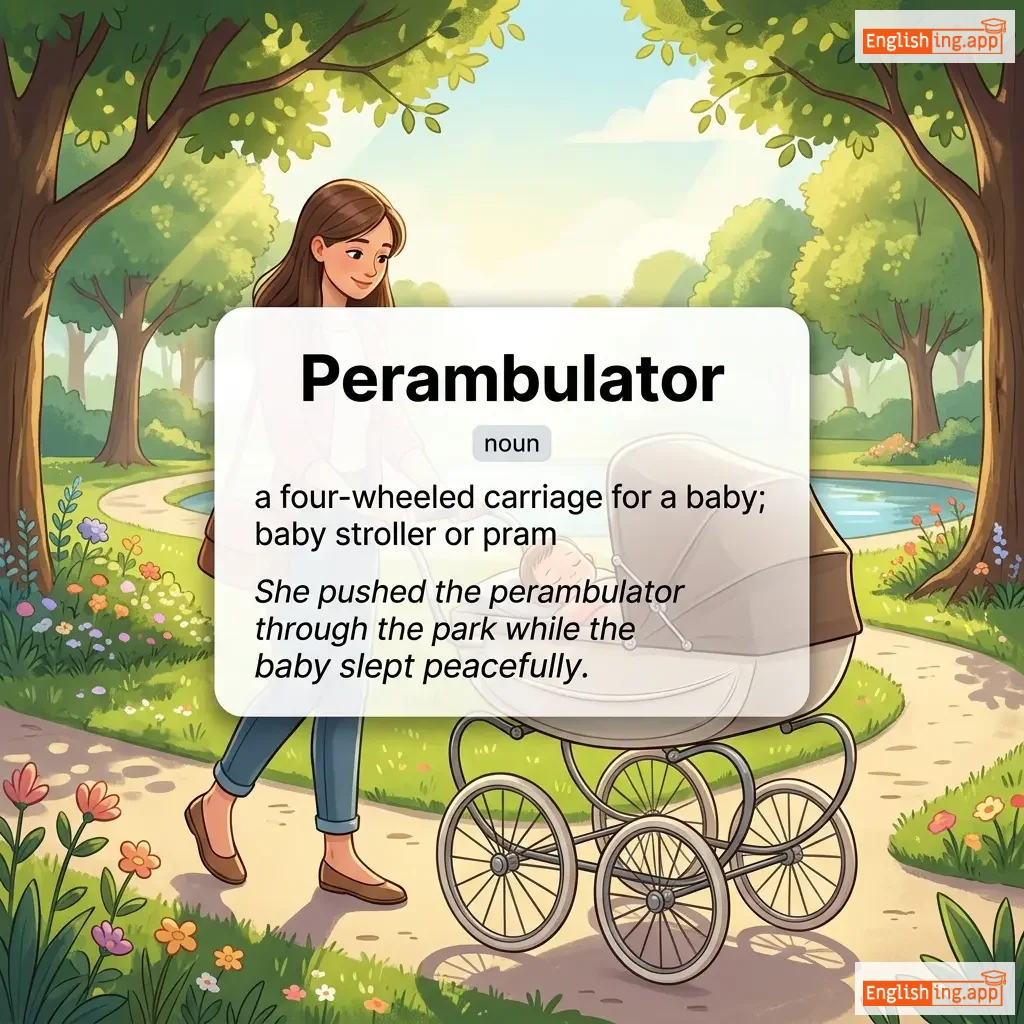
Perambulator definition card — visual illustration of the meaning
noun C2
/pəˈræm.bjə.leɪ.tər/
ベビーカー (perambulator)

a four-wheeled carriage for a baby; baby stroller or pram

"She pushed the perambulator through the park while the baby slept peacefully."

"彼女は公園を通り抜けながら、赤ちゃんが静かに寝ている間にペランブレータを押していました。" (Kanojo wa kōen o tōri-nuke nagara, akachan ga shizuka ni nete iru aida ni perambureta o oshite imashita.)
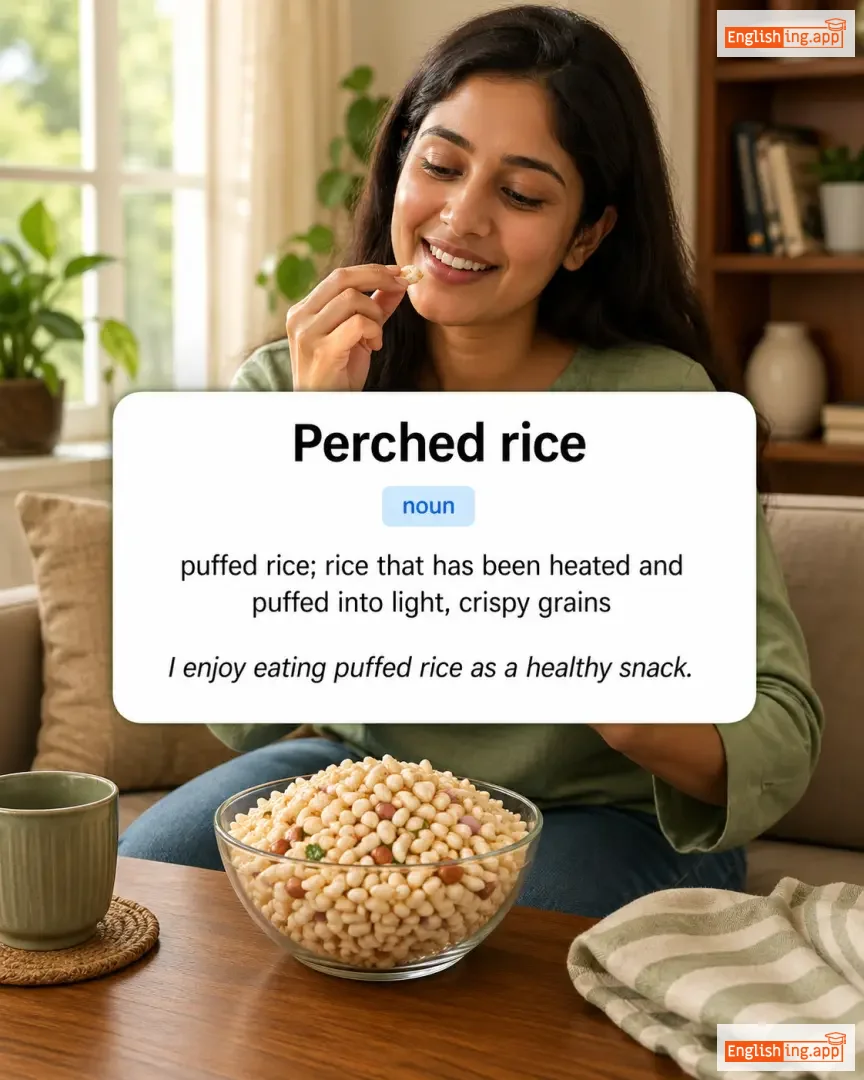
Perched rice definition card — visual illustration of the meaning
noun C2
/pɜːrtʃt raɪs/
膨らんだご飯 (fukuranda gohan)

puffed rice; rice that has been heated and puffed into light, crispy grains

"I enjoy eating puffed rice as a healthy snack."

"私は健康的なおやつとして膨らんだご飯を食べるのが好きです。" (Watashi wa kenko-teki na oyatsu to shite fukuranda gohan o taberu no ga suki desu)
noun C2
/pərˈsɪpiəns/
洞察力 (dousatsuryoku)

The ability to perceive, understand, or notice things quickly.

"His percipience in reading people made him a great negotiator."

"人々を読む彼の洞察力は、彼を素晴らしい交渉者にしました。" (Hitobito o yomu kare no dousatsuryoku wa, kare o subarashii koushousha ni shimashita.)
adjective C2
/pərˈsɪpiənt/
鋭い洞察力を持つ (surudoi dōsatsuryoku o motsu)

Having good understanding or insight; able to perceive things clearly.

"As a percipient critic, she recognized the deeper meaning of the play."

"鋭い洞察力を持つ批評家として、彼女は劇の深い意味を認識しました。" (Surudoi dōsatsuryoku o motsu hihyōka toshite, kanojo wa geki no fukai imi o ninshiki shimashita.)
noun C2
/pərˈdɪʃən/
幸福 (kōfuku)

A state of eternal spiritual ruin, often referring to hell or damnation.

"The preacher warned that greed would lead to perdition."

"彼女は賞を受け取ったとき、自分の幸福を隠すことができなかった。" (Kanojo wa shō o uketotta toki, jibun no kōfuku o kakusu koto ga dekinakatta.)
verb C2
/ˈpɛrəɡrɪˌneɪt/
幸福 (kōfuku)

To travel or wander from place to place.

"He loved to peregrinate across the countryside during summer."

"彼女は賞を受け取ったとき、自分の幸福を隠せませんでした。" (Kanojo wa shō o uketotta toki, jibun no kōfuku o kakusemasen deshita.)
noun C2
/ˌpɛrəɡrɪˈneɪʃən/
(tabi)

A long journey or wandering, especially on foot.

"Their peregrination across Asia lasted two years."

"彼らのアジア横断の旅は2年間続いた。" (Karera no Ajia ōdan no tabi wa 2-nenkan tsuzita.)
adjective C2
/pəˈrɛmptəri/
強制的な (kyōseitekina)

Insisting on immediate attention or obedience, especially in a commanding way.

"The officer gave a peremptory order to evacuate the building."

"その警官は建物を避難させるために強制的な命令を出した。" (Sono keikan wa tatemono o hinansaseru tame ni kyōseitekina meirei o dashita.)
adjective C2
/pərˈfɛktəbl/
完璧にできる (kanpeki ni dekiru)

capable of being made perfect or improved

"Human nature is imperfect but perfectible."

"人間の本性は不完全だが、完璧にできる。" (Ningen no honsei wa fukanzen da ga, kanpeki ni dekiru.)
adjective C2
/pərˈfɜrvɪd/
非常に熱心な (hijō ni nesshin na)

intensely passionate or fervent

"She gave a perfervid speech in defense of human rights."

"彼女は人権擁護のために非常に熱心なスピーチをしました。" (Kanojo wa jinken yōgo no tame ni hijō ni nesshin na supīchi o shimashita.)
adjective C2
/pərˈfɪdiəs/
裏切りの (uragiri no)

deceitful and untrustworthy

"The spy was executed for his perfidious actions."

"スパイは裏切りの行動で処刑されました。" (Supai wa uragiri no kōdō de shokei sare mashita.)
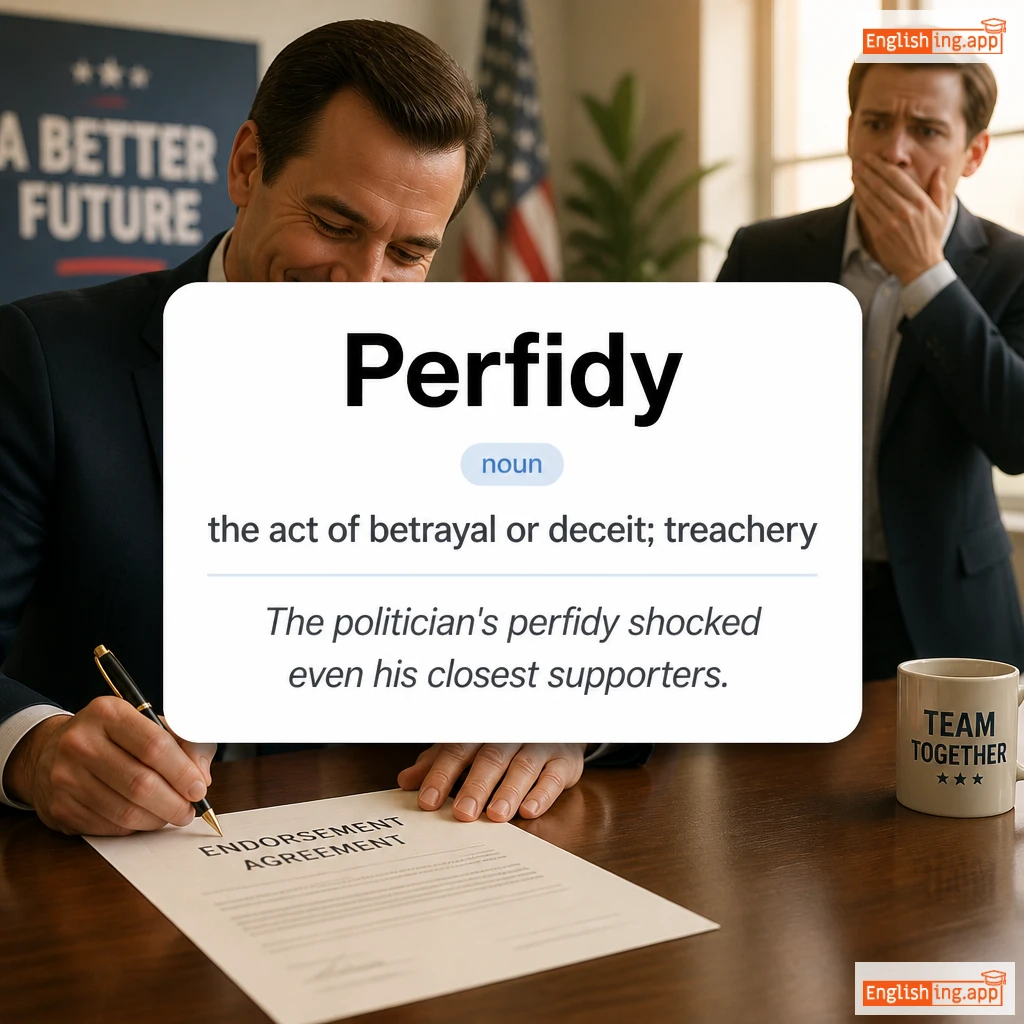
Perfidy definition card — visual illustration of the meaning
noun C2
/ˈpɜrfɪdi/
裏切り (uragiri)

the act of betrayal or deceit; treachery

"The politician's perfidy shocked even his closest supporters."

"その政治家の裏切りは、最も近い支持者たちをも驚かせました。" (Sono seijika no uragiri wa, mottomo chikai shiji-sha-tachi o mo odorokasemashita.)