वोकैबुलरीज

इंग्लिश वोकैबुलरी डिस्कवर, लर्न और मास्टर करें

adjective C2
/məˈnaɪəkəl/
狂热 (kuángrè)

behaving like a maniac; showing excessive enthusiasm or madness

"He gave a maniacal laugh during the movie."

"他在电影中发出了狂热的笑声。" (Tā zài diànyǐng zhōng fāchūle kuángrè de xiàoshēng.)
adjective C2
/ˈmæn.laɪk/
男性化 (nánxìnghuà)

Having qualities or characteristics traditionally associated with a man; manly.

"His manlike courage impressed everyone in the village."

"他的男性化勇气给村里的人们留下了深刻的印象。" (Tā de nánxìnghuà yǒngqì gěi cūn lǐ de rénmen liú xiàle shēnkè de yìnxiàng.)
noun C2
/ˈmæn.li.nəs/
男子气概 (nánzǐ qìgài)

The quality of being manly; courage, strength, and honor associated with men.

"His manliness was admired by his peers."

"他的男子气概得到了同伴们的赞赏。" (tā de nánzǐ qìgài dédàole tóngbàn men de zànshǎng.)
noun C2
/ˈmæntl̩/
壁炉上的架子 (bìlú shàng de jiàzi)

A shelf above a fireplace, often used for decoration.

"She placed family photos on the mantel above the fireplace."

"她把家庭照片放在壁炉上的架子上。" (Tā bǎ jiātíng zhàopiàn fàng zài bìlú shàng de jiàzi shàng.)
noun C2
/ˌmænjəˈmɪʃən/
奴隶解放 (nuli jiefang)

The act of a slave owner freeing their slaves.

"The manumission of the slaves marked a turning point in history."

"奴隶的解放标志着历史的转折点。" (Nuli de jiefang biaozhi zhe lishi de zhuanzhe dian.)
verb C2
/ˌmæn.juˈmɪt/
释放奴隶 (shifang nuli)

to release from slavery or servitude; to set free

"The landowner decided to manumit his slaves."

"土地所有者决定释放他的奴隶。" (Tudi suoyouzhe jueding shifang tade nuli.)
verb C2
/məˈrɔːd/
掠夺 (lüè duó)

to roam in search of things to steal or attack

"The bandits marauded through the village at night."

"盗贼们在夜间袭击了村庄。" (Dàozéi men zài yèjiān xíjī le cūnzhuāng.)
noun C2
/məˈrɔː.dər/
掠夺者 (lüèduó zhě)

a person who roams around in search of things to steal or people to attack

"Villagers feared the marauders who raided their homes."

"村民们害怕那些袭击他们房屋的掠夺者。" (Cūnmín men hàipà nàxiē xíjī tāmen fángwū de lüèduó zhě.)
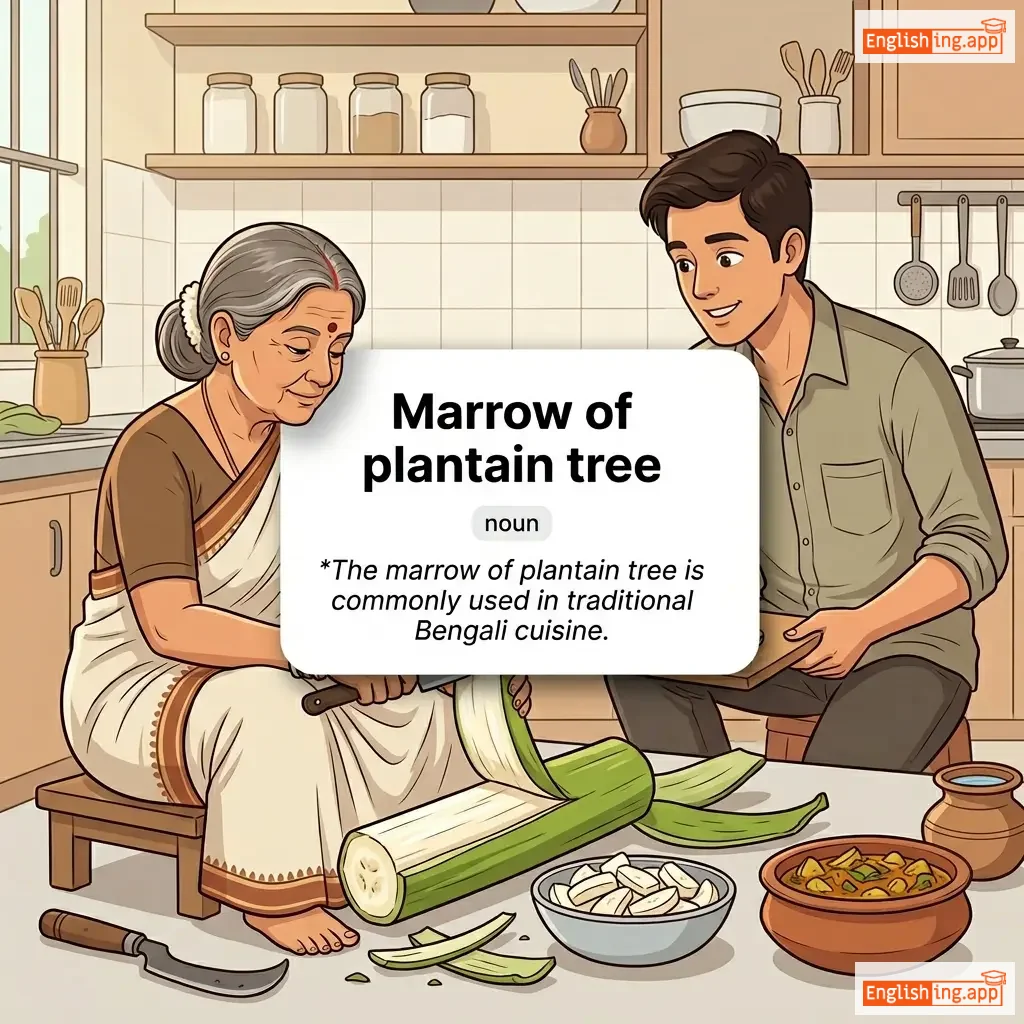
Marrow of plantain tree definition card — visual illustration of the meaning
noun C2
/ˈmær.oʊ ʌv ˈplæn.tɪn triː/
香蕉树髓 (xiangjiao shu sui)

the soft inner part of the banana plant stem that is used as a vegetable in cooking

"The marrow of plantain tree is commonly used in traditional Bengali cuisine."

"香蕉树的髓质常用于传统的孟加拉菜肴中。" (Xiangjiao shu de suizhi chang yongyu chuantong de Mengjiala caiyao zhong.)
noun C2
/ˌmɑːrtəˈnɛt/
严格的纪律管理员 (yángé de jìlǜ guǎnlǐ yuán)

A strict disciplinarian who demands rigid adherence to rules.

"The new manager was such a martinet that even minor infractions were punished."

"新经理如此严格,以至于即使是小的违章行为也会受到惩罚。" (Xīn jīnglǐ rúcǐ yángé, yǐzhì jíshǐ shì xiǎo de wéizhāng xíngwéi yě huì shòudào chéngfá.)
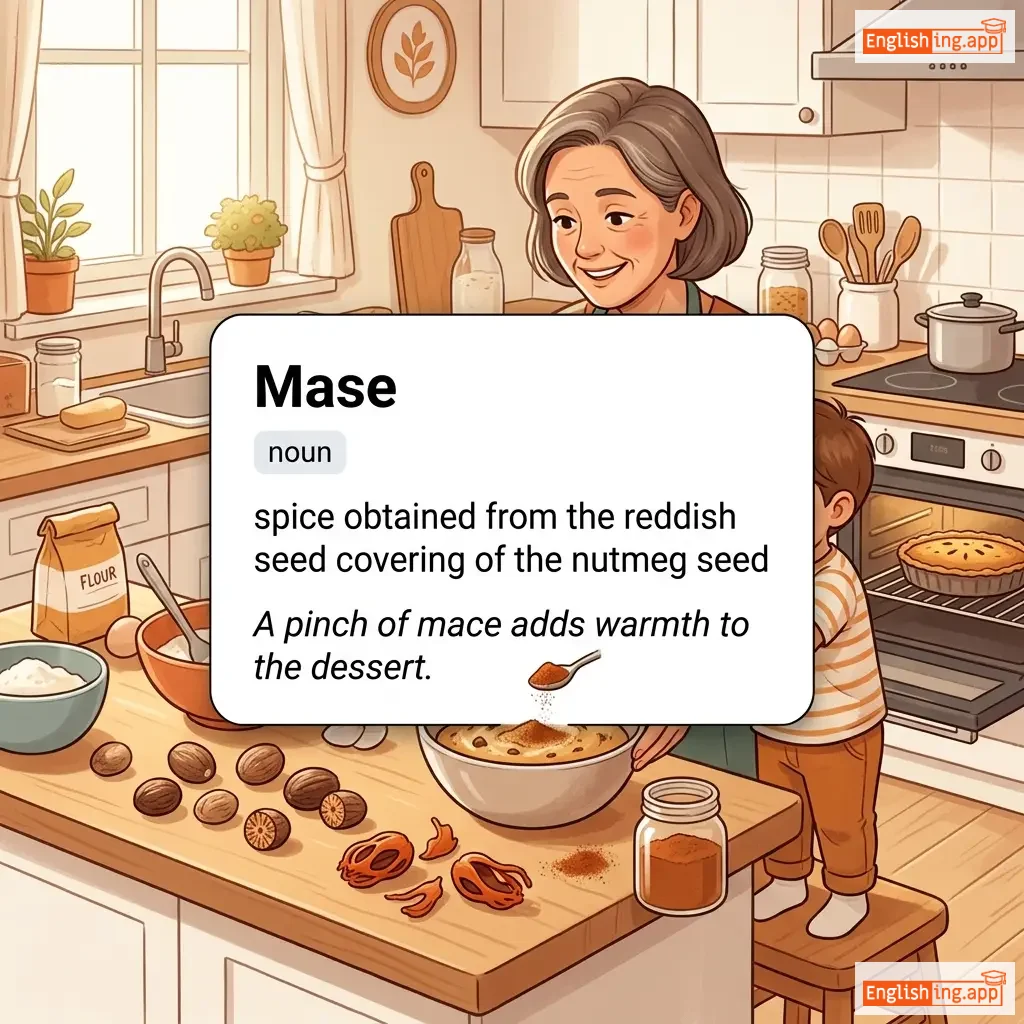
Mase definition card — visual illustration of the meaning
noun C2
/meɪs/
肉豆蔻花 (ròu dòu kòu huā)

spice obtained from the reddish seed covering of the nutmeg seed

"A pinch of mace adds warmth to the dessert."

"一撮肉豆蔻花加热了甜点。" (Yī cuō ròu dòu kòu huā jiārèle tiándiǎn.)
noun C2
/ˈmæsəkɪst/
受虐狂 (shòu nùe kuáng)

a person who derives pleasure from their own pain or humiliation

"He was called a masochist for enjoying tough challenges."

"他因享受艰难挑战而被称为受虐狂。" (Tā yīn xiǎngshòu jiānnán tiǎozhàn ér bèi chēng wèi shòu nùe kuáng.)
noun C2
/ˌmæskəˈreɪd/
一场人们佩戴面具和服装的聚会 (yī chǎng rénmen pèidài miànjù hé fúzhuāng de jùhuì)

a party or gathering where people wear masks and costumes; a false outward show

"The charity event was held as a grand masquerade."

"慈善活动作为一场盛大的 masquerade 举行。" (Císhàn huódòng zuòwéi yī chǎng shèngdà de masquerade jǔxíng.)
verb C2
/ˈmæstɪkeɪt/
咀嚼 (zuǐjué)

to chew food thoroughly before swallowing

"He slowly masticated the bread before swallowing."

"他在吞咽之前慢慢嚼着面包。" (Tā zài tūn yàn zhī qián màn man jiáo zhe miànbāo.)
noun C2
/ˈmætrɪˌsaɪd/
弑母 (shimumu)

The act of killing one's own mother.

"The crime of matricide shocked the entire town."

"弑母罪震惊了整个城市。" (Shimumu zui zhenjing le zhengge chengshi.)
verb C2
/məˈtrɪkjʊˌleɪt/

To enroll as a student in a college or university.

"She matriculated at Oxford University last year."

adjective C2
/ˈmɔːdlɪn/
过于伤感 (guòyú shānggǎn)

Overly sentimental, often tearfully or weakly emotional.

"He became maudlin after a few drinks."

"他喝了几杯后变得情绪化。" (Tā hē le jǐ bēi hòu biàn dé qíngxù huà.)
verb C2
/ˈmɔːndər/
胡言乱语 (hú yán luàn yǔ)

To speak or move aimlessly and incoherently.

"He maundered on about his old memories."

"他漫无目的地谈论着他的旧记忆。" (Tā màn wú mù dì de tán lùn zhe tā de jiù jì yì.)
noun C2
/ˌmɔːzəˈliːəm/
陵墓 (lingmu)

A large stately building that houses a tomb or several tombs.

"The king was buried in a grand mausoleum."

"国王被埋葬在一座宏伟的陵墓中。" (Guówáng bèi mǎizàng zài yī zuò hóngwěi de língmù zhōng.)
🧑‍🏫

maven (梅文)

noun C2
/ˈmeɪvən/
专家 (zhuānjiā)

an expert or connoisseur in a particular field

"He is a tech maven who always knows the latest trends."

"他是一个科技领域的专家,总是知道最新的趋势。" (Tā shì yīgè kējì lǐngyù de zhuānjiā, zǒng shì zhīdào zuìxīn de qūshì.)
adjective C2
/ˈmɔːkɪʃ/
过于伤感 (guòyú shānggǎn)

excessively sentimental, often to the point of being sickly

"The movie was criticized for its mawkish sentimentality."

"电影因过于伤感的情感而受到批评。" (Diànyǐng yīn guòyú shānggǎn de qínggǎn ér shòudào pīpíng.)
noun C2
/miːd/
蜂蜜酒 (fēngmì jiǔ)

An alcoholic drink made from fermented honey and water.

"The Vikings were known to drink large amounts of mead during feasts."

"维京人以在宴会上喝大量的蜂蜜酒而闻名。" (Wéijīngrén yǐ zài yànhuì shàng hē dàliàng de fēngmì jiǔ ér wénmíng.)
adjective C2
/ˈmiːli ˌmaʊðd/
虚伪的 (xūwěi de)

Unwilling to speak directly and honestly; insincere or evasive in speech.

"The manager gave a mealy-mouthed excuse instead of admitting the mistake."

"经理给出了一个虚伪的借口,而不是承认错误。" (Jīnglǐ gěi chūle yīgè xūwěi de jièkǒu, ér bùshì chéngrèn cuòwù.)
adjective C2
/ˈmiːliˌmaʊðd/
含糊其辞 (hán hú qí cí)

not willing to speak directly and honestly; evasive in speech

"The politician gave a mealymouthed response to the tough question."

"那位政治家对这个难题的回答含糊其辞。" (Nà wèi zhèngzhìjiā duì zhège nántí de huídá hán hú qí cí.)
adjective C2
/ˈmiːzli/
微不足道 (wēi bù zú dào)

contemptibly small or insignificant

"He was paid a measly sum for the hard work."

"他为辛苦的工作得到了微不足道的报酬。" (Tā wèi xīnkǔ de gōngzuò dédàole wēi bù zú dào de bào chóu.)
noun C2
/məˈdæliən/
奖章 (jiangzhang)

a large medal or decorative piece, often worn as jewelry or used in architecture

"She wore a gold medallion around her neck."

"她戴着一个金色的奖章在脖子上。" (Tā dàizhe yīgè jīnsè de jiǎngzhāng zài bózi shàng.)
adjective C2
/ˈmɛdəlsəm/
爱干涉他人事务的人 (ài gānshè tārén shìwù de rén)

fond of interfering in other people’s affairs

"She found her neighbor to be meddlesome and annoying."

"她发现她的邻居爱干涉他人事务且令人烦恼。" (Tā fāxiàn tā de línjū ài gānshè tārén shìwù qiě lìng rén fánnǎo.)
adjective C2
/ˈmiː.di.əl/
内侧 (nèi cè)

Situated in or pertaining to the middle; located toward the midline of the body or structure.

"The medial side of the knee is more prone to injury."

"膝盖的内侧更容易受伤。" (xīgài de nèi cè gèng róngyì shòushāng.)
mediative definition card — visual illustration of the meaning
adjective C2
/ˈmiː.di.eɪ.tɪv/
与调解相关 (yǔ tiáojiě xiāngguān)

Related to mediation, helping to resolve conflicts through diplomatic means.

"His mediative skills helped resolve the conflict."

"他的调解技巧帮助解决了冲突。" (Tā de tiáojiě jìqiǎo bāngzhù jiějué le chōngtú.)
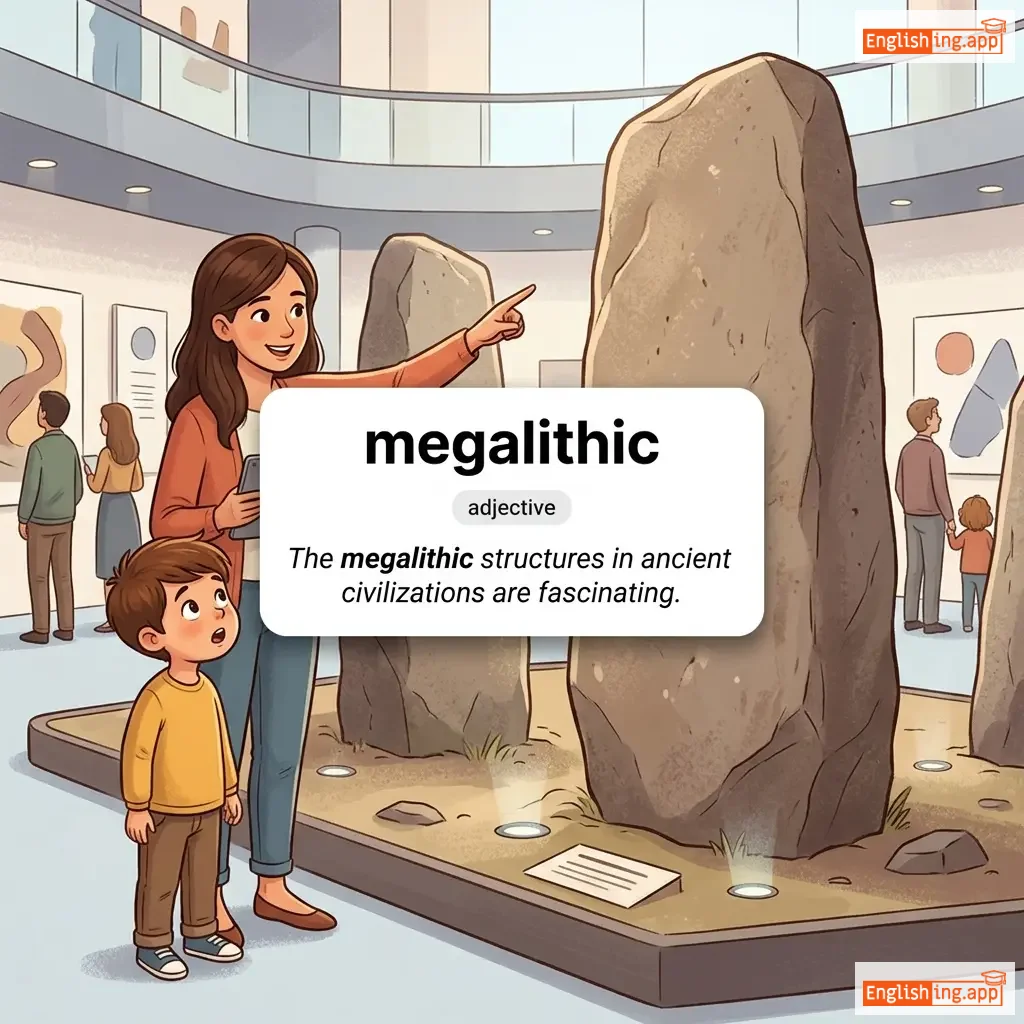
megalithic definition card — visual illustration of the meaning
adjective C2
ˌmɛɡəˈlɪθɪk
巨石 (jushi)

Relating to or denoting prehistoric monuments made of or containing large stones.

"The megalithic structures in ancient civilizations are fascinating."

"古代文明中的巨石结构令人着迷。" (Gudai wenming zhong de jushi jiegou lingren zhamimi.)
megalomania definition card — visual illustration of the meaning
noun C2
/ˌmɛɡələˈmeɪniə/
对权力、财富或万能的妄想 (duì quánlì, cáifù huò wànnéng de wàngxiǎng)

A condition characterized by delusional fantasies of power, wealth, or omnipotence.

"The dictator’s megalomania led him to believe he was invincible."

"独裁者的极端自恋狂使他相信自己无敌。" (Dúcáizhě de jíduān zìliàn kuáng shǐ tā xiāngxìn zìjǐ wúdí.)
noun C2
/meɪˈlɑːnʒ/
混合 (hunhe)

A mixture of different things or styles.

"The festival offered a melange of music, food, and art."

"这个节日提供了音乐、食物和艺术的混合。" (Zhège jiérì tígōngle yīnyuè, shíwù hé yìshù de hùn hé.)
noun C2
/ˈmeɪleɪ/
混乱的打斗 (hunluan de dadou)

A noisy, confused fight or crowd situation.

"A melee broke out during the football match."

"在足球比赛中爆发了一场混乱的打斗。" (Zai zuqiu bisai zhong baofa le yi chang hunluan de dadou.)
verb C2
/ˈmiːliəˌreɪt/
改善 (gǎishàn)

To make something better or improve a condition.

"The new policies aim to meliorate the living conditions of the poor."

"新的政策旨在改善穷人的生活条件。" (Xīn de zhèngcè zhǐ zài gǎishàn qióngrén de shēnghuó tiáojiàn.)
noun C2
/ˈmiːliərɪzəm/
改善主义 (gaishan zhuyi)

The belief that the world tends to improve and that humans can aid its betterment.

"Her philosophy of meliorism kept her hopeful during difficult times."

"她的改善主义哲学让她在艰难时刻保持希望。" (tā de gǎishàn zhǔyì zhéxué ràng tā zài jiānnán shíkè bǎochí xīwàng.)
adjective C2
/məˈlɪfluəs/
甜美的 (tiánměi de)

Sweet or musical; pleasant to hear.

"The singer’s mellifluous voice enchanted the audience."

"歌手那甜美的声音迷住了观众。" (Gēshǒu nà tiánměi de shēngyīn mí zhùle guānzhòng.)
verb C2
/məˈmɔːriəlaɪz/
纪念 (jinian)

to preserve the memory of a person or event, often through a ceremony, monument, or record

"The city decided to memorialize the hero with a statue in the central square."

"城市决定通过在中央广场立一座雕像来纪念英雄。" (Chengshi jueding tongguo zai zhongyang guangchang li yi zuo diaoxiang lai jinian yingxiong.)
noun C2
/məˈnæʒəri/
野生动物收藏 (yěshēng dòngwù shōucáng)

a collection of wild animals kept for exhibition; a diverse or strange group of people or things

"The circus had a menagerie of exotic animals."

"马戏团里有一群异国情调的动物。" (Mǎxìtuán lǐ yǒu yīqún yìguó qíngdiào de dòngwù.)
mendacious definition card — visual illustration of the meaning
adjective C2
/mɛnˈdeɪʃəs/
虚伪的 (xūwěi de)

not telling the truth; lying

"The politician was known for his mendacious statements."

"那位政治家以他的虚伪言论而闻名。" (Nà wèi zhèngzhìjiā yǐ tā de xūwěi yánlùn ér wénmíng.)
noun C2
/mɛnˈdæsəti/
虚伪 (xūwěi)

the tendency to be untruthful; dishonesty

"The journalist exposed the mendacity of the officials."

"记者揭露了官员的虚伪。" (Jìzhě jiēlùle guānyuán de xūwěi.)
noun C2
/ˈmɛndɪkənt/
乞丐 (qǐgài)

a beggar; a person who lives by asking for alms

"The mendicant asked for food at the monastery gate."

"乞丐在修道院门口乞求食物。" (Qǐgài zài xiūdàoyuàn ménkǒu qǐqiú shíwù.)
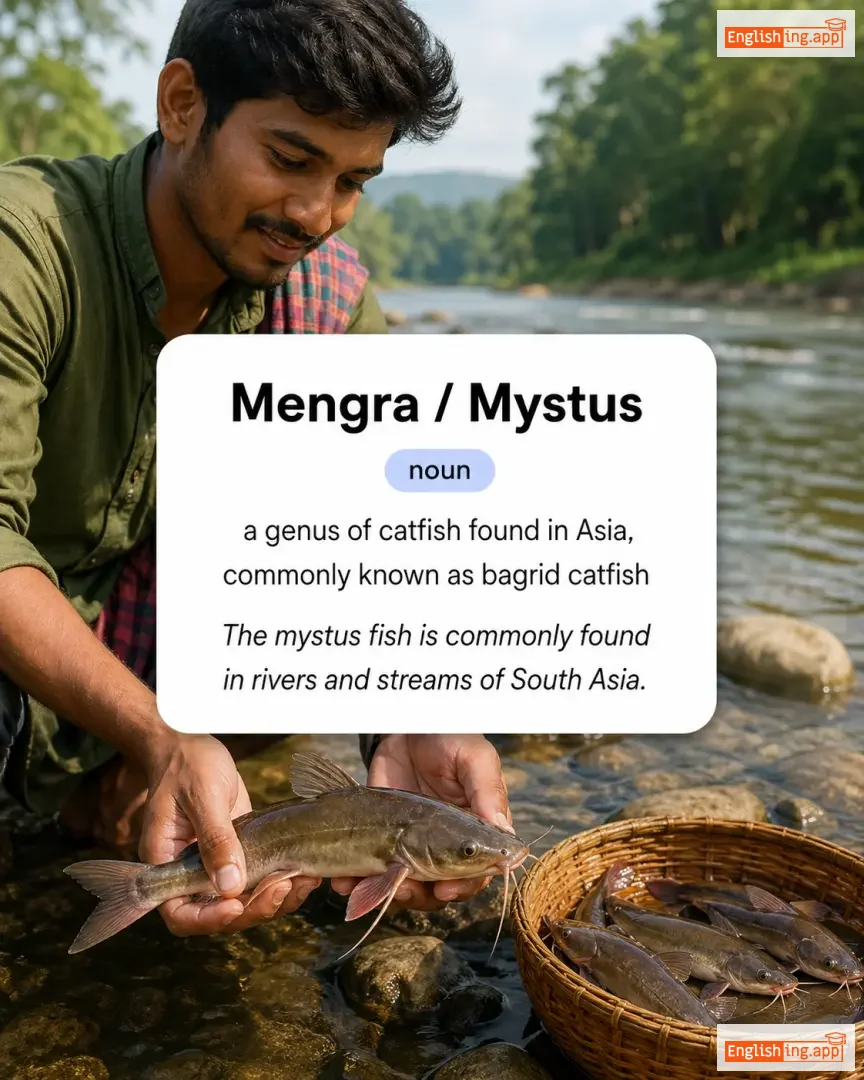
Mengra / Mystus definition card — visual illustration of the meaning
noun C2
/ˈmɪstəs/
鲿鱼属 (chang yu shu)

a genus of catfish found in Asia, commonly known as bagrid catfish

"The mystus fish is commonly found in rivers and streams of South Asia."

"鲿鱼属鱼常见于南亚的河流和溪流中。" (chang yu shu yu chang jian yu nan ya de he liu he xi liu zhong)
menial definition card — visual illustration of the meaning
adjective C2
/ˈmiːniəl/
微不足道的任务 (wēi bù zú dào de rènwù)

lowly and sometimes degrading; related to unskilled or routine tasks

"He worked long hours doing menial tasks in the factory."

"他在工厂里做着微不足道的任务,工作了很长时间。" (Tā zài gōngchǎng lǐ zuòzhe wēi bù zú dào de rènwù, gōngzuò le hěn cháng shíjiān.)
adjective C2
/ˈmɜːrkəntaɪl/
商业的 (shāngyè de)

related to trade or commerce

"The city grew rapidly due to its mercantile activities."

"由于其商业活动,这座城市迅速发展。" (Yóuyú qí shāngyè huódòng, zhè zuò chéngshì xùnsù fāzhǎn.)
adjective C2
/mɜːrˈkjʊriəl/
善变的 (shànbiàn de)

subject to sudden or unpredictable changes of mood or mind.

"She is known for her mercurial temperament."

"她以其善变的脾气而闻名。" (Tā yǐ qí shànbiàn de píqì ér wénmíng.)
meretricious definition card — visual illustration of the meaning
adjective C2
/ˌmɛrəˈtrɪʃəs/
华而不实 (hua er bu shi)

apparently attractive but having no real value or integrity.

"The design was flashy but meretricious."

"设计华丽但华而不实。" (Shèjì huálì dàn huā ér bù shí.)
noun C2
/ˈmeɪsə/
台地 (tái dì)

An isolated flat-topped hill with steep sides, found in arid regions.

"The hikers stopped to admire the mesa rising above the desert floor."

"远足者停下来欣赏那座高出沙漠地面的梅萨。" (Yuǎnzú zhě tíng xiàlái xīnshǎng nà zuò gāo chū shāmò dìmiàn de méi sà.)
noun C2
/ˈmɛzməˌrɪzəm/
催眠术 (cuīmián shù)

A state of fascination or hypnotism.

"The magician held the audience in a state of mesmerism."

"魔术师让观众处于催眠状态。" (Móshùshī ràng guānzhòng chǔ yú cuīmián zhuàngtài.)
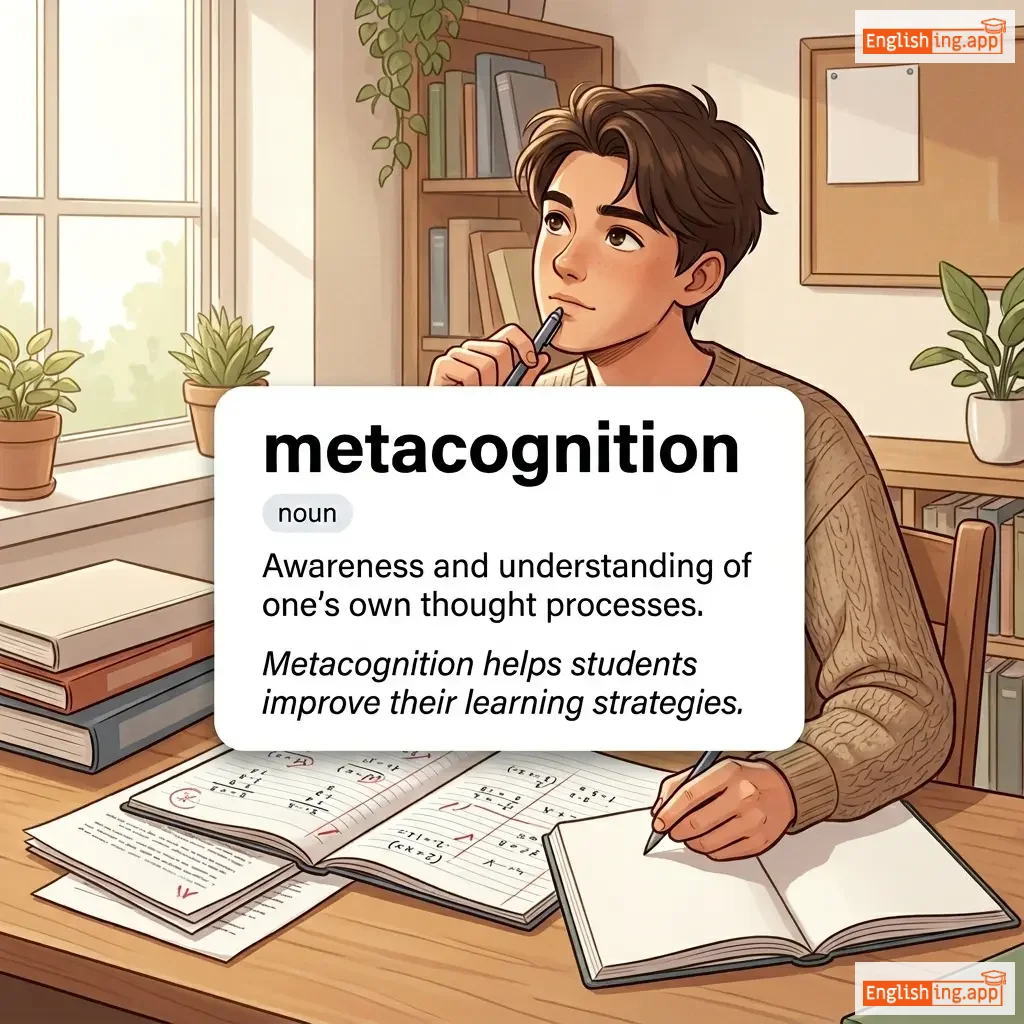
metacognition definition card — visual illustration of the meaning
noun C2
ˌmɛt.ə.kɒɡˈnɪʃ.ən
元认知 (yuán rènzhī)

Awareness and understanding of one's own thought processes.

"Metacognition helps students improve their learning strategies."

"元认知帮助学生改进他们的学习策略。" (Yuan renzhi bangzhu xuesheng gaijin tamen de xuexi zhanlue.)
adjective C2
/ˌmɛtəˈlɜrdʒɪkəl/
冶金的 (ye jin de)

Relating to metallurgy or the branch of science concerned with the properties of metals and their production.

"He studied metallurgical engineering at the university."

"他在大学学习了冶金工程。" (ta zai da xue xue xi le ye jin gong cheng.)