वोकैबुलरीज

इंग्लिश वोकैबुलरी डिस्कवर, लर्न और मास्टर करें

adjective C2
/ˌɪndɪˈvɜːrtɪbəl/

Not able to be turned aside or diverted.

"The judge's indivertible attention was on the case."

verb C2
/ɪnˈdɒktrɪˌneɪt/
灌输 (guànshū)

To teach someone to fully accept a set of beliefs or ideas without question.

"The regime tried to indoctrinate the youth with propaganda."

"该政权试图通过宣传对年轻人进行洗脑。" (Gāi zhèngquán shìtú tōngguò xuānchuán duì niánqīng rén jìnxíng xǐnǎo.)
noun C2
/ˈɪndələns/
懒惰 (lǎn duò)

Avoidance of activity or exertion; laziness.

"His indolence kept him from finishing the project on time."

"他的懒惰使他无法按时完成项目。" (tā de lǎn duò shǐ tā wúfǎ àn shí wánchéng xiàngmù.)
indolent definition card — visual illustration of the meaning
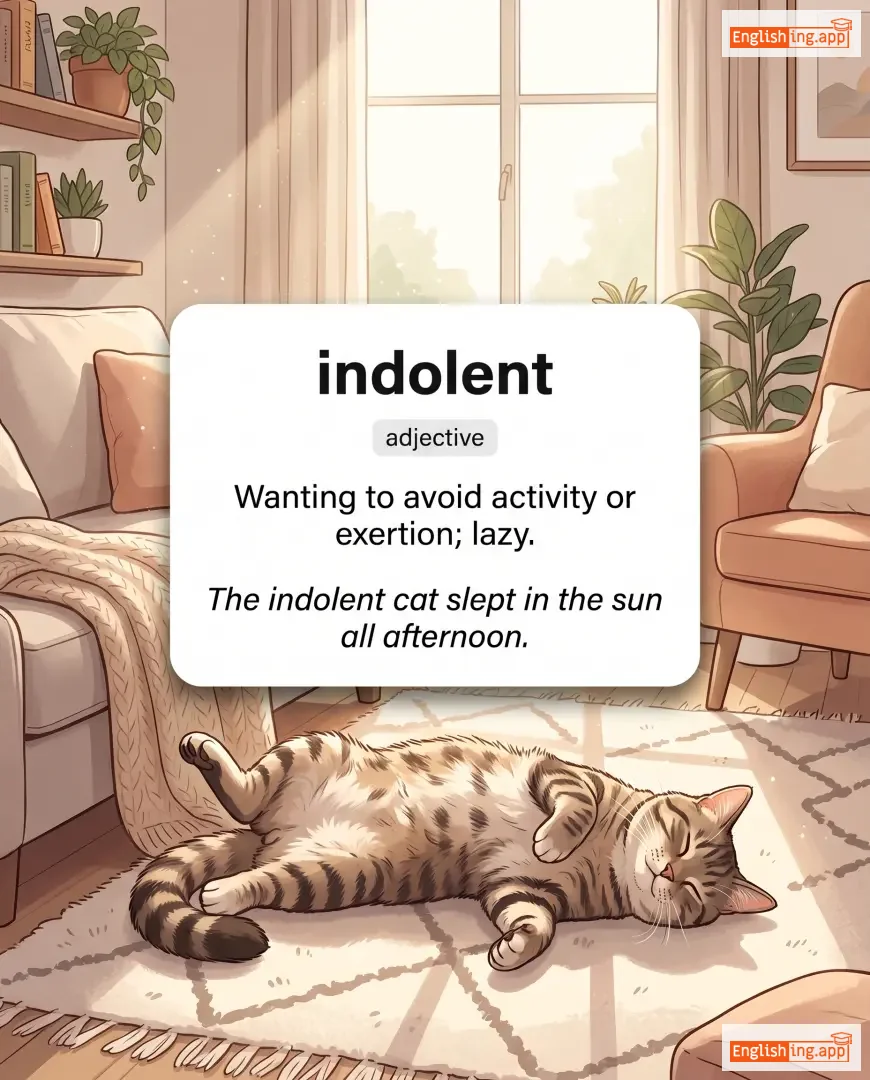
adjective C2
/ˈɪndələnt/
懒惰 (landuo)

Wanting to avoid activity or exertion; lazy.

"The indolent cat slept in the sun all afternoon."

"懒惰的猫整天躺在阳光下睡觉。" (Landuo de mao zheng tian tang zai yangguang xia shuijiao.)
indomitable definition card — visual illustration of the meaning
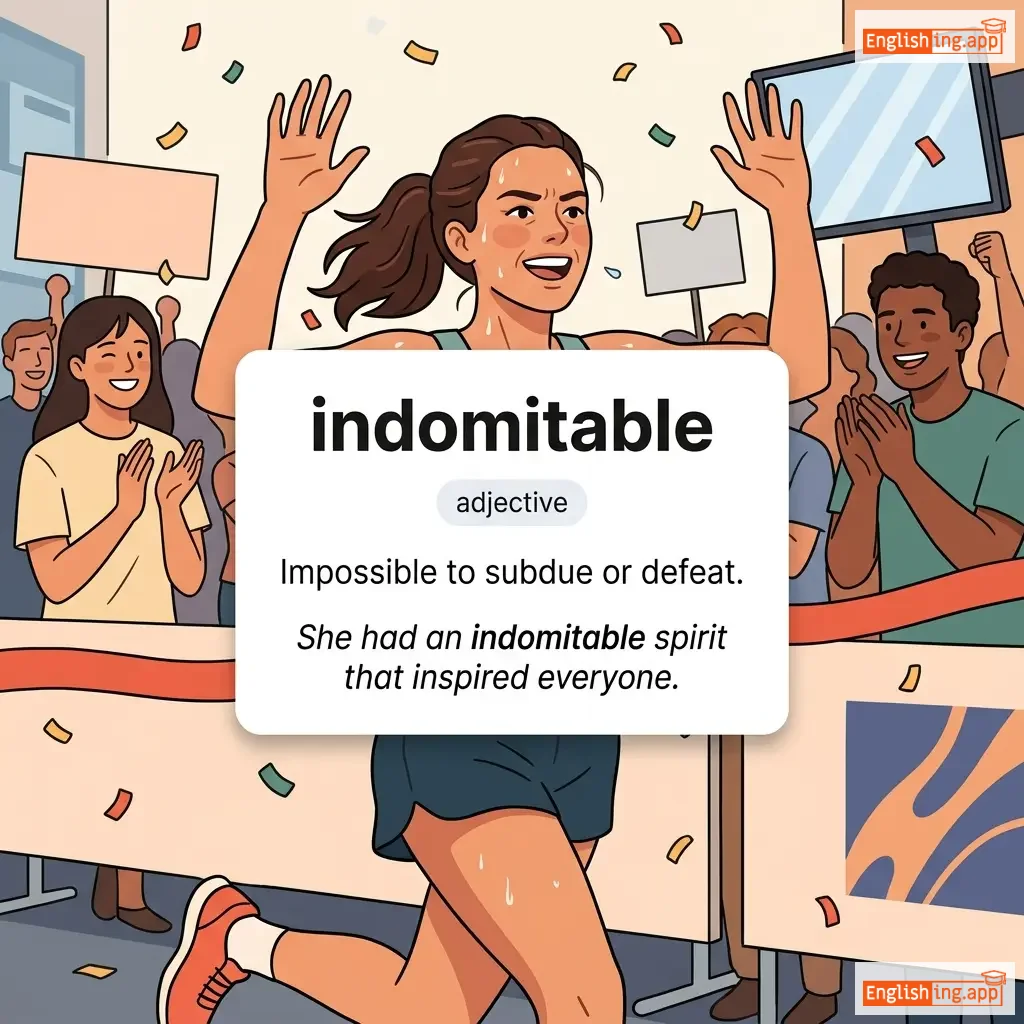
adjective C2
/ɪnˈdɒmɪtəbl/
不可征服的 (bù kě zhēng fú de)

Impossible to subdue or defeat.

"She had an indomitable spirit that inspired everyone."

"她有一种不可征服的精神,激励了每个人。" (Tā yǒu yī zhǒng bù kě zhēng fú de jīngshén, jīlìle měi gèrén.)
adjective C2
/ɪnˈdjuːbɪtəbl/
无可置疑 (wú kě zhì yí)

Impossible to doubt; unquestionable.

"It is indubitable that hard work leads to success."

"毫无疑问,努力工作会带来成功。" (Háo wú yíwèn, nǔlì gōngzuò huì dàilái chénggōng.)
adverb C2
/ɪnˈdjuːbɪtəbli/
无疑 (wú yí)

Without a doubt; certainly.

"She is indubitably the best candidate for the job."

"她无疑是这份工作的最佳候选人。" (Tā wú yí shì zhè fèn gōngzuò de zuì jiā hòuxuǎn rén.)
verb C2
/ˈɪndjʊˌreɪt/
使坚硬 (shǐ jiānyìng)

To harden or make something physically or emotionally tough.

"Years of hardship indurated his spirit."

"多年的艰辛使他的精神变得坚韧。" (duō nián de jiānxīn shǐ tā de jīngshén biàn dé jiānrèn.)
verb C2
/ɪˈniː.bri.eɪt/

to intoxicate; to make someone drunk

"The strong wine was enough to inebriate even the most experienced drinker."

noun C2
/ˌɪn.ɪˈbraɪ.ə.ti/
醉酒 (zuìjiǔ)

the state of being drunk or intoxicated

"His frequent inebriety led to the loss of his job."

"他的频繁醉酒导致了他失去工作。" (Tā de pínfán zuìjiǔ dǎozhìle tā shīqù gōngzuò.)
ineffable definition card — visual illustration of the meaning
adjective C2
/ɪˈnɛf.ə.bəl/
难以言喻 (nán yǐ yán yù)

too great, extreme, or beautiful to be expressed in words

"The beauty of the sunset was ineffable."

"日落的美丽是难以言喻的。" (rì luò de měi lì shì nán yǐ yán yù de.)
inefficacious definition card — visual illustration of the meaning
adjective C2
ˌɪn.ɪ.fɪˈkeɪ.ʃəs
无效 (wuxiao)

Not producing any or the desired effect; ineffective.

"The treatment was inefficacious in curing the disease."

"该治疗对治愈疾病无效。" (Gai zhiliao dui zhiyu jibing wuxiao.)
ineluctable definition card — visual illustration of the meaning
adjective C2
/ˌɪn.ɪˈlʌk.tə.bəl/

Impossible to avoid or escape; inevitable.

"Death is an ineluctable part of human existence."

inequitable definition card — visual illustration of the meaning
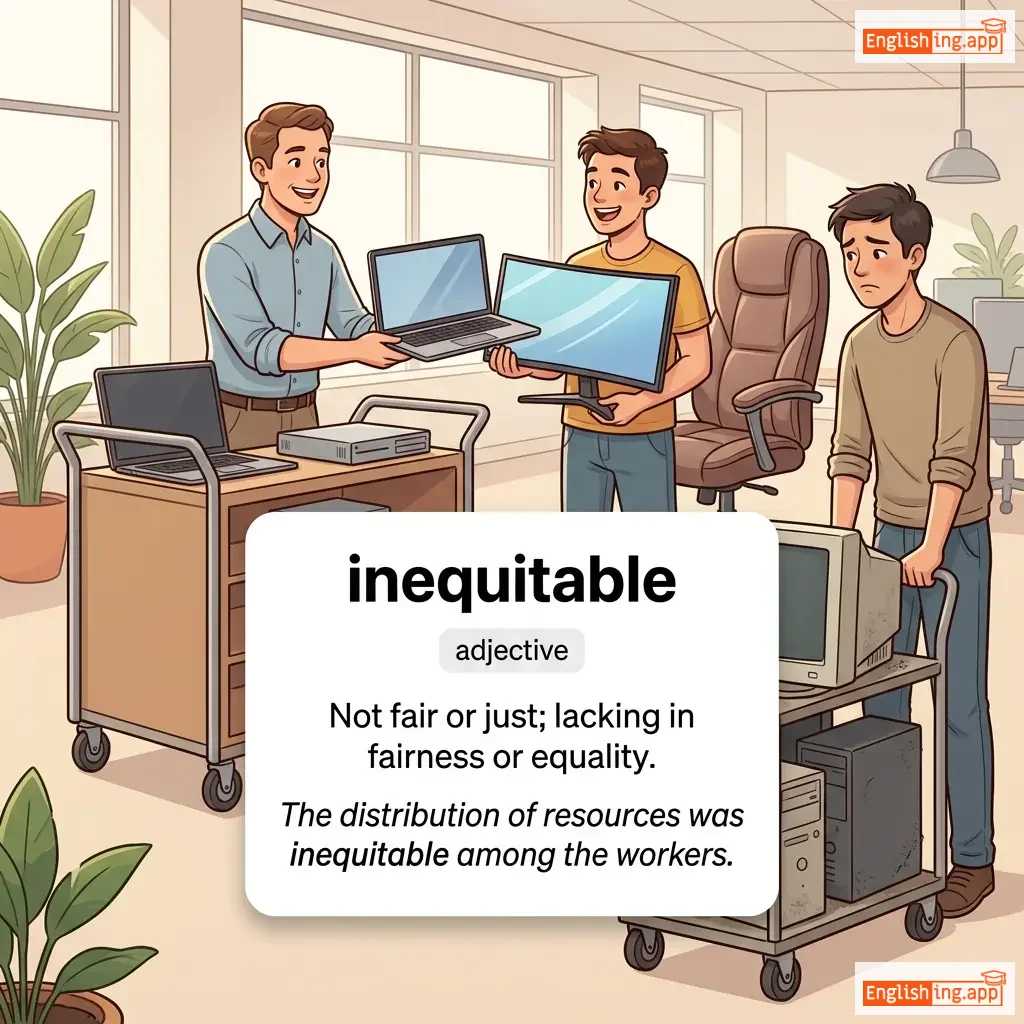
adjective C2
/ɪnˈɛk.wɪ.tə.bəl/
不公平 (bù gōngpíng)

Not fair or just; lacking in fairness or equality.

"The distribution of resources was inequitable among the workers."

"资源的分配在工人之间是不公平的。" (Zīyuán de fēnpèi zài gōngrén zhījiān shì bù gōngpíng de.)
noun C2
/ɪnˈɛrənsi/
无误性 (wú wù xìng)

the belief or quality of being free from error; absolute correctness

"Some religious groups strongly affirm the inerrancy of their sacred texts."

"一些宗教团体强烈坚持他们圣经的无误性。" (Yīxiē zōngjiào tuántǐ qiángliè jiānchí tāmen shèngjīng de wú wù xìng.)
inessential definition card — visual illustration of the meaning
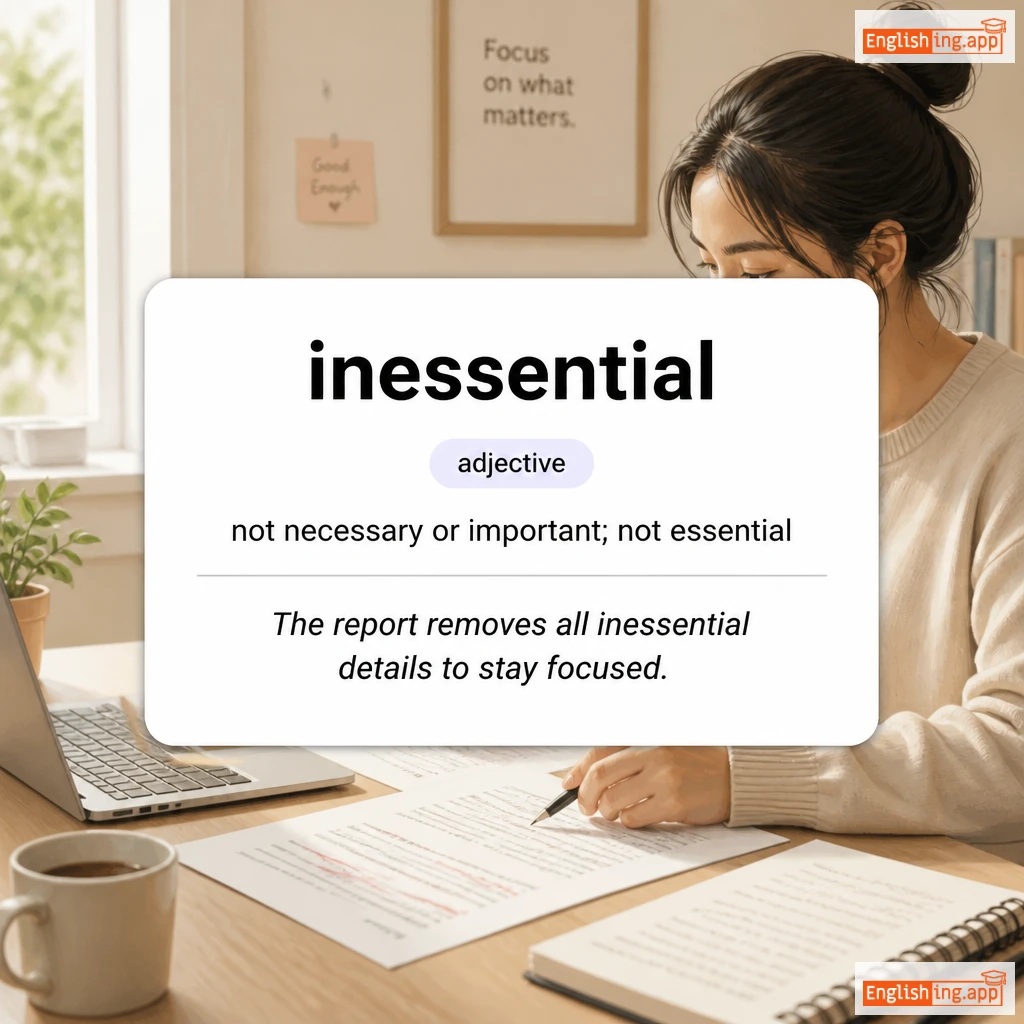
adjective C2
/ˌɪnɪˈsɛnʃəl/
非必要的 (fei biyao de)

not necessary or important; not essential

"The report removes all inessential details to stay focused."

"报告删除了所有非必要的细节以保持重点。" (baogao shanchule suoyou fei biyao de xijie yi baochi zhongdian)
adjective C2
/ɪnˈɛstɪməbl/
无法估量的 (wúfǎ gūliàng de)

Too great or valuable to be measured or estimated.

"Her contribution to the project was of inestimable value."

"她对项目的贡献具有无法估量的价值。" (Tā duì xiàngmù de gòngxiàn jùyǒu wúfǎ gūliàng de jiàzhí.)
adjective C2
/ɪnˈɛksərəbl/
不可阻挡 (bùkě zǔdǎng)

Impossible to stop or prevent; relentless.

"The inexorable rise of technology is changing every aspect of life."

"技术的不可阻挡的崛起正在改变生活的方方面面。" (Jìshù de bùkě zǔdǎng de juéqǐ zhèngzài gǎibiàn shēnghuó de fāngfāngmiànmiàn.)
noun (compound/erroneous entry) C2
/ɪnˈɛksərəbl ɑːrmi/
无法阻挡的军队 (wúfǎ zǔdǎng de jūnduì)

This appears to be a corrupted or concatenated form; interpreted as 'inexorable army' — an unstoppable or relentless force.

"The rebels feared the inexorable army approaching their stronghold."

"叛军害怕即将接近他们堡垒的无法阻挡的军队。" (Pànjūn hàipà jíjiāng jiējìn tāmen bǎolěi de wúfǎ zǔdǎng de jūnduì.)
adjective C2
/ˌɪnɪkˈspiːdiənt/
不合适 (bù hé shì)

Not advisable, suitable, or practical in the circumstances.

"It would be inexpedient to invest without proper research."

"在没有适当研究的情况下进行投资是不合适的。" (Zài méiyǒu shìdàng yánjiū de qíngkuàng xià jìnxíng tóuzī shì bù hé shì de.)
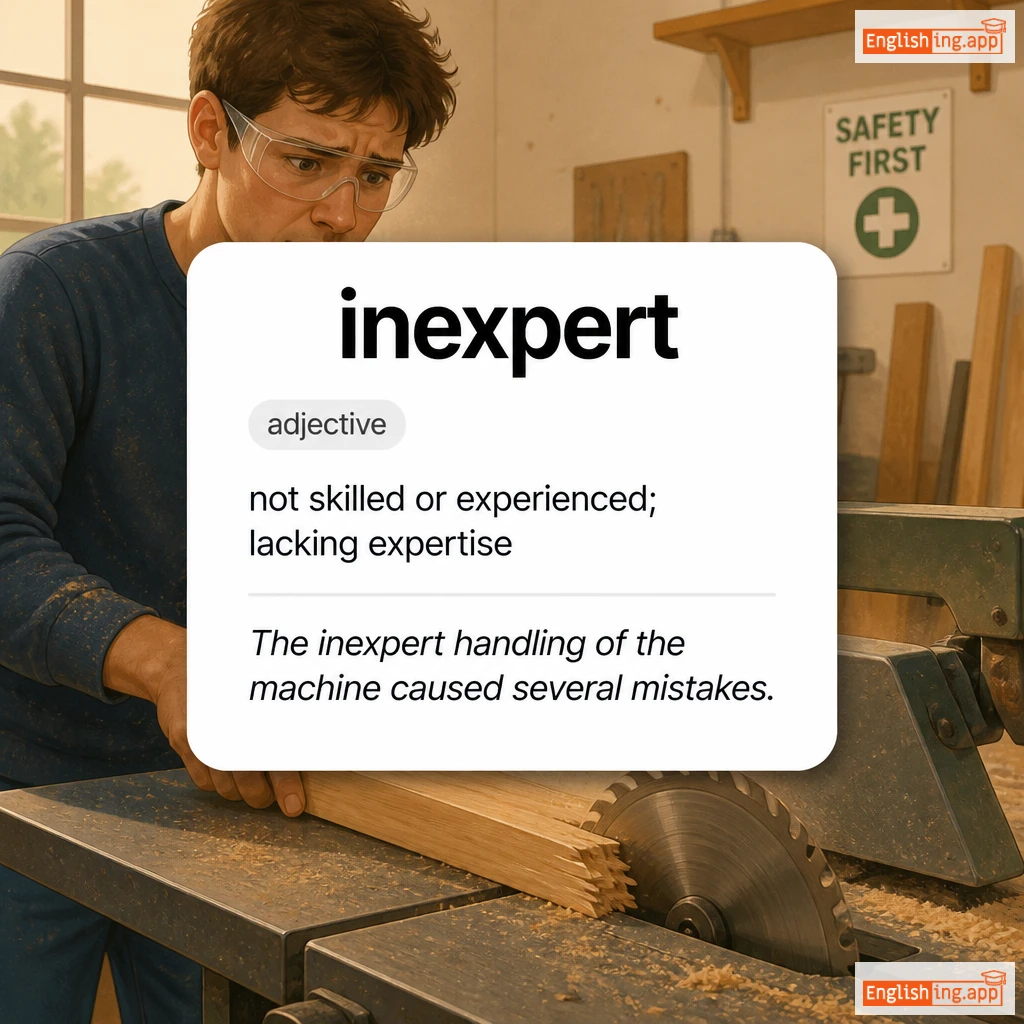
inexpert definition card — visual illustration of the meaning
adjective C2
/ˌɪnˈekspɜːrt/
不熟练的 (bu shulian de)

not skilled or experienced; lacking expertise

"The inexpert handling of the machine caused several mistakes."

"对机器的不熟练操作导致了多次错误。" (Dui jiqi de bu shulian caozuo daozhile duoci cuowu)
adjective C2
/ˌɪnɪkˈsprɛsəbl/
难以言喻 (nanyi yanyu)

Too strong or extreme to be expressed in words.

"She felt inexpressible joy at the news of her success."

"她得知自己成功的消息时感到难以言喻的喜悦。" (Ta de zhi ziji chenggong de xiaoxi shi gandao nanyi yanyu de xiyue.)
adjective C2
/ˌɪnɪkˈstɛnsəbl/
不可伸展的 (bù kě shēn zhǎn de)

Not capable of being stretched or extended.

"This rope is made of an inextensible material."

"这根绳子是由不可伸展的材料制成的。" (Zhè gēn shéng zi shì yóu bù kě shēn zhǎn de cáiliào zhì chéng de.)
adjective C2
/ˌɪnɪkˈstrɪkəbl/
无法分开 (wúfǎ fēnkāi)

Impossible to separate or escape from.

"The two friends shared an inextricable bond."

"这两个朋友共享了一个无法分开的联系。" (Zhè liǎng gè péngyǒu gòngxiǎngle yīgè wúfǎ fēnkāi de liánxì.)
noun C2
/ˈɪnfəmi/
幸福 (xìngfú)

the state of being well known for some bad quality or deed

"His name will live in infamy for the crimes he committed."

"她在收到奖项时无法掩饰她的幸福。" (Tā zài shōudào jiǎngxiàng shí wúfǎ yǎnshì tā de xìngfú.)
adjective C2
/ˈɪnfəntaɪl/
婴儿式 (yīng ér shì)

characteristic of an infant; childish

"His infantile behavior embarrassed everyone at the meeting."

"他那种婴儿式的行为让会议上的每个人都感到尴尬。" (Tā nà zhǒng yīng ér shì de xíngwéi ràng huìyì shàng de měi gèrén dōu gǎndào gāngà.)
verb C2
/ɪnˈfætʃueɪt/
迷恋 (mí liàn)

to inspire with an intense but short-lived passion or admiration

"He was infatuated with her beauty."

"他被她的美貌迷住了。" (Tā bèi tā de měimào mí zhùle.)
infeasible definition card — visual illustration of the meaning
adjective C2
ɪnˈfiː.zə.bəl
不可行 (bù kě xíng)

Not possible to do easily or conveniently; impracticable.

"Restoring the forest may become infeasible if destruction continues."

"如果破坏继续下去,恢复森林可能变得不可行。" (Rúguǒ pòhuài jìxù xiàqù, huīfù sēnlín kěnéng biàn dé bù kěxíng.)
adjective C2
/ˌɪnfəˈlɪsɪtəs/
不合适的 (bu he shi de)

not suitable or well chosen; awkward or unfortunate

"His infelicitous remark ruined the atmosphere of the meeting."

"他不合适的评论破坏了会议的氛围。" (Ta bu he shi de ping lun po huai le hui yi de fen wei.)
adjective C2
/ɪnˈfɜːrnəl/
地狱的 (dì yù de)

relating to hell; extremely troublesome or annoying

"The workers complained about the infernal noise from the construction site."

"工人们抱怨施工现场的地狱般噪音。" (Gōngrénmen bàoyuàn shīgōng xiànchǎng de dì yù bān zàoyīn.)
Infidel definition card — visual illustration of the meaning
noun C2
/ˈɪnfɪdɛl/
不信教者 (bù xìn jiào zhě)

a person who does not believe in a particular religion or faith

"In medieval times, people often called non-Christians infidels."

"在中世纪,人们常常称非基督徒为不信教者。" (Zài zhōng shìjì, rénmen chángcháng chēng fēi jīdū tú wéi bù xìn jiào zhě.)
adjective C2
/ˌɪnfɪnɪˈtɛsɪməl/
微不足道 (wēi bù zú dào)

Extremely small in size or amount; so tiny as to be almost negligible.

"The error was so infinitesimal that it didn’t affect the results."

"这个错误如此微不足道,以至于没有影响结果。" (Zhège cuòwù rúcǐ wēi bù zú dào, yǐ zhì yú méiyǒu yǐngxiǎng jiéguǒ.)
noun C2
/ɪnˈfrækʃən/
违规 (wéiguī)

A violation or breach of a rule, law, or agreement.

"The student was punished for a minor infraction of the school rules."

"学生因轻微违反学校规则而受到惩罚。" (Xuéshēng yīn qīngwēi wéiguī xuéxiào guīzé ér shòudào chéngfá.)
noun C2
/ɪnˈfriːkwəns/
罕见性 (han jian xing)

The state of occurring rarely or at long intervals.

"The infrequence of their meetings made it hard to maintain close ties."

"他们会议的罕见性使得保持亲密关系变得困难。" (Tamen huiyi de hanjianxing shided baochi qinmi guanxi biande kunnan.)
noun C2
/ˈænʒənuː/
天真无邪的年轻女性 (tian zhen wu xie de nianqing nvxing)

an innocent, naïve young woman, especially as represented in literature or theater

"She played the role of the ingénue in the play with great charm."

"她在剧中扮演了那个天真无邪的年轻女性,展现了极大的魅力。" (Ta zai ju zhong banyan le nage tian zhen wu xie de nianqing nvxing, zhanxian le jidai de mei li.)
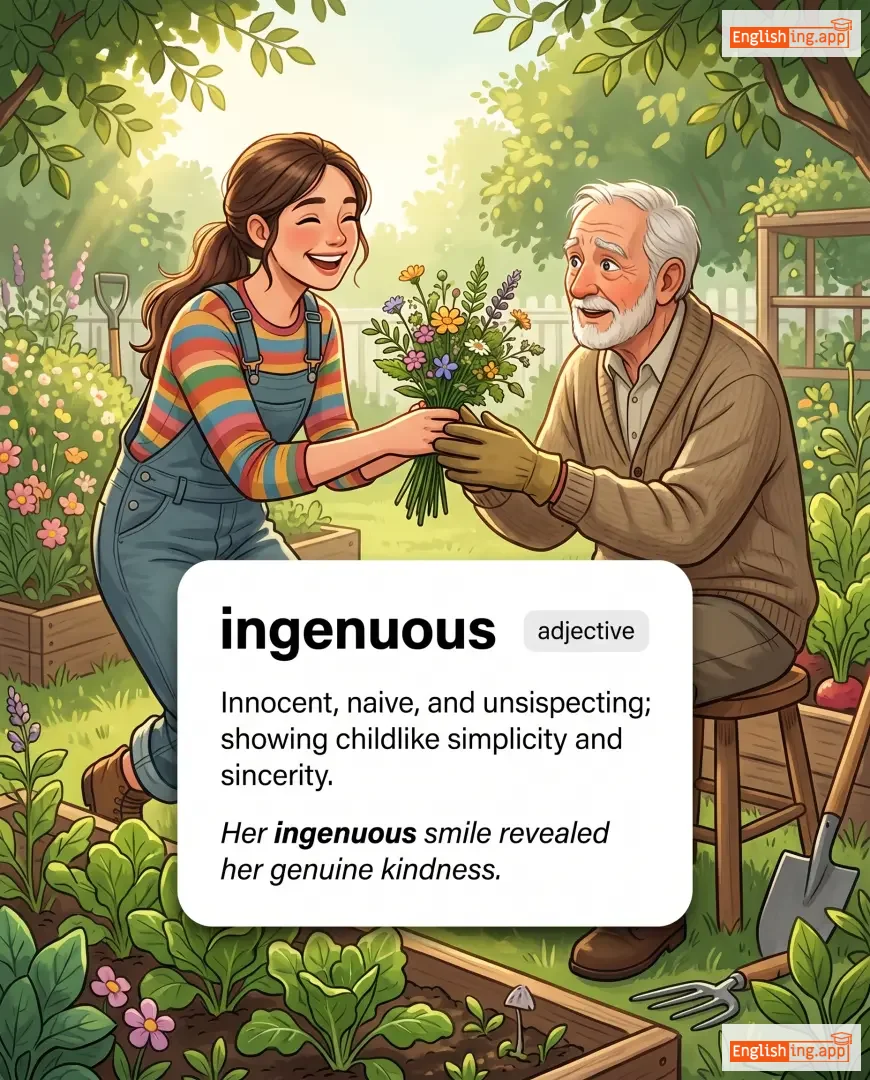
ingenuous definition card — visual illustration of the meaning
adjective C2
/ɪnˈdʒɛnjuəs/
天真 (tianzhen)

Innocent, naive, and unsuspecting; showing childlike simplicity and sincerity.

"Her ingenuous smile revealed her genuine kindness."

"她天真的笑容揭示了她真实的善良。" (Ta tianzhen de xiaorong jieshi le ta zhenshi de shanliang.)
verb C2
/ɪnˈdʒɛst/
摄取 (shèqǔ)

To take food, drink, or another substance into the body, usually by swallowing.

"The patient must ingest the medicine with water."

"病人必须用水服用药物。" (Bìngrén bìxū yòng shuǐ fúyòng yàowù.)
adjective C2
/ɪnˈɡlɔːriəs/
可耻的 (kěchǐ de)

Causing shame or disgrace; not bringing honor or glory.

"The army suffered an inglorious defeat."

"军队遭遇了可耻的失败。" (Jūnduì zāoyù le kěchǐ de shībài.)
verb C2
/ɪnˈɡrɑːft/
根植 (gēnzhí)

To implant or fix deeply, often used in the sense of grafting an idea or quality.

"The teacher tried to ingraft good manners in the students."

"老师尝试将良好的行为习惯根植于学生们。" (Lǎoshī chángshì jiāng liánghǎo de xíngwéi xíguàn gēnzhí yú xuéshēngmen.)
noun C2
/ˈɪnˌɡreɪt/

An ungrateful person; someone who shows no appreciation.

"He worked hard for his friend, but the ingrate never thanked him."

verb C2
/ɪnˈɡreɪʃiˌeɪt/

To gain favor or approval by deliberate effort, often in a flattering way.

"She tried to ingratiate herself with her boss by complimenting him often."

adjective C2
/ɪnˈɡreɪʃiˌeɪtɪŋ/
奉承的 (fèngchéng de)

Charming or flattering in a way intended to gain favor.

"His ingratiating smile made everyone trust him quickly."

"他的奉承笑容让每个人都迅速信任了他。" (Tā de fèngchéng xiàoróng ràng měi gèrén dōu xùnsù xìnrèn le tā.)
noun C2
/ɪnˈɡrætɪˌtjuːd/
忘恩负义 (wàng ēn fù yì)

Lack of gratitude; failure to show thanks or appreciation.

"His ingratitude hurt her feelings after all she had done for him."

"他的忘恩负义伤害了她的感情,尽管她为他做了这么多。" (Tā de wàng ēn fù yì shāng hài le tā de gǎn qíng, jǐn guǎn tā wèi tā zuò le zhè me duō.)
adjective C2
/ɪnhɑːrˈmoʊniəs/
不和谐 (bù héxié)

lacking harmony; discordant in sound; not in tune

"The inharmonious sounds from the broken piano made everyone cover their ears."

"破碎钢琴发出的不和谐声音让每个人都捂住了耳朵。" (Pòsuì gāngqín fāchū de bù héxié shēngyīn ràng měi gèrén dōu wǔ zhù le ěrduo.)
noun C2
/ɪnˈhɪərəns/
内在性 (nèizàixìng)

The state of being an essential or permanent part of something.

"The inherence of risk is part of every business venture."

"风险的内在性是每个商业冒险的一部分。" (Fēngxiǎn de nèizàixìng shì měi gè shāngyè màoxiǎn de yí bùfen.)
verb C2
/ɪnˈhjuːm/
埋葬 (mái zàng)

to bury a dead body in the ground

"They inhumed the warrior with full honors."

"他们用全部荣誉埋葬了战士。" (Tāmen yòng quánbù róngyù máizàngle zhànshì.)
adjective C2
/ɪˈnɪmɪkəl/
敌对的 / 不利的 (dítuì de / bùlì de)

tending to obstruct or harm; unfriendly or hostile

"The policy was inimical to the country's economic growth."

"该政策对该国的经济增长不利。" (Gāi zhèngcè duì gāi guó de jīngjì zēngzhǎng bùlì.)
inimitable definition card — visual illustration of the meaning
adjective C2
/ɪˈnɪmɪtəbəl/
无与伦比 (wú yǔ lún bǐ)

so good or unusual as to be impossible to copy; unique

"Her inimitable style made her stand out in the fashion industry."

"她那无与伦比的风格使她在时尚行业中脱颖而出。" (Tā nà wú yǔ lún bǐ de fēnggé shǐ tā zài shíshàng hángyè zhōng tuō yǐng ér chū.)
adjective C2
/ɪˈnɪkwɪtəs/
不公正 (bugongzheng)

grossly unfair and morally wrong

"Slavery was one of the most iniquitous practices in history."

"奴隶制是历史上最不公正的实践之一。" (Nuli zhi shi lishi shang zui bugongzheng de shijian zhi yi.)
noun C2
/ɪˈnɪkwɪti/
不公 (bugong)

Immoral or grossly unfair behavior.

"The dictator's regime was marked by corruption and iniquity."

"独裁者的政权因腐败和不公而闻名。" (Dúcáizhě de zhèngquán yīn fǔbài hé bùgōng ér wénmíng.)