वोकैबुलरीज

इंग्लिश वोकैबुलरी डिस्कवर, लर्न और मास्टर करें

adjective C1
/ˈriːɡəl/
王室の (ōshitsu no)

Resembling or fit for a king; majestic or royal.

"The queen entered the hall with a regal presence."

"女王は王室のような存在感でホールに入った。" (Joō wa ōshitsu no yōna sonzai-kan de hōru ni haitta.)
verb C1
/rɪˈdʒɛnəreɪt/
再生する (saisei suru)

to grow or produce again; to renew or restore

"The lizard can regenerate its lost tail."

"トカゲは失われた尾を再生できます。" (Tokage wa ushinawareta o wo saisei dekimasu.)
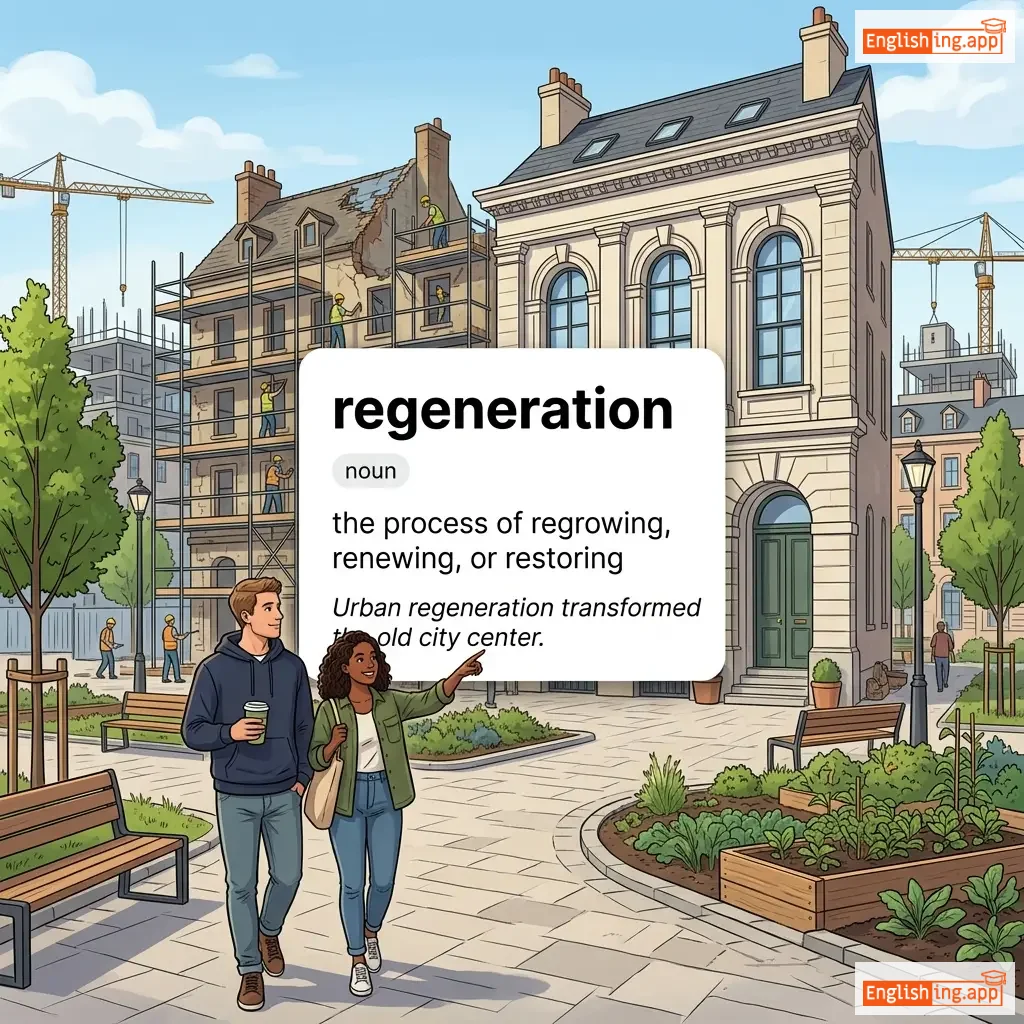
regeneration definition card — visual illustration of the meaning
noun C1
/rɪˌdʒɛnəˈreɪʃən/
再生 (saisei)

the process of regrowing, renewing, or restoring

"Urban regeneration transformed the old city center."

"都市の再生は古い市街地を変革しました。" (Toshi no saisei wa furui shigaichi o henka shimashita.)
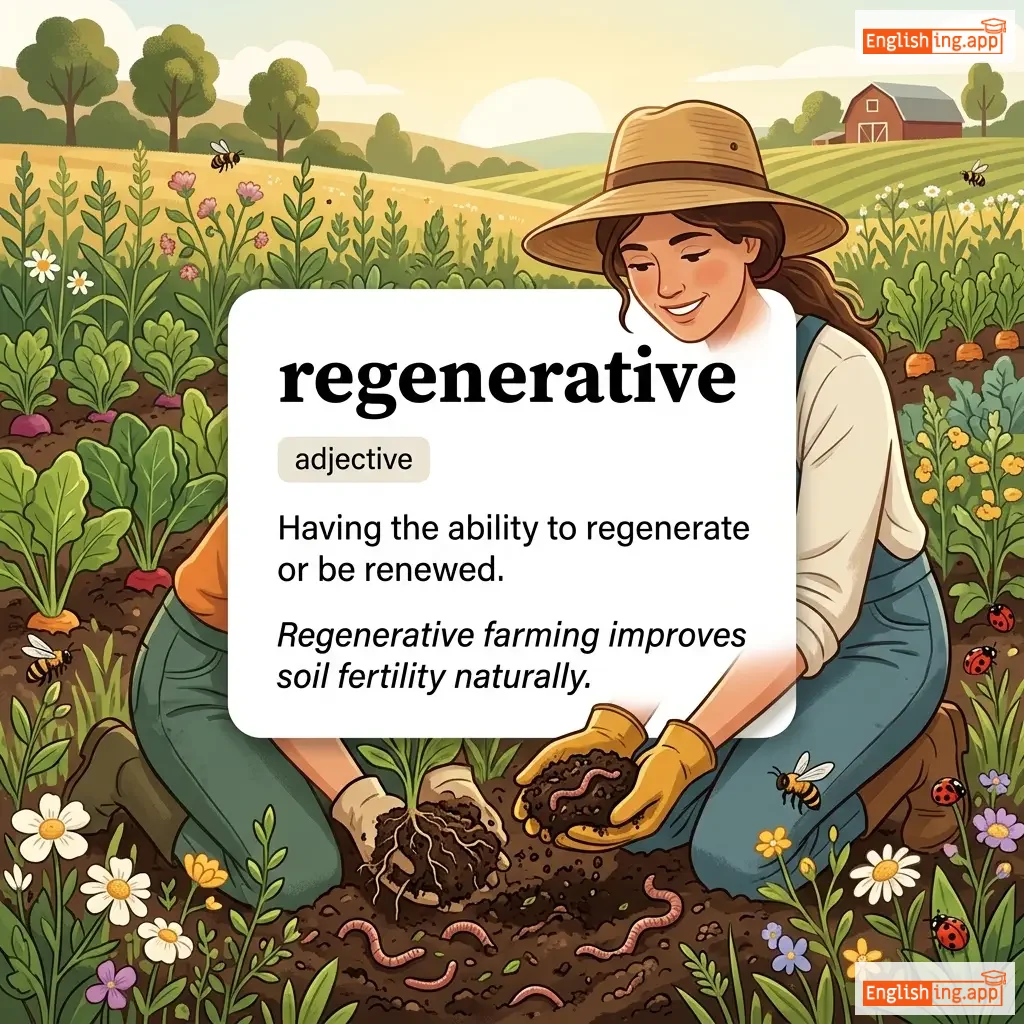
regenerative definition card — visual illustration of the meaning
adjective C1
rɪˈdʒɛn.ər.ə.tɪv
再生可能または再生的 (saisei kanou mata wa saisei-teki)

Having the ability to regenerate or be renewed.

"Regenerative farming improves soil fertility naturally."

"再生農業は自然に土壌の肥沃度を向上させます。" (Saisei nougyou wa shizen ni dojou no hiyokudo o koujou sasemasu.)
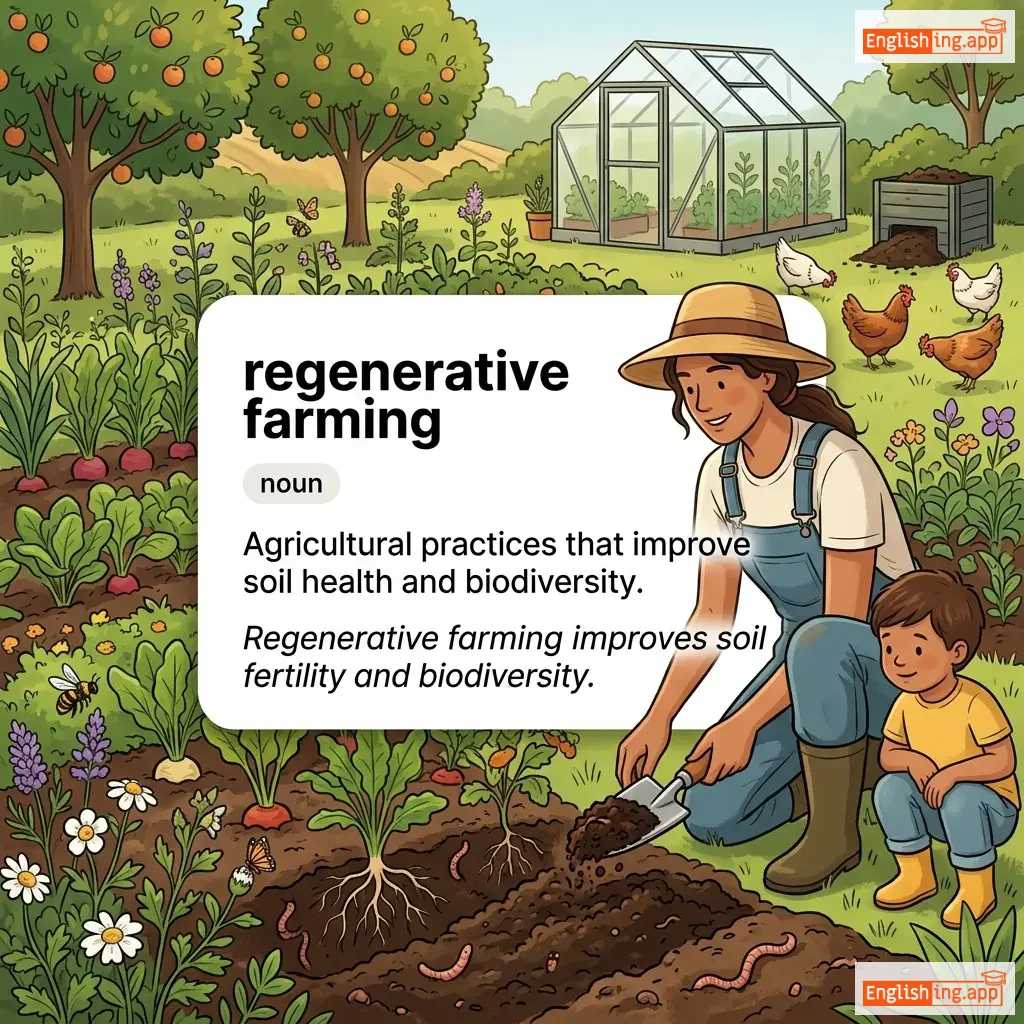
regenerative farming definition card — visual illustration of the meaning
noun C1
rɪˈdʒɛn.ər.ə.tɪv ˈfɑːr.mɪŋ
再生農業 (saisei nōgyō)

Agricultural practices that improve soil health and biodiversity.

"Regenerative farming improves soil fertility and biodiversity."

"再生農業は土壌の肥沃度と生物多様性を向上させます。" (Saisei nōgyō wa dojo no hiwokudo to seibutsu tayōsei o kōjō sasemasu.)
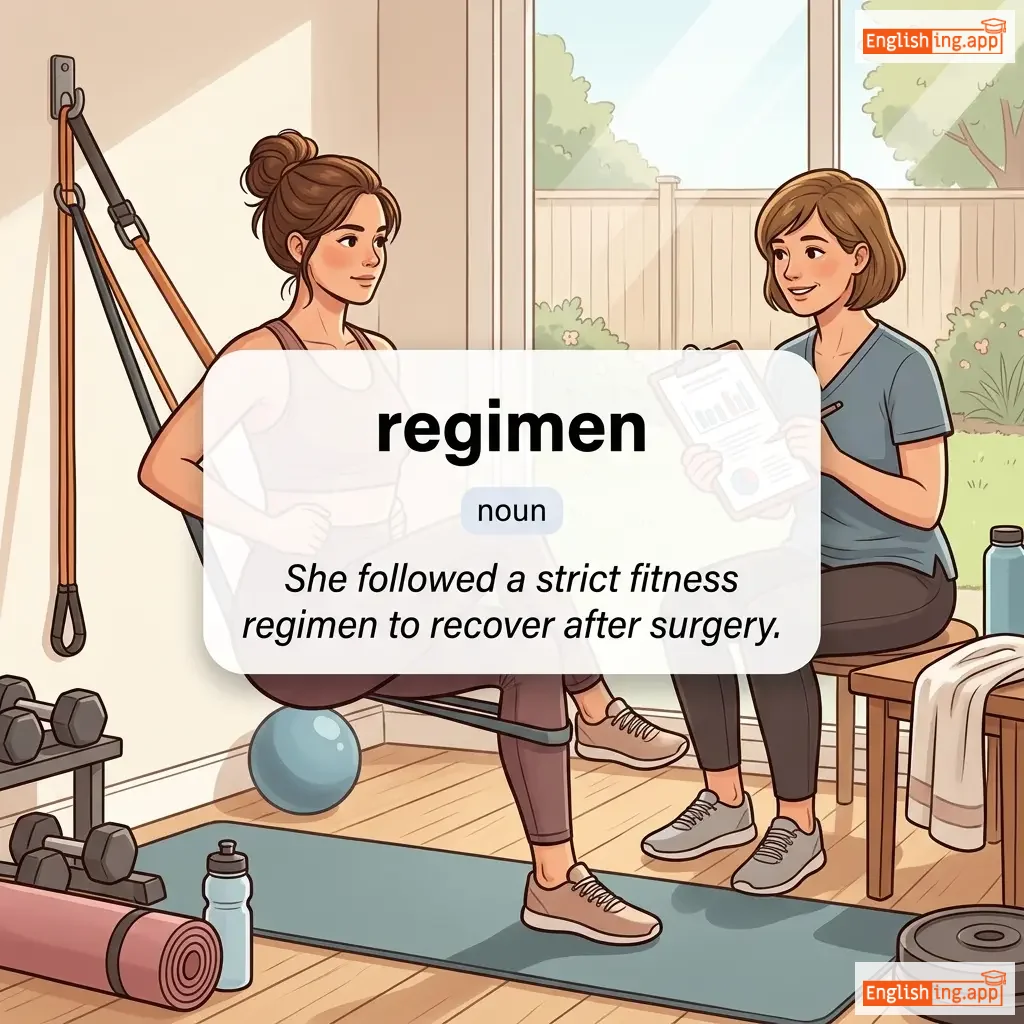
regimen definition card — visual illustration of the meaning
noun C1
/ˈrɛdʒɪmən/

A prescribed course of medical treatment, diet, or exercise for the promotion or restoration of health.

"She followed a strict fitness regimen to recover after surgery."

🎖️

regiment

noun C1
/ˈrɛdʒɪmənt/

A permanent unit of an army, typically commanded by a colonel and divided into several companies.

"The regiment marched proudly through the streets after returning from the mission."

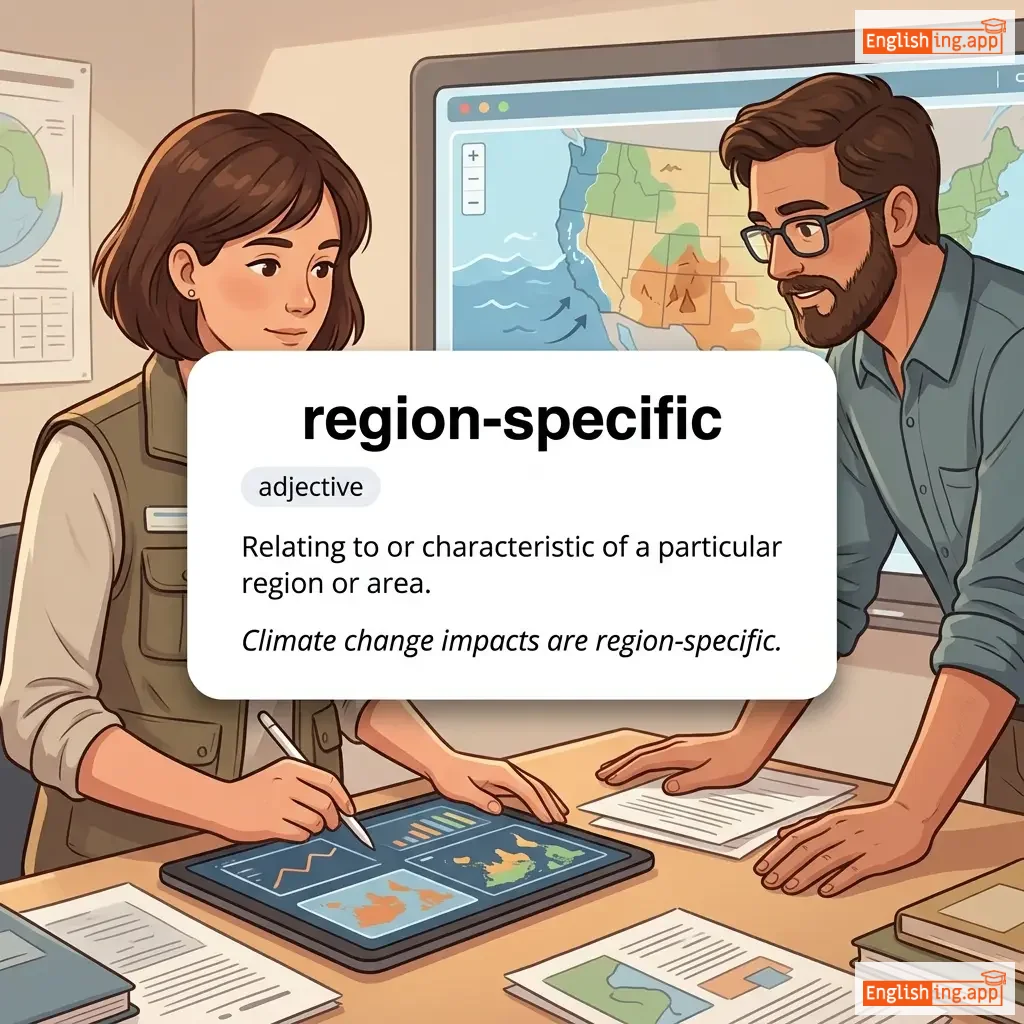
region-specific definition card — visual illustration of the meaning
adjective C1
ˈriːdʒən spəˈsɪfɪk
地域特有 (chiiki tokuyu)

Relating to or characteristic of a particular region or area.

"Climate change impacts are region-specific."

"気候変動の影響は地域特有です。" (Kikou hendou no eikyou wa chiiki tokuyu desu.)
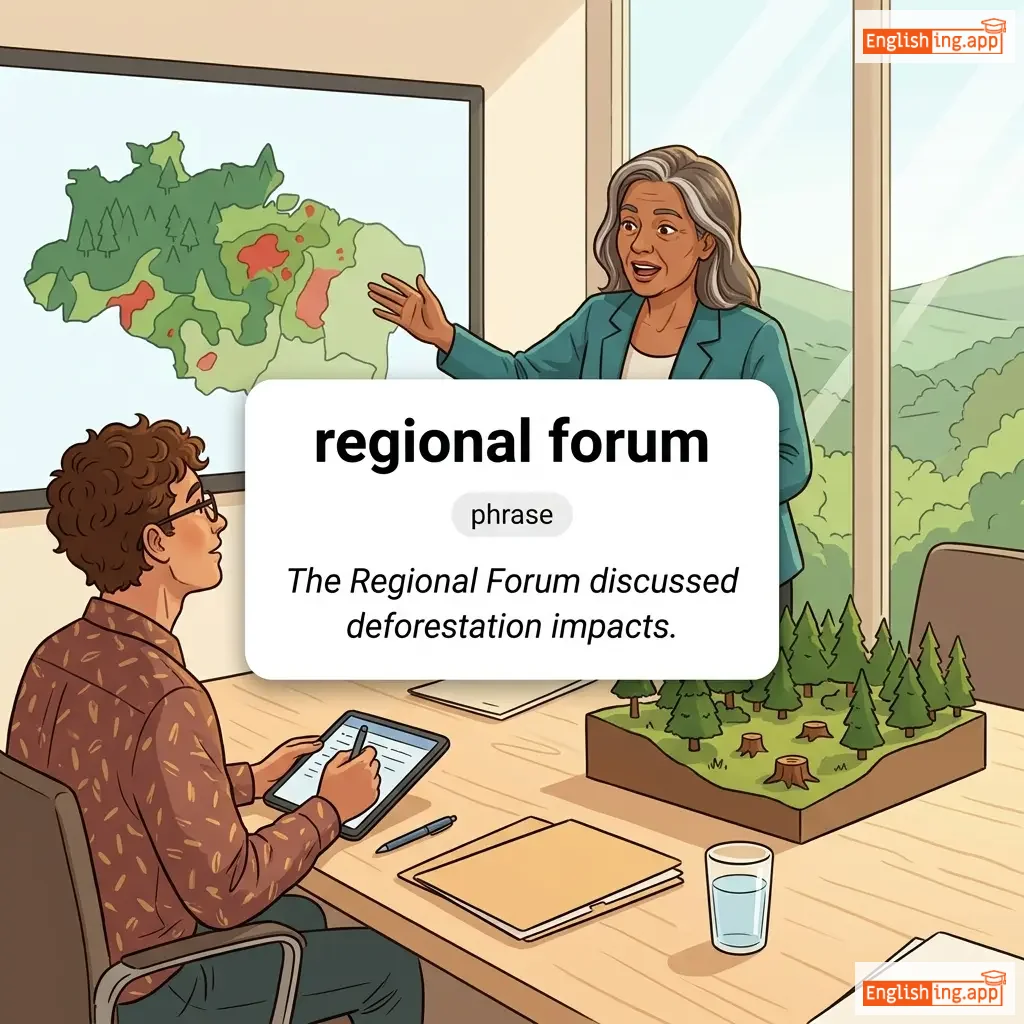
regional forum definition card — visual illustration of the meaning
phrase C1
ˈriː.dʒən.əl ˈfɔː.rəm
地域フォーラム (chiiki fōramu)

A meeting or conference where representatives from countries or organizations in a specific geographical area discuss issues of common interest.

"The Regional Forum discussed deforestation impacts."

"地域フォーラムでは、森林伐採の影響について議論されました。" (Chiiki fōramu de wa, shinrin bassai no eikyō ni tsuite giron saremashita.)
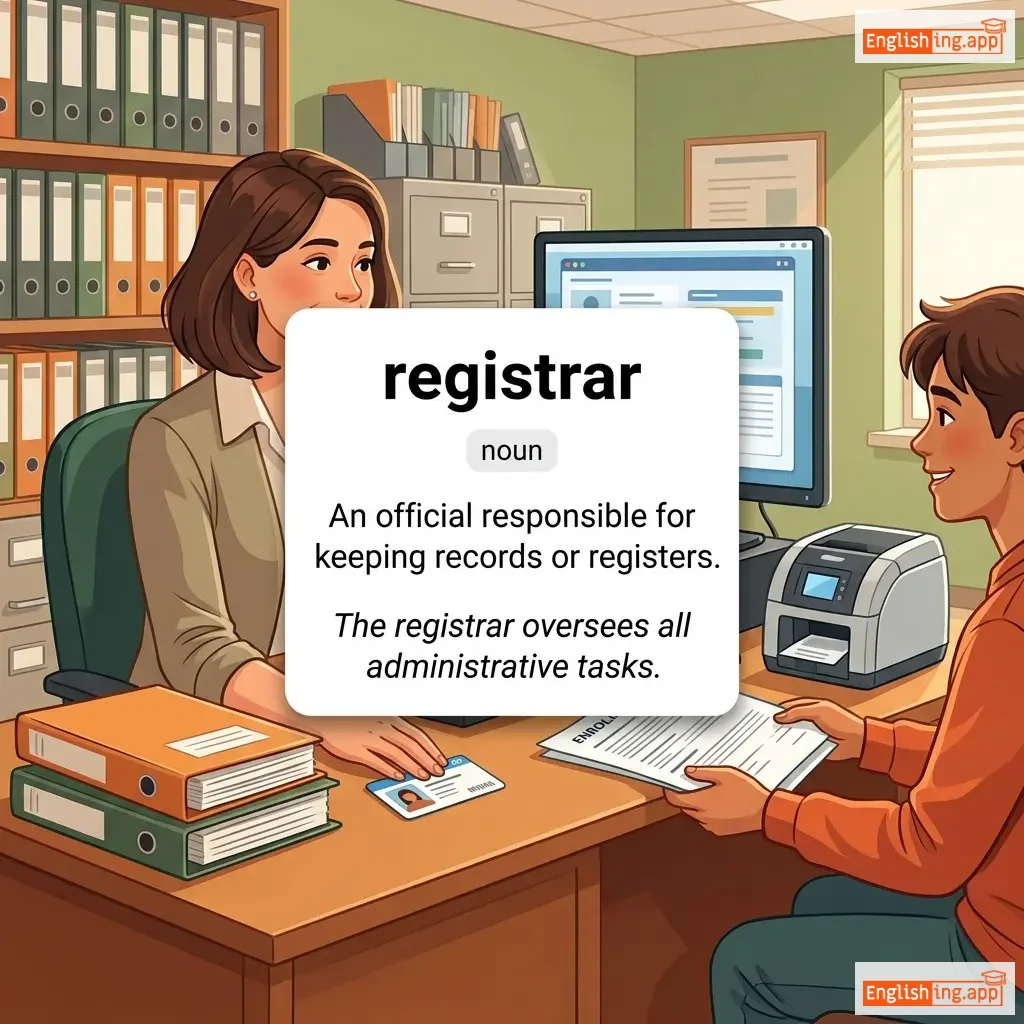
registrar definition card — visual illustration of the meaning
noun C1
ˈredʒ.ɪ.strɑːr
レジストラー (rejisutora)

An official responsible for keeping records or registers.

"The registrar oversees all administrative tasks."

"レジストラーはすべての行政業務を監督しています。" (Rejisutora wa subete no gyōsei gyōmu o kantoku shiteimasu.)
verb C1
/rɪˈɡrɛs/

To return to a former or less developed state.

"Without proper guidance, the child's progress began to regress."

adjective C1
/rɪˈɡrɛtfəl/
後悔している (kōkai shite iru)

feeling or showing sadness or disappointment about something that has happened or been done

"She gave him a regretful smile as she turned away."

"彼女は振り返りながら後悔している笑顔を彼に向けた。" (Kanojo wa furikaeri nagara kōkai shite iru egao o kare ni muketa.)
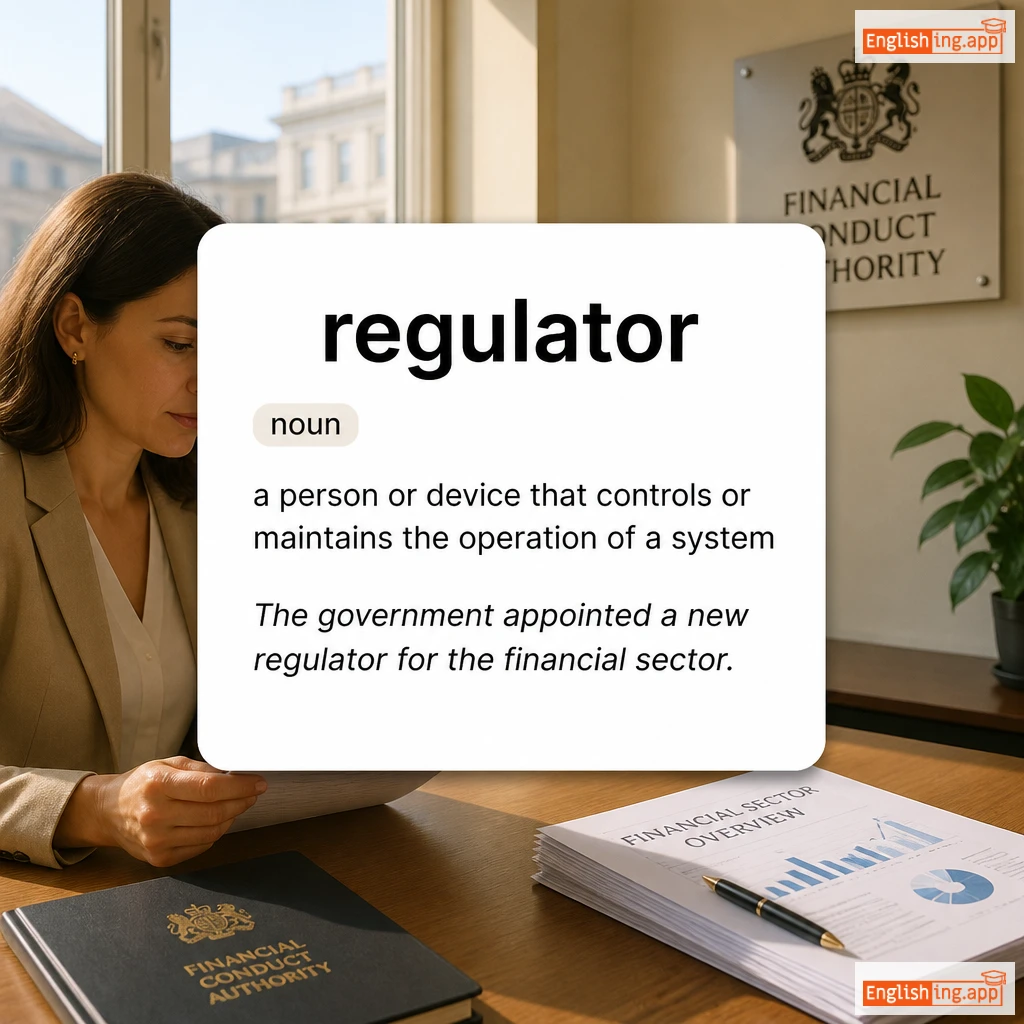
regulator definition card — visual illustration of the meaning
noun C1
/ˈrɛɡjəleɪtər/
調整装置 (chōsei sōchi)

a person or device that controls or maintains the operation of a system

"The government appointed a new regulator for the financial sector."

"政府は金融セクターの新しい規制機関を任命した。" (Seifu wa kin'yū sekutā no atarashī kisei kikan o ninmei shita.)
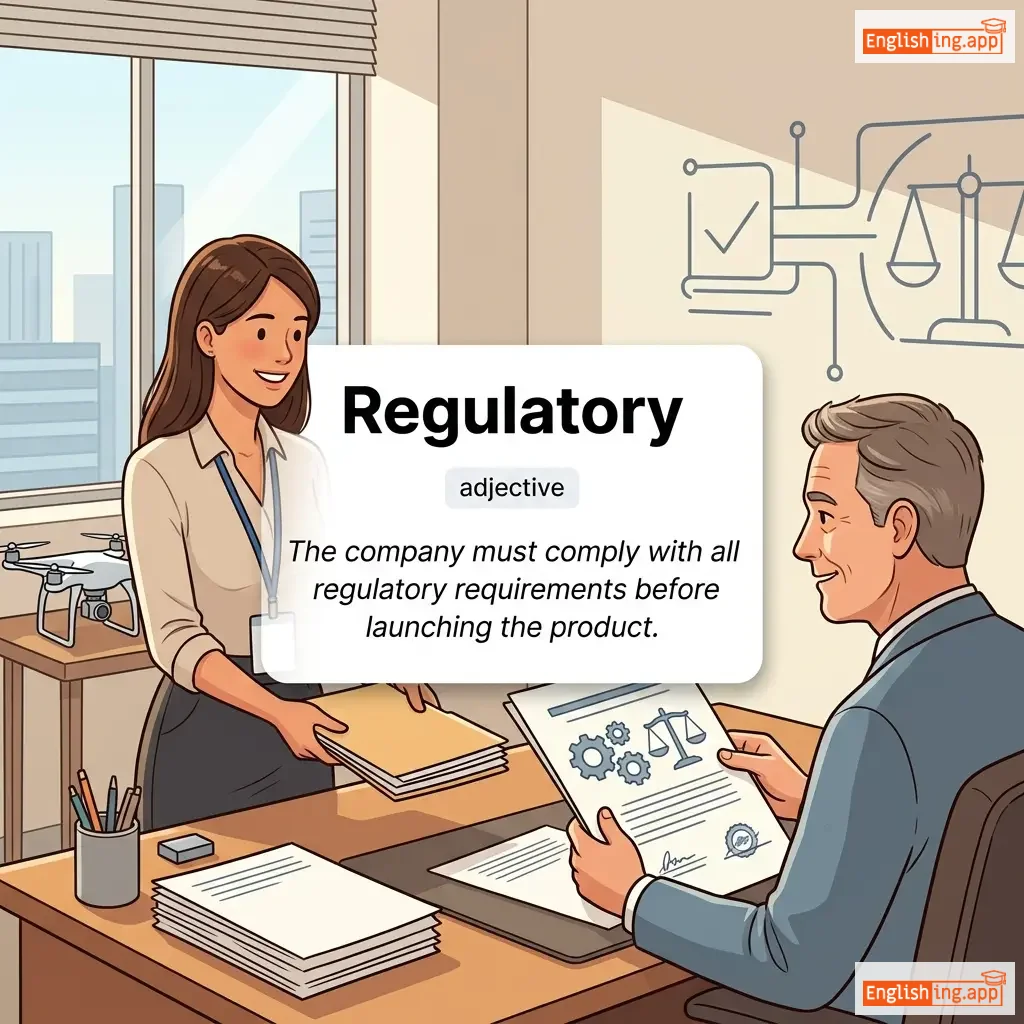
Regulatory definition card — visual illustration of the meaning
adjective C1
/ˈrɛɡjʊlətɔːri/
規制の (kisei no)

relating to the rules or laws made by an authority to control an activity or process

"The company must comply with all regulatory requirements before launching the product."

"企業は製品を発売する前にすべての規制要件を満たさなければなりません。" (Kigyō wa seihin o hatsubai suru mae ni subete no kisei yōken o mitasanakereba narimasen.)
verb C1
/ˌriːhəˈbɪlɪteɪt/

to restore someone to health, normal life, or a good condition after illness, injury, or imprisonment

"The clinic helps rehabilitate injured athletes."

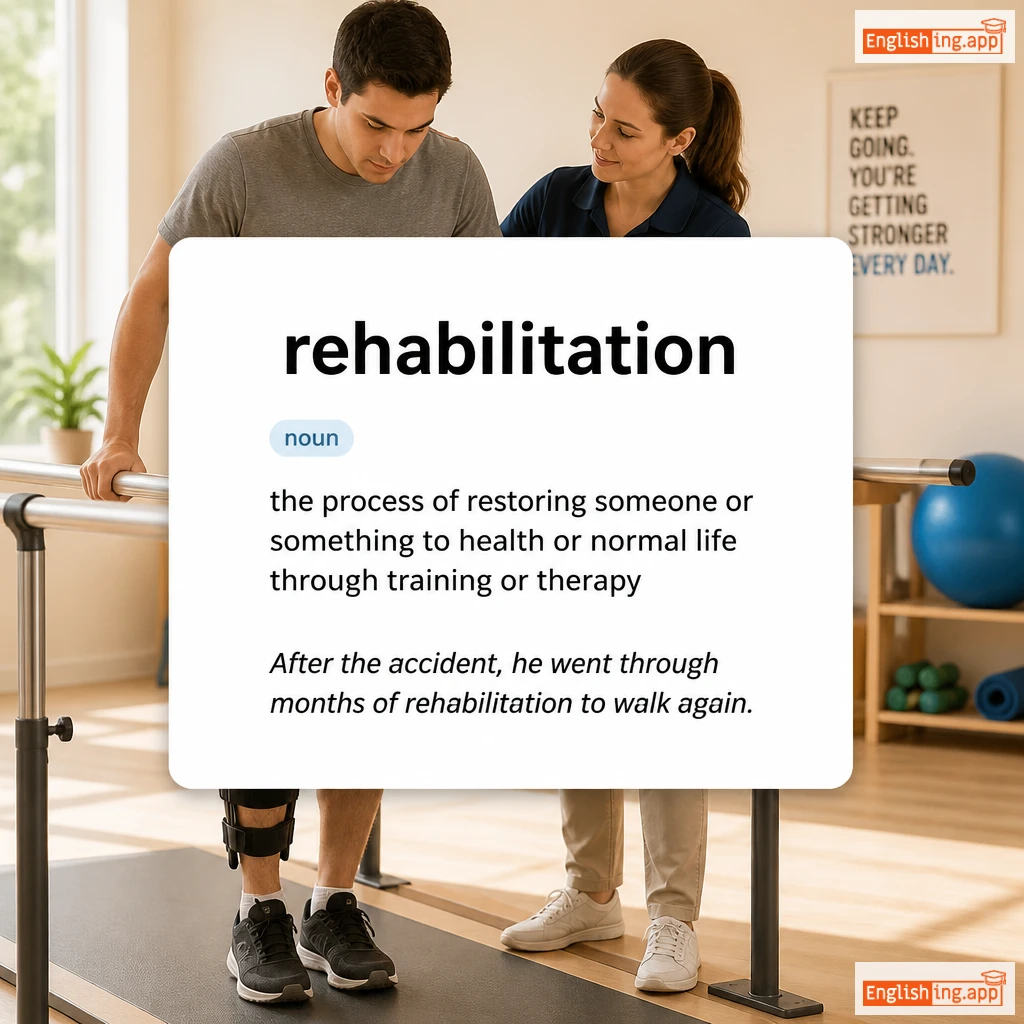
rehabilitation definition card — visual illustration of the meaning
noun C1
/ˌriːhəˌbɪlɪˈteɪʃən/
幸福 (kōfuku)

the process of restoring someone or something to health or normal life through training or therapy

"After the accident, he went through months of rehabilitation to walk again."

"彼女は賞を受け取ったとき、自分の幸福を隠せなかった。" (Kanojo wa shō o uketotta toki, jibun no kōfuku o kakusenakatta.)
verb C1
/ˌriːɪmˈbɜːrs/
払い戻す (haraimodosu)

to pay back money to someone who has spent it or lost it

"The company reimbursed him for travel expenses."

"会社は彼に旅行費用を払い戻しました。" (Kaisha wa kare ni ryokou hiyou wo haraimodoshimashita.)
🐎

rein

noun/verb C1
/reɪn/

A strap used to control a horse; to control or guide something.

"The rider pulled the rein to stop the horse."

verb C1
/ˌriːɪnˈsteɪt/
再雇用する (saikoyou suru)

To restore someone or something to their former position or condition.

"The company decided to reinstate the suspended employee."

"その会社は停止された従業員を再雇用することを決定した。" (Sono kaisha wa teishi sareta juugyouin o saikoyou suru koto o kettei shita.)
verb C1
/ˌriːɪnˈtɪɡreɪt/
再統合する (saitougou suru)

To bring someone or something back into a group or society after being separated.

"The program helps prisoners reintegrate into society."

"そのプログラムは囚人が社会に再統合するのを助けます。" (Sono puroguramu wa shūjin ga shakai ni saitōgō suru no o tasukemasu.)
verb C1
/riˈɪtəreɪt/
繰り返す (kurikaesu)

To say something again or repeatedly for emphasis or clarity.

"The teacher reiterated the importance of honesty."

"教師は正直さの重要性を繰り返し述べました。" (Kyōshi wa shōjiki-sa no jūyō-sei o kurikaeshi nobemashita.)
noun C1
/rɪˈdʒɔɪsɪŋ/
喜び (yorokobi)

The action of showing great joy or happiness

"There was much rejoicing after the victory."

"勝利後、多くの喜びがありました。" (Shōri go, ōku no yorokobi ga arimashita.)
verb C1
/riˈdʒɔɪn/
再参加する (saikansuru)

to join again or return to a group, place, or activity

"After a short break, she decided to rejoin the team."

"短い休憩後、彼女はチームに再参加することに決めました。" (Mijikai kyūkei-go, kanojo wa chīmu ni saikansuru koto ni kimemashita.)
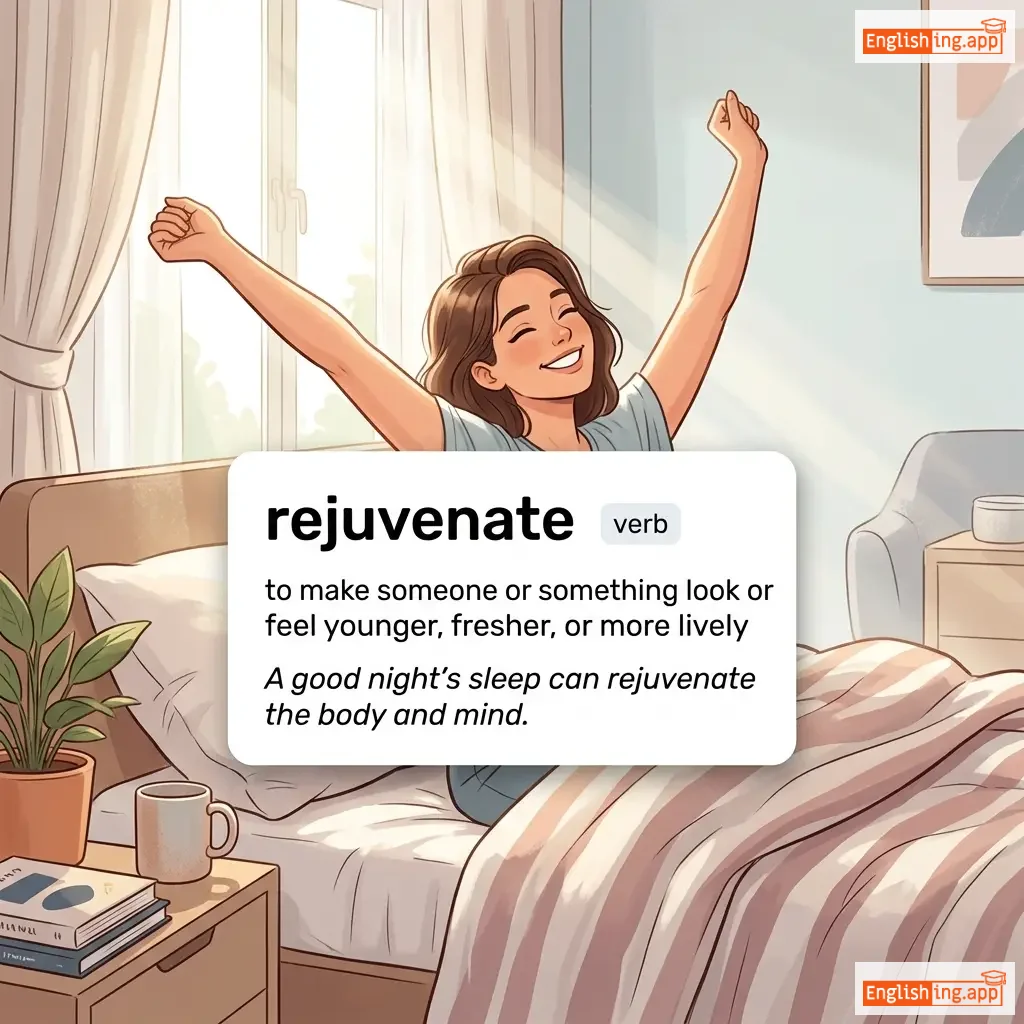
rejuvenate definition card — visual illustration of the meaning
verb C1
/rɪˈdʒuːvəˌneɪt/
若返る (waka kaeru)

to make someone or something look or feel younger, fresher, or more lively

"A good night's sleep can rejuvenate the body and mind."

"良い夜の睡眠は体と心を若返らせることができます。" (Yoi yoru no suimin wa karada to kokoro wo wakakae raseru koto ga dekimasu.)
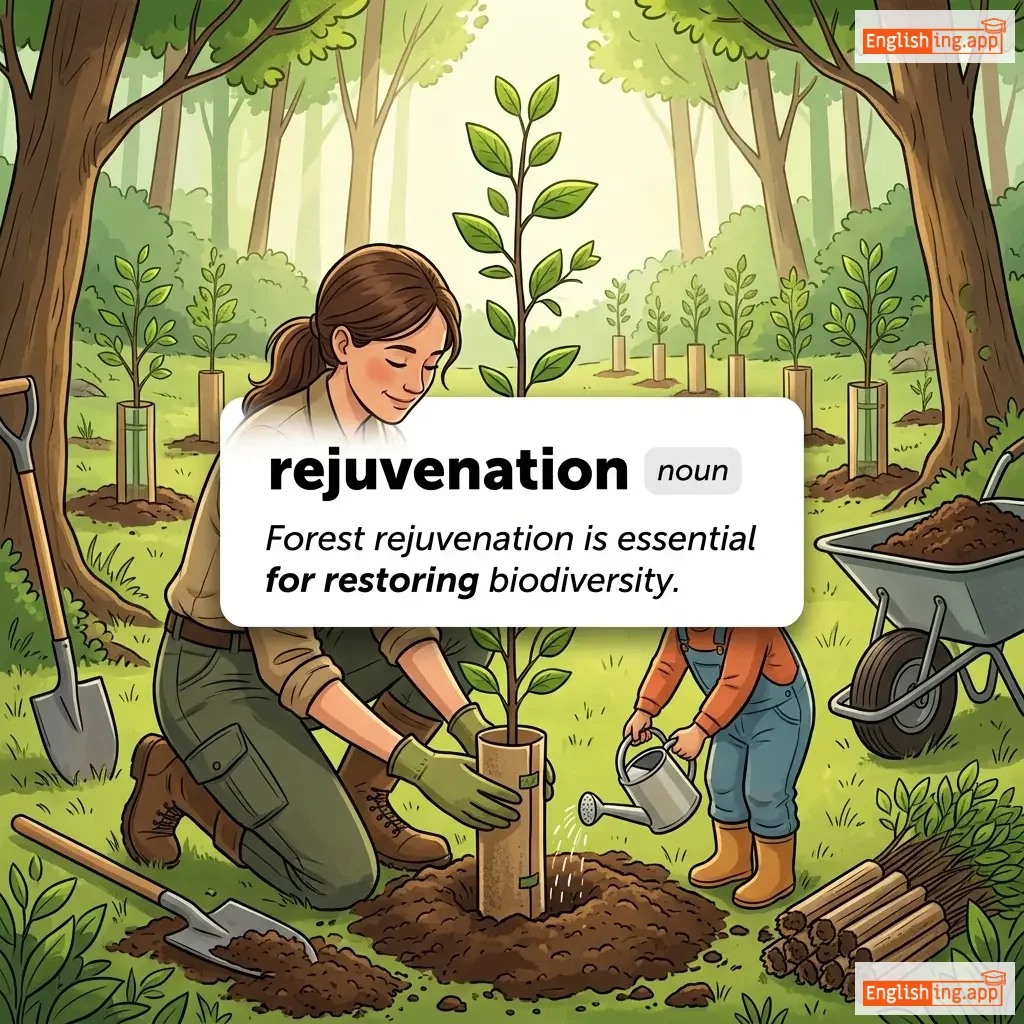
rejuvenation definition card — visual illustration of the meaning
noun C1
rɪˌdʒuː.vɪˈneɪ.ʃən
再生 (saisei)

The action or process of making someone or something look or feel better, younger, or more vital.

"Forest rejuvenation is essential for restoring biodiversity."

"森林の再生は生物多様性の回復に不可欠です。" (Shinrin no saisei wa seibutsu tayousei no kaifuku ni fukaketsu desu.)
noun/verb C1
/rɪˈlæps/
再発 (saihatsu)

to return to a worse condition, especially after improvement; a deterioration after recovery

"After months of progress, he suffered a relapse."

"数ヶ月の進歩の後、彼は再発しました。" (suukagetsu no shinpo no ato, kare wa saihatsu shimashita.)
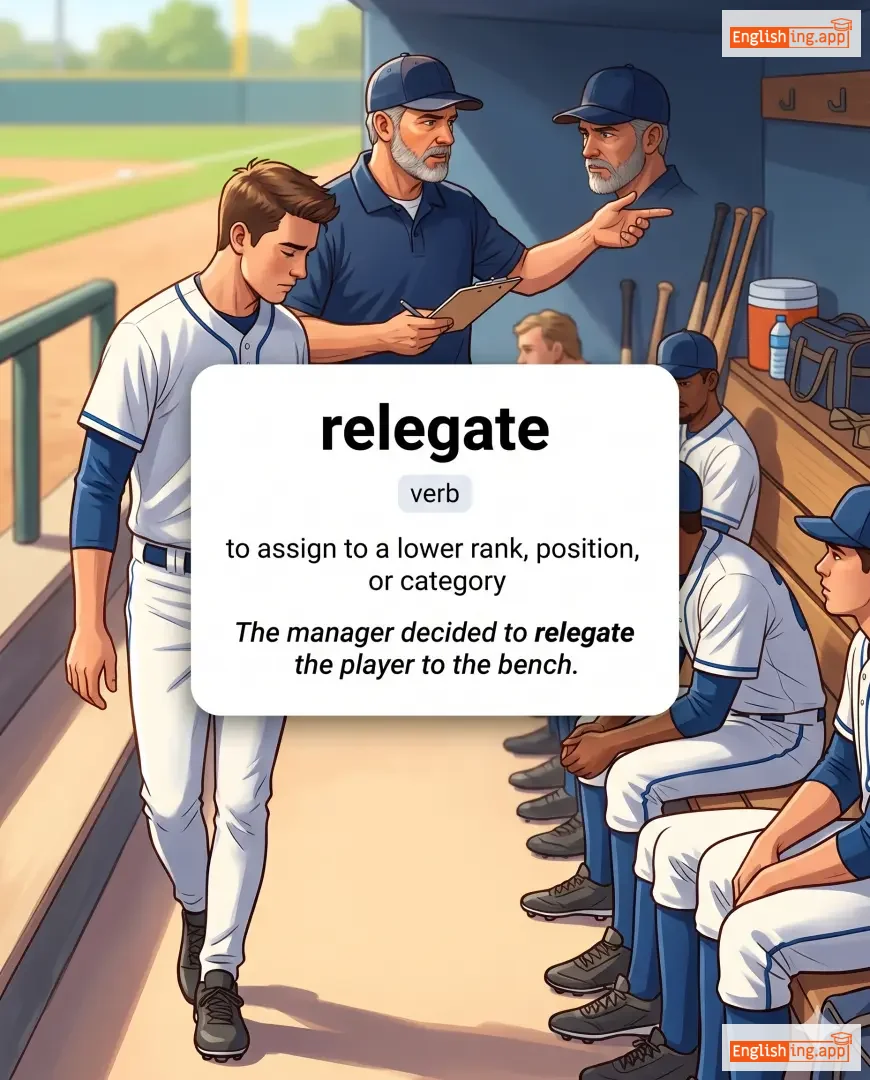
relegate definition card — visual illustration of the meaning
verb C1
/ˈrɛlɪɡeɪt/
降格する (kōkaku suru)

to assign to a lower rank, position, or category

"The manager decided to relegate the player to the bench."

"マネージャーは選手をベンチにレリゲートすることを決定しました。" (Manējā wa senshu o benchi ni rerigēto suru koto o kettei shimashita.)
verb C1
/rɪˈlɛnt/
譲歩する、柔らかくなる (jouho suru, yawarakaku naru)

to become less severe, harsh, or strict

"After hours of begging, she finally relented."

"何時間もの懇願の後、彼女はついに譲歩した。" (Nan jikan mono kongan no ato, kanojo wa tsuini jouho shita.)
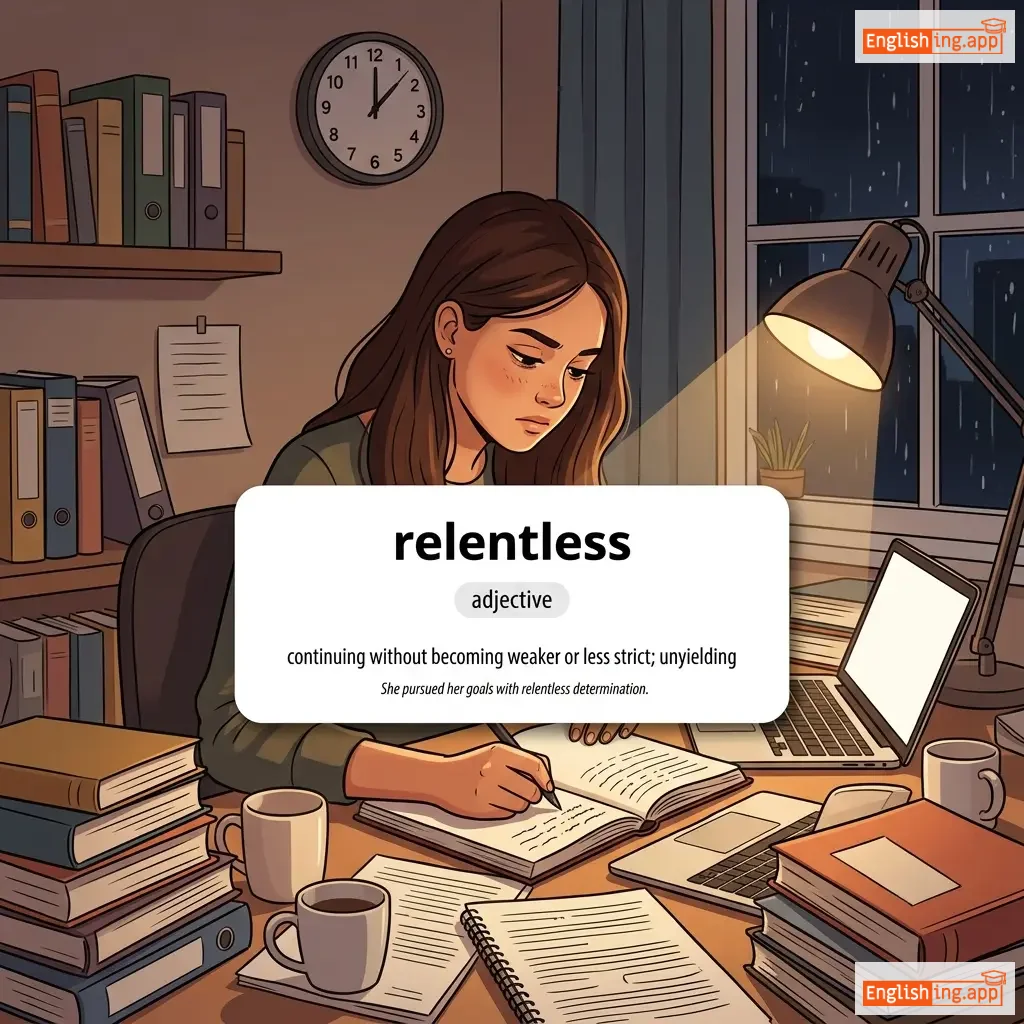
relentless definition card — visual illustration of the meaning
adjective C1
/rɪˈlɛntləs/

continuing without becoming weaker or less strict; unyielding

"She pursued her goals with relentless determination."

noun C1
/ˈrɛl.ɪk/
遺物 (ibutsu)

an object surviving from an earlier time, often of historical or religious interest

"The museum displayed relics from the ancient civilization."

"博物館には古代文明の遺物が展示されていました。" (Hakubutsukan ni wa kodai bunmei no ibutsu ga tenji sarete imashita.)
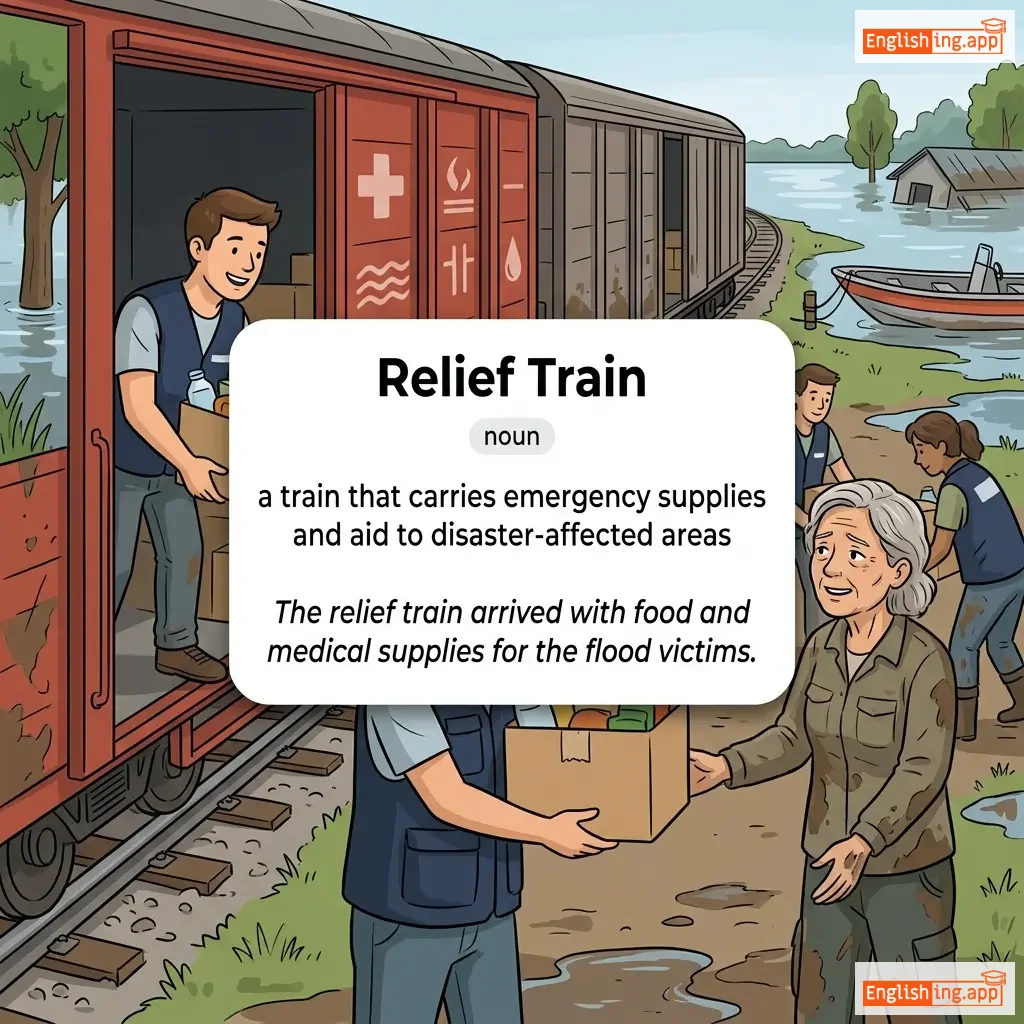
Relief Train definition card — visual illustration of the meaning
noun C1
/rɪˈliːf treɪn/
救援列車 (kyūen ressha)

a train that carries emergency supplies and aid to disaster-affected areas

"The relief train arrived with food and medical supplies for the flood victims."

"救援列車は洪水の被害者のために食料と医療物資を運んできました。" (kyūen ressha wa kōzui no higaisha no tame ni shokuryō to iryō busshi o hakonde kimashita)
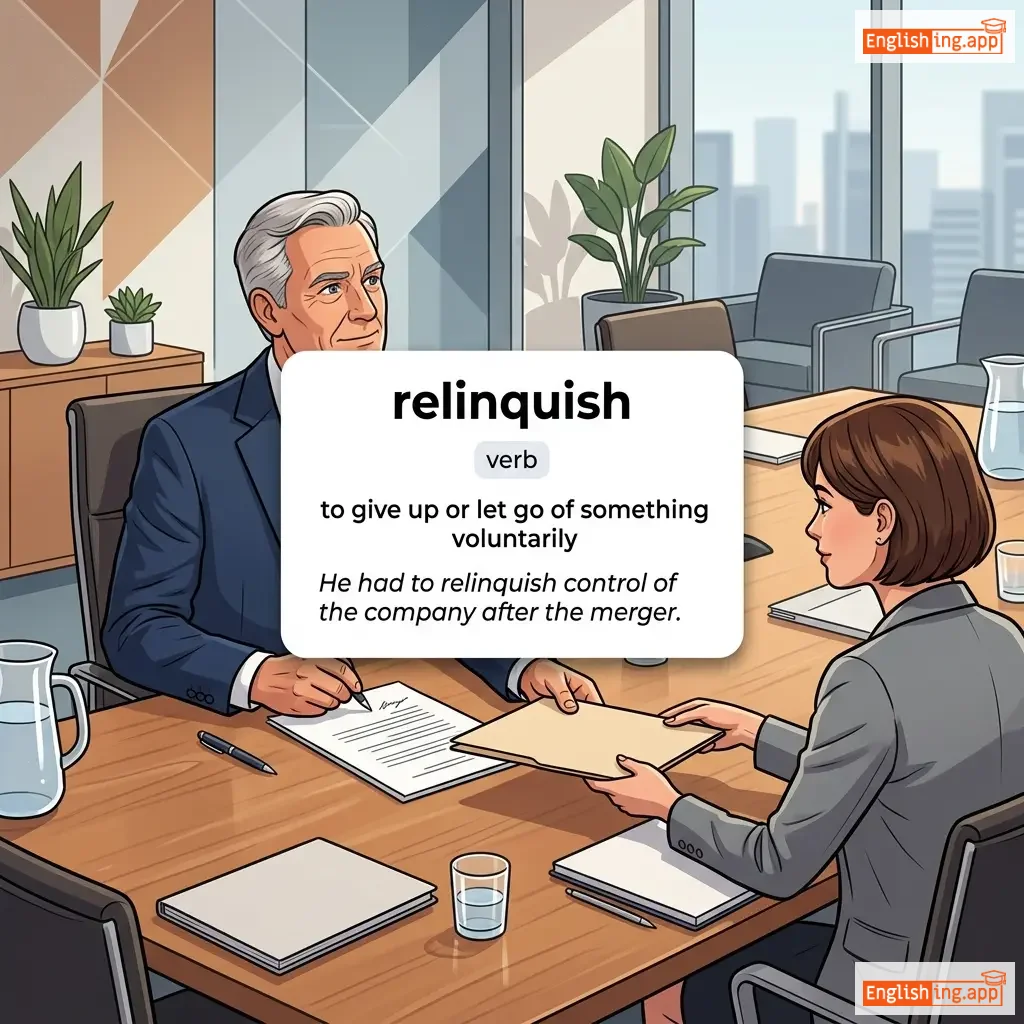
relinquish definition card — visual illustration of the meaning
verb C1
/rɪˈlɪŋkwɪʃ/
放棄する (hoki suru)

to give up or let go of something voluntarily

"He had to relinquish control of the company after the merger."

"合併後、彼は会社のコントロールを放棄しなければならなかった。" (Gappei go, kare wa kaisha no kontorōru o hōki shinakereba naranakatta.)
verb/noun C1
/ˈrɛlɪʃ/
楽しむ / 調味料 (tanoshimu / choumiryō)

to greatly enjoy; also a condiment or sauce

"She relished the opportunity to travel abroad."

"彼女は海外旅行の機会を大いに楽しんでいました。" (Kanojo wa kaigai ryokō no kikai o ōi ni tanoshinde imashita.)
adjective C1
/rɪˈmiːdiəl/
改善のための (kaizen no tame no)

intended to correct or improve a situation, especially related to learning or health

"The school offers remedial classes in mathematics."

"学校は数学の補習クラスを提供しています。" (Gakkō wa suugaku no hoshū kurasu wo teikyō shiteimasu.)
noun C1
/rɪˈmɛmbrəns/
記憶 (kioku)

the act of remembering or honoring someone or something

"A service was held in remembrance of the fallen soldiers."

"戦死した兵士たちを記憶するための式典が行われた。" (Senshishita heishitachi o kioku suru tame no shikiten ga okonawareta.)
noun C1
/ˌrɛmɪˈnɪsəns/
回想 (kaiso)

a story or memory about past events

"He shared a reminiscence of his childhood days in the village."

"彼は村での子供時代の思い出を語った。" (Kare wa mura de no kodomojidai no omoide o katatta.)
adjective C1
/ˌrɛmɪˈnɪsənt/
思い出させる (omoidasaseru)

Tending to remind one of something; suggestive of something in the past.

"The smell of rain is reminiscent of my childhood in the village."

"雨の匂いは私の村での子供時代を思い出させる。" (Ame no nioi wa watashi no mura de no kodomojidai o omoidasa seru.)
noun C1
/rɪˈmɪʃən/

A temporary or permanent decrease or disappearance of disease symptoms; forgiveness of sins or debts.

"The patient’s cancer is in remission after the treatment."

verb C1
/rɪˈmɪt/
送金する / 免除する (sōkin suru / menjo suru)

To send money in payment or as a gift; to cancel or refrain from exacting a debt or punishment.

"He promised to remit the payment by the end of the week."

"彼は週の終わりまでに支払いを送金すると約束しました。" (Kare wa shū no owari made ni shiharai o sōkin suru to yakusoku shimashita.)
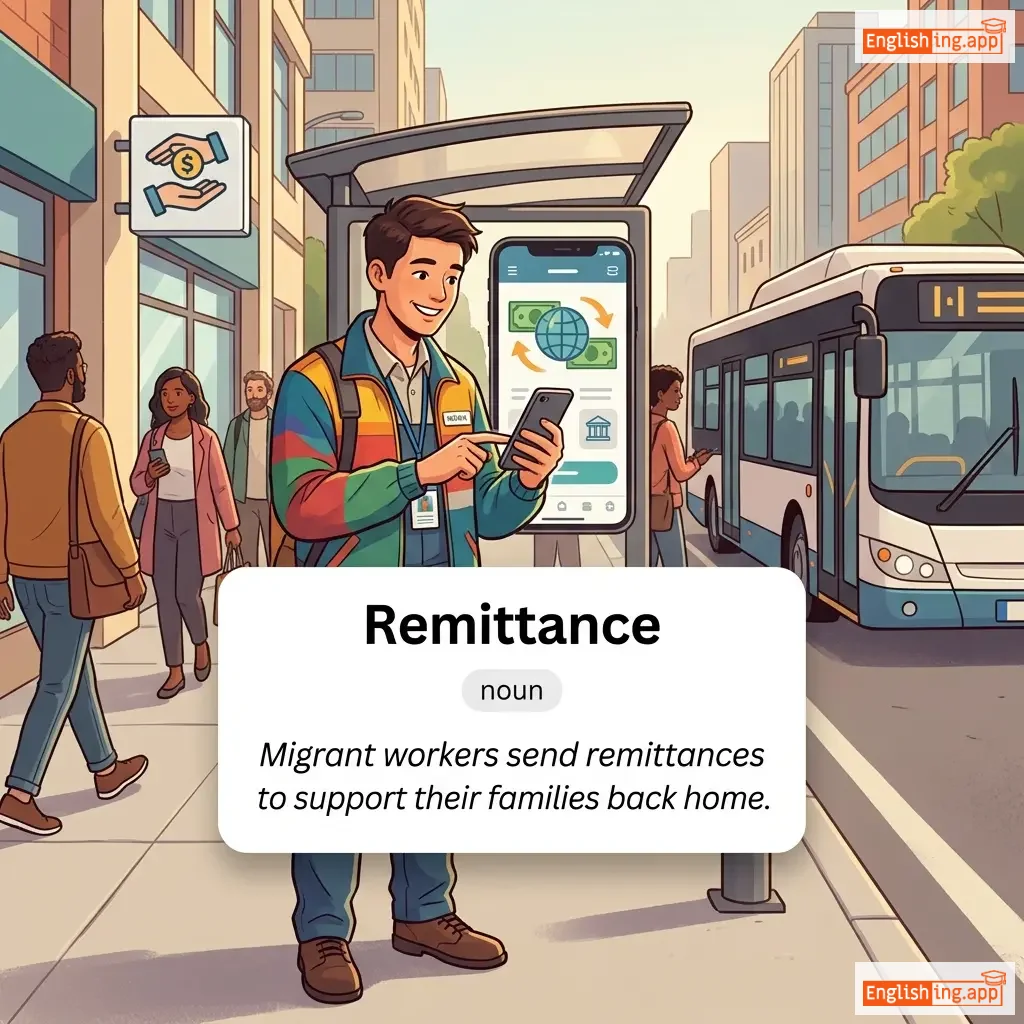
Remittance definition card — visual illustration of the meaning
noun C1
/rɪˈmɪtəns/
送金 / 資金転送 (sōkin / shikin tensō)

A sum of money sent, especially by mail or electronic transfer, as payment or gift.

"Migrant workers send remittances to support their families back home."

"移民労働者は、故郷の家族を支援するために送金を送ります。" (Imin rōdōsha wa, kokyō no kazoku o shien suru tame ni sōkin o okurimasu.)
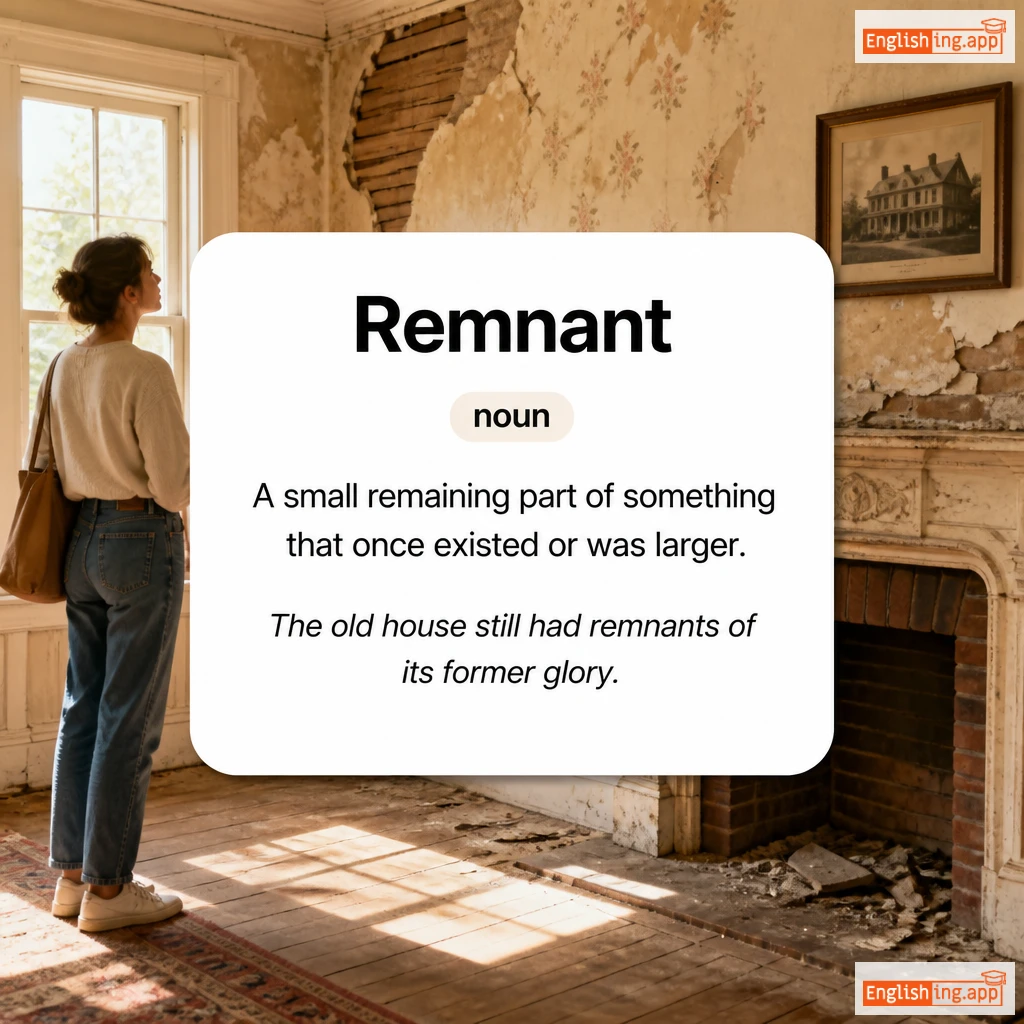
Remnant definition card — visual illustration of the meaning
noun C1
/ˈrɛmnənt/
残余 (zan'yo)

A small remaining part of something that once existed or was larger.

"The old house still had remnants of its former glory."

"その古い家には、かつての栄光の残余がまだ残っていました。" (Sono furui ie ni wa, katsute no eikō no zan'yo ga mada nokotte imashita.)
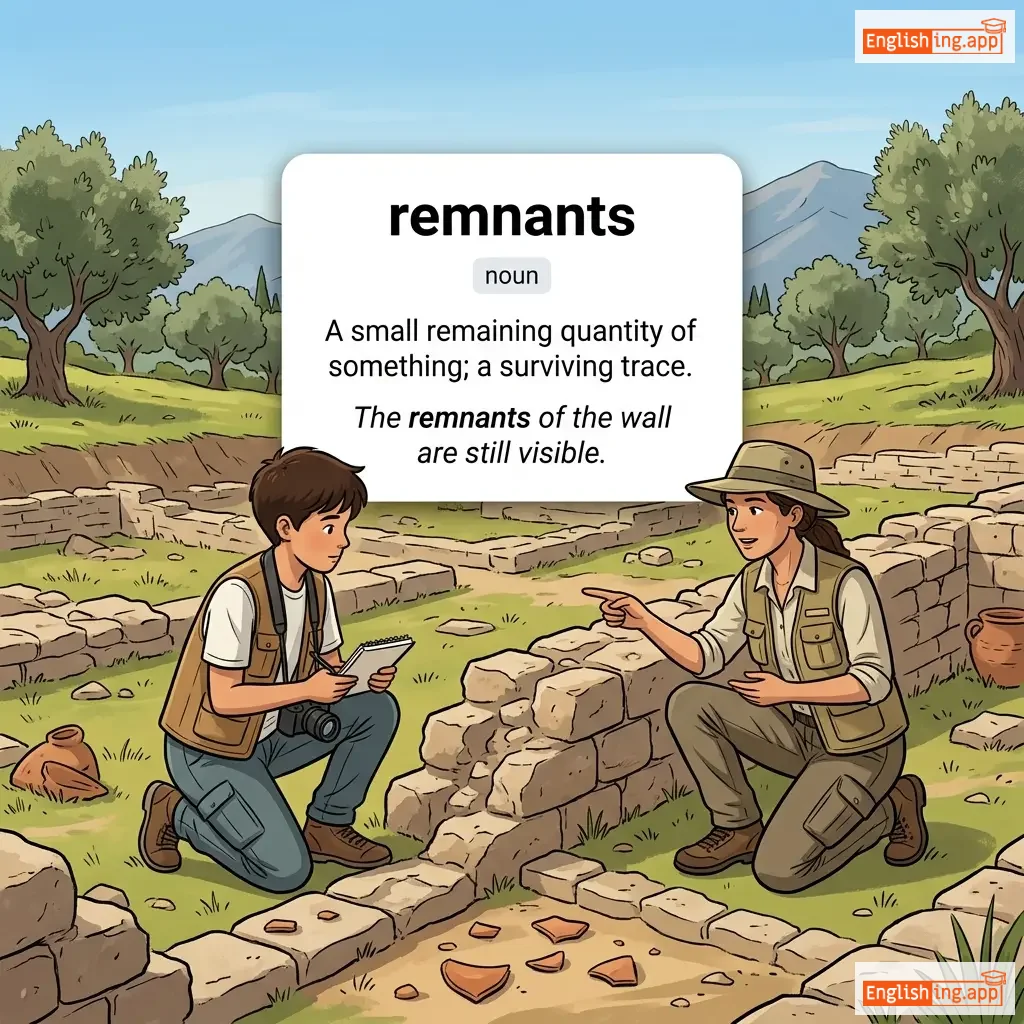
remnants definition card — visual illustration of the meaning
noun C1
ˈremnənts
遺物 (ibutsu)

A small remaining quantity of something; a surviving trace.

"The remnants of the wall are still visible."

"壁の遺物はまだ見える。" (Kabe no ibutsu wa mada mieru.)
verb C1
/ˌriːˈmɒdəl/
改装する (kaisou suru)

To change the structure or form of something, especially a building.

"They decided to remodel their kitchen last summer."

"彼らは昨年の夏にキッチンをリモデルすることに決めました。" (Karera wa sakunen no natsu ni kitchin o rimoderu suru koto ni kimemashita.)
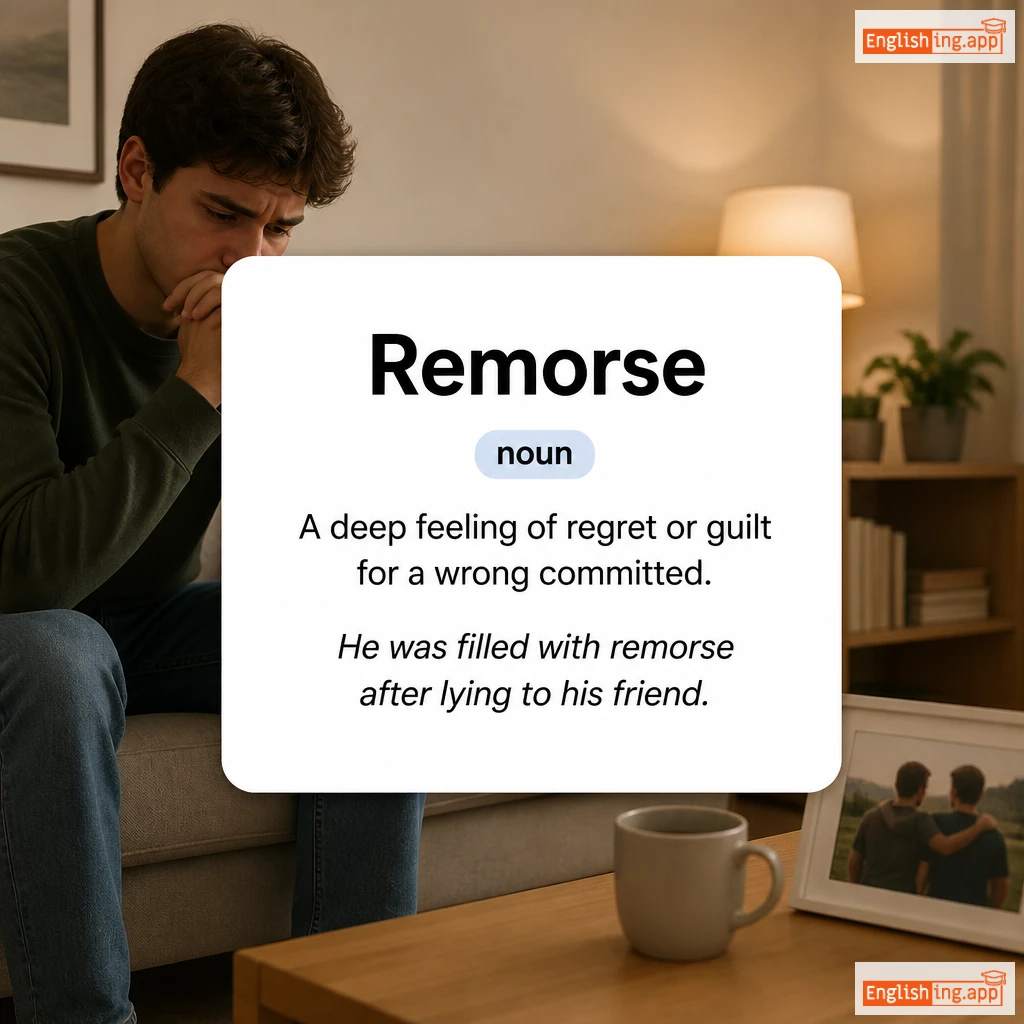
Remorse definition card — visual illustration of the meaning
noun C1
/rɪˈmɔːrs/
後悔 (kōkai)

A deep feeling of regret or guilt for a wrong committed.

"He was filled with remorse after lying to his friend."

"彼は友達に嘘をついた後、後悔の念にかられた。" (Kare wa tomodachi ni uso o tsuita ato, kōkai no nen ni karareta.)
adjective C1
/rɪˈmoʊtɪd/
リモートされた (rimōto sareta)

placed at a distance; made remote

"The system was remoted to a secure location."

"システムは安全な場所にリモートされました。" (Shisutemu wa anzen na basho ni rimōto saremashita.)
verb C1
/rɪˈmjuːnəreɪt/
報酬を支払う (hōshū o shiharau)

To pay someone for services or work done.

"The company will remunerate employees fairly for their overtime."

"会社は残業に対して従業員に公正な報酬を支払います。" (Kaisha wa zangyō ni taishite jūgyōin ni kōsei na hōshū o shiharai masu.)
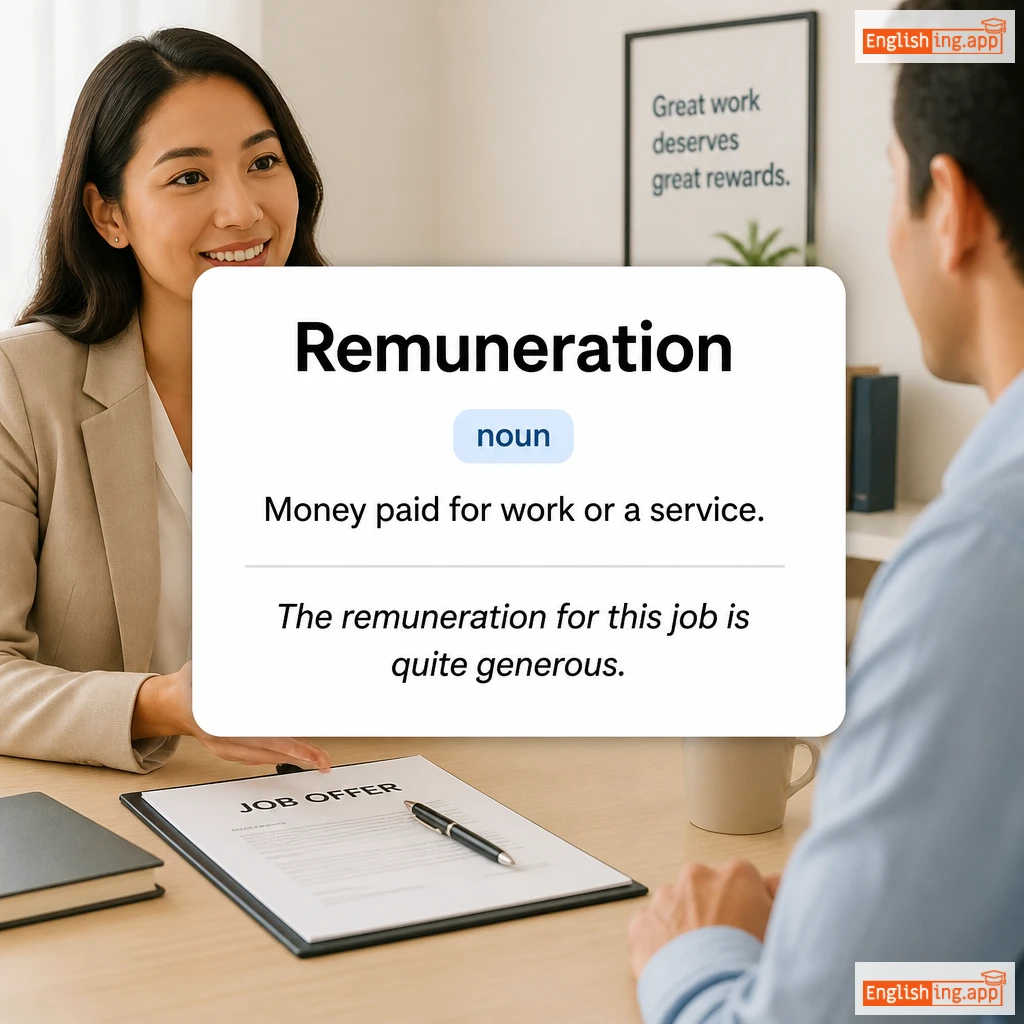
Remuneration definition card — visual illustration of the meaning
noun C1
/rɪˌmjuːnəˈreɪʃən/
報酬 (hoshu)

Money paid for work or a service.

"The remuneration for this job is quite generous."

"この仕事の報酬はかなり寛大です。" (Kono shigoto no hoshū wa kanari kandai desu.)
noun C1
/ˈrɒndɪvuː/
会合 (kaigou)

a meeting or appointment at an agreed time and place

"They arranged a secret rendezvous at the café."

"彼らはカフェで秘密の会合を手配しました。" (Karera wa kafe de himitsu no kaigou o tehai shimashita.)
noun C1
/rɛnˈdɪʃən/
演奏 (enzō)

a performance or interpretation of a piece of art, music, or text

"The singer gave a moving rendition of the classic song."

"歌手はクラシックな歌の感動的な演奏を行いました。" (Kashu wa kurashikku na uta no kandōteki na enzō o okonaimashita.)
noun C1
/ˈrɛnɪˌɡeɪd/
裏切り者 (uragirimono)

a person who deserts or betrays an organization, country, or principles

"He was labeled a renegade after leaving the party and criticizing its policies."

"彼は党を離れ、その政策を批判した後、裏切り者と見なされた。" (Kare wa tō o hanare, sono seisaku o hihan shita ato, uragirimono to minasareta.)