वोकैबुलरीज

इंग्लिश वोकैबुलरी डिस्कवर, लर्न और मास्टर करें

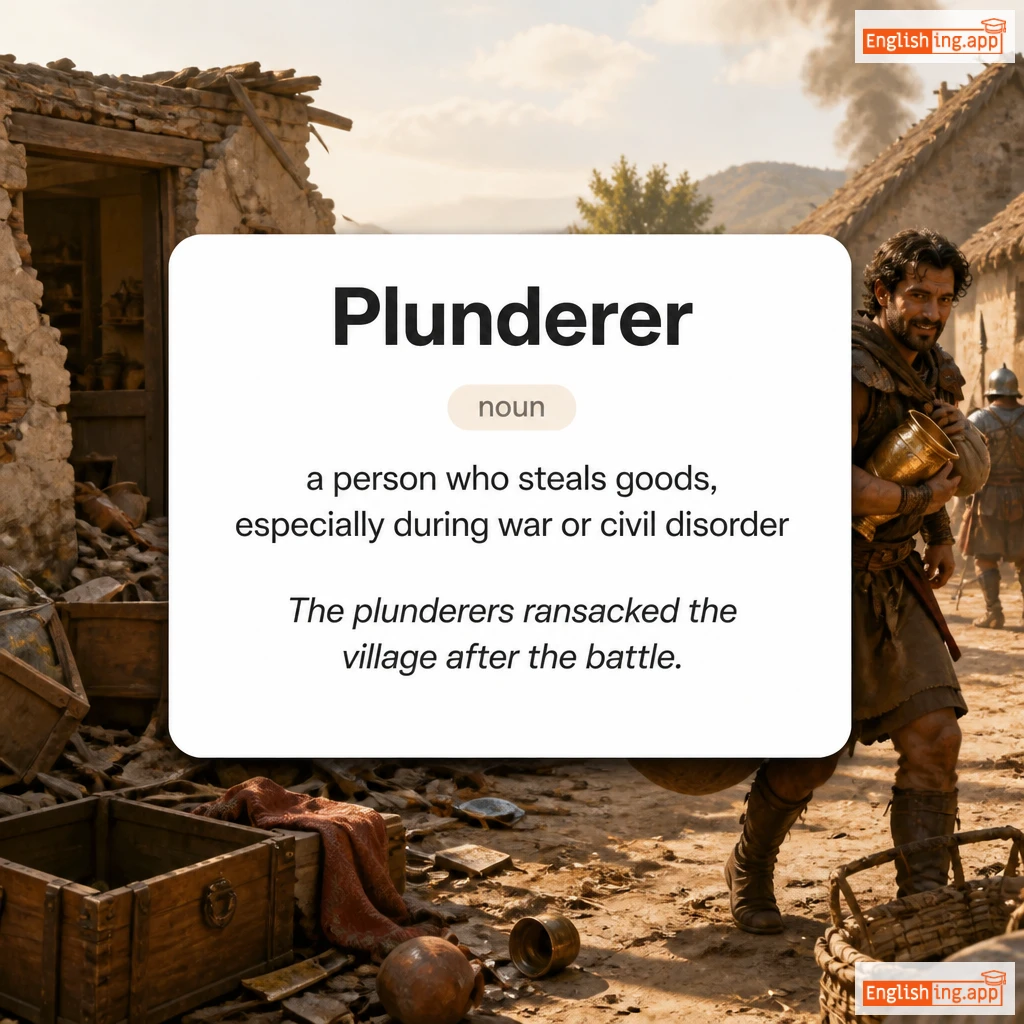
Plunderer definition card — visual illustration of the meaning
noun C1
/ˈplʌn.dər.ər/
грабитель (grabitiel)

a person who steals goods, especially during war or civil disorder

"The plunderers ransacked the village after the battle."

"Грабители разграбили деревню после сражения." (Grabiteli razgrabili derevnyu posle srazheniya.)
noun C1
/plʊəˈrælɪti/
множество или большинство (mnozhestvo ili bol'shinstvo)

the state of being multiple; the greater part or majority

"In the election, she won by a plurality of votes."

"На выборах она выиграла с множеством голосов." (Na viborakh ona viigrala s mnozhestvom golosov.)
noun C1
/ˈpoʊdiətrɪst/
подолог (podolog)

a doctor specializing in foot care

"I have an appointment with the podiatrist for my ankle pain."

"У меня запись к подологу из-за боли в лодыжке." (U menya zapis' k podologu iz-za boli v lodyzhke.)
noun C1
/poʊˈɛt.ɪks/
поэтика, теория поэзии (poetika, teoriya poezii)

the study or theory of poetry and its principles

"He wrote a book on poetics explaining the art of verse."

"Он написал книгу о поэтике, объясняющую искусство стиха." (On napisal knigu o poetike, obyasnyayushchuyu iskusstvo stikha.)
noun C1
/ˈpɔɪ.nən.si/
тоска, сожаление (toska, sozhalenie)

the quality of evoking a keen sense of sadness or regret; emotionally touching

"The poignancy of the farewell brought tears to everyone's eyes."

"Трагичность прощания вызвала слезы на глазах у всех." (Tragichnost' proshchaniya vyzvala slezy na glazakh u vsekh.)
adjective C1
/ˈpɔɪ.njənt/
трогательный, глубоко тронувший (trogatelnij, gluboko tronuvshij)

evoking a keen sense of sadness or regret; deeply touching

"The movie's ending was so poignant that many in the audience were moved to tears."

"Конец фильма был настолько трогательным, что многие зрители были потрясены до слёз." (Konets fil'ma byl nastol'ko trogatelnym, chto mnogie zriteli byli potryaseny do slyoz.)
poise definition card — visual illustration of the meaning
noun C1
/pɔɪz/
грация, выдержка, спокойствие (gratsiya, vydershka, spokoyestviye)

graceful and elegant bearing in a person; composure under stress

"She maintained her poise even under intense questioning."

"Она сохраняла спокойствие даже под интенсивным допросом." (Ona sokhranala spokoyestviye dazhe pod intensivnym doprosom.)
noun C1
/poʊˈlær.ɪ.ti/
полярность (polyarnost)

the state of having two opposite or contradictory tendencies, opinions, or aspects

"The polarity between the two political parties is growing stronger."

"Полярность между двумя политическими партиями становится все сильнее." (Polyarnost' mezhdu dvumya politicheskimi partiyami stanovitsya vse sil'nee.)
verb C1
/ˈpoʊ.lə.raɪz/
поляризовать (polyarizovat)

to divide or cause to divide into two sharply contrasting groups or sets of opinions or beliefs

"The controversial decision polarized public opinion."

"Противоречивое решение разделило общественное мнение на два противоположных лагеря." (Protivorechivoe reshenie razdelo obshchestvennoe mnenie na dva protivopolozhnykh lagerya.)
adjective C1
/ˈpoʊləraɪzd/
поляризованный (polyarizovannyy)

divided into two sharply contrasting groups or opinions

"The debate polarized the community on the issue of climate change."

"Дебаты поляризовали сообщество по вопросу изменения климата." (Debaty polyarizovali soobshchestvo po voprosu izmeneniya klimata.)
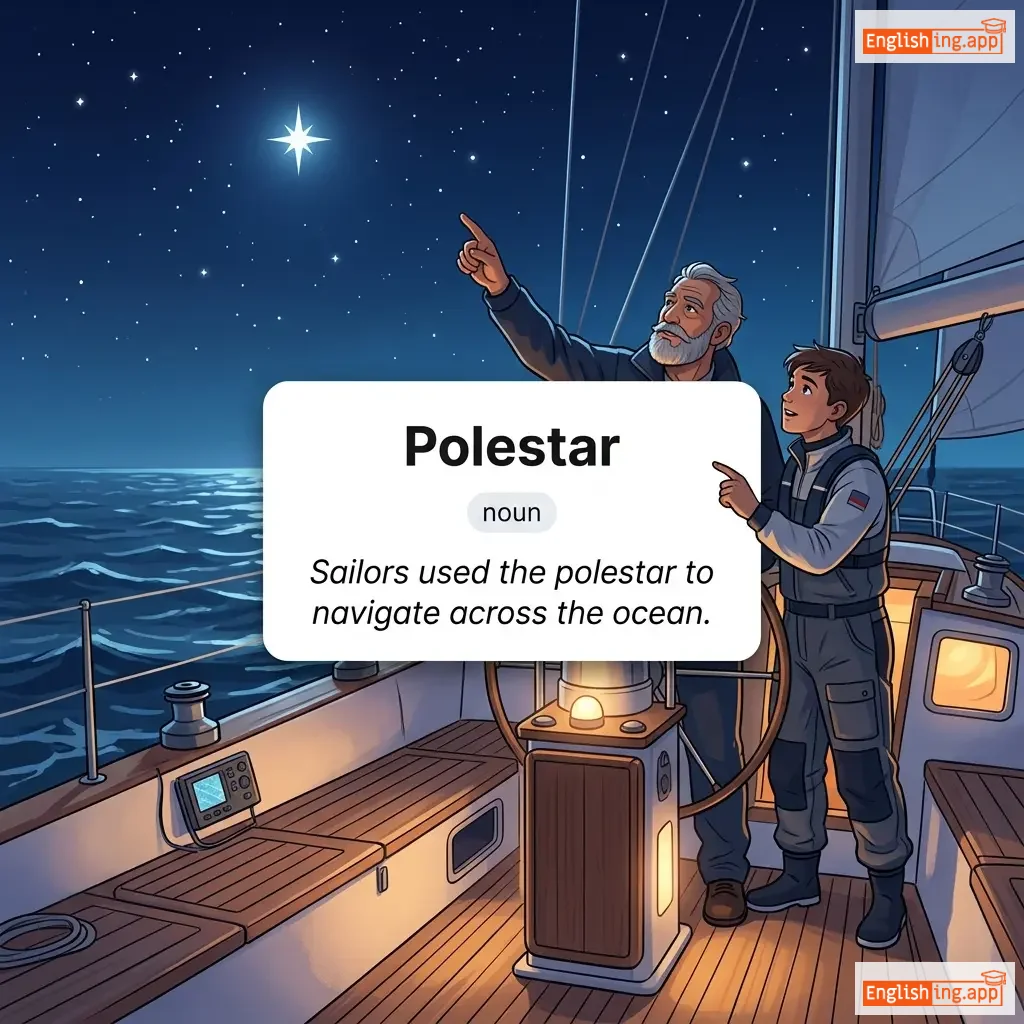
Polestar definition card — visual illustration of the meaning
noun C1
/ˈpoʊl.stɑːr/
полярная звезда (polyarnaya zvezda)

a bright star that appears to stay in the same position in the sky and is used for navigation

"Sailors used the polestar to navigate across the ocean."

"Моряки использовали полярную звезду, чтобы ориентироваться через океан." (Moryaki ispol'zovali polyarnuyu zvezdu, chtoby orientirovatsya cherez okean.)
adjective C1
/ˈpɒlɪtɪk/
хитрый, разумный (khitryy, razumnyy)

shrewd, prudent, or tactful in practical matters

"It was politic of him to remain silent during the argument."

"Это было мудро с его стороны оставаться молчаливым во время спора." (Eto bylo mudro s ego storony ostavat'sya molchalivym vo vremya spora.)
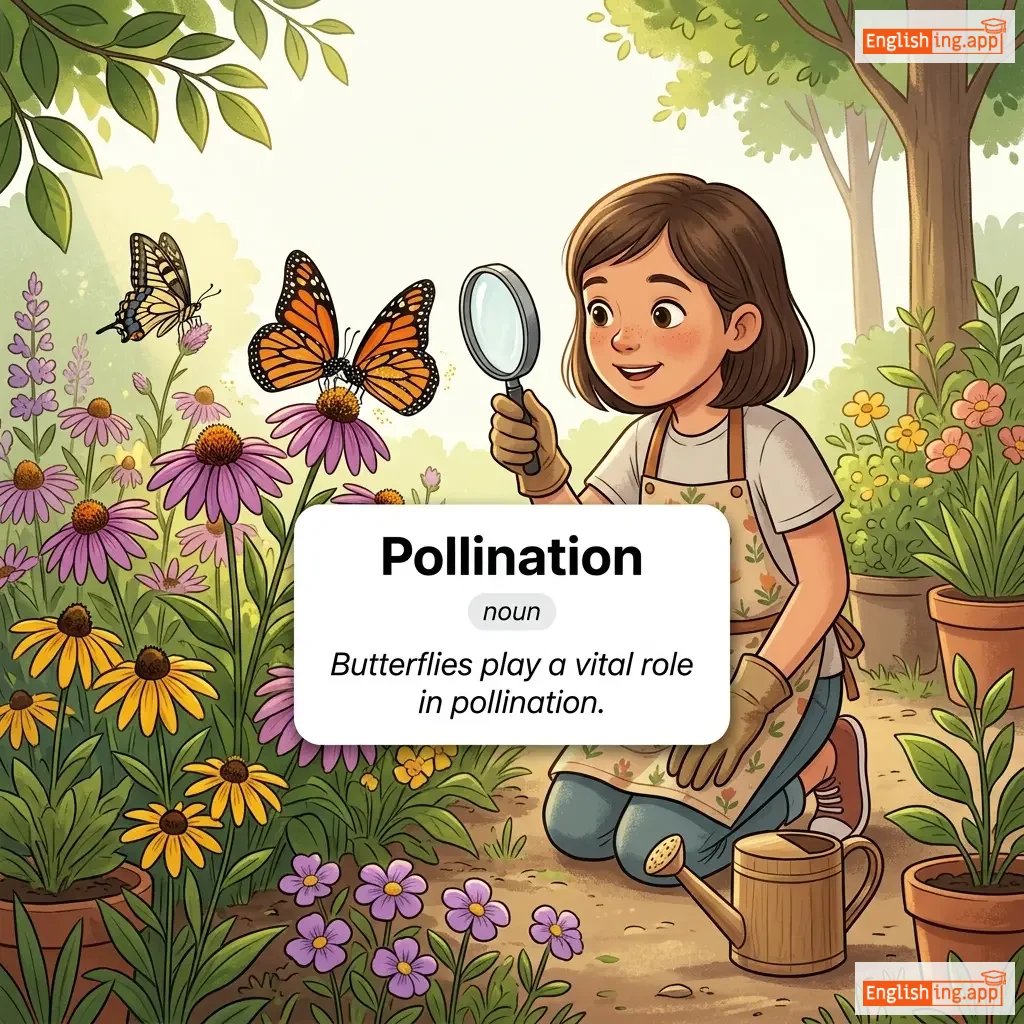
Pollination definition card — visual illustration of the meaning
noun C1
ˌpɒlɪˈneɪʃən
опыление (opylenie)

The process by which pollen is transferred from flowers, enabling plant reproduction.

"Butterflies play a vital role in pollination."

"Бабочки играют важную роль в опылении." (Babochki igraiut vazhnuu rol' v opylenii.)
noun C1
/ˈpoʊlstər/
социолог (sotsiolog)

a person or organization that conducts surveys to gauge public opinion

"The pollster predicted a close election outcome."

"Опросчик предсказал близкий результат выборов." (Opros' chik predskazal blizkiy rezultat vyborov.)
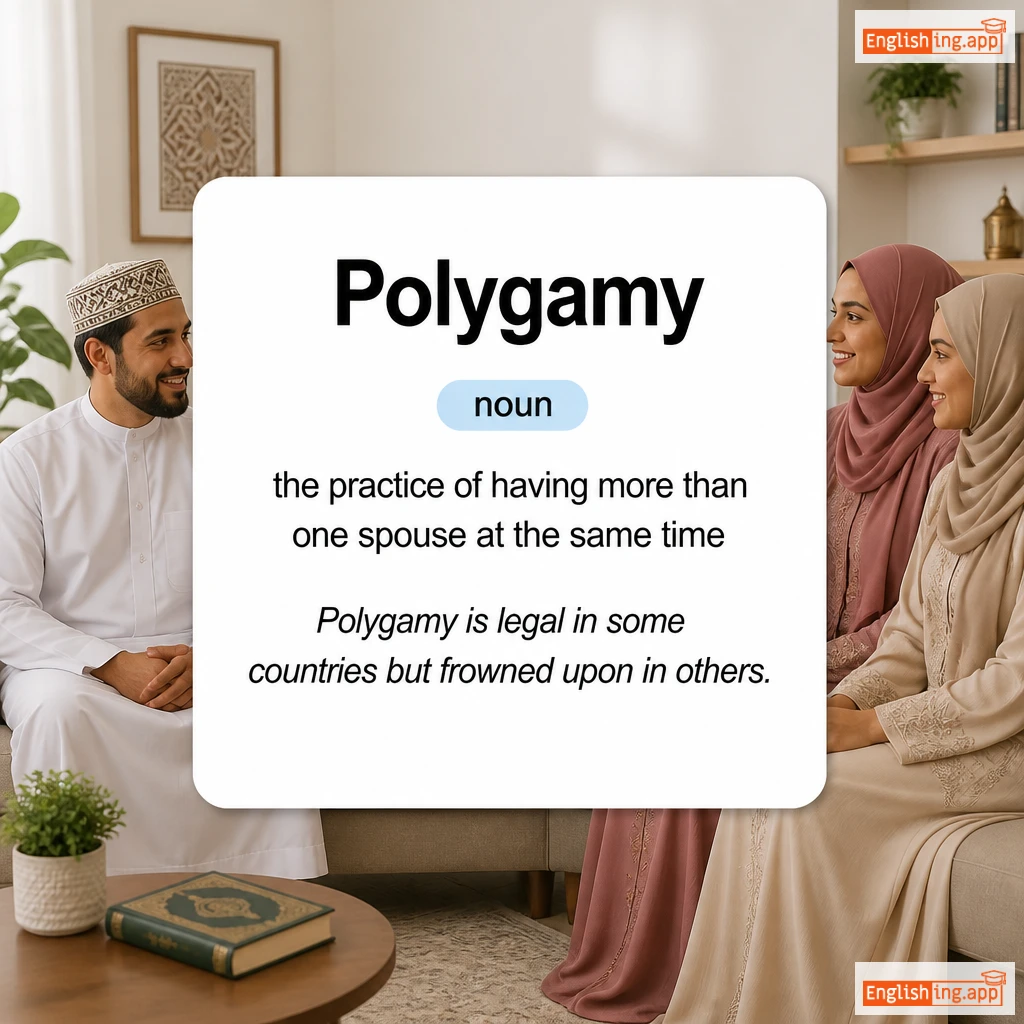
Polygamy definition card — visual illustration of the meaning
noun C1
/ˈpɒlɪɡəmi/
полига́мия (poligamiya)

the practice of having more than one spouse at the same time

"Polygamy is legal in some countries but frowned upon in others."

"Полига́мия законна в некоторых странах, но осуждается в других." (Poligamiya zakonna v nekotorykh stranakh, no osuzhdayetsya v drugikh.)
noun C1
/ˈpɒlɪɡlɒt/
полиглот (poliglot)

a person who knows and can use several languages

"She is a polyglot, fluent in English, Spanish, and Bengali."

"Она полиглот, свободно говорит на английском, испанском и бенгальском." (Ona poliglot, svobodno govorit na angliyskom, ispanskom i bengalskom.)
noun C1
/ˈpɒlɪɡɒn/
многоугольник (mnogougolnik)

a flat shape with three or more straight sides

"The artist drew a colorful polygon on the canvas."

"Художник нарисовал цветной многоугольник на холсте." (Hudozhnik narisoval tsvetnoy mnogougolnik na kholste.)
noun C1
/ˌpɒl.iˈtek.nɪk/
политехнический институт (politekhnicheskiy institut)

an educational institution offering practical and technical courses

"She studied engineering at a well-known polytechnic in her city."

"Она изучала инженерию в известном политехническом вузе своего города." (Ona izuchala inzheneriyu v izvestnom politekhnicheskom vuze svoego goroda.)
pomodoro definition card — visual illustration of the meaning
noun C1
/ˌpɒməˈdɔːrəʊ/
помодоро (pomodoro)

A time management technique that uses a timer to break down work into intervals.

"The Pomodoro technique improves productivity."

"Техника Помодоро улучшает производительность." (Tekhnika Pomodoro uluchshaet proizvoditel'nost'.)
noun C1
/pɒmp/
помпа, роскошь (pompa, roskoch)

ceremonial display or splendor; grandeur

"The graduation ceremony was full of pomp and circumstance."

"Церемония вручения дипломов была полна помпы и роскоши." (Tseremoniya vrucheniya diplomov byla polna pompy i roskoshi.)
adjective C1
/ˈpɒmpəs/
помпезный (pompeznyy)

exaggeratedly self-important; ostentatious

"The manager had a pompous attitude that annoyed his team."

"У менеджера было помпезное поведение, которое раздражало его команду." (U menedzhera bylo pompeznoye povedeniye, kotoroye razdrazhalo yego komandu.)
adjective C1
/ˈpɑːndərəs/
тяжелый и медленный (tyazhelyy i medlennyy)

slow and clumsy because of great weight; dull and labored

"The ponderous lecture made it hard for students to stay awake."

"Тяжелая и медленная лекция заставила студентов трудно оставаться бодрыми." (Tyazhelaya i medlennaya lektsiya zastavila studentov trudno ostavat'sya bodrymi.)
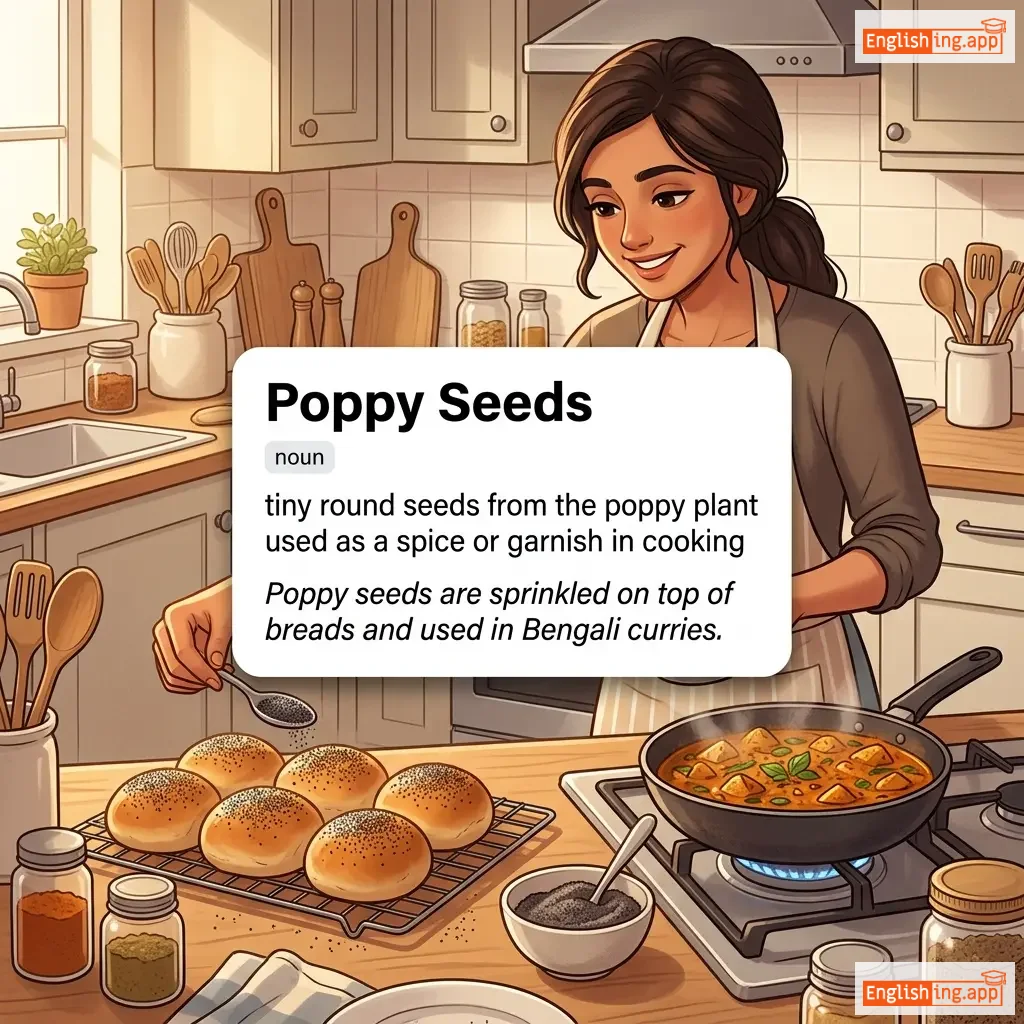
Poppy Seeds definition card — visual illustration of the meaning
noun C1
/ˈpɒp.i siːdz/
маковые семена (makovye semena)

tiny round seeds from the poppy plant used as a spice or garnish in cooking

"Poppy seeds are sprinkled on top of breads and used in Bengali curries."

"Маковые семена посыпаются на хлеб и используются в бенгальских карри." (Makovye semena posypayutsya na khleb i ispol'zuyutsya v bengal'skikh karri.)
noun C1
/ˈpɒpjʊləs/
население (naselenie)

the general public; the ordinary people living in a country or area

"The new law was welcomed by the local populace."

"Новый закон был принят местным населением." (Novyy zakon byl prinyat mestnym naseleniem.)
noun C1
/ˈpɒpjʊlɪst/
популистский лидер (populistskiy lider)

A politician or person who seeks to appeal to ordinary people who feel their concerns are ignored by elites.

"The populist leader promised to put the needs of common citizens first."

"Популистский лидер пообещал поставить потребности простых граждан на первое место." (Populistskiy lider poobeshchal postavit' potrebnosti prostykh grazhdan na pervoye mesto.)
adjective C1
/ˈpɒpjələs/
населенный (naselyonny)

Having a large population; densely inhabited.

"Dhaka is one of the most populous cities in the world."

"Москва — один из самых населенных городов в мире." (Moskva — odin iz samykh naselyonnykh gorodov v mire.)
noun C1
/ˈpɔːrsəlɪn/
фарфор (farfor)

A white, hard ceramic material often used for dishes and ornaments.

"The museum displayed ancient porcelain vases from China."

"Музей выставил древние фарфоровые вазы из Китая." (Muzei vystavil drevnie farforovye vazy iz Kitaya.)
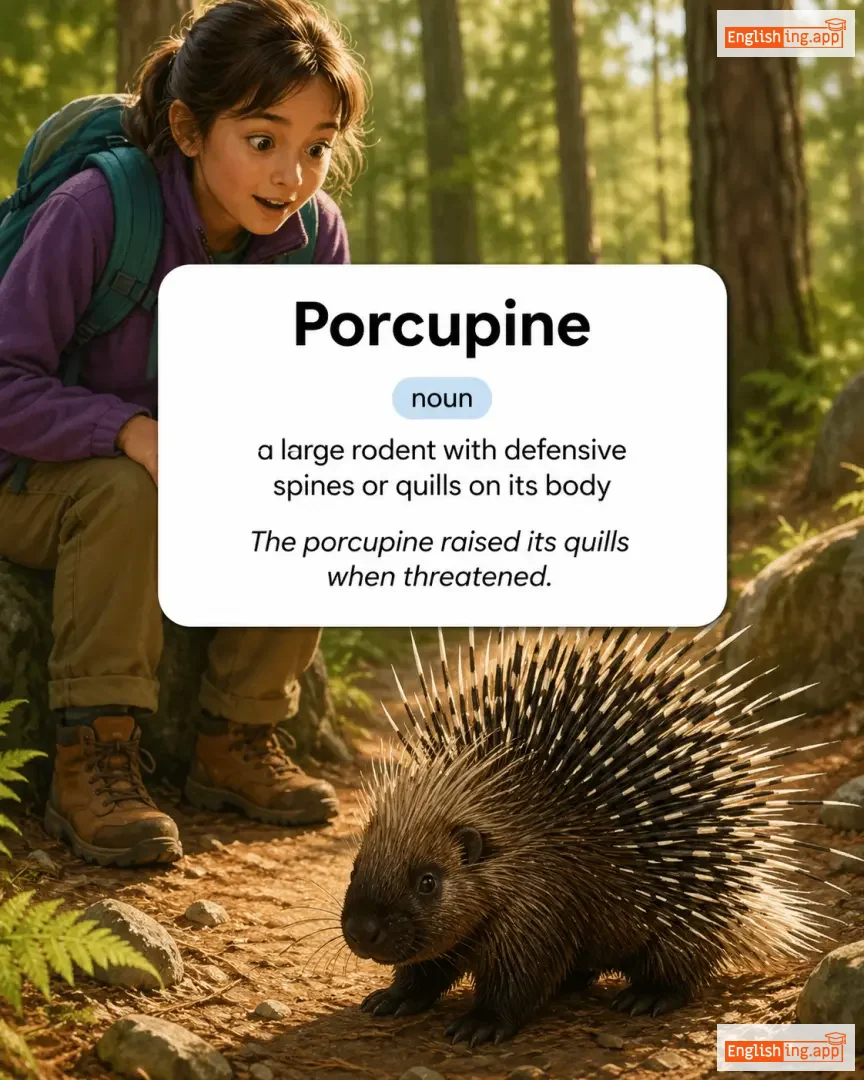
Porcupine definition card — visual illustration of the meaning
noun C1
/ˈpɔːr.kjə.paɪn/
Ежовик (Yezhovik)

a large rodent with defensive spines or quills on its body

"The porcupine raised its quills when threatened."

"Ежовик поднял свои иглы, когда почувствовал угрозу." (Yezhovik podnyal svoi igly, kogda pochuvstvoval ugrozu.)
noun/verb C1
/pɔːr/
поры / тщательно изучать (pory / tchetchno izuchat)

As a noun: a tiny opening in the skin or surface. As a verb: to study something carefully.

"She pored over the documents for hours before making a decision."

"Она изучала документы часами, прежде чем принять решение." (Ona izuchala dokumenty chasami, prezhde chem prinyat reshenie.)
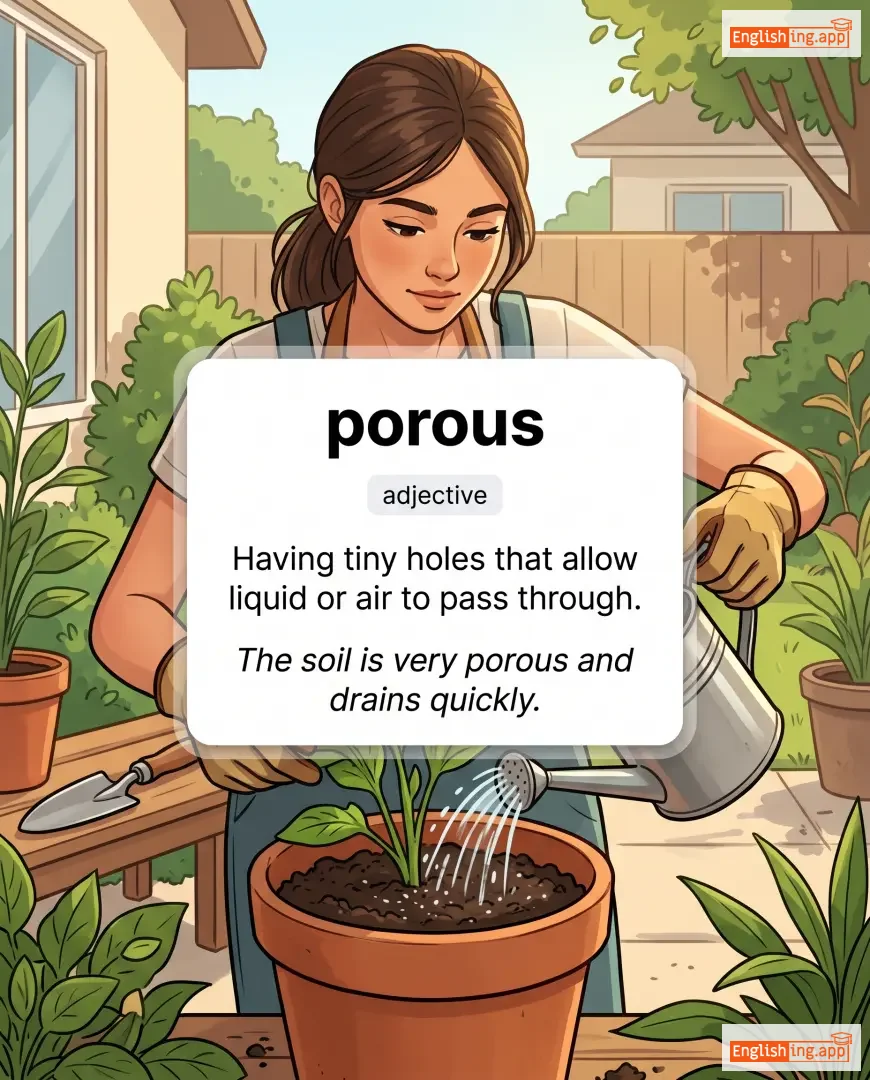
porous definition card — visual illustration of the meaning
adjective C1
/ˈpɔːrəs/
пористый (poristyy)

Having tiny holes that allow liquid or air to pass through.

"The soil is very porous and drains quickly."

"Почва очень пористая и быстро дренирует воду." (Pochva ochen' poristaya i bystro dreniruet vodu.)
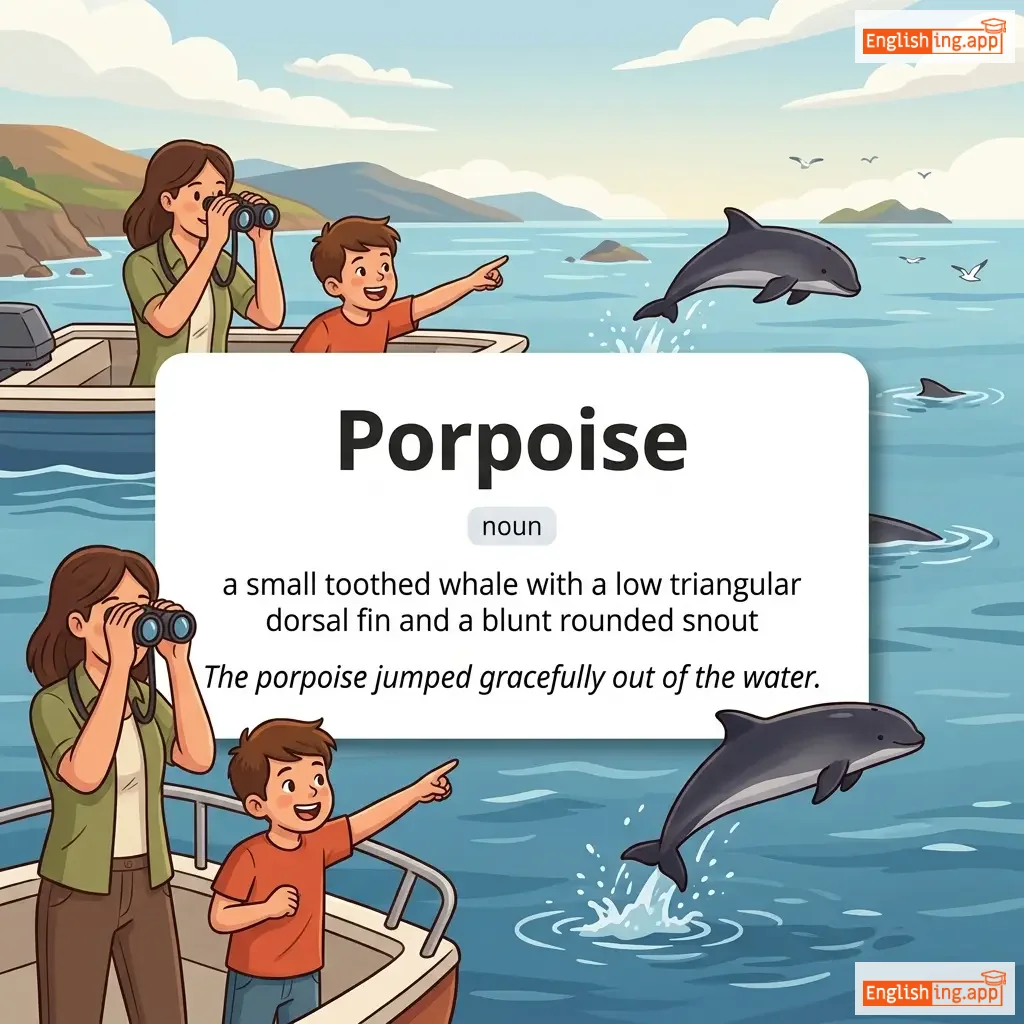
Porpoise definition card — visual illustration of the meaning
noun C1
/ˈpɔː.pəs/
моржовый дельфин (morzhovyy delfin)

a small toothed whale with a low triangular dorsal fin and a blunt rounded snout

"The porpoise jumped gracefully out of the water."

"Моржовый дельфин грациозно выпрыгнул из воды." (Morzhovyy delfin gratsiozno vyprygnul iz vody.)
💡

posit

verb C1
/ˈpɑːzɪt/

To assume or suggest something as a fact or basis for reasoning.

"The scientist posited a new theory to explain the phenomenon."

noun C1
/pəˈzɛsər/
владелец (vladyelets)

A person who owns or holds something.

"The possessor of the land built a new house."

"Владелец земли построил новый дом." (Vladyelets zemli postroil novyy dom.)
verb C1
/ˌpoʊstˈdeɪt/
поставить позднюю дату (postavit' pozdnyuyu datu)

To assign a date later than the actual date to a document or event.

"She postdated the check to next month."

"Она поставила дату чека на следующий месяц." (Ona postavila datu cheka na sleduyushchiy mesyats.)
adjective C1
/pɒˈstɪəriər/
постериор (posterior)

Situated at or toward the back; later in time.

"The posterior part of the brain controls vision."

"Задняя часть мозга контролирует зрение." (Zadnyaya chast' mozga kontroliruet zrenie.)
noun C1
/pɒˈstɛrɪti/
потомство (potomstvo)

All future generations of people.

"The monument was built for the benefit of posterity."

"Памятник был построен на благо будущих поколений." (Pamyatnik byl postroen na blago budushchikh pokoleniy.)
adjective C1
/ˈpɒstjʊməs/
посмертный (posmertny)

Occurring, awarded, or appearing after the death of the originator.

"He received a posthumous award for his bravery."

"Он получил посмертную награду за свою храбрость." (On poluchil posmertnuyu nagradu za svoyu khrabrost'.)
noun, adjective C1
/ˌpəʊstˈmɔːtəm/
посмертное вскрытие (posmertnoe vskrytie)

An examination of a dead body to determine the cause of death.

"The doctor carried out a postmortem on the body."

"Доктор провел посмертное вскрытие тела." (Doktor provel posmertnoe vskrytie telya.)
noun C1
/ˈpəʊstˌskrɪpt/
постскриптум (postskriptum)

an additional remark at the end of a letter or text, after the signature

"She added a brief postscript to thank him again."

"Она добавила краткое постскриптум, чтобы снова поблагодарить его." (Ona dobavila kratkoe postskriptum, chtoby snova poblagodarit' ego.)
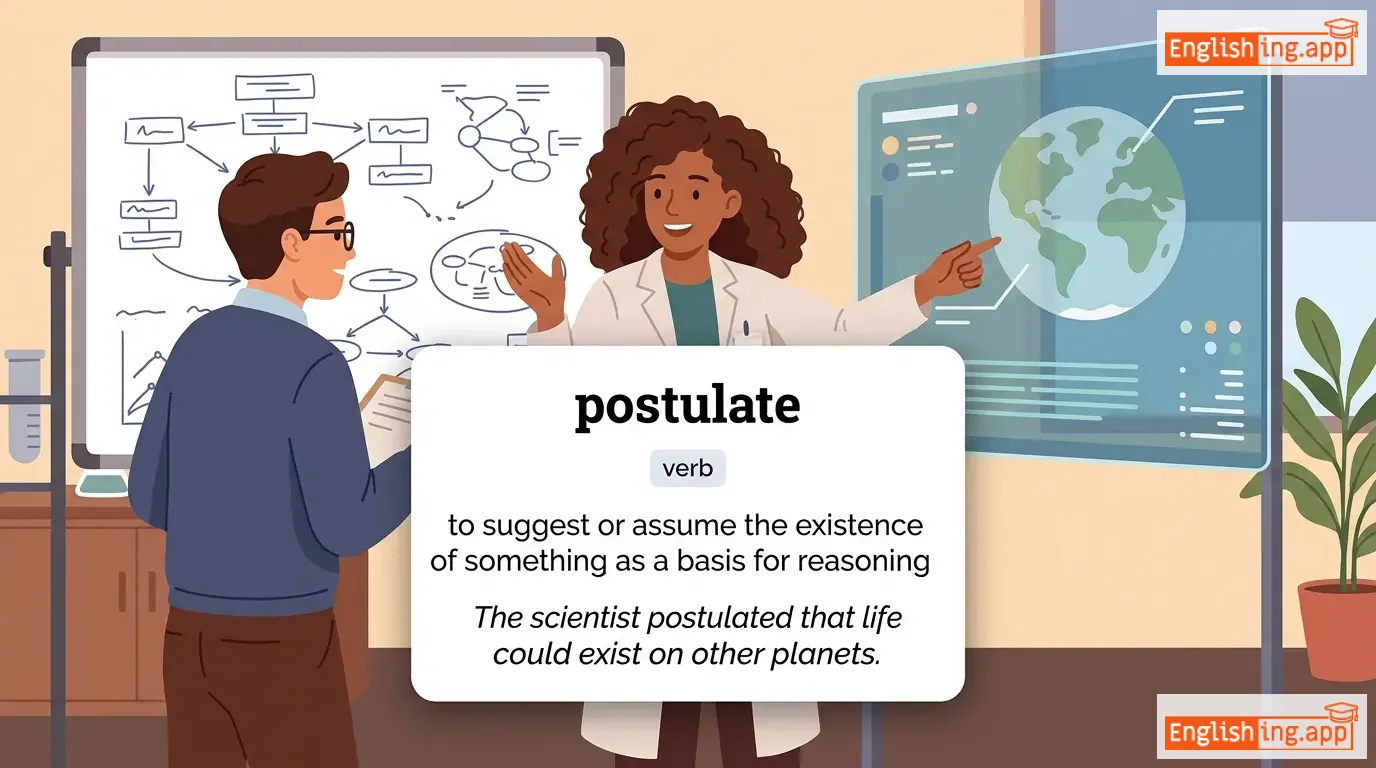
postulate definition card — visual illustration of the meaning
verb C1
/ˈpɒstjʊˌleɪt/
постулировать (postulirovat)

to suggest or assume the existence of something as a basis for reasoning

"The scientist postulated that life could exist on other planets."

"Учёный постулировал, что жизнь может существовать на других планетах." (Uchënyy postuliroval, chto zhizn' mozhet sushchestvovat' na drugikh planetakh.)
adjective C1
/ˈpəʊtəbl/
питьевой (pit'yevoy)

safe to drink; drinkable

"The villagers did not have access to potable water."

"Жители деревни не имели доступа к питьевой воде." (Zhiteli derevni ne imeli dostupa k pit'yevoy vode.)
noun C1
/ˈpoʊtənsi/
мощность (moshchnost)

The power or ability of something to affect or influence; strength or effectiveness.

"The potency of the new medicine amazed the doctors."

"Мощность нового лекарства поразила врачей." (Moshchnost' novogo lekarstva porazila vrachey.)
adjective C1
/ˈpoʊtənt/
мощный (moshnyy)

Having great power, influence, or effect.

"This is a very potent drug that should be used carefully."

"Это очень мощное лекарство, которое следует использовать с осторожностью." (Eto ochen' moshchnoe lekarstvo, kotoroe sleduyet ispol'zovat' s ostorozhnost'yu.)
noun C1
/ˈpoʊʃən/
отвар (otvar)

a liquid with healing, magical, or poisonous properties

"The witch gave the hero a healing potion."

"Ведьма дала герою целебный отвар." (Ved'ma dala geroiu tselebnyi otvar.)
verb C1
/paʊt/
надуть губы (nadut' guby)

to push one's lips forward as an expression of annoyance or sulkiness

"The child began to pout when he didn’t get the toy."

"Ребёнок начал надувать губы, когда не получил игрушку." (Rebyonok nachal naduvat' guby, kogda ne poluchil igrooshku.)
adjective C1
/ˈpræk.tɪ.kə.bəl/
осуществимый (osushchestvimyy)

able to be done or put into practice successfully

"The plan is not practicable without more resources."

"План не является осуществимым без дополнительных ресурсов." (Plan ne yavyayetsya osushchestvimym bez dopolnitel'nykh resursov.)
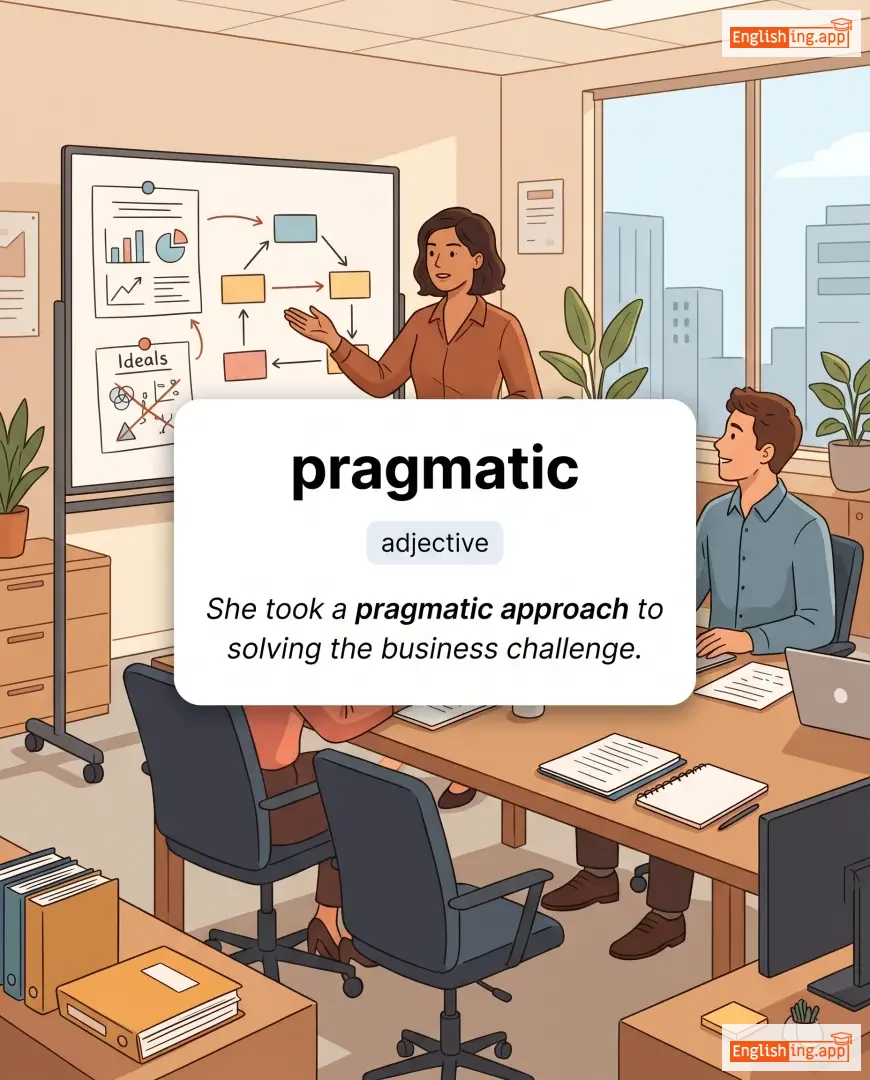
pragmatic definition card — visual illustration of the meaning
adjective C1
/præɡˈmætɪk/
прагматичный (pragmatic)

Dealing with problems in a practical and sensible way rather than depending on theories or ideals.

"She took a pragmatic approach to solving the business challenge."

"Она приняла прагматичный подход к решению бизнес-задачи." (Ona prinyala pragmatichnyj podhod k resheniyu biznes zadachi)
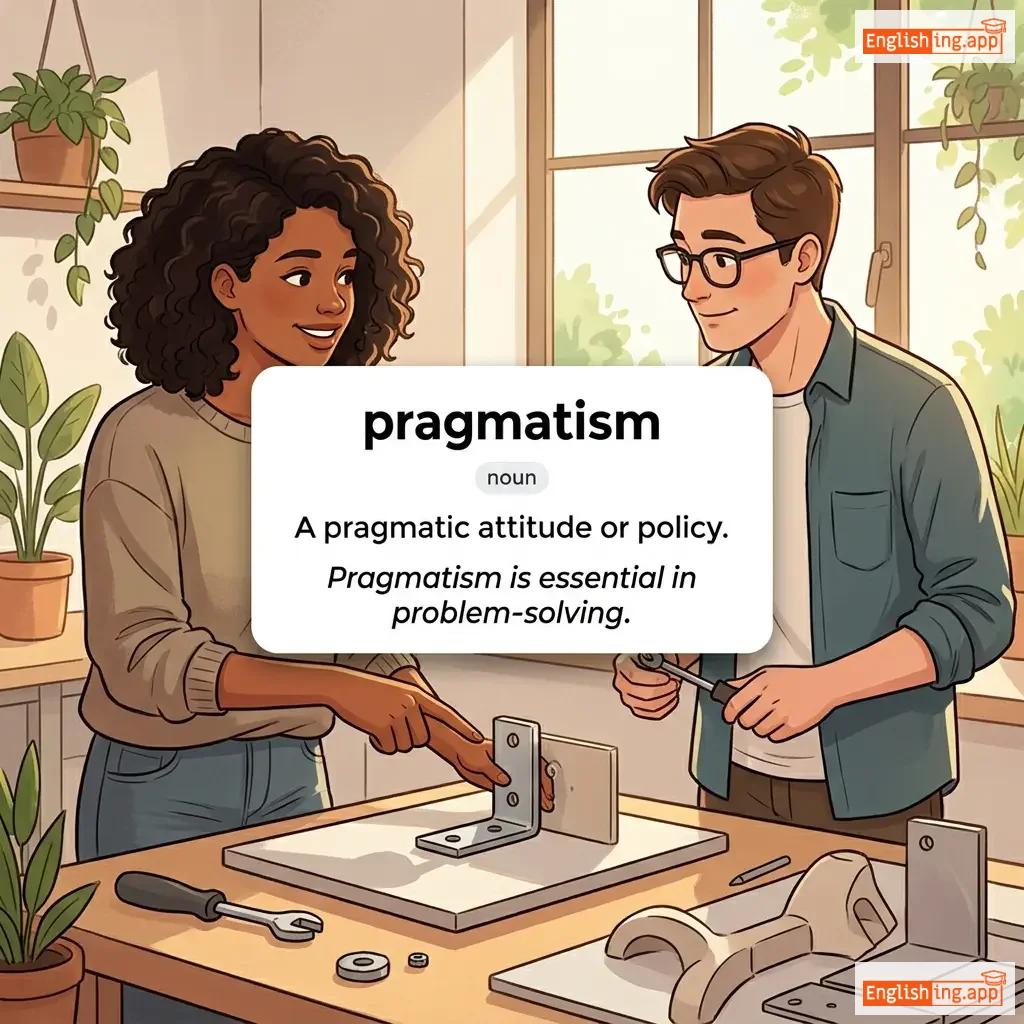
pragmatism definition card — visual illustration of the meaning
noun C1
/ˈpræɡ.mə.tɪ.zəm/
прагматизм (pragmatizm)

A pragmatic attitude or policy.

"Pragmatism is essential in problem-solving."

"Прагматизм необходим для решения проблем." (Pragmatizm neobkhodim dlya resheniya problem.)
noun C1
/ˈpræɡmətɪst/
прагматик (pragmatik)

A person who deals with things in a practical and realistic way.

"He is a true pragmatist who values results over ideals."

"Он настоящий прагматик, который ценит результаты больше, чем идеалы." (On nastoyashchij pragmatik, kotoryj tsenit rezul'taty bol'she, chem idealy.)
noun C1
/ˈprɛəri/
прерия (preriya)

A large open area of grassland, especially in North America.

"The bison roamed freely across the prairie."

"Бизоны свободно бродили по прерии." (Bizony svobodno brodili po prerii.)