वोकैबुलरीज

इंग्लिश वोकैबुलरी डिस्कवर, लर्न और मास्टर करें

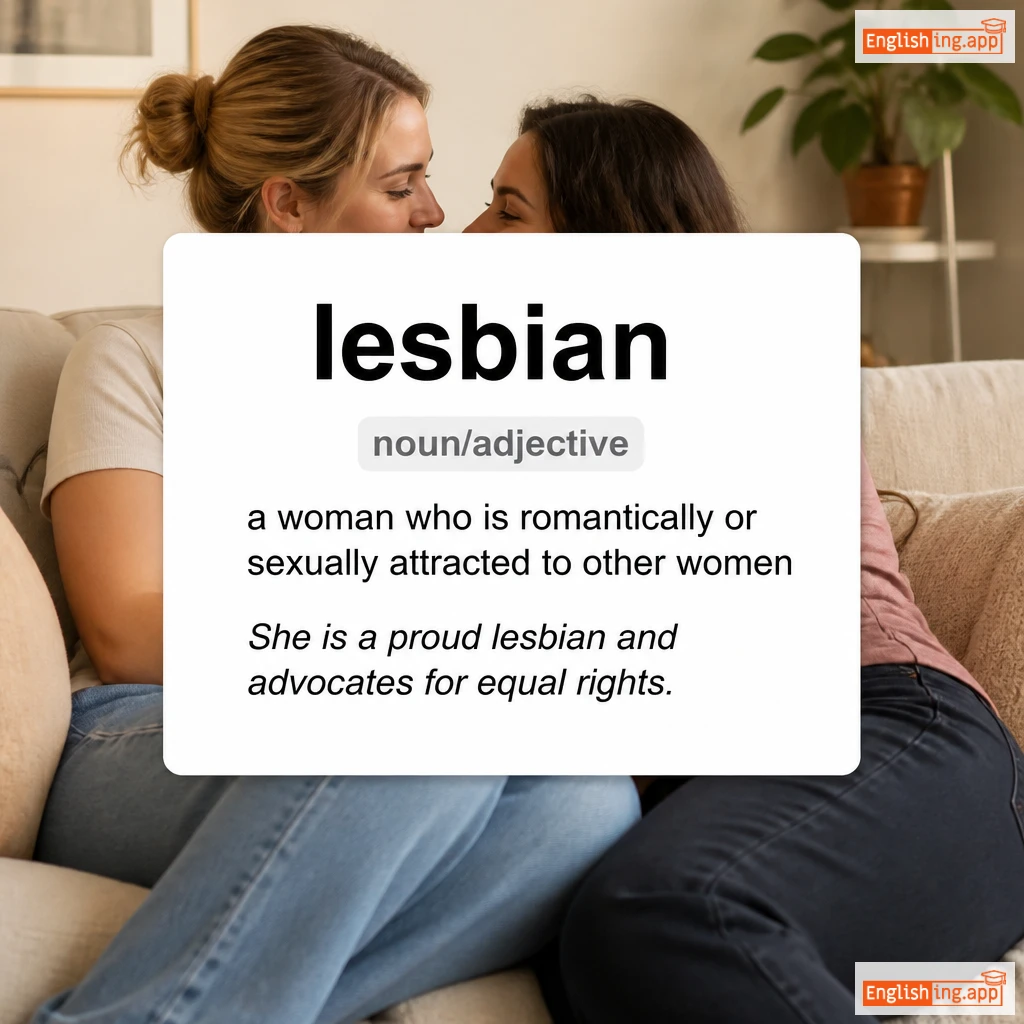
lesbian definition card — visual illustration of the meaning
noun/adjective C1
/ˈlɛzbiən/
女同性恋 (nǚ tóngxìngliàn)

a woman who is romantically or sexually attracted to other women

"She is a proud lesbian and advocates for equal rights."

"她是一个自豪的女同性恋,支持平等权利。" (Tā shì yí gè zìháo de nǚ tóngxìngliàn, zhīchí píngděng quánlì.)
noun C1
/ˈliːʒən/
损伤 (sunshang)

An area of damage or abnormal change in the tissue of an organism, often caused by injury or disease.

"The doctor examined the skin lesion carefully."

"医生仔细检查了皮肤上的损伤。" (Yisheng zixi jiancha le pifu shang de sunshang.)
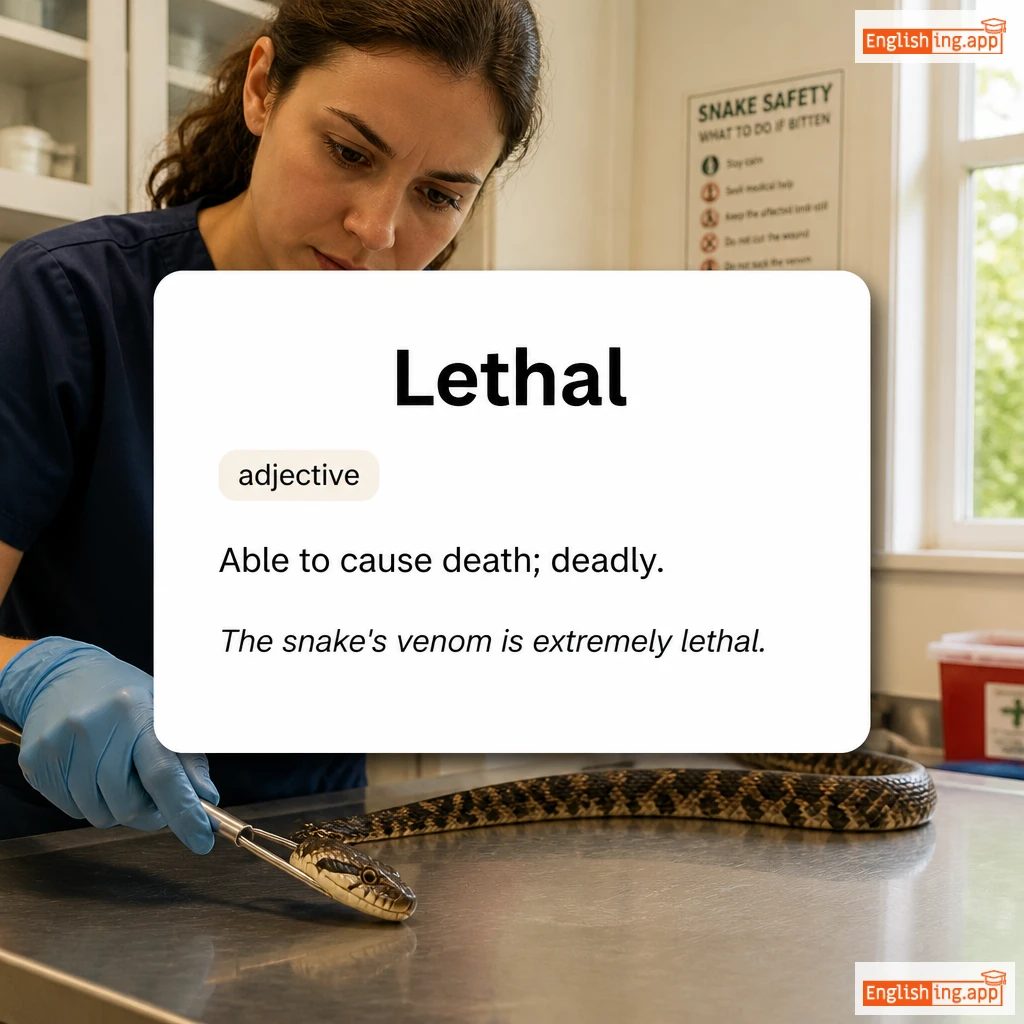
Lethal definition card — visual illustration of the meaning
adjective C1
/ˈliːθəl/
致命的 (zhìmìng de)

Able to cause death; deadly.

"The snake's venom is extremely lethal."

"蛇毒是极其致命的。" (Shé dú shì jíqí zhìmìng de.)
lethargic definition card — visual illustration of the meaning
adjective C1
/ləˈθɑːrdʒɪk/
嗜睡的 (shishui de)

Feeling sluggish, drowsy, or lacking energy.

"After the long journey, he felt lethargic and went straight to bed."

"长途旅行后,他感到嗜睡,直接上床睡觉。" (Changtu lüxing hou, ta gandao shishui, zhijie shangchuang shuijiao.)
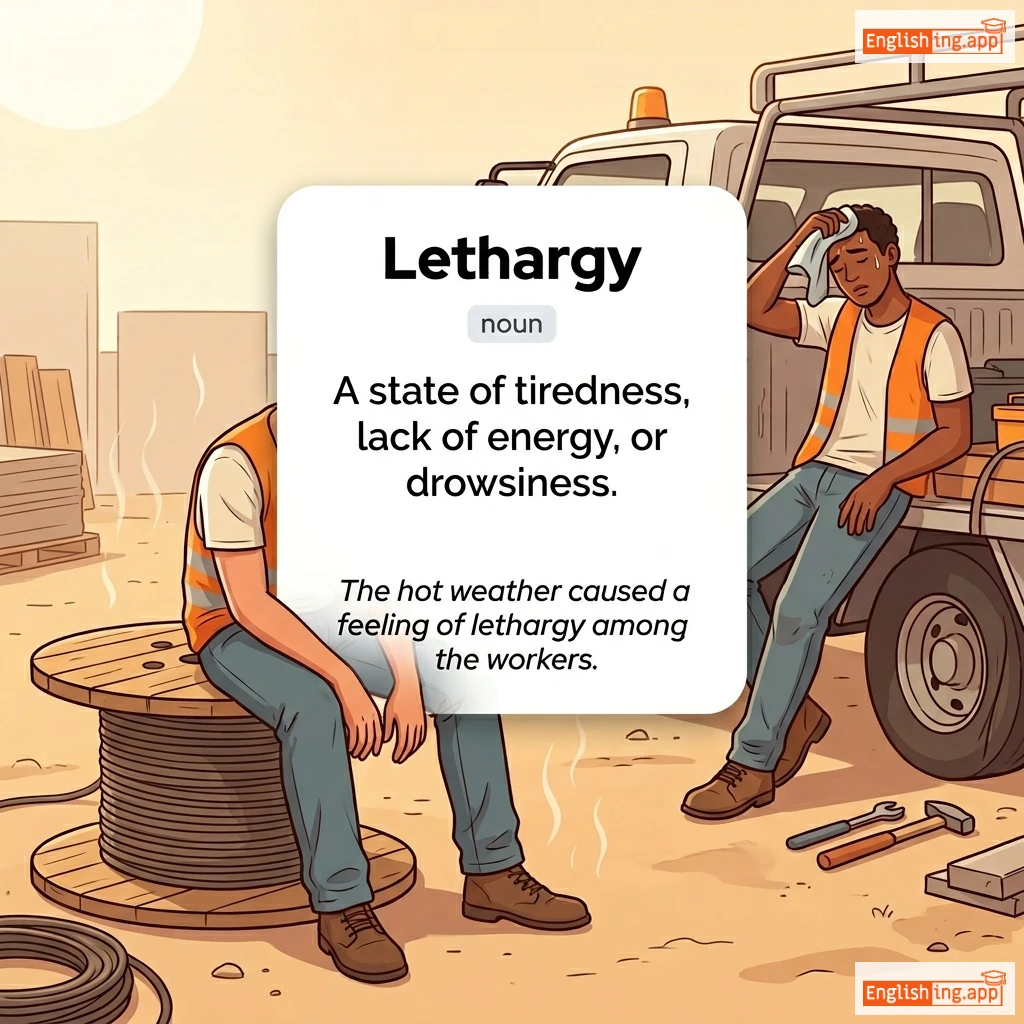
Lethargy definition card — visual illustration of the meaning
noun C1
/ˈleθərdʒi/
嗜睡 (shishui)

A state of tiredness, lack of energy, or drowsiness.

"The hot weather caused a feeling of lethargy among the workers."

"炎热的天气导致工人中产生了嗜睡的感觉。" (Yánrè de tiānqì dǎozhì gōngrén zhōng chǎnshēngle shìshuì de gǎnjué.)
noun, verb C1
/ˈliːvər/ or /ˈlɛvər/
杠杆,刚性杆 (gànggǎn, gāngxìng gǎn)

a rigid bar used to move or lift heavy objects; to move something using leverage.

"He used a lever to lift the heavy stone."

"他使用了一个杠杆来举起重石。" (Tā shǐyòng le yīgè gànggǎn lái jǔqǐ zhòng shí.)
verb C1
/ˈlɛvi/
征收 (zhēng shōu)

To impose or collect, especially a tax or fine.

"The government decided to levy a new tax on luxury goods."

"政府决定对奢侈品征收新税。" (zhèng fǔ jué dìng duì shē chǐ pǐn zhēng shōu xīn shuì.)
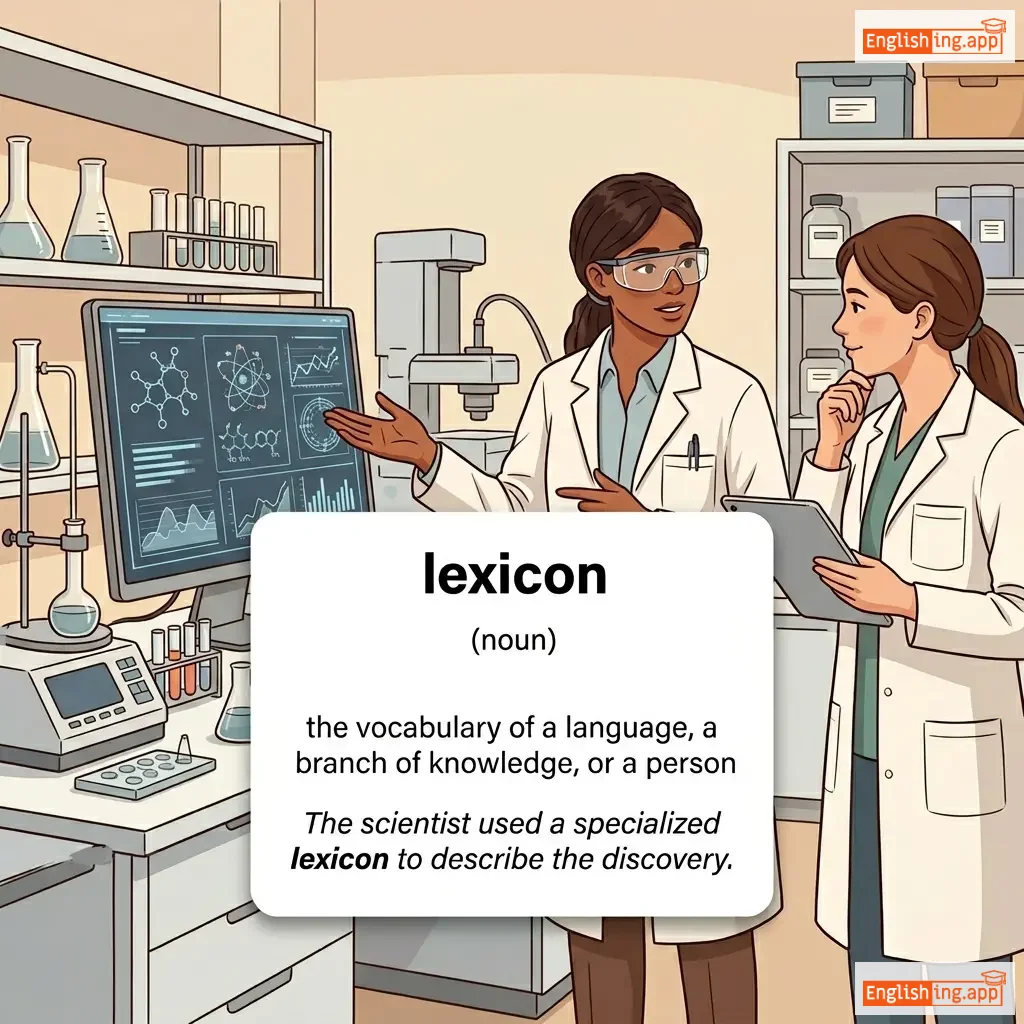
lexicon definition card — visual illustration of the meaning
noun C1
/ˈlɛksɪkən/
词汇表 (cíhuìbiǎo)

the vocabulary of a language, a branch of knowledge, or a person

"The scientist used a specialized lexicon to describe the discovery."

"科学家使用了专业的词汇表来描述这一发现。" (Kēxuéjiā shǐyòngle zhuānyè de cíhuìbiǎo lái miáoshù zhè yī fāxiàn.)
liability definition card — visual illustration of the meaning
noun C1
/ˌlaɪəˈbɪləti/
责任 (zérèn)

the state of being legally responsible for something; something that acts as a disadvantage

"The company’s financial liability increased after the lawsuit."

"公司在诉讼后增加了财务责任。" (Gōngsī zài sùsòng hòu zēngjiāle cáiwù zérèn.)
noun C1
/liˈeɪzɒn/
联络人 (liánluò rén)

communication or cooperation between people or groups for a smooth working relationship

"She works as a liaison between the company and its clients."

"她在公司与客户之间担任联络人。" (Tā zài gōngsī yǔ kèhù zhījiān dānrèn liánluò rén.)
noun C1
/ˈlaɪbəl/
诽谤 (feibang)

a published false statement that damages a person's reputation

"The newspaper was sued for libel after publishing false claims."

"报纸因发布虚假声明而被起诉诽谤。" (Baozhi yin fabu xujia shengming er bei qisu feibang.)
noun C1
/ˈlɪbərəlɪzəm/
自由主义 (zìyóu zhǔyì)

a political and social philosophy advocating individual freedoms, democracy, and equality

"Liberalism emphasizes freedom of speech and human rights."

"自由主义强调言论自由和人权。" (Zìyóu zhǔyì qiángdiào yánlùn zìyóu hé rénquán.)
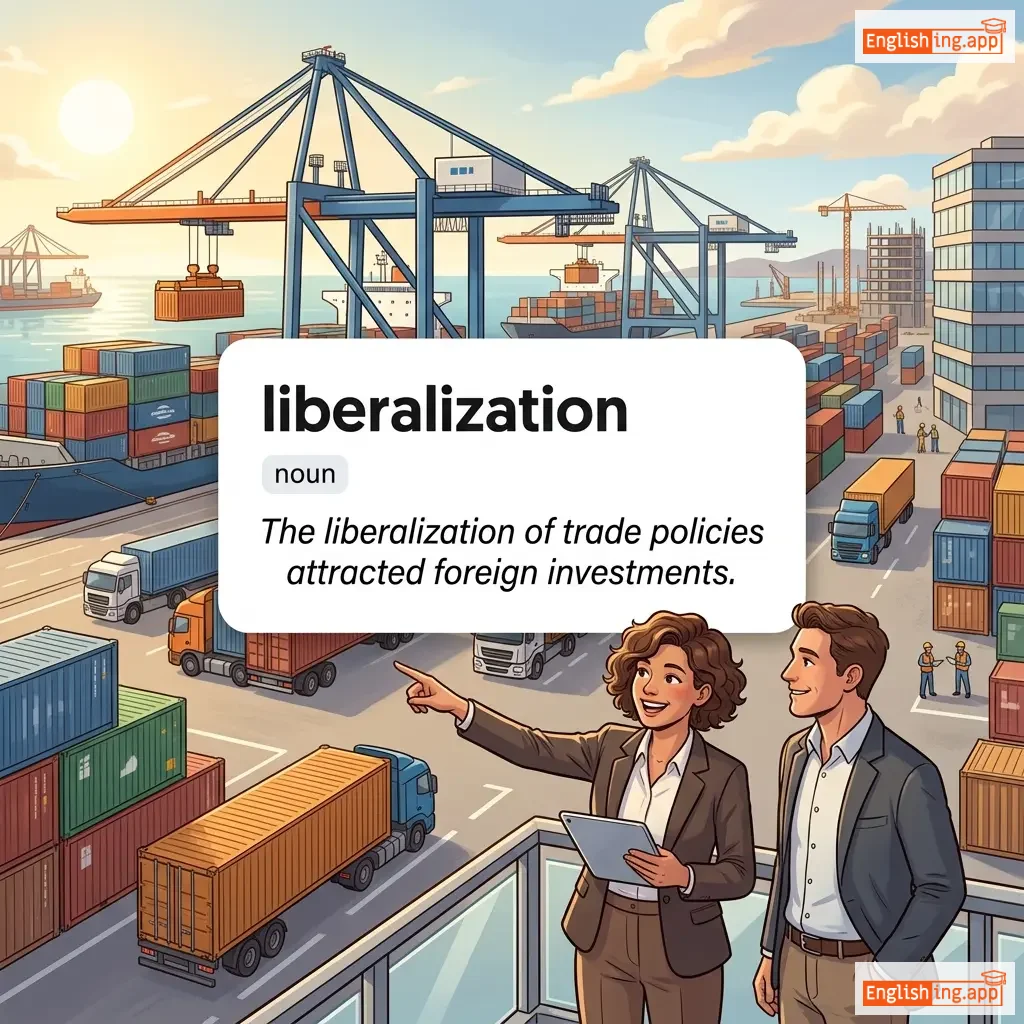
liberalization definition card — visual illustration of the meaning
noun C1
ˌlɪb.ər.ə.laɪˈzeɪ.ʃən
自由化 (zì yóu huà)

The removal or loosening of restrictions on something, typically an economic or political system.

"The liberalization of trade policies attracted foreign investments."

"贸易政策的自由化吸引了外国投资。" (Màoyì zhèngcè de zìyóuhuà xīyǐnle wàiguó tóuzī.)
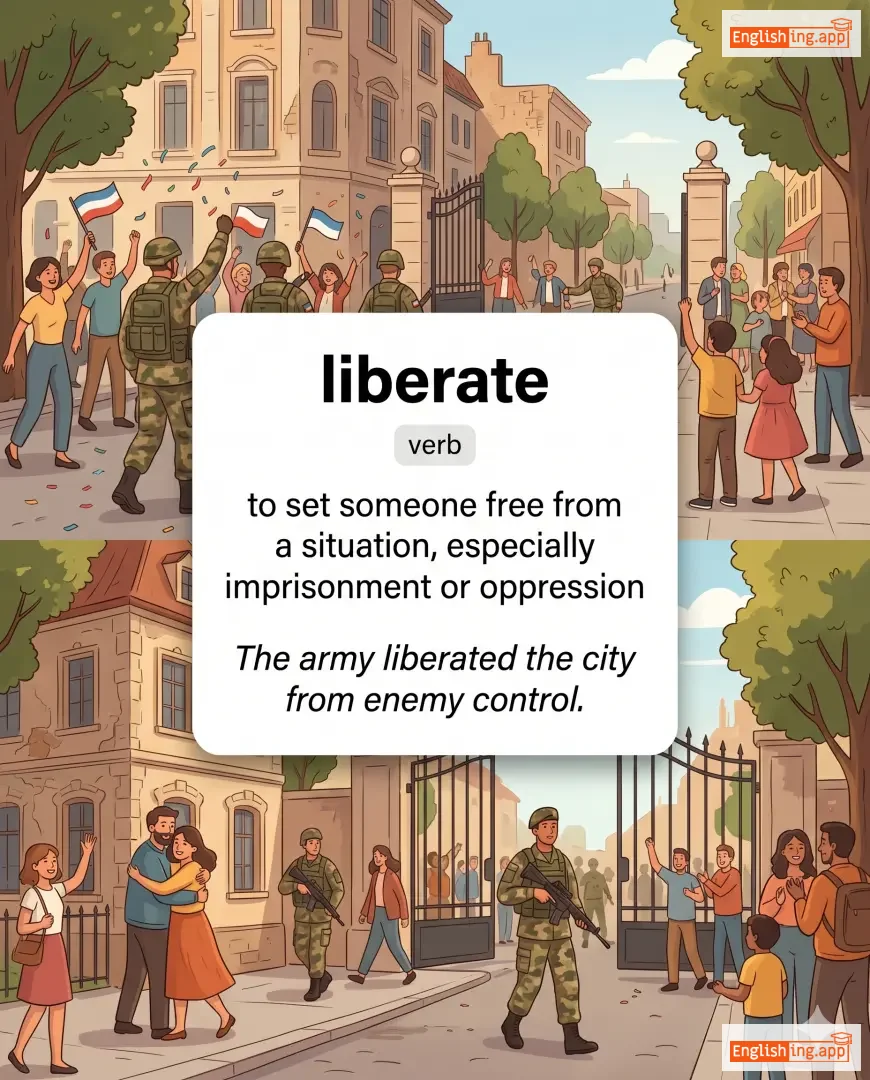
liberate definition card — visual illustration of the meaning
verb C1
/ˈlɪbəreɪt/
解放 (jiěfàng)

to set someone free from a situation, especially imprisonment or oppression

"The army liberated the city from enemy control."

"军队解放了这座城市,摆脱了敌人的控制。" (Jūnduì jiěfàngle zhèzuò chéngshì, bàituōle dírén de kòngzhì.)
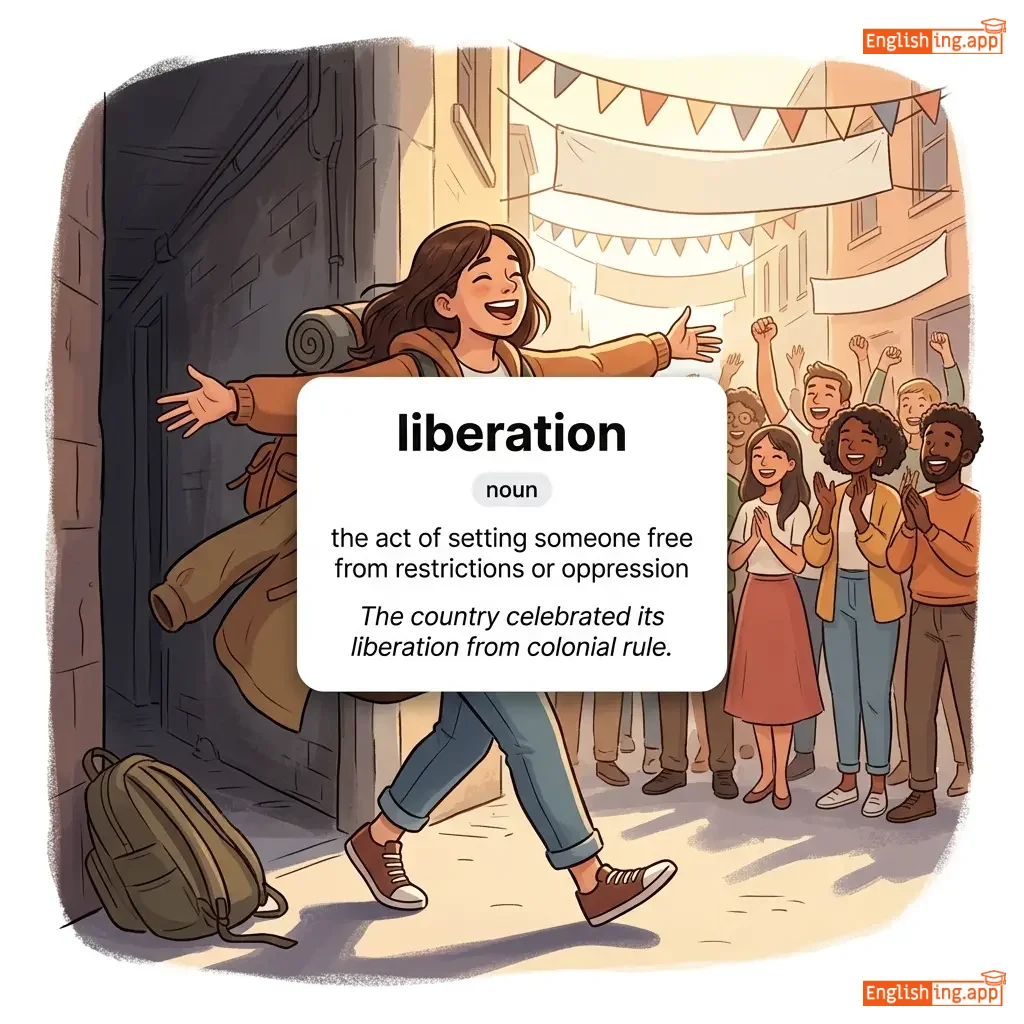
liberation definition card — visual illustration of the meaning
noun C1
/ˌlɪbəˈreɪʃən/
解放 (jiefang)

the act of setting someone free from restrictions or oppression

"The country celebrated its liberation from colonial rule."

"该国庆祝了从殖民统治中获得解放。" (Gāi guó qìngzhùle cóng zhímín tǒngzhì zhōng huòqǔ jiěfàng.)
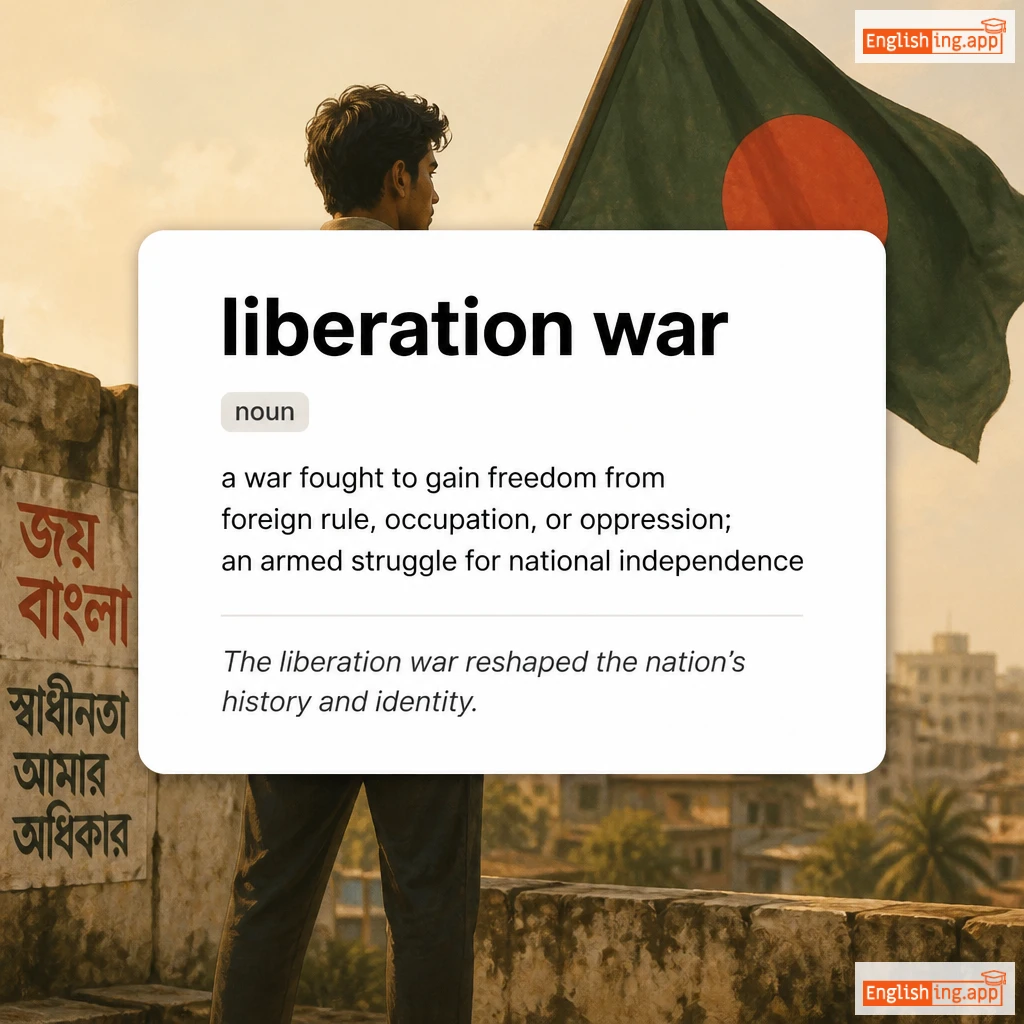
liberation war definition card — visual illustration of the meaning
noun C1
/ˌlɪbəˈreɪʃən wɔːr/
解放战争 (jie fang zhan zheng)

a war fought to gain freedom from foreign rule, occupation, or oppression; an armed struggle for national independence

"The liberation war reshaped the nation’s history and identity."

"解放战争改变了国家的历史和认同。" (jie fang zhan zheng gai bian le guo jia de li shi he ren tong)
libido definition card — visual illustration of the meaning
noun C1
/lɪˈbiːdoʊ/
性欲 (xìngyù)

Sexual desire or drive.

"Stress can sometimes lower a person's libido."

"压力有时会降低一个人的性欲。" (Yālì yǒushí huì jiàngdī yīgè rén de xìngyù.)
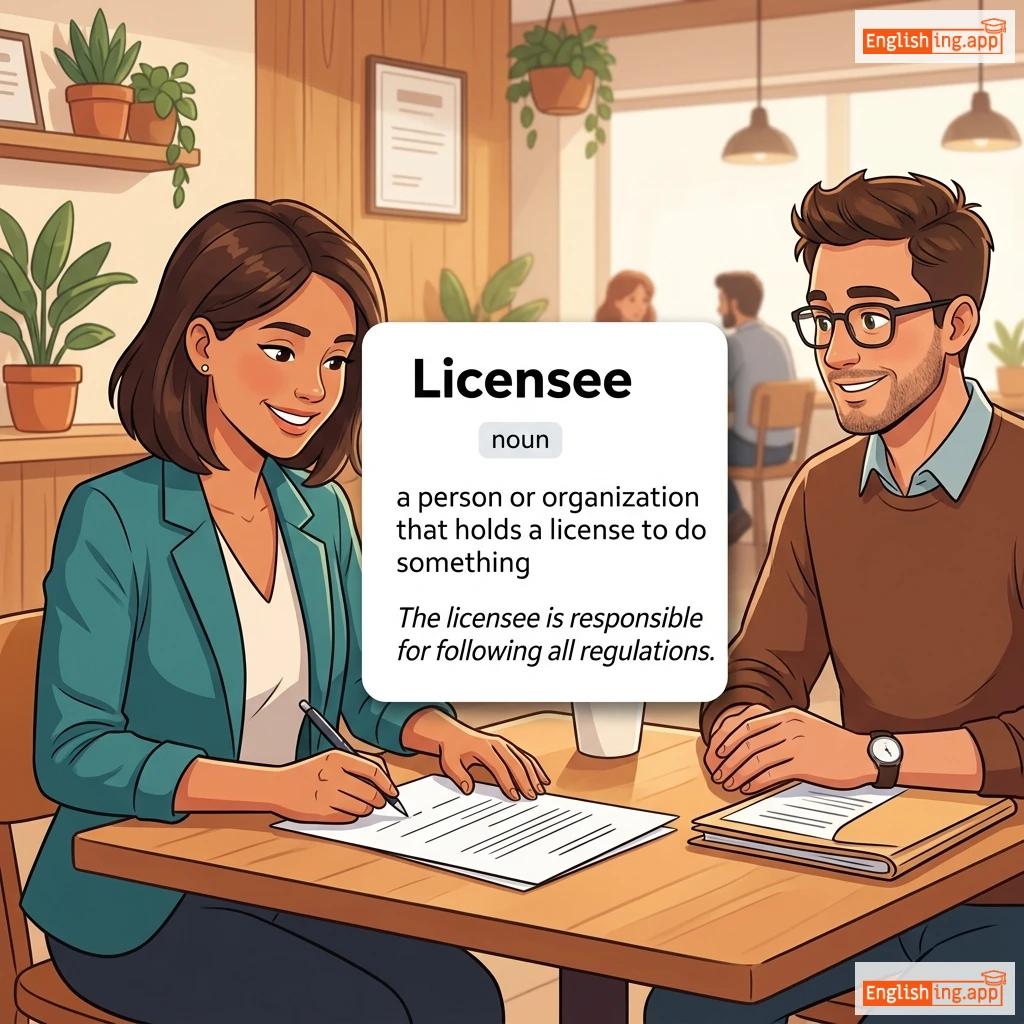
Licensee definition card — visual illustration of the meaning
noun C1
/ˌlaɪ.sənˈsiː/
许可证持有者 (xuke zheng chi you zhe)

a person or organization that holds a license to do something

"The licensee is responsible for following all regulations."

"许可证持有者负责遵守所有规定。" (Xuke zheng chi you zhe fu ze zun shou suo you gui ding.)
noun C1
/luː/
代替 (daiti)

Instead of; in place of.

"He gave money in lieu of flowers."

"他给了钱代替花。" (Tā gěile qián dàitì huā.)
adjective C1
/ˈlaɪf.laɪk/
栩栩如生 (xǔxǔ rú shēng)

Very similar to a real person, object, or scene; realistic.

"The wax figure was so lifelike that people thought it was a real person."

"这尊蜡像如此栩栩如生,以至于人们以为它是一个真人。" (Zhè zūn làxiàng rúcǐ xǔxǔ rú shēng, yǐ zhì yú rénmen yǐwéi tā shì yīgè zhēn rén.)
noun C1
/ˈlɪɡ.əmənt/
韧带组织 (rendai zuzhi)

A tough band of tissue that connects bones at a joint.

"He tore a ligament in his knee while playing football."

"他在踢足球时撕裂了膝盖的韧带。" (Tā zài tī zúqiú shí sīliè le xīgài de rèndài.)
adjective C1
/ˌlaɪtˈhɑːrtɪd/
轻松愉快的 (qīngsōng yúkuài de)

cheerful, carefree, and not serious

"She gave a light-hearted speech at the party."

"她在派对上做了一个轻松愉快的演讲。" (Tā zài pàiduì shàng zuòle yīgè qīngsōng yúkuài de yǎnjiǎng.)
verb C1
/ˈlaɪ.kən/
比较 (bǐjiào)

to compare one thing to another, often in a figurative way

"He likened her voice to sweet music."

"他把她的声音与甜美的音乐相提并论。" (Tā bǎ tā de shēngyīn yǔ tiánměi de yīnyuè xiāngtíbìnglùn.)
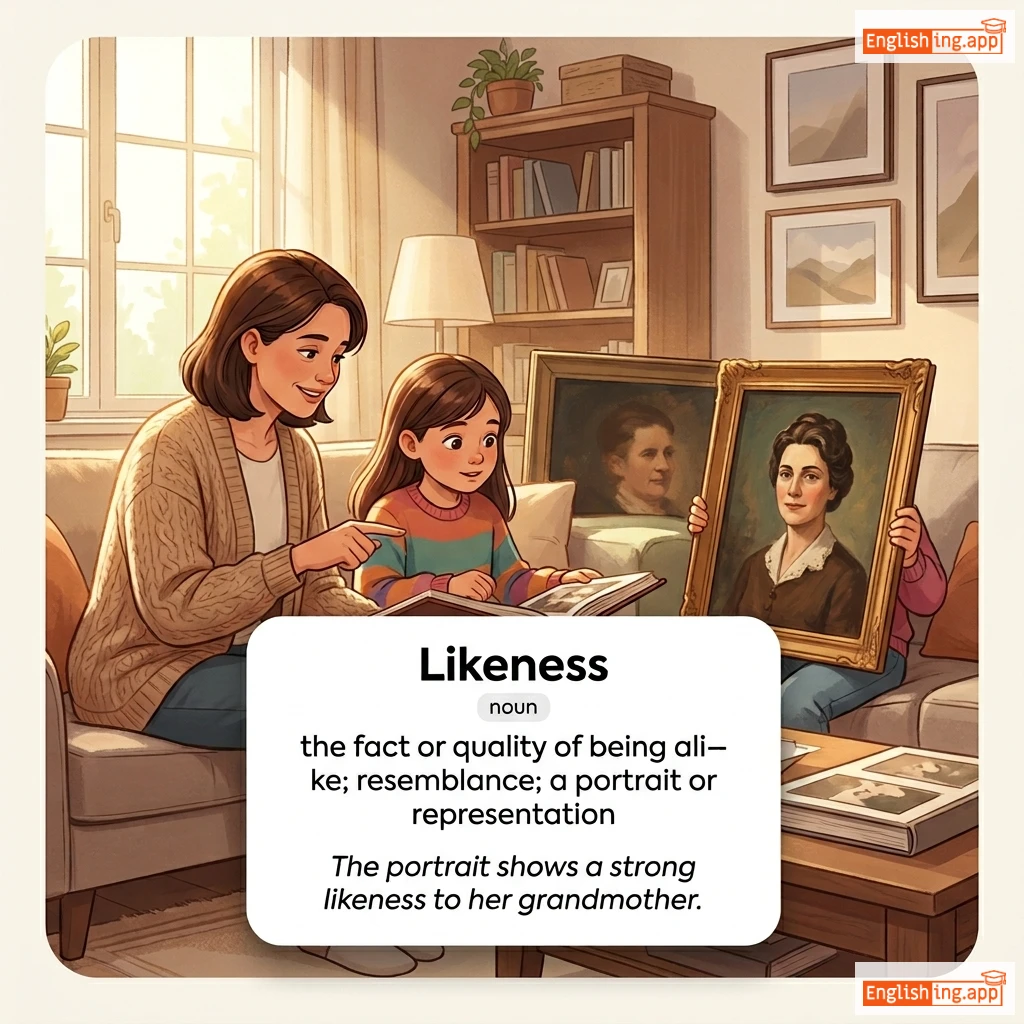
Likeness definition card — visual illustration of the meaning
noun C1
/ˈlaɪk.nəs/
相似; 类似 (likeness)

the fact or quality of being alike; resemblance; a portrait or representation

"The portrait shows a strong likeness to her grandmother."

"这幅肖像与她的祖母有很强的相似之处。" (Zhè fú xiàoxiàng yǔ tā de zǔmǔ yǒu hěn qiáng de xiāngsì zhī chù.)
noun C1
/ˈlɪmboʊ/
不确定,悬而未决的状态 (bù quèdìng, xuán'ér wèi jué de zhuàngtài)

A state of uncertainty or neglect; an intermediate or transitional state.

"The project was left in limbo after the funding was withdrawn."

"该项目在资金撤回后陷入了不确定状态。" (gāi xiàngmù zài zījīn chèhuí hòu xiànrùle bù quèdìng zhuàngtài.)
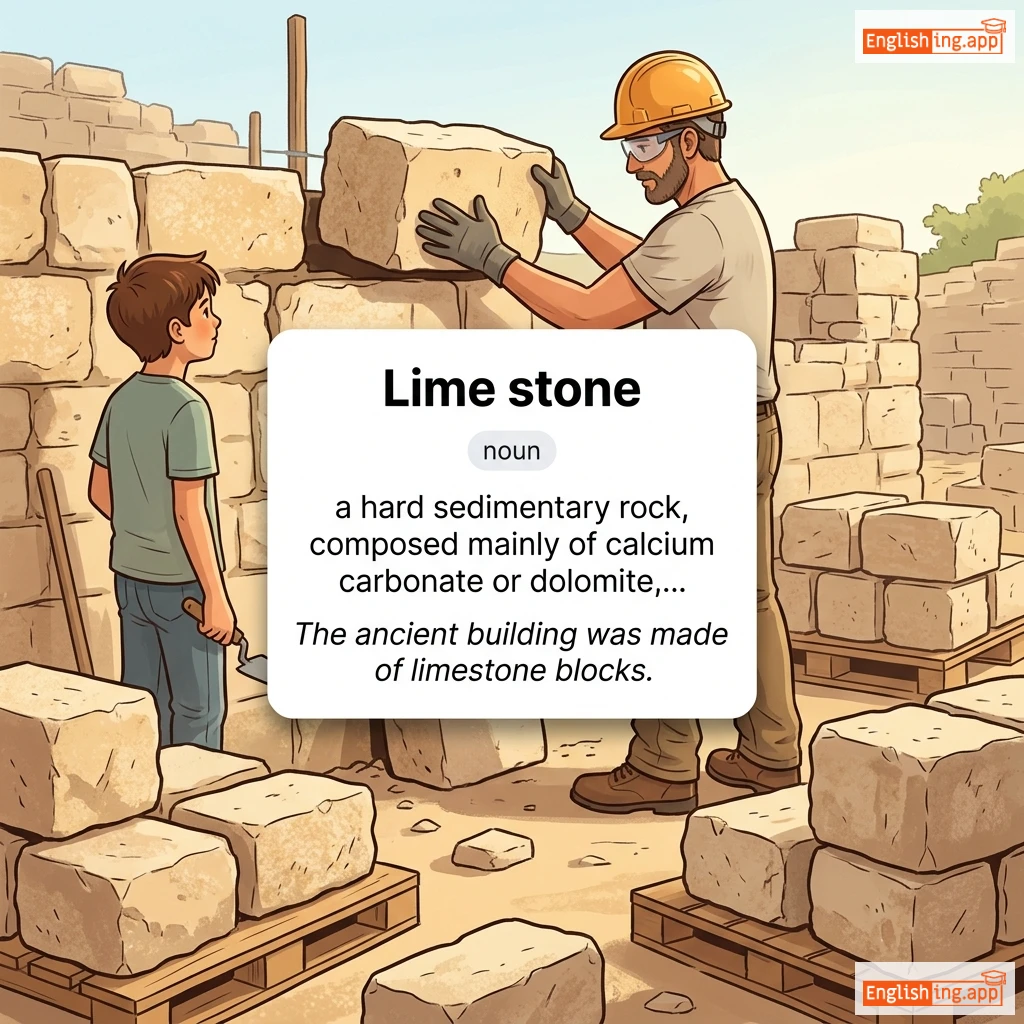
Lime stone definition card — visual illustration of the meaning
noun C1
/ˈlaɪm.stoʊn/
石灰岩 (shihuīyán)

a hard sedimentary rock, composed mainly of calcium carbonate or dolomite, used as building material and in the making of cement

"The ancient building was made of limestone blocks."

"这座古老的建筑是用石灰岩块建造的" (zhè zuò gǔlǎo de jiànzhú shì yòng shíhuīyán kuài jiànzào de)
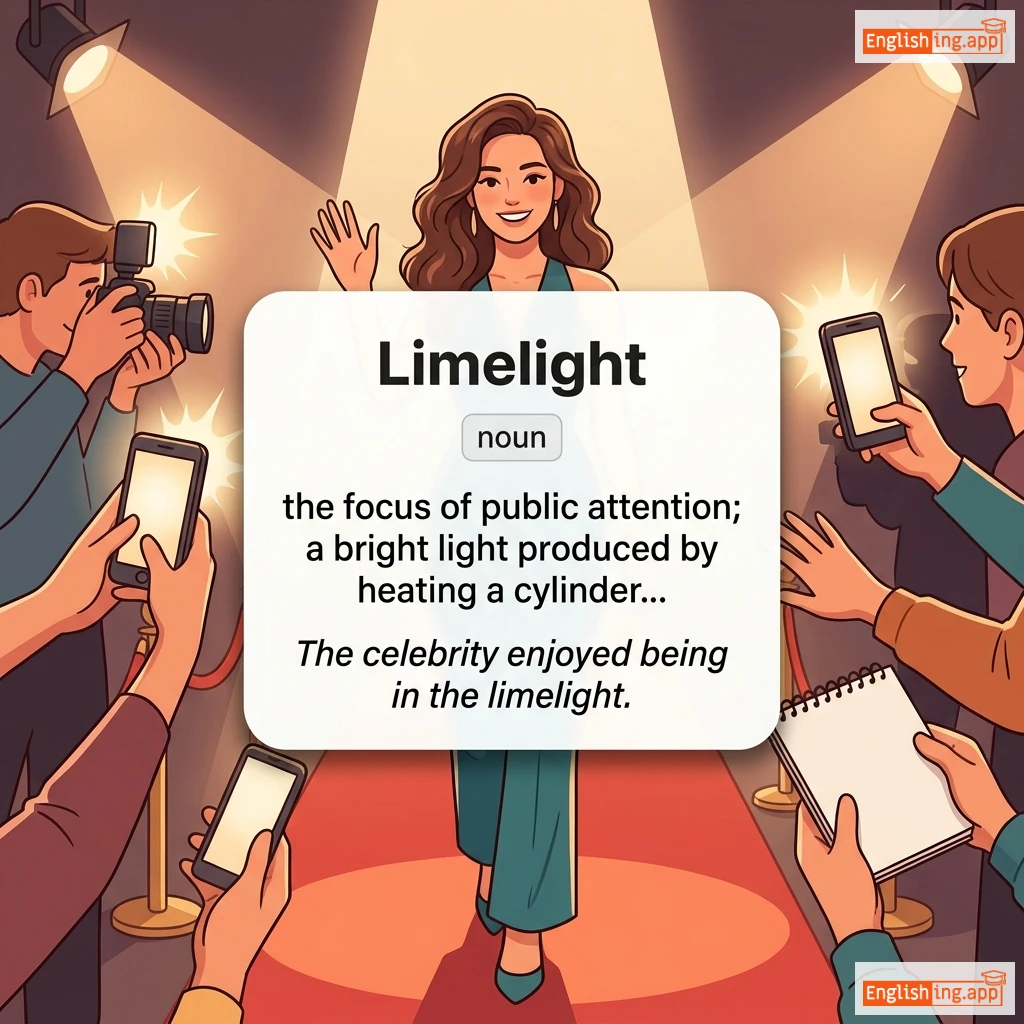
Limelight definition card — visual illustration of the meaning
noun C1
/ˈlaɪm.laɪt/
公众关注的焦点;通过加热石灰圆筒产生的明亮光 (laimlait)

the focus of public attention; a bright light produced by heating a cylinder of lime

"The celebrity enjoyed being in the limelight."

"明星享受站在聚光灯下。" (mingxing xiangshou zhanzai juguangdeng xia)
noun C1
/ˈlɪməˌziːn/
由司机驾驶的豪华大轿车 (you sījī jiàshǐ de háohuá dà jiàochē)

a large, luxurious car driven by a chauffeur.

"The bride arrived in a white limousine."

"新娘乘坐一辆白色的豪华轿车到达。" (Xīnniáng chéngzuò yī liàng báisè de háohuá jiàochē dàodá.)
verb, adjective, noun C1
/lɪmp/
跛行 / 虚弱 (bǒxíng / xūruò)

to walk with difficulty, often due to injury or weakness; lacking strength or firmness.

"He limped after injuring his ankle."

"他在伤到脚踝后跛行。" (Tā zài shāng dào jiǎohuái hòu bǒxíng.)
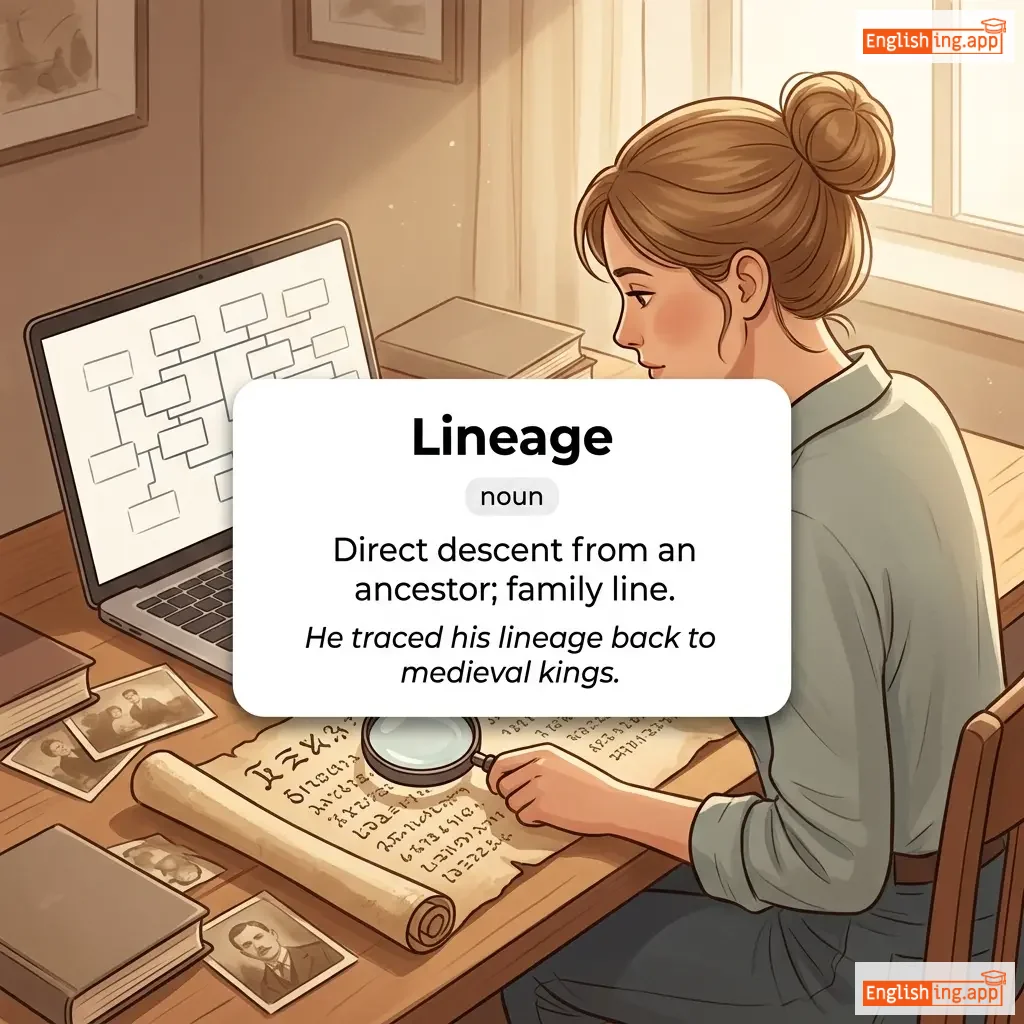
Lineage definition card — visual illustration of the meaning
noun C1
/ˈlɪniɪdʒ/
血统 (xuètǒng)

Direct descent from an ancestor; family line.

"He traced his lineage back to medieval kings."

"他追溯到中世纪的国王的血统。" (Tā zhuī sù dào zhōng shìjì de guówáng de xuètǒng.)
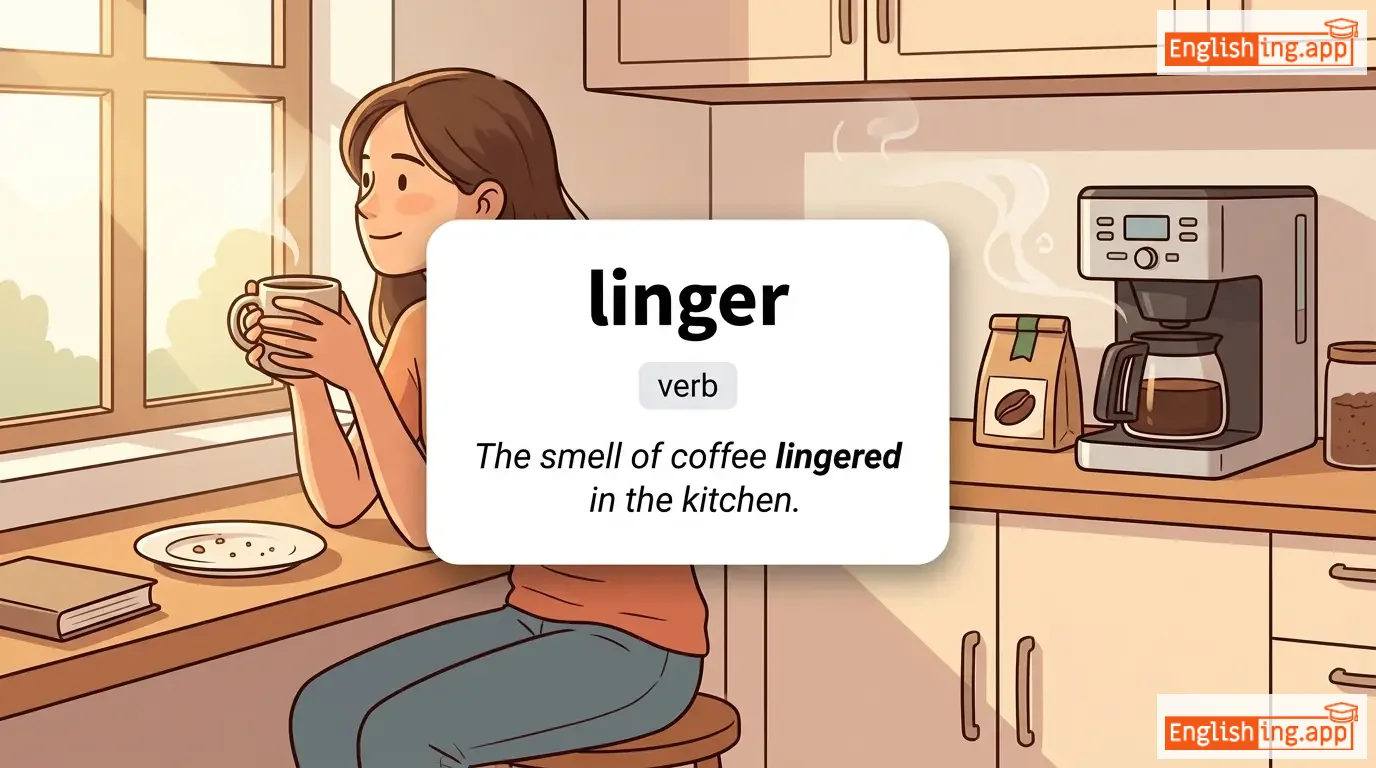
linger definition card — visual illustration of the meaning
verb C1
/ˈlɪŋ.ɡər/
逗留 (dòu liú)

To stay in a place longer than necessary, often because of unwillingness to leave.

"The smell of coffee lingered in the kitchen."

"咖啡的气味在厨房里 linger 了很久。" (Kāfēi de qìwèi zài chúfáng lǐ linger le hěnjiǔ.)
noun C1
/ˈlɪŋɡwɪst/
语言学家 (yǔyán xuéjiā)

A person skilled in foreign languages or in the scientific study of language.

"She is a linguist who speaks six languages fluently."

"她是一位能流利讲六种语言的语言学家。" (Tā shì yī wèi néng liúlì jiǎng liù zhǒng yǔyán de yǔyán xuéjiā.)
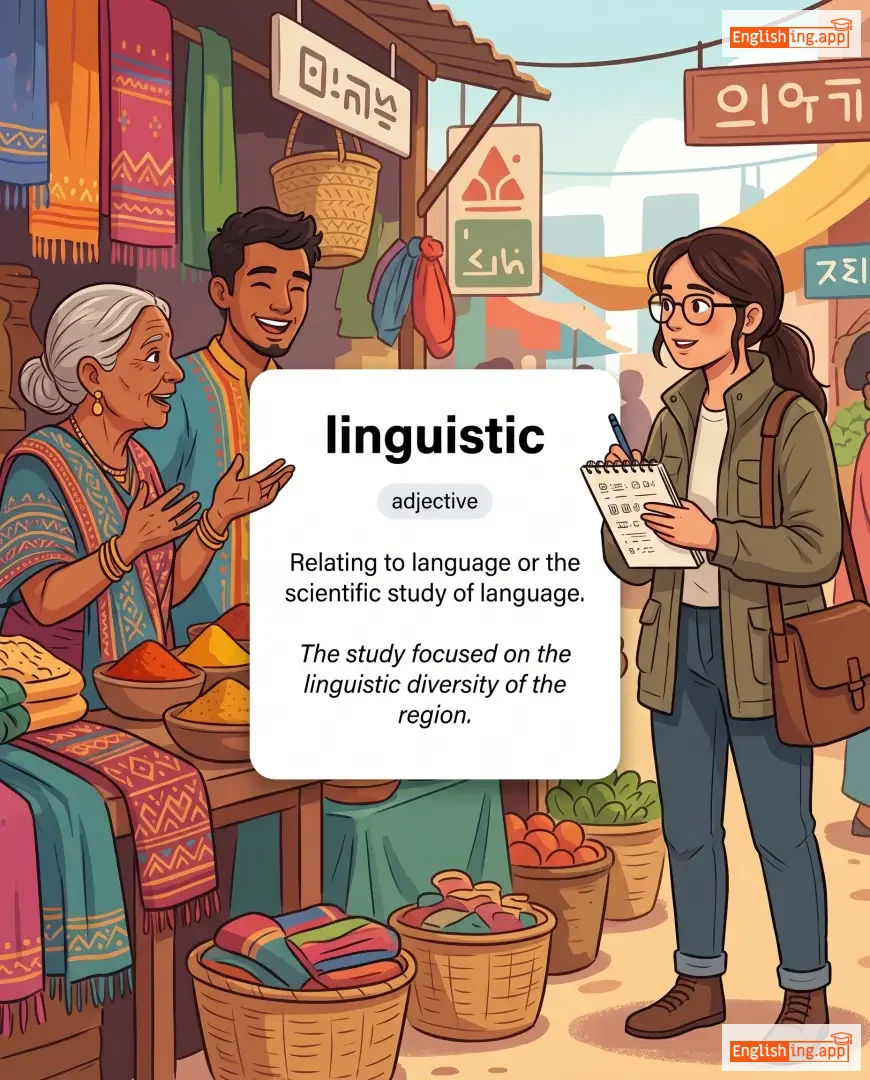
linguistic definition card — visual illustration of the meaning
adjective C1
/lɪŋˈɡwɪstɪk/
语言学的 (yǔyán xué de)

Relating to language or the scientific study of language.

"The study focused on the linguistic diversity of the region."

"该研究集中在该地区的语言多样性上。" (Gāi yánjiū jízhōng zài gāi dìqū de yǔyán duōyàng xìng shàng.)
noun C1
/lɪŋˈɡwɪstɪks/
语言学 (yuyanxue)

The scientific study of language and its structure.

"She decided to major in linguistics at university."

"她决定在大学里攻读语言学。" (Ta jueding zai daxue li gongdu yuyanxue.)
noun C1
/lɪˈkjʊər/
甜酒 (tian jiu)

A strong, sweet alcoholic drink flavored with fruits, herbs, or spices.

"She served a small glass of cherry liqueur after dinner."

"她在晚餐后提供了一小杯樱桃利口酒。" (Tā zài wǎncān hòu tígōng le yī xiǎo bēi yīngtáo lìkǒu jiǔ.)
verb C1
/ˈlɪkwɪdeɪt/
清算 (qīngsuàn)

To sell assets in order to pay off debts; to close a business and convert assets into cash.

"The company decided to liquidate its assets to pay creditors."

"公司决定清算其资产以支付债权人。" (Gōngsī juédìng qīngsuàn qí zīchǎn yǐ zhīfù zhàiquánrén.)
liquidity definition card — visual illustration of the meaning
noun C1
lɪˈkwɪd.ə.ti
流动性 (liudongxing)

Cash flow, financial fluidity.

"The company maintains high liquidity."

"公司维持着高流动性。" (Gongsi weichi zhe gao liudongxing.)
adjective C1
/ˈlɪstləs/
无精打采 (wú jīng dǎ cǎi)

lacking energy, enthusiasm, or interest

"She felt listless after working long hours without rest."

"她在没有休息的长时间工作后感到无精打采。" (Tā zài méiyǒu xiūxí de cháng shíjiān gōngzuò hòu gǎndào wú jīng dǎ cǎi.)
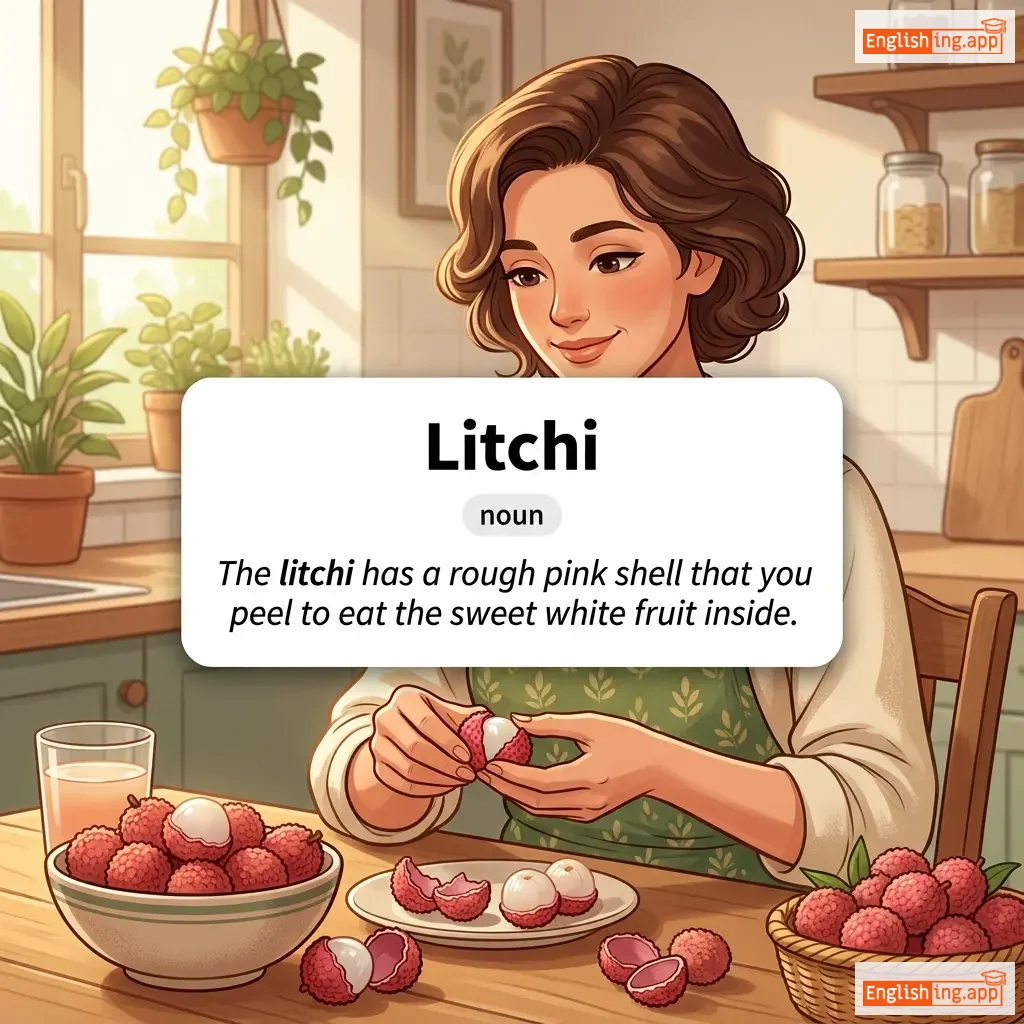
Litchi definition card — visual illustration of the meaning
noun C1
/ˈlaɪtʃi/
荔枝 (lì zhī)

a small oval pink-red tropical fruit with white translucent flesh and sweet taste

"The litchi has a rough pink shell that you peel to eat the sweet white fruit inside."

"荔枝有一层粗糙的粉红色外皮,你剥开它就可以吃到里面甜美的白色果实。" (Lì zhī yǒu yī céng cū cāo de fěn hóng sè wài pí, nǐ bāo kāi tā jiù kě yǐ chī dào lǐ miàn tián měi de bái sè guǒ shí.)
verb C1
/ˈlɪtɪˌɡeɪt/
诉讼 (sùsòng)

to engage in legal proceedings or take a dispute to court

"The company decided to litigate the contract dispute."

"公司决定就合同争议提起诉讼。" (Gōngsī juédìng jiù hétóng zhēngyì tíqǐ sùsòng.)
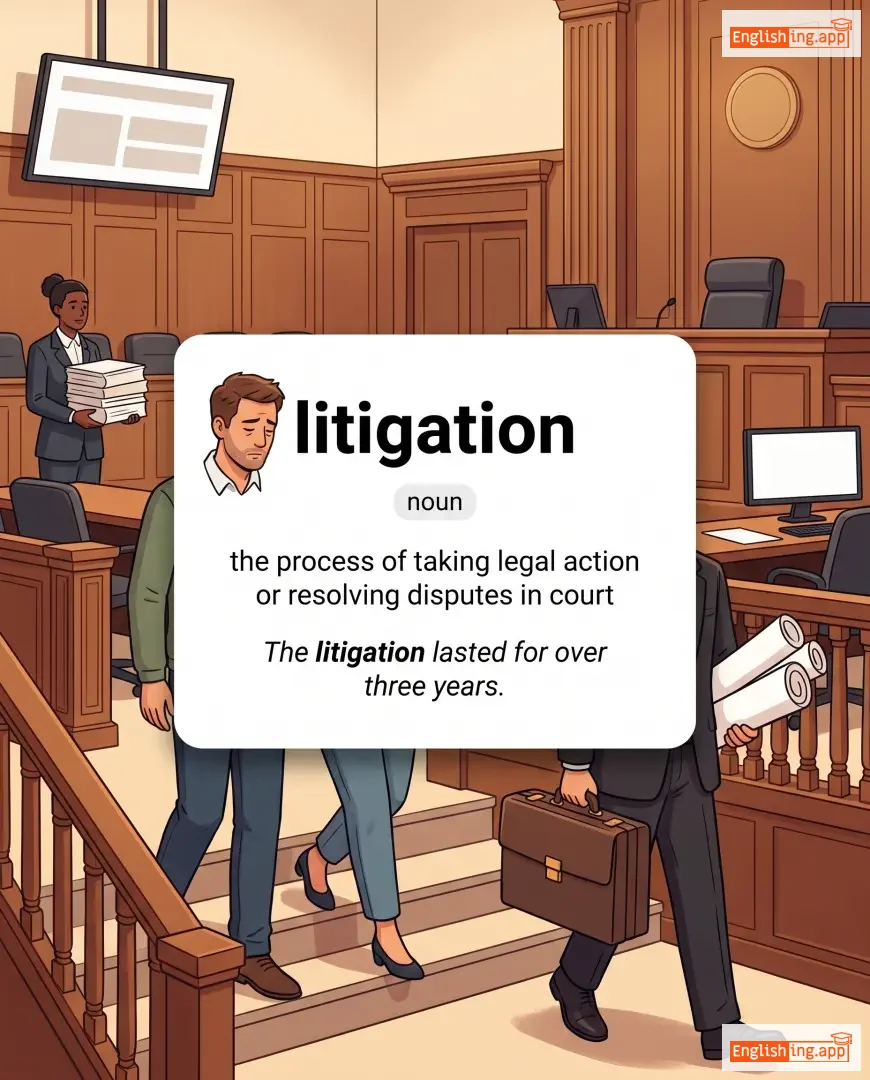
litigation definition card — visual illustration of the meaning
noun C1
/ˌlɪtɪˈɡeɪʃən/
诉讼 (sùsòng)

the process of taking legal action or resolving disputes in court

"The litigation lasted for over three years."

"诉讼持续了超过三年。" (Sùsòng chíxùle chāoguò sān nián.)
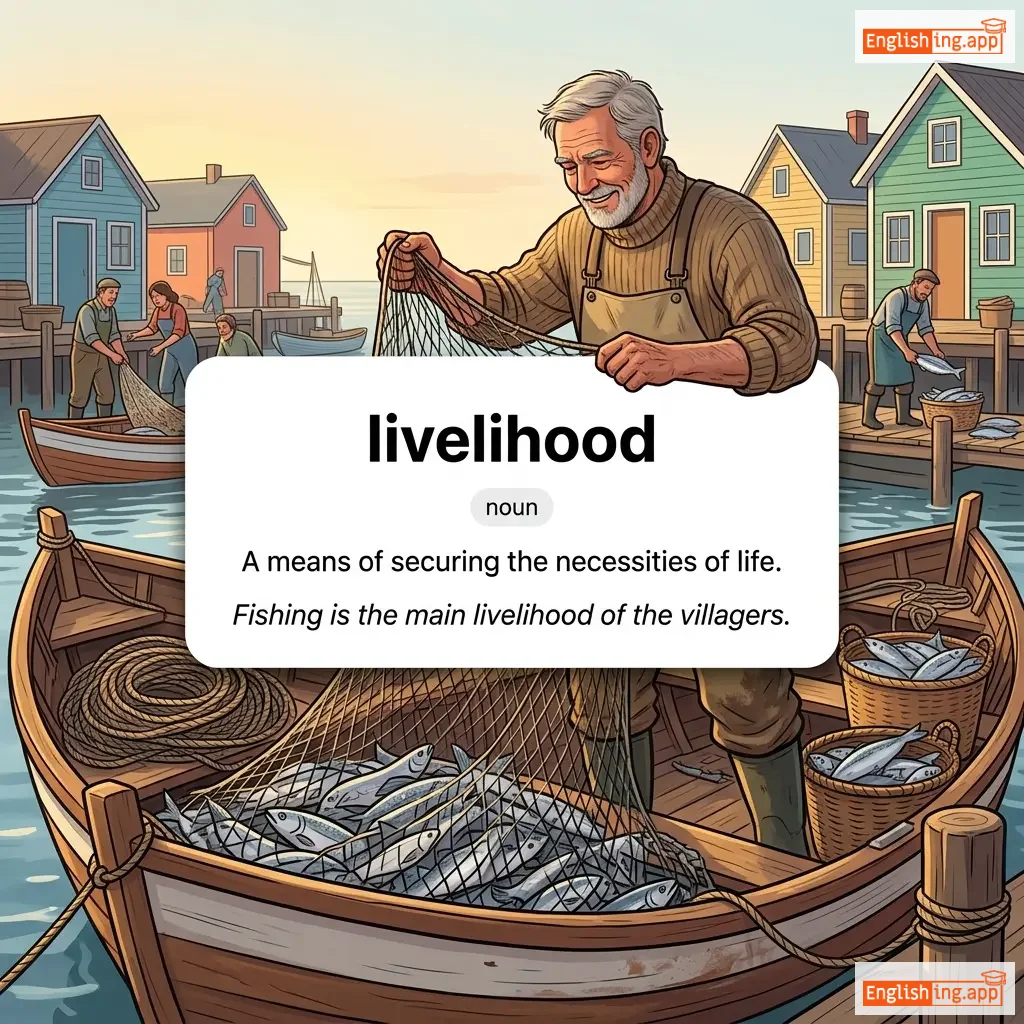
livelihood definition card — visual illustration of the meaning
noun C1
/ˈlaɪvlihʊd/
生计 (shengji)

A means of securing the necessities of life.

"Fishing is the main livelihood of the villagers."

"捕鱼是村民们的主要生计。" (Buyu shi cunminmen de zhuyao shengji.)
adjective C1
/ˈlɪvɪd/
愤怒的 (fèn nù de)

Extremely angry; furious.

"She was livid when she found out about the betrayal."

"当她发现背叛时,她愤怒不已。" (Dāng tā fāxiàn bèipàn shí, tā fèn nù bù yǐ.)
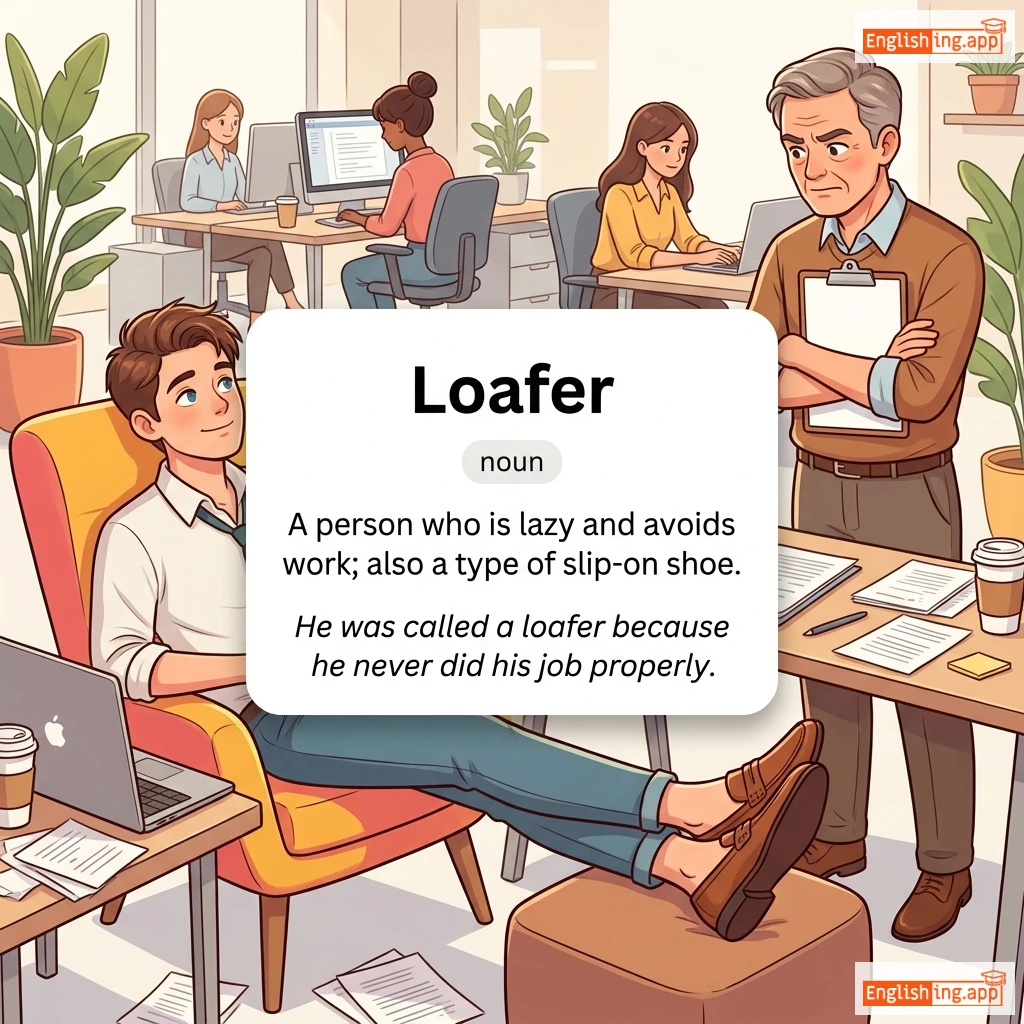
Loafer definition card — visual illustration of the meaning
noun C1
/ˈloʊfər/
懒汉 (lǎn hàn)

A person who is lazy and avoids work; also a type of slip-on shoe.

"He was called a loafer because he never did his job properly."

"他被称为懒汉,因为他从未认真做过工作。" (Tā bèi chēng wèi lǎn hàn, yīnwèi tā cóng wèi rènzhēn zuòguò gōngzuò.)
adjective C1
/loʊθ/
不情愿 (bu qingyuan)

reluctant or unwilling to do something

"She was loath to admit her mistake in front of everyone."

"她不愿意在大家面前承认她的错误。" (Ta bu yuanyi zai dada mianqian chengren ta de cuowu.)
verb C1
/loʊð/
厌恶 (yànwù)

to feel intense dislike or disgust for

"He absolutely loathes being late to meetings."

"他完全讨厌迟到会议。" (Tā wánquán tǎoyàn chídào huìyì.)
noun C1
/ˌloʊkəˈmoʊʃən/
运动 (yundong)

movement or the ability to move from one place to another

"Walking is the most common form of human locomotion."

"走路是人类最常见的运动方式。" (Zoulu shi renlei zui changjian de yundong fangshi.)
noun C1
/ˌloʊ.kəˈmoʊ.tɪv/
机车 (jiche)

A powered rail vehicle used for pulling trains.

"The old steam locomotive was restored for the museum."

"这辆老式蒸汽机车已恢复供博物馆使用。" (Zhe liang laoshi zhengqi jiche yi huiufu gong bowuguan shiyong.)
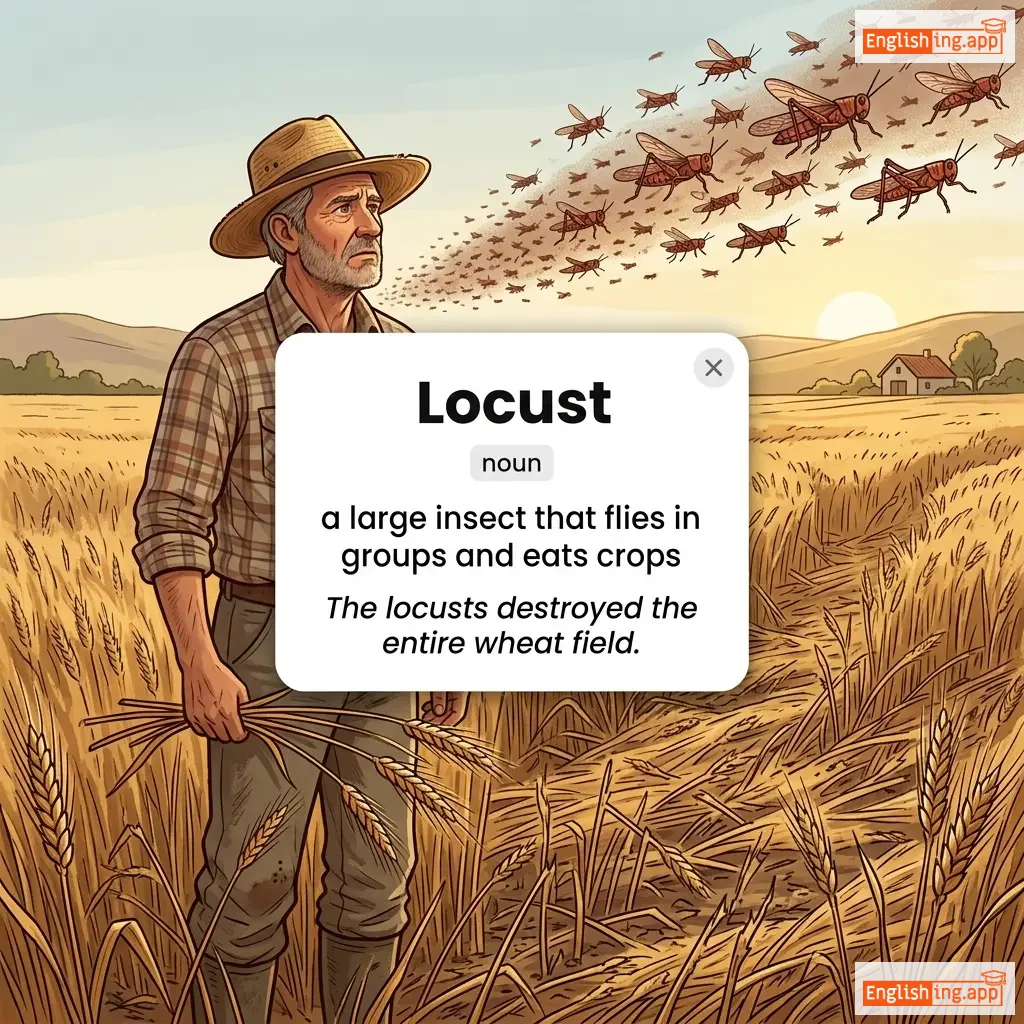
Locust definition card — visual illustration of the meaning
noun C1
/ˈloʊ.kəst/
蝗虫 (huángchóng)

a large insect that flies in groups and eats crops

"The locusts destroyed the entire wheat field."

"蝗虫摧毁了整个小麦田。" (huángchóng cuīhuǐle zhěnggè xiǎomài tián)
noun C1
/lɒft/
阁楼 (gelou)

An upper room or space, often under the roof of a building.

"She converted the old loft into a modern studio."

"她把旧阁楼改造成了一个现代化的工作室。" (Ta ba jiu gelou gaizaochengle yi ge xiandaihua de gongzuoshi.)