वोकैबुलरीज

इंग्लिश वोकैबुलरी डिस्कवर, लर्न और मास्टर करें

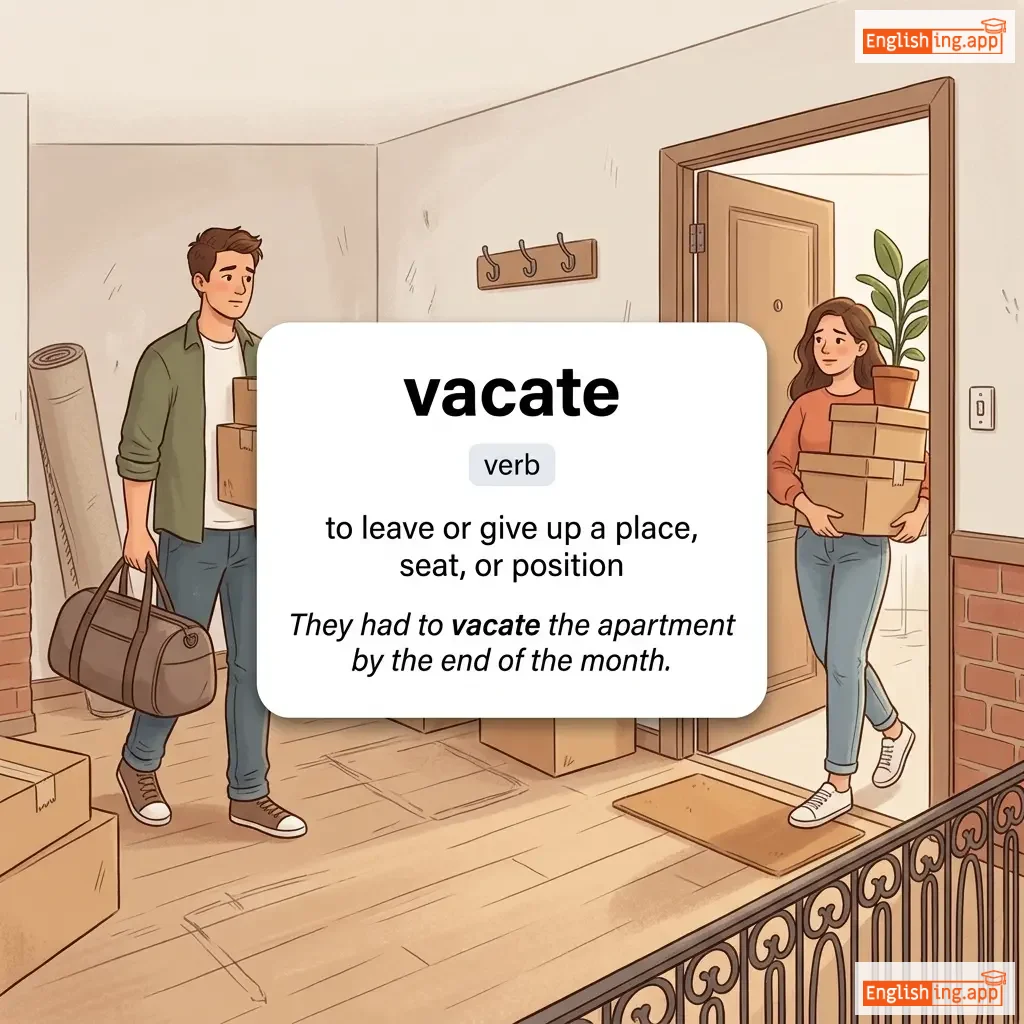
vacate definition card — visual illustration of the meaning
verb C1
/vəˈkeɪt/
libérer (liberer)

to leave or give up a place, seat, or position

"They had to vacate the apartment by the end of the month."

"Ils ont dû libérer l'appartement avant la fin du mois." (Ils ont dû libérer l'appartement avant la fin du mois.)
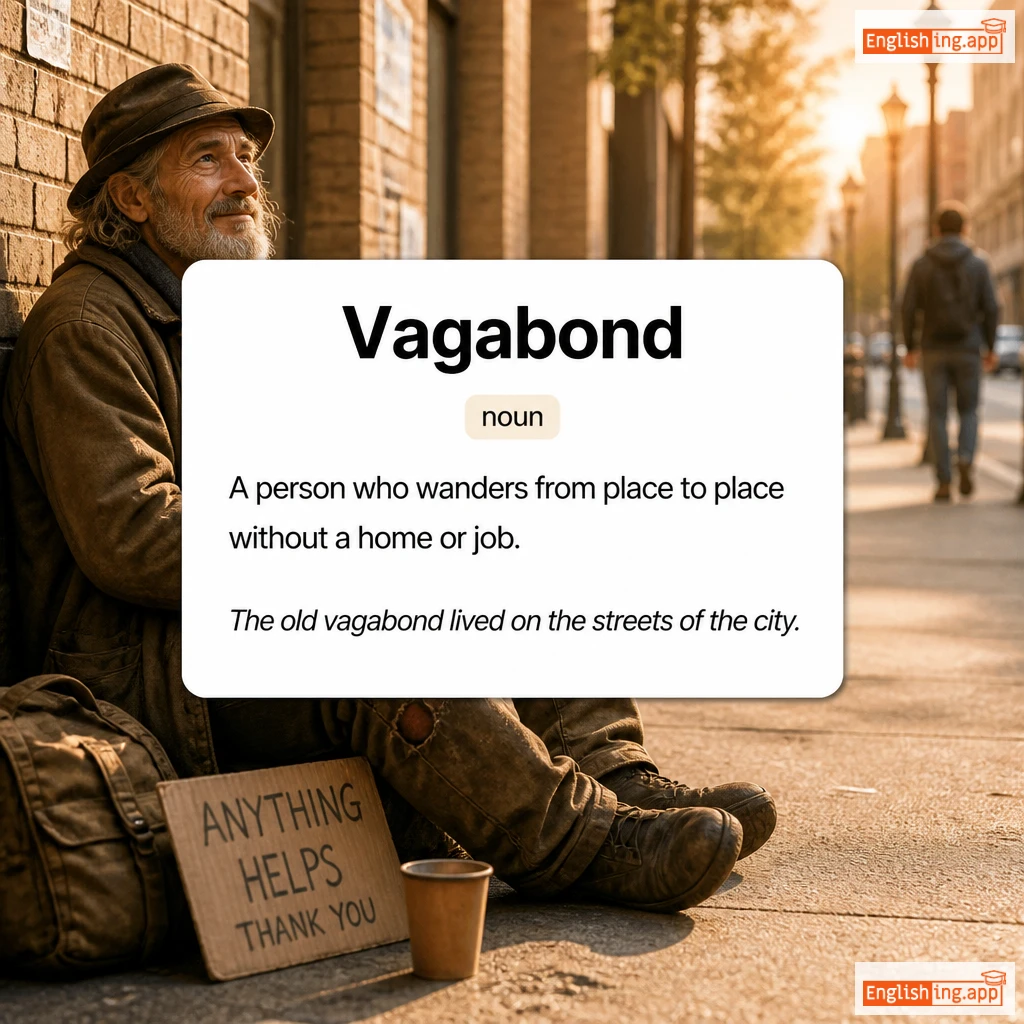
Vagabond definition card — visual illustration of the meaning
noun C1
/ˈvæɡəbɒnd/
vagabond (vagabond)

A person who wanders from place to place without a home or job.

"The old vagabond lived on the streets of the city."

"Le vieux vagabond vivait dans les rues de la ville." (Le vieux vagabond vivait dans les rues de la ville.)
noun C1
/ˈveɪɡrənt/
vagabond (vagabond)

A person without a settled home or regular work who wanders from place to place.

"The police offered shelter to a vagrant sleeping on the street."

"La police a offert un abri à un vagabond qui dormait dans la rue." (La police a offert un abri à un vagabond qui dormait dans la rue.)
noun C1
/veɪl/
vallée (vallee)

A valley, often used in a poetic or literary sense.

"The village lay hidden in a quiet green vale."

"Le village était caché dans une vallée verte et tranquille." (Le village etait cache dans une vallee verte et tranquille.)
adjective C1
/ˈvæliənt/
vaillant (vayan)

Showing courage, determination, and bravery.

"The firefighters made a valiant effort to save the building."

"Les pompiers ont fait un vaillant effort pour sauver le bâtiment." (Les pompiers ont fait un vaillant effort pour sauver le bâtiment.)
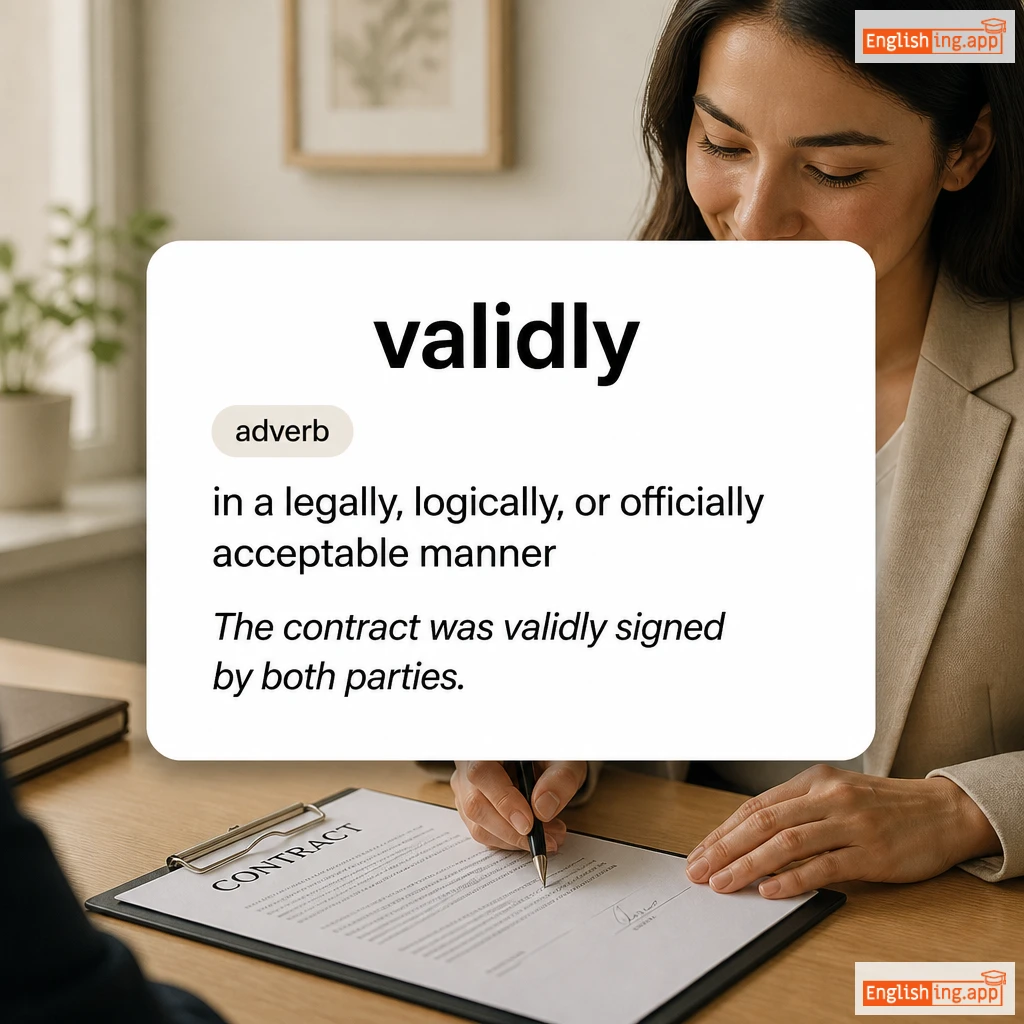
validly definition card — visual illustration of the meaning
adverb C1
/ˈvælɪdli/
valablement (valablement)

in a legally, logically, or officially acceptable manner

"The contract was validly signed by both parties."

"Le contrat a été valablement signé par les deux parties." (Le contrat a ete valablement signe par les deux parties)
noun C1
/ˈvælər/
valeur (valeur)

Great courage in the face of danger, especially in battle.

"The soldier was honored for his valor during the war."

"Le soldat a été honoré pour sa valeur pendant la guerre." (Le soldat a été honoré pour sa valeur pendant la guerre.)
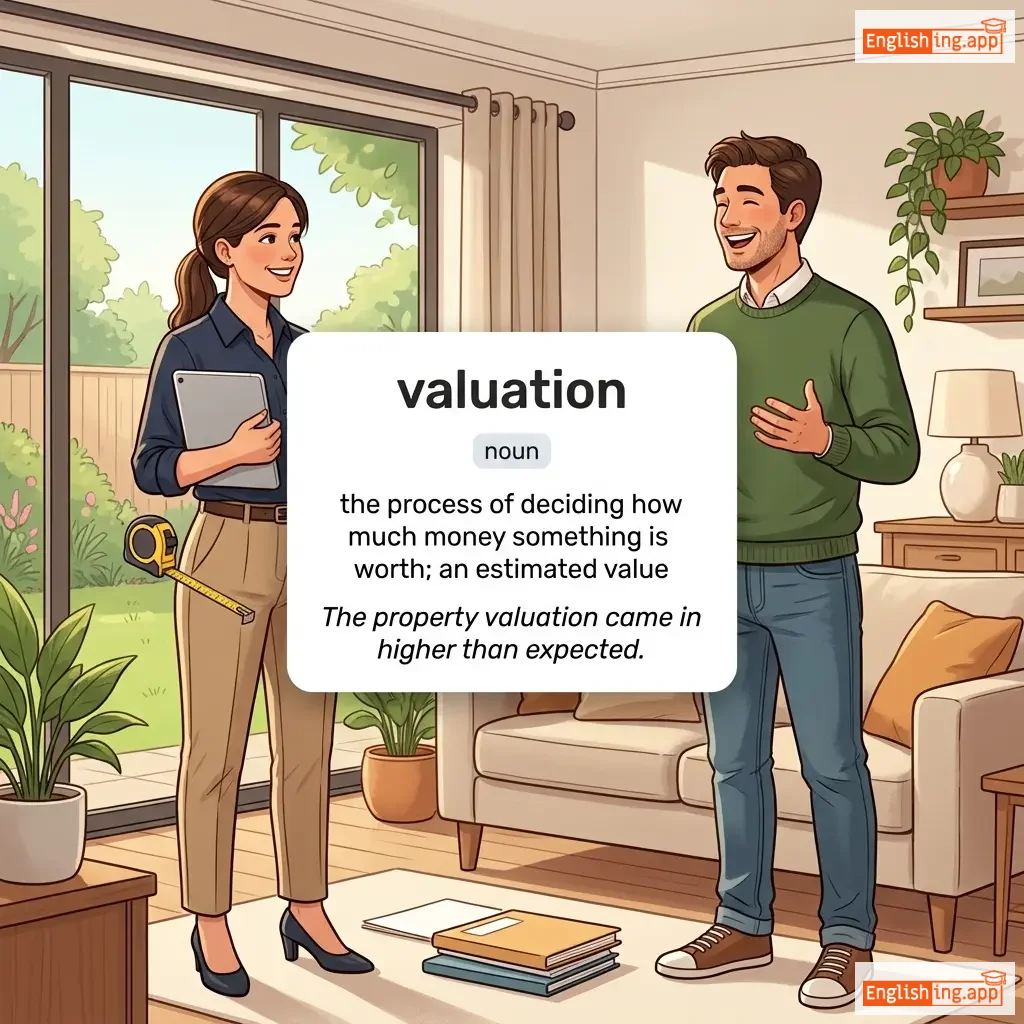
valuation definition card — visual illustration of the meaning
noun C1
/ˌvæl.juˈeɪ.ʃən/
évaluation (evaluation)

the process of deciding how much money something is worth; an estimated value

"The property valuation came in higher than expected."

"L'évaluation de la propriété a été plus élevée que prévu." (L'evaluation de la propriete a ete plus elevee que prevu.)
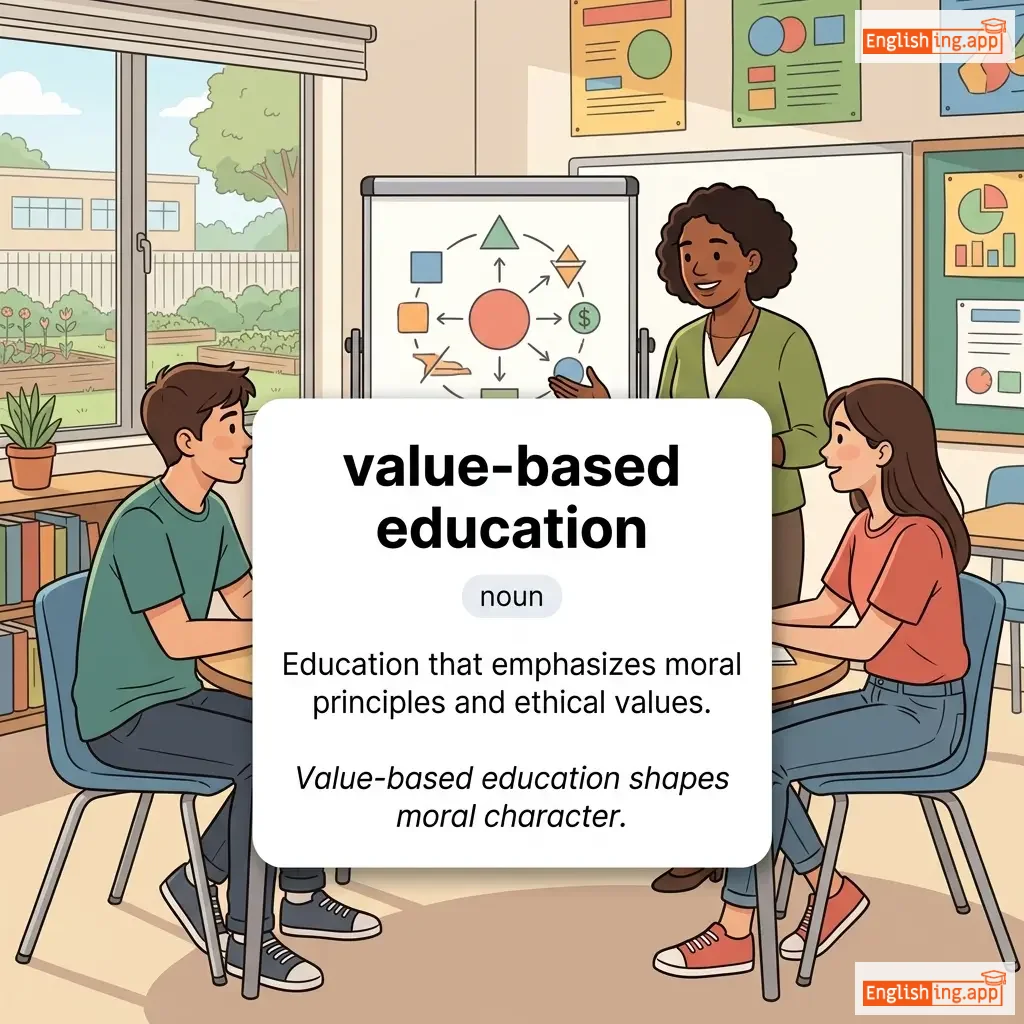
value-based education definition card — visual illustration of the meaning
noun C1
ˈvæljuː beɪst ˌɛdjuːˈkeɪʃən
éducation basée sur les valeurs (education basee sur les valeurs)

Education that emphasizes moral principles and ethical values.

"Value-based education shapes moral character."

"L'éducation basée sur les valeurs façonne le caractère moral." (L'education basee sur les valeurs faconne le caractere moral.)
adjective C1
/ˈvæljuːləs/
sans valeur (san valeur)

having no worth, importance, or usefulness

"The old broken phone was considered valueless."

"Le vieux téléphone cassé a été jugé sans valeur." (Le vieux téléphone cassé a été jugé sans valeur.)
noun C1
/ˈvænɡɑːrd/
avant-garde (avant-garde)

the forefront of an action, movement, or military force

"The company is at the vanguard of technological innovation."

"L'entreprise est à l'avant-garde de l'innovation technologique." (L'entreprise est a l'avant-garde de l'innovation technologique.)
verb C1
/ˈvæŋkwɪʃ/
vaincre (vaincre)

to defeat thoroughly, especially in battle or competition

"The army vanquished its enemies with superior strategy."

"L'armée a vaincu ses ennemis grâce à une stratégie supérieure." (L'armée a vaincu ses ennemis grâce à une stratégie supérieure.)
noun C1
/ˈvæntɪdʒ/
position avantageuse (position avantageuse)

a position or situation that gives an advantage or a good view

"From this vantage, we could see the entire valley."

"Depuis ce point de vue, nous pouvions voir toute la vallée." (Depuis ce point de vue, nous pouvions voir toute la vallée.)
verb C1
/ˈveɪpəraɪz/
vaporiser (vaporiser)

to turn into vapor or gas

"The heat of the sun can vaporize water from the surface."

"La chaleur du soleil peut vaporiser l'eau de la surface." (La chaleur du soleil peut vaporiser l'eau de la surface.)
noun C1
/ˈveɪpəraɪzər/
vaporisateur (vaporisateur)

a device that turns a liquid into vapor, often for inhalation

"She used a vaporizer to ease her cough."

"Elle a utilisé un vaporisateur pour soulager sa toux." (Elle a utilise un vaporisateur pour soulager sa toux.)
noun C1
/ˈvɛriəns/
variance (variance)

the state of being different or inconsistent; in statistics, a measure of the spread between numbers

"There is a wide variance in students' performance levels."

"Il y a une grande variance dans les niveaux de performance des étudiants." (Il y a une grande variance dans les niveaux de performance des étudiants.)
noun/verb C1
/ˈvɑːrnɪʃ/
vernis (vernis)

A liquid that is applied to wood or other materials to form a hard, shiny surface; also to apply such a liquid.

"The carpenter varnished the table to give it a glossy finish."

"Le charpentier a verni la table pour lui donner une finition brillante." (Le charpentier a verni la table pour lui donner une finition brillante.)
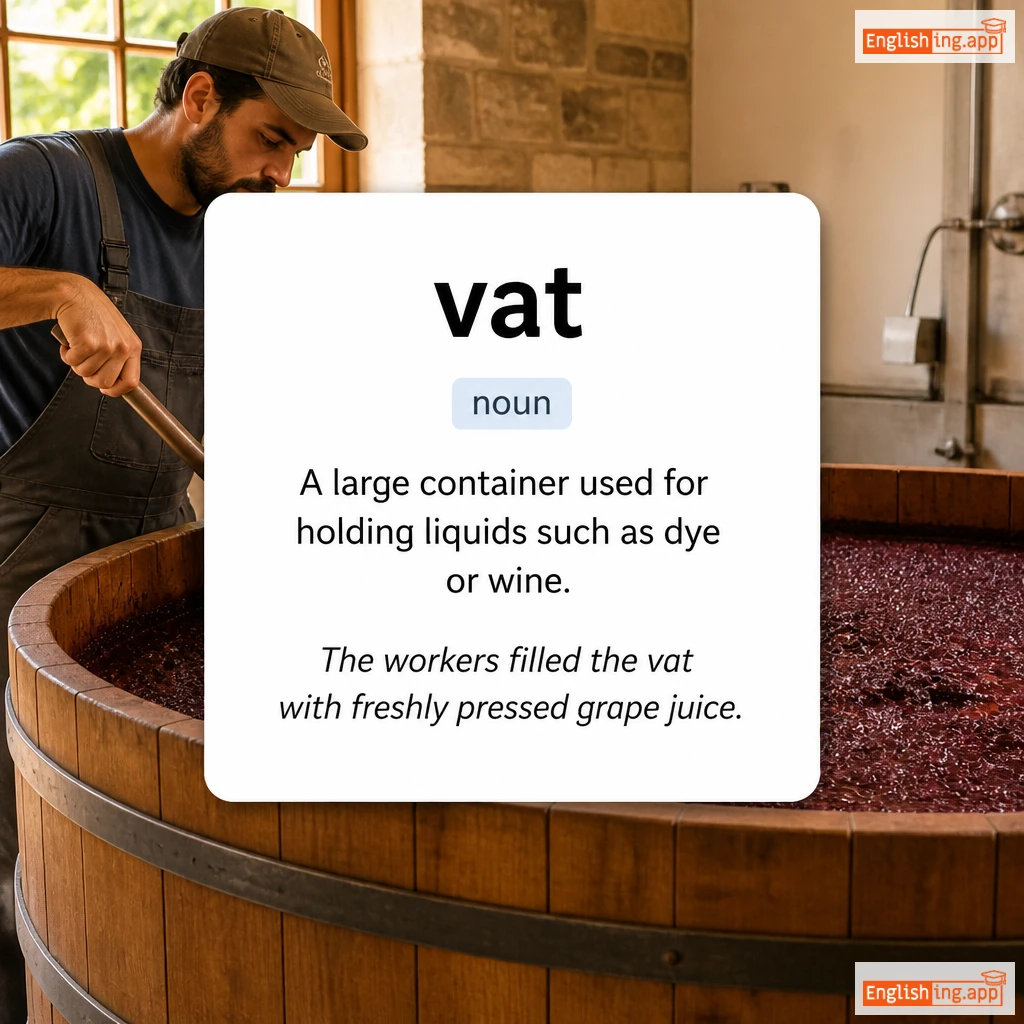
vat definition card — visual illustration of the meaning
🛢️

vat (væt)

noun C1
/væt/
grand réservoir (grand reservoir)

A large container used for holding liquids such as dye or wine.

"The workers filled the vat with freshly pressed grape juice."

"Les travailleurs ont rempli le grand réservoir avec du jus de raisin fraîchement pressé." (Les travailleurs ont rempli le grand réservoir avec du jus de raisin fraîchement pressé.)
noun/verb C1
/vɔːlt/
coffre-fort / sauter (coffre-fort / sauter)

A secure room for storing valuables; also to leap or spring over something.

"The bank kept its gold bars in a secure vault."

"La banque a gardé ses lingots d'or dans une voûte sécurisée." (La banque a garde ses lingots d'or dans une voute securisee.)
verb C1
/vɪə(r)/
changer de direction (changer de direction)

to change direction suddenly

"The car veered off the road to avoid the accident."

"La voiture a viré hors de la route pour éviter l'accident." (La voiture a vire hors de la route pour eviter l'accident.)
adjective C1
/ˈvɛdʒɪtətɪv/
relatif à la croissance ou aux processus fondamentaux de la vie (relatif à la croissance ou aux processus fondamentaux de la vie)

relating to growth or the basic processes of life, often without conscious thought or activity

"The patient remained in a vegetative state after the accident."

"Le patient est resté dans un état végétatif après l'accident." (Le patient est resté dans un état végétatif après l'accident.)
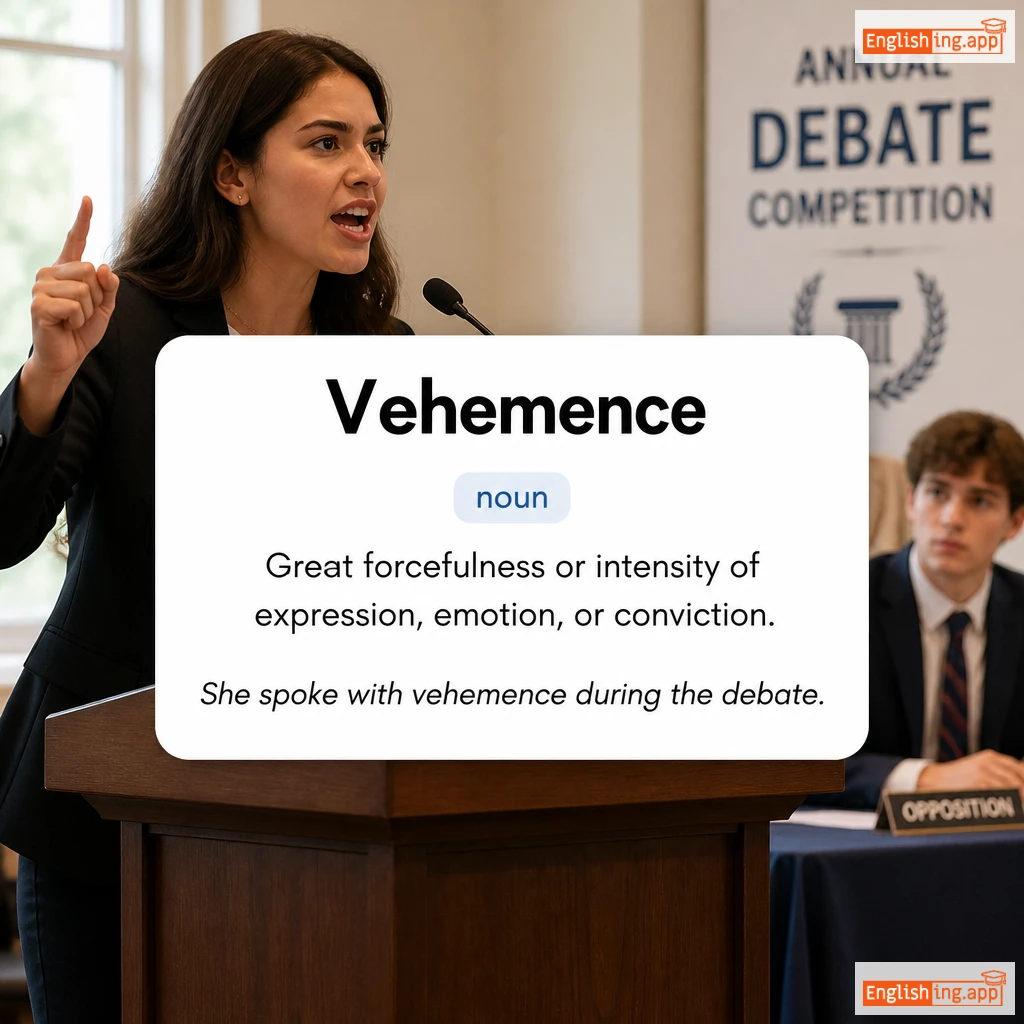
Vehemence definition card — visual illustration of the meaning
noun C1
/ˈviːəməns/
véhémence (vhemens)

Great forcefulness or intensity of expression, emotion, or conviction.

"She spoke with vehemence during the debate."

"Elle a parlé avec véhémence pendant le débat." (Elle a parlé avec véhémence pendant le débat.)
adjective C1
/ˈviːəmənt/
véhément (vehément)

showing strong feeling; forceful, passionate, or intense

"She made a vehement argument against the proposal."

"Elle a fait un argument véhément contre la proposition." (Elle a fait un argument véhément contre la proposition.)
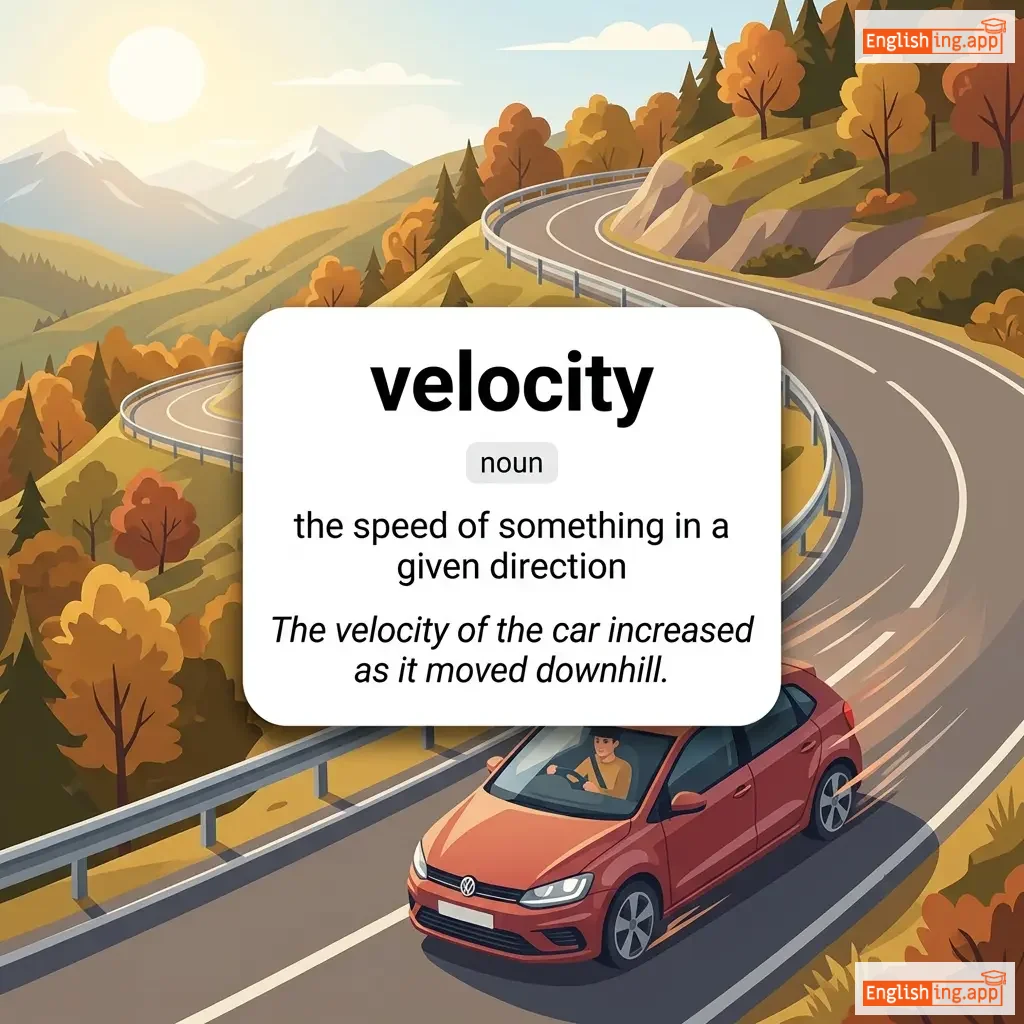
velocity definition card — visual illustration of the meaning
noun C1
/vəˈlɒsəti/
vitesse (vitesse)

the speed of something in a given direction

"The velocity of the car increased as it moved downhill."

"La vitesse de la voiture a augmenté lorsqu'elle est descendue." (La vitesse de la voiture a augmente lorsqu'elle est descendue.)
adjective C1
/ˈvɛlvəti/
bonheur (bonheur)

having a smooth, soft texture like velvet

"She spoke in a low, velvety voice."

"Elle ne pouvait cacher son bonheur lorsqu'elle a reçu le prix." (Elle ne pouvait cacher son bonheur lorsqu'elle a reçu le prix.)
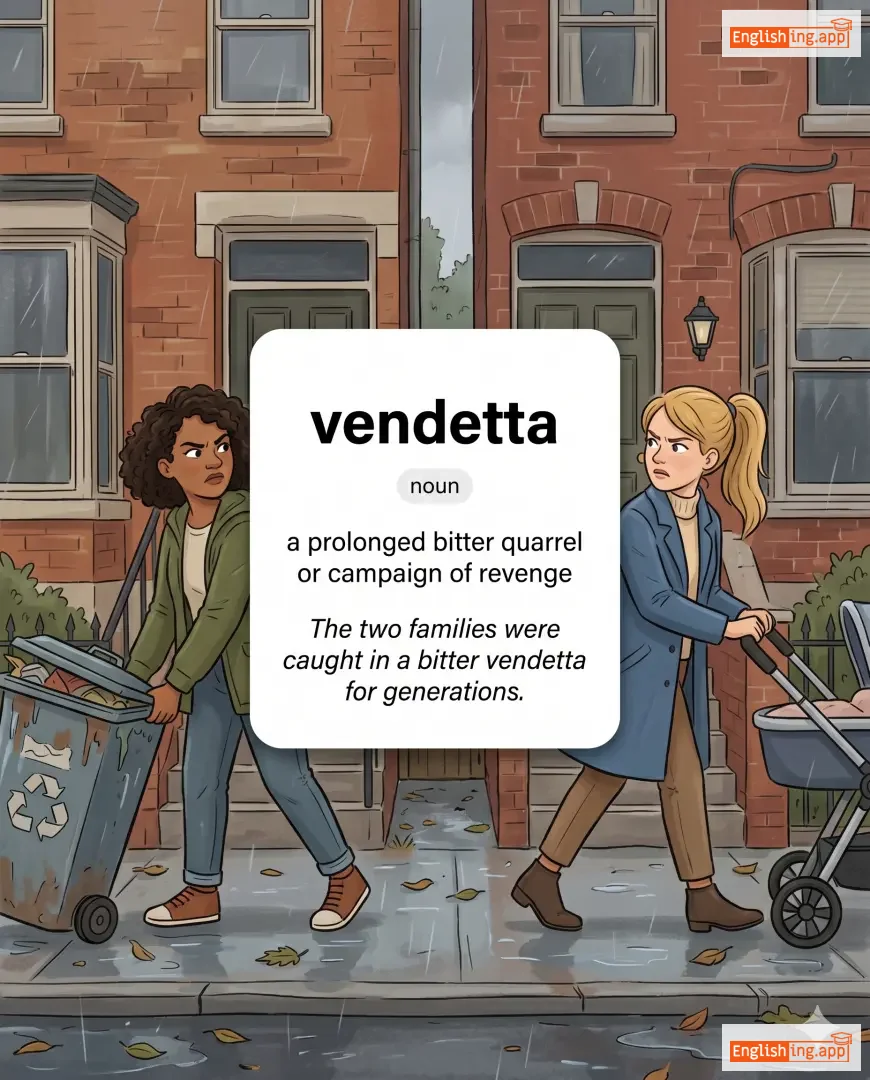
vendetta definition card — visual illustration of the meaning
noun C1
/vɛnˈdɛtə/
vengeance (vengeance)

a prolonged bitter quarrel or campaign of revenge

"The two families were caught in a bitter vendetta for generations."

"Les deux familles étaient prises dans une vendetta amère pendant des générations." (Les deux familles étaient prises dans une vendetta amère pendant des générations.)
noun C1
/vəˈnɪər/
bonheur (bonheur)

A thin decorative covering of fine wood applied to a coarser wood or other material; a superficially attractive appearance.

"The table was covered with a thin veneer of mahogany."

"Elle n'a pas pu cacher son bonheur quand elle a reçu le prix." (Elle n'a pas pu cacher son bonheur quand elle a reçu le prix.)
adjective C1
/ˈvɛnərəbl/
vénérable (venerabl)

Accorded a great deal of respect, especially because of age, wisdom, or character.

"The venerable professor was admired by generations of students."

"Le vénérable professeur a été admiré par des générations d'étudiants." (Le vénérable professeur a été admiré par des générations d'étudiants.)
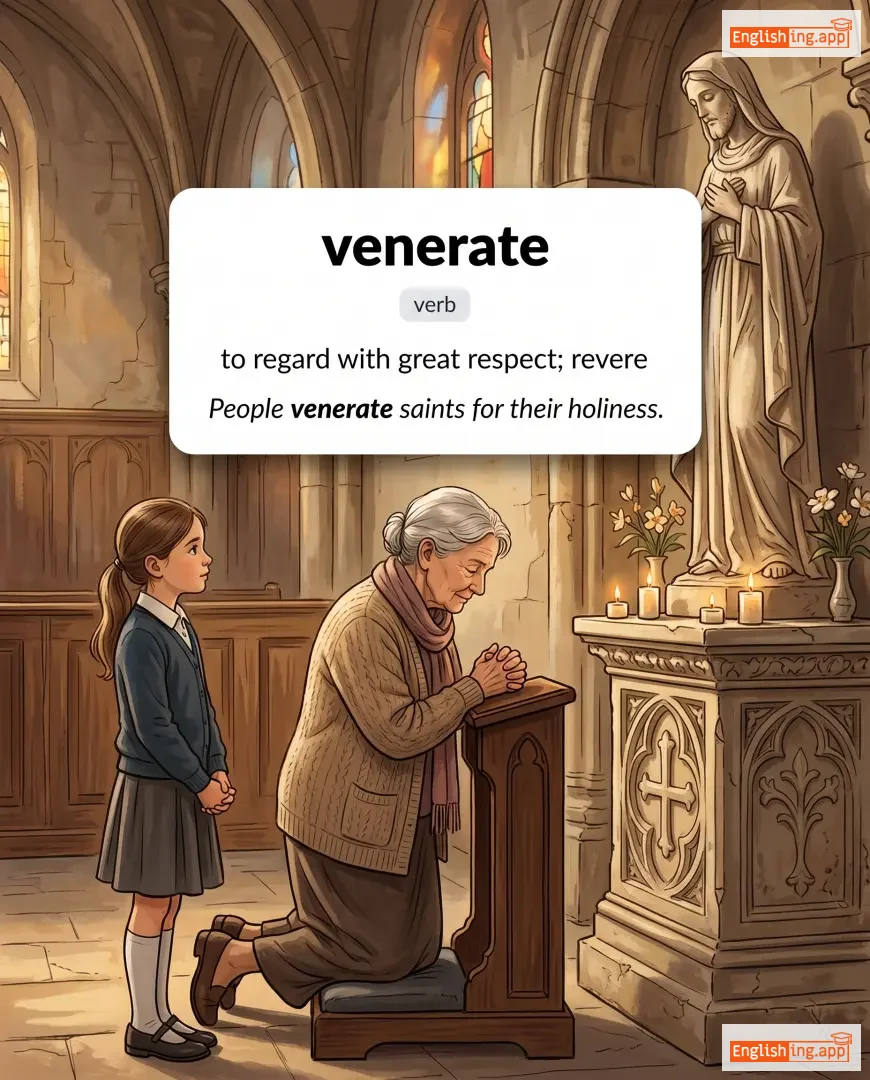
venerate definition card — visual illustration of the meaning
verb C1
/ˈvɛnəˌreɪt/
vénérer (venerer)

to regard with great respect; revere

"People venerate saints for their holiness."

"Les gens vénèrent les saints pour leur sainteté." (Les gens vénèrent les saints pour leur sainteté.)
adjective C1
/ˈvɛnəˌreɪtɪd/
vénéré (vénéré)

respected and admired deeply

"The venerated professor was honored with an award."

"Le professeur vénéré a été honoré d'un prix." (Le professeur vénéré a été honoré d'un prix.)
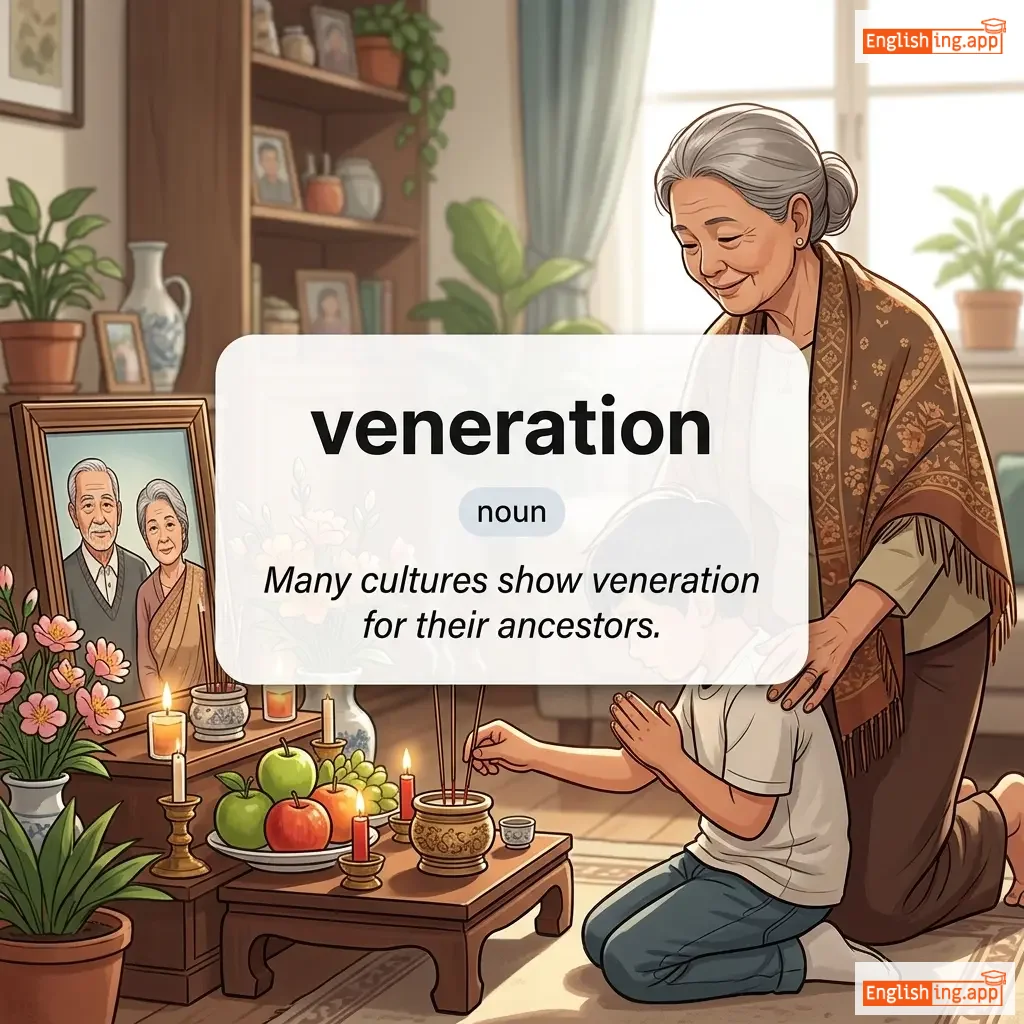
veneration definition card — visual illustration of the meaning
noun C1
ˌvɛn.əˈreɪ.ʃən
vénération (veneration)

Great respect; reverence; the action of regarding with great respect or reverence.

"Many cultures show veneration for their ancestors."

"De nombreuses cultures montrent de la vénération pour leurs ancêtres." (De nombreuses cultures montrent de la veneration pour leurs ancetres.)
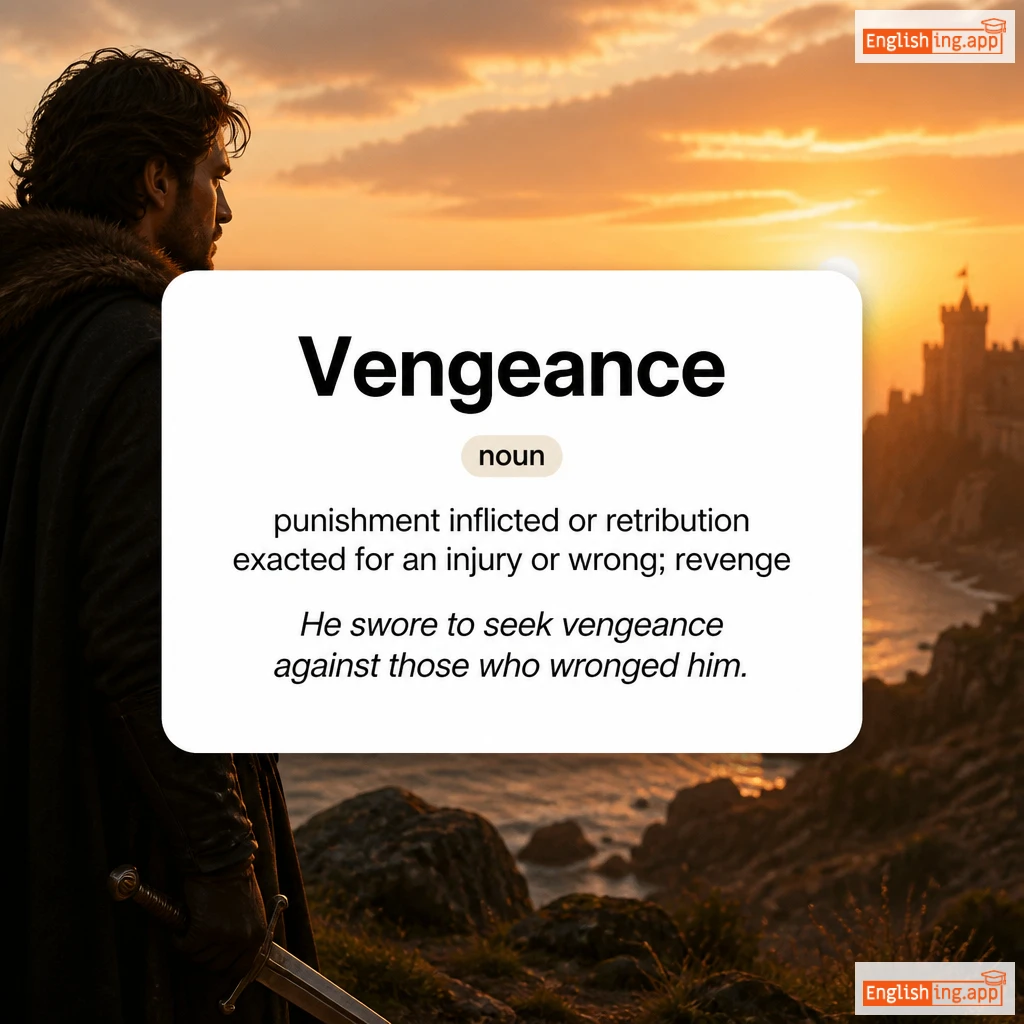
Vengeance definition card — visual illustration of the meaning
noun C1
/ˈvendʒəns/
vengeance (vengeance)

punishment inflicted or retribution exacted for an injury or wrong; revenge

"He swore to seek vengeance against those who wronged him."

"Il jura de chercher la vengeance contre ceux qui lui avaient fait du tort." (Il jura de chercher la vengeance contre ceux qui lui avaient fait du tort.)
adjective C1
/ˈvendʒ.fəl/
vengéful (vengéful)

seeking to harm someone in return for a perceived injury; vindictive

"She felt vengeful after her friend betrayed her trust."

"Elle se sentit vengeresse après que son amie ait trahi sa confiance." (Elle se sentit vengeresse après que son amie ait trahi sa confiance.)
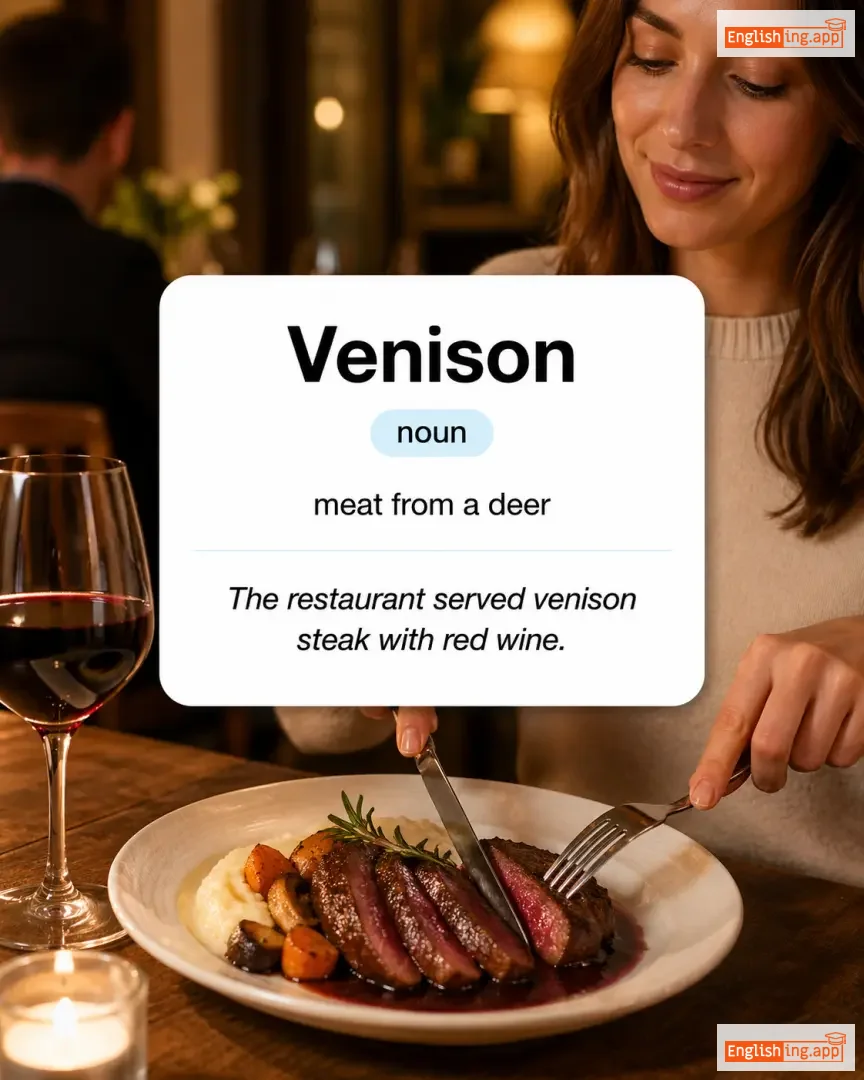
Venison definition card — visual illustration of the meaning
noun C1
/ˈvɛnɪsən/
viande de cerf (viande de cerf)

meat from a deer

"The restaurant served venison steak with red wine."

"Le restaurant a servi un steak de cerf avec du vin rouge." (Le restaurant a servi un steak de cerf avec du vin rouge.)
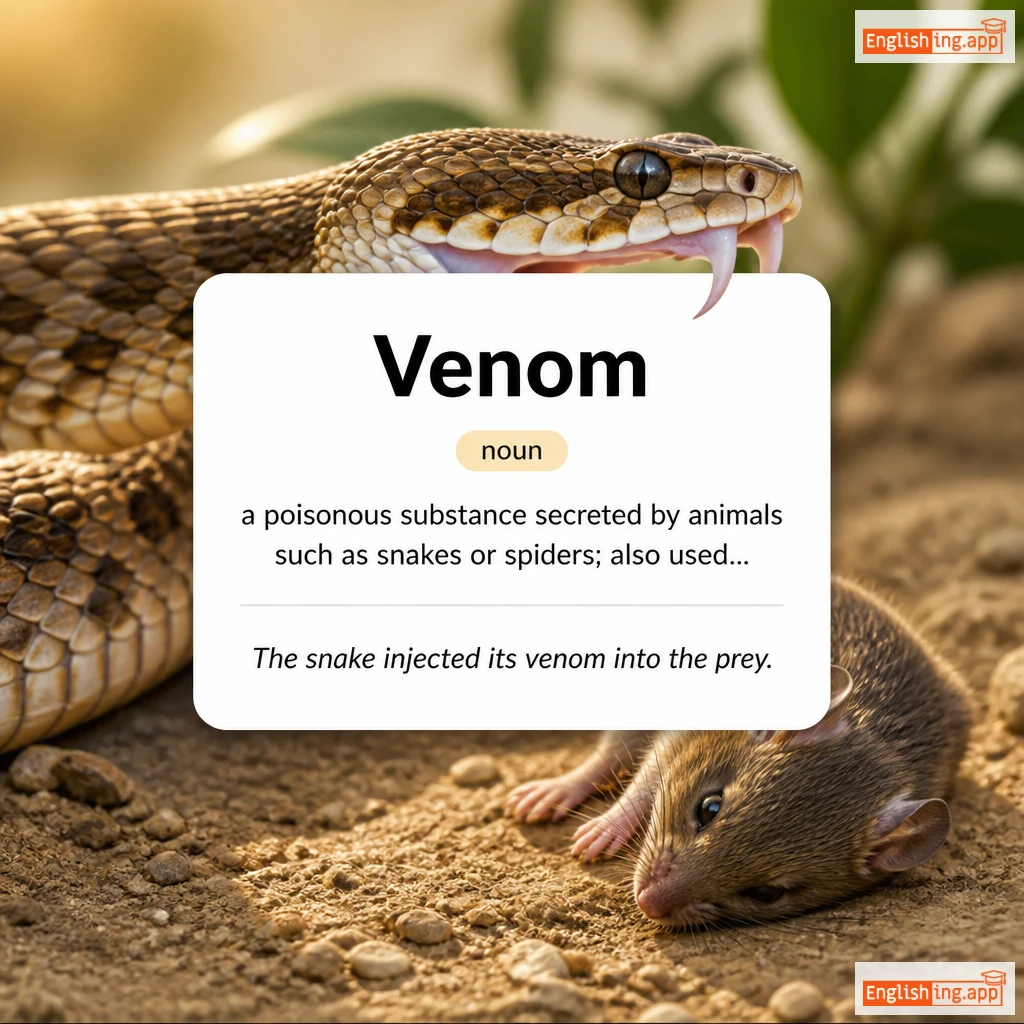
Venom definition card — visual illustration of the meaning
noun C1
/ˈvɛnəm/
venin (venin)

a poisonous substance secreted by animals such as snakes or spiders; also used to describe intense ill will or malice

"The snake injected its venom into the prey."

"Le serpent a injecté son venin dans la proie." (Le serpent a injecté son venin dans la proie.)
adjective C1
/ˈven.ə.məs/
venimeux; malveillant; (venimeux; malveillant)

secreting venom; full of malice or spite; extremely hostile

"The venomous snake struck quickly at its prey."

"Le serpent venimeux a frappé rapidement sa proie." (Le serpent venimeux a frappé rapidement sa proie.)
adjective C1
/ˈviːnəs/
veineux (veineux)

relating to the veins that carry blood to the heart

"The doctor examined the patient’s venous circulation."

"Le médecin a examiné la circulation veineuse du patient." (Le medecin a examine la circulation veineuse du patient.)
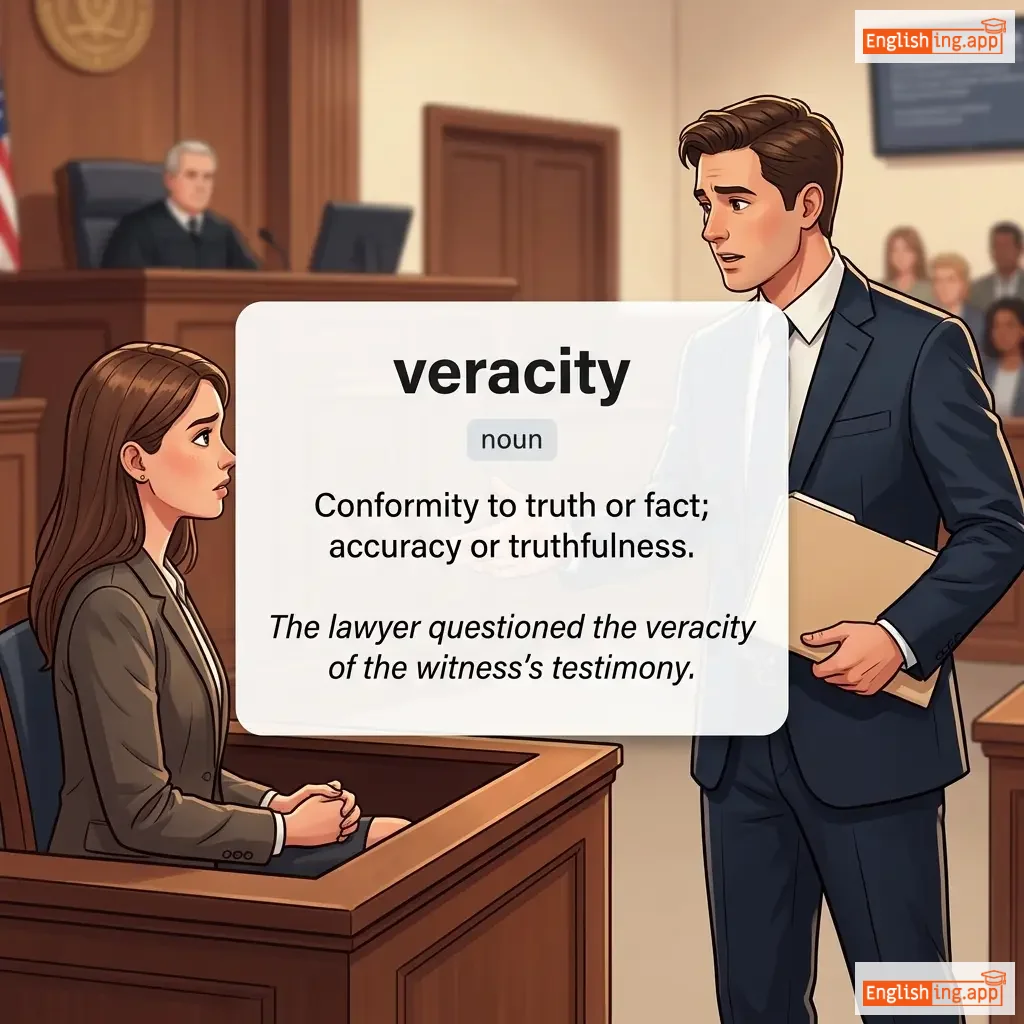
veracity definition card — visual illustration of the meaning
noun C1
/vəˈræsəti/
véracité (veracite)

Conformity to truth or fact; accuracy or truthfulness.

"The lawyer questioned the veracity of the witness’s testimony."

"L'avocat a remis en question la véracité du témoignage du témoin." (L'avocat a remis en question la veracite du temoignage du temoin.)
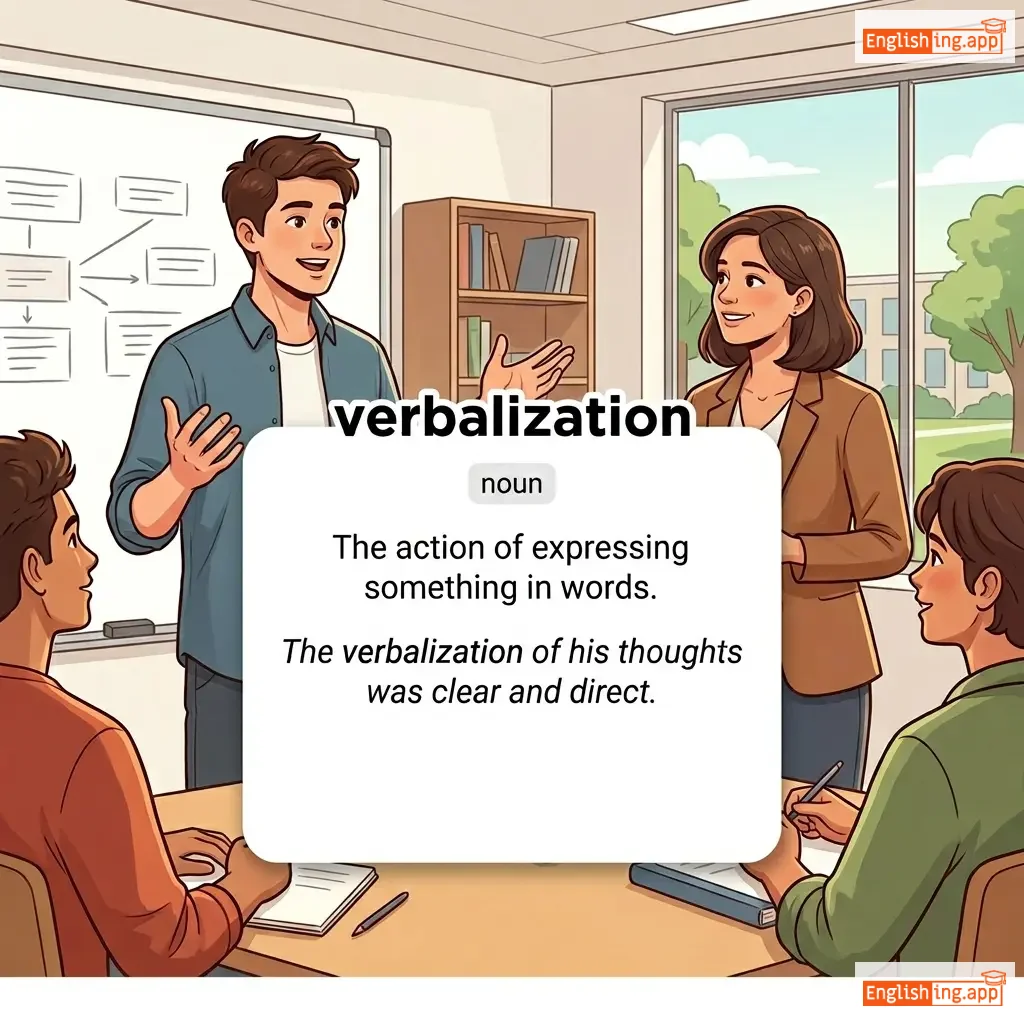
verbalization definition card — visual illustration of the meaning
noun C1
/ˌvɜːbəlɪˈzeɪʃən/
verbalisation (verbalisation)

The action of expressing something in words.

"The verbalization of his thoughts was clear and direct."

"La verbalisation de ses pensées était claire et directe." (La verbalisation de ses pensées était claire et directe.)
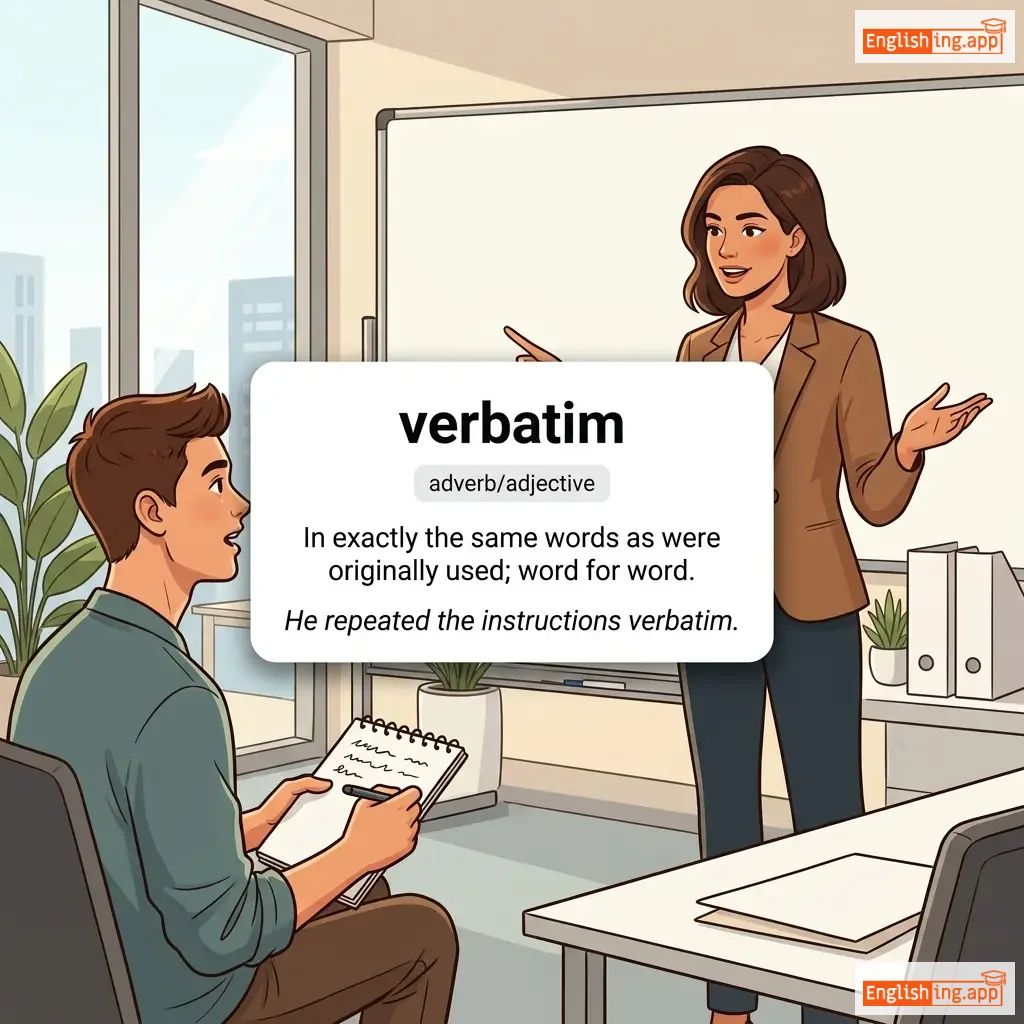
verbatim definition card — visual illustration of the meaning
adverb/adjective C1
/vərˈbeɪtɪm/
mot à mot (mo a mo)

In exactly the same words as were originally used; word for word.

"He repeated the instructions verbatim."

"Il a répété les instructions mot à mot." (Il a répété les instructions mot à mot.)
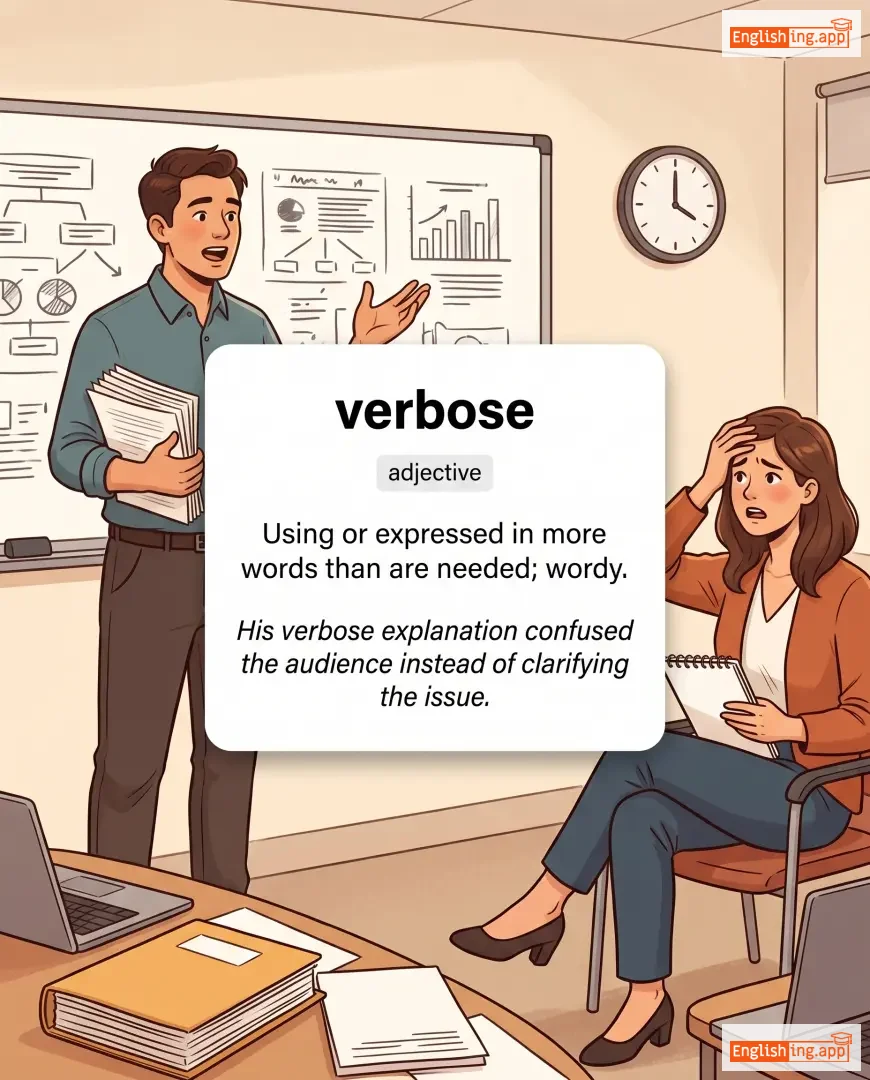
verbose definition card — visual illustration of the meaning
adjective C1
/vɜːrˈboʊs/
verbeux (verbeux)

Using or expressed in more words than are needed; wordy.

"His verbose explanation confused the audience instead of clarifying the issue."

"Son explication verbeuse a confondu le public au lieu d'éclaircir la question." (Son explication verbeuse a confondu le public au lieu d'eclaircir la question.)
adjective C1
/ˈvɛrɪtəbl/
véritable (veritable)

used to emphasize that something is genuine or true

"The house was a veritable palace compared to ours."

"La maison était un véritable palais comparé à la nôtre." (La maison était un véritable palais comparé à la nôtre.)
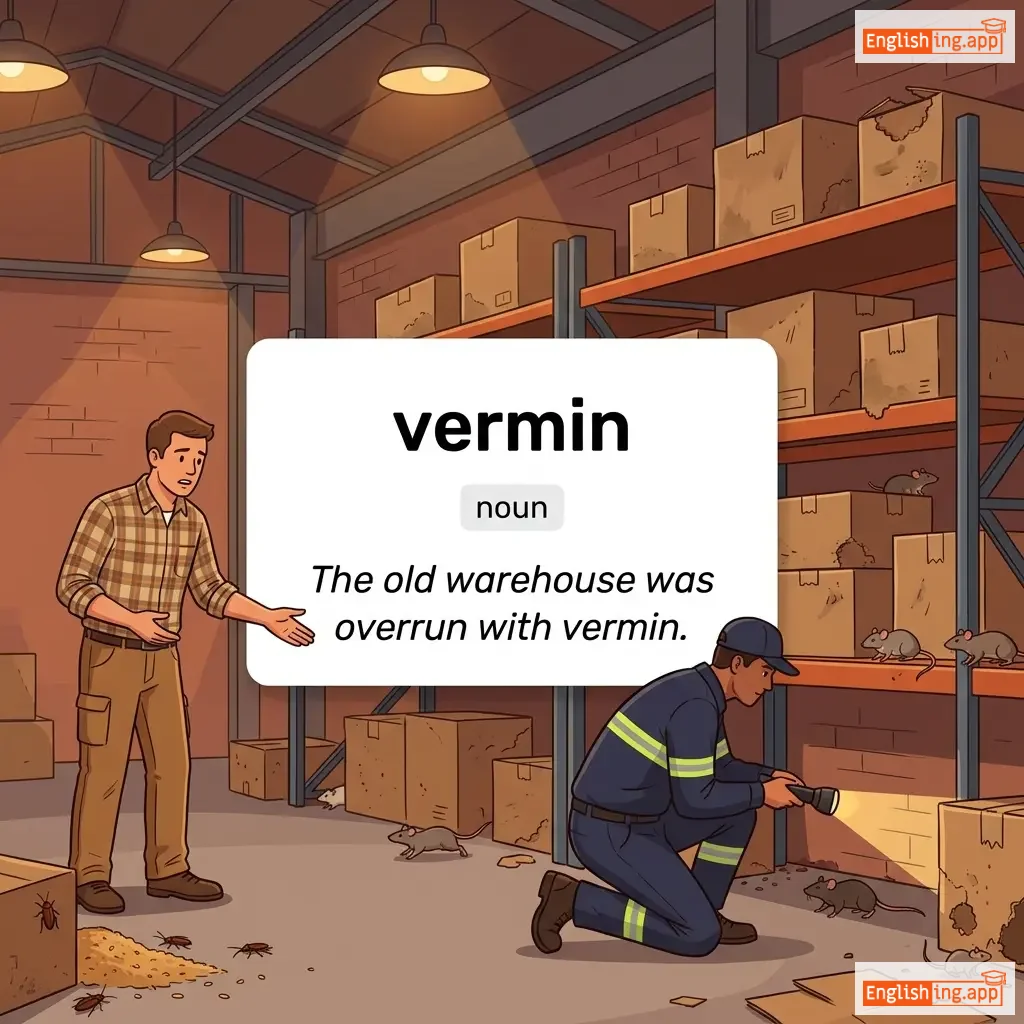
vermin definition card — visual illustration of the meaning
noun C1
/ˈvɜːrmɪn/
animaux nuisibles (animaux nuisibles)

small animals or insects that are harmful or destructive, such as rats, lice, or fleas

"The old warehouse was overrun with vermin."

"L'ancien entrepôt était infesté d'animaux nuisibles." (L'ancien entrepôt était infesté d'animaux nuisibles.)
noun C1
/vərˈnækjələr/
langue vernaculaire (langue vernaculaire)

the language or dialect spoken by ordinary people in a particular region

"He gave his speech in the local vernacular so everyone could understand."

"Il a donné son discours dans la langue vernaculaire locale afin que tout le monde puisse comprendre." (Il a donné son discours dans la langue vernaculaire locale afin que tout le monde puisse comprendre.)
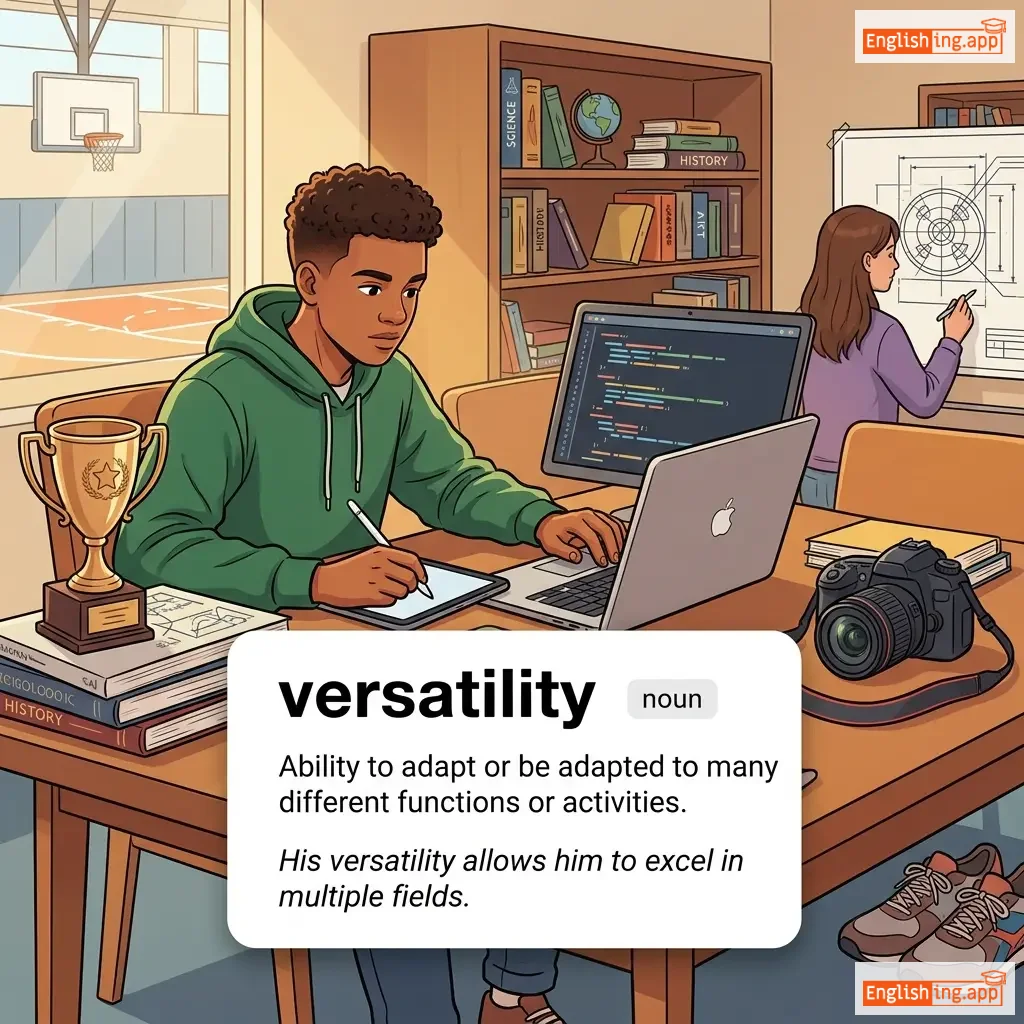
versatility definition card — visual illustration of the meaning
noun C1
ˌvɜː.səˈtɪl.ə.ti
polyvalence (polyvalence)

Ability to adapt or be adapted to many different functions or activities.

"His versatility allows him to excel in multiple fields."

"Sa polyvalence lui permet d'exceller dans plusieurs domaines." (Sa polyvalence lui permet d'exceller dans plusieurs domaines.)
noun C1
/ˈvɜːrtɛks/
sommet (sommet)

The highest point; the top or the apex.

"The climber reached the vertex of the mountain."

"L'escaladeur a atteint le sommet de la montagne." (Lescaladeur a atteint le sommet de la montagne.)
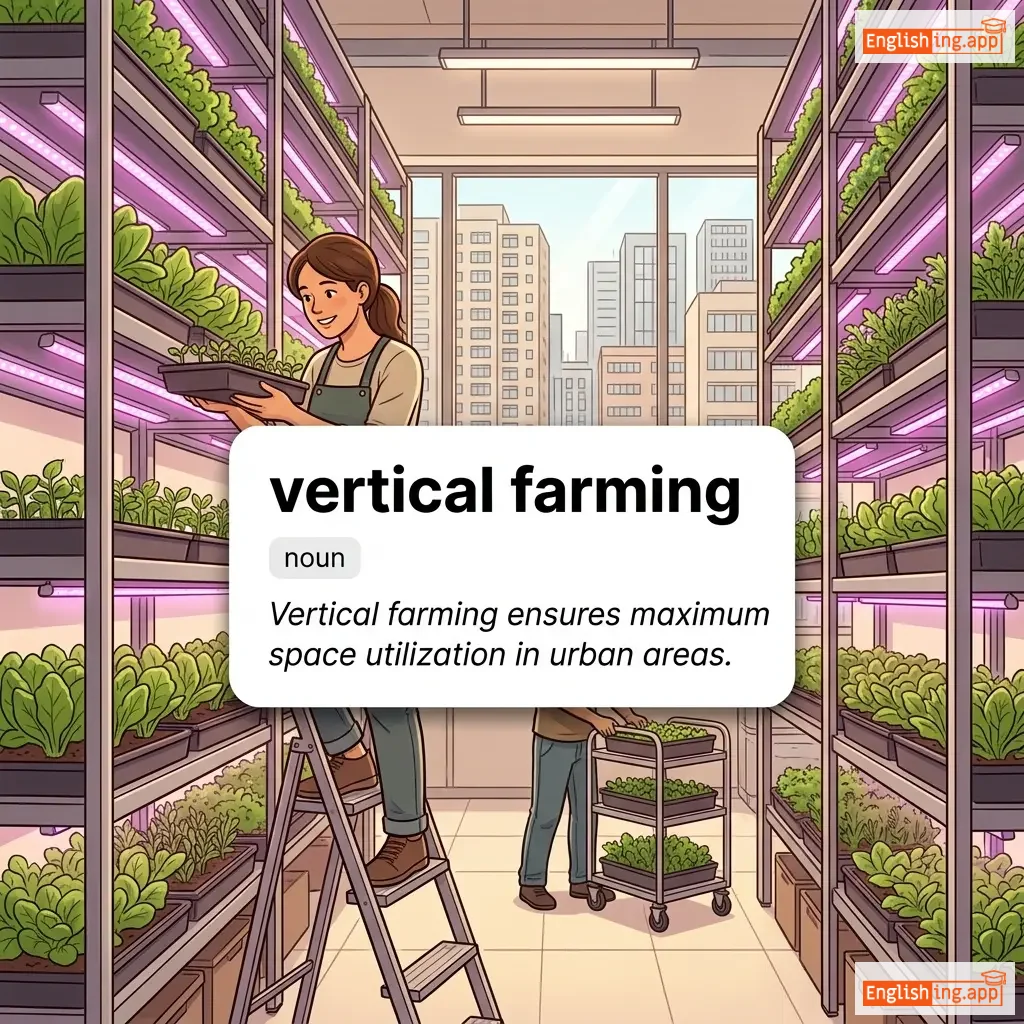
vertical farming definition card — visual illustration of the meaning
noun C1
/ˈvɜː.tɪ.kəl ˈfɑː.mɪŋ/
agriculture verticale (agriculture verticale)

The practice of growing crops in vertically stacked layers, often incorporating controlled-environment agriculture.

"Vertical farming ensures maximum space utilization in urban areas."

"L'agriculture verticale garantit une utilisation maximale de l'espace dans les zones urbaines." (L'agriculture verticale garantit une utilisation maximale de l'espace dans les zones urbaines)
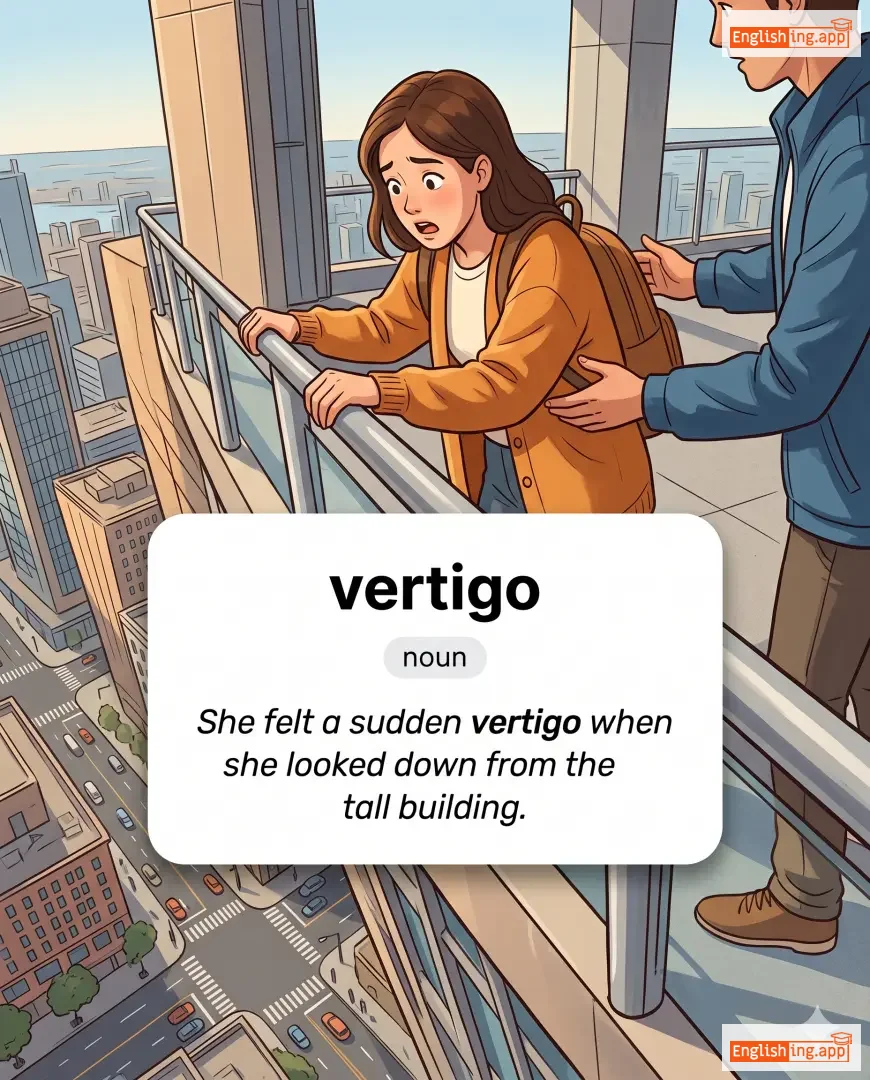
vertigo definition card — visual illustration of the meaning
noun C1
/ˈvɜːrtɪˌɡoʊ/
bonheur (bonheur)

A sensation of spinning or dizziness, often caused by problems in the inner ear or brain.

"She felt a sudden vertigo when she looked down from the tall building."

"Elle ne pouvait pas cacher son bonheur quand elle a reçu le prix." (Elle ne pouvait pas cacher son bonheur quand elle a reçu le prix.)
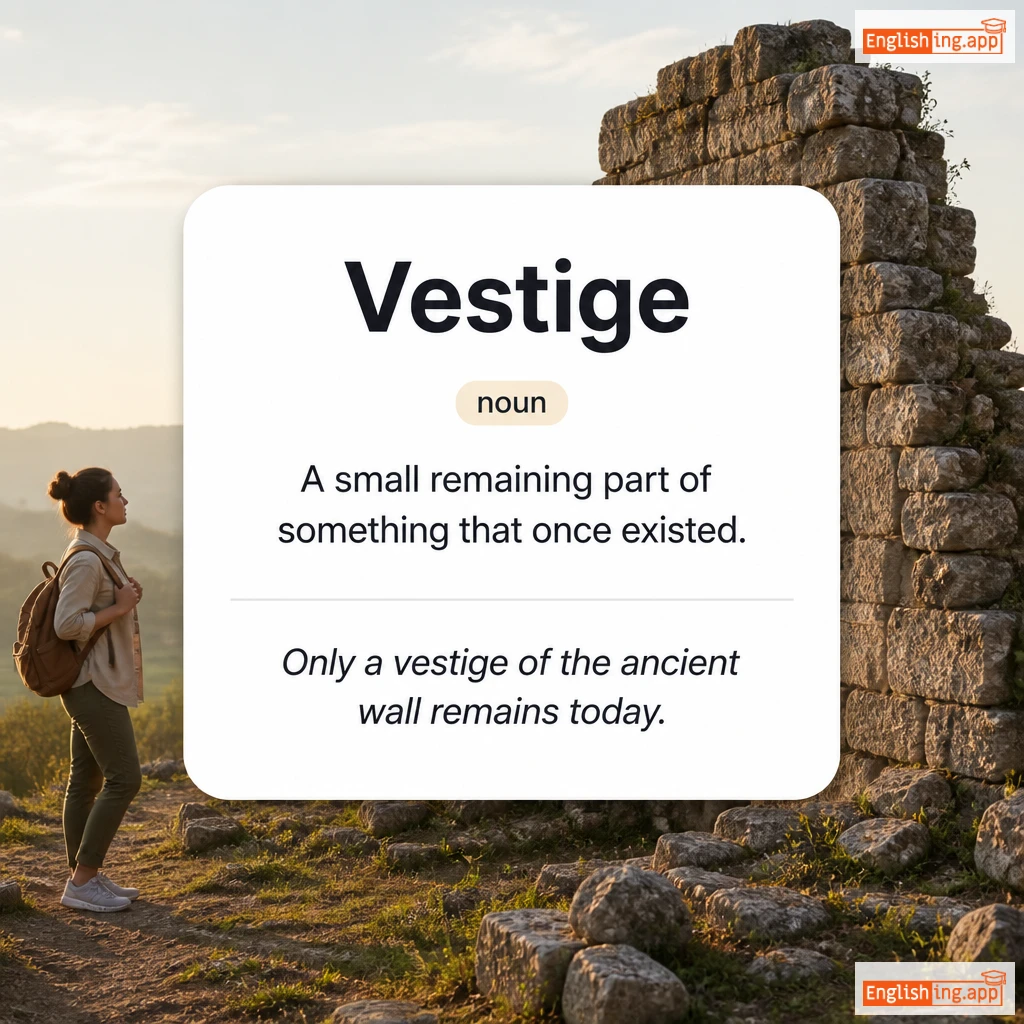
Vestige definition card — visual illustration of the meaning
noun C1
/ˈvɛstɪdʒ/
vestige (vestige)

A small remaining part of something that once existed.

"Only a vestige of the ancient wall remains today."

"Il ne reste qu'un vestige du mur ancien." (Il ne reste qu'un vestige du mur ancien.)
verb C1
/ˈviːtoʊ/
veto (veto)

to reject or forbid a decision, proposal, or law

"The president decided to veto the new bill."

"Le président a décidé de mettre son véto sur la nouvelle loi." (Le président a décidé de mettre son véto sur la nouvelle loi.)