वोकैबुलरीज

इंग्लिश वोकैबुलरी डिस्कवर, लर्न और मास्टर करें

noun C1
/truːs/
休戦 (kyūsen)

An agreement between enemies or opponents to stop fighting for a certain time.

"The two countries agreed to a truce after weeks of intense fighting."

"二国は数週間にわたる激しい戦闘の後、休戦に合意しました。" (Nikoku wa sū shūkan ni wataru hageshī sentō no ato, kyūsen ni gōi shimashita.)
verb C1
/trʌdʒ/
足を引きずって歩く (ashi o hikizutte aruku)

To walk slowly and with heavy steps, typically because of exhaustion or harsh conditions.

"They had to trudge through the snow to reach the village."

"彼らは村に到達するために雪の中を足を引きずって歩かなければならなかった。" (Karera wa mura ni tōtatsu suru tame ni yuki no naka o ashi o hikizutte arukanakereba naranakatta.)
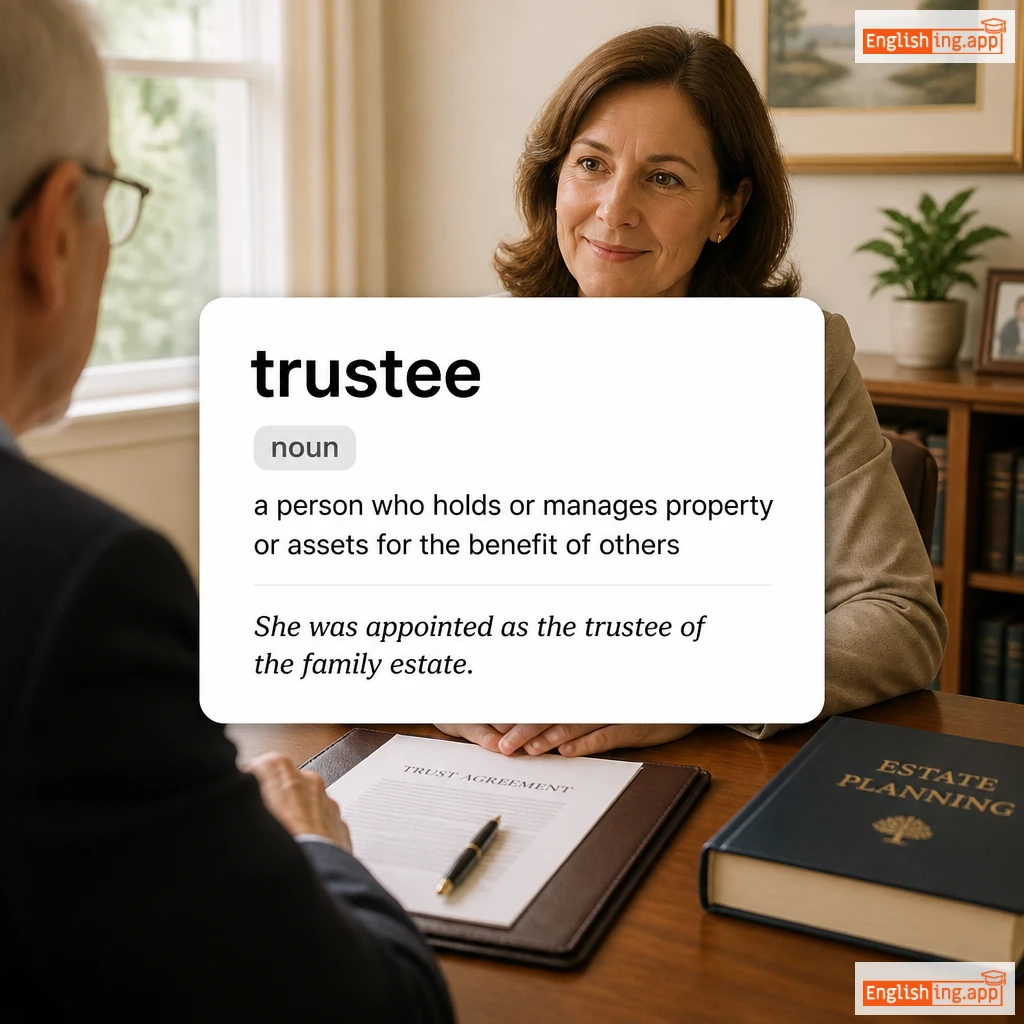
trustee definition card — visual illustration of the meaning
noun C1
/trʌsˈtiː/
受託者 (jutakusha)

a person who holds or manages property or assets for the benefit of others

"She was appointed as the trustee of the family estate."

"彼女は家族の財産の受託者に任命された。" (Kanojo wa kazoku no zaisan no jutakusha ni ninmei sareta.)
adjective C1
/ˈtʌf.tɪd/
小さな束がついた; 束を使った (chiisana taba ga tsuita; taba o tsukatta)

having a tuft or tufts; furnished with a tuft or clump of threads, hairs, or other material

"The tufted sofa looked elegant in the living room."

"小さな束がついたソファはリビングルームで優雅に見えました。" (Chiisana taba ga tsuita sofa wa ribingu rūmu de yūga ni miemashita.)
noun C1
/ˈtʌɡboʊt/
タグボート (tagubōto)

a small, powerful boat used for towing or pushing ships

"The tugboat guided the massive ship safely into the harbor."

"タグボートは巨大な船を安全に港に案内しました。" (Tagubōto wa kyodaina fune o anzen ni minato ni annai shimashita.)
noun C1
/ˈtjuːmʌlt/
騒動 (soudou)

A loud, confused noise, especially caused by a crowd; commotion or disorder.

"The protest created a tumult in the city square."

"抗議活動は市の広場で騒動を引き起こしました。" (Kougi katsudou wa shi no hiroba de soudou o hikiokoshimashita.)
adjective C1
/tjuːˈmʌltʃuəs/
動揺 (douyou)

Characterized by disorder, noisy excitement, or emotional agitation.

"They had a tumultuous relationship full of ups and downs."

"彼らは浮き沈みのある激動の関係を持っていました。" (Karera wa uki-shizumi no aru gekidou no kankei o motteimashita.)
noun C1
/ˈtɜːrbjələns/

Violent or unsteady movement of air, water, or some other fluid; disorder or conflict.

"The plane experienced severe turbulence during the flight."

adjective C1
/ˈtɜːrbjələnt/
動揺 (dōyō)

Characterized by conflict, disorder, or confusion; not stable or calm.

"The country went through a turbulent period of political change."

"その国は政治的変革の動揺した時期を経ました。" (Sono kuni wa seijiteki henka no dōyō shita jiki o emashita.)
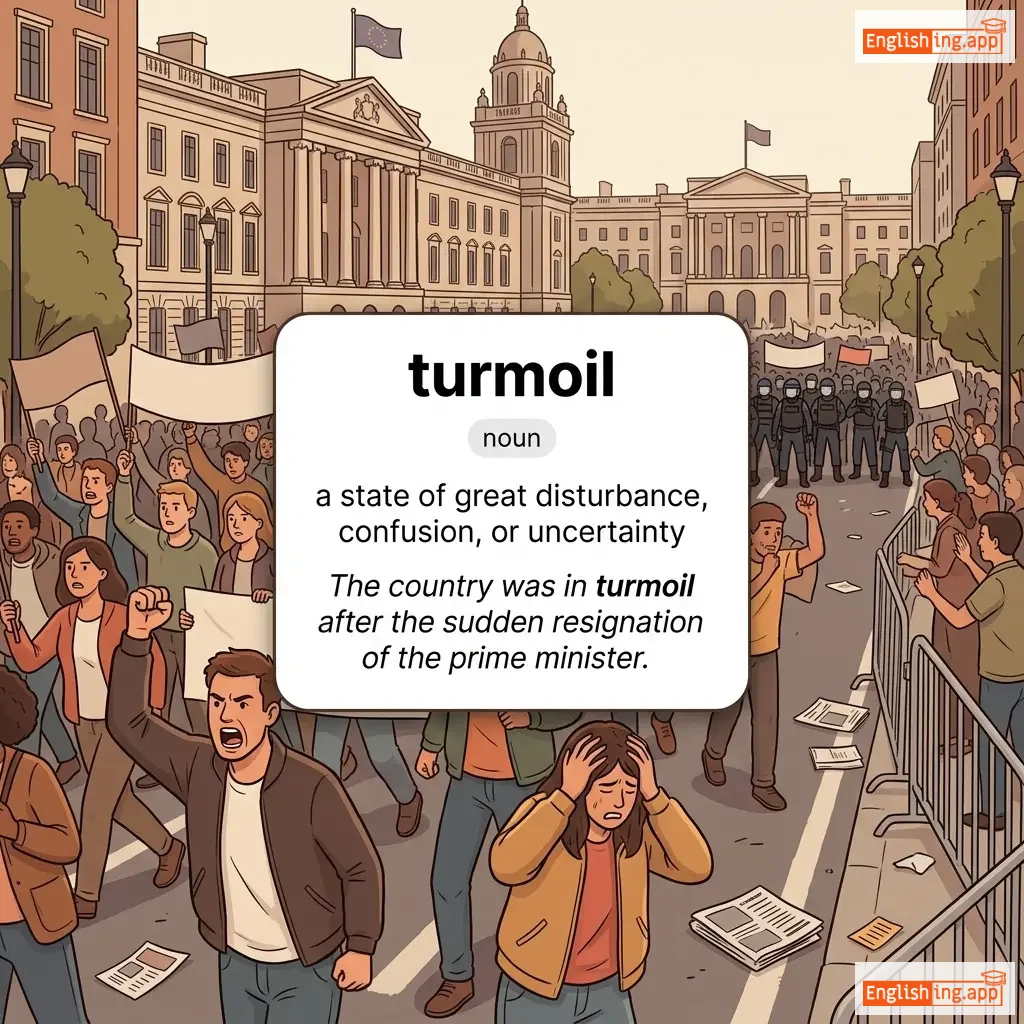
turmoil definition card — visual illustration of the meaning
noun C1
/ˈtɜːrmɔɪl/
混乱 (konran)

a state of great disturbance, confusion, or uncertainty

"The country was in turmoil after the sudden resignation of the prime minister."

"首相の突然の辞任後、国は混乱状態に陥った。" (Shushou no totsuzen no jinin go, kuni wa konran joutai ni ochitta.)
adjective C1
/ˈtɜːrnkiː/
ターンキー (taanki)

ready for immediate use; a complete product or solution

"The company provides turnkey solutions for small businesses."

"その会社は小規模なビジネス向けのターンキーソリューションを提供しています。" (Sono kaisha wa shokibo na bijinesu muke no taanki soriushon wo teikyō shiteimasu.)
noun C1
/ˈtʌrɪt/
大きな塔や建物の上にある小さな塔 (ookina to ya tatemono no ue ni aru chiisana tou)

A small tower on top of a larger tower or building, often used in castles or fortifications.

"The castle was guarded by soldiers stationed in the turret."

"城はタレットに駐留している兵士によって守られていた。" (Shiro wa toretto ni chūryū shiteiru heishi ni yotte mamorarete ita.)
noun C1
/twɪndʒ/
鋭い痛み (surudoi itami)

a sudden, sharp pain or an emotional pang

"He felt a twinge of guilt after lying to his friend."

"彼は友達に嘘をついた後、罪悪感の鋭い痛みを感じた。" (Kare wa tomodachi ni uso o tsuita ato, zaiakukan no surudoi itami o kanjita.)
noun C1
/ˈtwɪstər/
竜巻 (tatsumaki)

A tornado or something that twists; also refers to a challenging tongue twister.

"The twister destroyed several houses in the village."

"竜巻は村のいくつかの家を破壊しました。" (Tatsumaki wa mura no ikutsuka no ie o hakai shimashita.)
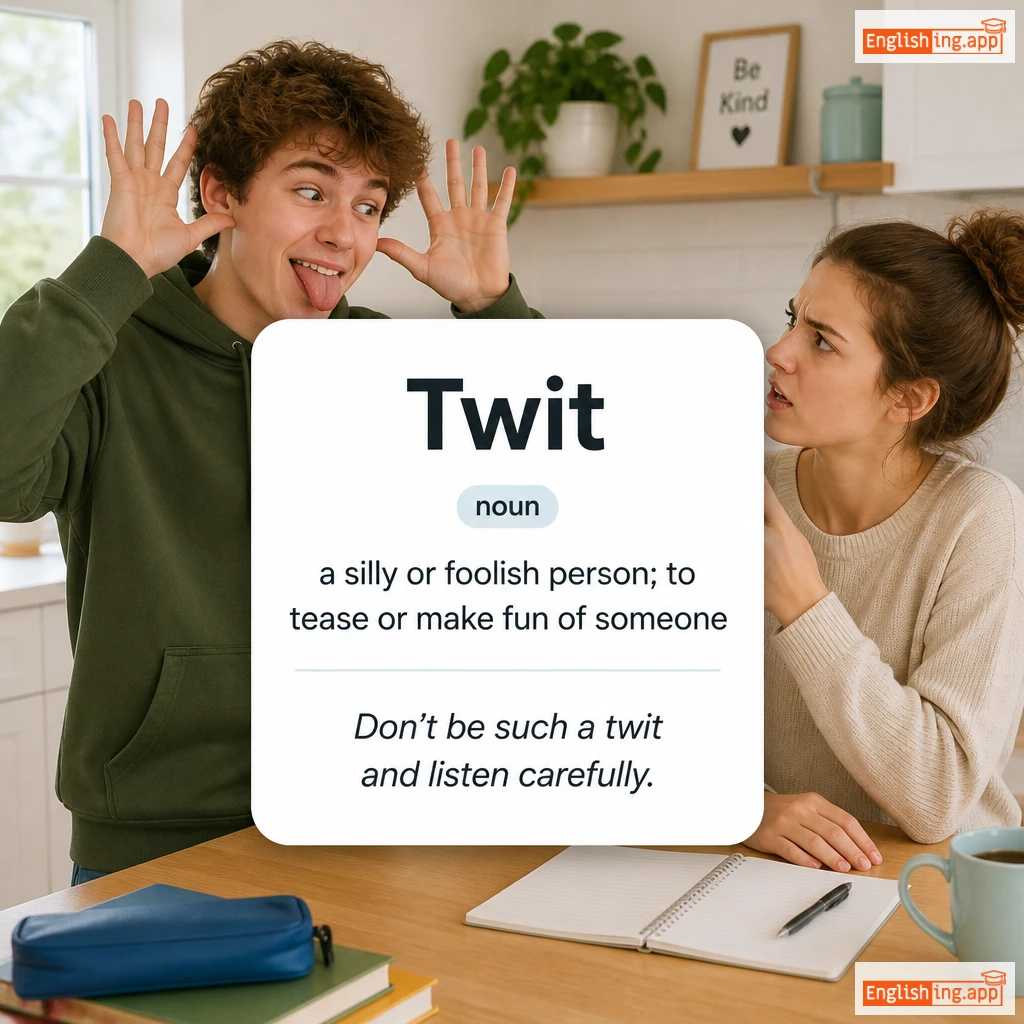
Twit definition card — visual illustration of the meaning
noun C1
/twɪt/
馬鹿; からかう (baka; karakau)

a silly or foolish person; to tease or make fun of someone

"Don't be such a twit and listen carefully."

"そんな馬鹿なことを言わないで、よく聞いて。" (sonna baka na koto o iwanaide, yoku kiite)
noun C1
/ˈtuːsəm/
ツーサム (tsū sam)

A pair of people considered together, often in a romantic or competitive context.

"They entered the dance competition as a twosome."

"彼らはツーサムとしてダンスコンペティションに参加した。" (Karera wa tsū sam toshite dansu konpetishon ni sanka shita.)
noun C1
/taɪˈkuːn/
大富豪 (dai fugo)

a wealthy, powerful businessperson

"The real estate tycoon invested in several skyscrapers."

"不動産の大富豪は複数の超高層ビルに投資しました。" (Fudōsan no dai fugo wa fukusū no chō kōsō biru ni tōshi shimashita.)
verb C1
/ˈtɪpɪfaɪ/
代表する (daihyou suru)

to represent or be a typical example of something

"His leadership style typifies the new corporate culture."

"彼のリーダーシップスタイルは新しい企業文化を体現しています。" (Kare no rīdāshippu sutairu wa atarashī kigyō bunka o taigen shiteimasu.)
adjective C1
/ˌtaɪpəˈɡræfɪkəl/
印刷ミス (insatsu misu)

relating to the style, arrangement, or appearance of printed text

"There was a typographical error in the book."

"本に印刷ミスがありました。" (Hon ni insatsu misu ga arimashita.)
noun C1
/taɪˈpɒɡrəfi/
タイポグラフィ (taipogurafi)

the art and technique of arranging type to make written language legible and visually appealing

"Good typography improves the readability of a website."

"良いタイポグラフィはウェブサイトの読みやすさを改善します。" (Yoi taipogurafi wa webusaito no yomiyasusa o kaizen shimasu.)
adjective C1
/tɪˈrænɪkəl/
暴君的 (bōkunteki)

exercising power in a cruel or arbitrary way

"The tyrannical ruler silenced all opposition."

"暴君の支配者はすべての反対意見を黙らせた。" (Bōkun no shihaisha wa subete no hantai iken o damaraseta.)
noun C1
/ˈtɪrəni/
圧政 (asshō)

Cruel and oppressive government or rule by a tyrant.

"The people revolted against the tyranny of their ruler."

"人々は支配者の圧政に反抗しました。" (Hitobito wa shihai-sha no asshō ni hankō shimashita.)
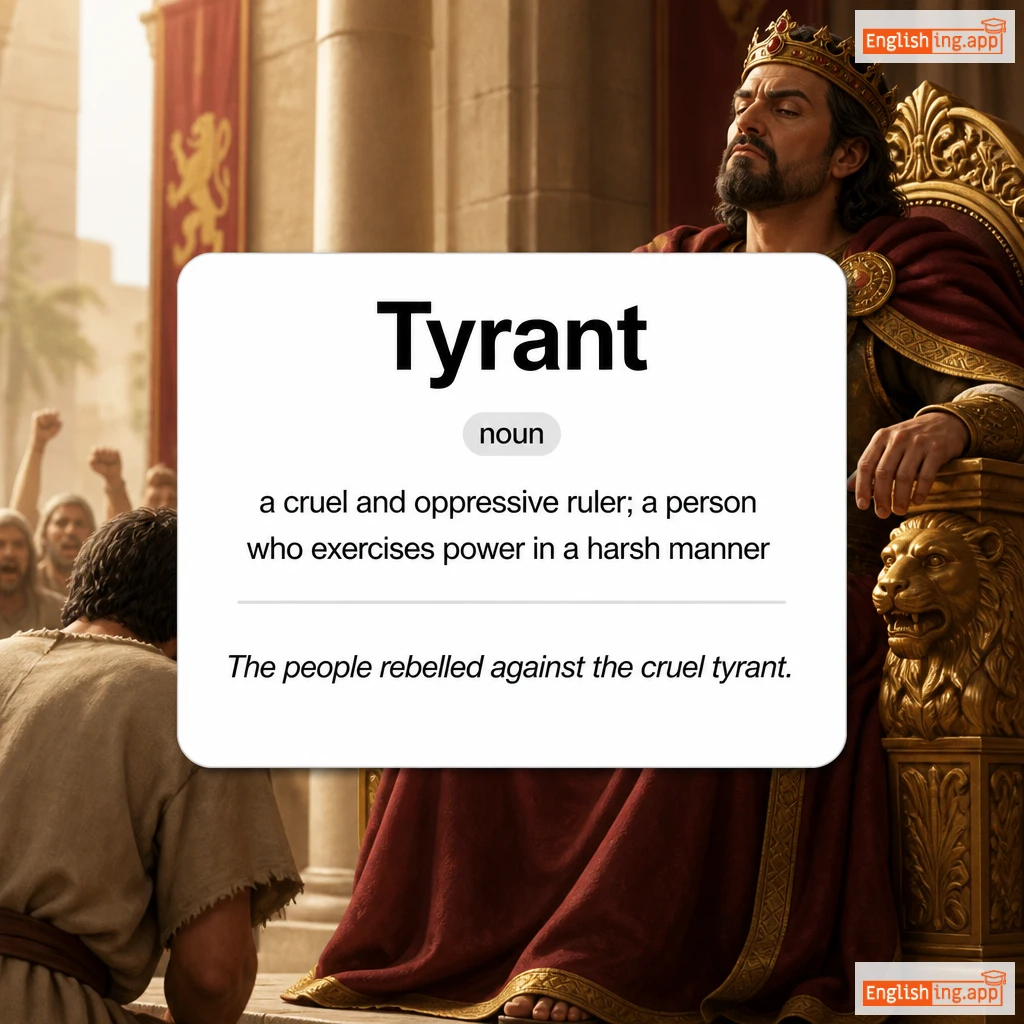
Tyrant definition card — visual illustration of the meaning
noun C1
/ˈtaɪ.rənt/
暴君 (bōkun)

a cruel and oppressive ruler; a person who exercises power in a harsh manner

"The people rebelled against the cruel tyrant."

"人々は残酷な暴君に反乱を起こしました。" (hitobito wa zankoku na bōkun ni hanran o okoshimashita)