Vocabulaires

Découvrez, apprenez et maîtrisez le vocabulaire anglais

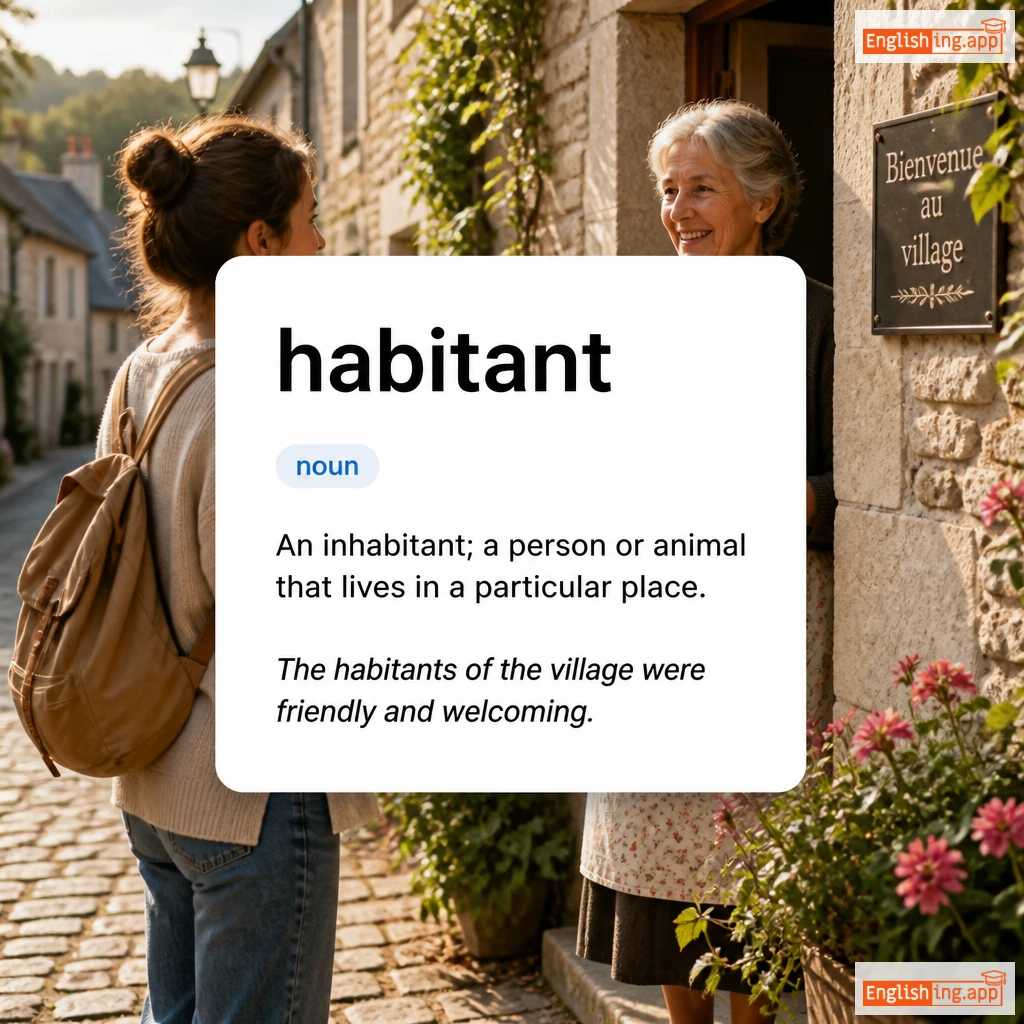
habitant definition card — visual illustration of the meaning
👨‍👩‍👧‍👦

habitant (хэбитэнт)

noun C2
/ˈhæbɪtənt/
житель (zhitel)

An inhabitant; a person or animal that lives in a particular place.

"The habitants of the village were friendly and welcoming."

"Жители деревни были дружелюбными и гостеприимными." (Zhiteli derevni byli druzhelyubnymi i gostepriimnymi.)
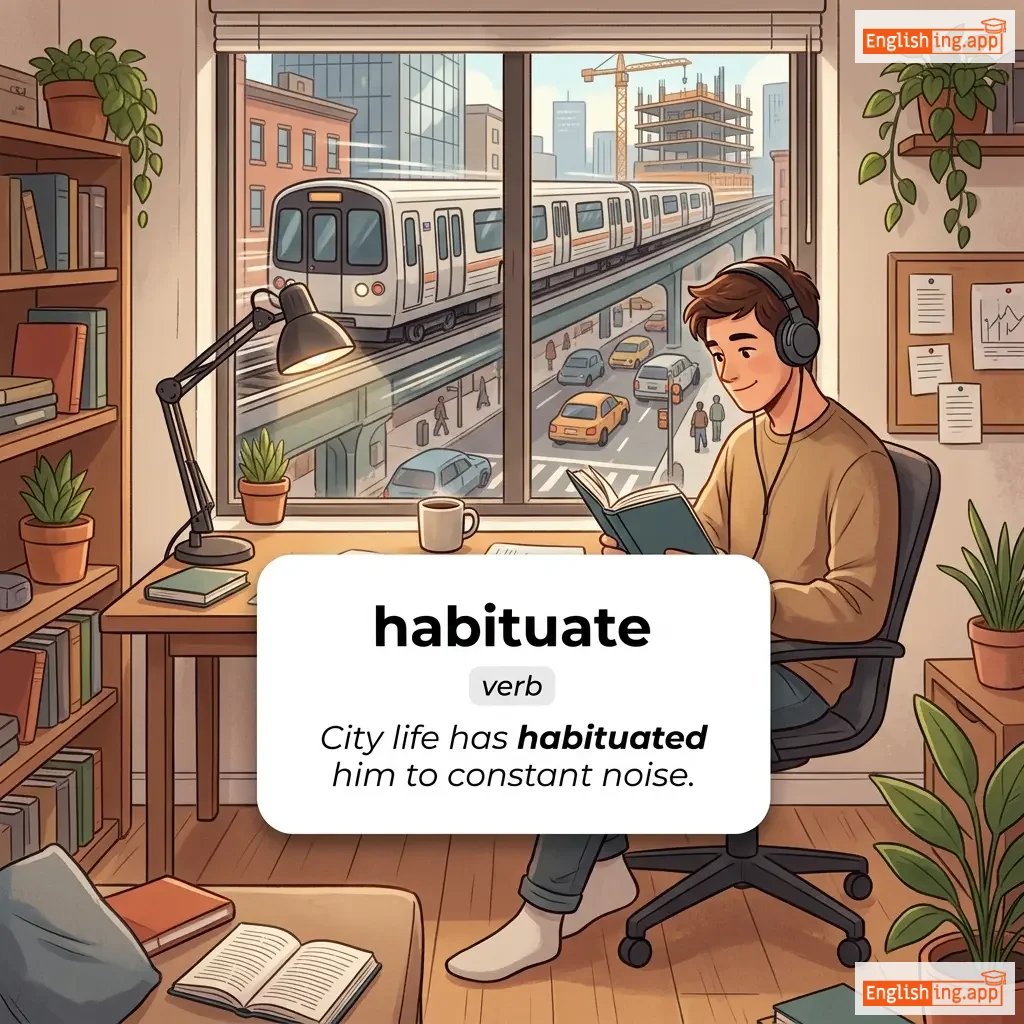
habituate definition card — visual illustration of the meaning
verb C2
/həˈbɪtʃueɪt/
привыкать (privykat)

to accustom someone or oneself to something through frequent exposure or experience

"City life has habituated him to constant noise."

"Городская жизнь приучила его к постоянному шуму." (Gorodskaya zhizn priuchila ego k postoyannomu shumu.)
noun C2
/ˈhæbɪtjuːd/
привычка, обычай (privychka, obychay)

a customary condition or mode of life; habitual practice

"He lived in a quiet habitude, avoiding the noise of the city."

"Он жил в тихой привычке, избегая шума города." (On zhil v tikhoy privychke, izbegaya shuma goroda.)
noun C2
/ˈhækəlz/

the hairs on the back of an animal’s neck that rise when it is angry or alarmed; figuratively, feelings of anger or resentment

"His rude comment raised my hackles."

noun C2
/ˈhæknɪ/
арендованная лошадь, избитый (arendovannaya loshad, izbityi)

a horse kept for ordinary riding or hire; also used for something overused or trite

"The old hackney was still pulling the carriage."

"Старая арендованная лошадь всё ещё везла повозку." (Staraya arendovannaya loshad vsyo eshchyo vezla povozku.)
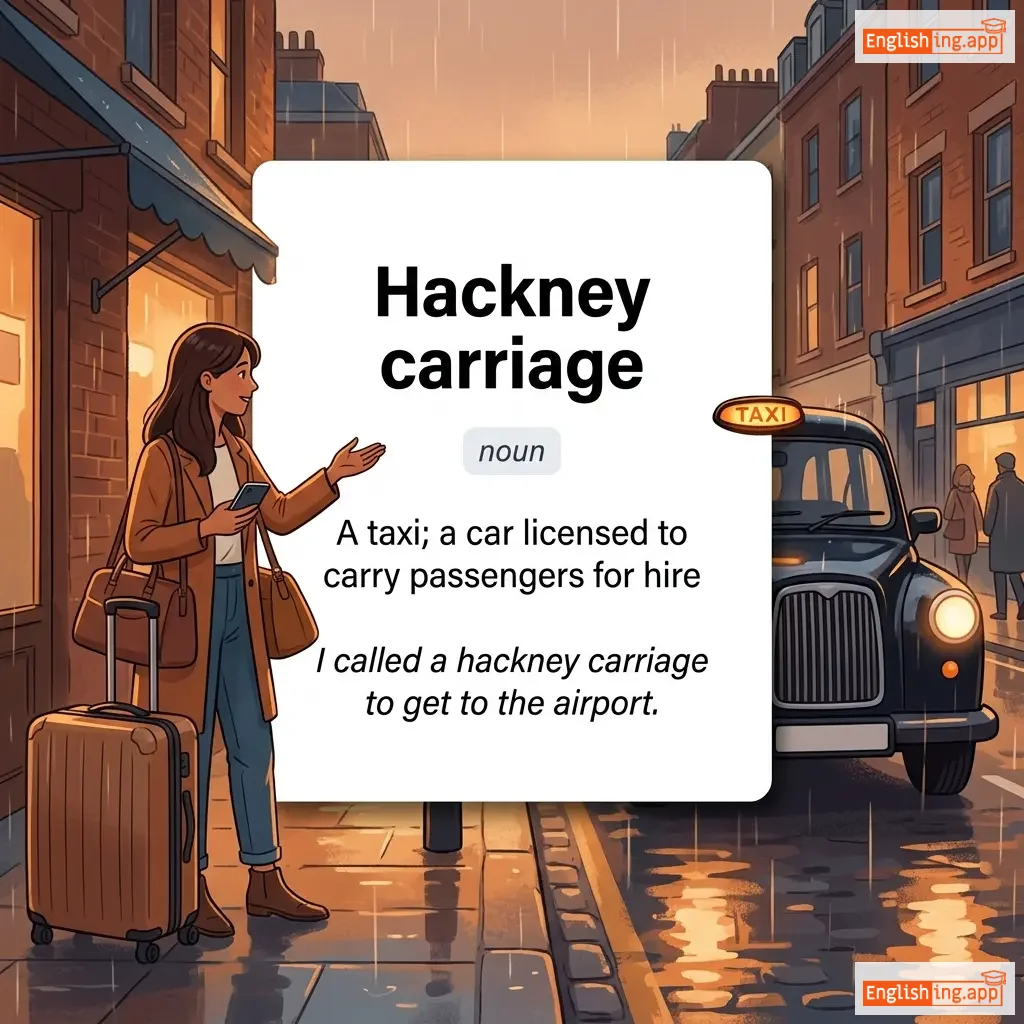
Hackney carriage definition card — visual illustration of the meaning
noun C2
/ˈhæk.ni ˈkær.ɪdʒ/
такси (taksi)

A taxi; a car licensed to carry passengers for hire

"I called a hackney carriage to get to the airport."

"Я вызвал такси, чтобы поехать в аэропорт." (Ya vyzval taksi, chtoby poyekhat' v aeroport.)
🧙‍♀️

Hag (хэг)

noun C2
/hæɡ/
ведьма (ved'ma)

an ugly old woman, especially a vicious or malicious one; a witch

"In the fairy tale, the wicked hag lived alone in a cottage deep in the forest."

"В сказке злая ведьма жила одна в домике глубоко в лесу." (V skazke zlaya ved'ma zhila odna v domike gluboko v lesu.)
adjective C2
/ˌhæɡ.i.əˈɡræf.ɪk/
чрезмерно льстивый (chrezmerno l'stivyy)

Excessively flattering or idealized, often in a biography or portrayal of someone.

"The documentary was criticized for its hagiographic portrayal of the leader."

"Документальный фильм был подвергнут критике за чрезмерно льстивое изображение лидера." (Dokumental'nyy film byl podvergnut kritike za chrezmerno l'stivoye izobrazheniye lidera.)
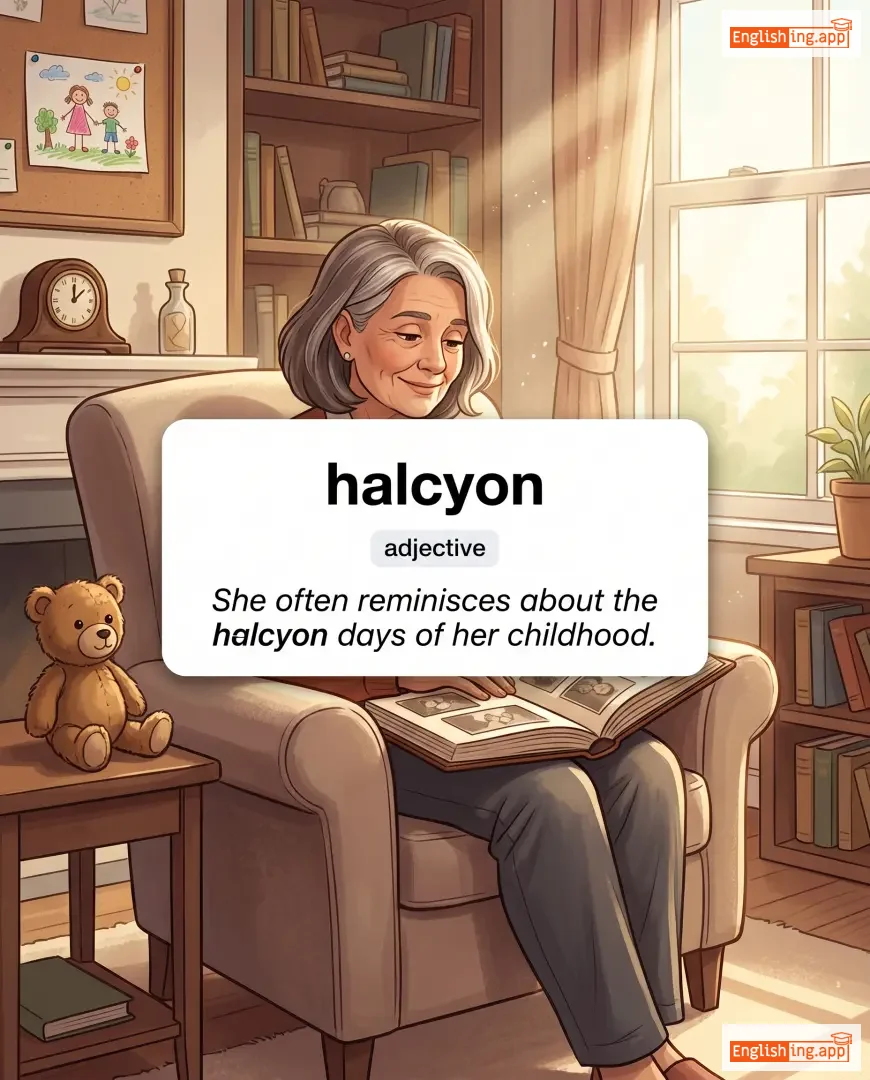
halcyon definition card — visual illustration of the meaning
adjective C2
/ˈhæl.si.ən/
безмятежный (bezmyatezhnyy)

calm, peaceful, and happy; denoting a period of time in the past that was idyllically happy and peaceful

"She often reminisces about the halcyon days of her childhood."

"Она часто вспоминает безмятежные дни своего детства." (Ona chasto vspominaet bezmyatezhnye dni svoego detstva.)
adjective C2
/heɪl/
здоровый (zdorovyi)

strong and healthy, especially of an elderly person

"Despite his age, the man remained hale and active."

"Несмотря на его возраст, этот мужчина остался здоровым и активным." (Nesmotrya na ego vozrast, etot muzhchina ostalsya zdorovym i aktivnym.)
adjective C2
/ˌhæfˈbeɪkt/
недоделанный (nedodelannyy)

poorly thought out or badly planned

"The manager quickly rejected his half-baked proposal."

"Менеджер быстро отклонил его недоделанное предложение." (Menedzher bystro otklonil ego nedodelannoye predlozheniye.)
adjective C2
/ˌhæfˈhɑːr.tɪd/
половинчатый (polovinchatyy)

lacking enthusiasm or determination; unenthusiastic

"His halfhearted attempt to study did not bring good results."

"Его половинчатая попытка учиться не принесла хороших результатов." (Yego polovinchataya popytka uchitsya ne prinesla khoroshikh rezul'tatov.)
verb C2
/ˈhæloʊ/
освящать (osvyashchat)

to honor as holy; to make sacred or greatly respected

"The ancient temple was hallowed by centuries of worship."

"Древний храм был освящен веками поклонения." (Drevniy khram byl osvyashchen vekami pokloneniya.)
adjective C2
/ˈhæm ˌhændɪd/
неуклюжий (neuklyuzhiy)

clumsy or inept in handling things or situations

"His ham-handed attempt to fix the computer made it worse."

"Его неуклюжая попытка починить компьютер только ухудшила ситуацию." (Yego neuklyuzhaya popytka pochinit' komp'yuter tol'ko ukhudshila situatsiyu.)
noun, verb C2
/ˈhæmstrɪŋ/
сухожилие на задней части бедра; как глагол, ослабить или сильно ограничить эффективность кого-то или чего-то (sukhozhilie na zadney chasti bedra; kak glagol, oslabit' ili sil'no ogranichit' effektivnost' kogo-to ili chego-to)

a tendon at the back of the thigh; as a verb, to cripple or severely restrict the effectiveness of someone or something.

"Budget cuts hamstrung the organization’s plans."

"Сокращения бюджета ослабили планы организации." (Sokrashcheniya byudzheta oslabili plany organizatsii.)
verb (past tense, past participle), adjective C2
/ˈhæmstrʌŋ/
парализованный или ограниченный (paralizovannyy ili ogranichennyy)

crippled or severely restricted in movement or progress.

"The team was hamstrung by lack of resources."

"Команда была ограничена нехваткой ресурсов." (Komanda byla ogranichena nekhvatkoy resursov.)
noun C2
/ˈhænd ˌrɪŋɪŋ/
чрезмерная тревога (chrezmernaya trevoga)

excessive worry or concern expressed in a visible or dramatic way.

"There was much hand-wringing over the political crisis."

"Было много драматической озабоченности по поводу политического кризиса." (Bylo mnogo dramaticheskoy ozabochennosti po povodu politicheskogo krizisa.)
adjective C2
/ˈhæŋ.dɔːɡ/
смущённый (smushchyonny)

looking or feeling ashamed, guilty, or defeated.

"He gave me a hangdog look after being caught lying."

"Он посмотрел на меня с смущённым взглядом после того, как его поймали на лжи." (On posmotreli na menya s smushchyonnym vzglyadom posle togo, kak ego poymali na lzhi.)
noun C2
/ˌhæŋ.ər ˈɒn/
прилипала (prilipala)

a person who spends time with a powerful or famous person to gain benefits.

"The celebrity was always surrounded by hangers-on."

"Знаменитость всегда была окружена прилипалами." (Znamenitost' vsegda byla okruzhenna prilipalami.)
noun C2
/ˈhæŋ.kər/
тоска, желание (toska, zhelanie)

a feeling of yearning or craving; a strong desire for something

"After years abroad, she developed a deep hanker for her homeland's traditional cuisine."

"После многих лет за границей она развила глубокое желание поесть традиционные блюда своей родины." (Posle mnogikh let za granitsey ona razvila glubokoe zhelanie poest' traditsionnye blyuda svoey rodiny.)
noun C2
/ˈhæŋ.kər.ɪŋ/
тяга (tyaga)

a strong desire or craving for something.

"She had a hankering for chocolate late at night."

"Она почувствовала сильное желание съесть шоколад поздно ночью." (Ona pochuvstvovala sil'noe zhelanie s'yest' shokolad pozdno noch'yu.)
noun C2
/ˌhæŋ.ki ˈpæŋ.ki/
мошенничество; подозрительная активность; неэтичное поведение; обман (moshennichestvo; podozritelnaya aktivnost; neetichnoe povedenie; obman)

dishonest or suspicious activity; unethical behavior; trickery or deception

"The audit revealed some hanky-panky in the company's financial records."

"Аудит выявил мошенничество в финансовых записях компании." (Audit viyavil moshennichestvo v finansovykh zapisyakh kompanii.)
noun C2
/hæp/
счастье, удача, случайность (schastye, udacha, sluchaynost)

luck, fortune, or chance occurrence

"By sheer hap, he discovered the old letter hidden in the drawer."

"Только по удаче он нашел старое письмо, спрятанное в ящике." (Tol'ko po udache on nashel staroye pismo, spryatanoye v yashchike.)
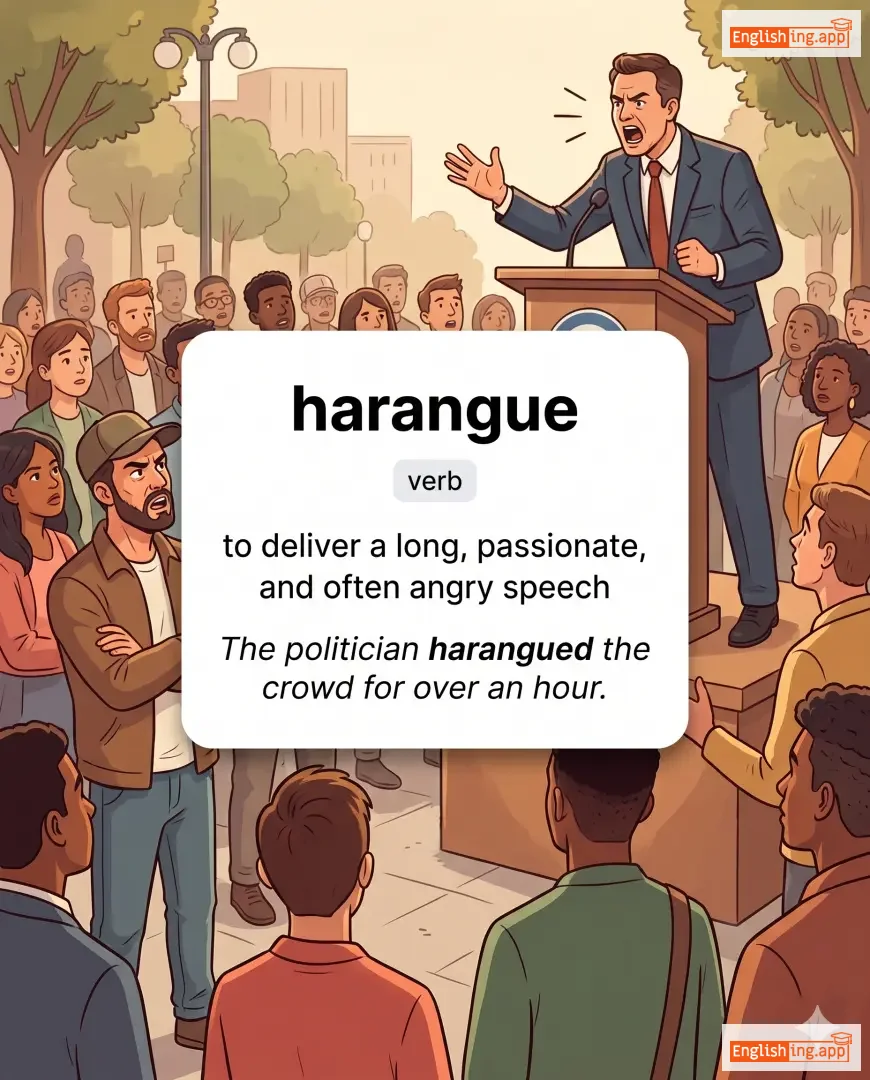
harangue definition card — visual illustration of the meaning
verb C2
/həˈræŋ/
выступать с длинной и яростной речью (vystupat s dlinnoi i yarostnoi rech'yu)

to deliver a long, passionate, and often angry speech

"The politician harangued the crowd for over an hour."

"Политик выступал перед толпой больше часа." (Politik vystupal pered tol'poy bol'she chasa.)
noun C2
/ˈhɑːrbɪndʒər/
предвестие (predvestie)

a person or thing that announces or signals the approach of another

"The sudden drop in temperature was a harbinger of winter."

"Внезапное падение температуры было предвестием зимы." (Vnezapnoe padeniye temperatury bylo predvestiem zimy.)
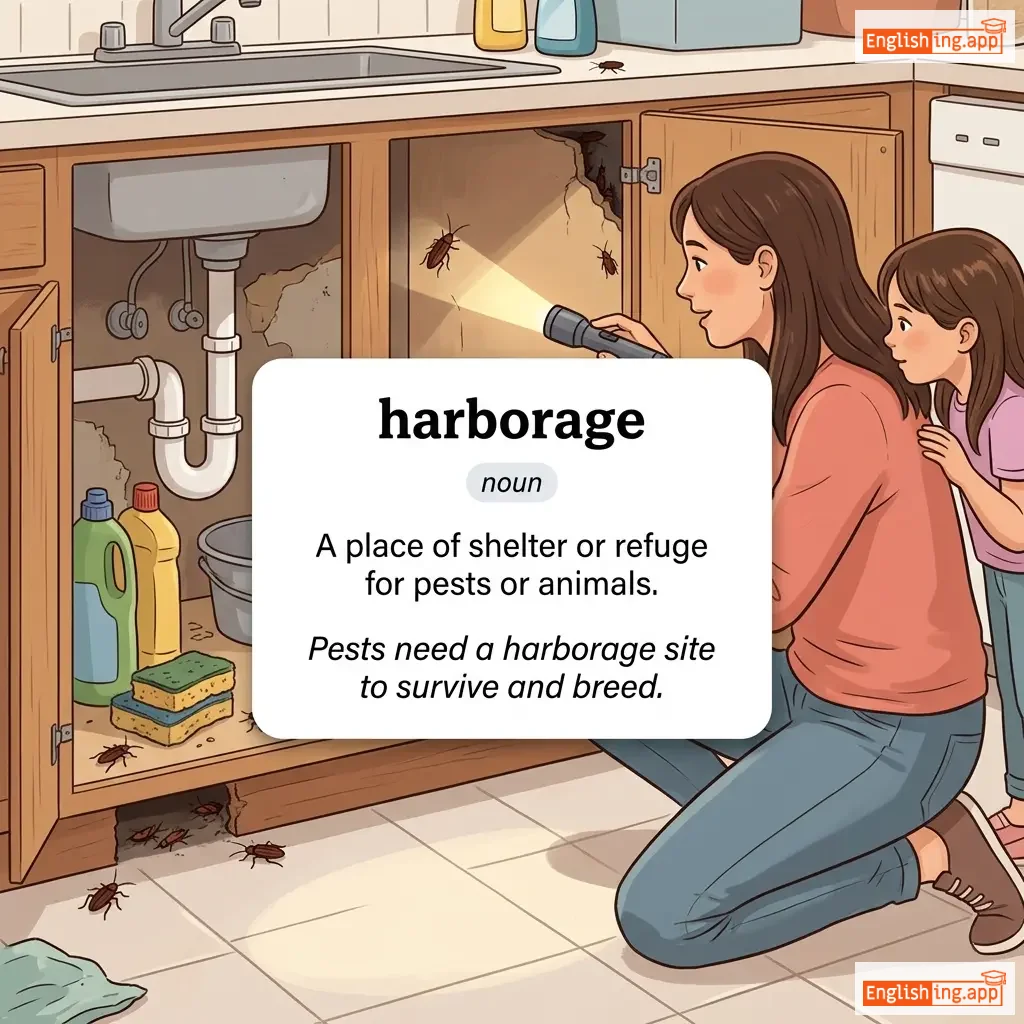
harborage definition card — visual illustration of the meaning
noun C2
ˈhɑːrbərɪdʒ
приют (priyut)

A place of shelter or refuge for pests or animals.

"Pests need a harborage site to survive and breed."

"Вредителям нужно место убежища для выживания и размножения." (Vreditelyam nuzhno mesto ubezhishcha dlya vyzhivaniya i razmnozheniya.)
adjective C2
/ˌhɑːrdˈbɪtn̩/
закаленный и опытный (zakalyonnyy i opytnyy)

tough and experienced, not easily affected by emotions or hardship

"The hard-bitten detective showed no sign of surprise at the crime scene."

"Опытный детектив не проявил удивления на месте преступления." (Opytnyy detektiv ne proyavil udivleniya na meste prestupleniya.)
noun C2
/ˈhɑːdɪhʊd/
отвага, смелость (otvaga, smelost)

Courage, boldness, or daring behavior; also physical robustness.

"The mountaineer's hardihood impressed the entire team."

"Отвага альпиниста впечатлила всю команду." (Otvaga alpinista vpechatlila vsyu komandу.)
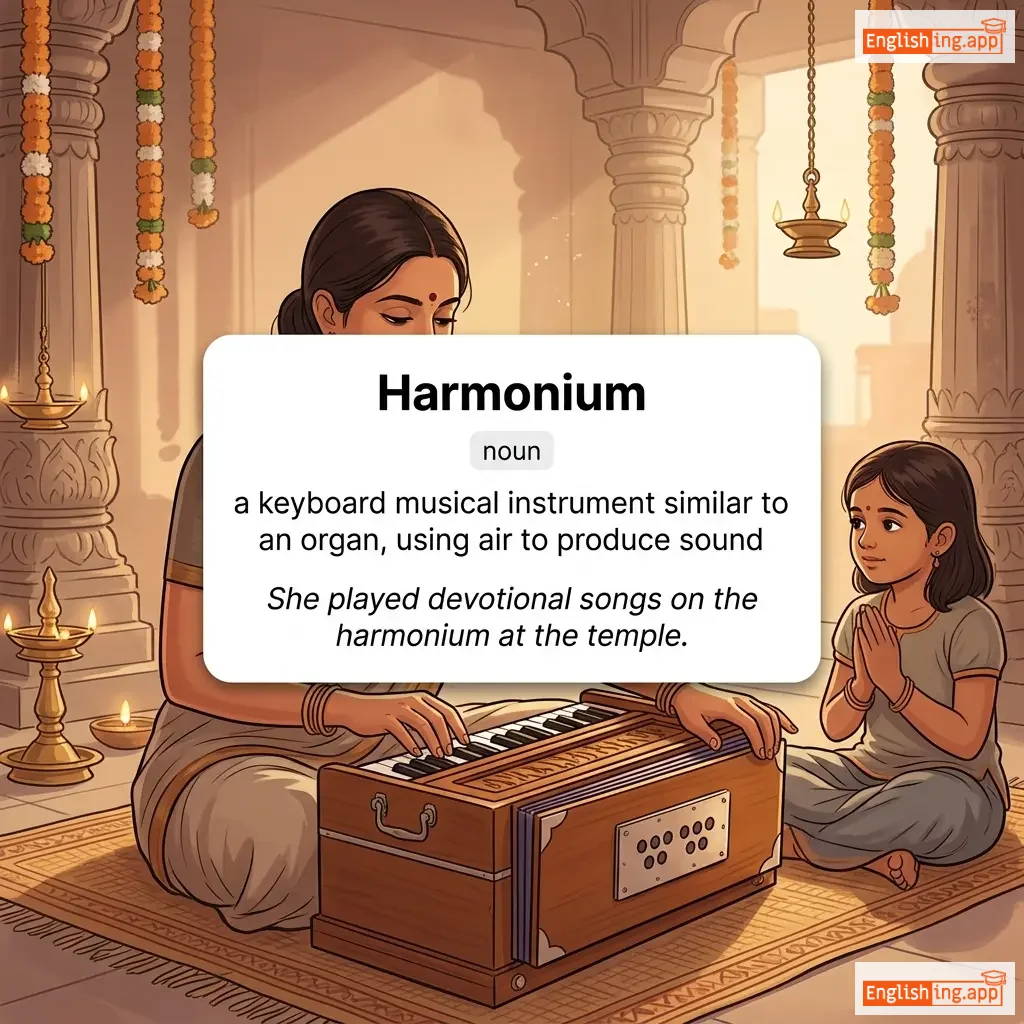
Harmonium definition card — visual illustration of the meaning
noun C2
/hɑrˈmoʊniəm/
гармониум (garmonium)

a keyboard musical instrument similar to an organ, using air to produce sound

"She played devotional songs on the harmonium at the temple."

"Она исполняла молитвенные песни на гармониуме в храме." (Ona ispolnyala molitvennyye pesni na garmoniyume v khrame.)
verb C2
/ˈhɑːrpɪŋ/
постоянно жаловаться (postoyanno zhalovatsya)

continuously talking or complaining about something in a tiresome way

"She kept harping on about the mistakes I made."

"Она продолжала жаловаться на ошибки, которые я сделал." (Ona prodolzhala zhalovatsya na oshibki, kotorye ya sdelal.)
adjective C2
/ˈhæriːd/
напряженный или перегруженный (napryazhennyj ili peregruzhennyj)

feeling strained or stressed due to being overworked or constantly bothered

"The harried teacher struggled to calm the noisy classroom."

"Напряженный учитель пытался успокоить шумный класс." (Napryazhennyj uchitel' pytalsya uspokoit' shumnyj klass.)
verb C2
/ˈhæroʊ/
мучить / борона (muchi t / borona)

to cause distress or torment; also to break up and smooth soil with a farm tool

"The tragic news harrowed the entire family."

"Трагическая новость привела в мучения всю семью." (Tragicheskaya novost' privela v mucheniya vsyu sem'yu.)
verb C2
/ˈhæri/
терзать, преследовать (terzat', presledovat')

to constantly attack, harass, or annoy

"The army harried the enemy with sudden raids."

"Армия терзала врага внезапными набегами." (Armiya terzala vraga vnezapnymi nabegami.)
noun C2
/hæˈʃiːʃ/
хашиш (khashish)

a drug made from the resin of the cannabis plant

"The police arrested him for possessing hashish."

"Полиция арестовала его за хранение хашиша." (Politsiya arestovala ego za khraneniye khashisha.)
noun C2
/ˈhɔːtɪnəs/
высокомерие (vysokomerie)

The appearance or quality of being arrogantly superior and disdainful.

"His haughtiness made him unpopular among his peers."

"Его высокомерие сделало его непопулярным среди его коллег." (Ego vysokomerie sdelalo ego nepopulyarnym sredi ego kolleg.)
noun C2
/oʊˈtɜːr/
высокомерие (vysokomerye)

disdainful pride; arrogance

"His hauteur made it difficult for others to approach him."

"Его высокомерие затрудняло другим подходить к нему." (Yego vysokomerye zatrudnyalo drugym podkhodit' k nemu.)
noun C2
/ˈhɔːzər/
толстый канат для швартовки корабля (tolstyy kanat dlya shvartovki korablya)

A thick rope or cable used in mooring or towing a ship.

"The sailors secured the ship to the dock with a heavy hawser."

"Моряки закрепили корабль у причала с помощью тяжелого хоузера." (Moryaki zakrepyili korabl' u prichala s pomoshch'yu tyazhelogo houzera.)
noun C2
/ˈhɔːθɔːrn/
колючий кустарник (kolyuchiy kustarnik)

A thorny shrub or small tree with white or pink flowers, often used for hedges.

"The garden was lined with blooming hawthorn bushes."

"Сад был окружён цветущими кустами боярышника." (Sad byl okruzhen tsvetushchimi kustami boyaryshnika.)
adjective C2
/ˈhɛdi/
опьяняющий (opyanyayushchiy)

Exciting or intoxicating; having a strong or exhilarating effect.

"The heady aroma of the flowers filled the room."

"Головокружительный аромат цветов наполнил комнату." (Golovokruzhitel'nyy aromat tsvetov napolnil komnatu.)
verb C2
/ˈhɑːrkən/
слушать внимательно (slushat vnimatel'no)

To listen attentively; to give heed.

"He would hearken to his mentor’s advice before making decisions."

"Он бы внимательно слушал советы своего наставника, прежде чем принимать решения." (On by vnimatel'no slushal sovety svoego nastavnika, prezhde chem prinimat' resheniya.)
noun C2
/hɜːrs/
катафалк; (katafalk)

a vehicle for conveying the coffin at a funeral; a funeral car

"The black hearse slowly made its way to the cemetery, followed by a procession of mourners."

"Черный катафалк медленно двигался к кладбищу, за ним шла процессия скорбящих." (Chernyy katafalk medlenno dvigalsya k kladbishchu, za nim shla protsessiya skorbyashchikh.)
verb C2
/ˈhɑːrtən/
ободрить (obodrit)

To give courage, confidence, or hope.

"The teacher’s encouragement heartened the students."

"Вдохновение учителя дало студентам смелость." (Vdokhnovenie uchitelya dalo studentam smelost'.)
adjective C2
/ˈhiːðənɪʃ/
дикарь (dikary)

Lacking culture or religion; barbaric or uncivilized.

"They considered the ancient tribe’s rituals heathenish."

"Они считали ритуалы древнего племени языческими." (Oni schitali ritualy drevnego plemeni yazicheskimi.)
noun C2
/ˈhɛklər/
нарушитель (narushitel)

A person who interrupts a speaker with rude or aggressive comments.

"The politician remained calm despite the heckler shouting from the crowd."

"Политик остался спокойным, несмотря на крикачащего нарушителя из толпы." (Politik ostalsya spokoynym, nesmotrya na krikacheshchego narushitelya iz tolpy.)
verb C2
/ˈhɛktər/
угрожать разговором (ugrozhat' razgovorom)

To talk to someone in a bullying or intimidating way.

"The manager hectored the staff into working overtime."

"Менеджер заставил сотрудников работать сверхурочно, угрожая им." (Menedzher zayavil sotrudnikov rabotat' sverkhurochno, ugrozhaya im.)
noun C2
/hɪˈdʒɛməni/ or /ˈhɛdʒəmoʊni/
гегемония (gehemoniya)

leadership or dominance, especially by one state or group over others

"The empire maintained its hegemony over neighboring states."

"Империя сохраняла свою гегемонию над соседними государствами." (Imperiya sokhranyala svoyu hegemoniyu nad sosednimi gosudarstvami.)
noun C2
/ˈhɛdʒɪrə/ or /hɪˈdʒaɪrə/
Исход, миграция (Iskhod, migratsiya)

a journey, especially when undertaken to escape from a dangerous or undesirable situation

"The refugees began their hegira across the desert."

"Беженцы начали свой исход через пустыню." (Bezhtsentsy nachali svoy iskhod cherez pustynyu.)
noun C2
/ˈhɛfər/
тёлка (tyolka)

a young cow that has not borne a calf

"The farmer raised a heifer for dairy production."

"Фермер вырастил телку для производства молока." (Fermyer vyrastil tyolku dlya proizvodstva moloka.)
noun C2
/ˈhelmz.mən/
штурман; капитан (shturman; kapitan)

a person who steers a ship or boat; the person at the helm of a vessel

"The experienced helmsman skillfully guided the yacht through the narrow channel during the storm."

"Опытный штурман умело провел яхту через узкий канал во время шторма." (Opytniy shturman umelo provel yahtu cherez uzkiy kanal vo vremya shtorma.)
hemophilia definition card — visual illustration of the meaning
noun C2
ˌhiː.məˈfɪl.i.ə
гемофилия (gemofiliya)

A medical condition in which the ability of the blood to clot is severely reduced, causing the sufferer to bleed severely from even a slight injury.

"Hemophilia treatment benefits from genetic editing."

"Лечение гемофилии приносит пользу от генетического редактирования." (Lecheniye gemofilii prinosit pol'zu ot geneticheskogo redaktirovaniya.)