Vocabulaires

Découvrez, apprenez et maîtrisez le vocabulaire anglais

noun C1
/rɪˈvɜːrʒən/
逆転 (gikuten)

the act of returning to a previous state or condition

"The new policy marked a reversion to traditional methods."

"新しい政策は伝統的な方法への逆転を意味しました。" (Atarashī seisaku wa dentō-teki na hōhō e no gikuten o imi shimashita.)
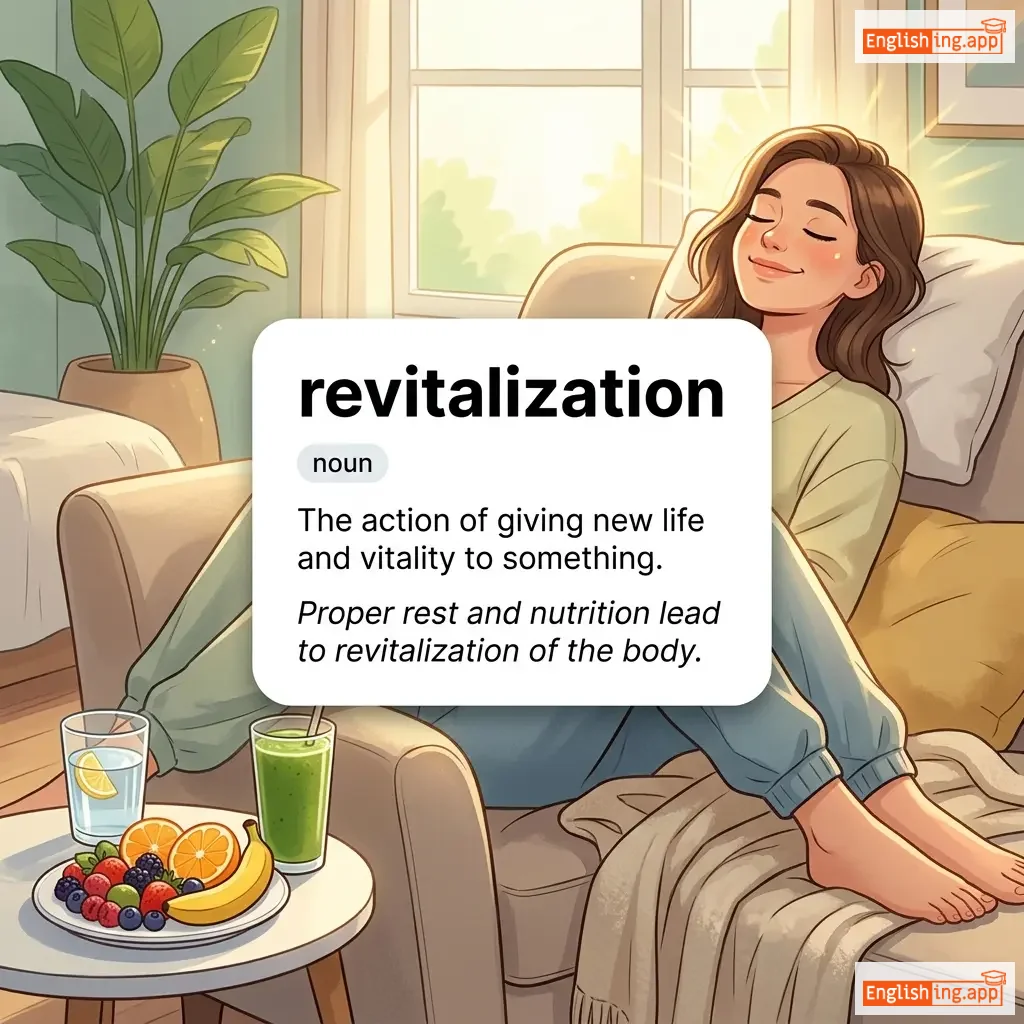
revitalization definition card — visual illustration of the meaning
noun C1
ˌriːˌvaɪ.təl.aɪˈzeɪ.ʃən
再生 (saisei)

The action of giving new life and vitality to something.

"Proper rest and nutrition lead to revitalization of the body."

"適切な休息と栄養は体のリバイタライゼーションに繋がります。" (Tekisetsu na kyūsoku to eiyō wa karada no ribaitaraizēshon ni tsunagarimasu.)
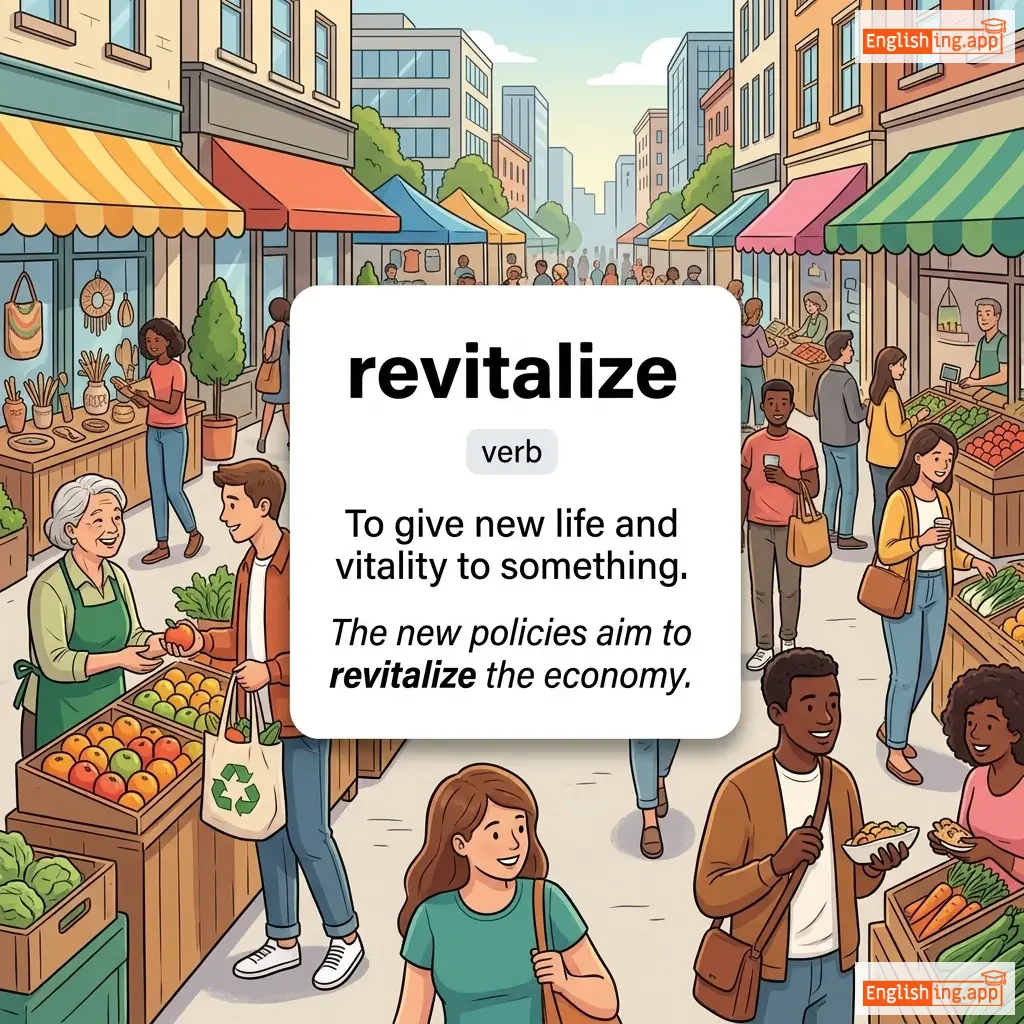
revitalize definition card — visual illustration of the meaning
verb C1
/ˌriːˈvaɪ.təl.aɪz/
活性化する (kasseika suru)

To give new life and vitality to something.

"The new policies aim to revitalize the economy."

"新しい政策は経済を活性化することを目指している。" (Atarashī seisaku wa keizai o kasseika suru koto o mezashite iru.)
verb C1
/rɪˈvoʊk/
取り消す (torikesu)

To officially cancel or withdraw a decision, privilege, or right.

"The government decided to revoke his passport."

"政府は彼のパスポートを取り消すことを決定した。" (Seifu wa kare no pasupōto o torikesu koto o kettei shita.)
adjective C1
/rɪˈvoʊltɪŋ/
むかつく (mukatsuku)

extremely unpleasant or disgusting

"The smell of the garbage was revolting."

"ごみのにおいはむかつくほどだった。" (gomi no nioi wa mukatsuku hodo datta)
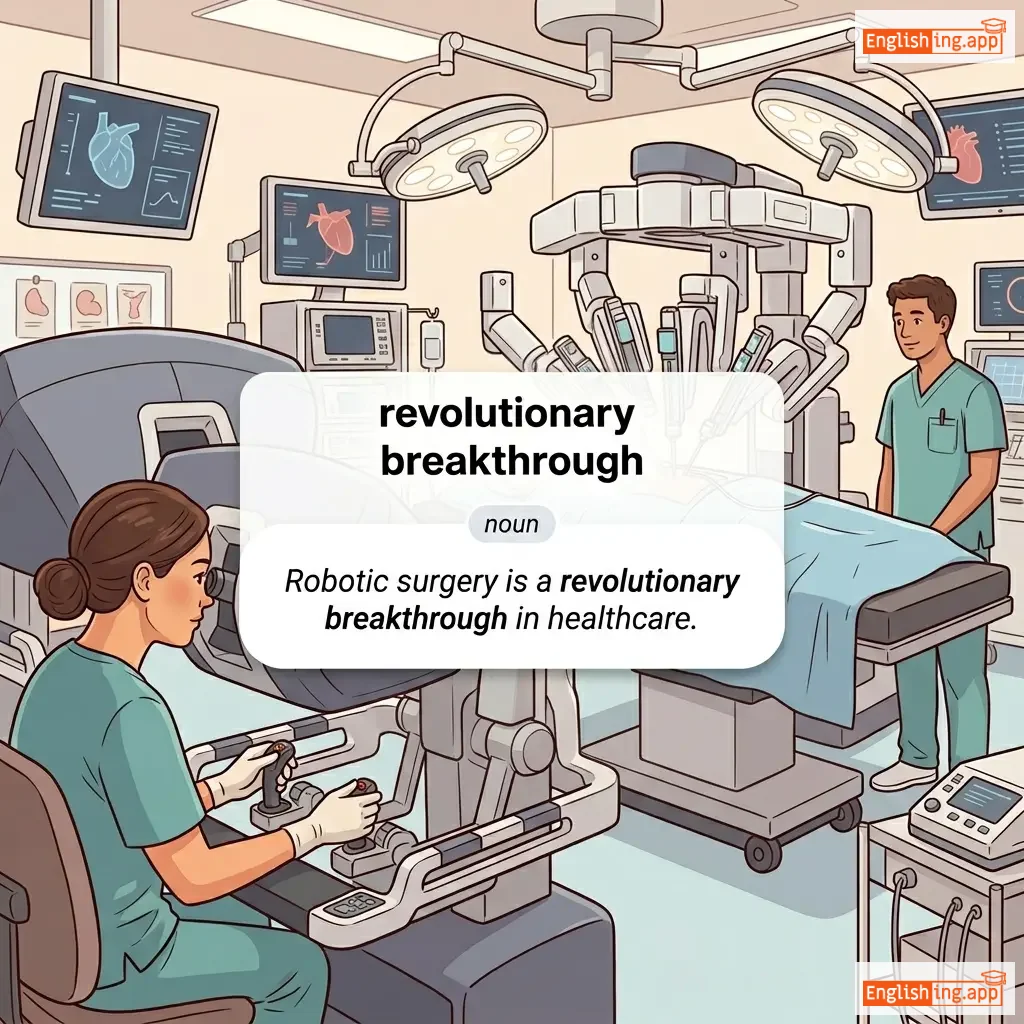
revolutionary breakthrough definition card — visual illustration of the meaning
noun C1
/ˌrev.əˈluː.ʃən.ər.i ˈbreɪk.θruː/
革命的な発見 (kakumei-teki na hakken)

A sudden, dramatic, and important discovery or development that changes everything.

"Robotic surgery is a revolutionary breakthrough in healthcare."

"ロボット手術は医療分野での革命的な発見です。" (Robotto shujutsu wa iryō bunya de no kakumei-teki na hakken desu.)
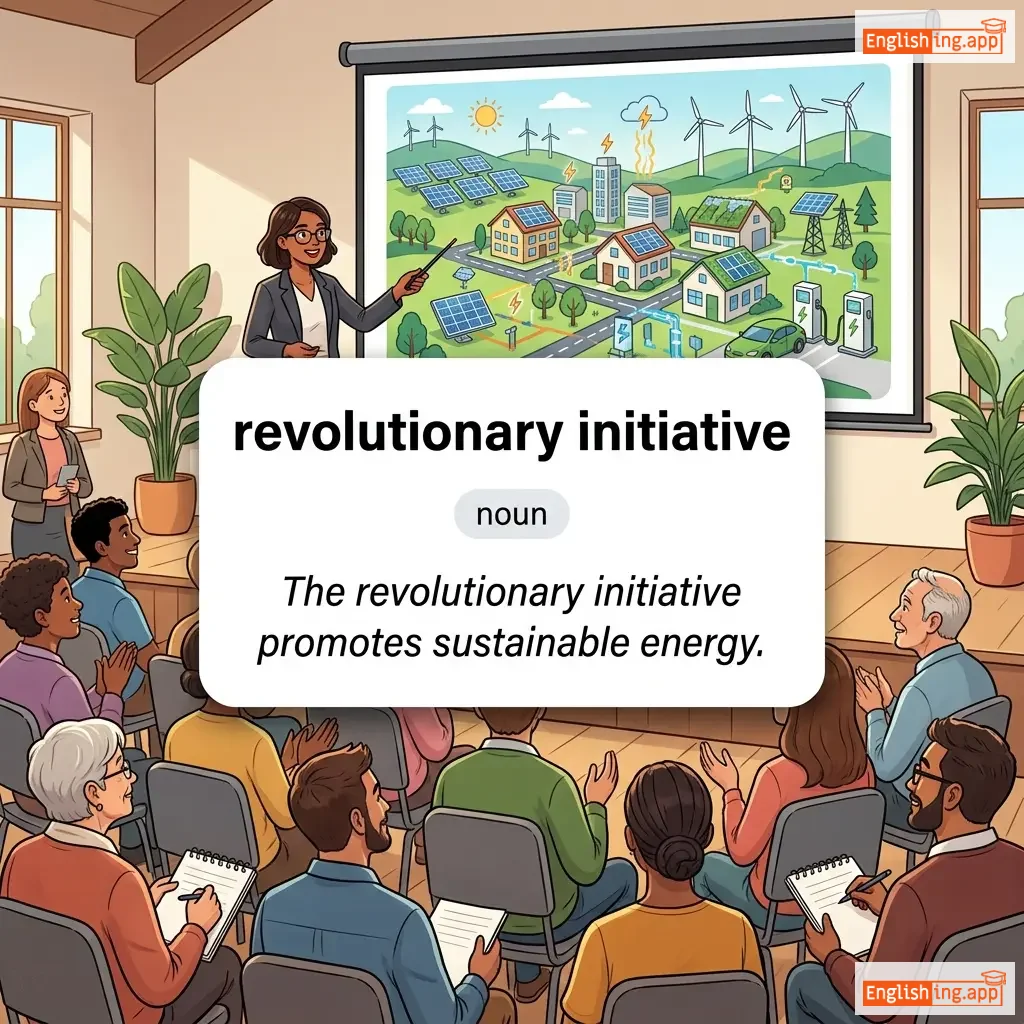
revolutionary initiative definition card — visual illustration of the meaning
noun C1
ˌrev.əˈluː.ʃən.ər.i ɪˈnɪʃ.ə.tɪv
革命的イニシアティブ (kakumeiteki inishiatibu)

A groundbreaking action or plan that brings about significant change or transformation.

"The revolutionary initiative promotes sustainable energy."

"革命的なイニシアティブは持続可能なエネルギーを促進します。" (Kakumeiteki na inishiatibu wa jizoku kanō na enerugī o sokushin shimasu.)
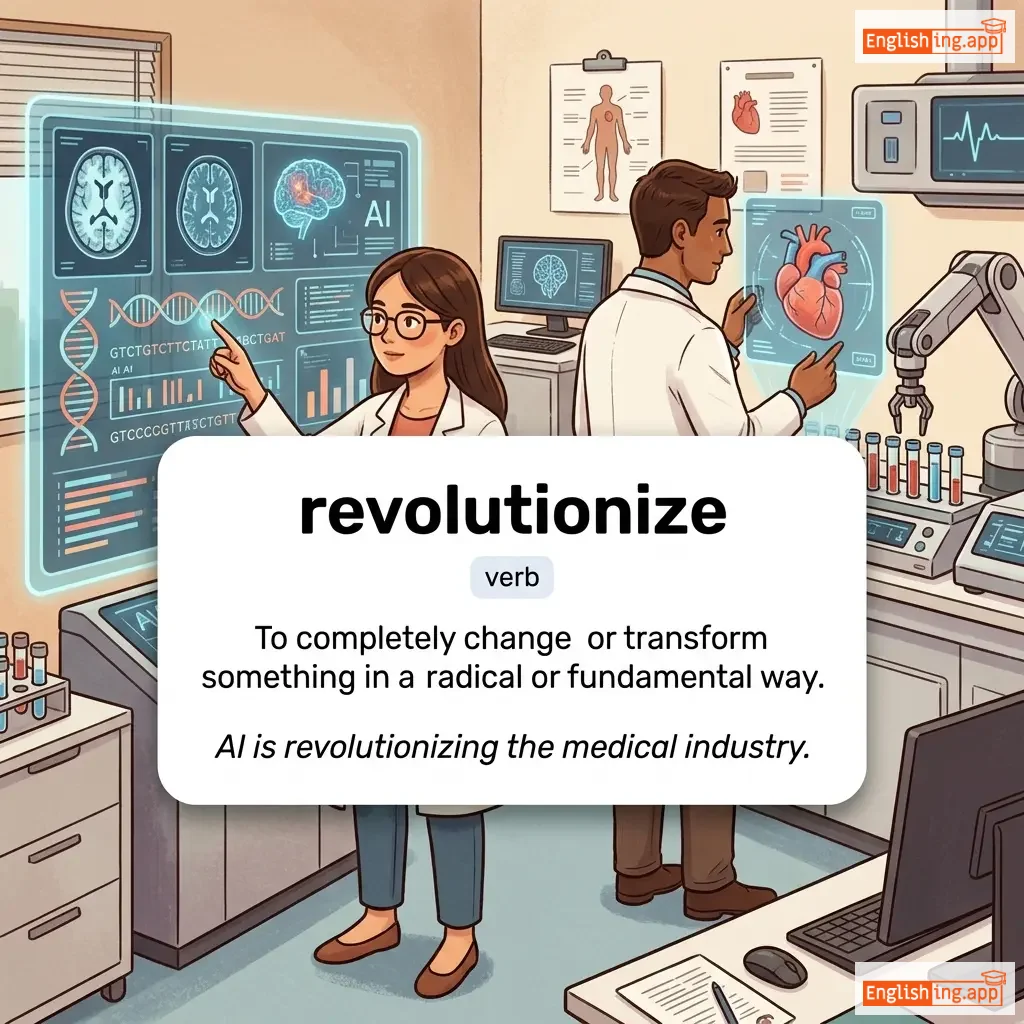
revolutionize definition card — visual illustration of the meaning
verb C1
ˌrev.əˈluː.ʃən.aɪz
革命的に変える (kakumei-teki ni kaeru)

To completely change or transform something in a radical or fundamental way.

"AI is revolutionizing the medical industry."

"AIは医療業界を革命的に変えています。" (AI wa iryō gyōkai wo kakumei-teki ni kaeteimasu.)
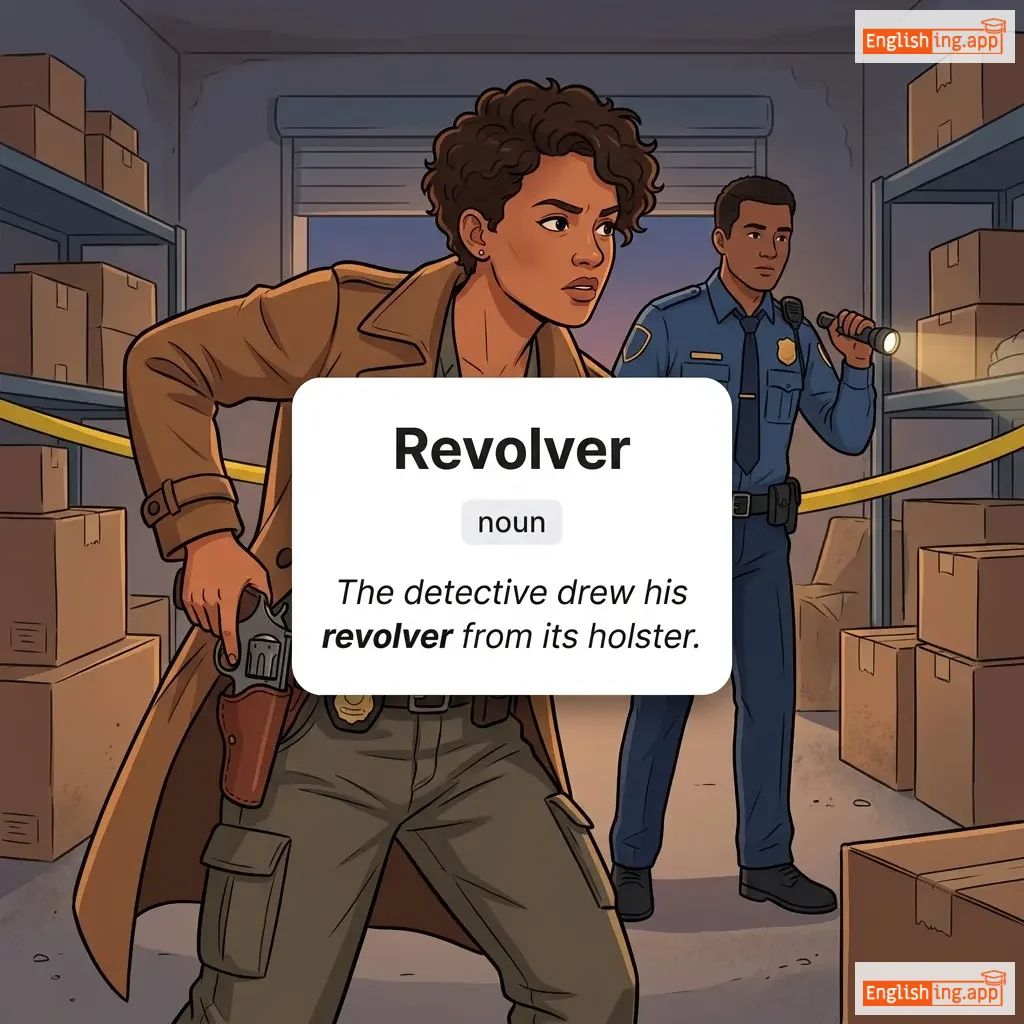
Revolver definition card — visual illustration of the meaning
noun C1
/rɪˈvɒl.vər/
リボルバー (riborubā)

a pistol with revolving chambers enabling several shots to be fired without reloading

"The detective drew his revolver from its holster."

"探偵はホルスターからリボルバーを抜き取った。" (Tantei wa horusutā kara riborubā o nukitotta.)
noun C1
/rɪˈvʌlʃən/
嫌悪 (ken'o)

a strong feeling of disgust or repulsion

"She felt revulsion at the sight of the cruel act."

"彼女はその残酷な行為を見て嫌悪感を覚えた。" (Kanojo wa sono zankokuna kōi o mite ken'o-kan o oboeta.)
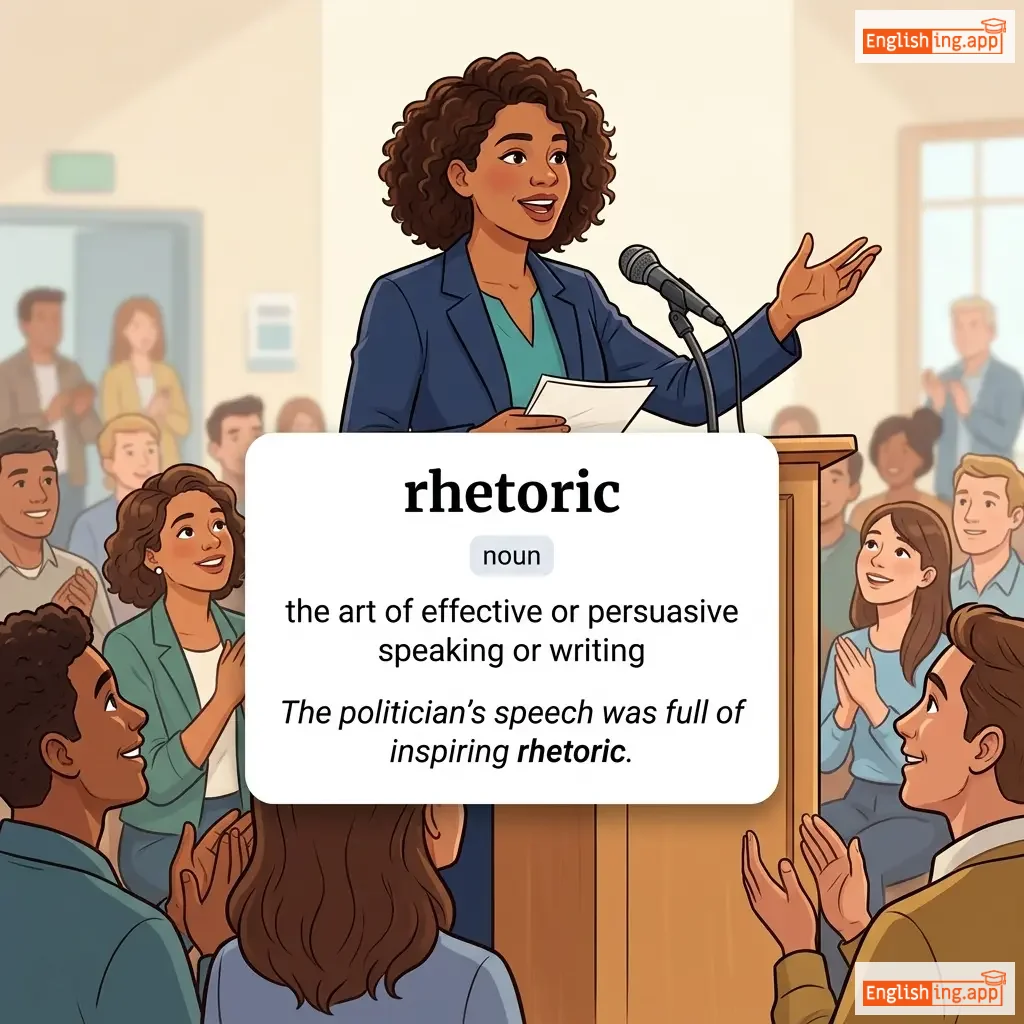
rhetoric definition card — visual illustration of the meaning
noun C1
/ˈrɛtərɪk/
修辞学 (shūjigaku)

the art of effective or persuasive speaking or writing

"The politician’s speech was full of inspiring rhetoric."

"その政治家のスピーチは、インスピレーションを与える修辞学で満ちていました。" (Sono seijika no supīchi wa, insupirēshon o ataeru shūjigaku de michite imashita.)
adjective C1
/rɪˈtɔːrɪkəl/
修辞的 (shūjiteki)

relating to the art of effective or persuasive speaking or writing; often a question asked to make a point rather than get an answer

"He asked a rhetorical question during the debate."

"彼は討論中に修辞的な質問をした。" (Kare wa tōronchū ni shūjiteki na shitsumon o shita.)
adjective C1
/ˈrɪkɪti/
ぐらつく (guratsuku)

Poorly made and likely to collapse; shaky.

"They crossed a rickety wooden bridge over the river."

"彼らは川を越える不安定な木製の橋を渡りました。" (Karera wa kawa o koeru fuantei na mokusei no hashi o watarimashita.)
noun C1
/ˈrɪdəns/
解放 (kaihō)

The action of getting rid of something unwanted or unpleasant.

"His departure was considered a welcome riddance by the team."

"彼の退職はチームにとって歓迎すべき解放と見なされた。" (Kare no taishoku wa chīmu ni totte kangei subeki kaihō to minasareta.)
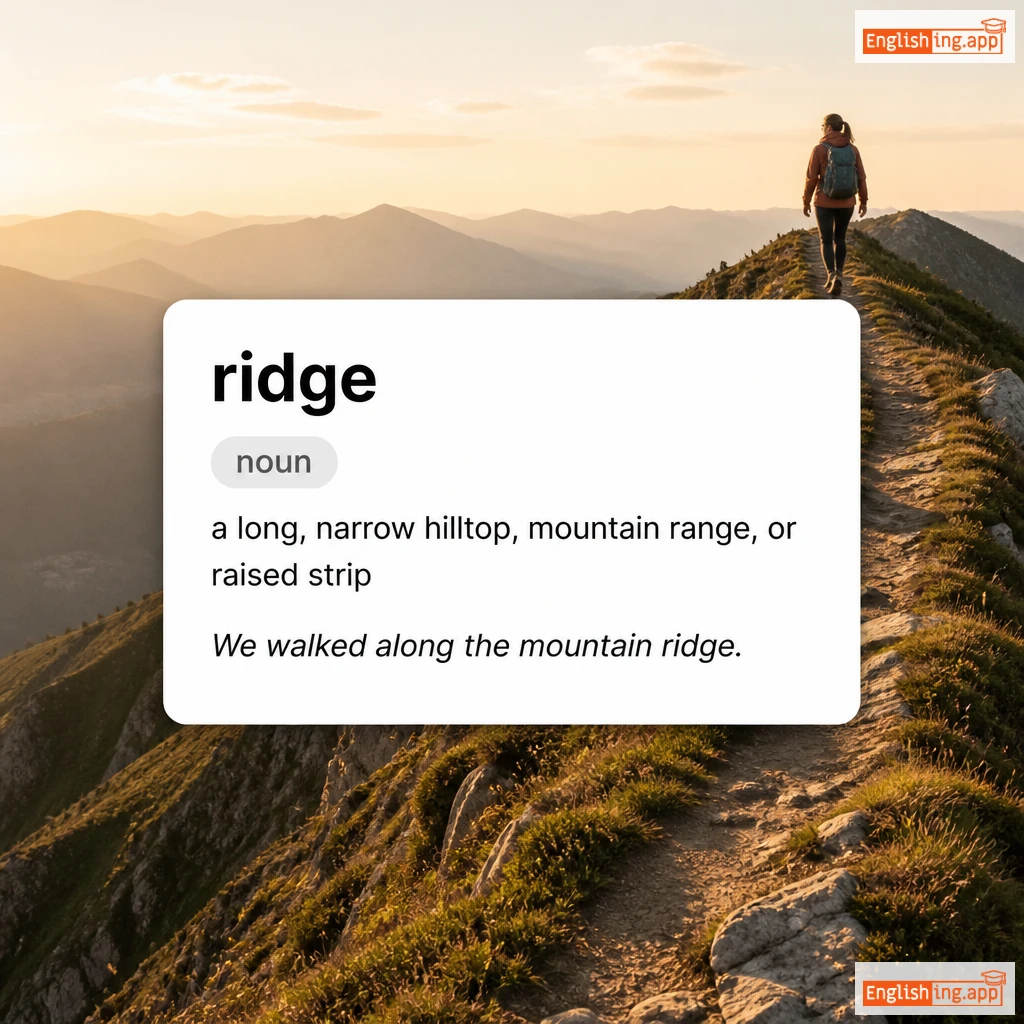
ridge definition card — visual illustration of the meaning
noun C1
/rɪdʒ/
山の稜線または頂上 (yama no ryōsen mata wa chōjō)

a long, narrow hilltop, mountain range, or raised strip

"We walked along the mountain ridge."

"私たちは山脈の稜線に沿って歩きました。" (Watashitachi wa sanmyaku no ryōsen ni sotte arukimashita.)
verb C1
/ˈrɪdɪkjuːl/
嘲笑する (choushou suru)

To make fun of someone or something in a cruel or dismissive way.

"He was ridiculed for his strange ideas."

"彼は奇妙な考えのために嘲笑されました。" (Kare wa kimyou na kangae no tame ni choushou saremashita.)
adjective C1
/raɪf/
蔓延している (manyen shite iru)

widespread or common, often in a negative sense

"Corruption was rife in the old government system."

"腐敗は古い政府制度に蔓延していた。" (Fuhai wa furui seifu seido ni manyen shite ita.)
noun C1
/rɪft/
亀裂 (kiretsu)

a serious break in a relationship; a split or crack

"A rift developed between the two friends after the argument."

"議論の後、二人の友達の間に亀裂が生じた。" (Giron no ato, futari no tomodachi no aida ni kiretsu ga shōjita.)
verb C1
/rɪɡ/
操作する (sousa suru)

to manipulate or control something dishonestly; to set up equipment

"The election was rigged by corrupt officials."

"選挙は腐敗した役人によって操作されました。" (Senkyou wa fuhai shita yakunin ni yotte sousa saremashita.)
adjective C1
/ˈraɪtʃəs/
正義 (seigi)

morally right or justifiable; virtuous

"She is known for her righteous actions and honesty."

"彼女は正義の行動と誠実で知られています。" (Kanojo wa seigi no kōdō to seijitsu de shirareteimasu.)
noun C1
/ˈraɪtʃəsnəs/
正義 (seigi)

the quality of being morally right or justifiable

"His life was dedicated to righteousness and truth."

"彼の人生は正義と真実に捧げられた。" (Kare no jinsei wa seigi to shinjitsu ni sasagerareta.)
adjective C1
/ˈraɪtfəl/
正当な (seitō na)

having a legitimate or just claim; proper or lawful

"She is the rightful owner of the property."

"彼女はその財産の正当な所有者です。" (Kanojo wa sono zaisan no seitō na shoyū-sha desu.)
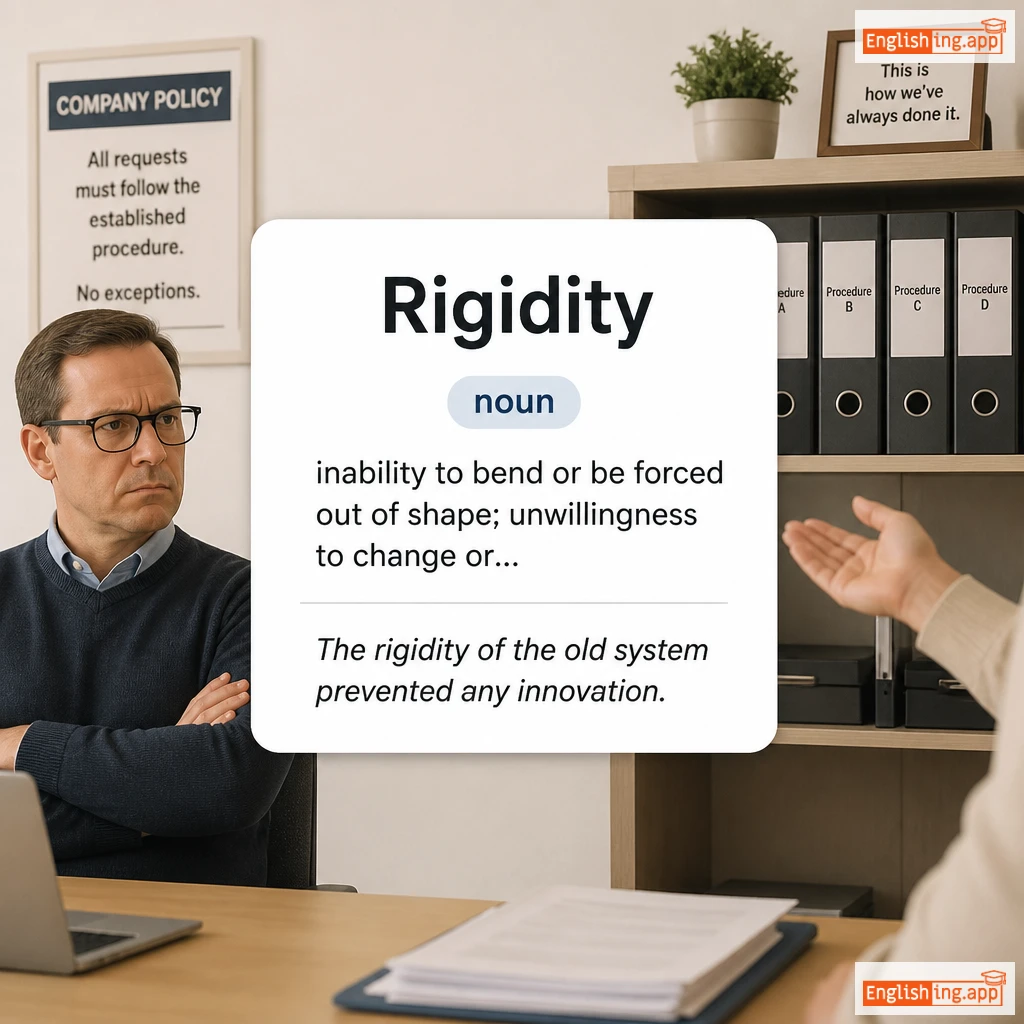
Rigidity definition card — visual illustration of the meaning
noun C1
/rɪˈdʒɪdəti/
剛性 (gōsei)

inability to bend or be forced out of shape; unwillingness to change or compromise

"The rigidity of the old system prevented any innovation."

"古いシステムの剛性は、どんな革新も妨げました。" (Furui shisutemu no gōsei wa, donna kakushin mo samatagemashita.)
adverb C1
/ˈrɪdʒɪdli/
厳格に; 柔軟性なしで (genkaku ni; jūnan-sei nashi de)

in a strict, inflexible manner; without compromise

"The rules are rigidly enforced in this institution."

"この機関ではルールは厳格に適用されます。" (Kono kikan de wa rūru wa genkaku ni tekiyō saremasu.)
noun C1
/ˈrɪɡər/
厳格さ (genkakusa)

strictness, severity, or demanding conditions

"The training was carried out with great rigor."

"訓練は大変厳格に行われました。" (Kunren wa taihen genkaku ni okonawaremashita.)
😠

rile

verb C1
/raɪl/

to irritate or annoy someone

"His careless comments really riled her."

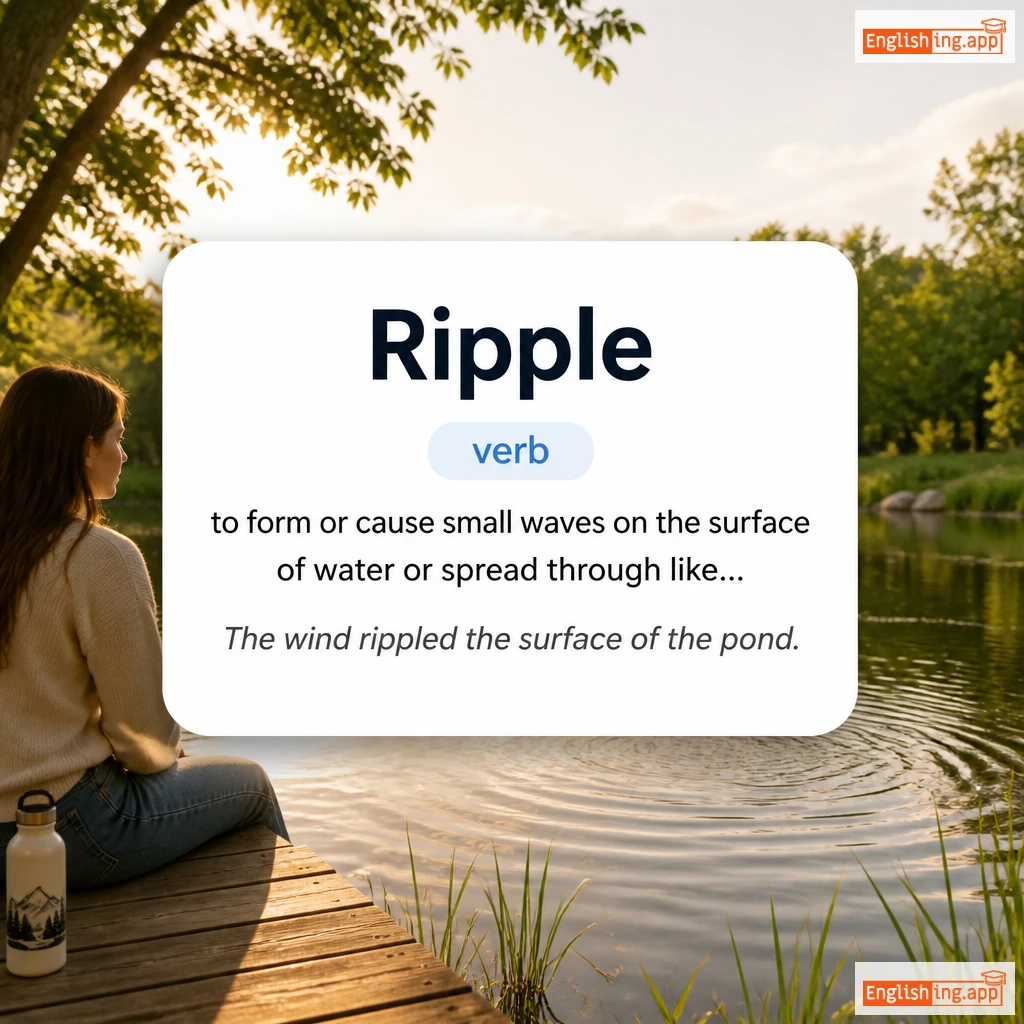
Ripple definition card — visual illustration of the meaning
verb C1
/ˈrɪp.l̩/
波紋 (hamon)

to form or cause small waves on the surface of water or spread through like waves

"The wind rippled the surface of the pond."

"風は池の表面を波紋させた。" (Kaze wa ike no hyoumen wo hamon saseta.)
risk-adjusted definition card — visual illustration of the meaning
adjective C1
rɪsk-ədˈʤɛstɪd
リスク調整済み (risuku chōsei zumi)

Modified or calibrated to account for risk factors in investment returns.

"Risk-adjusted returns consider both potential profit and loss."

"リスク調整後のリターンは、潜在的な利益と損失の両方を考慮します。" (Risuku chōsei go no ritān wa, senzai-tekina rieki to sonshitsu no ryōhō o kōryo shimasu.)
noun C1
/raɪt/
儀式 (gishiki)

a religious or ceremonial act

"The wedding rite was performed with great solemnity."

"結婚式の儀式は厳粛に行われました。" (Kekkon-shiki no gishiki wa genshuku ni okonawaremashita.)
verb C1
/ˈrɪvɪt/
リベットで固定する / 注意を引く (ribetto de kotei suru / chūi o hiku)

to fasten or secure with a rivet; to hold someone’s attention firmly

"The craftsman riveted the metal plates together."

"職人は金属の板をリヴェットで留めました。" (Shokunin wa kinzoku no ita o ribetto de tome mashita.)
adjective C1
/ˈrɪvɪtɪŋ/
魅力的な (miryokuteki na)

extremely interesting; holding the complete attention

"The movie was so riveting that nobody looked away."

"その映画はとても魅力的で、誰も目を離すことができませんでした。" (Sono eiga wa totemo miryokuteki de, dare mo me o hanasu koto ga dekimasen deshita.)
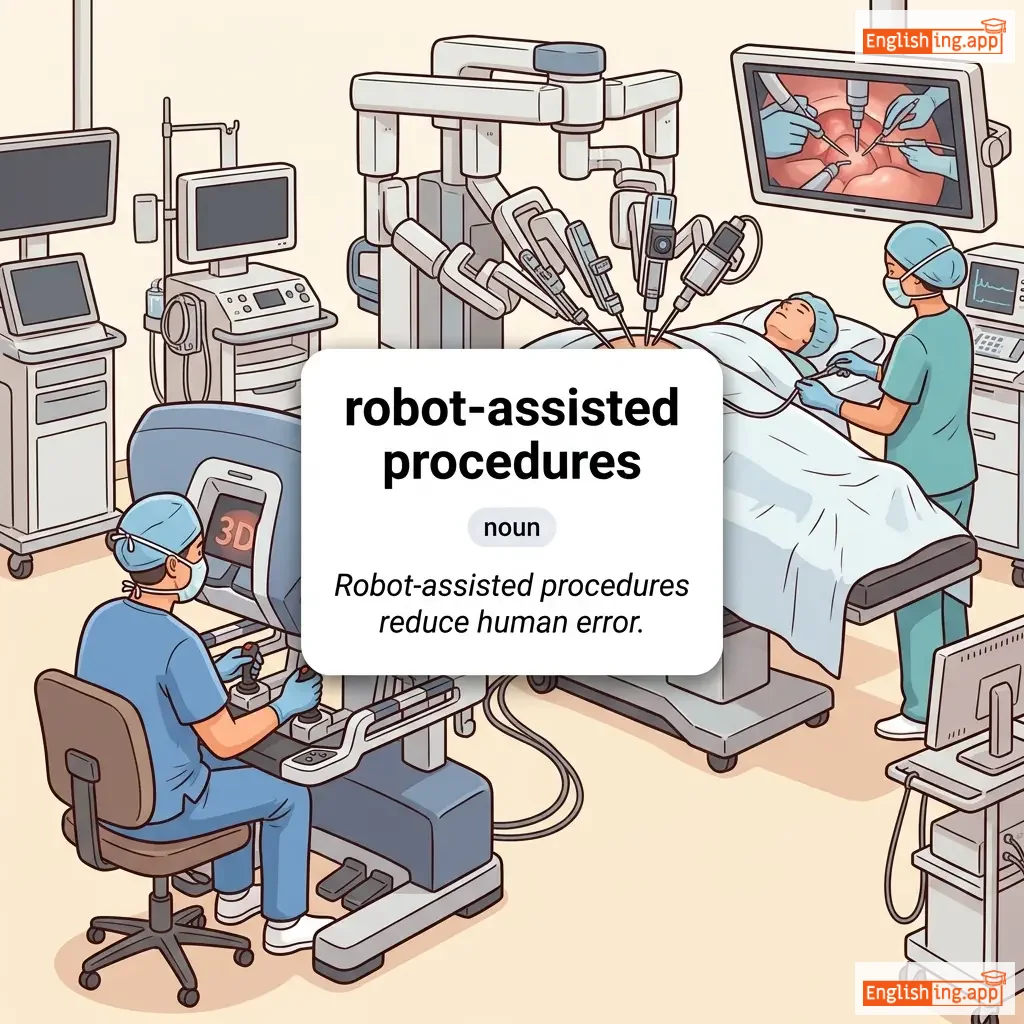
robot-assisted procedures definition card — visual illustration of the meaning
noun C1
/ˈrəʊ.bɒt əˈsɪs.tɪd prəˈsiː.dʒərz/
ロボット支援手術 (robotto shien shujutsu)

Medical operations performed with the help of robotic systems to enhance precision and control.

"Robot-assisted procedures reduce human error."

"ロボット支援手術は人為的な誤りを減らします。" (Robotto shien shujutsu wa jin'iteki na ayamari o herashimasu.)
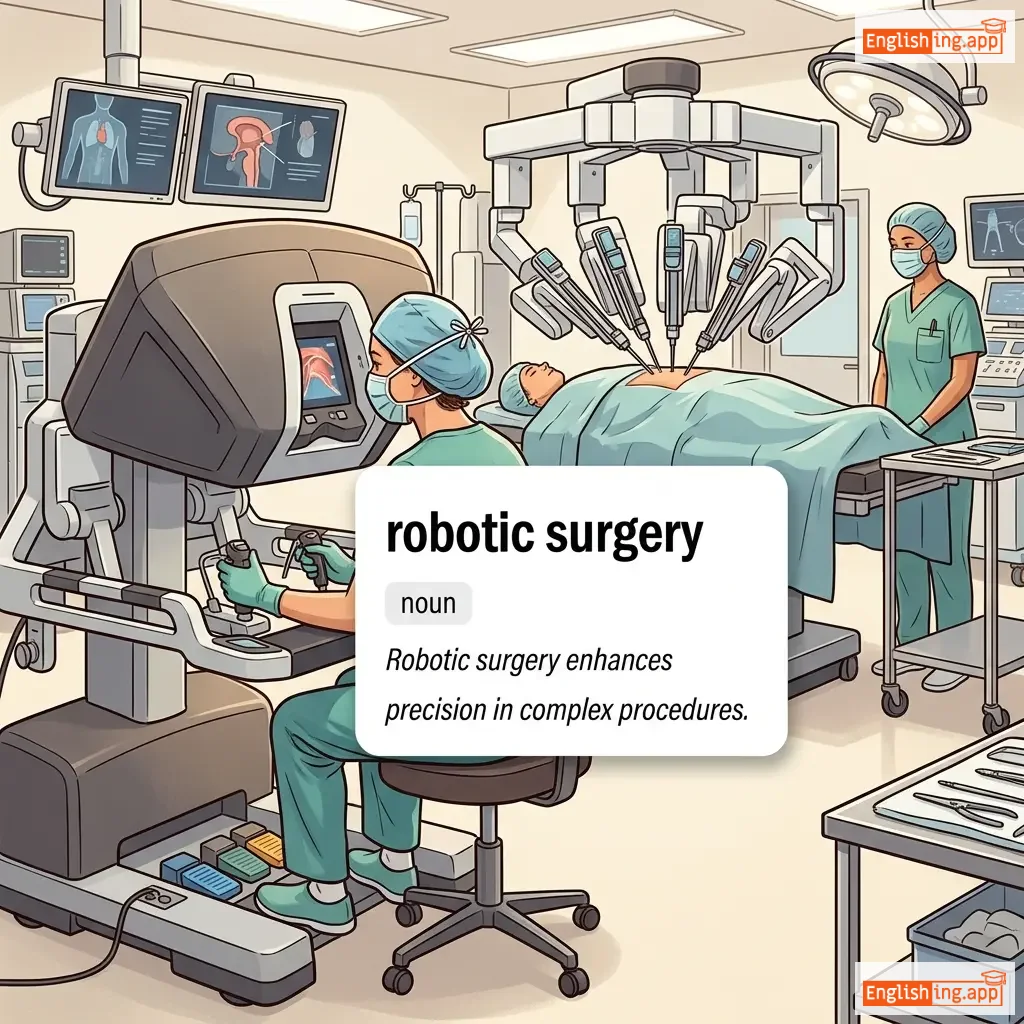
robotic surgery definition card — visual illustration of the meaning
noun C1
/rəʊˈbɒt.ɪk ˈsɜː.dʒər.i/
ロボット手術 (robotto shujutsu)

Surgery performed with the assistance of robotic systems to enhance precision and reduce invasiveness.

"Robotic surgery enhances precision in complex procedures."

"ロボット手術は複雑な手順で精度を高めます。" (Robotto shujutsu wa fukuzatsu na tejun de seido wo takamemasu.)
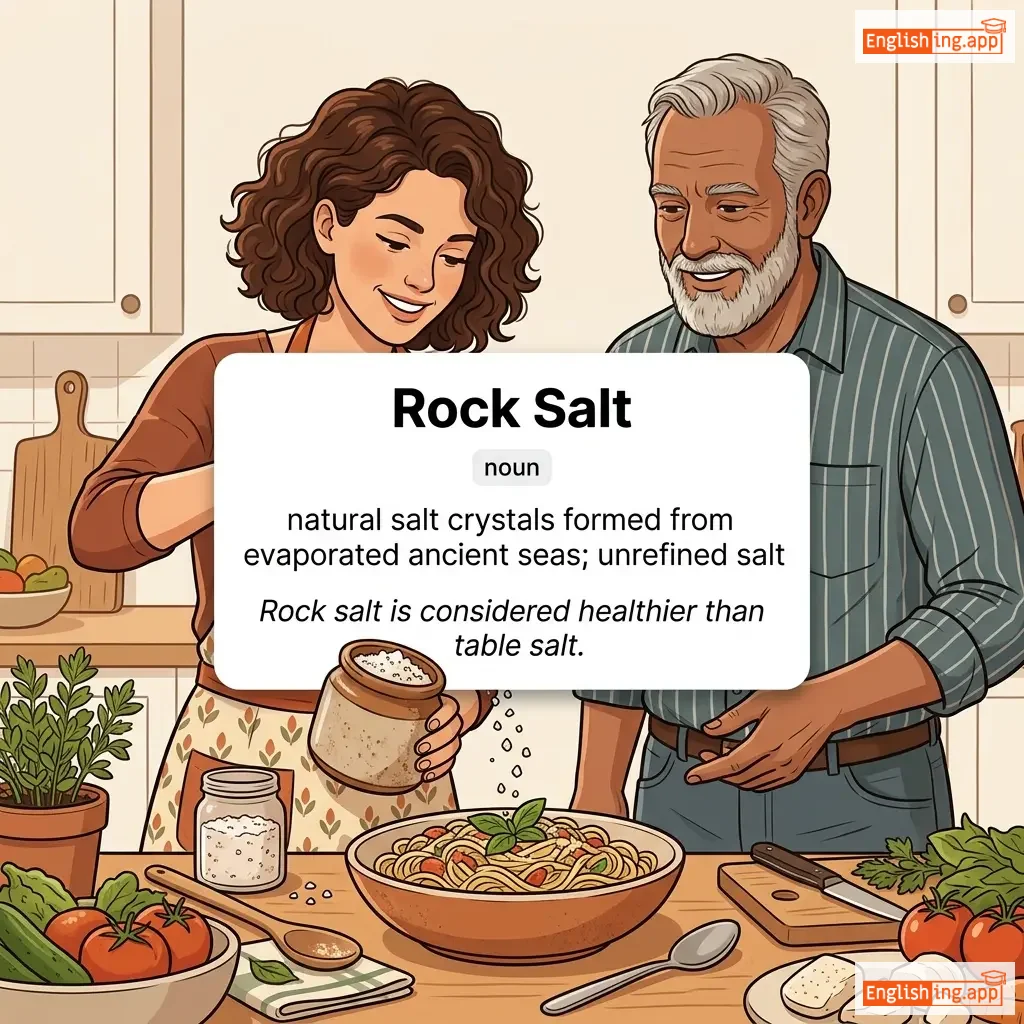
Rock Salt definition card — visual illustration of the meaning
noun C1
/rɑk sɔlt/
岩塩 (gan'en)

natural salt crystals formed from evaporated ancient seas; unrefined salt

"Rock salt is considered healthier than table salt."

"岩塩はテーブルソルトよりも健康的だと考えられています。" (Gan'en wa tēburu soruto yori mo kenkō-teki da to kangaerareteimasu.)
noun C1
/ˈroʊdənt/
齧歯類 (げっしるい)

a small mammal such as a mouse, rat, or squirrel, characterized by constantly growing incisors

"The farmer set traps to catch the rodents in his barn."

"農場主は納屋の中でロデントを捕まえるために罠を設置しました。" (Nōjō-nushi wa nayo no naka de rodento o tsukamaeru tame ni wana o setchi shimashita.)
adjective C1
/ˈroʊ.ɡɪʃ/
いたずらな; 狡猾な (itazurana; kōkatsu na)

mischievous; playfully dishonest

"His roguish smile suggested he was up to some mischief."

"彼のいたずらな笑顔は、彼が何かいたずらを仕掛けていることを示唆していました。" (Kare no itazurana egao wa, kare ga nanika itazura o shikakete iru koto o shisa shiteimashita.)
noun C1
/ˈroʊ.lɪŋ bɔːrd/
ローリングボード (rolling board)

a flat wooden or marble surface used for rolling out dough

"She placed the dough on the rolling board."

"彼女は生地をローリングボードに置きました。" (Kanojo wa kiji o rolling board ni okimashita.)
verb C1
/rɒmp/
楽しく遊ぶ (tanoshiku asobu)

to play or move in a lively, carefree, and energetic way

"The children romped happily in the garden."

"子供たちは庭で楽しそうに遊んでいました。" (Kodomotachi wa niwa de tanoshisou ni asondeimashita.)
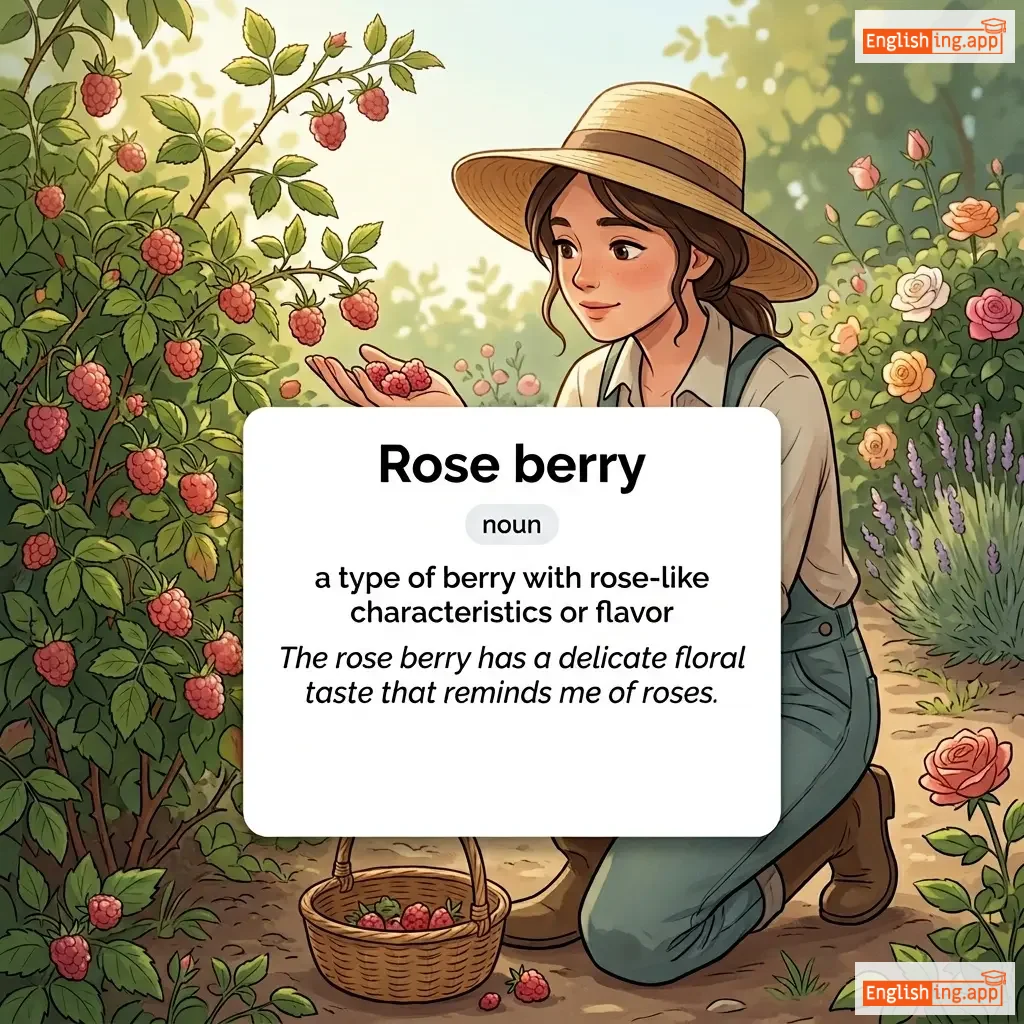
Rose berry definition card — visual illustration of the meaning
noun C1
/roʊz ˈber.i/
ローズベリー (roozuberii)

a type of berry with rose-like characteristics or flavor

"The rose berry has a delicate floral taste that reminds me of roses."

"ローズベリーはバラのような繊細な花の風味があり、バラを思い出させます。" (roozuberii wa bara no you na sensaina hana no fuumi ga ari, bara o omoidasasemasu.)
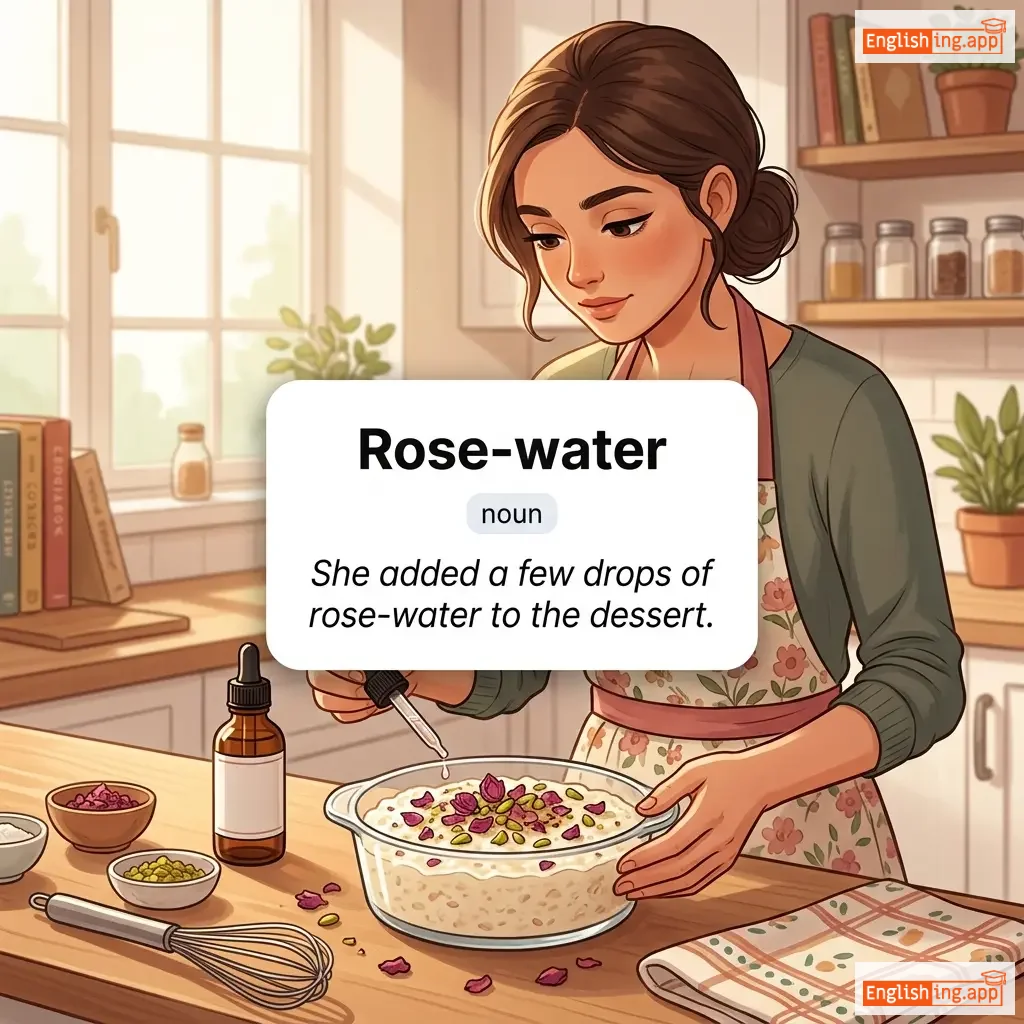
Rose-water definition card — visual illustration of the meaning
noun C1
/ˈroʊz ˈwɔː.tər/
ローズウォーター (rōzu wōtā)

a flavored water made by steeping rose petals in water, used in cooking and cosmetics

"She added a few drops of rose-water to the dessert."

"彼女はデザートにローズウォーターを数滴加えました。" (Kanojo wa dezāto ni rōzu wōtā o sūteki kuwaemashita.)
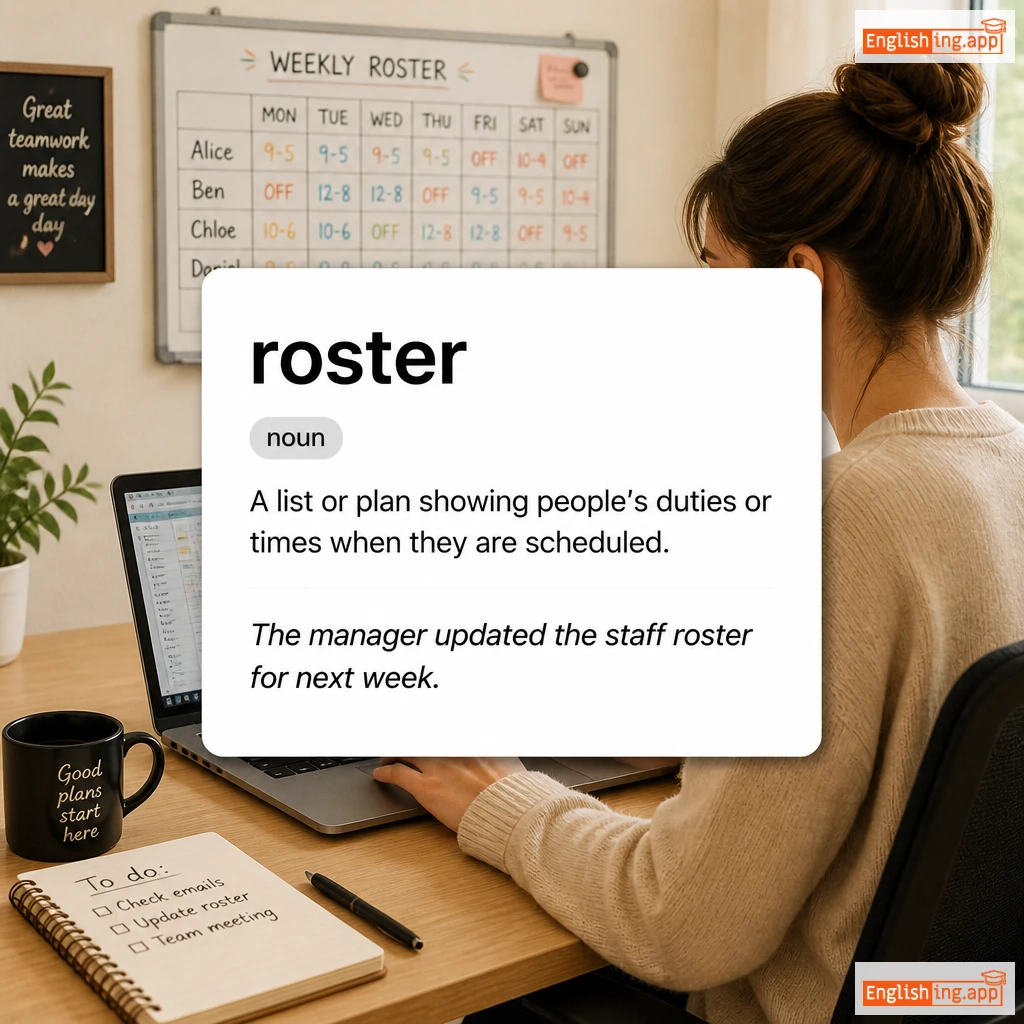
roster definition card — visual illustration of the meaning
noun C1
/ˈrɑːstər/
リスト (risuto)

A list or plan showing people’s duties or times when they are scheduled.

"The manager updated the staff roster for next week."

"マネージャーは来週のスタッフリストを更新しました。" (Manējā wa raishū no sutaffu risuto o kōshin shimashita.)
noun C1
/ˈrɒstrəm/
演壇 (endan)

A raised platform for speakers, performers, or leaders.

"The politician delivered a speech from the rostrum."

"政治家は演壇から演説を行いました。" (seijika wa endan kara enzetsu o okonaimashita.)
adjective C1
/ˈroʊtəri/
回転式 (kaitenshiki)

Relating to or characterized by rotation; revolving around an axis.

"The machine uses a rotary engine to function efficiently."

"その機械は効率的に動作するためにロータリーエンジンを使用しています。" (Sono kikai wa kōritsutekini dōsa suru tame ni rōtarī enjin o shiyō shiteimasu.)
noun C1
/roʊt/
暗記 (anki)

mechanical or habitual repetition, often without understanding

"He learned the poem by rote without understanding its meaning."

"彼はその詩を意味を理解せずに暗記しました。" (Kare wa sono shi o imi o rikai sezu ni anki shimashita.)
verb C1
/raʊz/
目覚める (mezameru)

To awaken from sleep or to stir into action.

"The loud alarm roused him from his deep sleep."

"大きなアラームが彼を深い眠りから起こした。" (Ōkina arāmu ga kare o fukai nemuri kara okoshita.)
adjective C1
/ˈraʊzɪŋ/
興奮させる (kōfun saseru)

Exciting, inspiring, or stirring.

"The speaker delivered a rousing speech that moved the audience."

"スピーカーは聴衆を感動させる興奮させるスピーチをしました。" (Supīkā wa chōshū o kandō saseru kōfun saseru supīchi o shimashita.)
noun, verb C1
/raʊt/
敗北 (haiboku)

A decisive defeat; to defeat completely.

"The army routed the enemy forces in the battle."

"軍隊は戦いで敵軍を完全に打ち負かしました。" (Guntai wa tatakai de tekigun wo kanzen ni uchimokashimashita.)
rover definition card — visual illustration of the meaning
noun C1
ˈrəʊvə
ローバー (ro-bā)

A vehicle for driving over rough terrain, especially one driven by remote control over extraterrestrial terrain.

"The rover landed on Mars to begin its exploration."

"ローバーは火星に着陸し、探査を開始しました。" (Rōbā wa kasei ni chakuriku shi, tansa wo kaishi shimashita.)
adjective C1
/ˈraʊdi/
騒々しい (souzoushii)

Noisy and disorderly; rough and disruptive

"The rowdy crowd made it hard to hear the speaker."

"騒々しい群衆は、スピーカーの声を聞くのを難しくしました。" (Souzoushii gunshuu wa, supiikaa no koe o kiku no o muzukashiku shimashita.)
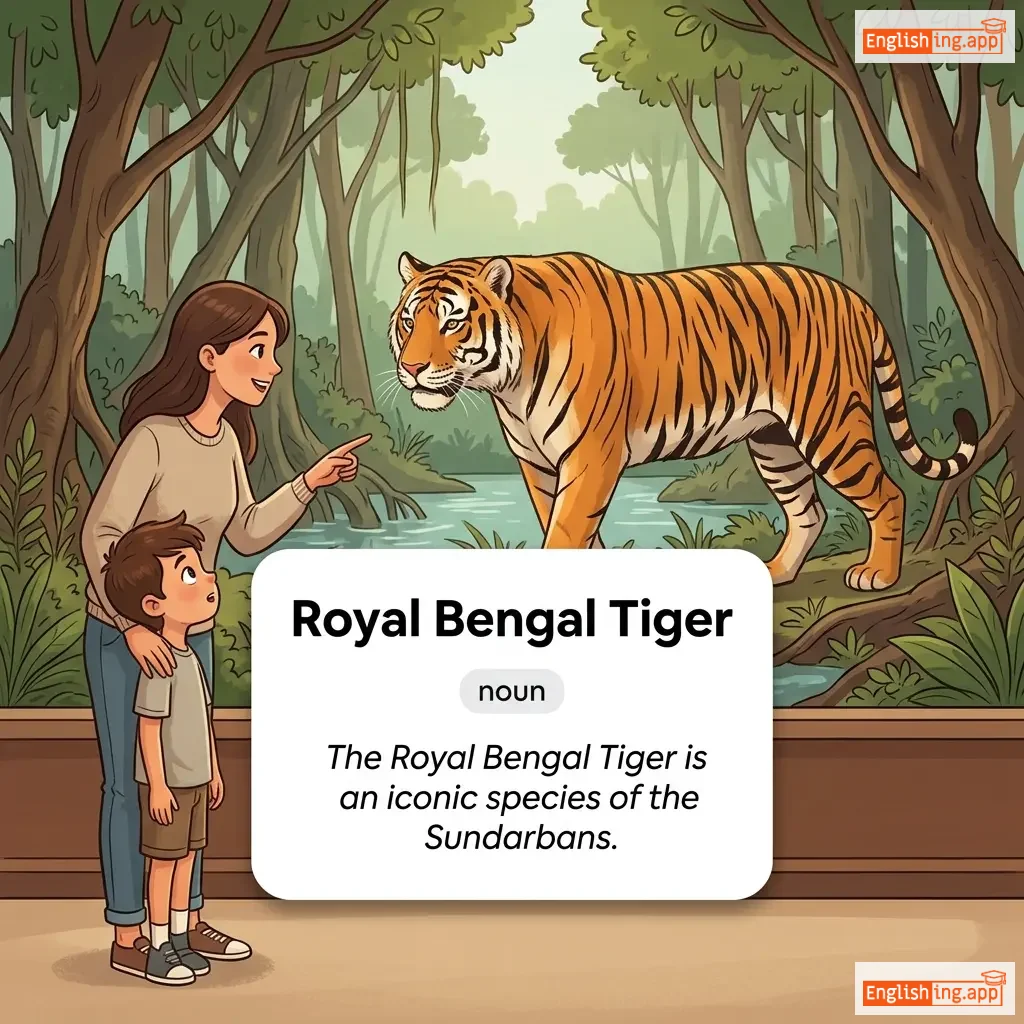
Royal Bengal Tiger definition card — visual illustration of the meaning
noun C1
ˈrɔɪəl ˈbɛŋɡəl ˈtaɪɡər
ロイヤルベンガルタイガー (Roiyaru Bengaru Taigā)

A subspecies of tiger found primarily in India and Bangladesh, known for its distinctive orange coat with black stripes.

"The Royal Bengal Tiger is an iconic species of the Sundarbans."

"ロイヤルベンガルタイガーはスンダルバンスの象徴的な種です。" (Roiyaru Bengaru Taigā wa Sundarubansu no shōchō-teki na shushu desu.)