Vocabulaires

Découvrez, apprenez et maîtrisez le vocabulaire anglais

noun C1
/ˈtæbloʊ/
タブロー (taburo)

a striking or artistic scene or arrangement of people or objects, often presented on stage or in art

"The actors froze in a tableau that captured the final moment of the play."

"俳優たちは、舞台の最後の瞬間を捉えたタブローで凍りつきました。" (Haiyū-tachi wa, butai no saigo no shunkan o toraeta taburō de kōritsukimashita.)
🚫

taboo

noun C1
/təˈbuː/

a social or cultural prohibition against certain practices or discussions

"Talking about money is considered a taboo in some cultures."

tacit definition card — visual illustration of the meaning
adjective C1
/ˈtæsɪt/
暗黙の了解 (anmoku no ryōkai)

understood or implied without being stated

"There was a tacit agreement to avoid the subject."

"そのテーマを避けるために暗黙の了解があった。" (Sono tēma o yokeru tame ni anmoku no ryōkai ga atta.)
📌

tack

noun/verb C1
/tæk/

a small sharp nail; or to change direction in sailing or approach something differently

"She used a tack to pin the paper on the wall."

tact definition card — visual illustration of the meaning
noun C1
/tækt/
機転, 思いやり (kiten, omoiyari)

the ability to say or do the right thing without offending others

"She handled the situation with great tact."

"彼女はその状況を非常に上手く対処しました。" (Kanojo wa sono jōkyō o hijō ni umaku taisho shimashita.)
adjective C1
/ˈtækt.fəl/
機転の利いた (kiten no kiita)

showing skill and sensitivity in dealing with others

"He is always tactful when giving feedback."

"彼はフィードバックを与える時、いつも機転の利いた対応をします。" (Kare wa fīdobakku o ataeru toki, itsumo kiten no kiita taiō o shimasu.)
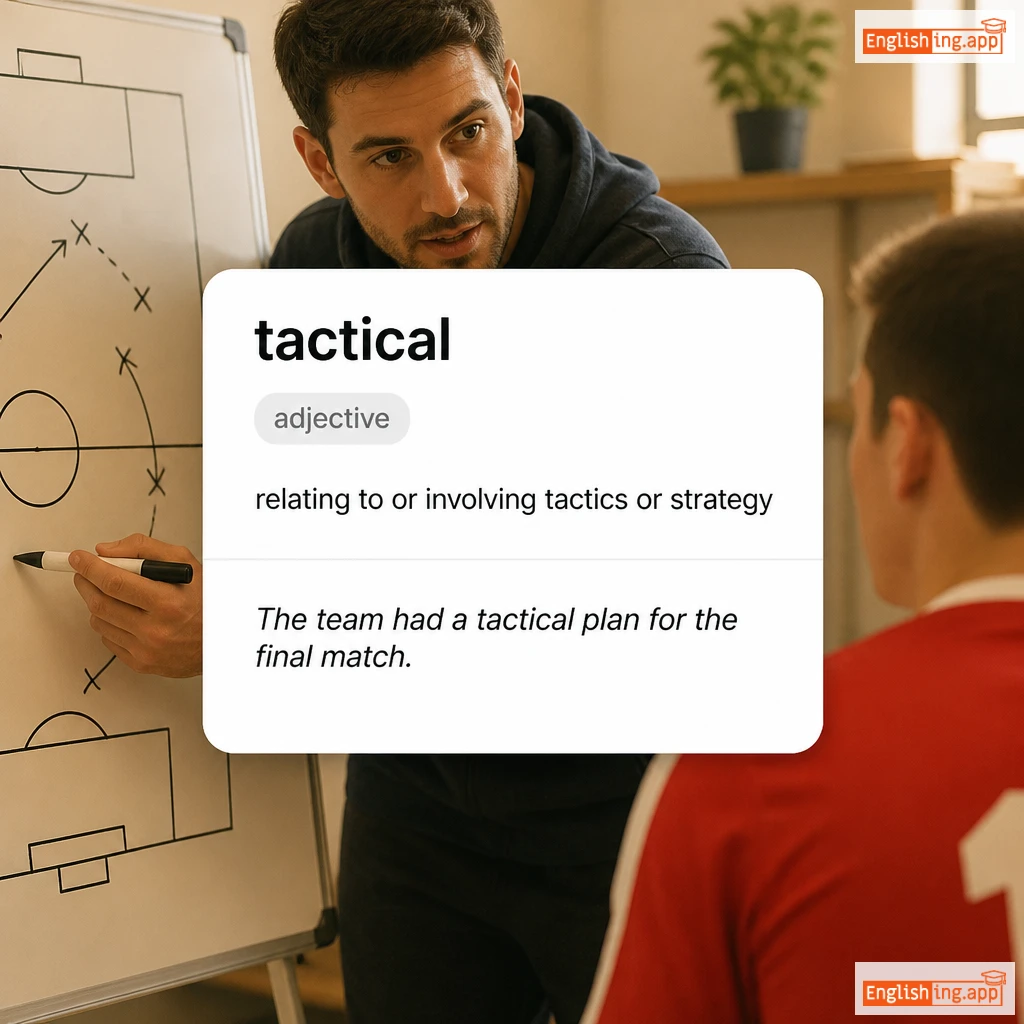
tactical definition card — visual illustration of the meaning
adjective C1
/ˈtæktɪkəl/
戦略に関連する (senryaku ni kanren suru)

relating to or involving tactics or strategy

"The team had a tactical plan for the final match."

"チームは最終試合のための戦術的な計画を立てていた。" (Chīmu wa saishū shiai no tame no senjutsuteki na keikaku o tatete ita.)
noun C1
/tækˈtɪʃ.ən/
戦術家 (senjutsuka)

a person who is skilled at planning and achieving goals, especially in military or business

"Napoleon was a brilliant tactician."

"ナポレオンは素晴らしい戦術家でした。" (Napoleon wa subarashī senjutsuka deshita.)
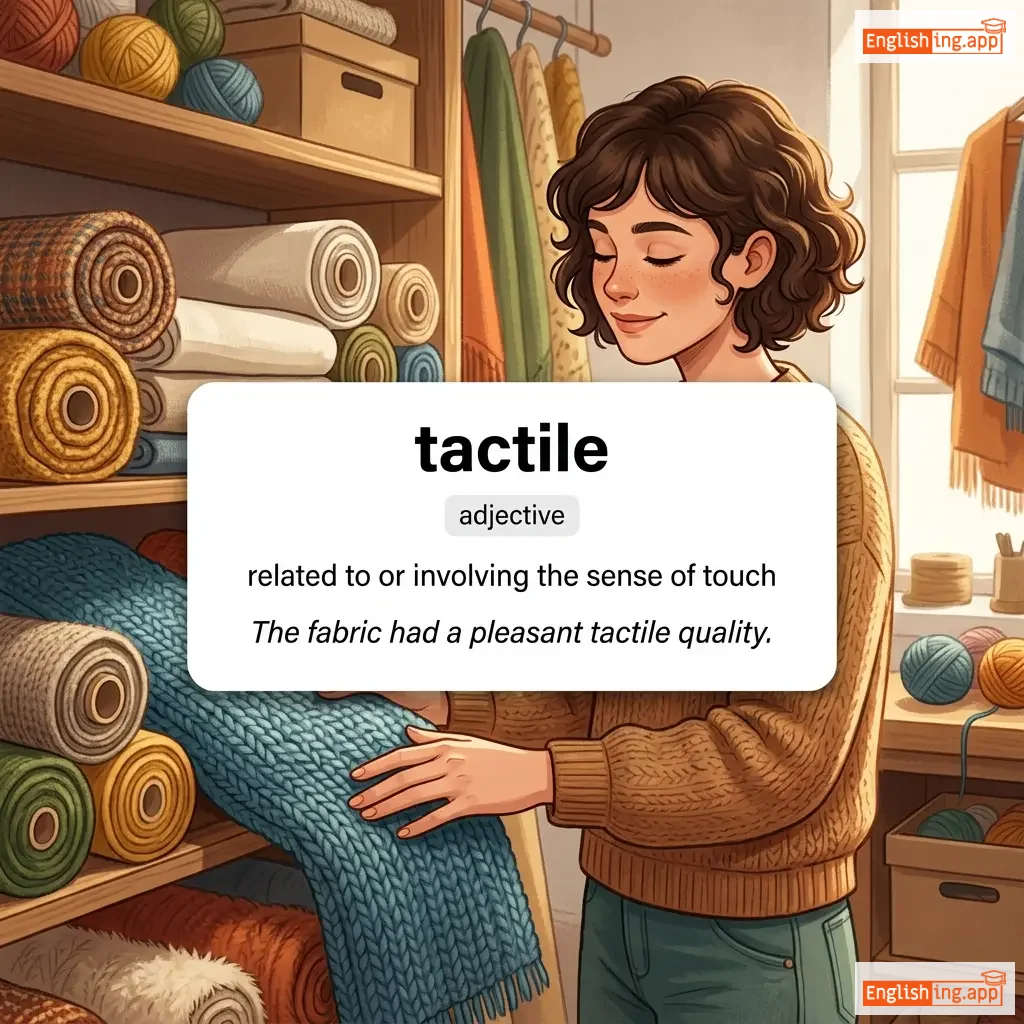
tactile definition card — visual illustration of the meaning
adjective C1
/ˈtæk.taɪl/
触覚の (shokkaku no)

related to or involving the sense of touch

"The fabric had a pleasant tactile quality."

"その生地は心地よい触覚の質感がありました。" (Sono kiji wa kokochi yoi shokkaku no shitsukan ga arimashita.)
adjective C1
/ˈtækt.ləs/
不作法 (fusaho)

showing a lack of sensitivity in dealing with others

"His tactless remark embarrassed everyone at the meeting."

"彼の不作法なコメントは、会議でみんなを恥ずかしがらせました。" (Kare no fusaho na komento wa, kaigi de minna wo hazukashigarasemashita.)
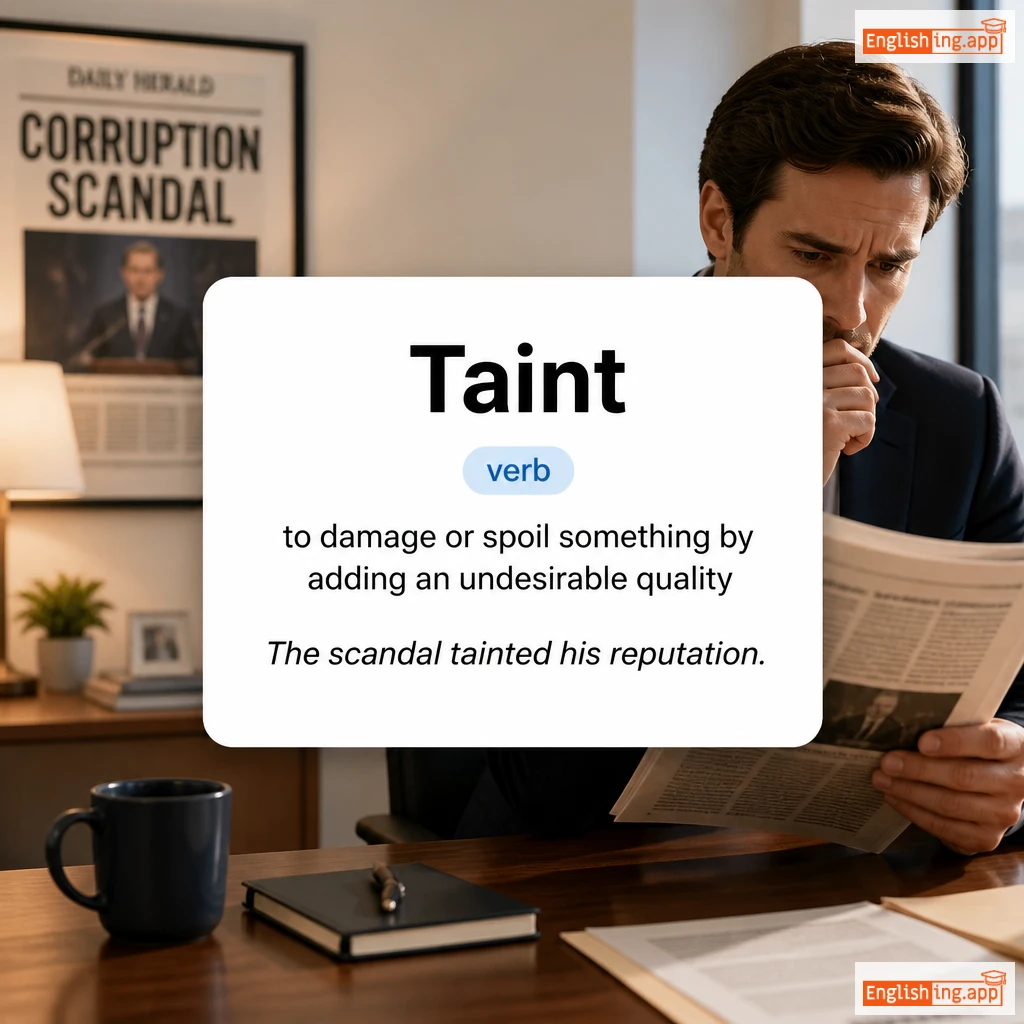
Taint definition card — visual illustration of the meaning
verb C1
/teɪnt/
汚す (yogosu)

to damage or spoil something by adding an undesirable quality

"The scandal tainted his reputation."

"そのスキャンダルは彼の評判を汚した。" (Sono sukyandaru wa kare no hyōban o yogoshita.)
adjective C1
/ˈteɪn.tɪd/
汚れた (yogoreta)

spoiled, corrupted, or made impure

"The tainted food caused several people to fall ill."

"汚れた食べ物は何人かを病気にさせました。" (Yogoreta tabemono wa nanninka o byōki ni sasemashita.)
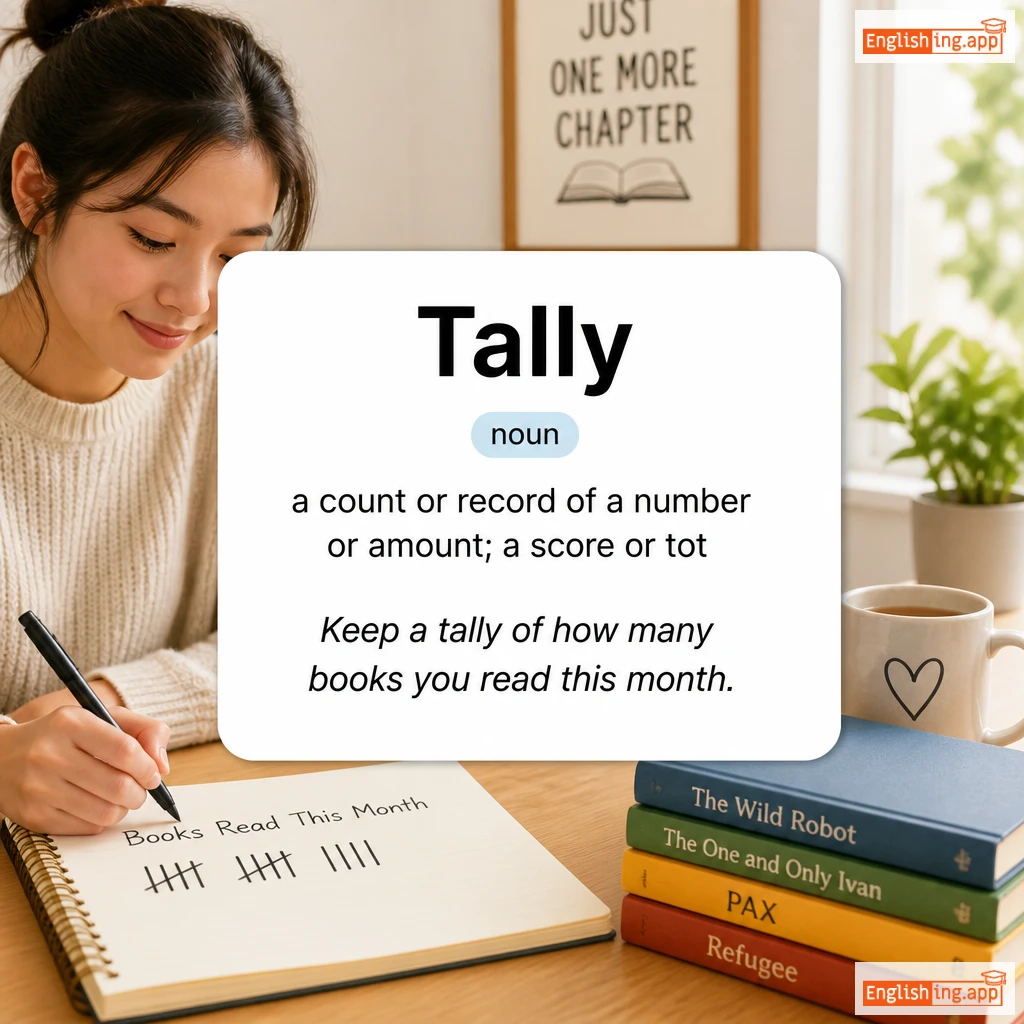
Tally definition card — visual illustration of the meaning
noun C1
/ˈtæl.i/
集計; 記録; スコア (shūkei; kiroku; sukōa)

a count or record of a number or amount; a score or total

"Keep a tally of how many books you read this month."

"今月読んだ本の数を集計してください。" (Kongetsu yonda hon no kazu o shūkei shite kudasai.)
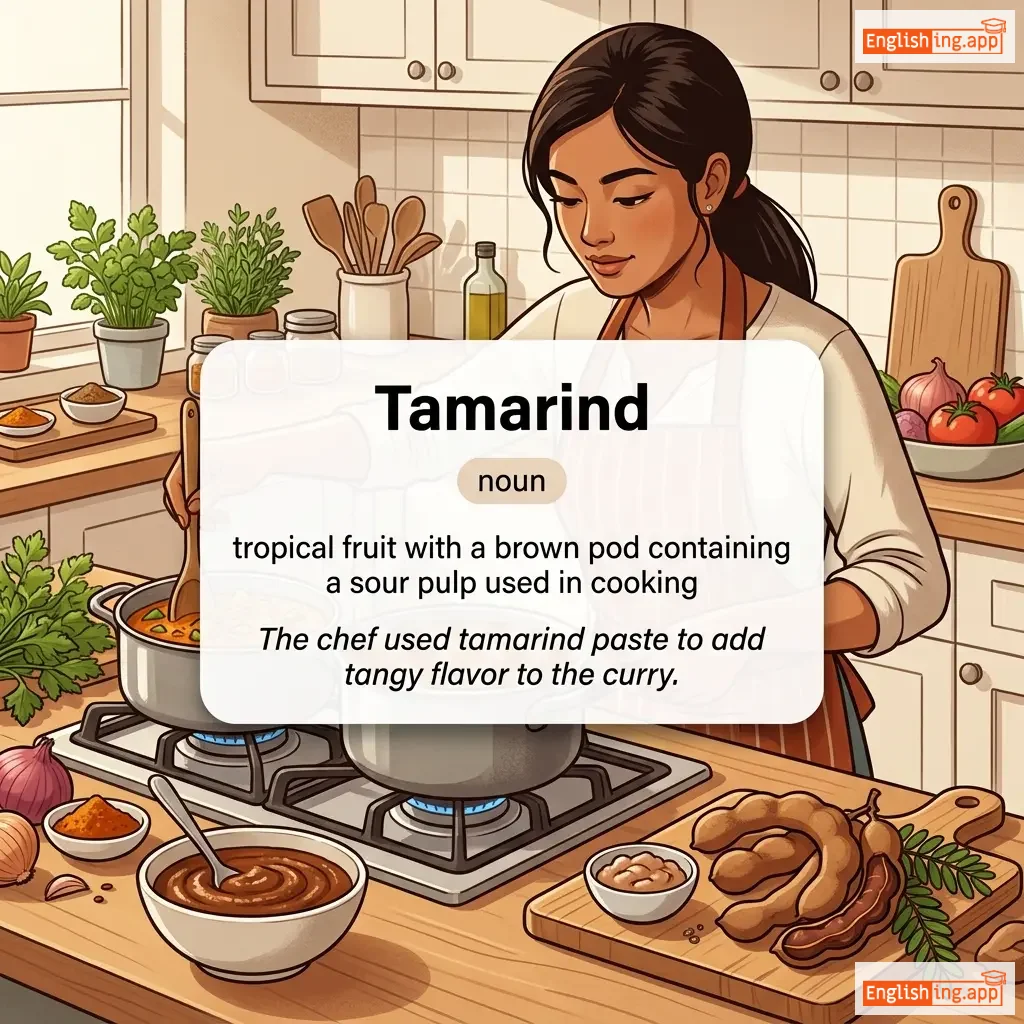
Tamarind definition card — visual illustration of the meaning
noun C1
/ˈtæm.ə.rɪnd/
タマリンド (tamarindo)

tropical fruit with a brown pod containing a sour pulp used in cooking

"The chef used tamarind paste to add tangy flavor to the curry."

"シェフはカレーに酸味を加えるためにタマリンドペーストを使用しました。" (shefu wa karē ni sanmi o kuwaeru tame ni tamarindo pēsu to shiyō shimashita.)
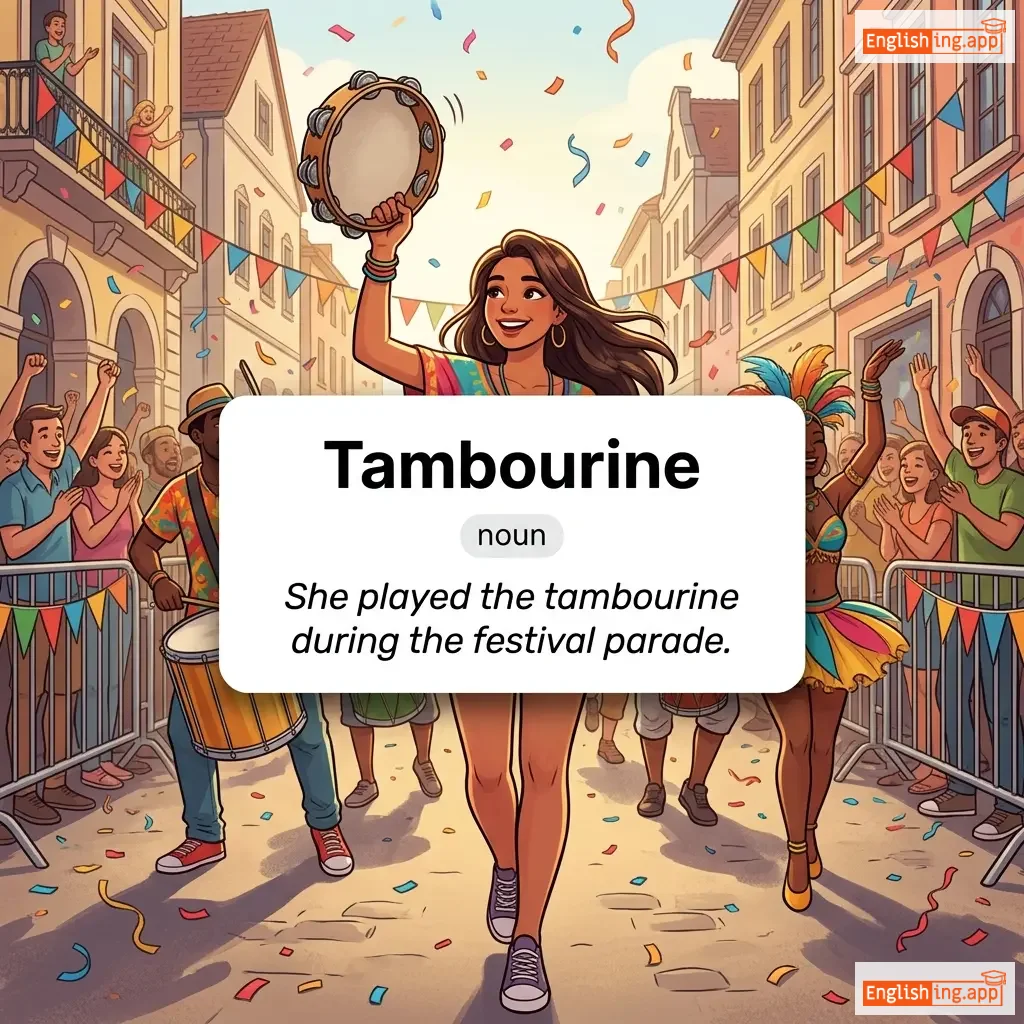
Tambourine definition card — visual illustration of the meaning
noun C1
/ˌtæmbəˈriːn/
タンバリン (tanbarin)

A musical instrument with a circular frame, metal jingles, and a drumhead, played by shaking or striking.

"She played the tambourine during the festival parade."

"彼女は祭りのパレードでタンバリンを演奏しました。" (Kanojo wa matsuri no parēdo de tanbarin o ensō shimashita.)
⚠️

tamper

verb C1
/ˈtæmpər/

To interfere with something in a harmful, unauthorized, or improper way.

"The evidence was tampered with before the trial."

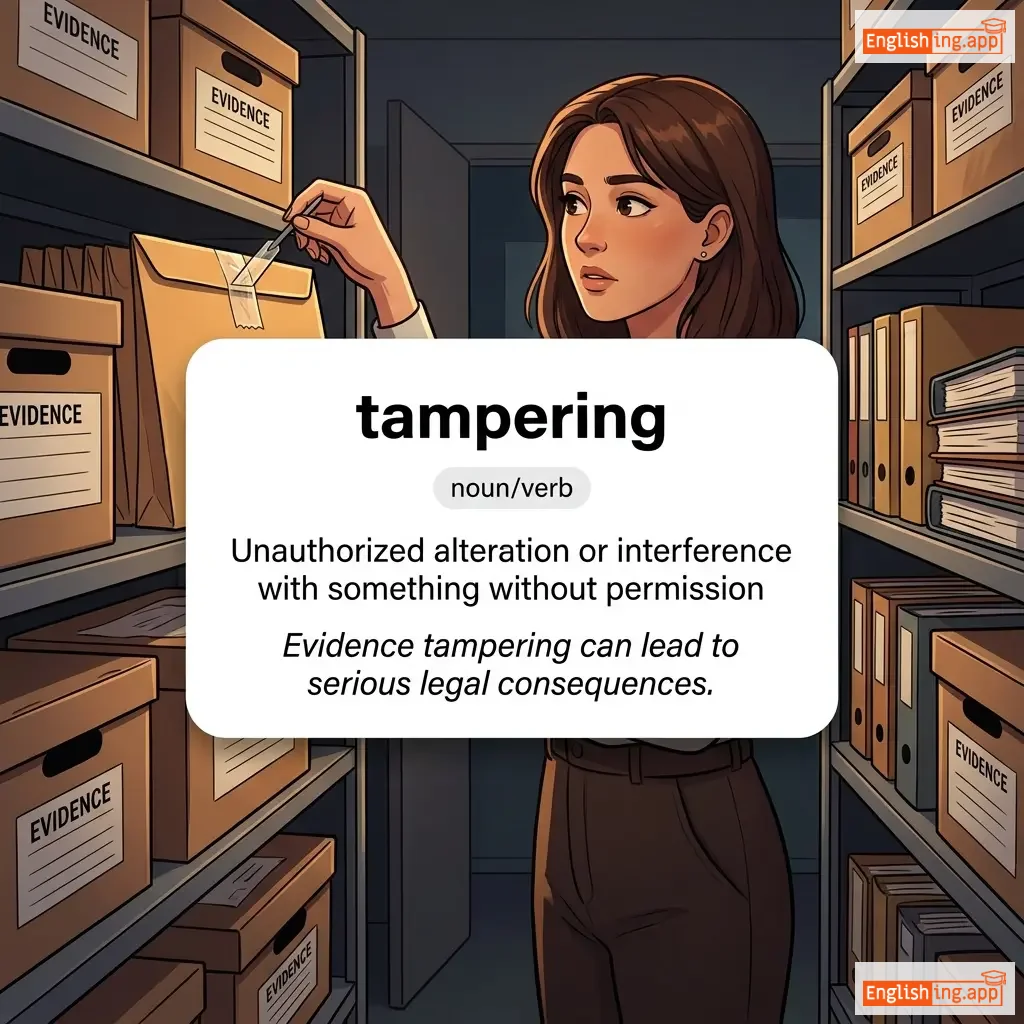
tampering definition card — visual illustration of the meaning
noun/verb C1
/ˈtæm.pər.ɪŋ/
不正な改ざんまたは干渉 (fusei na kaizan matawa kanshou)

Unauthorized alteration or interference with something without permission

"Evidence tampering can lead to serious legal consequences."

"証拠の改ざんは深刻な法的影響を引き起こす可能性があります。" (shouko no kaizan wa shinkoku na houteki eikyou wo hikiokosu kanousei ga arimasu.)
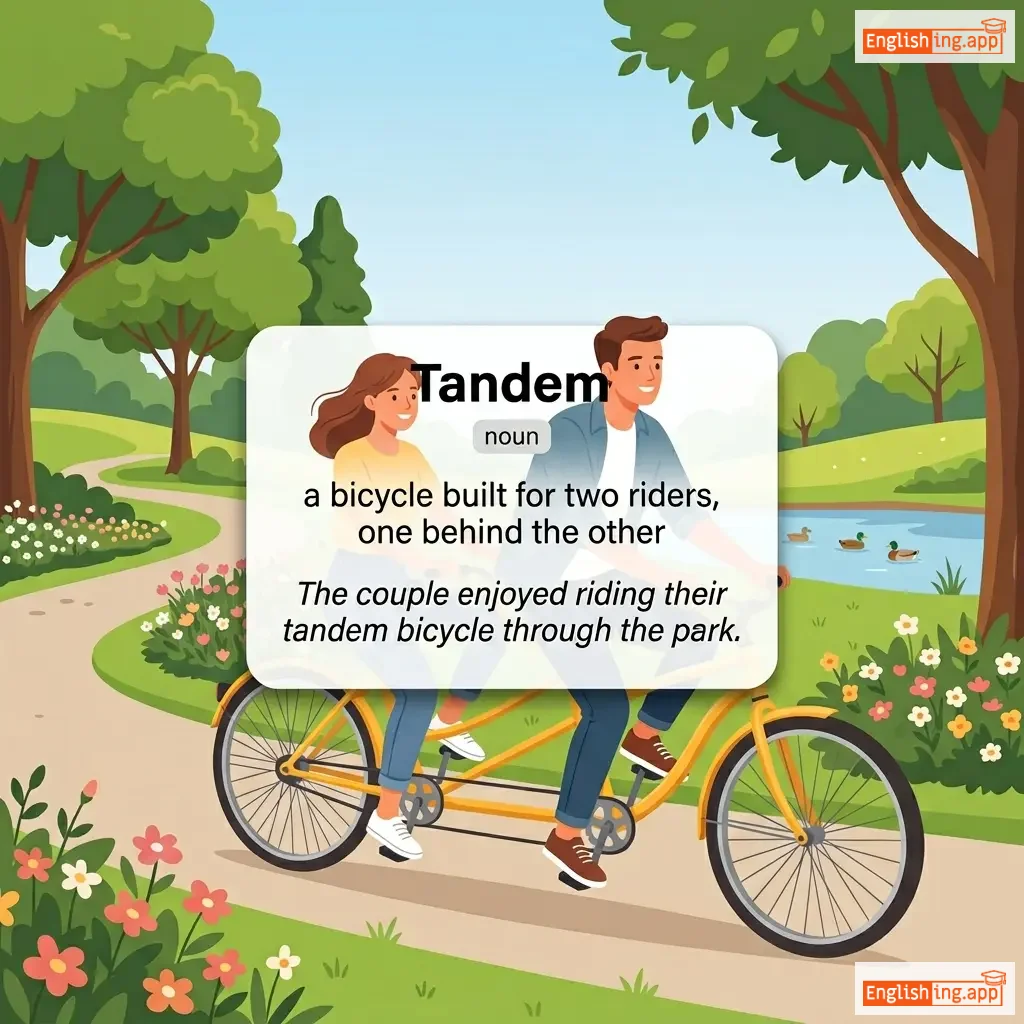
Tandem definition card — visual illustration of the meaning
noun C1
/ˈtæn.dəm/
タンデム自転車 (tandemu jitensha)

a bicycle built for two riders, one behind the other

"The couple enjoyed riding their tandem bicycle through the park."

"カップルは公園で自分たちのタンデム自転車に乗って楽しんでいました。" (Kappuru wa kōen de jibun-tachi no tandemu jitensha ni notte tanoshinde imashita.)
noun C1
/ˈtændʒənt/

a straight line or plane that touches a curve or curved surface at a point but does not cross it

"The teacher drew a tangent to the circle on the board."

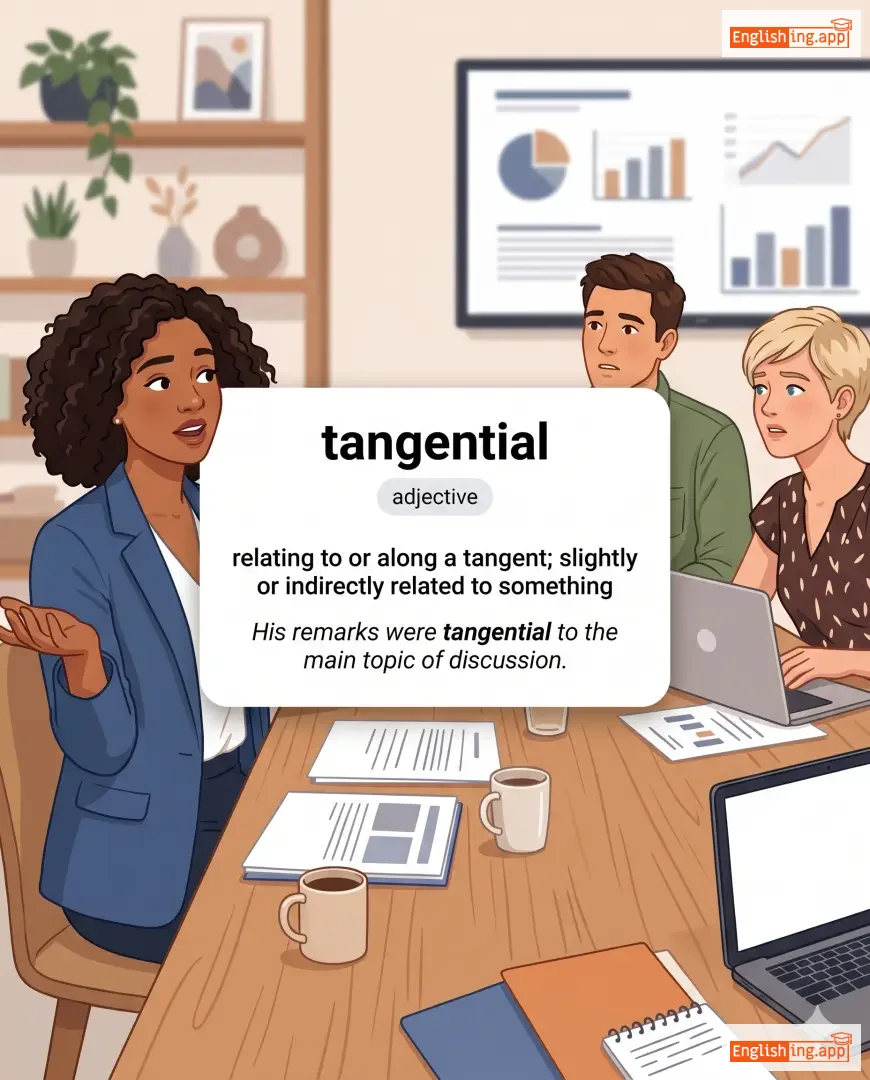
tangential definition card — visual illustration of the meaning
adjective C1
/tænˈdʒɛnʃəl/
接線の (sessenn no)

relating to or along a tangent; slightly or indirectly related to something

"His remarks were tangential to the main topic of discussion."

"彼のコメントは議論の主要なトピックには関連していなかった。" (Kare no komento wa giron no shuyōna topikku ni wa kanren shite inakatta.)
adjective C1
/ˈtæŋ.i/
辛い (tsurai)

Having a strong, sharp, and pleasantly biting flavor or taste.

"The sauce had a tangy flavor that brightened the dish."

"そのソースは、料理をさらに美味しくした辛い味を持っていました。" (Sono sōsu wa, ryōri o sara ni oishiku shita tsurai aji o motte imashita.)
noun C1
/ˈtæn.ər/
皮革職人 (hikaku shokunin)

A person whose job is to tan animal hides to make leather.

"The tanner worked long hours to produce fine leather."

"皮革職人は優れた革を作るために長時間働きました。" (Hikaku shokunin wa sugureta kawa o tsukuru tame ni chōjikan hatarakimashita.)
noun C1
/ˈtæn.ə.ri/
なめし革工場 (nameshi kawa koujou)

A place where animal hides are processed into leather.

"The tannery produced high-quality leather for export."

"なめし革工場は輸出のために高品質な革を生産しました。" (Nameshi kawa koujou wa yushutsu no tame ni kouhinshitsu na kawa o seisan shimashita.)
verb C1
/ˈtæn.tə.laɪz/
誘惑する (yūwaku suru)

To tease or torment someone with the promise of something desirable but unattainable.

"The aroma of the bakery tantalized the hungry children."

"ベーカリーの香りが空腹の子供たちを誘惑した。" (Bēkary no kaori ga kūfuku no kodomotachi wo yūwaku shita.)
adjective C1
/ˈtæn.tə.laɪ.zɪŋ/
魅惑的な (miwakuteki na)

Something that excites desire or interest, often by being just out of reach.

"She wore a tantalizing perfume that caught everyone's attention."

"彼女はみんなの注目を集める魅惑的な香水をつけていた。" (Kanojo wa minna no chūmoku o atsumeru miwakuteki na kōsui o tsukete ita.)
adjective C1
/ˈtæntəmaʊnt/
同等 (doutou)

Equivalent in seriousness or effect; virtually the same as.

"His refusal to speak was tantamount to an admission of guilt."

"彼の話さないことは罪を認めることと同等だった。" (Kare no hanasanai koto wa tsumi o mitomeru koto to doutou datta.)
noun C1
/ˈtæntrəm/
癇癪 (kanshaku)

An uncontrolled outburst of anger and frustration, typically in a young child.

"The child threw a tantrum when he didn’t get the toy."

"子供はおもちゃをもらえなくて癇癪を起こした。" (Kodomo wa omocha o moraenakute kanshaku o okoshita.)
verb C1
/ˈteɪpər/
先細りになる (sakihosori ni naru)

To gradually decrease in width, thickness, or intensity.

"The road tapers off as it reaches the mountains."

"道路は山に到達するにつれて細くなります。" (Dōro wa yama ni tōtatsu suru ni tsurete hosoku narimasu.)
noun C1
/ˈtæpəstri/

A piece of thick textile fabric with pictures or designs woven into it, often hung on walls.

"The museum displayed an ancient tapestry from the 15th century."

noun C1
/təˈræntjʊlə/
タランチュラ (taranchura)

A large hairy spider found in warm regions.

"The tarantula crawled across the desert floor."

"タランチュラは砂漠の地面を這っていた。" (Tarantyura wa sabaku no jimen o hatte ita.)
adjective C1
/ˈtɑːrdi/
遅刻 (chikoku)

Delayed; arriving or happening late.

"The student received a warning for being tardy to class."

"学生は授業に遅れて警告を受けました。" (Gakusei wa jugyou ni okurete keikoku o ukemashita.)
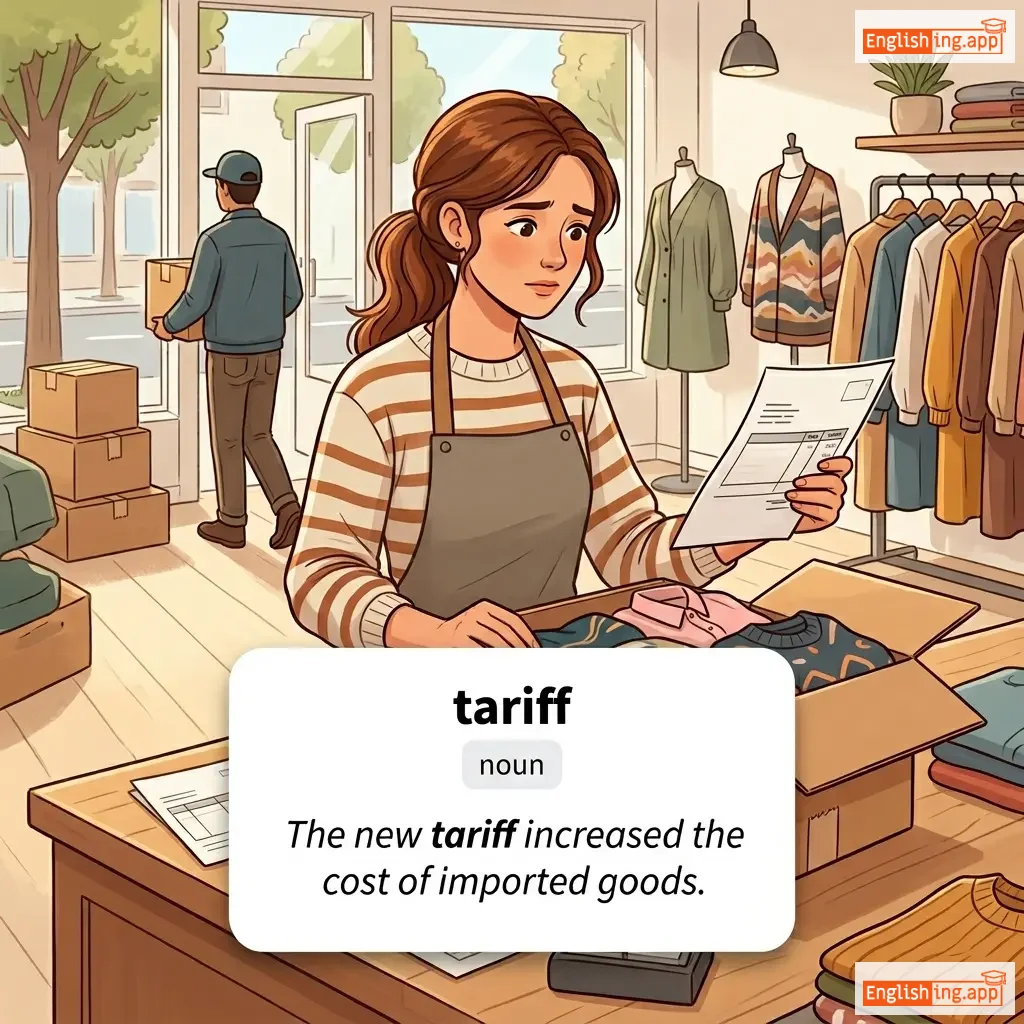
tariff definition card — visual illustration of the meaning
noun C1
/ˈtær.ɪf/
関税 (kansetai)

A tax imposed by the government on imported or exported goods, also known as duty, customs tax, or levy.

"The new tariff increased the cost of imported goods."

"新しい関税は輸入品のコストを増加させました。" (Atarashī kansetai wa yunyūhin no kosuto o zōka sasemashita.)
verb C1
/ˈtɑːrnɪʃ/

To lose luster, especially as a result of exposure to air or moisture; to damage reputation.

"The silver jewelry tarnished quickly when left in the open air."

noun C1
/tɑːrˈpɔːlɪn/

A large sheet of strong, flexible, water-resistant material used for covering or protecting things.

"The workers used a tarpaulin to cover the construction materials from rain."

noun, verb C1
/ˈtætər/

A torn piece of cloth or clothing; to become ragged or torn.

"The old flag hung in tatters after the storm."

adjective C1
/ˈtæti/
使い古しの (tsukai furushi no)

Worn out, shabby, or in poor condition.

"The sofa looked old and tatty after years of use."

"ソファは長年の使用で古くて使い古しのように見えた。" (Sofa wa naganen no shiyou de furukute tsukai furushi no you ni mieta.)
verb C1
/tɔːnt/
からかう (karakau)

to provoke or challenge someone with insulting remarks

"The bully tried to taunt him with cruel words."

"いじめっ子は残酷な言葉で彼をからかおうとした。" (Ijimekko wa zankokuna kotoba de kare wo karakaou to shita.)
adjective C1
/tɔːt/
ぴんと張った (pinto hatta)

stretched or pulled tight; tense

"The rope was pulled taut between the two poles."

"ロープは二つのポールの間でぴんと張られていました。" (Roopu wa futatsu no pooru no aida de pinto hararete imashita.)
adjective C1
/ˈtæksɪŋ/
大変 (taihen)

Requiring a lot of effort; physically or mentally demanding.

"Preparing for the exam was a taxing experience."

"試験の準備は大変な経験でした。" (Shiken no junbi wa taihen na keiken deshita.)
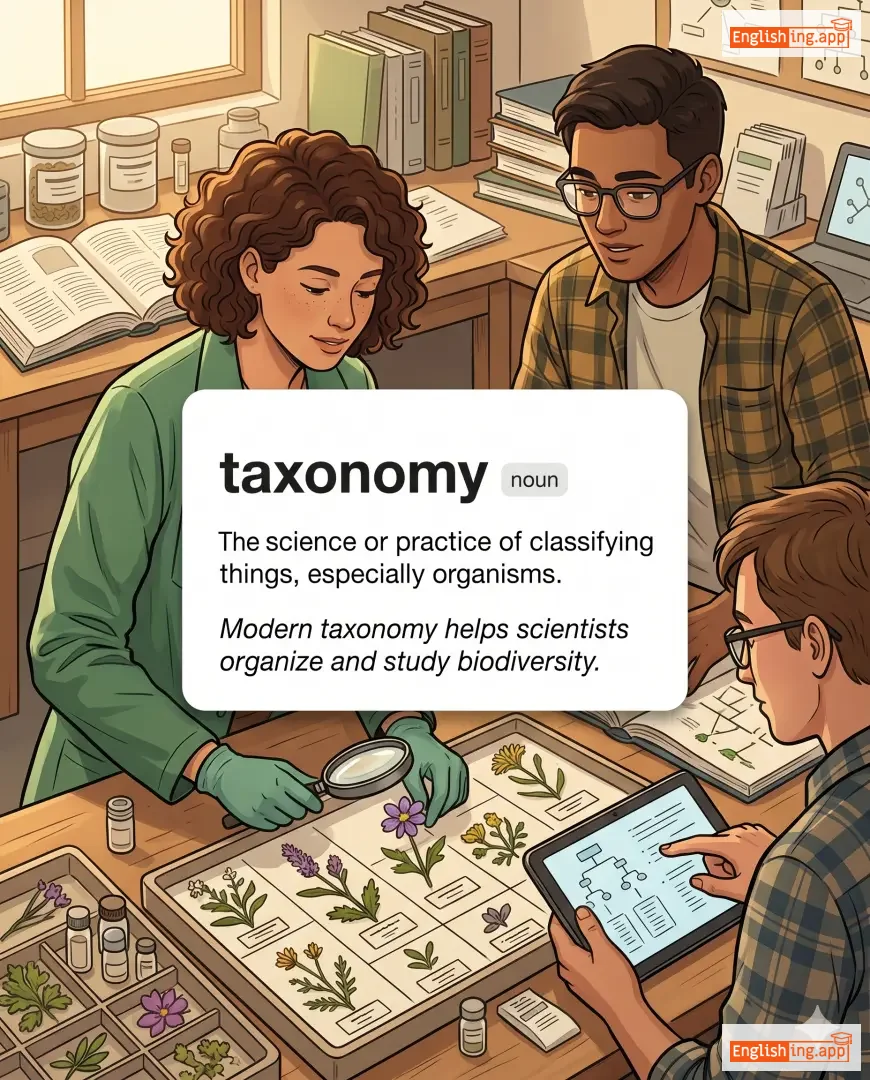
taxonomy definition card — visual illustration of the meaning
noun C1
/tækˈsɒnəmi/
分類学 (bunruigaku)

The science or practice of classifying things, especially organisms.

"Modern taxonomy helps scientists organize and study biodiversity."

"現代の分類学は、科学者たちが生物多様性を整理し、研究するのを助けます。" (gendai no bunruigaku wa, kagakusha-tachi ga seibutsu tayousei wo seiri shi, kenkyuu suru no wo tasukemasu.)
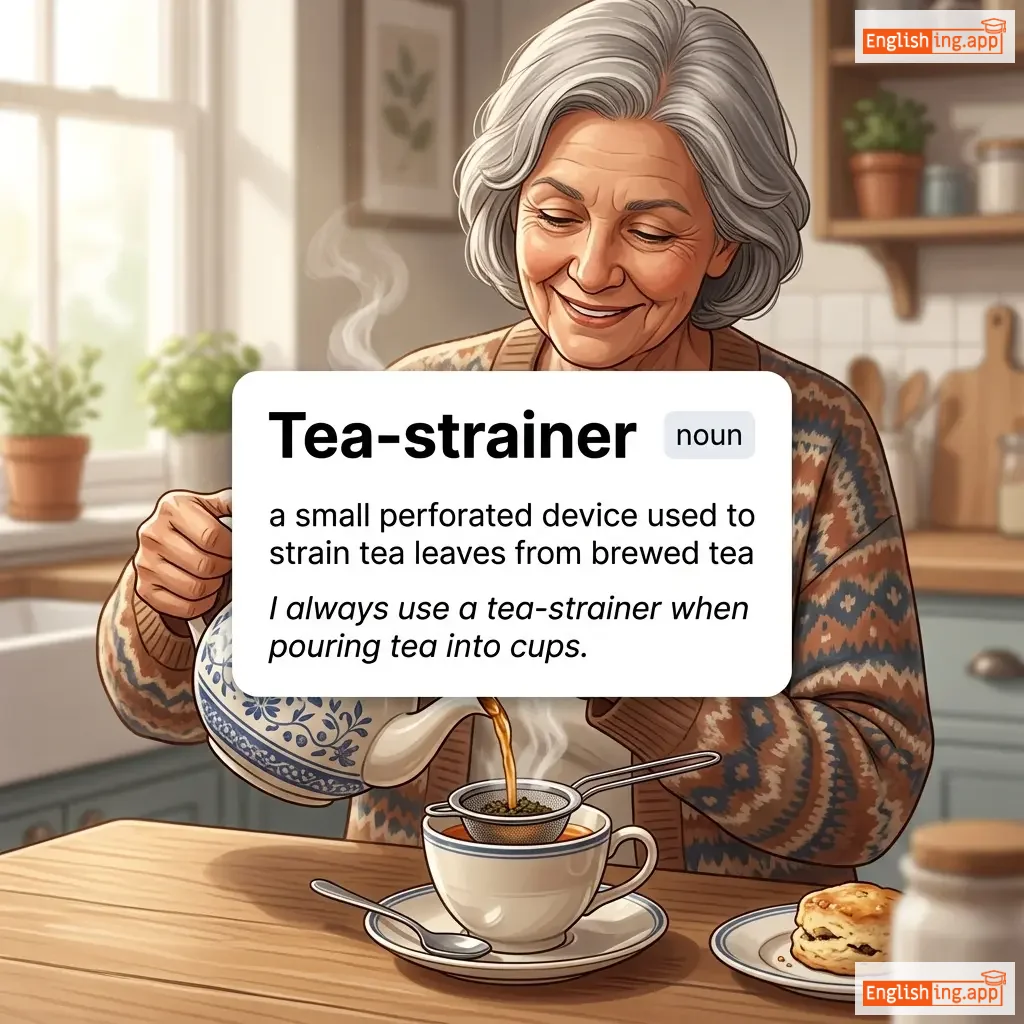
Tea-strainer definition card — visual illustration of the meaning
noun C1
/tiː ˈstreɪnər/
茶こし (chakoshi)

a small perforated device used to strain tea leaves from brewed tea

"I always use a tea-strainer when pouring tea into cups."

"私はお茶をカップに注ぐとき、いつも茶こしを使います。" (watashi wa ocha o kappu ni sosogu toki, itsumo chakoshi o tsukaimasu.)
adjective C1
/ˈtɪərfəl/
涙を流す; 泣きやすい (namida o nagasu; nakiyasui)

expressing or showing sadness and sorrow; inclined to weep

"She gave a tearful goodbye to her friends at the airport."

"彼女は空港で友達に涙ながらの別れを告げた。" (Kanojo wa kūkō de tomodachi ni namida nagara no wakare o tsugeta.)
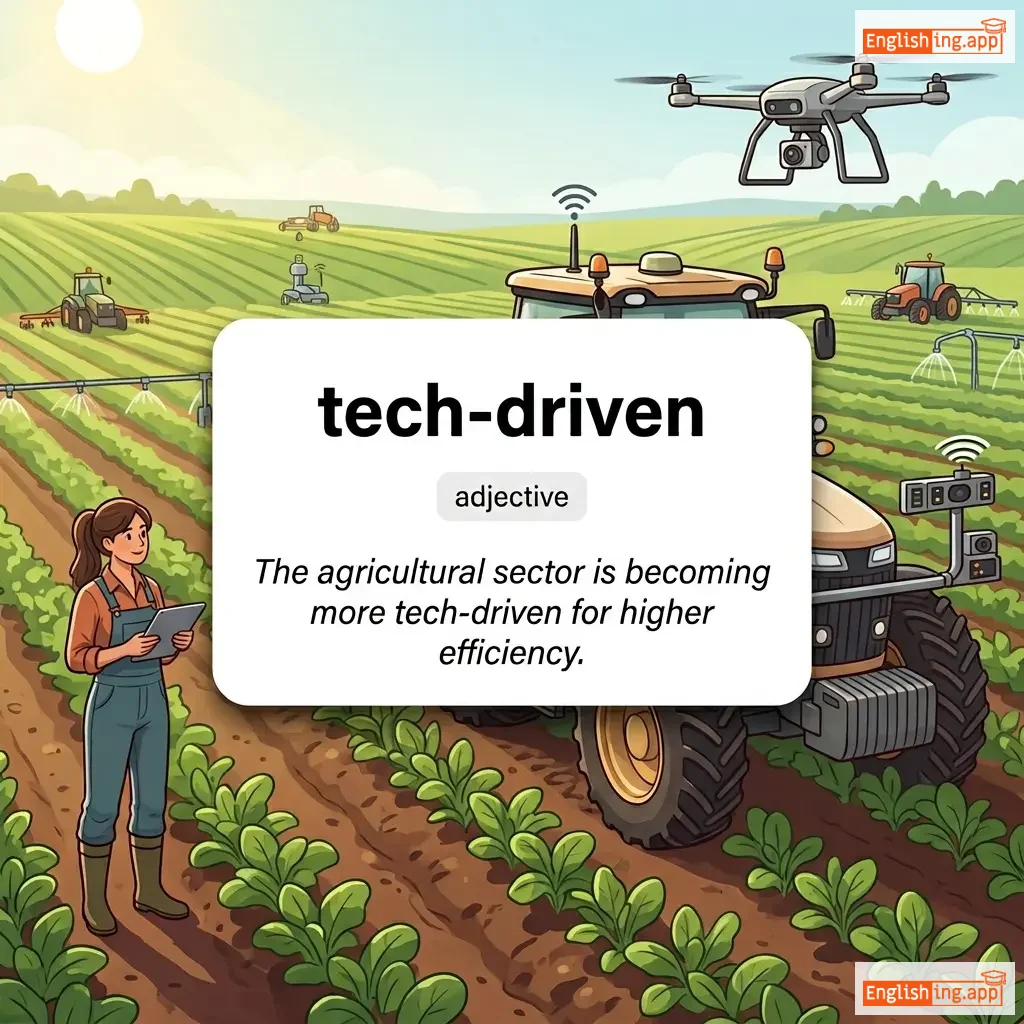
tech-driven definition card — visual illustration of the meaning
adjective C1
/tɛk ˈdrɪv.ən/
テクノロジー駆動 (tekunorojī kudō)

Powered or guided by technology; dependent on technological advancement for operation.

"The agricultural sector is becoming more tech-driven for higher efficiency."

"農業セクターは、効率を高めるためにますますテクノロジー駆動になっています。" (Nōgyō sekutā wa, kōritsu o takameru tame ni masumasu tekunorojī kudō ni natteimasu.)
noun C1
/ˈtɛknɪk/
技術 (gijutsu)

A method, skill, or art in a particular field, especially in the arts or sciences.

"The artist’s technic in watercolor impressed the judges."

"水彩画のアーティストのテクニックは審査員に感銘を与えた。" (Suisaiga no ātisuto no tekunikku wa shinsain ni kanmei o ataeta.)
noun C1
/ˌtɛknɪˈkæləti/
テクニカルリティ (tekunikariti)

A small detail of law, rule, or procedure; a minor point that affects an outcome.

"The case was dismissed on a technicality."

"その事件はテクニカルリティで却下された。" (Sono jiken wa tekunikariti de kyakka sareta.)
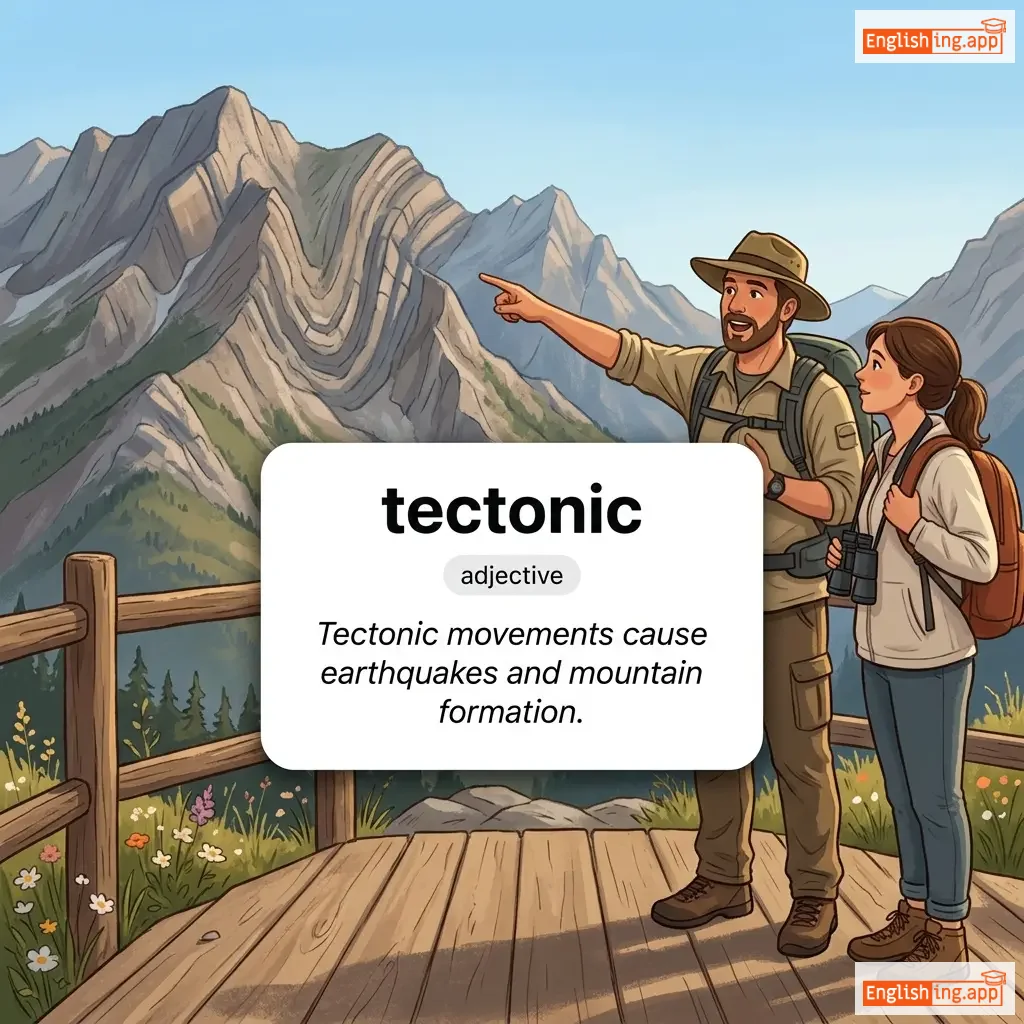
tectonic definition card — visual illustration of the meaning
adjective C1
/tɛkˈtɑː.nɪk/
構造的 (kōzō-teki)

Relating to the structure of the earth's crust and the large-scale processes that take place within it.

"Tectonic movements cause earthquakes and mountain formation."

"テクトニック運動は地震や山の形成を引き起こします。" (Tekutonikku undō wa jishin ya yama no keisei o hikiokoshimasu.)
noun C1
/ˈtiːdiəm/
退屈 (taikutsu)

the state of being tedious; monotony or boredom

"The tedium of long meetings often drains motivation."

"長時間の会議の退屈さはしばしばモチベーションを奪います。" (Chou jikan no kaigi no taikutsu-sa wa shibashiba mochibēshon o ubai masu.)
verb C1
/tiːm/
溢れる (afureru)

to be full of or swarming with

"The forest teems with wildlife."

"森は動物で溢れている。" (Mori wa dōbutsu de afurete iru.)
adjective C1
/ˈtiːmɪŋ/
人でいっぱい (hito de ippai)

full of or swarming with things or people

"The market was teeming with shoppers."

"市場は買い物客でいっぱいだった。" (Ichiba wa kaimono kyaku de ippai datta.)
verb C1
/ˈtiːtər/
揺れる (yureru)

to move or balance unsteadily; to wobble

"The glass began to teeter on the edge of the table."

"グラスがテーブルの端で揺れ始めた。" (Gurasu ga teeburu no hashi de yurehajimeta.)