Le Rôle du Sol dans l'Agriculture

The Role of Soil in Farming

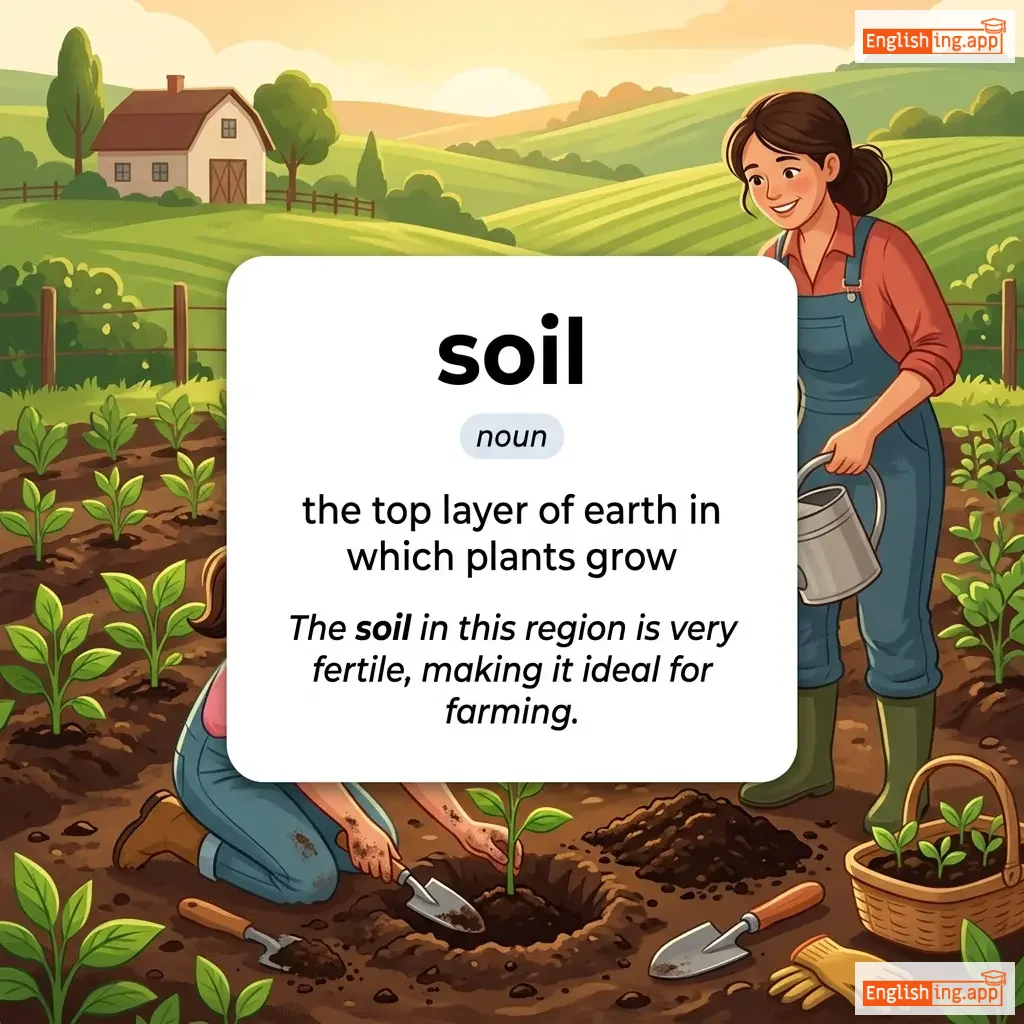
Soil est l'un des principaux composants de l'agriculture, sur lequel dépend la fertility des cultures. Un bon sol loam a la capacité de retenir les nutrients et peut absorber l'eau par le processus infiltration.

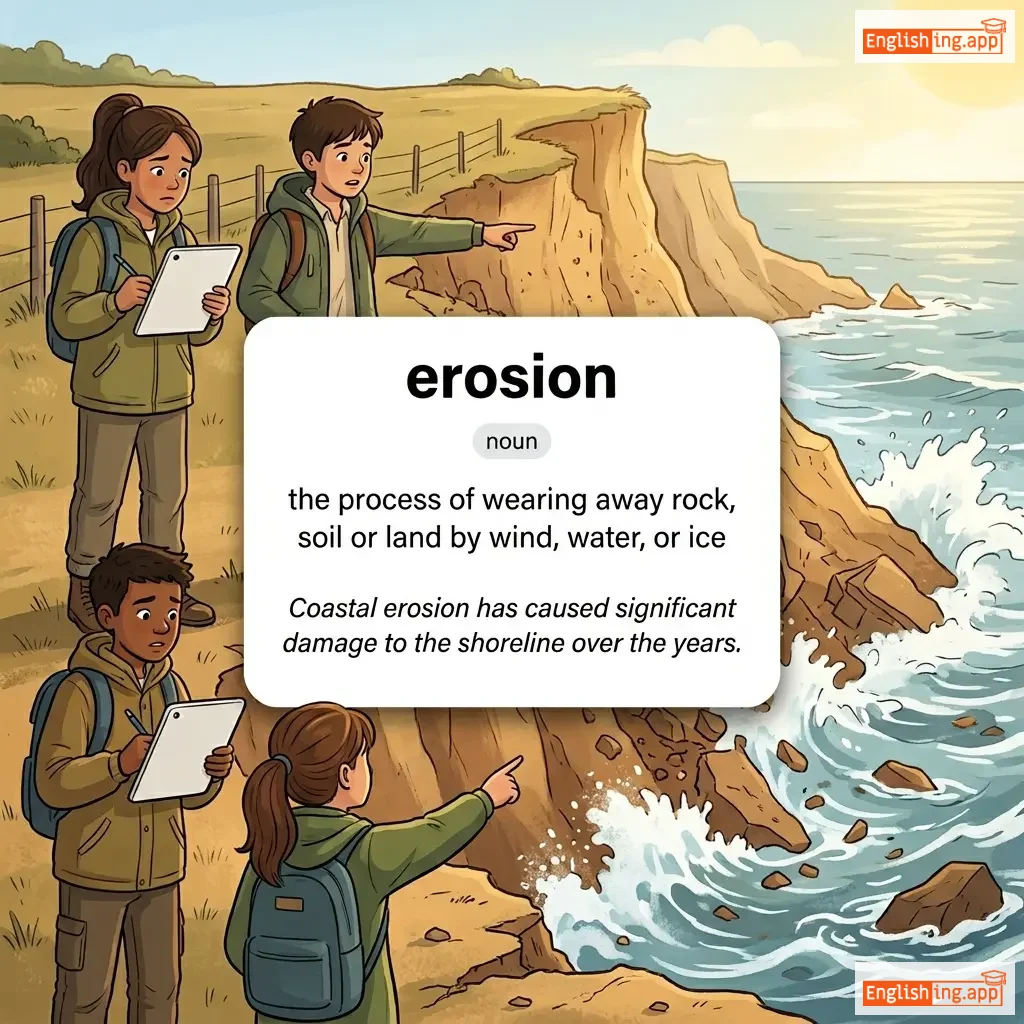
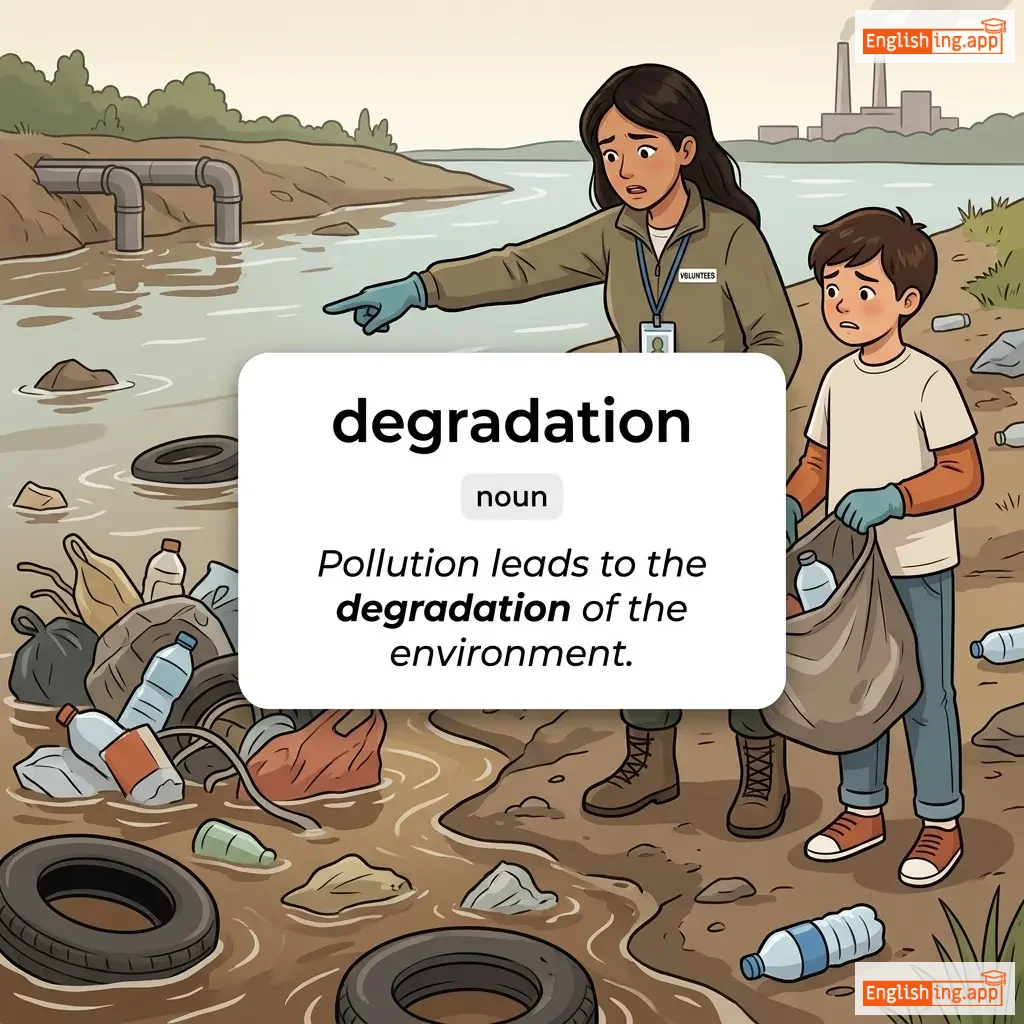
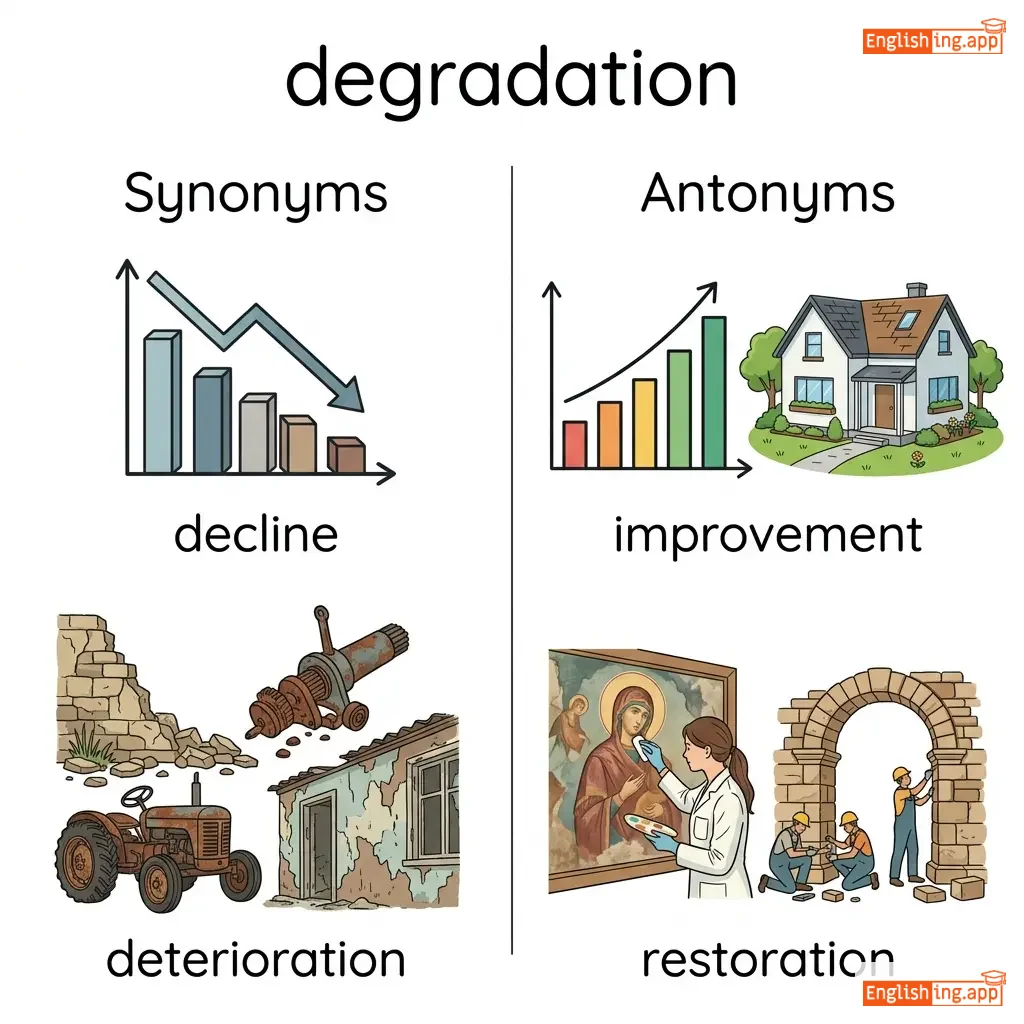
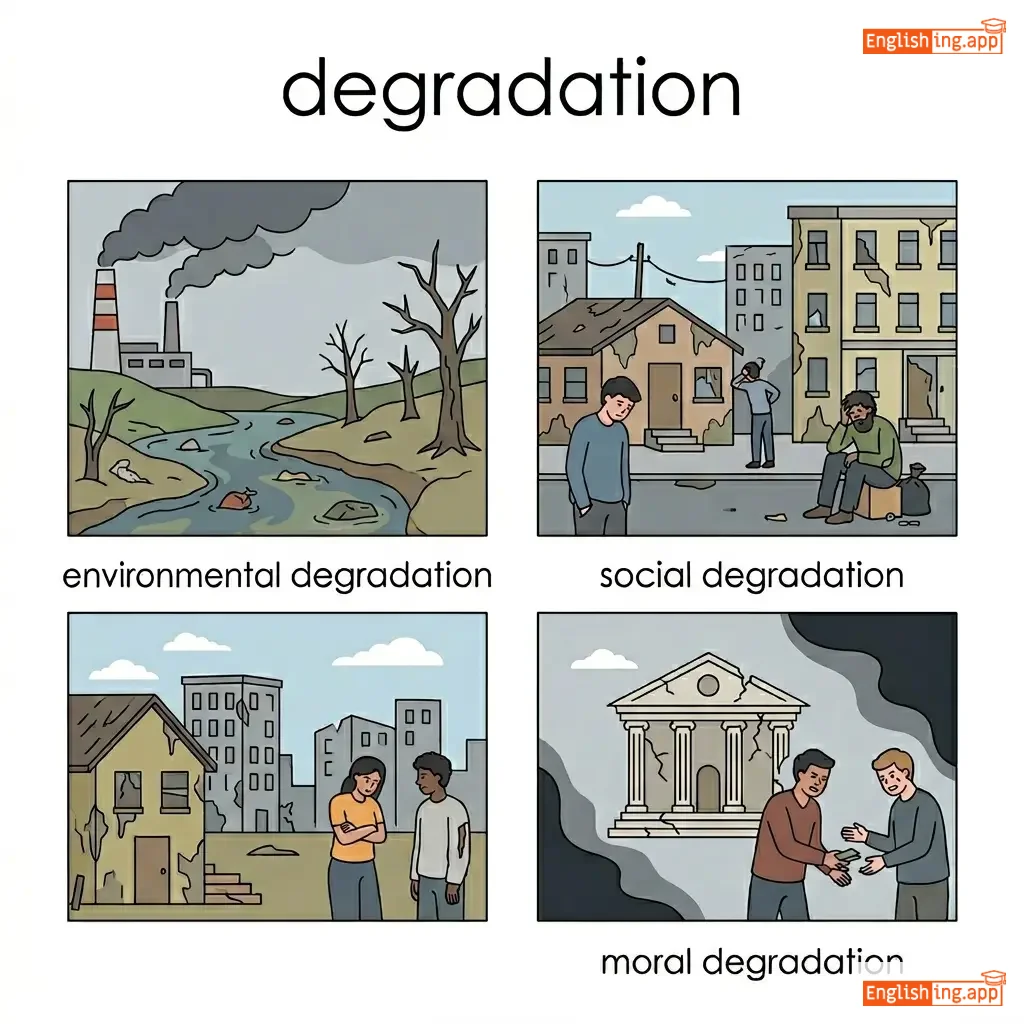
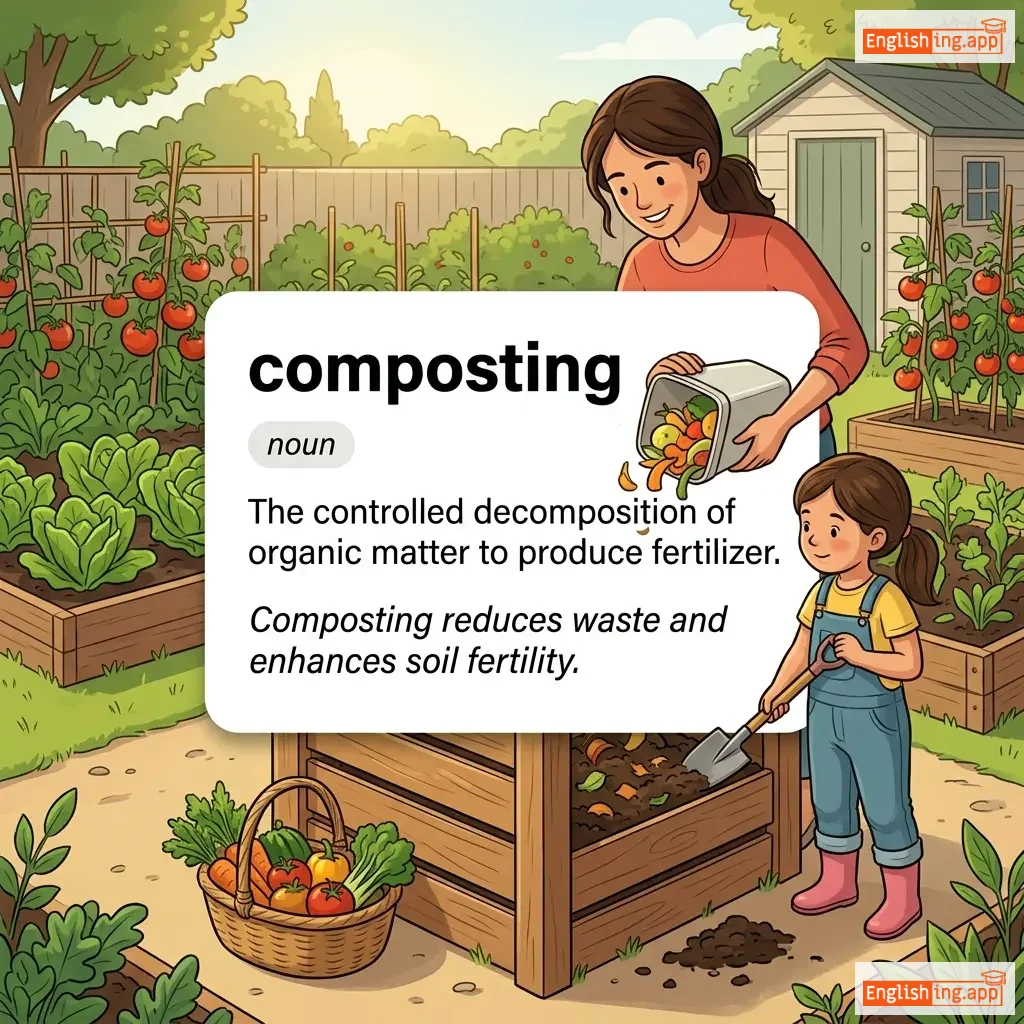
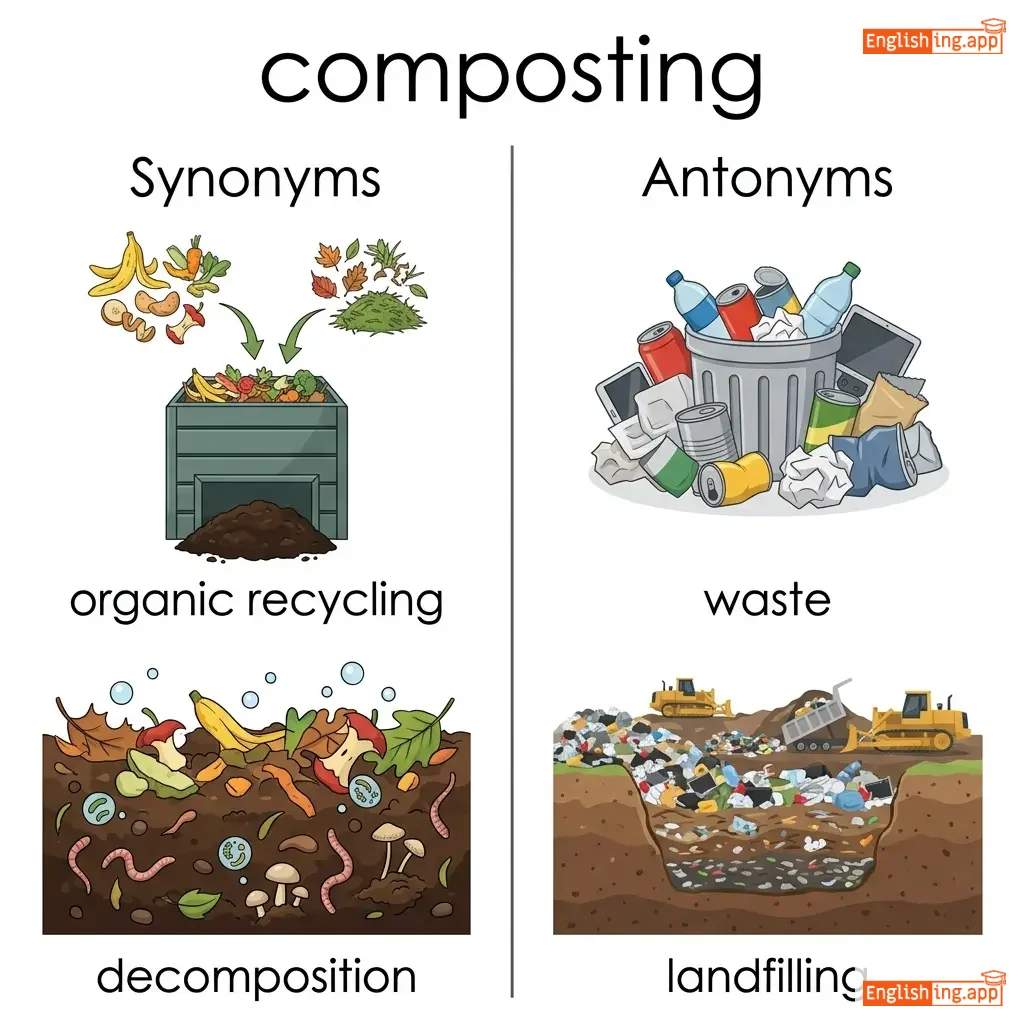
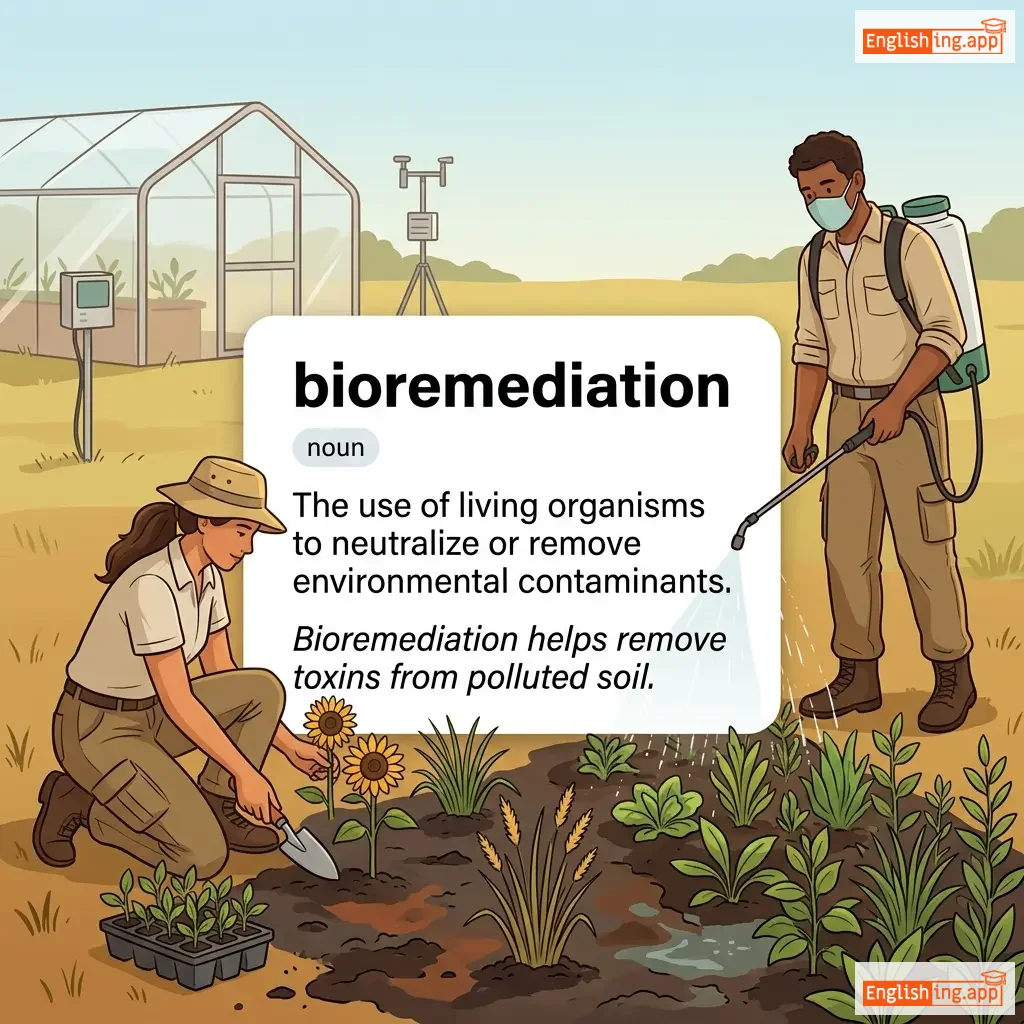
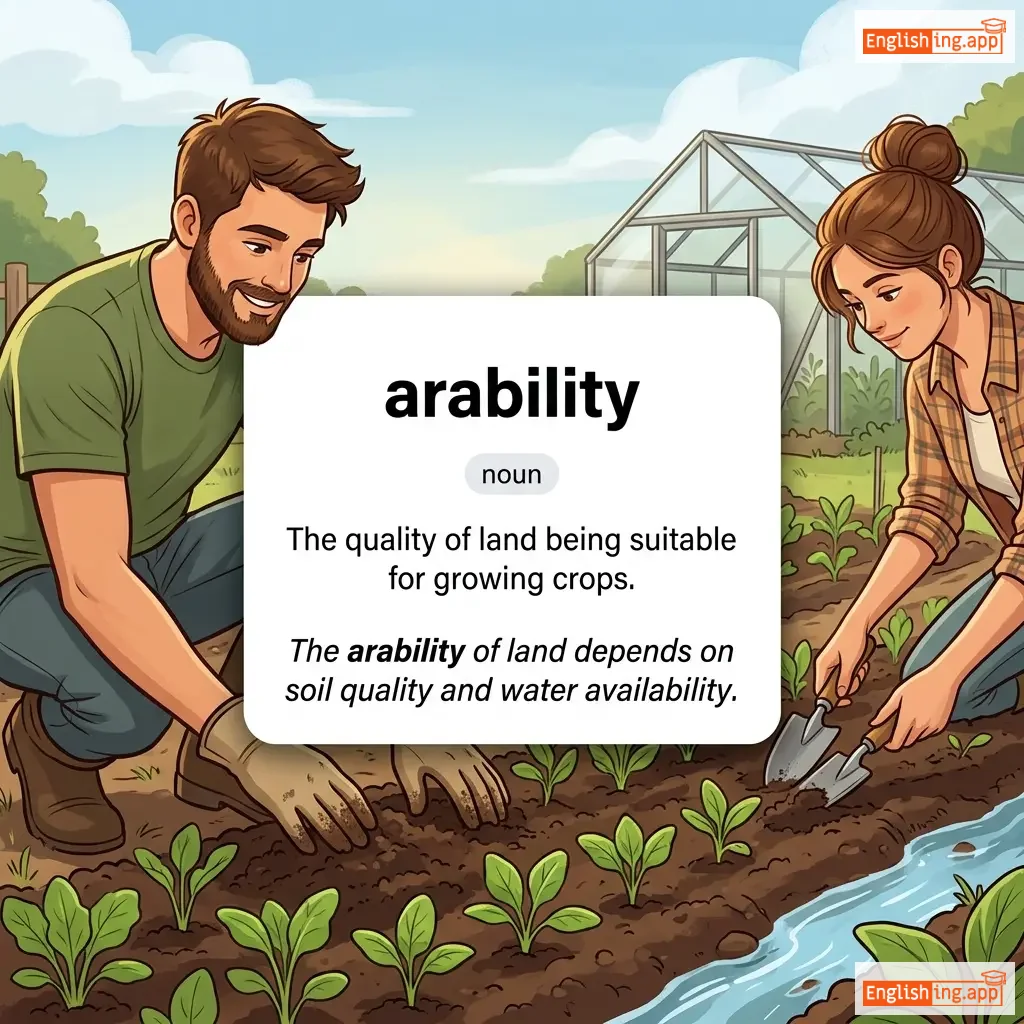
L'erosion naturelle et la degradation peuvent endommager la qualité du sol. Cependant, grâce aux méthodes de composting et de bioremediation, il est possible de restaurer l'arability du sol.

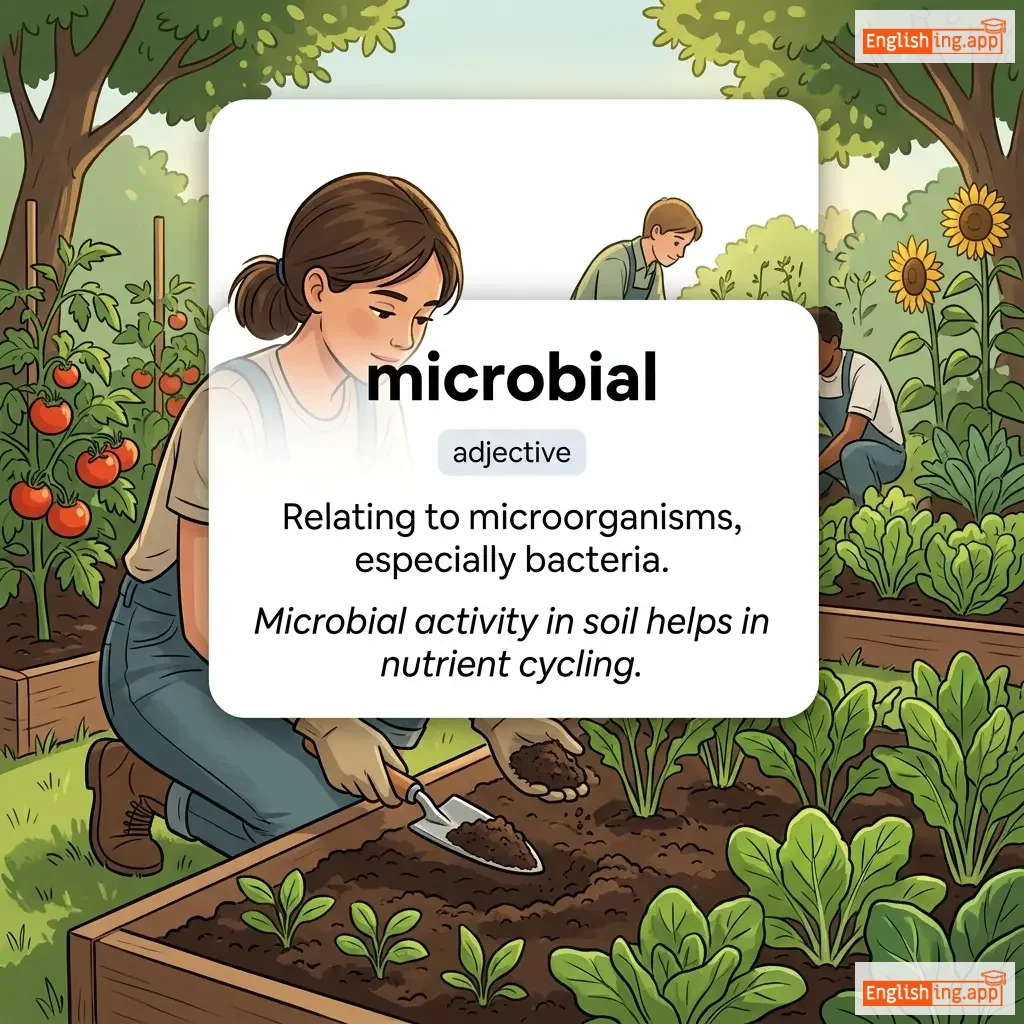
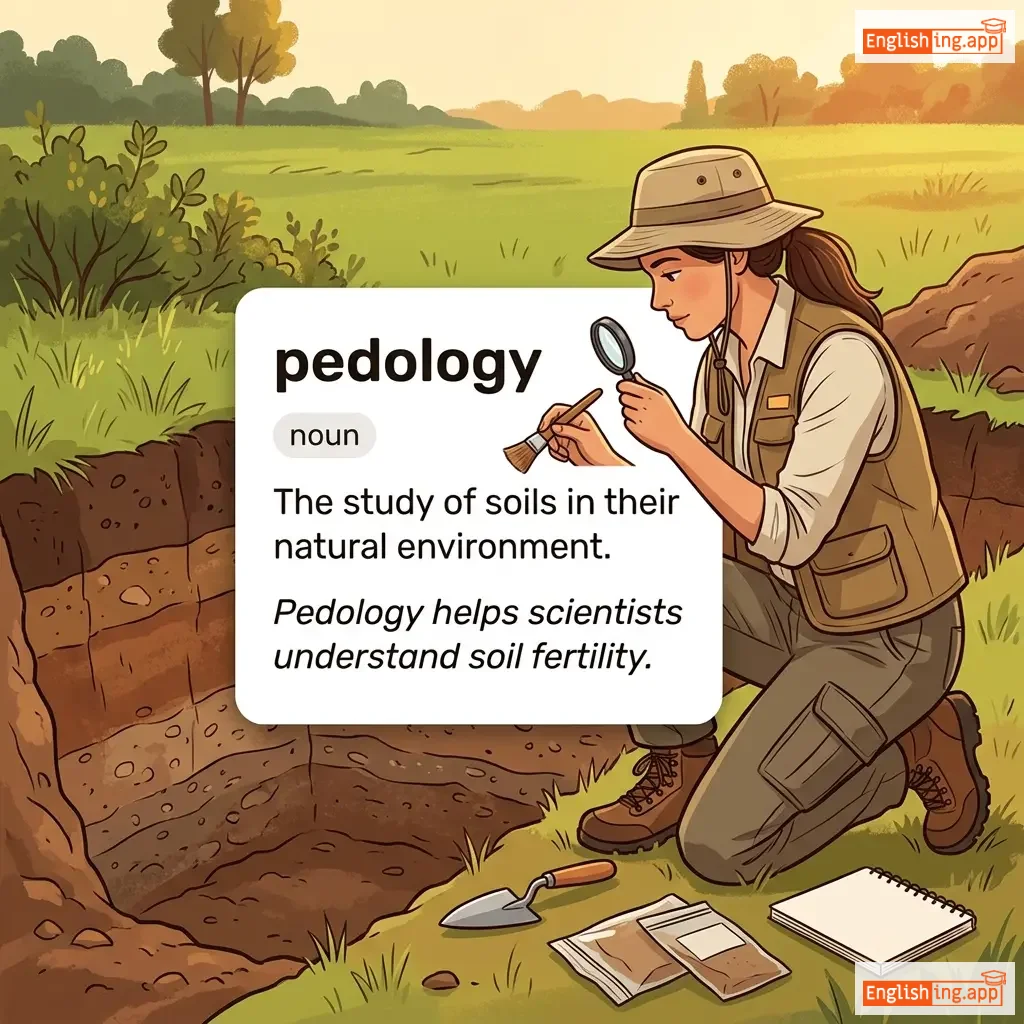
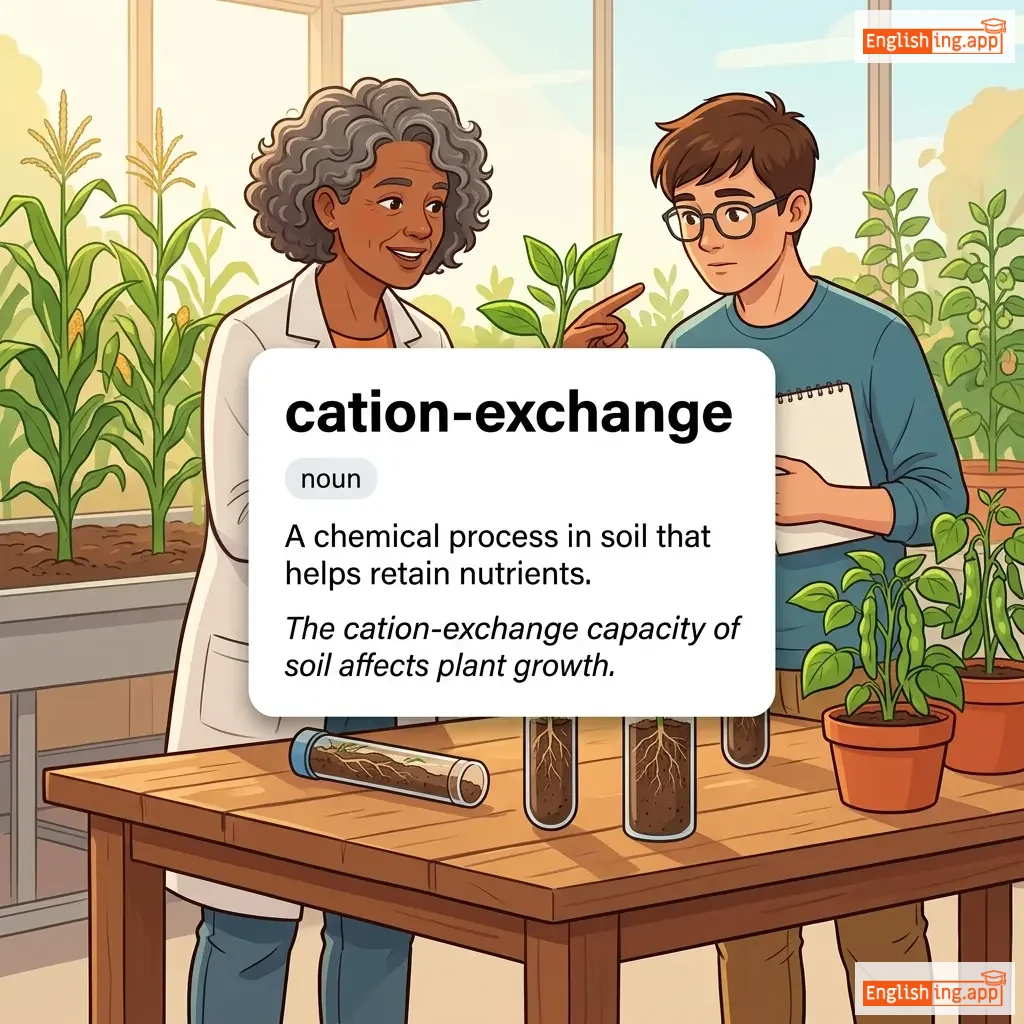
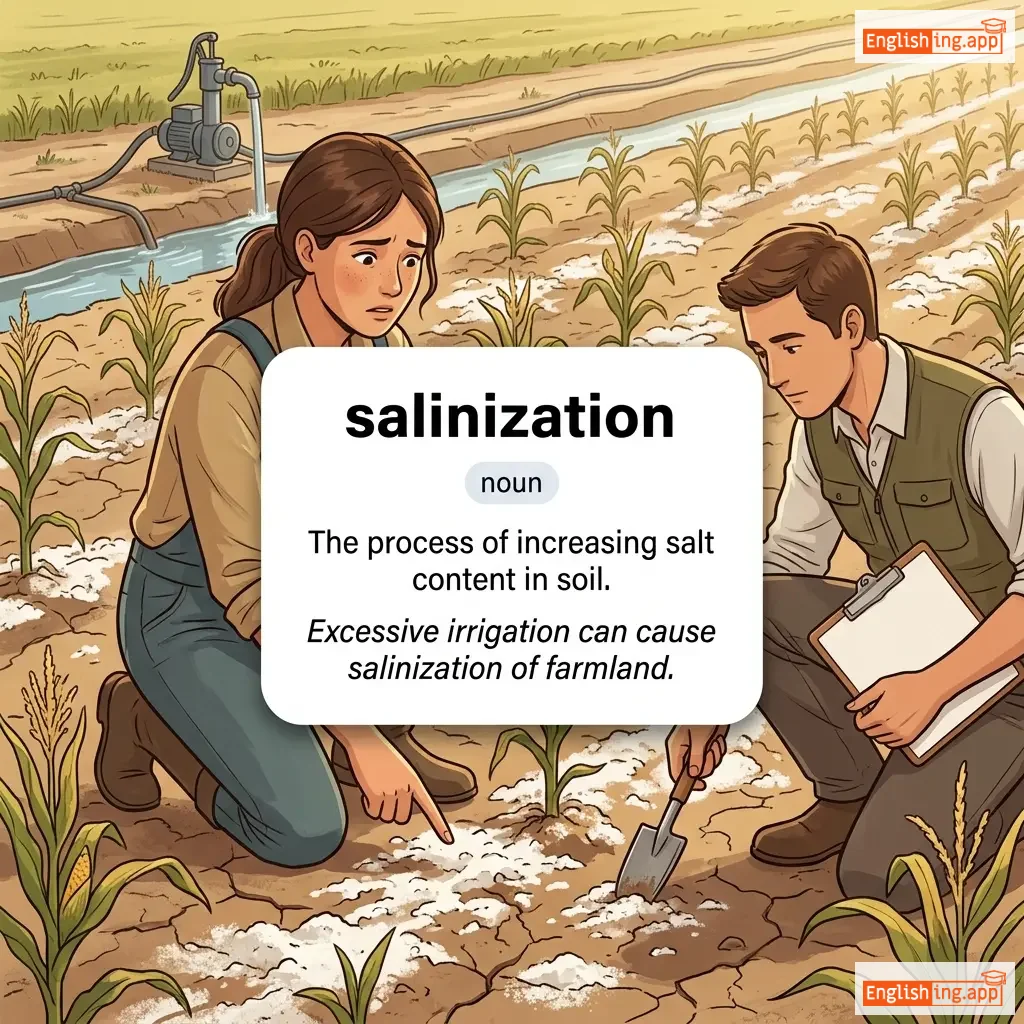
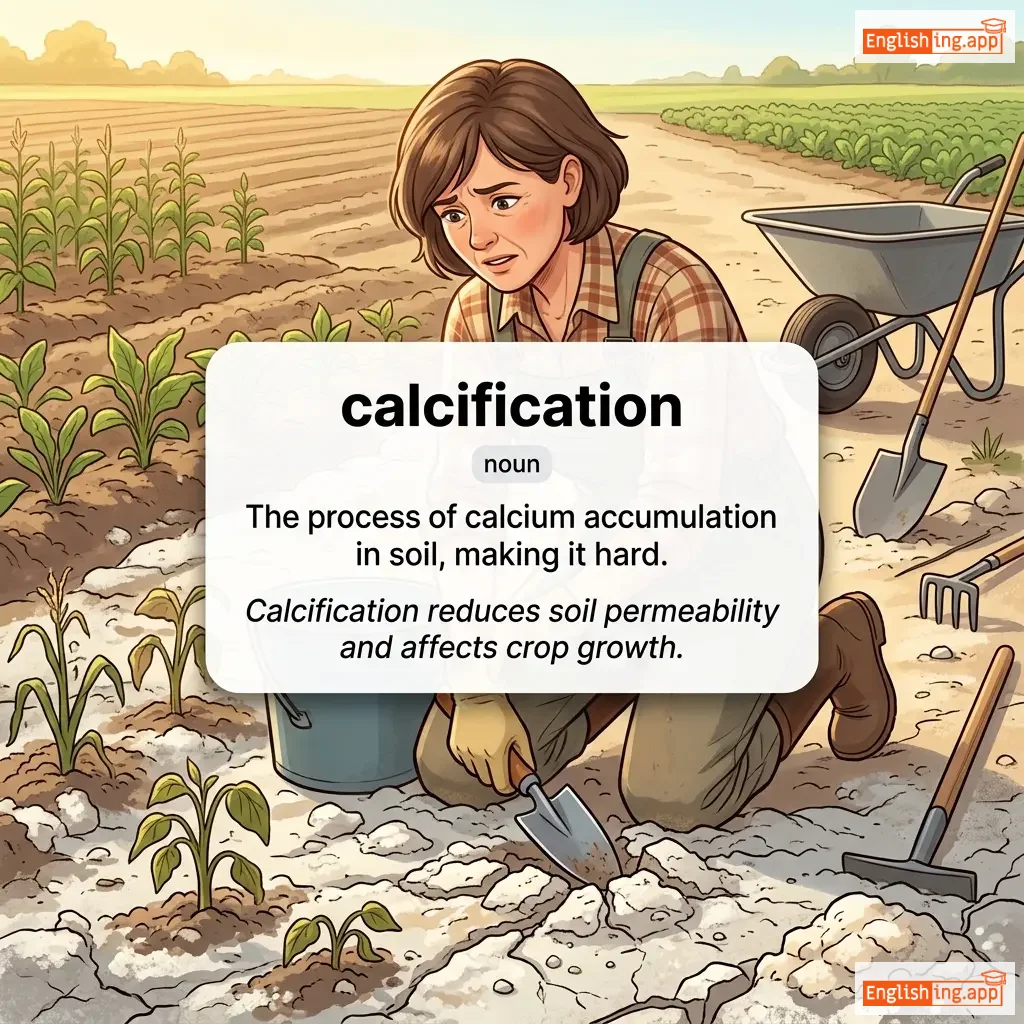
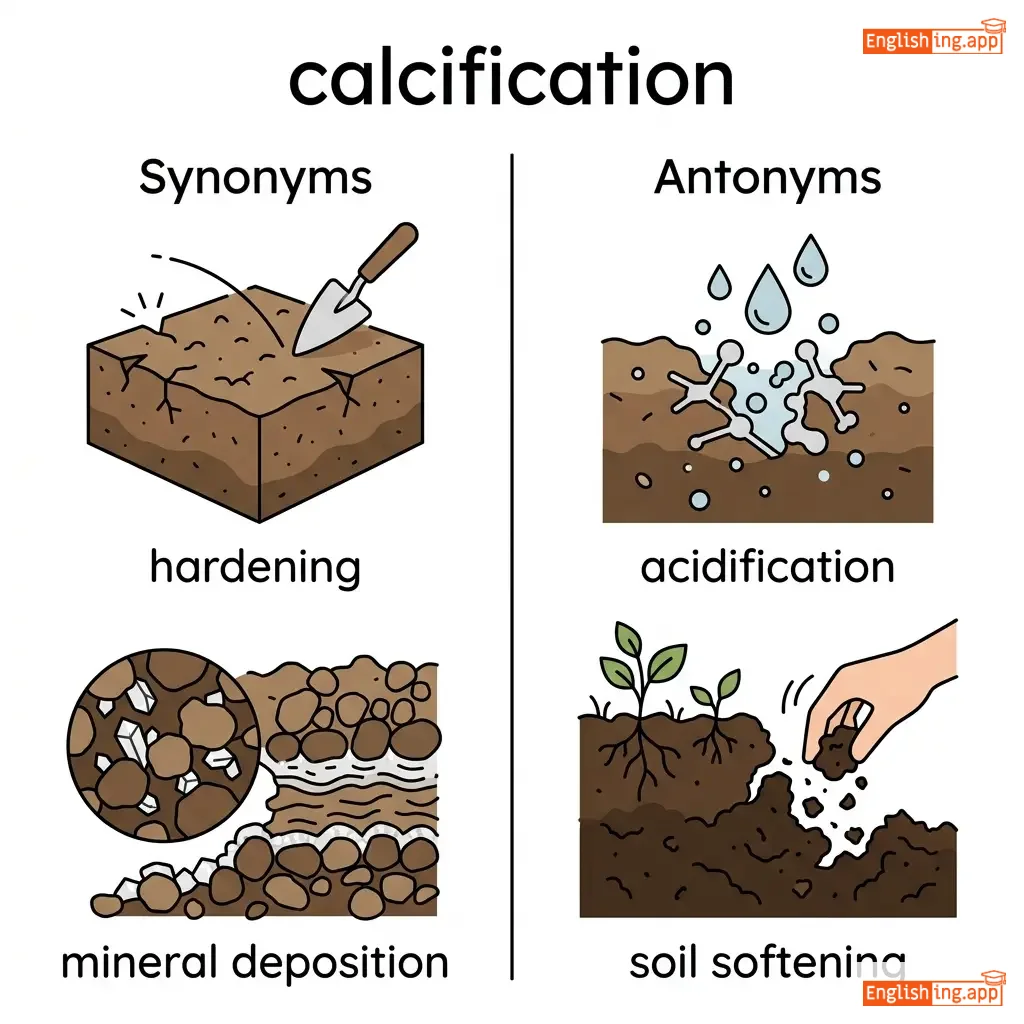
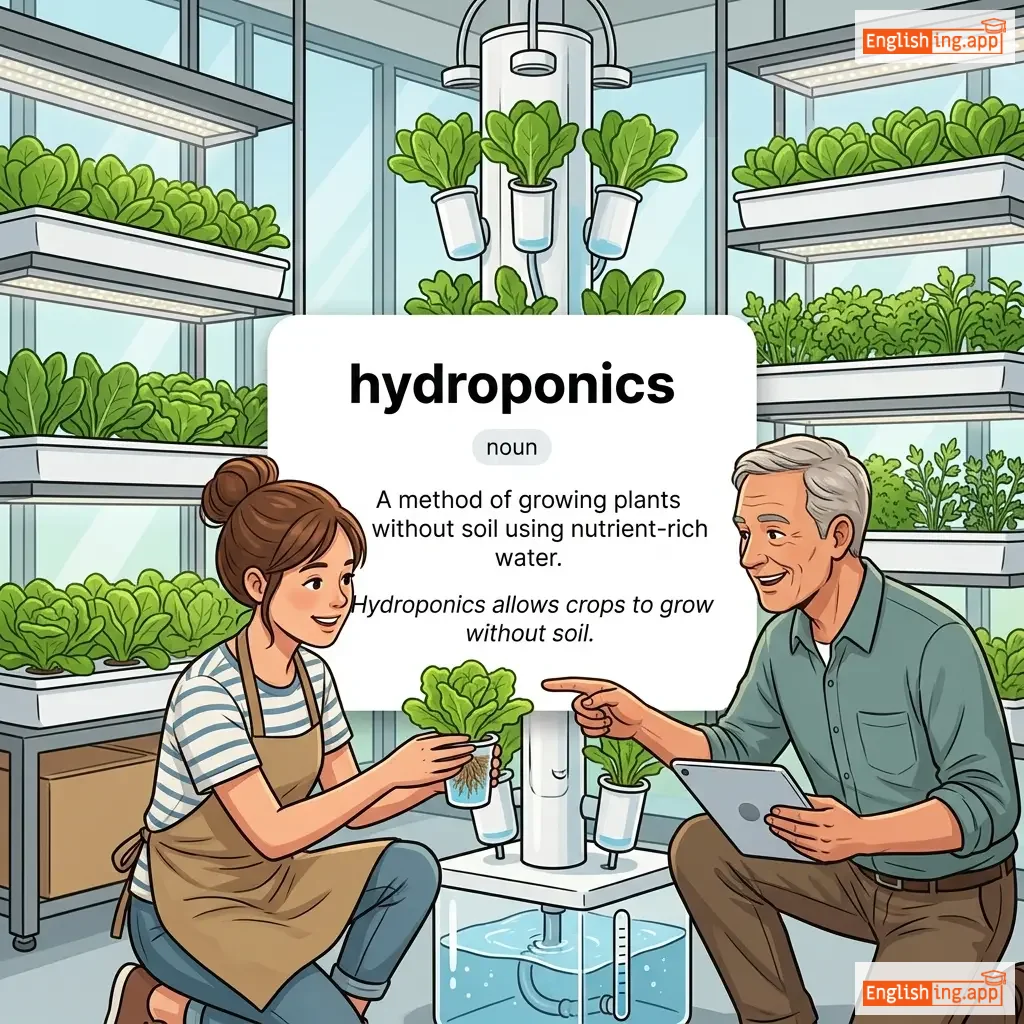
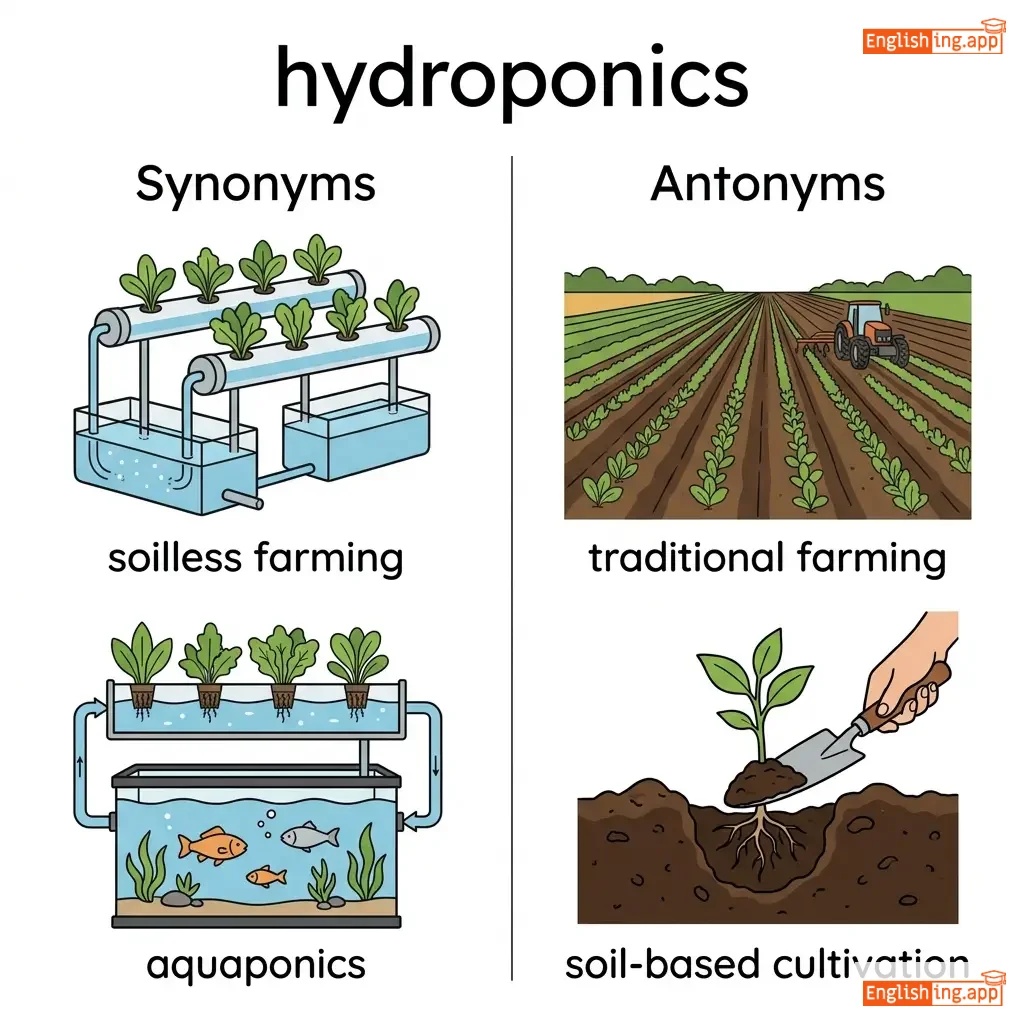
L'activité microbial dans le sol aide à la croissance des cultures. Les experts en Pedology disent que le sol devient plus fertile s'il possède une plus grande capacité de cation-exchange. Dans certaines régions, la salinization et la calcification endommagent la qualité du sol. Par conséquent, les hydroponics peuvent être une alternative, où l'eau riche en nutriments est utilisée à la place du sol.

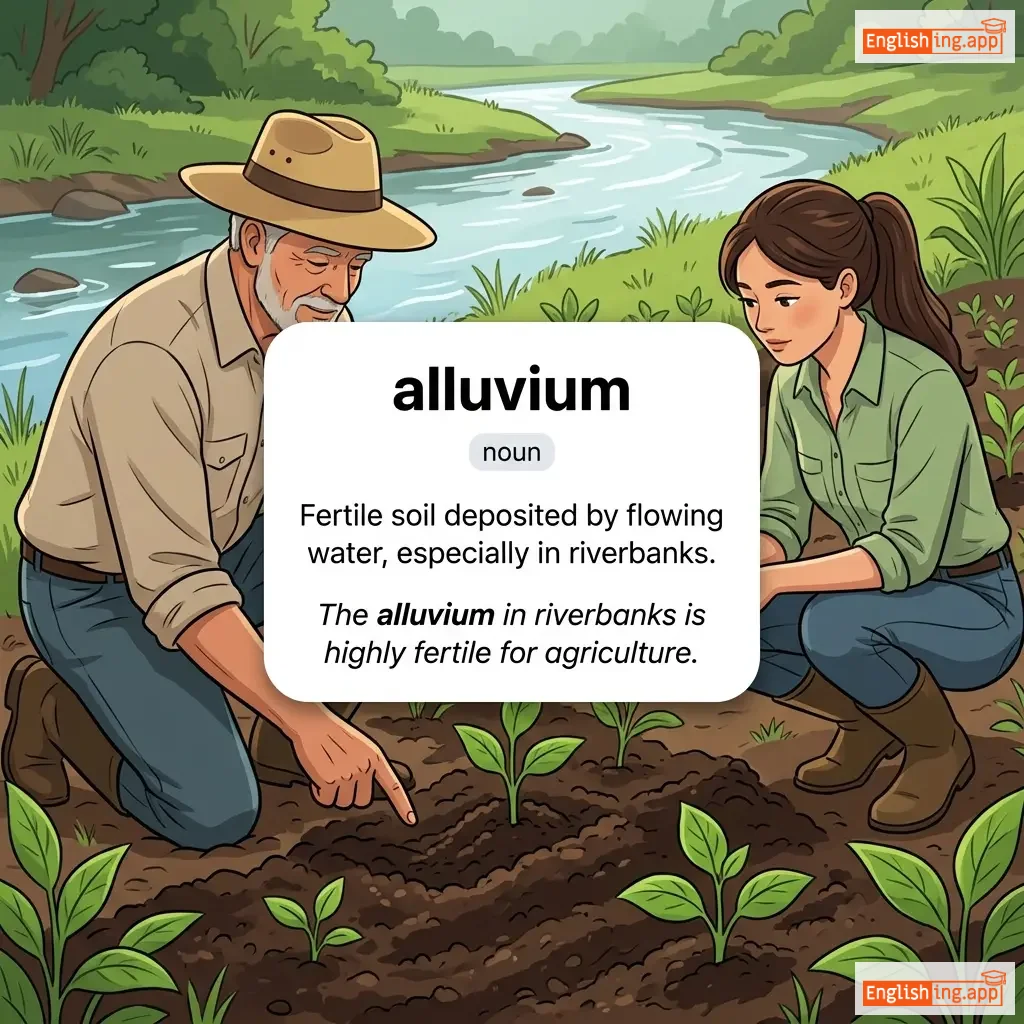
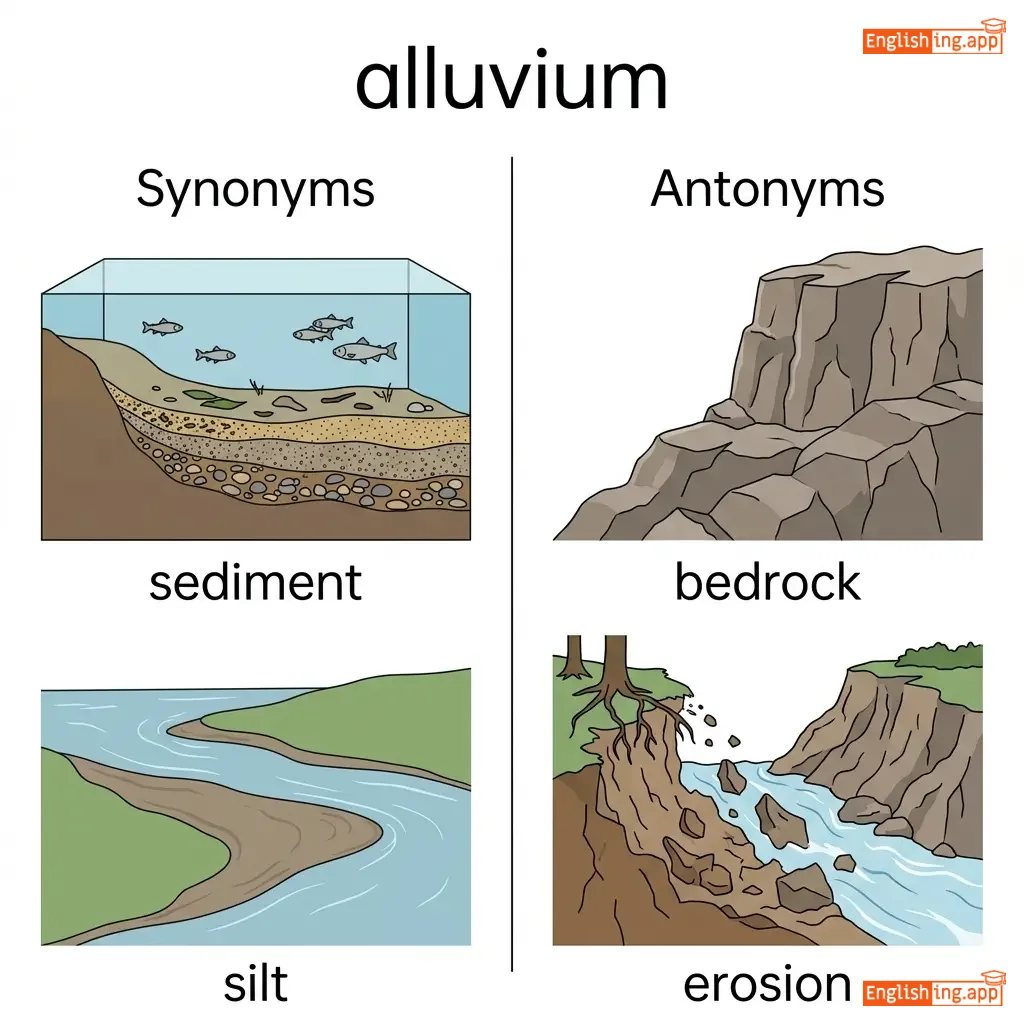
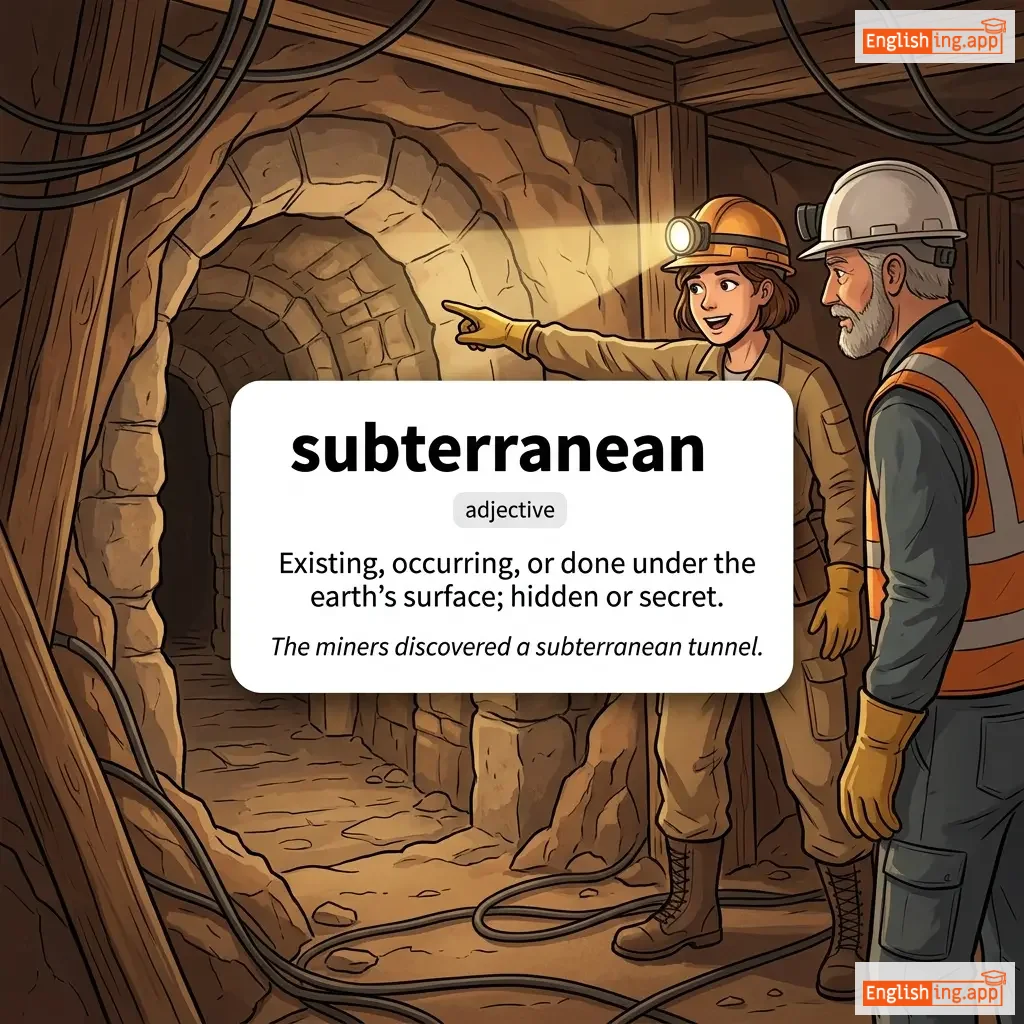
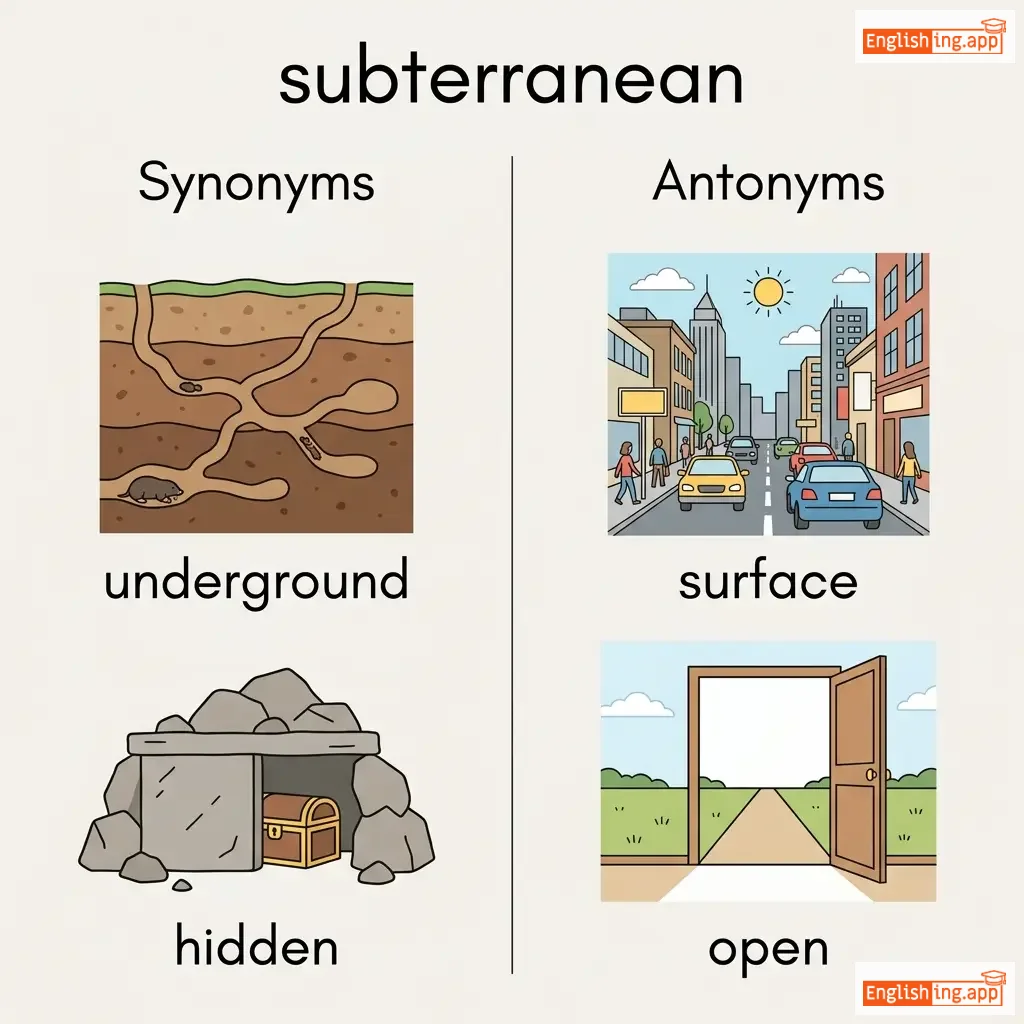
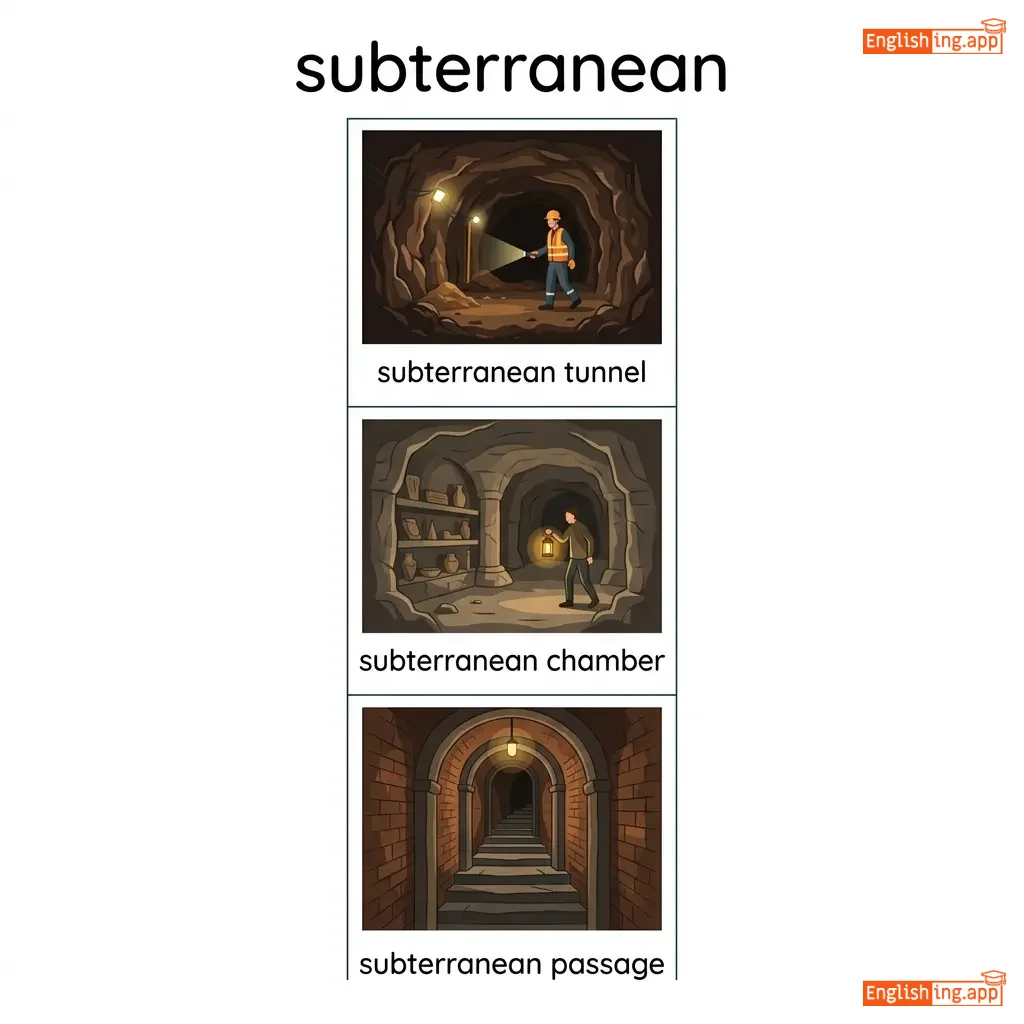
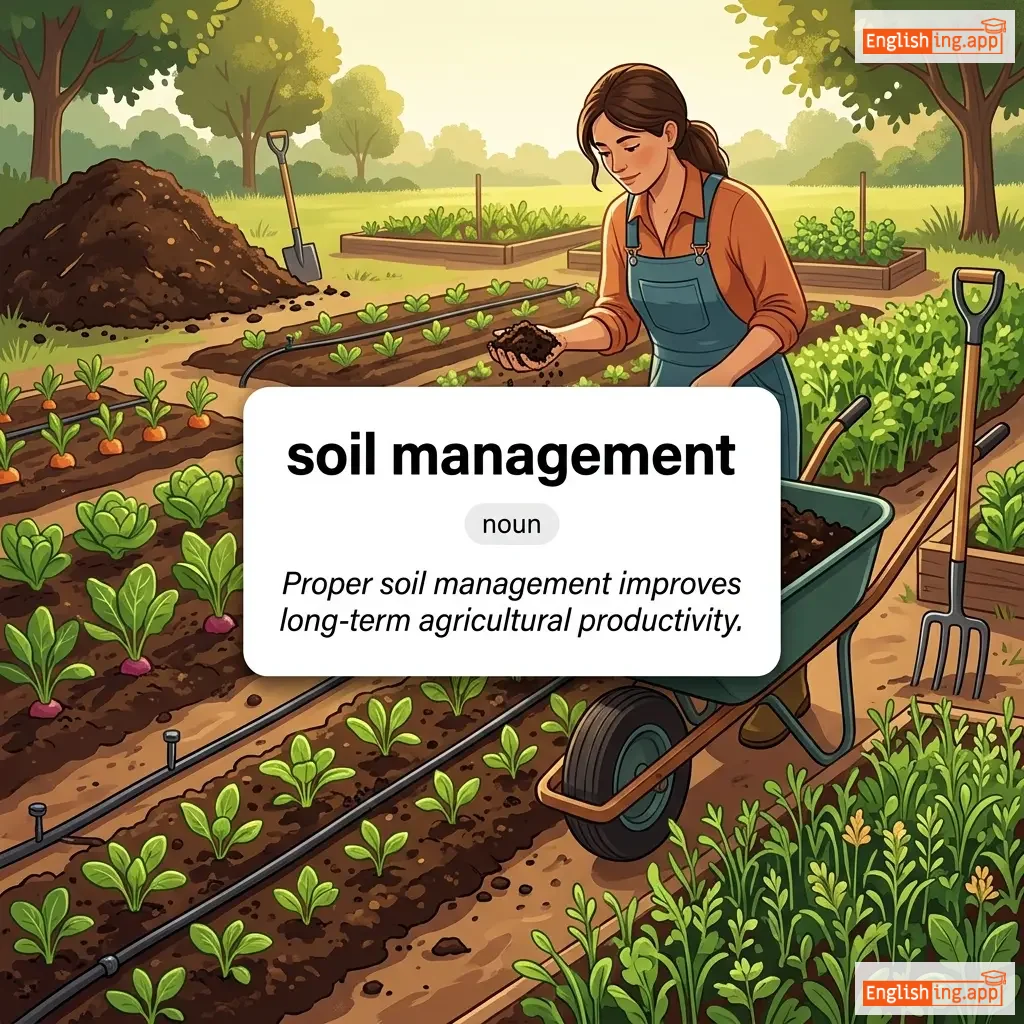
Chaque année, alluvium s'accumule, augmentant l'aggradation du sol, et par le processus de humification, la matière organique enrichit le sol dans les couches subterranean. Par conséquent, il est extrêmement important d'assurer une bonne gestion du soil management dans l'agriculture.

The Role of Soil in FarmingLe Rôle du Sol dans l'Agriculture
/
/

The Role of Soil in FarmingLe Rôle du Sol dans l'Agriculture - Basculement de Masque

Émoji
Mot Images Signification Phrase d'Exemple Synonymes Antonymes
#3629
🌱
••••••
/sɔɪl/
noun
••••••
••••••
The upper layer of earth's surface where plants grow.
••••••

Farmers depend on soil quality for good crop yields.

••••••
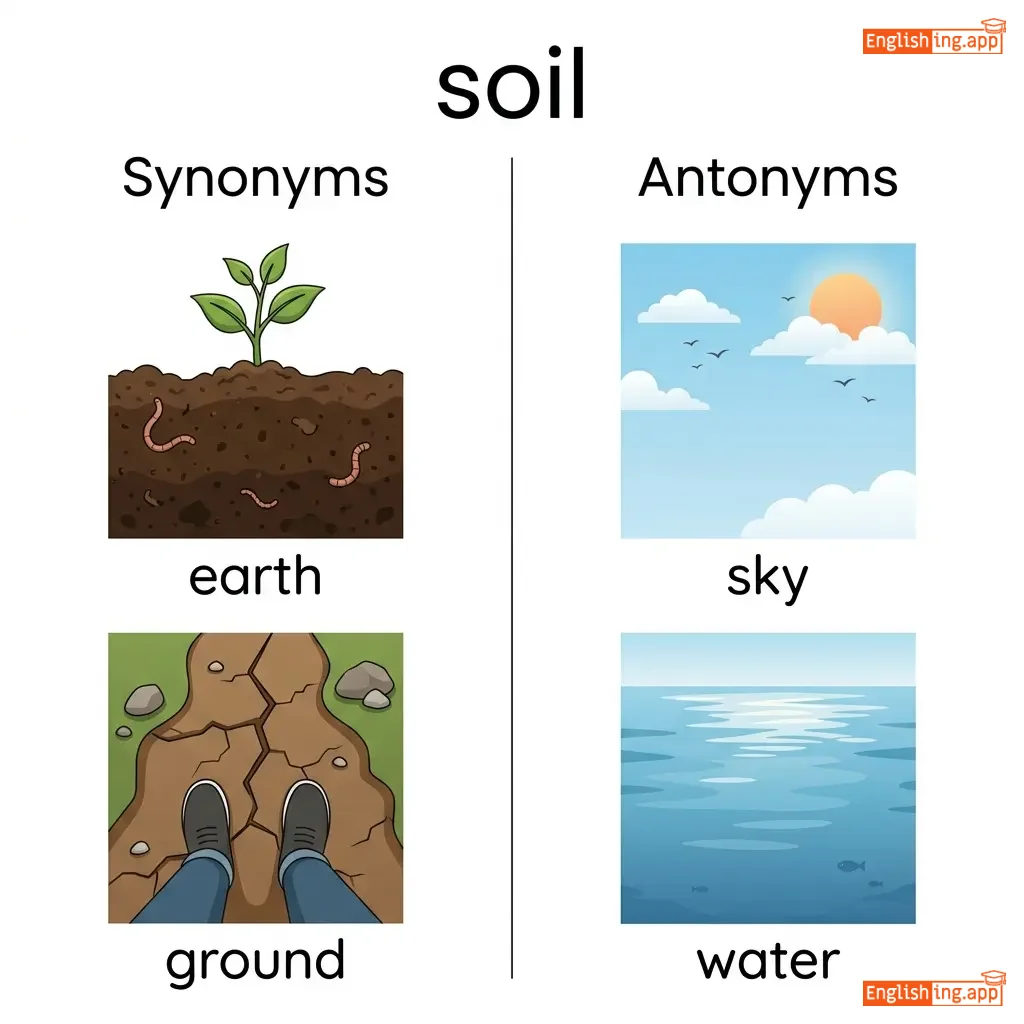
earth, ground, dirt
••••••
rock, barren land, concrete
••••••
#3630
🌾
••••••
/fɜːˈtɪl.ɪ.ti/
noun
••••••
••••••
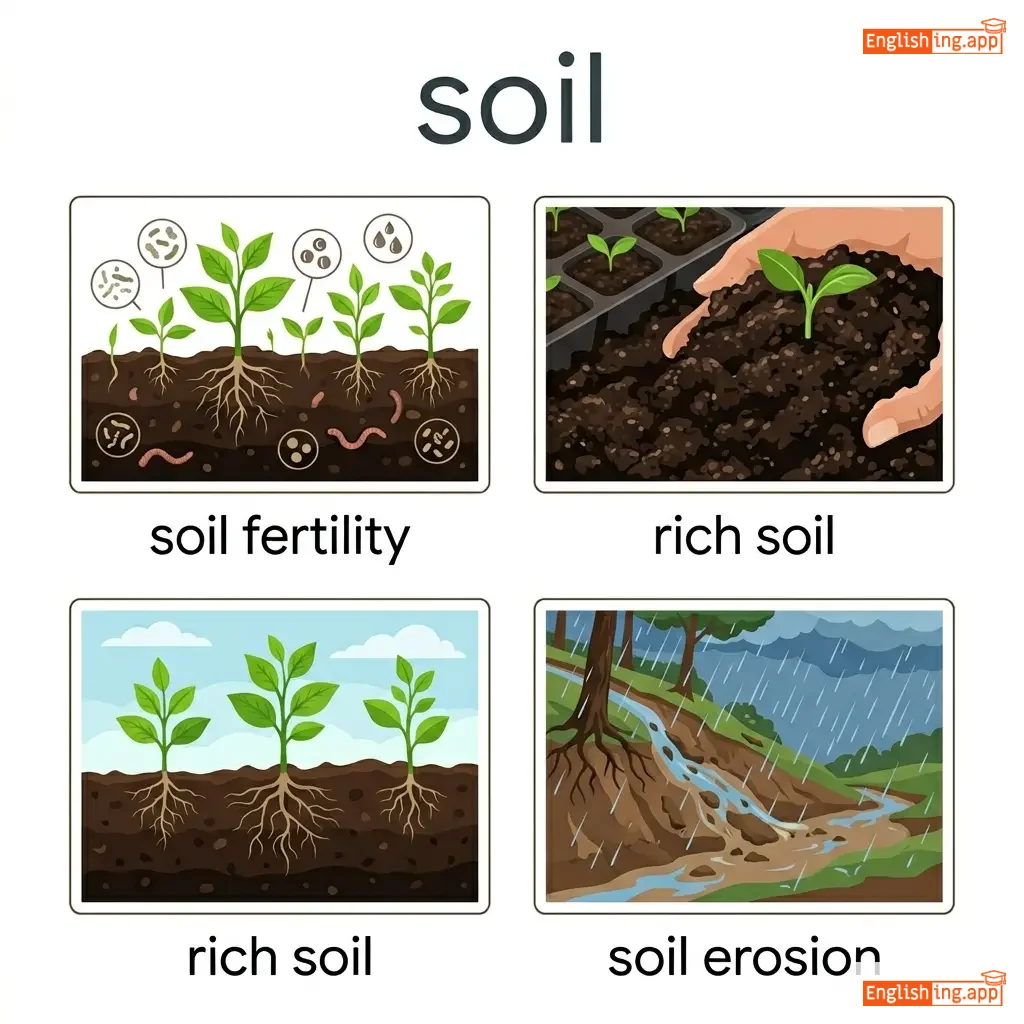
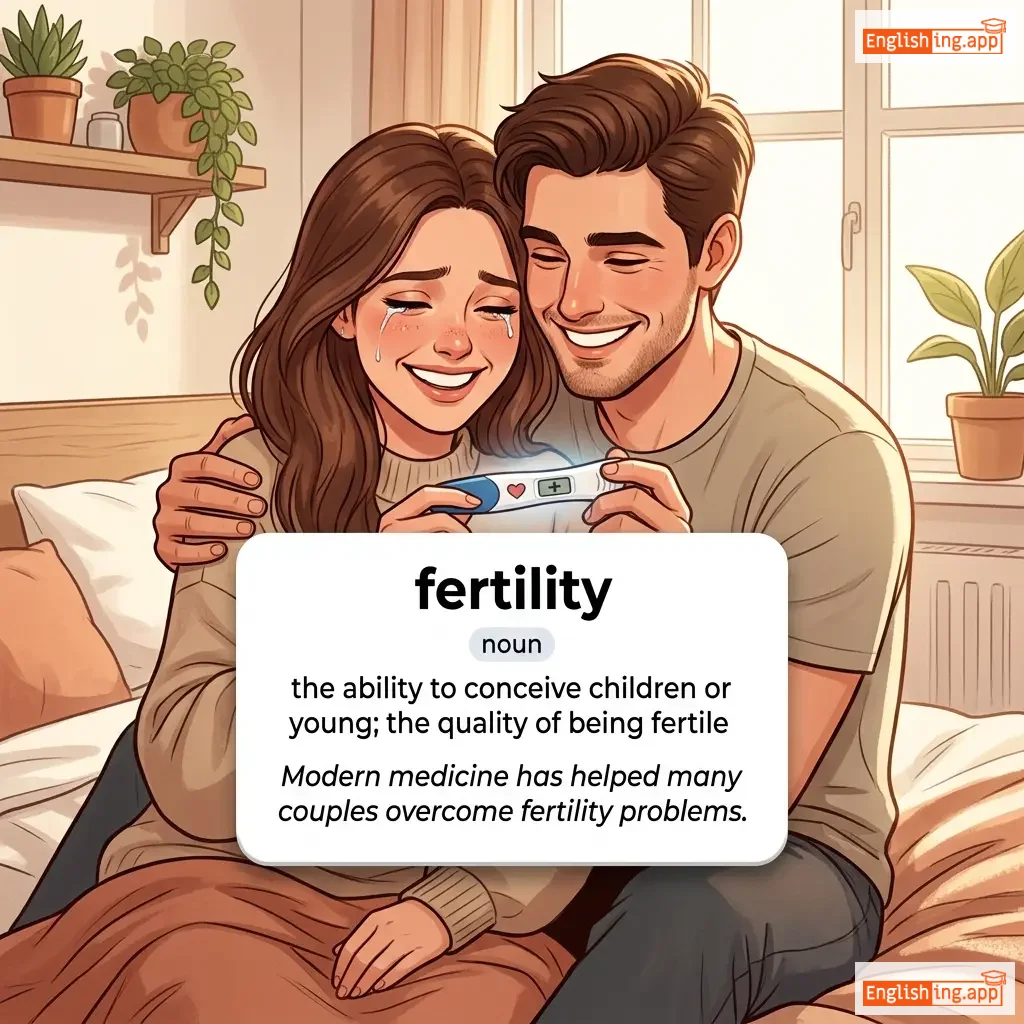
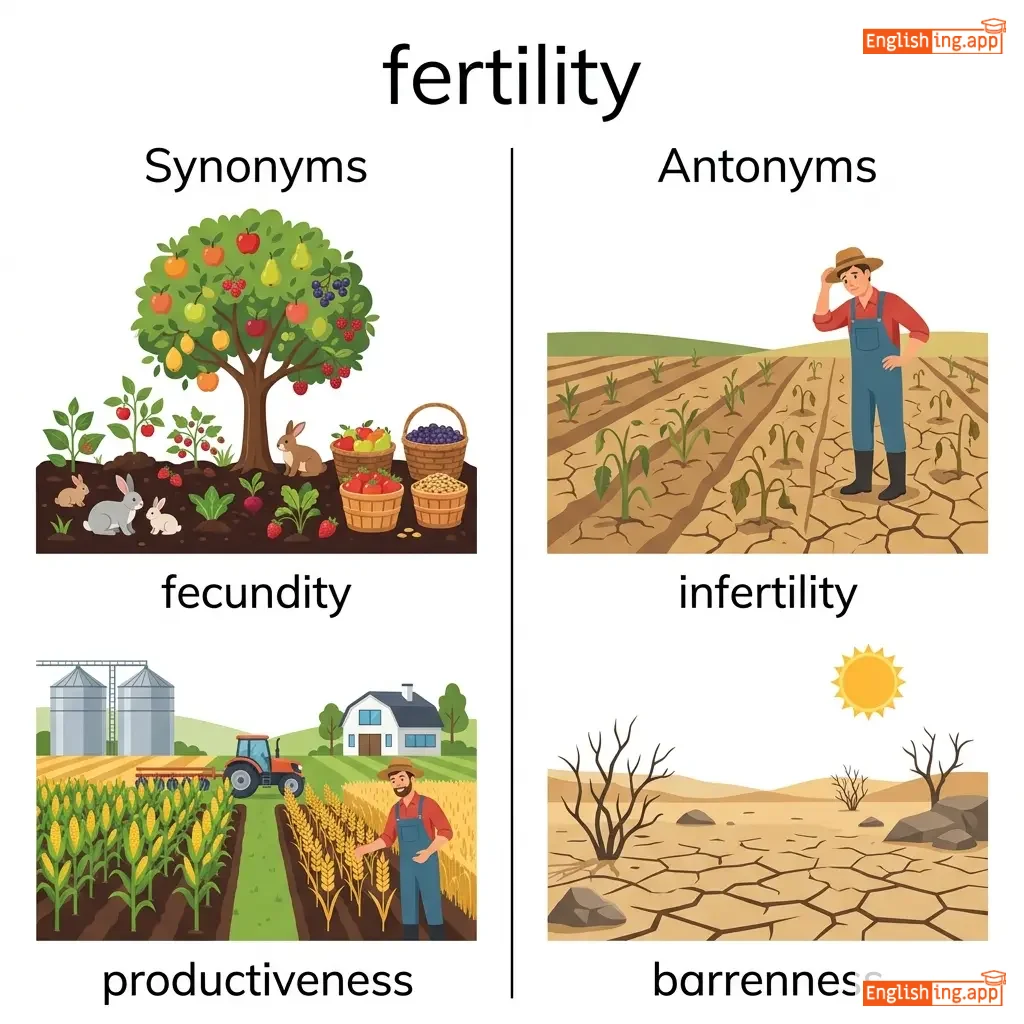
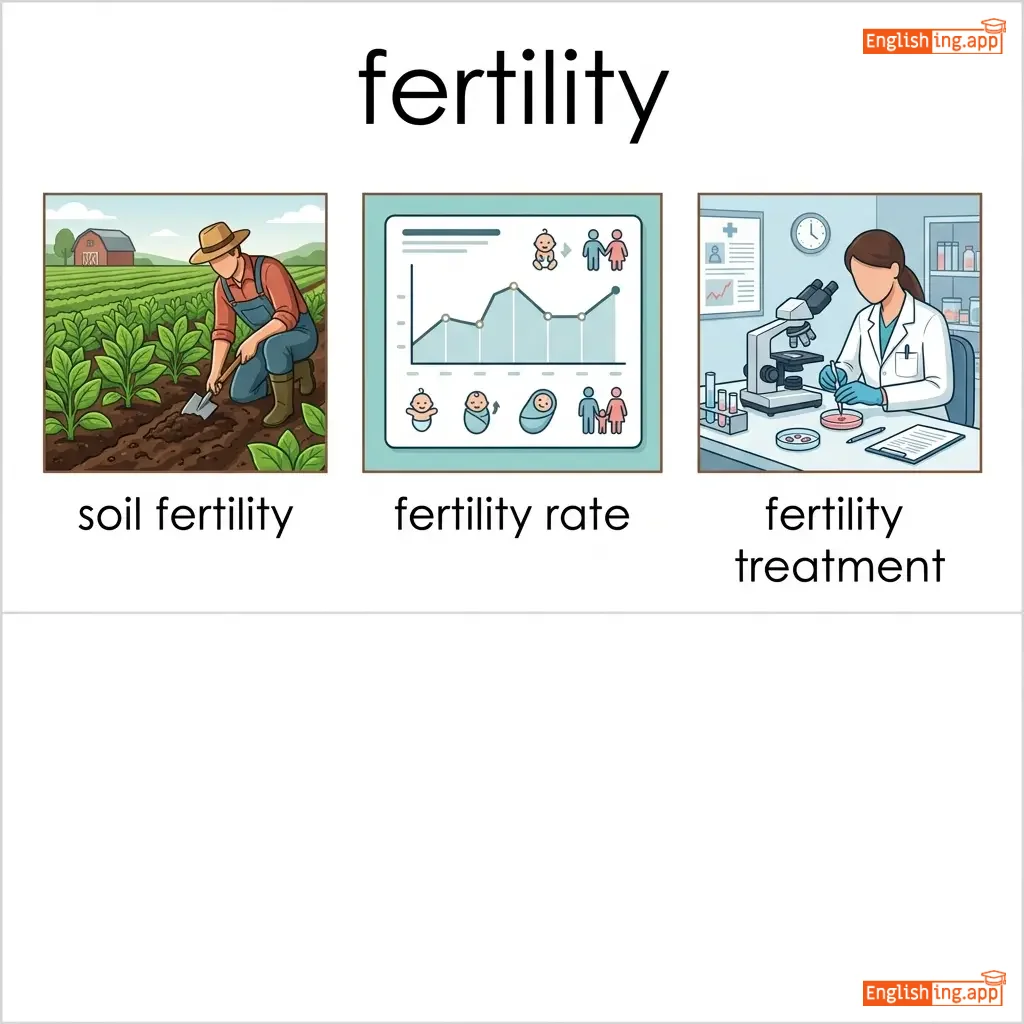
The ability of soil to produce crops or vegetation.
••••••

Proper crop rotation maintains soil fertility.

••••••
productivity, soil richness, fruitfulness
••••••
infertility, barren, depletion
••••••
#3631
🏞️
••••••
/loʊm/
noun
••••••
••••••
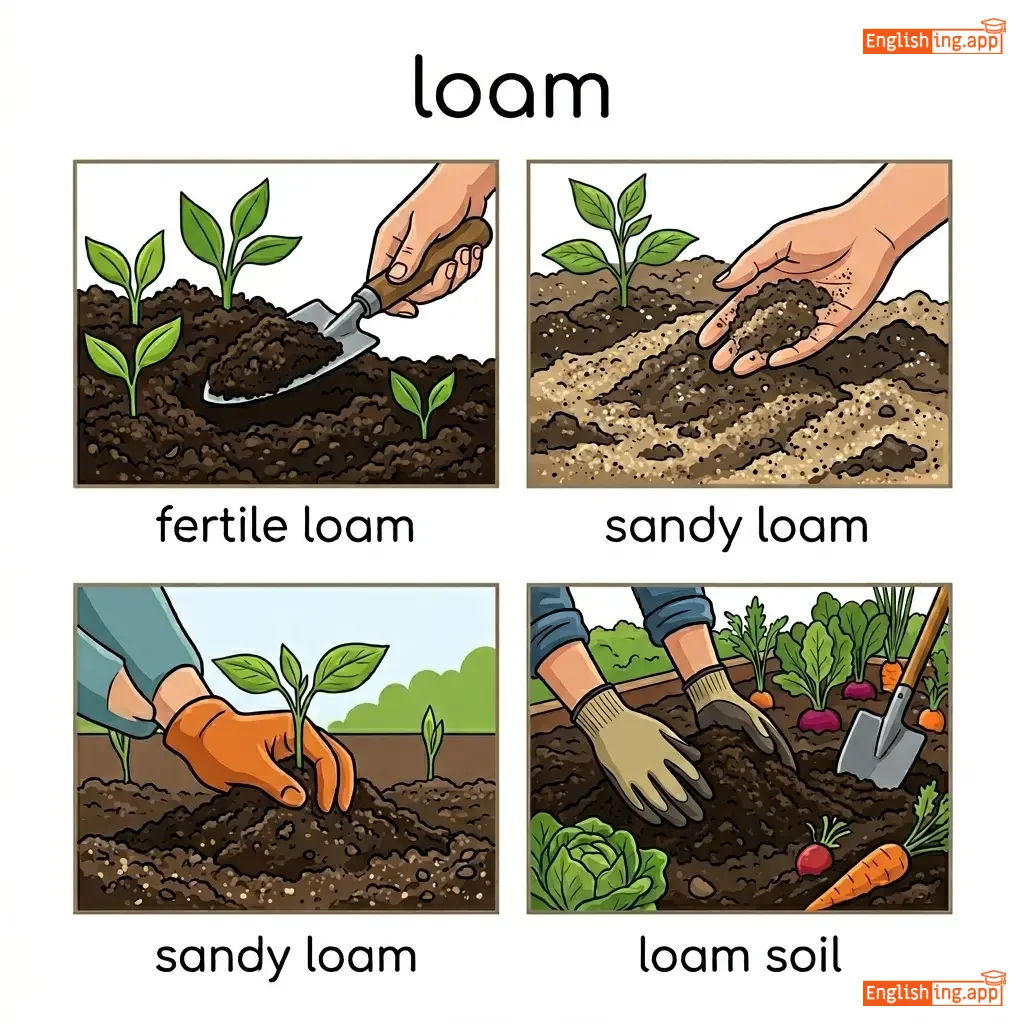
Fertile soil mixture of sand, clay, and organic matter.
••••••

Loam soil is ideal for agriculture due to its nutrient content.
••••••
rich soil, humus, clayey sand
••••••
dry soil, infertile ground, hard clay
••••••
#3632
🧪
••••••
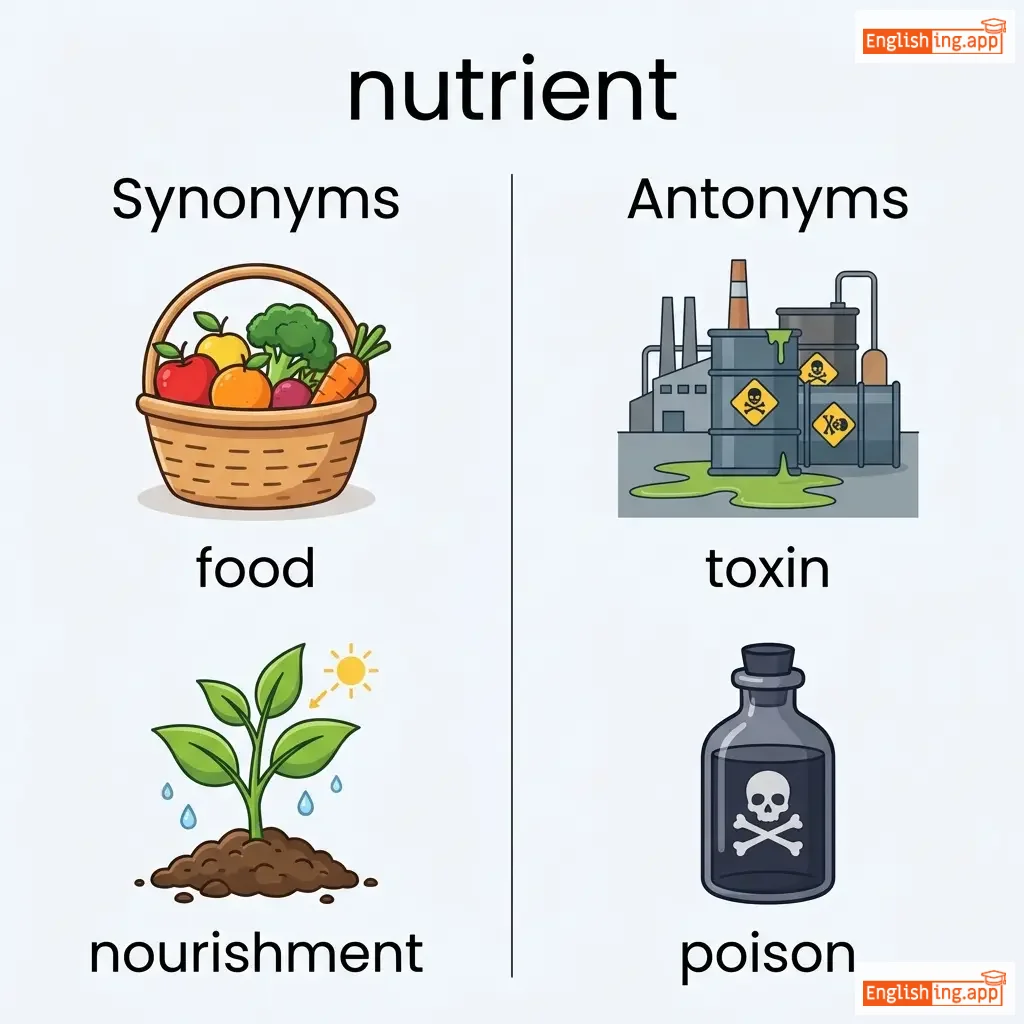
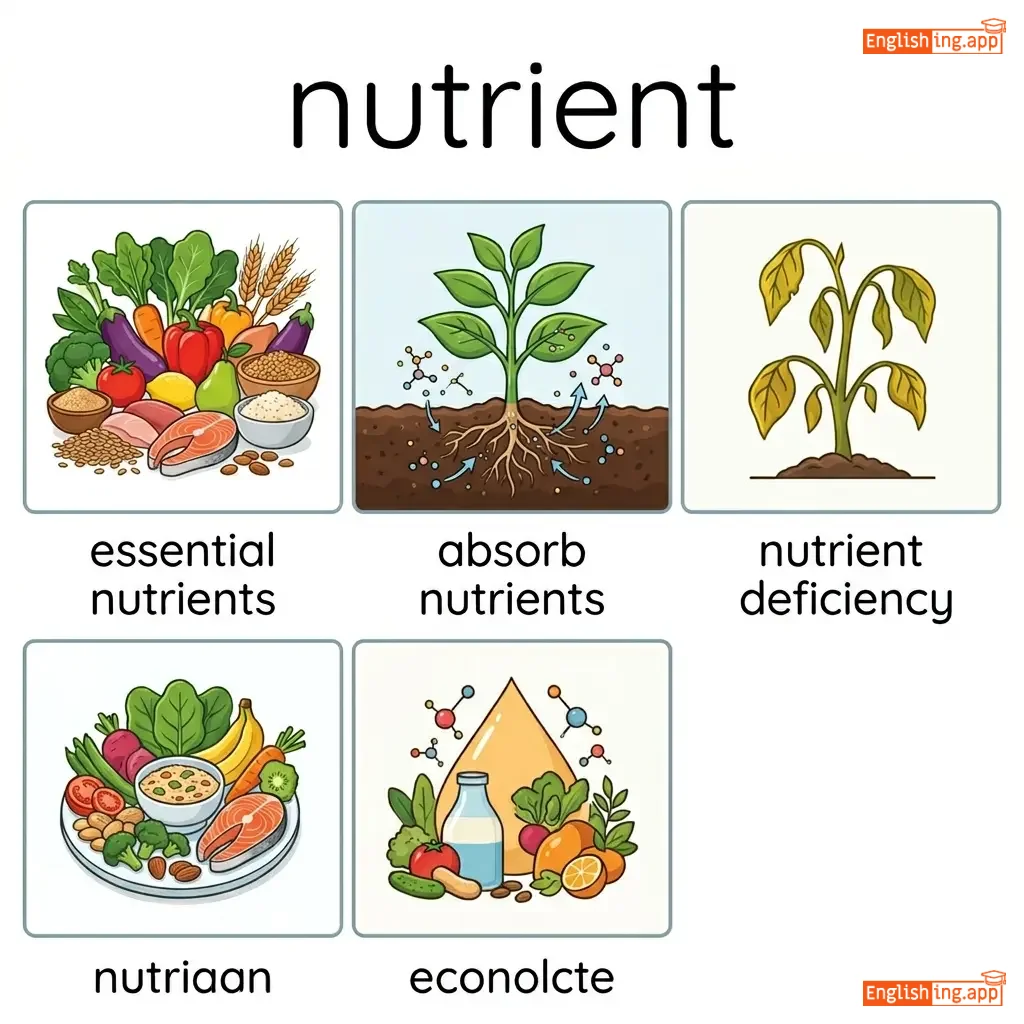
/ˈnuː.tri.ənt/
noun
••••••
••••••
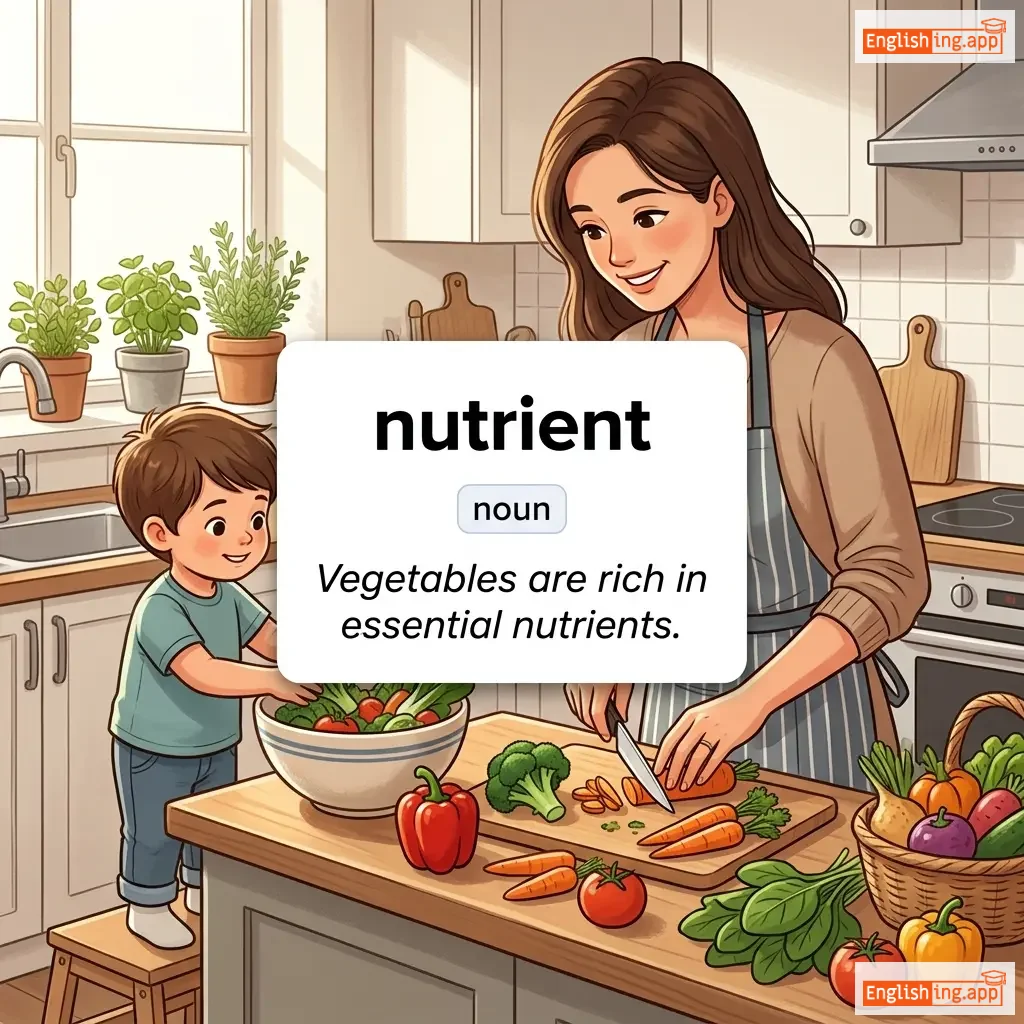
A substance that provides nourishment essential for growth and health of plants or animals.
••••••

Plants absorb nutrients from the soil for growth.

••••••
minerals, vitamins, elements
••••••
deficiency, toxin, waste
••••••
#3633
💧
••••••
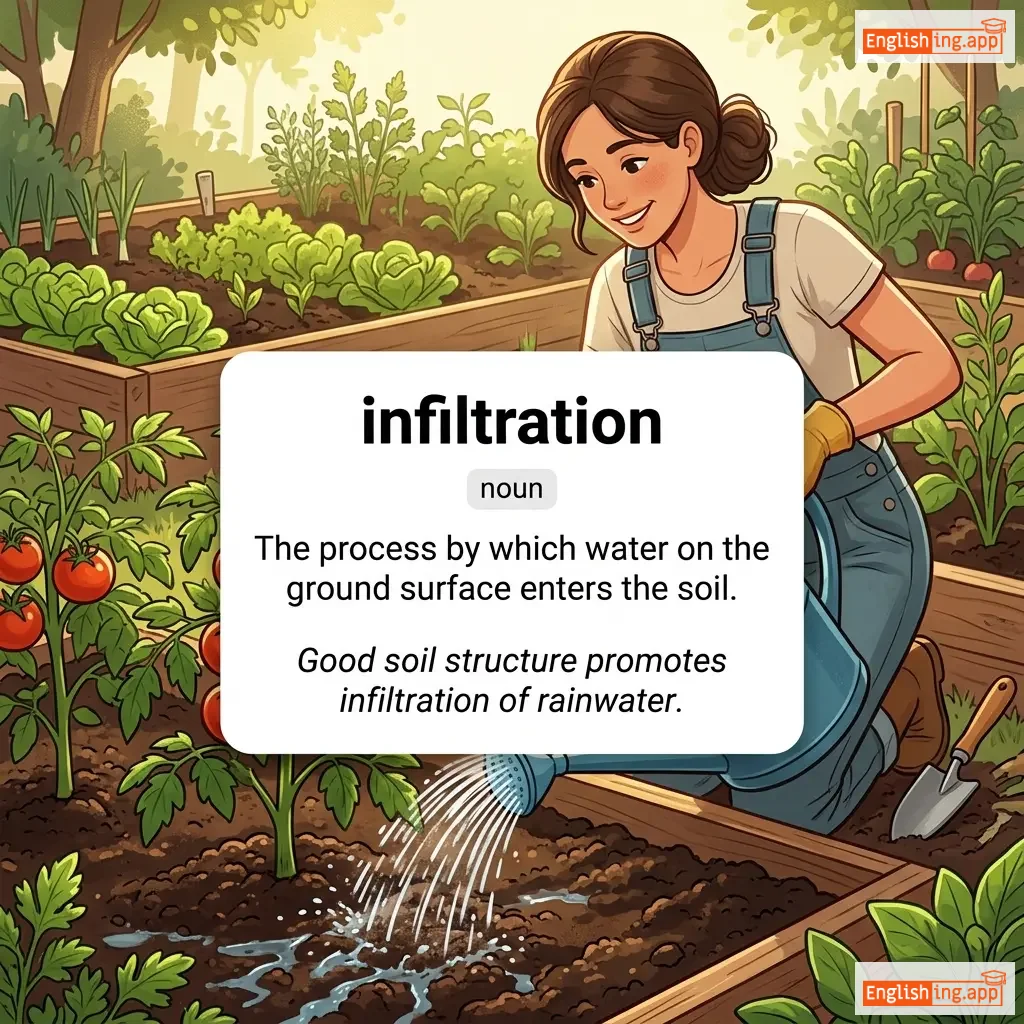
/ˌɪn.fɪlˈtreɪ.ʃən/
noun
••••••
••••••
The process by which water on the ground surface enters the soil.
••••••

Good soil structure promotes infiltration of rainwater.

••••••
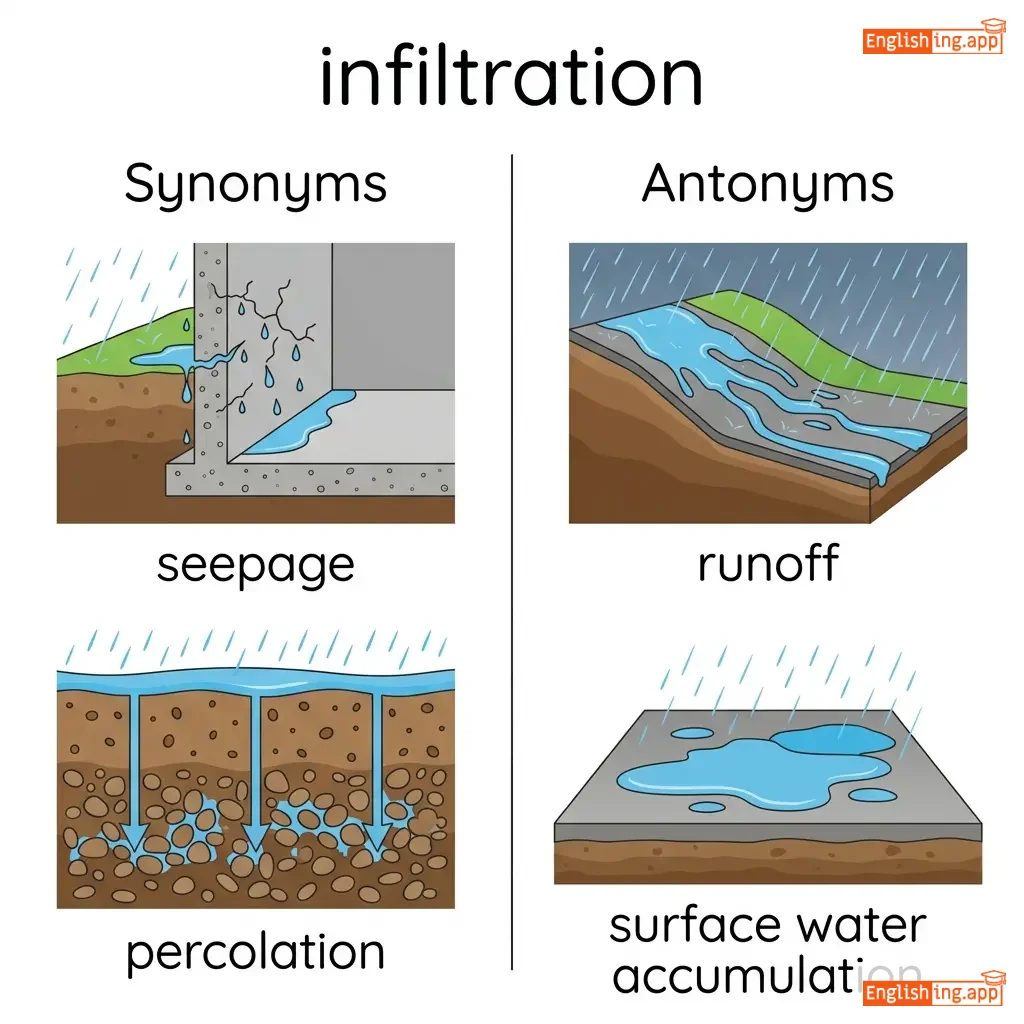
seepage, percolation, absorption
••••••
runoff, surface water accumulation, waterlogging
••••••
#3634
🌊
••••••
/ɪˈroʊ.ʒən/
noun
••••••
••••••
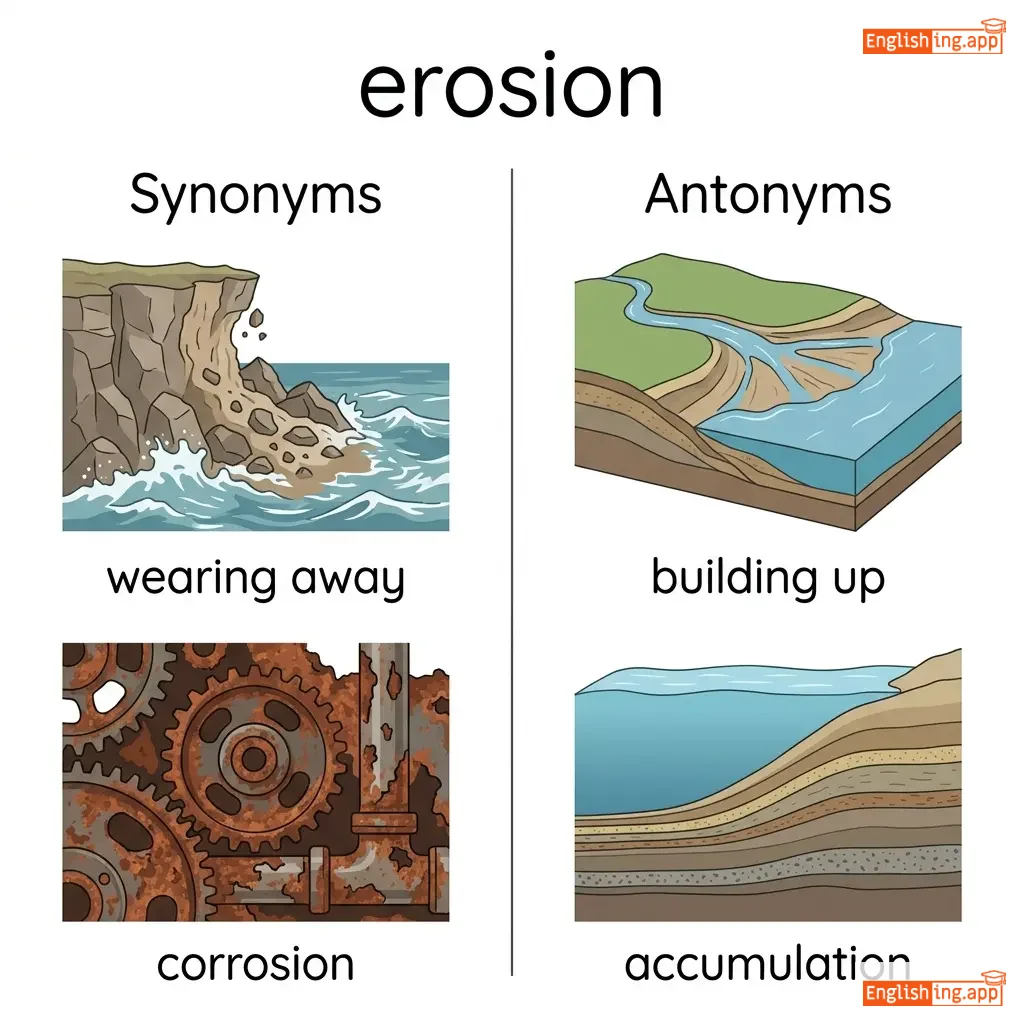
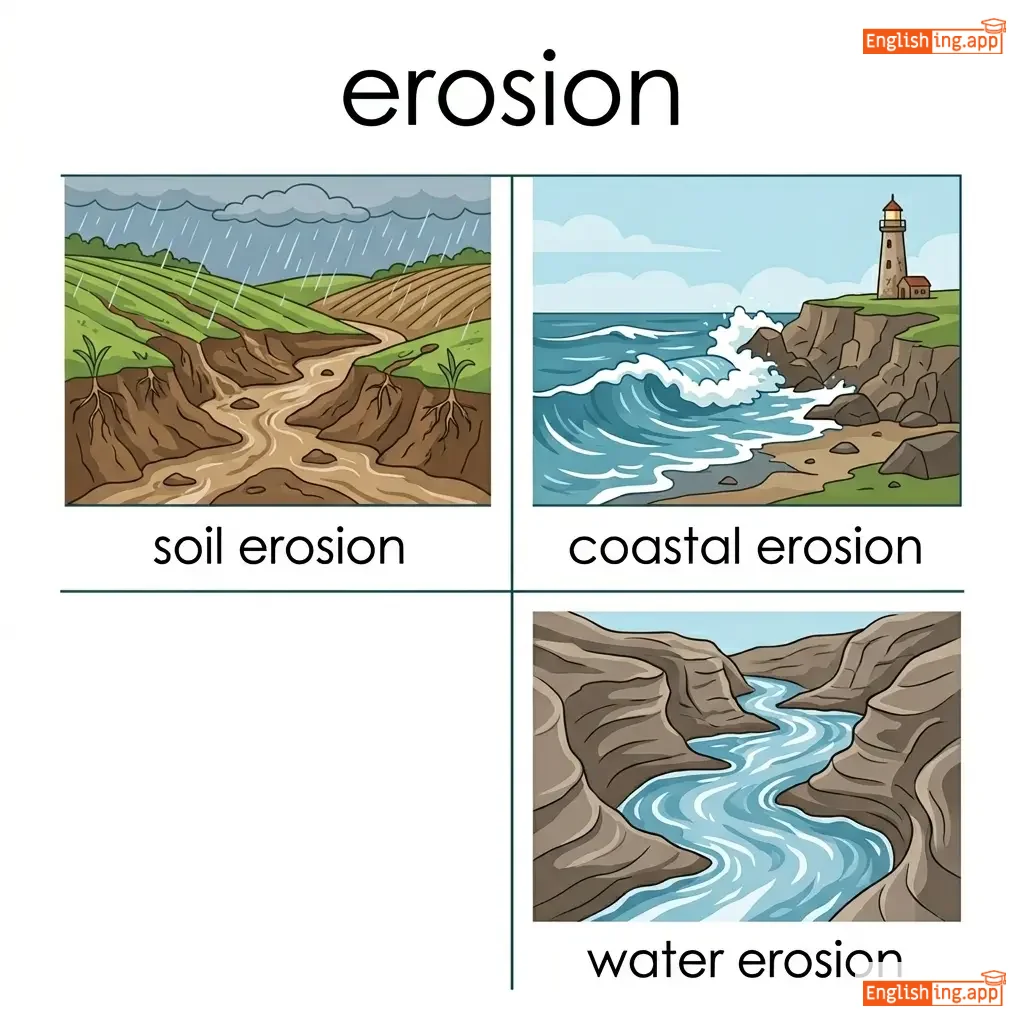
The process of eroding or being eroded by wind, water, or other natural agents.
••••••

Deforestation increases erosion in hilly areas.

••••••
degradation, wear, displacement
••••••
deposition, stability, preservation
••••••
#3635
📉
••••••
/ˌdɛɡ.rəˈdeɪ.ʃən/
noun
••••••
••••••
The condition or process of degrading or being degraded.
••••••

Soil degradation reduces agricultural productivity.

••••••
deterioration, decline, decay
••••••
improvement, restoration, enhancement
••••••
#3636
♻️
••••••
/ˈkɒm.pɒ.stɪŋ/
noun
••••••
••••••
The controlled decomposition of organic matter to produce fertilizer.
••••••

Composting reduces waste and enhances soil fertility.

••••••
organic recycling, decomposition, fertilization
••••••
waste, landfilling, chemical fertilization
••••••
#3637
🦠
••••••
/ˌbaɪ.oʊ.rɪˌmiː.diˈeɪ.ʃən/
noun
••••••
••••••
The use of living organisms to neutralize or remove environmental contaminants.
••••••

Bioremediation helps remove toxins from polluted soil.

••••••
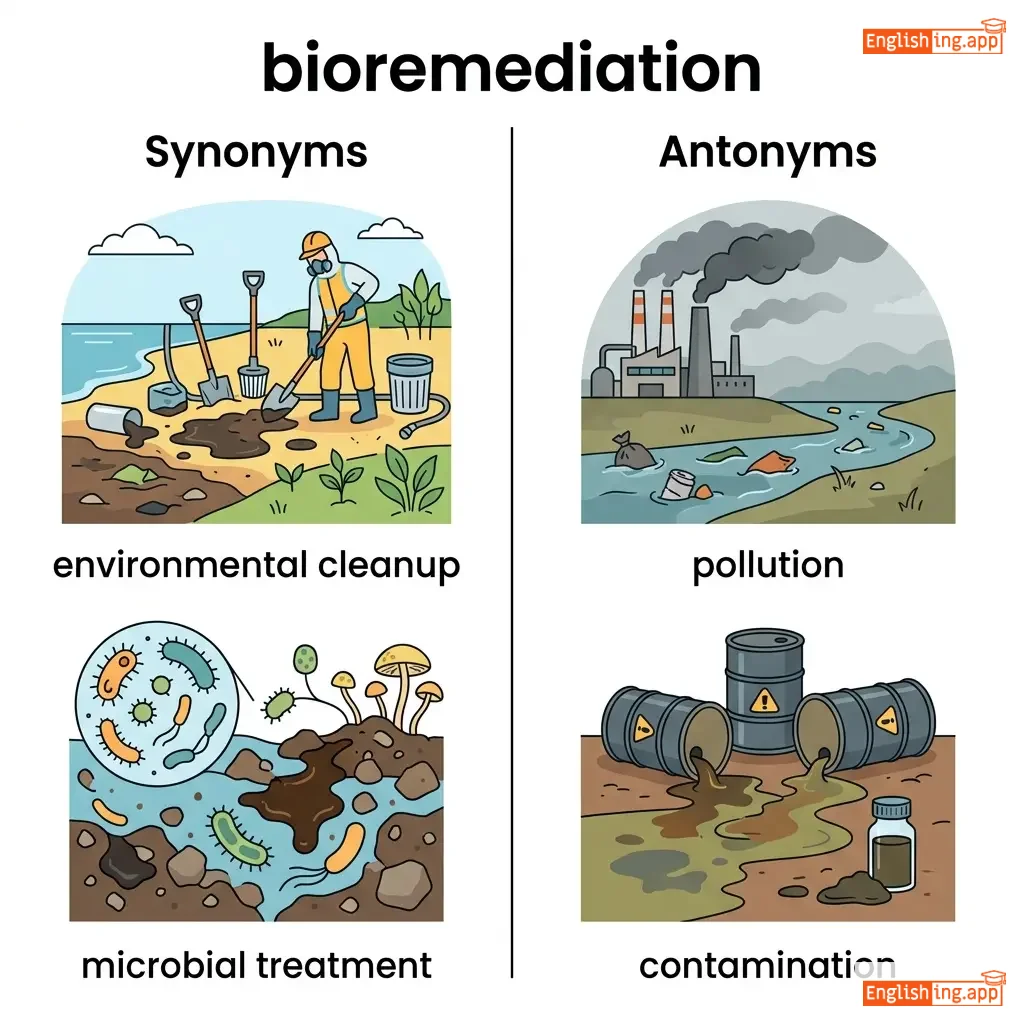
environmental cleanup, microbial treatment, ecological restoration
••••••
pollution, contamination, toxin accumulation
••••••
#3638
🌾
••••••
/ˌær.əˈbɪl.ɪ.ti/
noun
••••••
••••••
The quality of land being suitable for growing crops.
••••••

The arability of land depends on soil quality and water availability.

••••••
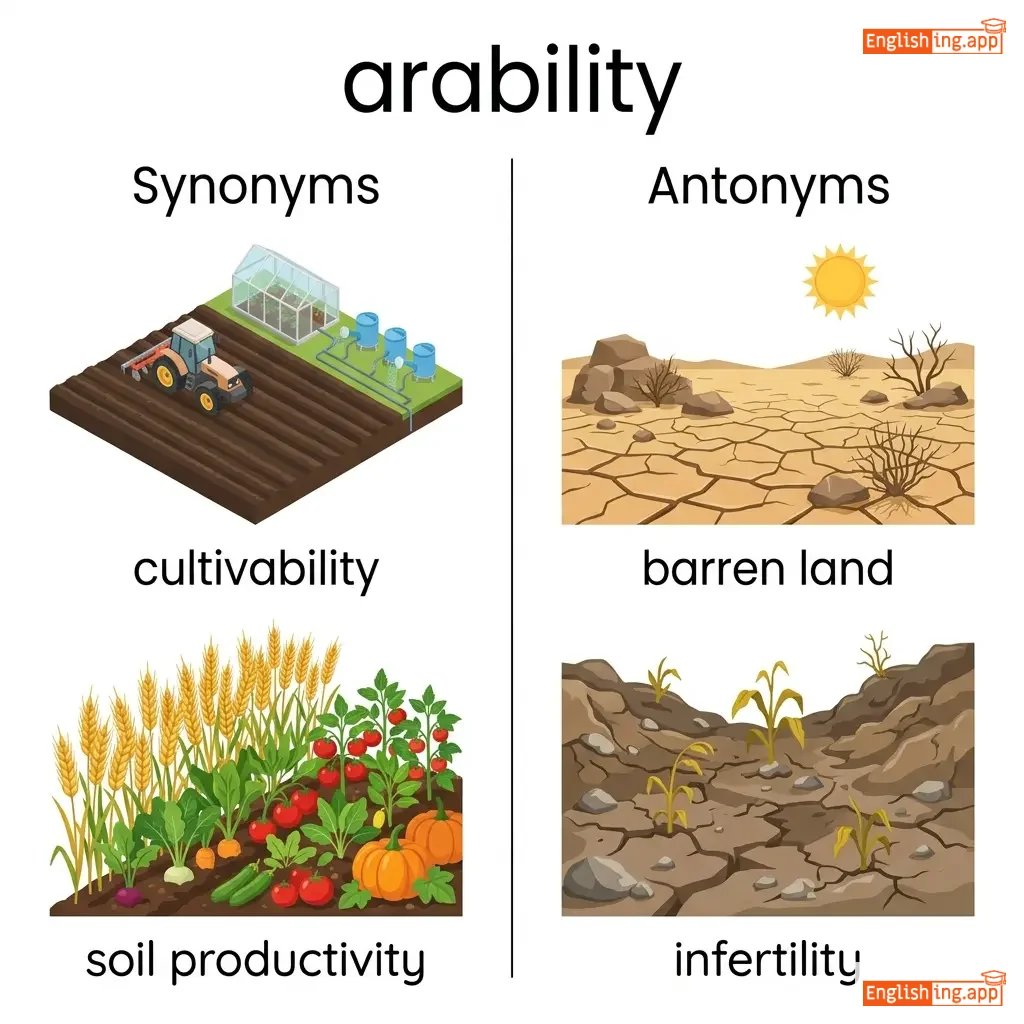
cultivability, soil productivity, farmability
••••••
barren land, infertility, unsuitability
••••••
#3639
🔬
••••••
/maɪˈkroʊ.bi.əl/
adjective
••••••
••••••
Relating to microorganisms, especially bacteria.
••••••

Microbial activity in soil helps in nutrient cycling.

••••••
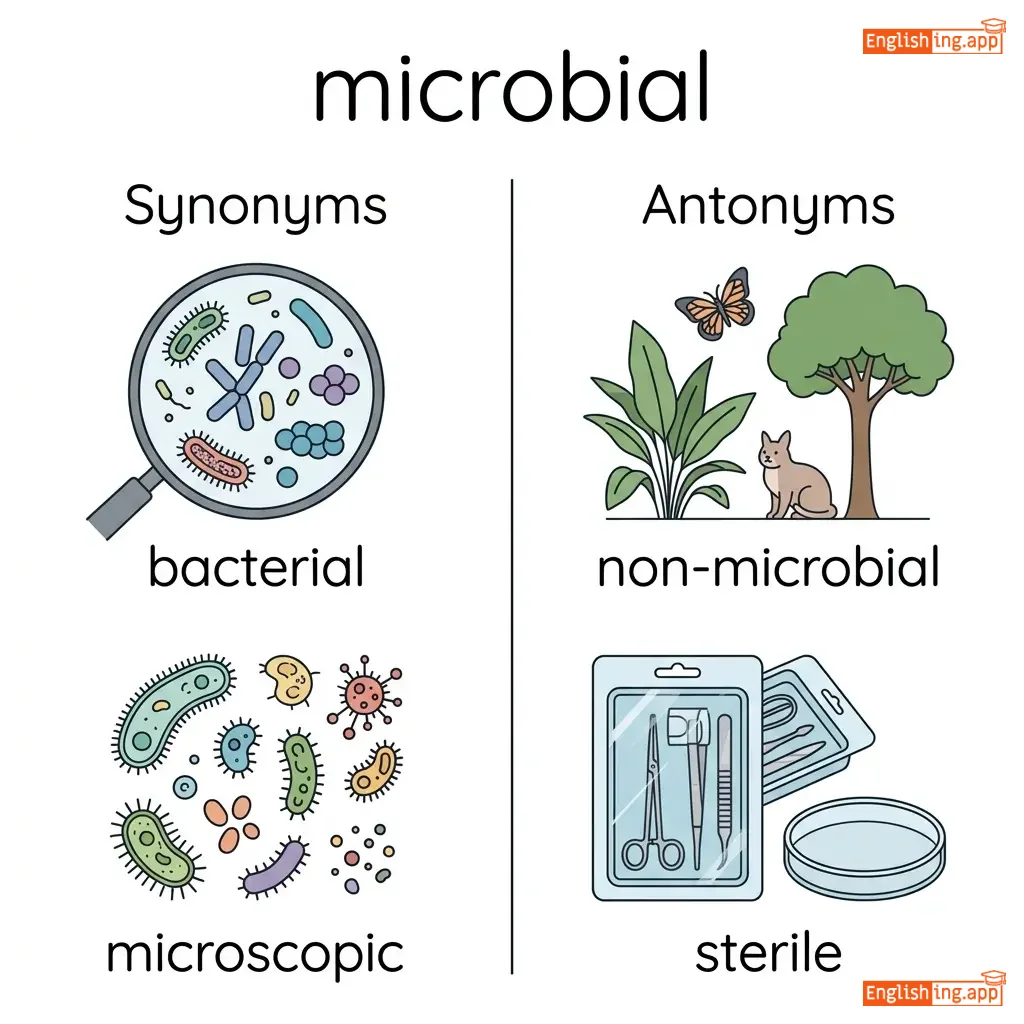
bacterial, microscopic, microorganismic
••••••
non-microbial, sterile, macro-organismic
••••••
#3640
🧑‍🔬
••••••
/pɪˈdɒl.ə.dʒi/
noun
••••••
••••••
The study of soils in their natural environment.
••••••

Pedology helps scientists understand soil fertility.

••••••
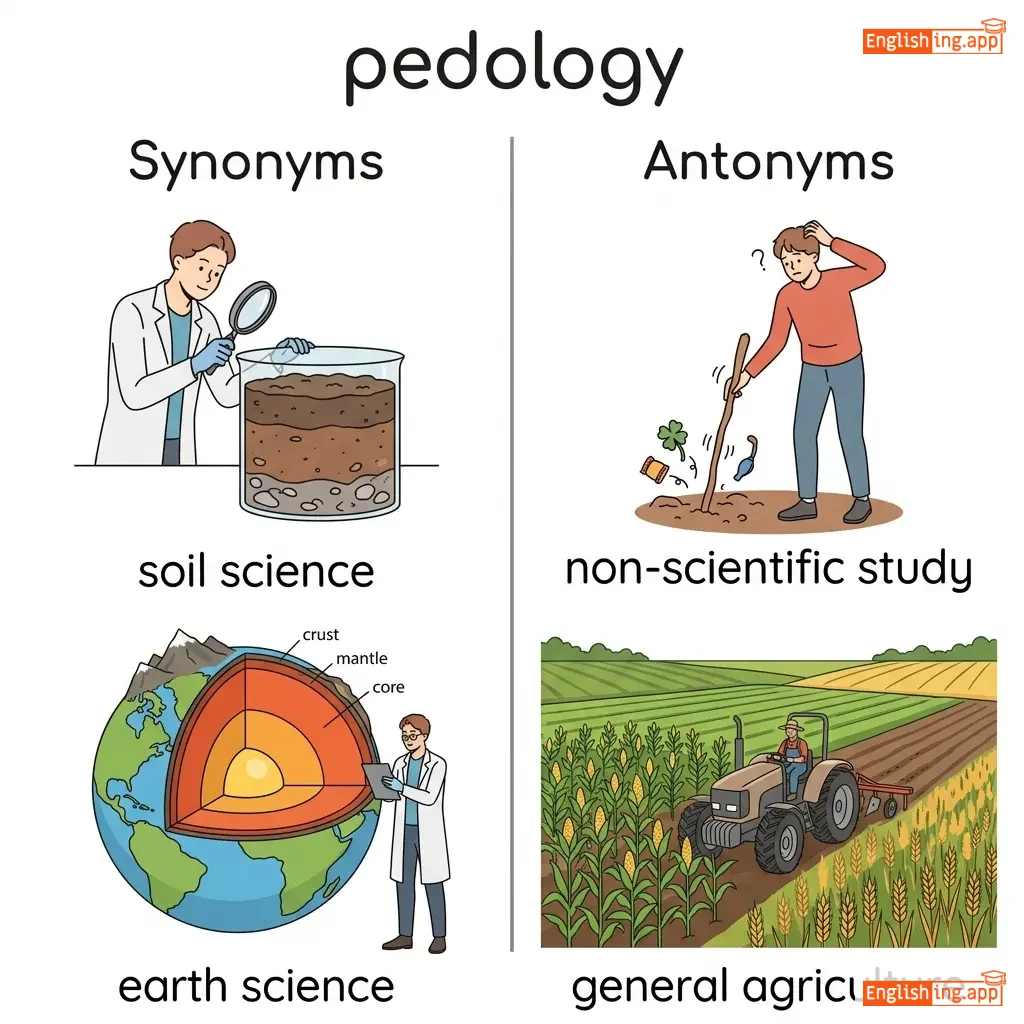
soil science, earth science, geology
••••••
non-scientific study, general agriculture
••••••
#3641
⚗️
••••••
/ˈkæt.aɪ.ɒn ɪksˌtʃeɪndʒ/
noun
••••••
••••••
A chemical process in soil that helps retain nutrients.
••••••

The cation-exchange capacity of soil affects plant growth.

••••••
ion-exchange, soil chemistry, nutrient retention
••••••
nutrient loss, soil depletion, unstable soil
••••••
#3642
🧂
••••••
/ˌsæl.ɪ.naɪˈzeɪ.ʃən/
noun
••••••
••••••
The process of increasing salt content in soil.
••••••

Excessive irrigation can cause salinization of farmland.

••••••
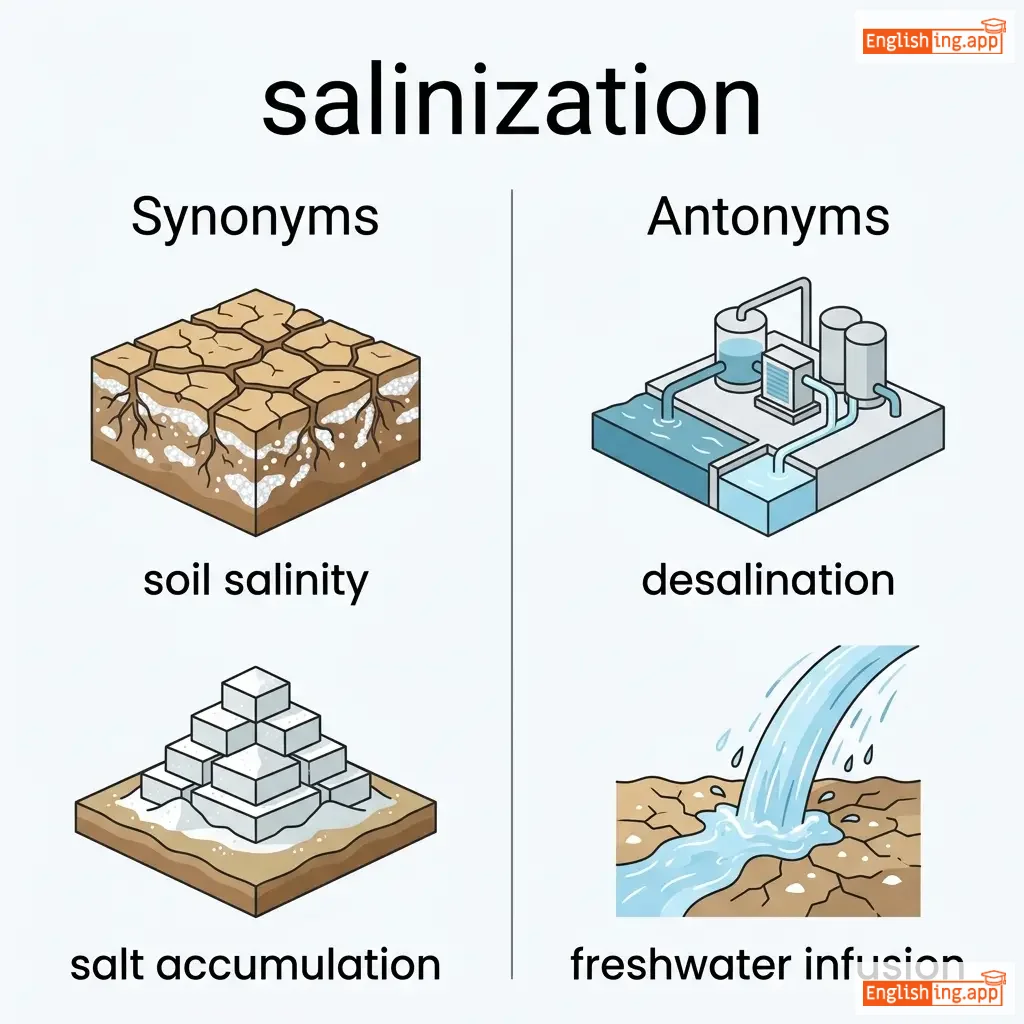
soil salinity, salt accumulation, degradation
••••••
desalination, freshwater infusion, soil restoration
••••••
#3643
🪨
••••••
/ˌkæl.sɪ.fɪˈkeɪ.ʃən/
noun
••••••
••••••
The process of calcium accumulation in soil, making it hard.
••••••

Calcification reduces soil permeability and affects crop growth.

••••••
hardening, mineral deposition, soil alkalinity
••••••
acidification, soil softening, nutrient balance
••••••
#3644
💧
••••••
/ˌhaɪ.droʊˈpɒn.ɪks/
noun
••••••
••••••
A method of growing plants without soil using nutrient-rich water.
••••••

Hydroponics allows crops to grow without soil.

••••••
soilless farming, aquaponics, controlled agriculture
••••••
traditional farming, soil-based cultivation, land-dependent agriculture
••••••
#3645
🏞️
••••••
/əˈluː.vi.əm/
noun
••••••
••••••
Fertile soil deposited by flowing water, especially in riverbanks.
••••••

The alluvium in riverbanks is highly fertile for agriculture.

••••••
sediment, silt, deposited soil
••••••
bedrock, erosion, sterile land
••••••
#3646
⬆️
••••••
/ˌæɡ.rəˈdeɪ.ʃən/
noun
••••••
••••••
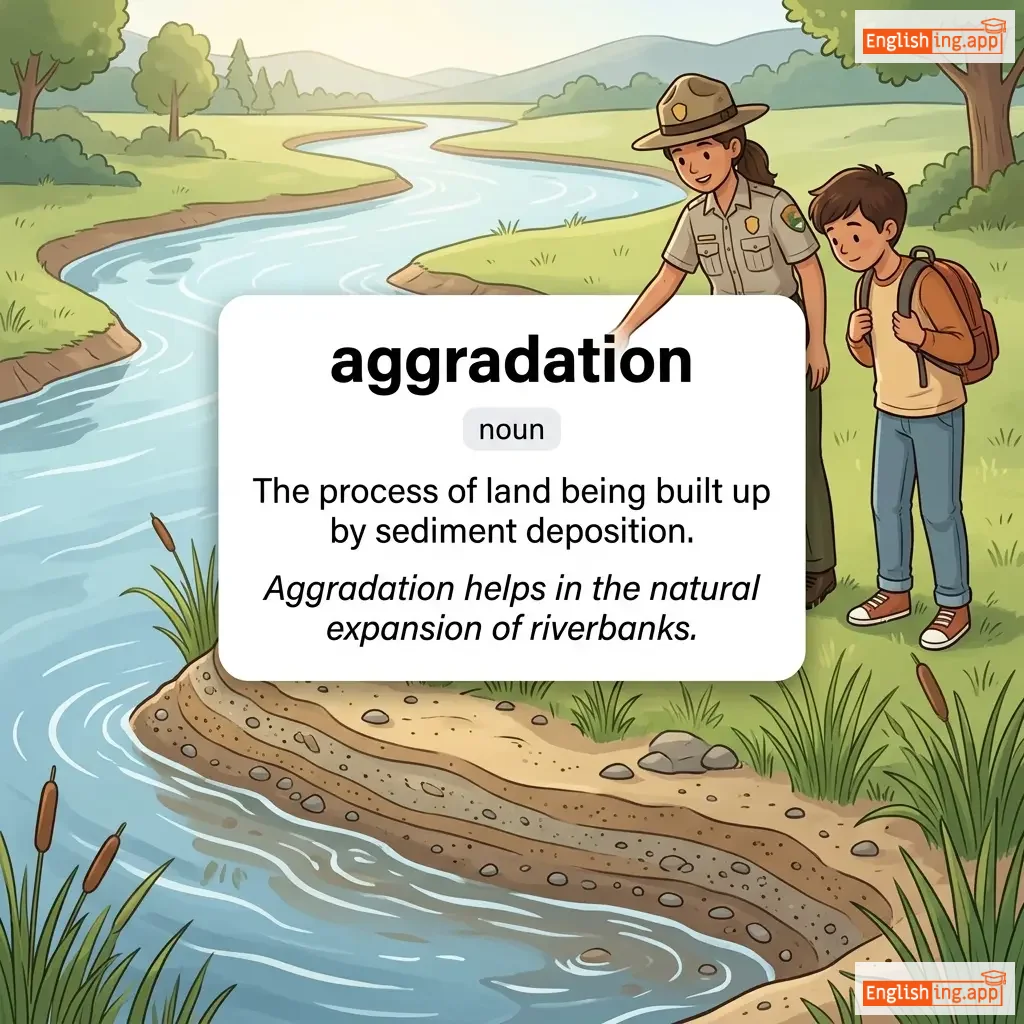
The process of land being built up by sediment deposition.
••••••

Aggradation helps in the natural expansion of riverbanks.

••••••
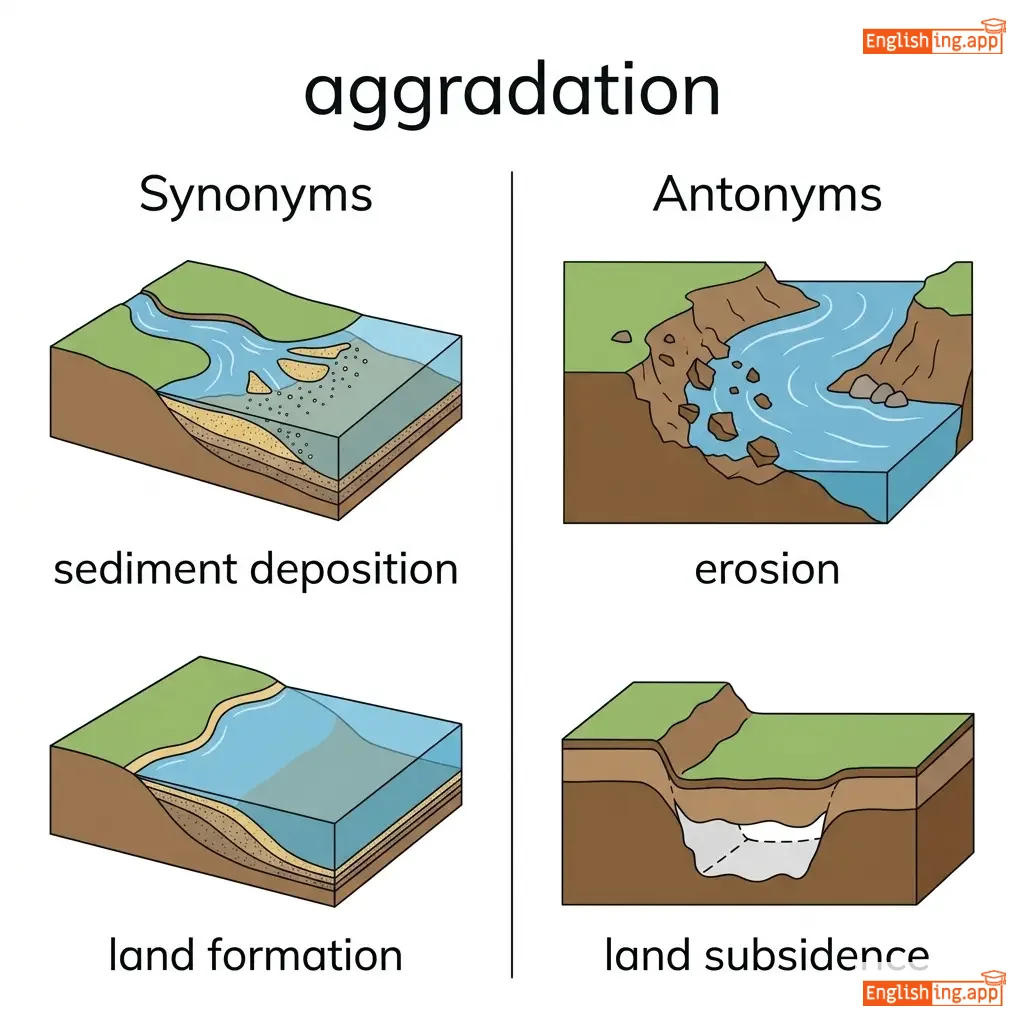
sediment deposition, land formation, accretion
••••••
erosion, land subsidence, depletion
••••••
#3647
🍃
••••••
/ˌhjuː.mɪ.fɪˈkeɪ.ʃən/
noun
••••••
- ••••••
The process of organic matter decomposition to form humus in soil.
••••••

Humification enhances soil structure and fertility.

••••••
organic decomposition, soil enrichment, humus formation
••••••
decomposition prevention, organic depletion, soil sterility
••••••
#3648
🌍
••••••
/ˌsʌb.təˈreɪ.ni.ən/
adjective
••••••
••••••
Existing, occurring, or done under the earth's surface.
••••••

Subterranean water sources help sustain agriculture.

••••••
underground, buried, concealed
••••••
surface-level, exposed, above-ground
••••••
#3649
🌱
••••••
/sɔɪl ˈmæn.ɪdʒ.mənt/
noun
••••••
••••••
The application of operations, practices, and treatments to protect soil and enhance its performance.
••••••

Proper soil management improves long-term agricultural productivity.

••••••
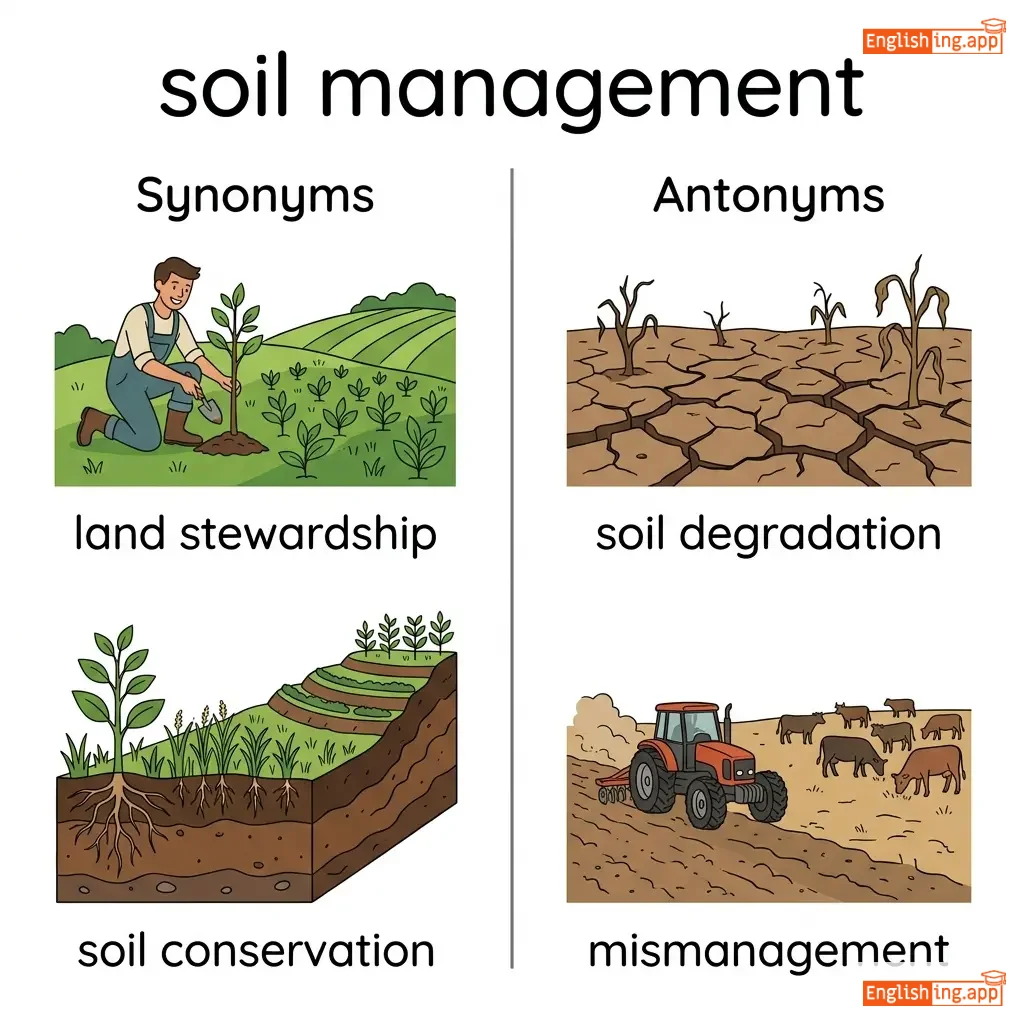
land stewardship, soil conservation, agricultural maintenance
••••••
soil degradation, mismanagement, erosion
••••••