Surmonter les barrières dans la communication

Overcoming Barriers in Communication

La communication peut rencontrer différents types de barriers : verbal, non-verbal ou cognitive. Lorsque nous parlons aux autres, de l’ambiguity ou des malentendus peuvent apparaître. La clarification est extrêmement importante pour éliminer ces problèmes. De plus, il peut y avoir une discrepancy entre ce que quelqu’un veut dire et la manière dont il le convey. S’il y a de l’empathy et de l’engagement, la bonne perception et la réaction deviennent plus faciles. Cependant, le stereotyping affecte notre processus de pensée, ce qui peut créer des barriers dans la communication. En apportant de la clarté grâce à l’enunciation et à la vocalization, les impediments sont réduits. Cependant, les gestes subtle et la communication tactile sont souvent importants, car ils fonctionnent plus que les mots ou le langage verbal. En comprenant le sens contextual, nous pouvons établir de meilleures relations les uns avec les autres, rendant la communication plus efficace.

Overcoming Barriers in CommunicationSurmonter les barrières dans la communication
/
/

Overcoming Barriers in CommunicationSurmonter les barrières dans la communication - Basculement de Masque

Émoji
Mot Images Signification Phrase d'Exemple Synonymes Antonymes
#2667
🚧
••••••
/ˈbæɹɪəz/
noun
••••••
••••••
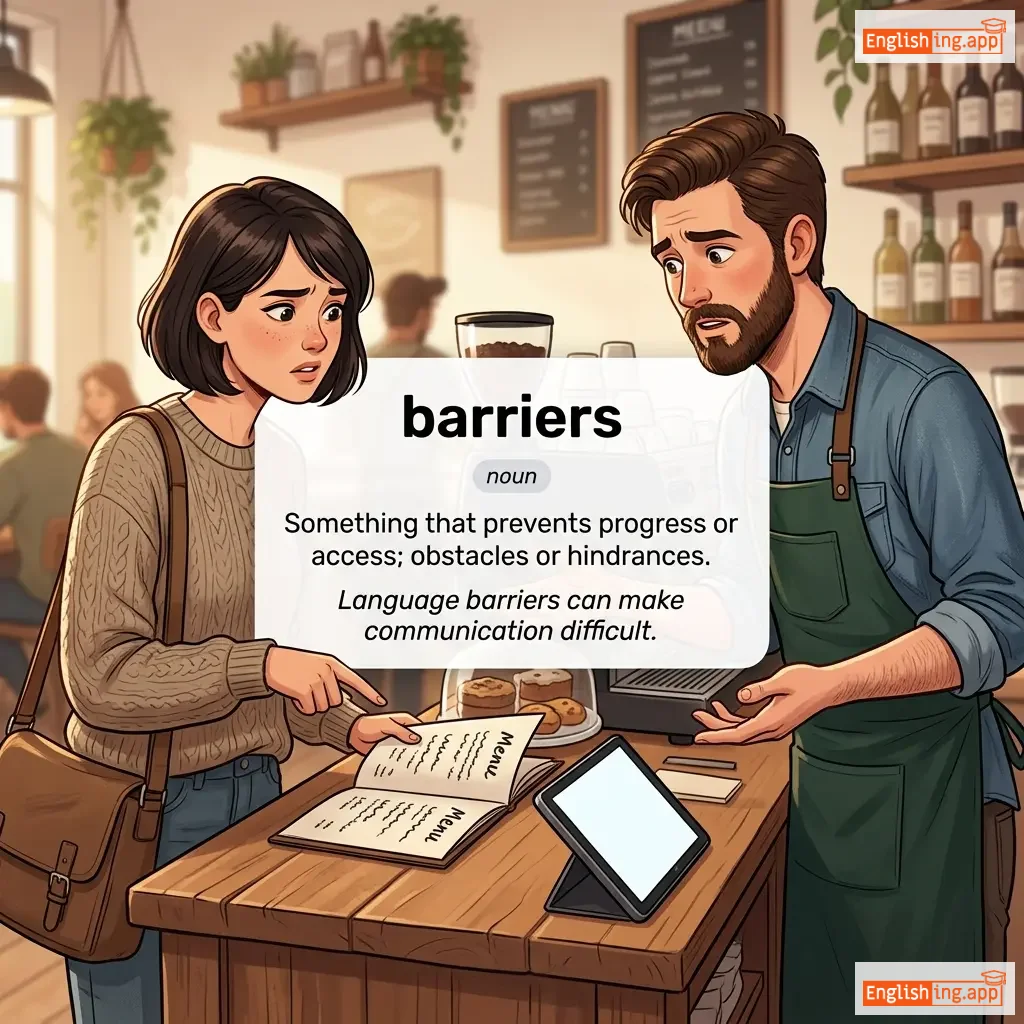
Something that prevents progress or access; obstacles or hindrances.
••••••

Language barriers can make communication difficult.

••••••
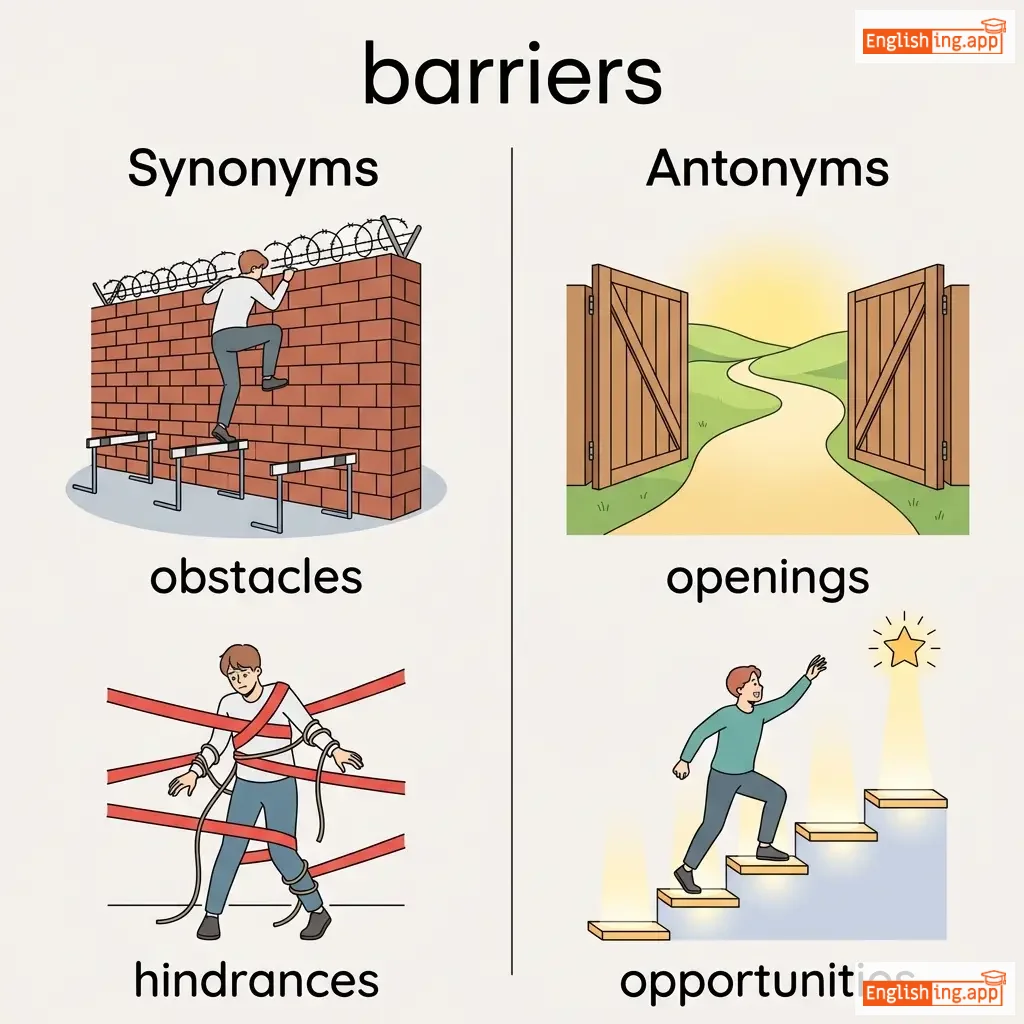
obstacles, hindrances, blockages, obstructions, impediments, hurdles
••••••
openings, opportunities, pathways, gateways, access, clearances
••••••
#2668
🗣️
••••••
/ˈvɜː.bəl/
adjective
••••••
••••••
Relating to or in the form of words; spoken rather than written.
••••••

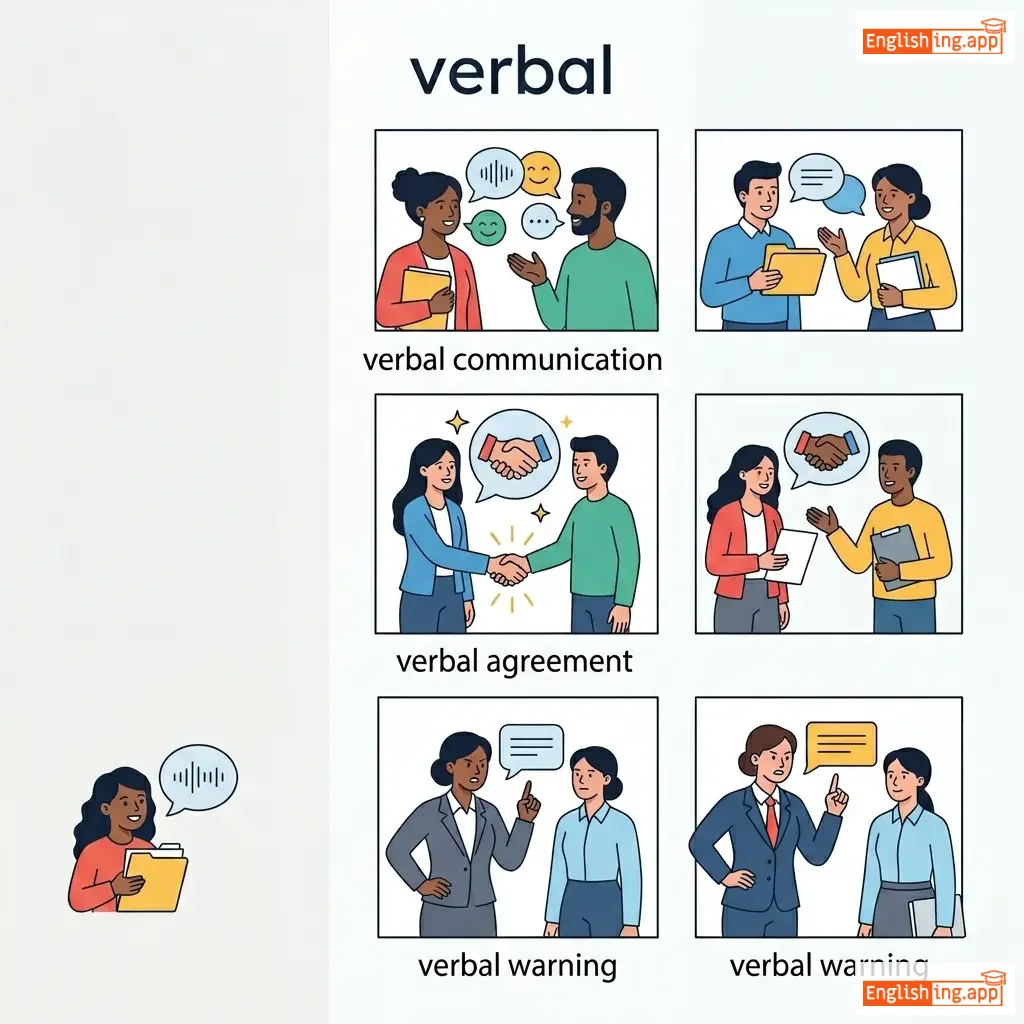
Verbal communication is essential in most situations.
••••••
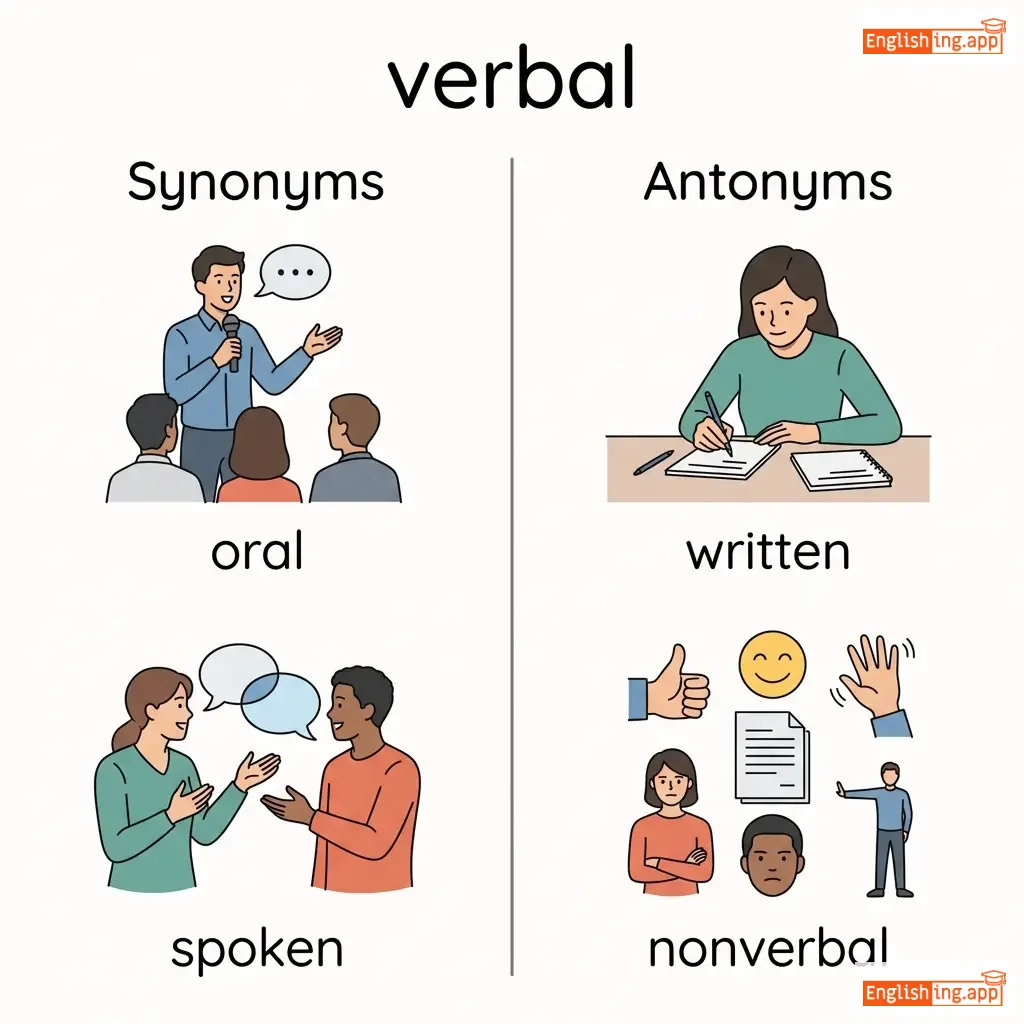
oral, spoken, vocal, articulated, uttered, expressed
••••••
non-verbal, written, silent, unspoken, tacit, implied
••••••
#2669
🤐
••••••
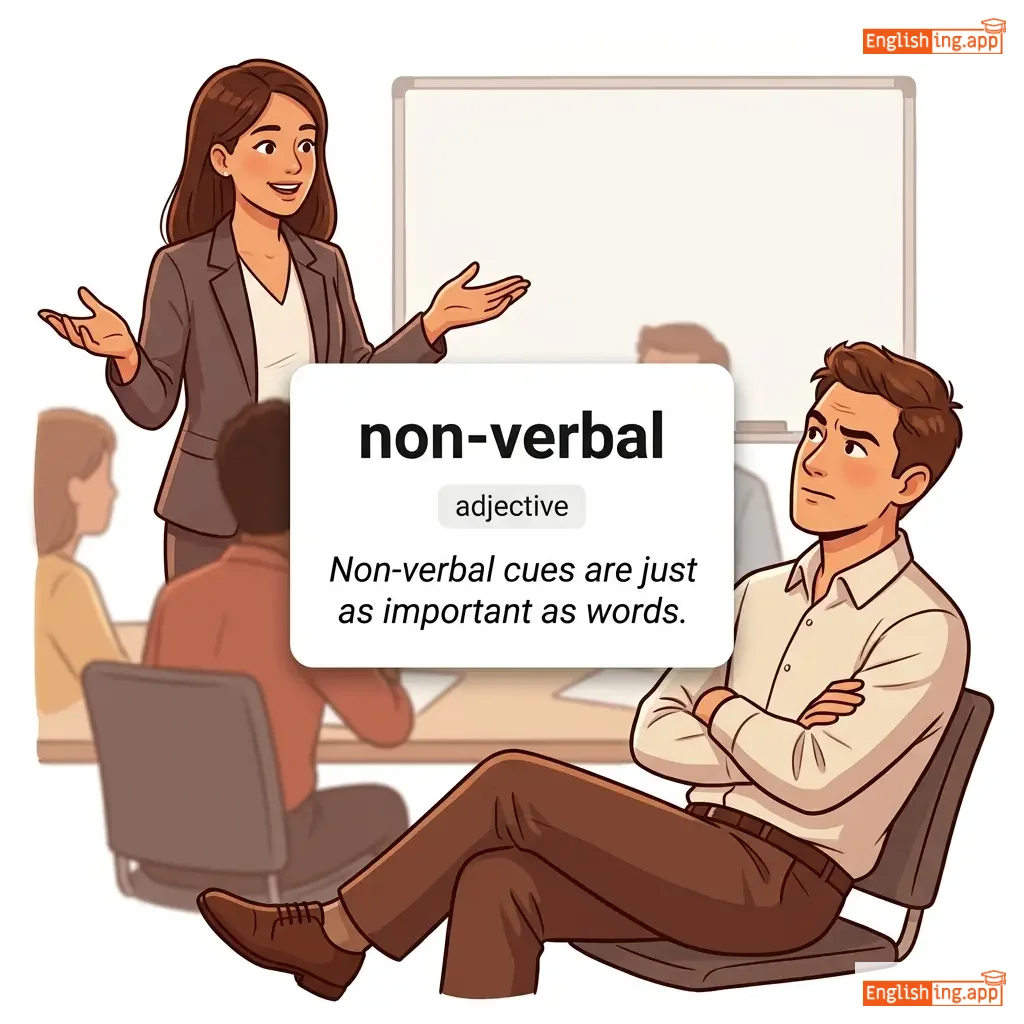
/ˌnɒnˈvɜː.bəl/
adjective
••••••
••••••
Not involving or using words or speech; communicated through gestures, body language, or facial expressions.
••••••

Non-verbal cues are just as important as words.

••••••
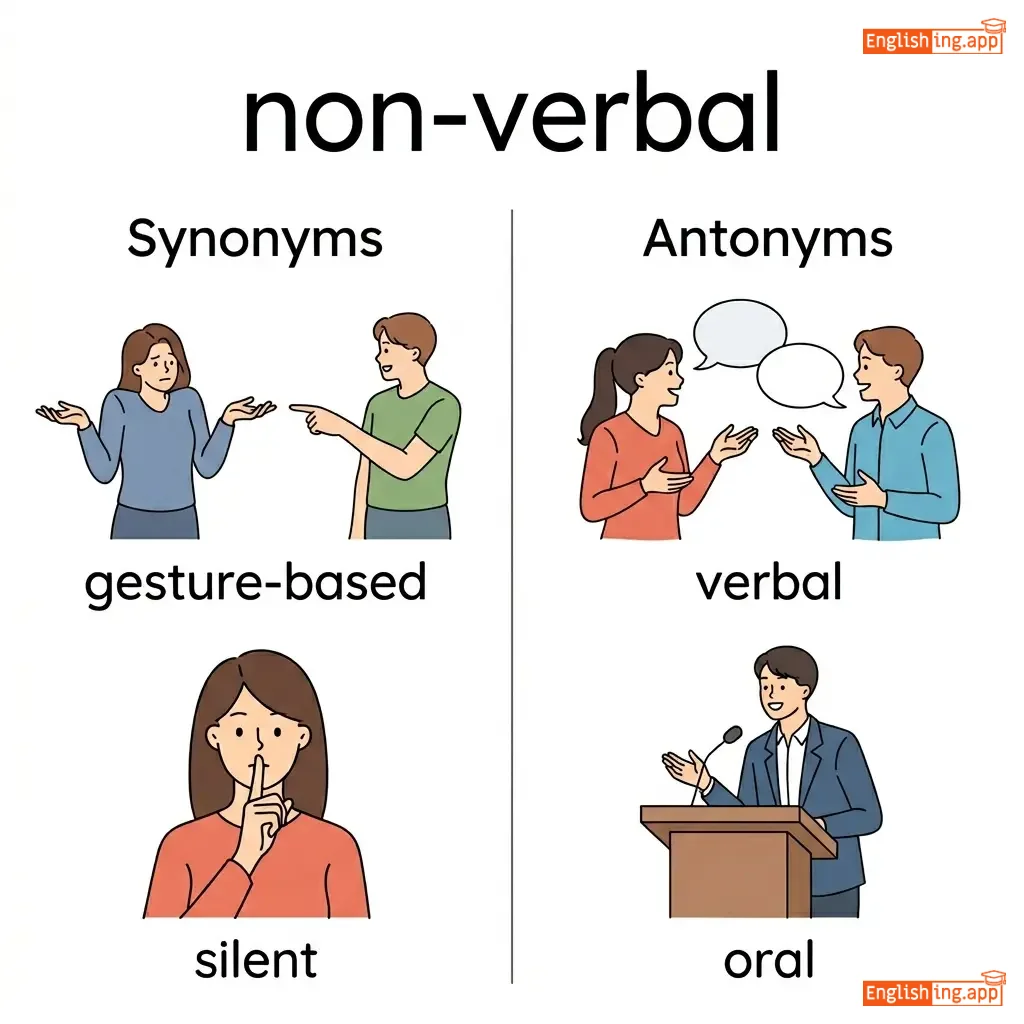
gesture-based, silent, wordless, unspoken, tacit, implied
••••••
verbal, oral, spoken, articulated, vocal, expressed
••••••
#2670
🧠
••••••
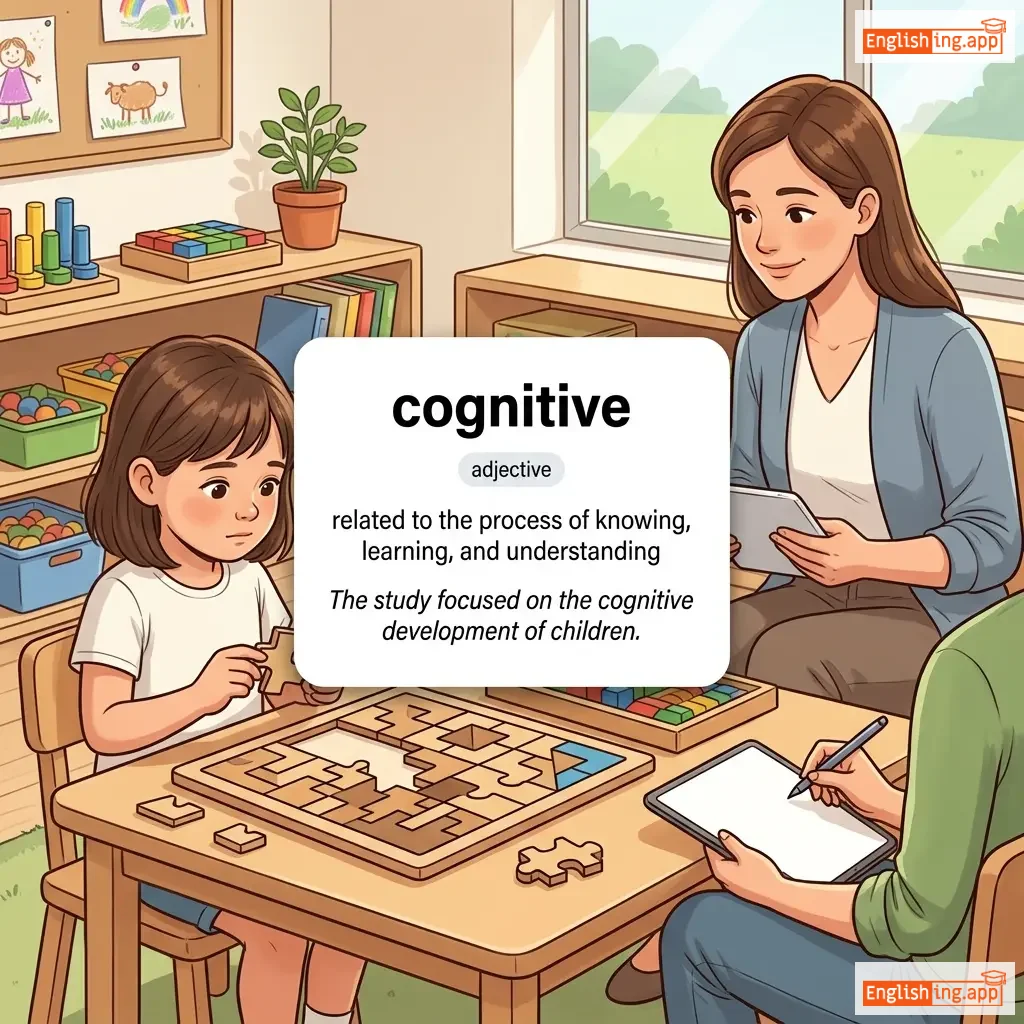
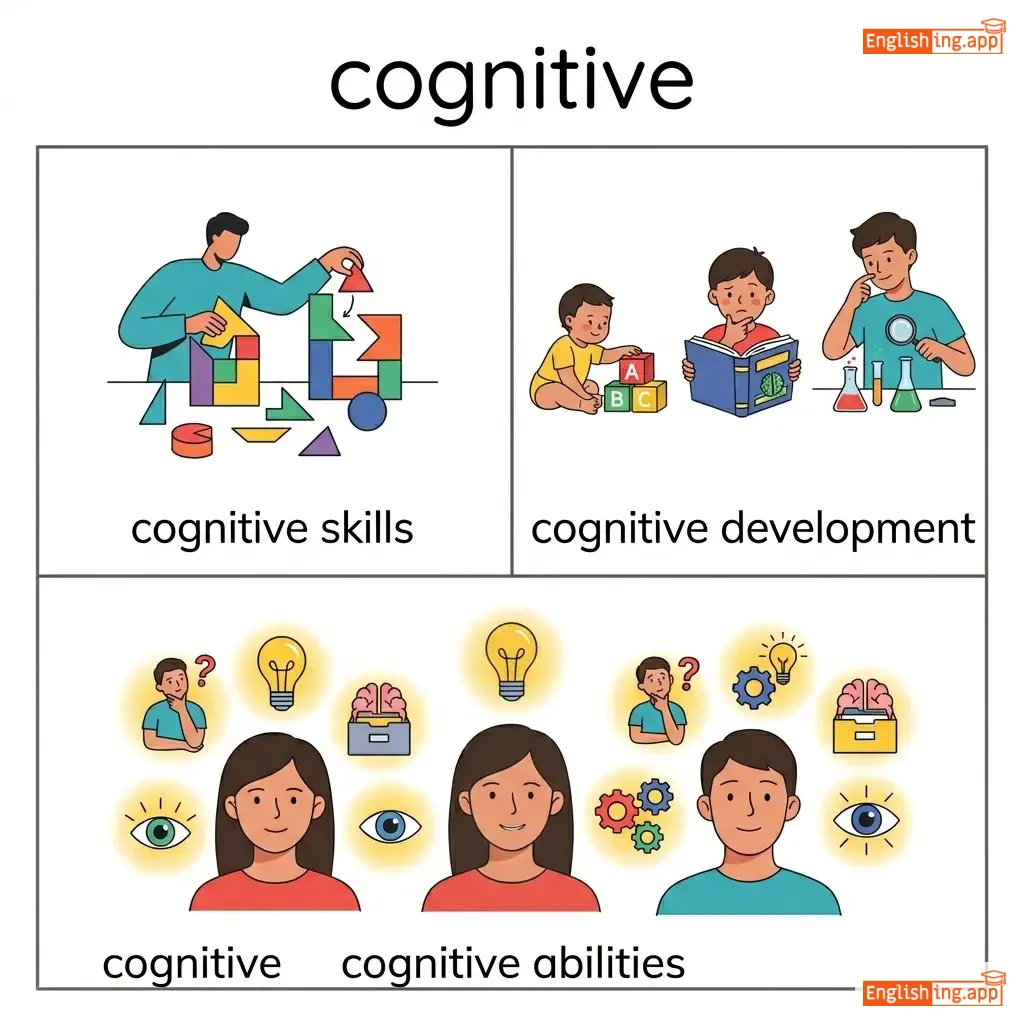
/ˈkɒɡ.nɪ.tɪv/
adjective
••••••
••••••
Related to the mental processes of perception, memory, judgment, and reasoning.
••••••

Cognitive skills are essential for problem-solving.

••••••
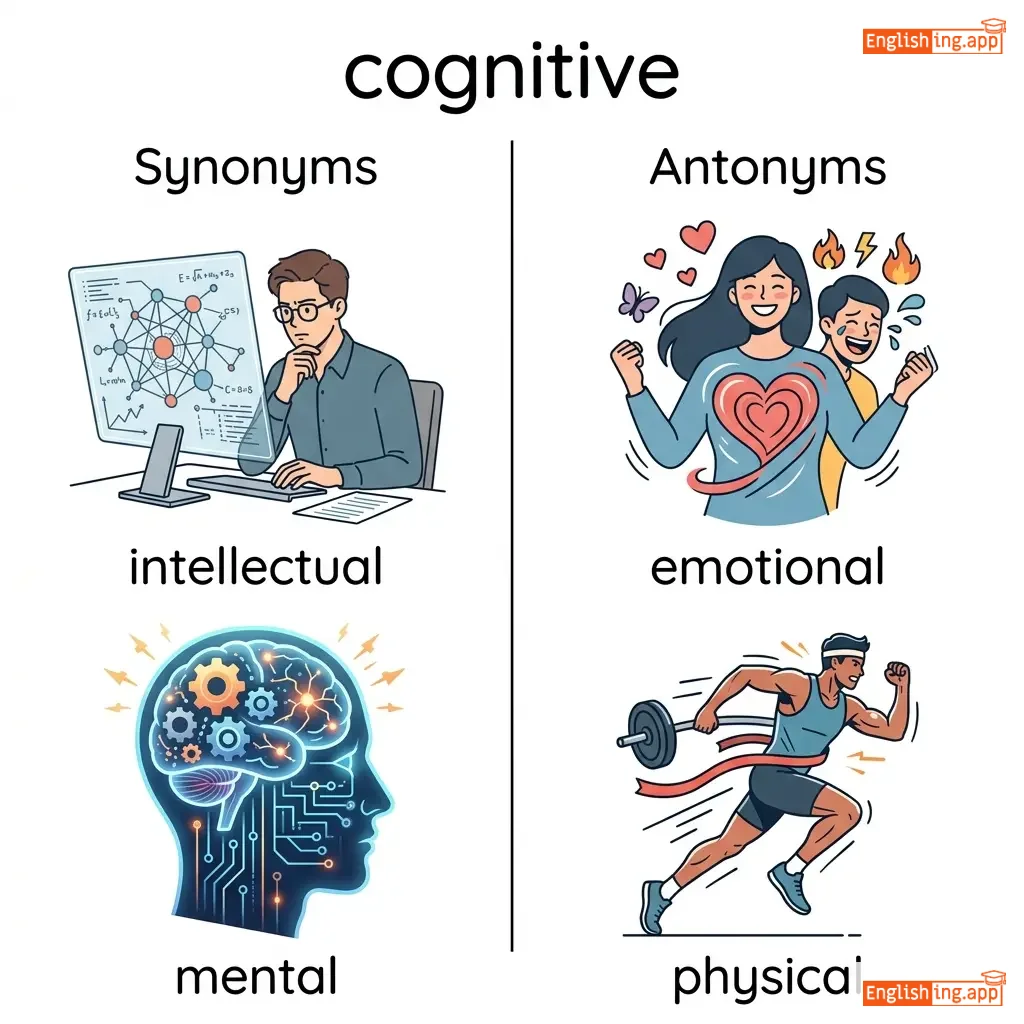
intellectual, mental, cerebral, rational, thinking, reasoning
••••••
non-cognitive, physical, emotional, instinctive, intuitive, automatic
••••••
#2671
••••••
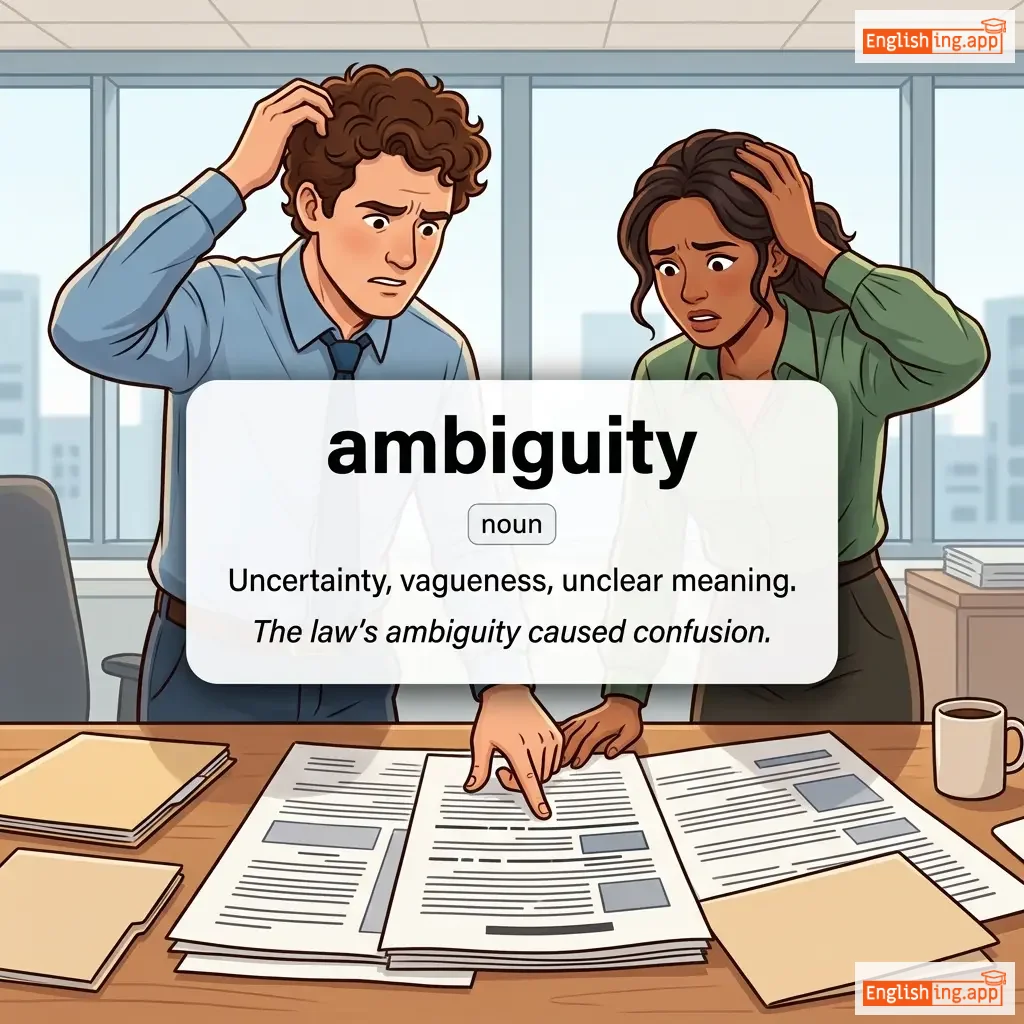
/ˌæm.bɪˈɡjuː.ɪ.ti/
noun
••••••
••••••
The quality of being open to more than one interpretation; having a double meaning or uncertainty.
••••••

The ambiguity in his answer made it difficult to understand.

••••••
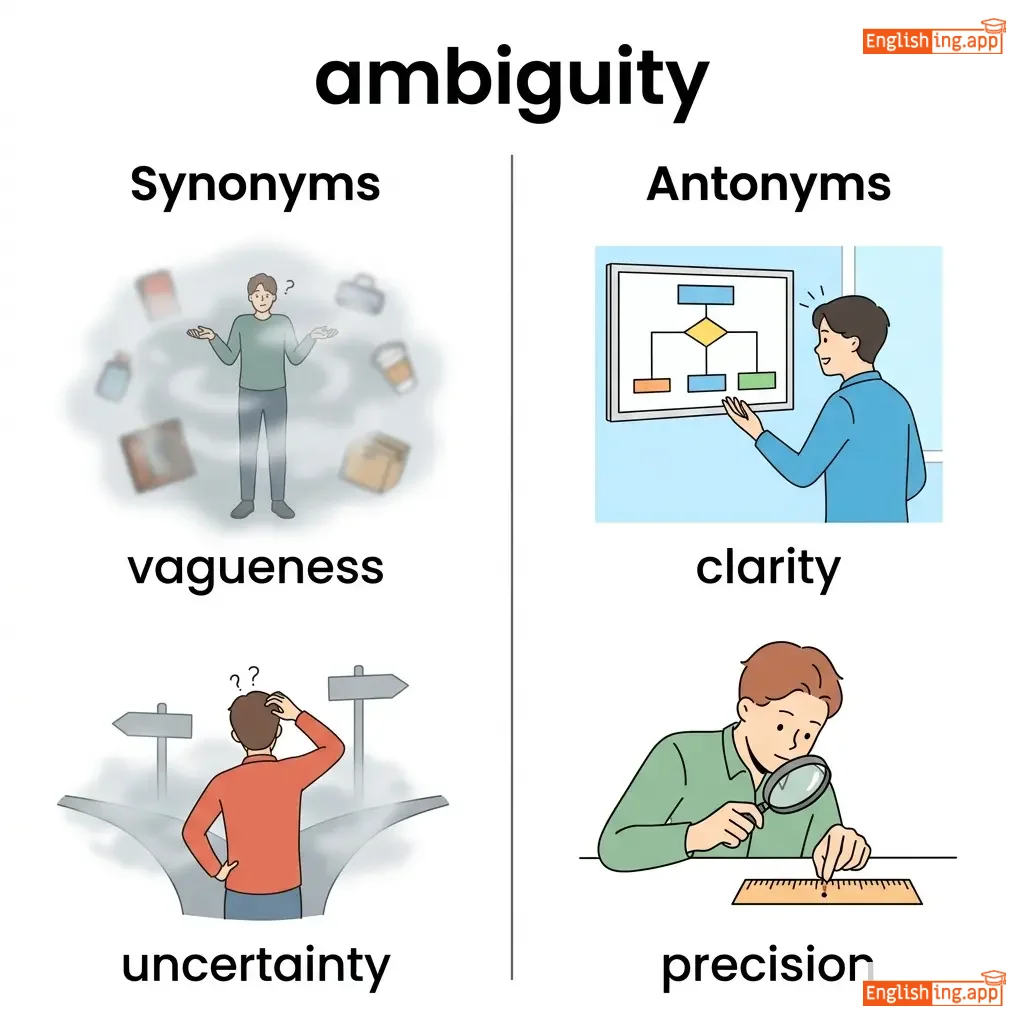
vagueness, uncertainty, confusion, obscurity, unclearness, indefiniteness
••••••
clarity, precision, certainty, definiteness, explicitness, unambiguousness
••••••
#2672
💡
••••••
/ˌklærɪfɪˈkeɪʃən/
noun
••••••
••••••
The action of making a statement or situation less confused and more clearly comprehensible.
••••••

The manager requested clarification on the project details.

••••••
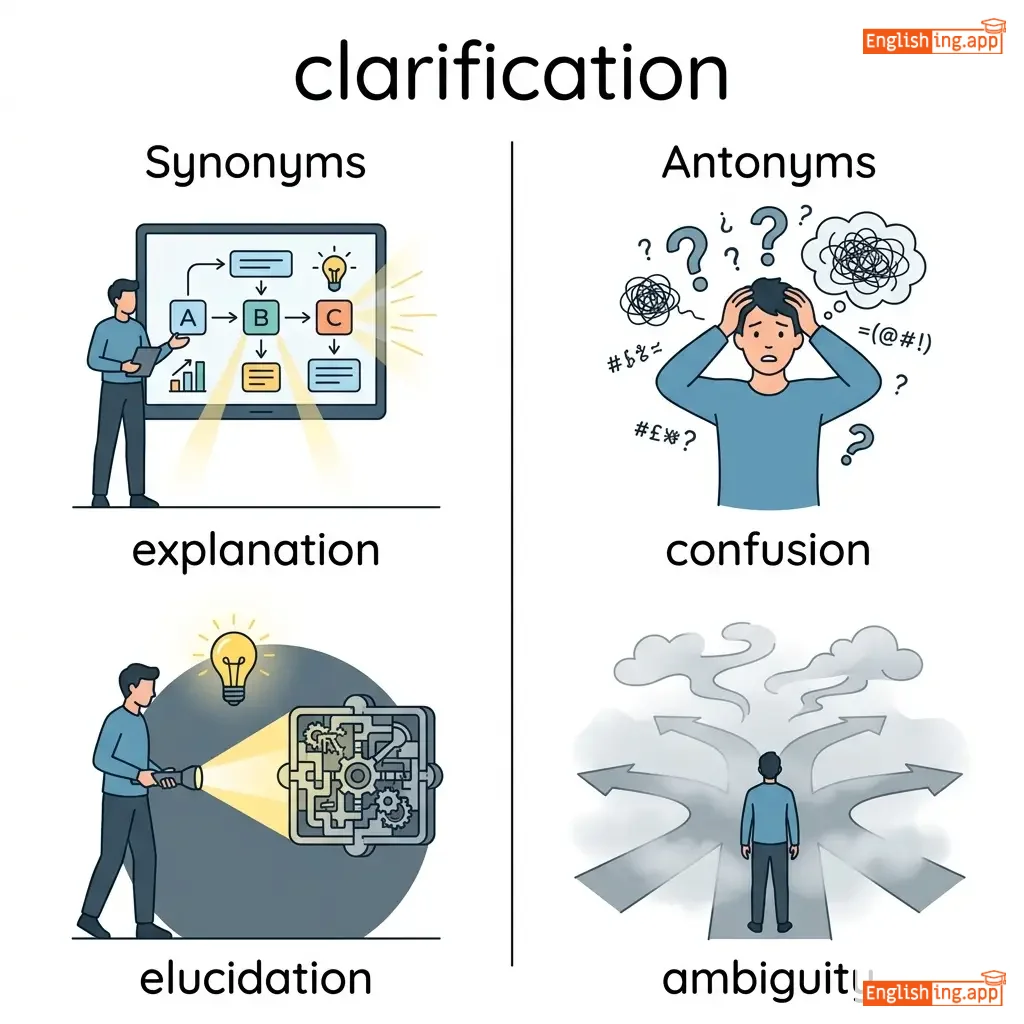
explanation, elucidation, illumination, interpretation, explication, enlightenment
••••••
confusion, ambiguity, obfuscation, mystification, obscuration, complication
••••••
#2673
⚖️
••••••
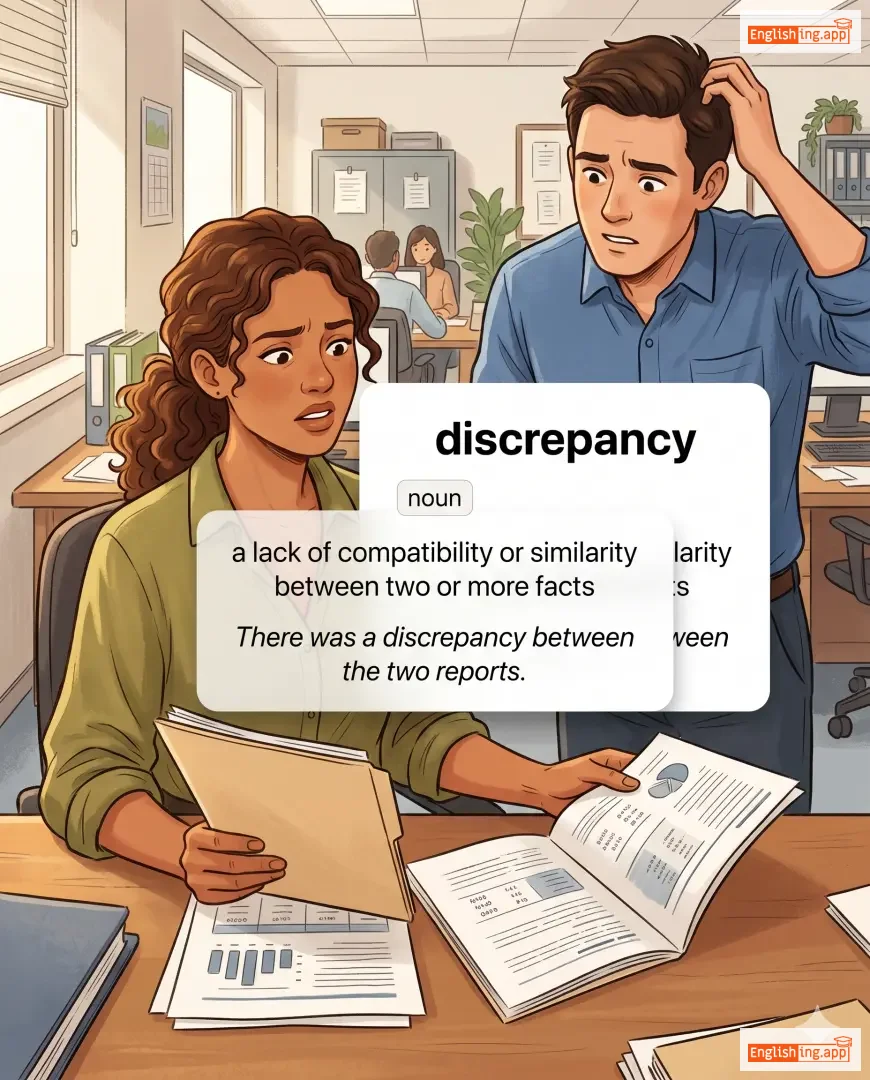
/dɪsˈkrɛpənsi/
noun
••••••
••••••
A lack of compatibility or similarity between two or more facts or claims; inconsistency.
••••••

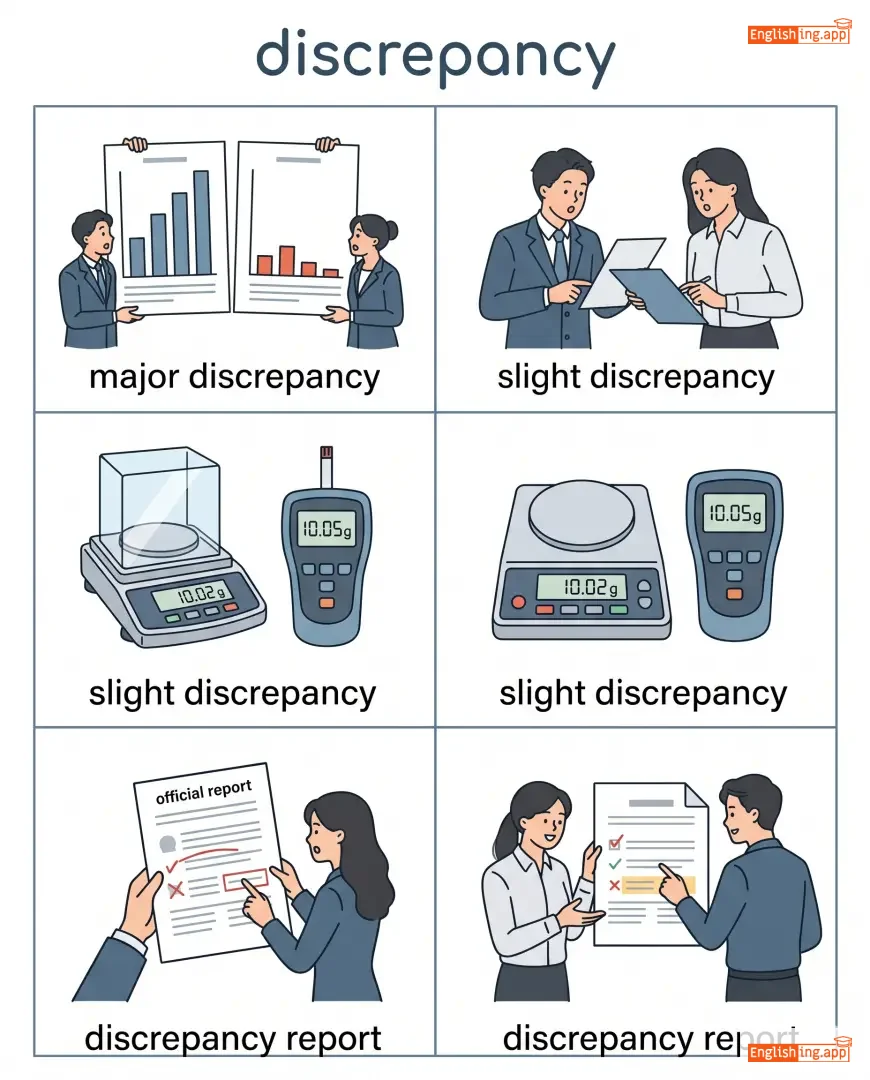
There was a discrepancy between the two reports.

••••••
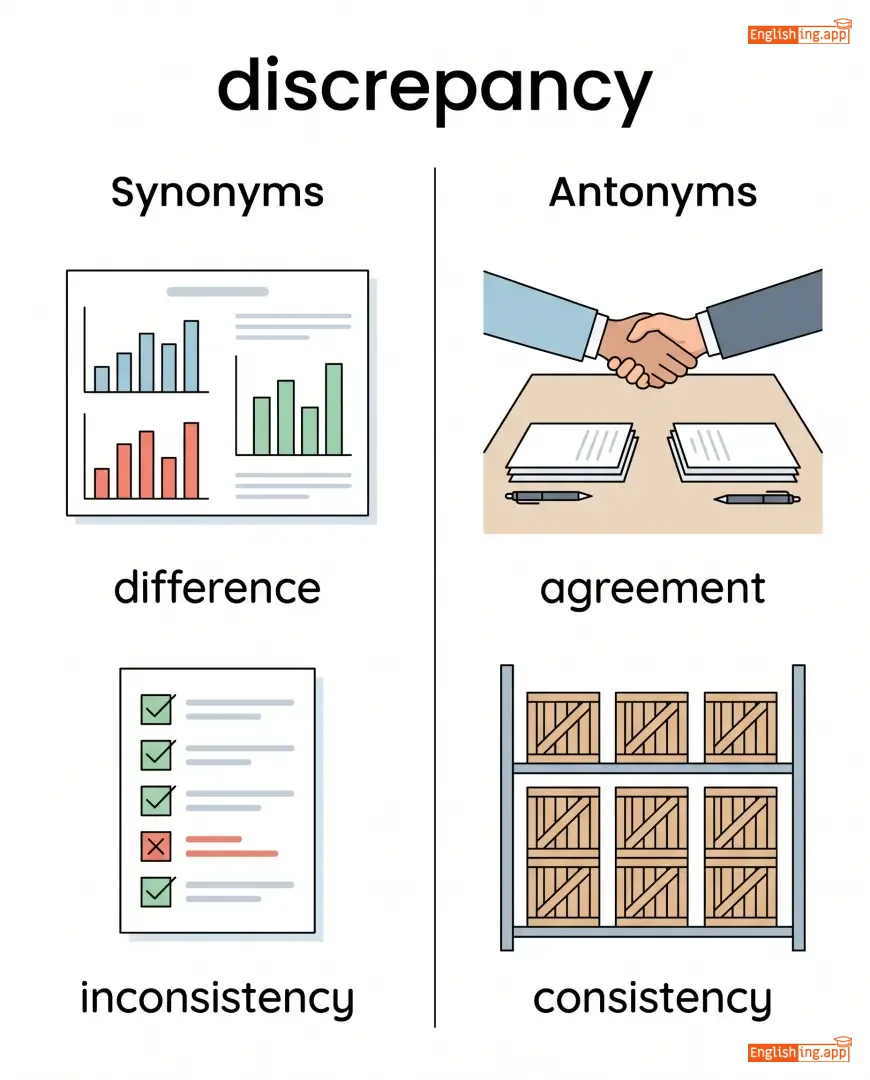
inconsistency, disagreement, difference, variance, disparity, contradiction
••••••
consistency, agreement, harmony, correspondence, compatibility, uniformity
••••••
#2674
📢
••••••
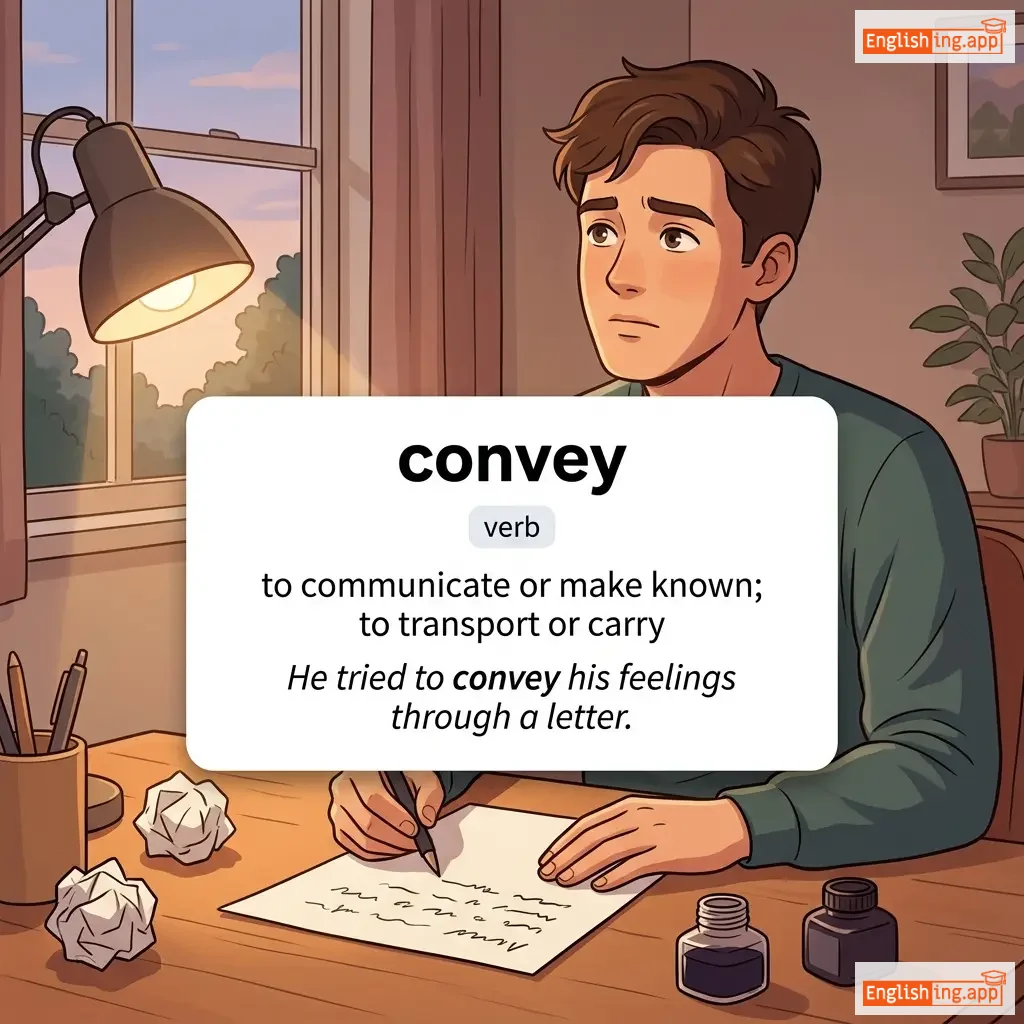
/kənˈveɪ/
verb
••••••
••••••
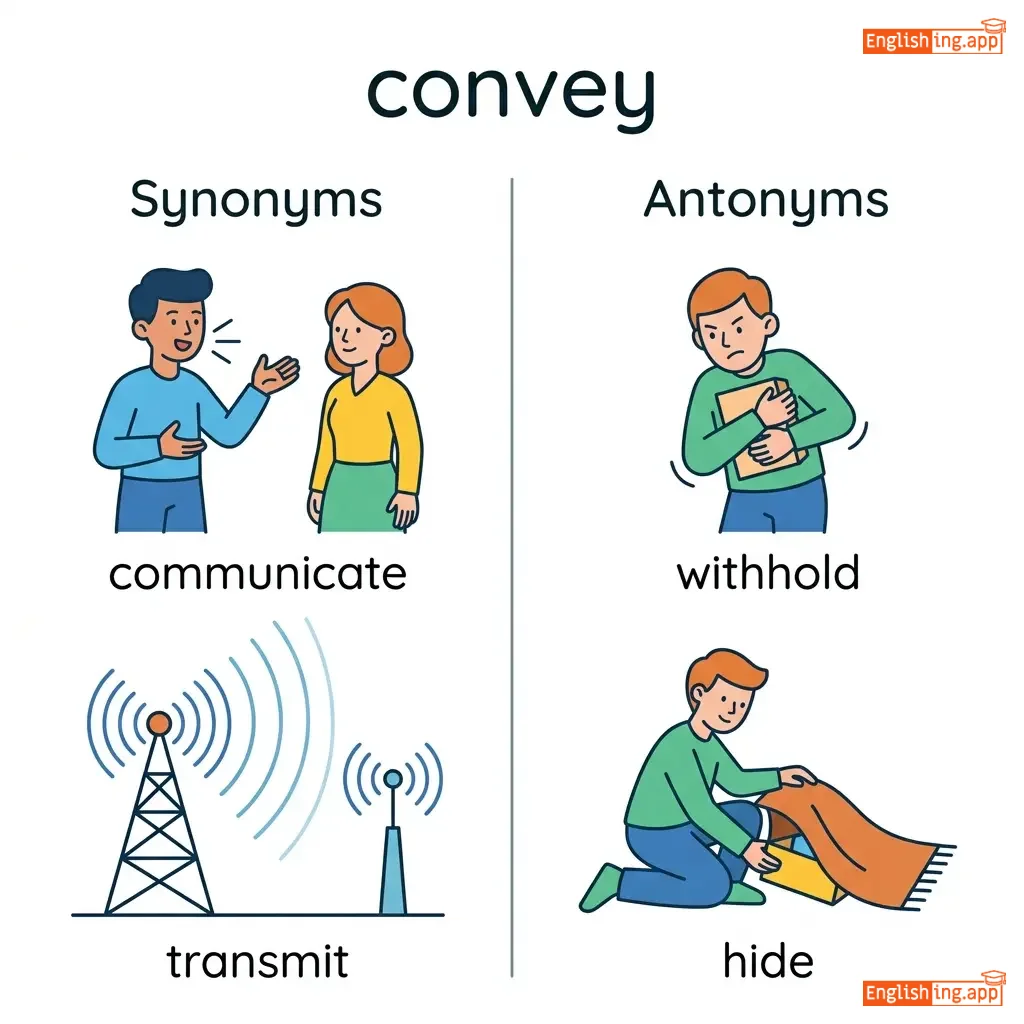
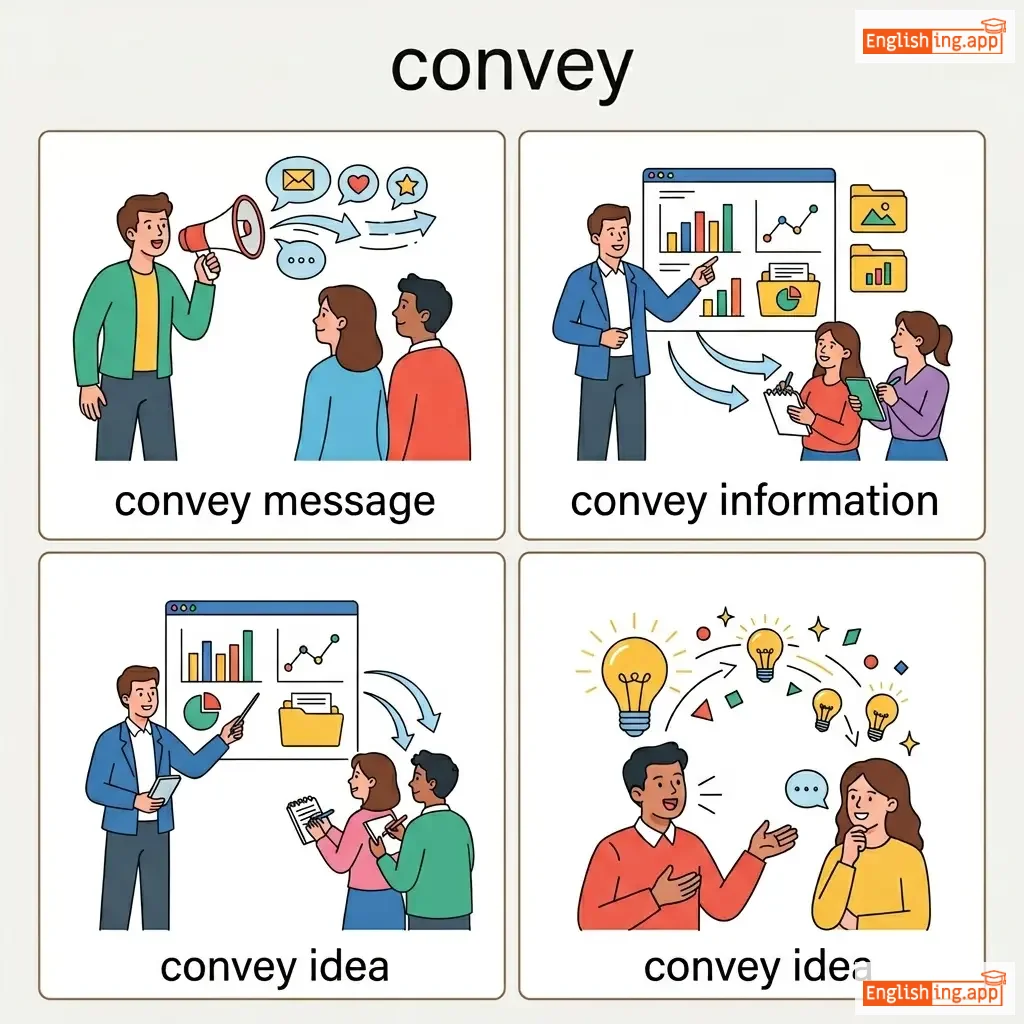
To communicate or make known; to transport or carry from one place to another.
••••••

The teacher conveys the lesson clearly to students.

••••••
communicate, transmit, express, impart, relay, deliver
••••••
conceal, withhold, suppress, hide, retain, keep
••••••
#2675
❤️
••••••
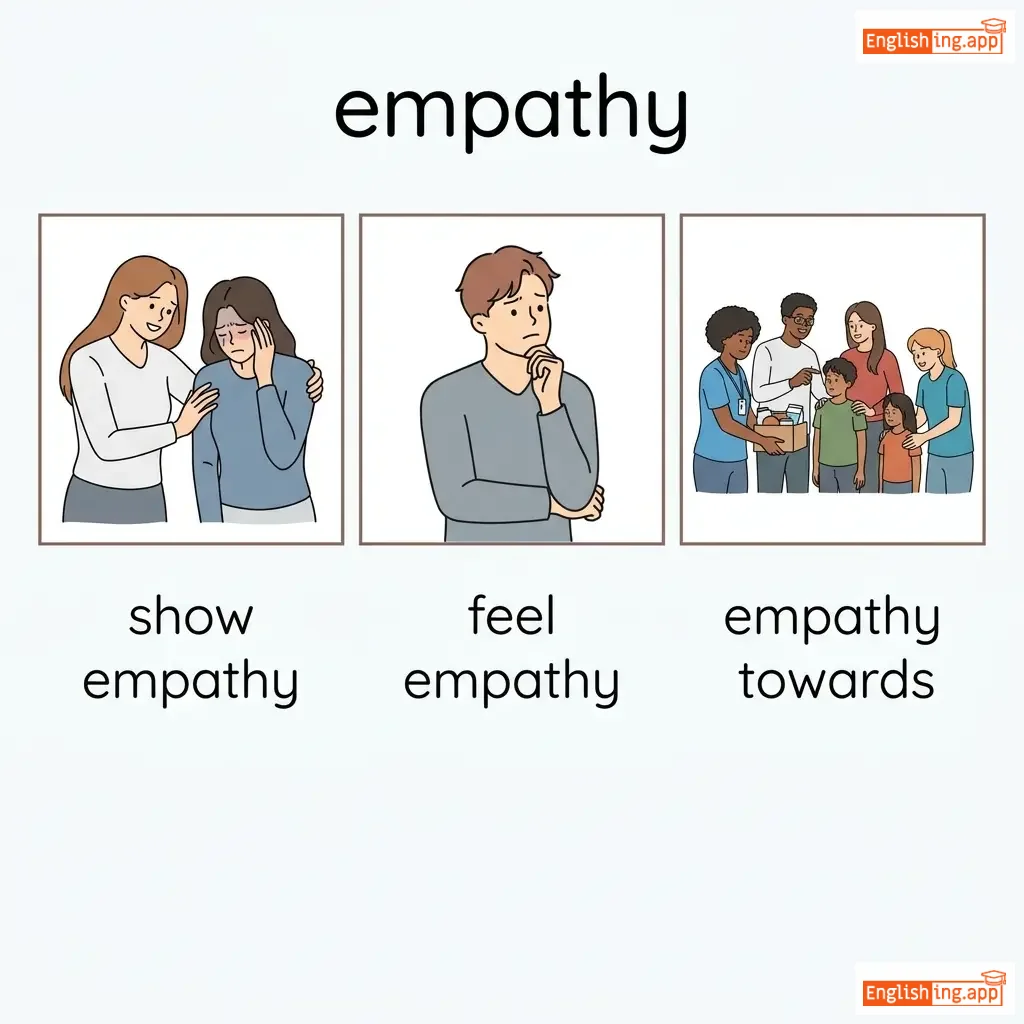
/ˈɛmpəθi/
noun
••••••
••••••
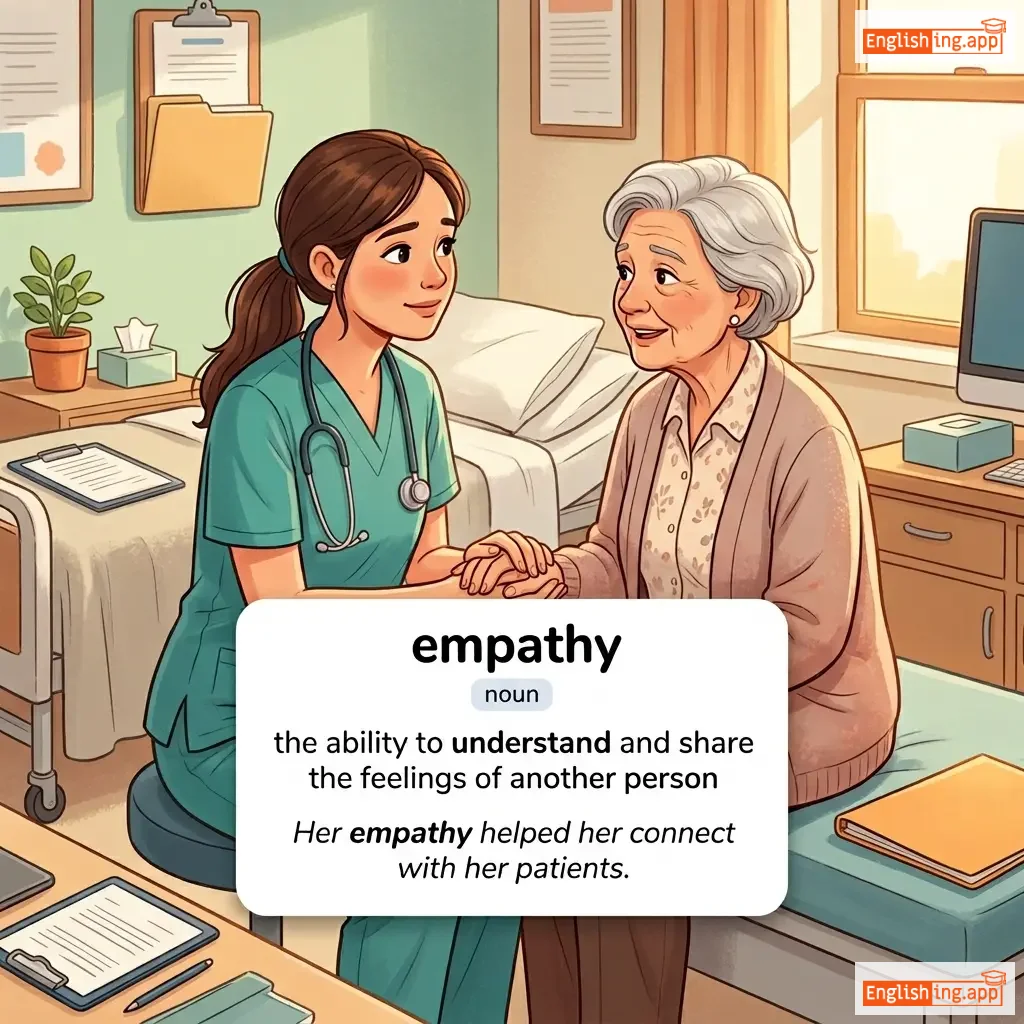
The ability to understand and share the feelings of another person.
••••••

Empathy is crucial for building strong relationships.

••••••
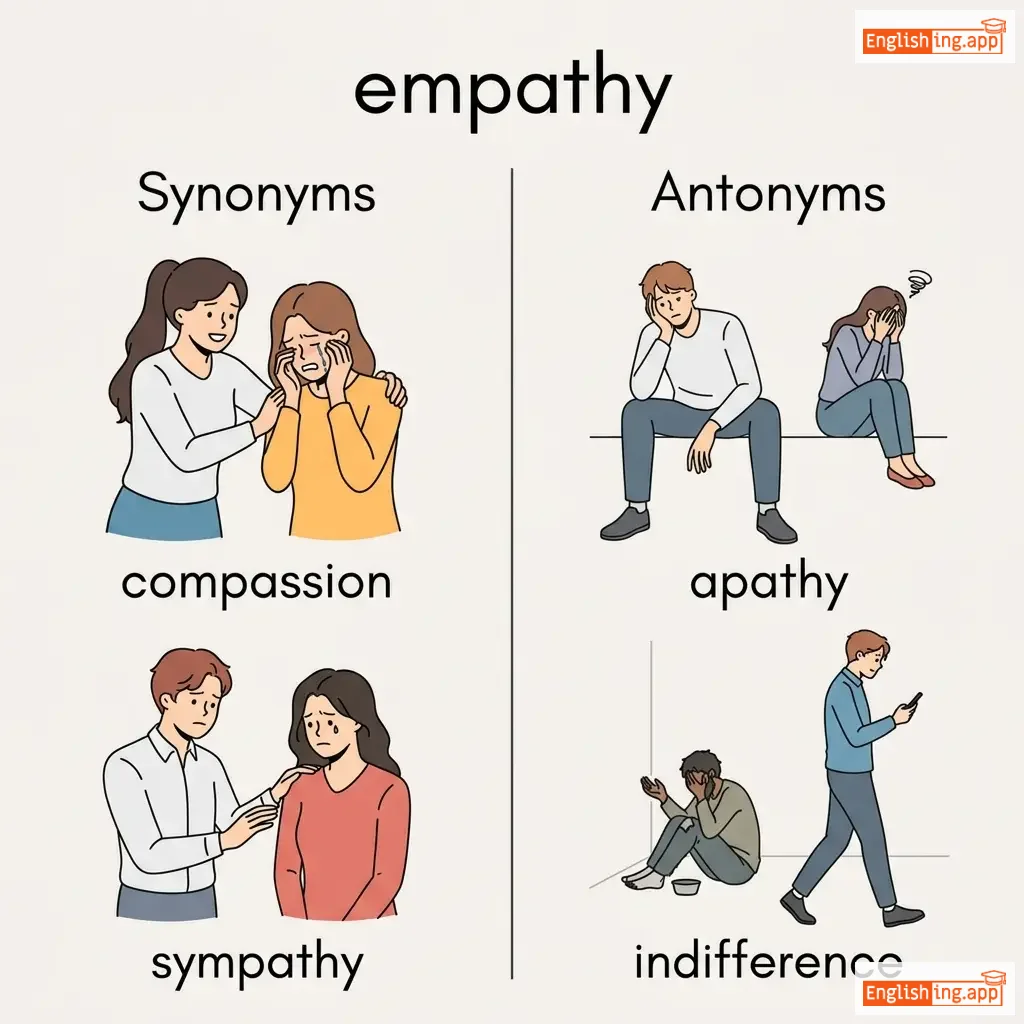
compassion, understanding, sympathy, sensitivity, caring, concern
••••••
indifference, apathy, callousness, insensitivity, coldness, detachment
••••••
#2676
🤝
••••••
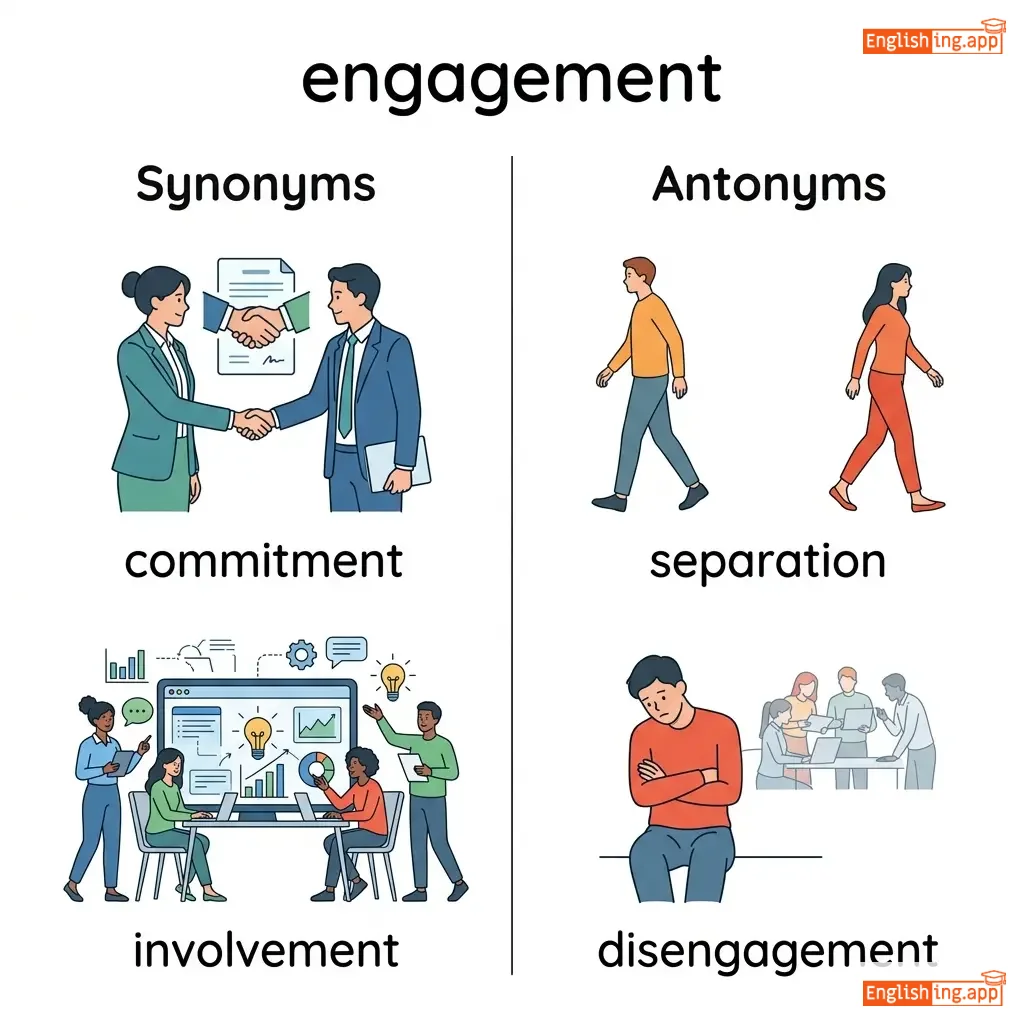
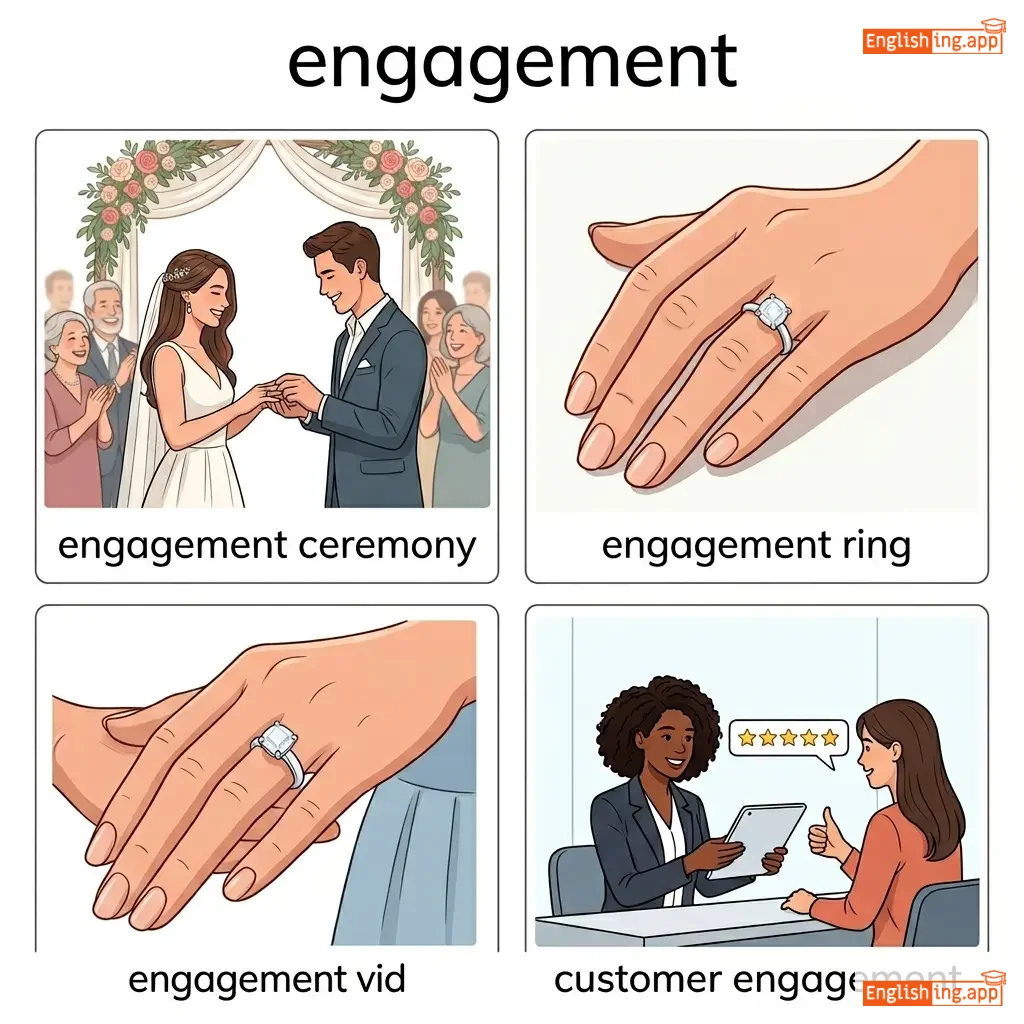
/ɪnˈɡeɪdʒ.mənt/
noun
••••••
••••••
The action of engaging or being engaged; participation or involvement in an activity.
••••••

Active engagement in discussions leads to better learning.

••••••
involvement, participation, commitment, interaction, contribution, collaboration
••••••
disengagement, indifference, detachment, withdrawal, non-participation, apathy
••••••
#2677
👁️
••••••
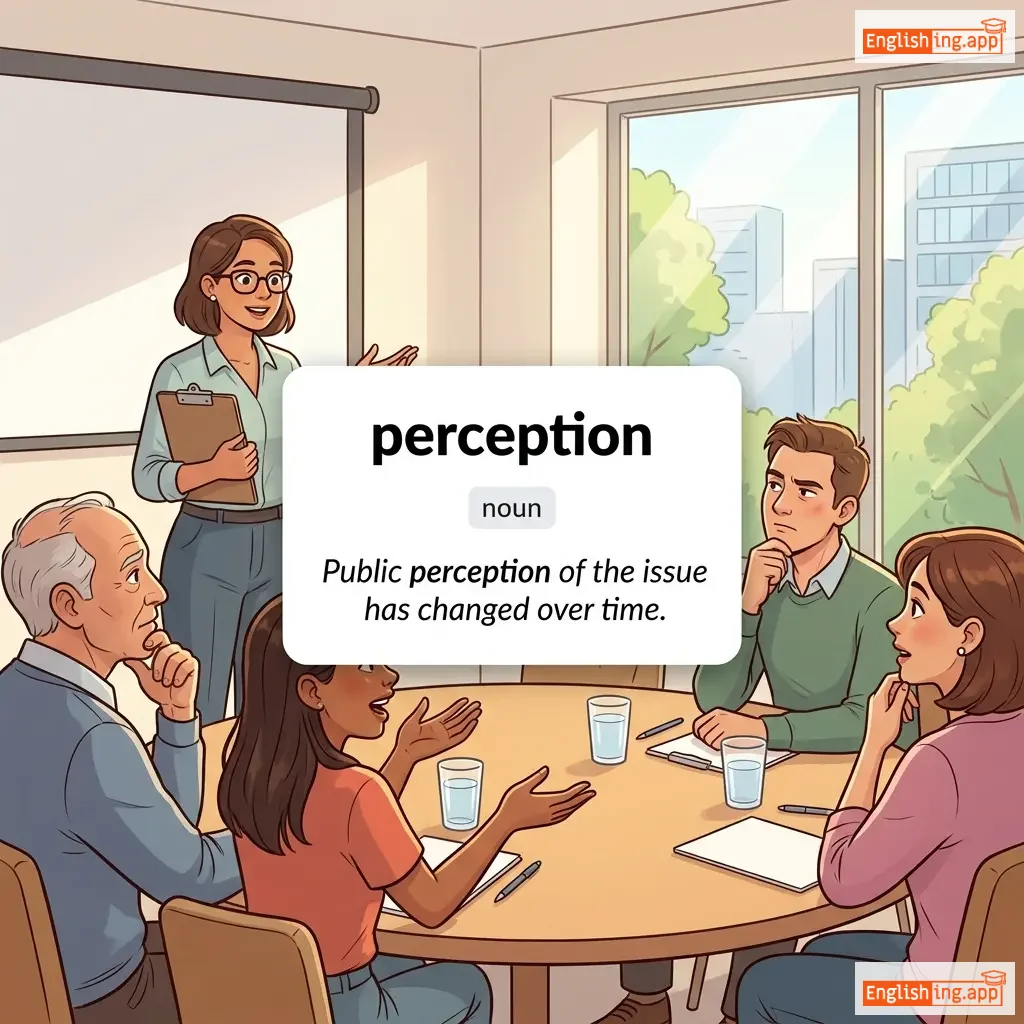
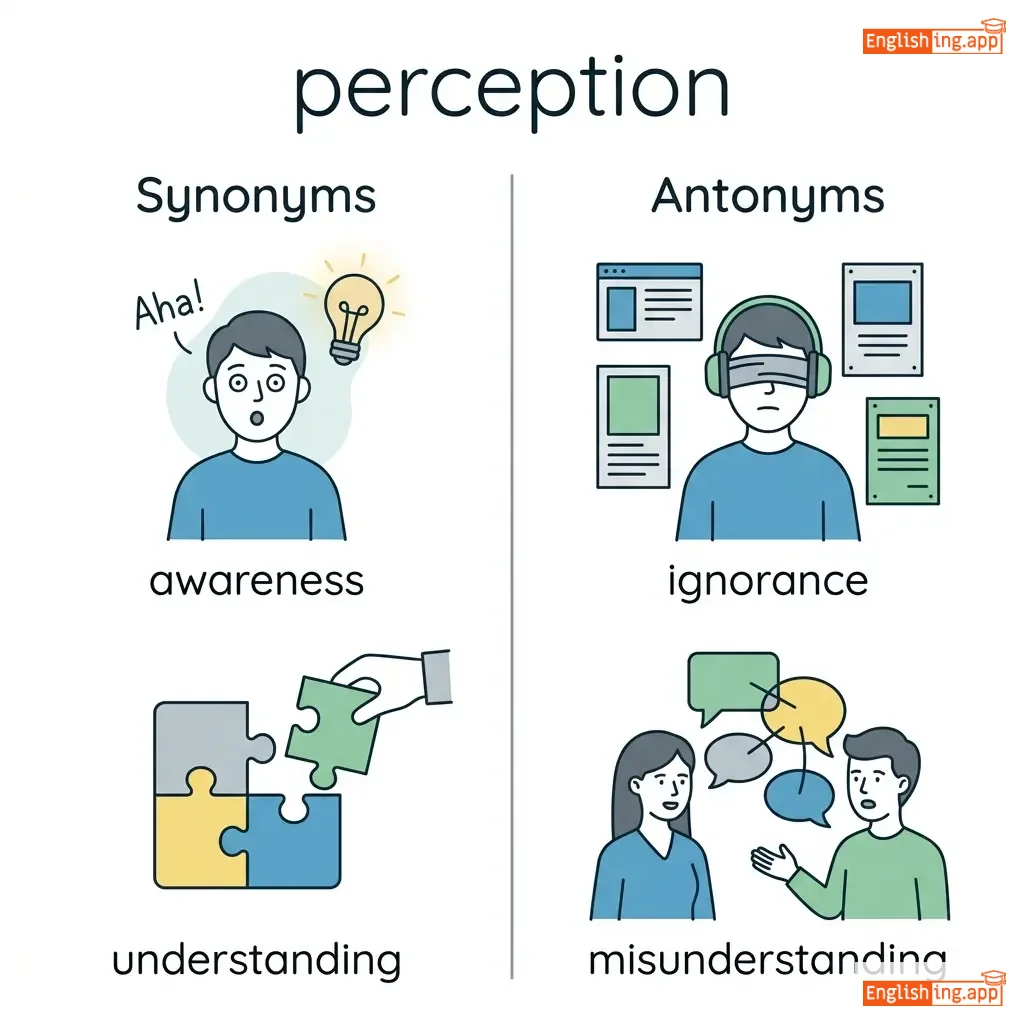
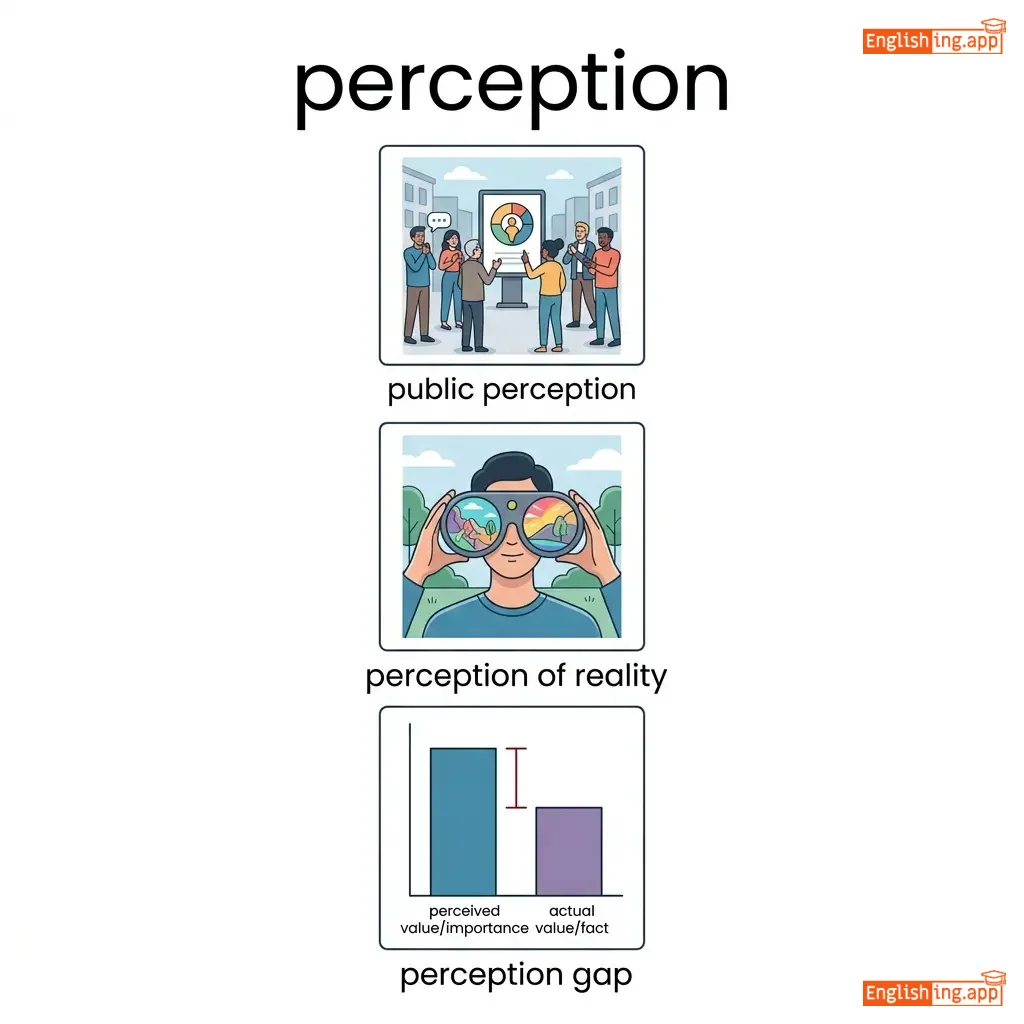
/pəˈsɛpʃən/
noun
••••••
••••••
The ability to see, hear, or become aware of something through the senses; a way of regarding or understanding something.
••••••

People's perception of the situation was clouded.

••••••
insight, awareness, understanding, recognition, comprehension, realization
••••••
misunderstanding, confusion, ignorance, unawareness, misconception, blindness
••••••
#2678
••••••
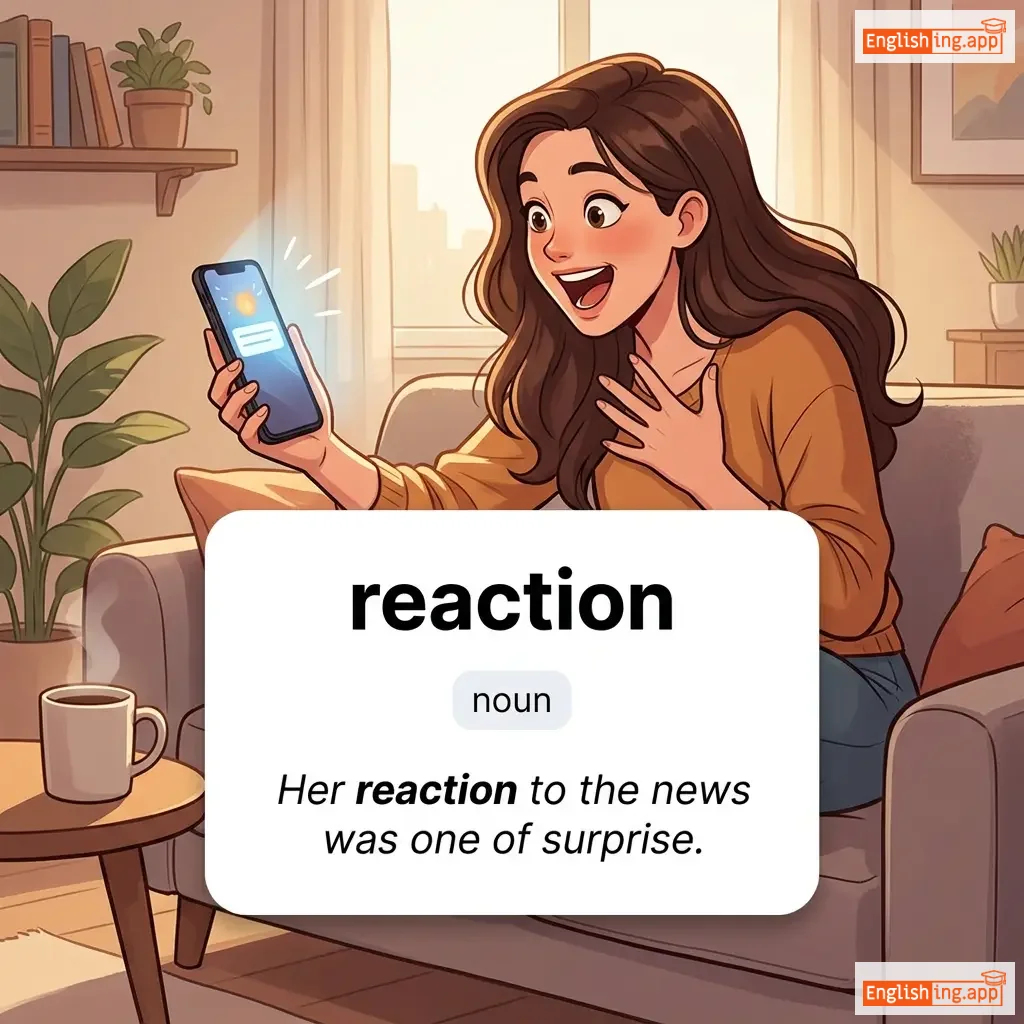
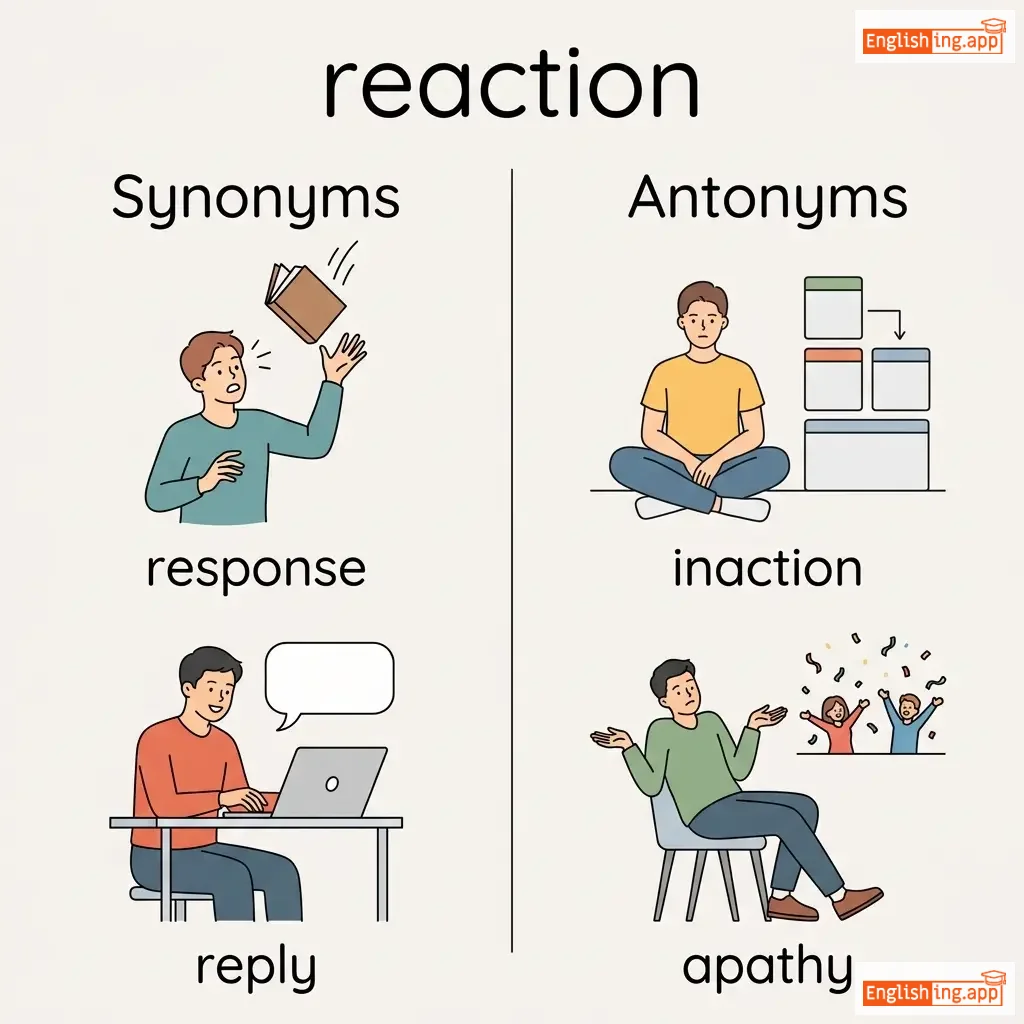
/rɪˈækʃən/
noun
••••••
••••••
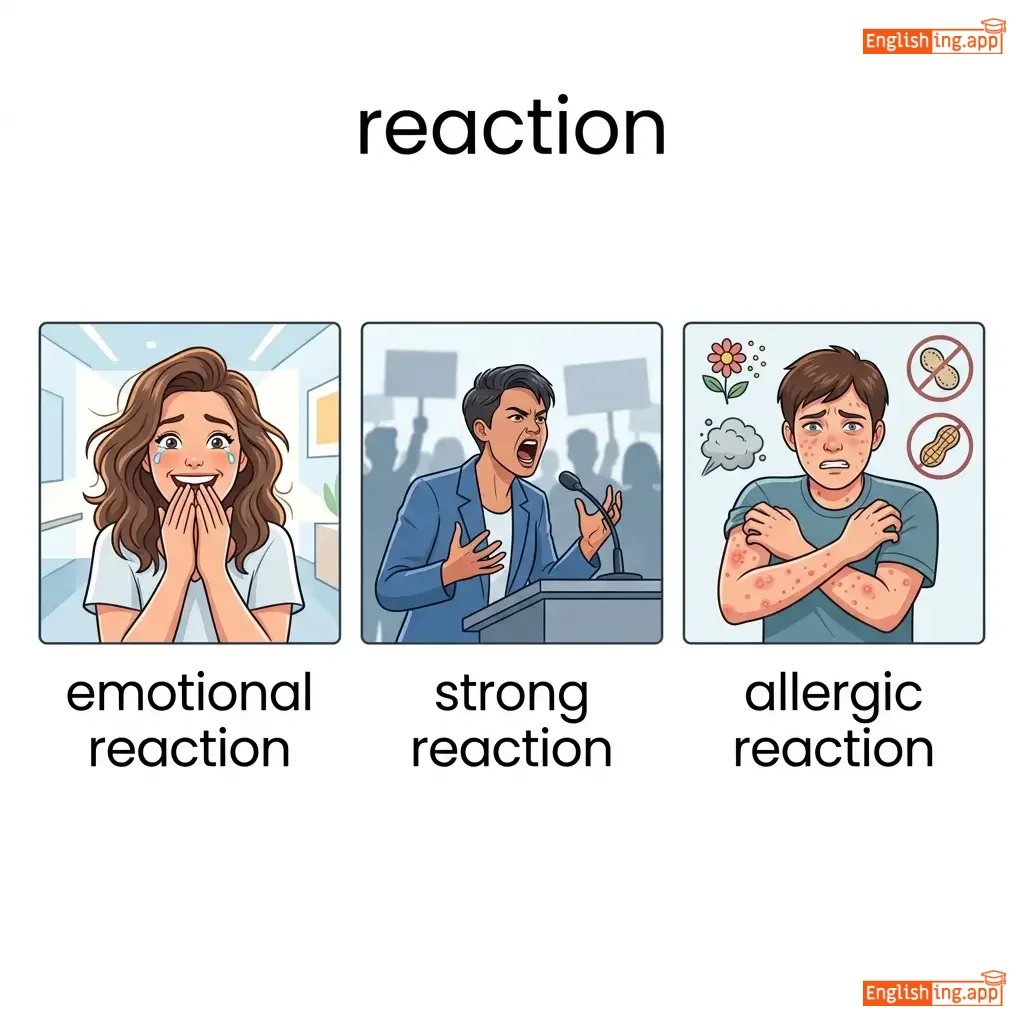
An action performed or a feeling experienced in response to a situation or event.
••••••

His reaction to the news was one of shock.

••••••
response, reply, feedback, answer, reflex, consequence
••••••
indifference, apathy, inaction, non-response, passivity, stillness
••••••
#2679
🏷️
••••••
/ˈstɛə.rɪ.əʊˌtaɪ.pɪŋ/
noun
••••••
••••••
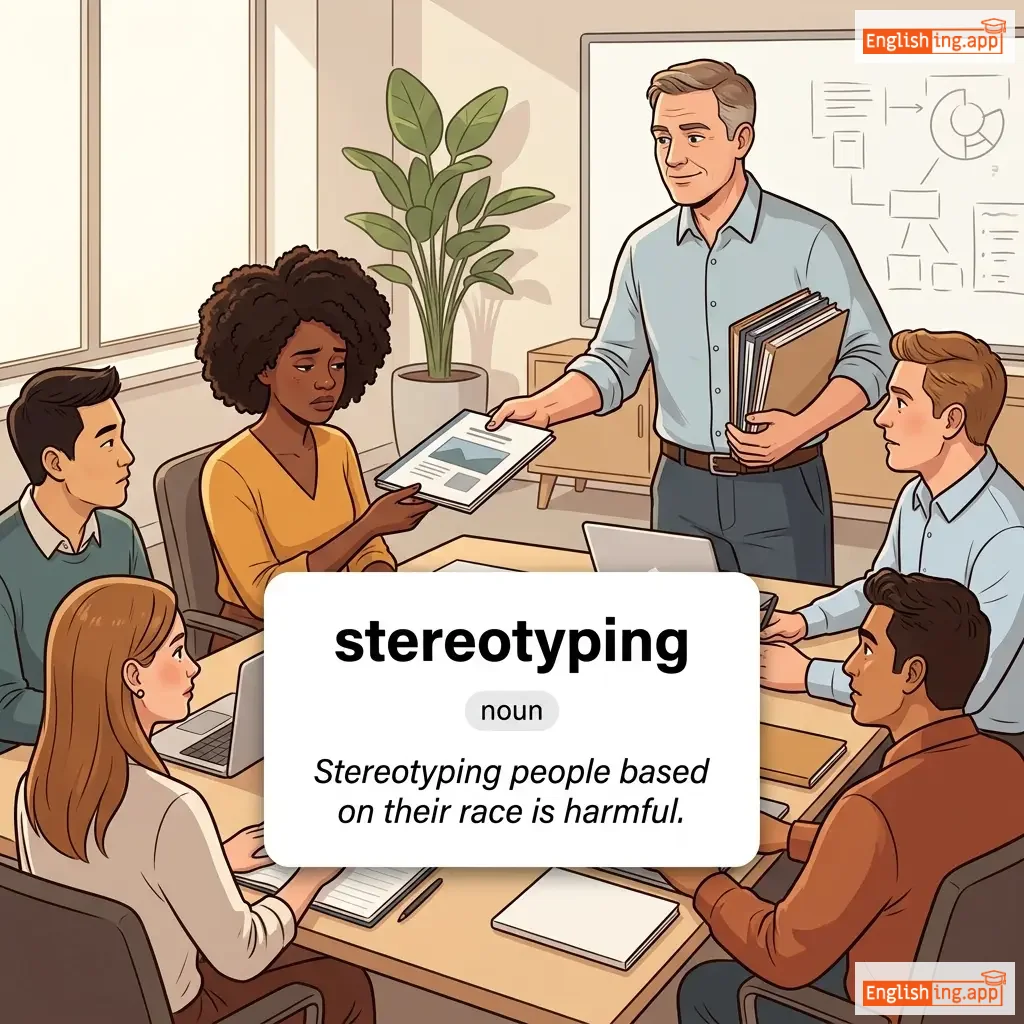
A widely held but fixed and oversimplified image or idea of a particular type of person or thing.
••••••

Stereotyping people based on their race is harmful.

••••••
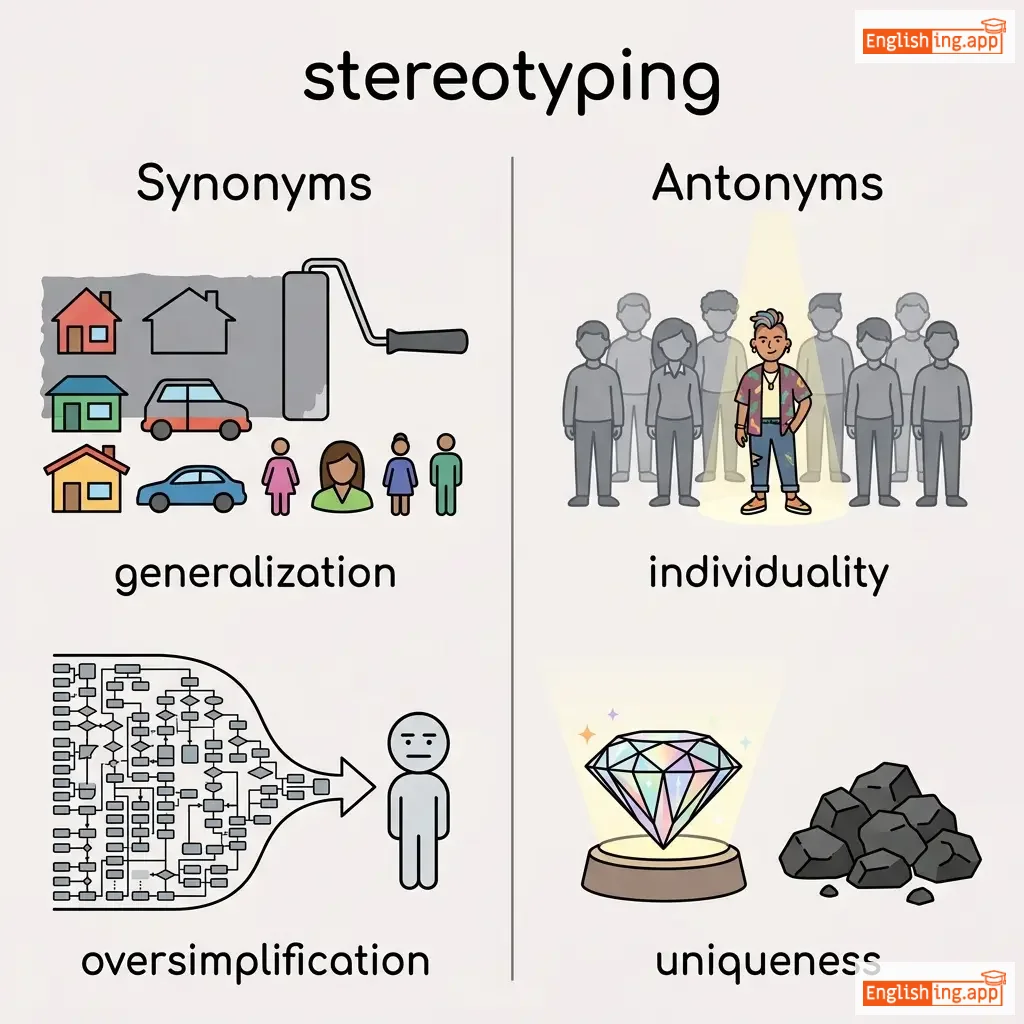
generalization, oversimplification, categorization, labeling, pigeonholing, typecasting
••••••
individuality, uniqueness, personalization, specificity, distinctiveness, originality
••••••
#2680
🗣️
••••••
/ɪˌnʌn.siˈeɪ.ʃən/
noun
••••••
••••••
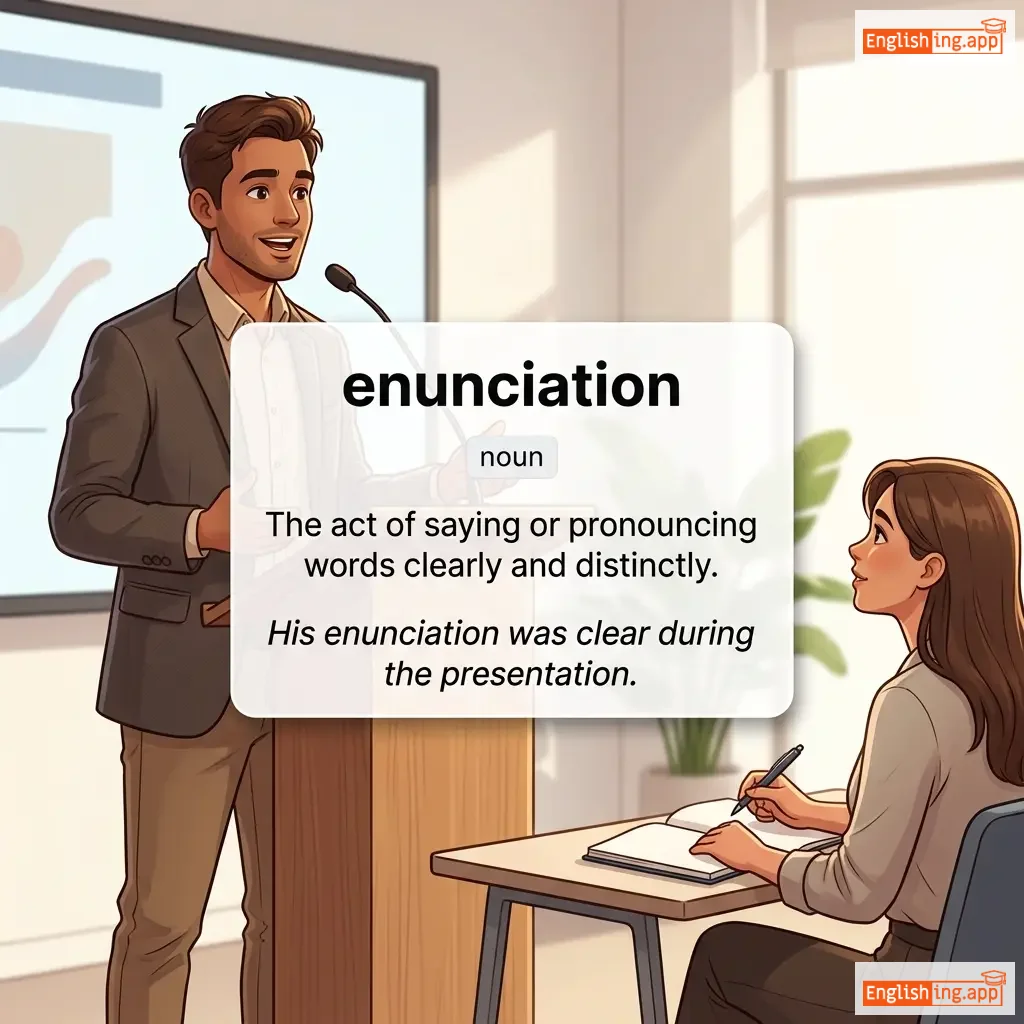
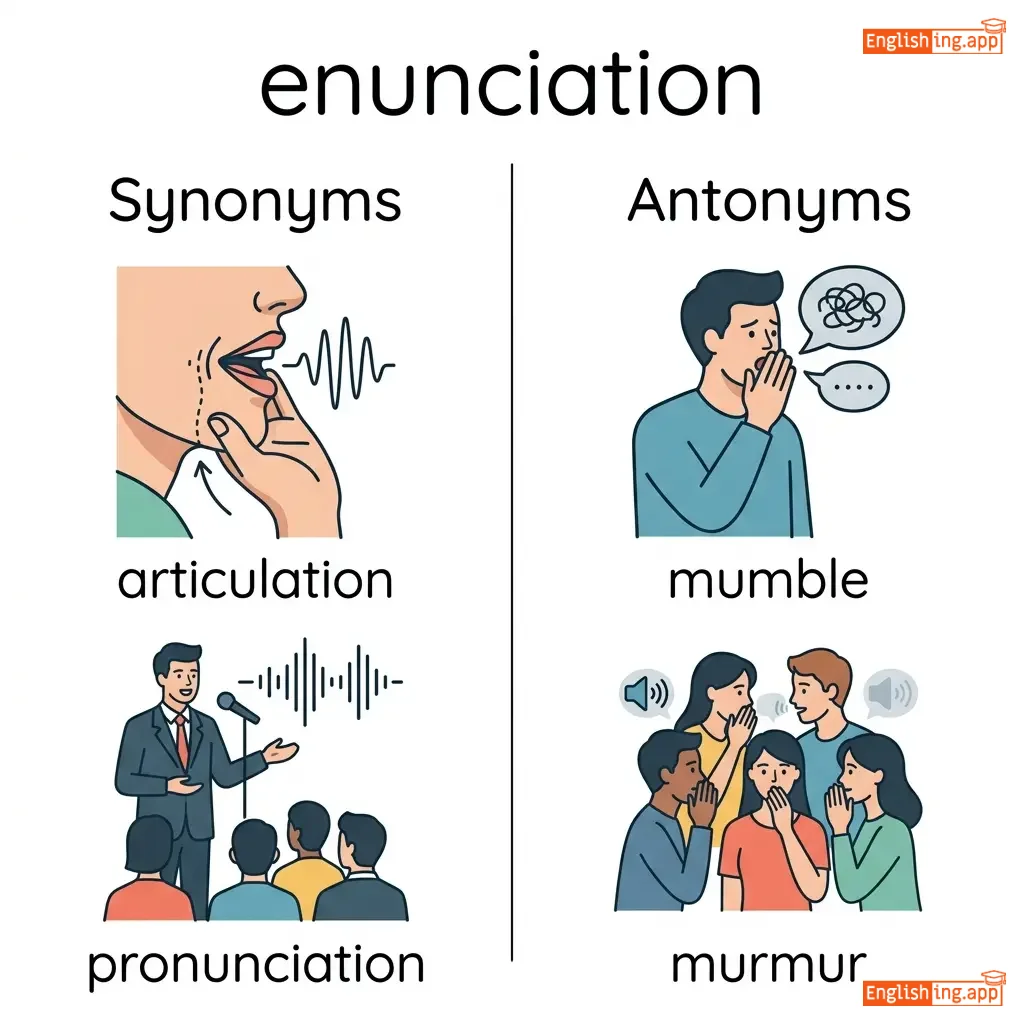
The act of saying or pronouncing words clearly and distinctly.
••••••

His enunciation was clear during the presentation.

••••••
articulation, pronunciation, diction, delivery, expression, utterance
••••••
mumble, murmur, slur, garble, mutter, whisper
••••••
#2681
🎵
••••••
/ˌvəʊ.kəl.aɪˈzeɪ.ʃən/
noun
••••••
••••••
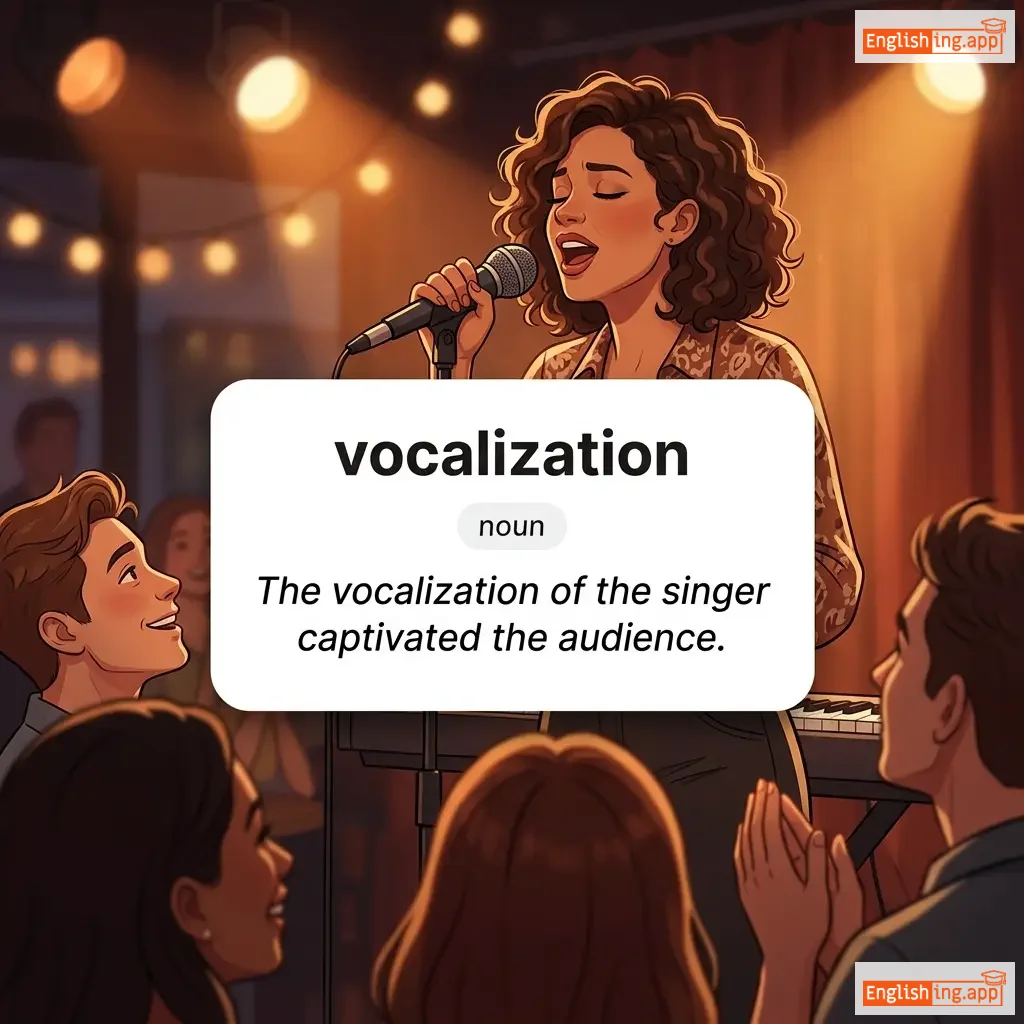
The action of producing sounds with the voice; the expression of thoughts or feelings in spoken words.
••••••

The vocalization of the singer captivated the audience.

••••••
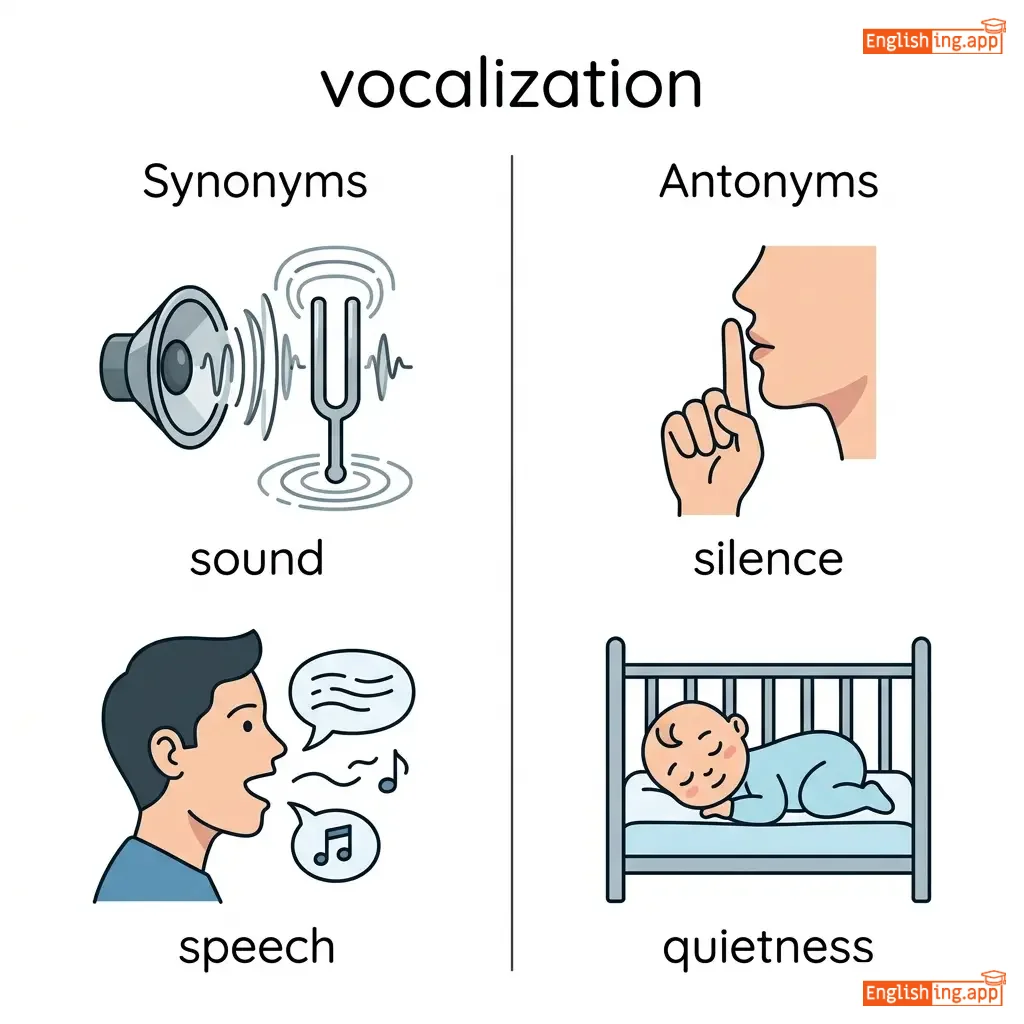
sound, speech, utterance, voice, expression, articulation
••••••
silence, quietness, muteness, stillness, speechlessness, voicelessness
••••••
#2682
🚫
••••••
/ɪmˈpɛdɪmənt/
noun
••••••
••••••
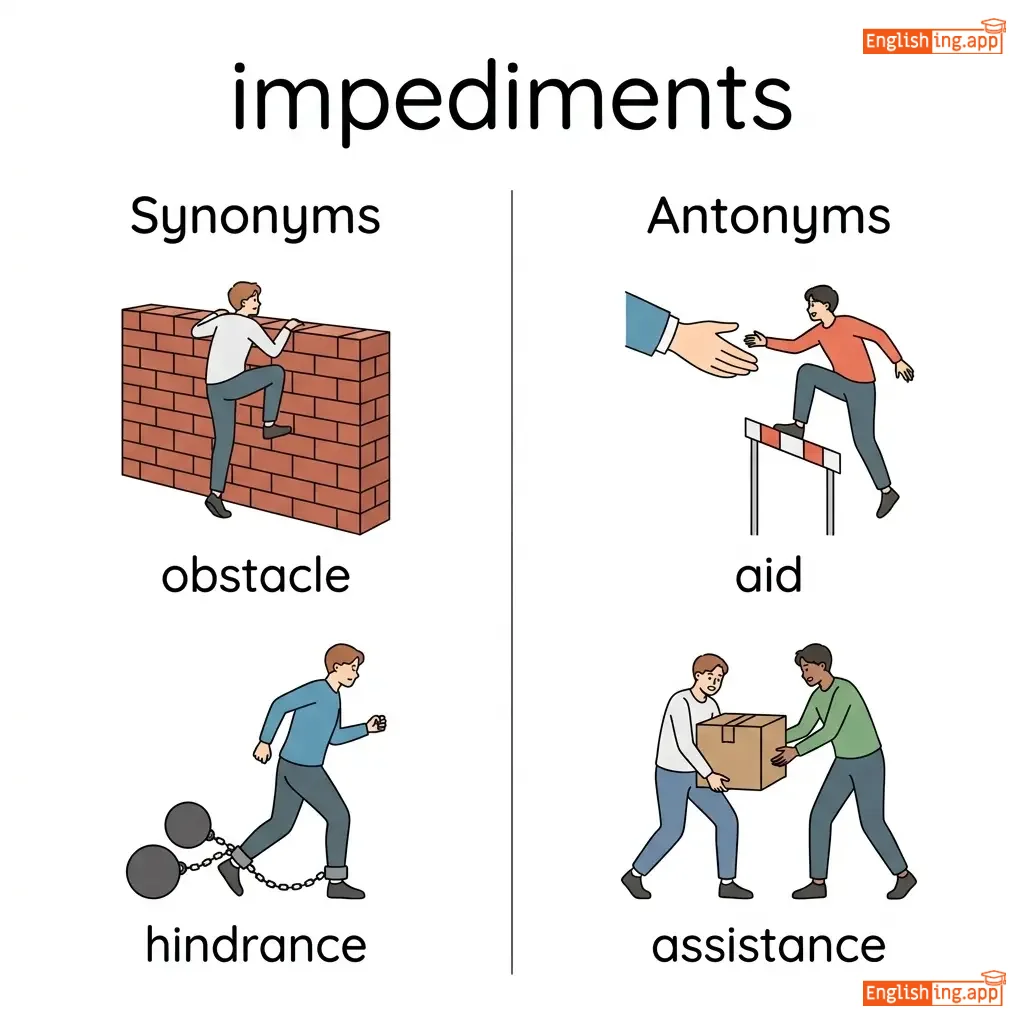
A hindrance or obstruction in doing something; things that prevent progress or achievement.
••••••

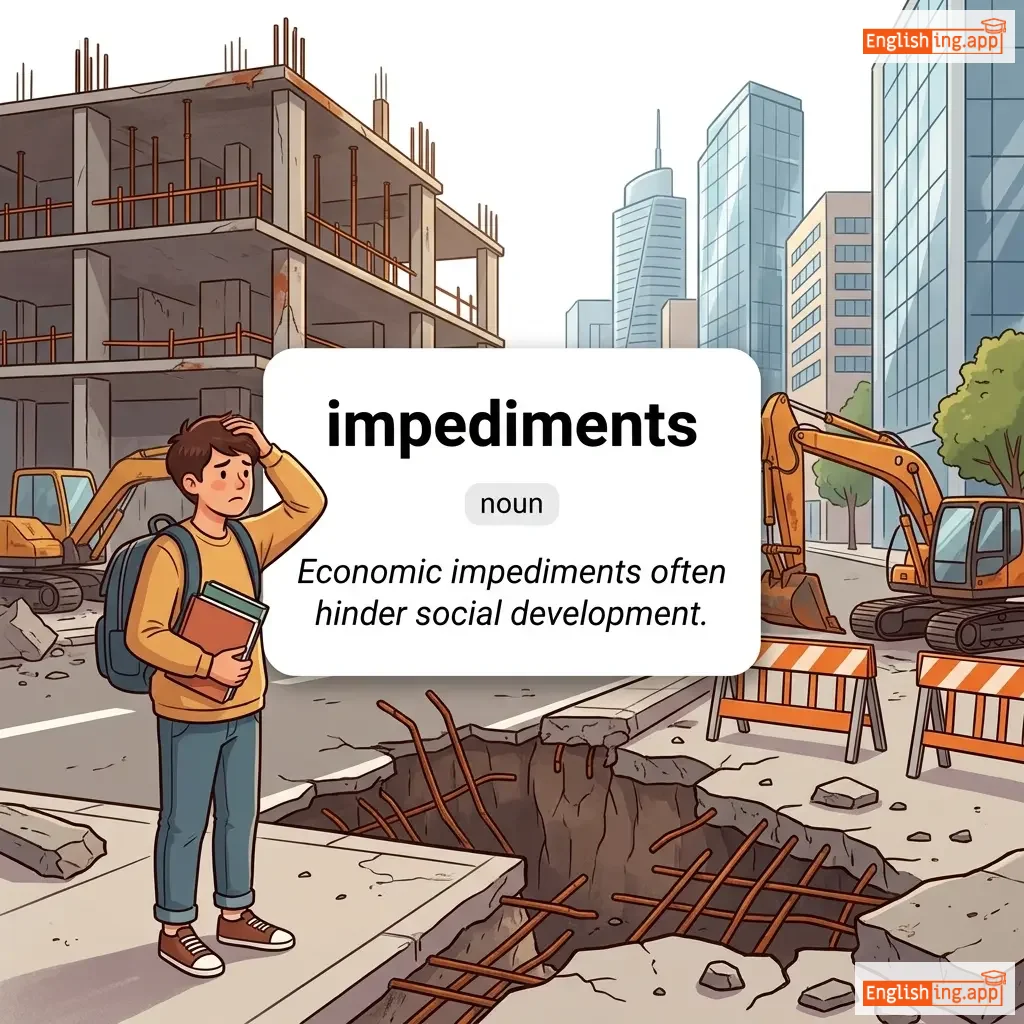
Economic impediments often hinder social development.

••••••
obstacle, hindrance, barrier, obstruction, difficulty, drawback
••••••
aid, assistance, help, support, advantage, benefit
••••••
#2683
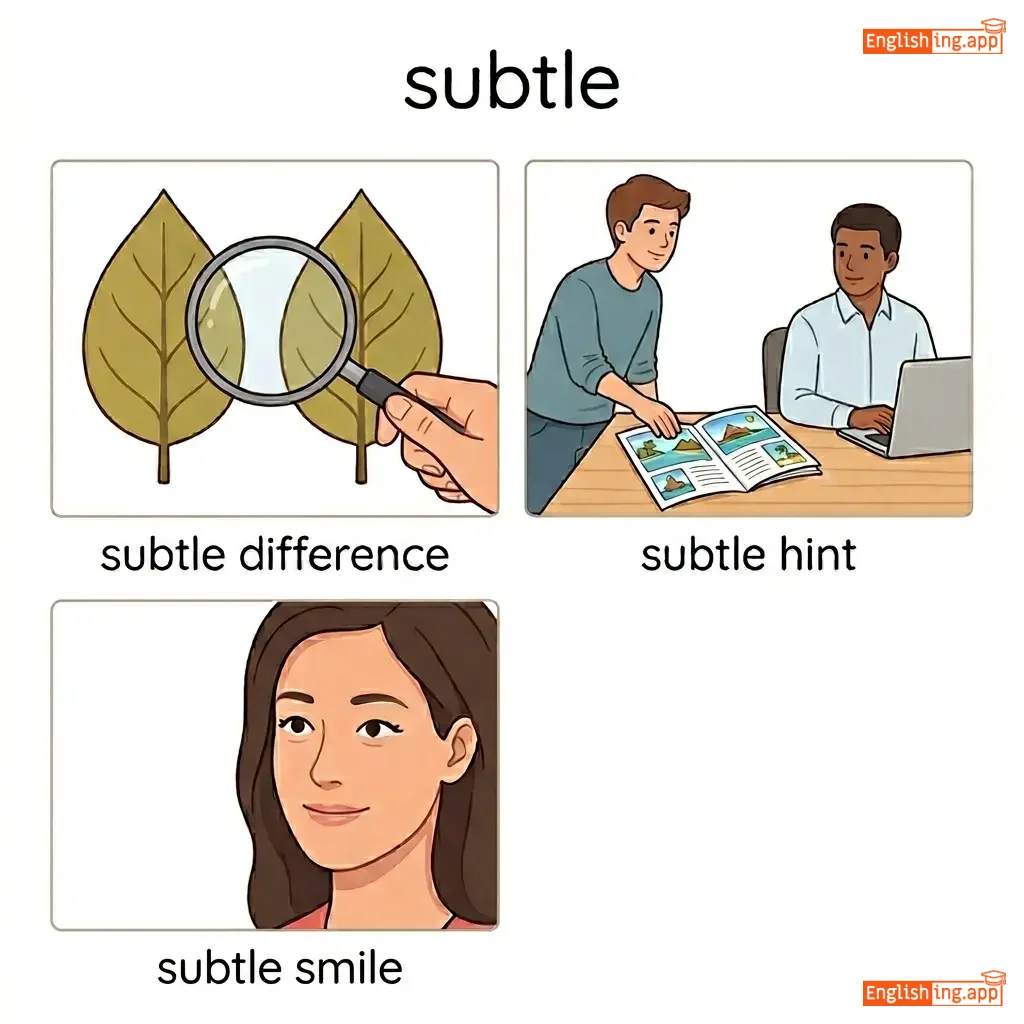
🔍
••••••
/ˈsʌt.əl/
adjective
••••••
••••••
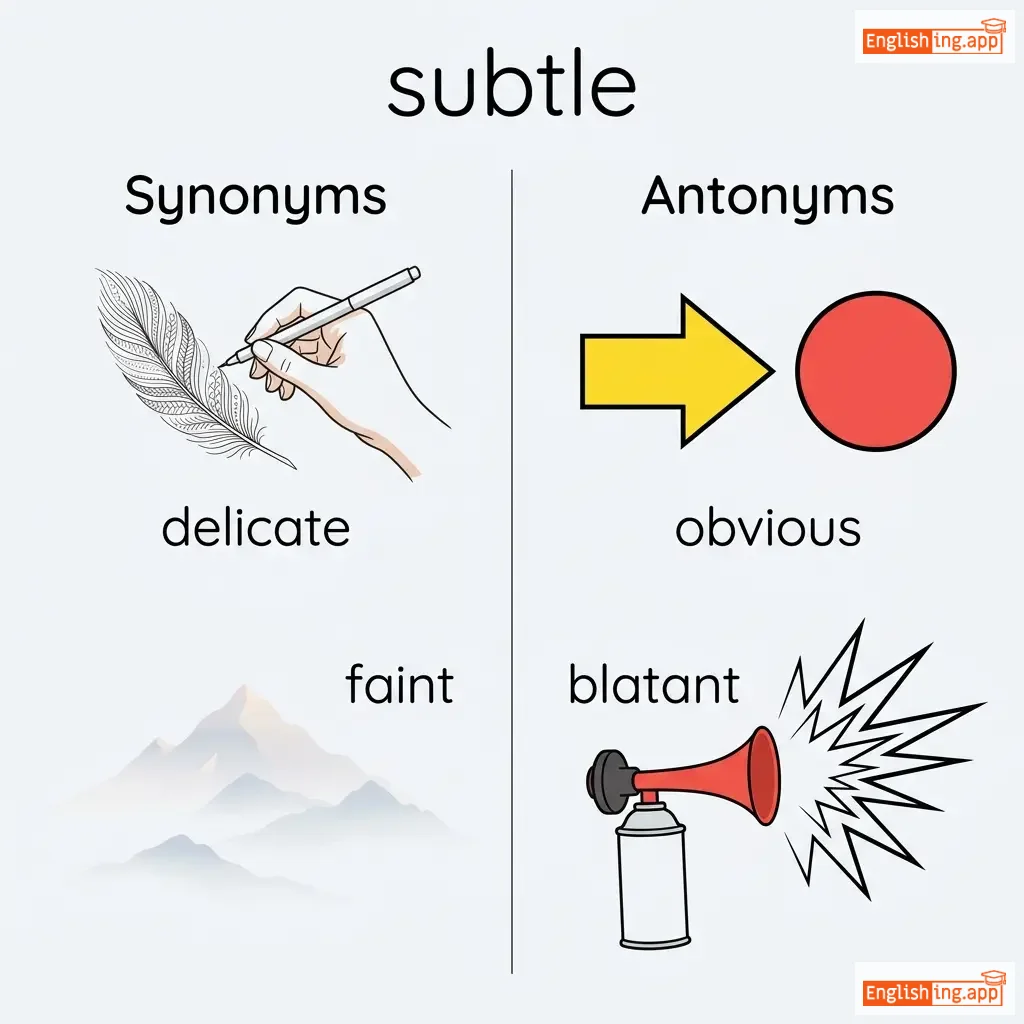
So delicate or precise as to be difficult to analyze or describe; making use of clever and indirect methods.
••••••

The artist's use of color was subtle yet powerful.

••••••
delicate, refined, understated, nuanced, gentle, mild
••••••
obvious, blatant, crude, harsh, stark, glaring
••••••
#2684
••••••
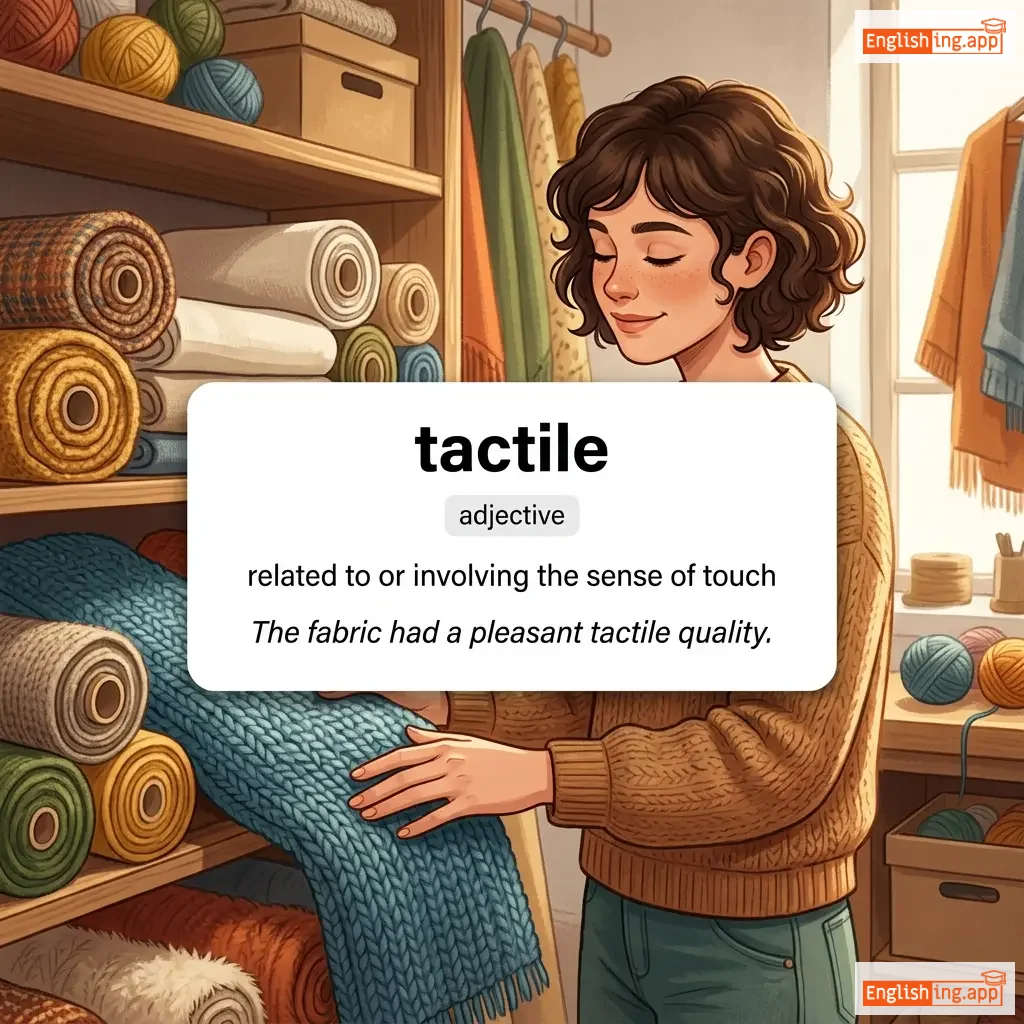
/ˈtæk.taɪl/
adjective
••••••
••••••
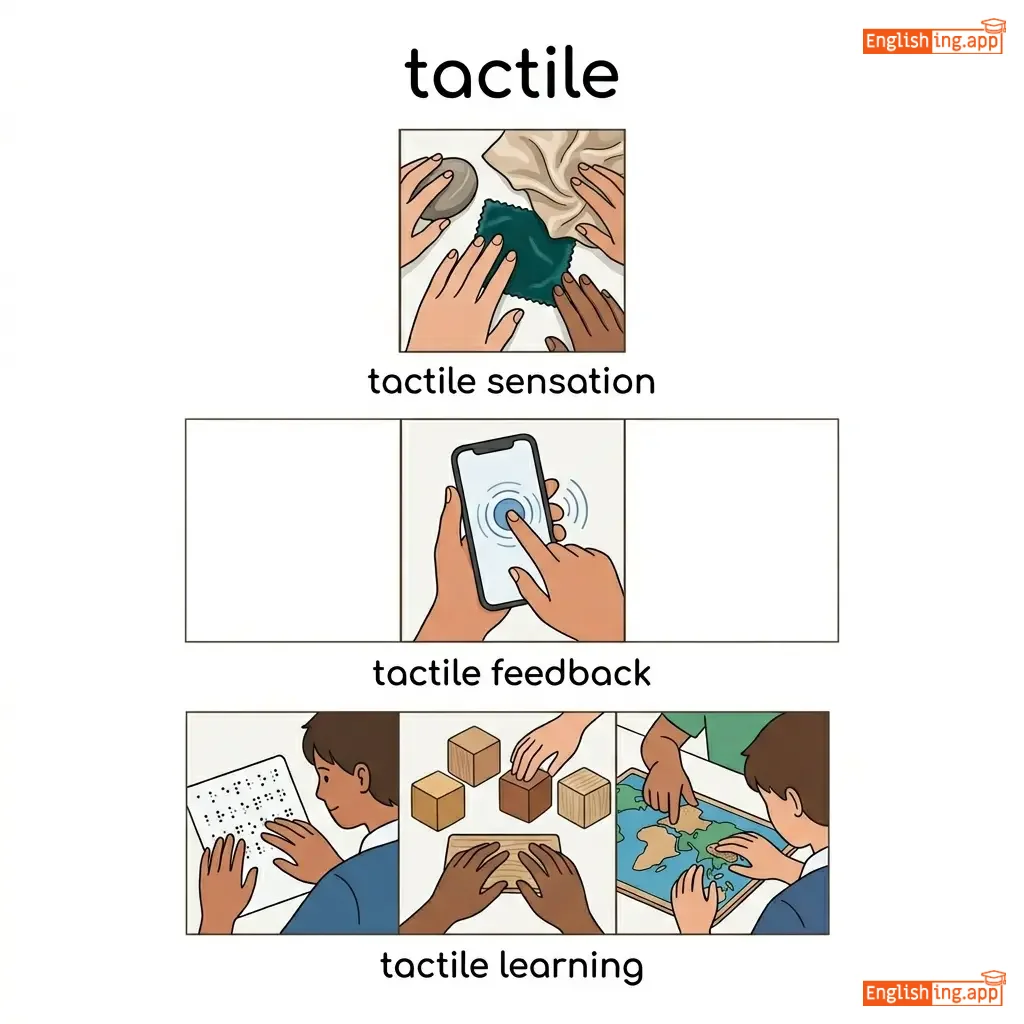
Connected with the sense of touch; perceptible by touch or giving a sensation when touched.
••••••

The tactile experience of the fabric was soft and smooth.

••••••
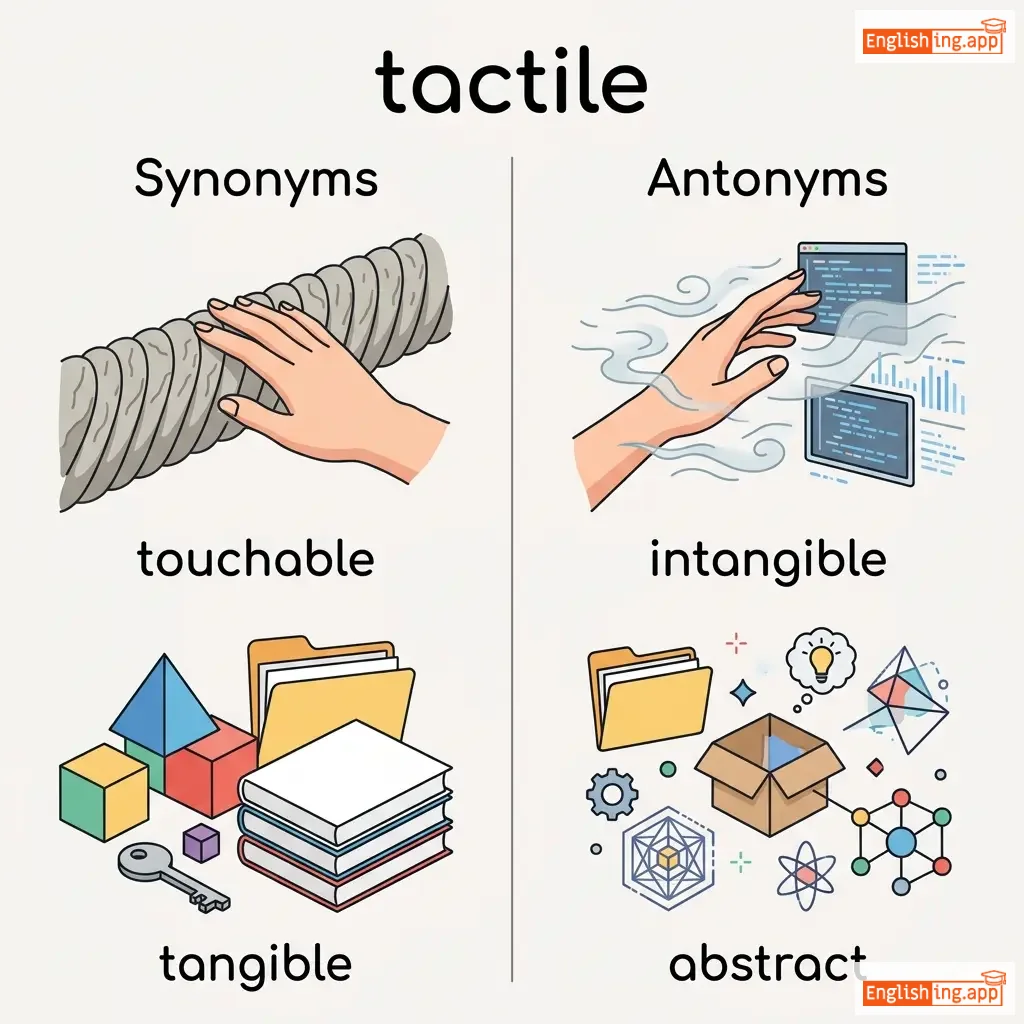
touchable, perceptible, tangible, palpable, physical, material
••••••
intangible, impalpable, imperceptible, untouchable, immaterial, abstract
••••••
#2685
📚
••••••
/kənˈtɛk.stju.əl/
adjective
••••••
••••••
Depending on or relating to the context or circumstances in which something occurs.
••••••

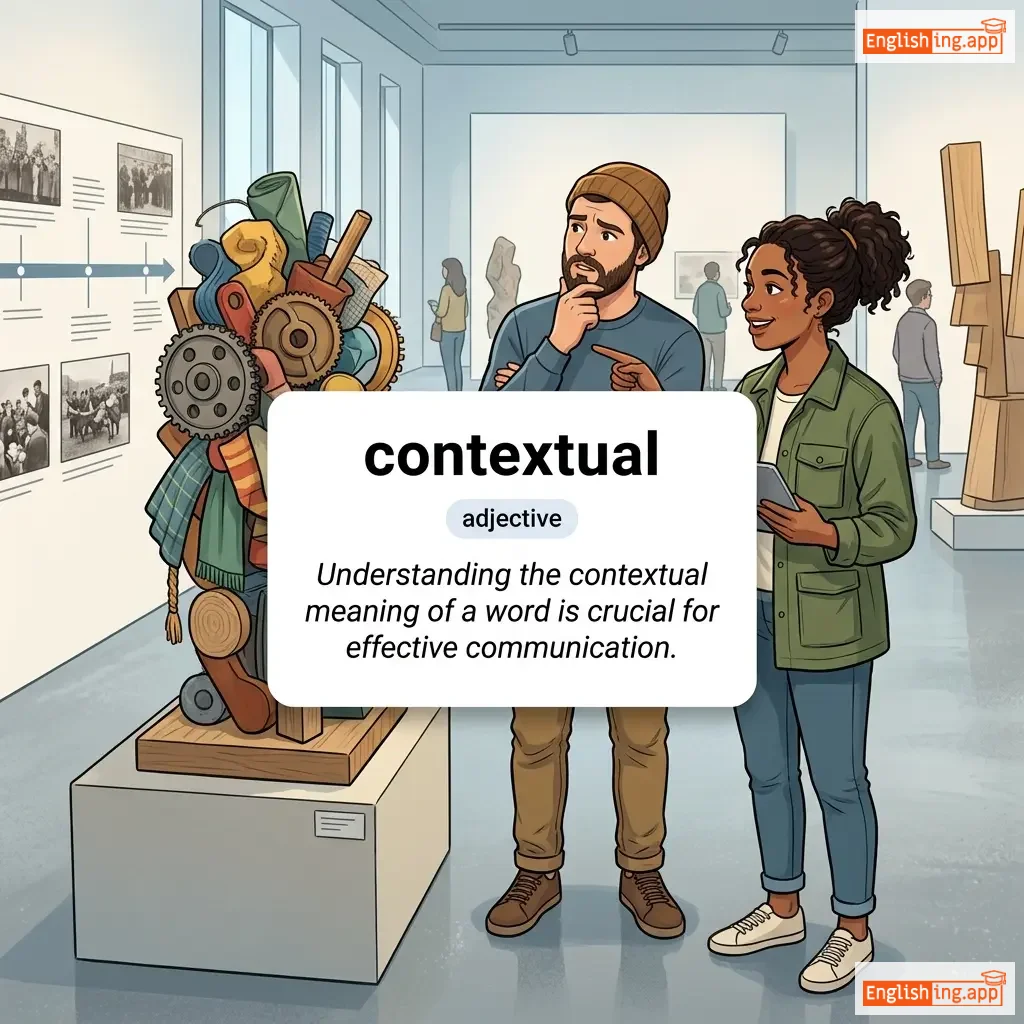
His actions were understood in a broader contextual framework.

••••••
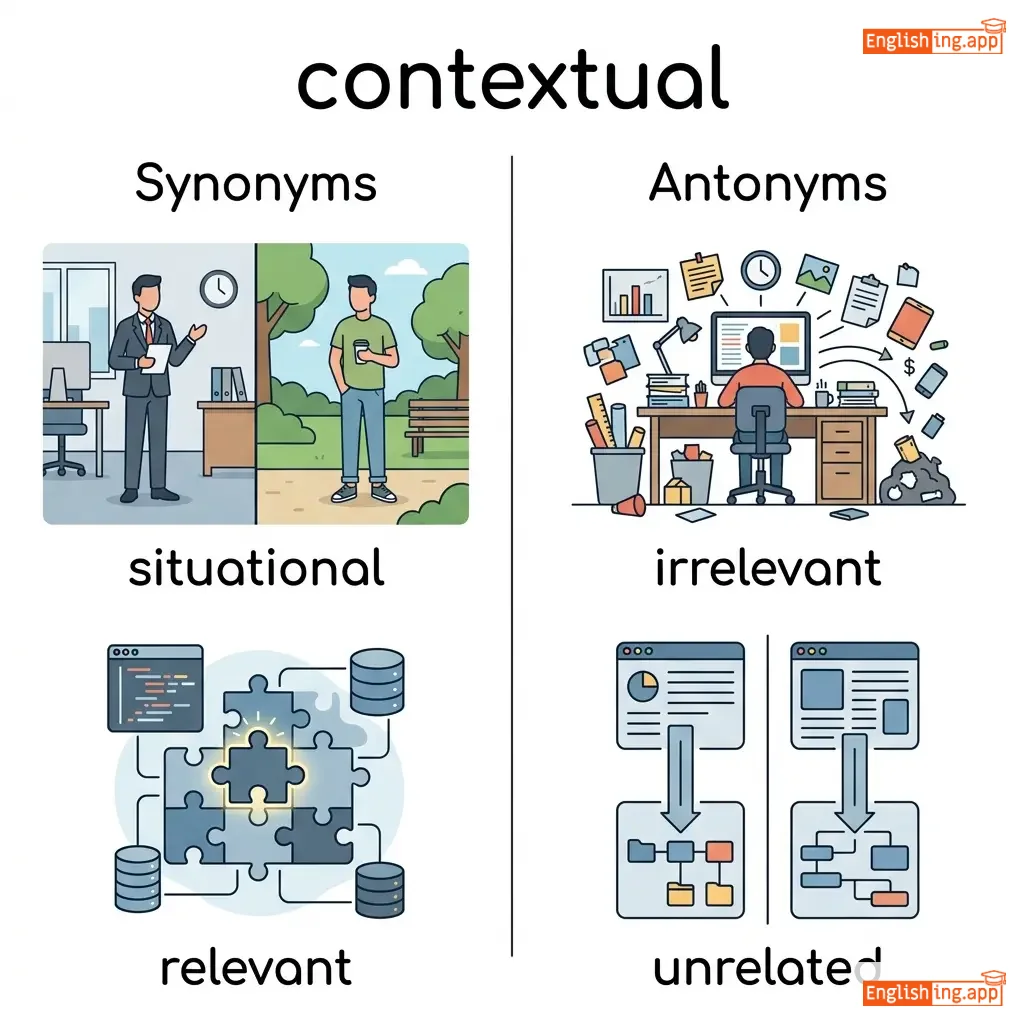
situational, circumstantial, environmental, conditional, relative, dependent
••••••
out-of-context, irrelevant, absolute, independent, unconditional, isolated
••••••