Vocabularios

Descubra, aprenda y domine el vocabulario en inglés

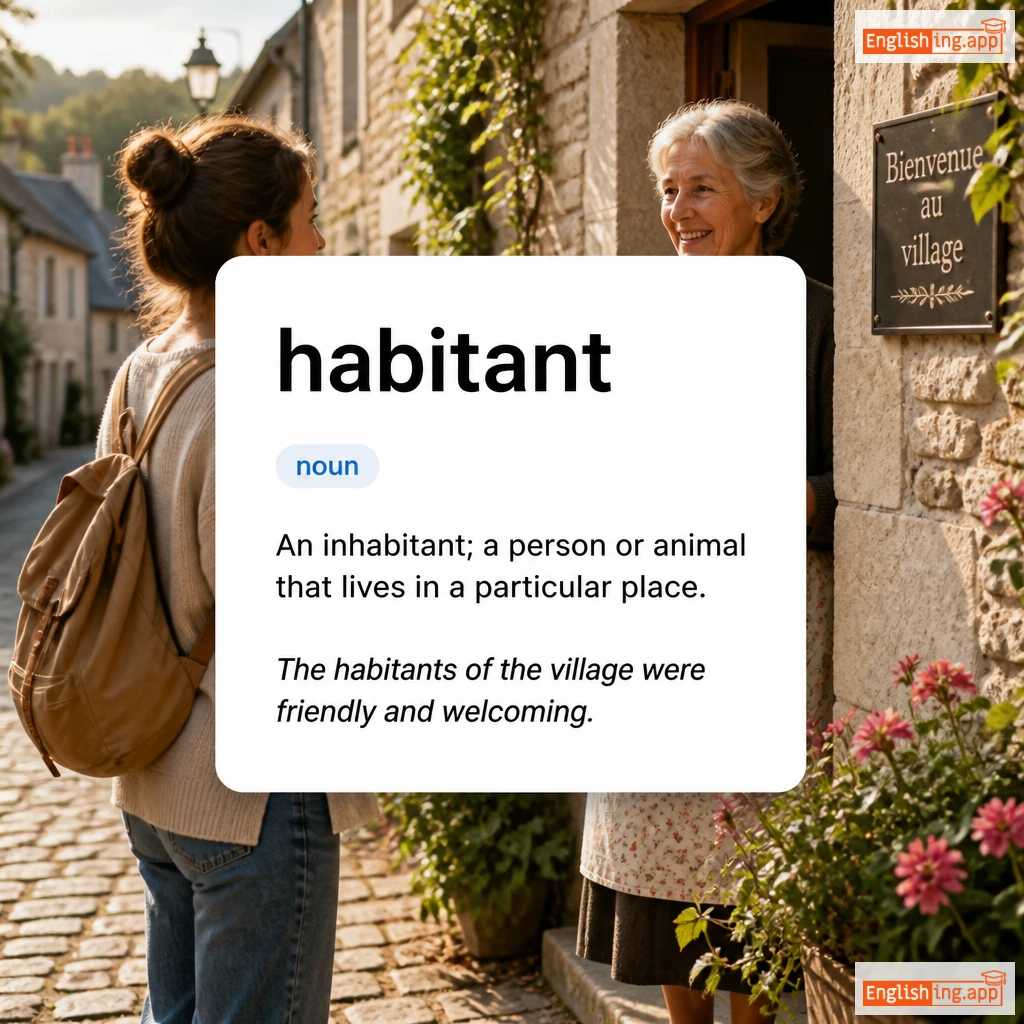
habitant definition card — visual illustration of the meaning
👨‍👩‍👧‍👦

habitant (ハビタント)

noun C2
/ˈhæbɪtənt/
住民 (jūmin)

An inhabitant; a person or animal that lives in a particular place.

"The habitants of the village were friendly and welcoming."

"村の住民は親切で歓迎してくれました。" (Mura no jūmin wa shinsetsu de kangei shite kuremashita.)
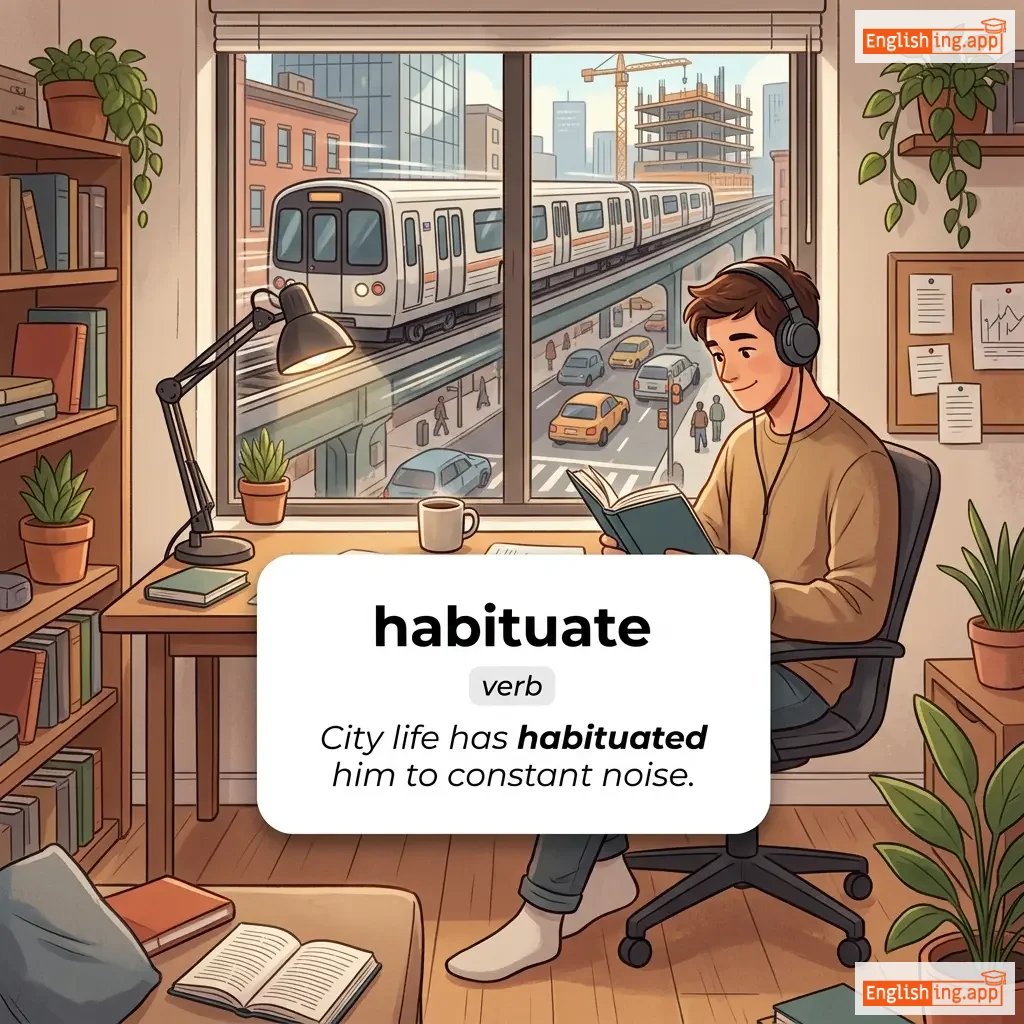
habituate definition card — visual illustration of the meaning
verb C2
/həˈbɪtʃueɪt/
慣れる (nareru)

to accustom someone or oneself to something through frequent exposure or experience

"City life has habituated him to constant noise."

"都市生活は彼を常に騒音に慣れさせた。" (Toshi seikatsu wa kare o jōnī sawon ni naresaseta.)
noun C2
/ˈhæbɪtjuːd/
習慣、慣習 (shūkan, kanshū)

a customary condition or mode of life; habitual practice

"He lived in a quiet habitude, avoiding the noise of the city."

"彼は静かな習慣の中で暮らしていた、都市の騒音を避けながら。" (Kare wa shizukana shūkan no naka de kurashite ita, toshi no sōon o sake-nagara.)
noun C2
/ˈhækəlz/

the hairs on the back of an animal’s neck that rise when it is angry or alarmed; figuratively, feelings of anger or resentment

"His rude comment raised my hackles."

noun C2
/ˈhæknɪ/
貸し馬, 陳腐な (kashi uma, chinpuna)

a horse kept for ordinary riding or hire; also used for something overused or trite

"The old hackney was still pulling the carriage."

"その古い貸し馬は今でも馬車を引いていた。" (Sono furui kashi uma wa imademo basha wo hiiteita.)
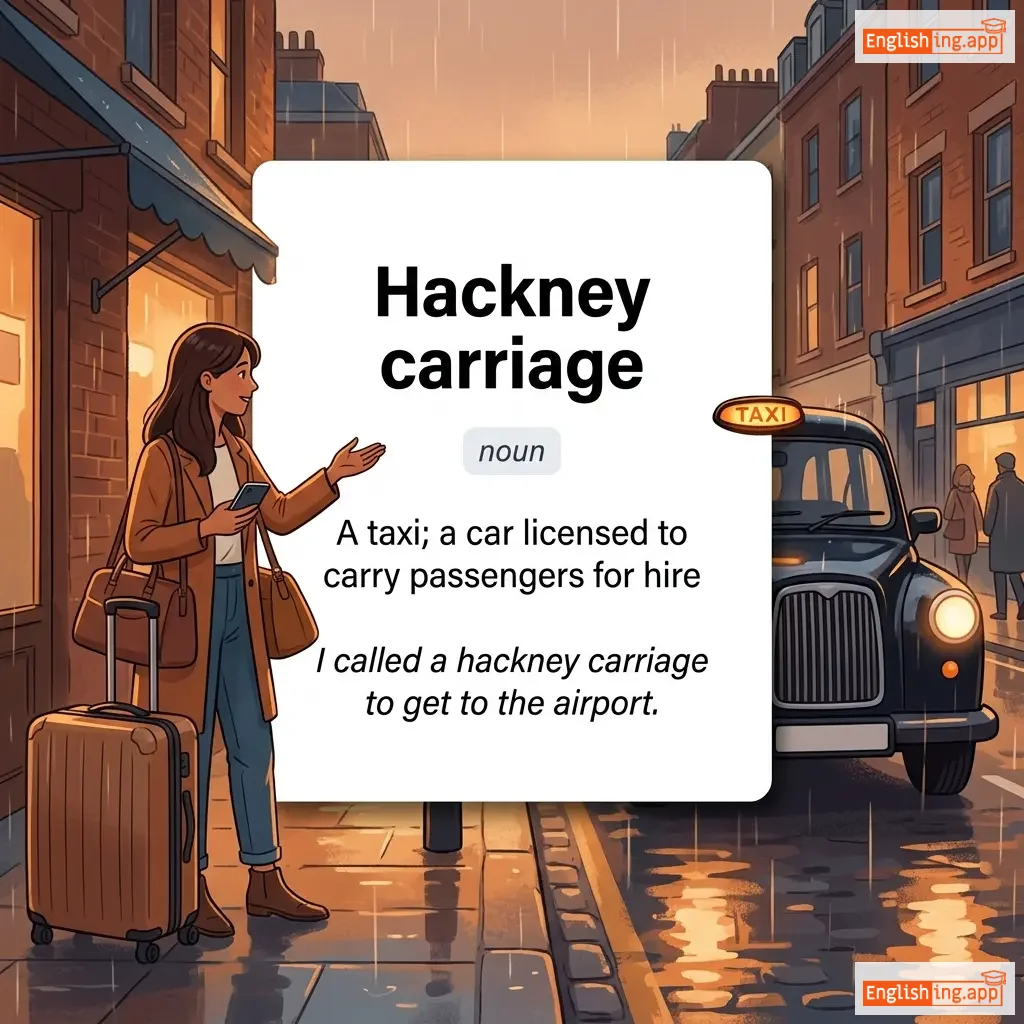
Hackney carriage definition card — visual illustration of the meaning
noun C2
/ˈhæk.ni ˈkær.ɪdʒ/
ハックニーキャリッジ (hakkunī kyarijji)

A taxi; a car licensed to carry passengers for hire

"I called a hackney carriage to get to the airport."

"空港に行くためにハックニーキャリッジを呼びました。" (Kūkō ni iku tame ni hakkunī kyarijji o yobimashita.)
🧙‍♀️

Hag (ハグ)

noun C2
/hæɡ/
魔女 (majo)

an ugly old woman, especially a vicious or malicious one; a witch

"In the fairy tale, the wicked hag lived alone in a cottage deep in the forest."

"おとぎ話では、邪悪な魔女が森の奥深くの小屋に一人で住んでいた。" (Otogibanashi de wa, jaaku na majo ga mori no oku fukaku no koya ni hitori de sunde ita.)
adjective C2
/ˌhæɡ.i.əˈɡræf.ɪk/
過度に賛美的な (kadoni sanbitekina)

Excessively flattering or idealized, often in a biography or portrayal of someone.

"The documentary was criticized for its hagiographic portrayal of the leader."

"そのドキュメンタリーはリーダーの過度に賛美的な描写で批判されました。" (Sono dokyumentarī wa rīdā no kadoni sanbitekina byōsha de hihan saremashita.)
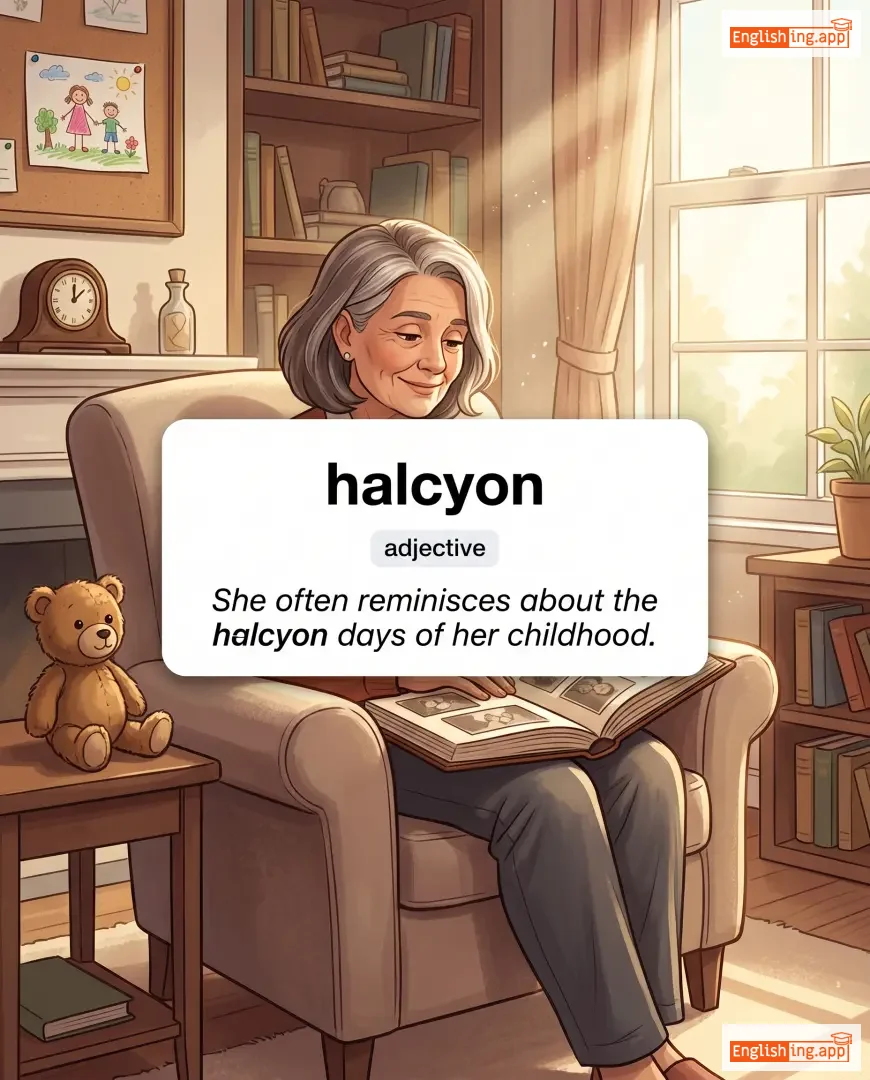
halcyon definition card — visual illustration of the meaning
adjective C2
/ˈhæl.si.ən/
静かな (shizukana)

calm, peaceful, and happy; denoting a period of time in the past that was idyllically happy and peaceful

"She often reminisces about the halcyon days of her childhood."

"彼女はよく子供時代の静かな日々を思い出します。" (Kanojo wa yoku kodomojidai no shizukana hibi o omoidashimasu.)
adjective C2
/heɪl/
健康 (kenkō)

strong and healthy, especially of an elderly person

"Despite his age, the man remained hale and active."

"年齢にもかかわらず、その男性は元気で活動的でした。" (Nenrei ni mo kakawarazu, sono dansei wa genki de katsudōteki deshita.)
adjective C2
/ˌhæfˈbeɪkt/
中途半端 (chuto hanpa)

poorly thought out or badly planned

"The manager quickly rejected his half-baked proposal."

"マネージャーは彼の中途半端な提案をすぐに却下しました。" (Manejā wa kare no chūto hanpa na teian o sugu ni kyakka shimashita.)
adjective C2
/ˌhæfˈhɑːr.tɪd/
やる気がない (yaruki ga nai)

lacking enthusiasm or determination; unenthusiastic

"His halfhearted attempt to study did not bring good results."

"彼のやる気がない勉強の試みは良い結果を生まなかった。" (Kare no yaruki ga nai benkyou no kokoromi wa yoi kekka o umanakatta.)
verb C2
/ˈhæloʊ/
聖別する (seibetsu suru)

to honor as holy; to make sacred or greatly respected

"The ancient temple was hallowed by centuries of worship."

"古代の寺院は何世紀にもわたる崇拝によって聖別されました。" (Kodai no jiin wa nanseiki ni mo wataru suuhai ni yotte seibetsu saremashita.)
adjective C2
/ˈhæm ˌhændɪd/
不器用 (bukiyou)

clumsy or inept in handling things or situations

"His ham-handed attempt to fix the computer made it worse."

"彼の手際の悪い試みでコンピュータがさらに悪化しました。" (Kare no tegiwa no warui kokoromi de konpyu-ta ga sara ni akka shimashita.)
noun, verb C2
/ˈhæmstrɪŋ/
太ももの後ろの腱; 動詞として、誰かまたは何かの効果を制限または著しく制限する (futomomo no ushiro no ken; dōshi toshite, dareka matawa nanika no kōka o seigen matawa ichijirushiku seigen suru)

a tendon at the back of the thigh; as a verb, to cripple or severely restrict the effectiveness of someone or something.

"Budget cuts hamstrung the organization’s plans."

"予算削減により、組織の計画が弱体化しました。" (Yosan sakugen ni yori, soshiki no keikaku ga jakutaika shimashita.)
verb (past tense, past participle), adjective C2
/ˈhæmstrʌŋ/
無力または制限された (muryoku mata wa seigen sareta)

crippled or severely restricted in movement or progress.

"The team was hamstrung by lack of resources."

"チームはリソース不足で制約を受けていた。" (Chīmu wa risōsu fusoku de seiyaku o ukete ita.)
noun C2
/ˈhænd ˌrɪŋɪŋ/
過剰な心配 (kajou na shinpai)

excessive worry or concern expressed in a visible or dramatic way.

"There was much hand-wringing over the political crisis."

"政治危機について多くの心配がありました。" (Seiji kiki ni tsuite ōku no shinpai ga arimashita.)
adjective C2
/ˈhæŋ.dɔːɡ/
恥ずかしい (hazukashii)

looking or feeling ashamed, guilty, or defeated.

"He gave me a hangdog look after being caught lying."

"彼は嘘をついて捕まった後、恥ずかしそうな顔をした。" (Kare wa uso o tsuite tsukamatta ato, hazukashisō na kao o shita.)
noun C2
/ˌhæŋ.ər ˈɒn/
おこぼれ (okobore)

a person who spends time with a powerful or famous person to gain benefits.

"The celebrity was always surrounded by hangers-on."

"その有名人はいつもおこぼれの人々に囲まれていた。" (sono yūmeijin wa itsumo okobore no hitobito ni kakomarete ita.)
noun C2
/ˈhæŋ.kər/
渇望, 欲求 (katsubou, yokkyuu)

a feeling of yearning or craving; a strong desire for something

"After years abroad, she developed a deep hanker for her homeland's traditional cuisine."

"海外で何年も過ごした後、彼女は故郷の伝統的な料理への深い渇望を抱きました。" (Kaigai de nannen mo sugoshita ato, kanojo wa kokyou no dentouteki na ryouri e no fukai katsubou wo idakimashita.)
noun C2
/ˈhæŋ.kər.ɪŋ/
切望 (setsubou)

a strong desire or craving for something.

"She had a hankering for chocolate late at night."

"彼女は夜遅くにチョコレートへの切望を感じていた。" (Kanojo wa yoru osoku ni chokorēto e no setsubou o kanjite ita.)
noun C2
/ˌhæŋ.ki ˈpæŋ.ki/
詐欺; 疑わしい活動; 不道徳な行動; ごまかし (sagi; ugokashii katsudou; fudoutokuna koudou; gomakashi)

dishonest or suspicious activity; unethical behavior; trickery or deception

"The audit revealed some hanky-panky in the company's financial records."

"監査により、会社の財務記録に詐欺が発覚しました。" (kansa ni yori, kaisha no zaimu kiroku ni sagi ga hakken shimashita.)
noun C2
/hæp/
運, 幸運, 偶然 (un, kouun, guuzen)

luck, fortune, or chance occurrence

"By sheer hap, he discovered the old letter hidden in the drawer."

"偶然にも、彼は引き出しの中に隠された古い手紙を発見しました。" (Guuzen ni mo, kare wa hikidashi no naka ni kakusareta furui tegami wo hakken shimashita.)
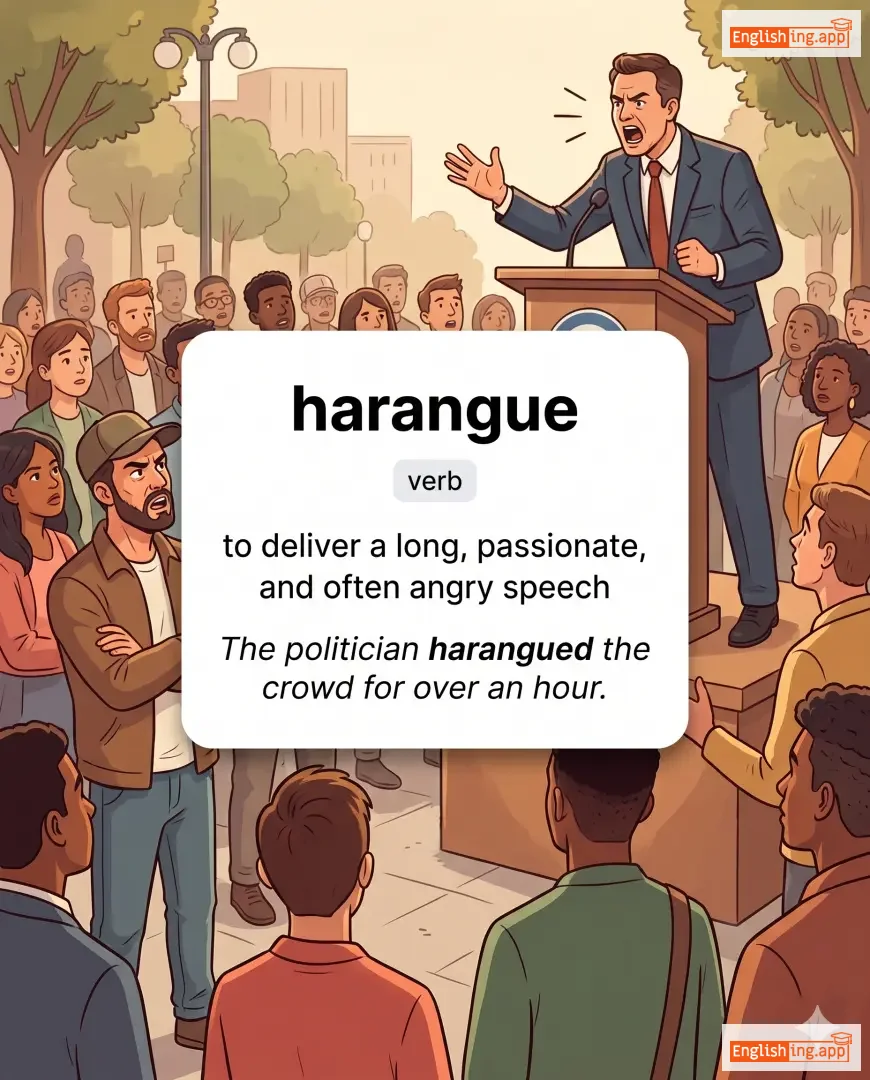
harangue definition card — visual illustration of the meaning
verb C2
/həˈræŋ/
長く情熱的な演説をする (nagaku jōnetsuteki na enzetsu o suru)

to deliver a long, passionate, and often angry speech

"The politician harangued the crowd for over an hour."

"政治家は群衆に一時間以上も演説をしました。" (Seijika wa gunshū ni ichijikan ijō mo enzetsu shimashita.)
noun C2
/ˈhɑːrbɪndʒər/
前触れ (maebure)

a person or thing that announces or signals the approach of another

"The sudden drop in temperature was a harbinger of winter."

"気温の急激な低下は冬の前触れでした。" (Kion no kyūgeki na teika wa fuyu no maebure deshita.)
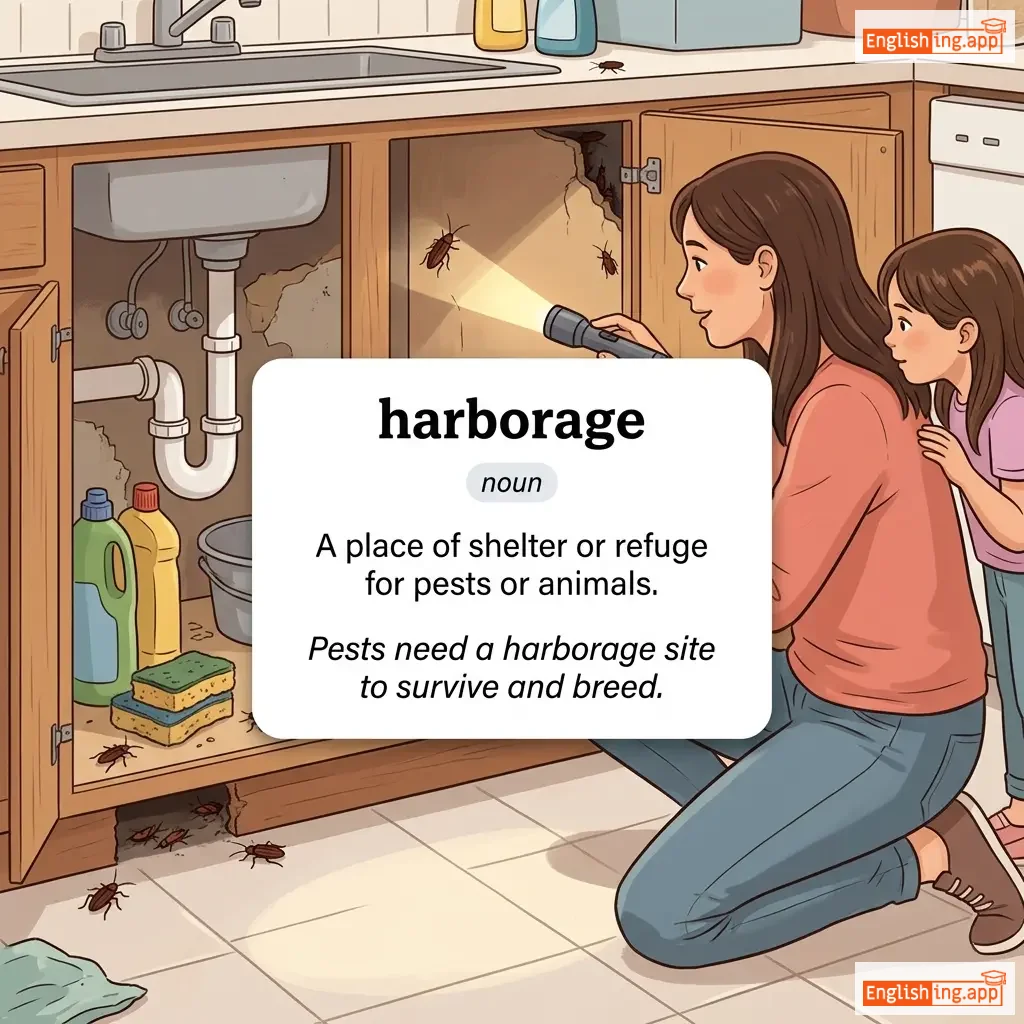
harborage definition card — visual illustration of the meaning
noun C2
ˈhɑːrbərɪdʒ
避難所 (hinanjo)

A place of shelter or refuge for pests or animals.

"Pests need a harborage site to survive and breed."

"害虫は生き残り、繁殖するために避難所が必要です。" (Gaichū wa ikinokori, hanshoku suru tame ni hinanjo ga hitsuyōdesu.)
adjective C2
/ˌhɑːrdˈbɪtn̩/
頑固で経験豊富 (ganko de keiken hōfu)

tough and experienced, not easily affected by emotions or hardship

"The hard-bitten detective showed no sign of surprise at the crime scene."

"その経験豊富な探偵は犯罪現場で驚きの兆候を見せませんでした。" (Sono keiken hōfu na tantei wa hanzai genba de odoroki no chōkō o misemasen deshita.)
noun C2
/ˈhɑːdɪhʊd/
勇気、大胆さ (yūki, daitansa)

Courage, boldness, or daring behavior; also physical robustness.

"The mountaineer's hardihood impressed the entire team."

"登山家のハーディフッドはチーム全体を感動させました。" (Tōzanka no hādifuddo wa chīmu zentai o kandō saseshimashita.)
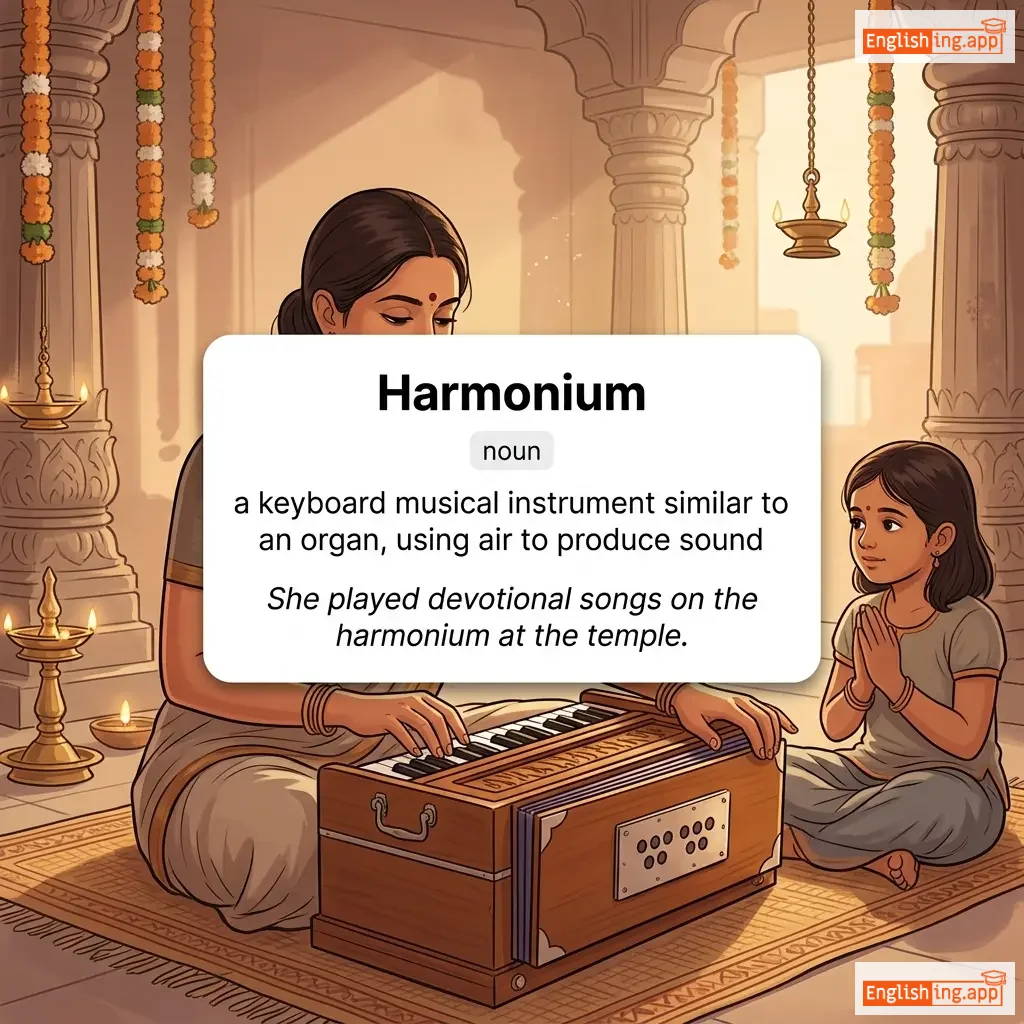
Harmonium definition card — visual illustration of the meaning
noun C2
/hɑrˈmoʊniəm/
ハーモニウム (haamonium)

a keyboard musical instrument similar to an organ, using air to produce sound

"She played devotional songs on the harmonium at the temple."

"彼女は寺院でハーモニウムを使って祈りの歌を演奏した。" (Kanojo wa jiin de haamonium o tsukatte inori no uta o ensou shita.)
verb C2
/ˈhɑːrpɪŋ/
繰り返し不満を言う (kurikaeshi fuman o iu)

continuously talking or complaining about something in a tiresome way

"She kept harping on about the mistakes I made."

"彼女は私が犯した間違いについて繰り返し不満を言っていました。" (Kanojo wa watashi ga okashita machigai ni tsuite kurikaeshi fuman o itteimashita.)
adjective C2
/ˈhæriːd/
過労や絶え間ない干渉で緊張したりストレスを感じたりする (karou ya taemai kanshou de kinchou shitari sutoresu o kanjitari suru)

feeling strained or stressed due to being overworked or constantly bothered

"The harried teacher struggled to calm the noisy classroom."

"過労の教師は騒々しい教室を静めるのに苦労していました。" (Karo no kyoushi wa souzoushii kyoushitsu o shizumeru no ni kurou shite imashita.)
verb C2
/ˈhæroʊ/
苦しめる / すき (kurushimeru / suki)

to cause distress or torment; also to break up and smooth soil with a farm tool

"The tragic news harrowed the entire family."

"悲劇的なニュースは家族全員を苦しめました。" (Higeki-teki na nyūsu wa kazoku zen'in wo kurushimemashita.)
verb C2
/ˈhæri/
悩ます, 攻撃する (nayamasu, kougeki suru)

to constantly attack, harass, or annoy

"The army harried the enemy with sudden raids."

"軍隊は突然の襲撃で敵を攻撃した。" (Guntai wa totsuzen no shugeki de teki o kougeki shita.)
noun C2
/hæˈʃiːʃ/
ハシシ (hashishi)

a drug made from the resin of the cannabis plant

"The police arrested him for possessing hashish."

"警察は彼をハシシを所持していたため逮捕した。" (Keisatsu wa kare o hashishi o shoji shite ita tame taiho shita.)
noun C2
/ˈhɔːtɪnəs/
傲慢 (ōman)

The appearance or quality of being arrogantly superior and disdainful.

"His haughtiness made him unpopular among his peers."

"彼の傲慢さは彼を同僚の中で不人気にしました。" (Kare no ōman-sa wa kare o dōryō no naka de funinki ni shimashita.)
noun C2
/oʊˈtɜːr/
傲慢 (gōman)

disdainful pride; arrogance

"His hauteur made it difficult for others to approach him."

"彼の傲慢は他の人々が近づくのを難しくさせた。" (Kare no gōman wa hoka no hitobito ga chikaduku no o muzukashiku saseta.)
noun C2
/ˈhɔːzər/
船を繋ぐための太いロープ (fune o tsunagu tame no futoi rōpu)

A thick rope or cable used in mooring or towing a ship.

"The sailors secured the ship to the dock with a heavy hawser."

"船員たちは重いハウザーを使って船をドックに固定しました。" (Sen'in-tachi wa omoi hawzā o tsukatte fune o dokku ni kotei shimashita.)
noun C2
/ˈhɔːθɔːrn/
とげのある低木 (toge no aru teboku)

A thorny shrub or small tree with white or pink flowers, often used for hedges.

"The garden was lined with blooming hawthorn bushes."

"庭園は花が咲くホーソーンの茂みで囲まれていました。" (Teien wa hana ga saku hōsōn no shigemi de kakomarete imashita.)
adjective C2
/ˈhɛdi/
酔わせる (yoaseru)

Exciting or intoxicating; having a strong or exhilarating effect.

"The heady aroma of the flowers filled the room."

"花の酔わせる香りが部屋を満たした。" (Hana no yoaseru kaori ga heya o mitashita.)
verb C2
/ˈhɑːrkən/
注意深く聞く (chūibukaku kiku)

To listen attentively; to give heed.

"He would hearken to his mentor’s advice before making decisions."

"彼は意思決定を下す前に、メンターのアドバイスに耳を傾けた。" (Kare wa ishikettei o kudasu mae ni, mentā no adobaisu ni mimi o katamuketa.)
noun C2
/hɜːrs/
霊柩車; (reikyūsha)

a vehicle for conveying the coffin at a funeral; a funeral car

"The black hearse slowly made its way to the cemetery, followed by a procession of mourners."

"黒い霊柩車がゆっくりと墓地に向かい、その後ろに哀悼の列が続いていた。" (Kuroi reikyūsha ga yukkuri to bochi ni mukai, sono ushiro ni aitō no retsu ga tsudzuite ita.)
verb C2
/ˈhɑːrtən/
勇気づける (yūki dzukeru)

To give courage, confidence, or hope.

"The teacher’s encouragement heartened the students."

"先生の励ましは学生たちに勇気を与えた。" (Sensei no hagemashi wa gakusei-tachi ni yūki o ataeta.)
adjective C2
/ˈhiːðənɪʃ/
野蛮 (yaban)

Lacking culture or religion; barbaric or uncivilized.

"They considered the ancient tribe’s rituals heathenish."

"彼らは古代部族の儀式を未開だと考えた。" (Karera wa kodai buzoku no gishiki o mikai da to kangaeta.)
noun C2
/ˈhɛklər/
野次を飛ばす人 (yaji o tobasu hito)

A person who interrupts a speaker with rude or aggressive comments.

"The politician remained calm despite the heckler shouting from the crowd."

"政治家は群衆から叫んでいたヘクラーにもかかわらず冷静を保ちました。" (Seijika wa gunshū kara sakendeta hekurā ni mo kakawarazu reisei o tamochimashita.)
verb C2
/ˈhɛktər/
脅して話す (osorete hanasu)

To talk to someone in a bullying or intimidating way.

"The manager hectored the staff into working overtime."

"マネージャーはスタッフに残業をさせるために脅しました。" (Manējā wa sutaffu ni zangyō o saseru tame ni odoshimashita.)
noun C2
/hɪˈdʒɛməni/ or /ˈhɛdʒəmoʊni/
覇権 (haken)

leadership or dominance, especially by one state or group over others

"The empire maintained its hegemony over neighboring states."

"帝国は隣国に対してその覇権を維持した。" (Teikoku wa ringoku ni taishite sono haken o iji shita.)
🚶‍♂️

hegira (ヘジラ)

noun C2
/ˈhɛdʒɪrə/ or /hɪˈdʒaɪrə/
移住, 亡命 (ijuu, boumei)

a journey, especially when undertaken to escape from a dangerous or undesirable situation

"The refugees began their hegira across the desert."

"難民たちは砂漠を越えて移住を始めた。" (Nanmin-tachi wa sabaku o koete ijiu o hajimeta.)
noun C2
/ˈhɛfər/
雌牛 (mesu ushi)

a young cow that has not borne a calf

"The farmer raised a heifer for dairy production."

"農家は乳製品の生産のためにヘイファーを育てました。" (Nōka wa nyūseihin no seisan no tame ni heifā o sodatemashita.)
noun C2
/ˈhelmz.mən/
舵手; キャプテン (dōshu; kyaputen)

a person who steers a ship or boat; the person at the helm of a vessel

"The experienced helmsman skillfully guided the yacht through the narrow channel during the storm."

"経験豊富な舵手は、嵐の中で狭い水路をヨットで巧みに導きました。" (Keiken hōfu na dōshu wa, arashi no naka de semai suiro o yotto de takumi ni michibikimashita.)
hemophilia definition card — visual illustration of the meaning
noun C2
ˌhiː.məˈfɪl.i.ə
血友病 (ketsuyobyou)

A medical condition in which the ability of the blood to clot is severely reduced, causing the sufferer to bleed severely from even a slight injury.

"Hemophilia treatment benefits from genetic editing."

"血友病の治療は遺伝子編集から利益を得る。" (Ketsuyobyou no chiryou wa idenshi henshuu kara rieki o eru.)