Vocabularios

Descubra, aprenda y domine el vocabulario en inglés

adjective B2
/pəˈθɛtɪk/

Causing feelings of pity, sadness, or sometimes contempt.

"The team’s performance in the match was simply pathetic."

pathway definition card — visual illustration of the meaning
noun B2
/ˈpæθweɪ/
小径 (xiao jing)

a route or course along which something travels or progresses

"The narrow pathway led to the hidden garden."

"狭窄的小径通向隐藏的花园。" (Xiazhai de xiao jing tongxiang yincang de huayuan.)
Patriot definition card — visual illustration of the meaning
noun B2
/ˈpeɪtriət/
爱国者 (aiguo zhe)

A person who loves and strongly supports their country.

"The patriot stood proudly under the national flag."

"爱国者在国旗下自豪地站着。" (Aiguo zhe zai guoqi xia zihao de zhan zhe.)
adjective B2
/ˌpeɪ.triˈɑː.tɪk/
爱国的 (àiguó de)

showing love for one's country

"The patriotic citizens celebrated Independence Day with great enthusiasm."

"爱国的公民们以极大的热情庆祝独立日。" (Àiguó de gōngmín men yǐ jí dà de rèqíng qìngzhù dúlì rì.)
patriotism definition card — visual illustration of the meaning
noun B2
/ˈpeɪtriətɪzəm/
爱国主义 (àiguó zhǔyì)

Love for and devotion to one's country.

"His patriotism was evident when he volunteered for military service."

"当他自愿参加军事服务时,他的爱国主义显而易见。" (dāng tā zìyuàn cānjiā jūnshì fúwù shí, tā de àiguó zhǔyì xiǎn'ér yìjiàn.)
patrol definition card — visual illustration of the meaning
verb B2
/pəˈtroʊl/
巡逻 (xúnluó)

to move around an area to watch or guard it

"The police patrol the streets at night to ensure safety."

"警察晚上巡逻街道以确保安全。" (Jǐngchá wǎnshàng xúnluó jiēdào yǐ quèbǎo ānquán.)
patron definition card — visual illustration of the meaning
noun B2
/ˈpeɪtrən/
赞助人 (zànzhùrén)

a person who gives financial or other support to a person, organization, or cause

"The library is supported by generous patrons."

"图书馆得到了慷慨的赞助人支持。" (Túshūguǎn dédàole kāngkǎi de zànzhùrén zhīchí.)
adjective B2
/ˈpeɪ.ə.bəl/
应付的 (yīngfù de)

required to be paid; owed as a debt

"The amount is payable within thirty days of the invoice date."

"该金额应在发票日期后30天内支付。" (Gāi jīn'é yīng zài fāpiào rìqī hòu 30 tiān nèi zhīfù.)
Peak definition card — visual illustration of the meaning
🏔️

Peak (峰)

noun B2
/piːk/
山顶 (shanding)

the pointed top of a mountain or hill, or the highest point of something

"They reached the peak of the mountain after hours of hiking."

"他们在数小时的徒步旅行后到达了山顶。" (Tāmen zài shù xiǎoshí de túbù lǚxíng hòu dàodále shāndǐng.)
peasant definition card — visual illustration of the meaning
noun B2
/ˈpɛzənt/
农民 (nóngmín)

a poor farmer or agricultural laborer who owns or rents a small piece of land for cultivation

"The peasant worked hard in the fields from dawn to dusk."

"农民从黎明到黄昏在田地里辛勤劳作。" (Nóngmín cóng límíng dào huánghūn zài tiándì lǐ xīnqín láo zuò.)
noun B2
/ˈpɛbl/
卵石 (luǎn shí)

a small smooth stone found on beaches or rivers

"He threw a pebble into the pond and watched the ripples."

"他把一块卵石扔进池塘,看着水波。" (Tā bǎ yī kuài luǎn shí rēng jìn chítáng, kànzhe shuǐ bō.)
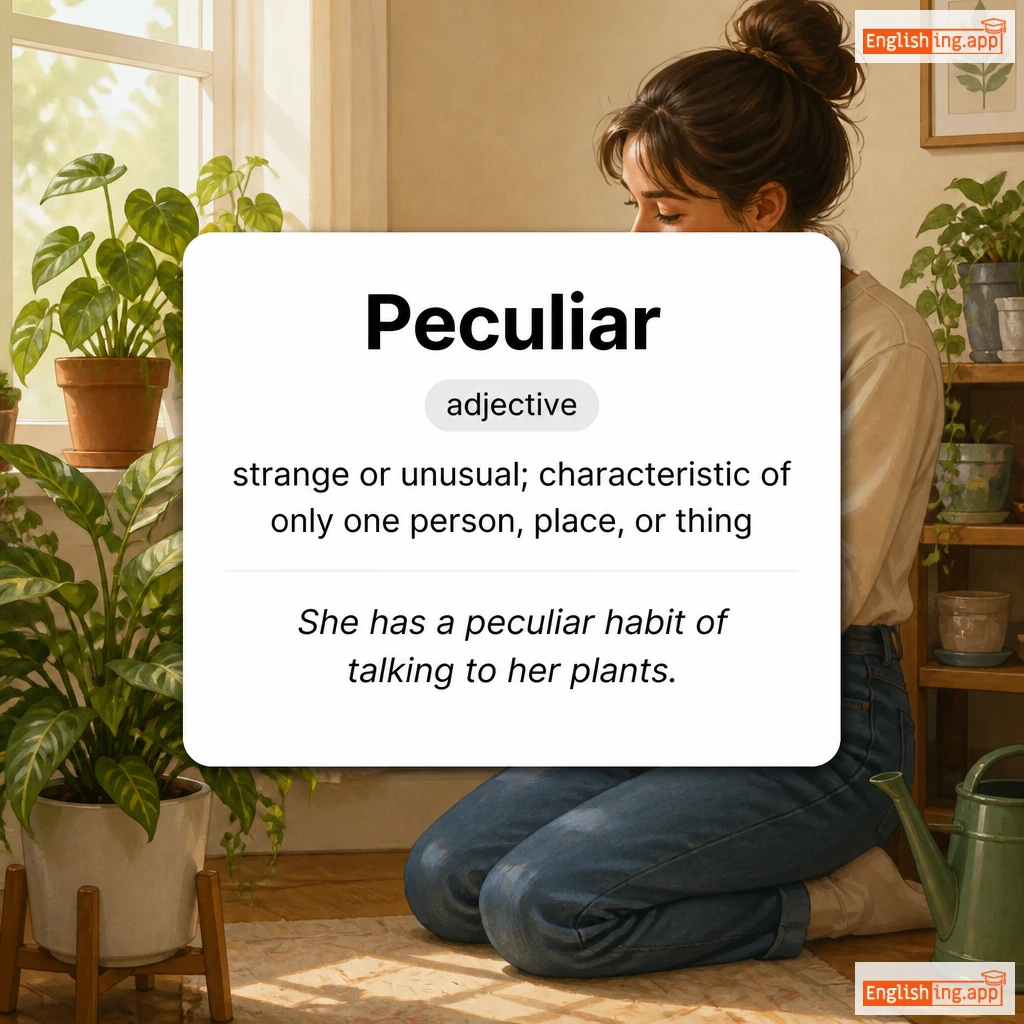
Peculiar definition card — visual illustration of the meaning
adjective B2
/pɪˈkjuːliər/
奇怪 (qíguài)

strange or unusual; characteristic of only one person, place, or thing

"She has a peculiar habit of talking to her plants."

"她有一个奇怪的习惯,就是和她的植物说话。" (Tā yǒu yīgè qíguài de xíguàn, jiùshì hé tā de zhíwù shuōhuà.)
adverb B2
/pɪˈkju:.li.ə.li/
以奇怪的方式; 以不寻常的方式 (yǐ qíguài de fāngshì; yǐ bù xúncháng de fāngshì)

in a strange or unusual way; in a manner that is distinctive or characteristic

"She dressed peculiarly for the formal dinner, wearing bright colors and unusual patterns."

"她为正式晚宴穿着非常独特,穿着鲜艳的颜色和不寻常的图案。" (Tā wèi zhèngshì wǎnyàn chuānzhuó fēicháng dútè, chuānzhuó xiānyàn de yánsè hé bù xúncháng de tú'àn.)
noun, verb B2
/ˈpɛdəl/
脚操作的杠杆 (jiao caozuo de ganggan)

A foot-operated lever for powering or controlling a mechanism, especially on a bicycle.

"He pressed down hard on the bicycle pedal."

"他用力踩下了自行车的踏板。" (Tā yòng lì cǎi xiàle zìxíngchē de tàbǎn.)
noun B2
/ˌpiːdiəˈtrɪʃən/
儿科医生 (ér kē yī shēng)

a doctor who specializes in the medical care of children

"The pediatrician examined the child carefully."

"儿科医生仔细地检查了孩子。" (Ér kē yī shēng zǐ xì de jiǎn chá le hái zi.)
Peeler definition card — visual illustration of the meaning
noun B2
/ˈpiː.lər/
削皮器 (xiao pi qi)

a kitchen tool used to remove the outer skin or peel from fruits and vegetables

"Use a peeler to remove the potato skin."

"使用削皮器去除土豆皮。" (Shi yong xiao pi qi qu chu tu dou pi.)
peep definition card — visual illustration of the meaning
👀

peep

verb B2
/piːp/

to look quickly or secretly, especially through a narrow opening

"The child tried to peep through the keyhole."

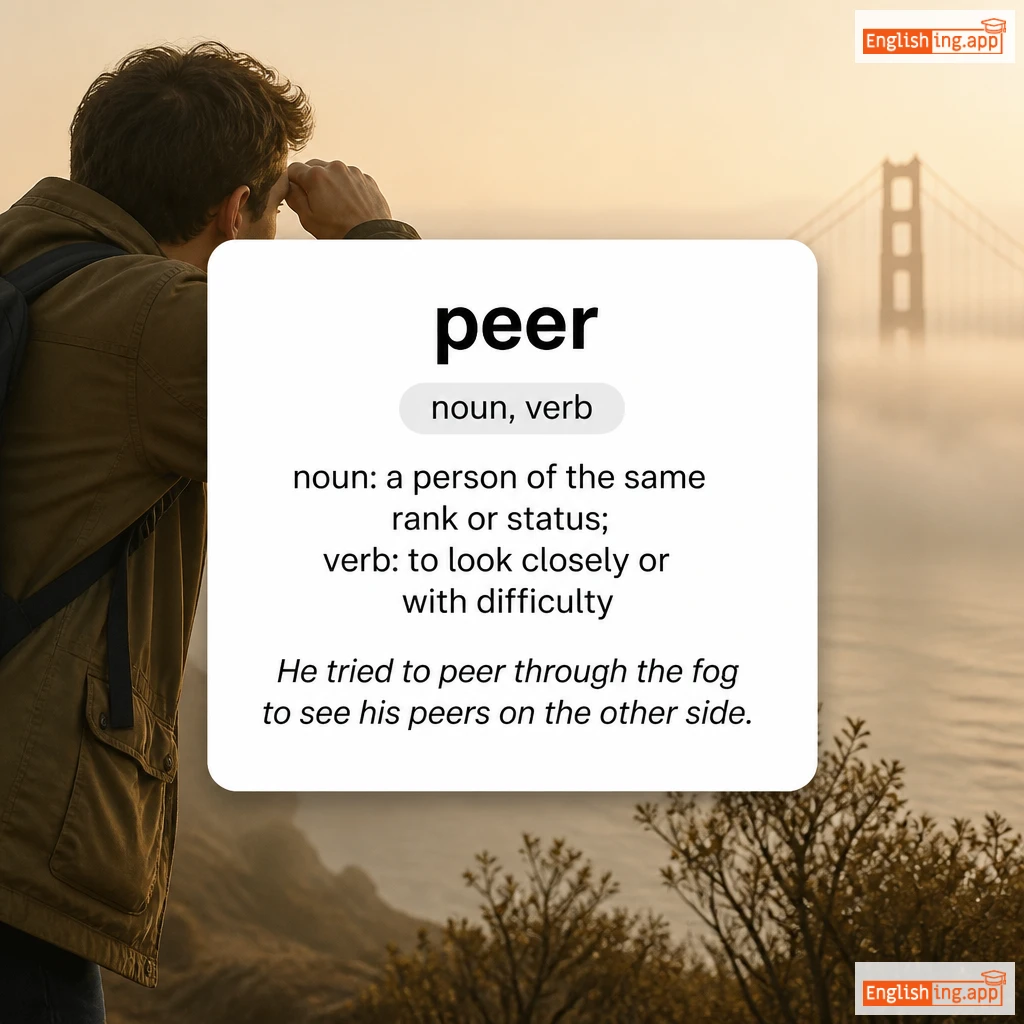
peer definition card — visual illustration of the meaning
🧑‍🤝‍🧑

peer (pi-er)

noun, verb B2
/pɪə(r)/
同级 (tongji)

noun: a person of the same rank or status; verb: to look closely or with difficulty

"He tried to peer through the fog to see his peers on the other side."

"他试图穿过雾气,看他的同伴在另一边。" (Ta shitu chuan guo wuqi, kan ta de tongban zai ling yi bian.)
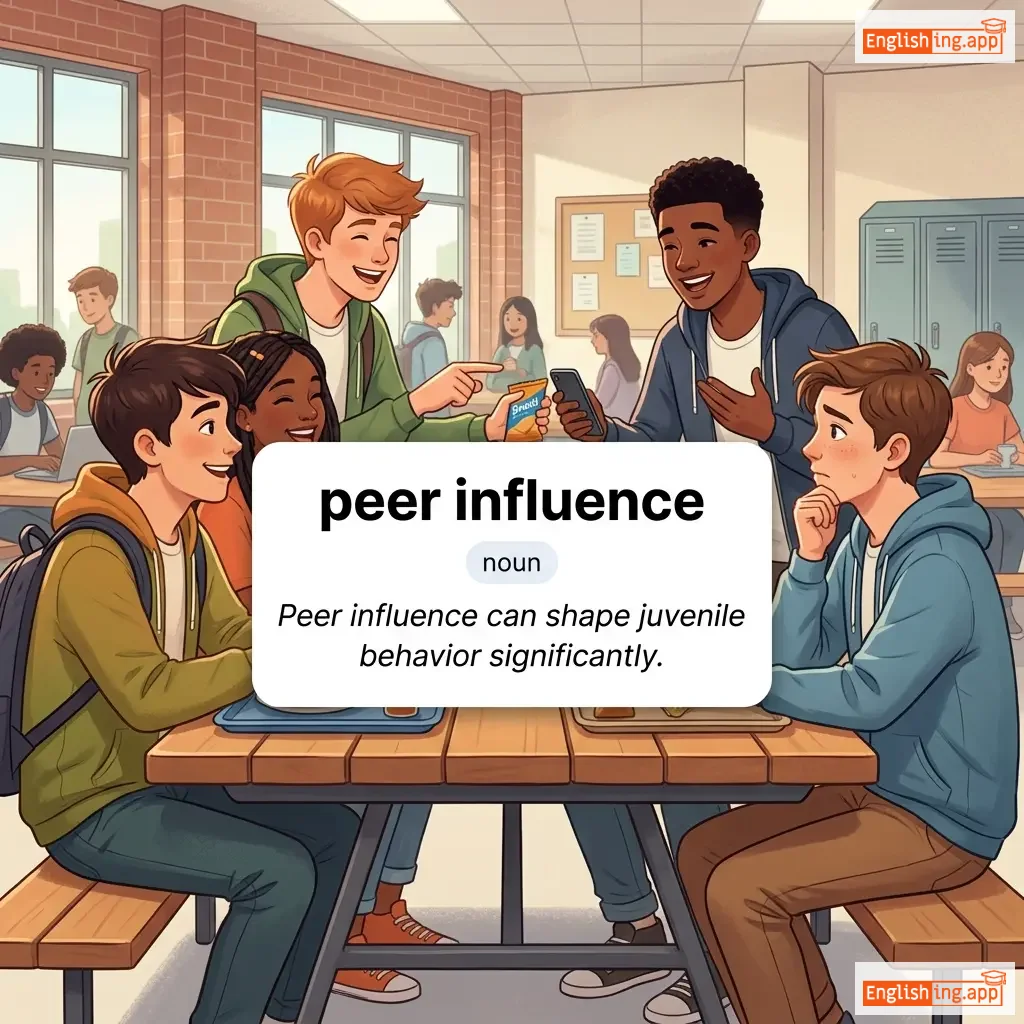
peer influence definition card — visual illustration of the meaning
noun B2
pɪər ˈɪnfluəns
同龄人影响 (tongling ren yingxiang)

The effect that members of a peer group have on each other, especially in terms of behavior, attitudes, and decision-making.

"Peer influence can shape juvenile behavior significantly."

"同龄人影响可以显著塑造青少年的行为。" (Tongling ren yingxiang keyi xianzhu shuzhao qingshaonian de xingwei.)
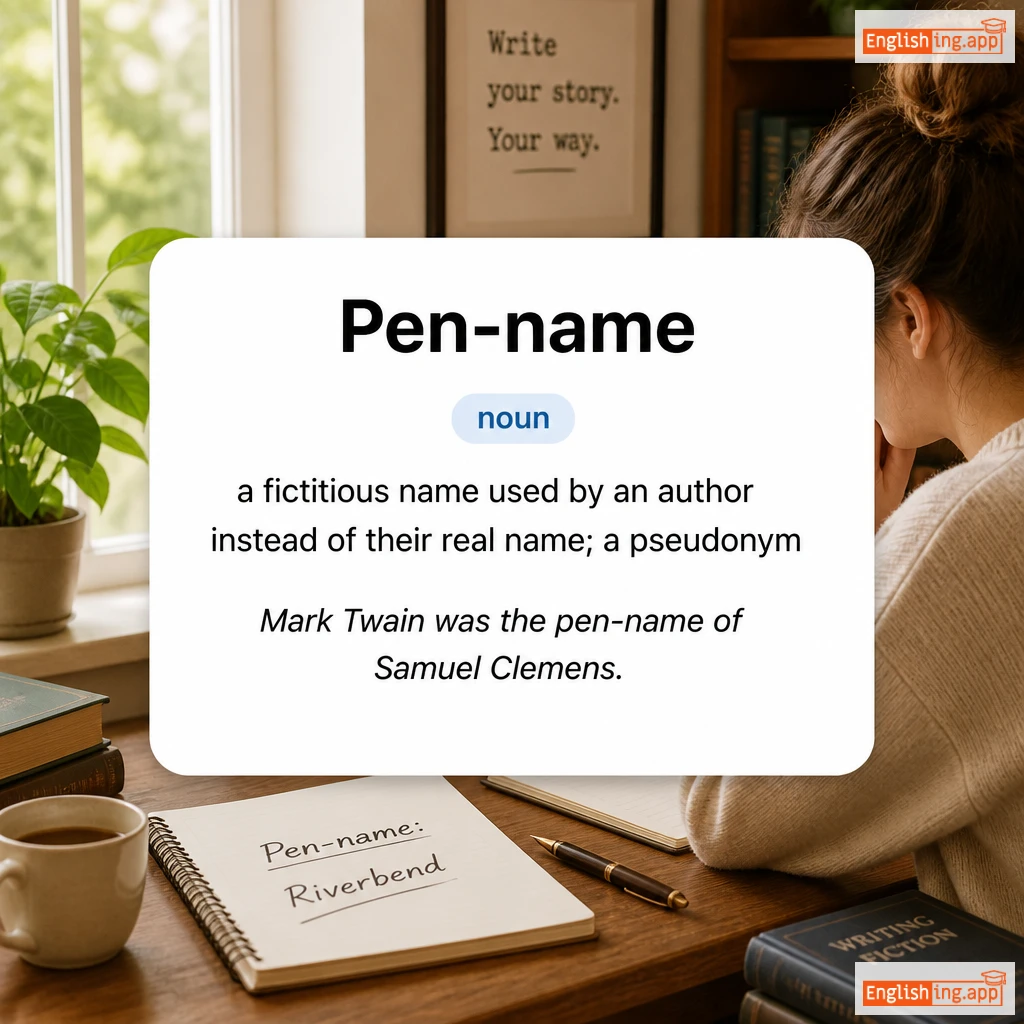
Pen-name definition card — visual illustration of the meaning
noun B2
/ˈpen neɪm/
笔名 (bǐmíng)

a fictitious name used by an author instead of their real name; a pseudonym

"Mark Twain was the pen-name of Samuel Clemens."

"马克·吐温是塞缪尔·克莱门斯的笔名。" (Mǎkè Tǔwēn shì Sàimù'ěr Kèláiménzī de bǐmíng.)
adjective B2
/ˈpɛndɪŋ/
待定 (dàidìng)

awaiting decision or settlement

"The case is still pending in court."

"案件仍在法院待定。" (ànjiàn réng zài fǎyuàn dàidìng.)
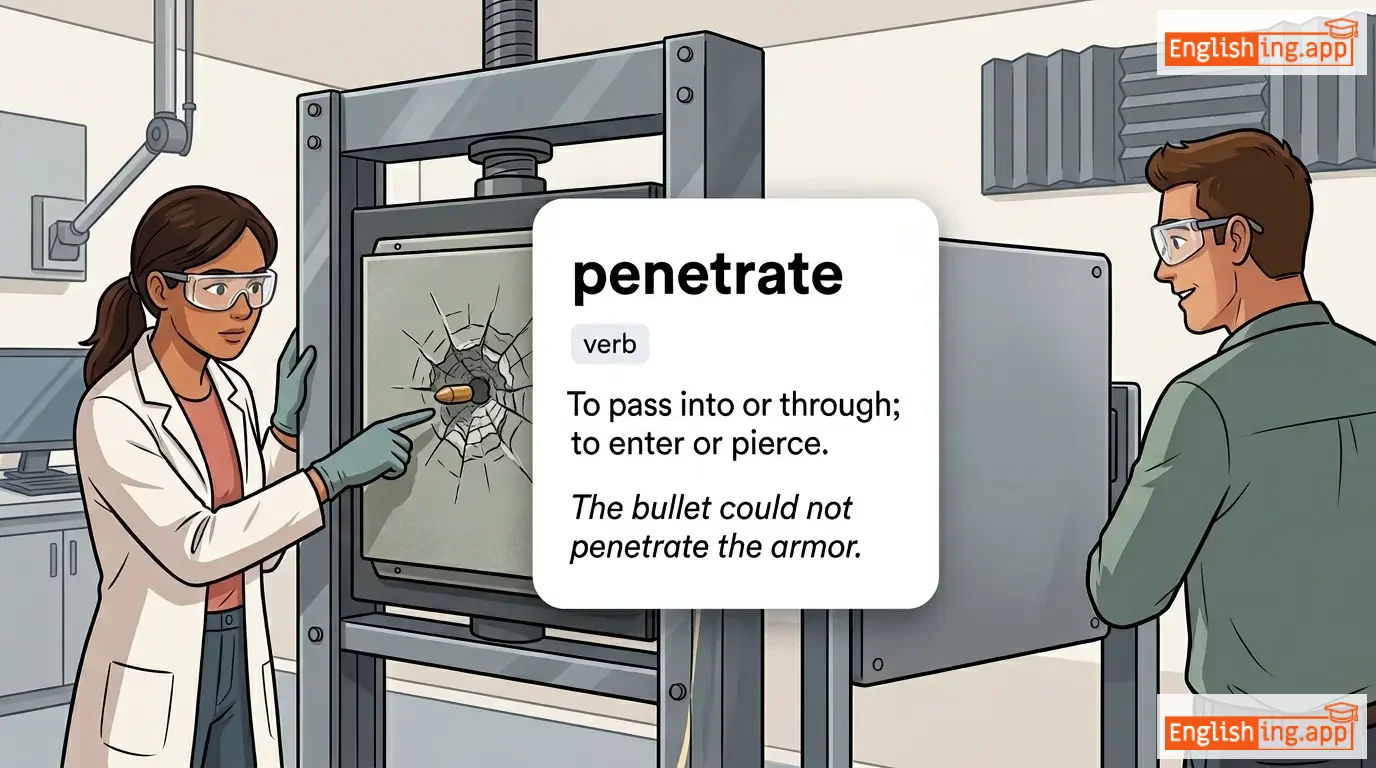
penetrate definition card — visual illustration of the meaning
verb B2
/ˈpɛnɪtreɪt/
穿透 (chuan tou)

To pass into or through; to enter or pierce.

"The bullet could not penetrate the armor."

"子弹无法穿透盔甲。" (Zidan wufale chuantou kuijia.)
noun B2
/ˌpɛnɪˈtreɪʃən/
渗透 (shentou)

The act of piercing or entering into something.

"The company's market penetration grew rapidly."

"公司的市场渗透迅速增长。" (Gongsi de shichang shentou xunxu zengzhang.)
Peninsula definition card — visual illustration of the meaning
noun B2
/pəˈnɪn.sjə.lə/
半岛 (bàndǎo)

a piece of land that is almost completely surrounded by water but connected to the mainland

"The Korean Peninsula is located in East Asia."

"朝鲜半岛位于东亚。" (Cháoxiǎn bàndǎo wèi yú dōngyà.)
Pension definition card — visual illustration of the meaning
noun B2
/ˈpɛnʃən/
养老金 (yǎnglǎo jīn)

A regular payment made during a person's retirement from an investment fund or employer.

"After 30 years of service, he received a monthly pension."

"经过30年的工作,他领取了每月养老金。" (Jīngguò 30 nián de gōngzuò, tā lǐngqǔle měi yuè yǎnglǎo jīn.)
perceive definition card — visual illustration of the meaning
verb B2
/pərˈsiːv/
察觉 (chá jué)

To become aware of or recognize something through the senses or the mind.

"She perceived a change in his tone of voice."

"她察觉到他语气的变化。" (Tā chá jué dào tā yǔ qì de biàn huà.)
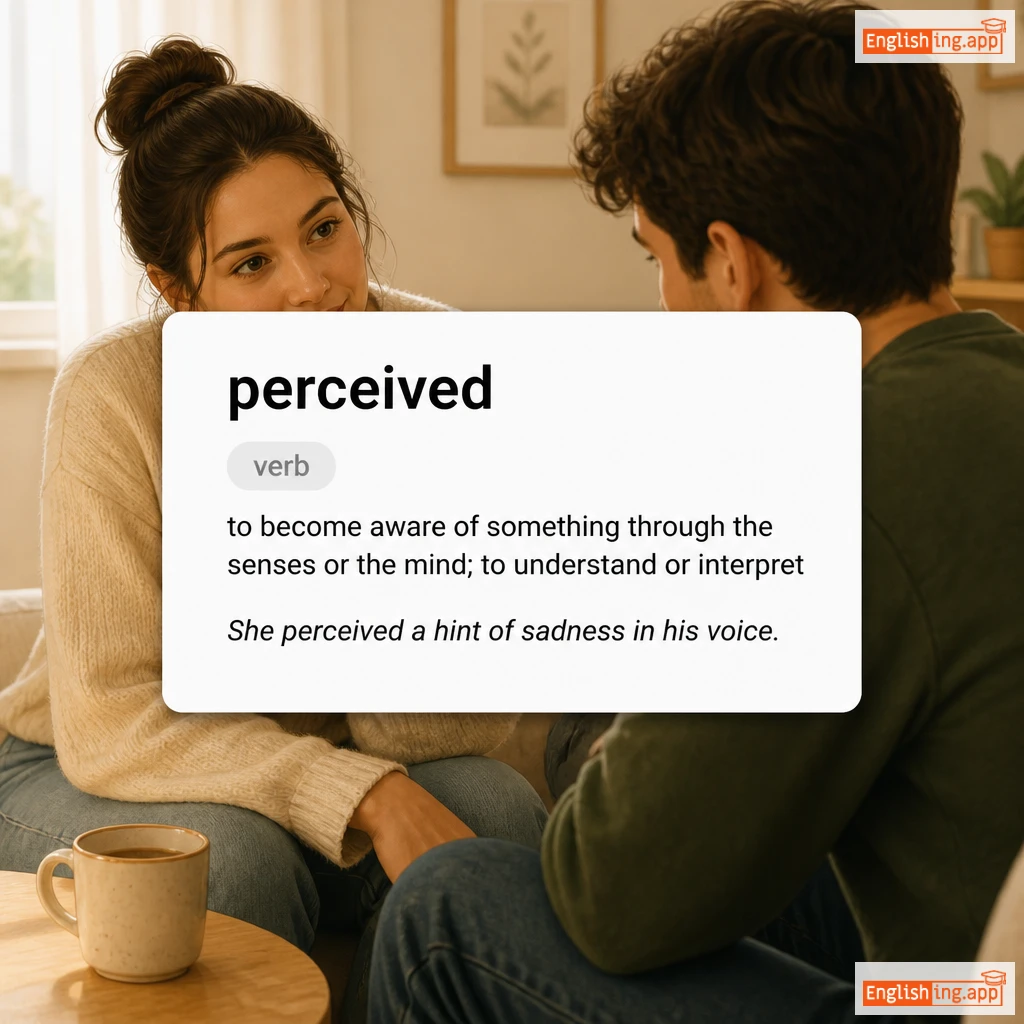
perceived definition card — visual illustration of the meaning
👁️

perceived

verb B2
/pərˈsiːvd/
幸福 (xìng fú)

to become aware of something through the senses or the mind; to understand or interpret

"She perceived a hint of sadness in his voice."

"当她收到奖项时,她无法掩饰自己的幸福。" (Dāng tā shōu dào jiǎngxiàng shí, tā wúfǎ yǎnshì zìjǐ de xìngfú.)
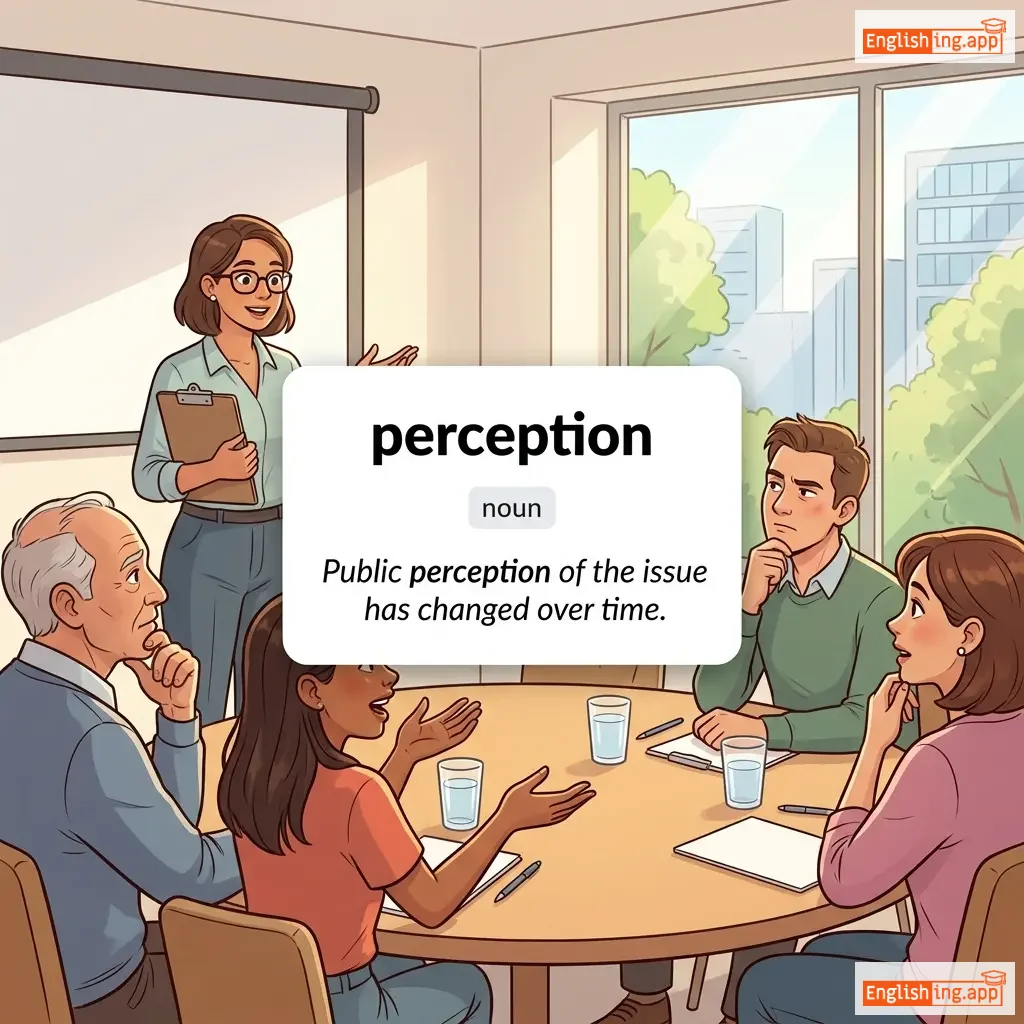
perception definition card — visual illustration of the meaning
noun B2
/pərˈsɛpʃən/
感知 (gǎnzhī)

The ability to see, hear, or become aware of something; an interpretation of sensory information.

"Public perception of the issue has changed over time."

"公众对这一问题的感知随着时间的推移发生了变化。" (Gōngzhòng duì zhè yī wèntí de gǎnzhī suí zhe shíjiān de tuīyí fāshēngle biànhuà.)
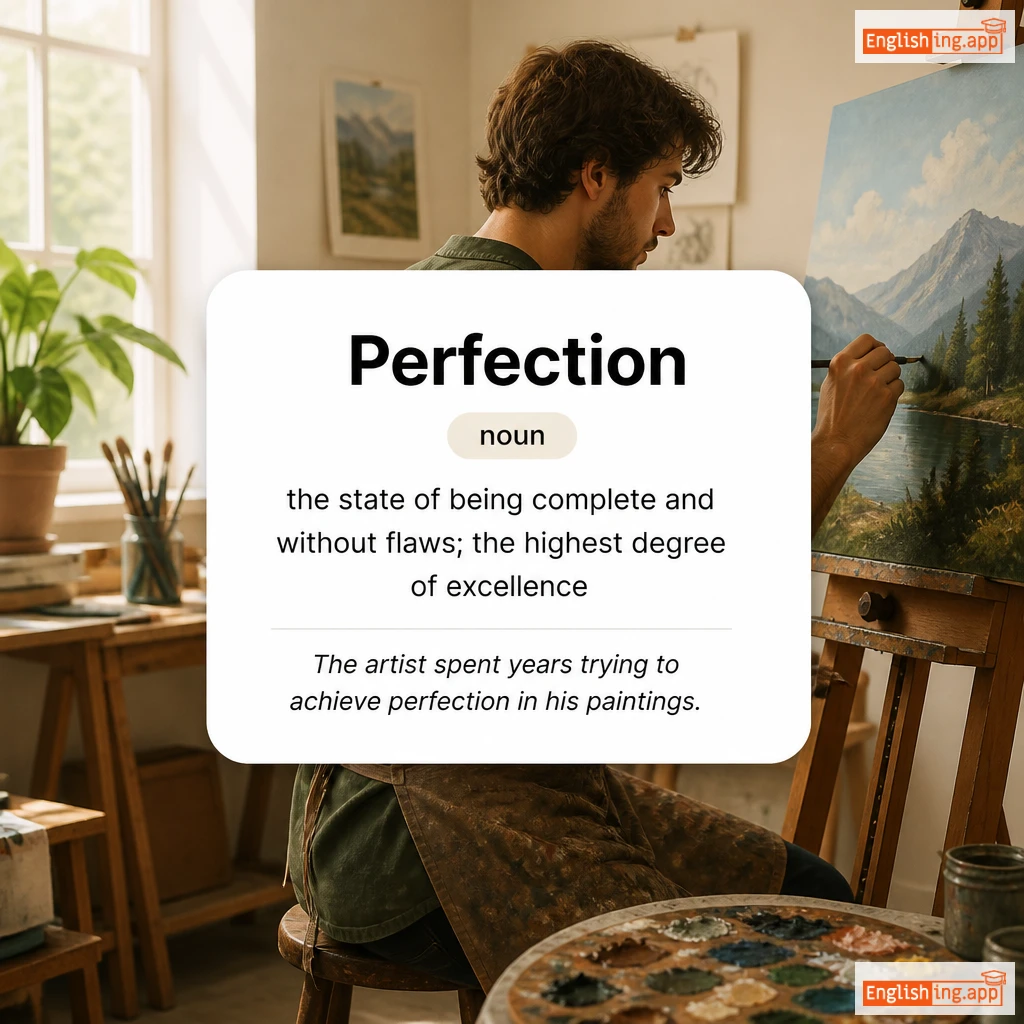
Perfection definition card — visual illustration of the meaning
noun B2
/pərˈfek.ʃən/
完美 (wanmei)

the state of being complete and without flaws; the highest degree of excellence

"The artist spent years trying to achieve perfection in his paintings."

"艺术家花了多年时间,试图在他的画作中实现完美。" (Yishujia hua le duonian shijian, shitou zai tamen de huazu zhong shixian wanmei.)
noun B2
/ˌpɪə.riˈɒd.ɪ.kəl/
期刊 (qīkān)

a magazine or journal published at regular intervals

"She subscribed to a science periodical."

"她订阅了一个科学期刊。" (Tā dìngyuèle yīgè kēxué qīkān.)
verb B2
/ˈpɛrɪʃ/
死去 (sǐqù)

To die, especially in a sudden or violent way.

"Many soldiers perished in the war."

"许多士兵在战争中死去。" (Xǔduō shìbīng zài zhànzhēng zhōng sǐqù.)
noun/verb B2
/pɜːrk/
福利 (fú lì)

A benefit or advantage associated with a job; or to become more lively or cheerful.

"One of the perks of working here is free lunch every Friday."

"在这里工作的一项福利是每周五免费午餐。" (Zài zhèlǐ gōngzuò de yī xiàng fúlì shì měi zhōu wǔ miǎnfèi wǔcān.)
Permanence definition card — visual illustration of the meaning
noun B2
/ˈpɜːrmənəns/
持久性 (chíjiǔ xìng)

The state or quality of lasting or remaining unchanged indefinitely.

"The permanence of the monument symbolizes eternal respect."

"纪念碑的持久性象征着永恒的尊重。" (Jìniànbēi de chíjiǔ xìng xiàngzhēngzhe yǒnghéng de zūnzhòng.)
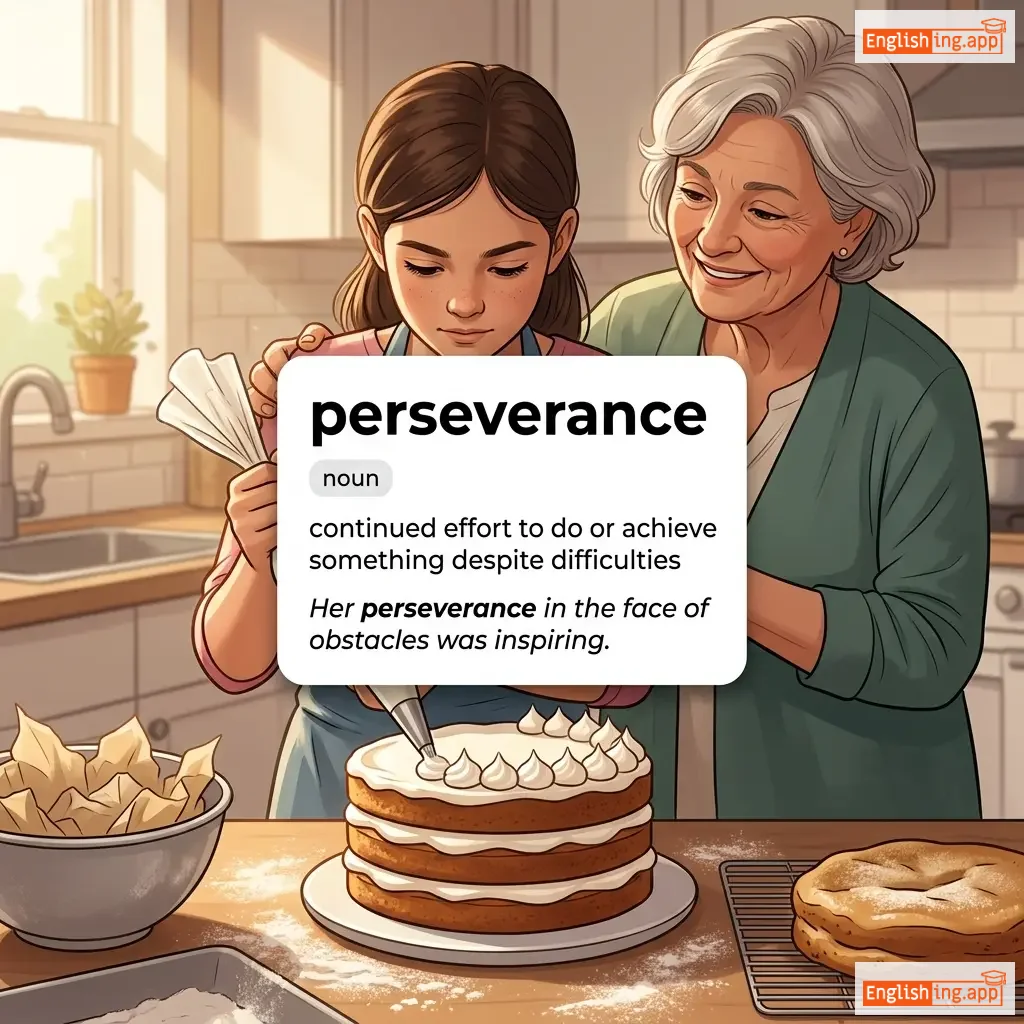
perseverance definition card — visual illustration of the meaning
noun B2
/ˌpɜːrsəˈvɪrəns/
毅力 (yìlì)

continued effort to do or achieve something despite difficulties

"Her perseverance in the face of obstacles was inspiring."

"她在面对障碍时的毅力令人鼓舞。" (Tā zài miànduì zhàng'ài shí de yìlì lìng rén gǔwǔ.)
verb B2
/ˌpɜːrsəˈvɪr/
坚持 (jiānchí)

to continue trying to achieve something despite difficulty or delay

"He persevered through many failures before succeeding."

"他在许多失败后坚持到底,最终成功了。" (Tā zài xǔduō shībài hòu jiānchí dào dǐ, zuìzhōng chénggōngle.)
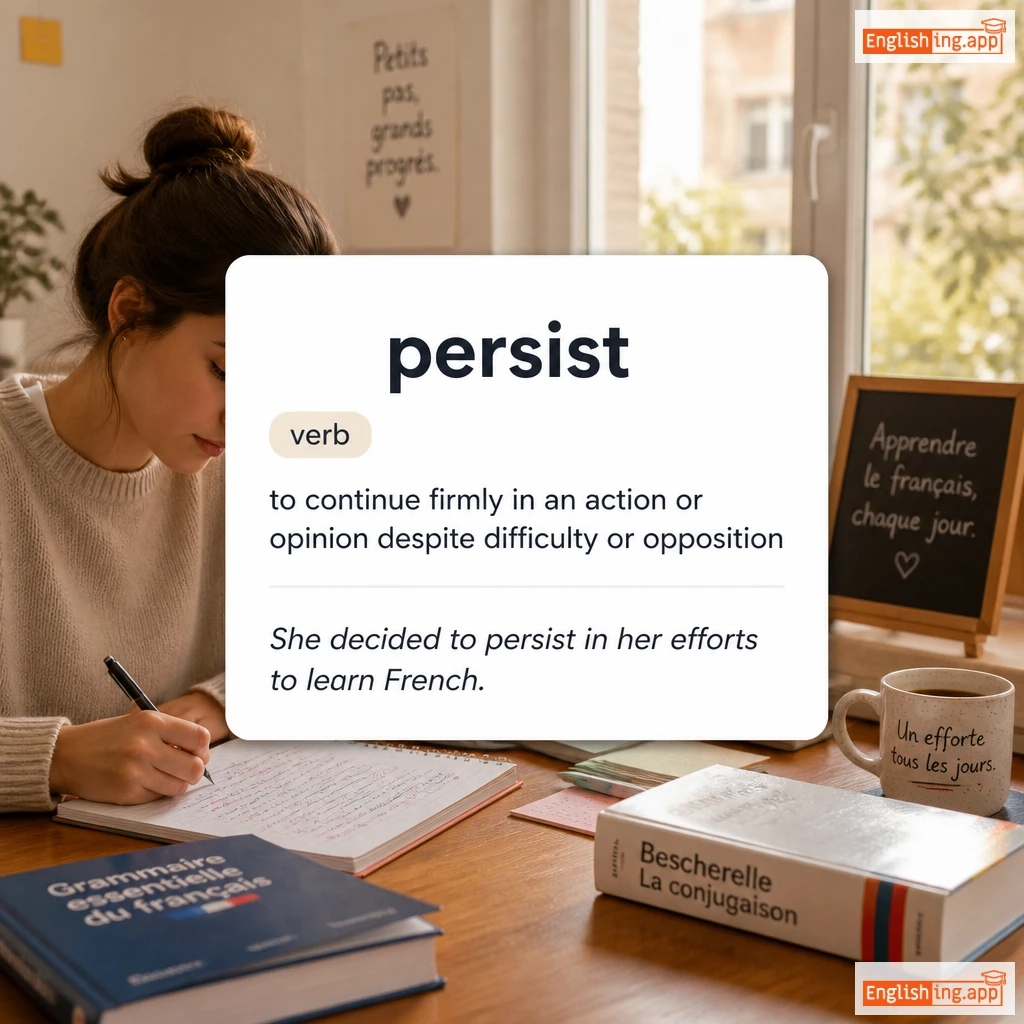
persist definition card — visual illustration of the meaning
verb B2
/pərˈsɪst/

to continue firmly in an action or opinion despite difficulty or opposition

"She decided to persist in her efforts to learn French."

noun B2
/pərˈsɪstəns/
坚持 (jiānchí)

the quality of continuing steadily despite problems or difficulties

"His persistence finally paid off when he got the job."

"他的坚持最终得到了回报,当他得到了那份工作。" (Tā de jiānchí zuìzhōng dédào le huíbào, dāng tā dédào le nà fèn gōngzuò.)
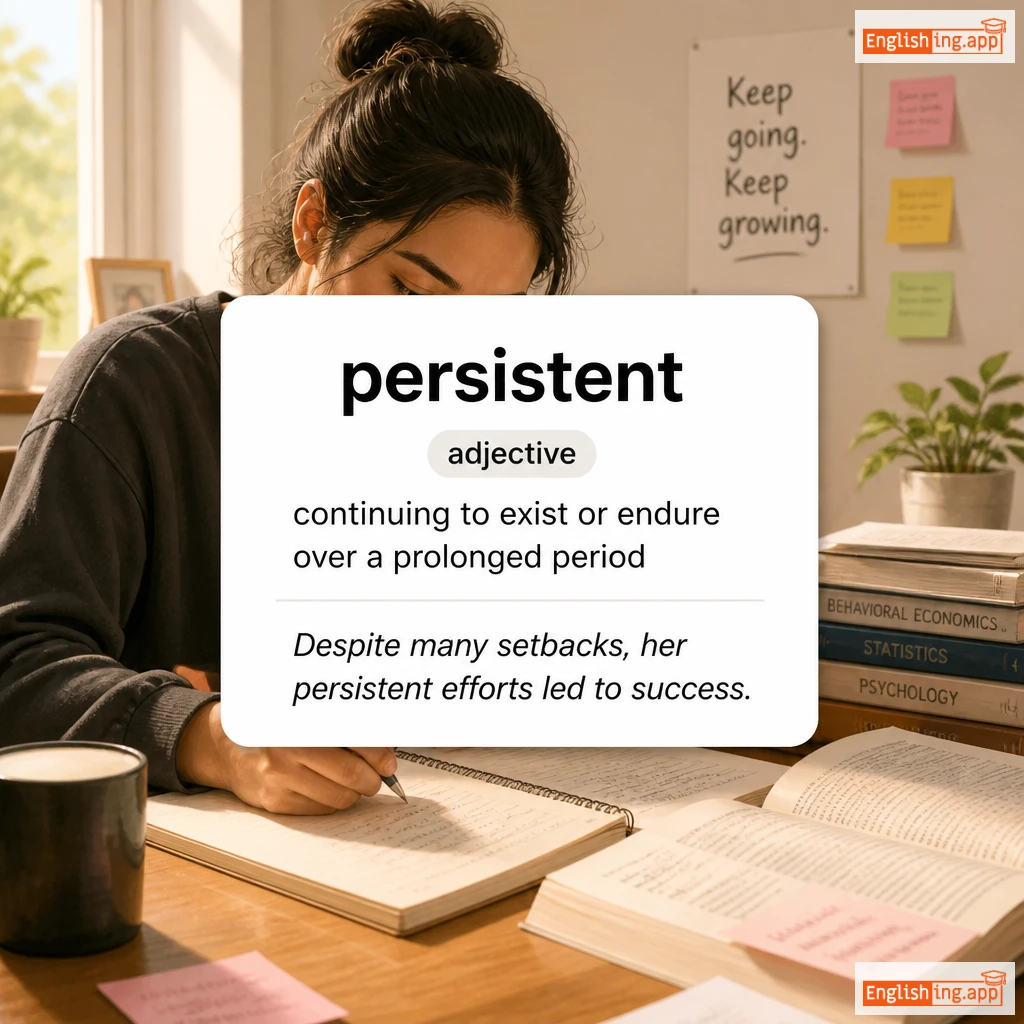
persistent definition card — visual illustration of the meaning
adjective B2
/pəˈsɪs.tənt/
坚持不懈 (jiānchí bùxiè)

continuing to exist or endure over a prolonged period

"Despite many setbacks, her persistent efforts led to success."

"尽管遇到许多挫折,她的坚持不懈最终带来了成功。" (Jǐnguǎn yùdào xǔduō cuòzhé, tā de jiānchí bùxiè zuìzhōng dàilái le chénggōng.)
personnel definition card — visual illustration of the meaning
noun B2
/ˌpɜːrsəˈnel/
人员 (renyuan)

People employed in an organization or engaged in an organized undertaking such as military service.

"The company is hiring more personnel for its new branch."

"公司正在为其新分支招聘更多的人员。" (Gōngsī zhèngzài wèi qí xīn fēnzhī zhāopìn gèng duō de rényuán.)
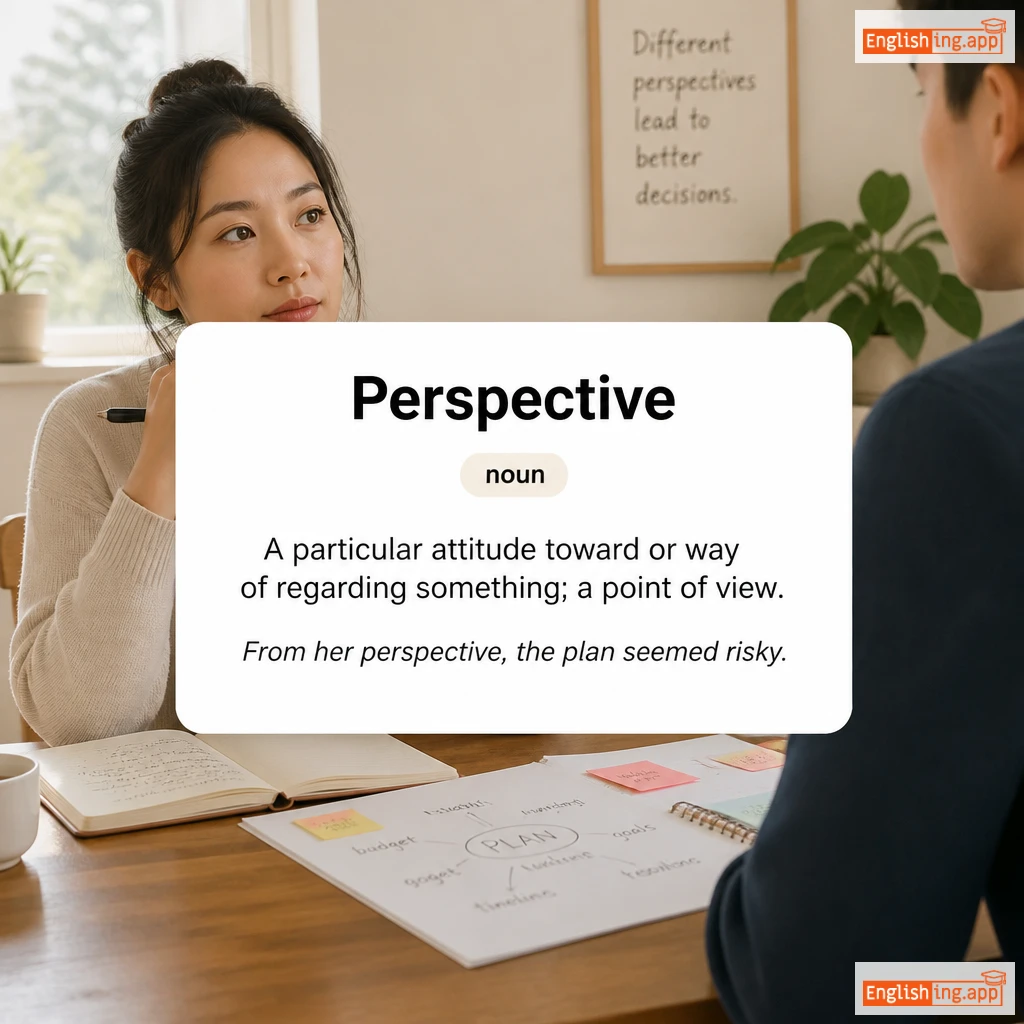
Perspective definition card — visual illustration of the meaning
noun B2
/pərˈspɛktɪv/
观点 (guāndiǎn)

A particular attitude toward or way of regarding something; a point of view.

"From her perspective, the plan seemed risky."

"从她的角度来看,计划似乎很有风险。" (Cóng tā de jiǎodù lái kàn, jìhuà sìhū hěn yǒu fēngxiǎn.)
perspectives definition card — visual illustration of the meaning
noun B2
pəˈspek.tɪvz
观点 (guandian)

A particular attitude toward or way of regarding something; a point of view.

"New perspectives enhance understanding."

"新的观点促进理解。" (Xinde guandian cujin lijie.)
persuasion definition card — visual illustration of the meaning
noun B2
/pɜːˈsweɪ.ʒən/
劝说能力 (quanshuo nengli)

The ability to convince someone to believe or do something through reasoning or argument.

"His persuasion skills helped close the business deal."

"他的劝说技巧帮助完成了商业交易。" (Tā de quànshuō jìqiǎo bāngzhù wánchéng le shāngyè jiāoyì.)
noun B2
/ˈpesɪˌmɪzəm/
悲观主义 (bēiguān zhǔyì)

A tendency to see the worst aspect of things or believe the worst will happen.

"Her constant pessimism made it hard to stay optimistic."

"她的悲观主义让保持乐观变得很困难。" (Tā de bēiguān zhǔyì ràng bǎochí lèguān biàn dé hěn kùnnán.)
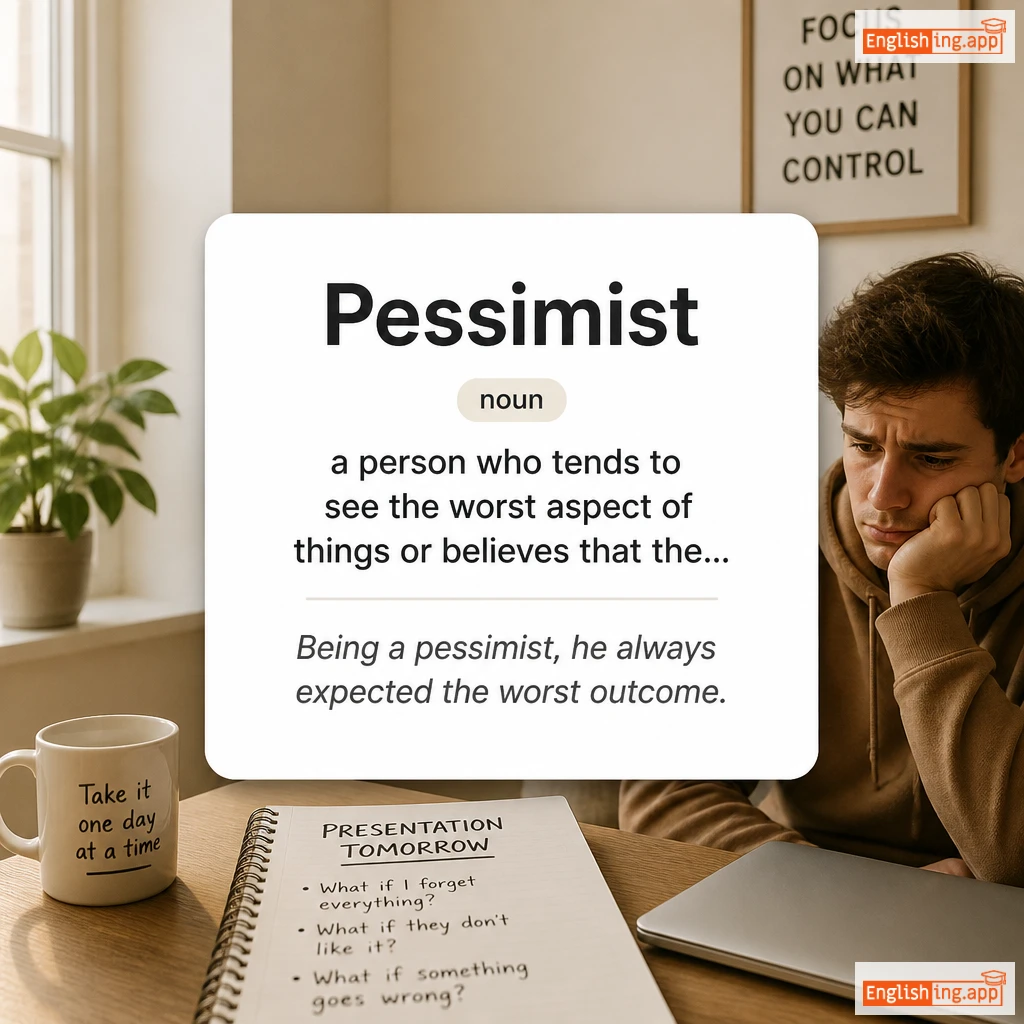
Pessimist definition card — visual illustration of the meaning
noun B2
/ˈpes.ə.mɪst/
悲观主义者 (biguān zhǔyì zhě)

a person who tends to see the worst aspect of things or believes that the worst will happen; someone who lacks hope or confidence in the future

"Being a pessimist, he always expected the worst outcome."

"作为一个悲观主义者,他总是预期最坏的结果。" (zuòwéi yīgè bēiguān zhǔyì zhě, tā zǒng shì yùqī zuì huài de jiéguǒ)
pesticide definition card — visual illustration of the meaning
noun B2
/ˈpɛstɪsaɪd/
杀虫剂 (shāchóngjì)

A chemical substance used to kill pests, especially insects harmful to crops.

"Farmers use pesticide to protect their crops from insects."

"农民使用杀虫剂来保护他们的作物免受昆虫的侵害。" (Nóngmín shǐyòng shāchóngjì lái bǎohù tāmen de zuòwù miǎn shòu kūnchóng de qīnhài.)
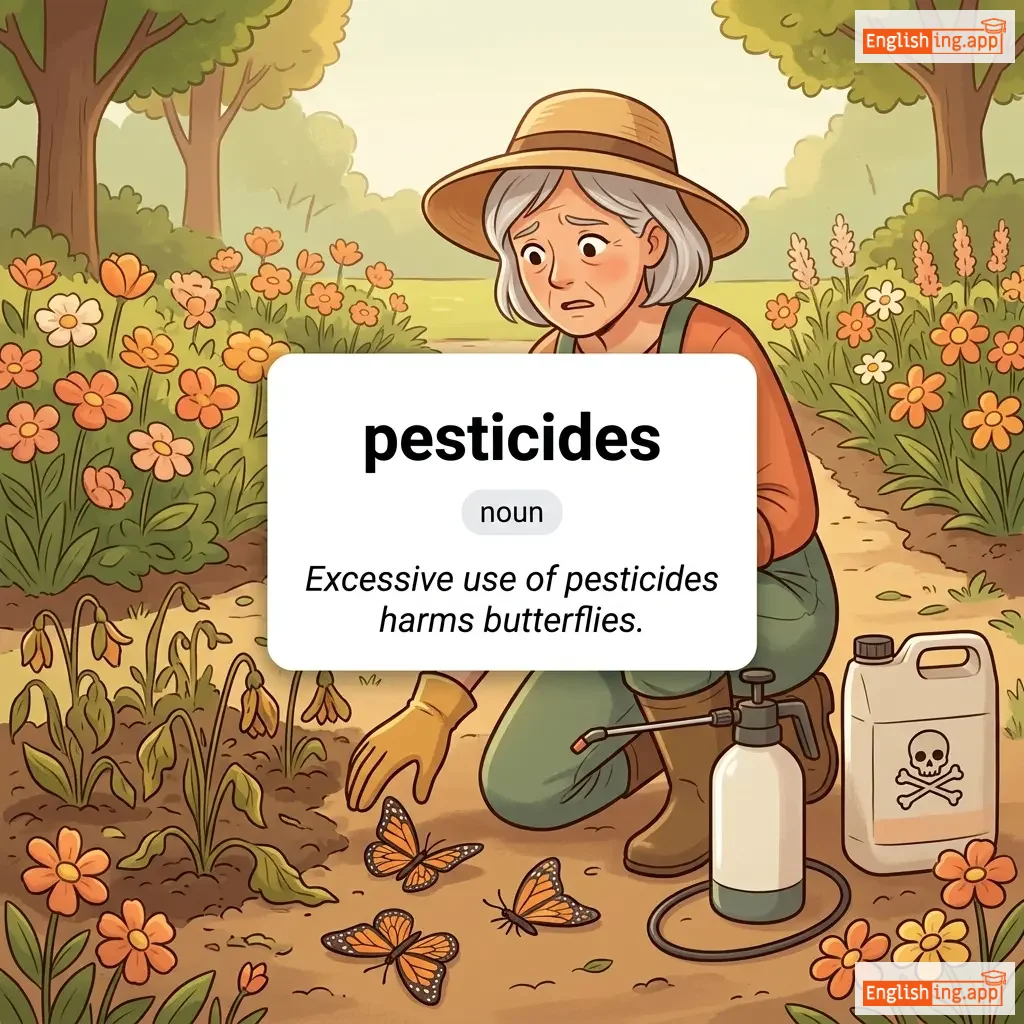
pesticides definition card — visual illustration of the meaning
noun B2
ˈpɛstɪsaɪdz
杀虫剂 (shāchóngjì)

Chemical substances used to kill pests, but harmful to beneficial insects like butterflies.

"Excessive use of pesticides harms butterflies."

"过度使用杀虫剂会伤害蝴蝶。" (Guòdù shǐyòng shāchóngjì huì shānghài húdié.)
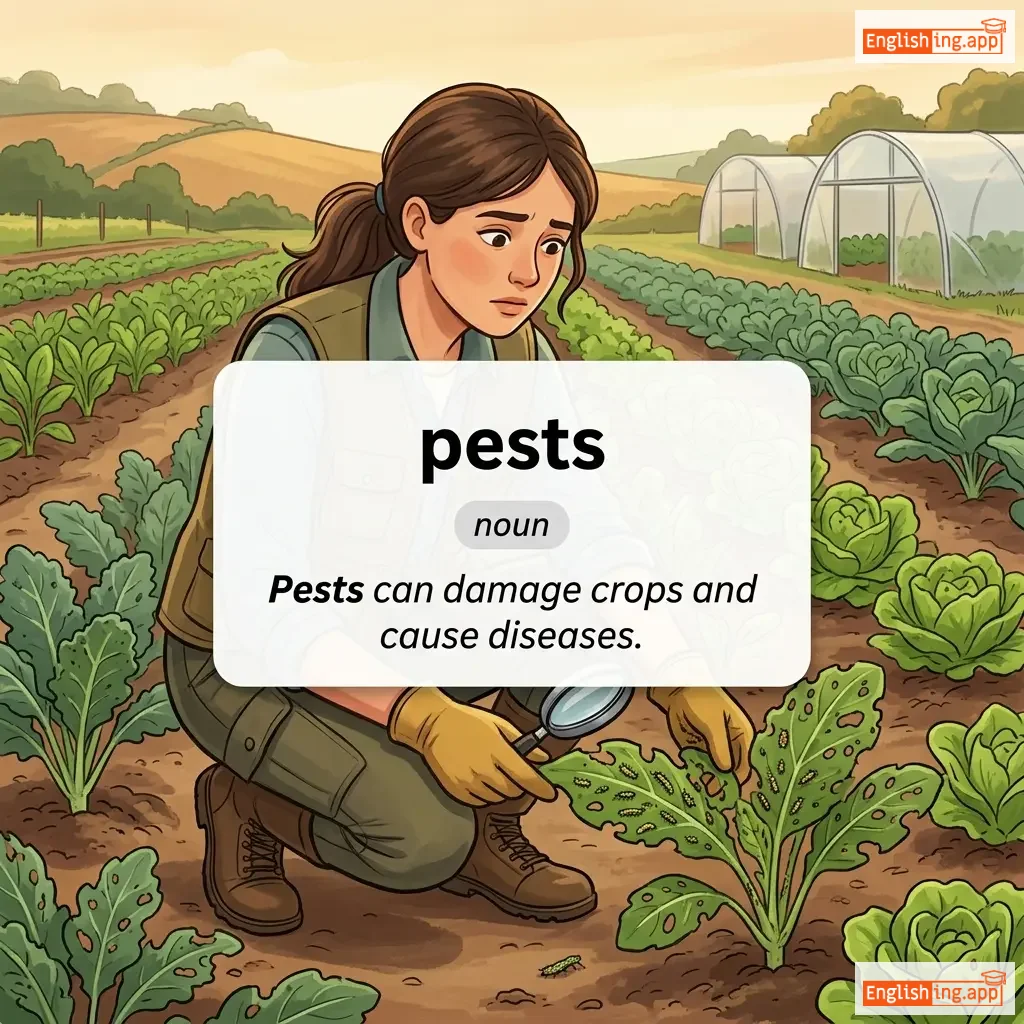
pests definition card — visual illustration of the meaning
noun B2
pɛsts
害虫, 害动物 (haichong, haidongwu)

Harmful or troublesome creatures, especially insects or small animals that damage crops, food, or living spaces.

"Pests can damage crops and cause diseases."

"害虫可能损害作物并引发疾病。" (Haichong keneng sunhai zuowu bing yinfa jibing.)
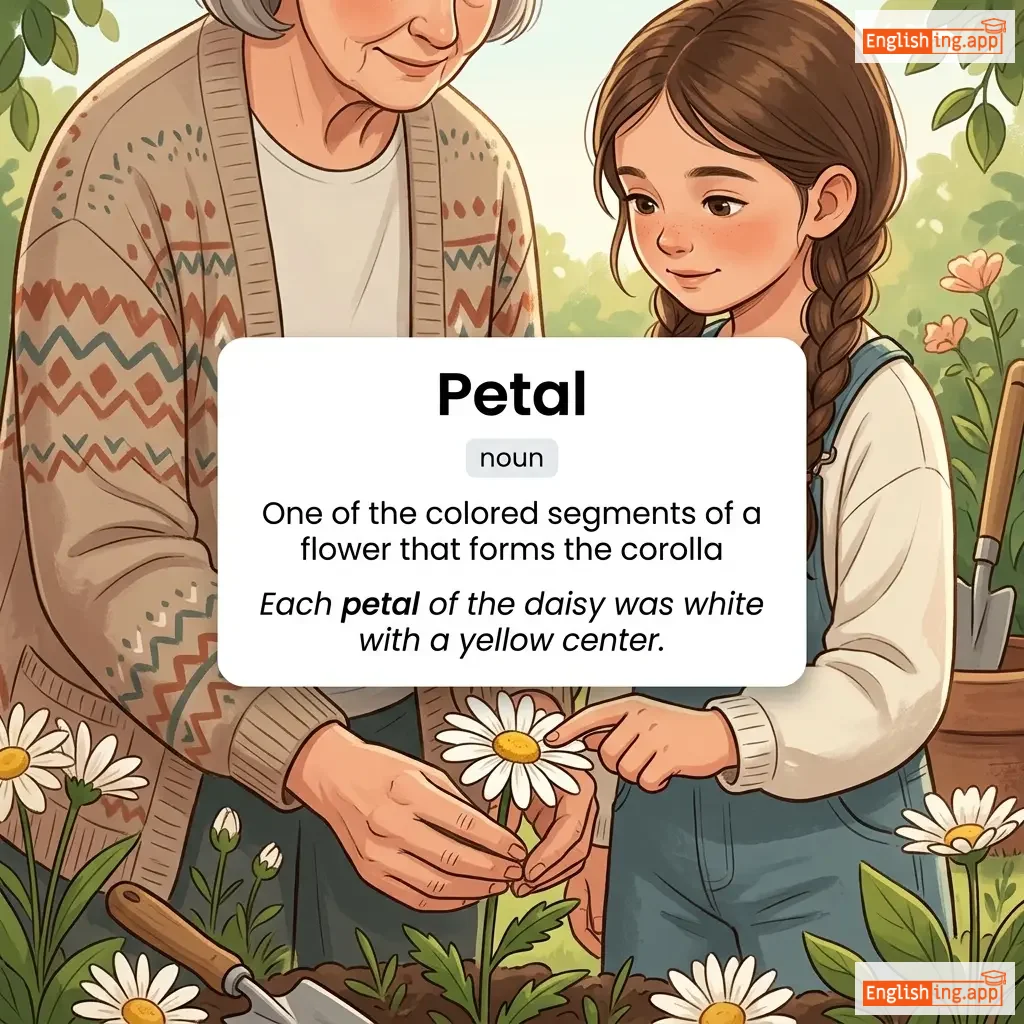
Petal definition card — visual illustration of the meaning
noun B2
/ˈpetəl/
花瓣 (huaban)

One of the colored segments of a flower that forms the corolla

"Each petal of the daisy was white with a yellow center."

"雏菊的每一片花瓣都是白色的,中央是黄色的。" (chujus de mei yi pian huaban doushi baise de, zhongyang shi huangse de)
verb B2
/ˈpiːtər/
逐渐减弱 (zhújiàn jiǎnruò)

to diminish gradually and come to an end; to fade or dwindle away

"The excitement of the event began to peter out after a few hours."

"事件的兴奋感在几个小时后开始逐渐消退。" (Shìjiàn de xīngfèn gǎn zài jǐ gè xiǎoshí hòu kāishǐ zhújiàn xiāotuì.)
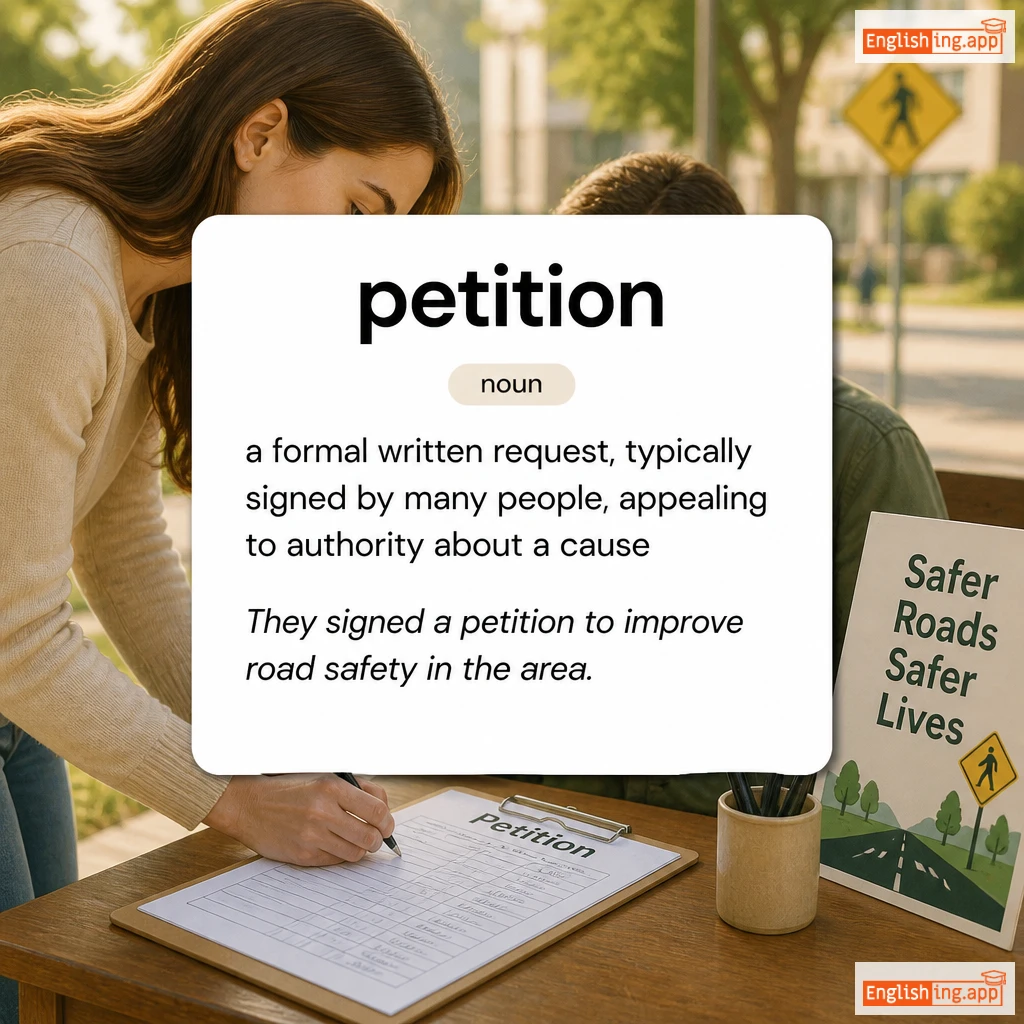
petition definition card — visual illustration of the meaning
noun B2
/pəˈtɪʃən/
请愿书 (qǐngyuàn shū)

a formal written request, typically signed by many people, appealing to authority about a cause

"They signed a petition to improve road safety in the area."

"他们签署了一份请愿书,要求改善该地区的道路安全。" (Tāmen qiānshǔle yī fèn qǐngyuàn shū, yāoqiú gǎishàn gāi dìqū de dàolù ānquán.)