|
••••••
|
/ˈhæpən/
verb
(jápén)
••••••
|
-
••••••
|
suceder
suceder
••••••
|
jápendo
••••••
|
jápendo
••••••
|
jápens
••••••
|
jápending
••••••
|
to occur or take place; to come about by chance
|
What happened at the meeting yesterday?
¿Qué jápendo en la reunión ayer?
••••••
|
¿Qué sucedió en la reunión ayer?
¿Qué sucedió en la reunión ayer?
••••••
|
occur, take place, arise, transpire
|
prevent, stop, avoid, cease
|
happen to, happen by chance, happen naturally, happen suddenly
|
Recuerda que 'suceder' es como 'happen' en español.
••••••
|
|
••••••
|
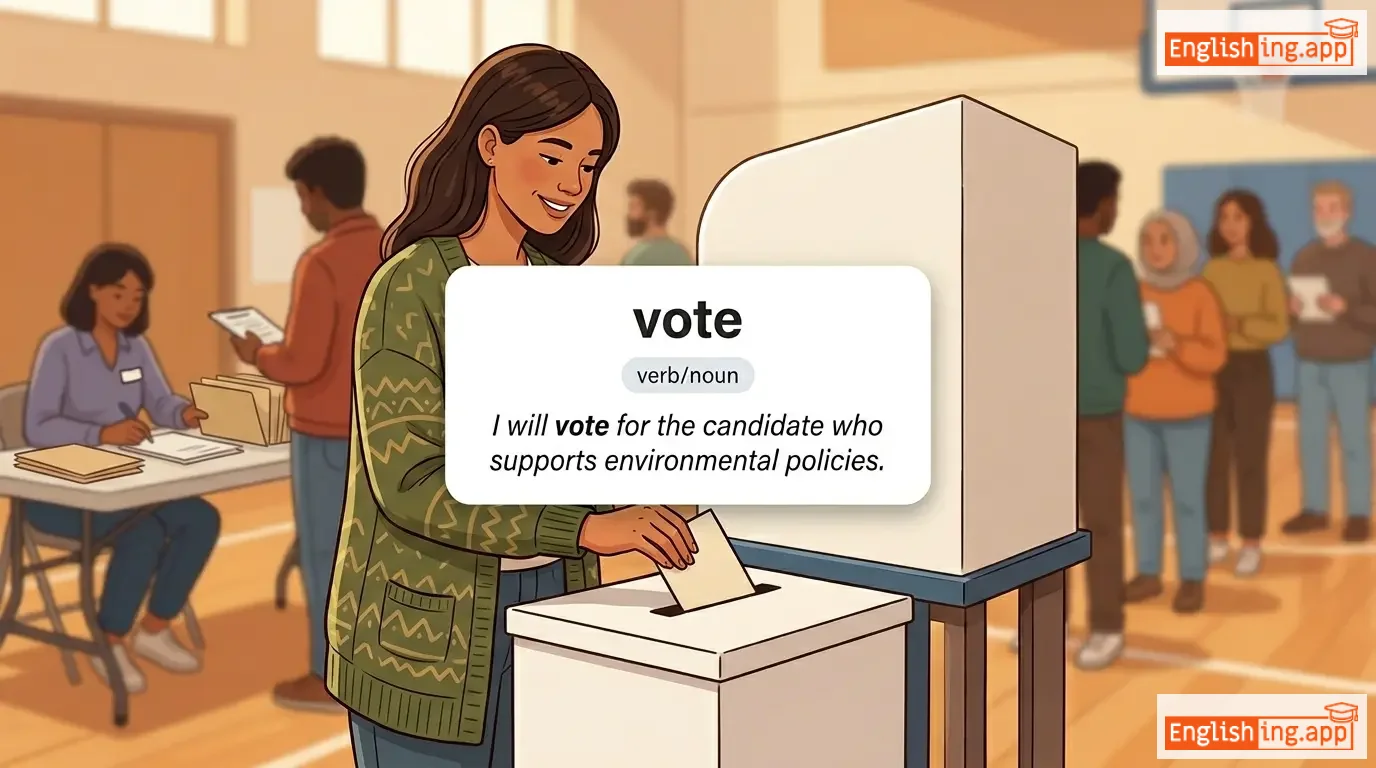
/voʊt/
verb
(vōt)
••••••
|
••••••
|
votar
votar
••••••
|
vōt-ed
••••••
|
vōt-ed
••••••
|
vōts
••••••
|
vōting
••••••
|
to make a choice in an election; to express preference
|
Citizens vote to choose their representatives.
ciudadanos votan para elegir a sus representantes.
••••••
|
Los ciudadanos votan para elegir a sus representantes.
Los ciudadanos votan para elegir a sus representantes.
••••••
|
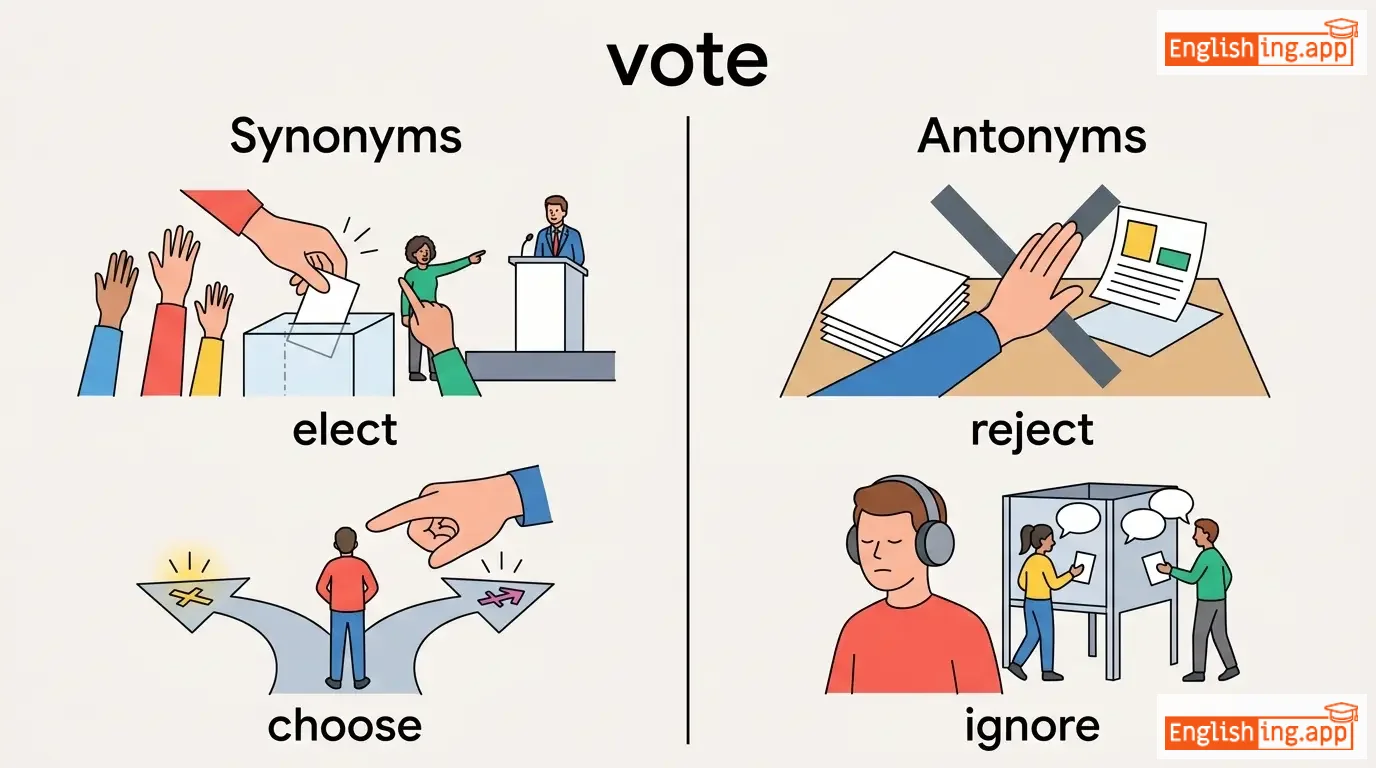
elect, choose, select, ballot, poll
|
••••••
|
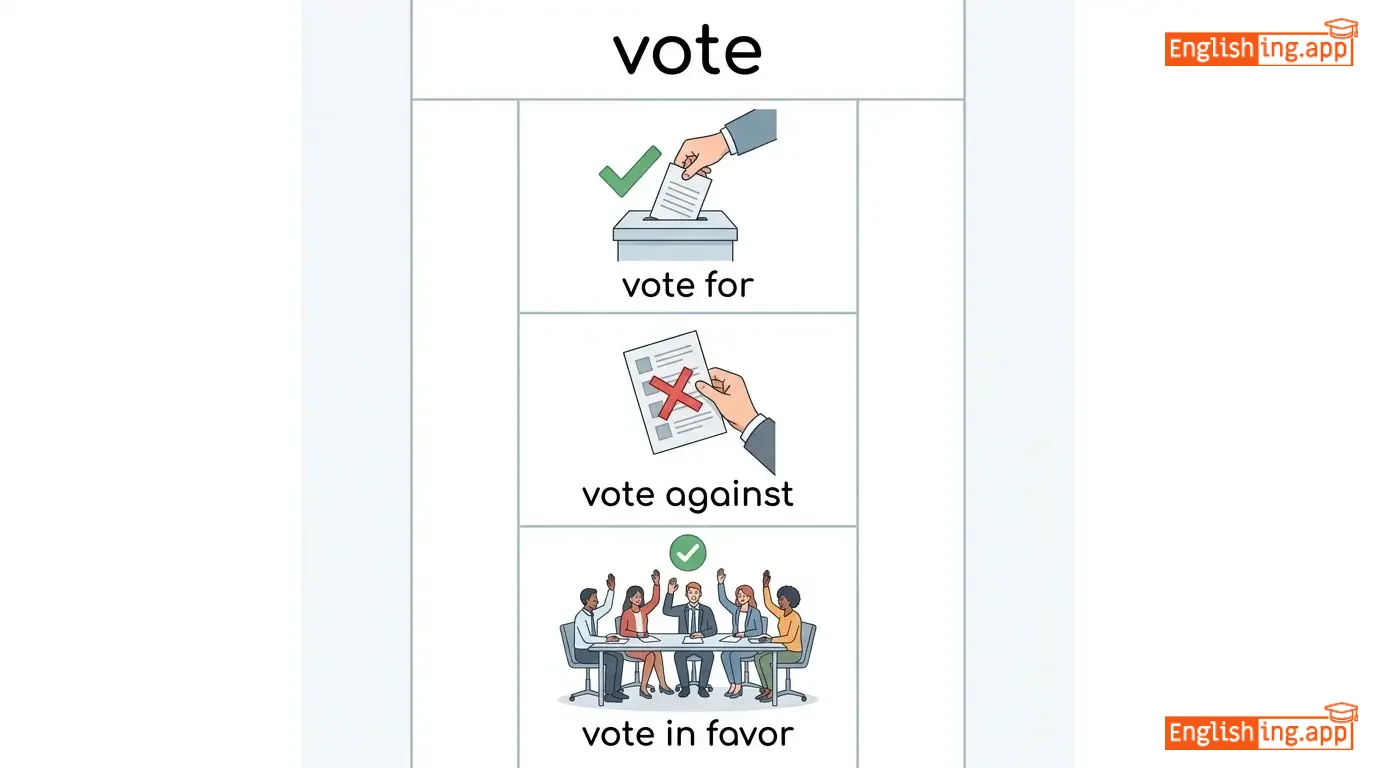
vote for, vote against, vote on, cast a vote
|
Votar (vōtar) es elegir a tus representantes en elecciones.
••••••
|
|
••••••
|
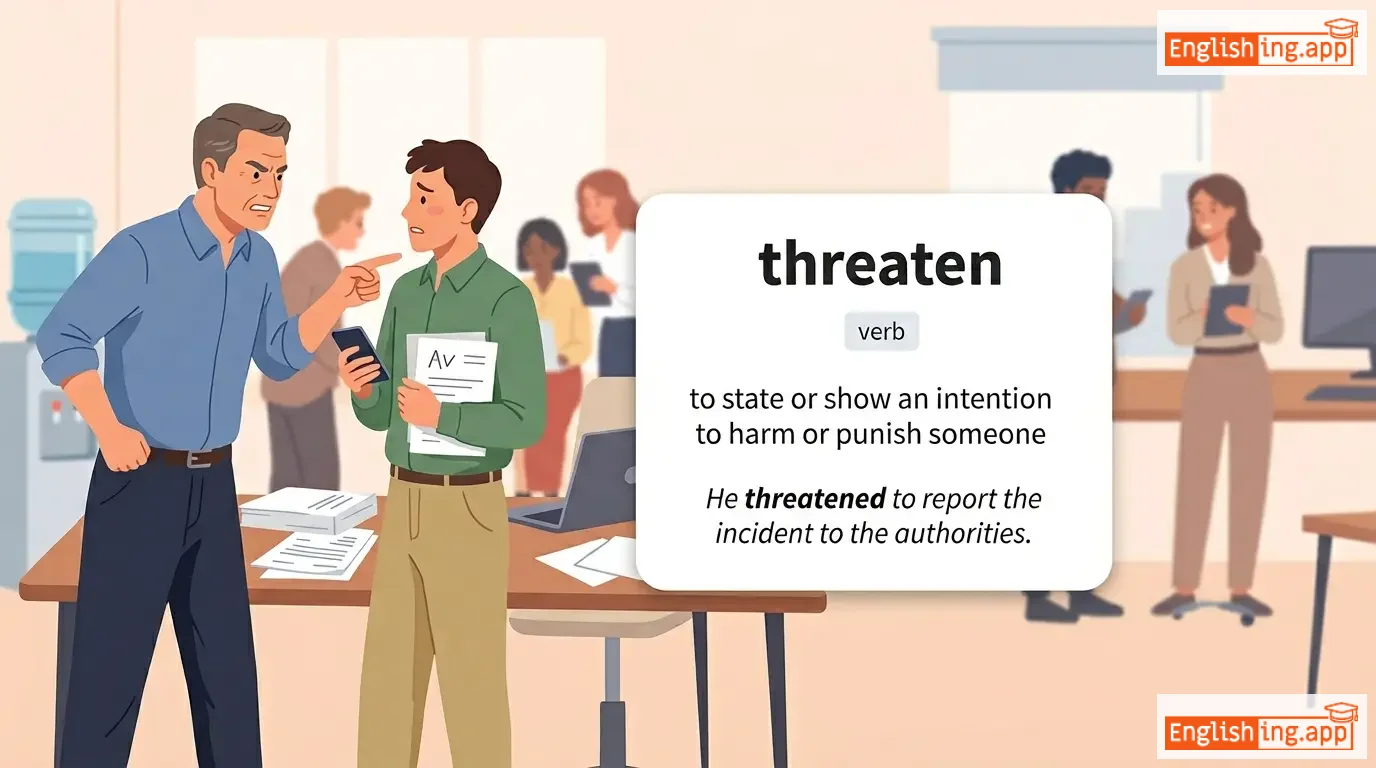
/ˈθretən/
verb
(zreten)
••••••
|
••••••
|
amenazar
amenazar
••••••
|
zretened
••••••
|
zretened
••••••
|
zretens
••••••
|
zretening
••••••
|
to express an intention to harm or punish someone; to be likely to cause harm
|
The storm clouds threaten to bring heavy rain tonight.
Las nubes de tormenta amenazan con traer lluvias fuertes esta noche.
••••••
|
Las nubes de tormenta amenazan con traer lluvias fuertes esta noche.
Las nubes de tormenta amenazan con traer lluvias fuertes esta noche.
••••••
|
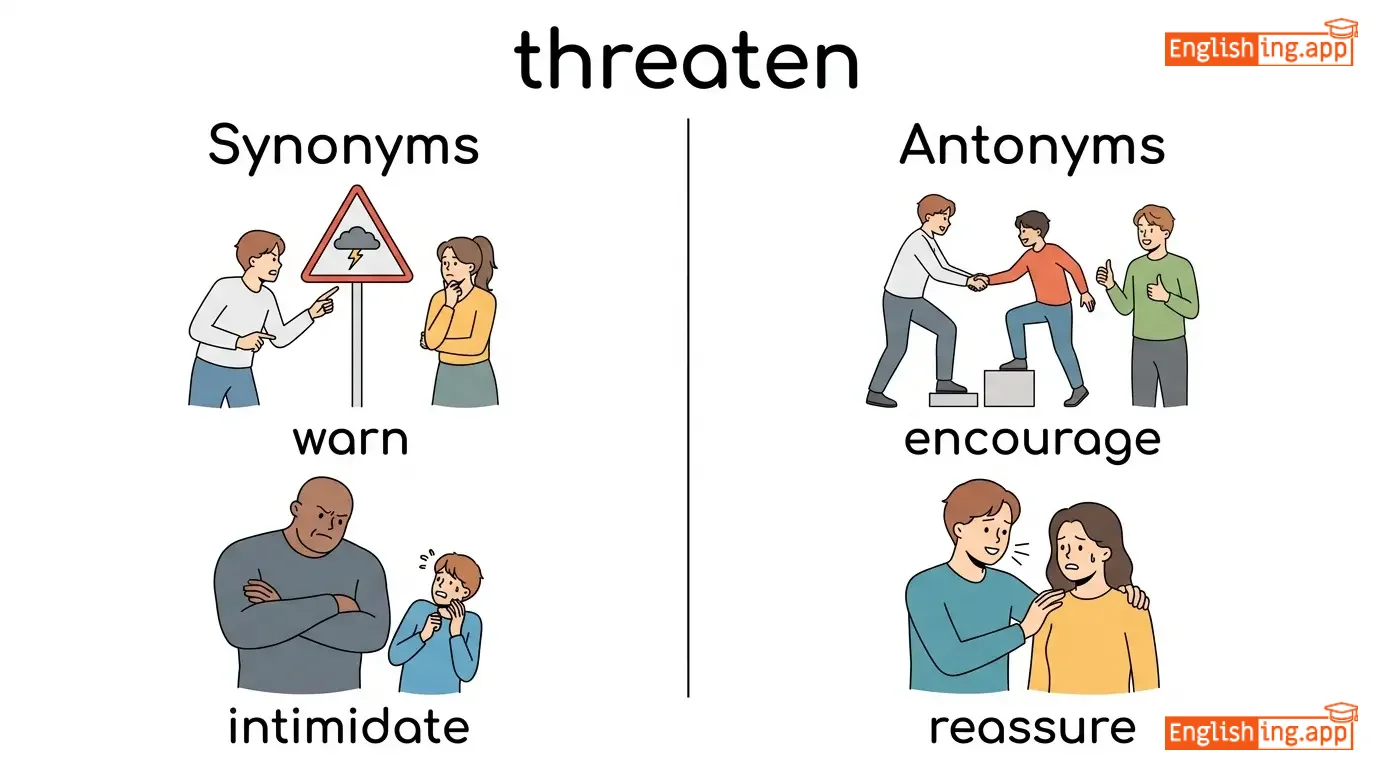
menace, intimidate, warn, endanger
|
protect, defend, reassure, comfort
|
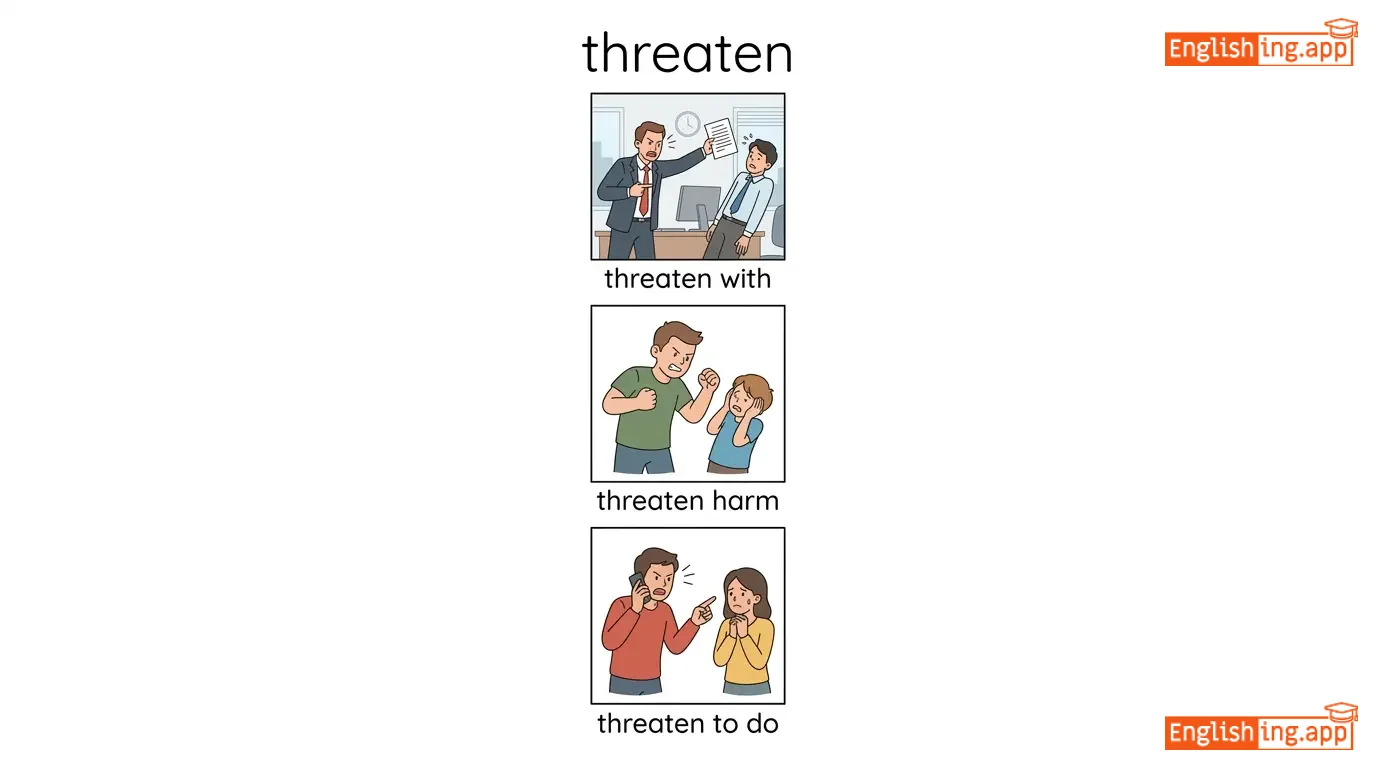
threaten to, threaten with, threaten someone, pose a threat
|
Amenazar = A MENOS AZAR (sin peligro) pero... ¡si amenaza, trae consecuencias!
••••••
|
|
••••••
|
/əbˈzɜːrv/
verb
(obzɜːrv)
••••••
|
-
••••••
|
observar
observar
••••••
|
obzɜːrvd
••••••
|
obzɜːrvd
••••••
|
obzɜːrvs
••••••
|
obzɜːrvɪŋ
••••••
|
to watch carefully; to notice or perceive something
|
Scientists observe the behavior of animals in the wild.
Los científicos observan el comportamiento de los animales en la naturaleza.
••••••
|
Los científicos observan el comportamiento de los animales en la naturaleza.
Los cientificos observan el comportamiento de los animales en la naturaleza
••••••
|
watch, study, examine, monitor
|
••••••
|
observe closely, observe carefully, observe behavior, observe changes
|
Observe in Spanish - observar (watching with care) - Picture yourself observing a bird through binoculars.
••••••
|
|
••••••
|
/bɜːrst/
verb
(bɜːrst)
••••••
|
••••••
|
estallar
estayar
••••••
|
bɜːrst
••••••
|
bɜːrst
••••••
|
bursts
••••••
|
bursting
••••••
|
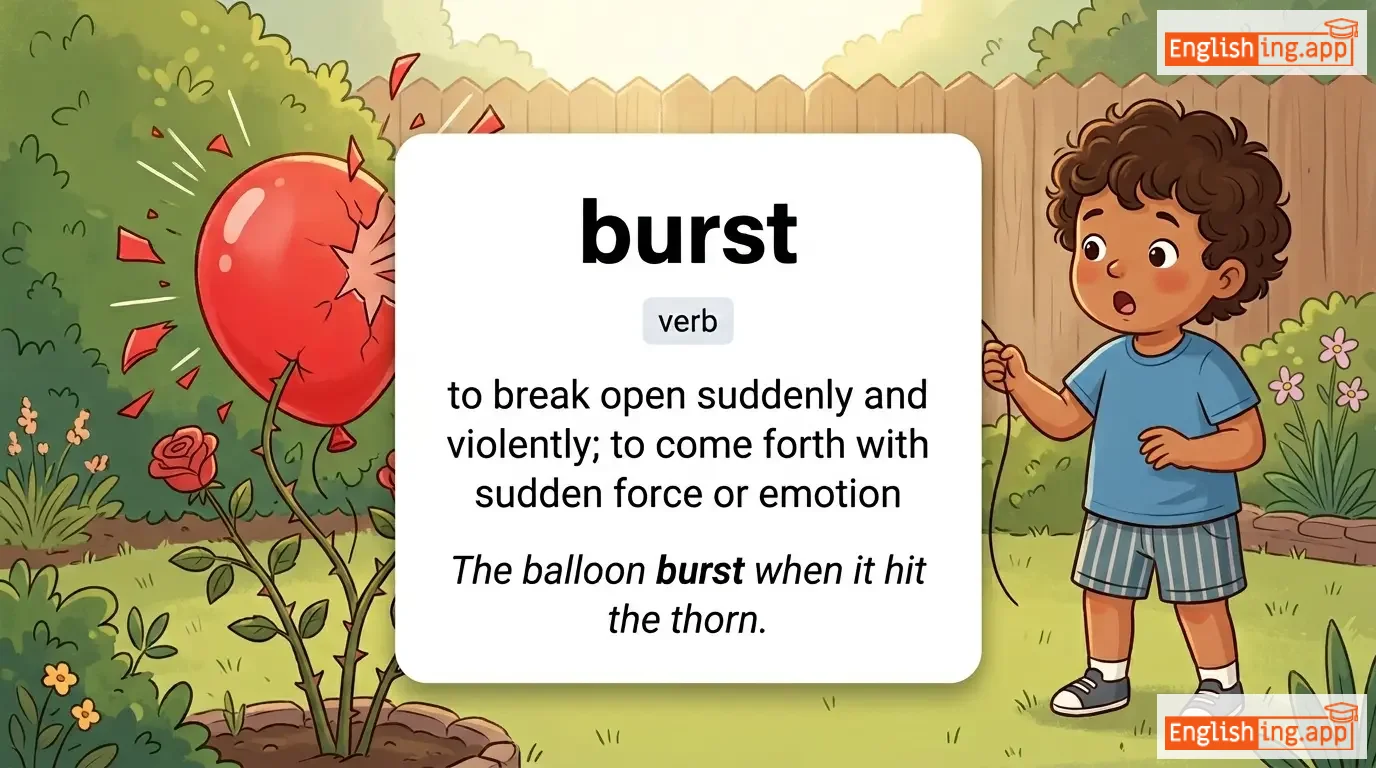
to break open suddenly; to be full of something
|
The balloon bursts with a loud pop.
El globo estalla con un fuerte estallido.
••••••
|
El globo estalla con un fuerte estallido.
El globo estalla con un fuerte estallido.
••••••
|
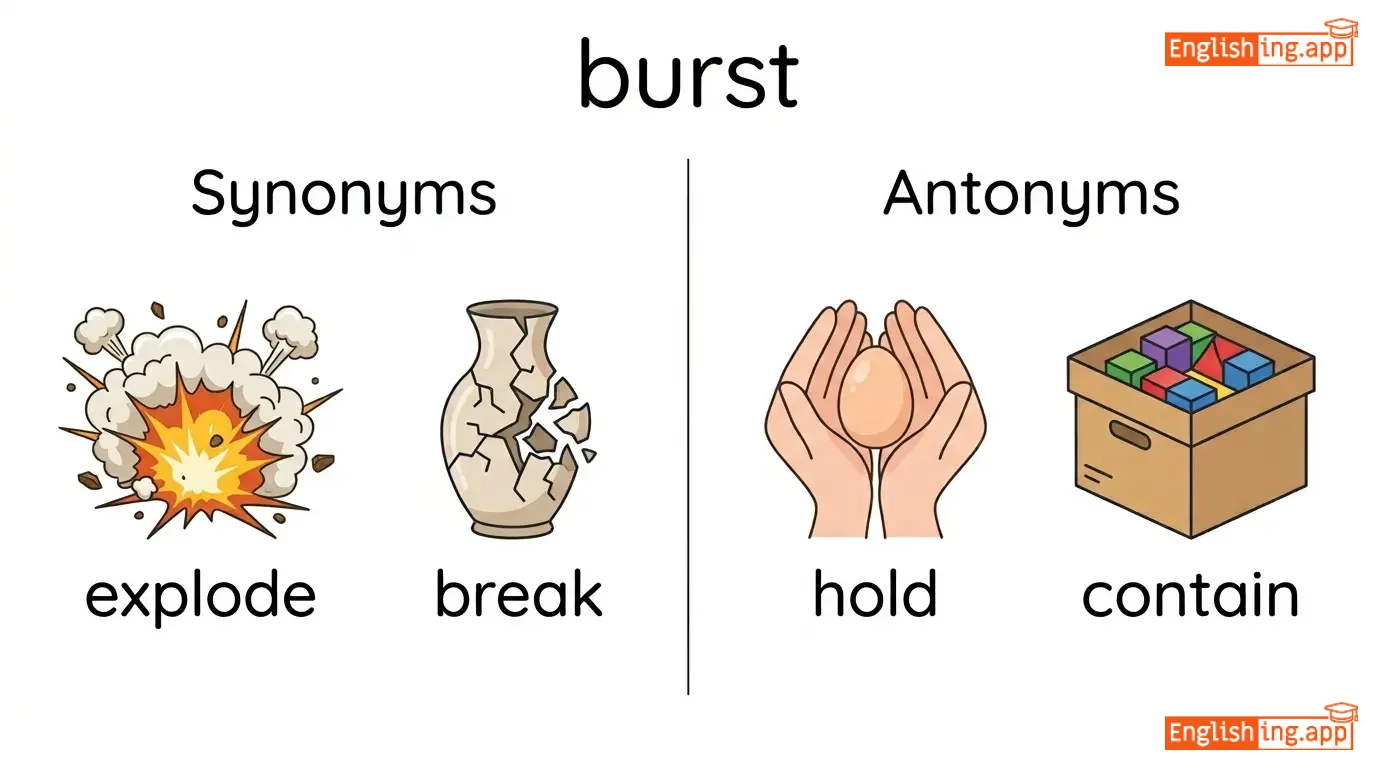
explode, pop, rupture, break
|
••••••
|
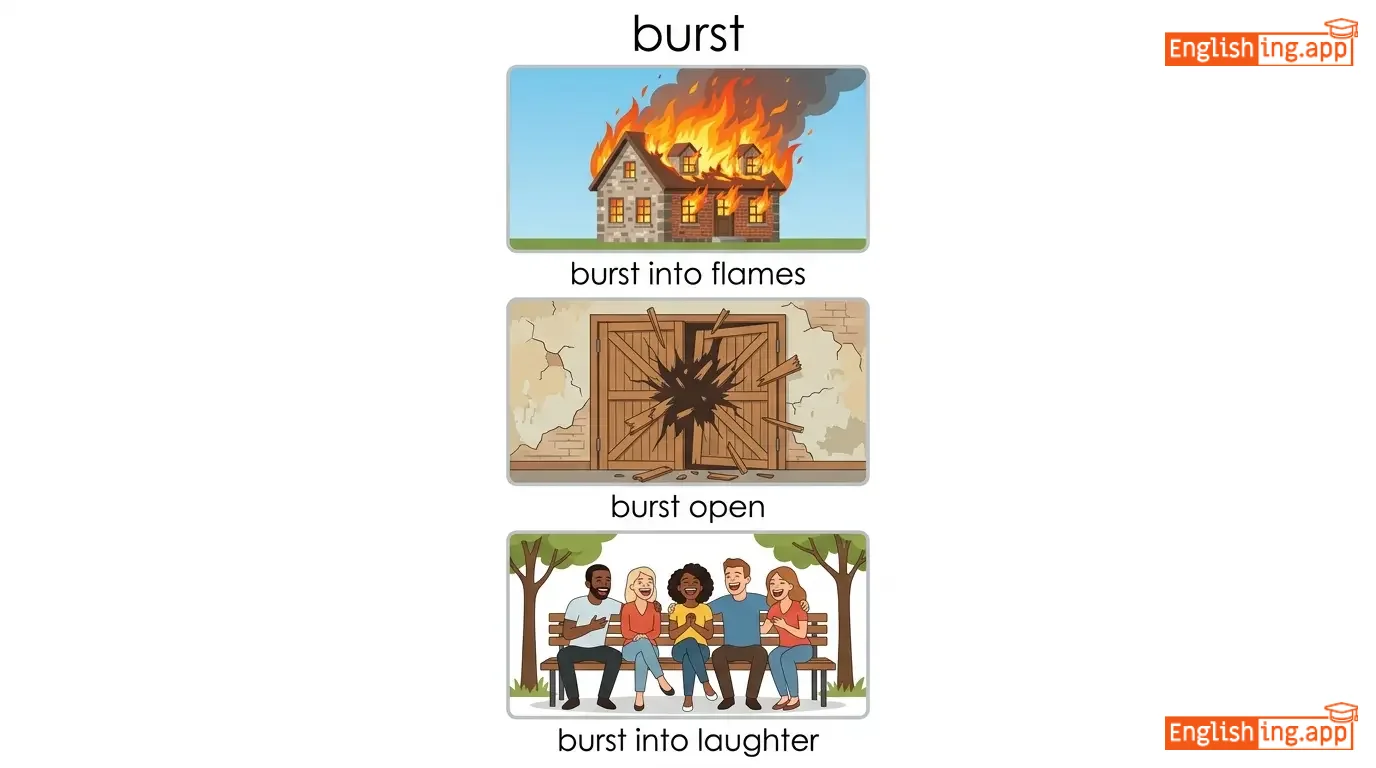
burst into, burst out, burst open, burst with
|
el globo explota con un estallido
••••••
|
|
••••••
|
/əˈblɪtəˌreɪt/
verb
(oblitéréit)
••••••
|
••••••
|
destruir completamente
destruir completamente
••••••
|
oblitéréited
••••••
|
oblitéréited
••••••
|
oblitéreits
••••••
|
oblitéréiting
••••••
|
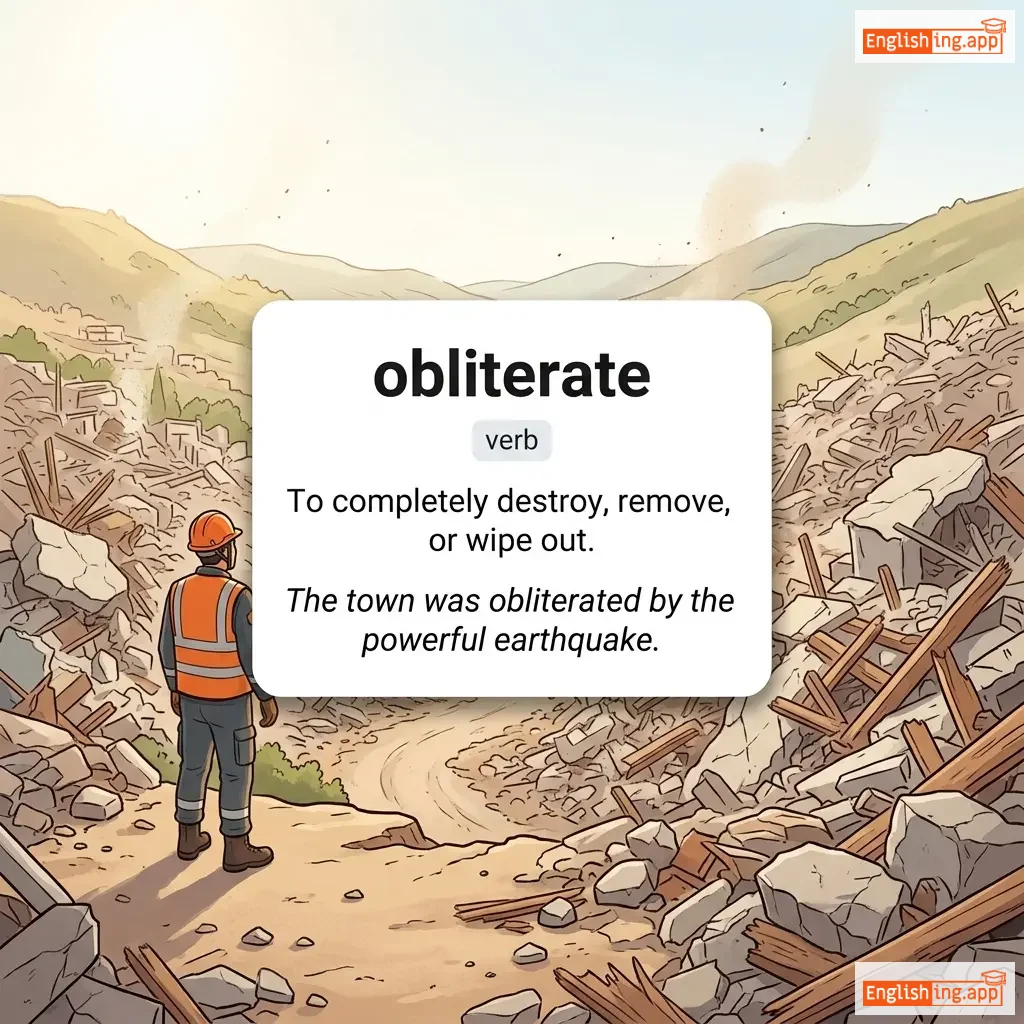
to destroy completely; to remove all traces of something
|
The earthquake obliterated the entire village.
El terremoto oblitéró toda la aldea.
••••••
|
El terremoto destruyó toda la aldea.
El terremoto destruyó toda la aldea.
••••••
|
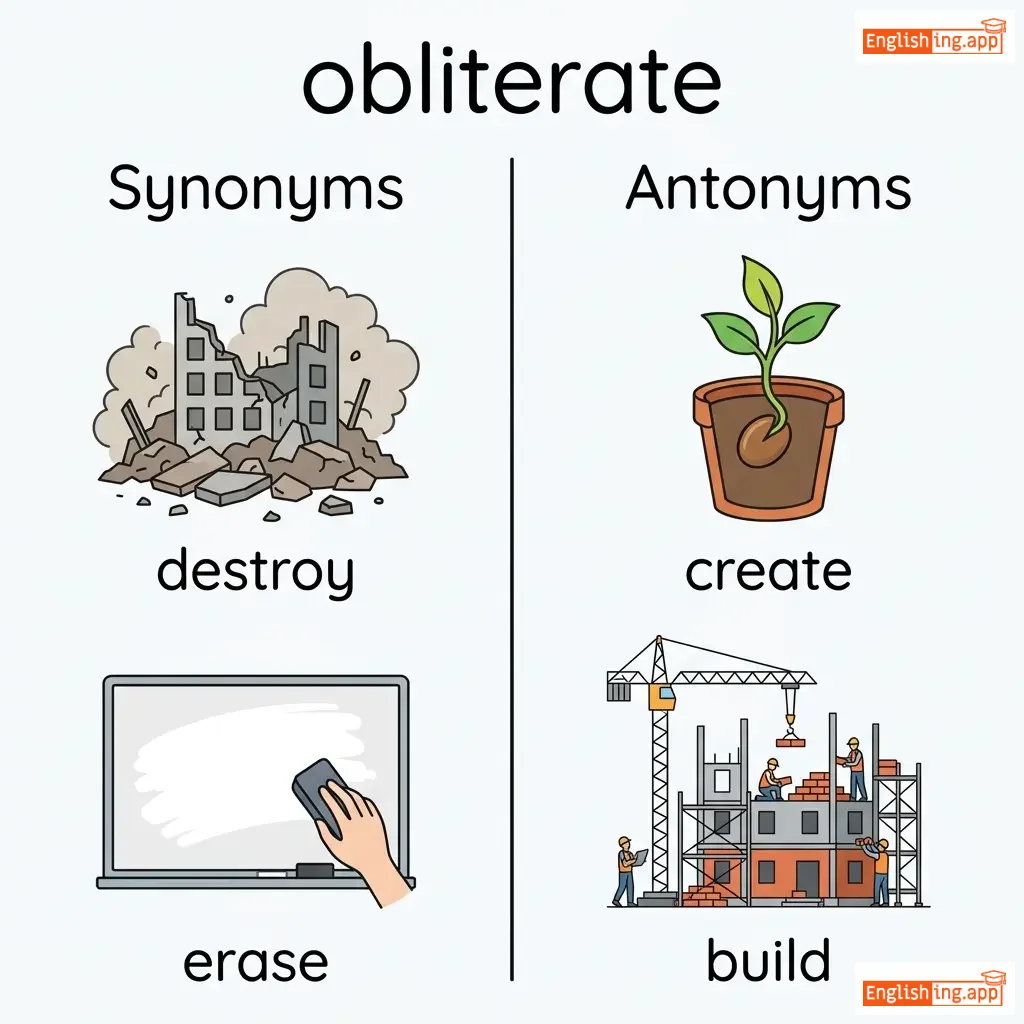
destroy, annihilate, erase, eliminate
|
create, build, preserve, construct
|
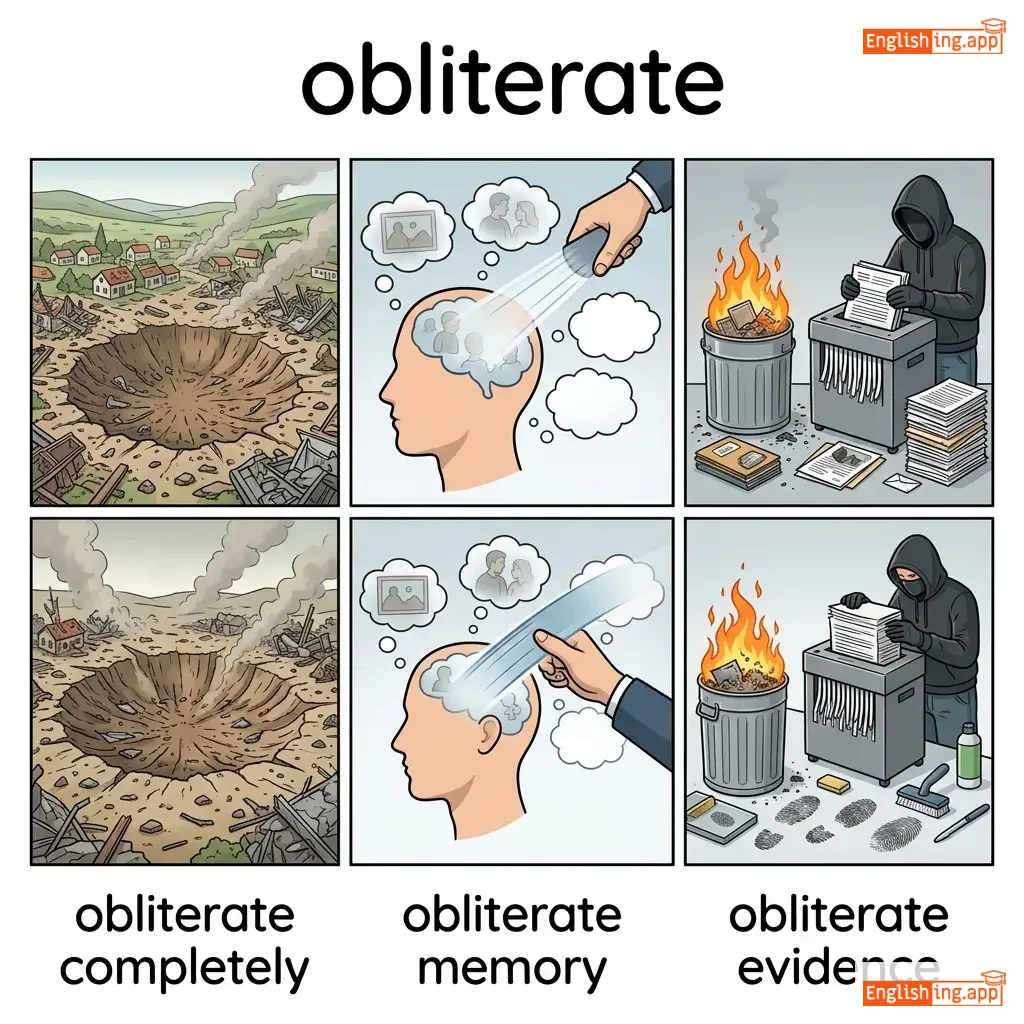
obliterate completely, obliterate traces, obliterate evidence, obliterate memory
|
No
••••••
|
|
••••••
|
/ˈskætər/
verb
(eskatér)
••••••
|
-
••••••
|
esparcir
esparcir
••••••
|
eskatérd
••••••
|
eskatérd
••••••
|
eskátters
••••••
|
eskátting
••••••
|
to spread or throw around in different directions
|
The wind scattered the leaves across the yard.
El viento dispersó las hojas por el jardín.
••••••
|
El viento dispersó las hojas por el jardín.
El viento dispersó las hojas por el jardín.
••••••
|
spread, disperse, distribute, sprinkle
|
gather, collect, assemble, concentrate
|
scatter around, scatter widely, scatter seeds, scatter randomly
|
Visualize the wind scattering leaves as 'esparcir' in Spanish means to scatter.
••••••
|
|
••••••
|
/ˈsetəl/
verb
(sétel)
••••••
|
••••••
|
establecerse
establecerse
••••••
|
sételd
••••••
|
sételd
••••••
|
sétels
••••••
|
sételing
••••••
|
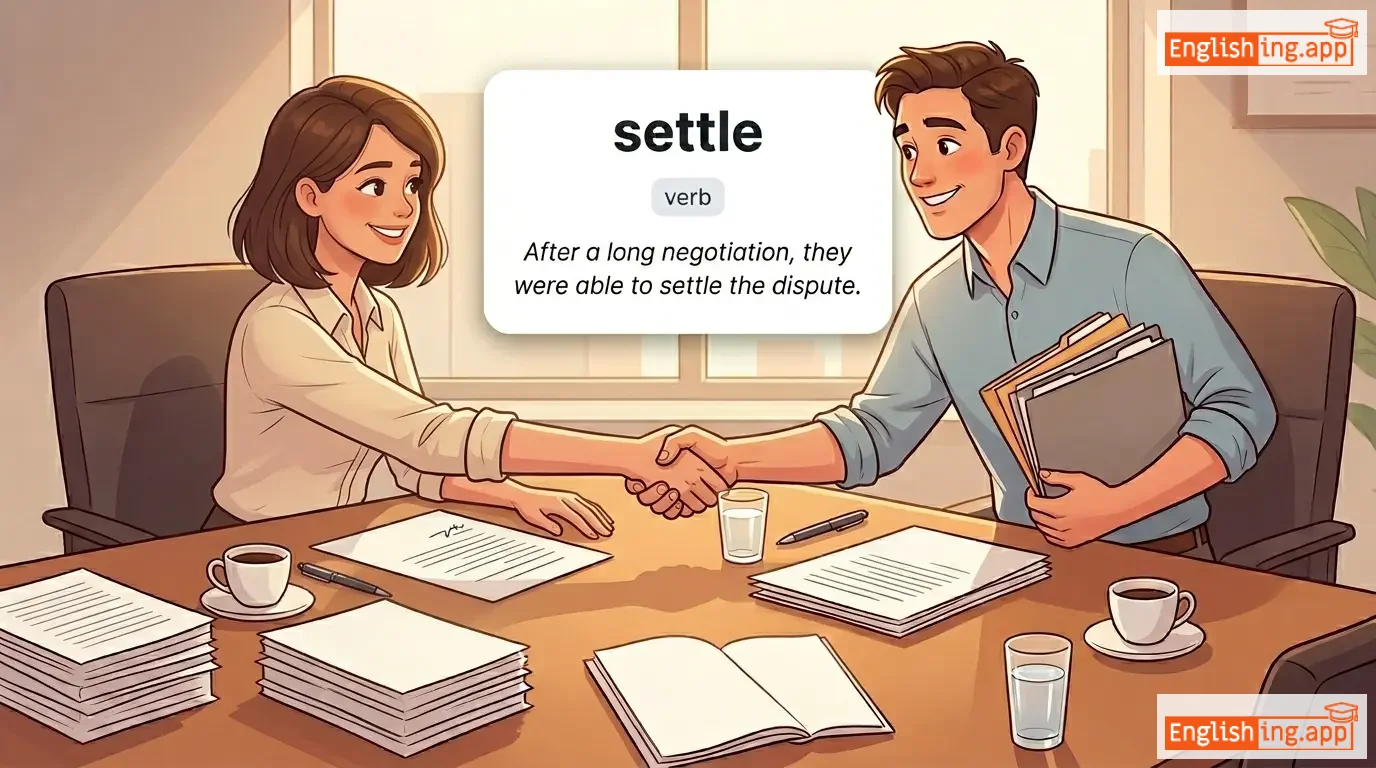
to resolve; to establish residence; to calm down
|
They decided to settle in a quiet village.
Ellos decidieron asentarse en un pueblo tranquilo.
••••••
|
Ellos decidieron asentarse en un pueblo tranquilo.
Ellos decidieron asentarse en un pueblo tranquilo.
••••••
|
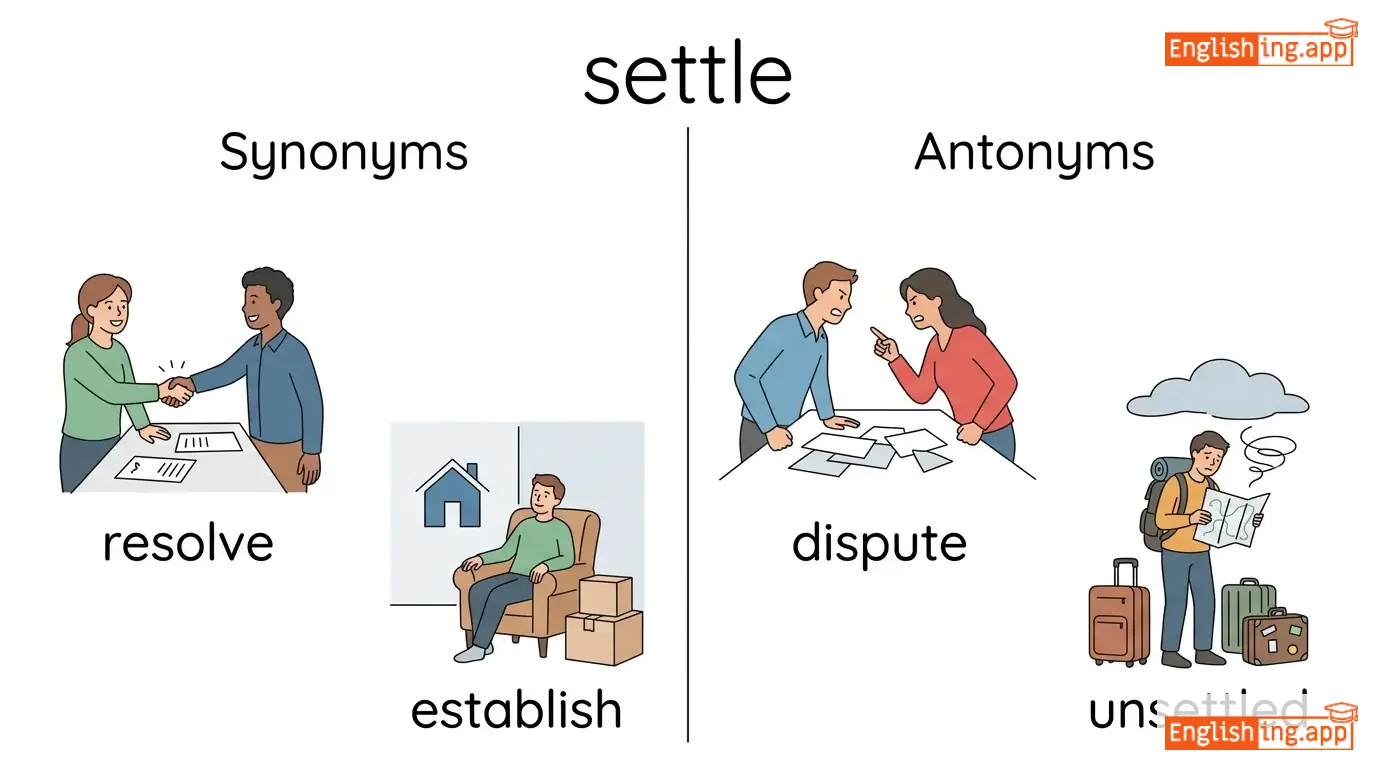
resolve, establish, arrange, decide
|
disturb, unsettle, move, relocate
|
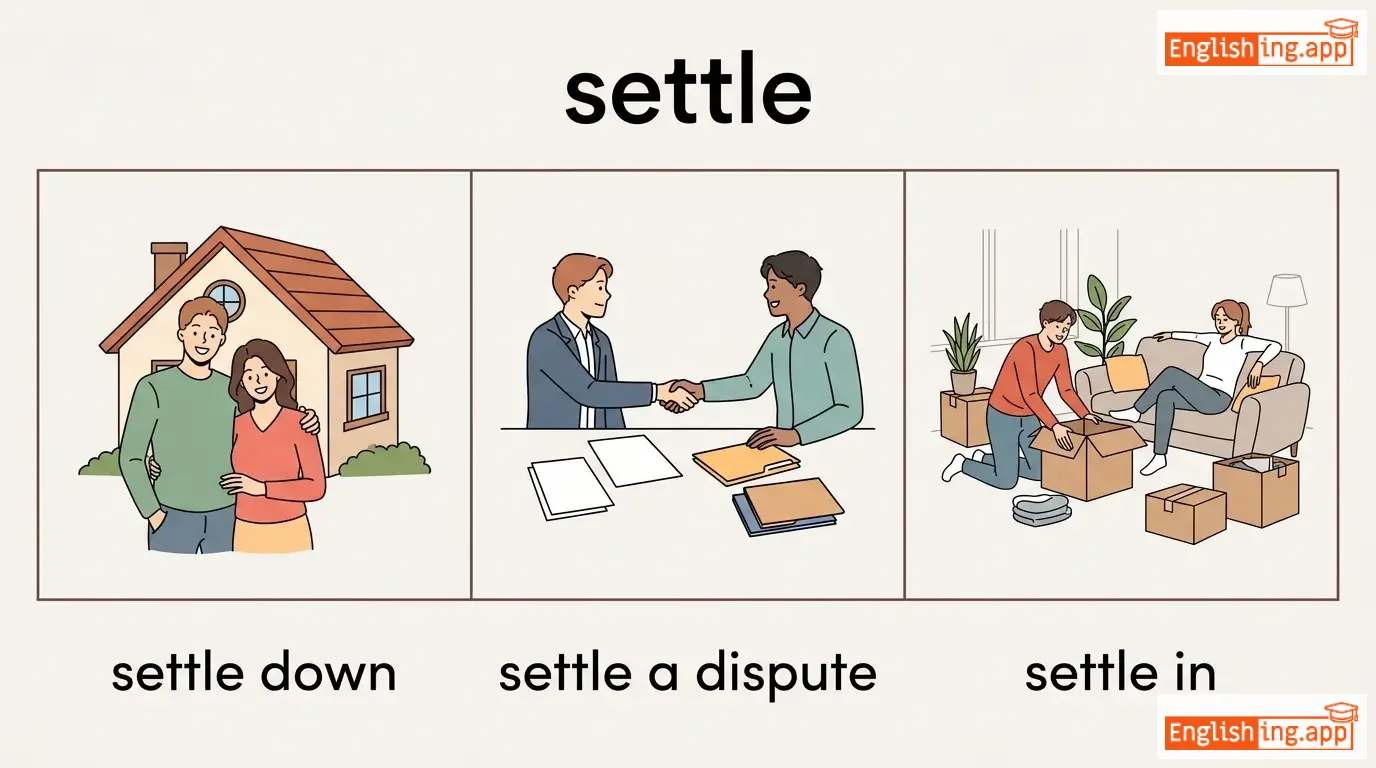
settle down, settle in, settle for, settle matters
|
Establecerse como un settler
••••••
|
|
••••••
|
/ˈhezɪteɪt/
verb
(hésitater)
••••••
|
-
••••••
|
dudar
dudar
••••••
|
hesitado
••••••
|
hesitado
••••••
|
hesita
••••••
|
hesitando
••••••
|
to pause before acting; to be uncertain about what to do
|
Don't hesitate to ask for help.
No dudes en pedir ayuda.
••••••
|
No dudes en pedir ayuda.
No dudes en pedir ayuda.
••••••
|
pause, delay, waver, doubt
|
decide, act, proceed, rush
|
hesitate to, hesitate before, hesitate briefly, hesitate momentarily
|
No
••••••
|
|
••••••
|
/məˈsɑːʒ/
verb
(masáj)
••••••
|
-
••••••
|
masajear
masajear
••••••
|
masajeado
••••••
|
masajeado
••••••
|
masajea
••••••
|
masajeando
••••••
|
to rub and press muscles to relieve pain or tension; to manipulate information
|
The therapist will massage your back to reduce muscle tension.
El terapeuta masajeará tu espalda para reducir la tensión muscular.
••••••
|
El terapeuta masajeará tu espalda para reducir la tensión muscular.
El terapeuta masajeará tu espalda para reducir la tensión muscular.
••••••
|
rub, knead, manipulate, work
|
ignore, neglect, avoid, abandon
|
massage gently, massage thoroughly, massage muscles, give a massage
|
No
••••••
|
|
••••••
|
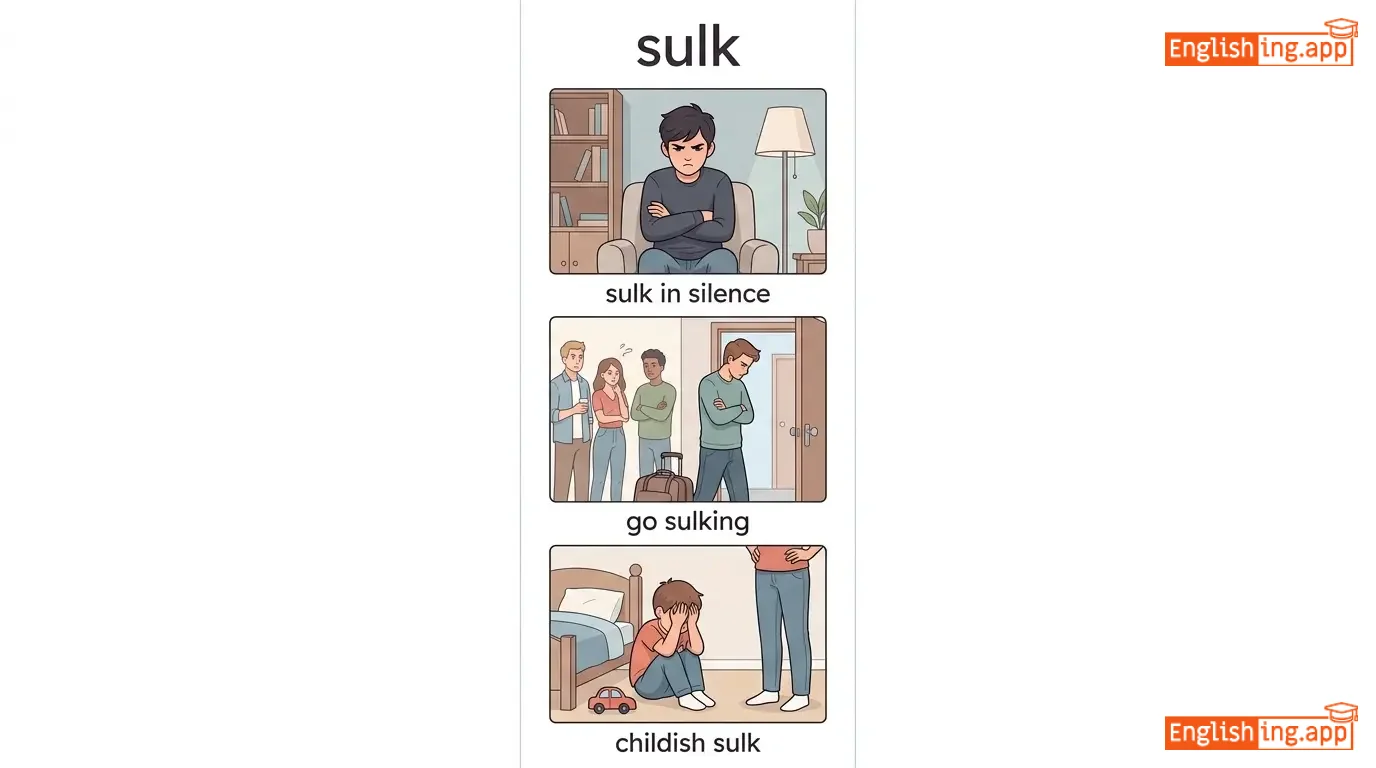
/sʌlk/
verb
(sulk)
••••••
|
••••••
|
estar enojado
estar enojado
••••••
|
sulked
••••••
|
sulked
••••••
|
sulks
••••••
|
sulking
••••••
|
to be silent and bad-tempered because you are angry or disappointed
|
She sulked in her room after the argument.
Ella se enfadó en su habitación después de la discusión.
••••••
|
Ella se enojó en su habitación después de la discusión.
Ella se enojo en su habitacion despues de la discusion.
••••••
|
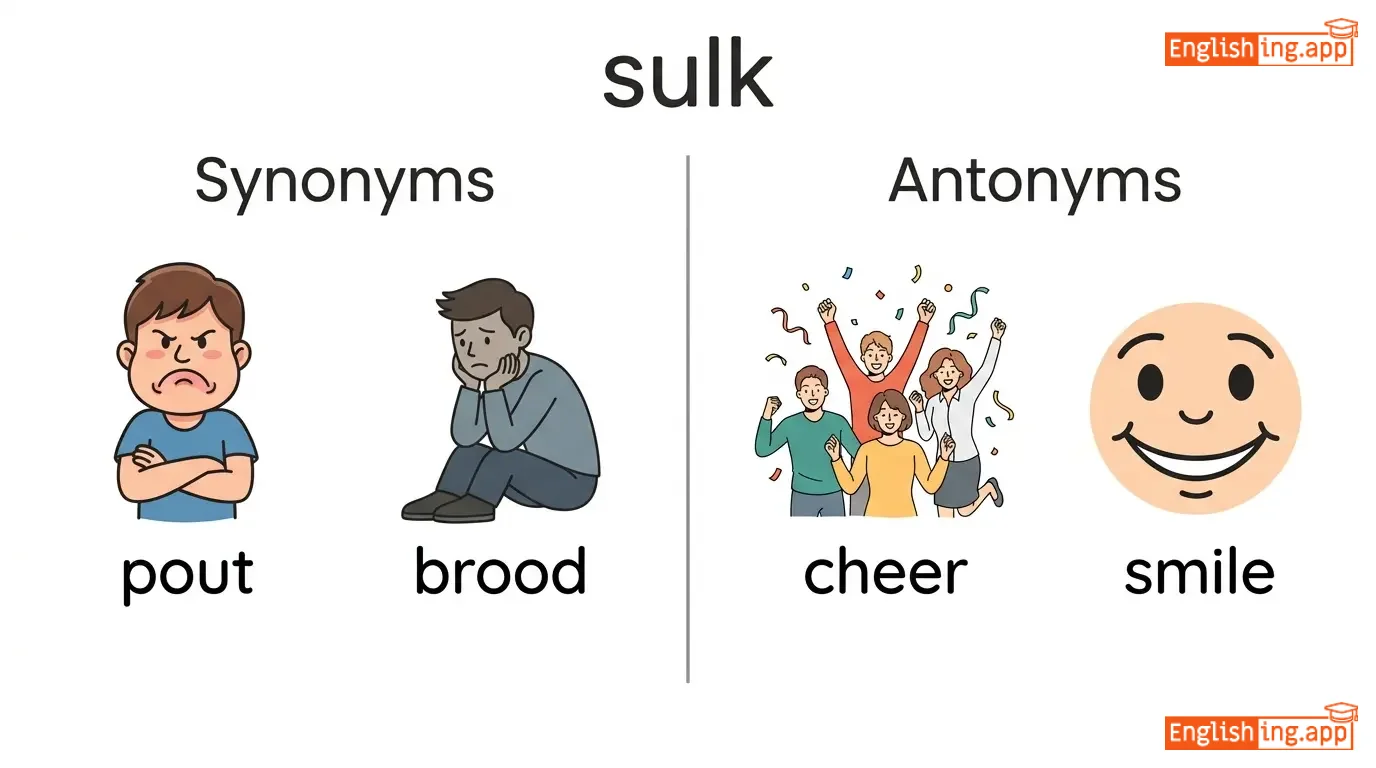
pout, brood, mope, grumble
|
smile, rejoice, celebrate
|
sulk quietly, sulk alone, sulk in corner, sulk about
|
When sulking, you are 'enojado' (angry in Spanish) and silent.
••••••
|
|
••••••
|
/rɪˈlaɪ/
verb
(rilái)
••••••
|
-
••••••
|
confiar
konfiar
••••••
|
riláid
••••••
|
riláid
••••••
|
riláis
••••••
|
riláing
••••••
|
to depend on or trust someone or something
|
I rely on my friends for support.
Yo confío en mis amigos para apoyo.
••••••
|
Yo confío en mis amigos para apoyo.
Yo konfío en mis amigos para apoyo.
••••••
|
depend, trust, count on, lean on
|
••••••
|
rely on, rely upon, rely heavily, rely completely
|
Confío como confiar en el banco.
••••••
|
|
••••••
|
/pʊl/
verb
(pul)
••••••
|
-
••••••
|
tirar
tirar
••••••
|
puld
••••••
|
puld
••••••
|
pulz
••••••
|
puling
••••••
|
to exert force to move something toward oneself; to drag or tug
|
Please pull the door to open it.
Por favor, tira de la puerta para abrirla.
••••••
|
Por favor, tira de la puerta para abrirla.
Por favor, tira de la puerta para abrirla.
••••••
|
••••••
|
••••••
|
pull together, pull apart, pull hard, pull gently
|
Recuerda que 'tirar' es similar a 'pull', y debes usarlo cuando algo se arrastra hacia ti.
••••••
|
|
••••••
|
/bɪd/
verb
(bid)
••••••
|
-
••••••
|
ofrecer una oferta
ofrecer una oferta
••••••
|
bid
••••••
|
bidden
••••••
|
bids
••••••
|
bidding
••••••
|
to offer to pay a price; to command; to say goodbye
|
She bids farewell to her friends.
Ella da una despedida a sus amigos.
••••••
|
Ella da una despedida a sus amigos.
Ella da una despedida a sus amigos.
••••••
|
offer, command, order, attempt
|
refuse, decline, withdraw
|
bid farewell, bid goodbye, bid for, bid against
|
Remember 'bid' as you make an offer in an auction: 'ofrecer una oferta'.
••••••
|
|
••••••
|
/reɪn/
verb
(rein)
••••••
|
-
••••••
|
reinar
reinar
••••••
|
reinado
••••••
|
reinado
••••••
|
reina
••••••
|
reinando
••••••
|
to rule as a king or queen; to be dominant
|
The queen reigned for over sixty years.
La reina reinó durante más de sesenta años.
••••••
|
La reina reinó durante más de sesenta años.
La reina reyno durante mas de sesenta anos.
••••••
|
rule, govern, dominate, control
|
••••••
|
reign over, reign supreme, reign for years, reign peacefully
|
Imagine the Spanish 'reinar' as a queen ruling, dominating her land.
••••••
|
|
••••••
|
/rɪˈsiːv/
verb
(risíb)
••••••
|
••••••
|
recibir
recibir
••••••
|
risívd
••••••
|
risívd
••••••
|
risívs
••••••
|
risíbing
••••••
|
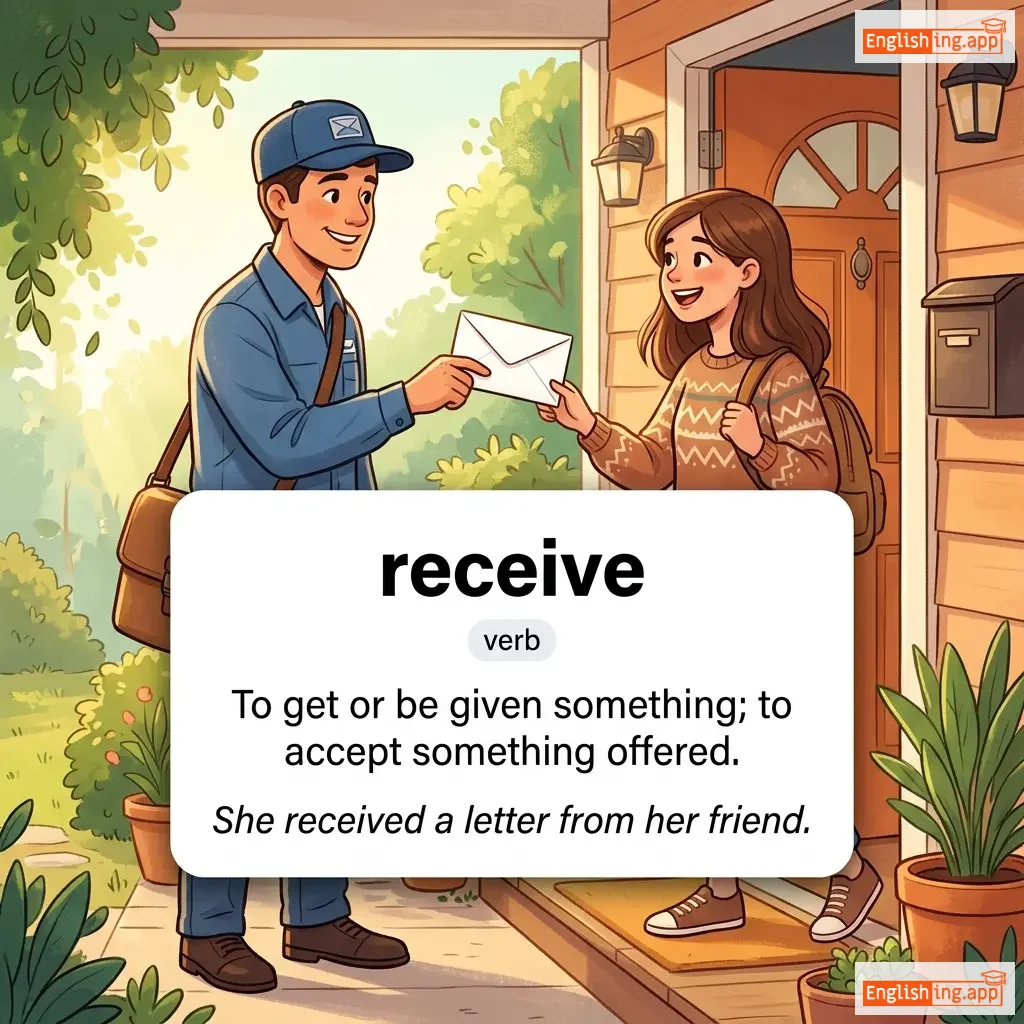
to get or accept something that is given or sent
|
She will receive her diploma at the graduation ceremony.
Ella recibirá su diploma en la ceremonia de graduación.
••••••
|
Ella recibirá su diploma en la ceremonia de graduación.
Ella recibira su diploma en la ceremonia de graduacion.
••••••
|
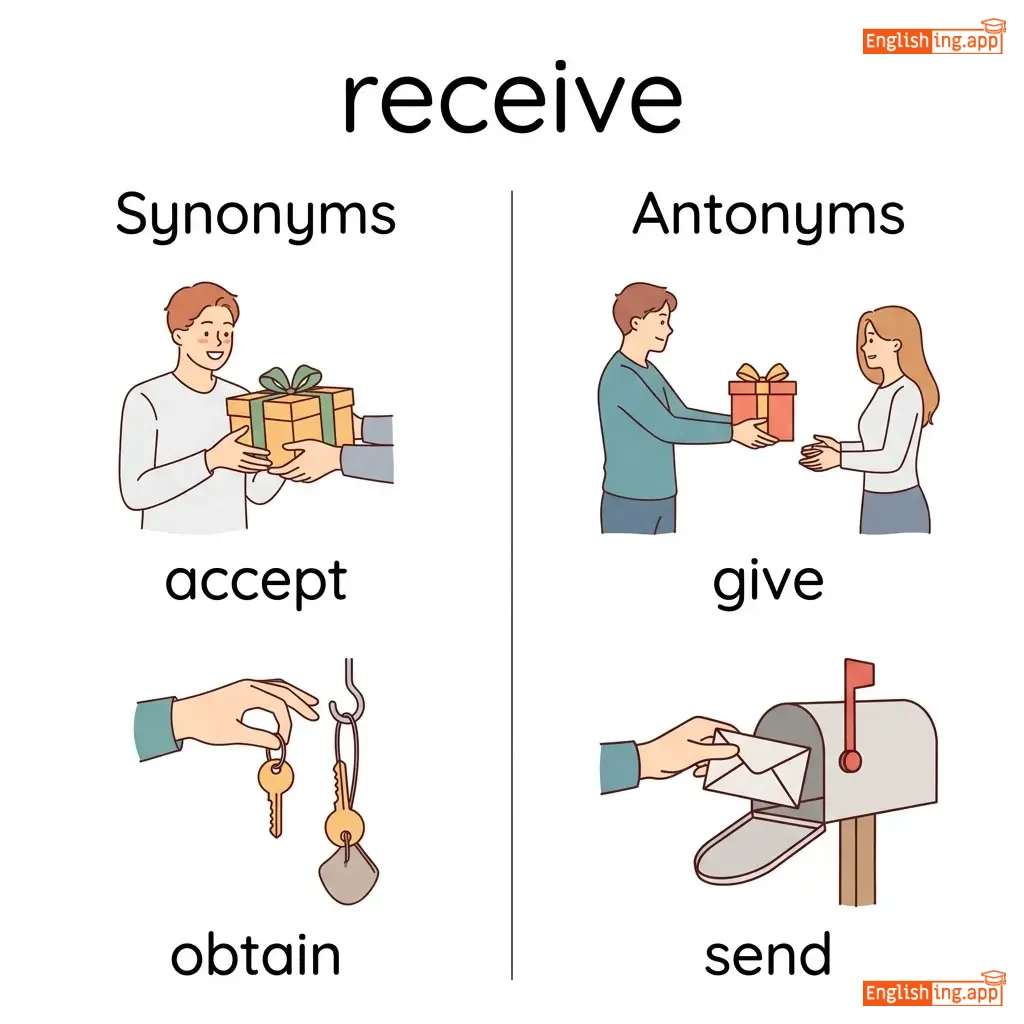
get, obtain, accept, acquire
|
give, send, donate, offer
|
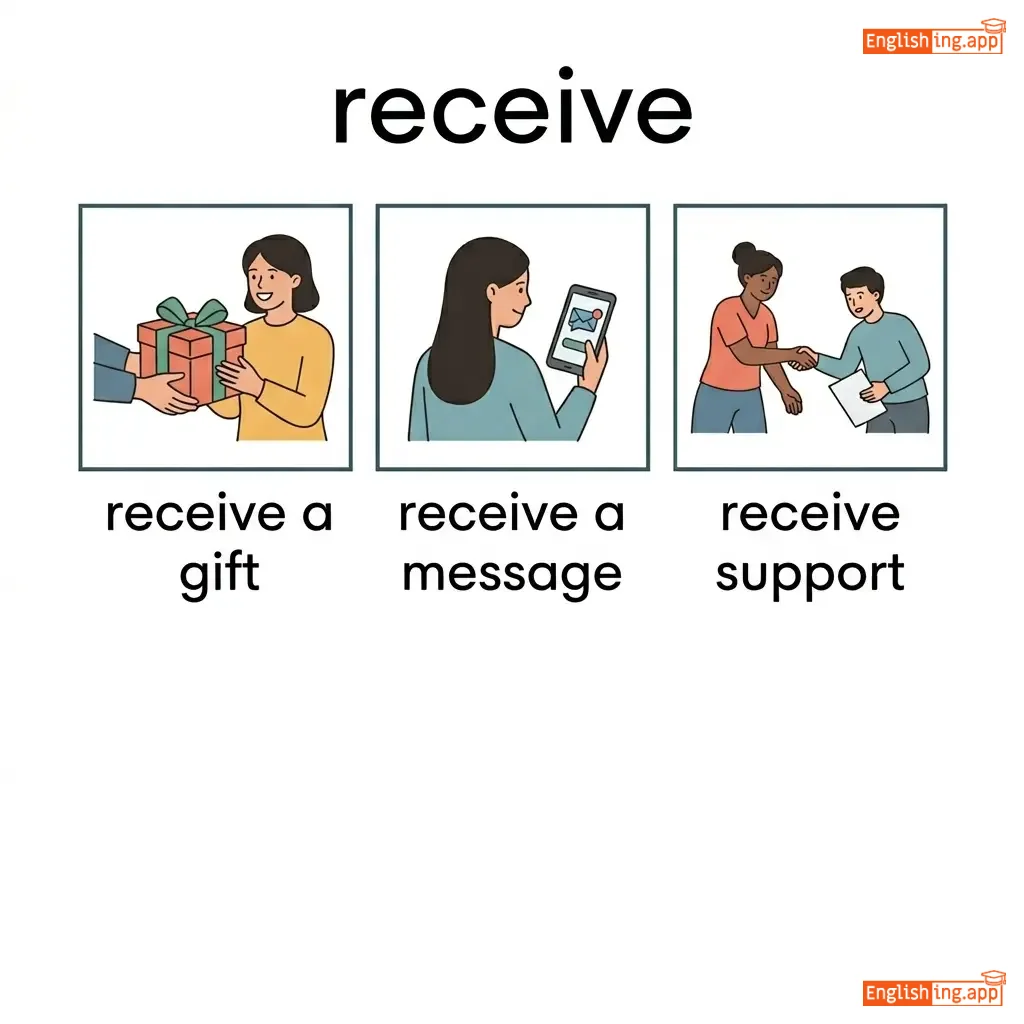
receive warmly, receive gratefully, receive officially, receive news
|
Spanish 'recibir' sounds like 'receive', remember: 'I receive the gift, recibo el regalo'.
••••••
|
|
••••••
|
/pɔːr/
verb
(por)
••••••
|
-
••••••
|
verter
verter
••••••
|
pord
••••••
|
pord
••••••
|
pors
••••••
|
pouring
••••••
|
to flow or cause to flow in a steady stream; to rain heavily
|
Please pour the water into the glass carefully.
por favor vierte el agua en el vaso con cuidado.
••••••
|
Por favor vierte el agua en el vaso con cuidado.
Por favor vierte el agua en el vaso con cuidado.
••••••
|
••••••
|
stop, contain, hold, retain
|
pour out, pour into, pour carefully, pour slowly
|
No
••••••
|
|
••••••
|
/ˈkɑːmpənseɪt/
verb
(kompenˈseɪt)
••••••
|
••••••
|
compensar
kompenˈsar
••••••
|
kompenˈseɪtəd
••••••
|
kompenˈseɪtəd
••••••
|
kompenˈseɪts
••••••
|
kompenˈseɪtɪŋ
••••••
|
to give something to make up for loss or damage; to counterbalance
|
The company will compensate employees for overtime work.
La compañía compensará a los empleados por el trabajo extra.
••••••
|
La empresa compensará a los empleados por el trabajo extra.
La empresa compensará a los empleados por el trabajo extra.
••••••
|
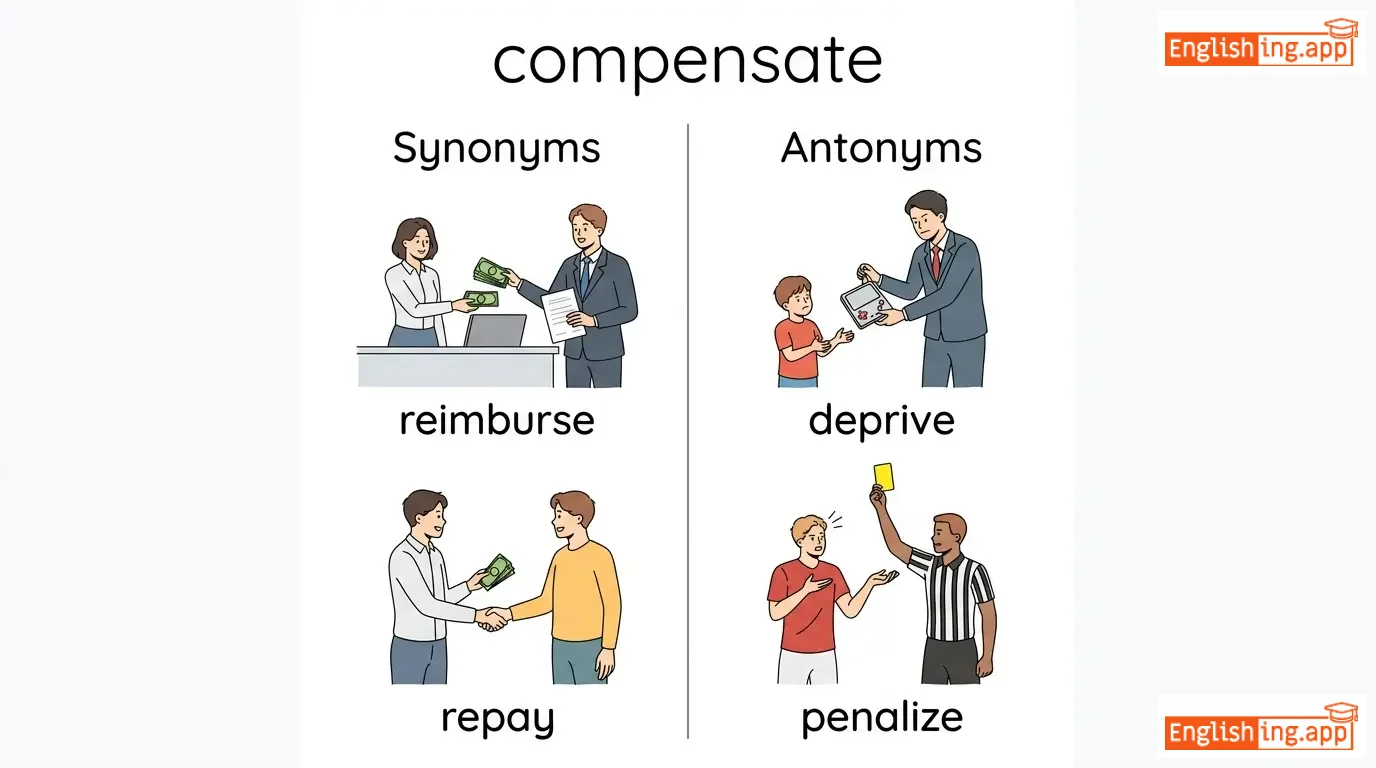
reimburse, repay, offset, balance
|
penalize, charge, fine, deduct
|
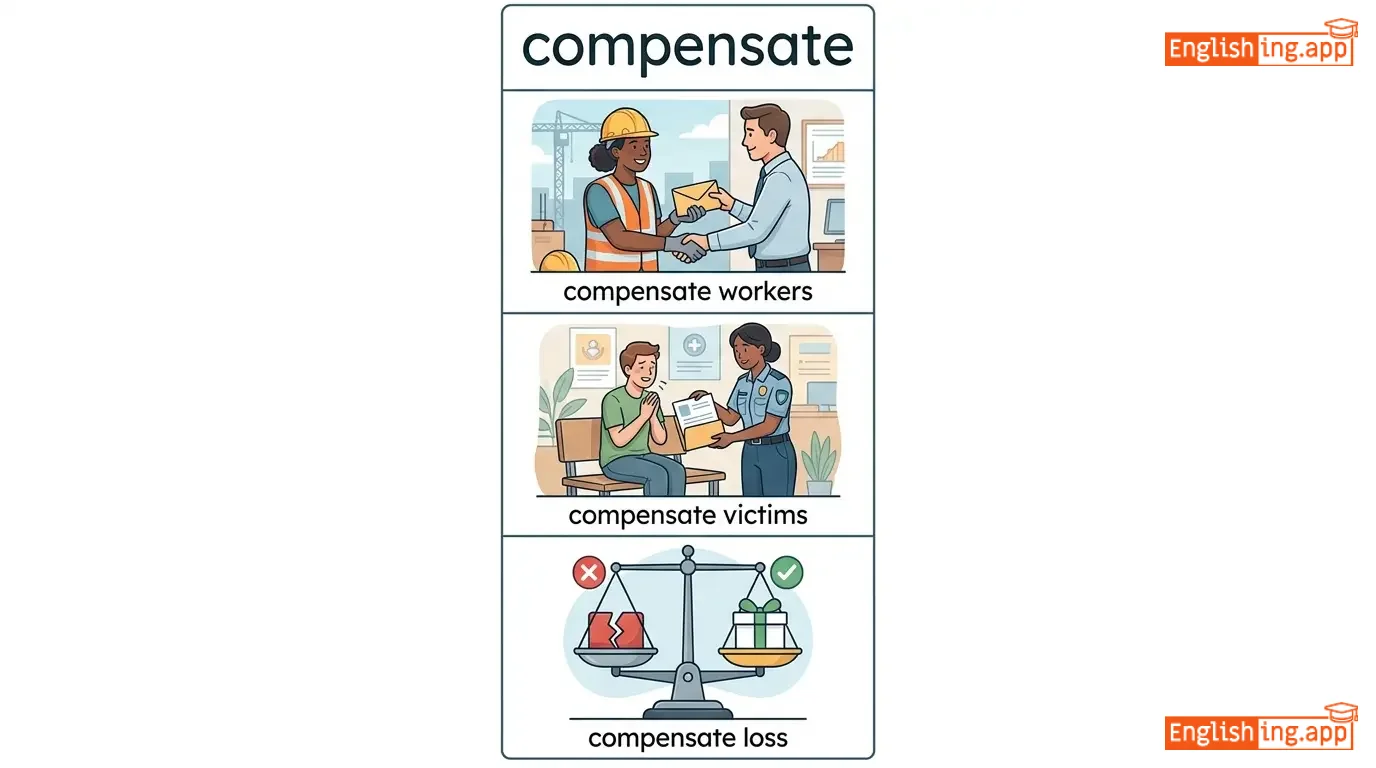
compensate for, compensate fully, compensate fairly, compensate adequately
|
Compensar es como devolver algo para equilibrar lo que se perdió.
••••••
|
|
••••••
|
/tʃaɪd/
verb
(chaid)
••••••
|
••••••
|
reprender
reprender
••••••
|
chid
••••••
|
chidden
••••••
|
chaides
••••••
|
chaiding
••••••
|
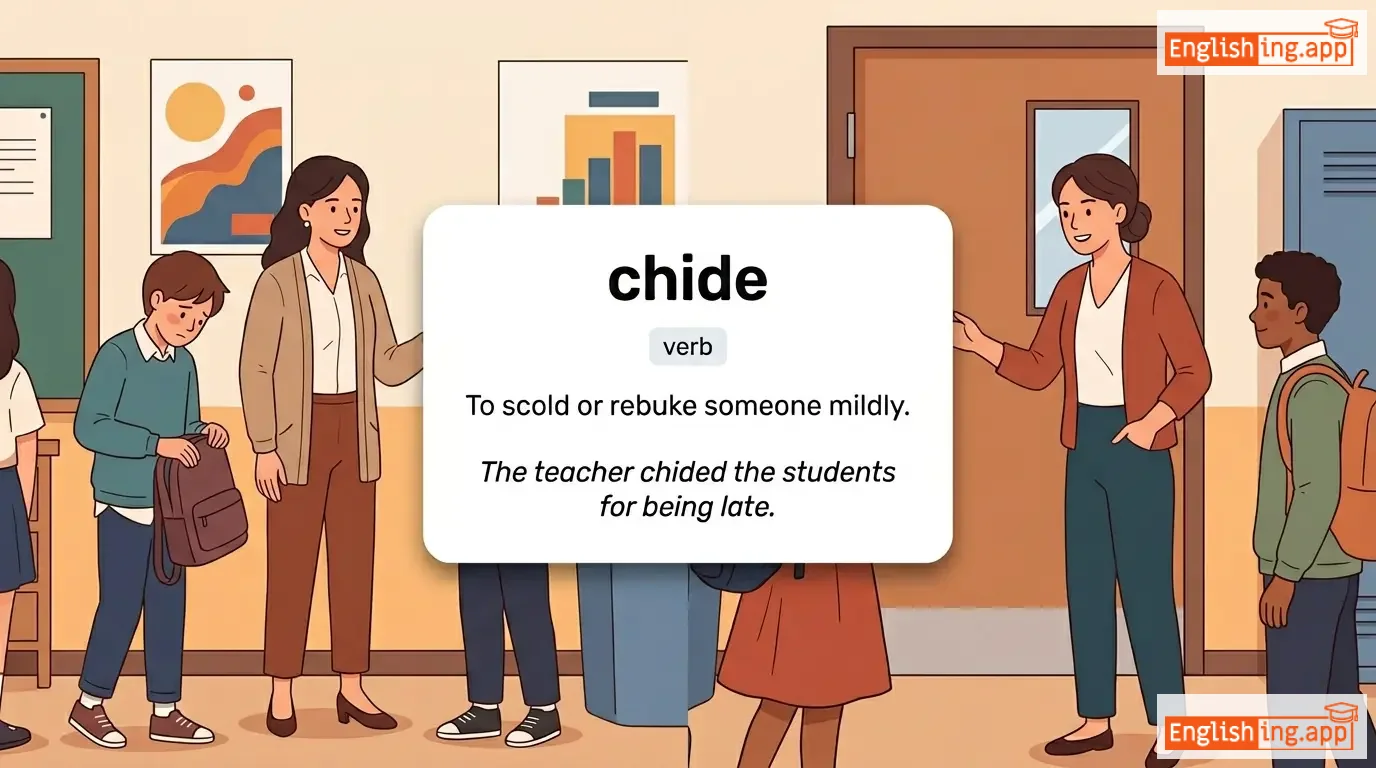
to scold or rebuke; to express disapproval
|
The teacher chided the student for being late.
El profesor reprendió al estudiante por llegar tarde.
••••••
|
El profesor reprendió al estudiante por llegar tarde.
El profesor reprendió al estudiante por llegar tarde.
••••••
|
scold, rebuke, reprimand, criticize
|
praise, commend, approve, encourage
|
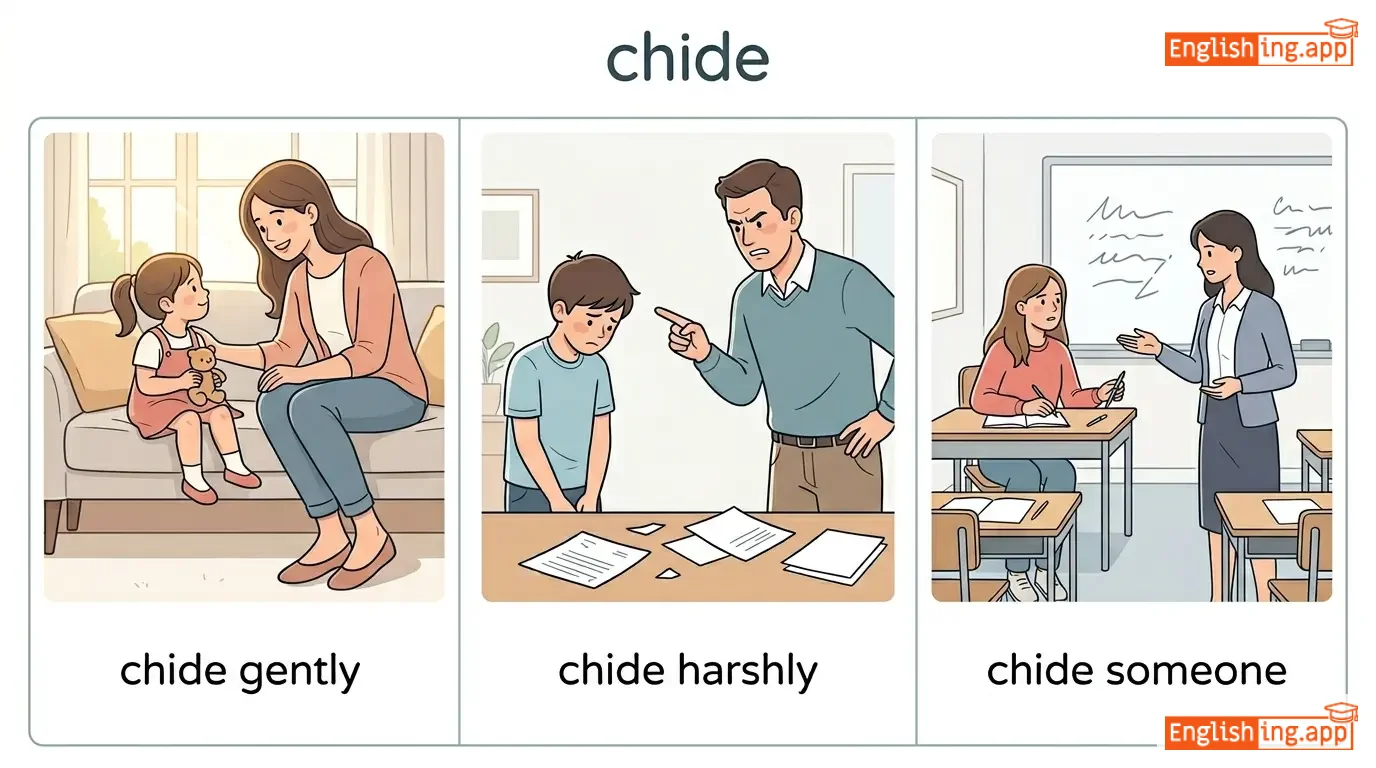
chide gently, chide harshly, chide for mistakes, chide repeatedly
|
Chide sounds like 'reprender' - a teacher 'reprende' when they 'chide'.
••••••
|
|
••••••
|
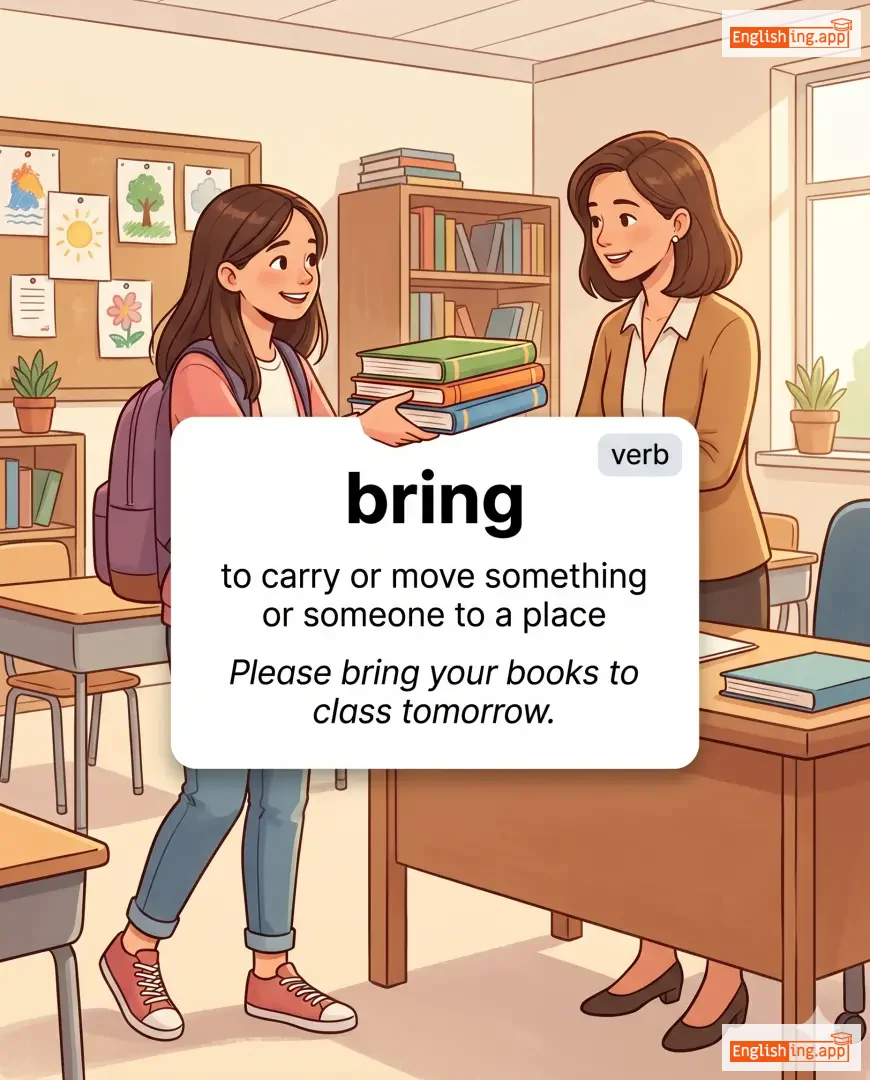
/brɪŋ/
verb
(brɪŋ)
••••••
|
••••••
|
traer
traer
••••••
|
brɔt
••••••
|
brɔt
••••••
|
brɪŋz
••••••
|
brɪŋɪŋ
••••••
|
to carry or take something to a place; to cause something to happen
|
Don't forget to bring your umbrella today.
Don't forget to bring your umbrella today.
••••••
|
No olvides traer tu paraguas hoy.
No olvides traer tu paraguas hoy.
••••••
|
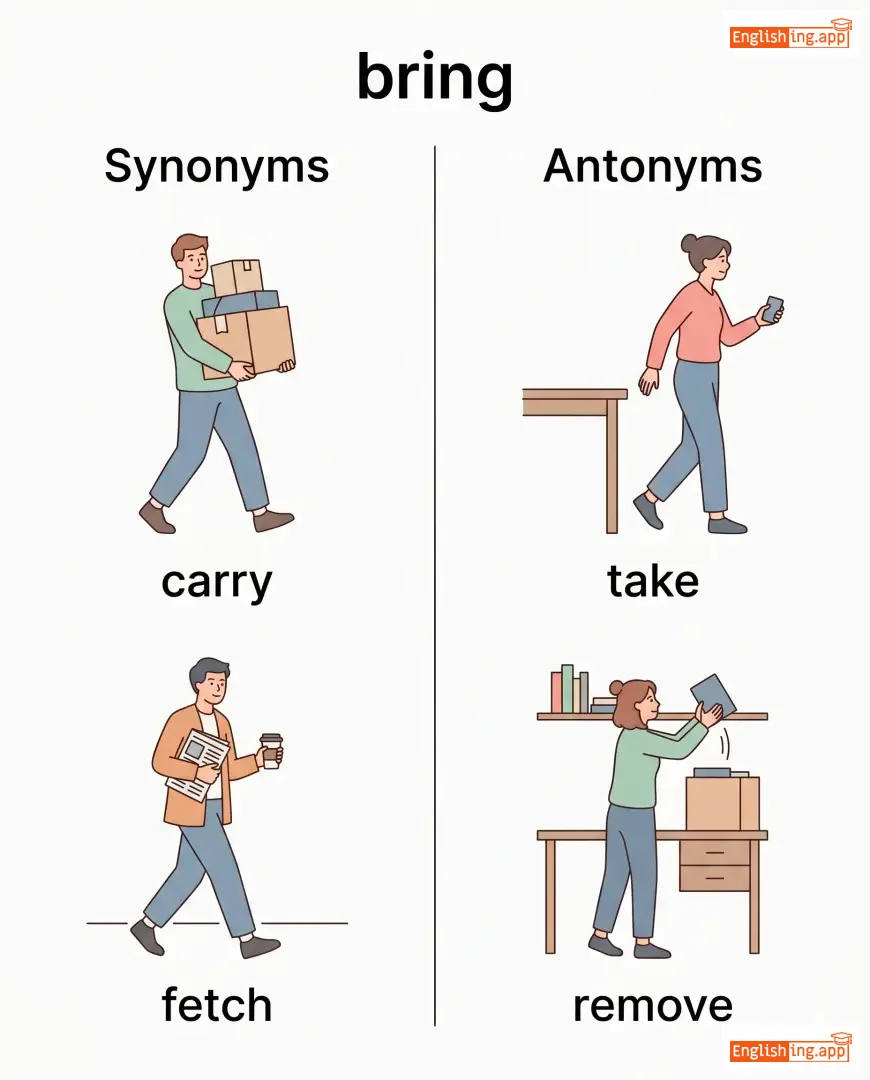
carry, take, deliver, transport
|
take away, remove, send away
|
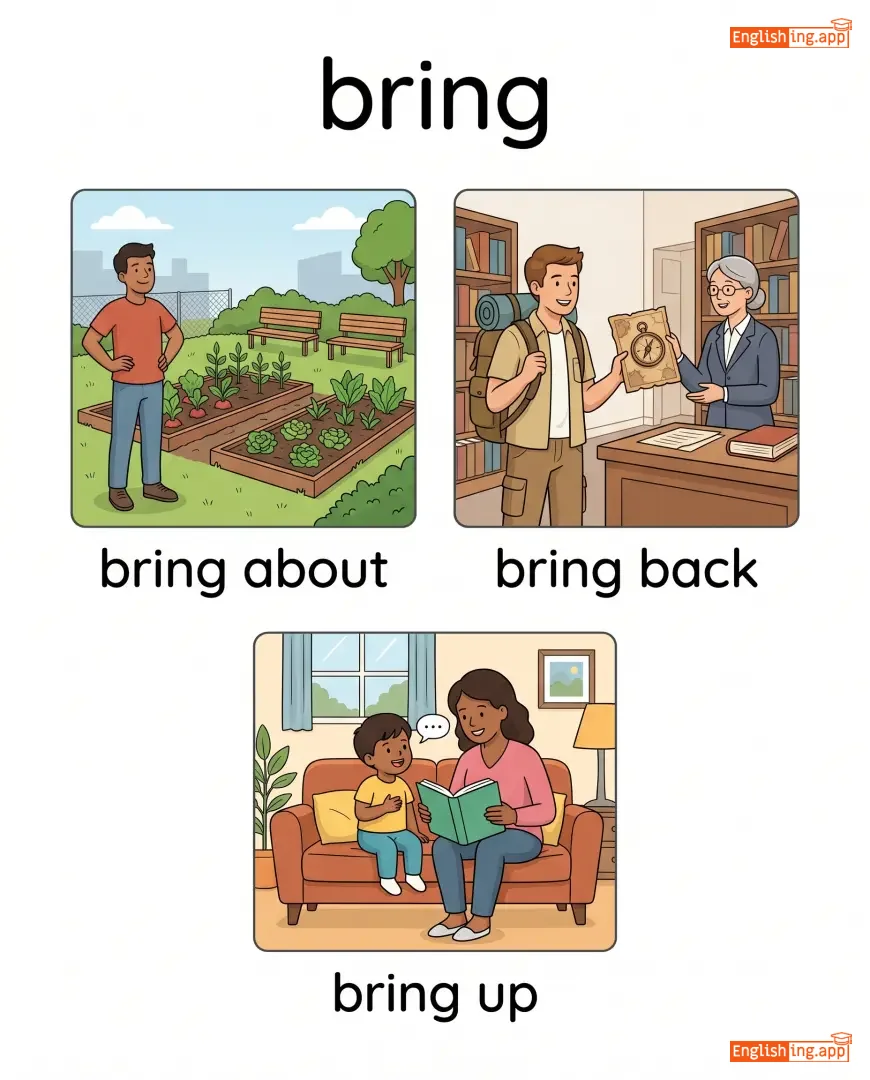
bring along, bring together, bring back, bring forward
|
Bring your tray of snacks
••••••
|
|
••••••
|
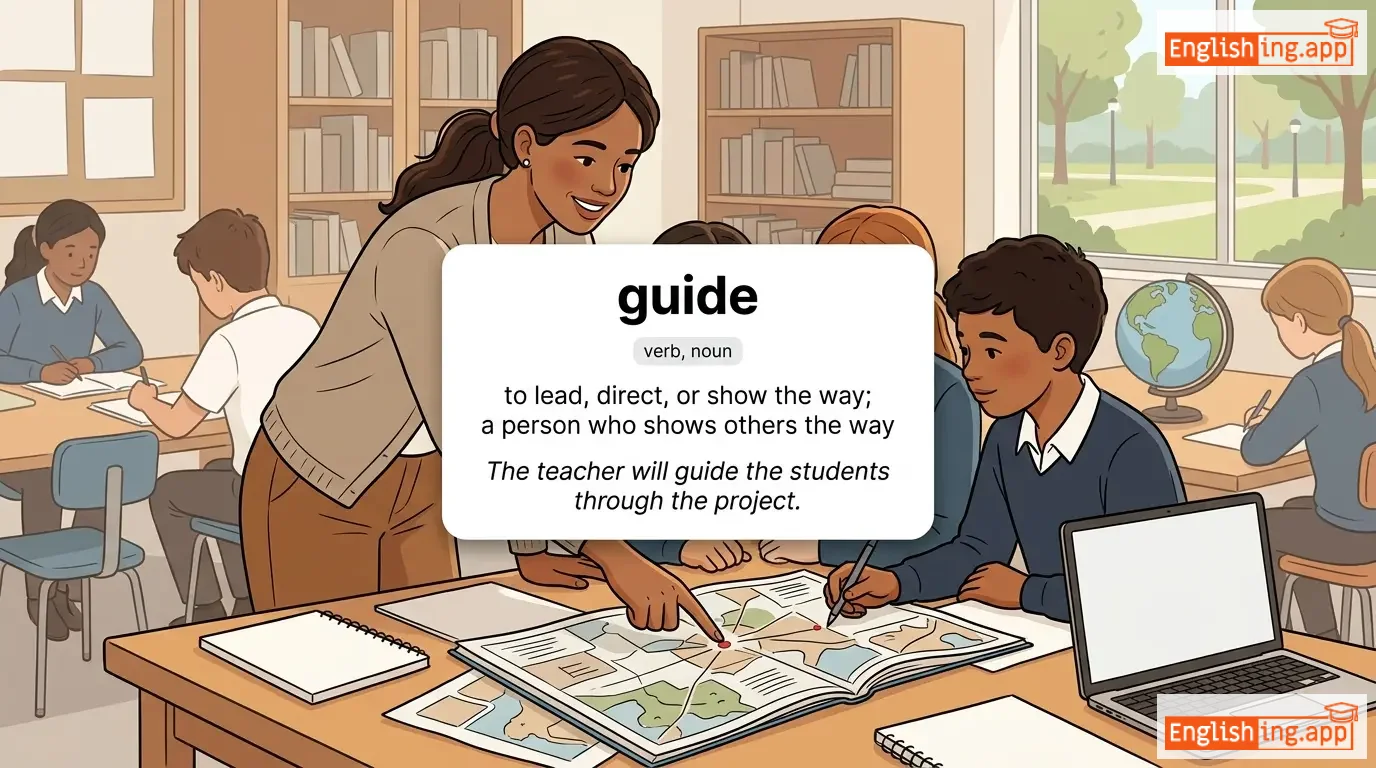
/ɡaɪd/
verb
(gaid)
••••••
|
••••••
|
guiar
guiar
••••••
|
gaidéd
••••••
|
gaidéd
••••••
|
gaids
••••••
|
gaiding
••••••
|
to show someone the way; to direct or influence behavior
|
The teacher guides the students.
La maestra guía a los estudiantes.
••••••
|
La maestra guía a los estudiantes.
La maestra guía a los estudiantes.
••••••
|
lead, direct, instruct, navigate
|
mislead, confuse, follow, abandon
|
guide through, guide carefully, guide safely, provide guidance
|
The Spanish 'guiar' is close to the English 'guide,' and both involve showing someone the way.
••••••
|
|
••••••
|
/prəˈsiːd/
verb
(proʊˈsiːd)
••••••
|
-
••••••
|
proceder
proceder
••••••
|
proʊˈsiːdɪd
••••••
|
proʊˈsiːdɪd
••••••
|
proʊˈsiːdz
••••••
|
proʊˈsiːdɪŋ
••••••
|
to continue with a course of action; to move forward
|
Let's proceed with the meeting as planned.
leʦ prəˈsiːd wɪð ðə ˈmiːtɪŋ æz ˈplænd
••••••
|
Procedamos con la reunión como estaba planeado.
Procedamos con la reunion como estaba planeado
••••••
|
continue, advance, progress, carry on
|
stop, halt, retreat, withdraw
|
proceed with, proceed carefully, proceed immediately, proceed as planned
|
Proceed to move ahead with action – just like 'proceder' in Spanish!
••••••
|
|
••••••
|
/əˈfend/
verb
(ofénd)
••••••
|
-
••••••
|
ofender
ofender
••••••
|
ofendió
••••••
|
ofendido
••••••
|
ofende
••••••
|
ofendiendo
••••••
|
to cause displeasure or resentment; to hurt someone's feelings
|
His rude comments offended many people at the meeting.
Sus comentarios groseros ofendieron a muchas personas en la reunión.
••••••
|
Sus comentarios groseros ofendieron a muchas personas en la reunión.
Sus comentarios groseros ofendieron a muchas personas en la reunión.
••••••
|
insult, hurt, upset, displease
|
please, delight, compliment, praise
|
offend deeply, offend someone, take offense, cause offense
|
No
••••••
|
|
••••••
|
/ɪnˈhæbɪt/
verb
(inhábitar)
••••••
|
-
••••••
|
habitar
habitar
••••••
|
inhabitado
••••••
|
inhabitado
••••••
|
inhabita
••••••
|
habitando
••••••
|
to live in; to occupy as a dwelling
|
Many animals inhabit the forest.
Muchos animales habitan el bosque.
••••••
|
Muchos animales habitan el bosque.
Muchos animales habitan el bosque.
••••••
|
occupy, reside, dwell, populate
|
vacate, abandon, leave, desert
|
inhabit areas, inhabit regions, inhabit peacefully, inhabit naturally
|
habitar es como vivir en un lugar, como en el bosque.
••••••
|
|
••••••
|
/ʌpˈset/
verb
(apset)
••••••
|
••••••
|
molestar
molestar
••••••
|
apset
••••••
|
apset
••••••
|
apsets
••••••
|
apseting
••••••
|
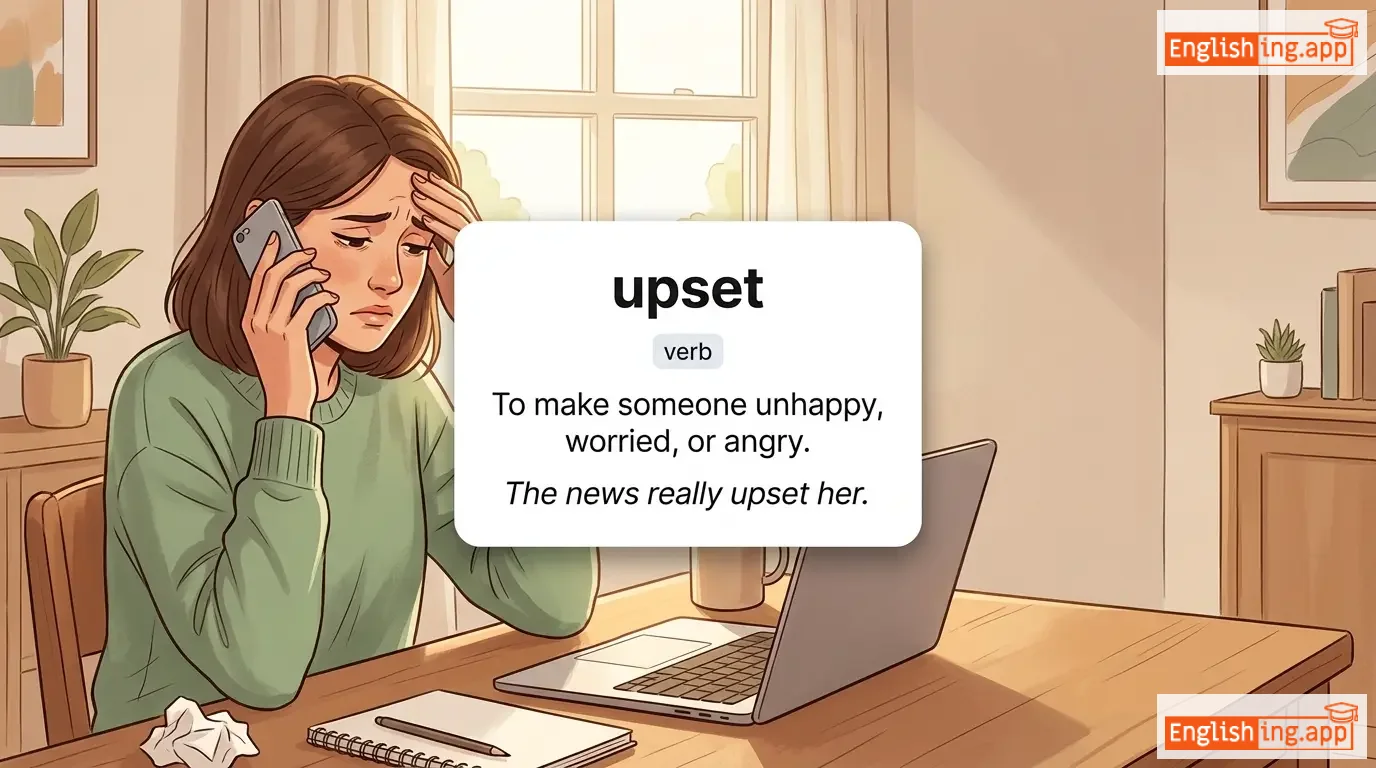
to make someone worried, sad, or angry; to disturb
|
The bad news upset everyone.
la mala noticia upset a todos.
••••••
|
La mala noticia upset a todos.
La mala noticia upset a todos.
••••••
|
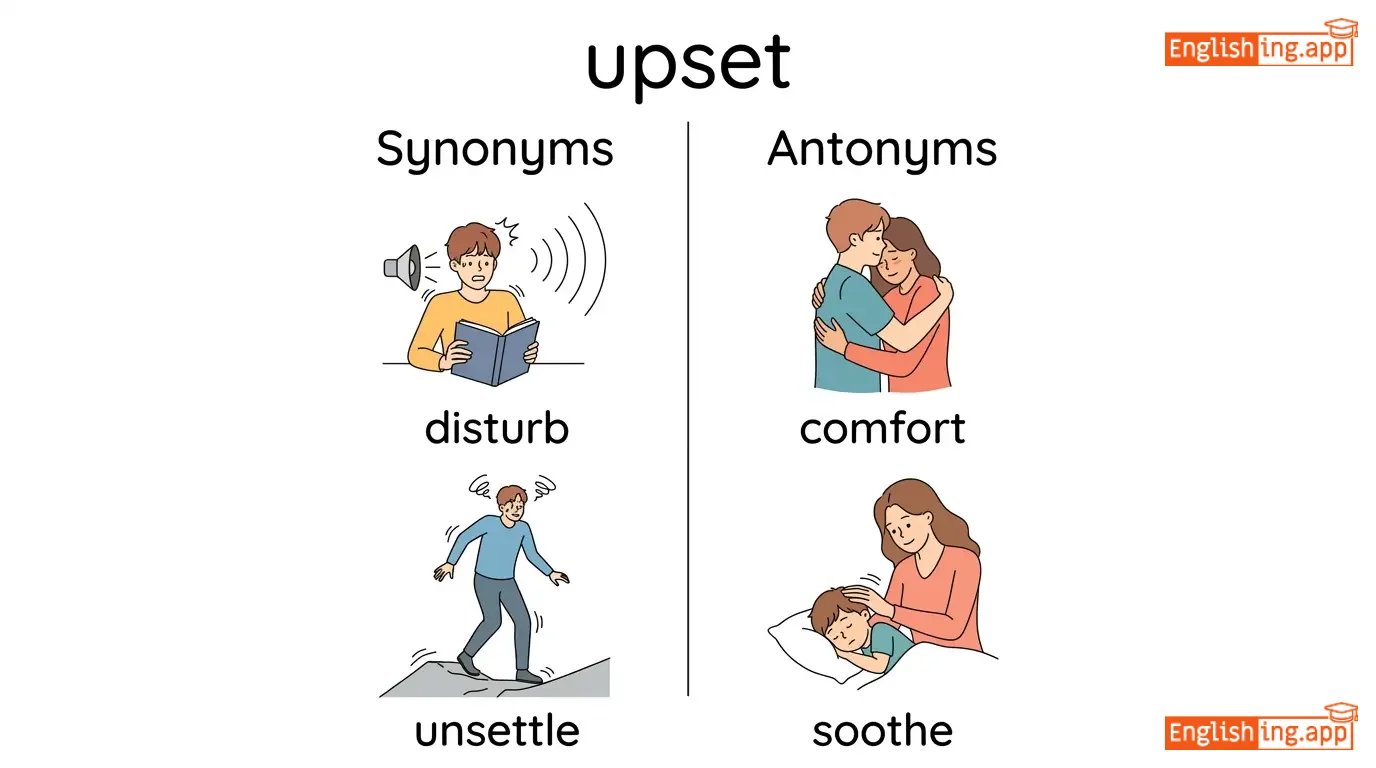
disturb, worry, trouble, distress
|
••••••
|
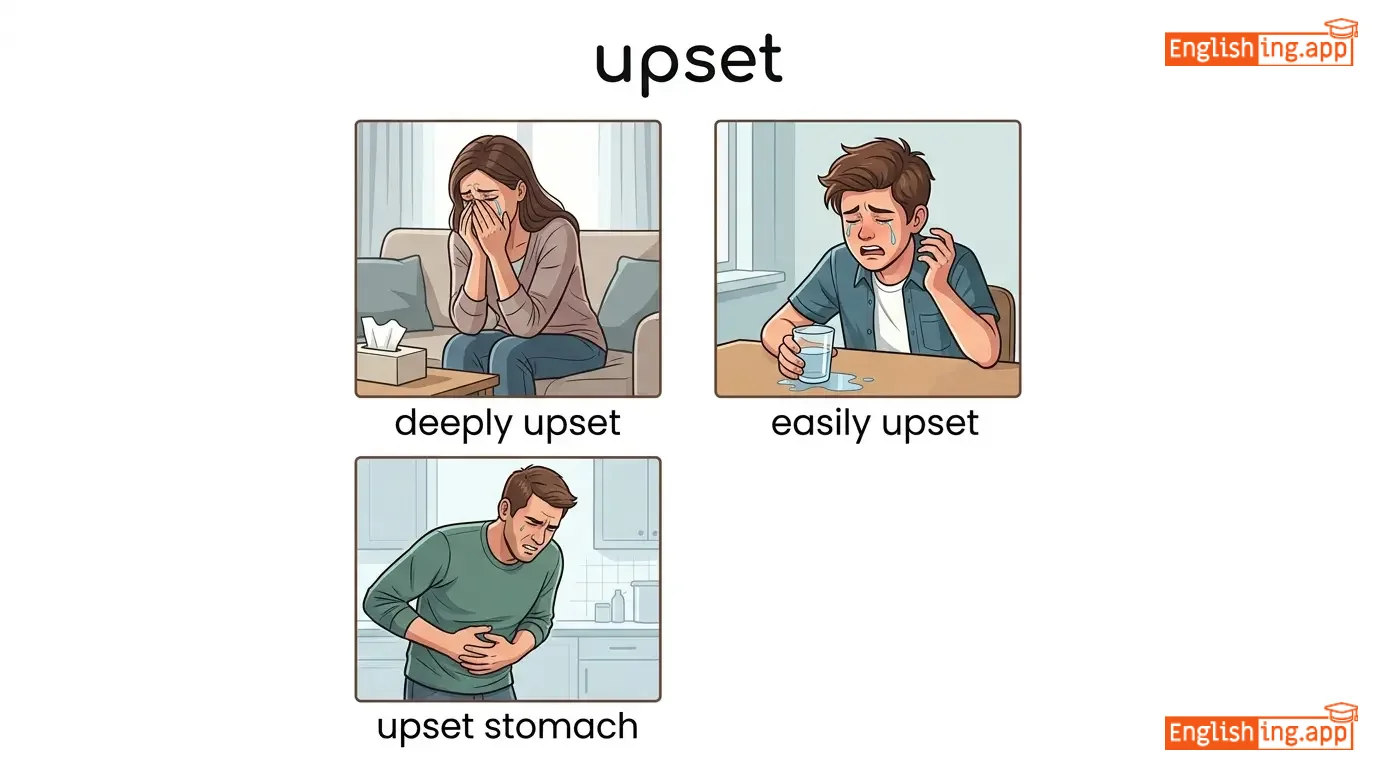
upset someone, upset plans, get upset, feel upset
|
Molestar = modo de 'estar' con algo que incomoda, como 'upset'.
••••••
|
|
••••••
|
/ɪˈdʒektɪd/
verb
(ijécted)
••••••
|
••••••
|
expulsar
expulsar
••••••
|
ijécted
••••••
|
ijécted
••••••
|
ijécts
••••••
|
ijécting
••••••
|
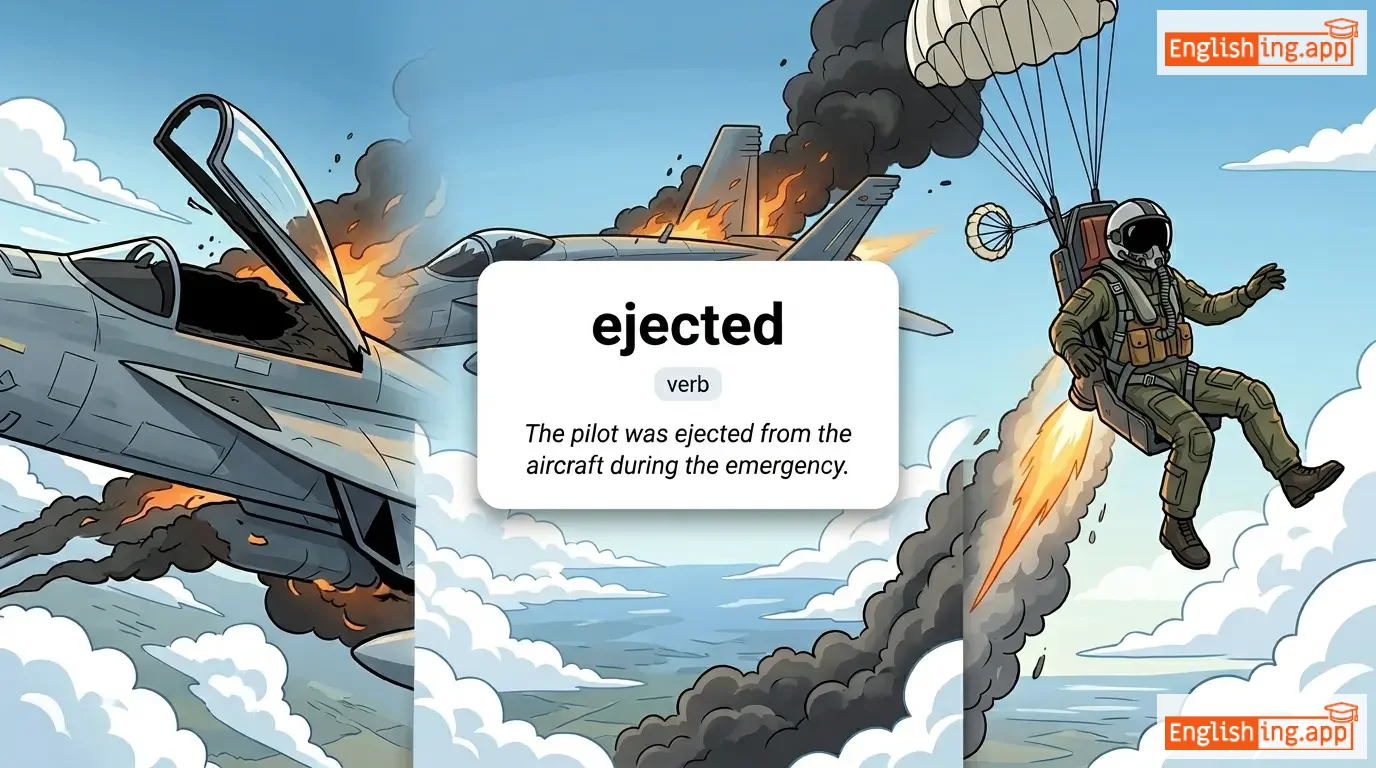
to force someone or something to leave a place; to push or throw something out forcefully
|
The pilot was ejected from the aircraft during the emergency.
El piloto fue expulsado del avión durante la emergencia.
••••••
|
El piloto fue expulsado del avión durante la emergencia.
El piloto fue expulsado del avión durante la emergencia.
••••••
|
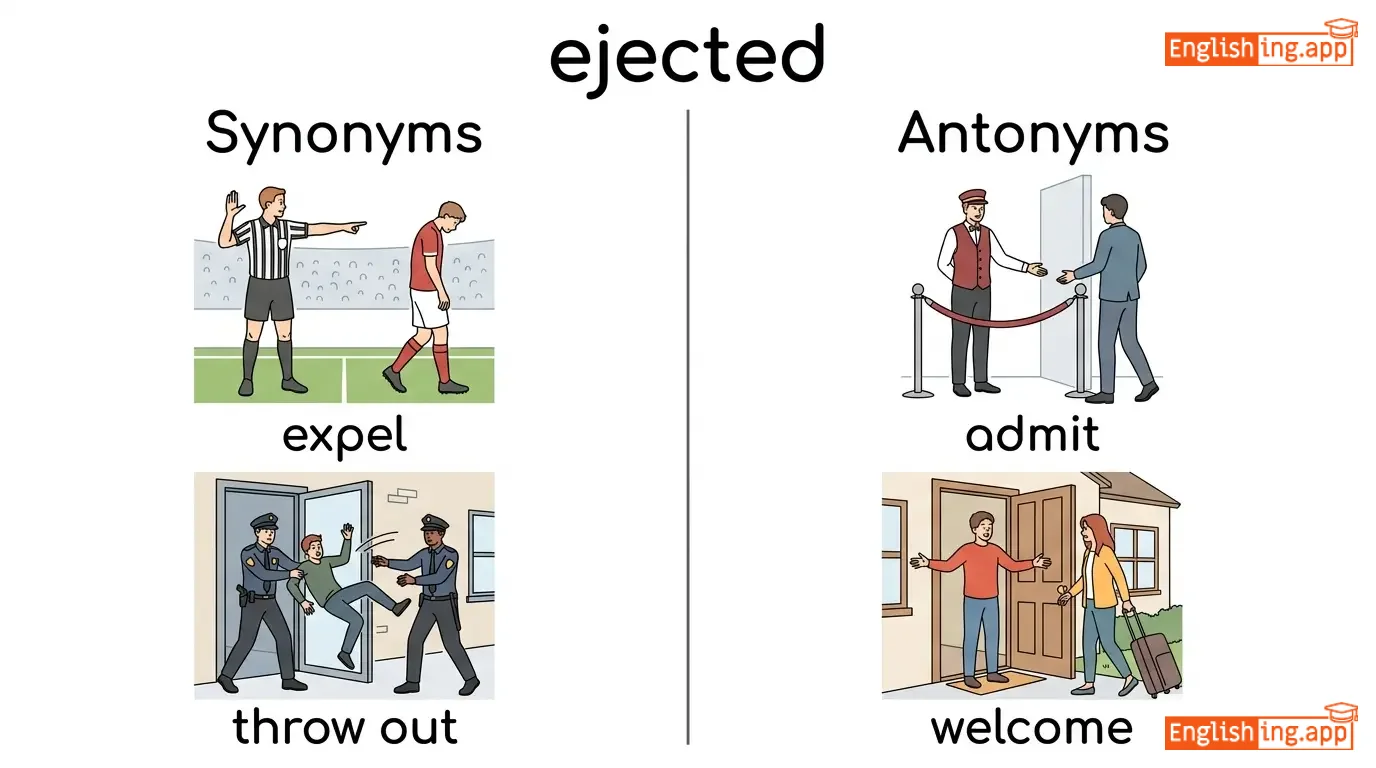
expel, throw out, remove, discharge
|
admit, welcome, accept, include
|
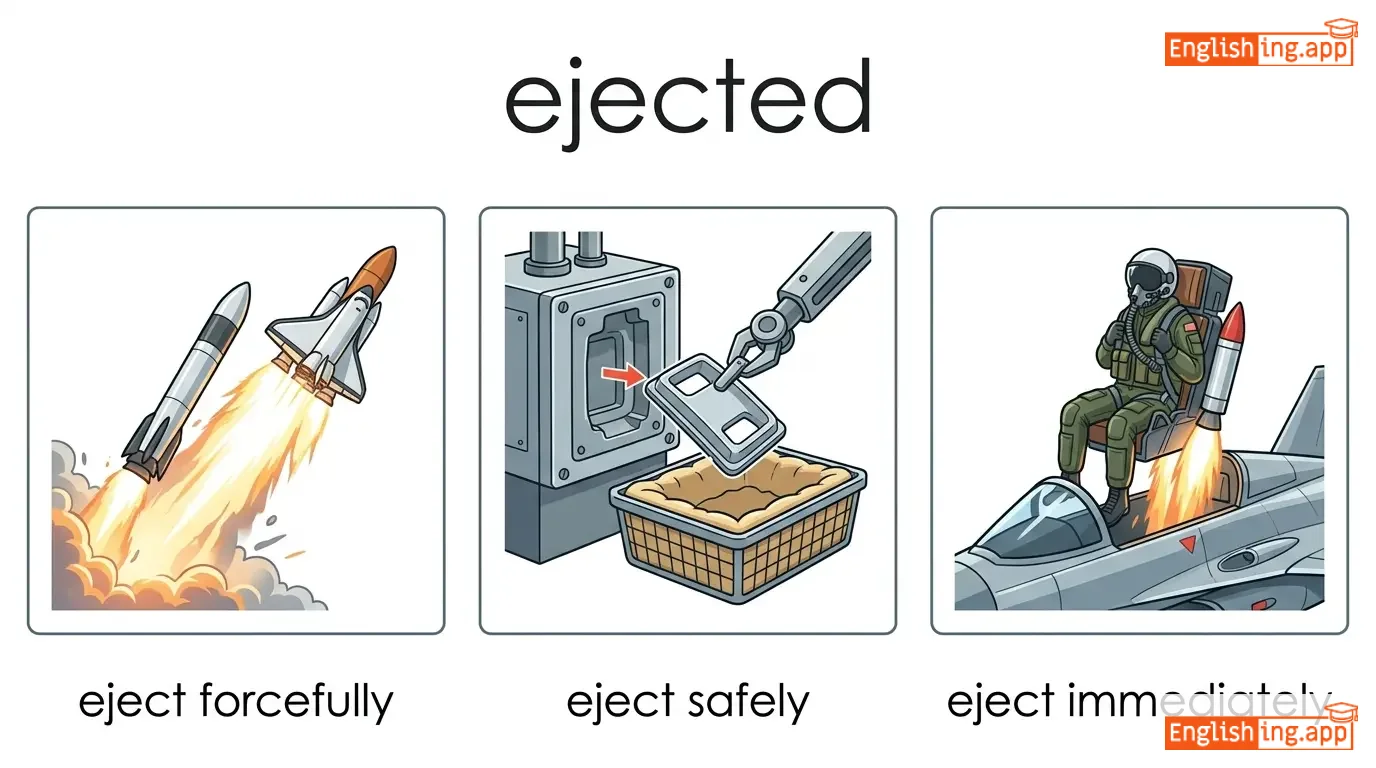
eject forcefully, eject safely, eject immediately, get ejected
|
La expulsión es como 'ejecting' algo fuera con fuerza
••••••
|
|
••••••
|
/drɪŋk/
verb
(drɪŋk)
••••••
|
••••••
|
beber
beber
••••••
|
bebió
••••••
|
bebido
••••••
|
bebe
••••••
|
bebiendo
••••••
|
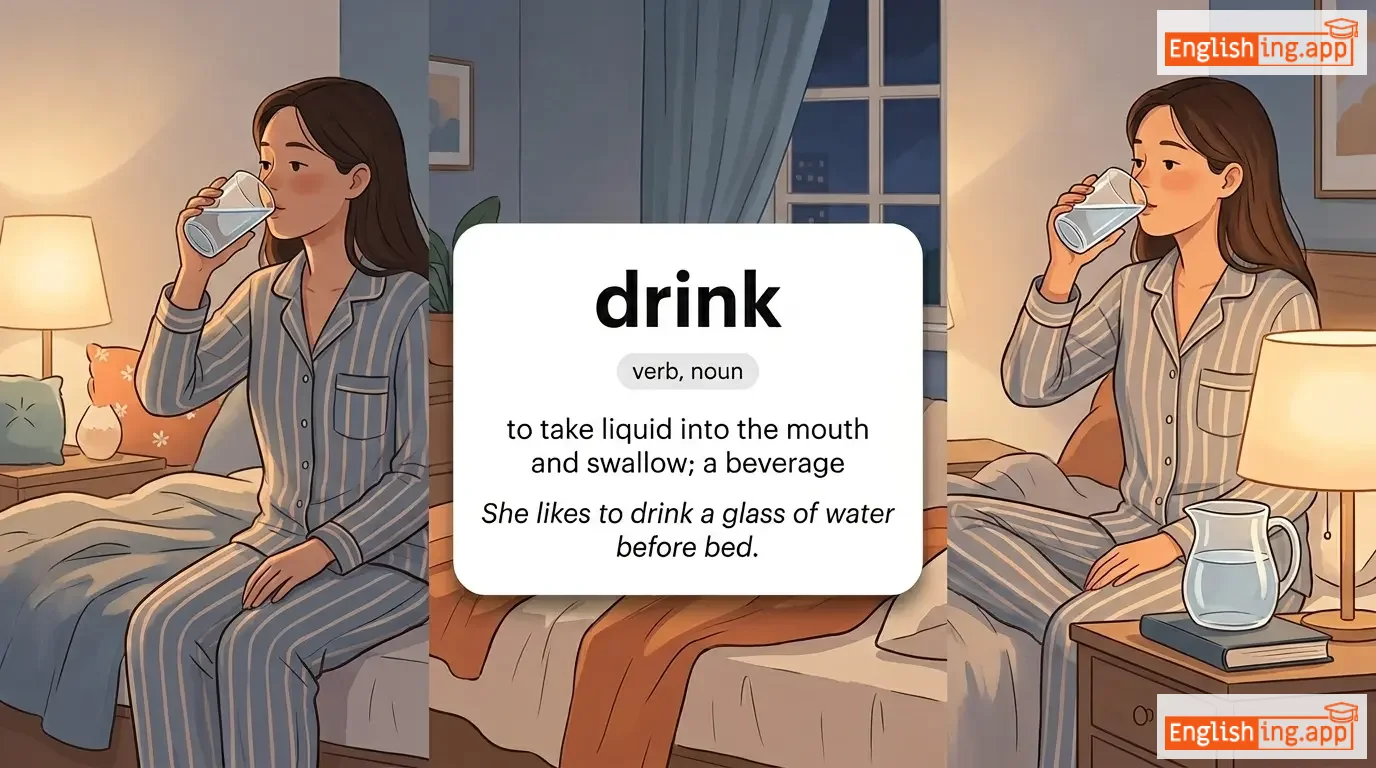
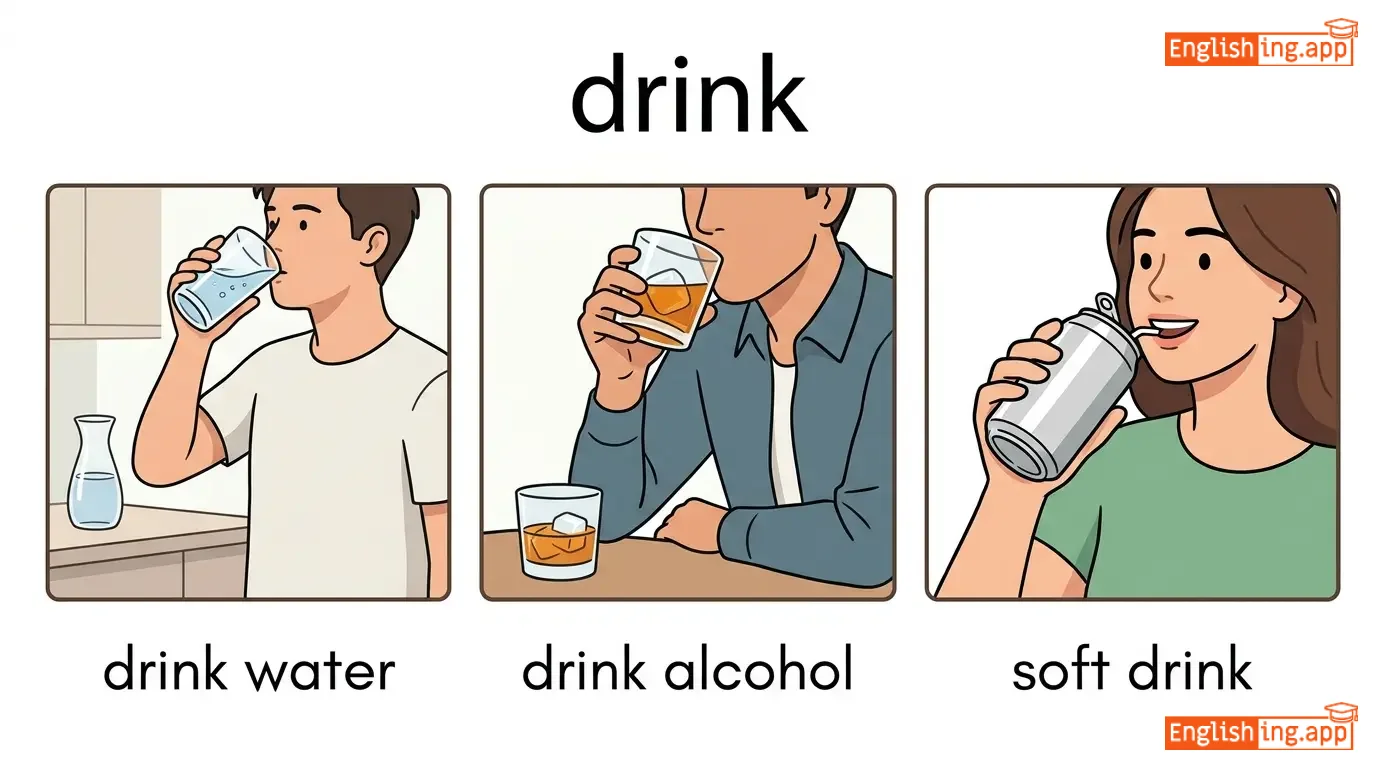
to swallow liquid; to consume beverages
|
You should drink plenty of water daily.
Debes beber mucha agua diariamente.
••••••
|
Debes beber mucha agua diariamente.
Debes beber mucha agua diariamente.
••••••
|
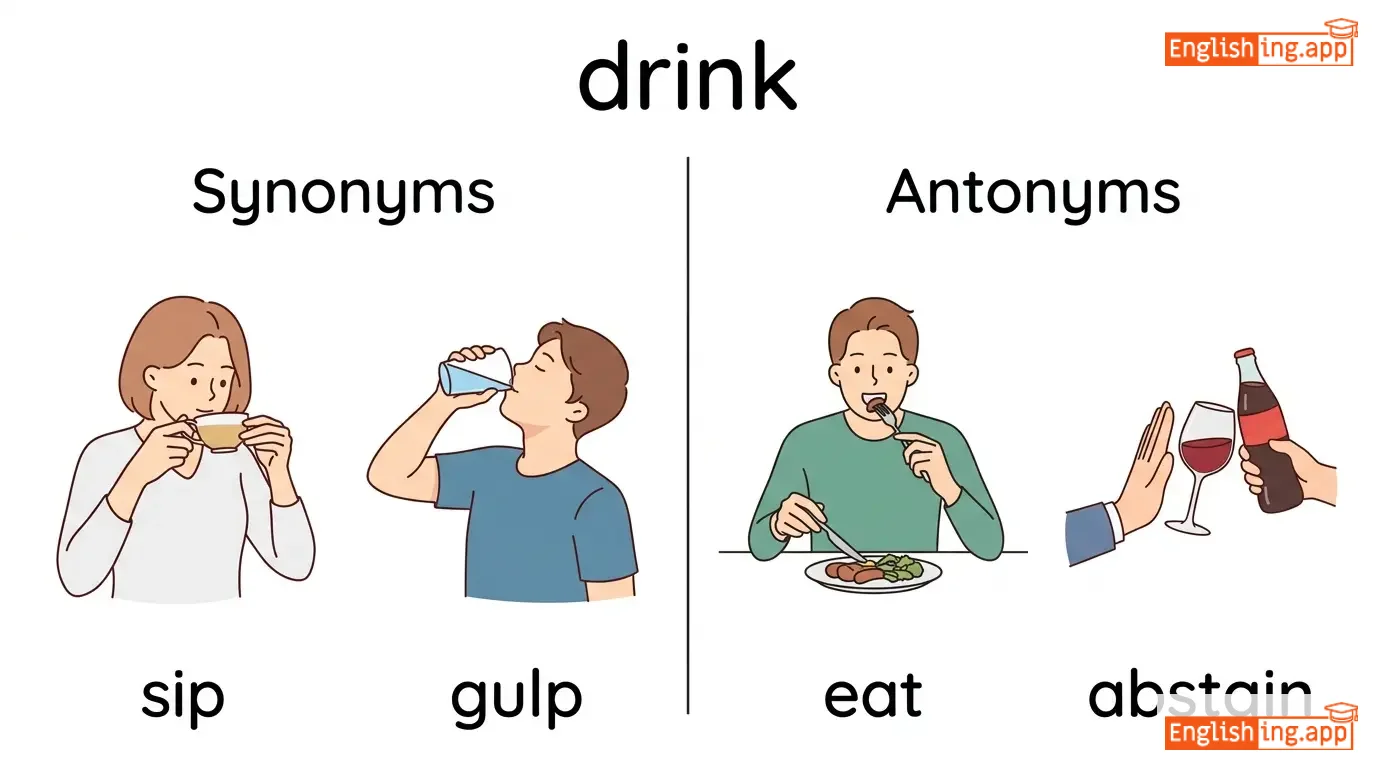
sip, gulp, consume, swallow
|
••••••
|
drink water, drink slowly, drink plenty, drink heavily
|
No
••••••
|
|
••••••
|
/ɪnˈvaɪt/
verb
(inˈvaɪt)
••••••
|
-
••••••
|
invitar
invitar
••••••
|
inváited
••••••
|
inváited
••••••
|
invites
••••••
|
inviting
••••••
|
to ask someone to come to an event or to do something
|
We should invite all our friends to the party.
Deberíamos invitar a todos nuestros amigos a la fiesta.
••••••
|
Deberíamos invitar a todos nuestros amigos a la fiesta.
Deberíamos invitar a todos nuestros amigos a la fiesta.
••••••
|
ask, request, summon, welcome, call
|
exclude, reject, dismiss, ban, uninvite
|
invite someone, invite over, invite formally, send invitation
|
Invitar es invitar, y es fácil de recordar.
••••••
|
|
••••••
|
/treɪn/
verb
(treɪn)
••••••
|
••••••
|
entrenar
entrenar
••••••
|
treɪnd
••••••
|
treɪnd
••••••
|
treɪnz
••••••
|
treɪnɪŋ
••••••
|
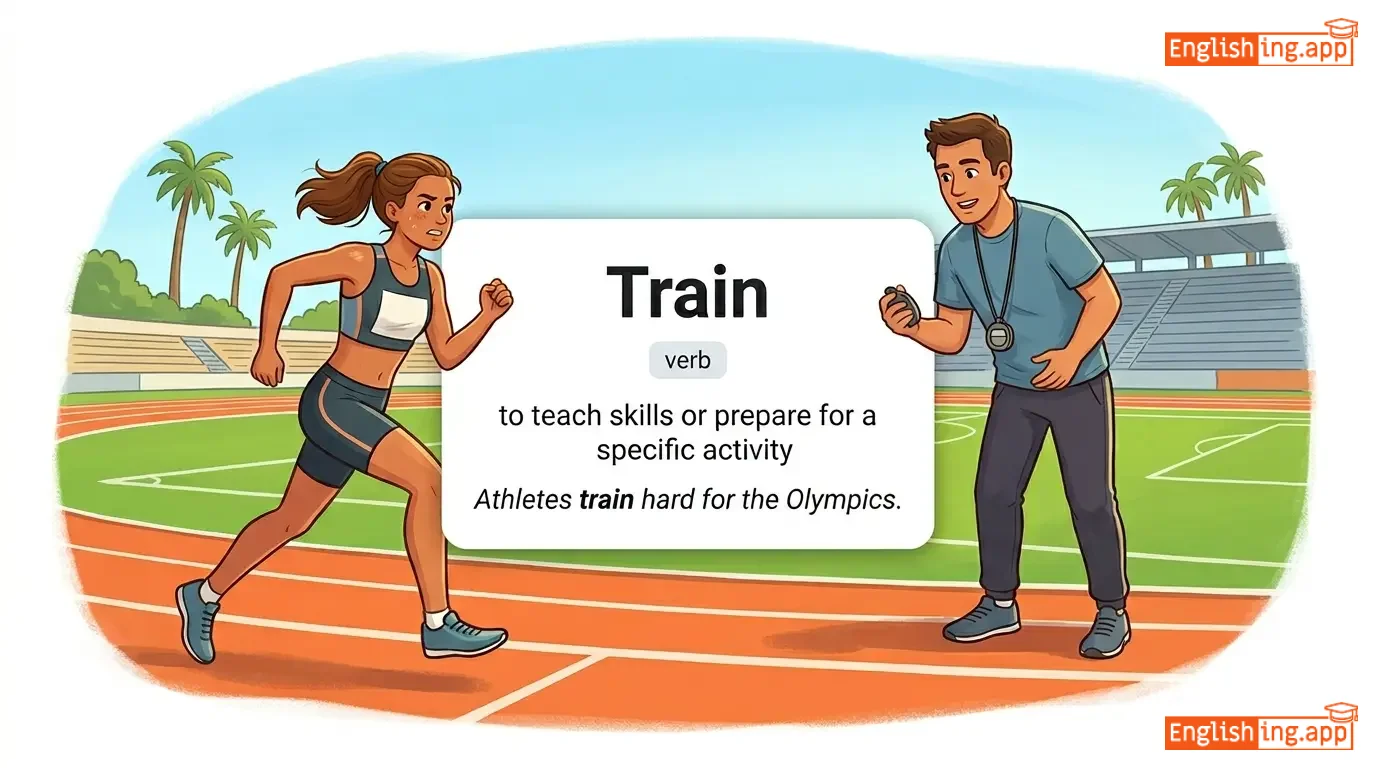
to teach skills or prepare for a specific activity
|
Athletes train hard for the Olympics.
Los atletas entrenan duro para los Juegos Olímpicos.
••••••
|
Los atletas entrenan duro para los Juegos Olímpicos.
Los atletas entrenan duro para los Juegos Olímpicos.
••••••
|
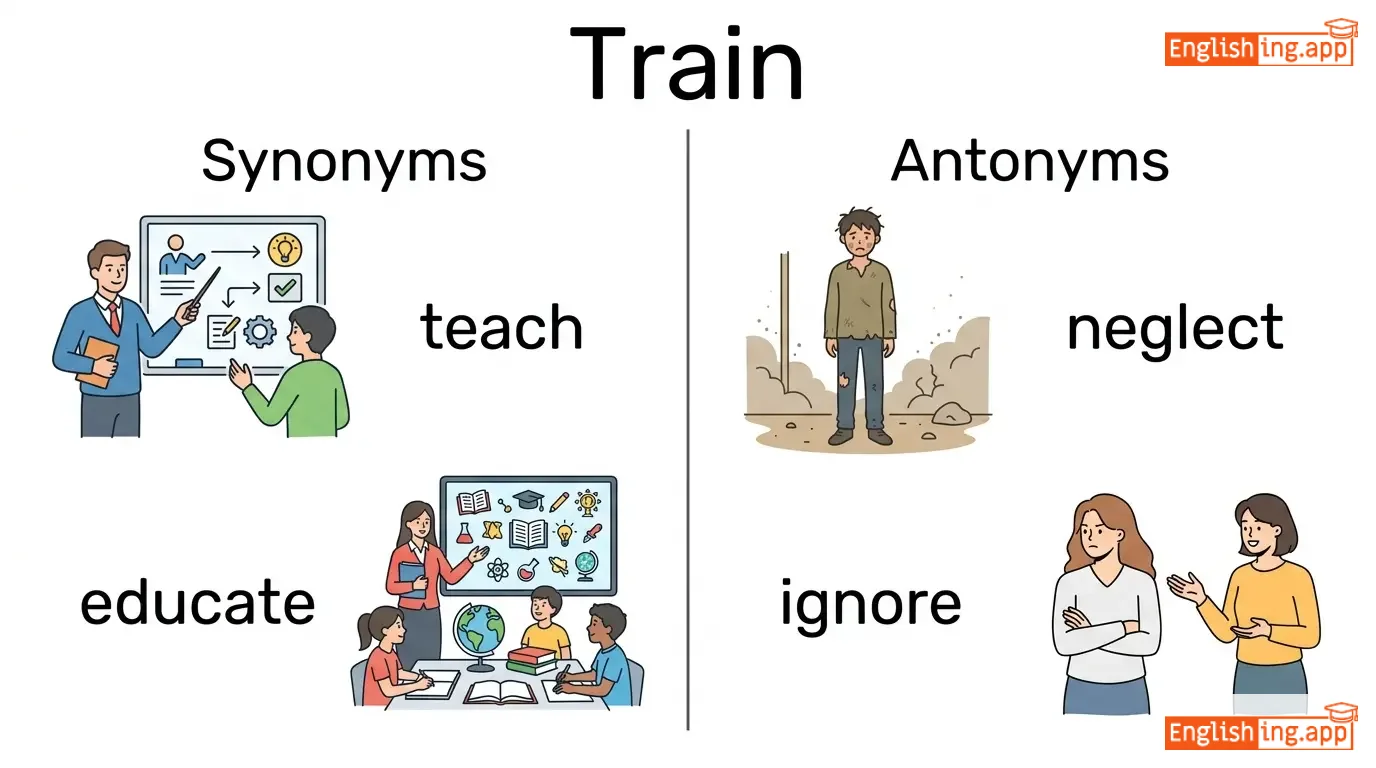
teach, educate, coach, prepare
|
neglect, ignore, abandon, discourage
|
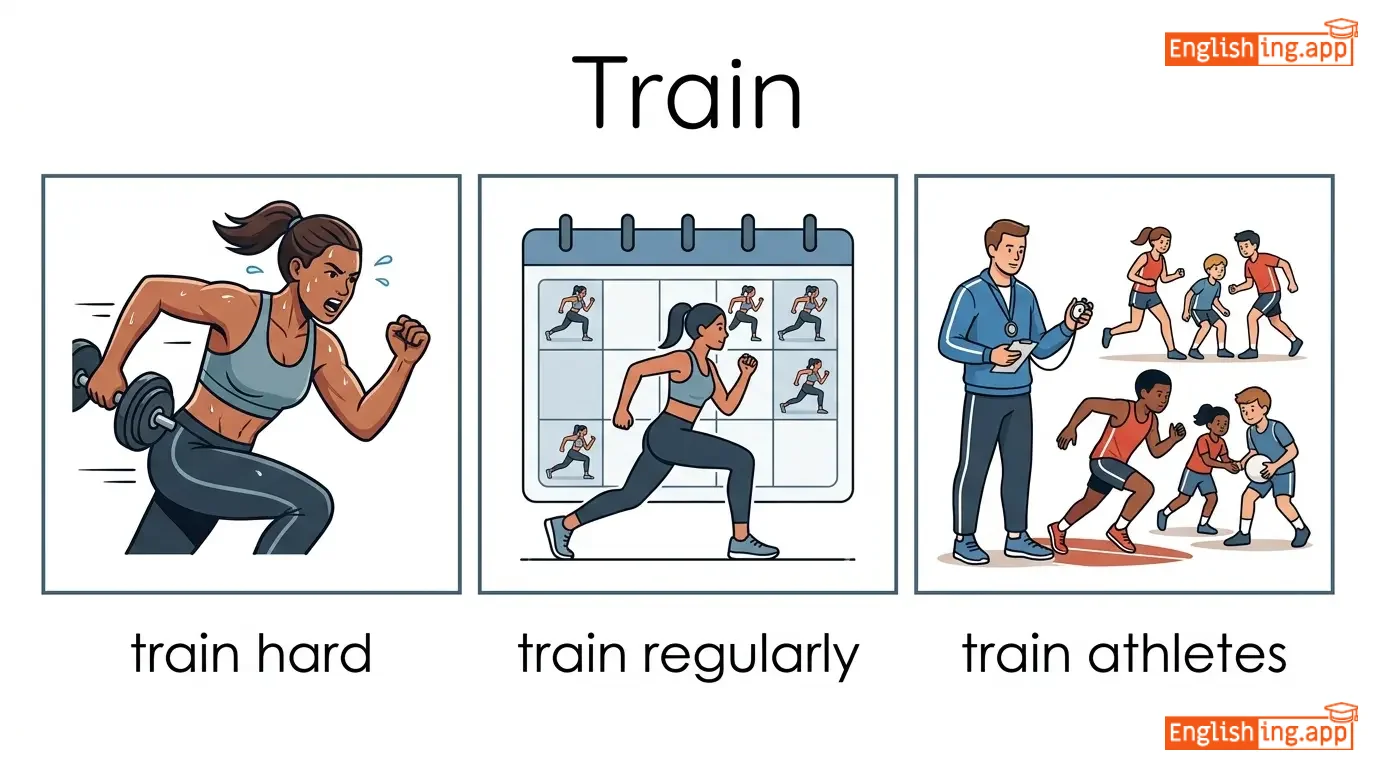
train hard, train regularly, train athletes, provide training
|
Train = entrenar, como en la práctica para un deporte
••••••
|
|
••••••
|
/lɪft/
verb
(lift)
••••••
|
-
••••••
|
levantar
levantar
••••••
|
lifted
••••••
|
lifted
••••••
|
lifts
••••••
|
lifting
••••••
|
to raise or move upward; to pick up
|
He lifted the heavy box with effort.
Él levantó la caja pesada con esfuerzo.
••••••
|
Él levantó la caja pesada con esfuerzo.
Él levantó la caja pesada con esfuerzo.
••••••
|
raise, elevate, hoist, pick up
|
lower, drop, put down, descend
|
lift up, lift weights, lift carefully, lift heavy objects
|
Levantar es como usar un ascensor, subes hacia arriba.
••••••
|