Vokabulare

Englisches Vokabelwörterbuch | Wortbedeutungen, Definitionen & Beispiele

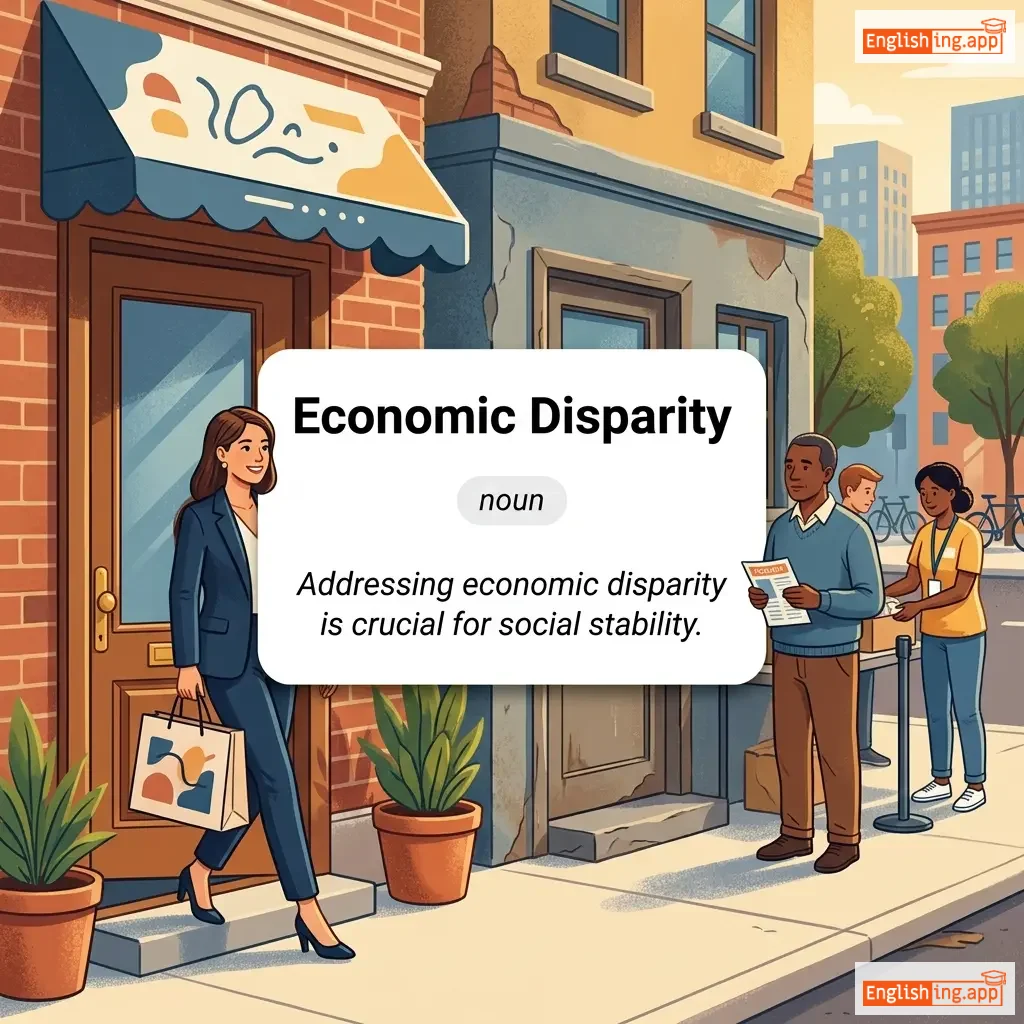
Economic Disparity definition card — visual illustration of the meaning
noun C1
/ˌiː.kəˈnɒm.ɪk dɪˈspær.ɪ.ti/
経済的不平等 (keizai-teki fubyoutou)

The unequal distribution of income and opportunity between different groups in society.

"Addressing economic disparity is crucial for social stability."

"経済的不平等に対処することは、社会的安定にとって重要です。" (Keizai-teki fubyoutou ni taisho suru koto wa, shakai-teki antei ni totte juuyou desu.)
verb C1
/ɪˈkɒnəmaɪz/
節約する (setsuyaku suru)

To reduce spending or use resources carefully.

"Families are trying to economize by cutting unnecessary expenses."

"家族は不必要な支出を削減して、節約しようとしています。" (Kazoku wa fuhitsuyou na shishutsu o sakugen shite, setsuyaku shiyou to shiteimasu.)
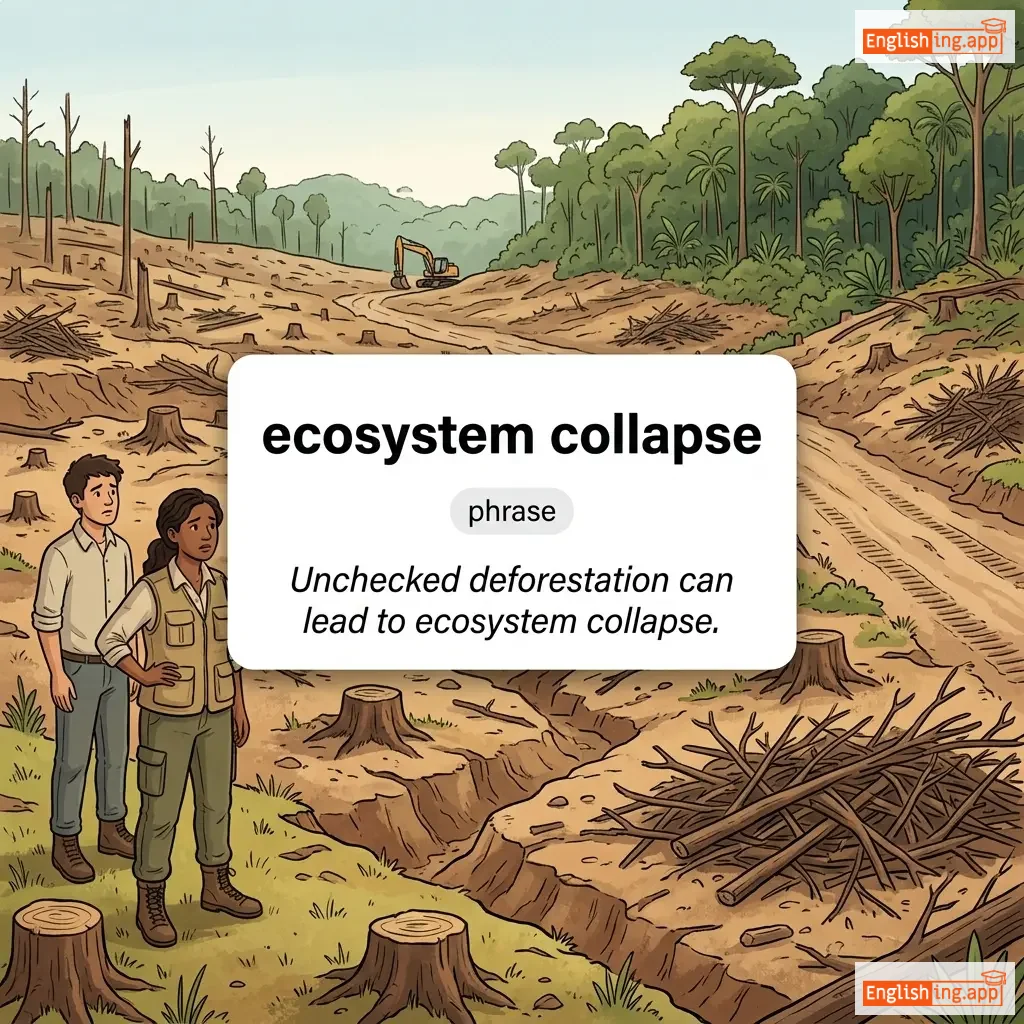
ecosystem collapse definition card — visual illustration of the meaning
phrase C1
ˈiː.kəʊˌsɪs.təm kəˈlæps
エコシステムの崩壊 (ekoshisutemu no houkai)

The complete breakdown of an ecological system, resulting in the inability to maintain its structure and function.

"Unchecked deforestation can lead to ecosystem collapse."

"制御されない森林伐採はエコシステムの崩壊を引き起こす可能性があります。" (Seigyo sarenai shinrin bassai wa ekoshisutemu no houkai wo hikiokosu kanousei ga arimasu.)
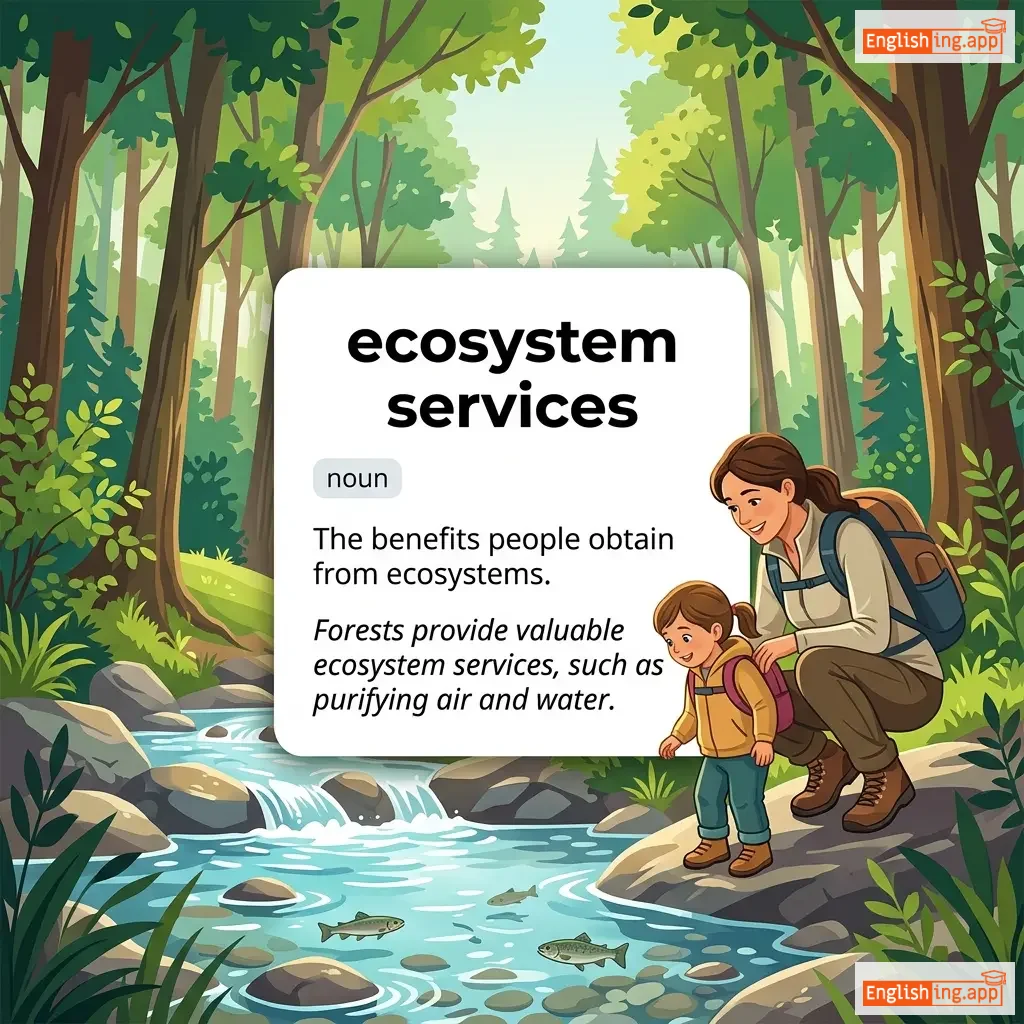
ecosystem services definition card — visual illustration of the meaning
noun C1
ˈiːkəʊˌsɪstəm ˈsɜːvɪsɪz
生態系サービス (seitaikei sābisu)

The benefits people obtain from ecosystems.

"Forests provide valuable ecosystem services, such as purifying air and water."

"森林は空気と水を浄化するなど、貴重な生態系サービスを提供します。" (Shinrin wa kūki to mizu o jōka suru nado, kichōna seitaikei sābisu o teikyō shimasu.)
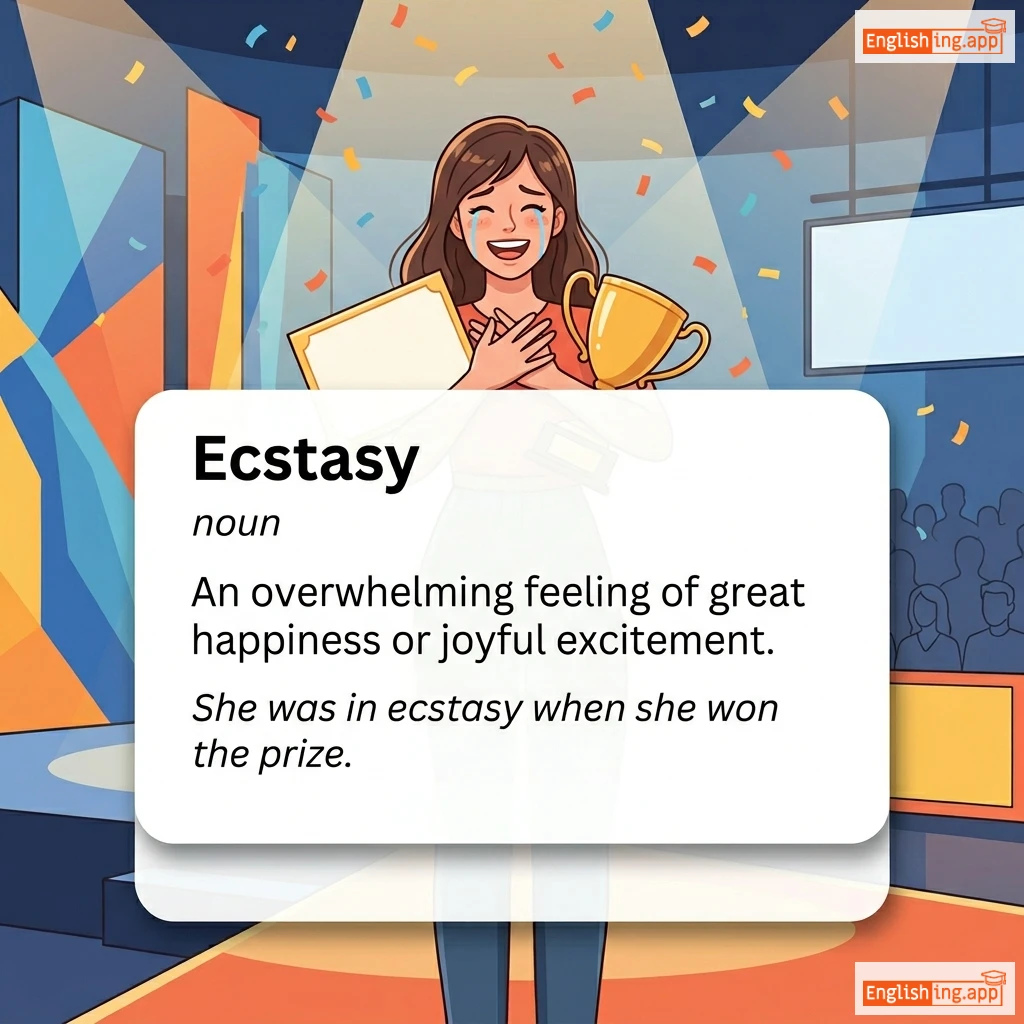
Ecstasy definition card — visual illustration of the meaning
noun C1
/ˈekstəsi/
恍惚 (kōkotsu)

An overwhelming feeling of great happiness or joyful excitement.

"She was in ecstasy when she won the prize."

"彼女は賞を取ったとき、恍惚の状態にありました。" (Kanojo wa shō o totta toki, kōkotsu no jōtai ni arimashita.)
adjective C1
/ɪkˈstætɪk/
興奮している (koufun shite iru)

Feeling or expressing overwhelming happiness or excitement.

"The fans were ecstatic after their team won the championship."

"ファンたちはチームがチャンピオンになった後、興奮していました。" (Fan-tachi wa chīmu ga chanpion ni natta ato, kōfun shite imashita.)
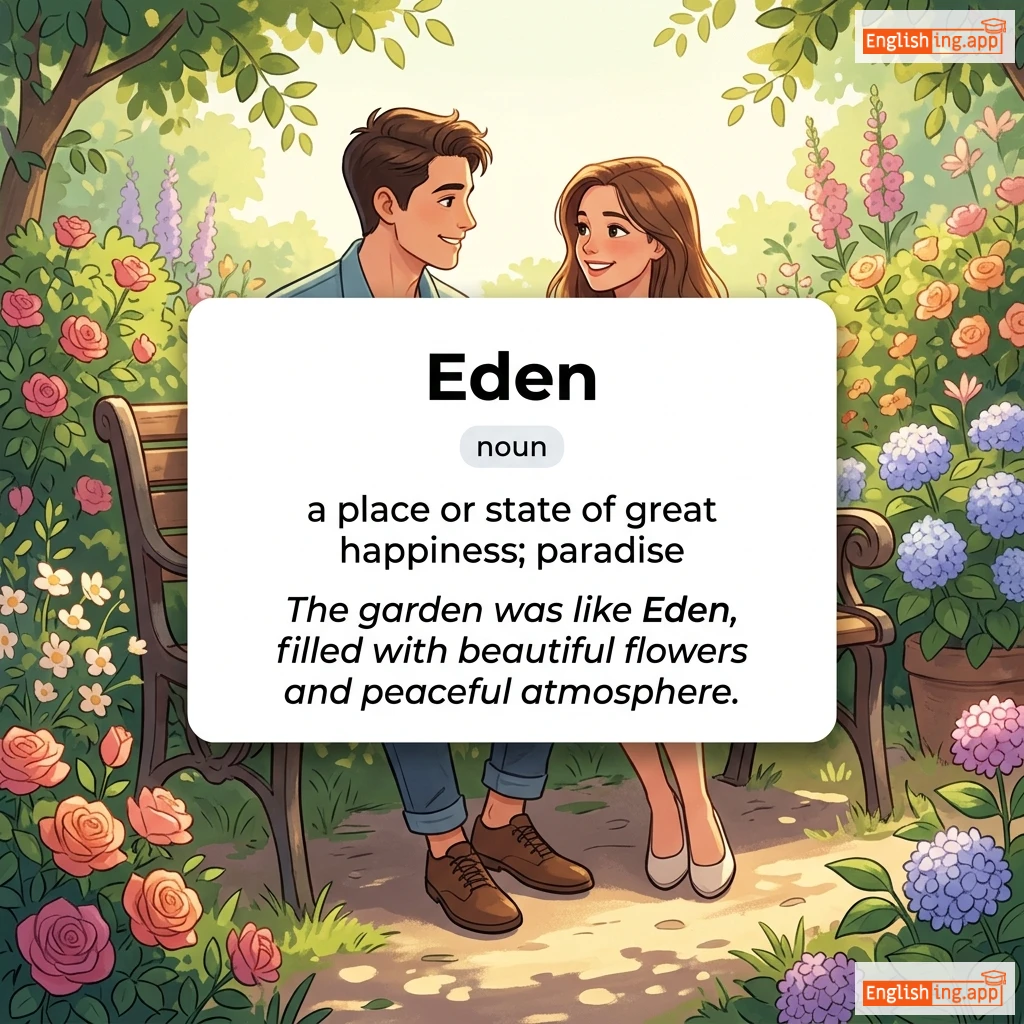
Eden definition card — visual illustration of the meaning
noun C1
/ˈiː.dən/
エデン (Eden)

a place or state of great happiness; paradise

"The garden was like Eden, filled with beautiful flowers and peaceful atmosphere."

"その庭はエデンのようで、美しい花々と平和な雰囲気に満ちていました。" (Sono niwa wa Eden no you de, utsukushii hanabana to heiwa na fun'iki ni michite imashita.)
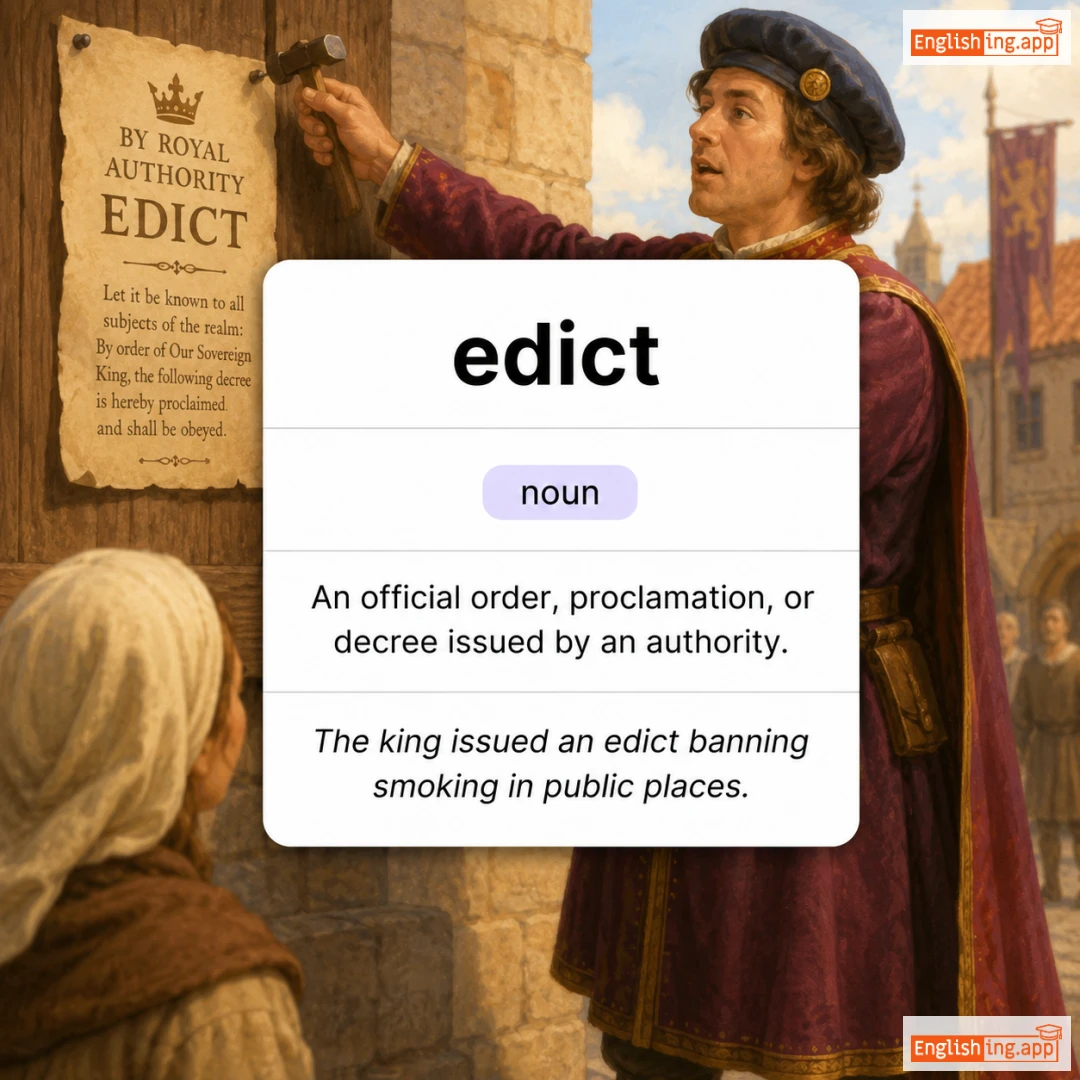
edict definition card — visual illustration of the meaning
noun C1
/ˈiːdɪkt/
勅令 (chokurei)

An official order, proclamation, or decree issued by an authority.

"The king issued an edict banning smoking in public places."

"王は公共の場での喫煙を禁止するエディクトを発行しました。" (Ō wa kōkyō no ba de no kitsuen wo kinshi suru edikuto wo hakko shimashita.)
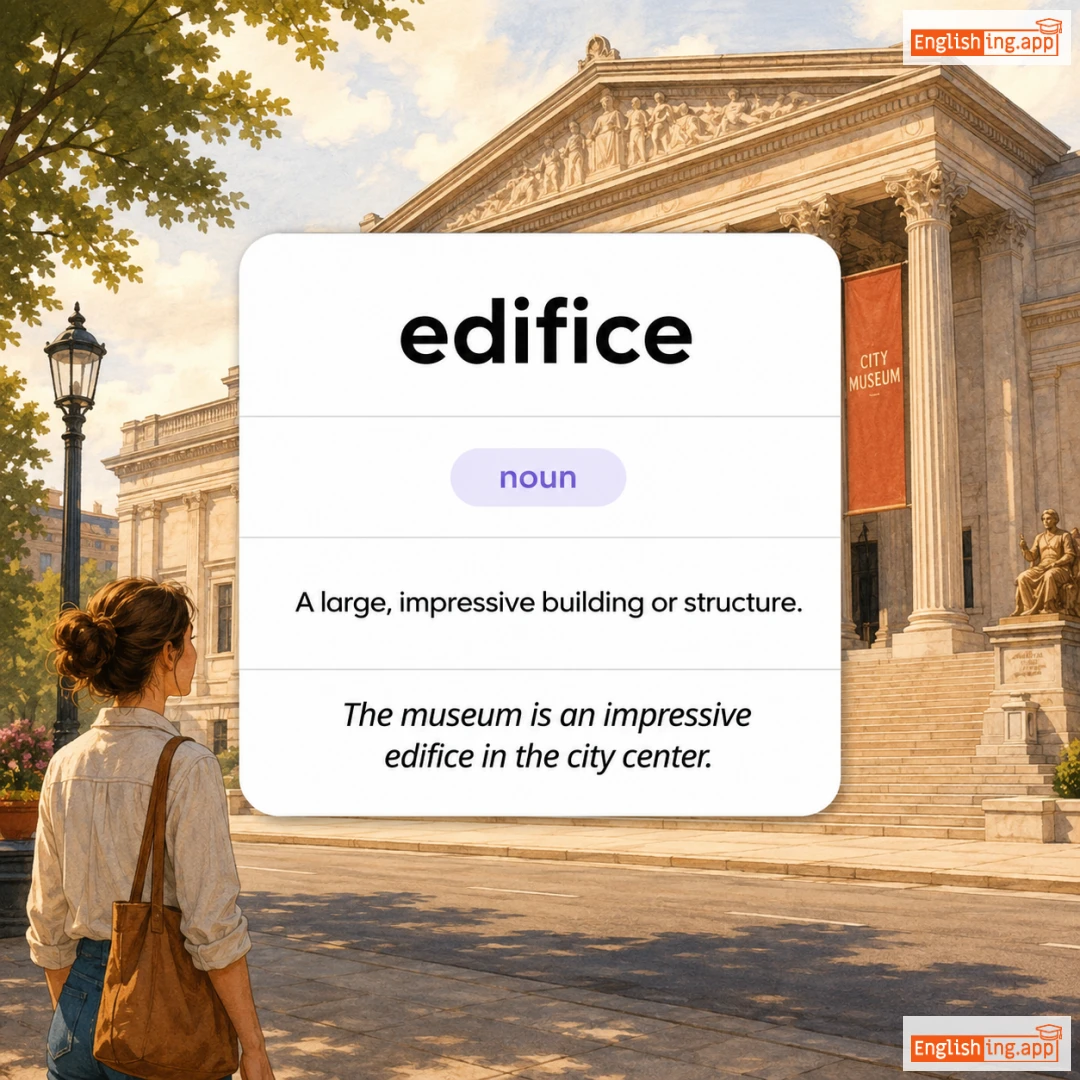
edifice definition card — visual illustration of the meaning
noun C1
/ˈɛdɪfɪs/
建物 (tatemono)

A large, impressive building or structure.

"The museum is an impressive edifice in the city center."

"その博物館は市内中心部の印象的な建物です。" (Sono hakubutsukan wa shinai chūshinbu no inshō-teki na tatemono desu.)
adjective C1
/ˈed.jʊ.keɪ.tɪv/
教育的; 有益な; 情報豊かな (kyouikuteki; yūki na; jōhō yutakana)

providing education; instructive; informative

"The documentary was highly educative and informative."

"そのドキュメンタリーは非常に教育的で有益でした。" (Sono dokyumentarī wa hijō ni kyōikuteki de yūki deshita.)
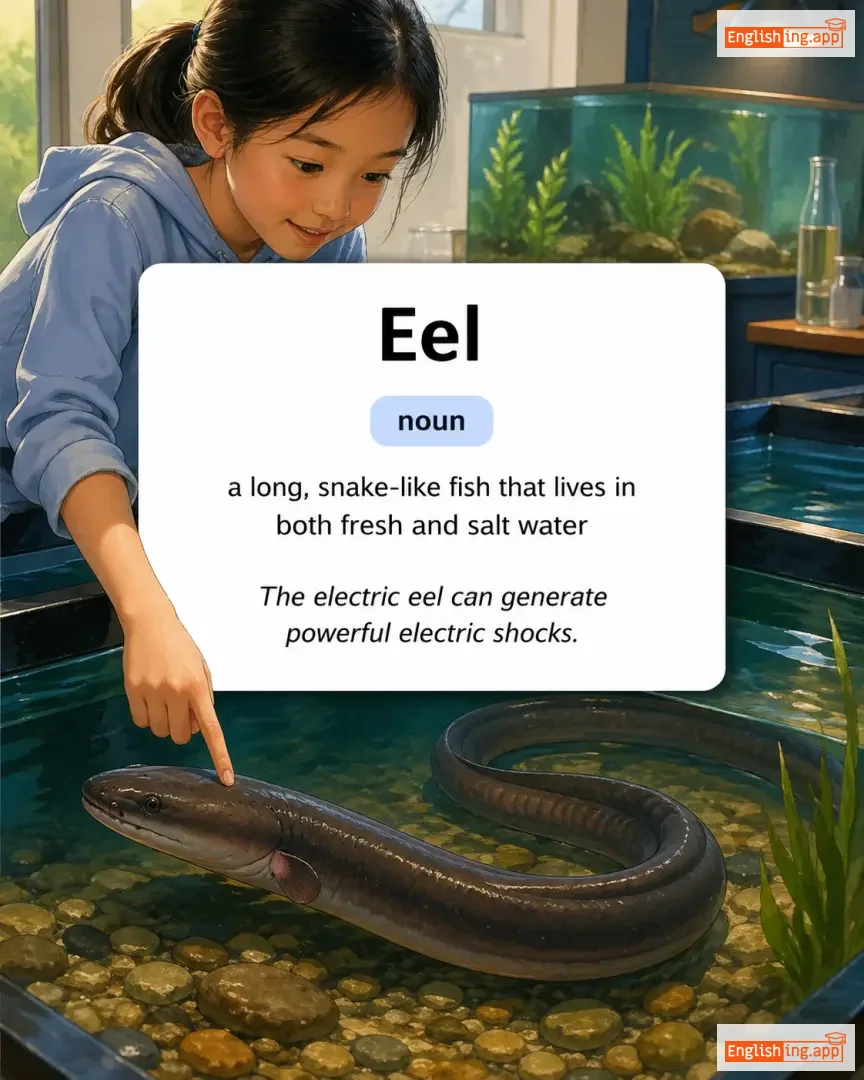
Eel definition card — visual illustration of the meaning
noun C1
/iːl/
ウナギ (unagi)

a long, snake-like fish that lives in both fresh and salt water

"The electric eel can generate powerful electric shocks."

"デンキウナギは強力な電気ショックを発生させることができます。" (denki unagi wa kyouryoku na denki shokku o hassei saseru koto ga dekimasu)
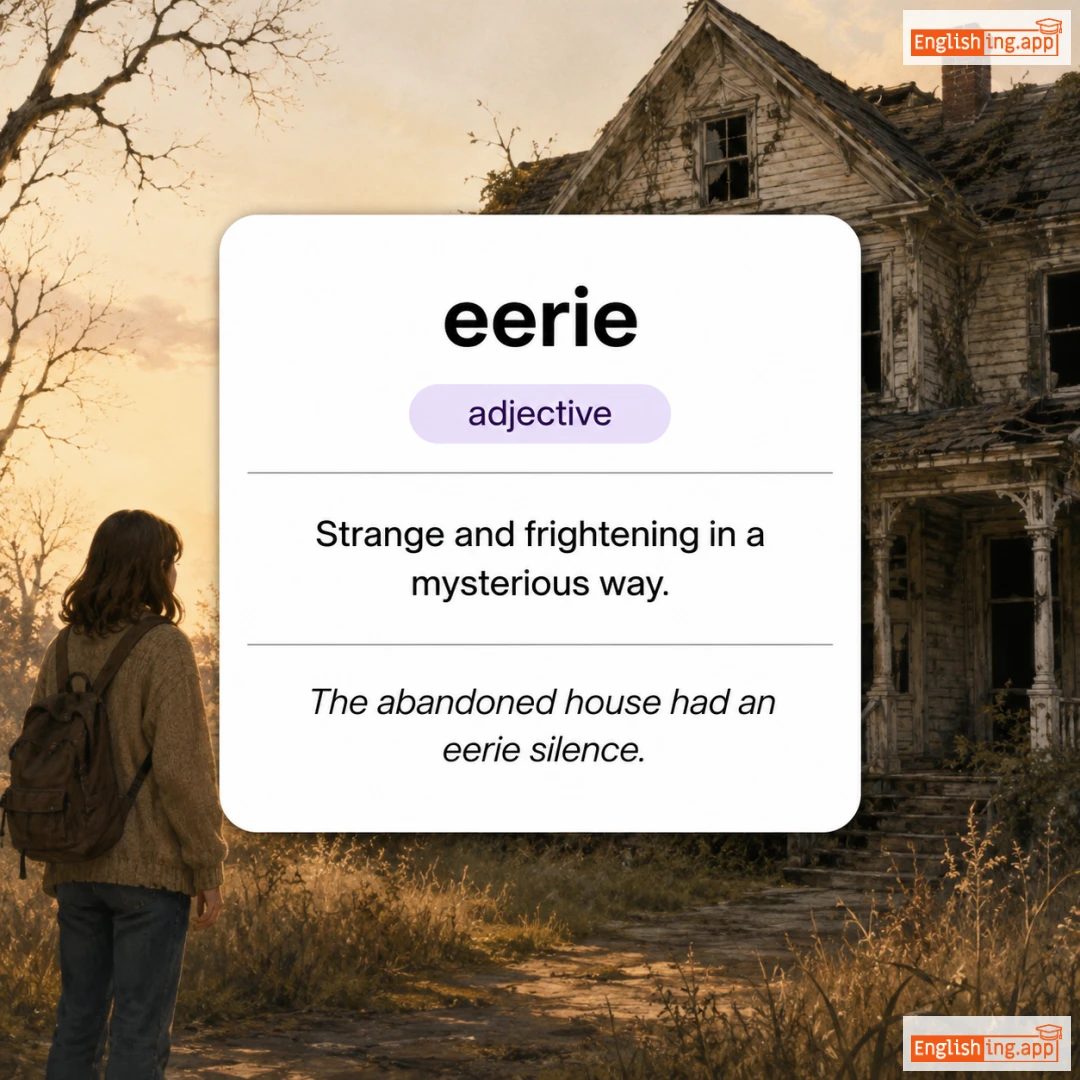
eerie definition card — visual illustration of the meaning
adjective C1
/ˈɪəri/
不気味 (bukimi)

Strange and frightening in a mysterious way.

"The abandoned house had an eerie silence."

"放棄された家には不気味な静けさがあった。" (Houkisareta ie ni wa bukimi na shizukesa ga atta.)
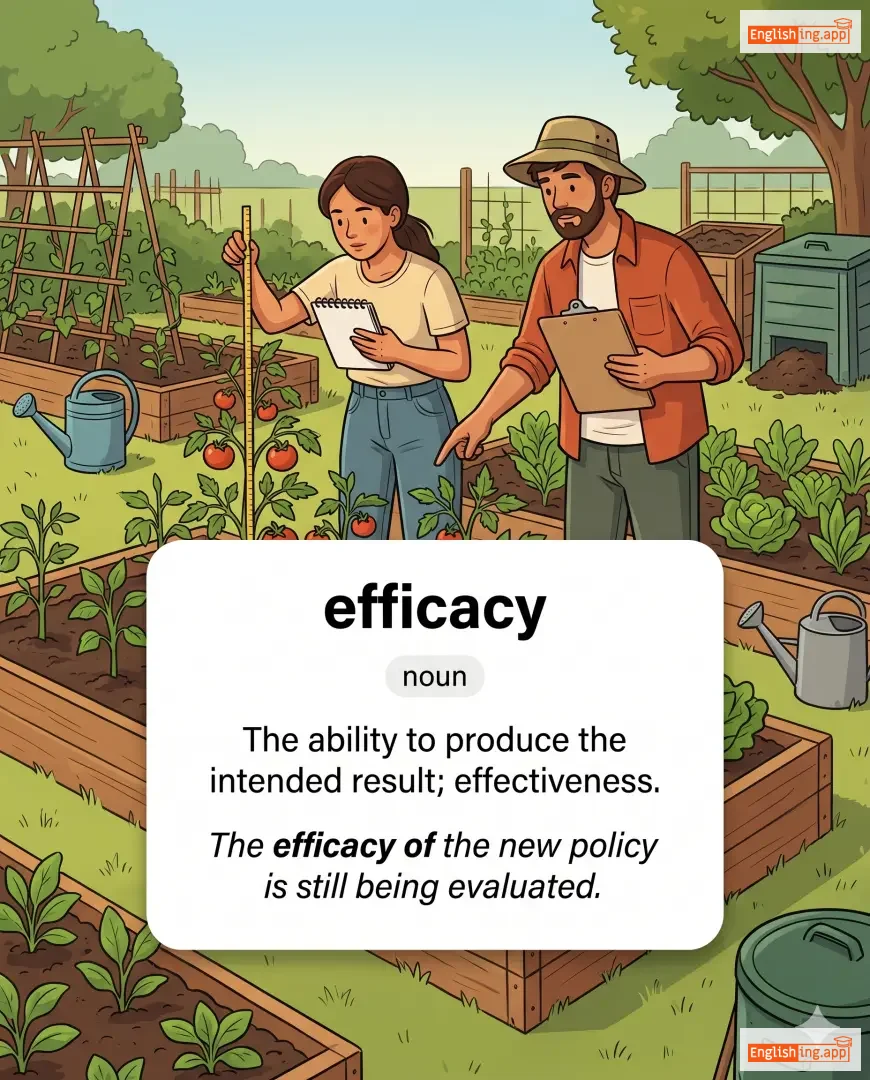
efficacy definition card — visual illustration of the meaning
noun C1
/ˈɛfɪkəsi/
効果 (kouka)

The ability to produce the intended result; effectiveness.

"The efficacy of the new policy is still being evaluated."

"新しい政策の効果はまだ評価されています。" (Atarashii seisaku no kouka wa mada hyouka sareteimasu.)
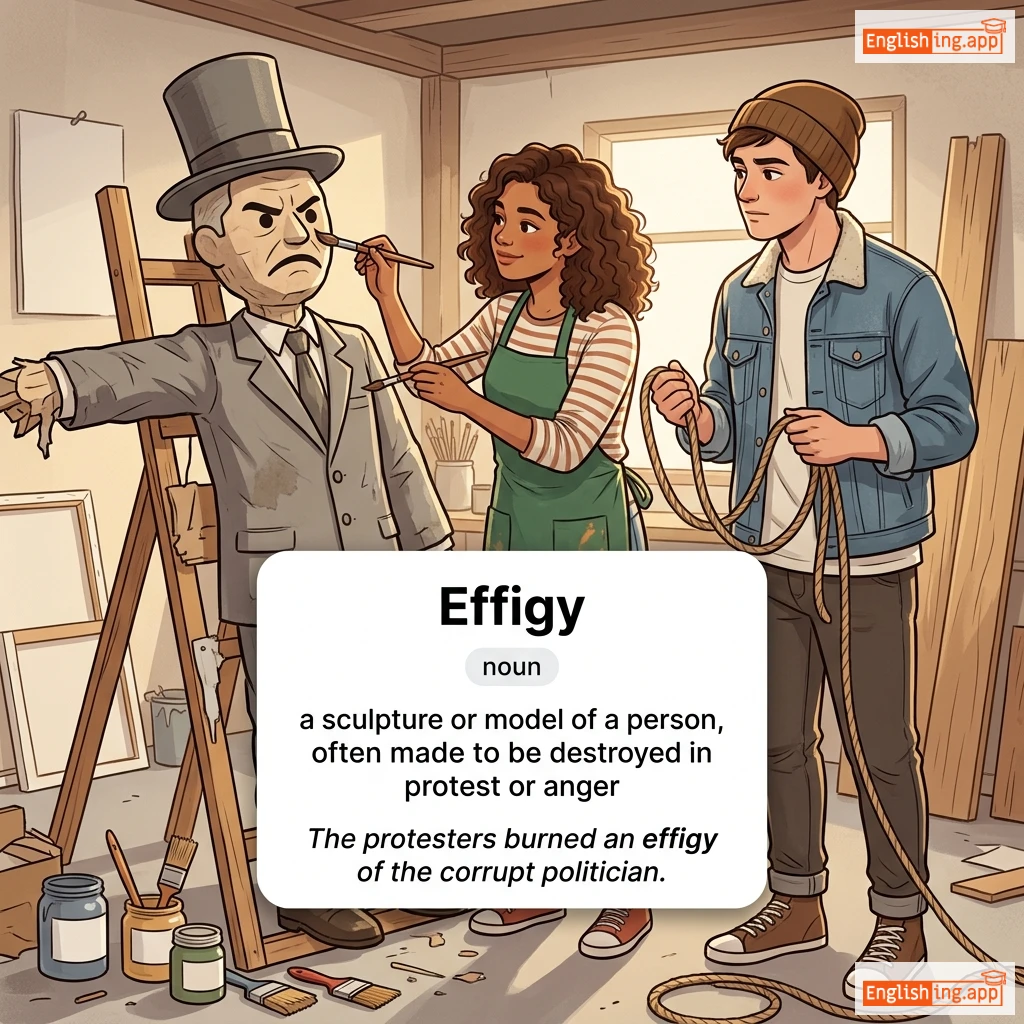
Effigy definition card — visual illustration of the meaning
noun C1
/ˈɛfɪdʒi/
人形 (ningyo)

a sculpture or model of a person, often made to be destroyed in protest or anger

"The protesters burned an effigy of the corrupt politician."

"抗議者たちは腐敗した政治家の人形を燃やしました。" (Kougitachi wa fuhai shita seijika no ningyo o moyashimashita.)
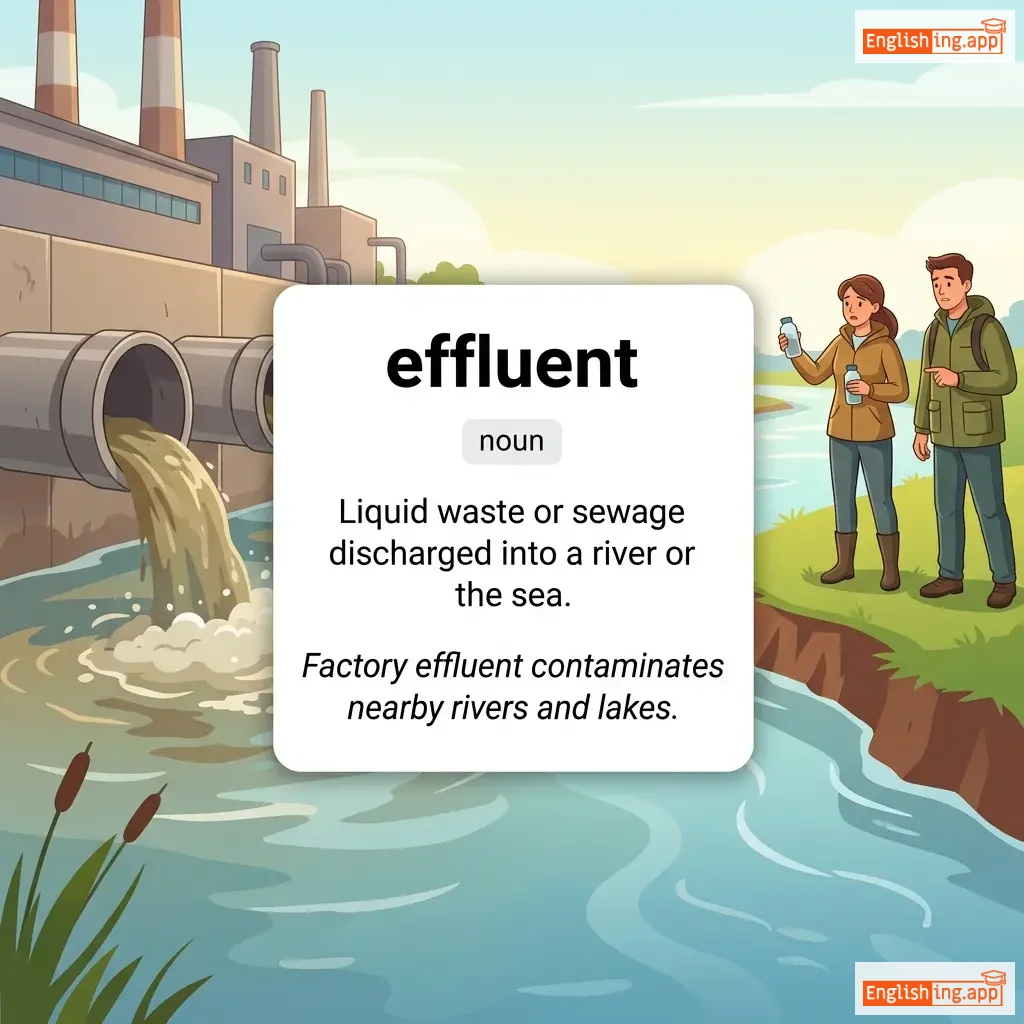
effluent definition card — visual illustration of the meaning
noun C1
ˈɛf.lu.ənt
排水または汚染された液体 (ha sui mata wa osen sareta ekitai)

Liquid waste or sewage discharged into a river or the sea.

"Factory effluent contaminates nearby rivers and lakes."

"工場の排水は近くの川や湖を汚染します。" (Koujou no haisui wa chikaku no kawa ya mizuumi o osen shimasu.)
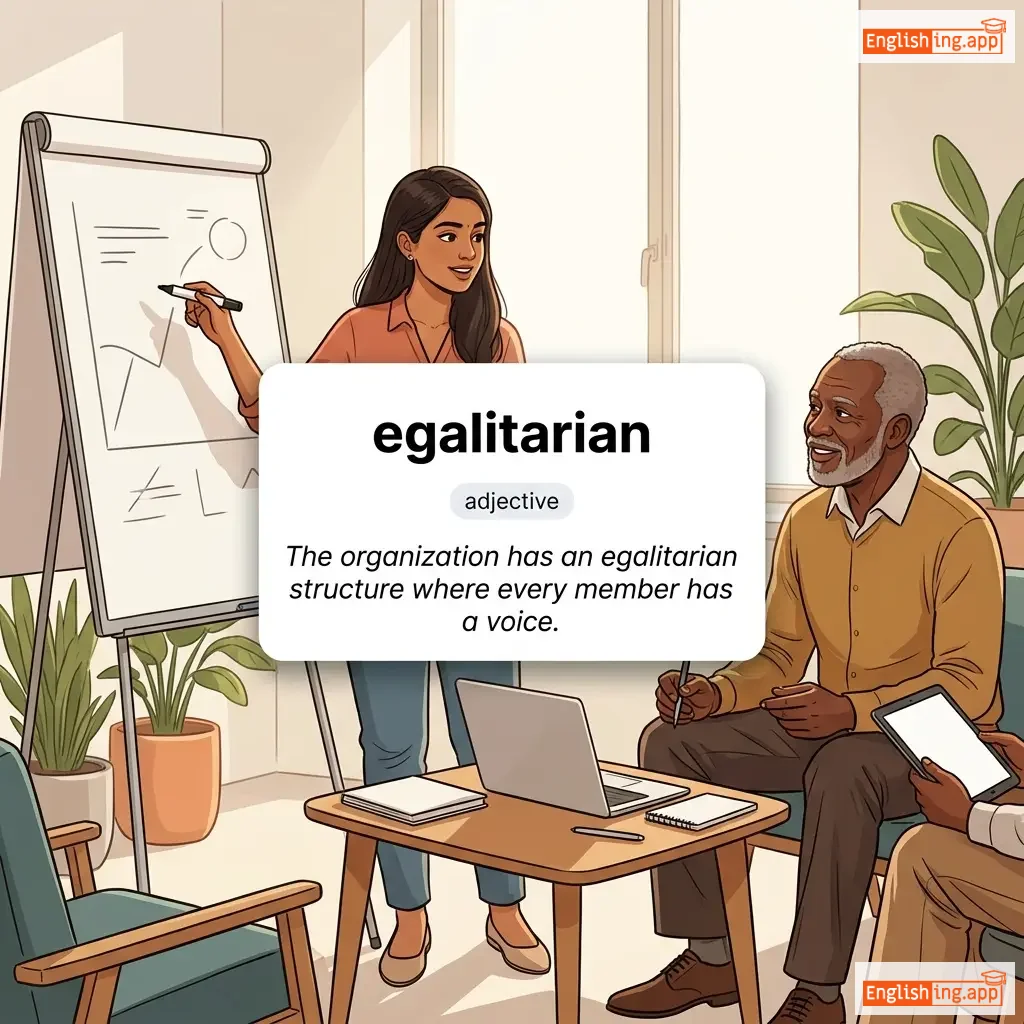
egalitarian definition card — visual illustration of the meaning
adjective C1
/ɪˌɡælɪˈtɛəriən/
平等主義 (byoudou shugi)

Believing in or promoting the principle that all people are equal and deserve equal rights and opportunities.

"The organization has an egalitarian structure where every member has a voice."

"その組織は、すべてのメンバーが意見を持つ平等主義の構造を持っています。" (Sono soshiki wa, subete no menbā ga iken o motsu byoudou shugi no kōzō o motteimasu.)
adjective C1
/ˌiːɡoʊˈsentrɪk/
自己中心的 (jiko chuushinteki)

thinking only about yourself and not about others

"His egocentric behavior annoyed everyone at the meeting."

"彼の自己中心的な行動は会議でみんなをイライラさせた。" (Kare no jiko chuushinteki na koudou wa kaigi de minna o iraira saseta.)
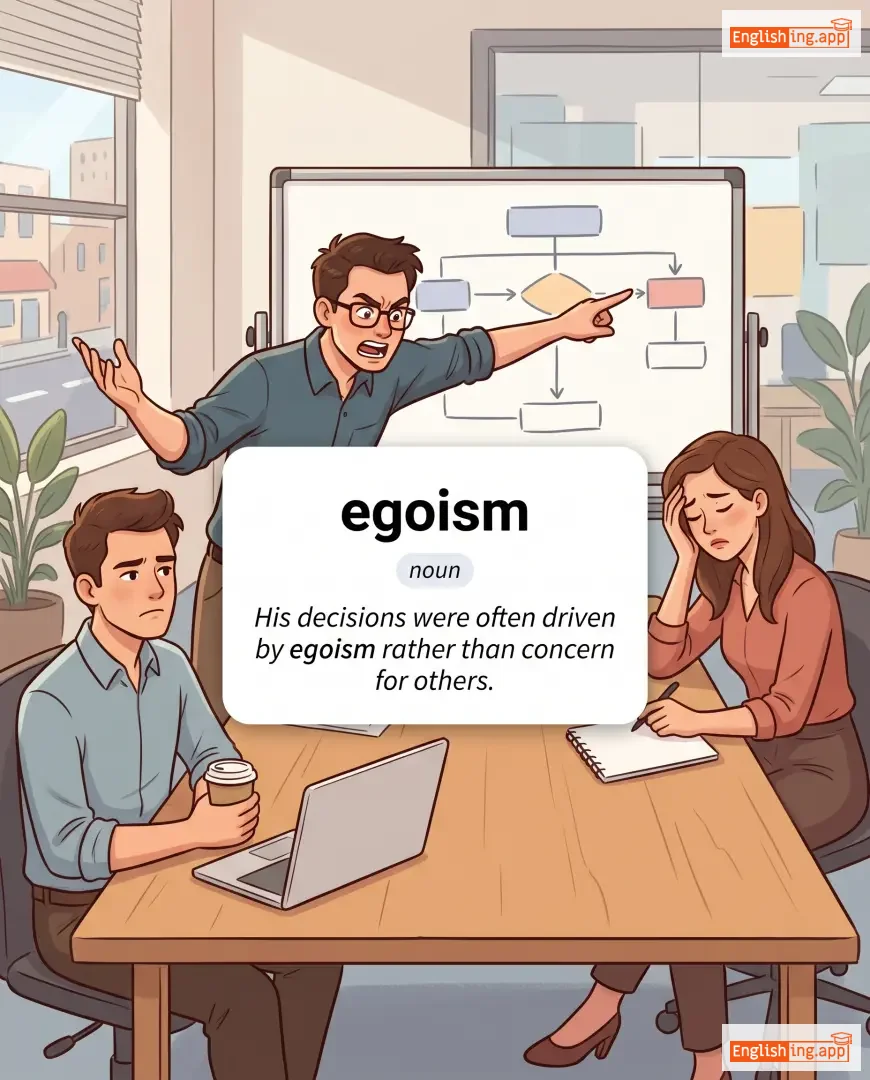
egoism definition card — visual illustration of the meaning
noun C1
/ˈiːɡoʊˌɪzəm/
利己主義 (rikoshugi)

An ethical theory that treats self-interest as the foundation of morality; also, excessive preoccupation with oneself.

"His decisions were often driven by egoism rather than concern for others."

"彼の決断はしばしば他人への配慮よりも利己主義に駆り立てられていた。" (Kare no ketsudan wa shibashiba tanin e no hairyo yori mo rikoshugi ni karitate rarete ita.)
noun C1
/ˈiːɡoʊɪst/
エゴイスト (egoisuto)

A person who is excessively concerned with themselves; someone who believes in or practices egoism.

"She avoided him because he was a selfish egoist."

"彼女は彼を避けていた、なぜなら彼は利己的なエゴイストだったから。" (Kanojo wa kare o sakete ita, nazenara kare wa rikoteki na egoisuto datta kara.)
noun C1
/ˈiːɡoʊˌtɪzəm/
エゴイズム (egoizumu)

The practice of talking and thinking about oneself excessively because of an inflated sense of self-importance.

"His constant boasting revealed his egotism."

"彼の絶え間ない自慢は、彼のエゴティズムを明らかにした。" (Kare no taemanai jimana wa, kare no egotizumu o akiraka ni shita.)
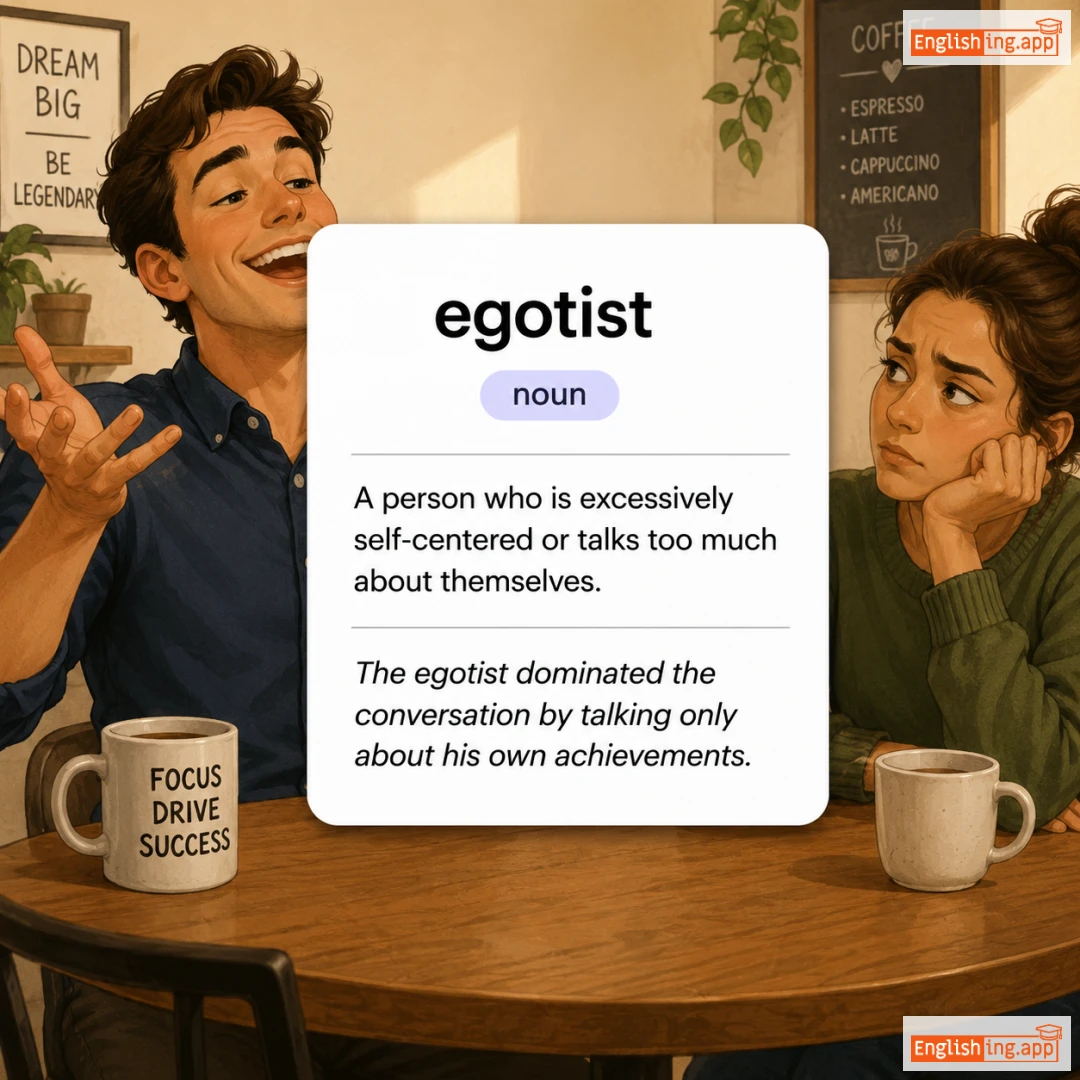
egotist definition card — visual illustration of the meaning
noun C1
/ˈiːɡətɪst/
自己中心的な人 (jiko chūshin-teki na hito)

A person who is excessively self-centered or talks too much about themselves.

"The egotist dominated the conversation by talking only about his own achievements."

"その自己中心的な人は自分の成功だけについて話していた。" (sono jiko chūshin-teki na hito wa jibun no seikō dake ni tsuite hanashite ita.)
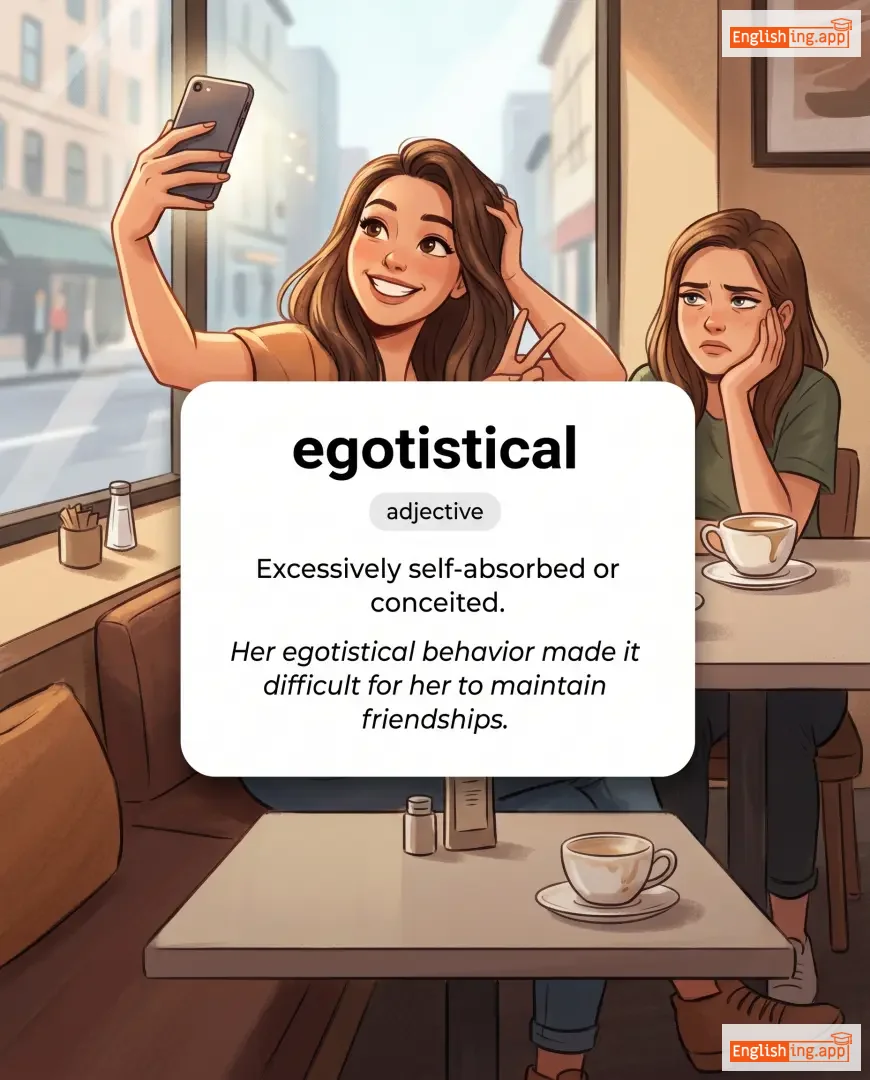
egotistical definition card — visual illustration of the meaning
adjective C1
/ˌiːɡəˈtɪstɪkəl/
自己中心的 (jiko chūshinteki)

Excessively self-absorbed or conceited.

"Her egotistical behavior made it difficult for her to maintain friendships."

"彼女の自己中心的な行動は、友達関係を維持するのを難しくしました。" (Kanojo no jiko chūshinteki na kōdō wa, tomodachi kankei o iji suru no o muzukashiku shimashita.)
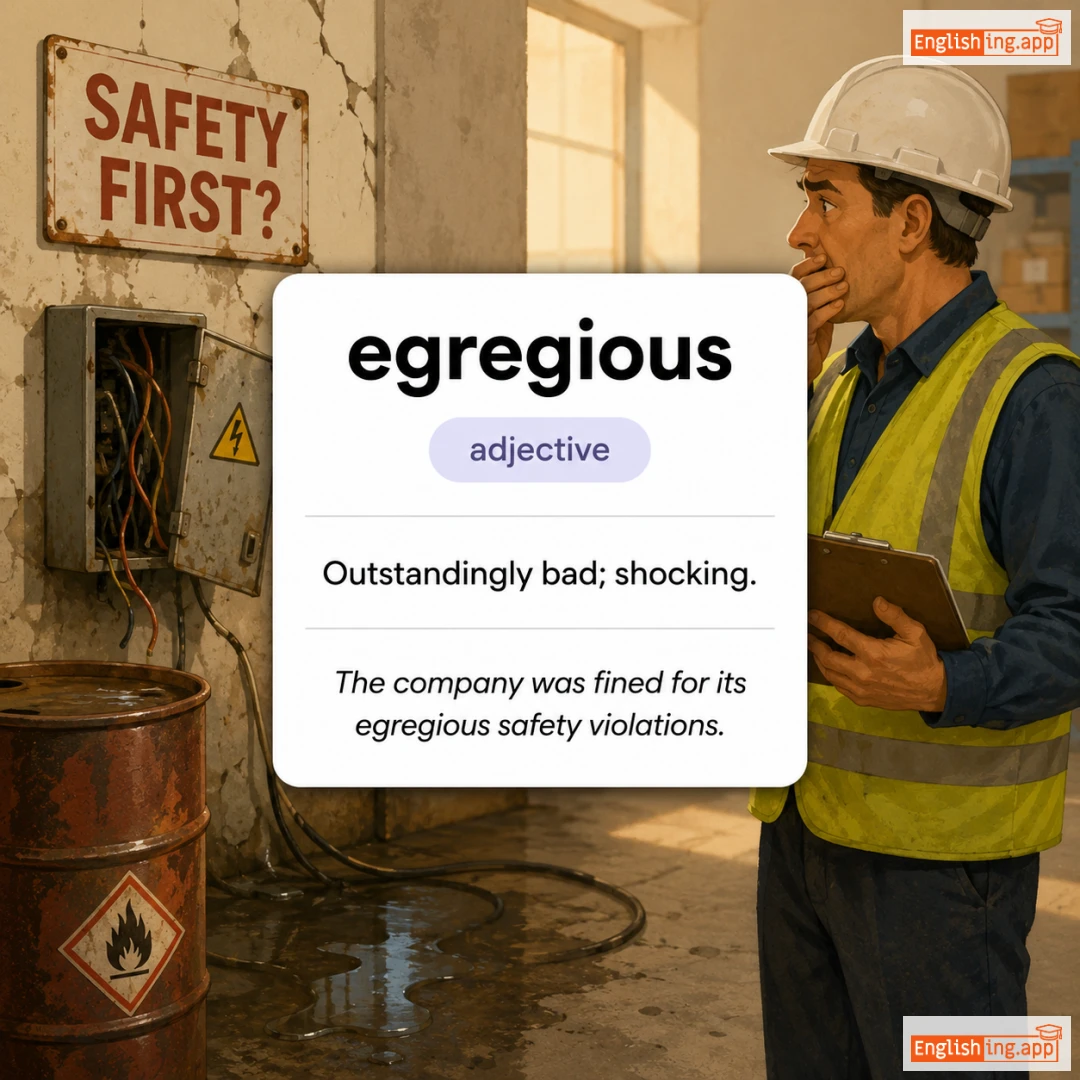
egregious definition card — visual illustration of the meaning
adjective C1
/ɪˈɡriːdʒəs/
ひどい (hidoi)

Outstandingly bad; shocking.

"The company was fined for its egregious safety violations."

"その会社はひどい安全違反で罰金を科されました。" (Sono kaisha wa hidoi anzen ihan de bakkin o kasaremashita.)
verb C1
/ɪˈdʒɛkt/
追い出す (oidasu)

to force someone or something out, usually from a place or position

"The referee had to eject the player for unsportsmanlike behavior."

"レフェリーはアンスポーツマンライクな行為で選手を追い出さなければならなかった。" (Referee wa unsupōtsumanraiku na kōi de senshu o oidasanakereba naranakatta.)
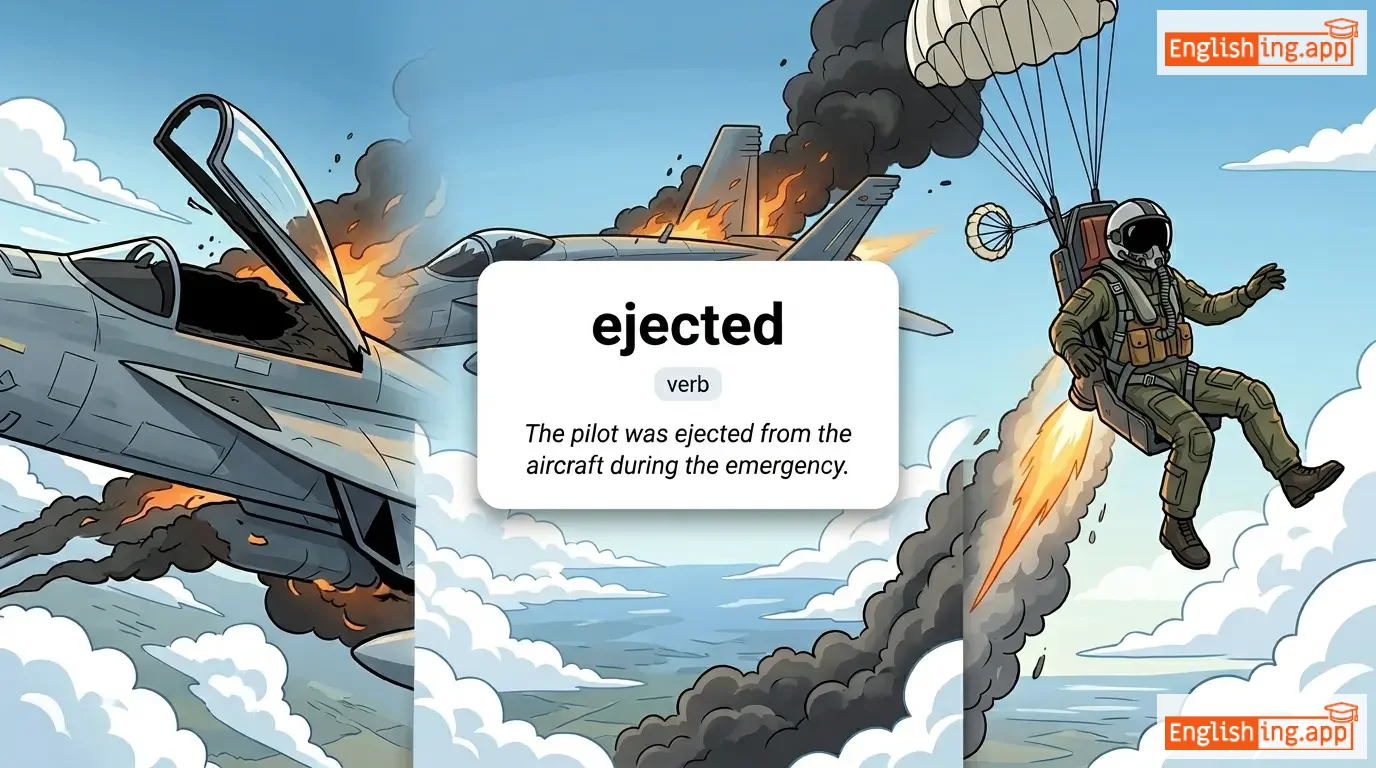
ejected definition card — visual illustration of the meaning
verb C1
/ɪˈdʒektɪd/
eject (eject)

to force someone or something to leave a place; to push or throw something out forcefully

"The pilot was ejected from the aircraft during the emergency."

"パイロットは緊急時に飛行機から eject されました。" (Pairotto wa kinkyuuji ni hikouki kara eject saremashita.)
verb C1
/iːk/
細々と使う (hosoboso to tsukau)

to make a small amount of something last longer by using it sparingly

"The family tried to eke out their savings during the tough months."

"家族は困難な月々に貯金をなんとかやりくりしようとしました。" (Kazoku wa konnan na tsukizuki ni chokin wo nantoka yarikuri shiyou to shimashita.)
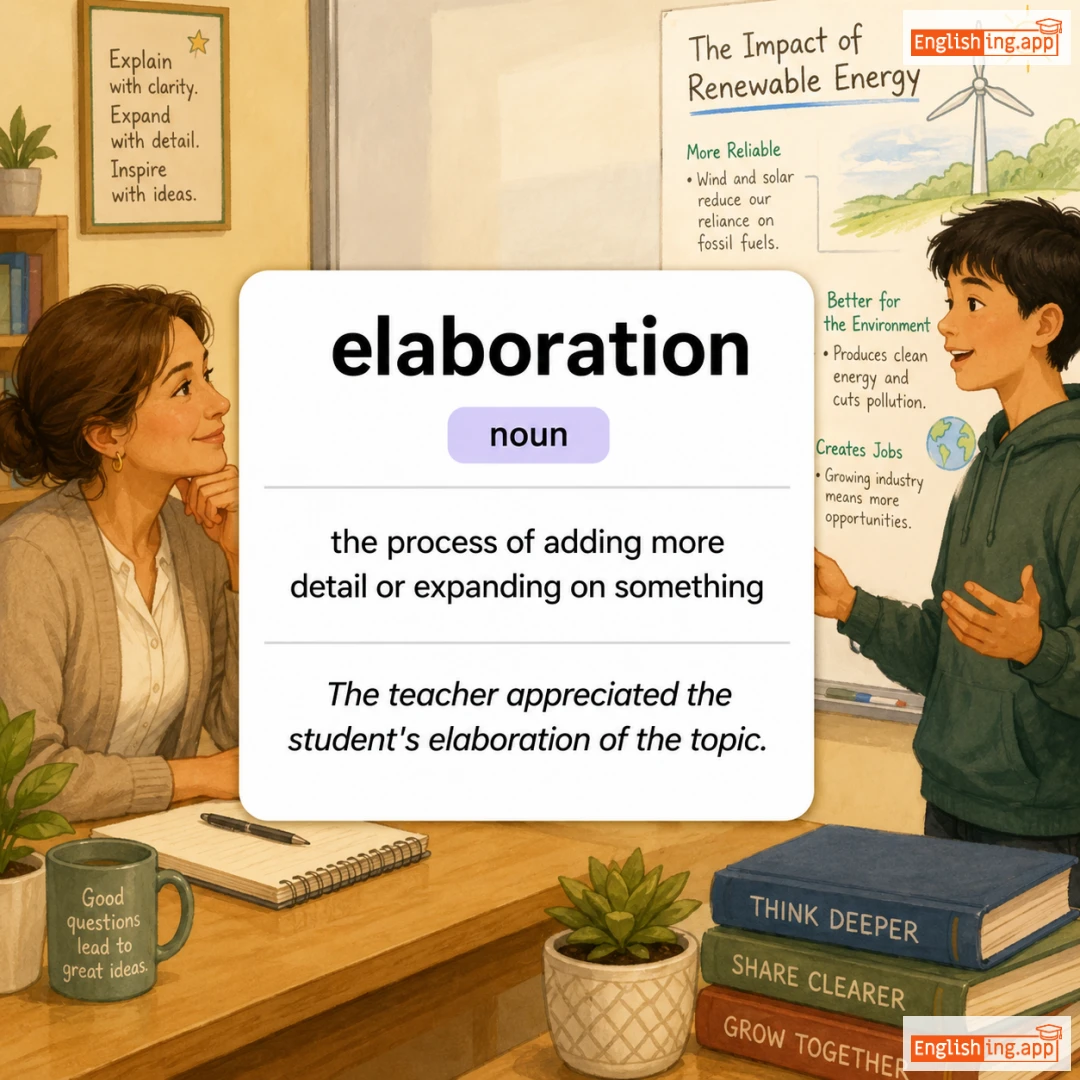
elaboration definition card — visual illustration of the meaning
noun C1
/ɪˌlæbəˈreɪʃən/
詳細な説明 / 拡張 (shōsaina setsumei / kakuchō)

the process of adding more detail or expanding on something

"The teacher appreciated the student's elaboration of the topic."

"先生は学生のトピックの詳細な説明を評価しました。" (Sensei wa gakusei no topikku no shōsai na setsumei o hyōka shimashita.)
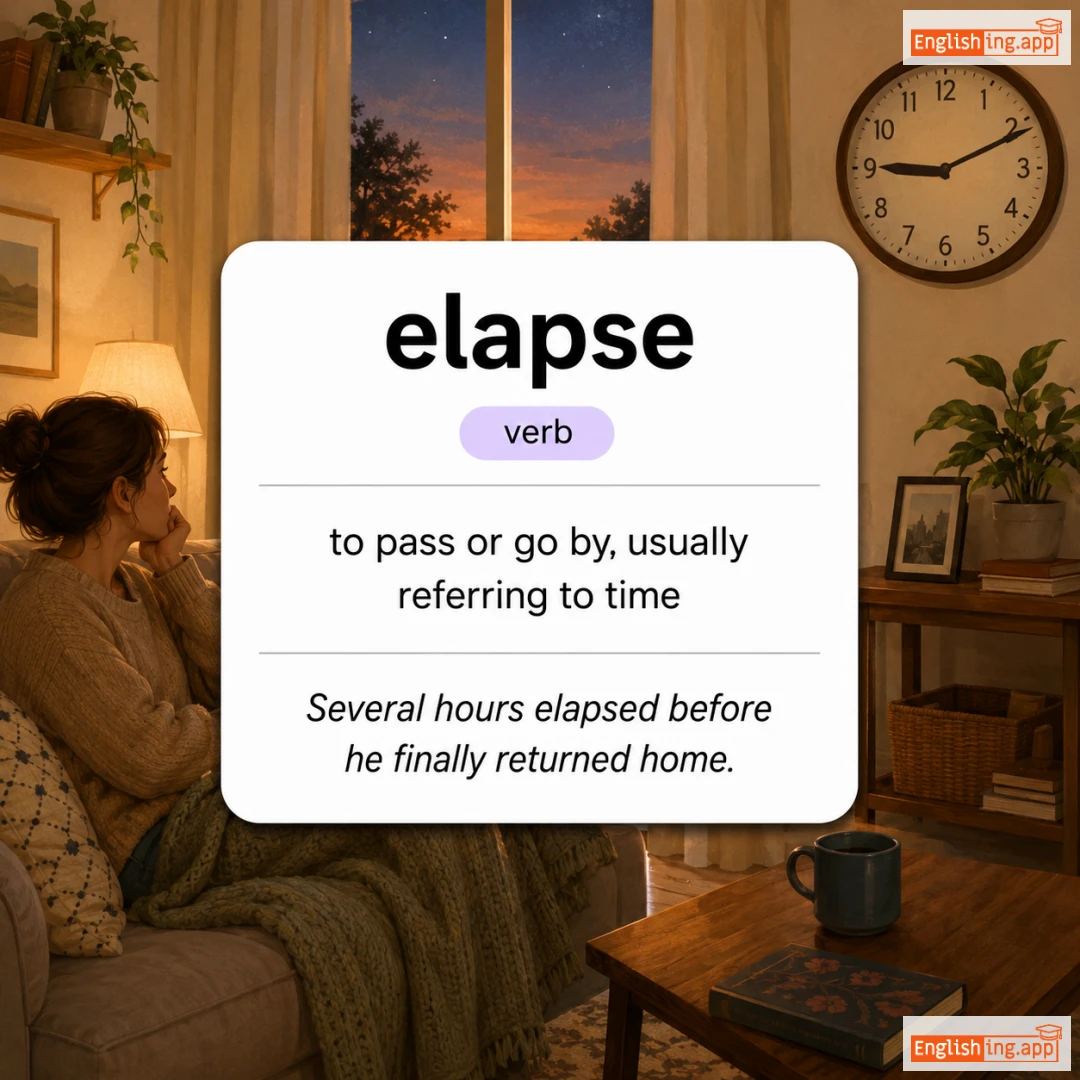
elapse definition card — visual illustration of the meaning
verb C1
/ɪˈlæps/
経過する (keikasuru)

to pass or go by, usually referring to time

"Several hours elapsed before he finally returned home."

"数時間が経過し、彼はようやく家に帰った。" (Suujikan ga keika shi, kare wa youyaku ie ni kaetta.)
elasticity definition card — visual illustration of the meaning
noun C1
/ɪˌlæˈstɪsɪti/

The ability of an object or material to resume its normal shape after being stretched or compressed.

"Rubber has a high degree of elasticity."

verb C1
/ɪˈleɪt/
喜ばせる (yorokobaseru)

To make someone very happy or proud.

"The success of the project elated the whole team."

"プロジェクトの成功がチーム全体を喜ばせました。" (Purojekuto no seikou ga chiimu zentai wo yorokobasemashita.)
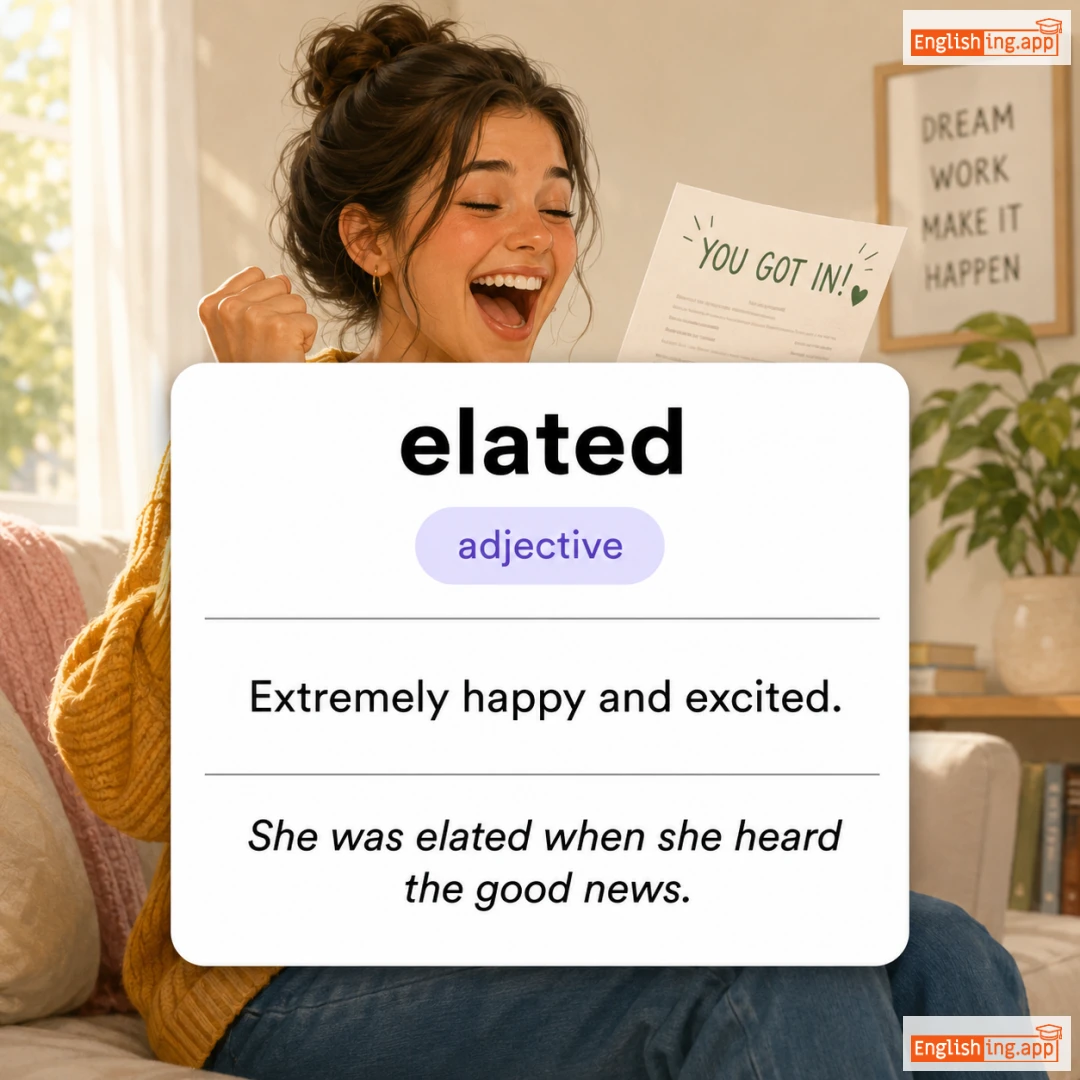
elated definition card — visual illustration of the meaning
adjective C1
/ɪˈleɪtɪd/
非常に幸せ (hijō ni shiawase)

Extremely happy and excited.

"She was elated when she heard the good news."

"良い知らせを聞いたとき、彼女は非常に幸せでした。" (Yoi shirase o kiita toki, kanojo wa hijō ni shiawase deshita.)
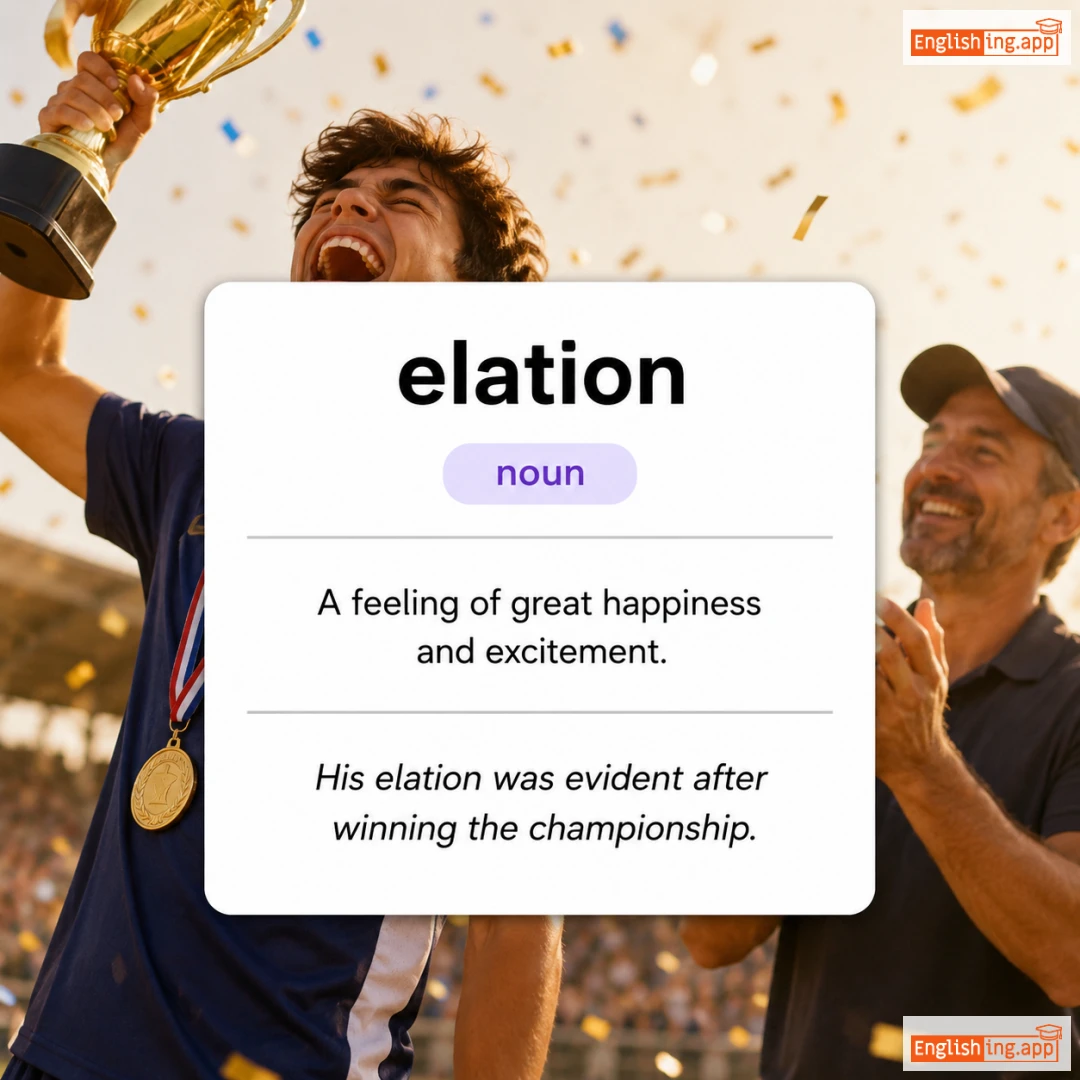
elation definition card — visual illustration of the meaning
noun C1
/ɪˈleɪʃən/
興奮 (kōfun)

A feeling of great happiness and excitement.

"His elation was evident after winning the championship."

"彼の興奮はチャンピオンシップに勝った後、明らかだった。" (Kare no kōfun wa chanpionshipu ni katta ato, akiraka datta.)
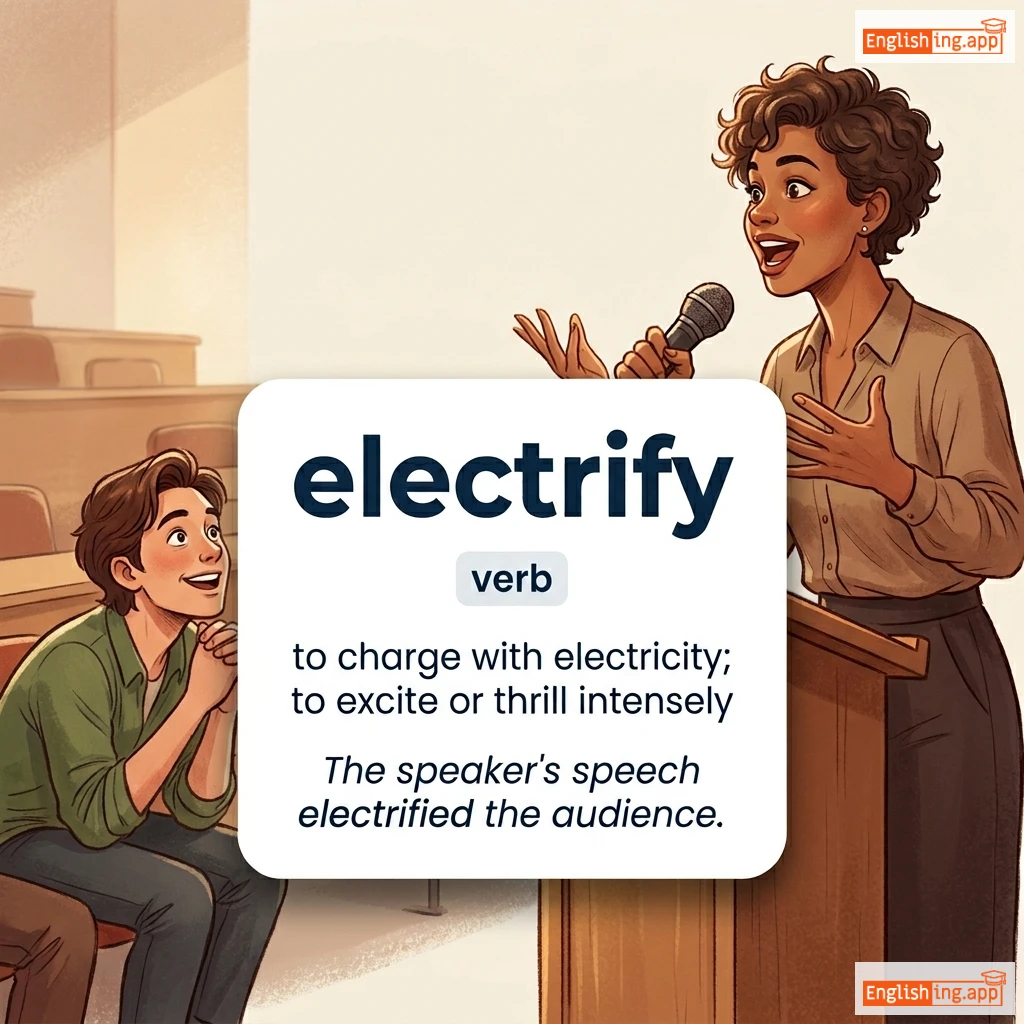
electrify definition card — visual illustration of the meaning
verb C1
/ɪˈlɛktrɪfaɪ/
電気を通す; 興奮させる (denki o toosu; koufun saseru)

to charge with electricity; to excite or thrill intensely

"The speaker's speech electrified the audience."

"スピーカーのスピーチは聴衆を興奮させた。" (Supeeka no supiichi wa choushu o koufun saseta)
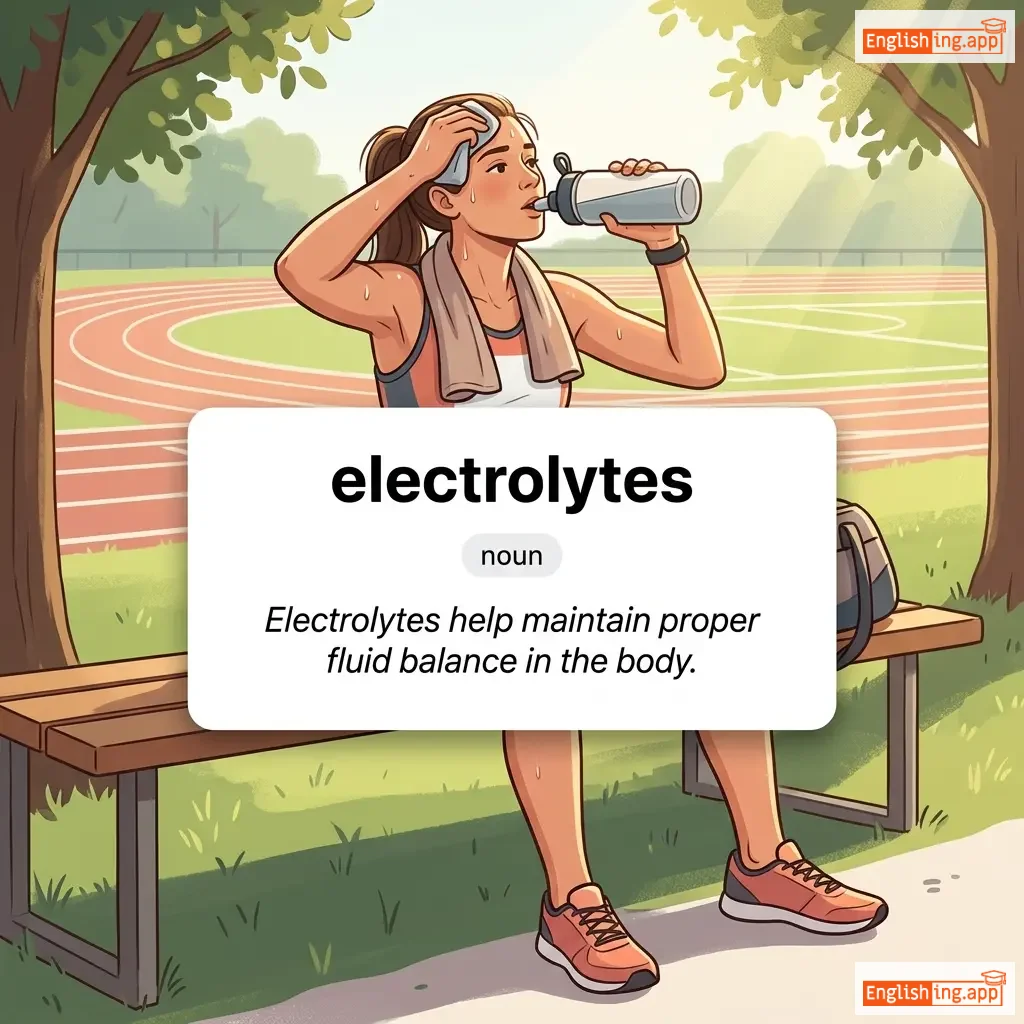
electrolytes definition card — visual illustration of the meaning
noun C1
/ɪˈlɛk.trəʊ.laɪts/
電解質 (denkaishitsu)

Minerals in body fluids that carry an electric charge and are essential for many bodily functions.

"Electrolytes help maintain proper fluid balance in the body."

"電解質は体内の液体のバランスを維持するのに役立ちます。" (Denkaishitsu wa tainai no ekitai no baransu wo iji suru no ni yakudachimasu.)
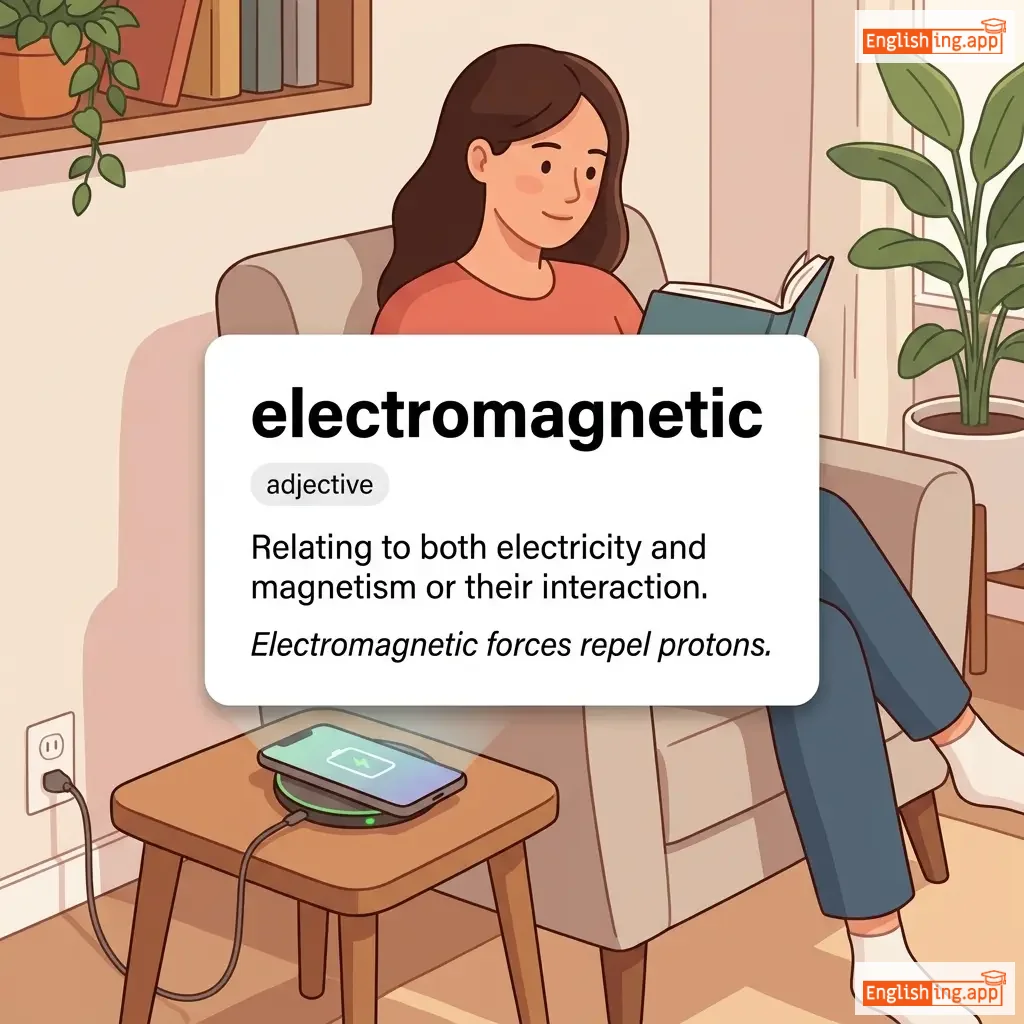
electromagnetic definition card — visual illustration of the meaning
adjective C1
ɪˌlektrəʊmæɡˈnetɪk
電磁的 (denjiteki)

Relating to both electricity and magnetism or their interaction.

"Electromagnetic forces repel protons."

"電磁力は陽子を反発させる。" (Denjiryoku wa youshi wo hanpatsu saseru.)
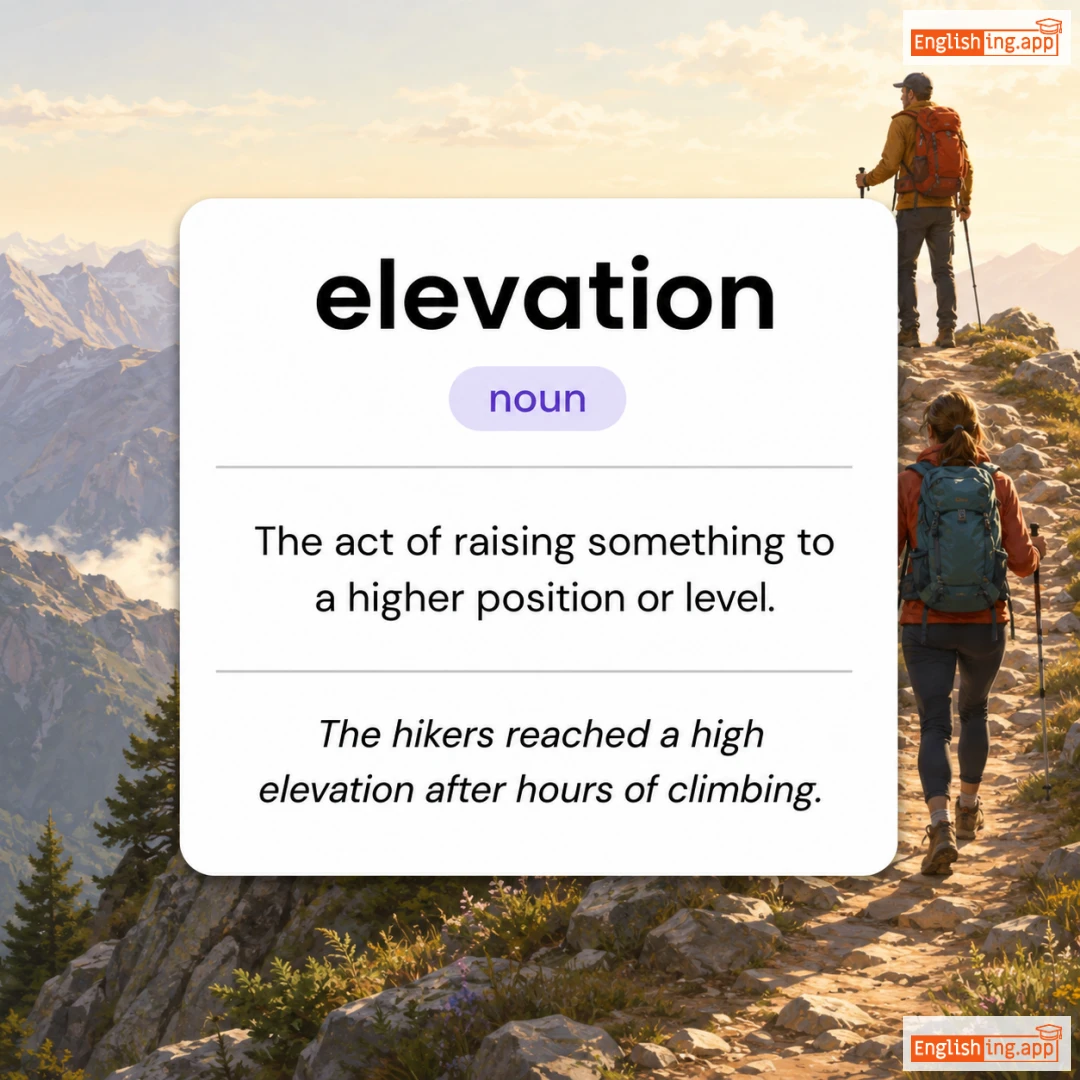
elevation definition card — visual illustration of the meaning
noun C1
/ˌɛlɪˈveɪʃən/
高度 (kōdo)

The act of raising something to a higher position or level.

"The hikers reached a high elevation after hours of climbing."

"登山者たちは数時間の登攀後、高い高度に達しました。" (Tozanshatachi wa suujikan no tōhōgo, takai kōdo ni tasshimashita.)
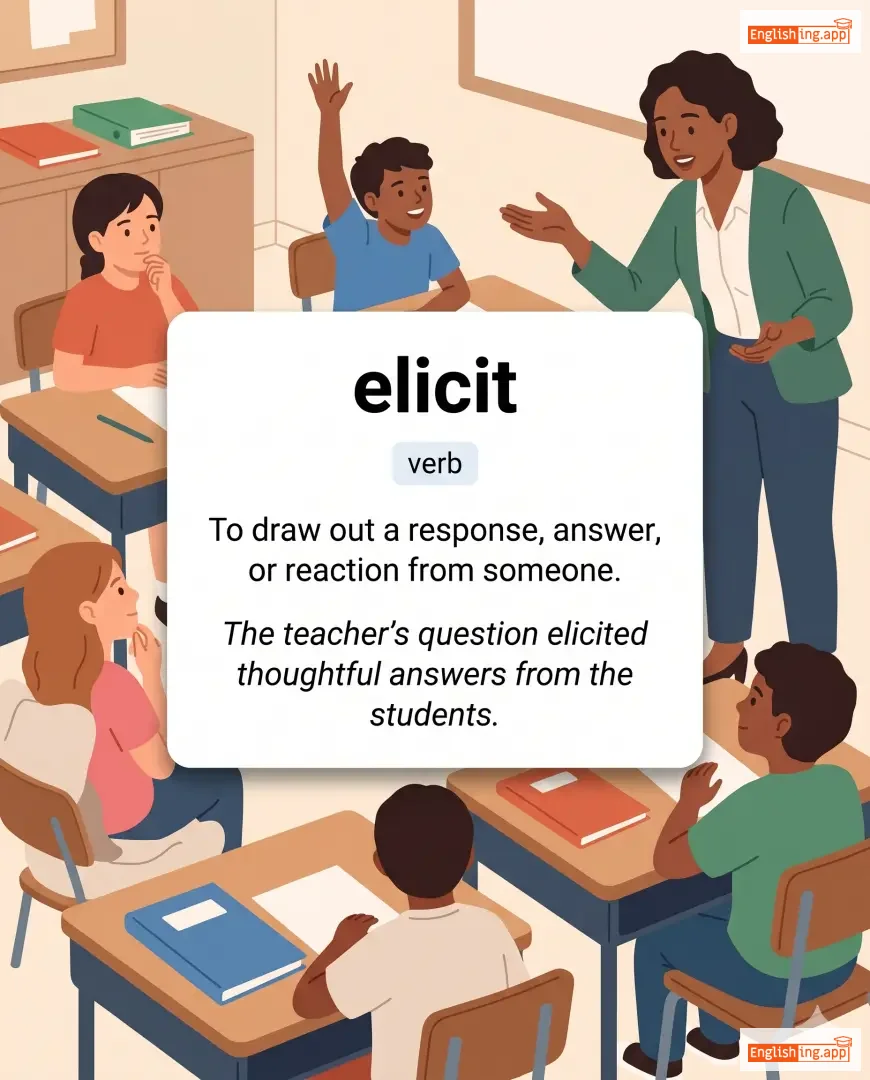
elicit definition card — visual illustration of the meaning
verb C1
/ɪˈlɪsɪt/
引き出す (hikidasu)

To draw out a response, answer, or reaction from someone.

"The teacher’s question elicited thoughtful answers from the students."

"先生の質問は生徒たちから思慮深い回答を引き出しました。" (Sensei no shitsumon wa seito-tachi kara shinri-bukai kaitō o hikidashimashita.)
elitist definition card — visual illustration of the meaning
noun/adjective C1
/ɪˈliːtɪst/
エリティスト (elitist)

A person who believes that a society should be led by an elite; showing preference for a privileged class.

"His elitist attitude made him unpopular among his peers."

"彼のエリティストな態度は、彼を仲間の中で不人気にした。" (Kare no eritisuto na taido wa, kare o nakama no naka de funinki ni shita.)
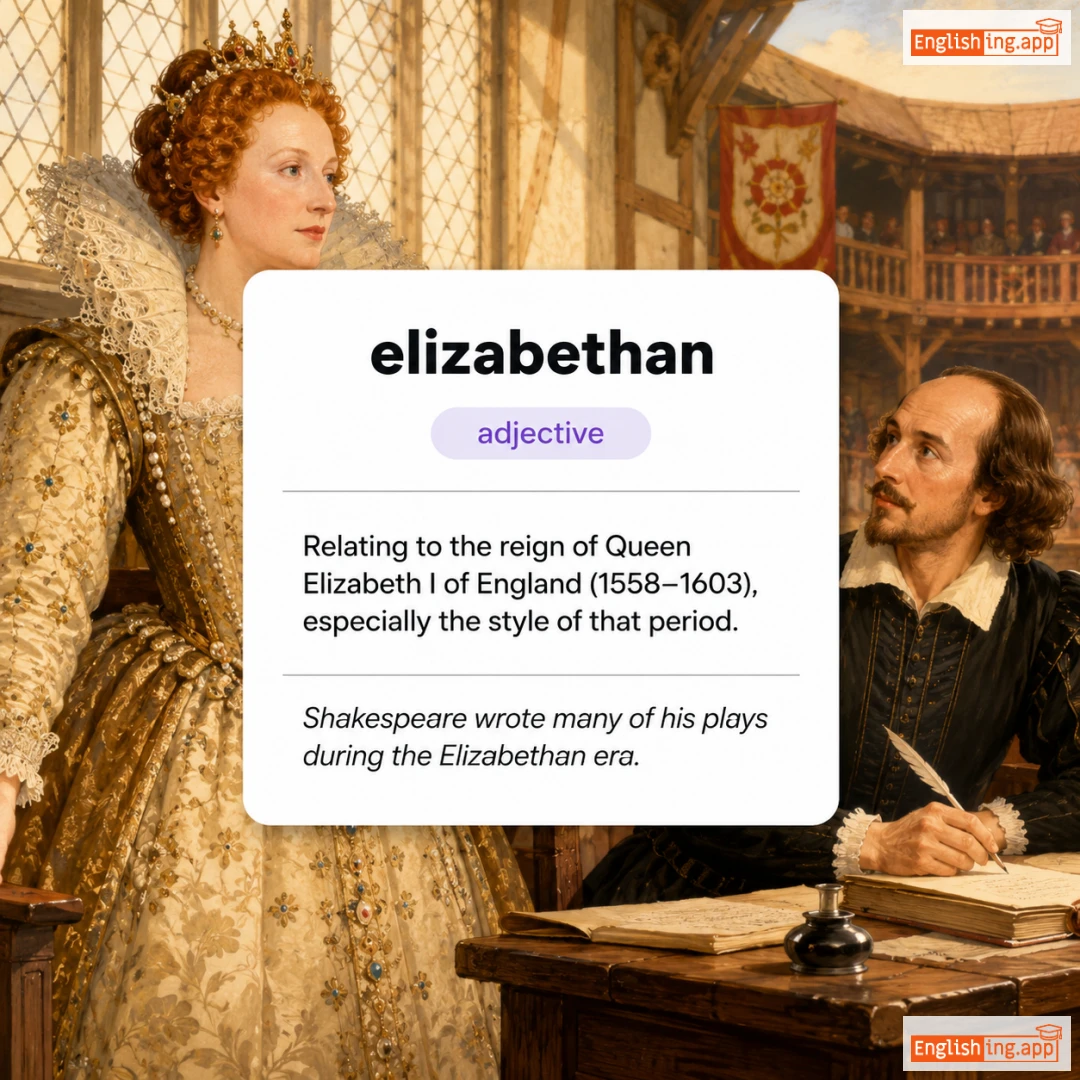
elizabethan definition card — visual illustration of the meaning
adjective C1
/ɪˌlɪzəˈbiːθən/
エリザベス朝時代 (Erizabesu-chou jidai)

Relating to the reign of Queen Elizabeth I of England (1558–1603), especially the style of that period.

"Shakespeare wrote many of his plays during the Elizabethan era."

"シェイクスピアはエリザベス朝時代に多くの戯曲を書きました。" (Sheikusupia wa Erizabesu-chou jidai ni ooku no gikyoku o kakimashita.)
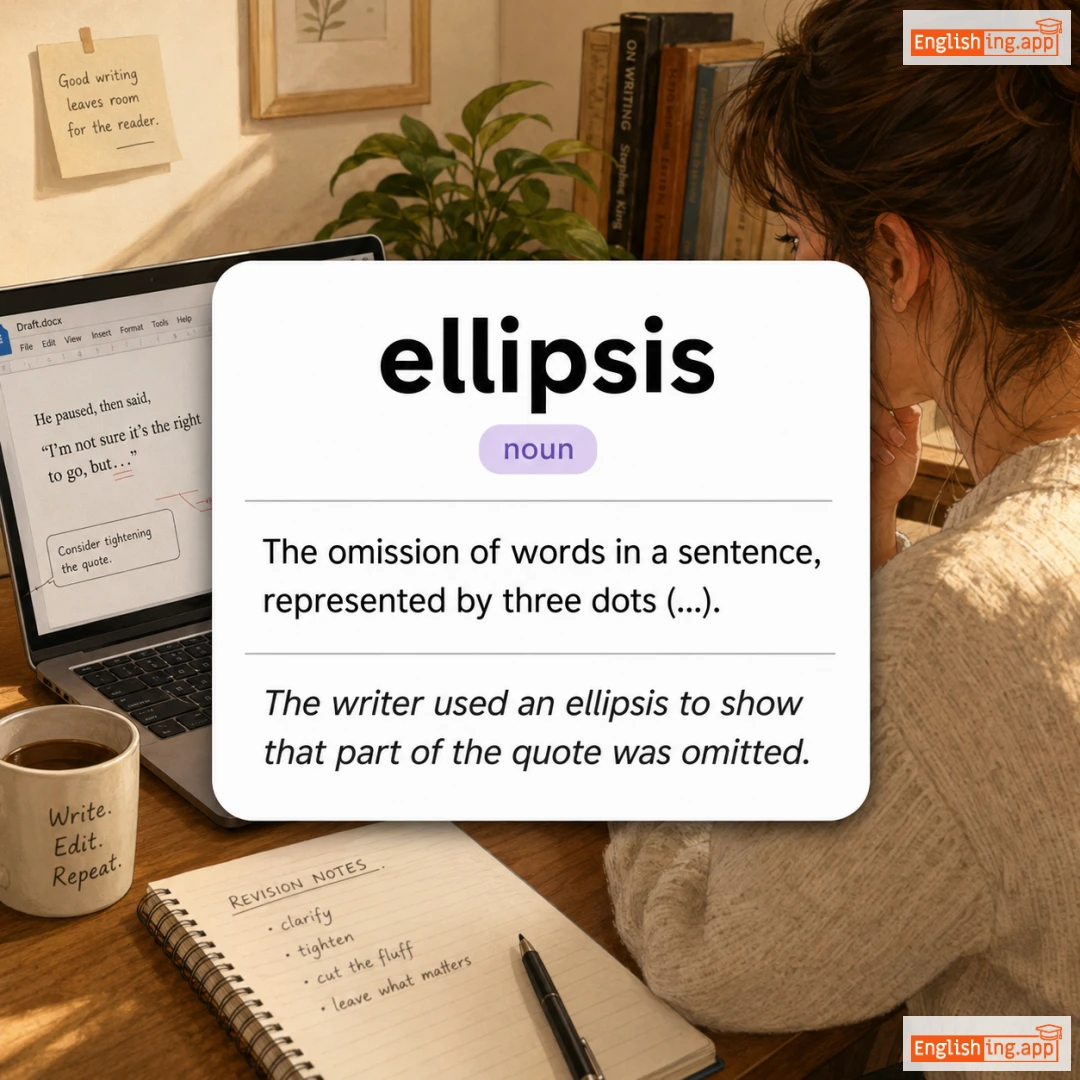
ellipsis definition card — visual illustration of the meaning
noun C1
/ɪˈlɪpsɪs/
省略記号 (shōryaku kigō)

The omission of words in a sentence, represented by three dots (...).

"The writer used an ellipsis to show that part of the quote was omitted."

"作家は引用部分が省略されたことを示すために省略記号を使用しました。" (Sakka wa in'yō bubun ga shōryaku sareta koto o shimesu tame ni shōryaku kigō o shiyō shimashita.)
adjective C1
/ɪˈlɪptɪkl/
楕円形の (daenkei no)

Having the shape of an ellipse; also, a style of speech that is concise and sometimes obscure.

"The planet follows an elliptical orbit around the sun."

"その惑星は太陽の周りをエリプティカルな軌道で回っています。" (Sono wakusei wa taiyo no mawari o eriputikaru na kidou de mawatteimasu.)
verb C1
/ɪˈloʊp/
駆け落ちする (kakeochi suru)

to run away secretly in order to get married, especially without parental consent

"The young couple decided to elope to another city."

"若いカップルは別の都市に駆け落ちすることに決めました。" (Wakai kappuru wa betsu no toshi ni kakeochi suru koto ni kimemashita.)
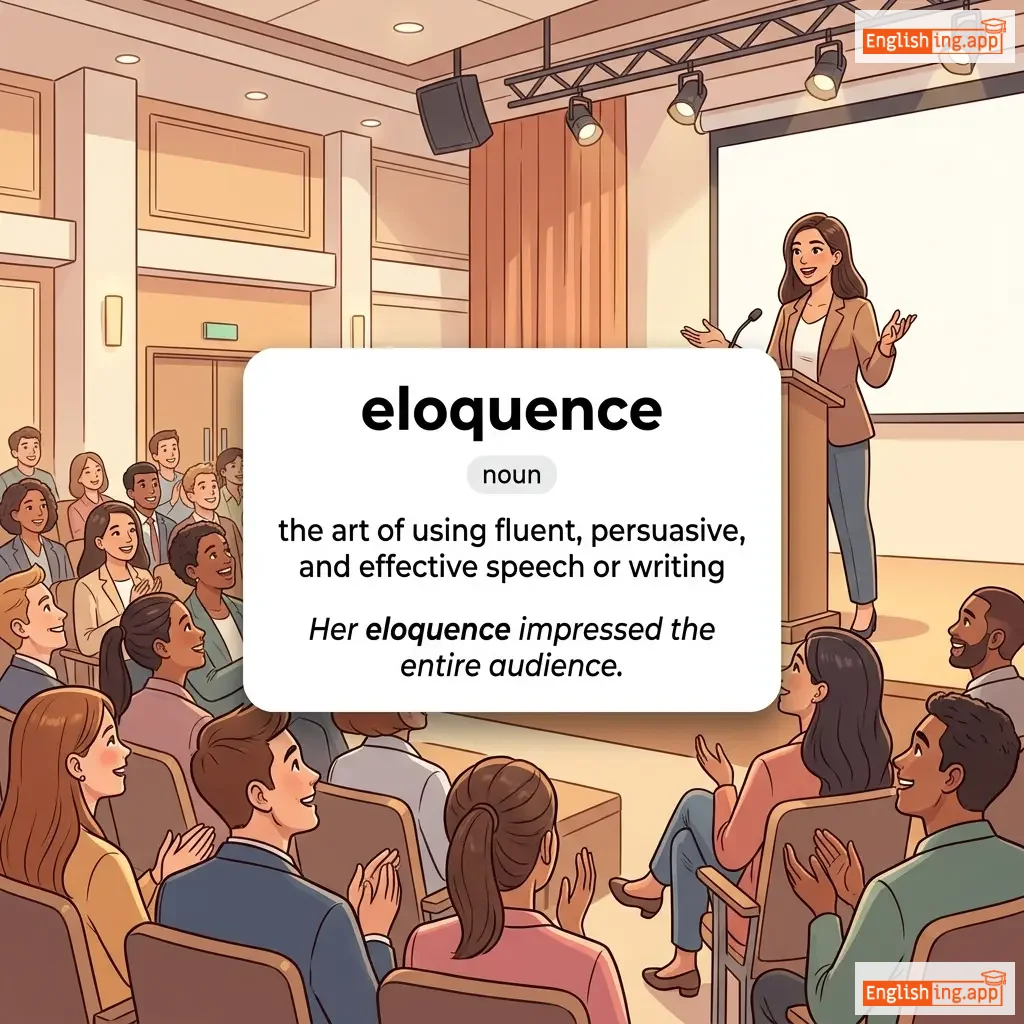
eloquence definition card — visual illustration of the meaning
noun C1
/ˈɛləkwəns/
雄弁 (yūben)

the art of using fluent, persuasive, and effective speech or writing

"Her eloquence impressed the entire audience."

"彼女の雄弁は会場全体に感銘を与えた。" (kanojo no yūben wa kaijō zentai ni kanmei o ataeta.)
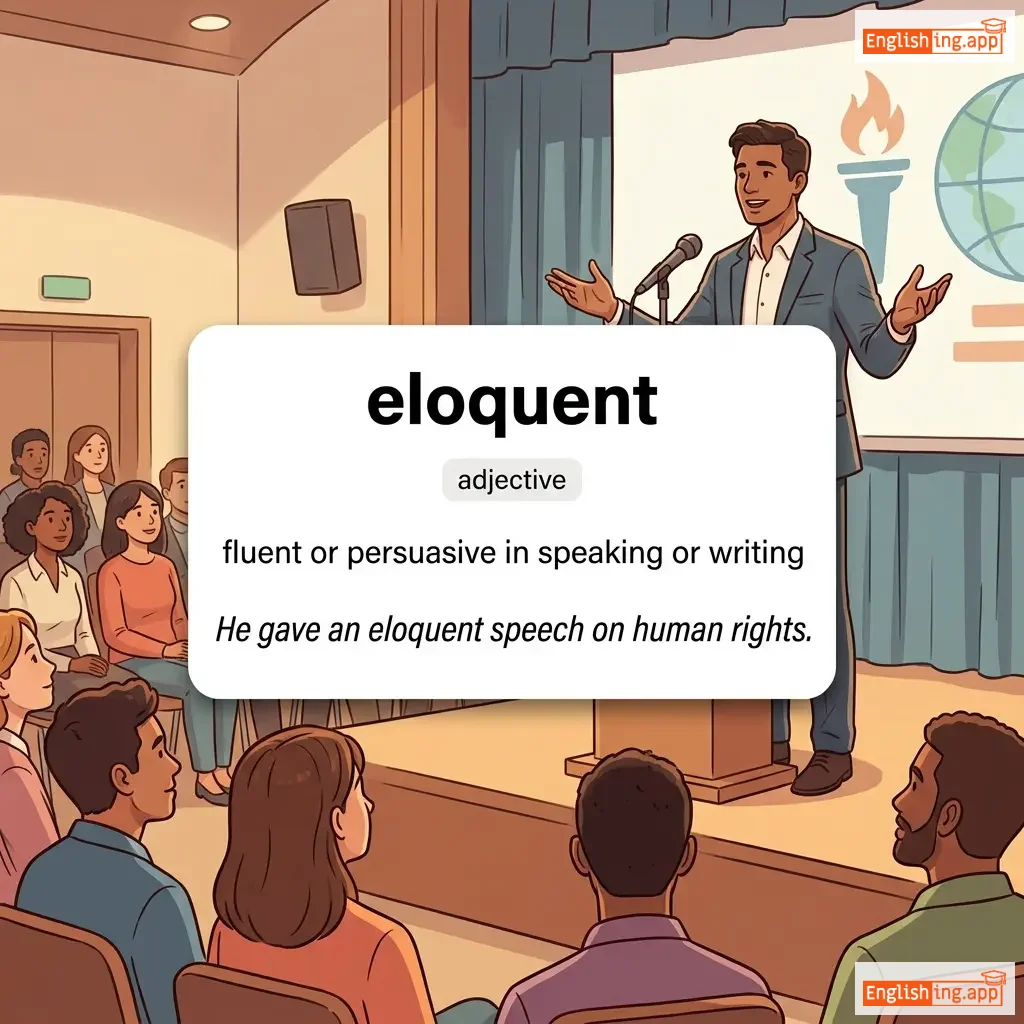
eloquent definition card — visual illustration of the meaning
adjective C1
/ˈɛləkwənt/
雄弁な (yūben na)

fluent or persuasive in speaking or writing

"He gave an eloquent speech on human rights."

"彼は人権について雄弁なスピーチを行った。" (kare wa jinken ni tsuite yūben na supīchi o okonatta)
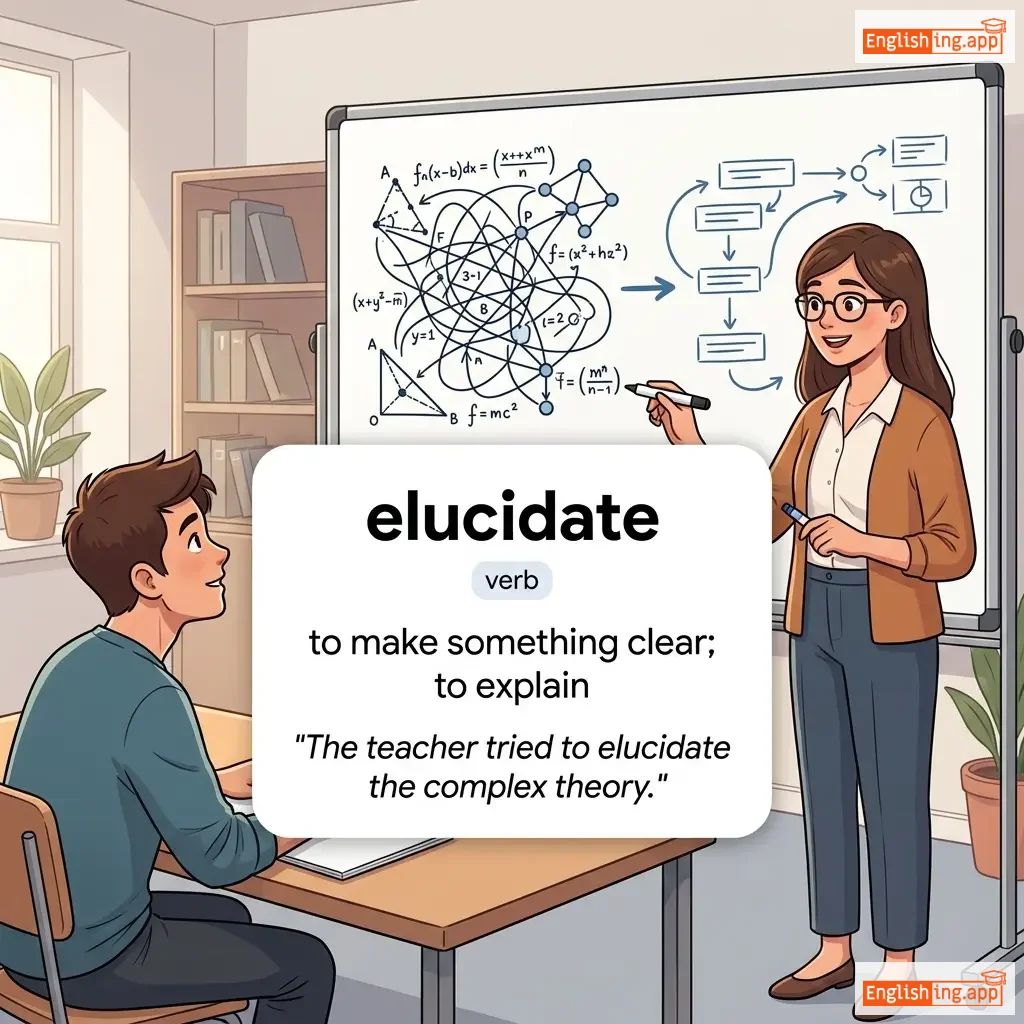
elucidate definition card — visual illustration of the meaning
verb C1
/ɪˈluːsɪdeɪt/
明確にする (meikaku ni suru)

to make something clear; to explain

"The teacher tried to elucidate the complex theory."

"先生は複雑な理論を明確にしようとしました。" (Sensei wa fukuzatsu na riron o meikaku ni shiyou to shimashita.)
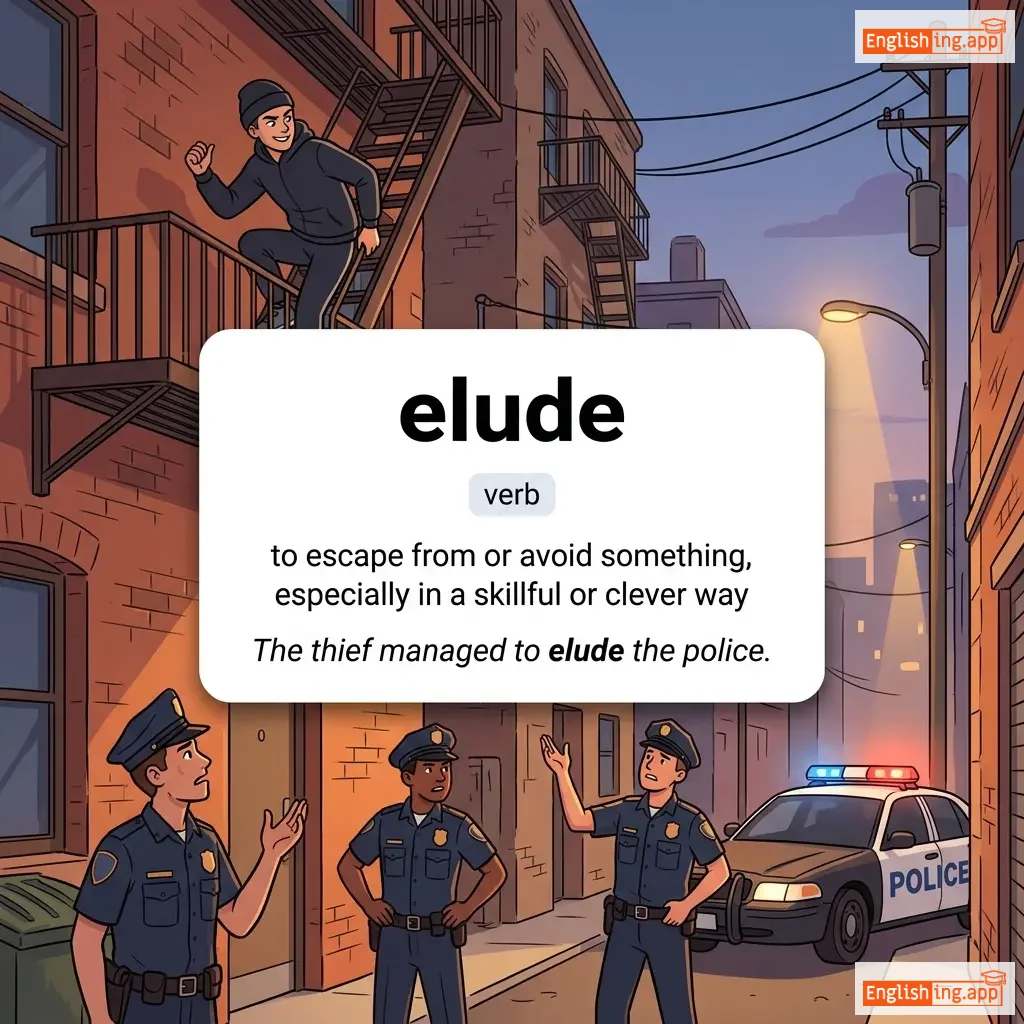
elude definition card — visual illustration of the meaning
verb C1
/ɪˈluːd/
逃れる (nogareru)

to escape from or avoid something, especially in a skillful or clever way

"The thief managed to elude the police."

"泥棒は警察をかわすことに成功した。" (Dorobou wa keisatsu o kawasu koto ni seikou shita.)
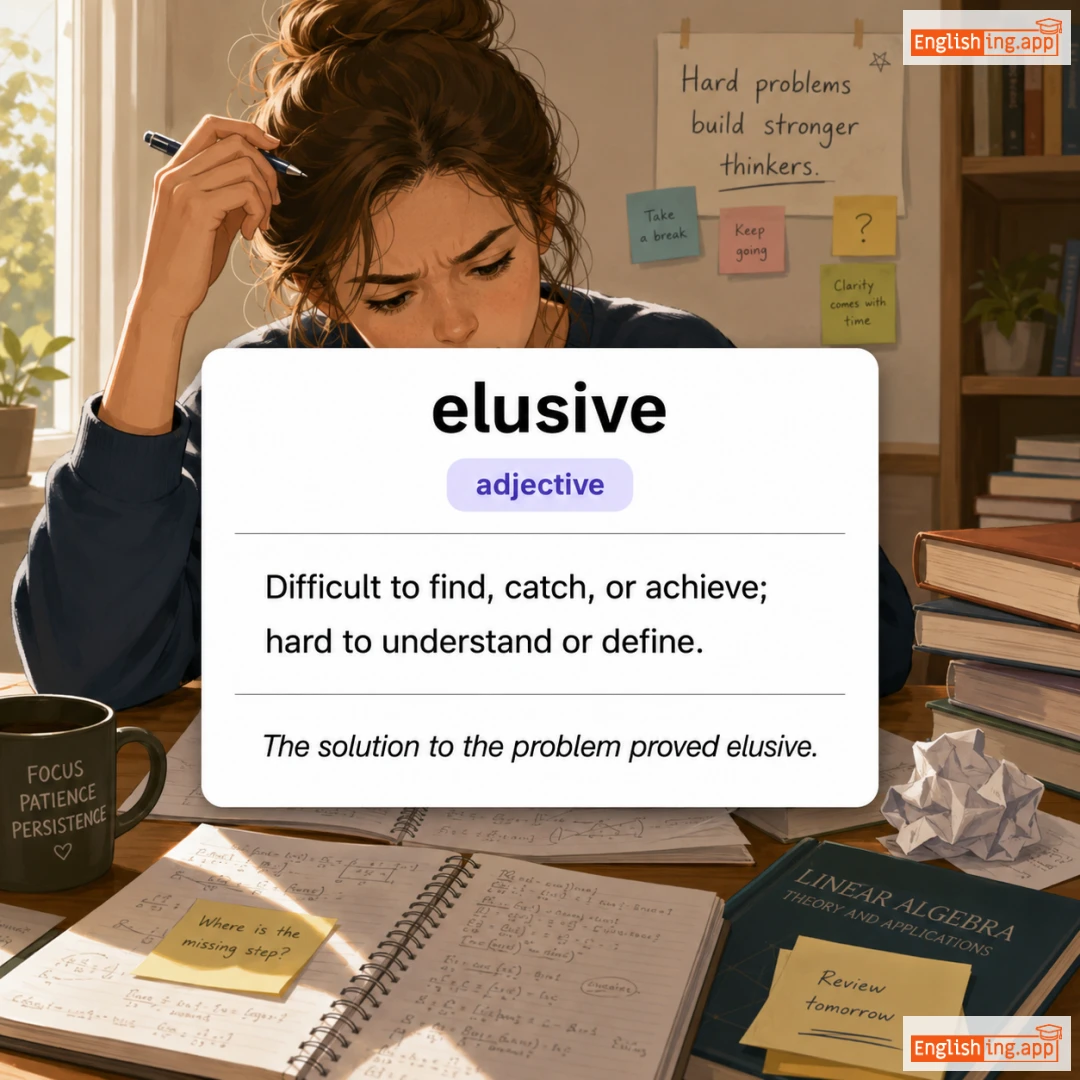
elusive definition card — visual illustration of the meaning
adjective C1
/ɪˈluːsɪv/
捕えにくい (toraenikui)

Difficult to find, catch, or achieve; hard to understand or define.

"The solution to the problem proved elusive."

"その問題の解決策は捕えにくいことが証明された。" (sono mondai no kaiketsusaku wa toraenikui koto ga shōmei sareta.)
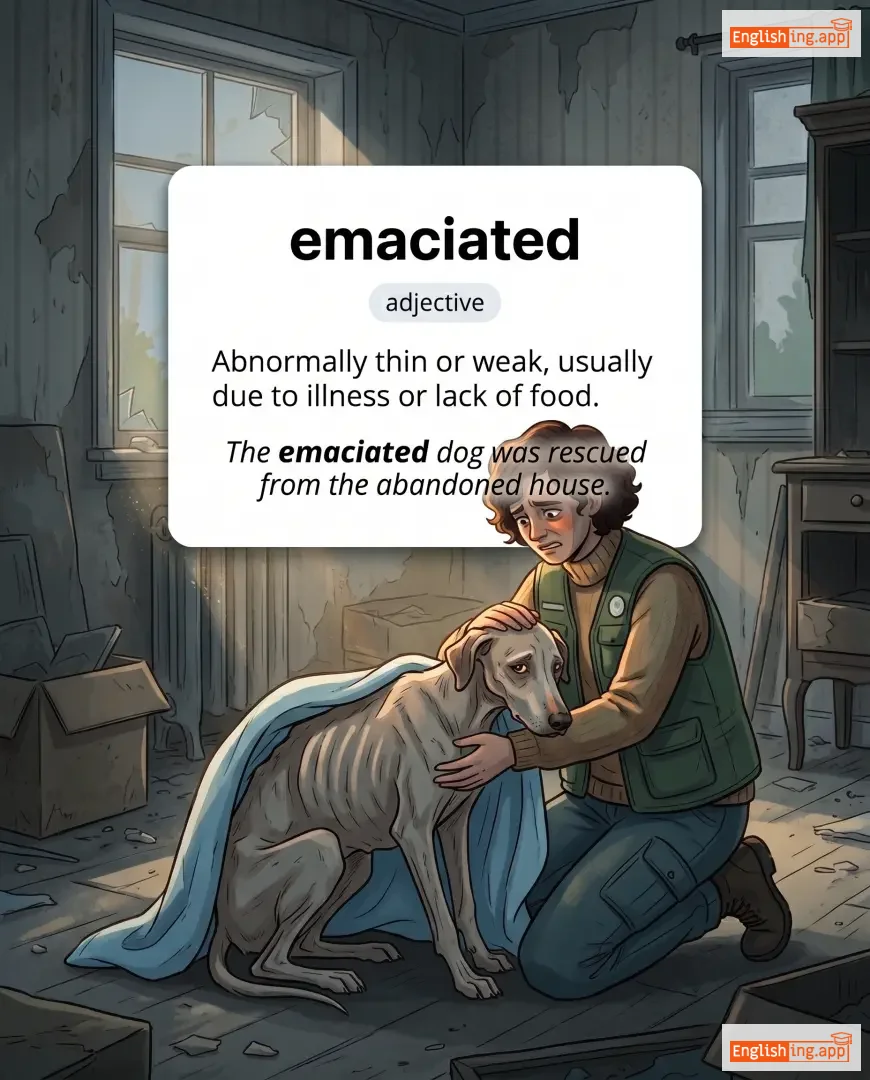
emaciated definition card — visual illustration of the meaning
adjective C1
/ɪˈmeɪʃieɪtɪd/
やせ衰えた (yaseo reota)

Abnormally thin or weak, usually due to illness or lack of food.

"The emaciated dog was rescued from the abandoned house."

"そのやせ衰えた犬は放置された家から救出されました。" (Sono yaseo reota inu wa hōchi sareta ie kara kyūshutsu saremashita.)
verb C1
/ˈɛm.ə.neɪt/
発する (hassuru)

To come out or spread from a source.

"A sweet fragrance emanated from the garden."

"甘い香りが庭から発せられました。" (Amai kaori ga niwa kara hasseraremashita.)
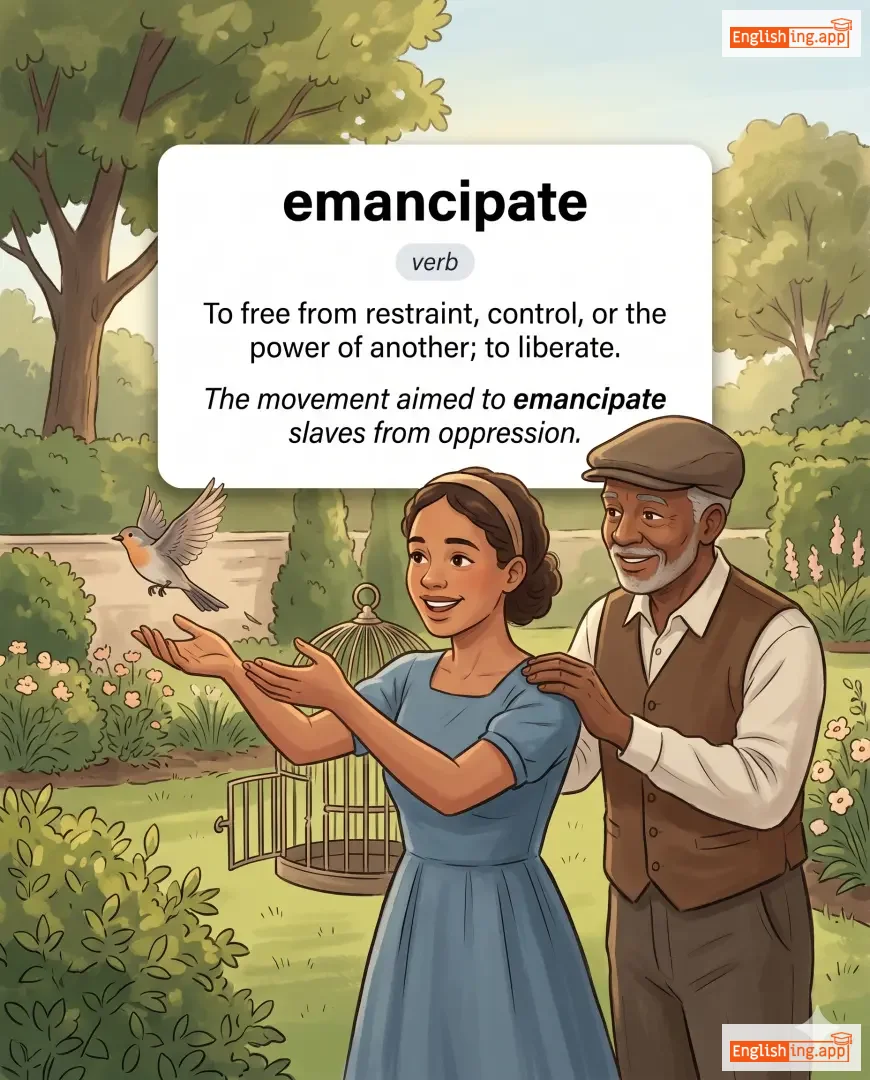
emancipate definition card — visual illustration of the meaning
verb C1
/ɪˈmæn.sɪ.peɪt/
幸せ (shiawase)

To free from restraint, control, or the power of another; to liberate.

"The movement aimed to emancipate slaves from oppression."

"彼女は賞を受け取ったとき、自分の幸せを隠すことができませんでした。" (Kanojo wa shō o uketotta toki, jibun no shiawase o kakusu koto ga dekimasen deshita.)