Vokabulare

Englisches Vokabelwörterbuch | Wortbedeutungen, Definitionen & Beispiele

adjective C1
/ˌhoʊlˈhɑːrtɪd/
de todo corazón (de todo corazon)

showing complete sincerity and commitment; fully enthusiastic

"She gave her wholehearted support to the project."

"Ella dio su apoyo de todo corazón al proyecto." (Ella dio su apoyo de todo corazon al proyecto.)
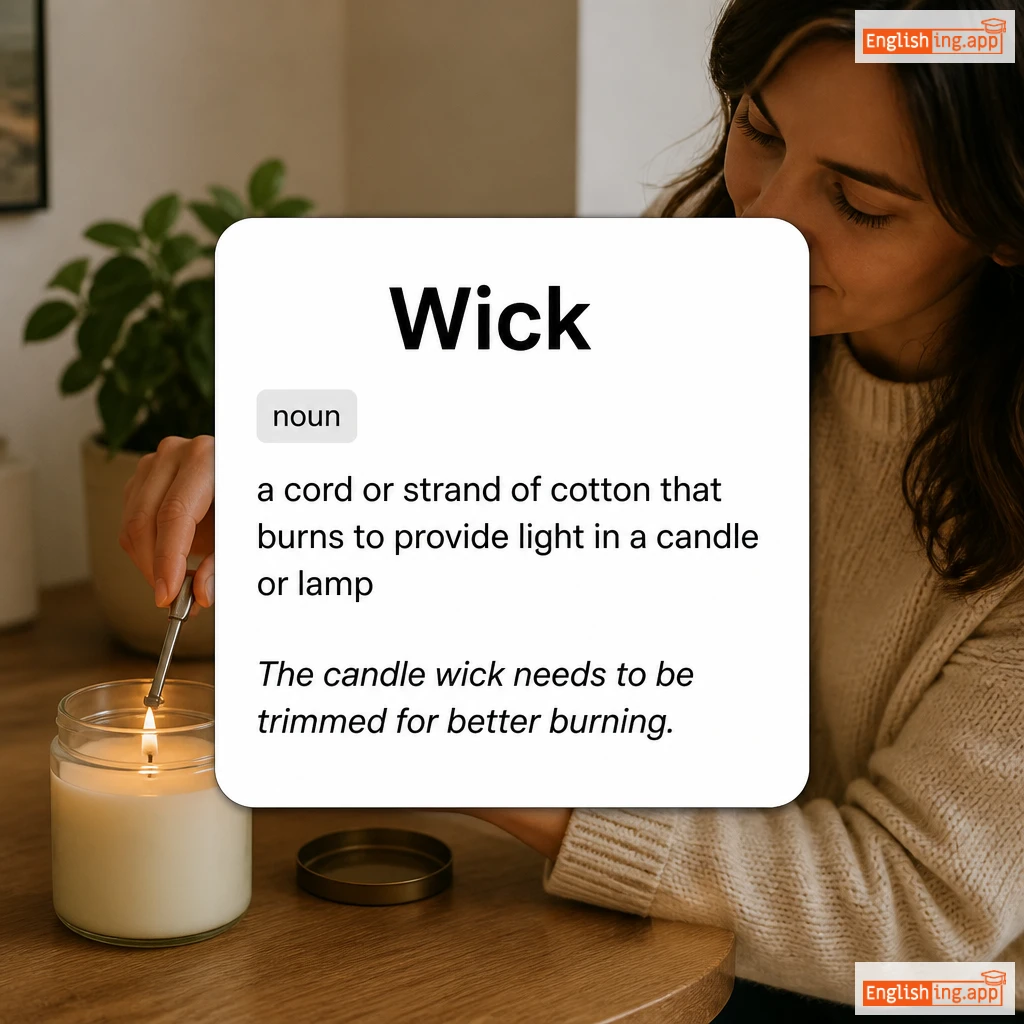
Wick definition card — visual illustration of the meaning
noun C1
/wɪk/
mecha de vela (mecha de vela)

a cord or strand of cotton that burns to provide light in a candle or lamp

"The candle wick needs to be trimmed for better burning."

"La mecha de la vela necesita ser recortada para una mejor combustión." (La mecha de la vela necesita ser recortada para una mejor combustion.)
verb C1
/wiːld/
sujetar, usar (sujetar, usar)

To hold and use a weapon, tool, or power effectively.

"The warrior wielded his sword with great skill."

"El guerrero usó su espada con gran habilidad." (El guerrero usó su espada con gran habilidad.)
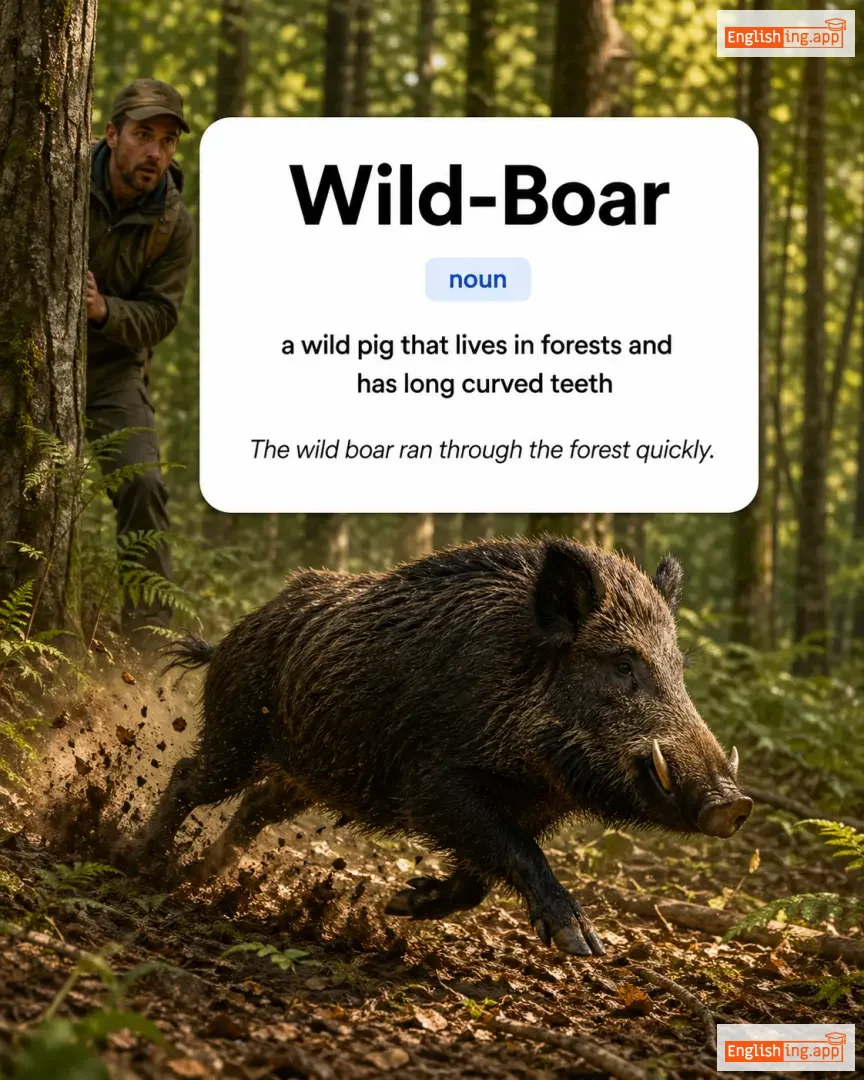
Wild-Boar definition card — visual illustration of the meaning
noun C1
/waɪld bɔːr/
jabalí salvaje (jabalí salvaje)

a wild pig that lives in forests and has long curved teeth

"The wild boar ran through the forest quickly."

"El jabalí salvaje corrió rápidamente a través del bosque." (El jabalí salvaje corrió rápidamente a través del bosque.)
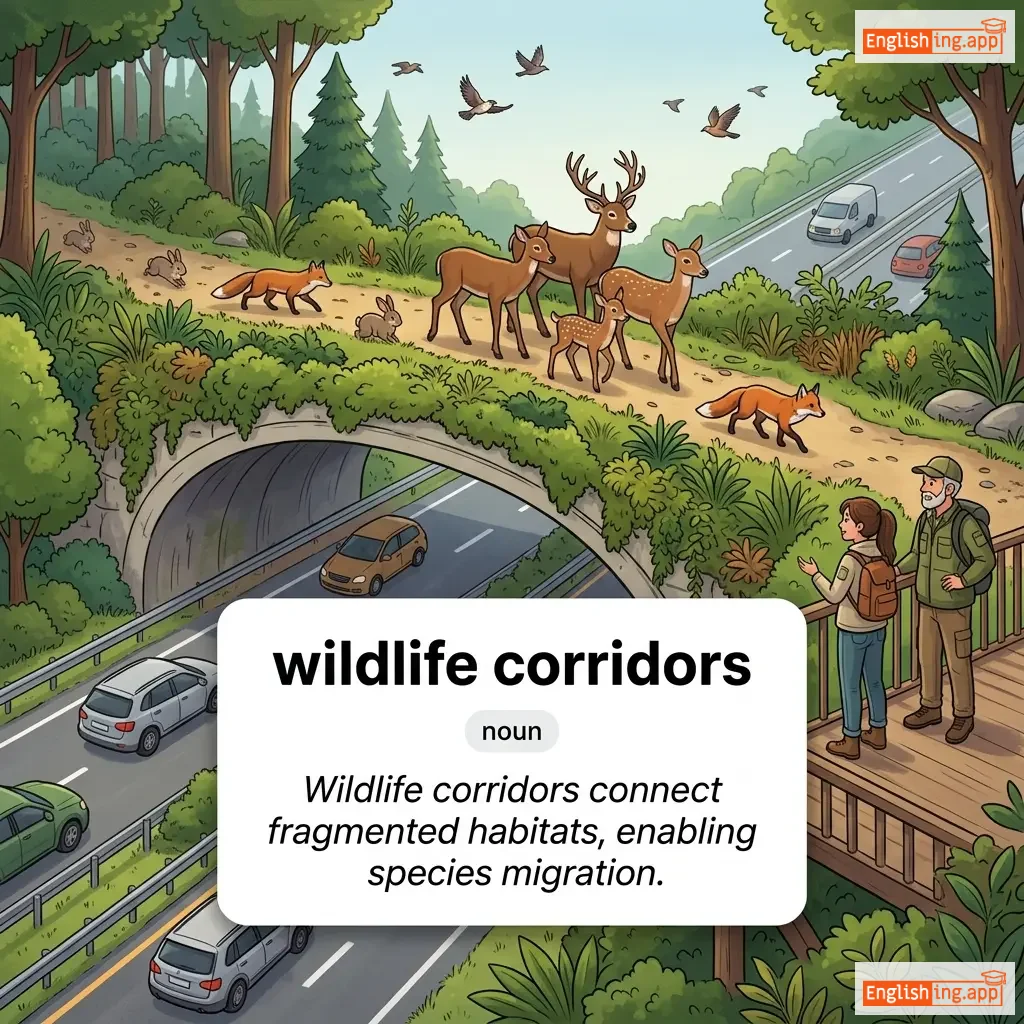
wildlife corridors definition card — visual illustration of the meaning
noun C1
ˈwaɪldlaɪf ˈkɔːrɪdɔːrz
corredores de vida silvestre (corredores de vida silvestre)

Areas of habitat connecting wildlife populations separated by human activities or structures.

"Wildlife corridors connect fragmented habitats, enabling species migration."

"Los corredores de vida silvestre conectan hábitats fragmentados, permitiendo la migración de especies." (Los corredores de vida silvestre conectan hábitats fragmentados, permitiendo la migración de especies.)
adjective C1
/ˈwɪl.fəl/
terco; intencional (terko; intensional)

deliberately stubborn; done on purpose; intentional

"His wilful disobedience led to punishment."

"Su desobediencia deliberada lo llevó a un castigo." (Su desobediencia deliberada lo llevo a un castigo.)
adjective C1
/ˈwɪlfəl/
voluntario (voluntario)

Deliberate, intentional, or stubbornly determined to do as one wants.

"Her willful disregard for the rules got her into trouble."

"Su voluntariedad al ignorar las reglas le metió en problemas." (Su voluntariedad al ignorar las reglas le metió en problemas.)
verb C1
/wɪlt/
marchitarse (marchitarse)

To become limp, weak, or drooping, often due to lack of water or energy.

"The flowers wilted in the heat of the sun."

"Las flores se marchitaron por el calor del sol." (Las flores se marchitaron por el calor del sol.)
adjective C1
/ˈwaɪli/
astuto (astuto)

Skilled at gaining an advantage, especially by being clever or deceitful.

"The wily fox outsmarted the hunters."

"El zorro astuto engañó a los cazadores." (El zorro astuto engañó a los cazadores.)
verb C1
/wɪns/
hacer una mueca por dolor (hacer una mueca por dolor)

To make an involuntary movement of the face or body as a result of pain or distress.

"He winced when the doctor touched his injured arm."

"Él hizo una mueca cuando el doctor tocó su brazo herido." (El hizo una mueca cuando el doctor toco su brazo herido.)
noun C1
/ˈwɪndfɔːl/
ganancia inesperada (ganancia inesperada)

an unexpected piece of good fortune, typically a large amount of money

"The startup received a windfall when a major client paid for a full year in advance."

"La startup recibió una ganancia inesperada cuando un cliente importante pagó por un año completo por adelantado." (La startup recibio una ganancia inesperada cuando un cliente importante pago por un ano completo por adelantado.)
noun C1
/ˈwɪŋˌspæn/
envergadura (envergadura)

the distance from the tip of one wing to the tip of the other wing

"The eagle has an impressive wingspan of over two meters."

"El águila tiene una impresionante envergadura de más de dos metros." (El aguila tiene una impresionante envergadura de mas de dos metros.)
adjective C1
/ˈwɪntri/
invernal (invernal)

Characteristic of or suitable for winter; cold and bleak.

"The wintry wind made everyone shiver as they walked outside."

"El viento invernal hizo que todos temblaran mientras caminaban afuera." (El viento invernal hizo que todos temblaran mientras caminaban afuera.)
adjective C1
/ˈwaɪəri/
delgado, fuerte y resistente (delgado, fuerte y resistente)

Lean, tough, and strong, often with sinewy muscles.

"The wiry athlete moved with remarkable speed and agility."

"El atleta delgado se movió con una velocidad y agilidad notables." (El atleta delgado se movió con una velocidad y agilidad notables.)
noun C1
/wɪsp/
un pequeño racimo o trozo (un pequeno racimo o trozo)

A small thin or twisted bunch, piece, or amount of something.

"A wisp of smoke rose from the chimney."

"Una wisp de humo subió por la chimenea." (Una wisp de humo subió por la chimenea.)
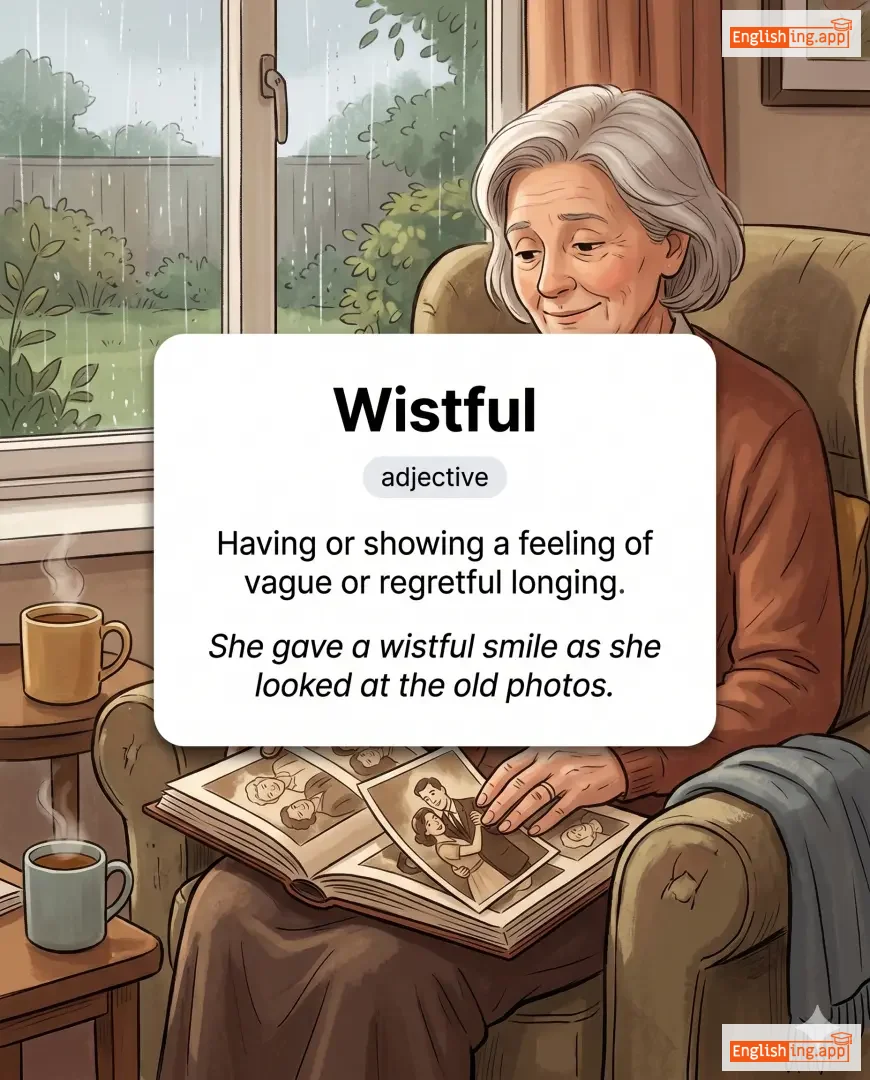
Wistful definition card — visual illustration of the meaning
adjective C1
/ˈwɪstfəl/
melancólico (melancolico)

Having or showing a feeling of vague or regretful longing.

"She gave a wistful smile as she looked at the old photos."

"Ella dio una sonrisa melancólica mientras miraba las fotos viejas." (Ella dio una sonrisa melancólica mientras miraba las fotos viejas.)
noun C1
/ˈwɪtʃ.krɑːft/
brujería (brujeria)

the practice of magical skills, spells, and abilities

"In old times, many people believed in witchcraft."

"En tiempos antiguos, muchas personas creían en la brujería." (En tiempos antiguos, muchas personas creian en la brujeria.)
adjective C1
/wɪðˈdrɔːn/
reservado (reservado)

quiet and shy; not wanting to talk to others

"After the incident, he became withdrawn and avoided his friends."

"Después del incidente, se volvió reservado y evitó a sus amigos." (Despues del incidente, se volvio reservado y evito a sus amigos.)
verb C1
/ˈwɪð.ər/
marchitar (marchitar)

to dry up and die, typically used for plants

"The flowers will wither without enough water."

"Las flores se marchitarán sin suficiente agua." (Las flores se marchitarán sin suficiente agua.)
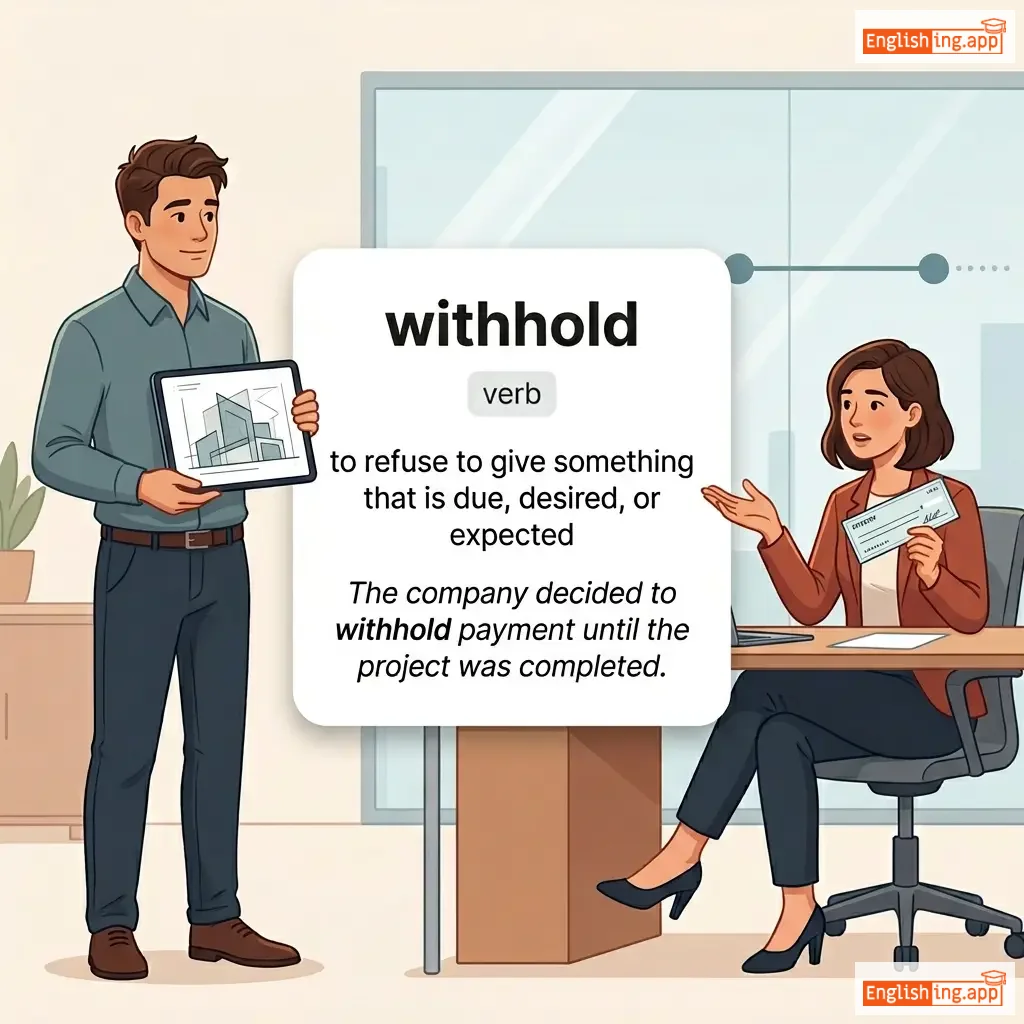
withhold definition card — visual illustration of the meaning
verb C1
/wɪðˈhoʊld/
retener (re-te-nehr)

to refuse to give something that is due, desired, or expected

"The company decided to withhold payment until the project was completed."

"La empresa decidió retener el pago hasta que se completara el proyecto." (La em-pre-sa de-ci-dió re-te-ner el pa-go has-ta que se com-ple-ta-ra el pro-yec-to.)
noun C1
/ˈwɪzərdri/
destreza mágica (destreza magica)

The art or practice of magic; great skill or expertise in something.

"The programmer's wizardry amazed everyone in the room."

"La destreza del programador asombró a todos en la sala." (La destreza del programador asombró a todos en la sala.)
verb C1
/ˈwɒb.l̩/
tambalear (tambalear)

to move unsteadily from side to side; to shake or tremble slightly

"The table began to wobble when he leaned on it."

"La mesa comenzó a tambalear cuando él se apoyó sobre ella." (La mesa comenzo a tambalear cuando el se apoyó sobre ella.)
noun C1
/woʊ/
pena (pena)

great sorrow, distress, or trouble

"Her heart was filled with woe after hearing the sad news."

"Su corazón se llenó de pena al escuchar la triste noticia." (Su corazon se lleno de pena al escuchar la triste noticia.)
adjective C1
/ˈwoʊ.fəl/
lamentable (lamentable)

full of woe; very sad or miserable; also used to mean very bad or deplorable

"He gave me a woeful look when he lost the match."

"Me dio una mirada lamentable cuando perdió el partido." (Me dio una mirada lamentable cuando perdió el partido.)
noun C1
/woʊz/
aflicciones (aflicciones)

great sorrow or distress; troubles

"The company faced financial woes after the market crash."

"La compañía enfrentó problemas financieros después del colapso del mercado." (La compañia enfrentó problemas financieros después del colapso del mercado.)
adjective C1
/ˈwɒŋki/
inestable; poco fiable; que no funciona correctamente (wonki)

unstable; unreliable; not working properly

"The old chair was wonky and wobbled every time someone sat on it."

"La vieja silla estaba inestable y se tambaleaba cada vez que alguien se sentaba en ella." (La vieja silla estaba inestable y se tambaleaba cada vez que alguien se sentaba en ella)
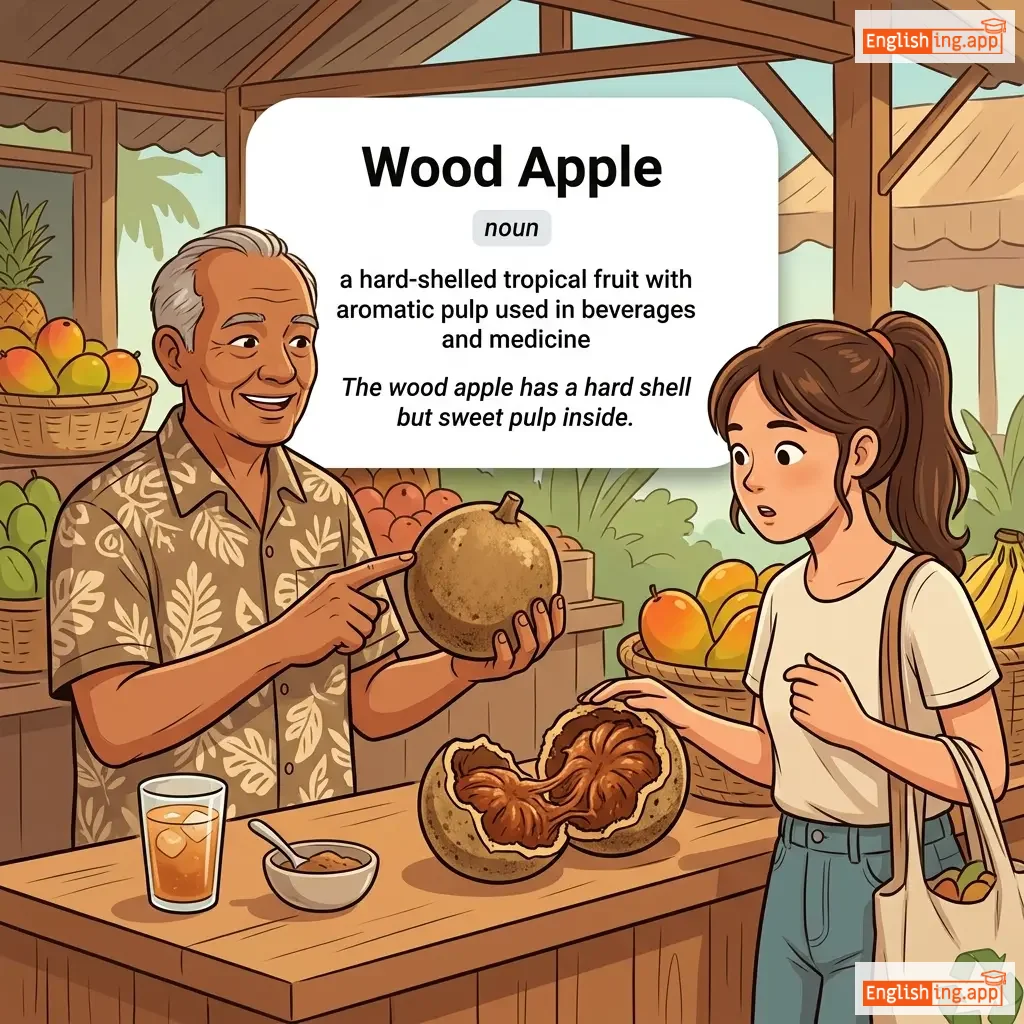
Wood Apple definition card — visual illustration of the meaning
noun C1
/wʊd ˈæp.əl/
manzana de madera (manzana de madera)

a hard-shelled tropical fruit with aromatic pulp used in beverages and medicine

"The wood apple has a hard shell but sweet pulp inside."

"La manzana de madera tiene una cáscara dura pero pulpa dulce en su interior" (La manzana de madera tiene una cáscara dura pero pulpa dulce en su interior)
noun C1
/ˈwʊd.ən ˈsæn.dəl/
sandalia de madera (sandalia de madera)

a type of footwear made of wood, typically worn as traditional shoes

"She wore wooden sandals to the traditional ceremony."

"Ella llevaba sandalias de madera en la ceremonia tradicional." (Ella llevaba sandalias de madera en la ceremonia tradicional.)
adjective C1
/ˈwɜːrkəbəl/
realizable; practicable (realizable; practicable)

capable of being done or put into effect; practical

"We need a workable solution to solve this problem quickly."

"Necesitamos una solución práctica para resolver este problema rápidamente." (Necesitamos una solución práctica para resolver este problema rápidamente.)
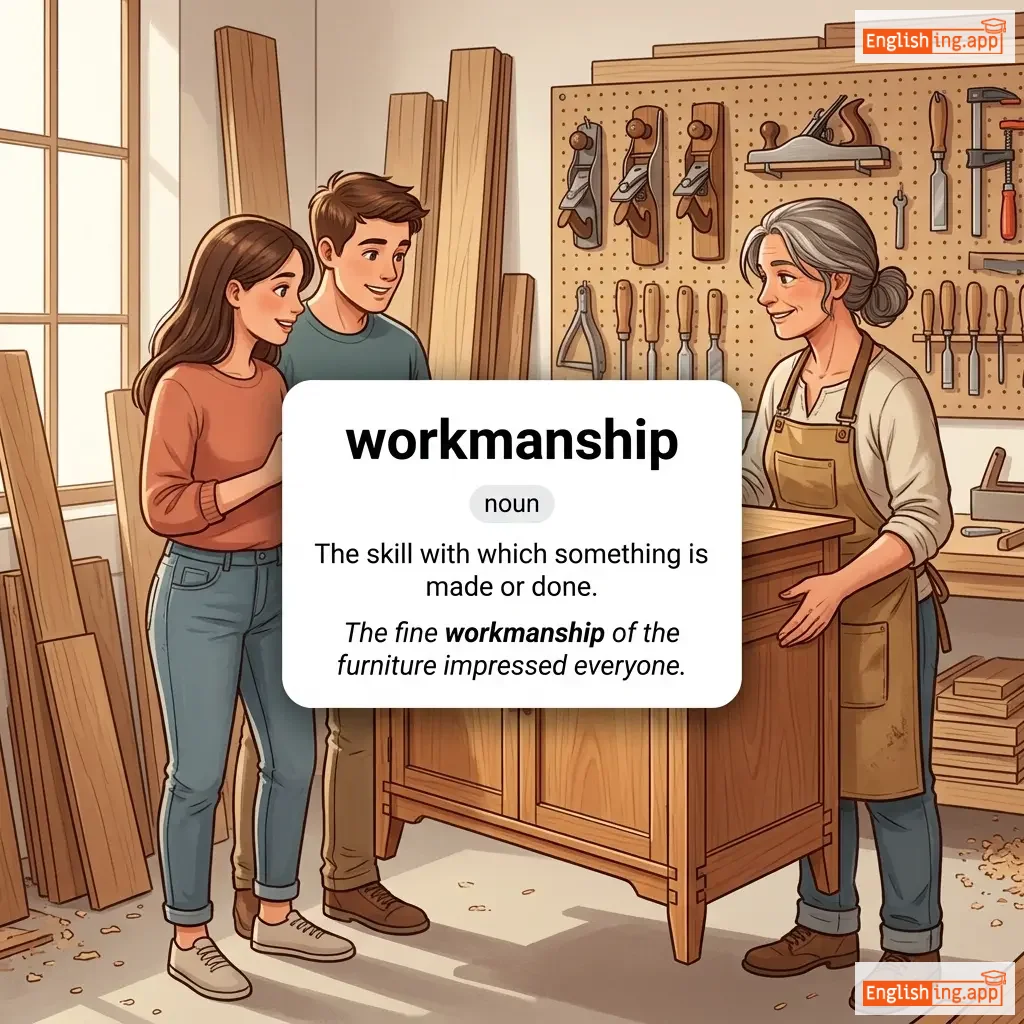
workmanship definition card — visual illustration of the meaning
noun C1
/ˈwɜːkmənˌʃɪp/
habilidad artesanal (habilidad artesanal)

The skill with which something is made or done.

"The fine workmanship of the furniture impressed everyone."

"La excelente habilidad artesanal de los muebles impresionó a todos." (La excelente habilidad artesanal de los muebles impresionó a todos.)
verb C1
/ˈræŋɡl̩/
discutir (discutir)

to argue or dispute noisily or angrily

"The two neighbors wrangled over the property line for hours."

"Los dos vecinos discutieron durante horas sobre la línea de propiedad." (Los dos vecinos discutieron durante horas sobre la línea de propiedad.)
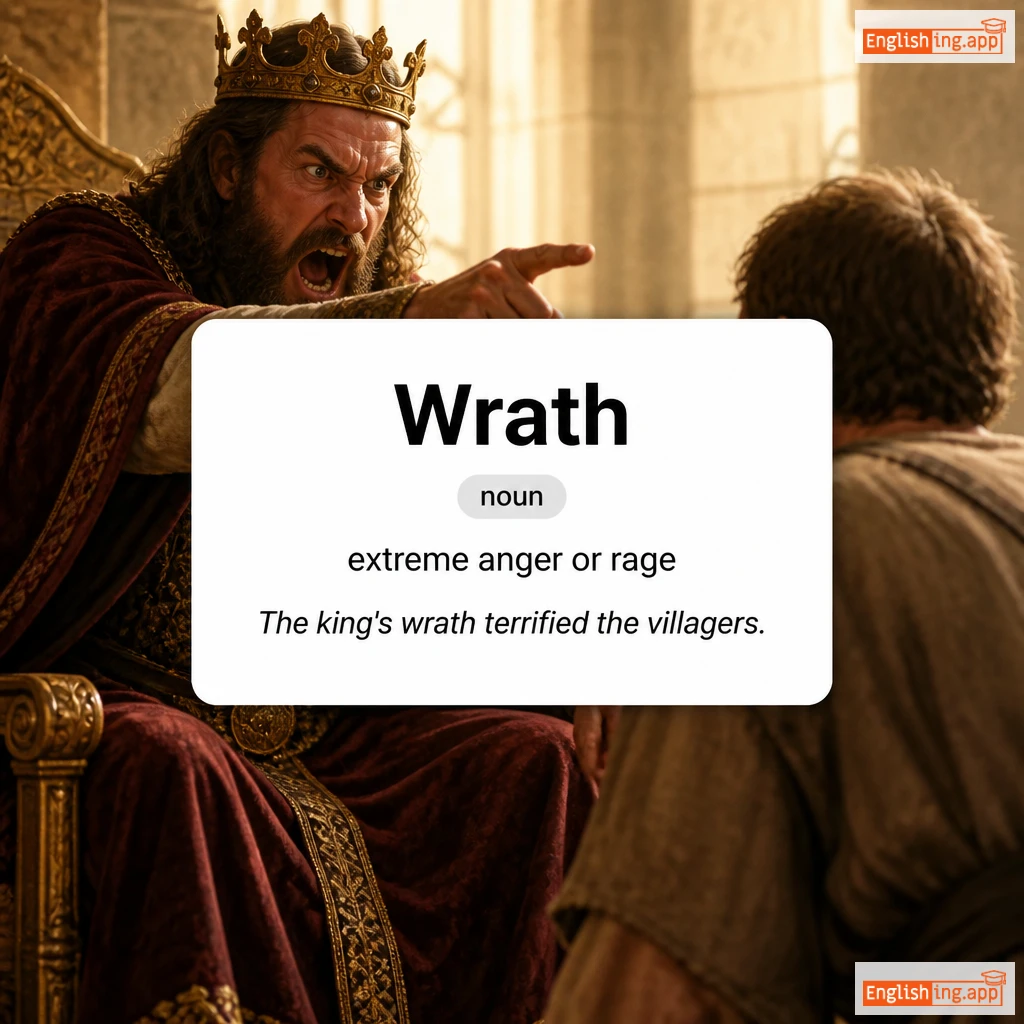
Wrath definition card — visual illustration of the meaning
noun C1
/ræθ/
ira (ira)

extreme anger or rage

"The king's wrath terrified the villagers."

"La ira del rey aterrorizó a los aldeanos." (La ira del rey aterrorizó a los aldeanos.)
verb C1
/riːk/
causar daño (causar dano)

to cause or inflict something, especially damage or harm

"The storm wreaked havoc on the coastal villages."

"La tormenta causó grandes daños en los pueblos costeros." (La tormenta causo grandes danos en los pueblos costeros.)
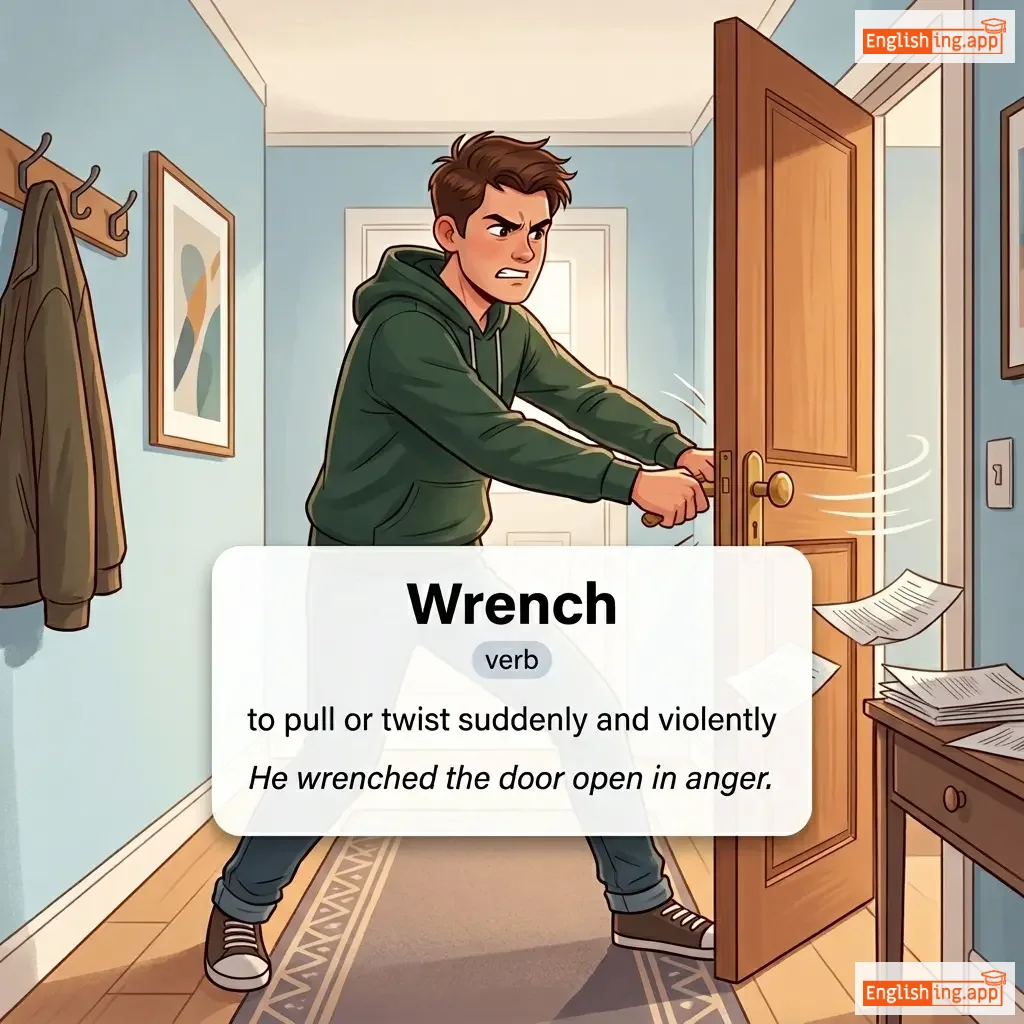
Wrench definition card — visual illustration of the meaning
verb C1
/rɛntʃ/
torcer bruscamente (torcer bruscamente)

to pull or twist suddenly and violently

"He wrenched the door open in anger."

"Él torció la puerta con ira." (El torció la puerta con ira.)
adjective C1
/ˈrɛtʃɪd/
miserable (miserable)

in a very unhappy, miserable, or poor condition

"They lived in a wretched hut with no clean water."

"Vivían en una choza miserable sin agua limpia." (Vivian en una choza miserable sin agua limpia.)
noun C1
/ˈrɛtʃɪdnəs/
miseria (miseria)

a state of misery, unhappiness, or poor condition

"The novel depicts the wretchedness of war victims."

"La novela muestra la miseria de las víctimas de la guerra." (La novela muestra la miseria de las victimas de la guerra.)
verb C1
/rɪŋ/
felicidad (felicidad)

to squeeze and twist something to force liquid out; to extract with effort

"She had to wring the towel after washing it."

"Ella no pudo ocultar su felicidad cuando recibió el premio." (Ella no pudo ocultar su felicidad cuando recibio el premio.)
noun C1
/rɪt/
auto judicial (auto judicial)

A formal written order issued by a court.

"The judge issued a writ of habeas corpus."

"El juez emitió un auto de habeas corpus." (El juez emitió un auto de habeas corpus.)
verb C1
/raɪð/
retorcerse (retorcerse)

To twist or squirm in pain or discomfort.

"He writhed in pain after twisting his ankle."

"Él se retorció de dolor después de torcerse el tobillo." (Él se retorció de dolor después de torcerse el tobillo.)
adjective C1
/raɪ/
torcido, sarcástico (torcido, sarcastico)

twisted or distorted in expression; showing dry, mocking humor

"He gave a wry smile after hearing the sarcastic remark."

"Él dio una sonrisa torcida después de escuchar el comentario sarcástico." (El dio una sonrisa torcida despues de escuchar el comentario sarcastico.)