ভোকাবুলারিসমূহ

ইংরেজি শব্দের বাংলা অর্থ | English to Bangla Word Meaning Dictionary

adjective C2
/ˈsækərɪn/
幸せ (shiawase)

Excessively sweet or sentimental.

"His saccharine smile seemed insincere."

"彼女は賞を受け取ったとき、自分の幸せを隠せなかった。" (Kanojo wa shō o uketotta toki, jibun no shiawase o kakusenakatta.)
adjective C2
/ˌsæsərˈdoʊtl/
神職に関する (shinshoku ni kansuru)

Relating to priests or the priesthood.

"The ritual had a distinctly sacerdotal character."

"その儀式には明確な神職に関する特徴がありました。" (Sono gishiki ni wa meikaku na shinshoku ni kansuru tokuchō ga arimashita.)
noun C2
/ˈsækrɪsti/
サクリスティ (sakurisuti)

a room in a church where sacred vessels and vestments are kept

"The priest entered the sacristy before the mass began."

"司祭はミサが始まる前にサクリスティに入った。" (Shisai wa misa ga hajimaru mae ni sakurisuti ni haitta.)
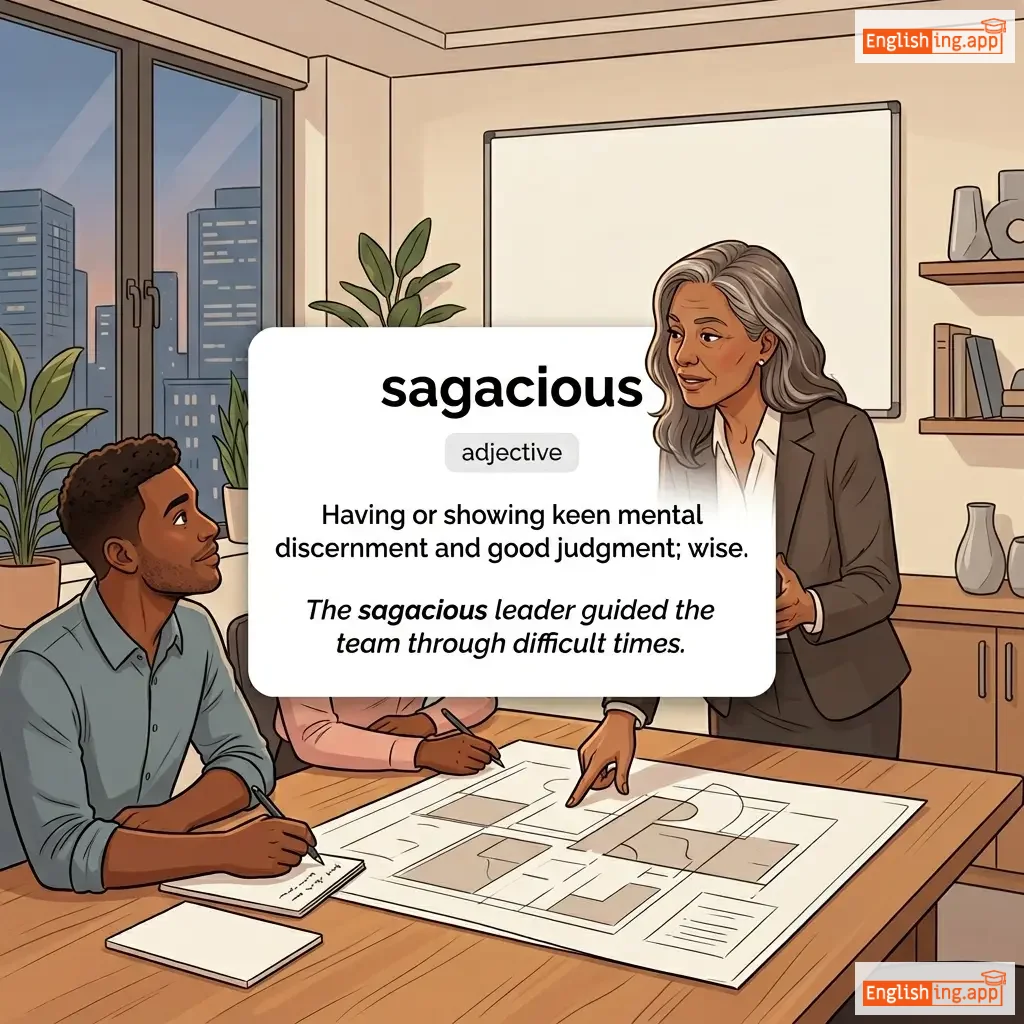
sagacious definition card — visual illustration of the meaning
adjective C2
/səˈɡeɪʃəs/
賢明な (kenmei na)

Having or showing keen mental discernment and good judgment; wise.

"The sagacious leader guided the team through difficult times."

"賢明なリーダーは困難な時期をチームと共に乗り越えました。" (Kenmei na rīdā wa konnan na jiki o chīmu to tomoni norikoemashita.)
sagacity definition card — visual illustration of the meaning
noun C2
/səˈɡæs.ə.t̬i/
深い知恵 (fukai chie)

The quality of being sagacious; having or showing keen mental discernment and good judgment.

"His sagacity made him a great leader."

"彼のサガシティは彼を偉大なリーダーにしました。" (Kare no sagasiti wa kare o idaina rīdā ni shimashita.)
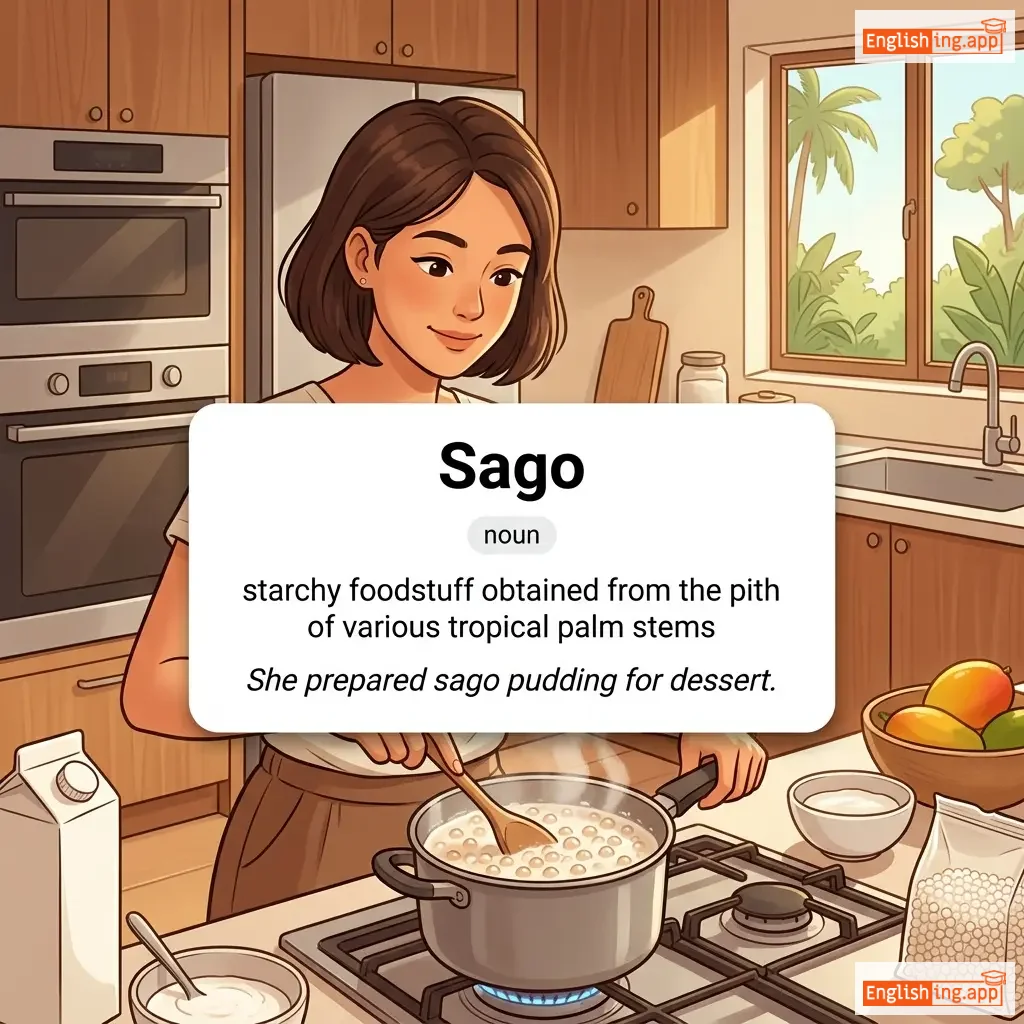
Sago definition card — visual illustration of the meaning
noun C2
/ˈseɪ.ɡoʊ/
サゴ (sago)

starchy foodstuff obtained from the pith of various tropical palm stems

"She prepared sago pudding for dessert."

"彼女はデザートにサゴプディングを準備しました。" (Kanojo wa dezato ni sago pudding wo junbi shimashita.)
salacious definition card — visual illustration of the meaning
adjective C2
/səˈleɪʃəs/
わいせつな (waisetsu na)

Having or conveying undue or inappropriate sexual interest.

"The tabloid published a salacious story about the celebrity."

"タブロイドはそのセレブに関するわいせつな話を公開した。" (Taburoido wa sono serebu ni kansuru waisetsu na hanashi o kōkai shita.)
noun C2
/ˈseɪ.li.əns/
顕著性 (kenchosei)

The quality of being particularly noticeable or important; prominence.

"The salience of the issue was highlighted in the debate."

"その問題の顕著性は討論で強調されました。" (Sono mondai no kenchosei wa tōron de kyōchō saremashita.)
adjective C2
/ˈsæ.loʊ/
黄白色 (ōbaku-shoku)

Of an unhealthy yellow or pale brown color, often referring to skin.

"His sallow complexion made him look tired and sickly."

"彼の黄白色の肌は、疲れて病気のように見えました。" (Kare no ōbaku-shoku no hada wa, tsukarete byōki no yō ni miemashita.)
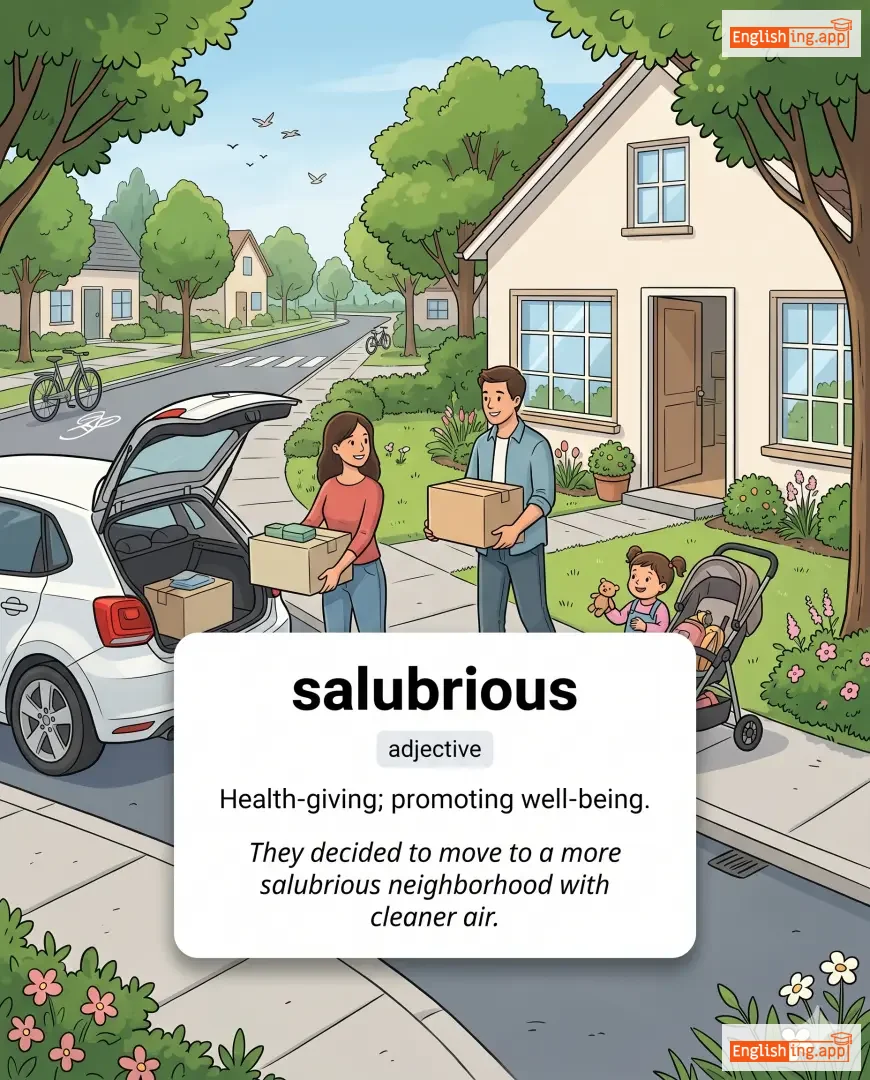
salubrious definition card — visual illustration of the meaning
adjective C2
/səˈluː.bri.əs/
健康的な (kenkōtekina)

Health-giving; promoting well-being.

"They decided to move to a more salubrious neighborhood with cleaner air."

"彼らは、より健康的な空気の清潔な街区に引っ越すことに決めました。" (Karera wa, yori kenkōtekina kūki no seiketsu na kaku ni hikkosu koto ni kimemashita.)
adjective C2
/səˈluːtəˌtɔri/
歓迎の挨拶 (kangei no aisatsu)

Relating to or expressing a greeting or an address, especially at the beginning of a speech.

"She delivered a salutatory address at the graduation ceremony."

"彼女は卒業式で歓迎の挨拶を行いました。" (Kanojo wa sotsugyō shiki de kangei no aisatsu o okonaimashita.)
noun C2
/sælv/
(kusuri)

An ointment used to promote healing of the skin or as protection.

"She applied a salve to the burn on her hand."

"彼女は手のやけどに薬を塗りました。" (Kanojo wa te no yakedo ni kusuri o nurimashita.)
noun C2
/ˈsælvər/
銀のトレイ (gin no tore)

A tray, typically made of silver, used for serving food or drinks.

"The butler brought in the tea on a silver salver."

"執事は銀のトレイでお茶を運んできました。" (Shitsuji wa gin no torei de ocha o hakonde kimashita.)
noun C2
/ˈsælvoʊ/
一斉射撃 (issei shageki)

A simultaneous discharge of guns or release of bombs; a sudden outburst of cheers or applause.

"The soldiers fired a salvo to honor the fallen general."

"兵士たちは倒れた将軍を讃えるために一斉射撃を行った。" (Heishitachi wa taoreta shōgun o tataeru tame ni issei shageki o okonatta.)
verb C2
/ˈsæŋktɪfaɪ/

To make holy or sacred; to set apart as holy.

"The priest sanctified the new church building."

noun C2
/ˌsɒ̃ˈfrwɑː/
冷静 (reisei)

Composure or coolness, especially in difficult situations.

"The leader handled the crisis with remarkable sang-froid."

"リーダーは危機を見事な冷静さで対処しました。" (Rīdā wa kiki o migoto na reiseisa de taisho shimashita.)
noun C2
/ˌsɒ̃ˈfrwɑː/
冷静 (reisei)

Composure or coolness under pressure.

"She impressed everyone with her sangfroid during the interview."

"彼女は面接中に冷静さで皆を感動させた。" (Kanojo wa mensetsu-chū ni reisei-sa de mina o kandō saseta.)
adjective C2
/ˈsæŋɡwɪˌnɛri/
血なまぐさい (chinamagusai)

Involving or causing much bloodshed; bloodthirsty.

"The battle was one of the most sanguinary conflicts of the war."

"その戦闘は戦争の中で最も血なまぐさい戦いの一つだった。" (Sono sentō wa sensō no naka de mottomo chinamagusai tatakai no hitotsu datta.)
adjective C2
/sæŋˈɡwɪniəs/
血液に関連する (ketsueki ni kanren suru)

Relating to blood; bloody.

"The surgeon examined the sanguineous discharge from the wound."

"外科医は傷口からの血なまぐさい分泌物を調べました。" (Geka-i wa kizu go-to kara no chinamokusai bunpibutsu o shirabemashita.)
adjective C2
/ˈsæpɪd/
美味しい (oishii)

Having a pleasant taste; flavorful.

"The chef prepared a sapid dish that delighted everyone at the table."

"シェフはテーブルの全員を喜ばせる美味しい料理を準備しました。" (Shefu wa tēburu no zen'in o yorokobaseru oishī ryōri o junbi shimashita.)
noun C2
/ˈseɪpiəns/
知恵 (chie)

Wisdom or intelligence.

"Her sapience in solving problems earned her the respect of her colleagues."

"問題解決における彼女の知恵は、同僚たちの尊敬を集めました。" (Mondai kaiketsu ni okeru kanojo no chie wa, dōryō-tachi no sonkei o atsume mashita.)
adjective C2
/ˈseɪpiənt/
賢明な (kenmei na)

Wise, or appearing to be wise.

"The professor gave a sapient response to the complex question."

"教授は複雑な質問に賢明な回答をしました。" (Kyoju wa fukuzatsu na shitsumon ni kenmei na kotae o shimashita.)
adjective C2
/ˌseɪpiˈɛnʃəl/
知恵に関連する (chie ni kanren suru)

Relating to wisdom or knowledge, often in a religious or philosophical sense.

"The monk shared sapiential teachings with his students."

"僧侶は学生たちに知恵に関連する教えを共有しました。" (Sōryo wa gakusei-tachi ni chie ni kanren suru oshie o kyōyū shimashita.)
adjective C2
/ˌsæpəˈneɪʃəs/
石鹸のような (sekken no yōna)

Soapy or having the qualities of soap.

"The plant has saponaceous leaves that produce foam when rubbed in water."

"その植物には、摩擦で泡を作る石鹸のような葉があります。" (Sono shokubutsu ni wa, masatsu de awa o tsukuru sekken no yōna ha ga arimasu.)
noun C2
/sɑːrˈkɒfəɡəs/
石棺 (sekigan)

A stone coffin, often decorated, used in ancient times.

"The museum displayed a beautifully carved sarcophagus from ancient Egypt."

"博物館には古代エジプトからの美しく彫刻された石棺が展示されていました。" (Hakubutsukan ni wa kodai Ejiputo kara no utsukushiku chōkoku sareta sekigan ga tenji sarete imashita.)
sartorial definition card — visual illustration of the meaning
adjective C2
/sɑːrˈtɔːriəl/
仕立てに関する (shitate ni kansuru)

Relating to tailoring, clothes, or style of dress.

"The actor is known for his sartorial elegance on the red carpet."

"その俳優はレッドカーペットでのサートリアルな優雅さで知られています。" (Sono haiyu wa reddo kāpetto de no sātoriaru na yūgasa de shirareteimasu.)
verb C2
/seɪt/
満たす (mitasu)

To satisfy fully or to excess.

"The huge meal sated their hunger after the long journey."

"長い旅の後、巨大な食事が彼らの空腹を満たした。" (Nagai tabi no ato, kyodaina shokuji ga karera no kuufuku o mitashita.)
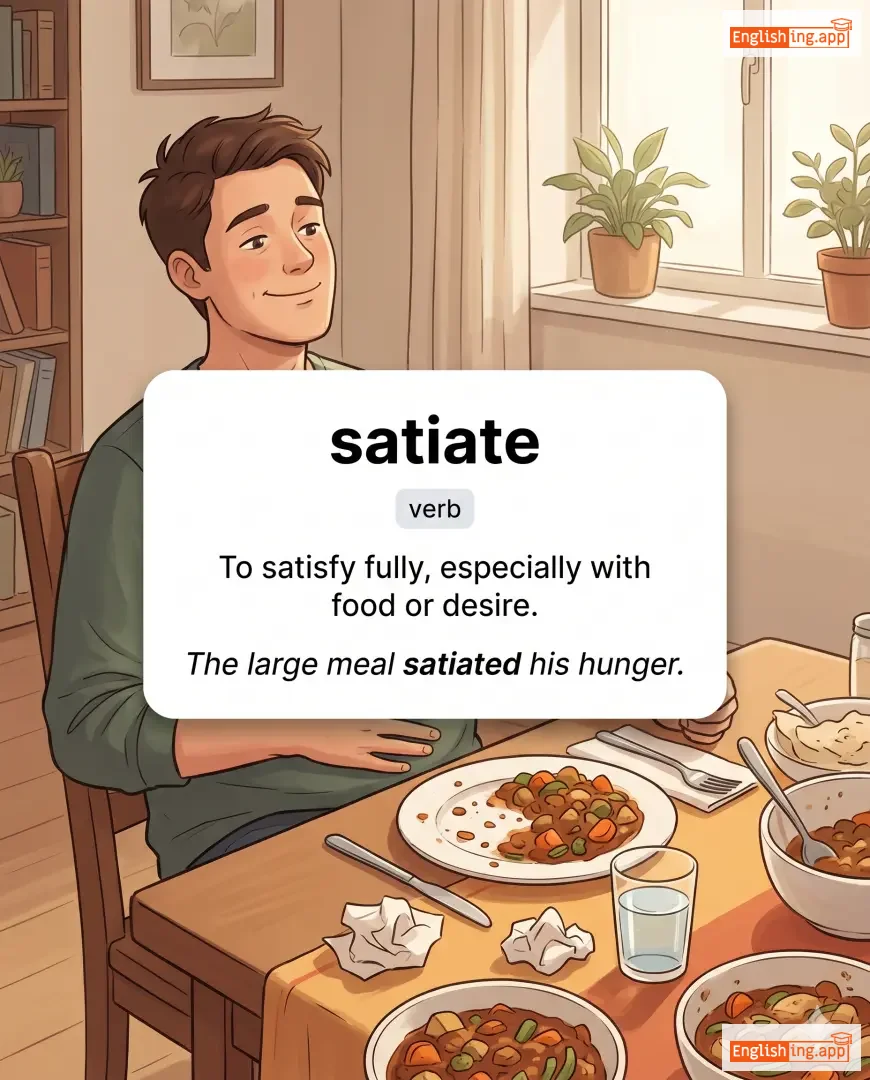
satiate definition card — visual illustration of the meaning
verb C2
/ˈseɪʃiˌeɪt/
満たす (mitasu)

To satisfy fully, especially with food or desire.

"The large meal satiated his hunger."

"大きな食事が彼の空腹を満たしました。" (Ookina shokuji ga kare no kuufuku o mitashimashita.)
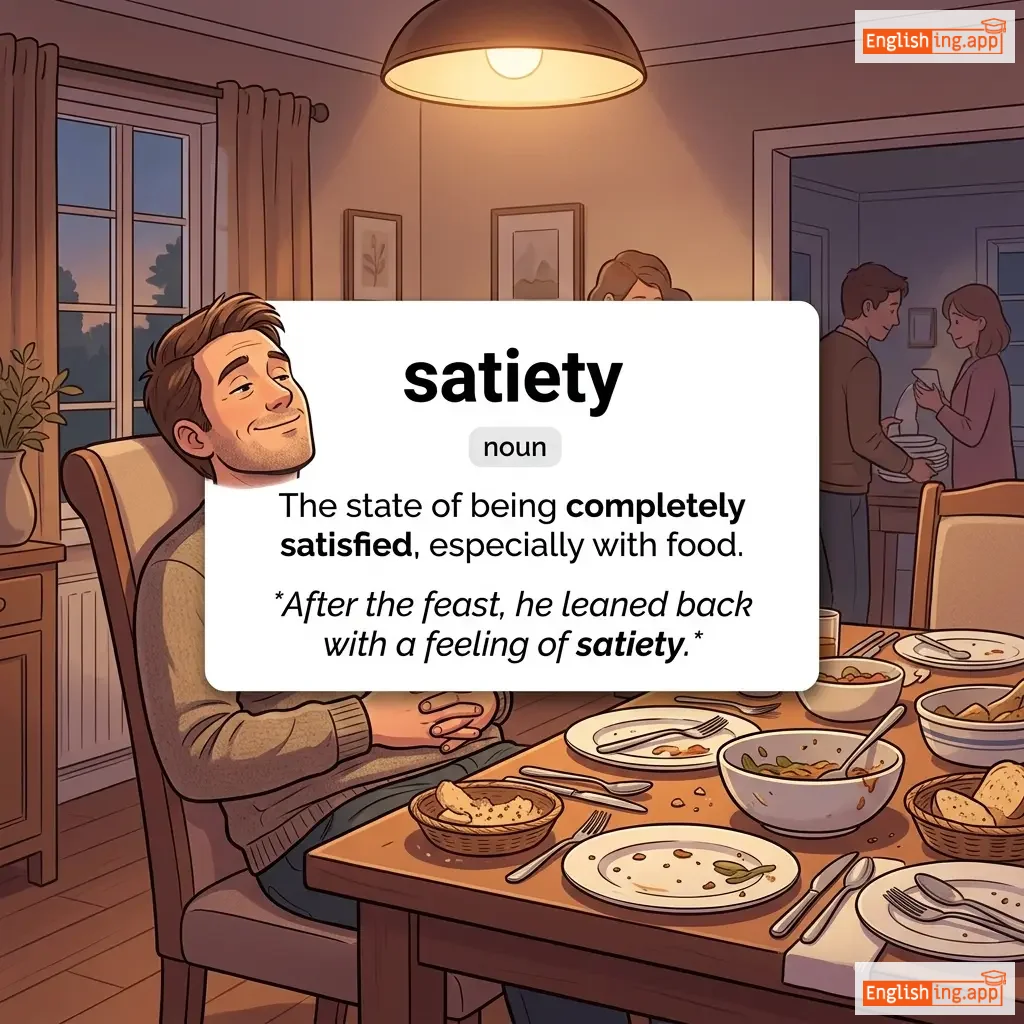
satiety definition card — visual illustration of the meaning
noun C2
/səˈtaɪ.ə.ti/
満腹感 (manpukukan)

The state of being completely satisfied, especially with food.

"After the feast, he leaned back with a feeling of satiety."

"宴会の後、彼は満腹感を感じながら背もたれに寄りかかった。" (Enkai no ato, kare wa manpukukan wo kanjinagara semotare ni yori kakatta.)
noun C2
/ˈsætræp/
総督 (sōtoku)

a governor of a province in ancient Persia; also used figuratively for a subordinate ruler

"The king appointed a satrap to oversee the distant province."

"王は遠くの州を監督するために総督を任命しました。" (Ō wa tōku no shū o kantoku suru tame ni sōtoku o ninmei shimashita.)
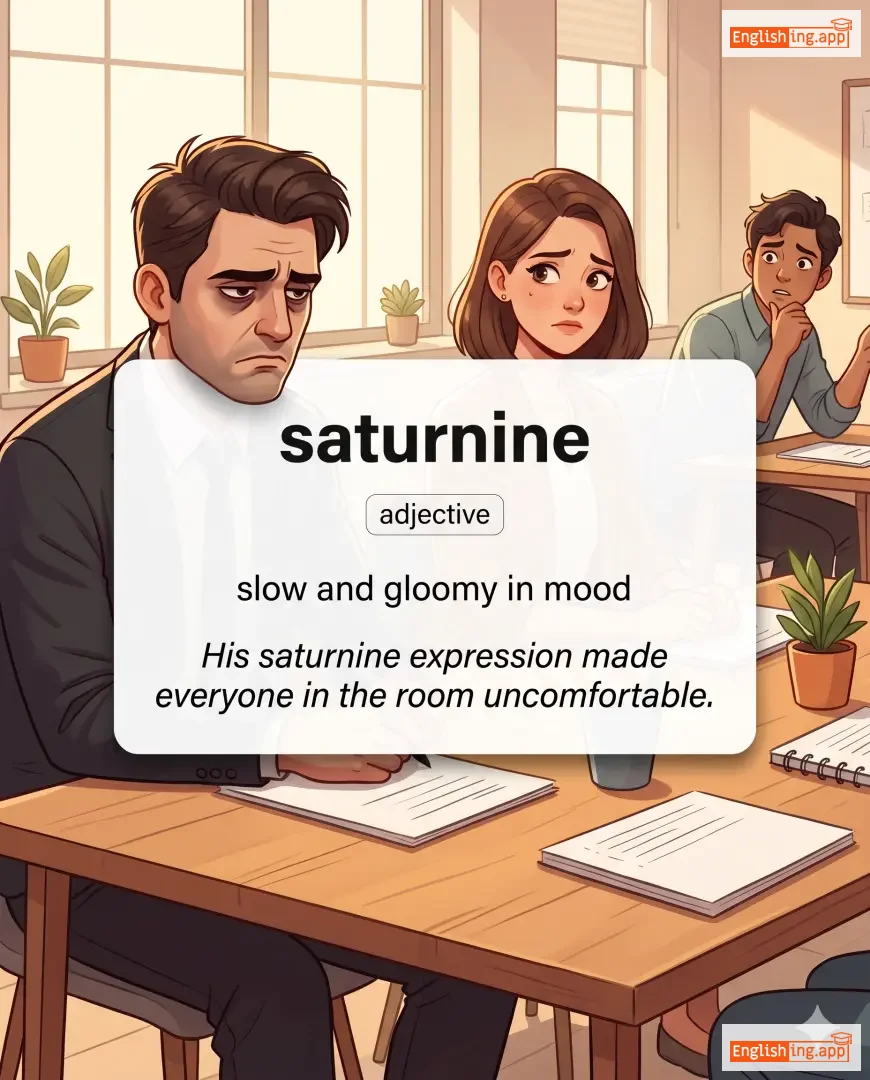
saturnine definition card — visual illustration of the meaning
adjective C2
/ˈsætərˌnaɪn/
陰気な (inki na)

slow and gloomy in mood

"His saturnine expression made everyone in the room uncomfortable."

"彼の陰気な表情は部屋の中の誰もが不快に感じさせた。" (Kare no in'kina hyōjō wa heya no naka no dare mo ga fukai ni kanjisaseta.)
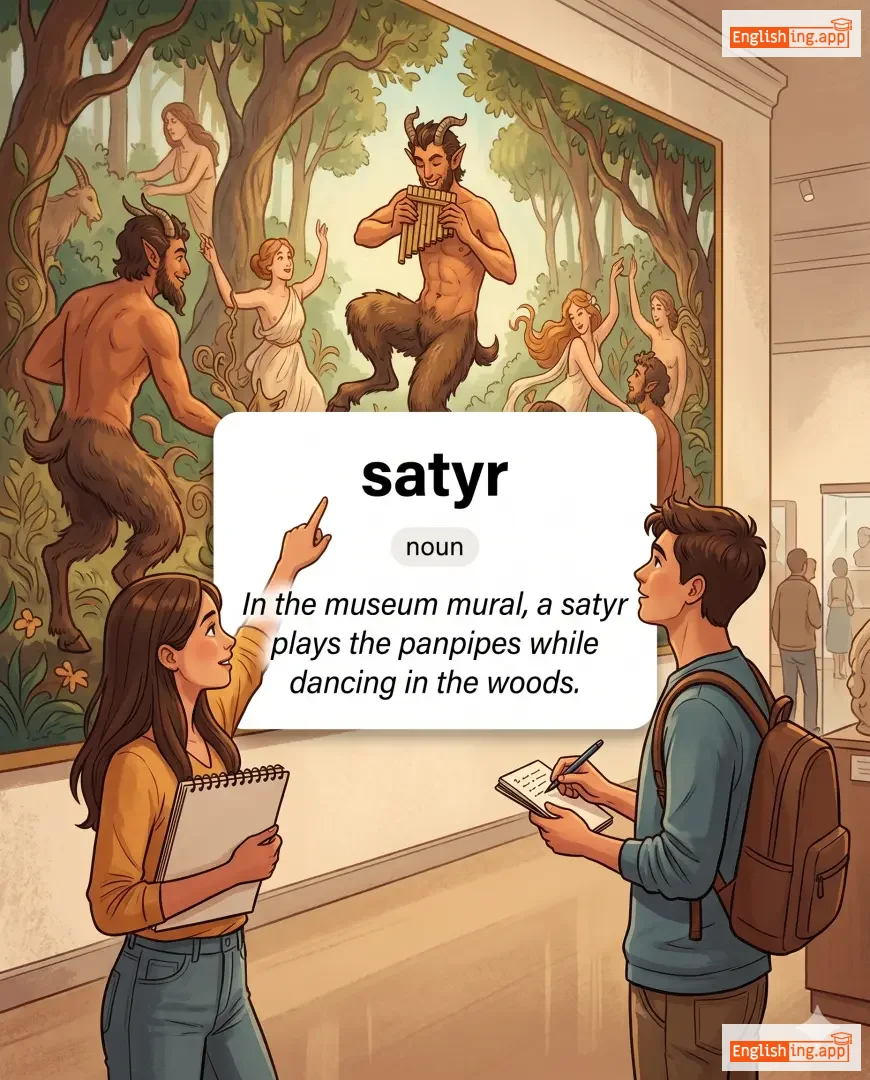
satyr definition card — visual illustration of the meaning
noun C2
/ˈsætər/
幸せ (shiawase)

a creature from Greek mythology depicted as a lustful being, often half-man and half-goat; by extension, a lecherous man

"In the museum mural, a satyr plays the panpipes while dancing in the woods."

"彼女は賞を受け取ったとき、自分の幸せを隠すことができませんでした。" (Kanojo wa shou wo uketotta toki, jibun no shiawase wo kakusu koto ga dekimasen deshita.)
noun C2
/səˈvɑːnt/

a learned person, especially a distinguished scientist or scholar; sometimes used in the phrase ‘savant syndrome’ for someone with exceptional abilities alongside developmental differences

"The conference keynote was delivered by a linguistic savant who studies endangered languages."

noun C2
/ˌsæv.wɑːr ˈfeər/
社交術 (shakou-jutsu)

The ability to act or speak appropriately in social situations; polished social skills.

"She handled the delicate situation with remarkable savoir-faire."

"彼女は見事な社交術で微妙な状況をうまく処理しました。" (Kanojo wa migoto na shakou-jutsu de bimyou na joukyou wo umaku shori shimashita.)
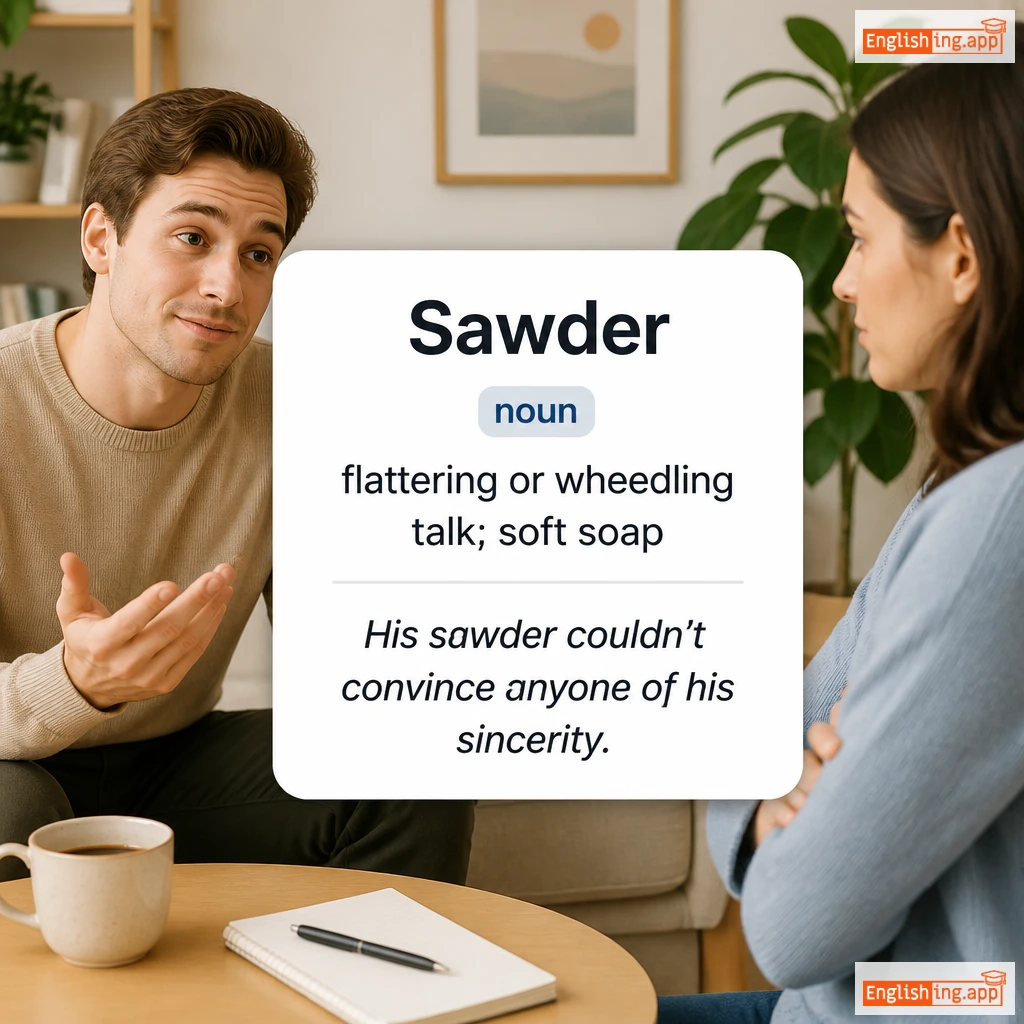
Sawder definition card — visual illustration of the meaning
noun C2
/ˈsɔː.dər/
お世辞; おべっか (oseji; obekka)

flattering or wheedling talk; soft soap

"His sawder couldn't convince anyone of his sincerity."

"彼のオベッカは誰にも彼の誠実さを納得させることができなかった。" (Kare no obekka wa dare ni mo kare no seijitsusa o nattoku saseru koto ga dekinakatta.)
noun C2
/ˈskæb.ərd/
(kaya)

A sheath for the blade of a sword or dagger, typically made of leather or metal.

"The knight drew his sword from the scabbard."

"騎士は鞘から剣を抜きました。" (Kishi wa kaya kara ken o nukimashita.)
noun C2
/skæd/
スカッド魚 (sukaddo sakana)

A type of fish of the jack family; also informally means a large number or quantity.

"The fisherman caught a scad in the net."

"漁師は網でスカッドを捕まえました。" (Gyoshi wa ami de sukaddo o tsukamaemashita.)
noun (plural, informal) C2
/skædz/
たくさん (takusan)

A large number or quantity of something (informal).

"She has scads of friends in the city."

"彼女は街にたくさんの友達がいます。" (Kanojo wa machi ni takusan no tomodachi ga imasu.)
verb C2
/ˈskærɪfaɪ/
土を耕す (tsuchi wo tagayasu)

to make shallow cuts or scratches; to loosen the surface of soil

"The farmer scarified the soil before planting seeds."

"農家は種を植える前に土をスカリファイしました。" (Nōka wa tane wo ueru mae ni tsuchi wo sukarifai shimashita.)
noun C2
/ˈʃɑːdənfrɔɪdə/
他人の不幸を喜ぶこと (tanin no fukō o yorokobu koto)

pleasure derived from another person's misfortune

"He felt a sense of schadenfreude when his rival failed."

"ライバルが失敗したとき、彼はシャーデンフロイデを感じた。" (Raibaru ga shippai shita toki, kare wa schadenfreude o kanjita.)
noun C2
/ˈskɪz.əm/ or /ˈsɪz.əm/
幸福 (kōfuku)

A division or split between strongly opposed parties, often in religion or organizations.

"The schism in the church led to the formation of two separate groups."

"彼女は賞を受け取ったとき、幸せを隠せませんでした。" (Kanojo wa shō o uketotta toki, kōfuku o kakusemasen deshita.)
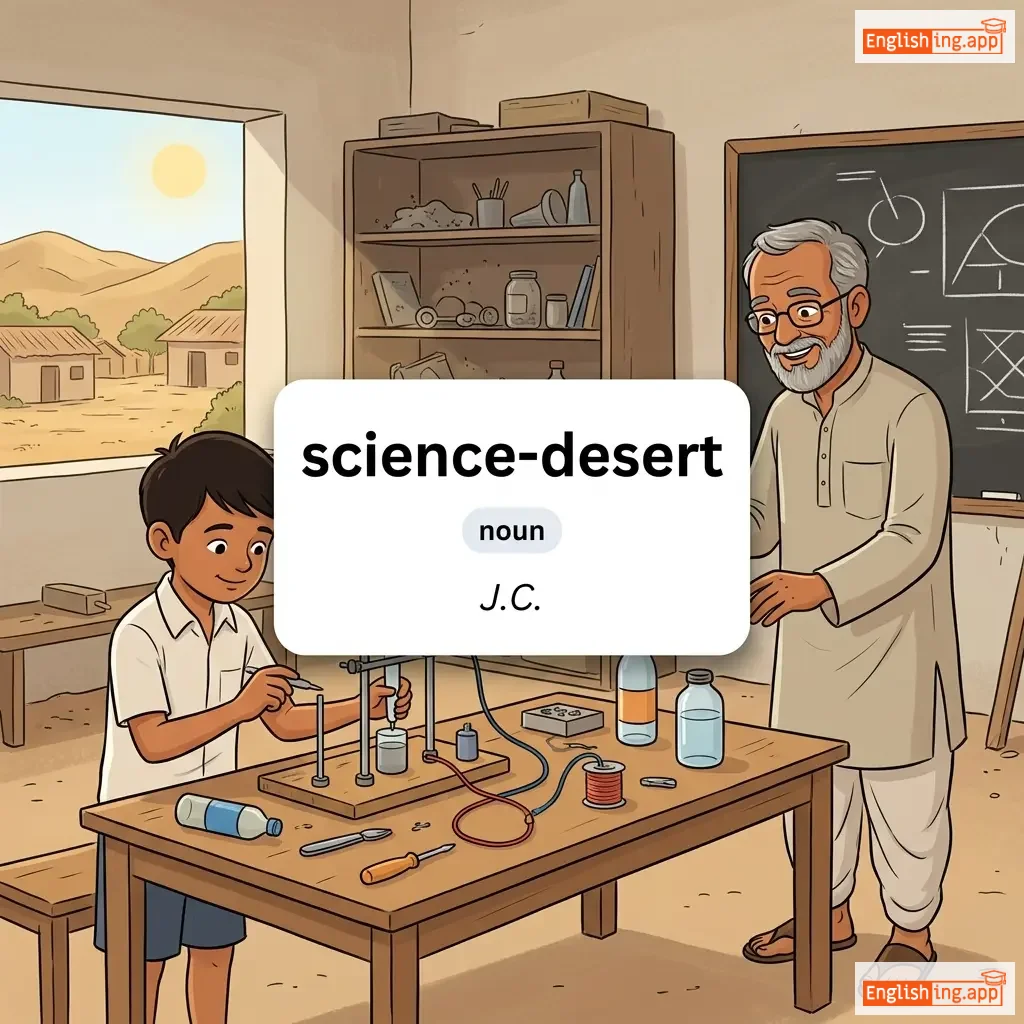
science-desert definition card — visual illustration of the meaning
noun C2
ˈsaɪəns ˈdezət
科学の砂漠 (kagaku no sabaku)

A region or area lacking in scientific development, research facilities, or educational institutions.

"J.C. Bose thrived in a science-desert."

"J.C. ボースは科学の砂漠で成功を収めました。" (J.C. Bōsu wa kagaku no sabaku de seikō o osamemashita.)
noun C2
/sɪnˈtɪl.ə/
小さな火花 (chiisana hibana)

A tiny trace or spark of a specified quality or feeling.

"There wasn’t a scintilla of doubt in her mind."

"彼女の心には疑いのひらめきもなかった。" (Kanojo no kokoro ni wa utagai no hirameki mo nakatta.)
verb C2
/ˈsɪn.tɪ.leɪt/
輝く (kagayaku)

to sparkle or shine brightly; to emit flashes of light

"The diamond ring scintillated under the bright lights."

"ダイヤモンドの指輪は明るい光の下で輝いていました。" (Daiyamondo no yubiwa wa akarui hikari no shita de kagayaite imashita.)
noun C2
/ˈsaɪ.ə.lɪz.əm/
表面的な知識の誇示 (hyōmen-tekina chishiki no koji)

pretentious show of superficial knowledge

"His speech was full of sciolism, impressing no one."

"彼のスピーチはサイオリズムで満ちており、誰も感動しなかった。" (Kare no supīchi wa saiorizumu de michite ori, dare mo kandō shinakatta.)
noun C2
/ˈsɪʒ.ən/
分裂 (bunretsu)

the act of cutting or dividing something

"The political party suffered a scission over ideological disputes."

"その政党はイデオロギーの対立により分裂を経験しました。" (Sono seitō wa ideorogī no tairitsu ni yori bunretsu o keiken shimashita.)
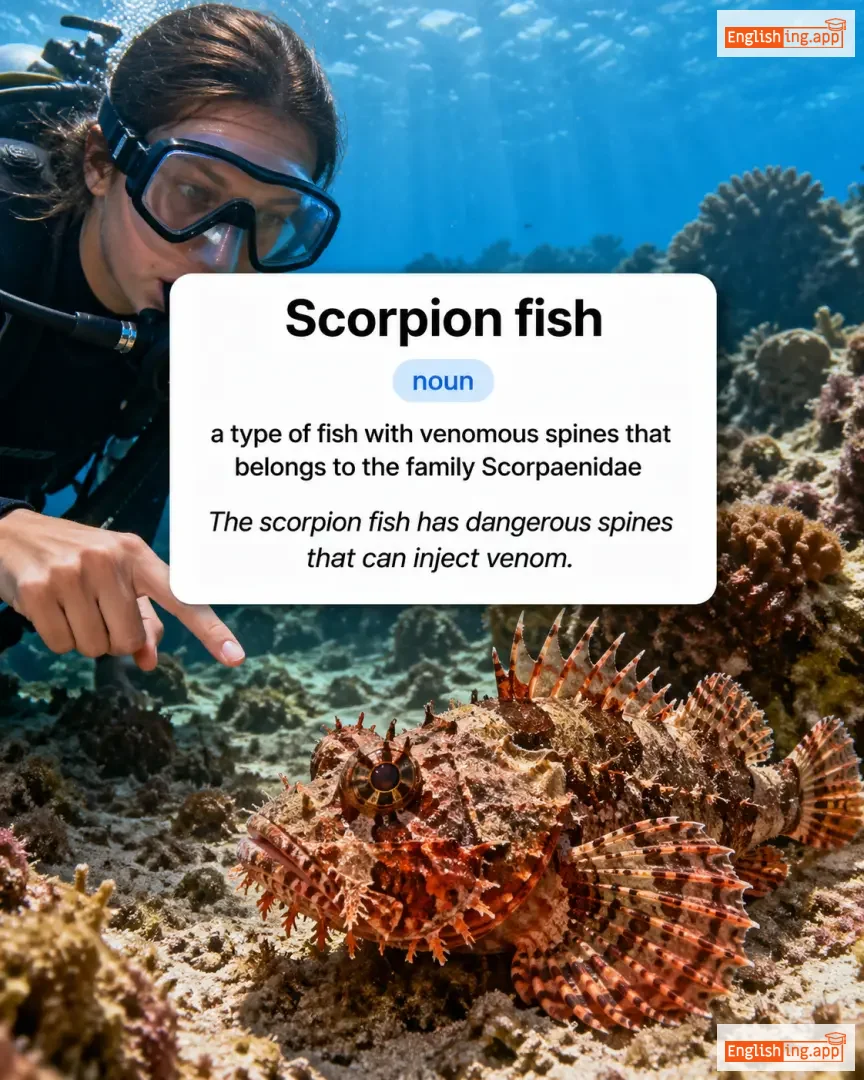
Scorpion fish definition card — visual illustration of the meaning
noun C2
/ˈskɔːrpiən fɪʃ/
オニカサゴ (onikasa go)

a type of fish with venomous spines that belongs to the family Scorpaenidae

"The scorpion fish has dangerous spines that can inject venom."

"オニカサゴは毒を注入できる危険な棘を持っています。" (onikasa go wa doku o chunyu dekiru kiken na toge o motteimasu)
noun C2
/skriːd/
長く退屈な文書 (nagaku taikutsu na bunsho)

a long, tedious piece of writing or speech; also a layer of material like cement spread on a surface

"He delivered a long screed against corruption."

"彼は腐敗に反対する長いスピーチをしました。" (Kare wa fuhai ni hantai suru nagai supīchi o shimashita.)
noun C2
/ˈskʌl.i.ən/
台所の使用人 (daidokoro no shiyoujin)

a servant assigned the most menial kitchen tasks

"In medieval times, a scullion was responsible for cleaning pots and pans."

"中世の時代、スカリオンは鍋やフライパンを掃除する責任がありました。" (chūsei no jidai, sukarion wa nabe ya furaipan o sōji suru sekinin ga arimashita.)
adjective C2
/ˈskʌr.ɪ.ləs/
中傷的な (chūshō-teki na)

Using or expressed in coarse, abusive, or slanderous language.

"The politician faced criticism for his scurrilous remarks about his opponent."

"その政治家は対立候補についての中傷的な発言で批判を浴びた。" (Sono seijika wa tairitsukōho ni tsuite no chūshō-teki na hatsugen de hihan o abita.)