词汇表

英语词汇词典 | 单词含义、定义和示例

noun C2
/ˈskɜː.vi/
স্কার্ভি রোগ (skorvi rog)

A disease caused by a deficiency of vitamin C, leading to weakness, gum disease, and bleeding.

"Sailors often suffered from scurvy during long sea voyages without fresh fruits."

"তাজা ফল ছাড়া দীর্ঘ সমুদ্রযাত্রায় নাবিকরা প্রায়ই স্কার্ভি রোগে আক্রান্ত হতেন।" (Taja fol chhara dirgho somudrojatray nabikra prai skorvi roge akranto hoten.)
adjective C2
/ˈsiːmi/
নীচু, কলঙ্কিত (nichu, kolonkito)

Morally degraded, unpleasant, or sordid.

"The novel reveals the seamy side of city life."

"উপন্যাসটি শহরের জীবনের নীচু দিকটি প্রকাশ করে।" (Uponnastoti shohorer jiboner nichu dikti prokash kore.)
adjective C2
/sɪˈbeɪʃəs/
তৈলগ্রন্থি সম্পর্কিত (toilogronti somprokito)

Relating to or secreting sebum, an oily substance from the skin.

"Acne is often caused by overactive sebaceous glands."

"অ্যাকনে সাধারণত অতিসক্রিয় তৈলগ্রন্থির কারণে হয়।" (Akne shadharonoto otisokriyo toilogrontir karone hoy.)
noun C2
/ˈsiːkənt/
ছেদক রেখা (chedok rekha)

A straight line that intersects a curve at two or more points.

"In geometry, a secant cuts the circle at two distinct points."
"জ্যামিতিতে, একটি সেক্যান্ট বৃত্তকে দুটি পৃথক বিন্দুতে ছেদ করে।" (Jyamiti te, ekti secant britto ke duti prithok bindute ched kore.)
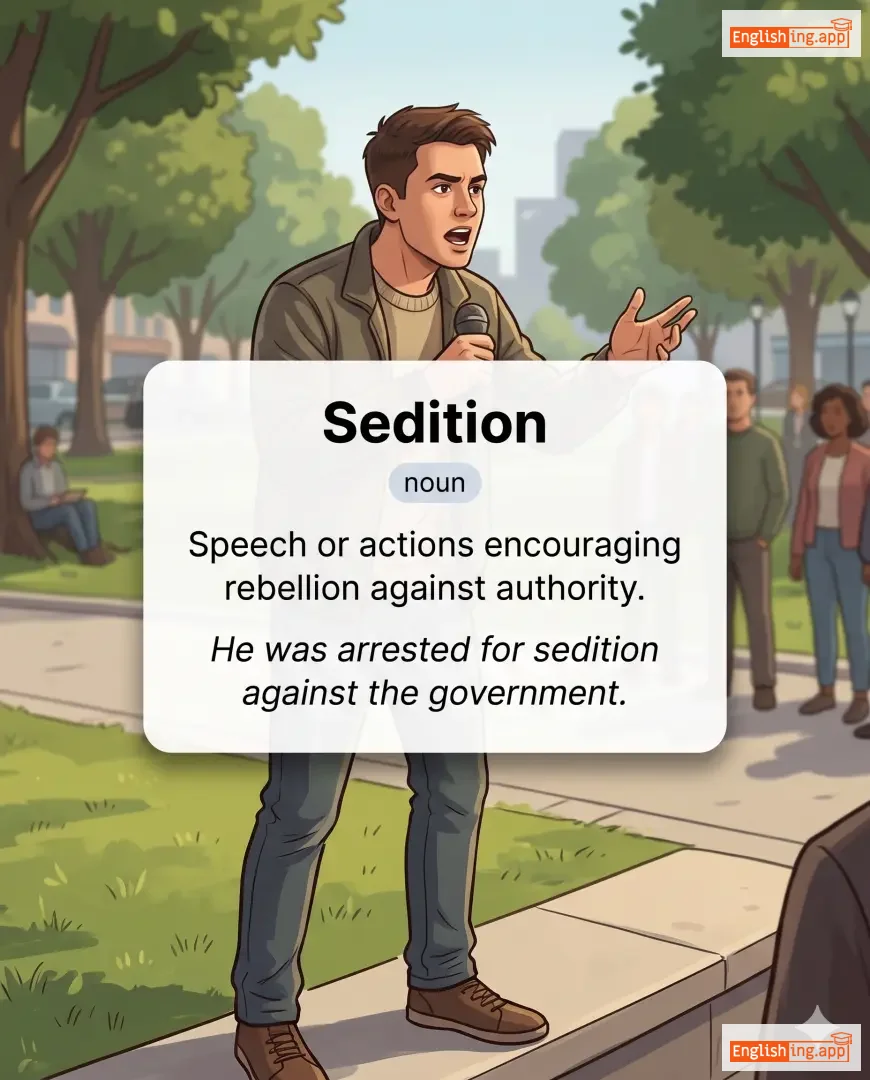
Sedition definition card — visual illustration of the meaning
noun C2
/sɪˈdɪʃən/
রাষ্ট্রদ্রোহ (rastradroh)

Speech or actions encouraging rebellion against authority.

"He was arrested for sedition against the government."

"সরকারের বিরুদ্ধে রাষ্ট্রদ্রোহের অভিযোগে তাকে গ্রেফতার করা হয়েছিল।" (Sorkarer biruddhe rastradroher obhijoge take greftar kora hoyechilo.)
adjective C2
/sɪˈdɪʃəs/
রাষ্ট্রদ্রোহী (rastradrohi)

Encouraging rebellion against authority.

"The activist spread seditious pamphlets among the crowd."
"কর্মীটি জনতার মধ্যে রাষ্ট্রদ্রোহী প্রচারপত্র ছড়িয়ে দিয়েছিল।" (Kormiti jonotar moddhe rastradrohi procharpotro chariye diyechilo.)
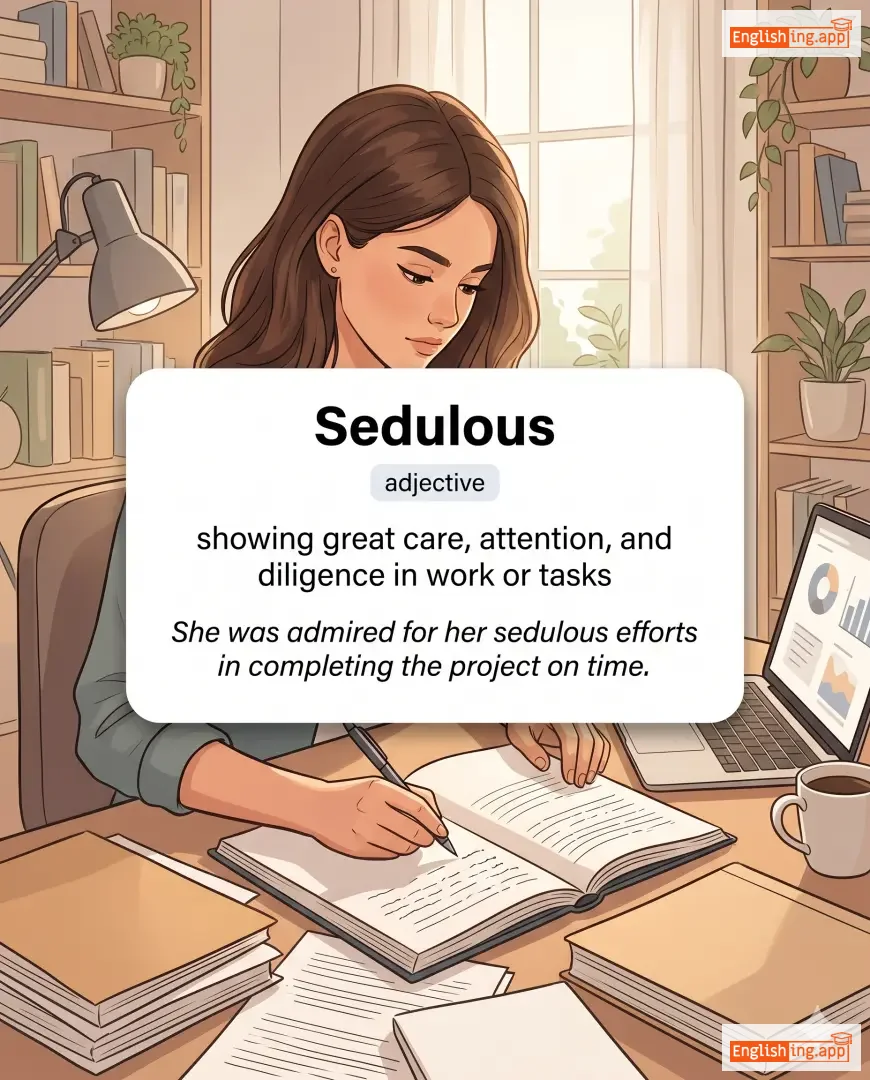
Sedulous definition card — visual illustration of the meaning
adjective C2
/ˈsɛdʒʊləs/
পরিশ্রমী (porishromi)

showing great care, attention, and diligence in work or tasks

"She was admired for her sedulous efforts in completing the project on time."

"সময়মতো প্রকল্প শেষ করার জন্য তার পরিশ্রমী প্রচেষ্টার প্রশংসা করা হয়েছিল।" (Somoy moto prokolpo shesh korar jonno tar porishromi prochestar proshongsha kora hoyechilo.)
adjective C2
/ˈsiːmli/
উপযুক্ত (upojukto)

proper or appropriate in behavior or appearance

"It was not seemly to argue loudly during the ceremony."

"অনুষ্ঠানের সময় জোরে তর্ক করা শোভন ছিল না।" (Onusthaner somoy jore torko kora shovon chilo na.)
noun C2
/ˈseɪnjər/
জমিদার (jomidar)

A feudal lord; a man of authority in medieval Europe.

"The seignior demanded taxes from the peasants."

"সেইনিয়র কৃষকদের কাছ থেকে কর দাবি করেছিলেন।" (Seinior krishokder kach theke kor dabi korechhilen.)
noun C2
/seɪn/
বড় জাল (boro jal)

A large fishing net that hangs vertically in the water.

"The fishermen cast their seine into the river."

"জেলেরা নদীতে তাদের বড় জাল ফেলেছিল।" (Jelera nodite tader boro jal phelechhilo.)
noun C2
/ˈsaɪz.mə.ɡræf/
ভূকম্পলিপিকার (bhukompolipikar)

An instrument that measures and records details of earthquakes, such as force and duration.

"The seismograph detected a strong tremor in the area."

"সিসমোগ্রাফ এলাকায় একটি শক্তিশালী কম্পন শনাক্ত করেছে।" (Sismograph elakay ekti shoktishali kompon shonakt koreche.)
noun C2
/ˌself əˈbeɪs.mənt/
নিজেকে ছোট করা (nijeke choto kora)

The act of belittling or humiliating oneself.

"His constant self-abasement made others uncomfortable."

"তার ক্রমাগত নিজেকে ছোট করার প্রবণতা অন্যদের অস্বস্তিতে ফেলেছিল।" (Tar kromogoto nijeke choto korar pronota onnodereke oshostite felchilo.)
adjective C2
/ˌsɛm.iˈsɪv.ə.laɪzd/
আংশিক সভ্য (anshik sabbo)

Partially civilized; having some aspects of civilization but not fully developed.

"The tribe was described as semicivilized by early explorers."

"প্রাচীন অভিযাত্রীরা উপজাতিকে আংশিক সভ্য হিসেবে বর্ণনা করেছিলেন।" (prachin obhijatrira upojatike anshik sabbo hisebe bornona korechhilen.)
adjective C2
/ˌsɛm.iˈkɒn.ʃəs/
আধা সচেতন (adha sochon)

Only partly conscious; not fully aware of surroundings.

"He was semiconscious after the accident and could barely respond."

"দুর্ঘটনার পর তিনি আধা সচেতন অবস্থায় ছিলেন এবং কষ্টে সাড়া দিচ্ছিলেন।" (durghotonar por tini adha sochon obosthay chhilen ebong koshte sara dichchhilen.)
noun C2
/ˈsɛm.ɪ.nɛr.i/
ধর্মতত্ত্ব শিক্ষা প্রতিষ্ঠান (dhormototto shikkha protisthan)

A school or college for training priests, ministers, or rabbis.

"He decided to enroll in a seminary to study theology."

"সে ধর্মতত্ত্ব অধ্যয়নের জন্য একটি সেমিনারিতে ভর্তি হওয়ার সিদ্ধান্ত নিল।" (se dhormototto oddhoyoner jonyo ekti seminary te vorti howar shiddhanto nilo.)
noun C2
/səˈnɛs.əns/
বার্ধক্য (bardhokko)

The process of growing old or the condition of aging.

"The biologist studied senescence in plants to understand aging."

"জীববিজ্ঞানী বার্ধক্য বোঝার জন্য গাছে বার্ধক্য প্রক্রিয়া নিয়ে গবেষণা করেছিলেন।" (jibbiggani bardhokko bojhar jonyo gache bardhokko prokriya niye gobeshona korechilen.)
noun C2
/sɛnˈsɔːrɪəm/
ইন্দ্রিয়কেন্দ্র (indriyo-kendro)

The part of the brain or mind concerned with the reception and interpretation of sensory stimuli.

"The patient’s sensorium was clouded after the accident."

"দুর্ঘটনার পর রোগীর ইন্দ্রিয়কেন্দ্র বিভ্রান্ত ছিল।" (durghotonar por rogir indriyo-kendro bivhranto chilo.)
adjective C2
/sɛnˈtɛnʃəs/
উপদেশপ্রবণ; নীতিকথামূলক (upodeshprabon; nitikothamulok)

Given to moralizing in a pompous or affected manner.

"His sententious remarks annoyed the audience."

"তার নীতিকথামূলক মন্তব্য শ্রোতাদের বিরক্ত করেছিল।" (Tar nitikothamulok mormotto shrotader birokt korechhilo.)
noun C2
/ˈsɛnʃəns/
চেতনা; অনুভূতিশীলতা (chetona; onubhutisshilota)

The capacity to feel, perceive, or experience subjectively.

"Many argue that animals possess sentience."

"অনেকেই মনে করেন যে প্রাণীদের চেতনা রয়েছে।" (Onekei mone koren je pranider chetona royechhe.)
adjective C2
/ˈsɛpərəbəl/
বিচ্ছিন্নযোগ্য (bichchhinnoyoggo)

Capable of being separated or divided.

"The two issues are separable and should be discussed independently."

"দুইটি বিষয় বিচ্ছিন্নযোগ্য এবং আলাদাভাবে আলোচনা করা উচিত।" (duiti bishoy bichchhinnoyoggo ebong aladabhabe alochona kora uchit.)
adjective C2
/sɛpˈtɛnɪəl/
সাত বছর অন্তর (sat bochor ontor)

Occurring every seven years.

"The festival is a septennial tradition in the village."

"গ্রামে উৎসবটি সাত বছর অন্তর একটি ঐতিহ্য।" (grame utsobti sat bochor ontor ekti oitihyo.)
noun C2
/ˈsɛpəlkər/
সমাধি (somadhi)

A small room or monument, cut in rock or built of stone, in which a dead person is buried.

"The ancient king was laid to rest in a grand sepulcher."

"প্রাচীন রাজাকে একটি বৃহৎ সমাধিতে সমাহিত করা হয়েছিল।" (Prachin rajake ekti brihot somadhite somahito kora hoyechhilo.)
adjective C2
/səˈpʌlkrəl/
সমাধি-সদৃশ, বিষণ্ণ (somadhi-sodrish, bishonno)

Relating to a tomb or burial; gloomy, dismal.

"The abandoned house had a sepulchral silence about it."
"পরিত্যক্ত বাড়িটিতে সমাধির মতো নীরবতা ছিল।" (Porityokto baritite somadhir moto nirobota chhilo.)
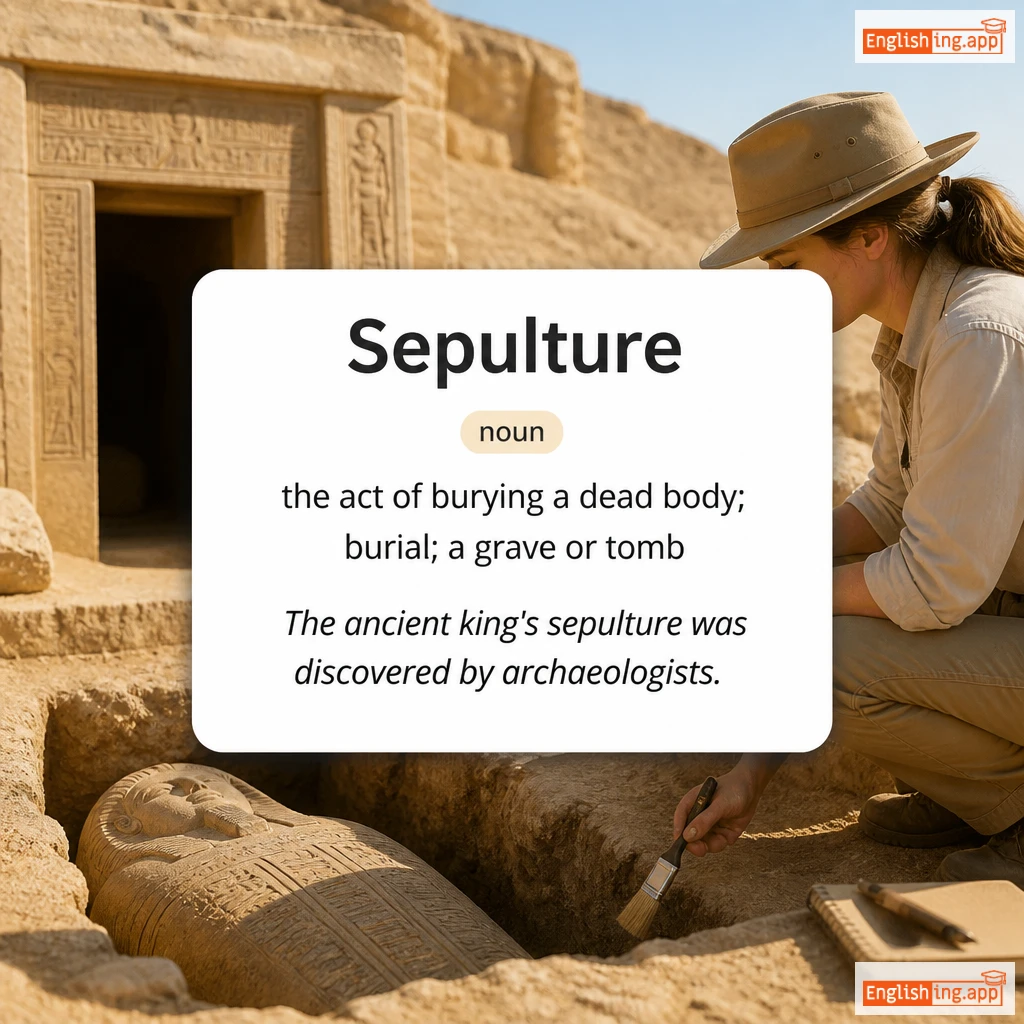
Sepulture definition card — visual illustration of the meaning
noun C2
/ˈsɛpəlˌtʃər/
দাফন; সমাধিস্থকরণ; (dafon)

the act of burying a dead body; burial; a grave or tomb

"The ancient king's sepulture was discovered by archaeologists."

"প্রাচীন রাজার সমাধি প্রত্নতাত্ত্বিকদের দ্বারা আবিষ্কৃত হয়েছিল।" (prachin rajar samadhi protnotattbikder dwara abishkrito hoyechilo)
adjective C2
/sɪˈkweɪʃəs/
অন্ধভাবে অনুসারী (ondhobhave onusari)

Lacking independence of thought; blindly following.

"The sequacious students never questioned their teacher's opinions."

"অন্ধভাবে অনুসারী ছাত্ররা কখনও শিক্ষকের মতামত প্রশ্ন করেনি।" (Ondhobhave onusari chatrara kokhono shikhoker motamot prosno koreni.)
noun C2
/sɪˈkwiːlə/
পরিণাম (porinam)

A condition that is the consequence of a previous disease or injury.

"Lung scarring can be a sequela of severe pneumonia."

"তীব্র নিউমোনিয়ার পরিণতি হিসেবে ফুসফুসে দাগ হতে পারে।" (tibro pneumonia-r porinoti hisebe fusfuse dag hote pare.)
adjective C2
/ˈsiːkwənt/
পরবর্তী (poroborti)

Following in order or as a result.

"The sequent events changed the course of history."

"পরবর্তী ঘটনাগুলি ইতিহাসের গতিপথ পরিবর্তন করেছিল।" (poroborti ghotonaguli itihasher gotipoth poriborton korechilo.)
verb C2
/sɪˈkwɛstreɪt/
দখল করা (dokhol kora)

To take legal possession of assets until a debt is paid or disputes are resolved.

"The court decided to sequestrate the company's property."

"আদালত কোম্পানির সম্পত্তি দখল করার সিদ্ধান্ত নিয়েছিল।" (adalot companyr sompotti dokhol korar siddhanto niechilo.)
noun C2
/ˈsɛrəf/
দেবদূত (debdoot)

An angelic being associated with light and purity, often depicted as a high-ranking angel in Christian theology.

"The stained-glass window depicted a seraph with outstretched wings."

"স্টেইন্ড-গ্লাস জানালায় ডানা মেলা এক সেরাফকে চিত্রিত করা হয়েছিল।" (Steind-glass janalay dana mela ek seraphke chitrito kora hoyechilo.)
adjective C2
/səˈræfɪk/
দেবদূতের মতো (debdooter moto)

Of or like a seraph; angelic, pure, and blissful.

"She gave him a seraphic smile that calmed his fears."

"সে তাকে এমন এক দেবদূতের মতো হাসি দিল যা তার ভয়কে শান্ত করেছিল।" (Se take emon ek debdooter moto hasi dilo ja tar bhoyke shanto korechilo.)
adjective C2
/sɪər/
শুকনো (shukno)

Dry or withered, especially vegetation.

"The sere leaves crumbled under his feet."

"শুকনো পাতাগুলো তার পায়ের নিচে ভেঙে পড়ল।" (Shukno patagulo tar payer niche bhenge porlo.)
noun C2
/ˈsɜːfdəm/
দাসত্ব (dastotto)

The status or condition of being a serf, bound to work for a lord.

"Many peasants in medieval Europe lived under serfdom."

"মধ্যযুগীয় ইউরোপে অনেক কৃষক দাসত্বের অধীনে বাস করত।" (Maddhyajugiyo Europ-e onek krishok dastotter odhine bas korto.)
noun C2
/ˈsɑːrdʒənt ət ɑːrmz/
শৃঙ্খলা রক্ষাকারী অফিসার (shrinkhola rokkhakari officer)

An officer responsible for maintaining order during meetings or legislative sessions.

"The sergeant-at-arms escorted the disruptive member out of the hall."

"সার্জেন্ট-অ্যাট-আর্মস অশান্ত সদস্যকে হল থেকে বের করে দিলেন।" (Sarjent-at-arms oshanto sadossho ke hall theke ber kore dilen.)
verb C2
/ˈsɛreɪt/
করাত-দাঁতের মতো খাঁজ করা (korat-dhater moto khaj kora)

To make a saw-toothed edge or notched margin.

"The craftsman serrated the knife blade for better cutting."

"কারিগর ভাল কাটার জন্য ছুরির ধার করাত-দাঁতের মতো খাঁজ করে দিয়েছিলেন।" (Karigor bhalo katar jonne churir dhar korat-dhater moto khaj kore diyechhilen.)
adjective C2
/ˈsɛrid/
ঘনসন্নিবিষ্ট (ghonosonnibishta)

pressed or crowded together, often in rows or ranks

"The soldiers stood in serried ranks, ready for inspection."
"সৈন্যরা ঘন সারিতে দাঁড়িয়েছিল, পরিদর্শনের জন্য প্রস্তুত।" (Soinyora ghono sarite dariyechhilo, poridorshoner jonno prostut.)
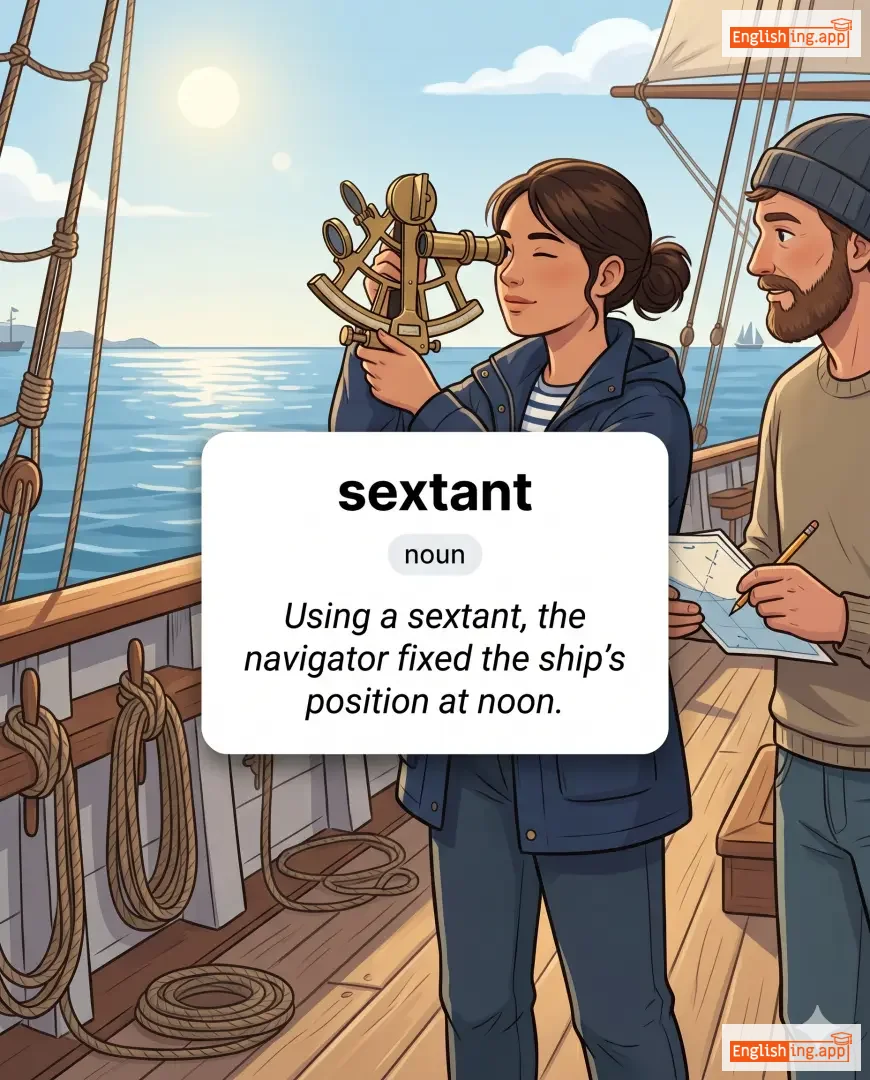
sextant definition card — visual illustration of the meaning
noun C2
/ˈsɛkstənt/
সেক্সট্যান্ট (sekstyant)

a navigational instrument with a graduated arc of 60°, used to measure the angle between a celestial object and the horizon

"Using a sextant, the navigator fixed the ship’s position at noon."

"একটি সেক্সট্যান্ট ব্যবহার করে নাবিক দুপুরে জাহাজের অবস্থান নির্ধারণ করলেন।" (Ekti sekstyant byabohar kore nabik dupure jahajer obosthan nirdharon korlen.)
noun C2
/sɛkˈstɛt/
ছয়জনের সঙ্গীতদল (choyjoner songitdol)

a group of six people playing music or a piece written for six performers

"The jazz sextet filled the small club with a warm, layered sound."

"জ্যাজের এই ছয়জনের দলটি ছোট ক্লাবটি উষ্ণ, স্তরযুক্ত সুরে ভরিয়ে দিল।" (Jjaaz er ei choyjoner dolti choto klabti ushno, starjuto sure bhoriye dilo.)
verb C2
/sɛkˈstuːpəl/
ছয়গুণ করা (choygun kora)

to make or become six times as great or as many

"Within two quarters, the campaign sextupled their daily sign-ups."
"দুই কোয়ার্টারের মধ্যে ক্যাম্পেইনটি তাদের দৈনিক সাইন-আপ ছয়গুণ বাড়িয়ে দিল।" (Dui quarter er moddhe campeinti tader dainik sign up choygun bariye dilo.)
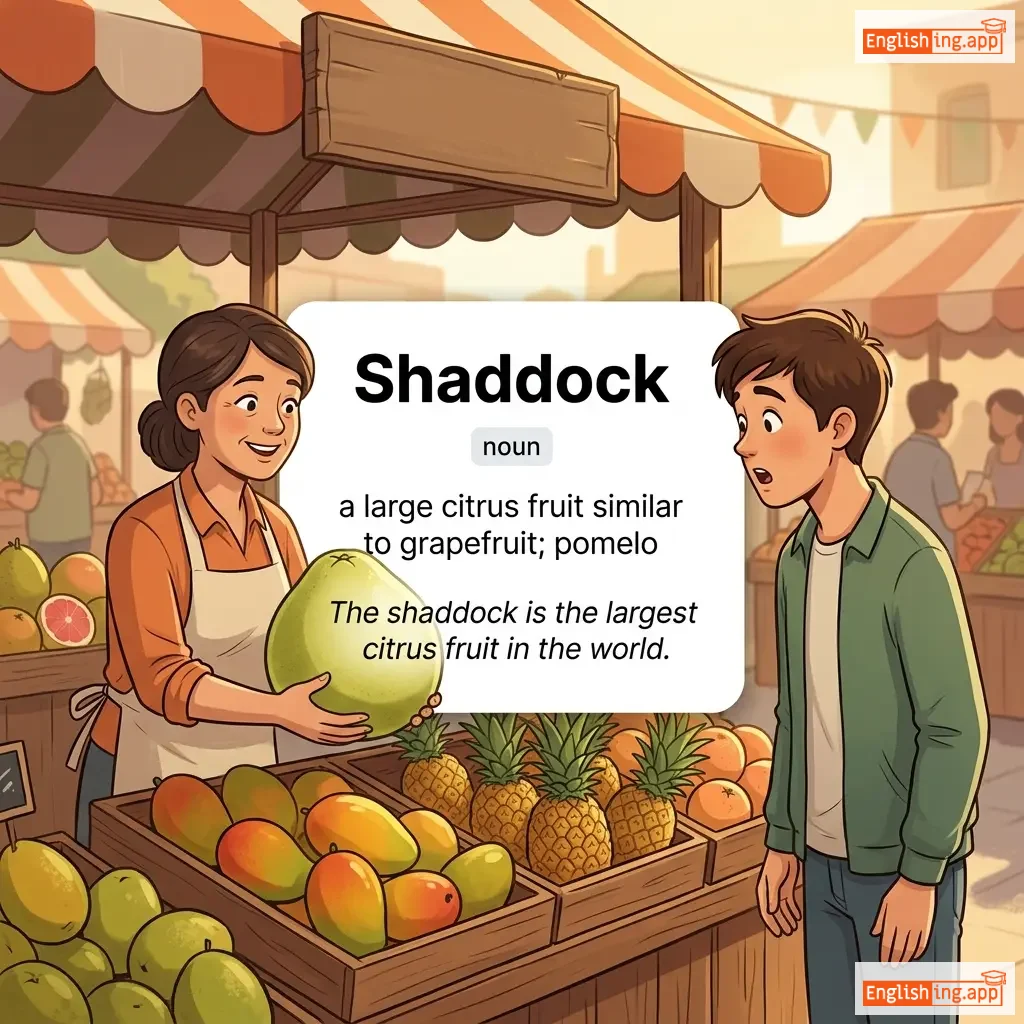
Shaddock definition card — visual illustration of the meaning
noun C2
/ˈʃæd.ək/
বাতাবিলেবু (batabilebu)

a large citrus fruit similar to grapefruit; pomelo

"The shaddock is the largest citrus fruit in the world."

"বাতাবিলেবু পৃথিবীর সবচেয়ে বড় লেবু জাতীয় ফল।" (batabilebu prithibir shobcheye boro lebu jatiyo phol)
noun C2
/ˌʃæŋɡriˈlɑː/
কল্পিত স্বর্গ (kolpito sworgo)

a remote, beautiful, imaginary place where life is perfect and peaceful

"They described the island as a modern-day Shangri-La."

"তারা দ্বীপটিকে আধুনিক যুগের একটি স্বর্গ হিসেবে বর্ণনা করেছিল।" (Tara diptike adhunik juger ekti sworgo hisebe bornona korechilo.)
noun C2
/ʃiːf/
ধানের আঁটি (dhaner ati)

a bundle of grain stalks laid lengthwise and tied together after reaping; a bundle of objects tied together

"The farmer carried a sheaf of wheat on his shoulder."
"কৃষক কাঁধে ধানের আঁটি বহন করছিল।" (Krishok kandhe dhaner ati bohon korchilo.)
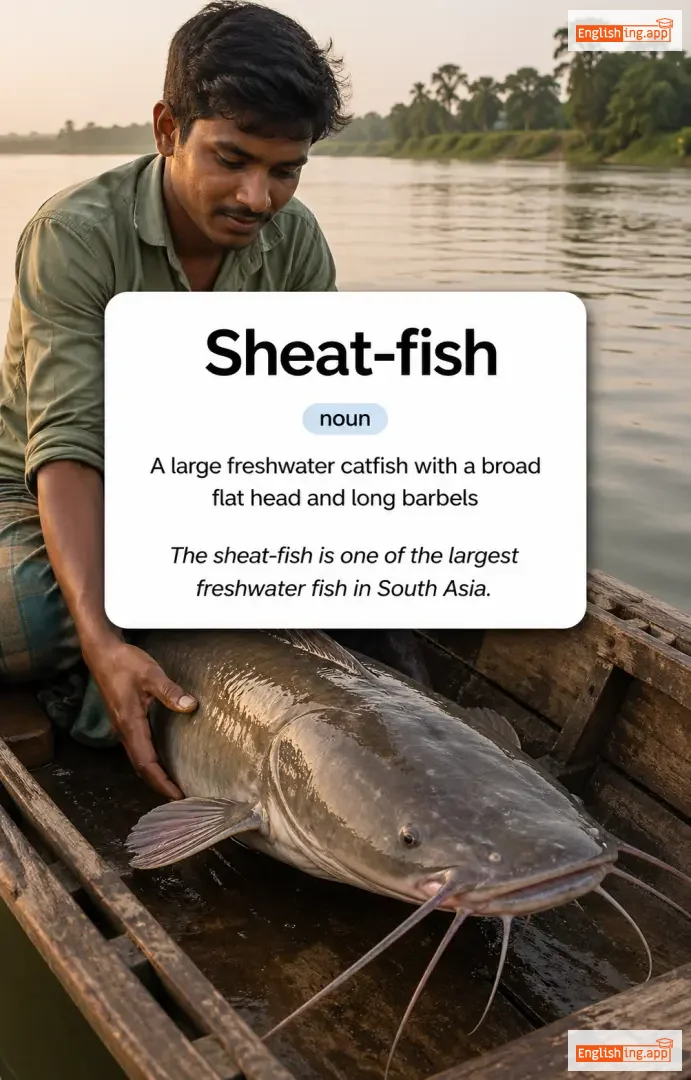
Sheat-fish definition card — visual illustration of the meaning
noun C2
/ʃiːt fɪʃ/
বোয়াল মাছ (boal mach)

A large freshwater catfish with a broad flat head and long barbels

"The sheat-fish is one of the largest freshwater fish in South Asia."

"বোয়াল মাছ দক্ষিণ এশিয়ার বৃহত্তম মিঠাপানির মাছগুলির মধ্যে একটি।" (boal mach dokkhhin eshiyar brihotom mithapanir machgulir moddhe ekti)
verb C2
/ʃiːð/
খাপে ঢোকানো (khape dhokano)

to put a sword or knife back into its cover

"He quickly sheathed his sword after the duel."

"যুদ্ধের পর সে দ্রুত তরোয়াল খাপে ঢুকিয়ে নিল।" (Judher por se druto tarowal khape dhukiye nilo.)
noun C2
/ˈʃɪbəˌlɛθ/
প্রচলিত স্লোগান বা বিশ্বাস (procholito slogan ba bishwas)

A custom, phrase, or belief distinguishing a particular group of people, often used to identify outsiders.

"The phrase became a political shibboleth during the campaign."

"বাক্যাংশটি নির্বাচনী প্রচারণার সময় একটি রাজনৈতিক স্লোগানে পরিণত হয়েছিল।" (Bakyangsho nirobachoni procharonar somoy ekti rajnaitik slogane porinoto hoyechhilo.)
adjective C2
/ˈʃɪft.ləs/
অলস (olos)

Lacking ambition or the ability to accomplish anything; lazy and unmotivated.

"He was seen as a shiftless young man with no goals."

"তাকে লক্ষ্যহীন এক অলস যুবক হিসেবে দেখা হত।" (Take lokkhohin ek olos jubok hisebe dekha hoto.)
adjective C2
/ˈʃɑːpwɔːrn/
অপচনশীল / পুরনো (opochonshil / purono)

worn or faded from being displayed in a shop; no longer fresh or original

"The shopworn shoes were sold at a discount."

"শপওর্ন জুতাগুলো ছাড়ে বিক্রি করা হয়েছিল।" (Shopworn jutagulo chare bikri kora hoyechilo.)
verb C2
/ʃʌk/
খোসা ছাড়ানো (khosa charano)

To remove the outer covering, such as the husk of corn or shell of shellfish.

"She learned how to shuck oysters quickly."

"সে দ্রুত কিভাবে ঝিনুকের খোসা ছাড়াতে হয় তা শিখেছিল।" (Se druto kivabe jhinuker khosa charate hoy ta shikhechhilo.)
noun C2
/ˈʃaɪstər/
প্রতারক (protarok)

a person, especially a lawyer, who uses unscrupulous or dishonest methods

"The businessman was exposed as a shyster who cheated clients."

"ব্যবসায়ীটিকে প্রতারক হিসেবে ধরা হয়েছিল, যে ক্লায়েন্টদের ঠকাত।" (Byabshayitike protarok hisebe dhora hoyechhilo, je clientder thokato.)
noun C2
/ˈsɪbɪləns/
সিসকার শব্দ (siskar shobdo)

A hissing or hushing sound, especially in speech with 's' or 'sh'.

"The poet used sibilance to create a soft, hissing effect in the verse."

"কবি কবিতায় নরম, হিসিং ধ্বনি তৈরি করতে সিবিল্যান্স ব্যবহার করেছিলেন।" (Kobi kobitay norom, hissing dhoni toiri korte sibilance byabohar korechilen.)
adjective C2
/ˈsɪbɪlənt/
হিসিং ধ্বনিযুক্ত (hissing dhoniyukto)

Making or characterized by a hissing sound.

"The word 'snake' starts with a sibilant sound."

"'স্নেক' শব্দটি একটি সিবিল্যান্ট ধ্বনিতে শুরু হয়।" ('Snake' shobdoti ekti sibilant dhonite shuru hoy.)