词汇表

英语词汇词典 | 单词含义、定义和示例

adjective C2
/ˈnɔɪsəm/
恶臭 (èchòu)

Having an extremely unpleasant smell; offensive or harmful.

"The dump emitted a noisome odor that spread through the town."

"垃圾场散发出一股令人不悦的气味,弥漫到整个城市。" (Lājī chǎng sànfā chū yī gǔ lìng rén bù yuè de qìwèi, mímàn dào zhěnggè chéngshì.)
noun C2
/ˈnoʊmənˌkleɪtʃər/
命名法 (mingmingfa)

A system of names or terms used in a particular science, art, or field.

"The chemical nomenclature can be difficult for beginners to understand."

"化学命名法对初学者来说可能很难理解。" (Huàxué mìngmíngfǎ duì chūxuézhě lái shuō kěnéng hěn nán lǐjiě.)
adjective C2
/ˈnɒmɪk/
与法律相关 (yǔ fǎlǜ xiāngguān)

Relating to laws, rules, or systems.

"The philosopher discussed the nomic necessity of natural laws."

"哲学家讨论了自然法则的诺米克必要性。" (Zhéxuéjiā tǎolùnle zìrán fǎzé de nuòmǐkè bìyào xìng.)
noun C2
/ˌnɒn ˈsɛkwɪtər/
无关的评论 (wúguān de pínglùn)

a statement or conclusion that does not logically follow from the previous statement

"His comment about the weather was a complete non sequitur during the budget discussion."

"他关于天气的评论在预算讨论中完全是无关的评论。" (Tā guānyú tiānqì de pínglùn zài yùsuàn tǎolùn zhōng wánquán shì wúguān de pínglùn.)
noun, adjective C2
/nɒn ˈkɒmbətənt/
非战斗人员 (fei zhàndòu rényuán)

a person not engaged in fighting during a war, such as civilians or medical staff

"The Red Cross workers were treated as non-combatants in the conflict."
"红十字会的工作人员在冲突中被视为非战斗人员。" (Hóng shízì huì de gōngzuò rényuán zài chōngtū zhōng bèi shìwéi fēi zhàndòu rényuán.)
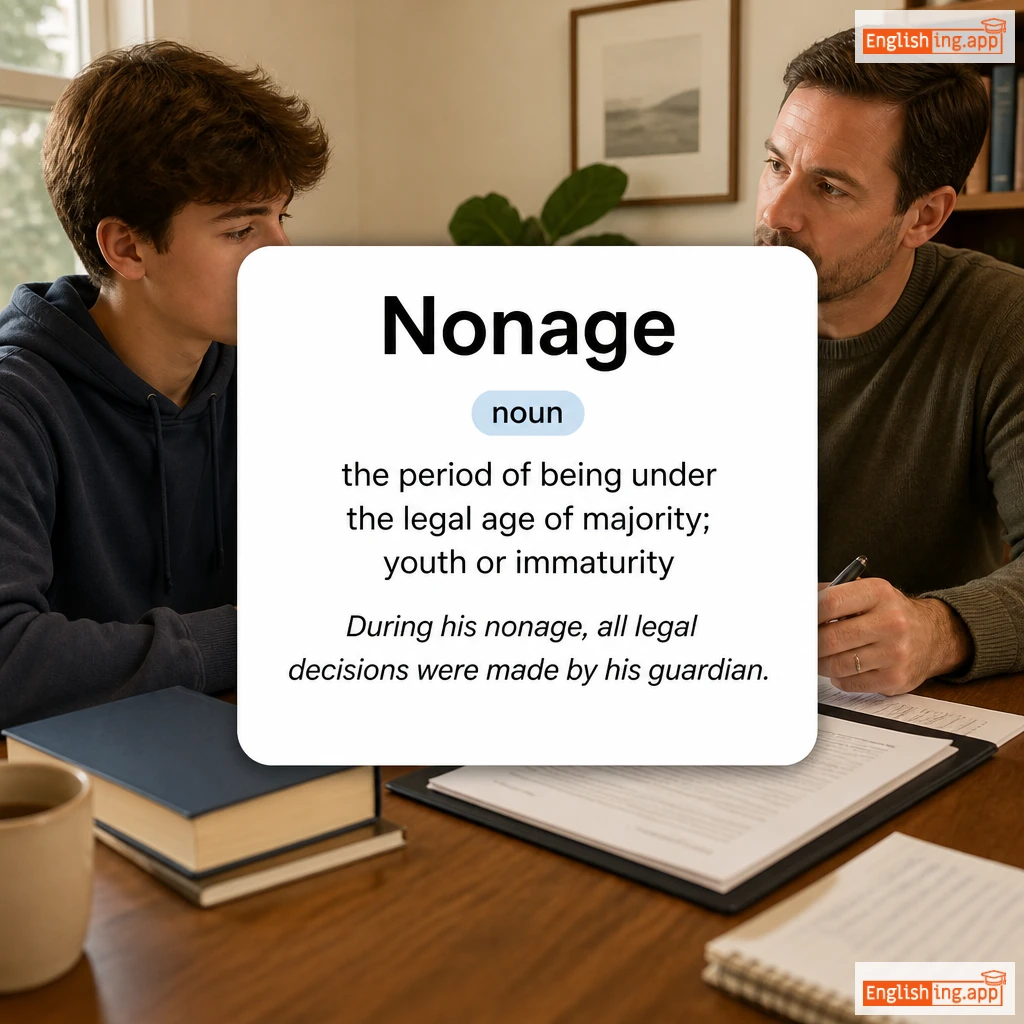
Nonage definition card — visual illustration of the meaning
noun C2
/ˈnɒn.ɪʤ/
未成年时期 (nonij)

the period of being under the legal age of majority; youth or immaturity

"During his nonage, all legal decisions were made by his guardian."

"在他未成年时期,所有法律决定都由他的监护人作出。" (zai ta wei chengnian shiqi, suo you falv jue ding dou you ta de jianhu ren zuo chu.)
adjective C2
/ˌnɒnkəˈmɪtl̩/

Not expressing or showing a clear opinion, decision, or commitment.

"She gave a noncommittal reply when asked about her future plans."

adjective C2
/ˌnɒndɪˈskrɪpt/
无特色 (wú tèsè)

Lacking distinctive or interesting features; dull and unremarkable.

"He lives in a nondescript apartment building on the edge of town."
"他住在市区边缘的一座无特色的公寓楼里。" (Tā zhù zài shìqū biānyuán de yī zuò wú tèsè de gōngyù lóu lǐ.)
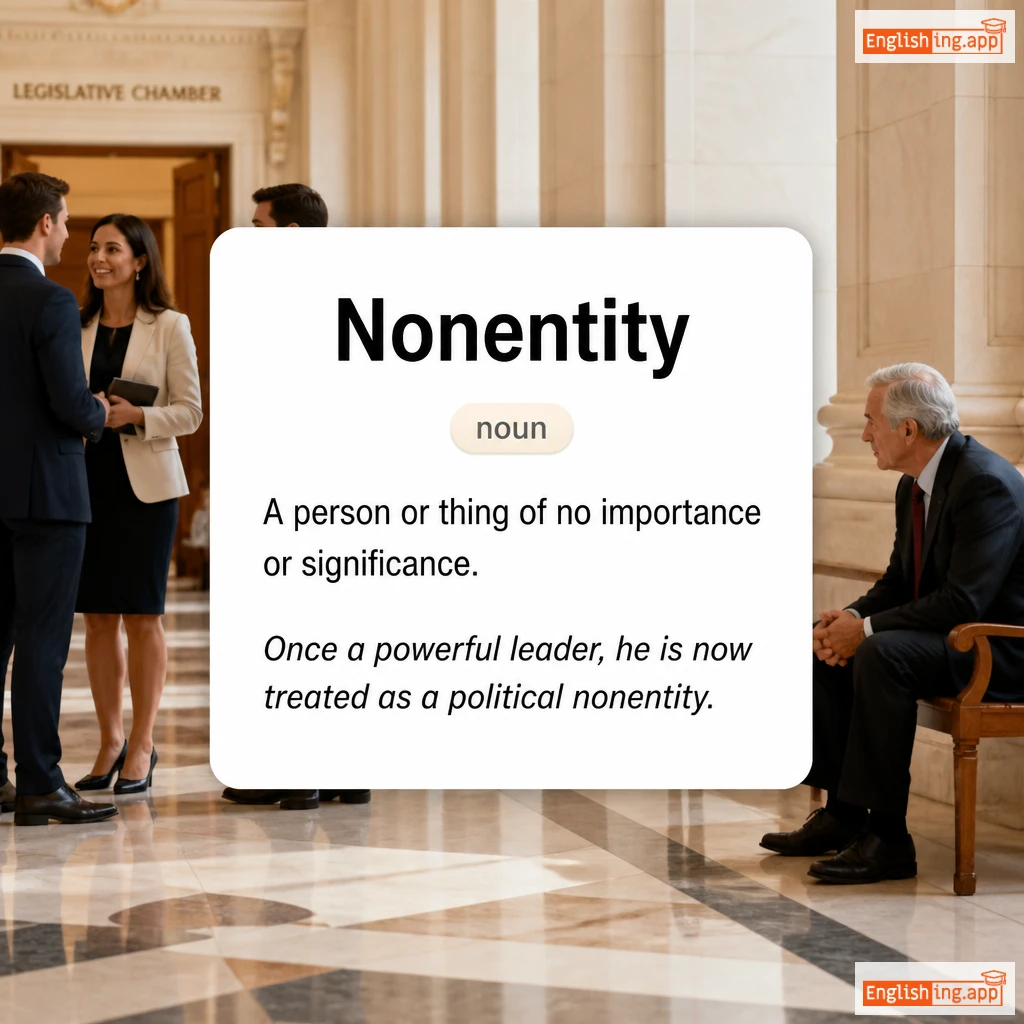
Nonentity definition card — visual illustration of the meaning
noun C2
/nɒnˈentəti/
無關緊要的人物 (wú guān jǐn yào de rén wù)

A person or thing of no importance or significance.

"Once a powerful leader, he is now treated as a political nonentity."

"曾經是強大的領袖,現在被視為政治上的無足輕重人物。" (Céng jīng shì qiáng dà de lǐng xiù, xiàn zài bèi shì wéi zhèng zhì shàng de wú zú qīng zhòng rén wù.)
adjective C2
/ˌnɒnpəˈreɪl/
无与伦比 (wu yu lun bi)

Having no equal; unrivaled or matchless.

"Her beauty was considered nonpareil in the region."

"她的美貌在该地区被认为是无与伦比的。" (ta de meimao zai gai diqu bei renwei shi wu yu lun bi de)
verb C2
/ˌnɒnˈplʌs/
使困惑 (shǐ kùnhuò)

To surprise and confuse someone so much that they are unsure how to react.

"The unexpected question seemed to nonplus the speaker."

"这个意外的问题似乎让发言者感到困惑。" (Zhège yìwài de wèntí shìhū ràng fāyán zhě gǎndào kùnhuò.)
verb C2
/ˌnɒnˈplʌst/
困惑的 (kunhuo de)

Past tense of nonplus; surprised and confused.

"She was completely nonplused by his sudden decision."

"她完全被他突如其来的决定弄得不知所措。" (Ta wanquan bei ta turuqilai de jueding nongde bu zhi suo cuo.)
verb C2
/ˌnɒnˈplʌst/
困惑 (kunhuo)

Past tense of nonplus; surprised and unsure how to react.

"He stood nonplussed at the strange remark."

"他对奇怪的评论感到困惑。" (Tā duì qíguài de pínglùn gǎndào kùnhuò.)
adjective C2
/ˌnɒnˈtrɪviəl/
非平凡 (fei pingfan)

Not simple or easy; requiring effort or significant thought.

"Solving the equation turned out to be a nontrivial task."

"解决方程被证明是一个非平凡的任务。" (Jiejue fangcheng bei zhengming shi yige fei pingfan de renwu.)
noun C2
/ˈnoʊzˌɡeɪ/
花束 (huā shù)

a small bunch of flowers, typically given as a gift or carried for decoration

"She carried a nosegay of fresh roses to the ceremony."
"她拿着一束新鲜的玫瑰花去参加仪式。" (Tā názhe yī shù xīnxiān de méiguī huā qù cānjiā yíshì.)
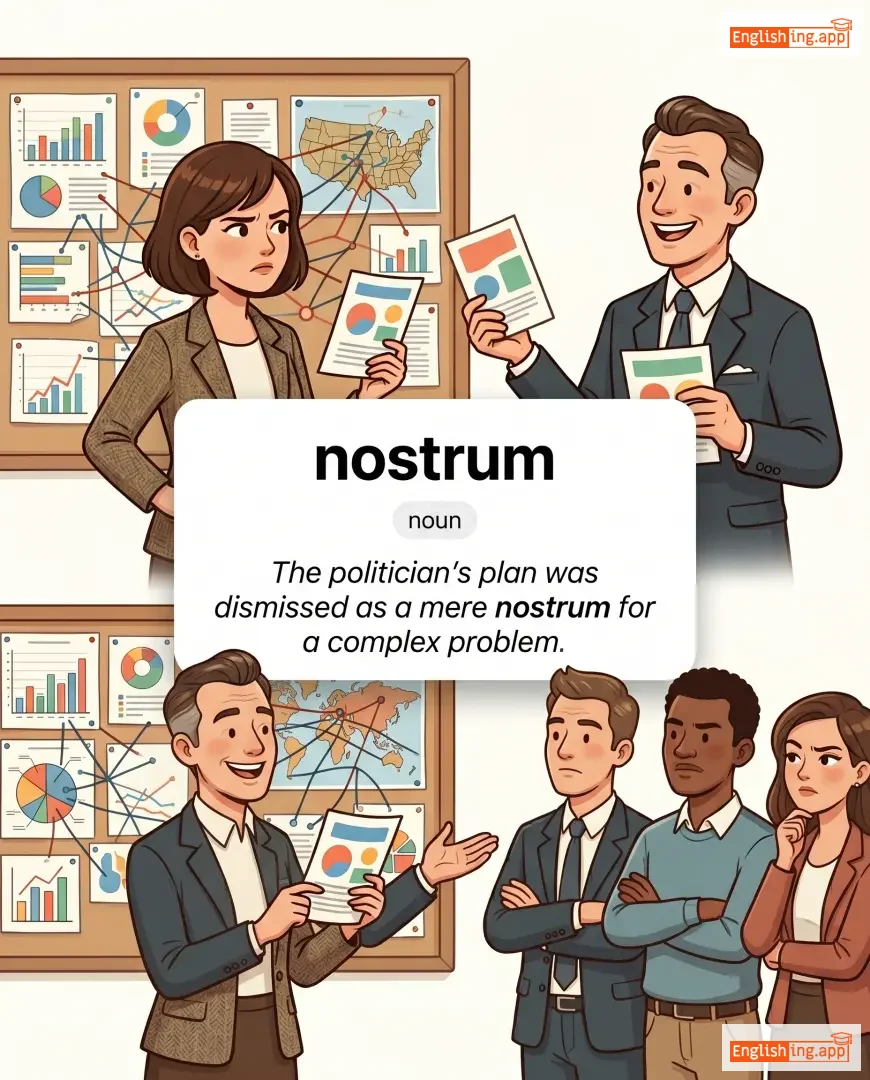
nostrum definition card — visual illustration of the meaning
noun C2
/ˈnɑːstrəm/
无效的药物 (wuxiao de yaowu)

a medicine or remedy, especially one that is not considered effective; a questionable solution

"The politician’s plan was dismissed as a mere nostrum for a complex problem."

"政治家的计划被视为一个复杂问题的简单无效药物。" (Zhèngzhì jiā de jìhuà bèi shì wéi yīgè fùzá wèntí de jiǎndān wúxiào yàowù.)
noun C2
/ˌnɒvəˈlɛt/
短篇小说 (duǎnpiān xiǎoshuō)

A short novel or long short story.

"The author published a novellette as a preview of her upcoming series."

"作者作为她即将发布的系列的预览,发布了一个短篇小说。" (Zuòzhě zuòwéi tā jíjiāng fābù de xìliè de yùlǎn, fābùle yīgè duǎnpiān xiǎoshuō.)
adjective C2
/ˈnjuːbaɪl/
年轻的女孩 (niánqīng de nǚhái)

of a young woman, sexually mature and suitable for marriage

"The village was celebrating the festival with its nubile maidens dancing."

"村庄正在庆祝节日,跳舞的是年轻的女孩。" (Cūnzhuāng zhèngzài qìngzhù jiérì, tiàowǔ de shì niánqīng de nǚhái.)
verb C2
/ˈnuːkliˌeɪt/
成核 (chenghe)

to form into a nucleus or bring together into a central part

"The droplets began to nucleate around tiny particles in the air."
"水滴开始在空气中的微小颗粒周围形成核。" (Shuǐdī kāishǐ zài kōngqì zhōng de wēi xiǎo kēlì zhōuwéi xíngchéng hé.)
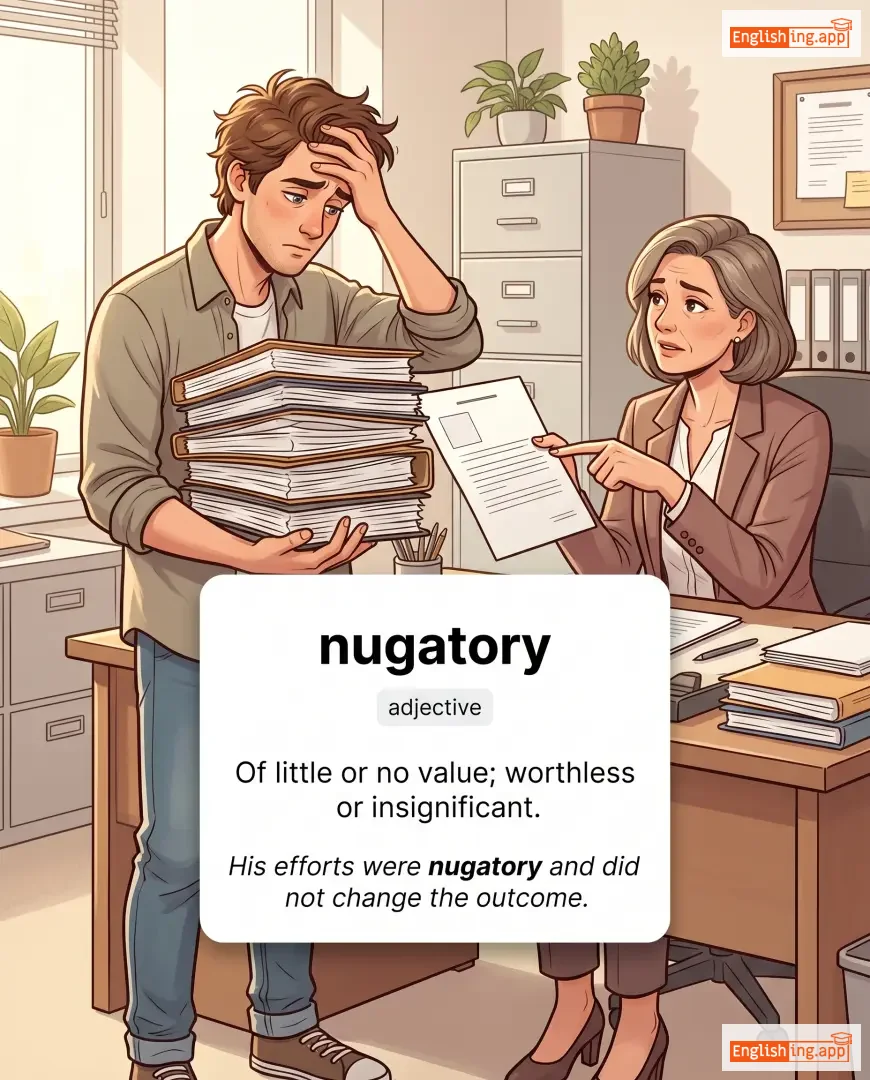
nugatory definition card — visual illustration of the meaning
adjective C2
/ˈnjuː.ɡə.tɔːr.i/
微不足道 (weibuzhidao)

Of little or no value; worthless or insignificant.

"His efforts were nugatory and did not change the outcome."

"他的努力微不足道,未能改变结果。" (Tade nuli weibuzhidao, wei neng gaibian jieguo.)
adjective C2
/ˈnjuː.mər.ə.bəl/
可计数的; 数得出的 (ke jishu de; shu de chu)

capable of being counted; countable

"The stars in the sky are not numerable."

"天空中的星星是不可计数的。" (tiānkōng zhōng de xīngxīng shì bù kě jìshù de.)
noun C2
/ˌnjuːməˈreɪʃən/
计数 (jishu)

the action or process of counting or assigning numbers

"The teacher explained the basics of numeration to the students."

"老师向学生解释了计数的基础知识。" (Laoshi xiang xuesheng jieshi le jishu de jichu zhishi.)
adjective C2
/ˈnjuːmɪnəs/
神秘的 (shenmide)

having a strong spiritual or mysterious quality

"The temple had a numinous atmosphere that inspired awe."

"这座寺庙有一种神秘的氛围,令人敬畏。" (Zhe zuo simiao you yizhong shenmi de fenwei, lingren jingwei.)
adjective C2
/ˌnjuːmɪzˈmætɪk/
钱币学的 (qián bì xué de)

relating to the study or collection of coins, currency, and medals

"He has a numismatic collection of rare coins from around the world."

"他拥有来自世界各地的稀有硬币收藏。" (Tā yǒng yǒu lái zì shìjiè gè dì de xīyǒu yìng bì shōu cáng.)
noun C2
/njuːˈmɪzmətɪst/
钱币学家 (qiánbì xuéjiā)

A person who studies or collects coins, paper currency, and medals.

"The numismatist displayed his rare coin collection at the exhibition."

"钱币学家在展览会上展示了他的稀有硬币收藏" (Qiánbì xuéjiā zài zhǎnlǎn huì shàng zhǎnshìle tā de xīyǒu yìngbì shōucáng)
noun C2
/ˈnʌnəri/
修道院 (xiūdàoyuàn)

A convent or building where nuns live and work.

"She decided to join the nunnery to devote her life to spiritual practice."

"她决定加入修道院,献身于精神实践。" (Tā juédìng jiārù xiūdàoyuàn, xiànshēn yú jīngshén shíjiàn.)
adjective C2
/ˈnʌpʃəl/
婚礼的 (hunli de)

Relating to marriage or weddings.

"The couple prepared for their nuptial ceremony with great joy."

"这对夫妇满怀喜悦地准备他们的婚礼仪式。" (Zhe dui fufu man huai xinyue de zhunbei tamen de hunli yishi.)
noun C2
/ˈnjuː.trɪ.mənt/
营养物 (yingyangwu)

Something that nourishes; sustenance or food.

"The soil provides nutriment to the plants."

"土壤为植物提供养分。" (Tǔrǎng wèi zhíwù tígōng yǎngfèn.)
adjective C2
/ˈnjuː.trɪ.tɪv/
营养的 (yingyang de)

Relating to nutrition; having nourishing qualities.

"The nutritive value of the fruit is very high."
"水果的营养价值非常高。" (Shuǐguǒ de yíngyǎng jiàzhí fēicháng gāo.)
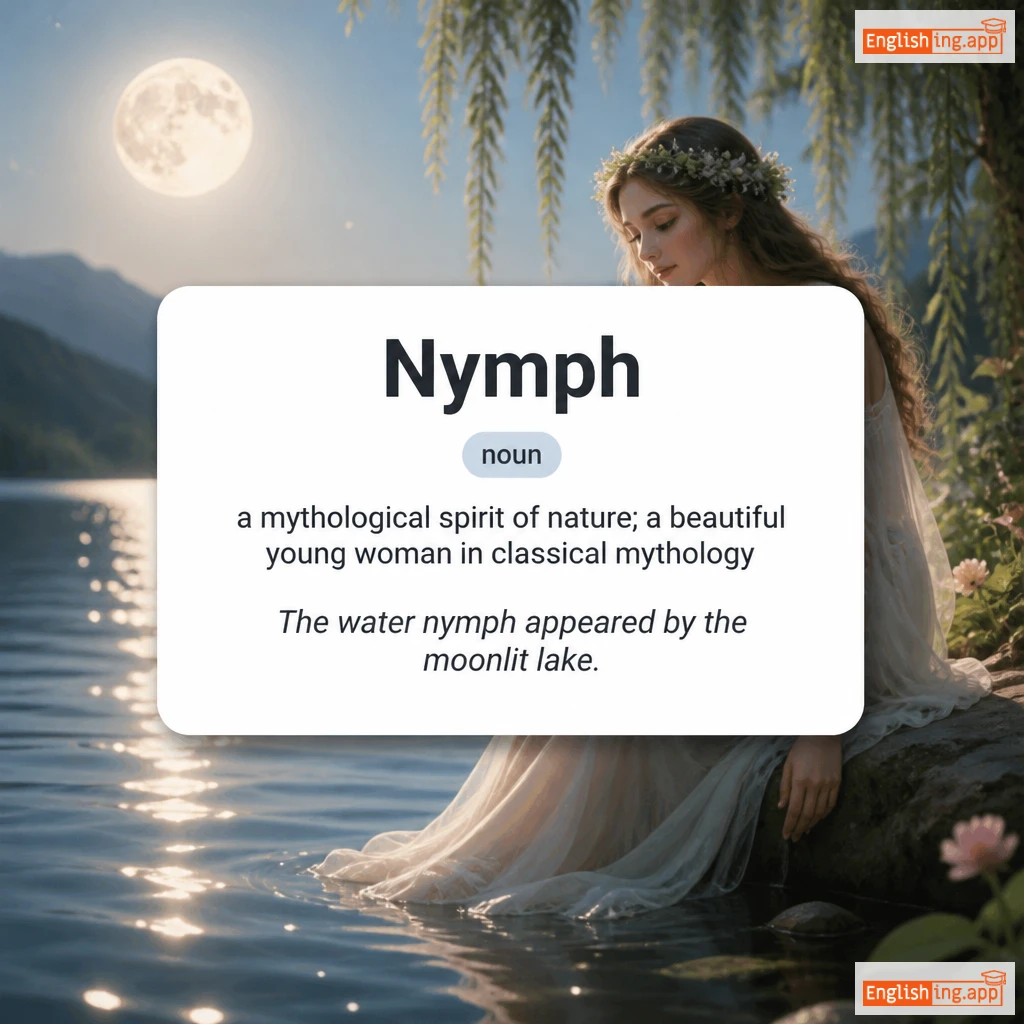
Nymph definition card — visual illustration of the meaning
🧚‍♀️

Nymph (nímf)

noun C2
/nɪmf/
水仙 (shuǐxiān)

a mythological spirit of nature; a beautiful young woman in classical mythology

"The water nymph appeared by the moonlit lake."

"水仙出现在月光下的湖边。" (shuǐxiān chūxiàn zài yuèguāng xià de húbiān.)